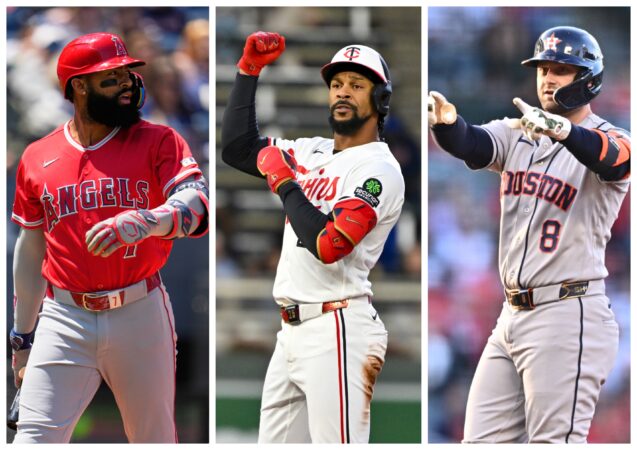
Tag: UniversalPremium

  • The Phillies still need a right-handed bat. Let’s take an early dive into some options before the trade deadline.

    The Phillies still need a right-handed bat. Let’s take an early dive into some options before the trade deadline.

    Five months later, almost to the day, Bo Bichette stepped in the batter’s box in Citizens Bank Park.

    Boooooooo!

    (No, they weren’t calling his name.)

    Depending on who you ask, Bichette was either on the verge of signing with the Phillies or deep in talks about their seven-year, $200 million offer. It was the middle of January, a pivot point in the offseason.

    Here’s where the details get fuzzy. Phillies owner John Middleton says he went to sleep on Jan. 15 believing Bichette was coming to Philly; Bichette claims a deal was never that imminent.

    “I thought it was an opportunity, for sure,” he said. “But there was definitely things that needed to be worked out for that to become a possibility. So, no, I didn’t think that [it was close].”

    In any case, Bichette is in town this weekend with the rival Mets, who swooped in with a short-term (three years), high-salary ($126 million) deal with two opt-outs. And not that anyone has forgotten, the visit is a helpful reminder that the Phillies still are searching for a big right-handed bat.
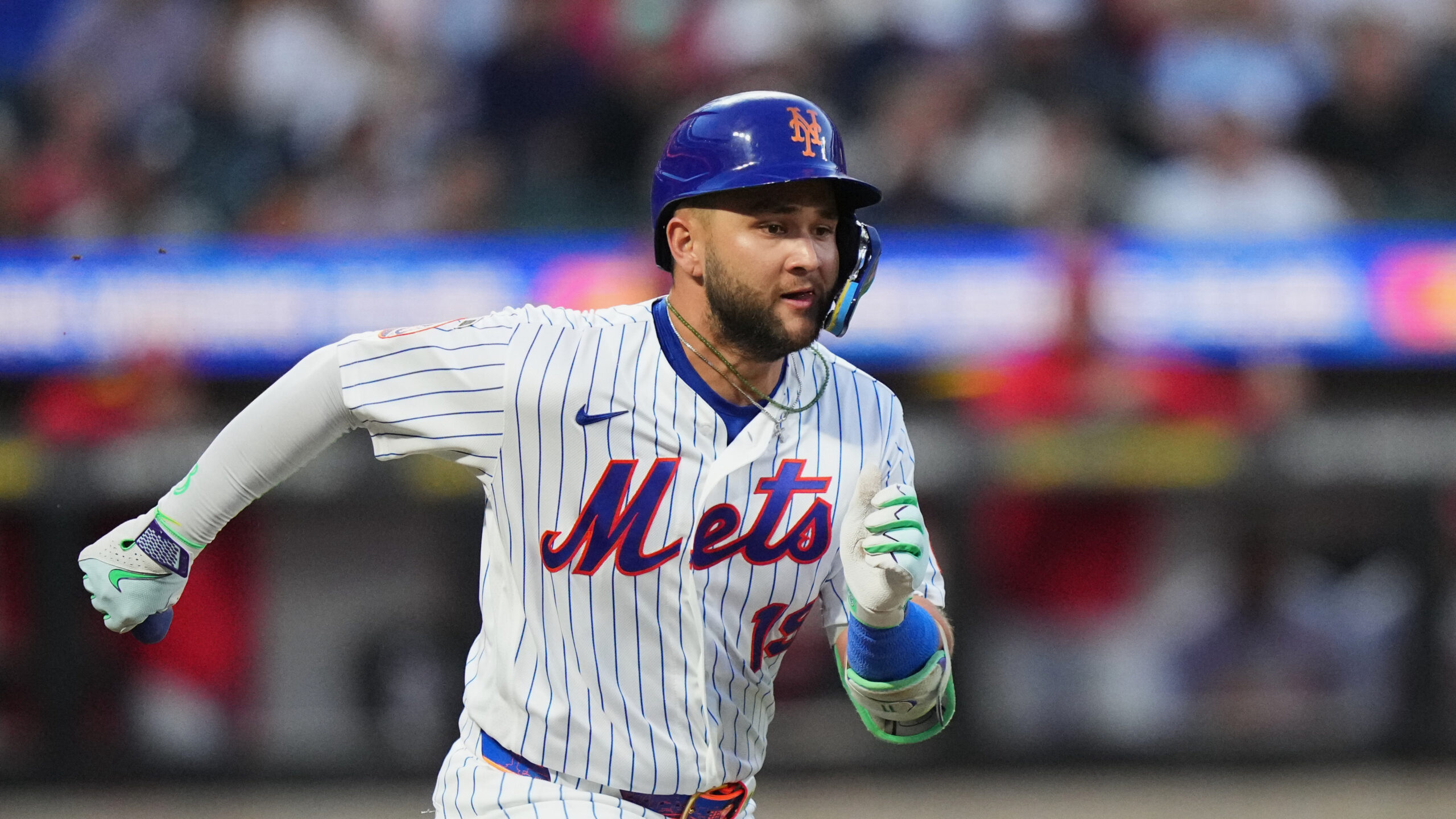
    Bo Bichette, who signed with the Mets over the Phillies’ seven-year, $200 million offer in January, is in town for the first time with his new team.

    The trade deadline is six weeks away — 6 p.m. on Aug. 3, if you want to set a calendar reminder. It’s a long way from here to there. The market hasn’t taken shape and likely won’t for a while.

    Entering the weekend, 12 National League teams and 11 in the American League were no more than three games out of a playoff spot. Some are more realistic contenders than others; none is ready to wave the white flag.

    “It’s pretty quiet right now,” Phillies general manager Preston Mattingly said this week on Phillies Extra, The Inquirer’s baseball podcast. “You’re talking to teams and checking in, and we’re having conversations to kind of lay some groundwork. But pretty quiet right now.

    “I’m sure over the next two to three weeks to one month, things will start to pick up a little bit.”

    The Phillies made a small trade last week to address a lack of outfield depth after losing Adolis García to a season-ending muscle tear near his right shoulder. They sent two minor leaguers to the White Sox for platoon outfielder Derek Hill.

    It’s possible they will have to make a similar trade for starting pitching depth after demoting Andrew Painter to triple A with a 7.06 ERA.

    But the deadline represents a chance to take a bigger swing. And the perception within the sport, based on conversations with league sources, is that the Phillies are prioritizing a right-handed hitter for the top half of the order to offset lefty-swinging Bryce Harper, Kyle Schwarber, and Brandon Marsh.

    Let’s take a still-too-early dive into a few players who may be available before the deadline by dividing them into categories:
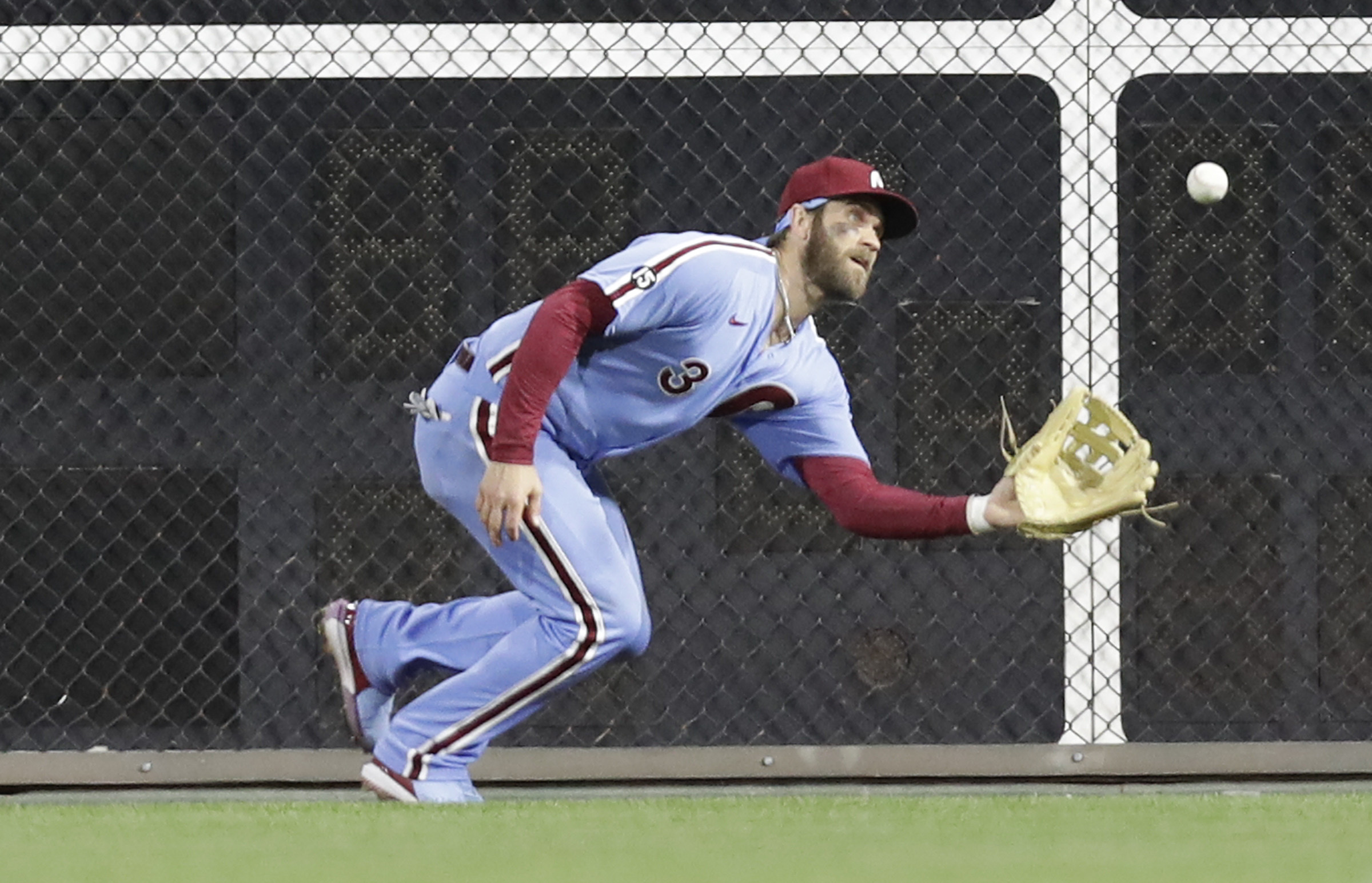
    The Phillies haven’t shown any interest in moving Bryce Harper back to the outfield.

    Non-outfield options

    The outfield is the most obvious place for the Phillies to add a hitter.

    Unless …

    “I’ve said it multiple years before — and this year, still — for the right player, I would do it,” Harper said of moving back to right field. “I mean, that’s as real as it gets. I don’t want to do it long-term. But if the right player comes along and that’s what we need, or if that’s what we want, I’d be open to it at any point.“

    Could the right player be Willson Contreras? Or fellow first baseman Christian Walker? The free-falling Red Sox could move Contreras, who is under contract next year for $18.5 million. Astros owner Jim Crane once vowed to never be a seller. But if Houston keeps fading, Walker and third baseman Isaac Paredes could bring value.

    Harper hasn’t played right field since April 2022, when he tore a ligament in his right elbow. He moved to first base a year later.

    “I still feel like I can throw a baseball from right field, and I can catch a fly ball,” Harper said. “It’s been a long time. But, yeah, I would do it in a heartbeat for us to win a World Series, without a doubt.”

    But the Phillies didn’t take Harper up on his previous offers, and it doesn’t sound like they’re about to start.

    “I know he’s always been very open-minded to trying to help the organization however he can, but we haven’t talked to him,” Phillies president of baseball operations Dave Dombrowski said this week. “And I really don’t contemplate it because I really like the way he goes about his business at first base. … I’m looking at him as being a first baseman.”
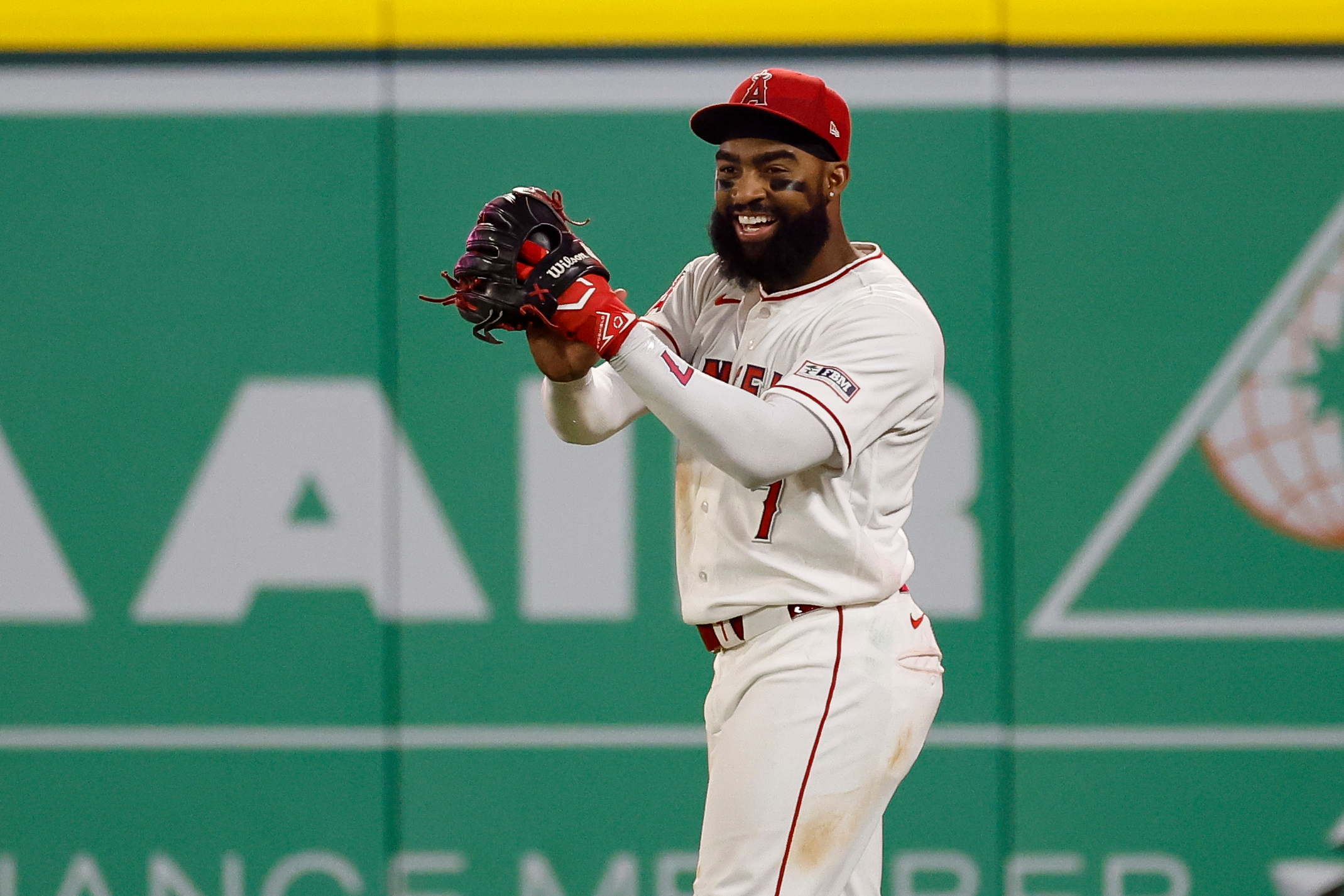
    With the Angels sinking to the bottom of the American League, outfielder Jo Adell could be on the move at the trade deadline.

    Midrange outfield targets

    Drafted a year apart, Marsh and Jo Adell came through the minors together with the Angels and became close friends.

    What if they were reunited with the Phillies?

    “That’d be kind of a cool reunion if they could get Jo there,” former Angels manager Joe Maddon said on a recent episode of Phillies Extra. “Because that man’s got some power.”

    Indeed, Adell broke out last season with 37 homers and a .778 OPS. The 27-year-old’s production has dipped (10 homers, .683 OPS through Thursday) and isn’t helped by a 2.9% walk rate that ranks among the lowest in the majors.

    But Adell would fit the Phillies as a right-handed hitter who bashes lefties (.862 OPS through Thursday). His defense has improved over the years in right field, too.

    And the Angels are headed for their 11th losing season in a row. With one year left on Adell’s contract, this might be their time to cash in, especially if they won’t move Mike Trout, who went on the injured list this week with a hamstring strain.

    Taylor Ward, a former Angels outfielder, represents an option as an outfield rental. A right-handed hitter and a free agent after the season, he has been an on-base machine for the Orioles, reaching at a .394 clip through Thursday, though he hit only three homers.
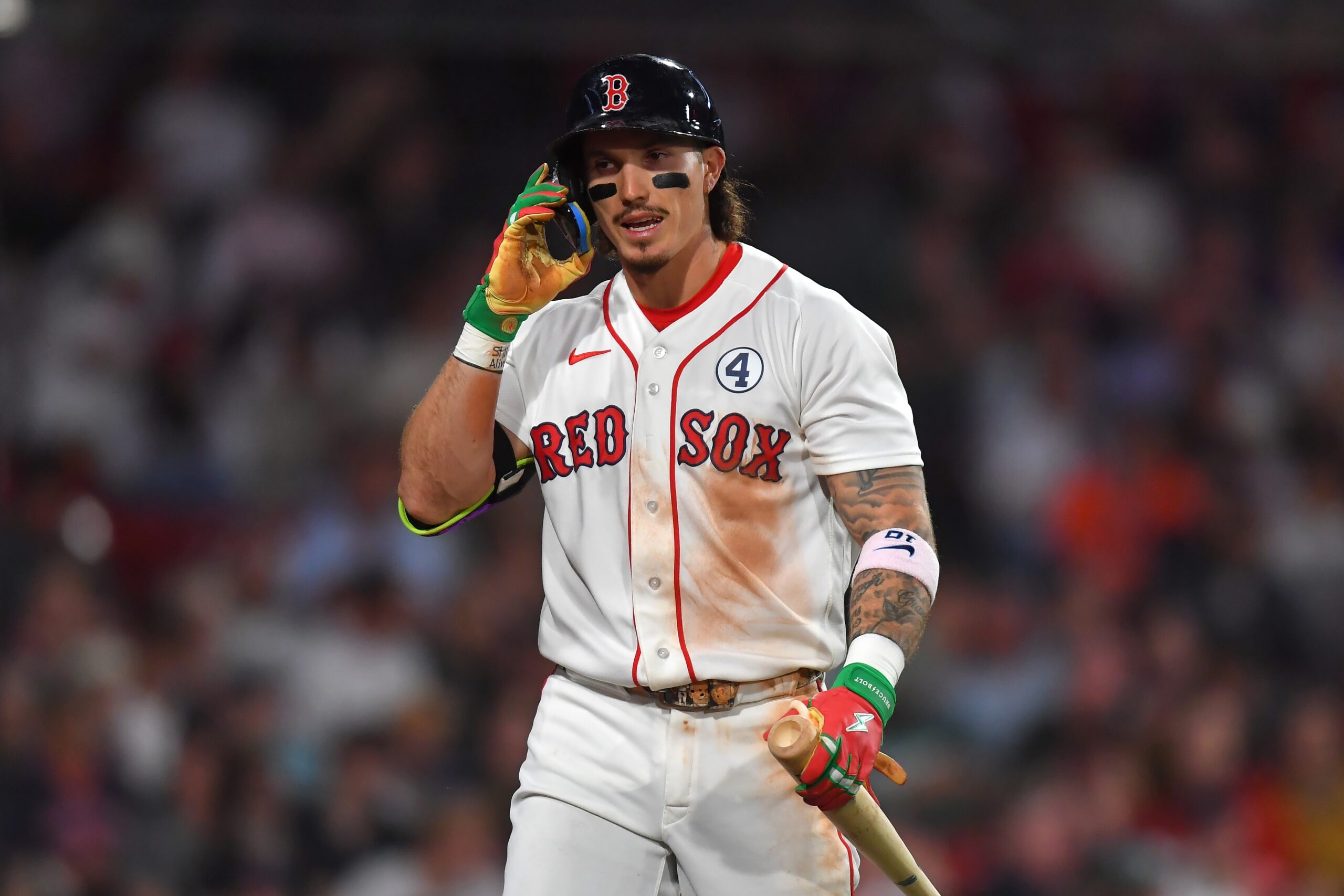
    Lefty-hitting outfielder Jarren Duran is a trade candidate if the Red Sox continue to fall out of contention in the American League.

    Lefty-hitting outfield options

    The Phillies had seven left-handed hitters in the lineup Wednesday against Marlins ace righty Sandy Alcantara.

    “I actually like it,” interim manager Don Mattingly said. “I do. I just think hitting left-handed against righties, it’s an advantage, right? And there’s pitchers that get righties out maybe better. … It just takes certain pitches away from a righty.”

    Said general manager Preston Mattingly: “I probably would side on the side of my dad. I don’t think it’s a bad thing to run out seven, eight, nine left-handed hitters vs. a right-handed pitcher. And I think we have [lefty hitters] that are well equipped to hit lefties.”

    File that away. Because although rival evaluators are expecting the Phillies to hunt for a right-handed hitter, Dombrowski may not shy away from an appealing left-handed bat.

    Maybe someone like Jarren Duran. The Red Sox will have a surplus of outfielders when Roman Anthony returns from an injured finger. Duran, drafted by Boston when Dombrowski headed its baseball operations department, could finally be the odd man out in left field.
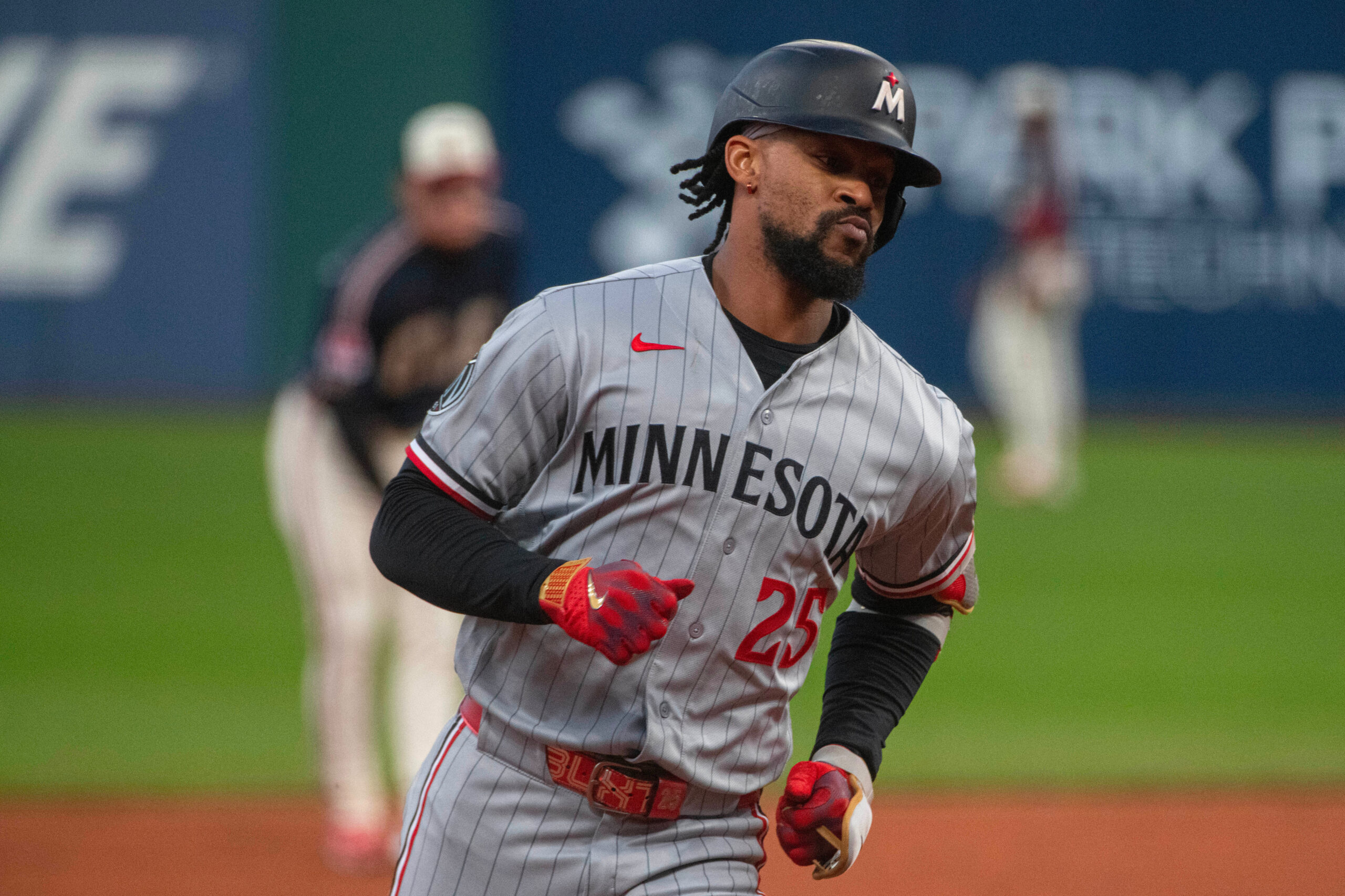
    Twins center fielder Byron Buxton would be among the most coveted hitters on the market if he waived his no-trade clause.

    Pie in the sky

    At last year’s All-Star Game, Byron Buxton pledged his allegiance to the only organization he has known.

    “I’m a Minnesota Twin,” he said, “for the rest of my life.”

    Buxton actually has control over that. The 32-year-old center fielder has no-trade protection and no desire to waive it, even after the Twins traded 10 players at last year’s deadline, including star closer Jhoan Duran and center fielder Harrison Bader to the Phillies.

    Amid another stellar season (23 homers, .919 OPS through Thursday), Buxton is doubling down on his loyalty.

    “I ain’t said nothing about leaving, nor will I,” Buxton told The Athletic. “I’m a Twin.“

    But what if the Twins sell again at the deadline? What if they move ace Joe Ryan and catcher Ryan Jeffers? Maybe that would change Buxton’s tune. Maybe not.

    The Phillies appear to lack the prospect capital to get him anyway. Justin Crawford and Gage Wood might be a start. But the farm system is in the bottom third of the sport, according to many evaluators, after the Phillies used Mick Abel, Eduardo Tait, Starlyn Caba, George Klassen, and Sam Aldegheri in deals over the last two years.

    “We feel good where our system’s at,” Preston Mattingly said. “We’re not concerned about a lack of assets in the minor leagues. A lot of times you see that top-100 [prospects] list. That’s not necessarily what teams internally talk about, and those are not the players they ask about.”

    It would be moot anyway if Buxton wants to be a Twin forever.
  • Before Leon Rose built the Knicks, he was a gym rat at Cherry Hill East, and coached hoops at his local JCC

    Before Leon Rose built the Knicks, he was a gym rat at Cherry Hill East, and coached hoops at his local JCC

    Seth Friedman was watching the NBA Finals on Saturday night in Graduate Hospital when he heard a familiar refrain.

    It came from Leon Rose, the mild-mannered architect of the New York Knicks. His team had just won its first title since 1973.

    Rose, 65, was asked how he felt knowing he’d built a roster that had ended a 53-year-drought. The Knicks president shook his head, shrugged his shoulders, and pivoted to his players.

    He praised their brotherhood, their grit, their empathy. He talked about their care for one another, and their selflessness, and how it allowed them to reach new heights.

    Friedman, sitting on his couch next to his wife, began to tear up.

    “It sounded like he was talking to us,” he said, “back when we were 13 or 14 years old.”

    The setting was vastly different. Instead of holding two-a-days for high schoolers, Rose was standing on a platform in San Antonio, Texas, with a sparkling trophy beside him.

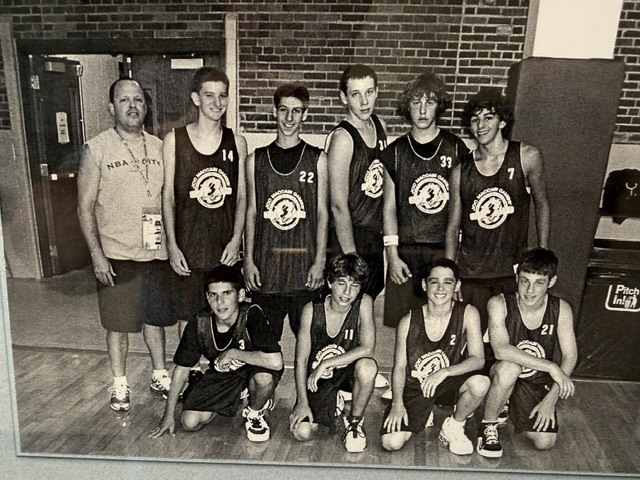
    But the message was nearly identical. Friedman listened to it himself when he played for Rose in the mid-2000s at his local Jewish community center.

    “He literally preached that same mentality,” Friedman said. “That family mentality.”

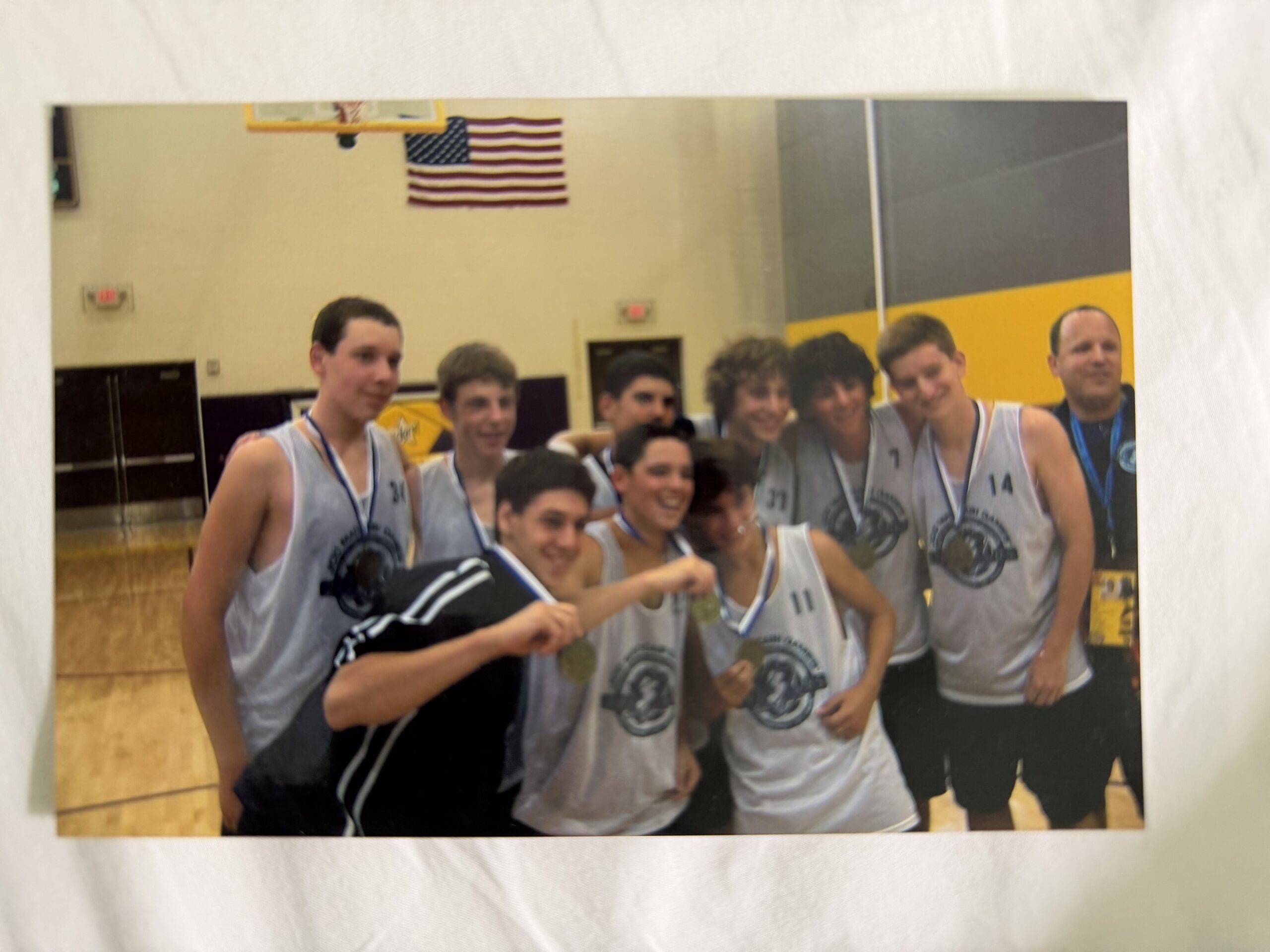
    Leon Rose coaching at the Katz JCC in 2005. Seth Friedman is pictured in the bottom row, second from the right.

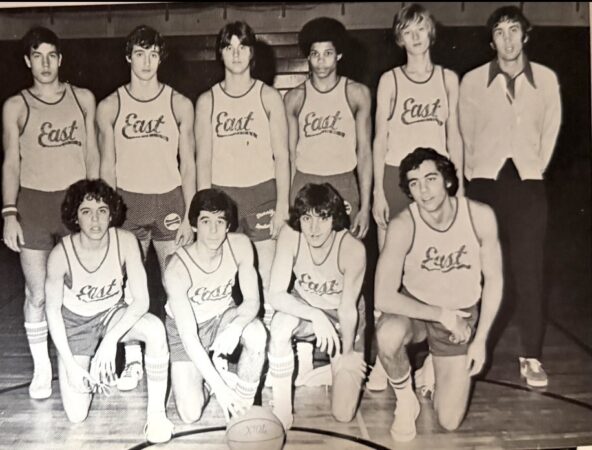
    For decades, the future Knicks president was a mainstay in his Cherry Hill basketball community. He played under head coach John Valore at Cherry Hill East from 1975 to 1979 and joined Valore’s staff in the early 1980s while studying at Temple’s law school.

    He moved on to work as an assistant coach through the late 1980s at Rutgers-Camden, a short commute from his day job at the Camden County prosecutor’s office.

    He’d leave collegiate coaching in 1988, but Rose would always find time for the sport, even as he ascended the ranks of the NBA. In the 1990s, while he transitioned to sports management, Rose often could be found playing pickup hoops at the Katz JCC in Cherry Hill.

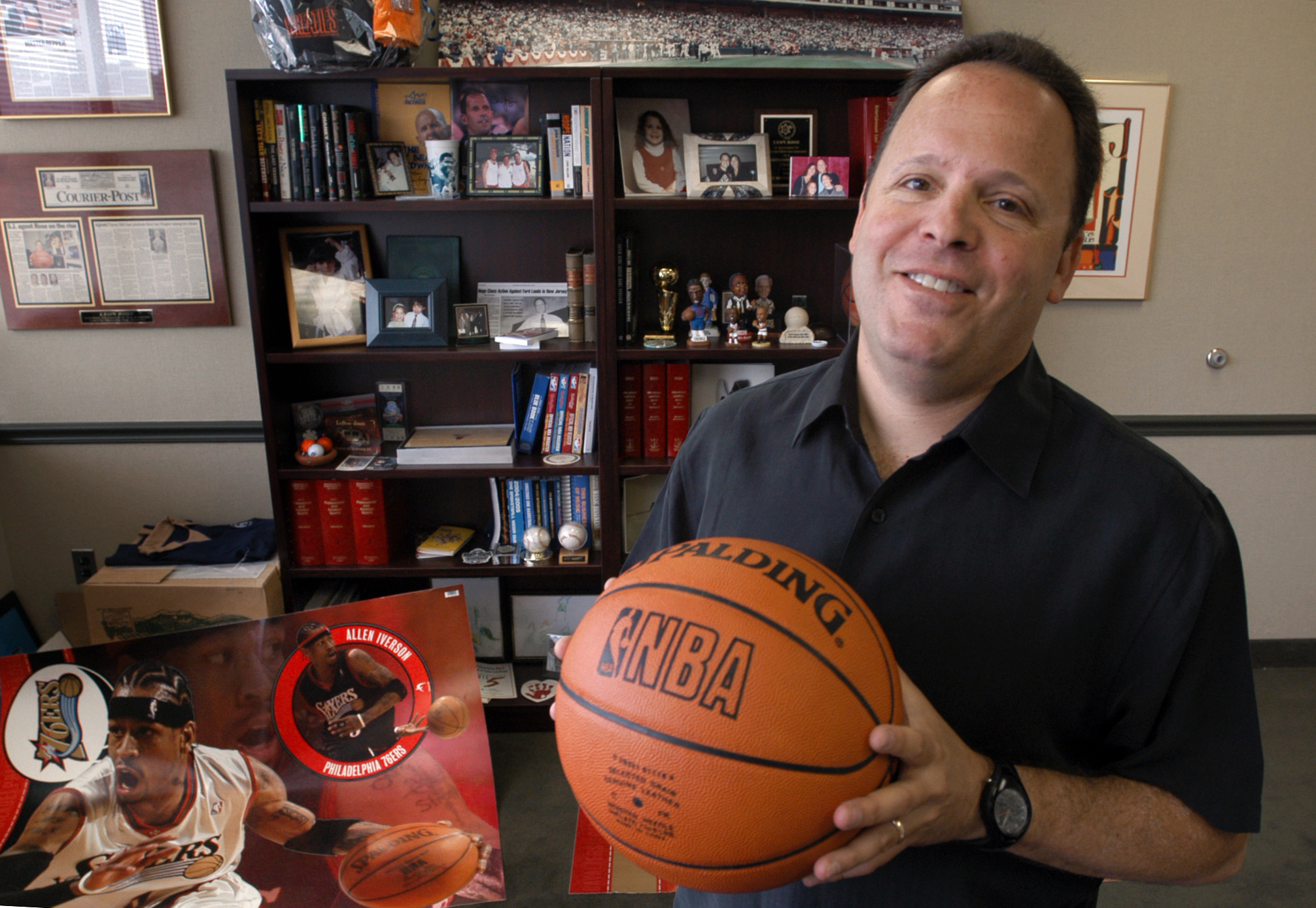
    By the mid 2000s, he’d assembled a Rolodex of star-studded clients, including Allen Iverson and LeBron James. But that didn’t keep him away from the gym. For the better part of a decade, Rose served as a volunteer coach at the Katz JCC, preparing teams to compete in the Maccabi Games.

    The Knicks executive has achieved a lot since then. But those who know him best say he is the same understated guy who’d wear baggy sweatshirts and run his team through tap drills and sprints.

    “He was Coach Leon,” Friedman said. “He was one of us. Even now, you see him down the Shore, and you’d never know that he’s the person that he is.”

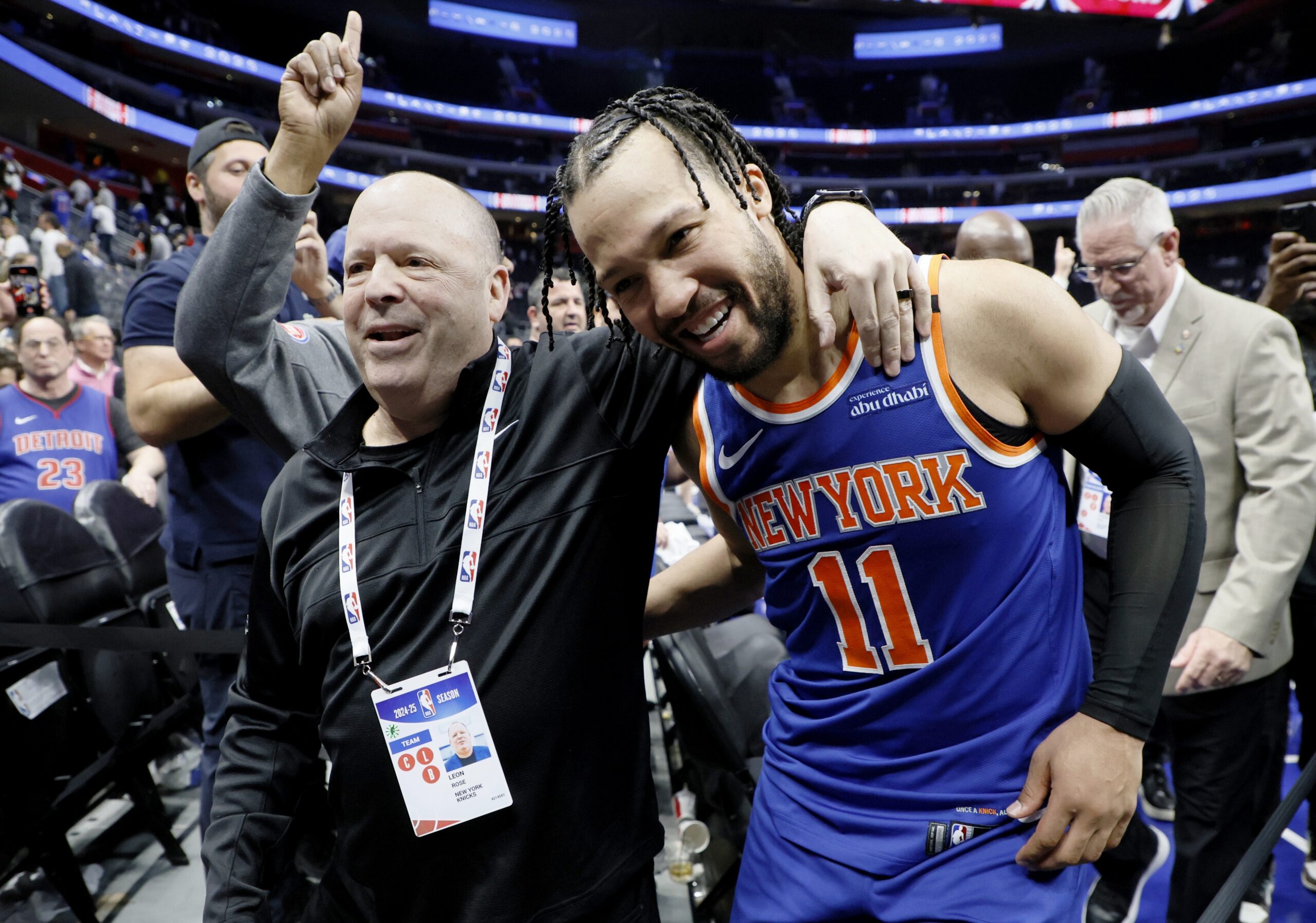
    New York Knicks Leon Rose (left) hugs guard Jalen Brunson (11) as they leave the court following a Game 6 win against the Pistons in the 2025 playoffs.

    ‘A gym rat’

    Valore met Rose in 1975 when he was coaching junior varsity at Cherry Hill East. The freshman was undersized compared to his teammates, but he played above his stature.

    If there was a loose ball, the point guard would dive for it. If there was a charge, he would take it. Valore admired his toughness. So when he got the varsity job in 1976-77, he decided to bring Rose with him.

    The sophomore made the most of his opportunity. Cherry Hill East was a relatively new program at the time and largely was viewed as a “doormat,” in Valore’s words. Rose helped change that, building an unselfish culture from the ground up.

    He wasn’t a vocal leader, but he showed interpersonal skills that would serve him later on. The future NBA executive was direct and honest. He could have difficult conversations with teammates if he needed to about roles and behavior on and off the court.

    Rose also set a standard through his style of play. Cherry Hill East was up against stiff competition in South Jersey from teams like Camden and Haddon Heights, which boasted players who were 6-foot-2, 6-3.

    The point guard was unafraid to battle them.

    “He was a player that had to compete harder and tougher than the person he competed against,” Valore said, “because he was 5-7, 5-8, 5-9. That shows you the toughness he had within him.”

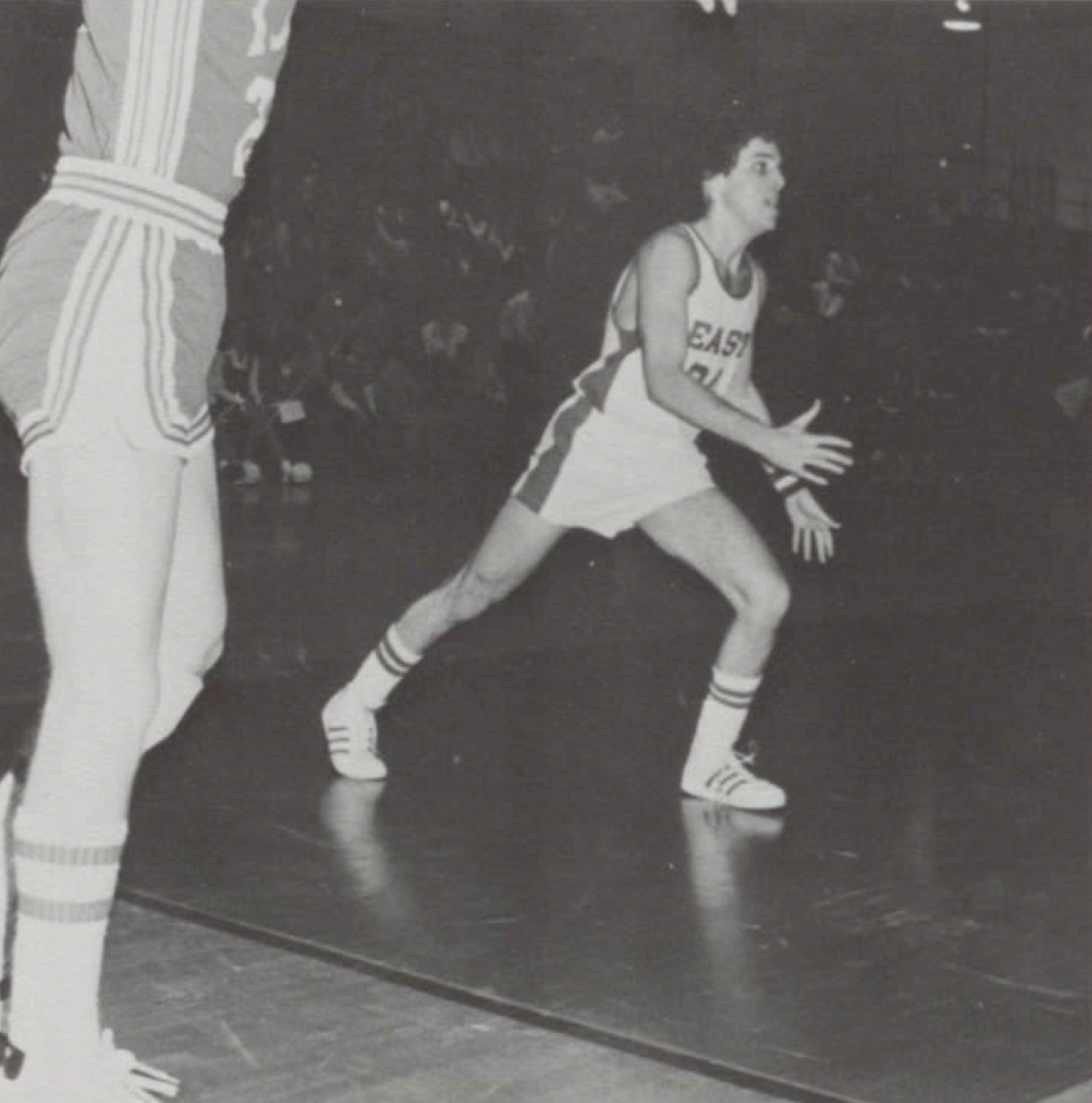
    Leon Rose at Cherry Hill East.

    Cherry Hill East’s culture quickly translated into wins. When Rose arrived, the varsity team finished just above .500. By the time he graduated, it was one of the best teams in its conference.

    But above all, Valore was most impressed by his pupil’s character. During a practice in 1979, the coach called his co-captain over. Valore’s wife, Joyce, had just given birth to their first child, J.C.

    The coach wanted Rose to be the boy’s godfather.

    “[Leon] was 17 years old,” he said, “and I saw everything I wanted to see. He was an exceptional person with relating to other people. He was something special.

    “He went back to his dad and explained the situation, and his dad gave the thumbs-up. And the rest is history.”

    After a few years studying and playing basketball at Dickinson College, Rose rejoined his high school team as an assistant coach in 1983. The 22-year-old was just as impactful on the bench as he’d been as a point guard.

    Over Rose’s three seasons with Cherry Hill East, the program produced four Division I players. One of those four, Nick Katsikis, ended up contributing to Seton Hall’s run to the 1989 NCAA championship game.

    Valore can see similarities in what Rose accomplished with the Knicks. When the agent was hired by James Dolan in 2020, the team was en route to its seventh straight losing season; “a doormat,” just like Cherry Hill East.

    Then Rose came along, and everything changed.

    “He was a gym rat,” Valore said. “He just loved the game.”

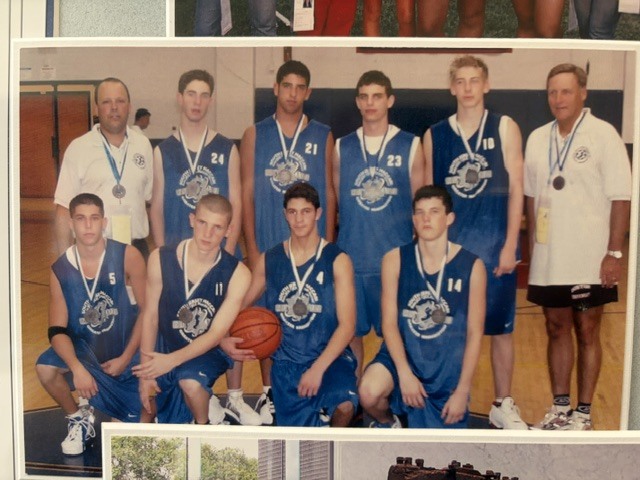
    Leon Rose coaching for the Katz JCC in 2004. Ed Vernick is pictured on the far right.

    From Maccabi gold to an NBA title

    Ed Vernick moved from Philadelphia to South Jersey in the early 1980s, the same time Rose was coaching with Valore.

    Unsurprisingly, the men became friends at the gym. Vernick was about to go on a trip to Ocean City and wanted a good place to work out. Rose overheard him talking, ripped off a piece of paper, and scribbled down an address.

    Vernick had no idea who the young lawyer was, but he took him up on his suggestion. A few days later, while he was running on a treadmill in that Ocean City gym, he saw Rose walking by.

    “He goes, ‘I just wanted to make sure you got here,’” Vernick said. “What a nice guy. I’m thinking, ‘Who does that?’ It was just one of those things that caught me.”

    About two decades later, when Rose was starting to coach basketball at the Katz JCC, he asked Vernick to be his assistant. Together, they spent the summer of 2004 preparing Cherry Hill-area kids for the Maccabi Games, a youth athletic competition for Jewish athletes from all over the world.

    Parents and players said Rose took this as seriously as the NBA Finals. He’d carefully craft his rosters, thinking hard about how each piece would fit.

    Once the team was constructed, he’d spend July running them into the ground with many of the methods Valore used at Cherry Hill East: switch drills, sprints, tap drills.

    Leon Rose coaching at the Katz JCC in 2005.

    The week before the Games was by far the toughest. Players would be required to train twice a day and would arrive at the gym at 6:30 a.m. and return at 2 p.m.

    “He got into us,” Friedman said. “But it got us ready. It got us prepared. It got us in shape. I hated it during it, but, looking back, those were memories I’ll never forget.”

    This was a major time investment for one of the most high-powered agents in the NBA, but Rose was deeply involved. He continued to coach before and after his son, Sam, and daughter, Brooke, were eligible to play.

    And he went far beyond what was expected of a volunteer. One year, Friedman said Rose took the team up to the Poconos for an exhibition game at Pine Forest Camp, which was known for its basketball program.

    “He’s driving us up to play an exhibition game like it’s an NBA team,” Friedman said. “He didn’t have to do that as a coach. But he did whatever he could to get us prepped and ready to win a gold medal.”

    About “80% of the team” came from Cherry Hill East, in Vernick’s estimation, and Rose often would be on the phone with Valore, asking about certain players.

    Like his former coach, Rose gravitated toward toughness, and that style emanated from the teams he built. In 2004, South Jersey’s 16-and-under Maccabi team faced Washington, D.C., for the gold medal.

    Leon Rose (in 2006) made his name as a superagent to the likes of Allen Iverson and LeBron James, but he did not flaunt that status to his young players.

    It was a low-scoring game, one that came down to the buzzer. Washington was bigger and more talented, but Rose’s group challenged every bucket.

    “I remember I could hear sneakers squeaking the whole game,” Vernick said, “and I just smiled. And I thought, ‘This is the way you play defense.’”

    South Jersey fell, 42-40, but it won gold the following year in Minneapolis.

    Rose spent six summers coaching at the JCC throughout the 2000s, winning two gold and two silver medals. He looked and acted like any other coach, donning Cherry Hill East basketball gear and sweatpants.

    He rarely — if ever — talked about who he represented, or what he did for work, but the players occasionally got a glimpse.

    When Friedman was a senior at Cherry Hill East, Rose arranged a surprise for his alma mater.

    It was March 2010. The Cleveland Cavaliers were in town. After practice, their coach swung by to talk to the high school basketball team and answer any questions they might have.

    It ended up being the coach who would lead the Knicks to a championship 16 years later.

    “He had Mike Brown come over,” Valore said. “He was fantastic. Off the cuff, not scripted. He gave a wonderful speech to the kids.”

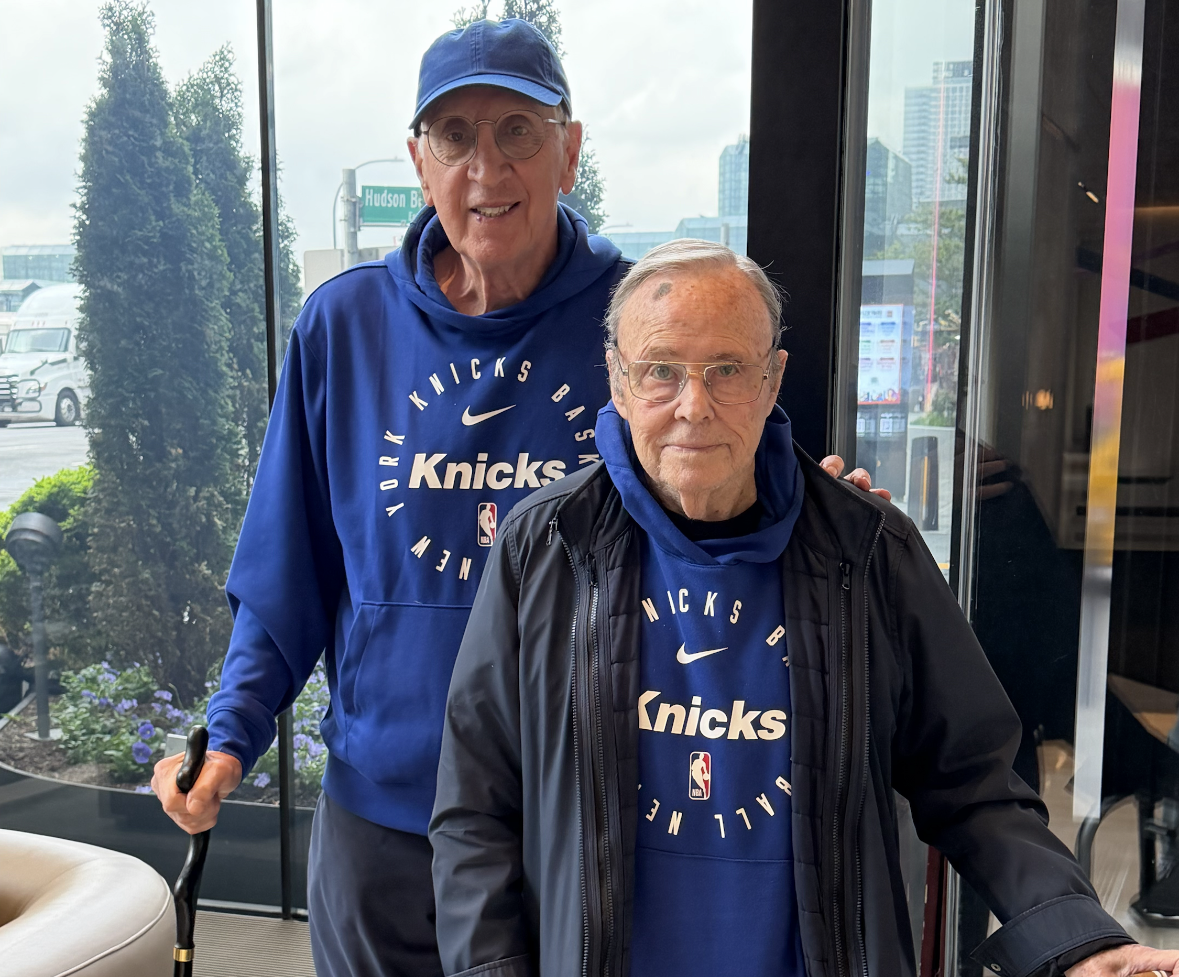
    John Valore (left) and Zev Rose before a Knicks game in the early part of their 2026 playoff run.

    Cherry Hill at the Garden

    Rose and his family now live in New York, but they’re never too far from Cherry Hill. His 88-year-old father, Zev, still resides in the area, and is a regular at the Katz JCC.

    Every once in a while, his son will send a limo to drive him and the 81-year-old Valore to Madison Square Garden. They were in the building for Game 4, sitting near the team president.

    At first, it looked bleak for New York. The Knicks fell behind early and trailed by 29 points in the third quarter. But they came storming back in the fourth and completed the comeback on an OG Anunoby tip-in.

    It was the largest comeback in NBA Finals history; a gritty win two coaches from Cherry Hill East would be proud of.

    Valore watched Game 5 at home in South Jersey. When it was over, just past midnight, the former coach texted his former player.

    The octogenarian kept his message brief. He thought about the undersized point guard who changed a culture when he was in high school.

    He thought about how he did it again, decades later, in New York; how hard he’d worked and the happiness he’d brought to his pocket of South Jersey.

    “Thank you,” Valore wrote to Rose, “and God bless.”

  • This East Market Mexican restaurant is all flash, little flavor

    This East Market Mexican restaurant is all flash, little flavor

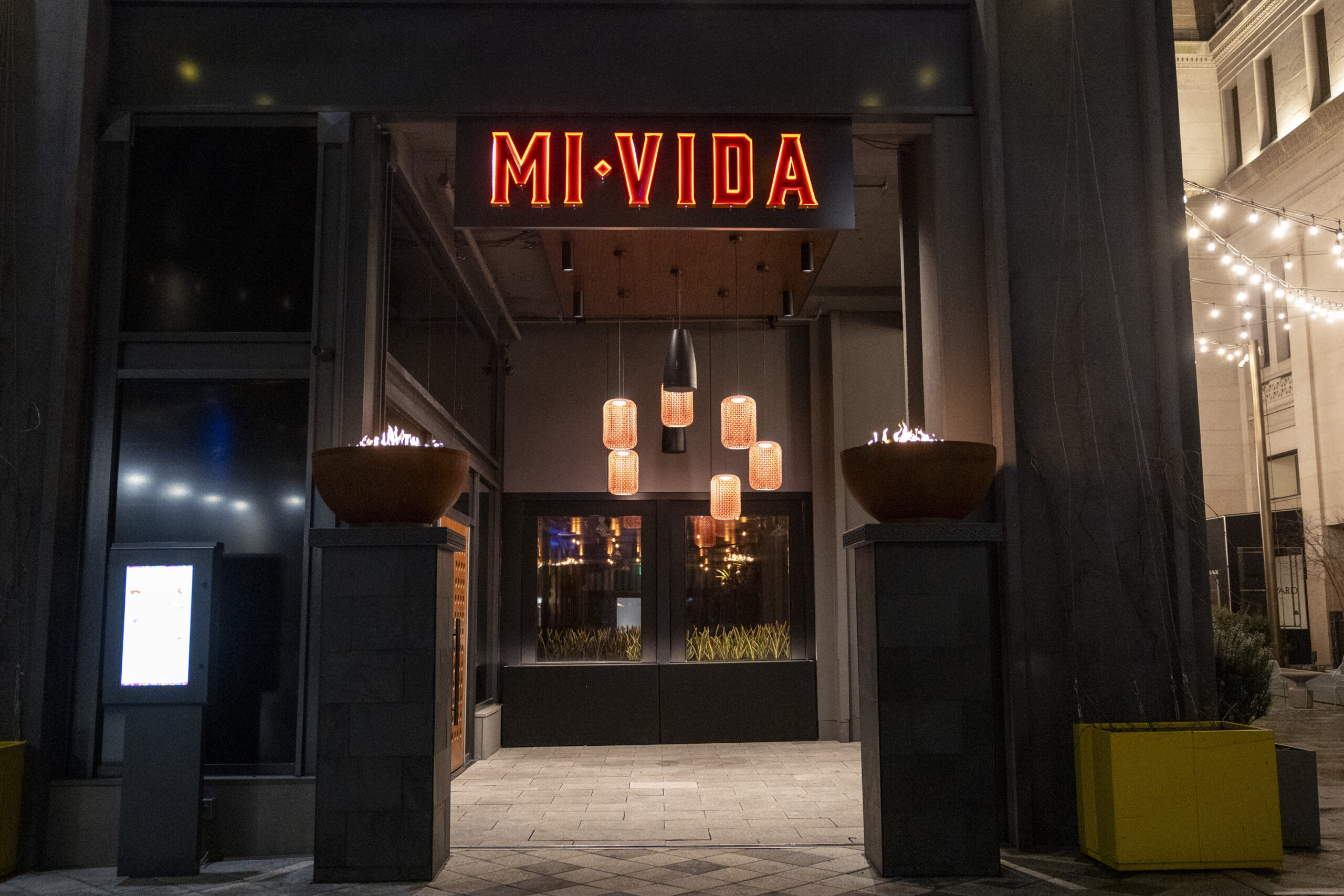
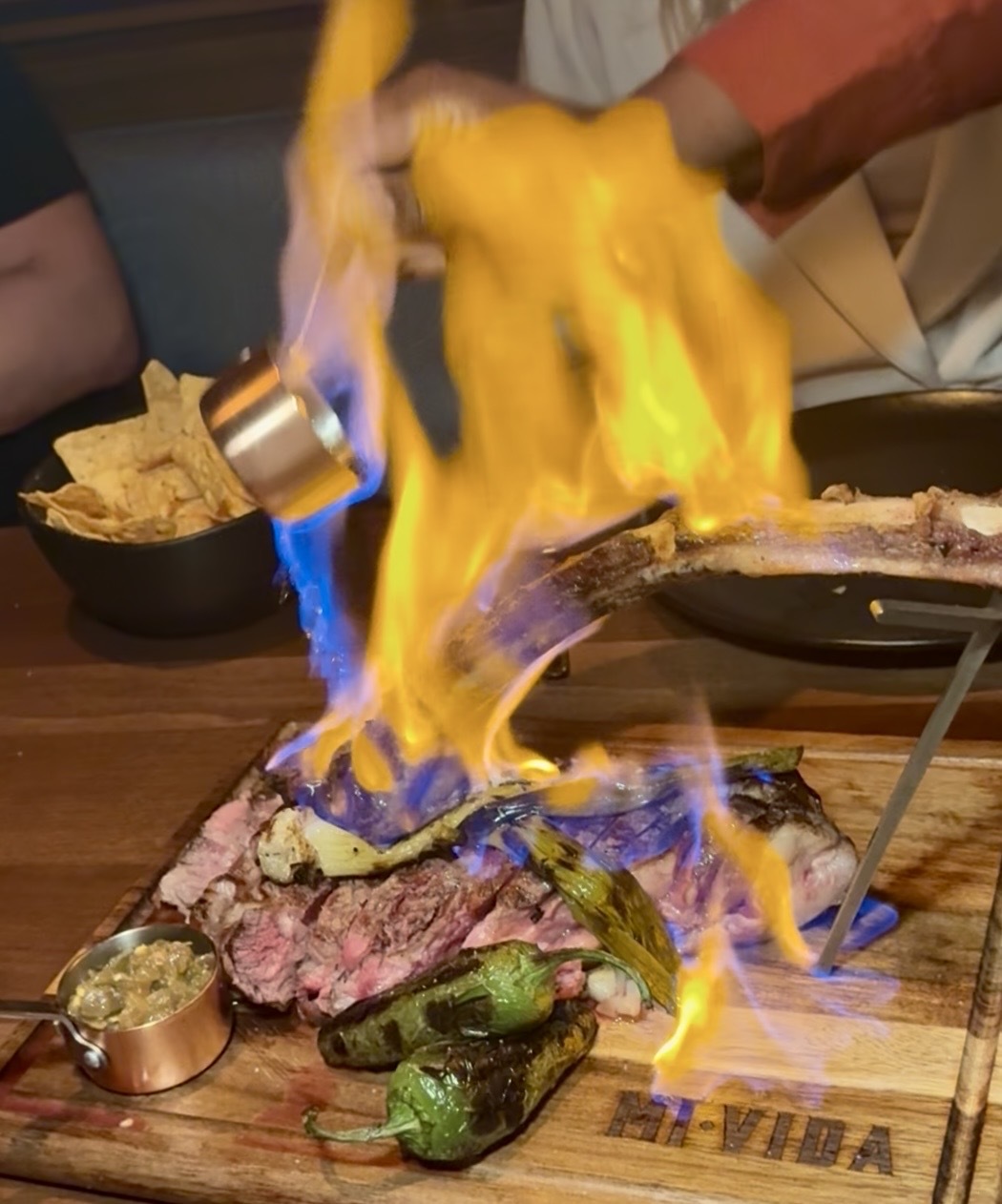
    There are fire bowls ablaze atop the columns flanking the front door of Mi Vida. At our table, a steak is, too, as the server who delivered the big chop known as “El Chingón” lit a cup of Mexican whiskey, then poured its blue flames up and down the arching bone of this 40-ounce mega-steak. The fire wasn’t hot enough to risk igniting the faux branches of the “tree of life” that rises over the tables near the bar — nor did it spark extra flavor on the steak. But pyrotechnics and dramatic decor are as much a part of the experience as the food at this ambitious newcomer in National Real Estate Development’s $400 million East Market development.

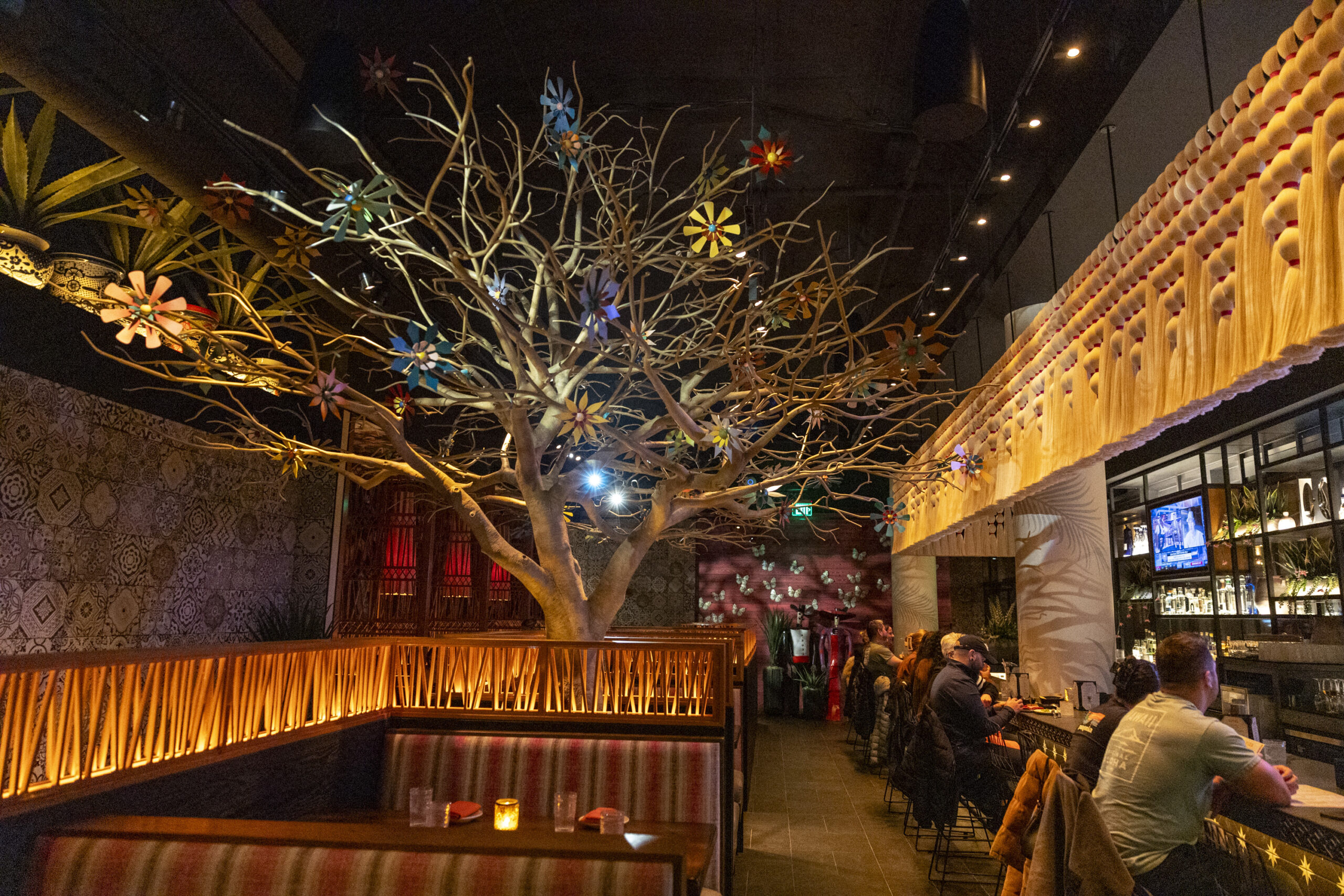
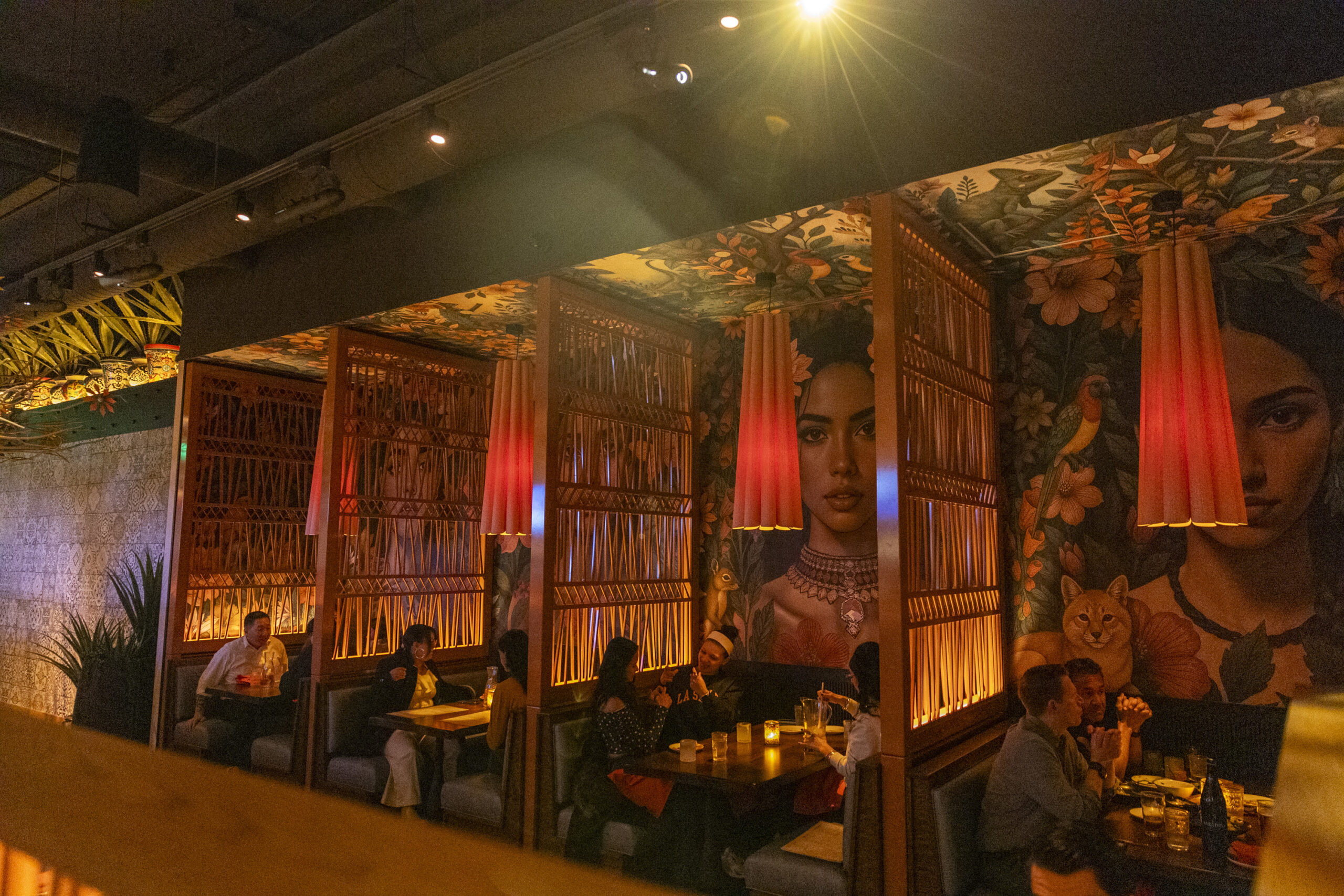
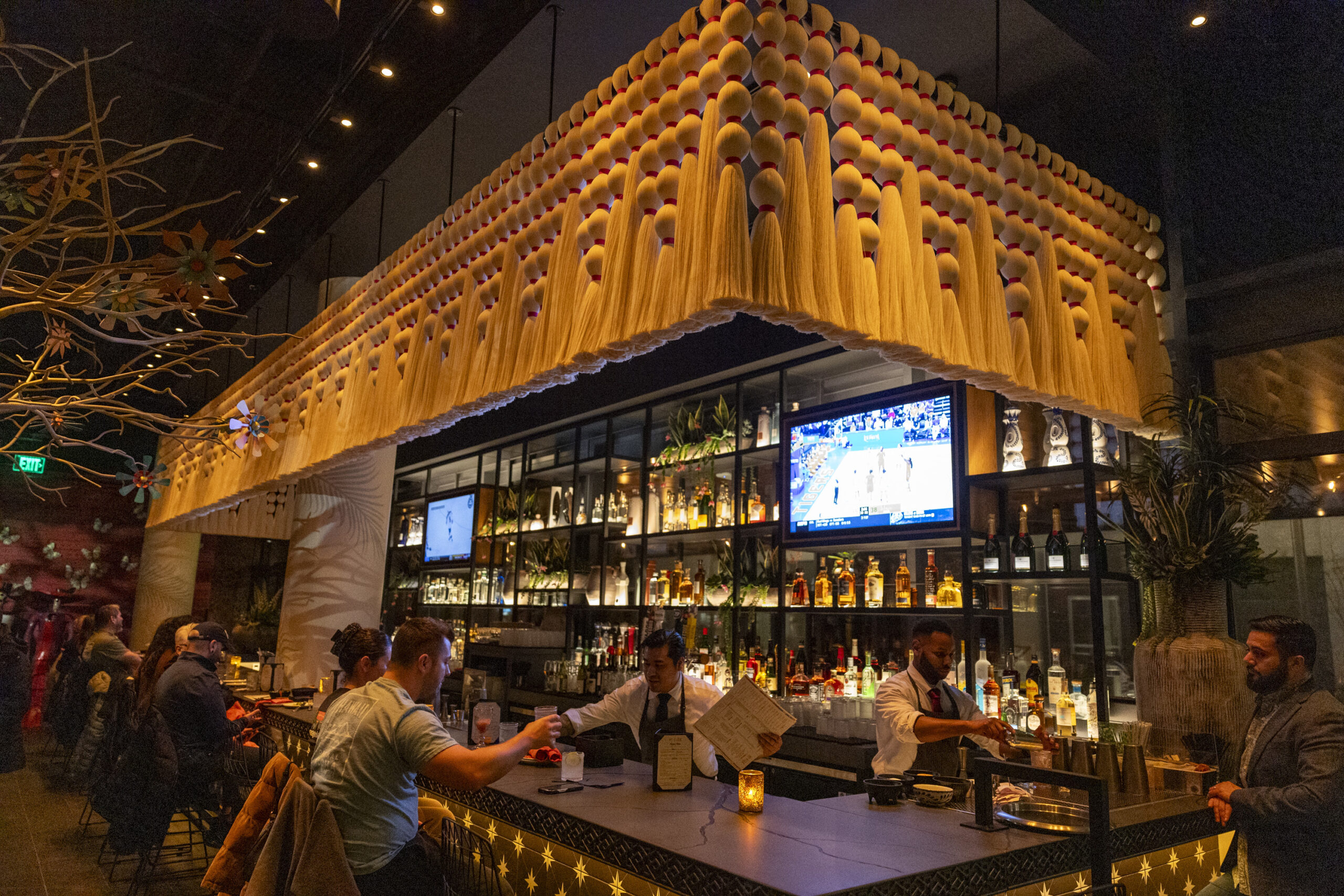
    Mi Vida, which opened in March as the first Philly project from Knead Hospitality + Design, a James Beard-nominated restaurant group based in Washington, aims to conjure Mexico through splashy design, the accents of hot pink lava meant to evoke the volcanic landscape, the tree rising from the ashes with branches dangling folk art flowers a symbol of resilience (and cue for Instagram selfies). Even the big bar that lines this theatrically lit 286-seat space tucked off Ludlow Street is fringed with a tassel-like rope sculpture woven from agave fibers, appropriate for a bar offering more than 150 tequilas and mezcals.

    The entrance to Mi Vida in Philadelphia, Pa., on Thursday, Feb. 26, 2026.
    A 40-ounce ribeye, dubbed “El Chingón” is doused tableside with flaming Mexican whiskey at Mi Vida in East Market.

    I only wish the food was as richly nuanced as the restaurant’s moody design. The menu of classic Mexican flavors with modern touches, designed in part by Knead’s culinary director, Roberto Santibañez, and recently updated by corporate chef (and current Top Chef contestant) Jonathan Dearden, is the same produced at all three other Mi Vida locations spread between D.C. and Virginia Beach.

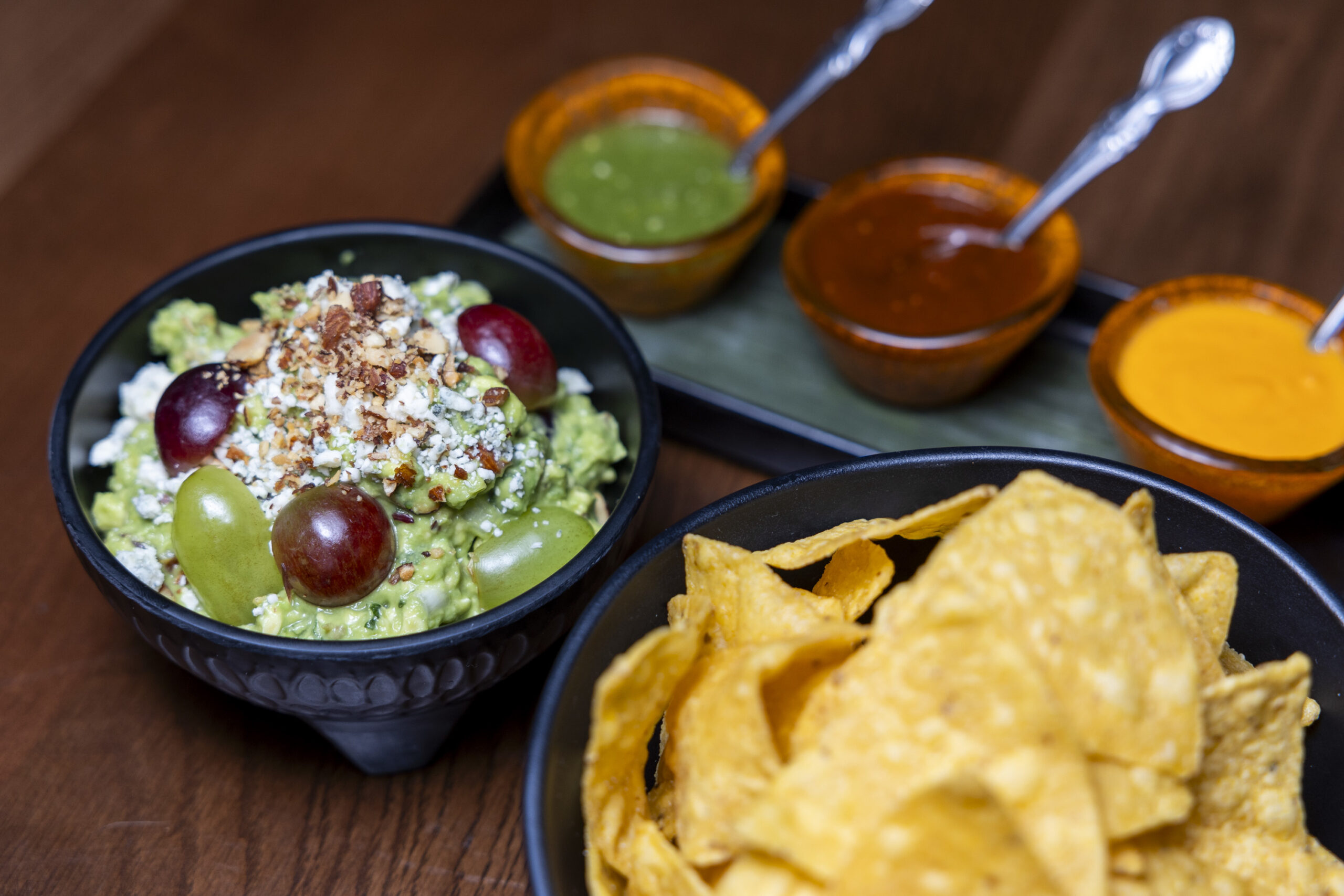
    But this crew cannot even make a decent guacamole. Every order I scooped into over multiple visits was half-mashed into spoon-size chunks of unripe avocados so pale and lacking in natural creamy sweetness, it was like eating a bowl of slippery green potatoes.

    The inside of Mi Vida in Philadelphia, Pa., on Thursday, Feb. 26, 2026.
    Guacamole with blue cheese, grapes, and smoked almonds at Mi Vida in Philadelphia, Pa., on Thursday, Feb. 26, 2026.

    I’d normally resist a seemingly random topping like blue cheese, grapes, and smoked almonds, but it was an admittedly tasty distraction from the guacamole travesty lurking below.

    “Is everything yum, yum, yummy?” said our server, with perfect timing and an earnest chain restaurant perkiness I could not bring myself to disappoint with the truth.

    Fresh guacamole is obviously basic, but it’s also something that relies on finesse and a consistent touch. A bad miss on something so elemental is a red flag. Jason Berry, Knead’s principal and cofounder, surely knows this, having previously been the chief operating officer of Rosa Mexicano, the tableside guac-pioneering restaurant group that, beginning in the 1980s, helped redirect Mexican chain culture away from the Tex-Mex clichés of Chi-Chi’s to more elegant spaces showcasing regional dishes such as mole. Mi Vida has successfully built on that model in the past with its own spin, albeit skipping the tableside show for kitchen-made guacamole, ironically, in the service of consistency.

    Booth seating with mural paintings on the walls at Mi Vida in Philadelphia, Pa., on Thursday, Feb. 26, 2026.

    Berry launched Knead 11 years ago with his husband, designer Michael Reginbogin. They now have 17 restaurants in all, a diverse concept portfolio including Southern/Korean (Succotash), an American diner (Gatsby), and a Jewish deli (Beresovsky’s). The duo have Philly history, as Berry graduated from Wharton in 2002 and Reginbogin worked for Stephen Starr at Washington Square. This sprawling new, L-shaped space with a 50-seat enclosed patio nestled inside the ambitious East Market development logically offered a tempting opportunity for this expansion-minded duo to return, especially with its close proximity to visitors from the Convention Center and several nearby hotels.

    Much has also changed in Philly since the pair left nearly a quarter century ago. In particular, we’ve seen a dramatic growth in quality Mexican options driven by immigration, from the many Poblano taquerias of South Philly to creative BYOBs like El Chingón and El Mictlan, and thrilling new modern Mexican fine-dining destinations such as Amà and Tequilas-La Jefa. I don’t see Mi Vida competing directly with those places so much as a more mass-market concept like Starr’s El Vez less than three blocks away, which, based on a recent revisit, has held up remarkably well over its 23 years.

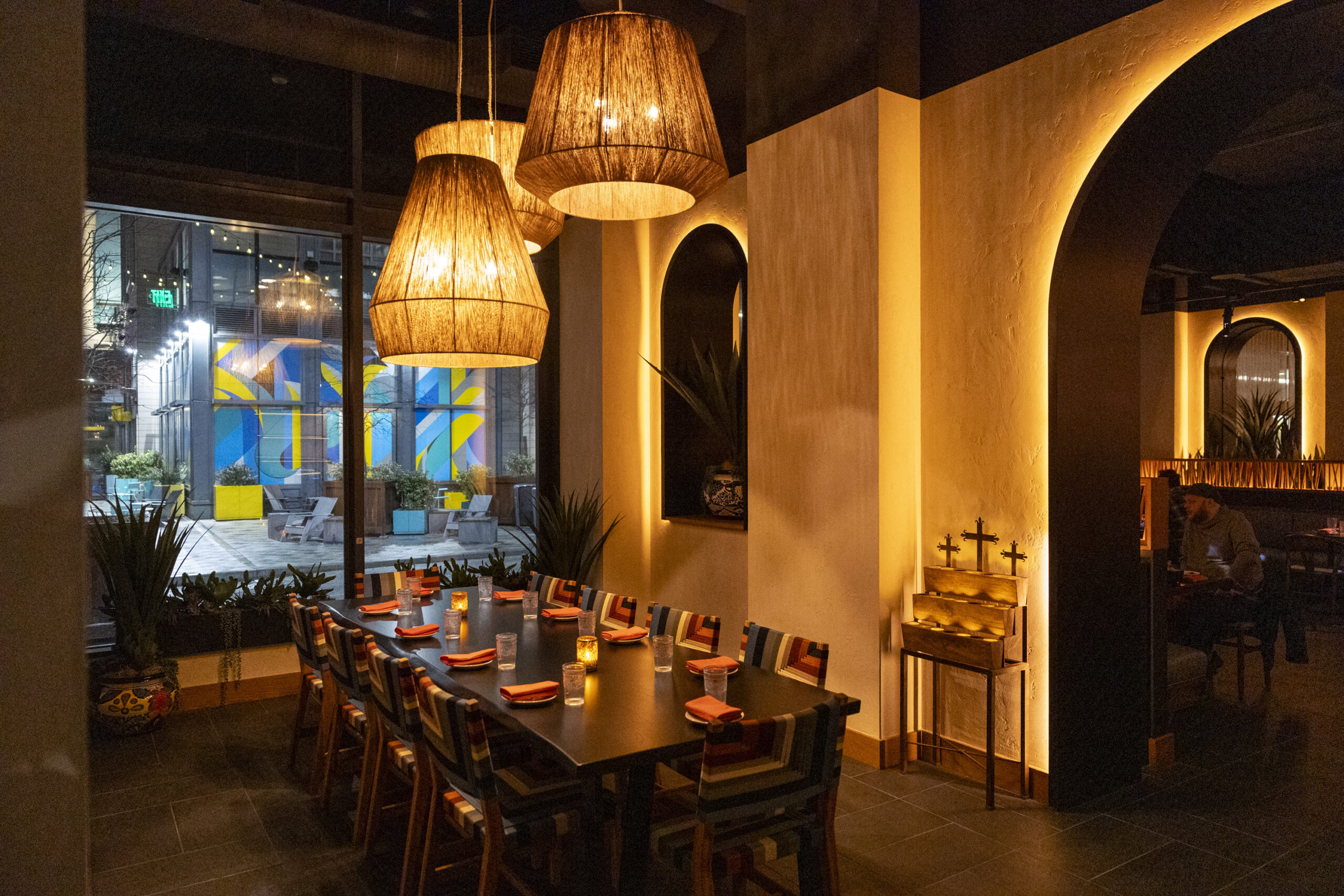
    Mi Vida has a darker, sexier vibe, and the virtue of a large space that can handle groups. But its kitchen has a way to go before it can compete.

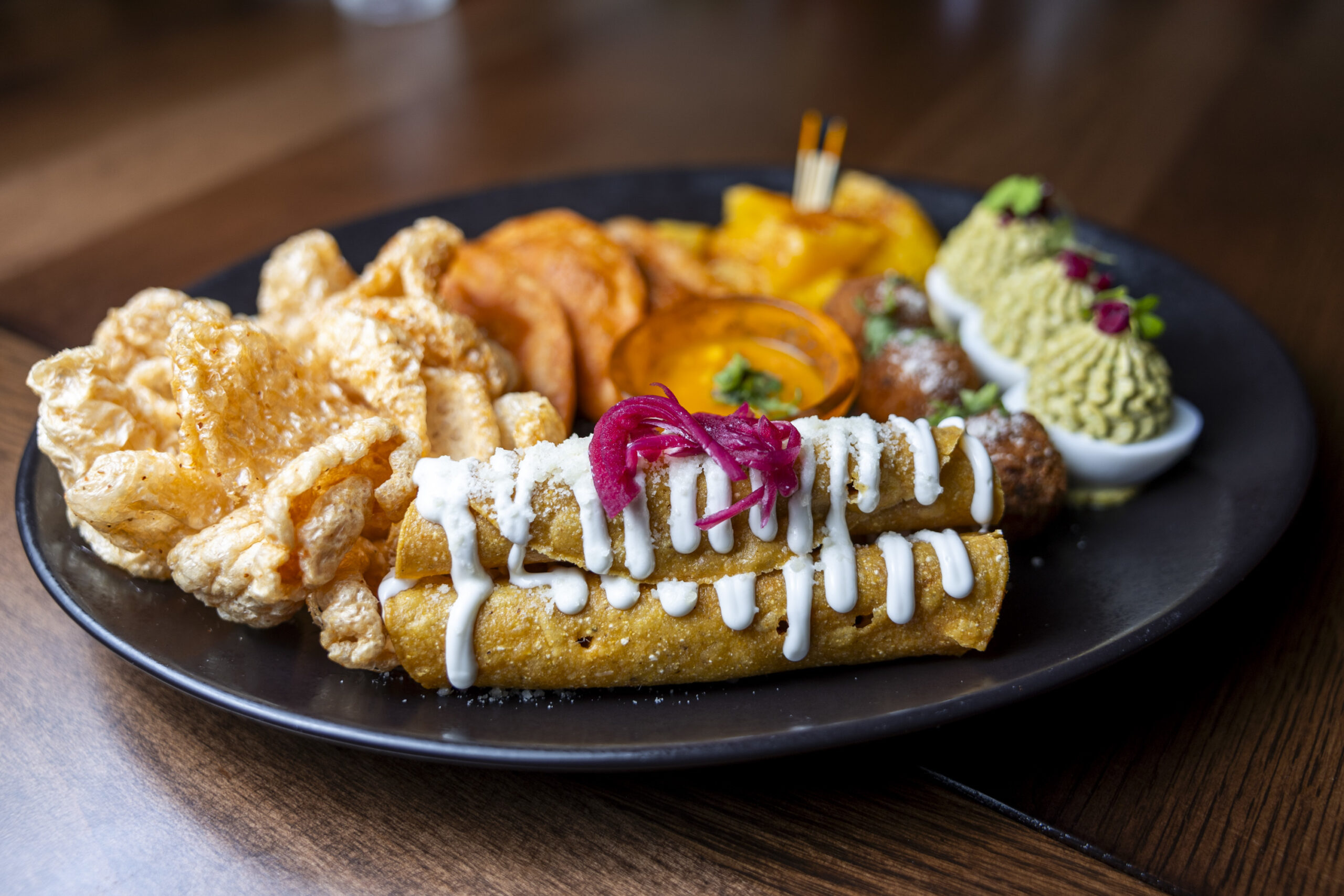
    A platter of taco dorados, huevos rellenos, croquetas, naranjas enchiladas, empanadas de mariscos, and chicarrones at Mi Vida in Philadelphia, Pa., on Thursday, Feb. 26, 2026.
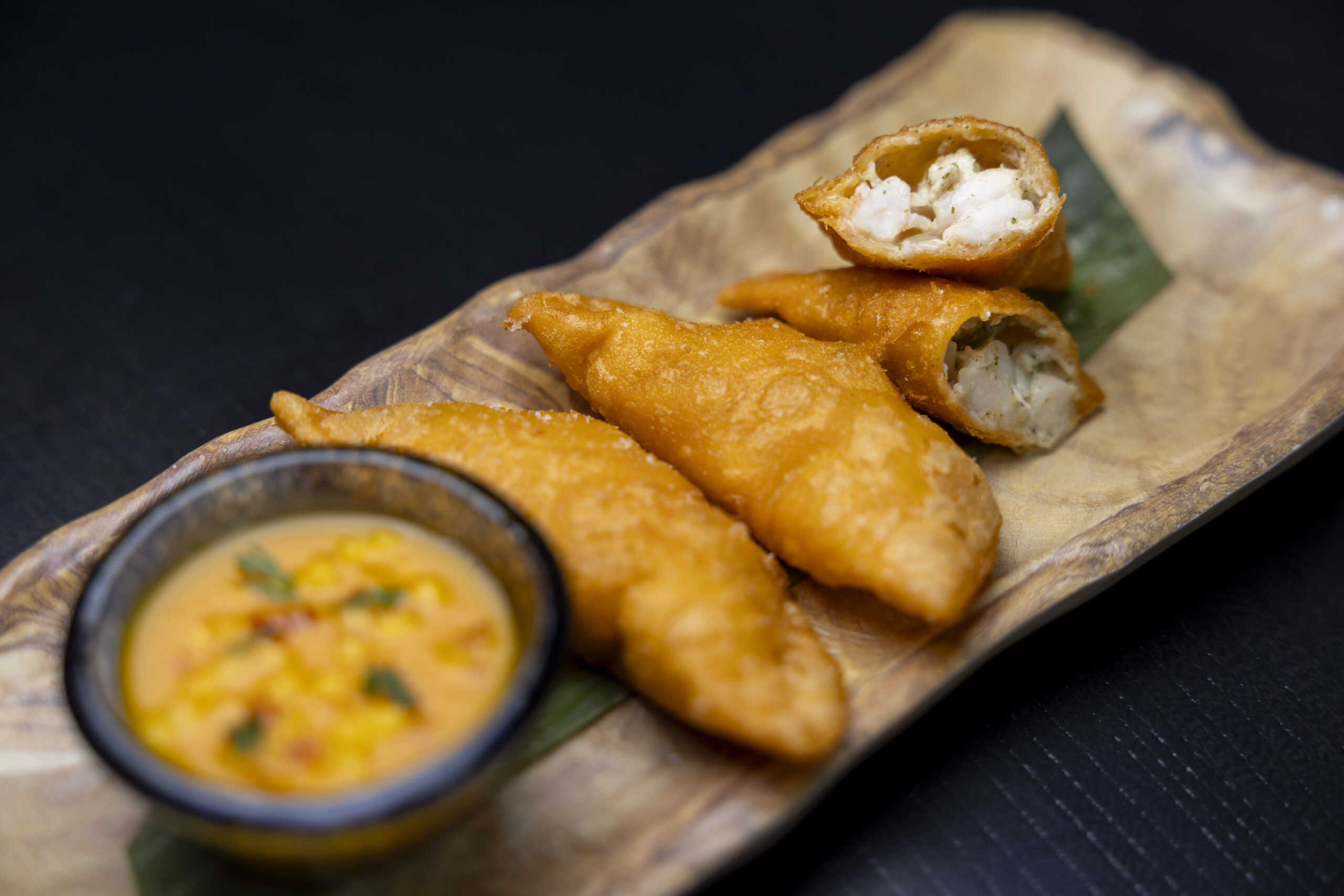
    Seafood Empanadas at Mi Vida in Philadelphia, Pa., on Thursday., May 21, 2026.

    There were some bright spots. The appetizer sampler brought an appealing platter of deviled eggs piped with fillings turned nutty green by pumpkin seed pipián, esquites croquettes, and seafood empanadas that were delicately crisped and bursting with a stuffing of sweet lump crab, ideal against the fruity heat of a mango-habanero salsa. A generous helping of chicharrónes piled overtop like crunchy clouds gave me hope this kitchen was ready to dive deep into true Mexican street food.

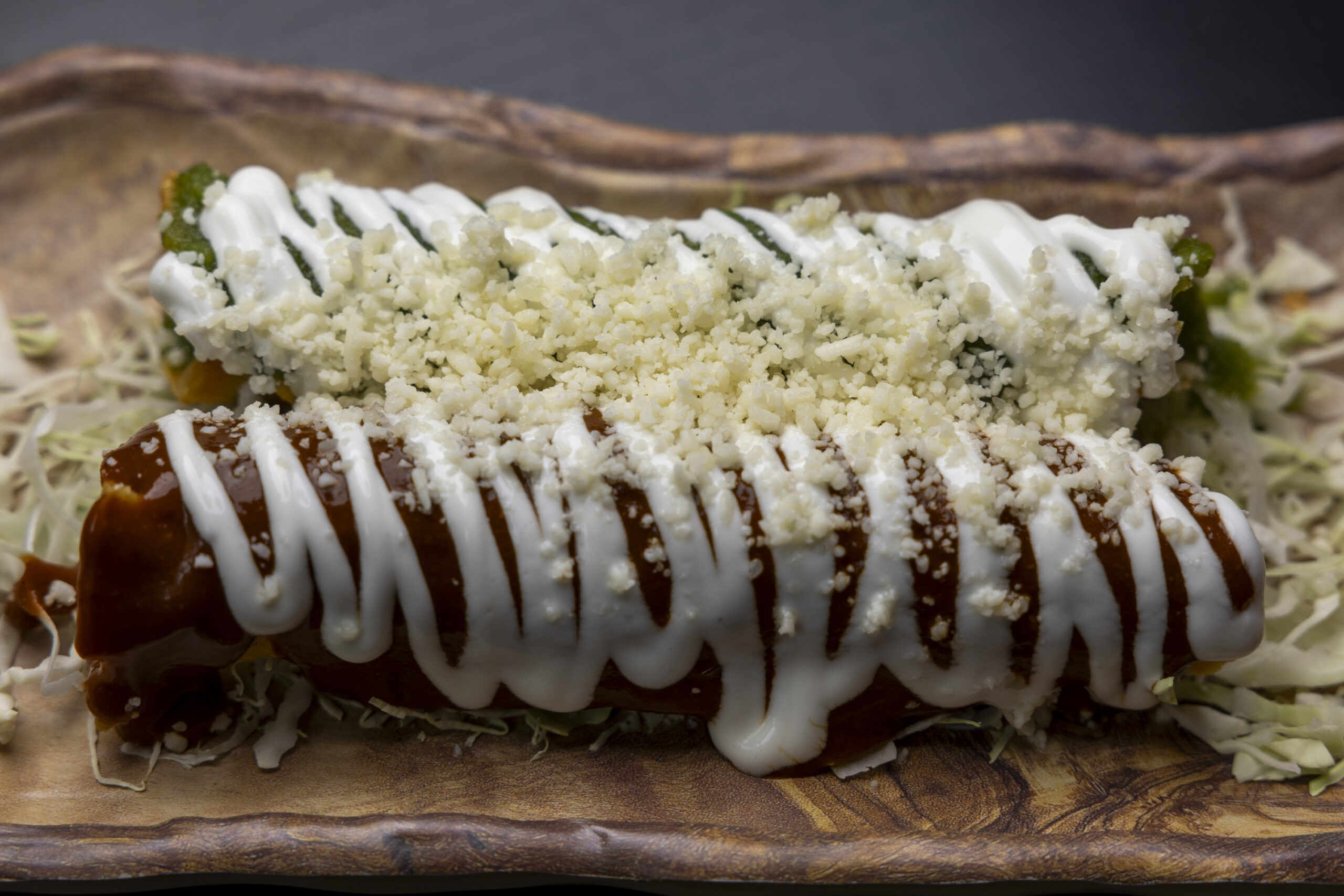
    It’s clear this kitchen is capable. The carnitas tacos were a vision of simplicity perfected, stuffed with juicy shreds of slow-braised pork, dusted with cilantro and onions, topped with a pale green drizzle of avocado salsa and the snap of more crushed chicharrónes. The beer-battered cod tacos were solid, though overwhelmed by an unwieldy slaw cut into chunky ribbons bigger than the tortillas themselves. A plate of chicken-stuffed tacos dorados was more successful, showcasing the contrasting salsas of a bracingly tart verde blending tomatillos and serranos and the smoky brown spice drawn from earthy pasilla de Oaxaca chilies.

    Tacos Dorados at Mi Vida in Philadelphia, Pa., on Thursday., May 21, 2026.

    But then came the gimmick of a smash cheeseburger taco, an overcooked patty welded to its tortilla on the plancha before it’s dressed in shredduce and a “pickle de gallo.” I went in hopeful, as someone passionate about both burgers and tacos, but the burger was so dry and overcooked it was a loveless marriage.

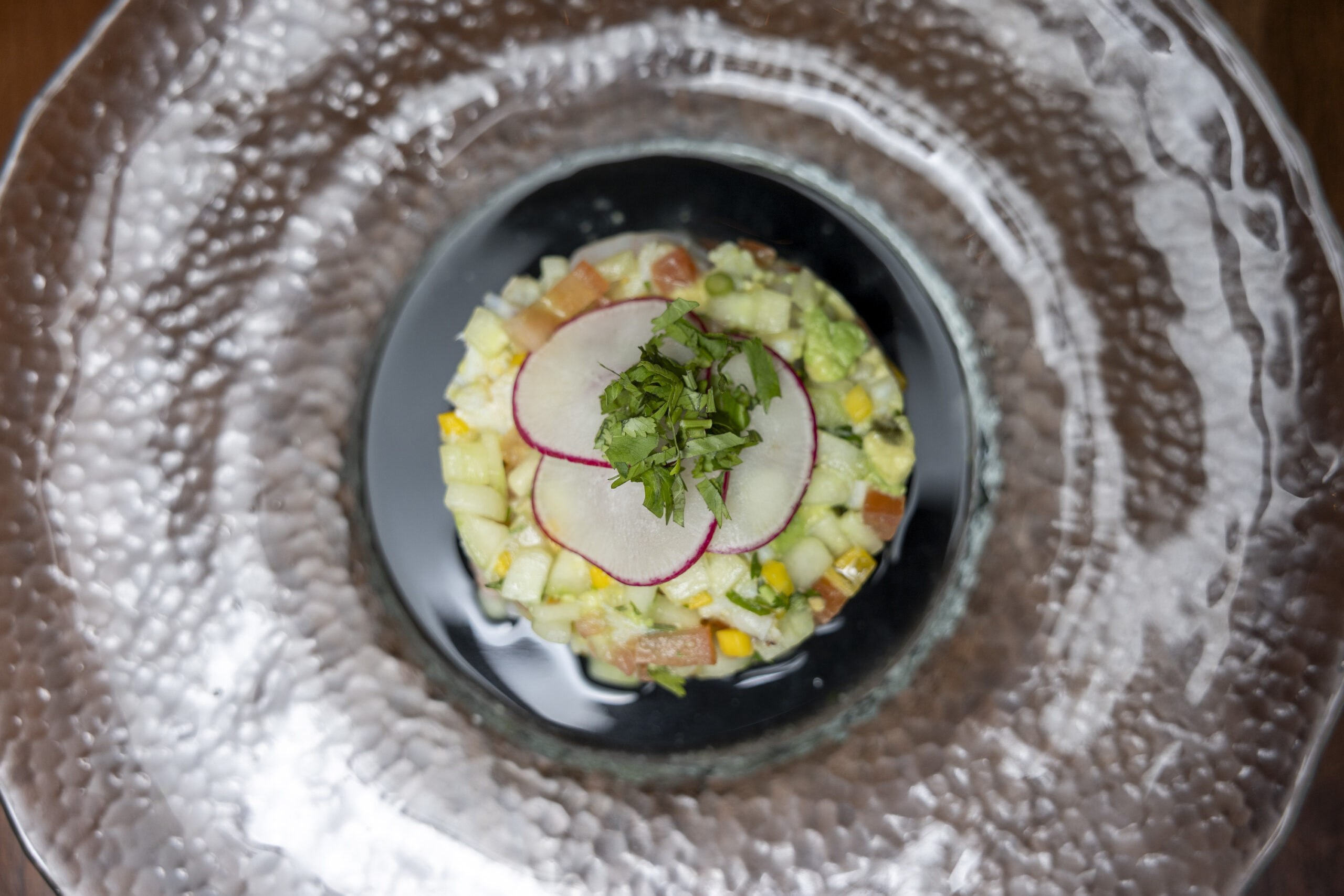
    There were some creative ideas that were absolutely delicious, especially those with vegetarian alternatives on traditionally meaty dishes, like the enchiladas stuffed with a coriander-scented mushroom, kale, and cauliflower blend that was complemented by a tomatoey salsa ranchera vibrant with ginger, guajillo chilies, and herbal epazote. The aguachiles, however, seemed to be driven more by the impact of colors than flavor, the strikingly black broth for one aguachile opting for the bland shortcut of activated charcoal for its pigment rather than the more traditional recipe of charred chilies and onions. The choice of beets in another aguachile overshadowed the taste of tuna.

    Aguachile tropical at Mi Vida in Philadelphia, Pa., on Thursday, Feb. 26, 2026.

    Mi Vida’s version of Oaxacan mole negro hit all the right notes — spicy, rich, subtly sweet, and layered with complexity. But why go to the trouble to make one of the world’s most time-consuming preparations only to pair it with enchiladas stuffed with brisket braised in smoky chipotle tinga sauce, a completely different and competing flavor? A great mole should be the star of the show.

    It wasn’t the only time this kitchen outsmarted itself with presentation. Covering the entire fajita skillet with molten cheese might sound novel, but the pasilla-marinated rib eye reposing atop that queso was robbed of the honor of arriving to our table with the ASMR sizzle of meat on metal. The steak itself was also a letdown, too fatty and with too little meat for $69. For that matter, the big tomahawk chop that arrived at our table as a flaming centerpiece for four was plentiful, but at $149, did not deliver a deep and lasting savor compared to other large format steak splurges I’ve ordered recently.

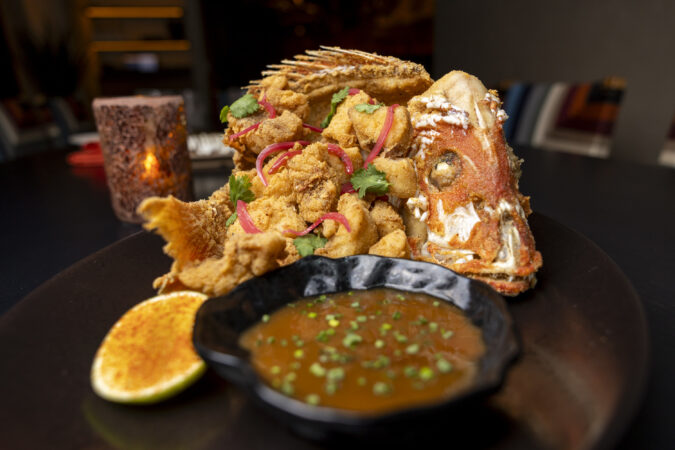
    Two other potential showstopping dishes stumbled on execution. A huge red snapper was deboned and cubed into masa-crisped nuggets that arrived cradled in the curve of its deep-fried skeleton beside a sweet-and-sour tamarind chili dip. The risky move of a double-fry method, however, left the fish overcooked. And “chewy” does not even begin to describe the texture of the big chamorro, a 1½ pound mallet of pork shank slow-braised in adobo broth then dropped in the fryer to crisp on the pickup. What finally arrived was so leathery and dark, I can’t even imagine what the first attempt looked like, given the chef had abandoned it for a second try, according to a manager who explained our plate’s delay.

    The bar at Mi Vida in Philadelphia, Pa., on Thursday, Feb. 26, 2026.
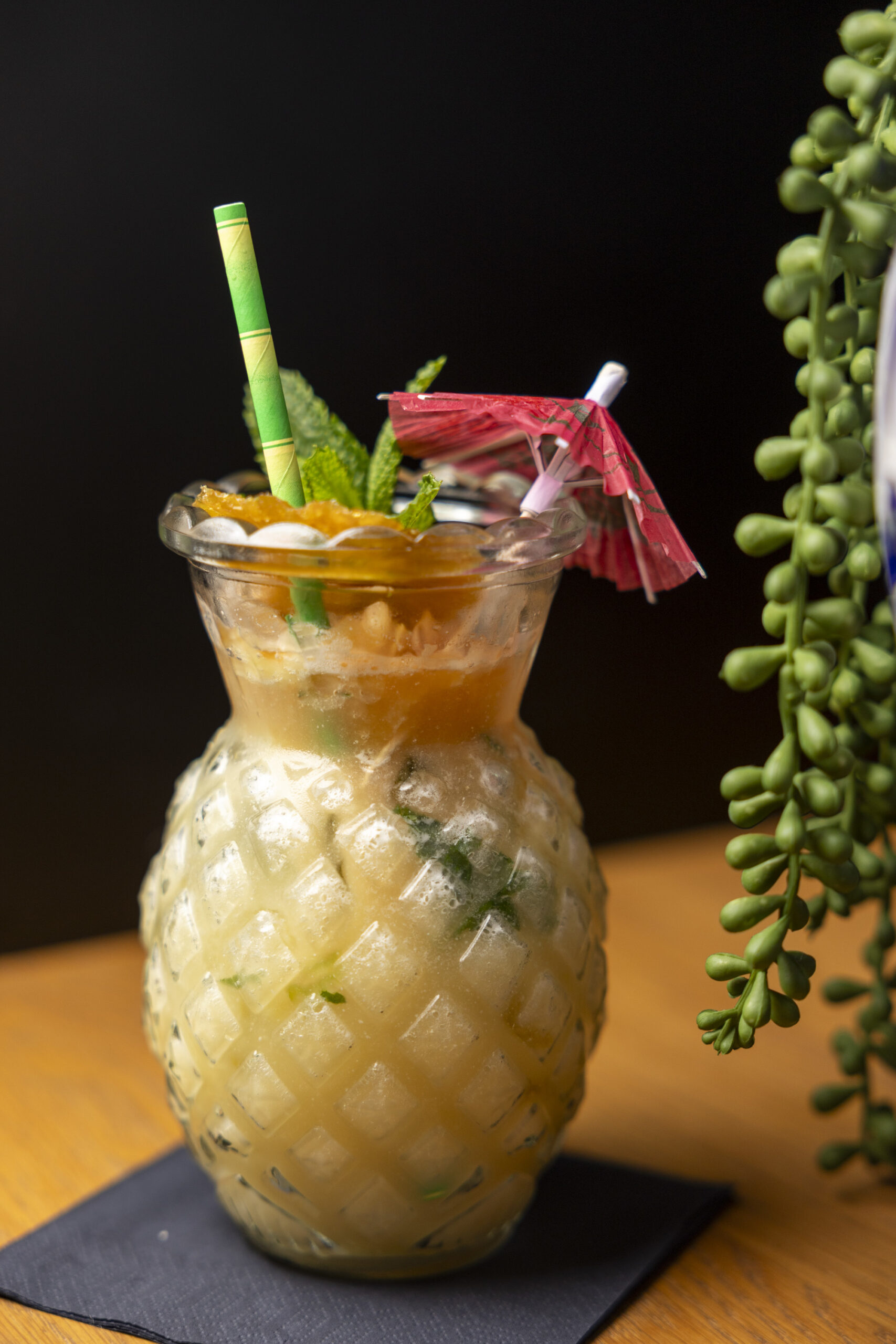
    The Piñada at Mi Vida in Philadelphia, Pa., on Thursday., May 21, 2026.

    We used that time to explore the drink list, which ably quenches any margarita cravings (try the apricot-tamarind variation called La Fiesta Dorada), and resort vibes cocktails such as the rummy Piñada in a pineapple-shaped glass. The impressive agave spirits list offers copitas for the serious sipper, such as my favorite, Fortaleza, or smoky Siembra Ancestral Blanco produced by Philly’s Suro family, along with several excellent mezcales, raicillas, sotol, and bacanora.

    By the time you get to dessert, tres leches and churros hit all the usual sweet notes. One pleasant surprise is the volcán de helados, Mi Vida’s take on the now trending sundae, covering cajeta, chocolate, and vanilla ice creams with guava sauce, pecan brownie bits, and pumpkin seed brittle that was a festive way to finish off an otherwise mundane meal.

    Based on Knead’s well-established success and significant investment, I can only hope this Mi Vida is just going through the growing pains of building a team in a new city. I have little doubt it will eventually find its niche as an easy destination for visitors and business groups. But with a Mexican dining scene in Philly that demands more than corporate flash to be impressed, this kitchen will need to level up considerably before it can become more than that.

    The Volcan de helados sundae with ice cream and pepita brittle at Mi Vida in Philadelphia, Pa., on Thursday., May 21, 2026.

    Mi Vida

    1150 Ludlow St., Philadelphia, Pa. 19107, 445-223-4875; mividamexico.com

    Lunch Monday through Friday, 11:30 a.m.-4 p.m. Dinner Sunday through Thursday, 4-10 p.m.; Friday, 4-11 p.m.; Saturday, 3-11 p.m. Brunch Saturday and Sunday, 11 a.m.-3 p.m.

    Tacos and enchiladas, $13.75-$21; entrees, $19.50-$69.

    Wheelchair accessible.

    About 80% of menu is gluten-free. There is also a dedicated gluten-free fryer to avoid cross contamination.

    Menu Highlights “Un Poco de Todo” app sampler (deviled eggs; esquites croquetas, chicharrones); crab empanadas; enchiladas rancheras and suizas; carnitas tacos; volcán de helados.

    Drinks An array of the usual margarita variations and colorful cocktails with a Mexican twist keep the meal festive. Check out the collection of 100-plus tequilas and nearly 50 mezcales.

    A dining table at Mi Vida in Philadelphia, Pa., on Thursday, Feb. 26, 2026.
  • Jalen Hurts needs another weapon. The Eagles need to prioritize one in the draft.

    Jalen Hurts needs another weapon. The Eagles need to prioritize one in the draft.

    Eight days out from the draft, and the biggest question of the offseason has yet to be answered.

    What is the Eagles’ plan for the post-A.J. Brown Era?

    This isn’t a question that you can shrug off. It would be just as pressing if Brown were guaranteed to return in 2026. He and Dallas Goedert almost certainly won’t be with the team in 2027 or beyond. Even if they are, they are highly unlikely to be anywhere close to the players they were when the Eagles’ offense was at its best. The chapters are short in the NFL. The pages must be turned.

    The story of this year’s draft better be the pass catchers. Even if the Eagles somehow think their passing game can tread water with Dontayvion Wicks and Marquise Brown as their second and third options out wide, and with a 31-year-old and clearly diminished Goedert at tight end, those aren’t long-term solutions. The Eagles desperately need to find at least one in this year’s draft after going four years without selecting a pass catcher higher than 152nd.

    A few points of emphasis:

    You don’t find a lot of franchise-level offensive tackles in the second half of the first round.

    Not since 2017 has a future All Pro tackle been drafted between picks No. 17 and 49. Even multiyear Pro Bowlers are few and far between. The Cowboys nabbed left tackle Tyler Smith at No. 24 in 2022. Before that, Garrett Boles was the biggest success story, going to the Broncos at No. 20 in 2017. Boles was the first offensive lineman off the board that year, thanks in part to a confluence of circumstances. Going before him were three quarterbacks, two unicorn running backs, and the first three members of a loaded cornerback class (Marshon Lattimore, Marlon Humphrey, Adoree’ Jackson).

    The Eagle know first hand how hard it is to find a fixture in the second half of the first round. The last two offensive linemen they drafted there were Andre Dillard and Danny Watkins. There simply isn’t a lot of logic in the idea that the Eagles will be prioritizing an eventual Lane Johnson replacement at No. 23.

    “If you’re forcing something, you’re not really filling the need anyway,” general manager Howie Roseman said on Tuesday.

    The Texans went 4-12 in 2020. And while Deshaun Watson put up the best numbers of his career — 4,823 yards, 33 touchdowns, seven interceptions, a 70.2 completions percentage — the game script had something to do with them.

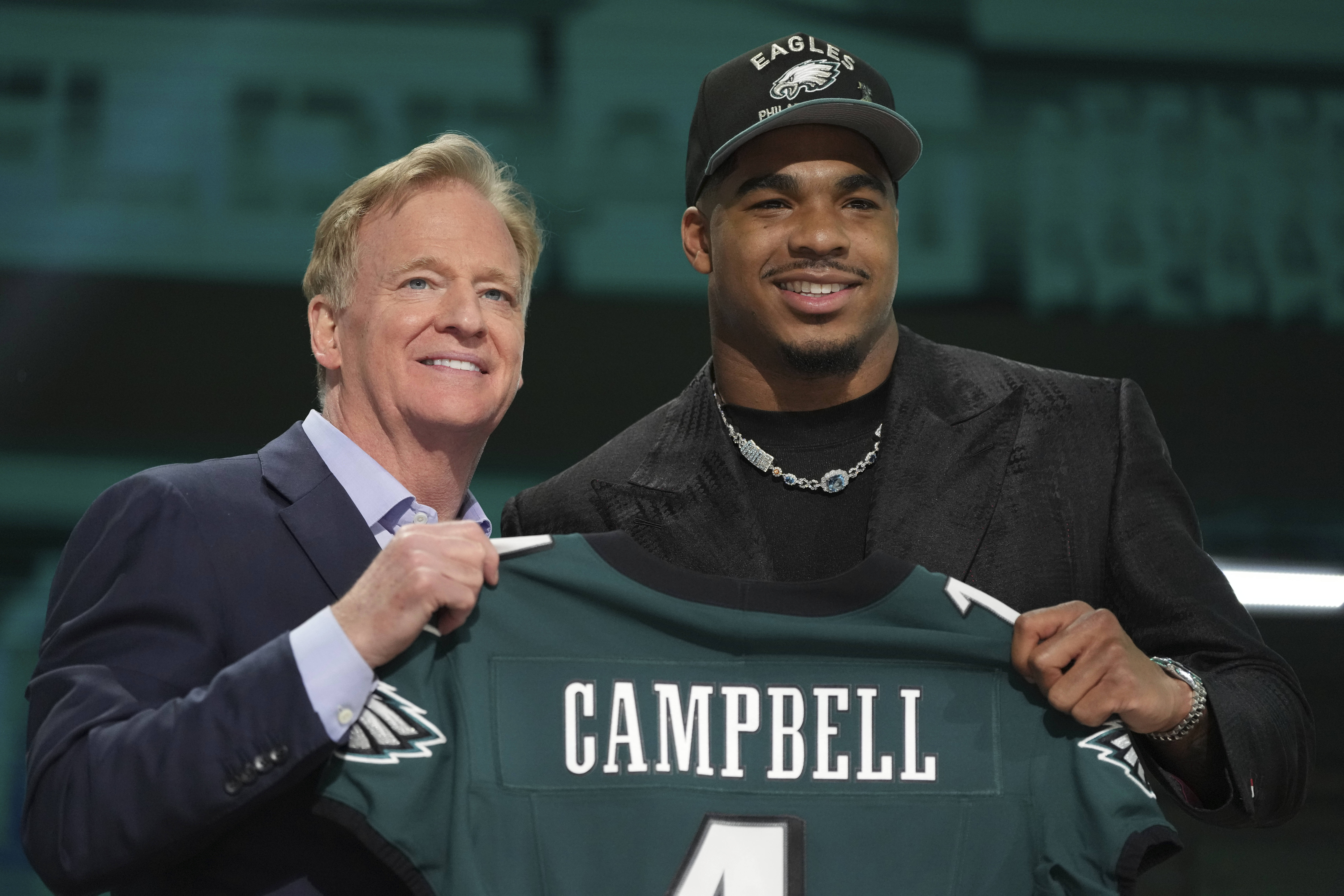
    Jihaad Campbell was the Eagles’ pick at No. 31 overall during the 2025 draft.

    The Eagles have spent a lot of draft capital on the defensive line over the last several seasons.

    Again, that’s not to say that they’d turn down an opportunity to draft an edge rusher they have graded as a potential elite talent who can start immediately. Chances are, anybody who fits that profile will be long gone by the time the Eagles are on the clock. They used the No. 31 pick on Jihaad Campbell last season. They drafted Nolan Smith at No. 30 in 2023. Of the last 11 picks that the Eagles have made inside the Top 115 overall, 10 have come on the defensive side of the football.

    Jalen Hurts is a quarterback who needs an elite weapon that a defense can’t shade coverage to on every play.

    DeVonta Smith counts as an elite weapon. But people need to pump the brakes on the idea that he is Jaxon Smith-Njigba in waiting. Several different media outlets have mentioned the construct in their reporting on the Brown situation. The theory goes something like this: with Brown gone, Smith will be better than he ever has been, similar to how Smith-Njiba blew up in 2025 after the Seahawks traded away D.K. Metcalf.

    The problem with that reasoning is that Metcalf’s departure was the least significant of three major variable changes in the Seahawks offense last season. The first two were a new quarterback and a new offensive coordinator.

    In fact, you might consider it four variable changes if you include Geno Smith’s departure in addition to Sam Darnold’s arrival. Jakobi Meyers’ decreased production year-over-year after Smith’s arrival at quarterback looks suspiciously similar to Smith-Njigba’s increased production in the wake of Smith’s departure. Meyers saw a 23% drop in his targets and a 36% drop in his receiving yardage on a per-game basis in his seven weeks with Smith compared to his 2024 output. And Meyers didn’t have to play in the shadow of Metcalf, either.

    The real yin to Smith-Njigba’s yang was Justin Jefferson. In 2024, he caught 103 passes for 1,533 yards with Darnold as starter. This, despite the presence of Jordan Addison, whose numbers were practically identical to Metcalf’s. Addison was still there last year. Darnold wasn’t. Jefferson caught 84 passes for 1,048 yards.

    A tidier summation:

    • Jefferson without Darnold vs. ’24: 13 less targets, 19 less receptions, 485 less yards.
    • Smith-Njigba with Darnold vs. ’24: 26 more targets, 19 more receptions, 663 more yards

    Fairly symmetrical, no?

    Smith-Njigba’s breakout happened because he had a quarterback who could make all of the throws, including those in traffic in the middle of the field. Hurts hasn’t shown to be that quarterback.

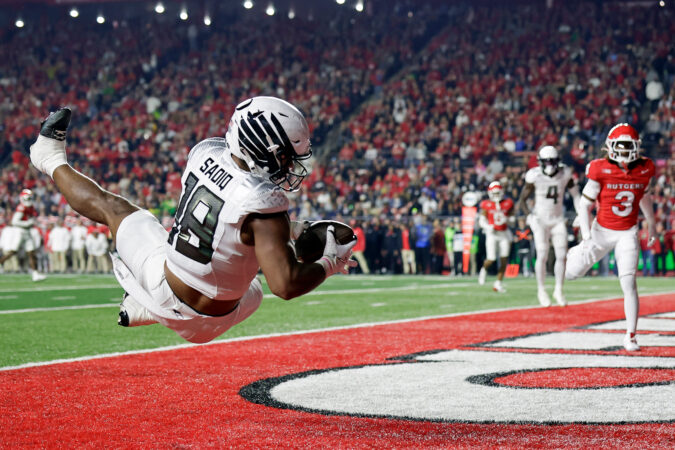
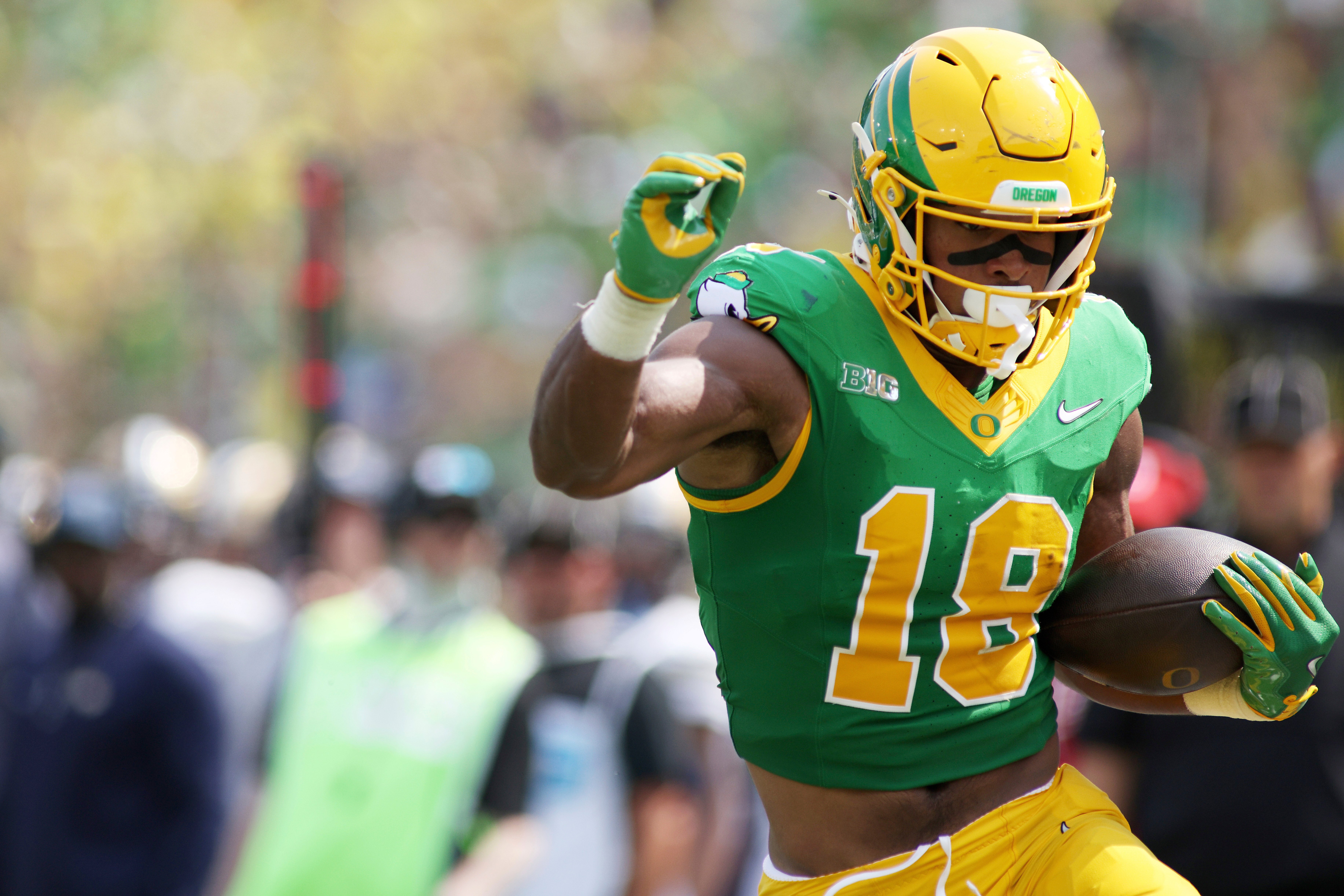
    Oregon tight end Kenyon Sadiq should be at the top of the Eagles draft board. But don’t bet on him falling close to their range.

    I’m still a bit puzzled that the majority of mock drafts have Sadiq falling into the second half of the first round. He is a physical specimen who tested off the charts at the combine. The only guy in his class over the last 20 years was future All-Pro Vernon Davis. The college production wasn’t eye-popping, but it also wasn’t much different from Colston Loveland, who went 10th overall to the Bears last season. All it takes is one team higher than the Eagles to fall in love with him. I’ll be surprised if he falls beyond No. 15.

    Oregon’s Kenyon Sadiq is the top projected tight end in the NFL draft.

    That being said, if the Eagles somehow find a way to get themselves in position to draft Sadiq, they would have a tidy answer to their question of where to go after Brown (and Goedert). Sadiq is the one player in this draft outside the projected Top 5 who has the potential to immediately fix a lot of the Eagles’ offensive question marks, run-blocking included.

    Even if Sadiq isn’t an option, the Eagles have good reason to hope they can nab a player who can help them in both the short and long-term.

    Neither Texas A&M’s K.C. Concepcion nor Alabama’s Germie Bernard profile as the sort of outlier that Brown is/was. But both have skill sets and polish that would pair nicely with DeVonta Smith. Both are players who could exploit whatever attention defenses pay to Smith. Concepcion has a lot of Stefon Diggs to his profile, while Bernard looks like a potential Deebo Samuel with the frame and rushing ability to go with his hands. I’ve seen a few mock drafts that have Bernard on the board when the Eagles pick at No. 54. That would be a stroke of luck on the level of Cooper DeJean.

    The moral of the story is simple. The Eagles can’t afford to force a pick at any position. But they also aren’t in a situation where they can afford to go purely for the best player available. They need to factor in their future salary cap and talent distribution. You can’t have too many All-Pro cornerbacks, but you can have too many who you need to pay.

    Further, you can have too few players at positions that have shown themselves to be just as important to the Eagles’ success over the last several seasons.

    Roseman shouldn’t get trapped into picking the best pass-catcher available. But he does need to hope a viable one is there.

  • Sixers are fully healthy for a stretch run. Eagles, Phillies, and Flyers look good, too

    Sixers are fully healthy for a stretch run. Eagles, Phillies, and Flyers look good, too

    It’s never fashionable to be optimistic about sports in Philadelphia, but at this moment, convention be damned.

    It’s been maybe 16 years since all four Philadelphia teams provided as much near-future hope as they provided in a 24-hour period between Wednesday night and Thursday night.

    The Sixers won, then the Eagles got great news, then the Phillies won, then the Flyers won. Hurrah.

    I understand the reluctance to embrace this wellspring of positivity, and I realize that everything could go south with the next twinge in Joel Embiid‘s knee. But hope springs eternal, and it’s only been a week since spring has sprung, so enjoy the warmth of the weather and the moment.

    Nothing happened Friday, so Philly entered the weekend on an unaccustomed high.

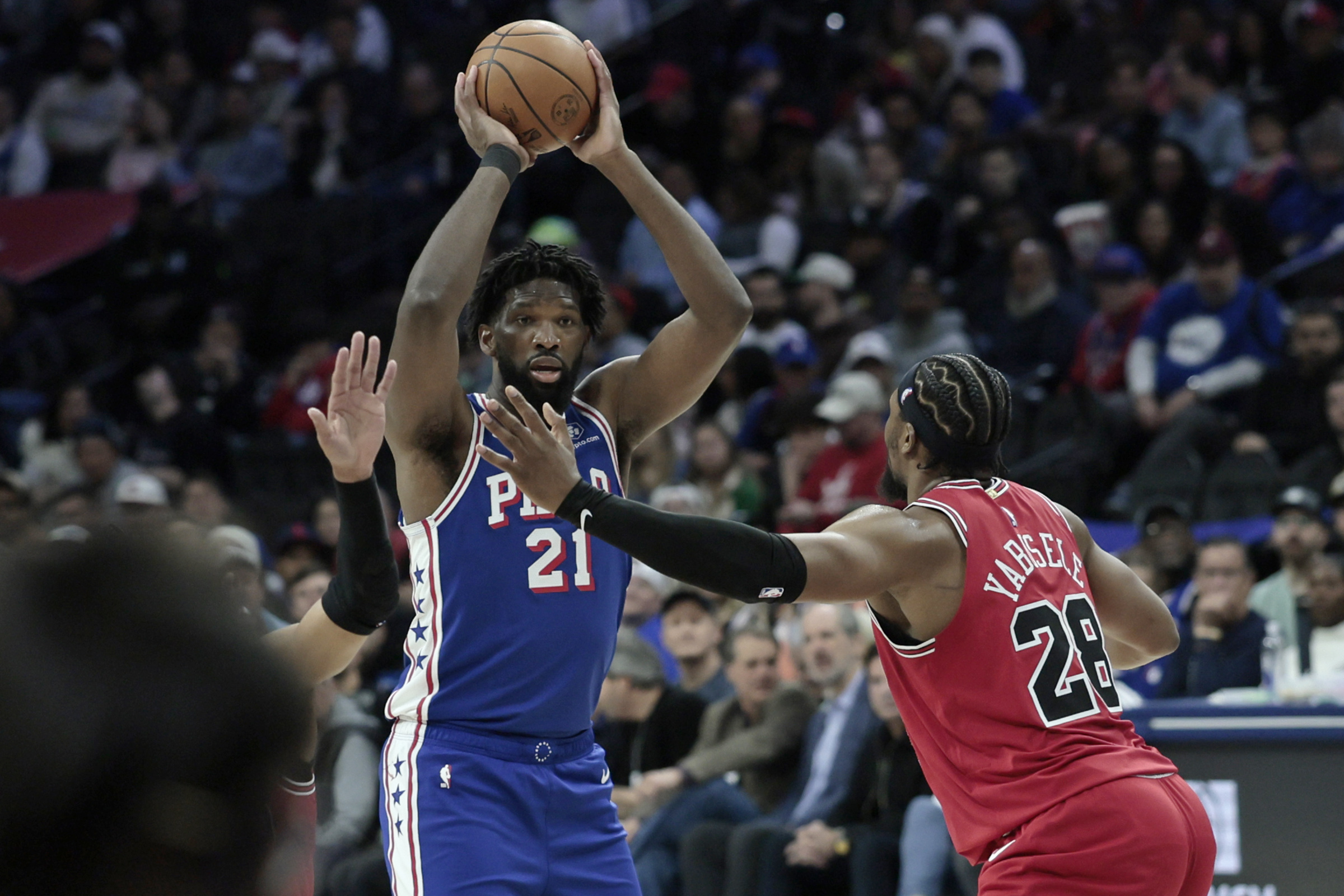
    On Wednesday, the Sixers beat the Bulls by 20. They scored 157 points, their most in 56 years. They did it without their best player, Tyrese Maxey.

    The Flyers beat the Blackhawks and did it without their best, or at least their most important player, Dan Vladař.

    Sixers

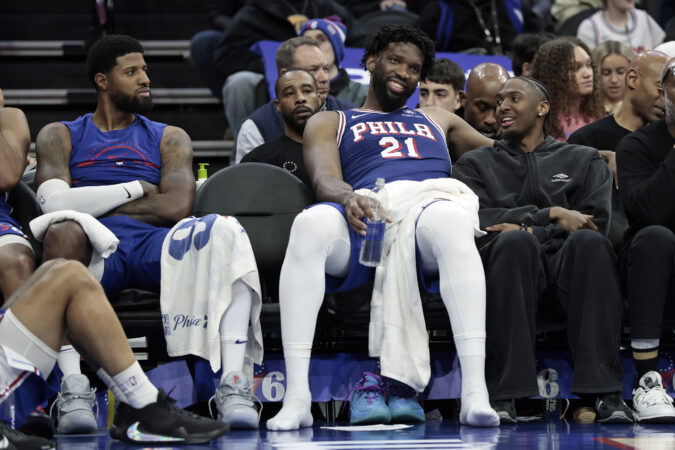
    The Sixers went first, and best. Granted, the Bulls are 14 games under .500, but Paul George, in his return from a 25-game suspension for violating the NBA’s antidrug policy, looked like he’s 25, not 35, for one game at least. Embiid seemed to realize his limitations, in that he didn’t play like a freshman trying to make varsity.

    More than anything, though, rookie VJ Edgecombe, the franchise’s most exciting true rookie since Allen Iverson, took his latest step forward. In his last four games — all without Maxey and the first three without Embiid and George — Edgecombe averaged 29.3 points, 8.0 rebounds, and 6.3 assists. He shot 54.8% from the floor and hit 48.4% of his three-pointers.

    Considering the abysmal state of the Eastern Conference — Detroit’s Cade Cunningham is injured, the Celtics are flawed, the Knicks are a mirage, and the Cavaliers have James Harden — a fully fortified Sixers lineup can beat almost anyone.

    Joel Embiid returned from a 13-game absence in the Sixers’ 20-point win on Wednesday.

    Maxey and Kelly Oubre Jr. also returned Saturday.

    Sixers coach Nick Nurse was so happy about the previous and imminent returns that he actually smiled after Friday’s practice.

    “I’m certainly more optimistic now,” said Nurse, who considers the recent dependency on reserves as building depth that otherwise would not exist. “If you add all those things up — other guys getting valuable growth, and these guys coming back — the sum of all of that together could be pretty good.”

    Edgecombe might wear down, but the other four starters should be fresh.

    “Definitely got some good rest,” said Maxey, who leads the league at 38.3 minutes per game.

    Again, with this assemblage of vanity and fragility, anything can happen. The Sixers are scheduled to visit the surging Hornets on Saturday and the dangerous Heat on Monday, which will provide a better sense of where this team is right now.

    Birds

    The Eagles struggled last season mainly because of injuries along their offensive line, the best unit during their 13-year run of relevance. Early Friday afternoon, news broke that Pro Bowl center Cam Jurgens was saying the stem cell treatments on his back were already working.

    Left guard Landon Dickerson, who went to three straight Pro Bowls before last season, also had stem cell therapy on his knees and ankles.

    Right tackle Lane Johnson last week told the Fitz & Whit podcast that the sprained foot that ended his season in mid-November is fully recovered.

    All this means that the Eagles will be better. Period.

    Phils

    On Thursday evening, the Phillies beat the Rangers on opening day, and they did it without their best player, Zack Wheeler.

    Cy Young Award runner-up Cristopher Sánchez, who signed a $107 million extension last week, pitched like it.

    Kyle Schwarber hit a home run for the third time in five opening days since joining the Phillies.

    Justin Crawford had two hits in his big-league debut in front of his father, Carl, a former All-Star.

    There’s more.

    Wheeler, who had a rib removed to address thoracic outlet syndrome, was scheduled to begin a 30-day rehab stint on Saturday — 60 days early.

    Last year’s cleanup hitter, Alec Bohm, batting cleanup on opening day, hit a three-run homer, a few weeks after Bryce Harper opened spring training by ripping last year’s cleanup hitters. Bohm did this on the day news broke that he’s suing his own parents for ripping him off.

    Andrew Painter, who lost two seasons to elbow surgery then stunk in triple A in 2025, gave up just three runs in four starts in spring training. He’s scheduled to pitch Tuesday against the visiting Nationals.

    Flyers

    The Flyers are 10-3-1 in their last 14 games. With 82 points they’re unlikely to make the playoffs — they trail the last wild-card spot by five points and have to get past three teams — but they’re playing very good hockey, and with 11 games to play, they could reach the 90-point mark for the first time since 2018. Second-year talent Matvei Michkov has matured. Vladař and veteran defenseman Rasmus Ristolainen are under contract through next season.

    And it might be next season before the Flyers really matter.

    However, for the rest of the teams, the time is now.

    Right now.

  • From pitching to grilling, ‘Andy’ Painter is (finally) ready to cook for the Phillies

    From pitching to grilling, ‘Andy’ Painter is (finally) ready to cook for the Phillies

    So, you say you want to get to know Andrew Painter better?

    Ask him about pickleball.

    No, wait, not just about the paddle game, which the Phillies‘ best pitching prospect in 20 years enjoys playing after offseason workouts in South Florida. Get him to explain his “signature move,” Spencer Stockton teases, and well, how do you not take that bait?

    “I had the ‘skyball,’” Painter says.

    The skyball?

    “I just hit it up real high,” Painter continues, leaving out the part about yelling “Skyball” at the top of his lungs. “You can ask [Jesús] Luzardo about it. He never returned it. It wasn’t always in. No one ever figured out how to hit it. It was out of bounds most of the time.”

    A trick serve that borders on the absurd and has little chance of actually landing inside the lines? It’s goofy. And quintessentially Painter, scheduled to make the most highly anticipated major-league debut by a Phillies pitcher since Cole Hamels on Tuesday night at home against the Nationals.

    He goes by Andrew on the mound but Andy around friends and peers, most of whom describe him with a common adjective: “happy-go-lucky.” That characterization applied even last October, according to Stockton, who didn’t know what to expect when Painter walked back into Cressey Sports Performance in Palm Beach Gardens, Fla., where many major-league pitchers train in the offseason.

    Phillies fans have heard about Painter for years, since he dominated three levels of the minor leagues in 2022. In 2023, at age 19, he was competing in spring training for a rotation spot — and probably would’ve made the team — when he tore a ligament in his elbow. Rest and rehab didn’t work. He had surgery four months later.

    It was 15 months before Painter would pitch in a game. And after he overpowered hitters for six weeks in 2024 in the Arizona Fall League, Phillies president of baseball operations Dave Dombrowski, who likened Painter before surgery to Justin Verlander, infamously said the 6-foot-7 righty might be ready for the majors by last “July-ish.”

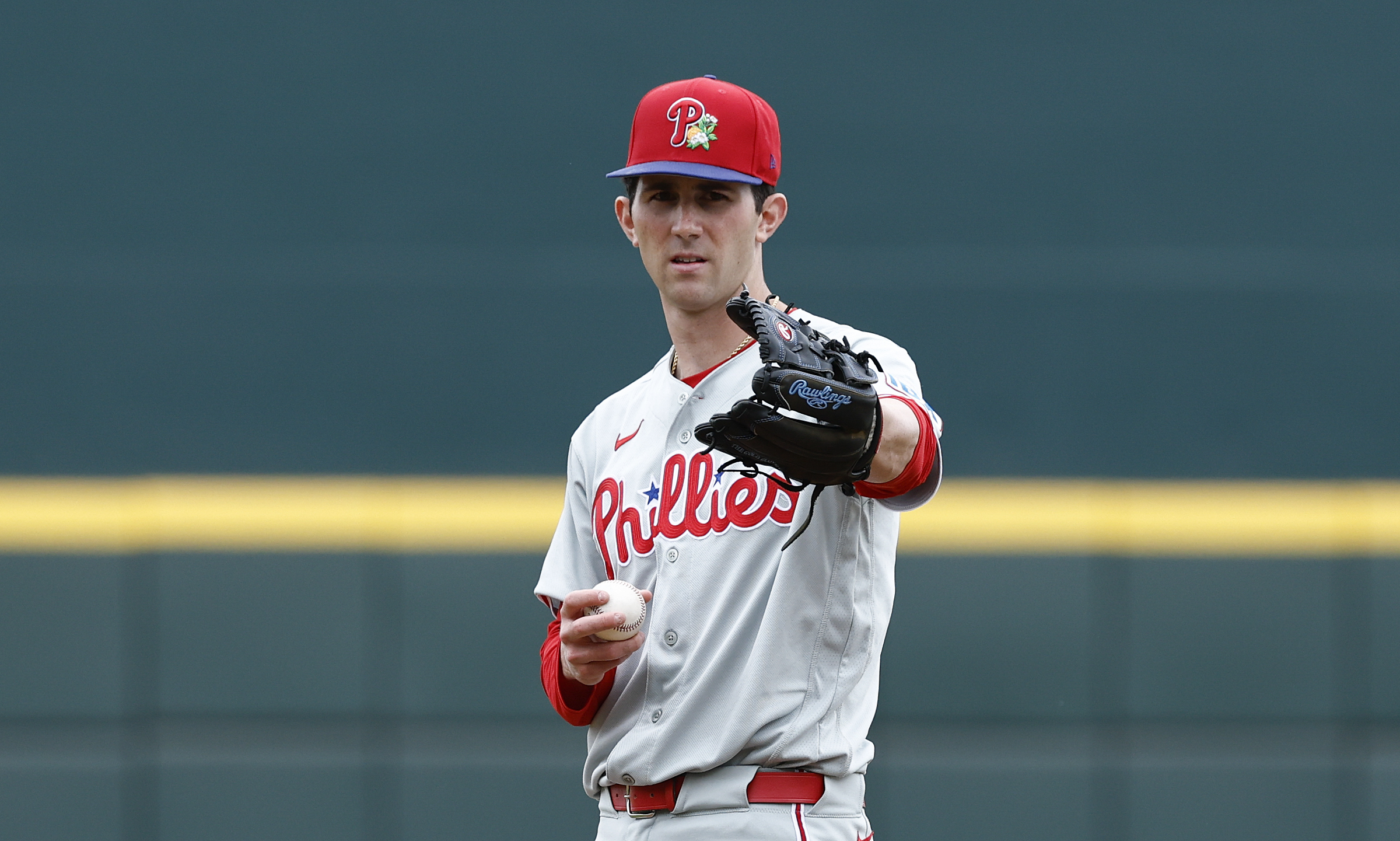
    Phillies pitcher Andrew Painter had a 2.31 ERA in four spring starts.

    But Painter struggled in his first exposure to triple A. Like most pitchers who are returning from Tommy John surgery, his fastball command came and went. His arm angle dipped. He made 22 triple-A starts, not missing any, but posted a 5.40 ERA.

    “July-ish” turned into, well, nothing. Painter made his final triple-A start on Sept. 17 and went home once the season ended.

    Stockton, a former minor-league pitcher with the Reds and now a coach at Cressey, didn’t know what frame of mind his former pickleball partner would be in when he got there.

    “I expected him to be maybe a little morose about what had happened,” Stockton said by phone. “I assumed he was probably going to be a little disappointed. But it was kind of the opposite. He was very driven and very realistic about what happened.”

    And now, at last, Painter is ready for his close-up.

    When he finally takes the mound in Citizens Bank Park, it will be 1,126 days since Painter’s ill-fated spring-training start in 2023 and 980 since his surgery — and 10 days shy of his 23rd birthday. Painter will still be the youngest pitcher to start a game for the Phillies since Ranger Suárez on Aug. 16, 2018.

    Maybe some of the prospect shine has dulled since Baseball America named Painter as the best pitcher in the minors in 2022. But the expectations are every bit as grand as ever.
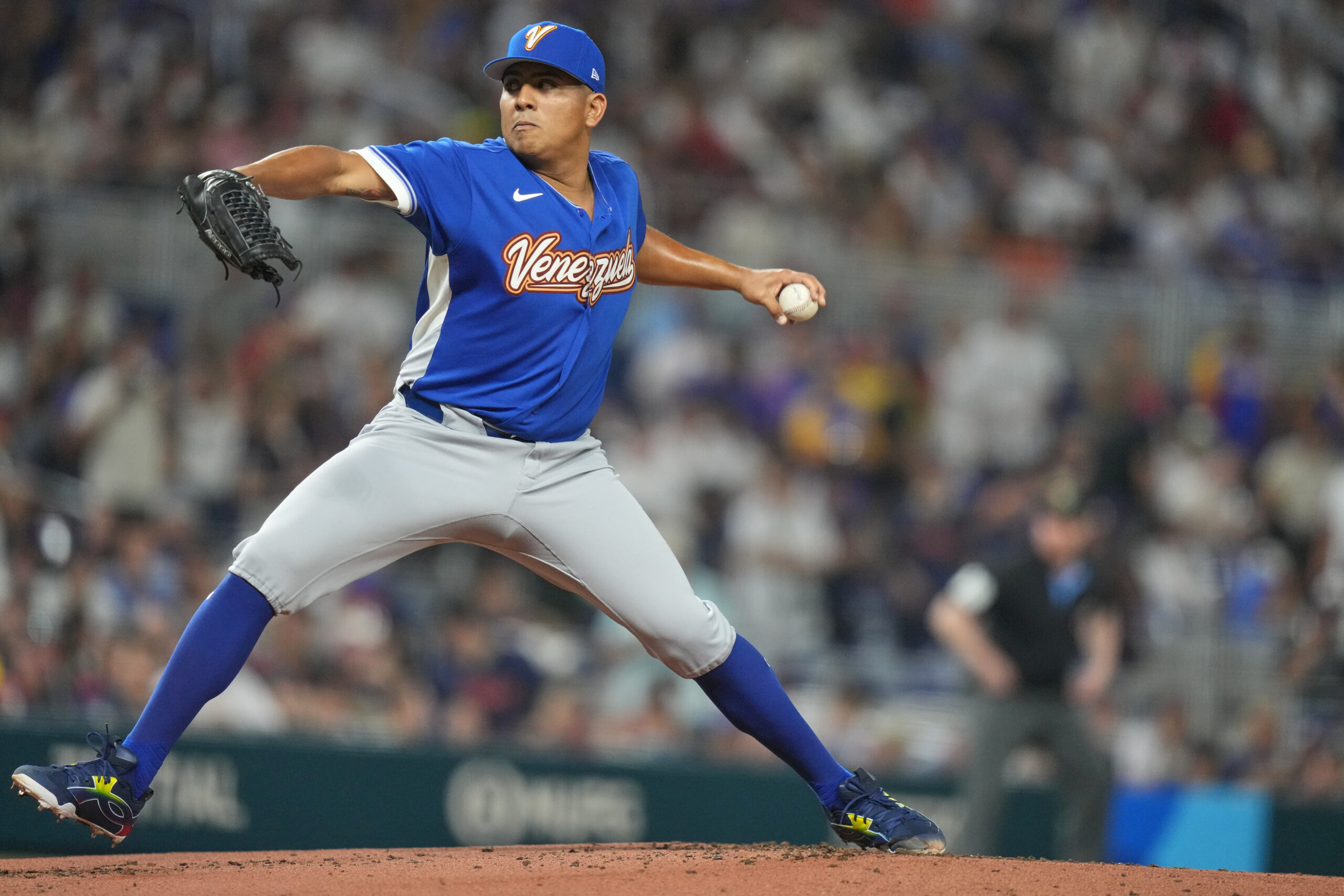
    “I’ve always followed him because he’s a friend of the family,” said former Phillies manager Joe Girardi, whose son, Dante, played with Painter in high school. “Andrew went through somewhat of a traumatic experience, where he had to rehab his elbow and deal with a lot. It’s great to see him back. We’re pulling for him.”

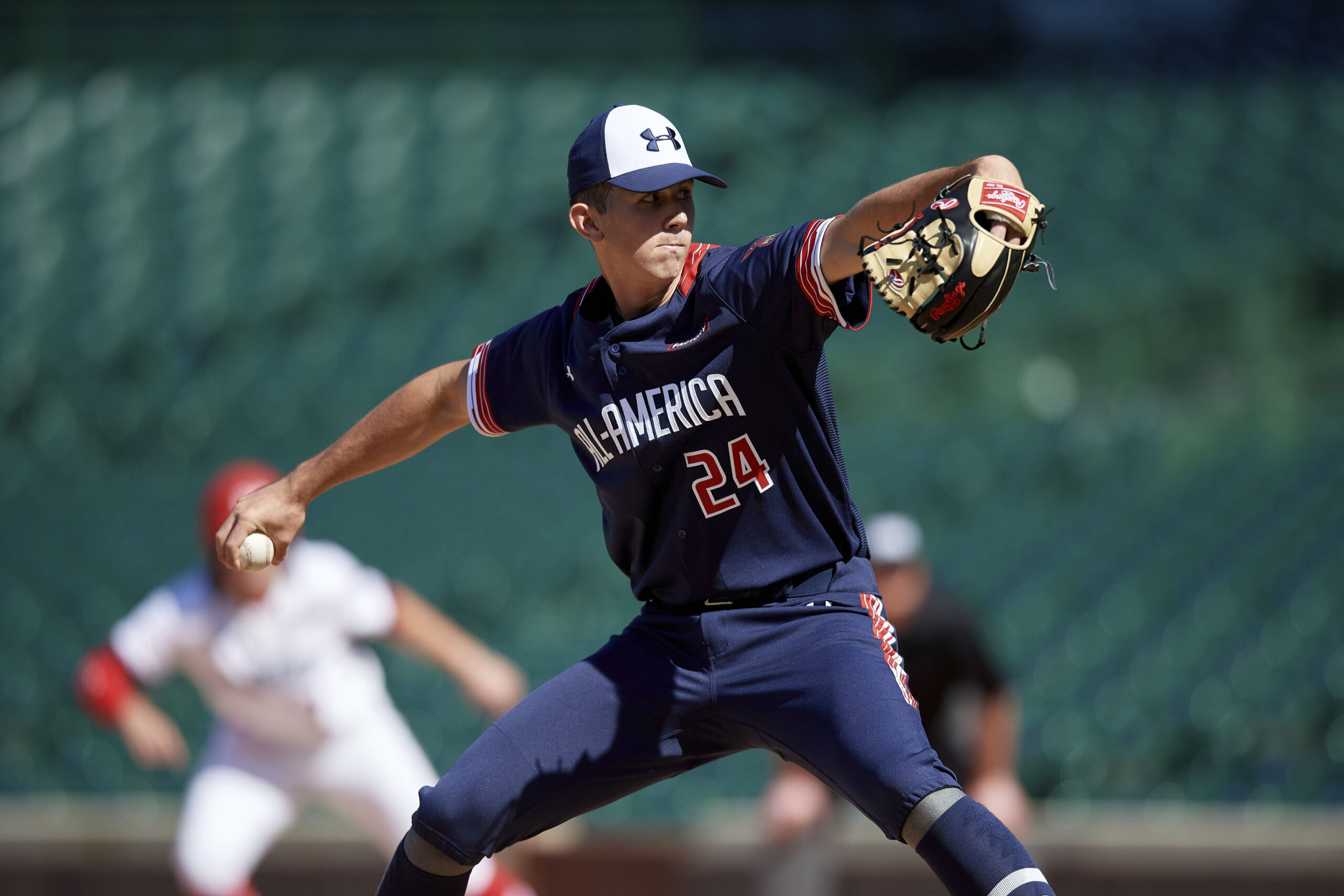
    Andrew Painter, who pitched in the Under Armour All-America Game in 2019 at Wrigley Field, was a high school star in Florida.

    The rise

    Painter pitched in high school at Calvary Christian Academy, a powerhouse program in Fort Lauderdale. As a freshman, he was the No. 4 starter in a rotation that included future Mets right-hander Christian Scott.

    It wasn’t long before Painter moved up the ranks.

    The talent was overwhelming. Girardi recalled attending a tournament at USA Baseball’s headquarters in Cary, N.C., in 2018. Painter faced a team from Mississippi and took a perfect game into the sixth inning.

    “I looked at [his wife] Kim, and I said, ‘There’s a first-round pick in waiting,’” Girardi said by phone. “It was 90 mph; four pitches. He could command them all. He was thin. He hadn’t filled out yet. But there was just so much potential there. You could just see that he was going to be special.”

    Yet Painter seemed unfazed by it all. He took baseball seriously, especially while he was on the mound. But around friends and teammates, he didn’t take himself seriously.

    To wit: Painter, who towered over most teammates, walked into the high-profile National High School Invitational in North Carolina with a Kermit the Frog backpack slung over his shoulders, former Calvary Christian coach Alan Kunkel recalled.

    Girardi remembered Painter begging the coaches to let him hit in batting practice. He shagged fly balls in the outfield with such zeal that Girardi would utter, “Please don’t get hurt.”

    “You saw Andy’s comedic side early,” Kunkel said by phone. “Andy’s always been pretty low-key and shy and just kind of quirky and very funny, very witty. But he’s never wanted to be the guy that’s drawing all the attention.”

    Indeed, Painter will talk forever about college football (he’s a Florida Gators fan) or video games, or his adventures in posting up Max Scherzer in a pickup basketball game after workouts at Cressey. He just isn’t about to post his pitching clips on Instagram.

    Never mind that he was well-known in the South Florida high school baseball world. Luzardo, a prospect in the Nationals’ farm system at the time, heard of Painter and recalls watching him in high school. People would inevitably notice him — “It’s not like you can miss him, man, at 6-6, 6-7,” Kunkel said — but not because he drew attention to himself.

    “We live in a very vain time where, man, it’s hard to find supercompetitive kids that are willing to just grind and put in the time and not care who gets credit for it,” Kunkel said. “Andy is one of those kids. Andy has never cared about the vanity of the sport, or cared about being posterized or put on social media. He’s just wanted to be a big leaguer and just continue to compete.”

    Andrew Painter can appear laid back, but he’s “no more, no less of a competitor than the most competitive kid that I’ve ever coached,” said Alan Kunkel, his former high school coach.

    At times, Kunkel said Painter’s laid-back demeanor would create the wrong impression. Pro scouts often asked about his competitiveness. Kunkel was there to offer reassurance.

    “He’s no more, no less of a competitor than the most competitive kid that I’ve ever coached,” Kunkel said. “I always said he’s got the heart rate to be a surgeon or to be a big league pitcher. Ninth inning, World Series moment, I don’t know that that would bother him any more than having to perform heart surgery on somebody for people who have the talent and drive to do that.”

    The Phillies got several up-close looks at Painter in high school. In addition to area scout Victor Gomez, who attended almost all of Painter’s starts in a 12-month span leading up to the draft, amateur scouting director Brian Barber saw him pitch five times in the summer of 2020 and twice in the spring of ‘21.

    Oh, and they had plenty of inside information on Painter. Girardi was managing the Phillies in 2021. Brian Kaplan, whom the Phillies hired after the 2021 season as director of pitching development, coached Painter at Cressey Sports.

    The only question, it seemed, was whether Painter would still be on the board when the Phillies made the 13th overall pick.

    “I do remember going into that morning [of the draft] thinking, if you had me guess on who we were going to take, it was going to be Andy Painter,” Barber said. “I thought he had a chance to get there, and I knew if he was going to get there, we were going to take him.”

    It was the second consecutive year that the Phillies drafted a high school pitcher in the first round. On Aug. 6, 2022, Mick Abel and Painter started back-to-back in an A-ball doubleheader in Lakewood, N.J. Abel allowed three hits and three walks and struck out eight in six scoreless innings. Painter one-upped him across the board: two hits, one walk, 11 strikeouts in seven scoreless innings.

    “The guy is just an alien,” Abel said a few days later. “He’s awesome.”

    Andrew Painter’s parents and new fiancée will be at Citizens Bank Park on Tuesday for his major league debut against the Nationals.

    The return

    Imagine being 19 years old and “on a rocket ship to what looked like superstardom,” as Barber put it. Now imagine having it taken away.

    How would you cope?

    Painter became a grillmaster.

    “He kind of ventured off and learned how to cook and enjoyed testing out new types of meats and things of that nature,” Kunkel said. “My man was researching seasonings; he was researching meat types. He’s very proud of his cooking arsenal right now.”

    Last season left a sour taste in Painter’s mouth. He got through it healthy, which was the most important part. And there were restrictions. For example, he wasn’t allowed to long-toss from beyond 120 feet.

    But upon returning to South Florida, Painter was energized by the idea of a normal offseason. He got together with Stockton and Phillies assistant pitching coach Mark Lowy, who previously worked at Cressey Sports, to dig in on why triple-A hitters slugged .585 against his fastball last season.

    Among their discoveries: Painter’s arm slot dipped from its presurgery position, which impacted the shape of his heater. The Phillies identified the issue during the season but were cautious among making changes in a competitive environment.

    “He got into some subpar throwing positions, but he was athletic enough to still throw 100,” Stockton said. “When things go wrong and you’ve never struggled, you start to throw things at the wall that maybe aren’t necessarily the best things for you. I think that’s kind of what he ran into last year, and it was like, ‘Well, how do I fix it?’”

    Start by long-tossing from greater distances. There were other drills, too. Stockton gave Painter a red, 6-pound ball and had him throw it as hard as he could from the mound, then do the same with a regular ball. As the shape of his fastball returned, the usual movement came back, too.

    Painter and Luzardo worked out together six days a week with Stockton beginning in November. Painter worked on his changeup, which he threw a lot, especially to righties, in spring training. He worked on separating his sweeper from his traditional slider. He also lost about 15 pounds to get back to 225.

    But Stockton noticed something else about Painter.

    “He was just very motivated to get going from Day 1,” he said. “It’s a testament to how far he’s come. When he was 18-19, even when he was in high school and we were all training together, as you would expect from a kid that throws 100 in high school, he was a little immature. But that was only four years ago, and he’s leaps and bounds ahead of that.

    “It helps him for the future. Is he going to be a Cy Young [winner] this year, or even Rookie of the Year? Chances are, he probably won’t. But when you can get some of these things out of the way at 22-23, those shortcomings that you have early on when you’re supposed to be the guy, it helps the career arc a little bit.”

    Surely, they squeezed in some time for pickleball, too. The “skyball” doesn’t get better without practice.

    But everything will come into focus Tuesday night. Painter’s parents and new fiancée (he got engaged last month) will be there. Kunkel, who now coaches at a high school in Orlando, is even skipping a game — “The first game I’ve ever missed as a high school coach, man,” he said — to be there with his wife and daughters.

    Maybe even Hamels, who works for the Phillies, will be in attendance.

    “Sometimes with young pitchers, you worry about them trying to do too much, and it can manifest itself with a lack of control or getting hurt,” Girardi said. “I think he learned from that experience, and I think he’s going be better for it, and I think he’s prepared for what’s coming up.”

  • Jesús Luzardo endures attacks after declining Venezuela’s World Baseball Classic plea and staying with Phillies

    Jesús Luzardo endures attacks after declining Venezuela’s World Baseball Classic plea and staying with Phillies

    CLEARWATER, Fla. — It usually takes about a day for social media to ruin everything. In the case of Jesús Luzardo, it’s right on time.

    Monday was one day after the news broke that Luzardo and the Phillies decided it would be best for him to decline an invitation from Team Venezuela to pitch in the World Baseball Classic final on Tuesday if Venezuela made it that far.

    Luzardo was born in Peru, but his family is from Venezuela, for whom he pitched brilliantly in the 2023 WBC and who placed him on the reserve list. He also grew up in the Miami area, where the semifinal and final are being played. That’s why he told two reporters Sunday that it “breaks my heart not being able to be there.”

    On Monday morning, his heart was breaking for another reason. Many Venezuelan fans were angry that he didn’t accept the invitation.

    “I feel like sometimes, you get painted as a traitor, or, you know, you get painted in this, like, negative light, because of some things that people say — you know, not only me, but my family,” Luzardo said Monday morning. “And I think that that’s tough. People from Venezuela are, like, ‘Why aren’t you helping us out?’”

    Jesús Luzardo signed a five-year, $135 million contract extension with the Phillies last week.

    Traitor? Really? A quick scan of popular social media outlets uncovered zero references to Luzardo as a traitor.

    I asked Luzardo at lunchtime if he was sure about all the negative feedback.

    “It’s there,” he replied, with a pained smile. “I know.”

    Where? Twitter? Instagram?

    “I’m not on social,” he said. “I just know what I saw and what I heard.”

    Hmm. Here’s a thought: Maybe he was hearing it in Spanish, not English.

    Bingo.

    And there it was.

    Comments under Instagram posts announcing Luzardo’s decision were … harsh.

    They questioned his commitment to Venezuela, and many told him to pitch for Peru. They questioned his manhood. One poster dropped a poop emoji.

    Why all the acrimony?

    It’s important to understand the significance of the tournament to Venezuelans, for whom baseball is not just the national sport, but a pastime bordering on the religious. It’s sort of like Jalen Hurts turning down a Team USA for football.

    To be fair, some folks understood and supported Luzardo’s decision. There were several rational replies. A few commented on comments and defended Luzardo’s decision. But the majority of the reactions were negative, personal, and hurtful.

    It wasn’t just the mean tweets and nasty ’grams, either.

    “When a headline came out the other day, and said [Team Venezuela] called me, and I just said, ‘No,’ because I didn’t want to — couldn’t be further from the truth, right?” Luzardo asked. “I think that really kind of rubbed me the wrong way, because that wasn’t truth.”

    The truth is, Luzardo loves the World Baseball Classic, and he loves representing Venezuela.

    The truth is, he said in 2023 that he’d fulfilled his grandfather’s dream by pitching for Team Venezuela.

    The truth is, Luzardo was negotiating an arbitration settlement with Miami the first time Venezuela asked him to play. That paid him $2.45 million in 2023. He signed a five-year, $135 million contract extension with the Phillies last week.

    Former Phillie Ranger Suárez joined Venezuela for the World Baseball Classic.

    The truth is, after missing time in 2019, 2022, and 2024 with injuries, Luzardo enjoyed a superb 2025 and is finally fulfilling the immense promise that made him the No. 18 prospect in all of baseball when the Athletics called him up in 2019. After being traded to Philadelphia from Miami on Dec. 22, 2024, Luzardo went 15-7 with a 3.92 ERA, finished seventh in National League Cy Young Award voting, and pitched well as a starter and a reliever in the Phillies’ brief playoff run.

    The truth is, Luzardo logged a career-high 191⅓ innings including playoffs, he has a history of injuries, and he is on a precise buildup program this spring. That’s partly because Luzardo’s profile in the rotation this year will be two clicks higher to start the season: Staff ace Zack Wheeler is coming back from thoracic outlet decompression surgery that will cost him at least the first month, and Ranger Suárez has departed to the Red Sox via free agency.

    Yes, two weeks ago, as Luzardo declined his initial invitation, he said that if Venezuela made the final four, “If they need me, I’ll go.” That gave Venezuela reasonable hope.

    Things change.

    “When I spoke to Venezuela about being on the reserves, I said, ‘No promises,’” Luzardo said Monday. “They said, ‘We’ll understand if you’re not able to come.’ … It was for multiple reasons, it wasn’t able to come to fruition. Not only the contract situation, but other situations here that, you know — my obligations to this team. They want me to be ready to go. I have to make those [obligations] right.”

    The truth is, it would have been foolish for Luzardo to risk an appearance in the WBC, no matter how important the tournament might be to Venezuela, or to him.

    “I’m hopeful that in the next Classic, you know, they’ll take me into account,” Luzardo said. “I’d love to be there again.”

  • Manong brings creative Filipino-American flavors to Fairmount — plus, it’s a lot of fun

    Manong brings creative Filipino-American flavors to Fairmount — plus, it’s a lot of fun

    Chance Anies grew up at the tables of America’s chain restaurants. His mom’s career as a manager opening locations for TGI Friday’s, Olive Garden, Dave & Buster’s and others meant he and his siblings spent some of their most important life events in the glow of neon flair illuminating bottomless breadstick bowls and blooming onions.

    “There was something magical about growing up there,“ says Anies, 34. “There was always something for everybody, for anyone who walked in the door, including kids. They were also affordable. And what I’ve found over the years is that middle-class dining like that has been dying.”

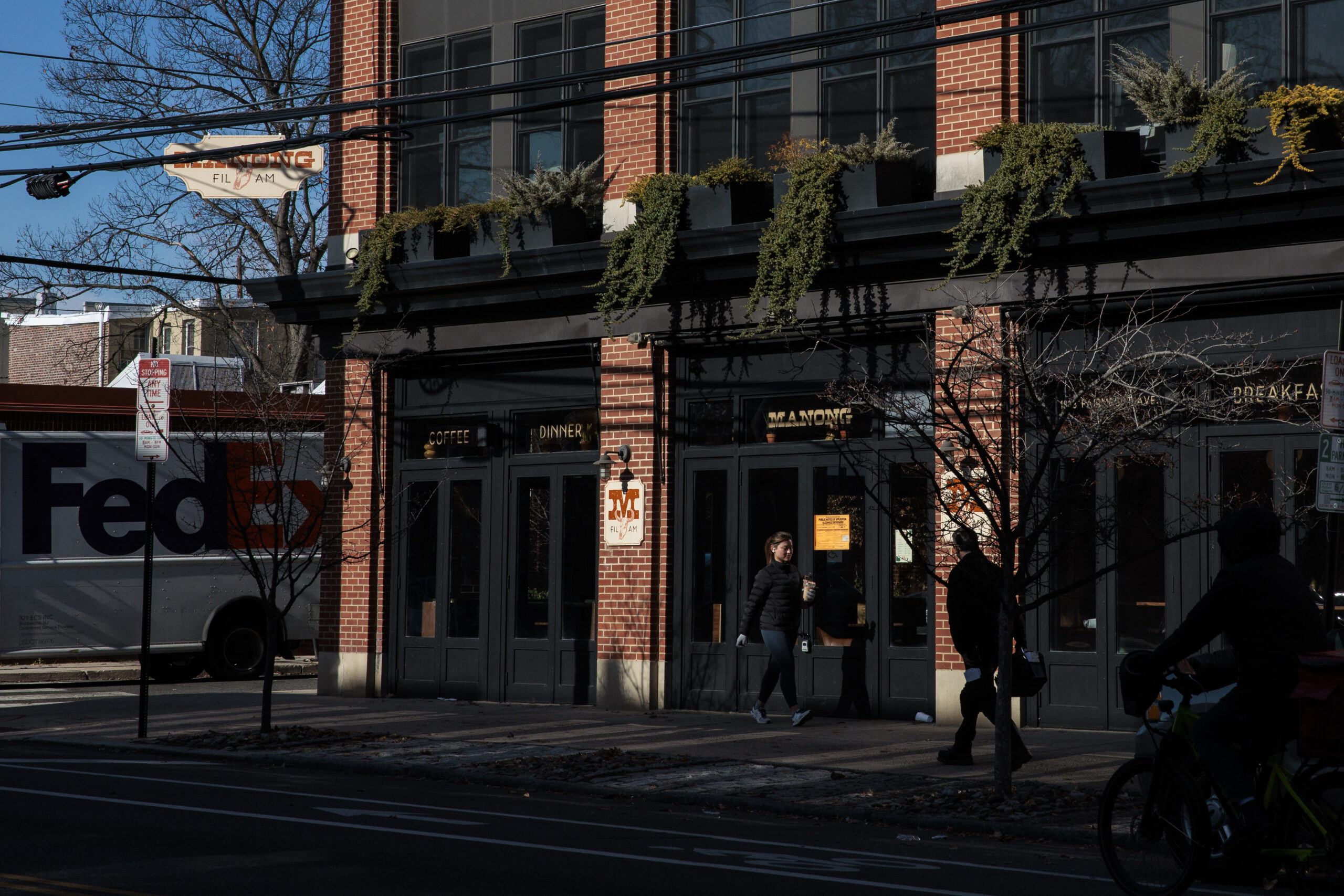
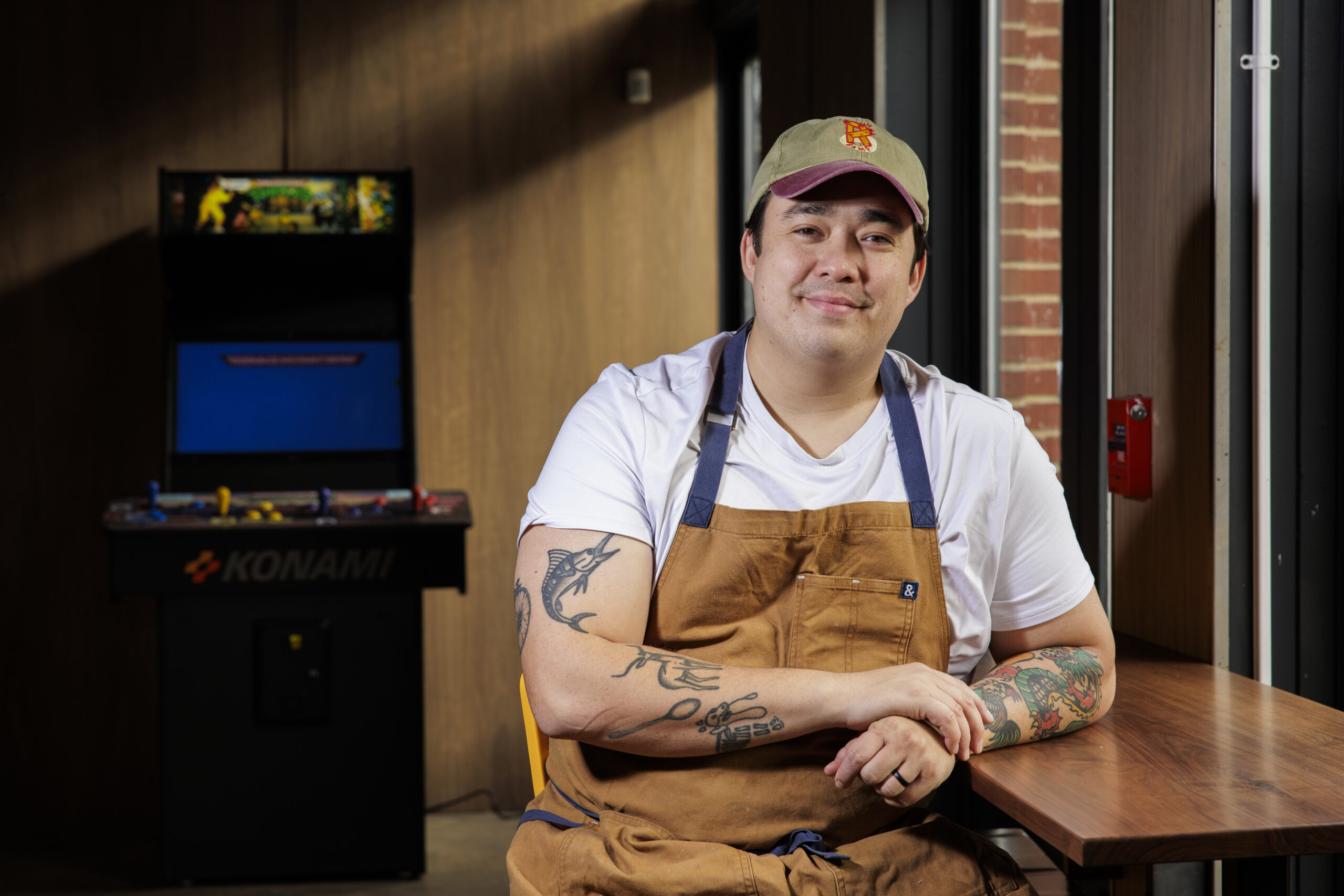
    Manong, which opened three months ago in the former Tela’s space at 19th and Fairmount Avenue, is filled with references to the mid-tier chains of his youth. From the longhorn skull emblazoned on the sign at its front door, to the Teenage Mutant Ninja Turtles arcade game being played for free by guests in the corner, to actual neon signs from both Applebee’s and Outback alight in its two bathrooms, the cues are here for what Anies calls his chain-inspired Filipino-American steakhouse. There’s even the signature Bloom Shroom, a fantastic fungi riff on the blooming onion, whose deep-fried thatch of enoki mushrooms is irresistible — at least, when it isn’t overcooked or oversalted, as it was on my first visit.

    The Bloom Shroom at Manong on Thursday, Nov. 20, 2025 in Philadelphia.

    This kitchen has largely been more reliable than that, and nailed the shroom on a following visit, when its broom-like sweep of crunchy-earthy mushrooms threads lived-up to their potential. It was also clear after my visits here that catchy labels trying to characterize Anies’ sequel restaurant to Tabachoy, his Filipino BYOB hit in Bella Vista, really don’t do its concept justice. For one thing, it’s not a steakhouse, considering Manong didn’t even have a steak on the menu (beyond grilled beef skewers) for its first three months, when an intriguing hanger steak with fish sauce and pickled onions replaced the prime rib.

    Chef Chance Anies posed for a portrait at Manong on Thursday, Nov. 20, 2025 in Philadelphia.

    The swap was a pragmatic concession to keep the menu on the more affordable side, a prime characteristic of chain restaurant culture Anies says inspires him. With check averages around $50 to $60, including drinks, dinner at Manong costs more than going to Longhorn. But it succeeds in hitting a more accessible sweet spot than most of Philly’s pricier destination restaurants without sacrificing the quality of from-scratch food. There’s a balancing act of handcraft and value here most chain restaurants simply can’t touch.

    The dynamite lumpia at Manong in Philadelphia, Pa., on Thursday, March. 5, 2026.

    There’s also a level of personality, bold flavors, and storytelling to the food at Manong that is the antithesis of the sanitized corporate restaurant. This menu is a unique reflection of Anies’ childhood and life experiences as a Filipino-American — including his previous careers as an English teacher, medical researcher and food truck operator — that also diverges with its whimsy and creativity from the more traditionally-framed Filipino flavors anchoring Tabachoy.

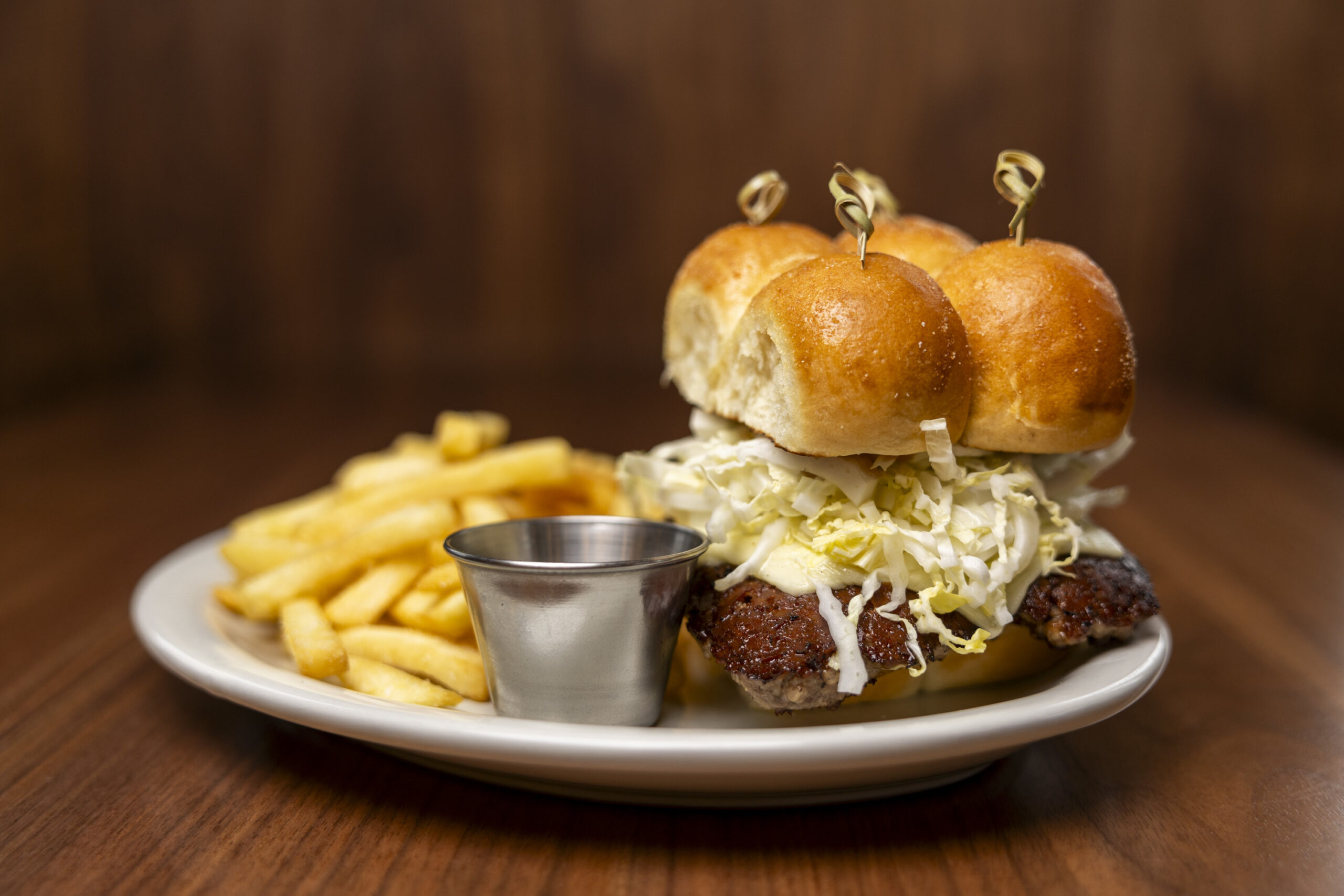
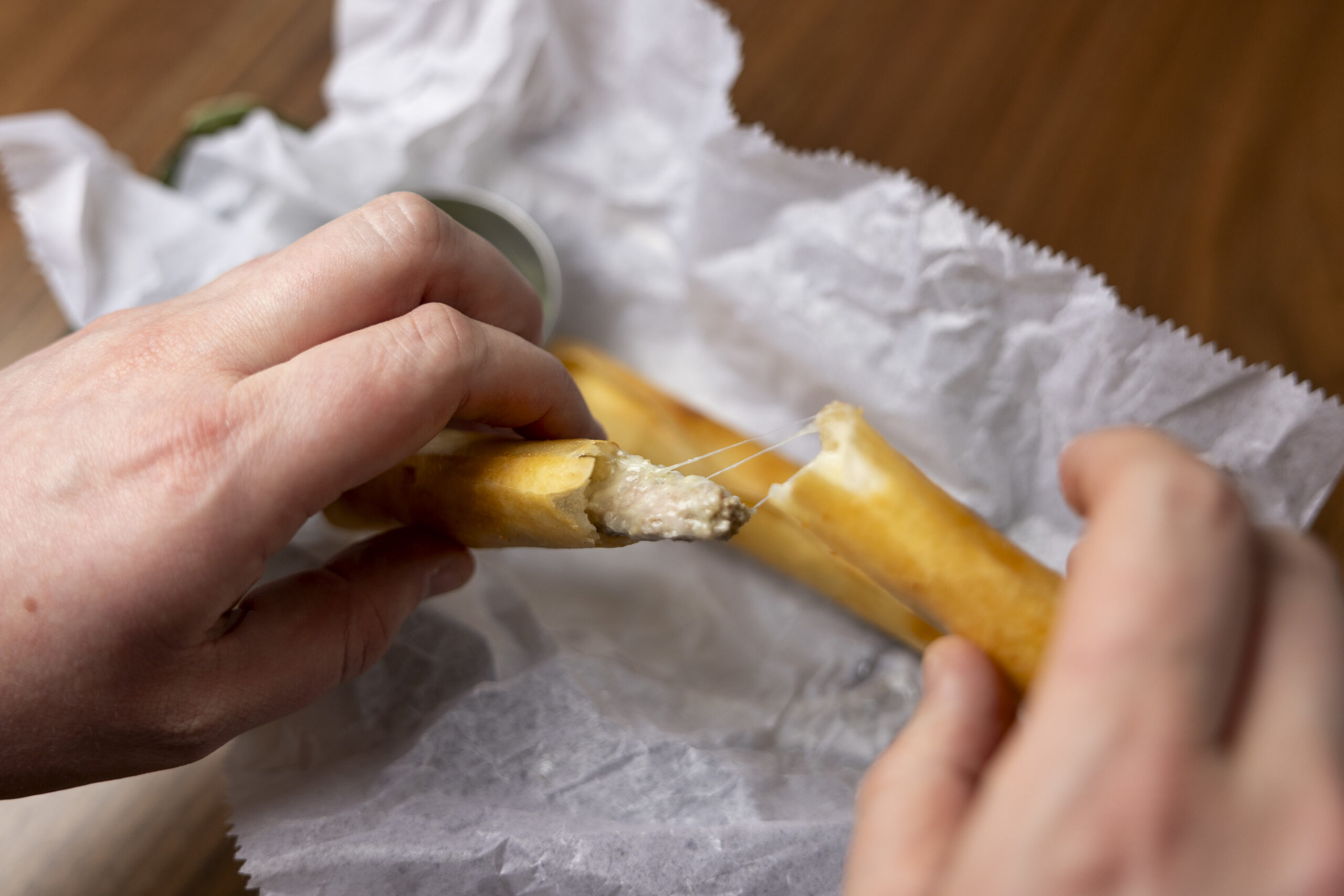
    There’s an equivalent to mozzarella sticks at Manong, the dynamite lumpia, but they’re wrapped inside crispy spring roll wrappers and laced with tender pork and minced jalapeños alongside a sweet chili dip. Manong also offers one of the most distinctive new cheeseburgers in the city, a half-pound patty that spans the width of four small pandesal rolls that are still attached, like King’s Hawaiian bread.

    The connected rolls can easily be divided into shareable sliders, but avoid the urge to supersize it into a full one-pound of meat because it throws all the proportions off. The standard serving maximizes its many Filipino flourishes, from the light sweetness on the fresh-baked bread to the tropical backnotes of the house banana ketchup, the calamansi-tanged slaw, and a mayo shaded by bangus (tinned milkfish), whose oily fillets are buzzed into an umami-rich spread that Anies says carries a Pinoy schmear of “je ne sais quoi.”

    The 1/2lb balong burger at Manong in Philadelphia, Pa., on Thursday, March. 5, 2026.

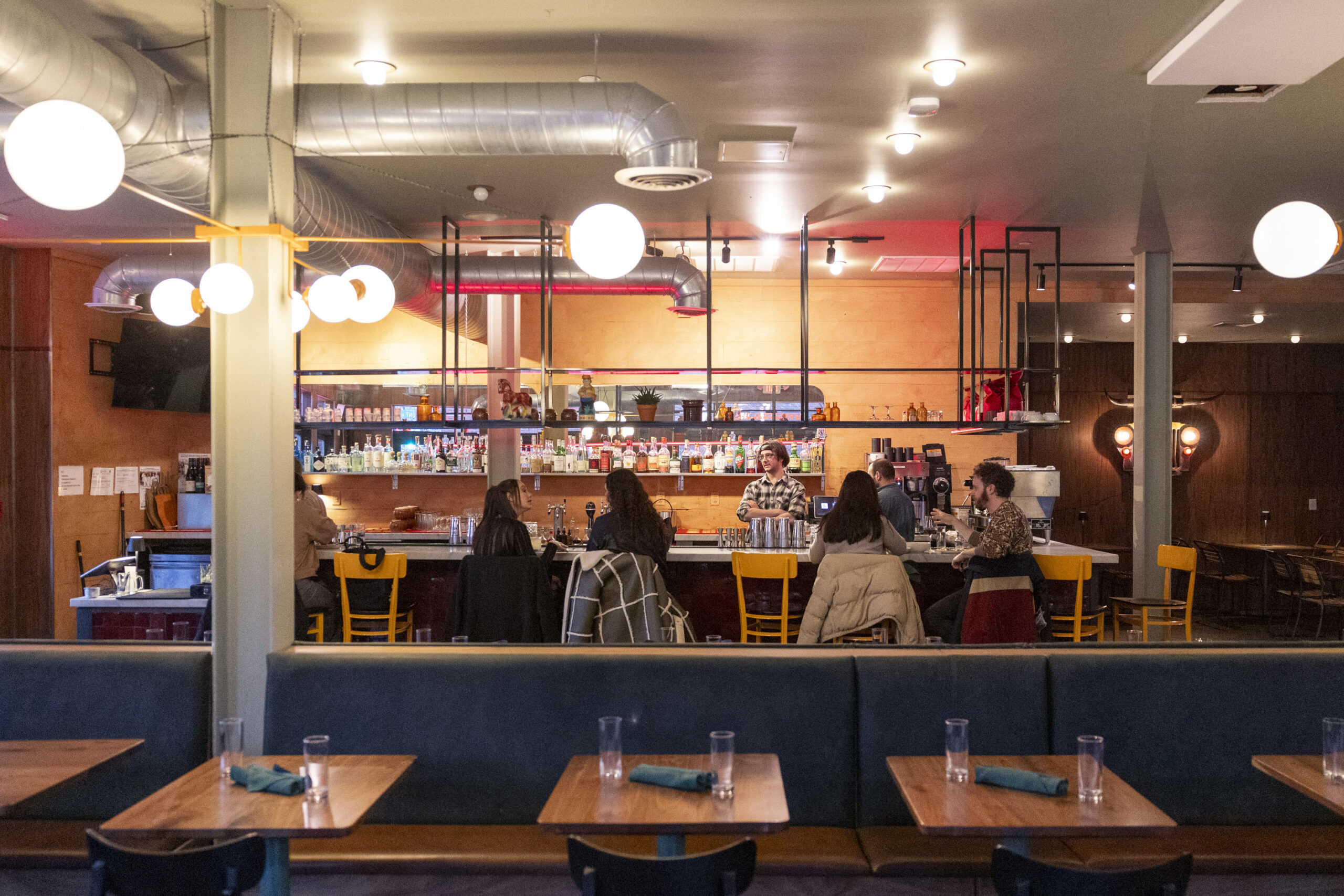
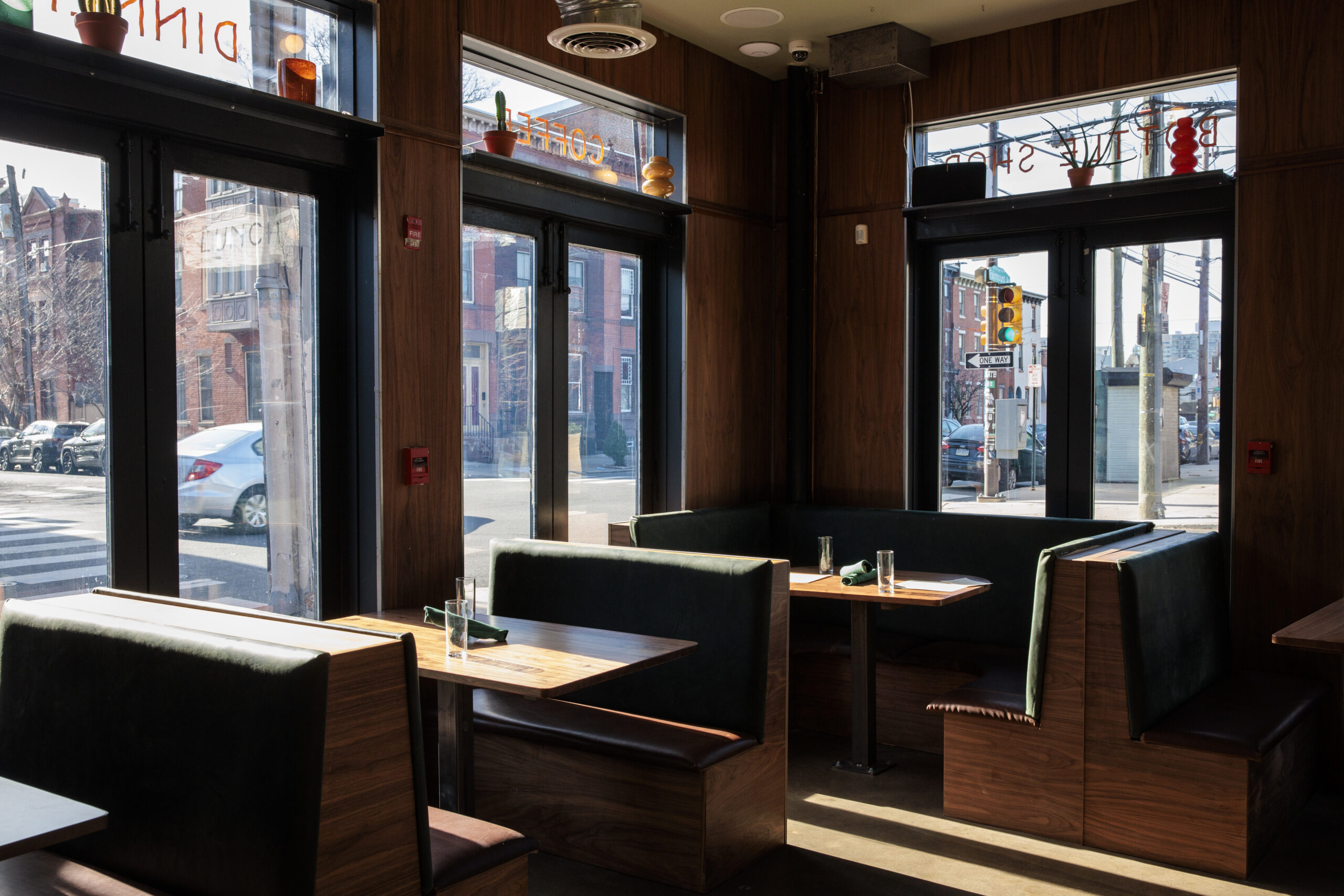
    The 75-seat Manong, which means “elder brother” in Ilocano, the Filipino dialect of Anies’ father’s family, is close to three times as big as Tabachoy, a 28-seater in Bella Vista so snug you need to access the bathroom through an alley door at the rear of the building. But Anies has made good use of this sunny, high-ceilinged corner space, warming its interior with rustic walnut accents and adding convivial booth seating to both its window walls and a central banquette.

    The exterior of Manong on Tuesday, Dec. 9, 2025 in Philadelphia.

    With room for large parties, including a back alcove beneath mounted horns and a vintage truck grill with illuminated headlights, plus 13 seats at the bar, there were more groups of people simultaneously celebrating at Manong than any restaurant I’ve visited in recent memory. Conjuring that kind of joy, and for such a broad cross-section of customers, is one aspect of “everyone’s family” magic that Anies has successfully channeled.

    Customers enjoying drinks and food at the bar at Manong in Philadelphia, Pa., on Thursday, March. 5, 2026.
    The interior of Manong on Tuesday, Dec. 9, 2025 in Philadelphia.

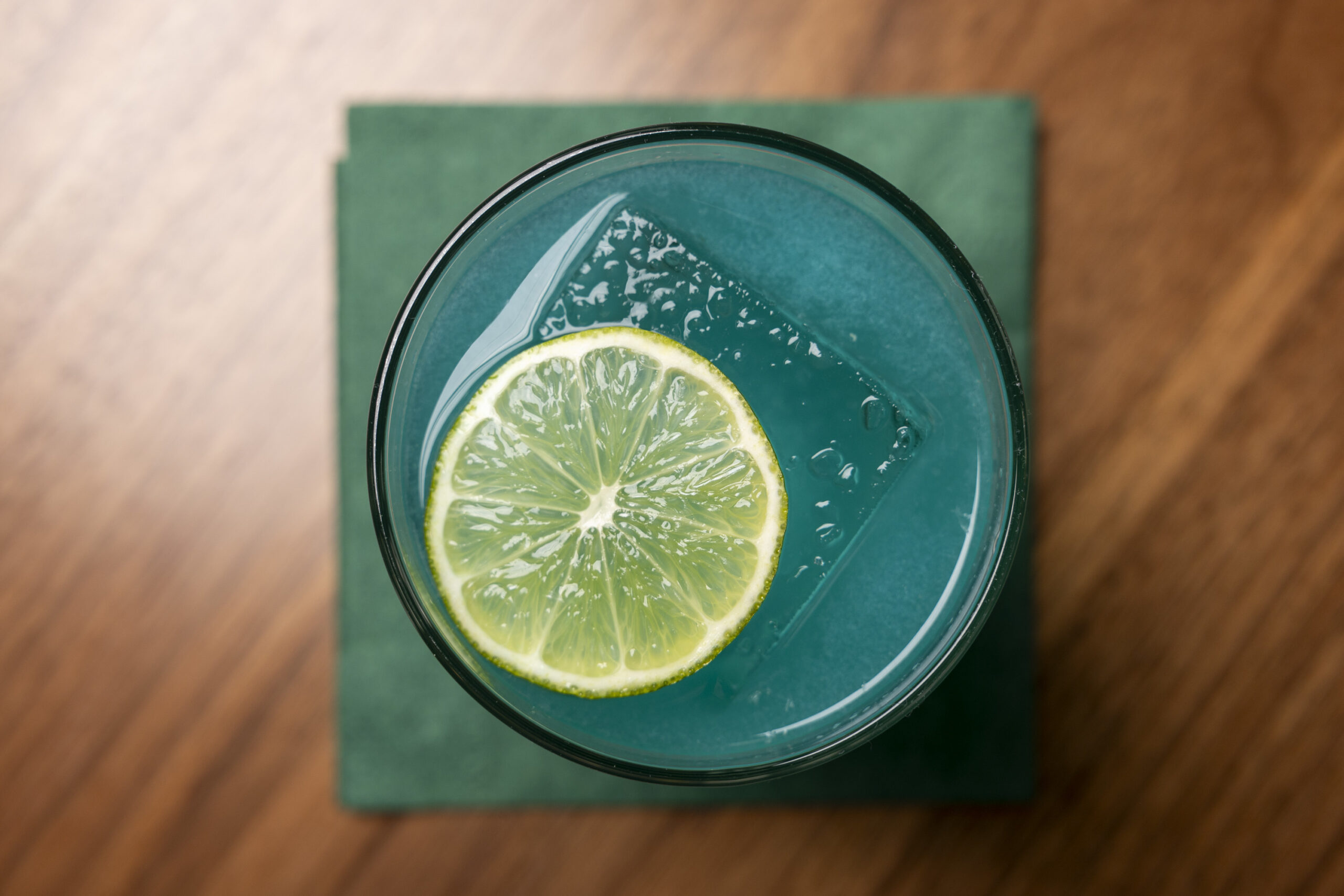
    A drink program overseen by beverage manager Eli Ezer helps buoy the festive mood with a variety of fun, colorful drinks that also offer thematic twists, like the sky blue Otso Otso, a riff on a spicy margarita infused with green peppercorn, lemongrass, and calamansi, or an espresso martini with the added taste of sweet corn (a combo with roots in the Philippines), or a Pinoy version of the City Wide, pairing San Miguel Lite with a shot of Kasama rum.

    The Otso Otso cocktail at Manong in Philadelphia, Pa., on Thursday, March. 5, 2026.
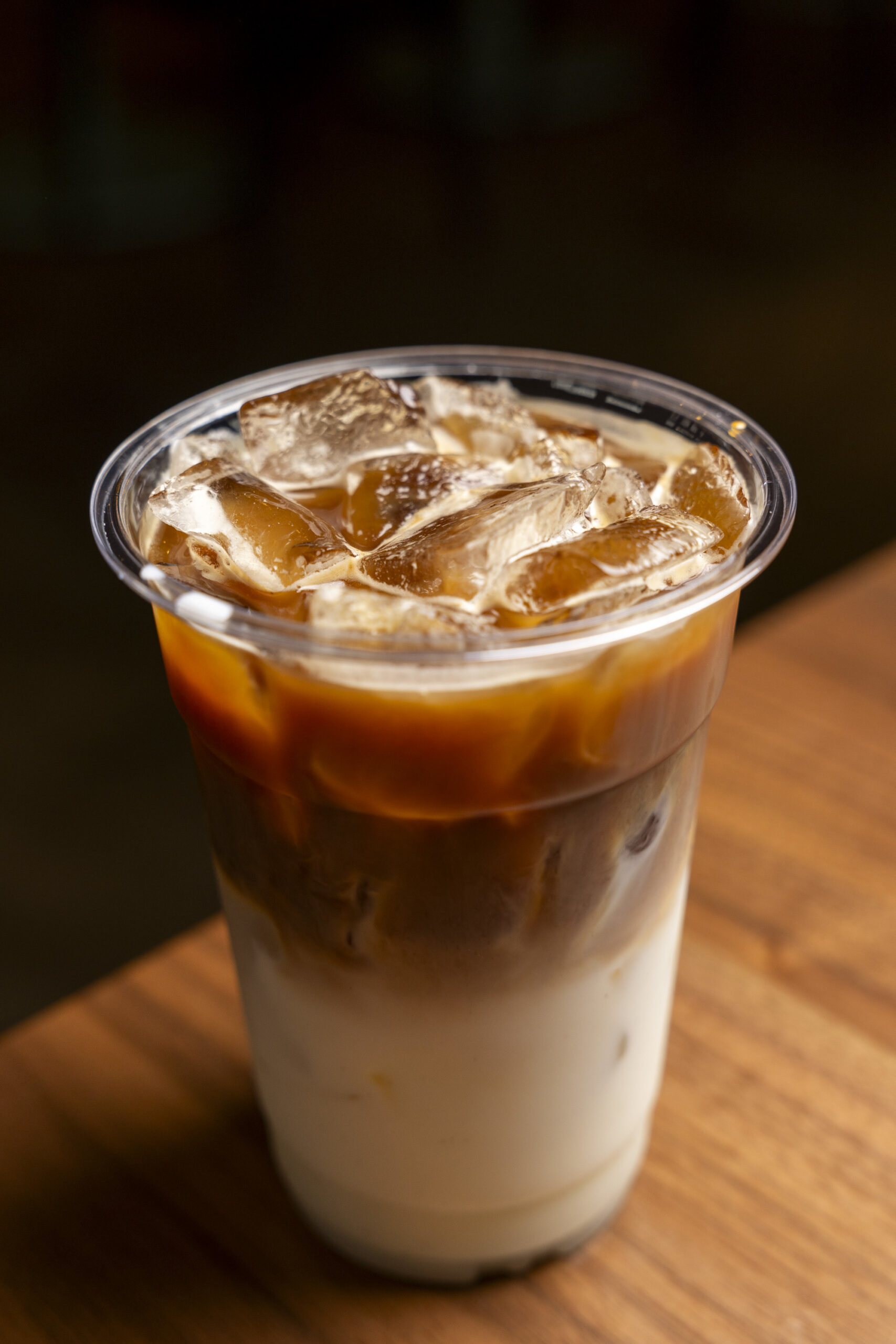
    The Pandan latte at Manong in Philadelphia, Pa., on Thursday, March. 5, 2026.

    It’s no surprise this room has a serious noise problem, and will eventually require some significant investment to sound-proof its hard surfaces. It recently opened for new daytime cafe hours to pump out purple ube and pandan lattes with Herman’s Coffee, along with a limited selection of pastries, and plans to expand the daytime menu with breakfast sandwiches for a brunch debut this spring. There’s also a retail bottle shop where a fridge case full of Red Horse beer, natural wines, and sakes add yet another reason to visit.

    For now, however, Manong’s dinner is more than a worthy enough draw on its own. Aside from the bloom shroom, all of the skewers are winners, including the juicy grilled chicken thighs glazed in Filipino barbeque sauce and tagalog beef sticks that evoke Japanese negamaki with thin-sliced flank steak bundles on the skewer rolled around crunchy scallions in a calamansi soy-garlic glaze.

    Anies aims to evoke the rich chain restaurant pastas of his youth with the “creamy pasta” entree, but it’s infinitely more interesting here with basil fettuccine tangled in a sauce creamed with coconut and Parmesan, flavor-boosted with ginger, garlic, and thin slices of pork belly. The “super duper creamy” version may be tempting, but once again, like that burger, the “more” option was less appealing. When we opted for the bonus of trout roe and shrimp on my second visit, it came in an overly thickened cream sauce that bordered on sludge.

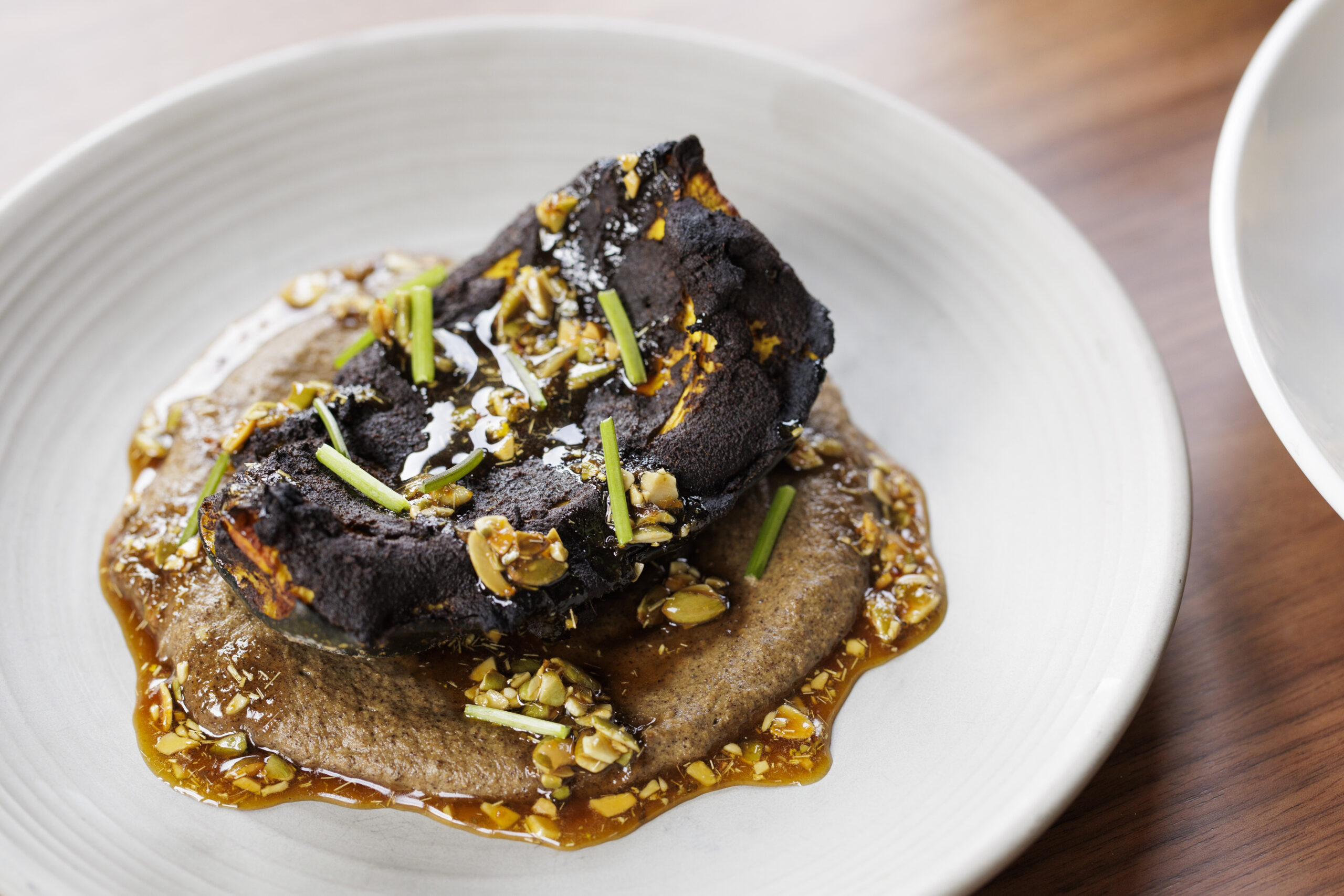
    The squash at Manong on Thursday, Nov. 20, 2025 in Philadelphia.

    One of Manong’s most creative dishes is its singular option for vegans, kalabasa pyanggang, a koginut squash marinated in a garlicky paste of charred coconut husks that’s served with a sweet vinegar lemongrass drizzle over a rich coconut milk sauce scattered with pepita seeds.

    I would have loved the grilled swordfish with green mango-bitter melon salad if it had been fully cooked. That’s one fish I don’t enjoy medium-rare. But Manong has its roasted half-chicken down, a juicy lemongrass-infused bird glazed in tart calamansi vinegar and orange annato butter — at $28, a relative bargain in an era of high-priced chicken entrees

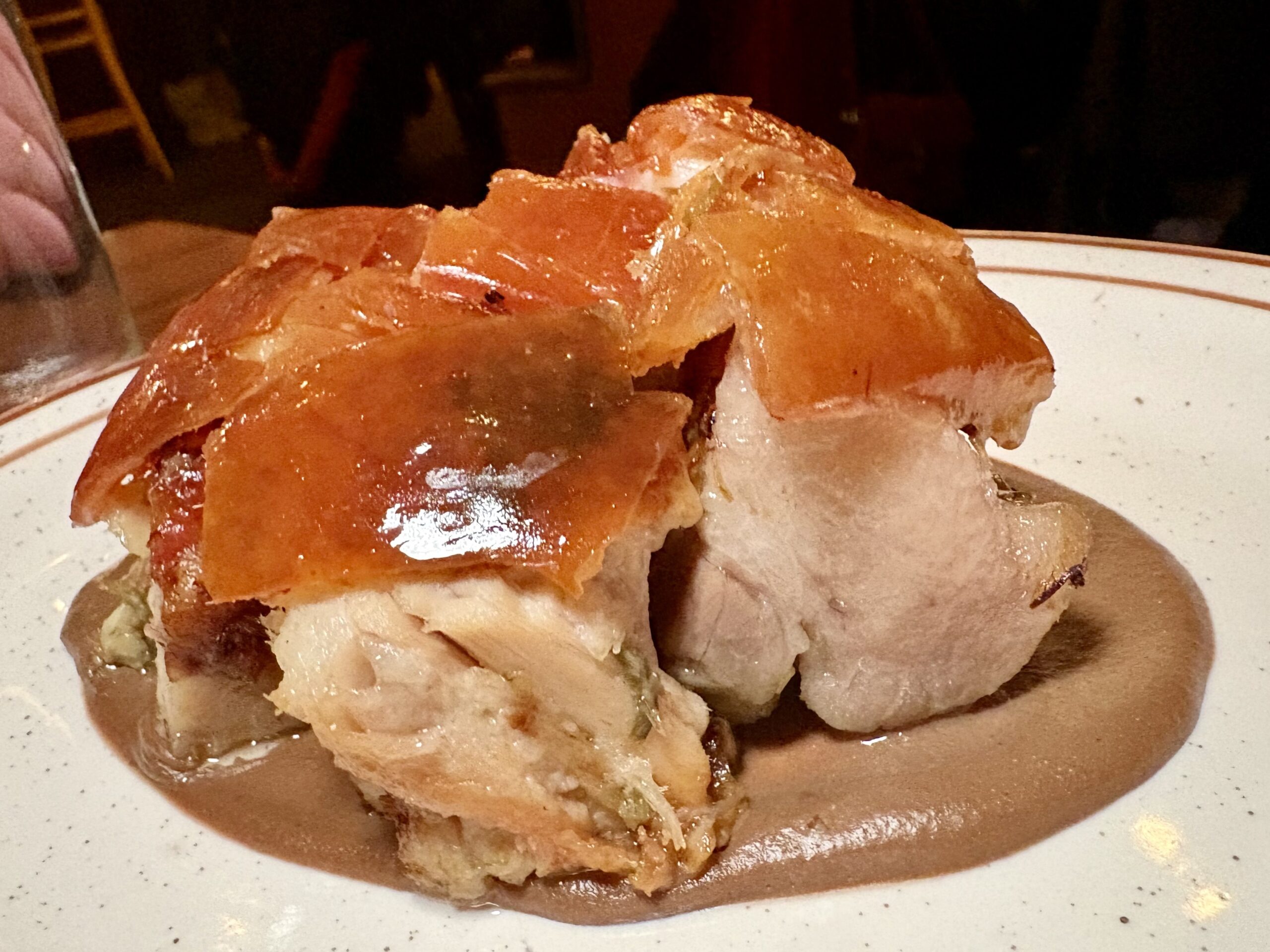
    The kitchen’s pork dishes are also exceptional, including a traditional lechon liempo pork belly whose superbly tender chunks of meat are set beneath shattering amber sheets of crispy pig skin, atop a silky swoosh of creamy liver sauce.

    The lechon liempo at Manong is slow-roasted pork belly topped with crispy skin over a sauce of pureed chicken liver.
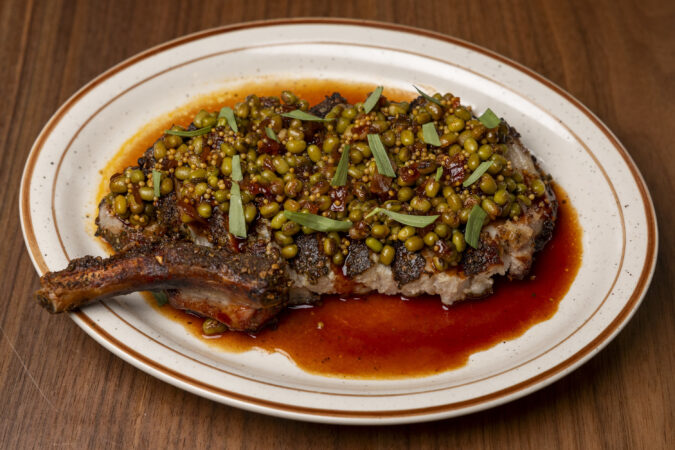
    The pork & beans at Manong in Philadelphia, Pa., on Thursday, March. 5, 2026.

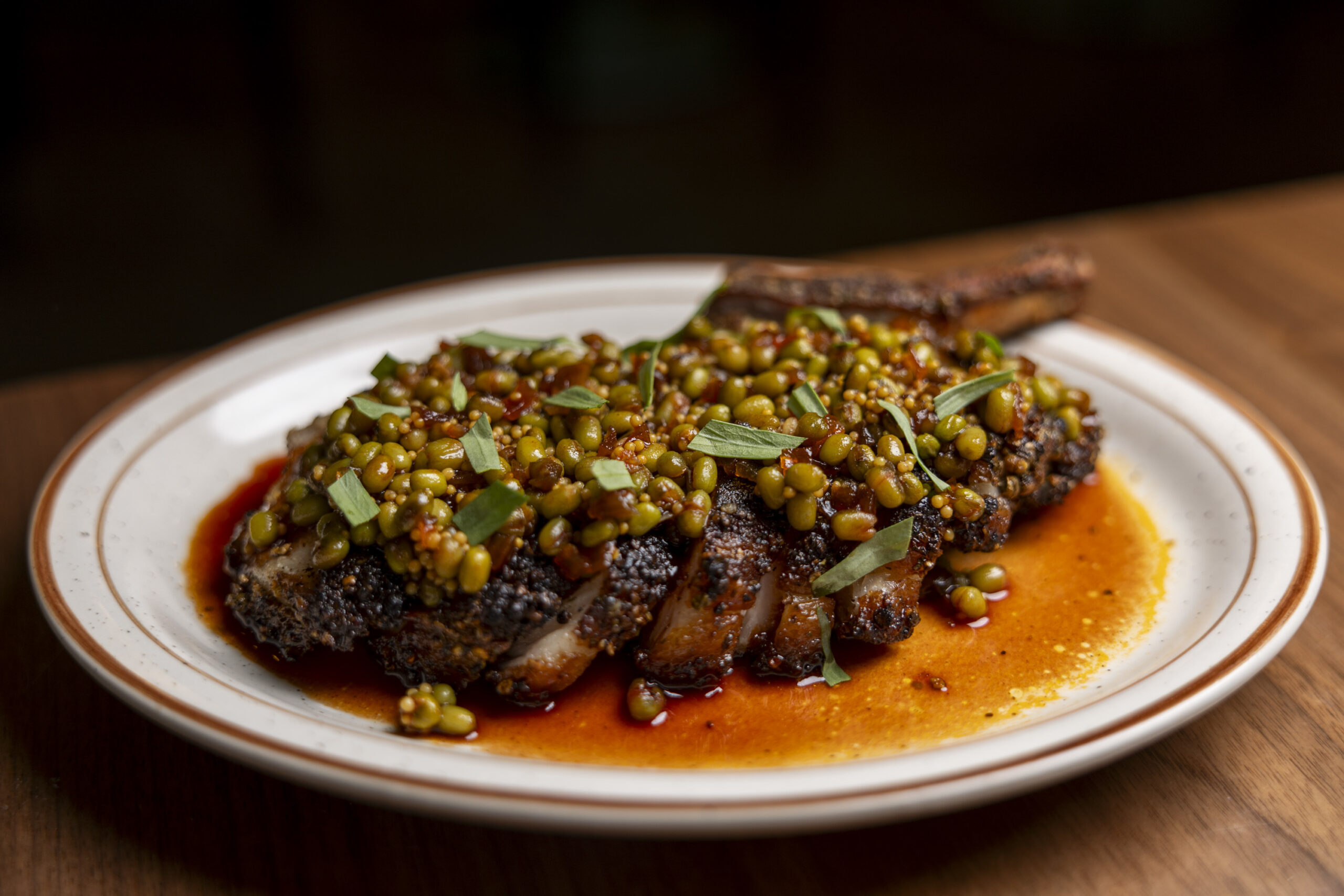
    Perhaps my favorite dish at Manong is the “pork & beans”, a multi-cultural mash-up of a juicy grilled pork chop encrusted with green peppercorns and smothered with sweet and zesty mung beans. Think of the canned Heinz baked beans classic, but with a Filipino swagger of cane vinegar, the sweetness of brown sugar, and red yeast rice (typically used in Chinese char siu bbq), and firmer beans that possess a nutty snap of extra texture.

    “Is it American? Is it Filipino? It’s neither, but also both,” says Anies, summing up not only this dish, but so much of the menu at Manong, where steaming sides of garlic rice, coconut-creamed spinach, and whipped potato salad studded with more crunchy garlic, corn, and shear potato skin chicharrones create a spirited fusion feast like no other.

    Add some calamansi or mango water ice for dessert sandwiched on those fresh pandesal rolls, or the deep purple richness of its ube ice cream, and Manong’s Filipino fusion takes on a distinctly Philly vibe, too. Anies’ chain restaurant childhood may have been the impetus for the affordable and fun spirit of Manong, but he’s created something here that feels like an original.

    The ube and mango ice cream sandwich at Manong in Philadelphia, Pa., on Thursday, March. 5, 2026.

    Manong

    1833 Fairmount Ave., Philadelphia, PA 19130, 445-223-2141; manongphilly.com

    Dinner Wednesday to Sunday, 5-11 p.m. Cafe open for coffee and pastries Wednesday to Sunday, 8 a.m.-2 p.m.

    Dinner entrees, $19-$35.

    About 30% of the menu is gluten-free, including the bloom shroom, cooked in a gluten-free fryer.
    Wheelchair accessible.
    Menu Highlights: Bloom shroom; dynamite lumpia; beef stick tagalog skewer; balong burger; cream pasta; pork & beans; lechon liempo; kalabasa pyanggang; mango water ice; ube ice cream.

    Drinks: The cocktail list delivers affordability and style, with a series of classic templates transformed colorful tropical twists, from the sky blue Otso Otso infused with green peppercorn and lemongrass, to a backnote of corn in the espresso martini and Filipino rum mixed with coconut and purple sweet potato for the Ube Halaya. The beer list features both local brews and Filipino imports, including the smooth but potent Red Horse. There’s also a selection of natural wines by the 6 oz. carafe. In addition, a retail bottle shop has a fine selection of natural wines and sakes to go.

  • Villanova’s Matt Hodge deals with the bittersweet nature of an NCAA Tournament he can’t play in

    Villanova’s Matt Hodge deals with the bittersweet nature of an NCAA Tournament he can’t play in

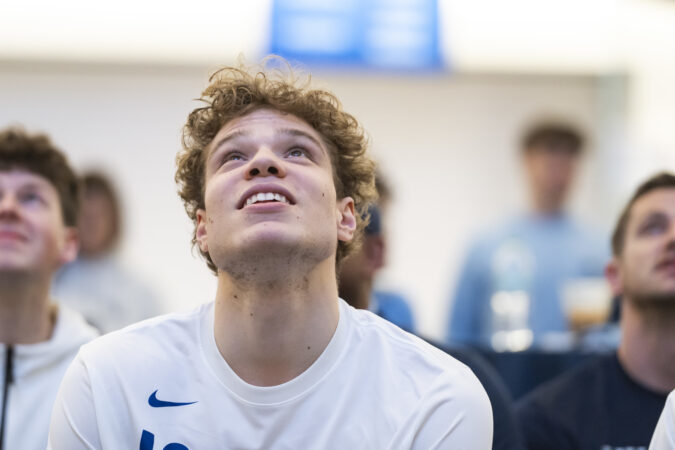
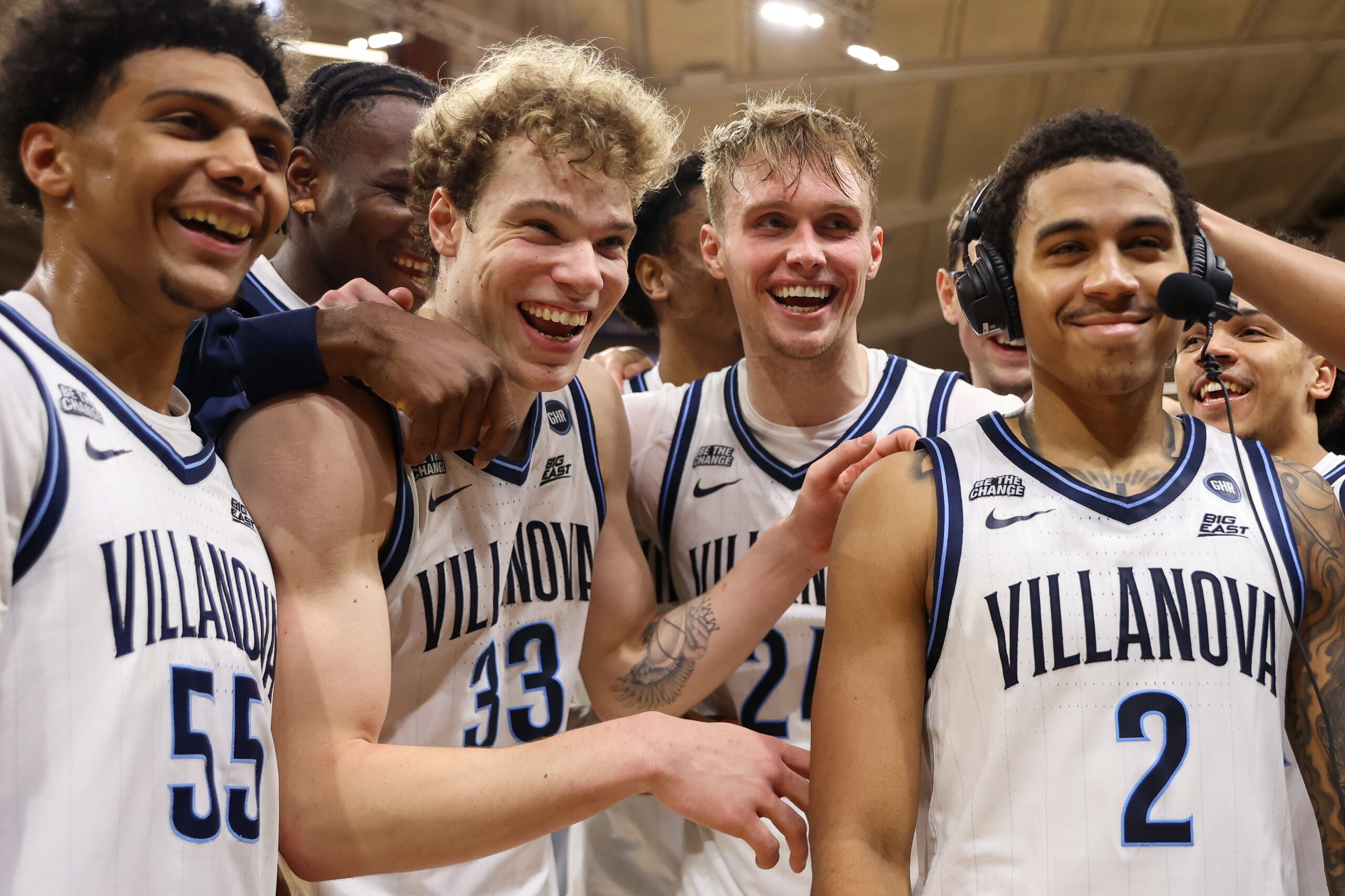
    Matt Hodge stared up at the screen Sunday night at a private Selection Sunday watch party and smiled and cheered with the rest of his Villanova teammates when their name and number were called.

    Villanova’s return to March Madness, the first NCAA Tournament appearance by the men’s basketball team since 2022, is a first for much of the team, and would be for Hodge, a redshirt freshman, if he didn’t have his right leg heavily wrapped in a brace following surgery last week to repair a torn ACL.

    He was understandably dealing with mixed feelings on what was a celebratory night for players, coaches, their families, and program donors.

    “It’s fun to get to see our name get called,” Hodge said, “but at the same time I won’t be able to go and I won’t be able to play. So it’s a feeling of regret and of timing.”

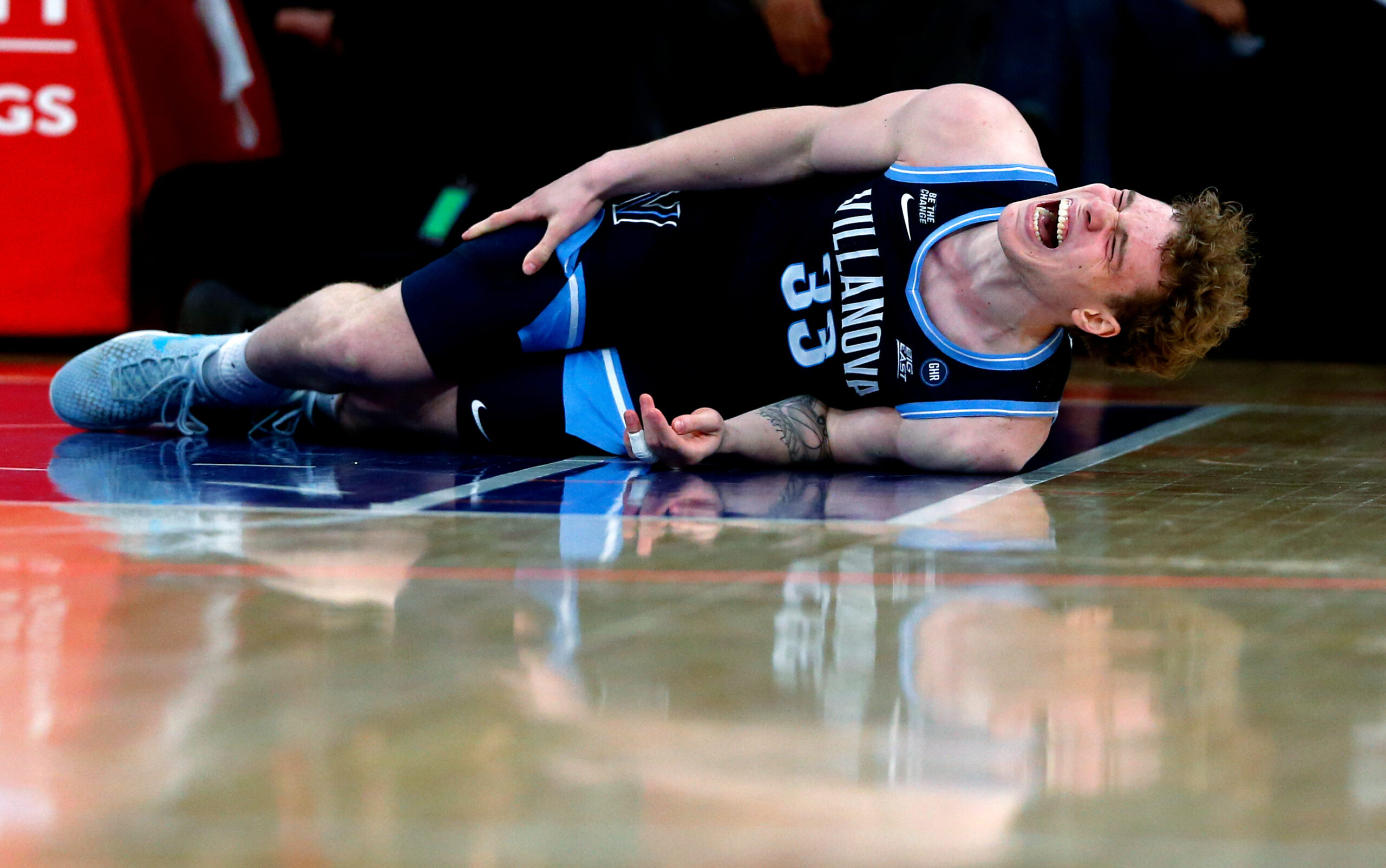
    His season came to an abrupt end early in the second half of Villanova’s Feb. 28 loss to St. John’s at Madison Square Garden. Hodge, a power forward who started in all 29 Villanova games to that point, got the ball in the post against Big East player of the year Zuby Ejiofor and tried to make a move.

    Instead, he collapsed to the floor and writhed in pain.

    “It was a typical basketball play,” Hodge said. “I just knew the moment I planted my foot and I tried to spin off Zuby, I felt something and I knew right away it was wrong.”

    Villanova forward Matt Hodge reacts in pain after suffering a torn ACL during the game against St. John’s on Feb. 28.

    His mind went instantly to his younger brother, Jayden, a high school star who suffered a torn ACL and meniscus in early January.

    “The first thing I said was, ‘I think I tore my ACL like my brother,’” Hodge said.

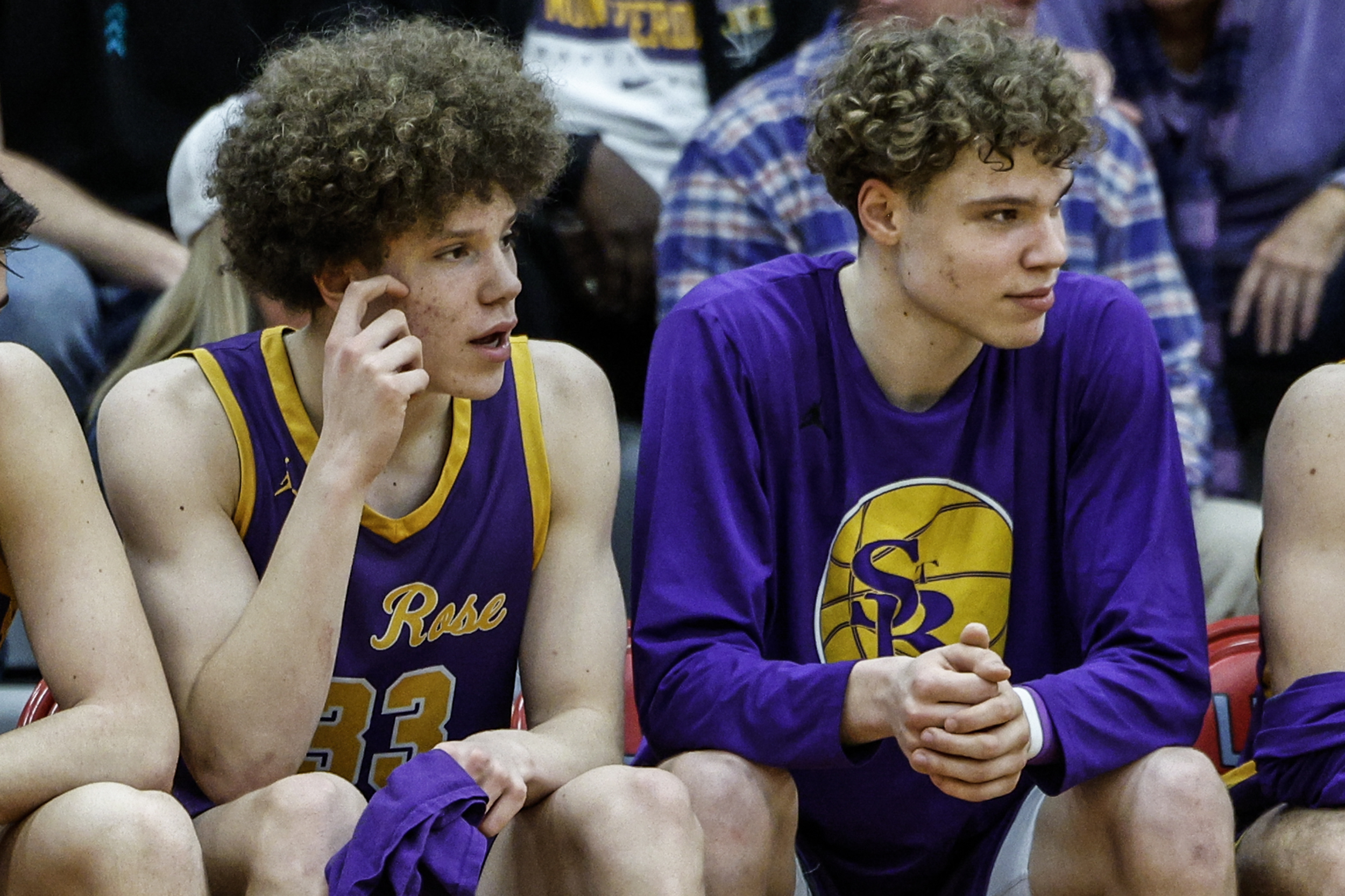
    Further testing proved his words to Villanova’s athletic training staff true. It’s a cruel result, but Jayden’s experience and recovery have given Hodge someone close to talk to and go through the emotional roller coaster with. The brothers, born in Belgium, came to the U.S. and won a state championship together at St. Rose High School in Belmar, N.J. Jayden, a senior who now plays at Montverde Academy in Florida, is committed to Northwestern.

    “I ask him every day for tips and stuff,” Hodge said. “We can go through it together. He’s a little bit ahead of me, but he also tore his meniscus, so in like a week or so I’ll be ahead of him.”

    St. Rose’s Jayden (left) and Matt Hodge watch their team play Bishop Eustace during the fourth quarter of a playoff game on March 4, 2024.

    Hodge’s recovery right now is mostly just relaxing in the immediate aftermath of surgery. He walks by using crutches and keeps his right leg stiffened. Soon, he’ll begin flexing the knee more and will work on building back strength in his quadriceps since his surgery required a nerve blocker. In about six weeks, he said, he’ll shed his current brace to a walking brace and can begin activities like riding a bike.

    It’s a long road back to the basketball court, but Hodge reiterated what Villanova coach Kevin Willard said earlier this month, that the aim is for him to be back to normal basketball activities by mid-to-late October and the goal is to be ready for the beginning of the 2026-27 basketball season.

    “I feel like obviously it’s still a long way ahead of me, but I want to have a goal and I think that goal is pretty realistic,” Hodge said. “I’m just working toward that and I know, in my head and deep down, anything is possible. I might not be ready yet, or I might be ready quicker.”

    Of course, he wishes he was ready by Friday afternoon, when eighth-seeded Villanova faces No. 9 Utah State in a first-round West Regional game in San Diego. The Wildcats could certainly use him. After missing his freshman season because of an NCAA ruling on his academic eligibility following his high school transfer from Belgium to St. Rose, Hodge had an impressive first season of college basketball.

    He averaged 9.2 points and 3.6 rebounds while shooting nearly 37% from three-point range.

    From left, Villanova’s Acaden Lewis, Matt Hodge, Duke Brennan, and Bryce Lindsay after a 79-61 win against Pittsburgh on Dec. 13,

    Without him, Villanova’s depth has taken a hit, especially in a frontcourt where only two players, centers Duke Brennan and Braden Pierce, are taller than Hodge, who is 6-foot-8. Villanova starts Malachi Palmer (6-6) at the power forward spot and sometimes has lineups on the court with four guards and one center, harkening back to the early days of Jay Wright. This quartet, however, doesn’t sing the same way as that one did.

    Willard has mentioned changing things up. He said again Sunday said he could see Villanova opting to have Brennan and Pierce on the floor at the same time, but they haven’t done so in the three games since Hodge went down. But Villanova’s first-round loss in the Big East tournament featured a rebounding disadvantage of 46-25, and it might be time to adjust against a Utah State team that isn’t huge but attacks the offensive glass.

    A win on Friday likely means a date Sunday with top-seeded Arizona, the ninth-best offensive rebounding team in the country that has a 7-2 center and a pair of 6-8 forwards who cause havoc on the glass.

    Hodge was at home watching Thursday night as Villanova crumpled under the bright lights. The days after the injury have been isolating, but his family has been in town, his girlfriend is on campus, and his teammates and coaches have been supportive.

    The pain is “more mentally than anything physically,” Hodge said.

    “I just got to keep my head up now and support the team.”

  • The Eagles whiffed on Maxx Crosby. It should remind them of what they stand to lose with A.J. Brown.

    The Eagles whiffed on Maxx Crosby. It should remind them of what they stand to lose with A.J. Brown.

    Lane Johnson let it be known Feb. 19 that he would return for a 14th season with the Eagles.

    Johnson let it be known Thursday afternoon whom he wanted on his team: five-time Pro Bowl defensive end Maxx Crosby of the Las Vegas Raiders.

    Johnson tweeted an eyes-alerted emoji and tagged Crosby, who was on the trade block. It was a clear indication of what Johnson thought Howie Roseman should do.

    The general manager should’ve heeded his best player’s advice, especially because it might be his best player’s last season. The Eagles have a one-year Lane Johnson window, and they would be foolish to not take advantage of it. When Johnson quits, the offensive line will implode. It no longer will mask the shortcomings of quarterback Jalen Hurts and head coach Nick Sirianni.

    As things stand, assuming their offensive line returns healthier — left guard Landon Dickerson and center Cam Jurgens have injury issues as well — and assuming they don’t do something stupid, like trade star receiver A.J. Brown, then the Eagles will be the best team in the NFC East, again.

    If they’d somehow managed to land Crosby, then they might have been able to offset the talent deficit left by trading Brown. As it stands, Brown remains as precious as ever.

    The move also seems to take one of the most likely suitors for Brown off the table. The Ravens just spent their trade capital on Crosby, which leaves the Patriots and Broncos as the Eagles’ most likely trade partners.

    Howie, don’t even pick up the phone.

    False alarm

    Nobody who’s been around Johnson for more than a minute believed that he was seriously considering retirement after the 2025 season. Johnson will be 36 when the season starts, he remains a superior right tackle, and, despite missing eight games with a foot injury last season (including playoffs), he has been remarkably durable. Also, he absolutely loves being Lane Johnson.

    Beyond next season? That’s a different story.

    A team source told me last month that he believes Johnson’s career beyond 2026 depends on how 2026 goes. It depends on how much Johnson likes new offensive line coach Chris Kuper, who replaced legendary Jeff Stoutland, who quit. It depends on how much Johnson likes new offensive coordinator Sean Mannion, who will replace foundations of Sirianni’s basic offensive tenets. And, more than anything, it will depend on how much success the Eagles have after their massive Super Bowl hangover season of frustration and malcontent.

    Johnson wants to go out on top. He knew that Crosby would immediately have made the Eagles the league’s top dog.

    Eagles offensive lineman Lane Johnson dons a dog mask as he walks off the field following the team’s 15-10 playoff win over the Atlanta Falcons on Jan. 13, 2018.

    The Price

    It would’ve been expensive.

    A deal for Crosby cost the Ravens this year’s first-round pick and next year’s first-round pick, and first-round picks in Philly are golden. With DeVonta Smith, Jordan Davis, Carter, and Quinyon Mitchell, Howie’s been on a first-round roll.

    Crosby also makes about $30 million each of the next two seasons.

    It would have been worth it. If they’re considering giving Jaelan Phillips $25 million per season — they shouldn’t, but they are — then they shouldn’t have blinked at Crosby’s price tag.

    The disappointment resonates louder because the Birds considered adding costly edge talent before.

    They pursued Micah Parsons last offseason, but the Cowboys, wary of reinforcing their chief rival, refused to trade him to the Eagles. They instead traded Parsons to the Packers, who sent Dallas two first-round picks and defensive tackle Kenny Clark.

    Why fret over a deal that didn’t get done? Because Crosby is great.

    Since 2022, only five players have more than his 44½ sacks. No one has more than his 90 tackles for loss, and he led all edge players with 186 solo tackles.

    He is great, and he would make the D-Line great again. Don’t forget that it was a monster D-line that took the Birds to their second title two years ago.

    Saquon Barkley might have set a rushing record, but the Eagles’ top-ranked defense was the top-ranked defense because it had the top-ranked pass defense, and that was predicated on a dominant defensive line. Free agency cost that line Josh Sweat and Milton Williams. Injury cost Carter three games and diminished him for several others. The defense dipped from No. 1 to No. 13.

    A deal for Maxx Crosby (98), now a Raven, might have helped Lane Johnson land his third Super Bowl title as an Eagle.

    Too good to be gone

    There is no argument that Johnson is an all-time Eagles great, and by far the best Bird during the current nine-year Golden Era. In fact, considering his consistent excellence over these nine seasons, there’s an argument that Johnson might be the best Eagle ever. Johnson might at least be the third-best Eagle in history, after Chuck Bednarik and Reggie White.

    A third Super Bowl title would cement Johnson’s status as an all-timer not just in Philadelphia but in the NFL. It would help folks forget his two PED suspensions. It would help ease his path to the Pro Football Hall of Fame as the best player on a dynastic team that won three Super Bowls in 10 years.

    But, as Johnson knows, he can’t do it by himself. As Johnson knows, there may be no tomorrow. That’s why he wanted Crosby.

    It’s why the Eagles must retain Brown, warts and all.

    Brown has complained about the passing game’s inefficiency in each of the past two seasons. Last season, Brown even reportedly asked to be traded, multiple times.

    Deal with it.

    In his four seasons as an Eagle, Brown ranks fifth in the NFL in total yards, and his 14.8 yards-per-catch average is better than any of the four players ahead of him. He’s also sixth in touchdown catches. This, despite ranking 10th among wide receivers in total catches — a byproduct of Hurts’ reluctance to pass in general, and his reluctance to pass into the tight windows of coverage Brown’s excellence attracts.

    Brown already is the best receiver in franchise history. He’s an all-timer, just like Johnson.

    If the Eagles had added Crosby, 2026 would have been theirs.

    Now that he’s gone, they cannot afford to lose what they’ve got.