Pottstown Hospital was cited by the Pennsylvania Department of Health for shuttering intensive care services 13 days before it was scheduled to close the unit.
Tower Health, which owns Pottstown, announced in November that it was closing Pottstown’s ICU, endoscopy center, and the Pottstown outpost of Tower’s McGlinn Cancer Institute effective Jan. 6. Hospitals are required to give 60 days notice before shuttering services.
The closures were part of a larger downsizing that included laying off 350 workers across Tower’s hospital system. Tower also owns Phoenixville Hospital, Reading Hospital, and has a joint ownership of St. Christopher’s Hospital for Children with Drexel University.
Tower officials said they closed the unit 13 days ahead of schedule on Dec. 24 because they did not have enough remaining nurses on staff to safely operate.
“Safe ICU care requires appropriate nurse staffing, and operating the unit under those conditions could have compromised the high-quality care our patients deserve,” Tower said in a statement.
Pottstown had already limited admissions to the unit to four patients, and began transferring remaining patients to other intensive care facilities on Dec. 22, according to the health department inspection report.
This is doubly true when the two highest-paid players in the history of the franchise are either hurt (again), suspended (seriously?), or, when they are available, less than fully whole.
Sometimes, there’s even no shame in losing by 40.
However, there is great shame in losing by 40 because you don’t play hard. There is humiliation in being down by 49 with 12 minutes to play because, for the previous 36 minutes, you generally played matador, playground, YMCA defense, despite playing at home, after a day off.
The Sixers lost by 40 to the Spurs on Tuesday night, but it could have been 70, except the Spurs sat their starters in the fourth quarter. They trailed by 49 after three en route to ignominy.
It is their third home loss by at least 40 points. They are the first team in NBA history to lose three home games in the same season by at least 40, according to @basketball-reference.com.
Wow. The Sixers are the first team in the history of the NBA to lose 3 home games by 40+ points in a single season. That just can’t happen. https://t.co/1zixk7ZSBi
They’re the league’s worst third-quarter team, and the second worst in the last 30 years, but they gave up 46 points in the second quarter Tuesday. They are nothing if not equal-opportunity no-shows.
They have won plenty without either of them, and both. Fueled by an MVP-caliber season from Tyrese Maxey, the Sixers entered Wednesday night’s game against the visiting Jazz at 33-28, which gave them sixth place in the Eastern Conference. If they play hard, they are a viable team every night.
So, on a night without their two future Hall of Famers, and a night without bed-sick forward Kelly Oubre Jr., you would think the Sixers, to a man, would play hard. You’d think they would prioritize defense and rebounding.
They did not.
They were outrebounded by 16. They gave up 131 points.
They played weak and they played dumb and they played like a team that was defeated before it took the court. They did so in a national TV prime-time game that embarrassed the franchise in front of the nation.
No resistance
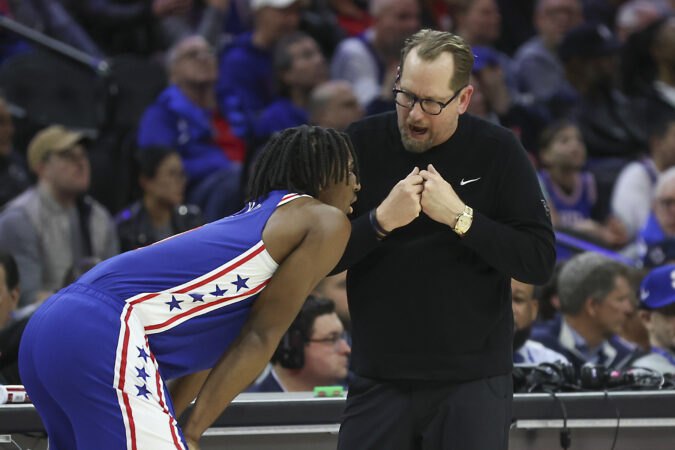
“There just was no resistance, defensively,” coach Nick Nurse said.
What he didn’t say was, again. He could have. For the Sixers, blowouts have become as common as bad draft picks.
Blame Nurse if you like, or blame the players, or blame the bad luck and bad choices that have kept the stars in the trainer’s room, but the Sixers are conducting a clinic on how to chase fans to the parking lot before the fourth quarter is half over.
This not only was the Sixers’ third loss by at least 40 points, it was their fourth loss by at least 37 points, and their seventh loss by at least 21 points. Despite it being a 40-point loss, it was still nine points shy of their worst loss of the year, a 49-point disgrace against the visiting Knicks on Feb. 11. Entering Wednesday night’s game against the Jazz, the Sixers had suffered three of the 17 worst losses in the NBA this season — a year in which about one-third of the league is tanking.
All seven of the Sixers’ blowouts have come in their last 45 games, which means, lately, they’re getting destroyed more than 15% of the time.
Is it road woes? No. Five of the seven blowouts came at home.
Is it the competition? Not necessarily.
The Spurs are a deep, well-coached team built around Victor Wembanyama, the game’s best two-way player. They’ve lost big to really good teams like San Antonio and Oklahoma City, but they’ve been dog-walked by three teams with worse records than their own: Orlando, Charlotte, and even woeful Washington.
Maxey believes that when the Sixers don’t play hard and lack focus early, they have no chance late.
“When we don’t start fast, defensively and aggressive in the right way — that’s when it happens,” Maxey said. “We start soft, and we’re not pressuring the ball, not getting to the ball, and we give up bad cuts, and stuff like that.”
That’s occasionally true, but the Sixers have generally been able to match their oppositions’ output in the first quarter. However, they’ve had to come back to do so, and that sometimes leaves them exhausted when the second quarter comes around. They gave up 51 points to Orlando, 41 to Charlotte, and 46 to the Spurs in the second quarters of those blowouts.
Forget the numbers. Forget the quarters. If you watched the games, you saw what Nurse saw:
No resistance.
C’mon, man
You saw Maxey throw away a cross-court pass, then just watch the thief streak down the court.
You saw Andre Drummond, a former defensive player of the year candidate and a four-time rebounding champion, foul Wembanyama twice in the first two minutes. Drummond, Embiid’s $5 million understudy, played just five minutes.
Blowouts happen, especially when your roster fluctuates. Before their latest excuses for absence materialized, Embiid and George were only inconsistently available. This was due to age, injury management, and, frankly, a questionable desire to actually play in the games for which they are paid a combined $106 million this season.
But their presence doesn’t ensure proficiency. Embiid and George both played in two of the blowouts. Embiid missed the other five, while George missed four of the five.
Throw in a rookie like VJ Edgecombe, who, predictably, makes mistakes on defense, and add a dash of Maxey, who is congenitally defense-challenged, and you’re going to have the occasional train wreck.
But it should only be occasional. It shouldn’t be more than 10% of the entire season.
It might seem unfair to question players’ effort, especially that of Maxey and Edgecombe. Maxey leads the NBA in minutes played, and Edgecombe ranks eighth, and he leads all rookies, and the blowouts started about a month into the season.
But Drummond, Edgecombe, and power forward Dominick Barlow, this season’s feel-good story of persistence and effort, earn their minutes from their defense.
Embiid’s strained oblique will cost him at least one more game and probably more. George is out until March 25.
Until they’re both back and both viable, the Sixers will have a talent void. They can best fill it with persistence and effort.
But on nights when they offer “no resistance,” they will have no chance.
Jefferson Health Plans added nearly 12,000 new customers to its Medicare Advantage plans during the open enrollment period for coverage this year, the biggest annual gain ever for the insurance arm of Thomas Jefferson University.
About half of Jefferson’s enrollment gains were in Philadelphia, Montgomery, and Bucks Counties. Still, Jefferson remained the sixth largest provider of private Medicare plans in Southeastern Pennsylvania. The Inquirer compared February 2025 with last month.
Philadelphia-based Independence Blue Cross was leader, with one-third of the region’s 383,000 Medicare Advantage customers. National companies Aetna, UnitedHealthcare, Humana, and Cigna occupied the next four spots.
“This was the strongest Medicare Advantage enrollment period in Jefferson Health Plans’ history,” Jefferson Health Plans president Krista Hoglund said in an email.
“That level of growth signals a clear gap in the market for coverage that is anchored in the local community, easier to use, and closely connected with the doctors and hospitals they know and trust,” she said.
window.addEventListener(“message”,function(a){if(void 0!==a.data[“datawrapper-height”]){var e=document.querySelectorAll(“iframe”);for(var t in a.data[“datawrapper-height”])for(var r,i=0;r=e[i];i++)if(r.contentWindow===a.source){var d=a.data[“datawrapper-height”][t]+”px”;r.style.height=d}}});
New Jersey has been a harder market for Jefferson. Enrollment more than doubled this year, but the eight counties in South Jersey where Jefferson sells plans still account for less than 10% of its members.
Jefferson gained about 2,400 members in Lehigh Valley counties served by Lehigh Valley Health Network, which Jefferson acquired in 2024. Jefferson’s ownership of an insurer was a key reason why Lehigh Valley chose to become part of Jefferson, health system officials said at the time.
Jefferson’s gains in the Lehigh Valley came amid a contract dispute with United HealthCare, leading to LVHN going out of network in January for UnitedHealthcare Medicare Advantage plans. Jefferson had warned in October that the contract was expected to end.
United said then that the timing of the warning during the Medicare Advantage open enrollment period looked like a “negotiating tactic” that could lead United customers to choose other plans.
The two Pennsylvania counties where United had the biggest percentage declines were Lehigh and Northampton, where LVHN has substantial operations.
The biggest gains, however, went to Capital Blue Cross, of Harrisburg.
The Neumann Goretti girls’ basketball team bus was almost as quiet as the church the players were in a day earlier. Everyone sat in their usual places.
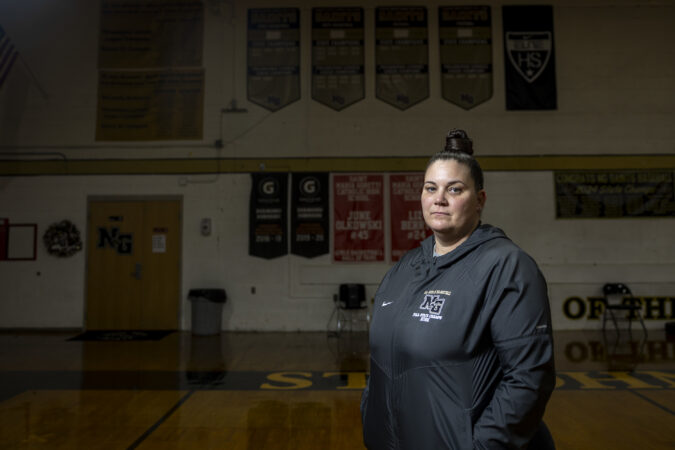
Saints coach Andrea “Petey” Peterson was in the front right seat, her hair in its familiar bun, her head resting on her outstretched arm across the windowsill, her AirPods in, a way to insulate herself from the world that Saturday morning in early December. The day before had been her mother’s funeral.
In the back, the Neumann Goretti team whispered, the volume down from the blaring noise that typically wends through the bus during chartered away trips. None of Peterson’s players were surprised that their coach was on the bus with them, traveling to their season opener against St. Mary’s on Long Island in New York.
“I remember that trip,” said Saints senior guard Kamora Berry. “I remember seeing Coach Petey’s hair bun in the back of the bus and thinking we have to do this for her. There was no doubt in my mind she would be there that day. She is so strong. I would be a mess. Anyone would be.
“Think about it. Coach Petey is on a bus with us going to a game the day after her mother’s funeral. Who does that?”
Apparently, Andrea Peterson.
She is in her 12th season as Neumann Goretti’s head coach. She is the most accomplished girls’ high school basketball coach in the area, with six state championships, including last season’s first Class 4A title in school history (plus two in Class 2A and three in 3A), two Catholic League championships, and six District 12 titles.
In 2015, Peterson was named the national Naismith Coach of the Year, guiding the Saints to a 30-0 finish and a No. 1 ranking nationally by USA Today. Her team will compete in the first round of the state Class 4A playoffs on Saturday against Susquenita of Perry County.
Somehow, she manages to run her childcare business, Christopher’s Footprints, in Norwood, Delaware County, coaches Neumann Goretti, which is really a 12-month long responsibility, runs her AAU Philly Legacy program, all while raising her sibling’s three children on her own, and easily working between 70 to 80 hours a week during the four-month high school basketball season.
Who does that?
Apparently, she does.
Peterson says she derives her wrought-iron will power from her parents, Thomas and Alice, who were in ill health and died within 133 days of each other last year, though in many ways she channels old-world coaches like the raspy-voiced John Chaney and towering John Thompson.
Her friends and family joke there is a cuddly side to her, you just have to peel away the prickly cactus thorns. She has no filter. What she says, she means. She is demanding. Unbending. Stubborn. And incredibly loyal and giving.
The loyal and giving side, Peterson says, comes from her mom, who temporarily fostered three children one Christmas after their family house burned down. The diamond-hard edges, she laughs, comes from Thomas, a Vietnam veteran who fought PTSD most of his adult life and worked countless hours in baggage claim at Philadelphia International Airport.
Her players say that if you do not know Coach Petey, she can be intimidating and cold. Peterson will also be the first to acknowledge that she is not looking to be anyone’s buddy, because no one comes between her and her players. And she wins. She has won many times with players from hard, sometimes unimaginable backgrounds.
Legendary Westtown coach Fran Burbidge has known Peterson since she was 11, a pigtailed stubby little girl who played tackle football for the Brookhaven Jets. She’s the sixth of seven children and wanted to be like her older brothers, Joey and Chris.
Burbidge remembers when his daughter Chrissy played for the AAU Comets and Cardinal O’Hara and Peterson was playing for the Philadelphia Belles and Archbishop Carroll. Burbidge became good friends with her father and followed Peterson’s path to Carroll, where she won two Catholic League championships, one time canning a free throw with 5.3 seconds left to win the 2003 PCL title over O’Hara.
Burbidge, who has known Peterson for 30 years, now coaches against her.
“Through coaching AAU and here at Westtown, I have coached a lot of different kids, from a lot of different backgrounds, and there are certain things that you have to deal with as a coach, and with Andrea, she coaches great kids at Neumann Goretti, but she coaches kids who take the train home at night and kids that are homeless,” Burbidge said.
“She coaches kids who come from some rough situations. I don’t think a lot of people understand that about Andrea and what she does, because she’s been so successful as a basketball coach.
“Because Neumann Goretti, under her, has been so successful, they have the misconception Neumann Goretti is a basketball factory with talented kids that flock to them. It’s a lot more complicated than that.”
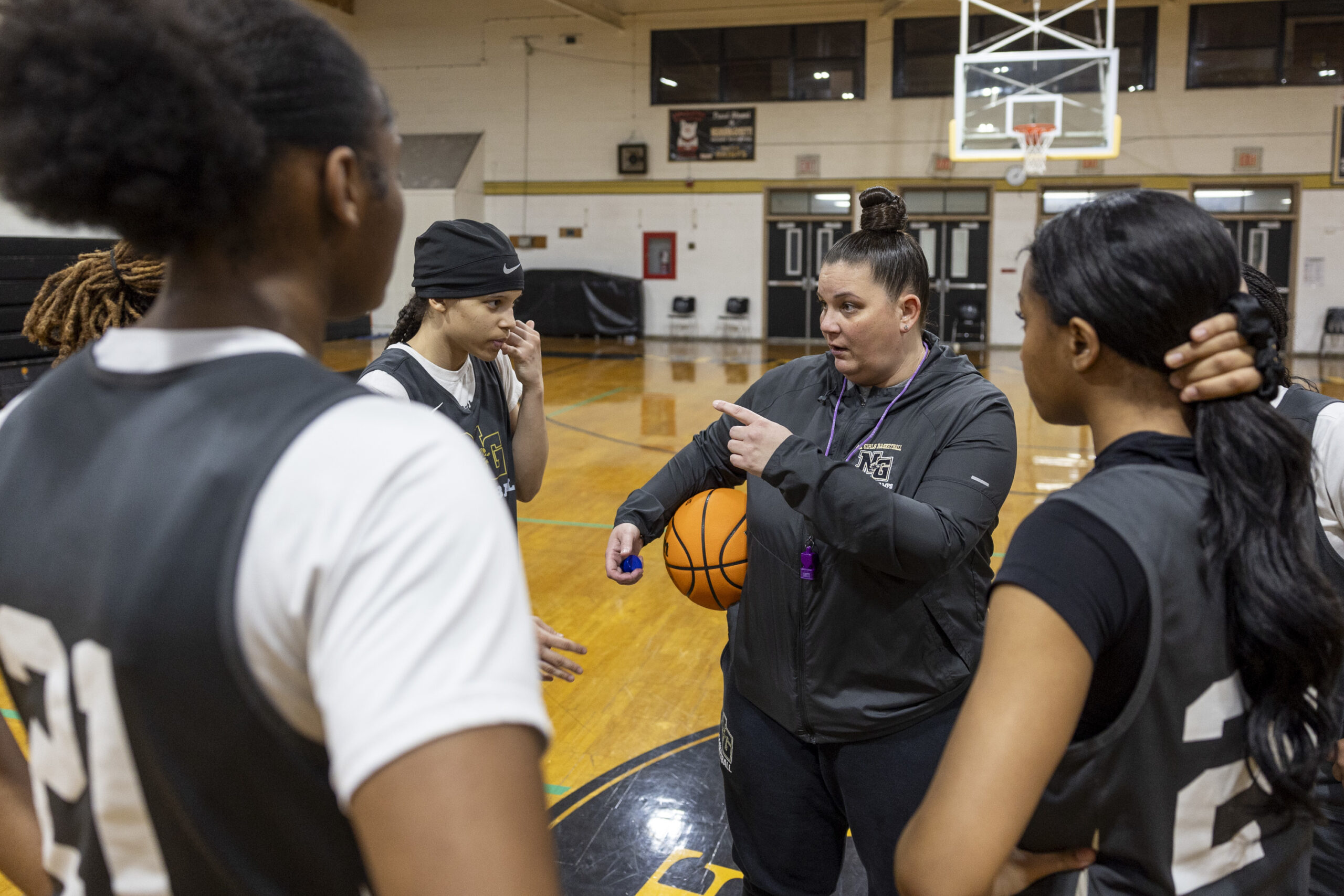
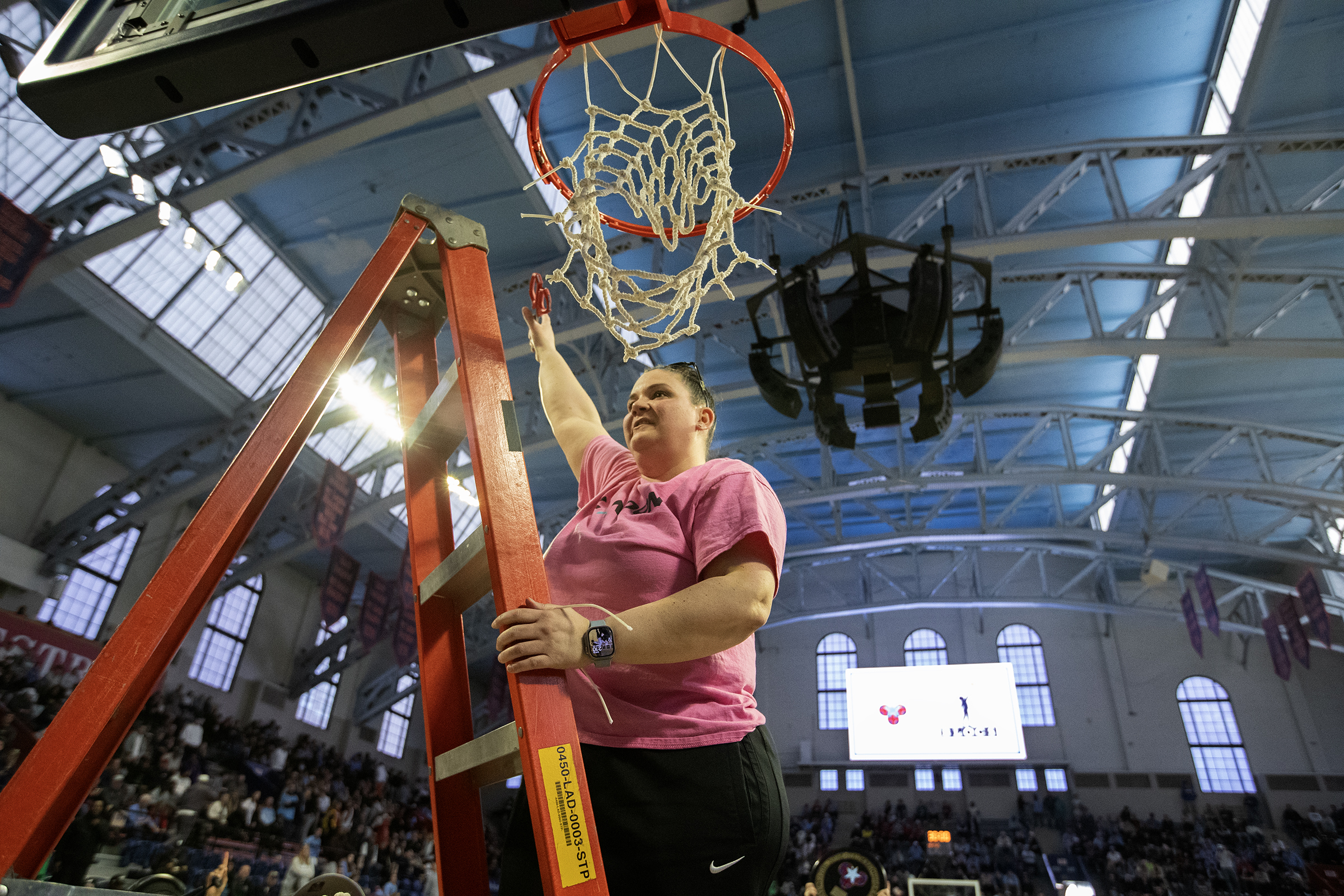
Andrea Peterson coaches her team during practice in January.
Peterson had players, according to many associated with the program, who were from broken backgrounds, some homeless and some abused, and a few survivors of domestic abuse.
She was a four-year starter at Carroll for Hall of Fame coach Barry Kirsch. How Peterson maintains everything she does is beyond him. Kirsch knew of her tireless work ethic as a player, which she continues as a coach.
She has an ability to relate to city players, because in many ways, she comes from the same rowhouse working-class existence as they do.
“Andrea always understood the game beyond her years,” Kirsch said. “You never had to explain anything to her. She was like having a coach on the court in high school. Her teammates respected her and loved her. You could see then Andrea was going to be a great coach. The relationship she has with her players is beyond reproach.
“She does not want the attention on her. She wants it on her team. Andrea has always been incredibly hard on herself, because I had her as a student. Maybe it’s why she takes on Neumann Goretti, because no one in the Catholic League has a harder job than her. Look at Carroll, O’Hara, [Archbishop] Wood, they get players from solid homes, and she is dealing with kids with challenging situations.”
‘Focused on the moment’
Peterson originally grew up in Brookhaven and moved to Norwood. She was one of seven in a three-bedroom home, with the five girls sleeping in bunk beds, and Joey in a separate room. After her older brother Christopher passed away on Mother’s Day 1994 in a car accident, when Peterson was 10, their mother, Alice, began sleeping by the door.
Alice, one of 10 children with South Philadelphia roots, would get so nervous watching Andrea play at Carroll she would rock back and forth in her seat. She did not know much about basketball, so she would yell, “Score that touchdown,” at Andrea’s games. Alice and Thomas more than a few times put up the family rent so Andrea could play summer AAU basketball.
“Seeing my mom at my games, knowing I was her baby girl in these big games, made me happy. My parents always made sure I had what I wanted, and that is what drives me today,” Peterson said. “I was spoiled. We never wanted for anything. But as you get older, you realize how life really is, and what your parents sacrificed. We knew we weren’t living in a mansion.”
Growing up, Joey would take “Angie,” as her family calls her, to Norwood Park to play with grown men when she was 13 on the asphalt courts. Peterson would get knocked around, and Joey never ran to pick her up.
“That’s where Angie got her toughness, and we weren’t about to help her up,” Joey said. “I think it’s why Angie was able to get on that bus the next day after our mother’s funeral. That tells you who she is, and about her commitment.
“I have to tell her to slow down sometimes. Our whole family tells her that. It is nonstop, between the basketball, the daycare, taking on our dad a few years ago, and now my sister’s kids. She is able to get focused on the moment in the moment.”
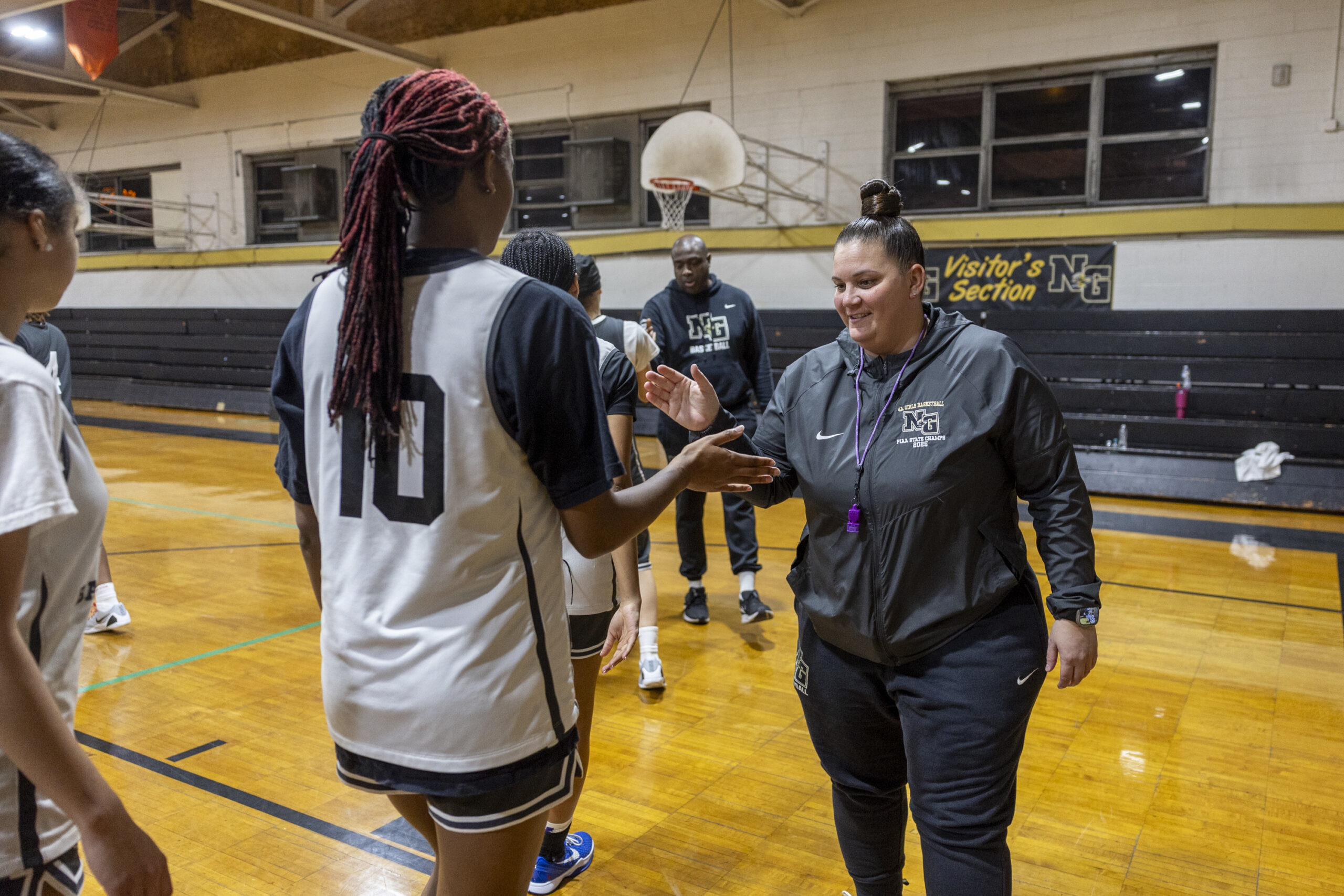
Andrea Peterson ends practice with a line up, doing special hand shakes with her players on Jan. 14.
Peterson first went to St. John’s University out of Carroll but decided to come home to care for her parents, who were in ill health. She transferred to Drexel, where she received her undergraduate in sports management and graduate degree in higher education, becoming the first college graduate in her family.
One time Peterson quit basketball while in grade school, because she felt that her father was living too vicariously through her and that nothing was good enough in his eyes.
They had a heart-to-heart to settle their differences. Peterson felt that was a coming-of-age moment.
“I was always stubborn, like my dad, and if that conversation doesn’t take place, I don’t know if I would have left basketball, but I wanted to show him I could do this on my own,” said Peterson, who wore the No. 22 because it was Christopher’s birthday and her daycare business is named after him.
“I knew what I had to do to get a college scholarship. I knew I was in love with basketball, and I knew that was where my path would go. I was told I wouldn’t make it at St. John’s. I was considered too small, too slow. I love being told I can’t do something. You can tell me 10 things, nine positive and one negative. I’ll hear the one negative and turn that into a positive.
“I hear it every year that Neumann Goretti isn’t good enough. You do not have to like us, but you have to respect my kids and our program, and the culture that we built.”
Thomas wanted more for his daughter, and he was even coaching her while she was coaching. Thomas would keep the articles written about his little “Angie” tucked under his bed.
During the last months of her father’s failing health, Peterson was his sole caretaker. Before he died, she said, he told her, “Thank you for making me proud.”
Andrea Peterson won her second PCL title as Neumann Goretti’s head coach on Feb. 23, 2025.
After each practice this season, her players have made it a habit to hug Peterson and tell her they love her.
“We know what Coach Petey has been through,” Berry said. “It’s why we dedicated this season to her. She buried both her parents last year and never missed a practice or training session. She was always there for us. We have to be there for her.
“I think high school players take for granted what their coaches do. We don’t. Coach Petey was on the bus with us going to a game the day after she buried her mother. I mean, who does that?”
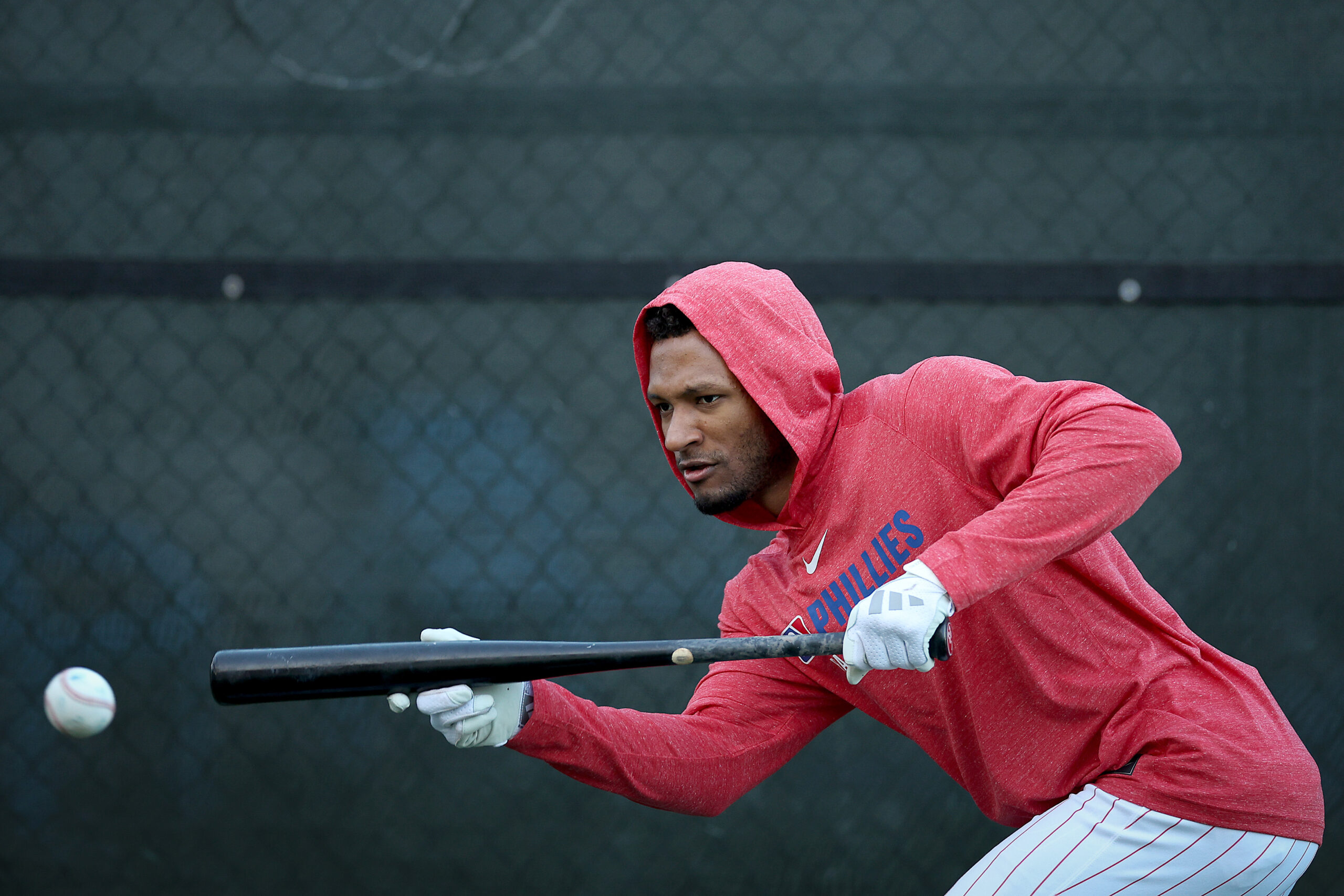
Johan Rojas might be a third-string center fielder who forces you to play with an eight-man batting order, but he is a man without an obvious replacement right now. The Phillies are going to need to figure one out soon, assuming the formality of the 25-year-old’s pending appeal of an 80-game performance-enhancing drug suspension that an Inquirer source says he faces.
Bryan De La Cruz? The 29-year-old nonroster invitee offers enough of a profile at the plate to suspend disbelief. But he hasn’t played center field in the big leagues since 2023, and even then, he did it in only seven games.
Dylan Moore? He played a couple of innings in center field last season but has only 105 in a seven-year big league career as a utility man. The 33-year-old nonroster invitee would make some sense as the third option in any given game. But it’s a stretch to think he’d make sense as a long-term sub.
Or, there is Pedro León, a 27-year-old who went 2-for-20 with 10 strikeouts in 2024 for the Astros. Houston waived him in November.
There aren’t any other options on the spring training roster, unless you count Edmundo Sosa in an emergency.
There is a reason the Phillies traded for Harrison Bader last July. It’s the same reason they were open to re-signing him early in an offseason that ended with him settling for a two-year, $20.5 million contract with the Giants. The Phillies are thin on center fielders and right-handed hitters, and even thinner on guys with both skill sets.
It’s a shame the Bader situation played out as it did. The Phillies’ offseason would look a lot different if they’d been able to sign him to something like a two-year, $25 million extension before he exercised his end of a mutual opt-out. There would have been more than enough at-bats to go around between righties Bader and Adolis García and lefties Brandon Marsh and Justin Crawford, as well as a better combination of depth and platoon ability. And if Bader came at the price of García going elsewhere, no worries. You can get a right-handed-hitting corner outfielder easier than you can a right-handed-hitting center fielder, and a lot of them cost less than García’s $10 million for the same amount of cross-your-fingers-and-pray.
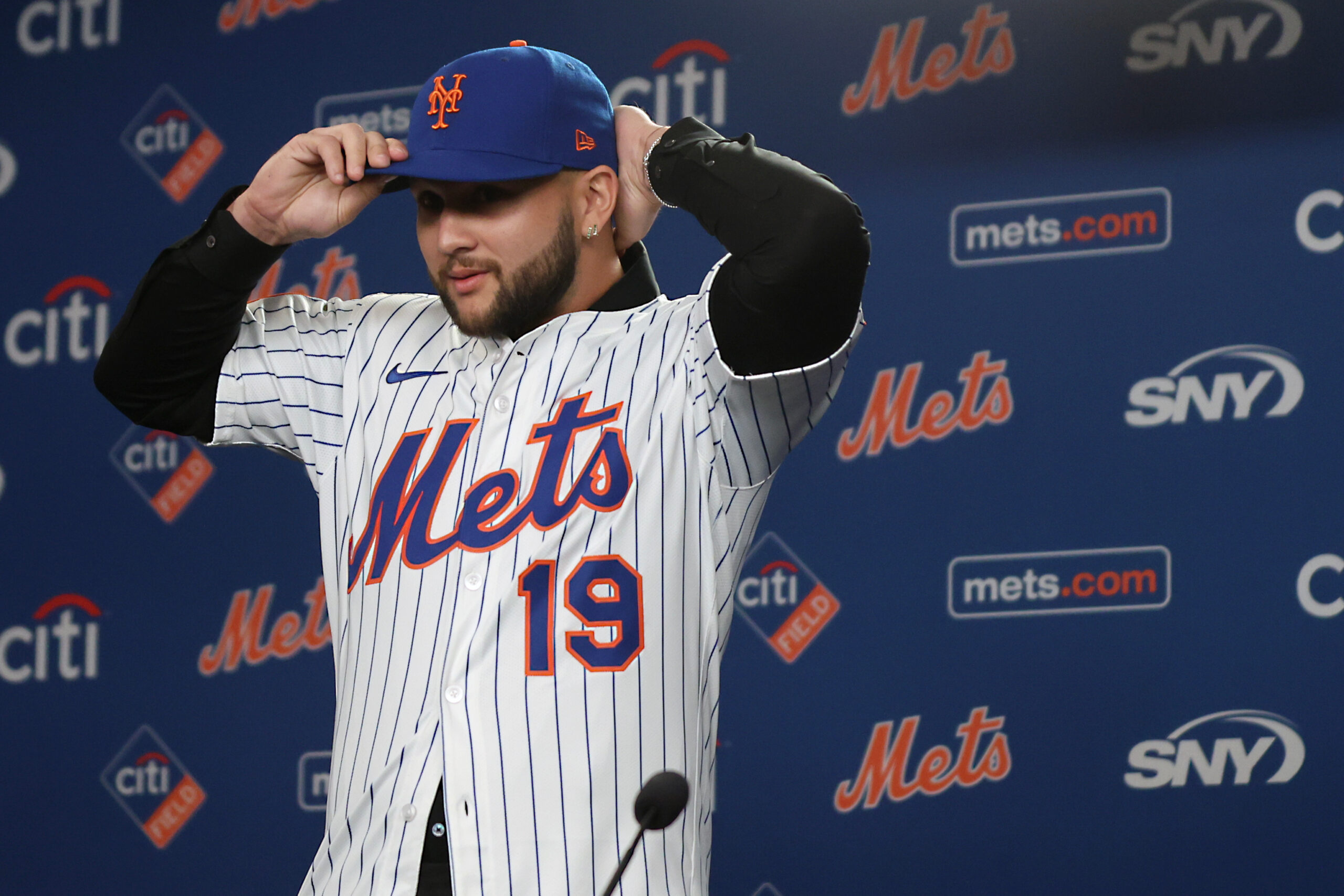
Alas, here we are. It would betray a misunderstanding of the inner workings of the business of baseball to interpret Bader’s contract with the Giants as an unwillingness to match by the Phillies. They moved on and he moved on, and nobody would be thinking twice if the Mets didn’t offer an outlandish contract to Bo Bichette. None of that matters now.
The Phillies don’t have a choice but to scour the earth for someone who at least looks like a center fielder when you squint. Marsh has never played in more than 135 games in a big league season, which is 135 more than Crawford has ever played. That’s not a comfortable situation. The only unsigned free agent of note is Manuel Margot, who would leave everyone pining for Rojas.
Keep in mind, Rojas appeared in 71 games last season. At the start of that season, the organization’s depth chart looked pretty much as it does now. If you’d forgotten Rojas got that much playing time, it’s because he didn’t offer a lot to remember him by.
Johan Rojas’ .569 OPS last season ranked among the bottom 10% of MLB hitters with at least 170 plate appearances.
His .569 OPS ranked among the bottom 10% of MLB hitters with at least 170 plate appearances. He is one of only three center fielders out of 46 total to have an OPS lower than .600 while garnering at least 500 plate appearances over the last two seasons. His average exit velocity ranks second to last.
That would lead to an obvious question, if we hadn’t already covered the answer. Why did Rojas get so many at-bats? Because the Phillies didn’t have any better options. Sure, some wishful thinking factored in, as did an overemphasis on center-field defense. The math is a little more complicated than subtracting the surplus doubles a better defender robs from the surplus doubles a better hitter would have given you at the plate. But the fundamental logic holds, and Rojas failed it. Reality is, the Phillies were a better team last season with Rojas on the bench and Marsh in center field, even against lefties.
You can argue that they are no worse off for losing Rojas. It might be true, to a certain extent. Moore and De La Cruz could be as good as it gets unless someone shakes loose on cutdown day (local product Chas McCormick is in camp with the Cubs on a minor league contract). If finding a center fielder was easy, we wouldn’t be having this conversation.
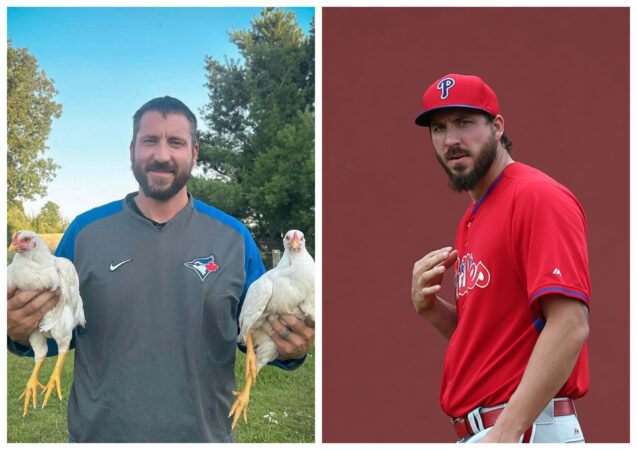
Phillippe Aumont retired from baseball in the summer of 2020 after the pandemic paused the major league season. Once a Phillies prospect, Aumont had been a professional since he was 18. He grew up in Canada, dedicated his life to baseball, and pitched in 46 big-league games with the Phillies before deciding it was finally time to leave the game. He needed to find something else.
So he became a farmer, purchasing 220 acres of land in his hometown in Quebec. And the first animals he acquired were pigs.
“I played for the IronPigs for the longest of times, and I remember we used to always get those bacon slices,” said the 37-year-old Aumont, who spent five summers in Allentown with the Phils’ triple A team. “Now, I was like, ‘Well, I can probably produce pig meat for the IronPigs’. That would be hilarious. I used to wear my IronPigs gear to go and wrestle the pigs and move them.”
Even as a farmer 400 miles from the Lehigh Valley, Aumont was reminded of baseball. Shaping his new identity was not as easy as purchasing land.
“To be honest, it took longer than I thought to get comfortable,” Aumont said. “You’re stepping away from the game because you’re like, ‘This is enough. There’s plenty of stuff in the world to do. I have a family now. I want to do other things.’ But the baseball player inside never dies. It’s fun, but it also feels like a curse. You can’t let him go. It was you your whole life. But you have to let him go. It took me a while.”
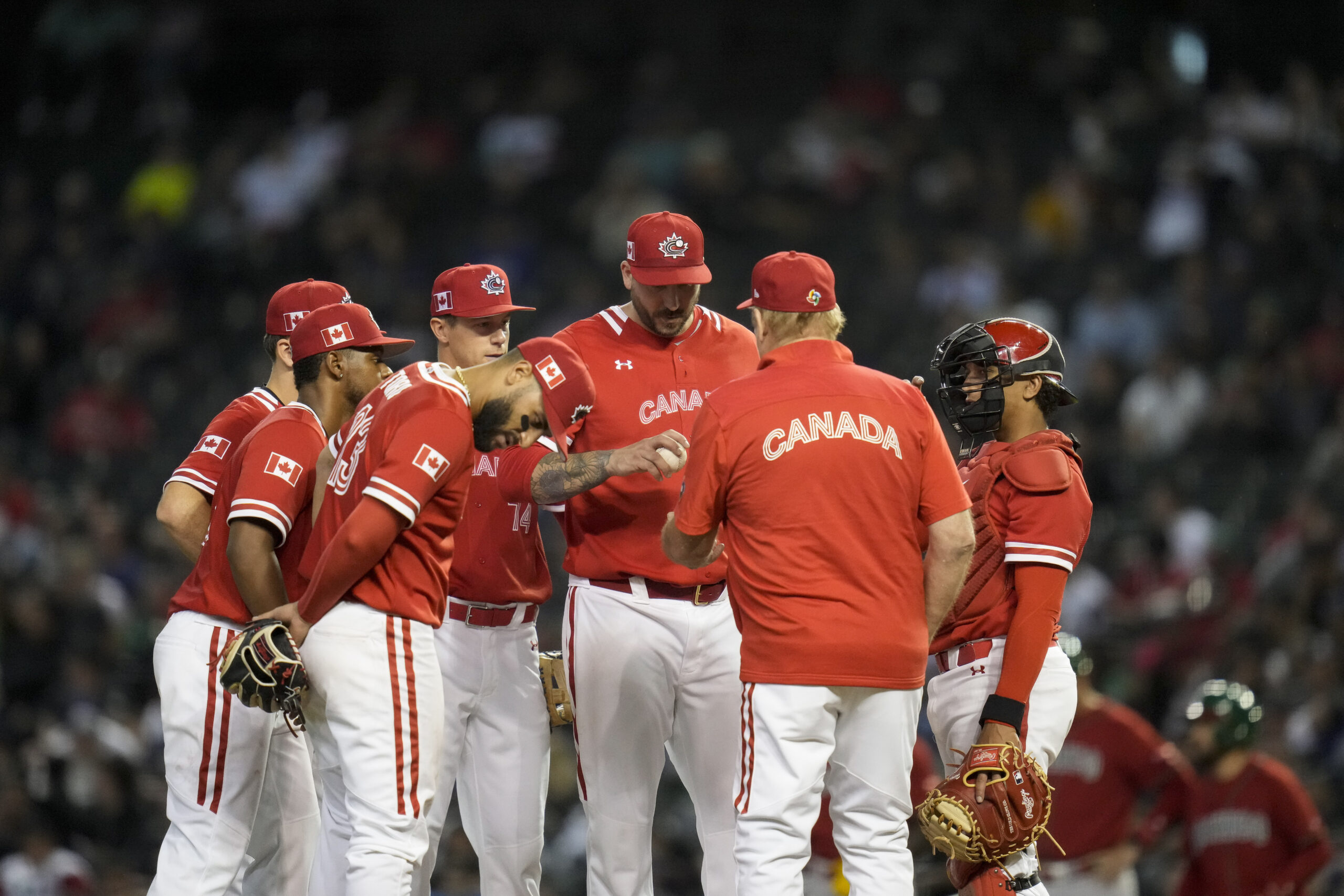
Phillippe Aumont (middle) pitched for Team Canada during the 2023 World Baseball Classic.
Aumont hangs his old Phillies jerseys in a closet and still has his baseball cards. His baseball life is finally behind him, but his arm is not yet done. He’ll pitch this month in the World Baseball Classic for Team Canada, which plays Wednesday in an exhibition against the Phillies in Clearwater, Fla. Aumont is scheduled to pitch against the Phils.
Aumont last pitched there in 2015 as a Phillie struggling to hold onto a dream. He’ll return this week with a new perspective.
“Let’s say you see Daniel Radcliffe and you’re going to be like, ‘Holy s—. That’s Harry Potter.’ But, no, it’s Daniel Radcliffe,” Aumont said. “It was always, ‘Hey, Phillippe. He’s the guy who plays for the Phillies.’ There was no human to it. At some point, you’re like, ‘OK, I need to make a separation, and I need to find an identity.’”
Phillippe Aumont wrapped up his career on a minor league deal with the Blue Jays in 2020.
Leaving the game
Aumont spent spring training in 2020 with the Toronto Blue Jays on a minor league deal after spending the previous season with an independent-league team in Ottawa. It seemed like one last shot to keep his career churning. The pandemic closed spring training, and Aumont returned to Canada.
His first daughter was born the previous summer, making the baseball lifestyle — “hotels, planes, trains, buses, big cities,” Aumont said — harder to fathom. So when a farm in his hometown of Gatineau, Quebec, hit the market that summer, Aumont and his wife, Frédérique, pounced. They already had planned to buy a ranch, as Frédérique grew up riding horses. Buying the farm accelerated their plans. Aumont told the Blue Jays he was finished.
“I loved baseball, but I didn’t love it as much as I loved my kid,” Aumont said. “I just felt like there was a shift in priority back then, and I made a decision based on that. No regrets. Sometimes, I’m like, ‘Damn, I could still be playing. I could’ve turned it around somewhere else and kept the career going.’ But, no. I own up to my decisions, and I think they were the best at the time.”
The Aumonts named their farm La Ferme Pure Alternative, and their introduction seemed easy, as Aumont said prices were low during the pandemic.
“It was, like, more expensive to buy water than gas back then,” Aumont said.
But that soon changed. The expenses of farming caused the couple to shift plans. They no longer grow crops, instead leasing land to farmers who do. The Aumonts raise chickens, rabbits, and pigs and sell meat. They also have horses.
“I was raised on real meat. I’m going to die on real meat,” Aumont said. “We’re going to try to produce clean food as much as we can for a decent amount of money. We’re not trying to sell filet mignon for 75 bucks a pound. We’re slowly doing the things that we want on the farm, and hopefully it grows to something bigger and nice when we do retire, or if we ever retire. Or we just hand it to our daughters.”
Former Phillies pitcher Phillippe Aumont at home on his farm in Quebec.
The farm is just 30 minutes from Ottawa, which Aumont said is close enough to be near a major city but far enough to feel secluded. He no longer plays baseball or keeps his arm loose, but there’s a facility near his farm where he worked out a few weeks before joining Team Canada. This month’s World Baseball Classic is Aumont’s second WBC with the Canadian team since he retired. He knows how to get ready.
Aumont keeps up with the farm while working an administrative job with the Canadian government and finishing schoolwork to become a building inspector. He’s no longer just a baseball player.
“It’s fun,” Aumont said. “I get to take that guy with me once again, and then I come back home, put him back in the box, and move on to being a husband, dad, and friend.
“It’s our lives. It’s how we wake up everyday. When people come here, they’re like, ‘Wow, it’s quiet.’ This is our daily life. It was definitely a culture shock when we first came. Now I just wake up to the sound of the rooster.”
Phillippe Aumont made 46 appearances with the Phillies over parts of four seasons from 2012-15.
Finding peace
Aumont ended spring training in 2015 by packing his belongings in a red duffel bag and walking across the Phillies’ complex to the minor league camp. Six years earlier, he was acquired as part of the return in the trade that sent Cliff Lee to Seattle. But he could not crack the opening day roster for a team that lost 99 games. It was difficult.
He’s been to Clearwater as a fan since that afternoon — “I sat in center field,” he said — but has not yet pitched there in a game since his time with the Phillies ended. He could do that on Wednesday with Team Canada.
“I’m actually already nervous about it,” Aumont said. “I do have butterflies. I can’t hide it. It’s going to be emotional. I don’t know if I’ll be happy or sad. I don’t know.”
He hasn’t been back to Allentown, either, but would love to visit the Chipotle near the ballpark where he said he “definitely paid a few months’ rent.” And then maybe he could get back to Philadelphia, where his final big league appearance came in June 2015 with a painful four-inning start against St. Louis. Aumont became a free agent a few days later and spent the next five seasons bouncing around the minor leagues.
“Philly will always have a special place in my heart. It’s always a place where it’ll be warm to my heart,” Aumont said. “I do hope I get to go back and enjoy it from the outside with the family, and my daughters can see where I was playing one day. I’m looking forward to going back one day just as a fan. I’m not looking to get attention or anything. I just would love to go back, feel those memories, and go back down memory lane and enjoy it once again.”
And if Aumont ever makes it back to Philadelphia, he’ll be more than just a baseball player this time.
“We’re just doing the small things,” Aumont said. “We enjoy peace. We get our bits of society interaction when we want to. Other than that, we stay on the farm and raise our two daughters and produce our own meat. Then I play baseball when they need an old 37-year-old retired guy.”
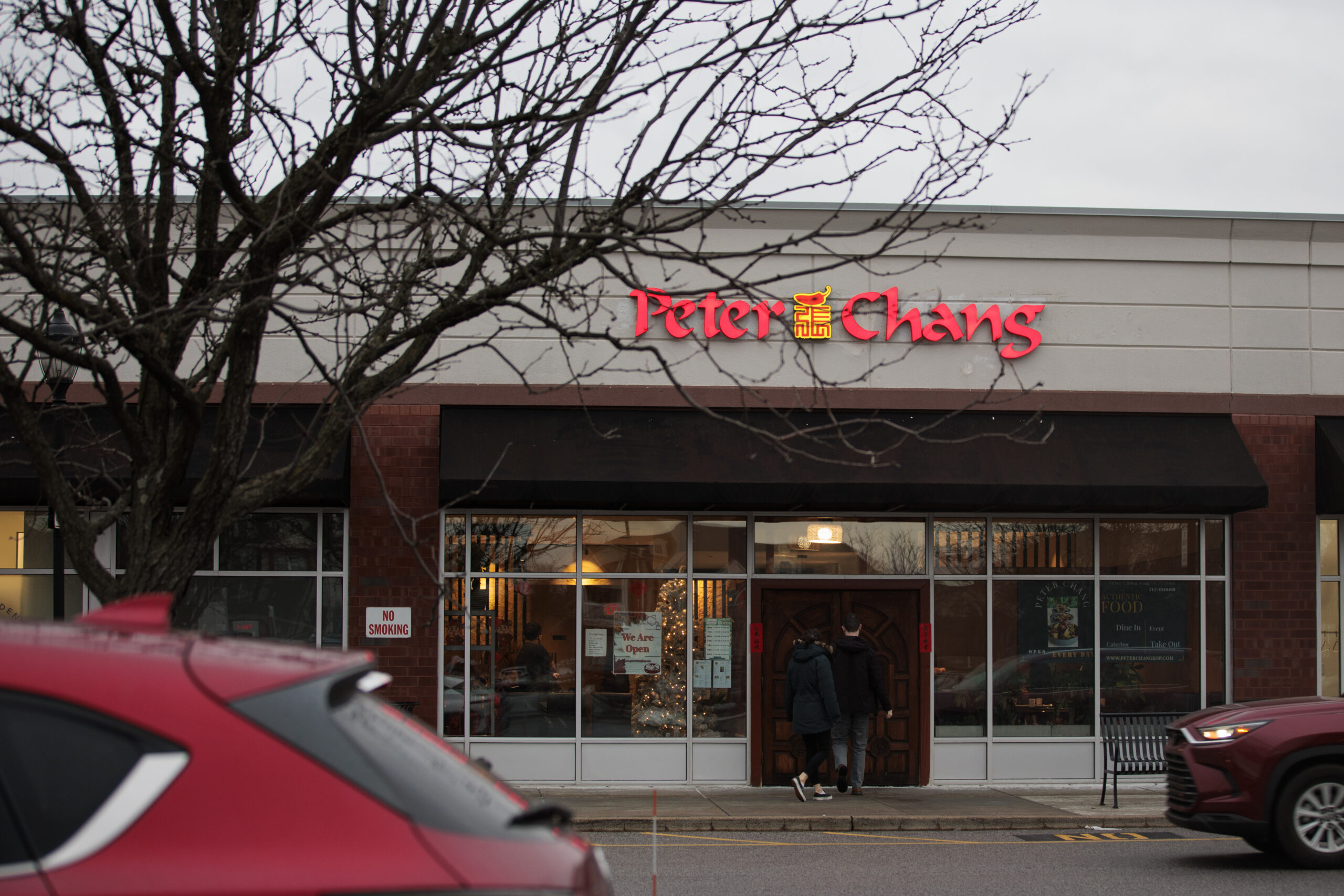
If you weren’t paying attention, you could easily drive past the nondescript storefront beside the Giant supermarket in King of Prussia’s Henderson Square. But there, glowing red from the strip-mall space wedged between a yoga studio and a dental office, is a sign with a name that caused me to hit the brakes: Peter Chang.
Chang is something of a legend in the Washington, D.C. area, especially after being profiled in 2010 by the New Yorker’s Calvin Trillin in an article — “Where’s Chang?” — that detailed a local cult following for the talented Chinese chef, despite (or perhaps because of) his perpetual moves from one Sichuan kitchen to the next. By 2011, however, Chang finally put down roots with his name attached to a restaurant inthe DMV, starting in Charlottesville, Va. It became the first of a rapidly growing family empire that has since expanded to 20 restaurants of varying concepts across the Mid-Atlantic, from Chang Chang in Dupont Circle to Baltimore’s Nihao. The run that has earned this onetime chef at the Chinese Embassy multiple nominations from the James Beard Foundation, including a finalist nod for national Outstanding Chef in 2022.
Now, having debuted in the Philadelphia region withnot one but two new restaurants — Peter Chang in KOP and Mama Chang in Colmar — the once-elusive Chang is virtually everywhere.
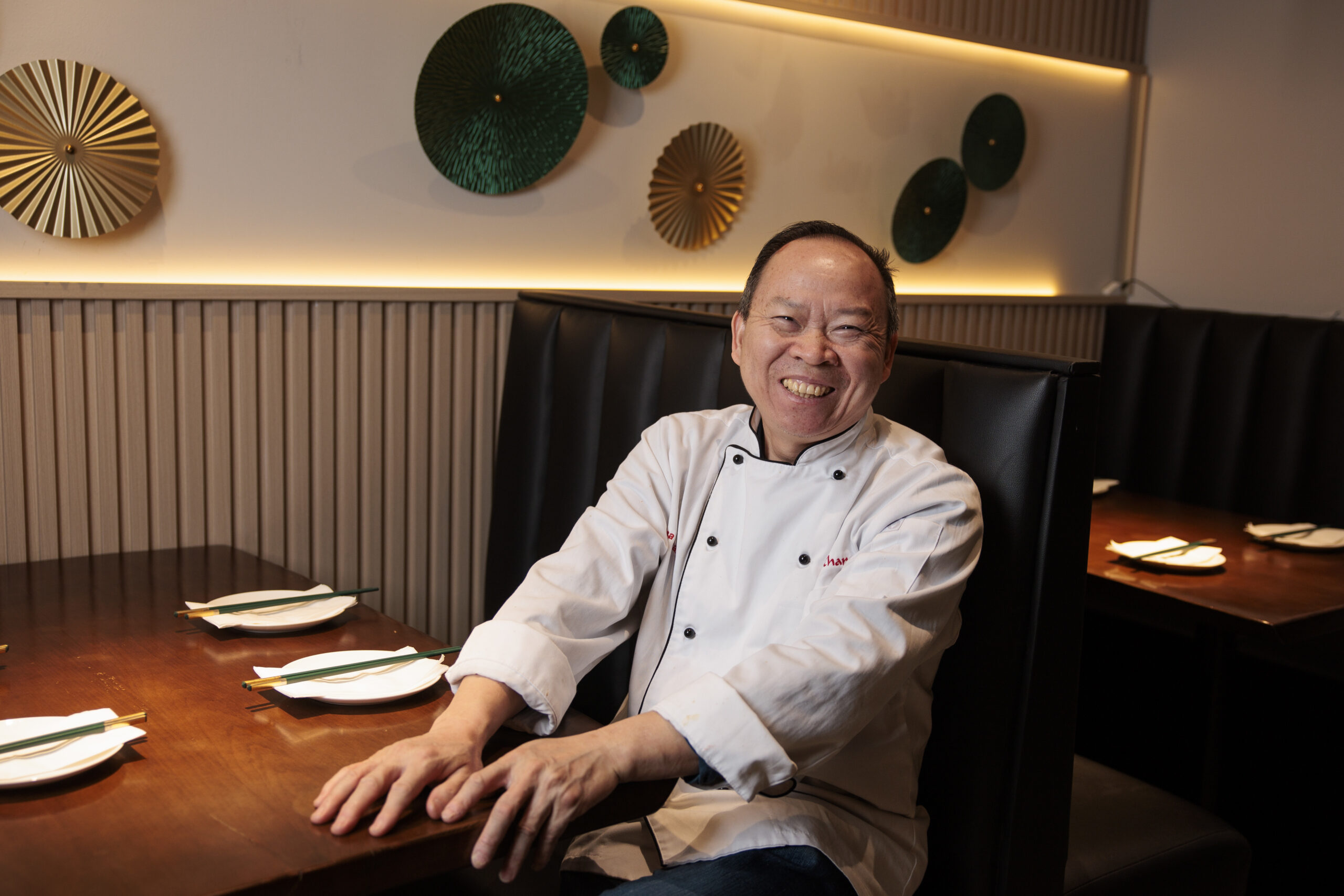
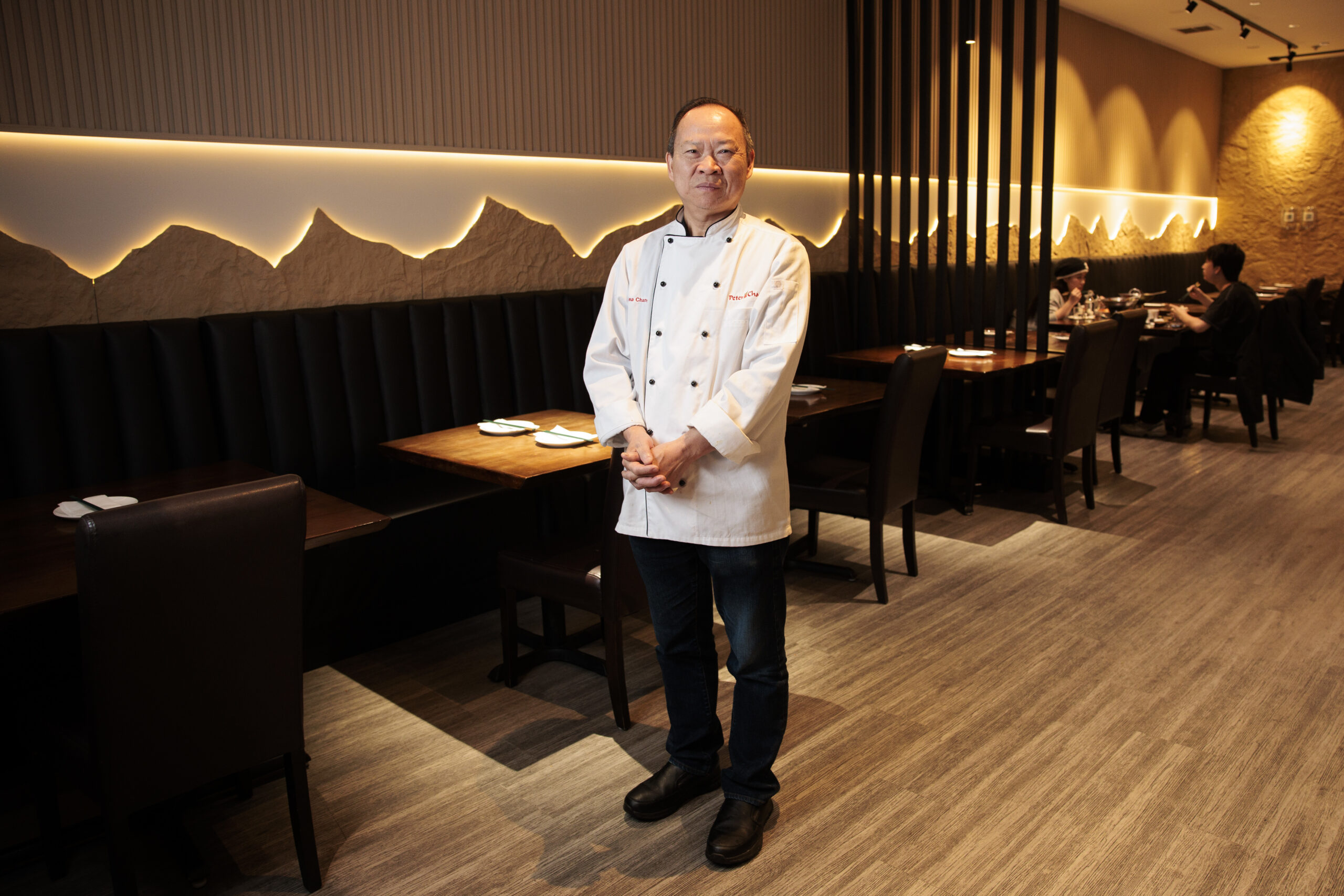
Peter Chang posed for a portrait at Peter Chang King of Prussia on Thursday, Feb. 19, 2026 in King of Prussia, Pa The exterior of Peter Chang King of Prussia on Thursday, Feb. 19, 2026 in King of Prussia, Pa
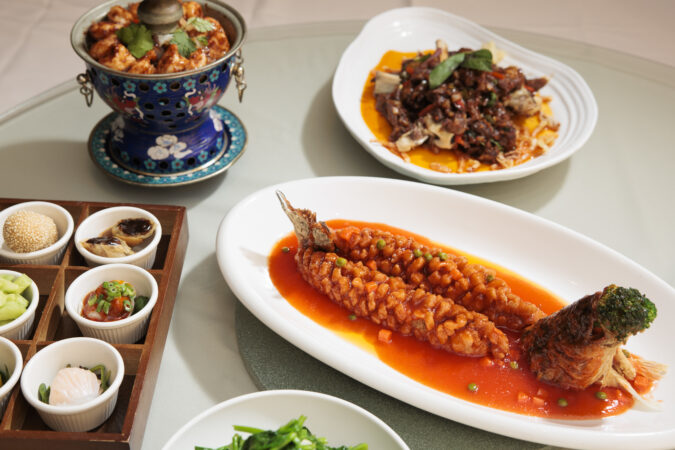
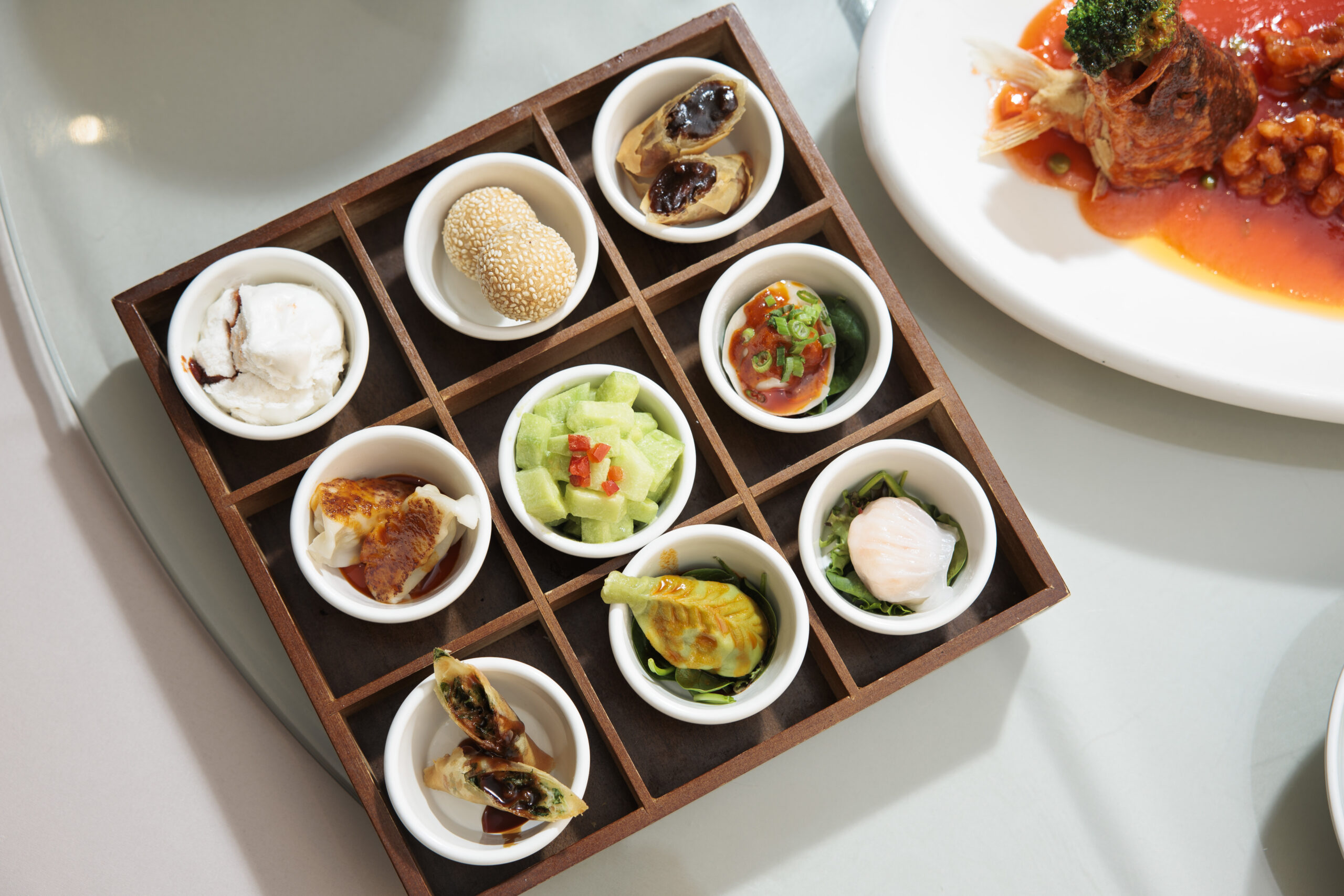
I popped the steaming hot balloon of his wife Lisa Chang’s signature bubble scallion pancake, then hungrily grazed across the nine cubbies of the dim-sum sampler box, savoring the clean white snap of a crystal shrimp dumpling, the hoisin-dabbed crunch of a meaty Peking duck spring roll, and the fragrant spice of a wonton swirled with the house chili oil. I immediately concluded Chang’s arrival to Philly is a very good thing.
Figuring out where, exactly, these new restaurants sit within the context of the Philadelphia region’s already rich Chinese dining landscape is separate question.
The dim sum platter box at Peter Chang King of Prussia on Thursday, Feb. 19, 2026 in King of Prussia, Pa.
Chang has long been referred to by fans (and even the company’s own website) as a Sichuan chef since many of his dishes buzz with the lip-numbing “málà” hum of Sichuan peppercorns and earthy cumin perfume typical of Sichuan cooking. But he is, in fact, from the province of Hubei, a Central Chinese crossroads threaded by train lines and the Yangtze River, where the cuisines of neighboring provinces like Sichuan and Hunan have been influential, but where the flavors of those traditional dishes are also interpreted in distinct ways.
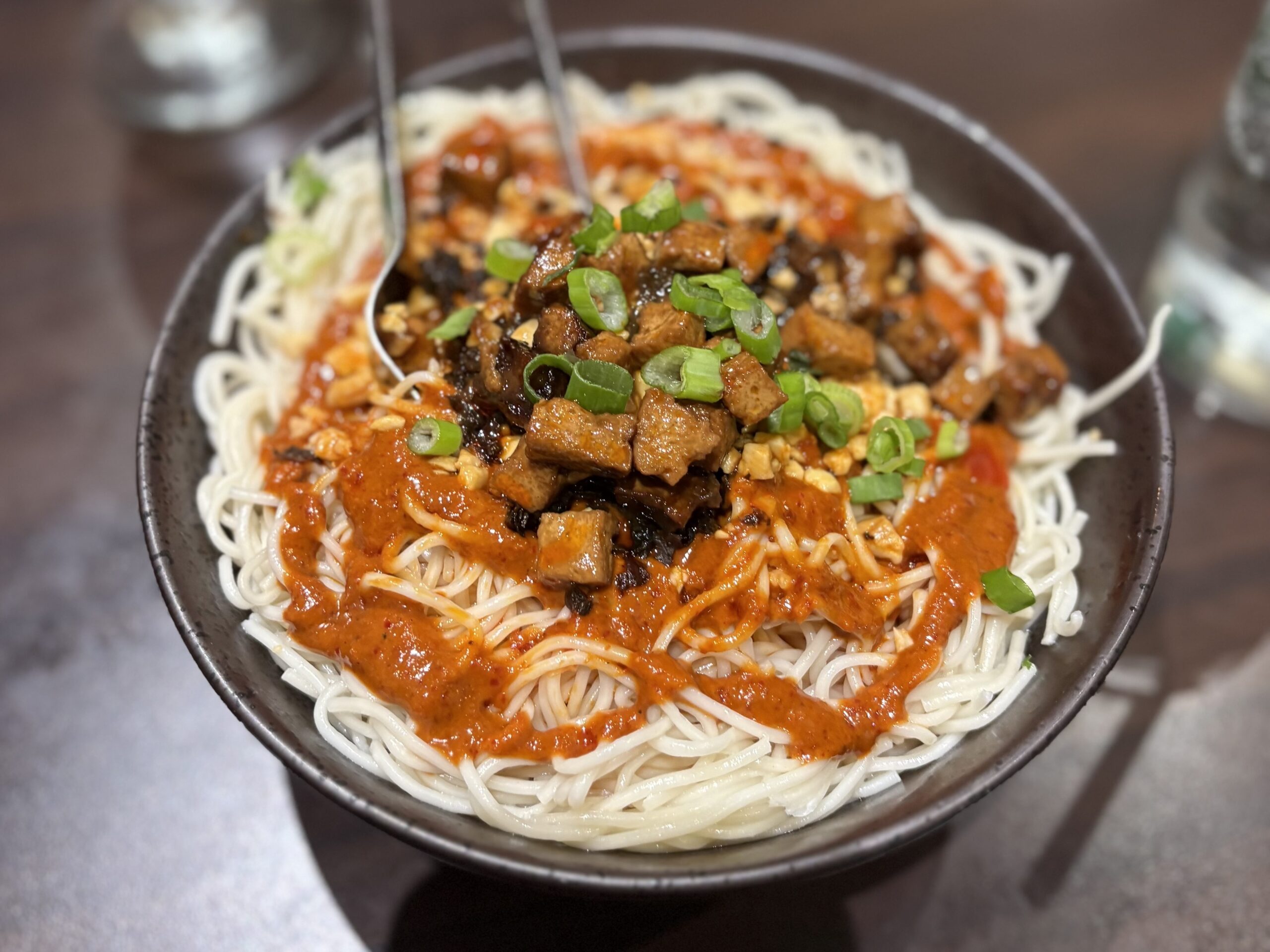
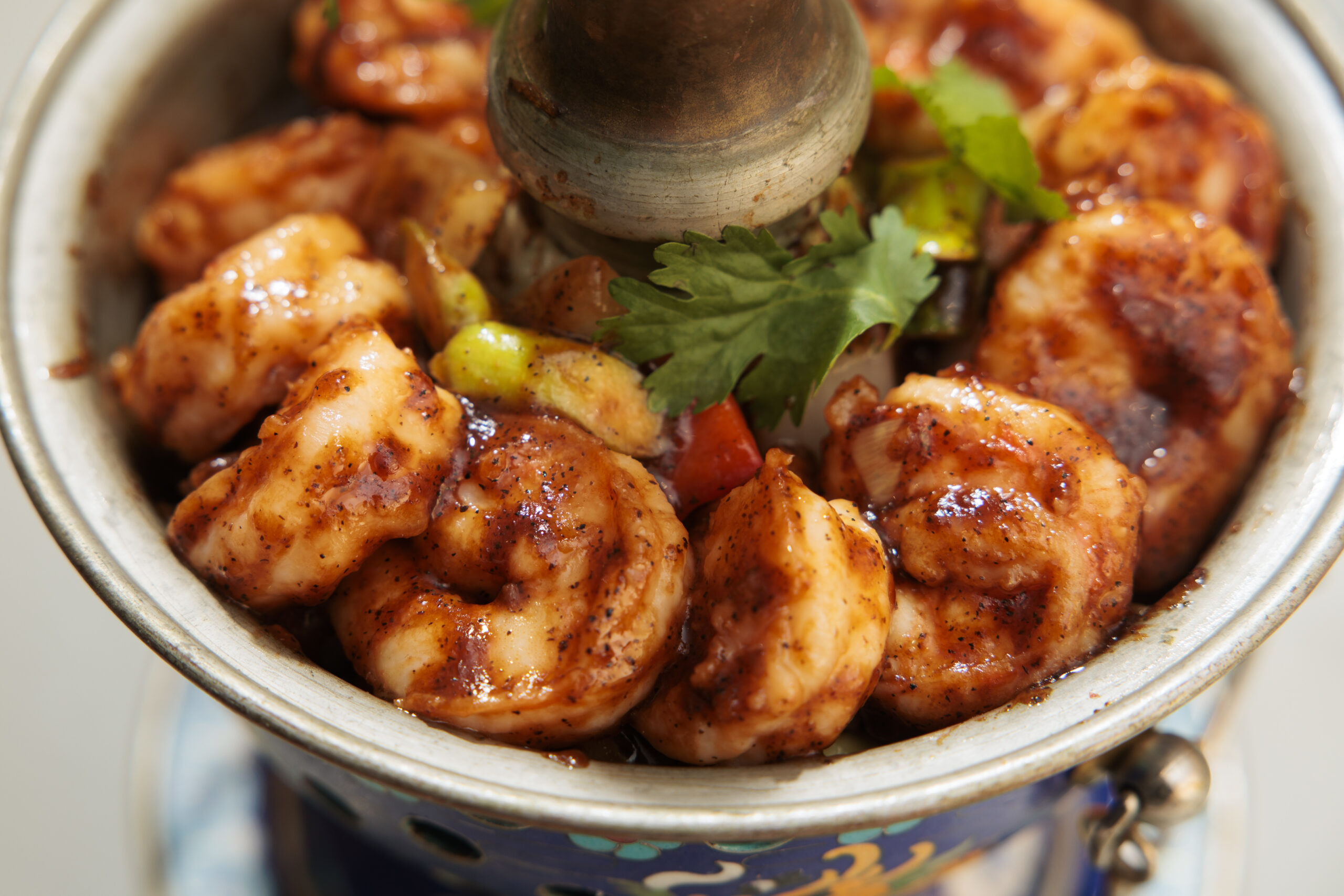
Chang’s take on dan dan noodles, for example, is simultaneously lighter, brighter, and more potently spiced than others I’ve tried in other local Sichuan restaurants — the usual ground meat subbed out for vegetarian diced tofu, then scattered with crushed peanuts and umami sparks of preserved olives and mustard greens. His black pepper shrimp, dramatically presented in a beautiful blue and yellow hot pot, is a delicious personal fusion of multiple regional styles; the bold-yet-balanced sauce blends Sichuan kung pao with the pungent tingle of Hunan black pepper and splashes of Maggi and Worcestershire sauces, which Chang’s daughter and business partner, Lydia Chang, says is a typical move in Cantonese kitchens.
The Szechuan dan dan noodles with tofu is a spicy vegetarian offering at both Peter Chang and Mama Chang.The black pepper shrimp at Peter Chang King of Prussia on Thursday, Feb. 19, 2026 in King of Prussia, Pa
The group’s flagship concept, Peter Chang, of which there are currently 15 locations, opened in a modest King of Prussia BYOB last summer, while the much larger Mama Chang debuted in October with a liquor license in a 400-seat Colmar space previously occupied by Golden City, a Chinese standby for 39 years.
In theory, the two are different concepts, with Peter Chang presenting a broad array of classic Chinese dishes, many of them presented in tapas-style small dishes, while Mama Chang, originally opened in Fairfax, Va., was created to showcase the Hubei-style home cooking and larger family-style portions inspired by Chang’s mother, Ronger Wang. In practice, the two Philadelphia-area restaurants share almost identical menus while the company figures out what each audience will respond to most.
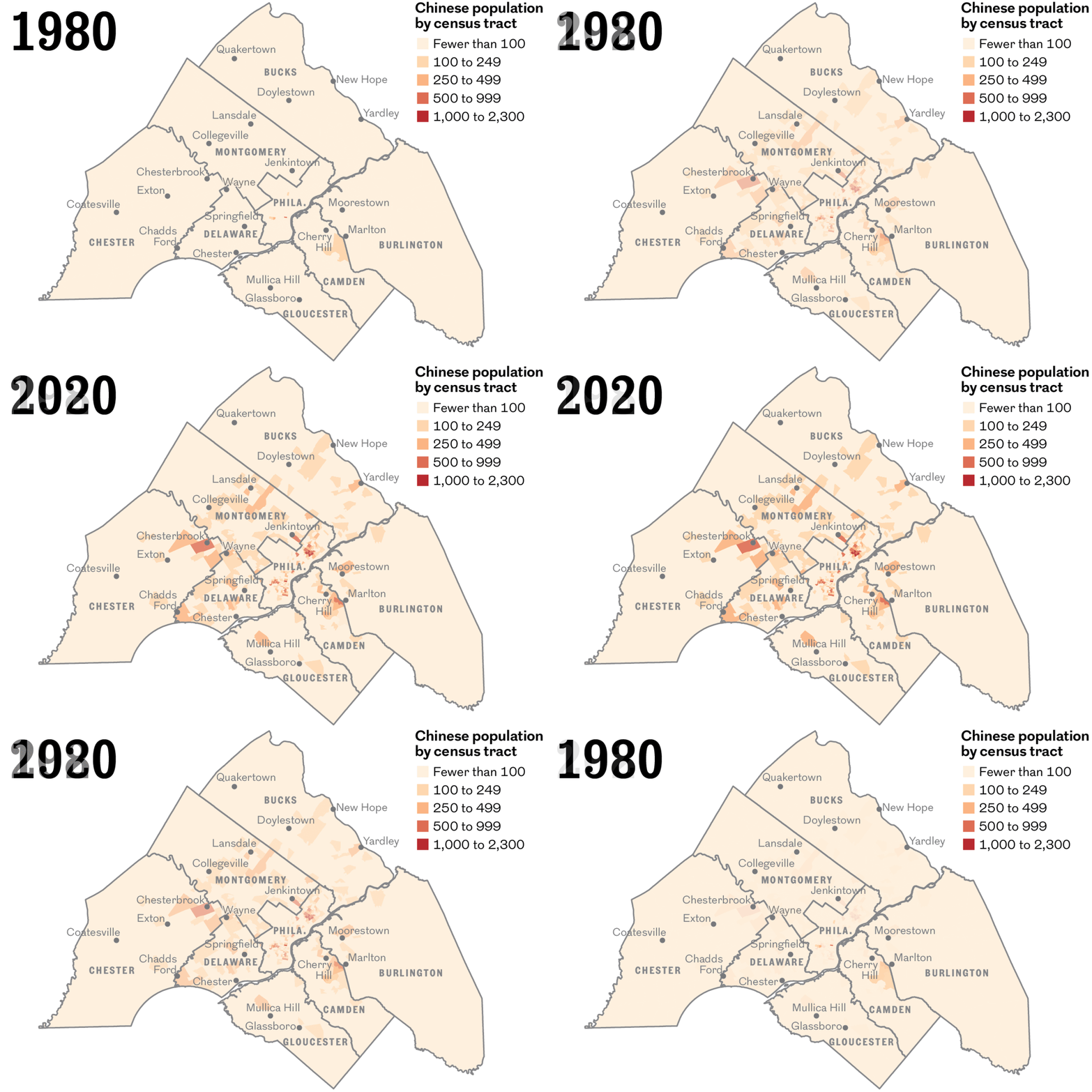
The restaurant group has typically favored suburban locations in part because of their access to easy parking, but also for the opportunity to offer diverse communities unfamiliar with traditional Chinese cooking a taste of something different, says Lydia. In the case of this region, however, there’s already been a major demographic shift of Chinese families moving to Philly’s northern and western suburbs over the past two decades. Restaurants like Mama Wong, the original locations for Han Dynasty in Exton and Royersford, and Margaret Kuo’s Kitchen have successfully found their audiences without having to make too many compromises.
See how the area’s Chinese population grew between 1980 and 2021.
About 40% of Peter Chang’s King of Prussia customers are of Chinese descent, Lydia says. But in Colmar, that number drops to 20%, she says, and preferences for Americanized Chinese food remain strong. (“We try to be flexible,” she says, noting some Americanized standards like chicken lo mein and shrimp fried rice are still available.) The value of Peking duck combo meals and a $33 all-you-can-eat brunch and dim sum on weekends have been a draw.
There are so many distinctive dishes at both locations, however, I‘d encourage diners to skip the impulse to order General Tso’s and try the Wuxi sweet-and-sour chicken, whose larger chunks and lighter batter feature a sauce with a punchy dose of garlic. The various dim sum here are also a great place to start, whether as the sampler or ordered in individual gems such as the firecracker cilantro fish roll, a shiitake-bok choy dumpling wrapped in a kale-infused dough, or the vibrant take on galicky cucumber salad, which glows pale green with a dressing of pureed jalapeños and scallions.
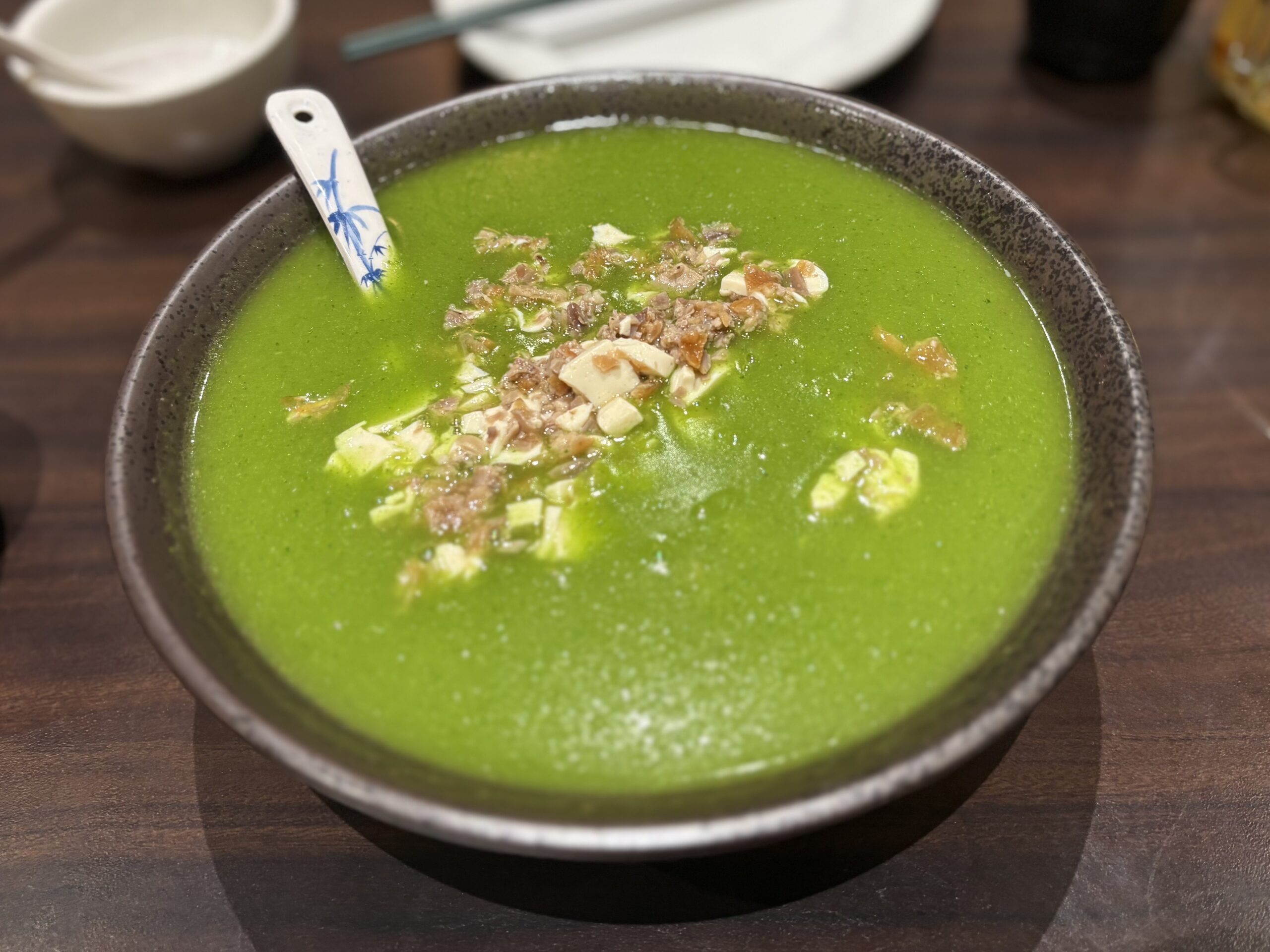
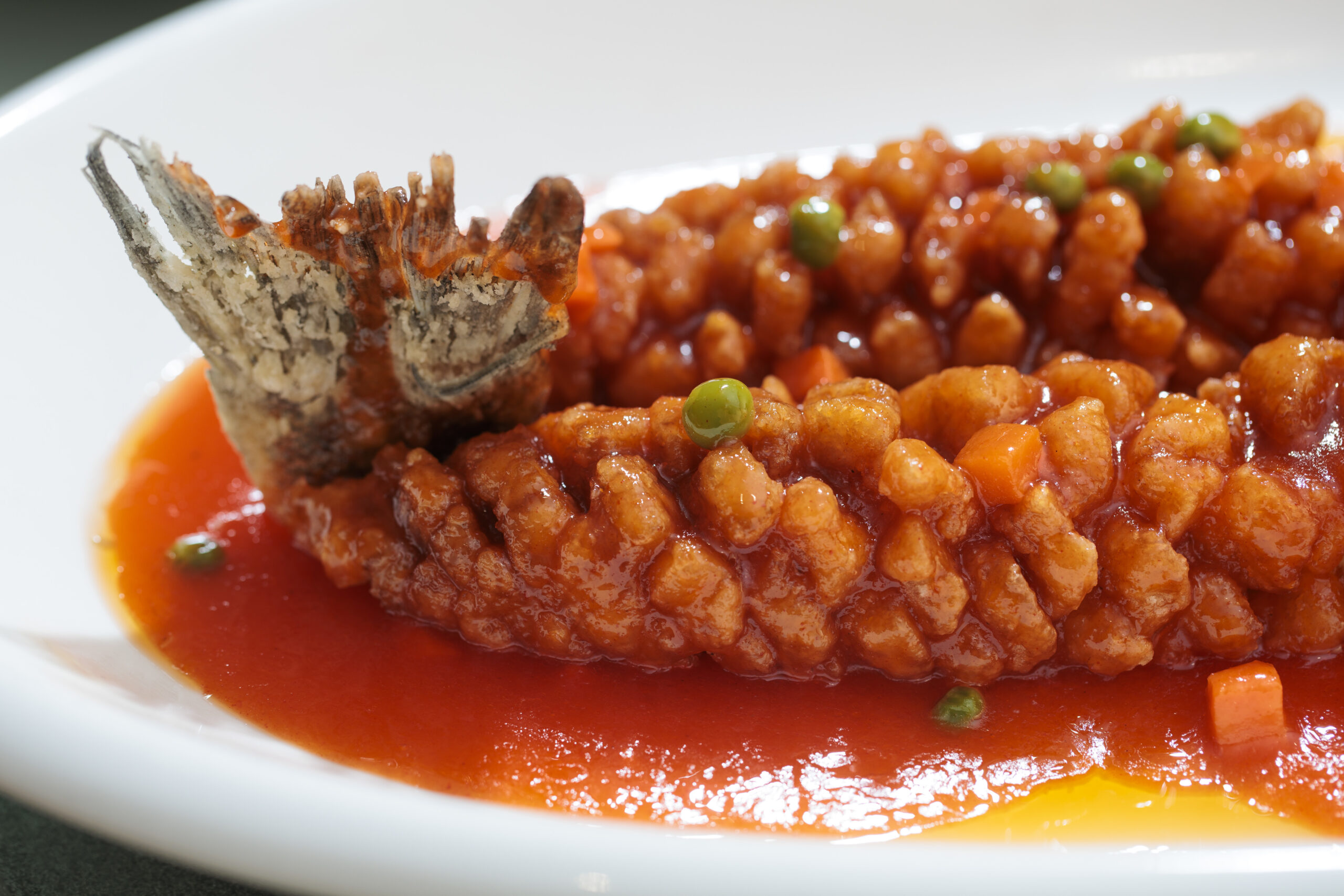
The jade tofu soup with duck is a signature dish at both Peter Chang and Mama Chang.The fried branzino at Peter Chang King of Prussia on Thursday, Feb. 19, 2026 in King of Prussia, Pa.
Sticking with Chang’s green trend, try the jade tofu duck soup, whose verdant broth is tinted with kale puree but also meaty with duck stock thanks to all the carcasses left over from the restaurant’s brisk Peking duck trade. Chang’s birds are cooked the classic way: inflated twice with a pump to separate the skin from the flesh, massaged with five-spice salt, scalded in a bath of baking soda, then roasted with a vinegar-and-corn syrup glaze until the tawny skin snaps like a candied cracker, to be wrapped tableside in pliant house-steamed pancakes with shaved scallion and a sweet dab of hoisin.
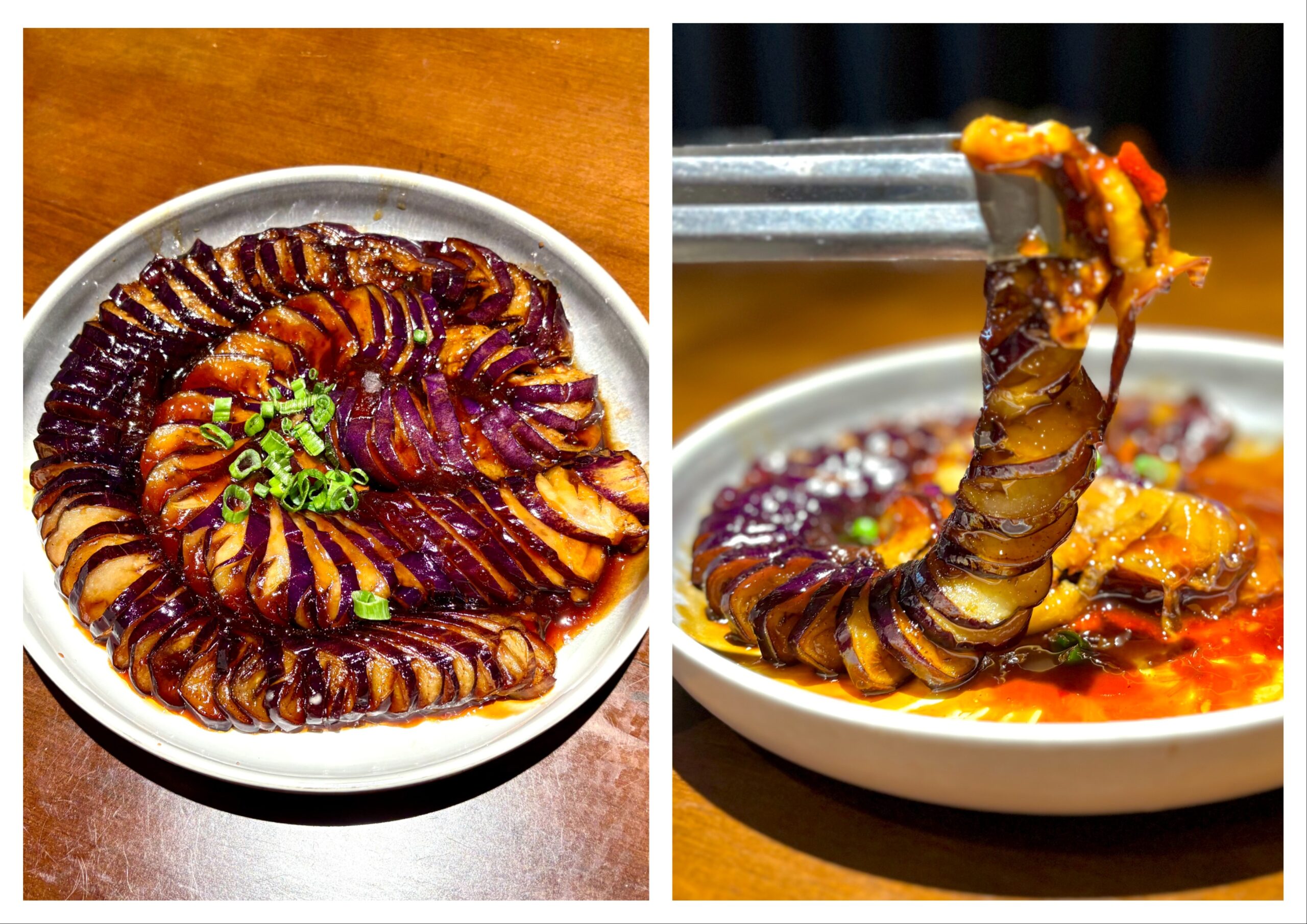
The duck is a sure crowd-pleaser, as is the meaty branzino in sweet-and-sour sauce, whose deep-fried fillets are crosshatched like a pine cone in a show of the kitchen’s technical proficiency with classic dishes. Another personal favorite, the dragon eggplant in garlic sauce, showcases more impressive knifework, using a series of angular cuts in thesuoyi style that lets it expand, Slinky-like, through a saucy glaze that balances sweetness, tang, and spice.
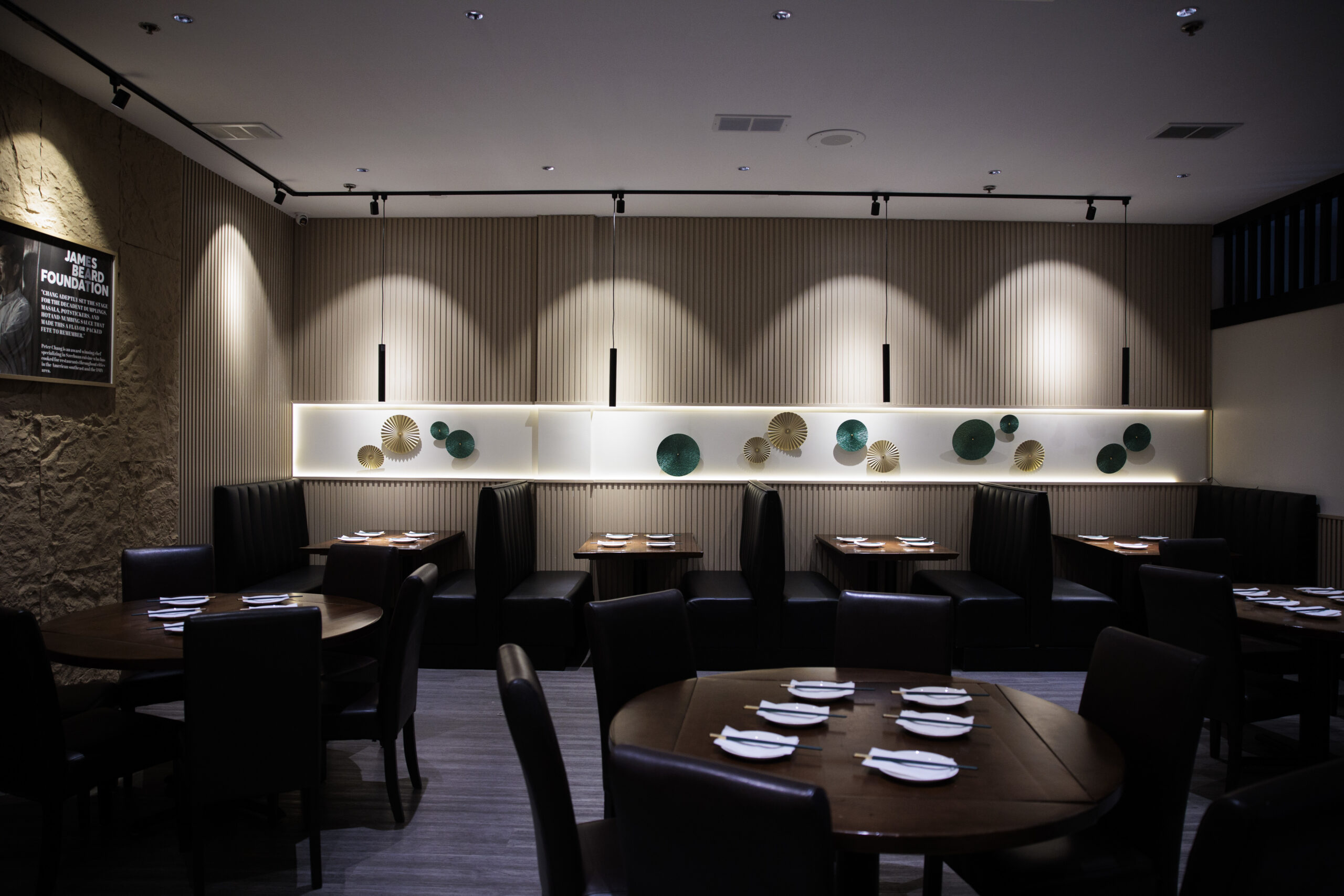
Dragon eggplant with garlic sauce at Peter Chang in King of Prussia showcases an intricate knife-cutting technique that allows the eggplant to remain in tact.The dining room at Peter Chang King of Prussia on Thursday, Feb. 19, 2026 in King of Prussia, Pa
Chang has a special fondness for spice, says his daughter, and that’s particularly evident in dishes that employ a double-cooked “dry fry” method, in which ingredients are pre-cooked or crisped in batter, then refried in the wok with shimmering aromatic spice. The eggplant fries are one delicious example, but so is the bamboo fish: crispy flounder fingers seared inside a crust that crackles from the addition of cooking wine and cornstarch, and radiates the heat of chilies and herbal fresh cilantro. House-steeped chili oil infused with cardamom and star anise, which takes days to make, transforms shredded tofu skin salad into irresistibly snappy noodles. Pickled fresh chilies are key to the soybean beef pot, a rarely seen rustic specialty that arrives simmering in a clay vessel. The hand-pulled noodles on Mama Chang’s menu employ chewy, hand-pulled Xi’an “belt” noodles as a springboard for garlic, ground Sichuan peppercorn powder, and coarse pepper flake garnishes that actually sizzle with aromatic steam when hot chili oil is drizzled over the base sauce of vinegar and soy.
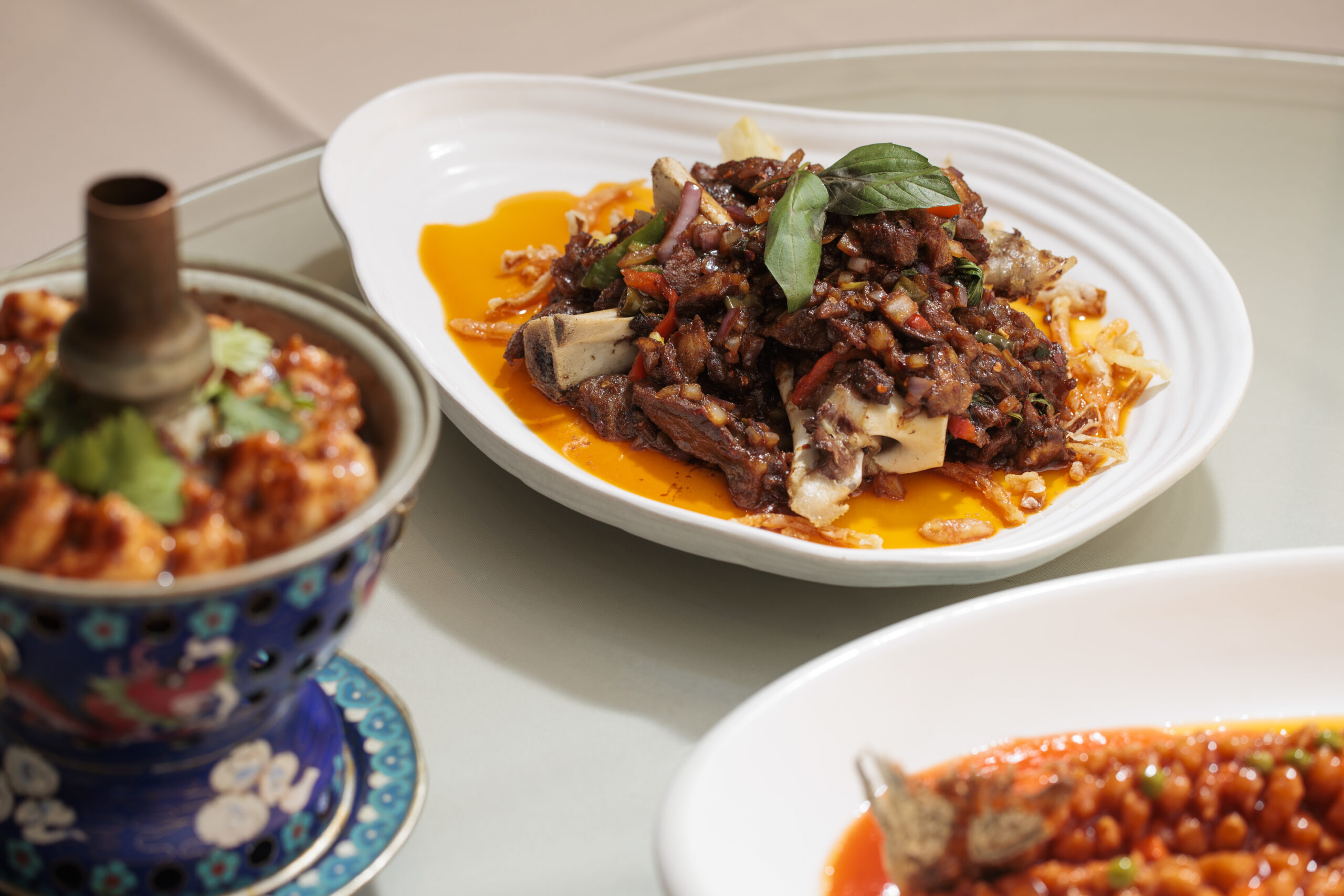
But no dish brings a wallop of earthy flavor quite like the massive serving of double lamb shanks, an Uyghur-style dish I could not get enough of, whose tender meat comes falling off the bone, absolutely encrusted in cumin and pickled chilies.
The cumin spicy lamb shank at Peter Chang King of Prussia on Thursday, Feb. 19, 2026 in King of Prussia, Pa
It’s not all spice bombs. Some of the best offerings at both places reflect subtler flavors. One is the “farmer’s stir-fry,” which incorporates rough-chopped celery, bell peppers, and tofu skin scrambled into eggs, a nod to what Peter’s mom used to whip together from their family farm.
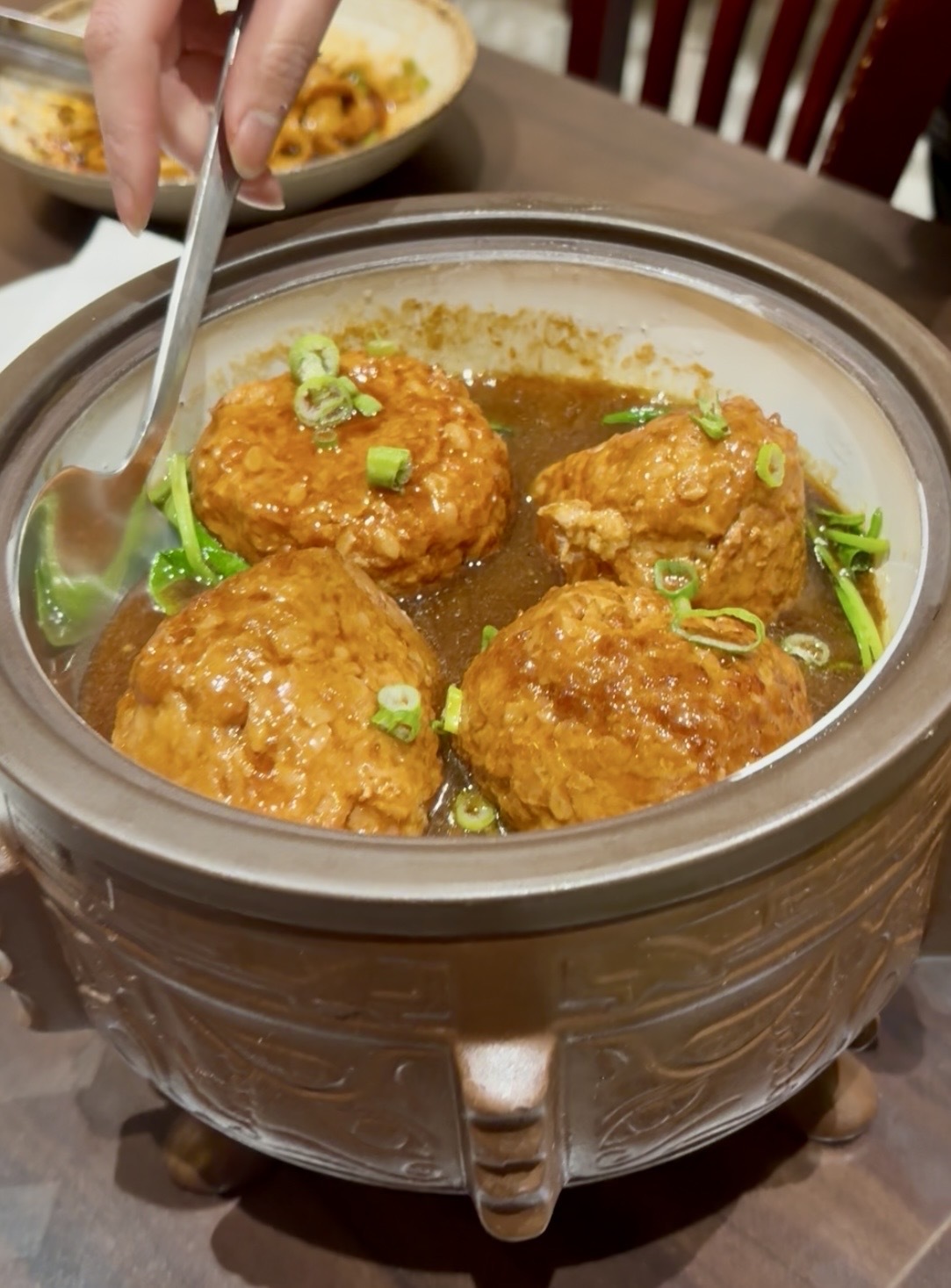
Another classic, the Yangzhou-style Lion’s Head meatballs are the height of comfort perfected through a knowing touch. These massive, cloud-like orbs of pork, impossibly fluffy in mild brown gravy, are the result of careful handiwork — both on the mince and the whipping, incorporating the meat into a high percentage of fat that simply melts away over the course of a slow braise in rich sauce scented with sesame oil and soy. I’ve had this dish multiple times in Chinatown, but never such an airy rendition. Served in a hot pot topped with a ceramic Buddha, it’s the kind of nostalgic dish that bridges the elegance, say, of an embassy banquet with the homespun feeling the restaurant group would like Mama Chang to eventually embrace more fully in Colmar.
I’ll be curious to observe as these two locations evolve, especially once the wider public realizes one of America’s most decorated Chinese chefs has finally landed in our region. As is, they’re both already worthy additions to the suburban dining scene. Once Chang and his family find their footing and dive deeper into their culinary mission, there’s potential for the pair of restaurants to become a wider draw.
Fluffy pork Lions Head meatballs are typical of the home-style Chinese cooking featured at Mama Chang in Colmar, Pa.
Peter Chang KOP
Henderson Square, 314 S. Henderson Rd., Suite C, King of Prussia, 717-431-0488, peterchangkop.com
Open 11 a.m. to 9 p.m. Sunday through Thursday, until 10 p.m. Friday and Saturday.
Larger plates, $16-$40.
Wheelchair accessible.
Not ideal for gluten-free dining.
BYOB
Menu highlights: Dim sum box platter (firecracker cilantro fish roll; Peking duck roll; chili oil pork and shrimp wonton; garlic cucumber salad); scallion bubble pancake; tofu skin salad with chili oil; dan dan noodles with tofu; spicy dry fried eggplant; farmer’s stir fry; dry fried bamboo fish; twice-cooked pork belly; dragon eggplant with garlic sauce; Peking duck; soy bean beef pot; cumin lamb shank; fried branzino with sweet and sour sauce.
Six of eight nonprofit health systems in Southeastern Pennsylvania and northern Delaware posted improved financial results for the six months that ended Dec. 31 compared to the year before. Still,half of them had operating losses, according to financial data reported last month to bond investors.
Jefferson Health and Temple University Health System reported results that were worse than the same period last year.
Children’s Hospital of Philadelphia remained the region’s most profitable health system, with a 6.2% operating margin, up from 5.2% the year before. CHOP posted $2.7 billion in total revenue in the last six months of 2025, up from $2.4 billion the year before.
Nonprofit health systems in South Jersey, such as Cooper, Inspira, and Virtua, do not report comparable financial results until they file their annual audited financials statements in the spring.
Here’s a summary:
Jefferson Health: Jefferson had an operating loss of $201 million in the six months that ended Dec. 31, compared to a $55 million loss the year before. The $201 million loss included a $64.7 million restructuring charge related to severance for 600 to 700 people laid off in October and other changes designed to improve efficiency in the 32-hospital system that stretches from South Jersey to Scranton, Jefferson said.
University of Pennsylvania Health System: Penn had an operating profit of $189 million in the first six months of fiscal 2026, up from $117 million in the same period a year ago. Operating income increased, even after Penn put $43 million into reserves for medical malpractice claims. Two years ago, Penn had recorded charges totaling $90 million for the same purpose.
ChristianaCare: ChristianaCare, Delaware’s largest health system, posted a $37 million operating gain, up from $33 million in the first six months of fiscal 2025. The health system’s revenue rose 9% to $1.75 billion, helped in part by its expansion into Pennsylvania. ChristianaCare took over five of Crozer Health’s freestanding outpatient locations in Delaware County.
Temple University Health System: Temple had a $50.5 million operating loss in the six months that ended Dec. 31. In the same period the year before, Temple reported a $13.5 million operating gain. The nonprofit attributed some of the losses to costs related to the opening of Temple Women & Families Hospital in September.
Main Line Health: Main Line had an $8.7 million operating profit in the six months that ended Dec. 31. Main Line’s swing from an $8.9 million loss in the same period of 2024 benefited from a change in accounting for depreciation that reduced expenses. Without that change, Main Line would have had another loss.
Redeemer Health: Redeemer reported an operating loss of $14.7 million, compared to a loss of $19.5 million the year before. The improvement happened even though the health system in Philadelphia’s northern suburbs increased revenue by just 1.2%, to $227 million.
The only person who takes more undeserved blame than manager Rob Thomson for the shortcomings of the Phillies quarter-billion-dollar lineup is Alec Bohm.
Entering his sixth season, Bohm, the third overall pick in the 2018 draft, is largely considered a semi-bust, especially in the frustrated Philadelphia region. Optically, it makes sense: He’s 6-foot-5, sculpted and wide, and was expected to be a basher coming out of Wichita State who eventually would migrate from third base to first. That hasn’t happened, but he’s nowhere near a bust.
With the exception of a sophomore slump in 2021, Bohm has been a competent major league third baseman. That’s something of a miracle in itself, since the Phillies rushed him to the majors for the COVID-shortened 2020 season with zero experience in triple A.
Has Bohm been the homegrown stud hitter Phillies fans have craved since the days of Chase Utley, Jimmy Rollins, and Ryan Howard? No. But he hasn’t been Domonic Brown or Maikel Franco, either.
He’s been a pretty good player on some very good teams surrounded by a bunch of star hitters who couldn’t get the job done. Bohm catches shrapnel for their shortcomings more so than his own, and some folks can’t wait to get rid of him. That was never more evident this winter.
Phillies fans relished rumors that projected Bo Bichette’s arrival as a free agent, not the least because it would mean a corresponding departure by Bohm. He no longer would have a starting spot at third base with the arrival of Bichette, who would have switched from shortstop to third.
Phillies fans thought signing Bo Bichette would force Alec Bohm out, but Bichette opted to sign with the Mets.
But the Bichette deal fell through at the 11th hour. That left the Phillies with Bohm and free-agent gamble Adolis García as first options to bat in the No. 4 hole behind presumptive third hitter Bryce Harper.
In Philly, all hope collapsed, because Bohm has proved himself unfit for that particular job … right?
Well, maybe.
But that’s not the point.
The point is, the Phillies spent more than $200 million so that Bohm wouldn’t have to do the job at all.
Wasted money
As The Inquirer reported last week, no everyday player with an OPS over .800 last season scored fewer runs than Harper’s 72. Harper’s OPS of .844 last season was his lowest in nine years, in part because he saw fewer strikes than any other everyday player. Harper was largely unprotected, and, when he reported to spring training, he let everyone know he wasn’t happy about any of it.
“I think it makes a huge impact,” he said. “I think whoever’s in that four spot is gonna have a big job to do, depending on who’s hitting three or who’s hitting two.”
That big job was never supposed to be Bohm’s job, so to paint the situation as a failure by Bohm is wildly unfair, considering what any realistic expectations might have been for a player surrounded by a constellation of supposed stars.
In 2022, in what would be Bohm’s second full season, the Phillies signed right-handed hitter Nick Castellanos, mainly to protect Harper. Castellanos utterly failed. His OPS from 2022-25 while batting fourth was .705, .853, .645, and .651. Castellanos didn’t hit behind Harper every time, but he hit behind him most of the time. He made $80 million.
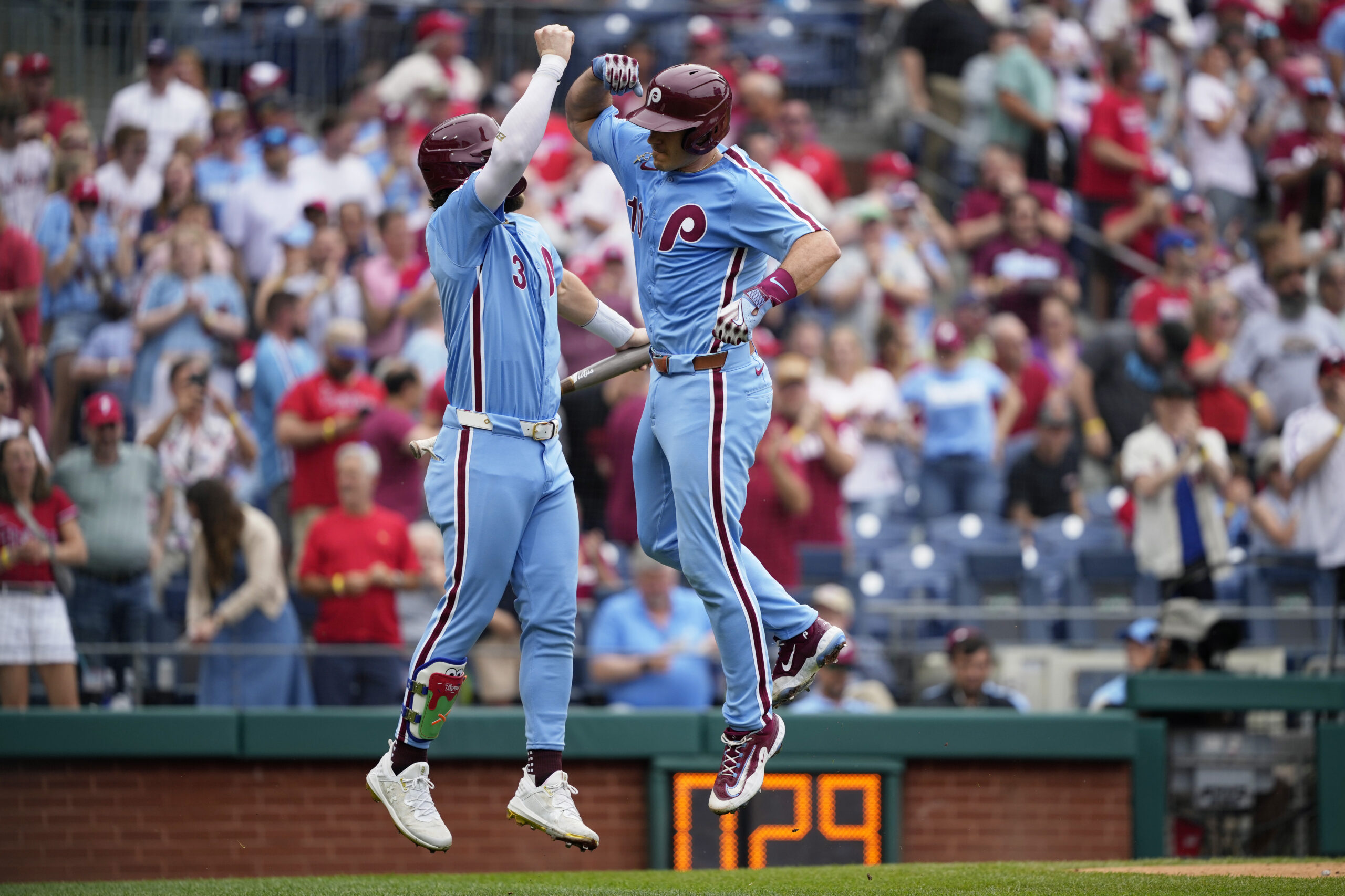
J.T. Realmuto (right) has largely struggled protecting Bryce Harper in the lineup over the past four seasons.
When Castellanos didn’t hit fourth, Realmuto often did. He went .953 in 2022, had only 34 plate appearances in 2023 (.458)/, then went .635 in 2024 and .683 in 2025. He made $95.5 million in those four seasons.
In 2023, it occasionally fell to Bohm to hit fourth. He produced .711, .769, and .571 OPS results in the past three years. He made $12.4 million.
Despite Bohm’s poor numbers in 2025, Harper actually was his most productive when Bohm hit behind him, according to MLB.com.
When the Phillies signed Castellanos to a five-year, $100 million contract in 2022, he was projected to be the cleanup hitter not only through 2022 but also through 2026. But the Phillies released Castellanos last month. He’d been insubordinate last season, but that wasn’t the main reason, because no sport endures insubordination like baseball. Castellanos’ real sin was that, for the better part of four seasons, he stole money.
Casty’s Wins Above Replacement (WAR) since 2022 was 1.3. Bohm’s was 5.8.
Who was the real disappointment?
Nick Castellanos was supposed to be the right-handed bat in the cleanup spot to protect Bryce Harper. He was released last month by the Phillies.
Peer pressure
Not only does Bohm compare favorably to the $100 million man, he compares favorably with players of his approximate age.
Among first-round hitters from 2018 with at least 1,000 plate appearances, Bohm’s 5.3 WAR ranks fourth. His .743 OPS ranks second, by just one-thousandth of a point, to Royals infielder Jonathan India. Bohm’s 70 homers rank third. His 719 games played ranks first.
What about the 2017 draft? Among first-round hitters from both 2017 and 2018 combined, Bohm is sixth in WAR, fifth in OPS, sixth in homers, and still first in games played — and yes, we omitted Kyler Murray, drafted ninth overall by the A’s but opted to play in the NFL.
Bohm was picked high in the draft, so how does he compare to those guys? Well, among the first 10 hitters selected in both drafts combined, Murray again omitted, Bohm’s 5.3 WAR ranks second.
It’s true that 2017 is considered one of the worst drafts in recent memory, but Bohm can’t do anything about that. Simply, when compared with his peers, Bohm is outperforming almost all of them.
Alec Bohm has worked hard to transform himself from utterly disastrous defensively at third base to perfectly acceptable in his last three seasons.
Current crop
How does Bohm compare with the rest of baseball over his career?
Since Bohm debuted in 2020, his OPS of .743 ranks 150th among the 382 hitters with at least 1,000 plate appearances. He is far above average.
We can’t make the argument that Bohm is a far above-average player. He’s not. But he’s certainly average at least, and that’s saying something. He’ll be a 30-year-old free agent after this season, and he’ll probably last at least four or five more seasons.
Historically, fewer than 20% of first-rounders collect 1,000 hits. Bohm has 753. Similarly, fewer than 10% of all major league players play at least 10 seasons. Bohm is entering his sixth.
He has been, by any measure, a good first-round pick.
Is he everything folks thought he’d be when he was drafted — that is, a middle-of-the-lineup run-producer? Not really.
Is he adequate protection for a slugger like Harper? Probably not.
Is he the most emotionally stable player? No.
In 2022, on a night when he’d struggled defensively, Bohm made a routine play. Phillies fans cheered sarcastically. TV cameras caught Bohm saying, “I [bleeping] hate this place.”
Alec Bohm confirms postgame that he said "I fucking hate this place" when fans sarcastically cheered after he made a play pic.twitter.com/I0IdZ0lEn9
In 2024, mired in a 2-for-31 slump that bled from the end of the season into the playoffs, Bohm, in full pout mode, was benched for Game 2 of the NLDS. (His replacement, Edmundo Sosa, did not reach base in two plate appearances, Bohm pinch-hit for him and did the same, and the Phillies won.)
Bohm is not a fan favorite. Phillies fans despise a lack of mental toughness.
But Bohm did manage 97 RBIs in both 2023 and 2024. He did hit 20 home runs in 2023, and he was an All-Star in 2024. He worked hard enough at third base to progress from utterly disastrous in his first two seasons to perfectly acceptable in his last three seasons.
Will he hit well enough to protect Harper this year? Probably not. Will García? Probably not.
His overall .675 OPS the past two seasons is far below Bohm’s .762. García was at .712 in the cleanup spot in 2024, .662 in 2025. He’s on a one-year, $10 million deal.
Bohm is making $10.2 million. It’s the first time in his career that he’s outearning the guy who’s being paid to do a job Bohm never was meant to do … unless you count Realmuto, whom the Phillies just re-signed. He’ll make $15 million this season.
For that kind of money, maybe every once in a while J.T. could help out at the four-spot.
Luis Ramírez grew up in El Taque, a small village in northwestern Venezuela. It was known for its arid climate, full of cacti and barren landscapes.
It was also known for its critters. Ramírez, the assistant pitching coach for the Minnesota Twins, saw his fair share of snakes and centipedes, lizards, and, of course, tarantulas.
They’d hide under bushes and tree roots and had a distinctive pattern — a dark blue body, with a mix of black and yellow stripes along the legs. The image always stuck with the coach throughout his decades-long career in professional baseball.
Ramírez, 52, was hired by the Twins in 2006 to work at their Venezuelan academy. He gradually moved up the ranks, from the Gulf Coast League, to the Appalachian League, to the Arizona Fall League. In 2019, he was promoted to pitching coach at the team’s high-A affiliate in Fort Myers, Fla.
It was there that he met Jhoan Duran. The future Phillies closer was a 21-year-old starter at the time. He was skinny, and tall, with blonde and black dreadlocks sprouting from his head.
One day, when Ramírez was talking to strength and conditioning coach Chuck Bradaway about Duran’s pregame routine, he blurted out a nickname.
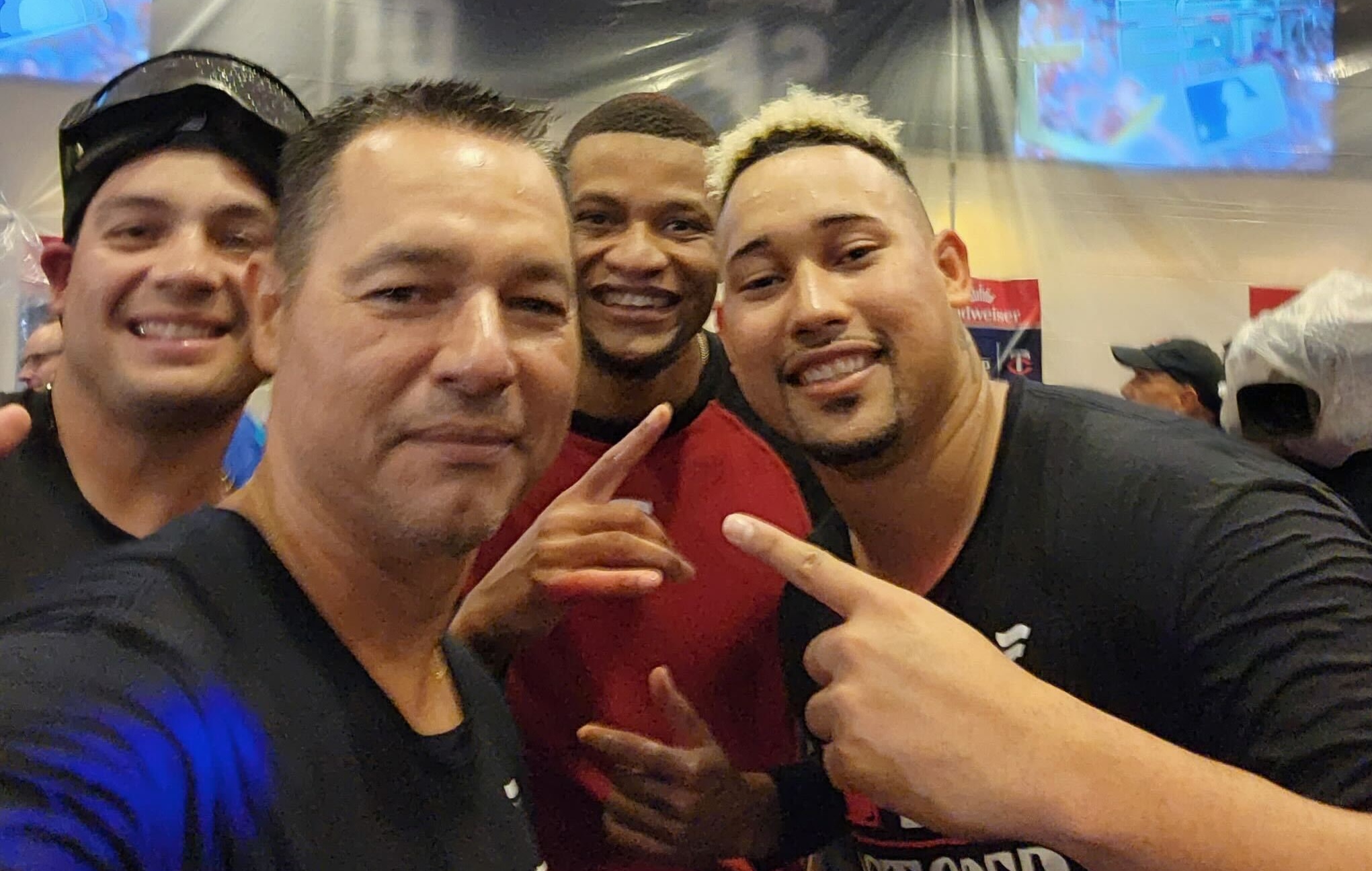
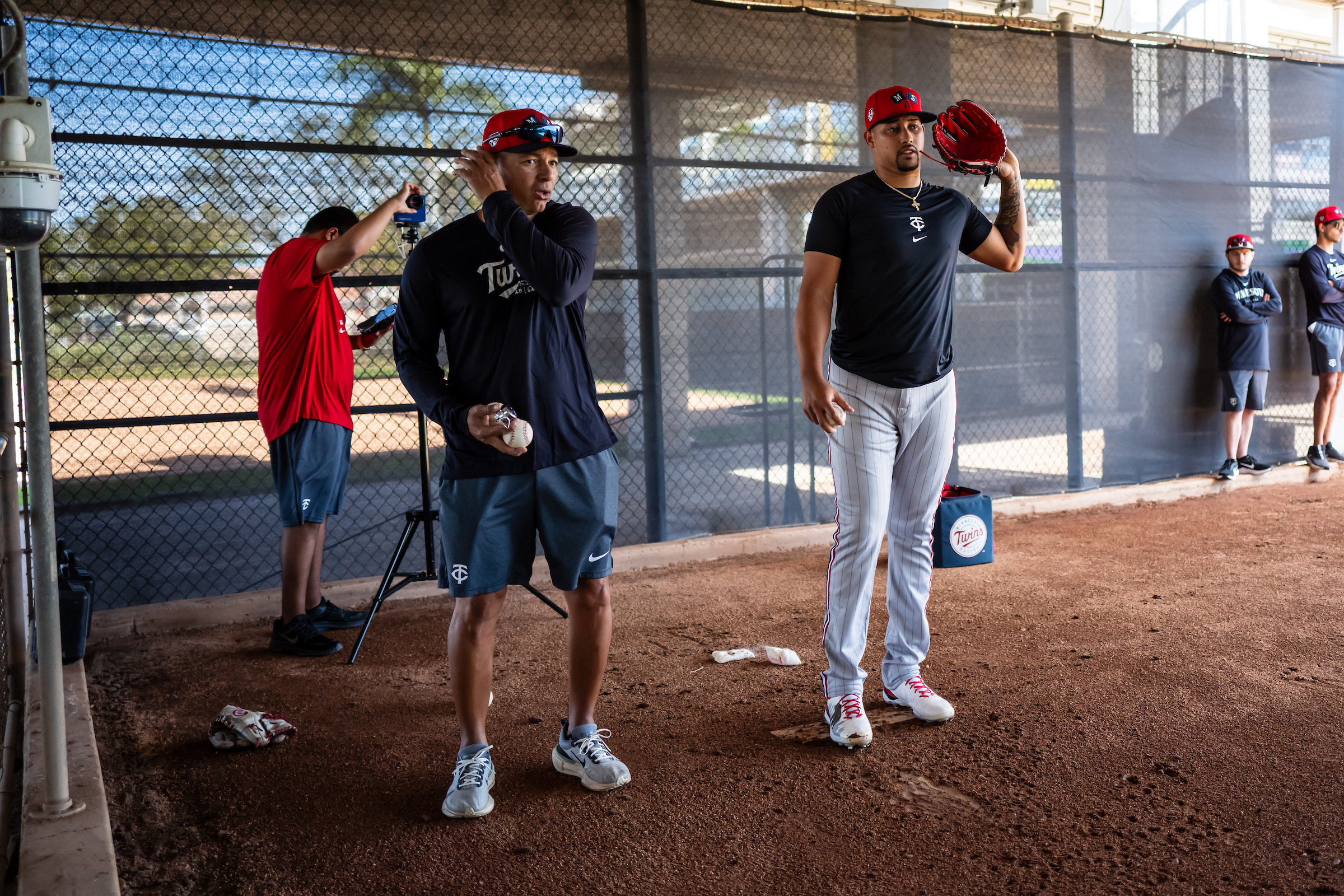
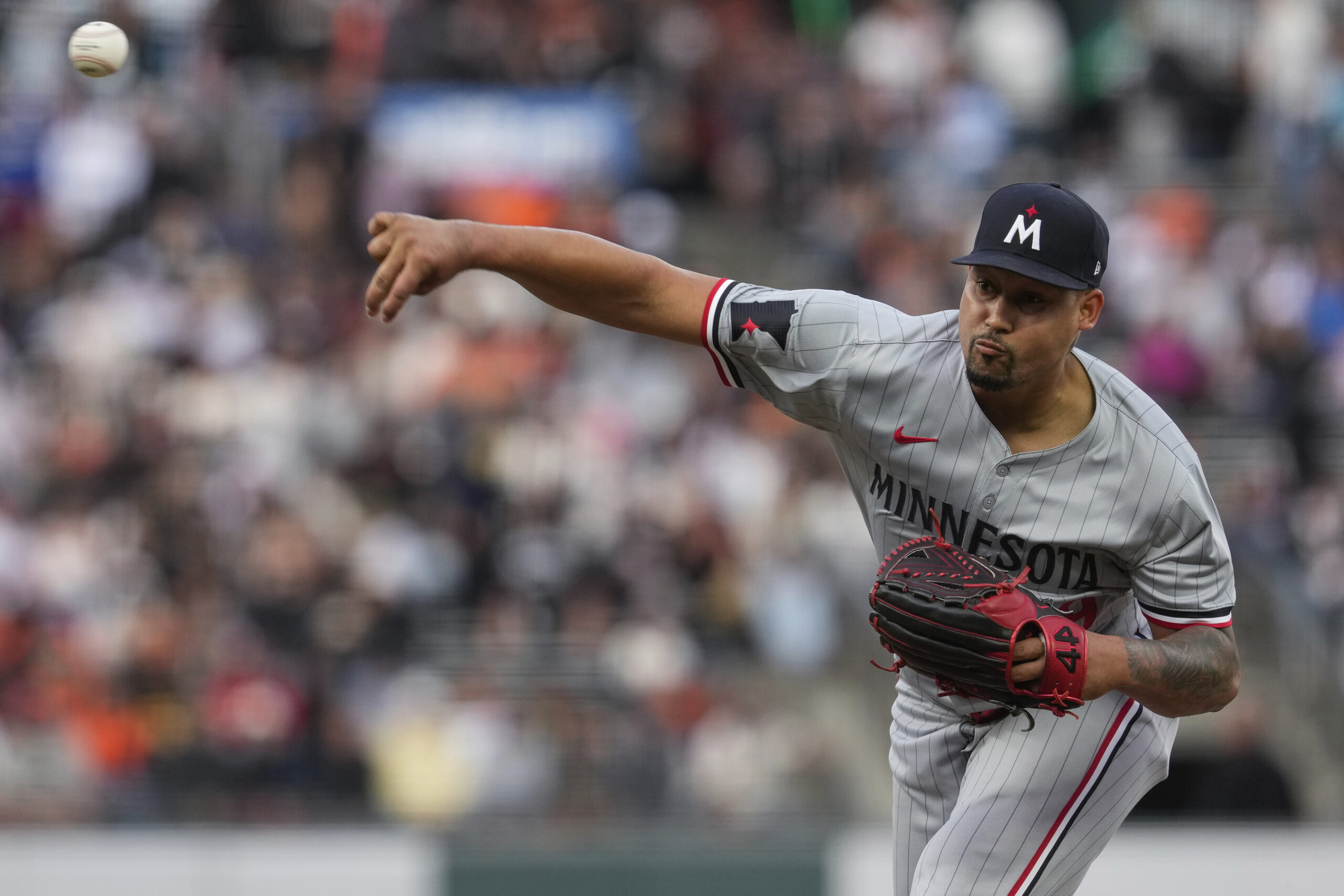
Luis Ramírez (second from left) with Jhoan Durán (far right) in 2023.
“Somehow, ‘Durantula’ came to my mind,” Ramírez said, “and I said it. And it’s been there ever since.”
There were a few reasons the pitching coach came up with this specific moniker. One was his pupil’s last name. Another was that “duro” translates to “hard” in Spanish, and Duran was already hitting triple-digits on the radar gun.
But the biggest reason was Duran’s hair.
“He used to have dreadlocks,” Ramírez recalled. “And the color of his hair was brown, and kind of yellow. And the dreads were kind of long, and it kind of looked like a tarantula.
“It kind of looked like one of those spiders. A little spider leg, hanging [off].”
He added: “I saw a lot of tarantulas when I was a kid, and his hair looked just like it.”
Duran, who watched the Spider-Man movie trilogy growing up, embraced the nickname. When he reached the major leagues in 2022, he began to put tarantulas on his sneakers. He eventually got a tarantula tattoo, and in 2023, an entrance fit for a WWE wrestler.
When the closer was dealt to the Phillies at the 2025 trade deadline, the entrance came with him. Before Duran jogs from the bullpen, all of the lights in Citizen Bank Park go out.
Fans hold up their phones, as a remix of “El Incomprendido” by Farruko and “Hot” by Pitbull and Daddy Yankee begins to play. Duran’s name appears in flames on LED screens, while a tarantula crawls from one side of the ballpark to the other.
The display still makes Ramírez smile.
“The nickname is the same thing with [pitches],” he said. “Sometimes you’re in the bullpen, and you move a grip, or you make a slight adjustment, and now a pitch that was maybe average becomes a weapon. ‘Durantula’ just stuck.”
Duran and Ramírez say their relationship is akin to that of a father and son. In 2019, the pitcher moved from his hometown of Esperanza, Dominican Republic, to Fort Myers full-time.
He and Ramírez would train together during the offseason. They’d fine-tune his pitches, tweak his routines, and work on conditioning, but also spent time together off the field.
Their families became close. Duran’s son began calling Ramírez “Tío Lupita” — Uncle Lupita in English — because the pitching coach would play the song “Hay Lupita” by Lomiiel while he was cooking dinner.
Jhoan Durán (right) pictured with Luis Ramirez in Fort Myers during spring training in 2024.
“I used to dance with him,” Ramírez said. “The song would go, ‘Hay Lupita, Hay Lupita.’ And then, from there, he just called me Tío Lupita all the time.”
Even as early as 2019, the pitching coach saw promise in Duran. He had big-time stuff without a pretentious attitude. Duran was hungry to learn, and put in the work to do so.
Ramírez could envision him playing a big role for the organization down the road, so when they were in Fort Myers, he started talking to Duran about one day pitching in the World Series.
He didn’t specify what role it would be, but Ramírez had a hunch his pupil would eventually become the team’s closer.
He and Duran split up in 2021, when Ramírez accepted a position coaching at double-A Wichita, and Duran was promoted to triple-A St. Paul.
They reunited at the big league level in 2022, when Duran was converted to a Twins reliever, and picked up their conversations from there.
Ramírez told him to prepare mentally and physically to pitch the last few outs of the biggest game of his life.
Jhoan Duran was a star with the Twins but postseason success was elusive.
“You are going to help us to win a World Series,” Ramírez would tell Duran. “You have to be ready for that. Because you’re going to be the guy closing the game in the World Series.”
“I remember that like yesterday,” Duran added. “He always told me, when he saw me, he’d say, ‘Hey, remember. You’re going to be one of the guys to help the Twins win a World Series.’”
The young pitcher kept the message in the back of his mind, but in 2023, when he closed out the game that would clinch the Twins’ first playoff spot since 2020, he struggled.
Duran threw 34 pitches against the Angels, of which only 17 were strikes. He allowed two walks and one earned run on two hits. Duran got the save, but Ramírez could tell something was off.
“Hey, last night, I thought the game was a little fast for you,” Ramírez said.
“Yes,” Duran conceded. “I was a little sped up.”
“That’s my fault,” the coach replied. “Because I should have prepared you for this moment. We should have talked more before it happened.”
Ramírez connected Duran with the team psychologist, who began working with the closer on visualization exercises. It had an immediate impact.
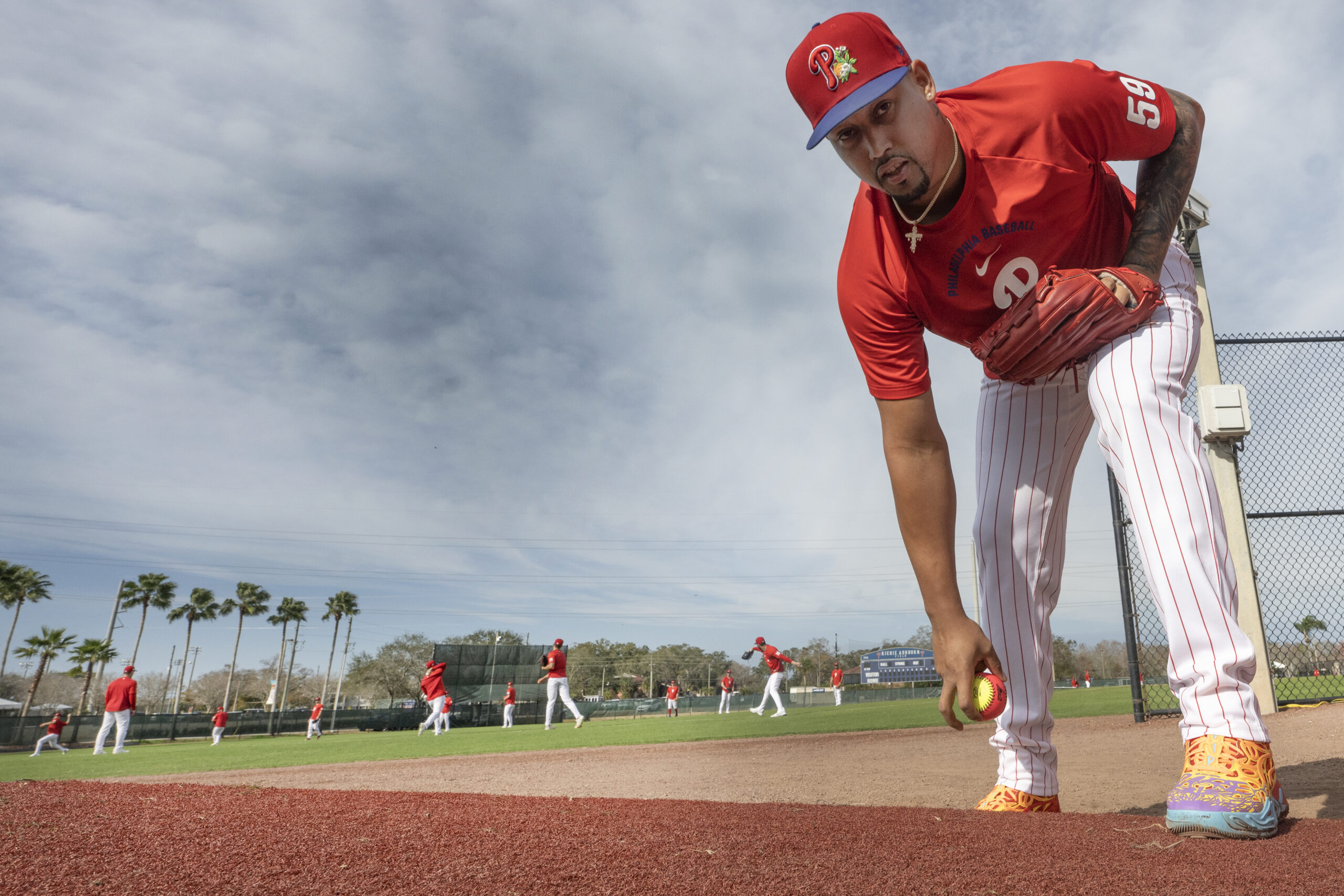
Jhoan Duran recorded 16 saves after being acquired by the Phillies on July 30, 2025.
Duran didn’t allow a run in his four postseason appearances that year. He had six strikeouts and yielded only one walk through five innings pitched.
The closer returned to October baseball in the National League Division Series last season. He pitched in Games 1 and 2 against the Dodgers, allowing one hit and two walks, with four strikeouts.
His final outing came in Game 4. Duran entered in relief of Cristopher Sánchez in the bottom of the seventh, with runners on first and second and one out. He induced a groundout from Andy Pages, and intentionally walked Shohei Ohtani.
In the next at-bat, he walked Mookie Betts, allowing the tying run to score. He retired his next four batters.
Duran was charged with the blown save in the Phillies’ season-ending 2-1 loss, but only after the home plate umpire blew a call earlier in the inning.
Jhoan Duran enters his first full season with the Phillies.
This was not the way the closer wanted his season to end. But Ramírez isn’t worried about how he will bounce back.
He says Duran has a short memory, and an unwavering trust in himself — good qualities for a high-pressure job.
The coach is hopeful that the closer will have more October moments. He believes he’s built for it.
“He feeds off of the crowd,” Ramírez said, “off of the energy, the pressure. He’s never been afraid of [a situation where] the game is on the line. He’s never been afraid of that.
“I think that’s why he got traded there. Because, I know that in Philadelphia, the park is always full.”