Symphonic circles look like ongoing constant Mahler festivals these days, but Philadelphia Orchestra’s music-artistic director Yannick Nézet-Séguin somehow leaves you wanting more.
This weekend’s performances of Mahler’s Symphony No. 2 (“Resurrection”) opened on Friday at Marian Anderson Hall with a well-deserved vociferous audience response to what felt like a very special occasion, whether or not it actually was.
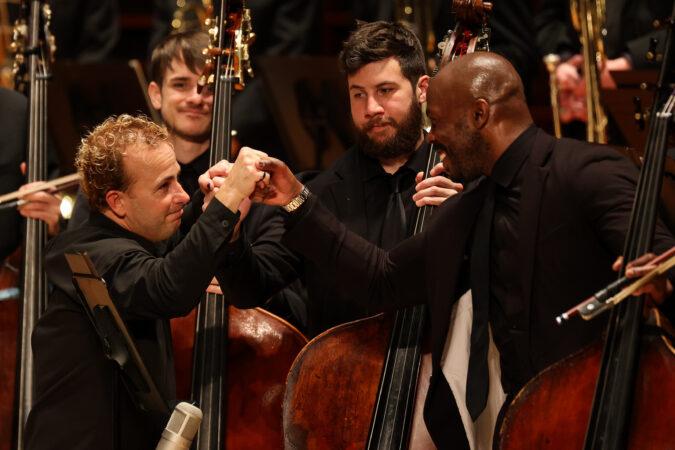
A member of the Philadelphia Orchestra plays the harp during the performance of Mahler’s Symphony No. 2 at The Kimmel Center on Friday, March 6, 2026, in Philadelphia.
The Philadelphia Orchestra’s standing is such that Tuesday’s repeat performance at the Mahler-glutted Carnegie Hall had all of six unsold seats as of Friday.
The laborious Mahler performances of decades past have given way to ones that discover hidden worlds that can be investigated without the symphonic whole lapsing into grandiose incoherence. Not so on Friday.
The incisive, explosive five-movement 80-minute “Resurrection” symphony—a large orchestra, a competing offstage band, two vocal soloists pondering our existence plus the Philadelphia Symphonic Choir supplying grandeur—had a vast but particularly specific range of expression on Friday.
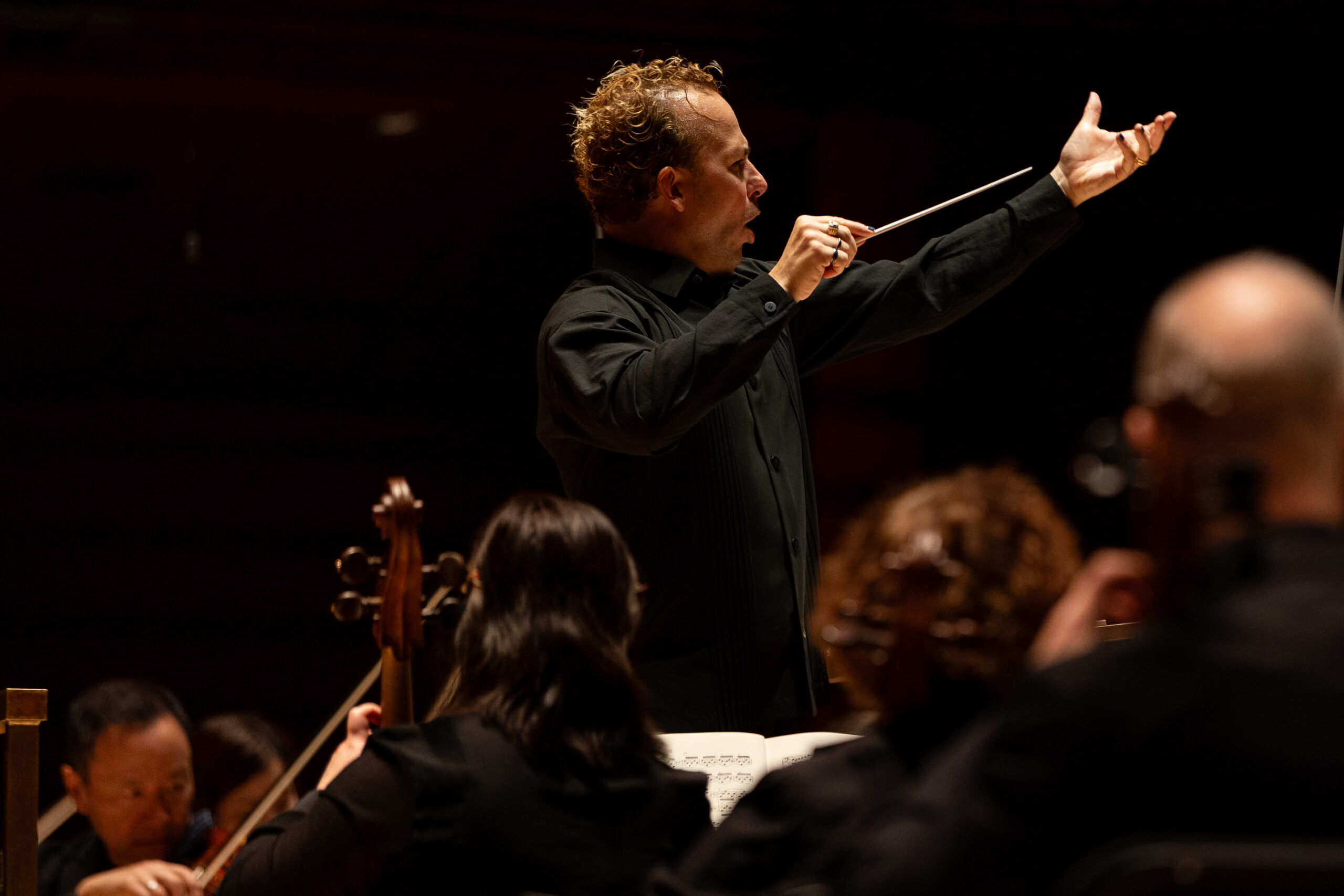
Yannick Nézet-Séguin conducts the Philadelphia Orchestra’s performance of Mahler’s Symphony No. 2 at The Kimmel Center on Friday, March 6, 2026, in Philadelphia.
While some conductors slow down to spotlight specific points, Nézet-Séguin was inclined to accelerate; not to be a speed demon but to suggest that this was Mahler “off his meds.” Nothing conveys emotional extremes like high-energy symphonic precision.
Apocalyptic moments are expected in the violently contrasting sonorities and gestures of the first movement. However, the dance-based second and third movements had their landmine that, in this performance, never allowed moments of gentility and repose to rest easy.
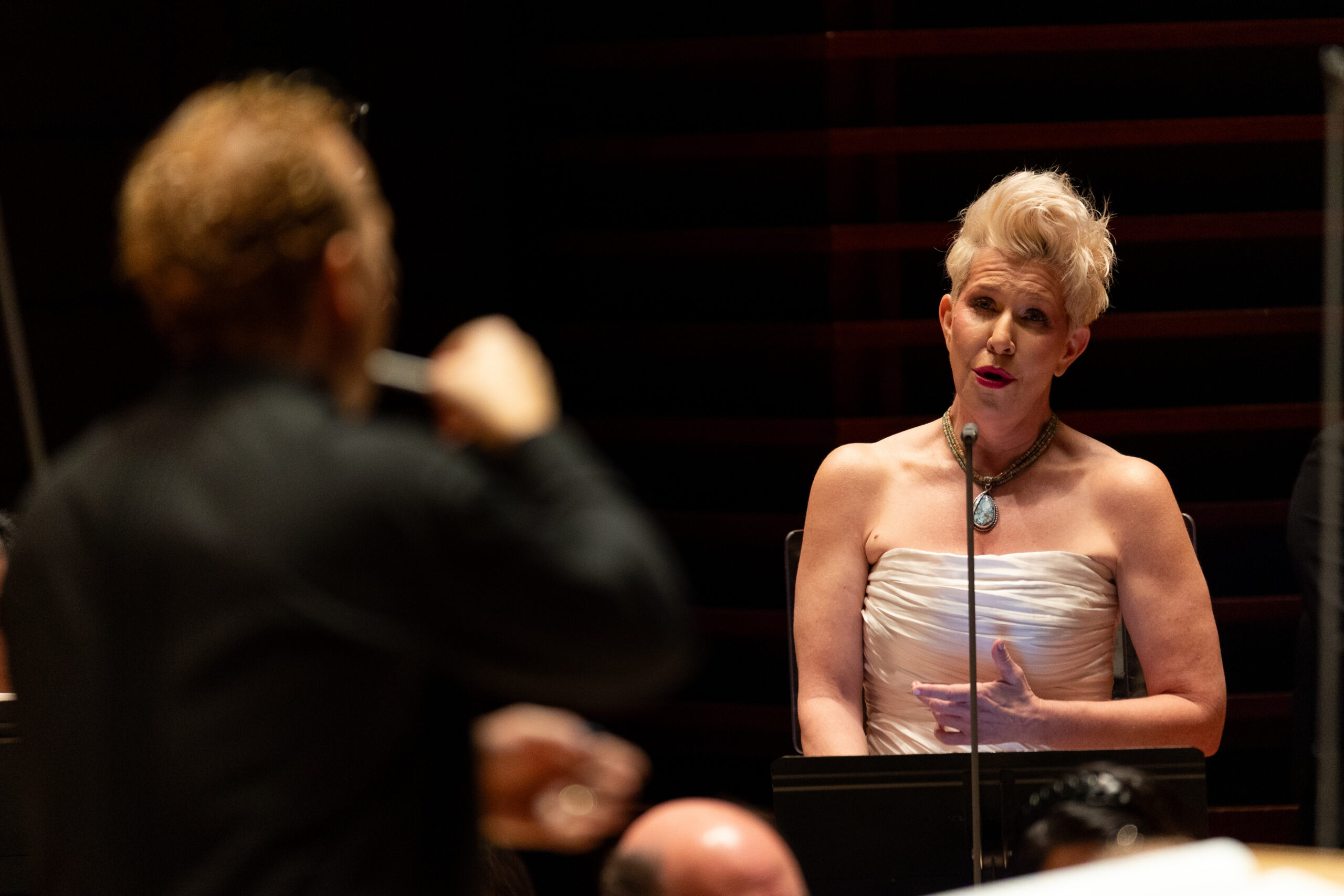
Mezzo-Soprano Joyce Didonato performs a solo during the Philadelphia Orchestra’s performance of Mahler’s Symphony No. 2 at The Kimmel Center on Friday, March 6, 2026, in Philadelphia.
In the spare depths of the fourth “Primal Light” movement, mezzo-soprano Joyce DiDonato didn’t just convey profundity, but lived it.
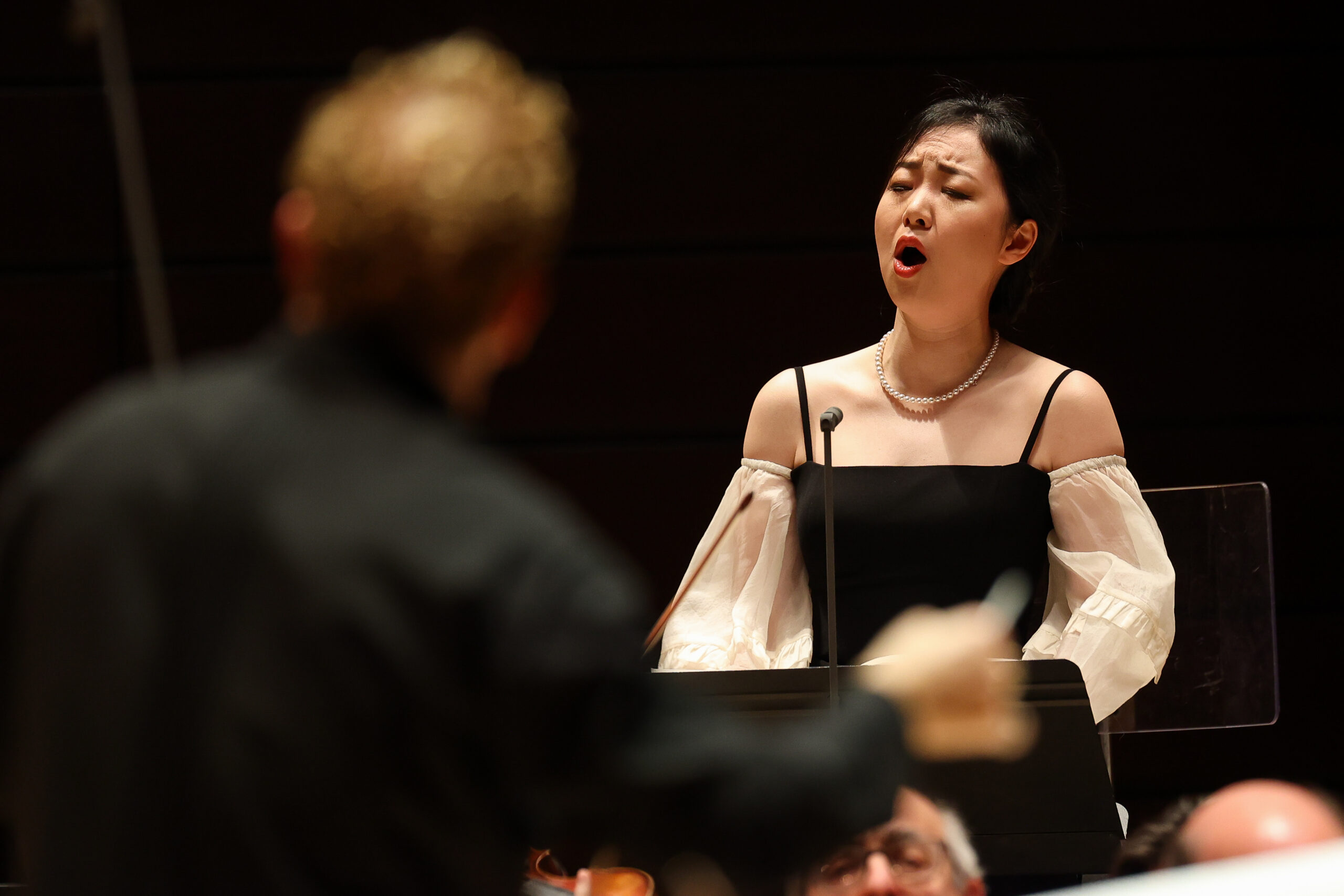
Though the multisection fifth movement is sometimes framed by soaring solo soprano writing (so well sung by Ying Fang), the words included by Mahler can put the symphony’s many moving parts in perspective.
For me, in this performance, it was “You were not born for nothing!” This has special poignancy for a composer who had boyhood aspirations to become a martyr. Not a sign of great self value. Is this a to-be-or-not-to-be symphony? With all questions answered with affirmation in fortissimo?
Soprano Ying Fang performs a solo during the Philadelphia Orchestra’s performance of Mahler’s Symphony No. 2 at The Kimmel Center on Friday, March 6, 2026, in Philadelphia.
The four previous movements teetering on so many different edges, the symphony was a litany of the joys and horrors of existence; which one can’t help contemplating amid current global power struggles.
Just for fun: One point of reference was the Mahler 2nd finale that Nézet-Séguin recorded for the Leonard Bernstein biopic Maestro: It’s more imposing but with no sense of triumph over anguish. It was Mahler “on his meds.”
Good for the film. Not for me. I’m a no-meds Mahlerite.
“The Mahler Symphony No. 2″ will be repeated 8 p.m. Saturday and 2 p.m. Sunday at the Kimmel Center. $77-$252. philorch.ensembleartsphilly.org
With one trade Friday morning, the Flyers got more interesting. Not immediately. They’re still likely to miss the playoffs this season, which would be the sixth in a row that they’ve failed to qualify for the postseason. For all that time and longer, they’ve been the NHL’s version of late-career Martin Scorsese: Back in the day, they were great and fascinating, and now they’re one suspenseless snoozefest after another. (Seriously, has Killers of the Flower Moon ended yet?)
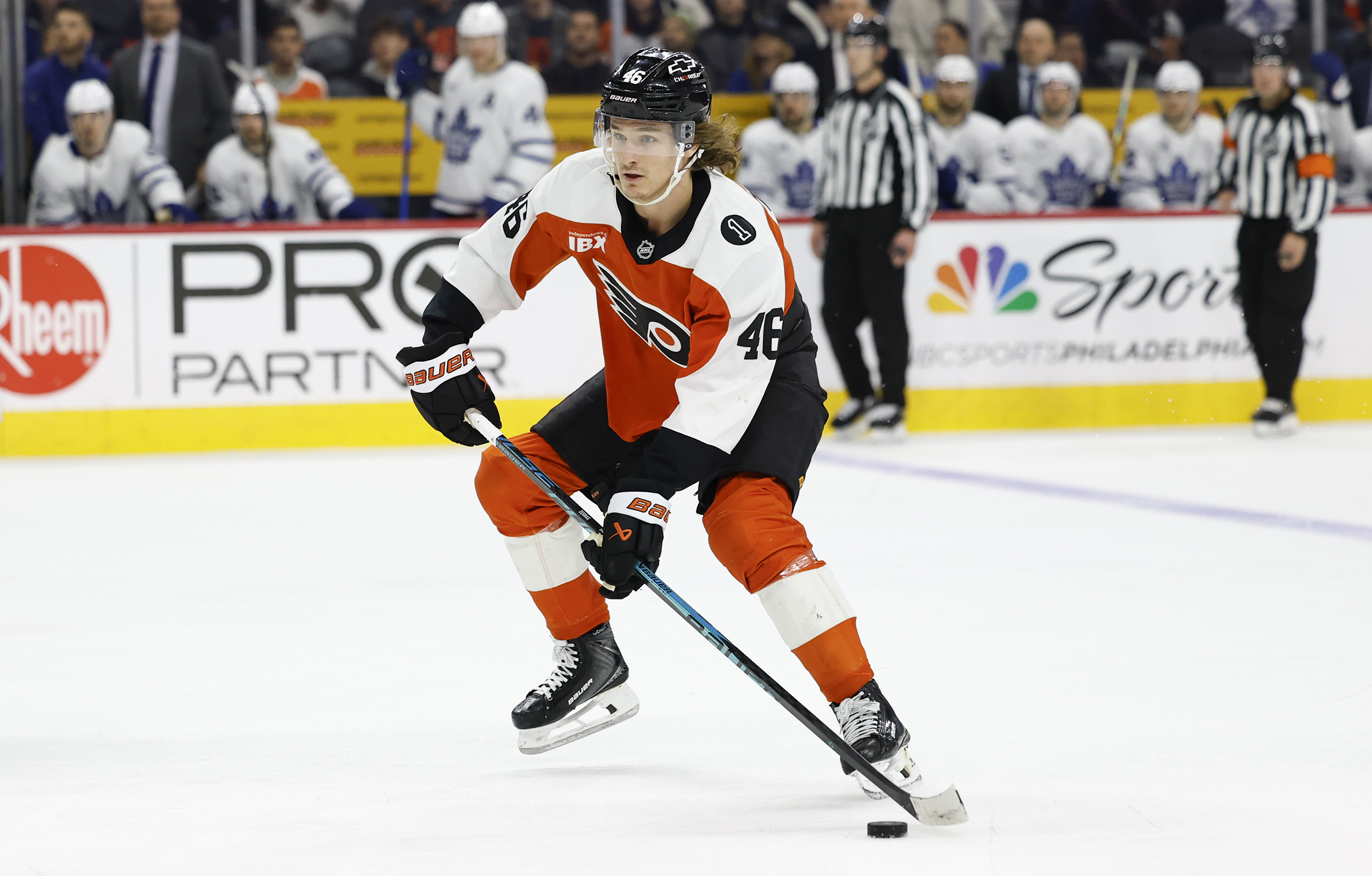
Their decision to send winger Bobby Brink to the Minnesota Wild for defenseman David Jiříček was an eyebrow-raiser, though. The move in and of itself wasn’t all that surprising, in that the Flyers have a surplus of wingers both on their roster and in their farm system. They were bound to say goodbye to one of them at this trade deadline, and Brink was a prime candidate: At 24, he’s a relatively promising player on a cap-friendly contract.
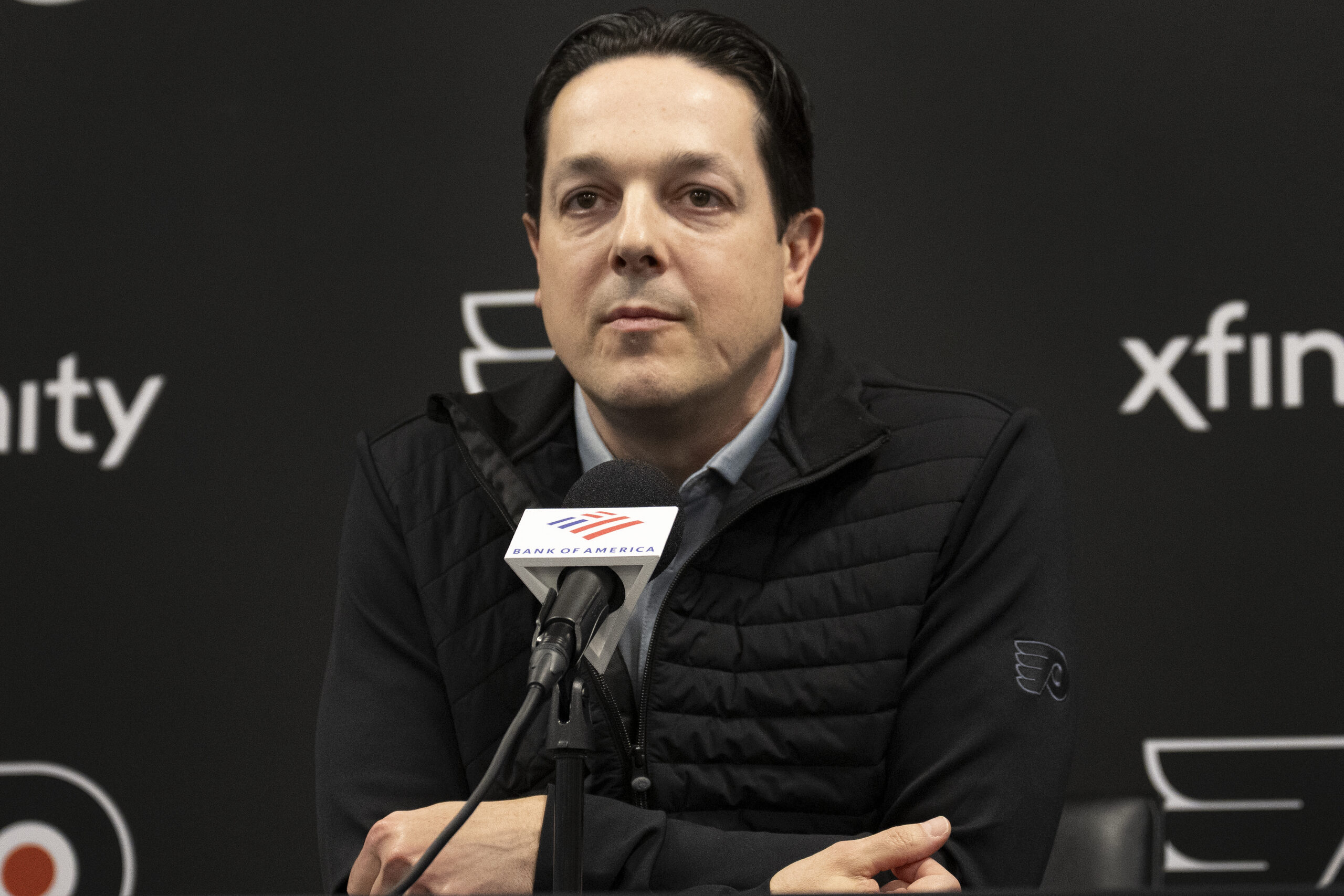
No, the intrigue of the Brink trade comes from its context. It’s the latest thread in a larger pattern that general manager Danny Brière and team president Keith Jones have been weaving since they took control of the Flyers’ player-personnel department in 2023. Rather than having the team bottom out over a full season or two and ending up with a pick or picks that are at worst among the top five in their drafts, the Flyers are taking risks, some more calculated than others, by acquiring young players who were high draft picks for other clubs.
They did it with Jamie Drysdale, whom the Anaheim Ducks had picked sixth in 2020 before trading him to the Flyers for Cutter Gauthier in January of 2024. They did it with Trevor Zegras — another Ducks draftee, ninth overall in 2019 — when they got him last offseason for Ryan Poehling and two draft picks. They did something similar in 2023 when they drafted Matvei Michkov, who fell to them at No. 7 in part because of worries among NHL clubs that he wouldn’t be leaving Russia for three years, if he was able to leave at all.
Now they’ve done it with Jiříček. Drafted sixth overall in 2022 by the Columbus Blue Jackets, he reportedly was unhappy that the Blue Jackets thought he needed to spend time in the minors. They shipped him to Minnesota in November 2024; there, he bounced between the Wild and its farm team until Friday.
Flyers forward Trevor Zegras has been a shrewd addition after struggling the past two seasons in Anaheim.
At first glance, that’s not an especially appealing player profile: a high draft pick who has been traded twice before his 23rd birthday, once because he was malcontented, once because he couldn’t stick on an NHL roster. And it’s generally acknowledged that Jiříček’s skating has to improve substantially. Still, he is just 22, and he is 6-foot-4 and rugged, and he has a booming slap shot. There are tools there, and there is still time for him to mature into the player he was projected to be.
The Flyers are attempting a daring bit of raindrop-dodging here. They haven’t tanked. They don’t want to tank. They believe it would be corrosive to the franchise as a whole and to the locker room in particular (and it certainly would be to their ticket-sales department). So they are banking — and a team source confirmed Friday that this element was part of their approach — that head coach Rick Tocchet, his staff, and the other power people in the organization can cultivate a strong enough culture that Drysdale, Zegras, Jiříček, and players like them can develop and thrive here even though they didn’t elsewhere.
Michkov is again an instructive example in this regard. After entering the season out of shape and seeing Tocchet limit his ice time, he has been a better player since the Olympic break. The fears within the fan base that Tocchet was angering or alienating him have quelled, and Tocchet’s strategy for handling the most important player on the roster seems to be working, for the time being anyway.
Drysdale hasn’t been the same caliber of player that Gauthier has been — someday, someone will get the full story on why the relationship between the Flyers and Gauthier deteriorated to the point that they felt they had to trade him — but he has come a long way and is just 23. Zegras, 24, has been an excellent addition so far. The Flyers are in need of two major components of a Stanley Cup-contending team — a No. 1 center and a No. 1 defenseman — and Jiříček’s pedigree suggests that he can one day be a top-tier defenseman, assuming a team can figure out how to get the best out of him.
He may or may not become that kind of player. Whether he does or doesn’t isn’t really the point. The point is that the only way the Flyers are going to return to respectability again is by taking some chances and having those gambles pay off. They’re past playing it safe. They might end up exactly where they are now or in even worse shape, but at least they’ve stepped into the casino.
Danny Brière has taken an unconventional and risky path to rebuilding. Time will tell if it pays off.
If you’re looking to find an artistic escape with your night out, Philadelphia Ballet’s new (to them) The Merry Widow is a good match.
Set in the Belle Époque era in Paris, it is all glittering dresses, tiaras, stunning ballrooms, and beautiful gardens. The main characters change costumes several times. The movement mixes in waltzes and folk dances (from a fictional country), along with pointe work and partnering.
A romantic comedy, period piece, and visual feast, it is sort of the Jane Austen of ballet.
While it’s called The Merry Widow, there are two strong principal couples. On Thursday night’s premiere at the Academy of Music, Mayara Pineiro was Hanna, a rich widow, and Sterling Baca was Danilo, an aristocrat who broke it off with the young Hanna years ago when she was a poor peasant. The leaders of their fictional country, Pontevedro, would like them to marry to keep their homeland afloat.
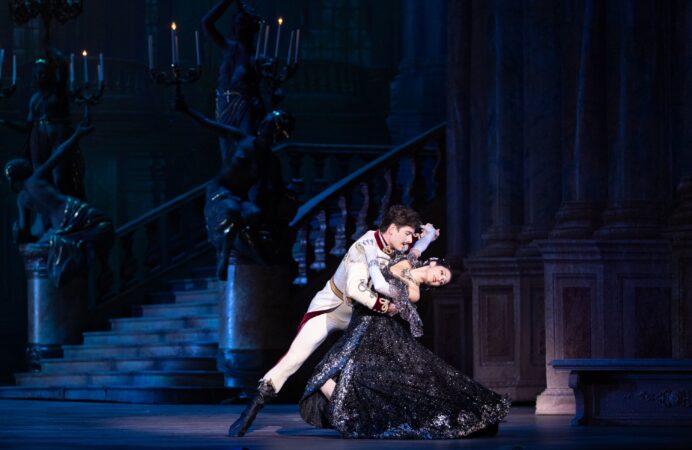
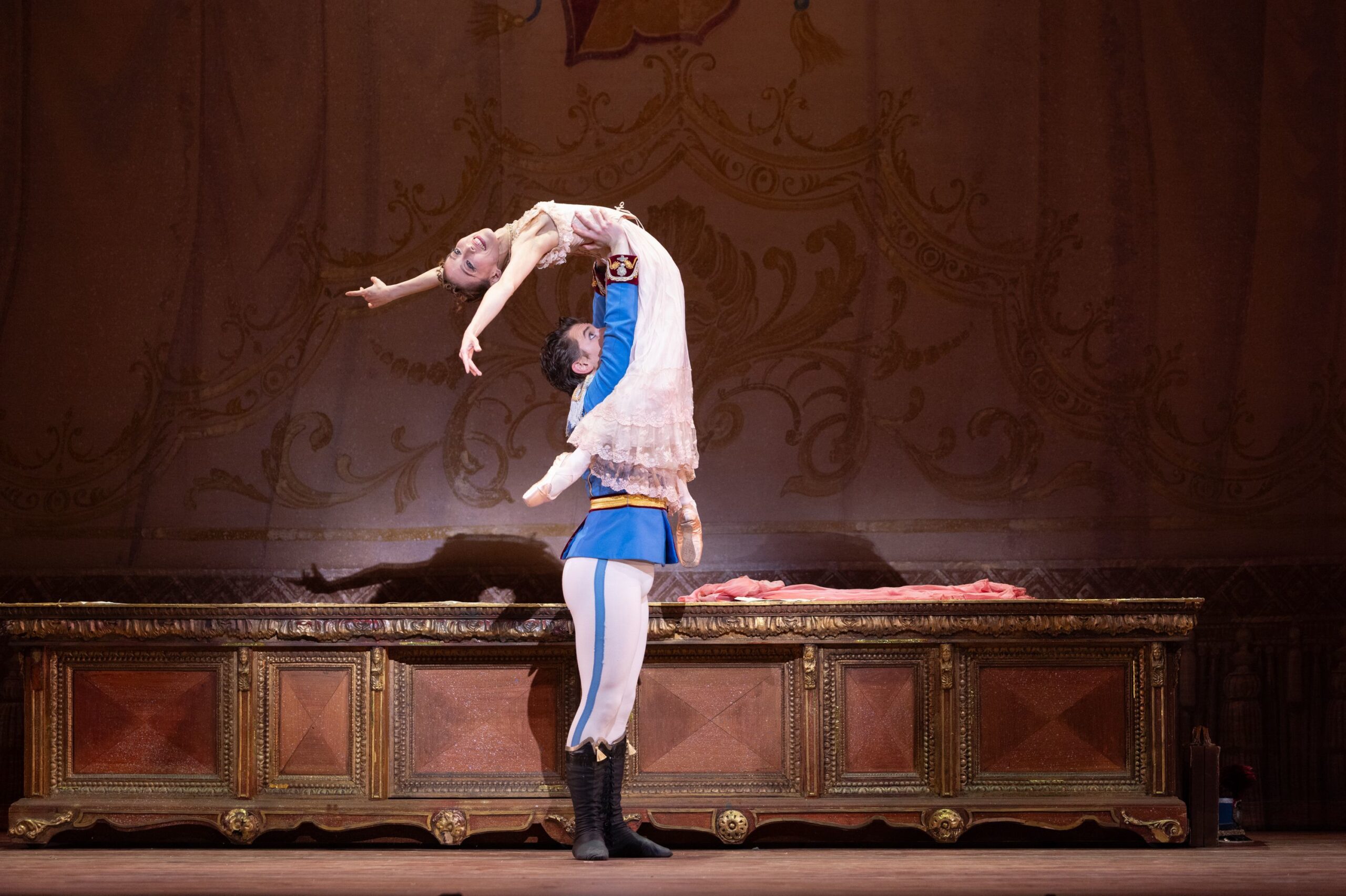
Philadelphia Ballet dancers Yuka Iseda (top) and Ashton Roxander in “The Merry Widow.”
The second couple is Valencienne, danced on Thursday by Yuka Iseda, and Camille, performed by Ashton Roxander. The third wheel in the relationship is Valencienne’s much older husband, Baron Zeta, a character role performed by rehearsal director Charles Askegard.
Iseda was the best surprise of the night. Her reactions and comedic timing were on point and helped move the narrative along.
The partnering from both couples was top-notch, and the dancing as a whole was rich and lush.
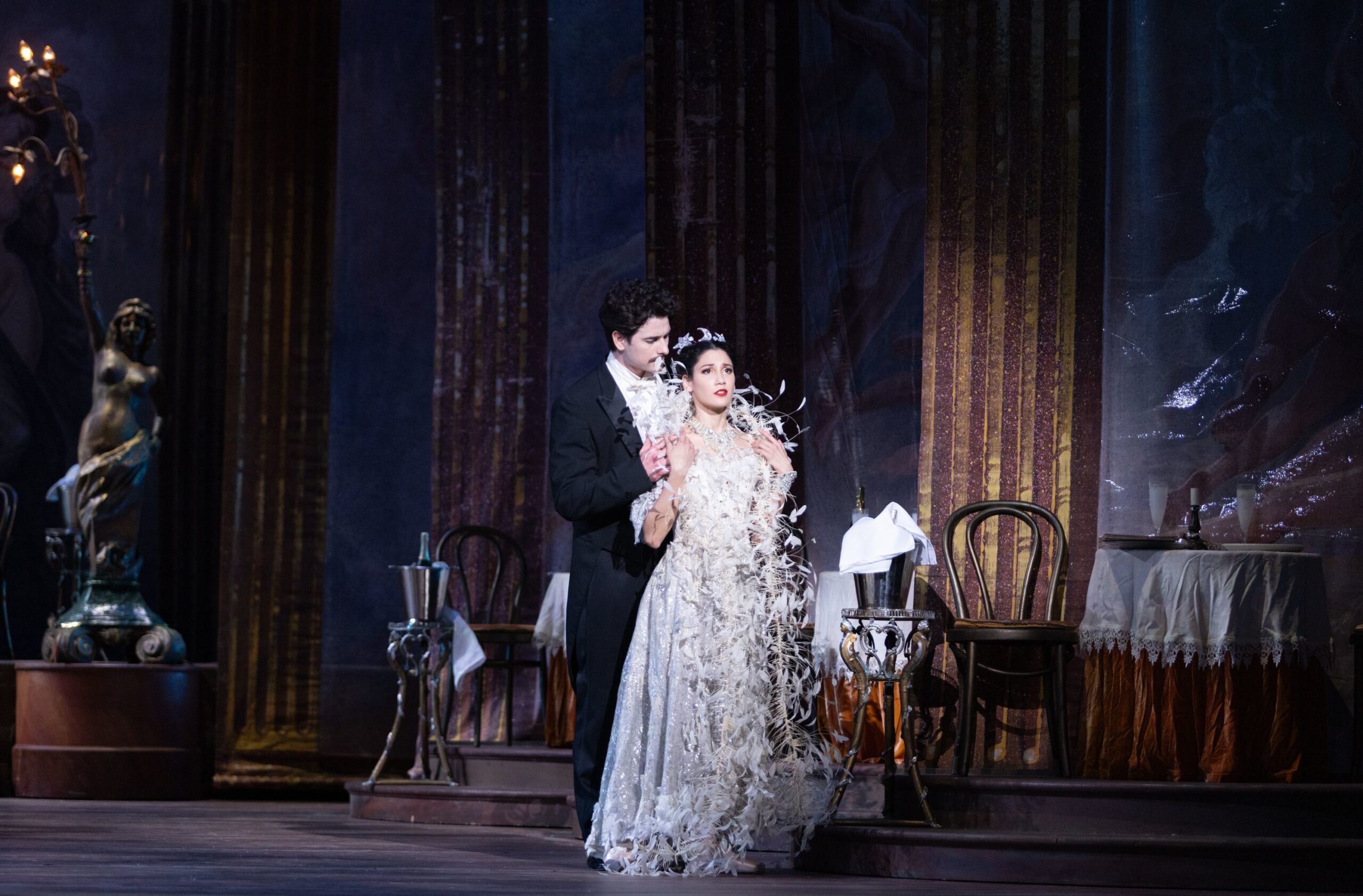
The sets and costumes, by Roberta Guidi di Bagno, are reason enough to see The Merry Widow. Occasionally the costume changes make identifying the characters confusing, but all is forgiven when Pineiro enters in a white gown and an impossibly lavish feathered scarf.
Philadelphia Ballet dancers Sterling Baca (left) and Mayara Pineiro in “The Merry Widow.”
Ronald Hynd adapted The Merry Widow in 1975 for the Australian Ballet from the operetta and the Franz Lehár score was arranged for the ballet by John Lanchbery.
The original Danilo for the Australian Ballet, John Meehan, was a répétiteur for the Philadelphia Ballet, along with Steven Woodgate. So the dancers learned the choreography from an original source.
Artistic director Angel Corella said last week that he had wanted the company to perform The Merry Widow since he came to the company in 2014.
“It’s one of my favorite ballets. It’s so much fun,” Corella said. “Great dancing, beautiful music, beautiful story.”
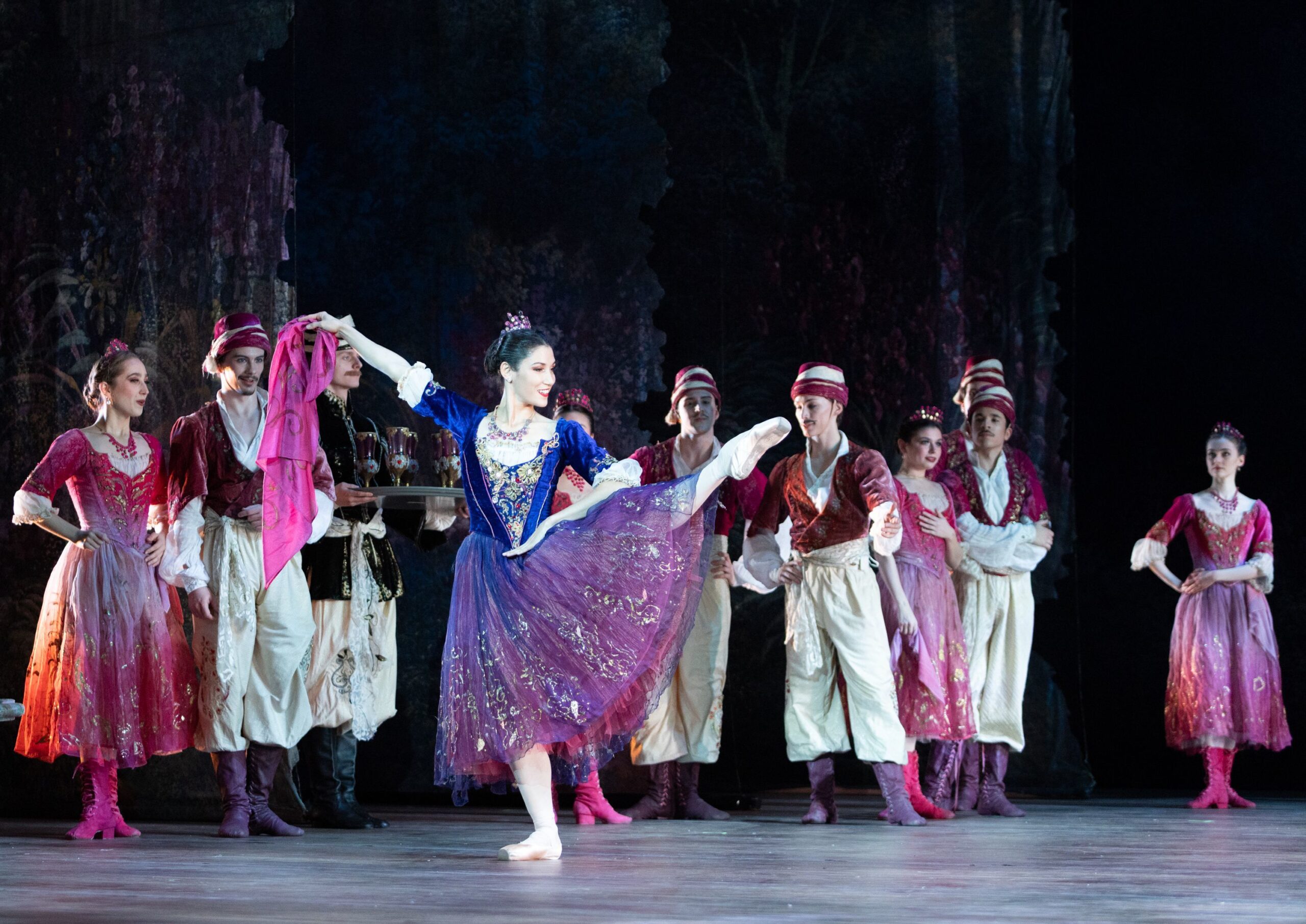
Philadelphia Ballet dancer Mayara Pineiro (center) in “The Merry Widow.”
The group dances add a lot of depth to the ballet — and more stunning costumes. From the ballroom scenes to the folk dances of fictional Pontevedro, a cancan scene, and men performing in tails, the stage nearly vibrates with color and sparkle. The ballet has many dancers to cast, from the advanced levels of the school through the professional ranks, so these large scenes are impressive.
For a fairly recent ballet, there is some Orientalism in the folk dance scenes. But since it is set in a made-up place, any passing likeness to Turkey or the Middle East is easier to take.
Philadelphia Ballet in “The Merry Widow.” Through March 15. Academy of Music. $29-$274.40. 215-893-1999 or ensembleartsphilly.org
Who remembers when the greatest collection of basketball talent ever assembled on one roster took the court for the first time at the 1992 Summer Olympics in Barcelona?
“Yeah,” Kyle Schwarber said, “I was too young for that.”
Too polite, also, to acknowledge that he wasn’t born yet. But never mind that the Phillies slugger didn’t come along until March 1993. Everyone’s heard about when Michael Jordan, Magic Johnson, and Larry Bird headlined a group of NBA stars that flexed U.S. basketball might on the world stage.
The story of the “Dream Team” transcends generations.
Thirty-four years later, USA Baseball has put together its version to compete in the triennial World Baseball Classic and avenge a 3-2 loss to Japan in 2023 on Shohei Ohtani’s championship-clinching strikeout of Mike Trout.
A few names on the team of U.S. manager Mark DeRosa’s dreams:
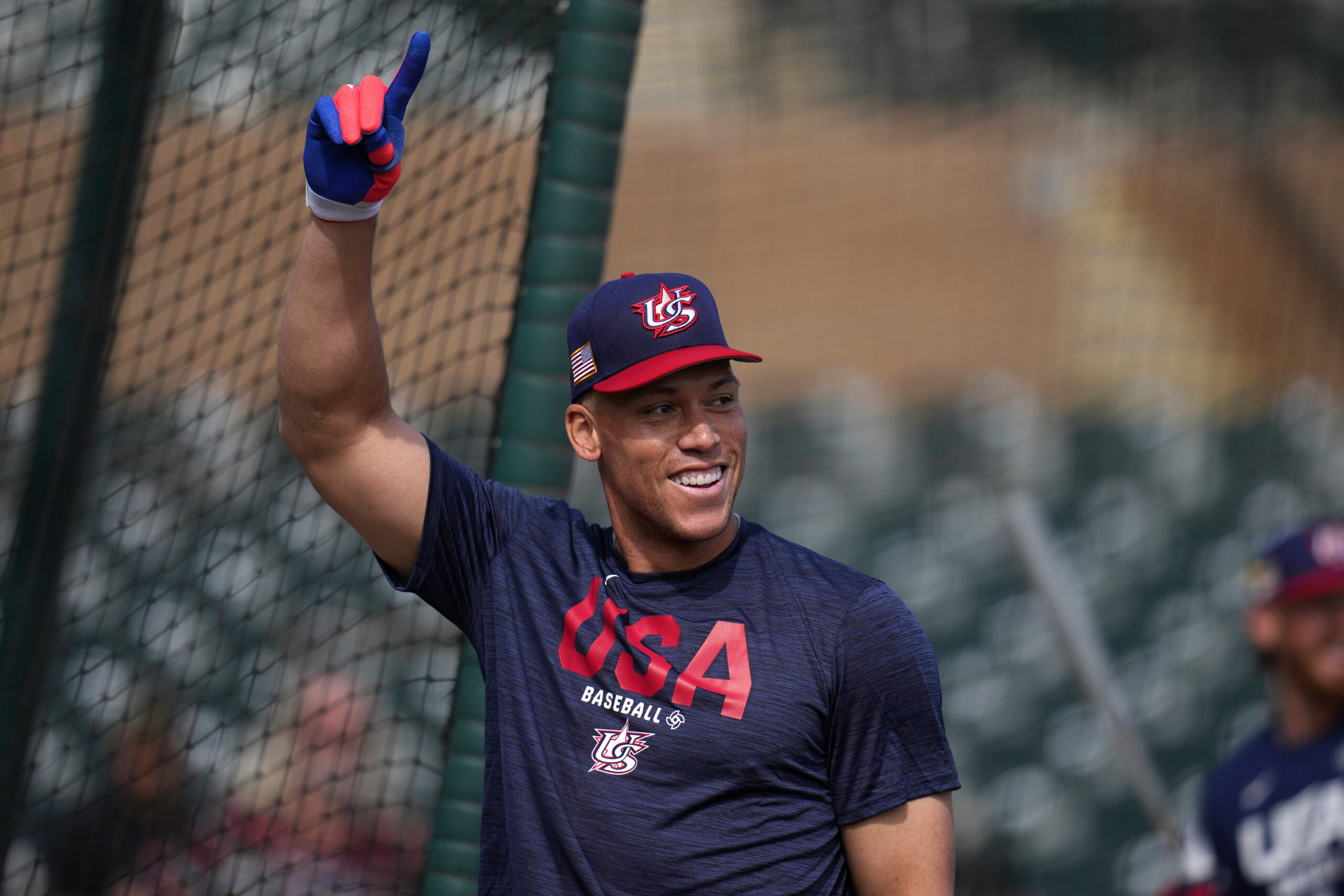
Aaron Judge. Paul Skenes. Cal Raleigh. Tarik Skubal. Bryce Harper. Bobby Witt Jr. And, yes, Schwarber.
“It’s a great team,” Schwarber said on Phillies Extra, The Inquirer’s baseball podcast. ”Another stacked lineup. The lineup that we had out there in ’23 was full of studs, MVPs, All-Stars, everything. This lineup, All-Stars, MVPs, and the cool thing is there’s a little bit more youth on it, too.
“You’re starting to see some of these younger faces that could really have those chances to be future MVPs. Those future perennial All-Stars are going to be on this team, as well. I’m just excited about it.”
It makes you dream, doesn’t it? And not just about whether the most talented American baseball team ever assembled can win the WBC for the first time since 2017.
No, dream bigger. Dream of 2028, the Summer Olympics in Los Angeles, where baseball will return as a medal sport for the first time since 2020. And dream of a best-on-best international tournament made possible if MLB chooses to pause the season, just as the NHL did in 1998, 2002, 2006, 2010, 2014, and again for 11 riveting days last month in Milan.
“We have the WBC, but it’s not the same,” said Harper, who has lobbied MLB for years to make concessions for the Olympics. “People can say as much as they want, but the Olympics is so worldwide. The WBC is great and brings a lot of people together, but the Olympics is something you dream about playing in.”
Indeed, although the WBC generates interest, there are limits to how seriously it can be taken given its timing on the sport’s calendar. It’s still spring training, after all, and for years, many of the best pitchers — American pitchers, in particular — declined a WBC invitation to focus on building arm strength for the season.
DeRosa, USA Baseball’s “Uncle Sam,” said there was more buy-in for his “I Want You” recruitment this time around, and not only from Skenes, the NL Cy Young Award winner who pitched in college at Air Force and is unlikely to start meaningful games down the stretch for the perennially noncontending Pirates.
“I just think it was the fear of missing out,” DeRosa said at baseball’s winter meetings in December. “I think guys watched in ’23 and saw the game against Japan, the iconic moment between Trout and Ohtani, Trea Turner’s [grand slam] against Venezuela.
“These are moments in time. It’s like, you’re going to miss out on three weeks of the greatest time of your life as a professional if you never win a World Series. That’s what this is.
“You see the way Latin America and Japan is. I just feel like there’s been a groundswell with the United States player that, all right, it’s time for us to go.”
Yankees slugger Aaron Judge captains a USA team full of All-Stars and future Hall of Famers looking to avenge their WBC title game loss to Japan in 2023.
Sure, but the WBC lets players go only so far. Pitchers are capped at 65 pitches in the preliminary round, 80 in the quarterfinals, and 95 in the semis and final.
WBC managers also organized their pitching rotations in consultation with major league teams. Webb started Team USA’s opener Friday night against Brazil because the Giants need their ace to line up for opening day. Skubal will pitch only once. If the U.S. gets to the final, Mets rookie Nolan McLean will likely start, not Skubal or Skenes.
Most of the restrictions and guardrails could be lifted for the 2028 Olympics, which are scheduled from July 14 to 30. Injuries are unavoidable no matter the time of year. But pitchers will be fully built up, so workloads won’t need to be massaged.
Harper was among the first players to commit to Team USA in 2023 but withdrew after Tommy John elbow surgery. He signed on for this year’s tournament in December and said he was excited to play for the country for the first time since he was 18 — 15 years ago.
Yet it feels like only the appetizer before the main course if major leaguers are allowed to play in the Olympics.
“I think that would be awesome,” Schwarber said. “We all grew up watching the Olympics and watching sports that you never thought that you’d watch.
“I feel like it would be such a great thing for our game just to have major leaguers there who are performing at the highest level to represent their countries. It would be amazing to have that, not just on the WBC size but on the world size.”
And then the U.S. could field a baseball Dream Team.
But a lot can change in two years. Using the WBC roster as a base, and organizing players into tiers (with their 2028 age in parentheses), let’s examine who might get to wear “U-S-A” across their chest when L.A.’s Olympic flame is lit.
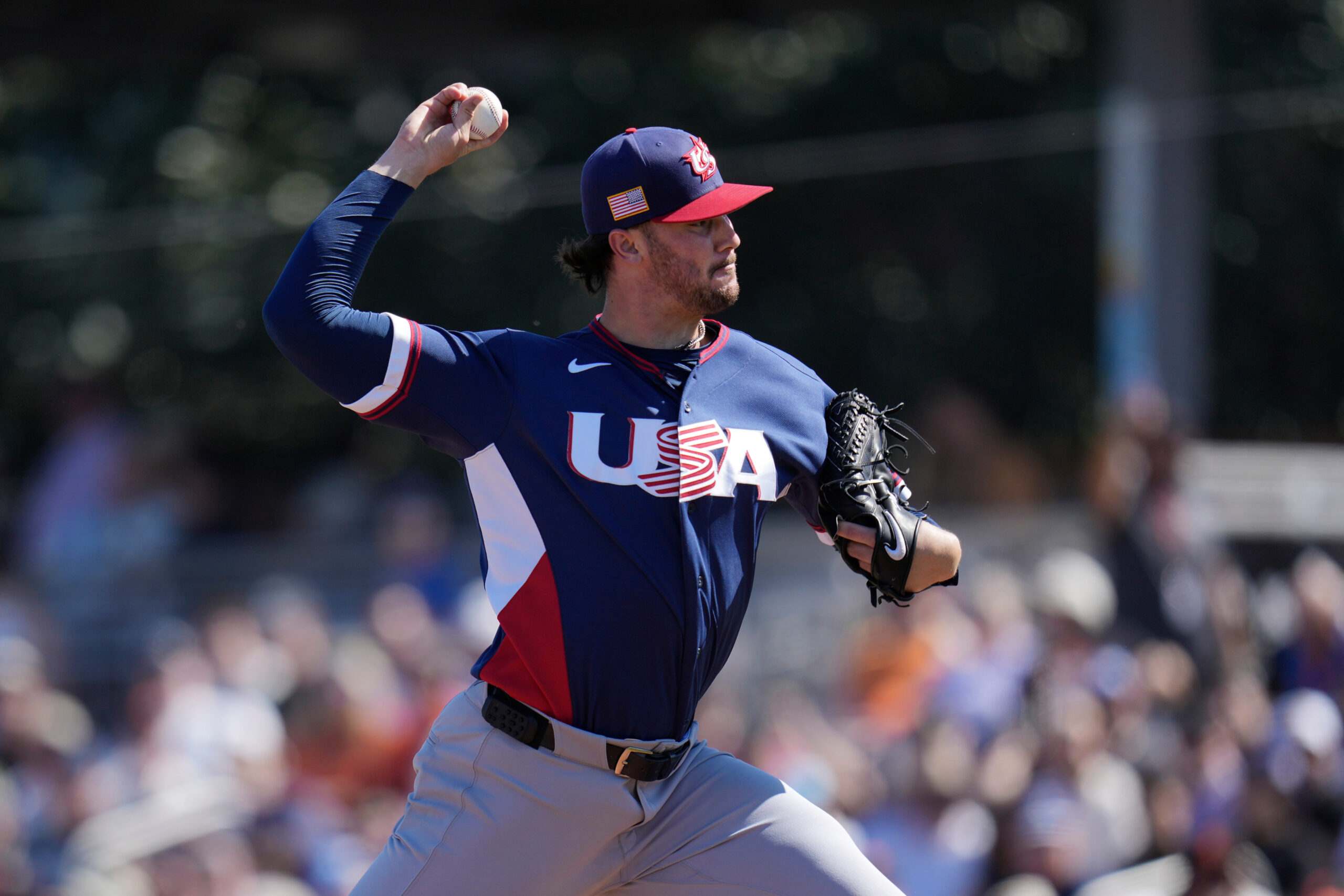
Pirates ace Paul Skenes will anchor Team USA’s World Baseball Classic pitching staff.
The ‘pillars’
Aaron Judge, RF, Yankees (36)
Paul Skenes, SP, Pirates (26)
After skipping the WBC in 2023, the captain of the Yankees agreed to be Captain America. But Judge’s commitment didn’t signify as much as Skenes’.
“Every other country, their best arms show up,” DeRosa said. “For whatever reason, in the United States, our best arms don’t show up. We’re trying to change that narrative. [Skenes] has certainly changed it.”
DeRosa often refers to Judge and Skenes as Team USA’s hitting and pitching “pillars.” They’re set in stone.
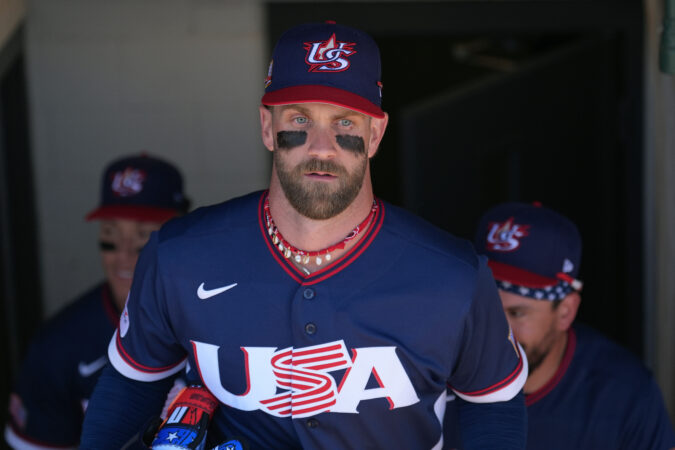
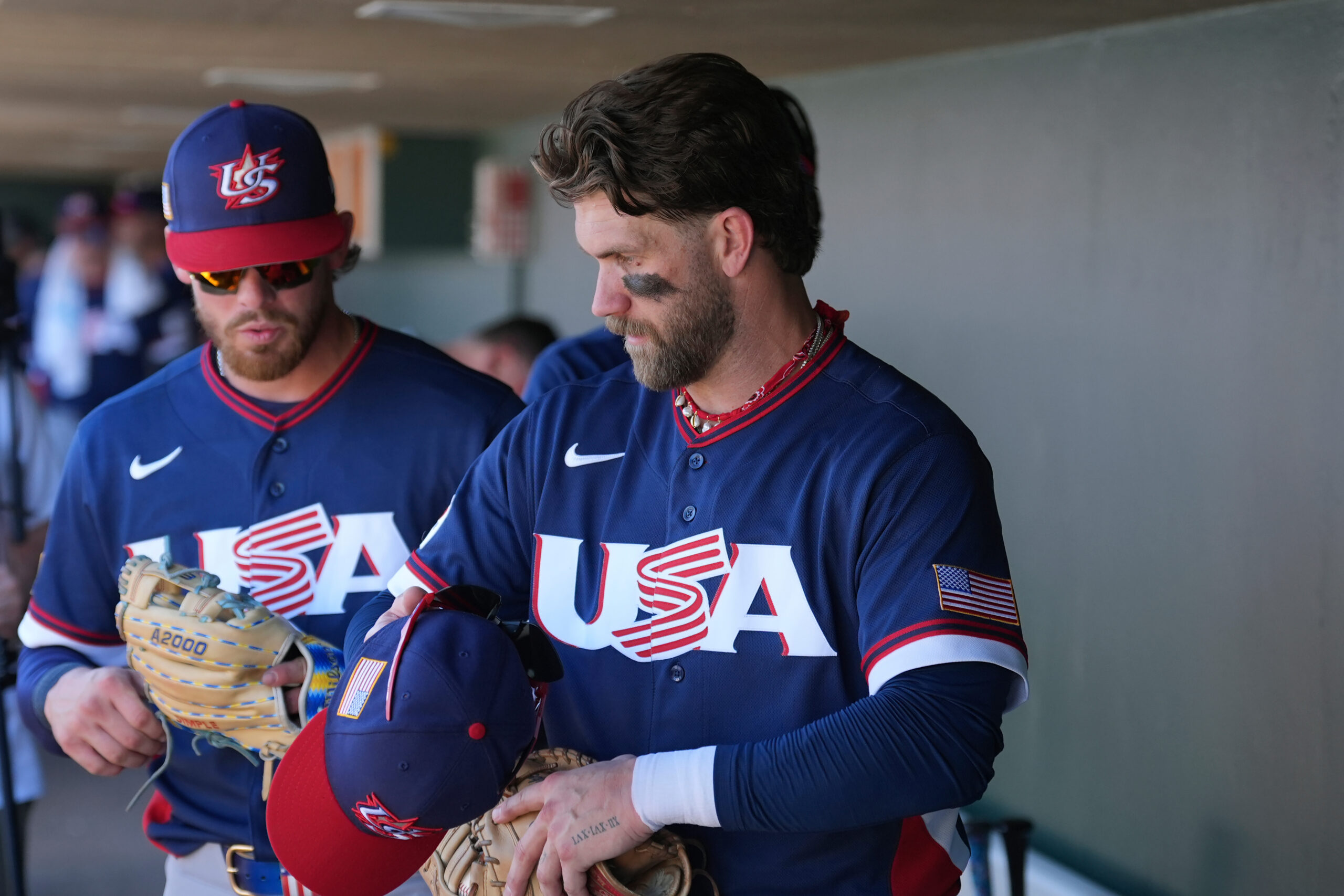
Bryce Harper (right), with and Bobby Witt Jr., would be 35 during the 2028 Olympics, but he’d still be a surefire pick.
The core holdovers
Bobby Witt Jr., SS, Royals (28)
Gunnar Henderson, SS, Orioles (27)
Roman Anthony, OF, Red Sox (24)
Pete Crow-Armstrong, CF, Cubs (26)
Corbin Carroll, OF, Diamondbacks (27)
Cal Raleigh, C, Mariners (31)
Bryce Harper, 1B, Phillies (35)
Tarik Skubal, SP, Tigers (31)
Nolan McLean, SP, Mets (26)
Mason Miller, RP, Padres (29)
Turner smashed five homers, including a grand slam, in six WBC games in 2023. This time, the Phillies shortstop said he didn’t even get a call from DeRosa, who went younger at shortstop.
A new wave of talent will wash ashore by the summer of 2028. But Witt, Henderson, Anthony, and Crow-Armstrong will still be under 30 and difficult to supplant. Ditto for Carroll, who dropped out of the WBC after breaking a bone in his hand.
At 35, Harper would be an elder statesman. But unless he gets injured or his production drops off a cliff, his face-of-the-sport star power gets him a place on the roster.
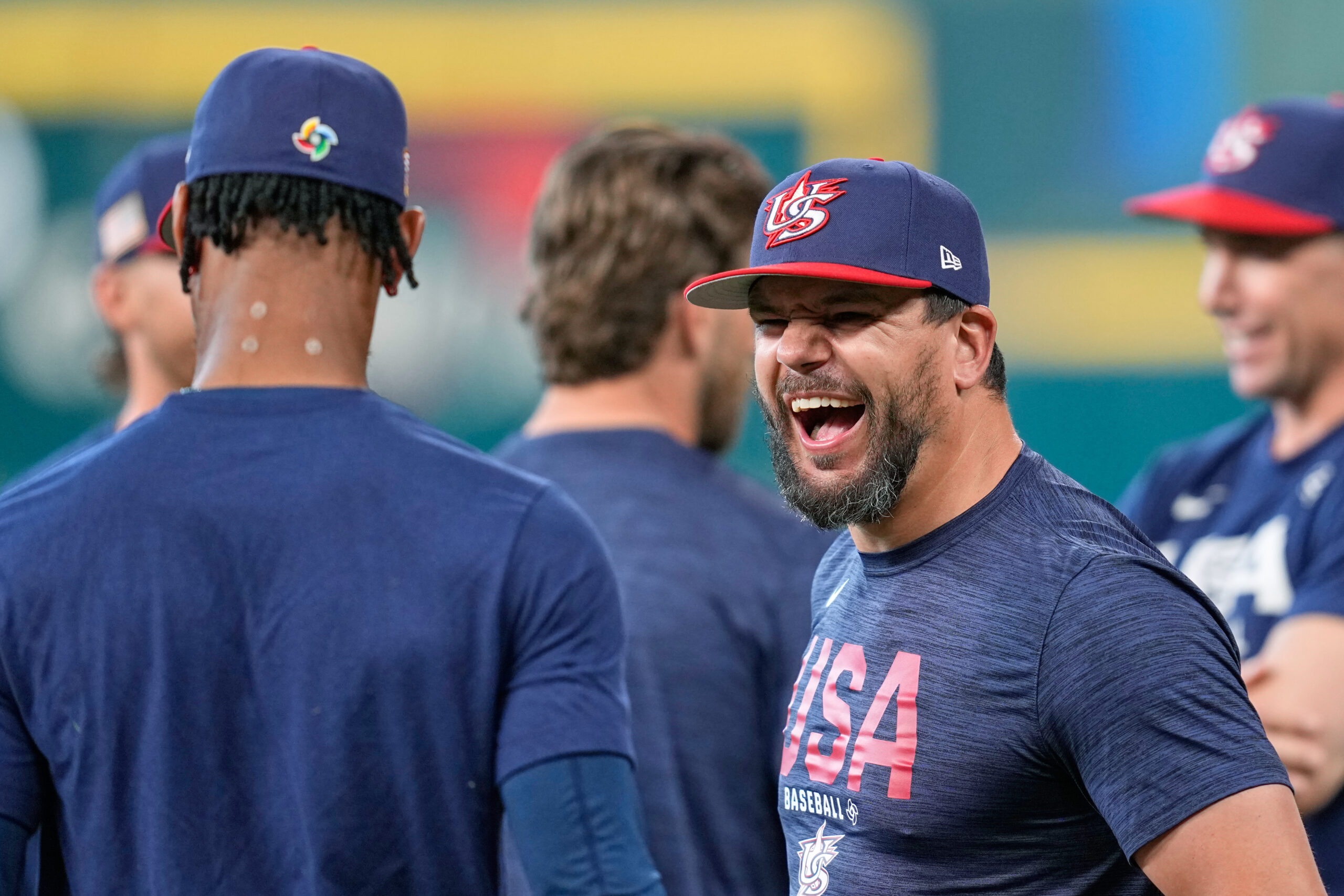
Kyle Schwarber laughs while talking with Byron Buxton during a Team USA workout for the World Baseball Classic on Thursday.
The veteran leaders
Kyle Schwarber, DH, Phillies (35)
Alex Bregman, 3B, Cubs (34)
Schwarber’s presence in the middle of Team USA’s loaded order is undeniable. But here’s a word on his influence within the clubhouse:
“He’s the chemistry guy for me,” DeRosa said. “He was the guy. He’s in the dugout going, ‘Everyone relax. Do what you do.’ Even to me, he’s coming up, rubbing my shoulders, just like, ‘I got you.’ There’s just no panic with this guy. … He’s an infectious personality, and everyone loves him. And he backs it up.”
Bregman brings a similar vibe as a leader and a winner.
Others whose roster spot will be challenged by younger players: Will Smith, C, Dodgers (33); Byron Buxton, CF, Twins (34); Brice Turang, 2B, Brewers (28); Paul Goldschmidt, 1B, Yankees (40); Logan Webb, SP, Giants (31); Joe Ryan, SP, Twins (33); David Bednar, RP, Yankees (33).
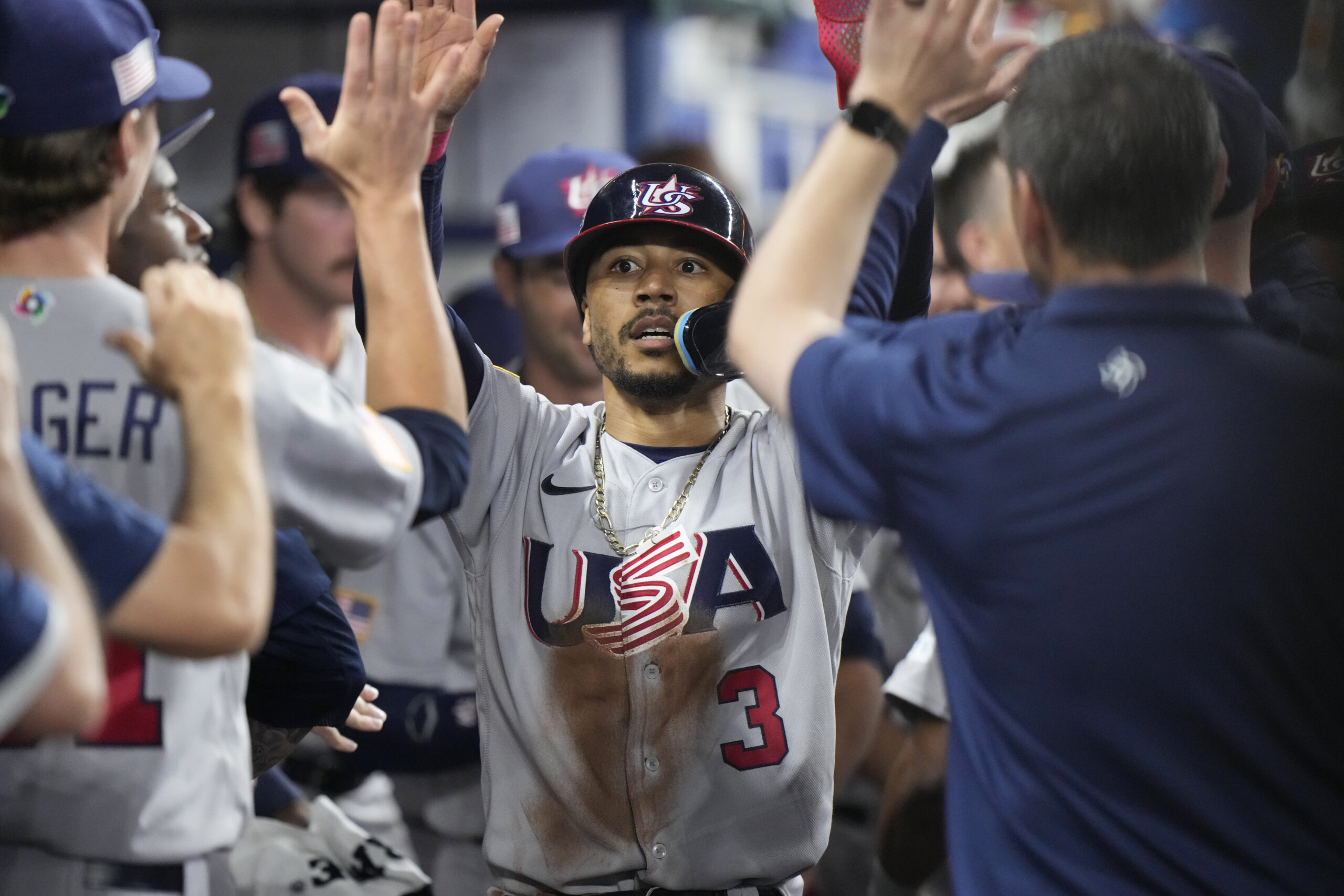
After playing in the 2023 World Baseball Classic, Mookie Betts is not on the 2026 squad.
Imagine if Team USA had Crochet and Brown in the rotation behind Skenes and Skubal. Or if Greene or Tucker were in left field. And how the heck is Betts not on the WBC roster? Wheeler said he considered playing before getting injured last season. Maybe he or Cole could fill Clayton Kershaw’s role on the staff in 2028.
This is only a partial list of stars who won’t compete in the WBC. And the omissions serve only to amplify the pool of talent that Team USA has at its disposal.
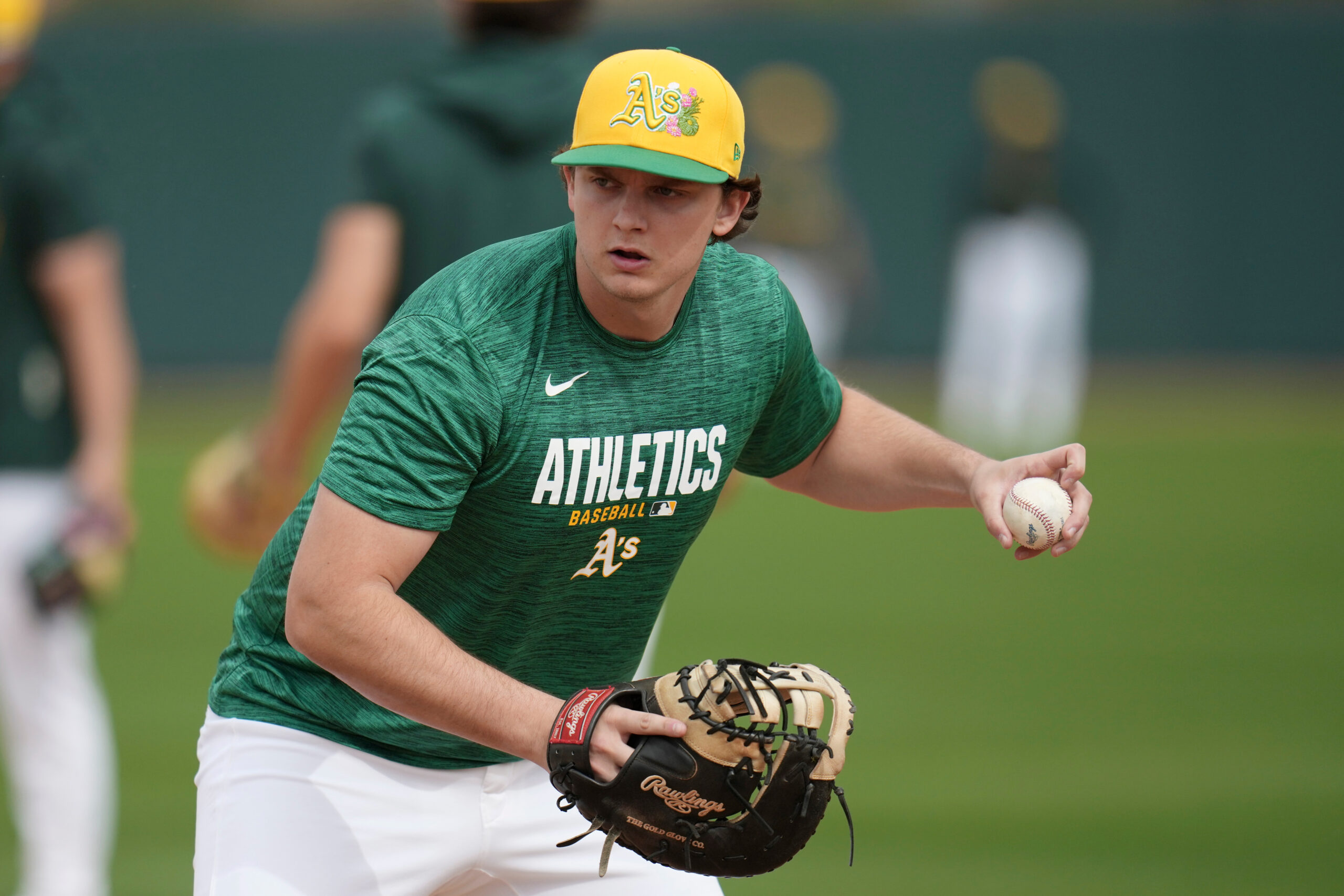
Young stars like the Athletics’ Nick Kurtz will be in the mix for a 2028 Olympics team.
The next generation
Nick Kurtz, 1B, Athletics (25)
James Wood, OF, Nationals (25)
Wyatt Langford, OF, Rangers (26)
Jackson Merrill, OF, Padres (25)
Drake Baldwin, C, Braves (27)
Konnor Griffin, SS, Pirates (22)
Colson Montgomery, SS, White Sox (26)
Kevin McGonigle, SS, Tigers (23)
Jackson Holliday, 2B, Orioles, (24)
Trey Yesavage, SP, Blue Jays (24)
Jacob Misiorowski, SP, Brewers (26)
Bubba Chandler, SP, Pirates (25)
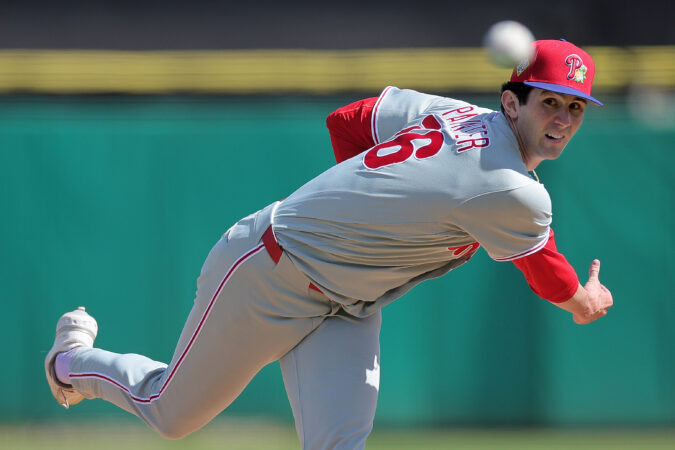
Andrew Painter, SP, Phillies (25)
Another partial list. Another trove of talent that will elbow its way into the conversation in two years, assuming that the door to the Olympics is opened to major leaguers.
“To be able to say that you’re an Olympian, that would be a really cool thing, a bucket-list item that you could cross off,” Schwarber said. “I guarantee you’d have a really big pool of players that would want to sign up and put their name in a hat to represent their country.”
A lot of NFL general managers are a lot less capable than Howie Roseman.
As for A.J. Brown, the impact of the Bills’ acquisition of Moore is being overstated.
Roseman may get the first-round pick he reportedly is seeking in exchange for Brown, but it’s no more likely now that the Bears have somehow managed to finagle a second-round pick out of the Bills for Moore. If anything, Roseman might deserve credit for driving up the price for Moore, who was the Bears’ fourth receiving option by the end of a season in which he caught just 50 passes for 682 yards. Buffalo had a clear need for a primary receiver. Dealing a second-round pick for Moore might sound more reasonable when your other option is trading a first- and second-round pick for Brown. What we know for sure is that the small pool of teams that made obvious sense as a trade partner for the Eagles just shrunk by one.
The Trent McDuffie trade could be just as much of a harbinger in the opposite direction.
A two-time All-Pro at a premium position (cornerback) entering his age-26 season, McDuffie is headed to the Rams for the No. 29 pick in this year’s draft, a future third, and change. I don’t think it’s accurate to say that the McDuffie deal is an indication of the elite cornerback market, at least not relative to Brown. Keep in mind, the Colts traded away two first-round picks and Adonai Mitchell for Sauce Gardner at the deadline. One of those picks ended up at No. 16 this year. Who knows what next year’s will be. That’s the elite cornerback market.
The McDuffie trade does give us a neat and tidy for-instance. Given the sacrifice the Chiefs just made at a more premium position, would they then be willing to turn around and trade the No. 29 pick they received for McDuffie to the Eagles for Brown? Maybe they would. Hey, maybe they will. They sure do need a wide receiver. That said, it seems far more likely that they are looking at that No. 29 pick the same way the Eagles would in justifying a trade of Brown: as a chance to add another five years of well-below-market-rate production in the form of a rookie.
The overall point is that you can talk yourself silly trying to project the market based on one deal. The Moore deal can just as easily be construed as the price a team is willing to pay to not pay the price the Eagles are asking for Brown.
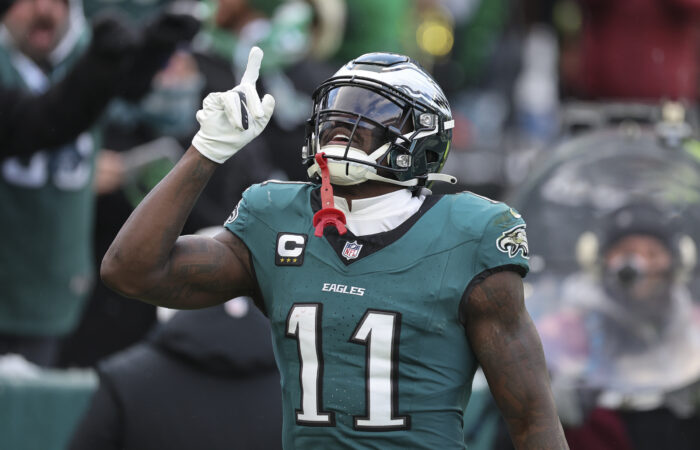
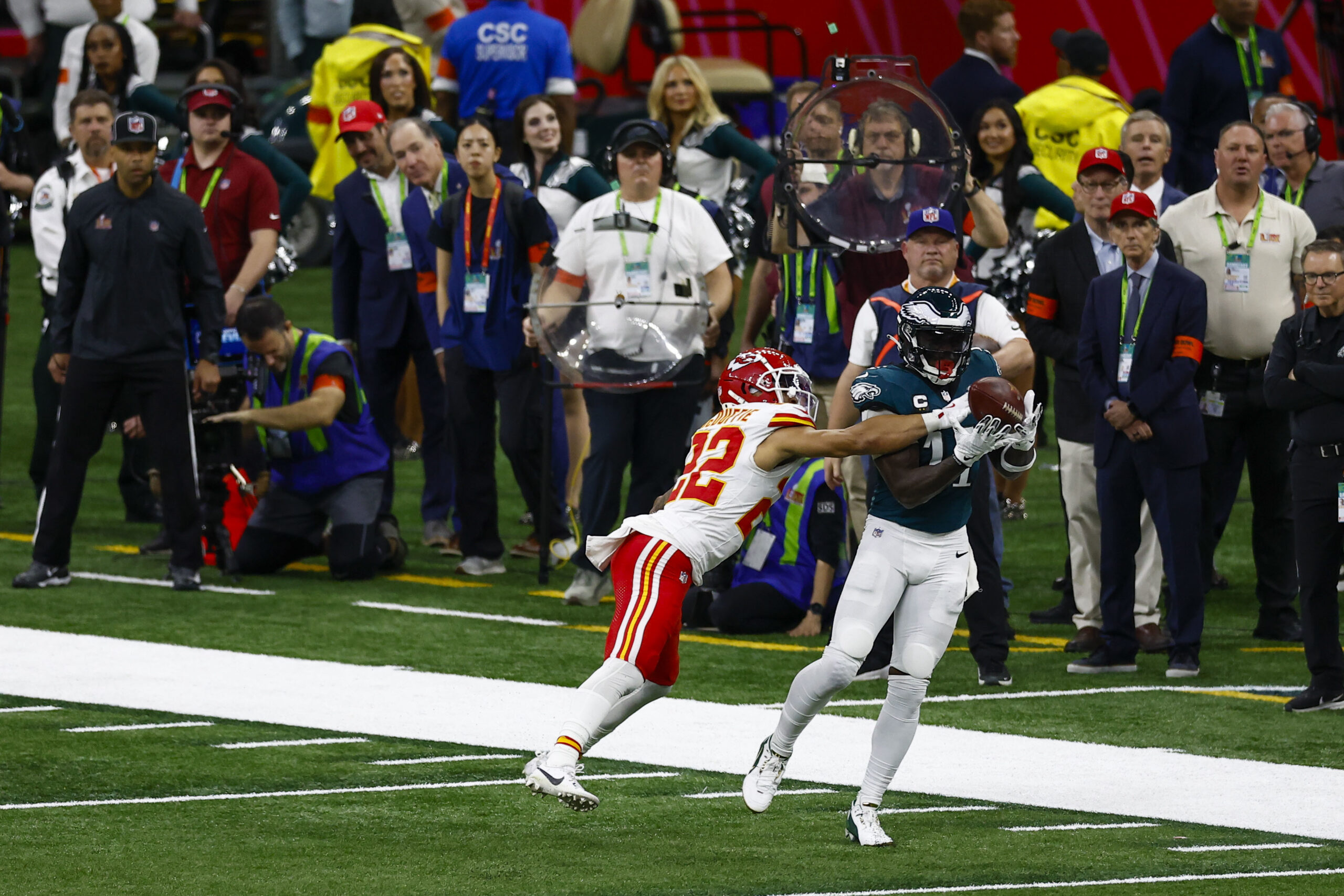
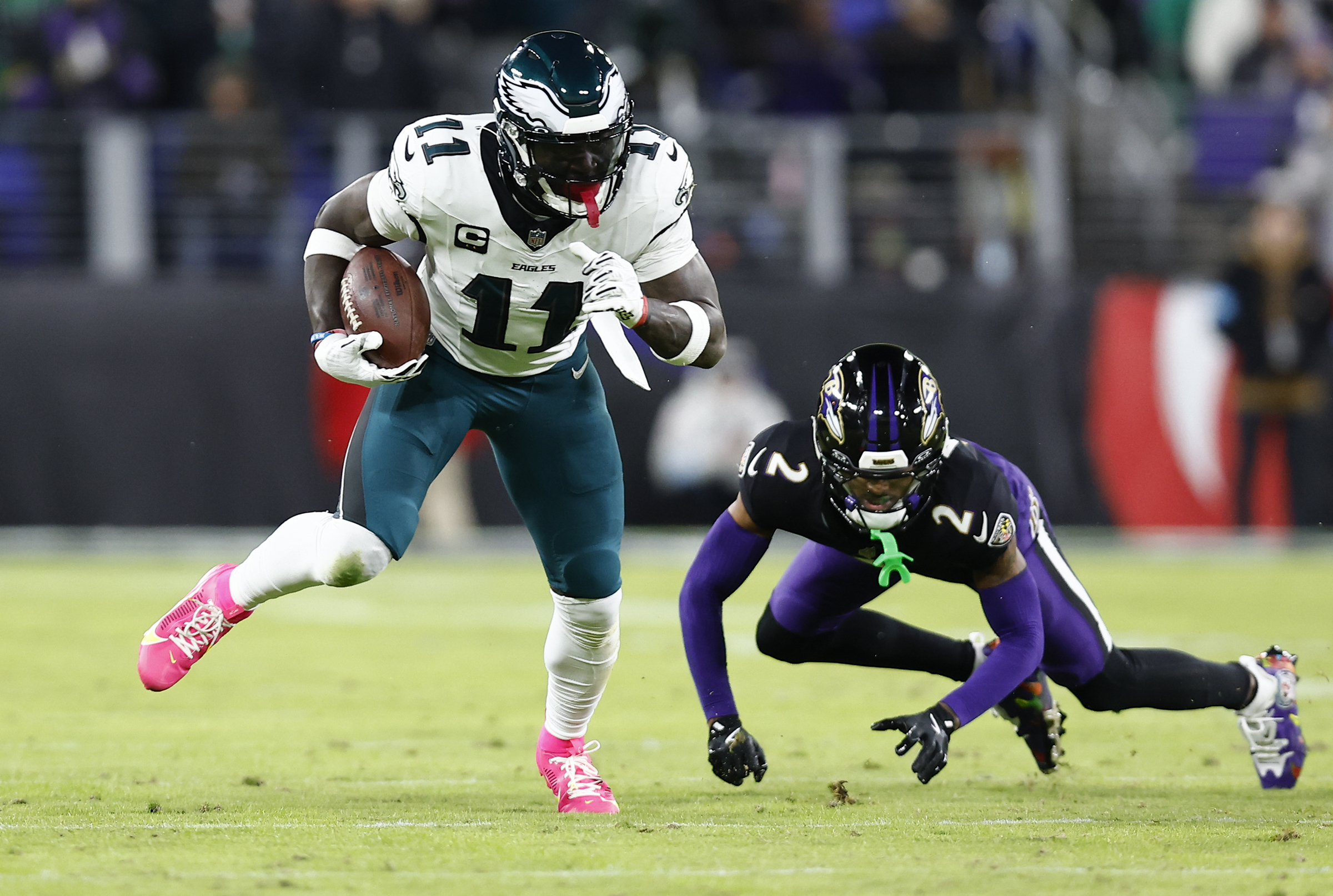
Chiefs cornerback Trent McDuffie (left) was traded to the Rams for the 29th pick in this year’s draft. Could Eagles wide receiver A.J. Brown fetch a similar haul?
The Eagles are justified in asking for a first- and second-rounder for Brown, assuming what they really expect is a first-rounder and an assortment of mid-to-late-round picks.
There are plenty of comps.
The Raiders acquired 29-year-old Davante Adams from the Packers for No. 22 overall and No. 53 overall in 2022.
The Bills acquired 26-year-old Stefon Diggs for No. 22 overall and change from the Vikings in 2020.
The Chiefs acquired No. 29 overall, No. 50 overall and change from the Dolphins for 28-year-old Tyreek Hill in 2022.
It’s easy to see the genesis of Roseman’s current reported asking price. It’s also easy to see why that asking price has drawn snickers.
Consider:
The first-round pick the Bills traded to the Vikings turned out to be Justin Jefferson.
The second-rounder that the Raiders traded to the Packers turned out to be Alec Pierce (after Green Bay traded the pick to draft Christian Watson). The first-rounder was Quay Walker, a four-year starter at linebacker.
The Chiefs used the No. 29 pick they landed for Hill to trade up to draft McDuffie at No. 21.
On the other side of these deals were two of the worst organizations in the NFL (Dolphins, Raiders), and the team that just traded a second-round pick for Moore and has the second-most expensive wide receiver room in the NFL without a true WR1 to show for it.
There aren’t many other for-instances. The Texans traded away DeAndre Hopkins for No. 40 overall in 2020, but that deal included running back David Johnson in the return and was universally panned regardless. Last offseason, the Steelers traded away No. 52 overall for 27-year-old DK Metcalf, whose four-year averages were worse than Brown’s 2025.
There aren’t many teams that can give the Eagles what they need.
I use the word “need” for a reason. The Eagles need a first-round pick to justify trading Brown. The only way they might otherwise justify it is by landing a future first plus a 2026 second, i.e. the “Ravens Scenario.” We’ll get to that in a second. First, let’s explain what we mean when we say the Eagles “need” a first-rounder.
This is not abstract. Concretely, the Eagles need to be able to replace Brown. The best way to do it is via the draft, where there happens to be a number of players who could help them and who are projected to be within striking distance of No. 23. But the Eagles need plenty else besides a replacement for Brown. We saw that this year, when they had Brown. To justify trading Brown, they need to at least end up with a pick that maximizes their odds of replacing him (even if they end up “replacing” him with a star at another position). Bare minimum is a top-50ish pick. But only if they feel like they need to trade him for the best offer. Right now, their best leverage is their willingness to bring him back. Which is why they are making that willingness known.
Not many teams are in a position to give them what they need. Cross off the Bills. Presumably the Chiefs, unless Andy Reid and Brett Veach have radically changed the philosophy under which they traded away Hill to pave the way for McDuffie. Nobody is giving up a top-10 pick for Brown, so cross them off too.
Could the Ravens be in the market to trade for Eagles wide receiver A.J. Brown?
The Dolphins (No. 11) are more likely to trade Jaylen Waddle for a Brown-type package than to trade for Brown. The Cowboys (No. 12) don’t need a wide receiver, nor do the Rams (No. 13), who just traded their expendable first-rounder to the Chiefs for McDuffie. The Bucs (No. 15) are brimming with wide receivers, including last year’s first-rounder Emeka Egbuka. The Lions (No. 17) have a lot of needs more pressing than the skill positions. Same goes for the Vikings (No. 18). The Panthers (No. 19) spent significant draft capital on Tetairoa McMillan last year. Brown doesn’t fit their timeline.
Next up is Dallas again at No. 20, then the Steelers, who just traded for Metcalf and like to build from within. The Chargers don’t have the luxury of trading No. 22 for Brown. Forget the Browns (No. 24). We’ve already covered the Bears (No. 25). Cross off the Texans (No. 28), who have Nico Collins and youth around him.
That leaves us with the Ravens at No. 14, the 49ers at No. 27, the Broncos at No. 30, the Patriots at No. 31, and the Seahawks at No. 32.
If the Eagles are reluctant to trade Brown to a fellow NFC contender, that would leave three teams: Ravens, Broncos, Patriots. Denver and New England would need to offer their first-rounder, because the next best 2026 picks are No. 62 and No. 63, which isn’t nearly good enough. The Ravens are in the opposite boat. Their No. 14 overall pick is too high. Their second-rounder (No. 45) is borderline, and would only make sense if coupled with a high future pick.
The Eagles’ ability to land a first-rounder is contingent on the Ravens’ willingness to give up a future first or the Patriots/Broncos (or Seahawks/49ers) belief in the players who will be on the board at the end of this year’s first round.
None of that is impacted by the cost of trading for Moore. The Ravens and the Patriots are the two obvious teams, assuming we remove the Chiefs and the NFC contenders. The Ravens aren’t going to give up No. 14 for Brown, and No. 45 is only worth it for the Eagles if they have 45 players they love on their draft board. A future first from Baltimore would give them an opportunity to move up. The Pats’ first-rounder would work if coupled with a pick that also gives the Eagles ammo to move up from No. 23 or No. 31 to draft a guy they covet.
This is a pass-fail sort of thing. There is a bare minimum return the Eagles need in order to justify the competitive hit they’d take without Brown in 2026. It is a return where only a team’s best available draft pick is good enough. There are only a few teams that might consider it. That was the case before the Bills traded for Moore. It remains the case now.
CLEARWATER, Fla. — Andrew Painter likes to eat. It has never been much of an issue. The Phillies’ top prospect has a fast metabolism and stands 6 feet, 7 inches.
If anything, it is hard for him to add weight. So, the occasional — or frequent — ice cream cone doesn’t hurt. But this offseason, while training at Cressey Sports Performance in Florida, the lanky pitcher noticed something.
It was early November, and Painter was reviewing video of his 2025 triple-A season with coach Spencer Stockton. He hadn’t felt a difference on the mound, but could see one on the screen.
The prospect had put on some extra pounds — topping out at 240 at one point — and was moving slower. He’d get fatigued by the fourth or fifth inning.
His delivery was impacted, too. Instead of driving off the mound, Painter was “falling” off it.
Stockton and Painter looked back at his delivery in 2022, before he got Tommy John elbow surgery. It was quicker and more up-tempo.
They decided they’d try to get back to that. The coach and the pitcher made some slight changes to Painter’s offseason program, adding more “movement days” of sprints and agility work.
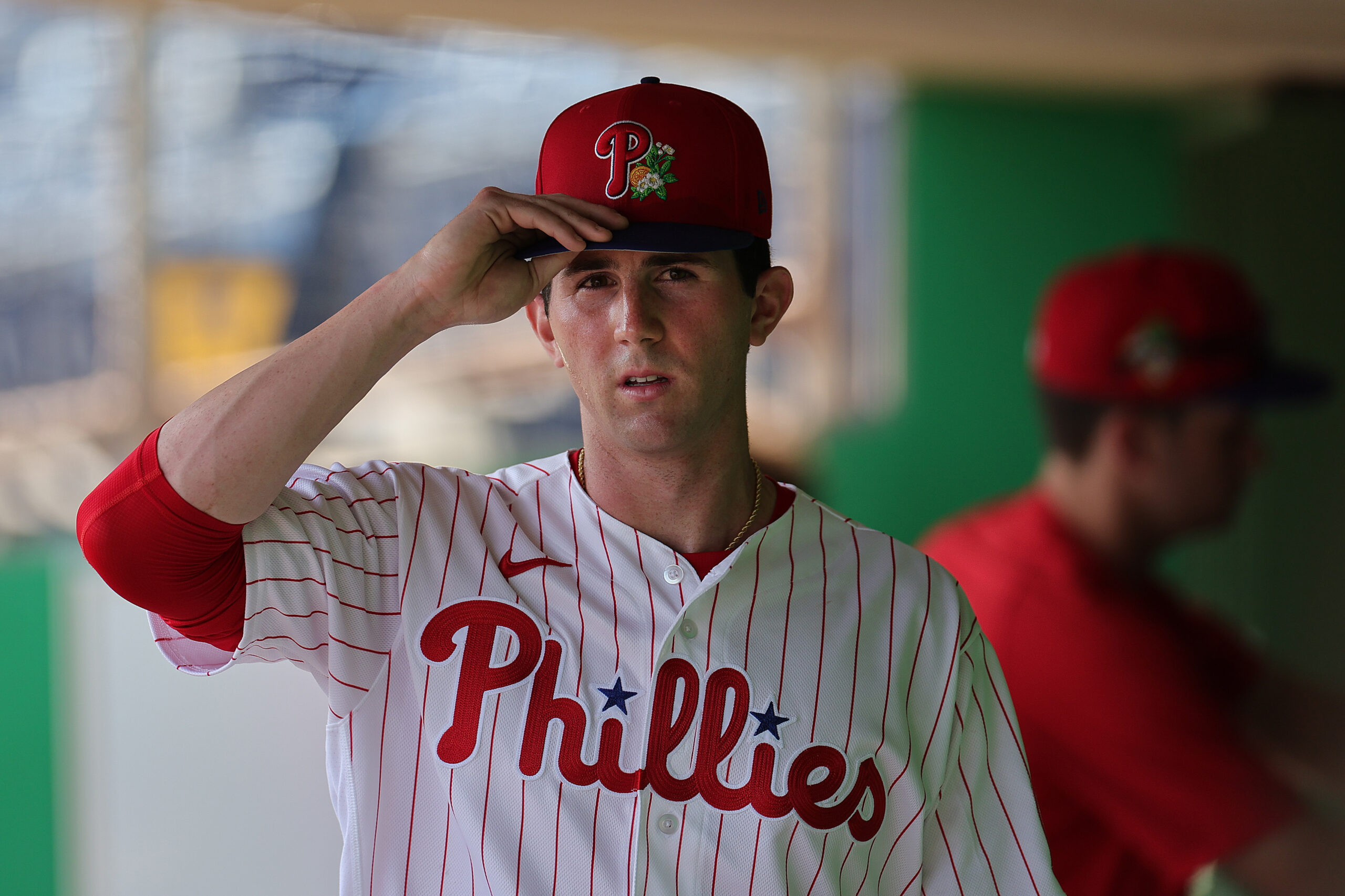
Phillies pitcher Andrew Painter greets Little Leaguers before a game against the Yankees on Sunday at BayCare Ballpark in Clearwater, Fla.
They also made some tweaks to his diet. Painter’s weight in 2022 was 225 pounds.
To get back to that number, he’d have to make some sacrifices.
“Fewer trips to the Dairy Queen,” he said with a laugh.
This would be a challenge. Painter’s house in Pompano Beach, Fla., was a block away from the fast-food restaurant. It was easy — perhaps too easy — to order an Oreo Blizzard or milkshake.
His teammate and longtime friend, Phillies lefthander Jesús Luzardo, described Painter’s eating habits as “notorious.” Former Phillies minor league pitching coordinator Vic Díaz recalled that he had a “big sweet tooth.”
“I’m almost positive he would go to Publix and just pick up a pie,” Díaz said.
But nevertheless, Painter got it done. He’s at 225 pounds, his “ideal weight.” His leaner physique is part of the reason he showed dominance in his one game so far this spring — no hits, no walks, no runs in two innings — as he prepares for a starting job on the big league club. He is scheduled to pitch on Saturday.
“All offseason he’s looked great,” Luzardo said. “He looks strong, he looks athletic, the way he’s pitching, moving down the mound. His body is moving cleaner, is the way I would describe it.”
‘Sorry, I ate a whole pumpkin pie’
Painter has never been shy about his proclivity for dessert. In September 2021, months after he was drafted in the first round, he was sitting alongside Díaz at the Bobby Mattick Complex in Dunedin, Fla.
The highly-touted prospect was minutes away from his final start of the year, against the FCL Blue Jays. But there was one problem.
“He just looked at me and said, ‘Sorry, I ate a whole pumpkin pie last night,’” Díaz said.
Painter ended up having his best FCL outing to date. He pitched two innings, struck out five, and allowed just one hit.
But Díaz wasn’t about to let him off the hook.
“He called me out at the end of the [pitchers] meeting,” Painter said. “We were wrapping up and he says my name. And I’m like, ‘What did I do?’
“And he’s like, ‘Just wanted to let you all know, Painter ate a whole pumpkin pie.’”
Andrew Painter pitched two scoreless innings in his spring debut on Sunday.
The minor league coordinator started regularly asking the prospect what he’d eaten the night before. And Painter was happy to divulge.
Even as a teenager, he was unapologetically himself. Painter would shag fly balls left-handed in the outfield during batting practice. He relished Beach Dog Fridays at single-A Clearwater, picking out his favorite mutts in the crowd.
So, it was no surprise to Díaz that Painter also had a light-hearted approach to his diet.
“In Clearwater, he and Alex Garbrick had a thing where they would go to BJ’s Restaurant once a week,” Díaz recalled. “When it was two-for-one Pizookies.”
(For those unfamiliar, a Pizookie is a cookie skillet with ice cream on top).
Luzardo, who also has a sweet tooth, was not familiar with the pumpkin-pie fiasco or the weekly Pizookies. But he was aware that his friend liked to eat.
“I didn’t know about that,” Luzardo said. “But I saw him do a — he did do a hot dog eating contest here last year.”
Of course, there is a balance to all of this. Painter doesn’t want to reach 240 pounds again, but he also doesn’t want to dip below 220, which was where he was in 2023, before he got Tommy John.
“It’s trying to find that middle spot of where I’m light, but I’m not injured, too,” he said. “Because you get to a certain point where you’re too skinny and there’s not enough fat in your body to stay healthy.
“And everyone always says, ‘You can’t tear fat.’ So, it’s trying to find that middle point.”
Around 225 seems to be it. Painter feels great. He isn’t as sluggish as he was last year. He’s fluid and agile.
Coupled with a higher arm slot, and a lengthier long toss routine, it’s just another reason why he’s looked — and felt — so good this spring.
And as long as he isn’t anywhere near a pumpkin patch come October, it should stay that way.
Lower Bucks Hospital was cited by the Pennsylvania Department of Health for failing to properly record a patient’s weight and improperly treatinganother patient’s pressure ulcer last year.
The issues were among the instances health inspectors visited the Bristol hospital, owned by Prime Healthcare Services, between December 2024 and November 2025.
Here’s a look at the publicly available details:
Dec. 4, 2024: The Joint Commission, a nonprofit hospital accreditation agency, renewed the hospital’s accreditation, effective September 2024, for 36 months.
Dec. 16: Inspectors came to investigate a complaint but found the hospital was in compliance. Complaint details are not made public when inspectors determine it was unfounded.
Jan. 29, 2025: Inspectors came to investigate a complaint but found the hospital was in compliance.
Feb. 27: Inspectors cited the hospital for failing to measure a patient’s weight and instead recording the weight told to staff by the patient’s family member. Staff were retrained that a patient’s weight must be recorded using a hospital scale within eight hours of admission.
March 4: Inspectors cited the hospital for failing to properly monitor and care for a patient’s hospital-acquired pressure ulcer. Inspectors found that the ulcer was not reported to a doctor or documented in the internal reporting system. Administrators said they were trying to hire a wound care nurse, and retrained staff on wound care policies.
April 1: Inspectors visited for a mental health monitoring survey and found the hospital was in compliance.
Aug. 27: Inspectors followed up on the March citation and found the hospital in compliance.
Sept. 5: Inspectors followed up on the February citation and found the hospital in compliance.
Sept. 9: Inspectors came to investigate a complaint but found the hospital was in compliance.
TJ Power has only been looked at as a basketball player.
A five-star recruit coming out of Worcester Academy in Massachusetts, his talents landed him at Duke, then his need for opportunity took him to Virginia, but a search for himself brought him to Penn.
Three years at three schools? Power wouldn’t have it any other way.
“That suffering tested my faith and my fortitude,” Power said of his collegiate career before Penn. “And like everyone says, that’s how you get stronger. But that’s real, like as a holistic human, I’m so much more mature and better off right now because I had to leave Duke. I had to make that decision. I had to leave Virginia. I had to go through those moments. And now I’m here, and I have armor. I feel like it’s indestructible.”
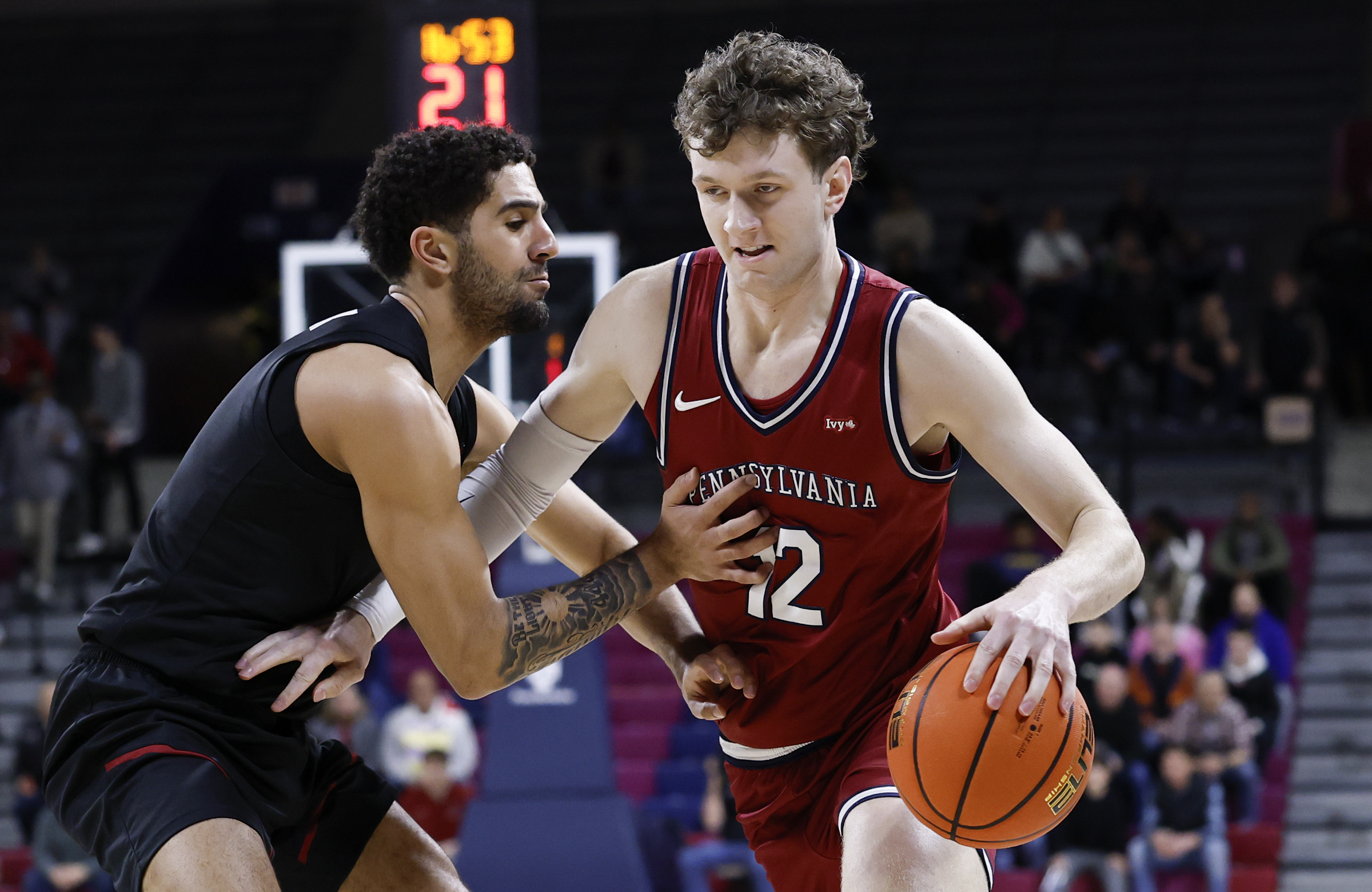
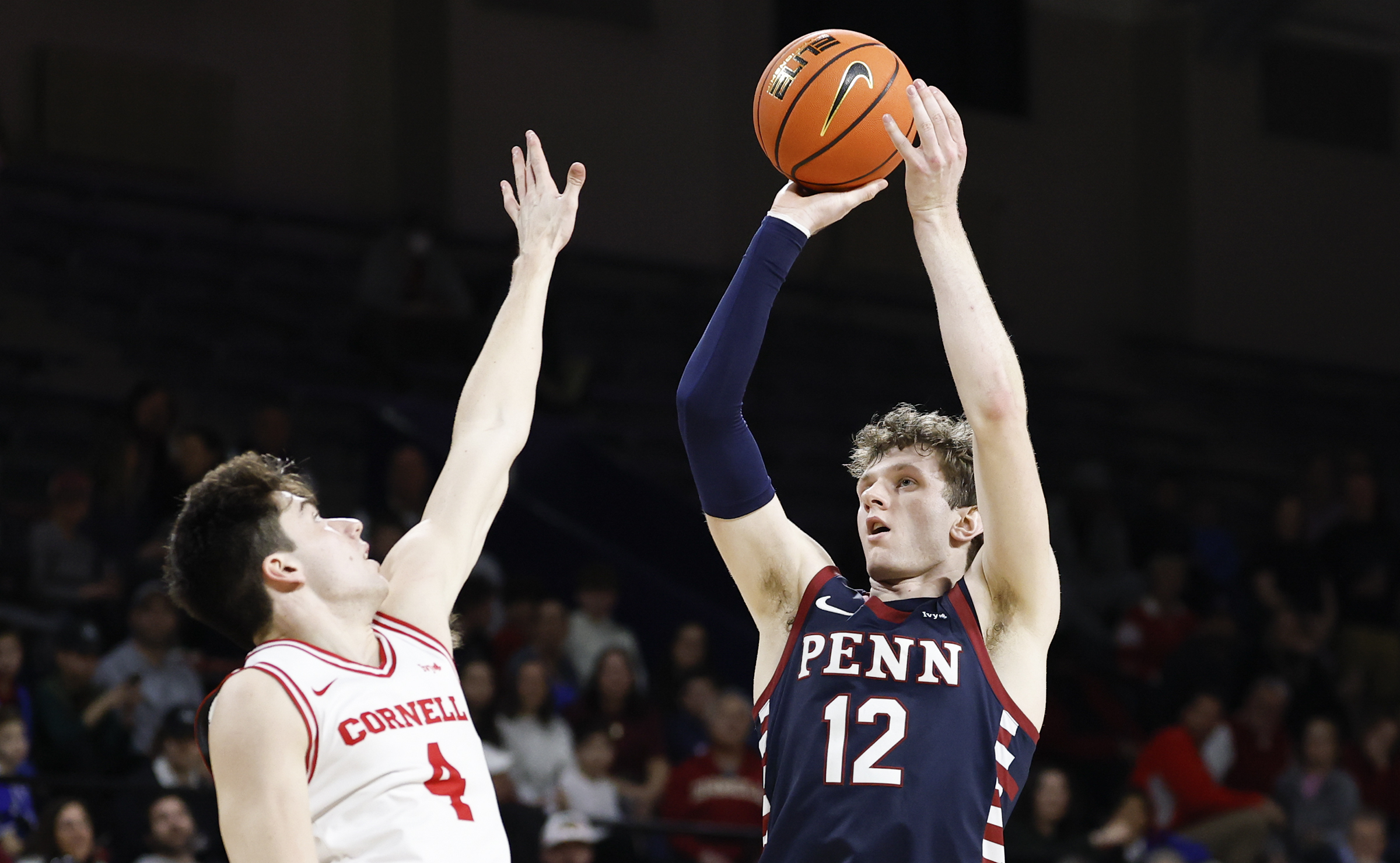
After struggling for playing time at Duke and Virginia, Power, a 6-foot-9 forward, has soared under first-year Penn coach Fran McCaffery. Power is leading the Ivy League in minutes (34.7 per game), while averaging 15.7 points and a team-best 7.5 rebounds.
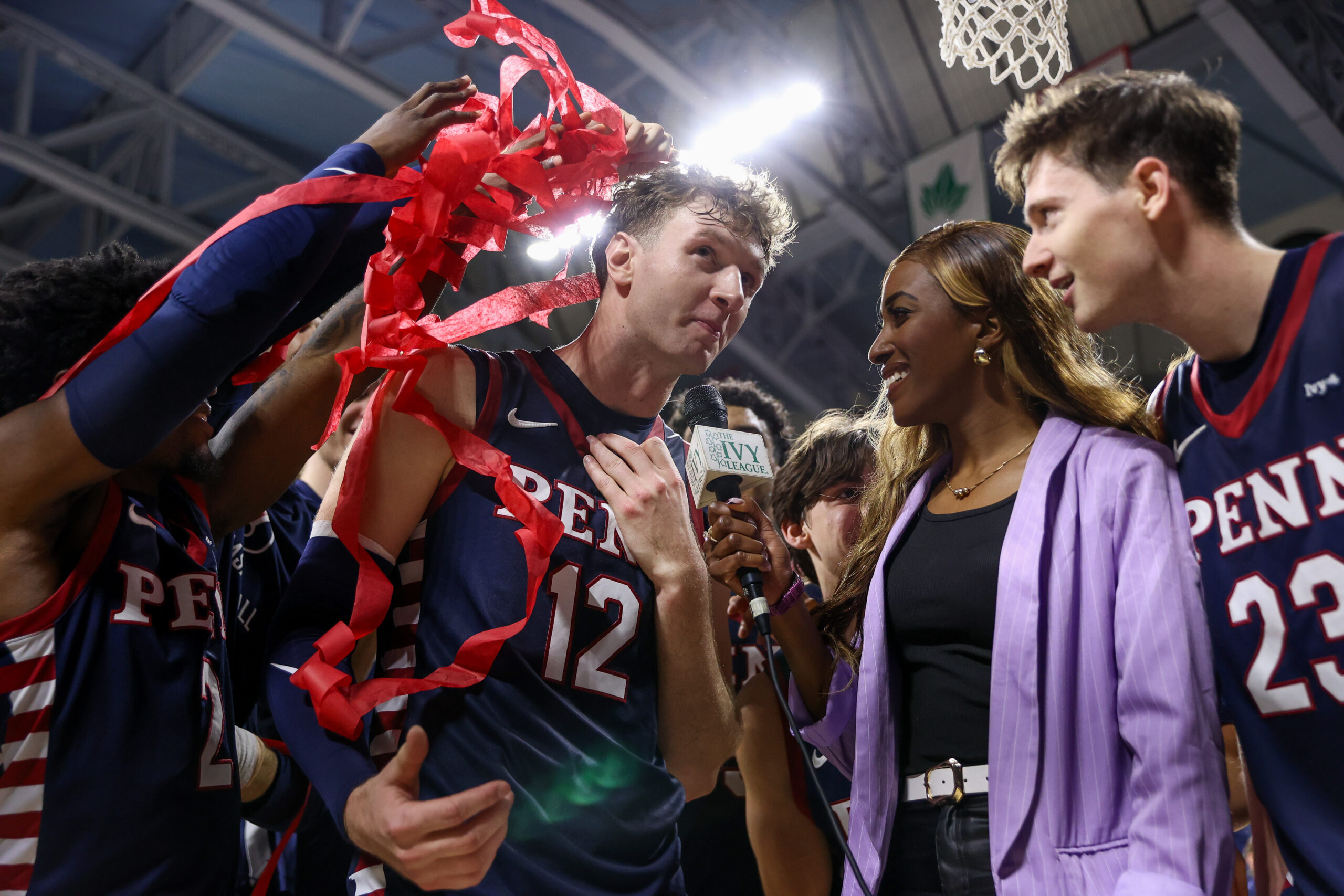
Last weekend, Power posted his best performance of his collegiate career, scoring 38 points against Dartmouth on Friday and then helping Penn gain its first Ivy League Tournament berth in three years with a victory over Harvard on Saturday.
“I’ve been playing better,” Power said before this weekend. “I think [McCaffery] knows this. I have another level that I can tap into here. I’m trying to get to it week by week. It’s different. I probably had the biggest minutes jump in college basketball history.”
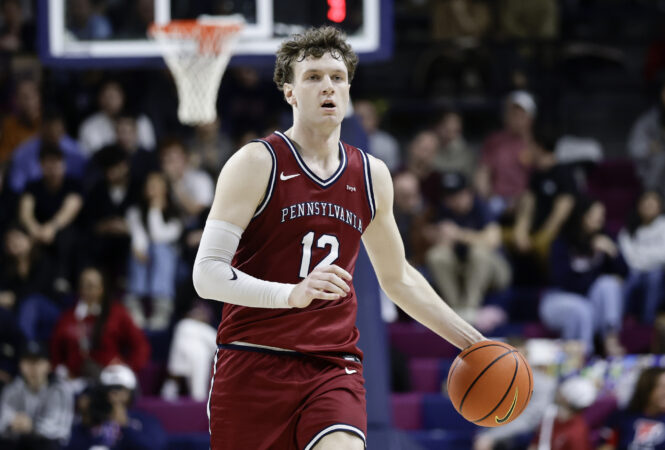
Penn forward TJ Power leads the Ivy League with 34.7 minutes per game.
Penn will visit Brown on Friday (7 p.m.) for its final game of the regular season as winners of six of its past seven games, thanks to Power’s resurgence. Penn will then face Harvard in the first round of the conference tournament on March 14 in Ithaca, N.Y., with Yale playing Cornell in the other semifinal.
‘Took a chance’
Power, who grew up in Shrewsbury, Mass., said his father would drive him around the neighborhood as a kid to find local churches and recreation centers to play in games. The pair usually ended their trips at Worcester Academy’s gymnasium.
By his sophomore year, college coaches were rushing to see Power on the court, including McCaffery, then the head coach at Iowa.
McCaffery attended Power’s AAU games, and his presence was quickly felt.
“I had three offensive fouls in the first half,” Power said. “It was terrible, and you know how Fran is with refs. He wasn’t even my coach at the time. Obviously, he’s there to recruit me, and he’s yelling at the ref as I’m playing in an AAU game.”
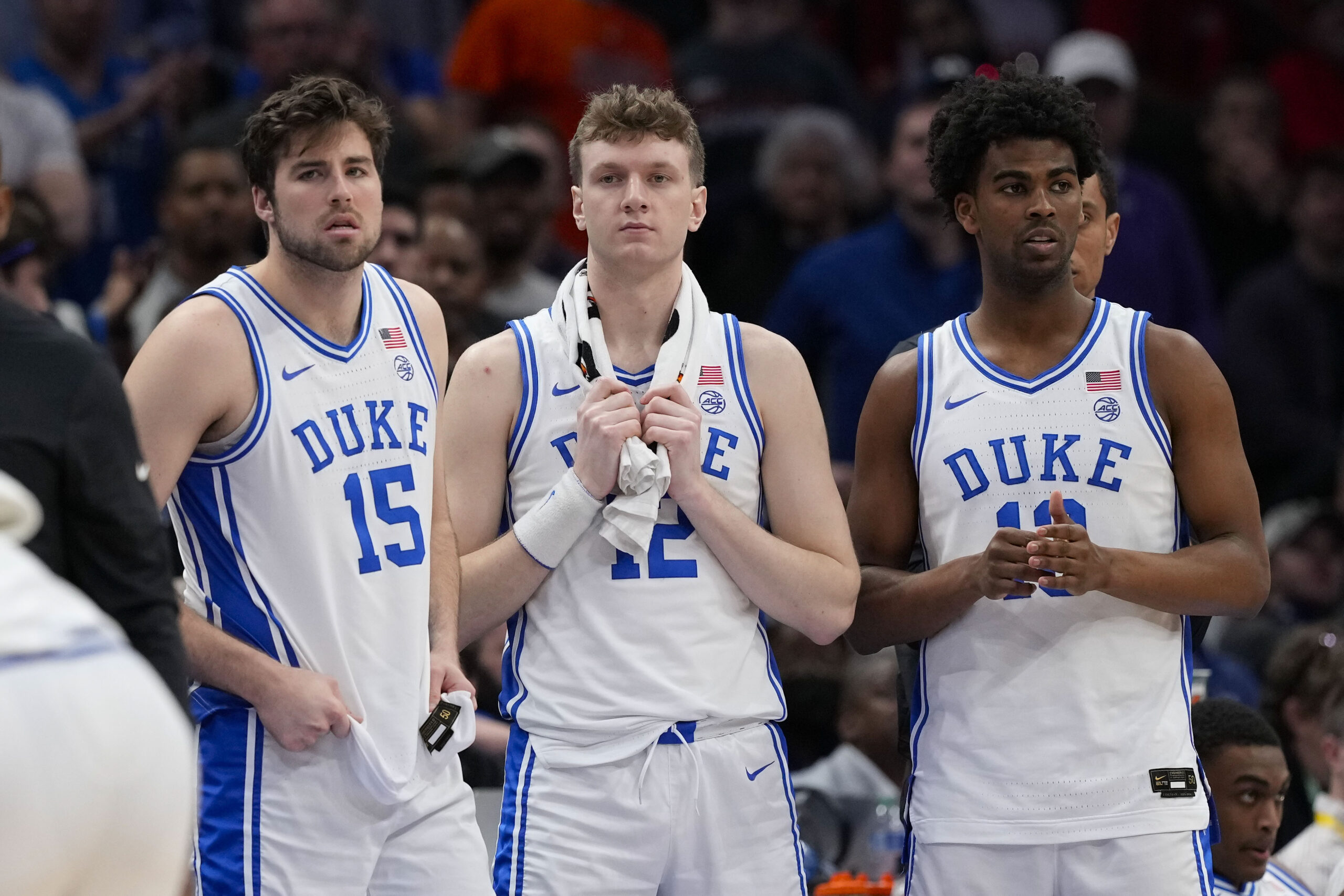
TJ Power averaged 6.7 minutes in 26 games as a freshman at Duke.
As a senior, Power was named the Massachusetts Gatorade Player of the Year after winning a state prep school Class AA championship. He accepted an offer to Duke, but he and his family stayed close to McCaffery.
Power averaged 6.7 minutes in 26 games as a freshman during the 2023-24 season, but that didn’t stop him from enjoying his experience as a Blue Devil.
“Duke was one of the best years of my life,” Power said. “Honestly, people from the outside might not think that just because you know basketball and playing time and stuff, but that experience is once in a lifetime.”
Power planned on staying for his sophomore year, but an “uphill battle” for minutes and competition from the incoming class, which included future NBA lottery picks Cooper Flagg and Kon Knueppel, made Power consider other options.
Leaving Duke meant saying goodbye to his “best friends for life” Sean Stewart, Caleb Foster, and former 76ers guard Jared McCain, but the decision was best for his career.
“Knowing this could go bad,” Power said, “where I’m not playing, the hardest decision I ever made was to leave there. I was really emotional about that because people look at transfers and they’re like, ‘Oh, they’re running from stuff.’ I never pictured myself as that, because I took a chance going to Duke.”
Breaking point
Before the 2024-25 season, Power entered the transfer portal and committed to Virginia, his second choice coming out of high school. Coach Tony Bennett and Power had grown close during the recruiting process.
“I felt rejuvenated,” Power said. “I was going to go there and learn from him. We were really close. That whole summer, I played really well, we looked good, and he had said to me in the recruiting process, because they had struggled the year before, he was talking about how he wants to play faster and change the offense.”
When it finally seemed as though Power found the right fit, Bennett announced his retirement before the start of the season.
“One day in the fall,” Power said. “He comes back, and we’re going into the film room, like we always do, and he just sits down, starts crying, and tells us he’s going to retire.
“I remember it was a feeling I’ve never had before, where my whole body started overheating, and the world was shifting. I was in the front row, sitting right in front of him. That was a hard moment. And I don’t know if I have fully moved on from that.”
Ron Sanchez was named interim head coach, and despite his promise to stick with the offense Bennett wanted to implement, it was never the same for Power. He was injured to begin the season and started just five games, averaging 9.3 minutes in 24 games.
Virginia finished 15-17, Sanchez was fired, and “everyone entered the portal.” According to Power, the new coaching staff didn’t want him.
“You want to talk about emotional,” Power said. “My time at Virginia [was] some of the darkest moments of my life.”
Power had not played consistent basketball in almost two years. He decided to visit Penn at the request of an old friend.
After starting in only five games at Virginia, TJ Power transferred to Penn.
McCaffery, whowas fired by Iowa, was rumored to be heading back to his alma mater.
“I eventually got this job,” said McCaffery, who was hired by Penn in March last year. . “It was an easy discussion because he knew that I believed in him, and he knew that our style of play was perfect for him. He came down to campus on his own. I wasn’t even here.”
Power added: “Penn is a great place, and I’ve come to learn that even more, but in the recruiting process, I was like, wherever Fran goes — I’m going. I’m playing for that dude. If Fran wasn’t here, I wouldn’t be here.”
‘I’m coming here’
Power called his parents, bought a couple of train tickets and a hotel room, drove back to Virginia, and left that night on a train to 30th Street Station.
Power had struggled with his connection to the game and his identity around it. Coming off the train at 1 a.m., Power reflected back on a moment when he enjoyed basketball and had a familiar request for his dad .
“I want to see the gym,” Power said.
Power and his parents pulled up to the Palestra.
“My dad gets out, and just like our drive around Worcester, shakes on doors,” Power said. “We go to the Palestra front door. He shakes it three times. It opens, and I walk in, and for some reason, the lights are on. I’m standing right there, 1:30 in the morning. It’s just my dad and me. We’re looking at the Palestra. I’m coming here. I got to come here.”
TJ Power came to Penn to play under coach Fran McCaffery. “If Fran wasn’t here, I wouldn’t be here.”
Fran was committed to helping Power get back on track, which showed in their first few practices together.
“If I struggled, he knows what’s on the other side of that wall once I climb it,” Power said. “So that was a huge factor in my decision. I wanted someone I could trust again, and someone who has my back when I inevitably struggle.
“The first thing Fran said when he called me was, ‘We’re going to have fun playing basketball again.’ No other coach said that.”
Power has returned to the form that made him a five-star recruit in high school. And he has found a home — on and off the court.
After years of chasing the best opportunity to help him go pro or get the most playing time, Power chose Penn for another reason: to find who he is outside of the sport.
“Basketball used to be my identity,” Power said. “People ask me, ‘Who am I?’ I play basketball, I’m a basketball player. When I switched that to my relationship with God coming first, and then my identity is built through that relationship with God. …
“That path is so much more rewarding. My identity comes first, and … my mission is to play well, and I think that’s going to give me what I want.”
CLEARWATER, Fla. — A few days ago, a custom clothing vendor, Lindsey Tamblyn, came to BayCare Ballpark. Brandon Marsh was familiar with her work. When he was in the midst of his first spring training with the Phillies in 2024, J.T. Realmuto bought him one of Tamblyn’s suits.
It made Marsh feel like part of the group. So much so that he “jumped on” Realmuto and hugged him afterward.
When he heard Tamblyn was returning last week, Marsh decided to pay it forward. He walked up to 22-year-old prospect Justin Crawford.
Marsh told him to pay a visit to Tamblyn, give her his measurements, and pick out any suit he wanted.
“I said, ‘Go, get you a suit, bro,’” Marsh recalled, “‘because God willing we’re going to be in the playoffs again this year. And you’ve gotta look nice.’”
Crawford, who describes his fashion sense as “basic,” picked out a sleek black jacket.
“I told him he didn’t have to,” Crawford said, “but he insisted.”
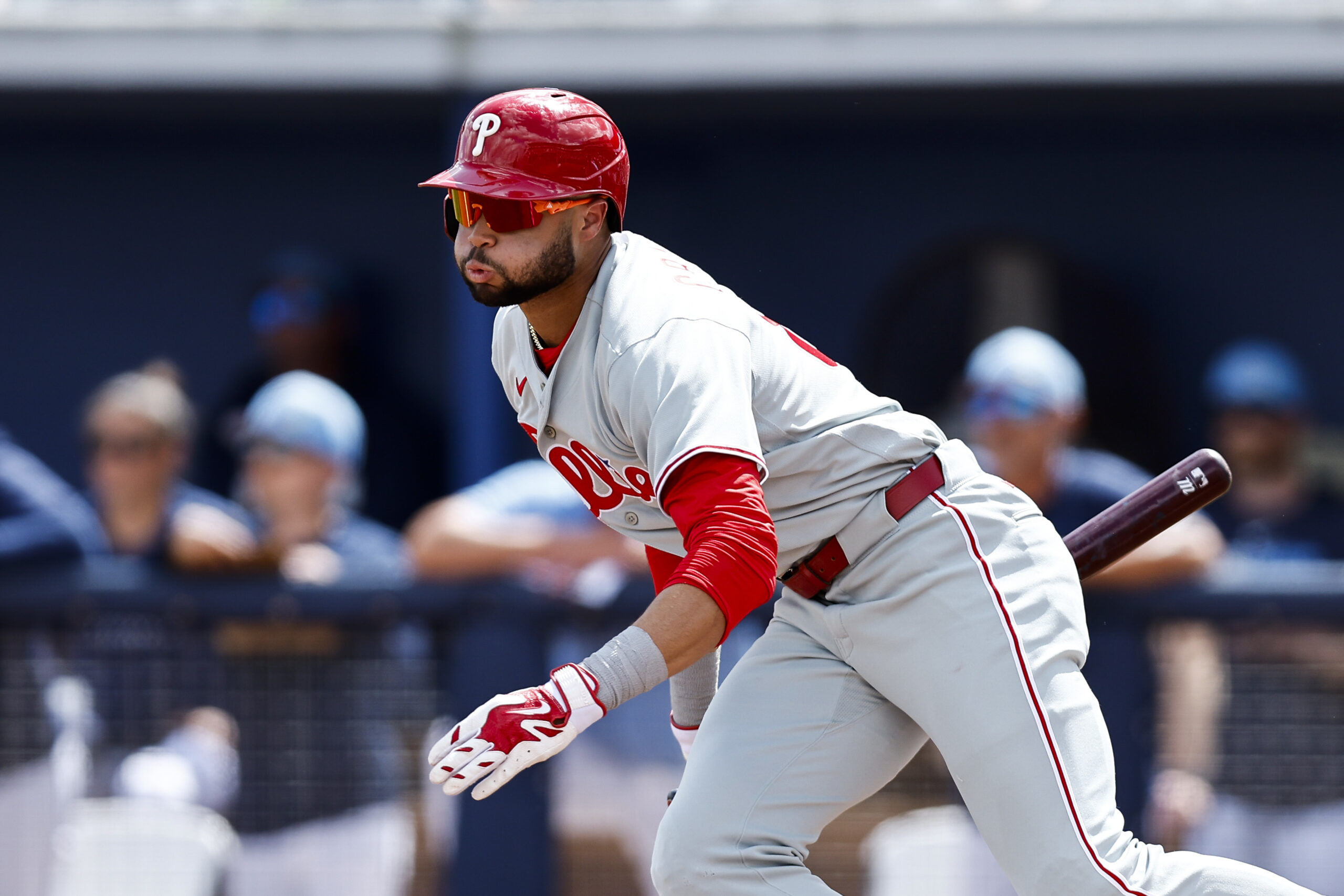
Crawford appreciated it. This is a big season for him. He is expected to be the Phillies’ opening day center fielder, a position that has been a persistent black hole for the last few years.
Phillies center fielder Justin Crawford is slashing .316/.350/.474 through 19 at-bats this spring.
If all goes according to plan, he would be the first 22-year-old everyday position player for the Phillies since Jimmy Rollins. It is a lot of pressure for someone who just a year ago got the right to legally drink.
As a player, Crawford is polarizing. Much has been made of his ground-ball rate, which has steadily lowered as he’s climbed up the minor league ranks, but is still relatively high. In 2023, it reached 69.7% across single A and high A.
Crawford dropped it to a career-low 59.4% at triple-A Lehigh Valley in 2025. He brings elite speed, and above-average contact skills. He hits the ball hard. But fans and pundits alike have questioned whether that matters if he can’t consistently lift it in the air.
The prospect tries to avoid this chatter. He’s off social media, and has a good support system, full of former major league players: his father, Carl Crawford, his godfather, Junior Spivey, and his hitting coach, Mike Easler.
“When you’re around people who know what they’re talking about, and have done it for a long time, [they] can keep you on that track,” Crawford said. “To be like, ‘No, forget what those people are saying. Just play your game. Be you.’ That’s probably the best advice I’ve received from anybody.”
The Phillies have provided some support, too. Crawford said manager Rob Thomson called him this past winter. His message was for the prospect to “be himself” and get ready to compete for a starting role in camp.
Thomson followed up after the Phillies signed Adolis García to play right field.
“I called him again,” he recalled, “and said, ‘Look, this signing doesn’t mean anything for you. You’re still grinding for that center-field job.’”
All of these gestures have made Crawford feel more confident this spring, in which he’s hitting .316/.350/.474 through 19 at-bats.
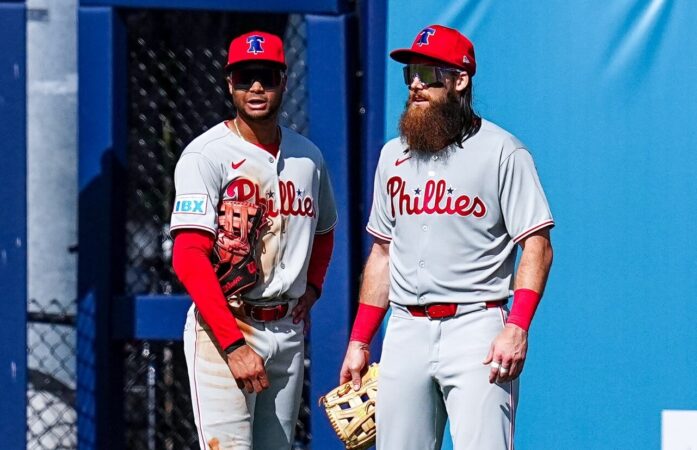
But he’s developed a special kinship with the 28-year-old bearded outfielder.
“Marshy’s a great guy,” Crawford said. “He really took me under his wing, honestly, since Day 1. So that’s someone I’m really fortunate to be around, and play next to, hopefully this year. He’s the best.”
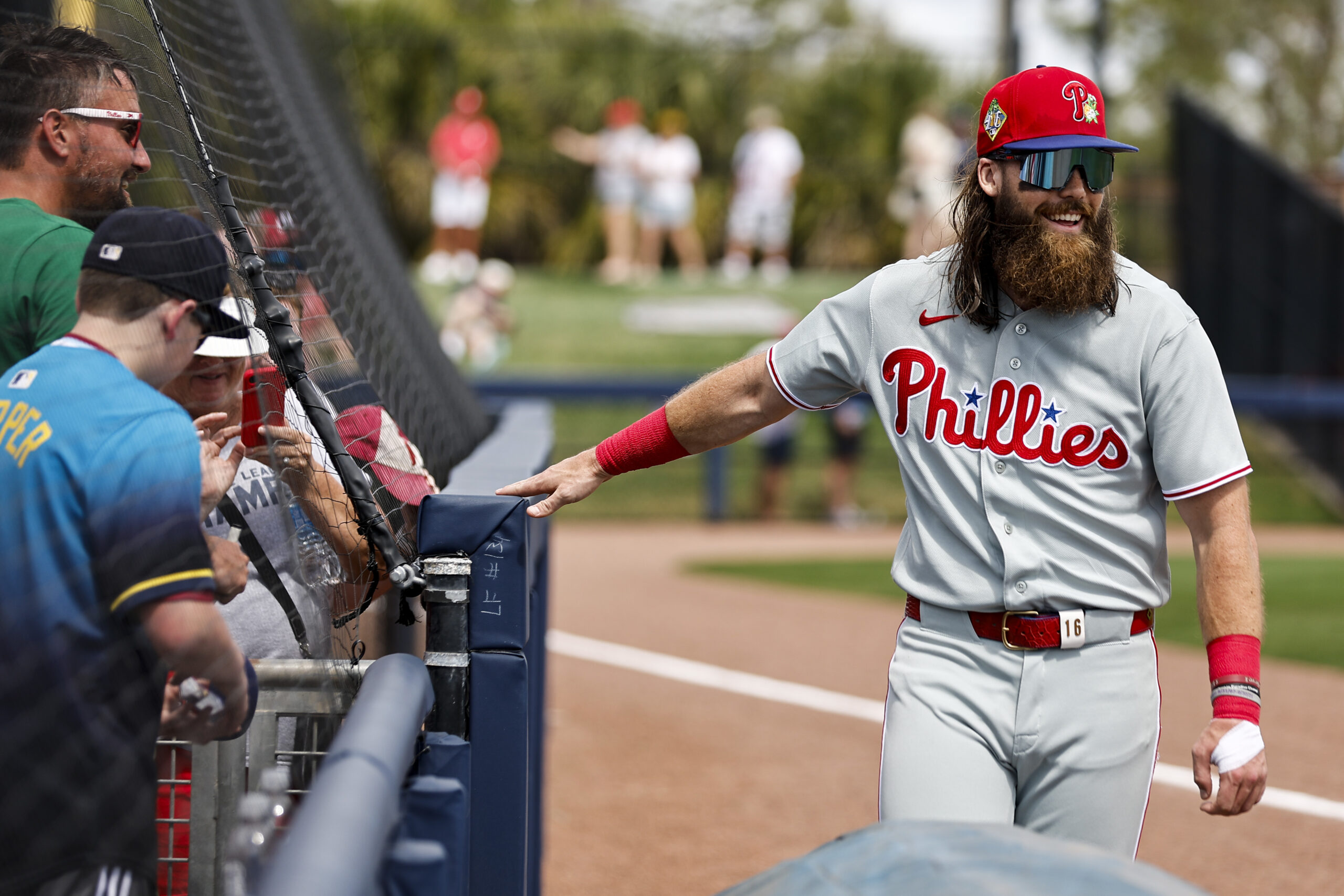
Brandon Marsh “is the best,” says Justin Crawford, who has appreciated how his left fielder has looked out for him this spring.
‘I’ve got the aux’
When Marsh was a 23-year-old rookie with the Angels in 2021, he had an abundance of veteran mentors to lean on. There was three-time MVP Mike Trout, Justin Upton, Dexter Fowler, and Jon Jay.
All of these players helped him, in myriad ways, but with the same overarching message.
“I was trying to be Super Man,” Marsh said. “They helped ease the game for me. And I’m just trying to do the same thing for J Craw.”
With that in mind, Marsh made a point of introducing himself to Crawford early last spring. He went out of his way to make things easier for Crawford, like offering to drive him when the team traveled to different ballparks across the state of Florida.
Thomson doesn’t allow players with less than three years of service time to drive themselves to road games. Crawford didn’t have any service time, so he assumed he’d have to take the bus.
But Marsh presented another option. They’ve continued to stay carpool buddies this spring, and it’s allowed them more time to get to know each other.
Of course, there were rules attached. Marsh would be in charge of the music, which in previous years might have meant a lot of Lil Uzi Vert. Now, not so much.
“I still love Lil Uzi,” Marsh said. “But I’ve been on a huge Larry June and Freddie Gibbs kick. So, more of a smooth rap instead of … like, you know, bang your head off the front windshield.
“But yeah, learning to find moments that are calm and stuff like that. I’ve got the aux.”
Like the Angels veterans did with Marsh, he has encouraged Crawford to not put pressure on himself. To stay true to his game — regardless of what others think.
He’s provided another support system for the young outfielder, within the clubhouse.
To some, buying a suit jacket, or giving a pep talk, or making the two-hour drive to Port Charlotte, Fla., may not mean much. But to Crawford, it does. And he doesn’t take it for granted.
“He’s just super genuine and super welcoming,” Crawford said of Marsh. “Those are the type of guys you want to be around.”
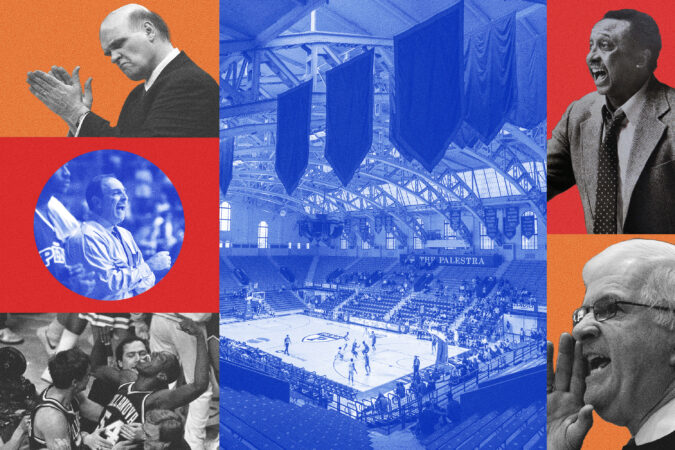
One afternoon in early December, Bill Raftery and Tim Legler, both La Salle alumni, returned to campus for an hourlong panel discussion about their careers in sports media, only to have the conversation shift to a topic with broader implications.
It was a point of pride for the university to welcome back Raftery, who has been college basketball’s preeminent analyst for more than a quarter-century, and Legler, who has reached a comparable status at ESPN with his insights into the NBA. But 33 minutes into the event, the first question from an audience member wasn’t about the origins of Raftery’s trademark catchphrases (The kiss! … Onions! … Laundry on the deck!) or Legler’s game-film breakdowns.
Bill Raftery, now broadcaster, graduated from La Salle and was inducted into the Big 5 Hall of Fame.
“Can we bring the Big 5 back to its glory?” a man in the auditorium asked. “Because it was a national thing, right? It wasn’t just a Philly thing.”
These days, most people who follow college basketball, if they’re being honest, have to acknowledge that the Big 5 isn’t much of anything anymore. The round-robin rivalries among La Salle, Penn, St. Joe’s, Temple, Villanova, and more recently Drexel have lost most of their juice.
That white-hot competition, fueled by the benign hatred that only proximity and familiarity can ignite, used to define Philadelphia hoops. It has cooled. Now, just one school, Villanova, enters each season with the baseline expectation that it will qualify for the NCAA Tournament, and the pipeline of local recruits that once sustained these programs has all but dried up.
window.addEventListener(“message”,function(a){if(void 0!==a.data[“datawrapper-height”]){var e=document.querySelectorAll(“iframe”);for(var t in a.data[“datawrapper-height”])for(var r,i=0;r=e[i];i++)if(r.contentWindow===a.source){var d=a.data[“datawrapper-height”][t]+”px”;r.style.height=d}}});
Three of the six schools — Drexel, La Salle, and Penn — don’t have a Philadelphia native on their rosters. Interest in the city series has plummeted. A 2022 doubleheader at the Palestra drew an official attendance of just 3,300 people. And the Big 5 Classic, conjured in the aftermath of that alarming display of indifference, hasn’t revitalized the rivalries or restored any prestige to them.
While this season has seen an uptick in the programs’ quality of play — Villanova is virtually assured of an at-large bid, and Penn, St. Joe’s, and perhaps Drexel could be strong enough to win their conference tournaments — that improvement hasn’t been enough to stem the dismal tide.
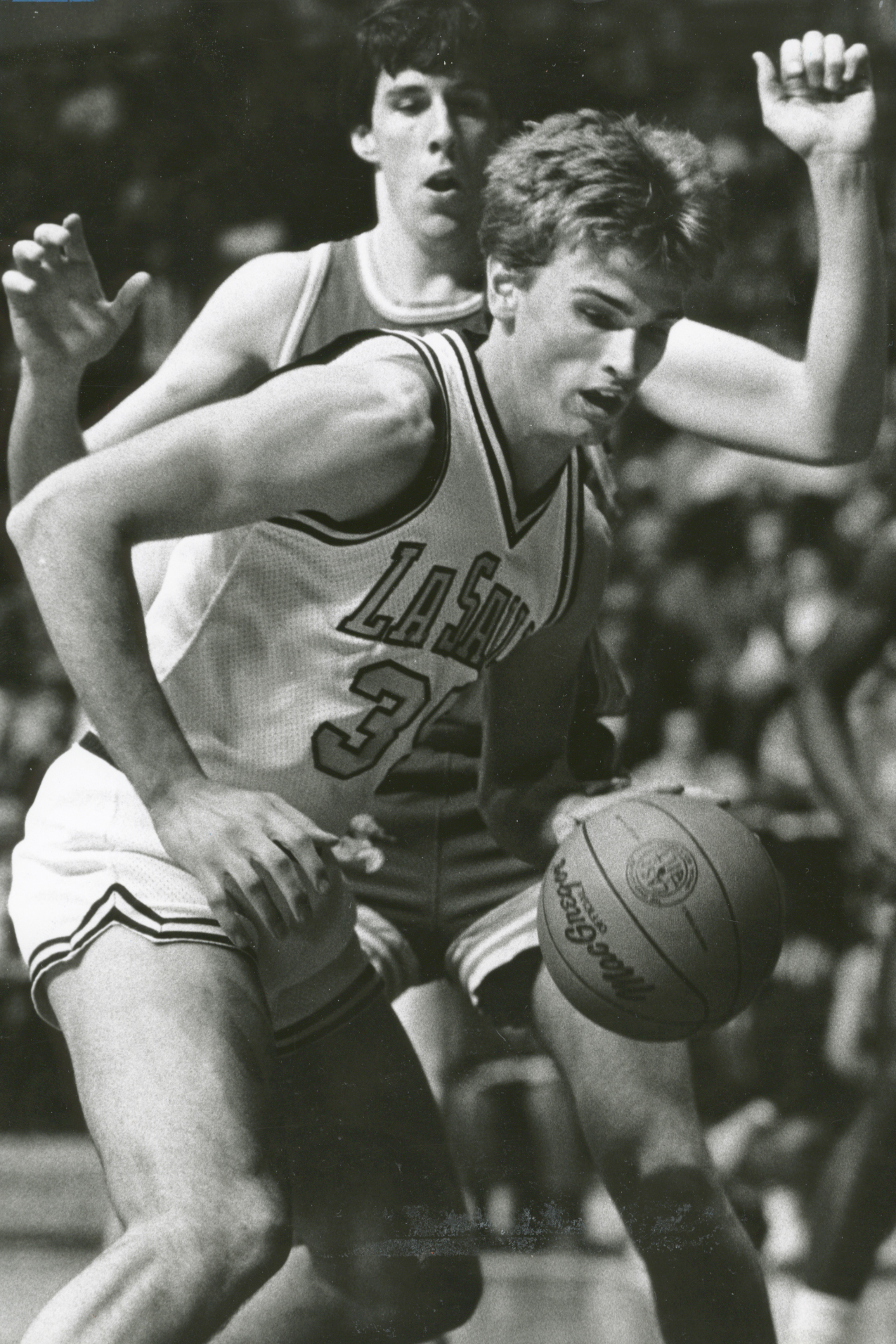
Tim Legler, who led La Salle to the 1988 NCAA Tournament, said the Big 5 was once a “transformative” environment to play in.
For their part, the panelists at La Salle mustered some nostalgia but weren’t optimistic. Legler, who grew up in Richmond, Va., remembered attending a Palestra doubleheader on a recruiting trip and marveling at the atmosphere: the streamers, the cheering, the chanting.
“I turned to my parents and said, ‘This is the environment I want to play college basketball in,’” he said. “It was literally that transformative.”
Still, he had no solution for salvaging the Big 5, and neither did Raftery, who suggested that smaller programs throughout the NCAA would soon be casualties of this new era of college basketball.
“They’re trying to freeze [out] a lot of programs and leagues,” he said, “and I can envision maybe two or three conferences. They’ll run the whole thing, and the networks will pay for it. That’s the way it is.”
It’s convenient to point to the sport’s lurch into modernity — into the era of Name, Image, and Likeness; of pay-for-play; of the permeable membrane of the transfer portal — as the cause of the decline. And it’s true: With the exception of Villanova, which is ensconced in the Big East and supported by engaged donors with deep pockets, college hoops’ evolution has made everything more difficult for the other, more vulnerable programs in the city. But this train has been rumbling down the tracks for a while, and its arrival should compel a reevaluation of the Big 5’s history, of the decisions and unstoppable forces that led it here, to the brink.
To those Baby Boomers and GenXers weaned on the Big 5’s traditions, it’s surely incomprehensible and saddening to hear Raftery contemplate a world without it. But if the institution as Philadelphia knew it is fading away — and it appears to be, if it hasn’t already — the proper question isn’t Can it be saved? That one has been asked and is on its way to being answered.
No, the better questions to chew on are these: How did the Big 5 survive, and at times thrive, as long as it did? And did any of the attempts over the years to preserve it and its identity actually contribute to its downfall?
Villanova has become the only school in the Big 5 that enters each season with the baseline expectation that it will qualify for the NCAA Tournament.
The seeds of rebirth and decline
It’s tempting to picture the Big 5’s history as an unbroken string of unforgettable nights at the Palestra, great teams playing great games inside a gym packed to its uppermost corners with 9,000 people, give or take a few rascals who managed to sneak in for free. There were hundreds of such nights, to be sure. But it’s striking to put that past into a wider context and see how much certain changes and trends fostered and then jeopardized everything that made the Big 5 wonderful and unique.
Those fond memories often gloss over a relatively fallow period for the Big 5 during the 1970s. Villanova had three consecutive losing seasons from 1972 to 1975. Temple went 16-37 over the ’74-75 and ’75-76 seasons and qualified for the NCAA Tournament once in an 11-year span from 1972 to 1983. St. Joe’s went 8-17 in ’74-75, the first of six straight seasons in which the Hawks missed the NCAAs. Penn was the exception, and La Salle held its own, but a Daily News back-page photo captured the overall listlessness perfectly: Harry “Yo-Yo” Shiffern, the lovable vagrant who was the city series’ unofficial mascot, fast asleep during a Palestra doubleheader.
The Big 5 was in a collective funk, and it took a few pivotal developments to snap it back to prominence and position it to flourish further.
Lionel Simmons (center) is the Big 5’s all-time leading scorer and fifth in NCAA history with 3,217 career points.
College basketball’s landscape was flatter then. The NCAA Tournament went to 32 participants in 1975 and to 40 in 1979, and many of the qualifying programs were mid-majors. During the ’70s, each of these teams reached the Final Four: Jacksonville, St. Bonaventure, New Mexico State, Western Kentucky, Marquette, UNC Charlotte — and, in ’79, Penn. The Quakers upset North Carolina, Syracuse, and St. John’s before Magic Johnson and Michigan State pulverized them in the national semis. But their run was the most improbable of the decade, and their timing was impeccable.
The following season, after a star turn at the Pan-American Games in Puerto Rico, La Salle’s Michael Brooks was named the Kodak National Player of the Year. As terrific as Brooks’ senior campaign was — he averaged more than 24 points and 11 rebounds, scoring 51 points in a triple-overtime loss at BYU — his candidacy for the honor was buoyed by Indiana’s Bob Knight, who had coached him at the Pan-Am Games and touted him to reporters.
“If I were allowed to start my own team tomorrow,” Knight said in January 1980, “the first person I would pick would be Michael Brooks.”
Such praise from the best, the most famous, and the most temperamental coach in the country carried weight, and Knight’s words elevated the reputations of both Brooks and Philadelphia basketball. That ascendance continued in March 1981, when St. Joe’s, under Jim Lynam, won the East Coast Conference tournament, knocked off top-ranked DePaul in the second round of the NCAAs, and advanced to the regional final before losing to the eventual national champs: Knight, Isiah Thomas, and the Hoosiers.
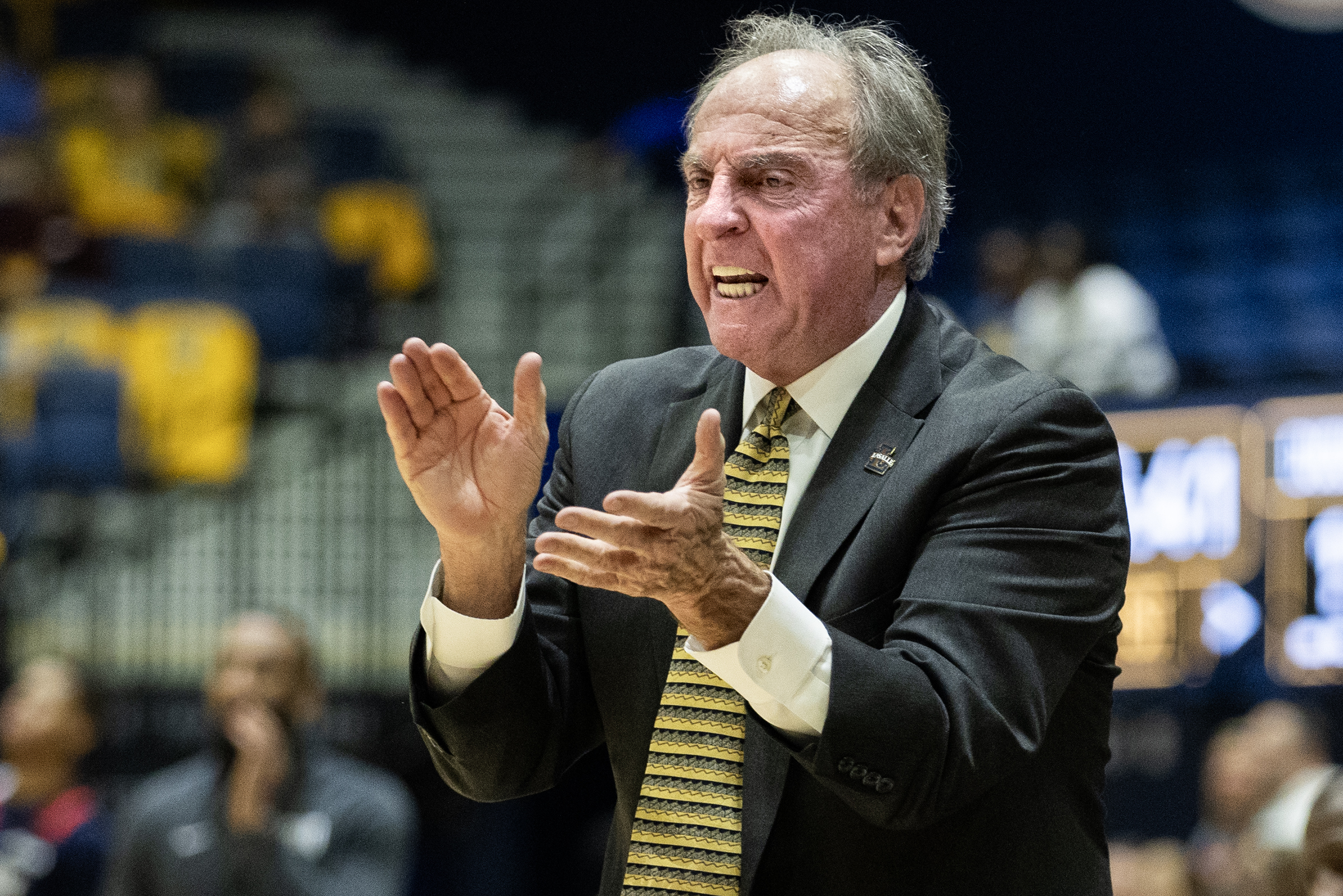
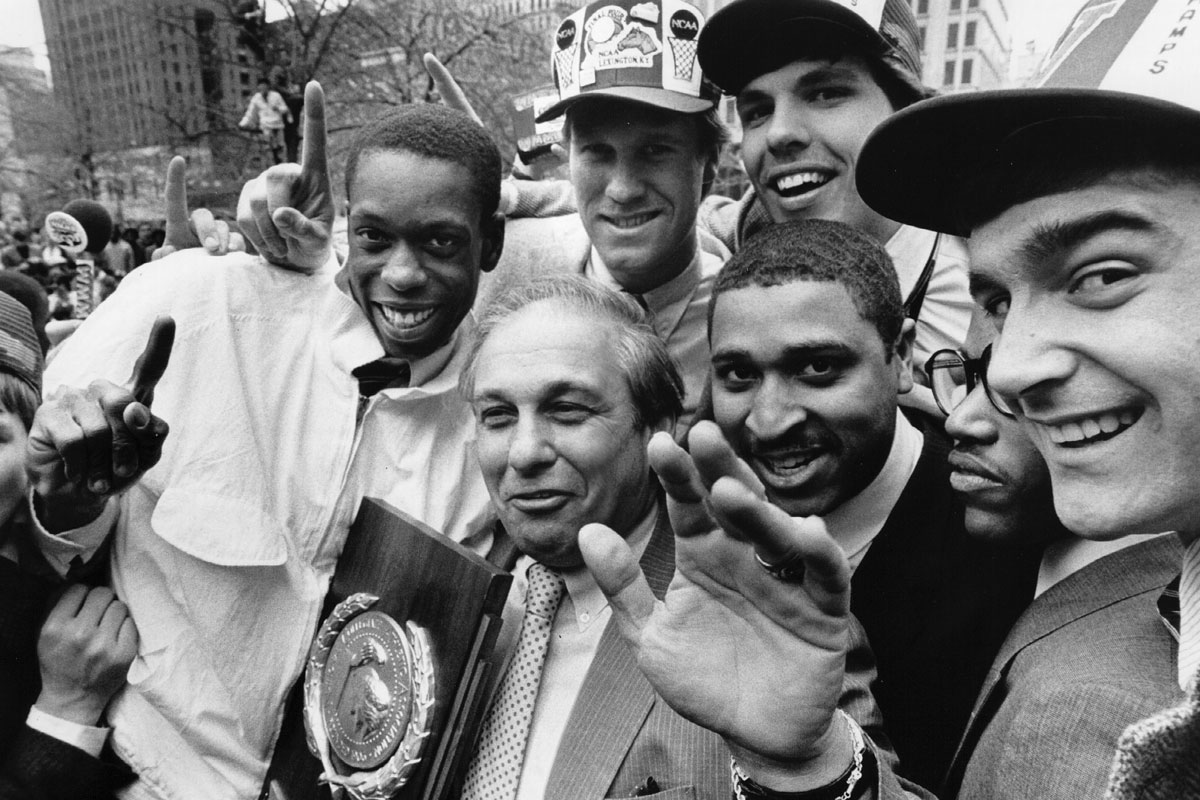
Fran Dunphy coached more than 1,000 games as a Division I head coach.Villanova coach Rollie Massimino gathers in Center City with players Ed Pinckney, Wyatt Maker, Chuck Everson, Dwight Wilbur, Veltra Dawson, and Brian Harrington in 1985 after winning the national title.
So the Big 5 was on its way back, regaining relevance among casual college hoops fans and among the sport’s cognoscenti. The two most significant factors in its renaissance, though, happened off the court. In March 1980, Villanova left the Eastern Eight and jumped to the Big East. And in August 1982, Temple hired John Chaney as its head coach.
Those moves and the rewards they wrought thrust those two programs, and in turn the entire Big 5, into a higher realm. Villanova won the national championship in 1985 — an underdog triumphant, a marvelous story enhanced by the Wildcats’ status as a program in a major conference in a sport whose vast national reach was still expanding: Magic vs. Larry Bird in ’79, North Carolina State surviving and advancing in ’83, Dick Vitale, CBS, ESPN, Big Monday, Selection Sunday, March Madness consuming a month’s worth of America’s attention.
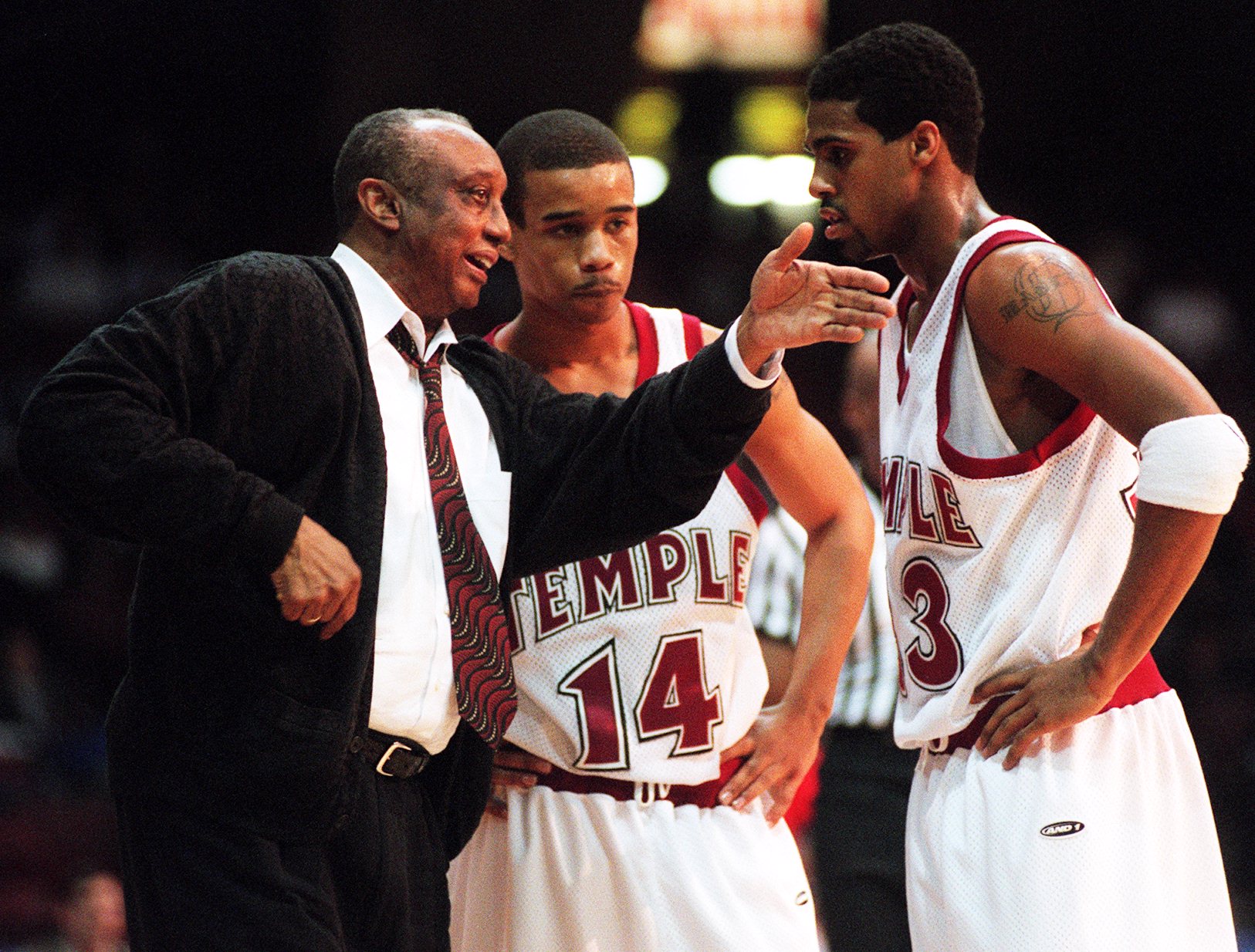
Chaney was this wild-eyed, lesson-teaching, justice-preaching wizard, confounding opponents with his matchup-zone defense, crafting the hardest schedule in the nation every year to battle-test his teams, leading the Owls to a No. 1 ranking in 1988 and three Elite Eight appearances in a six-year span.
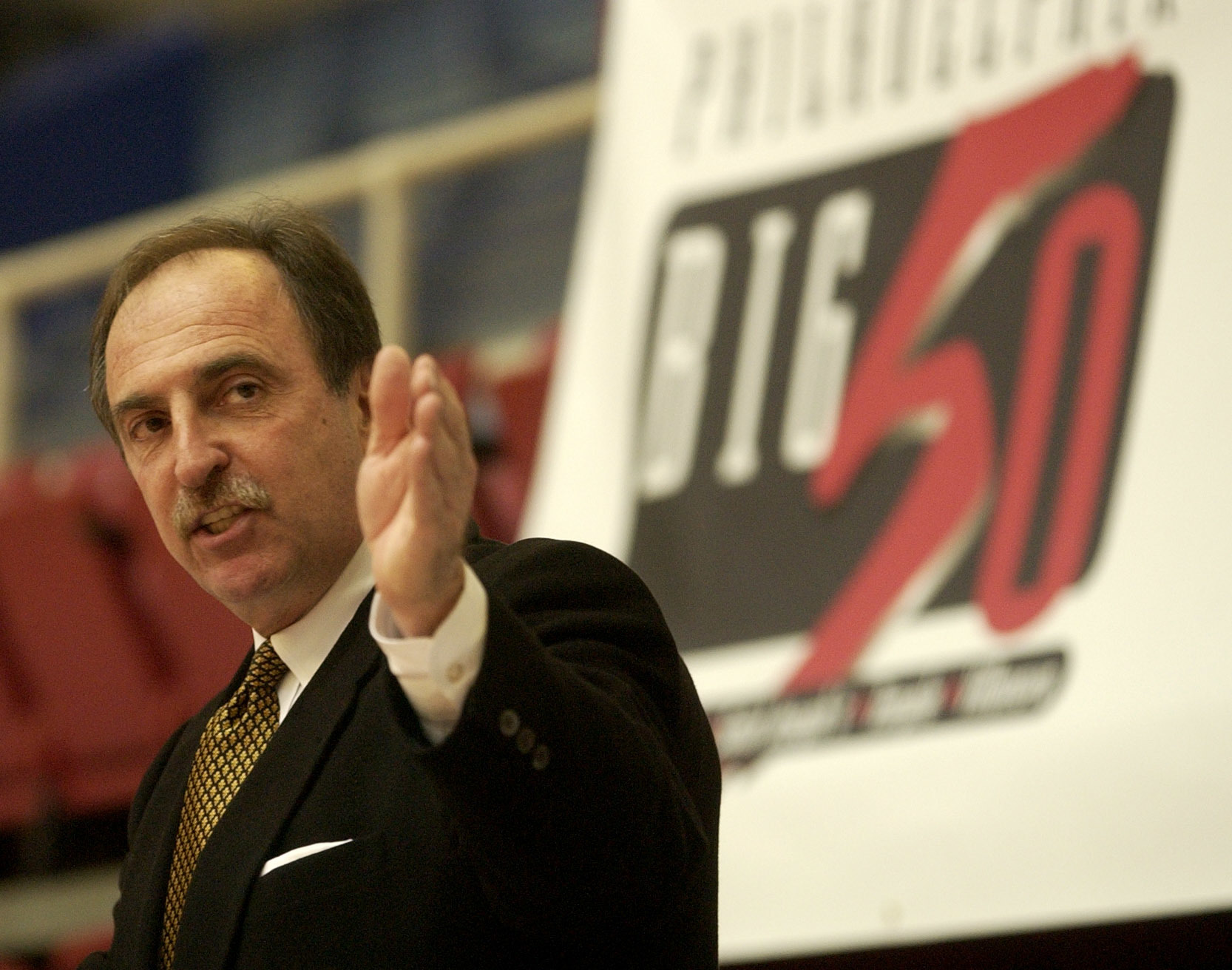
Fran Dunphy led Penn to a 69-14 record and three NCAA Tournament appearances from 1992 to 1995.
Nestled in the Metro Atlantic Athletic Conference (MAAC) with schools of similar profiles, La Salle went to the NCAA Tournament four times and the NIT twice in Speedy Morris’s first six years as head coach and had another national player of the year: Lionel Simmons. From 1992 to 1995, Penn dominated the Ivy League under Fran Dunphy: a 69-14 record, three NCAA Tournament appearances and a first-round victory over Nebraska, Jerome Allen and Matt Maloney forming one of the best backcourts in the country. St. Joe’s went 26-7 and advanced to the Sweet 16 in 1996-97, the season that introduced that notorious wallflower Phil Martelli to the rest of the country.
Former Temple coach John Chaney with players Lynn Greer and Quincy Wadley.
Hard circumstances and poor decisions
The factors that damaged the Big 5 were legion. Some applied to just one or two programs. Some applied to all of them. Some were mistakes, bad choices. Some were unavoidable and beyond the programs’ control.
Start with La Salle. Given an opportunity in 1990 to build an 8,000-seat on-campus basketball arena — Tom Gola offered to raise the funding for it — the university said no. Then its leadership made what is commonly considered the disastrous decision to relocate from the MAAC to the Midwestern Collegiate Conference. The program has never recovered.
Look at Temple. Chaney, a singular presence and attraction, retired in 2006. Though Dunphy, his successor, guided the Owls to six consecutive NCAA Tournament appearances, the university’s quest for football dollars led it to leave the Atlantic 10 for the American Athletic Conference — and abandon its basketball-first identity.
Again: individual schools, individual issues. But those problems were byproducts of college basketball’s overall reshaping during the 1980s and ’90s. In retrospect, the most infamous moment in Big 5 history — the dissolution of the round-robin, at the insistence of Villanova and coach Rollie Massimino, after the 1990-91 season — was an acknowledgment of those changes, and the attempts to preserve the Big 5 as it had always been would inevitably fail.
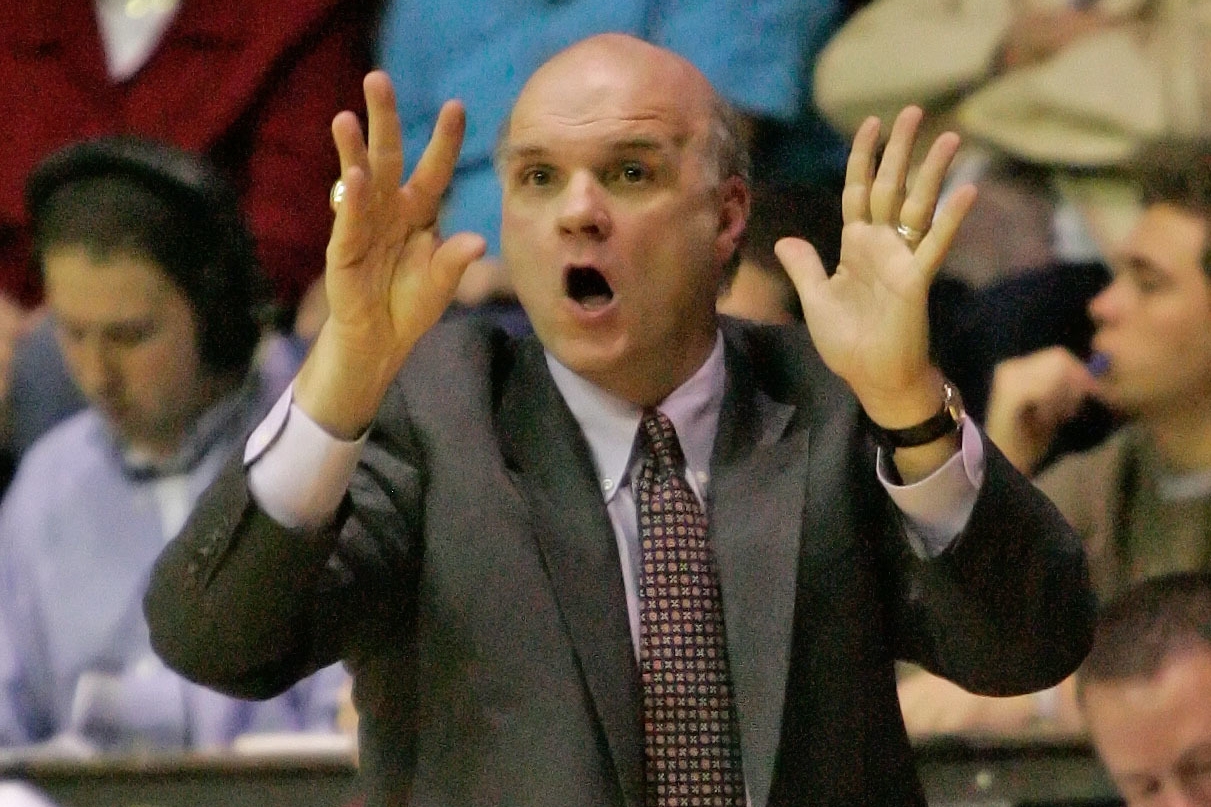
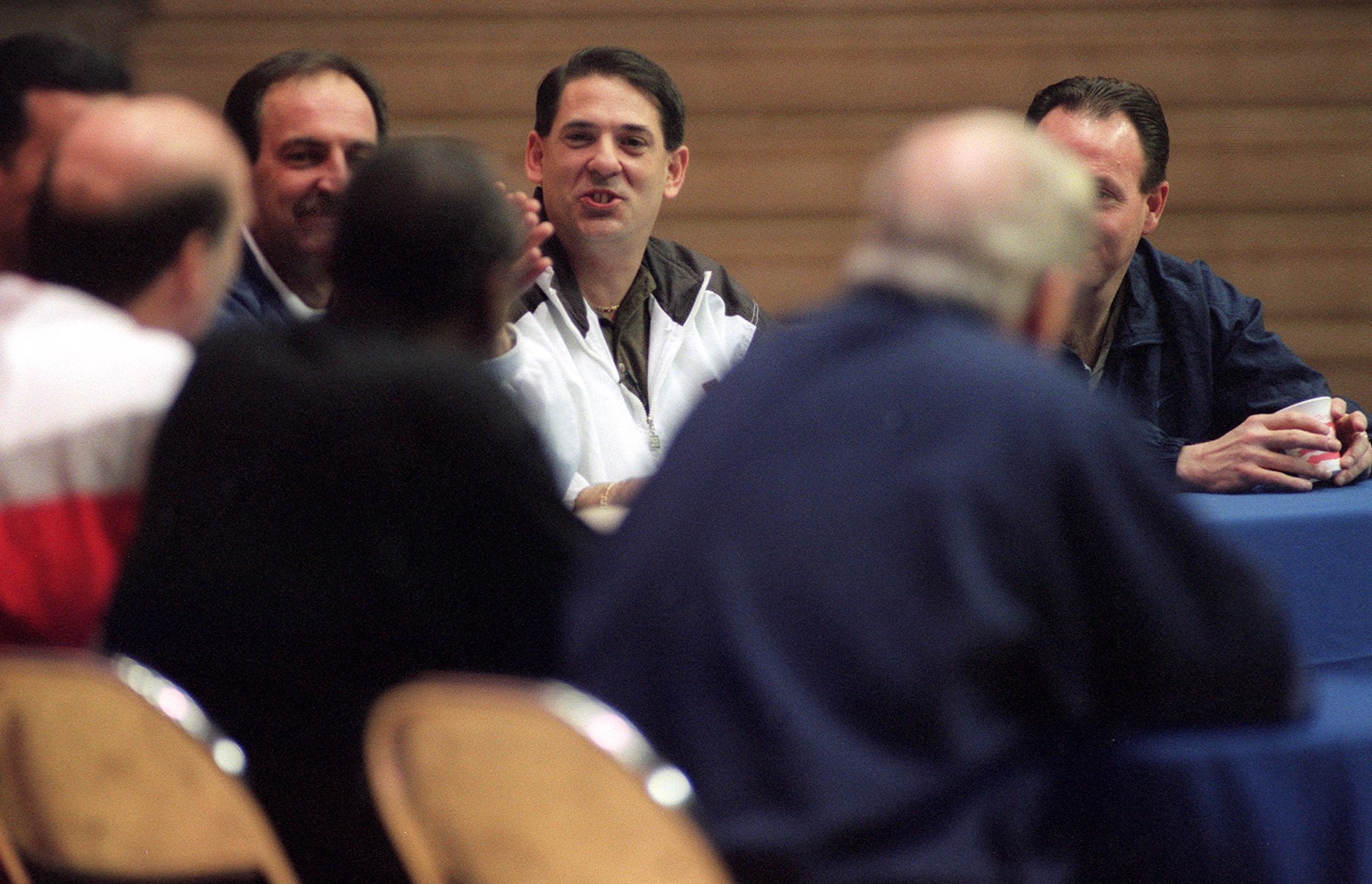
Phil Martelli led St. Joe’s to go 26-7 and advanced to the Sweet 16 in 1996-97.Former Villanova coach Steve Lappas jokes with the other Big 5 coaches during a taping of the Comcast basketball show in 1997.
When Villanova pushed to cut back on city series games and Temple pushed for more of those matchups to be played at campus sites other than the Palestra, they weren’t merely trying to make things easier for themselves. They were responding and reacting to college basketball’s new conditions for success.
Sneaker companies had begun financing all-star camps, AAU programs, and college programs. Now coaches didn’t have to rely on local high school teams to find players, and great Philly players were no longer making their names solely in the Public League, the Philadelphia Catholic League, or the Sonny Hill League. They were traveling to play AAU. They were seeing other cities, meeting other coaches. They weren’t as likely to stay home to play college ball.
“The most important recruiting device is recognition,” Chaney told author Bob Lyons in Palestra Pandemonium: A History of the Big Five, “and recognition comes from national TV. … They don’t know what the Big 5 is outside of this area. They knew who Villanova was when they won the national championship, so you could always attach yourself to them. But it wasn’t going to get you very far because no one knew the history and tradition of the Big 5.”
In that way and others, the inherent parochialism of the Big 5 worked against it. For instance, Dave Gavitt, the founding commissioner of the Big East, struck a deal in 1980 with ESPN, then a fledgling sports network hungry for programming, for the exclusive rights to televise the conference’s games. That arrangement made it difficult, if not impossible, for Villanova and any other Big East school to be involved in a 7 p.m./9 p.m. Palestra doubleheader and for a national television audience to watch that doubleheader.
“We needed the game between Villanova and Georgetown at 8 p.m. to go on our network,” Gavitt told Lyons. “We couldn’t clear games at 7 p.m. because of the game shows that all the local stations carried.”
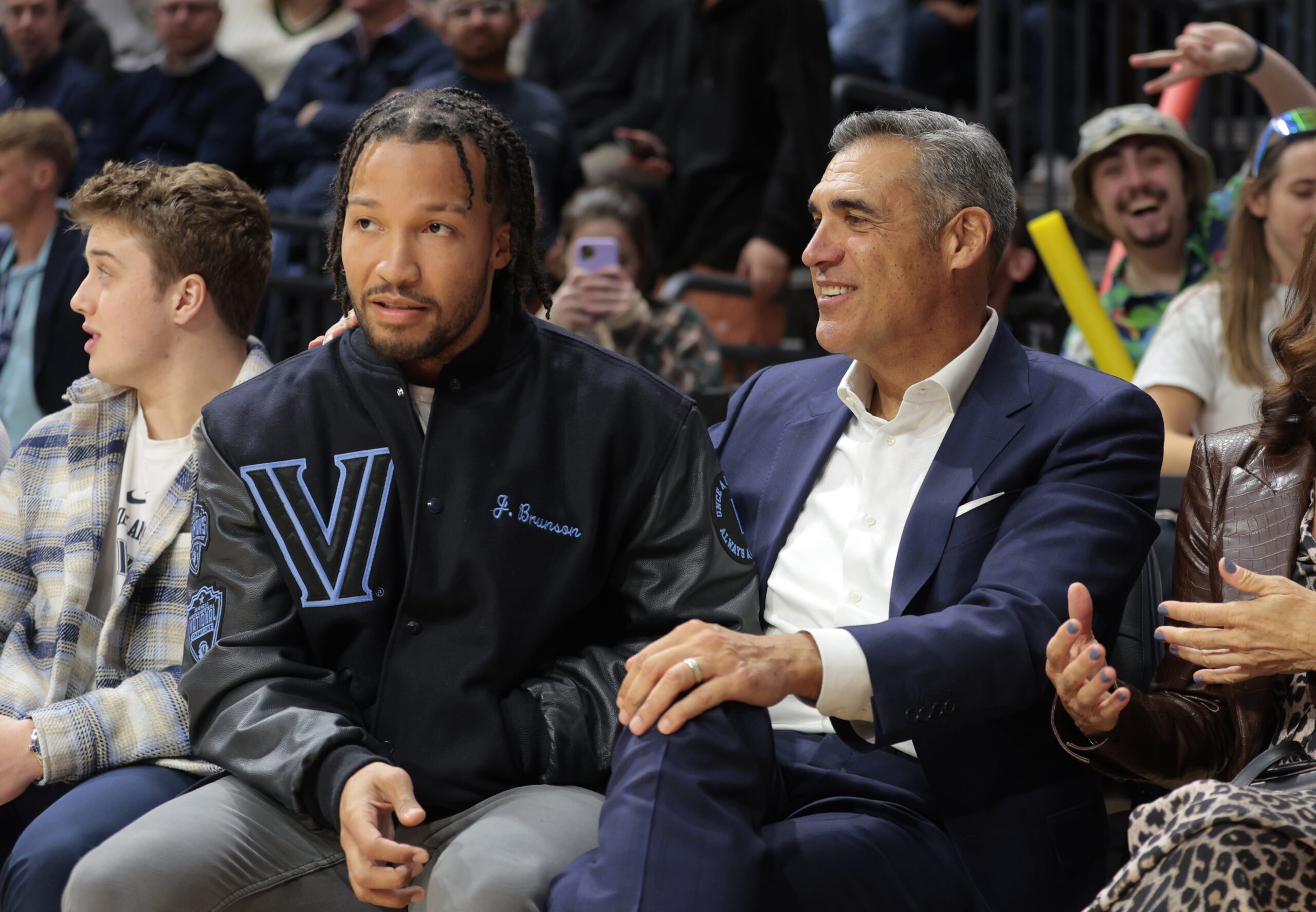
Jalen Brunson and former Villanova coach Jay Wright at the Finneran Pavilion on Feb. 8, 2023.
As it was, the Big 5 had a TV deal of its own, with the Philly-based premium cable channel PRISM, starting in 1978. Yet the PRISM commitment actually limited the exposure of some of the Big 5’s schools.
During the 1989-90 season, as one example, the Atlantic 10 wanted to place a Temple-La Salle game on ESPN so that it would be telecast nationally. “ESPN,” Lyons wrote, “subsequently refused to carry it, however, because it did not want to black it out in PRISM’s trading area.”
So hoops fans in the Delaware Valley could watch the game at home, but no one else could. At a time when college basketball was becoming more accessible, the Big 5 was cutting itself off from everyone who wasn’t already familiar with it.
That history might seem ancient. It’s not. Wright’s tenure and the economics of the sport have placed Villanova on a separate tier from the other programs. And now that he, Chaney, Dunphy, Martelli, and Morris — the local legends who were the backbone of the Big 5 — aren’t coaching anymore, the remaining infrastructure hasn’t been strong enough to restore the teams to excellence and maintain the intensity of the rivalries.
It’s a shame, but it was only a matter of time. Yes, the Big 5 was a Philly thing. Yes, it was a national thing. Yes, it was a glorious thing. And now it’s gone, and all the wistfulness and wishful thinking in the world won’t change the hard and inescapable truth: That glory isn’t coming back.