One of the country’s most popular dance companies, Alvin Ailey American Dance Theater, is coming back to Philly this weekend, early in the company’s 20-city U.S. tour.
As of last summer, Ailey is led by Alicia Graf Mack, 47, who was a big star at Dance Theatre of Harlem and then the company she is now directing.
“I am very grateful to be back,” she said. “This year has been a very beautiful homecoming to a company that I love very deeply, and this organization has been part of my North Star since I was a child. [It’s been] part of my thought process about what I want to be when I grow up, and how I want to be, and how I want to express myself.”
Just before this, she was dean and director of the dance division of Juilliard School, where she worked closely with students and commissioned work for them to perform — including pieces by Philadelphia choreographers Rennie Harris and Matthew Neenan.
The tour coming to Philly this weekend also has a new Neenan piece, Difference Between.
“Matthew is someone that I’ve really admired for many years, and I know Matthew Rushing (Ailey’s associate artistic director) shares that same sentiment,” Graf Mack said. While working with Neenan at Juilliard, “I knew what a genius he is.”
Ailey is also bringing Jazz Island, a new work choreographed by Maija Garcia.
“It is a beautiful homage to Geoffrey Holder and Carmen de Lavallade,” both of whom made works for Philadanco. “Carmen basically cofounded this company with her best friend, Alvin Ailey,” Graf Mack said.
Alvin Ailey dancer Ashley Kaylynn Green.
Graf Mack was born in San Jose, Calif., and grew up in Columbia, Md., about 120 miles south of Philly. Her mother was a professor at Howard University and also a model.
“At home she would exercise and move to music to stay in shape,” Graf Mack said. “I would follow her, and she was kind of like, ‘Wow, she really picks up moves very easily.’”
So at 2 1/2, Graf Mack started dance classes, “and I found my home there.”
Eventually she and her sister, Daisha (who would become a commercial dancer performing with Rihanna, TLC, and Beyoncé), became serious ballet students.
In the summers, Graf Mack would study at New York’s School of American Ballet or the American Ballet Theatre.
“One summer, I participated in international ballet competitions. I went to St. Petersburg, Russia, competed in the Vaganova Prix, and placed in the finals,” she said. “I think I was the only American and certainly the only Black person there.”
Despite an impressive career, Graf Mack met with some roadblocks. Three years after she joined Dance Theatre of Harlem, she developed ankylosing spondylitis, an autoimmune disease affecting her joints.
So she looked at new careers. She applied and got into Columbia University.
Alvin Ailey American Dance Theater.
She studied history and for three years, interned at JPMorgan, with all intentions of working for a bank. That firm was involved in arts institutions, and Graf Mack said she found her niche.
“That kind of sparked my love for arts administration. But actually after I graduated, I was moving a little bit more, and I thought I should try to dance [again].
“It was Carmen de Lavallade who told me, ‘Alicia, you can work at a bank any time in your life, but your time to dance is now.’ So I went back to Dance Theatre of Harlem for a year, and that’s when the company closed. It left 40-some Black ballet dancers without work.”
For a year, she found freelance work with top companies such as Complexions, Alonzo King LINES Ballet, as well as celebrity gigs with the likes of Beyoncé, John Legend, Andre 3000, Alicia Keys, and Jon Batiste.
In 2005, she joined Alvin Ailey. Three years into her tenure, her illness flared up again.
So she went back to school to earn a masters in nonprofit management from Washington University in St. Louis.
But then Jamison, her former boss and lifelong idol, was retiring from Ailey and asked Graf Mack to dance at her final performance. Battle watched from the wings and wanted her back in the company. She returned for three more years.
In 2014, a back injury finally ended her performance career and started her arts administration career.
“I feel like I have a very lived history of the legacy of the company,” Graf Mack said. “I’m very grateful to now keep the legacy moving forward.”
Alvin Ailey American Dance Theater. Feb. 27-March 1, Academy of Music. $36-$147. 215-893-1999 or ensembleartsphilly.org
Every Cure, a biotech nonprofit started by a University of Pennsylvania researcher, has landed $76 million in federal funding to advance its artificial intelligence match-making tool that identifies existing drugs to treat rare diseases.
Over the next three years, Philadelphia-based Every Cure will use the funding from the Advanced Research Projects Agency for Health (ARPA-H) to pursue preclinical studies for at least 20 drugs that show promise for being repurposed for rare diseases with no other treatment options. The company will also pursue clinical trials to further test the safety and effectiveness of repurposing another 10 existing drugs.
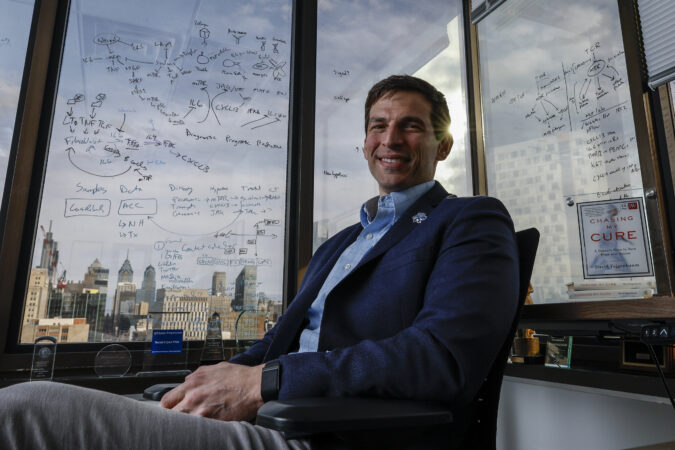
The nonprofit was co-founded in 2022 by David Fajgenbaum, an associate professor at University of Pennsylvania, after his own experience with a rare disease.
He was diagnosed with Castleman disease as a medical student at Penn, and experimented in a campus lab with his own blood to try to find an off-label medication that could address his symptoms.
Every Cure’s AI tool expedites a drug discovery process that is otherwise often left to chance. When patients with rare diseases have few treatment options, doctors may scour medical journals or tap expert networks for leads on other drugs to try with mixed results.
The tool automates the process, using an algorithm to read massive biomedical data about diseases, medications, genes, and proteins. The tool looks for bits of data that diseases and medications may have in common that were previously unrecognized.
“This next phase will allow us to do the essential work of evaluating these potentially life-saving treatments in the lab and clinical trials, accelerating access to potential treatments for those who urgently need them,” Fajgenbaum, Every Cure’s President, said in a statement.
The new funding adds to $108 million in federal support the nonprofit has already received.
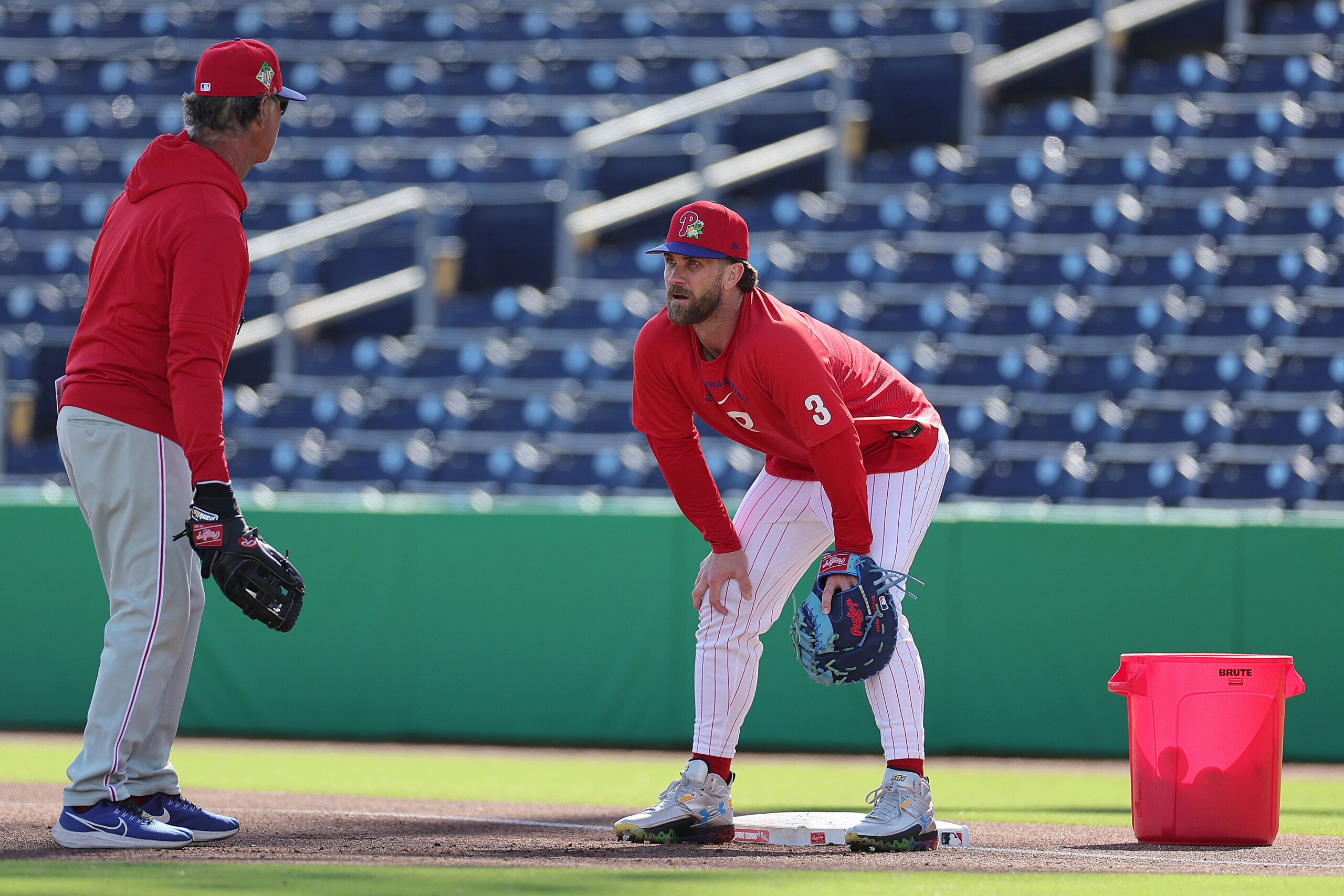
CLEARWATER, Fla. — For 30 minutes Wednesday, on the half-field adjacent to the Phillies’ clubhouse, Larry Bowa flipped baseballs to Bobby Dickerson, who hit one-hoppers and choppers and line drives at Bryce Harper.
Over and over. Again and again.
Ninety feet from Harper, a nine-time Gold Glove-winning first baseman and former captain of the Yankees stood with a glove on his right hand and a paper folded lengthwise in his back pocket. He didn’t say much. Mostly, he observed.
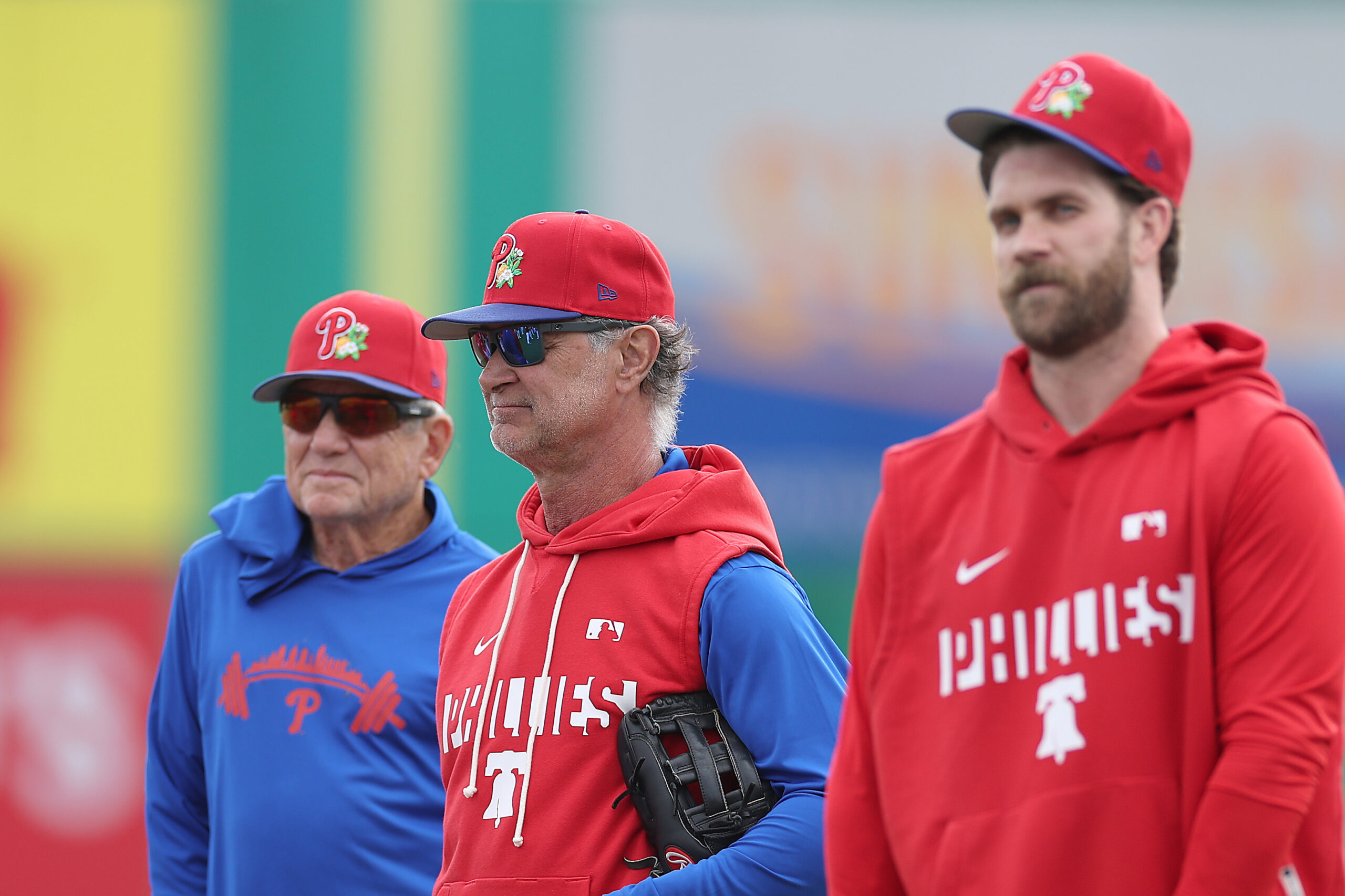
Then, after the drill, Don Mattingly conferred with Harper.
“I mean, it’s Donnie Baseball,” Harper said, smiling. “I grew up a Yankee fan, so knowing he played first base in the Bronx and had a great, storied career in the Bronx and was one of the best first basemen to ever do it, I have such a respect for him and the way he went about it.”
The admiration is mutual.
“He’s going on his 15th year, and I’m like, ‘Wow,’” Mattingly said. “I had a decent career, but I don’t know if I really can talk about some of the things that he can do. Because he can do things that, I think he’s kind of that Barry Bonds-type guy. It’s different.”
Phillies first baseman Bryce Harper (right) has an appreciation for the career of new bench coach Don Mattingly (center).
OK, let’s move beyond the pleasantries — and Mattingly’s modesty about a Hall of Fame-worthy playing career in New York — and get to what Mattingly and Harper can do for each other, notably winning the World Series championship that has eluded both.
The Phillies didn’t hire Mattingly to be their bench coach because of the effect he could have on any one player. But they do believe he will bring a different form of credibility to a coaching staff that is well-regarded within the sport but light on major league playing experience.
Harper has solid relationships with manager Rob Thomson and especially hitting coach Kevin Long and Dickerson, the infield coach who slings grounders with a fungo bat and a roux of encouragement and trash talk through a Mississippi drawl. All are good at their jobs. None played a day in the majors.
But Mattingly was the face of baseball back when baseball could still call itself the national pastime. A word from him surely resonates differently with Harper, among the biggest stars in the sport for a decade and a half.
“We have such a good staff, and to be able to bring him in and be part of that, he’s just going to make us that much better,” Harper said. “Being able to have a guy on the staff — and no disrespect to anybody — that has done it at the highest of levels, it’s so good to be able to bounce stuff off of him.”
Two weeks into camp, Mattingly said he’s still getting a feel for everyone, including Harper. He isn’t the hitting coach or the infield instructor. Long and Dickerson have those areas covered. But he’s a fresh set of eyes on a staff that has been together since Thomson took over as manager in 2022.
And after two weeks of watching pitcher fielding practice, live batting practice, and baserunning drills, peeking on hitters in the cage, and offering feedback to Thomson and the coaches, Mattingly has a few observations.
“I like the way guys work here,” he said. “It’s concentrated when they’re in the cage, and the work’s been good on the field for pitchers. It’s not like you’re coming in here to a 96-win team and try to say, ‘You guys should be doing this, this, or this.’ It’s a really good club.
“You’re just trying to find the details of how do you get a little bit better?”
Marginal improvements could make the difference between the Phillies losing three games by a total of four runs to the Dodgers in the divisional round and advancing to the NL Championship Series.
Phillies bench coach Don Mattingly (left) talks with first baseman Bryce Harper in Clearwater, Fla., on Monday.
In the case of Harper, who will play this season at age 33, Mattingly’s influence could help extend his peak.
Harper was still in diapers when Mattingly retired in 1995. But as a baseball obsessive with an appreciation for the sport’s past, Harper has studied highlights — “ESPN Century, all that kind of stuff,” he said — from Mattingly’s career.
“The little crouched-down stance,” Harper said. “Bat-to-ball skills were unbelievable. The short porch [in right field at Yankee Stadium] was really good for him. But just a doubles machine that knew how to hit.“
Mattingly hit it off with star infielder Bo Bichette in his last job as bench coach of the Blue Jays. Last season, Bichette batted .311 with 44 doubles, 18 homers, and a 129 OPS-plus.
“I think they really came together, and you saw Bo have the great year that he had,” Harper said. “Probably learned a lot of stuff from Donnie and what he does. It’s no coincidence.
“And I love being coached. I don’t care where I’m at or how old I am. I love being coached at the highest level by guys like him because just an ounce of information from him could change the dynamic of somebody’s career. I think everybody should have an open mind and open ears to him.”
Harper is 3-10 in 13 career postseason series. The Nationals famously won the World Series one year after Harper joined the Phillies.
Mattingly is chasing something similar. A year after he retired from playing, the Yankees began their run of four World Series championships in five years. He managed the Dodgers before they became a dynasty. The Blue Jays just lost in Game 7 of the World Series.
After 14 seasons as a player, 12 as a manager, and 10 as a coach, Mattingly is still aiming to win a World Series.
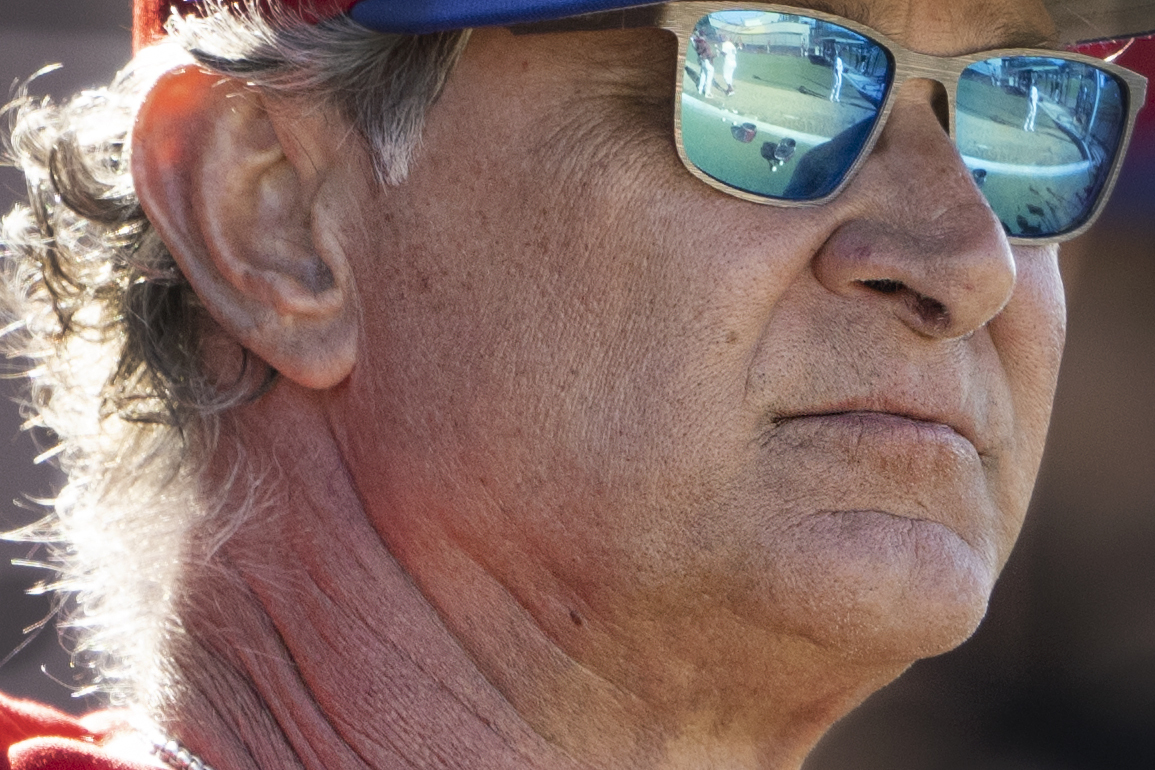
With a talented Phillies lineup, Don Mattingly says, “You’re just trying to find the details of how do you get a little bit better.”
Maybe Harper can help with that.
They’re still getting to know each other. Mattingly’s early observations include Harper’s attention to detail in the batting cage and solid footwork around first base. Harper will leave camp Saturday to join Team USA for the World Baseball Classic. Upon his return, the work with Mattingly will continue.
“He’s a different animal than almost anybody else as far as, he’s been here for a long time, still in great shape, still big-time bat speed,” Mattingly said. “He’s a guy that has a chance to win a Gold Glove, in my mind. I’ve had different first basemen, and he’s as good as any.
“Sometimes I think guys like that, you start to take for granted how good they are. And that’s what I think about with him. That doesn’t mean you don’t try to get better in different areas. But he’s going to have a pile of numbers there that, as he gets toward the end of his career, people are going to be going, ‘Holy [bleep], this guy’s been incredible.’”
A mid-career boost from Donnie Baseball can’t hurt.
But six years later, some sprawling campuses in suburbs like Horsham, Plymouth Meeting, and Wayne have soaring vacancies — andthere are only a couple suburban conversions underway.
Developers agree that the primary challenge is the buildings themselves, which have more difficult floor plans for residential development than their urban counterparts, making demolition easier than conversion in many cases.
“Transforming an office building tucked inside a suburban office park is a completely different equation than converting a building on Walnut Street steps from Rittenhouse Square,” said Sarah Maginnis, executive director of the Philadelphia chapter of the Commercial Real Estate Development Association. “Location, context, and building design all matter a lot.”
The lack of suburban office redevelopment is partly due to the fact that many of the highest-vacancy buildings are in remote, less desirable corners of the region. The patchwork quilt of hyperlocal zoning regulations across dozens of municipalities is a challenge, too, as builders have to negotiate with officials on almost every project.
“A lot of townships are fighting residential development because it comes with burdens on the school systems. Office buildings don’t do that,” said Glenn Blumenfeld, principal with Tactix Real Estate Advisors. “Zoning is more liberal in the cities [which is why residential conversion] has not come to the suburbs.”
Architectural challenges of conversion
Most suburban office buildings date to an era when office and residential structures began to look very different from each other.
When office work began to move into undeveloped land surrounding cities in the mid-20th century, developers generally built out instead of up, taking advantage of the abundant space. Almost everyone commuted by car, so vast parking lots were required.
Suburban office buildings often have a lot of dark interior space. The windows that do exist mostly cannot be opened because of ubiquitous air-conditioning. The parking lots that wreath the buildings make for unsightly and dull vistas.
In large rectangular glass buildings, residential conversion would entail what longtime suburban developer Eli Kahn calls “bowling-alley-shaped apartments … that just don’t work.”
“In the city, a 30-story office tower doesn’t look a whole lot different from an apartment building,” said Kahn, president of E. Kahn Development Corp.
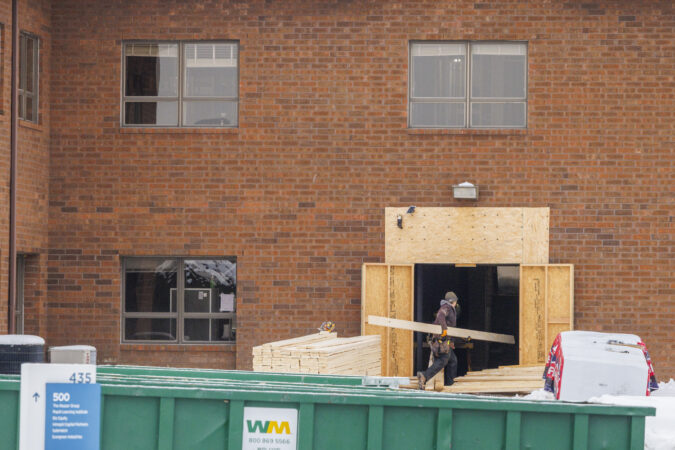
One of the eight two-story buildings at 435 Devon Park Dr. that have been used as offices and are being turned into apartments.
An exceptional suburban conversion
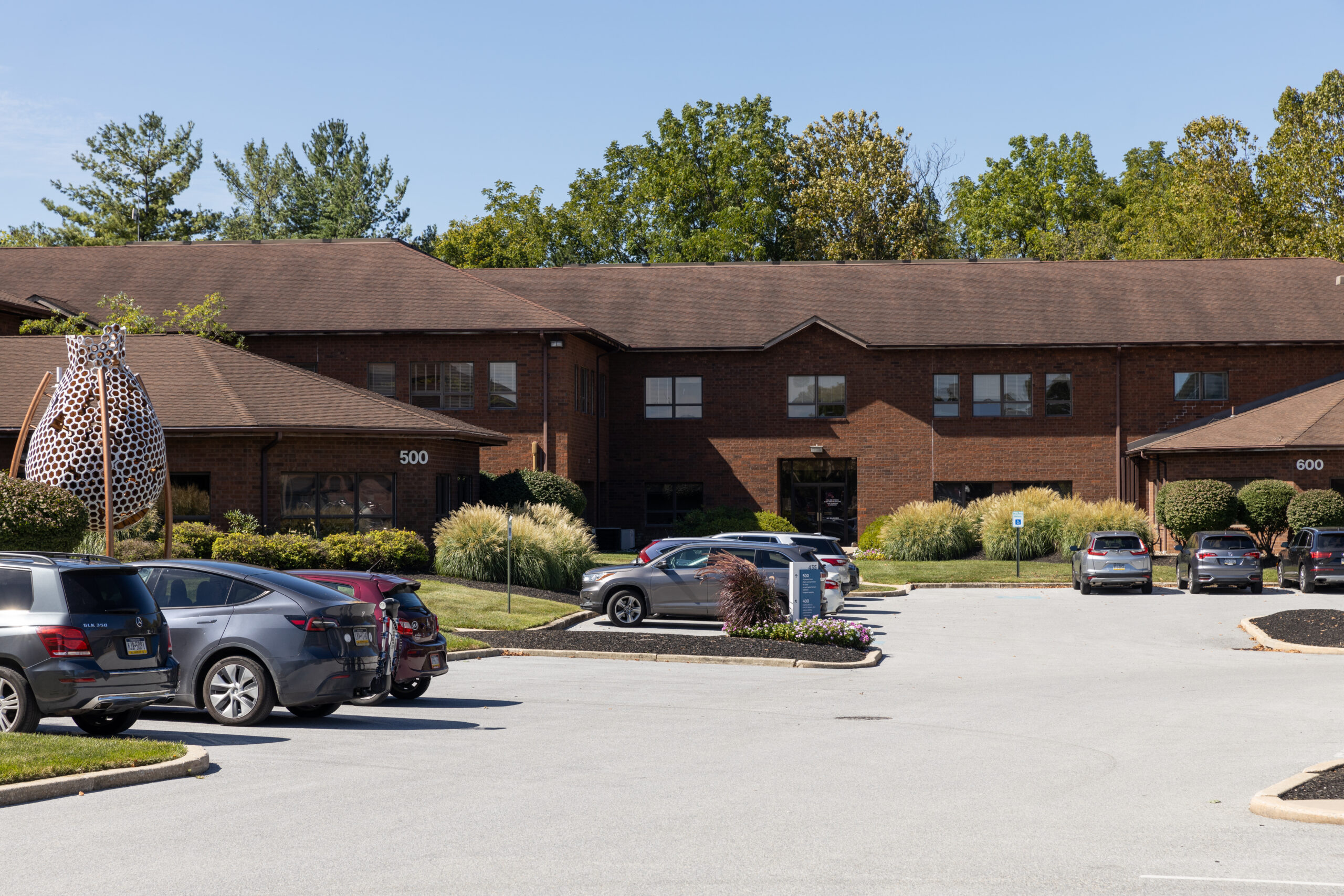
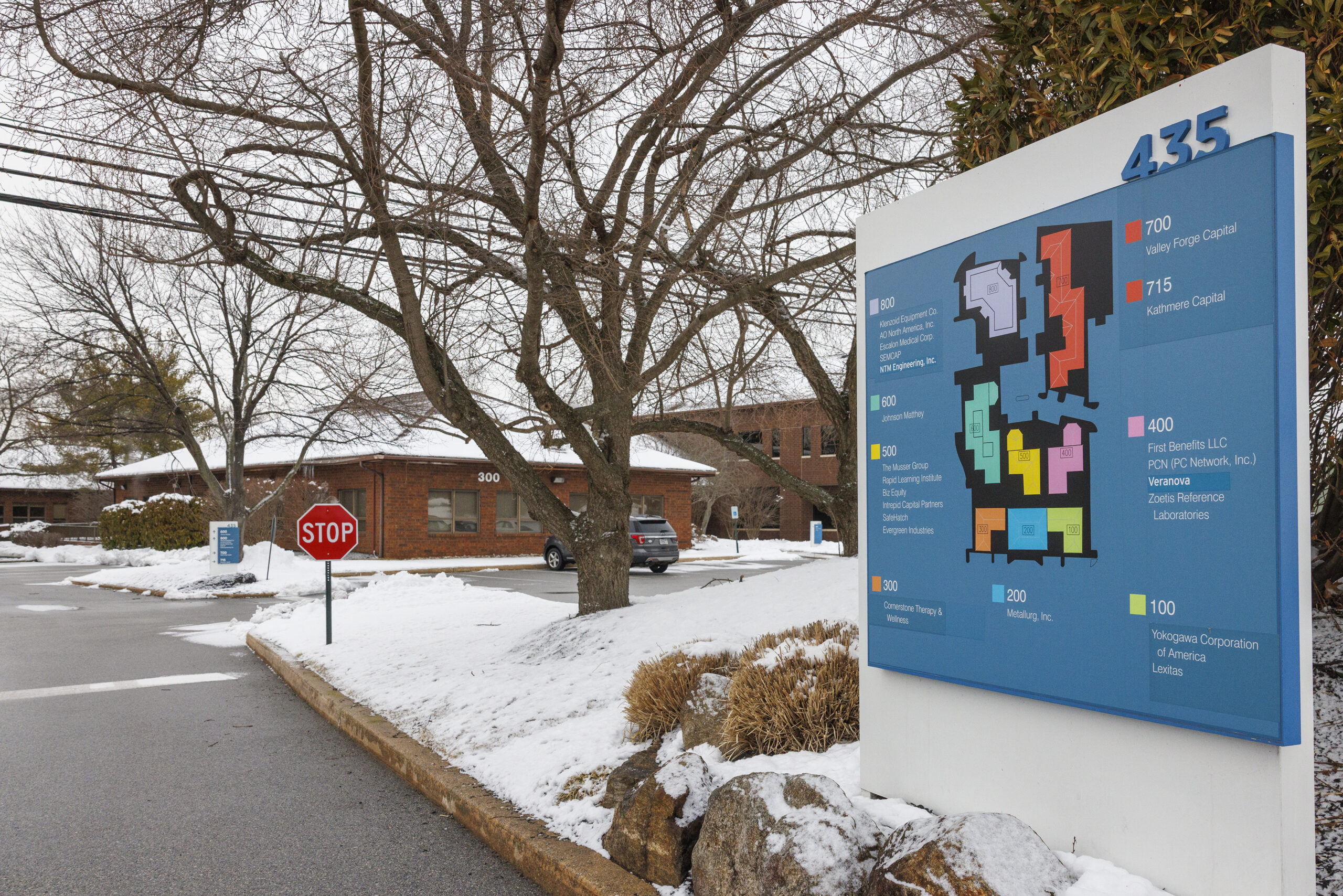
The redevelopment of an eight-building office complex at 435 Devon Park Dr. in Chester County’s Tredyffrin Township is one of the only suburban office-to-residential conversions underway right now.
Notably, none of its former office structures are big glass rectangles.
“This just happened to be perfect for conversion,” said Mark Thomson, founder of Love Communities, which is developing the project in partnership with E. Kahn Development Corp. and Triple Crown Corp.
“It’s going to be the largest garden-style suburban conversion in the whole Northeast, maybe even a bigger area than that,” Thomson said.
Kahn also is part of the team behind the conversion of 435 Devon Dr., and he developed the complex when it was built in the 1980s.
This office park broke from the standard big glass box model of suburban offices and instead offered two-story, L-shaped buildings with brick facades and windowsthat open.
That makes conversion cheaper, too. To make those big box buildings livable, the glass facade would need to be torn off and windows installed that actually open.
“The most expensive part of construction is the windows,” Thomson said. “If we had to do that, it would probably make this not economically feasible.”
The project is also able to move forward because it accords with the goals of local political leadership, who are wary of family-size apartments.
The 162-unit office-to-residential project will be largely composed of studio and one-bedroom apartments in an attempt to appease concerns about strains on the school district and to produce unsubsidized affordable housing in this wealthy township.
Zoning rules everything
In many suburbs, building apartments, townhouses, and other more modestly scaled housing is often not allowed by zoning laws. Office parks are usually zoned to exclude residential development.
That’s a sharp contrast with Philadelphia, which has few barriers to office-to-residential conversion in Center City, and a citywide10-year property tax abatement is available for building renovations. Wilmington also offers a variety of incentives.
In Tredyffrin, officials were opposed to the idea of either very high density apartments — at almost 10 acres, the site could support hundreds of units — or new single-family homes.
So to make 435 Devon Park Dr. work, the developers knew they couldn’t demolish the buildings and construct new homes.
The entrance to 435 Devon Park Dr. with the brick office buildings, which are planned to be converted to residential in the background.
Instead, the developers pitched the conversion not as luxury apartments, but as affordable homes for nurses, teachers, and other middle-income workers in Tredyffrin. They also plan to convert some parking lots into green space for residents.
The units can be priced more affordably because of the relatively small scope of the conversion and because the developers essentially purchased the campus for its land value.
Working in partnership with Triple Crown Corp. also helps because the company has in-house contractors and architects.
The paucity of multi-bedroom units lowers rental costs, too, and assuages fears about overburdening schools.
“None of these communities have made it easy like Philadelphia, because they’re all their own fiefdoms,” Kahn said. “But if you make the right argument and you show them how it’ll benefit them financially, they generally come around.”
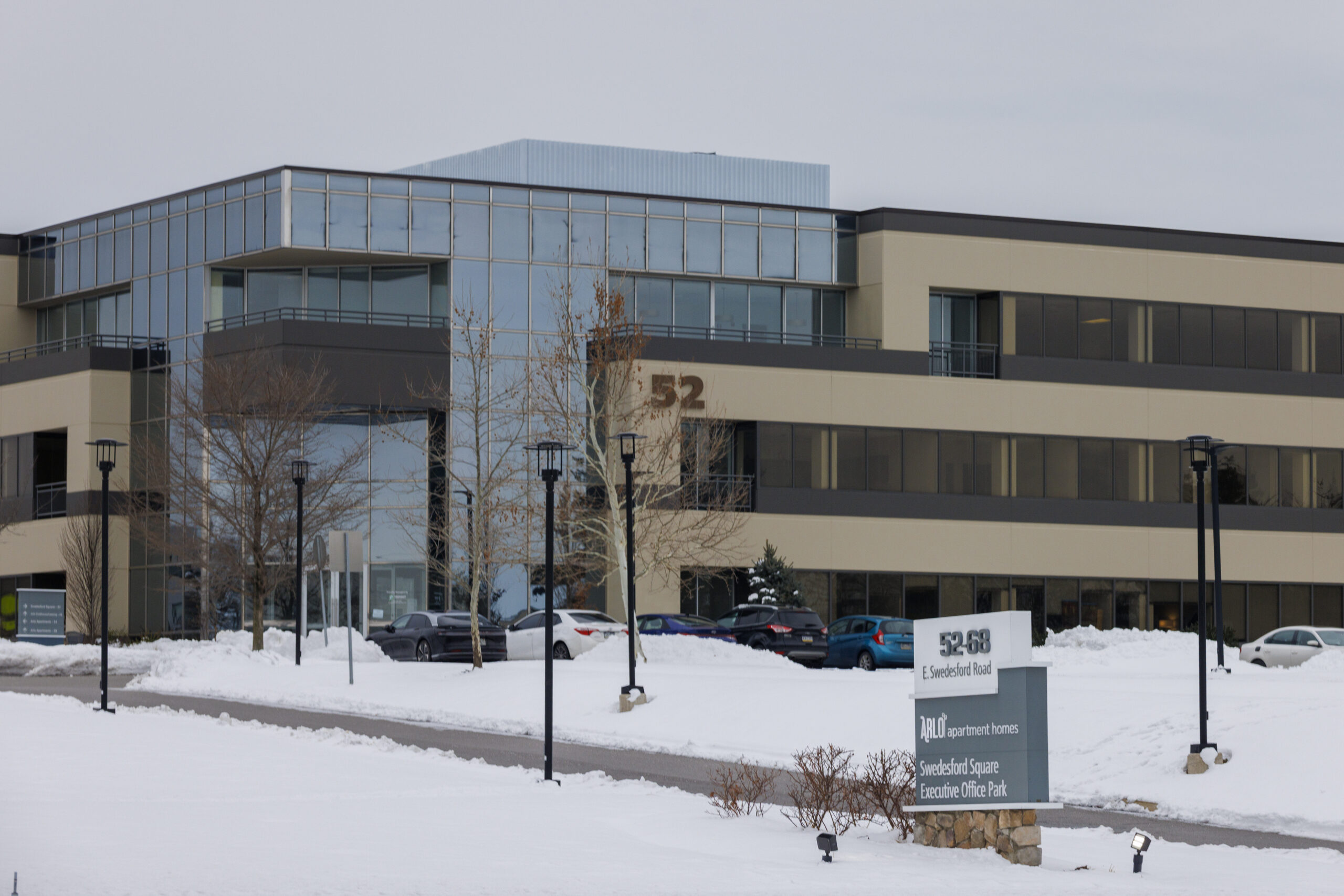
The East Whiteland office building at 52 Swedesford Rd., which is slated by TriPoint Properties for demolition and replacement with apartments.
The future of (some) suburban offices
There are few other conversion projectsunderway in Philadelphia’s suburbs.
Keystone Property Group has a more traditional office-to-apartment tower in the works at the Plymouth Meeting Mall. The Parkview Tower next to the Valley Forge casino was consideredfor conversion last year. The Buccini Pollin Group is weighing a conversion project at BNY Mellon’s old headquarters in Bellevue State Park, north of Wilmington, and is looking at opportunities in the Pennsylvania suburbs.
But it is more common for developers to consider demolishing old office buildings to make way for something new.
In Chester County’s East Whiteland Township, which contains the Great Valley Corporate Center, office-to-residential conversion proposals have met a chilly reception.
“The proposals to rezone large vacant office buildings for direct conversion to apartments were really viewed negatively,” said Scott Lambert, chairman of the East Whiteland Township Board of Supervisors. The plans were seen as “short-term fixes that created long-term challenges.”
An overhead rendering of the 250-unit apartment project that will replace an old office building at 52 Swedesford Rd.
East Whiteland’s government looked more kindly on Tripoint Properties’ proposal to demolish a standalone office building at 52 Swedesford Rd. — outside the corporate center — and replace it with 250 apartments.
The vacant office building is surrounded by four-lane roadways, which eased congestion concern. Developers also proposed mostly small apartments, with 30 rented for below market rate, which helped earn support from the township.
“On the school side, they were OK with limiting the units to either one- or two-bedroom apartments,” Lambert said. “We would like to be in a position to limit the number of three-bedroom apartments in the township because of the impact it has on schools.”
But some real estate experts say eventually, municipalities will need to replace the tax revenue lost from dead office buildings.
“The centerpiece of tax bases in commercial areas has been office space,” Kahn said. “If the tax base goes down, and they can’t pay for the schools, who gets the burden? A couple years of 30% property tax increases on your constituents, you’re going to get voted out of office real quick.”
Main Line Health had an $8.7 million operating profit in the six months that ended Dec. 31, the nonprofit health system reported to bond investors Wednesday.
Main Line’s swing from an $8.9 million loss in the same period of 2024 benefited from a change in accounting for depreciation that reduced expenses. Without that change, Main Line would have had another loss.
“We have been pleased with our continued improvement in fiscal performance year over year, which has been strong outside of the change in depreciation,” Main Line’s chief financial officer, Leigh Ehrlich, said in a statement.
Here are more details on Main Line’s results:
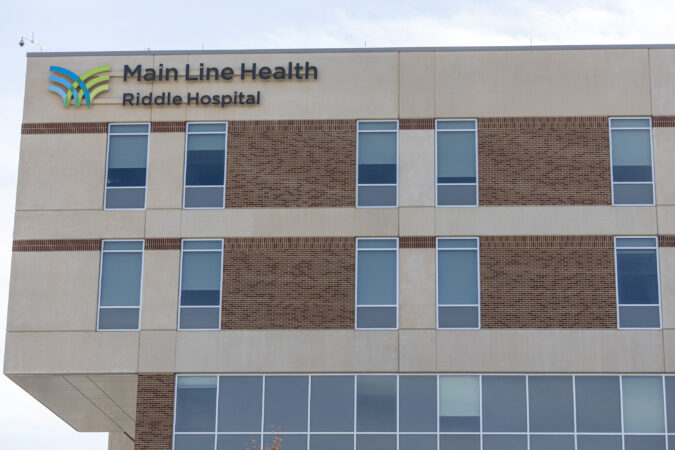
Revenue: Main Line reported $1.35 billion in patient revenue in the first six months of fiscal 2026, up 10.5% from $1.22 billion a year ago. Strong gains in hospital discharges, emergency department visits, and same-day surgeries contributed to the increase. Main Line’s Riddle Hospital near Media has seen a 36% increase in patients following the closure of Crozer Health’s hospitals last spring, contributing to revenue growth, Ehrlich said.
Expenses: Last year, Main Line changed how it accounts for investments in facilities and equipment, significantly reducing depreciation and amortization expenses. In the first two quarters of fiscal 2026, Main Line’s depreciation and amortization expense was $68.8 million, down from $84.5 million the year before. Excluding those expenses from both years, Main Line’s operating profit margin fell slightly, to 5.5% from 5.9%.
Notable: Main Line provides more detail than most systems on its patients’ health insurers. After just two years in Southeastern Pennsylvania, Pittsburgh insurance giant Highmark accounted for 12.5% for the business at Main Line Health. That is just 2 percentage points less than Aetna, which as been in the market for decades.
I, for one, am astonished that several entitled young white millionaires were eager to capitalize on their brief moment of relevance by becoming pawns of a president for whom most of them probably voted, especially if they listened to the most popular podcasters — that is, if they even bothered to vote.
Let’s unpack that sentence.
The average age of Team USA men’s hockey players is 28.43 years, so the chance they voted is less than 50%, according to surveys conducted by CIRCLE, a research initiative based at Tufts University. Among white men between the ages of 18-29, 56% voted for President Donald Trump. If they had no college degree, as is the case with most NHL players, that number jumps to 67%. More than half the listeners of podcasts such as The Joe Rogan Experience are white men between the ages of 18-34, and, after Trump was elected, Dana White, the CEO of UFC and a staunch Trump ally, thanked those podcasters for getting Trump over the hump.
Let’s throw in the fact that most professional athletes are, necessarily, narcissists. And there you have the reasons that so many members of Team USA have become the latest victims of moral political outrage.
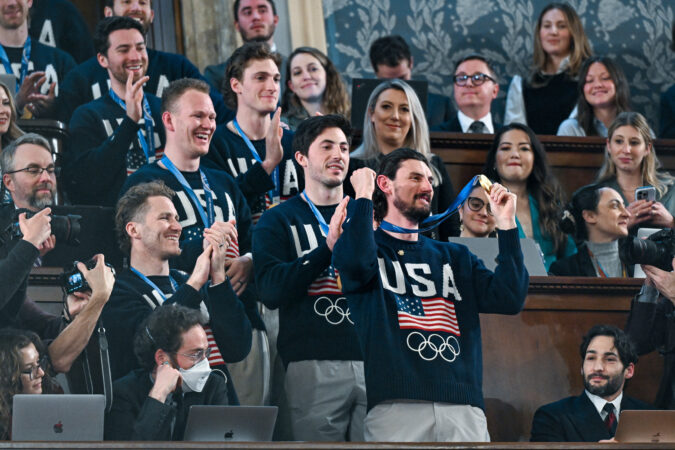
They won Olympic gold in dramatic, heartwarming fashion Sunday, but our sitting president immediately spoiled the afterglow as they celebrated in Italy. Still, most of Team USA accepted an invitation to visit the White House. They met with Trump on Tuesday afternoon and attended the State of the Union address that night.
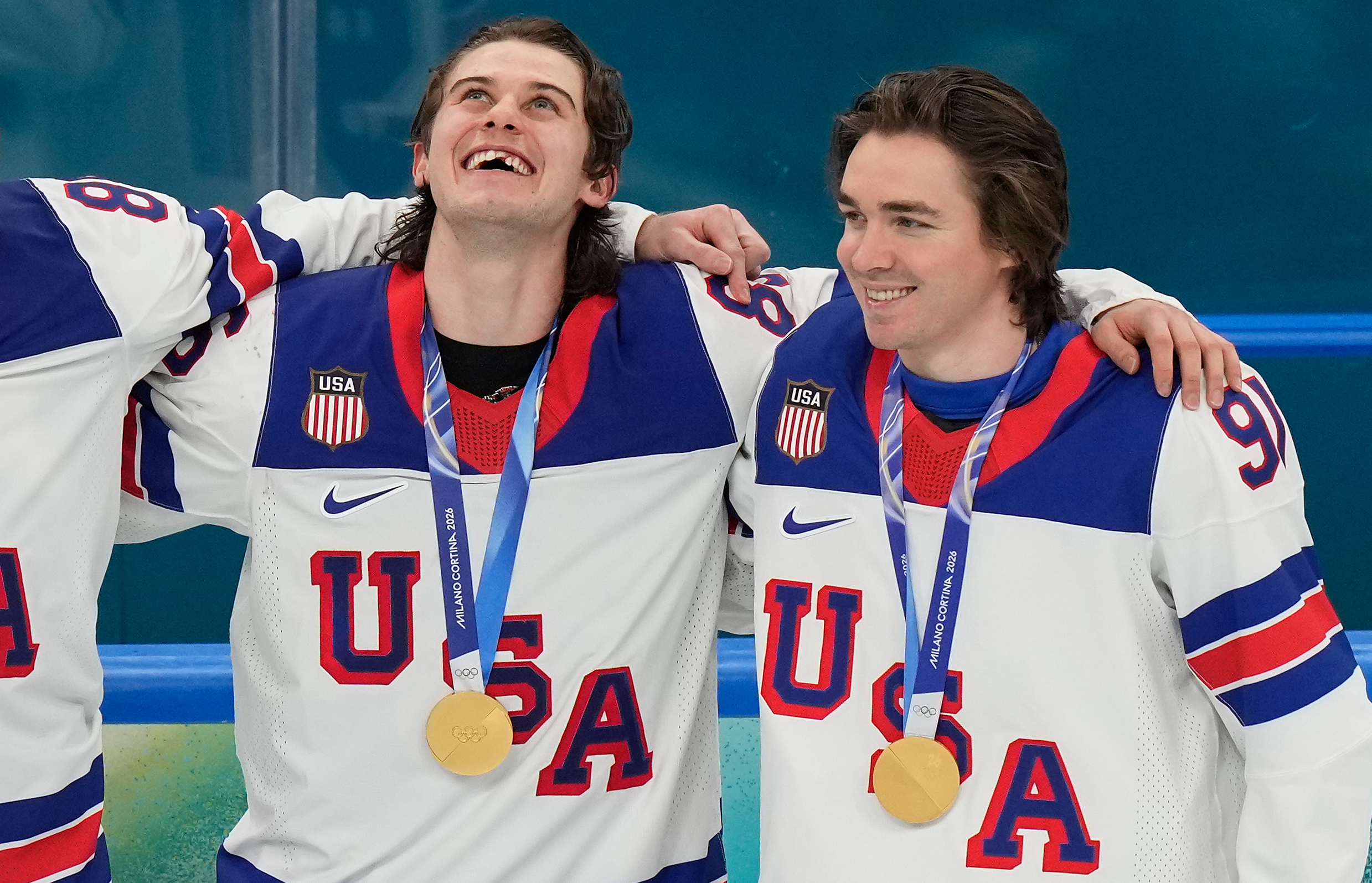
Jack Hughes (left) and Clayton Keller react after receiving their gold medals after the U.S. defeated Canada in the gold medal game on Sunday at the Winter Olympics.
All of this set social media and TV talk shows on fire: How dare they?
Which is exactly what Trump wanted.
Once again, his theater of the absurd drew fabulous ratings. Snowflakes on both sides melted, as scripted: The left, in anger; the right, in glee.
Perhaps one day Trump’s opponents will understand that the only one who gains from this sort of performative outrage is Trump. Save your energy for the ICE attacks in Minnesota and the acts of war on Venezuela. You’re not converting anyone by attacking Connor Hellebuyck, the goalie in the crowd to whom Trump promised a Presidential Medal of Freedom on Tuesday night.
Everything Trump does is transactional: They showed up for him, he gave one of them a medal.
What, you want him to turn it down? Get real. That’s not who these players are.
You expected a group of guys like this to decline the invitation to see and be seen with the most powerful man on the planet? What planet do you live on? In what world do these guys do the right thing?
Consider Olympic hero Jack Hughes’ considered reaction Monday, after all the heat was on:
“Everything is so political,” he told reporters. “People are so negative out there, and they are just trying to find a reason to put people down, and make something out of almost nothing.”
It’s as if he was trying to define “self-unawareness.” Like most young men in his situation, he is not equipped for the moment.
Nevertheless, as America’s current Olympic hero, Hughes, 24, is the unofficial spokesman for the group that some folks think should have told its FBI director to go home and find Nancy Guthrie. The group that some folks think should have told Trump that they weren’t coming to the White House unless the women’s team came, too, and that the women would have to sit in the front row.
There’s no way a bunch of partying, exhausted, exhilarated frat bros are going to not laugh at a dumb joke from a guy who reminds them of their grandfathers.
Lighten up, folks.
I’m not MAGA. For that matter, you’re going to be hard-pressed to find a sports writer more anti-MAGA than I’ve proven myself to be. When Trump dips his toe into sports, I generally try to stub it.
However, on the Trump scale, Trump acted mildly here. He offhandedly insulted the women’s team — a team whose win I considered the apex of the Games, and wrote as much. He and his minions did far worse to Olympians who dared challenge him.
And if you think the hockey lads are bad, check out Nick Bosa, Herschel Walker, and Georgia quarterback Gunner Stockton.
𝗧𝗥𝗘𝗡𝗗𝗜𝗡𝗚: President Donald Trump was greeted by Herschel Walker and UGA QB Gunner Stockton when he arrived in Georgia coming off Air Force One.
Both have been long-term supporters of Trump and the MAGA movement.
This hockey team isn’t perfect, but it isn’t evil, either. It should not be remembered for being the victim of a controversy not of its own making.
It should be remembered as a brilliantly built roster, masterfully coached, which played a spectacular tournament. Its No. 1 goalie gave up six goals total. The penalty kill snuffed all 18 power plays.
The team was incredible.
This outrage, at best, is futile. At worst, it is performative.
Every lefty Twitter warrior knew Trump would politicize a men’s hockey win because Trump knew he and the men’s hockey team were generally of like mind. Most of Team USA appears to be Trump people, unbothered by the misogyny, racism, xenophobia, and corruption of his administrations, happy for every second in the spotlight.
Certainly, it would have been nice if all 25 players had made a different choice. Five did. Twenty didn’t. Twenty percent of a group of clueless twentysomethings is better than nothing.
This contrived controversy obscures how, for about an hour, this was a powerful Olympic tale.
The good feelings emanating from the team’s moving remembrance of Johnny Gaudreau were washed away by the Trump episode.
The facts
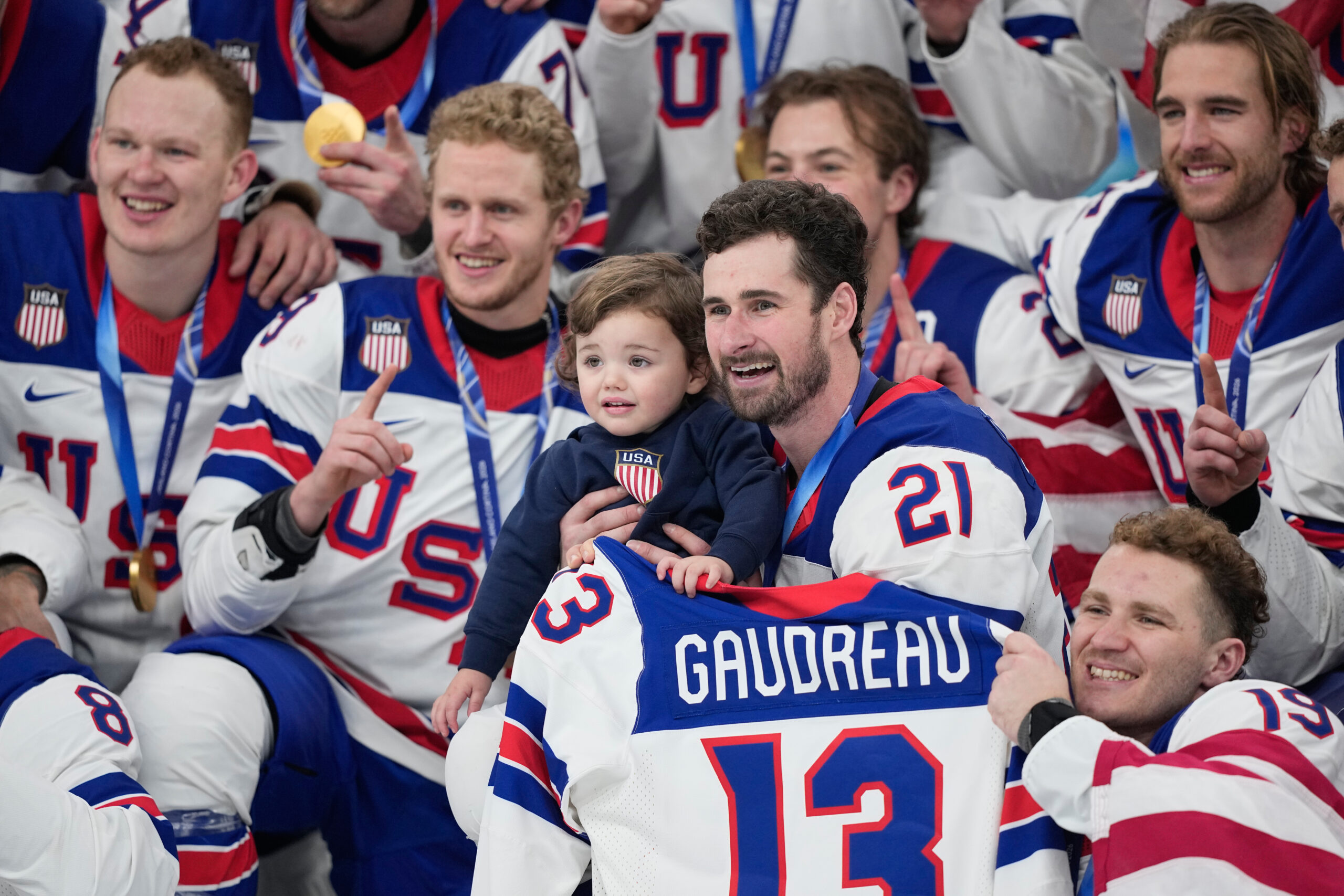
Hughes scored a golden goal against Canada in overtime, avenging an identical defeat handed to Team USA by Canadian hero Sidney Crosby in 2010. Afterward, with an American flag draped over his shoulders, Hughes skated around with his brother and teammate, Quinn, smiling through chipped and bloodied teeth he’d suffered during the game. Team members took victory laps carrying the jersey Johnny Gaudreau would have worn had G and his brother not been killed in August 2024. The team invited Gaudreau’s two small children onto the ice for a team photo.
What’s more, social media hyped Hughes’ advocacy of Pride Night last season, which has become a controversial topic in the more reactionary corners of the NHL.
In this 2024 interview, Jack Hughes, who just scored the game-winning goal for the US Olympic hockey team, explains why it was important for him to embrace Pride Night when many other NHL players refused to do so. pic.twitter.com/jLRy5Blqo4
Then, Trump intruded. And, as with most things, he ruined it. This was not just predictable. It was inevitable.
First, FBI chief Kash Patel, who’d said he was in Italy on official business, joined the alcohol-drenched postgame celebration, a moment of indecorum that sent J. Edgar Hoover spinning in his grave. The players partied on. What were they supposed to do? Kick Patel out of the locker room?
Then, Trump called the party and, offhandedly, demeaned the women’s team, which had won gold three days before. The players laughed. Some of them, clearly aware of Trump’s boorishness, laughed nervously. But they laughed.
What were they supposed to do? Chastise the president during his locker-room call?
Be realistic. This was the greatest achievement of their lives. None of them seems particularly woke. And, besides, they’d been partying.
“There’s so many things happening,” winger Kyle Connor told The Athletic on Monday. “We just won the gold medal and things are going on so I don’t really remember what he said. It’s such a whirlwind, just celebrating.”
The boys are getting more abuse than they deserve, especially in the cesspool of social media. Folks called the players morons. They told them they could stick their gold medals up their collective butts. Some said they’d carry the stain of this moment with them the rest of their lives.
No, they won’t. Have we learned nothing from Trump and his associations with the golf world?
American golfers at the Ryder Cup not only welcome Trump at the event, but some actually performed the ridiculous Trump dance. None has suffered.
Tiger Woods’ associations with the president do not appear to have damaged the golfer.
The fallout
You know who were the two most popular golfers before they golfed with Trump? Tiger Woods and Rory McIlroy. You know who the two most popular golfers are today? Tiger and Rory. In fact, Tiger’s dating Trump’s former daughter-in-law.
The players on the women’s team, bless them, declined their invitation to the White House.
Sure, I respect the five from Team USA who didn’t wallow in the Trump trough more than I respect the 20 who did. In that same vein, I respect the Eagles, such as Jalen Hurts, who refused to visit the White House last spring more than I respect Saquon Barkley, who not only visited the White House, but also went golfing and lunched with Trump the day before.
The fallout: In September, Saquon received the ultimate honor of having a Wawa hoagie named after him.
But there’s not going to be any real hangover effect from this. There never really is.
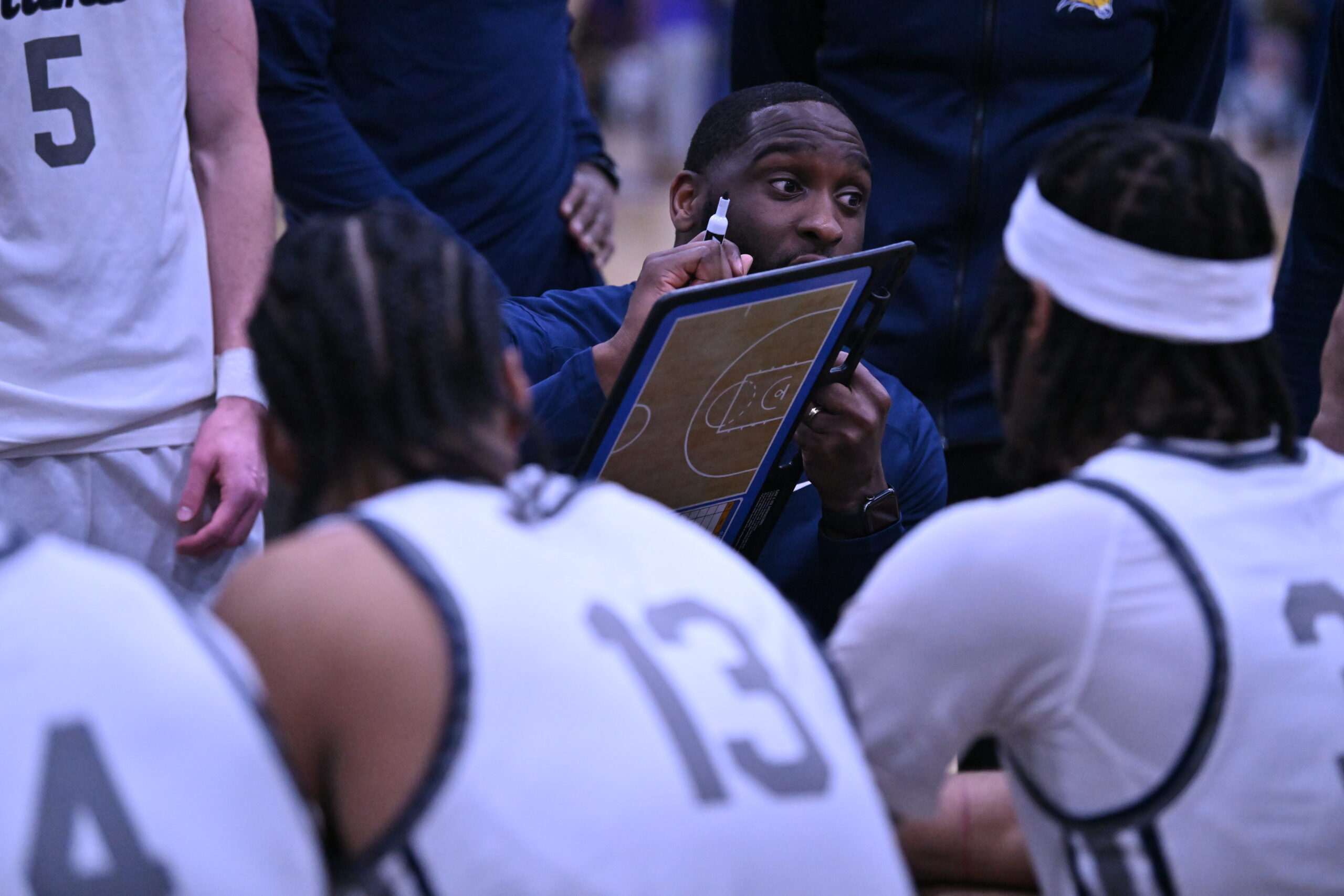
About once a month, Brian Wanamaker drives toa cancer treatment center near his home in Crowley, Texas. He sits on a hospital bed as nurses inject needles into his arm and stomach; one for chemotherapy, the other to boost his immune system.
He can be there anywhere from one to four hours.Wanamaker is asleep throughout, but he doesn’t wake up rested. His stomach burns. His body feels fatigued.
After it’s over, he often goes straight to the gym at Texas WesleyanUniversity, where the North Philadelphia native coaches the NAIA men’s basketball program. Sometimes, he even beats his players to practice.
Since 2022, when Wanamaker was diagnosed with multiple myeloma, he has been balancing his job with the limitations of an incurable cancer. It is not easy. The head coach takes six pills a day to keep the disease in remission for as long as possible.
His doctors advise him not to engage in stressful activities (even if running a college basketball team is antithetical to this). Then, there is the matter of his schedule. Texas Wesleyan plays games mostly on Thursdays and Saturdays.
It doesn’t allow much time to undergo chemotherapy and fully recover. But the coach has an answer for that, too. He receives treatment early on Mondays, so he doesn’t feel sick later in the week.
If the Rams are on the road, he’ll reschedule.
“It’ll come back,” Wanamaker said of multiple myeloma. “But right now, I do maintenance.”
The 36-year-old doesn’t talk like someone who is worried about the future. If anything, his job has helped him stay grounded in the present. Coaching was a lifelong goal of Wanamaker’s, ever since he was a boy playing in the Sonny Hill League.
This is where he and his twin brother, Brad, first saw how basketball could change a life. Their coach, Rasool Hajj, was an alumnus of and former volunteer assistant coach at Roman Catholic High School. He helped the twins connect with the program, and they enrolled in 2003.
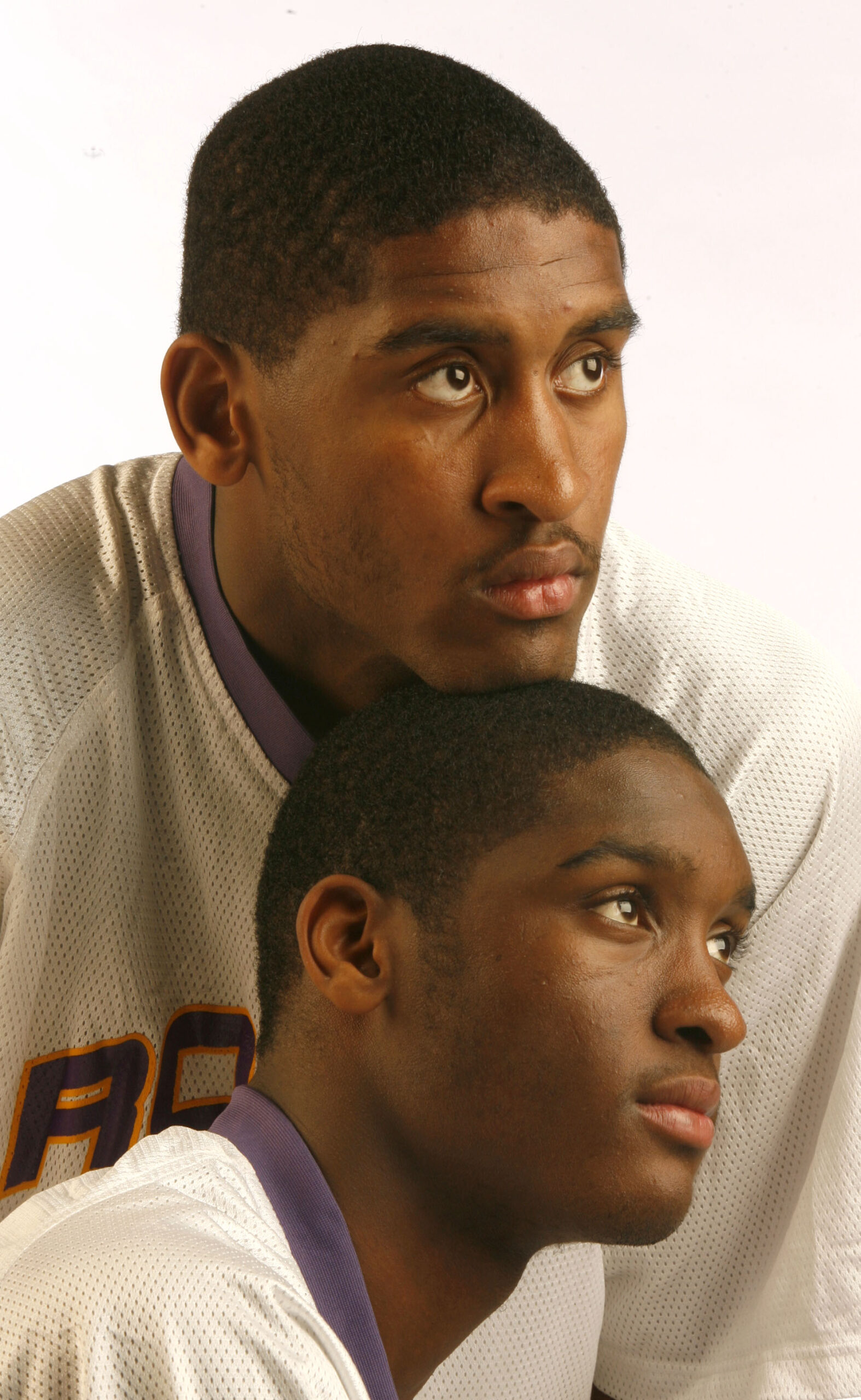
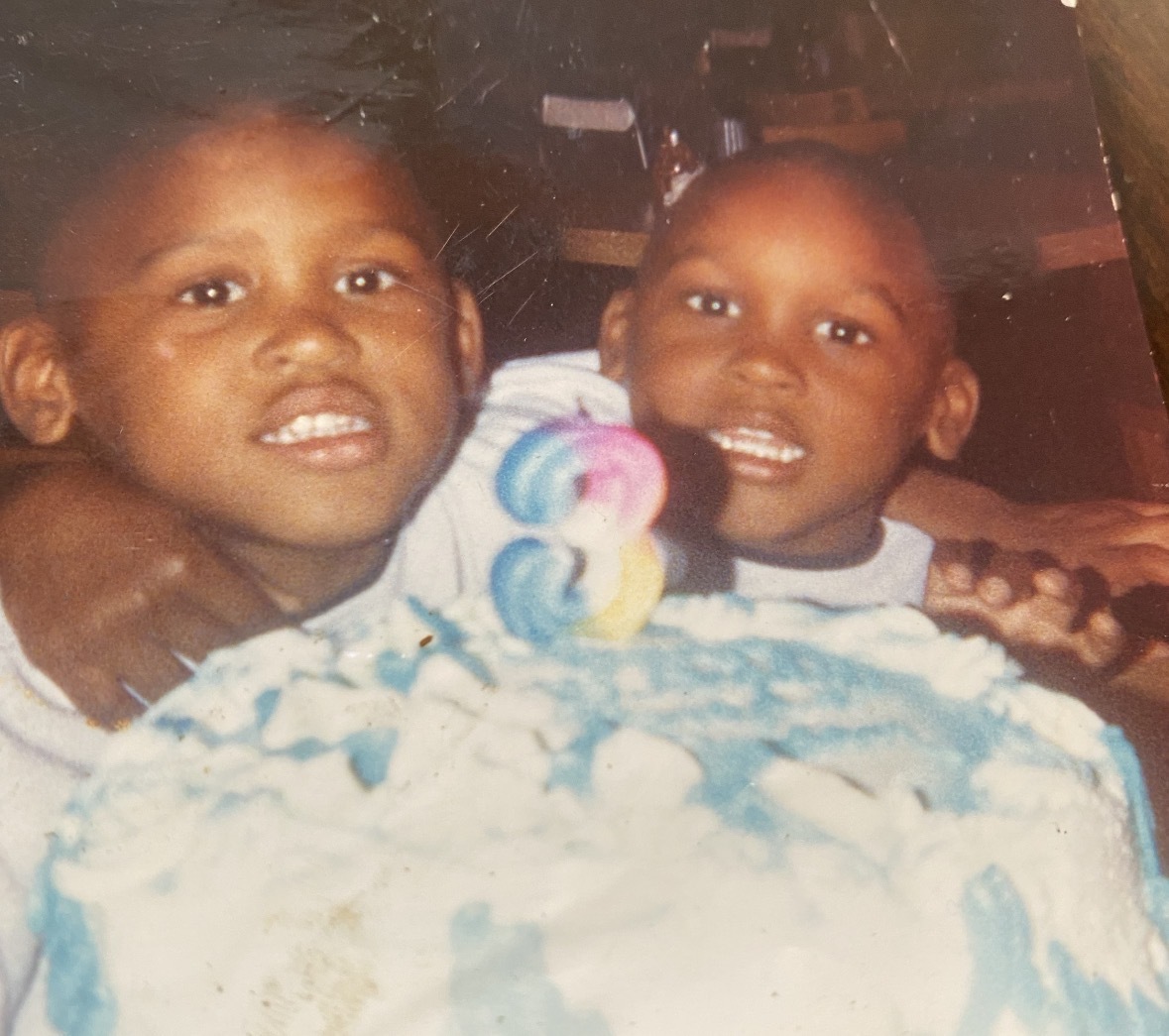
Brad and Brian Wanamaker (bottom) were stars at Roman Catholic High School and went on to play professional basketball.
The Wanamaker brothers quickly became standout players. In 2007, they led Roman to a Catholic League championship under coach Dennis Seddon. After that, their careers took divergent paths.
Brad starred in college at Pittsburgh en route to a seven-year stint in Europe, followed by a four-year stretch in the NBA. Brian struggled with injuries in college and bounced around, eventually finding a permanent home as a player at Texas Wesleyan.
He spent a few years playing overseas but returned to the school as an assistant coach in 2019. The Philadelphia native was named head coach in 2024 and has made an immediate impact, leading the Rams to a 38-20 record since taking over.
He models his approach after Hajj’s. He checks on players’ mental health before berating them for a mistake. He routinely asks how things are going at home and at school.
The team is encouraged to be vulnerable and learn from one another, rather than to react in real time. Wanamaker tells the players to focus on “the person,” because everyone is going through something.
“But I also talk to them about reality,” Wanamaker said. “Yes, everybody wakes up with an excuse they can use, and it’s real. But you can either use it or you can fight through it. You know?”
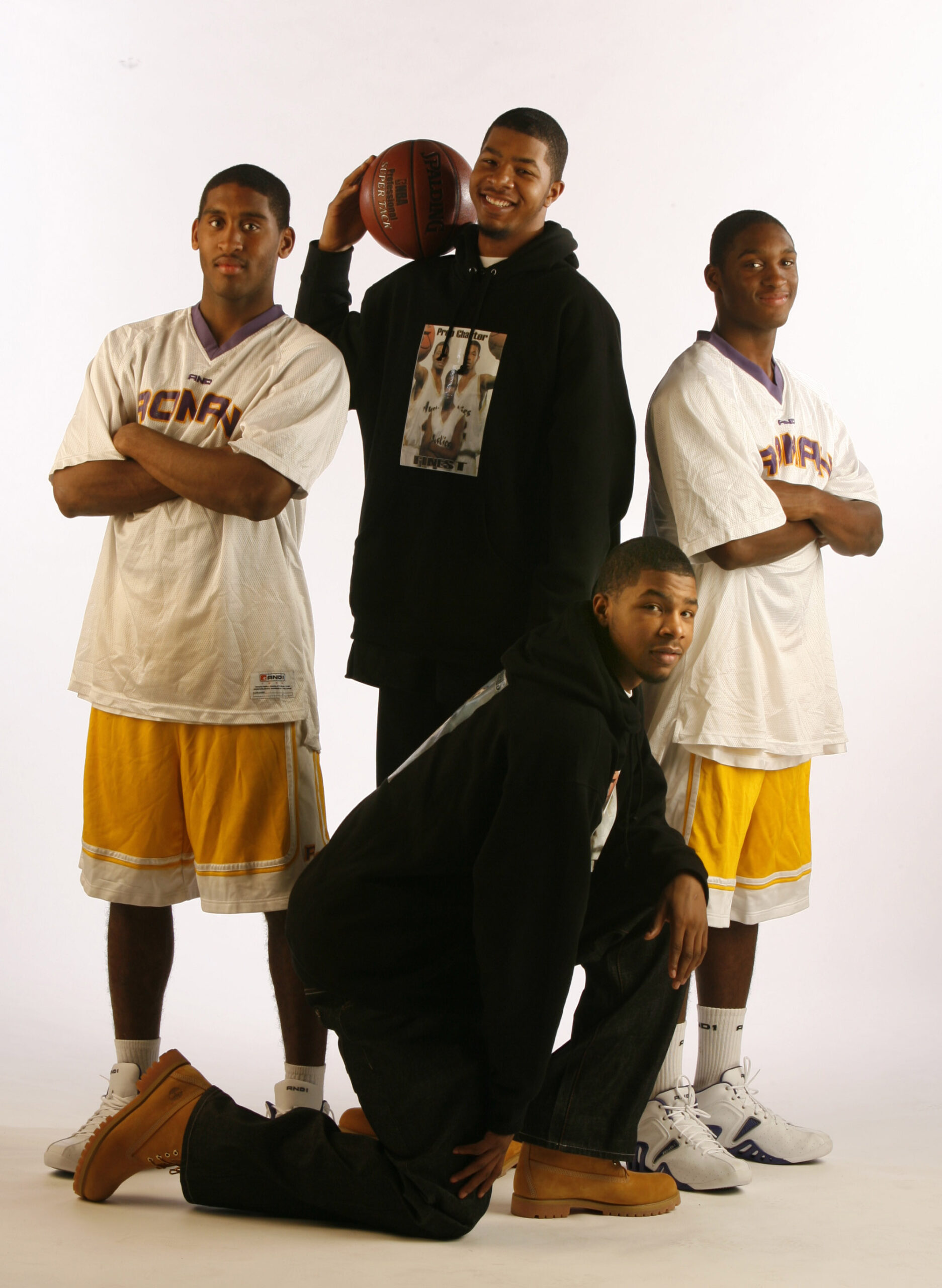
Brad (left) and Brian (right) Wanamaker with fellow basketball-playing twins, Markieff (top center) and Marcus Morris (kneeling) of Prep Charter in 2006.
A North Philly upbringing
Brian and Brad grew up in a three-story house on 19th Street between Norris and Diamond. They were the second and third of five siblings — Brad is 1 hour, 11 minutes older than Brian — and shared a bedroom on the top level.
This had its shortcomings. The roof had holes, so when it rained, the boys put pots on the floor. Their neighborhood was perilous at times, and from an early age, they became aware of the poverty, gun violence, and drug use around them.
But their childhood was still full of joy. Nineteenth Street was home to a lot of young kids, many of them Brian and Brad’s age. They rode bikes, played tag, and staged impromptu football games outside.
Basketball was their favorite sport. The twins ventured to courts all over the city in search of the fiercest pickup battle: 16th and Berks, 16th and Susquehanna, 25th and Diamond, 22nd and Norris.
They’d shoot hoops before and after school. Local elders would organize basketball tournaments between blocks with trophies for the winners. In seventh grade, a friend, Saleem Elam, asked if they played AAU basketball.
Neither brother knew what that was. But they soon attended a tryout, held their own against more experienced players, and made the team. Before long, they were playing in leagues throughout the area — Gustine Lake, Sonny Hill, Belfield.
The Sonny Hill League was where they met Hajj, who seemed to be part basketball coach, part social worker. He allowed the twins to reimagine the bounds of what a coach could do, a template they’d lean on later in their careers.
The Wanamaker Brothers looked to Rasool Hajj (center) as a coach and mentor.
“He helped a lot of kids, but also a lot of families,” Brian said. “He helped parents get jobs. He would give people money if they needed it for something. He was always there. He was almost like a big brother to us.”
Hajj became a mentor to the twins. At the time, they were attending Gillespie Junior High School, which closed in 2011. Brian and Brad seemed to learn all the wrong lessons, like how to cut class and replace it with extra gym time.
Teachers wouldn’t enforce the rules, so to the twins, there was no reason to follow them.
“There wasn’t a lot of learning,” Brad said. “Not a lot of structure. I’d go to one class — Ms. Brown, because she knew my dad. So, I’m like, ‘I got to make sure I go to her class.’
“I’d go to homeroom and get marked absent for the day. Then I’m in my brother’s class, I’m at his lunch, I’m playing cards [with him].”
Hajj, who recognized the twins’ untapped potential, introduced them to Seddon and the other Roman Catholic coaches. That break altered their lives.
The high school brought a level of discipline that the Wanamakers weren’t used to. And when they arrived as freshmen, it was a tough adjustment.
Brian walked through the doors in September 2003 and looked at the students around him.
“We wanted to leave because we didn’t know it was an all-boys school,” Brian said. “We was like, ‘What? There’s no girls in the school?’ We were so confused.”
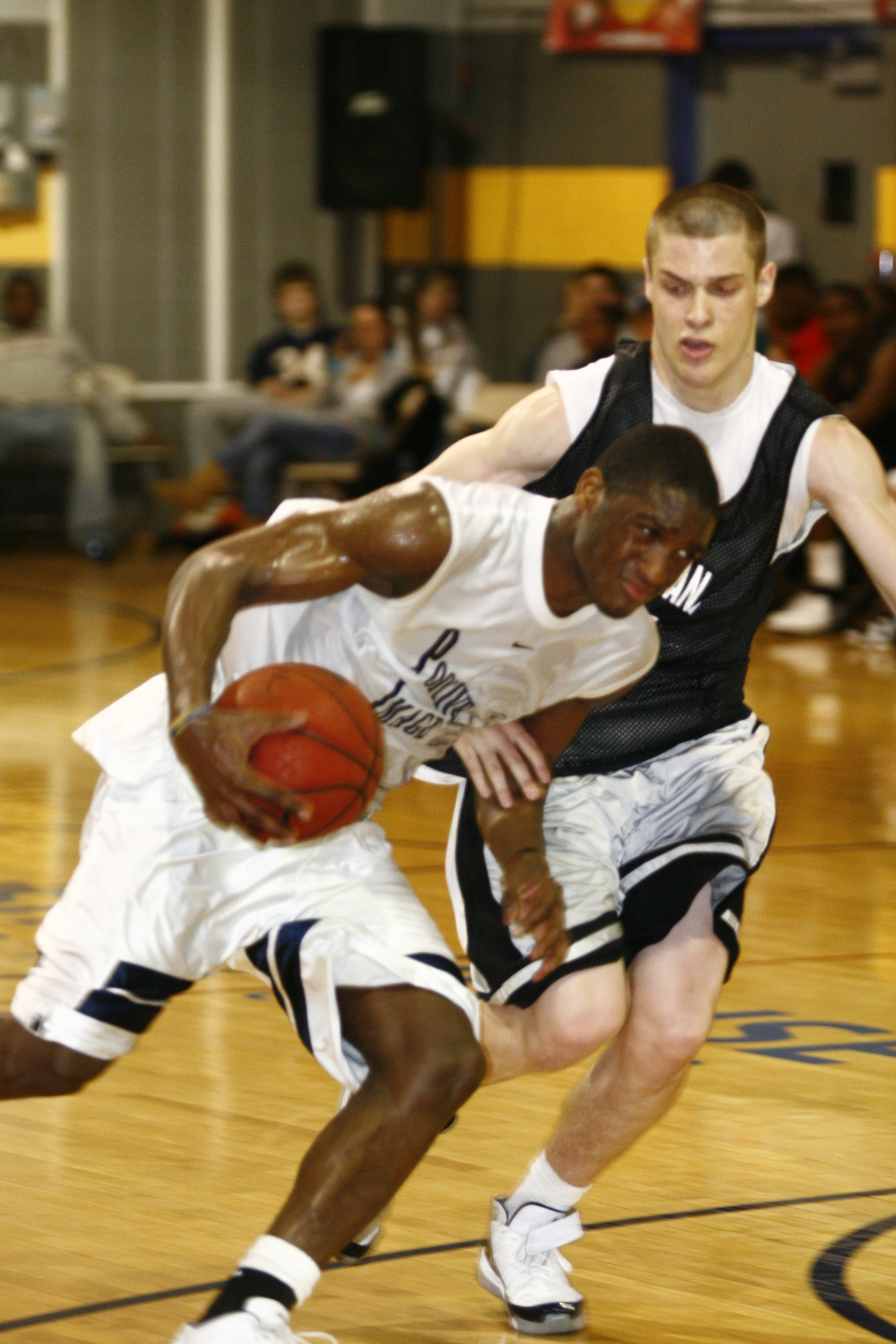
Brian Wanamaker and his brother were standout AAU players who had to adjust to Roman Catholic on and off the court.
They racked up demerits for every conceivable offense, from untucked shirts to facial stubble. Both brothers failed a class in their first semester and were ruled ineligible for the first half of the basketball season.
Because they were on academic probation, they had to go to summer school, wearing slacks, long-sleeved collared shirts, and ties in the sweltering heat. The lesson stuck.
“It just was like, ‘We got to be doing the right thing,’” Brad said.
In sophomore year, Brad started on varsity, and Brian on JV (with some varsity appearances mixed in). They fed off each other in practice and in games.
The players had different strengths. Brian, a 6-foot-2 combo guard, was a better defender and three-point shooter. Brad, a 6-4 shooting guard, was a “laid-back killer” who could score from midrange.
Brian showed all of his emotion. He wasn’t above “mugging a player,” in Brad’s telling, and wasn’t afraid of getting a technical foul. He’d scream and yell. Brad, by contrast, was quiet.
But occasionally, he would give his brother some in-game feedback.
“He’d be like, ‘Hey, play your role!’” Brian said. “He’d be like, ‘Pass it to me. Pass me the ball, and you play defense!’”
Added Brad: “He’d go, ‘Shoot the ball!’ And I’d tell him, ‘Calm down! I need you out here!’ Because sometimes he gets too emotional. And I’m like, ‘Before you get a technical foul, I need you to calm down.’”
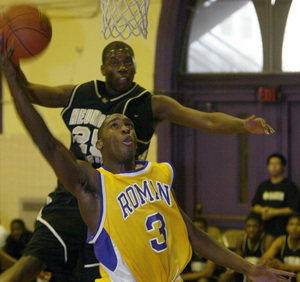
Brian Wanamaker helped Roman win the Catholic League title.
The brothers racked up accolades, especially in 2006-07, their senior season. Brian was named second-team All-Catholic and All-City, as well as Defensive Player of the Year. Brad was named the Daily News’ Player of the Year, and was first-team All-State, All-City and All-Catholic as well.
The Cahillites parlayed this success into a historic campaign. The twins led Roman Catholic to a 28-3 record and its first Catholic League championship since 2000.
Rival Neumann Goretti, the No. 1 seed from the Catholic League South, came into the final favored. And the game, played at the Palestra, was close until the very end.
Brad had to sit for a stretch midway through the third quarter after picking up his fourth foul. Without its best player, Roman was at a disadvantage. Brian made sure everyone knew their defensive assignments, so the undermanned Cahillites could stay within striking distance.
His brother returned early in the fourth quarter, and spurred his team to a 17-4 run. With just over a minute remaining in the game, Brian hit a layup to widen Roman’s lead to 58-54. It finished with a 59-56 comeback win.
“I think [Brian] pointed to our student section,” said Brad, now the head coach at Roman Catholic. “We still have the picture at my mom and dad’s house. It was in the newspaper. It was a moment.”
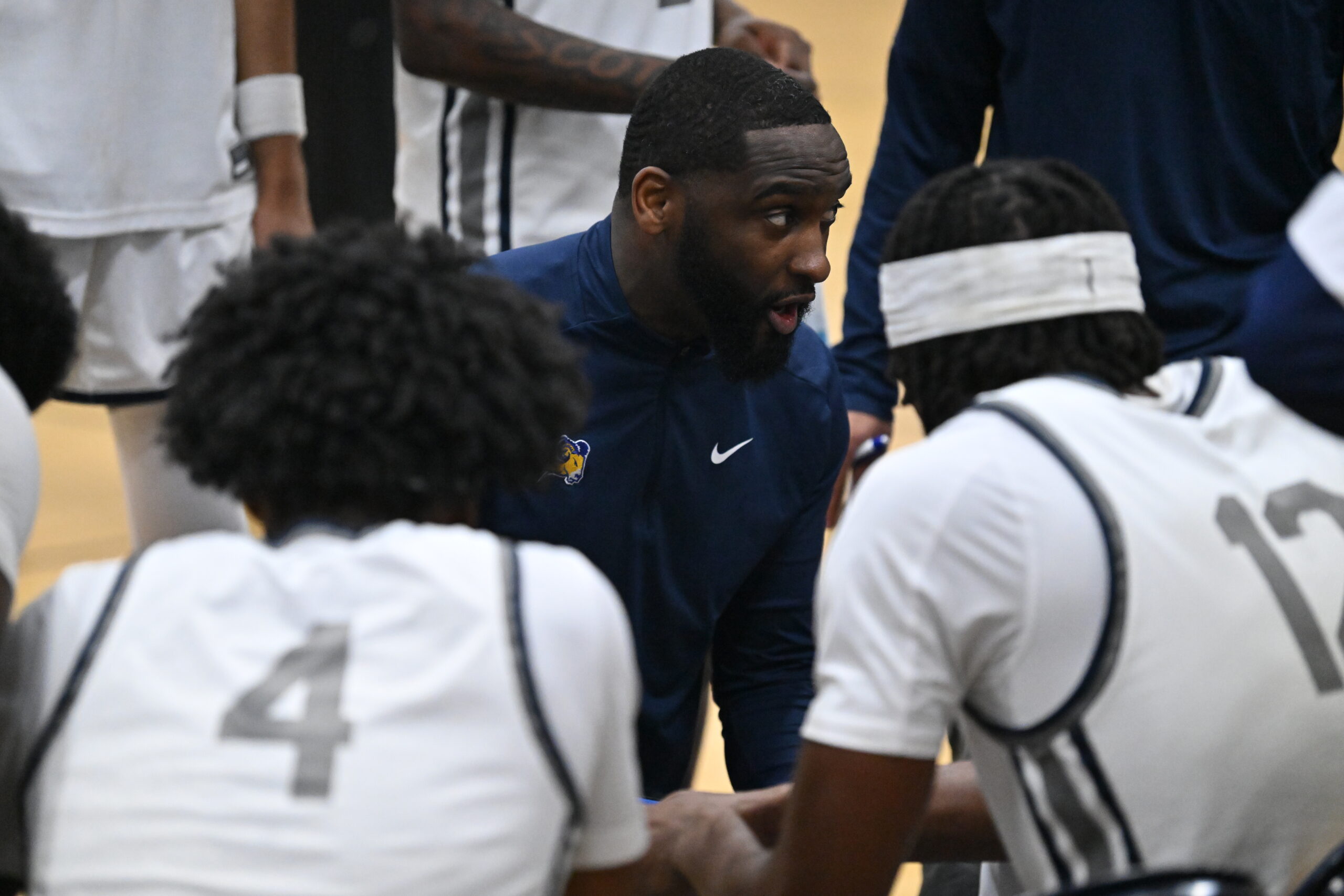
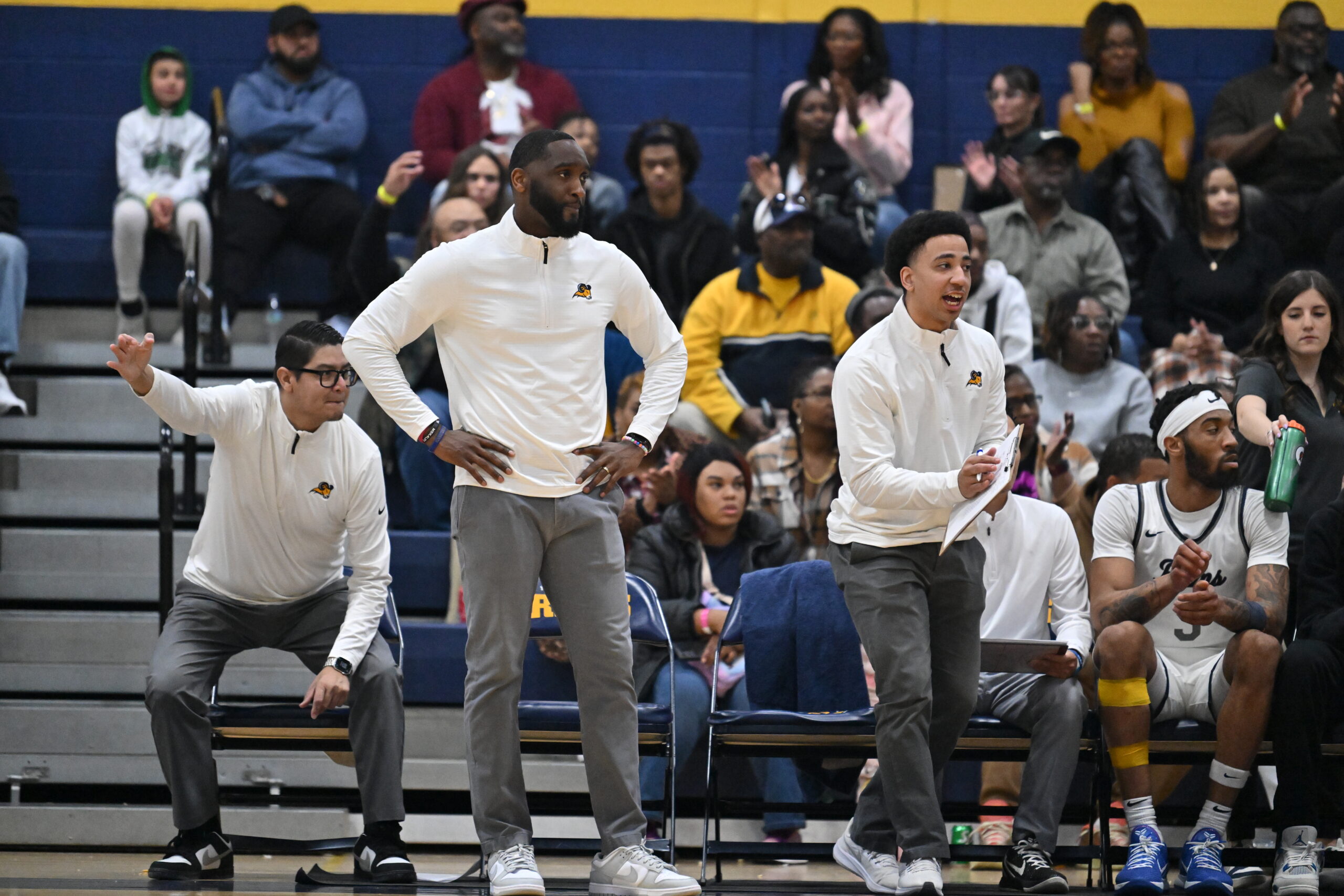
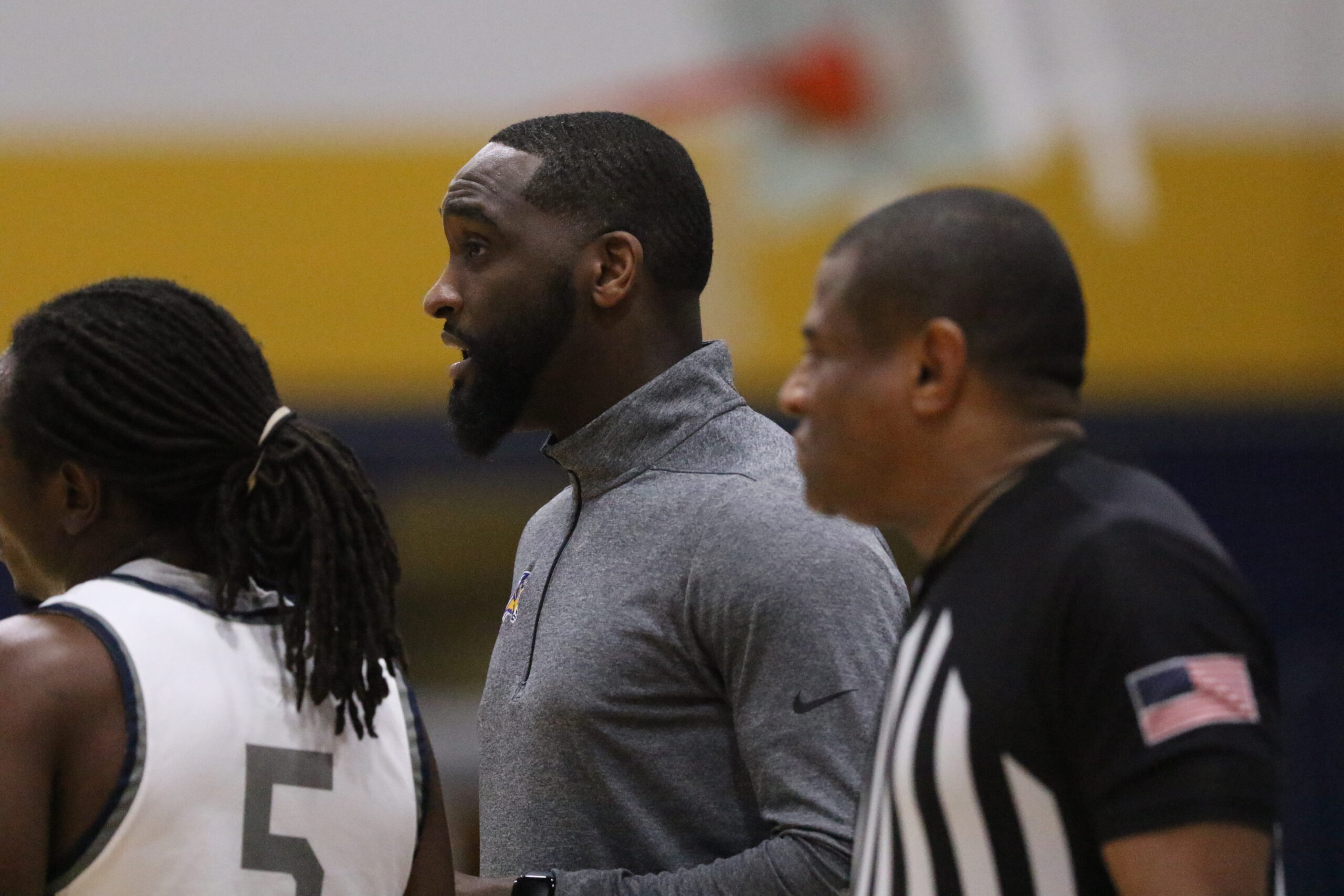
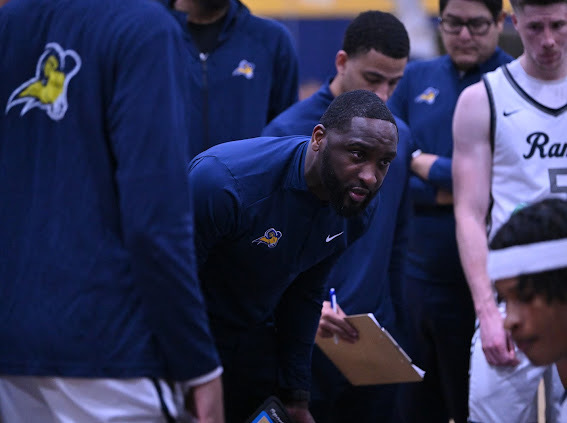
Brian Wanamaker coaching at Texas Wesleyan University.
Coaching through chemo
After graduating, Brad played for Pitt when it was one of the top men’s basketball programs in the country. Brian bounced around; first to Central Connecticut State, then to Lon Morris Junior College in Jacksonville, Texas, and, finally, to Texas Wesleyan in 2009.
He struggled with foot injuries almost every year of his college career. This made it difficult to get steady playing time. But at Wesleyan, he found a fit.
A former coach had recommended the school to him, and Wanamaker initially was skeptical. He’d never heard of it. The campus was in Fort Worth, Texas, about 1,500 miles away from home.
“I didn’t know what Texas Wesleyan was,” he said. “My first semester, I played basketball, stayed in my room, and didn’t talk to teammates, coaches, anyone. I was just like, ‘Why am I here?’”
By his second semester, he realized this would be his last opportunity to play in college. So he decided to embrace the program and was happy he did. Wanamaker felt he could be himself in a way he couldn’t at his previous two stops.
During the summer of 2010, Brian visited Brad at Pitt and trained with him and his teammates. He returned to campus in the fall more confident than ever.
That season, he was named a first-team NAIA All-American and Red River Athletic Conference Player of the Year, averaging 19.1 points, 5.7 rebounds, and 5.0 assists.
The combo guard was drafted into what then was the NBA D-League and ended up playing six seasons in Germany and Lithuania.He returned to Texas Wesleyan in 2019 to finish his degree and work as an assistant coach.
Brian Wanamaker returned to Texas Wesleyan as a coach and has endured a trying off-court experience while leading the Rams program.
In late 2021, during his second season coaching, Wanamaker started to feel back pain. At first, he thought it was workout-related. Maybe he’d pulled or strained a muscle.
But the pain worsened, to the point where he had to stop exercising. He couldn’t sleep in a bed anymore because it would hurt his back, so he would lie flat on the floor.
Wanamaker underwent all sorts of testing, but the doctors didn’t find anything. They hypothesized that his pain was stress-related.
“And I would tell them,” he said, “‘I’m not stressed.’”
In September, after a litany of visits, his primary care doctor received MRI results that showed tumors all over Wanamaker’s back. He went to the hospital for further testing, and was told he had multiple myeloma, a cancer formed in plasma cells that is treatable but has no known cure.
He was a statistical anomaly. The disease is predominantly diagnosed in people 65 years or older. According to the American Cancer Society, only 1% of cases are found in those younger than 35.
Wanamaker was 33.
“That was really hard,” he said. “Because, obviously, when you hear cancer, you think death. And then you hear, ‘No cure.’ It was hard for me to process.”
Brian Wanamaker will lead Texas Wesleyan in the Sooner Athletic Conference Tournament starting Wednesday.
The next day, the coach started seven months of chemotherapy. Many on the team assumed he would be out for the rest of the year.
But Wanamaker was back in the gym that week, helping at practice and eventually sitting on the bench during games.
He had little energy and often felt sick. His immune system was at a higher risk than usual. But Wanamaker felt he needed to do it. So every day, he’d drive to Texas Oncology for his treatment, and would head to Texas Wesleyan afterward.
“I was probably more than half-asleep,” he said. “I was going through what I was going through, but I knew as a coach, players are going through stuff, too. It was just being there for them.”
Guard Akili Vining had recently lost his father to cancer. Point guard Matthias Nero had gotten into a severe car accident, which led to the death of his close friend.
Wanamaker was acutely aware of their struggles and those of other players. He decided to pour himself into his team.
“Coach B would probably text me every day,” Nero said. “He would make sure I was in the right headspace, to see if I needed help. He’d pull me aside and just tell me, ‘If you need anything — this isn’t about basketball. This is about the future and your mental health.’”
Wanamaker received a blood transfusion in May 2023. His father and brother visited him in the hospital shortly after. Seeing him hooked up to a cluster of machines was difficult.
“It was like, ‘I can’t lose my brother,’” Brad said. “‘Not the person I came into this world with.’”
Brad Wanamaker (left) has had to monitor his twin brother’s condition from afar.
Eventually, Brian’s chemotherapy schedule was reduced from daily to monthly treatments. Through it all, he rarely missed a practice or a game, which became a source of inspiration for his team.
The players could see their coach had changed. He’d lost hair and weight, and his skin looked dull. Sometimes, he’d arrive with a bandage on his arm to cover a needle mark.
But he was showing up, just like they were.
“If he can fight though chemo,” Vining told a local TV affiliate, “I can fight through practice.”
Brian Wanamaker has won the respect of his players by caring about them as players and people.
‘People are going to say I cared’
In April 2024, Wesleyan’s head coach, Brennen Shingleton, resigned to work for a business in Fort Worth. Wanamaker was named interim coach but also applied for the full-time job.
He wasn’t alone. Athletic director Ricky Dotson said he received “a ton” of applications, from former NBA assistants to former Division I head coaches. He narrowed it down to four finalists, interviewing them throughout the spring.
Despite the high caliber of candidates, Wanamaker still set himself apart. It wasn’t just that he was familiar with the team. It was that the players respected him, and looked to the Philadelphia native as a role model.
Dotson knew the coach’s character. He could see that this would not be a surface-level job for him. By the end of the interviews, he was convinced that Wanamaker was the best choice, even with the uncertainty about his health.
“I just never really doubted that he would be able to do it,” Dotson said. “And he’s moved right on through.”
That June, Wanamaker was officially named head coach. He immediately got to work, targeting bigger, more athletic players in hopes of building a hard-nosed, physical team.
One such player was Khalil Turner, a 6-8 guard from Northeast Philly who had shuffled through four colleges before taking a two-year hiatus. Like Wanamaker, Turner was a Hajj disciple in need of a new home.
The former Sonny Hill coach was confident that Wesleyan would be the right fit.
“Listen, man, I got a place for you,” Hajj told him. “It’s a Philly coach. He’s going to treat you like family. All you’ve got to do is just go out there and put the work in, and everything is going to fall into place.”
The two initially butted heads, usually over inconsequential things. Turner said that one day, in practice, they almost got into a physical fight. But Wanamaker never gave up on him. He didn’t suspend Turner or revoke his scholarship.
Brian Wanamaker connected with another former Philly star, Khalil Turner, who arrived in Fort Worth.
Eventually, the guard began to open up about his personal struggles. He had a family member who was sick at home. He told the coach that he needed a job to make some extra money. Wanamaker found him one at a local laundromat.
Now, Turner says they are “best buds.” Last year, when the incoming freshmen arrived on campus, the senior guard was the first to explain Wanamaker’s predicament.
“We told them, ‘Hey, Coach is dealing with this,’” Turner said. “‘So from time to time, he might be a little moody. But this is why he’s moody. He’s worried about his chemo. So don’t stress him out too much.’
“The vets feel like if Coach is giving his all, with his chemo, we should give it our all every day in practice,” Turner added, “and every day on the court. He’s going above and beyond for us, so we should do the same.”
After consecutive losing seasons, the Rams now look like a different team. They have adopted some of Wanamaker’s characteristics, playing a faster, tougher brand of basketball.
They set hard screens and make hard cuts. They dive on the floor for loose balls and swarm opposing offenses. And they are seeing results.
In 2024-25, Texas Wesleyan went 19-11, earning an NAIA National Tournament berth. This year, it is 19-9.
But Wanamaker isn’t just focused on the numbers.
He knows his players have changed as people, too. They are more emotionally available. They are better able to communicate their feelings. They are less reactionary than when they first arrived.
And to the Philadelphia native, that is more valuable than anything.
“It gives me my purpose,” he said. “And no matter what happens, I know that, when it’s all said and done, people are going to say I cared.”
No man is an island. Unless that man is Bryce Harper and he has just reached base.
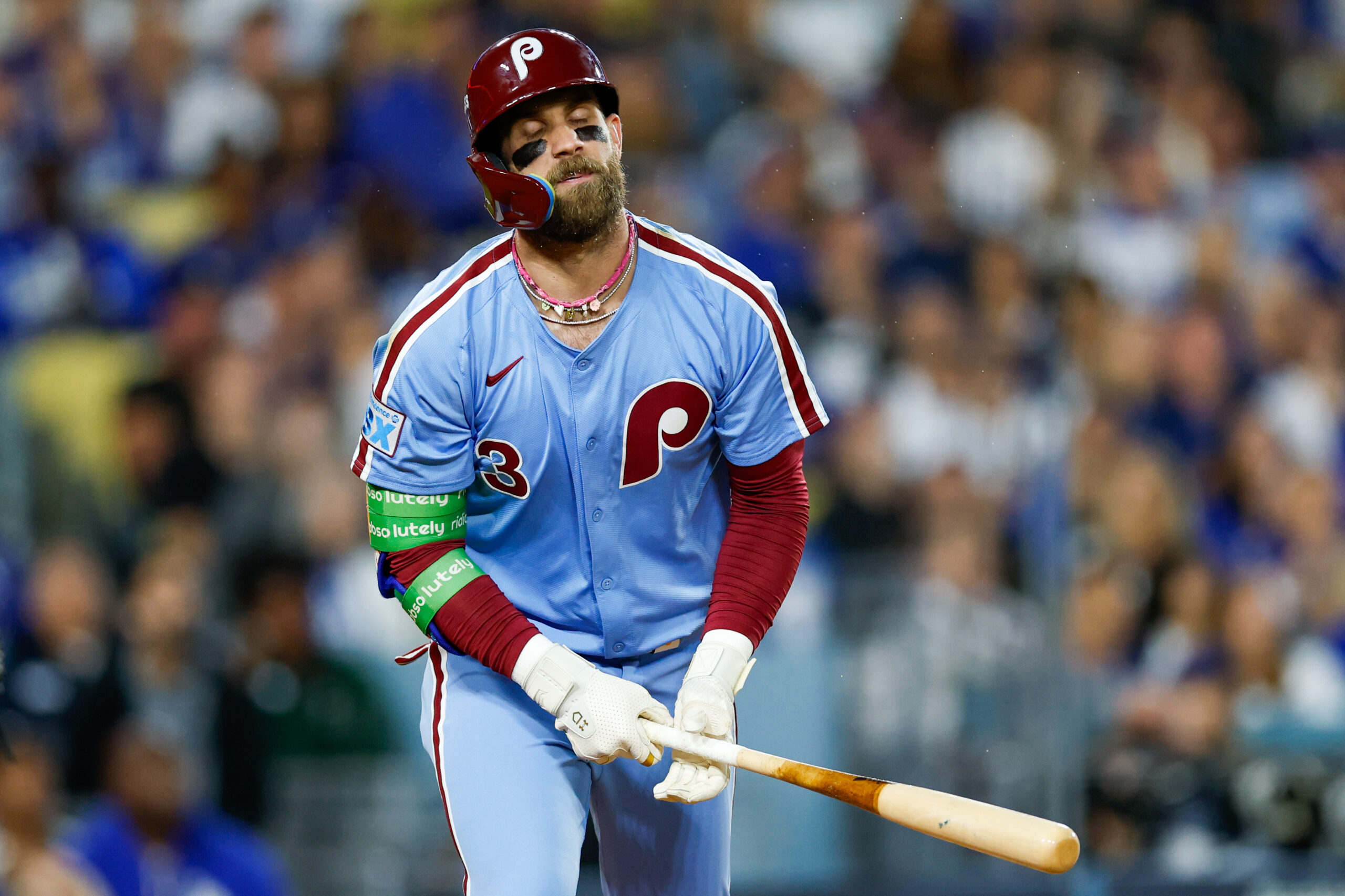
Last season, there wasn’t a lonelier lot in life than to be a Phillies superstar standing on first, second, or third. Only four players in the majors reached base as many times as Harper did and scored fewer runs. The 72 runs he did score were the fewest of his career in a season with at least 500 plate appearances. Only one player in the majors last year failed to score more than 72 runs while posting an OPS of at least .800 in 580-plus plate appearances. It was Harper. In fact, he was the only player to do it since 2023. That’s not some hocus-pocus bit of cherry-picked math. Fifty-nine players meet our criteria (.800 OPS, 580 PAs). Harper’s 2025 campaign ranked dead last in runs scored.
Not since E.T. have we seen someone with such otherworldly attributes struggle this hard to get home.
We’ve heard a lot of chatter about lineup protection this offseason. Scott Boras broached the topic back in October. Harper himself weighed in last week. Their focus was on pitchers pitching around Harper in order without the threat of reprisal from those due up next.
“I think the four spot has a huge impact,” Harper said when he arrived in Clearwater, Fla., for spring training. “I think the numbers in the four spot weren’t very good last year for our whole team. I think whoever’s in that four spot is going have a big job to do, depending on who’s hitting three or who’s hitting two.”
Neither Harper nor his agent spoke much about the issue of him rotting on base like an unsold ham on Easter Monday. But it’s just as important, if not more so.
Last season, Phillies hitters had 366 plate appearances when Harper was on base. That’s not including his home runs. We’re limiting ourselves to the plate appearances when Harper was physically standing on base, hoping for a teammate to drive him home. In those 366 plate appearances, the hitters behind Harper combined for a whopping .227 batting average, .290 on base percentage, and .342 slugging percentage. Of the 180 times he reached base without driving himself in (i.e., without hitting a home run), he ended up crossing home just 45 times.
In 366 plate appearances (not including home runs), the hitters behind Bryce Harper combined for a whopping .227 batting average, .290 on base percentage, and .342 slugging percentage.
That’s a remarkably low percentage. Three out of four times that Harper reached base, the inning ended with him jogging back to the dugout. That’s a remarkably low percentage compared to most other hitters of his ilk. Even more troublesome is the fact that Kyle Schwarber’s percentage wasn’t much better. But we’ll get to that in a second.
First, let’s remind ourselves of the real-world situations that these numbers tabulate. Harper didn’t have a great NLDS against the Dodgers. But he did reach base six times. That was tied for second on the team behind Alec Bohm. Bohm reached base 10 times and scored three runs. J.T. Realmuto reached base six times and scored three runs. Harper reached base six times and scored one run.
It’s an imperfect example. In the NLDS, Harper mostly expired on first base after arriving there with two outs. You could write it off to circumstance if not for the body of evidence. In the 2025 regular season, no player in the majors was stranded as often as Harper, once you account for where he hits in the order. His driven-in percentage (25%) ranked dead last among players who regularly hit in the top-third of the order (minimum 500 plate appearances).
The table below shows the 34 players who had at least 500 plate appearances in an average batting order position between the two-hole (2.0) and three-hole (3.0). Their run percentage is the number of times they reached base and later scored.
Just as concerning as Harper in dead last is Schwarber a mere two spots ahead of him. Of the 34 qualified hitters, Schwarber and Harper ranked 32nd and 34th in scoring percentage. Put another way, Schwarber and Harper’s teammates ranked dead last in their ability to drive them in.
Between Schwarber and Harper is Cal Raleigh, whose Mariners advanced to last year’s ALCS and put up a sporting effort. Meanwhile, Toronto’s Bo Bichette scored at a below-average rate. The Blue Jays made the World Series. It isn’t completely unheard of for upper-middle-of-the-order hitters to drive in more runs than they score, given the drop-off in quality behind them. But the Phillies have two players at the bottom of the list. We’re talking about the upper two-thirds of their order. And they aren’t just below-average. They are virtual outliers. The only other team that has two players in the bottom half of this list is the Angels. Nobody wants to be mentioned in the same breath as the Angels. If you are comparable to the Angels in a certain regard, it’s a sure sign the regard needs fixing.
If Harper sounds a little cranky this spring, think about how it feels to reach base and not score. And then think about the fact that the Phillies still don’t have a viable solution. Is it any wonder that Harper is acting like he woke up on the wrong side of the red-light therapy sleeping bag?
CLEARWATER, Fla. — It’s a long, scary-sounding procedure — venous thoracic outlet decompression surgery — so let’s just ask Zack Wheeler to explain what it entailed on that Tuesday in September at a St. Louis hospital.
OK, Zack, don’t spare any details.
“Basically all they do,” the Phillies ace said Tuesday, “is go in, chop the bone, get rid of that [rib] because that’s what’s causing it, get rid of the blood clot, and then open up the vein. My vein closed back, I think two different times, so they had to go back and open it. If it happened again, I think they were just going to do a stent. But so far, so good.
Five months later, there’s a matter-of-factness with which Wheeler talks about all of this, from the onset of symptoms on the eve of an Aug. 15 start in Washington to the tension-filled days and weeks that followed.
Maybe it’s because the 35-year-old righty endured injury-related misery early in his major-league career. In the spring of 2015, he suffered a torn elbow ligament and had Tommy John surgery. Setbacks in his recovery led to a second procedure and caused him to miss two seasons.
Compared to that, Wheeler says this is “not that bad.”
“Knock on wood,” he added, tapping the side of his locker.
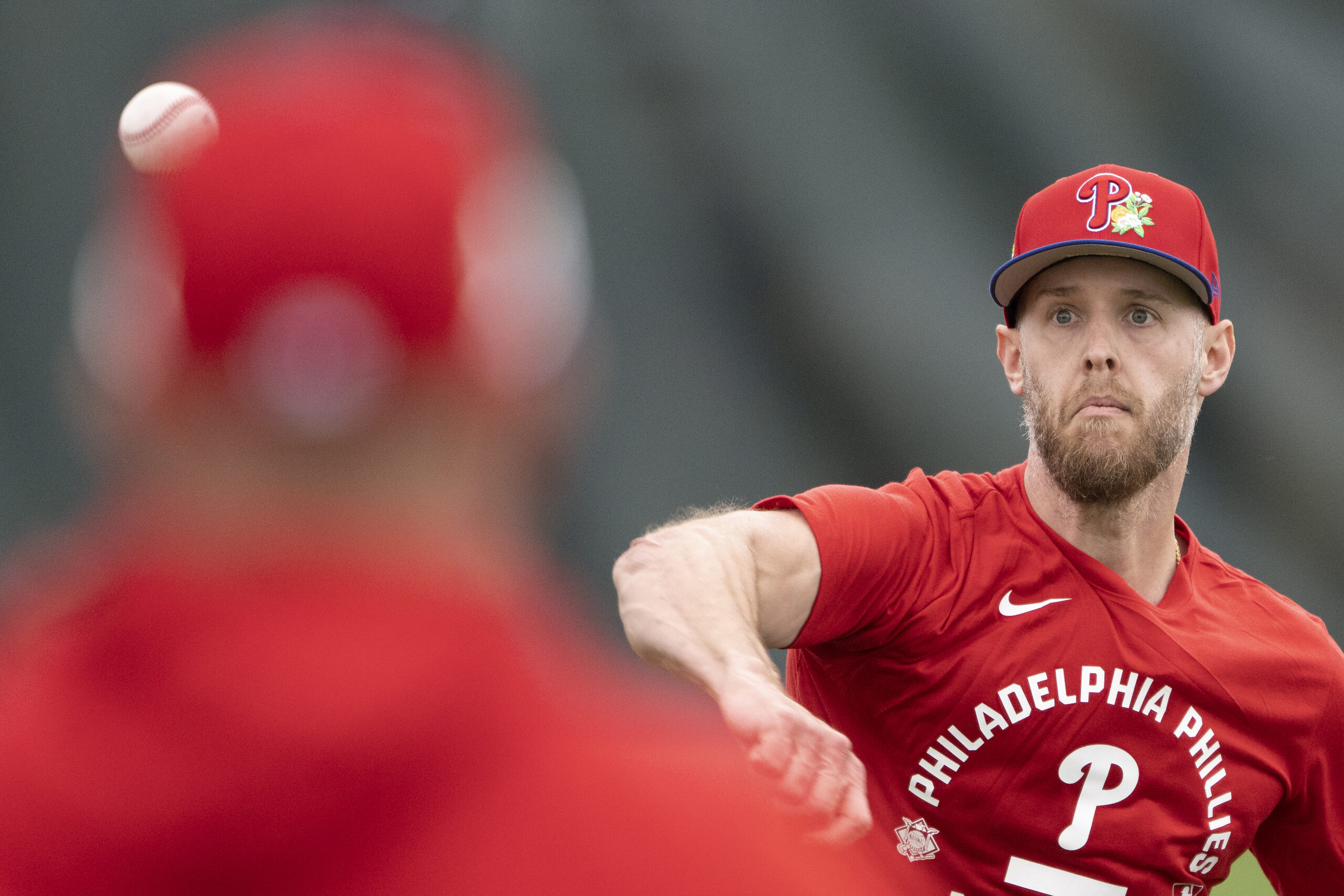
Since he signed with the Phillies in 2020, Zack Wheeler leads all major-league pitchers with 28.6 wins above replacement, according to Fangraphs.
Wheeler remains in the long-toss phase of his comeback, playing catch from as far as 120 feet. He’s inching closer to throwing from the mound. The standard buildup will follow: bullpen sessions, facing hitters in live batting practice, more bullpen sessions, and a few starts in the minor leagues.
Although Wheeler won’t be ready in time for opening day, he and the Phillies believe he will pitch a lot of innings this season. But beneath the optimism is an underlying mystery raised the other day by none other than Bryce Harper.
“We have no idea what Wheels is going to look like,” Harper said. “We all hope that Wheels comes back and is Zack Wheeler because there’s nobody better in baseball when he’s going good. But we have no idea.”
In classic Wheeler fashion, he insists he isn’t worried.
“I don’t think there’s any reason why I wouldn’t be who I am,” he said. “It’s not like a major surgery. I just got a rib taken out. It might sound like a crazy situation, or crazy surgery, or whatever, but mentally, I’m not really stressed about it. Physically, I’m not really stressed about it.”
Not since that Friday night in D.C., at least, when a late-night consultation by the Nationals team physicians after a five-inning start led to the next-day diagnosis of a blood clot near his right shoulder.
In detailing for the first time those few days in August, Wheeler said he felt “like a full feeling” as he went through arm exercises in the training room on Aug. 14. He chalked it up as “something wacky,” and went outside to play catch. The sensation didn’t subside.
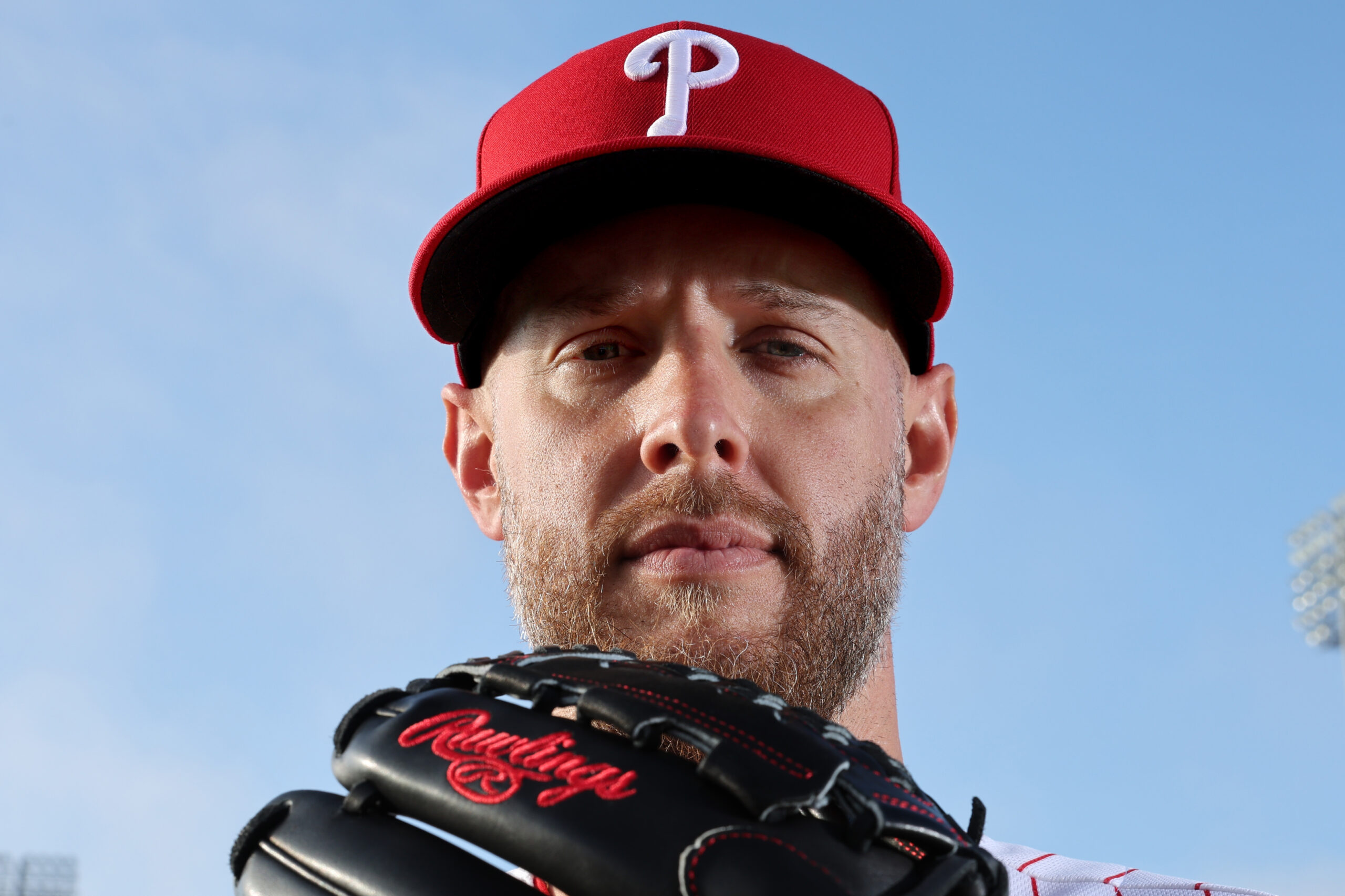
Phillies pitcher Zack Wheeler was diagnosed with a blood clot near his right shoulder after a start in Washington on Aug. 15 of last season.
When they work out, Phillies pitchers often wear a cuff that partially restricts blood flow to help the arm recover. As Wheeler put it, “your veins start popping up.”
“That’s literally what I felt like,” he said.
Only he wasn’t wearing the cuff.
Wheeler said he reported the issue to head athletic trainer Paul Buchheit, with whom he has developed a close relationship since both joined the Phillies in the 2019-20 offseason. He also told Buchheit about “a little bubble in my armpit” that looked like a lymph node.
Everything checked out in the training room. Wheeler said the “full feeling” went away, then returned the next day in the bullpen before his start, then went away again. He held the Nationals to two runs in five innings, threw 97 pitches, and topped out at 95.7 mph, a 1.5-mph gain over his previous start.
“Paul was like, ‘Let’s just get it checked out,’” Wheeler said. “The D.C. doctors came over, and they’re like, ‘Uh, it’s not a lymph node. You need to go get that checked out tomorrow morning, first thing.’ And that was kind of what started the whole thing.”
Doctors diagnosed the blood clot. Wheeler went back to Philadelphia and underwent a venogram, a test to detect blood flow in his veins. The conclusion: The clot was caused by a vein that got compressed between Wheeler’s rib cage and collarbone.
If anything, Wheeler actually felt relieved.
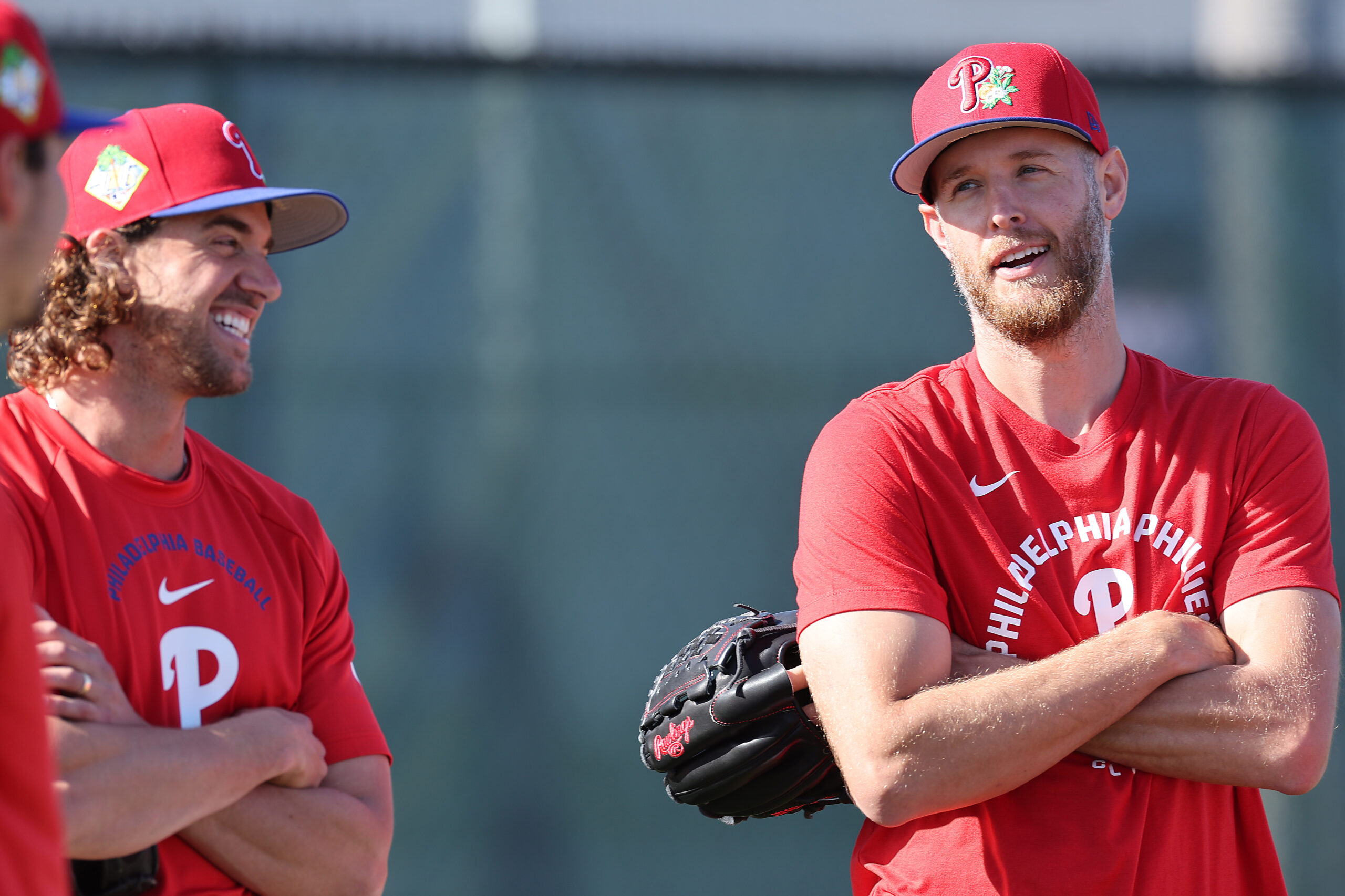
Phillies pitcher Aaron Nola (left) listens as Zack Wheeler jokes around during spring training in Clearwater, Fla.
“Even though like the whole blood clot thing was pretty serious, I didn’t even find it that scary,” he said. “Maybe I’m just naive to it. But I didn’t get a blood clot because of my health or anything like that. It’s just two bones were pinching together. That’s why it happened. So, that kind of eased the thoughts in my head.”
Wheeler underwent a thrombolysis on Aug. 18 at Thomas Jefferson University Hospital to remove the clot and open the vein. After taking blood thinners for five weeks, Wheeler had surgery Sept. 23 to remove the rib. The vein had closed again and a second clot was forming.
It was “nothing out of the ordinary,” according to Wheeler, who said his St. Louis-based vascular surgeon, Robert W. Thompson, warned that the vein might not stay open until after they removed the rib.
“Just from hearing what they were saying, if it stayed open, hooray. But I don’t think they really expected it to,” Wheeler said. “The rib was still there. The clavicle is obviously still there.”
Before Wheeler left the hospital, doctors went in again to make sure the vein hadn’t closed again. It had not.
Then came the hard part: weeks of physical therapy and rehab, including a strict diet of what Wheeler described as “small amounts and healthy stuff,” not easy for an unabashed fast-food and junk-food lover. He’s unsure how much weight he lost but said it was “a good bit.”
“You can’t have fats or something like that,” said Wheeler, who rejoined the team Oct. 4 for pregame introductions before Game 1 of the division series against the Dodgers. “I lost a lot of weight doing that because I could barely eat, really.
“It was pretty painful that first week. It was rough. But since then it’s been pretty smooth sailing.”
Wheeler spent most of the winter in Philadelphia, rehabbing under Buchheit’s supervision. There’s a history of pitchers returning from this particular form of thoracic outlet syndrome. Among the success stories: Merrill Kelly, at age 31, had surgery in September 2020, made it back by April 2021, and is still going.
So, while outsiders — and even some of his teammates — wonder if Wheeler will be Wheeler again after a procedure that he insists wasn’t as scary as it sounds, he puts in the work each day with his usual nonchalance.
“I mean, it might be a little thought, but at the same time, you can’t worry about that kind of stuff,” Wheeler said. “There’s no hesitation at all.”
You won’t find chef Joey Baldino flexing tweezers with microgreens or dotting plates with fluid gels at the Bomb Bomb Bar and Grill.
That’s because Baldino, who also owns the popular Palizzi Social Club near 12th and Reed and Collingswood’s Zeppoli, occupies a unique place in Philadelphia’s pantheon of chefs as the preservationist-in-chief for the classic-but-fading flavors of Italian South Philly.
Baldino has managed one of the trickiest tasks possible — to retainthe essential character of a down-to-earth neighborhood bar while also making it his own, giving more depth to the seafood and drinks, and infusing it with sustainable new appeal for newcomers and longstanding regulars alike.
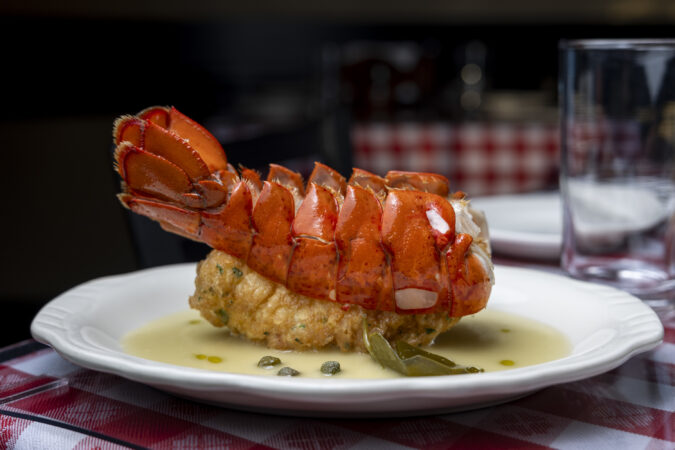
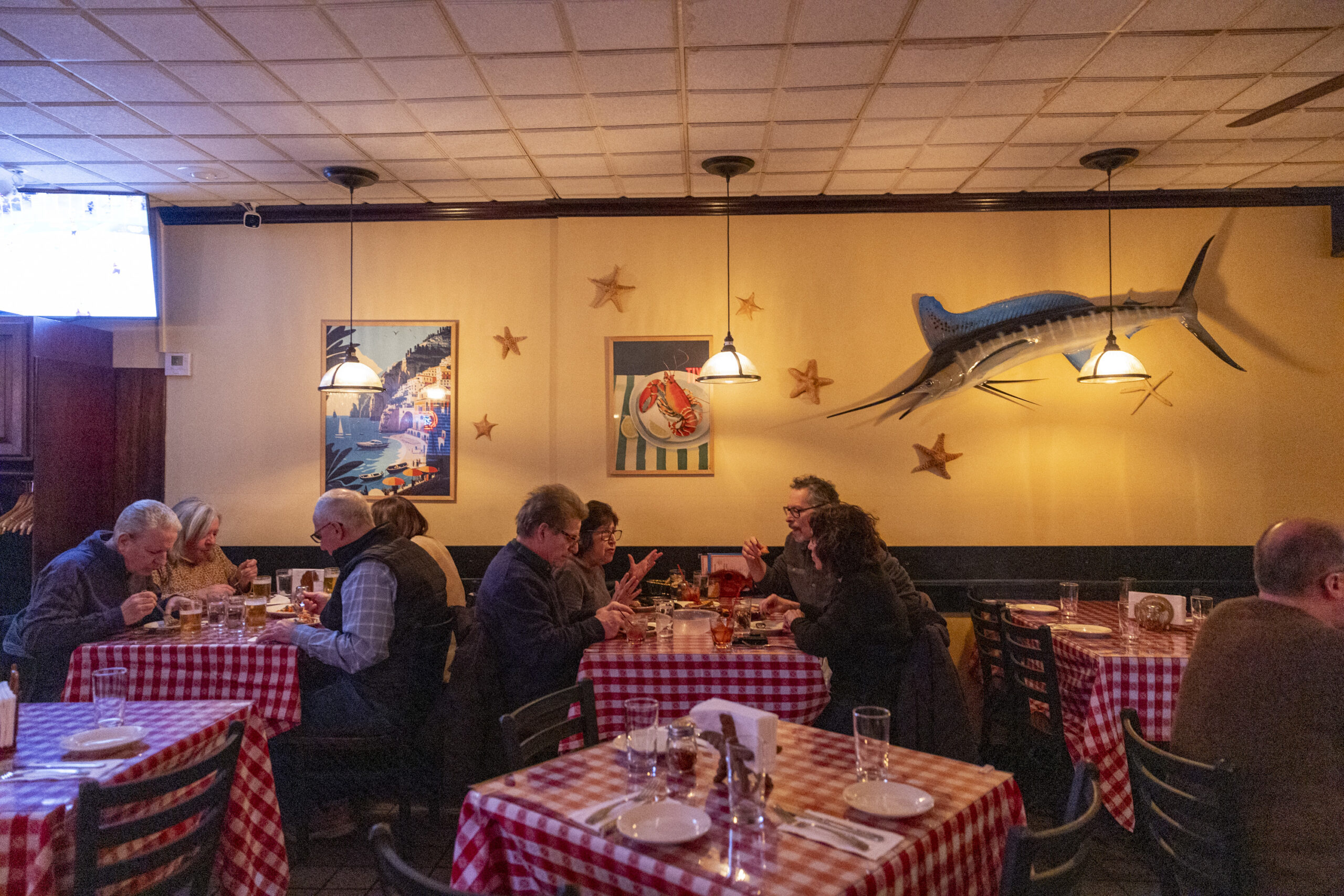
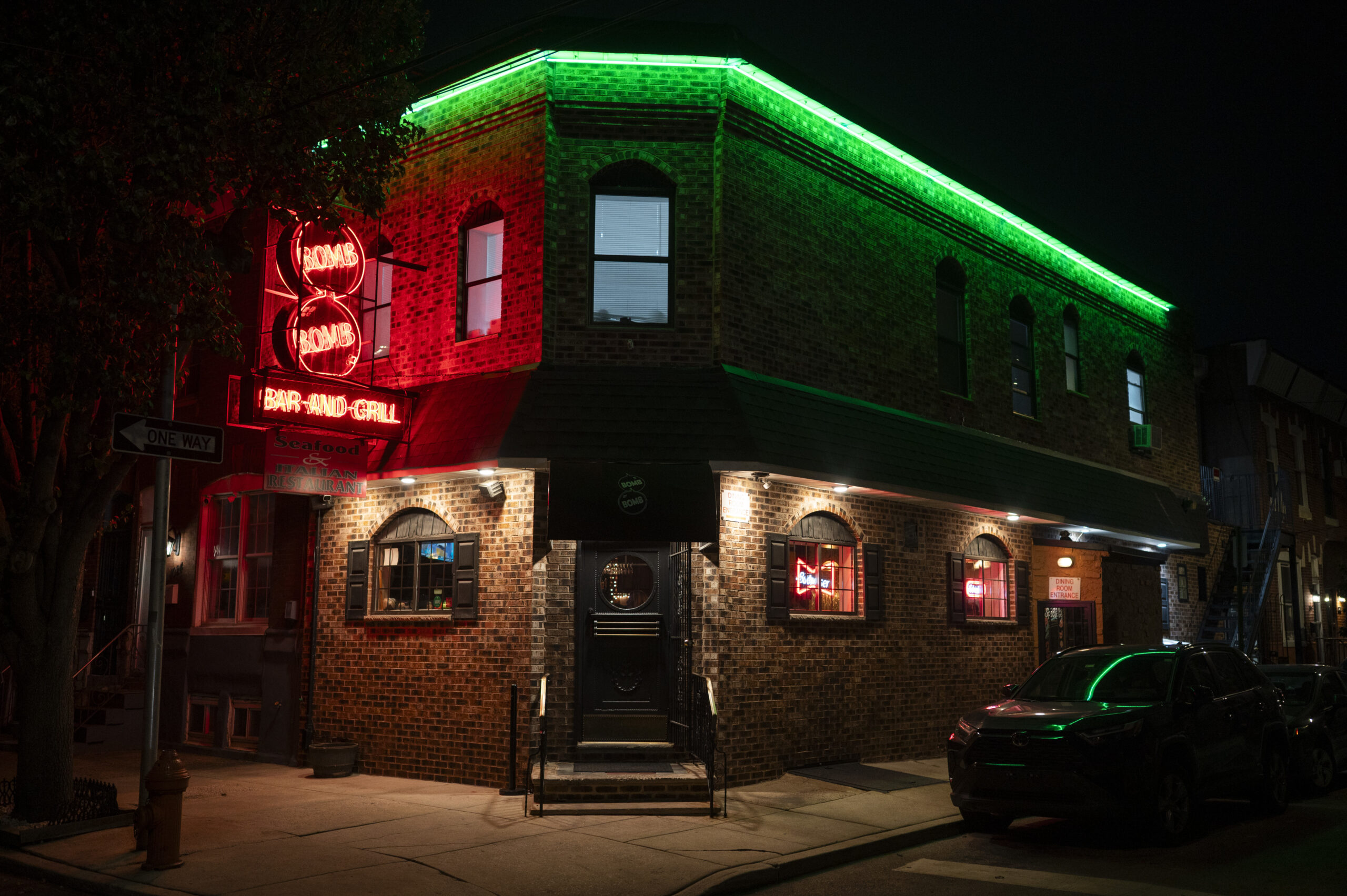
At the Bomb Bomb, where the tiny back dining room is draped with red-checked tablecloths, a plastic marlin hangs on the wall, and Louis Prima tunes fill the air (along with Nina Simone, the Ramones, and vintage Herb Alpert brass), this humble son of East Passyunk is at his best in summoning his ancestors with, among other things, one of the best “mussels red” I’ve ever had. A shot of Calabrian chile paste and white wine give his fra diavolo sauce an irresistibly zesty ba-da-boom. His reinterpration of a venerable standby like lobster francese is even more proof of his golden old-soul touch: He infuses the meat with the zing of Goodfellas-style thin-shaved garlic before crisping it inside a delicate egg-wash crust, then floating it atop a lemony puddle of butter sauce laced with the briny crunch of caper leaves beneath the bright orange lid of its shell.
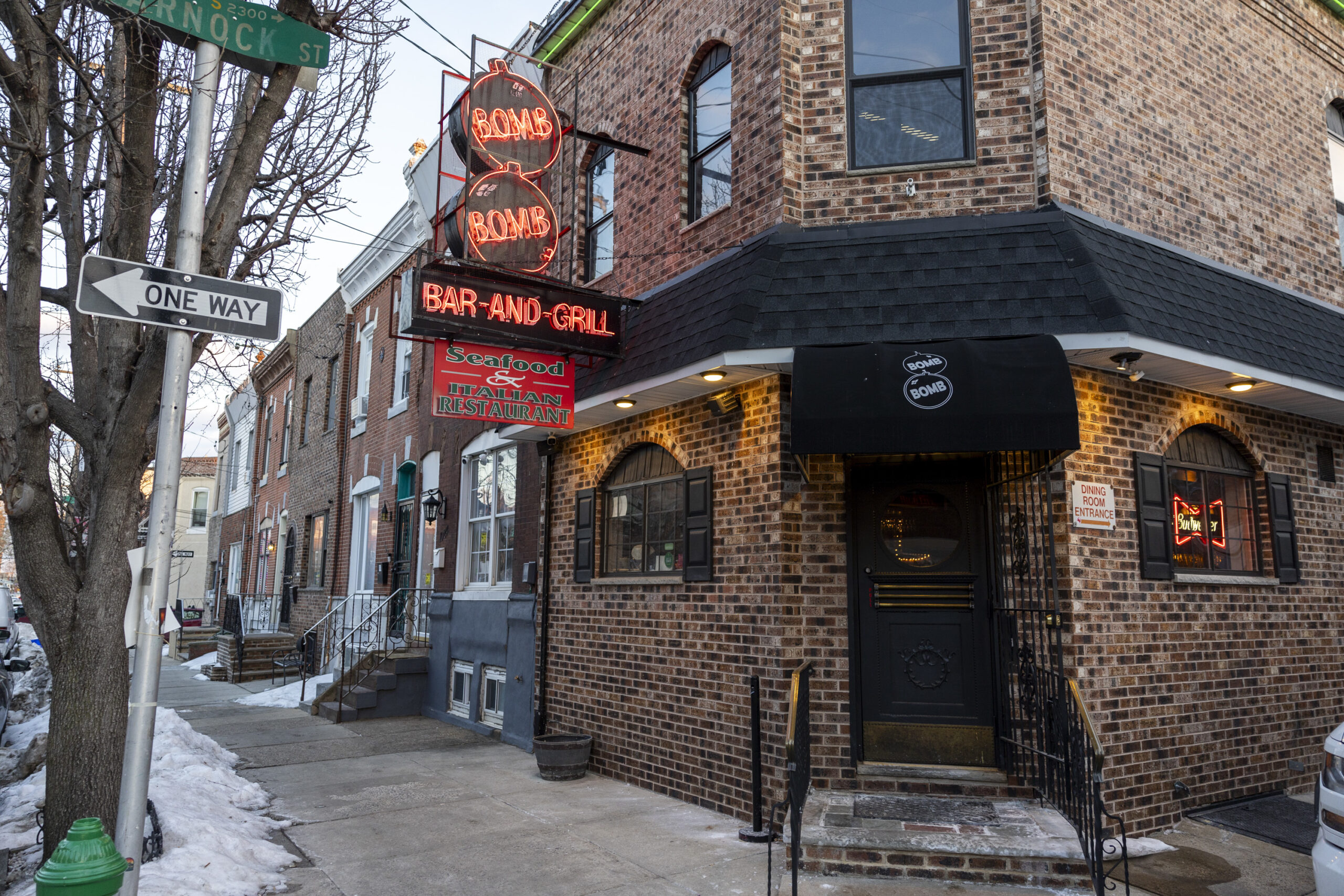
The outside of Bomb Bomb Bar in Philadelphia, Pa., on Thursday, Feb. 12, 2026. .Joey Baldino has managed to retain the character of a down-to-earth neighborhood bar while also making it his own.
“It’s time to bib up now!’” says longtime Bomb Bomb server Linda DeCero, sidling up behind us to tie on the disposable plastic bibs for our seafood feast to come, a plump and meaty steamed Dungeness crab for two scented with juniper, orange, and bay beside a votive-warmed basin of drawn butter.
As one of several options for the prix fixe menu here, it’s a different kind of crustacean indulgence than the homey spaghetti with crab gravy the Bomb Bomb was originally known for. That was when it was owned by the Barbato family, which not only gave this storied corner taproom its name (a nod to a pair of 1936 firebombings allegedly committed by a jealous competitor), but also kept it rolling with baked ribs and “That’s Amore” kitsch for 73 years until it was sold to Baldino in early 2025.
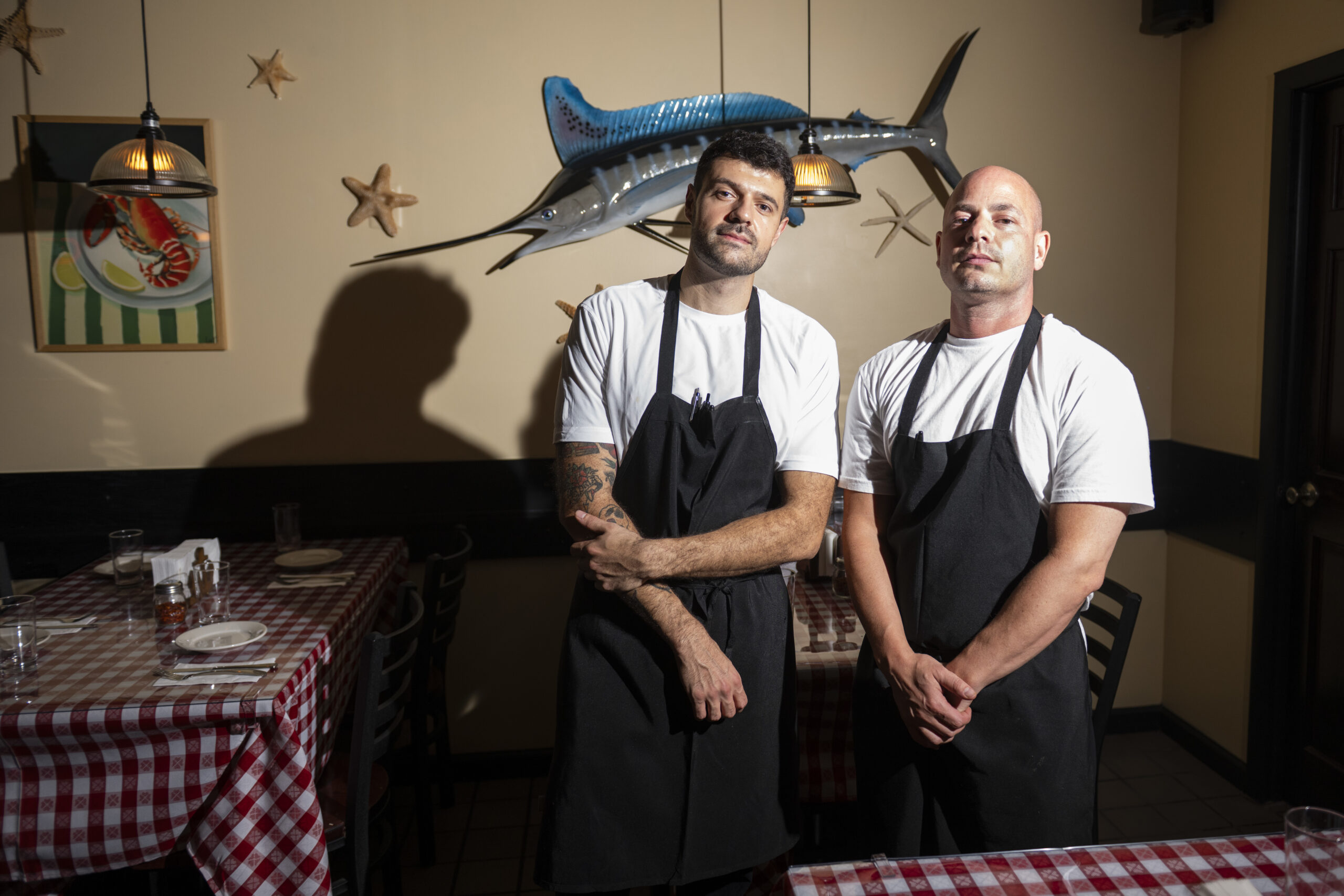
The steamed Dungeness crab for two is one of the highlights of the Italian seafood menu at Bomb Bomb Bar.Bomb Bomb Bar chefs Max Hachey (left) and Joey Baldino in the South Philadelphia landmark during a friends and family dinner on Sept. 29, 2025.
Baldino, who took nine months to open his lightly renovated version of the bar, has managed the transition with aplomb. Just ask the two cheerful sisters at the table beside us, who came from South Jersey to toast their late father’s birthday with a celebratory dinner and sundae at his longtime favorite tavern: “He’d love what they’ve done to the place!” one told me as we waited outside in the rain for our rides after the meal.
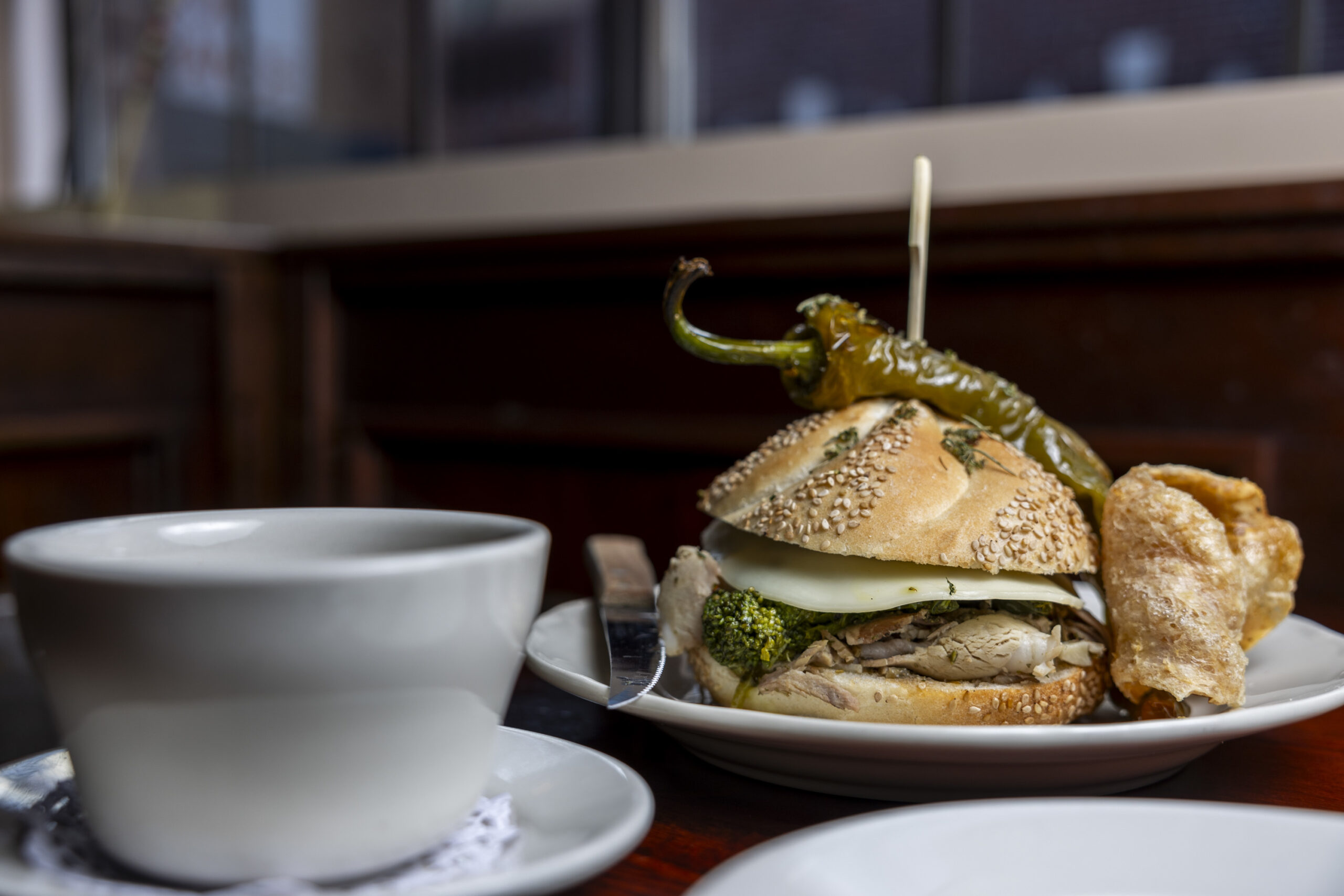
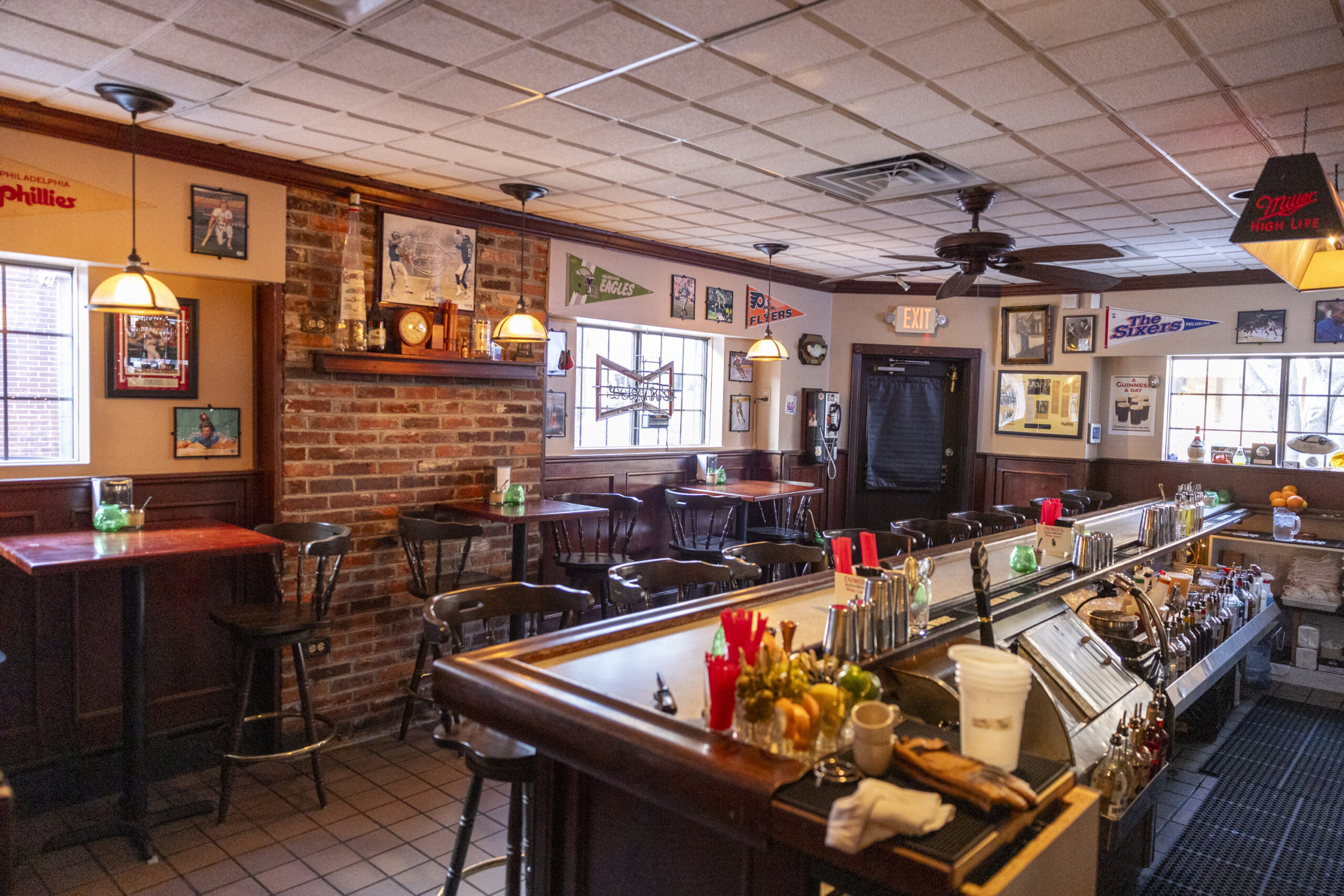
Baldino, 47, is uniquely suited for the task, having grown up eating steamed crabs out of a wooden bowl at his grandfather Al Mazza’s very similar bar at 12th and Reed — part of a generation of Italian bars like Strolli’s and South Philly Bar & Grill that have almost all now disappeared. He’s kept the Bomb Bomb’sclassic format of the neighborhood corner tappie intact, with room for 16 walk-ins in the small barroom up front, where you can nibble on sublimely juicy roast pork sandwiches and sip Vespers spiked with peperoncini brine while the Flyers skate across TVs behind the bar.
Meanwhile, the intimate 26-seat rear dining room, accessed through the onetime “Ladies Entrance,” is a boisterous reservation-only hideaway for three seatings nightly of a prix fixe seafood menu meant to evoke the Christmas Eve dinners of Baldino’s youth.
The pork sandwich with long hots at the Bomb Bomb Bar.The inside bar area of Bomb Bomb Bar in Philadelphia, Pa., on Thursday, Feb. 12, 2026. .
At $62 a person — with a choice of five sharing dishes for two people or six items for four people plus a pasta and a side — the price is fair considering the quality and quantity of the cooking. There are plenty of options for add-ons, specials, and drinks to turn dinner here into a splurge.
The antipasto for $18 is one add-on you probably shouldn’t miss for its bounty of house-pickled veggies, salumi, and cheese. And if the bagna cauda special is on offer, that’s another worthy vegetable-centric starter culled from Baldino’s daily shopping rounds through the Italian Market — grilled eggplants and zucchini, blanched cabbage rolls, and imported chicory shoots. They are perfect for dipping in a warm crock of buttery anchovy-garlic cream while your table sips through its first round of cocktail classics with Italian twists.
There’s a Bloody Mary sparked with Calabrian chilies and shredded provolone, a frozen Roman Coke spiked with amaro, a prickly pear riff on a margarita, and a crispy house pilsner made for the Bomb Bomb by Human Robot. I lean more into the affordable Italian wines when it comes to the heart of the prix fixe menu; a fizzy dry Lambrusco, the peachy almond notes of a Grechetto, and some light-hearted reds (a juicy Nebbiolo for $14) won’t overwhelm the seafood.
As for the food itself, you almost can’t lose — unless you have an aversion to an occasional excessive use of breadcrumbs on standbys like the shrimp oreganata or bacony clams casino. I preferred the cockles in brothier “clams white” form, steamed in Carlo Rossi Chablis (the official jug wine of South Philly) over a bowl of toast to finish last, having soaked in all that garlicky juice. The Bomb Bomb’s shrimp cocktail is also exceptionally flavorful from a gentle poach in a white wine court bouillon perfumed with orange and thyme.
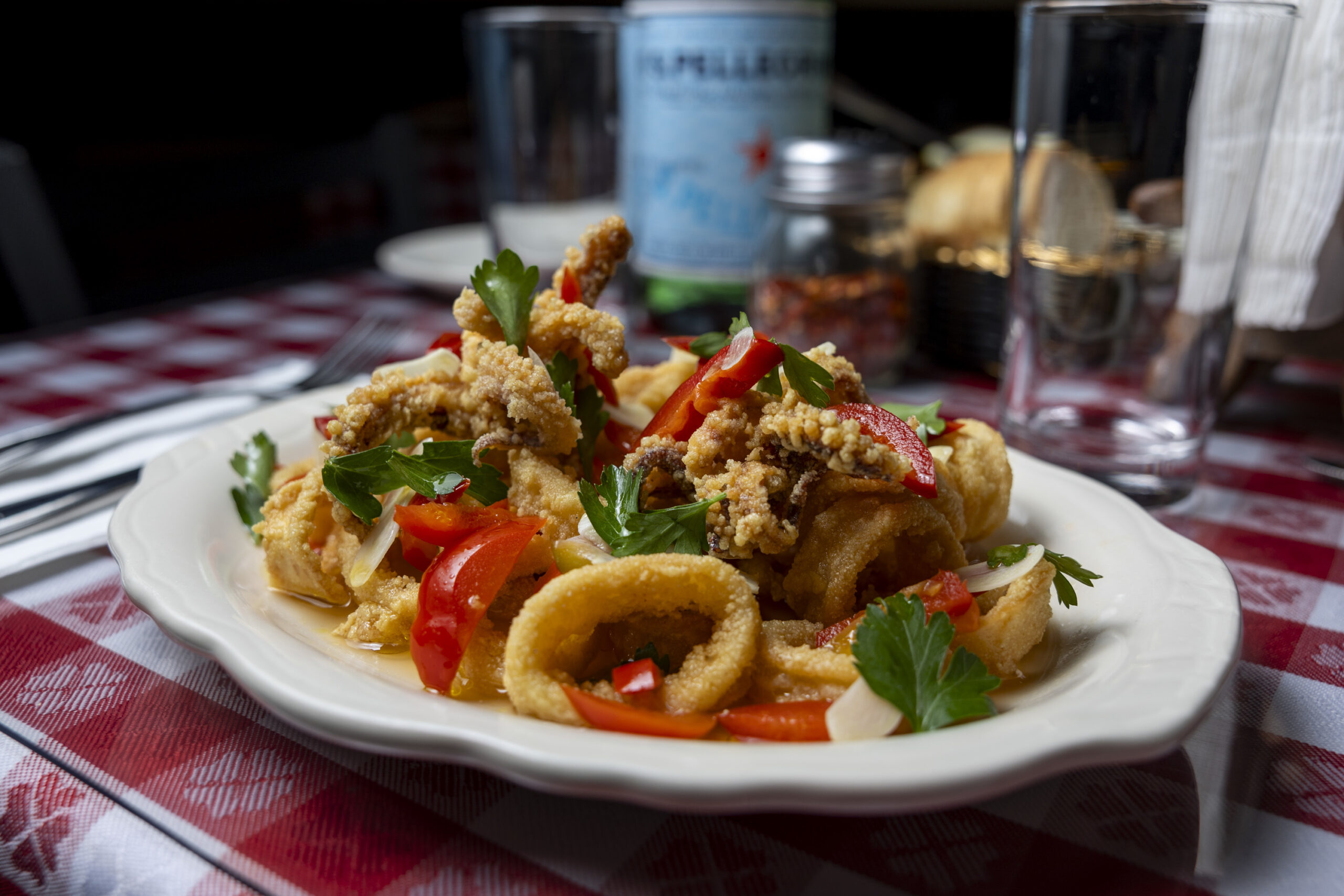
The fried calamari at the Bomb Bomb Bar in Philadelphia, Pa., on Thursday, Feb. 12, 2026. .
The fried calamari (also available on the limited tavern menu, like the shrimp cocktail) are the epitome of a bar classic done right, tenderized in cream before they’re crisped in seasoned semolina and tossed in a spicy confetti of red and green cherry peppers. But if you want to taste a deep cut from the Baldino family’s Seven Fishes repertoire, Mom’s stuffed calamari — the toothpick-sealed squid tubes stuffed with ground tentacles and Parmesan breadcrumbs that become incredibly tender after a two-hour simmer in tomato sauce — will absolutely take you there.
The stuffed squid is something of an homage to the Barbatos, who made a different version of the recipe. Similarly, Baldino’s baked St. Louis-cut spare ribs, exclusive to the bar menu, are a slightly cheffier, orange-scented riff on a popular mainstay during the family’s tenure. I appreciated both menu items for the continuity they offered between the two owners.
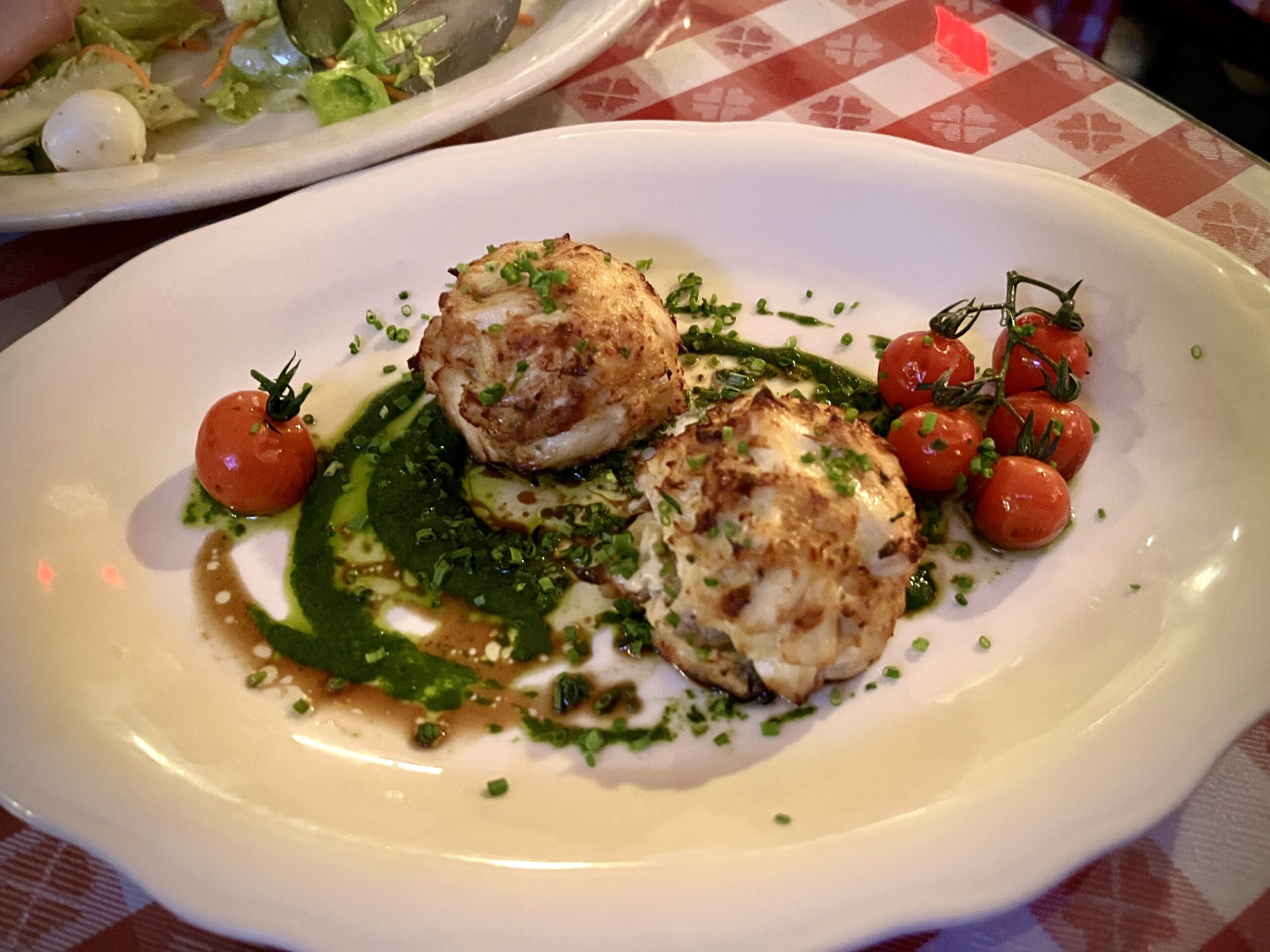
Two other luxurious seafood dishes shouldn’t be ignored. The baked crab cakes created by chef Max Hachey (last at Friday Saturday Sunday) were a celebration of sweet meat bound up with onion cream, roasted garlic aioli, and crushed crackers — easily one of my new favorites in the city. And the lobster-and-shells genre has also been taken to a clever new level here, inspired by the flavors of a stromboli: Al dente pasta cradles butter-poached lobster in a blush sauce enriched with melted mozz and zingy ground pepperoni.
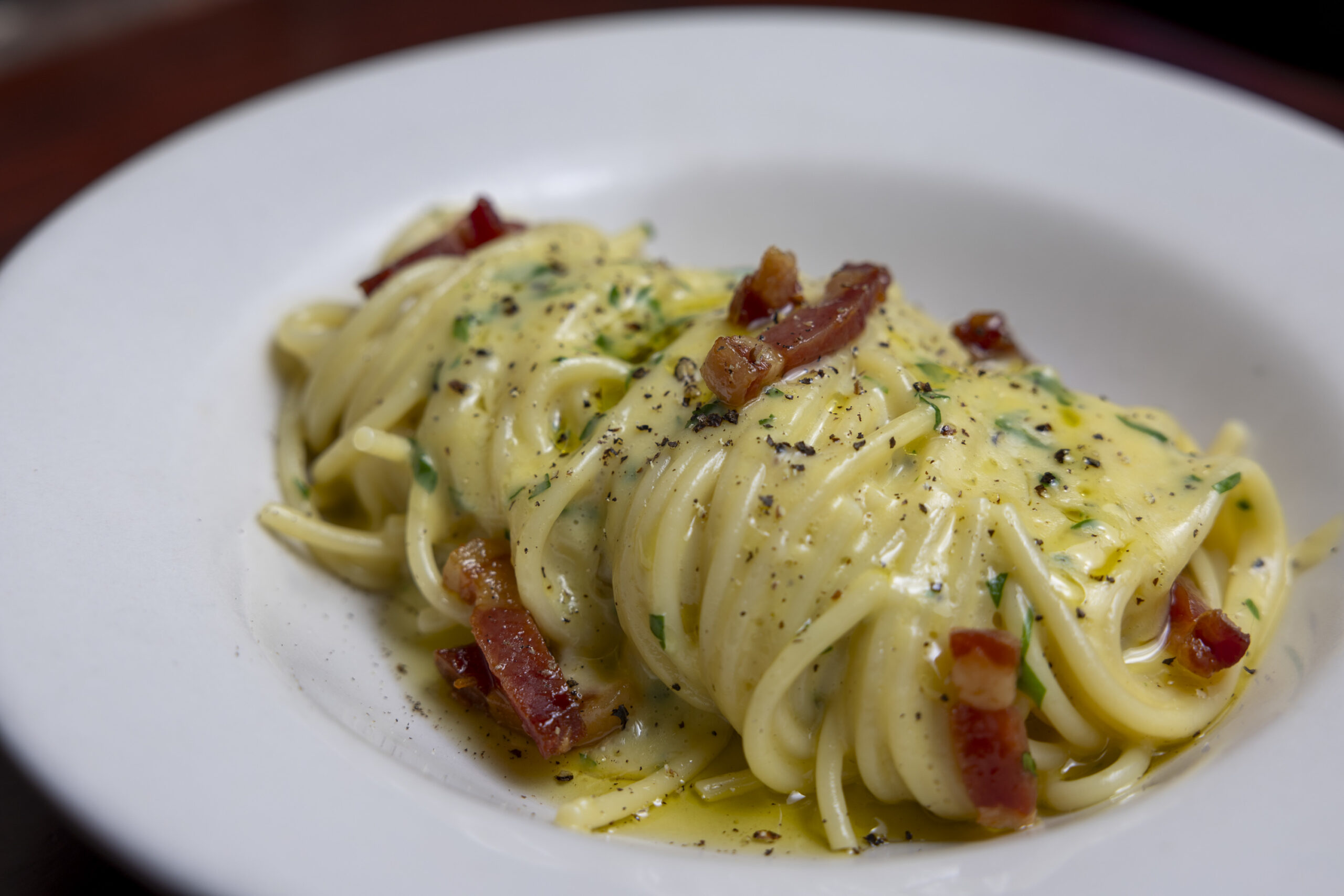
Crab cakes at the Bomb Bomb, the classic Italian seafood joint revived by chef-owner Joey Baldino in deep South Philly.The carbonara at the Bomb Bomb Bar in Philadelphia, Pa., on Thursday, Feb. 12, 2026. .
As a testament to Baldino’s confident grasp of the South Philly Italian canon, he feels no need to resort to any red-gravy meatball clichés on the pasta side of the menu. His carbonara is the stuff of creamy noodle dreams, its egg-and-bacon glaze still frothy even though it’s blended with three kinds of cheese, including an alpine twinge of toma. The black ink spaghetti is a dark-horse noodle champ — quite literally, because its simple, garlicky shine of aglio-e-olio sauce is turned jet black with sepia ink. And Baldino’s Italian tuna pasta might be the most overlooked gem of them all, a comforting yet elegant deconstruction of tuna noodle casserole.
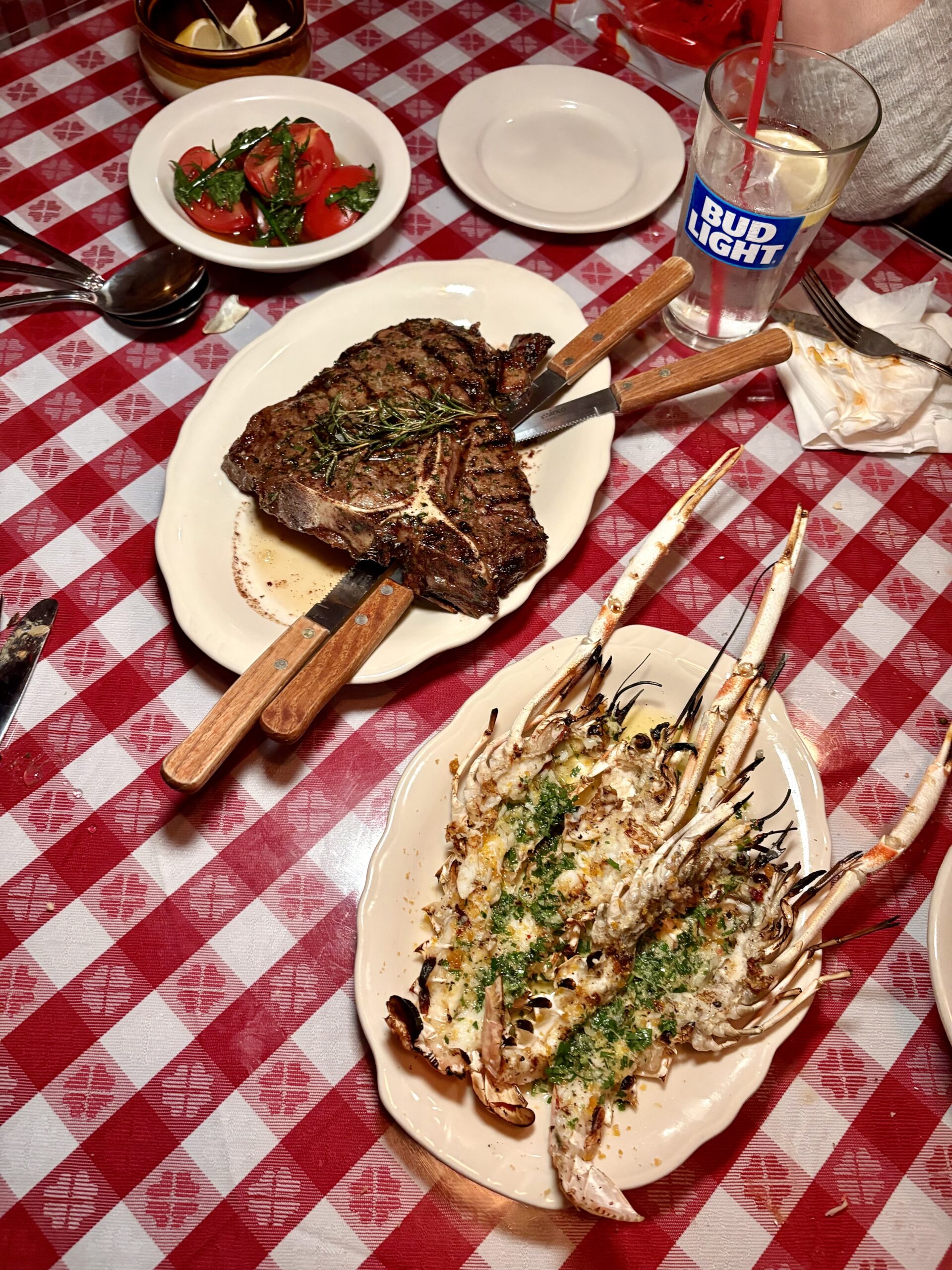
There are always other off-menu treats lingering in back to keep the dinner intriguing, like grilled langostini glistening with bottarga butter in a fragrant nod to the Sicilian flavors of Zeppoli. The frequent special of garlicky T-bone steak basted with olive oil-soaked rosemary branches is so good, I wonder if there’s a retro Italian chophouse lingering in Baldino’s future, too.
Keeping the Bomb Bomb’s distinctive red-neon sign glowing bright over the corner of Warnock and Wolf Streets, now beckoning to an enthusiastic new generation, is more than enough of an achievement. So order yourself a vanilla ice cream sundae drizzled with house chocolate sauce, brown-butter caramel, and a fried banana — a sweet tribute to a long gone shake shop that Baldino also loved — and lift a toast to the ancestors. Italian South Philly’s culinary preservationist-in-chief has scored once again.
A porterhouse steak and grilled langostini with bottarga butter are two notable recent specials at the Bomb Bomb Bar & Grill.
Dinner seatings in rear dining room by reservation only Thursday through Monday, at 5, 7, and 9 p.m. Bar is open to walk-ins only Thursday through Monday, 5 p.m.-1 a.m. Lunch served Saturday and Sunday, noon-3 p.m.
Not wheelchair accessible. There are two steps at the front entrance and bathrooms are not accessible.
Gluten-free pasta is available and much of the menu can be modified to be gluten-free, including the antipasto, lobster francese, streamed seafood, and ribs.
Menu highlights: clams casino; crab cake, lobster francese; shrimp oreganata; mussels fra diavolo; fried calamari; lobster and shells; Dungeness crab; spaghetti alla carbonara; herbed tomatoes; porterhouse special. Bar menu: porchetta sandwich; shrimp agrodolce; vanilla sundae.
Drinks: The full bar showcases simple but booze-forward cocktails with a zesty Italian twist, like the Vesper spiked with peperoncini brine and a Bloody Mary sparked with Calabrian chilies, frozen drinks such as the bubbly limoncello Scroppino.
The exterior of Bomb Bomb Bar in South Philadelphia on Monday, Sept. 29, 2025.