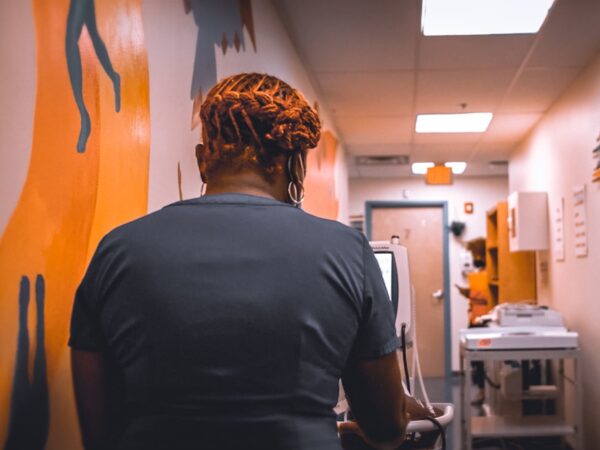
A year ago, leaders of Family Practice & Counseling Network feared their health clinic, which has served low-income Philadelphians for more than 30 years, wouldn’t survive past June.
The clinic was part of Resources for Human Development, a Philadelphia human services agency that a fast-growing Reading nonprofit called Inperium Inc. had acquired in late 2024.
As a federally qualified health clinic since 1992, the clinic had received an annual federal grant, higher Medicaid rates, and other benefits.
But federal rules prohibited the clinic from continuing to retain that status and those benefits under a parent company. That meant Family Practice & Counseling Network had two options: close or spin out into a new entity that would reapply to be a federally qualified clinic.
“We had to figure it out,” the organization’s CEO Emily Nichols said in a recent interview.
At the time, the organization’s three main locations had 15,000 patients. They are “very underserved, low-income people that deserve good healthcare,” she said.
Thanks to $9.5 million in financial and operational support from the University of Pennsylvania Health System, a new legal entity took over the clinics in July. They now operate under the tweaked name, Family Practice & Counseling Services Network, and without the federalstatus.
“Penn allowed us to survive,” Nichols said.
Still in a precarious position
The nonprofit, with its name now abbreviated as FPCSN, remains in a precarious position.
Because of the corporate change, the $4.2 million annual grant that Family Practice had been receiving through RHD had to be opened up for other applicants under federal law. FPCSN applied but won’t find out until March the result of the competition.
Natalie Levkovich, CEO of the Health Federation of Philadelphia, a nonprofit that supports community health centers in Southeastern Pennsylvania, expressed confidence that the clinic will regain the funding, which helps cover the cost of caring for people who don’t have insurance.
“FPCSN is a well-run, well-regarded, well-supported health center that has an established, high-functioning practice in multiple locations,” Levkovich said. The clinic received letters of support from all the other federal clinics in the area, she said.
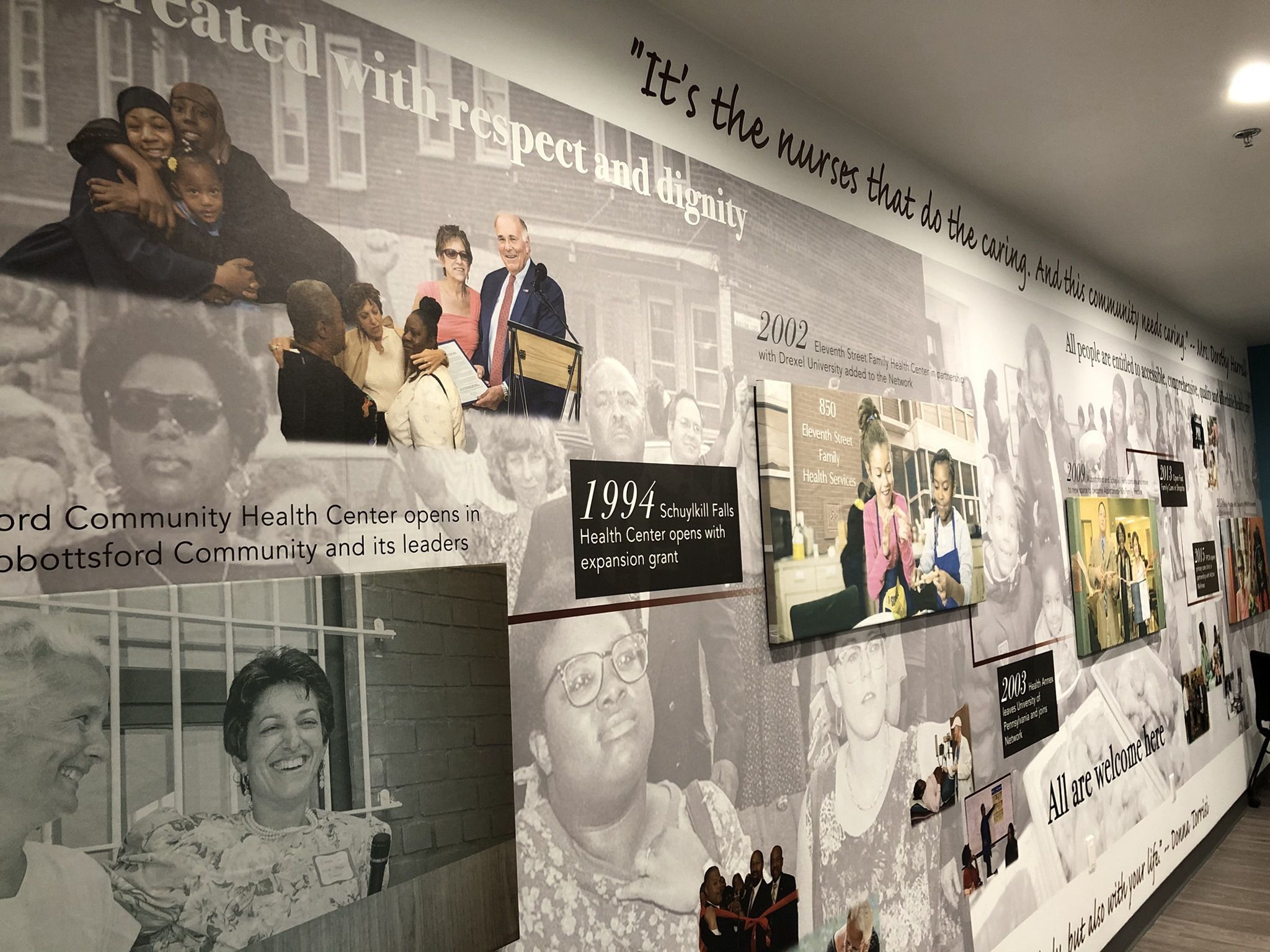
A mural in a conference room at Family Practice & Counseling Services Network’s headquarters in Nicetown shows a timeline of the agency’s history since its founding in 1992.
In return, federally qualified clinics have to accept all patients, including people without insurance. The insurance mix of FPCSN’s patient population is about 60% Medicaid, 20% uninsured, 10% Medicare, and 10% commercial, Nichols said.
Also, half of a federal clinic’s board members have to be patients at the clinic. FPCSN has three main locations, in Southwest Philadelphia, on the western edge of North Philadelphia, and in the West Poplar neighborhood. Its revenue in fiscal 2025 was $31 million.
During the past year, 55 FPCSN staff members have left, leaving 140 employees still at the organization, including 16 nurse practitioners who provide the primary care. The departures may have contributed to a decline in the number of patients seen to 13,500 last year, compared to 15,000 the year before, Nichols said.
Why Penn helped FPCSN
Federally qualified health centers form the core safety net in Philadelphia and across the nation, said Richard Wender, who chairs Family Medicine and Community Health at Penn, which had a longstanding relationship with RHD’s clinics.
Under contract, Penn family practice physicians were providing prenatal care to 400 pregnant patients at the clinics that would have closed abruptly at the end of June if Penn hadn’t provided support. “We wanted them to be able to continue to take care of the patients that they were taking care of,” Wender said.
The money from Penn helped pay startup costs for the new entity and bridged the period until FPCSN was able to secure new contracts with insurance companies.
Penn also didn’t want the clinic’s patients showing up in its already busy emergency departments for basic care. “That adversely affects their health because it’s not a good place to get preventive care,” he said.
But it was important to Penn that there was a pathway back to federal clinic status. “We feel as optimistic as we can,” Wender said.
Wender and Nichols credited Kevin Mahoney, CEO of Penn’s health system, with the preservation of FPCSN’s services for low-income Philadelphians by throwing his full support behind the effort.
“You have to have a CEO, a leader in your health system, who understands that this is the responsibility of large academic health centers,” Wender said.
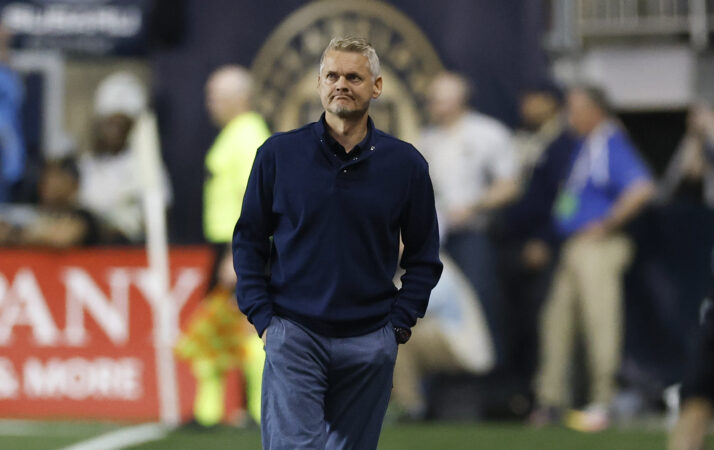
Nestled under all the success of last season for the Union is that their manager, Bradley Carnell, proved yet again that he’s one of Major League Soccer’s bona fide tacticians.
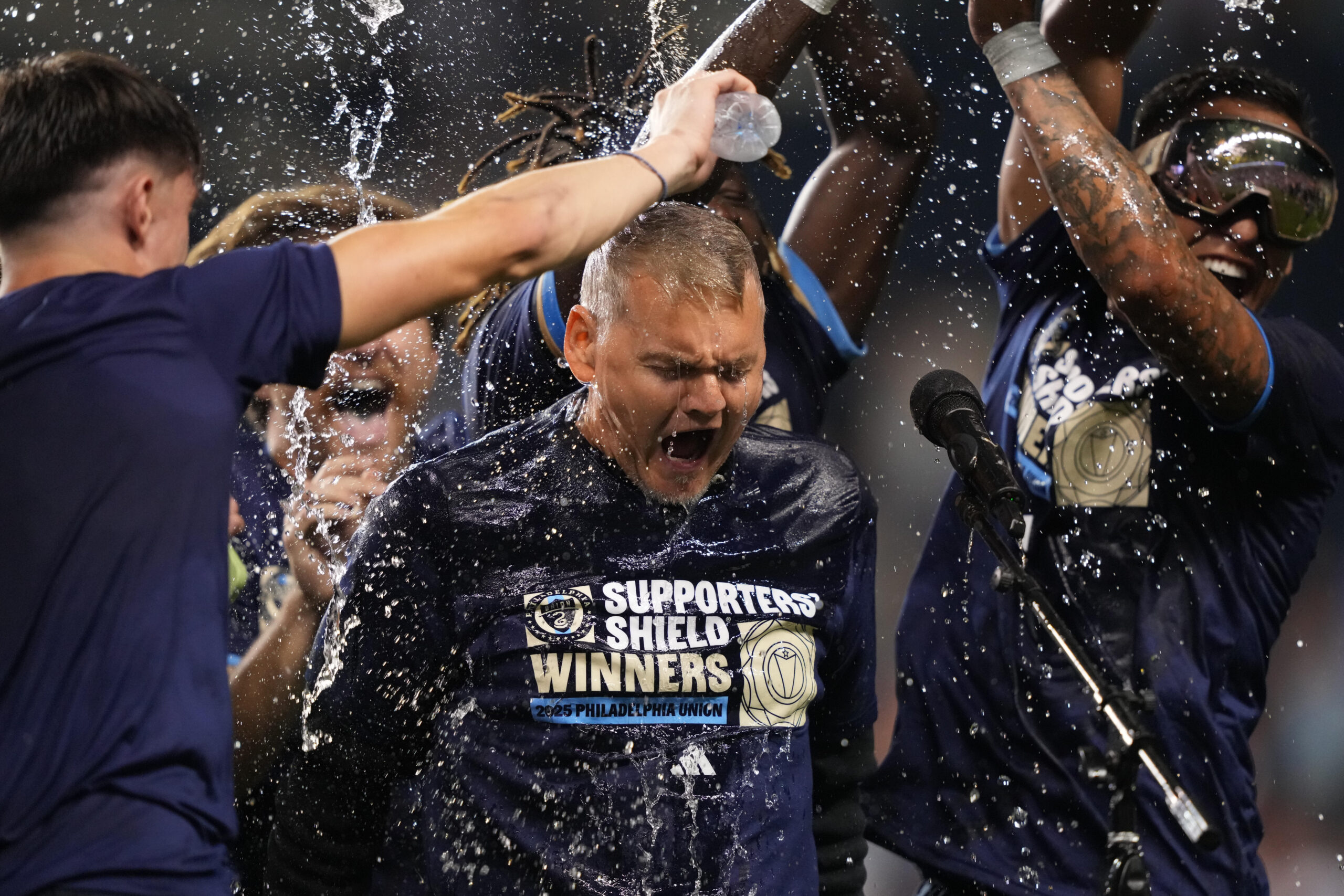
In his first season at the helm, he came within one point of the club’s record, a statistic that originally took more than a decade to amass. He guided the Union to their second Supporters’ Shield, which is given to the club with MLS’s best regular-season record.
With 30 teams vying for the shield, that’s no small thing.
While aspirations of their second MLS Cup final appearance were dashed in the Eastern Conference quarterfinals, success was already apparent, and Carnell, 48, was orchestrator, the proof in the form of the 2025 MLS Coach of the Year award.
However, in the afterglow of a banner year for the Union, Carnell knows the limelight, particularly for him, is fleeting. He’ll never admit it, but his vision board, whether real or imaginary, surely includes the notion that success this season would right a lot of wrongs along his coaching path.
He knows it. It’s why in a conversation with Union sideline reporter Sage Hurley, he said: “I take personal accolades and forget about them very quickly. In our business, it’s very fluid, very daily, and we focus on the present.”
Bottom line: Judge this manager not by what he has done, but by what he does in 2026.
Here’s why:
Been here before
It’s important to remind folks that what Carnell accomplished with the Union last season wasn’t new for him over his nine seasons in MLS. Replicating it or even eclipsing it in Year 2 would be.
Why? Because he’s well aware of just how quickly a sophomore slump can turn into a crash-and-burn.
In his previous stint as a manager, Carnell’s St. Louis City SC became the first expansion team to win its conference in its inaugural season. St. Louis topped the Western Conference with a 17-12-5 record and reached the 2023 MLS playoffs.
Like the Union this year, St. Louis crashed out of the playoffs early. It was swept in a best-of-three first-round series against Sporting Kansas City after entering the tournament with the fourth-highest point total (56) that season.
Copy and paste.
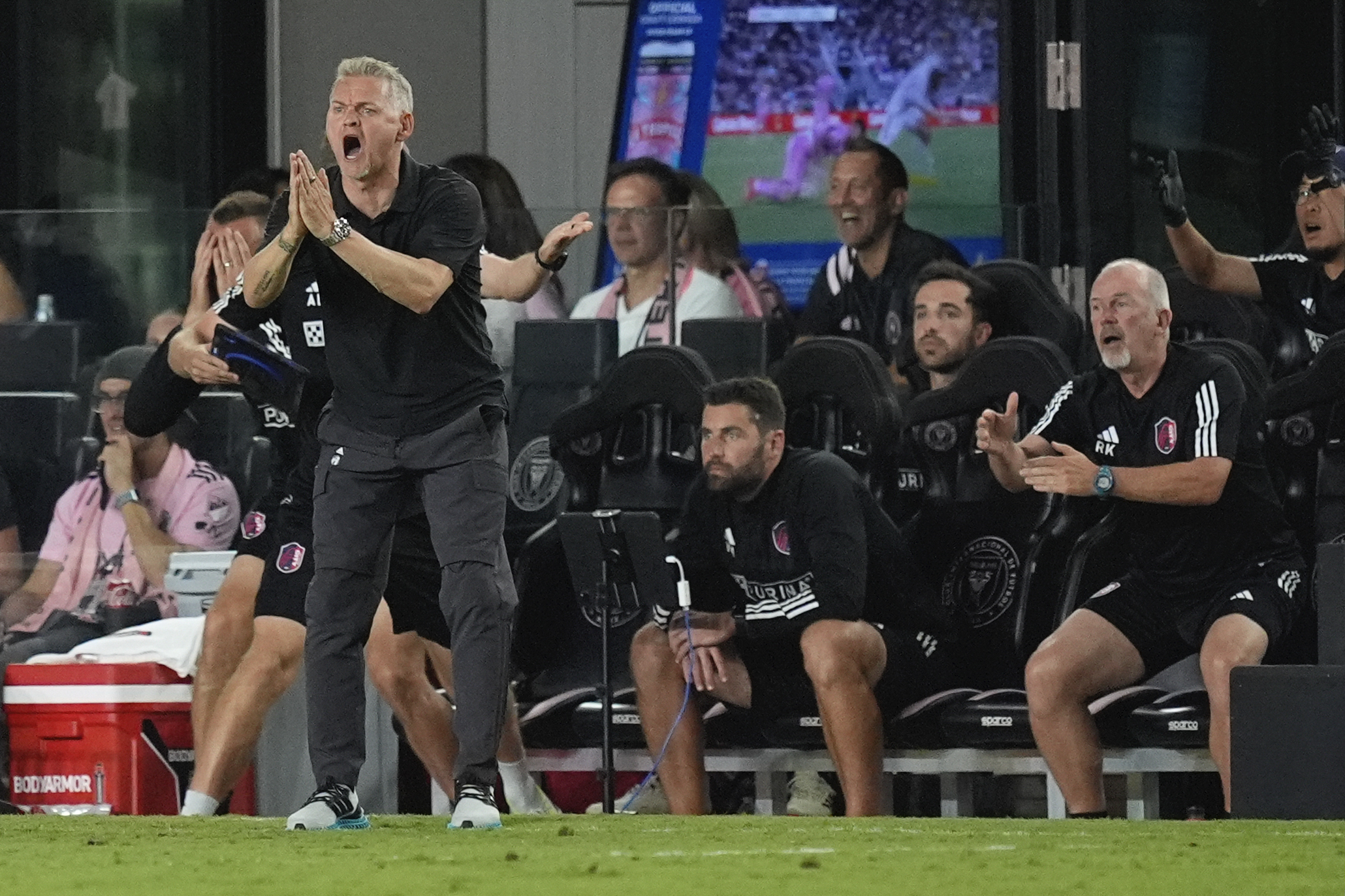
As coach of expansion team St. Louis City SC, Carnell led the team to the best regular-season record in MLS’s Western Conference.
Carnell didn’t even finish the following season. He was replaced in July following a dismal start in which St. Louis was at the bottom of the Western Conference standings with just three wins.
But in his final regular-season news conference of 2025, while answering questions about who will orchestrate player moves with sporting director Ernst Tanner on leave amid an investigation into his alleged misconduct, Carnell was asked what he learned from the season to ensure he doesn’t find himself in the same boat.
He seemed like he couldn’t wait for someone to bring it up.
“This has been an amazing journey for me as a coach,” Carnell said. “I’ve grown up, and I’ve learned a lot more through the players and the engagement and just the people here at the front office. [I’ve learned that] when there’s support, alignment, [and] collaboration, a lot can be achieved. I think we’ve shown that over the course of the year that we are all pulling in the same direction.”
A big takeaway, Carnell said, too, is just how easily he assimilated into the culture of the club, its fans, and the city. Philly feels like home for the South Africa native, as he noted that the team and front office have made it easy for him and others who felt like outsiders to want to be here.
“I think about [former Union defender] Kai Wagner, who has been here multiple years now. You would assume he’s from Philadelphia,” Carnell said. “There’s a certain edge and a drive and a determination and a quality about this group. That speaks volumes for the development of the club and the development of people, staff, and players.”
It’s safe to say the pressure Carnell will feel entering Year 2 will eclipse his second year with St. Louis. The Union made massive changes in the offseason, as proven players (like Wagner) were brokered for top dollar and replaced by some complete unknowns.
Bradley Carnell (right) was all smiles last season, celebrating the Union’s Supporters’ Shield title with midfielder Danley Jean Jaques.
Also, Carnell wasn’t operating St. Louis City during a FIFA World Cup year in a city that will host six matches. Soccer eyes will be on MLS — and just how good the local MLS club is. Especially one that was the league’s best under his guidance a year before.
Another thing he won’t admit: There is newfound pressure for the Union to come out strong — not just to further erase the pain of coming up short last season, but also because events like a World Cup tend to bring transformative change within an organization.
The club won’t admit it, but there are questions in the background that perhaps only top Union management and ownership can answer. But no one expects those questions to arise until the afterglow of the World Cup.
Union majority owner Jay Sugarman has figured out how to remain one of the league’s best clubs on a shoestring budget. Carnell is a big reason.
There also are other reasons. The obvious is that, entering a seven-week World Cup break beginning in May, sitting near the top of the Eastern Conference standings bodes well once MLS play resumes.
And while he’ll naturally mask that last factor by suggesting that the focus is “on the collective,” a familiar phrase from his first season in Philly, nothing would make people forget his sophomore slump in St. Louis more than not replicating something similar in 2026 with the Union.
“Around 11 months ago, we stepped in here in a world of our own,” Carnell said. “I hope 11 months later, through the team’s performance and collective effort, some of those questions have been answered.”
Some have, sure. But on a personal level for this manager, heading into 2026, just one more needs closure.
Players showered manager Bradley Carnell with a lot more than just praise after the team’s massive 2025 season.
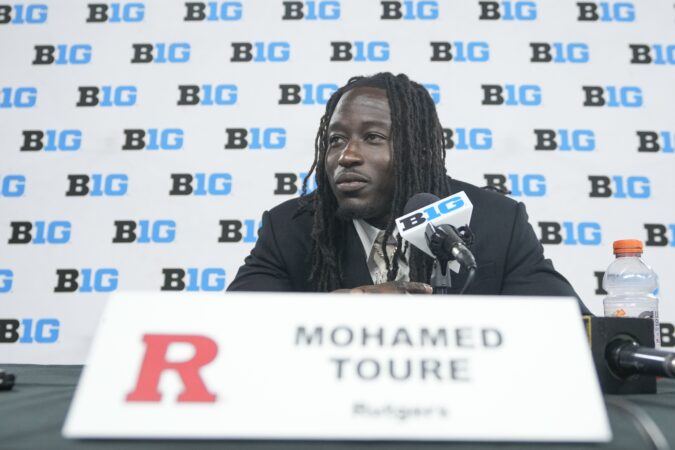
Mohamed Toure may have the chance to lift a trophy in the final game of his seven-year college football career.
Toure, a native of Pleasantville, Atlantic County, will take the field alongside his Miami teammates as the 10th-seeded Hurricanes seek their first national championship since 2001 against top-seeded Indiana on Monday in Miami (7:30 p.m., ESPN).
In his first year at Miami, Toure has been the anchor of a defensive unit that has allowed 14 points per game, ranking fifth in the Football Bowl Subdivision.
Toure transferred to Miami in May to use his final year of graduate eligibility after playing three seasons in six years at Rutgers. He redshirted, played through the pandemic-shortened 2020 season, and suffered two ACL tears while with the Scarlet Knights, which makes Toure a seventh-year player.
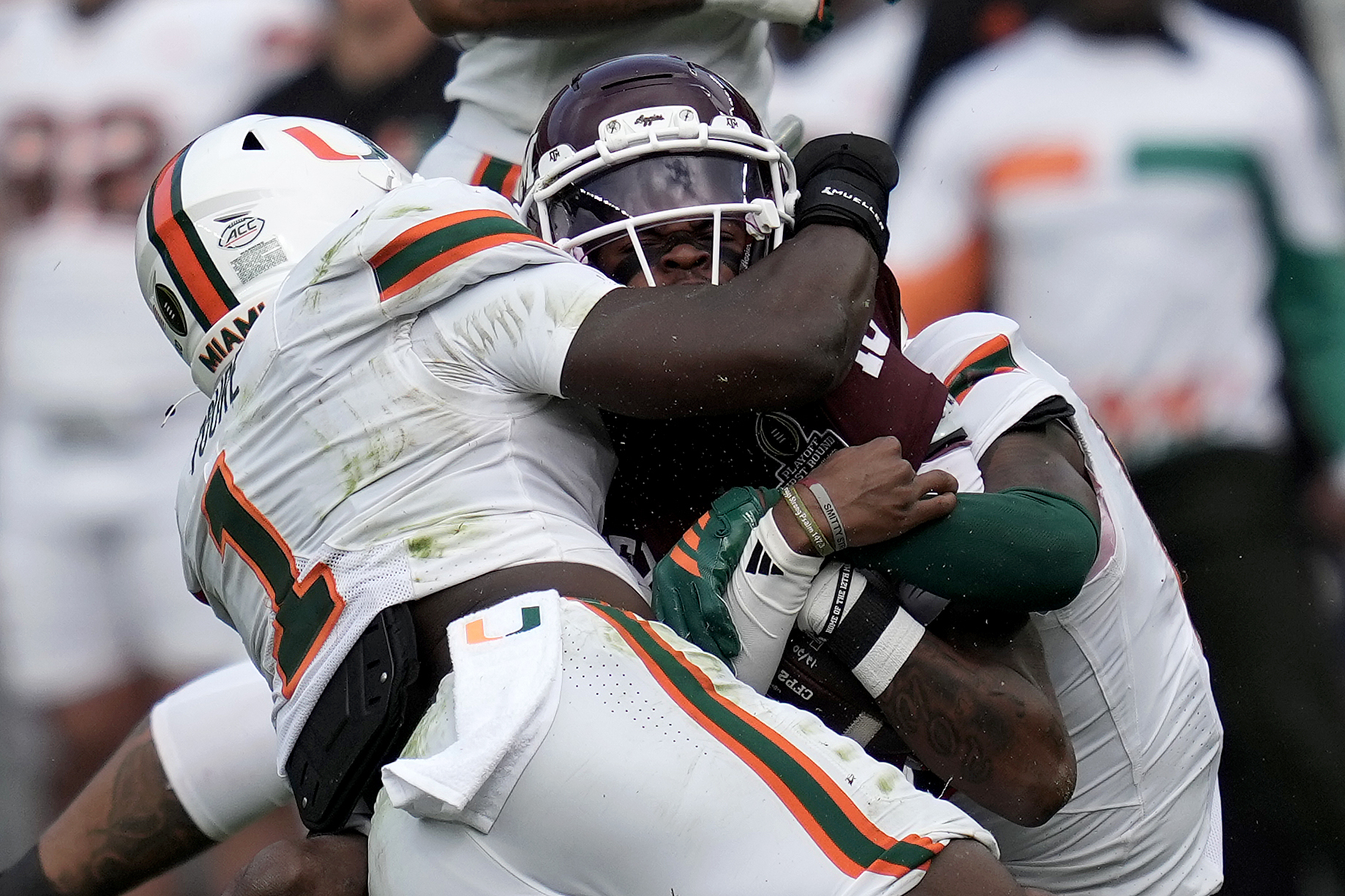
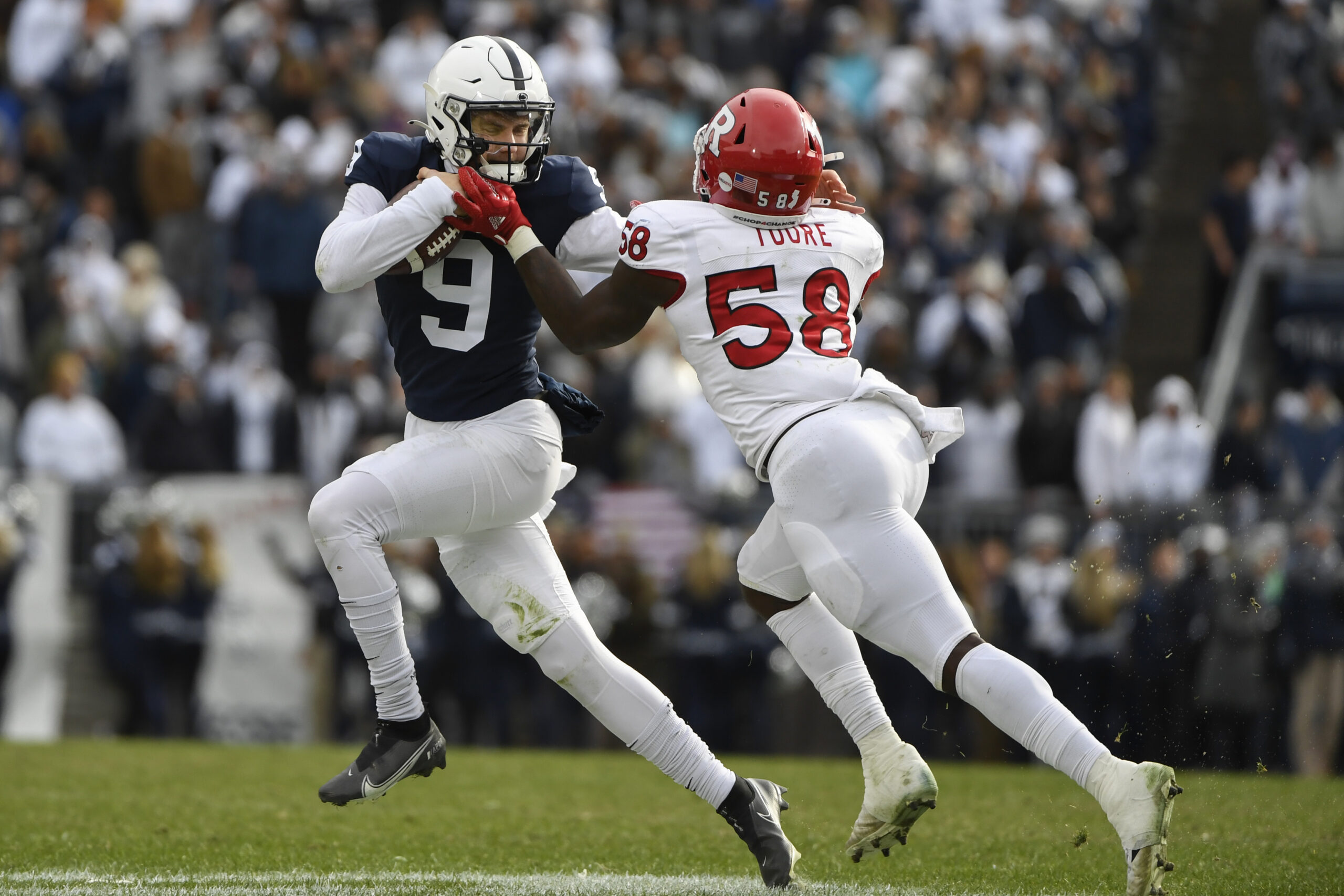
Texas A&M quarterback Marcel Reed is tackled by Miami linebacker Mohamed Toure on Dec. 20.
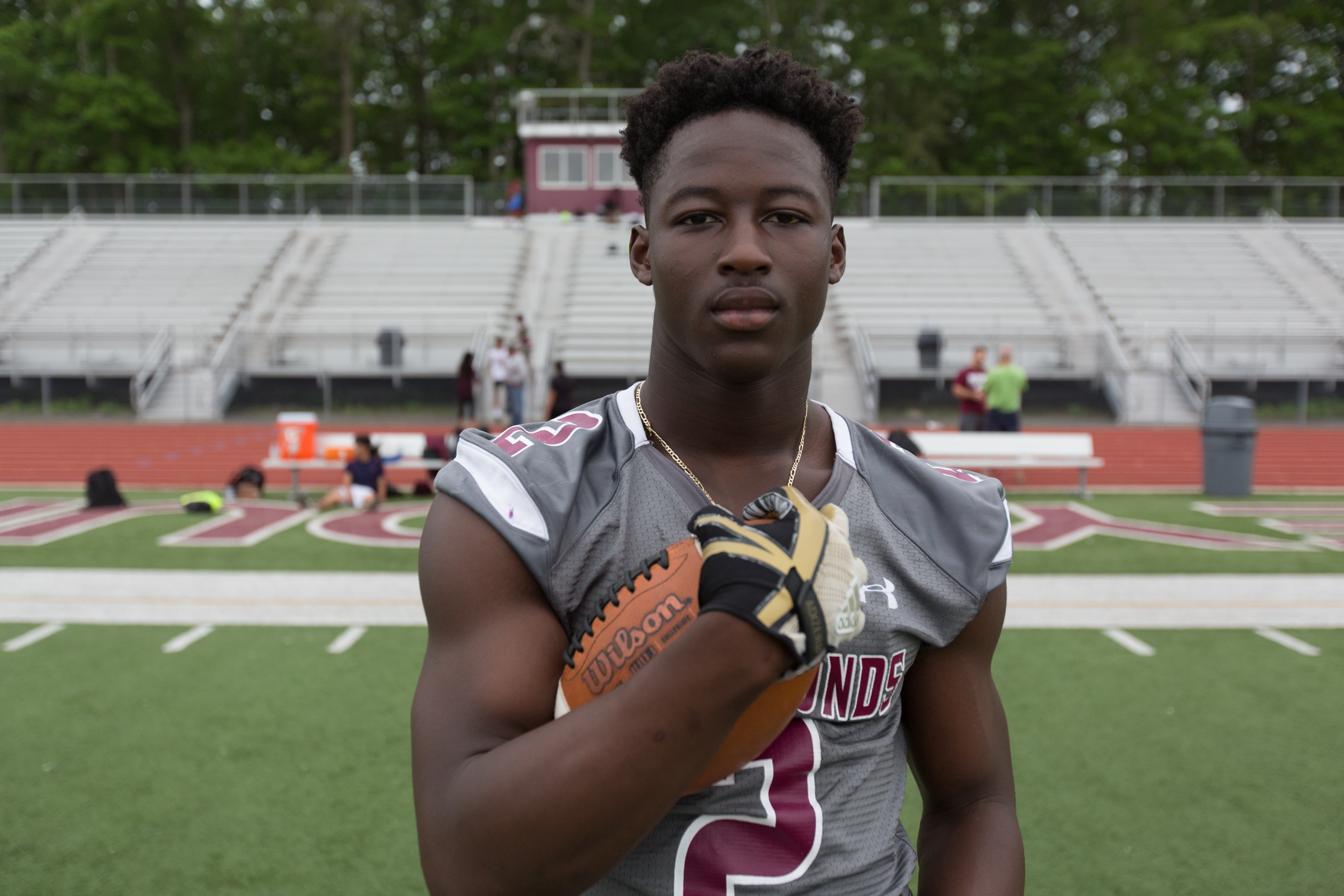
But before Rutgers and Miami, Toure was a star running back and linebacker at Pleasantville High School.
“To see him play at a high level, and for them to be playing where they’re at right now, it’s just surreal to watch,” said former Pleasantville teammate Elijah Glover, now the school’s head coach. “It’s something I couldn’t imagine when we were 10th graders.”
Jersey journey
Toure and Glover, who played college football at Villanova, were freshmen when Chris Sacco took over as head coach for the Greyhounds in 2015. Pleasantville had won just three games over the previous five seasons before Sacco took over, including winless campaigns in 2010, 2011, 2012, and 2014.
The Greyhounds went winless again in Sacco’s first season but improved the following season to 4-6. In 2017, the program posted a 7-3 record behind a breakout season from Toure, playing both running back and linebacker. Glover recalls Toure’s 95-yard game-winning fumble return in overtime against Buena Regional High as one of the many moments when he realized his teammate had a future in football.
“It didn’t happen by accident,” Glover said. “That was the first game of the season. Junior year, he went crazy. It was just like, ‘He’s for real.’”
Mohamed Toure played running back and linebacker at Pleasantville High School.
In his senior season, Toure led the Greyhounds to an 8-3 record, rushing for 981 yards and 11 touchdowns, while adding 69 tackles and five sacks on defense. He was named to the all-South Jersey first-team by The Inquirer in 2018.
The personal accolades for Toure reflected an improbable turnaround for Pleasantville’s football program. Sacco, who is now the athletic director at Hammonton High School, said Toure’s leadership and commitment to Pleasantville was a crucial part of the program’s transformation.
“It would have been easy for him, as the type of player that he was, and is, to leave and go to an established program,” Sacco said. “To stay and build something, I always said, ‘it’ll mean more to you, especially down the road. It’ll mean more to your friends and your community. It’ll mean more to the school and this program.’ And I think when you see what he did by staying and essentially helping transform a program, you don’t get much better leadership than that.”
Road to Rutgers
Toure’s teammates and coaches at Pleasantville knew that the linebacker would end up playing college football at a power conference school. Toure made explosive plays on the field, but he was also a force off it.
“You definitely could see it, just in the weight room,” Glover said. “He was doing stuff that none of us could do.”
Sacco said the recruitment process for Toure started slowly, something the former head coach attributed to the program’s losing reputation. But it picked up during Toure’s junior year, as he led the Greyhounds to a winning season for the first time in a decade.
Toure was ranked as a three-star recruit and had 17 scholarship offers before he decided on Rutgers. He took a redshirt year in 2019, but in the pandemic-shortened 2020 season, Toure led the Scarlet Knights with 4½ sacks in their nine-game campaign.
He built on that performance with another 4½-sack season in 2021.
Mohamed Toure, a former Rutgers linebacker, recorded 93 tackles and 4 1/2 sacks in 13 games in 2023.
Toure was set to be a key piece for new Rutgers linebackers coach Corey Hetherman in 2022, but his season was derailed by an ACL tear in the spring. He returned for the 2023 campaign, serving as a team captain. Toure recorded 93 tackles and 4½ sacks in 13 games that season.
Toure planned to finish out his college career at Rutgers in 2024 while playing alongside his younger brother Famah, a junior wide receiver. But another preseason ACL tear led Toure to change his plans. He entered the transfer portal after the 2024 season, looking to use his final year of eligibility elsewhere.
“Both the situations were very unfortunate, but I also think that he utilized that,” Sacco said. “Instead of feeling sorry for himself, he just refocused that energy into, ‘This is what I need to do to get back and better.’”
Toure reunited with Hetherman, his former coach at Rutgers, in Miami. Hetherman spent the 2024 season as the defensive coordinator in Minnesota before joining Mario Cristobal’s staff in the same role ahead of the 2025 season.
Toure, who leads the Hurricanes with 73 tackles, has been a key piece of Hetherman’s defense.
Pleasantville power
Toure stepped into a bigger spotlight as Miami made its improbable run to the national championship game.
The 10th-seeded Hurricanes became the first double-digit seed to win a game in the playoff with a 10-3 road defeat of No. 7 seed Texas A&M. Without Toure, it could have been the Aggies moving on.
Toure recorded eight tackles and kept Texas A&M’s Rueben Owens from catching a potentially game-tying touchdown pass with 28 seconds remaining. Toure delivered a vicious hit on the goal line to break up the pass, and the Hurricanes secured the win two plays later.
Miami then pulled off a 24-14 upset against No. 2 seed and defending national champion Ohio State in the Cotton Bowl quarterfinal. The Hurricanes beat No. 6 seed Ole Miss, 31-27, in the Fiesta Bowl semifinal, with Toure recording four tackles and a sack.
Their path through the bracket has led the Hurricanes back to Miami, where they will have an opportunity to compete for a title on their home field. While the Hurricanes will likely have the advantage of a home crowd on Monday, Toure will also have a number of fans cheering for him in Atlantic County.
“It means a lot to the community,” Sacco said. “I know it means a lot to the younger kids to be able to, look at the school and say there’s somebody playing on Monday night for the national championship that went here, and recently.”
For Glover, Toure’s steps to the national spotlight are a chance to show the high schoolers on his team, including Toure’s youngest brother Sekou, that effort and dedication can take them anywhere, whether in football or in life.
“It’s definitely something I’m using just to let them know, like, ‘Yo, it’s possible if you just put the work in and stay down and let things end up how they’re going to be for you,’” Glover said. “Everybody won’t be a Division I recruit, that’s just impossible. But they can end up anywhere they want to be.
“That’s really the message, besides it being Miami or football. It’s really like, ‘You could go on a big stage of anything you want in this life if you just follow these steps.’”
Nick Sirianni is the son of a high school football coach and a mentee of a Division III football coach. Everyone knows this about him.
When he speaks publicly, he frequently sprinkles in references to his father, Fran, and his nine years in charge of the program at Southwest Central High School in western New York. He talks of lessons learned from his years as a player and assistant under Larry Kehres at the University of Mount Union (it was Mount Union College when Sirianni was there) in northeast Ohio.
If one of Sirianni’s greatest weaknesses as an NFL head coach is that he’s often too impulsive and emotional, maybe it’s because there’s a fine line between small town and small-time, and he can’t help himself from crossing it. Still, he ain’t changin’ now, and in an honest appraisal of Sirianni’s five years with the Eagles, one can make the case that his background might be one of his greatest strengths.
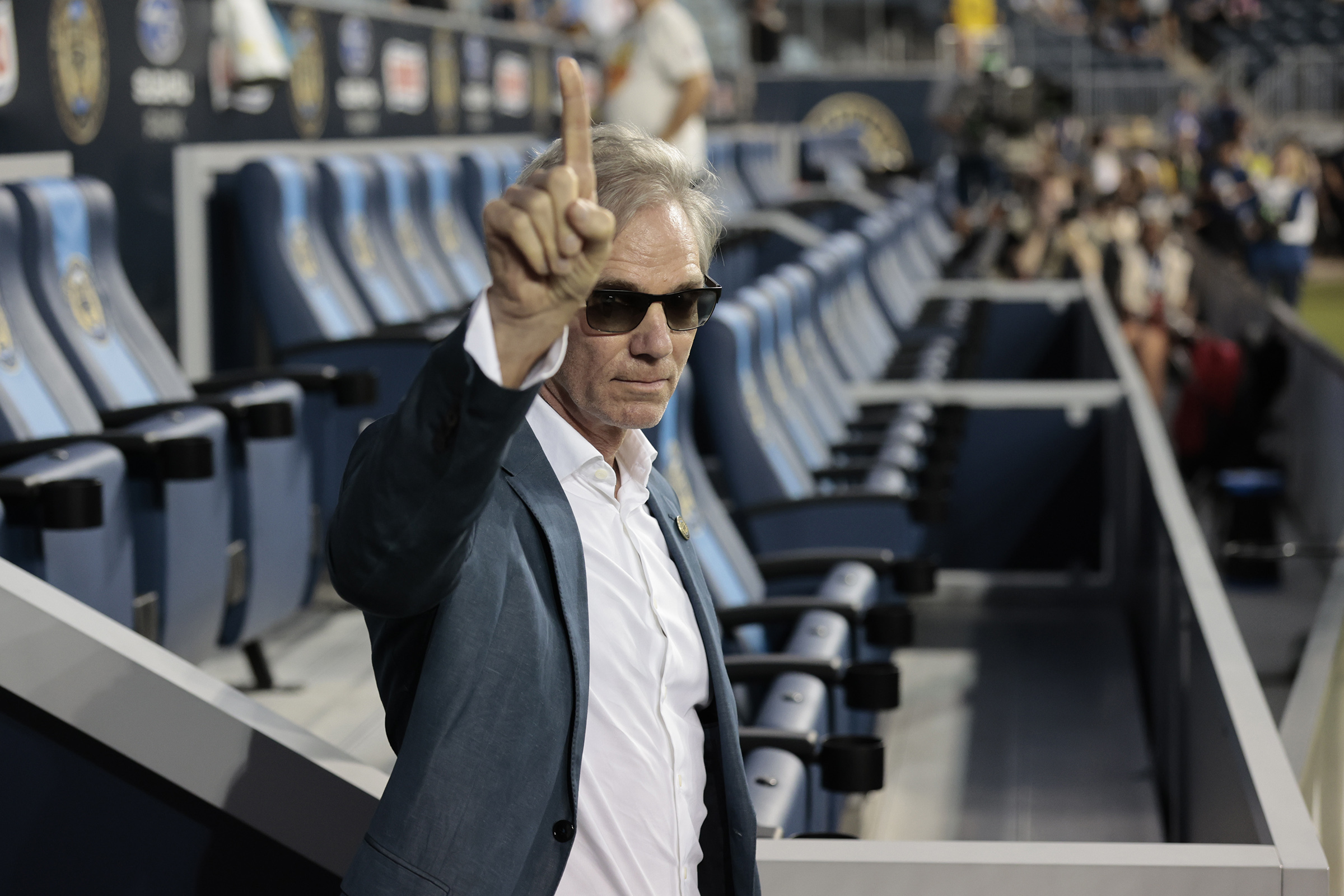
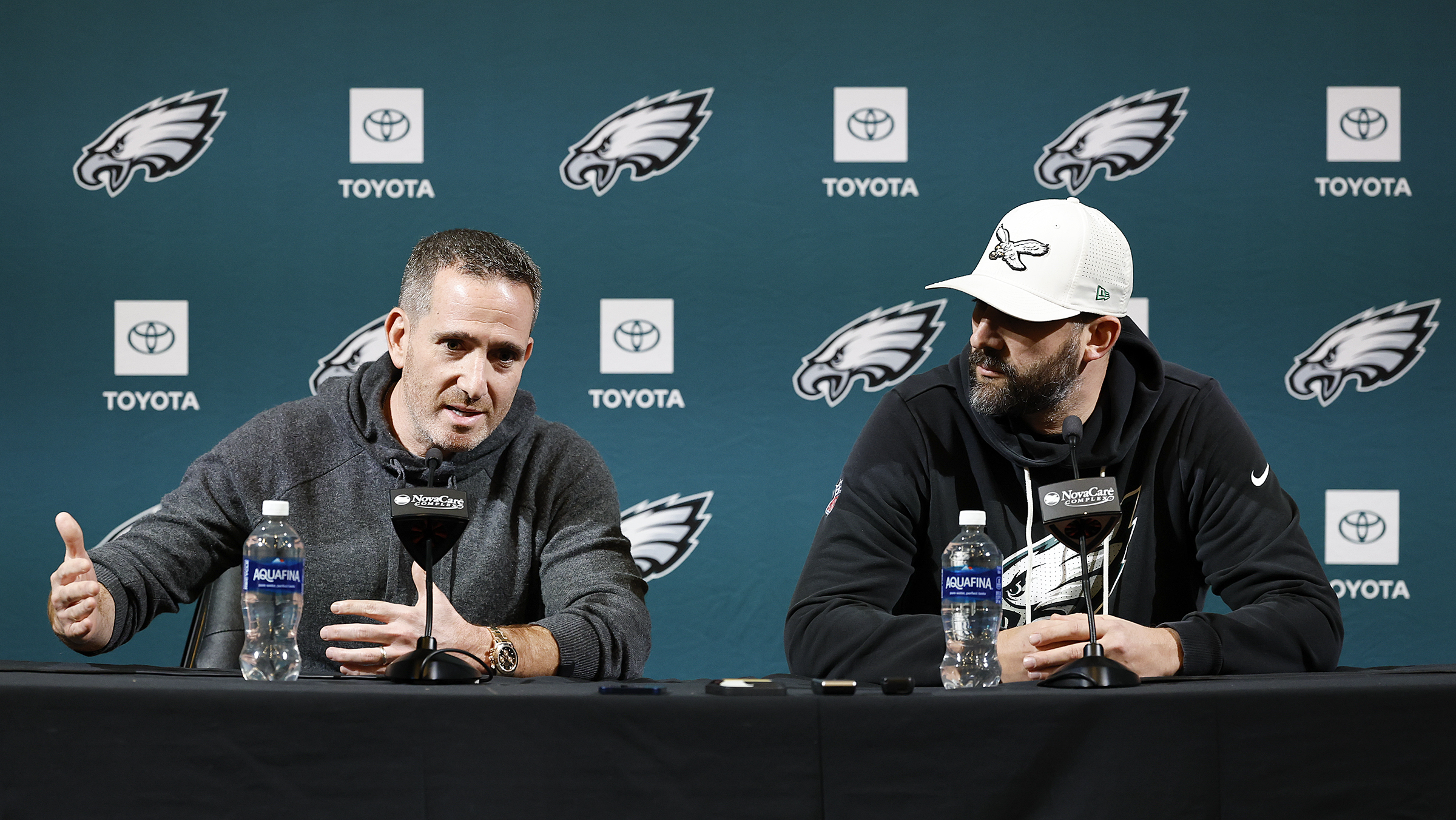
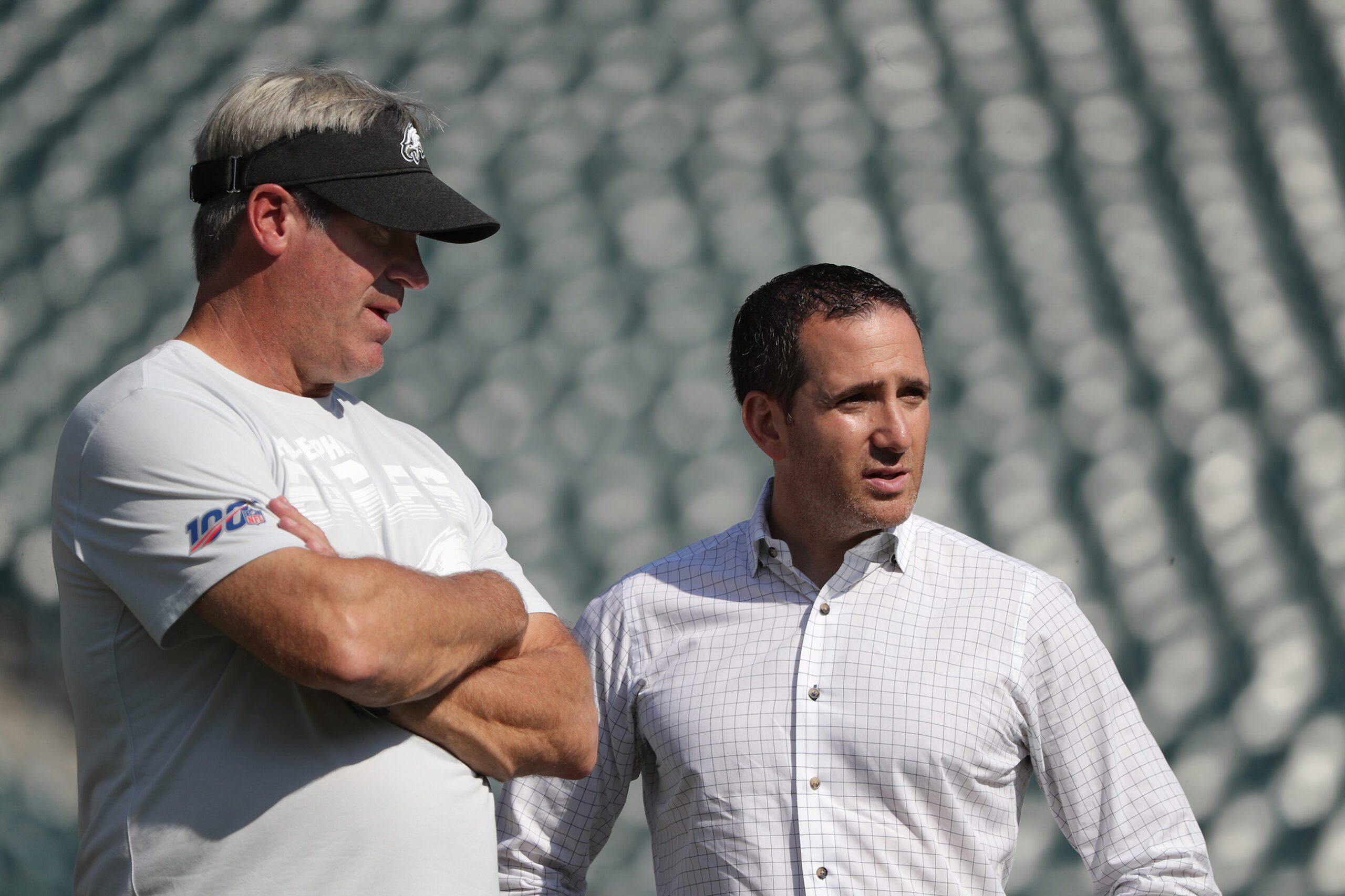
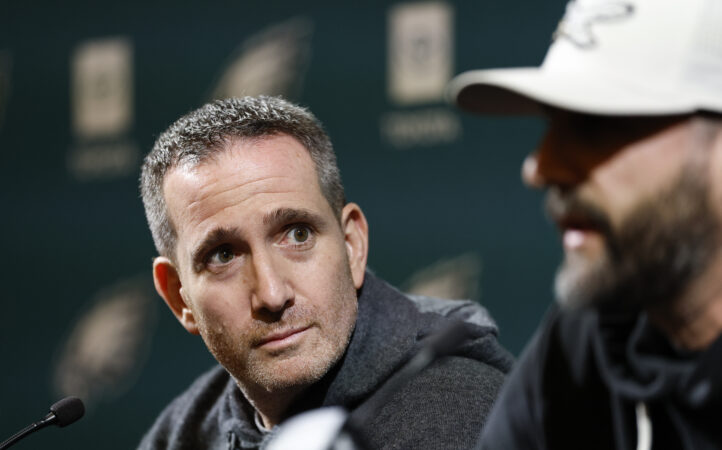
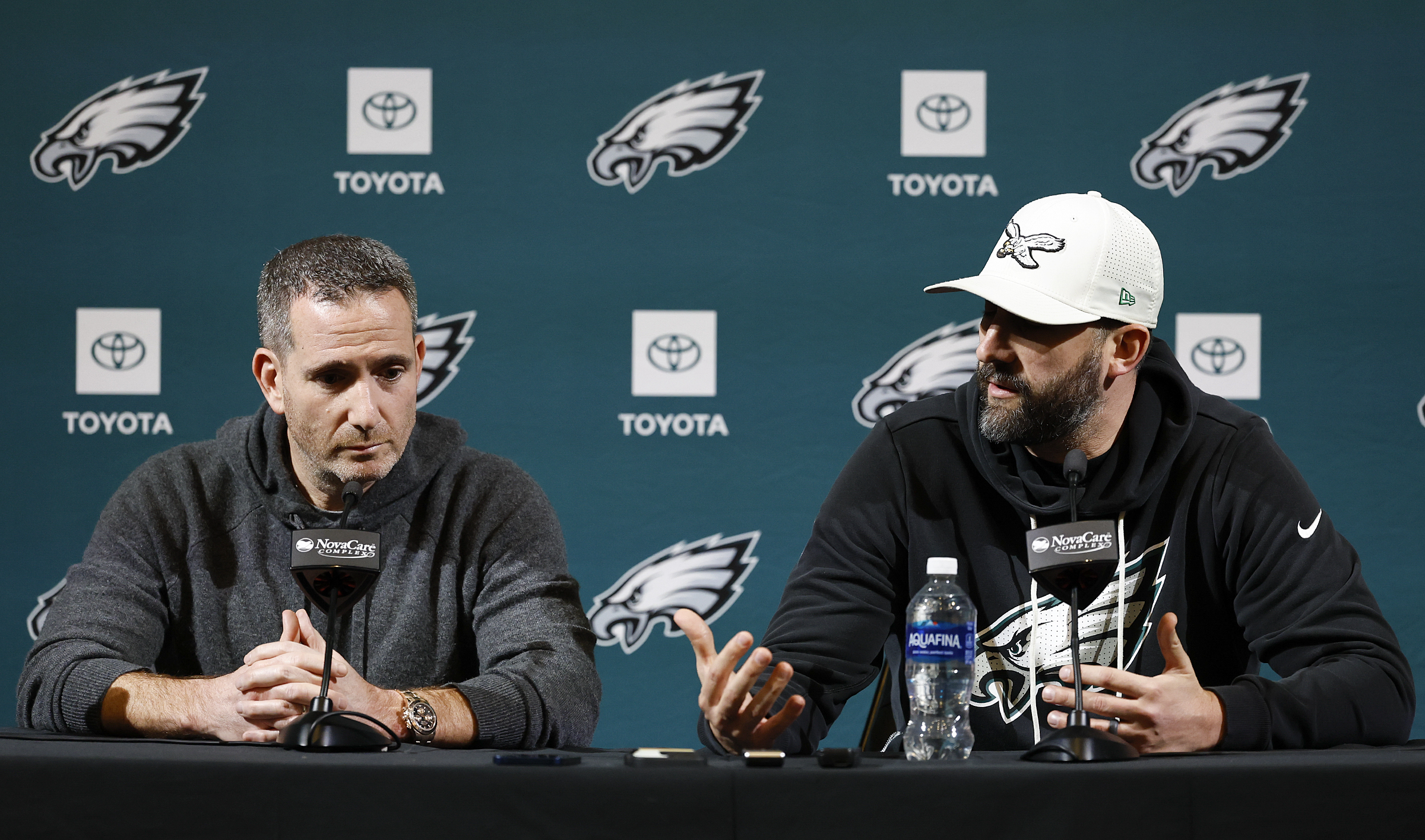
Eagles executive vice president and general manager Howie Roseman (left) says the Eagles are fortunate to have an “elite” coach in Nick Sirianni.
If nothing else, it might be one of the reasons that he’s still in this position and, if Howie Roseman was to be believed Thursday, will be for more than a minute.
“Obviously,” Roseman said, “I sit here, and I feel incredibly grateful that I’m working with someone who … is elite at being a head coach, elite at building connections with our team, elite talking about fundamentals, game management, situational awareness, bringing the team together, holding people accountable. When you’re looking for a head coach, those are really the job descriptions.”
They’re not much different from the job descriptions of a head coach at any level of football, and for all the suggestions that Sirianni is nothing but an empty hoodie, those qualities still matter at the sport’s highest level.
What’s more — and this is the important part as far as Sirianni’s future is concerned — they allow him to be flexible, to contour himself both to what the team needs in a given season … and what he needs to do to survive.
Think about Sirianni for a moment in contrast to his predecessor, Doug Pederson. It’s no secret that Roseman and Eagles chairman Jeffrey Lurie want a head coach who aligns with their thinking on how to win games. Boiled down, a head coach here doesn’t have much independence or power relative to others around the NFL. (The last time Lurie gave a coach such freedom, Chip Kelly started making holiday party-related demands, and Pat Shurmur ended up coaching the 2015 season finale.)
Pederson had been hired as an offensive guy, and he accepted that label and that arrangement right up until he and his team won Super Bowl LII in February 2018. Six months later, his memoir hit stores. At the end of the 2019 season, he asserted in a news conference that embattled assistants Mike Groh and Carson Walch would return — only to have Lurie say, Not so fast, Dougie.
The Eagles relationship with former coach Doug Pederson (left) shares contrasts to Nick Sirianni’s time as head coach.
One day after Pederson endorsed them, Groh and Walch were gone. A year later, after a 4-11-1 season, so was Pederson. So much for assertiveness, and so much for the notion that Pederson’s status as the orchestrator and often the lead play-caller for the Eagles’ offense would preserve his job. Once Carson Wentz and the offense collapsed, what reason was there to keep Pederson?
Because Sirianni’s personality is more tempestuous than Pederson’s, it was always fair to wonder whether, if he ever found himself in the same post-championship situation, he might try to flex a little bit, too. But he did the opposite Thursday, explaining why his close friend Kevin Patullo was no longer the offensive coordinator, suggesting that he would be open to having the new OC have the kind of say-so over the unit that Vic Fangio has over the defense.
“You’re looking to continue to evolve as an offense,” he said, “and I’m looking to bring in the guy [who is] going to best help us do that. I think that there are many different ways to be successful on offense, and everybody has different styles. Everybody has different players. And there’s many different ways to be successful.”
The cynical way to look at this, of course, is that A) Sirianni is acting out of self-preservation; and B) his presence acts as a Kevlar vest for Roseman, protecting him from any public-relations damage if he messes up the assembling of the Eagles’ roster. As great a general manager as Roseman has been, he still makes mistakes. And on those rare occasions when he makes more than his share, the perception that Sirianni is handed an outstanding team every year and that all he can do is screw it up sure takes a lot of heat off the guy who is calling the player-personnel shots.
There’s another prism through which to view Sirianni, though: that he doesn’t have to control every aspect of a team, or even one specific aspect of a team, to do his job and do it well. He doesn’t need to pick the players, design the offense, call the plays.
He’ll delegate responsibility, trust his people, fill in the gaps where he can and should. He’ll take the guys who happen to be on his team that particular year and play that particular hand. Sounds like what a high school or small-college coach does. Sounds like a formula to last a while with this particular franchise.
Compared with the rest of the tribe of baseball writers, my criteria for Hall of Fame inclusion are undemanding. The most controversial element: I do not discriminate against the PED crowd.
I consistently have voted for Barry Bonds, Alex Rodriguez, and Manny Ramirez, titanic talents of their era who are shunned by a voting bloc — us writers — that ignored and profited from rampant steroid use. Further, I know there are plenty of players who juiced and didn’t get caught, so banning the BALCO boys never made sense.
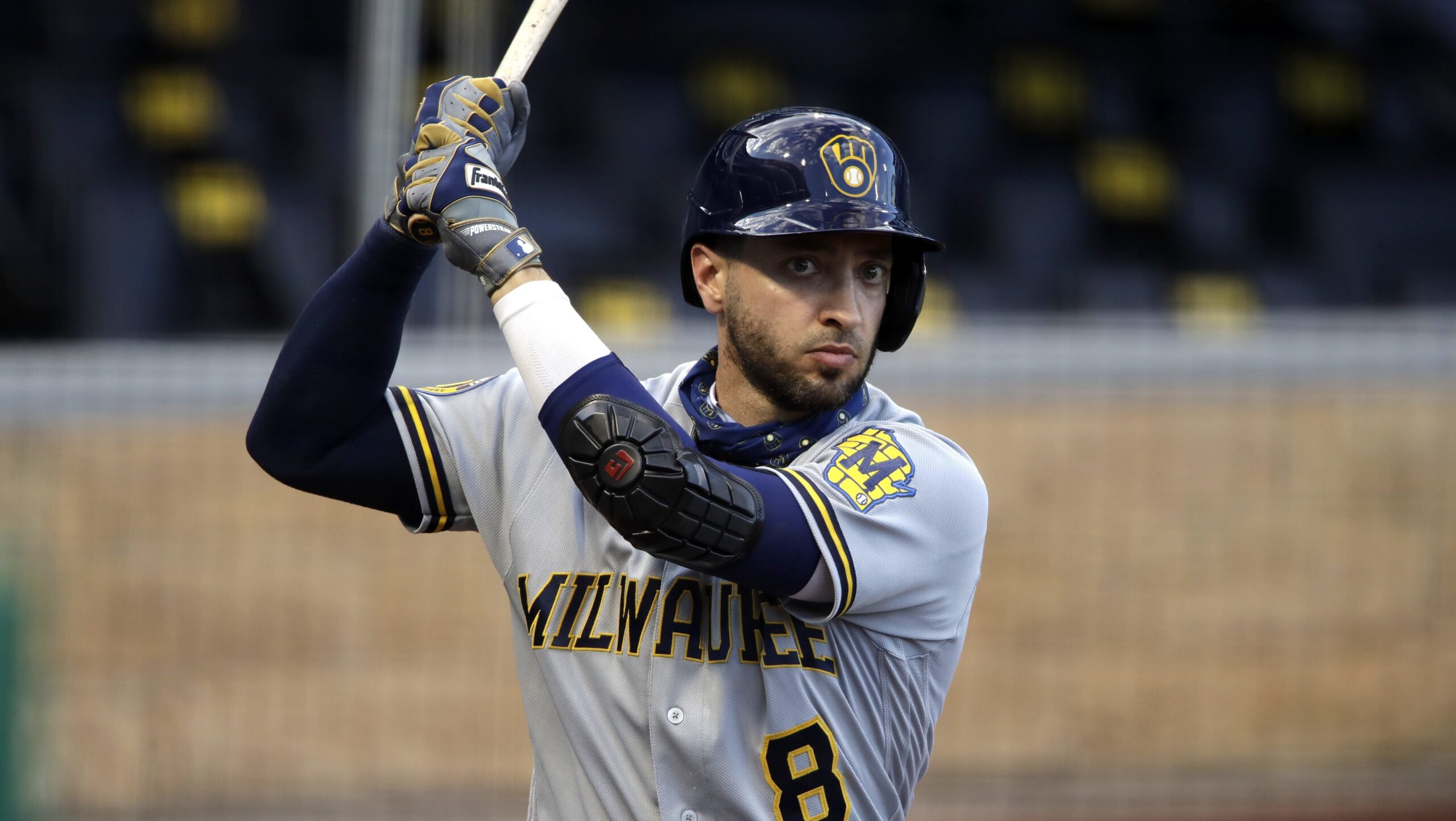
Which brings us to Ryan Braun, the best of a weak first-year class of Hall of Fame candidates — no offense, Cole Hamels. Inductees will be announced Tuesday. Don’t expect either to be on the list.
Between 2008 and 2016, a nine-season span, Braun was, without question, one of baseball’s best players. He was a five-tool player. He twice hit at least 30 home runs and stole at least 30 bases. His .902 OPS ranks fifth in that period among players with at least 4,000 plate appearances. Ahead of him: future Hall of Fame locks Miguel Cabrera and Albert Pujols, Hall of Famer David Ortiz, and, at No. 2, Joey Votto.
Braun was Rookie of the Year in 2007 and National League MVP in 2011.
From 2008 to 2016, Ryan Braun was one of baseball’s best players with a .902 OPS that ranks fifth in that period among players with at least 4,000 plate appearances.
You know what else happened in 2011? Braun tested positive for synthetic testosterone, and ruined his reputation in the aftermath. He challenged the test, smeared one of the testers as being antisemitic (Braun is Jewish), and had his record cleared on a technicality involving the handling of the sample.
Then, in 2013, later, Braun tested positive again. That invalidated all of his protestations.
This time, he served a 65-day suspension. Despite excellent production over the next three seasons and despite an effort to rehabilitate his image through varied good works, he never recovered.
There’s no way Braun will get the 75% of the vote he needs to qualify for induction; not this year, and probably not for five years or so. He’ll be the next Carlos Beltrán, the scapegoat for the Astros’ signal-stealing scandal in 2017 who should have been inducted years ago.
Braun certainly belongs in the Hall of Shame, right next to Rodriguez, who once indignantly denied that he’d ever taken steroids then later admitted to juicing as a younger player. A-Rod’s image has never recovered, either. Both belong in the Hall of Fame, too.
I vote for A-Rod every year. In fact, this is the third consecutive year he’s my No. 1 pick. The only time he wasn’t No. 1 was in 2022, when he was No. 2. Bonds was No. 1.
Braun’s situation is different. For one thing, he tested positive twice. For another, he was an absolute tool about it. For a third, PED use had plummeted by the time Braun arrived on the scene, so it’s not as if he needed to cheat to keep up. Finally, Braun tested positive in an era in which players knew the likely penalty for testing positive. Mark McGwire, who was first eligible in 2007, was being blackballed every year of Braun’s Hall of Fame run.
It is a penalty with which I always have disagreed. And, while I acknowledge that Braun’s candidacy is tainted more than any other PED user, I would be as hypocritical as my colleagues if I excluded him purely on the basis of PED use.
I will vote for him, but, more so than with A-Rod or Bonds or Roger Clemens, I will hold my nose as I check his box.
And I will think slightly less of myself for doing so.
The criteria
I not only divulge my votes, as I believe every writer should do, I also rank my votes and defend them.
I don’t vote for designated hitters because they don’t play the whole game. That included Ortiz in 2022, and it would have included Harold Baines and Edgar Martinez if I’d had a vote in 2019. Kyle Schwarber one day might make me eat those words.
I don’t vote for relievers. Traditionally, they’ve been failed starters. I backslid on that criterion in 2025 because I didn’t want to be the reason Billy Wagner didn’t get enough votes in his final year of eligibility. Thankfully, I didn’t have a vote in 2019, when Mariano Rivera was a unanimous selection. I don’t exactly know what I’d have done that year, when two designated hitters also made it. I probably would have abstained. My antireliever stance will further soften as more players who were drafted and groomed as relievers become eligible.
I use all 10 ballot slots, which means I’ve helped keep Omar Vizquel on the ballot.
I vote for players nearing the end of their 10-year candidacy limit over players who still have time left.
The last few players are usually interchangeable: This year, that interchangeability begins at No. 7, with Chase Utley.
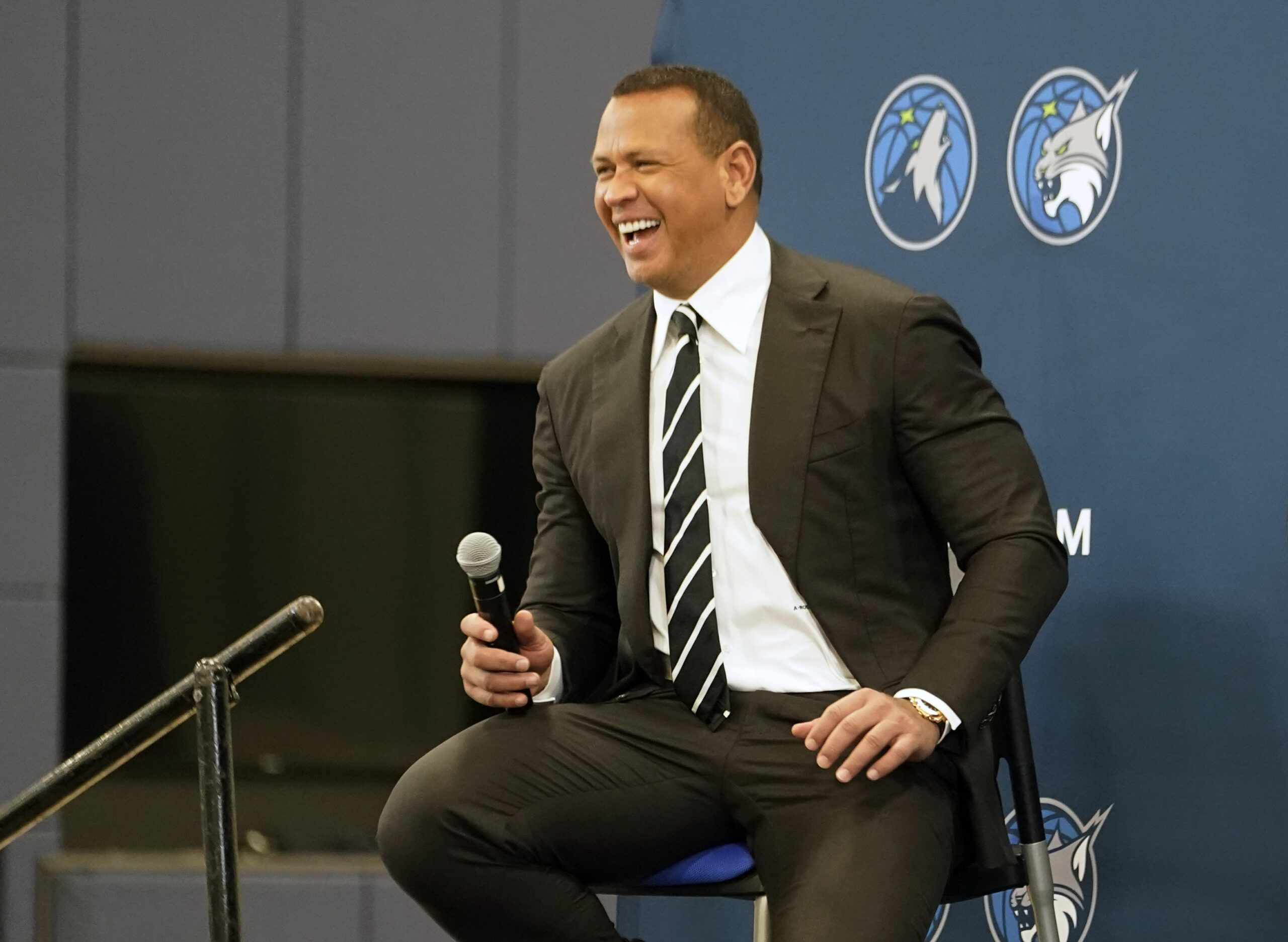
Alex Rodriguez, here in a 2021 event as co-owner of the Minnesota Timberwolves, was one of the great players of his era.
The vote
1. Alex Rodriguez, fifth year
Hit .302 with 642 home runs from 1996 to 2012, the most homers by a margin of 85 (Jim Thome had 557). Hot or cold in his postseasons. Elite fielder. Smug, condescending, weirdo, Yankee. But still.
2. Manny Ramirez, 10th year
In his final HOF run, Ramirez will be remembered less as the most important player on the Red Sox teams that broke the Curse of the Bambino than as a juicer. He led baseball with 1,660 RBIs from 1995 to 2008. He led Cleveland in aggregate OPS from 1995 to 2000 and was fourth in baseball behind McGwire, Bonds, and Martinez among players with at least 3,000 plate appearances. He led Boston in OPS from 2001 to 2006 and was third in baseball behind Pujols and Todd Helton, again among players with 3,000 or more plate appearances. He was the best hitter on loaded teams in Cleveland, Boston, and Los Angeles. He might have been juicing the whole time — he tested positive three times — but, again, PED use was rampant during his prime years.
3. Carlos Beltrán, fourth year
In a game rife with cheating, it astounds me that so many people hold the sign-stealing scandal against him, a scandal perpetrated when he was 40, in his final season, after an 18-year run of excellence. That included the 1999 AL Rookie of the Year as a Royal; nine All-Star Game appearances, his ninth at the age of 39; three Gold Glove awards; and incredible playoff production: a 1.021 OPS, a .307 batting average, 16 home runs, 42 RBIs, and 11 steals (never caught) in 65 playoff games.
That said, he got 70.3% of the vote last year, 57.1% in 2024, and 46.5% in his first year of eligibility. Independent preannouncement polling indicates that Beltrán will cruise into the Hall this year as effortlessly as he played the game itself.
4. Ryan Braun, first year
See above.
5. Jimmy Rollins, fifth year
I understand why, independent of their controversies, Beltrán and Braun aren’t slam-dunk Hall of Famers. I understand why Rollins isn’t, either. J-Roll is my best example of why defense, baserunning, and availability don’t get enough respect from voters. His 2007 MVP season was the best of an eight-year run in which his most consistent contributions involved superb shortstop play, base stealing, and baserunning, which helped account for his 292 stolen bases and the 395 combined doubles and triples he hit from 2001 to 2008, a league high among players with at least 5,000 plate appearances.
Rollins also played in 1,237 games in that span, second-most among shortstops (Miguel Tejada) and seventh-most among all players, including the next guy on this list, one of Rollins’ best friends.
Bobby Abreu had a great career offensively, and he was a good outfielder, but his chances of making the Hall of Fame aren’t good.
6. Bobby Abreu, seventh year
Abreu was one of baseball’s best hitters from 1998 to 2009; his .902 OPS is third among players with at least 7,500 plate appearances, behind Helton and A-Rod. He averaged more than 28 stolen bases with a .301 batting average. He was an elite offensive player with one Gold Glove and a golden arm to boot. He got 19.5% last season, but he’s a lost cause.
Chase Utley is expected to get closer than last year to the needed 75% of Hall of Fame votes.
7. Chase Utley, third year
He was a profoundly productive second baseman from 2005 to 2013, so why isn’t “Ut” higher? Because he was a profoundly poor second baseman who played out of position. He should have been at first base. Yes, his .881 OPS in that span ranks 11th among players who played at least 1,000 games, but he missed an average of 30 games per season in that span. He’s compared to Jeff Kent, who peaked at 46.5% in his final year of eligibility, though the new Contemporary Baseball Era Committee wrongmindedly slid him in instead of PED poster children Bonds and Clemens. However, Utley’s current popularity campaign as MLB’s ambassador to Europe — the most unlikely ambassadorship this side of Woody Johnson’s former gig in the United Kingdom — will surely help Utley blast past his 39.8% mark from last year.
8. Torii Hunter, sixth year
Hunter’s 5.1% last year barely met the 5% minimum for ballot retention, and he probably won’t be on the ballot after this year, but he was the best center fielder in baseball from 2001 to 2013 and a better player than Dustin Pedroia, Andy Pettitte, Hamels, and maybe even Utley.
Dustin Pedroia’s career compared favorable to Chase Utley’s, except in home run power.
9. Dustin Pedroia, second year
There’s an excellent argument that, if you’re in on Utley, you should be in on Pedroia. His 10-year peak was slightly less homer-heavy than Utley’s, but his overall play probably was better, considering his four Gold Gloves. He also won AL Rookie of the Year in 2007 and was AL MVP in 2008. He won two World Series with the Red Sox, but after his first playoff run in 2007 he hit .212 with a .628 OPS in his next 37 playoff games.
10. Omar Vizquel, ninth year
He’s the best defensive shortstop of the modern era after Ozzie Smith. However, his candidacy cratered when, in 2021, he was sued and accused of sexually harassing an autistic adult batboy while managing the White Sox’s double-A affiliate in 2019. No charges were brought, and the sides settled in 2022, but the incident, combined with previous, unproven accusations of domestic violence accusations by an ex-wife, effectively ended Vizquel’s Hall of Fame campaign.
He peaked at 52.6% in 2020, his third year of eligibility, but hasn’t broken 25% in the past four years, and almost certainly won’t again this year.
Honorably mentioned
If I had an 11th vote, I would throw Hamels, Pettitte, and Félix Hernández in a barrel, pick one out, and he would get that vote. None is especially Hall of Fame unworthy, and all were very good long enough to warrant consideration. Pettitte won’t make it this year, his eighth, so, in the spirit of my expiring candidacy criterion, I might vote for him in a couple of years, after some candidates drop off and after Buster Posey gets in next year as a first-ballot candidate.
When Adam Fisher was in the second grade, he was asked to write down things about himself.
Most of the questions were simple, like his favorite food. Then there was the question, “What do you want to be when you grow up?”
While most kids jotted down doctor or chef, he said, Fisher proudly wrote that he wanted to be a college basketball coach.
“Why? I have no idea,” Fisher said. “I love college basketball. I love the students when you pack an arena, I love the band, and the comradery of bringing people together that are at the university currently and then you want to go back as an alumni.”
Nearly three decades later, the Bucks County native, who graduated from Penn State in 2006 and immediately dove in the coaching world, has been living out his dream. Fisher worked under former Penn State and current Florida Gulf Coast coach Pat Chambers and Hall of Famers Jay Wright and Jim Larrañaga at Villanova and Miami, respectively.
At each stop, he grew and learned from other coaches, as he waited for the chance to lead his own team. That finally came in 2023, when he became Temple’s head coach.
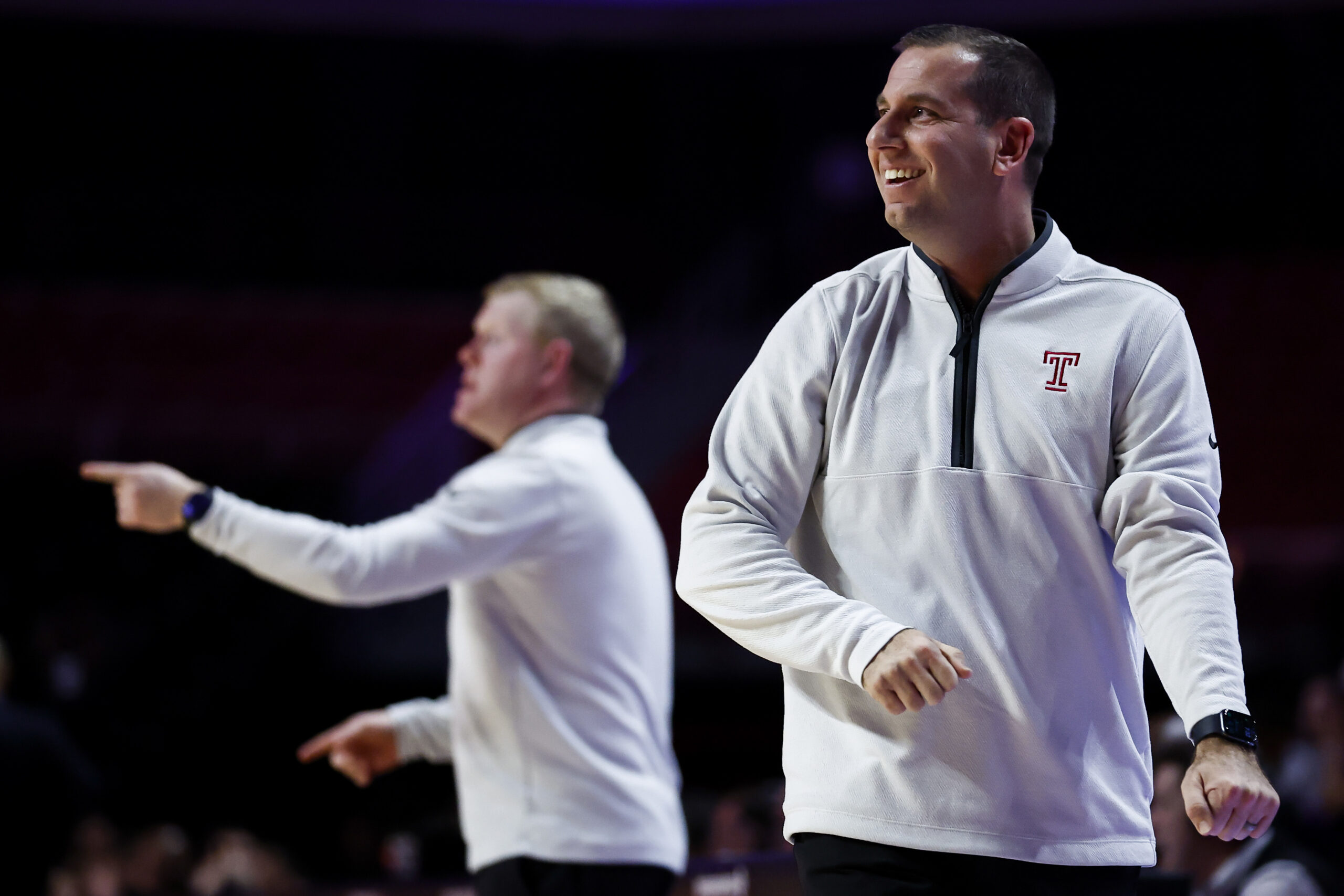
Now, Fisher is in his third year, and has Temple (11-6, 3-1 American) trending in the right direction. In November, he received a two-year extension through 2030. While the program has expressed its faith in Fisher, he hopes to build the team back into an NCAA tournament contender.
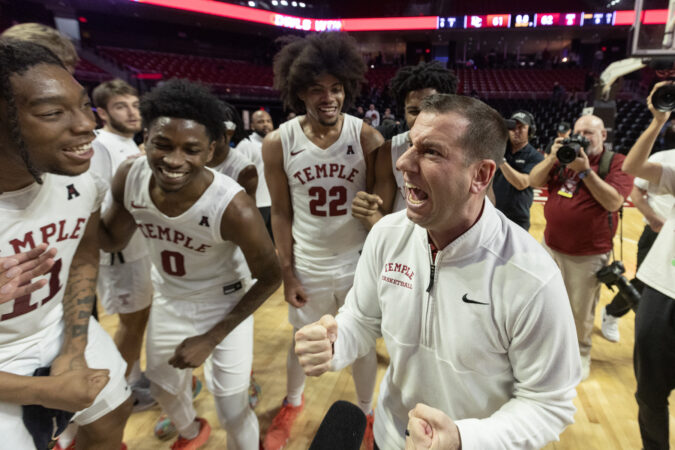
Adam Fisher during a game against East Carolina at the Liacouras Center on Jan. 7.
“Every job has pressure no matter what your profession is,” Fisher said. “With this job, the pressure is the great history, the rich tradition that comes with taking over a program like Temple. For me, you got to fuel yourself on the pressure and it’s something that is there and it kind of helps motivate, to get back to where Temple basketball was … it helps fuel you to not ever be outworked, to make sure you’re doing everything you possibly can for the program and put yourself in the best situation possible.”
‘You can win and have fun’
Fisher credits his father Neil for giving him the itch to coach. Neil was he and his brother’s first coach while they played basketball, among other sports, in the Warrington Athletic Association.
Fisher’s friends still bring up the times they had Fisher’s father as a coach. Neil’s impact went beyond sports as well, as Fisher’s family owned a restaurant. He watched his father run it on his own.
“All our friends still to this day will talk about playing for my dad, and that’s really cool when you know that somebody makes that impact,” Fisher said. “I think that was when I learned I want to coach, I want to impact lives the way he did in the way he helped change people for the better. And bring people together and show that you can win and have fun and all those things.”
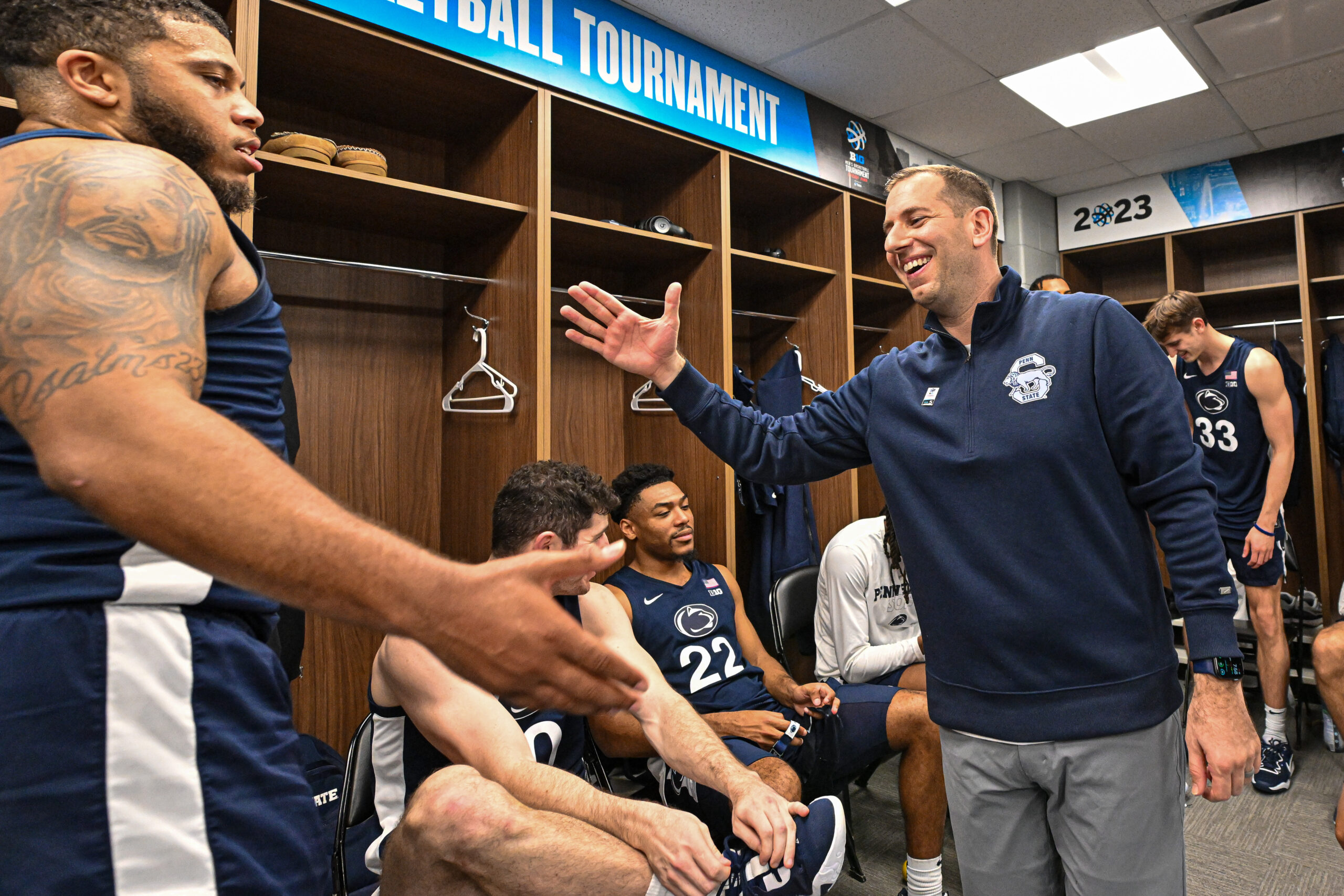
Adam Fisher was an associate head coach at Penn State prior to being hired as Temple’s next head coach.
Fisher bounced between schools after graduating with a kinesiology degree from Penn State. He served as a graduate assistant at Villanova under Wright, where he eventually followed then assistant coach Chambers to Boston University and Penn State, when Chambers took over those programs.
He held various roles; director of operations, video coordinator, and director of player personnel. But in 2013, he got his break.
A father figure
Former Miami assistant coach Michael Huger got in Larrañaga’s ear about a coach at Boston University. The Hurricanes had an open spot for a director of player operations and hired Fisher, who learned under Huger and Larrañaga’s tutelage.
Huger let Fisher join his recruiting visits and even let him crash in his office while he worked. Larrañaga became a father figure for the budding coach, whom he called the best director of player operations he’s ever had.
He wasn’t a bench coach yet, but he coached 35-year-olds during the summer in a fantasy camp, where he impressed with his ability to build relationships, something that would come in handy down the line.
But Fisher wasn’t someone Larrañaga could let go.
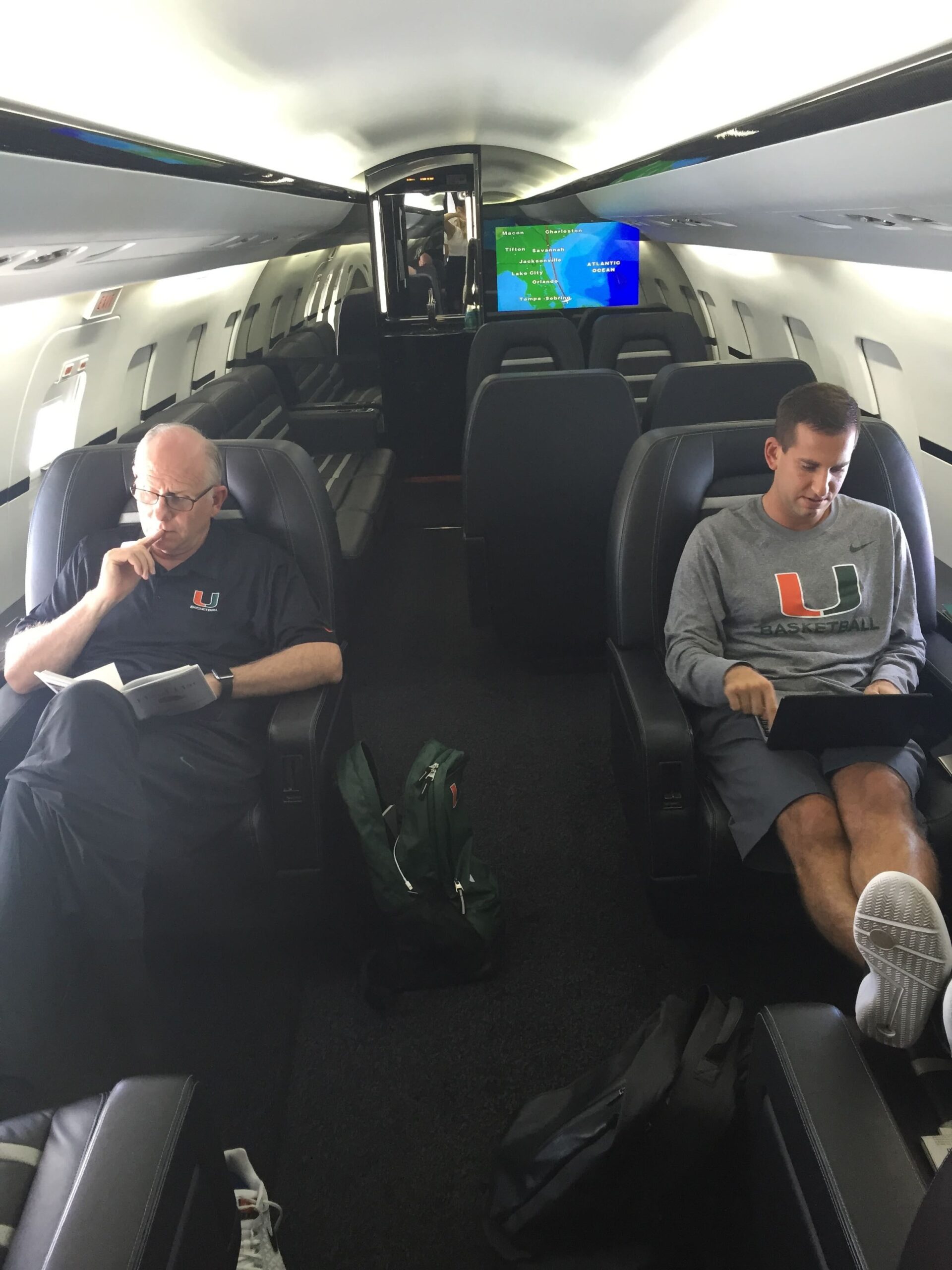
Former Miami coach Jim Larrañaga and Adam Fisher on a plane together.
“He was going to go to Bowling Green State University with Michael Huger. My wife said to me, ‘You can’t lose Adam. You speak so highly of him and you need to figure out a way to keep him,’” Larrañaga said. “So I called Adam back and said, ‘Instead of going to Bowling Green, I’d like you to stay here as the ops, but I’ll promise you, the first time one of my assistants leaves, I’ll elevate you.’”
His tenure as director of player operations didn’t last long. Assistant coach Eric Konkol was hired as the head coach of Louisiana Tech. Larrañaga stuck to his word and promoted Fisher to a bench coach, where he stayed for seven seasons.
Fisher began looking at Larrañaga as a father figure as their families became friends. When he married his wife Rebecca, Larrañaga was at the wedding. He even showed up a few days early to avoid a hurricane in Miami, while other staff members had to miss it because of the storm.
“That just shows you who he is,” Fisher said. “That’s the guy he is. I’m interviewing for the Temple job and he’s getting ready to play in the Elite Eight and he has time out of his day to call Arthur Johnson the day of an elite eight game. That’s why I think he’s the greatest. He’s a Hall of Fame coach and Hall of Fame person.”
Even after he left for Penn State in 2021 to work under Micah Shrewsberry, the two stayed in contact.
Continue to build
While at Happy Valley, it was Fisher’s job to handle recruiting in the Philadelphia area. He added players such as Jameel Brown, Demetrius Lilley, Cam Wynter, and Andrew Funk to the team, and helped the Nittany Lions reach the NCAA Tournament in 2023.
Fisher later took the head coaching job at Temple. While he began building a foundation with the Owls, he tapped back into the relationships that he made during his career.
Huger had been fired by Bowling Green that offseason, and his protégé hired him as the Owls’ associate head coach. Jimmy Polisi, who had spent a season with Fisher in Miami, was hired as the director of player operations, the same role that gave Fisher his start.
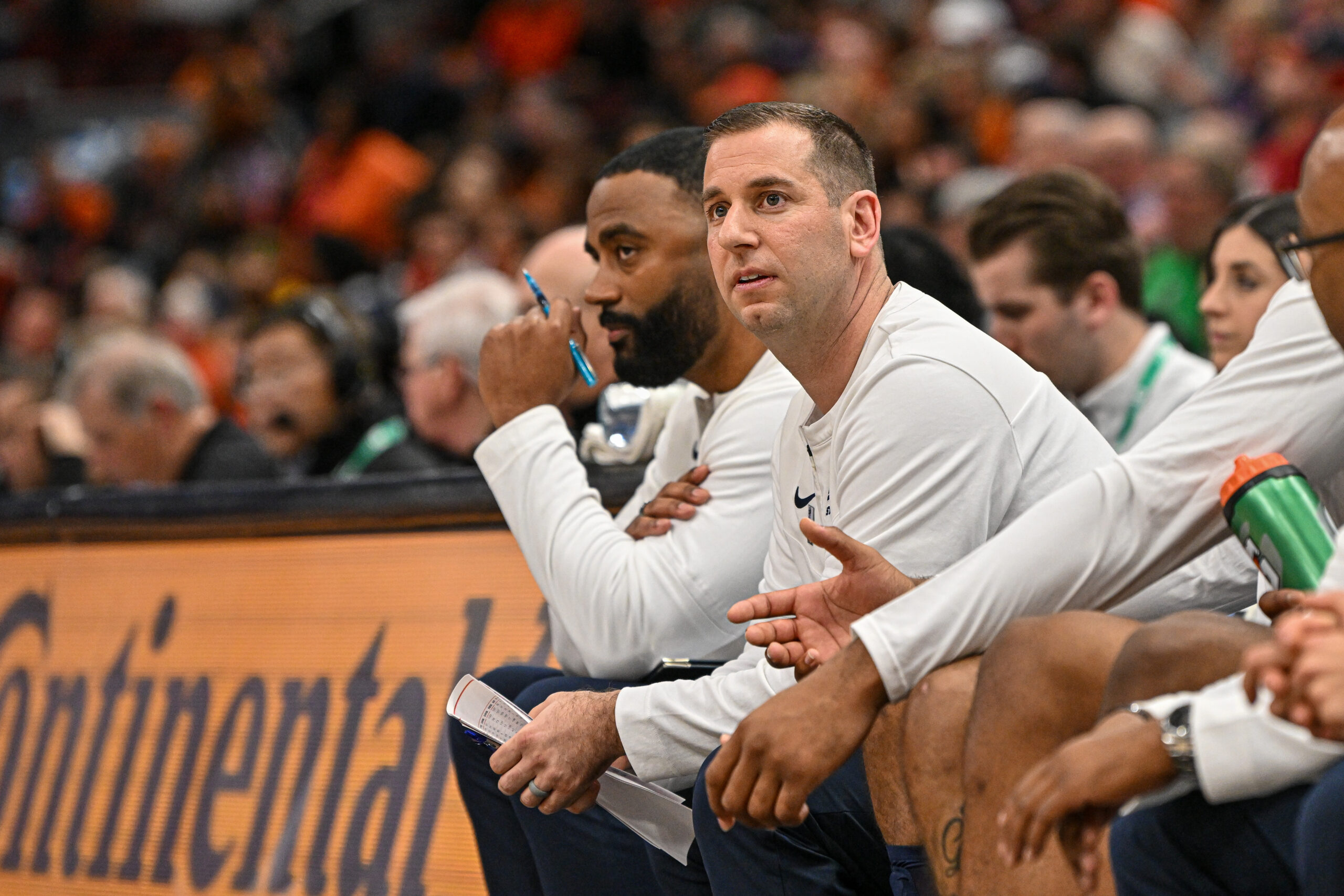
Adam Fisher, while serving as Penn State’s associate head coach, helped the team reach the NCAA tournament in 2023.
When guard Jamal Mashburn Jr. was heading into his junior season of high school, Fisher and Larrañaga camped out in a movie theater parking lot to wait for July 1 to offer Mashburn Jr. a scholarship.
Mashburn Jr. never committed to Miami, instead he went to the University of Minnesota and then New Mexico, but when he entered the transfer portal in 2024, he had a familiar face reach out — Fisher. He only spent a year with the team, but the two still talk.
“I was reaching out to him about a lot of stuff, just keeping my mind right. And, you know, he’s a positive person,” said Mashburn Jr., who competes on the Grand Rapids Gold of the NBA G League. “He’s someone who believes in me.”
Fisher still has players reach out that are no longer in the program, like Mashburn Jr. and forward Steve Settle III. Settle tries to watch every Temple game when he can.
Fisher’s first year at the helm saw Temple make a Cinderella run to the American championship game. While Temple got blown out of the tournament in the first round of the 2024-25 season, the Owls are making strides this season.
The roster looks well connected compared to the last two season. A defense that needed fixing has improved and the offense has been multidimensional.
Fisher is hopeful that his team will continue to have success, and he’s committed to get there.
“This is where my family and I want to be,” Fisher said. “We’re excited to be here and continue to build this thing. We knew it was going to take time, taking over the job and where we were in the state of college athletics, we knew this was going to be a challenge early on.
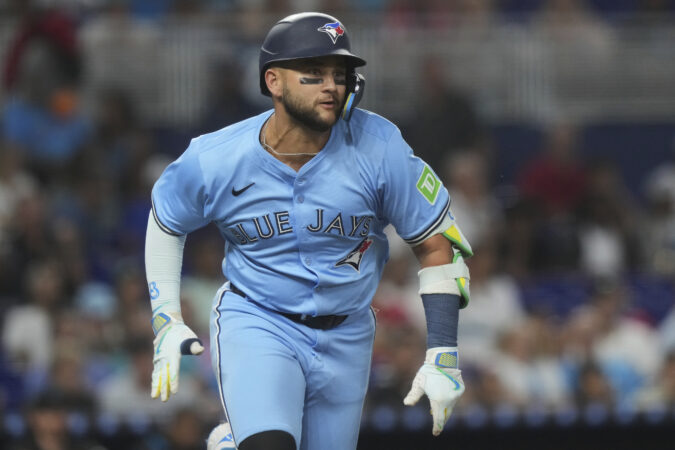
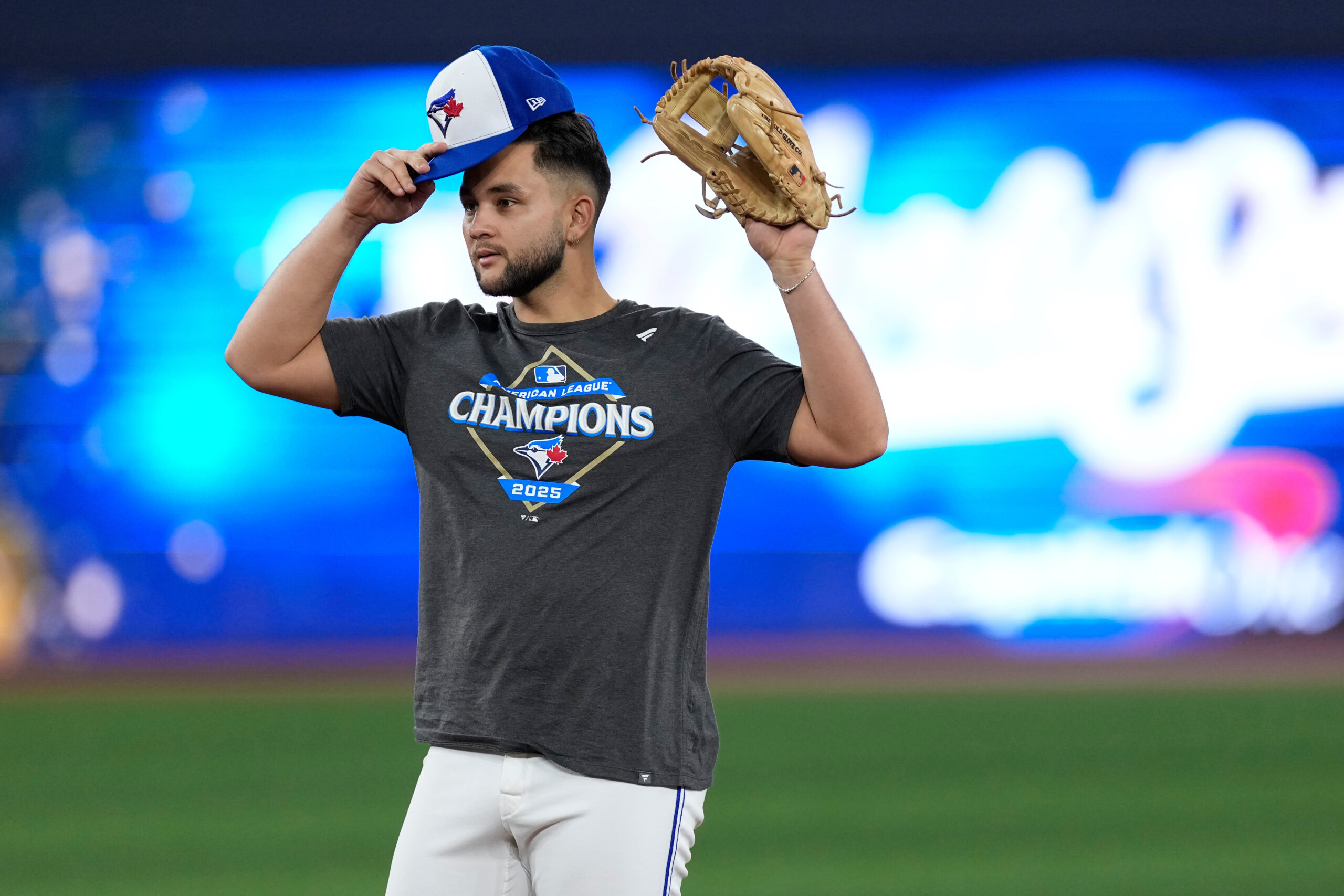
Well, that was fun. You can be mad that the Phillies didn’t sign Bo Bichette or you can be grateful for all the takes you heard along the way. However things turn out for the 2026 Phillies, you’ll always have those two weeks in winter when you could dream of a better tomorrow. No amount of money and opt-outs can take that away from you. Don’t you forget that.
Truth is, Bichette was always likely to turn out to be an illusion. The narrative won’t be spun that way. The reports emerging in the immediate aftermath of the Mets’ agreement with the former Blue Jays star on a three-year, $126 million contract suggest the Phillies thought they were on the verge of signing Bichette to a seven-year, $200 million deal. But that’s more a misreading of the state of play than it is reality.
If the Mets were willing to offer Bichette these kinds of terms, and Bichette was intent on taking the best deal for his personal finances, the Phillies weren’t going to sign him. Both of those outcomes were more likely to be the case than Bichette accepting a long-term deal that the Phillies felt made fiscal sense.
That’s true — and always was true — for two reasons. The Mets are operating with a different definition of fiscal sense. They are also operating with a different level of urgency, given the departures of Pete Alonso, Jeff McNeil, and Edwin Diaz and their failed pursuit of Kyle Tucker. The Phillies could fail to sign Bichette and still have more or less the same roster that won 96 games last season. For the Mets, Bichette might have been their only hope at coming out of this offseason with a roster that looks to have improved over last year’s disappointment. Necessity plus wherewithal equals motivation. It’s tough to win a bidding war from a weaker position.
That’s not to say the Phillies were played for fools. If three years and $126 million with two opt-outs is what it took to prevent Bichette from signing with the Phillies, then the Phillies had a very real chance. Because three years and $126 million and two opt-outs is a borderline irresponsible deal. So much so that the Phillies couldn’t even think about structuring a long-term deal that would have beaten it.
Even if Bichette doesn’t opt out, he will reenter free agency at the age of 30 needing to sign a four-year, $75 million deal to come out ahead of where he would have been had he accepted the Phillies’ reported seven-year, $200 million offer. If he opts out after next year, he’ll need six years and $159 million, heading into his 29-year-old season. Kyle Schwarber just landed five and $150 million heading into his 33-year-old season.
Bo Bichette is expected to move from shortstop to third base with the Mets.
The one silver lining for the Phillies is the price their division rivals will pay for very little upside. A lot of Bichette’s value is his youth — but the Mets aren’t getting any of that value given that he can become a free agent after next season. They are only getting the downside risk that Bichette’s value craters, in which case he won’t have been worth anywhere close to $42 million for one season and they’ll also owe him an additional two years and $84 million.
There is a reason the Phillies don’t like to include opt-outs in deals. They pretty much eliminate the ability to recoup value on your investment. Imagine if Zack Wheeler had opt-outs in his original five-year, $118 million deal with the Phillies. Basically, the Mets either win a World Series this season because of Bichette or they are right back where they started.
The Phillies can hardly stand on principle when it comes to fiscal moderation. But they are clearly in a different realm from the Mets or the Dodgers. I guess you can feel good about the fact that they will need to win games the old-fashioned way, relative to the competition. Let’s go, J.T. Realmuto!
Cole Hamels knew it for years, even before pitching his last major league game. Eventually, a day would come when his name appeared on the Hall of Fame ballot.
Even so, there was something about actually seeing it.
“When they do put your name on the ballot, they send you a letter,” Hamels recently told Phillies Extra, The Inquirer’s baseball podcast. “You can frame it.”
Better yet, cast it in bronze, just like those plaques on the walls in Cooperstown, N.Y. Because although only one, maybe two former players on this year’s ballot will get elected Tuesday night and inducted this summer, all 27 had careers worth recognizing.
Take, for instance, Hamels. He finished in the top 10 in his league in ERA six times in 15 seasons, 10 of which came with the Phillies. He ranks fourth in Phillies history in strikeouts (2,560) and sixth in innings (2,698). He was the MVP of the 2008 World Series and threw a no-hitter in 2015 in his final Phillies start.
By every measure, a brilliant career.
Yet Hamels’ name might be checked on fewer than one-quarter of the 400 or so ballots — and not the one cast by this voter. Hamels was polling at 31.1% as of Friday evening, according to industrious ballot collector Ryan Thibodaux’s tracker, more than the minimum 5% to stay on the ballot, far from the 75% for election.
But here’s what makes baseball’s Hall of Fame special: the quality of the players on the 1-yard line, a Tush Push from getting in. (Too soon for the Eagles reference?)
Consider that less than 24,000 players have made it to the majors, even for one day. A fraction of those stuck around for 10 years, the minimum requirement to be considered by the screening committee that annually puts together the Hall of Fame ballot.
Whittle it all down, and only about 5% of all major leaguers see their name on that sheet of paper. And since the inaugural Hall class in 1936, a total of 279 players have been elected, only 137 on the writers’ ballot.
“It’s not a disservice to anyone that doesn’t get that checkmark in any single year,” said Hamels, making his ballot debut this year. “They’re all some of the best baseball players that I was fortunate to play against.”
Indeed, that’s helpful to remember when the results are announced at 6 p.m. Tuesday on MLB Network.
Full disclosure: I voted for Carlos Beltrán, Félix Hernández, Dustin Pedroia, Andy Pettitte, and Chase Utley. Pedroia was the only addition to my ballot from last year. I strongly considered Hamels, in addition to David Wright, Andruw Jones, and Jimmy Rollins and might come around on some, or all, next year.
Every voter has a threshold for where to draw the 1-yard line. Over the years, my tendency has been to favor players who had a big peak, even if they lacked the longevity of classic Hall of Famers. Hernández, Pedroia, and Utley fall into that category.
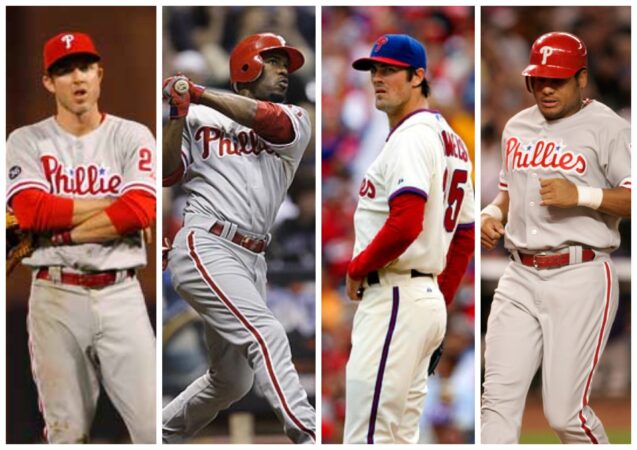
For observers of the Phillies, it was another loaded ballot, with four candidates — Bobby Abreu, Hamels, Rollins, and Utley — who spent the bulk of their careers with the team. Howie Kendrick and Hunter Pence briefly played for the Phillies; Kendrick works for them as a special assistant.
Let’s dive into the Hall of Fame candidacies of the four longtime Phillies, from the most to the least likely to eventually get elected.
Chase Utley received nearly 40% of the vote last year in his second appearance on the Hall of Fame ballot.
Chase Utley
Years on the ballot: Three
2025 vote total: 39.8%
The writers haven’t elected a player with fewer than 2,000 career hits since Ralph Kiner in 1975.
Utley finished with 1,885.
But Utley appears to be trending toward eventual election, likely because of the height of a peak that lasted at least six seasons and, if you squint, as many as 10. From 2005 to 2014, he had a 127 OPS+ and ranked second among second basemen in extra-base hits behind Robinson Canó, who was suspended twice for failing a drug test. Utley also had the second-most wins above replacement of any player, trailing only Albert Pujols.
Utley made a healthy ballot debut (28.8%) in 2024, then got an 11-point bump last year. Without a strong first-year candidate, he’s set for his biggest leap yet, tracking above 60% in early returns, although players don’t tend to fare as well among voters who don’t make their ballot public.
Second basemen are historically underrepresented in the Hall of Fame. The writers have elected only two (Craig Biggio and Roberto Alomar) since 2006. Jeff Kent was elected last month by an era committee after topping out at 46.5% in 10 years on the writers’ ballot. Maybe it will help Utley and Pedroia with the writers.
Utley already got to almost 40% in only his second go-around. His statistics won’t change, but voters’ perspectives often do. It wouldn’t be surprising to see Utley climb over 50% this year and get the call to Cooperstown sometime around, oh, 2028.
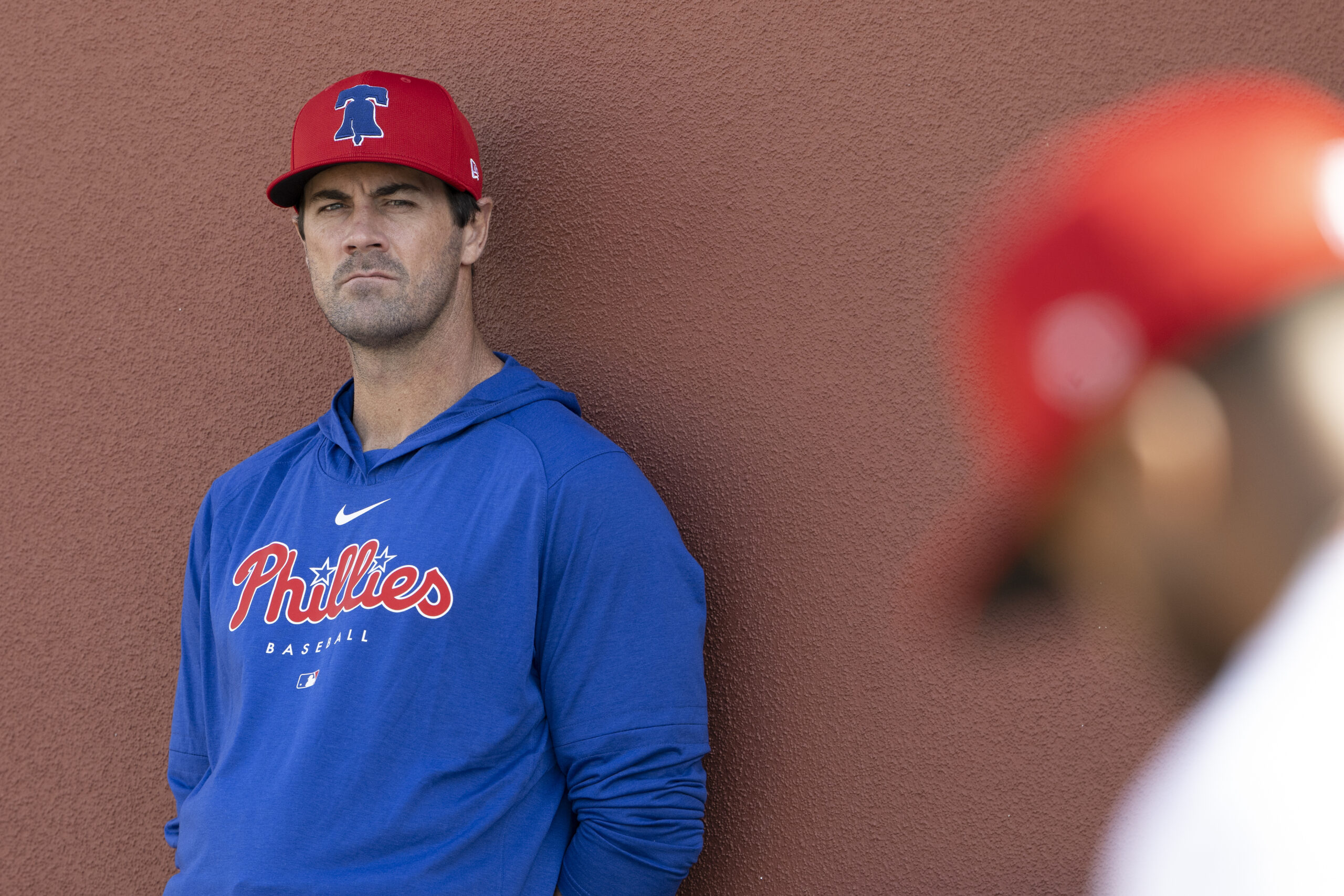
Cole Hamels worked for the Phillies this year as a guest instructor in spring training and a part-time television analyst.
Cole Hamels
Years on the ballot: One
Greg Maddux, Tom Glavine, Pedro Martínez, Randy Johnson, and John Smoltz went into the Hall of Fame in a two-year parade of starting pitchers in 2014 and ’15.
Since then, the writers have elected only three starters.
Roy Halladay, Mike Mussina, and CC Sabathia will be joined in five years by Clayton Kershaw and eventually by Justin Verlander and Max Scherzer. Maybe Zack Greinke, too. But beyond that group, who’s the next surefire Hall of Fame starter?
At a time when teams ask less of their starters than before, in an age of reduced workloads and an arm-injury epidemic that has shortened careers, starters no longer reach the classic benchmarks — 300 wins, 3,000 strikeouts, etc. — that the all-time greats once did.
It has been reflected in Hall of Fame voting. Johan Santana had a six-year peak with two Cy Young Awards and five top-five finishes but dropped off the ballot after one year because he apparently wasn’t dominant for long enough.
Voters appear to be recalibrating. Hernández’s peak lasted slightly longer than Santana’s and featured one Cy Young and two runners-up. He appeared on 20.6% of ballots as a first-time candidate last year and was tracking at better than 50%.
It’s difficult to assert that Hamels’ career, which didn’t include a top-three Cy Young finish, reached King Félix’s heights. But check out their numbers from 2007 to 2016:
Hamels: average of 208.2 innings, 126 ERA-plus, 46.5 WAR, according to Baseball-Reference.
Hernández: average of 214 innings, 129 ERA-plus, 47.2.
It’s close. Fortunately, Hamels will get additional consideration. He’s going to hang around on the ballot, maybe even topping Hernández’s first-year total.
Jimmy Rollins is the Phillies’ all-time leader with 2,306 hits.
Jimmy Rollins
Years on the ballot: Five
2025 vote total: 18.0%
Rollins’ significance to the Phillies would be undeniable even if he wasn’t their all-time hits leader. He was a soothsaying league MVP in 2007 and a World Series champion in 2008, and authored one of the biggest postseason hits in team history in the 2009 NL Championship Series.
The Phillies’ 143-year story can’t be written without their best shortstop.
The writers didn’t vote in Dale Murphy and Don Mattingly, whose excellence symbolized an era for the Braves and Yankees, respectively. Lou Whitaker didn’t get into the Hall of Fame after 19 starry seasons with the Tigers.
And thus far, J-Roll hasn’t gotten much traction either.
Despite sharing the middle infield with Utley for a dozen seasons, Rollins hasn’t matched his double-play partner’s ballot momentum. He debuted at 9.4% in 2022 and made only modest increases: 12.9% in 2023, 14.8% in 2024, and 18% last year. He’s tracking at about 23%, which would signal another small bump.
Rollins’ supporters within the electorate often note that he’s the only shortstop ever with at least 2,000 hits, 200 homers, and 400 steals. He also won a league MVP, four Gold Gloves, and a World Series ring.
But it’s difficult to ignore Rollins’ below-league-average OPS+ (95), although it wouldn’t be the lowest ever for a Hall of Fame shortstop (Phil Rizzuto, Ozzie Smith, Luis Aparicio, and Rabbit Maranville were worse).
Bobby Abreu spent half of his 18 year major-league career with the Phillies.
Bobby Abreu
Years on the ballot: Seven
2025 vote total: 19.5%
Twenty-one players had at least 900 extra-base hits and 1,400 walks. Here’s the list: Babe Ruth, Lou Gehrig, Mel Ott, Jimmie Foxx, Ted Williams, Stan Musial, Willie Mays, Mickey Mantle, Eddie Mathews, Hank Aaron, Frank Robinson, Carl Yastrzemski, Pete Rose, Mike Schmidt, Barry Bonds, Gary Sheffield, Frank Thomas, Jim Thome, Jeff Bagwell, Chipper Jones … and Abreu.
Yet Abreu somehow always seemed more like a supporting actor. He spent half his 18-year major league career with the Phillies but played for six teams. The Phillies won the World Series two years after he got traded; the Yankees won it one year after he left as a free agent.
Abreu built on a 5.5% debut in 2020 but has plateaued in recent years — 15.4% in 2023, 14.8% in 2024, 19.5% last year. Through Wednesday, he had picked up 12 votes and was polling at about 40%.
It would represent a decent jump for Abreu. But with only three more years on the ball, he needs a bigger leap to stand a chance at even sniffing 75%.
There isn’t a whole lot of literal truth you can glean in most press conference settings. That’s especially true in the NFL, where the shield on the logo carries more than a little metaphorical weight. They are messaging platforms, not intelligence briefings. It can be frustrating. It can also be instructive, in certain moments.
Take Howie Roseman, for instance. On Thursday afternoon, the Eagles general manager was sitting next to Nick Sirianni listening to the head coach wind down an answer to a question about the team’s search for a new offensive coordinator. As soon as Sirianni finished speaking, several reporters began talking over each other to ask the next question. But Roseman had something he wanted to add, and jumped in.
“I’ve got a lot of things I could say about coach and the job that he’s done here,” the general manager said. “I’m incredibly proud of him. He’s shown that when we bring people in he’s open to doing whatever’s best for this football team. That’s all he cares about is winning. When he’s brought in people he’s given them the flexibility to put their own spin on things. Obviously I sit here and I feel incredibly grateful that I’m working with someone who as a head coach is elite at being a head coach, elite at building a connection with our team, elite about talking about fundamentals, game management, situational awareness, bringing the team together, holding people accountable, and when you’re looking for a head coach those are really the job descriptions.”
The strongest votes of confidence are usually the unsolicited ones. It would be hard to interpret Roseman’s statement as anything else. Two years ago, the Eagles did Sirianni a disservice with the way they handled the fallout from their late-season collapse and one-and-done showing in the 2023 playoffs. From their decision to wait nine days to announce that Sirianni would return amid rampant speculation that his job was in jeopardy, to their external hunt for an offensive coordinator, the Eagles left the impression that the coach was being Office Spaced out of power. Not only was it an indignity, it led to an offseason full of distractions that easily could have metastasized during the Eagles’ 2-2 start to the 2024 season.
This time, Roseman made it a point to eliminate any doubt. As he should have. The Eagles are about to embark on an offensive coordinator search that could see them bring in any of a number of big name former head coaches who have their own schemes and, potentially, their own assistant coaches. During Thursday’s press conference, there were several questions about the level of autonomy the new offensive coordinator will have, including the one that prompted Roseman’s unsolicited amicus brief. If the Eagles felt like a clarification of the record was in order, now was the time to provide it.
It speaks volumes that Roseman took advantage of the opportunity, and that he did it forcefully. A coach needs all the political capital he can get, especially a coach who suffers from perception problems. Sirianni has brought some of those on himself with his occasional emotional regulation issues on the sidelines. But it was always a silly and unrealistic narrative to suggest he was the NFL coaching equivalent of a guy who stayed at a Holiday Inn Express last night. It was also willfully ignorant in a league where John Harbaugh and Mike Tomlin had been two of the most successful coaches of the modern era.
Howie Roseman and Nick Sirianni are charged with finding answers after the team fell short of its Super Bowl goal.
As for the exact nature of the Eagles coaching search, and their offseason personnel strategy, you’ll have to rely on your own deductive reasoning. There was little in the way of concrete answers from either Roseman or Sirianni regarding their vision for the Eagles offense.
— Roseman said the Eagles won’t necessarily be targeting an OC who they think could remain with the team for an extended period of time.
“It’s a great compliment when guys get head coaching jobs from here because it means that we’re having success,” he said.
— Sirianni was noncommittal when asked about his role — and his current assistants’ roles — in the future offense. Which is common sense. If the Eagles hire Mike McDaniel, in whom they reportedly have some interest, they will clearly hire him to be Mike McDaniel the same way they hired Vic Fangio to be Vic Fangio. That said, in most cases, game-planning and play-calling is a far more collaborative process than a lot of people seem to think. The Eagles have always valued that collaborative spirit, especially in the wake of the Chip Kelly era.
“I know that I want to be the head football coach and I think that’s what the team needs,” Sirianni said. “Everything that I’m doing isn’t because it’s what I want to do, it’s because it’s what’s best for the football team and I think it’s best for the football team when I’m the head football coach.“
— Speaking of reading between the lines, I’ll leave it to you, dear reader, to evaluate Roseman’s comments when asked about the possibility of trading star wideout A.J. Brown.
“It’s hard to find great players in the NFL and A.J.’s a great player,” Roseman said. “That’s what we’re going out and looking for, when we go out in free agency and the draft, is trying to find great players who love football and he’s that guy. So that would be my answer.”
I would qualify that wording as “careful” rather than explicit and definitive. But I do think it points to a general truth about the situation. It wouldn’t make a whole lot of sense for the Eagles to trade Brown unless they can somehow do it in a way where they replace him with an equal or better talent. The cost savings and draft pick return almost certainly won’t be enough to legitimize the move on that front. But if they can reap some sort of asset in a deal and also use the $7 million or so they’d clear with a post-June 1 move to add some other pass-catcher, it could make sense. But those are my words, not Roseman’s.
The Eagles don’t just need an offensive coordinator. They need a quarterback whisperer.
They need Josh McCown. Or maybe Cam Turner.
Kevin Patullo wasn’t ready for the OC job in Philly, but then, Bill Walsh and Sid Gillman wouldn’t have won a Super Bowl the way Jalen Hurts played in 2025.
Hurts’ development has stalled. He might even be broken. He’s largely the same quarterback at the end of the 2025 season as he was at the end of 2022. Defenses know that, and they exploit it. As the offensive line deteriorated, and as Saquon Barkley and A.J. Brown started to show their age, more was asked of Hurts, who delivered ever less.
They need an offensive coordinator who can invigorate a veteran quarterback whose career is idling. Both McCown, a former Eagles backup quarterback, and Turner, who has the bluest of NFL bloodlines, have done just that.
Fire starters
The most compelling story of the 2024 season involved Sam Darnold, the No. 3 overall pick in the 2018 NFL Draft and a bust with the New York Jets, Carolina Panthers, and San Francisco 49ers, who made the Pro Bowl in his seventh season and led the Minnesota Vikings to a 14-3 record.
The most compelling story early in the 2025 season involved not only Darnold’s continued ascendance, now in Seattle, but also Daniel Jones. He was the No. 6 overall pick in 2019 but turned out to be such a bust with the New York Giants in his first six seasons that they released him.
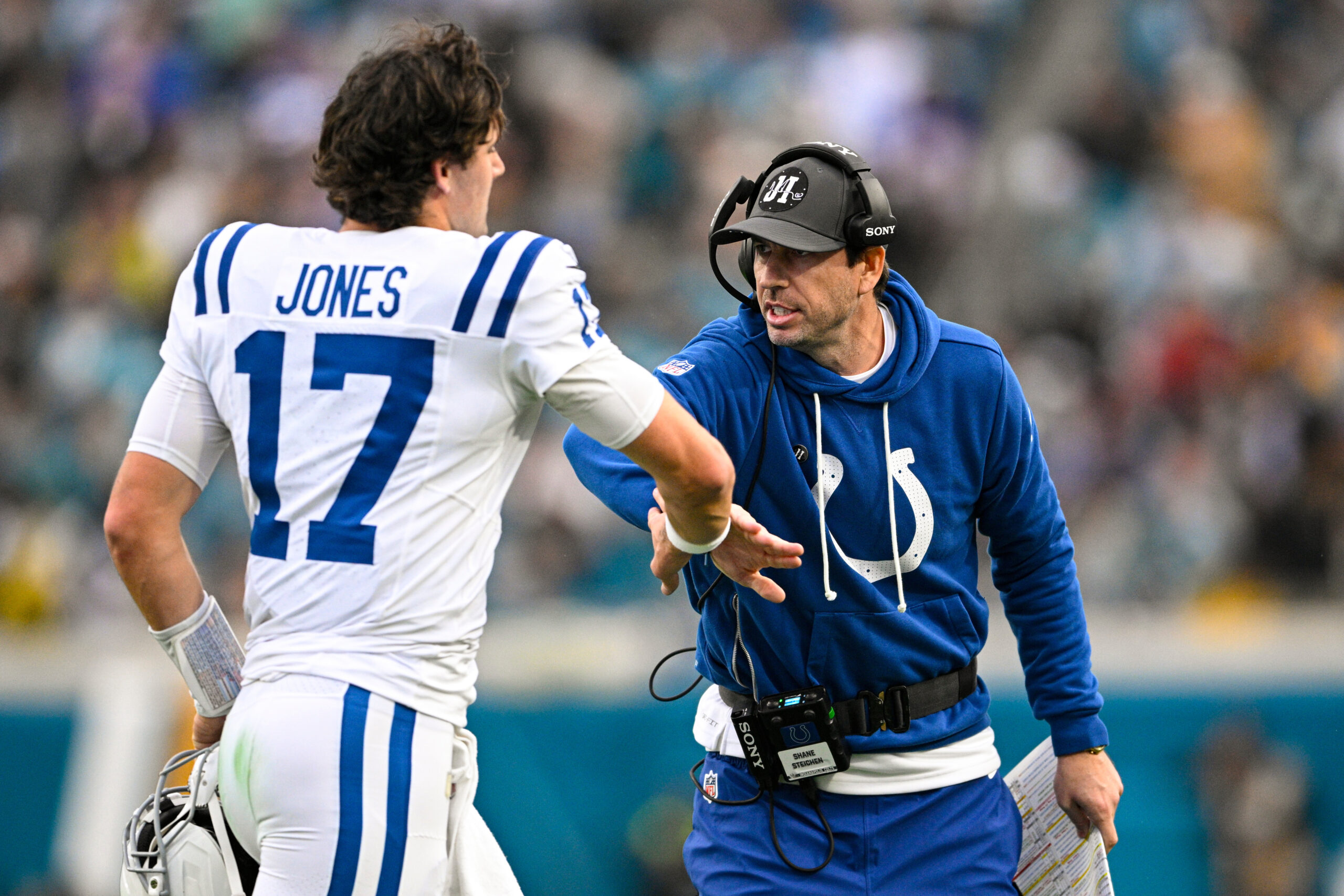
Jones signed with Indianapolis, where Turner, as quarterbacks coach, had been developing Anthony Richardson, the No. 4 overall pick in 2023, while helping veterans Joe Flacco and Gardner Minshew squeeze out a few more NFL starts. When given an established talent like Jones, though, Turner made hay. Turner convinced head coach Shane Steichen to bench Richardson in favor of Jones, and Turner was right. The Colts were 8-2 and Jones was a dark-horse MVP candidate with a career-high 101.6 passer rating when he broke his leg in Game 11. Jones suffered a torn Achilles tendon two games later.
Colts quarterbacks coach Cam Turner played a big role in Daniel Jones’ resurgence before the quarterback suffered a season-ending injury.
So, amid all the flashy possible candidates — fired Miami Dolphins head coach Mike McDaniel, fired Giants head coach Brian Daboll, fired Washington Commanders coordinator Kliff Kingsbury, figurehead 49ers OC Klay Kubiak — you have, in McCown and Turner, two position coaches who played the position, who possess credible pedigrees, and, within the past two years, have salvaged the careers of quarterbacks who were in even worse shape than Hurts.
Granted, they wouldn’t be acting as Hurts’ position coach. However, if head coach Nick Sirianni — also never a QB, and only briefly a QB coach — will assume more of a role in scheme construction and game-planning, which he’s going to help with anyway, McCown or Turner could spend more time with Hurts than would a normal OC.
Granted, they haven’t called plays. But then, neither had Ben Johnson when he became offensive coordinator in Detroit in 2022. He’d never even coached quarterbacks. He still turned out to be excellent at running an offense, both with the Lions through 2024, as well as in 2025, his first season as head coach with the Chicago Bears, who are two wins from making the Super Bowl.
The team desperately needs some QB IQ in the building after the caliber of coaching Hurts received this season. And no, we’re not referring to Patullo.
Scot who?
There was a lot of head-scratching last winter when Sirianni hired career college coach Scot Loeffler as quarterbacks coach. Loeffler’s only season in the NFL was as quarterbacks coach for the Lions in 2008, when Daunte Culpepper, Jon Kitna, and current ESPN analyst Dan Orlovsky combined for an 0-16 record. Loeffler coached on the first 0-16 team in NFL history, a season best remembered for Orlovsky, while facing modest pressure, unwittingly scrambling out of the back of the end zone (the Lions lost by two points).
No matter what happened the rest of the game, this Dan Orlovsky safety would be one of the most memorable bloopers in NFL history.
What made it even worse: the Lions went on to lose by two points…
Unlike Loeffler, McCown and Turner bring significant NFL bona fides.
McCown played for 10 NFL teams over a 16-year career. He only approached being a full-time starter four times, but at his last eight stops, he was credited with making the other quarterbacks better as a sort of extra coach. In 2006, with the Lions, he actually played wide receiver, and caught both passes thrown to him. In 2019, he came out of retirement and served as Carson Wentz’s backup and mentor. Not coincidentally, Wentz’s career cratered after 2020.
Even if he doesn’t get the OC job, McCown always will have a home in Philly. Eagles owner Jeffrey Lurie loves him. He offered McCown a coaching job after the 2019 season, which McCown, then 40, declined, hoping to take one more shot as a player. Lurie then signed McCown to the practice squad in 2020 but still let McCown live at home in Texas until the Houston Texans signed McCown onto their active roster in November.
Other than recently redeeming failed quarterbacks, McCown and Turner share little else in their backgrounds.
Depending on how you view things, either Turner is one of the NFL‘s most egregious proliferate examples of nepotism, or he has impeccable NFL coaching DNA.
His uncle, Norv Turner, won two Super Bowls in the early 1990s as Jimmy Johnson’s offensive coordinator in Dallas. His cousin and Norv’s son, Scott Turner, has spent 14 seasons coaching in the NFL, and he’s the Jets’ passing game coordinator now, but that shouldn’t count against Cam.
Independent of his connections, Cam has proved himself worthy of his appointments. He was the assistant QB coach in Arizona in 2020, when Kyler Murray went to his first Pro Bowl, and was the head QB coach in 2021, when Murray went to his second.
Turner also has the benefit of working with Steichen in Indy. Steichen, of course, was the OC when the Eagles made it to the Super Bowl after the 2022 season.
Colts coach Shane Steichen, the former Eagles offensive coordinator, started the 2025 season 8-2 with Daniel Jones as his starter and Cam Turner coaching quarterbacks.
Turner also worked in Arizona under Kingsbury, one of the retread candidates everyone has been sniffing around since Black Monday began claiming victims last week.
“Sniffing around.”
Sounds about right.
The names
With a $128 million offense like the Eagles’, why risk a season on lesser-known candidates like McCown and Turner?
Because being lesser-known doesn’t necessarily equate to lesser ability.
McDaniel is a big name, but the awkward departure of Vic Fangio as his defensive coordinator after their 2023 season together would cause instant friction if McDaniel joined a franchise and moved to a city where Fangio is worshipped. Anyway, McDaniel seems certain to get another head coaching gig during this hiring cycle. If he doesn’t, he’d be foolish to turn down the Lions OC job if offered, since, in this moment, Jared Goff is a better quarterback than Hurts.
Daboll was hired by the Ginats to develop Jones. He did the opposite. Also, his combustible personality is likely to clash with Sirianni’s.
There isn’t a universe in which Ravens offensive coordinator Todd Monken doesn’t accompany John Harbaugh to Harbaugh’s next stop, since Harbaugh’s refusal to fire Monken apparently influenced his firing in Baltimore.
and got fired by the Cowboys as QB coach after 2022, failed as Kellen Moore’s QB coach with the Chargers in 2023, and was the QB coach in Philly during Hurts’ mediocre 2024 season. Not exactly a sterling resumé.
Frank Reich, the OC in 2016-17 under Doug Pederson, is Lurie’s favorite employee ever, and, at 64, he’s unlikely to be poached by any other team if the Eagles thrive with him as coordinator. But Reich was less responsible for Wentz’s development than hard-nosed quarterbacks coach John DeFilippo. As for “Flip” himself, team sources have said in the past that DeFilippo long ago burned any bridge that might ever bring him back to Philadelphia, and there have been plenty of opportunities to do so.
Rams passing game coordinator Nate Scheelhaase has never coached NFL quarterbacks, has one year as a college offensive coordinator, and with all due respect, seems to be this year’s long-shot assistant who gets the Duce Staley Treatment — that is, token interviews for head-coaching jobs with NFL teams trying to fulfill Rooney Rule requirements.
Still, Scheelhaase seems far more qualified than Klay Kubiak. He spent seven of his first eight years out of college coaching high school, and only three of those as a head coach. He joined the Niners in 2021, and he has been offensive coordinator for just one year, but he doesn’t even call plays. Kyle Shanahan does.
Maybe it won’t matter who they hire. Considering how so many podcast pundits and online experts spend their Monday mornings eviscerating folks like Kevin Patullo, game planning, sequencing, adjusting, and play-calling can’t be all that hard. Can it?