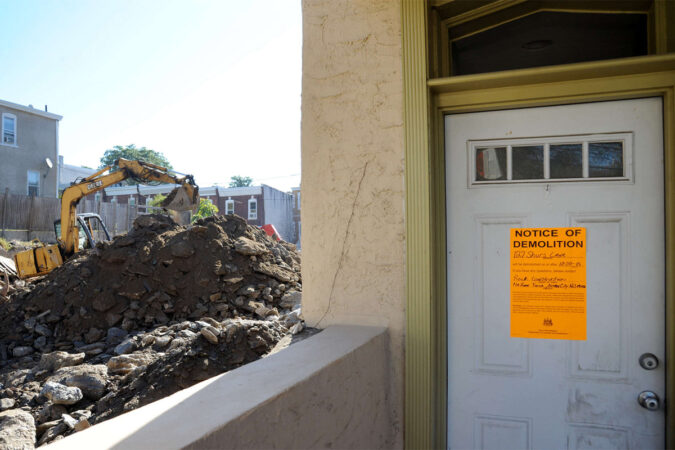
Philadelphia has many thousands of vacant properties, and historically, some local politicians have sought to encourage razing such structures to prevent fire risks or eliminate drug havens.
But in the last couple of decades, as real estate development heated up in many neighborhoods, concerns emerged that potentially historic olderbuildings were being destroyed to make the vacant land more valuable.
“We know that when these properties are demolished in certain communities, that typically is a sign of gentrification,” Councilmember Jeffery Young, who represents much of North Philadelphia, said at a Tuesday hearing.
“When you demolish that property and you build up, you’re trying to make more money than the property was originally stated as a shell,” said Young, whose district also includes parts of Center City.
Young introduced a bill last year that would ban demolition permits from being issued in his district unless a property owner had secured building permitsfor a new project.
He said he saw the legislation as a means to encourage property owners to repair existing buildings and to ensure that vacant lots would not scar his district.
“When you rehab a property, the price is typically lower than a brand-new house, and so we’re trying to keep homes affordable,” Young said, “and prevent blight from our communities.”
Young’s bill would not apply to buildings deemed imminently dangerous by the Philadelphia Department of Licenses and Inspections.
Last year Councilmember Jamie Gauthier passed a law containing a similar provision, but for a more tightly proscribed area that covered properties held by large higher education institutions in University City.
The Building Industry Association (BIA) presented a litany of concerns about Young’s bill at Tuesday’s Rules Committee hearing.
The BIA feared the legislation would delay projects, as many developers demolish structures while they are waiting for their building permits. The additional months in limbo would increase insurance, security, and financing costs, the group argued.
The bill could also encourage bad actors to engage in dangerous behavior, the BIA said.
“To qualify for an exception based on structural danger, certain property owners may be compelled to intentionally incur code violation or enforcement action to demonstrate instability,” said Kenn Penn, a local developer, who spoke on the BIA’s behalf. It “incentivizes the very condition that the city seeks to avoid.”
Penn also warned about the danger of preserving long-vacant properties.
“The bill would prevent demolition of vacant and unsecured structures that are highly susceptible to unlawful occupation,” Penn said. “Philadelphia has already experienced multiple fires this winter, many historically linked to squatters and abandoned buildings.”
Penn asked Young to limit the legislation to properties that do not have a vacant property license.
But the bill passed from the committee with only technical amendments.
“I understand the impacts this will have on the development community,” Young said. “But what I think this bill does is ensures that property owners maintain their properties in a prudent manner.”
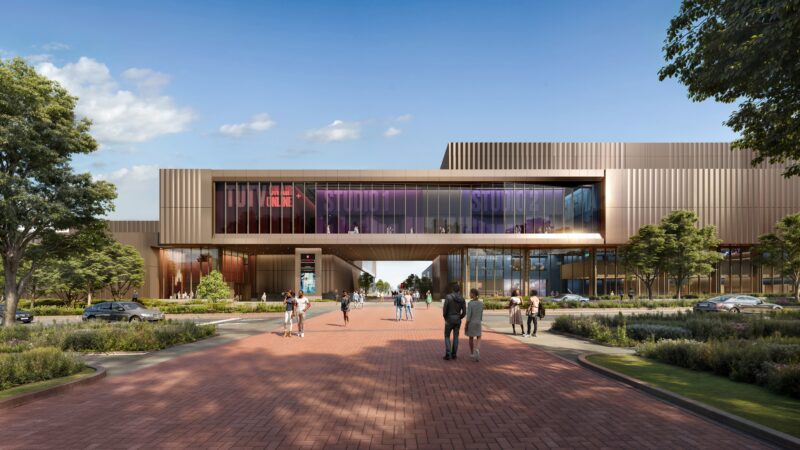
Temple University on Wednesday released its plans for the school’s future, including a new 1,000-bed residence hall, STEM complex, quad with green space, and more attractive and defined entrances to its North Philadelphia main campus.
That’s just part of the 10-year strategic plan, which will take the more than 33,000-student university through its 150th anniversary in 2034 and includes supports for students and learning, a campus development plan, and a new vision for Broad Street both near and beyond its campus.
It emphasizes the student academic experience, with plans to elevate its honors program to an honors college, implement systems to identify and help students who are at risk of failing early on, increase online offerings to accommodate non-traditional students, and require career development and experiential learning for all students.
And the 20-year campus development plan, which is part of the strategic plan, also reiterates President John Fry’s desire to create an “innovation corridor” stretching from the recently acquired Terra Hall at Broad and Walnut Streets in Center City to Temple’s health campus, a little more than a mile north of main campus on Broad Street.
Temple is in the quiet phase of a $1.5 billion capital campaign — itslargest to date — to raise money for faculty support and student financial aid, but also for initiatives outlined in the plan.
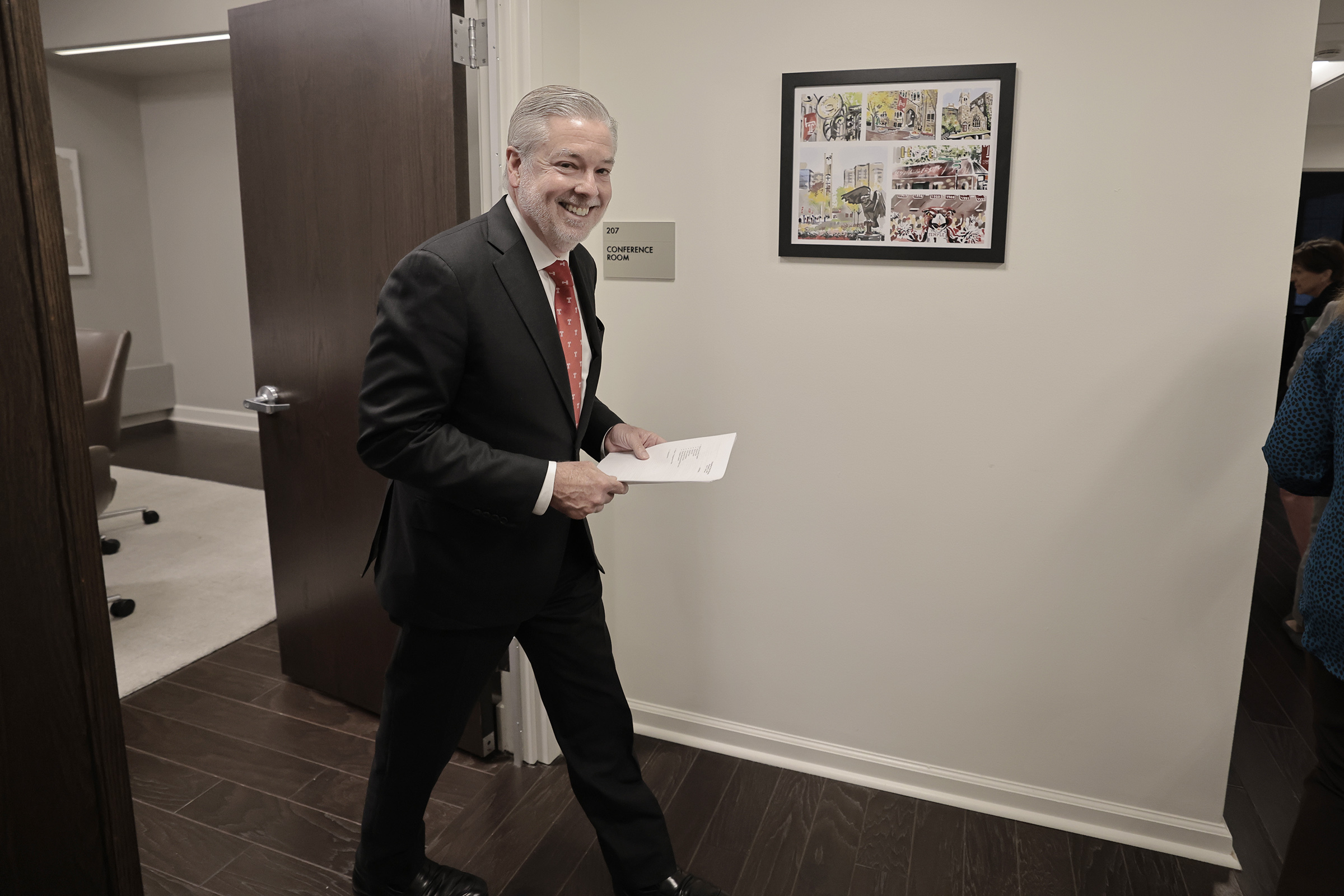
“What we’re trying to do is build on the momentum we think we have right now as already one of the most consequential urban research universities that wants to go to the next level,” said Temple President John Fry.
“What we’re trying to do is build on the momentum we think we have right now as already one of the most consequential urban research universities that wants to go to the next level,” Fry said in an interview before trustees approved the plan Wednesday. “This is a very ambitious plan that I think honestly will be a very big lift for us. But I think it’s achievable.”
Interim Provost David Boardman, who led the strategic planning effort, emphasized that the top priority is student success and new buildings and development are meant to support that.
“That, more than anything, is the heart of what we do,” Boardman said. “This is about providing meaningful research … It’s about us becoming the most important academic institution and partner in this community and really partnering for the future of Philadelphia and the region and the Commonwealth.”
David Boardman, Temple University’s interim provost
The planning effort, which included input from more than 2,000 Temple faculty, staff, students, and community members, started as an update of the 2022 plan that Fry initiated after becoming president in November 2024. But Temple officials realized a newplan was needed, Fry said.
Fry envisions more green space for recreation and events and for making North Broad Street more aesthetically pleasing.
“It is a really harsh streetscape,” Fry said. “It’s really not inviting. Traffic is moving very quickly. …That street needs to be calmed down, and the best way … is to create medians, plants — both sides of Broad Street — making it a much more civilized area than it is now.”
The effort, he said, is modeled after the recently announced $150 million streetscape plan to make the Avenue of the Arts in Center Citygreener. Temple also is involved with that through its ownership of Terra Hall, which will become Temple’s Center City campus, he said.
“But we can’t do that without other public and private partnerships,” he said. “It’s beyond the institution’s capacity to fund that.”
To start, Temple will fund “significant greening” around the entrance to the under-construction Caroline Kimmel Pavilion for Arts and Communication, he said. More green work is planned at Burk Mansion at Broad and Oxford, which Temple owns, as development occurs there, he said.
With a large green lawn and courtyards, a quad is planned for the campus center, surrounded by Paley Hall, Tyler School of Art, the Charles Library, and the biology life sciences building.
Temple in December purchased the former McDonald’s site at 1201-1219 N. Broad St., by Girard Avenue, which is adjacent to the Temple Sports Complex. Fry envisions using that property to create a major campus gateway.
“Right now, you don’t really know when you come onto the Temple campus,” he said. “We would like Broad and Girard to announce you’re starting to enter Temple’s campus district.”
More on-campus student housing
Temple wants more on-campus residential space to improve the student experience and safety, Fry said.
“We think we’re at a minimum several thousand beds short of where we need to be,” he said. “A stronger residential experience really does make for a much more fulfilling undergraduate experience. The more kids living on campus, the more dense campus is, I think the better we’re going to do on safety.”
The plan calls for beginning to build a 1,000-bed residence hall along Broad Street on the former Peabody Hall site, south of Johnson and Hardwick Halls, in 2027. That would increase the current 5,000-bed capacity on the main campus by 20%. When that opens, Temple would upgrade Johnson and Hardwick, which have another 1,000 beds, he said.
The Annenberg Hall/Tomlinson Theater building, which will relocate to the new arts and communication building in 2027, could also be converted into more residential space if needed, Fry said.
An emphasis on STEM
Temple intends to upgrade facilities for science, technology, engineering and math.
“We just don’t have the research space, the wet lab space in particular, to accommodate the work that our faculty are doing,” Fry said.
Several buildings, including the biological life sciences facility, will be renovated, and the school plans a new STEM building, perhaps behind the engineering building, or the conversion of an existing facility, Fry said. The decision on whether to build new will come within six months, he said.
Temple needs to close some current science facilities to gain more space, he said.
The Beury building, next to the Bell Tower and across from the new Barnett College of Public Health, will begin to be demolished this summer, he said.
“Think of that as sort of the first down payment on this quad,” he said.
That would be the first step toward developing an innovation district, Fry said. While not on the scale of University City’s, it would be “a very good attempt to begin to build that capacity in North Philadelphia,” he said.
Terra Hall will nurture an arts hub, and both would contribute to creating an innovation corridor, he said.
The plan also calls for anew ambulatory care center to better serve North Philadelphia. Fry said those plans are in very early stages.
“A lot of outpatient care is occurring within the hospital right now,” Fry said. “It’s not great for patients… It also puts a real strain on our capacity to serve people who need inpatient services.”
A new academic home for star students
Temple aspires to make its honors program into an honors college, like Pennsylvania State University’s popular Schreyer Honors College, though with different parameters.
Boardman said that effortwould require major fundraising. Currently, the programexists within the college of liberal arts and enrolls more than 2,200 students.
Elevating it to a college would require more programming, study-abroad and research stipends, experiential learning opportunities, and an option for those enrolled to live together in a residential community.
Temple’s college would consider more than grade-point averages and SATs for admission, Boardman said. Various talents and leadership potential would be considered, with interdisciplinary studies and public service infused, he said.
Staff writer Peter Dobrin contributed to this article.
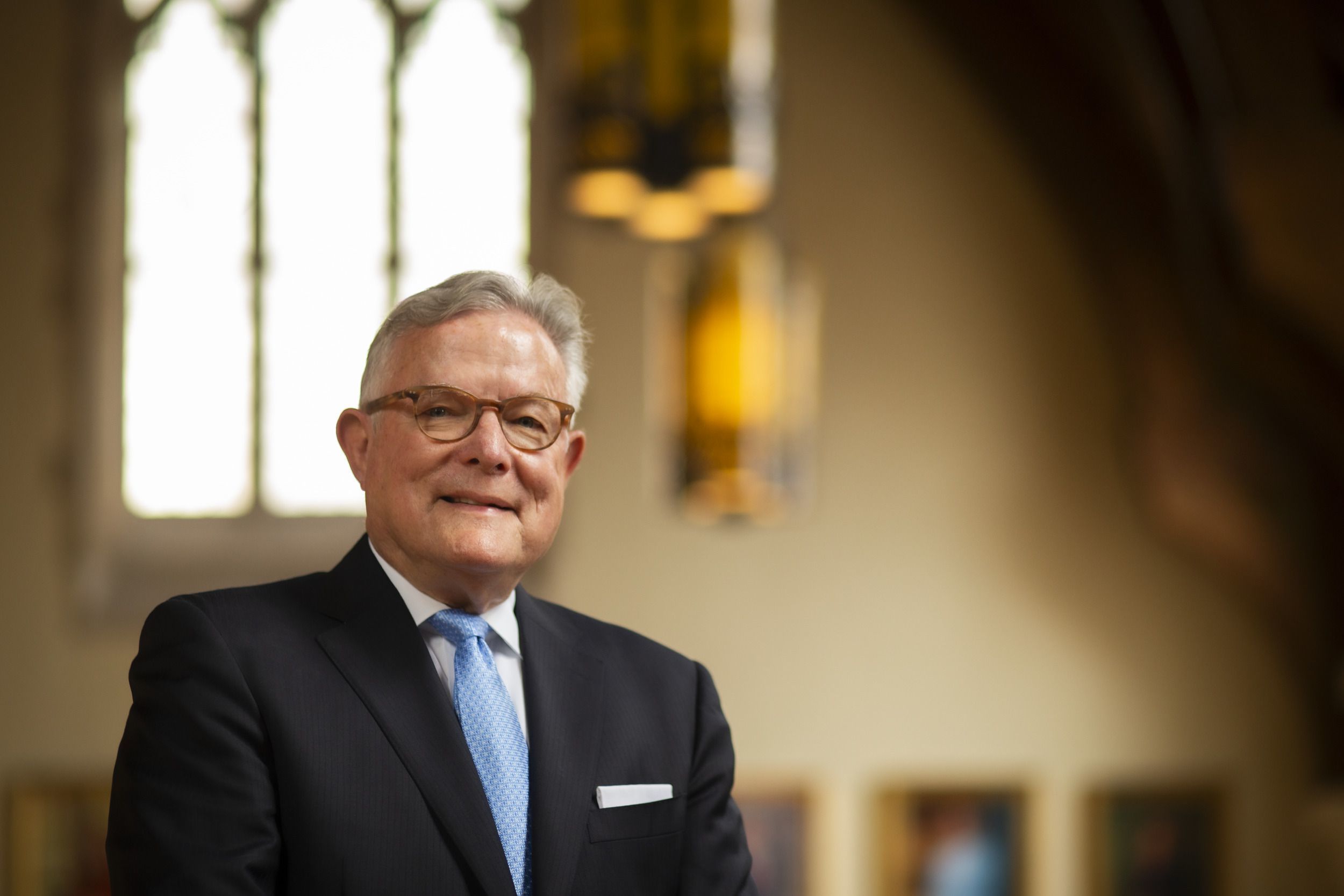
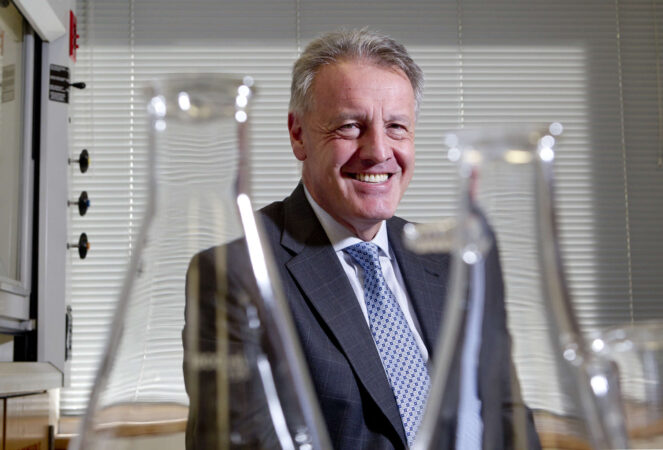
The Wistar Institute’s long-standing president and CEO Dario Altieri will step down at the end of the year after leading the independent biomedical research institute for 11years, officials announced Monday.
Wistar plans to launch a national search for his successor, but did not share further details.
Altieri joined Wistar in 2010 as its cancer center director and first chief scientific officer. Five years later, he was promoted to the role of president and CEO.
During his tenure, the West Philadelphia-based institute’s annual budget quadrupled to more than $100 million, and its endowment tripled to $277 million, according to a news release.
The number of independent labs also grew from 30 to 41, and two new research centers were created.
Its cancer center, which Altieri directs, received its third consecutive renewal as a National Cancer Institute (NCI)-designated Basic Cancer Center with an “exceptional” rating.
“Due in large part to Dario’s efforts, Wistar is exceptionally well positioned for continued growth and success,” said Rick Horowitz, the board’s chair, in a statement.
The 67-year-old started his career in Milan, Italy, where he underwent his medical training. He has served in faculty roles at the Scripps Clinic and Research Foundation, Yale University, and the University of Massachusetts Medical School.
As a cancer biologist who still leads aresearch laboratory, he has authored more than 260 research papers and been listed as an inventor on 13 patents.
“[I] look forward to dedicating my time to the values of work that have defined me since I was a medical student: laboratory research, teaching and mentoring,” Altieri said in a Monday statement released by the institute.
It was a Christmas miracle of the fast food variety: A 24-hour Taco Bell had opened in University City.
The Mexican-ishchain opened its 16th Philly location in late December at 3901 Chestnut St., where it replaced a Boston Market outpost that once owed nearly $220,000 in rent after defaulting on a lease. To hear some Philadelphians tell it, the opening was practically heaven-sent.
The new Taco Bell generated twoseparate posts from different users last month in the 95,000-member r/Philly subreddit. Other restaurants yearn for that kind of word-of-mouth marketing.
“Anyone have any info on the Taco Bell they’re putting on 39th and Chestnut?” asked user 8hivefiend8 on Dec. 17. “I have high hopes that maybe it will open soon because it looks so close to finished.”
Six days later, user rad_rascal posted pictures of the Taco Bell in all of its grand opening glory under the title “New Taco Bell in West Philly!” In the days leading up to the opening, the user wrote, they “would pass it every day and peer in like a buncha [sic] creeps.”
Under both threads, commenters expressed the kind of jubilation normally reserved for, say, rotisserie chicken-eating stunts or Super Bowl parades. “This just made my day,” commented one Taco Bell enthusiast. Others chimed in. “This the best Christmas present yet,” wrote one user. “My new home away from home,” said another.
In a city with no shortage of affordable (and excellent) Mexican food, why do people care so much about a Taco Bell that doesn’t even serve alcohol? And could this Taco Bell possibly live up to Reddit’s expectations?
Is it normal to care this much about a Taco Bell?
Taco Bell is as much a fast food chain as it is a borderline “cult,” according to chef Reuben Asaram, one of Philly’s most notable Taco Bell enthusiasts.
The 34-year-old’s love affair with Taco Bell began after his family emigrated from India to Queens in 1993, the chain quickly becoming a staple for weekend meals out. Taco Bell partially inspired Asaram’s Mexican and pan-Asian pop-up menus, which led the chain to name him one of three chefs allowed to reimagine the iconic Crunchwrap Supreme in 2024. At one point, Asaram was so tight with the staff at the 1037 Chestnut St. Taco Bell that they would turn part of restaurant into a private space for him to take dates.
Philly chef Reuben Asaram was one of three chefs tapped by Taco Bell to revamp the Crunchwrap Supreme. The local Taco Bell enthusiast created a butter chicken version.
True Taco Bell devotees will go out of their way to try a new location, Asaram said, because “they’re obsessed with getting the perfect bite” and need to know if there’s a reliable option nearby in case aDorito Locos Taco emergency hits. Asaram is one of those people.
“If I have a craving and know I’m going to be in a random place, I have to know where the [nearest] good Taco Bell is,” said Asaram while sipping a Baja Blast on Zoom. Asaram’s preferred locations are the two closest to his house in Cherry Hill. He must visit the University City outpost before it can be added to his reserves.
Perhaps the University City Taco Bell is a representation of what could’ve been, four walls for Philly fans to place their shattered hopes and dreams. Or maybe people are just happy something replaced the Boston Market.
“That Boston Market was profoundly cursed,” one Philadelphian wrote on Reddit. Others claimed they got food poisoning there.
“Everyone I know that ever went into the Boston Market when it was open has a horror tale about it!” wrote user rad_rascal, who broke the Taco Bell news.
window.addEventListener(“message”,function(a){if(void 0!==a.data[“datawrapper-height”]){var e=document.querySelectorAll(“iframe”);for(var t in a.data[“datawrapper-height”])for(var r,i=0;r=e[i];i++)if(r.contentWindow===a.source){var d=a.data[“datawrapper-height”][t]+”px”;r.style.height=d}}});
What are the vibes?
The University City Taco Bell has all the makings of what some in the Taco Bell-loving community refer to as a “Taj-Mah-Bell,” or a higher-end location.
This Taco Bell location is large, with a mix of booths, standard tables, and counter seating that isn’t sticky: When I visited on a Wednesday afternoon in early January, employees were cleaning tables within minutes of customers leaving. There were ample napkins (necessary for taco spillage), and the soda machine dumped out pellet ice, perfect for fountain drinks. It made my medium-size Baja Blast taste extra electric.
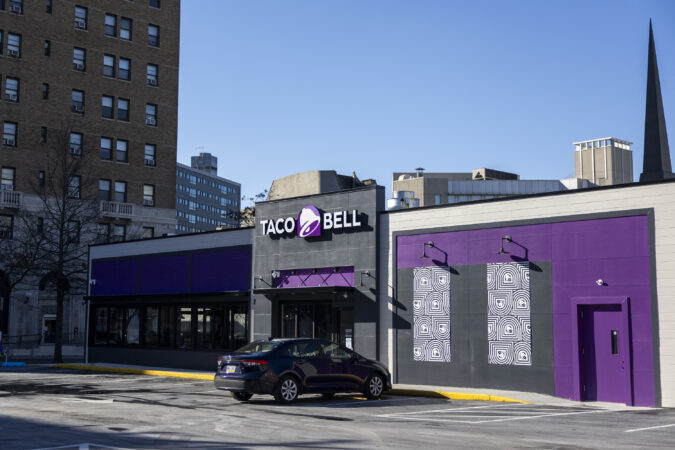
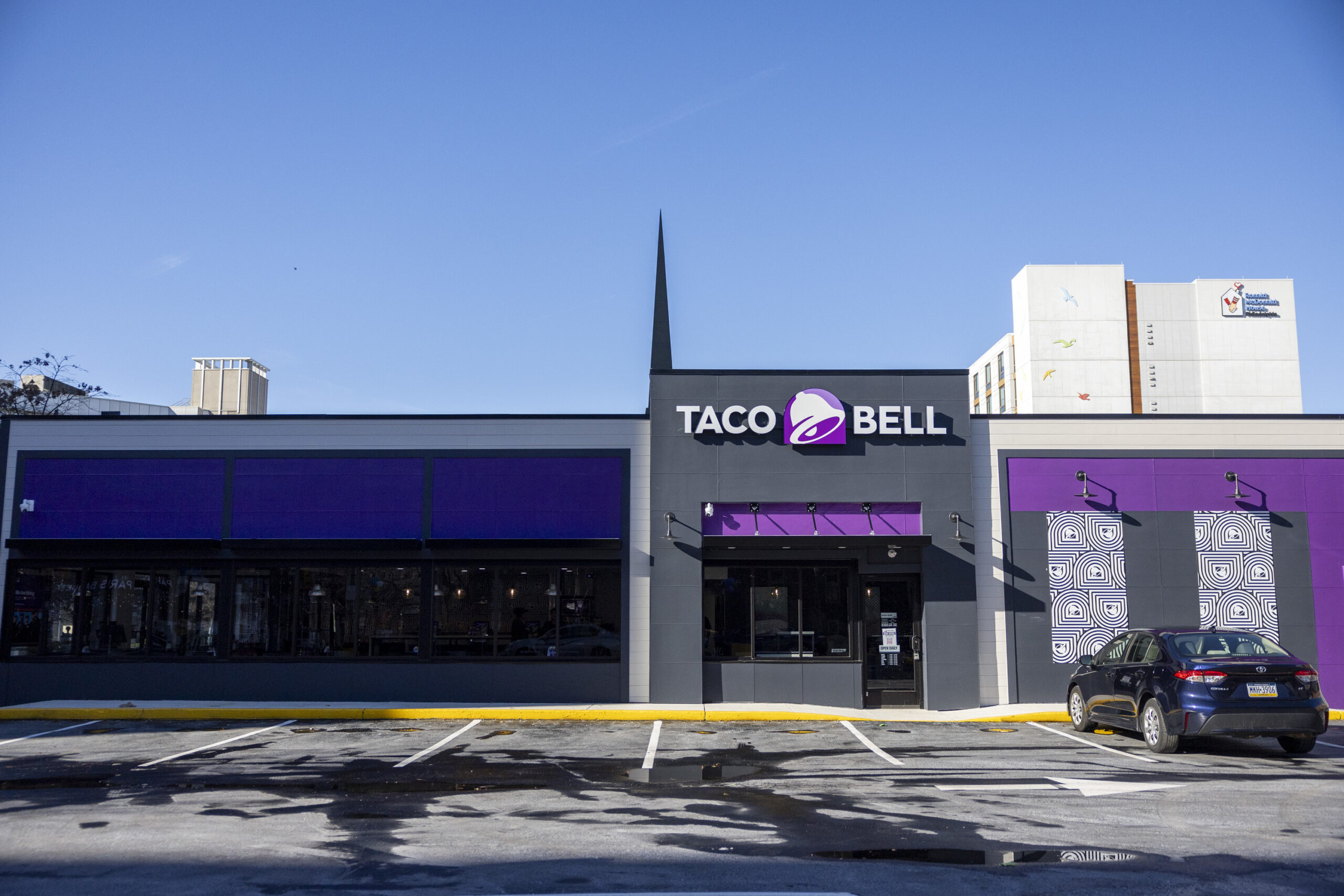
The outside of University City’s new Taco Bell, which is open 24-hours, seven days a week.
The only downside: Humans don’t take your order. Customers use one of several digital kiosks spread across the store. That’s a bummer for Asaram.
“What makes a good Taco Bell franchise is mainly how the workers treat their guests,” he said.
How’s the food?
Not Taj-Mah-Bell quality, I’ll tell you that much.
I ordered a beef Crunchwrap Supreme, beef Doritos Locos Taco, cinnamon twists, and the all-important beef chalupa. The latter, Asaram said, is key for understanding the quality of a Taco Bell.
“You want to see all the components of your Taco Bell [at once]. You want to see if the fryer oil is fresh, if their vegetables and other garnishes are good,” he said.
A textbook chalupa is golden brown, Asaram said, with firm tomatoes and a layer of ground beef on the bottom that’s roughly an inch thick. If the deep-fried flatbread shell has a sheen — or worse, approaches a russet shade of brown — it means the fryer is dirty.
“That’s when you know the Taco Bell [location] doesn’t give a s— and you want to dip out,” said Asaram.
A tray of menu items from University City’s new Taco Bell, which includes a Crunchwrap Supreme, Doritos Locos Taco, Chalupa, and cinnamon twists.
Despite receiving my chalupa in less than five minutes, it was cold. The fried shell was inexplicably both light brown and vaguely sparkly. Who knows what that means for the fryer oil.
They also skimped on the meat, which was not evenly distributed across the bottom. The Crunchwrap and taco had the same issues: cold and limp.
Perhaps this was my fault. I ordered close to 2 p.m. The prime time to visit a Taco Bell is between 11 a.m. and 12:30 p.m., Asaram said, when the morning and afternoon shifts switch over.
At that time, Taco Bell is “like an omakase,” he explained. “They just make everything in front of you and hand it to you to eat.
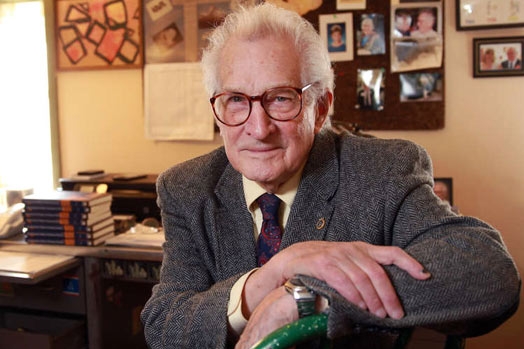
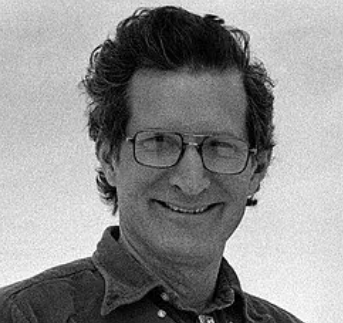
Kenneth W. Ford, 99, of Gwynedd, Montgomery County, theoretical physicist who helped develop the hydrogen bomb in 1952, university president, college professor, executive director, award-winning author, and Navy veteran, died Friday, Dec. 5, of pneumonia at Foulkeways at Gwynedd retirement community.
Dr. Ford was a 24-year-old physics graduate student at Princeton University in 1950 when he was recruited by a colleague to help other scientists covertly build a hydrogen bomb. “I was told if we don’t do it, the Soviet Union will,” Dr. Ford told The Inquirer in 2023, “and the world will become a much more dangerous place.”
So he spent one year at the Los Alamos National Laboratory in New Mexico and another back at Princeton, creating calculations on the burning of the fuel that ignited the bomb and theorizing about nuclear fission and fusion. The H-bomb was tested in 1952.
Dr. Ford’s expertise was in nuclear structure and particle and mathematical physics. He and Albert Einstein attended the same lecture when he was young, and he knew Robert Oppenheimer, Fredrick Reines, John Wheeler, and dozens of other accomplished scientists and professors over his long career.
He came to Philadelphia from the University System of Maryland in 1983 to be president of a startup biotech firm. He joined the American Physical Society as an education officer in 1986 and was named executive director of the American Institute of Physics in 1987.
“He always seemed to be the head of something,” his son Jason said.
He retired from the AIP in 1993 but kept busy as a consultant for the California-based Packard Foundation and physics teacher at Germantown Academy and Germantown Friends School. Michael Moloney, current chief executive of the AIP, praised Dr. Ford’s “steady and transformative leadership” in a tribute. He said: “His career in research, education, and global scientific collaboration puts him among the giants.”
As president of the New Mexico Institute of Mining and Technology from 1975 to 1982, Dr. Ford oversaw improvements in the school’s enrollment, faculty, budget, and facilities. He “was an accomplished researcher, scholar and teacher,” Michael Jackson, interim president of New Mexico Tech, said in a tribute, “a techie through and through.”
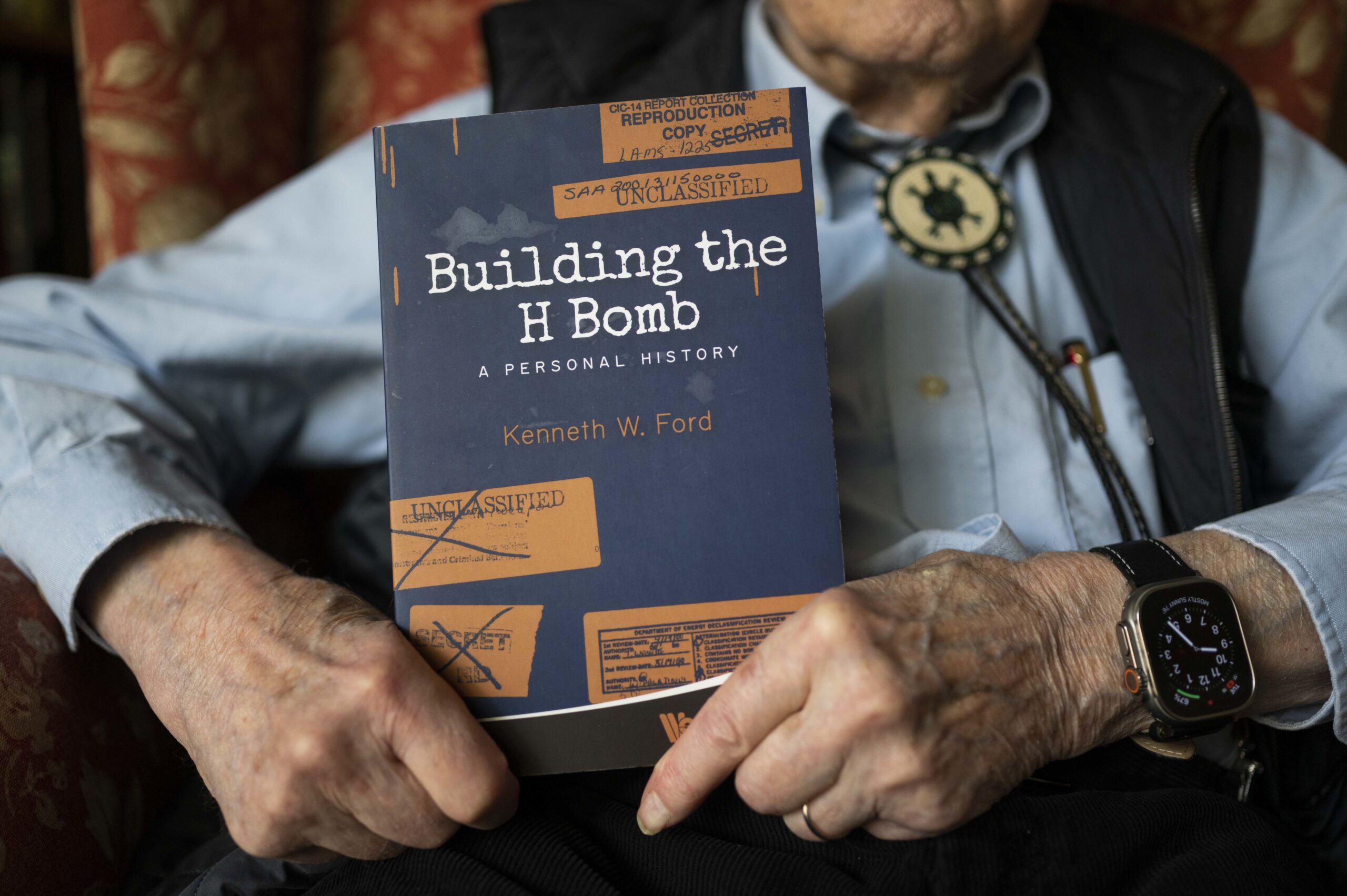
Dr. Ford wrote “Building the H Bomb,” and it was published in 2015.
Before Philadelphia, he spent a year as executive vice president of the University System of Maryland. Earlier, from 1953 to 1975, he was a researcher at Indiana University, physics professor at Brandeis University in Massachusetts and the University of Massachusetts, and founding chair of the department of physics at the University of California, Irvine.
Officials at UC Irvine said in a tribute: Dr. Ford “leaves an enduring legacy as a scientist, educator, and institution builder. … The School of Physical Sciences honors his foundational role in our history and celebrates the broad impact of his distinguished life.”
He told The Inquirer that he hung out at the local library as he grew up in a Kentucky suburb of Cincinnati and read every book he could find about “biology, chemistry, geology, you name it.” He went on to write 11 books about physics, flying, and building the H-bomb.
Two of his books won awards, and 2015’s Building the H Bomb: A Personal History became a hit when the Department of Energy unsuccessfully tried to edit out some of his best material. His research papers on particle scattering, the nuclear transparency of neutrons, and other topics are cited in hundreds of publications.
Dr. Ford was a popular professor because he created interesting demonstrations of physics for his students.
In 1976, he earned a distinguished service citation from the American Association of Physics Teachers. In 2006, he earned an AAPT medal for notable contributions to the teaching of physics.
He was the valedictorian at Phillips Exeter Academy in New Hampshire in 1944. He served two years in the Navy and earned a summa cum laude bachelor’s degree in physics at Harvard University and his doctorate at Princeton in 1953.
In 1968, he was so opposed to the Vietnam War that he publicly declined to ever again work in secret or on weapons. “It was a statement of principle,” he told The Inquirer.
Kenneth William Ford was born May 1, 1926, in West Palm Beach, Fla. He married Karin Stehnike in 1953, and they had a son, Paul, and a daughter, Sarah. After a divorce, he married Joanne Baumunk, and they had daughters Caroline and Star, and sons Adam and Jason. His wife and former wife died earlier.
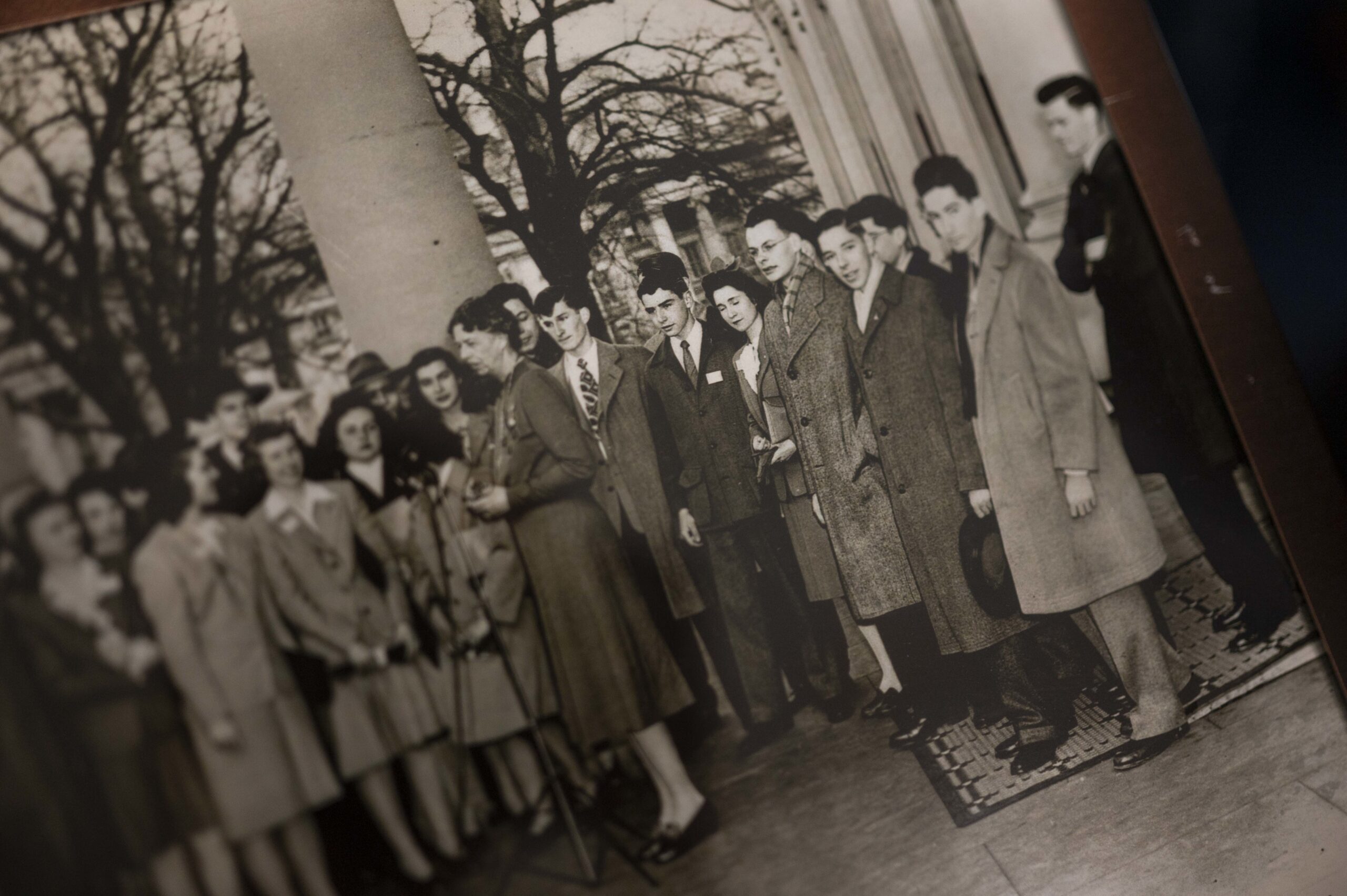
This photo shows Dr. Ford (center) and other students listening to former First Lady Eleanor Roosevelt speak in 1944.
Dr. Ford lived in University City, Germantown, and Mount Airy before moving to Foulkeways in 2019. He was an avid pilot and glider for decades. He enjoyed folk dancing, followed the Eagles closely, and excelled at Scrabble and other word games.
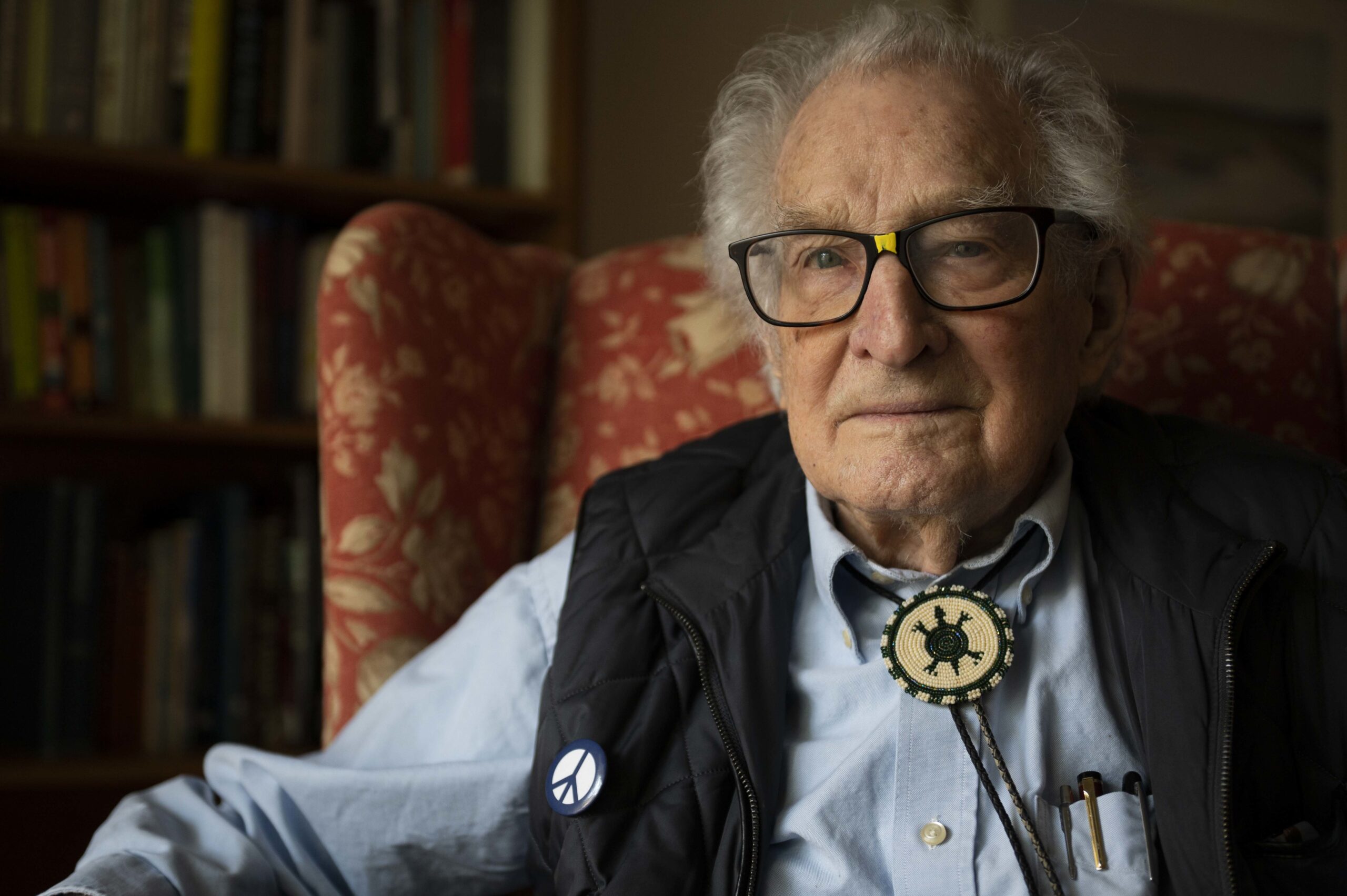
He loved ice cream, coffee, and bad puns. He became a Quaker and wore a peace sign button for years. Ever the writer, he edited the Foulkeways newsletter.
In 2023, he said: “I spent my whole life looking for new challenges.” His son Jason said. “He found connections between things. He had an active mind that went in all different directions.”
In addition to his children, Dr. Ford is survived by 14 grandchildren, a great-grandson, a sister, a stepdaughter, Nina, and other relatives.
Services are to be from 2 to 4:30 p.m., Saturday, Jan. 24, at Foulkeways at Gwynedd, 1120 Meetinghouse Rd., Gwynedd, Pa. 19436.
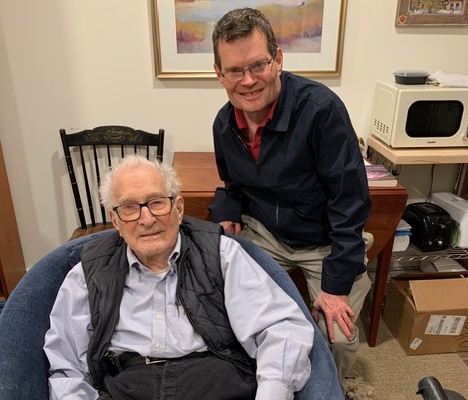
Dr. Ford and his son JasonDr. Ford wore a peace sign button for years.
Philadelphia-based Iron Stone Real Estate Partners transferred control of two of their former Hahnemann University Hospital properties in the last two weeks.
The investment group acquired a portfolio of Hahnemann properties in 2021 and began redeveloping them into laboratory and office space.
But in recent weeks Iron Stone disposed of two of these properties.
The company donated the New College Building at 245 N. 15th St. to Drexel University on Dec. 31.
“It’s a charitable donation,” said Jason Friedland, director of operations and investments at Iron Stone. “We felt that that building was best served with Drexel owning it and using it for a long time, long-term, for their research.”
When Iron Stone acquired the New College Building five years ago, Drexel occupied the property’s medical labs and was one of the few remaining tenants in the Hahnemann campus.
Back then the university was considering moving this Center City operation to the suburbs in the short term and to University City in the long term.
“The generous gift will provide the university with flexibility as it continues to consolidate operation of its College of Medicine on its University City campus,” Drexel spokesperson Britt Faulstick said in an email statement. “Plans for the New College Building will be determined in the future.”
On Jan. 6, Iron Stone sold the Broad and Vine Parking Garage at 1416 Wood St. to the Philadelphia Parking Authority for $21.3 million.
The 850-space garage had been exclusively for Hahnemann’s use. Iron Stone renovated the vacant garage after the bankruptcy and hired Metropolis Technologies — the largest parking operator in the United States — to run it.
The acquisition is the first time the Parking Authority has purchased a garage built by someone else, said Rich Lazer, executive director of the Parking Authority.
“Most of our garages, outside of the airport, are Center City-based, so its nice to push out onto North Broad,” Lazer said. “Our garages are lower cost than private garages, so it’ll help us maintain reasonable pricing.”
The authority plans to retain Metropolis Technologies as the operator, Lazer said.
Iron Stone still owns a couple former Hahnemann properties, including the 120,000-square-foot Race Street Laboratories at 1421 Race St. and the 15,000-square-foot building at 231 N. Broad St., which is fully leased by Bayada Home Health Care Inc. with a third of the space and Dynamed Clinical Research with the rest.
Race Street Laboratories was developed to tap into the life sciences and biomedical market, which boomed during the pandemic but has slowed substantially as interest rates spiked. Currently the building has only one tenant, Sbarro Health Research Organization, with 7,500 square feet of space.
Friedland said Iron Stone plans to move its headquarters from University City’s FMC Tower to one of Race Street Lab’s unused floors.
As for the rest of the space, Iron Stone is exploring alternative uses as the life sciences market continues to struggle.
“We’re seeing where the opportunities are in commercial real estate,” Friedland said. “We have a couple things we’re exploring, but we’re not really in a rush.”
Their plans for an apartment building were complicated by a bill introduced in December by Councilmember Jeffery Young to ban housing from the former hospital site.
But on Dec. 24, in advance of City Council action on the legislation, the developer received zoning permits for a 361-unit apartment complex at 222-248 N. Broad St. Dwight Group says they are nonetheless in negotiations with Young to secure his support.
The fast-casual eatery, based in Center City, plans to open up to 18 new locations next year, following 17 new outposts in 2025, founder and CEO Justin Rosenberg told The Inquirer on Monday.
“It was definitely a good year,” said Rosenberg, adding that the company is “just continuing to build the pipeline for 2026 and beyond.”
Honeygrow sells made-to-order stir-fries as well as salads and desserts. Since launchingin 2012, the company has grown to 71 locations across several states, including Ohio, Massachusetts, Virginia, Maryland, Delaware, and New York.
Philadelphia-area stores include Center City, Kensington, University City, North Philadelphia, Bala Cynwyd, and Cherry Hill.
The company’s expansion plans include adding locations in Ohio and New Jersey, as well as in Boston. The eatery is also currently in negotiations to bring Honeygrow to the Detroit metropolitan area, a new market, said Rosenberg.
Honeygrow also aims to open a location in Middletown, Del.
“Saleswise, it’s kind of neck and neck between certain Philly stores and our two Boston stores,” Rosenberg said.
Further expansion in Philadelphia is also possible.
“We are always looking at Philly,” Rosenberg said. “We’ve been poking around South Philly for a while. We just haven’t found the right opportunity.”
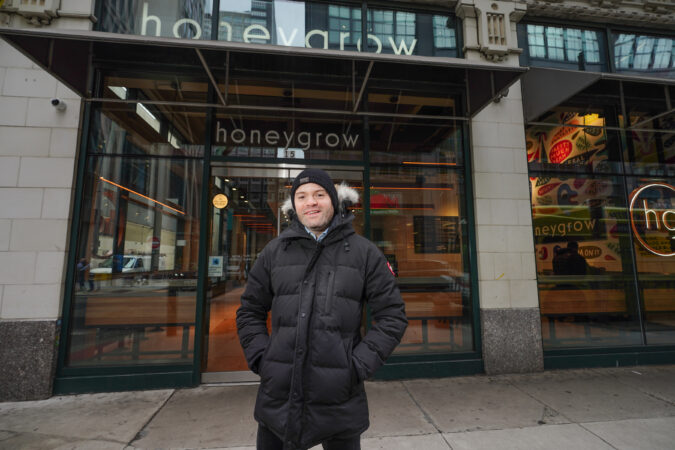
Honeygrow, at 11th Street in Center City, in 2024.
The company typically seeks 2,500-square-foot locations for new stores, but Rosenberg says it’s a competitive market for that kind of real estate.
“One of the things that has made us successful — and I give credit to my team for this — is that we’ve been very disciplined on growth, just saying, look, if we can’t get the deal we need in terms of underwriting, let someone else take it,” he said.
The company employs roughly 2,000 people, and each new store adds some 30 new hires, Rosenberg said.
Some of the considerations when looking at new markets include what other fast-casual concepts are in the area, and how they’re doing, Rosenberg said.
“If a Starbucks is underperforming in that market, that’s certainly going to spook us. Or a Chick-fil-A, if it’s below average unit volume, it’s probably not the right market for us,” he said.
On the flip side, if a Chipotle, Chick-fil-A, Starbucks, Raising Cane’s, or another brand is doing well in an area, Rosenberg said, “We feel that those would be very similar customers to ours. We’re willing to put a restaurant in there and see what happens.”
The plans for new locations come as the company shuttered some stores in Chicago, Washington, and New York in 2018 after rapid expansion plans. Some stores were “dragging down profitability,” Rosenberg has said, and he hasattributed closures to growth that happened too quickly as well as poor real estate.
Since then, the company has roughly tripled in size, said Rosenberg, adding “you just keep learning with every opening that you have.”
“My mission remains the same,” he said. “I want to build something that’s from Philadelphia — make this a national, if not international, brand that we can be proud of.”
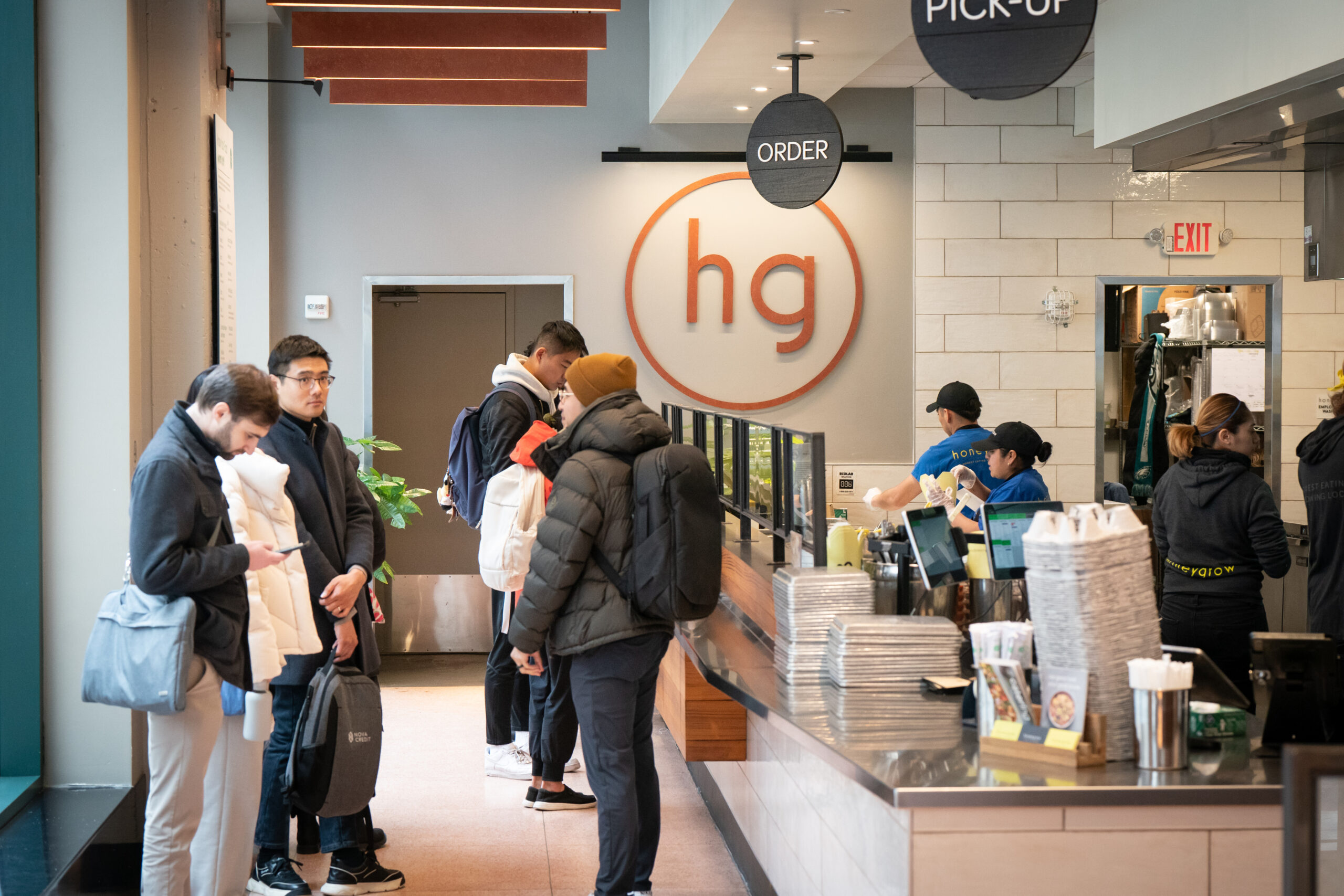
Chicken Parm Stir-fry at Honeygrow at the 11th Street location in Philadelphia in 2024.
California biotech BioMarin Pharmaceutical Inc. will pay $4.8 billion in cash for Amicus Therapeutics, a Princeton rare-disease company with a presence in Philadelphia, the two publicly traded companies announced Friday.
The acquisition of Amicus, expected to be completed in the second quarter of next year, will give BioMarin treatments for rare genetic diseases that generated $599 million in revenue over the last 12 months, according to BioMarin, which is based in the San Francisco Bay Area.
Amicus has a treatment for Fabry disease, which is caused by a genetic mutation that allows fatty waste to build up in the body, damaging tissues and organs, according the BioMarin. The second treatment is for late-onset Pompe disease, which is an inherited genetic condition that causes muscle weakness that worsens over time.
BioMarin CEO Alexander Hardy said on a webcast about the deal that both of those treatments have the potential to reach $1 billion in global sales. BioMarin had $2.85 billion in revenue last year, compared to $528 million at Amicus.
The Philadelphia tie
In 2019, Amicus established its Global Research and Gene Therapy Center of Excellence at 3675 Market St. in University City, saying at the time that the facility would employ 200 people eventually. The company’s website now lists the location as its Research Center of Excellence.
Amicus now has 12 people in its Philadelphia office, a spokesperson said Friday.
John Crowley, chief executive of Amicus at the time, liked to call Philadelphia the “Cradle of Cures,” a name that hasn’t stuck. Crowley is now president and CEO of the Biotechnology Innovation Organization (BIO), a biotech trade organization in Washington.
Drexel University has signed a lease that will enable it to consolidate its College of Medicine research labs in University City, Drexel and the developers of a new building at 3201 Cuthbert St. said Thursday.
Drexel’s space in the $500 million building, a joint project from Gattuso Development Partners and Vigilant Holdings, is slated for completion in 2027. Drexel researchers moving from sites in Center City and East Falls are expected to fill four floors of the structure.
“By bringing our research spaces together in University City, we will create an environment that fosters greater interdisciplinary collaboration, accelerates innovation, and strengthens our collective capacity for discovery,” Drexel president Antonio Merlo said in a message to the school community.
Drexel will occupy 150,741 square feet of the 11-story, 520,000-square-foot building. The developers’ goal is to fill the rest of the building with life sciences tenants, though that could be harder than it was in 2022, when the building was announced as a partnership between Drexel and Gattuso Development.
The move of research labs to University City is part of a long-term plan to centralize the Drexel College of Medicine, which includes the combined operations of the former Hahnemann Medical College in Center City and the former Medical College of Pennsylvania in East Falls.
Capstan Therapeutics’ sale this year for $2.1 billion, the highest price paid for a private early-stage biotech company since 2022, was a triumph for its founders at the University of Pennsylvania.
Unfortunately for Philadelphia, the company is based in San Diego. Investors wanted an executive who lives there to be CEO.
Capstan was a miss for Philadelphia, said Jeffrey Marrazzo, who cofounded a high-profile regional biotech company, Spark Therapeutics, and is now an industry investor and consultant.
If Philadelphia had a bigger talent pool of biotech CEOs, “it would have and should have been here,” he said.
The Philadelphia region has lagged behind other biotech centers in landing companies and jobs, but industry experts are working to close the gap and better compete with Boston, the San Francisco Bay Area, and San Diego.
According to Marrazzo and others, the Philadelphia region’s relatively shallow pool of top biotech management is a key challenge.
Big investors go to managers who have proven ability to deliver big investment returns, said Fred Vogt, interim CEO of Iovance Biotherapeutics, a California company with a manufacturing facility in the Navy Yard.
“They want the company to perform. They’ll put it in Antarctica, if that was where the performance would come from,” he said.
The Lilly announcement last month also reflects Philadelphia’s national biotech stature. It’s the fourth U.S. city to get a Lilly Gateway Lab, behind Boston, the San Francisco Bay Area, and San Diego.
Those places have far outpaced Philadelphia in the creation of biotech research and development jobs, even as the sector’s growth has slowed.
From 2014 through last year, the Boston area added four biotech research and development jobs for every one job added here, according to an Inquirer analysis of federal employment data.
window.addEventListener(“message”,function(a){if(void 0!==a.data[“datawrapper-height”]){var e=document.querySelectorAll(“iframe”);for(var t in a.data[“datawrapper-height”])for(var r,i=0;r=e[i];i++)if(r.contentWindow===a.source){var d=a.data[“datawrapper-height”][t]+”px”;r.style.height=d}}});
Penn’s role in Philadelphia biotech
Philadelphia’s reputation as an innovation center — boosters like to call the region “Cellicon Valley” — starts with the University of Pennsylvania, which has long been a top recipient of National Institutes of Health grants to advance scientific discovery.
Research at Penn has contributed to the creation of 45 FDA-approved treatments since 2013, according to the university.
“Penn discoveries help spark new biotech companies, but we can’t build the whole ecosystem in this area alone,” said John Swartley, Penn’s chief innovation officer. “Great science is just one ingredient. We also need capital, experienced leadership, real estate and manufacturing infrastructure, and strong city and state support.”
Penn was one of two Philadelphia institutions receiving more than $100 million in NIH funding in the year that ended Sept. 30. The otherwas the Children’s Hospital of Philadelphia.
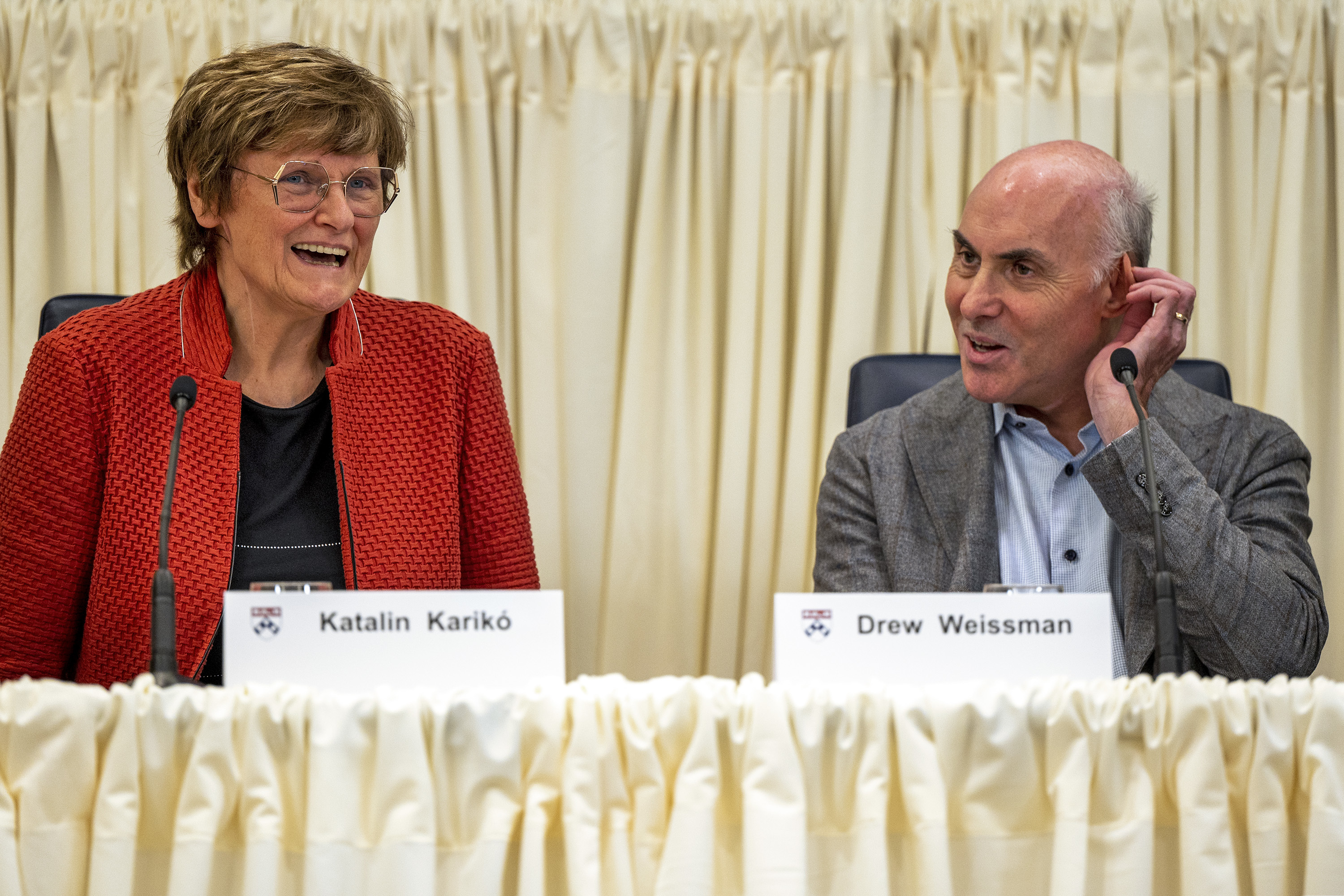
Katalin Karikó and Drew Weissman spoke at a University of Pennsylvania news conference after they were named winners of a 2023 Nobel Prize in medicine. Their work was instrumental to modifying mRNA for therapeutic uses, such as the rapid development of lifesaving vaccines during the COVID-19 pandemic.
By contrast, the Boston area was home to 10 institutions with at least $100 million in NIH grants, generating more spinoffs and jobs.
The Philadelphia region has a healthy number of biotech spinouts, but the biggest markets have more from a larger number of research institutions, said Robert Adelson, founder Osage University Partners, a venture capital firm in Bala Cynwyd.
That concentration of jobs and companies in the Boston area — where nearly 60,000 people worked in biotech R&D last year — makes it easier to attract people. By comparison, there were 13,800 such jobs in Philadelphia and Montgomery County, home to the bulk of the regional sector.
If a startup fails, which happens commonly in biotech, “there’ll be another startup or another company for me to go to” in a place like Boston, said Matt Cohen, a managing partner for life science at Osage.
Another challenge for Philadelphia: It specializes in cell and gene therapy, a relatively small segment of the biotech industry, whose allure to investors has faded in the last few years.
Such market forces shaped the trajectory of Spark, a 2013 Children’s Hospital of Philadelphia spinout that developed Luxterna, the first FDA-approved gene therapy, used to treat an inherited form of blindness. The promise of Spark’s gene therapy work for a form of hemophilia spurred its 2019 acquisition by Swiss pharmaceutical titan Roche for $4.8 billion.
The company still employs about 300 in the city, a spokesperson said, and work continues on its $575 million Gene Therapy Innovation Center at 30th and Chestnut Streets in University City.
The long arc of biotech
A handful of companies dominated the early days of U.S. biotech. Boston had Biogen and Genzyme, San Francisco had Genentech, San Diego had Hybritech, and Philadelphia had Centocor. All of them started between 1976 and 1981.
Centocor started in the University City Science Center because one of its founders, virologist Hilary Koprowski, was the longtime director of the Wistar Institute. Centocor’s first CEO, Hubert Schoemaker, moved here from the Boston area, where he had gotten his doctorate at the Massachusetts Institute of Technology.
Another drug still under development at the time of the sale, Stelara, went on to become J&J’s top-selling drug as recently as 2023 with $10.9 billion in revenue. Stelara, approved to treat several autoimmune disorders, remains a testament to Centocor’s legacy.
Despite its product success, Centocor didn’t have the same flywheel effect of creating new companies and a pipeline of CEOs as peer companies did in regions outside of Philadelphia.
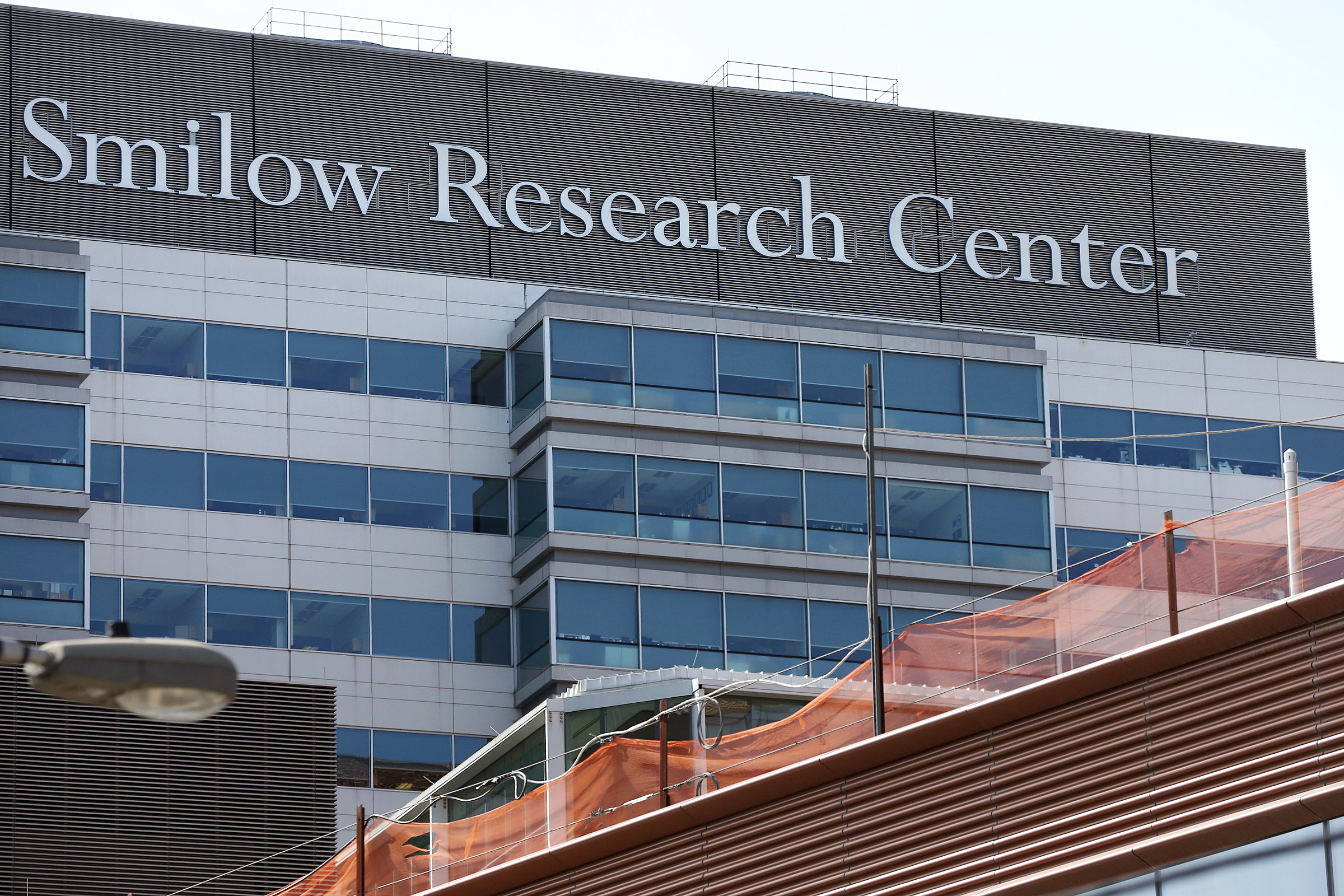
The University of Pennsylvania’s Smilow Center for Translational Research, shown in 2020, is one of the school’s major laboratory buildings.
“There are a lot of alums of Centocor that are really impressive, but they seem to have wound up elsewhere,” said Bill Holodnak, CEO and founder of Occam Global, a New York life science executive recruitment firm.
Among the Centocor executives who left the region was Harvey Berger, Centocor’s head of research and development from 1986 to 1991. He started a new company in Cambridge, Mass.
At the time, the Philadelphia area didn’t have the infrastructure, range of scientists, or management talent needed for biotech startups, he said.
Since then, he thinks the regional market has matured.
“Now, there’s nothing holding the Philadelphia ecosystem back. The universities, obviously Penn, and others have figured this out,” Berger said.
Conditions have changed
Penn’s strategy for helping faculty members commercialize their inventions has evolved significantly over the last 15 years.
It previously licensed the rights to develop its research to companies outside of the area, such as Jim Wilson’s gene therapy discoveries and biochemist Katalin Karikó and immunologist Drew Weissman’s mRNA patents. Now it takes a more active role in creating companies.
Among Penn’s latest spinouts is Dispatch Bio, which came out of stealth mode earlier this year after raising $216 million from investors led by Chicago-based Arch Venture Partners and San Francisco-based Parker Institute for Cancer Immunotherapy.
Dispatch, chaired by Marrazzo, is developing a cell therapy approach that uses a virus to attach what it calls a “flare” onto the cells it wants the immune system to attack.
Marrazzo said in July that he wasn’t going to be involved in Dispatch if it wasn’t based largely in Philadelphia. As of July, 75% of its 60 employees were working in Philadelphia. Still, Dispatch’s CEO is in the San Francisco Bay Area.
The Philadelphia region is increasingly well-positioned for the current biotech era, said Audrey Greenberg, who played a key role in launching King of Prussia’s Center for Breakthrough Medicines about five years ago. The center is a contract developer and manufacturer for cell and gene therapies.
“You no longer need to move to Kendall Square to get a company funded,” she said, referring to Cambridge’s biotech epicenter. “You need good data, a credible translational plan, experienced advisers, and access to patient capital, all of which can increasingly be built here.”
Greenberg now works as a venture partner for the Mayo Clinic, with the goal of commercializing research discoveries within the health system’s network of hospitals in Minnesota, Arizona, and Florida.
She plans to bring that biotech business to the Philadelphia region.
“I’m going to be starting my companies all here in Philadelphia, because that’s where I am. And I know everybody here, and everybody I’m going to hire in these startups that are going to be based here,” she said.