Since taking office for his second term, President Donald Trump has moved to cancel tax incentives and spending for clean-energy technology and prioritized expanded production of oil and natural gas.
But the federal government apparently is not 100% out of the green fuels business.
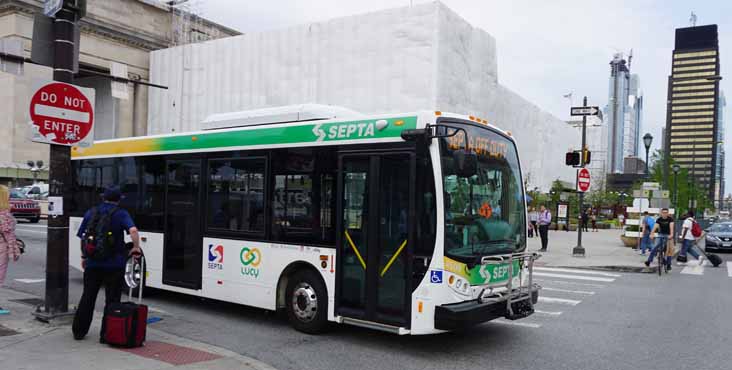
Last week, SEPTA won a $43 million grant from the Federal Transit Administration to replace 35 diesel-powered 30-foot buses with an equal number of cleaner diesel-electric hybrid buses that are 32 feet long.
When the new buses are delivered, expected to be in 2028, SEPTA no longer will have diesel-only buses in its fleet.
Most SEPTA buses are 40 feet long or 60-foot articulated models (the ones with the accordion in the middle). The shorter hybrids will be used on the LUCY Loop in University City and Routes 310, 311, 312, and Route 204, which runs from Eagleville to Paoli Station.
“These new hybrid buses will increase operational efficiency and help ensure that SEPTA can continue to provide reliable service for customers,” general manager Scott Sauer said.
SEPTA applied for the grant in July, a spokesperson said.
“This is a major win for Philadelphia,” U.S. Rep. Brendan Boyle of Philadelphia said. “These new hybrid buses will mean more reliable service, a stronger transit system, and cleaner air for the hundreds of thousands of riders who depend on SEPTA every day.”
Boyle, a Democrat, said the money came from President Joe Biden’s bipartisan infrastructure law, which Boyle helped champion. The grants were given from the fiscal year 2025 federal budget.
“Delivering new-and-improved bus infrastructure is yet another example of how America is building again under President Trump,” U.S. Transportation Secretary Sean P. Duffy said in a statement. “More people travel by bus than any other form of public transportation.”
SEPTA’s grant was part of $1.1 billion distributed from the fiscal year 2025 federal budget. The U.S. Department of Transportation said in the announcement that $518 million would be added to the low- and no-emission bus grant program from the fiscal 2026 budget.
A woman was killed in a hit-and-run crash early Thursday morning in University City.
Meaza Brown, 48, of South Philadelphia, was walking with coworkers when a driver in a silver Chrysler 300 with tinted windows struck and killed her at 4:17 a.m. at 33rd and Market Streets, Chief Inspector Scott Small told reporters at the scene. The woman was pronounced dead at 4:59 a.m. at Penn Presbyterian Medical Center with multiple injuries and internal bleeding.
Police later recovered the vehicle they believe struck Brown at 34th and Race Streets. No arrest was reported, and the investigation is ongoing.
Small said that the woman was hit at such a high rate of speed, “she was launched out of her sneakers.” Police say the collision propelled the woman several hundred feet down Market Street.
“The driver of the striking vehicle did not remain on scene, did not render any aid, and just fled the scene,” Small said.
The driver drove away on Market Street, heading toward 30th Street Station. No other people were hit by the car or injured, police said.
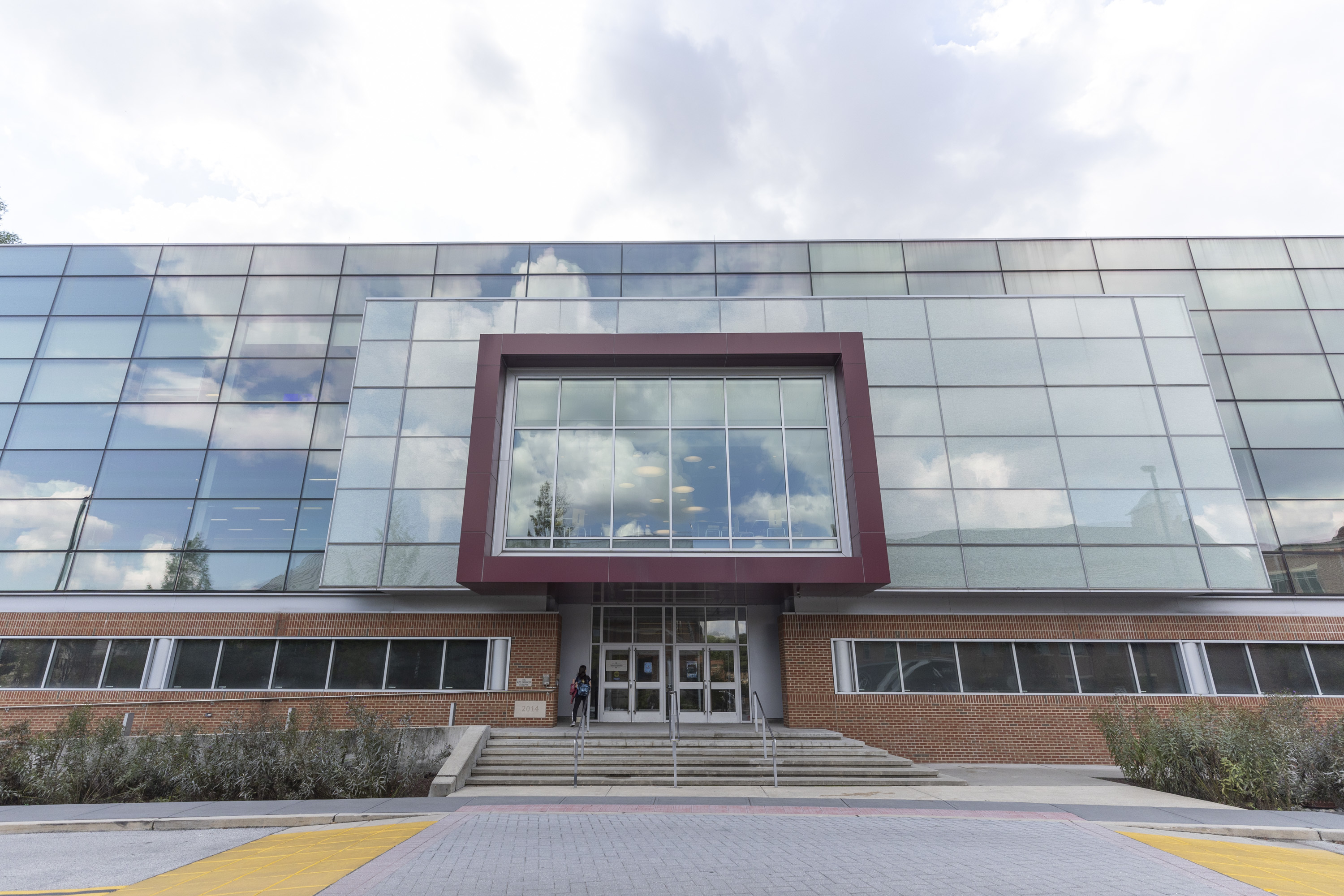
The deadly crash occurred in the heart of Drexel University’s campus, in the intersection in front of the school library and student center, and only a few blocks from 30th Street Station.
Philadelphia has experienced fewer traffic deaths in the first half of this year than in any equivalent period since 2019, according to the Bicycle Coalition of Greater Philadelphia. Fatalities have been on a downtrend for years; however, the back half of each year tends to get more deadly.
Philadelphia is the newest destination forLilly Gateway Labs, an incubator for early-stage biotech companies backed by pharmaceutical giant Eli Lilly & Co., the companyannounced Wednesday.
The Center City incubator will be Lilly’s fifth in the United States. Biotech hotbeds Boston, South San Francisco, and San Diego already have them. (South San Francisco has two.) Companies at those locations have raised more than $3 billion from investors since the program started in 2019, Lilly said.
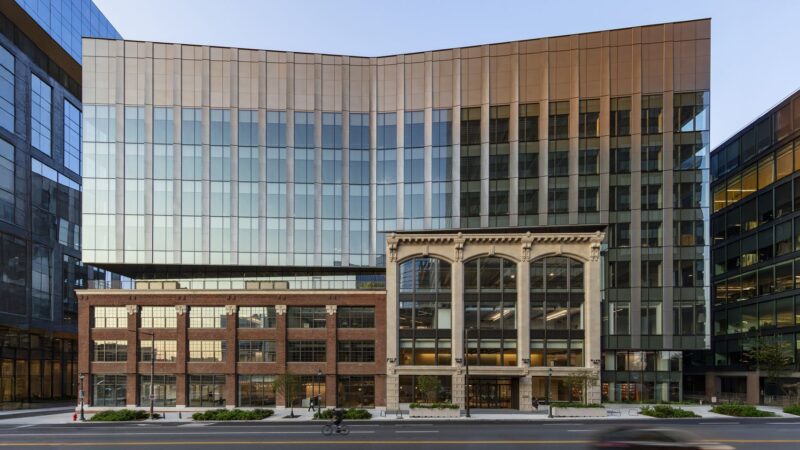
Lilly’s Philadelphia operation will occupy 44,000 square feet on the first two levels of 2300 Market St. in Center City.
Lilly expects to house six to eight companies there, aiming to welcome the first startups to the site in the first quarter of next year, said Julie Gilmore, global head of Lilly Gateway Labs. She did not identify prospects.
Typically, Gateway Labs residents are at the stage of raising their first significant round of capital from investors, called Series A, and are two or three years from clinical testing, she said.
The arrival of high-profile Lilly, which has seen resounding success with its GLP-1 drugs for diabetes and weight loss, could turn out to be a shot in the arm for a local biotech scene. Philadelphia has a growing biotech sector but has lagged places like Boston, despite the presence of world-class scientists atlocal research universities.Their work has fueled groundbreaking discoveries in cell and gene therapy, as well as vaccines.
But Lilly is interested in supporting ideas that go beyond the city’s cell and gene therapy strengths, said Gilmore. Gateway labs is part of Lilly’s Catalyze360 Portfolio Management unit, which provides broad support to fledgling biotech firms, including venture capital.
“What we like is to go after innovative science. Who are the companies trying to solve really hard problems?” Gilmore said. “And we do know that Philadelphia has had a ton of success in gene therapy and CAR-T and I hope we can find some great companies in that space, but we’re going to be open to other types of innovative science as well.”
Expanding Philly’s life sciences footprint
Indianapolis-basedLilly already has a small presence in Philadelphia with Avid Radiopharmaceuticals Inc., a company it acquired in 2010. Avid still operates in University City. Lilly’s chief scientific officer, Daniel Skovronsky, founded Avid in 2004 after receiving a doctorate in neuroscience and a medical degree from the University of Pennsylvania.
Lilly is interviewing people to lead Philadelphia’s Gateway Labs location. They like to hire people who are familiar with the local universities and venture funds for those jobs, but that’s not all that matters. “We’re also looking for somebody who’s got deep drug development expertise,” Gilmore said.
Lilly’s incubator adds to the life sciences activity at 23rd and Market Streets.
Breakthrough Properties, a Los-Angeles-based joint venture of Tishman Speyer and Bellco Capital, announced plans for the eight-story, 225,000 square-foot building in 2022. Last week, Legend Biotech, which is headquartered in Somerset, N.J., celebrated the opening of a new cell therapy research center on the building’s third floor.
Lilly Gateway Labs companies agree to stay for at least two years, and they can apply for up to another two years, Gilmore said.
“The goal is, a company moves in and they can just worry about their science, worry about their team, and moving their mission forward, and we try to take care of everything else,” she said.
The companies that own the 76ers and Flyers earlier this year made a high-profile commitment to help transform the long-distressed East Market Street corridor.
The first development to come out of that promise? Perhaps a mini-soccer pitch. Or a pop-up beer garden.
The teams recently hired a contractor to demolish buildings they own on the 1000-block of the beleaguered thoroughfare with the goal of eventually erecting a major development that could help revitalize the area.
But, until then, City Councilmember Mark Squilla said Friday the teams and city leaders hope to “activate” the lots slated for demolition with “pop-up” opportunities related to the FIFA World Cup and the nation’s 250th birthday being hosted in Philadelphia next summer.
“The goal was: If they could demolish it by then and fill it, we could program an open space on 1000 Market Street,” Squilla said, tossing out the soccer pitch and beer garden ideas as examples. “This will give us an opportunity to try to do something special for 2026 while we’re doing a longterm plan for East Market.”
(function() { var l = function() { new pym.Parent( ‘sixersbuild__graphic’, ‘https://media.inquirer.com/storage/inquirer/ai2html/sixersbuild/index.html’); }; if(typeof(pym) === ‘undefined’) { var h = document.getElementsByTagName(‘head’)[0], s = document.createElement(‘script’); s.type = ‘text/javascript’; s.src = ‘https://pym.nprapps.org/pym.v1.min.js’; s.onload = l; h.appendChild(s); } else { l(); } })();
Jacklin Rhoads, a spokesperson for the teams’ development venture, said Friday the demolitions come as the partners “continue to make progress towards future development on East Market Street.”
“The demolition of these vacant storefronts improves the streetscape and will give us the ability to work with community partners to activate the site ahead of groundbreaking,” Rhoads said. “We are committed to working with the City to help jump start the revitalization of Market East and this is the next step in that process.”
The teams’ commitment to work together as Market East boosters stems from the controversial and since-abandoned proposal by the 76ers’ owner, Harris Blitzer Sports & Entertainment, to build an arena in Center City.
The basketball team had pitched that proposal as an opportunity to rejuvenate the blocks east of City Hall. But when the plan crumbled in January — in no small part due to opposition from the Flyers’ owner, Comcast Spectacor — the teams vowed to work as partners both on a new arena in the South Philadelphia stadium complex as well as on a joint development venture for East Market Street.
The Sixers and Flyers recently hired a joint venture of New York-based Turner Construction Co. and Indiana-based AECOM Hunt to manage construction of the arena, which will be home to the city’s NBA and NHL teams and its planned, as-yet-unnamed WNBA team.
And the teams have hired Philadelphia- and Norristown-based contractor Pride Enterprises Inc. to demolish the vacant storefronts they own on East Market Street in Center City.
Tearing down and popping up
Demolitions are so far only planned for part of the 1000-block, across the street from where the Sixers had previously envisioned building their new home.
HBSE and Comcast Spectacor — a subsidiary of the Philadelphia-based entertainment, cable television, and internet giant — bought properties on East Market Street in a series of transactions totaling $56 million earlier this year. The buildings were formerly home to Rite Aid, Reebok, and other stores totaling 112,000 square feet.
The properties currently slated for demolition are 1000-1024 E. Market St. That includes most of the former stores on the block’s south side. The teams also own 920-938 E. Market St., the western half of the adjacent block, but those properties are not currently planned for tear-downs.
The teams’ plan to flattenthe stores, making the space temporarily available for events related to the FIFA World Cup or the nation’s 250th anniversary next summer.
Squilla said an East Market task force will be announced soon, and that group would have input on what happens at the site assuming it is demolished in time for the 2026 celebrations.
After that, the teams will redevelop the properties, although plans aren’t finalized, Rhoads said. The teams declined to provide any details about the redevelopment project’s ambitions or scale.
The city Department of Planning & Development did not respond to a request on the status of the development plans.
The neighborhoods around East Market, a thriving department store district that has languished for decades, have recently begun to rebound with the development of hundreds of apartments and neighborhood retail to serve new residents.
Stadium construction vets tapped for South Philly arena
The new arena in South Philly will replace the Flyers and Sixers’ current home at the recently renamed Xfinity Mobile Arena, which was known as the Wells Fargo Center until this year.
Currently, Comcast Spectacorowns the building, and the 76ers pay rent. For the next facility, the teams will be joint owners.
The teams have tapped an outfit with ample experience in stadium and arena construction for the job. Over the past 20 years, Turner-AECOM Hunt joint ventures have built the Barclays Center in Brooklyn, the SoFi Stadium and Intuit Dome in Los Angeles, State Farm Arena in Atlanta, and Nissan Stadium in Nashville.
In Philadelphia, they built the Eagles’ Lincoln Financial Field, the FMC Tower, the One uCity Square office building in University City, and the Chubb Center in Center City, the insurance company offices set to open next year.
For the South Philly project, the partners, doing business as PACT+, have brought on Philadelphia-based union contractors to do much of the work, including Black-owned general construction company Perryman Construction, construction manager Hunter Roberts Construction Group, and Camfred Construction.
The teams haven’t said how large the arena will be. HBSE and Comcast Spectacor in June hired a design team at the firm Populous and Moody Nolan.
David Adelman, the Philadelphia student housing developer and investor who chairs the teams’ development venture, in a statementpromised “the most technologically advanced and fan-focused sports and entertainment venue.”
Adelman earlier said the new arena will open in 2030, and the WNBA team will play its first game there.
The project “is a chance to build something that becomes part of Philadelphia’s fabric,” said Turner’s Philadelphia-based vice president, Dave Kaminski, in a statement.
Jason Kopp of AECOM Hunt promised “cutting-edge amenities for athletes, performers, and visitors.”
Although the teams are making moves related to the new arena, they don’t yet appear to have shared much of their plan with City Council President Kenyatta Johnson, whose 2nd District includes the South Philadelphia stadium complex.
Building an arena at that location will likely require involve fewer legislative and bureaucratic hurdles than the 76ers’ abandoned Center City proposal. But in Philadelphia, Council members hold enormous sway over their districts, and the teams will likely need Johnson’s support if they want a smooth approval process.
Johnson was asked Thursday what the teams need to do to meet their proposed timeline for opening the arena in 2030.
“I have no idea,” Johnson told reporters. “That’s not even on my radar at the moment.”
Staff writer Mike Newall contributed to this article.
Three large stand-alone parking garages have been proposed in Philadelphia this year, unusual projectsin a city where parking operators have long complained that high taxation makes it difficult to run a business.
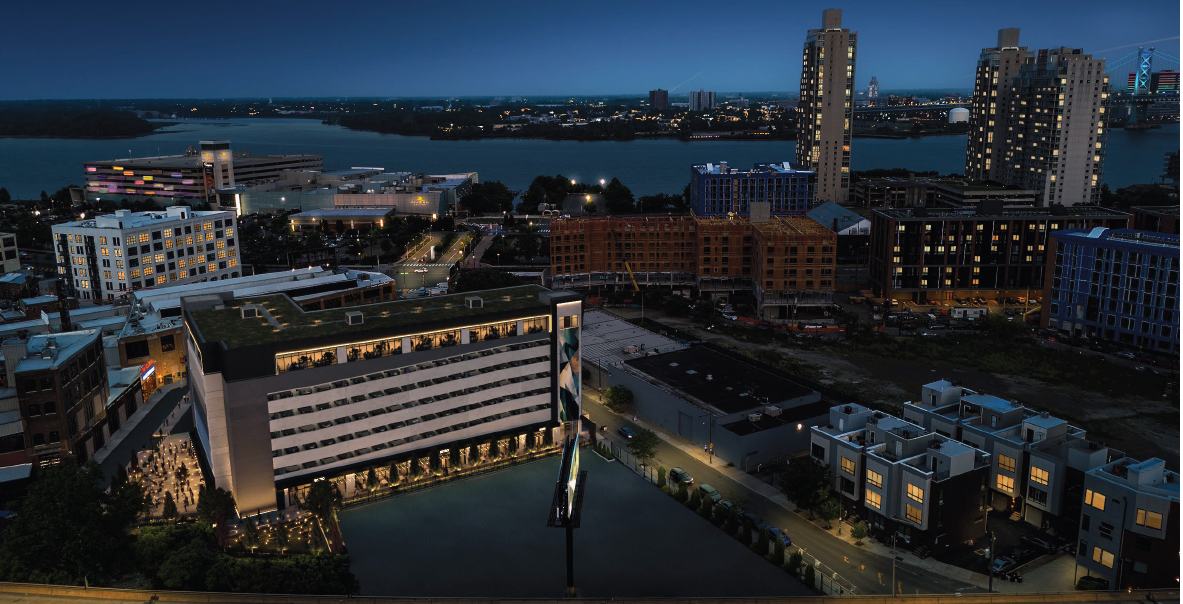
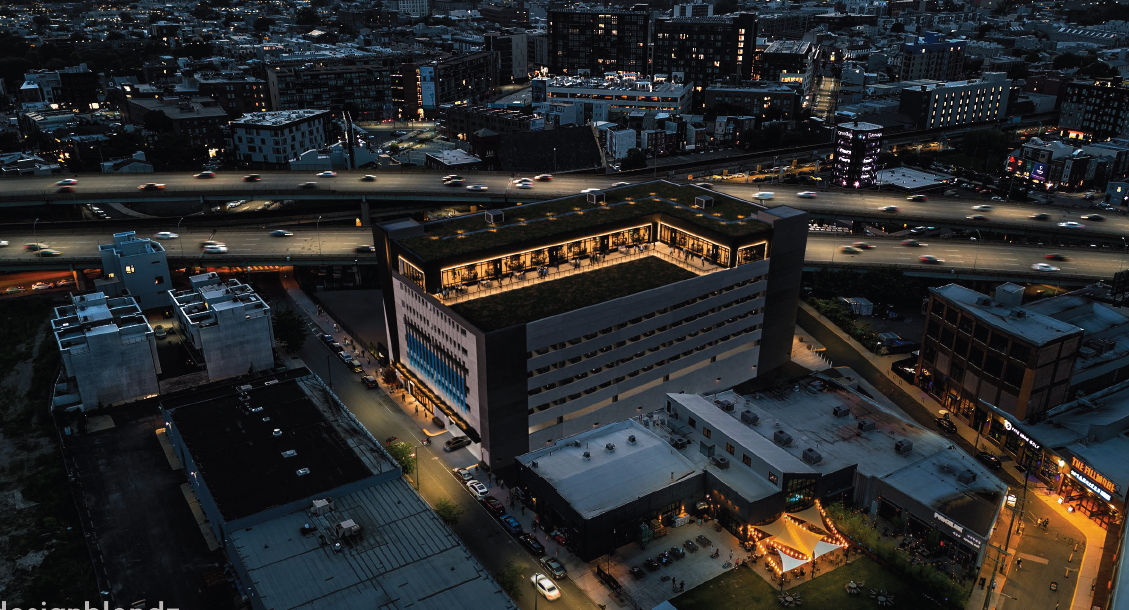
The latest is a 372-unit garage near Fishtown and Northern Liberties at 53-67 E. Laurel St. near the Fillmore concert hall and the Rivers Casino.
“There’s been about 2,500 units that have come online within a 5- to 10-minute walk” of the planned garage, said Aris Kufasimes, director of operations with developer Bridge One Management. “When you’re building those on 7-1 [apartments to parking spaces] ratios, that leaves a massive hole. Where is everybody going to put their vehicles?”
Despite central Philadelphia’s walkability and high levels of transit access, two other developers have made similar calculations this year.
In the spring, Children’s Hospital of Philadelphia (CHOP) revealed plans for a 1,005-space parking garage in Grays Ferry along with a shuttle service to spirit employees to the main campus a mile away.
In August, University Place Associates unveiled plans for a 495-unit garage. About a fourth of it will be reserved for the use of the city’s new forensic lab, but the rest will be open to the public.
All three projects have baffled environmentalists and urbanists, who thought Philadelphia was moving away from car-centric patterns of late 20th-century development.
It’s also surprised parking operators in the city, who say national construction cost trends and high local taxation make it difficult to turn a profit.
Legacy parking companies in Philadelphia like E-Z Park and Parkway Corp. have been selling garages and surface lots for redevelopment as anything other than parking. They say the city has lost 10,000 publicly available spaces in the last 15 years, bringing the total to about 40,000 in Center City.
“I don’t think I’ll ever build another stand-alone parking facility,” said Robert Zuritsky, president of Parkway Corp. and board chair of the National Parking Association. “It doesn’t make any sense.”
Zuritsky and other parking companies have long noted that operators in Philadelphia, who often have unionized workforces, get hit with parking, wage, property, and the Use and Occupancy Tax.
When combined with the soaring cost of building new spaces across the nation, it’s difficult to turn a profit in Philadelphia.
A rendering of the Fishtown garage, looking towards the Delaware River.
Zuritsky says it costs $60,000-$70,000 a space to build an aboveground lot in today’s environment and $100,000 to $150,000 below ground.
“It’s like building a house for a car,” he said.
Depending on hyperlocal peculiarities, Zuritsky says that taxation in Center City can eat up to 60% of the money they bring in and that to profit from new construction, an operator would have to charge $3,000 per space a month.
“I wish people luck, the ones that are moving in,” said Harvey Spear, president of E-Z Park. “Between taxes, insurance, and labor, it comes to, like, 70-some percent of what we take in. We have more equipment now that does away with a lot of labor; we’re trying to compensate with that.”
Urbanist and environmental advocates, meanwhile, have condemned the new garage projects, arguing that they will add to carbon emissions, air pollution, and traffic congestion.
“A massive parking garage less than half a mile from the El [in Fishtown] is the wrong direction for any city that claims to take climate action seriously,” said Ashlei Tracy, deputy executive director with the Pennsylvania Bipartisan Climate Initiative. “SEPTA is already working to get more people out of cars and onto transit, but projects like this one and the one from CHOP only make that harder.”
Here are the parking projects in the pipeline.
Fishtown: 372 spaces
The garage, with architecture by Philadelphia-based Designblendz, doesn’t just contain parking. It includes close to 14,000 square feet of commercial space on the first floor, which the developer hopes to rent to a restaurant — or two — on the edges of one of Philadelphia’s hottest culinary scenes.
Another over 16,000-square-foot restaurant space is planned for the top floor, with views of the skyline and river. Both the top and bottom floors also could be used as event spaces.
Kufasimes says that this aspect of the project could partly offset the kinds of costs that parking veterans warn of.
“Our due diligence team went through those numbers and vetted them pretty thoroughly: The returns are what they needed to be,” Kufasimes said. “It’s got a multifunction of income streams, so we think that that really will help play a larger role.”
Kufasimes also said a parking garage made sense in an area that’s seen more development than almost any other corner of Philadelphia. When investors purchased the land at 53-67 E. Laurel St. and approached his company for ideas, they met with other stakeholders in the neighborhood and determined parking would be appreciated.
“It wasn’t necessarily all about the profit,” Kufasimes said. “A lot of people this day and age, that is their number-one goal. If this is a slightly lower return in the long run but can be better accepted by the community as a whole, we think that actually raises the value of the asset.”
An overhead-perspective rendering of the Fishtown garage.
At an October meeting of the Fishtown Neighbors Association, that argumentappeared to pay off. Unlike most community meetings where a large new development is proposed, there were no adamant opponents of the project. The project also includes a 20,000-square-foot outdoor space, a green roof, and a to-be-decided public art component. All of that helped, too.
“It’s nice seeing a parking garage, of all things, be as pedestrian-friendly and thoughtful as this,” one speaker said during the Zoom meeting.
Dubbed University Place 5.0, it largely exists because of a major expansion of the municipal bureaucracy west of the Schuylkill.
For years the city has sought a new location for its criminal forensics laboratory. The debate became heated in City Hall, with numerous Council members making the case for locations within their districts.
Councilmember Jamie Gauthier pushed for its location in University City Place 3.0, a newly built, state-of-the-art life sciences building that was coming online just as its intended industry was slowing down in the face of higher interest rates.
To get the crime lab, Mayor Cherelle L. Parker’s administration said the police department would need ample parking. That’s where the new garage comes in.
In June, Gauthier passed a zoning overlay that cleared away the regulatory hurdles to the project. Six weeks later, the developers revealed University City Place 5.0, which has 29 parking spaces on the ground floor reserved for official use by forensics vehicles and 100 spaces reserved for city employees.
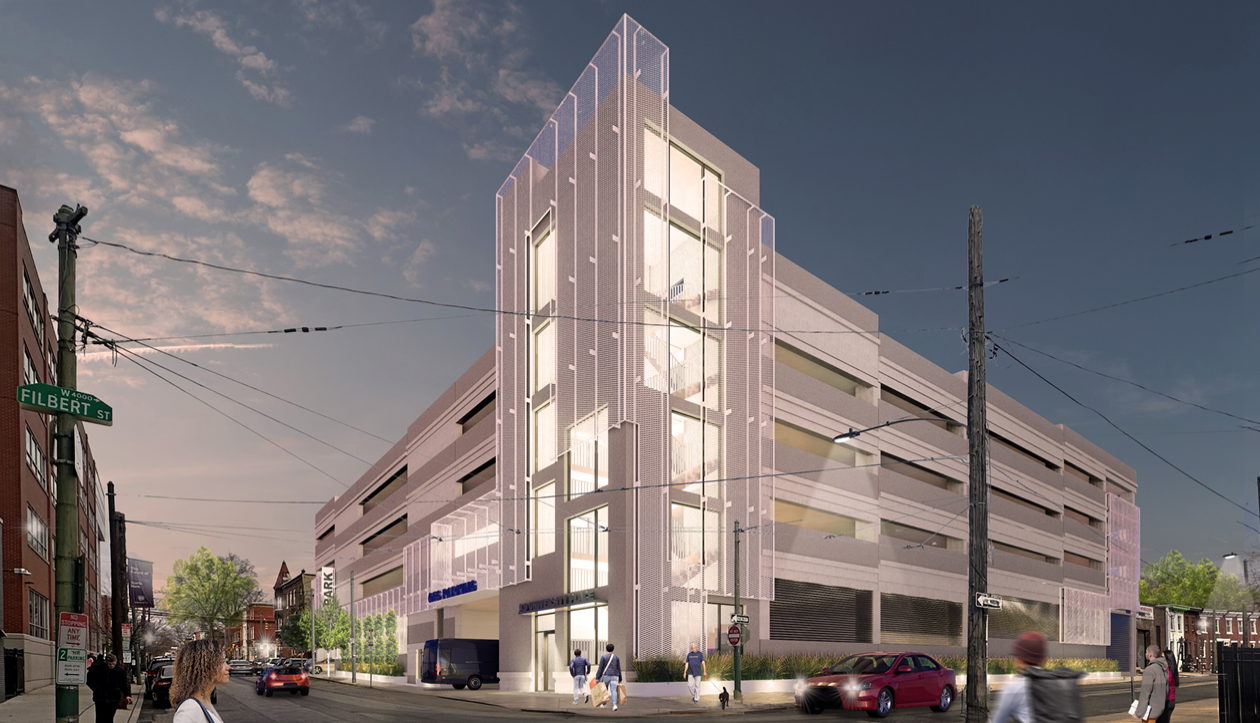
A rendering of the proposed University City parking garage as seen from 42nd and Filbert Streets.
Designed by Philadelphia-based ISA Architects, the garage is also meant to serve University Place Associate’s other large developments in the area. Akin to the Fishtown garage, they have also sought to make the development pedestrian friendly, with a dog park, green space, and public art.
The local community group, West Powelton Saunders Park RCO, also embraced the proposal.
“The community met regarding this project back in August, and … they were all in support of this project,” Pamela Andrews, president of the West Powelton Saunders Park RCO, said at the city’s September Civic Design Review meeting. “We have a tremendous problem with parking, and the community members felt this was a much needed and welcome addition.”
Grays Ferry: 1,005 parking spaces
CHOP’s thousand-car parking garage by far has been the most controversial of the proposals. But it also makes the most economic sense for the owner. Unlike the other garages — or those owned by Parkway and E-Z Park — it will be owned by a nonprofit and exempted from many of the taxes that make it so expensive to own parking in Philadelphia.
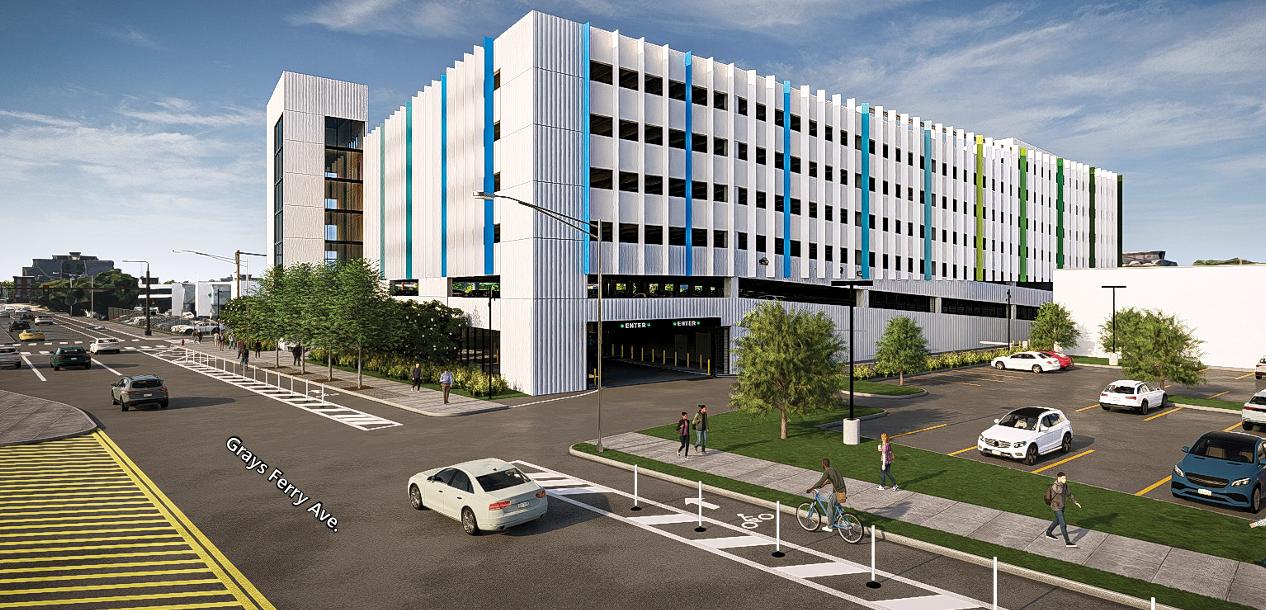
A rendering of the new parking garage CHOP plans for Grays Ferry.
The hospital purchased the property at 3000 Grays Ferry Ave., next to the Donald Finnegan Playground, for almost $25 million last year.
The seven-story development, which, plans show, would have far fewer amenities than its University City and Fishtown counterparts, is meant to serve CHOP’s new research facilities in Fitler Square and the new patient tower set to open in 2028.
“We recently secured permits and have begun construction on the new parking garage at 3000 Grays Ferry Ave.,” a CHOP spokesperson said. “The full construction is expected to go through the fall of 2026. CHOP continues to engage with the community by providing support, timely updates and addressing feedback during construction.”
At the time of its unveiling, CHOP argued that the massive garage was needed as SEPTA threatened to become unreliable due to a political funding crisis in Harrisburg. But detractors appeared almost immediately to denounce the hospital for worsening air quality in a lower-income neighborhood that is already a hot spot for asthma.
There are no regulatory hurdles to the development, but changes in the political or economic landscape could make it difficult to embark on a large capital project. Notably, the University of Pennsylvania proposed an 858-space garage in 2023 for the nearby Pennovation Center and has never broken ground.
In City Council on Tuesday, St. Joe’s confirmed that the sale has closed.
In reaction, Gauthier had authored legislation that sought to require more community oversight when large institutions make significant land sales in University City, which is part of her district. She thinks this sale might not be the last, given the turbulent state of higher education.
Her original legislation was deemed legally dubious by the city’s law department and by most zoning attorneys consulted by The Inquirer.
Gauthier amended the bill and got the new version passed by City Council’s Rules Committee on Tuesday.
“It is an indisputable fact that college campuses significantly impact the communities that surround them,” Gauthier said at the hearing.
“As higher education undergoes its most significant change in our lifetime,” she continued, “we must ensure that land-use decisions are made with their communities in mind, and recent actions by multiple universities prove this will not happen without legislative action.”
The original bill sought to regulate how higher education institutions use their land, which is illegal. Zoning concerns land use generally, not only land use of specific actors.
Gauthier amended the bill so it is triggered not by a change in ownership from a university to a non-higher education buyer, but by a proposed change away from educational use on lots over 5,000 square feet.
So if a university sold land to a housing developer, the law would be triggered. It is not clear it would be triggered by what St. Joe’s did, which was selling land used for university purposes to another educational provider that claims to want to start a teaching college.
The amendments also removed clauses that would have required neighborhood residents to join the Philadelphia City Planning Commission when it reviews land-transfer proposals, as is required by this bill.
Gauthier pushed back against arguments that her bill is an overreach by noting that it simply requires a meeting with neighborhood groups, a review by the planning commission, and a demolition moratorium if there are no permits for new construction.
“This bill doesn’t cripple anyone’s property values,” Gauthier said. “It doesn’t restrict anyone’s use or density rights. It adds more eyes and more transparency to land-use decisions for major properties that change entire neighborhoods. The idea that this could ever be wrong is simply preposterous.”
The IPEX building at St. Joseph’s University in Philadelphia on Sept. 12.
Representatives from a host of West Philadelphia neighborhood groups testified in support of Gauthier’s bill. They detailed their anxieties about living in the shadow of large institutions with expensive real estate portfolios and their frustrations with what they felt had been duplicity by St. Joe’s during a public engagement campaign about the sale.
During neighborhood meetings earlier this year, attendees detailed their desire for a community college, health clinic, parking, or affordable housing on a post-sale St. Joe’s campus.
They said they felt that the university ignored their feedback.
“This thing about community engagement, we feel as though it was false,” said Jacquelyn Owns, a committeeperson in the 27th Ward. “It was just something to keep the community quiet while they did exactly what they wanted to do.”
St. Joe’s representatives argued that Karp’s plans for the site are in keeping with the neighborhood’s broad desires, given that his Belmont organization runs charter schools.
St. Joe’s also noted that it will still retain some property in the area affected by Gauthier’s bill and contended that the legislation would have deleterious effects on higher education institutions in University City.
“It probably would devalue our real estate holdings, which, in turn, would then devalue our balance sheet, which would then restrict our ability to offer financial aid,” said Joseph Kender, senior vice president at St. Joe’s. “It would restrict our ability to start new construction projects. It would restrict our ability to offer new academic programs.”
A lawyer for St. Joe’s, Ballard Spahr zoning attorney Matthew McClure, said that even the amended bill might still be illegal.
Despite the protests by St. Joe’s, Council’s Rules Committee passed the amended bill.
That may be the last movement on the controversial legislation for a while. At its October meeting, the planning commission requested a 45-day hold on the bill to consider its ramifications more thoroughly. That means the full City Council will not be able to consider it until late November.
University of Pennsylvania professor E. John Wherry is good friends with Fred Ramsdell, who was recognized earlier this month with a Nobel Prize for his research in immunology.
Wherry recalled sitting with Ramsdell, a scientific adviser for the California-based biotech company Sonoma Biotherapeutics, in a meeting two months ago and picking his brain about the future of autoimmunity research.
“What are the opportunities? Where is the field going?” Wherry recalled asking.
He said Ramsdell’s advice — to stay focused on supporting the foundational academic research — is helping to inform the scientific direction and programming at Penn’s Colton Center for Autoimmunity, which Wherry directs.
Wherry was happy to see Ramsdell awarded a 2025 Nobel Prize in Physiology or Medicine, shared among three scientists, for his research into peripheral immune tolerance, a process that prevents the immune system from attacking the body.
“It could not have happened to a nicer guy,” he said.
The Nobel Prize-winning discovery is especially important for understanding autoimmunity, he emphasized, and could be leveraged to treat autoimmune diseases.
“We now have the power to push the immune system in different directions, not only to treat those diseases, but also to tell us about where the diseases are going,” Wherry said.
Penn’s new research facility, which will span seven floors of an office building at 3600 Civic Center Blvd. in University City, is focused on using immunology to diagnose, treat, and prevent diseases.
Wherry’s lab is moving into the space this month.
“We are in the most exciting time in my lifetime for immunology,” he said.
The Inquirer spoke with Wherry to learn more about the future of immunology research at Penn in a conversation lightlyedited for length and clarity.
How will this new center change how immunology research is carried out at Penn?
We have the Colton Center for Autoimmunity, with really wonderful philanthropic support from Judy and Stewart Colton. They’re giving us resources to make bets on high-risk, high-reward science, and to do that at a pretty good scale. We made some big bets on CAR-T cells and autoimmunity, on mRNA therapeutics, on high-throughput screening, and on AI drug discovery.
We have this Immune Health Platform lab. The idea is that we should be capturing samples theoretically from every patient we treat, ideally around the time they get a new treatment or there’s some change in their disease.
Once we’ve built a model using this data and understand the rules by which the immune system functions, we can separate the model from the primary data. You can fine-tune the model and make predictions about other diseases, clinical trials that a company might want to do, and other health systems data.
Our large database contains about 3,000 patients’ worth of data. We hope to get to 10 or 20,000 patients’ worth.
Who will be part of this new research facility?
There are about 25 immunology labs moving in. They include disproportionately younger labs, people who have just arrived at Penn in the last two to three years. We have enough space for probably around 35 to 37 labs, so we would like to recruit and bring new ideas in.
The way things happen in science is because people talk. We’ve created a physical workspace that’s going to force people to interact in new and different ways and just create more opportunities for serendipity.
The University of Pennsylvania opened a $376 million, 217,000-square-foot wet lab, office, and research facility at 3600 Civic Center Blvd. The seven-story facility was built on top of an active 250,000 square-foot office tower that opened in 2019.
What are some of the new projects that have been funded?
We have someone funded to work on the way the immune system recognizes our own DNA or RNA. lf the DNA in the nucleus of any cell in your body gets out of the nucleus, it’s a really bad thing, because that looks like a bacteria or a virus [to your immune system]. It triggers massive inflammation. The sensors for that can get miswired, and when they do, it can often lead to really devastating autoimmune disease, sometimes a fatal autoimmune disease within just a few years.
We have a great researcher named Jonathan Miner who’s identified what happens when those proteins get mutated, and has also developed drugs that basically adapt the mutation to not be as pathogenic.
We have some other really interesting studies on being able to regulate the way our bodies make antibodies, since that can be the pathogenic event in autoimmunity. If you make an antibody against proteins in your nerve ending, you can have diseases that end up causing muscle weakness. We’re starting to identify the way the immune system gets triggered to make antibodies against the wrong things.
And then we have some really cool projects on CAR-T cells and autoimmunity, where we’re using standard CAR-T cells from cancer to get rid of B cells, which are cells that make antibodies in autoimmune diseases. We also have people inventing new kinds of CAR-T cells to help address other challenges in autoimmunity.
What is the focus of your lab’s research?
In the late 1990s and early 2000s, I became very interested in how the immune system deals with chronic infections. When you can’t fully eradicate an infection, what does the immune system do? Why doesn’t the immune system clear things like HIV or hepatitis B, and what are the mechanisms behind that failure?
During our studies, we identified a process called T cell exhaustion. T cells are the part of the immune system that fights viruses and also tumors.
Our core is always to understand this idea of immune exhaustion. It plays a role in infectious disease, it plays a role in cancer, and it definitely plays a role in autoimmunity.
What are some of your current projects?
We’re trying to understand the heterogeneity in different autoimmune diseases.
To give an example, one is a really challenging kind of blistering inflammatory skin disease called Hidradenitis suppurativa, where there’s just massive inflammation of immune cells in your skin, and it causes really hard-to-treat skin lesions. We now are profiling all of the immune cells in the tissue in the skin and identifying new targets for therapeutics.
We’re also interested in this idea that the immune system sees everything that’s happening in your tissues, meaning it acts like a biosensor. If we understand the things the immune system is seeing, we can start to predict trajectories of disease. The inspiration for our study on infant health[not yet published] came from a neonatologist who came to the lab and said, ‘These really premature infants have this kind of lung inflammation that we don’t understand.’
We realized that somewhere around 10 or 20% of those really premature infants get infected while they’re in the ICU. And we were able to identify what those infections look like early in life.
We think we can start to piece together ways that we might be able to use the immune system more effectively, or at least treat the damaging inflammation that might come from an early-life infection.
What bets are you making on AI drug discovery?
We’re very excited about an AI-based approach for drug discovery and drug repurposing that is being led by David Fajgenbaum, the physician who had Castleman disease and essentially cured himself.
He has a big infrastructure to basically look at all FDA-approved drugs and identify ways to repurpose them for diseases they weren’t originally intended for. We can do AI predictions, take the top list of drugs from that, and then put that into a high throughput screening facility where Sara Cherry, who is brilliant and amazing, can now screen to identify which of those drugs might be able to provoke the effect we want from cells involved in autoimmunity.
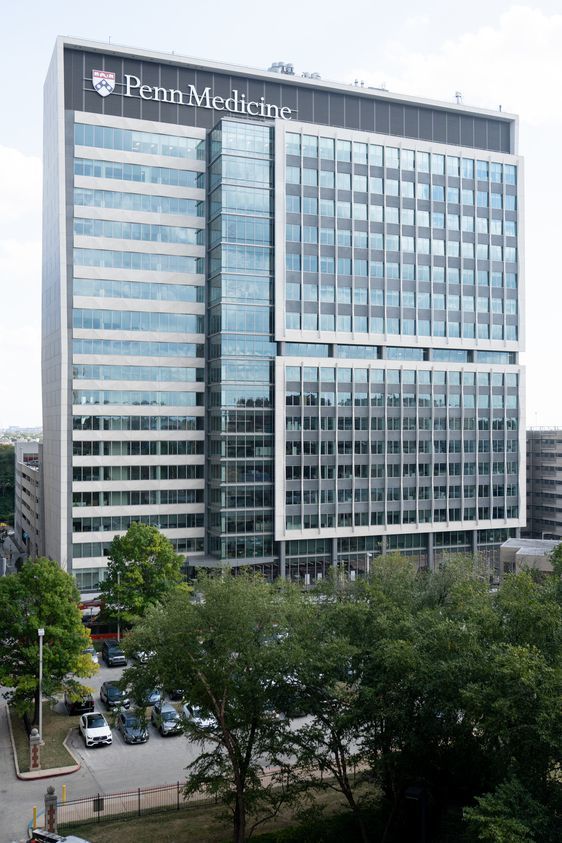
The University of Pennsylvania Health System, the Philadelphia region’s biggest provider of cancer care and a national leader in developing new treatments, is spending more than $500 million on two new cancer facilities in Philadelphia and central New Jersey to keep growing.
“What we’ve seen pretty consistently is that demand is there to meet any capacity increases,” Julia Puchtler, the health system’s chief financial officer, said in an interview about fiscal 2025 financial results.
Penn is not alone in its push to expand cancer services. Jefferson’s Sidney Kimmel Cancer Center, Temple’s Fox Chase Cancer Center, and the MD Anderson Cancer Center at Cooper are pushing into the suburbs to reach more patients.
The same thing is happening nationally as financially pressured health systems are looking for ways to increase revenue in a growing and lucrative market for cancer care.
Penn stands out locally for the scale of its investment in a strategy to deliver cancer care seamlessly across its seven hospitals and a growing network of outpatient clinics, with the expectation that patients will keep coming back for their ongoing health needs.
Penn sees an opportunity to expand its market share even more, as cancer diagnoses rise. The U.S. is expected to see a nearly 40% increase in cancer diagnoses between 2025 and 2050, according to the Philadelphia-based American Association of Cancer Research.
Experts attribute the rise to a wide variety of factors, from better early detection, to longer life spans, and to environmental exposures that are poorly understood.
Much of Penn’s investment is in outpatient facilities, including a $270 million center being built in Montgomeryville that will have radiation oncology and an infusion center. “More and more patients want to receive care closer to home,” according to Lisa Martin, a senior vice president at Moody’s Rating. “All of that is really what’s behind all of this investment.”
Cancer treatment overall is profitable. At Penn, cancer services account for up to 60% of the system’s operating margin by one simple measure that subtracts direct costs from direct revenue and excludes back-office expenses and other centralized costs.
Puchtler attributed the profitability of cancer care to the prevalence of drugs, such as chemotherapy, that Penn can buy at a discount, while getting the full price from insurers, and the higher percentage of younger cancer patients with better-paying private insurance than is typical for many healthcare services.
The expansion efforts are expensive in an industry where the consumers both benefit from advances and pay ever-rising healthcare costs. Proton therapy, in particular, costs more, but has not yet been proven to have better outcomes across a wide range of cancers.
The intensifying competitive landscape
Penn treats about one-third of adults with cancer in its market area, which stretches from central New Jersey to the Susquehanna, according to Robert Vonderheide, who is director of Penn’s Abramson Cancer Center and leads all of Penn’s efforts in oncology treatment and research.
Penn counted 47,053 new cancer patients in the 12 months that ended June 30, up 40% from five years ago, according to Penn. The system has 14 locations where patients can receive chemotherapy and even more radiation oncology sites.
Competitors are also trying to expand their reach, and Temple’s Fox Chase Cancer Center is succeeding.
window.addEventListener(“message”,function(a){if(void 0!==a.data[“datawrapper-height”]){var e=document.querySelectorAll(“iframe”);for(var t in a.data[“datawrapper-height”])for(var r,i=0;r=e[i];i++)if(r.contentWindow===a.source){var d=a.data[“datawrapper-height”][t]+”px”;r.style.height=d}}});
Fox Chase had 21,442 new patients in fiscal 2025, up 148% from 2020, the nonprofit said. Fox Chase has added suburban offices in Voorhees and Buckingham, Bucks County, and is expanding its infusion capacity at its main campus on Cottman Avenue. Fox Chase has a significantly smaller footprint than Penn, with six locations for infusions and four for radiation.
The MD Anderson Cancer Center at Cooper said it had 4,326 new patients last year, up 27% over the last five years. Cooper has taken the MD Anderson Cancer Center brand to the former Cape Regional Medical Center, which it acquired last year and which used to be part of the Penn Cancer Network. Cooper also offers cancer services at its new Moorestown location.
Jefferson Health’s Sidney Kimmel Cancer Center did not respond to requests for patient data, but has in recent years opened cancer center locations at its Torresdale and Bucks County Hospitals. Jefferson’s cancer center also attained the highest designation from the National Cancer Institute last year — the Philadelphia region’s third comprehensive cancer center, matching Penn and Fox Chase.
Lancaster County resident Susan Reese, 56, said she experienced smooth cooperation between her doctor at Penn’s Lancaster General Hospital and the team at HUP during her treatment for non-Hodgkin lymphoma.
“I never had any question in my mind that one doctor didn’t know what the other doctor was doing,” said Reese, who received CAR-T therapy at HUP in September 2022. Penn has since started offering CAR-T at Lancaster General.
After she relapsed in early 2023, she came back to HUP for a stem cell transplant. She could have gone to Penn State Health’s Hershey Medical Center for that. It’s significantly closer to her home in Willow Street, but she wanted to stay within the Penn system.
Reese’s experience of integration of services at HUP and Lancaster General is what Penn is aiming for in a territory that stretches from central New Jersey to central Pennsylvania.
Oncologist Robert Vonderheide, director of Penn Medicine’s Abramson Cancer Center, oversees all Penn’s cancer services and research.
Electronic medical records help with the integration needed to ensure the thousands of cancer patients Penn physicians treat annually get the most advanced care possible, according to Vonderheide, whose research focuses on cellular immunotherapies.
“We treat patients’ cancers now in a very precise way; the precise mutation, the precise type of chemotherapy, the precise dose” are the focus for doctors, Vonderheide said. “This is no longer appropriate for the telephone game. This has to be data-driven.”
Reese’s decision to stay within Penn is part of a broader trend of patients tending to receive all their care within one health system, according to Rick Gundling, a healthcare expert at the Healthcare Financial Management Association in Washington, D.C.
That’s particularly important in oncology, which typically involves multiple specialties, such as medical oncology, radiation oncology, and surgical oncology, he said.
“Seamless coordination across all those disciplines really makes it a better patient experience and clinical experience because it reduces delay, improves access,” Gundling said.
Taking advanced treatments from HUP to the network
Part of Penn’s strategy is to begin offering advanced services at locations beyond HUP. That’s where Penn pioneered CAR-T cell therapy, which harnesses the immune system to attack cancer, and for years that was the only place Penn offered it.
HUP still performed the bulk of the CAR-T treatments for blood cancers, 123 inpatient cases and 14 outpatient cases last year, but now CAR-T is also available at Lancaster General and at Penn’s Pennsylvania Hospital in Center City.
Fox Chase was the next biggest center in the region for the relatively new treatment that Penn scientist Carl June and his research teams helped develop. For the fiscal year that ended June 30, 2025, Fox Chase had 21 inpatient cases and 67 outpatient cases, the center said.
In the Penn system, certain kinds of bone marrow transplants also used to be available only at HUP. “Now we do them at HUP and Pennsylvania Hospital,” Vonderheide said.
Even the most complicated pancreatic surgeries are going to be done at Princeton, in conjunction with experts at HUP, Vonderheide said. Penn held a ceremonial groundbreaking Monday for the hospital’s $295 million cancer center.
Remaining only at HUP are bone marrow transplants that use another person’s cells to treat blood cancers, Vonderheide said. HUP performed 118 of those so-called allogeneic bone marrow transplants on the top floor of its $1.6 billion patient pavilion, now known as the Clifton Center.
Pennsylvania’s next-biggest provider of the treatment was Hershey Medical Center, near Harrisburg, with 71, according to state data.
window.addEventListener(“message”,function(a){if(void 0!==a.data[“datawrapper-height”]){var e=document.querySelectorAll(“iframe”);for(var t in a.data[“datawrapper-height”])for(var r,i=0;r=e[i];i++)if(r.contentWindow===a.source){var d=a.data[“datawrapper-height”][t]+”px”;r.style.height=d}}});
Penn started offering proton therapy at HUP in 2010, and expanded its availability in the last three years to Lancaster General and Voorhees, through a joint venture with Virtua Health. Those two centers only have one proton machine each, compared to five at HUP.
It’s a type of radiation that is designed to precisely target tumors and do less damage to surrounding tissues. That makes the treatment, which costs more, particularly helpful for children, and it is proving beneficial for treating certain neck and throat cancers.The use of proton therapy for the more common prostate cancer has been more controversial.
Penn’s fourth proton center, with two machines, is under construction and is expected to open at Presbyterian in late 2027. When that $224 million center opens, Penn will have more proton treatment rooms than the entire West Coast, said Jim Metz, chair of radiation oncology at Penn.
Currently about 10% of Penn’s roughly 10,000 annual radiation oncology patients are treated with protons, though it’s a higher percentage at locations with proton machines, Penn said.
Penn officials have noted that some cancer patients come to Penn for proton therapy. Even when it’s not appropriate for them, they tend to stay within Penn. “We have seen, when we build protons, our market share increases, ” Metz said.
Editor’s note: This article has been updated with more recent Fox Chase data.