The data breach that anonymous hackers claimed had compromised data for 1.2 million students, donors, and alumni at the University of Pennsylvania actually impacted fewer than 10 people, according to a legal filing in a proposed class action lawsuit against Penn over the breach.
A Penn source confirmed Tuesday that fewer than 10 people received notifications that their personal information had been affected in the Oct. 31 incident.
“Penn conducted a comprehensive review of the downloaded files to determine whose information may have been involved,” the university said in a statement. “That review is now complete. Penn sent notifications to the limited number of individuals whose personal information was impacted as required by applicable notification laws.”
A second data breach weeks later involving Oracle E-Business Suite was much more widespread and affected more than 100 companies. Penn’s notifications to impacted individuals in that incident were more widespread, though the school hasn’t released the number.
In the first case, Penn quickly said it could not verify the hackers’ claim about the number of people whose records were obtained. The incident drew widespread attention because the hackers sentan offensive email, which claimed to be from Penn to alumni and students.
“We have terrible security practices and are completely unmeritocratic,” the email read. “Please stop giving us money.”
The school hired cybersecurity specialists to help investigate the breach, which accessed systems related to development and alumni activities. Penn said at the time it was taking steps to prevent future attacks and would be instituting mandatory training.
A series of proposed class-action lawsuits were filed in U.S. Eastern District Court following the hack, alleging that Penn failed to protect users’ sensitive data and in turn allowed it to fall into “the hands of cybercriminals who will undoubtedly use [the information] for nefarious purposes.”
A federal district judge consolidated 18 lawsuits in December into a single proposed class-action case, but eight members of the Penn community who filed lawsuits dropped out in recent weeks.
The exodus of plaintiffs is the result of Penn’s disclosure to attorneys involved with the litigation that fewer than 10 people were impacted by the breach, and none of those who sued were among them, attorneysfor the plaintiffssaid in a Monday court filing.
The small impact of the breach could be detrimental for the cases if they continue on their own, the attorneys said. They proposed incorporating the remaining cases with the Oracle-breach litigation that is ongoing in Western Texas District Court.
A judge is expected to decide which attorneys will lead the litigation and coordinate among all the litigants, a decision that could determine whether the case will be heard in Philadelphia or Texas.
Princeton University’s president, in a message to campus, said the school will take the unusual move of consolidation and cuts, given federal policy changes and “political threats” to its financial model, as well as lowered expectations about future endowment returns.
“Changed political and economic circumstances require that we transition from a period of exceptional growth to one defined by steadfast focus on core priorities,” Christopher Eisgruber wrote Monday in his annual message to campus. “That shift is necessary for multiple reasons, including because it will help Princeton to stand strong for its defining principles and against rising threats to academic freedom.”
The Ivy League university, he wrote, “will have to look for areas where we can consolidate or cut, both to offset rising costs (including salaries and benefits) and to support the investments required for teaching and research excellence.”
Eisgruber’s announcement came days after the University of Pennsylvaniaannounced it would instituteanother round of budgetcutsin response to actions by President Donald Trump’s administration that threaten future funding and revenues, and because of rising legal and insurance expenses. The Trump administration has placed new caps on loans that graduate students can take out, temporarily paused student visa interviews, and sought to cut research funding to universities. Some colleges, including Penn and Princeton, also will see their endowment taxes rise.
Penn’s schools and centers were directed to cut 4% from certain expenses in the next fiscal year and keep in place financial cutbacks instituted last year, including a staff hiring freeze and freezes on midyear adjustments in staff salaries. Schools and centers also were asked last year to cut 5% of certain expenses, and the new 4% reduction would be on top of that.
The new Penn cuts come even though university officials said finances look better than they anticipated a year ago.
At Princeton, university officials also asked units across the school to make 5% to 7% cuts to their budgets over the last year, given an increase in the endowment tax that Princeton faces and federal threats to research funding. Eisgruber noted that the proceeds from its $36.4 billion endowment and sponsored research grants make up 83% of Princeton’s revenue.
The university’s endowment tax is scheduled to rise from 1.4% to 8% in 2026-27. (Penn’s tax on its $24.8 billion endowment is rising from 1.4% to 4%.)
Now, “more targeted, and in some cases deeper, reductions over a multiyear period” are likely required, Eisgruber wrote.
Last year, things were different.
In his 2025 message, Eisgruber noted that the school was “in the midst of an 18-month period in which the University will open more than a dozen substantial new facilities and spaces that enhance the University’s mission.”
Those include a new health center, a commons with a library, an art museum, student housing, and buildings that house an environmental institute and science and engineering programs.
“Princeton will continue to build, but more slowly in the years to come,” Eisgruber said in this week’s message. “Princeton will continue to evolve, but in the future it will more often have to do so through efficiency and substitution rather than addition. That will be a major change for most Princetonians, in comparison to not only the past five years but the last three decades.”
Princeton’s long-term endowment return assumptions have been lowered to 8% from 10.2% three years ago, Eisgruber wrote.
The university’s endowment returns in the three years following 2021 were “the second worst in more than four decades, better only than the returns in the years surrounding the Global Financial Crisis in 2008-09,” Eisgruber wrote. Two of those years saw negative returns.
Princeton spends about 5% of its endowment each year to support operations.
“An 8 percent return rate will require us to get the payout rate down below 5 percent even to cover payout plus inflation,” Eisgruber wrote.
Competition at Philadelphia-area medical schools intensified in 2025, with programs seeing about 50 applicants for every open spot.
That’s the highest demand since 2022, with the number of applications bouncing back after a three-year decline, recently released data from the Association of American Medical Colleges(AAMC) shows.
The annual report offers a look at the composition of the nation’s future doctors through the demographics of the applicants and enrollees at M.D. degree-granting medical schools across the United States and Canada.
It showed increased class sizes and strong female enrollment across the Philadelphia area’s five M.D. degree-granting schools: University of Pennsylvania, Thomas Jefferson University, Temple University, Drexel University, and Cooper Medical School of Rowan University.
And the fraction of first-year medical students from Pennsylvania who identified as Black or African American, excluding the mixed-race student population, fell from 6.9% to 5.4% between 2023 and 2025.
The racial demographics of entering studentsare seeing increased scrutiny in light of the 2023 Supreme Court decision that effectively ended affirmative action, barring race from being used in higher education admissions.
The percentage of first-year medical students from Pennsylvania who are Black is lower this year than the national average. Pennsylvania also lags behind the national average for first-year enrollment of Hispanic or Latino medical students.
This data reflects the results of the application cycle that concluded last spring. Next year’s prospective medical school students are currently in the thick of admissions season, awaiting interviews and offers.
Here’s a look at the key trends we’re seeing:
Applications back up
Demand for spots at Philadelphia area-medical schools is back up after a three-year decline. There were nearly 5,000 more applications last cycle, a 9.3% increase, with all schools except Cooper seeing a boost.
Jefferson’s Sidney Kimmel Medical College helped drive growth the most, with a 16% increase in applications compared to the previous year.
window.addEventListener(“message”,function(a){if(void 0!==a.data[“datawrapper-height”]){var e=document.querySelectorAll(“iframe”);for(var t in a.data[“datawrapper-height”])for(var r,i=0;r=e[i];i++)if(r.contentWindow===a.source){var d=a.data[“datawrapper-height”][t]+”px”;r.style.height=d}}});
More medical students being trained
Orientation icebreakers might take a bit longer to get through at area-medical schools as first-year classes continue to get bigger.
In 2025, Philadelphia-area schools enrolled 1,089new medical students, compared to 991 in 2017. Drexel University College of Medicine contributed to half of that growth, adding 49 seats to its recent entering class compared to that of 2017.
Penn’s Perelman School of Medicine was the only school that did not increase its class size in 2025.
window.addEventListener(“message”,function(a){if(void 0!==a.data[“datawrapper-height”]){var e=document.querySelectorAll(“iframe”);for(var t in a.data[“datawrapper-height”])for(var r,i=0;r=e[i];i++)if(r.contentWindow===a.source){var d=a.data[“datawrapper-height”][t]+”px”;r.style.height=d}}});
Female enrollment remains strong
More female students have entered Philly-area medical schools over the last decade.
In 2025, 55.4% of first-year enrollees at Philly-area medical schools were female, compared to 47.7% in 2017.
Drexel saw the biggest rise, with 181 women entering in 2025, compared to 120 in 2017.
window.addEventListener(“message”,function(a){if(void 0!==a.data[“datawrapper-height”]){var e=document.querySelectorAll(“iframe”);for(var t in a.data[“datawrapper-height”])for(var r,i=0;r=e[i];i++)if(r.contentWindow===a.source){var d=a.data[“datawrapper-height”][t]+”px”;r.style.height=d}}});
Foreign nationals are facing increasing challenges to working and studying in the U.S., but their contributions to the Philadelphia economy are critical, local business leaders say, painting a grim picture of Philadelphia’s future with fewer of them.
In Philadelphia, “immigrants are not a side factor when it comes to our economy. They are a main driver,” Alain Joinville, from the city’s Office of Immigrant Affairs, said at a panel discussion, hosted last week by the Economy League of Greater Philadelphia, in partnership with immigration-reform organization FWD.us.
The foreign-born population has supported Philadelphia’s workforce growth in recent years. Between 2010 and 2022, the immigrant workforce grew by 50% from 105,600 to 158,300, according to the Pew Charitable Trusts. In 2022, the foreign-born population represented 15.7% of the total Philadelphia population.
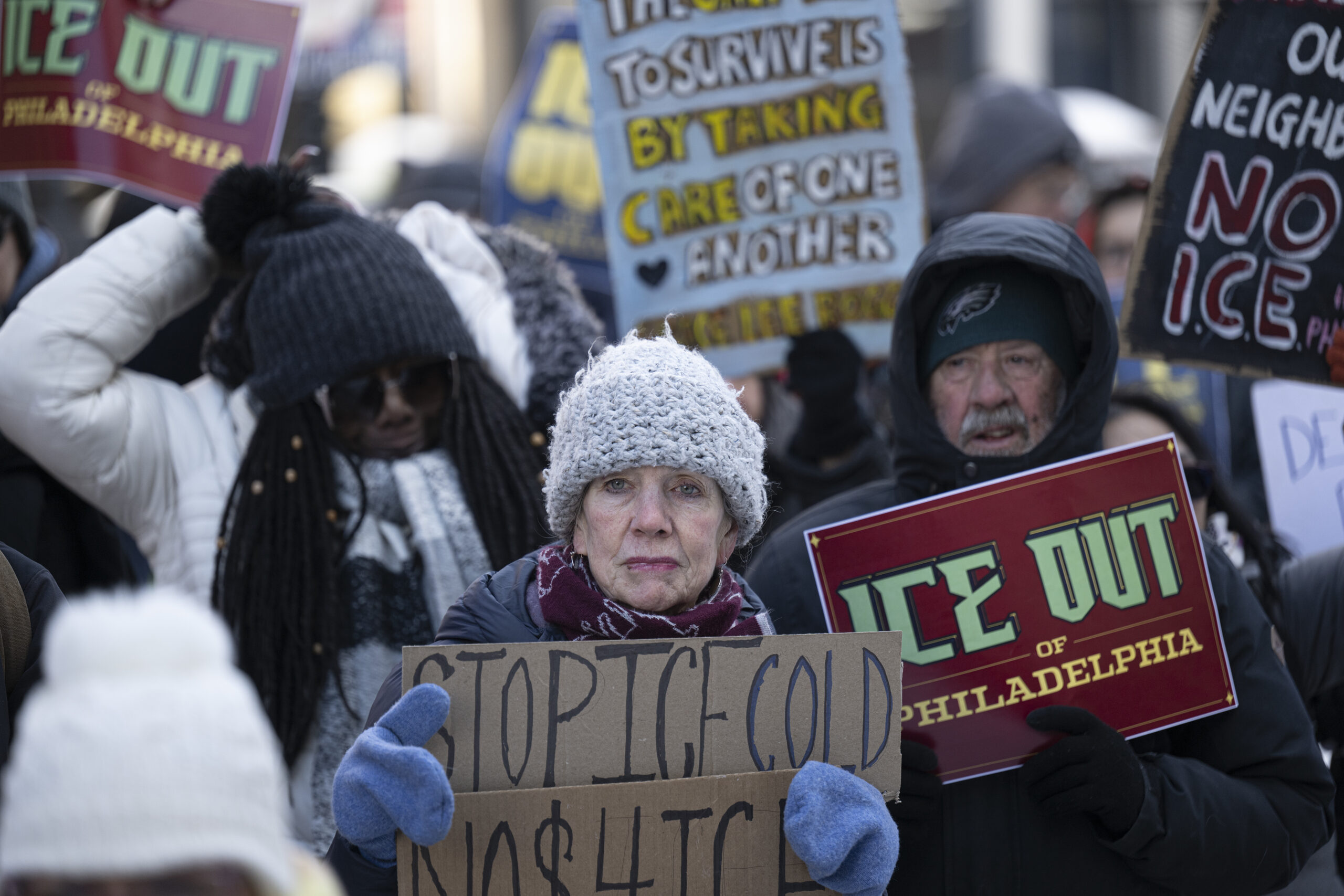
Anti-ICE activists demonstrate outside U.S. Sen. John Fetterman’s Philadelphia office on Jan. 27, 2026, calling for an end to federal immigration enforcement policies.
“If we have policies that are disrupting families, detaining people, sending people back, that’s a huge part of our economy that impacts manufacturing, transportation of all the goods and services that we manufacture,” said Elizabeth Jones, of immigrant-support nonprofit the Welcoming Center. “The ripple effect is scary in terms of how it’s going to impact the economy.”
While the U.S is a global leader in research universities, it could be losing that grip, said Amy Gadsden, from the University of Pennsylvania’s Global Initiatives. Having the best research universities in the world requires the best talent — namely international students that also become faculty, she noted.
Penn has roughly 9,000 international students and an additional 2,000 faculty, postdoc students, and others who “drive a lot of economic activity, both for Penn and for the city of Philadelphia — for the country, for that matter,” she said.
“There is not a guidance counselor around the world who is advising their student not to hedge their application to the United States with an application to another country,” she said.
A view over Walnut Street on the University of Pennsylvania campus, with the Philadelphia skyline at left rear.
Penn, Philadelphia’s largest employer, depends on international students, said Gadsden. “When we think about what is going on with visa policy in the United States, what we see is a decrease in international students, a decrease in international faculty, a decrease in research output, that will ultimately lead to a decrease in our position as a leading research university in the world,” she said.
Jennifer Rodriguez, president and CEO of the Greater Philadelphia Hispanic Chamber of Commerce, highlighted the challenge employers can face under the new fee for H-1B visas.
“Immigrants and the foreign-born population in general is one that is critical for the economic health of the city of Philadelphia and the region,” she said.
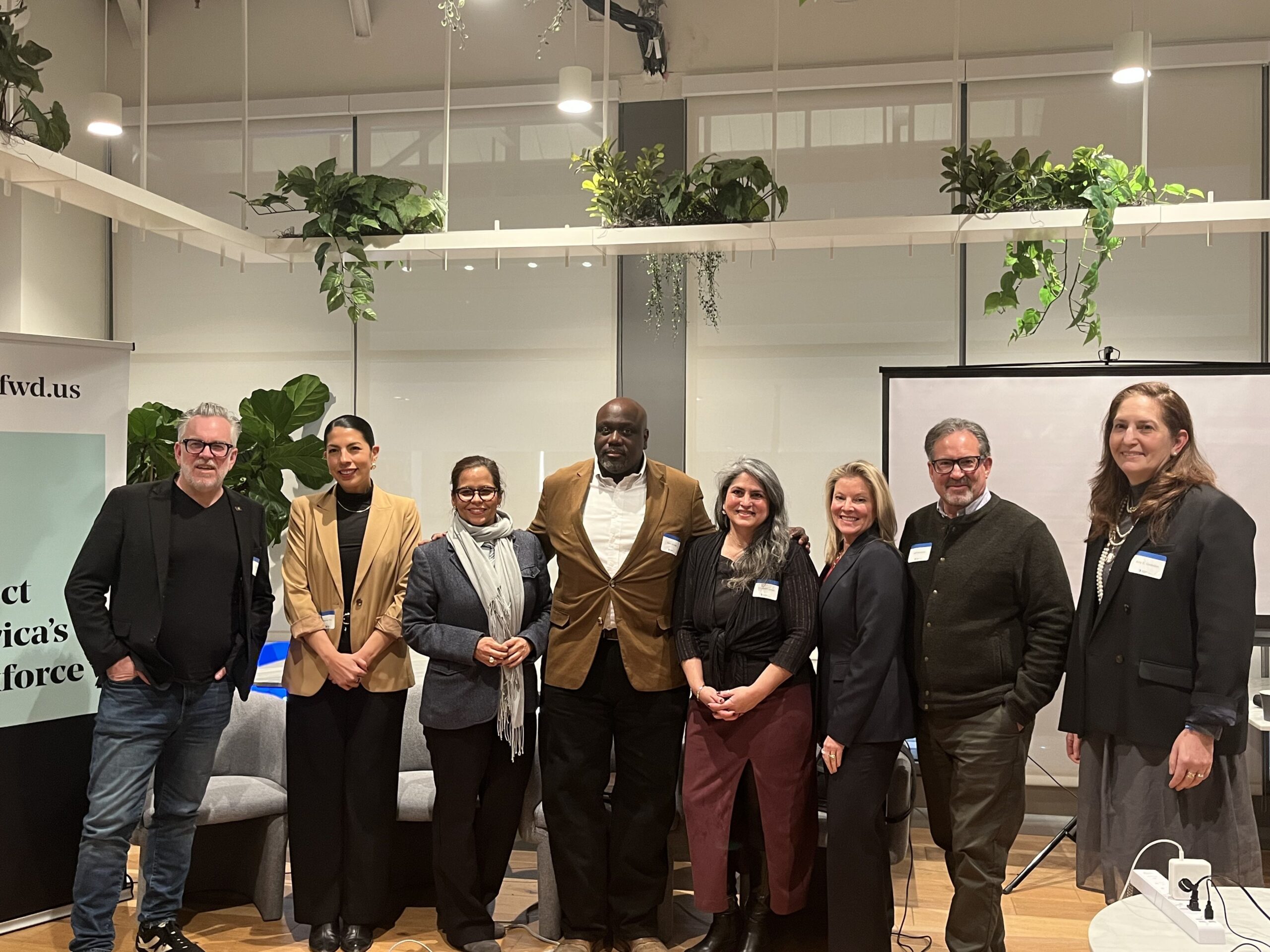
The Economy League of Greater Philadelphia held a panel discussion in collaboration with FWD.us. From left are Ben Fileccia, Pennsylvania Restaurant & Lodging Association; Maria Praeli, FWD.us; Jennifer Rodriguez, Greater Philadelphia Hispanic Chamber of Commerce; Alain Joinville, Philadelphia’s Office of Immigrant Affairs; Elizabeth Jones, the Welcoming Center; Tracy Brala, University City Science Center; Jeff Hornstein, the Economy League of Greater Philadelphia; Amy Gadsden, University of Pennsylvania.
Rodriguez described the additional $100,000, which is on top of other expected visa processing costs, as exorbitant. While some large businesses might have resources to handle it, she said, middle-market companies will be more challenged.
“Philadelphia is desperate to get more of those businesses to establish here, and now you’re making it that much harder,” said Rodriguez. “We are really curtailing the ability of these businesses to innovate, to hire, to really be the contributors to the economy that we want them to be.”
Immigrants in Philadelphia are of prime working age, noted Joinville, from the city’s Office of Immigrant Affairs.
“Without immigrants, we have a smaller workforce to drive and support our businesses locally,” he said, adding that immigrants start small businesses at a high rate in Philadelphia.
“As a child of immigrants, focusing on the economy can be a little tricky for me, because we’re not just data or money or economy,” said Joinville. “Yes, immigrants have an economic impact, but they are cultural leaders, civic leaders, and, yeah, just good people.”
Manuel Contreras, the head of the secret police during Chile’s dictatorship, which reigned from 1973 to 1989, once explained why so many seeming innocents — students, union leaders, local activists — were murdered by the state: “The guerrilla tries to act like a normal citizen, honest and good, and lies even to his family. When discovered, he will always deny the facts.”
The regime does not make mistakes.
“The lack of specific information … demonstrates that they are terrorists with regard to whom we lack a complete profile.”
I am a scholar of authoritarian politics at the University of Pennsylvania. I research and teach about repression and censorship. The Trump administration is engaged in state terror. And, in a page ripped from the autocrat’s playbook, they are trying to convince us that the victims deserve it.
On Jan. 7, Secretary of Homeland Security Kristi Noem claimedRenee Good — shot in the head by an ICE agent while observing a raid — engaged in an “act of domestic terrorism.” Noem said that Good “weaponized” her car (the same car with a glove compartment overflowing with her child’s stuffed animals and a friendly dog in the back).
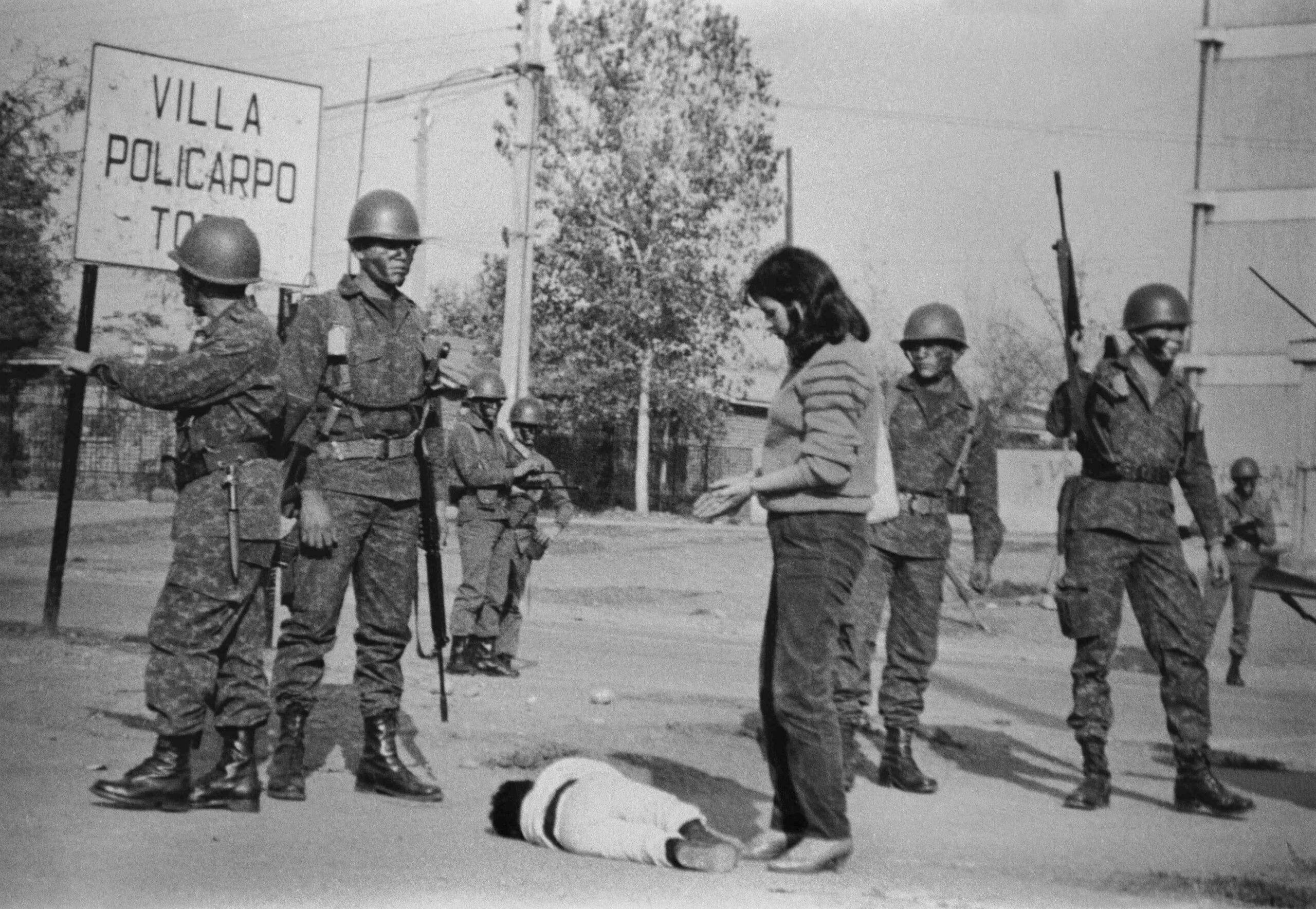
These are the same lies Augusto Pinochet told in Chile, where the regime frequently falsified reports that blamed the victims for their own deaths. Rather than executions, victims died in “shootouts.” The official government account of the death of one 28-year-old activist was that he was a “subversive” killed while attacking a barracks. But witnesses saw him being arrested two days earlier. A miner with no known political affiliation, the press claimed, “tried to seize a policeman’s weapon … and so he was shot.” Two victims executed by army troops were accused of “criminal or subversive activities.”
A boy lies weeping by his mother after his father was arrested by soldiers in Santiago, Chile, during the Pinochet reign in 1986.
Like Pinochet, the Trump administration wants you to believe the people they are terrorizing and killing deserve it. They want us to accept, or even celebrate, their crimes. Because if a victim deserves what happened to them, if there is a reason for it, then perhaps it can be stomached, or excused away, or ignored.
During Argentina’s brutal 1970s dictatorship, civilians often justified repression using the phrase “Por algo será” — roughly, “There must be a reason for it.”
Victimization implied that the victims were guilty of something. People are thrown out of planes while drugged. Por algo será. They are taken from their families in the middle of the night. Por algo será. Bodies are dumped in mass graves. Por algo será.
And if there is a reason for it, then anyone can avoid being a victim by staying home. By not fighting. By letting the administration do whatever it wants, with no pushback.
Good was a 37-year-old white mother from Colorado, her death filmed at multiple angles, all of which make the government’s lies harder to swallow for an American audience. But who the victim is should not matter: The government is violating fundamental human rights.
It is our responsibility to refuse to accept these lies. To demand — and to pressure our representatives to demand — accountability for these crimes.
Jane Esberg is an assistant professor of political science focused on authoritarian repression and censorship, particularly in Latin America, at the University of Pennsylvania.
The Grammys are here, with lots of familiar faces.
Kendrick Lamar, who won five awards at last year’s show, leads with nine nominations and Lady Gaga, Bad Bunny, and Billie Eilish are up for major awards.
As is Sabrina Carpenter, the Bucks County native who is the Philly region’s great hope. She won twice last year and is nominated six times for her album Man’s Best Friend.
Neither Taylor Swift nor Beyoncé released music in the eligibility period, which runs from Aug. 31, 2024, to Aug. 30, 2025, so that’s why they’re missing from this year’s list.
I’m picking winners in the four major categories, which will be among the dozen or so given away on the awards show hosted by Trevor Noah and broadcast on CBS from the Crypto.com Arena in Los Angeles at 8 p.m. Sunday, and streaming on Paramount+.
A total of 95 Grammys will be given out, however, with most presented in a pre-telecast ceremony streamed on grammy.com and the Recording Academy’s YouTube page, starting 3:30 p.m. Sunday.
That’s where you’ll find the Philadelphians.
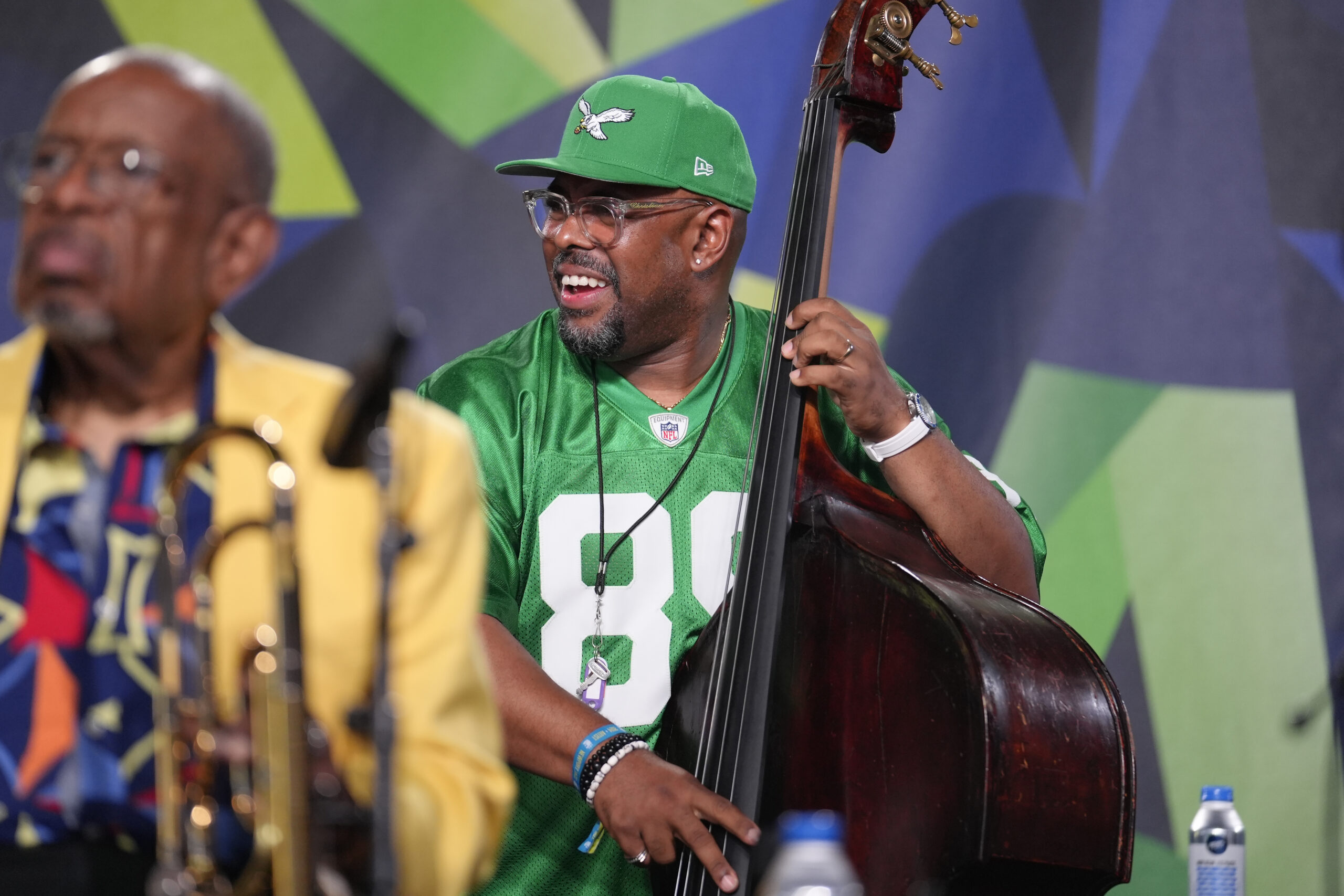
Jazz bassist Christian McBride is up for three awards, with his Big Band’s Without Further Ado, Vol. 1 vying with Sun Ra Arkestra’s Lights on a Satellite for best jazz large ensemble.
Philadelphia Orchestra and music and artistic director Yannick Nézet-Séguin are up for two, and Nézet-Séguin is also nominated for one with the Metropolitan Opera orchestra.
Jazz saxophonist Immanuel Wilkins and University of Pennsylvania graduate John Legend have two noms each. The Crossing Choir, Camden gospel bandleader Tye Tribbett, songwriter Andre Harris, and producer Will Yip each have one.
Bassist Christian McBride (right) performs during the Newport Jazz Festival, Sunday, Aug. 4, 2024, in Newport, R.I. The Philadelphia musician is up for three Grammys on Sunday.(AP Photo/Steven Senne)
As the first major live TV awards show since the death of Alex Pretti in Minneapolis last weekend, the Grammys are likely a platform for anti-ICE protests. We’ll see which, if any, performers or presenters — who include Charli XCX, Teyana Taylor, Queen Latifah, Lainey Wilson, Nikki Glaser, and Chappell Roan — speak out.
Here’s who I think should — and will — win.
Album of the Year
Nominees: Bad Bunny, Debí Tirar Más Fotos; Justin Bieber, Swag; Sabrina Carpenter, Man’s Best Friend; Clipse, Let God Sort ‘Em Out; Lady Gaga, Mayhem; Kendrick Lamar, GNX; Leon Thomas, Mutt;Tyler, the Creator, Chromakopia
My prediction: The most prominent of these in my rotation these days is LetGod Sort ‘Em Out, the topflight reunion of hip-hop brothers Gene “Malice” and Terence “Pusha T” Thornton. But it has little chance among these heavy hitters.
Carpenter will have to be satisfied with a performance slot in the prime-time show, a prize showcase on “Music’s Biggest Night.” But Man’s Best Friend isn’t quite up to the level of her tart 2024 Short n’ Sweet.
The consensus says this is a race between Lady Gaga, Bad Bunny, and Kendrick Lamar. All have an excellent chance, with Gaga being a veteran Grammy favorite back on form. Lamar’s album released way back in November 2024, but he continued to impact culture through his “Grand National” tour with SZA and “Luther,” their collab that topped the pop charts for 13 straight weeks.
But this feels like Bad Bunny’s year. Debí Tirar Más Fotos — which translates as “I should have taken more photos” — is the Puerto Rican singer, rapper, and producer’s most confident, varied, and politically potent work.
It’s poised to become the first Spanish language album of the year, and thus a Grammy statement of multicultural solidarity when immigrant populations in the U.S. are under threat. And it would make for a pretty good start to February for the Super Bowl halftime headliner.
Should win: Bad Bunny
Will win: Bad Bunny
Chappell Roan performs “Pink Pony Club” during the 67th annual Grammy Awards in Los Angeles, Feb. 2, 2025. The singer is nominated for two Grammy awards on Sunday and will also be a presenter at the ceremony, which airs on CBS at 8 p.m. and streams on Paramount+. (AP Photo/Chris Pizzello, File)
Record of the Year
Nominees: Bad Bunny, “DTMF”; Sabrina Carpenter, “Manchild”; Doechii, “Anxiety”; Billie Eilish, “Wildflower”; Kendrick Lamar & SZA, “Luther”; Lady Gaga, “Abracadabra”; Chappell Roan, “The Subway”; Rosé & Bruno Mars, “APT”
My prediction: This is a strong group, including Carpenter’s cheeky “Manchild” and Doechii’s “Anxiety,” which samples Gotye and Kimbra’s 2011 “Somebody I Used to Know.”
Roan’s “The Subway” hearkens back to classic pop and Eilish’s “Wildflower” is lovely, though it’s a little ridiculous that it’s nominated. It’s from Eilish’s Hit Me Hard and Soft, which came out in May 2024 but qualifies because it became a single last February. When the Grammys want you to be part of the show, they’ll find a way to sneak you in.
My pick to win is “APT.” The duet between Bruno Mars and K-pop star Rosé is a super-catchy global hit that borrows from Toni Basil’s 1982 hit “Mickey,” which older Grammy voters will surely remember. It’s the second-fastest song to reach a billion streams after Mars and Gaga’s 2024 “Die With a Smile.”
Will win: “APT.”
Should win: “Luther”
SZA and Kendrick Lamar perform during halftime of the NFL Super Bowl between the Kansas City Chiefs and the Philadelphia Eagles, Sunday, Feb. 9, 2025, in New Orleans. (AP Photo/George Walker IV)
Song of the Year
Nominees: Bad Bunny, “DTMF”; Sabrina Carpenter, “Manchild”; Doechii, “Anxiety”; Billie Eilish, “Wildflower”; Huntr/x — “Golden”; Kendrick Lamar & SZA, “Luther”; Lady Gaga, “Abracadabra”; Rosé & Bruno Mars, “APT”
My prediction: The Grammys are silly. Why are there separate record and song of the year categories? In theory because the latter is a songwriter’s award. But these categories are virtually identical, the only difference being dropping Roan for “Golden” from the Netflix movie KPop Demon Hunters.
Let’s give this one to last year’s Super Bowl halftime headliners to reward their overall excellence and songwriting skills.
Should win: “Luther”
Will win: “Luther”
Olivia Dean performs at the Austin City Limits Music Festival on Oct. 11, 2025, in Texas. The British singer-songwriter is nominated for Best New Artist at the Grammy Awards on Sunday.(Photo by Jack Plunkett/Invision/AP, File)
Best New Artist
Nominees: Olivia Dean, Katseye, The Marías, Addison Rae, Sombr, Leon Thomas, Alex Warren, Lola Young
A little rant detour: Another failing: The Recording Academy has completely ignored country music in the major categories. The Grammys are, in many ways, a popularity contest. Unlike the Oscars, which sometimes reward niche and art house fare and look askance at commercial success, the Grammys are intent on showing they’re in step with the zeitgeist by recognizing big sellers.
Except they don’t bother when it comes to country, thus reinforcing America’s cultural divide. The Recording Academy isn’t too blame when it comes to Morgan Wallen, whose I’m the Problem was the most streamed album in the U.S. in 2025 — because he chose to not submit his music.
But completely credible and widely popular country artists like Ella Langley and especially Megan Moroney are obvious candidates for best new artist. They have been shown no love, either due to cluelessness or a conscious decision to shut out mainstream country. End of rant!
My prediction: In this last of the major categories, Addison Rae is to be commended for making a smart, catchy transition from TikTok to pop star. Leon Thomas emerged as a serious R&B artist with staying power, and Lola Young is a major talent whose “Messy” is a terrific universalist earworm.
But my most confident prediction in these four categories is Olivia Dean. The British songwriter is marked for stardom, simultaneously coming off as a youthful ingenue and an old soul. Her vocals have a slight Amy Winehouse tinge without being imitative. Her breezy, immediately likable The Art of Loving mixes neo-soul 1970s Los Angeles soft-rock is right up the Grammy alley.
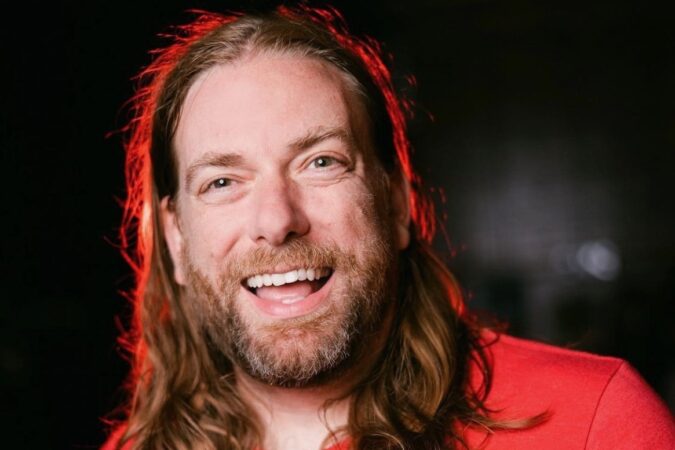
Even as a child, Dan McQuade let his imagination run wild. “What are you doing?” his mother, Denise, would ask if she hadn’t heard any noise from his bedroom for a while. “I’m making stories,” he would reply.
Later, as a young man about town, his compassion for fellow Philadelphians inspired his father, Drew. Dan volunteered to give blood often, donated brand-new sneakers to other guys in need, and continually reached out to people he saw struggling with drug abuse and homelessness. “His kindness was what I loved about him the most,” his father said.
Dan McQuade was already an award-winning writer, blogger, and journalist when he met his future wife, Jan Cohen, online in 2014. To her, his jovial humor, wide-ranging intelligence, and shoulder-length hair made him unique in her circle. “I thought he was too cool for me,” she said.
His empathy, likely inspired by his parents, his wife said, led him to toil tirelessly for charitable nonprofits such as the Everywhere Project, Back on My Feet, and Prevention Point. “Service was always part of his life,” his wife said.
His coolness, as unconventional as it sometimes was, made those he encountered feel cool, too. Molly Eichel, an Inquirer editor and longtime friend, said: “He was annoyingly smart and incredibly kind.”
Dan McQuade died Wednesday, Jan. 28, of neuroendocrine cancer at his parents’ home in Bensalem. He was 43. His birthday was Jan. 27.
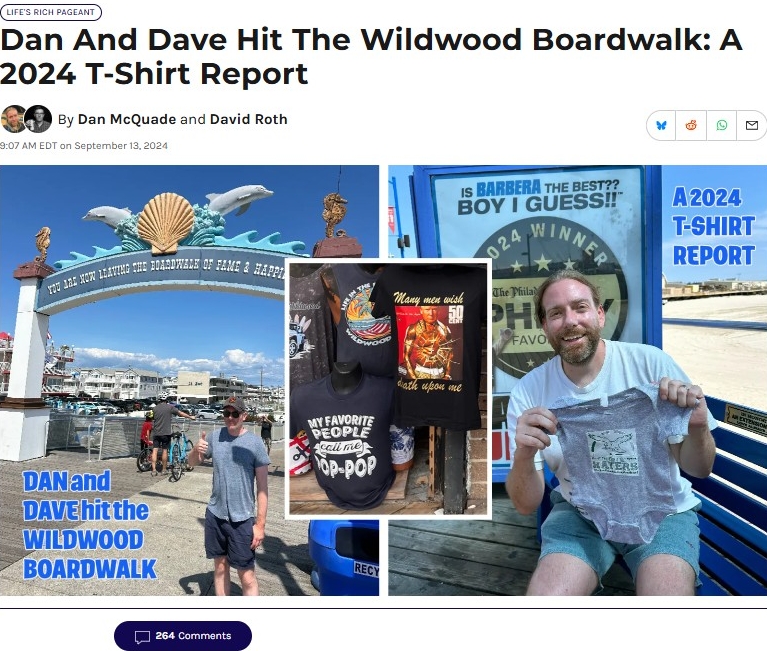
Mr. McQuade’s annual Wildwood T-shirt report was a favorite of his many readers and fans.
“It’s incredibly hard for me to imagine living in a Philadelphia without Dan McQuade,” said Erica Palan, an Inquirer editor and another of Mr. McQuade’s many longtime friends. “He understood Philadelphians better than anyone because he was one: quirky and funny, competitive and humble, loyal and kind.”
A journalism star at the University of Pennsylvania in the early 2000s, Mr. McQuade was a writer, sports editor, and columnist for the school’s Daily Pennsylvanian, and managing editor of its 34th Street Magazine. He earned two Keystone Press awards at Penn, was the Daily Pennsylvanian’s editor of the year in 2002, and won the 2003 college sports writing award from the Philadelphia Sportswriters Association.
He went on to create Philadelphia Weekly’s first blog, “Philadelphia Will Do,” and was a finalist for the Association of Alternative Newsmedia’s best blogger award. He served an internship at the Bucks County Courier Times in Levittown and worked for a while at the Northeast News Gleaner.
Often irreverent, always inventive, he filed thousands of notable stories about, among other things, the Wildwood T-shirt scene, the origin of “Go Birds,” sneaker sales, Donald Trump, Wawa hoagies, the Philly accent, parkway rest stops, the Gallery mall, soap box derbies, and Super Bowls. His stories sparkled with research and humor.
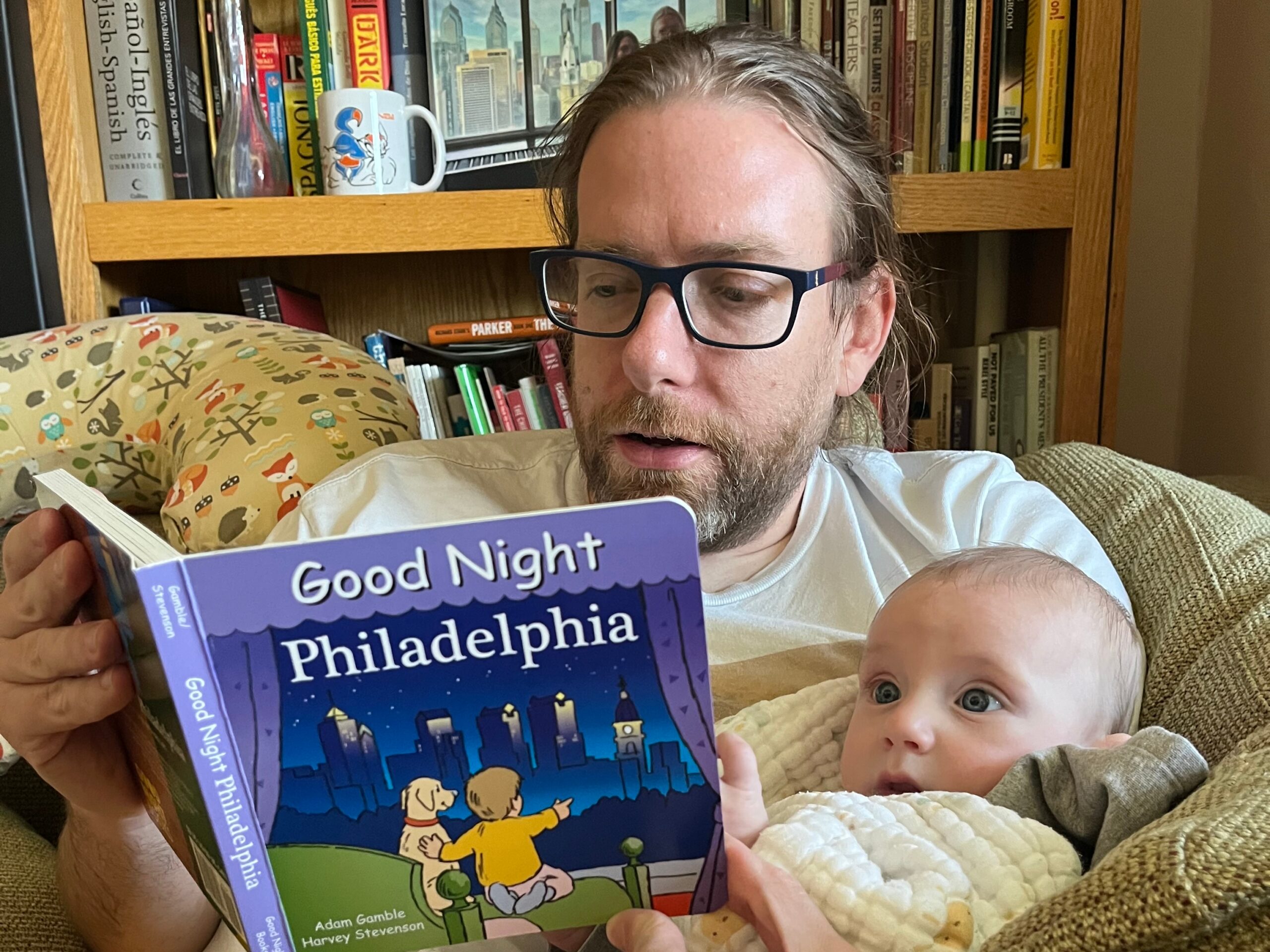
An avid reader himself, Mr. McQuade enjoyed reading local tales to his son, Simon.
“Dan was a truly authentic and engaging person,” Tom Ley, editor-in-chief at Defector, said in an online tribute. “His curiosity was relentless, and his interests were varied and idiosyncratic.”
For example, Mr. McQuade wrote in Philadelphia Magazine in 2013 that Sylvester Stallone’s famous training-run montage in Rocky II — it started in South Philly and ended two minutes of screen time later atop the Art Museum steps — actually showed city scenes that would have had the actor/boxer run more than 30 miles around town. “Rocky almost did a 50K,” Mr. McQuade wrote. “No wonder he won the rematch against Apollo!”
In 2014, he wrote in Philadelphia Magazine about comedian Hannibal Buress calling Bill Cosby a rapist onstage at the old Trocadero. The story went viral, and the ensuing publicity spurred more accusations and court cases that eventually sent Cosby to jail for a time.
When he was 13, Mr. McQuade wrote a letter to the editor of the Daily News that suggested combining the Mummers Parade with Spain’s running of the bulls. Crossing Broad’s Kevin Kinkead said he had “an innate gift for turning the most random things into engaging reads.”
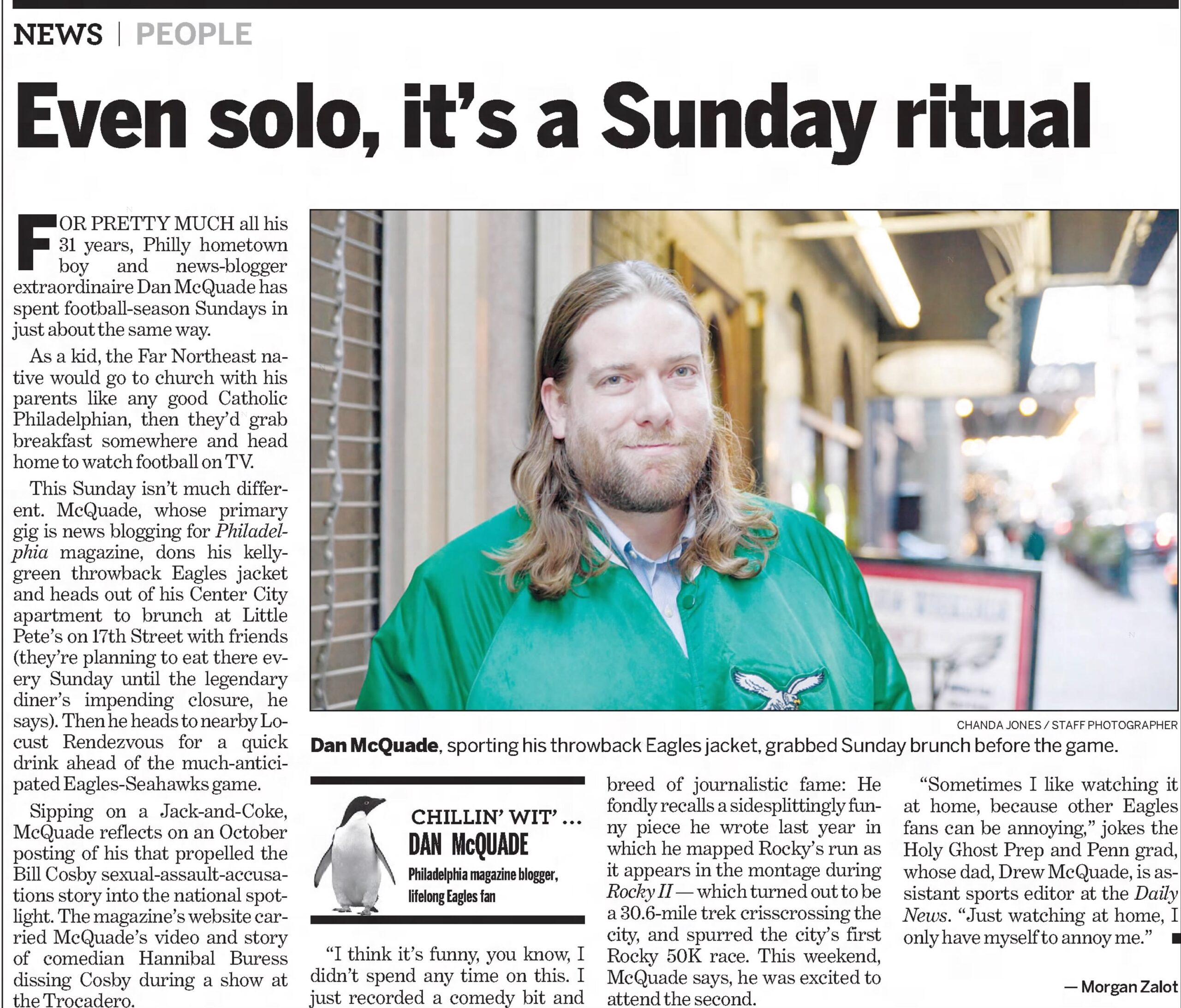
This story about Mr. McQuade appeared in the Daily News in 2014.
“Without Dan’s voice, Philly Mag wouldn’t be Philly Mag,” editor and writer Brian Howard said in a tribute on phillymag.com. “And, I’d argue, Philadelphia wouldn’t quite be Philadelphia.”
Other colleagues called him “a legend,” “a Philadelphia institution,” and “the de facto mayor of Philadelphia” in online tributes. Homages to him were held before recent Flyers and 76ers games.
“Sometimes,” his wife said, “he inserted himself into stories, so readers had a real sense of who he was because he was so authentic.”
Daniel Hall McQuade was born Jan. 27, 1983, in Philadelphia. His father worked nights at the Daily News for years, and the two spent many days together when he was young hanging around playgrounds and skipping stones across the creek in Pennypack Park.
Mr. McQuade (left) and his father, Drew, shared a love of Philly sports and creative writing.
Later, they texted daily about whatever came to mind and bonded at concerts, Eagles games, and the Penn Relays. He grew up in the Northeast, graduated with honors from Holy Ghost Preparatory School in Bensalem, and earned a bachelor’s degree in English at Penn in 2004.
He overcame a serious stutter as a teen and played soccer and basketball, and ran cross-country and track at Holy Ghost. He married Jan Cohen in 2019 and they had a son, Simon, in 2023. They live in Wissahickon.
Mr. McQuade was a voracious reader and an attentive listener. “He never wanted to stop learning,” his wife said. He enjoyed going to 76ers games with his mother and shopping for things, his father said, “they didn’t need.”
He was mesmerized by malls, the movie Mannequin, the TV series Baywatch, and his wife’s cat, Detective John Munch. During the pandemic, he and his wife binged all 11 seasons of Baywatch.
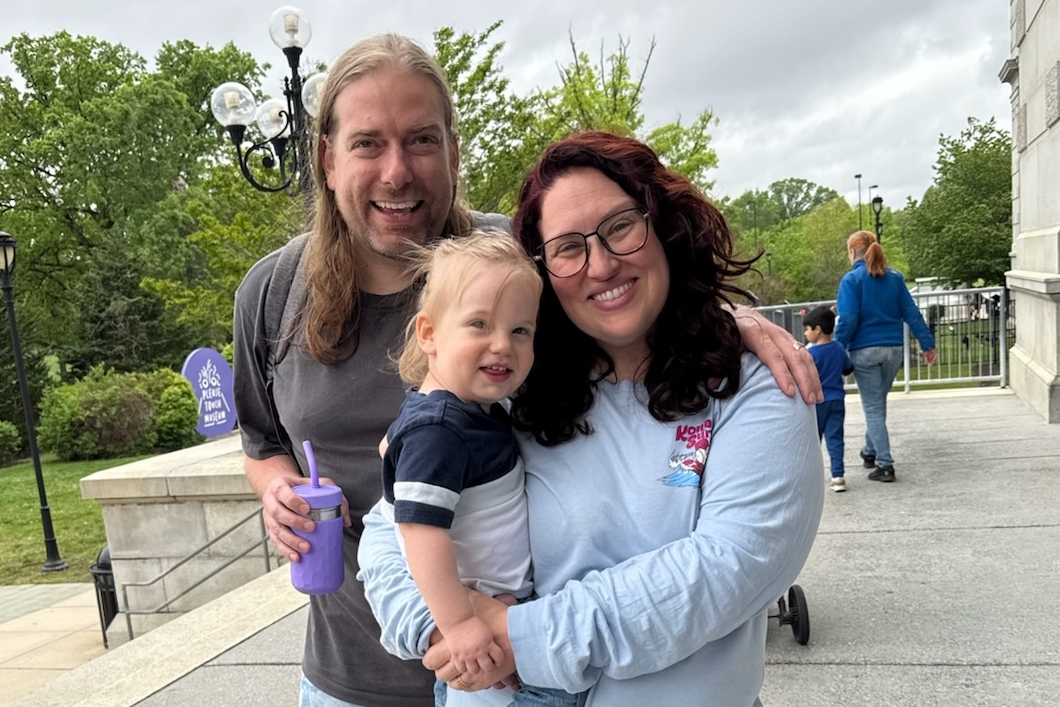
Mr. McQuade doted on his wife, Jan, and their son, Simon.
He could be loud, his mother said, and Molly Eichel described his laugh as “kind of a honk.” His friend and colleague Alli Katz said: “In 50 years I’ll forget my own name. But I’ll remember his laugh.”
He was a vintage bootleg T-shirt fashionista, and his personal collection numbered around 150. He named Oscar’s Tavern on Sansom Street as his favorite bar in a recent podcast interview and said he would reluctantly pick a pretzel over a cheesesteak if that was the choice.
In September, Mr. McQuade wrote about his illness on Defector.com under the headline “My Life With An Uncommon Cancer.” In that story, he said: “Jan has been everything. My son has been a constant inspiration. My parents are two of my best friends, and I talk to them every day. Jan’s parents have been incredible.”
He also said: “I believe there are no other people on earth with my condition who are in as fortunate a situation. … For the past thousand words you have been reading about a bad break I got, but if only everyone in my position had it this good.”
Mr. McQuade and his wife, Jan Cohen, married in 2019.
His wife said: “He was truly the best guy.”
In addition to his wife, son, and parents, Mr. McQuade is survived by his mother-in-law, Cheryl Cohen, and other relatives.
Visitation with the family is to be from 9 to 10 a.m. Thursday, Feb. 5, at St. Martha Parish, 11301 Academy Rd., Philadelphia, Pa. 19154. Mass is to follow from 10 to 11 a.m.
Donations in his name may be made to the Everywhere Project, 1733 McKean St., Philadelphia, Pa. 19145.
The rollout of so-called virtual nurses in hospitals remains a mixed bag, University of Pennsylvania researchers have found in the largest survey to date on nursing care delivered remotely through a screen.
One hospital staffer said virtual nurses are a huge help getting patients checked in.
Another said they worry hospitals are trying to cut corners by keeping floors fully staffed by using virtual nurses.
And sometimes, patients think the virtual nurse is a television advertisement and try to press fast forward, researchers were told.
A new study out of University of Pennsylvania School of Nursing surveyed 880 registered nurses in 10 states, including Pennsylvania, about the virtual nursing programs that have sprung up at health systems across the country.
About half — 57% — of the nurses surveyed said virtual nurse programs did not reduce their workload, with some saying they felt virtual nurses created more work.
But similar numbers also said they thought virtual nurse programs improved the quality of care patients received.
Others said they didn’t think the technology had any impact — positive or negative — on quality of care, according to a study of results published online in December in JAMA Open Network.
“It can be beneficial or a headache,” one nurse interviewed by Penn researchers summed up.
Virtual nursing programs became more widespread during the COVID-19 pandemic, when health systems needed to limit physical interaction to protect patients and medical staff, and have continued to expand in Philadelphia and across the country. Administrators embracing technology and artificial intelligence say they can help streamline administrative responsibilities that can burden staff, provide extra patient oversight, and improve how quickly clinicians can respond to emergencies.
Local examples include Penn Medicine’s use of virtual nurses to monitor patients at risk of falling or pulling out tubes and wires. Jefferson Health assigns a virtual nurse to patients who doctors have decided need to be monitored around the clock.
And virtual nurses handle administrative work, like reviewing medications and giving discharge instructions at Virtua Health hospitals in New Jersey.
The new study from Penn is among the largest to date to evaluate how well the programs are meeting goals, and the mixed results should be a warning to hospital administrators to proceed cautiously, researchers say.
“Virtual nursing programs have been heralded as an innovative silver bullet to hospitals’ nurse staffing challenges, but our findings show that most bedside nurses are not experiencing major benefits,” said lead author K. Jane Muir, an assistant professor of nursing in the university’s Department of Family and Community Health.
Virtual nursing on the rise
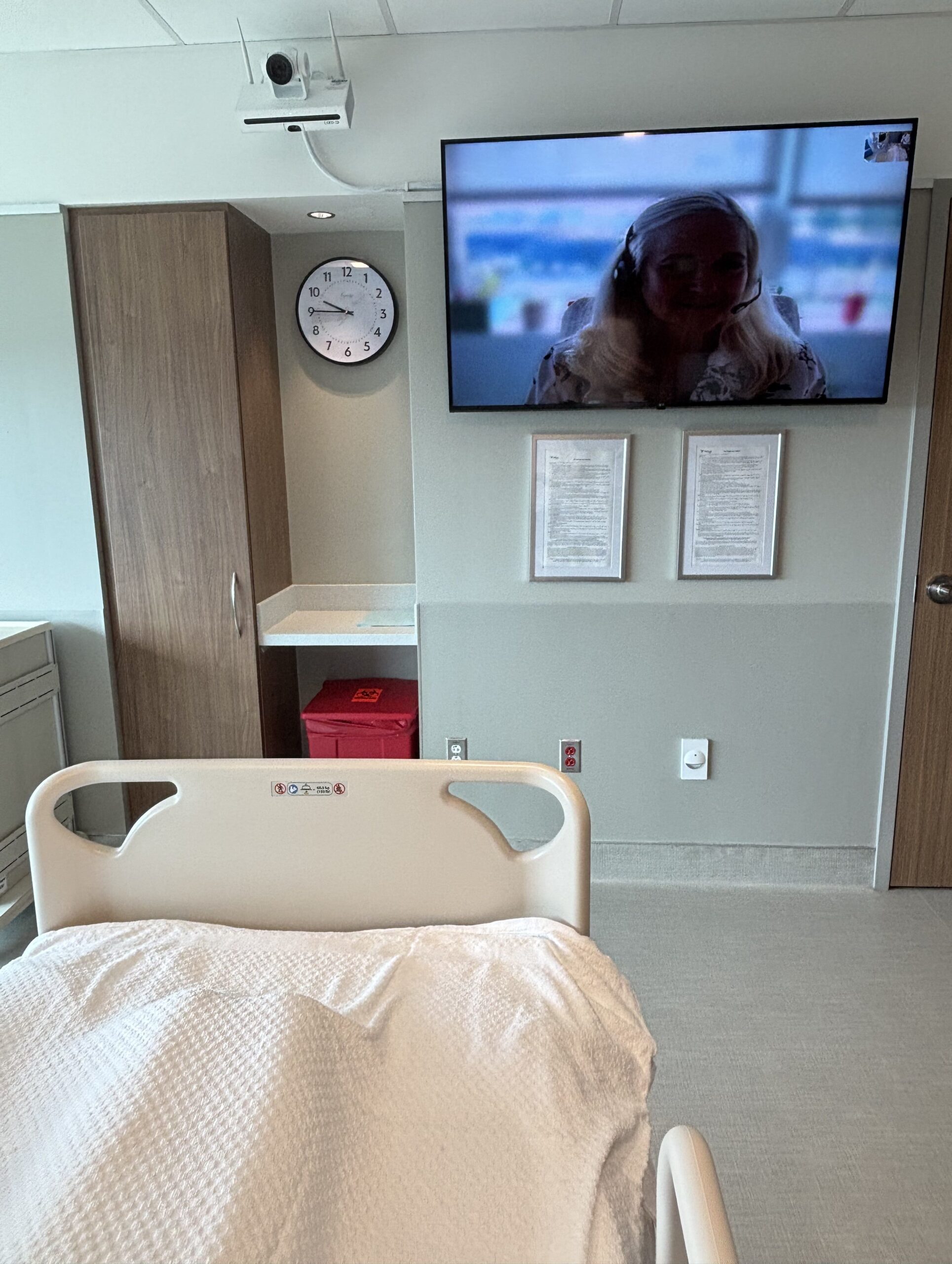
Virtual nurses at Virtua Health appear on the television in a patient’s room.
Virtual nursing refers to patient-care responsibilities managed by a team of nurses stationed at a remote hub, where they monitor screens and electronic information feeds.
They are not intended to replace bedside care, but rather to serve as an extra set of eyes to monitor patients.
If a patient who is known to be unsteady on their feet moves as if to get up from bed, a virtual nurse could speak through a screen or sound system asking if they need something and call a nurse on the floor to help them. If the patient falls, a virtual nurse can quickly alert medical staff.
Virtua Health officially launched its program last year.
Virtual nurses make sure patients have the appropriate medications before going home, know their discharge instructions, and have a follow-up appointment scheduled. They work in partnership with the bedside nurse, who focuses on the physical tasks in caring for a patient, while the virtual nurse handles the majority of the discussion.
“It’s something that our patients are requesting and they’ve come to expect,” said Kristin Bloom, a nurse by training who serves as assistant vice president of clinical operations for Virtua’s Hospital at Home program.
Virtua also uses virtual nurses in its intensive care units to help monitor and identify early signs of deterioration. These nurses have access to bedside cameras and can view the patient’s heart rhythms, lab results, and vital signs.
Participants in the Penn survey, conducted in late 2023 and early 2024, did not include nurses working in New Jersey, where Virtua’s hospitals are based.
Virtual nursing challenges
Nurses surveyed by Penn’s researchers said they appreciated the extra set of eyes on patients, but not all were convinced that the virtual monitor was any more effective than bed alerts that can sound when they sense a patient leaving, according to the study.
Karen Lasater, an associate professor of nursing and co-author of the study, urged health systems to include in-hospital nurses when shaping their virtual care programs.
She said including bedside nurses in the conversation about what’s working and not working is “imperative.”
“It’s important that nurses have a seat at the table,” Lasater said.
Nurses surveyed also expressed concern that health systems were using virtual workers to avoid hiring more on-site staff.
Bedside nurses questioned why they were being asked to take on more responsibility because administrators said they couldn’t afford to hire more staff, yet still found funding to build virtual programs.
“They felt like investments in virtual nursing was a workaround,” Lasater said. “Why did they have money to invest in virtual nurses who couldn’t do all the work of the bedside nurses, but couldn’t invest in more bedside nurses?”
At Virtua, administrators have turned to veteran bedside nurses to staff their virtual nursing program.
“It’s an avenue to retain our experienced nursing staff,” Bloom said.
Philadelphia-area hospitals have seen some virtual nursing challenges. In 2024, for instance, Jefferson Abington Hospital was cited by the Pennsylvania Department of Health after inspectors said the power cords attached to the monitors for virtual nursing created a strangulation risk for behavioral health patients.
The hospital treated the incident as a learning experience, adjusting how the mobile monitors are used.
The technology can also be confusing for some patients, who may not grasp the concept of a virtual nurse or may get conflicting instructions from their virtual and bedside nurses, Lasater said.
Penn initially planned to use virtual nurses to help monitor behavioral health patients, who often require one-on-one monitoring around the clock.
But staff found that patients who were experiencing behavioral or mental health challenges were too often confused or unsettled by virtual nurses, and unable to follow their instructions, Bill Hanson, Penn’s chief medical information officer, told The Inquirer in 2024.
“We’re all learning as we go,” he said at the time.
Inside a heated tent on the Children’s Hospital of Philadelphia campus, 17-month-old KJ Muldoon wiggled around in his mother’s arms, smiling and clinging to a multicolored toy.
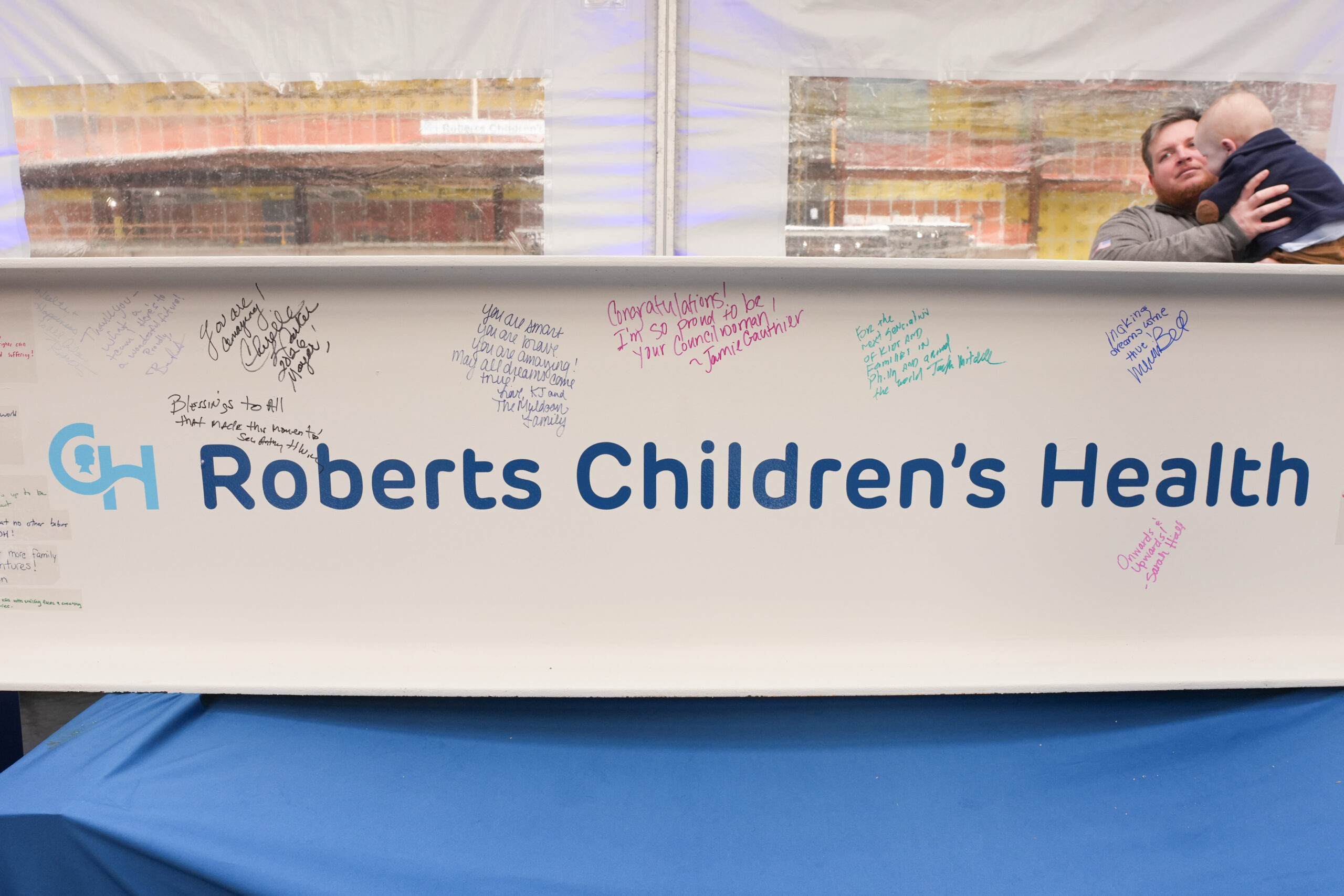
He was there to celebrate a 26-story patient tower at CHOP that his father, Kyle Muldoon, a longtime construction worker, is helping build. Called Roberts Children’s Health, the new inpatient complex is set to launch in 2028 and significantly expand the number of beds available for patients at CHOP’s main campus.
KyleMuldoon had joined the project back in December 2024, when KJ was still hospitalized at CHOP, where his life-threatening genetic condition was successfully treated with a first-of-its-kind personalized gene-editing therapy.
But in the months before the treatment developed by doctors at CHOP and the Hospital of the University of Pennsylvania sparked international attention, KJ’s father was recently unemployed. The Clifton Heights father of four had accepted a layoff to focus on his sick son.
Muldoon joined the crewin December 2024, allowing him to stay close by during KJ’s 307-day stay and contribute to a project that feels meaningful to him.
“Every day when I get up, I know what I’m doing this for,” Muldoon said.
KJ Muldoon, left, and his father Kyle Muldoon, right, at a news conference at CHOP.
His son KJ was born in August 2024 with a metabolic disorder that puts babies at risk of severe brain damageand is fatal in half of cases. Called severe carbamoyl phosphate synthetase 1 (CPS1) deficiency, it prevented KJ’s liver from being able to process protein.
Doctors Kiran Musunuru and Rebecca Ahrens-Nicklas useda gene-editing technology known as CRISPR to create a personalized drug that would fix the genetic mutation that was driving KJ’s disease. After receiving three doses, he was able to go home last June.
“This pipe dream that sounded like it came from a sci-fi movie became a reality,” Muldoon said.
The medication is not a cure, but it has dramatically improved KJ’s liver function and made the effects of his disease milder.
The treatment approach has been hailed for its potential for rare-disease drug development. The U.S. Food and Drug Administration in the fall announced a new approach to clinical trials to test novel drugs like the one designed for KJ, who was called “a trailblazing baby” by the British scientific journal Nature when it named him to its year-end list of the top 10 influential people.
With dietary restrictions and daily medication to keep his ammonia levels down, the toddler has been able to meet milestones, like walking and saying some words (currentlya lot of “mama” and “dada”).
These days, KJ likes playing catch, eating, and chasing his siblings around.
“Sometimes you got to sit back and take it all in, because we never knew if that was going to be a possibility,” Muldoon said.
The new tower’s construction is funded in part by a $125 million donation from Comcast CEO Brian Roberts and his wife, Aileen, whose name will be on the new building.
Wednesday’sevent included signing and raising the final structural beam of the building’s frame.
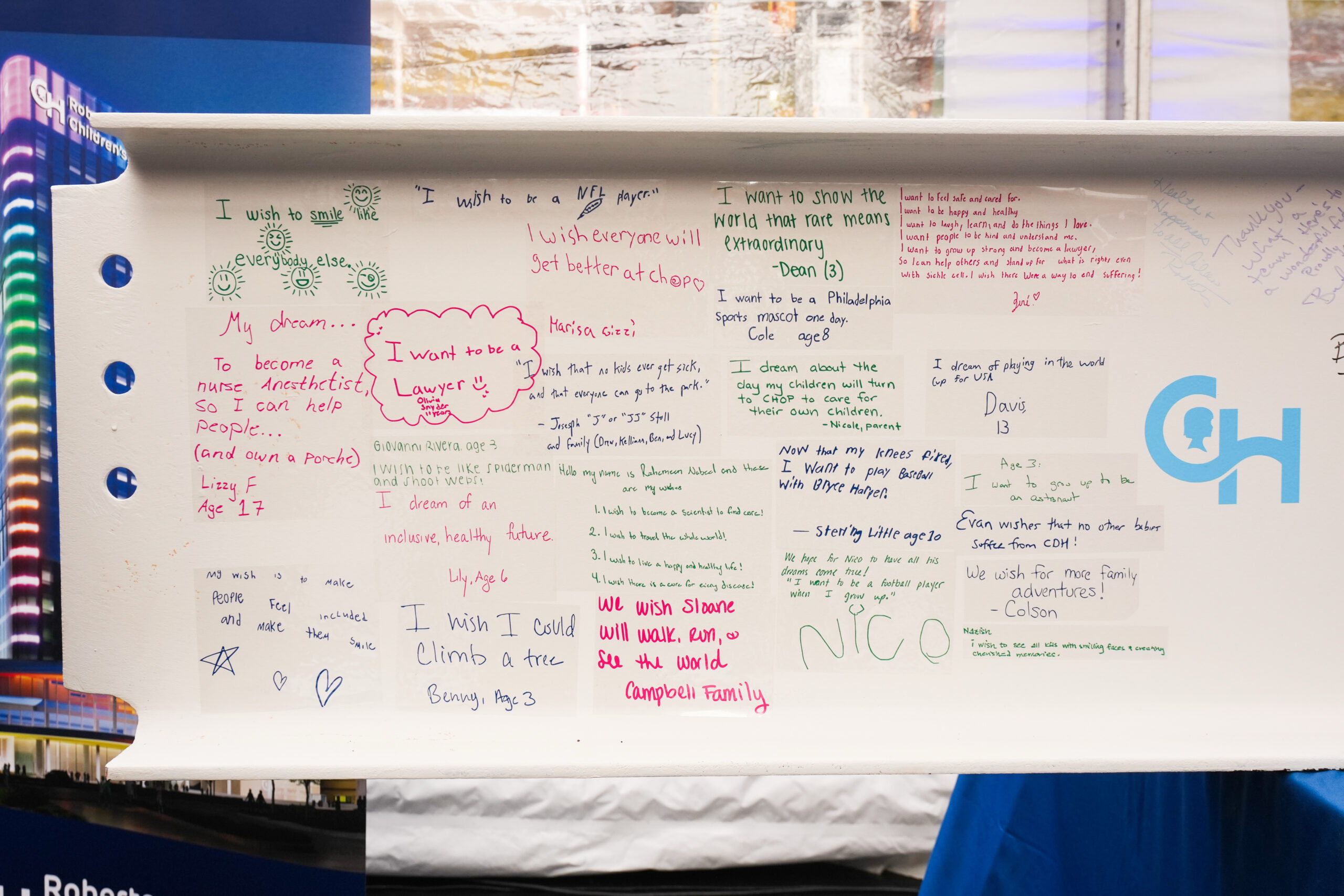
The event included signing and raising the final structural beam of the building. It was signed by patients at CHOP in Philadelphia.
On the beam were colorful messages from patients at CHOP who were asked to write down their dreams.
Brian Roberts read some of their notes at the event.One girl said she wanted to become a nurse anesthetist so she “can help people and own a Porsche.” Another said, “My wish is that every kid that goes to Roberts Children’s Health comes out better and stronger.”
Roberts read aloud messages from patients at CHOP that were signed onto the beam.
Editor’s note: This story was updated to clarify the message a child wrote on a building beam and shared at the event.
The federal commission seeking personal contact information for faculty and staff at the University of Pennsylvania has accused the school of engaging in an “intensive and relentless public relations campaign” to avoid complying with the subpoena.
The U.S. Equal Employment Opportunity Commission, in a court filing Monday, defended its subpoena seeking potential witnesses and victims of antisemitism at the university and said therequest is not unusual forsuch investigations. The commission is seekingemployees’ names, home addresses, phone numbers, and email addresses to further an investigation it began in 2023 over the school’s treatment of Jewish faculty and other employees regarding antisemitism complaints following Hamas’ attack on Israel.
The commission’s request has spurred a backlash from student and faculty groups, including Penn’s chapter of the American Association of University Professors and the Penn Faculty Alliance to Combat Antisemitism, arguing that the information should not be turned over. Penn has refused to provide the information, prompting the EEOC to file the lawsuit in November.
Penn’s response to the lawsuit, along with filings by other groups,“forecast highly speculative and deeply nefarious outcomes should the EEOC’s subpoena be enforced,” the commission said. “This dark prognosticating has been predictably (and immediately) reported in national, local, and campus outlets.”
The university, in a filing earlier this month, said the commission’s request was “disconcerting” and “unnecessary” and could pose a threat to employees.
“The EEOC insists that Penn produce this information without the consent — and indeed, over the objections — of the employees impacted while entirely disregarding the frightening and well-documented history of governmental entities that undertook efforts to identify and assemble information regarding persons of Jewish ancestry,” the university wrote in its filing.
The commission argued in response that Penn’s assertion of potential danger to employees is “untethered from both the law and the reality of these proceedings.”
“The EEOC seeks only to investigate allegations of serious, widespread antisemitic harassment in Respondent’s workplace,” the commission argued.
The commission, the group said, is only seeking information on faculty and staff “who complained of antisemitic harassment, who belonged to Jewish affinity organizations, or who worked in the Jewish Studies Program.” They could have knowledge of potential problems, the commission said.
Penn can provide the contact information without listing the employees’ organizational affiliations, the commission said.
Penn did not immediately comment on the latest EEOC filing.
Penn has said it provided over 900 pages of materials to the commission and offered to send notices to all employees about the EEOC’s request to hear of antisemitism concerns with the commission’s contact information, so they could reach out themselves if interested in participating.
But the commission called that offer “unworkable” and said it “would undermine the integrity of the agency’s investigation.”
“Messages from EEOC to employees filtered through an employer always risk creating confusion, fear, and mistrust among recipients,” the commission said.
That path could increase the possibility of retaliation against employees for cooperating with the investigation, the commission argued.
The university has challenged the validity of the EEOC’s charge, asserting that the commission has not identified a “single allegedly unlawful employment practice or incident involving employees.” It also “does not refer to any employee complaint the agency has received, any allegation made by or concerning employees, or any specific workplace incident(s) contemplated by the EEOC,” the university said.
While EEOC complaints typically come from those who allege they were aggrieved, this one was launched by EEOC Commissioner Andrea Lucas, now chair of the body, on Dec. 8, 2023, two months after Hamas’ attack on Israel that led to unrest on college campuses, including Penn’s, and charges of antisemitism. It was also just three days after Penn’s then-president, Liz Magill, had testified before a Republican-led congressional committee on the school’s handling of antisemitism complaints; the testimony drew a bipartisan backlash and led to Magill’s resignation days later.
Lucas, according to the EEOC complaint, made the charge in Penn’s case because of “probable reluctance of Jewish faculty and staff to complain of harassing environment due to fear of hostility and potential violence directed against them.“
The commission in its filing Monday said its practice is within itsregulations.
“This charge alleges a time frame, an unlawful employment practice (hostile work environment), the individuals potentially affected by that alleged unlawful employment practice (Jewish employees), and the publicly available sources,” the commission said.
The commission also criticized Penn’s concerns about potential leaks of employees’ contact information through the EEOC, noting the data breach that occurred at Penn last year, exposing employees’ information.
“Its concerns about the security of EEOC’s IT systems are disingenuous,” the commission said.