Tag: University of Pennsylvania

  • Jewish students and faculty at Penn ask that their names not be turned over in federal antisemitism investigation

    Jewish students and faculty at Penn ask that their names not be turned over in federal antisemitism investigation

    Several groups at the University of Pennsylvania representing Jewish students, faculty, and staff are seeking to protect their names and personal information from being turned over to the U.S. Equal Employment Opportunity Commission, which is suing Penn for the data.

    The EEOC filed suit in November after the Ivy League university refused to comply with a subpoena seeking information for an investigation it began in 2023 over the school’s treatment of Jewish faculty and other employees regarding antisemitism complaints.

    In its quest to find people potentially affected, the commission demanded a list of employees in Penn’s Jewish Studies Program, a list of all clubs, groups, organizations, and recreation groups related to the Jewish religion — including points of contact and a roster of members — and names of employees who lodged antisemitism complaints.

    In a legal filing in federal court this week, several groups argued that their personal information should be kept private.

    “In effect, these requests would require Penn to create and turn over a centralized registry of Jewish students, faculty, and staff — a profoundly invasive and dangerous demand that intrudes deeply into the freedoms of association, religion, speech, and privacy enshrined in the First Amendment,“ the groups charged in the filing.

    The motion was filed on behalf of the American Academy of Jewish Research — the oldest organization of Jewish studies scholars in North America — Penn Carey Law School’s Jewish Law Students Association, the national and Penn chapters of the American Association of University Professors, and the Penn Association of Senior and Emeritus Faculty. All the groups include Jewish students, faculty, and staff whose information could be affected, according to lawyers involved in filing the motion.

    No matter the EEOC’s motives, “creating a list of Jews in an era where data security is questionable, against the backdrop of rising antisemitism … and white supremacy, is terrifying,“ Amanda Shanor, a Penn associate professor of legal studies and business ethics and one of the lawyers who filed the motion, said in an interview.

    The groups argued that providing the personal information to the commission could harm future membership.

    “The prospect that the subpoena or a similar future subpoena could be enforced will chill the Jewish community members’ willingness to join and participate in these organizations for years to come,” the filing said.

    And while Penn has resisted compliance, the groups worry that could change if President Donald Trump’s administration applies financial or other pressure, according to the filing.

    Penn last summer entered into an agreement with the Trump administration over transgender athletes after $175 million in federal funding was paused. Penn agreed to apologize to members of its women’s swim team who were “disadvantaged” by transgender swimmer Lia Thomas’ participation on the team in the 2021-22 season and remove Thomas’ records, giving them instead to swimmers who held the next-best times. The school also agreed to abide by Title IX — the civil rights law that prohibits sexual harassment and discrimination — “as interpreted by the Department of Education” in regard to athletics and state that all its practices, policies, and procedures in women’s athletics will comply with it.

    Lawyers for the groups in the EEOC case pointed to that settlement in their filing.

    “The proposed intervenors cannot leave their rights to chance and must be permitted to protect their rights,” lawyers for the groups said in their filing this week.

    Shanor said while Penn “has been very firm on this in a way that I am very struck by and impressed with,” it is important for the faculty and students to “assert those interests directly and explain to the court from the people who actually would be harmed by this why this is unconstitutional.”

    Steven Weitzman, a professor of religious studies at Penn, said he got involved in part because the EEOC was seeking the names of faculty and staff who participated in confidential listening sessions as part of Penn’s task force on antisemitism.

    “We promised the participants it would be confidential,” said Weitzman, who, as a member of the task force, helped set up the listening sessions.

    Penn provided notes from the sessions, but not participants’ identities, he said.

    As part of the Jewish studies program, his information also would have been vulnerable to the EEOC’s demand. He said even though Penn did not provide the information, the commission somehow got his personal cell number and called last week. He does not intend to call back, he said.

    Asking the university to compile a list of Jewish faculty and staff is wrong, he said.

    “Even if their motives are perfectly benign, they can’t guarantee they will always control that information, and it’s setting a dangerous precedent,” he said.

    Penn declined to comment on the groups’ filing, but in a statement in November, the school said it had cooperated extensively with the EEOC, including providing more than 100 documents and over 900 pages.

    But the private university refused to disclose the personal information.

    “Violating their privacy and trust is antithetical to ensuring Penn’s Jewish community feels protected and safe,” Penn said.

    Penn provided information on employees who complained and agreed to be contacted, the school said, and offered to reach out to employees and make them aware of the EEOC’s request to speak with them.

    The original complaint was launched by EEOC Commissioner Andrea Lucas, now chair of the body, on Dec. 8, 2023, two months after Hamas’ attack on Israel that led to unrest on college campuses, including Penn, and charges of antisemitism. It was also just three days after Penn’s then-president, Liz Magill, had testified before a Republican-led congressional committee on the school’s handling of antisemitism complaints; the testimony drew a bipartisan backlash and led to Magill’s resignation days later.

    Lucas, whom Trump appointed chair last year, also brought similar antisemitism charges against Columbia University that resulted in the school paying $21 million for “a class settlement fund.”

    EEOC complaints typically come from those who allege they were aggrieved. Lucas, according to the complaint, made the charge in Penn’s case because of the “probable reluctance of Jewish faculty and staff to complain of harassing environment due to fear of hostility and potential violence directed against them.“

    The EEOC’s investigation ensued after Lucas’ complaint to the commission’s Philadelphia office that alleged Penn was subjecting Jewish faculty, staff, and other employees, including students, “to an unlawful hostile work environment based on national origin, religion, and/or race.”

    The allegation, the complaint said, is based on news reports, public statements made by the university and its leadership, letters from university donors, board members, alumni, and others. It also cited complaints filed against Penn in federal court and with the U.S. Department of Education over antisemitism allegations and testimony before a congressional committee.

    “Penn has worked diligently to combat antisemitism and protect Jewish life on campus,” Penn said in its November statement about the EEOC lawsuit.

  • Temple, Villanova, and Penn State are among local schools beginning to pay athletes. Here’s how it’s going so far.

    Temple, Villanova, and Penn State are among local schools beginning to pay athletes. Here’s how it’s going so far.

    At local colleges with major sports programs, some student athletes are now getting paychecks — from their athletic departments.

    Pennsylvania State University, Temple, Villanova, St. Joseph’s, Drexel, and La Salle are among the Pennsylvania schools that have begun to directly pay athletes following a settlement last year in federal class-action lawsuits over student athlete compensation.

    The move arguably ends college athletes’ status as amateurs and begins to address long-standing concerns that players haven’t fairly profited from the lucrative business of some college sports.

    It also raises questions about how schools will fund the athletes’ pay and whether equity complaints will arise if all athletes are not comparably awarded. Some also question how it will impact sports that are not big revenue makers.

    Locally, most colleges have been mum on how much they are paying athletes, and some have also declined to say which teams’ athletes are getting money through revenue sharing, citing competitive and student privacy concerns. Villanova, a basketball powerhouse that has 623 athletes across 24 sports, said it will provide money primarily to its men’s and women’s basketball teams.

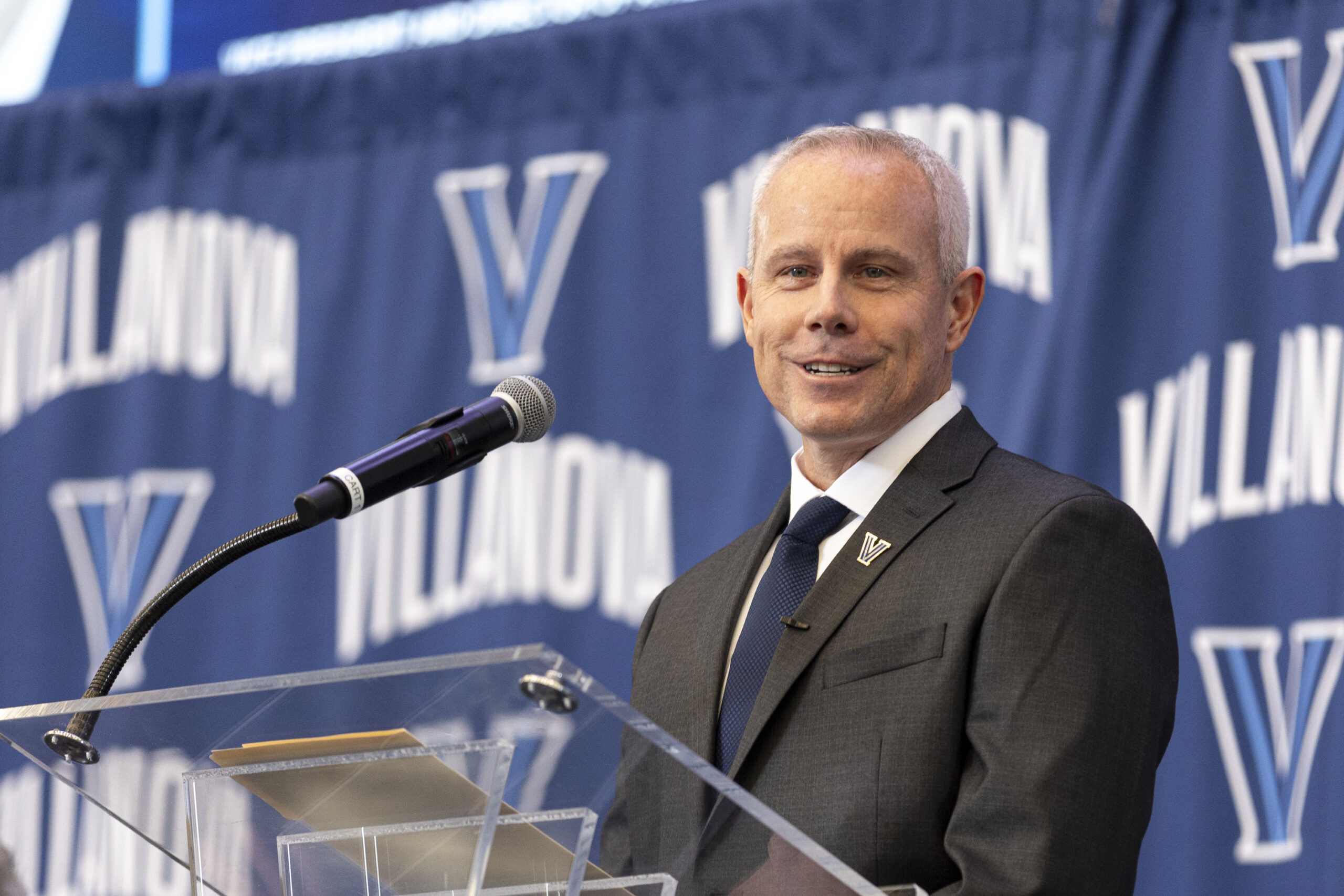
    Erica Roedl, Villanova’s vice president and athletic director, speaks during a news conference at the school’s Finneran Pavilion in 2024.

    “Our objective is to share revenue at levels which will keep our basketball rosters funded among the top schools in the Big East [Conference] and nationally,” Eric Roedl, Villanova’s vice president and director of athletics, said in a June message after the court settlement.

    St. Joe’s, another basketball standout, said its arrangement is also with men’s and women’s basketball athletes, like its peers in the Atlantic 10 Conference.

    Temple University established Competitive Excellence Funds that allow all of its 19 teams to raise money for revenue sharing, but declined to say which teams are currently distributing money to athletes.

    “Donors could, if they wanted to, make sure their money went to a certain sport,” said Arthur Johnson, Temple’s vice president and director of athletics. “They have that ability.”

    Other local colleges, including St. Joseph’s and Villanova, also launched funds to help raise money for revenue sharing. And all three schools also plan to use athletic revenue.

    Under the revenue-sharing framework established by the court settlement, each college can pay its athletes up to a total of $20.5 million this academic year. Football powerhouse Penn State, which has about 800 athletes, has said it intends to reach the cap, according to a June 7 statement from athletic director Pat Kraft.

    “This is a rapidly evolving environment that we are monitoring closely to ensure our approach remains consistent with applicable rules, while supporting the well-being and academic success of our student-athletes,” said Leah Beasley, Penn State’s deputy athletic director for strategic engagement and brand advancement.

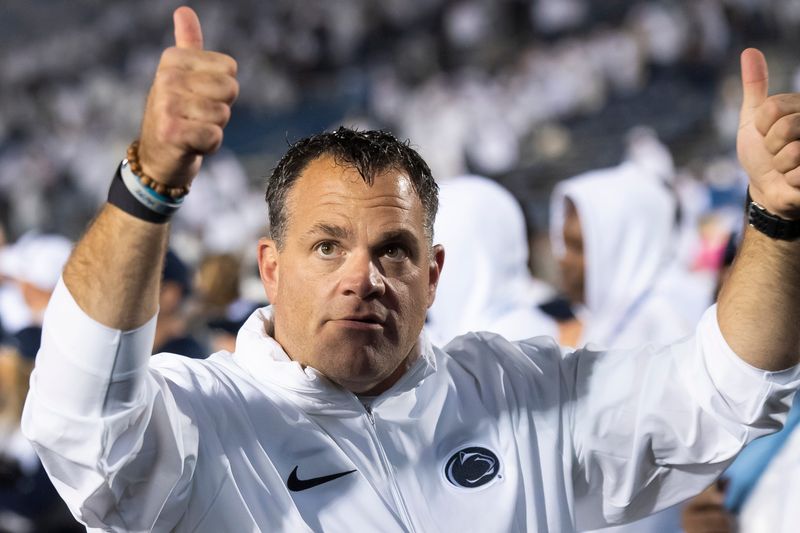
    Penn State athletic director Pat Kraft gives two thumbs up to the student section following a 31-0 win in a football game against Iowa in 2023.

    ‘It’s a job’

    To athletes, revenue sharing seems only fair, given many are so busy practicing and playing through summers and other breaks that they don’t have time to work.

    “It is a job at the end of the day,” said former Villanova University basketball player Eric Dixon, who holds the Wildcats’ record as all-time leading scorer. “You put a lot of time into it every single day, every single week.”

    Players get hurt and can see their sports careers harmed or halted, said Dixon, who grew up in Abington and played at Villanova from 2020 to 2025. College may be their only time to earn money for their sports prowess.

    Villanova’s Eric Dixon drives against Alex Karaban of UConn during the 2025 Big East Tournament at Madison Square Garden in New York.

    Dixon didn’t benefit from revenue sharing. But he got money through external name, image, and likeness (NIL) endorsements and sponsorships that the NCAA began allowing in 2021. Dixon declined to specify how much he received, but said it was “seven figures” over four years and allowed him to help his family.

    Like some other schools, Villanova, he said, provided players with financial guidance so they could make wise decisions on how to use their money.

    External NIL arrangements, though, he said, were a little “like the Wild West.” (NIL compensation is allowed to continue under the lawsuit settlement, but deals of more than $600 have to be reported.) Revenue sharing from colleges will offer athletes more predictable income, said Dixon, who now plays for the Charlotte Hornets’ affiliated team in the G League.

    Tyler Perkins, a Villanova junior from Virginia, currently plays for the Wildcats, who won national championships in 1985, 2016, and 2018. While he declined to say how much he is receiving, he said revenue sharing is helping him prepare for his future and “set up for the rest of my life.”

    Maddy Siegrist, also a former Villanova basketball player who now plays for the Dallas Wings in the WNBA, is pleased universities are able to share revenue directly with athletes.

    “It will be interesting to see how it all plays out,” said Siegrist, the Big East’s all-time leading scorer in women’s basketball and Villanova’s overall highest scorer, of men’s and women’s basketball.

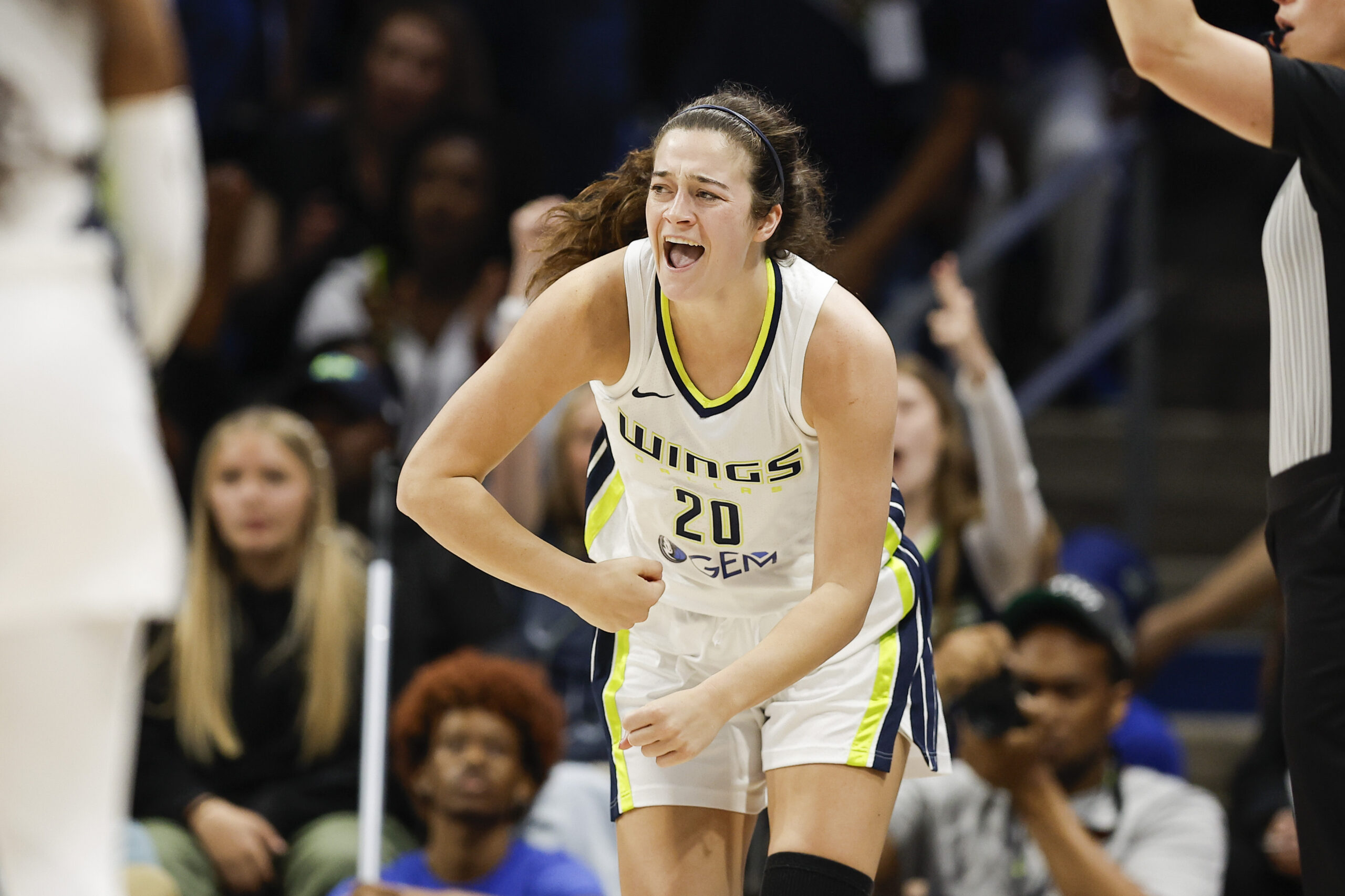
    Dallas Wings forward Maddy Siegrist celebrates a three-point shot during a WNBA basketball game against the Chicago Sky in 2024 in Arlington, Texas.

    While the big revenue sports are likely to see the money first, she said, “I would hope there will be a trickle-down effect where almost every sport is able to benefit.“

    A lawsuit spurs changes

    For years, there have been growing concerns that athletes were not getting their fair share of the profits from college sports, which make money on broadcast rights, ticket sales, and sponsorships. Meanwhile, coaches can be among the highest paid in a university’s budget.

    In 2020, former Arizona State swimmer Grant House became the lead plaintiff in House vs. NCAA, a class-action antitrust lawsuit that argued athletes should be able to profit from the use of their name, likeness, and image and schools should not be barred from paying them directly.

    The settlement approved in June of that suit and two others against the NCAA requires the NCAA and its major conferences to pay $2.8 billion in damages to current and former Division 1 athletes. Another provision gave rise to the revenue sharing.

    It initially applied to the major sports conferences: the Big Ten, Atlantic Coast Conference, Southeastern Conference, and the Big 12. Penn State belongs to the Big Ten and the University of Pittsburgh to the Atlantic Coast.

    But other athletic conferences, along with many of their members, decided to opt in to the agreement to remain competitive in select sports. St. Joseph’s, La Salle, Villanova, Drexel, and Temple all are part of conferences participating in revenue sharing with athletes this year.

    “We support student-athletes’ ability to pursue value among their peers and to leverage commercial opportunities that may benefit them or the institution,” said Maisha Kelly, Drexel’s vice president and director of athletics and recreation.

    Temple belongs to the American Athletic Conference, which said its members must agree to pay at least $10 million over three years to its athletes. Johnson, Temple’s athletic director, noted that total also includes new scholarships, not just pay.

    No tuition, state dollars to be used

    Pitt alumnus J. Byron Fleck has called on the Pennsylvania State Board of Higher Education to advise three state-related colleges — Penn State, Temple, and Pitt — not to use tuition dollars, student fees, or state appropriations to fund athlete payments. He also asked lawmakers to take action.

    “It doesn’t relate to any educational or academic purpose,” said Fleck, a 1976 Pitt alumnus and lawyer in California.

    Fleck said he was especially concerned about how Pitt could afford it. Pitt had a $45 million deficit in its athletics department budget in 2023-24, according to Pittsburgh’s Public Source.

    Karen Weaver, an expert on college athletics, higher education leadership, and public policy, said the same concerns about public funds being used to pay athletes have risen in other states, including Michigan and Washington.

    But Penn State, Temple, and Pitt all said in statements that they would not use tuition, student fees, or state appropriations to fund revenue sharing with athletes.

    “Penn State Intercollegiate Athletics is a self-sustaining unit of the university,” said Beasley, Penn State’s deputy athletic director.

    Pitt said it would use athletic revenues.

    In addition to donations, Temple, too, is using athletic department revenues, such as ticket sales, but it is also looking at other “nontraditional ways” to raise money, Johnson said.

    “We’re turning over every stone,” he said.

    Weaver, an adjunct professor at the University of Pennsylvania, said she worries that as the caps on revenue sharing get higher and costs grow, schools, especially those tight for cash, may start raising recreation and other student fees. The University of Tennessee added a 10% student talent fee for season ticket renewals, according to the Associated Press, while Clemson is charging a $150 per semester student athletic fee, according to ESPN.

    Roedl, the Villanova athletic director, said in a statement that it had launched the Villanova Athletics Strategic Excellence (VASE) Fund to raise money for the payments.

    “Additionally, we are looking for other ways to maximize revenue through ticketing, sponsorships, and events, and identifying cost efficiencies throughout our department,” he said.

    St. Joe’s, which has about 450 student athletes, said that it started a Basketball Excellence Fund to raise revenue and that payments also are funded by the basketball program. Athletes that receive funds “serve as brand ambassadors for the university,” the school said in a statement. “… These efforts have included community engagement — particularly with youth in the community — and marketing initiatives that directly support the Saint Joseph’s University brand.”

    La Salle declined to say how much student athletes receive or in what proportion.

    “We can share that any funds provided to students come from external sources and not tuition dollars,” said Greg Nayor, vice president for enrollment management and marketing.

    Weaver, author of a forthcoming book, Understanding College Athletics: What Campus Leaders Need to Know About College Sports, said plans that call for the bulk of revenue sharing to go to football and basketball players would lead to legal action, charging that female athletes are not being treated equally.

    “Any day now I expect we’ll see a huge Title IX lawsuit,” she said.

  • In the lottery of life, I got lucky

    In the lottery of life, I got lucky

    Many years ago, when I was a college student, a philosophy professor told me that life was a great cosmic lottery. None of us chooses the parents we have. Instead, they choose to have us.

    I’ve been thinking about his comment because my mother died last week, after a long and fruitful life. Of course, it’s always sad to lose a loved one. But since she passed, I’ve felt more serendipity than sorrow.

    In the great cosmic lottery, I got lucky.

    I got lucky because Mom taught me that men and women are — or should be — equal, in all the ways that matter. She never sat me down and said that, but she didn’t have to. It permeated everything she did.

    Mom devoted her career to international family planning and maternal health. She fought for women to have access to contraceptive information and services, no matter where they lived. She thought they should be able to make their own choices about reproduction and everything else.

    So “Women’s Lib” wasn’t just a saying where I grew up, in the 1960s and 1970s. It was a fundamental truth. I never questioned whether women should enjoy the same rights as men.

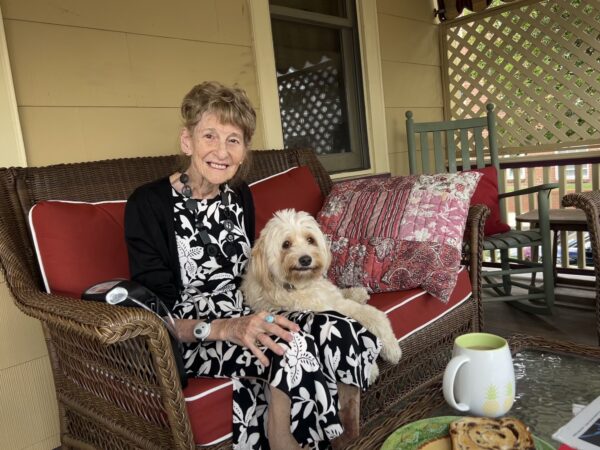
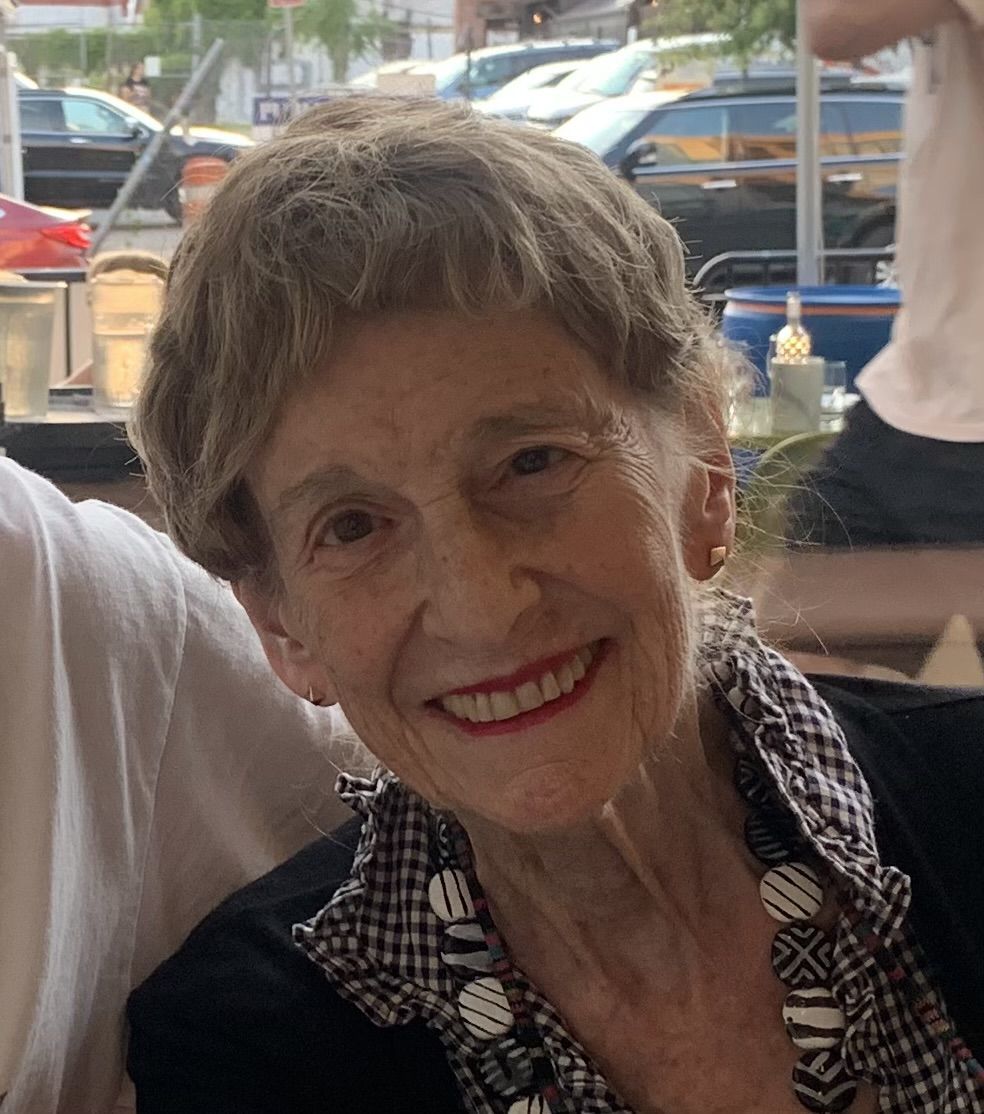
    Margot Lurie Zimmerman taught her son to raise his voice when he had something to say.

    That’s been an enormous boon to me, as a spouse and a parent and a teacher. My wife and I have two daughters, and, because I teach about education, most of my students have been female. I would be much worse at what I do if I believed they were lesser, in any sense. And they would be worse for it, too.

    I also got lucky because Mom taught me to raise my voice when I had something to say. As an educator, I am constantly trying to get students to do the same. Sadly, some of them don’t believe they have anything to say that would be worth hearing. And others are simply afraid to say what they think.

    I never was. That’s because of Mom, too. If you want to write for newspapers, you need a thick skin. And she gave me one.

    The third way I got lucky was by watching Mom work. And I mean work. Hard. To succeed at anything, she taught me, you need effort. It’s not about your inherent abilities. It’s about what you do with them.

    Psychologists call that a “growth mindset.” I didn’t know the term when I was younger, but again, I didn’t need to. It was drilled into me, over and over again. If you want something, work for it. And if you don’t get it right away, keep at it. Keep going.

    That’s been a hugely useful lesson in my life. Of course, you can take it too far. Mom insisted that you could achieve anything if you tried hard enough.

    And that’s not true. We are all finite beings, in what we can imagine and create and accomplish. It’s good to keep trying, but you also have to accept your own limitations. (I keep trying to do that.)

    Last, I got lucky by being exposed to the inestimable value of friendship in everything we do. My parents spent their lives traveling the world, and they collected friends at every stop. Those are the people who will nurture and replenish you until your own journey comes to an end.

    When Mom died, I was overwhelmed by the expressions of love from her friends. And it came on the heels of the death of my dear friend Mark, who lived in Oregon. I went to be with Mark’s family when he died, and I was on my way home when Mom passed on.

    The novelist Wallace Stegner described friendship as something you needed to create and recreate, over and over again. It is “a relationship that has no formal shape, there are no rules or obligations or bonds as in marriage or the family,” Stegner wrote. “It is held together neither by law nor property nor blood, there is no glue in it but mutual liking. It is therefore rare.”

    Jonathan Zimmerman writes that his mother taught him about the inestimable value of friendship.

    But where I grew up, it was as common as sunshine. As a kid, I don’t think I appreciated what my Mom did to sustain her friendships. Now I do. And I am lucky — again, for her example.

    Mom was not perfect by any means. She could be prickly, judgmental, and blunt. She didn’t know how to read a room, and she also didn’t feel like she needed to. Whatever she thought, she said. And sometimes — actually, lots of times — you didn’t want to hear it.

    But in the great cosmic lottery, I got a pretty darned good ticket. Thanks, Mom, for the mark you left on me. I was lucky to be your son.

    Jonathan Zimmerman teaches education and history at the University of Pennsylvania. He is the author of “Whose America?: Culture Wars in the Public Schools” (University of Chicago Press).

  • More Philadelphia police live outside the city than ever before

    More Philadelphia police live outside the city than ever before

    When Cherelle L. Parker was a City Council member, she championed a strict residency rule that required city employees to live in Philadelphia for at least a year before being hired.

    Amid protest movements for criminal justice reform in 2020, Parker said stricter residency requirements would diversify a police force that has long been whiter than the makeup of the city, and ensure that officers contribute to the tax base.

    “It makes good common sense and good economic sense for the police policing Philadelphia to be Philadelphians,” she said then.

    But today, under now-Mayor Parker, more police live outside Philadelphia than ever before.

    About one-third of the police department’s 6,363 full-time staffers live elsewhere. That share — more than 2,000 employees — has roughly doubled since 2017, the last time The Inquirer conducted a similar analysis.

    (function() {
    var l2 = function() {
    new pym.Parent(‘ppd_zips’,
    ‘https://media.inquirer.com/storage/inquirer/projects/innovation/arcgis_iframe/ppd_zips.html’);
    };
    if (typeof(pym) === ‘undefined’) {
    var h = document.getElementsByTagName(‘head’)[0],
    s = document.createElement(‘script’);
    s.type = ‘text/javascript’;
    s.src = ‘https://pym.nprapps.org/pym.v1.min.js’;
    s.onload = l2;
    h.appendChild(s);
    } else {
    l2();
    }
    })();

    Today, the percentage of nonresidents is even higher among the top brass: Nearly half of all captains, lieutenants, and inspectors live outside the city, according to a review of the most recent available city payroll data.

    Even Commissioner Kevin Bethel keeps a home in Montgomery County, despite officially residing in a smaller Northwest Philadelphia house that he owns with his daughter.

    Most municipal employees are still required to live within city limits. Across the city’s 28,000-strong workforce, nearly 3,200 full-time employees listed home addresses elsewhere as of last fall. Most of them — more than 2,500 — are members of the police or fire departments, whose unions secured relaxed residency rules for their workers in contract negotiations. About a quarter of the fire department now lives outside the city.

    Philadelphia Mayor Cherelle L. Parker and Police Commissioner Kevin Bethel speak before the start of a news conference.

    Proponents of residency rules in City Hall have long argued they improve rapport between law enforcement and the communities they serve, because officers who have a stake in the city may engage in more respectful policing.

    But experts who study public safety say there is little evidence that residency requirements improve policing or trust. Some say the rules can backfire, resulting in lesser quality recruits because the department must hire from a smaller applicant pool.

    A survey of 800 municipalities last year found that residency requirements only modestly improved diversity and had no measurable effect on police performance or crime rates.

    “It’s a simple solution thrown at a complex problem,” said Fritz Umbach, an associate professor at John Jay College of Criminal Justice. “It doesn’t have the impact people think it will.”

    Parker, a Philadelphia native who lives in the East Mount Airy neighborhood, says she would still prefer all municipal employees live in the city.

    “When I grew up in Philadelphia, it was a badge of honor to have police officers and firefighters and paramedics who were from our neighborhood,” she said in a statement. “They were part of the fabric of our community. I don’t apologize for wanting that to be the standard for our city.”

    ‘Where they lay their heads at night’

    What qualifies as “residency” can be a little pliable.

    Along with his wife, Bethel purchased a 3,600-square-foot home in Montgomery County in 2017 for over a half-million dollars. Although he initially satisfied the residency rule by leasing a downtown apartment after being named commissioner by Parker in late 2023, he would not have met the pre-residency requirement the mayor championed for other city employees while she was on Council.

    Today, voter registration and payroll data shows that Bethel resides in a modest, 1,800-square-foot rowhouse in Northwest Philadelphia, which he purchased with his daughter last year. While police sources said it was common for Bethel to sleep in the city given his long work hours, his wife is still listed as a voter in Montgomery County.

    Police Commissioner Kevin Bethel speaks during the 22nd District community meeting at the Honickman Learning Center on Dec. 2, 2025.

    Sgt. Eric Gripp, a spokesperson for the department, said in a statement that Bethel is a full-time resident of Philadelphia, and that while he owns a property outside the city, his “main residence” is the home in Northwest Philly.

    Although sources say it was not unheard of for rank-and-file officers to use leased apartments to satisfy the requirement on paper, Gripp said “only a small number” of residency violations had required formal disciplinary action following an investigation by the department’s Internal Affairs Division.

    That likely owes to officers’ increasing ability to reside elsewhere legally. The Fraternal Order of Police Lodge 5, which represents thousands of active and retired Philadelphia Police officers, won a contract provision in 2009 allowing officers to live outside the city after serving on the force for at least five years.

    The union didn’t respond to a request for comment.

    Few of the cops who left the city went very far.

    While Northeast Philly and Roxborough remain the choice neighborhoods for city police, the top destinations for recent transplants were three zip codes covering Southampton, and Bensalem and Warminster Townships, according to city payroll data.

    A few officers went much farther than the collar counties.

    Robert McDonnell Jr., a police officer in West Philadelphia’s 19th district with 33 years on the force, has an official address at a home in rural Osceola Mills, Pa., about 45 minutes north of Altoona in Centre County.

    A person who answered a phone number associated with McDonnell — who earned $124,000 last year between his salary, overtime, and bonus pay — declined to speak to a reporter.

    Asked about the seven-hour round-trip commute McDonnell’s nominal residence could entail, Gripp said the department doesn’t regulate the manner in which employees travel to and from work.

    “Our members serve this city with dedication every day,” he said, “regardless of where they lay their heads at night.”

    A long and winding history

    Versions of residency rules can be found as far back as the 19th century, when police recruits were required to live in the districts they sought to work in.

    But when Mayor Joseph S. Clark pushed to reform the city charter in the 1950s, he sought to abolish the rules as an impediment to hiring, saying “there should be no tariff on brains or ability.”

    Instead, City Council successfully fought to expand the restrictions. And, for more than five decades, the city required most of its potential employees to have lived in Philadelphia for a year — or obtain special waivers that, in practice, were reserved for the most highly specialized city jobs, like medical staff.

    Many other big cities enacted similar measures either to curb middle-class flight following World War II or to prioritize the hiring of local residents. But the restrictions were frequently blamed for causing chronic staff shortages of certain hard-to-fill city jobs.

    Officers Azieme Lindsey (from left), Charles T. Jackson, and Dalisa M. Carter taking their oaths in 2023.

    Citing a police recruit shortage in 2008, former Mayor Michael A. Nutter successfully stripped out the prehiring residency requirement for cadets. Recruits were required only to move into the city once they joined the force.

    A year later, the police union attempted to have the residency requirement struck from its contract entirely.

    Nutter’s administration objected. But an arbitration panel approved a compromise policy to allow officers to live elsewhere in Pennsylvania after five years on the job. By 2016, firefighters and sheriff’s deputies secured similar concessions.

    Then, in 2020, Parker and then-Council President Darrell L. Clarke successfully fought to have the one-year, prehire residency requirement reinstated. They said it would result in a more diverse force and an improved internal culture.

    But experts say there’s little research showing that to be true.

    “I am unsure if requiring officers to reside in the city is a requirement supported by evidence,” said Anjelica Hendricks, an assistant law professor at the University of Pennsylvania who worked for the city’s Police Advisory Commission. “Especially if that rule requires a city to sacrifice something else during contract negotiations.”

    Residency requirements have been a point of contention for organized labor over decades.

    FOP leaders have long opposed the rule and said it was partly to blame for the department’s unprecedented recruitment crisis and a yearslong short-staffing problem that peaked in the aftermath of the COVID-19 pandemic.

    In 2022, facing nearly 1,500 unfilled police jobs, former Mayor Jim Kenney loosened the prehire residency rule for the police department again, allowing the force to take on cadets who lived outside the city, so long as they moved into Philadelphia within a year-and-a-half of being hired.

    Since then, recruiting has rebounded somewhat, which police officials attribute to a variety of tactics, including both the eased residency rules and hiring bonuses. The force is still short 20% of its budgeted staffing and operating with 1,200 fewer officers than it did 10 years ago.

    Umbach, the John Jay professor, said the impact on recruiting is obvious: Requiring officers to live in a city where the cost of living may be higher than elsewhere amounts to a pay cut, which shrinks candidate pools.

    “Whenever you lower the standards or lower the appeal of the job, you’re going to end up with people who cause you problems down the road,” he said. “A pay cut is just that.”

  • Jefferson and Temple join wide-ranging litigation over high insulin pricing

    Jefferson and Temple join wide-ranging litigation over high insulin pricing

    Temple University Health System and Jefferson Health are the latest area health systems to sue pharmaceutical companies and pharmacy benefit managers over high insulin pricing.

    The move follows similar lawsuits filed in recent years by the University of Pennsylvania, the city of Philadelphia, Philadelphia District Attorney Larry Krasner, and Bucks County, as well as hundreds of other municipalities, companies, and unions around the country.

    Temple filed its suit last week, and Jefferson sued just before the new year.

    Eli Lilly, CVS Caremark, and Sanofi are among the major companies named in the suits, which accuse drugmakers and pharmacy benefit managers, or PBMs, of conspiring to drive up profits on diabetes drugs.

    PBMs work with drug manufacturers, insurers, and pharmacies, negotiating prices and developing formularies — lists of prescription drugs that are available on a given insurance plan.

    The health systems and other plaintiffs say drugmakers inflate prices for their insulin products in order to secure lucrative placements on formularies. Then, they pay a portion of the resulting profits back to PBMs, according to the lawsuits.

    Jefferson and Temple officials said they are paying more for employees’ insulin as a result, impacting the health systems’ budgets and hurting their ability to “provide necessary services […] to the larger Philadelphia community.”

    Representatives from both health systems declined to comment.

    Eli Lilly has worked for years to reduce out-of-pocket costs for insulin, the company said in a statement, noting that some plaintiffs filing the lawsuits are choosing higher-priced medications over more affordable options.

    Lilly capped insulin prices at $35 per month, the statement said, and in 2024 the average monthly out-of-pocket cost for its insulin was less than $15.

    CVS Caremark said pharmaceutical companies “alone are responsible” for pricing their drugs in its latest statement, released after Philadelphia officials joined the litigation last month. The company said it would welcome lower prices on insulin.

    “Allegations that we play any role in determining the prices charged by manufacturers for their products are false, and we intend to vigorously defend against this baseless suit,” they wrote in an email.

    A statement from Sanofi said that the company has always complied with the law when it comes to drug prices and works to lower prices. PBMs and insurers sometimes negotiate savings on drugs, but those are “not consistently passed through to patients in the form of lower co-pays or coinsurance,” the statement read.

    “As a result, patients’ out-of-pocket costs continue to rise while the average net price of our insulins declines.”

  • Penn graduate student workers could strike next month

    Penn graduate student workers could strike next month

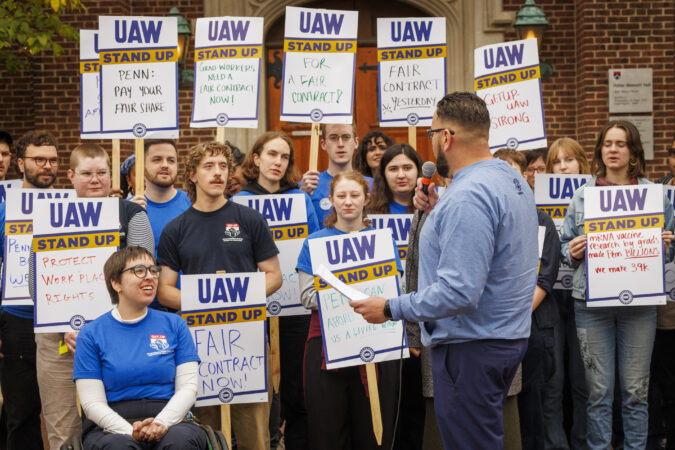
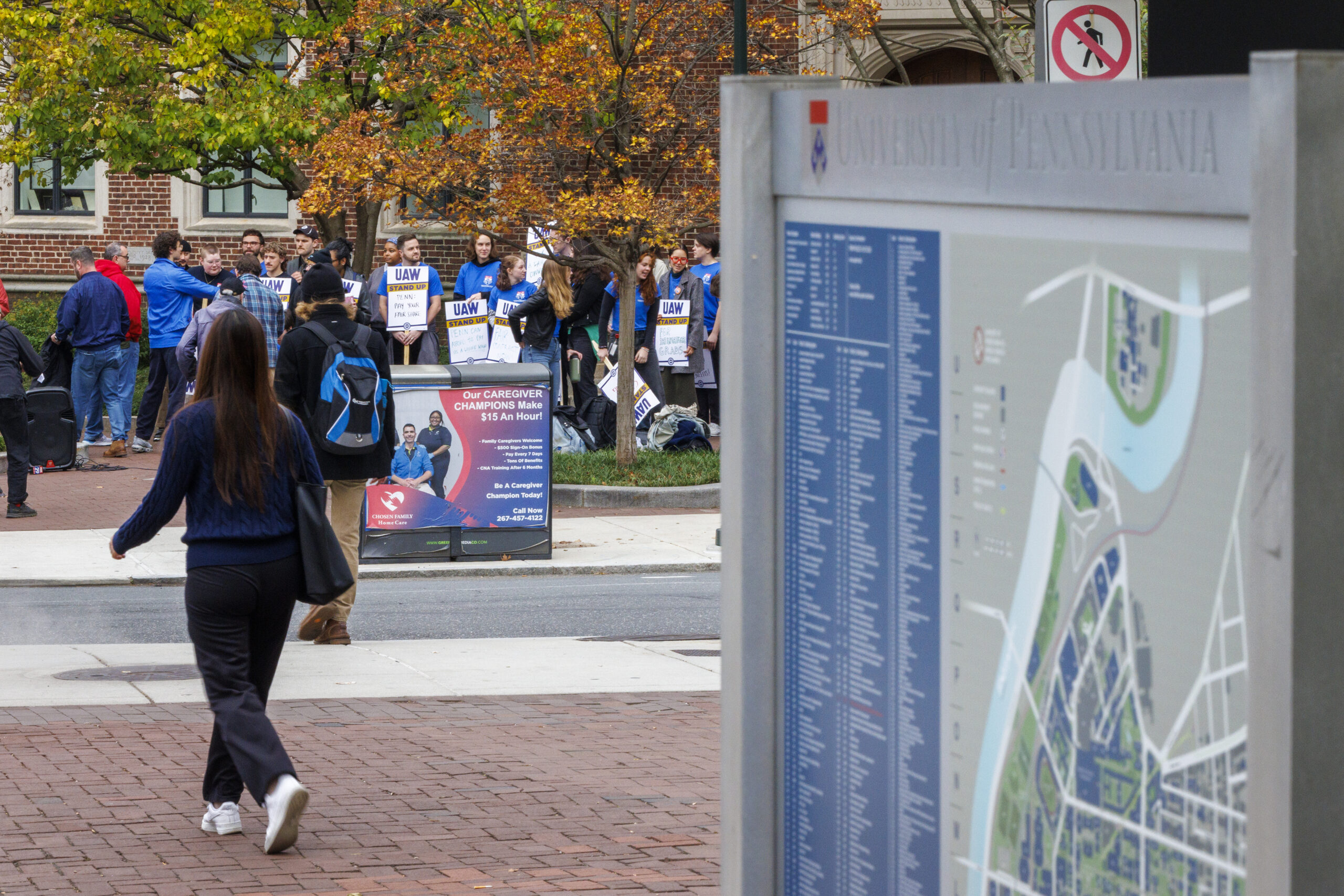
    The union that represents about 3,400 University of Pennsylvania graduate student workers says they will go on strike Feb. 17 if they do not reach a contract deal with the university by then.

    “We love our jobs, but Penn’s administration is leaving us no choice but to move forward with a strike,” said Nicolai Apenes, a Ph.D. candidate and research assistant in immunology, in a statement shared by the union Tuesday. “We are ready to stand up and demand that our rights are respected.”

    Penn’s graduate student workers voted to unionize in 2024. The union has been negotiating with the university since October 2024 for a first contract, and some tentative agreements have been reached on a number of issues.

    Sticking points in bargaining include wages, healthcare coverage, and more support for international student workers.

    In November the teaching and research assistants voted to authorize a strike if called for by the union, which is known as Graduate Employees Together-University of Pennsylvania (GET-UP) and is part of the United Auto Workers (UAW).

    A spokesperson for the University of Pennsylvania said in a statement Tuesday that Penn has engaged in good faith negotiations with the union, and has reached 23 tentative agreements through 39 bargaining sessions with additional sessions planned.

    “We believe that a fair contract for the Union and Penn can be achieved without a work stoppage, but we are prepared in the event that the Union membership strikes,” said the Penn spokesperson. “Efforts are underway to ensure teaching and research continuity, and the expectation is that classes and other academic activities will continue in the event of a strike.”

    “While we hope that Penn comes to the table and negotiates a fair contract for these essential workers, we know that these workers are a powerful force that Penn cannot break,” said Daniel Bauder, Philadelphia AFL-CIO president, in a statement Tuesday. “We are proud to stand with them and the broader Coalition of Workers at Penn as they fight the biggest employer in the region and bring union power to the University of Pennsylvania.”

    Penn, the largest employer in Philadelphia, has seen a wave of student-worker organizing in recent years, including resident assistants, graduate students, postdocs and research associates, as well as training physicians in the University of Pennsylvania Health System.

    The region has also seen a couple other university strikes in recent years. In 2023 graduate workers at Temple University walked off the job for 42 days amid contract negotiations, and in a separate action at Rutgers University, educators, researchers, and clinicians went on strike for a week.

    University of Pennsylvania graduate students hold a press conference and rally calling for a strike vote against the university at the corner of South 34th and Walnut Street, Monday, Nov. 3, 2025.
  • The other ‘insane’ thing about Trump and Venezuela | Will Bunch Newsletter

    The Eagles are who we thought they were. A team that consistently disappointed its fans despite winning the NFC East in defense of its Super Bowl crown put in a disappointing one-and-done playoff performance under a clueless offensive coordinator, with a banged-up O-line and some stars (cough, cough…A.J. Brown) perhaps past their peak. But this is what Philly fandom is all about: one battle after another.

    If someone forwarded you this email, sign up for free here.

    Dirty, toxic oil from Venezuela is the last thing that America needs

    John Beard drives near a liquid natural gas facility in Port Arthur, Texas. In addition to LNG facilities, Port Arthur is surrounded by oil refineries and petrochemical plants. Beard says Black and brown communities like Port Arthur are having to bear much of the risk posed by the facilities.

    You could say that crude oil is in John Beard Jr.’s blood. His dad worked for more than 44 years at a giant Gulf Oil refinery in the heady 20th-century days of the South Texas energy boom, and Beard then followed his father’s footsteps by working 38 years at a rival Exxon facility in Beaumont, before heading home to sleep in the shadow of Port Arthur’s own dense row of dozens of refineries.

    But today, Beard — a longtime civic activist and political leader in Port Arthur’s large Black community — is fighting to keep oil out of his neighbors’ blood, literally.

    “It was nothing to wake up the next morning and find a yellow stain against the side of your house with something had been released in the air,” Beard told me last week on the phone as he talked about growing up surrounded by tall refinery stacks. “You may have smelled it, or you may have slept through it and all and come to find out that it stained your house or whatever.”

    Although the Gulf Coast city of 55,000 was dubbed Texas’ “cancer belt” decades ago, it wasn’t until 2010 — when Beard heard about a report that Port Arthur residents are 40% more likely to develop cancer than similar towns just 25 miles upwind — that Beard became a tireless environmental activist.

    “You know how you say when the refinery has a sneeze, we get pneumonia?” he asked. “But no, we don’t get pneumonia. We get cancer.” The most-feared disease has touched pretty much every family that Beard knows in the economically struggling town.

    This was all before last week’s lightning bolt of news: that the U.S. military had bombed Venezuela and seized its indicted strongman leader Nicolás Maduro. It was quickly followed by Donald Trump announcing a scheme to bring some 30-to-50-million barrels of oil to the United States — meaning the backyards of Beard and his neighbors.

    Indeed, experts have tagged Valero’s big refinery in Port Arthur that towers over Beard’s home — heavily invested in specialized equipment to process the sour, heavy crude that comes from Venezuela — as most likely to benefit from Trump’s proposed gambit.

    Environmentalists say any new refinery jobs and U.S. corporate profits will be swamped by increased pollution of both the toxic chemicals that have already sickened Port Arthur, and greenhouse gases that threaten us all through climate change.

    When America woke up 10 days ago to news that Trump had ordered the dead-of-night assault on Venezuela and seized Maduro, there was one word that echoed among Democratic lawmakers asked for a comment. “Is anyone going to just stop for a second and be honest?” U.S. Rep. Seth Moulton of Massachusetts told CNN. “This is insane. What the hell are we doing?”

    But the first wave of critics like Moulton focused mainly on the rank illegality of Trump’s maneuver — failing to get congressional approval or even consult its leaders, over an act of unlawful aggression that killed as many as 100 people on the ground, and which seemed to lack any planning for how to deal with the aftermath of taking Maduro.

    Those problems have been amplified in the days since Moulton and others branded the operation as “insane.” It is indeed insane when Trump declares to the world that the United States is “in charge” of Venezuela and a few days later his State Department says the country is unsafe for Americans because of violent roving gangs. For that matter, it’s also meshugana to upend the global order that has reigned since the end of World War II, when the U.S. led efforts to ban wars of aggression.

    But we’re not talking nearly enough about what’s maybe most whacked-out about Trump’s splendid little war in Latin America — that by making his operation all about taking the oil, he seeks to endanger the entire planet by accelerating climate change. One expert told the Associated Press that increasing production of Venezuela’s thick, dirty crude by a target of 1 million barrels a day would also add roughly 360 million metric tons of carbon dioxide a year from the production process — a significant spike in the gases that are warming our planet.

    That Trump made it clear that his goal in making war against Venezuela was all about grabbing its oil on the one-year anniversary of the deadly Los Angeles wildfires — perhaps the most dramatic of the floods, amped-up hurricanes, and other weather catastrophes exacerbated by a hotter planet — was especially disgusting.

    Michael E. Mann, director of the Center for Science, Sustainability and the Media at the University of Pennsylvania, told me that while Trump’s initial target for Venezuelan oil seems modest, experts believe the South American nation could harbor a whopping 300 billion barrels under ground. He has written that Trump aims to make America a “petrostate,” allied with other bad actors such as Russia and Saudi Arabia in working to undermine any global consensus around fighting climate change.

    Less than a week after the Venezuela strike, the New York Times reported that Trump’s U.S. Environmental Protection Agency is dropping its longtime requirement to weigh the cost on human lives — early deaths, or chronic diseases like asthma — in regulating key air pollutants, including those from oil refineries. As a matter of policy, the U.S. government now values the dollars that Valero or Exxon can make from burning dirty oil over the very existence of Beard and his Texas community. That’s not surprising from the crew that’s dismantled an entire generation of EPA programs that once targeted the environmental racism that dumps pollutants on disadvantaged Black and brown communities like Port Arthur.

    Indeed, the 100 fatalities caused by the Trump regime’s militarism against Venezuela — although a human-rights outrage — will likely pale over time against the canopy of death and destruction that historians will blame on the president’s obsession with doubling down on fossil fuels while other nations focus on green energy such as wind or solar.

    A preview of the world’s coming attractions is arguably taking place right now on the blood-soaked streets of Tehran, where experts believe months of severe drought that sometimes left poorer neighborhoods in the Iranian capital with little or no running water has been a key trigger for the collapse of social order.

    While foreign policy experts aren’t wrong to worry about U.S. expansionism triggering World War III, Trump’s backward-looking energy policies could cause a similar or worse toll through civil war and mass migration. While top energy officials — including the Exxon Mobil CEO who called Venezuela “uninvestable” — say Trump’s Venezuela dreams are economically unrealistic, the time lost for America to reduce its greenhouse gas pollution is a clear and present danger for civilization.

    History is almost sure to judge that “insane” was far too generous a word to describe it.

    Yo, do this!

    • I’ve written about this before but I can’t say enough about the essentialness of Andrew Hickey’s long-running podcast, A History of Rock Music in 500 Songs, which currently is up to around 1969 on its long, strange trip. His latest episode — about Jimmy Cliff, “Many Rivers to Cross,” and the invention of reggae — proved unexpectedly prescient when Cliff died at age 81 just before its release. Now, the passing of the Grateful Dead’s Bob Weir has me dredging up his recent episode about the Dead, “Dark Star,” and the rise of an almost spiritual cultural phenomenon.
    • In the world of media, the mid-2020s will be remembered as the moment that intrepid independent journalists stepped up and did the work that traditional newsrooms are suddenly too cowed or too compromised to perform. Since ICE and the Border Patrol amped up their immigration raids last summer, I’ve become a big fan of Amanda Moore (@noturtlesoup17.bsky.social on Bluesky), who has birddogged Greg Bovino and his goon squad from the Big Easy to the frigid streets of Minneapolis. Check out her coverage of the far right for Mother Jones.

    Ask me anything

    Question: Please explain how the “anti-elite” [MAGA] base can continue to support all the elite personnel in charge of America’s economy in this regime? Just ONE recent example: [Pennsylvania Sen. Dave] McCormick’s wife’s Facebook promotion in charge of….“sovereign relations concerning AI…“. — @tim215.bsky.social via Bluesky

    Answer: Tim, I think the ascension of Dina Powell McCormick — the former Trump 45 aide who is also married to Pennsylvania’s Republican junior senator — to the job of president of Facebook’s parent company Meta has profoundly troubling implications. This is neither to say that Mark Zuckerberg’s new hire lacks qualifications, nor that Senate spouses should be barred from the private sector. But the move surely reflects Silicon Valley’s determination to curry favor with the personalist Trump regime by any means necessary. What bothers me even more, as a Pa. voter, is that I see the issues surrounding Meta — especially the currently unchecked rise of artificial intelligence, or AI — as requiring clear-eyed leadership. How can anyone now expect Sen. McCormick to be an honest broker?

    What you’re saying about…

    Last week’s question about the attack on Venezuela drew a robust response, as I expected, and — also as I expected — almost unanimous opposition to Trump’s policy for the troubled country. Most of you saw the military operation as illegal and unconstitutional, and share my befuddlement (see above) on the president’s assertion that taking Venezuela’s oil was the prime reason, except for Jon Elliott, who wrote: “I absolutely endorse Trump’s Pirates of the Caribbean excursion with one proviso — he performs Maduro redux in North Korea.” More typical was Tom Lees: “I was born in June 1945, two months before the dropping of the atomic bombs. The world order that has prevented WWIII seems to be in the process of being dismantled by people who should be imprisoned (Donald Trump) or institutionalized (Stephen Miller).”

    📮 This week’s question: Given the uproar over the killing of Renee Good, is “Abolish ICE” now the mainstream position, and do you support it? If so, how should the U.S. enforce its immigration laws? Please email me your answer and put the exact phrase “Abolish ICE” in the subject line.

    Backstory on the end of Newsom’s WH dreams

    California Gov. Gavin Newsom speaks during his State of the State address Thursday in Sacramento, Calif.

    One of the most anticipated stories of 2026 isn’t supposed to happen until the waning weeks of the year, when the votes from the midterm election have been counted and top Democrats beginning lining up for their shot at following Donald Trump as the 48th president. But the most consequential early moment in that Dem primary race may have already happened. On Monday, California Gov. Gavin Newsom faced a career-defining choice between the growing populism of his party’s anxious voters, or the Silicon Valley moguls who’ve been there for him in the past.

    Newsom chose the billionaires.

    At issue is a citizen initiative to place a wealth tax on California’s richest of the rich — those with a net worth of more than $1 billion — to pay a one-time levy equal to 5% of their assets, with most of the revenue targeted toward keeping troubled hospitals open and other healthcare costs. Backed by a powerful labor union, the Service Employees International Union-United Healthcare Workers West, the ballot measure reflects growing global rage over economic inequality and the current zeitgeist among Democrats likely to vote in the 2028 primaries. Not surprisingly, the push has angered Silicon Valley’s increasingly right-wing tech titans and investors like Peter Thiel or Google co-founder Larry Page who’ve threatened to move to red states like Florida or Texas.

    Newsom, who is term-limited and leaves the governor’s mansion at year’s end, has long walked a tightrope between boosting his White House ambitions by relentlessly needling Donald Trump on social media while — with considerably less fanfare — catering to the high-tech poobahs who’ve funded his campaigns and who, Newsom insists, would damage the Golden State economy by leaving. On Monday, the governor told the New York Times that he firmly opposes the proposed wealth tax and will use his bully pulpit to fight the measure if it reaches the ballot.

    “Hey idiots: You’re rich,” the independent journalist Hamilton Nolan wrote in a riposte to Thiel and Co. posted hours before Newsom’s decision. “Enjoy your lives. Pay your taxes and count your blessings. Is this the perfect life that you dreamed of for yourself — performatively kissing the ass of a dictator, giving up your home to flee the taxman, earning the enmity of your fellow man, all in service of money you will never spend?”

    Nolan’s piece may have targeted the 0.1%, but it also seemed to carry a message that Newsom and any other Democratic presidential hopefuls need to hear. Running as a performative kind of center-left Trump with viral social media posts will get you attention but not the White House. The core of rank-and-file Democrats — especially the 7 million who took to the streets last summer for the No Kings protest — wants radical changes they’re not seeing in Newsom’s California. These include limits on artificial intelligence, a major overhaul of the Supreme Court, and — especially — an end to the gross unfairness of economic inequality. Hopefully Newsom’s pals in Silicon Valley can find him new work, because 1600 Pennsylvania Ave. already looks above his future pay grade.

    What I wrote on this date in 2019

    One of the many similarities between today and the United States seven years ago is that Democrats and other progressives were already deeply divided over how best to respond to Donald Trump and threats against democracy. On this date in 2019, I put forth my own idea that I’m not sure I’d endorse in hindsight: that Bernie Sanders was the most inspiring figure in U.S. politics, yet should stand down from the 2020 election. I wrote about “a sense that white dudes from the baby-boomer-and-older generation have been running things for far too long, and that America needs some new blood.” Instead, we got the two oldest presidents in American history. Read the rest: “Bernie Sanders is the leader America needs now. Just NOT by running for president in 2020.”

    Recommended Inquirer reading

    • Late last year, I predicted that Trump’s plummeting popularity would cause him to double down on autocracy. For once, I was right. In my Sunday column, I wrote about the shocking ICE Minneapolis murder of 37-year-old poet and mom Renee Nicole Good and the broader war for the truth that was defined by the Trump regime’s instant smears against the victim. Over the weekend, I looked at how 2026’s shocking start from Caracas to the Twin Cities was punctuated by Trump’s jarring comments to the New York Times — that nothing can stop him but “my own mind” and “my own morality.” I stressed that he can and will be stopped — by our morality.
    • The nation remains on edge nearly one week after the ICE agent gunned down Good in the streets of Minneapolis, and already the resistance movement to ICE has seen some twists and turns. None has been more dramatic in Philadelphia than the unexpected return of the Black Panther Party for Self Defense, an iconic social movement that thrived in the late 1960s and early ‘70s before a government crackdown. When several armed members of the Black Power group demonstrated against ICE near City Hall on Thursday, The Inquirer’s Brett Sholtis jumped on the story and followed up with an in-depth profile of the small group, whose Philly leader, Paul Birdsong, said Good’s killing “wouldn’t have happened if we were there.” Sholtis is part of the paper’s jacked-up weekend news coverage that is supported by your subscription dollars. Local journalism is a bulwark against tyranny. Become a part of it by subscribing to The Inquirer today.

    By submitting your written, visual, and/or audio contributions, you agree to The Inquirer‘s Terms of Use, including the grant of rights in Section 10.

  • Philadelphia is a top place to launch a start-up — but success requires more than passion | Expert Opinion

    Philadelphia is a top place to launch a start-up — but success requires more than passion | Expert Opinion

    It seems that Philadelphia’s reputation as a good place to start a business got a boost this past year.

    The city ranked 13th among 350 “start-up ecosystems” worldwide in Startup Genome‘s 2025 Global Startup Ecosystem Report, which considers educational resources, labor, taxes, and funding opportunities.

    The region attracted over $900 million in equity funding and acquisitions in 2024-25, according to the Greater Philadelphia Chamber of Commerce; expanded biotech and robotics facilities; and launched AI education initiatives — all supported by public-private partnerships and university-led R&D.

    Chamber CEO Chellie Cameron said the Startup Genome ranking “affirms our region’s emergence as a global destination for innovation, business, and opportunity.”

    From 2019 to 2024, the U.S. saw more than 21 million new business applications, marking the largest-ever spike.

    Software giant Intuit recently reported that and “33% of U.S. adults plan to start a business or side hustle next year — a 94% year-over-year increase.” LinkedIn says the number of “founders” listed on the platform grew 69% last year.

    Are you thinking of starting a business this year? Before you quit your job, here’s some practical advice.

    Get your finances in order

    When I started my business, I did so while having a full-time job. I worked a lot of hours. But that’s because I needed to build up an income stream to support me for when I eventually left the corporate world.

    Smart entrepreneurs know their finances. They’re good at math or have advisers that help them. They recognize the importance of accounting.

    Gabriella Daltoso, a founder and CEO of Philadelphia-based medical device start-up Sonura, recognized the importance of understanding her numbers and embarked on a program to learn the basics of accounting. A trained scientist, she sought out help from people with business expertise at the University of Pennsylvania, where she spun out the business.

    “I got a freshman finance textbook, learned the terms, and then learned from other founders’ experiences,” Daltoso said. “I found mentors and professors who would help me at Penn. People can be incredibly helpful when you reach out.”

    Sonura founders Gabriella Daltoso (left) and Sophie Ishiwari at the Hospital of the University of Pennsylvania in November.

    Start-ups need capital, and for financing, it’s important to have a solid business plan with realistic projections of revenues and expenses. You need to establish relationships with banks, investors, family members, friends, venture capitalists, or anyone else that could be a source of financing. You should have enough money in the bank to support yourself and your family for at least two years because it will likely take that long to get your business cash positive.

    James Massaquoi, a board member at the Seybert Foundation and former analyst at Philadelphia venture capital firm Osage Partners, emphasizes planning capital needs early, ideally before launching. Massaquoi urges founders to deeply understand their cost structure and assumptions before getting in too deep.

    “Talk to bankers and other sources of capital before you really start the business, so it’s a conversation — not another checklist,” he said. “Spend more time modeling out costs than forecasting profits because costs fluctuate dramatically, especially in the first two years.”

    Make sure your family is on board

    Think you’re busy now? Wait until you start a business.

    You will spend much more time launching, running, and growing your enterprise than you expect. You will work nights, weekends, and crazy hours. People will be happy for you and supportive, but in the end, it’s all on your shoulders.

    This kind of stress could put a strain on your personal life. You will not succeed unless your family members understand this and are ready to support you.

    “Work-life balance is really about how much work you need to do for this to be successful — and how much pressure you feel to make it succeed,” Massaquoi said.

    Be realistic

    Passion for your business venture is important, but profits are just as important. Your model needs to be satisfying a market need if it’s going to have a legitimate chance.

    The typical life span of a start-up is two to five years, with 70% going out of business before reaching their fifth year. The odds are against you.

    The ones that do survive fix problems and do so better than their competitors. They watch their pennies and are open to change based on what their customers need.

    Take your business seriously

    Talk to a tax and legal adviser and form a company — maybe a corporation, partnership, or limited liability company. Use these advisers to help you register your business with the state and the federal government.

    Create a professional website. Establish a commercial mailing address (not your home) and a toll-free phone number.

    Pay in your estimated taxes, and file your tax returns on time.

    As you hire employees, create policies and procedures and try to offer the types of benefits that established businesses provide like health insurance, retirement plans, and flexible time off.

    If you are truly running a business (and not just a hobby), you need to act like a business.

    Lean on local resources

    As a start-up founder in Philadelphia, you’re not alone. The area has a number of great resources to help your small business get funding and grow.

    Introduce yourself to the Small Business Development Center at Temple University’s Fox School of Business. Reach out to SCORE, which is part of the Small Business Administration. Get involved with nonprofits that provide education, financing help, and mentorship to start-ups, such as: the Philadelphia Alliance for Capital and Technologies, Venture Lab (University of Pennsylvania), Broad Street Angels, Startup Leaders, Entrepreneur Works, and Urban League Entrepreneurship Center.

    Take advantage of the free space and other resources offered by the Free Library of Philadelphia.

    Also, surround yourself with as many experts as you can afford. Have a good accountant, lawyer, coach, and advisers on hand to help you make decisions. Build these costs into your business plan and projections because these people are critical for your business success.

    “Your expertise isn’t having all the answers; it’s learning from anyone who’s willing to share,” Daltoso said. “It’s really important to hear everyone, synthesize what’s useful, and move forward with confidence.”

  • The Trump administration is targeting ultra-processed foods. A Penn researcher explains why that might be complicated. | Q&A

    The Trump administration is targeting ultra-processed foods. A Penn researcher explains why that might be complicated. | Q&A

    On the same day President Donald Trump’s administration targeted ultra-processed foods in its new federal nutrition guidelines, Penn researcher Alyssa Moran published an academic journal article explaining why they’re hard to regulate.

    For starters, there’s no consensus on how policymakers should define the term, she and two coauthors said in a Nature Medicine commentary piece. (The publication timing was a coincidence, but she welcomed the attention to an underestimated challenge.)

    Ultra-processed foods are generally understood to be those with industrially produced ingredients not found in home cooking, but experts have long debated how best to classify the foods for regulation. The wording would need to encompass all the possible variations, without being so rigid that the industry finds loopholes.

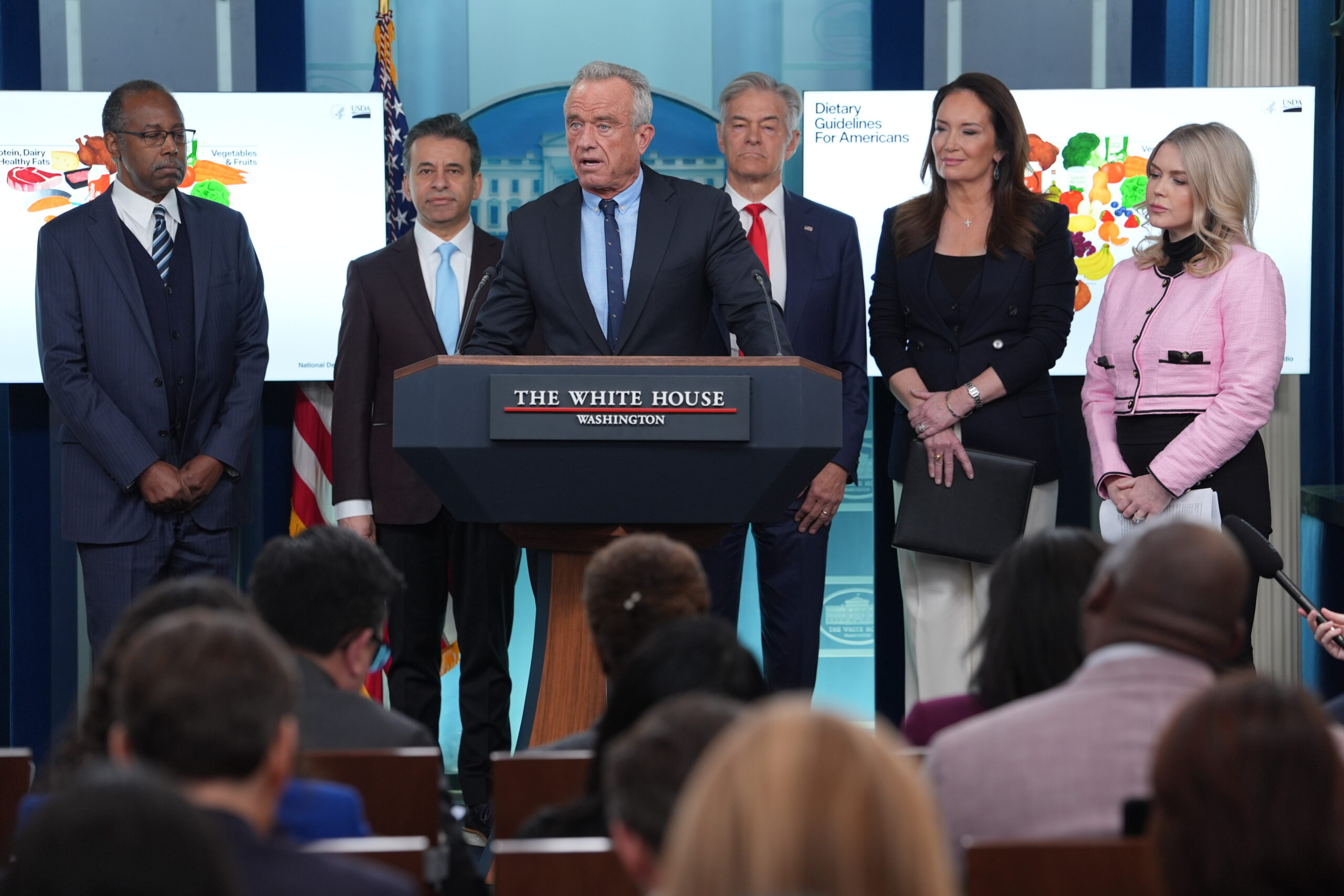
    The U.S. Food and Drug Administration and the Agriculture Department have said they are working on developing a federal definition to provide “increased transparency to consumers about the foods they eat.” It’s a key goal of the nation’s top health official, Robert F. Kennedy Jr., who blames ultra-processed foods for the United States’ “chronic disease epidemic.”

    Roughly 60% of an American child’s daily calorie intake is estimated to come from ultra-processed foods, which comprise up to 70% of the U.S. food supply. Studies have linked their consumption to a higher risk of obesity, diabetes, cancer, heart disease, and other harms.

    This is the first time U.S. dietary guidelines have explicitly called out ultra-processed foods, also called highly processed foods, and told Americans to limit consumption, Moran said. The guidance was part of a broader update by the Trump administration the first week of January that flipped the longstanding food pyramid on its head to promote consumption of whole foods, proteins, and some fats.

    Though health experts questioned changes, such as the vague guidance on drinking alcohol, the crackdown on ultra-processed foods mirrors what many health organizations and consumer advocacy groups have been saying for years.

    “I thought it was a bold move, and I was glad to see it,” she said.

    Moran talked with The Inquirer about what people should know about ultra-processed foods and the challenges that remain in regulating the products.

    This conversation has been lightly edited for length and clarity.

    Health & Human Services Secretary Robert F. Kennedy Jr. speaks during a press briefing with leading health officials and nutrition advisors at the White House in early January.
    What are ultra-processed foods?

    It’s a term that’s been used for decades and has been used, I think, interchangeably with ‘the Western diet’ or ‘junk foods’ or ‘highly processed foods.’

    Most foods are processed in some form, whether it’s physical processing, like slicing fruit before you eat it, or adding some chemical preservatives to foods that increase food safety. What changes with ultra-processing is the intent of the processing.

    With ultra-processing, the intent isn’t just to make the food safer or to extend shelf-life. It is to make it more cosmetically appealing and more likely to be overconsumed by individuals. They’re formulated in a way that makes them addictive, and they’re also aggressively marketed.

    What does it mean to make a food ‘cosmetically appealing’?

    It’s the overall sensation of eating the product.

    Companies are manipulating levels of highly palatable ingredients like sugar, salt, and fat to be at levels that are not naturally occurring and that are extremely palatable to consumers.

    They also add additives that enhance the naturally rewarding properties of things like sugar, salt, and fat. Some additives are added to food, for example, to mask a bitter flavor or prevent an aftertaste. They also add emulsifiers to change the mouth feel of a product. They pay attention to how the product sounds — even the crunch of a product when you’re chewing it — and add dyes to make them more visually appealing, especially to kids.

    There are all kinds of strategies that can take advantage of all of the senses to make the product almost irresistible.

    Why is there so much debate over how to define the products?

    The current administration has talked more than any prior administration about potentially limiting the production, marketing and sale, and availability of ultra-processed products. So, to be able to formulate policy to limit intake of these products, we have to be able to identify them.

    Many people have proposed going down the route of defining ultra-processed foods according to a list of additives. And there are many reasons why I don’t think that’s a good approach.

    What are the reasons?

    We need to really be thinking about how companies are going to respond to whatever definition we create.

    If we use a list of specific additives that makes something ultra-processed, companies are going to look at that list and they’re going to say, ‘How can we get around this. How can we skirt regulation?’ They’re either going to increase their use of additives that exist already but aren’t on that list, or they’re going to create new additives with very similar structures and functions as the existing additives.

    We see this happen all the time with commercially regulated products. When policies tax sugar, we see that companies increase their use of non-nutritive sweeteners, so the food supply is just as sweet, if not more. When Red Dye No. 2 was banned (in 1976), companies created Red Dye No. 3, which is almost identical and was also banned (in 2025), but 50 years later.

    Plus, we have hundreds of thousands of products on the marketplace and there are constantly new ones being added. And currently under FDA policy, companies don’t even need to notify the FDA when they add new ingredients to the food supply. So we don’t even have a complete list of every single additive in the food supply right now.

    What approach did you propose in your Nature article on this topic?

    Right now, it has been proposed to use a list of ingredients that would make a food ultra-processed. Everything else is non-ultra-processed.

    Our recommendation is really to flip that.

    We would say, ‘Here are all of the ingredients that make a food non-ultra-processed. Everything else is ultra-processed.’

    There are very few additives that make a food non-ultra-processed. The purpose (of the additive) would have to be for food safety or preservation, and that’s one reason why this is also a much simpler approach. Our approach is saying, for example, your yogurt is considered non-ultra-processed if it contains things like milk, live cultures, fruit, nuts, seeds, and honey, as well as some preservatives, vitamins, and minerals.

    If it has anything else, it’s an ultra-processed food and is in scope for regulation. Then, if companies introduce new additives, they’ll still be considered ultra-processed because they still fall into the ‘everything else’ bucket.

    Are there any other challenges that you see in terms of regulating the industry?

    The biggest one is the pushback from the food industry. They spend a lot of money fighting against policies to regulate production, marketing, and sale. We see it with sweet and beverage taxes that have been enacted in Philadelphia and other places. We see it with front-of-package labeling, which the FDA had been trying to pass.

    The lack of resources at our federal agencies is another barrier. This administration, early on, really dismantled the FDA, which I think would be the main regulatory body involved in creating this definition and potentially developing policy to regulate these products.

    If we don’t have people at those agencies, and they don’t have the resources they need to do their work, you could have a law on the books, but it’s not going to go anywhere.

    What are your tips for consumers?

    Shop on the grocery store perimeter and avoid the center aisles. Avoid ingredients that aren’t familiar to you.

    Classic examples of ultra-processed foods are box macaroni and cheese, many frozen pizzas or frozen prepared meals, and many boxed cookies, candies, cakes, and packaged foods.

    I would never tell consumers in this environment that you have to avoid every single ultra-processed food to be healthy. These products are everywhere. They’re cheap. They’re super convenient. Many people don’t have access to minimally processed whole foods.

    That’s why I think policy is so important — policies that both put limits on ultra-processed foods, but also promote and incentivize the production and sale and marketing of non-ultra-processed products.

  • New research shows we pay doctors less to care for Black and Latino patients than white ones

    New research shows we pay doctors less to care for Black and Latino patients than white ones

    Sometimes, in our bewildering health system, a patient’s gratitude is a sign of how much the system has failed them. When someone tells a new doctor, “I feel so lucky to see you,” the appreciation can come from years of trying to get high-quality care. And much of that struggle may not be accidental — it is the direct result of how our health system pays doctors.

    As a new year begins, it’s worth confronting a hard truth: Our healthcare system fails to treat everyone equally. A key reason is the financial incentives we have created. We pay doctors less to care for some people than others.

    Our new research shows that practices receive 8.8% less for visits with Black patients and nearly 10% less for Hispanic patients than for their white peers. For children, the gaps are even wider. Physicians got 13.9% less for visits with Black children and 15% less for Hispanic children.

    How does this affect patients? Consider childhood asthma. Having a regular pediatrician and the right inhalers can mean the difference between living symptom-free and taking many miserable trips to the emergency room. Yet, one in eight children with asthma lacks a usual place for care, the Centers for Disease Control and Prevention reports, and poor access is far more common for Black or Hispanic children than for their white counterparts.

    The hidden math behind denied appointments

    We get what we pay for. In the U.S., doctors are paid very different sums for different patients, even when providing the same service. Commercial insurance tends to pay the most. Medicare, which primarily serves older Americans, pays less. And in most states, Medicaid, which serves low-income Americans, pays the least.

    What does this mean for a child on Medicaid? Many physicians refuse to treat anyone with Medicaid. When researchers posed as parents and called pediatrician offices seeking an asthma appointment, over half of callers with Medicaid were denied appointments.

    Eliminating pay disparities would cut the gap in general checkup visits by more than half between white children and Black or Hispanic children, write Aaron Schwartz and Rachel M. Werner.

    Yet, when these same clinics received a call about a child with private insurance, every single one offered an appointment. Financial incentives matter.

    This disparate pay will only worsen after the largest funding cut in Medicaid’s history. The recently passed “One Big Beautiful Bill Act” reduced federal Medicaid support by roughly $1 trillion over the next 10 years.

    States now face three options: remove people from Medicaid, cut optional services, or further reduce what they pay providers. States like North Carolina have already moved to cut doctor pay, and others will likely follow suit.

    With this law, we are hitting the brakes instead of the accelerator. It recalls a scene from The Simpsons in which Bart is put in a remedial class and says: “Let me get this straight. We’re behind the rest of the class, and we’re going to catch up to them by going slower?”

    Commercial insurance also pays less

    In our new research, Medicaid is a major driver of these payment disparities, but not the only factor.

    Even among patients with similar coverage, like commercial insurance, Black and Hispanic patients still found themselves in plans that paid doctors less. These differences amount to a “tax” physicians face for treating patients whose health insurance pays less. This tax not only penalizes physicians in safety net roles but also shapes which patients ultimately get treated.

    Physicians provide more care when they are paid higher prices. One frequently cited study showed that raising physician payment by 2% resulted in 3% more care provision. Based on this figure, we project that eliminating pay disparities would cut the gap in general checkup visits by more than half between white children and Black or Hispanic children.

    As long as we provide less incentive to treat some patients, we will get what we pay for: a system that falls short for people with less, especially children. Reversing this trend will require strengthening Medicaid rather than gutting it. Raising Medicaid payments to doctors to be equal to Medicare rates would improve access, evidence suggests. But reforms like this require investment.

    Right now, we live in a country where modern medicine achieves great things, sometimes at very low cost. But those benefits are out of reach for those who can’t get a doctor’s appointment.

    Our national policies embed inequality into our system of healthcare financing. Unless we confront and reform those policies, uneven access to care will persist and likely worsen.

    Aaron Schwartz is a senior fellow at the Leonard Davis Institute of Health Economics at the University of Pennsylvania, where Rachel M. Werner is the executive director. Both are also practicing physicians.