Tag: Villanova University

  • A state board has plans to improve college affordability and increase the number of people who complete degrees

    A state board has plans to improve college affordability and increase the number of people who complete degrees

    Pennsylvania’s fledgling State Board of Higher Education on Thursday rolled out its first strategic plan, setting goals addressing affordability, increased degree attainment, the state’s workforce and economic development needs, and the fiscal health of colleges.

    The board voted unanimously to post the 10-year plan for public comment. It will consider adoption in February.

    “The plan will strengthen partnerships, break down silos, and enable effective reinvestment in the sector,” Cynthia Shapira, chair of the board, said in a statement introducing the plan.

    It comes as the sector faces perhaps its greatest challenge in decades. Both private and public universities have been losing enrollment as the number of high school graduates falls — with another dip beginning next year and a 12% decline expected in Pennsylvania by 2037. Public trust in colleges has faltered, while concerns about cost and student debt have mounted.

    They are also facing scrutiny from President Donald Trump’s administration and a forecasted gap in workers who require a postsecondary credential in essential areas, such as healthcare, teaching, and advanced manufacturing.

    The Pennsylvania State System of Higher Education, which oversees the state’s 10 universities, endorsed the plan’s emphasis on collaboration across private and public colleges and universities.

    “Within our own system, we have learned that when universities work together, they can innovate, overcome challenges and better serve students and the Commonwealth,” the system said in a statement. Shapira is also the chair of PASSHE’s board.

    What is the board and what’s in its plan?

    The 21-member higher education board includes college presidents, administrators, legislators, and students. It was formed in 2024 by the governor and General Assembly to help public and private colleges work more cohesively and better serve students and the state’s workforce needs. The plan rollout follows public hearings that drew comments from more than 1,200 people, the board said.

    The plan outlines the challenges facing the higher education sector including another coming decline in the high school population, financial constraints, and the lack of coordination among institutions. Student debt averages more than $40,000 per student in Pennsylvania, the plan notes.

    “Multiple comparative state-level analyses … place Pennsylvania at or near the bottom in terms of affordability, attainment, and state investment per capita,” the report stated. “Adding to these challenges are a large and growing postsecondary workforce credential gap, and a range of closures and mergers that threaten to reduce access to postsecondary education.”

    In the Philadelphia region, Cabrini University and the University of the Arts closed in 2024 and Rosemont College announced earlier this year that it would cease operations in 2028 and that Villanova University would purchase its campus. Salus University was merged into Drexel University. Six of Pennsylvania’s state universities were merged into two entities in 2022, and St. Joseph’s University absorbed the University of the Sciences the same year.

    Other local colleges have struggled with enrollment declines and deficits. Temple University, for example, has gone from more than 40,000 students in 2017 to less than 30,000 this year.

    What are the specific goals in the plan?

    The new plan set six goals:

    1. Increase postsecondary attainment.
    2. Ensure affordable pathways to postsecondary credentials.
    3. Support the economic development needs of the state.
    4. Support the workforce development needs of the state.
    5. Ensure accountability and efficient use of state funds.
    6. Strengthen the fiscal health and stability of the higher education sector.

    How will the board work toward those goals?

    To meet the goals, the board proposes a “strategic communications plan” that touts the benefits of postsecondary education and how it impacts employment outcomes.

    It also emphasizes expanding funding for dual credit programs and enrollment in those programs to streamline the path from high school to college and allow students to accumulate more credits before they graduate high school. In addition, the plan proposes studying how to improve retention rates and focusing on reenrolling adults who started college but didn’t finish; there are more than 1.1 million Pennsylvanians with some college experience.

    Among its plans for addressing affordability are support of policies that “expand financial aid and forgive debt for in-demand, high-quality credentials,” take advantage of new federal Pell grants for workforce programs, and boost access to “open educational resources” to reduce the cost of course materials.

    The report also discusses the intent to “maximize the impact of research universities,” recruit out-of-state students to broaden the talent pool, and increase access to paid work experiences for students.

    To promote fiscal health, the plan recommends identifying and promoting best practices for fiscal efficiency and cost savings, and developing resources and an advisory group to help financially struggling colleges.

    “If institutions decide to close or merge, tools and expertise to assist in this process will help maximize savings, retain access to critical academic programming, and mitigate negative effects on students and communities,” the plan states.

    Another advisory group is recommended to help communities where colleges close maintain access to postsecondary education.

    What comes next?

    After the public comment period and the plan’s final adoption, the board intends to report annually on progress toward the goals and to consider revisions to the plan every five years.


  • James Ijames may be teaching at Columbia, but he never wants to stop making art in Philly

    James Ijames may be teaching at Columbia, but he never wants to stop making art in Philly

    Philly theater darling James Ijames, the Pulitzer Prize-winning playwright of Fat Ham, will return to local stages with a special spotlight next spring, with a slate of three plays running at three theaters.

    Recognizing this scheduling synergy, the venues are partnering to offer a three-ticket pass, called “The Citywide James Ijames Pass.”

    The first collaboration of its kind dedicated to a contemporary playwright, the pass covers the Philadelphia premiere of Good Bones at the Arden Theatre (Jan. 22 to March 8), The Most Spectacularly Lamentable Trial of Miz Martha Washington at the Wilma Theater (March 17 to April 5), and the world premiere of Ijames’ latest work, Wilderness Generation, at Philadelphia Theatre Company (April 10 to May 3).

    Ijames wrote all of these plays in South Philadelphia, which he considers his artistic home. This year, he left his teaching position at Villanova University to run the playwriting program at Columbia University. While that means he’s spending most of his time in New York now — though his husband, Joel Witter, still works for the Philly school district — Ijames says Philadelphia is “still very much a place where I want to continue to make art.”

    “I’ve lived in Philly more than I’ve lived anywhere in my life, so it is incredibly special to me,” said the Tony-nominated playwright, a founding member of the local playwriting collective Orbiter 3.

    After growing up in North Carolina and attending Morehouse College in Atlanta, Ijames got his MFA in acting at Temple University. He performed on stages all over the city, including at the National Constitution Center, People’s Light, and all three theaters featured in the pass.

    It was during the 2012 production of Angels in America at the Wilma where he wrote Miz Martha Washington, one of his earliest plays, in the dressing room. Ijames went on to serve as one of three co-artistic directors of the Wilma, which premiered the digital production of Fat Ham — his incisive and irreverent queer reimagining of Hamlet — that earned him the 2022 Pulitzer Prize.

    Flashpoint Theatre Company’s Barrymore-nominated “The Most Spectacularly Lamentable Trial of Miz Martha Washington.” From left: Darryl Gene Daughtry Jr., Steven Wright, Taysha Canales, and Jaylene Clark Owens surround Nancy Boykin as Martha Washington.
    Photo by Ian Paul Guzzone.

    In the sharp satire Miz Martha Washington, the titular first lady is on her deathbed, surrounded by the people she and her husband enslaved. With freedom inching closer — George Washington’s will promised them liberty upon his widow’s death — the Black characters appear in various hallucinations, putting Martha and her family on trial.

    The play will come back to town amid Philadelphia’s celebrations for the 250th anniversary of the nation’s founding, apt timing for a sharp satire on the Founding Fathers’ legacy of slavery.

    “I think we were all kind of hoping that the world and the politics would be a little different when we first started thinking about it,” said Ijames. “But I always say, we have to look at the history directly in the face and, from that, try to imagine something different.”

    Good Bones is a more contemporary story about the development of a new stadium that stands to disrupt a city neighborhood (sound familiar?). The upper-class newcomer, haunted by those who were pushed out, gets into fiery debates over gentrification with her contractor.

    The Philly premiere will be directed by Ijames’ longtime friend and collaborator Akeem Davis, who starred in the Ijames-directed production of August Wilson’s King Hedley II at the Arden earlier this year.

    Arden Theatre producing artistic director Terry Nolen hopes audiences will come out to cheer on a “hometown hero.”

    “Philly audiences love Philly artists, and there is so much pride for James’ success,” Nolen said in a statement.

    Philly playwright James Ijames attends the 76th Annual Tony Awards at United Palace Theater on June 11, 2023, in New York City. His play “Fat Ham” had five nominations, including best play. (Photo by Cindy Ord /Getty Images for Tony Awards Productions)

    The playwright’s newest work, Wilderness Generation, examines the relationships between cousins as Ijames, who’s close to his own cousins, wanted to spotlight that kind of family dynamic. Five cousins reunite at their grandmother’s house in the South to help her downsize; while there, they unpack a painful family history and confront the damage of their relatives’ behavior as they try to forge a future together.

    Ijames wrote the work with Philadelphia Theatre Company co-artistic directors Taibi Magar and Tyler Dobrowsky in mind. Though Ijames has performed at PTC before, this world premiere marks the first time a play he wrote will grace its stage.

    “I am where I am because a lot of theaters in Philadelphia took a chance on me,” said Ijames. He hopes future collaborations can highlight more “really brilliant folks” writing new plays in Philly.

    “I hope a thing that happens as a result of this is a Jackie Goldfinger package one day, a Michael Hollinger package, an Erlina Ortiz package, [and] an AZ Espinoza package.”

    The three-play pass costs $130, about $43 per ticket, and includes preferred seating, flexible ticket changes, parking discounts, and member benefits at each theater, as well as exclusive swag — a yellow beanie, inspired by Ijames’ personal style. Passes are available online or at the TKTS booth at the Independence Visitor Center.

  • The clash between the federal government and states over vaccine policy is ‘unprecedented,’ Villanova health law professor says

    The clash between the federal government and states over vaccine policy is ‘unprecedented,’ Villanova health law professor says

    Villanova professor Ana Santos Rutschman would describe the current state of vaccine policy as a game of chess.

    When the federal government does something, some states — primarily Democratic-led states including Pennsylvania respond immediately to counter.

    A prime example followed the federal government’s move, through the Food and Drug Administration, in August to limit eligibility for the updated COVID-19 vaccine. Previously, the annual shot was recommended for all Americans 6 months and older. The new guidance was for people 65 or older and those at high risk of complications from COVID-19.

    Pennsylvania’s regulatory body for pharmacists opened up access by allowing pharmacists to follow the broader recommendations of professional medical societies.

    “It’s kind of [like] ‘Harry Potter’ chess. Remember when they climb on the gigantic pieces and then try to kill one another?” Rutschman said, referring to the fictional scene where chess pieces violently smash the opposing side’s pieces.

    “There’s a certain violence to this from a political perspective,” she added.

    States are allowed to diverge from the federal government on vaccine policy because our system of government, known as federalism, divides power between the federal government and the states.

    With vaccines, states historically have chosen to align in large part with the federal government’s recommendations.

    Rutschman says recent actions by Health and Human Services Secretary Robert F. Kennedy Jr. have ushered in a new era of what’s being called “vaccine federalism.” Kennedy is a longtime anti-vaccine activist now serving as President Donald Trump’s top health official.

    Many states, especially those with Democratic governors, including Pennsylvania and New Jersey, saw recent changes under his leadership as a sign that they “need to do something in direct opposition to the federal government,” Rutschman said.

    Now it’s a “head-on collision,” she added.

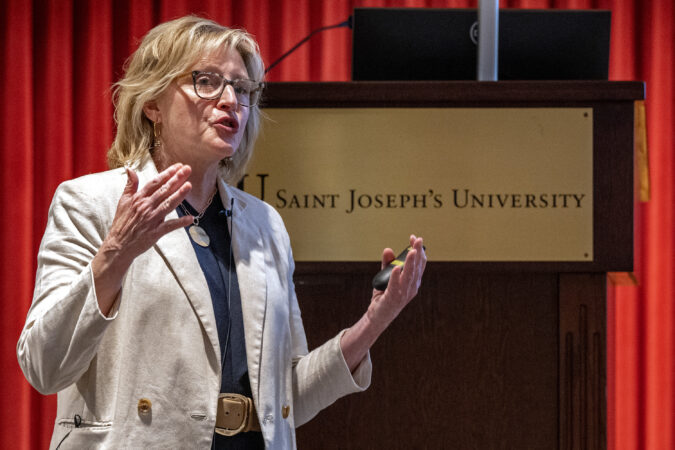
    The Inquirer spoke with Rutschman, who researches vaccine federalism as a health law professor and director of the Health Innovation Lab at Villanova University, to learn more about this new era and its possible consequences in a conversation lightly edited for length and clarity.

    What is vaccine federalism?

    For vaccination and everything else, our system is split in two. You have the states and then you have the federal government.

    There is room for tension between the federal level and the state level. Historically, that tension has been, I would argue, limited. It has existed, but it’s not been the defining feature. Now, particularly in the context of vaccines, it has become probably the most salient feature.

    How are states allowed to differ from the federal government as far as vaccine policy?

    States don’t have the power to authorize a new vaccine to come to market.

    But then you have a lot of things that the Centers for Disease Control have done that are more informational. The federal government recommends which shots children or adults should get, and the time frame for most children to get these shots.

    The federal government offers this kind of informational support, and then states set their own policy.

    How has vaccine federalism played out in the past?

    Examples from the past are not as salient or blatant as the ones you’re seeing right now.

    There was a lot of variability around the country, but the overall message was harmonious. Everybody was trying to get, by and large, most of the population vaccinated past herd immunity.

    What is happening now?

    Now it’s a head-on collision.

    States are saying, ‘We’re not going to implement requirements to restrict access to these vaccines.’ The Board of Pharmacy in Pennsylvania decided not to be bound by the CDC’s recommendations. This is a direct clash. We hadn’t had this before between the federal government and the states in the field of vaccines.

    What are examples of this new era of vaccine federalism?

    One example would be the formation of state clusters. These are a lot of neighboring states in agreement. They’re trying to share data and think of best practices, which is almost that informational function that traditionally fell to the [federal health agencies].

    The states are saying, ‘Well, you’re not doing that, so we will.’

    ‘We will pull resources and information to come up with our own advisory role.’ That’s unprecedented.

    You have sort of two speeds in the country. Some states are collaborating and very active in setting regional vaccine policy. And then you have a bunch of states that go completely the other way. You have the, for now, isolated case of Florida saying, ‘We’re going to just basically do away with all vaccination mandates,’ which is going further than the federal government.

    Now it’s a much messier situation, legally, philosophically, politically, etc.

    How effective are these regional coalitions?

    They are accomplishing something. You see fewer restrictions in access to vaccines in a place like Pennsylvania than other states.

    Whereas states who are not part of these kinds of coalitions — typically excluding the likes of Florida — a lot of them are waiting to see what happens, because this has never happened in the history of vaccination in the United States.

    In the meantime, there are a lot of people falling through the cracks who would have been indicated for a vaccine last year. Now they’re wondering what to do, and their providers are not entirely sure.

    There’s a lot of confusion about what happens now that federal policy has taken a completely different direction.

    What impacts do you see coming from this new era of vaccine federalism?

    People hearing one thing out of the CDC and another one out of the state of Pennsylvania may think, ‘Who’s correct? Who should I listen to?’ You start aggregating all the people who might forgo vaccination just because they don’t understand what’s going on.

    I think it continues to accelerate the overall phenomenon of vaccine mistrust, and we’re already seeing levels of herd immunity come down for many vaccine-preventable diseases.

    If I were a provider, I would be similarly confused and concerned, because nobody takes lightly the idea that from now on, ‘I’ll be doing something that’s in direct opposition to what the federal regulators are suggesting I should be doing.’ So I think there’s a fear factor and confusion.

    Lastly, I think there’s an overall chilling effect with regard to vaccines. Yes, some vaccines make money, but they don’t make a whole lot of money to begin with. They’ve never been one of the preferred products for manufacturers. These are not the most profitable things they can be doing.

    I think that we will see much less focus on vaccine development in years to come, because that’s the logical position for pharmaceutical companies, and for some funders even to take, which is unfortunate.

    What do you think of Pennsylvania’s response?

    I think it’s to Pennsylvania’s credit, and I think it’s to some degree reassuring for Pennsylvanians. Although it obviously makes me sad that we have sort of this two-speed mode in the country. Some part of this national fabric has ruptured.

    For now, Pennsylvania has protected itself as it can, but states alone don’t control everything. You have Pennsylvanians going to other states where you may have an outbreak of a vaccine-preventable disease. We don’t have real borders. We cross them all the time.