The common wisdom that “There will never be an American pope” went up in white smoke on May 8, 2025, when Cardinal Robert Prevost, a boy from the South Side of Chicago and a graduate of Villanova University, was elected pontiff and took the name Leo XIV.
Now, on the eve of America’s Semiquincentennial, as if to underscore how much has changed, the American pope has been awarded the National Constitution Center’s Liberty Medal. Pope Leo accepted the award at the Vatican on April 30. On Friday, in a ceremony at the National Constitution Center on Independence Mall, the pontiff will address the audience live from the Vatican in a speech that will be livestreamed globally.
The medal, according to the center’s interim president and CEO, Vince Stango, will celebrate how “[i]n formal Vatican statements and public addresses, His Holiness has affirmed that peace cannot exist without freedom of religion, freedom of thought, and freedom of expression, principles that closely align with constitutional protections guaranteed by the First Amendment.”
One reason an American pope was long unthinkable is that American principles have not always aligned with Catholic principles. The proud American refusal to establish the Catholic Church as the national religion flew in the face of traditional Catholic teaching that the church should ensoul the body politic.
That was never going to happen in the United States, of course. Not even close. And so the question then became, from the Catholic point of view, what to say about the American model that included the First Amendment, with its coordinated guarantees of the “free exercise” of religion and the nonestablishment of religion by Congress.
Rome’s response has changed over time. In the late 1800s, Pope Leo XIII noted with approval the religious situation of Catholics in the United States, yet cautioned against the error that separation between the church and the civil power was to be the norm. By the 1950s, though, some Catholic thinkers were claiming the American model, in fact, stated the ideal, reasoning that the First Amendment guarantee of “free exercise” is necessary for a person to honor his God-imposed duties.
By now, even though the Second Vatican Council (1962-1965) stated that it was leaving the church’s traditional teaching “untouched,” the nonestablishment of religion and a legal guarantee of individual and group free exercise of religion, subject to just limitations for the common good, constitute the norm proposed by the Catholic Church to the world as we know it.
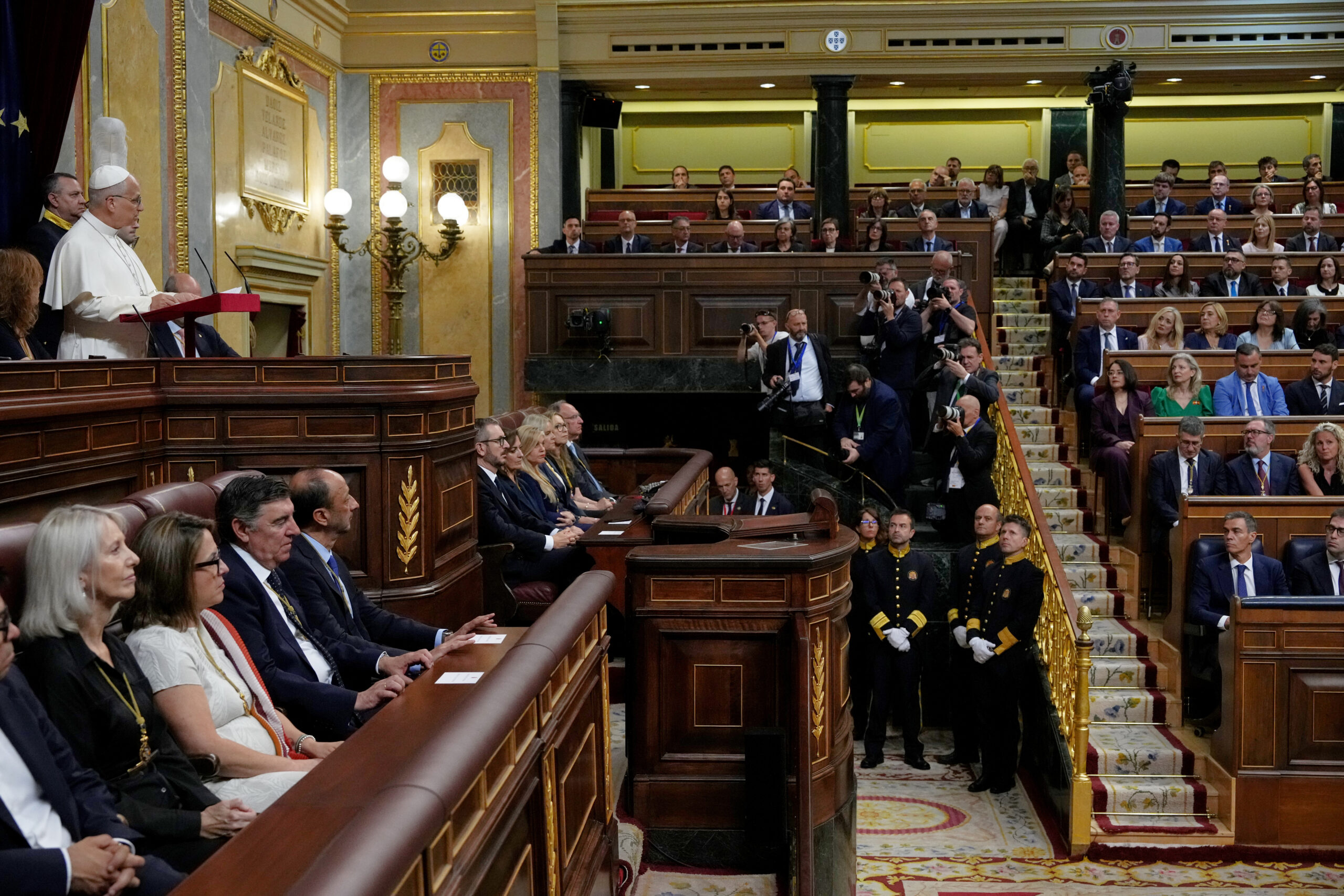
Pope Leo XIV speaks to members of the Spanish Parliament at the Congress of Deputies, in Madrid, on Monday, June 8.
In speaking to the Spanish Parliament on June 8, for example, Pope Leo insisted that laws must respect “freedom of thought, conscience and religion, a fundamental right that protects the most intimate sphere of the person. The freedom upon which the contemporary state is built, if it is authentic, recognizes the religious dimension of the human person.”
In the ceremony on Independence Mall on Friday, Pope Leo will address a nation in which, for the first time in its history, it is becoming socially acceptable to oppose the free exercise of religion for some people. Litigation that threatens to cancel people’s freedom to live according to their conscience becomes more common. The seal of confession, long protected in the United States, is under assault, and the threat is real. In his address to the Spanish Parliament, Pope Leo warned against the withdrawal of that protection, and the warning needs to be echoed in the United States.
It would be one of history’s great ironies for an American pope to call his country back to a principle that his church learned, in part, from America.
Religious liberty is not the only American principle on the American pope’s mind, as his message to the 2026 graduates of his alma mater makes clear. “This being the 250th anniversary of the United States of America, I would invite you to recall in a special way the guiding principles of the foundations of our nation: ‘We hold these truths to be self-evident: that all [people] are created equal; that they are endowed by our Creator with certain inalienable rights, and among those are Life, Liberty and the pursuit of happiness.’”
The principles of the First Amendment are to be cherished, but prior to those principles, the pope has reminded us, are the principles of the Declaration of Independence around which the nation was formed in 1776. And while the declaration does indeed attest to the nation’s commitment to the people’s Creator-given right to liberty, the outstanding principle of the declaration to which President Abraham Lincoln later found the nation “dedicated” since 1776 was that all people are “created equal.”
When Lincoln summoned the American nation to rededicate itself to the equality of all persons, he did so for good reason: Unless we are related to one another as equals, we are related to one another as fractions to wholes. The three-fifths clause of the original U.S. Constitution gave effect to slavery, a grievous injustice removed by the 13th Amendment in concert with the other Reconstruction amendments. These amendments constitutionalized the nation’s earlier commitment to our having been “created equal,” but not everyone is a believer in the equality of all people.
Today, Americans are divided over the declaration and, specifically, the claim that we are “created equal.” Human equality is said by some to be a self-evident lie, and even among those who pay it lip service, commitment to the basic equality of all people is undermined by identity politics, race-based priorities, and blood guilt.
Pope Leo, though, is not in doubt about the equality of all people. In his first encyclical, Magnifica Humanitas, he writes that we are equal in “ontological dignity, which is neither acquired nor earned, nor does it need to be justified.” This immutable and foundational equality is true of all people because we are, without exception, “created in the image and likeness of God.”
And this is another truth Americans need to reclaim.
In order to reclaim it, we need to understand that human equality was never meant to state something empirical or measurable about people. The equality declared by the declaration and celebrated by Lincoln, and fully constitutionalized by the Reconstruction amendments, depends on what is spiritual in a person, represented by the radical Christian judgment that underneath the obvious and often wonderful diversity of people lies a universal sameness in being created in the divine image.
When G.K. Chesterton was asked, “What is America?” he gave a characteristically smart answer that has been debated ever since: “America is a nation with the soul of a church. America is the only nation in the world founded on a creed. That creed is set forth with dogmatic and even theological lucidity in the Declaration of Independence.”
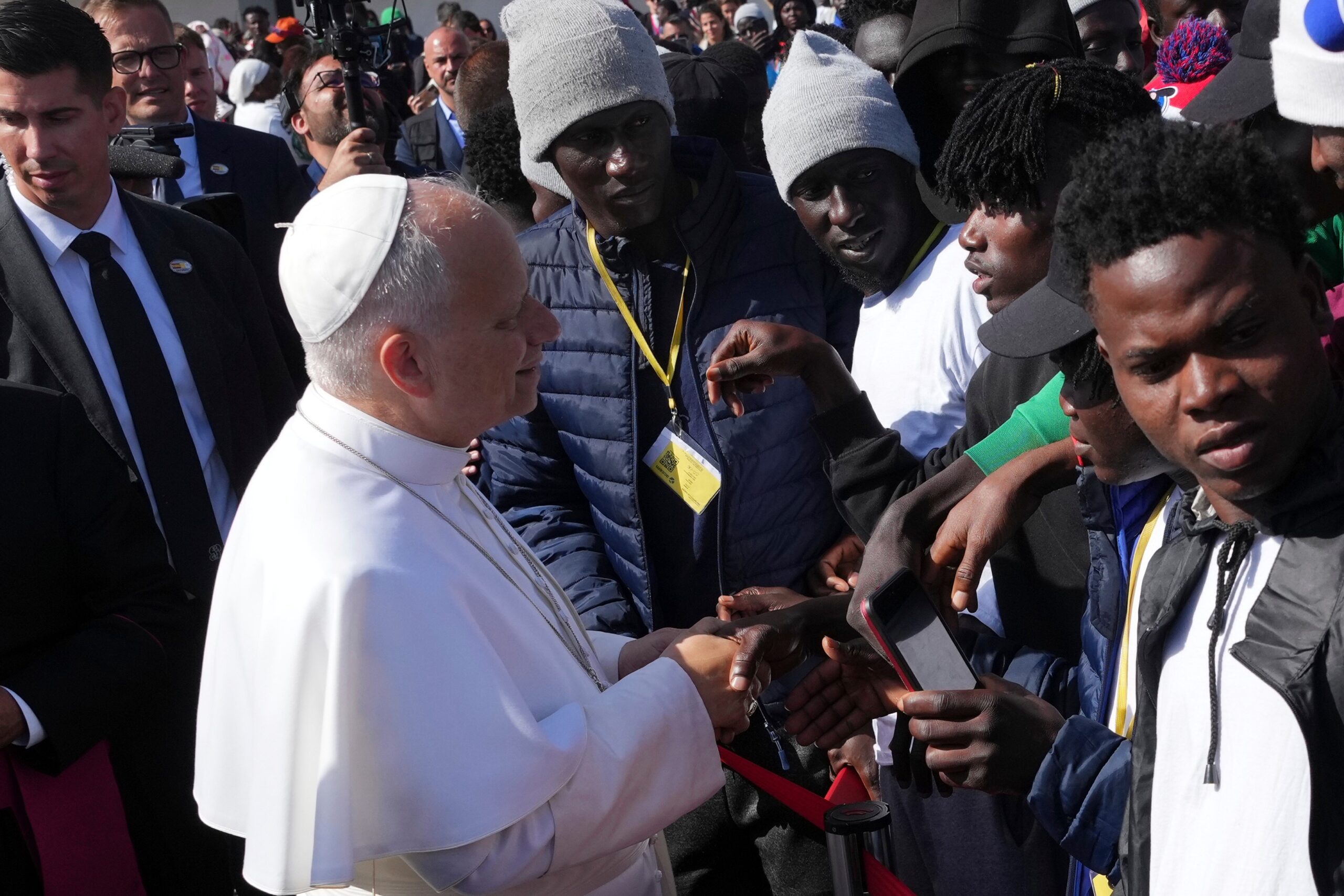
Pope Leo XIV meets migrants at the Las Raices center, in San Cristobal de la Laguna, Tenerife, Spain, June 12.
Robert Prevost, now Pope Leo, was formed, in part, in that “church” with its declarational creed. He was also, and first, formed in the Catholic Church, with its commitment to the universal equality of all people.
What the American pope can do now, in a way no other person on earth can, is to remind Americans that the equality to which their nation has been dedicated since 1776 depends on what Christianity has shown the world: that even the least, in worldly eyes, are equals in God’s eyes.
Patrick McKinley Brennan is the chair of Catholic legal studies and a constitutional law scholar at Villanova University.
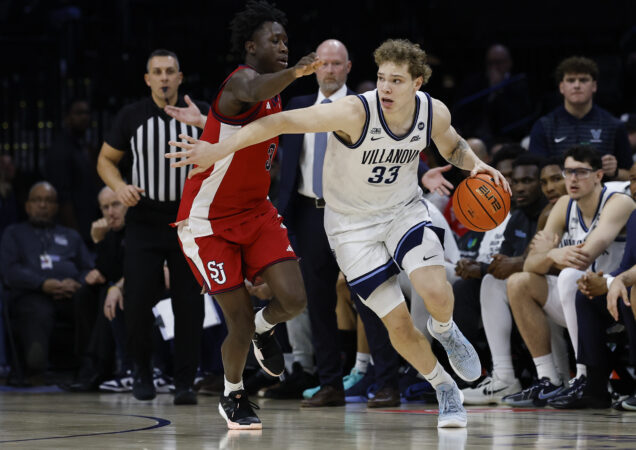
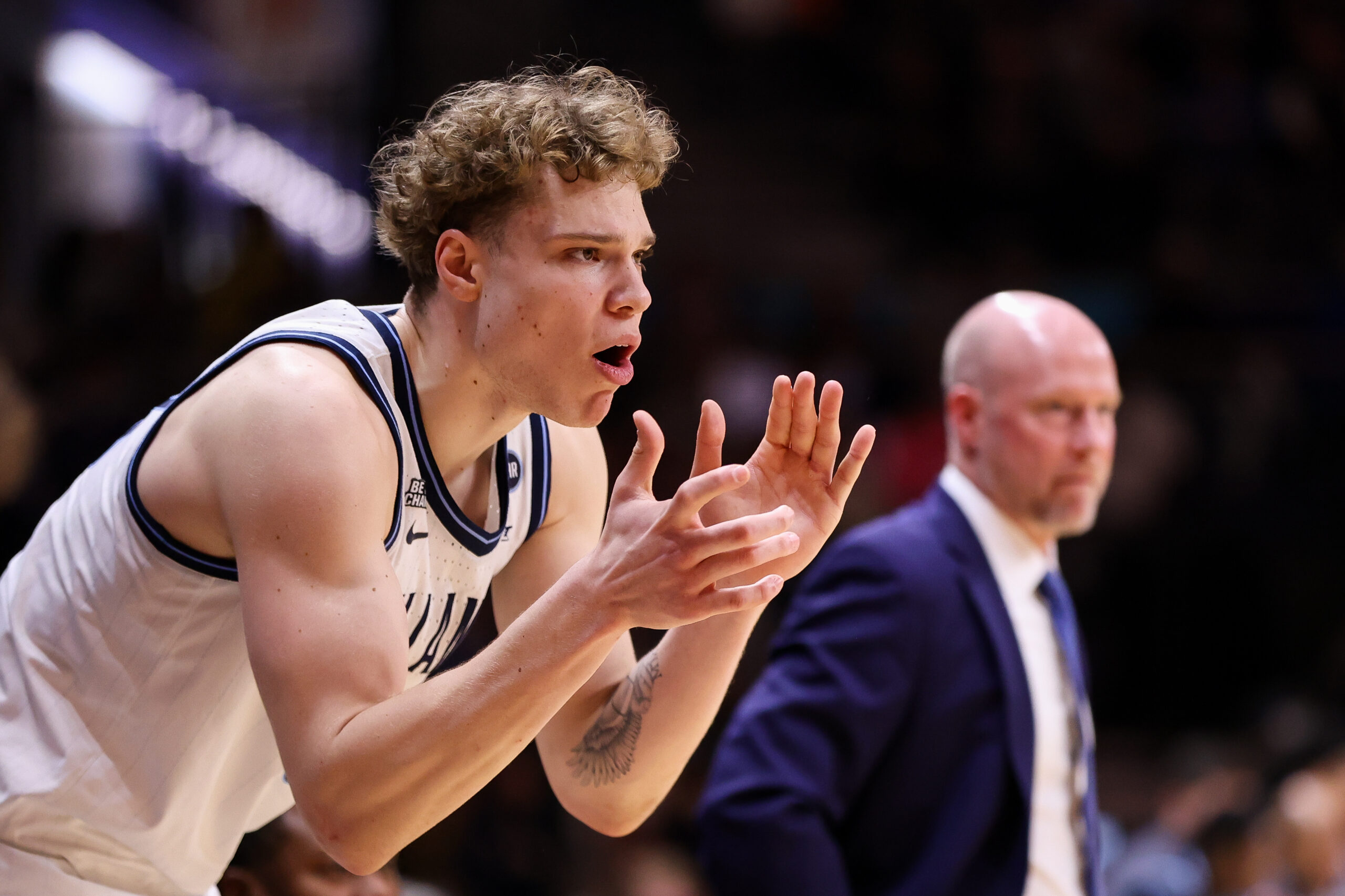
The Villanova forward was having a solid first college basketball season after an NCAA ruling prevented him from playing last year as a freshman. The long wait was worth it. Hodge made his 29th start in Villanova’s 29th game of the season Saturday night at Madison Square Garden. He hit two three-pointers and was on his way to reach his season average of 9.2 points per game before he crumpled to the floor early in the second half after making a move in the post.
Hodge will undergo surgery to his right knee and miss the rest of the season.
“It just really stinks that the kid was going to be able to play in his first Big East tournament, his first NCAA Tournament, that’s really where [my head] is at,” Villanova coach Kevin Willard said Tuesday.
But this is March, crunch time in college basketball, and so while Willard was feeling bad for the player he recruited out of high school while still the coach at Maryland, Villanova has a game Wednesday night and another on Saturday before postseason play begins.
Hodge was averaging more than 28 minutes in the 28 games prior to Saturday, and the 6-foot-8 forward going down leaves Willard with a big hole to fill for a team with limited frontcourt depth.
Willard answered the obvious first question — who goes into the starting five? — by saying sophomore wing Malachi Palmer, who will likely get his first college start in his 52nd career game Wednesday night at DePaul. Palmer, a 6-6 sophomore wing, is the sort of obvious replacement. Save for 7-foot backup center Braden Pierce, Palmer is the biggest and most physical defender Villanova brings off the bench.
Villanova guard Malachi Palmer could make his first on Wednesday night.
Palmer had a relatively quiet first half of the season but has emerged in conference play as a willing defender and someone who can knock down three-point shots.
“Obviously not having Matty stinks, but Malachi has played really well,” Willard said. “It does hurt us, but it’s not catastrophic.”
While Palmer starting offers more of a traditional one-through-five lineup for Willard, there will be variations that have the Wildcats going smaller or bigger. The smaller unit would have Tyler Perkins — who at 6-4 is Villanova’s second-leading rebounder (5.5 per game) — guarding a forward in a lineup that also has three other guards — Acaden Lewis, Bryce Lindsay, and Devin Askew — on the floor.
The bigger unit would be one that hasn’t happened yet this season: Pierce being on the floor at the same time as 6-10 starting center Duke Brennan. Neither big man stretches the floor with outside shooting ability. So, how would that work?
Willard pointed to his two-big lineups last year at Maryland, where Derik Queen and Julian Reese played side-by-side and while Queen could shoot a little bit, he rarely attempted three-pointers. Lineups with Brennan and Pierce on the floor at the same time would feature more screening and more side-to-side action, Willard said. One big hides in the dunker’s spot, for example, while the other is rolling.
Villanova has practiced with both bigs on the floor, Willard said, in case it ever needed to match up against bigger lineups. It’s a lineup the Wildcats could have had to use in the postseason with or without Hodge’s injury, now it’s one they could deploy as soon as Wednesday night.
Temple transfer Zion Stanford, who has barely played in conference play, could factor into the rotation more significantly, too.
Kevin Willard believes Villanova forward Matt Hodge will have a large role when he returns from injury next season.
Those are the short-term implications, and Willard has two regularseason games to tinker with the rotation before the Big East tournament.
But it being March also means it’s time to start considering next season’s roster. Willard said Hodge’s injury “does and it doesn’t” have major implications for the 2026-27 Wildcats. That’s because Willard is planning for Hodge to return and take on a big role. Willard said he expects Hodge to need around eight months to return from his injury, and he could be practicing by October.
“We’re planning on Matt playing for us next year,” Willard said.
There will still need to be plans for the portal, though. That means making sure to stockpile the roster via the portal or otherwise in case Hodge isn’t ready to go right away or, worse, has a setback. Villanova’s priorities for the portal were going to be adding talent and athleticism in the frontcourt anyway with Brennan graduating.
From that standpoint, Hodge’s injury hasn’t changed a ton. But it will be on Willard’s mind as he and general manager Baker Dunleavy navigate the frenzy that is the transfer portal, which is only one month away.
Bryce Lindsay isn’t very superstitious, so he didn’t take Kevin Willard up a few weeks ago when the Villanova coach suggested maybe he should reorient himself in bed and sleep a different way.
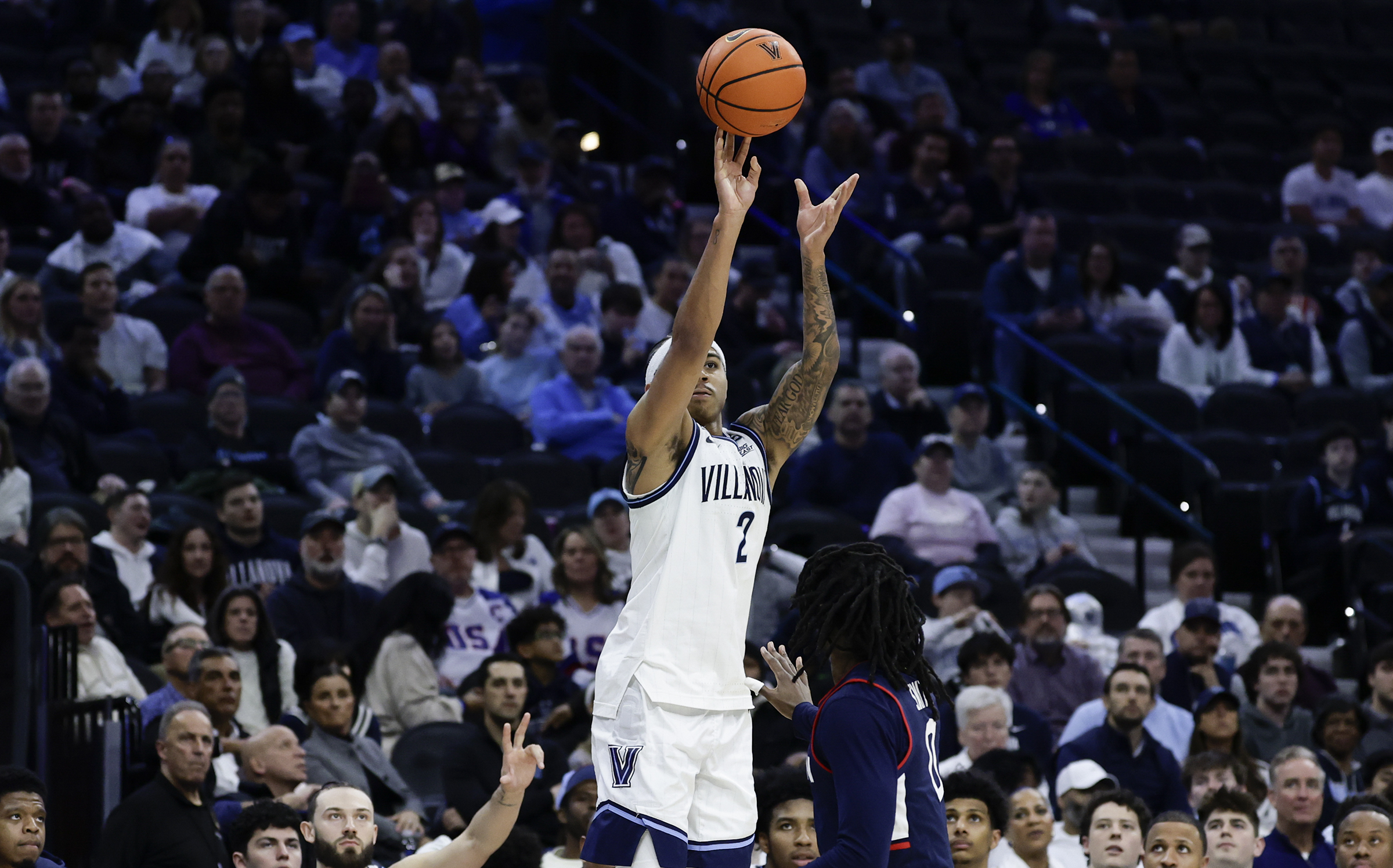
Lindsay did, however, take Willard and his family and support staff up on their advice in recent days. Lindsay was 13-for-65 from three-point range in the 11 games that preceded his 15-point effort, behind four triples, last week in an overtime road win over Xavier. The redshirt sophomore guard carried Villanova at times through its nonconference schedule, but being the focus of the opposing team’s scouting report was taking its toll.
“They’re telling me, ‘Go out there and be you,’” Lindsay said Wednesday night after Villanova’s 82-73 win over Butler. “‘Don’t think too much. Focus on defense, focus on the other things, and your shot will come.’”
Lindsay scored 19 points Wednesday and helped Villanova get to 22-6 on the season and 13-4 in Big East play. He went 2-for-6 from three-point range and was 6-for-14 from the field overall and 5-for-5 from the free-throw line. It was Lindsay’s first time making six shots in a game since a Jan. 3 road win at Butler. He made six or more in eight of Villanova’s first 14 games before a 13-game drought.
Villanova has fared just fine despite Lindsay’s prolonged slump. But there’s no denying how much easier the offense comes when Lindsay — who shot 40.8% from deep at James Madison last season — is filling it up.
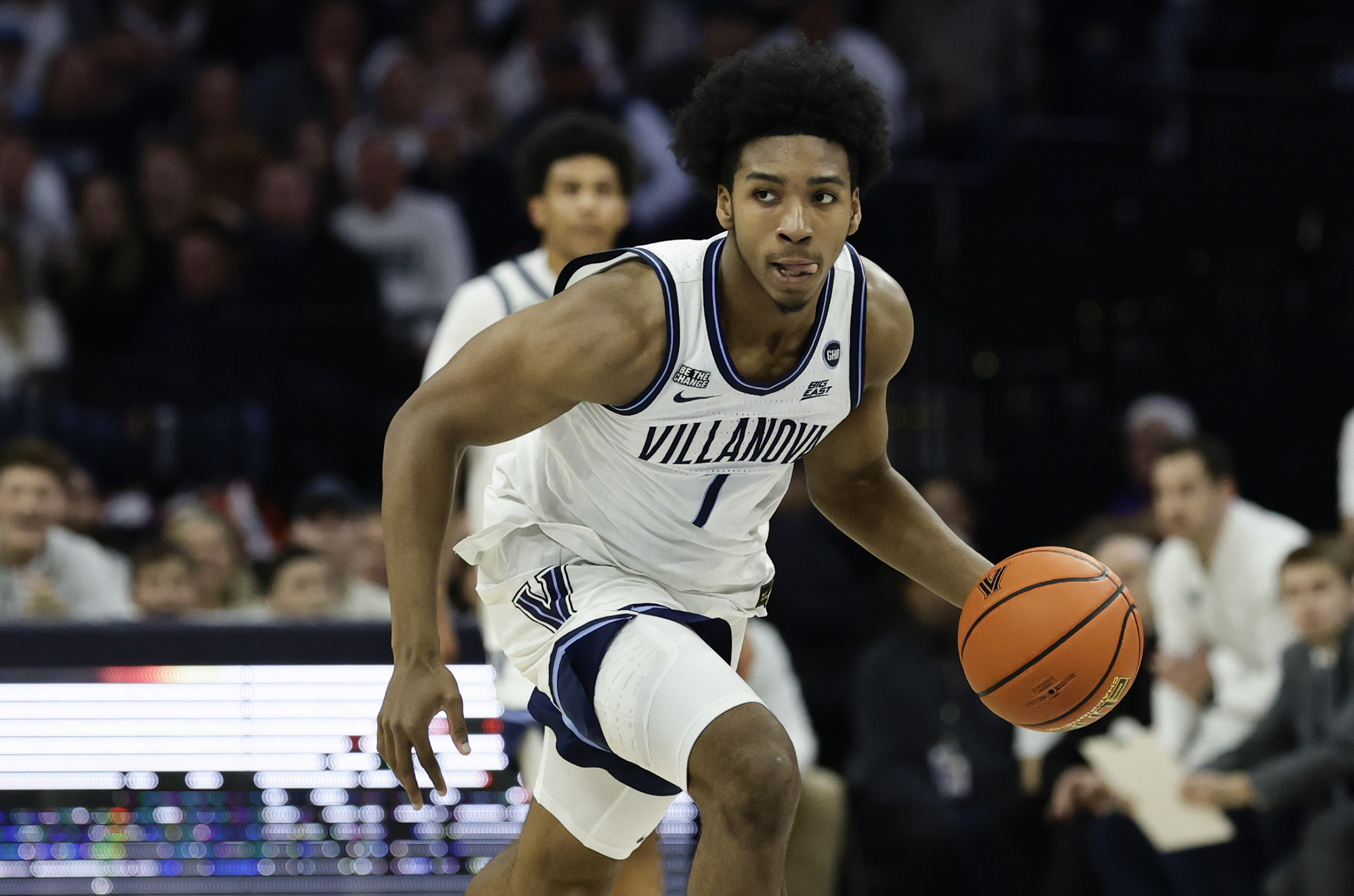
Bryce Lindsay and Villanova are third in the Big East behind St. John’s and UConn.
It did take a bit for Lindsay to understand that there was more to impacting a game than just making shots. This was the first real slump he remembers going through. He had some off shooting nights at JMU last season, but things never snowballed the way they did in recent weeks.
“That was probably one of the hardest things I have ever went through in my life,” Lindsay said. “I’ve never, ever played that bad until now. It comes with the game. When you’re the No. 1 player on the scout, they’re going to try to take you away and that’s what they did. I’m just figuring out ways to maneuver through that.”
Willard would certainly disagree with Lindsay’s assessment of his play, and he spent recent weeks trying to build him up and remind him of that when he noticed Lindsay’s frustration showing up in his body language.
“Sometimes when you’re a shooter and you’re not shooting good and you’re standing on the court and you’re thinking about it, it’s like the worst thing you can do,” Willard said. “Just trying to get them to focus on all of the positive stuff.
“There are times on the floor where he’s plus-8, plus-9, but he’s 0-for-4. You can see his body language. You can see everything going down. But your team is playing well when you’re out there.”
Lindsay, who is averaging 14.3 points over the last three games, was plus-12 in 31 minutes Wednesday night. The advanced stats show a team that has a much better net rating in conference play with Lindsay on the floor.
“In my head I feel like I was playing bad, but in their head I’m not playing bad because [of] the stats, my plus-minus is good,” Lindsay said. “I was always able to make shots, but when I don’t see the ball go in it’s hard.
“These past few games I tried not to focus on it as much.”
His effort Wednesday helped Villanova bounce back from Saturday’s deflating loss to No. 6 UConn in front of a sold-out Xfinity Mobile Arena. The Wildcats built a 14-point halftime lead but started sloppily in the second half and allowed Butler to climb back into the game. The lead was one before Lindsay extended it back to three with a layup with more than eight minutes to play. He again scored inside to bump an eight-point lead back to double digits with four minutes to go, then helped seal the game with four free throws inside the final two minutes.
The fact that Lindsay scored all 10 of his second-half points inside the arc is a positive sign, too. It seemed at times that he was becoming too reliant on shooting threes in trying to break out of his slump.
“Just focusing on other things,” Lindsay said when asked how he navigated it all. “My defense, my rebounding …”
Willard, who was seated at the postgame podium between Lindsay and Devin Askew — who scored 16 points Wednesday — leaned over as Lindsay went on with his answer and circled a stat on the sheet in front of Lindsay.
Focused on rebounding? Lindsay had zero rebounds Wednesday.
The player and coach shared a laugh. After six weeks of slumping, Bryce Lindsay can finally smile.
Does Donald Trump have to ruin everything? The answer is obviously yes, but this one was heartbreaking. Sunday’s overtime thriller over Canada, which gave U.S. men’s hockey its first gold medal since this senior citizen was a college junior, was a howl of joy in what’s been a dire year for America. But then (taxpayer-)Ka$h Patel showed up to party, and soon Trump was on the phone, egging on the boys with misogynistic trash talk about their gold medal compatriots, the women’s hockey team. Now the men are invited to Trump’s State of the Union address, the women “had other plans,” and I almost wish our Canadian friends had won the game.
How Indiana University won a football crown and lost the plot
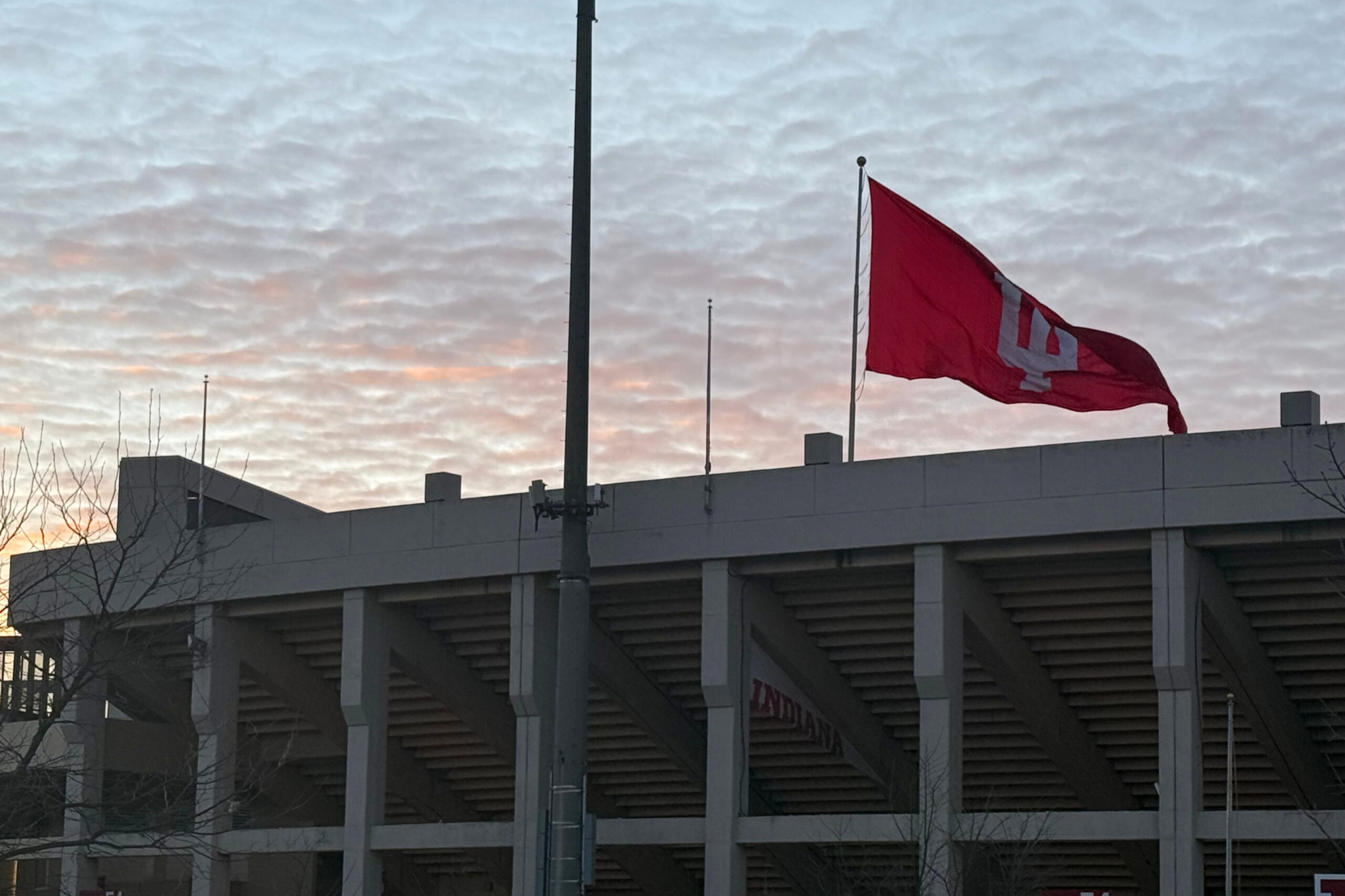
Indiana University’s victory flag flies over Memorial Stadium in January in Bloomington, Ind.
Even in a state where the sports miracles, from Rudy and The Knute Rockne Story to Hoosiers, are so big they tend to make it to Hollywood, there’s never been a feel-good script quite like Indiana University — with the most losses in college football history until this season, when it went 16-0 and won the national championship.
“The energy is just absolutely insane,” Katie Shin, a recent Indiana alumna, told the Athletic as thousands of fans went wild on the Bloomington campus that night, saluting Heisman Trophy quarterback Fernando Mendoza and their unsmiling genius head coach Curt Cignetti. “The whole state is just rallying around IU.”
But there’s a huge irony for anyone who’s a big fan of America’s colleges for more than just what happens on the gridiron. In the same season Indiana was slowly climbing to the top of the football polls, the flagship public university was also ranked dead last in the nation.
For something arguably more important: free speech.
The Foundation for Individual Rights and Expression (FIRE), the national campus speech group based here in Philadelphia, last fall ranked IU 255th on its 2026 ranking of universities over freedom of expression — the lowest-rated public institution in America, and only higher than the controversy-wracked private sister schools, Columbia University and Barnard College.
Interestingly, the FIRE low-ranking came after a slew of campus controversies in which the silenced speakers or protesters were all over the map ideologically — a canceled Jewish speaker and a shout down of right-wing speakers, but also draconian moves against pro-Palestinian protesters, including harsh penalties for a 2024 encampment. Last month, a federal court ruled that IU’s punishments of the Gaza campers and its anti-protest policies were unconstitutional.
FIRE’s lambasting of IU’s free speech transgressions was reported upon last Sept. 9 in the student paper, the Indiana Daily Student. The following month, school administrators ousted the faculty adviser to the IDS and told the student journalists they could no longer print the paper, and that news could only be published online. The university’s insistence that this was purely an economic move was a surprise to the ex-adviser, who sued and said he was fired “after he refused to censor the students’ work.”
It ought to go without saying that curbing the free exchange of ideas is antithetical to the most sacred values of American higher education. But the free speech mess at IU is but one controversy at an iconic heartland university that has become a poster child for the moral crisis of U.S. universities, even as it celebrates football glory.
Clearly, the leadership at IU — and this includes its board of trustees, with three new conservative, pro-MAGA members that GOP Gov. Mike Braun named in June under a law that also allowed him to boot three trustees elected by IU’s alumni — is eager to keep its pigskin prowess as the main thing America knows about the university.
The school just signed its field general, Cignetti, to a contract extension that will pay him $13.2 million a year through 2033, making him one of the three highest-paid coaches in the nation. But his new deal flabbergasted a growing number of critics, who note the big raise came as IU — just days after the new conservative trustees were named — either eliminated or made deep cuts in nearly 250 academic programs such as French, art history, geography, and East Asian studies.
Meanwhile, Cignetti isn’t the only high-profile figure at IU to see a big raise. Also this weekend, the trustees gave Whitten a $100,000 pay hike, to an even $1 million a year — citing her willingness to work with industry.
At least 250 IU alums, joined by current faculty and students, have signed on so far to an open letter and donation freeze demanding that, instead, Whitten step down. They also want the university to restore both its diversity programs and robust free speech protections, as well as the reinstatement of the three alumni trustee positions. But they are swimming against a red tide of conservatism that’s polluted the public college universe in Indiana.
Cross-state public rival Purdue University is reeling from a recent report in its hometown newspaper that the school, under pressure from conservative lawmakers, has informally banned the admission of international students from China and a slew of other countries. Students and faculty have complained of an unwritten “soft ban” on many overseas applicants, although Purdue has denied that such a policy exists.
Meanwhile, the regional campus of IU Indianapolis caused a stir and triggered a protest when it abruptly canceled the 57-year tradition of an annual Rev. Dr. Martin Luther King Jr. dinner — a move that was undertaken not long after the school removed campus signs that read “Black Lives Matter” and “Discrimination has no place here.”
Indiana is hardly alone. The 2025-26 academic year has been marked by similar outrages against unfettered speech and racial inclusion, especially in the most pro-Trump red states. To cite just one of many examples, the University of Texas System just adopted a new policy aimed at limiting discussion of “controversial topics” in the classroom. Isn’t that the whole point of the college experience?
The erosion of freedom at the American university has happened gradually and then suddenly, and it needs to be getting a lot more attention. That’s hard when the president is sending aircraft carriers to threaten Iran, imposing steep taxes for no reason, and generally acting and talking like the mad king he is.
Yet, nothing is more important for MAGA’s authoritarian project than what is happening at Indiana University and other college campuses right now. As I wrote in my 2022 book, After the Ivory Tower Falls, higher ed is the fulcrum of America’s political divide, now more than ever.
Every tactic — murdering the humanities and the social sciences, making campuses more white, ensuring our future elites aren’t exposed to “controversial topics” while entertaining them with the beer and circuses (a phrase, ironically, coined by an IU English professor) of big-time football — is another step toward MAGA’s strategic goal of an American electorate that cannot think critically.
The fight for the soul of Indiana University is the fight for the soul of the United States, and it’s not what’s happening inside Memorial Stadium against Ohio State or Michigan.
“We know that IU alums are smart enough to celebrate the success of the Football Hoosiers and condemn what Pamela Whitten is doing to degrade the prestige of our degrees,” the university dissidents write in their open letter. “Please help us take a stand against the debasement of our university and restore the glory of old IU.”
Yo, do this!
You might have noticed that the late Jeffrey Epstein and his randy U.K. royal pal, the artist formerly known as Prince Andrew, have been in the news a lot lately. But did you know there’s an excellent 2024 Netflix movie called Scoop about the drama behind the disastrous 2019 BBC interview that started the long downfall of Andrew Mountbatten-Windsor, now arrested and under a British police investigation? I watched Scoop over the weekend, and it’s both an entertaining and highly relevant journalism thriller.
Since this space is devoted to my weird entertainment choices, and not what normal people are doing, I have to share that I’ve been escaping today’s banality of evil with a deep dive into the musical world of … mass murderer Charles Manson. My all-time favorite podcast, Andrew Hickey’s A History of Rock Music in 500 Songs, did a remarkable four-parter a couple of years ago about Manson and his shockingly close ties to the Beach Boys (and others like, sigh, Neil Young) that resulted in the murder mastermind’s uncredited cowriting of their 1968 song, “Never Learn Not to Love.” There’s also a compelling detour into the life of Black music pioneer Huddie “Lead Belly” Ledbetter, and a book recommendation that sounds equally incredible: Bring Judgment Day: Reclaiming Lead Belly’s Truth from Jim Crow’s Lies by Sheila Curran Bernard.
Ask me anything
Question: Update us on what is and what should be happening in Quakertown [please]. — @marco2751.bsky.social via Bluesky
Answer: Thanks for this, Marco, because if readers aren’t up to speed on what’s been happening in Quakertown, an exurb nearly an hour’s drive north of Philadelphia, then they need to learn. Quick version: A peaceful Friday walkout by Quakertown High School students protesting U.S. Immigration and Customs Enforcement raids turned shockingly violent, highlighted by a grown man placing a teen girl in what appeared on video to be a dangerous choke hold. It turned out this man was the Quakertown police chief and interim borough manager, Scott McElree. Adding insult to injury, five students were arrested and spent the entire weekend in jail before they could see a judge. What should be done? Quakertown can’t fire McElree quickly enough. The right to peacefully assemble and protest the government is the heart of the First Amendment, and what makes America a democracy. A police chief who can’t honor the U.S. Constitution should not have a job.
What you’re saying about …
Last week’s take-a-step-back-from-the-madness question about who is the greatest living American (inspired by the passing of the Rev. Jesse Jackson) didn’t get a large response, but brought some compelling arguments. Two men were named twice: Pope Leo XIV, the Villanova alum who has shone as an advocate for immigrants and for peace on the world’s stage since last summer, and Sen. Bernie Sanders, who has never wavered in fighting for progressive values. Other suggestions included Bob Dylan, Edward Snowden, Barack Obama, and — in a show of respect for science under siege — the health experts Anthony Fauci and Peter Hotez, who, wrote Pat Eisenberg, “is trying to improve the health of Americans despite all the things the Trump administration is doing to ruin our health.”
📮 This week’s question: I’m hopefully going to be writing soon about the scourge of prediction markets like Kalshi, and more broadly, the problem of sports betting. Should these forms of gambling be banned, or at least more strictly regulated? Please email me your answer and put the exact phrase “Betting bans” in the subject line.
Backstory on what pundits don’t get about ‘28
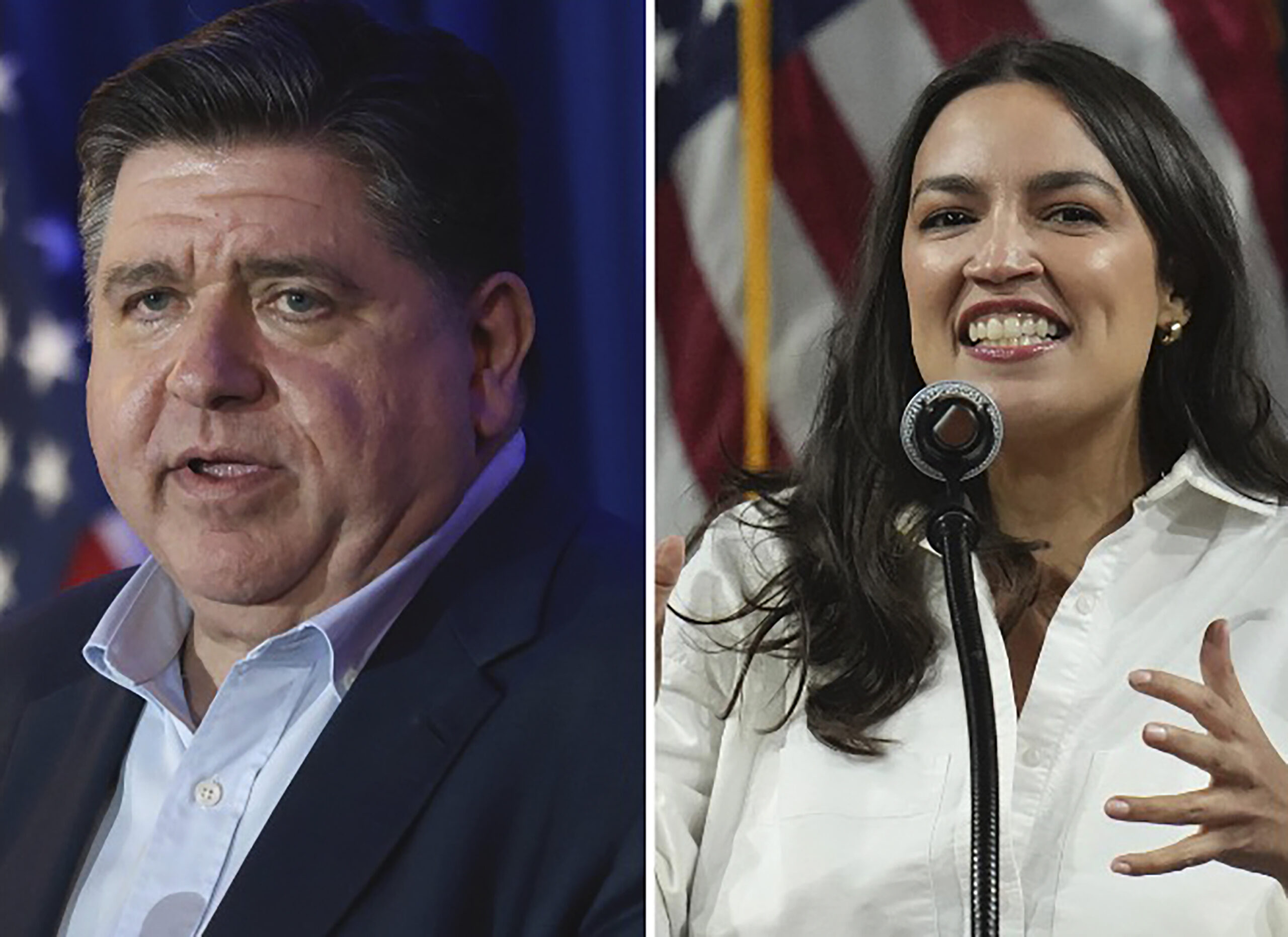
This photo combo shows Illinois Gov. JB Pritzker, left, speaking during the McIntyre-Shaheen 100 Club Dinner, April 27, 2025, in Manchester, N.H., and U.S. Rep. Alexandria Ocasio-Cortez (D., N.Y.) speaking during a “Fighting Oligarchy” tour event at Arizona State University, March 20, 2025, in Tempe, Ariz.
Get 13 Democratic and left-leaning independent voters together in the same chat — as the New York Times did with a recent focus group, the latest in its running series — and you’d surely hear some harsh words about Donald Trump and the GOP. But ask them what they think about the Democratic Party, and you might want to cover your ears.
“Spineless.” “More complacent than I thought they would be.” “Paralyzed.” “Afraid.” “Incompetent.” “I guess suffocated, or given up …” “Sold out.” I’m not leaving out the positive responses, because there weren’t any. You also won’t be surprised that these 13 Democratic or aligned voters — very diverse across racial, class, and age lines — want more radical leaders who will take the party, and hopefully the nation, in a bold new direction. There was positive buzz for the likes of new New York Mayor Zohran Mamdani and Texas Rep. Jasmine Crockett — anyone with fresh ideas and a willingness to mix it up with Trump. Said a 36-year-old independent woman from Washington state: “I still don’t agree with everything she’s doing, but Alexandria Ocasio-Cortez is a well-known name and seems to be fighting against Trump.”
I thought a lot about the Times’ focus group last week as I heard or read two veteran pundits try, at this relatively early date, to handicap the 2028 presidential race. Mark Halperin (who’s somehow still around despite this) went on POTUS radio with Michael Smerconish to defend his picks: He included ex-Chicago mayor Rahm Emanuel, a center-right figure who is passionately hated by any real Democrat I’ve ever spoken with, and also overrated Kamala Harris (floating on the fumes of her name ID), as well as his No. 1 pick, California Gov. Gavin Newsom, with Pennsylvania Gov. Josh Shapiro at No. 2. He said he included AOC and upgraded Illinois Gov. JB Pritzker only because his “sources” told him to — because his sources understand the Democrats while the clueless Halperin does not.
Ditto Nate Silver, who has magically reappeared in the Times, which first made him a star in 2012. Although Silver did place AOC in second, behind Newsom, he also — much like Halperin — uprated tired conventional wisdom candidates like Shapiro (No. 6) and Michigan Gov. Gretchen Whitmer (No. 4, despite being invisible recently), and grossly downrated progressive favorites like Pritzker (14) and Connecticut Sen. Chris Murphy (18), as well as more interesting and unorthodox names like Arizona Sen. Mark Kelly (12) and Kentucky Gov. Andy Beshear (15). He sees Newsom as the darling of “Resistance Libs,” the Trump-hating MS Now watchers who controversially get tagged as heavily “wine moms.” Said Silver of Newsom: “They want a fighter. And Newsom plays expertly into that.”
True, but I expect Newsom’s standing among Democratic primary voters will crumble once voters learn more about his ties to Silicon Valley billionaires, or his verbal sellouts of the transgender community, or his “meh” popularity among the Californians who know him best. Readers of this newsletter were unanimous earlier this month in not wanting Shapiro to run. I’m not going to do a numerical ranking, but I would place Pritzker, who’s made all the right moves against Trump without Newsom’s train car of baggage, and AOC, who’s making all the right enemies, including the worst Beltway journalists, as my top two. I’ve covered presidential races since 1984, and I’ve learned the only thing that matters two years out is to listen to the people. The pundits know nothing right now.
What I wrote on this date in 2019
It’s impossible to top this anniversary: The day I appeared in the Epstein files. In February 2019, with the walls closing in, Epstein’s close adviser and quasi-journalist friend, Michael Wolff, wanted to make sure he saw my Feb. 24, 2019, column about elite male impunity that mentioned him and two billionaires in his orbit: Donald Trump and New England Patriots owner Robert Kraft. What did Epstein read, assuming he clicked on it? I wrote that “this isn’t really ‘a sex scandal.’ The real scandal here is the gross imbalance of power involving women who were held in a form of human bondage to serve as objects of gratification for powerful men intoxicated by their belief they can get away with anything.”
I took a short break from the relentless anti-Trump, anti-ICE beat last week to write about the other threat to the American way of life: artificial intelligence. Rapid advances in AI technology make it clear that robots and chatbots and the like are going to upend the economy — most importantly, the job market — sooner rather than later. Can wary voters find politicians who are willing to regulate AI and its threats to employment, education, and the environment, or will pols continue to prefer Silicon Valley’s campaign donations? Over the weekend, I highlighted the recently leaked ICE blueprint for an American concentration camp in Georgia, and what that document tells us about the moral depravity of mass deportation.
In a city as large and as history-bound as Philadelphia, all big stories are inevitably local. That was never truer than at the Winter Olympics in northern Italy, especially for the most-watched event on these shores: the U.S. men’s hockey’s thrilling overtime victory over Canada. The on-ice celebration blended with copious tears as Team USA teammates went into the stands and skated back with Johnny Jr. and Noa Gaudreau, the young children of late South Jersey NHL hockey icon Johnny Gaudreau. Their dad and their uncle Matty were killed by an alleged drunk driver while cycling on a South Jersey road in August 2024, as Gaudreau was training to hopefully make this Olympic squad. The players centered the Gaudreau family and his No. 13 jersey during the gold-medal celebration, and The Inquirer’s Alex Coffey captured the whole emotional story — one you won’t read anywhere else. “This is a history book [moment] that there will be a movie about,“ sister Katie Gaudreau told Coffey. ”And in that movie, Noa and Johnny will be on the ice.” You get the big, moving stories like this, and allow us to keep covering them, when you subscribe to The Inquirer.
By submitting your written, visual, and/or audio contributions, you agree to The Inquirer’s Terms of Use, including the grant of rights in Section 10.
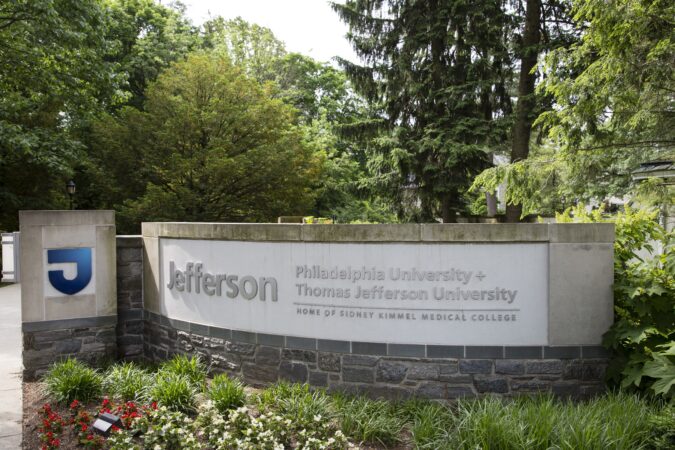
Amid President Donald Trump’s crackdown on immigration and deployment of federal officers to cities across the country, students at Philadelphia-area colleges are protesting against the appearance of U.S. Customs and Border Protection at campus career fairs.
At least four local universities — Thomas Jefferson, Villanova, Temple, and Rowan — have faced opposition to allowing recruitment in recent months.
A petition circulated at Jefferson last week sought to keep CBP from appearing at a campus career event. CBP and ICE — both agencies that enforce immigration laws under the Department of Homeland Security — have been at the center of a national debate after two Minneapolis residents were killed by federal immigration enforcement agents in shootings now under investigation.
“Due to the harm CBP has caused to communities across the nation, it is abhorrent for TJU to accept CBP at their institution,” said anoccupational therapy student who signed the petition and asked that her name be withheld, fearing retribution. “I don’t think any institution should be encouraging students to get involved in these kinds of agencies, given the current climate.”
But the petition has since come down, the student said, and CBP is not on the list of employers due to appear at the event, called the 2026 Career Day and Design Expo, on Thursday at the East Falls campus. Jefferson has not acknowledged that CBP was on the list initially or responded to questions on whether it was removed.
CBP, which has offices in Philadelphia, has appeared at campus career events in the area in the past.
An email seeking comment from CBP’s media office was not returned.
At Rowan University in New Jersey earlier this month, the participation of CBP’s Trade Regulatory Audit Philadelphia Field Office in a career fair drew some student protest. Members of a student activist group distributed fliers speaking out against CBP during the fair, according to Rowan’s student newspaper, the Whit, and campus police and administration officials came to the scene.
The agency also reserved a table and came to afall event at Rowan to share information about accounting-related auditing internships, said Rowan spokesperson Joe Cardona,and has done so at the public university for the last decade.
Rowan’s Rohrer College of Business Center for Professional Development hosts more than 200 employers each year, including local, state, and federal agencies as well as private-sector groups, he said.
“The presence of any employer on campus does not constitute institutional endorsement of that organization’s policies or actions,” Cardona said. “Rather, it reflects our commitment to supporting student career exploration while upholding principles of open access and free expression.”
At Villanova, CBP pulled out of a career fair it had planned to attend earlier this month, according to the Villanovan, the student newspaper. The withdrawal followed criticism on social media about the organization’s planned appearance.
The organizer of an Instagram account that opposed the agency’s participation said they wished that Villanova had made the decision to disallow the group rather than the group withdrawing, according to the student newspaper.
“I think a lot of students will feel a lot safer and more comfortable attending this Career Fair,” the organizer said. “But it doesn’t take away the anger that this was ever something that was gonna happen.”
Villanova said in a statement that CBP‘sOffice of Trade had participated in prior career events and that employers with prior participation were contacted “through standard outreach” about this year’s event.
Temple’s law school last semester had planned to host a “Coffee and Careers” networking event with a DHS and Immigration and Customs Enforcement lawyer but later canceled it, according to the Temple News, the student newspaper. The event was replaced with a talk on public interest law by Philadelphia City Councilmember Rue Landau.
DHS “chose to engage directly with students interested in DHS opportunities rather than participate in a scheduled career event,” Temple spokesperson Steve Orbanek said.
He also noted that “career fairs are university-sponsored events, and actions that disrupt these events may violate university policy and established on-campus demonstration guidelines.”
Erin Mooney, executive director of the Schuylkill Center for Environmental Education, slipped out of a sweltering sauna last weekend wearing only a bathing suit and strode barefoot straight into the coldest day of the winter.
“I never thought that I would find myself in a bathing suit laying down in the snow on a 15-degree day, and I found myself doing that at the Schuylkill Center,” Mooney said.
It marked the opening weekend of a new experience that the Schuylkill Center, on Hagy’s Mill Road in Philadelphia, is offering along with a local sauna company, Fiorst — one that already has had solid booking off social media views, despite having just opened Saturday.
Visitors will have the chance to relax ina glass-walled, wood-fired sauna overlooking a snowy field and woods in Northwest Philly, paired witha cold plunge.
Mooney said the idea to host a mobile sauna on the preserve’s grounds grew from a desire to keep the center lively through winter and draw in new visitors. She was inspired by a sauna exhibit by the American Swedish Historical Museum in FDR Park and began looking for a way to bring that Nordic tradition of “hot and cold” to her own facility.
She spotted Fiorst, a mobile sauna venture run by Jose Ugas, on social media, reached out, and the two forged a near-instant partnership. They spoke on Jan. 30, a Friday; by the next Friday, a custom sauna unit from Toronto rolled onto the grounds.
By last Saturday, the fire was lit, and guests arrived.
“It was, you know, kind of kismet, in a way, we were able to have this shared vision,” Mooney said. “And with him doing this servicing of the saunas on site, it makes it so much easier for us.”
The interior of the Nordic-style sauna at the Schuylkill Center for Environmental Education.
How does the sauna work?
Nordic-style wood saunas are notable for their minimalist design and high heat, which participants couple with either a plunge into a cold shower, tub, or lake or a step outdoors.
Fiorst’s installation overlooks the center’s main wooded area, framing the winter landscape through a glass wall as guests sweat it out inside the sauna’s170- to 190-degree temperatures. Each 90-minute session allows participants to cycle at their own pace through intense heat and biting cold, a contrast Mooney found invigorating.
The sauna is modeled on a concept popular across Nordic countries, including Norway, Finland, Denmark, and Sweden.
Mooney said the project has already pulled in new visitors from neighborhoods like Fishtown or outside Philadelphia who might not typically visit for hiking or birdwatching.
She believes the sauna fills a niche for “clean, wholesome, healthy fun” that is alcohol-free.
However, unlike the typical Nordic experience of being nude during the sauna, the Schuylkill Center experience is strictly “bathing-suit friendly,” a choice tailored to American comfort levels.
The collaboration operates on a revenue split, with a charitable twist. During February, the center’s share of the proceeds goes to its Winterfest for Wildlife campaign to support the on-site wildlife clinic.
For now, the sauna remains a seasonal experiment, but it will stay in place as long as demand — and winter weather — holds up.
“I think it will stay seasonal,” Mooney said. “We live in a sauna already in the summer in Philadelphia.”
The sauna is open on weekends at the Schuylkill Center from 9 a.m. to 5 p.m. and is booked through the Fiorst website. The cost for a 90-minute session is $75. You can add a friend for $25. Private sessions of up to 16 cost $600. For now, bookings can be made only one week in advance.
The Schuylkill Center is expecting Valentine’s Day weekend to book quickly.
Jose Ugas (left), founder of Fiorst, and Erin Mooney, executive director of the Schuylkill Center for Environmental Education, at the sauna.
‘A moment of clarity’
Ugas, a bioengineer at Johnson & Johnson who lives in Whitemarsh Township, felt compelled to bring a Nordic-style sauna experience to the region after a triphe took to Sweden following the loss of his mother to brain cancer in 2023. There, friends introduced him to a traditional Scandinavian ritual: enduring searing dry heat inside a wooden sauna, followed by a plunge into icy water or a cold shower.
What began as a distraction soon crystallized into a moment of clarity, Ugas said.
“Just that time together and kind of going between the hot and the cold just was like a mental reset for me,” Ugas said.
Ugas, who will graduate with an MBA from Villanova University this spring, wanted to replicate the nature-immersive element that had grounded him overseas.
Hefound a Toronto company that builds portable glass-fronted wooden saunas andordered a custom unit equipped with a wood-fired stove, hot stones, steam, aromatherapy, and a cold-plunge tub. Ugas launched Fiorst in 2024, describing it as “nomadic” at first.
The venture first hosted sessions overlooking Valley Forge and at Fitzwater Station in Phoenixville. Ugas then established a more permanent site, which he calls Riverside, on River Road in Conshohocken where he still books sessions.
Ugas calls the partnership with the Schuylkill Center a natural fit given its location amid nature, merging his wellness goals with the venue’s environmental focus.
“At the core of our mission and their mission is to get people out in nature,” Ugas said.
So far, he has relied on social media to market the sauna, which has drawn hundreds of visitors to its locations.
The Nordic-style sauna at the Schuylkill Center for Environmental Education in Philadelphia.
‘Social sauna’
Serena Franchini, a nurse and founder of Healing Fawn Inner Child Work & Somatic Therapy, has taken sauna sessions at Ugas’ other locations. She sees it as a tool to help with nervous system regulation while offering an immersion in nature.
“I loved the idea that it was outside,” Franchini said.
She likes the relaxed atmosphere compared with some traditional saunas that often enforce strict time limits on heating and cooling cycles. Instead, she cycles between the sauna and cold-plunge tub at her own pace.
Franchini highlighted the mental wellness aspect of Ugas’ “social sauna” sessions, noting Friday night events as “skip the bar” alternatives that allow strangers to gather for a healthy, communal experience.
“It’s a great way for community to connect with people that are interested in the same things that you are,” Franchini said.
The product with the most spectacular Super Bowl increase didn’t advertise.
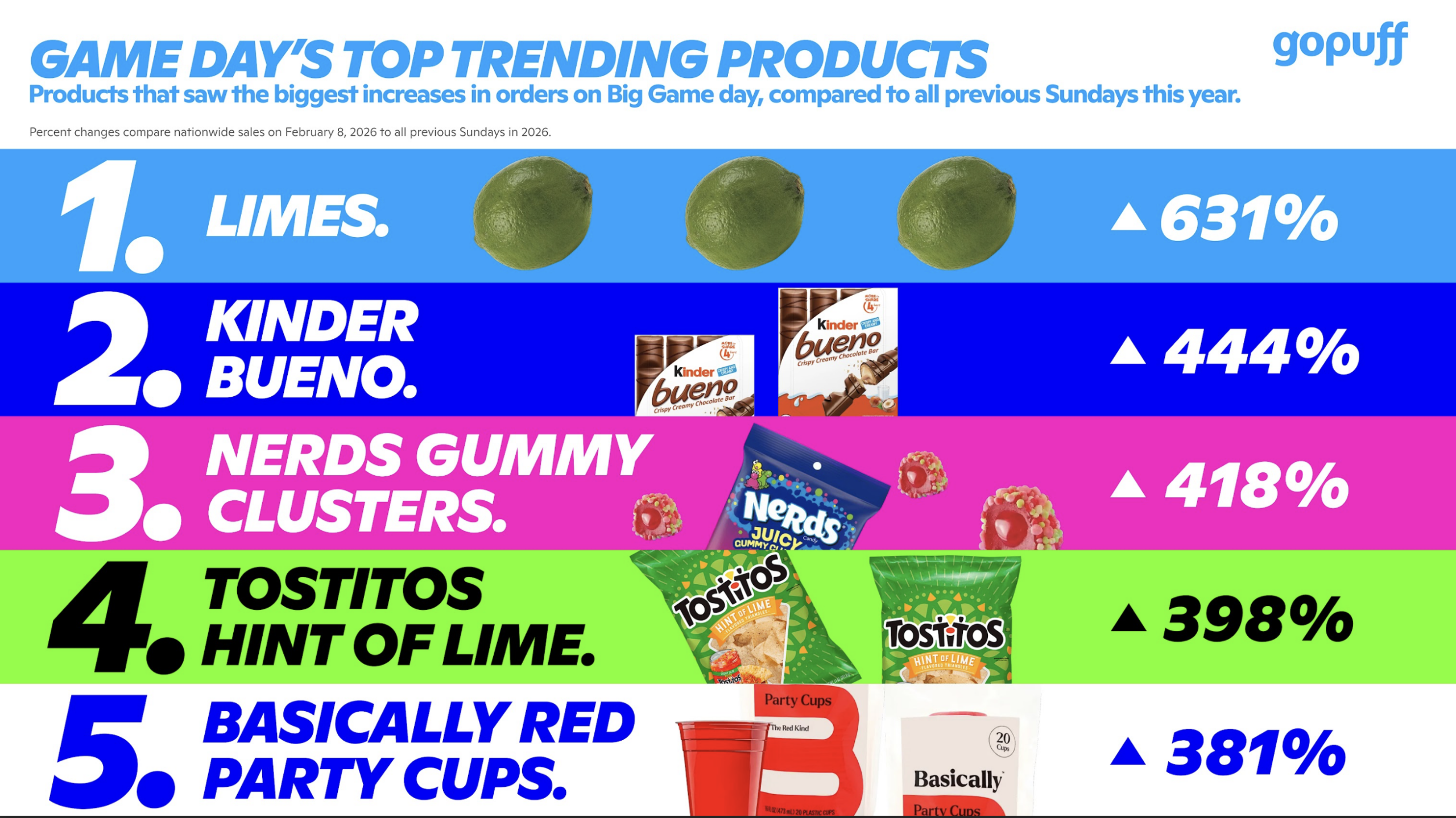
Philadelphia-based Gopuff reported sharp increases in advertised snacks, but also in basic party ingredients such as limes and red party cups, during Super Bowl LX.
Orders for limes during the game jumped over 600% over previous Sundays in 2026. Limes are, after all, a key ingredient in popular plates like guacamole and pico de gallo, served with Mexican beers and margaritas, and “easily forgotten at the store,” making them a natural for last-minute delivery, said Gopuff spokeswoman Brigid Gorham.
Lime sales exploded even more than Gopuff’s Basically-brand red party cups, a three-year-old in-house brand, which was up 381% on Super Bowl Sunday above recent Sunday sales.
Overall, alcohol sales nearly doubled from recent Sundays. Soda sales were up more than one-third and salty snacks by about one-quarter. Compared to last year, when the Eagles were in the Super Bowl, the number of Philadelphia orders were up 7%.
Other Super Bowl Sunday growth-leaders included PepsiCo’s Tostitos Hint of Lime chips, which were up 398%.
But the top gains were two candies made by Italy-based candy maker Ferrero. Gopuff orders for Kinder Bueno, chocolates marketed heavily in Latin America and U.S. Hispanic neighborhoods, were up 444% vs. recent Sundays, and Ferrero’s Nerd Gummy Clusters, were up 418%.
Kinder Bueno and Nerd Gummy Clusters saw sales roughly double in the hour after their Super Bowl ads ran. Liquid Death and Dunkin also saw orders rise at least 50% after ads.
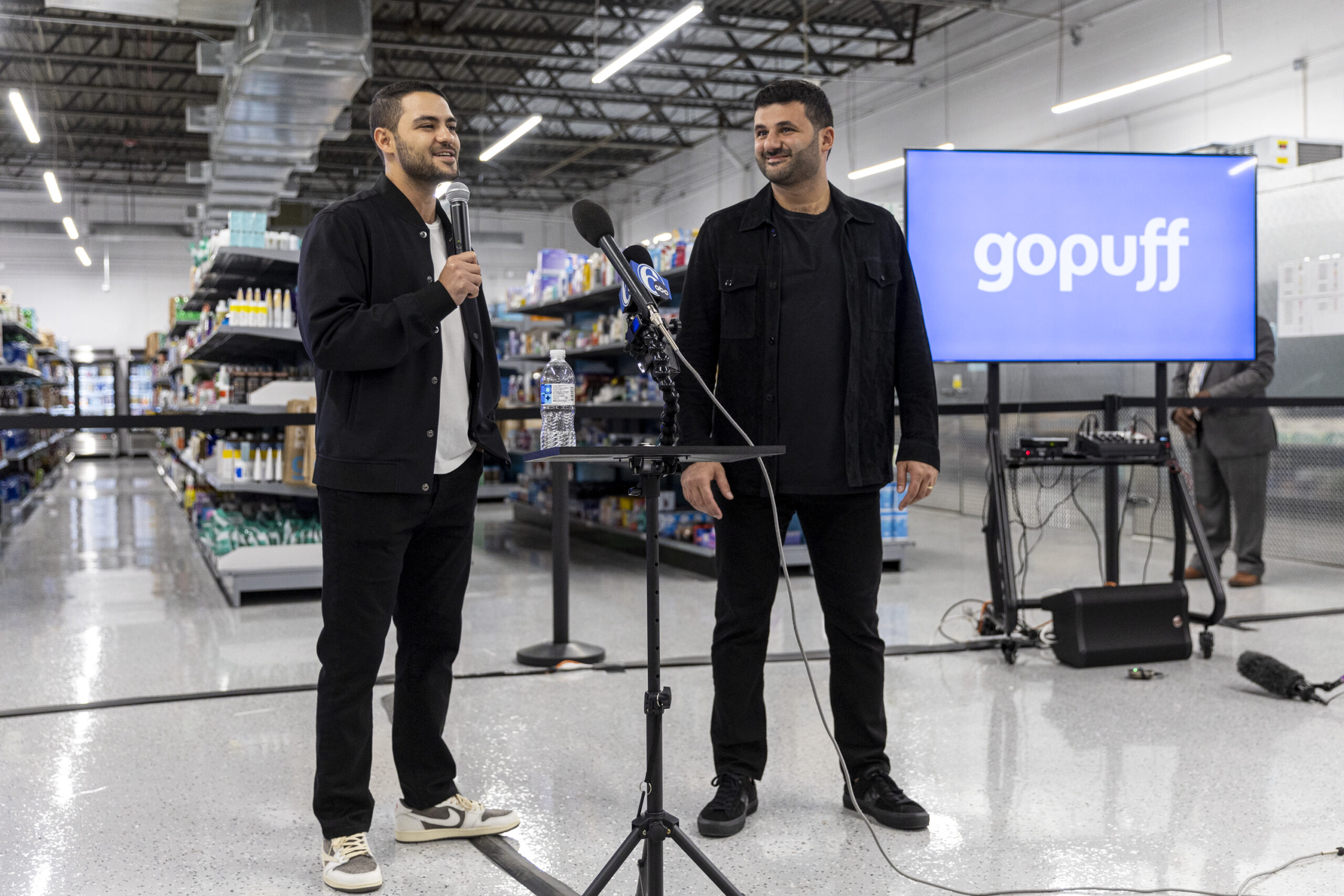
Founders and CEO of Gopuff Yakir Gola (left) and Rafael Ilishayev speak to a room full of staff and team members of Gopuff at a recently opened center in Philadelphia in 2022.
Cofounder Yair Gola and his colleagues saw those numbers and thought, “This ought to be a holiday.”Last fall, it set up a 501(c)4 lobbying group, the Super Monday Off Coalition, pledging at least $250,000 to get the effort rolling.
Druski (left) and former NFL quarterback Tom Brady in an ad for Philadelphia-based Gopuff promoting its campaign to designate “Super Monday” as a national holiday, since millions already take the day off.
The company’s contribution to the lobbying would be funded by 1% of Gopuff’s profits from sales of certain boxes of beer, sugary drinks, hot dogs, and other products from Thanksgiving to game day.
Heavy users who placed at least four $30 orders in that period would also get $20 “Gocash” discounts and receive a chance at a Birkin handbag, a Rolex watch, and other prizes.
By Monday, Gopuff hadn’t announced its planned donation, but the campaign was declared “a winner” by Charles R. Taylor, a Villanova University marketing professor who tracks Super Bowl ads. He spotlights not just successful marketing but also ineffective efforts like Nationwide’s painful 2015 “Boy” campaign and GM’s 2021 “No Way Norway” misfire.
Partnering with high-profile Brady and Druski gives “instant visibility and credibility” with fans and wider audiences, Taylor said. Even if the campaign costs more than Gopuff actually donates to the cause, a national holiday is “a clever hook” watchers will remember, Taylor said.
Going public?
Gopuff raised over $5 billion from Saudi, Japanese, and U.S. private investors during the digital-delivery investment boom that lasted into the COVID years. These big investors hoped Gopuff (officially Gobrands) founders and early investors would win them big profits by selling shares in a high-priced stock market initial public offering or selling to DoorDash, Uber, or other delivery giants.
But app use and delivery growth slowed in the COVID recovery. Gopuff’s perceived valuation tumbled as its publicly traded rivals’ share prices fell. The company, which had expanded to hundreds of city neighborhoods and college towns, shut marginal centers and laid off staff at its Spring Garden Street headquarters to reduce losses and save investors’ capital for better times.
Now Gopuff is showcasing efforts to win new investor attention.
Gopuff has added a warehouse camera feed and local product-sales stats for fans who want to know what neighbors are buying, app-based order updates, and user product recommendations. It added over-the-counter pharmacy items and new lines of vegan organic GOAT Gummies (which Brady is also promoting).
The company also began accepting SNAP EBT electronic food-stamp accounts and donated $5 million for SNAP when the federal shutdown threatened low-income families dependent on the program.
New hires include economist Matt McBrady — a veteran private-equity investor, former adviser to President Bill Clinton, and sometimes Wharton instructor — as Gopuff’s new chief financial officer, noting his experience taking companies through public stock offerings.
Last fall Gopuff raised $250 million, its first investment since a 2021 convertible-bond financing that had valued the company at a stock-market-bubble-inflated $40 billion.
This time, the largest investors included previous Gopuff backers Eldridge Industries and Valor Equity Partners, along with Robinhood, Israeli billionaire Yakir Gabay, the cofounders, and other earlier investors. Eldridge chairman Todd L. Boehly in a statement called Gopuff “resilient.”
Valor partner Jon Shulkin cited the company’s “focus, innovation, and substantial gains in profitability.”
This latest capital-raise implied a valuation of $8.5 billion — a fraction of what Gopuff was worth on paper during the digital-delivery bubble, but enough for the venture capitalists to hope they may yet get their money back with at least a modest profit.
As Chris Scafario sees it, Philadelphia’s reputation as an “eds and meds” region, referring to its plethora of colleges and hospitals, could grow a third leg.
It could also become the defense industrial base region,said Scafario, CEO of the Delaware Valley Industrial Resource Center.
President DonaldTrump wants to increase defense spending, with $1.5 trillion proposed for 2027. This could mean more research and workforce development training opportunities — and local universities are positioned to take advantage of it, Scafario said.
Chris Scafario, CEO of the Delaware Valley Industrial Resource Center
“A lot of that investment is going to be targeted toward university and innovation-based relationships because they need help getting stuff done,” said Scafario, who is talking to local colleges to help get them ready to capitalize. “They need access to brilliant people, whether they’re faculty or the faculty’s work products, the students.”
The move comes as colleges face potential cuts in research funding under the Trump administration in other areas, such as the National Institutes of Health. Both Princeton University and the University of Pennsylvania in the last month announced cutbacks to cope with potential financial fallout from federal policies.
Scafario’s center, which is based at the Navy Yard and was founded in 1988, aims to foster economic development and local manufacturing.
The Philadelphia region has been involved in defense contracting on and off for years, with major hubs in naval and aerospace manufacturing, and local universities say they worked with the Department of Defense in the past. Rowan University in New Jersey says it has $70 million in defense-related research projects underway.
But Scafario sees the opportunity for major expansion.
Drexel University, Temple University, Penn, Rowan, and Villanova University, which is already a top producer of naval engineers, are among the schools that are “in a great spot to leverage the opportunities that are going to be coming through the defense industrial base,” Scafario said. “In the next year, people are going to start realizing that we are meds, eds, and a defense industrial base region. It’s going to bring a lot of investment, a lot of economic opportunities, and some really, really great employment opportunities in the region.”
The Philadelphia region could become a national anchor for shipbuilding or other maritime industrial-based activities, he said.
Scafario hopes to bring colleges together with other partners for more discussions in the spring when the timeline for those federal investments starts to become clearer, he said.
Amanda Page, Warfighter Technologies Liaison for the Delaware Valley Industrial Resource Center
Colleges could help with efforts to accelerate production capacity of naval ships and work on initiatives such as how to make submarines less traceable and more durable. Or they could help improve medical equipment and training for the battlefield. The treatment standard in the military used to be the “golden hour”; now it’s about “prolonged field care,” said Amanda Page, a retired active-duty Army medic who serves as warfighter technologies liaison for the center.
“Medical personnel need to be prepared mentally, physically, emotionally, and electronically to keep those patients for 96 hours,” Page said. “That’s going to require a ton of research and technology.”
Page was hired by the center in October to help build relationships between the center, the Department of Defense (which the Trump administration has rebranded the Department of War), local higher education systems, and the city.
“I’m super excited about what it will bring to the region and what the region can prove to the Department of War about its legitimacy,” she said, “as a manufacturing and technology powerhouse.”
Local colleges say they are reviewing potential collaborations.
“There are a lot of opportunities we are looking at,” said Aleister Saunders, Drexel’s executive vice provost for research and innovation, declining to provide specificsfor competitive reasons.
In addition to opportunities with the Navy and the Navy Yard, he noted major local companies involved with aerospace and aviation, including Lockheed Martin and Boeing. There are also opportunities around materials and textiles with the Philadelphia-based Defense Logistics Agency Troop Support, which provides many of the supplies to the military.
“Those are really valuable assets that we should find a way to leverage better than we are,” he said.
Key opportunities are available in advanced manufacturing and workforce development, he said.
“There could be folks who are already working in manufacturing who need [upgraded skills] in advanced manufacturing techniques,” he said.
Temple University president John Fry said increasing research opportunities and impact — the school’s research budget now exceeds $300 million — is a priority in the school’s strategic plan. Temple offers opportunities around medical manufacturing, healthcare, and health services, he said.
“The key to doing that is going to be partnerships,” he said.
Josh Gladden, Temple’s vice president for research, said he has met with folks from Scafario’s group and they are talking about some opportunities, but declined to discuss them because they are in early development.
He noted that the Navy is interested in working with Temple’s burn unit.
Temple has also been getting to know the workforce needs of businesses at the Navy Yard and looking at how to align its educational programs, Fry said.
“Those are relationships I would love to pursue,” he said. “Part of our mission is to develop the future workforce and grow the regional economy, and that’s one way of doing it.”
Rowan has been a longtime research partner with the U.S. military, said Mei Wei, the school’s vice chancellor for research.
“It’s encouraging to know there could be more funding available for research,” Wei said. “These projects give our undergraduate and graduate students the opportunities they need to develop their research skills with close guidance from our faculty and our external partners.”
A former Villanova professor says in a federal lawsuit filed this week she was fired from the Catholic university after accusing its law school of racial discrimination involving one of her students.
Stephanie Sena, who had been an anti-poverty fellow in the law school and taught at Villanova for more than 20 years, was dismissed in 2024 for what the school said were “student complaints,” according to the lawsuit.
But Sena’s lawyers say the dismissal was due to her filing an ethics complaint against the school for racial discrimination for comments that administrators made around a decision not to give her student a financial award that would have alleviated her debt, citing a speech the student made at a law school symposium.
The student, Antionna Fuller, accused Villanova of racialdiscrimination and failing to appropriately support her with financial aid during a 2021 symposium speech at the university, titled “Shifting the Poverty Lens: Caritas in Focus.” Sena hosted the symposium, during which Fuller also publicly asked for an apology from Villanova.
“How can you say caritas [which means love and charity in Latin] and Black lives matter with no thought to a Black life in front of you, systematically oppressed by your hands?” Fuller said,according to a video of the speech. “It’s not only hypocritical, but it’s embarrassing. We cannot talk about oppression and white supremacy without acknowledging its very presence here.”
Her speech drew a standing ovation, but later caused consternation among law school leadership.
Sena found out that law school dean Mark Alexander, in a letter to the scholarship committee, asked that Fuller not receive the debt relief award because she “maliciously maligned” the law school, according to the suit.
Sena‘s lawsuit alleges that then-law school vice dean Michael Risch said after the student’s speech that the student was “lucky” to have gotten into the law school and that she would not be there if she were white.
Villanova said in a statement Wednesday that Sena’s lawsuit “lacks merit” and that the university “will vigorously defend against these baseless allegations.”
“We look forward to presenting the actual facts surrounding the plaintiff’s separation from Villanova. To be clear, Villanova University does not tolerate discrimination or retaliation of any kind, and the allegations in Plaintiff’s lawsuit are contrary to our written policies and conflict with the core values of our University.”
Sena, 46, of Media, declined to comment.
Fuller, 29, who now lives with her mother in the South, said in an interview Wednesday that she feels both relieved and anxious about seeing the issue aired publicly.
“I am happy, at least relieved, that truth is coming out,” said Fuller, who graduated summa cum laude from the University of South Carolina and got her Villanova law degree in 2022. “I’ve been in such an isolated place and just carrying this trauma for so long.”
She said she sought therapy after the reaction she got to her speech from Villanova administrators and last year wrote a book, I Almost Sued My Law School, about her journey as a first-generation, low-income Black student. She no longer wants to practice law, she said, and is still figuring out her next steps.
But she said she was grateful to Sena, whom, during the symposium speech, she called “my hero, advocate, and my friend.”
“She was the first person to publicly stand up for me,” Fuller said.
Stephanie Sena stands at site of an encampment along Kensington Avenue in 2021.
Fallout from symposium speech
Sena, a longtime activist who has worked to help people experiencing homelessness and opened a homeless shelter in Upper Darby in 2022, was fired in 2016 from her job as an adjunct professor at the Pennsylvania Academy of the Fine Arts after defending students who accused a classmate of rape. She sued PAFA and the case ended in a confidential settlement.
She also led activists in lawsuits against the city in 2021 over its intentions to remove homeless people in a Kensington encampment. In 2023, the head of Norristown’s municipal council planned to bus homeless people to Villanova’s campus because of Sena’s advocacy for the homeless in Norristown. Villanova at the time was criticized for not defending Sena and making a stronger response.
Sena was hired to teach at Villanova in 2003 and began to work at the law school in 2020, serving as a full-time faculty member and anti poverty fellow. She was also an adjunct professor at Villanova’s Center for Peace and Justice.
In herlawsuit against Villanova, Sena asserts that law school leadership met with her in 2022, several months after Fuller’s symposium speech, and asked her if she had known what Fuller planned to say. Matthew Saleh, former assistant dean for admissions, told her it would be harder to attract Black students to the school because of the speech, according to the suit. Risch, the vice dean, made the comment about Fuller not being at Villanova if she had been white, the suit says.
Saleh, who now is the senior associate dean of enrollment management and financial aid at Rutgers’ law school, said in an interview that he does not recall making that comment and that he doesn’t think it’s even the case that Fuller’s speech would hurt recruiting.
“That would not have even come to my mind,” he said. “I couldn’t reasonably see a way that it would impact recruiting.”
Sena “objected to the race discriminatory and retaliatory comments” made to her in that meeting, according to the suit.
In October 2023, she complained again about the comments in an email to two administrators who headed diversity, equity, and inclusion at Villanova,according to the lawsuit complaint. Then came the award committee meeting on Jan. 30, 2024, where the dean in a letter argued against Fuller’s receiving the award, according to the suit.
Students who were in the award committee meeting and were upset about the law school dean’s reactionapproached Sena and asked what they could do, according to the suit. Sena said the students, who are not named in her lawsuit, could contact the diversity, equity, and inclusion office and file a climate complaint.
Sena, according to the suit, complained again one day after the award committee meeting that Villanova “had engaged in a dangerous pattern of race discrimination” and filed an ethics complaint with the university. She also expressed her concerns in an email to faculty and in a meeting with a law professor, who told her the students had committed an ethics violation by revealing confidential details of the awards meeting they were in, according to the suit.
After filing the complaint, Sena said in her lawsuit, she was “treated differently,” “unjustly criticized,” and “blamed for issues outside her control.”
In June 2024, human resources informed her that she was under investigation after students said she had pressured them to file complaints against the deans, which Sena denied, the suit said.
She was fired July 30, 2024, even though, the suit said, she had no prior performance or disciplinary issues and had received awards and promotions. She is seeking damages including economic loss, compensatory and punitive, and attorneys’ fees and costs.
An apology and acknowledgement
During the symposium, Fuller had said she wished Villanova would apologize and acknowledge what happened. She said that the school had given her $15,000 in financial aid toward her annual $65,000 cost, but that she subsequently learned other students had gotten more, even though her mother worked multiple jobs as a nurse’s aide to support the family.
“I was confused,” she told the audience. “How can a student with seemingly the most need graduate with the most debt?”
She learned of a free-tuition public interest scholarship that Villanova awards to incoming students and sought it after she was enrolled, she said. She was turned down repeatedly, she said, even though Villanova had recently awarded its largest group of the scholarships.
“Am I invisible?” she asked. “To walk into this law school building every day, to be surrounded by wealth and prestige, while struggling and burdened with debt, and while expected to perform like those who are not feels inhumane.”
She said during the speech she would graduate with almost $200,000 in student debt. Villanova officials, she said Wednesday, later accused her of exaggerating because she was including her undergraduate debt, too, and maintained that the total was really $160,000 — $126,000 of which was from the law school.
Fuller said Wednesday she had apologized to law school leadership, hugged them at graduation, and thought everything had been resolved. She said she was surprised to hear that the dean wanted to block her access to the debt award, she said.
“My intent wasn’t to harm, attack or mislead,” Fuller wrote in her book, “but to share my personal experience — my fears and financial anxieties — as part of the larger conversation about finding solutions to reduce poverty, which the conference was centered around.”
Staff writer Abraham Gutman contributed to this article.
A freshman football player at Villanova University texted the woman he is accused of raping to apologize for the encounter,according to the affidavit of probable cause for his arrest,offering new details about the incident.
D’Hani Cobbs, 20, was charged with rape, sexual assault, and related crimes after police say he assaulted a woman who also attends the university. He was removed from campus following the Dec. 7 attack, school officials said in a statement. The student newspaper the Villanovan first reported his arrest.
According to the affidavit, Cobbs allegedly assaulted the woman in Good Counsel Hall on the Main Line school’s South Campus.
The early morning attack began after Cobbs and the woman, whom police did not identify, met at an off-campus event and exchanged phone numbers, the document said.
The two later got a ride with others back to South Campus, according to the affidavit. Sometime between 1 and 2 a.m., Cobbs and the woman entered a residence hall room along with another person, whom the filing did not identify. That person left, the document said, leaving the woman alone with Cobbs.
Cobbs asked the woman for a hug, and then he “tried to kiss her, and she said no,” the filing said. Cobbs then “pinned her up against a desk” and began touching her buttocks and genitals and penetrated her with his fingers, the affidavit said. He then grabbed her and lifted her on top of his bed and allegedly raped her, according to the affidavit.
The woman later told police she was screaming and crying during the attack. She said she left the room in tears and asked Cobbs to call a friend to pick her up.
Cobbs later contacted the woman twice, according to the filing.
Around 2 a.m., he texted: “Are [you for real] good tho? That was random [as hell]” and “U were jus fine.”
Just before 5:30 p.m., Cobbs texted: “Yoo Wsp, u ok? My apologies if I made u feel uncomfortable in any way last night I didn’t have any intentions on making u feel uncomfortable. If u want to talk about it over the phone or in person we can just to come to more of a understanding.”
When investigators interviewed Cobbs that week, he did not deny that he had sexual contact with the woman but said it was consensual.
Cobbs’ defense attorney, Thomas G. Masciocchi, did not immediately return a request for comment.
Delaware County District Attorney Tanner Rouse said in a statement Monday that prosecutors had reviewed evidence in the case and swiftly brought charges.
“The message here is as simple as it is clear — when it comes to other people’s bodies, no means no, and stop means stop,” Rouse said. “That’s what we tell our kids and it holds true throughout life, no matter who you are or how talented an athlete you might be.”
As of this week, Cobbs’ player bio page on Villanova’s website is out of service with an error message.
Cobbs’ profile on ESPN is still active, and lists the New Jersey native as a wide receiver. He returned one punt last season, according to the page. A post from the Instagram account for Villanova’s football team announced Cobbs’ signing in 2024.
A Villanova spokesperson said in a statement that in addition to ordering Cobbs to leave campus, the school is “committed to both supporting the victim and fostering a safe environment for all of our students.”
Cobbs was arraigned Friday and was released on unsecured bail, according to court records. He is scheduled to appear in court for a preliminary hearing on Feb. 12 and is ordered not to have contact with the woman.