Tag: Weekend Food

  • What I learned eating all over Philly in 2025

    What I learned eating all over Philly in 2025

    This year was a big one for eating at restaurants. I had the largest beat in scouting for The 76 this year, my first year doing so. For that list alone, I dined at 74 restaurants. For the other features, guides, and reviews I wrote, I dined at several dozen more.

    It was fascinating to look at Philadelphia’s dining scene according to the cross sections provided by eating many of the same dishes, served in different establishments. I ordered gon chao ngau ho or beef chow fun all across the city, comparing the differences between many restaurants’ versions. Some of them were drastic, some more nuanced. This past year, I spent cumulatively two whole days at omakase counters. I tracked the culinary trends and trendy ingredients that pervaded dining rooms and kitchens: Caesar salad everything, fermentation going strong, late-night menus finally emerging from their post-pandemic slumber, and the continuing rise and diversification of little treat culture.

    It was even more fascinating to look at the Mid-Atlantic as a whole (I spent the earlier part of the year splitting my time as a resident of both Washington and Philadelphia) and seeing what trends or tendencies were shared in restaurants up and down the Northeast Corridor. Most of what I noticed took place on the plate, though our dining scene was also marked by other trends: the surge of coffeehouses, the uptick in awards, and the proliferation of oyster bars.

    Trendy techniques and ingredients do not exist in isolation. Philly’s dining scene is part of a larger ecosystem of American dining and as our restaurants attract more and more out-of-town visitors and our kitchens attract out-of-town talent (the presence of Michelin in Philly ensures both), the borders of what makes dining in Philadelphia will expand and open. Social media buffets these trends around the globe, like the shades in Dante’s Inferno.

    What I learned eating all over Philly in 2025

    All green everything

    Matcha prices rose and quality fell, as farmers in Japan struggled to keep up with the global obsession with matcha that Philadelphia was not immune to. A similar trajectory happened with pistachios, as the Dubai chocolate bar maintained a chokehold on establishments from ice cream shops to smoothie shops and everywhere in between.

    After 9 p.m. is back

    Late-night menus are very much back, despite data supporting early dining as trending.

    Big treats and little treats

    Steakhouses and bakeries dominated openings (in Philly, the latter was more the case). They also developed distinct personalities, informed by the cultural backgrounds of third culture kids. We got Baby’s Kusina, Seaforest Bakeshop, a wave of Indonesian cafes with fluffy pastries, and a host of other “little treat”-forward bakeries. New York and London reported similar little treat trends.

    Nostalgia, or signs of a shifting economy?

    Recession indicator foods like burgers and baked potatoes are dominating the discourse when it comes to restaurants’ marketing. I’ve also heard my friends hotly debate which restaurants in Philly serve the best cabbage dishes. Cabbage is the epitome of recession indicator foods.

    Cocktails, both complicated and delicious

    So much in-house fermentation and liqueur-concocting continues to fuel the creativity of Philly’s bars, especially with Almanac, La Jefa, and Honeysuckle leading the way in preserving foraged ingredients and brewing amazake, traditionally made with koji applied to rice but in Philly, bartenders are making it with everything from corn to sweet potatoes.

    Hail, Caesar

    I started my tenure at The Inquirer by covering the viral kale caesar cutlet at Liberty Kitchen. Now, just over a year later, there is nothing that cannot be a Caesar, whether it’s a martini or Scampi’s take on bruschetta. The word “salad” has now been elided from the dish.

    Superb sauces, not enough rice

    There simply isn’t enough rice on the menu to sop up the incredible sauce work happening in many of our newer restaurants. Ordering a side of white rice whenever I get a crudo at Sao or Mawn has become regular practice for me. I also longed for sides of rice when dipping into Uchi’s many, very saucy crudos.

    I can’t see my food when I’m with you

    The dining rooms are getting dark. I can’t see my food. And yet, we’re in the golden age of food photography.

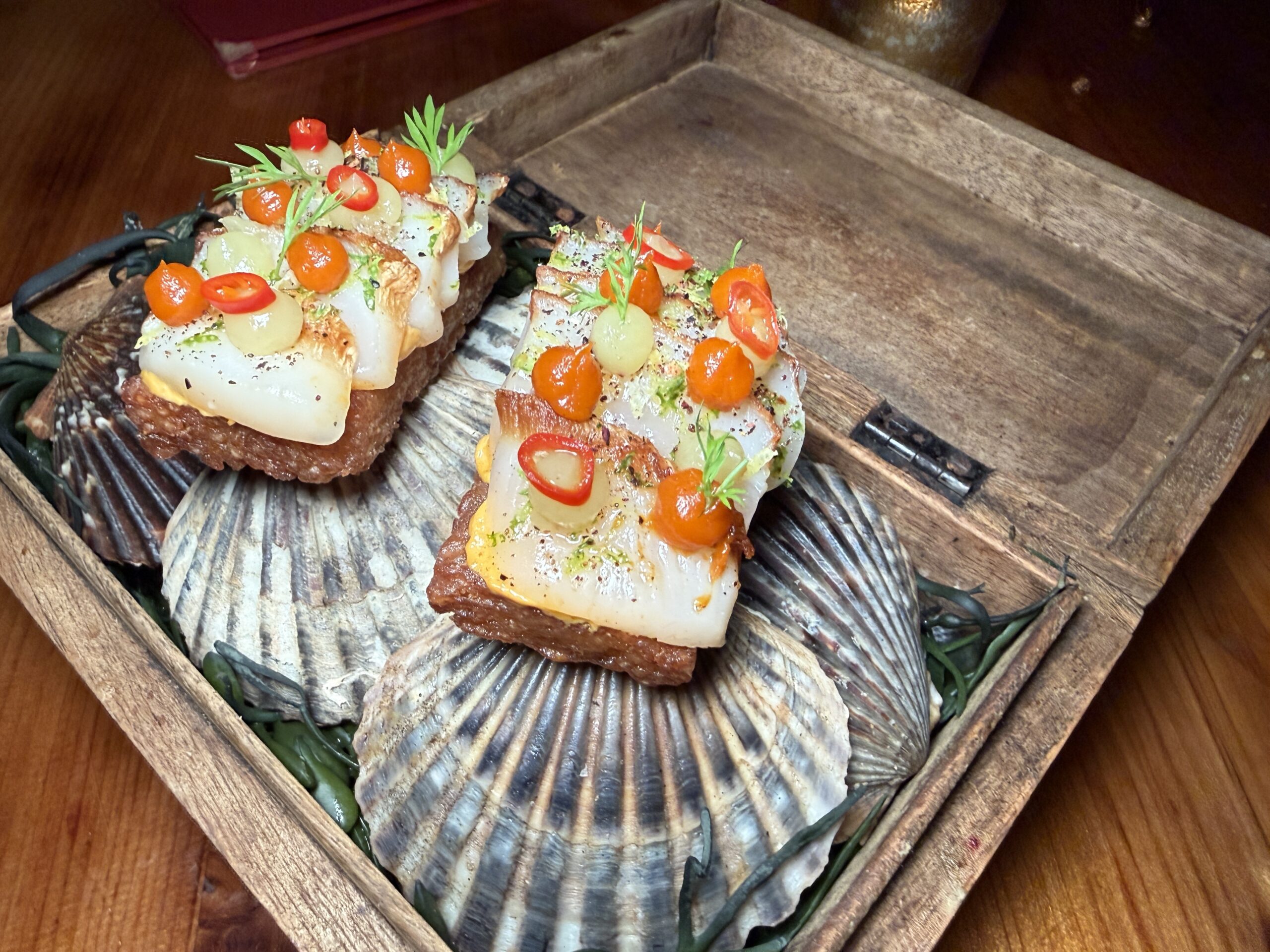
    Hokkaido scallops on crispy rice with vadouvan curry at Bardea, served on shells inside a box.

    No plates, no problem

    Restaurants continue to love serving food on plates that are not plates, from the jewelry boxes that bear delicate squares of crispy rice topped with raw scallops, weighed down by rocks at Bardea, to just rocks at Honeysuckle, to cleaned out parts of animals like the tuna spinal jelly served in a cleaned-out piece of tuna spine at Nakama and the scallop sashimi in shells at Ogawa. When Elwood served its venison scrapple stabbed onto deer antlers in 2019, it broke the Philadelphian internet. Nowadays, you wouldn’t bat an eye. This phenomenon is worldwide. When I get my initial “snacks” course — they’re always called “snacks” at a fine dining establishment — it would be weird if they weren’t served on ceramic orbs like at Miro in Honolulu or ceramic test tube holders at Washington’s Jont or custom pieces made by Felt and Fat that resemble the surface of the moon at Provenance.

    Break out the vinyl

    Speakeasy cocktail bars are out. Inclusive listening lounges are in.

    Every restaurant needs a hamachi crudo

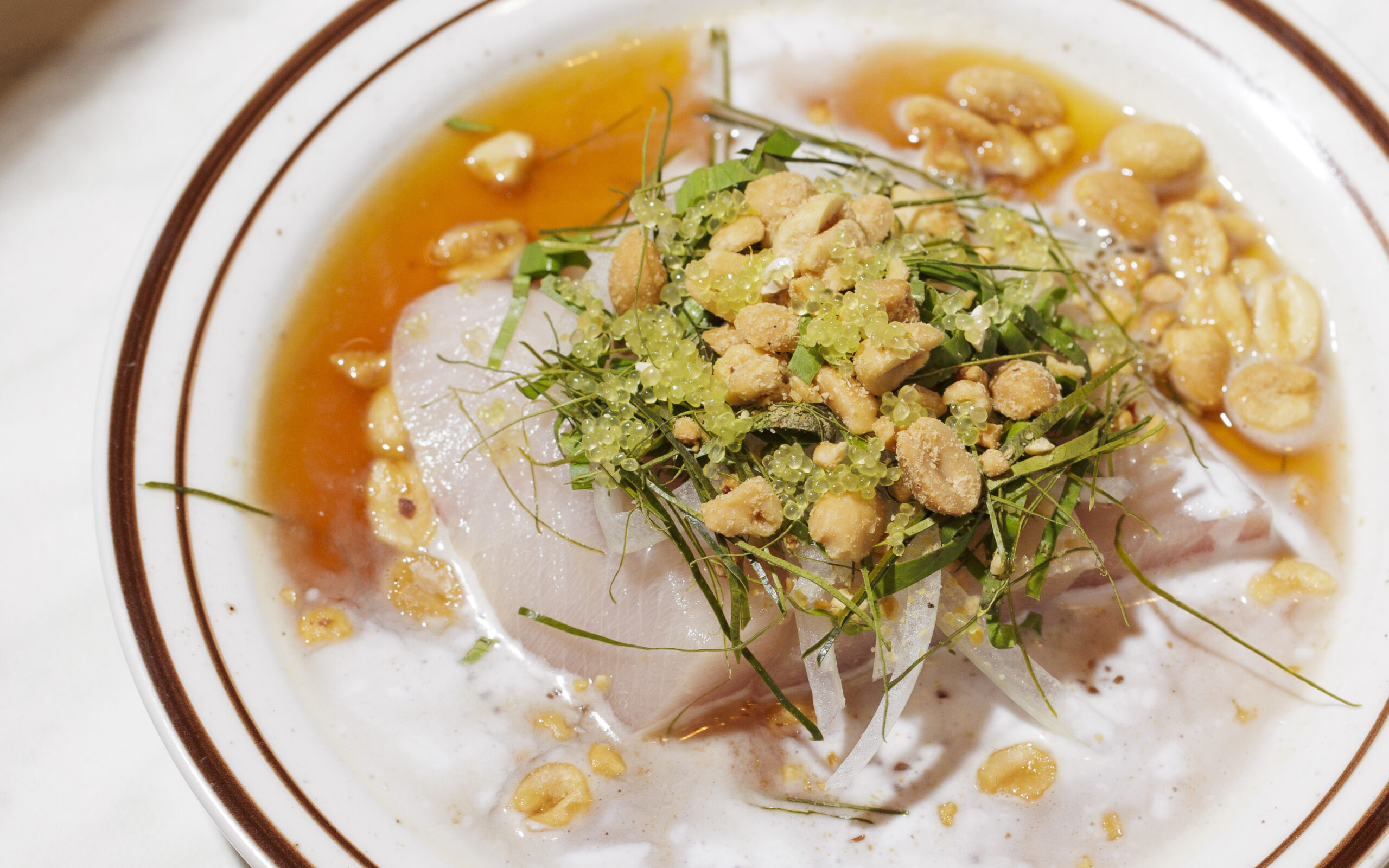
    The Aged Hamachi Crudo at Sao on Wednesday, Nov. 26, 2025 in Philadelphia.

    Pickle martinis, chicken karaage, koji-aged proteins and vegetables, and hamachi crudo are on so many menus, regardless of cuisine or concept.

    Let’s call it ‘American Fusion’

    The term “New American” is so yesteryear, but the conglomeration of many different influences and dizzying collections of seemingly disparate global flavors on single menus pervade at ambitious restaurants like Wilmington’s Bardea, where muhammara and calamansi are on the same menu, to great effect, and Grad Hospital’s Banshee where, of course, there is a hamachi crudo but also patatas bravas on one menu.

    Get off the list

    Finally, we often keep going to the same places. The 76 was a great exercise in not doing that and I encourage you to dine out widely. To eat beyond the places that have endless notify lists on Resy. To only be blinded by the dark depths of current dining rooms, and not the hype that blankets hot new restaurants.

  • Gluten-free bakery Flakely levels up with a new and bigger storefront in Bryn Mawr

    Gluten-free bakery Flakely levels up with a new and bigger storefront in Bryn Mawr

    A popular gluten-free bakery is coming to the Main Line.

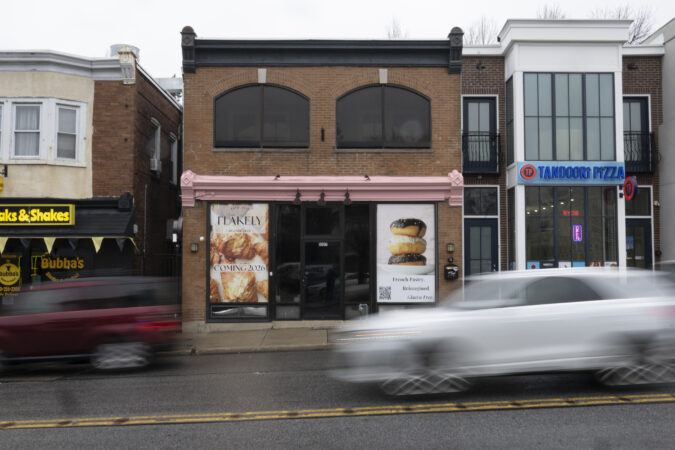
    Flakely is moving from behind the bright pink door at 220 Krams Ave. in Manayunk to a Bryn Mawr storefront in early February, said owner Lila Colello. The new takeout-only bakery will replace a hookah lounge at 1007 W. Lancaster Ave.

    “We’ve really outgrown our space,” Colello told The Inquirer. Manayunk “wasn’t ever meant to be for retail.”

    A trained pastry chef who worked for the Ritz Carlton and Wolfgang Puck Catering, Colello was afraid she’d have to give up the best things in life — bread and her career — when she was diagnosed in 2010 with celiac disease, an inflammatory autoimmune and intestinal disorder triggered by eating gluten.

    Instead, Colello spent the next seven years finding ways to get around gluten, a protein found in grains like wheat, rye, and barley (and thus most breads, bagels, and pastries). She perfected kettle-boiled bagels and pastry lamination before starting Flakely in 2017 as a wholesaler.

    Colello moved into the commercial kitchen at Krams Avenue in 2021, where customers have spent the last four years picking up buttery chocolate croissants, brown sugar morning buns, and crusty-yet-chewy bagels from a takeout window in an industrial parking lot. Inquirer restaurant critic Craig LaBan has called Colello’s bagels “the best he’s tasted outside of New York,” and in 2024, Flakely was voted one of the best gluten-free bakeries in the United States by USA Today.

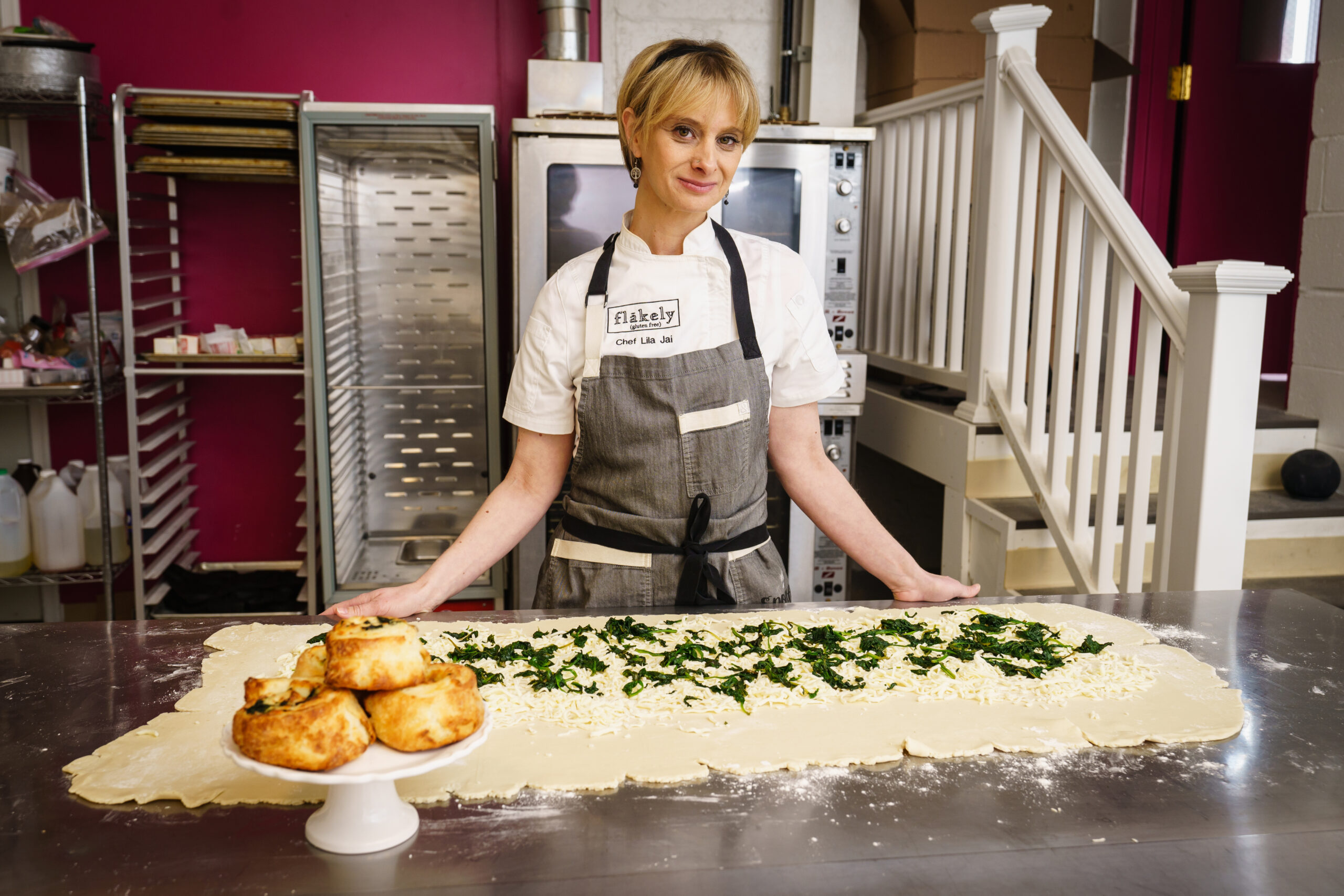
    Lila Colello, owner and head baker at Flakely, helped patent a way to laminate gluten free dough for croissants.

    Flakely’s industrial Manayunk location has required some concessions, Colello said: The majority of their goodies are par-baked and frozen by Colello and three full-time employees for customers to take and bake at home. Otherwise, Colello explained, the lack of steady foot traffic would lead to lots of wasted product.

    In Bryn Mawr, Flakely will be a fully functional takeout bakery with a pastry case full of fresh-baked goods, from full-sized baguettes and browned butter chocolate chip cookies to danishes and Colello’s signature sweet-and-savory croissants. A freezer will also include packs of Flakely’s take-and-bake doughs, bagels, and eventually, custom cake orders.

    Once she’s settled in, Colello said, she hopes to run gluten-free baking classes and pop-up dinners out of the storefront — offerings (besides the ingredients) that she hopes will differentiate her from other bakeries in the area.

    While the Main Line only has one dedicated gluten-free bakery (The Happy Mixer in Wayne), Lancaster Avenue is already lined with sweet shops: Malvern Buttery opened up a coffee and pastry combo down the street from Flakely in June, and Colello’s storefront is on the same strip as The Bakery House and an outpost of popular Korean-French chain Tous Les Jours.

    “My vision is for this to be a magical space where people can come in and leave with a fresh croissant, which people can’t really do” when they’re gluten-free, said Colello, who lives in Havertown. “We offer our customers things they miss. That’s kind of our thing.”

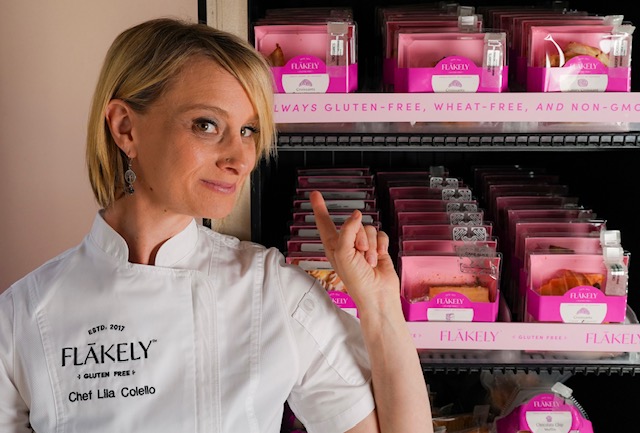
    Flakely owner Lila Colello poses in front of one of Flakely’s pink gluten free pastry ATMs, which vend take-and-bake goods at four locations in the Philly area.

    What about the pastry ATMs?

    The permanent storefront does not mean Flakely’s signature pink pastry ATMs will disappear, said Colello. But they will move.

    Colello installed Flakely’s first pastry vending machine inside South Philly’s now-shuttered Salt & Vinegar. With the tap or swipe of a credit card, the smart freezer would open to let customers choose their own take-and-bake pack of croissants, pop-tarts, muffins, or danishes. Using it felt like a sweet glimpse into the future.

    Flakely currently operates pastry ATMs inside Collingswood grocer Haddon Culinary, the Weaver’s Way Co-op in Ambler, Ardmore smoke shop Free Will Collective, and Irv’s Ice Cream in South Philly, where enterprising customers top their pastries with scoops fresh out the freezer.

    Irv’s ATM will make the move to Reap Wellness in Fishtown on Jan. 5 when the ice cream shop closes for the season, Colello said. And come February, the smoke shop’s ATM will transition to Lucky’s Trading Co., a food hall at 5154 Ridge Ave. in Roxborough. The hope, Colello said, is to space the locations out enough so she’s not competing with herself.

    “We’re finally in the middle of where everything is,” Colello said. “And that’s kind of the goal.”

    Flakely, 1007 W. Lancaster Ave., Bryn Mawr, 484-450-6576. Hours: 9 a.m. to 4 p.m. Tuesday to Saturday.

  • Is red wine better for you than white? The answer may surprise you.

    Is red wine better for you than white? The answer may surprise you.

    The question: Is red wine healthier than white wine?

    The science: Many people think red wine is better for you than white wine or other types of alcohol.

    The notion was partly born from studies — some of which have been disputed — that suggested that certain compounds found in red wine could improve cardiovascular health.

    Now the evidence suggests that any type of alcohol — including red wine — is unlikely to make you any healthier than drinking no alcohol at all.

    “There’s no isolated health benefit of red wine over white wine over any other beverage containing alcohol,” said George Koob, the director of the National Institute on Alcohol Abuse and Alcoholism. And, he added, “There’s no physical health benefits of which we can attribute to alcohol.”

    While it’s long been known that heavy alcohol consumption can cause serious health problems, the potential benefits and risks of moderate drinking — defined as up to two drinks per day for men and one for women — have been murkier. In the past, some research suggested that people who drank small amounts of alcohol in general might have a health advantage compared with those who didn’t drink at all.

    But as research has evolved over the years, we now know that even modest drinking is linked to a higher risk of developing certain cancers such as breast, colorectal and esophageal cancers, as well as brain changes and dementia, heart problems and sleep problems.

    Dietary guidance has also changed. Current guidelines from the U.S. Department of Agriculture state that “emerging evidence suggests that even drinking within the recommended limits may increase the overall risk of death from various causes.” The American Heart Association recommends limiting or abstaining from alcohol, even though the association published a scientific review in 2025 that concluded that light drinking poses no risk for coronary artery disease, stroke, sudden death and possibly heart failure, and may even reduce the risk of developing such conditions — though not all experts agreed with that conclusion.

    The argument in favor of red wine used to focus on certain compounds.

    Red wine contains more polyphenols — plant compounds with antioxidant and anti-inflammatory properties — because the grape juice is fermented with the grape skins, where these compounds are concentrated. (White wine grapes are pressed, and the skins removed, before the fermentation process.)

    These polyphenols include procyanidins, flavonoids and resveratrol, which is often mentioned in cancer research. Another type, anthocyanins, helps give red wine its rich color and has been studied for potential cardiovascular benefits.

    Most of the health benefits associated with these polyphenols have been observed in studies at much higher doses than what you would get from a couple glasses of wine, so there’s no real advantage, experts said.

    “The concentrations are sufficiently low that you would have to drink more than moderate amounts to truly get that much more benefit from the polyphenols in red wine,” which could lead to health issues, said Eric Rimm, a professor of epidemiology and nutrition at the Harvard T.H. Chan School of Public Health, who has studied the health effects of alcohol.

    Instead, you could add stronger sources of anthocyanins into your diet, including darker berries such as blueberries, apples, onions, black or green tea, and dark chocolate, Rimm said.

    As for other risks and benefits, some people may avoid red wine because it can stain teeth and cause headaches and even allergy-like symptoms. While red wine headaches are not fully understood, some people may be especially sensitive to the tannins in the grapes, histamines or sulfites produced through fermentation, or the additional sulfites added to preserve wine. Some research suggests quercetin, an antioxidant found in grapes, may be responsible.

    In one study, people who had a wine intolerance were more likely to report allergy-like symptoms such as nasal congestion, itching, flushed skin and stomach upset more often after drinking red wine than white wine.

    What else you should know

    While drinking alcohol probably won’t lead to any positive health effects, you may be able to reduce potential negative effects by how you drink it.

    First, speak with your health care provider about whether drinking alcohol is safe for you. People who are pregnant, have certain medical conditions, take medications that interact with alcohol, or have or are recovering from an alcohol-use disorder should not drink, according to USDA. Also, teetotalers, people who don’t already drink, should not start drinking for any health reasons, health officials said.

    Assuming you’re of legal drinking age — 21 years or older in the United States — here are some tips from experts:

    1. Eat first: Food, particularly foods with some protein, fats and carbohydrates, slows the absorption of alcohol into the bloodstream, reducing potential ill effects.
    2. Understand drink sizes: A standard alcoholic drink has 0.6 ounces of pure alcohol. That’s equal to 5 ounces of wine with 12 percent alcohol, 12 ounces of beer with 5 percent alcohol, or a shot — 1.5 ounces — of an 80-proof liquor. When buying alcohol at a store, check the alcohol content. “Beer used to be 4 or 5 percent alcohol. There are a lot of beers now that are 8 to 10 percent. So you may want to drink a little bit less if you have a higher alcohol-containing beer or a higher alcohol-containing spirit,” Rimm said.
    3. Keep in mind that men and women may process alcohol differently: Women generally don’t produce as much of an alcohol-metabolizing enzyme called alcohol dehydrogenase, which means they break down alcohol more slowly and are at a higher risk of alcohol-related health problems.
    4. Drink in moderation: Moderation is defined as up to two drinks per day for men and one for women. Also, space out drinks throughout the week — meaning don’t drink all 7 or 14 drinks in one weekend.
    5. The bottom line: While red wine has more polyphenols, which are associated with cardiovascular benefits, than white wine, they aren’t in a high enough concentration to provide a health advantage. In addition, red wine may be more likely than white wine to cause headaches and allergy-like symptoms in people who are susceptible.
  • A star, not a side: The baked potato is back in a big way

    A star, not a side: The baked potato is back in a big way

    Slicing into creamy, tender, white flesh and browned, crispy skin, you might not immediately think of a baked potato as an indulgence. But as 2025 ends, this is where we are.

    Often thought of as pedestrian, baked potatoes have also proven themselves to be the perfect canvas for, well, anything. Baked potatoes — or jacket potatoes, if you want to be a bit British about it — are trending, relegated to a “side” no longer. The new baked potato is the star of the show.

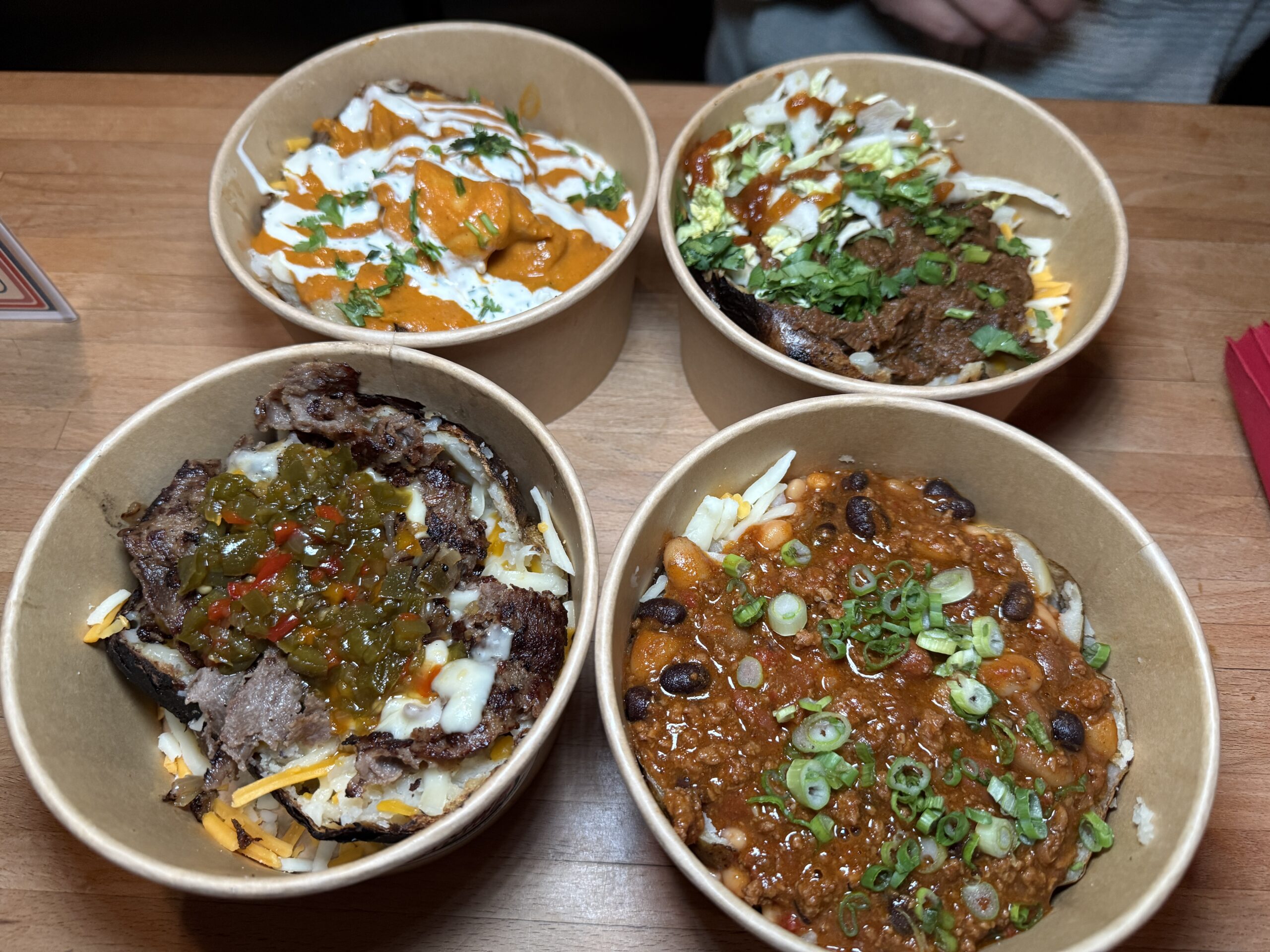
    Clockwise from top left, Mod Spuds’ Bollywood spud, Malaysian spud, classic spud, and Philly cheesesteak spud.

    The baked potato has only gained trend status fairly recently. We started off the year in what I personally dubbed the era of the latke. Every seafood bar had a latke piled with tuna tartare, bearing dollops of cream and caviar. You can’t throw a rock (or a potato) in Philly without hitting some sort of fancy shellfish or tartare perched delicately upon a potato latke. The trend was relentless nationwide and inescapable here, from My Loup’s pastrami beef tartare served on latkes to Middle Child Clubhouse’s okonomiyaki latkes and Little Water’s peekytoe crab balanced on “hash browns” … also known as latkes.

    We have perhaps passed peak latke and moved onto another potato preparation. Baked-potato news has been populating my social media feeds, proffering both locally available spuds and unattainable ones.

    There’s chef Ange Branca’s Mod Spuds, which puts a Malaysian-Philadelphian spin on English jacket potatoes. She offers toppings well beyond the usual spoonful of sour cream and scattering of shredded cheese — from a Philly cheesesteak loaded potato to one topped with Branca’s legendary beef rendang.

    On TikTok, baked potatoes were buoyed by Nara Smith, who made a “jacket potato tutorial” for her 12.3 million followers. Her preparation of a baked potato, with narration in her husky, low voice while wearing couture, has spawned countless imitation videos. The U.K.-based business SpudBros has become a global brand with multiple locations, millions of followers, and food trucks thanks to viral success on TikTok.

    Baked potatoes are also popping up on menus at restaurants and bars in ways one has never seen before, whether it’s Pietramala’s Japanese sweet potato with Buffalo sauce and cashew sour cream, or at the newly reopened Wine Dive (now on Sansom Street).

    Sweet Potato dish at Pietramala in Philadelphia on Wednesday, Nov. 26, 2025.

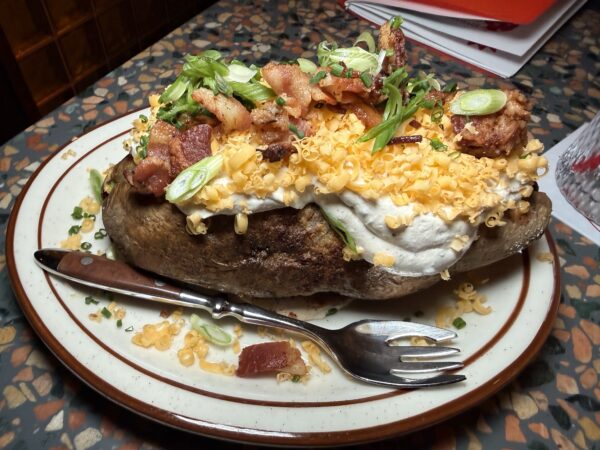
    Wine Dive’s baked potato is an Idaho spud roughly the size of my Chihuahua, with crispy, deep brown skin and white flesh that emits plumes of steam when you slice into it through the mountain of sour cream, curls of cheddar, torn bits of bacon, and scallions.

    This is not a vehicle for masterful tikka masalas or rendang. This is a thoroughly American baked potato. On Wednesdays, Wine Dive has bottomless, all-you-can-eat baked potatoes for $15.

    It is as ridiculous as it sounds. Eat 10 baked potatoes and you get your photo on the wall and the promise of some very cool merch. No one has made it to 10. So far, the record has been seven potatoes.

    It’s possible that the proliferation of baked potatoes is, like cabbage, a recession indicator. But like the latke, it may very well have fine-dining legs. Just let me know if you manage to eat 10 in one go.

  • Honeygrow aims to be a national brand. Here’s where the Philly company is planning new locations.

    Honeygrow aims to be a national brand. Here’s where the Philly company is planning new locations.

    Honeygrow keeps growing.

    The fast-casual eatery, based in Center City, plans to open up to 18 new locations next year, following 17 new outposts in 2025, founder and CEO Justin Rosenberg told The Inquirer on Monday.

    “It was definitely a good year,” said Rosenberg, adding that the company is “just continuing to build the pipeline for 2026 and beyond.”

    Honeygrow sells made-to-order stir-fries as well as salads and desserts. Since launching in 2012, the company has grown to 71 locations across several states, including Ohio, Massachusetts, Virginia, Maryland, Delaware, and New York.

    Philadelphia-area stores include Center City, Kensington, University City, North Philadelphia, Bala Cynwyd, and Cherry Hill.

    The company’s expansion plans include adding locations in Ohio and New Jersey, as well as in Boston. The eatery is also currently in negotiations to bring Honeygrow to the Detroit metropolitan area, a new market, said Rosenberg.

    Honeygrow also aims to open a location in Middletown, Del.

    As of February 2024, Boston was the company’s most-profitable market, but since then, Philadelphia has caught up, he says.

    “Saleswise, it’s kind of neck and neck between certain Philly stores and our two Boston stores,” Rosenberg said.

    Further expansion in Philadelphia is also possible.

    “We are always looking at Philly,” Rosenberg said. “We’ve been poking around South Philly for a while. We just haven’t found the right opportunity.”

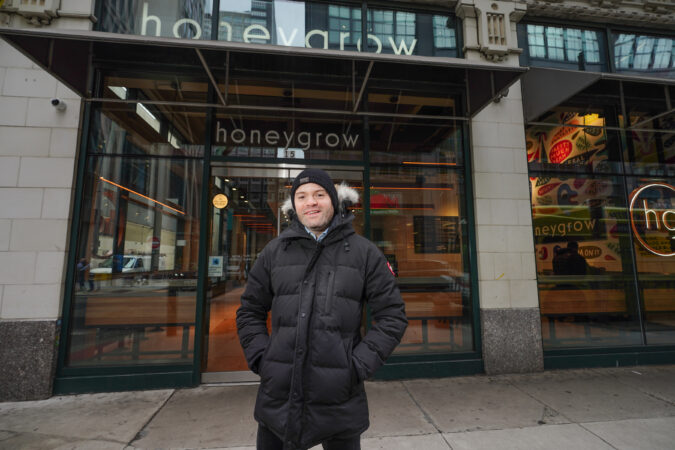
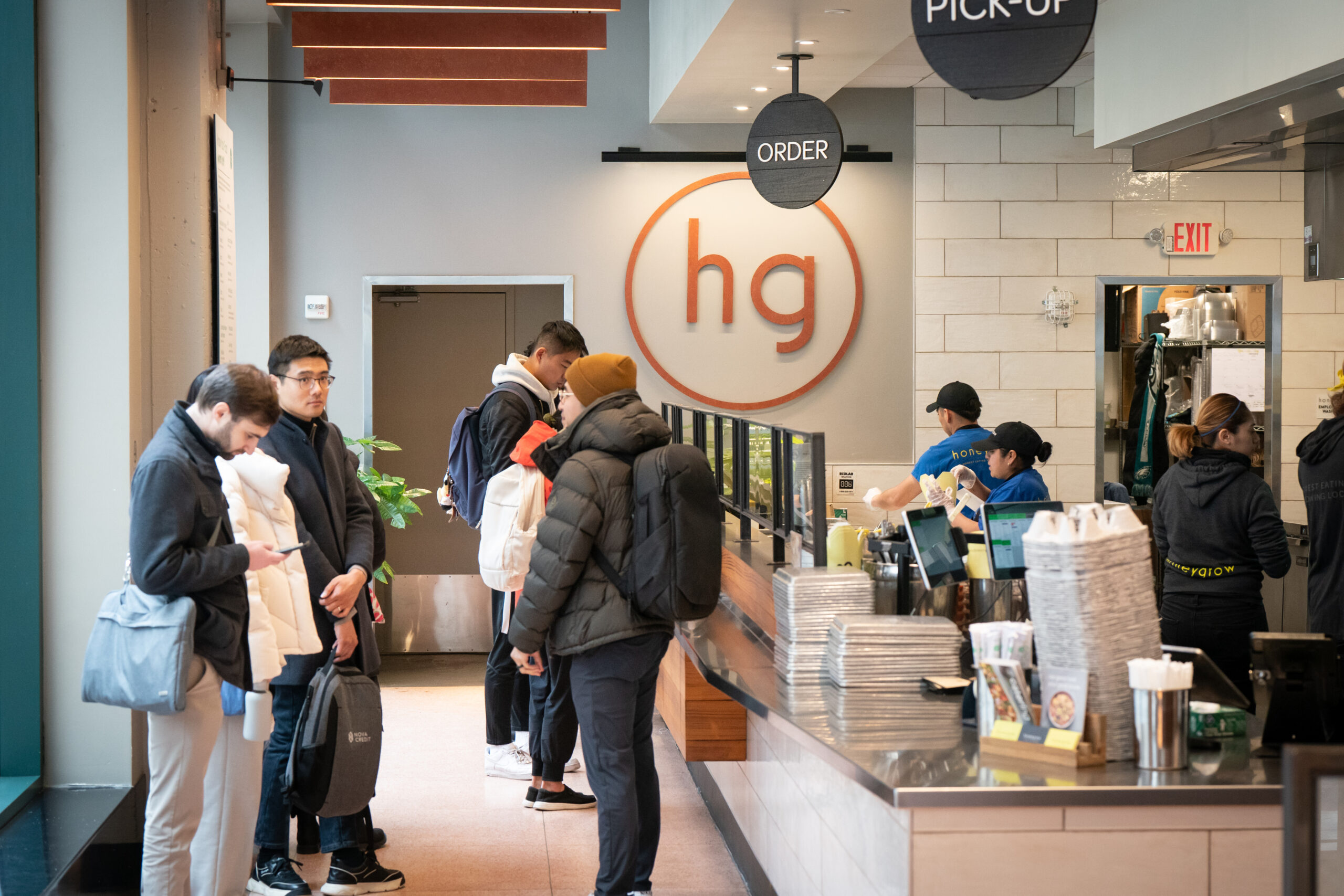
    Honeygrow, at 11th Street in Center City, in 2024.

    The company typically seeks 2,500-square-foot locations for new stores, but Rosenberg says it’s a competitive market for that kind of real estate.

    “One of the things that has made us successful — and I give credit to my team for this — is that we’ve been very disciplined on growth, just saying, look, if we can’t get the deal we need in terms of underwriting, let someone else take it,” he said.

    The company employs roughly 2,000 people, and each new store adds some 30 new hires, Rosenberg said.

    Some of the considerations when looking at new markets include what other fast-casual concepts are in the area, and how they’re doing, Rosenberg said.

    “If a Starbucks is underperforming in that market, that’s certainly going to spook us. Or a Chick-fil-A, if it’s below average unit volume, it’s probably not the right market for us,” he said.

    On the flip side, if a Chipotle, Chick-fil-A, Starbucks, Raising Cane’s, or another brand is doing well in an area, Rosenberg said, “We feel that those would be very similar customers to ours. We’re willing to put a restaurant in there and see what happens.”

    The plans for new locations come as the company shuttered some stores in Chicago, Washington, and New York in 2018 after rapid expansion plans. Some stores were “dragging down profitability,” Rosenberg has said, and he has attributed closures to growth that happened too quickly as well as poor real estate.

    Since then, the company has roughly tripled in size, said Rosenberg, adding “you just keep learning with every opening that you have.”

    “My mission remains the same,” he said. “I want to build something that’s from Philadelphia — make this a national, if not international, brand that we can be proud of.”

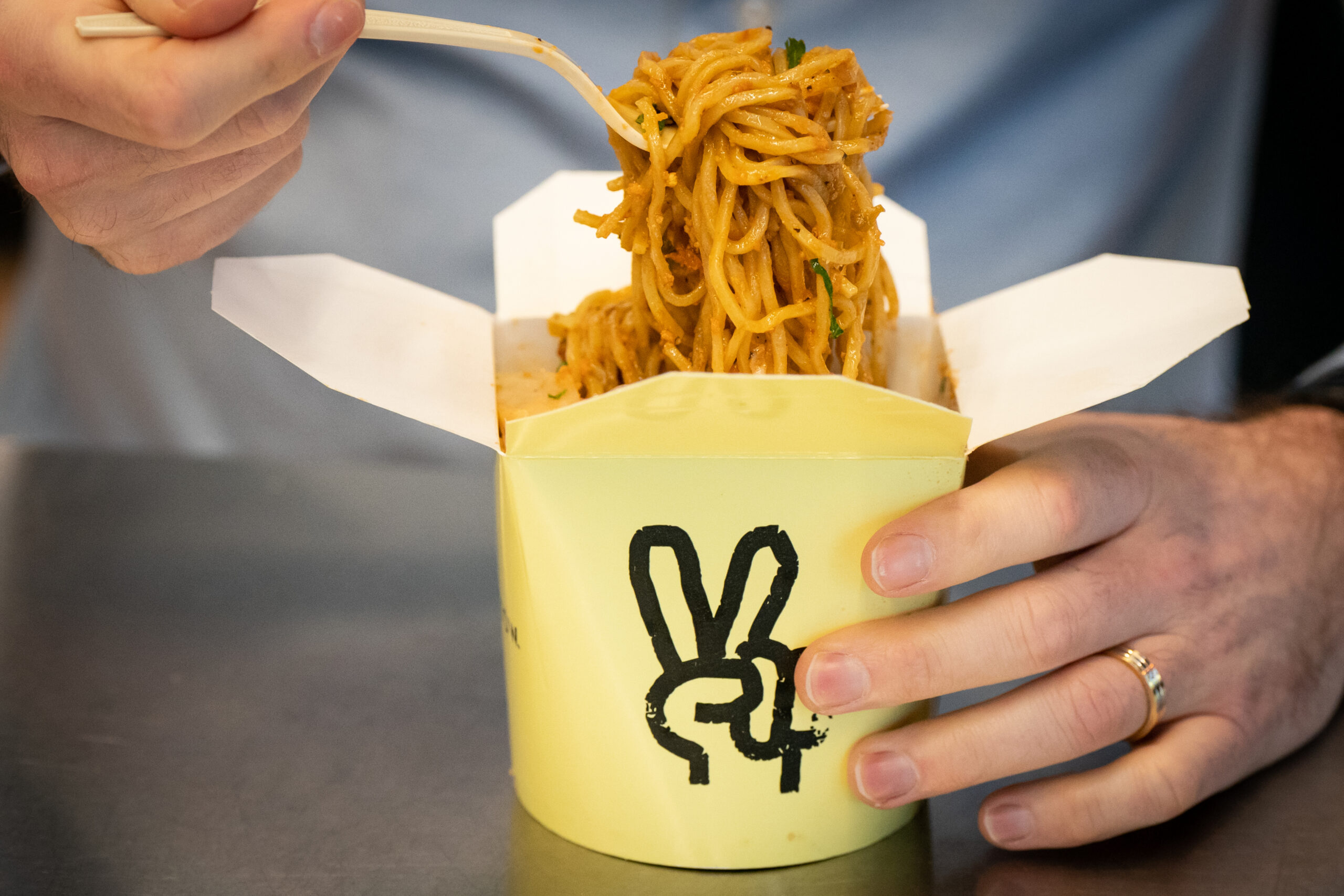
    Chicken Parm Stir-fry at Honeygrow at the 11th Street location in Philadelphia in 2024.
  • The significant Philly-area restaurant closings of 2025

    The significant Philly-area restaurant closings of 2025

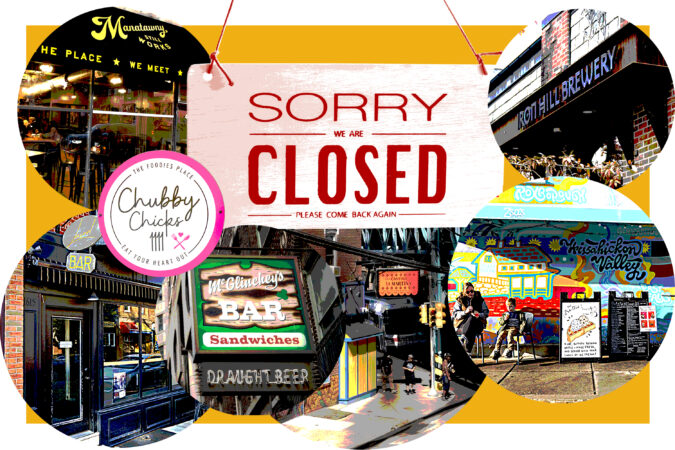
    The significant restaurant closings of 2025 include time-honored veterans such as the Bistro at Cherry Hill, Marra’s, McGlinchey’s, and Pod, as well as yearlings such as Chubby Chicks and Mulherin’s Pizzeria.

    Some wound down over time, giving staff and customers plenty of notice (such as Blackfish, Jansen, Laurel, and Zsa’s Ice Cream), while others shut down abruptly, such as Manatawny Still Works and Iron Hill Brewery — the latter putting an estimated 1,400 employees out of work overnight.

    On the positive side, many shuttered restaurant spaces didn’t stay vacant for too long, providing a reminder that endings often double as beginnings.

    January

    Copabanana South Street closed after 45 years amid bankruptcy and following a brief move off the corner of Fourth and South Streets. Copabanana University City is separately owned and unaffected.

    Hawthornes Café, the South Philadelphia brunch fixture, closed after 15 years. The location is now the Lodge by Two Robbers.

    Ultimo Coffee’s Rittenhouse location closed after about seven years over what were called plumbing issues. It’s now Musette Rittenhouse.

    February

    Big Ass Slices in Old City closed after nearly eight years for myriad reasons.

    John Henry’s Pub, in Ardmore for 39 years, closed upon the owners’ retirement. Chinatown restaurant EMei is preparing to move in.

    Martorano’s Prime, the Italian steakhouse at Rivers Casino run by South Philly native Steve Martorano, closed after a year and a half. The casino, which oversaw operations, rebranded it as Sapore Italian Kitchen.

    Mulherin’s Pizzeria in East Market closed after less than a year amid a legal dispute.

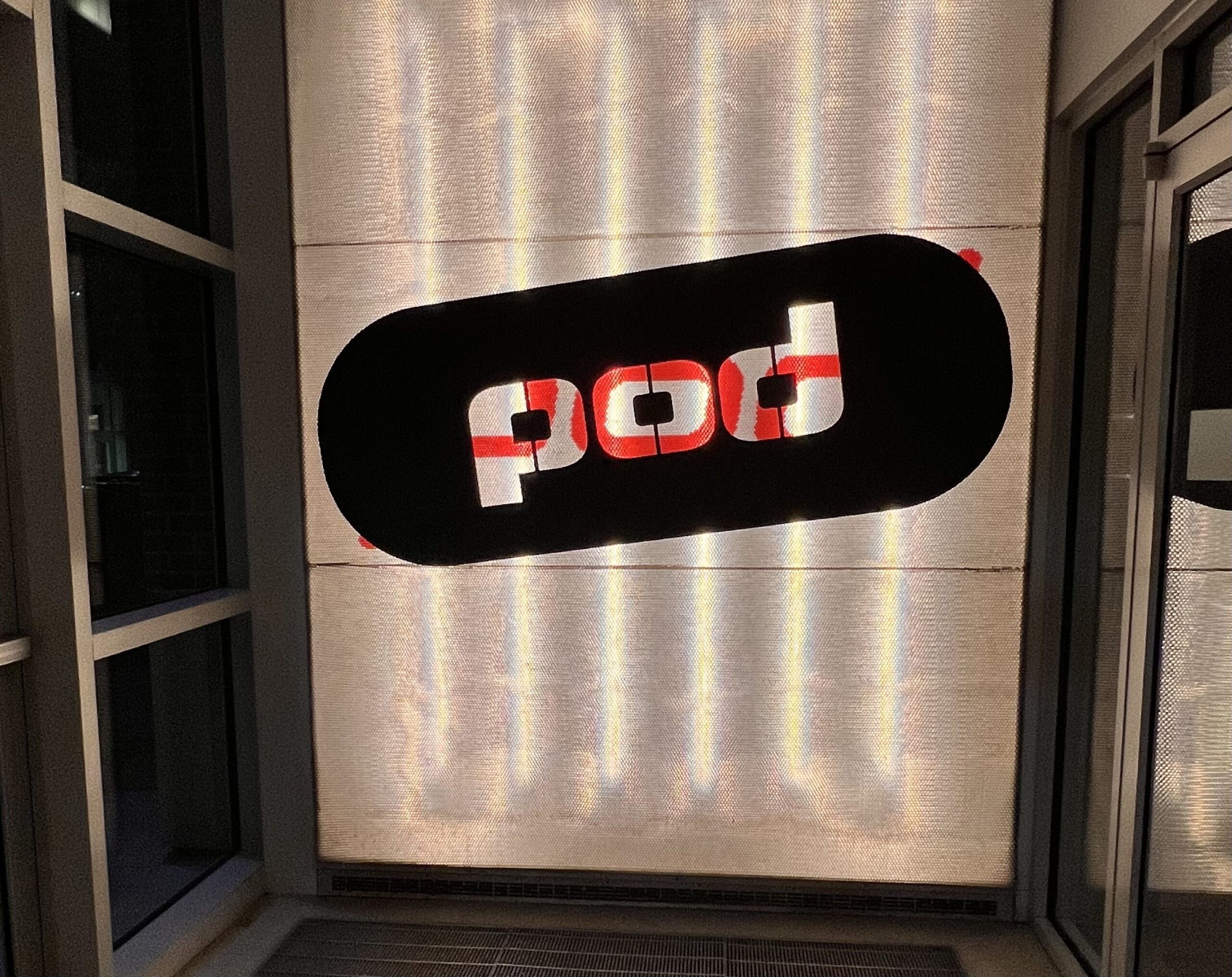
    Pod, 3636 Sansom St.

    Pod, Stephen Starr’s longtime futuristic pan-Asian spot in University City, closed, just shy of its 25th anniversary.

    March

    Añejo and Figo in Northern Liberties, Chika in Rittenhouse, and Izakaya Fishtown — all run by Glu Hospitality — closed as the company imploded.

    April

    Blair Mountain Biscuit Co. in Blackwood abruptly shut down after nearly four years.

    Crime & Punishment Brewing in Brewerytown cited various reasons for its closing after 10 years, including a shift in drinking culture.

    Rudee’s Thai Cuisine in Wynnewood closed after six years, giving way to Delish Thai.

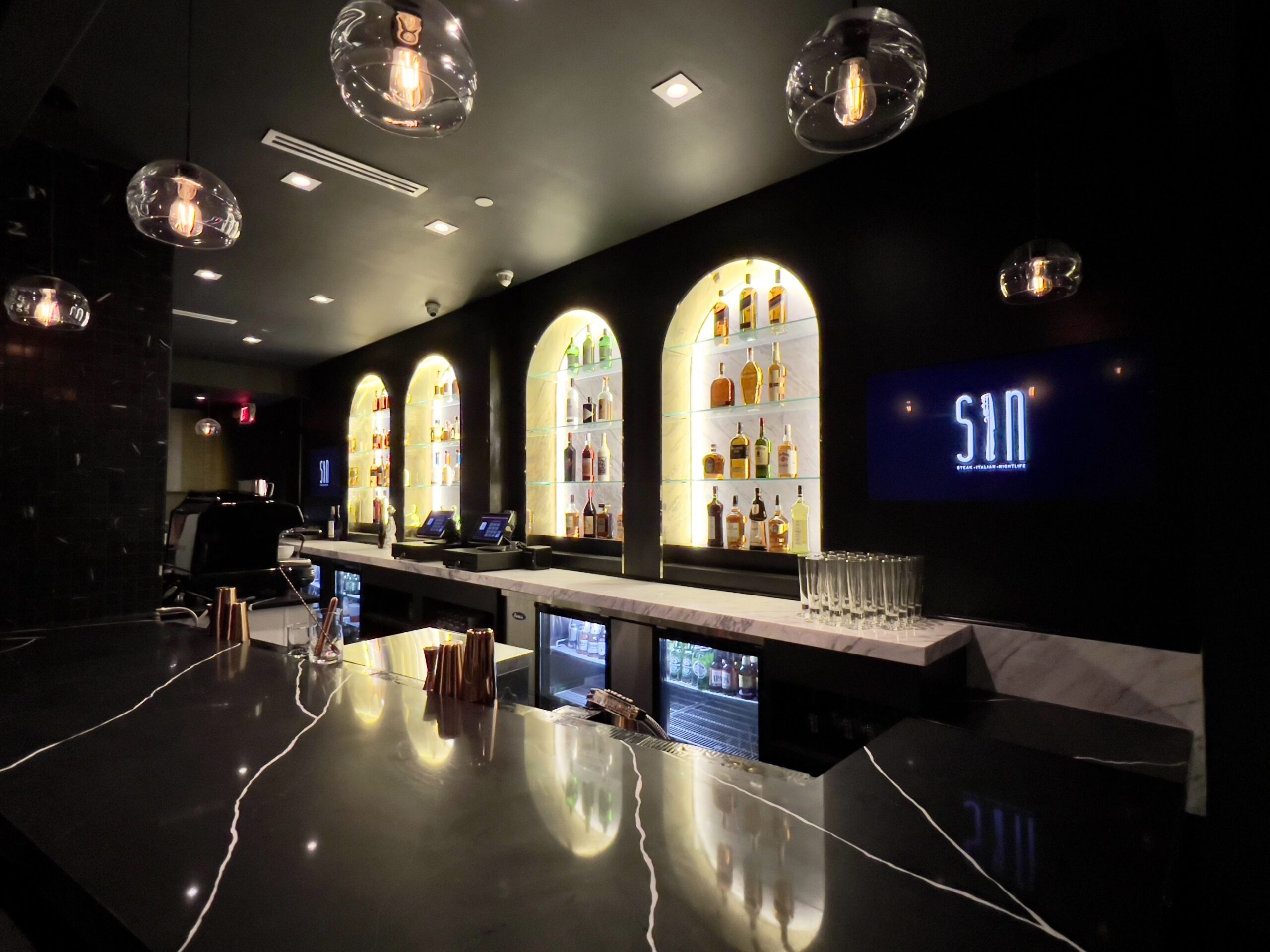
    Bar at SIN, 1102 Germantown Ave., on Nov. 12, 2023.

    SIN (Steak Italian Nightlife) in Northern Liberties closed after 16 months to make way for Amina, which relocated from Old City.

    May

    Hale & True Cider Co. in Bella Vista closed after seven years; it is now a location of Carbon Copy.

    Tela’s Market in Francisville closed after nearly 12 years, making way for Manong, a Filipino steakhouse.

    Woolly Mammoth on South Street closed after nearly two decades. New occupant is the women’s sports bar Marsha’s.

    June

    Kraftwork, a Fishtown corner neighborhood bar and restaurant, closed after 15 years.

    Mac’s Tavern, the Old City bar owned in part by cast members of It’s Always Sunny in Philadelphia, closed after 15 years.

    Manatawny Still Works shut down its entire operation after 11 years, including three tasting rooms, with two days’ notice. The location at 1321 N. Lee St. in Fishtown is now Pip’s, a tasting room from Ploughman’s Cider Co.

    Redcrest Kitchen in Queen Village closed after less than three years; the project had a few twists and turns, starting with a flood just after the lease-signing in 2021.

    Ross & Co., the Hatboro sports bar that succeeded a Bernie’s Pub location, closed abruptly after a little more than a year.

    Seorabol’s Olney location closed after 31 years with the retirement of founding chef Kye Cheol Cho. Chef Chris Cho’s Center City outpost remains open.

    Stardust Cafe, which only briefly succeeded the Pop Shop in Collingswood, closed. The space is the new location of Jersey Kebab, which relocated from Haddon Township.

    July

    The Bistro at Cherry Hill, a fixture at Cherry Hill Mall, shuttered. Its owner was later indicted on charges of tax fraud.

    The Cauldron, a magic-themed bar in Washington Square West, closed along with all U.S. and U.K. locations. The Philadelphia location was open for about three years.

    Campbell’s Place, a fixture in Chestnut Hill for 30 years, closed as the owners said they wanted to start a new chapter in their lives.

    ESO Ramen Workshop/Neighborhood Ramen left its final location, in Society Hill, as owners moved to Japan.

    Federal Donuts & Chicken shuttered its Whole Foods Market location in Wynnewood after four years.

    Del Frisco’s Grille at the Cambria Hotel on South Broad Street closed after 6½ years. Kitchen & Kocktails by Kevin Kelley moved in.

    Hosers Central Kitchen left the Market at the Fareway in Chestnut Hill after 3½ years. The counter is now a location of the Borscht Belt, a deli.

    The Monkey & the Elephant in Brewerytown closed after about 10 years.

    Tria’s location at 12th and Spruce Streets closed after 18 years. It’s now a bar named Static!

    August

    Birdhouse Gelato in Bella Vista closed after only seven months; its owner cited their government layoff.

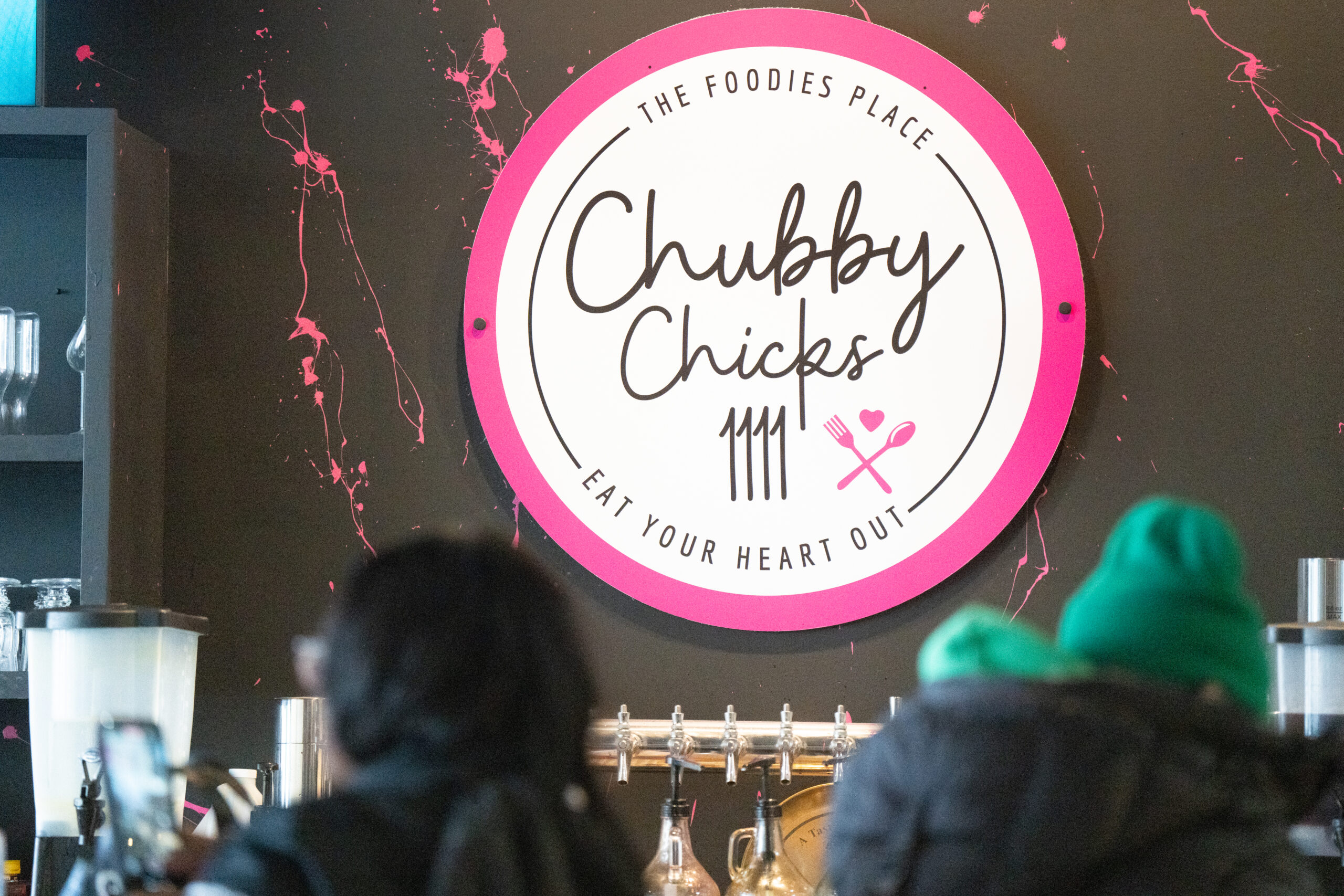
    Chubby Chicks 1111 on Feb. 20, 2025.

    Chubby Chicks 1111, a bruncherie in Washington Square West, closed after nine months; the landlord had filed for eviction after a stormy tenure.

    Collingswood Diner closed after 41 years; the site is becoming a dispensary.

    Kitchen87 in Mount Holly closed after 11 years.

    Mae’s, a farm-to-table BYOB in West Chester, closed after five years.

    McGlinchey’s, the Center City watering hole, closed after six decades.

    Say No More, a yearling cocktail bar and performance space in Kensington, closed amid a legal issue stemming from an assault allegation.

    Tin Can Bar in Fishtown closed. It began in 2016 as the seafood restaurant Bait & Switch and switched to Tin Can in 2019.

    September

    Banh Mi & Bottles closed after about nine years as the family has decided to install a different business in the storefront at 712-714 South.

    DaMo Pasta Lab’s location at 12th and Sansom Streets closed after about six years. The newer spot, on 20th Street near Rittenhouse Square, remains.

    Iron Hill Brewery & Restaurant — all of them —sank in bankruptcy after nearly 30 years. The assets of some of the breweries have been purchased, and tenants are being sought for a few Philly-area locations, including West Chester.

    Jansen, chef David Jansen’s fine-dining spot in Mount Airy, closed after nearly 10 years as Jansen moved on to become chef at Whitemarsh Valley Country Club.

    October

    Bombay Express closed in Marlton after 2½ years, but resurfaced in Cherry Hill.

    El Barrio Cantina in Holland closed after about six years. Owners indicated that a food truck was forthcoming.

    Lucha Cartel, the Old City Mexican hangout, was sold after 12 years. It is being rebranded as a location of Tun Tavern, a 21st-century version of the colonial birthplace of the Marine Corps. Owner Montgomery Dahm said it is expected to open in March.

    Momoka Ramen & Skewers’ Northeast Philadelphia location closed after about two years. Its Queen Village location remains.

    November

    Austrian Village in Rockledge closed after 53 years, following the death of its chef.

    Big Charlie’s Saloon in South Philadelphia closed permanently after the death of its owner, Paul Staico, on Nov. 30.

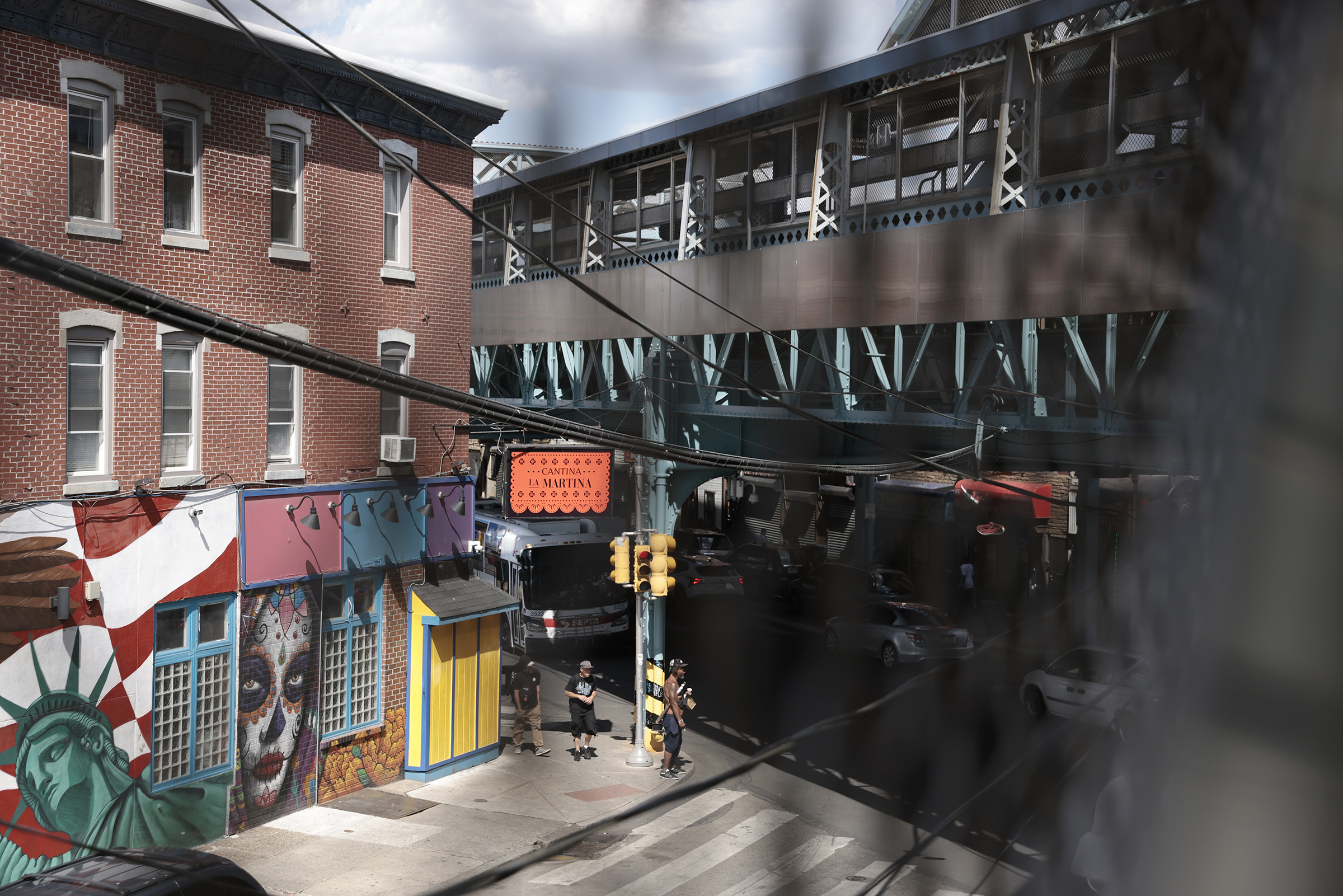
    A view of Cantina La Martina taken from the steps of Somerset Station.

    Cantina La Martina, chef Dionicio Jimenez’s acclaimed Mexican restaurant in Kensington, closed after nearly four years. He’s pursuing a new location.

    Essen Bakery, facing financial pressure, confirmed the permanent closing of its shops in South Philadelphia and Kensington after nine years.

    Isot, the Turkish BYOB on Sixth Street near Bainbridge, closed after 10 years at the end of its lease.

    Keg & Kitchen in Westmont closed after 15 years with the retirement of owners Kevin and Janet Meeker. It will reopen under new ownership as Duo Restaurant & Bar from the operators of Cherry Hill’s Il Villaggio.

    Laurel, Nicholas Elmi’s East Passyunk bistro, closed after 12 years as its lease was winding down.

    Mama’s Pizzeria in Bala Cynwyd closed after 65 years because of owner Paul Castellucci Sr.’s health issues.

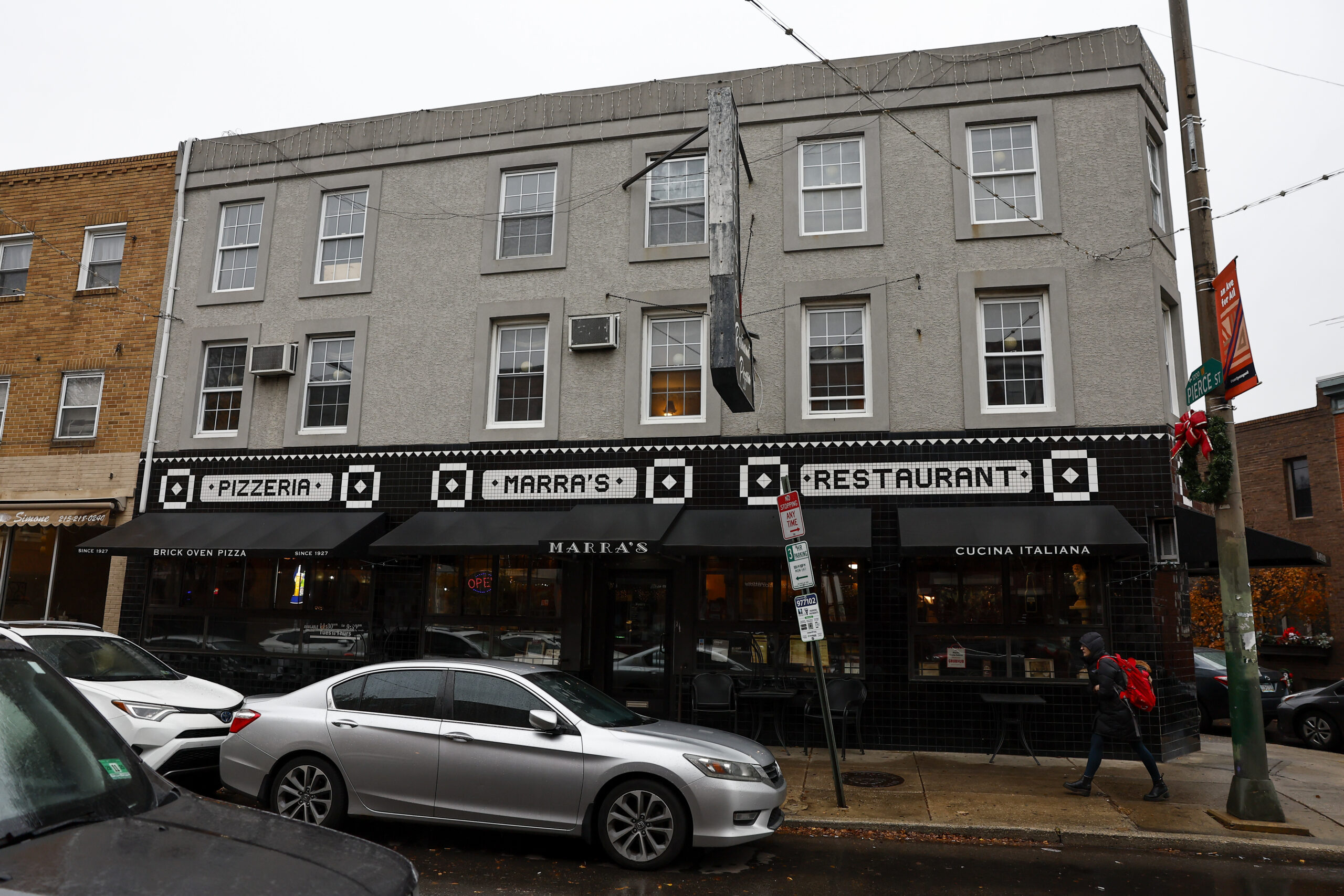
    Marra’s restaurant on its final day, Nov. 30.

    Marra’s, the landmark South Philadelphia Italian restaurant, closed after 98 years with the sale of its building to Dan Tsao, who is opening a branch of EMei there.

    Max’s Seafood Cafe in Gloucester City abruptly closed and is now Pudge’s Pub.

    Osteria 545 in Paulsboro closed after nearly five years over economic issues.

    Rocco’s at the Brick in Newtown closed abruptly after about eight years over a landlord issue.

    Señorita’s Mexican Taqueria’s Ardmore location closed after a few years. Its Havertown location remains.

    Winnie’s Manayunk closed after 22 years, capping a rocky year.

    December

    Blackfish, chef Chip Roman’s Conshohocken seafood restaurant, announced that it would close Dec. 31 after two decades, as Roman wants to move on.

    The Boozy Mutt, the Fairmount dog park, announced its closing after two years, effective Jan. 3.

    Core de Roma’s final location, in Bala Cynwyd, closed after five years. Owners Judy and Luigi Pinti wrote on their website: “After the report of a professional building Inspection company we have decided to not exercise the options to buy or extend the lease for another five years. Also, not finding adequate staff and problem with the parking forced us to close the restaurant.”

    Il Fiore, the upscale Italian spot in Bryn Mawr Village that succeeded the Marc Vetri-run Fiore Rosso in mid-2024, has closed. Management’s note suggests that a new occupant is forthcoming. (Il Fiore was not related to the longtime Collingswood BYOB of the same name.)

    Mac Mart’s Rittenhouse location closed after 9½ years. It’s relocating in January to a kiosk at 18th and Arch Streets.

    Marple Public House in Broomall has ended its nearly six-year run. It will reopen Jan. 2 under new management as Page & Pour Tavern.

    Michael’s Sandwich Shop in Woodlyn announced that its last day after 49 years would be Dec. 31.

    Park Place, the intimate tasting-menu restaurant in Merchantville, closed Dec. 20 after nine years. Chef-owner Philip Mangararo announced on social media that he is moving on.

    Society Hill Hotel’s operators, Brian Linton and Mike Cangi, announced that they were closing New Year’s Eve after a year and a half. While retaining the boutique hotel, they’re ceding the street-level restaurant to Michael Pasquarello’s 13th Street Kitchens (Cafe Lift, Prohibition Taproom, La Chinesca). Pasquarello told The Inquirer that he would open it in late winter or early spring as Piccolina, a dimly lit Italian bar and restaurant with raw bar, house-made pasta, Neapolitan pizzas, a few large plates, cocktails, and an Italian-only wine list.

    Zsa’s Ice Cream marked its finale after 14 years in Mount Airy. A year ago, Danielle Jowdy announced the shop’s “grand closing” as she sought to find a buyer.

  • Do yourself a favor: Have a bowl of pozole

    Do yourself a favor: Have a bowl of pozole

    I fell in love with pozole years ago in Mexico City. Though the city has many other merits, including a staggeringly diverse and fascinating food culture, it’s truly my craving for pozole that‘s brought me back again and again. It comes in the colors of the Mexican flag: rojo, verde, and blanco, with regional variations of each.

    The good news is you don’t have to go all the way to Mexico City for excellent pozole (although you can buy it by the literal bucket there). Philly has numerous excellent iterations of the classic dish.

    Pozole isn’t just about the thick stew itself, studded with large hominy (kernels of nixtamalized corn) and hunks of beef, chicken, or pork. It’s about the fixings and accompaniments. You’ll find shredded cabbage, sliced radishes, crispy tortillas, and lime wedges most frequently, but also tostadas smeared with refried beans, quesadillas stuffed with Oaxaca cheese, little bowls of crema, puffed-up and crispy chicharrones, and big, generous slices of avocado.

    Here are a handful of places to sink into a bowl of pozole in Philly. This is not a comprehensive list, just a place to start. And if anyone does invite you over to their mom’s house for pozole, your answer should most certainly be yes. (In fact, please call me if someone does. I would like to come, too).

    La Jefa

    La Jefa’s delicate pozole ($17) is not like the hearty bucketful I’ve consumed in Mexico City. It’s lighter brunch fare and consists of pulled chicken and hominy with chile de arbol, oregano, minced shallots, lime, served with a couple of blue corn tostadas.

    “It’s a chicken-based pozole rojo inspired by the pozole from a place in Zapopan, Jalisco, called La Escolastica. We use fresh hominy, which makes all of the difference. The tostadas are made from Cristina Martinez’s masa,” said restaurateur David Suro, who’s an active presence in the Rittenhouse all-day cafe cafe and its mother restaurant, Tequilas.

    La Jefa Cafe, 1605 Latimer St., 215-475-5500, lajefaphilly.com

    Pozole rojo from Cafe y Chocolate, with tostadas covered in typical pozole fixings.

    Los Potrillos

    This Port Richmond restaurant’s pozole rojo ($18) is a deep red from guajillo chilis, with enormous, skin-on pork knuckles swimming in the broth. On the side are three plain yellow corn tostadas, juicy lime wedges, and shredded lettuce and cilantro. The pork is fall-off-the-bone tender. I like to crush up the tostadas and sprinkle them in the bowl like croutons. It’s intoxicatingly delicious when spiked with lots of lime juice.

    Los Potrillos, 2617 E. Venango St., 267-692-8122, lospotrillosrestaurantpa.com

    Café y Chocolate

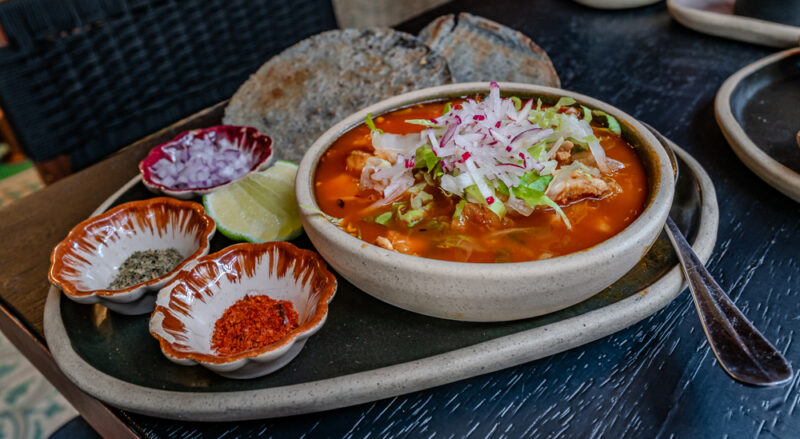
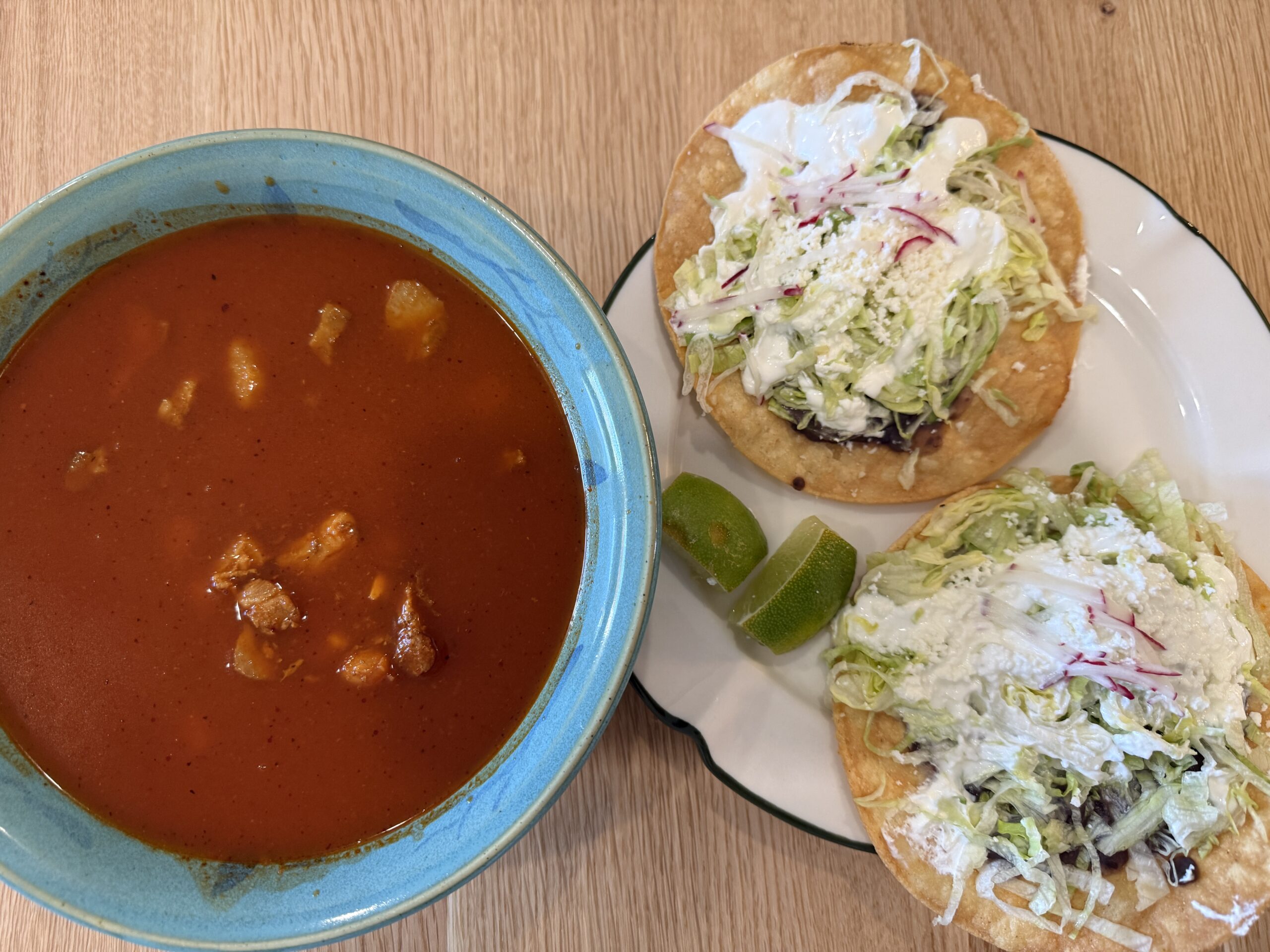
    West Passyunk’s Café y Chocolate serves a pozole rojo ($15) with two yellow corn tostadas spread with a thick layer of refried beans, then topped with lettuce, radishes, queso fresco, and a drizzle of crema. The stew has diced chunks of pork (and no bones). This is the most opaque of the pozoles on this list and the spiciest. I also love Café y Chocolate’s creamy elote soup and its hearty tortilla soup.

    Café y Chocolate, 1532 Snyder Ave., 267-639-4506, cafeychocolatephiladelphia.com

    The pozole blanco from La Llorona.

    La Llorona

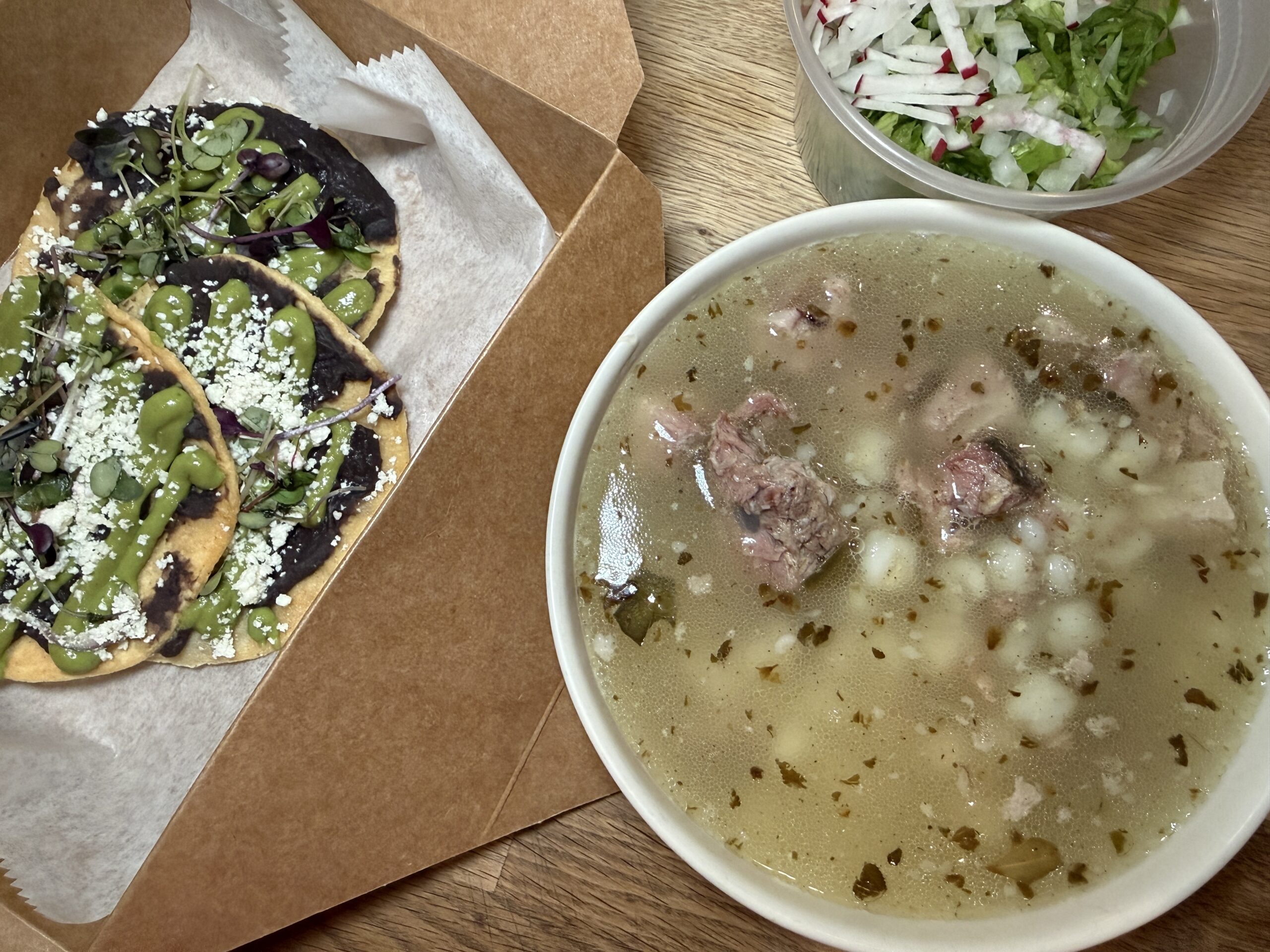
    I got La Llorona’s pozole ($18) delivered on a frigid winter day. Theirs is essentially a pozole blanco, but you can also order rojo or verde variations. This is a clear white broth with pork, hominy, and oregano. It’s served with three tostadas painted with refried beans, drizzled with avocado crema, and sprinkled with queso fresco. Shredded lettuce and matchsticks of radish come on the side. I highly recommend you get a quesadilla for dipping into the soup. This is perfect for those who consider themselves spice-averse (though the tostadas pack a bit of heat). The flavor is deep, porky, and herbaceous, but not too chili-forward. The pork is extremely tender, even silky.

    La Llorona, 1551 W. Passyunk Ave., 215-515-3276, lalloronaphilly.com

  • Here’s what Dry January does to your body

    Here’s what Dry January does to your body

    The booze-free month known as Dry January has surged in popularity, from just 4,000 participants when it launched in 2013 to millions of (at least short-term) teetotalers today. If you are considering giving up alcohol this January, you’ll be happy to hear that new research suggests it may bring you health benefits, including better mood and sleep, as well as lower blood sugar and blood pressure.

    A review of 16 studies on Dry January recently published in the journal Alcohol and Alcoholism found that even a short pause in alcohol use is linked to improvements in physical and psychological health.

    Dry January participants reported better mood, improved sleep and weight loss, and had healthier blood pressure, blood sugar and liver function. And several of the studies found participants experienced some benefits from simply reducing their drinking, also known as “Damp January,” rather than abstaining entirely.

    Health effects of giving up alcohol

    The tradition of abstaining from alcohol in January began in 2013 as a challenge by a charity, Alcohol Change UK, to reduce “alcohol harm.” In 2025, 21 percent of U.S. adults said they planned to participate in Dry January, a YouGov poll found.

    Fewer people in the United States are drinking in general. About 54 percent of U.S. adults say they drink alcohol, according to a 2025 Gallup poll, the lowest that number has been since Gallup started tracking drinking behavior in 1939.

    Alcohol use has been increasingly linked to health problems. In January, the U.S. surgeon general published an advisory report warning that alcohol can cause seven types of cancer, including breast and colorectal cancers.

    And a 2025 study in the journal BMJ Evidence-Based Medicine suggested that no amount of alcohol is safe in terms of dementia risk.

    “Alcohol affects far more aspects of our physical health beyond the commonly cited liver damage,” said Megan Strowger, a postdoctoral research associate at the University at Buffalo and lead author of the new review. (Strowger conducted this research during a postdoctoral fellowship at Brown University’s Center for Alcohol and Addiction Studies.) Strowger and her colleagues were surprised by the wide-ranging health effects of just a month without alcohol, including changes in blood pressure, insulin resistance, blood glucose, liver function and even cancer-related growth factors.

    Even those who didn’t abstain for the full month reported health benefits such as better mental well-being a month later. They also had “decreased drinking frequency, reduced drunkenness, and lower alcohol consumption” six months later, two studies cited in the review found.

    “Given that there weren’t huge reductions in drinking … I thought it was impressive that they found some of those physical health benefits around lowered blood pressure and liver abnormalities,” said Daniel Blalock, a medical associate professor in the department of psychiatry and behavioral sciences at Duke University School of Medicine, who was not involved in the review.

    How to reduce your alcohol consumption

    Strowger sees Dry January as a helpful opportunity. “What really makes Dry January successful is its massive reach and unique, non-stigmatizing approach; it focuses on the positive, accessible health outcomes of taking a break, rather than dwelling on participants’ prior drinking habits or issues of addiction,” she said.

    Here are some ways you can limit your alcohol consumption:

    Try Damp January

    If you’re not quite ready to give up alcohol entirely this January (or for Dry July or Sober October), you might consider Damp January, “where the goal is to reduce consumption rather than attempt full abstinence, making the shift feel more manageable,” Strowger said.

    “It helps prevent what we call the ‘abstinence violation effect,’ where if you fall off the wagon, you say, ‘Forget it, I might as well just get really drunk since I haven’t met my goal of complete abstinence,’” said Blalock, also a clinical research psychologist at Durham Veterans Affairs Medical Center.

    Track your progress

    Write down when you drink and how it makes you feel in a notebook, said George F. Koob, director of the National Institute on Alcohol Abuse and Alcoholism, or the Notes app on your phone. There are also digital tools such as the Try Dry app that make tracking your alcohol use simple, Strowger said.

    Create an environment to drink less

    Try creating a social environment that supports your goal to drink less, Blalock said. For example, if you join a running club for a Saturday morning run, you might be less inclined to drink the night before so you can wake up feeling fresh.

    And while you certainly don’t have to join a running club, exercise is one of Koob’s go-to recommendations for drinking less. It can help you cope with stress, rather than relying on alcohol to take the edge off. “Taking a walk clears your brain, and you come back and you don’t need that drink in order to relax,” he said.

    The researchers noted there’s also little harm in trying Dry January if you’re at all sober-curious – it may even be easier than trying to cut back on drinking at other times of the year.

    Saying you’re participating in Dry January often reduces some of the stigma associated with wanting to drink less alcohol, because so many people do it and can relate to the desire to start the year off a little bit healthier, Blalock said.

    “Dry January really helps you evaluate your relationship with alcohol,” Koob said. It may prompt you to pay more attention to how much and when you’re drinking, and how you feel the next day. “If you feel better when you’re not drinking, you should listen to your body, because it’s telling you something,” he said.

  • The top five Philly restaurant trends of 2025

    The top five Philly restaurant trends of 2025

    Michelin stars, oysters, coffee houses, food halls, and a billion-dollar newcomer shaped the 2025 Philadelphia restaurant scene.

    The awards keep rolling in

    As Philadelphia gears up to mark the Semiquincentennial, its restaurant scene sits squarely on the national radar.

    Michelin inspectors seemed to have had a good first impression of Philadelphia’s dining scene. At the Nov. 18 ceremony, which attracted more than 500 culinary professionals from around the world to the Kimmel Center for the U.S. Northeast Cities awards, nearly three dozen Philadelphia restaurants earned recognition. Center City’s Friday Saturday Sunday and Her Place Supper Club, and Society Hill’s Provenance received a star, while 11 others were designated as “recommended.” Ten others were conferred Bib Gourmand selections for serving what Michelin calls “exceptional food at great value.”

    Chef Phila Lorn serves crudo at Sao.

    In other awards, chef Phila Lorn of South Philadelphia’s Mawn won the James Beard for Emerging Chef in June and was named one of Food & Wine’s Best New Chefs in September. He and his wife, Rachel, also opened a second South Philadelphia restaurant, Sao.

    Chef Yun Fuentes of the Center City Puerto Rican restaurant Bolo was named to the Beard Foundation’s TasteTwenty list of industry “ones to watch.”

    It was also a standout year for Kalaya, a Fishtown Thai destination, and its founder, Chutatip “Nok” Suntaranon. Kalaya, along with Center City’s Friday Saturday Sunday and South Philadelphia’s Royal Sushi & Izakaya, were all named to 50 Best’s inaugural list of North America’s 50 Best Restaurants. Suntaranon was also included on Time’s list of the 100 Most Influential People of 2025, and Kalaya joined Society Hill’s Zahav and Center City’s Vetri Cucina on Robb Report’s ranking of the 100 Greatest Restaurants of the 21st Century.

    Coffee houses claim their role as third spaces

    Coffee houses became Philadelphia’s most important third spaces — places to sit, work, talk, and linger without alcohol or reservations. Yemeni coffee chains, in particular, expanded.

    Haraz Coffee House’s Fishtown location.

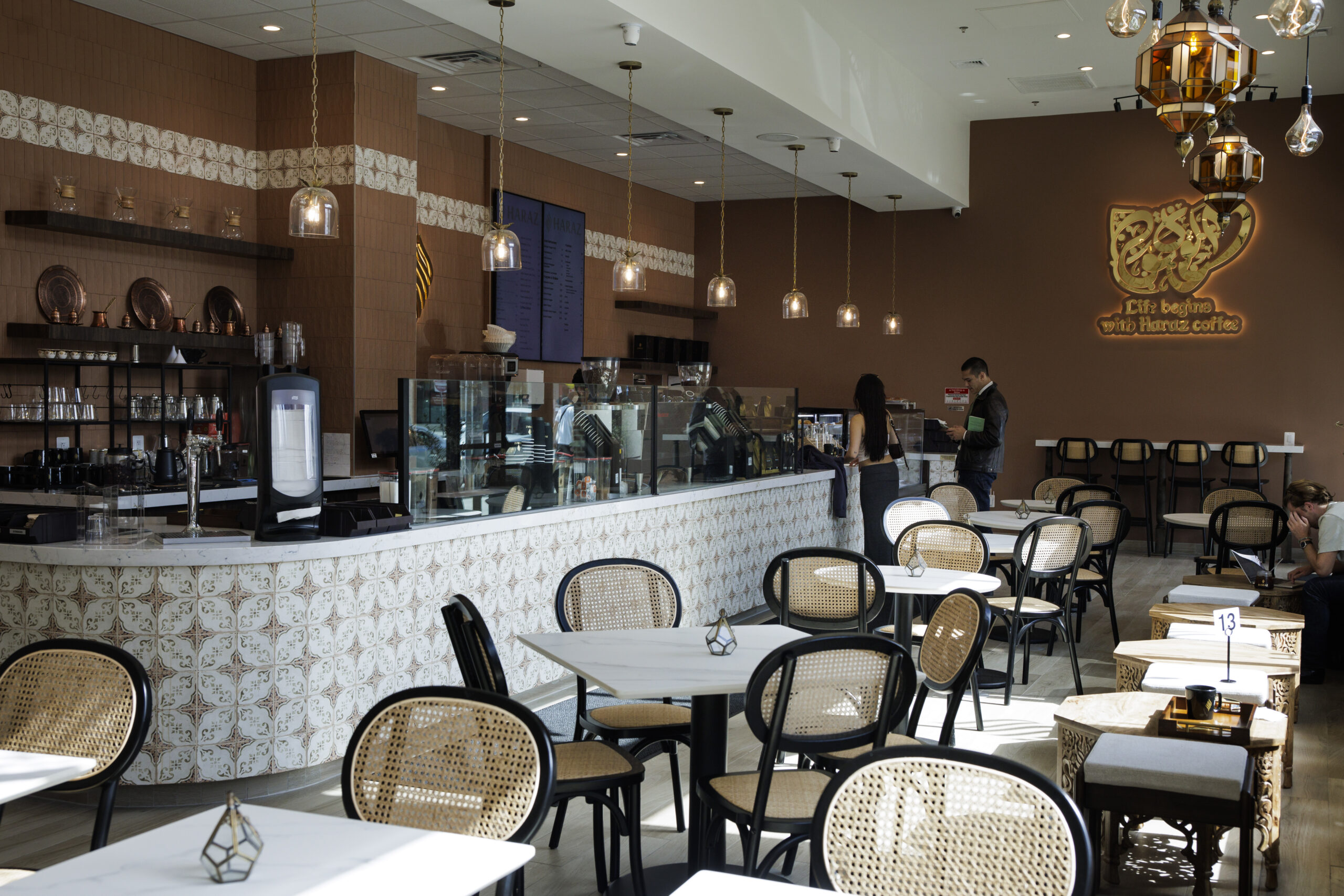
    Haraz Coffee House opened locations in University City and Fishtown, while Moka & Co. opened one on South Penn Square across from City Hall. The popular Vietnamese coffee chain Trung Nguyen Legend rolled out a two-level location in South Philadelphia, joining other linger-friendly destinations in the city, such as Rival Bros Coffee’s cushy, new Washington Square West location, the Bread Room, Olive Roots Cafe, Seaforest Bakeshop, and La Maison Jaune. More are on the way soon, including a Haraz location in Flourtown, a Moka at Temple University, M.O.T.W. (Muslims of the World) at the Murano in Center City, and Shibam Coffee in University City.

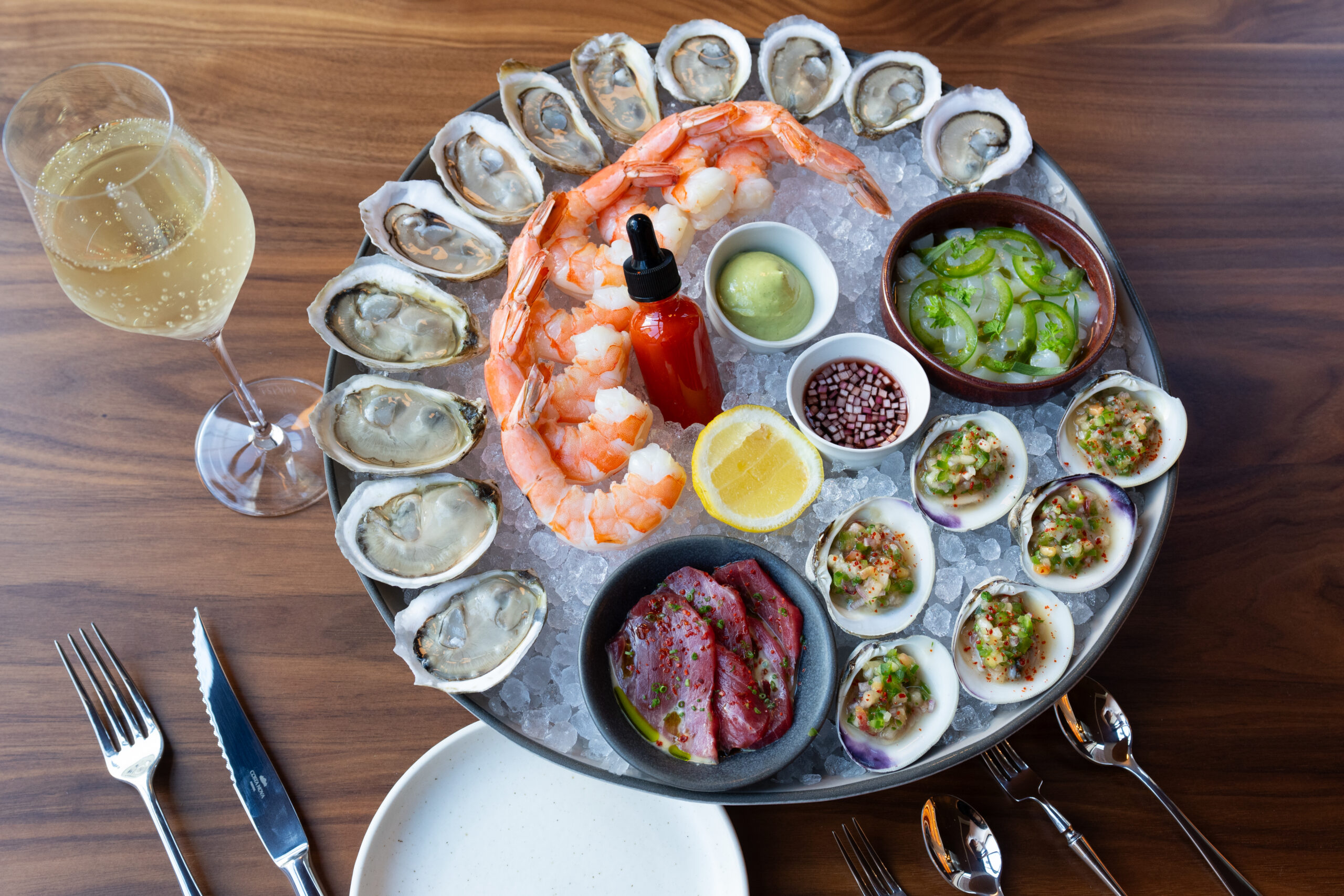
    Seafood plateau at Tesiny.

    Oysters go social

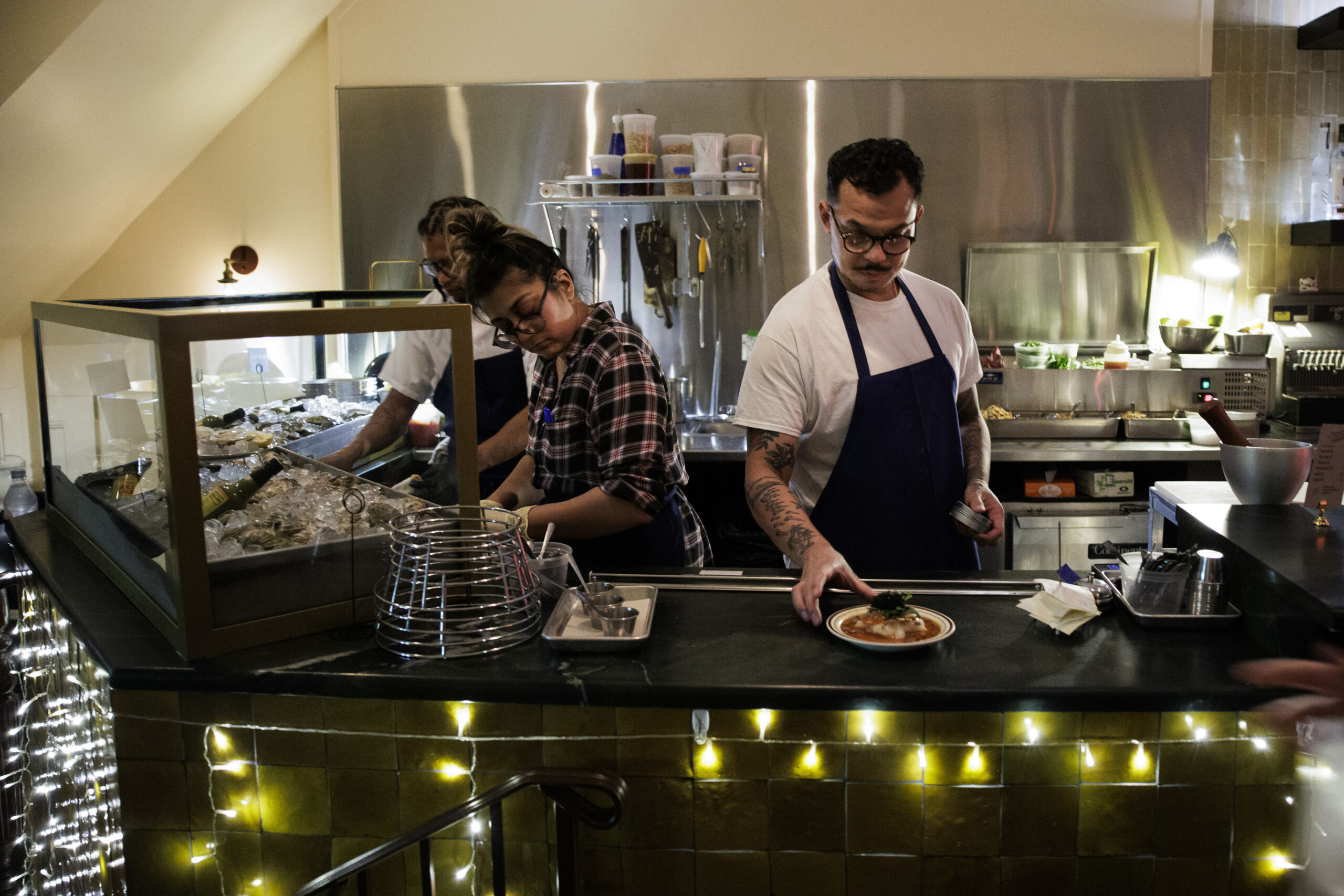
    Oysters are everywhere as raw bars multiplied. Sao reimagines seafood through a Cambodian influence. Lauren Biederman (Biederman’s) is behind Tesiny, a South Philadelphia raw bar; restaurateur Felicia Wilson and chef Darryl Harmon offer bivalves at their First Daughter Oyster & Co. at the Renaissance Philadelphia Downtown Hotel; and chef George Sabatino and partners have put a raw bar front and center at Fleur’s, their French spot in Kensington.

    Food halls grow up, and find their footing

    You could describe Eataly, the Italian emporium that opened in October in King of Prussia, and the new Feed Mill Eatery in Medford as food halls because of their everything-under-one-roof setup. But they have common ownership. The new Gather Food Hall and Ridge Hall, however, are assemblages of local operators united for a common mission.

    Gather Food Hall in the old Bulletin Building.

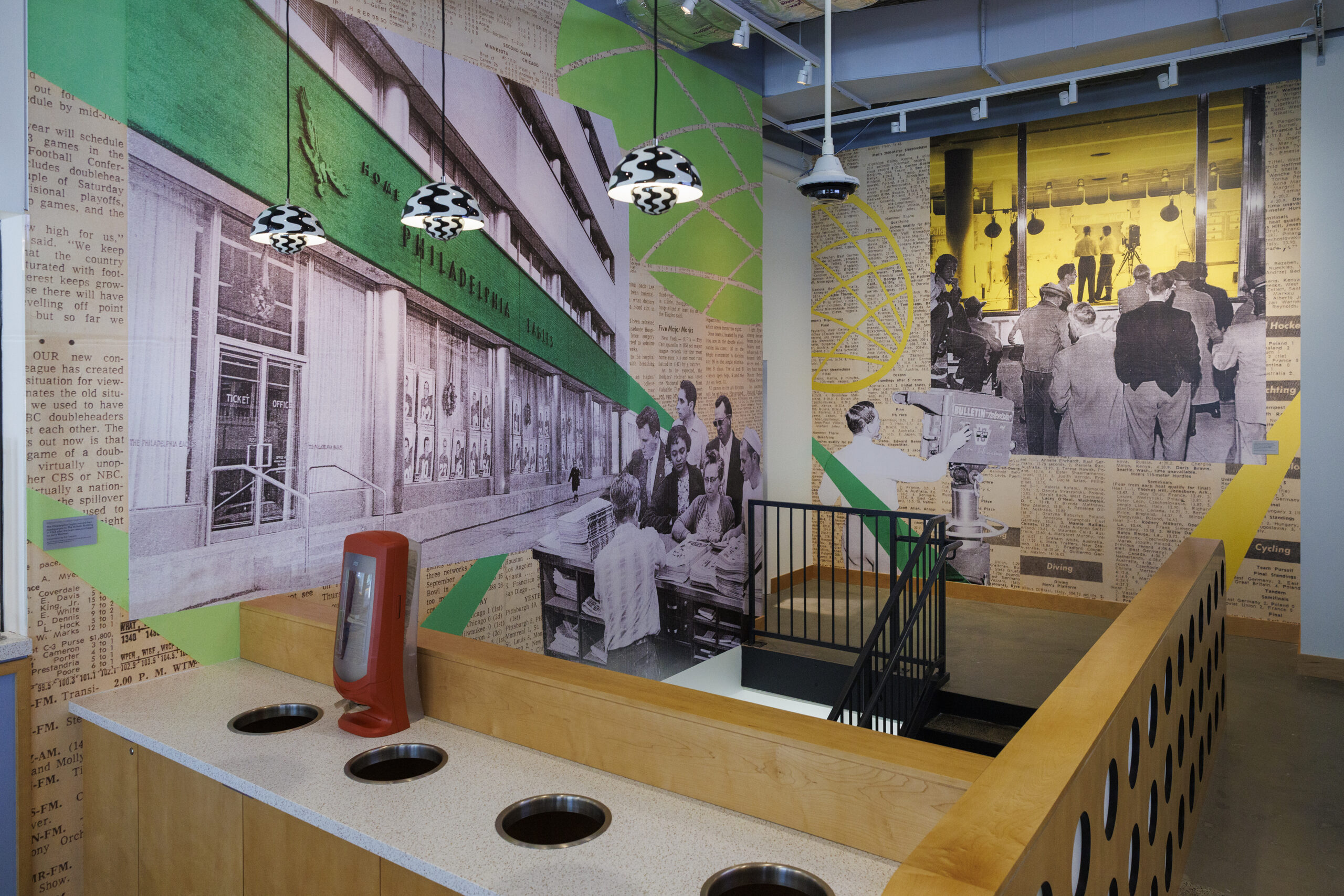
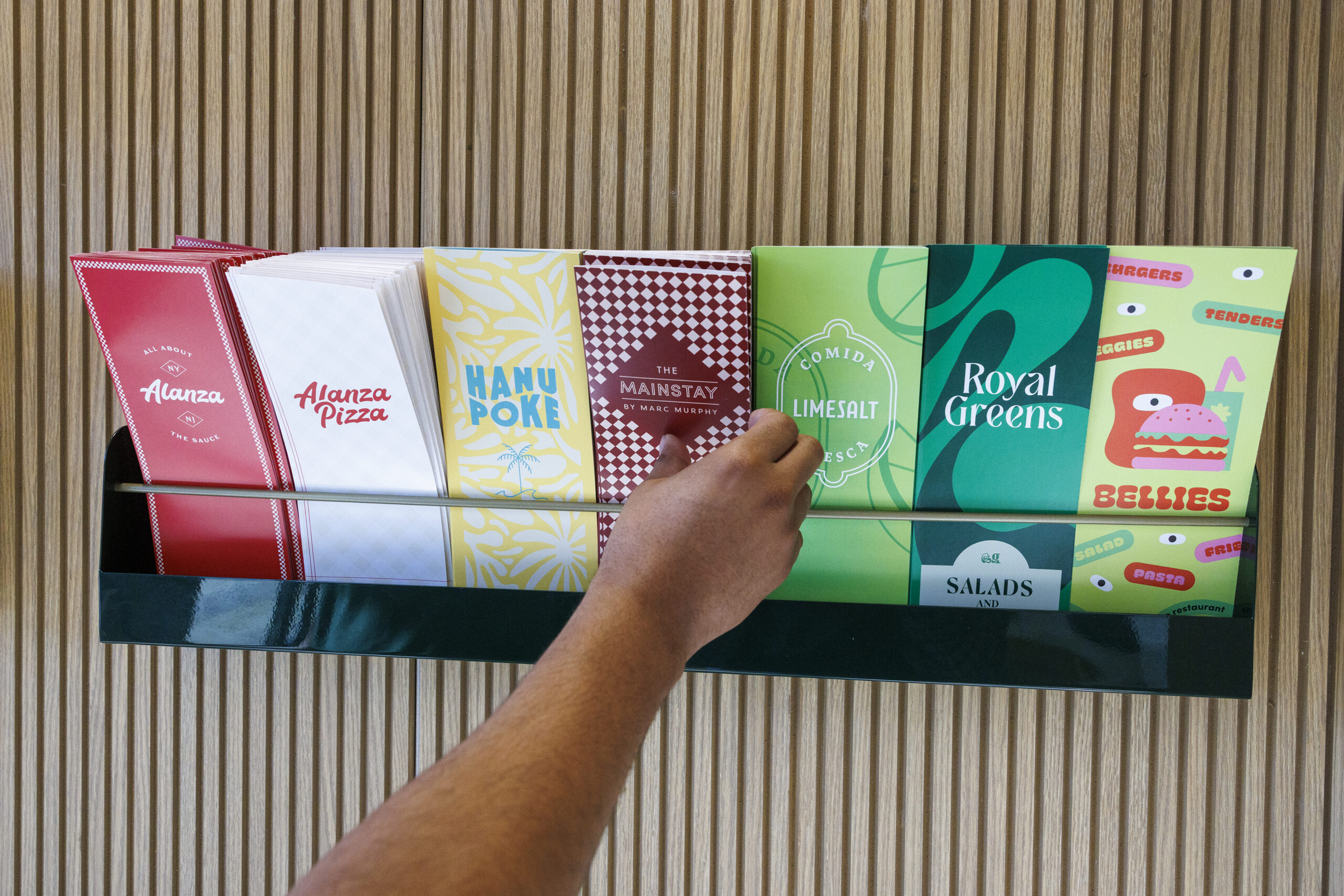
    Gather, in the former Bulletin Building across from 30th Street Station, has not only gathered Mexican, Cambodian, Peruvian, Indian cuisine, and pizza in University City, it has created a model to combat food insecurity among college students. Gather’s operators partner with Believe in Students, a national nonprofit, and have pledged to give out 5,000 low-cost meals in its first year, backed by a $250,000, 10-year commitment from developer Brandywine Realty Trust.

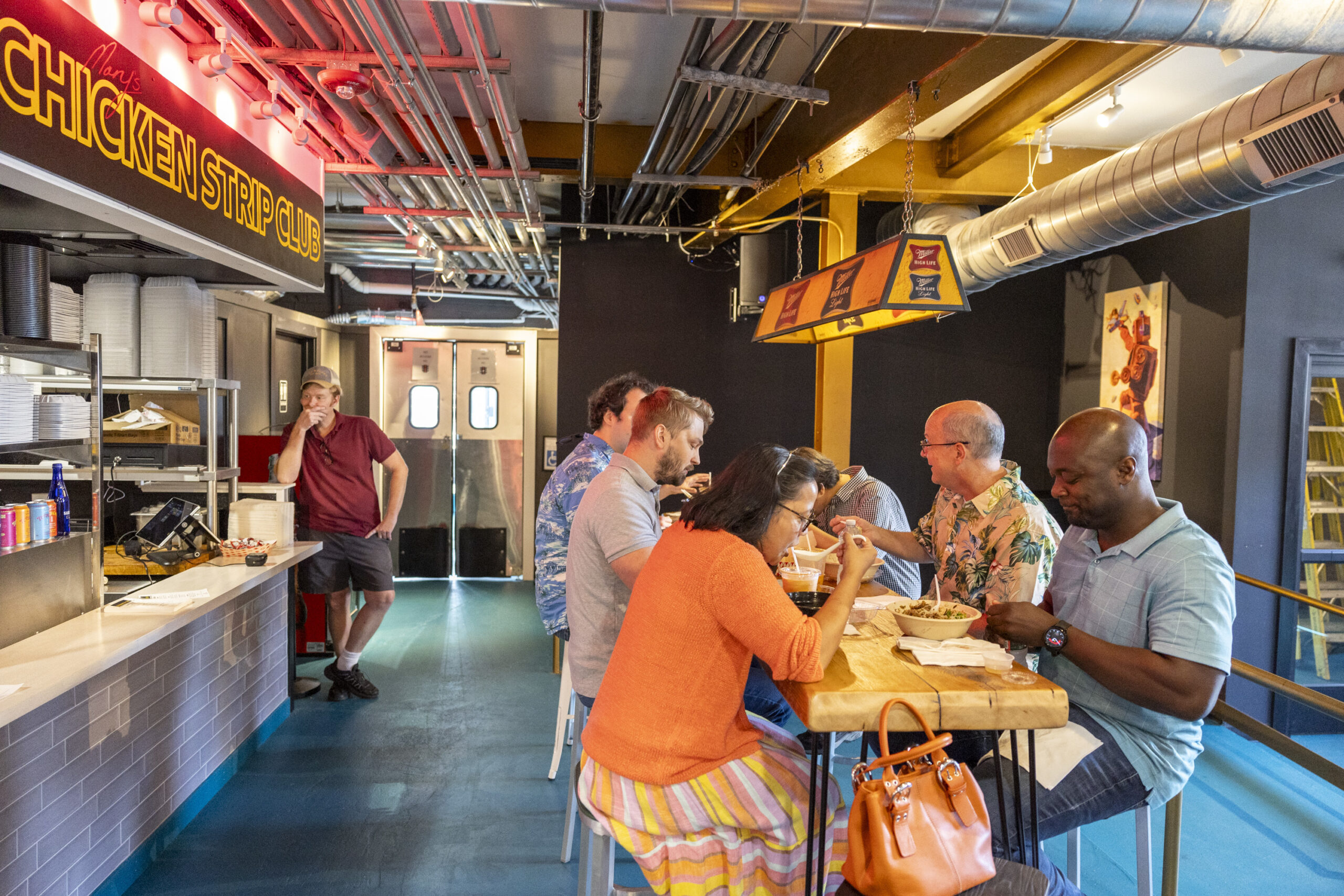
    People dining in Ridge Hall in front of Mary’s Chicken Strip Club in Ambler.

    In Ambler, developer Dan DeCastro has set up Ridge Hall to function as a neighborhood anchor of small businesses, such as Twisted Gingers Brewing Co., Lucky’s Roadside Stand, Pho Mi Please, Mary’s Chicken Strip Club, 2Street Sammies, Pierogie Kitchen, Herman’s Coffee, and Char, A Lobster Rolls and More Experience. In a food scene shaped by high rents and thin margins, food halls lower barriers for operators while broadening access for diners.

    Then came Wonder.

    Wonder arrives, forcing a reckoning

    Nothing in 2025 unsettled the local industry more than the rapid expansion of Wonder, going from zero to 20 locations in Philadelphia and South Jersey, with even more on the way.

    Menus for various cuisines at the Wonder location in Media.

    Wonder, backed by $1.5 billion in venture capital, sells food via walk-in, app, and delivery from a diverse lineup of menus by such chefs as Bobby Flay, José Andrés, and Marcus Samuelsson. Want a steak, a pizza, an order of nachos, and a grilled chicken sandwich from the same place, all delivered in 30 minutes? That’s the wonder of Wonder.

    Wonder, based in the New York City area, calls itself a food hall. In reality, it’s a ghost kitchen. Food is prepared at a central kitchen and trucked down to each location, where workers (not actual cooks) set up and reheat the dishes in ventless kitchens.

    For diners, the appeal is convenience and, for now, price. But as Wonder blankets the region with ads and offers of half-price orders and free delivery to gain a foothold, it is disrupting the industry.

    Wonder steers diners away from local shops. It turns choosing a restaurant into scrolling menus on an app, not supporting places you may know. And by pushing everything toward delivery and pickup and by undercutting prices, it makes it harder for independent restaurants — especially neighborhood takeout spots — to survive on already thin margins.

    In a year when so much of Philadelphia’s food culture emphasized independent owners and the importance of community, this contrast is striking.

  • 2025 in pizza: The best new slices and pies in the Philly area

    2025 in pizza: The best new slices and pies in the Philly area

    What a year for the Philly-area pizza scene. To recap 2025’s newcomers, we saw full-service settings that treat pizza as one pillar of a modern Italian restaurant, such as Cerveau in Spring Arts, Corio in University City, Scusi in Northern Liberties, and the hypermart Eataly in King of Prussia. Fishtown’s roster expanded with Marina’s Pizza, from the grandson of a local pizza magnate. The late-night scene, moribund for the last five years, now has 15th Street Pizza & Cheesesteak in Rittenhouse. Other newcomers include Angelina’s in deep South Philly, Rhythm & Spirits in Suburban Station, Puglia on South Street, and Italian Family Pizza on the Parkway.

    New social rooms treat pizza as an anchor for hanging out (the Borough in Downingtown, the Pizza Pit in Bensalem, and Gloria Sports & Spirits in Warrington). Expansion was also on the table: The Main Line hit Johnny’s Pizza opened an offshoot in Wayne, and Santucci’s tacked on new spots in University City and Deptford.

    The burbs saw ambition from Anomalia in Fort Washington, Antica in Warrington, Barclay Pies in Cherry Hill, Classic Pizza in Bala Cynwyd, Not Like the Rest in Pine Hill, Taco-Yote in Moorestown, and Genova Pizza 2 Go in a Williamstown gas station. There was even a nerdy newcomer: Apizzeria 888 by Sebastian, a “pizza lab” in Elkins Park that feels like a cult favorite in the making.

    N.B. The 2026 pizza scene commences with the Jan. 1 opening of Assembly Pizza Co. at University City’s Gather Food Hall.

    Philadelphia proper

    Angelina’s Pizza

    Saloon alumnus Marty Angelina and Franco & Luigi veteran Brian Cunningham serve abundantly topped New York-style pizza along with a menu of sandwiches, chicken cutlets, pastas, and stuffed long hots wrapped in bacon from this Seventh and Oregon Avenue space, formerly the Pizza Shop and Ralph & Rickey’s. The pizza that gets the most attention is the Honeyroni, a mix of pepperoni, ricotta, and hot honey, available by the slice or the pie. Its location makes it an easy jump to the sports complex. (Bonus: John’s Water Ice has a pickup window here in season.)

    Cerveau

    Pizza Brain cofounder Joe Hunter is behind this neighborhood drop-in disguised as a colorful playground in the 990 Spring Garden building, with a cicchetteria menu (small plates and the mini-sandwiches known as tramezzini), plus a few large plates at dinnertime. The stars are the puffy-crusted, 16-inch Neapolitan-ish pizzas, which are on the cheffy side: The French Onion, with mornay, caramelized onions, and comte, is a winner of a white, and nostalgics should find a soft spot for the Crab Rangoon — a take on the Chinese takeout staple — topped with cream cheese and lump crab with a swirl of sweet chili.

    Corio

    They’re creating in University City these days, and not just at the high-tech “innovation district” that Drexel University and Wexford Science + Technology are putting together. Chef Dave Feola puts out some traditional, thin-crusted 14-inch pies at this comfortable Market Street bistro, such as a Margherita with a San Marzano base and buffalo mozzarella and a spicy sausage Bolognese. But the seasonal selections get wilder, like braised rabbit in a tomato sauce dotted with ricotta and Calabrian chili oil, or the hazelnut pesto with roasted poblano and pecorino over béchamel.

    15th Street Pizza & Cheesesteak

    When it’s creeping past 2 a.m. and the bars are letting out, you need a munchie run: That is what drove brothers Andrew and Michael Cappelli, who own Cappelli’s, a late-night pizzeria on 13th near Locust, to open this corner parlor and cafe in the former Starbucks at 15th and Latimer. It’s open till 3 nightly, with a case that’s stocked with slice options. The plain cheese and the pepperoni are the big sellers, as you’d imagine, but they sell plenty of the buffalo chicken ranch (rounds and Sicilians), broccoli spinach ricotta (rounds), and Margherita Sicilians. If pizza isn’t singing your song, they’ve got overloaded cheesesteaks coming off the flattop.

    Italian Family Pizza

    You may have to tilt the pizza box slightly to navigate the doorway of Steven Calozzi’s rustic parlor in the former Subway shop at 17th and the Parkway. Calozzi, a pizzeria lifer from Bucks County (by way of Seattle), is turning out whopping, 24-inch Trenton-style pies: cheese on the bottom, with a thin, crispy crust. (A 12-inch is available, too.) There’s a tomato pie drizzled with pecorino and olive oil, a sauceless white pizza, a cheese pie (heavy on the toppings), and a Sicilian. Dine-in on two levels is a plus when you have a family attending an event on the Parkway.

    Marina’s Pizza

    Mason Lesser is 24, but he’s been around the pizza world all his life through his maternal grandfather, Angelo Lancellotti, who owned dozens of local pizzerias over the decades. Lesser, who named his Fishtown storefront after his mother and grandmother, offers thin-crusted New York-style pies (18-inchers for whole, 20-inchers for slices) that meld both fresh and low-moisture mozzarella with minimal sauce (a simple combo of tomatoes, salt, basil, and olive oil); all pizzas get a finishing dusting of pecorino-romano and glug of EVOO. His upmarket pie is the Riviera, with pepperoni, creamy stracciatella, basil hot honey, and basil. It’s open for dine-in or pick-up.

    Puglia Pizza

    Cosimo Tricarico left Philly (and his Caffe Valentino in Pennsport) a few years ago for his native Puglia. In his Philly comeback, he’s set up Puglia at Ninth and South, turning out an assortment of football-shaped Romans, traditional rounds, plus sfilatini —thin, pressed baguette sandwiches with fillings like meatballs and vegetables. It’s open for dine-in.

    Rhythm & Spirits

    Lee Sanchez’s something-for-everyone menu at his mod bistro inside the Suburban Station building (aka One Penn Center) includes five pizzas — all thin-crusted 14-inch rounds with sturdy bottoms and good crunch. There’s plenty of heat from the Trevi, with spicy pepperoni cups, pickled serrano peppers, hot honey, and blobs of whipped ricotta. Also of note is the Funghi, whose wild-mushroom mix gets a topping of Dijonnaise, fresh mozzarella, and rosemary gremolata.

    Santucci’s

    It’s hip to be square at this old-Philly institution — now up to 14 locations (including new outposts in University City and Deptford) under one branch of Joseph Santucci’s family. The pan-baked square crusts envelop a firm, crackly bottom, and the sharp sauce stays bright, ladled on top of the cheese.

    Scusi Pizza

    Chef Laurent Tourondel, the New York restaurateur behind an international portfolio of steak houses, Italian restaurants, and pizza concepts, is behind this sophisticated pizzeria/cocktail bar in Northern Liberties’ Piazza Alta. For the French-born chef, pizza is personal. “I was telling my staff that I cooked for a living, but pizza for me was always a hobby.” Twenty years ago, after Michelin awarded a star to BLT Fish, Tourondel’s chef de cuisine announced that he was quitting to open a pizzeria, a growing category. Inspired, Tourondel trained in Naples and returned to New York to launch La Mico and later take over a longtime pizzeria on Long Island, where he refined a crispy, airy-crusted style. At Scusi, chef de cuisine Georgeann Leaming offers a by-the-slice pizza bar as well as two Sicilian pies, along with calzones, salads, sandwiches, and soft-serve for dessert. Tourondel is also behind Terra Grill, a wood-fired grill restaurant, planned next door for early 2026.

    Pennsylvania Suburbs

    Anomalia Pizza

    The phrase that pays at this humble, stand-alone slice shop near the Fort Washington SEPTA station is “drunken grandma”: That’s Frank Innusa’s crispy, almost buttery-bottomed squares topped with fresh mozzarella and ribboned with a thick, creamy vodka sauce amped with pancetta. Other hits include the stromboli and the uncommon mozzarella in carrozza — basically, a mozzarella stick in sandwich form (cheese tucked inside bread, crusted with bread crumbs, and fried). There’s seating for dine-in.

    Antica Pizza Co.

    Whether you’re after thin or thick crusts, 12- or 16-inch, there’s something for everyone among the grandmas, Sicilians, and New York pizzas at this roomy, contemporary strip-mall spot in central Bucks County. If you’re indecisive, there is the capricciosa, which has a little bit of everything on top. The oven also turns out pinsa (the Roman-style flatbread) and schiacciata for Tuscan-style sandwiches.

    Apizzeria 888 by Sebastian

    Owner/pizzaiolo Sebastian Besiso is the first to say that you may not like his pizza, especially if you prefer more conventional New York or Neapolitan styles. His “Roma” — available in limited qualities at his one-man hole-in-the-wall takeout in Elkins Park — is built with two kinds of aged cheese, a smear of a slightly sweet tomato basil sauce, and an almost impossibly thin crust that shatters around the edges as you bite. There is no flop whatsoever. Apizzeria pies have the crunchy, cheese-on-the-bottom qualities of Chicago tavern-style, though Besiso slices them into conventional eighths, not party squares.

    The Borough

    This newcomer in Downingtown is many things: a family restaurant and sports bar downstairs, with a sushi bar and event space upstairs. It’s also a serious pizza destination thanks to consultant Ptah Akai, whose pies are puffy, neo-Neapolitan-ish, with sturdy crusts and a light char. The sliced garlic gave a subtle roast to a cheeseless tomato pie that he made for me off-menu. His Forager, with basil pesto and three kinds of mushrooms, was balanced and did not sink under the mozzarella. There’s also a plain cheese, pepperoni, and a Margherita. Important, non-pizza-related tip: The adjacent parking lot is not the restaurant’s, and tow trucks abound; park across the street in the municipal lot.

    Classic Pizza

    Staten Island-born pizzaiolo Paul Brancale has taken over the Bala Cynwyd location of EVO Pizza for a slice shop built around old-school New York styles, including thick, soft Sicilians; crispy-crusted, rectangular grandmas; and 18-inch round pies that are thin and crispy, in the Joe & Pat’s/Rubirosa tradition. He’s making his own fresh mozzarella from curds, and the sausage comes from Martin’s at Reading Terminal Market.

    Eataly

    Pizza at this massive Italian emporium in KoP Mall splits cleanly into two lanes. The full-service restaurant, La Pizza & La Pasta, serves classic, whole Neapolitan pies in a classy setting. For something faster, the marketplace counter sells Roman-style pizza by the slice; with a small seating area, it’s built for both lingering or grabbing a quick square mid-shop.

    Gloria Sports & Spirits

    It would be easy — and wrong — to write this place off as a sports bar. What matters is the pizza: light yet sturdy 13-inch pies from Vetri alum Brad Daniels, whose resumé also includes the high-end Tresini in Spring House. The toppings show real thought, from a saganaki-inspired pie with preserved lemon, feta, and oregano to the broccoli-forward “Brock Party” with ricotta sauce and roasted garlic. Even the red pies are dialed in, finished with restrained Bianco DiNapoli sauce and fior di latte instead of generic mozzarella.

    Johnny’s Pizza

    Having wowed our tasters for The Inquirer’s 76, John Bisceglie has added a Wayne outpost to his bustling Bryn Mawr pizzeria. Located in a strip center near the farmers market, it’s set up mostly for takeout, but there’s a comfy dining room to enjoy unforgettable pies both thick and thin(ish), rectangular and round, red and white. We’re particularly fond of the white pies, topped with fresh mozzarella, lemony ricotta, caramelized onions, pecorino-romano, and parsley and baked on a sesame-seed crust.

    The Pizza Pit

    The no-frills, 14-inch pies — especially the upside-down (with provolone on the bottom) and the cheeseless tomato — pair well with the brews on tap at this counter setup inside the industrial-looking “mixing room” at Bensalem’s Broken Goblet Brewing, run by veteran pizza man Bob Meadows and his business partner, Chris Margarite.

    South Jersey

    Barclay Pies

    This cheery, spacious spot offers gluten-free crusts (using Caputo’s flour) along with a line of conventional pies, plus other foods (chicken tenders, wings, fries, cookies) that are gluten-free from inception. The lineup: five red pizzas (plain, pepperoni, sausage, pineapple, and a vegan Margherita featuring cashew milk mozzarella cheese by Miyoko’s Creamery) and four whites (arugula, mushroom, broccoli, and buffalo chicken). Allergen info and protocols are up on their Instagram. Plain and pepperoni slices are available over lunch.

    Genova Pizza 2 Go

    Come for a fill-up at this branch of Audubon’s Genova Pizza, tucked inside Marathon Gas. The grandma pies, with their crispy, olive oil-slicked crusts, the thicker-crusted Sicilians, and deep dish are the big draws. If you’re on your way somewhere, note that you can eat at the counter, if you’d care to spare your car’s interior.

    Knot Like the Rest Pizzeria

    Gary Lincoln’s latest South Jersey pizzeria is not like the rest: It’s all online for delivery, and walk-in customers must use kiosks for slices and pies, available also for dine-in. Highlights include the Pickle (pickles, bacon, cheddar, mozzarella, ranch dressing), Zinger (secret sauce, steak, banana peppers, mozz, American cheese), and Knotty Vodka, with its edges ringed with garlic knots.

    Taco-Yote

    There are seven Mexican pizzas on the menu at this vibrant taqueria in downtown Moorestown from Carlos Melendez of Conshohocken’s Coyote Crossing. The 16-inch rounds (not too thick or thin) aren’t just getting “taco toppings,” either; there’s mole poblano with pulled chicken, red onions, and toasted sesame seed; birria topped with guajillo and morita-seasoned brisket, with consommé on the side, and a sweet-and-savory al pastor with achiote and the kick of chile de árbol salsa.