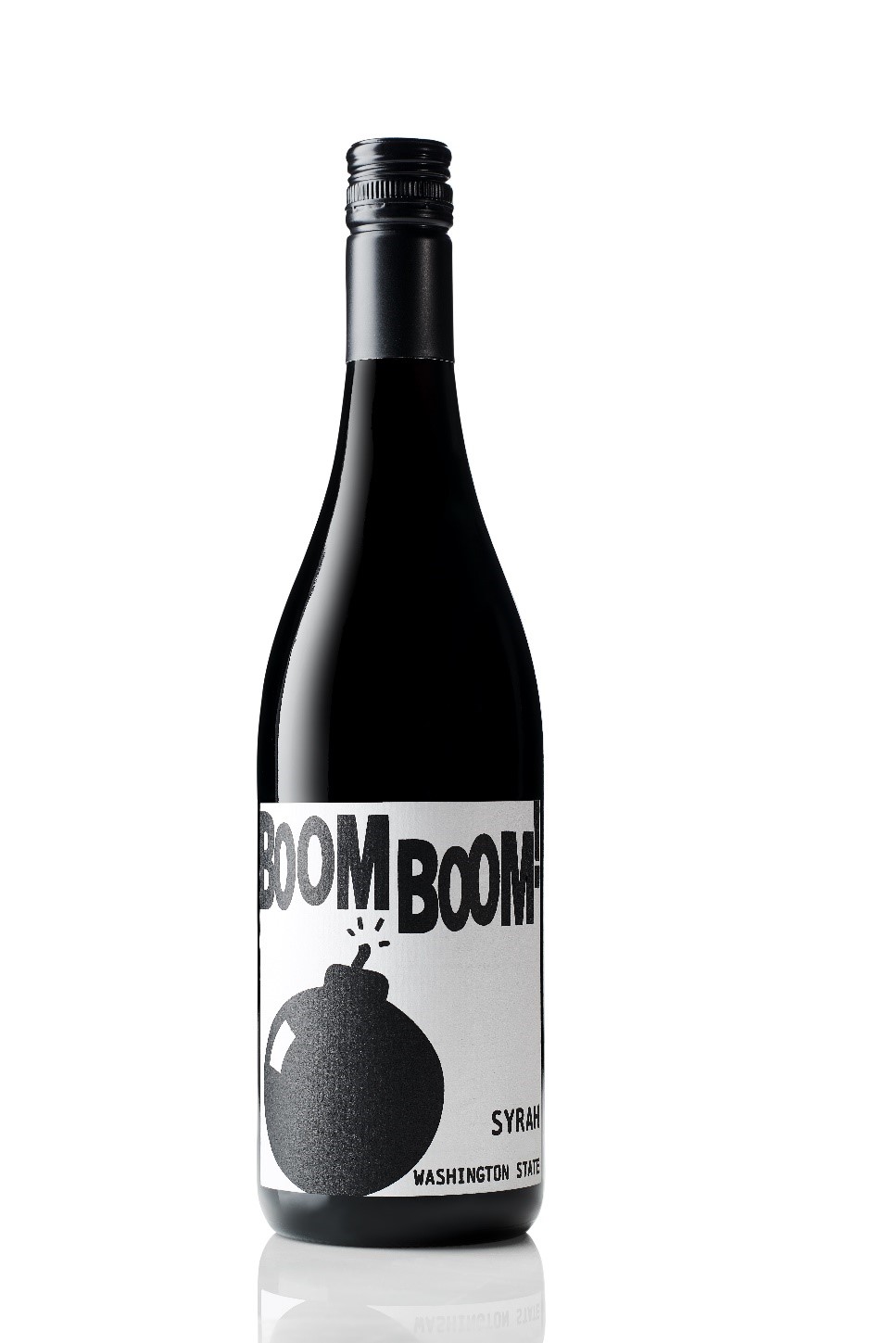
Syrah is the name of the most intense member of a group of spicy red grapes native to the Rhône Valley region of France. However, many American wine drinkers are more familiar with it as shiraz, the name the grape goes by in Australia. While this week’s wine is not the kind of lightly sweet, cheap, and cheerful “fruit bomb” made famous Down Under, it does deliver explosive flavor worthy of its cheeky label.
Syrah grapes make delicious wines in both California and Washington State, but there’s little incentive for growers to plant it when cabernet sauvignon commands higher returns. With small berries and skins as thick as those of cabernet sauvignon, syrah grapes yield nearly as much solids as juice.
Since color and flavor are found in the skin of grapes, not in their flesh or juice, this is an important style factor that determines how intense red wines can be. Syrah’s big flavor and deep color make it a natural choice for making bold and robust red wines, and its knack for resisting oxidation preserves a youthful, violet-tinged color longer than most before succumbing to the browning of age.
Flavor-wise, syrah wines have a distinctive spicy scent and flavor, reminiscent of wild berries and black pepper. In cooler climates, like its native France, syrah makes paler, more acidic wines that smell of salty foods like green peppercorns and cured meats. In warmer, sunnier regions like Washington’s Columbia Valley, though, syrah lends itself to making fuller-bodied powerhouse wines — like this one — that are dense with dark, jammy flavors that are decadent, dessertlike, and meant for immediate gratification. This premium bottling is a perfect example, with its concentrated flavors of blueberry pie and raspberry jam, accented with meaty aromatics that evoke barbecue ribs or beef jerky.
“Boom Boom” Syrah
Charles Smith “Boom Boom!” Syrah
Washington State, 14.5% ABV
PLCB Item #1501, on sale for $15.69 through Jan. 4 (regularly $18.69)
Diner traffic doesn’t usually peak on Monday evenings, but there was a long line of patrons waiting to get inside Comfort & Floyd at just that time this week. They poured into the South Philly luncheonette’s diminutive space, quickly filling its 16 seats and every inch of standing room. They were eager to taste Ange Branca’s take on English jacket potatoes: enormous russet potatoes baked until the skin is dark and shatteringly crisp, with a fluffy interior that’s splayed open and filled with heaps of baked beans, shredded cheese, thin-sliced beef, chili con carne, or jackfruit.
Unlike its American cousin, the baked potato, the English jacket potato is not a side dish, but a full meal in a bowl.
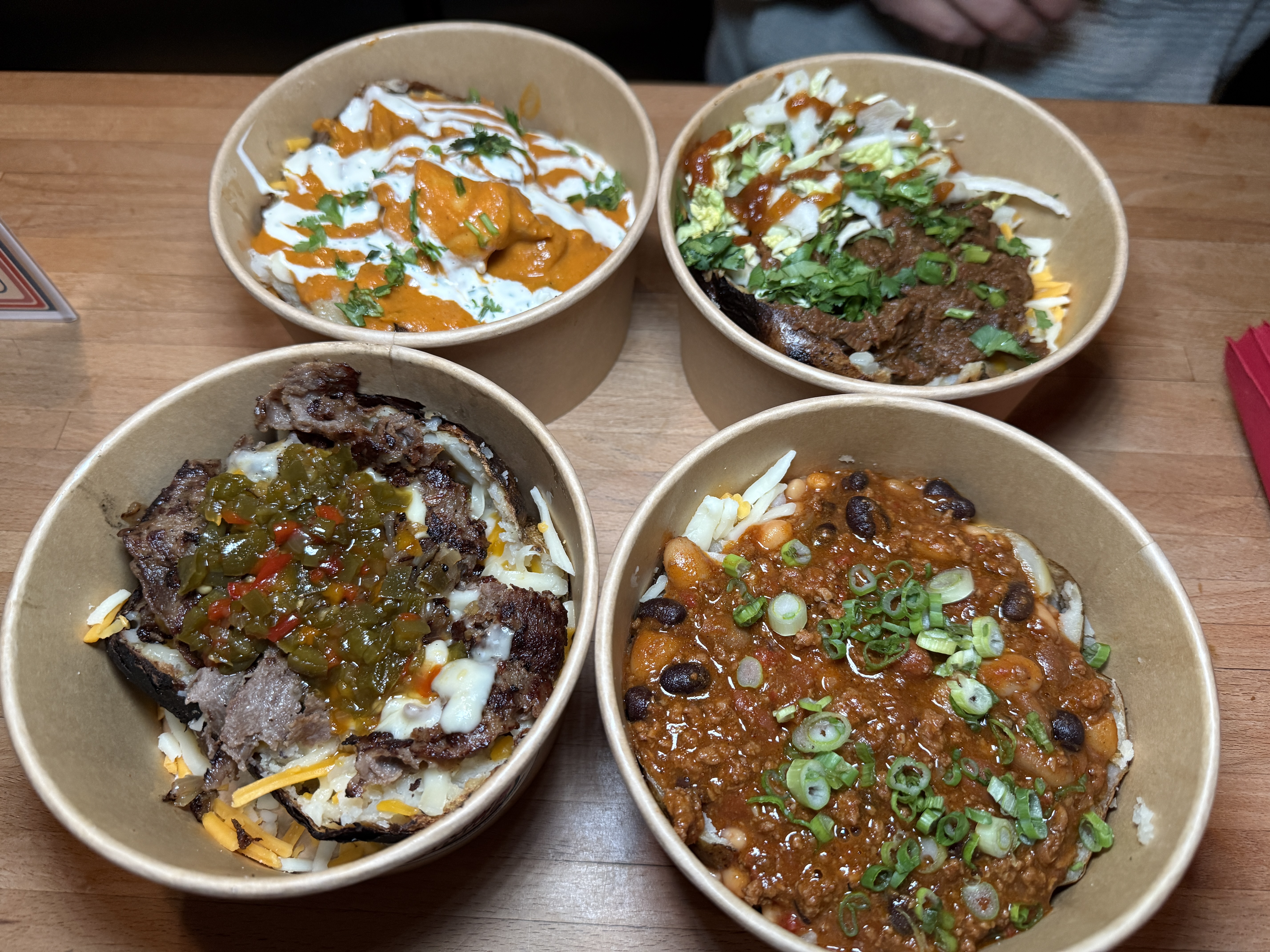
Clockwise from top left, Mod Spuds’ Bollywood spud, Malaysian spud, classic spud, and Philly cheesesteak spud.
While Branca’s Bella Vista restaurant Kampar remains under construction after a February fire, Branca has started Mod Spuds, a monthlong residency running twice a week at Comfort & Floyd, located on the corner of 11th and Wharton.
Southeast Asian twists on the comfort food of the ’90s seem to be having a moment — Mod Spuds pops up in the same month as the debut of Manong, Chance Anies’ Filipino interpretation of an Outback Steakhouse. It’s another instance of a chef centering a specific story from a moment in their life as the animating theme of a concept.
In Branca’s case, she survived on jacket potatoes while studying at university in Edinburgh.
She retells the story of this era in her life through global flavors found in Philadelphia. There’s a Philly cheesesteak spud with hot pepper relish; a Bollywood spud with chicken tikka masala; the Nacho, with chorizo, pico de gallo, and salsa verde; a Happy Jack spud with barbecue jackfruit; and one more familiar to Branca’s devotees — a Malaysian spud with beef rendang, sambal, and ulam (a fresh herb blend). The classic Mod Spud is pulled directly from Branca’s university days, topped with chili con carne and Heinz baked beans that British chef Sam Jacobson from Stargazy helped her source.
Branca has a particular way of eating jacket potatoes. “I dig right into the middle, scooping all the way down so I can get a little bit of each topping and a little bit of the potato.” Once she has scraped the toppings and potato from its skin, or jacket, she’ll pick it up like a taco and eat it.
Each jacket potato goes for $15. All offerings are gluten-free. Diners may also build their own spud ($8 for the base, $3 for each vegetable topping, $5 for each meat topping).
Wash it all down with an excellent and very fizzy homemade root beer ($8) from Kampar server and fermentation specialist Rachel Ore. (Make it a float with Turkey Hill vanilla ice cream for an extra $5.) Ore is behind Kampar’s nonalcoholic soda program. For this one, she used sarsaparilla root, birch bark, licorice root, galangal root, a little bit of cinnamon, mint, and some vanilla. The brew takes four days to fully ferment and creates an extremely bubbly beverage — sort of like if root beer married kombucha.
Branca hopes the fast-casual concept will have legs beyond this month’s pop-up and that its slick, retro, Jetsons-esque branding will have wide appeal. Other than the rendang on the Malaysian spud, Mod Spuds marks a significant departure from anything that has ever been served at Kampar.
“I want to see if people love this, and if they do, I will keep it going,” she said.
Mod Spuds runs through December at Comfort & Floyd, 1301 S. 11th St., 5 p.m. to 9 p.m. Mondays and 11 a.m. to 9 p.m. Tuesdays.
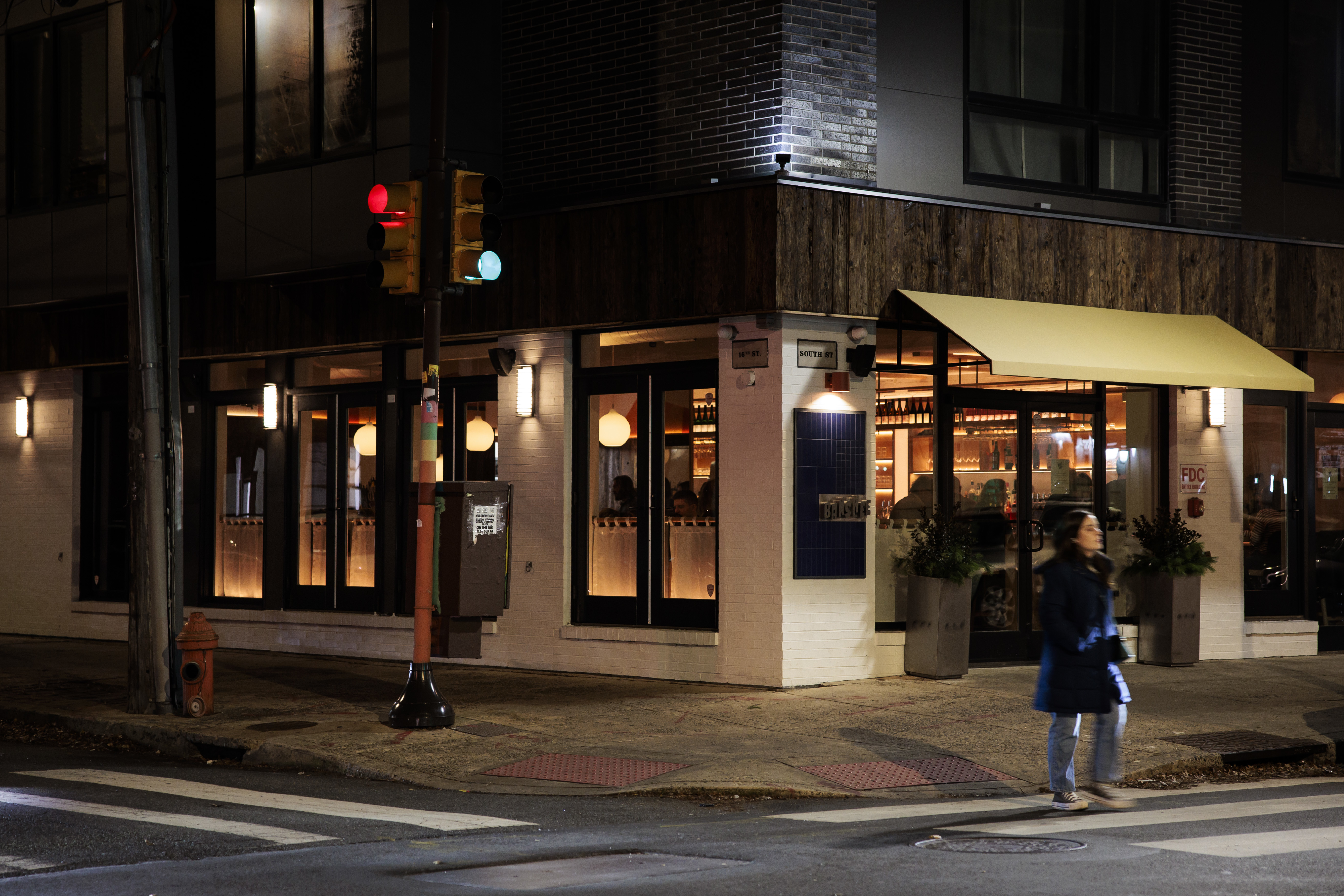
The door of Banshee at 16th and South Streets will be unlocked Thursday, welcoming patrons for crispy onion tarts, chicory salad, and a saucy Spanish mackerel dish you can mop up with house-made sourdough. They can then polish it all off with a sip of draft wine or a sesame- and pineapple-laced whiskey sour.
The cozy, modern American bistro is a refined addition to the Graduate Hospital neighborhood. And although two of its backers will be familiar to followers of Philly’s restaurant scene, Banshee marks a clear break from the Asian-inspired street food and graffitied airs that defined their earlier work.
Shawn Darragh and Ben Puchowitz, who founded Cheu Noodle Bar (2013), Cheu Fishtown (2017), Bing Bing Dim Sum (2015), and Nunu (2018), have brought on two key former employees as partners: twin brothers Kyle and Bryan Donovan, 34.
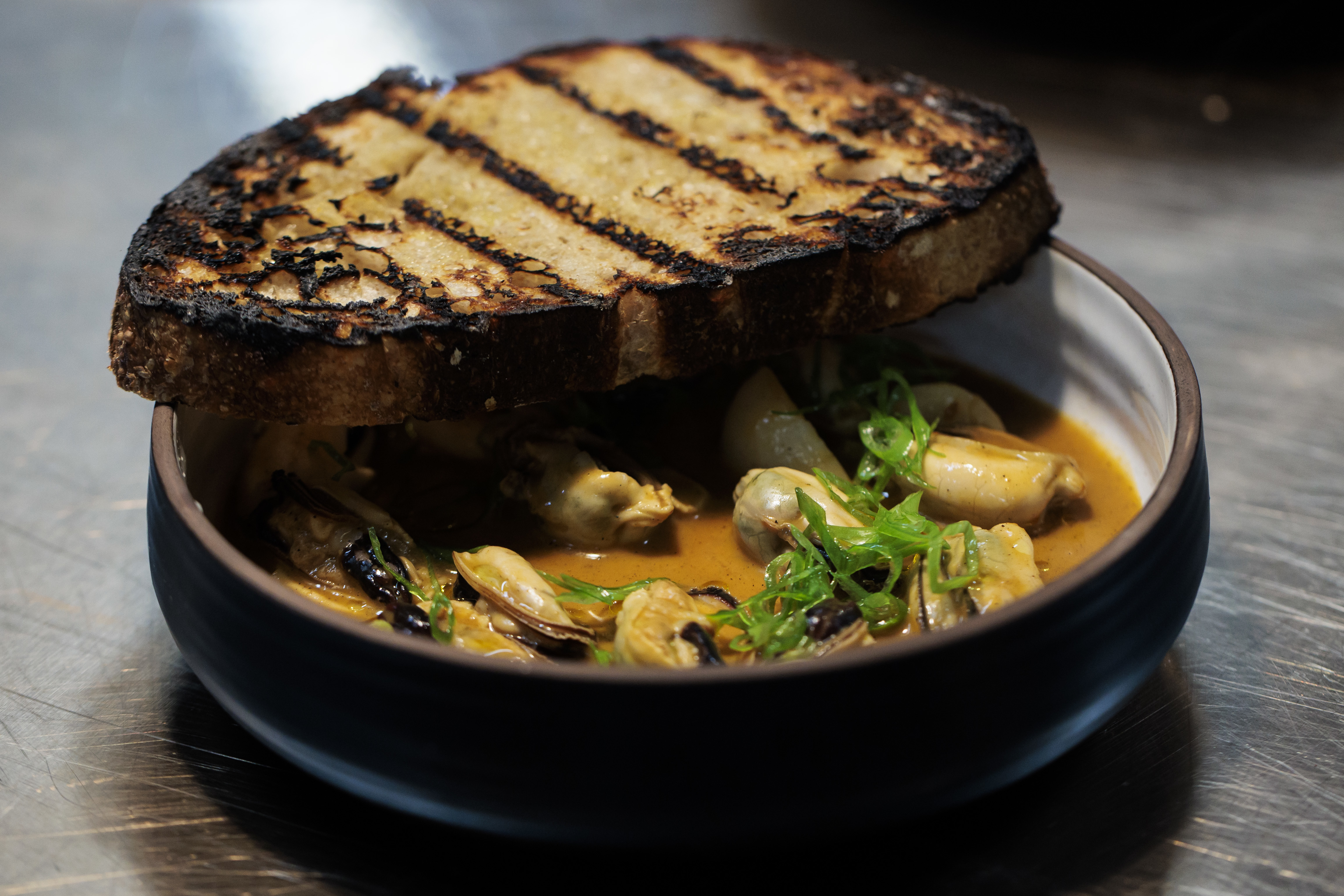
Mussels in harissa with hakurei turnips in coconut milk, beneath a lid of grilled bread, at Banshee.
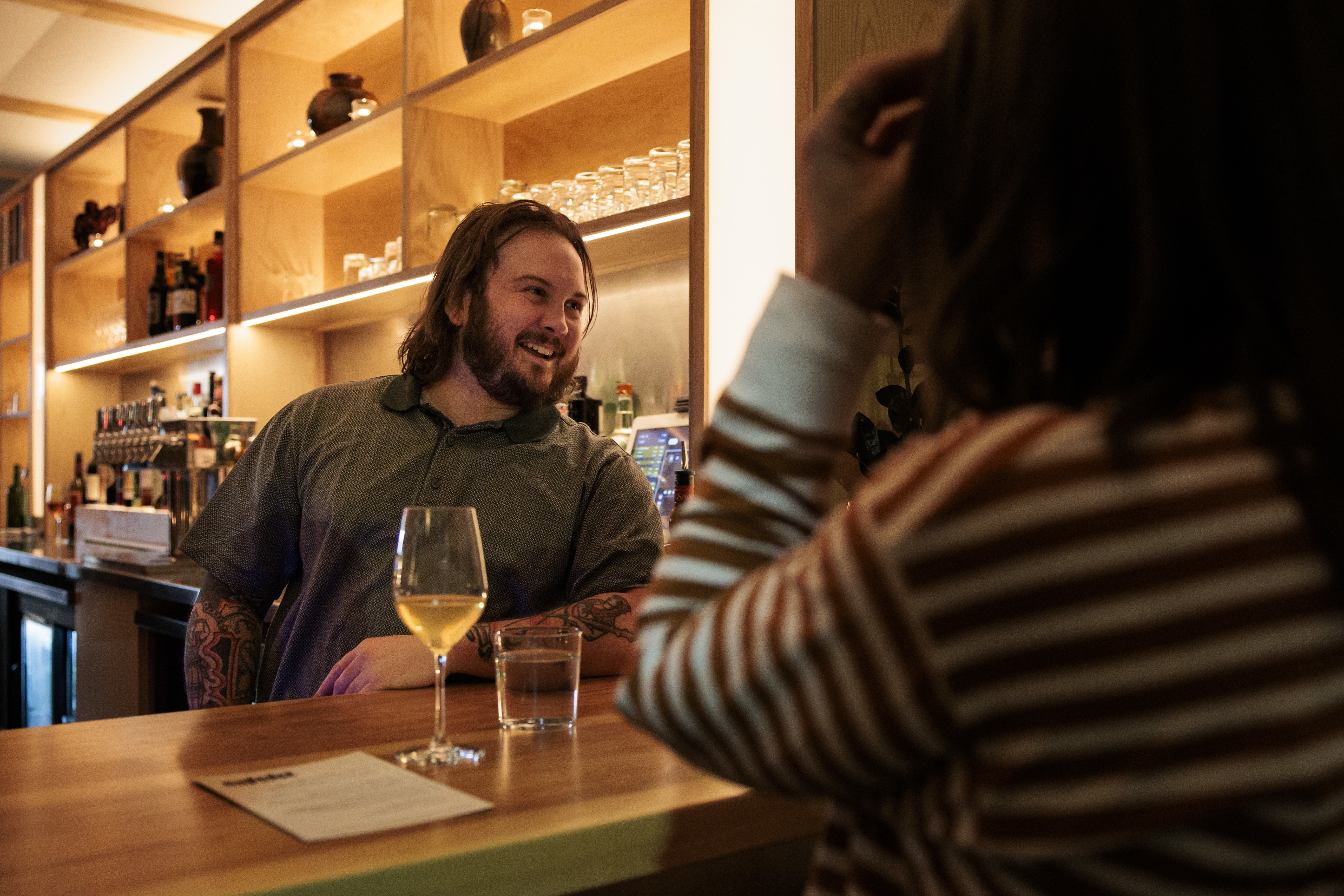
Kyle Donovan — who started at the original Cheu near 10th and Locust and later managed Bing Bing on East Passyunk until it closed in 2024 — is Banshee’s general manager, overseeing 12 walk-in-only bar seats and about three dozen seats in the dining room.
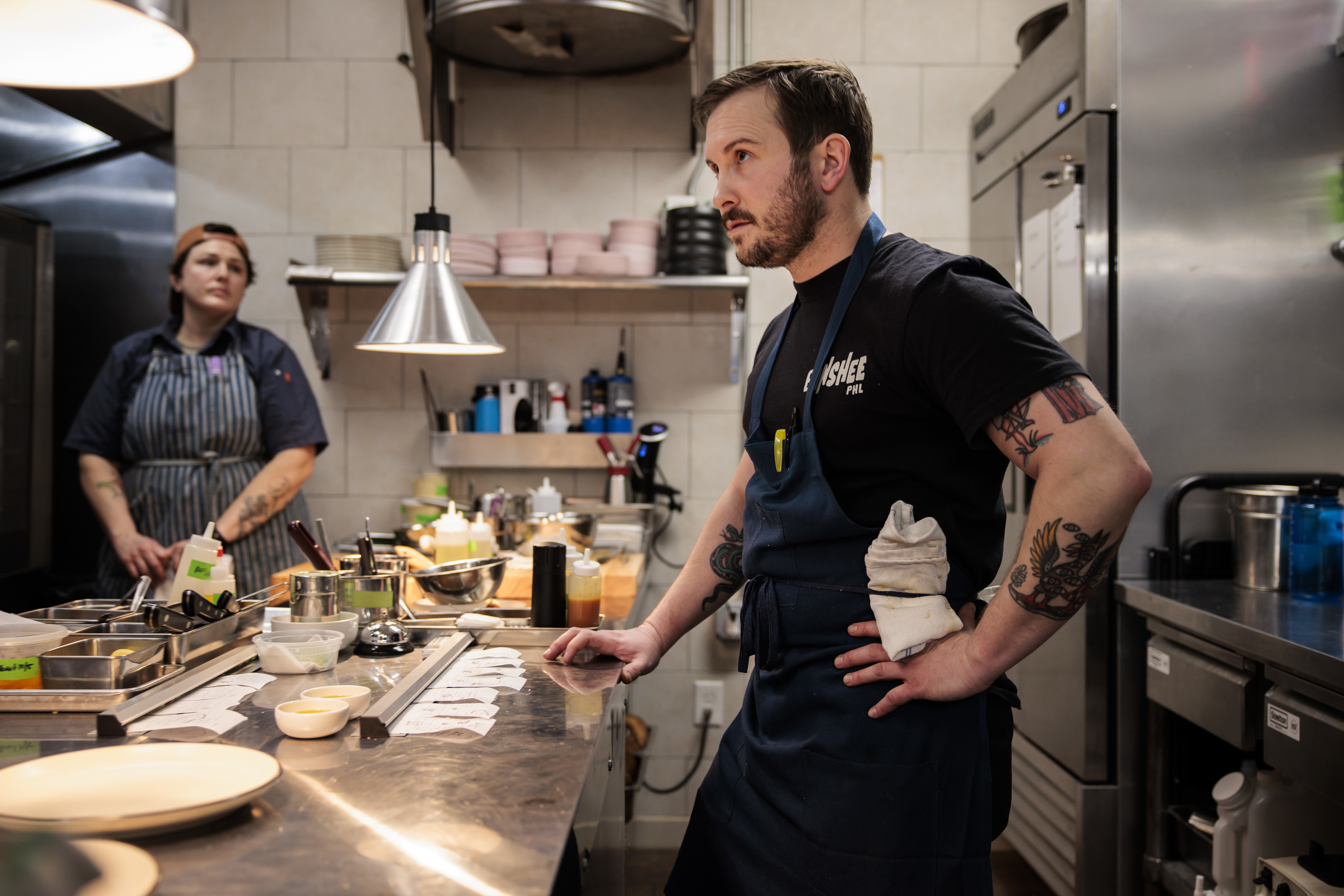
Banshee executive chef Bryan Donovan was opening sous chef under Puchowitz at Cheu Fishtown before he went on to cook at Sqirl in Los Angeles and Contra, Wildair, and the Four Horsemen in New York City.
Darragh and Puchowitz, now in their early 40s, have moved on from the day-to-day of restaurant work. Darragh, the front-of-the-house/marketing guy, runs a construction company. Puchowitz — who as a 23-year-old ran the kitchen at the late, great Rittenhouse BYOB Matyson — works in real estate.
“It’s fair to say we’re all grown up now,” Darragh told me. “We’re trying to carry over that neighborhood spirit but take it a step further — maybe a little more refined but still fun.”
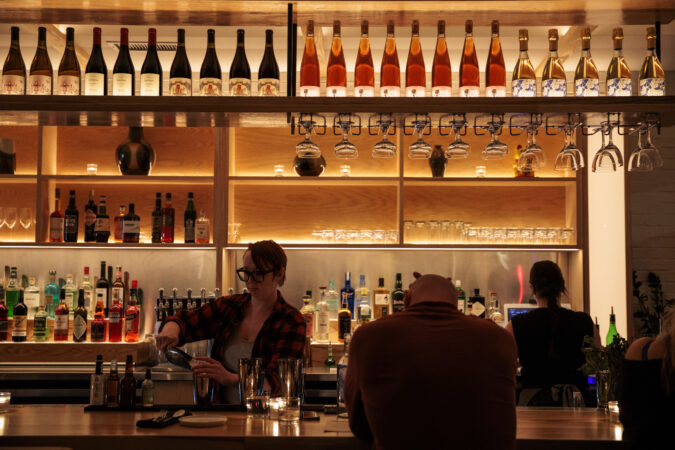
The visual shift, not only from their former restaurants but also from the building’s previous occupant, Tio Flores, is obvious. Stokes Architecture + Design created a warm, Scandinavian-inspired space with natural woods, curtains, table lamps, pendant lights, and a mushroom-wood accent wall. The up-lit bar anchors the room.
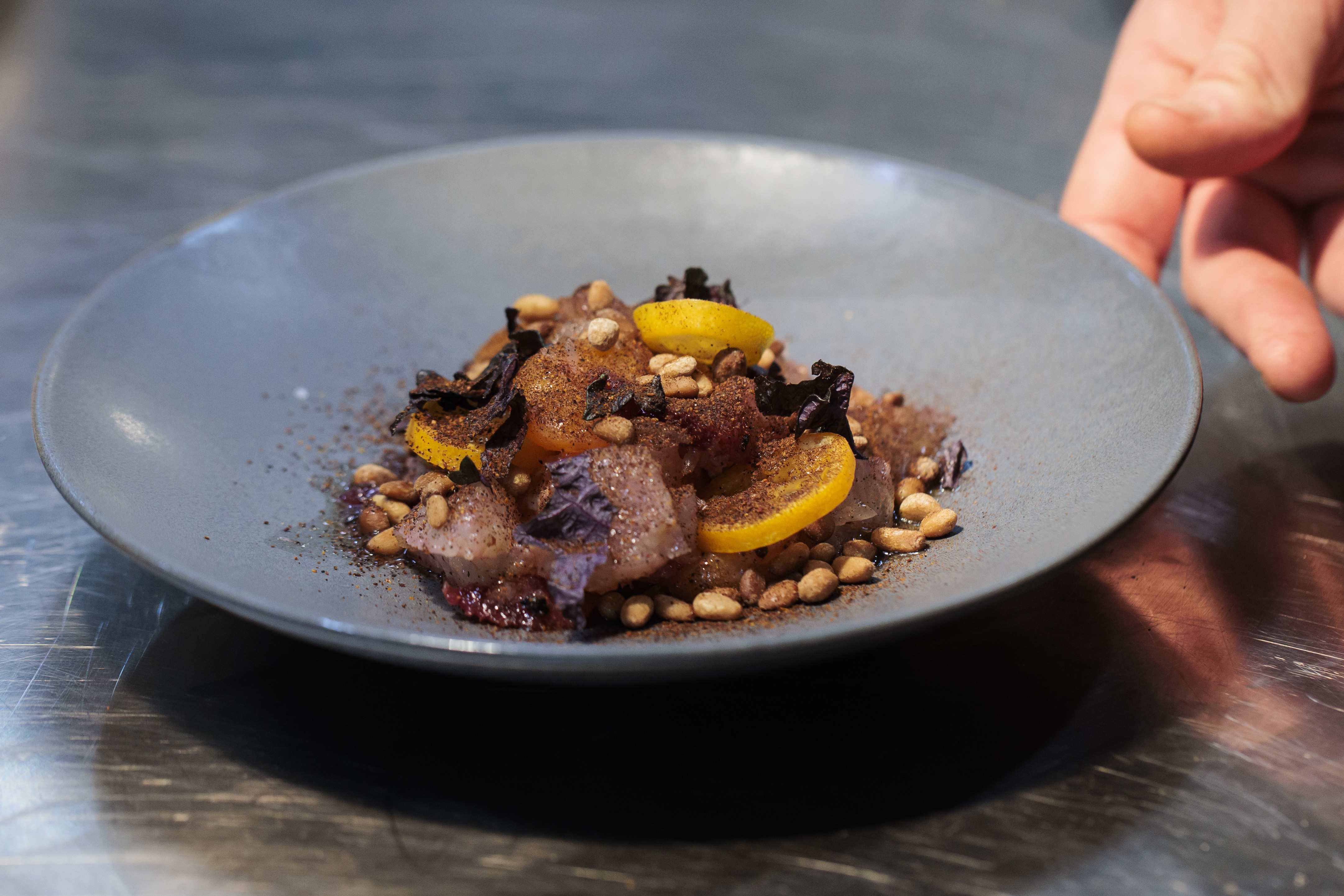
Winter citruses at Banshee.
Banshee was originally planned for the former Bing Bing space on East Passyunk Avenue at 12th Street, but that deal fell through. Chefs Biff Gottehrer and Kenjiro Omori are renovating it for a new restaurant called Tako Taco.
Mediterranean, Basque, and modern American flavors
Don’t expect ramens or dumplings at Banshee. The menu leans Mediterranean/Basque — chef-driven but not inaccessible. Premium ingredients include Berkshire pork collar ($25) and Lady Edison ham ($17) with persimmon and fromage blanc. The center-of-the-table dish is a half chicken ($39) with pickled peppers and buttery Marcona almonds.
Kyle Donovan at the bar at Banshee.
Vegetables take center stage: braised leeks with boquerones, pepitas, and Comté ($14); grilled Kyoto carrot with txakoli sabayon ($15); and a chicory salad with dijonnaise, pear, and nutty, creamy Midnight Moon cheese ($15). Fermentation-driven umami shows up in red kuri rice with koji butter and nori, as well as a winter citrus salad finished with brown butter, pine nuts, and umeboshi. About half the menu is vegetarian, and five dishes are vegan or easily made vegan.
The tarte flambée ($15) is one of the most distinctive dishes on the menu. It starts with a yeasted semolina dough that’s rolled through a pasta sheeter, cut into squares, and baked on olive oil-lined sheet trays. It’s topped with smoked crème fraîche, caramelized onions, raw onions, maitake mushrooms, chives, and hot honey, and finished with a leek-and-parsley powder made from dehydrated leek scraps. Crispy and bold, “it’s layered onion flavor all the way through,” Bryan Donovan said.
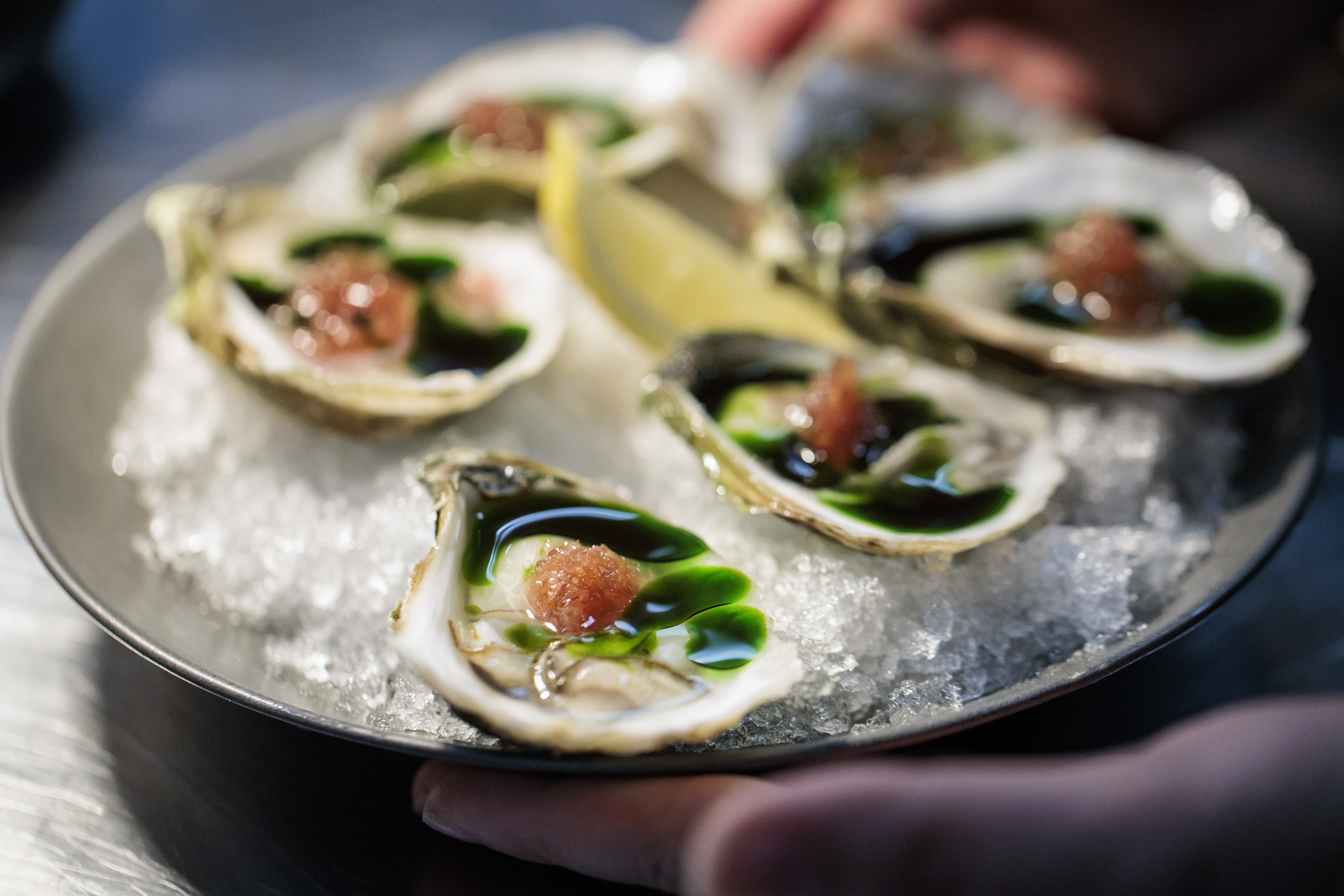
Barnstable oysters in dill mignonette at Banshee.
A dill mignonette brightens the Barnstable oysters ($22). Hamachi crudo ($18) is sliced thick to highlight the fish’s natural fat and paired with a bright, acidic sauce made from minced peppers, passion fruit puree, shio koji, and white verjus. “The sauce actually came first, and then we tailored the fish to it,” Donovan said.
A larger plate of Spanish mackerel ($24) is served over grilled Brussels sprout leaves tossed in a smoked clam emulsion with thyme and tamari, finished with olive oil tapenade and pickled golden raisins.
Chef Bryan Donovan juggling orders in the kitchen at Banshee.
“We’ll change vegetables seasonally and add more snacky, fried, and skewer-style items as we settle in,” Donovan said. “Spontaneity and experimentation are part of the spirit of the place.”
There’s a baked Alaska (not done tableside) and a butterscotch Krimpet filled with boysenberry jam for dessert.
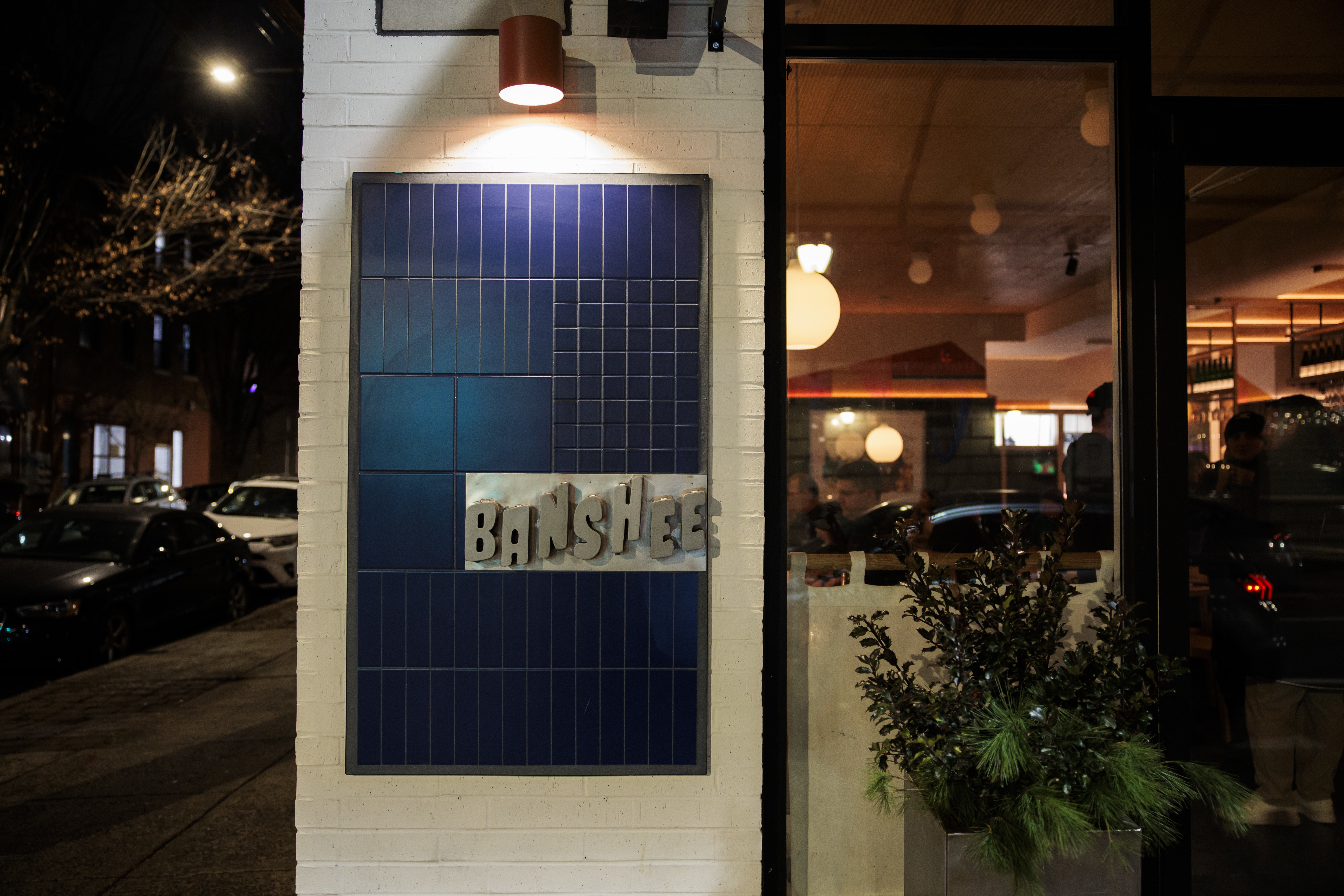
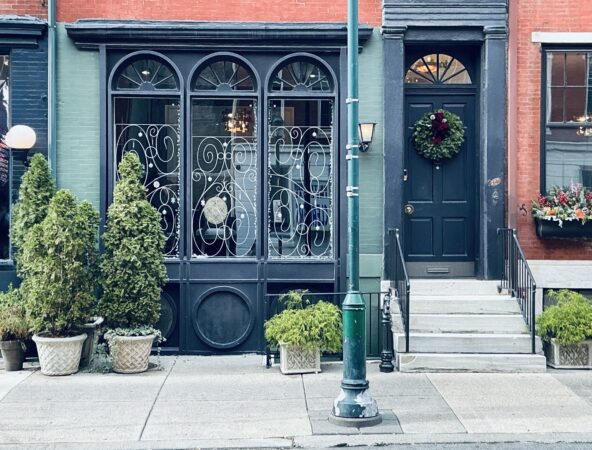
The exterior of Banshee at 1600 South St.
Check average is projected at $70 to $75 per person for two to three dishes and one drink.
The Banshee partners brought in lead bartender Mary Wood to build the cocktail program, working alongside assistant manager Madeline Anneli. “None of us are professional bartenders, so we wanted real expertise on cocktails,” Kyle Donovan said.
Wood’s list draws from home-cooking influences and ingredients already used in the kitchen. The Dirty Banshee ($16) — olive oil-infused vodka, garlic fino, and blue cheese olive — leans deeply savory. Beet imbues the Crowd Work ($15), a sparkling gin cocktail with lemon and quinine. The bar also offers low-ABV drinks, nonalcoholic options, fermentation elements such as tepache, and an accessible beer lineup.
Hours are 5 to 10 p.m. Thursday through Monday. Reservations are available on Resy on a rolling 30-day basis.
In Philly, it’s easier than ever to swing by a neighborhood shop and leave with a delicious bottle at a friendly price, be it a weeknight wine or a special-occasion splurge. Our local retail scene has been up and coming for a few years now, even as national wine sales have dipped. The selections at the more successful stores demonstrate what is working in the wine industry right now: Big-brand sales are down, while smaller-production and natural-focused wines are on the rise. It’s always nice to find another reason why we’re a city of culinary pioneers — we simply have great taste.
This list of great independently run bottle shops is curated according to uniqueness of selection, fair pricing (for Pennsylvania), and excellent customer service. To showcase a wide shopping radius, I’ve included some suburban options in Pennsylvania, South Jersey, and one down the Shore.
Herman’s Coffee
Herman’s began in Pennsport as a coffee shop/roasterie and has evolved into a specialty shop offering snacks, cheeses, tinned fish, and more. This year, owner Mat Falco squeezed a wine-focused bottle shop into the jam-packed space. “I thought wine was a natural fit for the market. I already carried a lot of higher-quality food items, and wine goes perfectly with food,” Falco explained. A veteran of the craft beer scene, Falco curates Herman’s selection from the perspective of a regular person simply looking for a good bottle at a fair price. The majority of the 100-plus bottles that Herman’s stocks range from $15 to $35, with a small higher-end offering. You’ll find some of the most minuscule price markups in the city here, as well as a wine club and a growing number of tasting events. “I’ve always tried to take a volume-over-top-dollar mentality with the café,” Falco said. “I don’t want going out for coffee to have to feel like a special-occasion thing; neither should wine. We price so that people have good wine on a weekday, not just as a weekend splurge.”
Solar may have been conceived as a coffee/wine bar/music venue, but its boutique bottle shop is not to be missed. General manager and wine director Lauren Demers already offers one of the best natural wine lists in the city. More recently, she’s been expanding the to-go section to include a mishmash of affordable bottles and showstopper rarities. Plans are in motion for more retail shelving in the new year. If the labels are unfamiliar, the smart and friendly staff are excited to walk you through the offerings. A wine shop with genuine service?! We love to see it.
This old-school grocery store on the edge of Fishtown, a member of the Independent Grocers Alliance, has long housed an excellent no-frills bottle shop with a strong selection and great pricing. Signage on individual wines can be minimal, but the natural and small-production wine section is robust. There are also big callout displays for local producers such as Mural City Cellars. This is not exclusively a specialty store; you’ll have to skim the natural wine shelves or poke around in between big brands on the main shelves for the real gems. Happily, there are many to be found — and at some of the best prices in the city.
Pop in for an afternoon snack, leave (or lounge) with a great bottle of wine. Owner Chloe Grigri and partner-in-wine Kait Caruke have been queens in the Philadelphia wine scene for years, so it’s no surprise that their bar/bottle shop hybrid is one of the best additions to the Philly bottle shop scene. Supérette boasts a fresh, eclectic selection of about 100 wines mostly meant to be enjoyed now, with some collector’s items sprinkled onto the shelves. The inventory is French-focused, rounded out by other Old and New World bottles for range. Prices range from high teens to $100, with magnums available as well. Affordability has clearly been prioritized for takeaway bottles, and corkage is just $25 if you stay to sip. Check out the CouCou wine club to have interesting bottles chosen for you monthly.
These suburban shops were among the first small grocers to offer curated retail wine sets — Media in 2016 and Swarthmore in 2017 — and remain some of the best in the ‘burbs to this day. The stores have offered a natural-dominant selection for even longer. Owner Jack Cunicelli is guided by his own love of minimal-intervention wines, updated classics, and renegade producers. The selections at the respective locations offer a full global representation while remaining laser-focused on producers and styles that made Cunicelli himself fall in love with wine. Expect a rotation of old-school standouts (Frank Cornelissen, Cantina Giardino, and Sylvain Pataille were recent highlights) mixed with new wave American producers to know, like Fossil & Fawn, Franchere, and Monte Rio. With prices starting at $12, there’s something for everyone.
713 S. Chester Rd., Swarthmore, 610-328-7211; 211 W. State St., Media, 610-565-8320; the320marketcafe.com
Bloomsday
This Headhouse Square restaurant/bottle shop offered a range of great Pennsylvania-produced bottles long before the current urban winery boom, showcasing that it’s just as important to celebrate the local scene as the heavy hitters of France, Italy, Spain, and beyond. The retail shop inside the restaurant — formerly dubbed the “Fancy Wine Shop” and now mid-rebrand toward a more neighborhood vibe — has evolved for the better every year. Beverage director Chris Liu has been meticulously refining the selection and revamping the retail pricing structure without sacrificing quality. Beyond wine, the beer and cider offerings are also fantastic. Notably, this is one of the only places in the city where you can pick up Fermentery Form bottles outside of the brewhouse.
Pre-pandemic, this Rittenhouse space was Cook, a live-action venue for food and beverage classes taught by local professionals. COVID-19 forced that business model to pause and the space reopened as Cork wine shop in fall 2020, offering a big selection of bottles alongside barware and small-batch cocktail ingredients. Cork did what few others were doing at the time, prioritizing being a neighborhood shop over a specialty wine store. The offering is vast, from wine cans to bottles to liters and bags. You’ll also find one of the largest NA programs in the city. It’s a luxurious stop for snacks — the gummy selection is unrivaled — but the wine and the team running the shop are as friendly as can be.
This Abruzzo-focused restaurant has been an East Passyunk mainstay for years, and its small bottle shop is an under-the-radar gem. Jack-of-all-trades manager Chris O’Brien pulls double duty between running the wine program and supporting chef Andrew Wood in the kitchen, which brings a special pairing pizzazz to the selection. Le Virtù offers nearly 100 different bottles, predominantly low-intervention wines from southern Italy. Expect to find a few dozen options from Sardinia, Sicily, and northern Italy, starting at $15. Le Virtù also offers a wine club with both two- and four-bottle memberships, and the option for an additional “Somm’s pick” bottle. The first Wednesday of each month is a tasting social, where club members get complimentary snacks (stuzzichini) and tastes of that month’s wines, plus additional special bottles. Nonmembers can partake for $20.
Seven minutes from the Ben Franklin Bridge, the Pennsauken outpost of this highly regarded wine shop has long been a primary shopping destination for Philly residents looking for options beyond Pennsylvania’s state stores. Moore Brothers exclusively offers wines that they import directly from France, Italy, and Germany, focusing on sustainable and biodynamic producers. Temperature control — from the shipping to in-store storage — is their non-negotiable to keep bottles pristine. Because inventory is built around a direct-import program, the selection doesn’t change often, but the consistency and longtime relationships with their producers shine, vintage after vintage. Make sure to sign up for the email list for great tips on wine pairings.
We’ll never throw shade at a South Jersey stock-up, but independently owned stores can be tricky to find there, likely due to the cost and rules for liquor licenses. This unassuming shop, with locations in Marlton and Voorhees, quietly offers one of the more interesting selections in South Jersey. Bottles are displayed by country and style, meaning you’ll find deep-cut small-batch wines tucked casually next to their more mainstream counterparts. A recent trip found Olga Raffault Chinon Rose, a beloved producer from central France, for just $20, displayed next to Whispering Angel, on sale for $24. If wine names mean nothing to you, all good. Simply keep an eye out for “Nina’s Picks” tags, denoting favorite selections from wine director Nina Sygnecki, or ask if she’s around for a recommendation.
100 Church Rd. E., Marlton, 856-983-0056; 2999 E. Evesham Rd., Voorhees, 856-424-4898,trainoswine.com
Florida Cold Cuts
Headed down the Shore? There are dozens of big-box wine shops along the way, but you should really scope out this Ventnor spot with great bottles (and excellent made-to-order sandwiches). The selection is small, tight, and extremely well-curated. Everything is natural-minded, organic, or biodynamically focused, with an emphasis on wines from people and places with a great story. To borrow a line from its monthly wine club, “Leave it to us to find the wines that make the ‘cut’ so you can focus on drinking cleaner and better.” There’s also an excellent selection of cold beers by the bottle or can and canned/bagged wines — perfect for tossing into your beach tote.
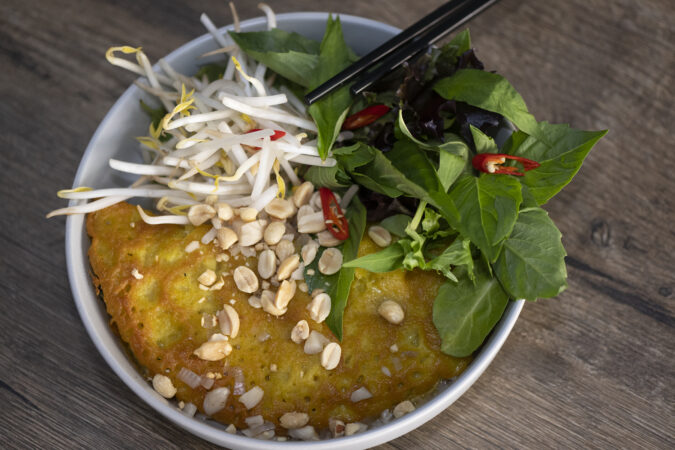
This time, a single dish is in the spotlight. The New York Times named the Southeast Asian BYOB noodle house’s banh chow salad on its annual list of Best Restaurant Dishes We Ate Across the U.S.
It’s a dish that Craig LaBan also praised in his 2023 review of Mawn: “You can taste the pride in those memories in dishes like the banh chow salad, savory coconut milk-turmeric crepes, not unlike crispy Vietnamese banh xeo, but cradled wet in a bowl already dressed with fish sauce beneath a flavorful pile of herbs, sprouts, chicken, and shrimp.”
NYT food reporter Brett Anderson extolled the salad’s savory coconut rice crepe for being “as lacily crisp as a Parmesan tuile on the outside, and plumped by ground chicken and shrimp within.”
He also notes that the “tangle of soft lettuces and what the menu calls ‘backyard herbs’ bring a lot to the plate: levity, structure and the thrown-together appearance of everyday Cambodian American home cooking, only with a chef’s attention to details.”
Mawn’s banh chow salad is the only Philadelphia dish on the national list, sharing a place with other picks from around the country, like a chaas aguachile from Mirra in Chicago, an ode to Ben’s Chili Bowl from Kwame Onwuachi’s Dogon in D.C., and a lamb neck pie from Little Beast in Seattle.
The largest U.S. outpost of thepopular Vietnamese coffee brand Trung Nguyên Legend is open in South Philly.
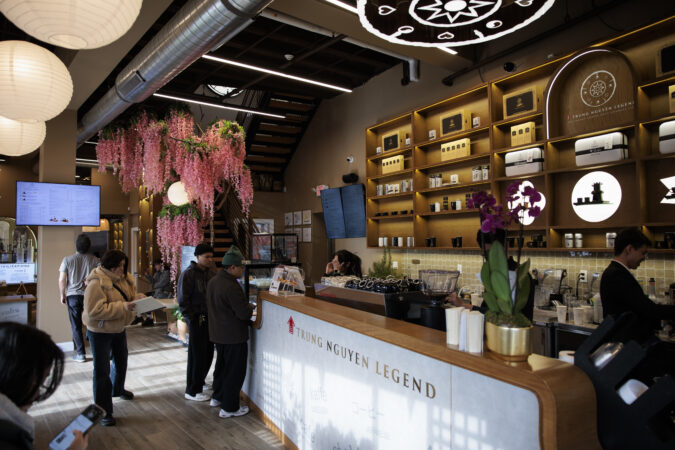
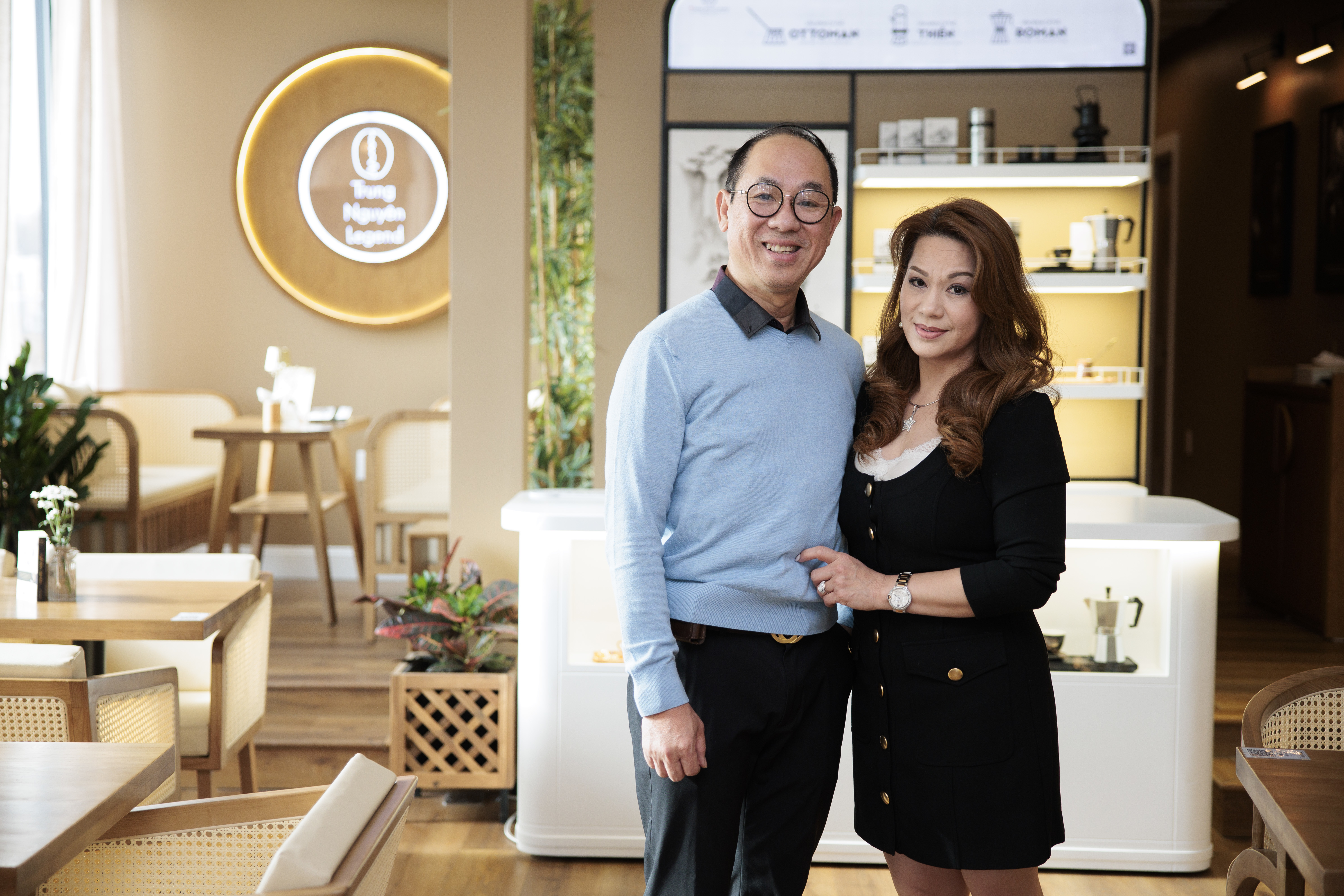
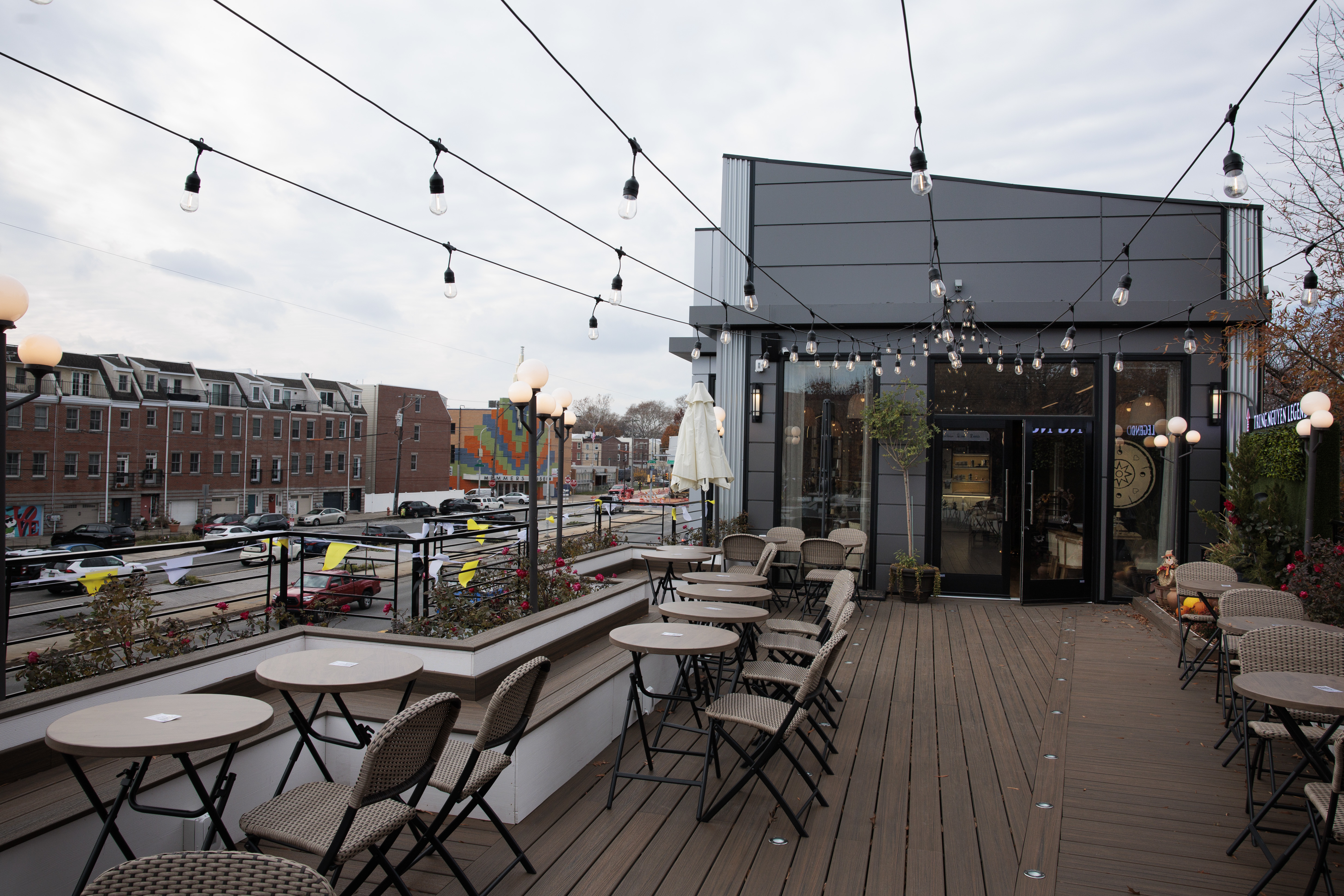
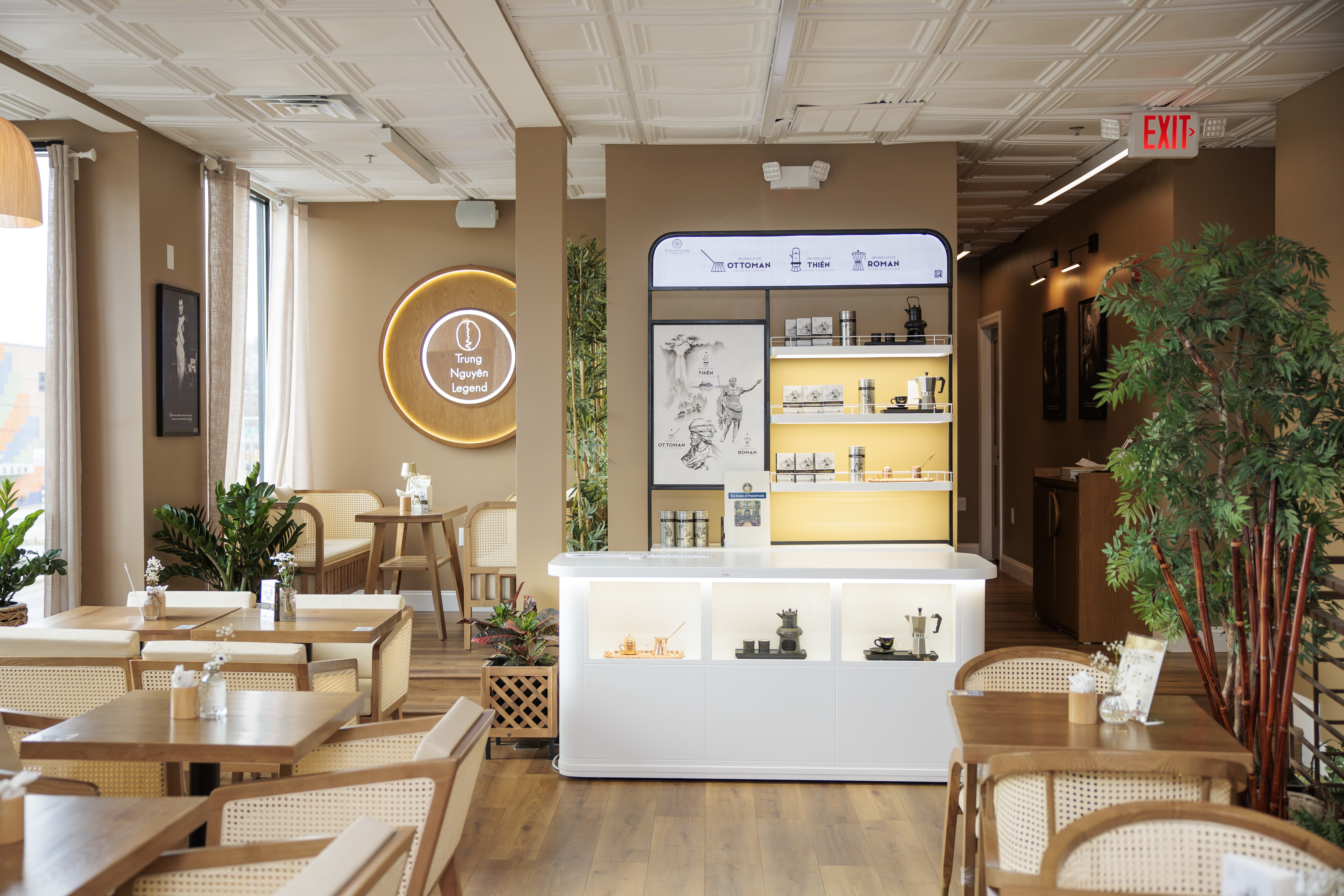
Packer Park residentsEstelle Nguyen and husband Vandy Doopened their Trung Nguyên Legend franchise at 113-117 Washington Ave. late last month. The couple transformed a one-story cabinetry showroom into a 5,000-square-foot cafe with two floors and a year-round roof deck,where customers can sip on citrusy espresso tonics, frothy Vietnamese egg coffees, or strong phin pour-overs, paired with a small array of European pastries (macarons, eclairs, mille-feuille) delivered daily from an off-site bakery.
Founded in 1996, Trung Nguyên is one of Vietnam’s largest coffee brands, known for turning robusta beans from the country’s Central Highlands region into a well-regarded line of ground and instant coffees sold internationally.
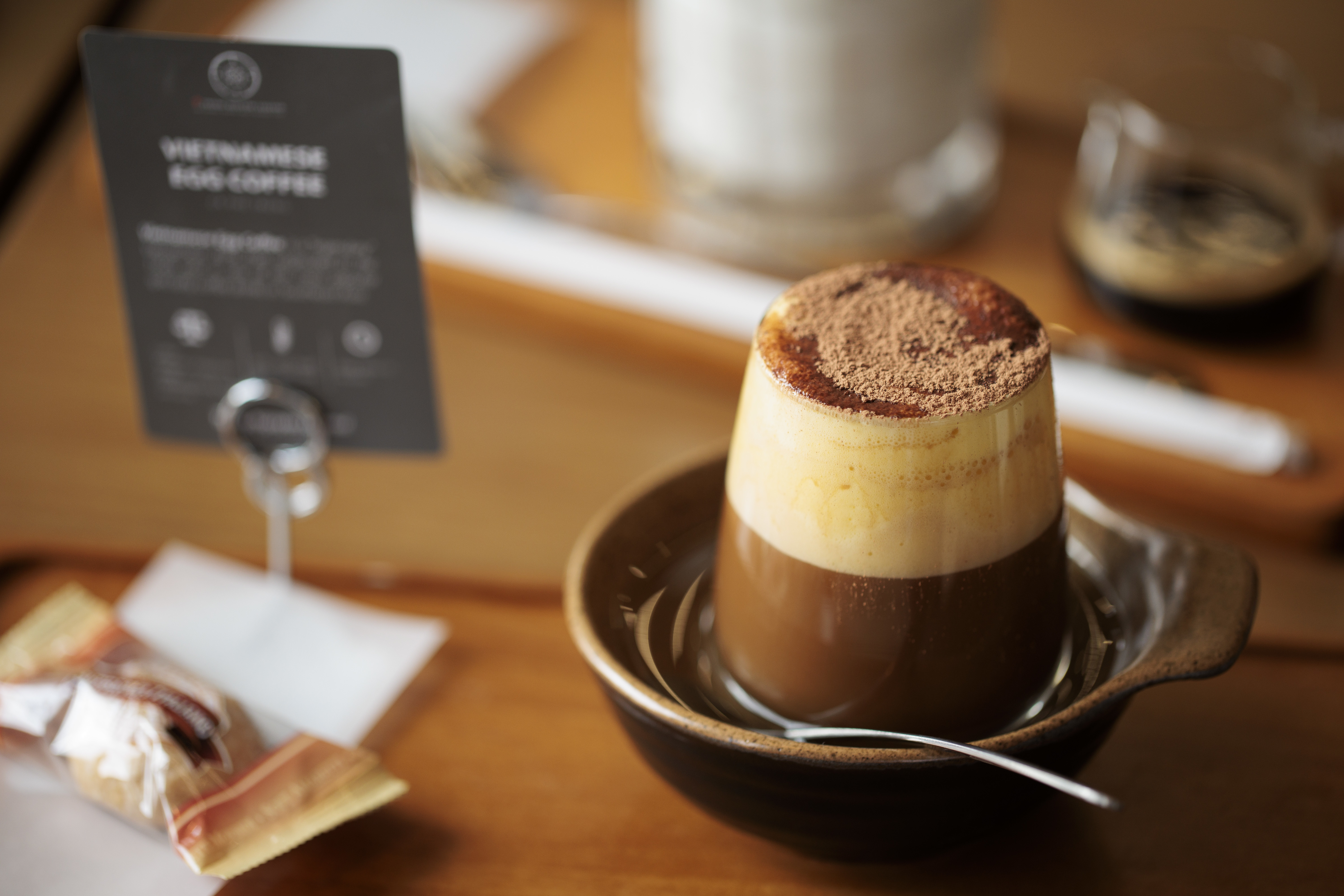
Hot Vietnamese Egg Coffee served over a pool of warm water at Trung Nguyên Legend’s Philly location at 113-117 Washington Ave.
Not every Trung Nguyên coffee shop is as massive —or luxurious — as the new Washington Avenue outpost. The chain operates 1,000 locations across Vietnam, China, and Europe, the majority of which are grab-and-go stores. Legend stores, however, are the brand’s version of a Starbucks Reserve, with more seating and higher-end touches like interactive coffee services.
Most of Trung Nguyên’s U.S locations are Legends. The first franchise opened in Southern California in 2023, with six outposts across Portland and Texasfollowing soon after. Nguyen and Do’s location is the only one on the East Coast, a fact Nguyen brags about.
“I wanted to do something gorgeous,” said Nguyên, 52.
Under her careful supervision, baristas at the first-floor counter crouch down to ensure that the amount of cold foam is level across matcha, sesame, and tiramisu lattes. Nguyen folds napkins printed with the Trung Nguyên logo into perfect equilateral triangles. As she greets customers,Nguyen promises tours of the rooftop lounge to people she hopes will become regulars.
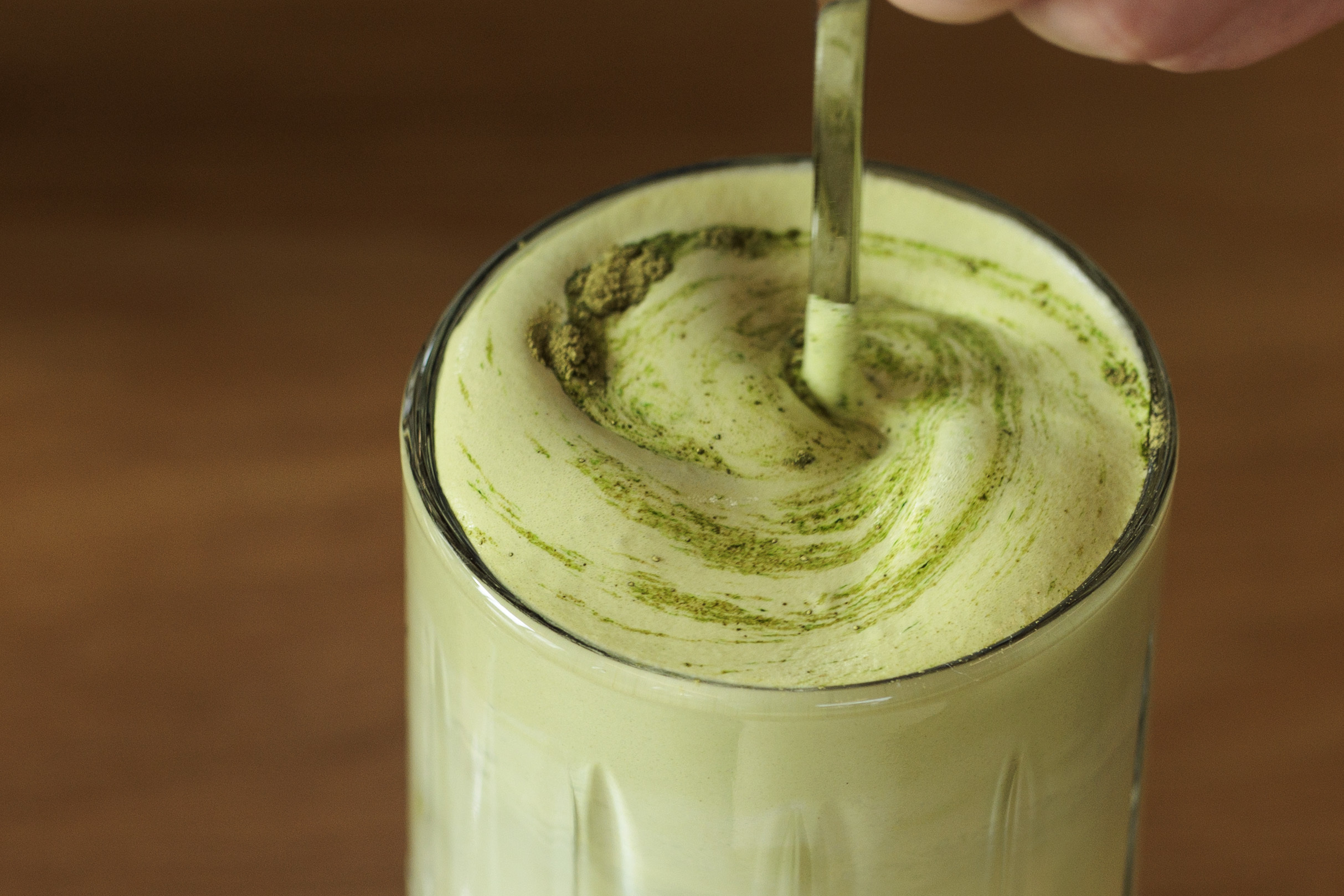
The coconut matcha at Trung Nguyên Legend on Washington Avenue in South Philly.
Nguyen and Do, both Vietnamese, moved to Philadelphia in 2005 to become big-time entrepreneurs: Together, they own a South Philly daycare, a wedding planning business, and Asian Palace, a Chinese restaurant at 2001 Oregon Ave. that doubles as a banquet hall.
The Trung Nguyên franchise, Do said, is the couple’s first venture that pulls directly from their culture. Vietnam is the world’s second-largest coffee exporter, known for strong coffees brewed through phins, slow-drip coffee filters that help retain the heat and intensity of coffee grounds. The country’s coffee shop scene is also somewhat different; shops generally stay open past 10 p.m and gladly let customers linger.
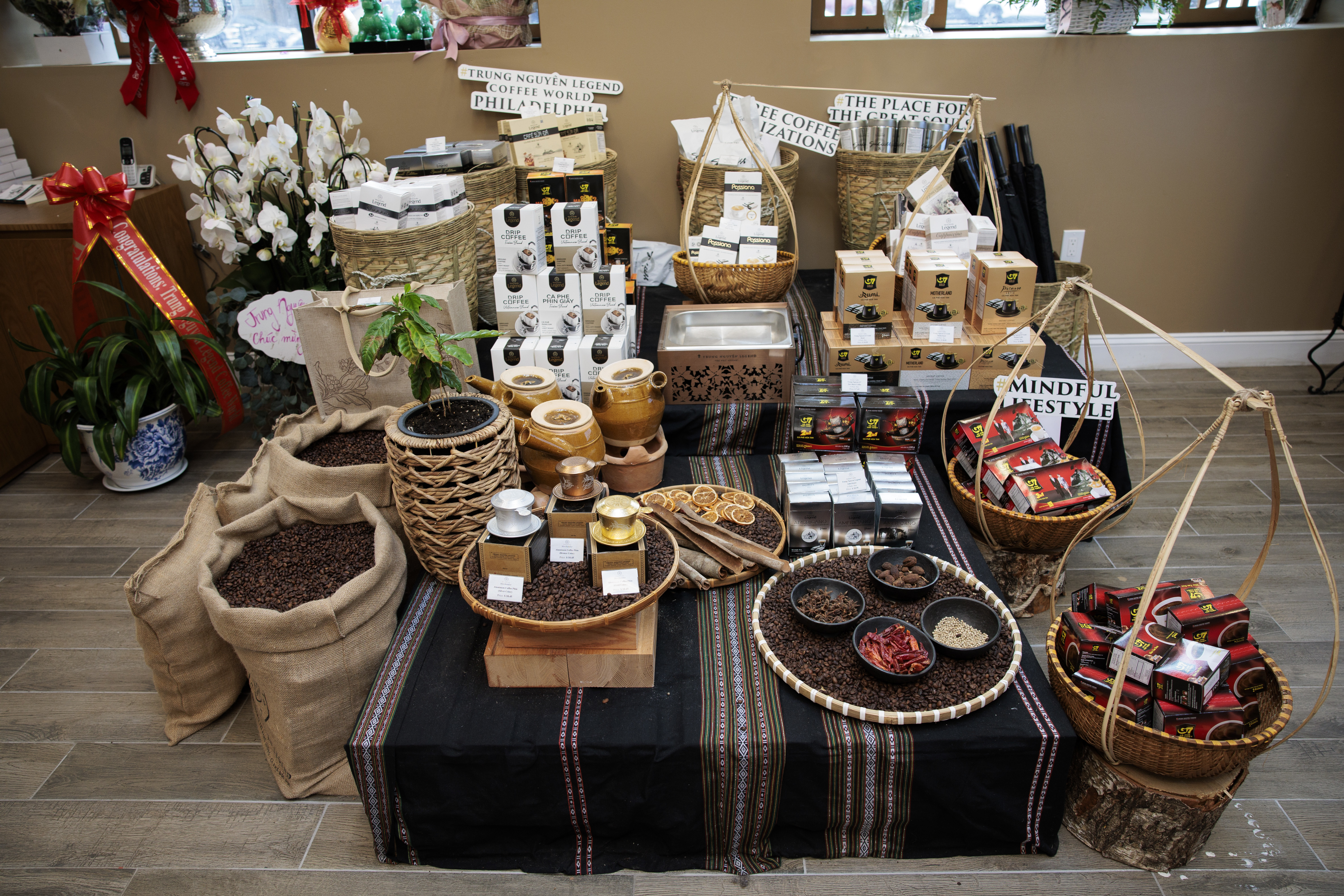
Trung Nguyên instant coffees, phin filters, and other merchandise available for purchase at the Vietnamese coffee chain’s South Philly Legend store.
“We’ve lived in Philly for over 20 years,” said Nguyên. “We didn’t see any spot like this where you could hang out with coffee and dessert.”
The final result is a Trung Nguyên unlike any other in the U.S. The couple paid a sum “in the low six-figures” to sign a franchise agreement in February 2024, Nguyên said, and invested “significantly more” to add a second-floor dining space to the former showroom.
The size was Nguyen’s idea, like most everything else in this Trung Nguyên. (Do, her husband, mostly nods in agreement while snapping photos of his wife at work.)
“This is all me, honey,” Nguyen said. “I wanted a pop.”
Vandy Do and Estelle Nguyen posed for a portrait at Trung Nguyên Legend Coffee World Philly on Thursday, Dec. 4, 2025 in Philadelphia.
The space is decorated in tones of black, beige, and brown — Trung Nguyên’s signature colors — with grand couches and plush fabric chairs that Nguyen said she lobbied the company to include, breaking with their standard look.
A 17-foot tree covered in fake fuschia flowers looms over the main staircase. It was another of Nguyen’s visions: After spotting a barren tree on the side of a South Philly road, Nguyen had Do cut it down, the branches hanging out of his trunk on the drive home. She spent roughly a week gluing strands of flowers onto the salvaged tree. Its stump sits on the cafe’s patio, surrounded by a plant wall and a water fountain.
That, Nguyen said graciously, was her husband’s idea.
The roof deck at Trung Nguyên Legend Coffee World Philly on Thursday, Dec. 4, 2025 in Philadelphia.
Different coffees for different floors
South Philly’s sprawling Trung Nguyên also offers a choose-your-own adventure element: Depending on which floor one visits, customers have the option to order coffee brewing experimentsreminiscent of a high school chemistry class.
“It’s like playing” with your coffee, Nguyen said.
All of the store’s coffee beverages are made with Trung Nguyên-brand arabica and robusta beans — the latter of which is stronger with double the caffeine content. Baristas use both phins and a traditional espresso machine, depending on the order.
Though there’s plenty of seating throughout, downstairs ismainly intended for to-go coffees. Customers can watch baristas prepare drinks with military precision. Nguyên said the most common orders thus far have been yuzu coffee — an espresso tonic spiked with fresh-pressed yuzu juice — and a “matcha cloud” with matcha-oat milk cold foam floated atop iced coconut water.
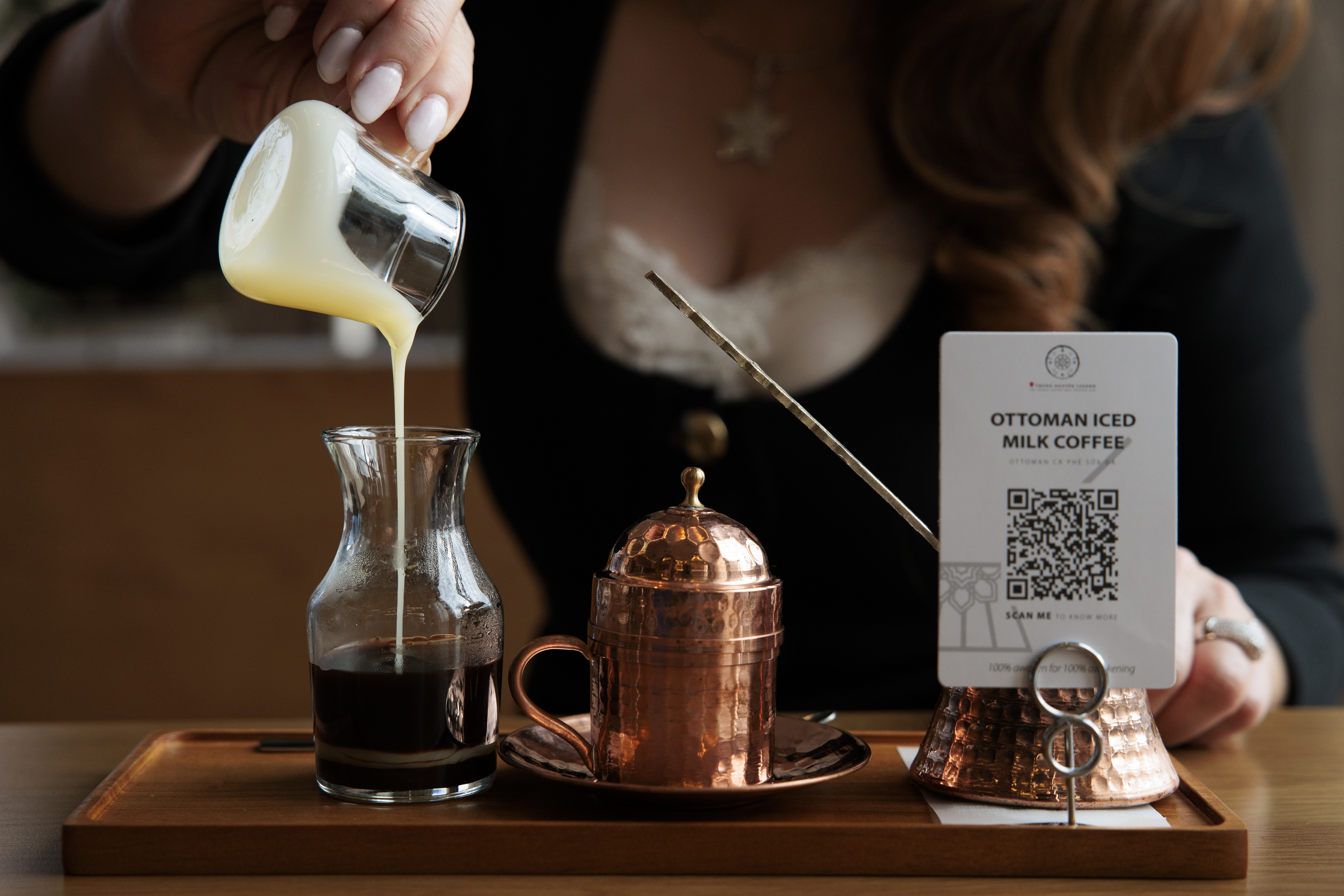
Co-owner Estelle Nguyen pours condensed milk as part of the Ottoman Iced Milk Coffee service at Trung Nguyên Legend.
Open from 3 to 9 p.m. daily (hours are subject to change as Nguyen hires more staff), the upstairs is the only level where customers can order Trung Nguyên’s signature Zen, Ottoman, and Legend coffee services, all of which include a 20% gratuity.
Each service comes with percolating coffee that’s been arranged on a tray with the appropriate phins or kettles for the customer to finish the process, along with finishing accoutrements like milk and sugar, and an amaretti cookie — Nguyen’s personal touch. QR codes display instructions on how to create the perfect pour.
Nguyen’s favorite service is the Legend. To get the perfect sip, customers must wait for grounds to finish passing through a phin before adding a thimble-sized serving of condensed milk to the brew and pouring the mixture over a glass of ice. Another option is the elaborate Ottoman service, a five-step process that involves transferring the coffee from a jug to a traditional Turkish ibrik to a petite teacup. The end result of this coffee theater tastes like a smoother, slightly bitter version of cafe con leche.
The second-floor interior of Trung Nguyên Legend Coffee, where a 20% auto-gratuity is applied.
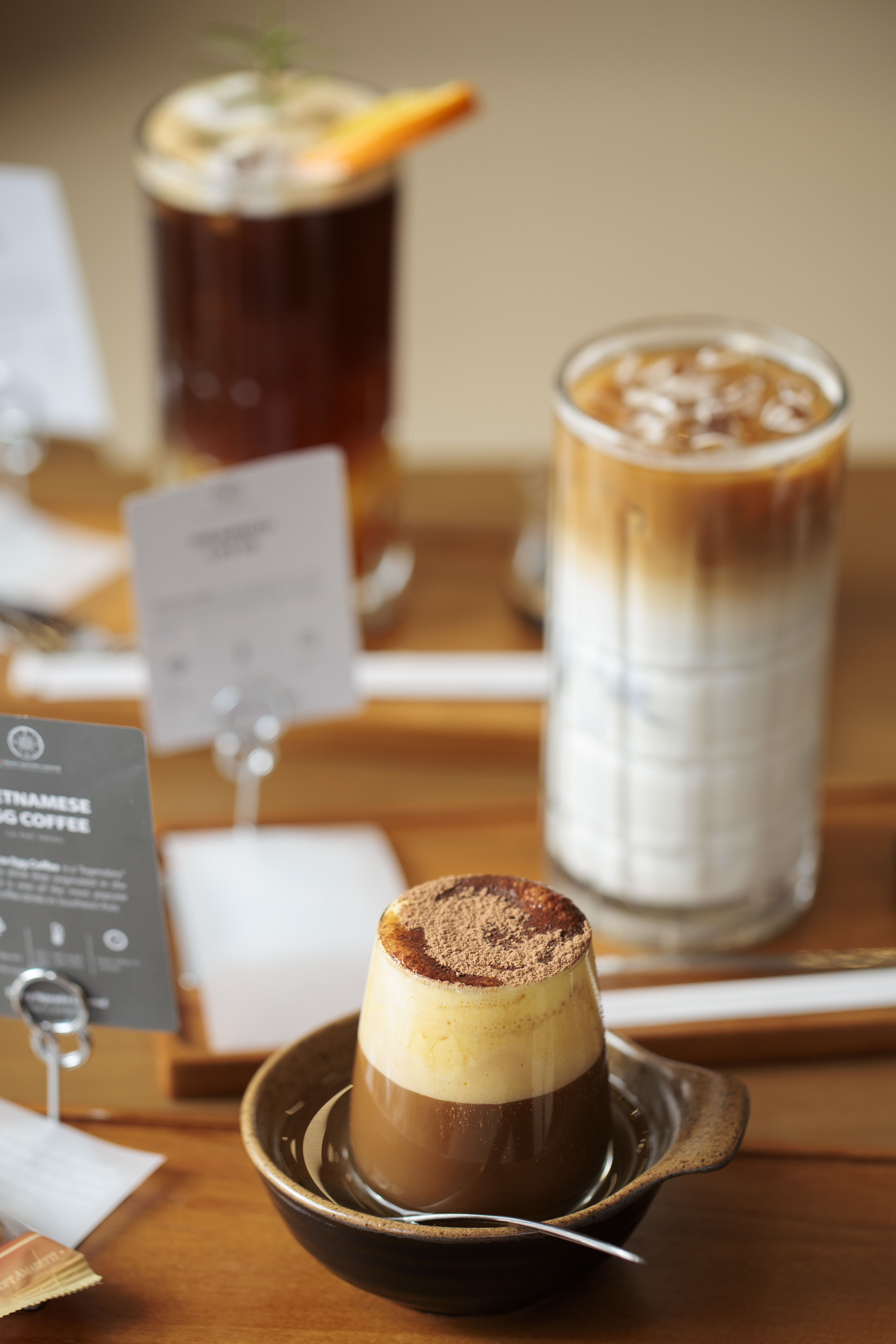
Also available on both floors: creamy Vietnamese egg coffee, which became Vietnam’s signature drink in the 1940s after bartenders in Hanoi started subbing milk for whipped eggs to cope with a dairy shortage. Trung Nguyên’s version comes blended with ginger to neutralize the smell of the egg; it goes down easy, in layers of frothy foam and slightly sweet coffee. Do recommends trying it upstairs, where the drink is served hot over a bowl of warm water in order to retain its temperature.
The concoction will run dine-in customers $8.34 for an 8-ounce cup. If they want to recreate the experience at home, they can purchase Trung Nguyên-branded products.
“A lot of people told me I was crazy to sell $10 coffees and invest so much,” said Nguyen. “This is my big challenge.”
Trung Nguyên Legend, 113-117 Washington Ave., 215-755-1953, trungnguyenlegendphilly.com. Hours: 7:30 a.m. to 8:30 p.m. daily
(left to right) The Yuzu Coffee, Vietnamese Egg Coffee and Tiramisu Latte at Trung Nguyên Legend in Philadelphia.
Center City hoteliers Ken and Vittoria Schutz are celebrating their love of Champagne and caviar with a lounge called Bar Caviar inside Dwight D Hotel, their boutique hotel at 256 S. 16th St., a few doors from Monk’s Cafe near Rittenhouse Square.
At the heart of the concept, expected to open next spring, is a Champagne list that is expected to read more like a collector’s catalog than a bar menu: 50 selections in total, with 15 by the glass.
One headline-grabber is Salon, the ultrarare Champagne produced only in exceptional years from a single village and a single grape. Bar Caviar plans to offer it by the glass, at what Ken Schutz estimates at $600 per pour. Nonvintage options will start at $15.
Rather than provide a short list of familiar labels, Schutz said he wants guests to experiment and learn. Schutz is a level 3 sommelier who is also working on a masters in Champagne from the Wine Scholar Guild.
“Champagne is the original slow drink,” he said, explaining that it takes multiple stages to make, including two fermentations and aging on the lees for at least 15 months. “Time is really what you’re paying for,” he said. “It’s a complex process that doesn’t always get the attention it deserves.”
Schutz said they want to offer a spectrum — from grower champagnes using innovative techniques and single-plot expressions, to the large houses that specialize in blending for consistency year after year. “There’s a lot of room to explore,” he said.
The food program will be equally refined, with the opening menu featuring five varieties of caviar served in classic presentations and as part of composed dishes, alongside small plates and a rotating selection of oysters and crudo. The early months will emphasize raw and cold preparations, with a broader hot menu expected to begin later.
“We wanted to do something distinctive, so Champagne and caviar felt like a perfect pairing,” Schutz said. “Both celebrate craftsmanship and heritage, and they share this idea of time. Both are slow, deliberate products.”
He said his wife visited farms in Europe and selected producers that raise sturgeon in environments that mimic natural habitats, not concrete tanks.
The couple are taking their inspiration from the counters of London or Paris, “where you can sit at a counter and enjoy caviar service in an elegant but relaxed way,” Schutz said.
They’re aiming for what he called a “minimalist, approachable vibe” rather than luxury. Vittoria Schutz, who studied at Cabrini University and Moore College of Art, designed the 11-room hotel, which opened in 2014. Set in an 1840s rowhouse, it blends antique and modern design.
“We want people to feel comfortable coming in, not intimidated,” he said.
The feast of the seven fishes, or festa dei sette pesci, has its roots in post-World War II immigration to America, when Southern Italians imported the tradition of La Vigilia — a Christmas Eve feast with no meat. La Vigilia, with its traditional consumption of baccalà, spaghetti alle vongole, and vegetables, has adapted to what we know here as an hourslong dinner with seven (more or less) fish dishes,a number that may refer to the seven sacraments.
But the feast of the seven fishes has undergone another evolution. It is now readily embraced by chefs who specialize inother cuisines, and whosometimes take the emphasis off fish. Like Christmas itself, the feast of the seven fishes has in many cases been shifted away from its religious origins, and they now also frequently occur several days prior to Christmas Eve.
Reservations have been going quickly for these elaborate holiday meals, and some are already sold out, like the feast at Fiorella (you can add yourself to the waitlist). Here are 12 restaurants in Philly serving special menus, celebrating the feast of seven whatevers (mostly fishes). This list isn’t comprehensive, so if you miss out on one of these reservations, keep your eye out on Philly restaurants’ Instagram pages for other feasting opportunities.
Bastia
Chef Tyler Akin will be serving a Sardinian-inflected feast of the seven fishes at Bastia on Dec. 21 and 22 for $125 per person, with an optional $85 beverage pairing. “We are really excited about the dishes, especially the malloreddus with pesto Genovese, swordfish, and gremolata; these are tiny Sardinian gnocchi that is a mainstay of the holidays.” Akin also promises squid ink risotto with blue crab, Calabrian chili butter, and bottarga — a dish “which truly tastes like the sea,” he said — as well as oysters with house sun-dried gooseberry mignonette. Reservations are available on OpenTable.
Bistro Romano is offering two seven fishes set menu options: one for people who want all the fish (“seven fishes tasting menu”), and others who may want to partake in the festivities but are fish-averse (“pasta & turf tasting menu”). For those who are all about the fish, the dinner commences with frutti di mare, leads into pastas like lobster ravioli and fettuccine with bay scallops and baby shrimp, crescendoes with swordfish and branzino, and ends on a tiramisu finale. For those who are anti-fish, expect veal, New York strip steak, sausage rigatoni, and bucatini with duck ragu. Both menus are $89 per person and do not include tax or gratuity. They are only offered on Christmas Eve, when Bistro Romano’s a la carte menu is otherwise not available. Reservations are available on OpenTable.
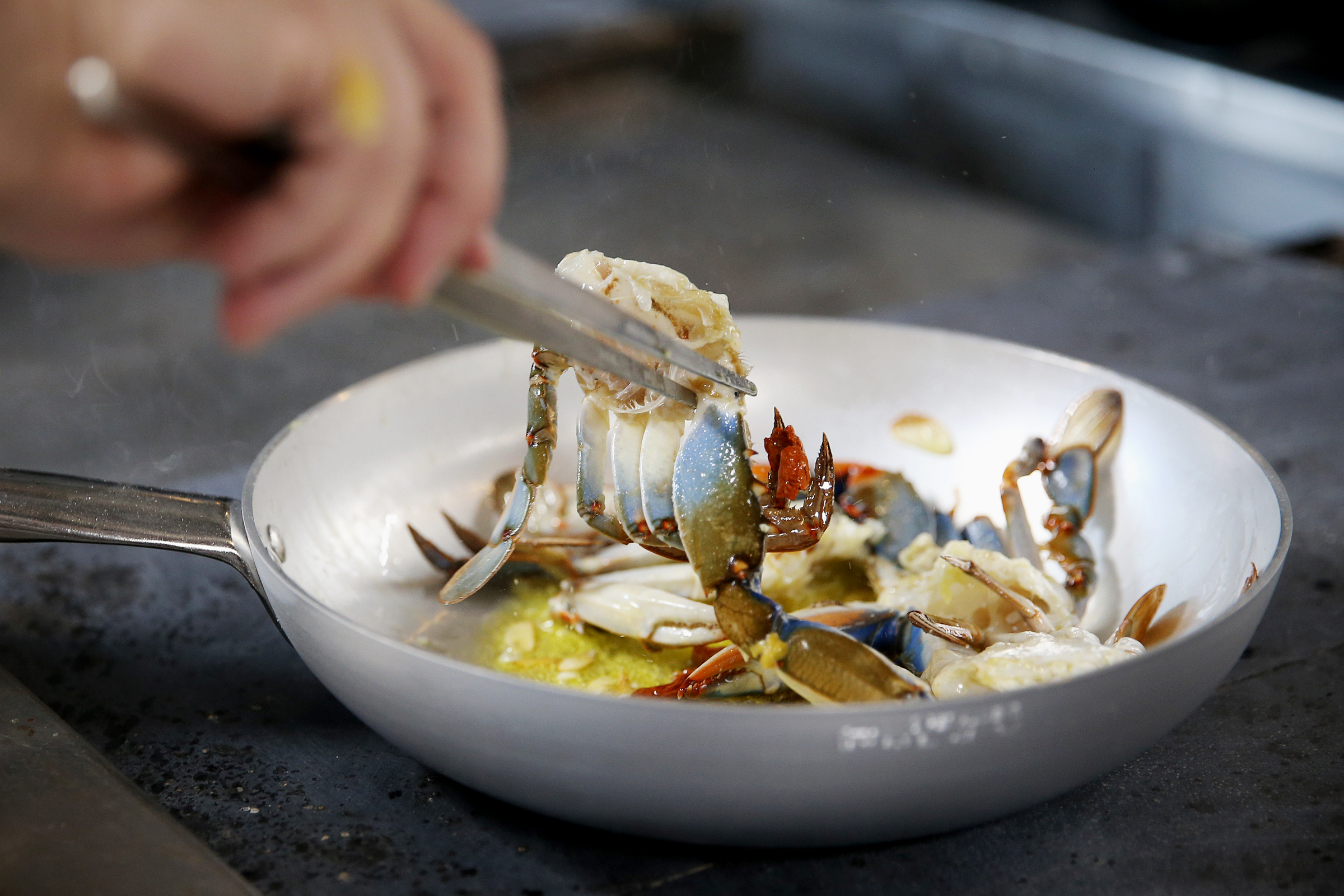
Chef Joe Cicala sautés blue crabs as he shows how to make spaghetti alla chitarra with crab at his restaurant, Cicala at the Divine Lorraine, in Philadelphia on Thursday, July 23, 2020.
Cicala
This is the first year that Cicala will be serving a seven fishes dinner. “Angela and I believe Christmas Eve is more fun and exciting compared to Christmas Day so we usually close in order to give our staff (and ourselves) the ability to spend it with our families,” said chef Joe Cicala. “However, this year we completely forgot to turn off the reservations and when we went to do so, it turned out that we were almost fully booked. So it looks like we are staying open this year.” Cicala’s entire a la carte menu will be available on Christmas Eve, along with a “menu fisso” of five courses utilizing seven different fish (price TBD). They are still working out the full details, but reservations can be made on Resy.
Heavy Metal Sausage Co. owners Patrick Alfiero (left) and Melissa Pellegrino prepare for the Thursday night trattoria dinner on Thursday, Nov. 17, 2022.
Heavy Metal Sausage
South Philly’s Heavy Metal Sausage leans hard into seven fishes, so much so that for years they’ve been hosting feasts of “more than seven fishes.” This year, there are five nights of such extravagant dinners, featuring “more than 12 dishes, more than seven fishes,” from Dec. 18 to 22, with two seatings per night (6 and 8:30 p.m.). A seat at this bonanza goes for $150 per person; gluten and seafood allergies cannot be accommodated, and tickets cannot be refunded or rescheduled. Bookings can be made on Square.
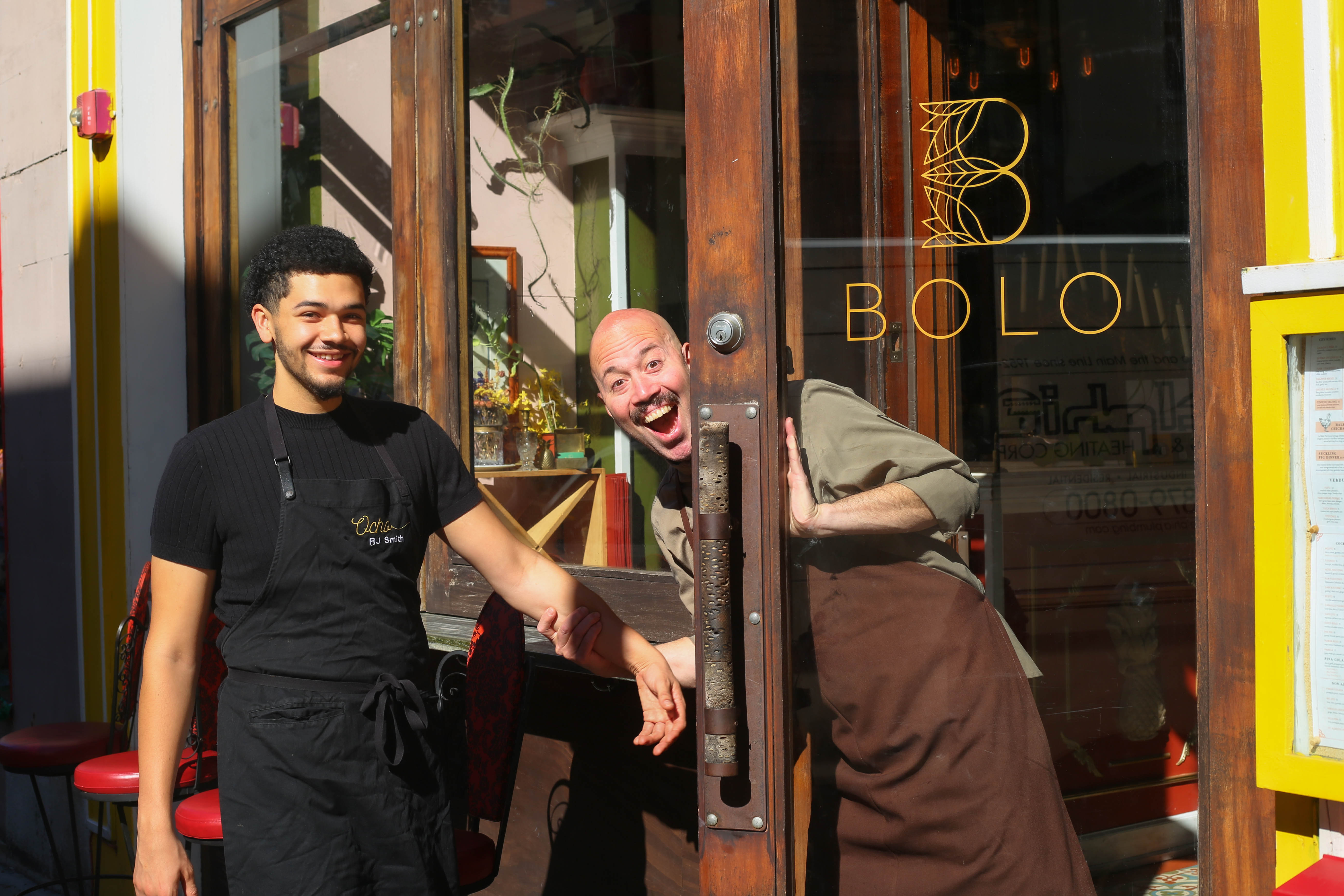
Yun Fuentes and R.J. Smith team up for a Caribbean approach to the Feast of the Seven Fishes at Bolo.
Bolo
This holiday season, Bolo chef Yun Fuentes is welcoming chef R.J. Smith of Ocho Supper Club for a one-night-only Siete Mares, a Caribbean interpretation of the feast of the seven fishes. It will be 7 p.m. on Dec. 16 for $150 per person. Expect hamachi ceviche with scotch bonnet-passion fruit salsa and uni,lobster curry rellenos, red snapper escovitch, and an island-inspired version of surf and turf, or mar y montaña: roasted suckling pig and seafood rice with clams, calamari, and squid ink sofrito. There will also be an Ocho Happy Hour in Bolo’s first-floor rum bar from 4 p.m. to 7 p.m. Reservations can be made on OpenTable.
Queen Village sandwich shop Farina Di Vita is running a seven fishes catering menu until Dec. 21 at 4 p.m. or until they sell out of their fried smelts, jumbo lump crab cakes, mussel gravy, salmon piccata, shrimp cocktail, Thai chili salmon, and calamari salad. Get them all or get them a la carte. Orders must be placed over the phone (ask to speak with Jason).
Vernick Fish will be celebrating the feast of the seven fishes on Dec. 23 and 24 with a five-course, family-style menu for $195 per person. It includes tuna crudo, bay scallop crudo, and the Tuscan flatbread schiacciata, with osetra caviar, to start. Expect octopus skewers, fritto misto, white mussels, squid ink spaghetti, and whole roasted branzino with blue crab. A la carte options will be available at the bar.Reservations can be made on OpenTable.
Chef Jason Cichonski’s Tulip Pasta and Wine Bar will be serving their seven fishes dinner on Dec. 22 and 23 for $100 per person with an optional $55 wine pairing. The menu includes tuna carpaccio, mussel toast, prawns, baked clams, crab ravioli, squid ink pasta, black bass, and fried chocolate ravioli with gingerbread ice cream for dessert. Reservations can be made on Resy.
The “snack” course of Messina Social Club’s Feast of the Seven Fishes tasting menu in 2024.
Messina Social Club
Semi-private Messina Social Club, also by Jason Cichonski, with chef Eddie Konrad, is offering a six-course seven fishes tasting menu on Dec. 21, 22, and 23for$135 per person. “There will be plays on traditional dishes, like last year we did an octopus bolognese and a series of ‘snacks.’ We always do more than seven actual fishes,” said Konrad. For dessert, Konrad has been working on a “terrine-a-misu,” consisting of ladyfingers in an “amaro-based soak that I stack, layer, press, and cut like a cake and serve with a whipped mascarpone.” Reservations can be made on Resy.
Fork’s feast of the seven fishes occurs only on Christmas Eve. It’s $125 per person, not inclusive of tax and a 20% service charge. Courses include brandade toast, crispy Prosecco-battered smelts, two handmade pastas, and a choice of a family-style entree for two, like a whole roasted branzino. There will also be additional starter options for $22 each, such as fluke crudo with a brown butter pear vinaigrette and half a dozen oysters on the half shell. Reservations are available on OpenTable.
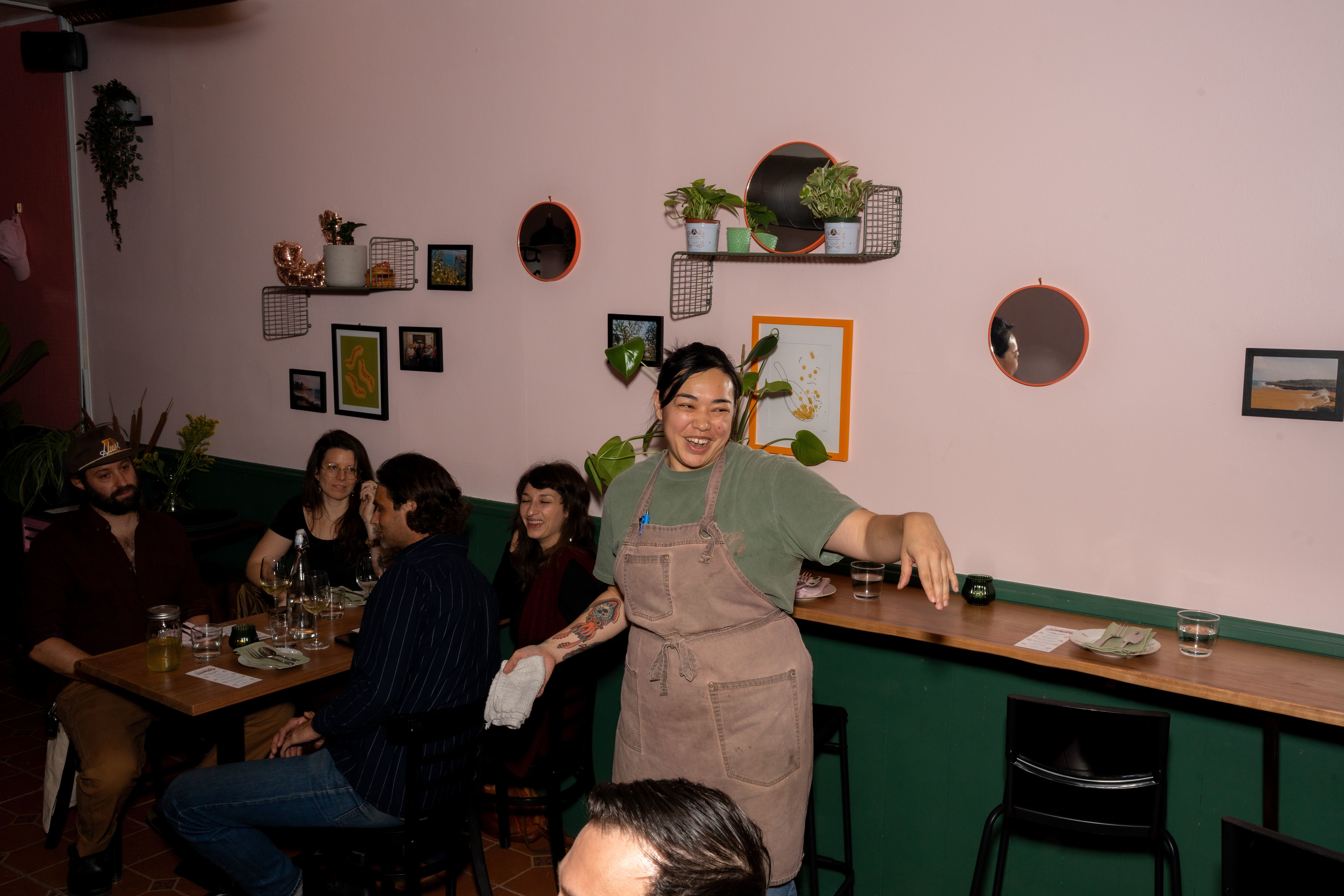
Liz Grothe speaks to guests at the friends and family opening of Scampi in Queen Village.
Scampi
Scampi in Queen Village may be named for one of those potential fishes, but chef Liz Grothe’s signature move at the holidays — this is the third year — is to serve a feast of the seven pastas, featuring lots of fishes. The menu is available on Dec. 23 (Dec. 22’s dinner is sold out), with dinner starting at 6:30 p.m. Reservations must be made via Google form, which cautions, “Do not let the lucky number seven fool you, this is at least a nine-course dinner and it takes about 2.5 hours. This is as ritzy as it gets for us.” It’s $150 per person and BYOB. Menu includes Grothe’s Caesar toast, lorighittas (small Sardinian ring-shaped pastas) with calamari and peas, spaghetti gamberi crudo (raw shrimp), smoked trout culurgiones, clam chowder gnocchi, and tiramisu for dessert.
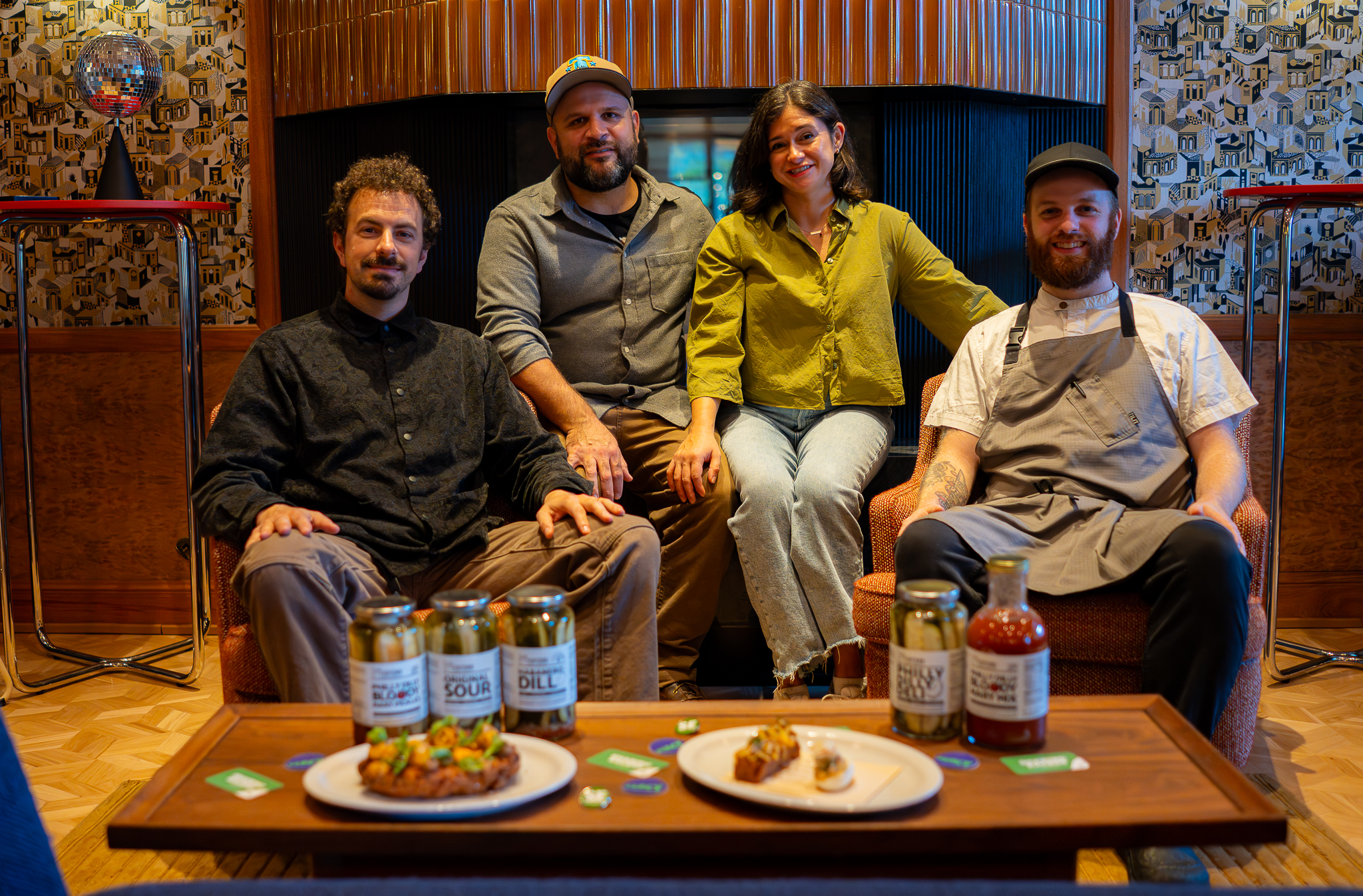
Percy owner Seth Kligerman, Percy chef Jack Smith, and Fishtown Pickle owners Niki Toscani and Mike Sicinski.
Fishtown Pickle Project x Percy
Fishtown Pickles will be hosting its feast of the seven pickles for the fifth year on Dec. 16 with two seatings, at 5 p.m. and 7:30 p.m. It will be held at Kensington restaurant Percy, which recently rebranded as a diner, and thus this will be a “Diner Edition” of the celebration. Tickets are $105 per person, with $10 per ticket going to Sharing Excess. The menu is a collaboration between Percy chef Jack Smith and Fishtown Pickle Project co-founder Mike Sicinski. There will be a Hanukkah nod of a deviled egg and latke with smoked fish and pickle slaw, pumpkin soup with winter squash kimchi, corned pork belly with sweet onion pickle glaze, fermented red cabbage kraut and rye bread gremolata, antipasto made with Fishtown Pickle Dip, and a pickle-brined chicken schnitzel. In Percy’s Sound Lounge, there will be a Pickle Sundae Bar with wet walnuts (made with fermented honey), tea-pickled golden raisins, hot fudge, whipped sour cream, and fermented fruit. If the main event sells out, you can still participate in the Pickle Sundae Bar by purchasing tickets on Fishtown Pickle Project’s website.
Percy Diner and Bar, 1700 N. Front St., 215-975-0020, percyphl.com
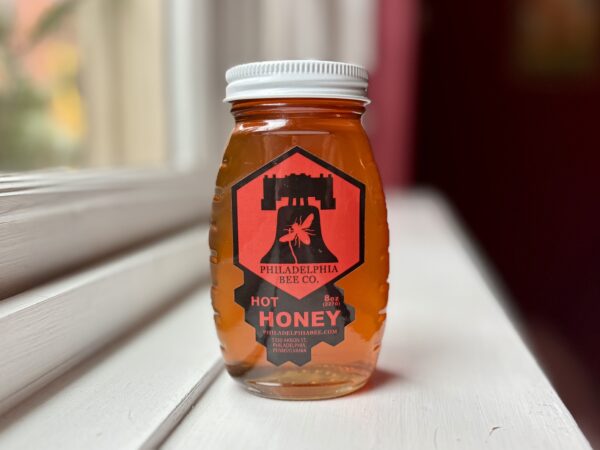
Unlike Mike’s Hot Honey, the unsubtle chili-fired condiment whose bold heat has become a sticky fixture in local pizzerias, there’s a sneakier, more natural spice to Don’s All Philly Hot Honey. That Don would be Don Shump, who’s not only the city’s most fearless bee beard model, but also the talented apiarist behind the Philadelphia Bee Co., whose locally harvested honey is in the midst of a brick-and-mortar pop-up run through the holidays in the Old City storefront annex to the Franklin Fountain. I’ve enjoyed this hot honey because it’s infused with fresh habaneros, whose fruity heat swarms more than stings, with a warm afterglow that doesn’t obscure the high quality of the honey itself. It’s just one of several unique products harvested from hives across the city for sale at Don and Amanda Shump’s new store.
There’s earthy “Doom Bloom” honey that’s smoky from contact with spotted lantern flies, as well as complex and distinctive honeys harvested from specific neighborhoods, including a newly released Old City edition gathered from wildflowers within buzzing distance of the Franklin Fountain’s rooftop apiary. In addition, there are hive-shaped candles, T-shirt merch, a honey soap collaboration with Vellum Street for various bars in tempting scents like hot toddy or “smoker fuel,” and even bee-themed dog toys that our pooch is obsessed with. When it comes sweet local food gifts, this is indeed, as the Shumps like to say, your “hive for the holidays.” Philadelphia Bee Co., 112 Market St. or online at philadelphiabee.com
— Craig LaBan
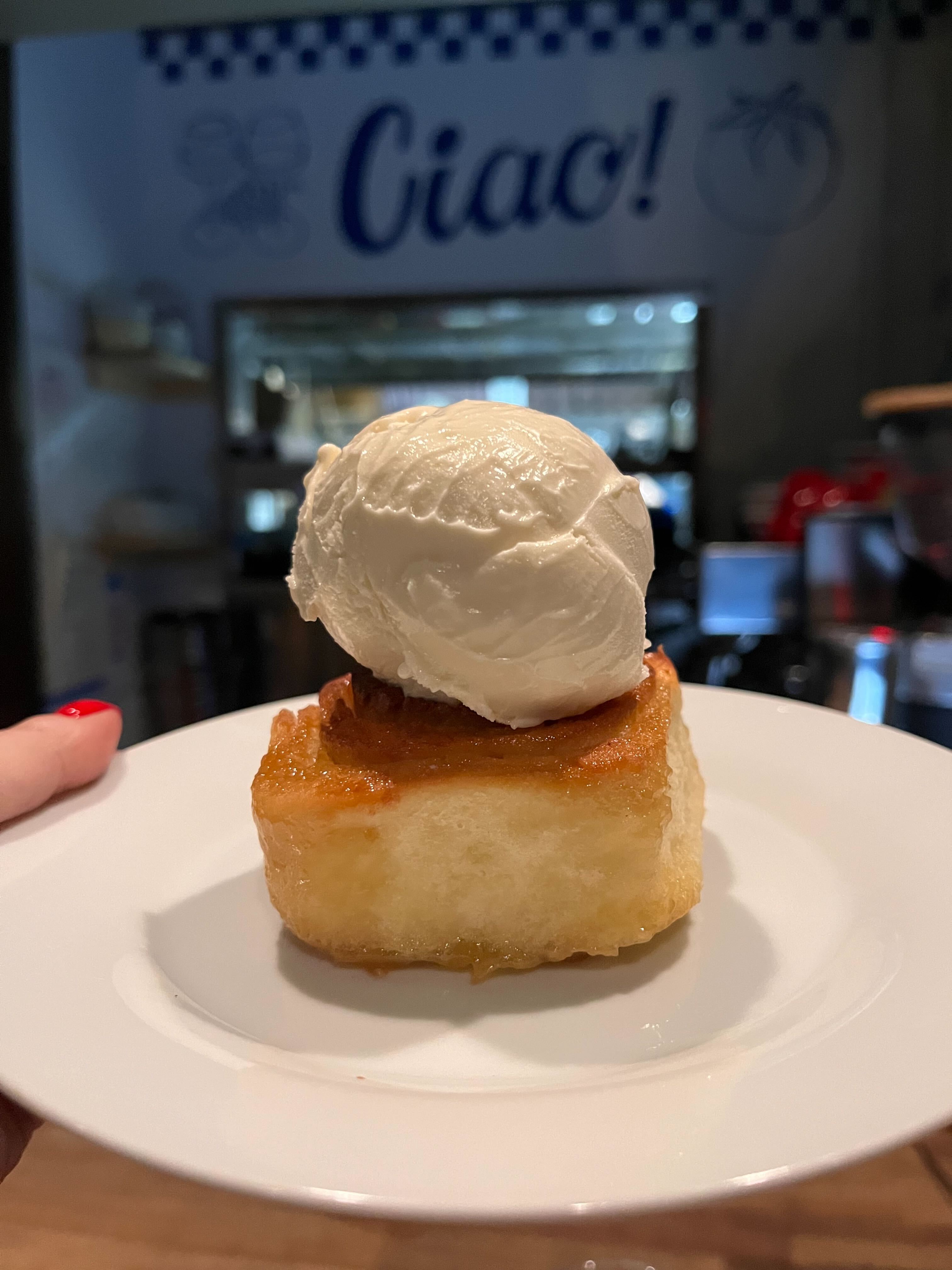
Sticky bun with amari gelato from Paffuto
Sticky bun with amari gelato from Paffuto
A spontaneous Friday date night led my partner and me to Paffuto for a last-minute chef’s counter reservation we nabbed. The entire meal, from the bright eggplant parm with fresh basil to the tuna crudo with Granny Smith apples, was just what we were looking for. But the unexpected star was a new dessert Paffuto is workshopping: their dayside pillowy sticky bun, warmed and topped with a heaping scoop of amari gelato made specially for the restaurant by Philly-based Cocco’s Gelato. The result is yeasty, boozy, herbal, and rich with a kiss of Fernet-Branca. I can’t wait to eat it again. Paffuto, 1009 S. Eighth St., 215-282-7262, paffutophl.com
— Emily Bloch
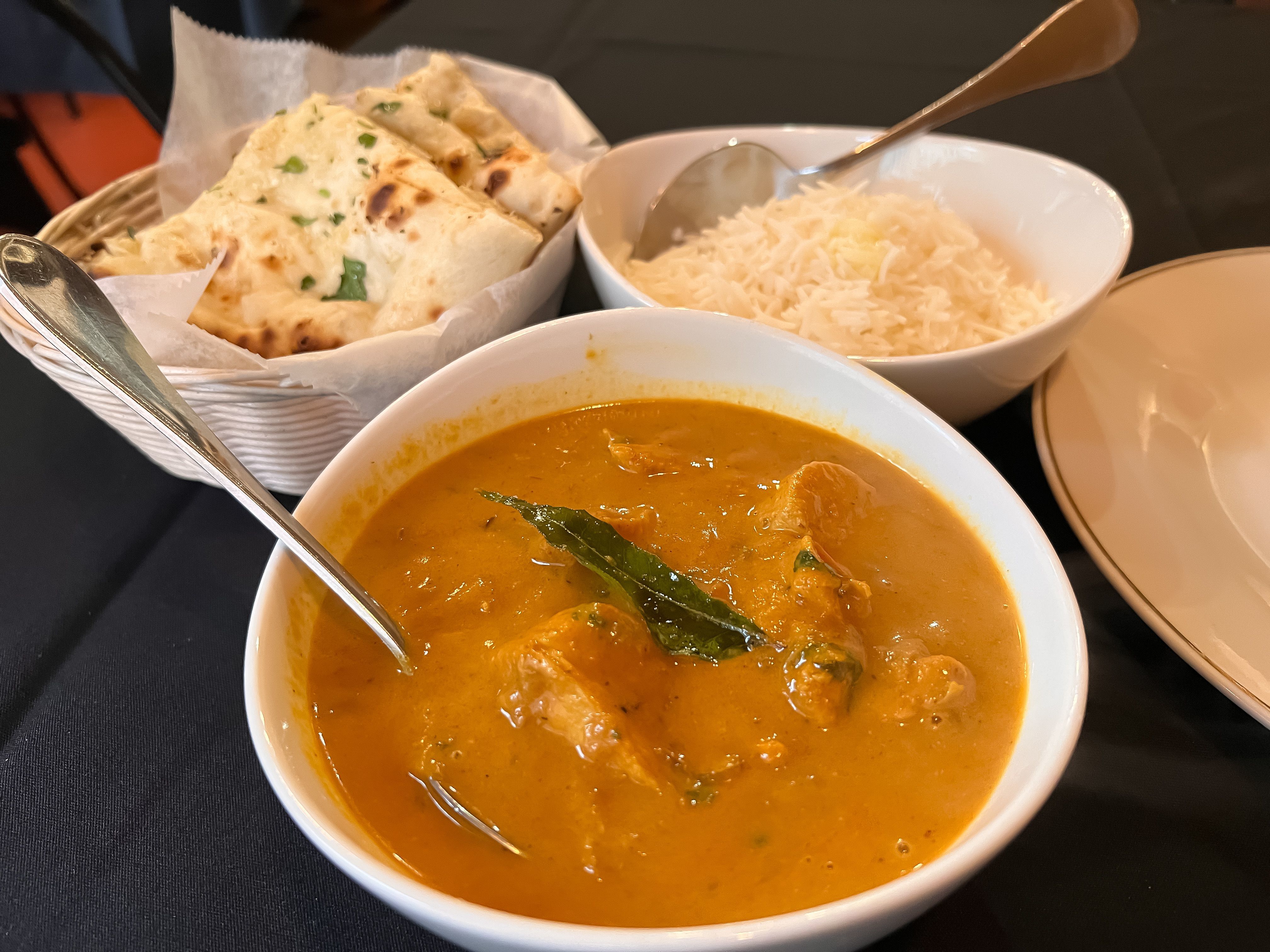
Turmeric chicken curry with rice and garlic naan at Turmeric Indian Kitchen, 1240 Spring Garden St., on Nov. 15, 2025.
Turmeric chicken curry at Turmeric Indian Kitchen
Handry Carvalho, who last worked at Saffron Indian Cuisine in Bala Cynwyd, is from Mumbai. Saurabh Kedwadkar, who last worked at Thanal near Logan Square, is from Karnataka, so there’s a bit of a north-south thing going at their new, casually elegant Turmeric Indian Kitchen at 13th and Spring Garden Streets (the former Satay Bistro). On these chilly days, I defy you to find a more belly-warming dish than the signature Turmeric chicken curry, reminiscent of spicy Mangalorean gassi, with cubed chicken in a rich gravy of onion, tomato, curry leaves, and mustard seed. Just as hearty is the dal makhani, the creamy Punjabi specialty of whole black lentils and red kidney beans cooked with spices, butter, and cream. Order both, spoon them over basmati rice, and get a side of garlic naan to swipe up any remaining sauce. Turmeric Indian Kitchen, 1240 Spring Garden St., 215-933-0430, turmericphilly.com
— Michael Klein
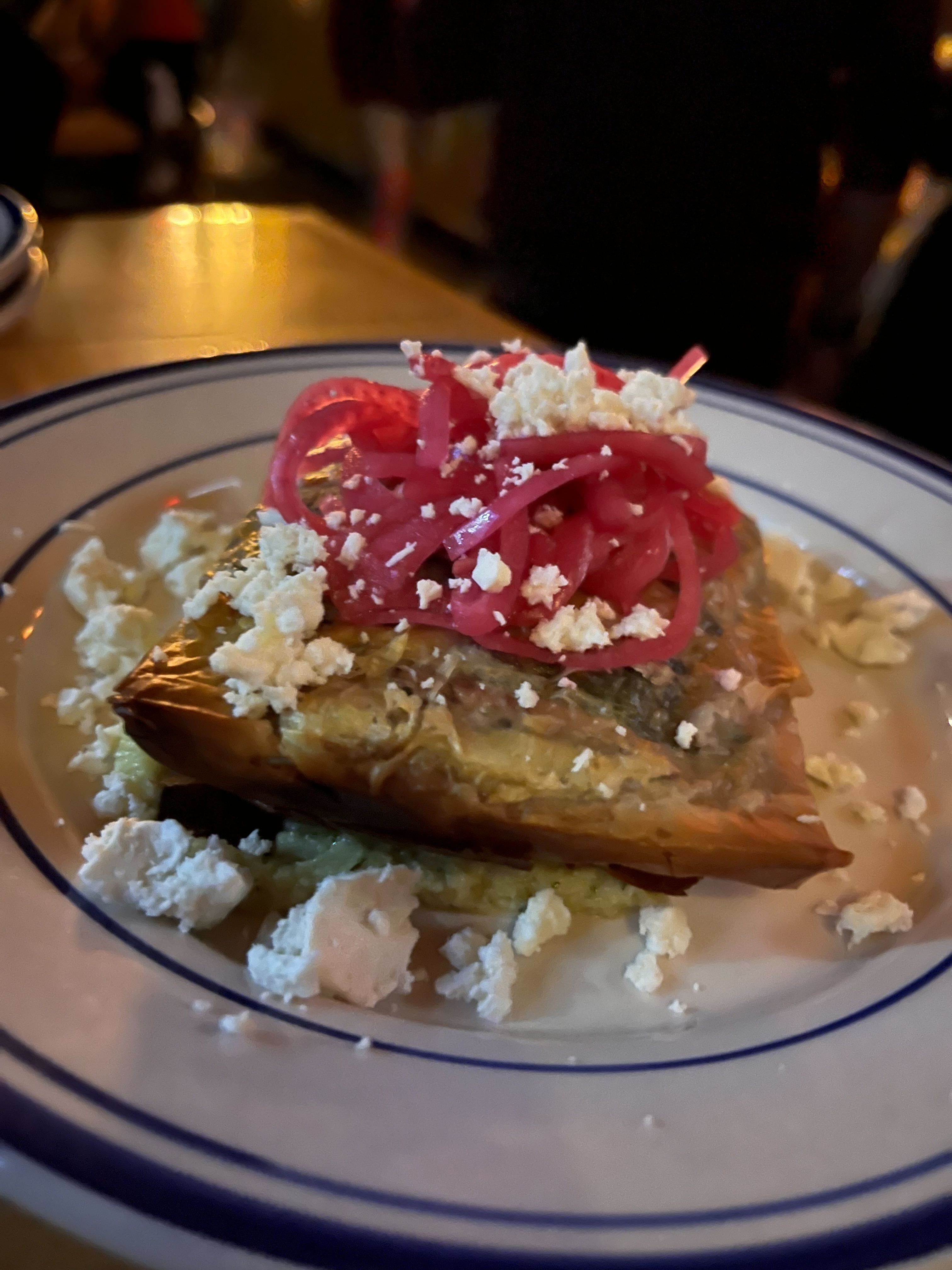
The celebratory sardine parcel special at American Sardine Bar.
Sardine parcel from American Sardine Bar
If there’s one thing American Sardine Bar doesn’t mess around with, it’s a party. And they especially love a theme party. So it was only sensible to order the entire menu of specials for their Night of the Sardine 14th anniversary and Thanksgiving eve block party. Chef Andrew Douglas’ sardine escabeche and sardine-stuffed peppers featured bright bites of pickled sardines, Castelvetrano olives, and piquillo peppers. But the star of the show was the sardine parcel: an envelope of flaky phyllo dough stuffed with artichokes and spinach, parmesan, ricotta salata, and — you guessed it — more sardines. The grown-up spanakopita prompted me to text my Greek bestie and her sister about it. They’d like a bite, so hopefully Douglas runs this one back. American Sardine Bar, 1800 Federal St., 215-334-2337, americansardinebar.com
For almost two years, Zahra Saeed ruminated on opening a French-style cafe that combined her two passions: delicious food and beautiful design.
“I just love French bakeries,” said the Pakistani real estate developer, who travels to France often and fell in love with the country’s architecture and cafe culture. Six months ago, she decided to begin construction for a cafe at one of her properties in Philadelphia.
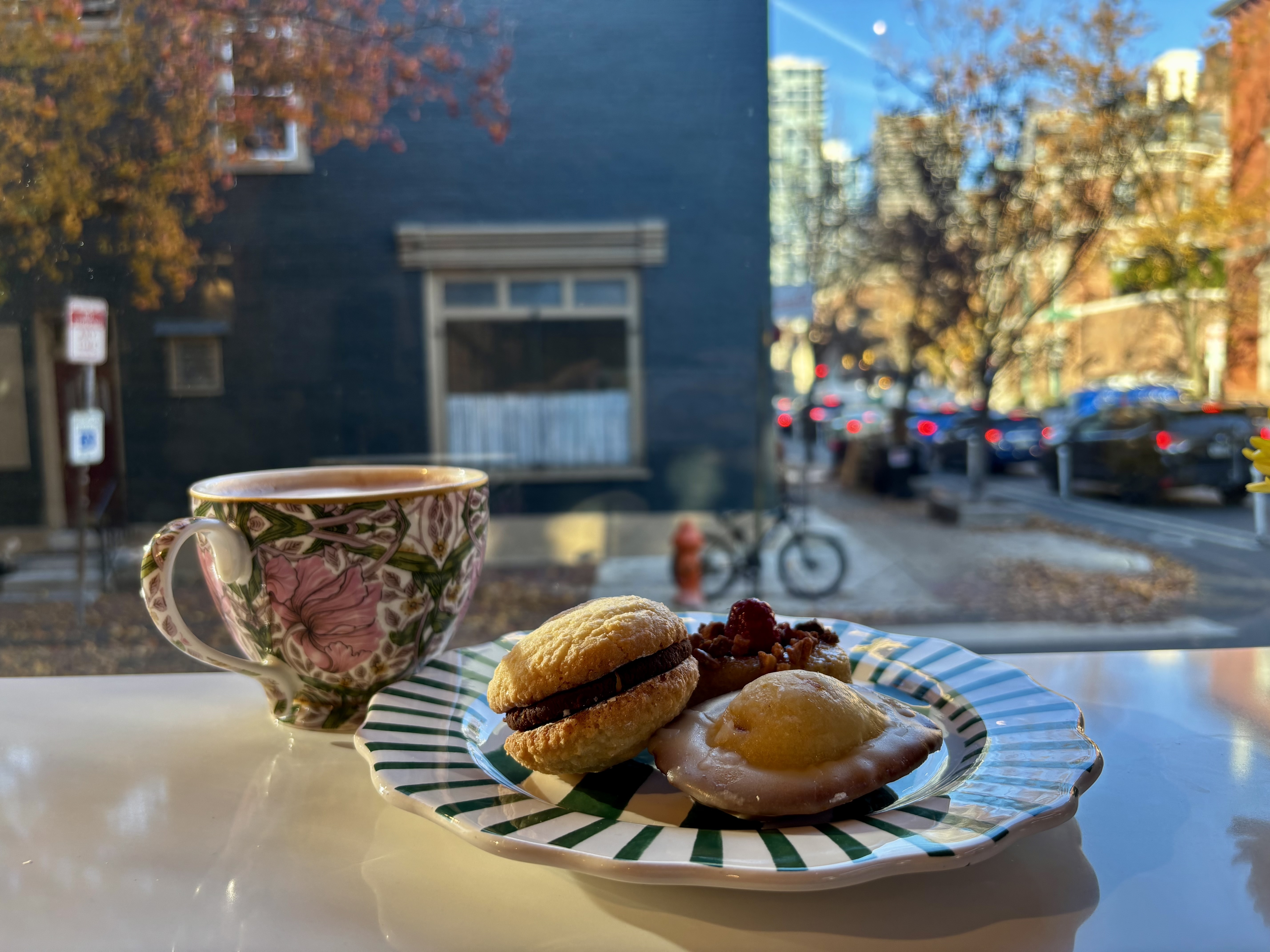
La Maison Jaune offers pastries and hot drinks, like chocolate chaud and lattes.
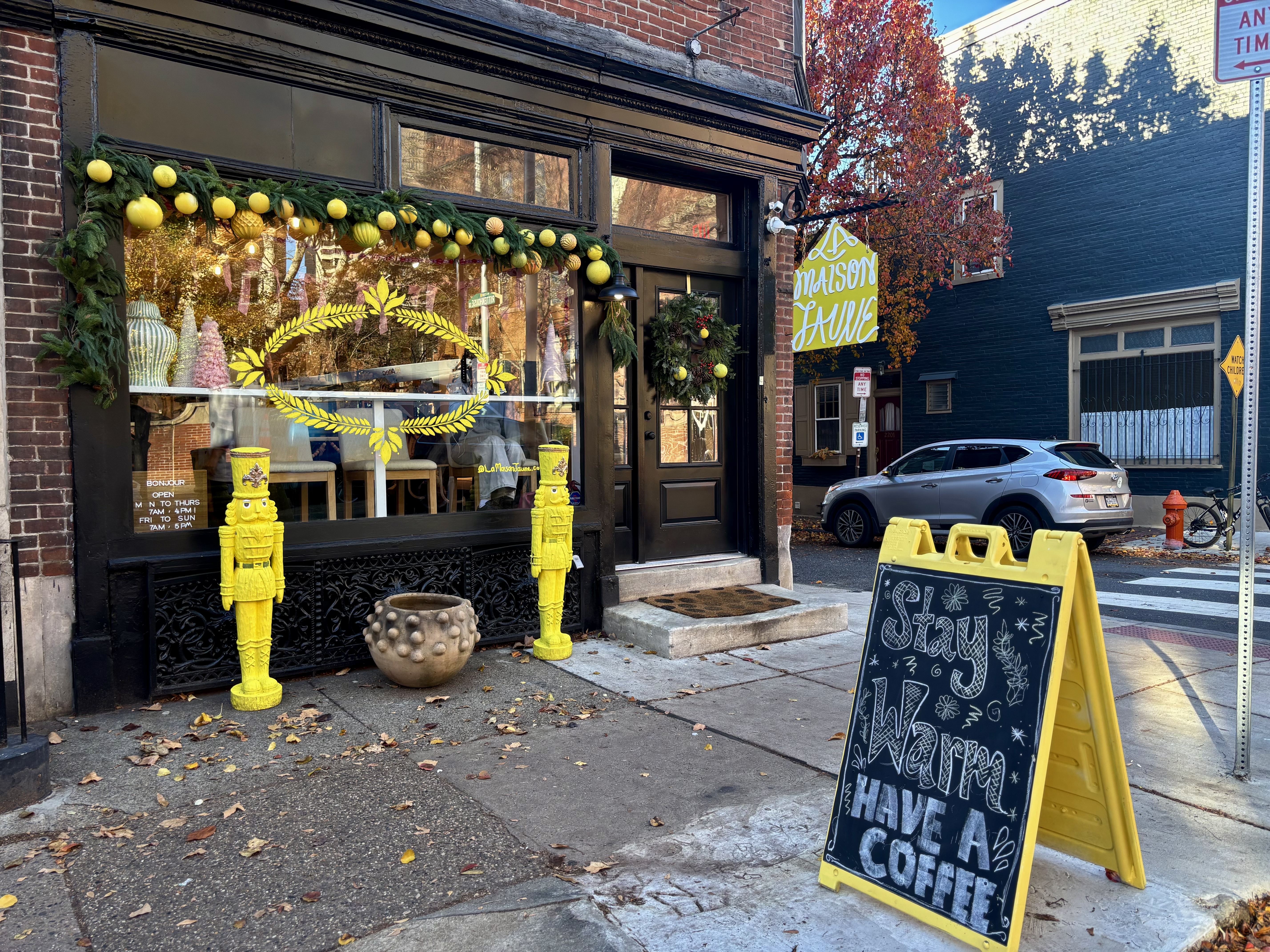
Just four weeks after its opening, La Maison Jaune is bustling with customers seeking macarons and chocolat chaud (hot chocolate) from the corner shop at 22nd and Rittenhouse Square.
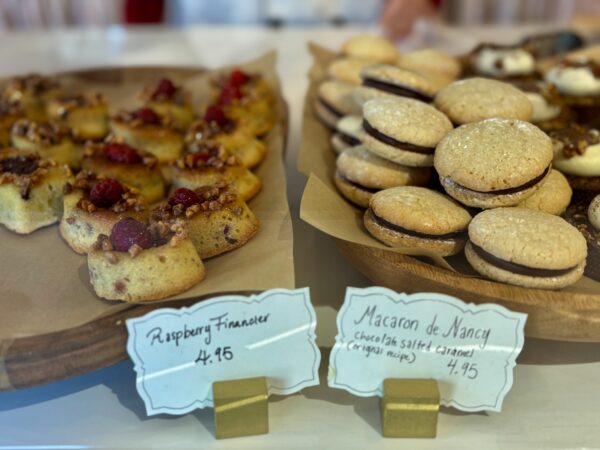
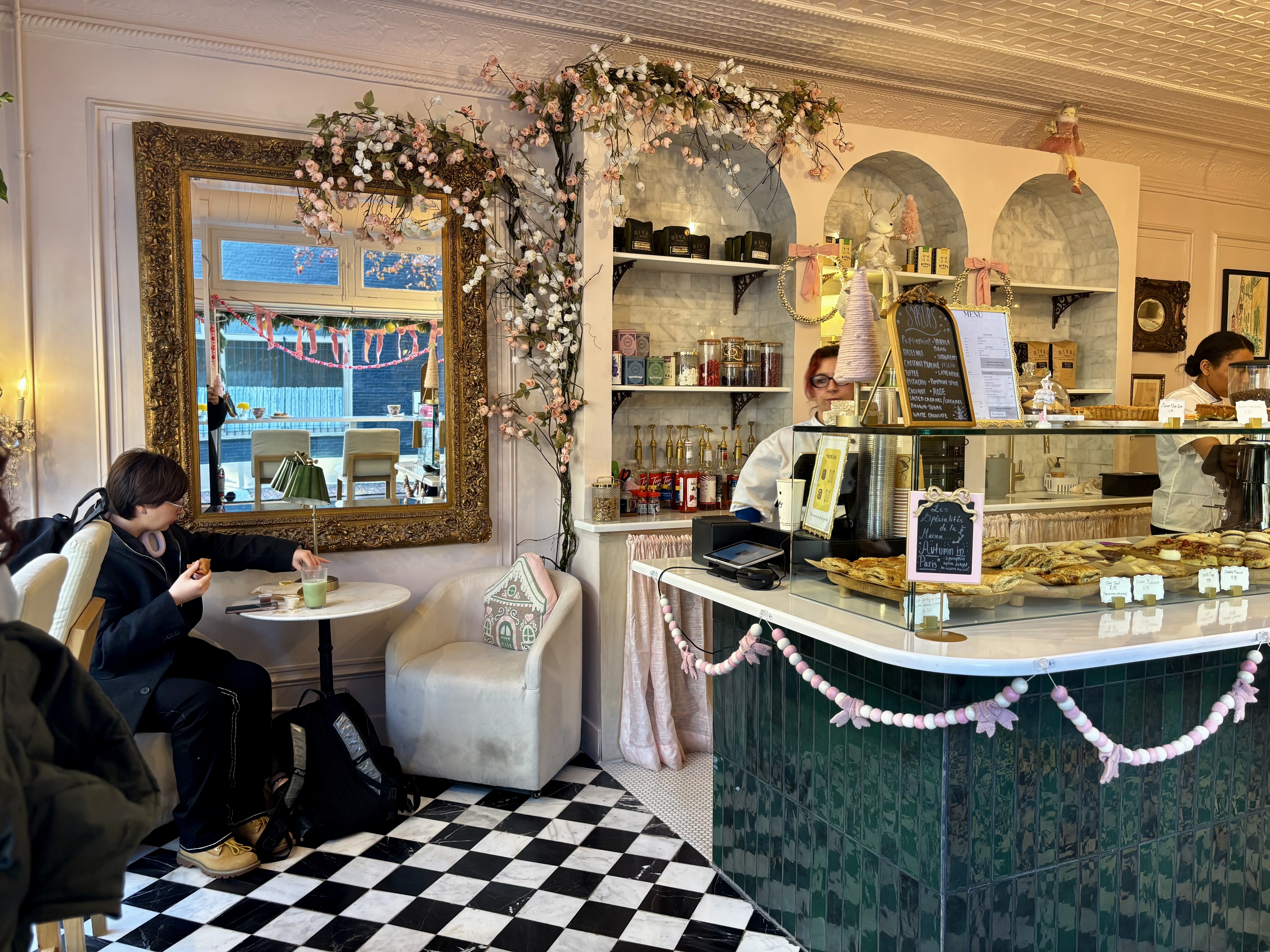
The 420-square-foot cafe, marked by a bright yellow sign, is outfitted with a black-and-white checkered marble floor and large and small ornate mirrors decorated with floral arrangements. Staff help customers navigate a display case lined with classically French pastries: Think palm-sized, salted caramel- and chocolate-filled macarons de Nancy (chewy almond cookies from Nancy, France, that predate their daintier, more commonly available cousin), crumbly financiers (mini almond cakes) topped with raspberries and blueberries, and glazed lemon madeleines.
An array of large, creamy quiches sit atop the case. Delicate China mugs are filled with rich chocolat chaud, lattes made with Rival Bros. coffee, and house-made specialty matchas. As French music plays in the background, folks nestle into the plush couches and armchairs, as well as comfy barstools pulled up to the window counters overlooking the Center City corner.
Sitting by the window, Alessia-Daria Mazza said the pastries reminded her of home. The foreign exchange intern from Paris, who lives in Rittenhouse, recently visited the cafe after seeing it on Instagram.
The interior was designed by owner Zahra Saeed.
“I love the fact that there is French music,” she said. “You can find quiches and madeleines. I’ve tried the pecan pie and it’s really like one you can find in a good French patisserie.”
The Fitler Square cafe is just the first step in a larger business venture, Saeed said.
Pastries are currently made by an in-house chef at a rented commercial kitchen in South Philly. Saeed hopes to build out her own commercial kitchen space and assemble a larger team of pastry chefs to reach her ultimate goal: wholesale La Maison Jaune pastries across the city, plus one more cafe. (Her second space — a 1,500-square-foot Fairmount storefront inside another one of her properties — is currently under construction.)
“I’m trying to build the La Maison Jaune brand — anybody, wherever they go, they know they can pick up our macarons, financiers, and they know it’ll be the same,” she said.
Taking on her first food business venture has come with some challenges.
Before the construction began on the Rittenhouse cafe, Saeed encountered pushback from the neighborhood when she presented her business idea to the Center City Residents Association (CCRA), which is involved in zoning matters in Fitler Square. As The Inquirer reported, Saeed’s proposal elicited complaints from area residents who cited fears about rodents, trash on the sidewalk, and delivery trucks clogging 22nd Street, arguing that small businesses degraded the quality of life in Fitler Square. Despite the opposition, CCRA’s zoning committee did not oppose the project.
La Maison Jaune sits in Fitler Square.
The previously expressed concerns have not affected business since opening, Saeed said. “So far so good — everything seems to be fine.”
“I love seeing people hang out and notice the little details in the design,” she said. “There are such cute spots in Paris, and I just wanted to recreate that here,” she said.
244 S. 22nd St., no phone, instagram.com/lamaisonjaune.cafe; 7 a.m.to 4 p.m. Monday to Thursday, Friday to Sunday 7 a.m. to 5 p.m.