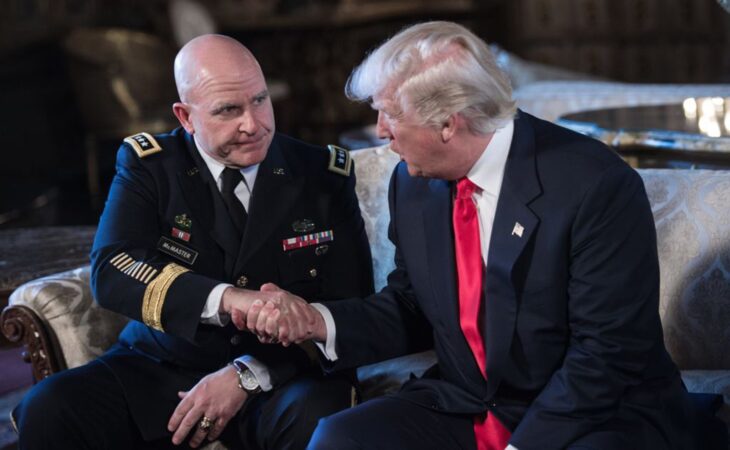
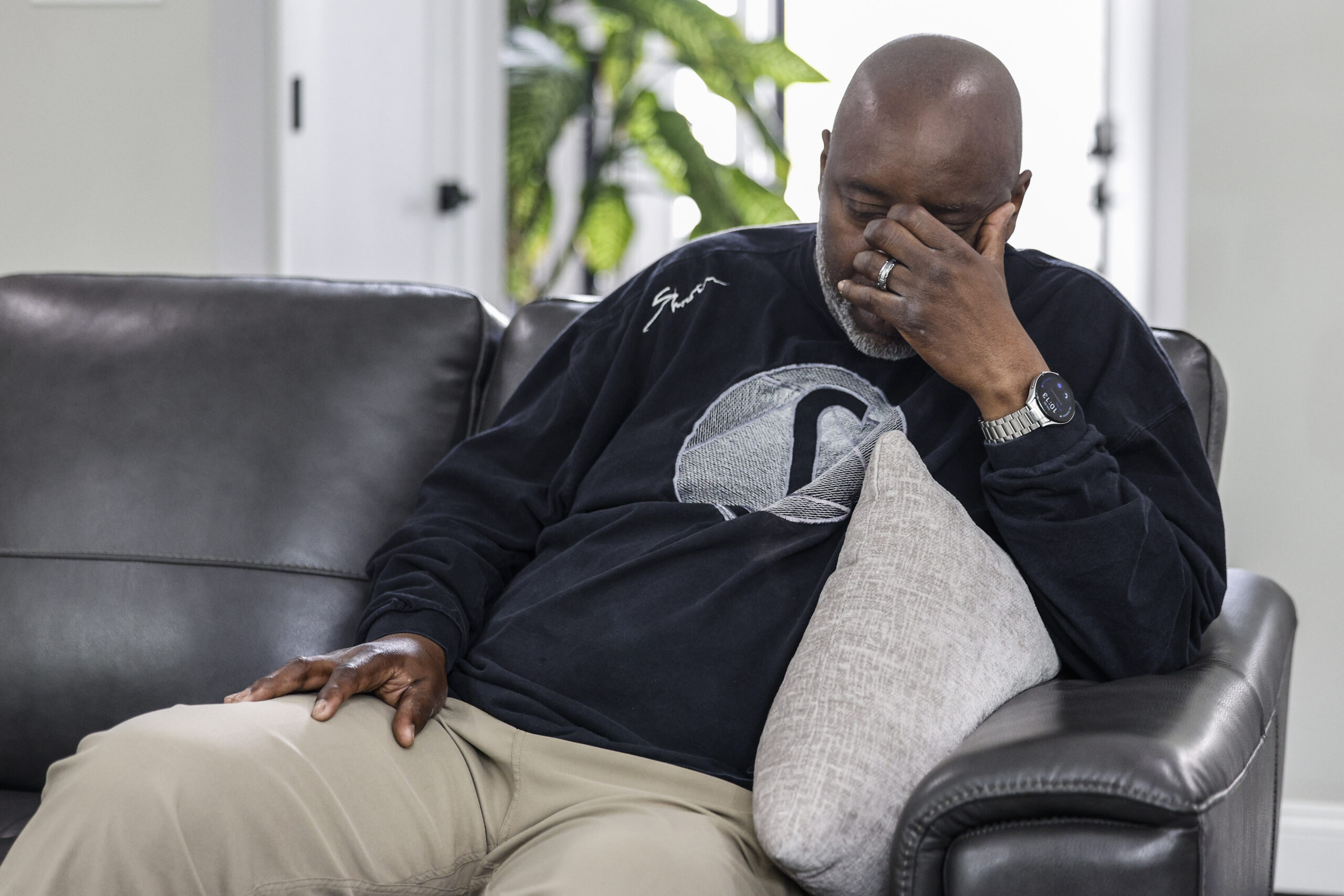
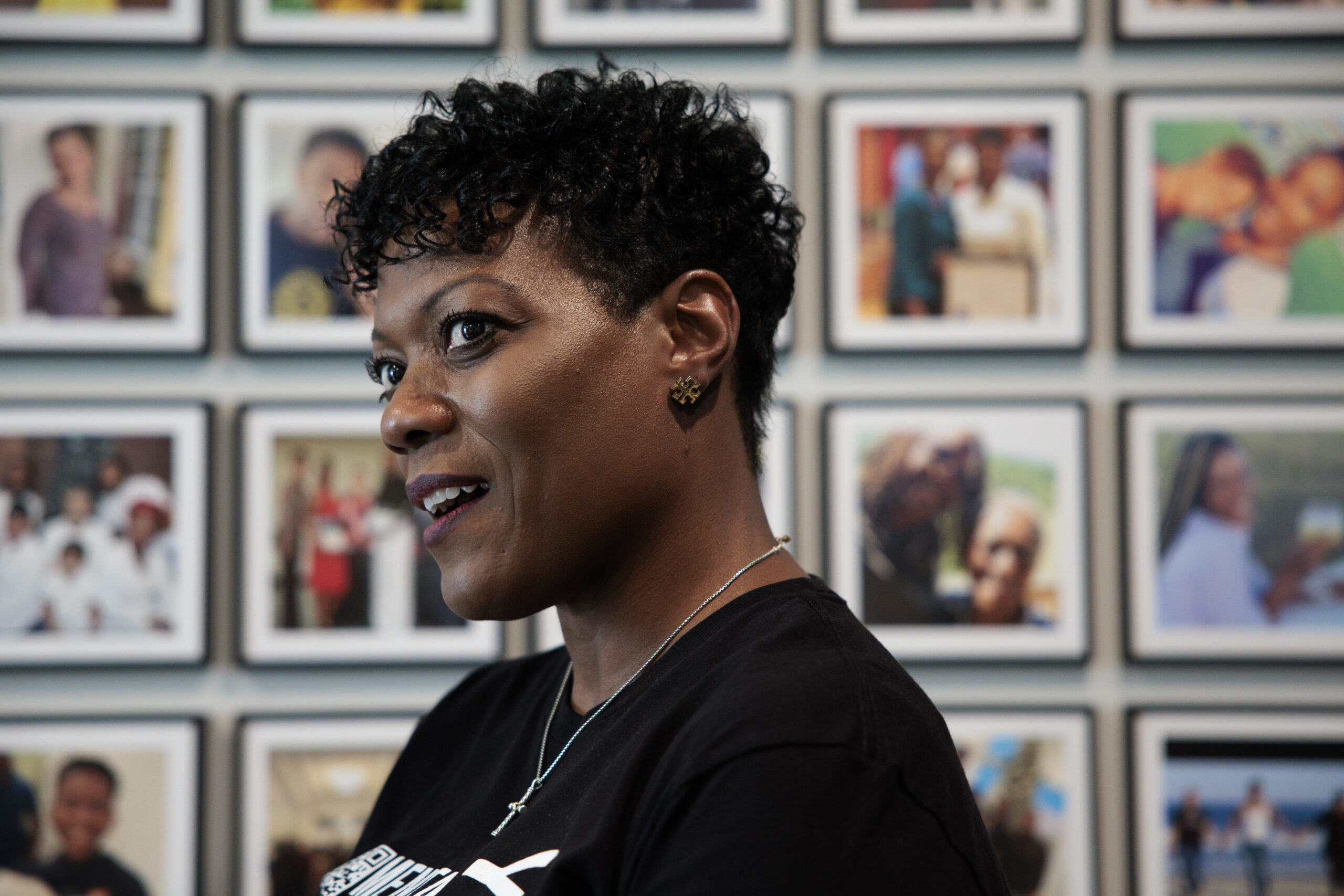
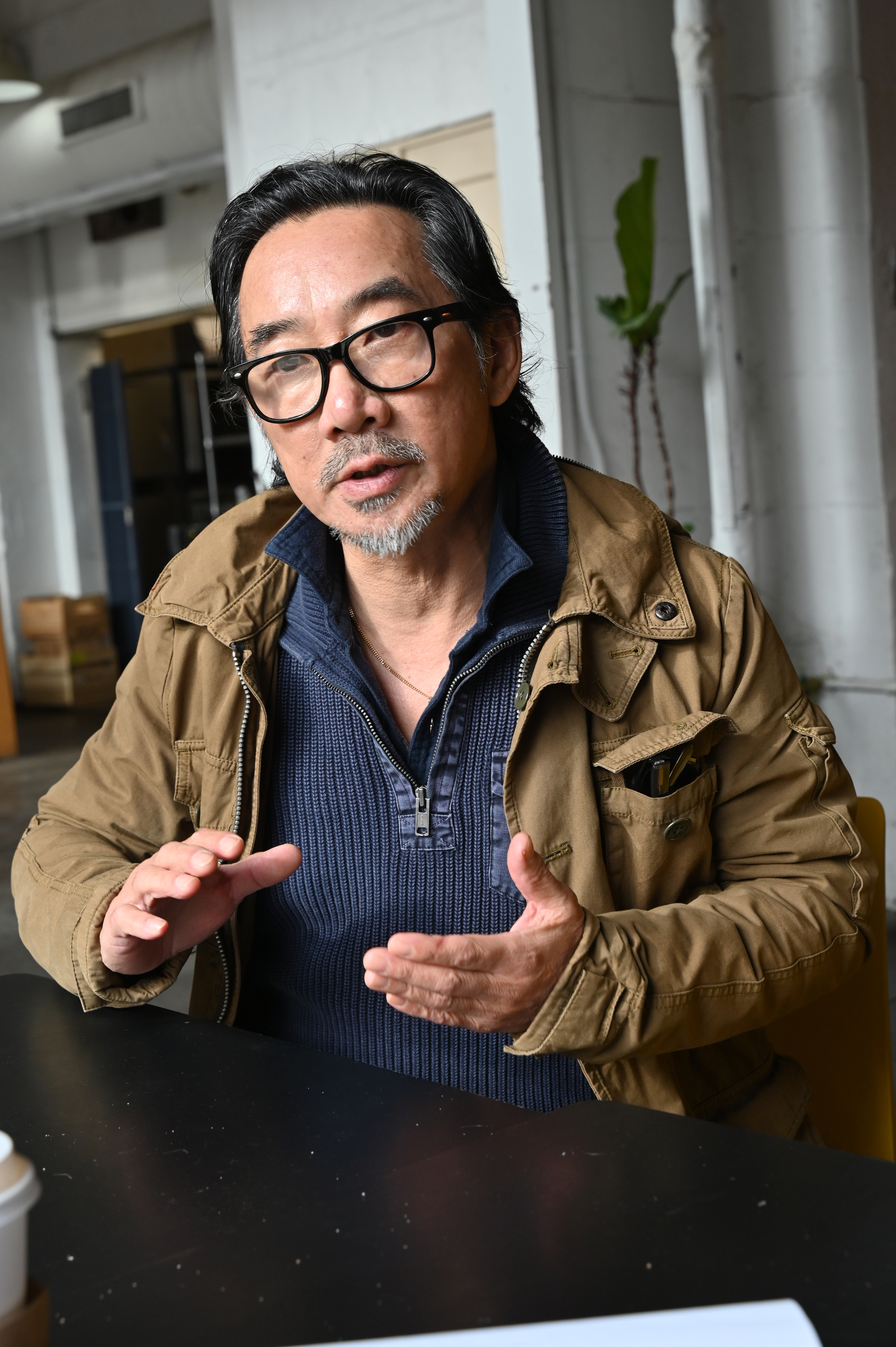
Americans should “have a say” in the Trump administration’s unilateral decision to use military force against Venezuelan boats, according to H.R. McMaster, former national security adviser during the first Trump administration, and a retired lieutenant general who grew up in Roxborough.
Being honored Jan. 16 at the Museum of the American Revolution’s 320th birthday celebration of Benjamin Franklin, McMaster was interviewed by The Inquirer last week. He offered a brief but wide-ranging discussion on foreign policy and military matters. McMaster will be named the 2026 Franklin Founder honoree during the annual Philadelphia event that celebrates the life and legacy of Franklin. McMaster is scheduled to speak about the role of the military in a democracy.
“A comprehensive explanation for bombing boats is lacking,” McMaster said in the interview, referencing the attacks on vessels allegedly carrying drugs that find their way to the United States, which have resulted in around 100 deaths since early September. “The American people should have a say through Congress.” The Trump administration has said it has complete authority to conduct the attacks.
McMaster said certain questions must be answered, such as whether the strikes are a “just cause,” and whether the right to conduct the missions is within the purview of presidential power under Article II of the U.S. Constitution.
McMaster didn’t discuss the ongoing controversy about whether U.S. forces were justified in killing two survivors of a Sept. 2 attack on a Venezuelan boat. Defense Secretary Pete Hegseth is refusing to release video showing the killing of two men clinging to wreckage in the Caribbean Sea.
McMaster, 63, is a historian and senior fellow at the conservative Hoover Institution at Stanford University who served 457 days in the Trump administration, from February 2017 to April 2018. He left after disagreements with Trump over foreign policy and internal dynamics.
Trump considered using force against drug smuggling during his first term, McMaster said, when the president asked his staff, “Why don’t we just bomb the drugs?” coming out of Mexico.
Military intervention was avoided, McMaster said, after he “huddled a team” and won “unprecedented cooperation” with the Mexican government to fight the flow of drugs.
Addressing other military matters, McMaster discussed the widely reported meeting of military commanders called by Hegseth in September.
One of Hegseth’s main messages was there’s no place for “wokeness” in the military, saying too many uniform leaders were being promoted “for the wrong reasons — based on their race … gender quotas [and] based on historic so-called firsts.” He added he wants “no more … DEI programs or dudes in dresses. No more climate change worship.”
While he agrees with much of what Hegseth said, McMaster explained, the secretary was speaking to the wrong people: “There are no woke generals and admirals,” McMaster said. “They had been following unwise directives from senior civilian officials pushing an extreme social agenda in the Biden administration.” Under Biden, McMaster concluded, the military had come to “valorize victimhood.”
Civilian guidance on so-called woke matters isn’t needed in a self-policing entity such as the military, McMaster said: “Yes, there have been criminals and sexists in the military, but hell, we threw them out ourselves.”
McMaster also said he doesn’t have a problem with the Trump administration deploying National Guard troops to U.S. cities such as Los Angeles; Chicago; Memphis; Washington, D.C.; and Portland, Ore. “It’s the president’s right to do so, allowing local law enforcement to enforce the law,” he said. “Regrettably,” he said, local authorities have resisted guard placement, especially in Oregon and California, where Democratic governors are in charge. “This is an example of how partisan politics can undermine our ability to work together,” he said.
As a former insider in a Trump-led administration, McMaster has said in previous writing that he’d witnessed the machinations of the White House, including “exercises in competitive sycophancy” among officials in Oval Office meetings. McMaster didn’t comment on the atypically blunt revelations by Trump chief of staff Susie Wiles in Vanity Fair.
He’s written that Trump is a “flawed commander in chief: mercurial, inconsistent, and easily distracted.” But, he added, Trump’s erratic course reversals can be helpful, because they make him unpredictable to our adversaries.
This cover image released by Harper shows “At War with Ourselves: My Tour of Duty in the Trump White House” by H.R. McMaster.
Despite his time in the inner sanctum of the Trump administration, McMaster would write in his book, At War With Ourselves: My Tour of Duty in the Trump White House, that he’d been unable to foresee Trump’s “persistent false claims of widespread election fraud [in 2020] and his encouragement of a mob [on Jan. 6] to conduct the most significant attack on the U.S. Capitol since August 1814,” when British troops set fire to the White House.
The partisanship that helped spur the attack is a continued threat to the republic, McMaster said in the interview with The Inquirer, referencing Franklin, “who feared factionalism.”
Each year, the Franklin celebration highlights a theme that connects Franklin’s work to current social issues and concerns. In receiving the Franklin Founder Award, McMaster joins company with others from a wide variety of fields:
John Mather, an astrophysicist who won a Nobel Prize, was the 2025 winner. He helped develop the James Webb Space Telescope, connecting with Franklin who uncovered important principles in electricity, marine oceanography, magnetism, and aeronautics.
In 2020, the centennial anniversary of Congress’ act to grant women the right to vote, awards went to Linda Greenhouse for her coverage of the Supreme Court for the New York Times, as well as to Cokie Roberts, political commentator and author.
The 2016 award went to pediatrician Paul Offit from Children’s Hospital of Philadelphia as well as the Perelman School of Medicine. Offit is the co-inventor of the rotavirus vaccine, and an author and public speaker. This topic was closely aligned with Franklin, whose civic involvement included creation of the first public hospital. Offit has frequently sparred with Health Secretary Robert Kennedy Jr. over the issue of vaccines.
McMaster is a graduate of Norwood-Fontbonne Academy (formerly Norwood Academy for Boys, and Fontbonne for girls), a private Catholic school in Chestnut Hill. He also graduated from Valley Forge Military Academy, which will be closed in the spring (it doesn’t affect Valley Forge Military College, which shares a campus with the academy in Wayne).
McMaster went on to the U.S. Military Academy at West Point, and was a U.S Army Officer for 34 years. His career included combat service in the Gulf War. Afterward, he returned to teach history at West Point and earned a Ph.D. in history from the University of North Carolina-Chapel Hill.
A patient with no home to return to was pushed in a wheelchair to the curb outside Temple University Hospital. Staffers left him sitting on a bench, even though he was considered at a high risk of falling.
An hour later, a security officer found the man had fallen and was lying on the ground.
He was shaking when the guard brought him back into the hospital, but didn’t respond to a nurse’s questions. So hospital staff again sent him away — this time leaving him alone in a wheelchair outside the emergency department.
He was found there five hours later, slumped over, unresponsive, and without a pulse. He died the following week.
Temple’s treatment of the patient during the Oct. 3 incident prompted state and federal investigations. In a report released earlier this month, the Pennsylvania Department of Health cited Temple for violating state rules that require hospitals to provide emergency care.
Experts say the hospital’s actions amounted to “patient dumping,” a practice prohibited under a federal law that requires hospital emergency departments to medically screen and stabilize all patients.
The Centers for Medicare and Medicaid Services (CMS), which oversees hospital safety nationally, confirmed it is also investigating, but has not released details.
Hospitals that violate the Emergency Medical Treatment and Labor Act, known as EMTALA, risk hefty fines or losing their Medicare license, though such penalties are rare.
Temple acknowledged that its own protocols were not followed. Health system officials told state investigators the patient should not have been removed from the hospital without being evaluated and cleared by medical staff.
“The safety of our patients, visitors and staff is Temple’s highest priority,” the hospital said in a statement to The Inquirer. “We believe that everyone deserves high quality care.”
The hospital declined to say whether any of the staff members involved were disciplined or fired.
But such incidents are rarely the fault of one individual, legal experts and homelessness advocates said. Rather, they are a sign of systemic problems, such as understaffing that can leave staff overwhelmed, and bias among medical providers that can put vulnerable patients at risk of being dismissed.
“If you work in an environment where safety is prized and honored and enforced from the top down, everyone feels that’s their mission,” said Eric Weitz, a medical negligence lawyer in Philadelphia. “If that’s not a priority being set by leadership, then it’s no surprise the culture doesn’t reinforce it.”
Hospital administrators said the triage nurse who turned away the patient should have sought help, if the patient wasn’t responding to questions. The nurse said she was overwhelmed and working without sufficient support in one of the region’s busiest trauma hospitals.
“I was busy and alone,” she told state inspectors.
The incident violated Temple’s emergency department protocol, staff told Pennsylvania Department of Health inspectors.
Pa. Department of Health investigates Temple
To piece together what went wrong, Pennsylvania Department of Health inspectors watched security camera footage, interviewed staff members, and reviewed internal hospital reports. Their timeline shows a series of mistakes.
At about 3:15 p.m., an employee brought the patient in a wheelchair to a bench near the curb outside the hospital, and left him there on the mild October day with highs near 70 degrees.
He was being discharged to “the community” because he was experiencing homelessness, according to the inspection report. (The state report does not say whether staff attempted to place him at a skilled nursing facility, rehabilitation center or homeless shelter.)
The man sat alone on the bench for an hour before standing unsteadily, taking a few steps, and ultimately falling to the ground.
He managed to get back up, leaning against a tree for support, only to fall again. He was on the ground for 10 minutes before a security guard found him.
The guard brought the man back into the emergency department in a wheelchair about two hours after he had been released.
Back inside the hospital, the man followed orders to raise his arms for a security check at the door. Then he waited in line to be seen by the triage nurse responsible for checking in patients at the emergency department.
When he reached the front of the line, he did not respond to the nurse’s questions. “He was not answering any questions, just shaking,” according to a Temple incident report reviewed by inspectors. Staff said the patient was “not cooperating” and should be sent to the back of the line.
After two minutes with the nurse, a security guard moved his wheelchair to a corner of the emergency department near the entrance.
The man was once again wheeled outside the hospital a few minutes later and left alone.
He was found by medical staff around 9:30 p.m., slumped over in his wheelchair.
Staff began CPR, rushing him back inside for trauma care.
Pennsylvania Department of Health’s inspection report details how a patient in Temple’s emergency department was rolled away in a wheelchair without being evaluated.
The inspection report does not identify the patient’s name, age, or provide details on the medical condition for which he had been hospitalized. It also does not say what happened after he was found unresponsive. He died five days later, on Oct. 8.
Temple responds
Medical screening of every patient who comes to the emergency department is “explicitly required” under Temple’s EMTALA policies, according to the hospital’s response to the state findings.
“It doesn’t matter if they were just there an hour ago, every time they present, it is a new encounter and should be documented as such,” a Temple staffer said in an interview with inspectors.
The hospital told the state it would retrain staff on EMTALA rules, making clear that security officers cannot remove patients from the emergency department unless they have been evaluated and cleared for release by a medical professional.
A week after the incident, hospital staff were instructed to keep a log of patients who are removed from the emergency department and the name of the provider who approved their release. (Temple police may still remove patients from the emergency department if they are threatening the safety of other patients or staff.)
The hospital also said that it would order mobility evaluations for patients who are being discharged “to the community” if they had a high risk of falling, with a doctor’s sign-off required.
Temple treats some of Philadelphia’s most vulnerable patients in an emergency room that sees more than 150,000 visits a year, including high numbers of gunshot victims and people experiencing opioid withdrawal. It operates a Level I trauma center in a North Philadelphia community where 87% of patients are covered by publicly funded Medicare or Medicaid.
The emergency department is so busy that about 8% of patients choose to leave before being seen, according to CMS data, compared to about 2% of patients at hospitals nationally and across Pennsylvania.
The triage nurse on duty Oct. 3 is not identified in the inspection report.
Two healthcare lawyers who reviewed the state’s inspection report said the entire episode is troubling.
“It sounds like they violated every part of EMTALA,” said Sara Rosenbaum, professor emerita of health law policy at George Washington University.
The law does not require specific treatment, but mandates that hospitals evaluate everyone who walks in the door seeking care, and prohibits them from sending them away or transferring them until they are medically stable.
“They failed to screen him, threw an unstable person back on the street, and didn’t arrange a medically appropriate transfer,” she said.
What’s more, the hospital could be sued for malpractice over how it initially discharged the patient.
The incident appears to be “a classic EMTALA violation,” said Weitz, the Philadelphia lawyer who serves on Pennsylvania’s Patient Safety Authority, an independent state agency that monitors hospital errors.
The health department’s description of what happened is “almost eerily the exact fact pattern the law was passed to prevent,” he said.
Healthcare challenges for patients experiencing homelessness
People who are experiencing homelessness often receive subpar treatment when they seek medical care, research shows.
One study that analyzed thousands of California patient records found that those who were described in their medical records as “homeless” were more likely than patients who have a permanent legal address to be discharged from the emergency department, rather than being admitted for care.
In the Philadelphia region, caring for this population is increasingly challenging. The number of available shelter beds has declined in recent years, while the number of people who are considered unhoused has risen, according to Philadelphia’s Office of Homeless Services.
Stephanie Sena, CEO of Breaking Bread Community Shelter in Delaware County, said the colder months also see more people experiencing homelessness coming to hospitals to get off the street.
“If they say they’re sick, they might get a bed and be able to survive the night,” Sena said.
The pattern can make doctors and nurses less likely to believe patients when they report real medical needs. Especially when staff are overwhelmed in busy hospitals, patients experiencing homelessness may be at greater risk of getting denied or discharged when they need help, she said.
Sena said she was disappointed to hear about the Temple incident.
“It is tragic,” she said, “but also not at all surprising, unfortunately.”
As Philadelphia’s largest visual arts institution heads into the new year, it does so shaken by disorder and strife — reeling under a drama as extraordinary in substance as the public nature with which it is playing out.
In a recent court filing from Suda’s legal team, the ousted director was described as a “visionary leader” recruited to “save a struggling museum.” Her efforts, the filing reads, “collided with a small, corrupt Board faction determined to preserve the status quo.”
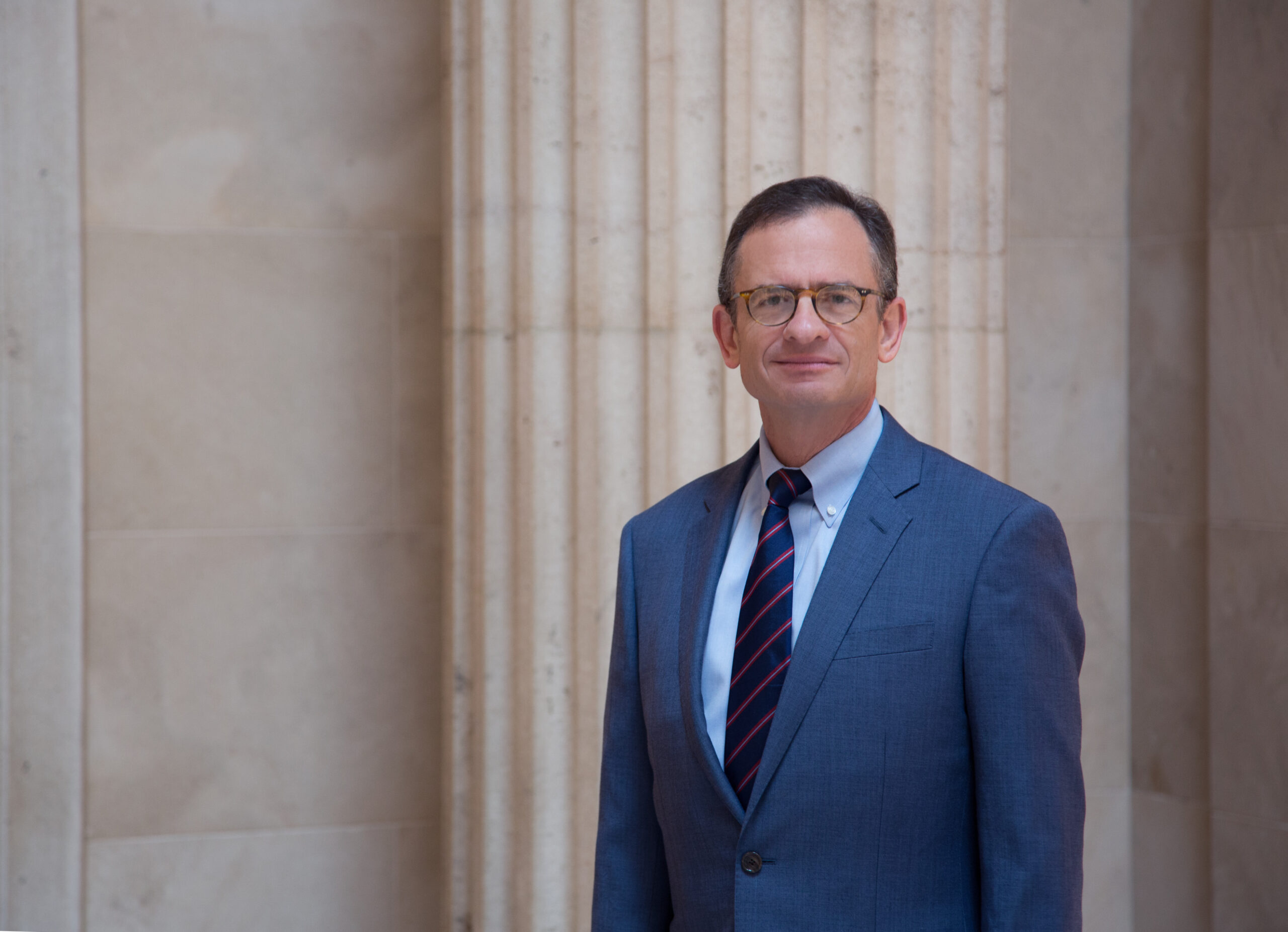
Daniel H. Weiss, director and CEO of the Philadelphia Art Museum
All this comes after three years of organizational turbulence that has left staff angry and bewildered.
“There’s a lot of nervousness about what’s to come now,” said one longtime staffer. “It’s been so chaotic for so long. Nobody feels steady. We’re supposed to be just chugging along like business as usual, but nothing feels stable.”
Though Weiss started at the museum this month, he will also maintain his position as an art history professor at Johns Hopkins University though May 2026.
Among the challenges facing Weiss: depressed attendance, an operating deficit, low staff morale, deferred maintenance on existing buildings, and questions about how to prioritize stalled expansion plans.
This account is based on interviews with former and current staffers, both union and nonunion, ranging from curatorial affairs to finance and operations. All of them spoke on condition they not be named.
Visitors services staff member Tiago Segundo works the admissions counter at the west entrance of the Philadelphia Art Museum, Oct. 6, 2025.
Staff shortage
Weiss will have to contend with a shortage of staff — which has dropped from 500 in 2019 to 375 today — following years of significant employee turnover.
During Suda’s tenure, at least 60 employees — many from the senior executive team — were fired, laid off, or pressured to leave across departments. These include human resources, curatorial, digital content, communications, facilities, conservation, the library, visitor services, and more, according to museum insiders.
Suddenly gone in the fall of 2024 without explanation to the staff was Carlos Basualdo, earlier promoted by Suda to deputy director and the museum’s first-ever chief curator; he was highly respected and held several important relationships with collectors and top international artists like Jasper Johns and Bruce Nauman.
Basualdo was named director of the Nasher Sculpture Center in Dallas in April.
Curator Kathryn B. Hiesinger, who had been with the museum for 53 years, had talked to Suda in the summer of 2023 about her desire to retire at some point, and discussed ideas about winding down her tenure.
“She said it all sounded very reasonable,” said Hiesinger, 82, in a recent interview.
Several months later, Hiesinger said her computer stopped working and she was called into Suda’s office. A woman Hiesinger didn’t know — who turned out to be from human resources — and Suda handed her a sheath of papers, which she was asked to sign.
“I didn’t realize I was being fired,” Hiesinger said. “I was actually quite shocked by the whole way it was handled. It was so unnecessary. All she needed to do was say, ‘I think it’s time for you to retire; let’s see how we can make it work.’ But it was just like that — shut down the computer, call me into the office, and sign the papers, and that was it.”
A few weeks later, Suda called Hiesinger to apologize after museum leaders intervened. She was given the title of senior curator emeritus of European decorative arts and was told she would be allowed to complete her pending projects for the museum.
Hiesinger has had no official contact with the museum since.
Among others whostopped working at the museum during Suda’s tenure, several were made to sign nondisclosure agreements and could not speak to the media.
At the museum’s “Head to Toe: African and Asian Wearables” display, Oct. 6, 2025
A declining reputation
For staffers who have remained, there is a sense of internal disorganization.
“We’ve had three reorganizations within three years, and we were only given an org chart [and] an understanding of it in the last couple months,” said a longtime staffer.
Ultimately, the staffers The Inquirer interviewed believe the reputation of the museum has diminished over the years. Colleagues in the larger museum world, another staffer said, “look at me sideways, because this place has gotten such a bad rap … we’ve become a joke.”
Low morale has been a longstanding issue.
In her lawsuit, Suda detailed two instances of board members allegedly “yelling and berating staff.”
At one event, an unnamed board member “verbally assaulted a Museum employee,” the suit said, leading to a formal complaint. The board member later apologized to the staffer.
The second incident reportedly happened in the winter of 2024 when the museum hosted two simultaneous events for major donor Bank of America and a group invited by Philadelphia City Council President Kenyatta Johnson.
According to the lawsuit, board member Melissa Heller was allegedly “berating staff, cursing, and shouting that the team was unprepared.” Suda alleged that a Bank of America representative “witnessed this awful altercation” and called her to discuss it. Board chair Ellen T. Caplan spoke to Heller about it and “declared the matter closed.”
Suda’s lawsuit also recounted an incident when former board chair Leslie Anne Miller allegedly screamed and cursed at Suda.
Miller declined to comment and Heller did not respond to The Inquirer’s request for comment.
Several employees said Suda regularly engaged in similar behavior herself.
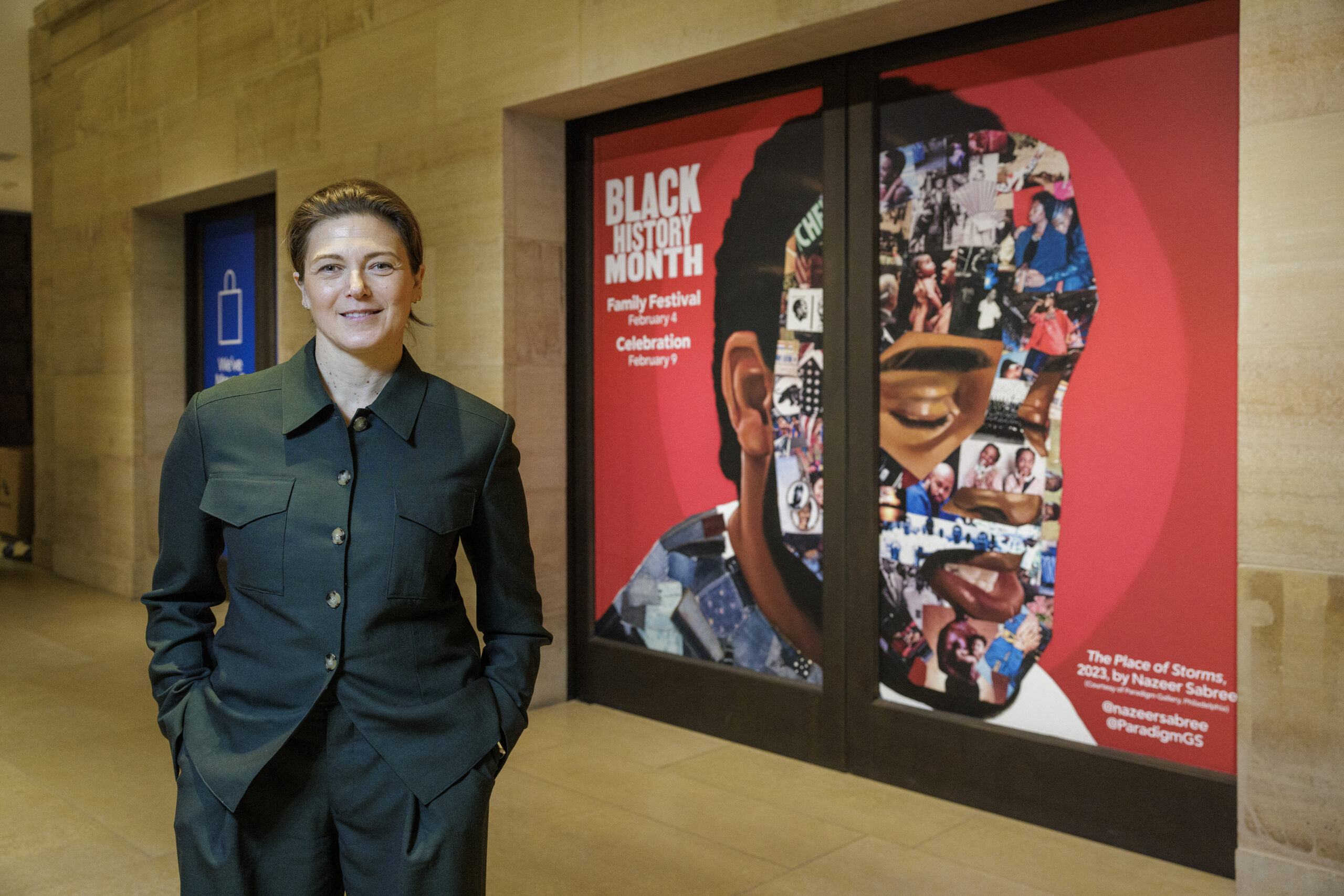
Sasha Suda, former director of the Philadelphia Art Museum, at the museum on Jan. 30, 2024.
“Sasha has done the same thing, [being] verbally abusive to staff, yelling at them, telling them that nobody likes them and people don’t want to work with them,” said the longtime staffer who spoke to the museum’s recent reorganizations.
The staffer worried about the museum’s diminishing reputation also claimed that the programming team became less autonomous and more risk-averse under Suda.
Managers, the staffer said, use threats of dismissal and public humiliation, leading curators and others to feel that their jobs depend solely on the success or failure of an exhibit. Staff members are wary of Suda’s executives continuing this culture of insecurity.
“People are afraid to do their work. Curators are afraid to put on exhibitions. They’re afraid to spend money,” the staffer said. “I feel like my work has ground to a near halt. I do a fraction of what I used to do, just in a very dysfunctional way now.”
The museum now puts on fewer of its own shows,a departure from previous administrations. Some of the biggest exhibits in recent years, like “The Time Is Always Now” and “Dreamworld: Surrealism at 100,” have been touring shows organized elsewhere and adapted for the museum.
A forthcoming programmatic highlight is the show “A Nation of Artists.” Featuring art from the family collection of Phillies managing partner John Middleton, the show is scheduled to run at the museum April 12, 2026, to July 5, 2027. It was conceived before Suda’s time at the museum.
Tourists pose with “Rocky” statue on the steps of the Philadelphia Art Museum, Thursday, September 11, 2025.
Ongoing financial struggles
Over the last several years, the nearly 150-year-old museum has operated with a persistent deficit.
In 2025, that number was forecast as around $2 million on a budget of $62 million. The fiscal year ending June 30, 2023, was the museum’s last period with no deficit. Suda began her tenure as director and CEO in September 2022.
Attendance has not rebounded to pre-pandemic levels. As of Nov. 30, the museum was still falling short of its goal for the fiscal year, clocking 266,282 visitors against a to-date goal of 306,750. Its total goal for the fiscal year — which goes through June 30 — is 731,000. (All of these numbers include not just visitors, but also school groups and people attending special events.)
And even that goal is a considerable downgrade from previous ambitions. A decade ago, the museum in its strategic plan stated the goal of increasing attendance to a million visitors per year within five years.
The museum’s widely panned rebrand and name change in October has proven divisive externally and internally. The campaign unveiled a new logo and changed the name of the institution from Philadelphia Museum of Art to Philadelphia Art Museum. Its cost totaled more than $1 million, according to two sources familiar with the details who spoke on the condition of not being named. Leaders hoped the rebrand would drive up attendance and cut down current operating deficits; the impact remains to be seen.
Suda’s lawsuit, staff worry, could worsen the financial outlook.
“We’re already broke as an institution. We could have a messy lawsuit that really takes a lot of funding away,” said the longtime staffer.
Adam Rizzo, former president of the Art Museum union, an affiliate of AFSCME DC47, waving to a honking supporter on the morning museum employees returned to work after a strike in 2022.
A new contract ratified in July 2025 ensured 3% annual pay raises and increased parental leave from four weeks to eight. But a number of grievances remain unresolved. The PMA Union, part of AFSCME Local 397, which represents Philadelphia culture workers, did not comment for this story.
After their boss was fired earlier this year, a staffer said, they were expected to take on extra responsibilities, with the promise of an hourly wage increase. Eight months later, the employee has not received that compensation and has been working with the union to address the problem.
“What they would rather do is have me go to the union, grieve it, and get the lawyers involved, and that way they can drag it out for another like six to eight months and not have to pay me,” the staffer said. “But they would still have to pay me all the back pay. It’s just them dragging their feet and penalizing people. To be honest, if they get me the higher end of [the raise], it’s only 90 cents extra.”
A museum spokesperson could not respond to this claim, deeming it “a personnel matter.”
Several other staffers have had similar experiences. Under the new leadership, they hope to have these disputes resolved amicably without the need of a grievance process.
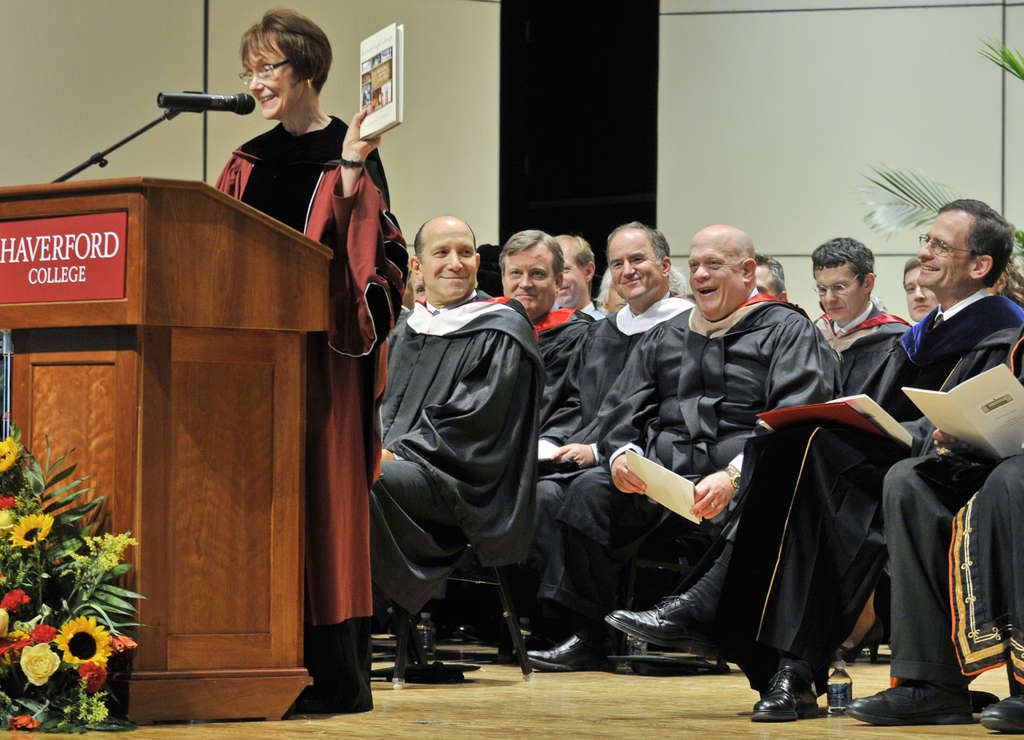
A 2013 photo of then-Swarthmore College president Rebecca Chopp showing off a copy of “Remaking College” at the inauguration of president Daniel H. Weiss at Haverford College, who is now director and CEO of the Philadelphia Art Museum.
What comes next
Weiss declined to be interviewed about specifics of his tasks and priorities, but the museum released a general statement:
“Daniel Weiss was appointed for his extensive leadership experience at major educational and cultural institutions. He began his tenure only weeks ago, and he is focused on learning the nuances of the museum’s ongoing operations regarding its programming, education initiatives, fundraising, and strategic planning. Mr. Weiss is currently working with senior staff to review key priorities and will address updates in the new year.”
Amid the leadership crisis and transition, staff has been kept mostly in the dark with little communication. The staffer seeking a raise shared that during the interim they received invitations for hot chocolate and parfait socials from human resources.
“It’s what the senior management do. That’s their usual MO, like, ‘Oh, well, have a cupcake,’” they said. “They treat us all like children, or like we’re all dumb. It’s pretty insulting.”
Weiss officially began his tenure on Dec. 1 but held an all-staff meeting before Thanksgiving. One staffer who attended said Weiss “said all the right things” so they are feeling “cautiously optimistic.”
“Everything he’s doing, he’s doing with such integrity. It’s heartwarming,” said a member of the curatorial affairs division.
But, they cautioned, “he’s going to lose people’s optimism if he doesn’t make any moves soon.”
Esperanza Academy Charter School laid off 17 employees this month — a move that officials say was necessary amid a challenging financial climate.
But some Esperanza Academy veterans say the 4% reduction in the workforce — which came with no notice a few weeks before the holidays — is emblematic of troubling recentchanges at the Hunting Park charter.
Ten Esperanza Academy staffers, students, and parents spoke with The Inquirer and detailed concerns about changes at the school in the last year.
Teachers say morale is low, particularly at the high school, where staff have filed paperwork to form a union for the first time in the school’s history. Student frustration bubbled over recently, with hundreds walking out to express their anger over the loss of teachers, a counselor, an administrator, and more.
“Students are protesting,” Jarely Cruz-Ruiz, an Esperanza Academy ninth grader, wrote in a letter to the charter’s board of trustees, “because even we see the wrong being done.”
School officials declined to be interviewed, but in a statement, CEO Evelyn Nuñez said: “Like many academic institutions across the commonwealth and nation, Esperanza Academy is navigating a challenging economic environment.”
But, Nuñez said, the board and leadership team will ensure “the school will be a source of hope in this neighborhood for years to come.”
An anchor, changing
Esperanza has operated a charter school in North Philadelphia since 2000; the school has expanded to encompass grades K-12, and now serves more than 2,000 students in multiple buildings.
The charter is part of the Nueva Esperanza organization, a sprawling nonprofit “opportunity community,” as its founder, theRev. Luis Cortés Jr., has described it, a one-stop shop for neighborhood revitalization work, job training, legal services, and more.
Esperanza opened a brand-new, 73,000-square-foot elementary building on the nonprofit’s campus at the beginning of this school year. Officials, in a statement released after the student walkout, said the project was planned for many years and noted that the broader organization, not the charter school, pays for campus improvements.
The exterior of the new Esperanza Academy Charter elementary building at 201 West Hunting Park Ave.
Esperanza has long been an anchor in the neighborhood and the larger Latino community, a place with a one-big-family feel.
But Daniel Montes, who came to the school as a climate control officer in 2017 and worked his way up to be a teacher, said shifts began happening about a year ago. Montes was among those staffers laid off recently.
Nuñez came to the school from the Philadelphia School District last year to become its CEO.
“Things started to change when we got the new CEO,” Montes said. “I don’t know if it’s when you get a new broom, it sweeps clean.”
At a staff retreat just before the start of this school year, Cortes, Esperanza’s founder, alluded to coming financial difficulties, said one staffer, who asked not to be named for fear of reprisal.
“He said, ‘Stuff’s happening, you have to buy in or get out,’” said another staffer, who asked not to be identified because they did not want to be targeted by leaders. “He said it was politically driven [at the national level], and that funds would be tight.”
‘Three strikes’
Tensions began to simmer among high school staff.
“There are very unilateral changes being put into effect extremely quickly,” saidanother teacher, who also asked not to be named for fear or reprisal. “We’ve had major changes go into effect on a Monday after a meeting on a Friday. They said, ‘We don’t have subs and you’re going to be covering classes for free.’”
Montes and others said teachers were frustrated over new schedules, lost prep time, and the order to cover classes without compensation — Esperanza Academy had, in the past, paid teachers for covering classes.
“It was three strikes,” said Montes.
“We just did not feel heard,” a third teacher, who also asked not to be named for fear of retribution,said. “We’re out of paper towels, and staples for the printer. The printer’s broken, but they hired six-figure administrators.”
Most charter schools do not have unionized staff; in October, a majority of Esperanza Academy’s high school teachers signed union authorization cards and chose to affiliate with the American Federation of Teachers.
Layoffs came Dec. 4, a Thursday, with no warning — some of the affected staff were pulled out midclass and given notice.
Students weren’t told what was happening, but something seemed off that day, they said. And a basketball game was canceled.
Those who remained at Esperanza Academy’s high school were told they would be absorbing the job responsibilities of the laid-off workers, including classes, coverages, and special-education caseloads.
Some teachers got extra classes added to their schedules — with no extra pay. Other classes were combined, with class sizes growing.
Interventionists — those charged with working with the neediest students — were laid off, and staffers saidno plan has been articulated about who will do that work.
In every staff meeting, teachers said they are reminded that the school’s focus is increasing attendance, boosting the number of students who meet state standards, and decreasing the number of students who score at the lowest levels.
“How are we doing that if we don’t have any interventionists?” the second teacher said.
Student protest
The layoffs stunned students. They mobilized and held a walkout a few days later.
Hundreds showed up, voicing their displeasure with the cuts and their support for the lost staff. They carried homemade signs and chanted.
Nuñez acknowledged the walkout in an email to students and families the next day, saying students demonstrated “thoughtful advocacy and respect as they honored the staff members affected by the recent reductions, and we are proud of the way they used their voices to support their school community. School leadership will continue working closely with the [student government] on how we can best support our students as we move through this transition together.”
Cruz-Ruiz, the Esperanza Academy ninth grader, said the school no longer felt like a family.
“In this building,” Cruz-Ruiz wrote in her letter to the board, “data matters more than people. You named this school Esperanza. Hope. But hope doesn’t live here, scores do. Reputation does. Those graphs and percentages you stare at do.”
‘It’s affected so many of the kids’
Francesca Castro, mother of an Esperanza Academy 10th grader, said she’s been very pleased with the education her daughter has received since middle school.
But the layoffs were deeply unsettling, she said.
“It’s affected so many of the kids,” said Castro. “I’m in the corporate world — I understand sometimes you need to make cuts. But there was no preparation, and it was right around the holidays. Couldn’t we find a different way, see what else we could cut?”
Montes and other laid-offstaff were some of the most important people in the building in terms of relationships with students, Castro said.
“What worries my daughter and some of the students and parents is: If these changes were made all of a sudden, what other changes could happen?” she said. “Are the athletes going to get less? Are the after-school programs being cut? Are they going to start cutting academics?”
Officials said in a statement that the layoff decision was not made lightly, and “our priority throughout this process has been to preserve the high-quality learning environment and supportive services that our students and families rely on. We remain fully committed to ensuring that the school year continues with minimal disruption to classrooms, instruction, or student support.”
Students are aware of the larger changes at the school, said teachers, parents, and staff. They can’t understand why those closest to the students were taken away.
“We’re broke, but we have all these new administrators, and we just built a new building? Students are savvy to that stuff — they’re angry,” said the third teacher.
What’s next?
Wendy G. Coleman, president of the American Federation of Teachers-PA, sent Nuñez a letter Dec. 10 asking Esperanza to formally recognize an AFT-affiliated union at the school.
The staff wants a salary scale anda voice on working conditions and class sizes, Coleman said.
“The overwhelming majority of the staff has signed cards,” said Coleman. “That is something I hope the administration of Esperanza will voluntarily recognize so that we can collaboratively bargain their first contract.”
Esperanza Academy leaders on Friday told the AFT they will not voluntarily recognize the union; Coleman said she will soon file paperwork with the National Labor Relations Board seeking certification.
“I would hope that we can work together to do this as amicably as possible,” Coleman said. “The staff has spoken, and the likelihood of Esperanza avoiding a union coming is pretty slim.”
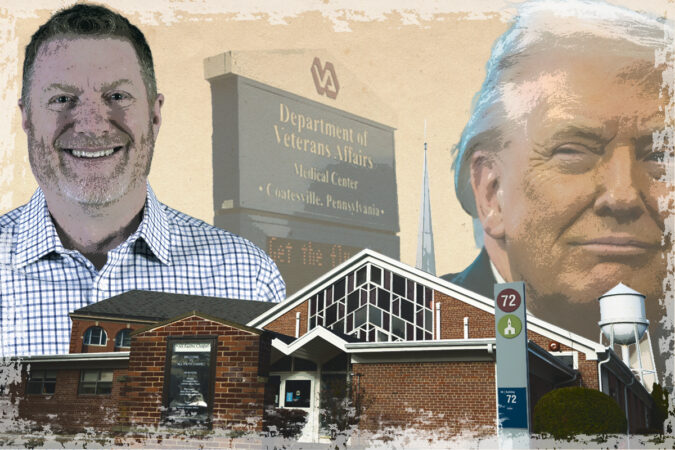
Russell “Rusty” Trubey said he was compelled by God to preach the words that helped set off a national battle over religion at the U.S. Department of Veterans Affairs.
Reading from a sermon titled“When Culture Excludes God,” Trubey, an Army Reserve chaplain, sermonized to a congregation of veterans at the Coatesville VA Medical Center from a Bible passage — Romans 1:23-32 — that refers to same-sex relationships as “shameful.”
Some congregants, upset by the sermon, walked out of the June 2024 service at the Chester County facility, where Trubey has been employed for roughly 10 years. Soon after, Trubey’s lawyers said he was temporarily pulled from his assignment — and transferred to stocking supply shelves — while his supervisors investigated his conduct.
Speaking to Truth and Liberty, a Christian group that advocates for the church to play a greater role in the public sphere, Trubey said he knows that reading the Bible verses about same-sex relationships is “100%” the reason he got in trouble.
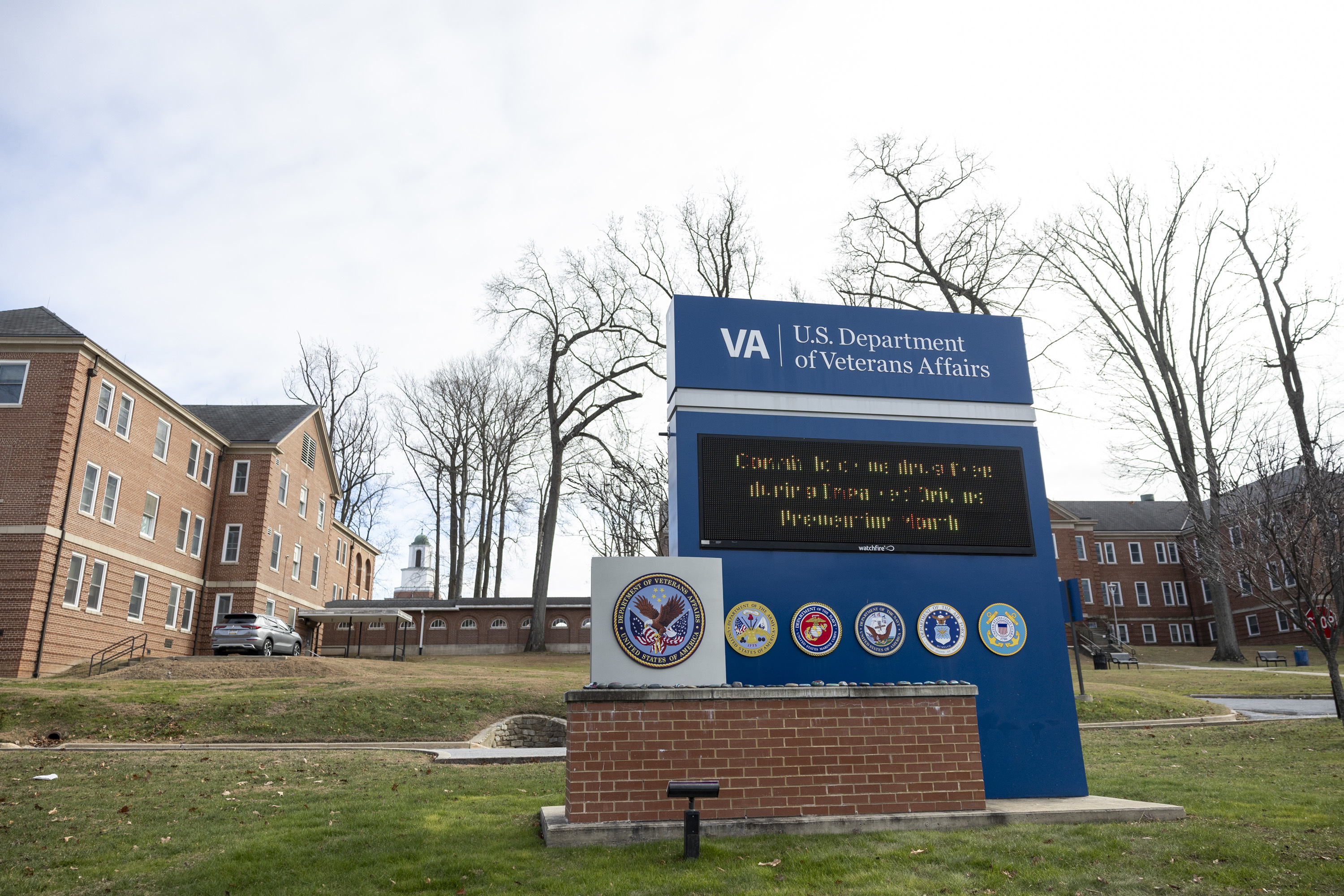
One of the entrances leading into Coatesville VA Medical Center.
A month earlier, Trubey’s lawyers had taken hiscase to the White House. In a letter sent a few weeks after President Donald Trump’s inauguration, Trubey’s lawyers asked Trump’s VA secretary, Doug Collins, to interveneon Trubey’s behalf in regard to repercussions for the sermon.
Trubey had delivered the talk during former President Joe Biden’s administration — an environment that Trump officials allege was hostile to Christians.
In the letter, the chaplain’s lawyers from the First Liberty Institute and Independence Law Center accused Trubey’s supervisor of wanting sermons to be screened ahead of time for pre-approval and stated that Trubey received a letter of reprimand, which would later go on to be rescinded by Coatesville VA Medical Center officials.
Soon after the lawyers’ letter reached the new administration, the VA, one of the largest federal employers in Pennsylvania, reinstated Trubey to his position and Collins reaffirmed that chaplains’ sermons would not be censored.
But the fallout from this incident — paired with Trump’s ongoing campaign to root out perceived prejudice against Christians and dismantle diversity, equity, and inclusion — left an undeniable mark on the VA, helping to inspire an agencywide “Anti-Christian Bias Task Force.”
Announced to employees in April 2025, the task force asks employees to report offenses such as “reprimand issued in response to displays of Christian imagery or symbols,” per a department email reviewed by The Inquirer.
And the VA wants names.
In the email, the VA encouraged employees to identify colleagues and workplace practices that violate the policy and send information about the alleged offenses to a dedicated email address. The announcement was in accordance with a Trump executive order from February that ordered federal agencies to “eradicate” anti-Christian bias and create a larger White House task force composed of cabinet secretaries and chaired by Attorney General Pam Bondi.
As of this summer, the VA received more than 1,000 reports of anti-Christian bias and reviewed 500, according to task force documents. Another report is expected in February.
Some of the offenses the VA is on the watch for could be especially pertinent during the holiday season when workers may want their faith represented at their desks.
One union leader at the Veterans Benefits Administration office in Philadelphia called the task force, which does not extend to biases against other religions, “McCarthyism for Christians.”
“What they’re really doing is they’re trying to create a hostile work environment where you’re now afraid to say something because you may be reported,” said the union representative weeks after the VA’s task force announcement. The representative asked to speak anonymously out of fear of workplace retaliation.
The VA said in a statement that the department is “grateful” for Trump’s executive order. The VA did not answer The Inquirer’s questions on an updated number of reports received through the task force, what happens to people or practices that are reported, and next steps of the task force.
“As the EO stated, the prior administration ‘engaged in an egregious pattern of targeting peaceful Christians, while ignoring violent, anti-Christian offenses,’” said VA press secretary Pete Kasperowicz in the statement. “Under President Trump, VA will never discriminate against Veterans, families, caregivers or survivors who practice the Christian faith.”
One of those offenses, as outlined by the VA, is “informal policies, procedures, or unofficial understandings hostile to Christian views.” Another is retaliation against chaplains’ sermons, which appears to be in responseto the Trubey incident from June 2024.
Erin Smith, associate counsel at the First Liberty Institute, who helped represent Trubey said: “If Chaplain Trubey’s story serves as inspiration to help protect the rights of all chaplains in the VA, then that is a wonderful thing to come out of a terrible situation.”
But some VA employees disagree.
Ira Kedson, president of AFGE Local 310, which represents employees at the Coatesville VA Medical Center, said in an interview in June that he heard some employees were “deeply troubled” by the incident with Trubey, especially those who worked in clinical settings with patients who were in attendance of the controversial sermon.
“I was told that some of the residents were deeply hurt and deeply troubled by the situation and it took a long time for them to be able to move past it,” Kedson said.
Religion takes center stage in the Trump administration
Trump is leading what is arguably one of the most nonsecular presidencies in modern United States history with his embrace of a loyal, conservative Christian base.
“We’re bringing back religion in our country,” Trump said at the Rose Garden during the National Day of Prayer in May.
And efforts to elevate religion in the public sphere have gone beyond Trump’s rhetoric. For instance, the Office of Personnel Management, the federal government’s human resources agency, issued guidance that aims to protect religious expression in the workplace for all religions.
Most of the reports submitted to the VA focused on “denying religious accommodations for vaccines and provision of abortion services; mandating trainings inconsistent with Christian views; concealing Christian imagery; and Chaplain program and protections for Chaplains,” according to task force documents.
Doug Collins at his Jan. 21 confirmation hearing before the Senate Veterans’ Affairs Committee, at the Capitol in Washington.
Charles Haynes, senior fellow for religious liberty at the Freedom Forum, a nonpartisan organization based in Washington that promotes First Amendment rights, said while it’s not unconstitutional or unprecedented to createa faith-specific task force, “the appearance of [the Christian-bias task force], to many people, is a favoritism of the government for one group over another.”
The White House, in a statement, said Trump has a record of defending religious liberty regardless of faith.
“President Trump has taken unprecedented action to fight anti-Christian, anti-Semitic, and other forms of anti-religious bias while ending the weaponization of government against all people of faith,” said White House spokesperson Taylor Rogers in an email to The Inquirer.
Furthermore, she added, that the media is doing “insane mental gymnastics to peddle a false and negative narrative about the President’s efforts on behalf of nearly 200 million Christians across the country.”
Identifying anti-Christian bias or chasing a ‘unicorn’?
The Trump administration has shared few details about the operations and goals of the anti-Christian bias task force, raising questions from lawmakers and other stakeholders.
Rep. Mark Takano, the ranking member of the House Committee on Veterans’ Affairs, was in a monthslong back-and-forth with VA Secretary Collins, trying to get answers to an extensive list of questions he initially sent in May, with the California Democrat particularly concerned that the scope of the initiative is limited to bias against Christians.
“To preserve this right to religious freedom, the Department cannot prioritize one faith over others, nor can it allow religious considerations to shape its policies in ways that may conflict with the First Amendment,” Takano wrote in May. “Further, the vagueness of the task force’s mission raises significant concerns about how it will be used and whether it is compatible with the mission of the Department.”
Collins responded in June and did not answer most of Takano’s questions, though he did saythat the task force, which reports to the secretary, will identify, strategize, and potentially alter any policies that discriminate against Christians or religious liberty.
The lawmakerfollowed up a week later. Roughly four months later, in October, Collins’ responses were vague once again.Most recently, Takano is asking for both Democratic and Republican members of the House and Senate’s Veterans’ Affairs Committees to be looped in on future correspondence regarding the task force.
The VA, according to a statement from Takano, has not fully answered their questions and has refused to host a bipartisan briefing.
“The lack of transparency and accountability of this task force leaves me with numerous concerns for the due process and privacy of hardworking VA employees,” Takano said. “VA’s silence won’t stop us from asking the questions we are constitutionally obligated to ask.”
Rep. Mark Takano (D., Calif.) in August 2022, on Capitol Hill in Washington. Takano, ranking member of the House Committee on Veterans’ Affairs, has been trying to get answers from the VA on the Anti-Christian Bias Task Force.
Michael L. “Mikey” Weinstein, former counsel for the Reagan administration turned founder and president of the Military Religious Freedom Foundation, said his group is looking for a plaintiff to sue the government over the task force. The group has been receiving calls from VA employees concerned aboutit, one of whom, he said, was a senior physician at the VA Medical Center in Philadelphia.
The physician, Weinstein said, was distraught to receive the memo about the task force. He had family in town and noted the irony of showing his family around all the historical sites that signified the birthplace of American freedoms while being asked by the federal government to partake in such a project.
“It was like a dagger in his heart,” Weinstein said.
Weinstein is adamant that anti-Christian bias in the federal workforce is nonexistent, like looking for a “unicorn.”
Noticeably absent from the task force, critics say, is any effort to explore instances of discrimination against other faiths within federal agencies.
Trump has historically espoused hateful rhetoric against Muslims, including enacting a travel ban on individuals from predominantly Muslim countries during his first term. The president has issued an executive order this term to combat antisemitism on college campuses, but he also has a history of engaging with antisemites on the political right.
Ahmet Selim Tekelioglu, executive director of CAIR-Philadelphia, a nonprofit that aims to protect the civil rights of Muslims in the U.S., said he believes all forms of discrimination should be stamped out, but he’s concerned the task force isn’t affording those protections to everyone.
“It focuses exclusively on alleged anti-Christian conduct within the federal agencies, and in our opinion of this, risks then entrenching preferential treatment and signaling the protections that should exist for everyone is conditional, right?” Tekelioglu said.
There is hope, however, that this task force could lead to other future initiatives to root out hate, said Jason Holtzman, chief of Jewish Community Relations Council at the Jewish Federation of Greater Philadelphia.
“My hope is that hopefully they’re starting with the task force on Christian bias, and then maybe they’ll initiate one on antisemitism, Islamophobia, because I think task forces need to exist on all of these different forms of hate,” said Holtzman, noting that both Trump and Biden have taken action to combat antisemitism.
Haynes, the religious liberty expert, said anti-Christian bias is a “matter of perspective.”
“How you see it for the conservative Christian, what others would say is just creating an inclusive, safe workplace for everyone, they see, in some respects, as being anti-Christian,” Haynes said.
Haynes said that “anecdotal sort of stories” about prejudice against Christians pushed by conservative groups do not appear to be based in any kind of research into a widespread trend. But it only takes one story — as seen in Trubey’s case — to set off a firestorm.
Tanner Rouse will be Delaware County’s new top law enforcement officer, but he’snot new to the work.
Rouse will be sworn in on Jan. 5 as district attorney after his predecessor, Jack Stollsteimer, steps down to assume the county judgeship he won in November. Rouse, 42, will finish out the final two years of Stollsteimer’s term after working as his first assistant since 2020.
In a recent interview, Rouse discussed the strides in reducing violent crime he and his colleagues have made under Stollsteimer — the first-ever Democrat to serve as district attorney in Delaware County — as well as how he plans to continue those advances.
The short answer: Keeping the same playbook, but “putting a personal stamp on it,” as an offensive coordinator does when he takes over as head coach, said Rouse, an avid Eagles fan and ambitious Little League coach.
A former Philadelphia prosecutor under Seth Williams, Rouse credited the lessons he learned from investigating gun violence in the city, along with the recruitment of several former colleagues he brought over the county line, withimproving the way crime is prosecuted in Delaware County.
“We have demonstrated you can reform the criminal justice system and that it doesn’t have to come at the expense of stopping violent crime,” Rouse said. “They’re not mutually exclusive.”
Who is Tanner Rouse?
Rouse, a Phoenixville-area native, is the son of the late Willard Rouse III, the prominent Philadelphia developer behind One and Two Liberty Place. After graduating from the University of Wisconsin and Fordham Law School, Rouse spent seven years in the Philadelphia District Attorney’s Office, prosecuting crimes in Center City and North Philadelphia.
Rouse left the office in 2017, months before Larry Krasner took over. He practiced civil law for a time and ran an ultimately failed campaign to unseat then-State Sen. Tom McGarrigle before Stollsteimer called and offered him the first assistant job.
At the time, Rouse said, the offer was unexpected. But, looking back, he now considers it one of the greatest opportunities of his career.
What is Rouse most proud of from his tenure as first assistant?
The most notable achievement of his tenure to date in the district attorney’s office, Rouse said, is the steep reduction of gun violence in Chester.Shootings are down 75% since 2020. Rouse credits community outreach efforts for that, especially through the Chester Partnership for Safe Neighborhoods program, overseen by veteran homicide prosecutor Matt Krouse, whom Rouse worked with in Philadelphia and recruited to join him in Delaware County.
The partnership’s fundamental philosophy is a combination of focused deterrence programs Rouse helped oversee in Philadelphia that target repeat offenders, as well as community outreach efforts run by trusted neighborhood figures.
Rouse said he never wanted to be a faceless presence in the county and made it his priority to get out and form relationships in all of the municipalities he served, visiting community meetings, block parties, and even a few pickup basketball games.
“I don’t do this job from behind a desk,” he said, speaking in his county courthouse office. “And I think demonstrating that commitment and that care by being more present in those communities, and not just being kind of the big, scary law enforcement agency on a hill is incredibly important.”
Rouse said he is proud of other reforms including creating a diversionary unit in the office, revamping its drug court and instituting a special “child’s court,” created by Kristen Kemp — Rouse’s chosen first assistant and an expert in special-victims’ cases — that allows young victims to testify against adult offenders in a more comfortable environment.
The county’s jail population is down 50% as well, something Rouse says is a result of approaching prosecuting crimes in a humane, logical way.
What are his priorities as district attorney?
Rouse said he plans to create a similar community outreach program in Upper Darby, a community he said is “on the verge of some big things.”
“It’s not as if we’re saying, ‘We’re coming in here to take on Upper Darby and what goes on there,’ but more of, ‘Guys, look, we’re not just the people you pick up and call when there’s a crime.’”
He also expressed interest in creating reciprocity agreements with his counterparts in the other collar counties around Philadelphia, specifically when it comes to handling drug cases and providing treatment to the people caught up in them.
How has his time in Philadelphia influenced his work in Delco?
Rouse said he cut his teeth in the city working alongside veteran prosecutors, and he’s worked to bring that environment of mentorship to Delaware County.
He said he and his more senior deputies often sit in on trials, giving feedback to younger staff members just as his mentors did for him nearly two decades ago.
“That’s how I got better, and that’s one of the roles I most cherish here,” he said.
And this year, Parker let go of three top city officials amid ordeals fraught with internal drama for the administration.
Despite those tribulations, the big-picture news for the city has been positive, and the mayor can credibly say she has made progress on her oft-repeated campaign slogan of making Philadelphia “the safest, cleanest, greenest big city in the nation with access to economic opportunity for all.”
"We are doing the best we can with what we have," Parker said in an interview Friday. “Nobody’s resting. We’re not having a party and celebrating because we know we have a lot more work to do.”
story continues after advertisement
The year encapsulated Philadelphia’s reality under Parker’s administration: big wins on major goals despite signs of tension in City Hall.
“She’s getting some pushback, but statistically, in terms of the crime rate, the city is doing better,” said David Dunphy, a Pennsylvania Democratic political consultant and lobbyist. “In terms of the biggest issues that voters had in the last election, it’s inarguable there’s been vast improvement.”
“There’s a general sense Philadelphia is coming back and making a rebound [following the pandemic], and she gets a lot of good will from the sense she enjoys being mayor,” Dunphy said.
Here are six takeaways from Parker’s second year in office.
story continues after advertisement
Big wins, with caveats
Parker made public safety the central themeof her 2023 mayoral campaign. And two years in, the news could hardly be better.
The Police Department as of last week had recorded 212 homicides in 2025, and is on pace to close the year with the lowest level since 1966.
But it’s not just the reduction in violence.
Philadelphia’s poverty rate has dipped below 20%, and it no longer has the highest rate among the 10 largest U.S. cities. The city’s finances are in the best shape they have been in since the early 1990s fiscal crisis. Perhaps most shockingly, there even appears to be progress in Kensington, where Parker has pledged to end the neighborhood’s notorious open-air drug market.
Onedrug dealer told The Inquirer the city’s crackdown has cut his weekly revenue from about $1,500 to $400. And the city isexpanding its Riverview Wellness Village, a first-of-its-kind initiative from Parker’s administration to house and provide treatment for people in recovery.
There are plenty of caveats to all of those headline accomplishments. The decline in homicides began shortly before Parker took office. Philadelphia still has the lowest median income of the 10 biggest cities in the country. The city’s finances, buoyed by a growing economy, have been growing more stable for decades. And the Kensington drug market isn’t disappearing anytime soon.
Workers from Philadelphia’s Community Life Improvement Program clean the intersection of Kensington Avenue and Somerset Street on Jan. 22, 2025.Jessica Griffin / Staff Photographer
But mayors are judged by how the city changes during their tenures. And so far, Parker is likely pleased with her progress on the most important measuring sticks.
“She communicated during the campaign and throughout the beginning of her term a set of priorities that everybody can repeat: the safe, clean, green, inclusive growth or opportunity for all,” said Pedro A. Ramos, a former city managing director who now leads the Philadelphia Foundation, a major philanthropy. “Two years in, I think any fair scorecard has got to give her pretty good grades.”
Tom Gralish / Staff Photographer
Strike highlighted Parker’s strengths and weaknesses
During the first major city worker strike in 40 years, the mayor stoodatop the Philadelphia Art Museum steps in sweltering heat as what were unofficially dubbed “Parker piles” of uncollected trash mounted around the city.
“I will not put the fiscal stability of the city of Philadelphia in jeopardy for no one,” Parker said, explaining her refusal to meet demands for bigger wage increases for the union representing trash collectors, 911 dispatchers, water treatment plant employees, and other blue-collar workers. “If that means I’m a one-term mayor, then so be it.”
Philadelphia Mayor Cherelle L. Parker discusses the AFSCME DC 33 municipal workers strike at a news conference at the Philadelphia Art Museum on Thursday, July 3, 2025.Kaiden J. Yu / Staff Photographer
But the strike was also the most divisive moment in Parker’s tenure, fuelingtensions within organized labor and leading to accusations that Parker didn’t care about the workers’ plight.
Teamsters Local 107 president Bill Hamilton said the mayor encouraged workers to cross picket lines and “should be ashamed of her actions and her words during this strike.”
“She doesn’t have any friends on my side of labor, I can tell you that,” he said.
Parker said that being at odds with labor was “abnormal” for her and that she was disappointed the strike led some people to believe she was not a strong supporter of organized labor.
”Was I disappointed? Yes, because it wasn’t reflective of my career and everything I had done," Parker said in the interview. “But I also respect the union.”
Alejandro A. Alvarez / Staff Photographer
Parker’s don’t-poke-the-bear strategy with Trump
In August, the U.S. Department of Justice sent so-called sanctuary cities a letter threatening to cut off federal funding if they did not get in line with the Trump administration’s immigration policies.
Like many other Democratic leaders, Boston Mayor Michelle Wu excoriated the Trump administration andpublished a scathing response to the DOJ.
But Parker said nothing. Her administration refused to release Philadelphia’s response to the DOJ letter and is still fighting an Inquirer request for the document under Pennsylvania’s Right to Know Law.
Since President Donald Trump took office in January, Parker has rarely if ever uttered the president’s name in public. Supporters sayher don’t-poke-the-bear approach has saved Philadelphia from Trump’s wrath and kept National Guard troops out of the city while theywere deployed to other major U.S. cities. Critics say it shows an unwillingness to stand tall during a dangerous moment in American history.
Read More
Mayor Parker’s restraint with Trump is both calculation and gamble as the president escalates against blue cities
Mayor Cherelle L. Parker has avoided overtly criticizing Trump, even as the president has sought to deploy troops to other American cities against the will of their Democratic mayors.
“We are living in actual fascism,” said City Councilmember Nicolas O’Rourke, of the progressiveWorking Families Party. “It’s clear the mayor is being calculating. That is not the tactic I would take. I think we need to be more pronounced.”
Parker said her goal was to focus on delivering on her campaign promises without letting politics get in the way.
“If there were ever a time that the citizens of Philadelphia needed a mayor to stay laser-focused on doing everything we can with the scarce resources that we have … that time is now,” Parker said. “Some people won’t like it. That’s very unfortunate, but I have to lead in a way that’s authentic to me.”
Kaiden J. Yu / Staff Photographer
A remarkable level of control over Philly’s political arena
In one meeting in June, Council approved the initial legislation for the H.O.M.E. initiative, a $6.8 billion city budget, and a 13-year plan to gradually cut the business tax — all while makingminimal changes to Parker’s proposals.
For a moment, it appeared Council President Kenyatta Johnson had gotten rolled by Parker. But Johnson, standing next to Parker at a celebratory news conference, revealed they had been working together all along, even before Parker unveiled her budget and tax plans three months earlier.
“Folks want to see us fight,” Johnson said. “A while ago … we had the John Street-Ed Rendell partnership when the city thrived. We haven’t seen it since then, quite frankly.”
City Council President Kenyatta Johnson and Mayor Cherelle L. Parker at City Hall on Thursday, Dec. 19, 2024.Tom Gralish / Staff Photographer
It’s difficult to overstate the significance of the comparison. In the 1990s, Mayor Ed Rendell and Council President John F. Street formed an unlikely partnership that was credited with saving the city from the brink of bankruptcy. No mayor and Council presidenthave worked together as closely since.
The moment highlighted how Parker has amassed a remarkable level of control over institutions in Philadelphia government and politics that have tripped up past mayors’ agendas.
In City Hall, Parker’s alliance with Johnson has seen her agenda largely sail through the legislature. City Controller Christy Brady, whose office has historically been a thorn in the sides of mayors, ran for reelection this year on a platform of working with, and not against, the Parker administration.
And the unions for city workers,which have inflicted lasting wounds on past mayors including Rendell and Michael A. Nutter, are all locked in multi-year contracts after Parker’s successful stand against DC 33’s strike.
Politically, the centrist Democratic mayor has a seemingly unbreakable bond with some of the most influential labor organizations in the city — the Philadelphia Building and Construction Trades Council, the Carpenters union, and the Service Employees International Union Local 32BJ — and she is usually in lockstep with Democratic City Committee Chair Bob Brady.
Additionally, potential threats from both the right and the left have not materialized, with the Philly GOP in the political wilderness and the local progressive movement appearing to have lost some momentum.
Parker said the support she has built in Philadelphia politics is not a strategy but the product of her career in public service, which began when she was a teenager interning for former Councilmember Marian Tasco.
“These are organic relationships. These are not like forced marriages,” Parker said. “I’ve been working with all of these people my whole life.”
Council took its most notable stand against Parker during a fight this fall over legislation related to the H.O.M.E. initiative.Johnson sided with lawmakers who wanted to prioritize funding for housing programs for the city’s lowest-income Philadelphians, defying Parker’s plan to spread the benefits more evenly across low- and middle-income households.
But Council still supports the major tenets of H.O.M.E., and Johnson made clear earlier this month the episodedid not damage his alliance with Parker. He even made an unsolicited early endorsement for her 2027 reelection campaign.
“I’m pretty confident that our mayor will be reelected — that’s my personal opinion — and will have my support to get reelected,“ said Johnson, the only senior Democratic member of Council who did not endorse Parker in the 2023 mayor’s race.
Despite facing little political opposition, Parker clearly still sees enemies in many corners.
The mayor bristles at dissent even when she wins, and has recently has been handing out to journalists, administration officials, and others copies of a 98-page book titled Performative Outrage: How Manufactured Fury Undermines Local Government and Public Service.
“It is truly our blueprint,” chief of staff Tiffany W. Thurman said. “It reminds us that noise isn’t the same as progress. … We don’t chase the outrage of the moment. We chase the outcomes of a lifetime.”
The city in August spent $423.80 to order copies for every cabinet member, according to records for the mayor’s office credit card.
Parker signed a copy of the book, which was given to a reporter, writing: “Great read!”
Tom Gralish / Staff Photographer
Signs of discord within the administration
Parker freely admits she is a tough boss. And the strains of working under her demanding leadership style started to show in her second year.
But Anderson, the former DEI director, pushed back on that account, and asserted that DeSantis’ investigation was a pretext for Parker to fire her because she had pushed for the administration to take a more aggressive stance against Trump’s DEI crackdown. Her comments took on new salience whenThe Inquirer revealed this fall that Parker had quietly ended the city’s longstanding policy of prioritizing city contracts for businesses owned by women, people of color, or disabled people due to legal threats from conservative groups.
Parker said personnel issues come with the territory of running a city.
“Things happen. You can’t have a government with 29,000 employees where stuff doesn’t just happen,” she said. “For me, it’s how does my administration navigate those challenges? … Do we get paralyzed into inaction? And the answer is no.”
Ramos added that Parker will be judged by outcomes, not internal disputes.
“At the end of the day, people only care about palace intrigue if they don’t see results,” Ramons said.
Tom Gralish / Staff Photographer
A ‘big mahoff’ emerges
When she became mayor, Parker said she didn’t want one top aide to be the “big mahoff” in her administration. Instead she appointed a “big three” — a trio of senior advisers.
Two years later, it looks like Parker ended up with a “big mahoff” after all.
Thurman, the chief of staff, appears to have become the central figure in the administration, and her portfolio of responsibilities has continually grown over the last two years.
The shift started in 2024, when Thurman took over the 76ers arena negotiations from then-Chief Deputy Mayor Aren Platt. And when Platt resigned in October of that year, Thurman took over the oversight of all the city’s planning and development projects. This year, her portfolio has grown to include the Neighborhood Community Action Centers, a Parker initiative to establish 10 “mini-City Halls” throughout the city, where residents can request services like graffiti removal and traffic-calming measures.
Chief of staff Tiffany W. Thurman takes questions from City Council on Nov. 12, 2024.Alejandro A. Alvarez / Staff Photographer
Parker objected to the notion that her “big three” structure had gone by the wayside and emphasized that the two chief deputy mayors who make up the rest of the triumvirate continue to have “a hell of a lot” in their portfolios. Sinceré Harris, who was Parker’s 2023 campaign manager, oversees labor, legislative affairs, and intergovernmental relations. Vanessa Garrett-Harley leads on child welfare, early education, DEI, and other issues.
Thurman could instead be seen as a first among equals, given that Harris and Garrett-Harley still report directly to the mayor.
But at Friday’s event, Thurman introduced Parker with a flattering speech, and the mayor in turn made clear that Thurman has a central role in her administration.
“Tiffany Thurman is not just my chief of staff. She is the chief air traffic controller” of the administration, Parker said Friday. “Nothing moves in this city without her. I don’t make a decision without her.”
Tom Gralish / Staff Photographer
Staff Contributors
Reporting: Sean Collins Walsh, Anna Orso, Jake Blumgart, Ellie Rushing, and Ryan Briggs
Editing: Oona Goodin-Smith, Ariella Cohen, and Addam Schwartz
Digital Editing: Patricia Madej
Subscribe to The Philadelphia Inquirer
Our reporting is directly supported by reader subscriptions. If you want more journalism like this story, please subscribe today
In 1954, as Levittown was rising on former Bucks County farmland, workers at the massive nearby U.S. Steel Fairless Works formed a credit union, a community lender owned not by profit-seeking investors but by its own depositors under their elected board.
Renamed Spirit Financial Credit Union after the steelworks shut in 2001, its one and only office on New Falls Road remains a Levittown institution, now open to all Bucks County residents, workers, and worshipers.
But Spirit Financial might not be a locally owned fixture much longer.
President David Obarowski has invited its 3,800 members to vote Monday on whether to merge with Credit Union 1, a $2 billion institution with national aspirations based in suburban Chicago. Credit Union 1 has absorbed small credit unions as it builds its multistate network.
Credit Union 1 has won 12 of the 13 merger elections it has initiated since Todd Gunderson took over as chief executive in 2020, Gundersonsaid in an interview.
Regulator reports show that Spirit Financial is by some measures a stronger institution, with more capital reserves relative to its loans, than its larger suitor.
Gunderson said Credit Union 1, as a bigger institution, can afford to put more of its money to work as loans and for expansion and has grown faster than Spirit as a result.
Spirit has about $70 million in loans and other assets and $60 million in deposits, which credit unions call shares and their interest, dividends. That’s a little more than the deposits averaged for the 12 branches of Bucks County-based William Penn Bank before that community lender’s purchase by Harrisburg-based Mid Penn Bancorp earlier this year.
Gunderson said Credit Union 1 offers more kinds of deposit accounts, including high-yield checking, some of which pay more than Spirit Financial currently offers, and more kinds of mortgages, some with low introductory rates. For auto loans, the two credit unions charge the same 4.25%.
Gunderson, who lived in Glen Mills and worked at Wells Fargo’s nearby auto-finance offices in the 2000s, also said Credit Union 1’s deals with other credit unions will make it easier for Spirit Financial customers to save on ATM fees when they are away from home.
He said a bigger bank can afford better technology. “Our real competition is Google, Amazon, TikTok, they make transactions easy,” he said. The online lender SoFi “signed up more customers than all the credit unions in the U.S. last year. And its rates are good,” forcing credit unions to cut costs to compete.
Some members are opposed to the deal. “It doesn’t make any sense to many people in the community,” said Richard Kilian, a hardware distributor.
Kilian said he has had as much as $2 million on deposit with Spirit Financial, making him among its biggest customers. He began banking with credit unions as service slipped at the former William Penn Bank, he said.
“My son, they couldn’t give him a mortgage answer in three weeks,” he said. “Inspire Federal Credit Union gave them an answer in six hours.”
Spirit Financial has tried to attract new members in recent years with special interest rates, Killian said, but it’s been difficult, with an aging board and a staff that hasn’t been much in evidence at business-group meetings where lenders seek customers. Killian offered to join the board but was blocked, he said, because of a 35-year-old auto-theft conviction.
He also raised questions about the millions guaranteed to Spirit Financial management if the deal goes through.
That executive package was a subject of a critical article by Chip Filson, a former credit union regulator who regularly criticizes credit union merger plans in articles on his website.
“The total financial benefit to CEO Obarowski is a minimum of $4.45 million plus additional bonus incentives” for closing the merger and for attracting other credit unions to Credit Union 1, Filson wrote.
Obarowski didn’t respond to calls seeking comment.
In an interview, Filson called the offer and smaller amounts for other Spirit Financial leaders a “golden parachute” that gives management powerful incentive to support what Filson calls credit union “megamergers.” He said such mergers leave communities without locally controlled financial institutions, “subverting” the reasons credit unions were founded.
Gunderson said the pay package, which would be paid over time, guarantees Obarowski’s future compensation plan as already ratified by Spirit Financial’s board.
Filson also said Credit Union 1’s proposal doesn’t give enough detail on its actual plans for Spirit One products or its own track record, including results from previous mergers.
“Us old-timers feel these deals are a perversion of the entire cooperative model,” Filson said. “They tell us they’re bigger, and you won’t be able to compete without a big brother. But the advantage credit unions have always had is their local knowledge because they’re raising local funds to be reinvested in their community.”
Kilian agreed Spirit Financial could benefit from new energy, which he said ought to come from a new generation of Levittown leaders, not outside owners.
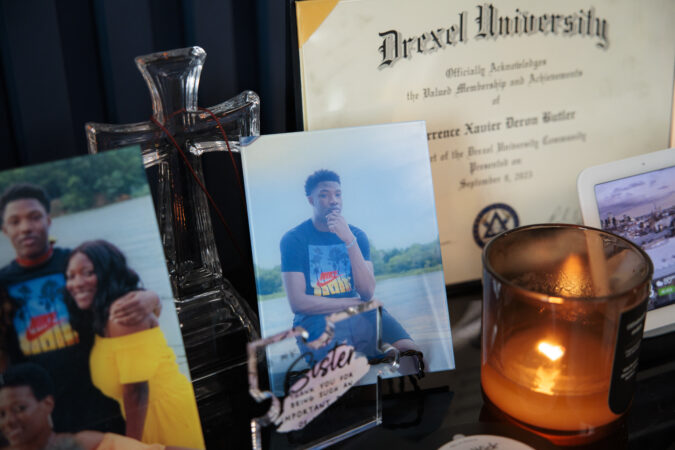
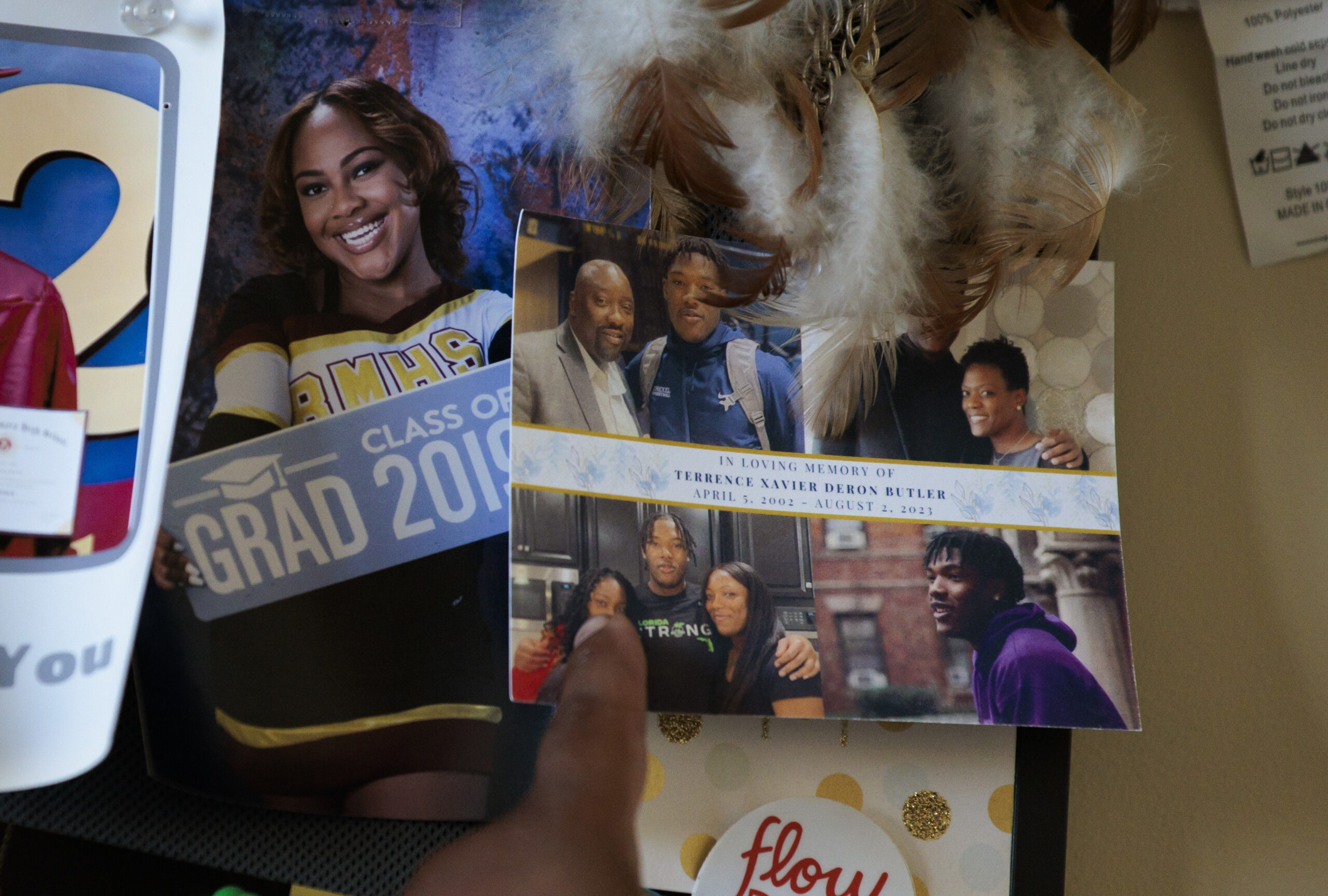
BRANDYWINE, Md. — No one knows exactly when Terrence Butler began keeping a journal, but there is a best guess. The first and only time someone noticed that he was writing something that he clearly wanted to keep private was the evening of Saturday, July 29, 2023, four days before he died.
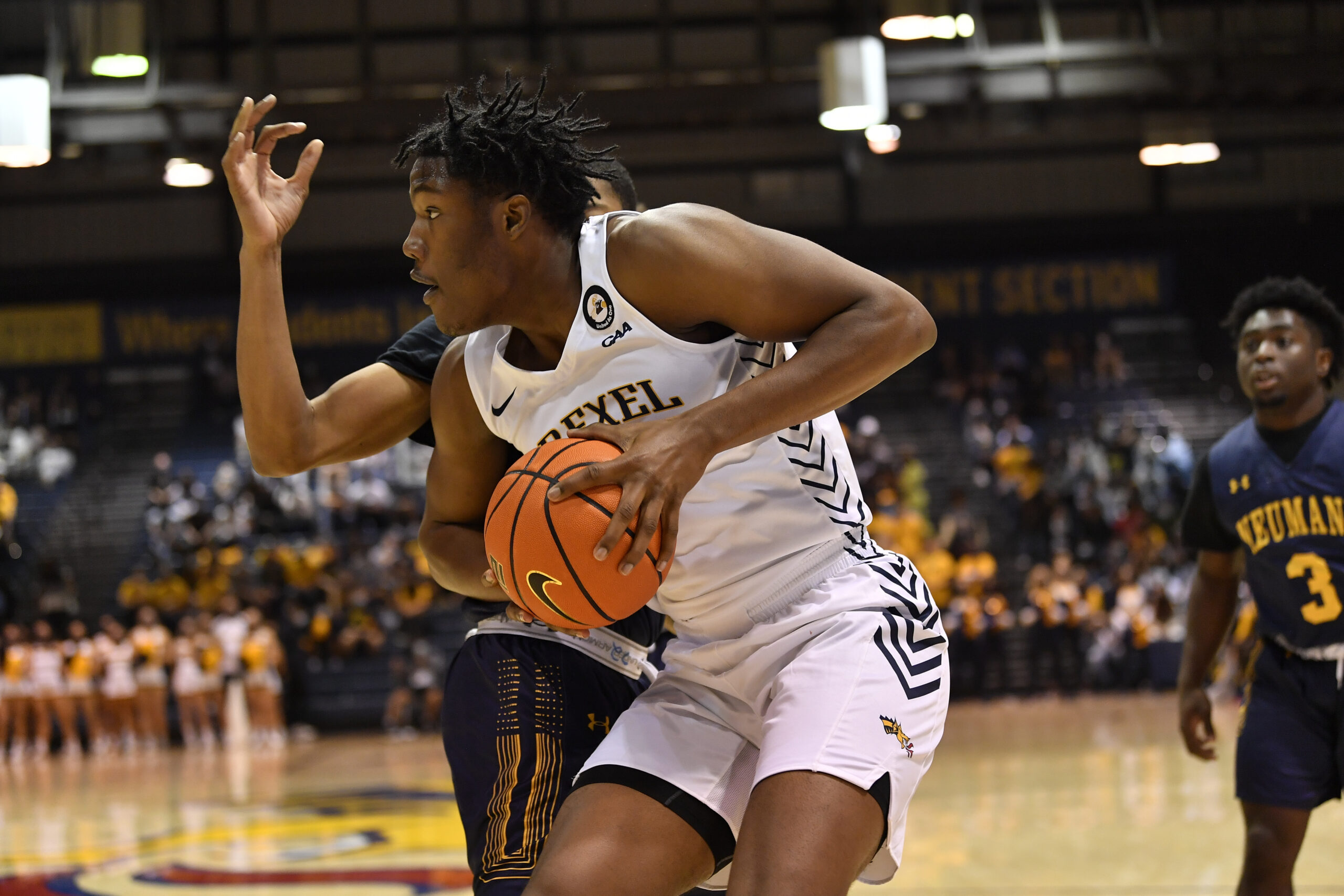
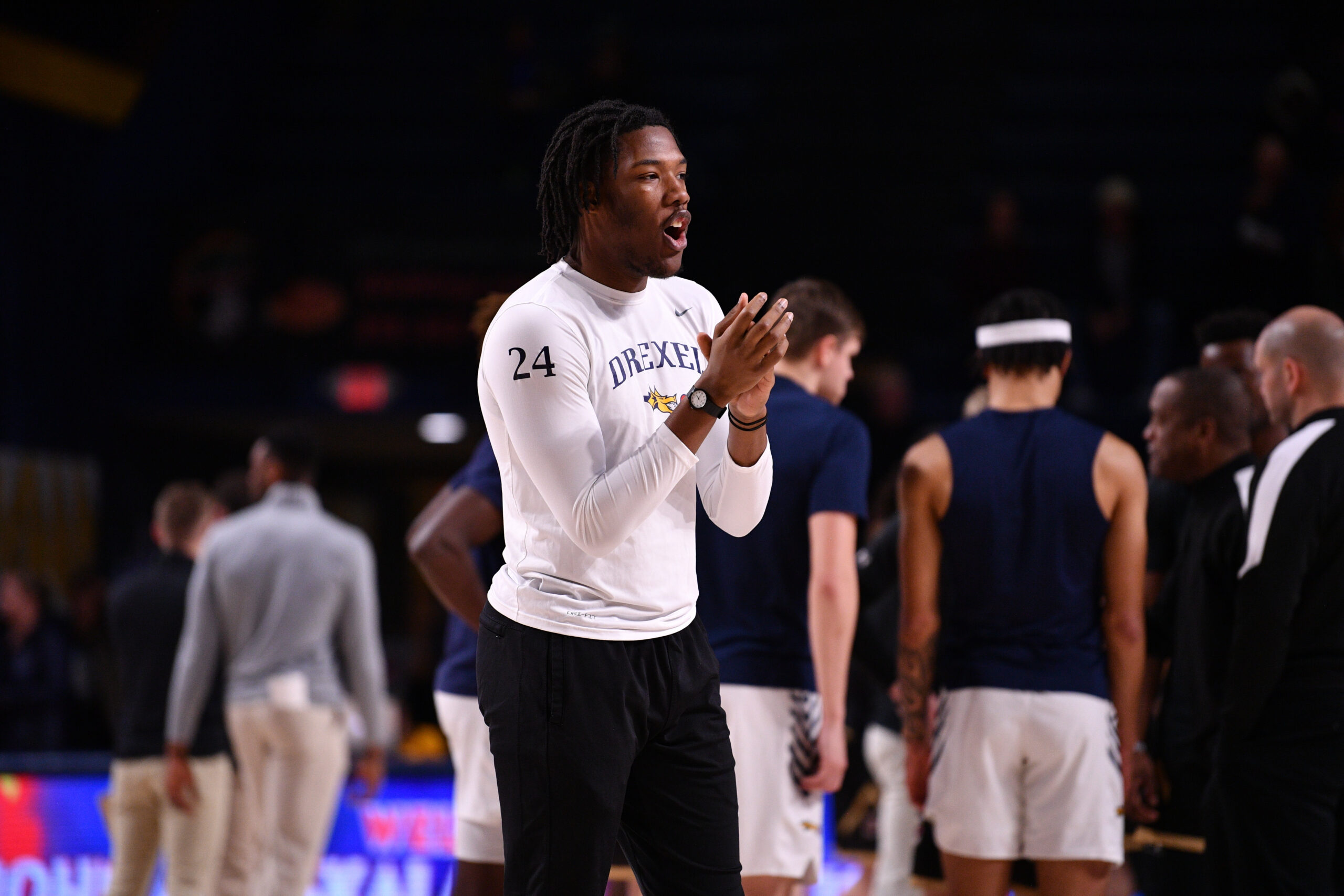
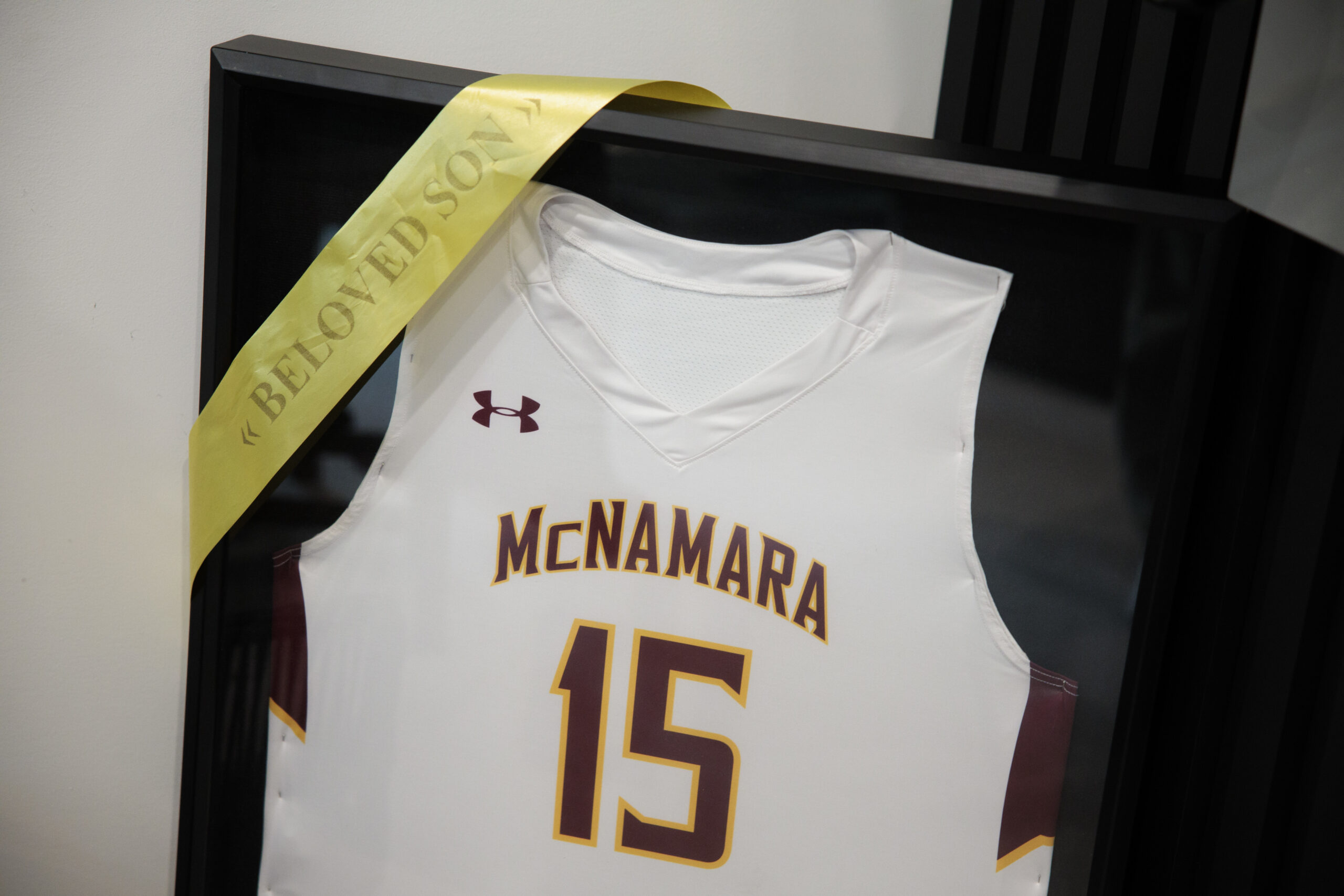
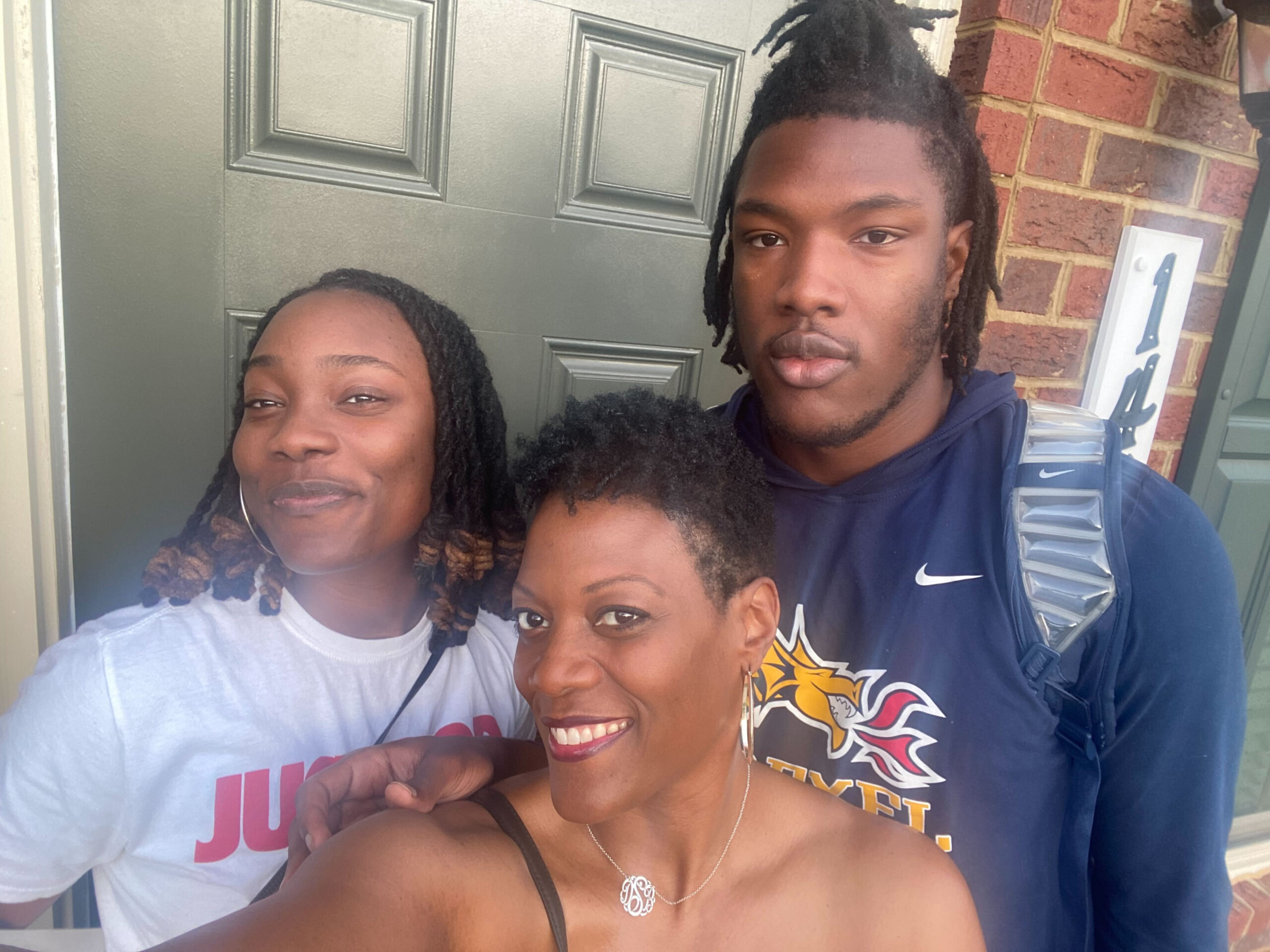
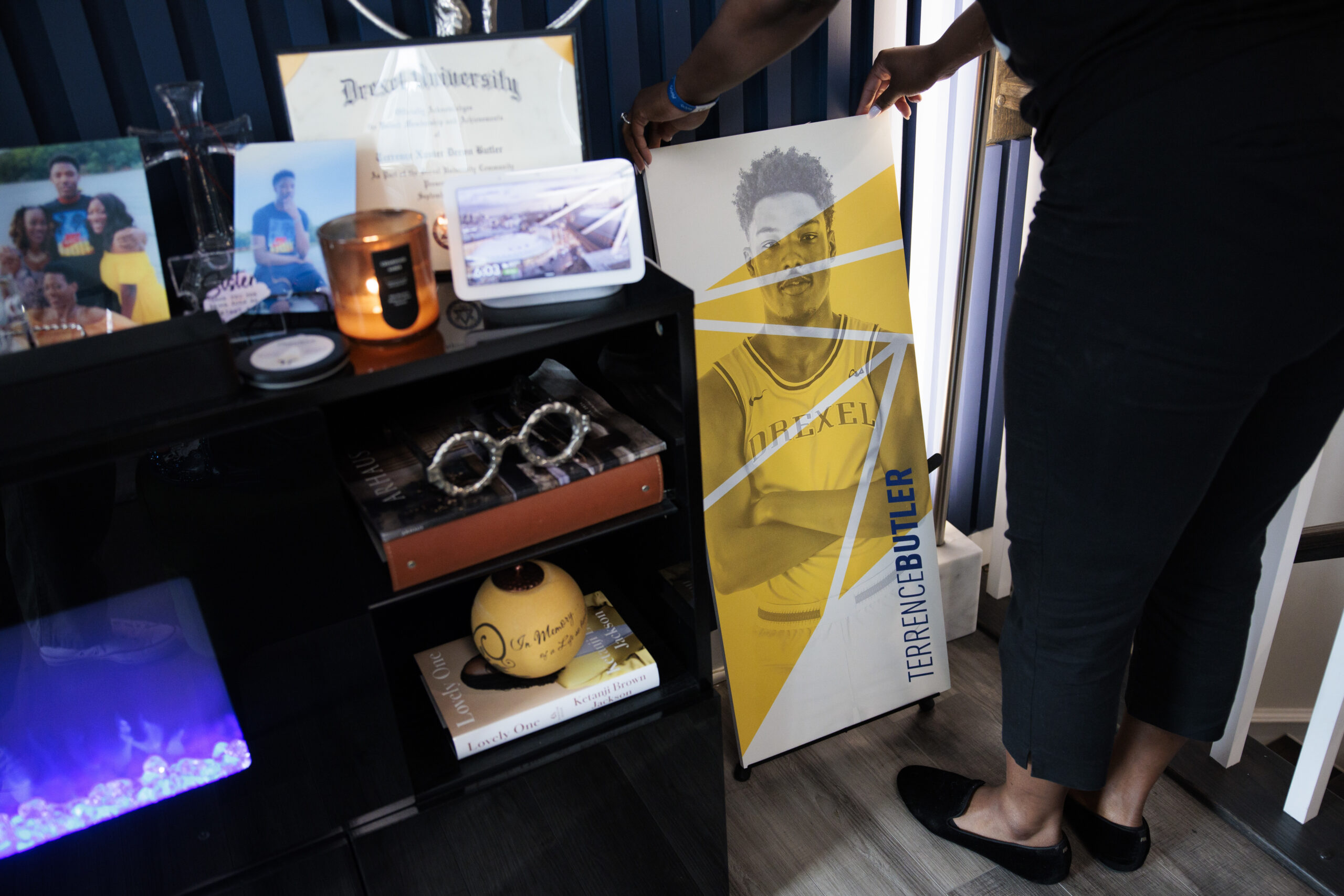
He had spent that morning and afternoon at his mother’s townhouse here, curling and bending his 6-foot-7 body to lounge on the couch, cozy in a hoodie, gym shorts, and white socks, quiet, sometimes reading his Bible. His behavior was nothing out of the ordinary for whenever he was in town, though there was something about her son’s visit, this particular visit, that Dena Butler thought strange. Throughout Terrence’s two years at Drexel University, before and after he had stopped playing for the men’s basketball team, he merely had to call Dena whenever he had wanted to come home, and she would drive the 150 miles north to West Philadelphia to pick him up. This time, though, he had taken an Amtrak train from 30th Street Station, arriving in New Carrollton, Md., at close to 11 o’clock Friday night. He had never done that before.
His older sister Tiara was with him all day at Dena’s, happy to dote on her little brother, helping Dena prepare his favorite meals — bacon and eggs for breakfast; chicken fingers with his favorite condiment, Sweet Baby Ray’s barbecue sauce, for lunch — the two of them good-naturedly complaining that the Jamie Foxx movie they were watching was too slow and not all that funny.
It started to rain in the afternoon, and Terrence walked over to the wide window at the front of the house. He stood there for a while, leaning back a bit, his eyes turned to the charcoal clouds outside. Tiara remembers that moment still. “He loved the rain,” she said. “It wasn’t odd for him to do, but now, looking back on it, he was very somber, looking into the sky.”
A journal that belonged to Terrence Butler at his mother’s home reads, “I’m sorry. I really tried.”Some of Terrence Butler’s notes displayed at Dena Butler’s home in Brandywine, Md.
She drove Terrence back to their house; he would stay there that night, with Tiara and her husband, Arthur Goforth, to wake up for a 6:32 train back to Philadelphia the next morning. Before he went to bed, he sat on a barstool at Tiara and Arthur’s island, the farthest seat in their kitchen from their living room. In his hands were a black-ink pen and a notebook with a sky-blue cover.
Tiara assumed that he was finishing up some schoolwork. “After I got a little closer, he slowed down with the writing,” she said. “When I was further away, he was hunched over, writing.” She didn’t think anything of it until Wednesday, Aug. 2, when she and her family were combing through Apartment 208 of The Summit at University City, Terrence’s apartment, desperate for any clue that might tell them why he had shot himself.
Terrence Butler appeared in just eight games for the Drexel men’s basketball team over his two years at the university.
The story of a young life
Twelve photographs on a wall in Zach Spiker’s office at Drexel tell the story of his decade as the university’s men’s basketball coach. There was Matey Juric, the 5-11 backup guard who was an “empty-chair kid” when Spiker recruited him: “I went to watch him play, and there were four chairs for college coaches, and they were all empty.” He’s in medical school now. There were team photos from the Dragons’ recent trips to Australia and Italy, from their celebration of their 2021 Colonial Athletic Conference Tournament championship. And there — in the picture from Italy, blending in among his friends and teammates — was Terrence Butler. It’s the only photo on the wall that Spiker took himself.
“It’s there for a reason,” he said, “and it will be as long as I’m here.”
Terrence Butler’s college basketball career comprised just eight games over two seasons at Drexel. His death at age 21, on Aug. 2, 2023, was at once core-shaking to those who knew and cared for him and, after a few days, just another speck of troubling news during troubling times to those who did not. It marked one of the rare occasions in which someone, especially someone so young, had died by suicide and the manner of death was immediately acknowledged and publicly revealed.
Terrence Butler spent two seasons with the Drexel Dragons from 2021 to 2023.
Within 48 hours of the discovery of Terrence’s body, the Philadelphia Department of Public Health confirmed to media outlets that he had killed himself, for there was no way to euphemize it and no point in trying. The cold and clinical language of the medical report — that a “normally developed, well nourished … black man whose appearance is consistent with the reported age of 21 years” had died — left no space for doubt.
The reasons that Terrence had died … they were a different matter. They would remain shrouded in grief and incomprehension, in blindness born of love and admiration and disbelief that he was capable of such an act — in an innocent unwillingness or inability to see.
Like all those who die at their own hands, he was locked in battle with himself. It was a struggle whose scope and depth he alone knew, and only by tugging a thread of the tapestry of circumstances and events and achievements that were sewn together to form his too-brief life can anyone even attempt to make sense of its ending.
The gym at Bishop McNamara High School in Forestville, Md.
Why would anyone want to see the signs, after all? And who would have been capable of seeing them? Spiker couldn’t spot them on the day he met Terrence. No coach could. It was a camp at Drexel, just one stop on a tour of colleges and universities and programs for Terrence, and there he was, in the summer after his sophomore year at Bishop McNamara High School in Forestville, Md., grabbing a rebound in one pickup game inside the Daskalakis Athletic Center, scanning the court to throw an outlet pass, seeing no one open, pulling the ball down and dribbling the length of the floor to throw down a dunk himself. Spiker offered him a scholarship then and there. Take your tour. See those schools. Go through your process. Just remember: You have a home here at Drexel.
“We loved the skill set,” Spiker said. “We loved his motor, his size, typical basketball things. He was big. He was strong. He was respectful, a super-engaging, super-likable, smiling guy. Man, TB, he was a very impressive young man.”
Terrence’s parents, Tink and Dena, had charted a particular course for him and his sisters to try to prepare them for the demands and rewards of the pursuit. Tink saw sports as the children’s primary path. Growing up near Washington, D.C., he had boxed in the AAU and Golden Gloves programs before entering the Army, which promptly sent him to Colorado Springs to train to make the 1988 U.S. Olympic team as a light heavyweight.
“Was doing well,” he said. “Winning all my fights.”
Except he dislocated his left shoulder. No one knew; he popped it back in and hid the injury from the coaches, for a while. He started fighting southpaw, throwing all his real punches with his right hand, faking haymakers with his left … except the shoulder popped out again, and he couldn’t hide it any longer, and he had to have surgery, and his Olympic dream vanished. “I don’t know how far I could have gone,” he said one day in his living room. “I probably would have won a gold medal.”
Dysfunction framed Dena’s early life. She was 2 when her parents split up, both of them alcoholics, her mother moving from Memphis to the D.C. region to escape Dena’s father. Tall for her age, Dena began driving when she was 10 and working when she was 14, putting the money she earned from fast food restaurant and retail jobs toward rent.
“I didn’t sleep as a child,” she said. “I never slept. I just couldn’t. There was always something happening, and I just decided not to live like that when I had kids. I didn’t want that for them. These can be cycles if you’re not intentional and deliberate about your choices. Your choices affect your kids. Every choice my parents made affected me.”
Tasia (left), Dena, and Tiara Butler pose for a portrait in front of their family wall at Dena’s home in Brandywine, Md.
Once Dena and Tink met and got married and started their family, as he moved from one solid job to another — from a power-company technician to a crane operator to a D.C. government supervisor — and she settled in as a resources analyst for NASA, they established a certain culture, with certain norms and standards, for their children. There would be a consuming emphasis on academics and athletics and, more importantly to Dena, a balance of those two foci.
Tiara was born in 1992, and a second daughter, Tasia, arrived three years later, and the sisters grew up hearing the same daily phrases from Dena: TV will kill your brain. … Go look it up in the dictionary. … Smart people ask questions. … “But the biggest philosophy we learned,” Tasia said, “was ‘Work first so you can play later.’”
Dena Butler with her daughters, Tasia (left) and Tiara (right).
The playing came naturally to all of them. The only driving Tiara did when she was 10 was when she had a basketball in her hands and an open road to the hoop. She got her first Division I scholarship offer when she was 14, then picked Syracuse. Tasia preferred dancing — hip-hop, ballet, tap, jazz — to dribbling, but she followed Tiara to Syracuse on a full ride for basketball before transferring to James Madison.
The understanding that sports could be a vessel shepherding the two of them to college, to a terrific education, to stability and success in their lives was doctrinal among mother, father, and daughters. Family time morphed into basketball time, and basketball time morphed into vacation time, and there was less vacation time as life went on.
Tink, in fact, spent so many mornings and afternoons and nights in gymnasiums and arenas with Tiara and Tasia, became so familiar a presence at AAU tournaments and all-star camps, chatted with so many coaches and recruiters and shared so many tidbits and observations about players that he parlayed his daughters’ careers into a new profession. Into a scouting service. Into a subscription-based website: prepgirlshoops.com. Into more than $100,000 in annual revenue. After Terrence was born in 2002, he was a fixture in those gyms and near those courts just like his parents and sisters were.
“When he first started playing,” Tiara said, “he would run up and down the court, saying, ‘Look at me,’ smiling and leaping. Always passed the ball. So kind to teammates and opponents. He really just wanted the snacks afterward.”
He wanted to be “T.J.,” but it never stuck. His sisters shortened the nickname they had given him when he was a baby, “Man-Man,” to just “Man.” It was all they called him. By age 10, he was playing high-level AAU ball, growing on a vegetable-free diet of chicken nuggets and french fries. Heredity was on his side. Tink was 6-3. Dena was 5-10. “I’m thinking he’s going to be 6-6 or 6-7,” Tink said, “and Michael Jordan was 6-6.”
Tink took him to one football practice when Terrence was 11, to try to toughen him up. All it took was a helmet to the stomach in his first tackling drill to get him coughing and wheezing and whining, to have him decide he hated football. Good, Tink thought, now we can concentrate fully on basketball. So Tiara and Tasia — don’t let those soft features and sad eyes, just like their brother’s, fool you — would roughhouse Terrence in their one-on-one games.
“May have gotten carried away,” Tasia said.
Tiara Butler, a visual arts teacher at Bishop McNamara High School, wears a T-shirt in remembrance of her brother, Terrence, at the school in Forestville, Md.
‘We were a unit’
His sisters’ recruiting visits were groundwork-layers for him, at least in his father’s eyes. When he was 9, he got pulled out of the crowd at a Towson University game for a free-throw contest. He sank 12 straight, right in front of the cheerleaders. When he was in sixth grade, the family joined Tasia for a visit to the University of Miami, and men’s coach Jim Larrañaga took one look at Terrence, at a pair of prepubescent arms already showing muscle and definition, and said, I’m giving you an offer!
He did the AAU circuit: DC Thunder, DC Premier, Team Takeover, Team Durant. Tink would bounce from Tiara’s game to Tasia’s to Terrence’s; Dena was always at Terrence’s. So he’d call her for updates.
How’s he doing?
OK … Oh, wait. He just scored.
A necklace features charms with photographs of Terrence Butler and his grandmother, Connie S. Hill, at Dena Butler’s home.
As the kids’ basketball schedules, especially Terrence’s, took up more days on the calendar, there were more dinners in restaurants, fewer at home around the table. But Tink and Dena still made time to serve in ministry at The Soul Factory, an evangelical church in Largo, Md., even serving as premarital counselors to engaged couples. “We were always on the road,” she said, “but we lived selflessly. We were a unit.”
Then, a potential setback: July 2016. The summer between his seventh- and eighth-grade years. An AAU tournament in Atlanta. He jumped, landed on someone’s foot, wrenched his right knee. A torn meniscus. Surgery. Nine months of rehabilitation.
Tink Butler with framed jerseys honoring his son, Terrence, in Clinton, Md.
The big private high schools in and around D.C. had been scouting him; the injury might scare them away. No. Bishop McNamara, just a five-minute drive from the Butlers’ house, followed through with a basketball scholarship. Affiliated with the Congregation of the Holy Cross, its campus a strip of gleaming modern architecture and emerald land in Prince George’s County, with an enrollment that its admissions officers limit to roughly 900 students in grades nine through 12, McNamara is one of the most respected high schools in Maryland. Its alumni include several professional athletes, an astronaut, and Jeff Kinney — the author of Diary of a Wimpy Kid. The school fit perfectly with Dena’s plan for her children, with the idea of segueing from sports to a career or vocation beyond sports.
In his first year at McNamara, Terrence was the only freshman to play varsity basketball. The following year, the school hired a new head coach, Keith Veney, who immediately made Terrence the centerpiece of the team. He called Terrence “T-Butts” and would push him to shoot more frequently, questioning him every time he passed the ball and ending up half-impressed and half-exasperated at the answer Terrence always gave: Because the guy was open, Coach.
Still, Terrence had the ball in his hands often enough to be named the Mustangs’ most valuable player as a sophomore. “He would pass up those shots on purpose,” Tink said, “so that it wouldn’t be about him. He liked the accolades, but he didn’t want the attention.”
What did he want? It was hard to know sometimes. From the time Terrence began playing, Tink would give him a dollar for every rebound he grabbed in a game. One day, he opened up Terrence’s bank and found $1,200. Other than the occasional game of Fortnite, the kid didn’t buy anything for himself, didn’t crave the trendy clothes or the coolest sneakers. “He was the banker,” Tasia said. “We’d ask him, ‘You have change for a $50?’”
He embraced McNamara’s dress code: shirt, tie, hair cropped close. At home, he’d sit down and read the Bible, watch CNN, make an offhand joke whenever Dena would wonder how he had done on a school assignment. Got an A. Could’ve gotten an A+ if I tried. He had one girlfriend in high school, but Tink was pretty sure that Terrence hadn’t done much more with her than carry her books to class and sit with her on a stoop. “Waiting for marriage,” Tink said.
Terrence towered over the student body yet managed to keep himself on his peers’ level. “He was just a cool guy,” said Herman Gloster, McNamara’s dean of students. “You would see him before he’d see you. He was a kid who you could feel coming down the hallway — tall, always smiling. It was like a light force was behind him. Very respectful. Never had a detention. Just a great spirit. If you didn’t like Terrence Butler, something was wrong with you.”
A memorial card for Terrence Butler hangs on the wall in dean of students Herman Gloster’s office at Bishop McNamara High School in Forestville, Md.
When McNamara shut down its building for the COVID-19 pandemic in March 2020, it kept its doors closed and its students learning virtually for 12 months, from the middle of Terrence’s junior year to the middle of his senior year. The administration created “The Mustang Mix,” clusters of faculty and students who would gather on Zoom calls to stay connected with one another.
“A lot of people were complaining that seniors weren’t coming to the mixes,” said Dian Carter, McNamara’s principal. “Terrence came every day faithfully. He was always on camera, making breakfast, frying eggs.”
Once the school reopened, it did so partially. Students returned on a staggered schedule based on where their last names fell alphabetically. Plexiglas dividers separated them at each cafeteria lunch table. The entire building was cleaned every Wednesday. “It was the craziest thing,” Carter said, and she could sense Terrence’s hunger to be around and engage face-to-face with his friends and classmates again. Ms. Carter, he’d ask her, can’t we come here every day?
Terrence Butler was troubled by knee injuries throughout his time at Drexel.
Injury problems
The court was hardly a refuge for him. Throughout the first month of the lockdown, he and Tink searched for places where he could play and train. They found one guy who had a small private gym and was willing to open it. On a Sunday, Terrence was going full-court against some eighth and ninth graders, players younger and less skilled than he was, and one of them bumped into Terrence, and that brief contact was all it took. No, my knee! An MRI test confirmed it: He had retorn his right meniscus.
Another surgery, this one in April 2020. Another nine months without basketball. OK, Terrence could still be a McDonald’s All American nominee his senior year at McNamara … and was. Terrence could still be ready for the start of his freshman season at Drexel, and Spiker had remained loyal to him, had been the first coach to offer him a scholarship and had never rescinded it, had shown that he was authentic and real and that his word meant something. Terrence could still stand there inside the DAC in June 2021, alongside Drexel’s other incoming recruits, for a private ceremony honoring the Dragons’ conference-tournament title three months earlier, and he could hear Spiker say, I know you guys didn’t play in these games, but you’re part of this program. I’m super-excited you’re here to see this, and this is the standard we’re shooting for. Terrence could …
… no, maybe he couldn’t. During a workout just weeks after the ceremony, he tore his left meniscus — not as severe as his previous injuries, just a two-to-four-month rehab this time, but … Lord, three knee operations, and he hadn’t suited up for a single official practice for Spiker yet.
Terrence Butler cheering on his Drexel teammates during his time on the sideline.
Rough as that misfortune was, Dena trusted that her son could handle it. “It was almost like he was always doing a self-examination to see if something resonated with him,” she said. “He had a mentality of ‘I could take it or leave it. I’m good wherever I am. If I choose to go to school, I can do that. If I choose to play ball, I can do that. If I choose to write novels, I can do that.’ He was never a person you could put in some type of box. He was completely different. You could not read him in that manner. He was like, ‘Wherever God leads me.’ He would just be in that moment. If he’s playing ball, he’s going to give you ball. If he’s in school, he’s going to give you school.”
These were more than a proud mother’s words. Terrence wrote biblical verses in pencil on index cards and carried the cards with him. Galatians 5:16: So I say, let the Holy Spirit guide your lives. Then you won’t be doing what your sinful nature craves. There was no preaching or proselytizing, just the self-assurance of a person who appeared fully comfortable with himself. Is there a more appealing quality in a human being? It didn’t take him long to become one of the most popular figures on campus. He majored in engineering, joined Drexel’s chapter of the Fellowship of Christian Athletes, and had the time and the opportunities to move within the university’s varied worlds.
Spiker would stop in at a coffee shop to grab a drink, and a student would recognize him and say, Coach, I know Terrence Butler. He’s one of the nicest guys I’ve ever met. So Spiker would take a selfie with the student and text it to Terrence, and Terrence would respond, One fan at a time, Coach. One day, the two of them strolled across campus, and Spiker felt like he was with a celebrity.
“It was two girls from the lacrosse team: ‘Hey, TB,’” he said. “It was two girls from the dance team. It was two guys from FCA. A lot of people identified with him. He knew as many people as the rest of our team combined. This dude was very outgoing and had a big reach.”
Imagine if he had been playing any meaningful minutes for the Dragons. Imagine what his reach would have been then. He’d set the coaches’ grease board in his lap, pick up a marker, and design plays for his teammates. He’d call his brother-in-law, Arthur, who was a personal trainer, and press him for insights and advice: What can I do to be the best athlete I can be, to strengthen my body so I won’t get injured again? Push-ups, sit-ups, stretching — he devised his own exercise routines.
Luke House, one of Terrence’s teammates and roommates, would join him for long weightlifting sessions that they’d pause only when Terrence set his face in “The Look,” House once wrote, which meant “it was time to tuck our shirts in because the weights were getting heavy.”
After one victory over Towson, after Terrence had spent two days of practice dragging his damaged leg up and down the floor, refusing to sit out, insisting on suiting up for the Dragons’ scout team, Spiker turned to one of his assistant coaches and said, I don’t think we win that game if TB doesn’t give us all he had. He was doing his best to contribute, to get back on the court. Everyone could see that.
Then in January 2022 he was running during a pickup game and felt his right knee pop and found out that he had torn that damned right meniscus for a third time.
Terrence Butler’s Bishop McNamara High School basketball jersey is framed at his mother’s home.
The doctors and trainers recommended that he not play anymore. Tink called him. Did he want to transfer? Tink had been working the phones, talking to coaches in other programs. No, Terrence wanted to stay. Spiker and Drexel put him on a medical hardship scholarship. He could get his engineering degree, be part of the team in another role or capacity. I’m good, Dad, he said. I’m good.
Dena … well, it never crossed her mind that Terrence might transfer. She had attended all of his games at McNamara, and she attended every Drexel home game whether he played in any of them or not. And he would play just those eight times, never seeing the floor for more than 12 minutes in any of them, never pulling down more than five rebounds, never scoring more than two points. She attended every game even though she and Tink had been drifting from each other for a while, even though he was spending more time at work and at games — among Tiara and Tasia and Terrence and his scouting service and his tournaments and his website, where did business end and family begin? — even though they divorced in 2021.
It was raw. It was painful. It was the breakup of The Butlers — that’s how everyone knew them, spoke of them. The Butlers. They had been a unit, as Dena said, and now they weren’t.
Terrence was managing to handle it, as she trusted he would. At least he seemed to be managing. Spiker noticed nothing out of the ordinary. Still the same old TB. Still in good spirits. Still the same terrific student — he made the Colonial Athletic Association’s honor roll in 2022, the same year basketball stopped for him. In June 2023, he was taking a summer class, Introduction to Africana Studies, and earned an A on a five-page paper about the corrosive effects of American slavery. He wrote in part:
Dena Butler and Tiara Butler stand in front of the family wall.
The solution begins with education and must start at a young age. … Until we start to seek knowledge and dig up the roots of America rather than trimming branches, black people will always be disproportionately affected, with no understanding why.
A month and a half later, Terrence took that train ride down to Maryland to visit his family. Tink was hosting a party at his house on the night of Saturday, July 29, for a world welterweight championship bout between Errol Spence Jr. and Terence Crawford — 70 people, food, drinks, a television on the outside deck. Terrence declined to attend, which didn’t strike anyone as unusual. People would have asked him about Drexel and basketball, would have made a fuss over him, and he wouldn’t have wanted to be an object of attention at such a large gathering. He preferred a quiet night at his sister’s house. Arthur offered to cut his hair.
Just before Terrence and Tiara left Dena’s house, the three of them gathered on the front stoop to snap a photo of themselves in the summertime’s evening light. But as he stepped outside, Terrence paused. Hold on, he said. I forgot something. He went back inside, reemerging after a few moments. The picture, in hindsight, is telling. Dena is in the middle. She smiles wide, her teeth sparkling white. Tiara, on the left, has a knowing, closed-mouth grin. Terrence towers above them. His face is stone.
Tiara (left) with mom Dena and Terrence Butler.
He texted Dena at 9:19 a.m. Sunday to let her know that he had arrived safely. But on Wednesday, Aug. 2 — a cerulean, temperate, just perfect Aug. 2 in Philadelphia — Terrence missed a team breakfast. He was tracing a different academic arc from most of the other players, taking a full schedule of summer classes, on track to graduate in a year, while his teammates were taking a course or two. So Spiker chalked up his absence to his study habits, and it wasn’t until the guys started to murmur that they hadn’t seen him in a few days that Spiker began to wonder and worry.
He called and texted Terrence immediately. No response. He called Dena, who told him that she hadn’t heard from Terrence since he got back to Drexel. He called campus security and requested a wellness check and stayed on the phone while the officers unlocked and opened the door to Terrence’s bedroom and discovered that something horrible had happened.
When her phone buzzed and a police detective told her that her son was dead, Dena managed to ask, How? She listened to the answer, then ran upstairs. After she and Tink had divorced, she knew that she would be living alone, in a new house, in an unfamiliar neighborhood. So she had purchased a black .357 revolver for self-defense. All three of her children knew exactly where she kept the gun: out of sight, on the floor, under the headboard of her bed. She looked there. It was gone.
Photos of Terrence Butler on display at Dena Butler’s home in Brandywine, Md.
A terrible conundrum
At Terrence’s funeral, inside Zion Church in Greenbelt, Md., Tink and Dena stood side by side behind a lectern, holding hands, eulogizing their son. “I thank God for loaning him to us for 21 years,” Tink said during his short speech. Dian Carter, McNamara’s principal, had been on vacation, sunning herself on a beach near Houston, when she heard the news of Terrence’s death. No, she thought, that can’t be right. Terrence must have been attacked. Suicide? Terrence? What were the signs?
Now here she was, sitting and weeping among the congregation at Zion, and she had never seen anything like Tink and Dena’s gesture, their grip, that coming together of a couple who were now separate. She found it comforting, but it did not answer the question that Carter was still asking herself, the question that everyone in the church had to have been asking themselves: The worst thing that can happen to a family, to a young person in the prime of life, had happened to this family, to this young man. Why?
That is the conundrum that cuts to the core not just of Terrence’s death, but of suicide in the United States. There are so many contextual factors and contradictory trends that anticipating when someone might end his or her life or reaching a definitive conclusion about why someone did is akin to grasping at vapor.
Kelly Green, a psychologist and senior researcher at the University of Pennsylvania’s Perelman School of Medicine, said in an interview that the most recent available data on suicides are from the same year that Terrence died: 2023. Medical examiners must report suicide deaths to states, and states must report them to the Centers for Disease Control, and the slow grind of that bureaucratic machinery causes an information lag.
“One of the frustrations is that we’re always a couple of years behind what’s happening now,” Green said. “We’re always playing catch-up.”
Though Green noted that suicide “is still a very low base rate event — it happens rarely” — its current has been flowing in a concerning direction. The overall national rate jumped 37% from 2000 to 2018, according to the CDC, dipped by 5% between 2018 and 2020, then peaked in 2022. It held relatively steady in 2023, when 14.2 out of every 100,000 deaths were suicides.
Terrence fell within the age range, 15-24, with the second-lowest suicide rate, which would cast his death as an awful anomaly. But the CDC has reported that, although men make up 50% of the population, they account for nearly 80% of all suicides, and among Black men, according to the American Foundation of Suicide Prevention, the rate climbed from 9.41 per 100,000 deaths in 2014 to 14.59 in 2023, which would cast Terrence’s death as one stirring of the sea in a destructive tide.
“I would go even a step further,” Derrick Gordon, an associate professor of psychiatry at the Yale School of Medicine, said in an interview. “In the Black community, the data show that, traditionally, suicide was not seen as a Black thing. The norm has been, ‘That’s a white thing.’ It’s sometimes seen as the antithesis of the Black faith tradition. ‘My faith isn’t strong enough to help me get past this thing, and it should, and it’s not working.’ Faith doesn’t reduce the burden. It adds to the burden.
“For a long time, there was this myth: ‘We don’t have to worry about Black people and suicide. They’re at low risk. They have more community or are more connected to their faith — a lot of buffers to protect them.’ Well, we’re seeing that’s not true.”
Tink Butler at his home in Clinton, Md. He remains involved in basketball.
Parents, siblings, loved ones: These would presumably be the strongest guardrails. But as Gordon noted, the factors that compel a person to attempt suicide are always unique to that person, and since even those closest to him or her often don’t pick up on any indications of deep distress, predicting or preventing a suicide is challenging at best and impossible at worst.
“Families never think of suicide as a possibility,” Gabriela Khazanov, a clinical psychologist and assistant professor at Yeshiva University in New York, said in an interview, and they can inadvertently create conditions that heighten the risk.
Terrence was one of the more than 49,000 people who died by suicide in 2023, according to the CDC … and one of the more than 55% of those who used a firearm to do it. The combination of suicidal thoughts and easy access to a gun can be lethal, in part because “it’s not that people who are suicidal want to die,” Green said. “It’s that they want to stop an intolerable situation or problem. They seek an escape,” and they are often willing to act without hesitation to relieve their pain.
A January 2009 study published by the Journal of Clinical Psychology showed that half of all suicide attempts result from less than 10 minutes of planning.
“The impulse might be quick, but the issue is, do you have means?” Gordon said. “I can think about it all I want to, but if I don’t have access to means, that’s an issue.”
Terrence Butler did have means, but it would be wrong to call his decision to use his mother’s gun impulsive. He had carried the revolver with him in his navy blue Drexel backpack on the ride from Dena’s house to Tiara and Arthur’s. He had kept it in that backpack for several hours at their home — kept it there overnight, in fact. He kept it there during the short car ride to New Carrollton Station and throughout the 1-hour, 45-minute train ride back to Philadelphia. He kept it there as he walked the three-fifths of a mile from 30th Street Station to The Summit, to a vibrant college setting in a vibrant city, and he kept it there as he opened the door to Apartment 208, to his living space with his personal effects and the memories they inspired.
It is one of the most excruciating aspects of his death: Terrence Butler had time to consider what he was going to do. He also had time to consider all the reasons, in his mind, that he had no choice but to do it.
“I thank God for loaning him to us for 21 years,” Tink Butler said during his son’s memorial service.
Signs no one could see
Inside the dimly lit auditorium of Archbishop Carroll High School in Washington, some 150 parents, coaches, teachers, and administrators gathered on a night in October 2024 and learned about Terrence Butler from the women who knew him best. The school was holding a symposium about athletes’ mental and emotional health, and Dena, Tiara, and Tasia were the first speakers. They wore black T-shirts with his picture on them. Behind a table atop a stage, Dena sat between her daughters, one arm draped over Tiara’s shoulders, one arm draped over Tasia’s. There was an empty chair next to them, for Terrence.
Three siblings. Three honor students. Three Division I basketball players. A veneer of perfection, or as close to it as a family can get. And now …
“You can have all that,” Dena said to the audience, “and your child may not want to be there.”
Tiara and Tasia did not want to be there. Over the two years since Terrence’s death, the Butlers and others have plumbed their memories and searched within themselves for hints and connections that might help them explain the inexplicable. The sisters keep returning to their own childhoods and adolescence — to Tiara’s desire to draw and paint and write and Tasia’s to dance, to Tink training them to be competitive and never treat their opponents as friends, to Dena reminding them that athletics was their conduit to college, to the pressure they felt to perform.
Before every basketball game he played, Terrence would dash to the bathroom, as if he were seasick, and his hands would sweat so much that he could barely grip the ball. He’d douse them in powder to dry them only to have it turn into paste in his palms.
At Syracuse, Tiara often couldn’t eat before games because she was so nauseous from nervousness, then would shake as she sat on the bench. And it was only after her brother had died that Tiara confessed to her family that in her instances of greatest stress she would hear noises in her head — loud, indescribable noises — that she could not quell.
“I don’t really know where it came from,” she said, “but it showed itself in my body. It showed itself in my handshake. It showed itself with me being out of breath, with my voice shaking.
“I know what that feels like, what he was feeling. You can’t really control it. If you’re not playing, there’s that daunting feeling on top of that. Am I good enough to get on the court? Part of you is like, ‘OK, I didn’t play today, so I didn’t mess up today.’ But the other part, especially when you’re away from home and you didn’t play, is that you have to explain yourself to someone who’s not there and asks, ‘Hey, what’s going on?’ You’re thinking, ‘I’m working hard, doing all that I can do. It’s someone else’s decision.’ Now you’ve got to listen to that voice, too: ‘Hey, what’s really going on?’ It’s just a tough balance, especially as a kid. Then you’re going off to be by yourself, high level, lights always on …”
Tink Butler says he remains troubled daily by his son’s death.
Guilt creeped into Tink’s thoughts. Was his children’s performance anxiety purely genetic, or had he pushed them too hard? Once, when Tiara wasn’t yet a teenager, she had moseyed after a rebound during a workout, and he chucked the ball to the opposite end of the gym and bellowed at her, “RUN!” When she came back, there were tears in her eyes and a whimper in her words. You yelled at me. He backed off some with Tasia, then backed off even more with Terrence — in his tone, but not in the time, the effort, the aspirations.
“My whole life was basically getting rebounds for him,” Tink said. “That was the plan from the time I saw I was having a son: I’m going to mold this guy into a basketball player.”
Dena second-guessed herself about how she and Tink handled their divorce. She had filtered all her parenting decisions through the lens of her own childhood, through the experience of growing up in a broken home, and she wanted to spare Tiara, Tasia, and Terrence any trauma. She and Tink had taken care never to argue in front of them, hiding the hard reality of their disintegrating marriage, opening up fully about the divorce only after Tink had remarried.
“I was playing God,” she said, “in trying to control everything so they wouldn’t see certain things.”
But the upshot was that, when the three kids finally found out their parents were splitting up, they were shocked. They never saw it coming, and Terrence was the youngest, the most impressionable, the baby of the family. In trying to protect them, had Dena failed to prepare them? Had she failed to prepare him?
“It could have handicapped them,” she said. “I’m supposed to be their training ground.”
She carried similar concerns once he went off to Drexel, and she wasn’t the only one. The pandemic had already isolated Terrence, pulling him away from his friends and his social life while he was still at McNamara, from an environment and experience that, even if the lockdowns hadn’t disrupted it, would have been its own kind of cocoon.
Dena Butler’s “Proud Momma” cups featuring the school colors and logos for her three basketball-playing children.
“Prince George’s County can give you a false sense when you leave here,” said Gloster, the McNamara dean — and a former police officer. “It’s a county of wealthy African Americans, and you don’t find many Catholic schools with so many Black students where parents are paying a tuition of $22,000. Then they get out in the real world, and it’s, ‘Maybe I’m too Black. Maybe I’m not Black enough. Maybe I didn’t realize there was a lot of racism in the world. Maybe I didn’t realize I had demons inside that hadn’t surfaced.’”
Now Terrence was living in an unfamiliar campus in an unfamiliar, more economically distressed neighborhood in an unfamiliar city, and whenever Dena or Tiara or Tasia saw a news story about violence in Philadelphia, one of them would call him. Hey, don’t go outside today. Dena would warn Terrence — 6-foot-7, 235-pound, Division I athlete Terrence — not to get into a stranger’s car, and Tasia would remind him that, as a Black male college student, he “fit the description of someone who could be in trouble.”
He could be a target for a criminal or a cop, could be taken for an easy victim or presumed to be a thug, so he should get to know as many people at Drexel as possible, make sure that everyone knew his face … starting with the campus police. His popularity was based on his personality, yes, but also on self-preservation.
Near the end of his freshman year, he confessed to Arthur that he was contemplating giving up basketball after college, even during college. He had realized that the sport at these levels was a business, and he wanted to enjoy the game, not have it be his job.
He had considered transferring from Drexel when Tink pitched him the idea, but no, he told his family — and himself — that being around the team, contributing to it whenever and however he could, and graduating with his engineering degree would satisfy him.
Drexel basketball player Terrence Butler (left) and his father, Tink, on artwork at his home in Clinton, Md.
Besides, what guarantee would there be that he wouldn’t be trapped in limbo in another program just like he was at Drexel? Would transferring allow him to say goodbye to all the rehab and the ice packs and those platelet-rich-plasma injections, all those needles to his knees to stem the swelling and stoke some healing, and become the player he might have been? Would anything be different anywhere else?
But maybe he needed basketball more than he let on, more than even he understood or acknowledged. His faith calmed him only so much. Those biblical excerpts weren’t the only index cards he kept on his person at all times. He had others that were daily reaffirmations, prompts to remember that he mattered: I AM Valuable. I AM A Masterpiece. Even the white throw pillow on his bed, with a single word stitched across it, seemed to carry a double meaning. Whether asleep or awake, Terrence should RELAX.
He couldn’t. He asked Tiara to put him in touch with a therapist. She did, paying for his sessions. How much progress he was making, only he knew. He sought the counsel of Jordan Lozzi, the director of the Fellowship of Christian Athletes at Drexel and at Penn. On Nov. 28, 2022, Terrence sent a text message to Dena.
I do think I have a lot of unchecked thoughts. There are times where I know the truth but I try to solve everything on my own without guidance. I’ve been taking some baby steps here and there but I feel like I’m moving in slow [motion].
On March 10, 2023, he texted Dena again, confirming what he had earlier said to Arthur about his future, or lack of one, in basketball.
To be honest, it does not necessarily bother me that I’m not playing because I don’t have a passion to continue playing basketball after college. I’m still in the process of learning that my identity and worth [do] not come from basketball.
Later, another message to his mother:
I’ve always had this idea in my head that I needed to be perfect, and whenever I miss the mark or mess up in any way it messes with my head. It kind of reminds me of how I would feel after most games I played growing up. It’s difficult for me to focus on the good that comes out of situations. I may recognize it but the overwhelming negativity clouds the positive.
Dena responded at length.
I appreciate your honesty and transparency. You are not in denial about where you are which gives the Holy Spirit something to work with. Here is something that should support you in dealing with the spirit of perfectionism.
Possible things you’ll need to accept: that you’ll never be perfect and neither will your projects, but since life is about God — not perfect projects — this isn’t really a big deal.
Possible things you’ll need to confess: that you’re making something more important than God wants you to make it, that you’re seeing yourself through the culture’s eyes rather than God’s eyes, that you’re hurting others in your quest for perfection, and that you don’t have time to do the things God wants you to do because you’re too busy trying to be perfect.
She suggested that he consult the Gospel of Matthew, to remind himself that God would comfort him. Then she concluded her text:
Your goal is to please God. He is your source and once you understand that and align with His trust and what He says about you, He will cause the people to follow His plan for your life.
Dena Butler at her home in Brandywine, Md.
She keeps screenshots of these messages on her phone. They provide her no solace, no consolation, and no explanation. In November 2024, she contacted Lozzi, texting him four questions about what Terrence might have shared with him during their conversations and what actions Lozzi did take or could have taken to help him. The answers were revealing.
Terrence, Lozzi told Dena, “disclosed that he had harmed himself” sometime in April 2023, not long after he turned 21; Lozzi provided no details about how. Terrence had said it was the first time he had done anything like that.
Dena asked Lozzi if he was mandated to report any such occurrences of self-harm to a licensed therapist.
“In the college space,” Lozzi wrote, “we are mandated reporters, but I believe there is no mandated reporting for self-harm with adults. The mandated reporting in the college space is around sexual violence or relational abuse. To connect someone to suicide watch from my understanding they must be a present danger to themselves. In any of my interactions with Terrence I don’t believe there was anything that would have qualified to admit him to suicide watch.”
Lozzi was asserting that he wasn’t allowed to tell anyone that Terrence had committed harm to himself — that because Terrence was an adult, either Lozzi or a mental-health professional would have needed Terrence’s consent to disclose the incident to Dena, to another therapist, to anyone else, and Terrence had not given that consent. In his final text to Dena, Lozzi wrote that he “did propose for [Terrence] to see Drexel’s school counselors.”
When asked via email earlier this year if he would speak on the record about Terrence’s death, Lozzi responded that he had “sent your request to the appropriate person to get in touch with you right away.” He had forwarded the message to Hamilton Strategies, a public relations firm that represents the Fellowship of Christian Athletes. “Unfortunately,” an executive with the firm said in an email, “Jordan is unable to interview for your story. Thank you!” A second request for comment, sent in November to Lozzi and the executive, went unanswered.
Terrence Butler at a game with his Drexel teammates.
The struggle of hope
The why of Terrence Butler’s suicide eludes everyone who loved him. Tiara teaches art at Bishop McNamara, her brother’s alma mater, and most of her students don’t know about Terrence’s death unless she mentions him, and once she does, sometimes one of them will approach her in her classroom and say, I just wanted to give you a hug. Tink will break down over his son once or twice a day, then just continue with his office work. He still asks himself haunting questions: How much did the divorce affect Terrence? How much did the knee injuries affect him? Did he consider himself a burden to his parents, as if he owed them a debt for all the time they had spent with him and money they had spent on him — a debt that he could never repay?
After Philadelphia police had ruled Terrence’s death a suicide, Dena said, she pleaded with them to unlock his cell phone. Perhaps he had written something in his notes app. Perhaps he kept a meaningful or revelatory photo stored in it. But the police, she said, told her that they would do that only in an open investigation — a homicide, for instance, in which they were trying to find and extract evidence. Here, they already knew what had happened, even if no one else really does. The department’s public affairs office did not respond to an inquiry about how, in general, police handle such situations.
Having the service provider unlock the phone wouldn’t accomplish anything either, Dena said, because only Terrence knew the passcode; resetting the phone without the code would erase all its data. She recently had the phone disconnected. It was a bitter symbol of the absence of closure.
“What I struggle with the most to understand in all this,” she said, “is that my son was devoid of hope, that he was in such despair, and he didn’t want anybody to help him. As a mom, to know your child didn’t have hope anymore … and hope is what gets us. Hope is what propels us. Hope is the motivator for why we keep going. And to know he didn’t have that, that’s hard.”
Zach Spiker finds himself slower to anger whenever one of his players happens to be late for a team meeting, for a practice, for anything. “I just want to make sure they’re safe,” he said. “Then we talk about it.” He saw a counselor himself, just a few sessions. “I had to,” he said. “I need to figure out things. I still have questions. There are still breadcrumbs, and you want to solve the mystery.”
They hoped that they had on the day that Terrence died. That night, 11 people crowded into his apartment: Dena, Tiara, Tasia, Tink and his wife, cousins and close family friends. Everything in the place was clean. There was nothing on his bed but a bare mattress. “You would have never known,” Tiara said later.
Tasia peered into the bedroom trash can. It was empty. She noticed Terrence’s Drexel backpack next to his bed. She picked it up, brought it into the living room, plopped it on the floor, and began rifling through it. She found random items, things that one would expect to find in a college student’s backpack: Terrence’s schoolwork, his headphones. Then she found something else.
Dena Butler touches a journal that belonged to her son, Terrence.
The spiral 5×7 notebook, more than a half-inch thick from its 160 pages, was buried at the bottom of the bag. Tasia stopped. Tiara recognized the book, that sky-blue cover that she had glimpsed just four days before: It’s the same one he was writing in when he was at my house. Across the cover, Terrence had printed two words in black marker: My Brain.
This was it. This had to be it. This was Terrence’s journal, so this had to be the missing piece, the unknown explanation. Everyone in the apartment froze, went silent, then sat down. Tasia opened the book.
On the first page, on the top line, Terrence had written, I’m sorry. I really tried.
On the second page, on the top line, he had written, The noise is too loud.
On the third page, on the top line, in the top left-hand corner, he had written just one letter, just one word: I.
Tasia turned the page. And the next page. And the next. The family waited for a revelation that would never come. There were 157 pages remaining in the notebook. Terrence Butler had left all of them blank.
To escape the soldiers, Mai Ngoc Nguyen swam across the Mekong River as Laotian snipers on the riverbank fired into the water. She and four others fled Laos together, but only Nguyen made it to safety in Thailand. The rest drowned before they could reach the opposite shore.
On her first night in Philadelphia, Kahina Guenfoud, an Algerian immigrant eight months pregnant with her first child, was exhausted. When it was time to sleep, she pulled what she could out of her single suitcase and tried to get comfortable on the floor of an empty house.
To this day, Thoai Nguyen remembers how he, his parents, and seven siblings were airlifted from South Vietnam to an aircraft carrier in the ocean. As the North Vietnamese moved into the area at the end of the Vietnam War, there would have been no mercy for his father, who had worked for the American government.
Every immigrant has a story and SEAMAAC can hold them all, serving the city’s low-income and immigrant community in more than 55 languages from its headquarters in South Philadelphia — just blocks from where Guenfoud spent her first night. Thoai Nguyen, the chief executive officer, still lives nearby in the South Philadelphia house where his family found refuge in 1975.
The majority of people who work for SEAMAAC (Southeast Asian Mutual Assistance Associations Coalition) are immigrants in an organization that began in 1984 by serving people from countries like Vietnam and Cambodia and now assists all low-income and marginalized people, including immigrants from Asia, Africa, Europe, and South and Central America.
A half century ago, Thoai Nguyen, his parents, and seven siblings were airlifted from South Vietnam to an aircraft carrier in the Pacific. Today, he is SEAMAAC’s chief executive officer.
“It’s about the feelings,” Guenfoud, SEAMAAC’s adult literacy and access coordinator, said. “We feel what they feel. We have all left our families. We still have that emptiness inside.”
It’s why staffer Biak Cuai, SEAMAAC’s outreach worker to Philadelphia’s Burmese community, keeps her phone next to her bed at night. Everyone has Cuai’s number and they call when there is an emergency. “They call me and ask me to call 911: `My stomach hurts and I can’t breathe.’”
The hour doesn’t matter, she said, because she understands.
Many of the people who come to Philadelphia from what is now known as Myanmar are illiterate in their own language because education is no longer readily available back home, Cuai said. Here, even the basics, like opening a bank account, using email, or dealing with paperwork from their children’s schools, seem insurmountable.
“They come here because they feel America is the top country in the world, but the problem is that everything is new and unfamiliar,” she said. “They have fear. They are scared.
“I feel the same way because I am an immigrant,” she said.
Biak Cuai, SEAMAAC’s outreach worker to Philadelphia’s Burmese community, works with a client.
“I prayed to my God to guide me to my dream job, so I can serve my people,” she said. “They knock on my door. I tell them, ‘if you have any problem, you can reach out at any time.’”
The stories are dramatic and the help is real.
In broad strokes, SEAMAAC provides education with classes in digital literacy and English as a second language (although for most immigrants, it’s English as a third, fourth, or fifth language).
“It’s about feeling and belonging,” Guenfoud said. “When you learn English you learn the culture, and if you learn the culture, you belong in this country. You’ll find your place here.”
There’s social work and legal assistance to help people obtain benefits or apply for citizenship. A separate stream of funding finances SEAMAAC’s support for children who are missing school due to difficult family situations.
SEAMAAC works with domestic violence survivors and has co-produced a short, animated film offering hope and support in 10 languages — Lao, Cantonese, Hakha Chin, Nepali, Bahasa Indonesia, and Khmer, among others.
Laura Rodriguez, from Colombia, discusses food for the Thanksgiving holiday during an English as a second language class at SEAMAAC. Seated behind her is Leo Boumaza, from Algeria.
Art therapy helps survivors cope with trauma. A domestic violence survivors group produced a collection of mosaics, each with a teacup, surrounded by shards of glass. What was broken, explained Christa Loffelman, health and social services director, can become something beautiful.
Many of the people who come to SEAMAAC have experienced trauma. “Everyone’s been through multiple layers of trauma,” she said. “You are displaced from your home country — not by choice — and you are going to a refugee camp in a different country. Their entire system has been disrupted.”
Traditional Western-style talk therapy doesn’t help. For one thing, the language isn’t there, and secondly, it’s not part of many cultures. What has worked, Loffelman said, is expressing feelings through art, and being together while doing it.
To counter the social isolation of seniors, SEAMAAC organizes meetings of “the Council of Elders.” They gather in a drafty gym at the Bok building, a former high school in South Philadelphia where SEAMAAC offers classes and counseling.
Often, the elders practice qigong, a form of movement meditation, or on a less esoteric level, enjoy multicultural bingo. Languages may be different, but when someone holds up a G-32 poster, everyone understands. If they don’t, Mai Ngoc Nguyen, a volunteer who can speak Laotian, Thai, Vietnamese, and English can help.
She has experienced plenty of trauma and heard plenty of traumatic stories. She’ll never forget the mother who gave her baby medicine so it wouldn’t cry in a boat carrying refugees away from their country. The boat capsized. The baby drowned.
“She comes into the refugee camp and she became crazy, yelling `Where is my baby?’ Her brain got messed up” and she never recovered.
Luckily for Mai Ngoc Nguyen, then age 12, she was a strong swimmer and ready to cross the Mekong as she made her escape. But she had to kick away a friend who was clinging to her, dragging her under. Her friend never made it to the opposite shore.
“If you ask me, I’ll talk about it,” she said. “But if you don’t ask, I won’t talk.”
But she will joke, saying that she knows the Mekong alligators didn’t get herbecause they knew she needed to help her family back home.
It’s a lot of trauma, but every day at SEAMAAC isn’t full of anxiety. The elders coming out of the gym after bingo were smiling. And in a nearby classroom, students practicing their English last month traded jokes as they learned about Thanksgiving.
Fatma Amara, from Algeria, has been here long enough that she’ll serve a turkey on Thanksgiving, but the apple pie she makes will be Algerian, with seasoned apples layered among thin sheets of dough.
For her, SEAMAAC is more than a language class.
“At first, you feel lonely. You’re anxious. It’s stressful,” said Amara, who works in a hospital and is getting better and more confident with her English. “I take the classes, and we talk together and I feel better.
“Thanksgiving is my favorite holiday in America. It’s an international holiday. It’s about food and God and family,” she said. “You thank God for all you have.”
For all the blessings SEAMAAC provides, these days, funding is a struggle.
In 2024, SEAMAAC learned that the federal government had approved its application for a $400,000 multiyear federal grant to improve digital “equity.” But after President DonaldTrump took office, federal staffers targeted “equity” programs. “That’s $400,000 we’ll never see,” said Thoai Nguyen, the executive director. “We would have had some of that money by now.”
Federal cuts since Trump took office have slashed SEAMAAC’s budget by 20%, he said. Hunger relief programs had to be curtailed, with 1,500 families who relied on SEAMAAC for food losing that lifeline.
“We’re in a moment,” he said, “where intentional cruelty is considered an acceptable form of political discourse.”
This article is part of a series about Philly Gives — a community fund to support nonprofits through end-of-year giving. To learn more about Philly Gives, including how to donate, visit phillygives.org.
For more information about Philly Gives, including how to donate, visit phillygives.org.
About SEAMAAC
Mission: To support and serve immigrants and refugees and other politically, socially, and economically vulnerable communities as they seek to advance the condition of their lives in the United States. Services include ESL classes, job readiness, domestic violence survivor support, services for low-income elders, food assistance, public benefit counseling, health and nutrition education, and civic engagement.
People served: 8,000 families
Annual spend: $3,360,401 in fiscal year 2024
Point of pride: SEAMAAC plans to increase our impact to serve even more Philadelphians at its new South Philly East (SoPhiE) Community Center on Sixth Street and Snyder Avenue, scheduled to open in December 2026. In January, SEAMAAC, partnering with the American Swedish Historical Museum, will welcome visitors to “Indivisible: Stories of Strength,” an art exhibition showcasing the art and stories of South Philadelphians.
You can help: SEAMAAC provides many volunteer opportunities through our work in beautifying and improving Philadelphia’s neighborhoods through our work in urban gardening, tree planting, neighborhood and public park cleanings, and beautification of public schools and places of worship. Additional opportunities are available through our civic engagement and neighborhood unity events as well as by delivering groceries in our hunger relief efforts.
$40 provides shelf stable foods for a family impacted by the SNAP shutoffs for one week.
$50 provides holiday presents for two children.
$100 helps maintain one plot in SEAMAAC’s community garden for an entire growing season, providing tools, culturally appropriate seedlings, and soil.
$100 covers the full cost of supplies for one youth participant in SEAMAAC’s summer programs — giving young people the tools they need for career and college readiness.
$200 covers four hours of ESL instruction.
$250 provides 50 elders with a freshly made breakfast.
$250 provides a family with emergency food, hygiene items, diapers, and social service support for one month.
$300 supports a domestic violence survivor moving into safe housing, by covering the cost of utility hookups and household supplies.
$300 provides ingredients and cooking supplies for a nutrition education workshop.
$1,000 covers the full cost for one high school student to participate in SEAMAAC’s eight-week summer career exploration program.