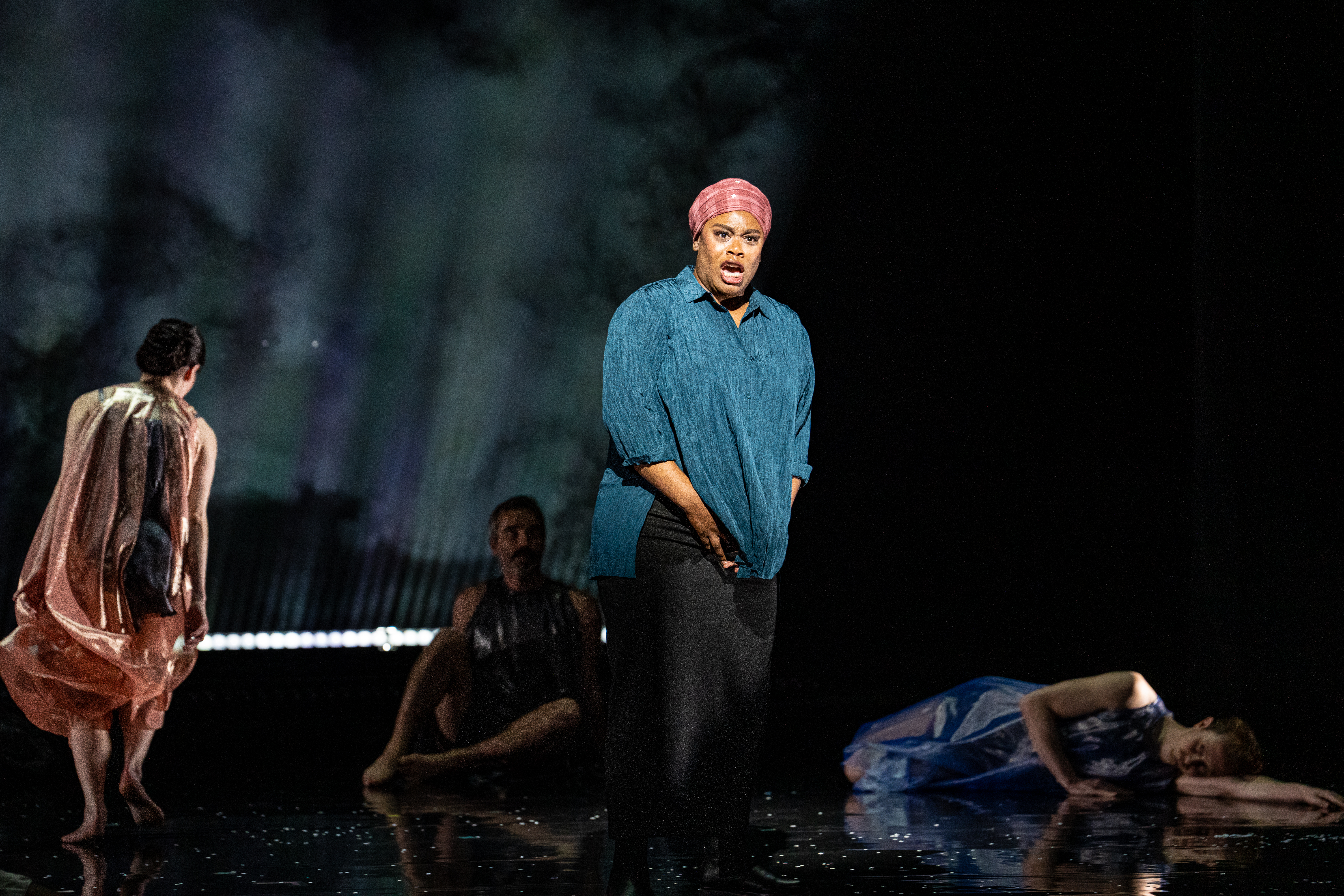
Like much on the mind of the general public, climate change is now in the voices of Opera Philadelphia in The Seasons, an ambitious opera/dance expansion of Vivaldi’s The Four Seasons warning of a time when seasons cease to exist.
Sounds like a virtuous West Coast “granola opera”? Not quite. But the Friday opening at Kimmel Center’s Perelman Theater wasn’t as effective as it wanted to be.
The piece’s secondary purpose as a showcase for Vivaldi’s music actually became primary, going beyond the composer’s popular four-violin concertos, collectively known as The Four Seasons, and exploring some great, rarely heard arias from his many operas.
And luckily so.
Bass John Mburu delivers the forecast as the Cosmic Weatherman in “The Seasons,” where the seasons are completely out of order.
Vivaldi’s innately agitated rhythms convey the urgency of climate change in a much more visceral manner than the often on-the-nose libretto by playwright Sarah Ruhl.
That’s a surprising reversal of artistic priorities considering that her 2003 play Eurydice is one of the best works of its decade (especially as seen several years ago, across the street at the Wilma Theater).
Vivaldi wrote 50 or so operas in the capitals of 18th-century Europe, and the pieces from them, employed by The Seasons, were often dark-night-of-the-soul arias that reveal depths not apparent in the composer’s short-breathed concertos.
Dancers Marc Crousillat, Stephanie Terasaki, Brian Lawson, Taylor LaBruzzo, Anson Zwingleberg, and Maggie Cloud in the Philadelphia premiere of “The Seasons,” directed by Zack Winokur and choreographed by Pam Tanowitz
These operas have been major discoveries over the last few decades in Europe, and Opera Philadelphia’s presentation constitutes a significant addition to the local operatic culture.
Fitting arias into a new plot was fairly common in 18th-century opera, though The Seasons, conceptualized by Ruhl and Opera Philadelphia chief Anthony Roth Costanzo, is best taken in by those who have missed climate-change news of fish frying in warm ocean water and frozen iguanas falling out of unseasonably cold Florida trees.
The Seasons has somebody resembling a TV weatherman (bass John Mburu) appearing periodically, lecturing the audience to not ignore or forget the dire planetwide shifts in weather (as if we could!).
Flute Soloist Emi Ferguson with Kangmin Justin Kim and Anthony Roth Costanzo in the Philadelphia premiere of “The Seasons.”
Other characters are sociological touchstones: A poet, a painter, an actress-turned-farmer, a performance artist, and a choreographer (none with specific names) share the stage, some having troubled same-sex romances — though the purpose of their artistic affiliations had little consequence.
Vivaldi’s Four Seasons was often used as dance interludes in choreography by Pam Tanowitz. Under the overall direction of Zack Winokur, various screens and lighting effect conspired to convey stars, wildfire, and aurora borealis — as characters become climate refugees and, presumably, move north.
It’s not a spoiler to say that the opera ends with a hope-inspiring children’s chorus (Commonwealth Youth Choir and Philadelphia Youth Choral Ensemble) that has an unexpectedly visceral impact. It’s a reminder that their generation is tasked with cleaning up the ecological mess made by their elders.
Abigail Raiford (The Farmer) and Megan Moore (The Choreographer) during a fire.
Amid isolated strong points, The Seasons also showed signs of quick assemblage.
Besides having English lyrics that could certainty be improved with more revision time, the different elements didn’t always flow together comfortably.
The Act I choreography that had the six dancers gracefully balletic from the waist up but appropriately earthy from the waist down tended to slip into and out of obscurity in Act II.
One has to respect the effort put into the production, but the singers’ performances (in arias from Tito Manlio, Giustino, and many others) saved the day — supported by excellent orchestra playing. Conductor Corrado Rovaris instilled a proper baroque style and manner that unlocked the music’s considerable value.
All of the singers had fairly adept coloratura abilities that are necessary with baroque-period opera, including Mburu, who used the vocal passage work in a suitably reckless fashion conveying his character’s distress.
Soprano Whitney Morrison, the Performance Artist, sings about how she used to be an activist upon arriving at an artist retreat in “The Seasons.”
Kangmin Justin Kim (the Painter), Whitney Morrison (the Performance Artist), Abigail Raiford (the Farmer), and Megan Moore (the Choreographer) all had star-turn moments, some gathering momentum in Act II, others audibly tiring as the opera went on.
Costanzo couldn’t help being a dominant presence, not just because he’s a key figure in the opera’s conception (as well as Opera Philadelphia as a whole) but because he is such an accomplished actor and singer.
Countertenor Anthony Roth Costanzo is the Poet in “The Seasons,” based on Vivaldi’s music and a new libretto by playwright Sarah Ruhl.
At times, he actually made the lesser moments in the character dialogue work. He still has one of the most natural and pleasing countertenor voices currently before the public, plus a fine legato line and telling use of words. It’s great to have him at the helm of Opera Philadelphia, but it’s greater just to hear him.
Repeat performances of “The Seasons” are Dec. 20, 8 p.m., and Dec. 21, 2 p.m., at Perelman Theater, 300 S Broad St. The shows are currently sold out. operaphila.org
During the second night of the War on Drugs’ three-show “A Drugcember to Remember” run at Johnny Brenda’s on Friday, there were two kinds of special guests.
The first was deeply satisfying, really cool, and not entirely unexpected.
It was Craig Finn, the front man for the Hold Steady, whose superb new album, Always Been, was produced by Drugs leader Adam Granduciel.
Finn does have a track record of showing up at Drugcembers past, so the second guest was a tad more surprising.
It was a genuine “Holy [cow]! What just happened?” moment that gobsmacked a crowd that was already pinching itself — it’s not every day you are lucky enough to see Philadelphia’s most acclaimed rock band in peak form in a 250-capacity room, many times smaller than the capacious spaces they play in around the world.
It was Joe Walsh. Yes, that Joe Walsh, the James Gang founder, solo artist, and guitarist for the Eagles — the band, not the football team.
Special guest Joe Walsh performs with War on Drugs during the “A Drugcember To Remember” show at Johnny Brenda’s in Fishtown on Friday, December 19, 2025.
But the night would have qualified as an unforgettable Drugcember to Remember even without the out-of-the-blue rock star appearance.
The show’s earlier highlights included a roaring cover of Tom Petty’s “Love is a Long Road” and a goose bump-inducing 17-minute motorik version of “Harmonia’s Dream,” from the band’s 2021 album I Don’t Live Here Anymore, that spotlighted keyboard player Robbie Bennett.
War on Drugs frontman Adam Granduciel performs during the groups “A Drugcember To Remember” show at Johnny Brenda’s in Fishtown on Friday, December 19, 2025.
It leveled up to a higher plane with the arrival of Walsh, the 78-year-old powerhouse slide guitar player who seemed thrilled to be playing with a decades younger vise-tight group of simpatico musicians.
The Walsh-Drugs mini-set kicked off with “Rocky Mountain Way,” the extra-crunchy 1973 hit that turned Walsh into a solo star. He was joined by an arsenal of guitarists onstage including Granduciel, Anthony LaMarca, and, at times, newest band member Eliza Hardy Jones, who also played percussion and sang backup throughout the evening.
On “Rocky Mountain Way,” which has gotten new life in the last year as a TikTok phenomenon, Walsh employed a talk box, using a tube in his mouth to manipulate and distort the sound of his guitar in ways that still sound futuristic 50 years later.
It also meshed perfectly with the audio geek aesthetic of Granduciel, who is an expert at layering guitar and keyboard sounds to transporting effect.
Before the band leaped into that song, though, Granduciel and Walsh explained to the nonplussed crowd how the seemingly unlikely collaboration came to be. How did Walsh wind up onstage at the Fishtown club that has been the Drugs’ spiritual home since they played there on the venue’s opening weekend in 2006?
Here’s the story: In 2023, the band played Walsh’s VetsAid concert for military veterans in Los Angeles.
“We became friends, we stayed in touch,” Granduciel said. “And he wanted to come to Drugcember, he wanted to see all you guys. He wanted to breathe the air that we’re breathing.”
During the Drugs’ set at VetsAid, Walsh said, “I was walking around backstage and I listened to ’em. And I never heard them live. They make nice records. But, boy, this thought: I couldn’t help it. ‘Damn! I’d sure like to play in a band like that.’ Be careful what you … wish for!”
The War on Drugs perform during the group’s second of three sold-out “A Drugcember To Remember” performances at Johnny Brenda’s in Fishtown on Friday, December 19, 2025. “A Drugcember To Remember,” a series of holiday shows directly benefit The Fund for the School District of Philadelphia, a nonprofit that raises and coordinates investments into the Philadelphia public schools.
“Rocky Mountain Way” was followed by “In the City,” Walsh’s song written for the 1979 action movie The Warriors that he also recorded with the Eagles. His craggy and Jones’ dulcet vocals made for a captivating blend, while the rhythm section of bassist Dave Hartley and drummer Charlie Hall powered the song forward.
As exciting as it was to hear the Drugs back up Walsh on his own hits, it was more compelling still to watch him engage with the band on the closing number of the night, “Under the Pressure,” from 2014’s Lost in the Dream.
That song is combustible under normal conditions, but it moved from a simmer to a boil in a flash with Walsh added to the mix. He and Granduciel were hunched over their guitars on the lip of the stage, illuminated by the strings of holiday lights on the mic stands and on the balcony railings above them in the intimate club.
It was like a one-of-a-kind Fishtown version of what Keith Richards and Ronnie Wood of the Rolling Stones call their “guitar weave,” and it was a kick to watch Walsh so enthusiastically just want to be one of the boys in the band.
As mentioned, pre-Walsh, the show was terrific on its own terms. And a special shout out goes to Jon Natchez, the Drugs’ multi-instrumentalist, who played keyboards and baritone sax.
Special guest Craig Finn performs during “A Drugcember To Remember” show with War on Drugs at Johnny Brenda’s in Fishtown on Friday, December 19, 2025.
The latter instrument’s honking added extra force to typically meticulously arranged songs like the Phil Collins-evoking “I Don’t Wanna Wait,” a highlight of the band’s opening set, which was followed by a 15-minute intermission.
In introducing Natchez, Granduciel mocked his Boston sports fandom. “He wouldn’t be caught dead in an Eagles jacket,” the bandleader said. “I’m out of Boston, too” — Granduciel grew up in Dover, Mass. — “but I bleed green.”
The evening began three hours before it ended with Finn walking onstage with an acoustic guitar and wearing a Natural Light ball cap. He warmed up an attentive crowd with songs and stories, mostly from Always Been, his superb song cycle that’s partly set outside Philadelphia and mostly at the Delaware shore.
Special guest Craig Finn performs with War on Drugs during the “A Drugcember To Remember” show at Johnny Brenda’s in Fishtown on Friday, December 19, 2025.
Finn was followed on stage by seven members of the Drugs, who reached back to open with “Arms Like Boulders,” from the band’s 2008 debut Wagonwheel Blues.
“Pain,” from 2017’s Grammy-winning A Deeper Understanding, outlined the idea of the unending quest that’s an animating concept in Granduciel’s lyrics. “I want to find what can’t be found,” he sang. And later, in “Strangest Thing,” also from Deeper, he sang about still not finding resolution: “I’m just living in the space between the beauty and the pain.”
Seven songs in, the Drugs brought Finn back out for a three-song interlude that closed the first set.
Two of those were from Always Been, including the engrossing “Bethany,” which took off into the stratosphere with a Granduciel solo midway through. Then it lingered with an image in the closing line: “But the sunset looks like blood from the window of the bus, somewhere between Harrisburg and Bethany.”
The third song in the Drugs-Finn collab on Friday was “Sweetheart Like You,” featuring Finn and Granduciel trading vocals on Bob Dylan’s philosophical barroom come-on.
That was a treat, with Finn being very much himself, gesticulating his way through his verses while Granduciel slipped into his best sneering Dylan voice. It was an exquisite combo, and just one of many indelible moments in an evening that for all concerned will surely be the Drugcember they remember.
The final sold-out night of “A Drugcember to Remember” was scheduled for Saturday night at Johnny Brenda’s. No special guests have been announced.
Travelers are expected to fly in record numbers for the holidays this year, breaking a years-long dip brought on by the COVID-19 pandemic.
Whether or not they make it to their destinations on time, however, is a different story.
AAA estimates more than 8 million will fly this year between Dec. 20 and 31, up 2.3% from last year — a record if it holds.
Travel through PHL has been relatively smooth so far through the holiday season, Inquirer analysis of flight data shows, but a stampede of year-end travelers could quickly change that.
Are you headed to PHL? Use our charts below to get a glimpse of how the airport is functioning today. The charts will update every hour through Jan. 20, and reset every morning at 4 a.m.
window.addEventListener(“message”,function(a){if(void 0!==a.data[“datawrapper-height”]){var e=document.querySelectorAll(“iframe”);for(var t in a.data[“datawrapper-height”])for(var r,i=0;r=e[i];i++)if(r.contentWindow===a.source){var d=a.data[“datawrapper-height”][t]+”px”;r.style.height=d}}});
window.addEventListener(“message”,function(a){if(void 0!==a.data[“datawrapper-height”]){var e=document.querySelectorAll(“iframe”);for(var t in a.data[“datawrapper-height”])for(var r,i=0;r=e[i];i++)if(r.contentWindow===a.source){var d=a.data[“datawrapper-height”][t]+”px”;r.style.height=d}}});
So far in December, about 81% of flights coming in and out of PHL have been on time, data show, with arrivals faring slightly worse than departures.
The worst day for travel was Dec. 14, when snow blanketed the region. Only 36% of flights were on time that day.
Delays also mounted in the days following Thanksgiving, another of the year’s busiest travel periods, data show, but quickly recovered.
PHL offers flights from 15 airlines. The chart below shows what percentage of the most active airlines’ flights are delayed or canceled.
window.addEventListener(“message”,function(a){if(void 0!==a.data[“datawrapper-height”]){var e=document.querySelectorAll(“iframe”);for(var t in a.data[“datawrapper-height”])for(var r,i=0;r=e[i];i++)if(r.contentWindow===a.source){var d=a.data[“datawrapper-height”][t]+”px”;r.style.height=d}}});
What about my flight?
PHL offers up-to-date information for each flight arriving or departing from its gates on its website. However, airport officials recommend checking with your airline for more specific information.
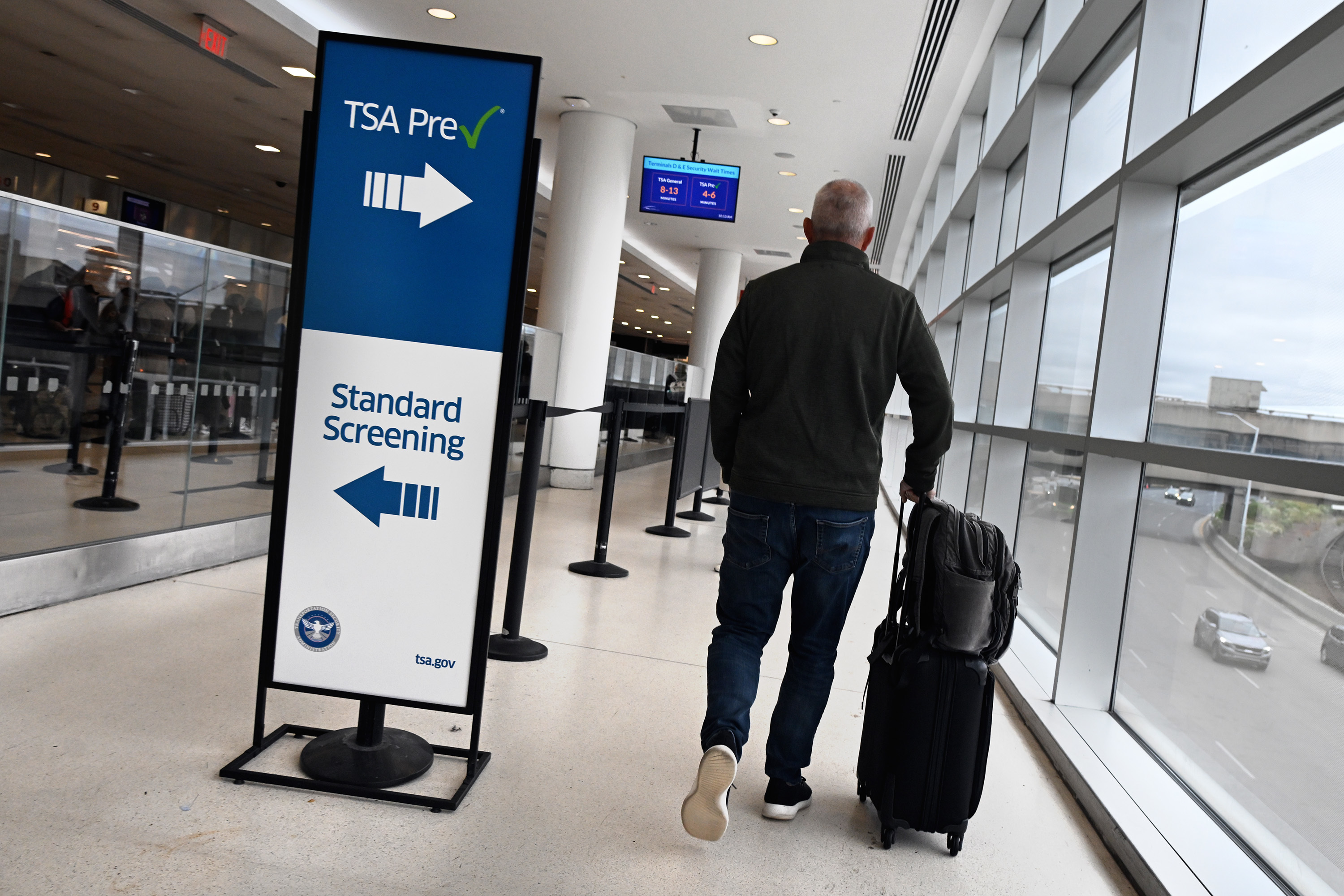
A traveler enters the TSA PreCheck security line at Terminals E-F at Philadelphia International Airport in October.
Security wait times
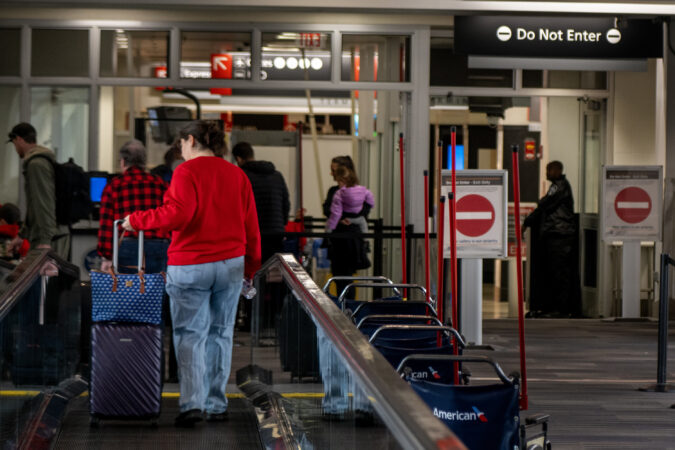
As of Friday morning, all six security checkpoints at PHL were open. TSA PreCheck is available at Terminals A-East, C and D/E.
Current security wait times are available on PHL’s website.
Almost 20 years after the Philadelphia Housing Authority (PHA) moved out of its Center City headquarters, a long-promised mixed-income tower will finally begin construction early next year.
The 14-story building is being built by Philadelphia developer Alterra Property Group, which may also manage the site after it opens. PHA will hold a 99-year ground lease on the property at2012 Chestnut St., which will be its only affordable building in Center City.
“It’s a multifamily, mixed-use, mixed-income building in a high opportunity neighborhood,” said Kelvin Jeremiah, president and CEO of PHA.
It “would afford residents a huge opportunity to live in an area that has access to transportation, employment opportunities, and a whole host of amenities literally right outside of their building entrance,” he said.
The tower will have 121 apartments, 40% of which will be rented at market rate with the rest targeted at tenants below 80% of area median income (or almost $83,000 for a three-person household). It will have 28 studios, 63 one-bedroom, and 30 two-bedroom units.
It also will have 2,000 square feet of commercial space, parking available off-site, and amenities that include a roof deck. The project was designed by JKRP Architects.
“I’m looking to break ground in Q1 of next year,” said Mark Cartella, Alterra’s senior vice president of development and construction. “It’s been a long time coming, so we’re excited to finally be going vertical here.”
What took so long?
PHA moved out of its Chestnut Street headquarters in January 2008, leaving a four-story husk. The agency cycled through numerous plans for the property, including a new headquarters and selling the land to a private developer.
The partnership with Alterra began in 2016. At that time, the project would have had 200 units, a majority of them market rate, and the developer would have held the 99-year ground lease on the property.
But neighborhood pushback and the resulting negotiations delayed the proposal until 2020. Then the pandemic caused more chaos, followed by a spike in construction costs and elevated interest rates that killed the original financing plan.
That led to a new strategy in which PHA issued bonds backed by the future rents of the market-rate units to help pay for the project, along with additional funds from federal housing programs, and a $2 million boost promised by Council President Kenyatta Johnson from funds available through Mayor Cherelle L. Parker’s Housing Opportunities Made Easy (H.O.M.E.) initiative.
“By adding high-quality, affordable apartments alongside retail space in the area, this project helps ensure that our downtown remains vibrant, diverse, and accessible to working families and individuals,” Johnson said in a statement.
“The PHA project will also help deliver a more inclusive Center City that reflects the full spectrum and diversity of Philadelphia’s residents,” he said.
A rendering of the roof deck planned for the new mixed-income building proposed by PHA and Alterra.
The 95-year-old headquarters was demolished in early 2024, but groundbreaking has been delayed in the current unpredictable national economic and political environment.
“You can probably sum that all up with it’s just general uncertainty with the change of[presidential]administration, as well as just getting through the design development process with a lot of folks having input,” said Cartella of Alterra.
“This is a little bit beyond the [usual] design development process with Alterra,” he said. “It’s more stringent than what we typically have to go through.”
Jeremiah has repeatedly expressed concerns about how long the development process can take in Philadelphia, especially in combination with federal guidelines and requirements.
But as this process nears its end — 18 years after the move, 10 years since bringing on Alterra, and two since demolition — he is feeling optimistic.
“It is the first PHA built development in Center City,” said Jeremiah. “That’s going to be a signature project for me, for the city, for affordable housing.”
“Do you realize you are going to end my life by doing this?”
Eliana Chernyakhovsky said she asked the question through an interpreter over and over again to the Pennsylvania Department of Human Services last week, after her 24-hour, state-funded care was cut off without warning. Her meal provider was also cut off. How would she feed herself? What if her oxygen tank ran out?
“Fear had risen in my heart,” Chernyakhovsky said in Russian during an interview through an interpreter on Wednesday. “I was genuinely afraid.”
Chernyakhovsky, 73, of Northeast Philadelphia, was born with spina bifida and has a number of physical disabilities associated with the condition, and uses a wheelchair to get around. She is among the Pennsylvania residents who say they have lost their government-funded services because a state-contracted mail vendor failed to deliver a month’s worth of agency mail.
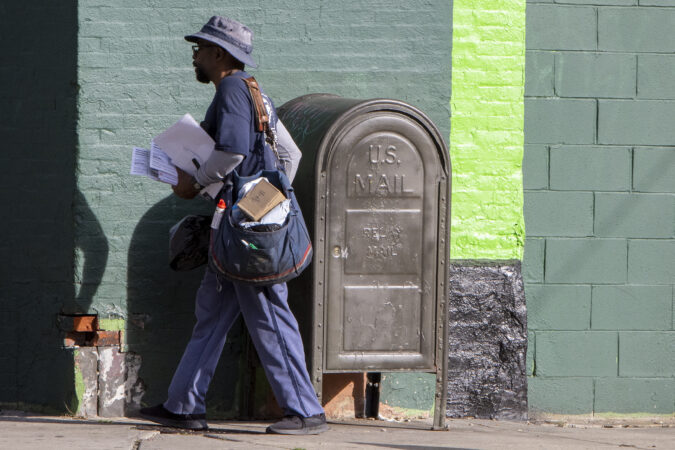
That breakdown resulted in 3.4 million letters never getting sent, 1.7 million of which were from the Pennsylvania Department of Human Services — the agency that oversees SNAP food assistance and Medicaid and is tasked with serving the state’s most vulnerable populations.
Millions of letters from state agencies — including notices of health and SNAP benefit renewal, driver’s license and vehicle registration renewal invitations, vehicle registration cards, and more — were never sent by a mail presort vendor, who was contracted by the state to tray and sort agency mail in order to save money on postage. The failure went undetected for a month until early December, when Gov. Josh Shapiro’s administration fired Harrisburg-based Capitol Presort Services and hired another vendor on a $1 million emergency contract to work through the backlog.
In Chernyakhovsky’s case, a letter dated Nov. 6 said she had failed to submit a renewal packet to continue receiving in-home care, said her attorney, Louise Hayes of Community Legal Services. Chernyakhovsky had 15 days to appeal to continue receiving services, or else her services would be shut off on Nov. 21.
But due to the monthlong lapse in state agency mail, Chernyakhovsky did not receive the letter until last week, after funding for her in-home nurses and foodservices had already been cut off, she said.
Chernyakhovsky’s home health aides opted to continue her care without pay, and with no assurance they would get paid for the time when her care was restored, because her needs are so great.
Her services restarted last week thanks to efforts by Community Legal Services while her appeal works its way through the system. As of this week, one of her home health agencies has still not received payment from her insurance company.
Alexander Aybinder, her day-shift nurse, said Wednesday it was still unclear when he would get paid. But he said he would still come to Chernyakhovsky’s home, no matter what.
“I will come tomorrow, because she cannot stay without service. I will work,” he said. “She’s absolutely helpless.”
DHS: Extended deadlines and ‘additional flexibility’
DHS spokesperson Brandon Cwalina said in a statement Thursday the agency will extend deadlines for appeals and provide “additional flexibility for affected Pennsylvanians.” Residents affected by the mail issue will receive notice of their appeal options and deadline extensions, Cwalina said.
Medicaid, CHIP, and TANF cash assistance recipients whose benefits were reduced or cut off during the mail delay will have their cases reopened, he added. These cases will be again reviewed to determine if the recipients received the necessary notification of a change in benefits. Renewals for the programs, originally due in December, are now due in January.
DHS cannot extend renewal deadlines for SNAP benefits due to federal guidelines, but affected SNAP recipients who submit the necessary documentation within 30 days of losing their benefits will be able to have them reopened and backdated, Cwalina said.
At least two dozen affected so far, with more expected
At least two dozen Community Legal Services clients have had problems with receiving their benefits because of the mail delay, said Maripat Pileggi, a supervising attorney at CLS. The delay affected state agency letters dated Nov. 3 through Dec. 3, officials have said, and all unsent mail should be received by residents in a few days.
And as the nonprofit legal agency has tried to help restore critical services to some of its most vulnerable clients, CLS attorney Lydia Gottesfeld said, legal advocates have struggled to reach the departments in DHS that could help them, with phone lines going unanswered or hour-long wait times.
“It’s been very difficult to get information about these delays,” she added.
Cwalina said Thursday that any DHS appeal hearings that were missed due to the mail disruption are being reopened and rescheduled, and the agency maintains that its callback system is accessible to recipients.
Cases like Chernyakhovsky’s are among the first and most urgent that CLS has identified since the state said that a month’s worth of agency mail to residents from DHS and the Pennsylvania Department of Transportation was never sent. Residents like Chernyakhovsky who receive care through the Medicaid-funded home and community-based services program often have the most acute health issues and significant needs, meaning a loss in healthcare services can be catastrophic.
Gottesfeld expects that more residents will realize in the coming weeks that they lost services — such as food assistance or health insurance — because of missed hearings or deadlines the next time they visit the doctor or grocery store.
When people lose state-funded services, it is not usually because they suddenly no longer need them, Gottesfeld said. Rather, it is usually due to failing to submit paperwork properly, resulting in a loss of food assistance, healthcare, or other services.
Questions remain
It remains unclear how the state agency mail piled up for more than a month before officials noticed, how the backlog was discovered, or where the millions of agency letters were located after the vendor stopped sorting them.
The reported loss of benefits stemming from the mail delay also comes after several tumultuous months for people who receive public benefits, following a federal government shutdown that cut food assistance, new work requirements to maintain benefits, and future uncertainty under federal cuts passed earlier this year. Shapiro was at the forefront of Democratic opposition to federal cuts to Medicaid and SNAP, and was a vocal critic when the department withheld benefits during the federal shutdown.
On Thursday, a group of 15 state Senate Republicans, including top legislative leaders, sent a letter to the Pennsylvania Department of General Services citing The Inquirer’s reporting and requesting more information about how the mail delivery failure was discovered, why it took a month to find the backlog, and more.
“Given the broad scope of this mail delivery failure, it is critical to ensure every effort is made to minimize the impact on our constituents and the disruption it may cause in their lives,” the senators wrote.
Shapiro’s administration is “exploring all legal options” against the fired vendor, Capitol Presort Services, Cwalina said.
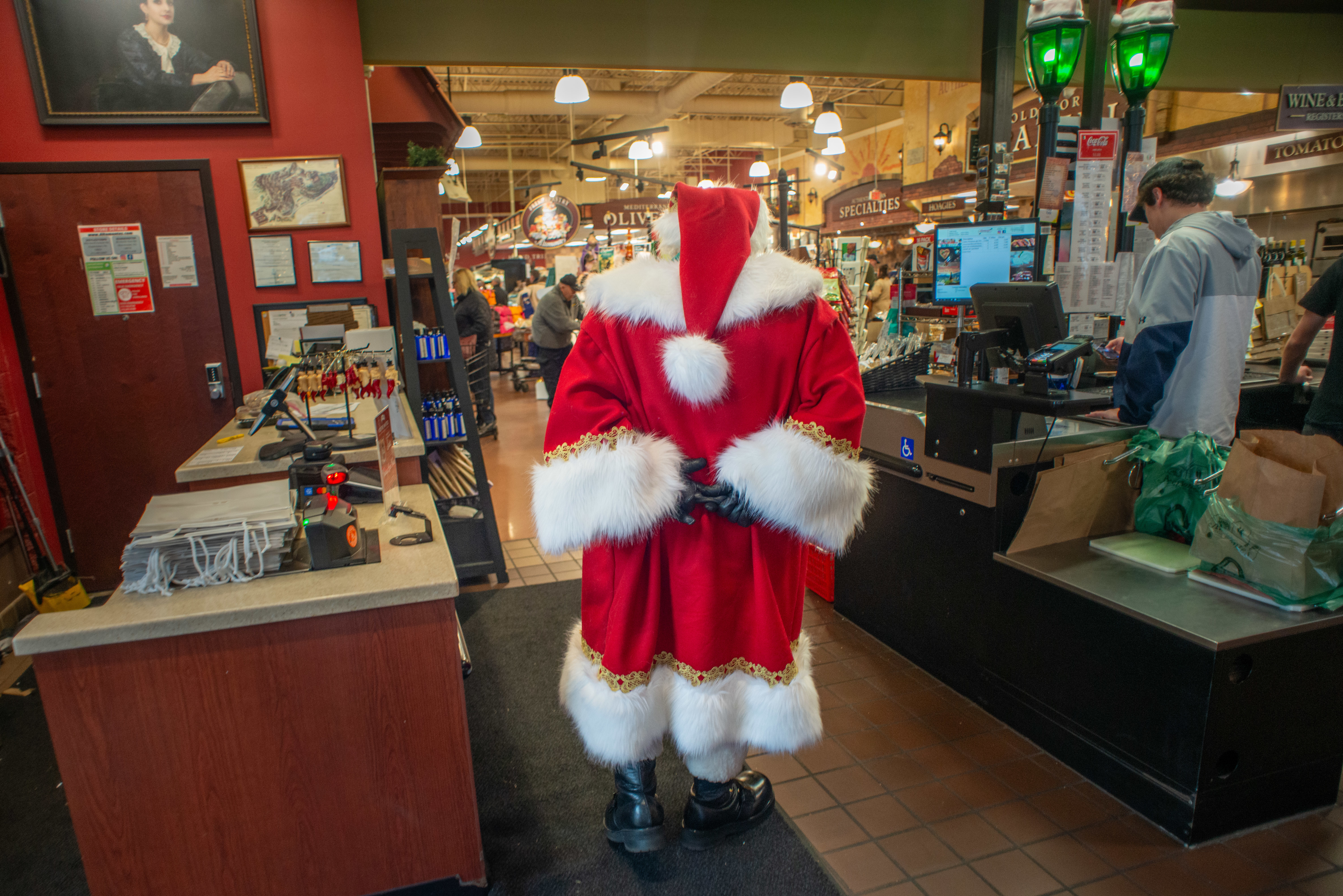
In the early morning, when creatures are just starting to stir, he is an Uber driver, taking people to the airport or their offices in a red Kia with “ON COMET” emblazoned on the license plate. And during business hours on weekdays, he sits at a desk coordinating ads for Comcast.
But on nights and weekends, he dons the red suit and transforms.
In November and December, Kringle’s calendar is booked solid with photo sessions, home visits, fundraisers, and appearances. He shows up at tree lightings, breakfasts, weddings, and other events across the region, from Doylestown to Media. Each week, as many as 8,000 children and adults tell him their wishes, he said.
Frank Naimoli, aka “Santa Kringle,” greets Miranda Patton, 5, of Doylestown during his recent visit to Altomonte’s Market in Doylestown.
The grueling schedule is worthwhile, he said, but not because of a big payout.
“I will never run it like a business,” said Kringle, also known as Frank Naimoli, 58, of Glenolden. “I literally have charged as little as two cookies for a visit. I’ll never get rich or buy a car off of being Santa. … It’s just something I love doing.”
Professional Santas make about $60 an hour on average, according to the employment platform ZipRecruiter.
The pay can vary by event and by performer. Some charge between $250 and $500 an hour, according to several Philly-area Santas.
Others often play the role for free.
Kiam Patel, 2, is given a candy cane by Frank Naimoli, aka “Santa Kringle,” at Altomonte’s Market in Doylestown.
No matter the pay, being Santa is a grind, with perhaps hundreds of visits packed into a short peak season.
Many Santas schedule all this merriment around full-time careers — Philly Santas work day jobs as corporate professionals, small-business owners, and commercial truck drivers. Their vacation days, much like their natural-grown beards, are carefully kept for the holiday season. And come December, as the Santa grind takes over, they sacrifice time with their own families and operate on little sleep.
By Christmas Eve, “I am exhausted,” said Naimoli, who’s in his 23rd Santa season. “Nine times out of 10, I fall asleep in the suit.”
Keeping the holiday magic alive
Frank Naimoli, aka “Santa Kringle,” greets children and adults during a recent visit to Altomonte’s Market in Doylestown.
Several local Santas said they’re in the industry for the magic, not the money.
“There is not that much money there,” said Paul Bradley, or “Santa Paul,” of Mantua, Gloucester County, who retired from a factory job a decade ago.
“The hugs you get from the little kids, or to have a 5-year-old child run to you and [yell] ‘Santa!’” it melts my heart,” said Bradley, 71. “That’s why I do it.”
Dennis Daniels as New Age Santa stands outside the Comcast Center on Dec. 12.
Dennis Daniels, 66, of North Jersey, called being Santa “a very comfortable and lucrative profession.” The former educator, also a ventriloquist, markets his entertainment services under the company name Mr. D & Friends. When he wears the red suit, he’s “New Age Santa.” (Don’t call him by his other name if you see him out in public, he insists.)
His Santa persona is “simply the traditional Santa,” he said, “but I look a little bit different.”
“My skin happens to be brown, and I’m also not rocking the belly,” explained Daniels, who has been a Santa for more than 30 years.
(From left) Amora Williams, Yanae Petty, and Dennis Daniels, aka “New Age Santa,” at the Comcast Center on Dec. 12.
This year, “New Age Santa” has booked appearances at the Comcast Center and Newark Liberty International Airport, and he usually books several sessions at photo studios. Sometimes he makes up to $800 for two hours of Santa work. Other times, he shows up as Santa for free.
Daniels wants to keep doing this work as long as he can, he said, to be a Santa for all children. “I didn’t see Santas that looked like me when I was a child,” he noted.
Dennis Daniels, aka “New Age Santa,” greets smiling people at the Comcast Center on Dec. 12.
Feeling Christmas joy in return
After decades of bringing holiday spirit to countless families, one Bucks County Santa recently felt the magic come back to him.
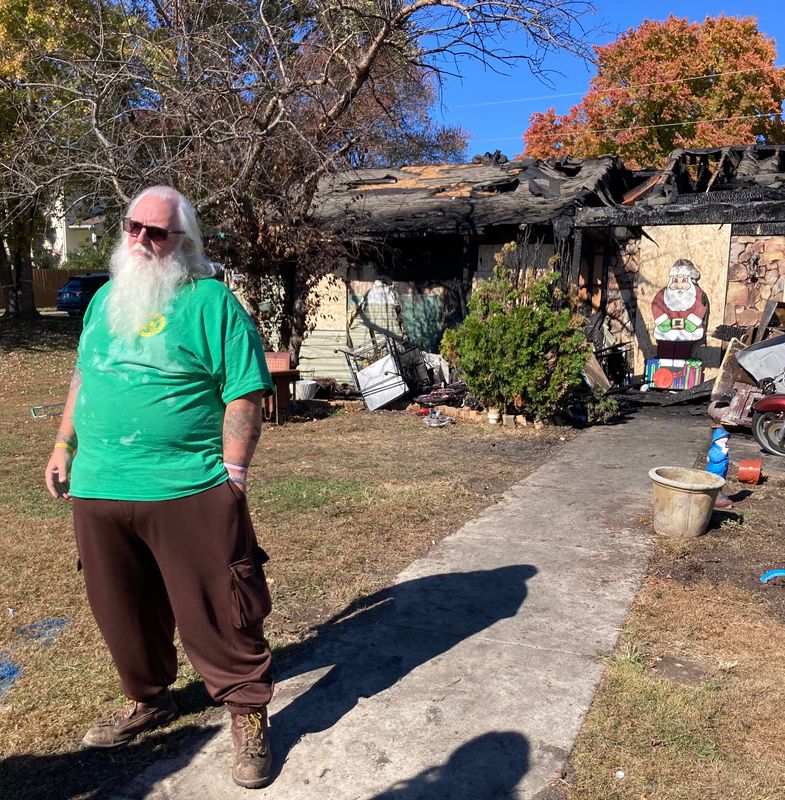
When Scott Diethorne’s Fairless Hills home burned down in late October, his family lost everything, including his 12 Santa suits, which cost nearly $3,000 apiece.
Fans of “Santa Scott” quickly came together to help, raising $100,000 through a GoFundMe and finding the family a nearby rental home. Fellow Santas donated four suits, and Diethorne bought two more to get him through the season.
Scott Diethorne outside the charred remains of his Fairless Hills home in late October.
“Without the community, I’d be devastated,” said Diethorne, 58, who has been Santa for more than 35 years. “I don’t know what I would have done.”
Their generosity saved Diethorne’s Santa career this season, allowing him to continue spreading cheer while putting in 50-hour weeks driving a six-wheeler box truck throughout the Northeast and Mid-Atlantic.
“My wife and kids don’t really see me from the middle of October until January,” said Diethorne, a father of nine grown children. He makes regular Santa appearances at the Fairless Hills Garden Center, as well as schools and daycares.
Diethorne, a former mall Santa, has been freelance for years, ever since he was instructed to tone it down at the Oxford Valley Mall in 2017. That year, he was told he could no longer flash his signature “Naughty” and “Nice” arm tattoos, welcome all animals in for photos, or strike funny poses as requested by visitors.
Some malls are strict with the Santa business, Diethorne said, imposing rules and time limits for each visit. The other local Santas said they’ve seen this too.
Now that he is his own boss, “I don’t care how long the line is,” Diethorne said. “I’m listening to that kid. That’s what it’s about.”
Why these Santas spread the cheer
Santa Paul, aka Paul Bradley, poses with his reindeer.
Every Santa has their own reasons for donning the suit.
For Diethorne and Bradley, it was a single comment. Upon his retirement, Bradley shared a passing thought aloud: Maybe he’d take up being Santa in his new free time. Diethorne, meanwhile, was told he’d make a good Mr. Claus by a mall Santa he met in passingat a local ShopRite.
Frank Naimoli, aka “Santa Kringle,” poses with a smiling child at a recent visit to Altomonte’s Market in Doylestown.
For Daniels, the New Age Santa, the spirit of Santa came at an unexpected time. While going through a divorce in the early 1990s, he found a Santa suit he’d never seen before among boxes he was moving out of storage. To this day, Daniels isn’t sure how the outfit ended up there, he said, but it was just the right size.
Lilly Retz hugs Dennis Daniels, or New Age Santa, during a visit to the Comcast Center.
So in 1994, with his newfound suit in hand, Daniels became Santa at the Elks Lodge in Red Bank, a role from which his uncle had recently retired.
“I became Santa then,” Daniels said, “and I’ve not looked back.”
While November and December are the busiest times, some Santas stretch their season for belated holiday parties, or they reappear midsummer for “Christmas in July” events.
Dennis Daniels, or “New Age Santa,” departs with his bag from the concourse at the Comcast Center.
But the season’s end still brings a certain sadness, Daniels said, a “Santa depression,” because “for two months you’ve been a rock star.”
“Everywhere you go, people yell and scream: ‘Santa!’ They run over. They want to take pictures with you,“ Daniels said. “And then, on Dec. 26, you become yesterday’s news. We’re only human.”
Philly’s biggest development projects could bring more than 2,500 new homes and apartments; 1,800 parking spaces; and 118,000 square feet of storage space.
A rendering of the 380-foot tower proposed near Pennsport by a New York capital management firm.Perkins Eastman
Some developers still have big plans though, and if they want to build more than 50 new homes, or any project of over 50,000 square feet, they need to submit their plans to the Planning Commission for public input via the Civic Design Review committee.
story continues after advertisement
This year, 18 projects across Philadelphia went before the committee. These projects are large enough to remake neighborhood commercial corridors and create new hyperlocal landmarks, for better or worse. Most will be breaking ground in the new year.
Here’s your guide to what the committee considered this year.
What is Civic Design Review?
The Civic Design Review committee isan advisory-only board of architects, planners, and other experts who provide feedback on developments that will have an outsized impact on the cityscape.
“CDR gives communities a meaningful opportunity to make their voices heard, educates the public on principles of good design and use of shared spaces, requires developers to respond to questions in a public forum,” says Jessie Lawrence, the city’s director of Planning and Development.
But just because a project goes through Civic Design Review doesn’t always mean it will get built. The 76ers proposed Center City arenawent through the process, and famouslycame to naught earlier this year.
Nonetheless, Civic Design Review is still a rough proxy for what Philadelphians can expect to see in the near future. Here’s your guide to what the committee considered this year.
275 apartment units for Southwest Center City
1601 Washington Ave. | Ori Feibush of OCF Realty
Atrium Design Group
The former site ofHoa Binh Plaza has seen multiple redevelopment efforts since the popular Vietnamese shopping mall’s pre-pandemic closure. This latest isthe third from Feibush, who is offering a scaled-down version of an earlier 400-unit plan, with 10% of the units slated for affordable housing and 200 underground parking spaces.
Status: Ground breaking is slated for the second half of 2026.
84 apartments in Southwest Center City
914 S. Broad St. | Carl Dranoff of Dranoff Properties
JKRP Architects
Dranoff has been developing residential buildings on this stretch of South Broad Street for two decades. He has planned a new apartment building on this propertyfor years. He saw the drive-through McDonald’s that formerly occupied the site and closed in 2021, as a poor fit for one of Center City’s major thoroughfares.
Status: Ground breaking is projected for autumn 2026.
372-car garage for Fishtown and Northern Liberties
53-67 E. Laurel St. | Bridge One Management
Designblendz
As apartments have sprouted along this stretch of the Delaware River in recent years, new parking spaces have not kept apace. Investors hired Bridge One Management tobrainstorm new uses for this property, and the company thinks demand for parking is high enough for a new garage. The project also has 14,000 square feet of commercial space on the ground floor and another 16,000 on the roof.
Status: Permits have not yet been filed.
59-room hotel for Fishtown
1224 Frankford Ave. | Roland Kassis of Kassis & Co.
Gnome Architects
The developer who most helped remake Fishtown into the ultrahip neighborhood it is today haslong wanted to build a hotel on this vacant lot on the commercial corridor. An earlier, taller version of the project was approved before the COVID-19 pandemic, but those permits lapsed.
Status: Ground breaking is slated for the second half of 2026.
75 apartments in Kensington
3408 B St. | Dwight City Group
Raymond F. Rola
Far from the parts of Kensington where development is booming,this apartment project is meant to be priced to attract people who already live in the neighborhood. The developer, known for adaptive reuse, plans to revive the two-story remnants of a derelict warehouse as a base for the six-story apartment building.
Status: The project awaits a zoning board hearing in January.
162 units for rent and purchase in Port Richmond
2620 and 2650 Castor Ave. | Tim Ajvazi
Ambit Architecture
These two neighboring projects are thework of the same developer and were considered by the Civic Design Review in tandem. At 2650 Castor Ave., 68 homes are planned across eight triplexes and 22 duplexes. At 2620 Castor Ave., there is a proposal for a four-story apartment building of mostly one-bedroom units, which the zoning board approved earlier.
Status:: The zoning board approved the project on 1650 Castor Ave. on Wednesday.
232 new homes in North Philadelphia
2200 N. Eighth St. | Andre Herszaft
Harman Deutsch Ohler Architecture
This project has beenin the works for two years, and to gain community support before the zoning board the New Jersey-based developer has more than halved the number of planned units. Instead of apartments, the old trolley barn at this location will be replaced by dozens of duplexes and triplexes, assuming it wins permission from the ZBA.
Status: Neither zoning nor demolition permits have been filed yet.
384 apartments in Roxborough
4889 Umbria St. | Genesis Properties and GMH Communities
Oombra Architects
Thisapartment building is the largest in recent memory for the Northwest Philadelphia neighborhood of Roxborough, and while community groups were unhappy, they had few means to push back against it. The developer plans almost one-for-one parking at the site, but no commercial development, although a few existing businesses on site will remain, including furniture retailer Love City Vintage and Javies beer distributor.
Status: Ground breaking is slated for next year.
167 apartments in Manayunk
4045-61 Main St. | Urban Conversions
CBP Architects
This seven-story project from architect CBP Architects required thedemolition of a historic textile mill to move forward. Its proximity to the Schuylkill presented another challenge, which developers solved by proposing 160 parking spaces on its first two floors to lift the project out of the flood zone.
The project also required permission from the zoning board, where a height reduction was mandated. But the developer successfully argued the project was impossible with fewer stories and the ZBA reconsidered and will now allow its original size.
Status: Permitted, but ground has not been broken yet.
45 units for East Germantown
6225 Germantown Ave. | MGMT Residential
Ingram/Sageser
This deserted warehouse, tucked off Germantown Avenue, is slated for a small,four-story apartment building with a floor of parking. The developer still needs to demolish the old building.
Status: A demolition permit was issued in July, but the building still stands.
81-unit apartment building for Mt. Airy
6903-15 Germantown Ave. | Tierview Development
Barton Partners
Thisfive-story building includes space for retail, 11 parking spots in the rear, and plenty of greenery and brick detailing to fit in with its surroundings. Seven of the units are priced to be accessible to lower-income families, but all of the units are targeted to below-market-rate prices.
Status: Ground breaking slated for the first half of 2026.
495-car garage in University City
17 N. 41st St.. | University City Associates
ISA
This garage is called University Place 5.0 and is meant to accompany the developer’s earlier life-sciences-oriented University Place 3.0 next door. It is meant to provide vehicle storage for the developer’s existing holdings, and especiallyfor the city’s criminal forensics laboratory, which will have reserved use for a fifth of the space. Councilmember Jamie Gauthier fought for the crime lab in her district, and she had to change the property’s zoning to enable the garage.
Status: Ground breaking is slated for early next year.
This West Philadelphia developer isexpanding to a new part of the city with a project that redevelops the former St. Divine Mercy School into a 35-unit apartment building along with two new buildings to house the rest of the units. Sixteen will be slated for lower-income residents.
Status: Leasing for the former school begins in January; the two new buildings have yet to break ground.
204 apartments in North Philly
1322 West Clearfield St.| J Paul Inc.
Canno Design
This building, from architects CANNODesign,stirred controversy in its corner of North Philadelphia over what neighbors saw as a lack of adequate parking (although there were 82 underground spaces in the plans). The project needed a variance from the Zoning Board of Adjustment (ZBA), and was granted permission to move forward in December.
Status: Approved by the zoning board, but hasn’t broken ground yet.
65 affordable apartments in Sharswood
2006 Cecil B. Moore Ave. | PHA and the Frankel Enterprises
Blackney Hayes
This senior housing development is one of the last pieces of the Philadelphia Housing Authority’s 10-year redevelopment of North Philadelphia’s Sharswood neighborhood. (Itmoved its headquarters there from Center City.) This piece of the project is being orchestrated in partnership with the Frankel brothers, who are known for affordable housing projects across the city.
Status: Ground breaking is slated for autumn 2026.
620 apartments for Pennsport
1341 S. Christopher Columbus Blvd. | Brevet Capital Management
Perkins Eastman
This property to the east of Pennsport has seen many mega-project proposals come and go. The latest from a New York capital management firm promiseshundreds of new units, and more towers if the first round goes well.
Status: Permits have been filed but a ground-breaking date remains unknown.
1,005-car garage in Grays Ferry
3000 Greys Ferry Ave. | Children’s Hospital of Philadelphia
THA Consulting Inc.
CHOP is in the midst of a big expansion, and wants more employee parking. The site is about a mile from the hospital complex, and CHOP plans shuttles for the last leg of commutes. The projectstirred controversy for its location in a low-income neighborhood with already elevated asthma levels, which advocates say will be exacerbated by more cars.
Status: Under construction.
118,000 square feet of storage space in Fox Chase
7801 Oxford Ave. | BG Capital
Vissi Architecture
The developer reduced the planned size of its self-storage space to stave off community opposition to the project, which won approvals from the ZBA this summer. But BG Capitalnever intended to build the project itself, and instead is seeking to sell the permitted property to a developer with more experience in the self-storage industry.
Status: Permitted, unbuilt, and for sale.
Staff Contributors
Reporting: Jake Blumgart
Graphics: John Duchneskie
Editing and Digital Production: Erica Palan
Copy Editing: Lidija Dorjkhand
Subscribe to The Philadelphia Inquirer
Our reporting is directly supported by reader subscriptions. If you want more journalism like this story, please subscribe today
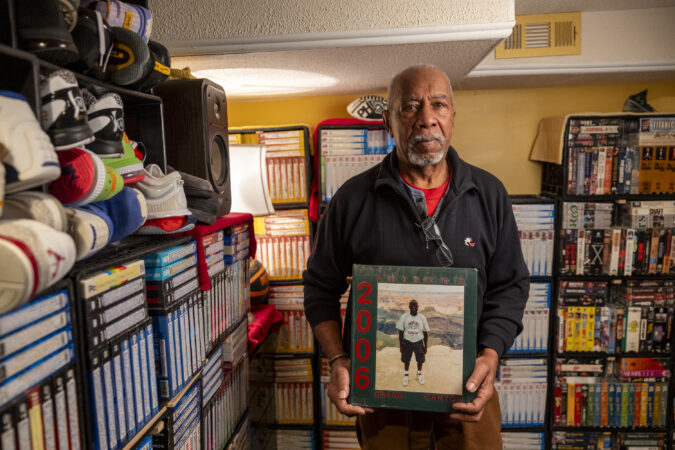
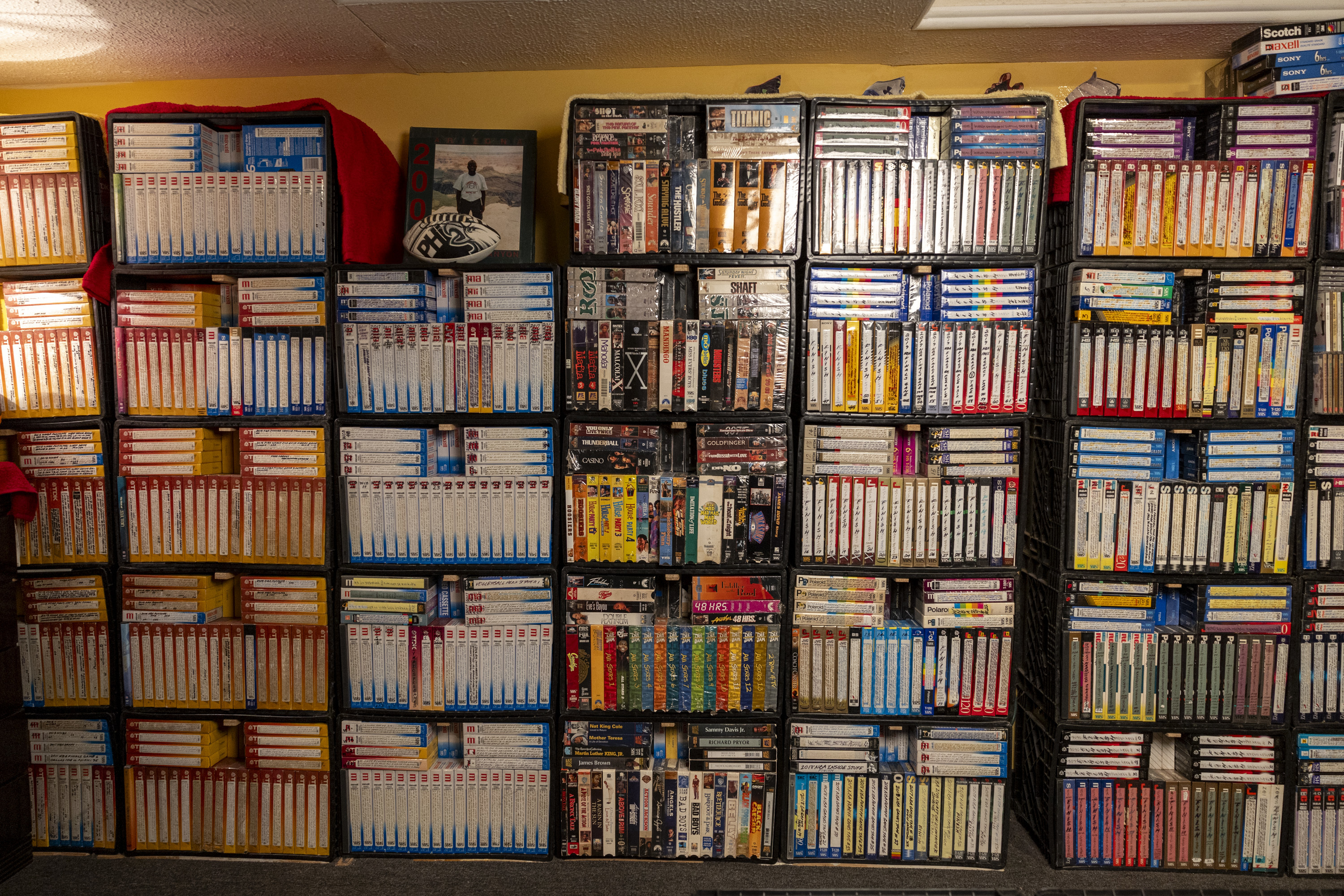
Billy Gordon was surrounded by the tapes. They were the first thing he saw in the morning, and the last thing he saw at night. His bedroom, in the basement of his grandmother’s Cobbs Creek home, was not big; maybe 190 square feet, if that.
But he found enough space for the thousands of basketball games he’d recorded from 1986 to 2024, all on VHS. Each tape came with a neatly written label, noting the name of the event, the teams who played, each team’s record, and the final score.
They were carefully placed into black crates, organized by year, and stacked on top of one another, creating a technicolor tapestry around his bed. It was an unconventional hobby, but Gordon loved it.
His family wasn’t surprised. Gordon, who worked as a baggage handler at Philadelphia International Airport, was a diehard sports fan with an encyclopedic mind. He could remember statistics about any athlete, no matter how obscure.
Billy Gordon made meticulous notations on the tapes he stored neatly for five decades inside his Cobbs Creek home.
So, it only made sense that he’d spend his free time collecting archival footage of everything from Super Bowl XXXIII to his alma mater, Cheyney, to Pepperdine vs. Loyola Marymount in 1987.
“He didn’t miss very much,” said Gordon’s uncle, Ron Hall.
Hall and Gordon lived together in Cobbs Creek for about 15 years. Neither had a traditional work schedule. Hall was a union carpenter who traveled for jobs; Gordon picked up night shifts at the airport.
But in the moments they did overlap, they’d watch games, often with pizza and chicken wings. This tradition continued through the winter of 2024, when Gordon was diagnosed with an autoimmune disease. The illness quickly worsened, and he was moved to a nursing home in King of Prussia.
As he lay in his hospital bed, hooked to a respirator, Hall sat beside him. They cheered on whatever local team was playing that day: the Eagles, Phillies, or 76ers.
“Just to let him know that people love him,” his uncle said.
Gordon died earlier this year, in May, at age 66. He was buried in his blue-and-white Cheyney track suit.To Hall, it was like a losing a brother. It took him months to even step into that basement bedroom.
Once he did, he was stunned. He always knew that his nephew had a VHS collection, but didn’t realize the full extent of it until then.
“The magnitude of what was here really hit me,” he said. “I was in disbelief that he had accumulated so much. That he had taken the time to collect so many things.”
‘A love for the game’
Gordon was born and raised in a sports-loving household. His grandmother, Vernese,was an avid Phillies fan. Hall was too, and would bring his nephew to different ballparks.
After graduating from John Bartram High School in the 1970s, Gordon went on to Cheyney, where he studied industrial arts. It was there that his love for sports information really blossomed.
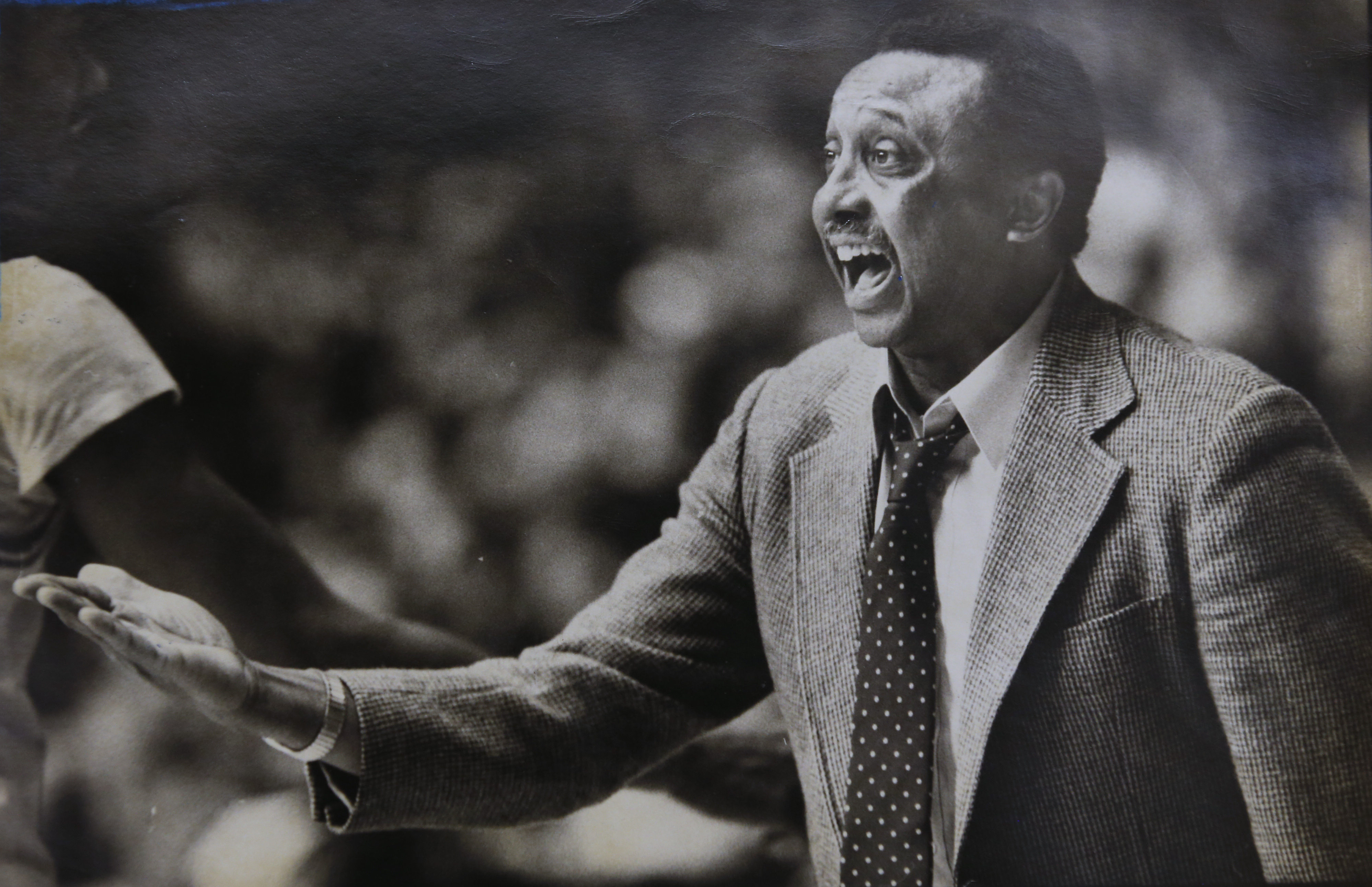
The young college student had the fortune of overlapping with John Chaney, who was coaching Cheyney’s men’s basketball team.
Billy Gordon followed John Chaney’s career closely after their personal interactions during Chaney’s time at Gordon’s alma mater.
The Wolves were nothing short of dominant. Chaney led them to a 225-59 record from 1972 to 1982, with eight tournament appearances and one NCAA Division II championship.
Gordon was not athletically inclined, certainly not enough to play on Chaney’s team. But he liked to hang out around the gym and developed a rapport with the players and coaches.
He also showed an attention to detail to which Chaney gravitated.
“He had such a love for the game, and knew the game so well, that he could point something out to this player, that player,” Hall said. “[He] really was just being an asset to the coaching staff.”
Chaney invited Gordon to work at his summer camp, which he ran with Sonny Hill throughout the Philadelphia area.The zealous sports fan couldn’t believe his luck. He’d help with drills, but he also took pride in the little things: packing lunches, inflating basketballs, and setting up exercise equipment.
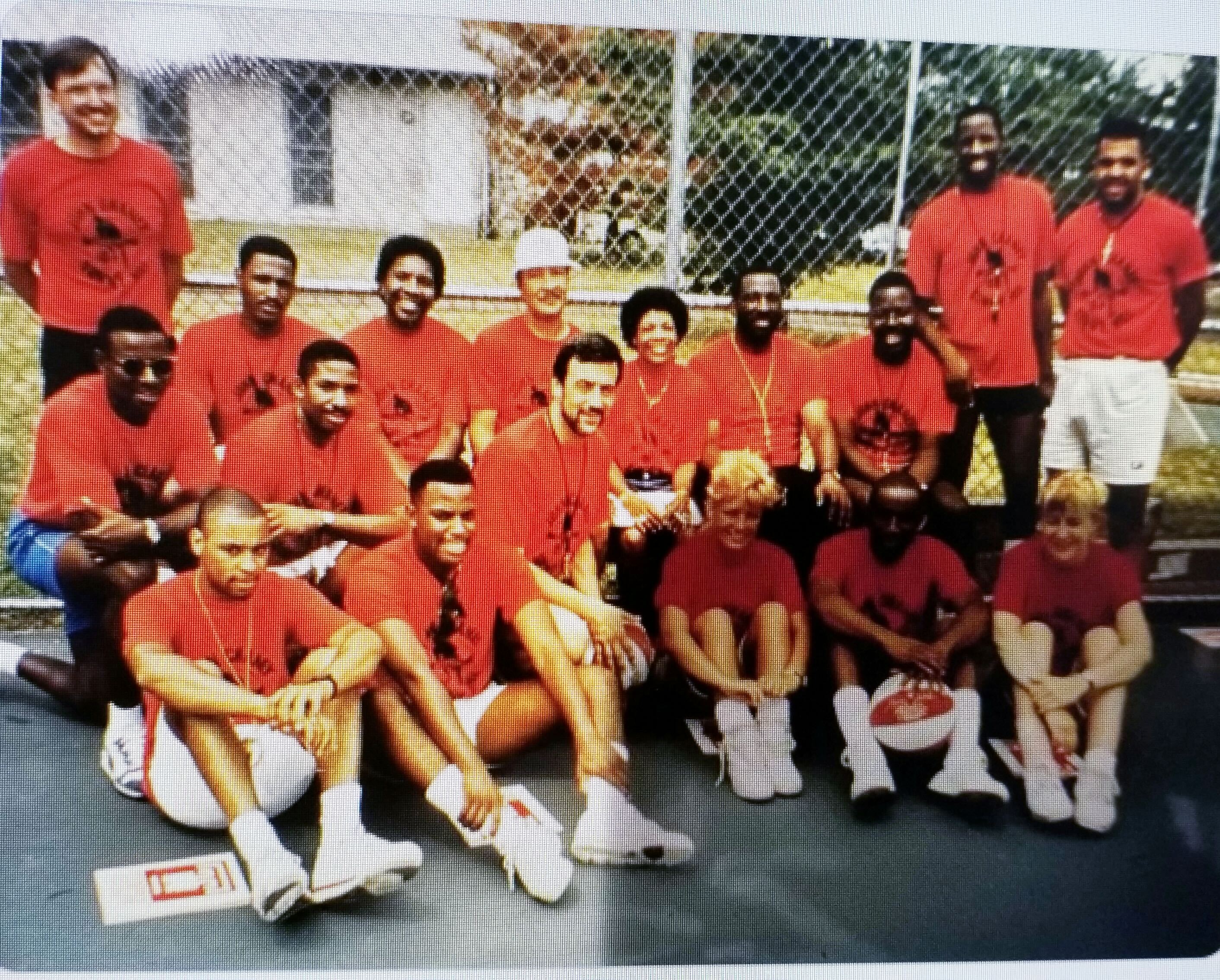
The coaches of the Chaney-Hill summer camp. Gordon is pictured second from the right, with the basketball between his ankles
On rainy days, when the kids couldn’t play outside, Gordon would pop one of his tapes into the VCR.
“Old Temple games,” said his friend, Mia Harris. “Just so the kids could learn.”
She said that Gordon worked with Chaney and Hill from the mid-1980s to the early 2000s. The camp was the highlight of his summer; an opportunity to get to know the legends of the Philadelphia basketball scene.
“They made him feel like a part of the team, even though he wasn’t a player,” Harris said. “He even wore a whistle. That tickled me.”
It was around this time that Gordon started building his VHS collection. He began taping bigger events — the 1987 Stanley Cup Finals, Super Bowl XXII — but basketball was always the bedrock.
He captured the dominance of Michael Jordan, the fearlessness of Kobe Bryant, and every March Madness Cinderella story since the mid-1980s. He chronicled the NBA Finals, the WNBA Finals, and a slew of conference college basketball games.
The sheer number of tapes and labels was dizzying (Hall estimated that his nephew had 40 crates). But upon closer inspection, a trend emerged.
Chaney was hired as head coach of Temple in 1982, a job he kept until 2006. Among the stacks were pockets of his time there: Mark Macon’s first game for the Owls in 1987; the team’s first loss of that historic season, to UNLV, on Jan. 24, 1988.
Gordon recorded years of Temple vs. Illinois, Temple vs. Duquesne, Temple vs. Penn State. There even was a sit-down interview with Chaney, from the late 1980s.
These tapes stuck out. Gordon didn’t personally know any of the NBA greats he filmed. He didn’t know the WNBA stars, either. But he did know John Chaney, long before he became a national figure. And he never forgot him.
Finding a new home
A few months after Gordon died, Hall began to sort through his nephew’s things. It was an emotionally taxing process.
The retired carpenter donated Gordon’s winter coats and appliances to a local men’s shelter in Southwest Philadelphia. He gave his summer gear to a nonprofit that sends gently used clothing to Liberia.
Billy Gordon’s crates, filled with various tapes of NCAA, NBA, and WNBA games from 1986 to 2024, are awaiting what his family believes is the right price and the right home.
Gordon’s sneaker collection went to Hall’s son, Gamal Jones, and his food was delivered to charity.
The only thing left was the thousand-tape-elephant-in-the-room. Jones looked at his father.
“What do you want to do?” he asked.
“I have no idea,” Hall responded.
Jones listed Gordon’s tape collection on Facebook Marketplace, for the modest sum of $123. The response exceeded the family’s expectations.
They received almost a dozen messages, from NBA superfans, collectors, and archivists. Some offered to travel to Cobbs Creek to assess the collection in person.
Hall recognizes that his nephew’s trove is worth more than $123. But he says this isn’t about the money.
He wants to find a buyer who will share the same passion that Billy Gordon had for 38 years. Someone who will honor his hobby and preserve it.
“He probably would want it to go to somebody that was as enthusiastic about it as he was,” Hall said. “That could really appreciate the time, the energy, that he put in to collect all these.”
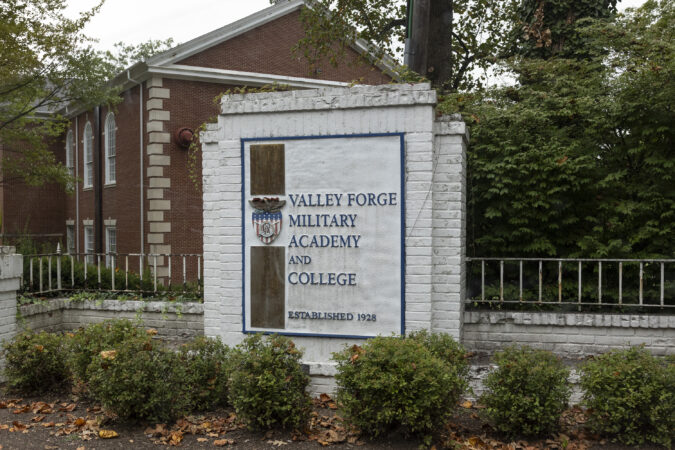
Radnor school board officials are now considering a plan for a charter school seeking to open in the fall of 2026on the Valley Forge Military Academy campus.
A group seeking to openValley Forge Public Service Academy Charter School on the site of the closing military school is already equipped with a leadership team and board, but it cannot open as a publicly funded charter school without approval from the local school board.
The group began the formal charter approval process Tuesdayat a Radnor school board meeting with a presentation pitching a nontraditional high school experience that could prepare studentsfor public service jobs.
Liz Duffy, the board president, said the board entered the hearing “with an open mind toward gathering information.”
“And no decisions have been made or will be made on the application today,” she added.
At least one more hearing will follow before the board votes on the proposal. Radnor has never approved a charter school, despite receiving earlier proposals.
The Radnor school board has voted down two previous proposals to add a military-themed charter school to the campus, which the board had argued would serve as a way to subsidize the military academy. The current proposal, The Inquirer has reported, has been in the works since March — months before the private military academy announced it would shut down.
Chris Massaro, a Radnor native who runs a firm that advises educational institutions, had begun working to help the military academy in January and thought a new charter school could be a way to preserve the institution’s legacy.
Massaro said at the hearing Tuesday that he introduced charter school consultant Alan Wohlstetter to the Valley Forge Military Academy Foundation in April and “they got to work” on the plan. Massaro and Wohlstetter are both listed as founders of the potential new school.
The applicants and the foundation are presenting themselves as separate entities that would simply have a landlord-tenant relationship.
“This proposal is entirely new,” said Stephen Flavell, the prospective charter school’s founding CEO. “It has a new mission, new leadership, and a new board.”
He said the school would provide a “uniquely different” experience for students who might not be a good fit for a regular public school.
“This is an ‘and’ for Radnor, not an ‘or,’” he added.
Charter schools are publicly funded but privately run, and receive per-pupil funding from school districts.
What would the charter school offer?
Organizers said the school would prepare students in grades six through 12 for public service jobs, such as law enforcement, emergency response services, and the military. The entity’s website says its mission is “to provide a rigorous, service-oriented education that emphasizes character, discipline, academic excellence and career readiness.” Applicant spokespeople emphasized providing students with career-path alternatives to four-year college degrees.
The school would cap the number of Radnor School Districtattendees at 25%, andwould alsocater to students from nine other localschool districts, according to the applicant team. “Every student graduates with a diploma plus,” said Deborah Stern, a board adviser for the prospective school. She said the school would give students opportunities to secure college credits or industry-recognized credentials in addition to their high school diploma, alongside connections in the field of their choice.
Would there be any construction?
Dave Barbalace of BSI Construction said the applicant team would pursue a $2.4 million renovation that would take six to seven months to “repair, refresh, and modernize” the building.
The renovation would include making the restrooms on the first floor bigger, a new roof, walkway repairs, and an Americans with Disabilities Act-accessible ramp, he said.
When would the charter school open?
The applicant team said the school would be readyto open in September 2026 if it is approved by the Radnor School District.
The school would have 50 students per grade, starting with just sixth through eighth grades in the fall and adding another grade each year through 12th grade..
A few students have already pre-enrolled, according to the applicant team.
What feedback has the proposal gotten?
Jim Higgins, a lifelong Radnor resident who grew up across the street from the military academy, told the school boardhe did not support the prior two charter school proposals but is supportive of this one.
“I care personally about what happens to the property, so I’ve been watching it,” said Higgins, who previously worked as a CEO and principal of a North Philadelphia charter school and has two kids in the Radnor school system.
“I did not support the other charter applications. I thought they were the wrong people. There wasn’t a community investment. I’m excited by this one,” he added.
Jibri Trawick, a member of the applicant team, said the team has done over 35 outreach events and collected 115 petition signatures, though not all are from Radnor residents since the school would serve the region. The applicants also have 18 letters of support from local businesses and organizations, Trawick said.
One person at the hearing expressed concern about young students sharing a campus with college students, and another questioned what was different between the proposed school’s programming and the existing options for students at Radnor’s district schools and the Delaware County Technical School.
Michael Kearney, a Wayne resident, expressed concern over whether the applicant team was planning for the unexpected expenses that come with using an aged building.
“I caution you that we don’t get too excited about what is a great idea and ignore the uncertainty and risk that are inherent in the proposal,” he said.
What comes next?
This hearing was designed for the charter school team to present its project, and a second hearing set for Jan. 20 is designed for the board, the school district’s administration, and its solicitor to question the applicant team.
The school board has to make a decision byMarch 1.
If Radnor rejects the application, the groupcould reapply, and ultimately could appeal to the Pennsylvania Department of Education.
The trickle begins in the fall, some principals say: Students with a history of behavior or disciplinary problems or other issues show up in Philadelphia School District schools, often from city charters.
Students switch schools after the start of the school year for many reasons — and changing schools is fairly common in Philadelphia.
But at times, it seems like some students are off-loaded from charters because they’re tough to educate, according to interviews with a dozen district administrators. In district schools, administrators cannot remove students for such issues.
Advocates at the Education Law Center have noted that trend, as has the head of the district’s principals union — all of whom call it concerning, especially in a school system with large numbers of needy students and not enough resources to educate them.
“In October, in November, in December, that’s when we see the counseling out, the threats of expulsion that say, ‘We’re going to expel you, but you can go to a district school and then you won’t be expelled,’” said Margie Wakelin, a lawyer with the Philadelphia-based Education Law Center-PA.
Cassandra St. Vil, chief executive officer of a group that represents a large number of Philadelphia charters, said she is not aware of any data to support those anecdotal claims.
“For years, opponents of charter schools have tried to use this message and yet there has never been any evidence to back it up,” said St. Vil, of Philadelphia Charters for Excellence. “And conversely, we hear from charter school leaders the exact same thing, that students come to them.”
District data show that over the last three years, there has been a steady flow of charter students transferring to district schools throughout the school year. In the 2024-25 school year, for instance, 161 students transferred from brick-and-mortar charters to district schools in September. By June, it was 843 students, just a fraction of the total charter sector.
window.addEventListener(“message”,function(a){if(void 0!==a.data[“datawrapper-height”]){var e=document.querySelectorAll(“iframe”);for(var t in a.data[“datawrapper-height”])for(var r,i=0;r=e[i];i++)if(r.contentWindow===a.source){var d=a.data[“datawrapper-height”][t]+”px”;r.style.height=d}}});
Charters educate more than 64,000 Philadelphia students; there are about 114,000 in district schools.
“While this is not an issue across the entire charter sector, the district is looking at the data, and working with the Charter Schools Office,” Christina Clark, a district spokesperson, said in a statement. “The district is working to analyze enrollment trends across all sectors.”
Robin Cooper, president of Commonwealth Association of School Administrators, Teamsters Local 502, said many district schools get a stream of students beginning in the fall, after district schools’ budgets are locked in on Oct. 1, then another in the spring, just before state testing. (Students’ scores count for the schools they attended on Oct. 1, even if they switch schools after that date.)
“They’re not sending the kids who get A’s, the good kids, they’re sending you the kids who might have problems,” said Cooper, who was a longtime district principal before assuming the union presidency. “It negatively impacts your climate, and the charter is getting the money for the student.”
One district principal, who declined to be named for fear of reprisal, said they recently stopped in a hallway to talk to a student who had just transferred to the district school from a charter.
“She said, ‘They kicked me out for fighting,’” the principal said. “Here, we can’t kick a student out for fighting. I said, ‘Welcome to our school. I’m in the business of growing children.’”
Students ‘counseled out’ of charters
Charter schools — which are publicly funded but privately managed, though authorized by local boards of education — have transformed Philadelphia’s educational landscape since they first came to Pennsylvania in 1997.
Charters are funded by per-student payments from the school district, but are paid only for the number of days enrolled.
By law, charters are open to all students, and most operate on citywide lotteries — though some are neighborhood schools.
A 2017 Education Law Center analysis of the enrollment of special education students in Pennsylvania charters found that “while a number of individual charter schools equitably serve all students, the charter school sector taken as a whole generally underserves these vulnerable student populations.”
Anecdotally,district principals say in some cases, they see students with behavior problems or learning differences accepted to some charters, but thensome of themare “counseled out.” That means they arenot officially expelled or forced to leave, but strongly encouraged or pressured to do so after a disciplinary issue crops up.
In district schools, the bar for expulsion is much higher — for incidents such as using a weapon, or threatening mass violence.
Wakelin, of the Education Law Center, said sherecently spoke to a parent whose child has a significant disability. The parent had multiple conversations with the charterschool about the child’s needs. She said the school kept telling the family: We’ll help.
“And then very recently, the charter school said, ‘You know, you might be better served in a district school that has more resources for a student with autism,’” said Wakelin, who declined to name the school in question.
‘It’s no secret’
After the start of the school year, another district principal said, comes a bump in charter transfers.
“We see an increase every year,” said the principal, who, like othercurrent and former district administrators who spoke to The Inquirer, asked not to be identified for fear of reprisal. “It’s not talked about, but in the schools, it’s no secret.”
When new students transfer in, an administrator often asks why they left their old school.
“Most of them say it’s because they were kicked out of whatever charter school they were at — they got into a fight, or whatever,” the principal said. “And most of the times, it’s things that we can’t move students for in the Philadelphia School District.”
Lawrence Jones, longtime chief executive officer of the Richard Allen Preparatory Charter School in Southwest Philadelphia, said there is “an urban myth” that charters off-load problem students to district schools and then benefit financially for doing so. (There is a common perception that charters get paid for students based on their Oct. 1 enrollment counts, and keep the money if students go elsewhere, but charters actually get paid for the number of days students are enrolled.)
“The gain that you could potentially get for dropping those kids, financially and other funding, would be less than if you held onto those students,” said Jones.
But a third district principal called the issue a particular challenge for neighborhood schools, which already typically tend to have higher concentrations of children with complicated needs. Public schools often get needy students midyear, but no additional funding. Their budgets are projected in the spring, but finalized in the fall.
“It’s just not fair,” said the third principal. “We’re not getting their best kids.”
That principal is currently experiencing what they call “the season when we get charter kids,” they said. “They send them to us for discipline issues, uniform violations.”
‘A sword that cuts both ways’
The practice engenders deep frustration, principals say.
“Public schools can’t turn kids away. It’s not like the charter world where you can say, ‘No, I’m full, have a nice day.’ In public school, you take the kid, crowded or not, and figure it out,” a fourth principal said.
St. Vil, of Philadelphia Charters for Excellence, which represents 64 schools, disputes that characterization. She noted that nearly 80% of the city’s charter students are Black or Latino, and many have special needs or are English learners.
“These schools are achieving real success stories for students who too often haven’t thrived in one-size-fits-all settings,” St. Vil said.
Jones, of Richard Allen Preparatory Charter School, said that while there may be some isolated instances where a charter counsels out a student with difficulties, “it’s a sword that cuts both ways.” Students sometimes come to charters from district schools with inadequate special-education plans, he said.
Parents enrolling their children at Richard Allen have told him that they were told his school “could provide better services,” Jones said. “I asked, ‘By who?’ And they said, ‘By staff at the former school, the district school.’”