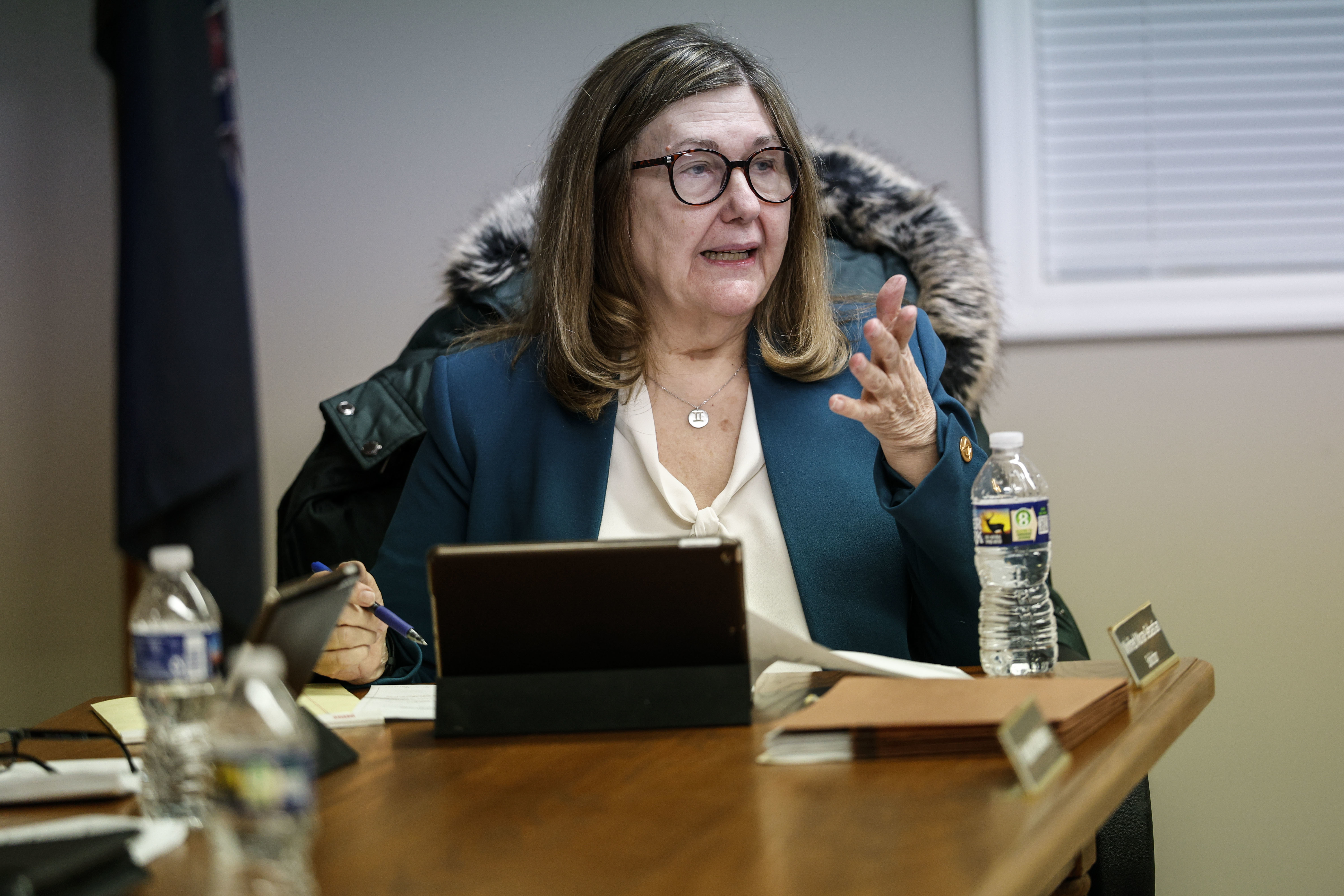
Tag: Weekend Reads

  • Why hasn’t Trump sent troops to Philly, the city where ‘bad things happen’? Everyone has a theory.

    Why hasn’t Trump sent troops to Philly, the city where ‘bad things happen’? Everyone has a theory.

    In the last six months, President Donald Trump has sent troops, immigration agents, or both to Democratic cities from coast to coast. The list includes Los Angeles, Chicago, Washington, Memphis, Portland, Ore., Charlotte, N.C., New Orleans, and Minneapolis.

    But not Philadelphia.

    The city that seemed an obvious early target, condemned by Trump as the place where “bad things happen,” has somehow escaped his wrath. At least so far.

    That has sparked speculation from City Hall to Washington over why the president would ignore the staunchly Democratic city with which he has famously feuded. Here we offer some insight into whether that’s likely to change.

    Why has Philadelphia been spared when smaller, less prominent cities have not?

    Nobody knows. Or at least nobody knows for sure. But lots of people in government and immigration circles have ideas.

    There’s the weather theory, that it’s hard for immigration agents who depend on cars to make arrests in cities that get winter snow and ice. Except, of course, the administration just launched Immigration and Customs Enforcement operations in Minneapolis, which gets 54 inches of snow a year.

    Then there’s the swing-state theory, that Trump is staying out of Philadelphia because Pennsylvania ranks among the handful of states that can tip presidential elections. But that doesn’t explain Trump’s surge into North Carolina, where he sent immigration forces last month.

    While the Tar Heel State voted for Trump three times, elections there can be decided by fewer than 3 percentage points.

    U.S. Rep. Brendan Boyle, a Democrat whose North and Northeast Philadelphia district includes many immigrants, suggested a blue-state theory, that Trump has mostly targeted cities in states that voted for Vice President Kamala Harris in the 2024 presidential election. But Boyle acknowledged that North Carolina and Tennessee are exceptions.

    “It could just be that they’re working their way down the list,” Boyle said.

    Has Mayor Cherelle L. Parker had a hand in keeping troops out of Philadelphia?

    It depends on whom you talk to.

    For months she has passed up opportunities to publicly criticize the president, turning aside questions about his intentions by saying she is focused on the needs of Philadelphia. Some believe her more passive approach has kept the city out of the White House crosshairs.

    People close to the mayor point out that big-city mayors who land on the president’s bad side have faced big consequences. For instance, in Los Angeles, Mayor Karen Bass frequently clashed with Trump ― and faced a National Guard deployment.

    Some point out that Parker has good relationships with Republicans who are friendly with the president, including U.S. Sen. Dave McCormick of Pennsylvania, who has praised the mayor on multiple occasions.

    On the other hand, some in the city’s political class ― especially those already skeptical of Parker ― say the suggestion that she has shielded the city gives her too much credit.

    One strategist posited that the lack of overt federal action has more to do with Trump’s trying to protect a razor-thin Republican majority in the House, and that targeting Philadelphia could anger voters in the Bucks County and Lehigh Valley districts where Republicans hold seats.

    What does Trump say about his plans for Philadelphia?

    Not much. Or at least nothing specific.

    During a raucous campaign-style rally Tuesday night in Northeast Pennsylvania, Trump made no mention of his intentions ― even as he railed against immigration and accused Democrats of making the state a “dumping ground” for immigrants.

    Trump suggested there should be a “permanent pause” on immigration from “hellholes like Afghanistan, Haiti, Somalia and many other countries,” declared Washington the safest it has been in decades, and praised ICE as “incredible.”

    He also reminisced about hosting the Philadelphia Eagles at the White House earlier this year, after their Super Bowl win, hailing head coach Nick Sirianni as a “real leader” and marveling at running back Saquon Barkley’s muscles.

    “I love Philadelphia,” Trump declared. “It’s gotten a little rougher, but we will take it.”

    That was a marked change from a decade ago, when Trump called Jim Kenney a “terrible” mayor, and Kenney called him a “nincompoop.”

    Kenney fought Trump in court and won in 2018, when a U.S. District Court judge ruled that the president could not end federal grants based on how the city treats immigrants. After the ruling, the Irish mayor was captured on video dancing a jig and calling out “Sanctuary City!”

    More recently, in May, Philadelphia landed on Trump’s list of more than 500 sanctuary jurisdictions that he planned to target for funding cuts. That was no surprise. Nor was it surprising that in August, when the administration zapped hundreds of places off that list, Philadelphia was among the 18 cities that remained.

    “I don’t know why they’re not here yet,” said Peter Pedemonti, codirector of New Sanctuary Movement of Philadelphia. But the larger point is that “ICE is in neighborhoods every day, they are taking away people every day,” and he urged those who support immigrants to prepare.

    “Now is the time to get involved with organizations that are organizing around this,” Pedemonti said. “There are neighbors who need us.”

    Has Gov. Josh Shapiro helped dissuade federal action in Philadelphia?

    It’s hard to say. Shapiro has challenged Trump in court multiple times, including when he was the state attorney general during Trump’s first term.

    As governor, Shapiro sued the administration over its move to freeze billions in federal funds for public health programs, infrastructure projects, and farm and food bank contracts. He also joined a multistate suit challenging an executive order that restricted gender-affirming care for minors.

    On immigration, however, Shapiro has been careful not to directly engage in the sanctuary city debate, saying his job is to provide opportunity for all Pennsylvanians. But he has been critical of Trump’s enforcement tactics, calling them fear-inducing and detrimental to the state’s economy and safety.

    Still, Trump has not lashed out at Shapiro, a popular swing-state governor. At his rally in Mount Pocono last week, in which he criticized several Democrats, Trump didn’t mention Shapiro ― or the Republican in attendance who is running against the governor in 2026, Stacy Garrity.

    Why is the president sending troops to American cities in the first place? Isn’t that unusual?

    Highly unusual ― and fought in court by the leaders of many of the cities that have been targeted. On Wednesday, a federal judge blocked Trump’s deployment of troops to Los Angeles, saying it was “profoundly un-American” to suggest that peaceful protesters “constitute a risk justifying the federalization of military forces.”

    Trump says the National Guard is needed to end violence, to help support deportations, and to fight crime in Democratic-run cities. Last week he declared that Democrats were “destroying” Charlotte, after a Honduran man who had twice been deported allegedly stabbed a person on a commuter train.

    Two members of the West Virginia National Guard were hospitalized in critical condition ― one subsequently died ― after being shot by a gunman in Washington the day before Thanksgiving.

    That the attack was allegedly carried out by an Afghan man who had been granted asylum helped spark a wave of immigration policy changes, all in the name of greater security. For some immigrants who are attempting to legally stay in the country, that has resulted in the cancellation of citizenship ceremonies and the freezing of asylum processes.

    So what happens next?

    It’s hard to say. Immigration enforcement will surely continue to toughen.

    More immigrants are being arrested when they show up for what they expect to be routine immigration appointments, suddenly finding themselves handcuffed and whisked into detention. In Philadelphia this year, more than 90 immigrants have been trailed from the Criminal Justice Center by ICE agents and then arrested on the sidewalks outside, according to advocates who are pushing the sheriff to ban the agency from the courthouse.

    But it’s difficult to predict when or whether troops might land on Market Street.

    “I’ve heard so many different theories,” said Jay Bergen, the pastor at Germantown Mennonite Church, who has helped lead demonstrations against courthouse arrests. “It’s probably all of them ― a little bit of the way Shapiro has positioned himself, the way the mayor has positioned herself, a little bit the electoral map of Pennsylvania, a little bit, more than a little bit, Trump’s own personality.”

    That Philadelphia has been ignored to date doesn’t mean it won’t be in Trump’s sights tomorrow, Bergen said.

    “This administration thrives on being unpredictable, and on sowing as much exhaustion and pain as possible,” Bergen said. “We don’t do ourselves a favor by getting panicked in advance, but we also need to be ready.”
  • With roots stretching back 170 years, the Jewish Family and Children’s Service strives ‘to make the world a better place’ | Philly Gives

    With roots stretching back 170 years, the Jewish Family and Children’s Service strives ‘to make the world a better place’ | Philly Gives

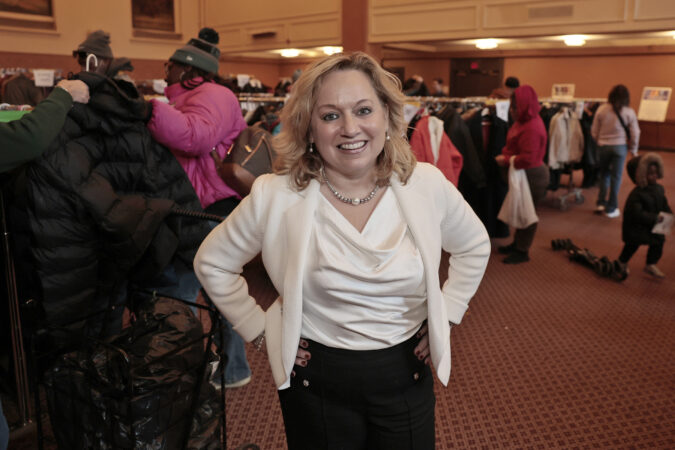
    By the time more than 700 people had found coats at the Jewish Family and Children’s Service of Greater Philadelphia’s annual coat drive last month, JFCS volunteer manager Brianna Torres should have been exhausted.

    Instead, she was exhilarated.

    “Honestly, this is one of our most favorite days of the year,” she said, taking a break from shepherding the 60 volunteers helping hundreds of folks choose free winter jackets and coats for themselves and their children at Congregation Rodeph Shalom.

    Sometimes the line stretched around the historic synagogue on North Broad Street.

    “It’s all hands on deck,” Torres said, with a smile. “We feel good — giving and receiving.”

    JFCS’s roots date to 1855, when philanthropist and Jewish educator Rebecca Gratz founded the Jewish Foster Home, and to 1869, when United Hebrew Charities was organized.

    These days, JFCS’s client base has grown beyond the Jewish population it once primarily served. It offers a multitude of services, including help with basic needs, mental health and wellness, support for Holocaust survivors, older adults and their families, help for children and families, and for people living with disabilities, as well as an LGBTQ initiative.

    “We’re an organization that is very focused on the equal value of every human being,” said Robin Brandies, JFCS’s new president and chief executive.

    When the giveaway ended, 900 of those human beings had chosen 1,200 coats out of 1,600 donated.

    “It is our responsibility to make the world a better place,” Torres said. “Our main forefront is dignity.”
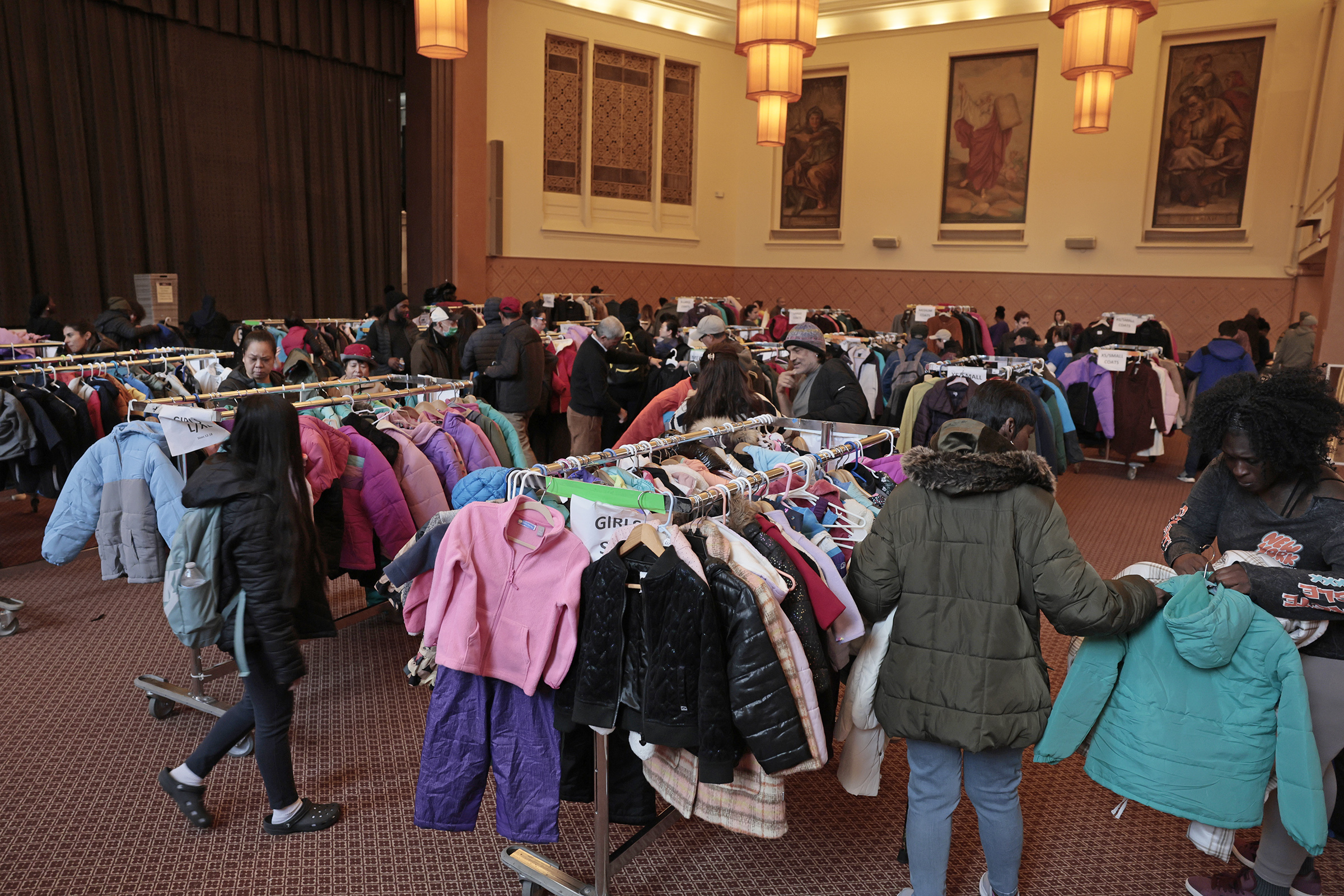
    That’s why, she explained, the coat drive, while massive, didn’t resemble a rummage sale. “We’re trying to create a boutique type of atmosphere.”
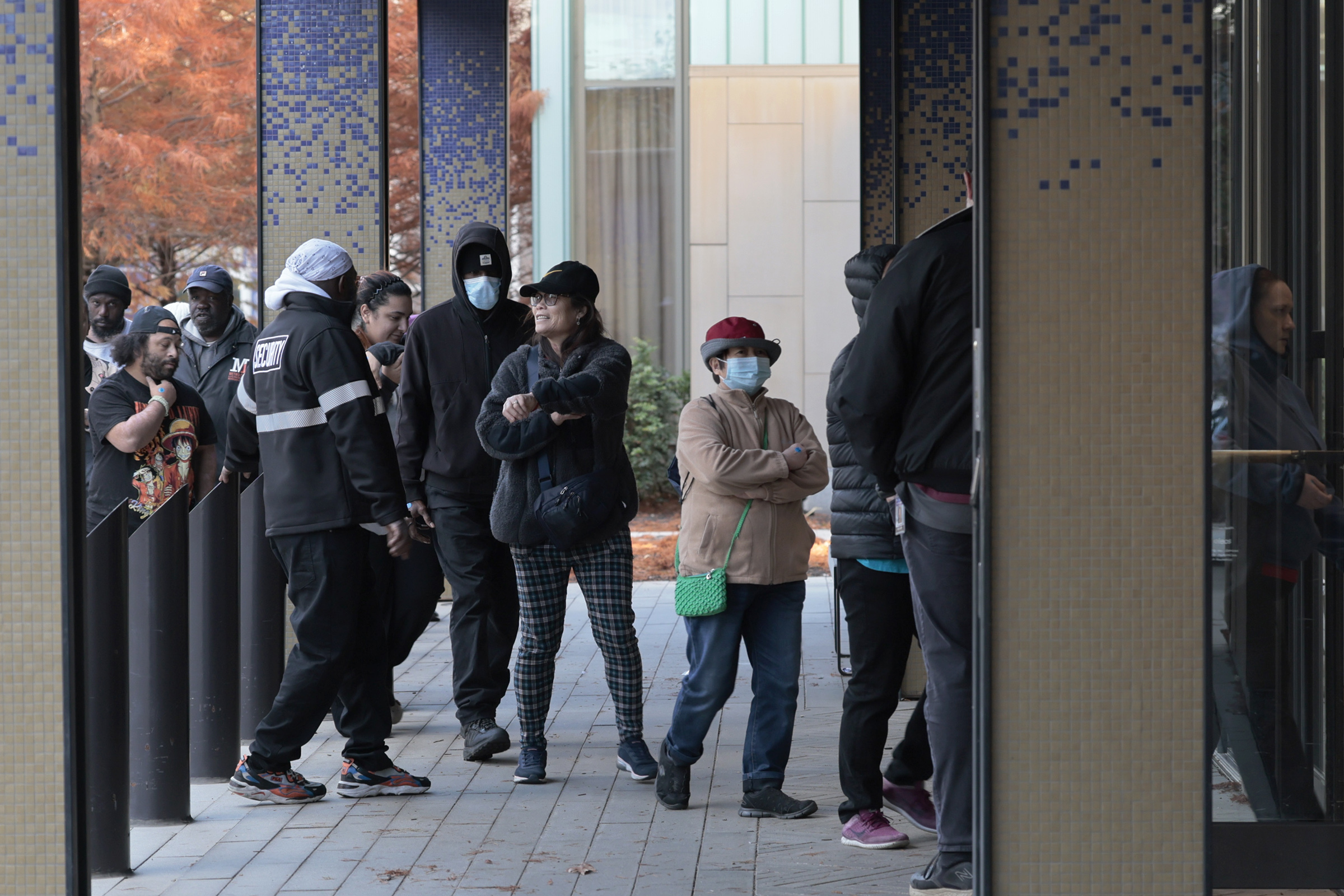
    People look for coats during the winter coat drive at Rodeph Shalom synagogue last month.

    Volunteers hung coats neatly on racks by size, not piled in heaps. While many people were served, only 35 at a time were allowed in to “shop” in the synagogue’s huge community room. They could look at and try on coats at leisure without jostling for room.
    Volunteers helped them choose their coats while other friendly volunteers packed their coats into bags along with flyers describing more of JFCS’s services.

    Leftover coats wind up in JFCS’s mobile pop-up, “Our Closet in Your Neighborhood.” The agency brings a truck loaded with all kinds of clothing, from shoes to coats, and sets up mini boutiques in synagogues, churches, and community centers around the region. Fresh produce is also often available.

    Last month’s coat drive was Brandies’ first as JFCS’s new president and chief executive. She replaces JFCS’s longtime executive Paula Goldstein, who retired Sept. 1 after more than 40 years of service.

    “I’m blown away,” Brandies said. She walked into the synagogue’s community room and almost immediately ended up helping little King James, 3, get zipped into his new jacket.

    His mother, Jessel Huggins, of Strawberry Mansion, brought five of her 13 children to the coat drive.

    As they waited to choose, three of the boys, Shar, 6, Boaz, 7, and Prince Jedidiah, 8, said they hoped for winter jackets themed with Sonic the Hedgehog characters — Sonic and Tails, the fox.

    Sadly, they weren’t available, but at least Boaz and Prince Jedidiah got blue coats — the same color as the hedgehog. Shar landed a gray camouflage one. Their older sister, Shaly, 13, managed to snag her dream coat, a jacket with fur around the hood.

    “This is my first time coming,” Huggins said. “Buying coats for 13 kids is a lot.”

    LaToya Adams, of West Philly, stood in line, hoping she’d find a coat for herself, her daughter, 20, and her son, 7. “We can’t afford coats with food stamps being cut off — and right at Thanksgiving.”

    People wait in line to get into the winter coat drive at Rodeph Shalom synagogue last month.

    “The money I do make has to go to the bills,” she said. “I’m just trying to find a good-paying job. It’s a burden. It feels like you have a weight on your shoulders and you can’t get out of it. We’re trying to survive, and them giving a coat today helps.”

    Brandies came to JFCS after serving as the leader of Abramson Senior Care. The two organizations joined on Oct. 1 to provide more seamless care for older adults and their families in a program now known as Abramson Senior Care of JFCS.

    Abramson had offered more health-based care with JFCS, providing other types of services to seniors, including help with housing and food. “A family can make one phone call” on a 24-hour hotline to access services, Brandies said.

    Sometimes there are emergencies, like a person calling late at night after noticing an elderly neighbor had tried to cook herself a meal and ended up having a minor fire. Usually, though, Brandies said, the calls are from people seeking advice on how to care for an aging relative.

    Brandies, who had earlier careers in law and fundraising, said she became a fierce advocate for older adults in the 10 years she spent at Abramson.

    “People don’t like to think about aging,” she said. “It’s possibly the most universal and least sexy of causes. It’s not as sexy in fundraising circles as donating” to programs for children.

    “Everybody ages and needs help at some point,” she said. “But we’re not educated [as a society] as to the best way to be there.

    “As the percentage of the population that’s aging increases, we have fewer people going into senior care professions,” and there are fewer resources available to help the elderly. Many are aging alone, with no families nearby to help.

    “Seniors don’t want to be infantilized,” she said. “They want to continue to live their lives with as much dignity as possible.”

    This article is part of a series about Philly Gives — a community fund to support nonprofits through end-of-year giving. To learn more about Philly Gives, including how to donate, visit phillygives.org.

    For more information about Philly Gives, including how to donate, visit phillygives.org.

    Jewish Family and Children’s Service of Greater Philadelphia

    Mission: Jewish Family and Children’s Service (JFCS) of Greater Philadelphia strengthens families and individuals across generations and cultures to achieve stability, independence, and community.

    People served: Over 30,000 annually

    Annual spending: $14,899,000 for 2024-2025

    Point of pride: The recent merger of JFCS and Abramson Senior Care (now Abramson Senior Care of JFCS) expands access to comprehensive social and healthcare services for older adults and their caregivers across Greater Philadelphia.

    You can help: We invite individuals, families, groups, corporations, and more to contribute their time and skills to a variety of community-based volunteer opportunities.

    Support: phillygives.org

    What your JFCS donation can do

    • $25 buys a warm winter coat for a child.
    • $50 purchases a grocery store gift card for a family.
    • $100 pays the heating bill for an individual with a disability.
    • $360 subsidizes the cost of therapy for an individual experiencing a mental health crisis.
    • $500 covers medical bills for an older adult.
    • $1,000 helps a family of four pay their rent.
    • $2,500 installs a chair lift in the home of a Holocaust survivor.
  • Philadelphia Orchestra builds up all the color and majesty one could hope for in Handel’s ‘Messiah’

    Philadelphia Orchestra builds up all the color and majesty one could hope for in Handel’s ‘Messiah’

    Making Handel’s Messiah a major occasion — rather than a mere Christmas revisitation — is close to impossible, though not at the Philadelphia Orchestra’s Friday opening of a three-performance Kimmel Center run.

    For years, the orchestra imported one guest conductor after another.

    Now, Messiah is led by artistic director Yannick Nézet-Séguin, who began as a choral conductor in Montreal and happens to have the inside track on excellent solo singers, thanks to that little old opera company where he also works 80 miles up the road.

    It was a highly compelling performance that’s likely to gain more strength on Saturday and Sunday.

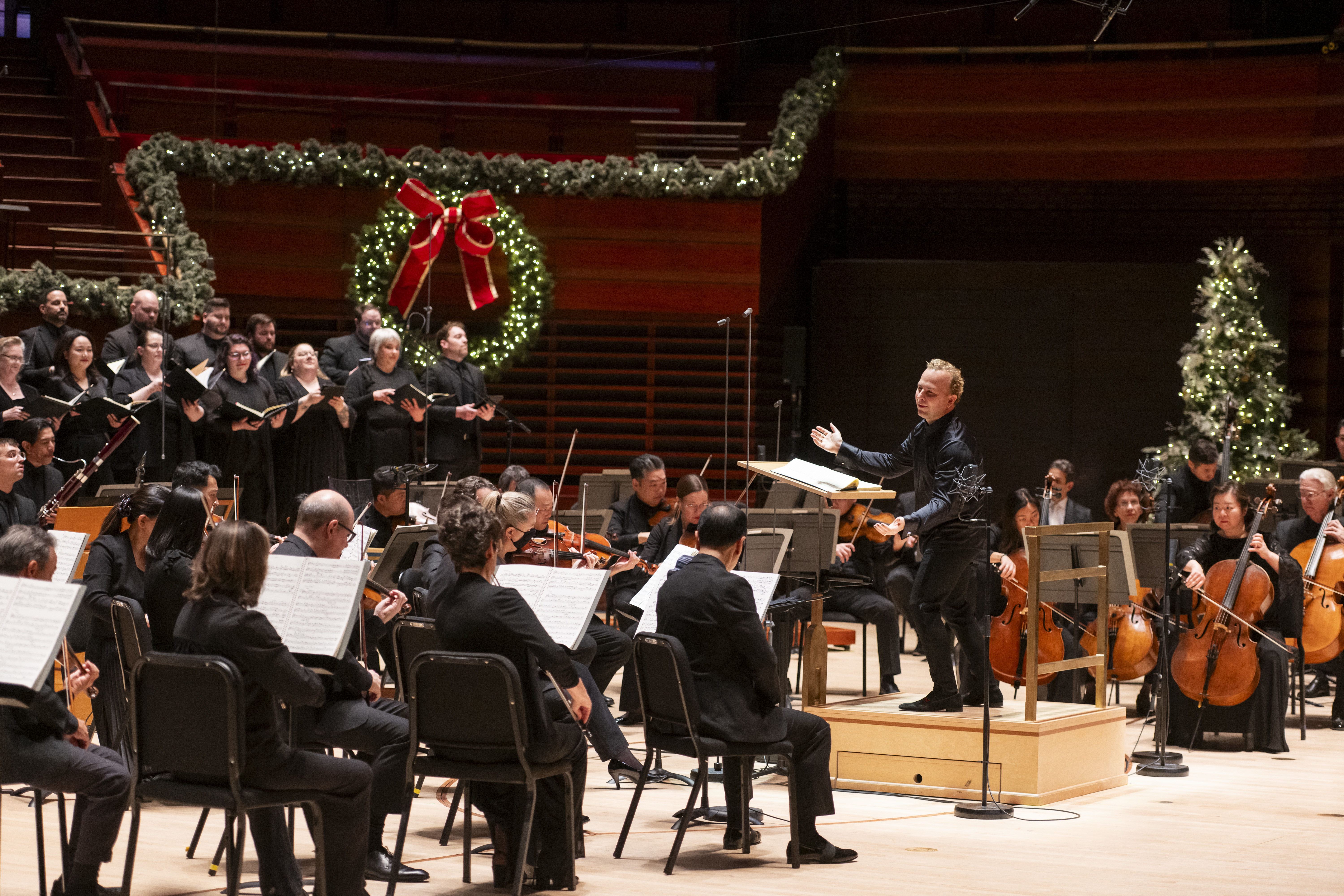
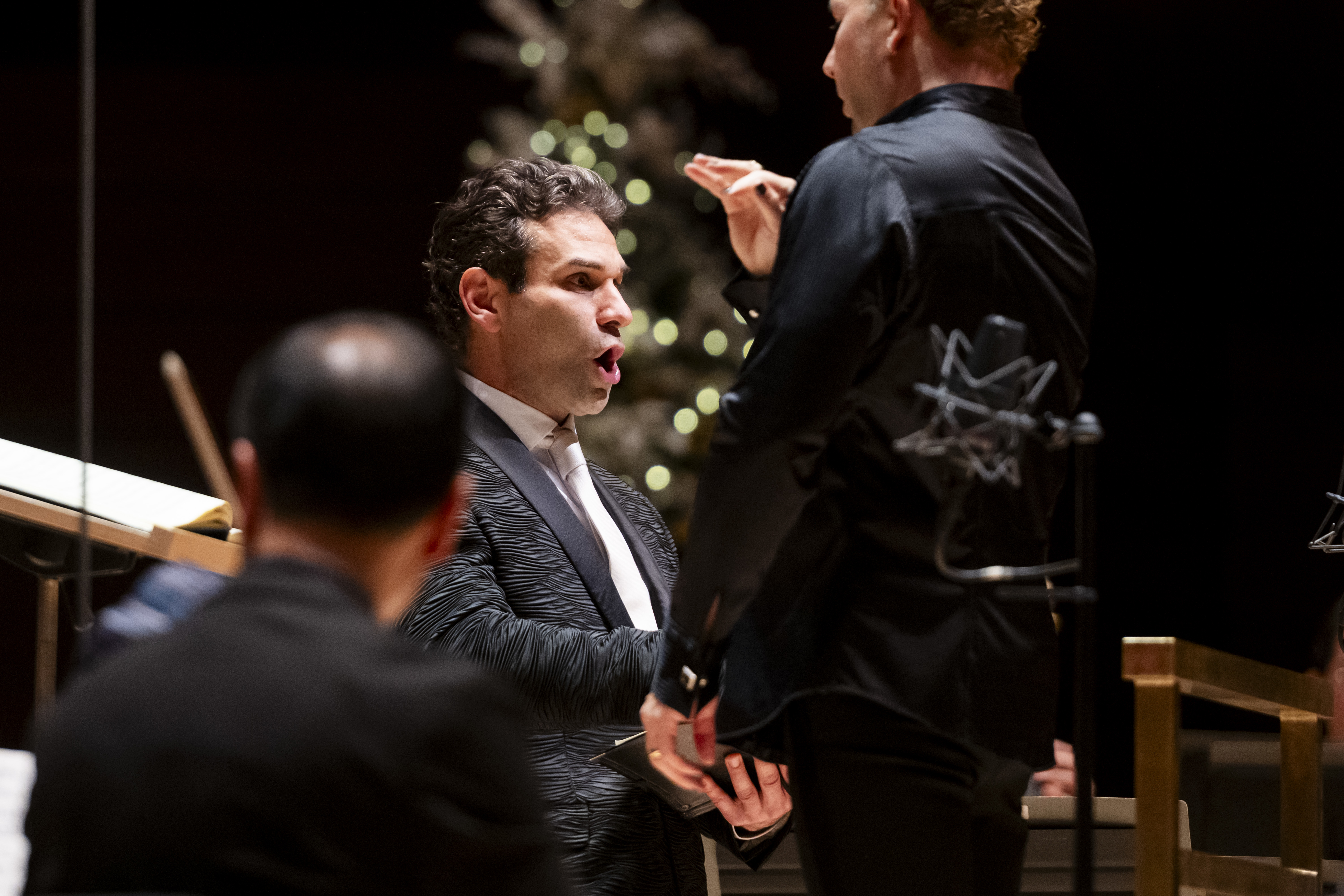
    Yannick Nézet-Séguin conducts the Philadelphia Orchestra during a performance of Handel’s “Messiah” at the Kimmel Center for the Performing Arts on Friday.

    Handel’s epic mosaic of 52 arias, recitatives, choruses, and instrumental interludes has changed enormously over the years; shape-shifting from Victorian grandeur to lean, faster performances more in keeping with the 18th century in which this masterpiece was born.

    With the 40-voice Philadelphia Symphonic Choir rather than the cast-of-hundreds Mormon Tabernacle Choir (which recorded the piece with the Philadelphia Orchestra in 1958), Messiah is now relieved of extraneous sound, and reveals more of its once well-hidden essence.

    Nonetheless, well-matched soloists — vocally and stylistically — are too much to hope for in this busy season, though enjoying their differences among them was definitely possible.

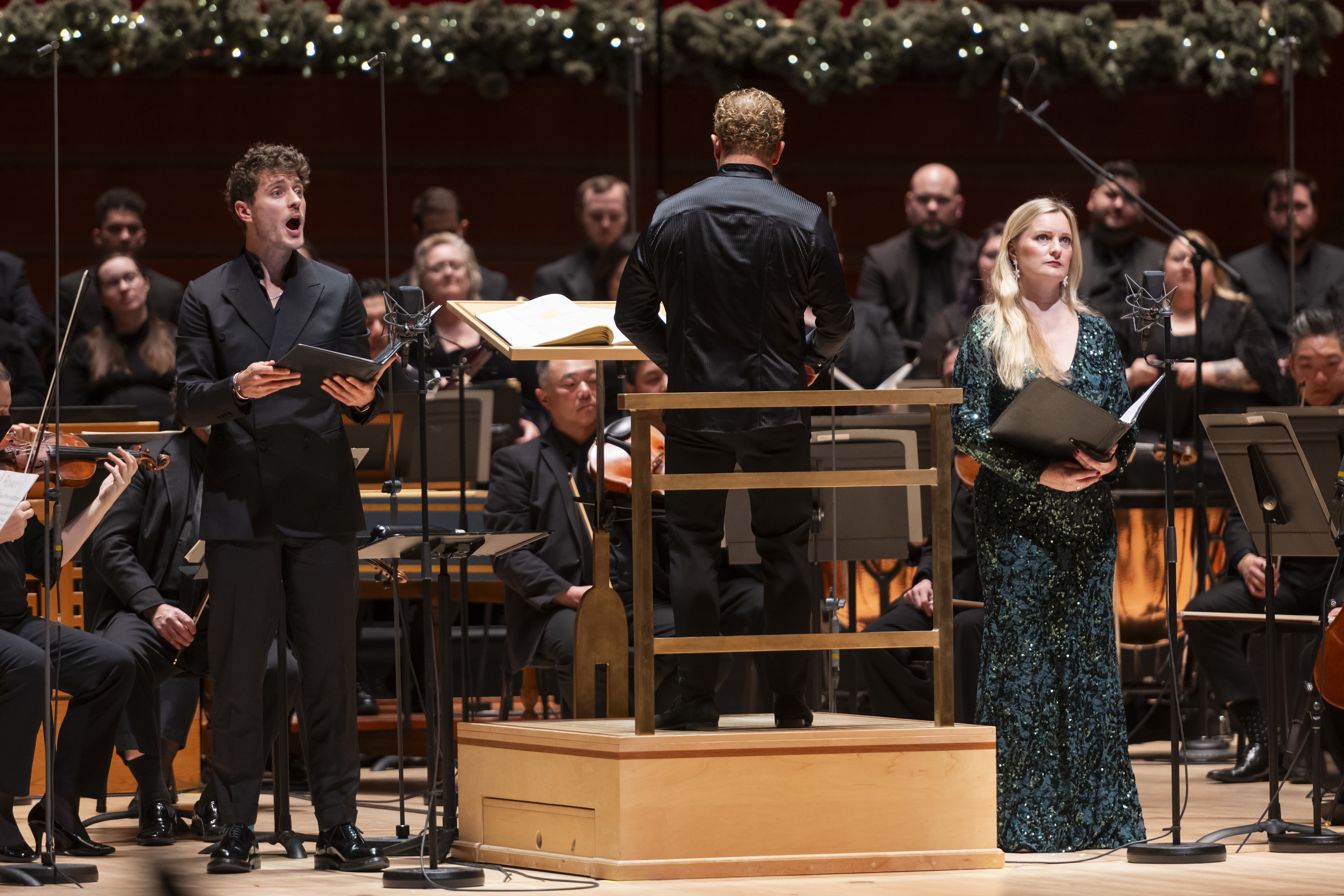
    Jakub Józef Orliński (left), countertenor, and Lucy Crowe (right), soprano, sing with the Philadelphia Orchestra during a performance of Handel’s “Messiah” at the Kimmel Center for the Performing Arts on Friday.

    Tone, agility, diction, and meaningful vocal ornaments were all of a piece with the much-honored British soprano Lucy Crowe, the most seasoned Handelian among them, which was also evident in the way she made upward vocal leaps (normally just a technical feat) charged with emotion.

    The least likely Messiah soloist was also one of the biggest names, baritone Quinn Kelsey, whose every Verdi and Puccini role at the Metropolitan Opera is full of new dimensions. Yet Handel’s vastly different skill requirements were also reasonably well in hand. His distinctive theatrical alchemy came alive in recitatives, and ultimately, in his final aria “The Trumpet Shall Sound” (the trumpet itself being capably played by Travis Peterson). Intricate vocal writing once prompted slowed-down tempos to ease vocal discomfort — which is now heard as a sign of defeat.

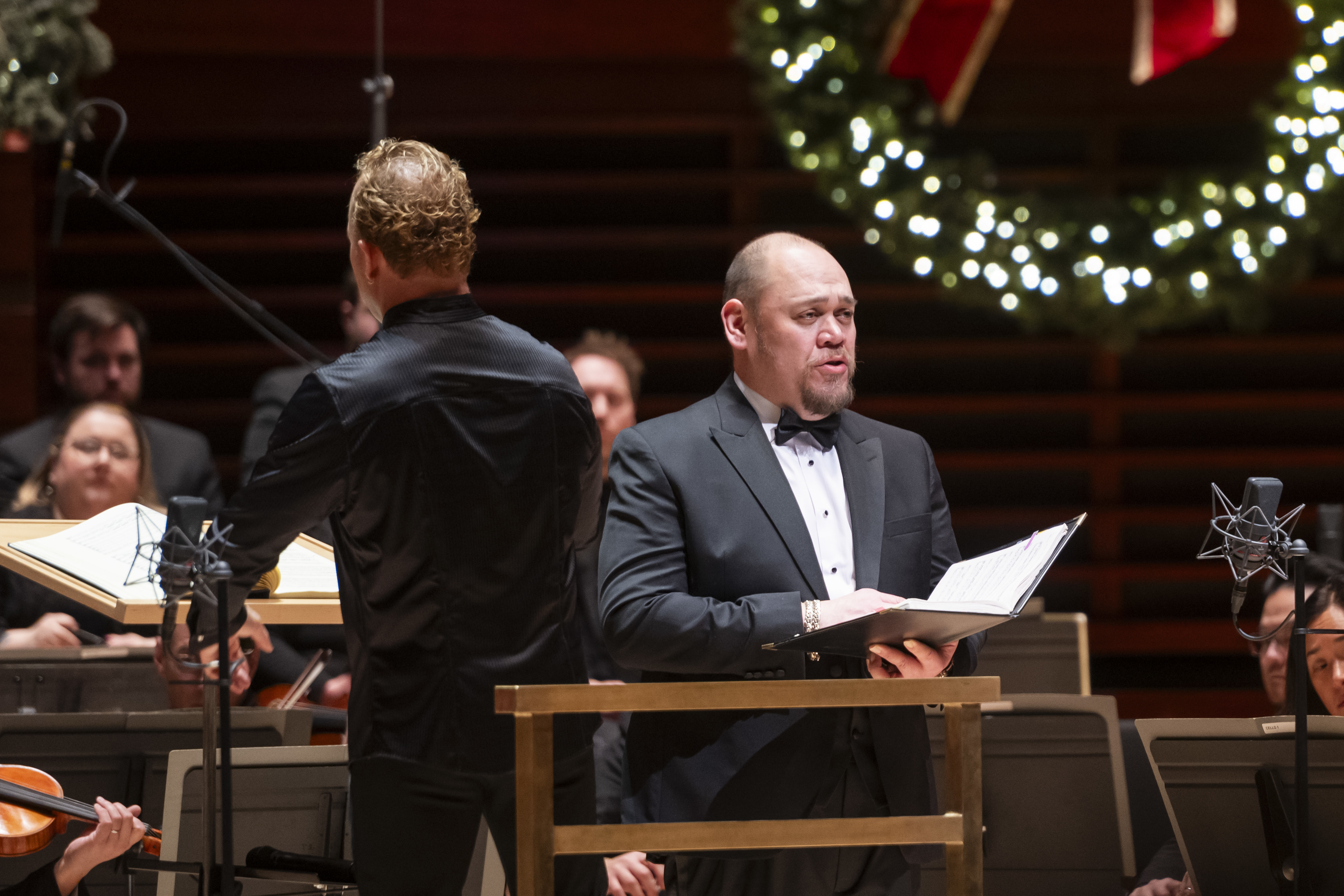
    Quinn Kelsey, baritone, sings with the Philadelphia Orchestra during a performance of Handel’s “Messiah” at the Kimmel Center for the Performing Arts on Friday.

    Instead, Kelsey lightened his voice and maintained both the tempo and the integrity of the music.

    Similar moments were heard from the popular Polish countertenor Jakub Józef Orliński, who has plenty of Messiah mileage though his voice is evolving toward a deeper, richer sound ― heard especially in “He Was Despised” ― suggesting his future lies in less athletic repertoire. He also has a way of swaying to the music. Whether it’s calculated stagecraft or the inspiration of the moment, his already-strong stage presence doesn’t need it.

    Frédéric Antoun, tenor, sings with the Philadelphia Orchestra during a performance of Handel’s “Messiah” at the Kimmel Center for the Performing Arts on Friday.

    Tenor Frédéric Antoun seemed a bit Messiah-weary (it’s a busy season) suggesting that his pitch will be steadier and vocal ornaments more spontaneous in future, more rested performances.

    Choral sections — the most beloved parts of Messiah — are often sung for their considerable effect but were treated to detailed coloring of the words, underscored by sympathetic treatment of the accompanying instrumental writing. This element, not often heard in quickly assembled Messiahs, played a major part in giving this performance an air of occasion.

    As is sometimes the case in Nézet-Séguin choral outings, his use of light, shade, quietude and force can be puzzling. At such points, the myriad inflections can seem fussy, or more about creating an overall musical contour than making a rhetorical statement.

    The Philadelphia Symphonic Choir sings with the Philadelphia Orchestra during a performance of Handel’s “Messiah” at the Kimmel Center for the Performing Arts on Friday.

    At times, it all becomes clear in the long term.

    Example: The “Hallelujah” chorus was more meaningful than bombastic, perhaps to keep the following music from seeming anticlimactic. Then, the final “Amen” chorus at the end of the piece felt suitably conclusive with all of the color and majesty one could hope for.

    The fact that the Philadelphia Symphonic Choir (Joe Miller, director) was able to execute many minute details — plus projecting superb vocal blends that concluded several choruses — shows how the group has emerged into a first-class ensemble.

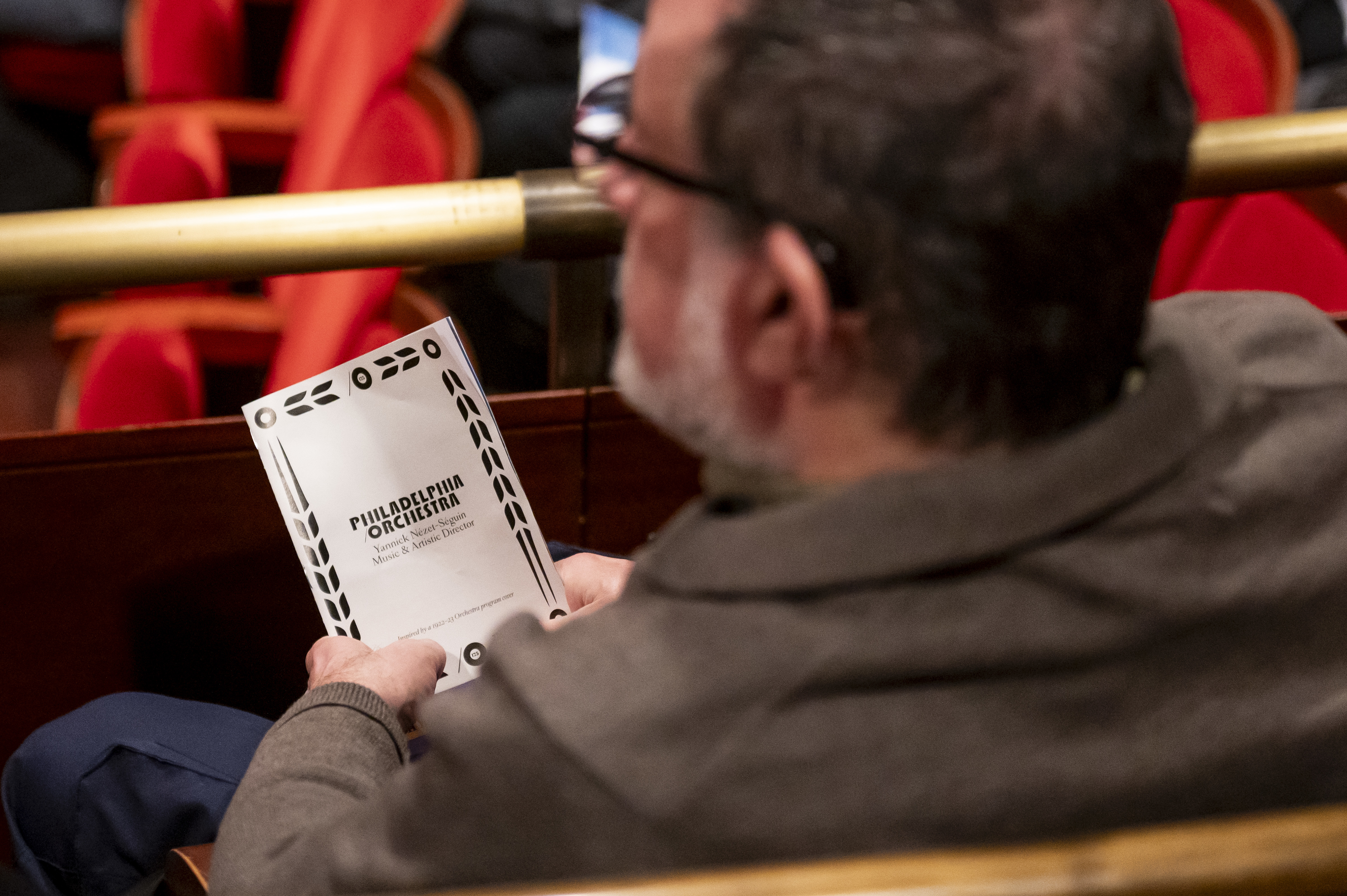
    A concertgoer holds a program before the start of the performance of Handel’s “Messiah” by the Philadelphia Orchestra at the Kimmel Center for the Performing Arts on Friday.

    Word to the wise: Even longtime Kimmel Center goers are advised to leave extra time to navigate Philadelphia’s holiday traffic and sometimes-delayed public transportation. I emerged from the City Hall subway stop in such a state of lateness that I attempted to hijack an Uber discharging passengers at the Ritz-Carlton. It didn’t work.

    Other latecomers and I got to Marian Anderson Hall on foot just as concertmaster David Kim arrived onstage. Whew.

    Subsequent performances of Handel’s “Messiah” are Dec. 13, 8 p.m., and Dec. 14, 2 p.m., Marian Anderson Hall, 300 S. Broad St., Philadelphia. Tickets: $29-240. philorch.ensembleartsphilly.org

  • Pennsylvania’s unsent mail backlog now totals 3.4 million letters, including SNAP eligibility and health benefit info, officials say

    Pennsylvania’s unsent mail backlog now totals 3.4 million letters, including SNAP eligibility and health benefit info, officials say

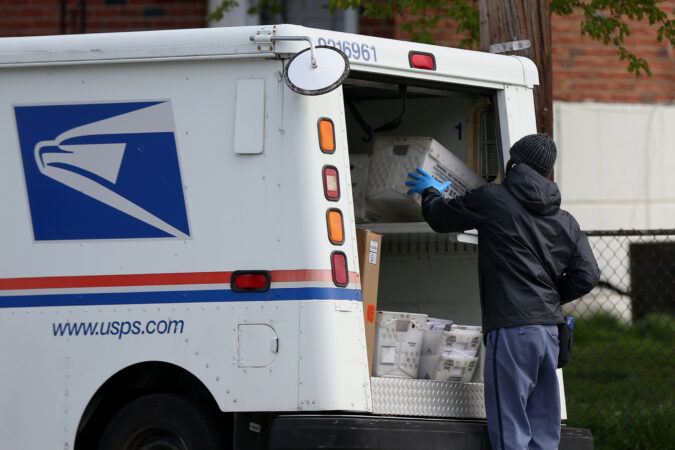
    Approximately 3.4 million state agency letters intended for Pennsylvania residents — including some detailing whether they are eligible for health benefits or food assistance, or need to renew them — were not delivered to residents from Nov. 3 through Dec. 3, officials said Friday.

    Late last week, Pennsylvania state officials discovered that a month’s worth of mail had never been sent to residents by a government-contracted vendor, resulting in a pileup of millions of unsent state communications. Once the issue was discovered, the state fired the vendor, Harrisburg-based Capitol Presort Services, and hired another vendor for a $1 million emergency contract to work through the backlog.

    On Tuesday, officials estimated 2.7 million agency letters, mainly from the Department of Transportation and Department of Human Services, went unsent due to the lapse. But by Friday, the state said that number had grown, totaling 3.4 million.

    Now, the state says 1.7 million letters sent by DHS, which oversees the care of Pennsylvania’s most vulnerable residents and the delivery of critical public benefits, were not delivered because of the vendor issue, said spokesperson Brandon Cwalina.

    Residents may not have received letters detailing whether they need to renew their health benefits or if they are required to submit additional information to continue receiving SNAP food assistance, Cwalina confirmed. Administrative hearing notices — which could determine someone’s eligibility for public benefits, appeals about alleged elder abuse, or approvals of new foster homes — as well as child abuse clearances were also among the affected mail, he said.

    Cwalina said the contents of some of the letters were also communicated to some intended recipients virtually, if they had opted to receive email or text notifications. Child abuse clearances are available online.

    SNAP cutoffs, which are administered by DHS, were set to begin under the federal government’s new work requirements in December and must be appealed within 15 days. The federal government has said it will not count the month of November as part of its three-month timeline to implement SNAP cutoffs, so eligibility didn’t “occur during the period affected by the mail delay,” Cwalina added.

    It remains unclear whether any Pennsylvania residents lost access to their benefits due to the vendor issue that went unnoticed for a month, or if they are at risk of missing deadlines to maintain their benefits. It’s also still unclear how many DHS hearings had to be rescheduled — and the impact of those delays on the care of Pennsylvania’s most at-risk residents.

    Another 1.6 million letters from the state Department of Transportation were not delivered last month, including driver’s license and vehicle registration renewal invitations, driver’s license camera cards, vehicle registration cards, and address card updates, said Paul Vezzetti, a spokesperson for the Department of General Services.

    Driver’s license suspensions were not impacted by the stalled mail. Vehicle registration and license renewal registrations are sent three months in advance, so anyone who was due to receive one at the start of November will have until February to submit it, Vezzetti said earlier this week.

    All of the unsent letters from PennDot and DHS were successfully mailed by a new vendor this week and should reach residents within a few days, Vezzetti said.

  • This Gilded Age estate and wedding venue in Montco is adding a boutique event space and distillery

    This Gilded Age estate and wedding venue in Montco is adding a boutique event space and distillery

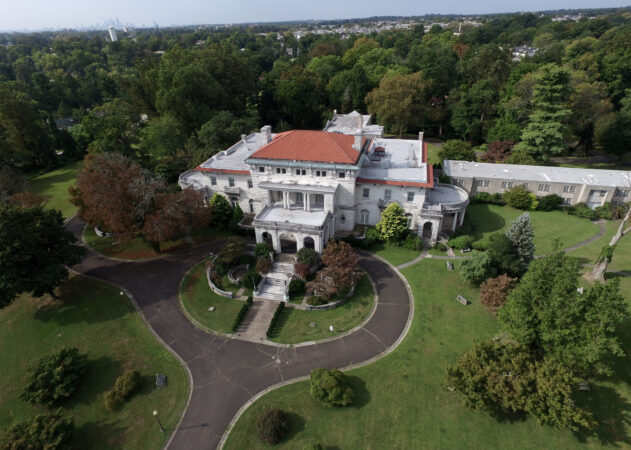
    The Elkins Estate, which already hosts weddings in its main mansion, is set to add a boutique event space and a distillery in the new year.

    In the fall, the Tudor-style Chelten House will open for smaller gatherings of 100 or fewer people, and include 16 guest rooms, said Jeanne Cretella, cofounder of By Landmark hospitality.

    Elsewhere on the 42 acres, a distillery called Morgan Stillhouse is set to open by the summer in the grounds’ former stables, Cretella said. Managed by spirits writer and researcher Carlo DeVito, the distillery plans to produce vodka, gin, and whiskey, which customers can try at an on-site tasting room. It will debut with its rollout of Stork Club Vodka, reviving the brand associated with the storied New York nightclub.

    “We’re really looking forward to our next phase,” Cretella said, noting that the Chelten House “will be the perfect setting for those much more intimate events, whether it’s seminars or retreats or business meetings.”

    In 2019, Jeanne and Frank Cretella’s company, By Landmark, bought the sprawling Cheltenham property for $6.5 million from the Dominican Sisters of St. Catherine de Ricci, who had used the grounds for religious retreats. At the time, the couple said they intended to spend $20 million to restore six historic buildings on the site.

    A couple walks through a room in the Elstowe Manor at Elkins Estate.

    By Landmark’s final investment numbers were not available Friday, according to a spokesperson, as renovations are ongoing.

    The Cretellas initially envisioned a luxury boutique hotel with more than 100 guest rooms, a spa, a restaurant, and other amenities. At one point, they even considered installing a heliport on the site.

    Then the pandemic happened, Jeanne Cretella recalled Friday.

    Despite the challenges of that time, “we are so proud that we were able to open up Elstowe Manor,” the estate’s 70,000-square-foot centerpiece that required extensive plumbing, electrical, heating, and ADA upgrades to be brought up to code, Cretella said.

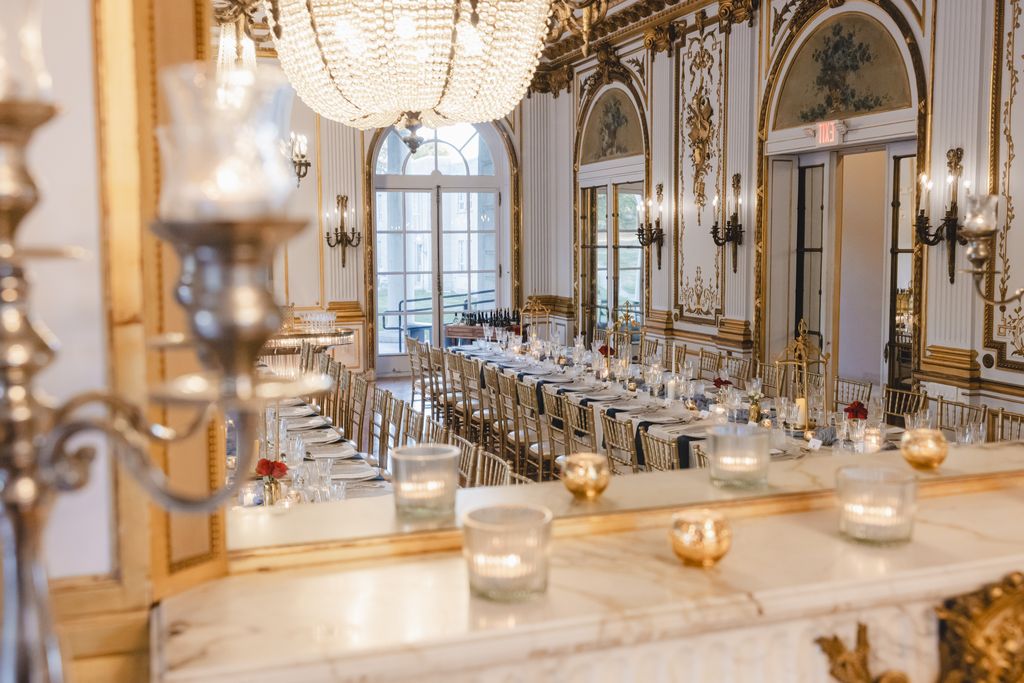
    A room at the Elkins Estate’s Elstowe Manor, its main mansion, set up for a wedding reception.

    “We made the decision after COVID that it would be best … to have the rooms only open to event guests,” she said.

    With 50-foot frescoed ceilings and a grand ballroom with a glass skylight, Elstowe Manor can host 300-person events and includes 69 guest rooms.

    More than 100 weddings and events have been held at the manor in the past two years (The venue also hosted weddings in the early 2010s when it was briefly owned by a nonprofit that went bankrupt).

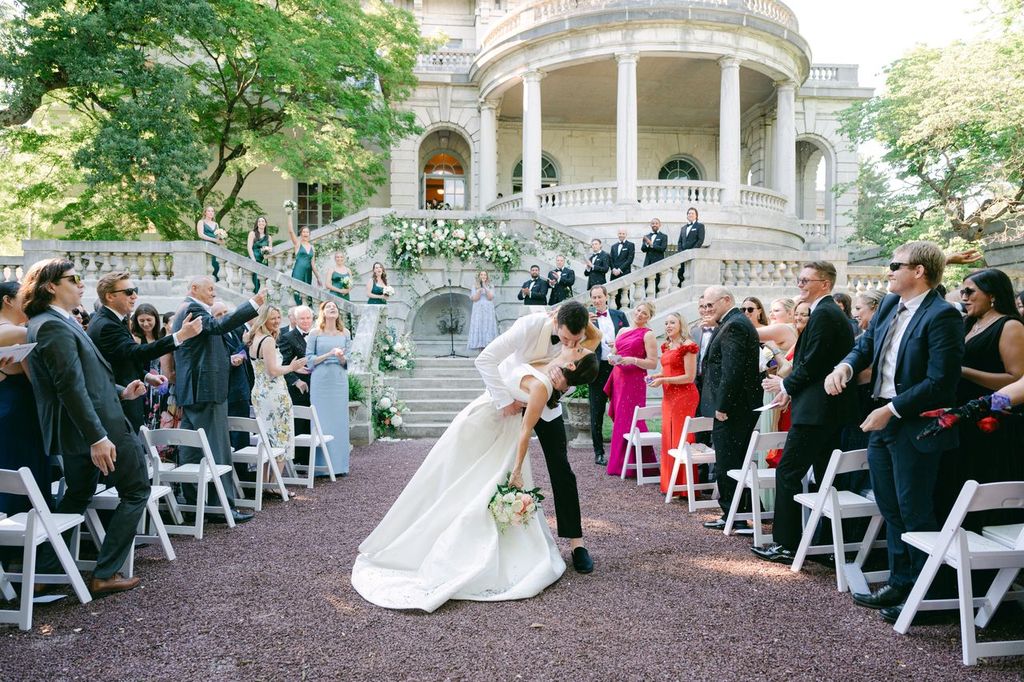
    A couple kisses during their wedding ceremony outside the Elkins Estate’s Elstowe Manor.

    At the estate these days, couples and their guests feel like they “are somewhere really special, and have the ability to really enjoy utilizing the estate for the whole weekend,” Cretella said.

    With its more intimate setting, the Chelten House is meant to complement the Elstowe Manor, Cretella said. The home features Italian Renaissance Revival designs, with terracotta roof tiles, large arched windows, wood-paneled rooms, and marble fireplaces.

    While each part of the property is set apart and has its own entrance, Cretella said she foresees the Chelten House being busy during the week (when most corporate retreats occur) and the Elstowe Manor bustling with wedding festivities on the weekends.

    Some larger weddings may use both the manor and the Chelten House for their events and accommodations, she said.

    Cretella said they don’t foresee adding more amenities to the property in the near future.

    “The original plan to have a restaurant was definitely in conjunction with having a hotel that was open to the public,” not just event guests, she said. So “opening up a restaurant is not on the horizon.”

    But, she added, “we won’t say never.”

    For now, Cretella said they are focused on their events, including opportunities to welcome the public onto the historic site.

    Earlier this year, the estate opened a podcast recording studio and demonstration kitchen, which Cretella said they hope local school students can use. They are also looking to bring professional actors and creators into the space.

    In November, By Landmark opened the estate up for paid public tours. A tour in early January, which costs $30 a person, is already sold out.

    Cretella said the estate plans to host a Valentine’s Day dinner, open to the public, with an optional overnight stay after the meal.

    For the Chelten House, booking for small private events will open in the new year, Cretella said.

    Based in North Jersey, By Landmark operates nearly 30 venues in Pennsylvania and New Jersey. They include the Hotel du Village and the Logan Inn in New Hope.

    In the late 1800s, the Elkins Estate was built as a countryside retreat for railroad magnate William Lukens Elkins, who is credited with helping to form what would eventually become SEPTA and the Philadelphia Gas Works.

  • Lincoln University is facing pressure from its Chester County neighbors after homecoming shooting

    Lincoln University is facing pressure from its Chester County neighbors after homecoming shooting

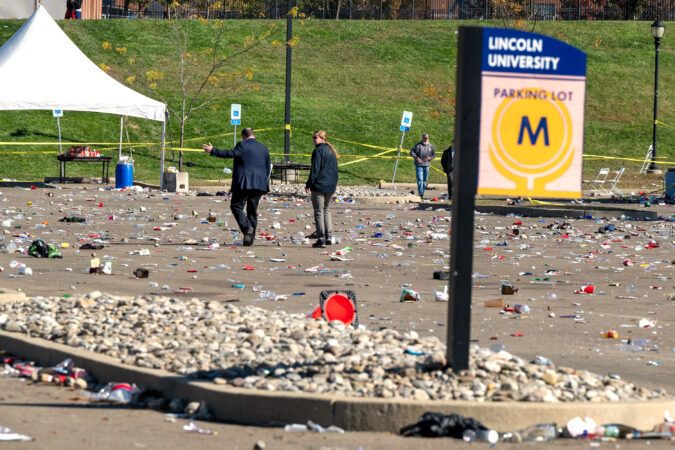
    After Lincoln University’s homecoming in October ended with seven people shot, including one killed, the rural Chester County township where the school is located plans to pass new regulations on large events.

    Several officials in Lower Oxford Township said there have been ongoing problems with parking, trash on neighbors’ lawns, disturbances and, in some cases, crime when the 1,650-student university hosts events. After the Oct. 25 shooting, when thousands of people gathered for homecoming, emergency personnel had to use all-terrain vehicles to transport patients on stretchers because ambulances could not access the campus, given how many cars were parked around the venue, they said.

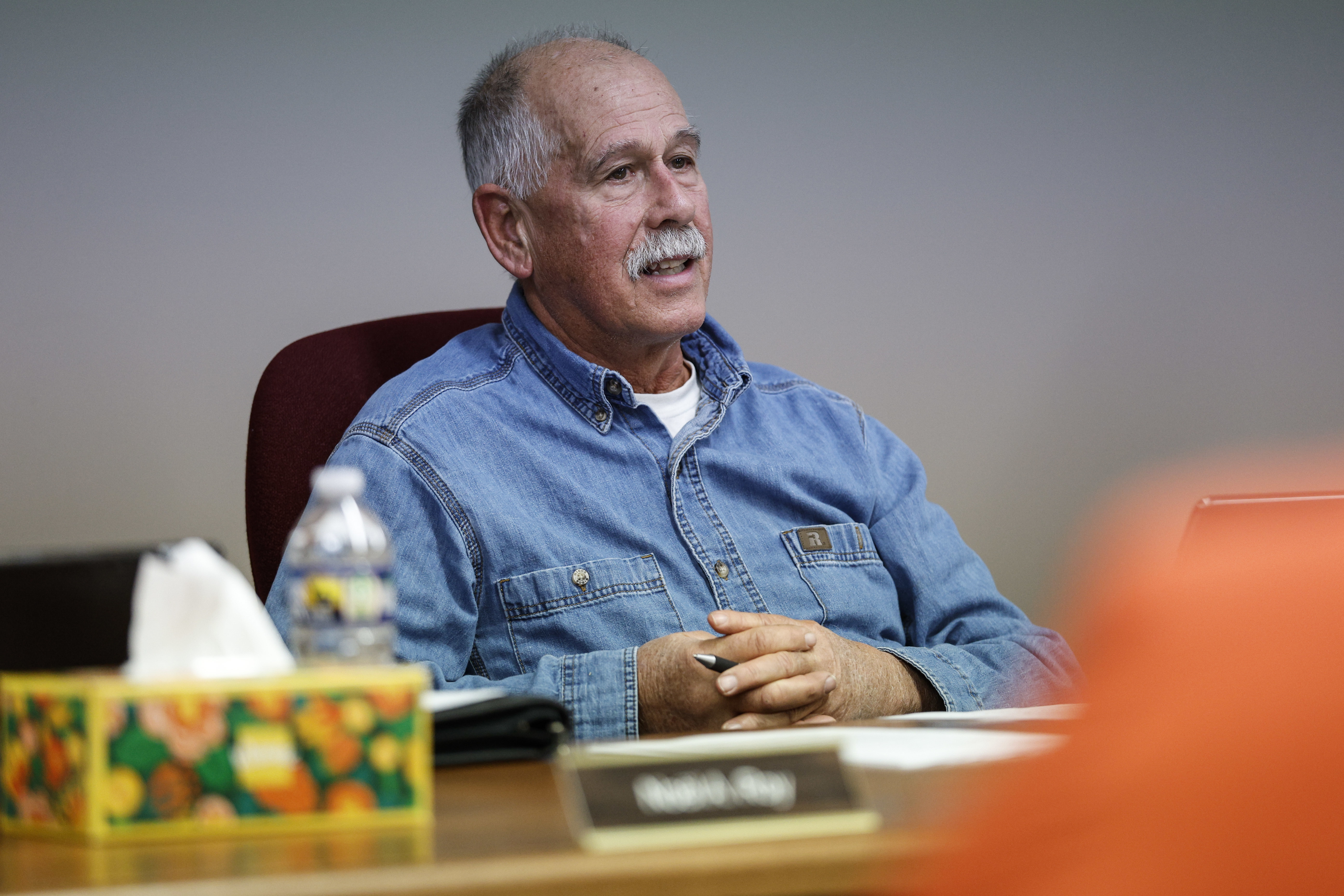
    “We have had meetings with people at Lincoln,” said township supervisor Noel Roy, who oversees emergency management. “They’ve been somewhat reluctant to do what needs to be done to try and control the situation.”

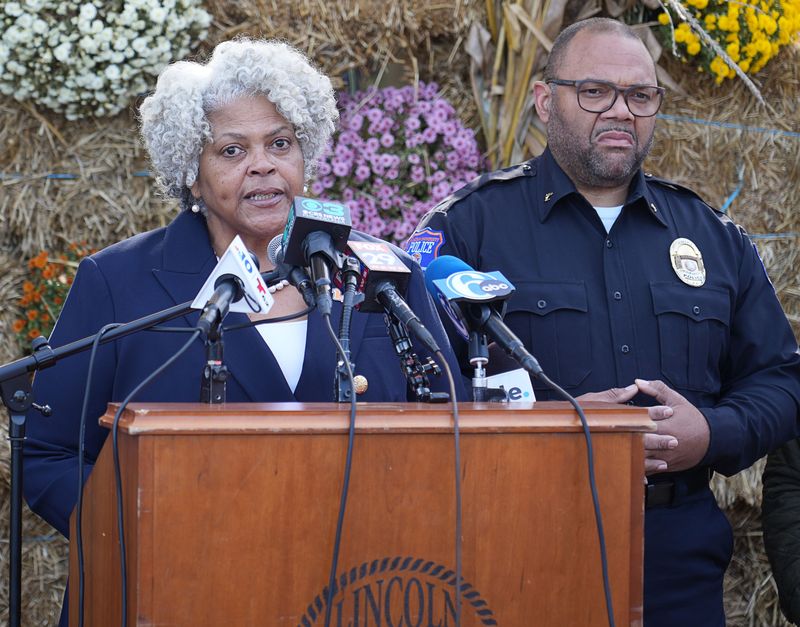
    Lincoln University has declined to answer specific questions from The Inquirer, but President Brenda Allen at a board of trustees meeting last month acknowledged that changes were needed, especially around the school’s large events, and that the school has to do a better job of collaborating with the township.

    “Our top priority remains the safety of our students, faculty, staff, alumni, and community,” the school said in a statement to The Inquirer Thursday. “The university continues to refine our safety measures and protocols.”

    At a township supervisors meeting this week, university officials pledged to work with the township.

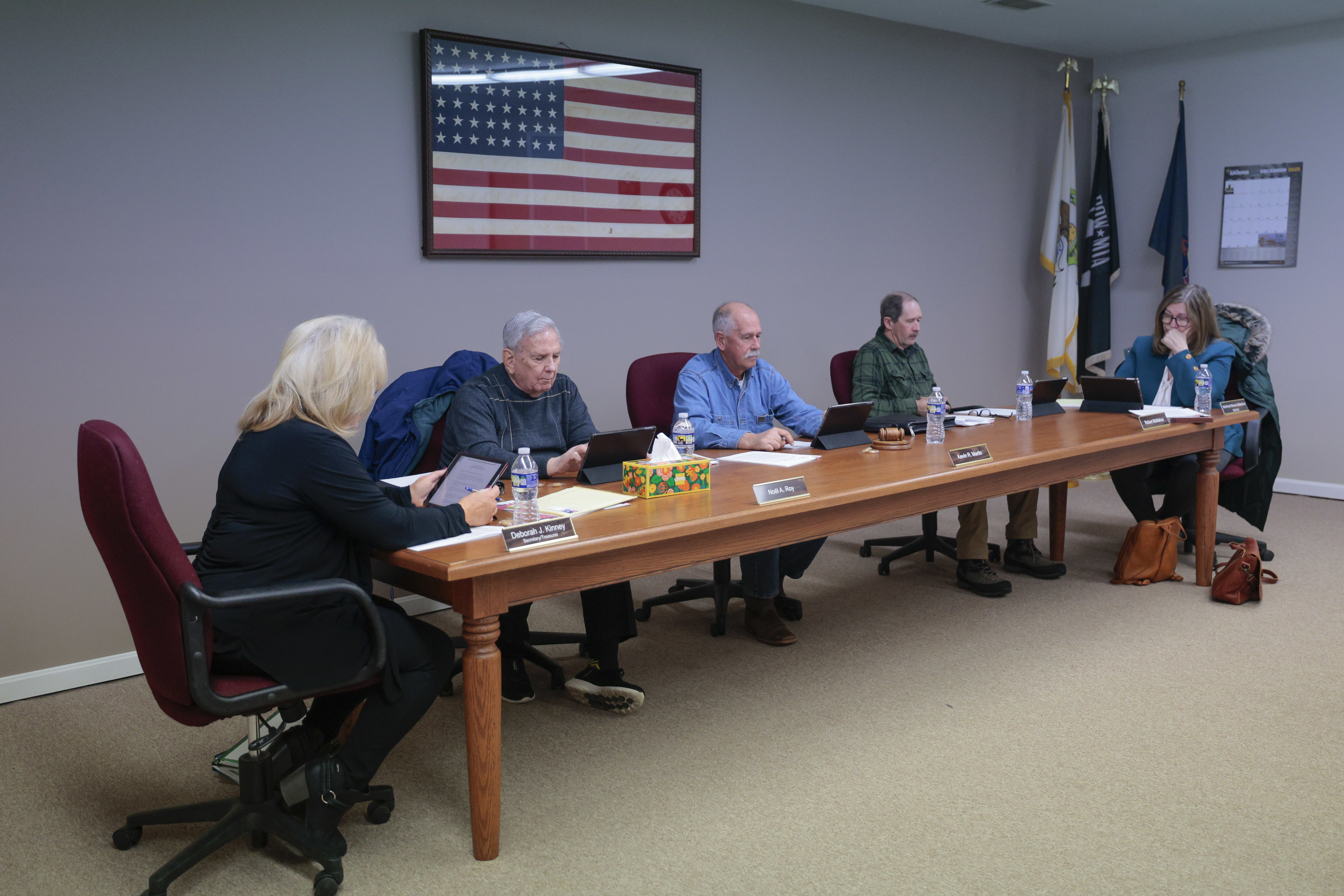
    Lower Oxford Township officials meet and discuss a potential large event ordinance following the homecoming shooting at Lincoln University.

    “We want to come together because we are a part of this community as well,” said Venus Boston, Lincoln’s general counsel.

    Yeda Arscott, Lincoln’s associate vice president of facilities and program management, told supervisors the university is considering several steps to improve safety, including ending all outside events at dusk, eliminating open invitations, requiring guest registration, and canceling large events such as Spring Fling. The school also is looking at parking and safety protocols, she said.

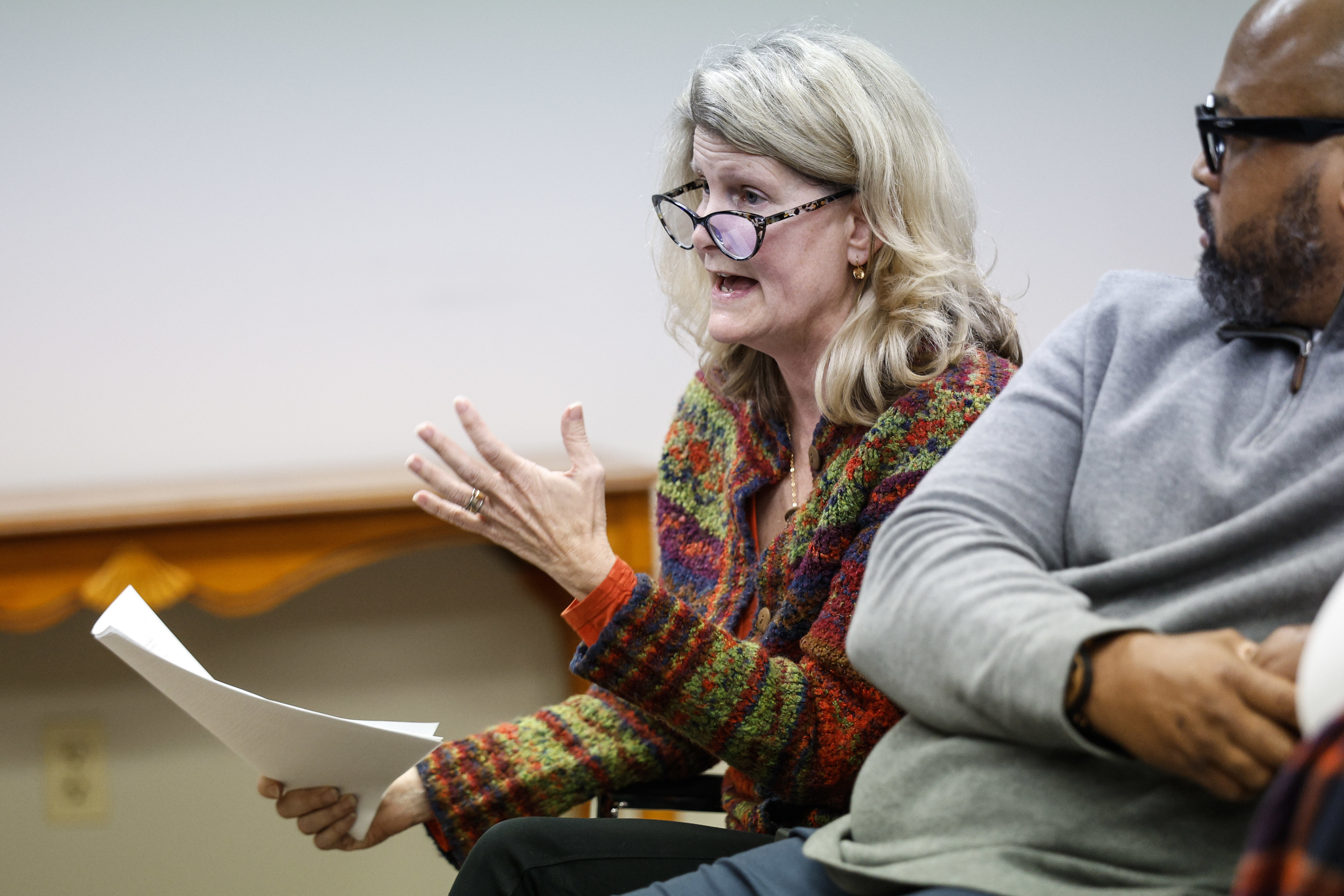
    Yeda Arscott, associate vice president director of facilities and program management at Lincoln, speaks at the Lower Oxford Township meeting and shares actions the university is considering following the homecoming shooting.

    “This shows real commitment,” said Arscott, who lives five minutes from Lincoln, “but real safety requires joint planning between the township, Lincoln, other major businesses, our neighbors, and emergency services.”

    Township and Lincoln officials said they plan to meet privately to discuss solutions.

    “Our goal is to work with Lincoln to make this better,” said Kevin R. Martin, chairman of the board of supervisors. “We need to think this through, but we also have a sense of urgency because it does affect our community.”

    Kevin R Martin, chairman of the township supervisors, said the township wants to work with Lincoln on improvements.

    Chester County Commissioner Josh Maxwell said county officials and the university also will meet in January to discuss best practices for emergency services and student and community safety.

    “It’s important that the kids feel safe,” said Maxwell, who also is an adjunct professor at Lincoln. “No one wants this to ever happen again.”

    The shooting remains under investigation. Jujuan Jeffers, 20, of Wilmington, was killed, and six others, ages 20 to 25, including a student, were also shot. Zecqueous Morgan-Thompson, 21, of Wilmington, was charged with possessing a concealed firearm without a license. Neither Jeffers nor Morgan-Thompson have any known connection to Lincoln.

    Arscott also urged township leaders to “broaden the conversation beyond event permits” and look to address the problem of gun violence.

    “We were a victim, too,” Boston said.

    “We were a victim, too,” said Venus Boston, Lincoln University’s general counsel.

    Tensions with neighbors

    The proposed township ordinance would require those seeking to hold special events to apply for a permit 30 days in advance and outline how they will control the number of guests, traffic, alcohol, and security, said township solicitor Winifred Moran-Sebastian. The township could approve or reject applications.

    Township supervisors last spring passed a parking ordinance to cope with access problems created during past large events at Lincoln, but parking at homecoming still led to issues for emergency responders.

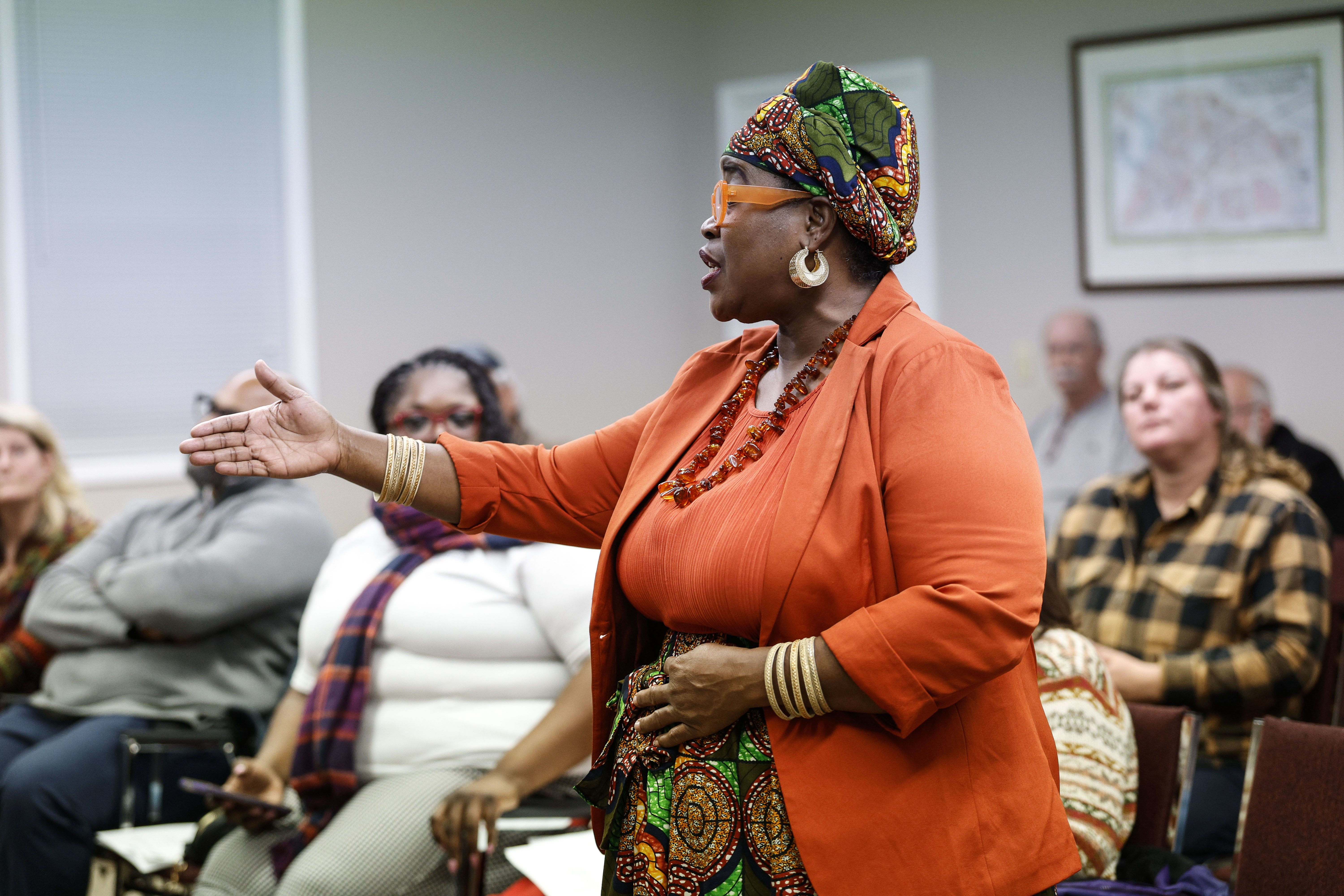
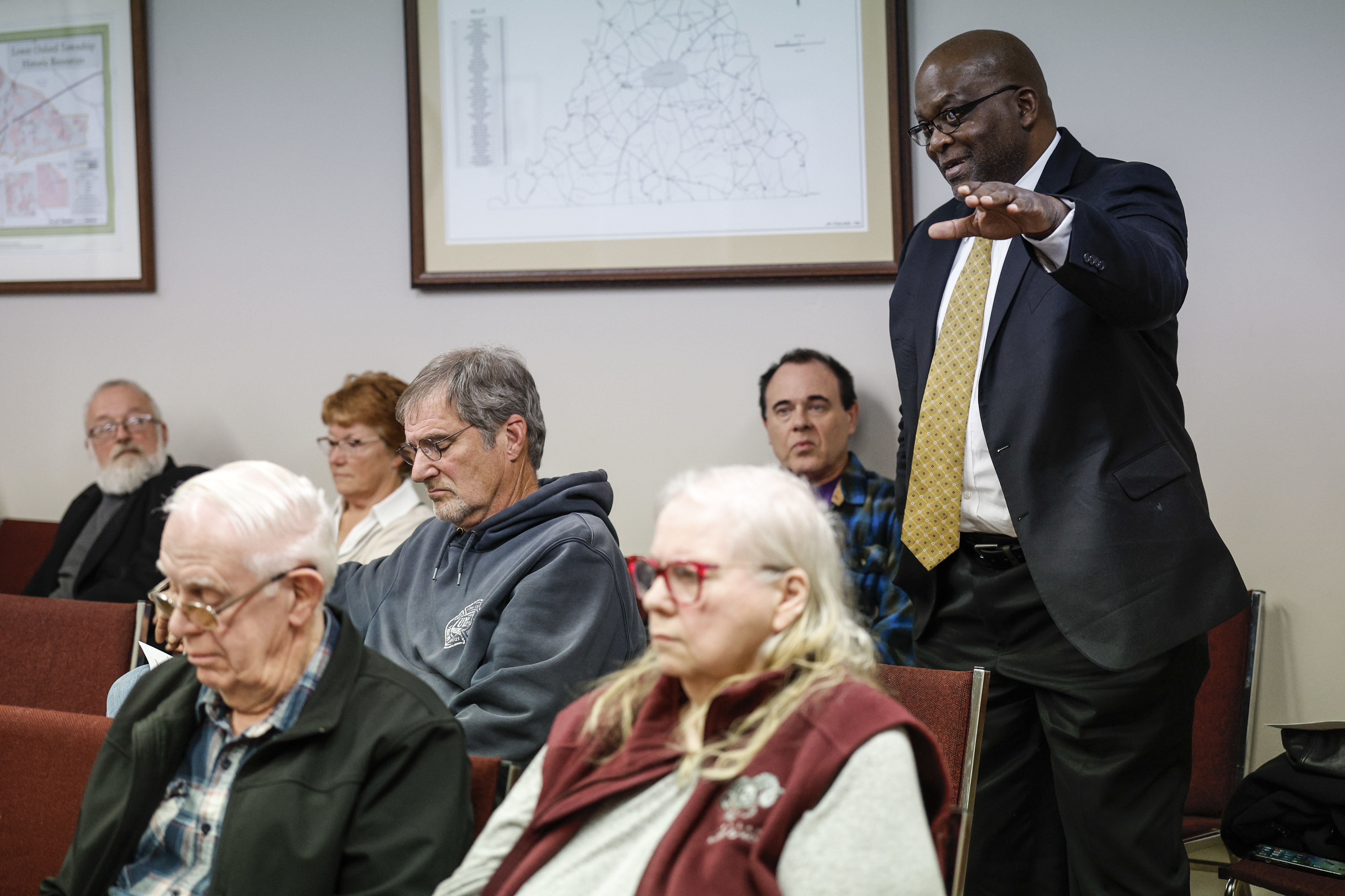
    Several residents who attended this week’s meeting were skeptical of Lincoln’s intent to make improvements and called for larger fines than the $1,000 proposed in the ordinance.

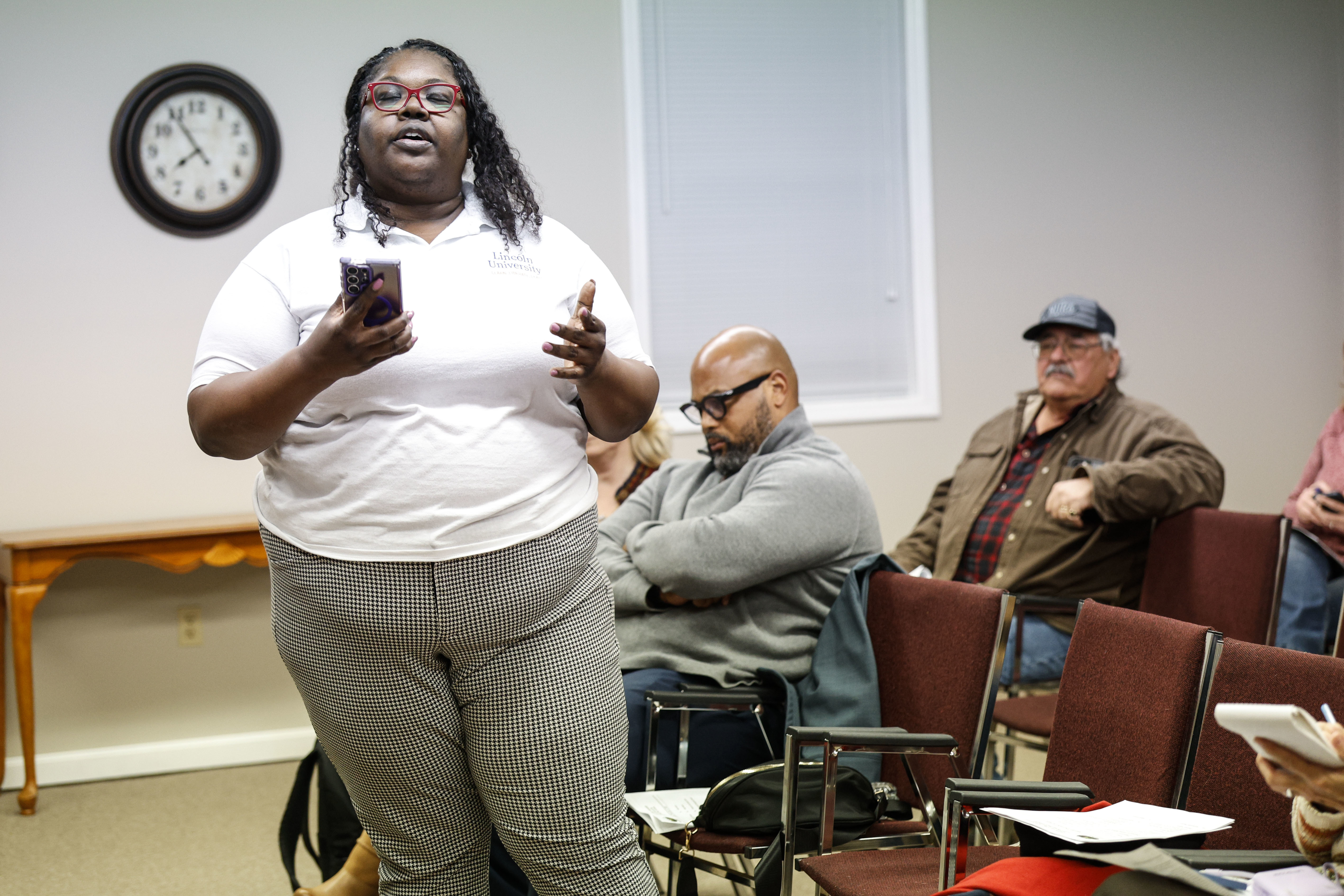
    Vanessa Ross lives about a half a mile from campus and said she was afraid for her family the night of the homecoming shooting. She spoke at the Lower Oxford Township supervisors meeting.

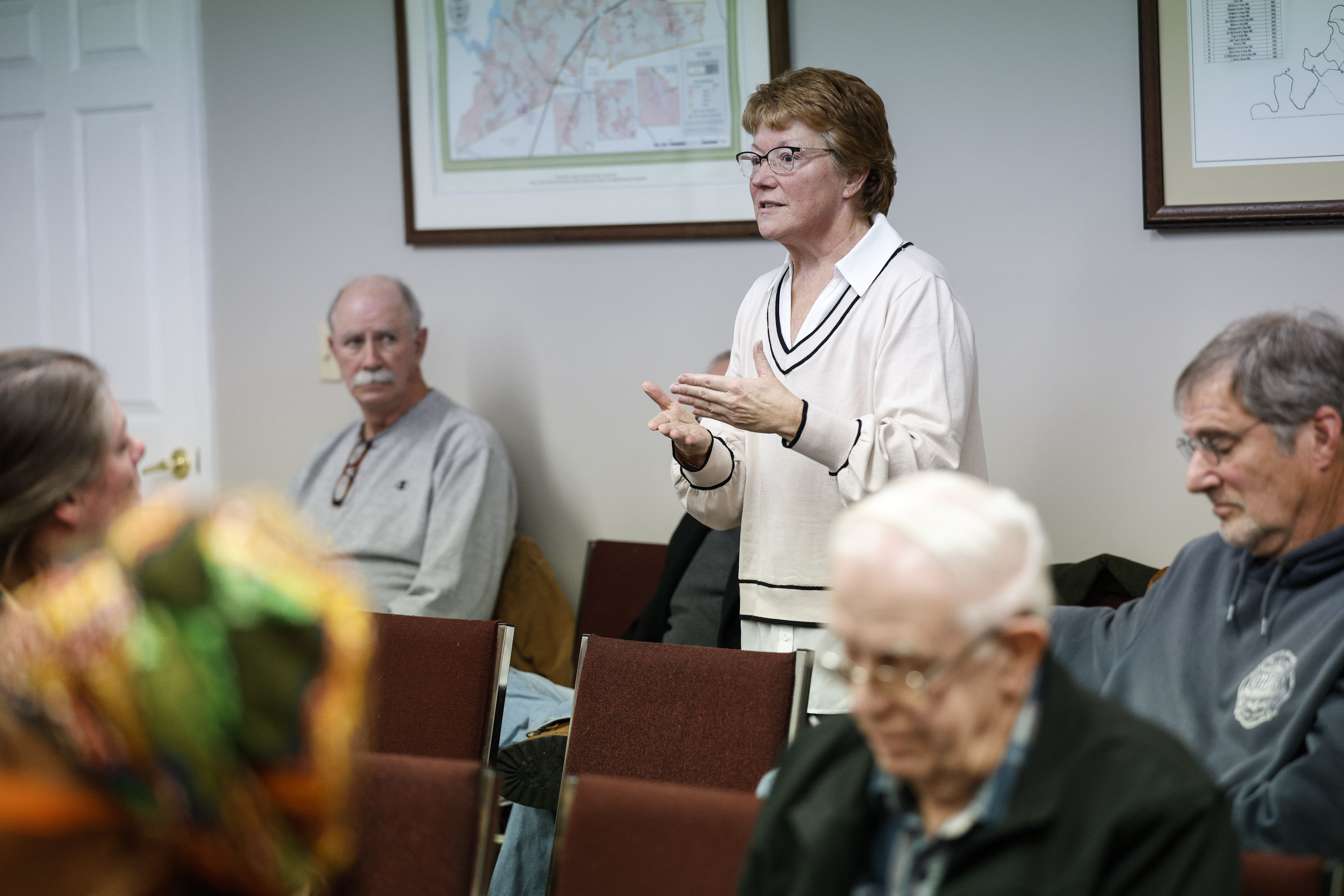
    “I feel my life is in jeopardy with how things are being currently managed,” said Lincoln neighbor Celestine Getty, fearing what could happen if vehicles were unable to get to her house in the event of an emergency.

    Vanessa Ross, who has lived about a half mile from Lincoln for 14 years, said crime and disruption have happened at large Lincoln events for half those years.

    “There is no excuse whatsoever why the college cannot increase their police force and install the metal detectors that are necessary,” she said. “I can’t even go see Barry Manilow in Philadelphia without going through a metal detector.”

    Founded in 1854, Lincoln is known as the first degree-granting historically Black university in the nation. Its 429 acres are nestled in a township of farm fields with a little over 5,000 residents, the majority of them white. Racial tensions have come into play over the years, with township residents saying they have been unfairly accused of racism for raising safety issues.

    Allen, the Lincoln president, has not pointed to racism as a factor in the conversations about safety, said Boston, the university’s solicitor.

    A storied institution with recent safety issues

    Lincoln has a storied history. The first presidents of both Nigeria and Ghana are Lincoln graduates, as are Philadelphia Mayor Cherelle L. Parker, former U.S. Supreme Court Justice Thurgood Marshall, and poet Langston Hughes.

    The school has received $45 million in gifts from philanthropist MacKenzie Scott, ex-wife of Jeff Bezos. And Allen, who in 2020 had survived an internal battle to oust her and had her contract extended to 2030, was named a top historically Black college leader by a national nonprofit in 2021.

    But over the last decade, the university has struggled with safety issues.

    In spring 2023, two women were shot and injured on Lincoln’s campus during its annual Spring Fling event. In 2022, a student was fatally stabbed during a fight inside a dorm by the sister of a student. During an on-campus dance in 2018, 15 students were taken to the hospital following a brawl in which a security officer was assaulted. In 2016, there was a robbery and shooting on Lincoln’s campus following homecoming. And in 2015, Lincoln tightened security after shots were fired in a dorm.

    Some residents said it’s time for the township to put in additional controls.

    “We can no longer wait and see or hope the university will simply do the right thing,” said Andrew Cope, who lived near Lincoln for nearly two decades and still owns property there. “The pattern is too long, the consequences too severe, and the community’s trust too damaged.”

    Carmina Taylor, former president of Lincoln parents association, addresses the Lower Oxford Township supervisors.

    Carmina Taylor, who led Lincoln’s parent association from 2013 to 2016, said she has had longstanding safety concerns.

    When a student was killed in the dorm in 2022, Taylor told The Inquirer she had previously sounded the alarm: “I had said, ‘If Lincoln doesn’t do something, we’re going to have a death on campus.’”

    The university’s response to the homecoming shooting, said Taylor, who got a master’s degree from Lincoln in 2011 and whose son graduated from Lincoln in 2016, is “beyond fluff.”

    “Until someone does something from the outside to bind them,” she said, nothing will change.

    Security expert Brian Higgins said measures, including controlled entrances and screening of guests with hand-held wands, metal detectors or bag checks, are typically used for large crowd events. He acknowledged that imposing strict guest screening may not create the welcoming, upbeat environment characteristic of college homecomings.

    “But in light of what happened, it’s very prudent to do so,” said Higgins, president of Group 77, a public safety and security consulting firm, based in the New York metro area.

    Higgins, whose company has colleges among its clients, said drones increasingly are being used as part of safety monitoring at large events. Traffic control measures and the setting of crowd size limits are other issues the school should consider, he said.

    Anthony Floyd, a former police chief at Lincoln and a Philadelphia city police officer for about 20 years, said the university’s police chief and president should attend every township meeting and work more closely with the township on addressing safety issues.

    Anthony Floyd Jr., who was police chief at Lincoln in 2013 and also had been a Philadelphia city cop, told the supervisors at the meeting that better coordination is needed between the community and the university. The school’s police chief and president should attend the supervisor meetings every month, give updates on safety and security, and be held accountable, he said.

    Lincoln says it’s working on changes

    Last month at a Lincoln board of trustees meeting, Allen, the president, said the campus had been focused on restoring a sense of safety for students and making sure they and staff had counseling support. Allen, a 1981 Lincoln graduate who has led the school since 2017, said the university was examining “safety protocols, parking, traffic, registration for guests,” and the process for inviting guests as part of its review process.

    Lincoln University President Brenda A. Allen (left) announces plans for an after action review following the homecoming shooting.

    Allen said the university is seeking feedback from the student government association and faculty and staff.

    Roy, one of the township supervisors, said parking restrictions put into place earlier this year were not heeded, and the township had to tow 60 cars the night of the homecoming shooting.

    “Every time they towed a car, another car would pull into that space,” he said.

    An event that would draw 10,000 people to a township with half that population and no police force is concerning, said Moran-Sebastian, the township solicitor. Lower Oxford relies on Pennsylvania State Police for law enforcement. For the homecoming event, the university requested state police, but only got two, Arscott, the facilities’ head, said.

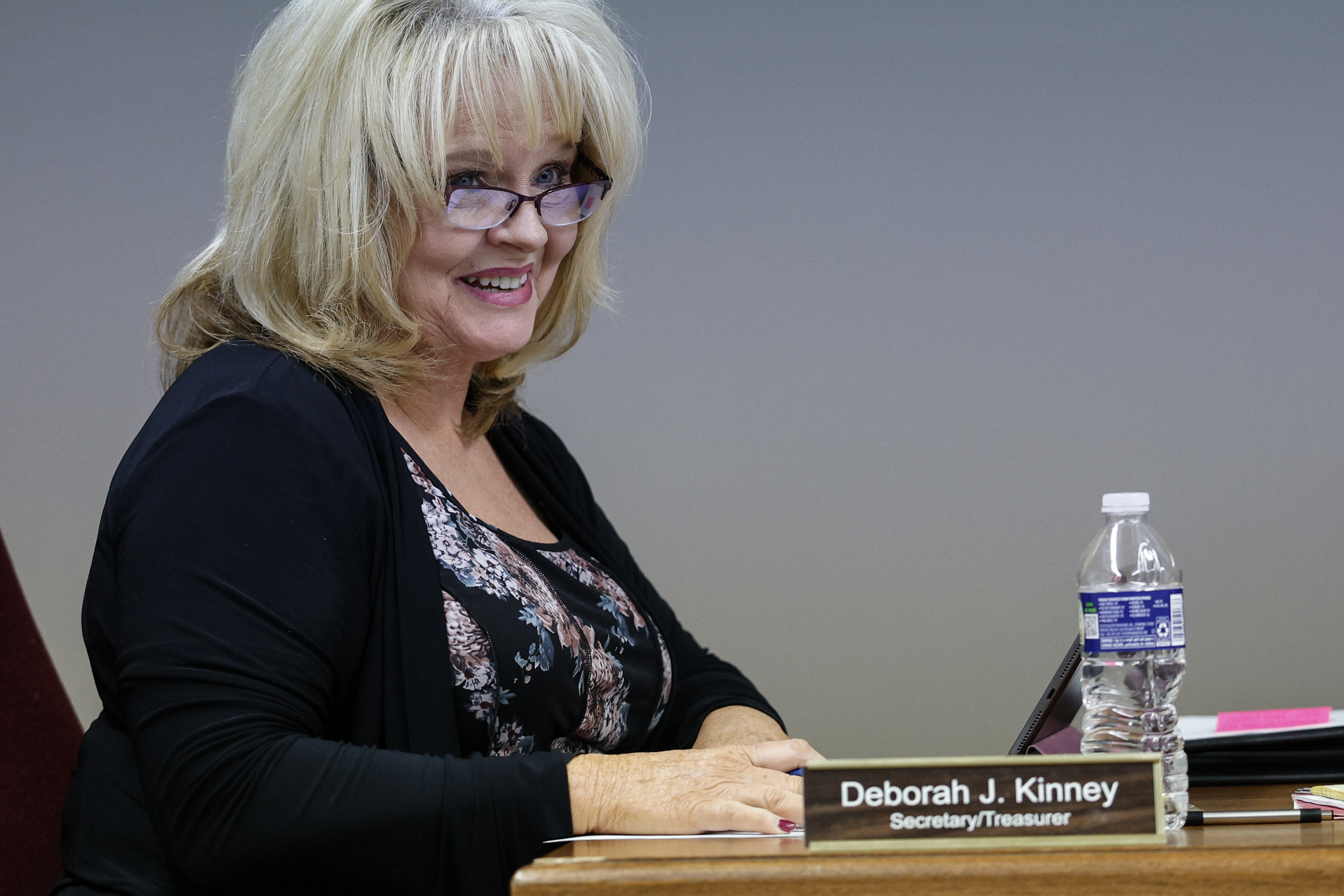
    Deborah J Kinney, secretary/treasurer and code enforcement officer, listens during the Lower Oxford Township supervisors meeting.

    Township officials have been frustrated with the responses from Lincoln in the past. When a meeting was held in November 2024 to discuss parking-related problems during the previous Spring Fling event, Allen said she didn’t need the township’s help, said Deborah Kinney, township secretary/treasurer and codes enforcement officer. Kinney said she had suggested an event process that would have included a plan for parking.

    “So we decided we needed to be proactive on our end, not just for our residents but for their students,” Kinney said. “It’s not the students. It’s the outside influences that are coming in to these events.”

    She also said that in 2024, Lincoln accounted for 183, or 26%, of the township’s emergency calls.

    Winfred Moran-Sebastian, Lower Oxford Township solicitor, outlines the proposed ordinance to regulate large events in the township. The ordinance is still under draft.

    Veronica Carr, a 2016 Lincoln alumna, said she had been concerned about safety when she was a student, and conditions seem to have gotten worse. She did not attend homecoming.

    Carr, who works for an African American heritage consulting firm and lives in North Carolina, said she is concerned that two people have been killed on the campus in less than four years.

    “Obviously, something is lacking,” she said.

  • Trump is unredeemable. What about his enablers? | Editorial

    Trump is unredeemable. What about his enablers? | Editorial

    By now, it is beyond obvious that Donald Trump is unredeemable.

    Trump assumed the Oval Office in 2016 as the most inexperienced, untruthful, and unstable president in modern history, if not ever. He has only grown worse.

    This past year, Trump has been a one-man wrecking ball, attacking norms, institutions, public health, higher education, the rule of law, and the Constitution. Never before has a president led such a relentless assault on the United States and its allies, while cozying up to dictators.

    Trump has literally waged war at home and abroad, sending federal troops into cities, deporting thousands of immigrants without due process, and murdering alleged drug runners without providing any evidence.

    The list of corrupt and egregious abuses of power is long and growing by the day.

    But perhaps more shameful than Trump is how so many who know better have enabled him — including many top officials in Pennsylvania.

    The list includes U.S. Sens. Dave McCormick and John Fetterman, as well as U.S. Rep. Brian Fitzpatrick, Pennsylvania Attorney General Dave Sunday, and dozens of GOP representatives in Harrisburg and Washington.

    Each one has played a distinctive role in putting Trump above their constitutional oath. Many other Republican officials across the country, along with the conservatives on the U.S. Supreme Court and right-wing media, have enabled and emboldened Trump’s worst instincts. The collective cowardice has damaged the United States and forever stained each individual’s place in history.

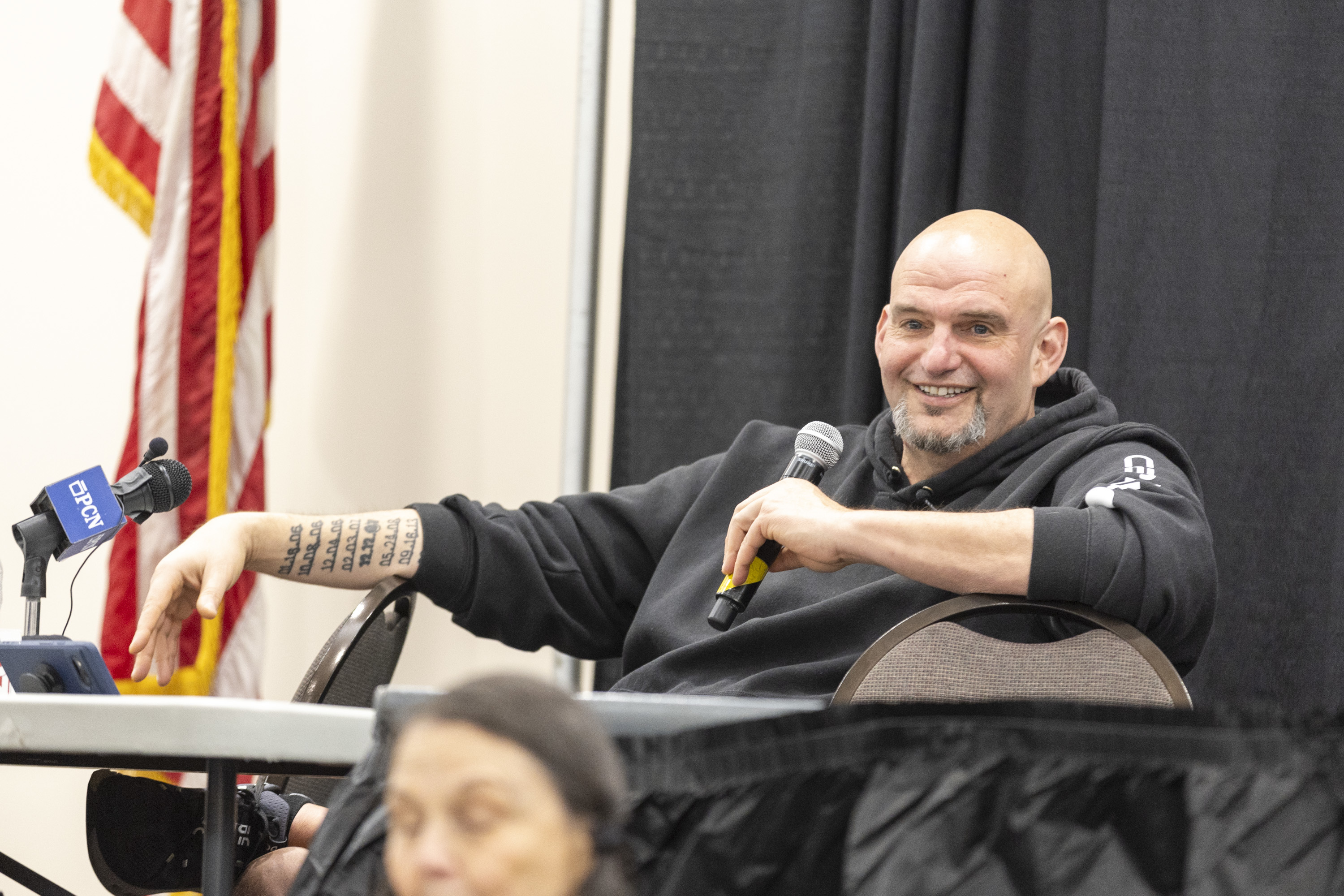
    U.S. Sen. John Fetterman speaks at the Penn Ag Democrats Luncheon at the Pennsylvania Farm Show in Harrisburg in January.

    Fetterman was the only Democratic senator who voted to confirm Attorney General Pam Bondi, an election denier who represented Trump during his first impeachment.

    Bondi is not an independent law enforcement official. She worked to undermine legal proceedings and elections before becoming attorney general.

    Bondi promoted conspiracy theories during Trump’s impeachment trial, traveled to New York to criticize the judge and prosecutor overseeing Trump’s criminal trial, and came to Pennsylvania to spread false claims about the 2020 election.

    Yet, Fetterman still voted for Bondi.

    Since getting confirmed, she has overseen the dismantling of the U.S. Department of Justice. Under Bondi, prosecutors have defied court orders, attacked judges, dropped criminal cases against Trump allies, targeted the president’s perceived enemies, and bungled the Jeffrey Epstein files.

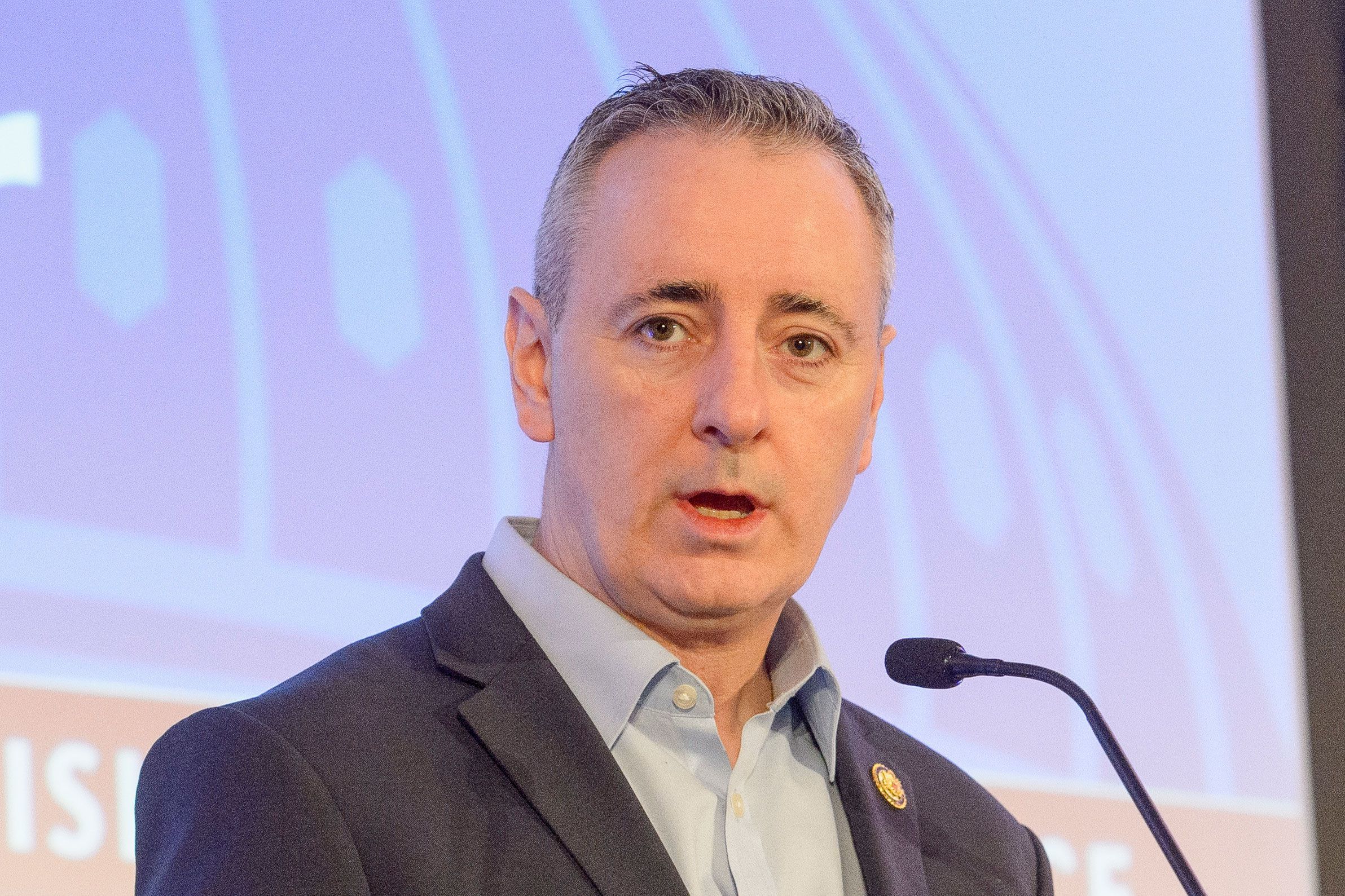
    U.S. Rep. Brian Fitzpatrick (R., Pa.) speaks during the opening session of the National Treasury Employees Union Legislative Conference in Washington in March.

    Fitzpatrick, a Republican who represents Bucks County, initially voted in favor of Trump’s so-called Big Beautiful Bill that gave tax cuts to the super wealthy, added $3.4 trillion to the deficit, and cut nearly $1 trillion in Medicaid and food stamps spending.

    He later voted against the final version — after it was clear it would pass without his support. Fitzpatrick is now scrambling to keep health insurance premiums under the Affordable Care Act, also known as Obamacare, from soaring. But his initial vote set the current course.

    Fitzpatrick, who is up for reelection in November, represents a swing district. He tries to appear bipartisan, but votes with Trump on most major issues. He voted against impeaching him and rarely criticizes the president’s abuses of power or corruption.

    The rest of the Pennsylvania Republican delegation in Congress has also largely remained unanimous in its support for Trump and his extremism. Dozens of federal and state officials in Pennsylvania, including U.S. Rep. Scott Perry (R., York) and State Sen. Doug Mastriano (R., Franklin), shamed themselves and the country by working with Trump to overturn the 2020 election. Efforts that led to a violent insurrection.

    Still, they continue to support Trump’s wayward ways.

    Pennsylvania Attorney General Dave Sunday addresses the annual Pennsylvania Leadership Conference in Camp Hill, Pa., in April.

    Sunday, the top law enforcement official in Pennsylvania, has been largely missing in action since getting elected 13 months ago. He has failed to stand up to the Trump administration when its actions harm Pennsylvanians.

    Instead, Sunday has deferred to Gov. Josh Shapiro to lead legal fights after Trump cut funds for education, public safety, farm aid, and SNAP benefits. Shapiro has filed or joined more than a dozen lawsuits against the Trump administration, while Sunday — a Republican who served two terms as the district attorney in York County — has laid low.

    U.S. Sen. Dave McCormick during a panel discussion at the Pennsylvania Energy and Innovation Summit at Carnegie Mellon University in Pittsburgh in July.

    Just weeks after taking his Senate office, McCormick cast a key vote to confirm Pete Hegseth as the defense secretary. McCormick, a graduate of the U.S. Military Academy, backed Hegseth despite knowing the Fox & Friends Weekend cohost was utterly unqualified to keep America safe.

    Hegseth went from whining about the “woke military” on TV to overseeing a Defense Department with nearly three million military and civilian employees and a budget of $850 billion.

    Hegseth’s only military experience was time spent in the National Guard, where he was flagged as an “insider threat” because of tattoos linked to white supremacists.

    He was an incompetent manager who was forced to step down from two tiny nonprofits because of financial mismanagement, sexual impropriety, and personal misconduct. Others said Hegseth routinely passed out from excessive drinking, including while on the job at Fox News.

    All of that was known to McCormick and the 49 other Republican senators who voted to approve Hegseth despite their duty to ensure cabinet nominees are qualified.

    Hegseth quickly demonstrated he is unfit for the job. Just weeks after getting confirmed, he used an unsecure messaging app to text classified war plans to a group that mistakenly included a journalist.

    In the wrong hands, the war plans — which included information about weapons packages, targets, and timing — could have endangered the lives of troops. If other military officers shared similar classified information, they could have been court-martialed.

    Hegseth’s purging of career military leaders is also making America weaker, as he places loyalty to Trump above competency, distinguished service, and merit.

    Hegseth has overseen the bombing of alleged drug boats that violate international law and amount to extrajudicial killings. The legal rationale is dubious at best and may constitute war crimes.

    At the very least, the deadly strikes are immoral and violate the Uniform Code of Military Justice.

    McCormick did not respond to requests to comment on whether he regrets supporting Hegseth. During McCormick’s Senate campaign, he talked up the West Point motto of “duty, honor, country.”

    Like so many other so-called leaders, those ideals have taken a back seat to serving Trump.

    One day, Trump will be gone — but his enablers will have to answer for the damage they helped to wreak.

  • Snow, up to 5 inches, is a near certainty in Philly this weekend, and it won’t melt quickly

    Snow, up to 5 inches, is a near certainty in Philly this weekend, and it won’t melt quickly

    The first measurable snowfall of the winter of 2025-26 evidently is all but a done deal for Philly this weekend, and it has a chance to be the biggest in five winters — not that the bar is ultra-high in a period when snow has been mightily lacking.

    The National Weather Service Saturday has issued a winter storm warning for 3 to 5 inches throughout the region, listing a 98% likelihood of at least an inch.

    The AccuWeather Inc. forecast was similar.

    The weather service foresaw a 76% chance of 4 inches in the immediate Philly area, and a 43% chance of 6 or more.

    With the caveat that timing and duration of precipitation aren’t in the wheelhouse of atmospheric science, the weather service is expecting snow or snow mixed with rain to start late Saturday night.

    If it’s a mix at the outset it would quickly become all snow as temperatures fall below freezing, and end around daybreak. As the weather service pointed out, the timing couldn’t be much better for minimizing disruption.

    However, snow showers and wind chills in the teens are expected when the Eagles host the Oakland Raiders in South Philly.

    The accumulating snow would be generated primarily by an upper-air disturbance, said Matt Benz, senior meteorologist with AccuWeather. It’s possible that the storm may regroup off the coast; however, that “probably will form too late to have any impact,” Benz said.

    The weather service said inch-an-hour snowfall rates are possible in the early morning hours of Sunday.

    And the snow is likely to stick around until at least midweek, with high temperatures Sunday, Monday, and Tuesday expected to be around freezing or lower and the sun angles about as low as they get.

    After a 3.1-inch snowfall in February, the temperature climbed to near 50 a day later, and the strengthening sun made quick work of the snow cover.

    That February snow turned out to be the biggest of a season in which the 8.1-inch total at Philadelphia International Airport barely bested the 8 inches of New Orleans. That winter, the I-95 corridor found itself in a snow hole, and Philly a snow hole within a snow hole. The highest total in the winter of 2023-24 was 4.6 inches during a snowy January week.

    Last season, snow fell to the north, west, and south, and that trend has continued in the early going. With 6 inches so far this winter, Richmond, Va., now has measured 22.8 inches since last December, nearly triple the Philly total.

    Official totals at Philadelphia International Airport have been significantly below normal for four consecutive winters. The normal for a season is 23.1 inches.

    The meteorological winter, which began Dec. 1, certainly is off to a wintry start, with temperatures averaging more than 6 degrees below normal.

    It is not off to a particularly wet start, however, and whatever falls this weekend isn’t expected to exceed a half inch of liquid.

    In its long-term outlooks through Dec. 26, NOAA’s Climate Prediction Center is on the fence regarding whether precipitation will be above or below normal.

    With high confidence it is calling for a national warm-up.

    In any given year, the odds are greatly against Christmas snow in Philly or elsewhere along the I-95 corridor.

    But it does look like the region is about to get a white Sunday.

  • A flier showing the KKK was posted in Southwest Philly. A ward leader wants to calm fears.

    A flier showing the KKK was posted in Southwest Philly. A ward leader wants to calm fears.

    When a Southwest Philly resident reported a KKK flier had been taped to a pole outside their home this week, people got angry.

    The Pennsylvania Human Relations Commission looked into the incident and put out a statement denouncing hate. Angry commenters on the 51st Ward’s Facebook page about the flier dared white supremacists to show their faces.

    But 51st Ward Democratic leader Gregory Benjamin said while he understands the alarm and does not intend to dismiss people’s concerns, he believes this all may be some kind of misunderstanding.

    “We want to calm that,” he said.

    On Tuesday, a neighbor called Benjamin to let him know that they’d discovered a flier depicting members of the KKK on an electrical pole outside their home on the 5100 block of Chester Avenue.

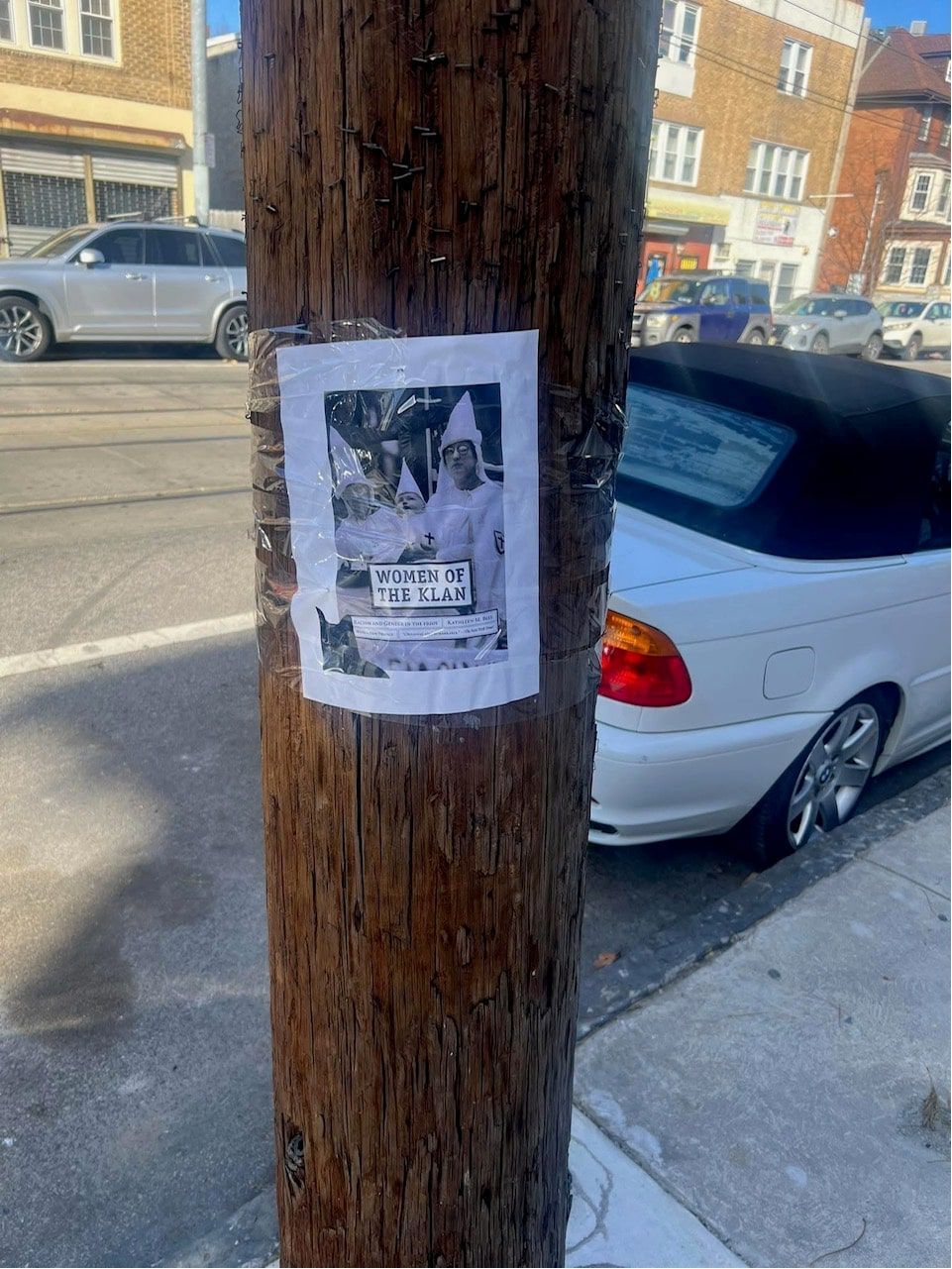
    A flier posted earlier this week in Southwest Philly is a copy of the cover from a book titled “Women of the Klan: Racism and Gender in the 1920s”.

    The flier is black-and-white copy of the cover of a book written by University of Pittsburgh sociologist Kathleen M. Blee, Women of the Klan: Racism and Gender in the 1920s. The cover features a photograph of three generations of klans-people — an older woman, a younger adult woman, and a baby — all wearing white pointed robes, with a cross and American flag behind them.

    It’s unclear what message whoever put up the flier intended to send. Blee’s book, originally published in 1991, is a study of the role that women played in the Jim Crow-era KKK and the covert ways they carried out the Klan’s mission, not an endorsement of the group’s ideology. The first page of the book describes the Klan as “one of U.S. history’s most vicious campaigns of prejudice and hatred.”

    The flier still raised concerns. Residents contacted the Human Relations Commission, and its Philadelphia advisory council was notified, as well as police. It’s possible another identical flier was posted nearby around the same time, Benjamin said, but all fliers have since been removed.

    No person or group has taken responsibility for the flier so far. While there is no indication the flier was put up by a white supremacist group, the manner in which it was posted can still be harmful, said Chad Dion Lassiter, executive director of the Pennsylvania Human Relations Commission.

    “These things, they take an emotional toll on individuals,” he said.

    Even if the flier was a piece of trolling or a message targeted at white people, Lassiter said it was crucial not to ignore it.

    “We take all of these things [seriously]… we’re in a moment where people want to continue to deny the surge of white nationalism and white supremacy,” he said.

    Representatives of the Pennsylvania Human Relations Commission will attend the 51st Ward’s monthly community meeting on Saturday at noon at the Kingsessing Library, located at 1201 S. 51st St.

    Benjamin said the meeting would be an opportunity for community members to share more information about the incident and ease any remaining tension. He said he hopes this experience will encourage neighbors to connect more and communicate better.

    “Maybe we can bring something constructive out of this. Demonstrate that the community is more interested in [doing] something positive than anything else,” he said.

    Correction: An earlier version of this article misstated the publication date of Blee’s book. It was originally published in 1991.

  • Properties around Temple U. weren’t selling — until a real estate agent nearly doubled the asking prices

    Properties around Temple U. weren’t selling — until a real estate agent nearly doubled the asking prices

    It’s no secret that times are tough for landlords around Temple University.

    An eight-bedroom rowhouse at 1734 N. Gratz St., for example, languished on the real estate market after being listed for sale, like many dormlike apartments left in the wake of a rental boom that fizzled amid declining student enrollment.

    The property went up for sale in April 2024 for $475,000 — $40,000 less than the owner had paid two years prior. It sat on the market for one year with no takers.

    Then real estate agent Patrick C. Fay got involved.

    In April 2025, the Gratz Street rowhouse was re-listed for $875,000. The very same day, it was listed as a pending sale, with Fay representing the buyer, according to real estate data from the Realtors Multiple Listing Service.

    An Inquirer review of 33 other sales Fay brokered over the last year showed a similar pattern.

    After properties went unsold at lower prices, Fay stepped in as the buyer’s agent and almost immediately arranged a sale for anywhere from $290,000 to nearly $550,000 more than sellers originally asked for.

    On average, Fay’s clients have paid about double the original listing.

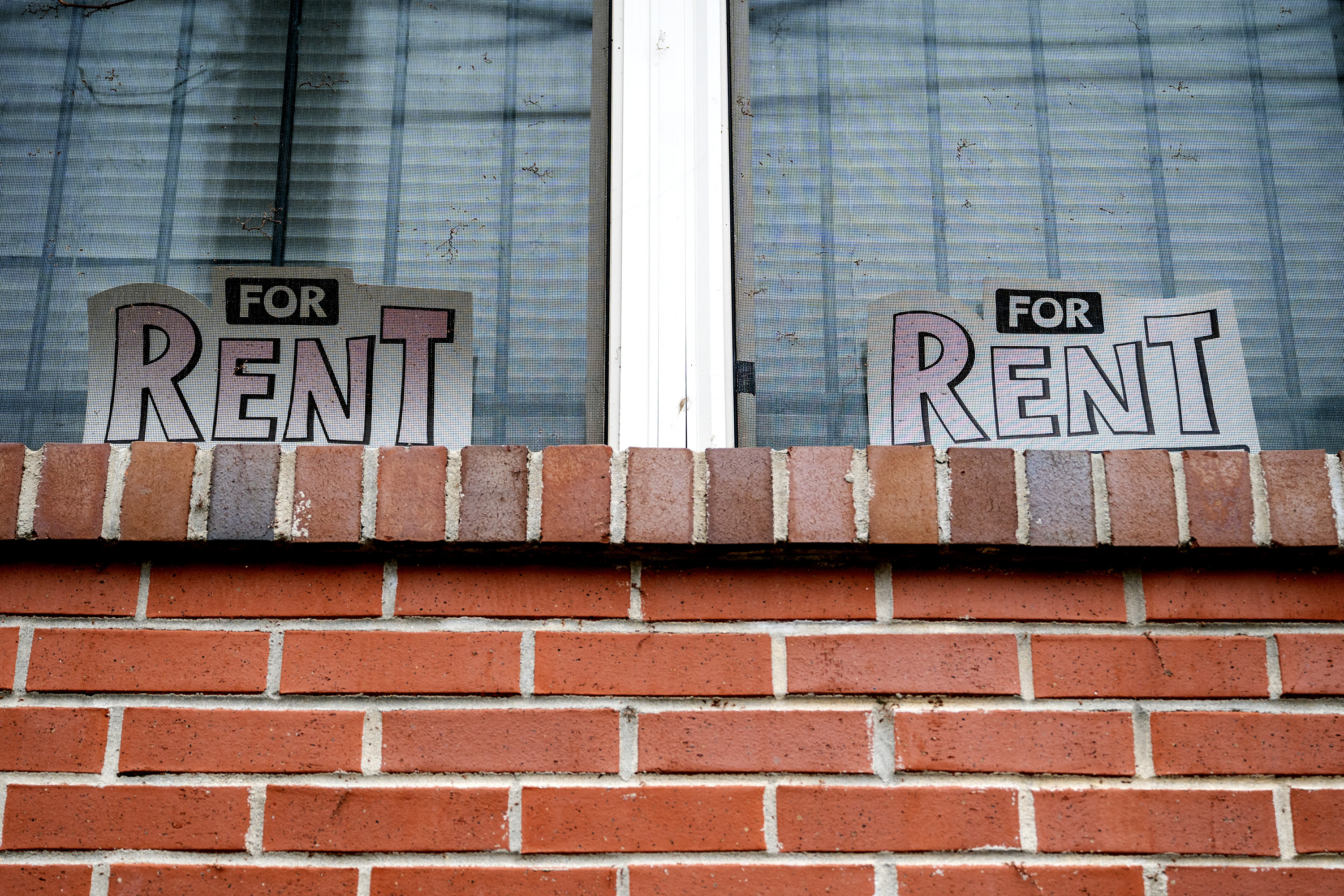
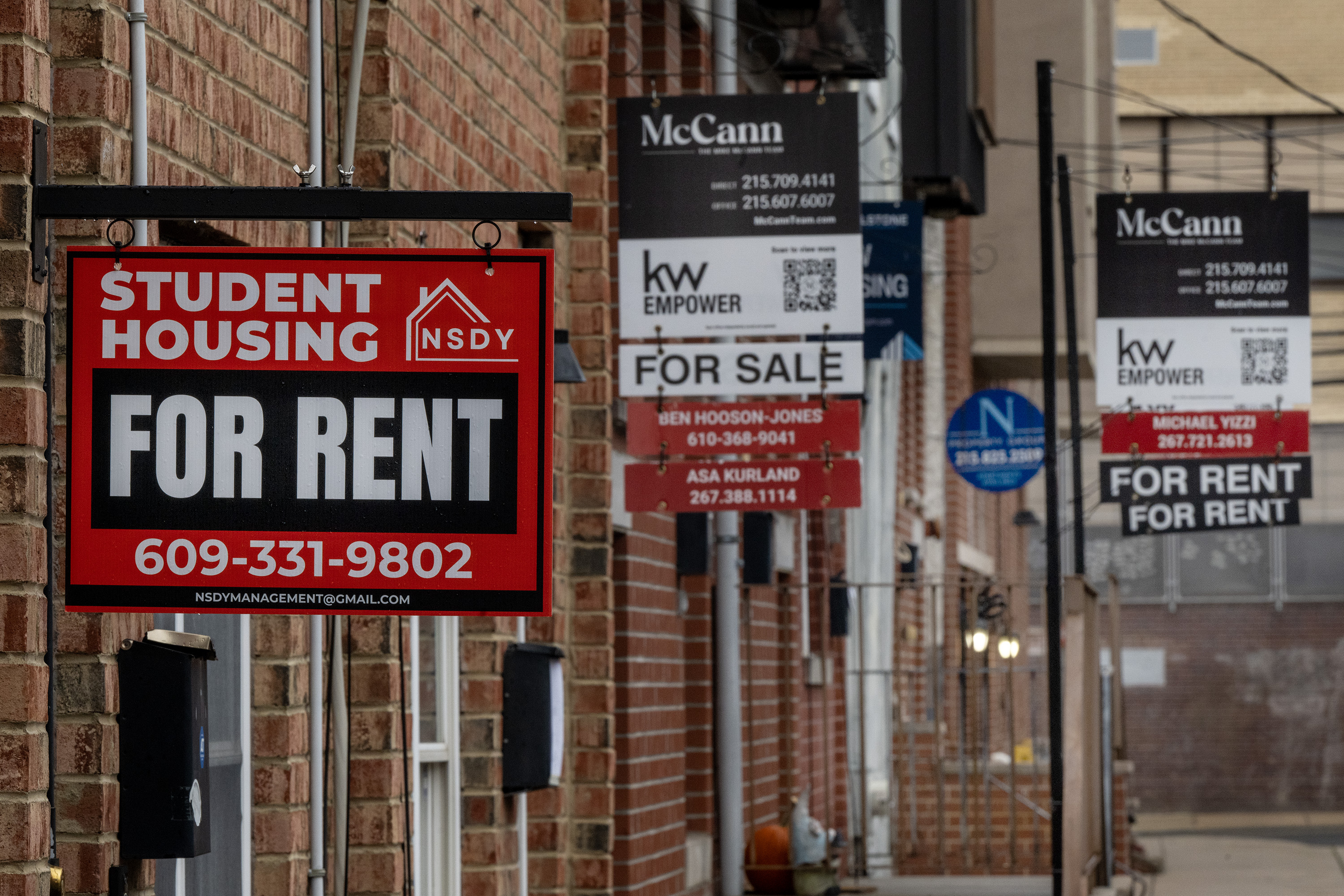
    The value of rental properties around Temple has dipped in recent years. Many property owners have sold. Some blocks, like the 1700 block of Arlington St., are lined with for-rent and for-sale signs.

    Fay, who worked out of Coldwell Banker’s offices in Old City and Moorestown, Burlington County, has now represented buyers in at least $40 million worth of settled or pending real estate deals involving multifamily properties around Temple.

    (After this article published online Friday, the real estate firm cut ties with Fay and his biographical page was removed from its site. “The agent is no longer affiliated with Coldwell Banker Realty,” a company spokesperson said by email.)

    Of about a dozen properties in the area that sold for more than $750,000 over the last 90 days, every one listed Fay as the buyer’s agent.

    The Inquirer’s examination of the deals found the sales involve a small group of repeat buyers, including two linked to an earlier prosecution over a 2000s-era mortgage fraud scheme. In that case, federal investigators found that the group was involved with purchasing distressed homes using artificially inflated mortgages, pocketing the excess money and allowing the properties to lapse into foreclosure.

    Fay, who is one of the top agents in his Coldwell office, said his transactions were all aboveboard. He credited the high sale prices to rebounding demand for student housing in the Temple University area.

    “I think it’s a desirable area for sure,” said Fay, who lives in Moorestown. “They just had their biggest enrollment of all time.”

    Pat Fay has been one of the top real estate agents this year in Coldwell Banker’s Old City office. His clients have been purchasing properties around Temple University, but at steep markups.

    Actually, Temple’s head of admissions resigned last month after the university missed its annual enrollment goal. Its student population remains below 30,000, down from a high eight years ago of more than 40,000.

    “This is not a good time for being a property owner around Temple,” said Nick Pizzola, vice president of the Temple Area Property Association, a group that represents many landlords and was formed to “encourage responsible development and property management” in the area.

    “Rents are down, vacancies are up,” he said. “It’s a buyer’s market.”

    The financing on Fay’s sales is provided by higher-risk private lenders, which grew in popularity as conventional bank lending contracted in the wake of the 2008 real estate crash.

    Jon Hornik, head of the National Private Lenders Association, a trade group that represents firms like the ones that lent to Fay’s clients, recently flagged sales around Temple on a watch list the group maintains for suspicious transactions.

    He had a simple explanation for these market-defying sales.

    “These are bad actors inflating the value of the real estate through the sale structure, and therefore borrowing more money than they really should be able to,” Hornik said in an interview. “There’s real estate there. There’s a borrower there. But the values are off.”

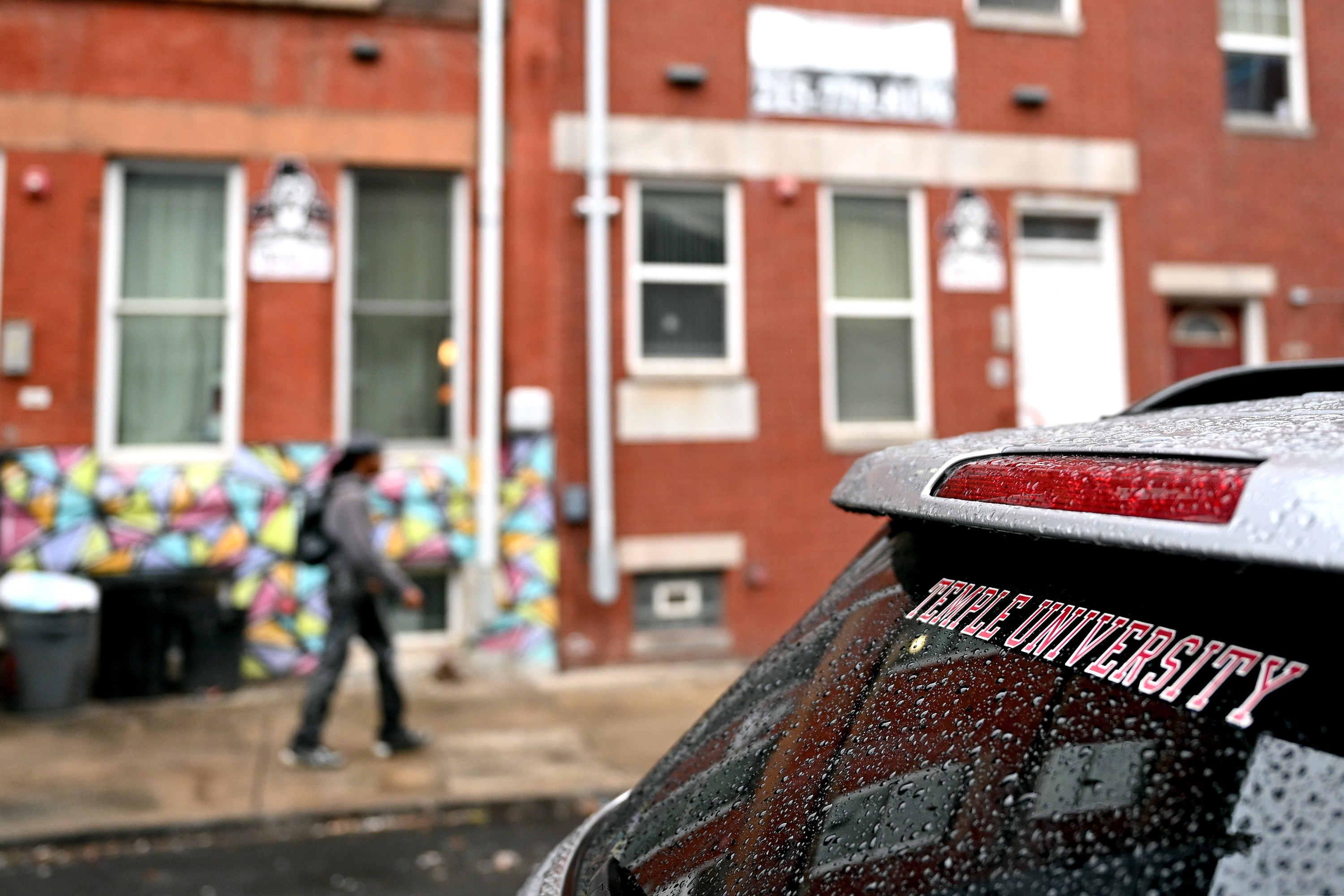
    Off-campus housing in North Philadelphia is still popular among some Temple students, but university President John Fry recently announced plans for a new dorm.

    Fay, who describes himself on Instagram as a partner in the upscale Center City Irish bar the Mulberry, has been pursued in New Jersey Superior Court by seven credit card companies or lenders in connection with roughly $57,000 in debts. Most were linked to unpaid credit card bills, and most have ended in default judgments.

    Business records show Fay is listed as debtor to an Atlanta-based company called Real Commissions, which lets real estate agents tap into cash based solely on the promise of a forthcoming commission, so long as they have a signed agreement of sale in hand.

    In an email Thursday, Fay cited several 2022 student rental sales in the $800,000 to $900,000 range to support his sale prices, insisting that “at no point did either party set or influence those values.” He did not respond to questions about why his clients would pay twice what a seller had initially been asking.

    The real estate agent’s narrative of a booming rental market around Temple was also disputed by a recent seller in one of his deals.

    The former property owner, who asked not to be named because he feared legal repercussions, acknowledged that he tried to unload his rental property last year but found no takers. He said his real estate agent then brought him Fay’s offer to broker a sale for $875,000, which he said was actually just the amount that would be recorded on the deed.

    In reality, he said, he made the sale for only $385,000, or $15,000 less than what it was originally listed for.

    The seller said he knew the deal was suspicious, but his agent advised him that he was unlikely to find a better deal.

    “I had a mortgage, but I couldn’t get any renters,” the seller explained. “It’s called desperation.”

    He took the deal, recording an official sale price that was more than $250,000 higher than any comparable properties recently sold on that block.

    Then, another property across the street sold in June for the exact same price — $875,000 — shortly after being re-listed from $475,000.

    The real estate agent on that sale: Pat Fay.

    ‘Strange stuff’

    Historically a commuter school, Temple has long had room for just a fraction of its total student body in traditional dorms. But as Philadelphia’s fortunes improved in the 20th century and more students sought to live on or near campus, the housing shortage intensified.

    Private developers stepped in. Blocks that had long served as home to mostly Black working-class residents transformed into rows of student housing units, sometimes prefabricated.

    But during the pandemic, the boom in rentals came to a grinding halt. Classes went virtual, driving student renters away. Surging homicide rates — including the 2023 shooting death of a Temple police officer — drove a public-safety crisis for the university.

    Recently, Temple president John Fry announced a plan to steer more students back to campus with the university’s first new dorm in years.

    Today, even with homicide rates now at historic lows and enrollment creeping up again, many of the blocks once flooded with student housing are underpopulated.

    For-rent and for-sale signs line both sides of the 1700 block of Arlington Street. Around the corner, on 18th Street, mailboxes overflow with unopened letters, and the chirps of dying smoke detector batteries in vacant units create an eerie birdsong.

    Landlords on the 1900 block of N. 18th St and elsewhere are looking for renters. It is unclear why a small network of buyers is overpaying for nearby properties.

    Pizzola said membership is down in the Temple Area Property Association as building owners have looked to get out of the rental business.

    “Since COVID hit, it just turned the market upside down,” he said. “If you’re an investor who was buying off-campus housing right before COVID, you got slaughtered.”

    Bart Blatstein, a developer who was heavily involved in the mid-2000s Temple-area housing boom, said the recent transactions are highly unusual.

    “I’ll give you a commission if you can get twice what my properties are worth,” Blatstein joked.

    Officially, more than 40 different corporations have purchased student rental buildings in sales brokered by Fay. But those companies trace back to a handful of purchasers, according to Pennsylvania corporate registries.

    Some of these buyers, contacted by The Inquirer, described Fay more as a participant among a loose but unnamed group of “real estate investors,” rather than a mere agent.

    Stephen L. Johnson, a Montgomery County resident, was linked to companies involved in six purchases, totaling $5.2 million. Several of the companies were registered to the home of Johnson’s mother, although in an interview she said she was unaware her rowhouse was being used as a nominal corporate headquarters and referred questions to her son.

    Reached by phone, Johnson echoed Fay’s enthusiasm for the future of the real estate market around Temple, predicting a surge in values if the university seeks to expand.

    “The investment was all about Temple buying up everything and making it better,” Johnson said of his purchases. “In 10 or 20 years, they’ll probably own all of North Philly.”

    Johnson could not explain why one of his companies, 17th Street Estates LLC, had paid so much for properties like 2113 N. 17th St., which was listed for $475,000 but sold for $900,000.

    “I’d have to talk to Patrick about that,” said Johnson, who referred to Fay as “the main guy.”

    “It’s like a team,” he added. “We all help each other out.”

    Another one of Fay’s clients, Tanjania Powell-Avery of Pottstown, Montgomery County, is a former real estate agent charged in 2010 by the U.S. Attorney’s Office as part of a mortgage fraud ring.

    Prosecutors said Powell-Avery aided two men who “purchased distressed properties at low prices, found buyers for the properties at a much higher price, and submitted false documents to the mortgage lender in support of mortgage applications,” according to the federal indictment. She pleaded guilty and was sentenced to five years’ probation and nine months’ house arrest.

    Despite this, and a 2012 bankruptcy, companies linked to Powell-Avery appeared in at least two recent sales around Temple, both brokered by Fay. These companies tapped $1.3 million in mortgages to close sales with a combined value of $1.6 million — each for about double its initial listing price.

    Powell-Avery did not respond to a request for comment.

    Her two codefendants in the 2010 federal indictment, Joseph Tookes and Othniel Tookes, also pleaded guilty. Both men are relatives of Abigail Tookes, a resident of a Norristown apartment complex who was pursued by creditors in 2020 after defaulting on a loan, leading to a $46,067 court judgment against her.

    Even so, companies tied to Abigail Tookes were linked to at least $3.4 million in mortgages to finance the acquisition of at least five properties in sales involving Fay. In all five purchases, Tookes’ company recorded sale prices at double the original values.

    Reached by phone, Tookes insisted the sales were “totally legitimate transactions.”

    “There’s no fraudulent activity. It’s just an investment group,” she said. “There’s no story here. These are real estate transactions between the buyers and sellers. They all agreed to the sale. It doesn’t matter why.”

    Other people linked to companies in Fay’s sales — Patrick M. Williams, Miles Fambro, and Angel Rodriguez — did not return calls for comment.

    Many of the Temple-area sales featured the same mortgage broker: Viva Capital Group.

    Reached by email, Viva president Juan Arguello said his Florida-based company operated “in full accordance with state and federal guidelines, rules, and regulations” and does “not have any contact with the sellers or their agents.”

    He also said his company relied on an outside appraisal management company to approve mortgage values. He did not respond to questions about which appraiser had been used to support the Philadelphia sales.

    Pizzola, who owns student-rental properties in the area, said these recent sale prices would eventually start driving up neighborhood property assessments, leading to higher tax bills, particularly on blocks where Fay’s clients have purchased multiple properties.

    He said he suspects there is fraud involved.

    “The fact that you’re seeing multiple sales at twice the average market value, it doesn’t pass the smell test,” he said.

    Uncertain future

    A prospectus for a property on Cecil B. Moore Avenue, listed for sale at $850,000 in October by several other real estate agents, included a string of Fay’s recent sales as comparable sales to justify the high asking price.

    That property has yet to sell.

    Over the last three weeks, at least three more properties near Temple have gone under contract — all with Fay as real estate agent.

    Fay had been listed as an agent on a large apartment complex on the 1300 block of North Broad Street that was listed for sale at just under $6 million in late October. In November, the property was re-listed for $12 million.

    But this week the listing was removed altogether.

    The city has begun placing liens for unpaid water bills on the buildings in some of the earliest deals Fay arranged. Many of the properties have skipped out on biannual commercial trash hauling fees imposed by the city.

    Some of the buildings do not appear to be occupied.

    This week, on the 1700 block of Fontain Street, where in 2010 developers were racing to put up prefabricated student rowhouses in time for the fall semester, mail had piled up outside two buildings that Fay clients bought this year for $875,000 each.

    Someone appeared to have busted open a door, which was ajar with broken locks. A Temple sticker was on an upstairs window.

    Hornik, from the NPLA, said that unless Fay’s purchasers figure out a way to extract enough rental income from these properties to cover mortgage costs, a mass foreclosure by lenders was likely in North Philadelphia — leaving the ownership of dozens of properties up in the air.

    “If the loan goes negative, the lender has to foreclose,” he said, “and they’re not going to recover that money.”