Tag: Weekend Reads

  • Rutgers-Camden is increasing dorm occupancy and international enrollment. Now it’s hoping for more support from the central administration.

    Rutgers-Camden is increasing dorm occupancy and international enrollment. Now it’s hoping for more support from the central administration.

    For years, Rutgers-Camden faculty and staff have complained that the school does not get its fair share from the main campus in New Brunswick.

    Faculty in the past have asserted that their salaries are inequitable to counterparts on Rutgers’ other campuses — there’s a process in place to address that — and Chancellor Antonio D. Tillis has cited inadequate investments in campus facilities.
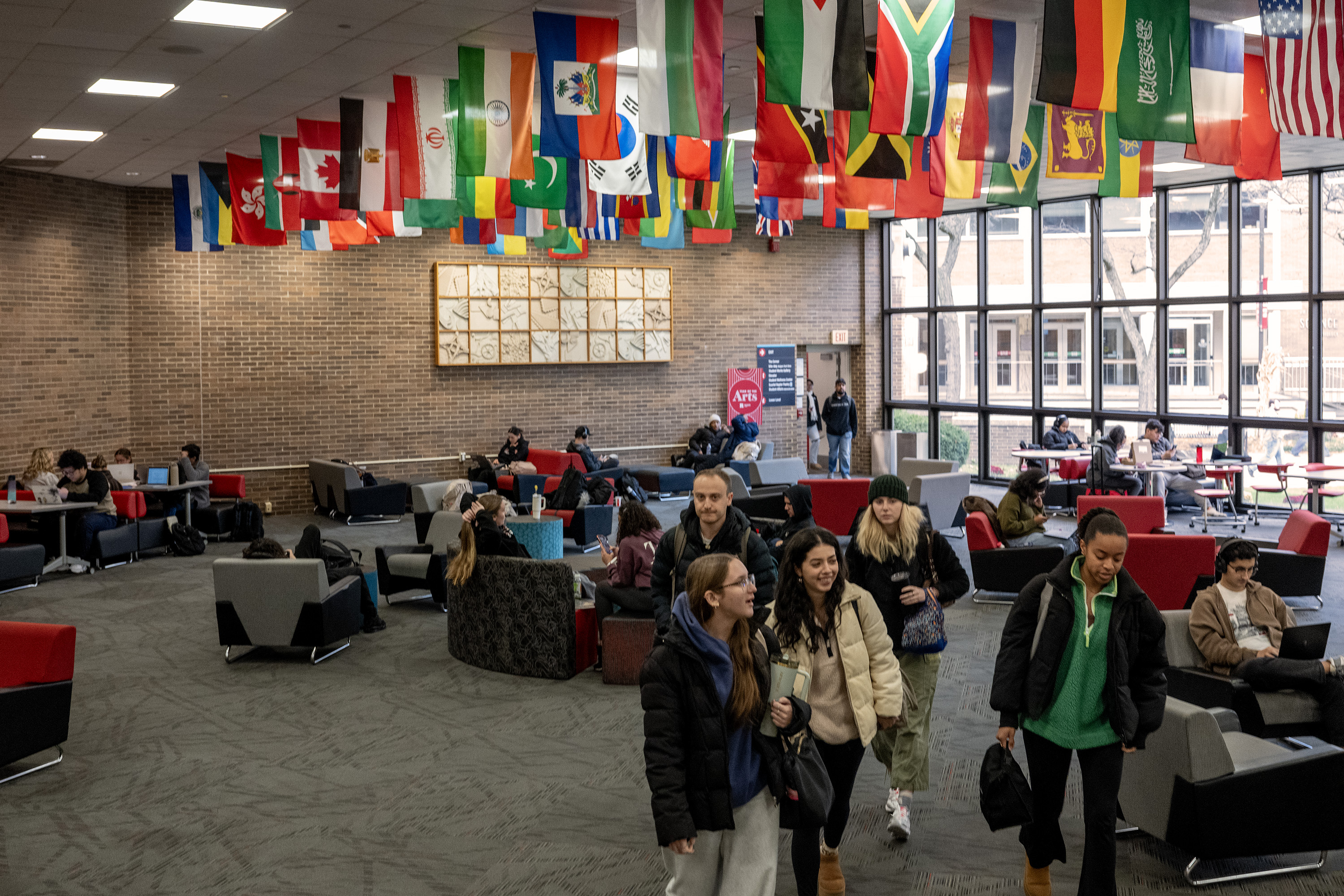
    The Campus Center (student center) on the Rutgers-Camden campus with flags of students’ home countries.

    But Tillis was heartened last month as he sat on stage for the inauguration of William F. Tate IV, the new president of Rutgers.

    “Since I’ve taken this job, I’ve had people say to me ‘Don’t invest in Camden,’” said Tate, a social scientist who grew up in Chicago and came to the job at Rutgers after serving as president of Louisiana State University. “I don’t think they know who they are talking to. … Do you think I have forgotten who I am?”

    Tate, who became president in July, pledged during his inauguration speech to make the school a stronger competitor regionally.

    “We’re going to build that Big Ten brand in Camden,” he said, referring to the NCAA athletic conference whose members are major research universities. “Look out Philadelphia, we’re coming for opportunity.”

    His comments come as Rutgers-Camden is about to celebrate its 100th anniversary and as Tillis, in his fifth year, is nearing the end of his initial contract and aiming to receive a renewal.

    Tillis touts 97% occupancy this year in the school’s residence halls, the highest since before the pandemic and up from 84% last year, and a boost in international students even while international enrollment declined 17% nationally, amid federal government policies including a pause of student visas earlier this year.

    The Campus Center at Rutgers-Camden has a display showing some of the school’s 100-year history.

    The school is also climbing in U.S. News rankings from 148th nationally among both public and private universities in 2021 — the year Tillis came — to 97th this year. It also rose from 18th to ninth in social mobility, meaning it enrolls and graduates large proportions of disadvantaged students.

    “Rutgers Camden has just punched above its weight for such a long time and now the fruit are beginning to bear,” he said.

    Strained relationships

    But Tillis’ relationship with some faculty has remained strained. Arts & Sciences faculty voted no confidence in him four months after he took the job and after he removed the Arts & Sciences’ dean.

    Since then, concerns have persisted about pay equity for Rutgers-Camden professors compared to counterparts on the other Rutgers’ campuses, in New Brunswick and Newark, and what several faculty said was Tillis’ unwillingness to consult and communicate with faculty.

    “There has been a real lack of communication between the chancellor and his office and the faculty, which has made it really hard to understand some of the decisions that have been made in regard to our budget cuts and campus priorities,” said Emily Marker, president of Rutgers-Camden chapter of the AAUP-AFT, the faculty union.

    “If he were to be renewed, we would really hope that the communication, the consultation with and involvement of the faculty would improve in campus governance,” Marker said.
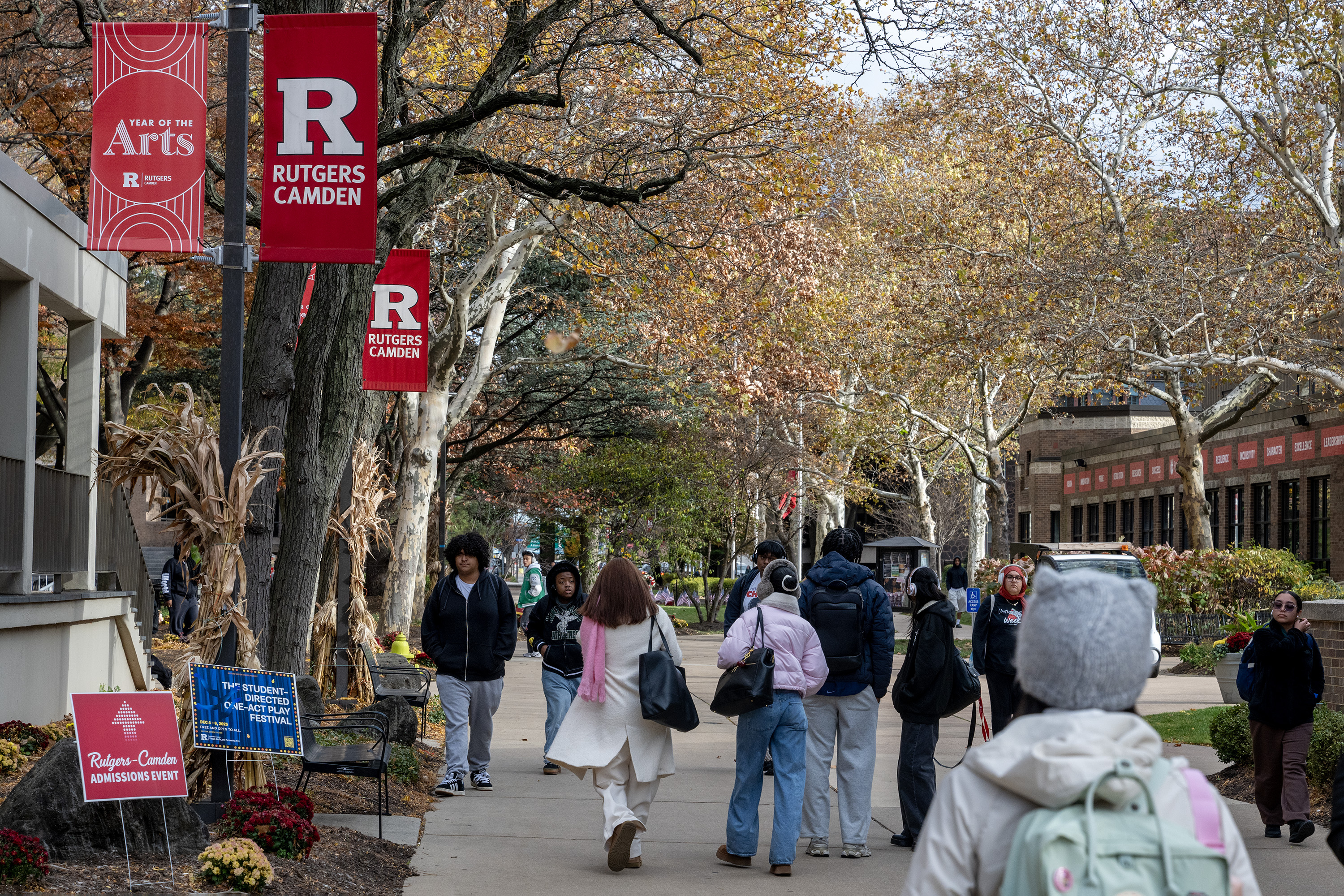
    Students walk on the Rutgers-Camden campus.

    Tillis acknowledged a rough entry in part because of the pandemic but said from his perspective, things are better with faculty. He said he hosts regular “coffee with the chancellor” meetings where faculty and staff can come and talk to him.

    Plans for the campus

    If he gets a new term, Tillis said he would aim to grow enrollment, increase Rutgers-Camden’s share of out-of-state students from about 20% to 30% to generate more revenue, enroll more students from Camden, and increase internship opportunities.

    There are plans to lease the former Camden Free Public Library building, a historic landmark on Broadway, and convert it into a center for the arts, including a bistro and wine bar.

    Rutgers-Camden’s overall enrollment stands at 5,822, up 2.6% from last year. Overall, Rutgers’ enrollment neared 71,500 this year, up 3.2%.

    Rutgers-Camden junior Mohammed Al Libaan Kazi, a transfer student from India, walks toward the stage to speak during a luncheon for international students hosted by Chancellor Antonio D. Tillis. International enrollment increased 6% on the campus this year.

    At Rutgers-Camden, international student enrollment climbed 6% to 312, largely fueled by a jump in freshmen. That’s even though about 30 students deferred enrollment due to the visa holdup, said Carol Mandzik, director of international programs.

    Tillis said the school has been recruiting more heavily from Nigeria and Ghana.

    “I chose Rutgers-Camden because it’s close to Philadelphia,” said Bao Mai, 18 a freshman from Vietnam, who wanted what a big city has to offer.

    But Mai, who spoke at an international student luncheon hosted by Tillis, said he also chose it because he likes the “small campus vibe” and array of business programs.

    Tillis also has pledged to bring in more students from Camden. This year, there are 80, up from 53 last year.
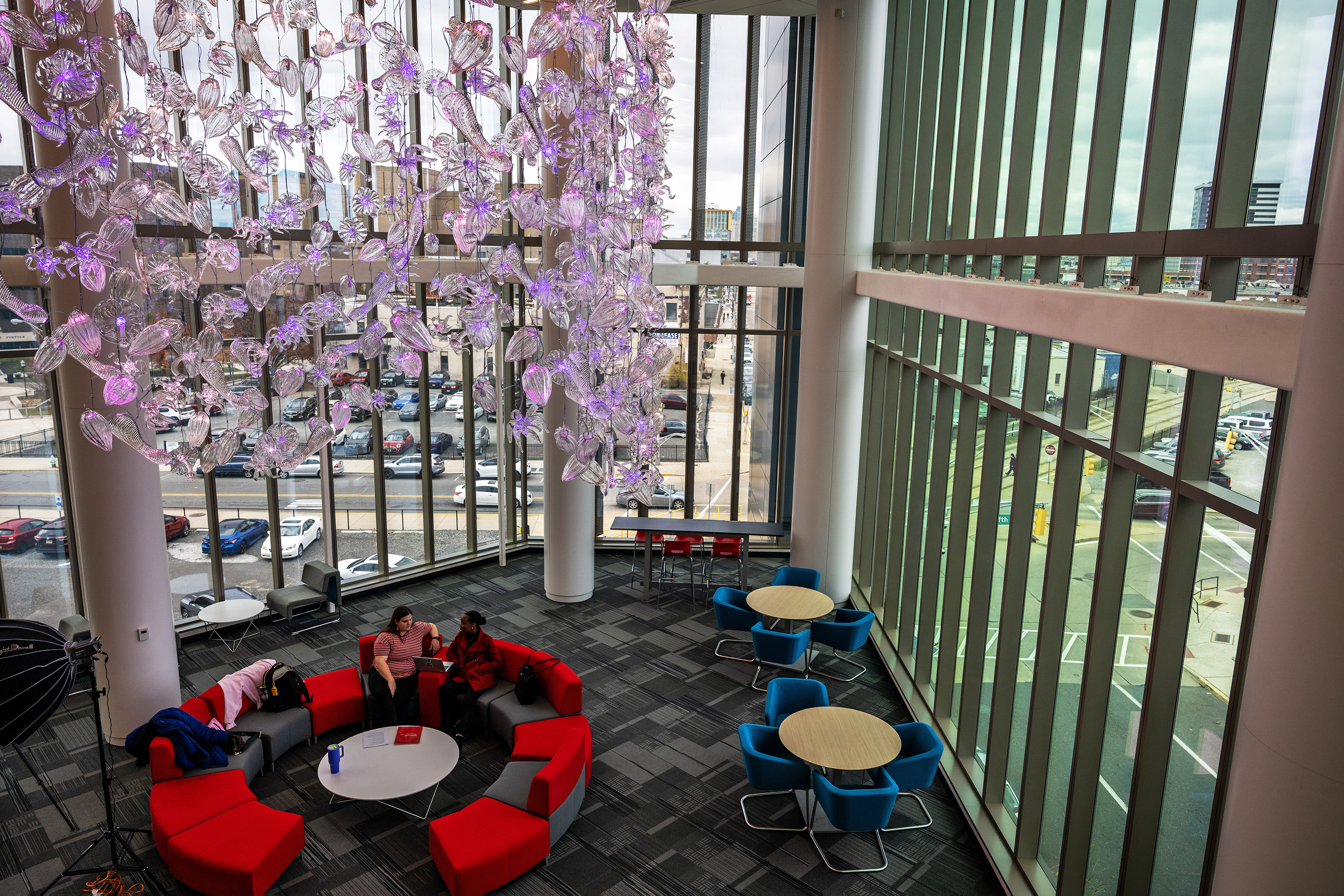
    The atrium lobby of the Nursing and Science Building on the Rutgers-Camden campus.

    He said he asked the admissions team to create more opportunities for students from Camden to come on campus so they begin “to feel as if the campus is theirs because it’s right in their backyard.”

    The school, which is designated as a minority-serving institution — meaning at least 50% of students are minorities — also plans to begin to offer in-state tuition to students from Philadelphia and northern Delaware, Tillis said. Prospective students from Philadelphia who chose not to enroll cited the price tag, he said.
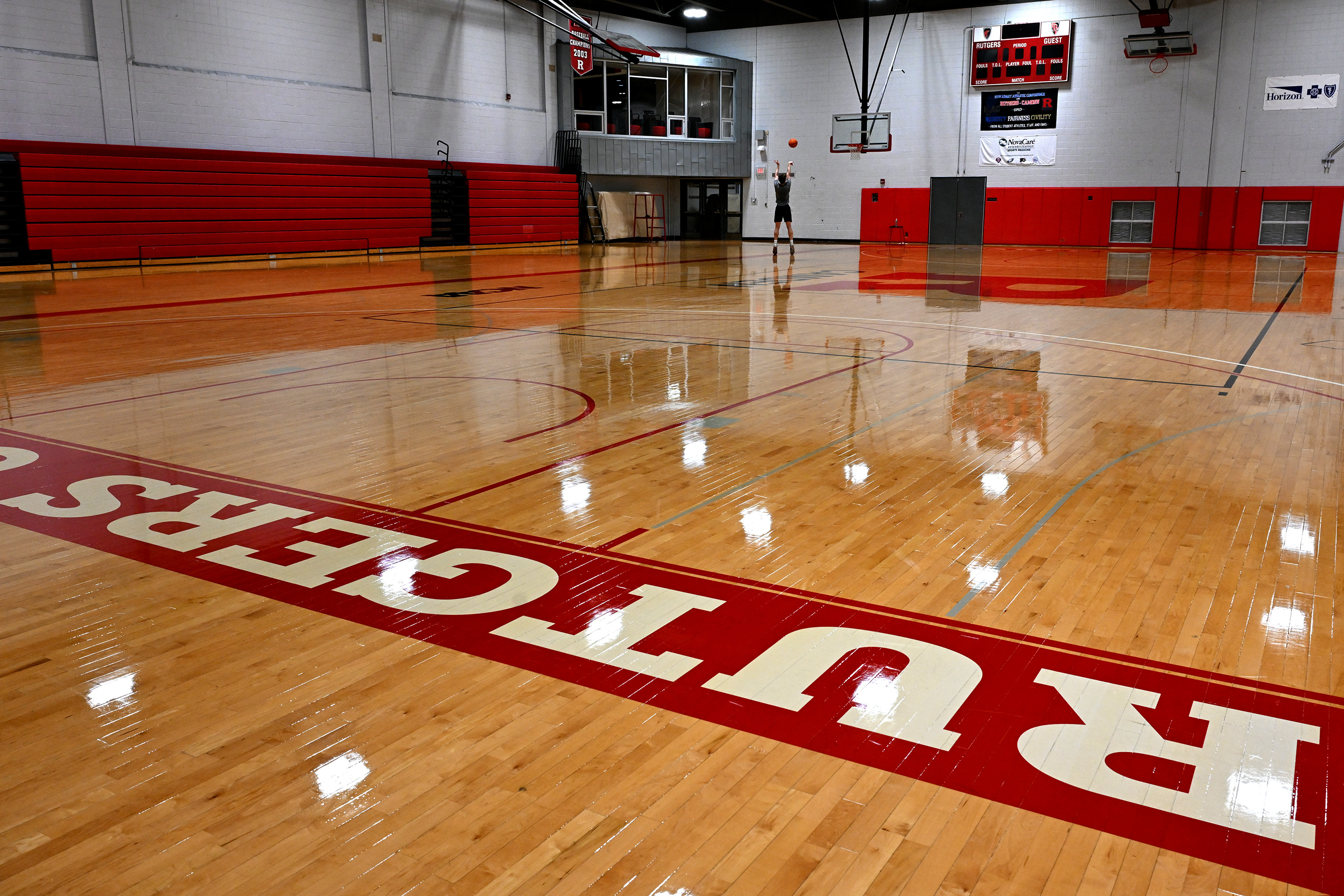
    Rutgers-Camden sophomore basketball forward Robert Peirson from Toms River practices in the gym in the Athletic & Fitness Center.

    Fostering campus culture

    More than 710 students are living in the residence halls this year, representing the highest occupancy since 2019, Tillis said.

    “Our campus is trying to create a sense of residential culture … even for our commuter students,” Tillis said, so that “they don’t just come here, go to class, and then go home.”

    window.addEventListener(“message”,function(a){if(void 0!==a.data[“datawrapper-height”]){var e=document.querySelectorAll(“iframe”);for(var t in a.data[“datawrapper-height”])for(var r,i=0;r=e[i];i++)if(r.contentWindow===a.source){var d=a.data[“datawrapper-height”][t]+”px”;r.style.height=d}}});

    The school held a welcome back barbecue during move-in and brought back homecoming last year; there was homecoming before the pandemic but not to the same degree, Tillis said.

    The school also has spruced up residence halls and added evening events such as arts and theater performances, he said. There are little things, too, like plans to install hammocks on the quad.
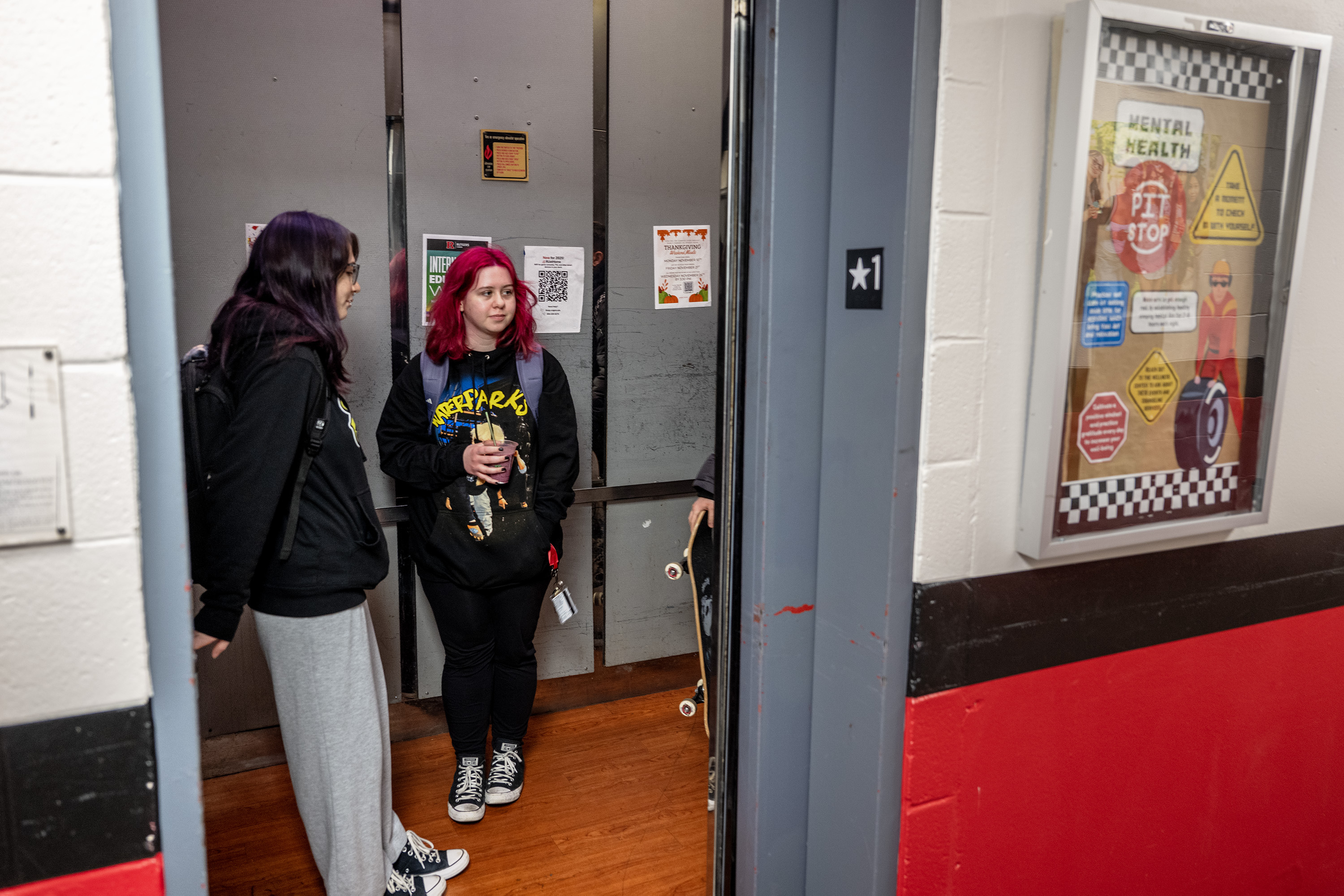
    Freshmen Ollie McDermott (left), a psychology major from Buena and Remi Zebedies (right) an art therapy major from Mays Landing take an elevator in their residence hall at Rutgers-Camden.

    Ollie McDermott, 22, a freshman psychology major from Buena, had decided against college, but McDermott’s stepfather, who recently graduated from Rutgers-Camden, convinced McDermott to try it.

    “I’m kind of glad I did,” McDermott said. “I love it here.”

    McDermott convinced a friend, Remi Zebedies, 19, an art therapy major from Mays Landing who also had been leaning against college, to try it, too. They became roommates.

    The campus has enough beds to accommodate this year’s students, but if growth continues, it may need more housing, Tillis said. He’d like to open a residential space for students with children and/or spouses.
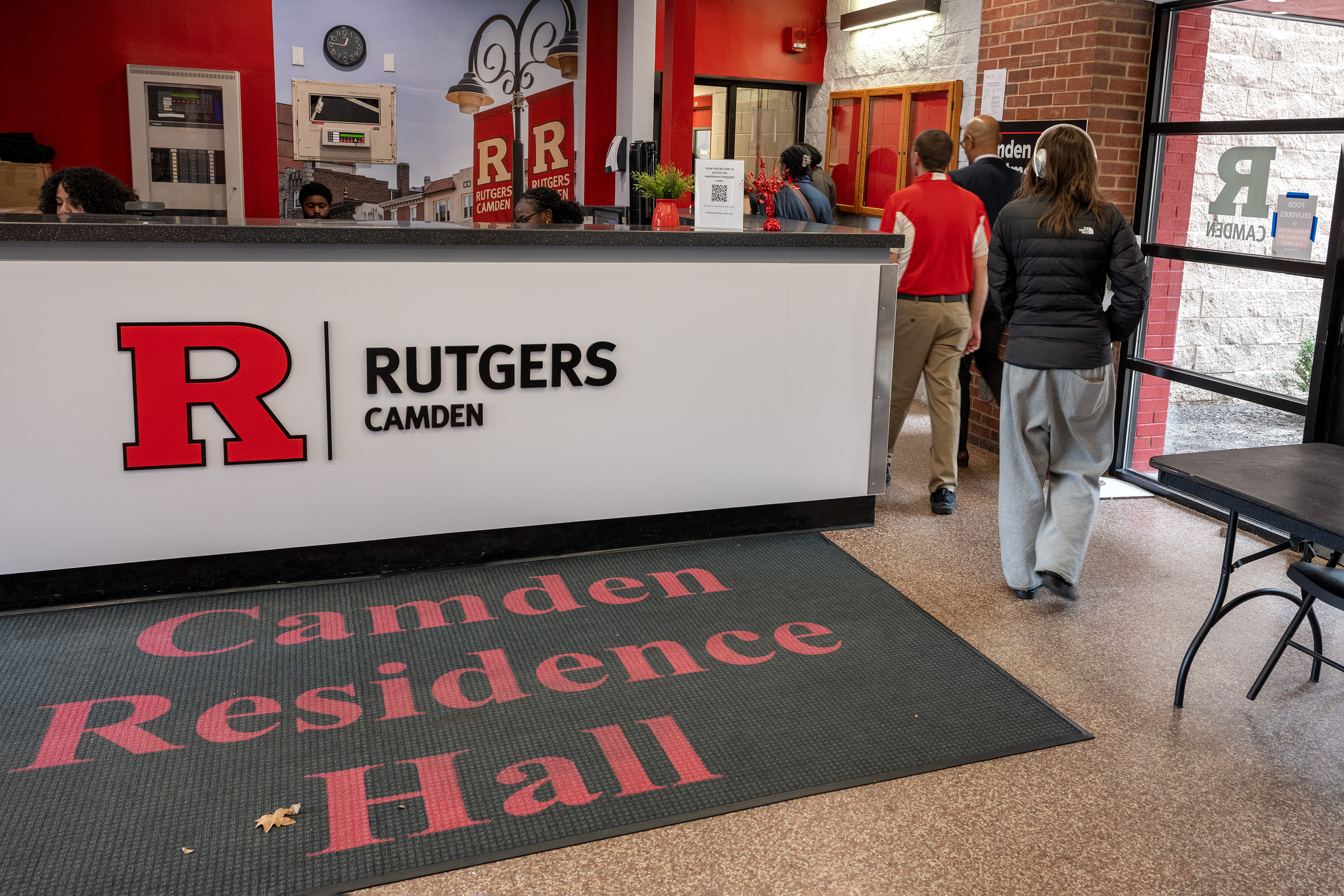
    The lobby entrance between the Towers and Apartments resident halls at Rutgers-Camden.

    Working on graduation and retention rates

    In the school’s strategic plan approved in 2023, Tillis set improvement in graduation and retention rates as primary goals.

    The school’s retention rate from first-year students to sophomores has increased from 71% in 2021 — the year he came — to 73.4% this fall. The six-year graduation rate decreased from 63.6% in 2021 to 61.5% in 2024. (The school said that 2025 data had not been verified and that the 2024 dip reflects lingering pandemic-related challenges.)

    Tillis also discussed the Cooper Gateway Project, which will renovate four properties to add event halls, a new space for Arts & Sciences, and pedestrian walkways and courtyards. It’s expected to be completed by early 2027.

    A new athletic field house also is in the works, and there are plans for a new building for business students to live and learn in, he said.

    Pay equity was a sore spot with faculty for years, despite the process put in place under which they could be compared to peers at the New Brunswick and Newark campuses.

    The university said in a statement that since 2021, the vast majority of faculty who petitioned for equitable pay got increases. The requests are reviewed by a committee of faculty experts who look at the professor’s classroom instruction, research, and scholarly activity.

    Rutgers-Camden graduate student Funmi Adebajo, from Nigeria, speaks during a luncheon for international students hosted by Chancellor Antonio D. Tillis.

    Tillis said sometimes faculty were seeking to compare themselves to peers who were not really comparable.

    Marker, the Rutgers-Camden AAUP-AFT president, said through a grievance, the union negotiated a change to the process that will make it harder for Tillis to overrule recommendations by the committee.

    In the last cycle, the vast majority of professors with equity claims received “meaningful” pay adjustments, said Marker, an associate professor of European and Global History.

    As for the comments about Camden by Tate, the new Rutgers president, Marker said she is hopeful they lead to action.

    “If it actually results in a massive investment in Camden, in our students, in our faculty, in our facilities, I would be delighted,” she said. “But we’ll see. That has really not been the orientation of any of the central administrations since I was hired in 2017.”
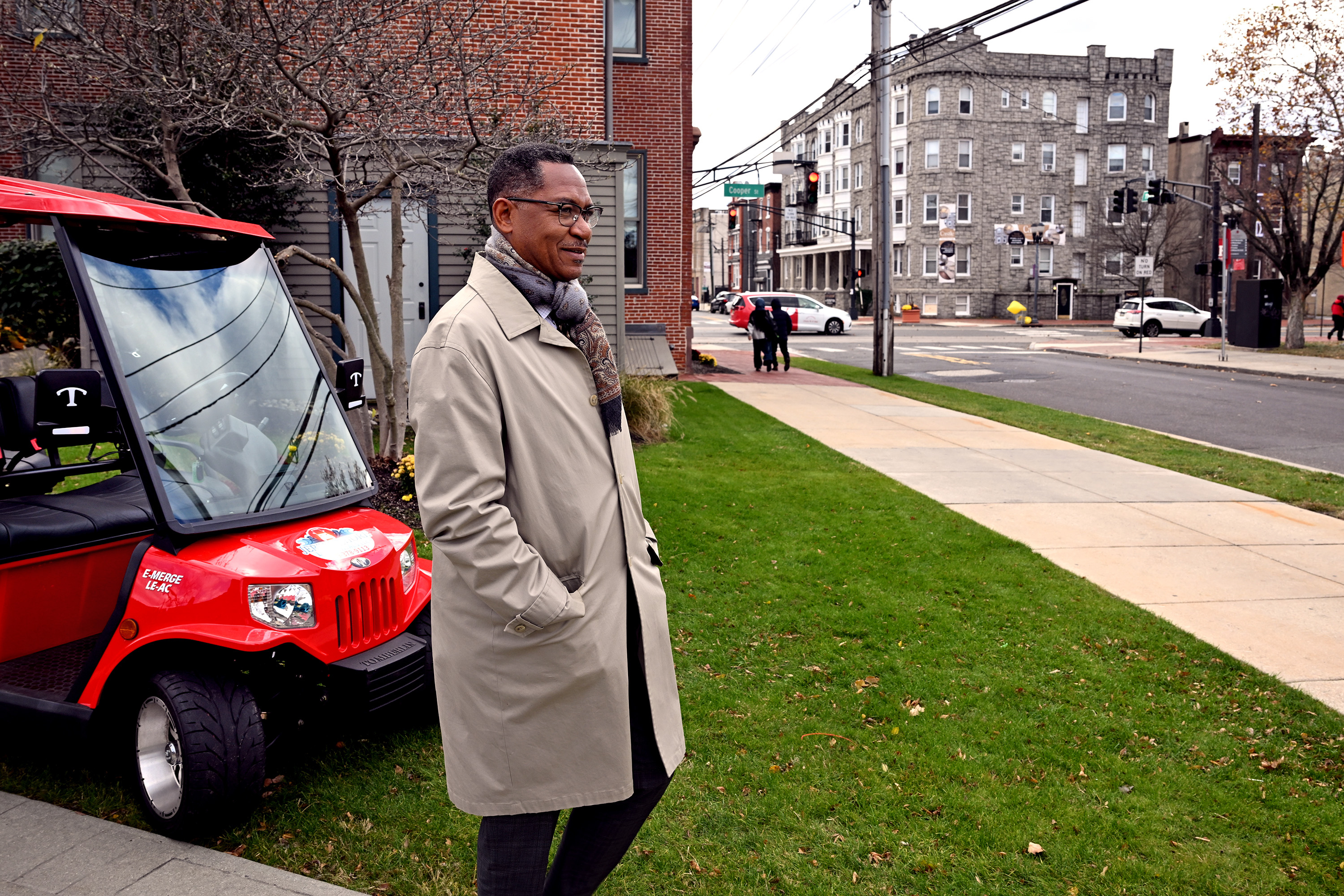
    Rutgers-Camden Chancellor Antonio D. Tillis walks rather than rides in the offered golf cart to a luncheon he hosted for international students.

    Tillis said he is hopeful that Rutgers-Camden will get more support under Tate. He got to know Tate in 2020 when they were both in a program at Harvard for new presidents and chancellors.

    “We have a beautiful campus, but it’s stuck between the 1950s and the 1970s,” he said. “Certain types of innovative spaces for 21st century instruction needs to happen.”
  • Good government fix or a demolition derby? Historic preservation bill is provoking debate in Philly.

    Good government fix or a demolition derby? Historic preservation bill is provoking debate in Philly.

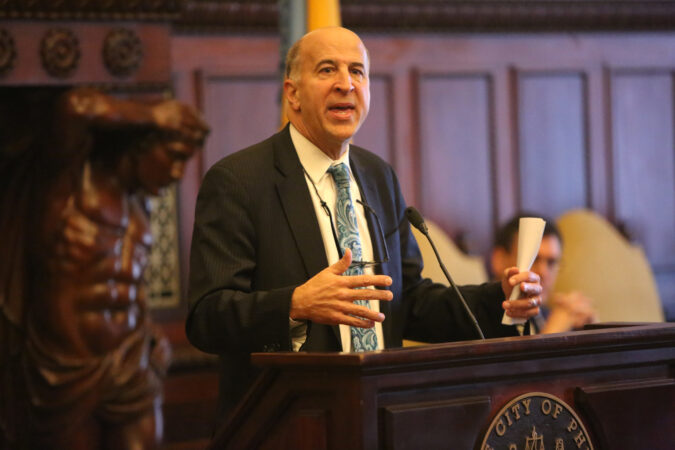
    Historic preservation advocates are sounding the alarm about legislation from Councilmember Mark Squilla, which they argue would weaken existing protections in Philadelphia.

    The bill, introduced Nov. 20, would institute changes to the city’s Historical Commission, which regulates properties on the Philadelphia Register of Historic Places and ensures that they cannot be demolished or their exteriors substantially altered.

    “This is the first time the [preservation] ordinance has been proposed for amendment in decades,” said Paul Steinke, executive director of the Preservation Alliance for Greater Philadelphia. “This is a developer-driven proposal that does not reflect any of the priorities of the preservation community.”

    Proponents of the bill argue that it is simply meant to give more notice and power to property owners before their buildings are considered by the Historical Commission.

    “The bill does nothing to decrease the power of the Historical Commission to protect important historic resources,” said Matthew McClure, who served as co-chair of the regulatory committee of Mayor Jim Kenney’s preservation task force.

    “It is a modest good government piece of legislation,” said McClure, a prominent zoning attorney with Ballard Spahr. He emphasized that he was not speaking on behalf of a client.

    The bill was introduced too late in this year’s Council session to receive a hearing. Squilla says it will be considered next year.

    Currently, the interest group most supportive of the bill is the development industry. But even some preservation opponents are displeased with Squilla’s effort, arguing that it does too little for homeowners.

    “Everybody’s talking, and I think they all agree to move forward with continued conversations to maybe tweak the language a little bit so everybody feels comfortable with it,” Squilla said.

    At least one more stakeholder meeting will be held in December.

    Tensions over preservation

    Squilla’s proposal comes in the midst of heightened debate around preservation in Philadelphia, where the majority of buildings were constructed before 1960.

    Over the last decade, the number of historically protected properties doubled, although well below 5% of the city’s buildings are covered. Preservationists oppose what they see as a demolition-first approach to development in the United States’ only World Heritage City.

    Recently large new historic districts have been created to cover neighborhoods like Powelton Village, parts of Spruce Hill, and 1,441 properties in Washington Square West.

    These have provoked backlash among some homeowner groups and pro-development advocacy organizations, which see these regulations as increasing housing costs.

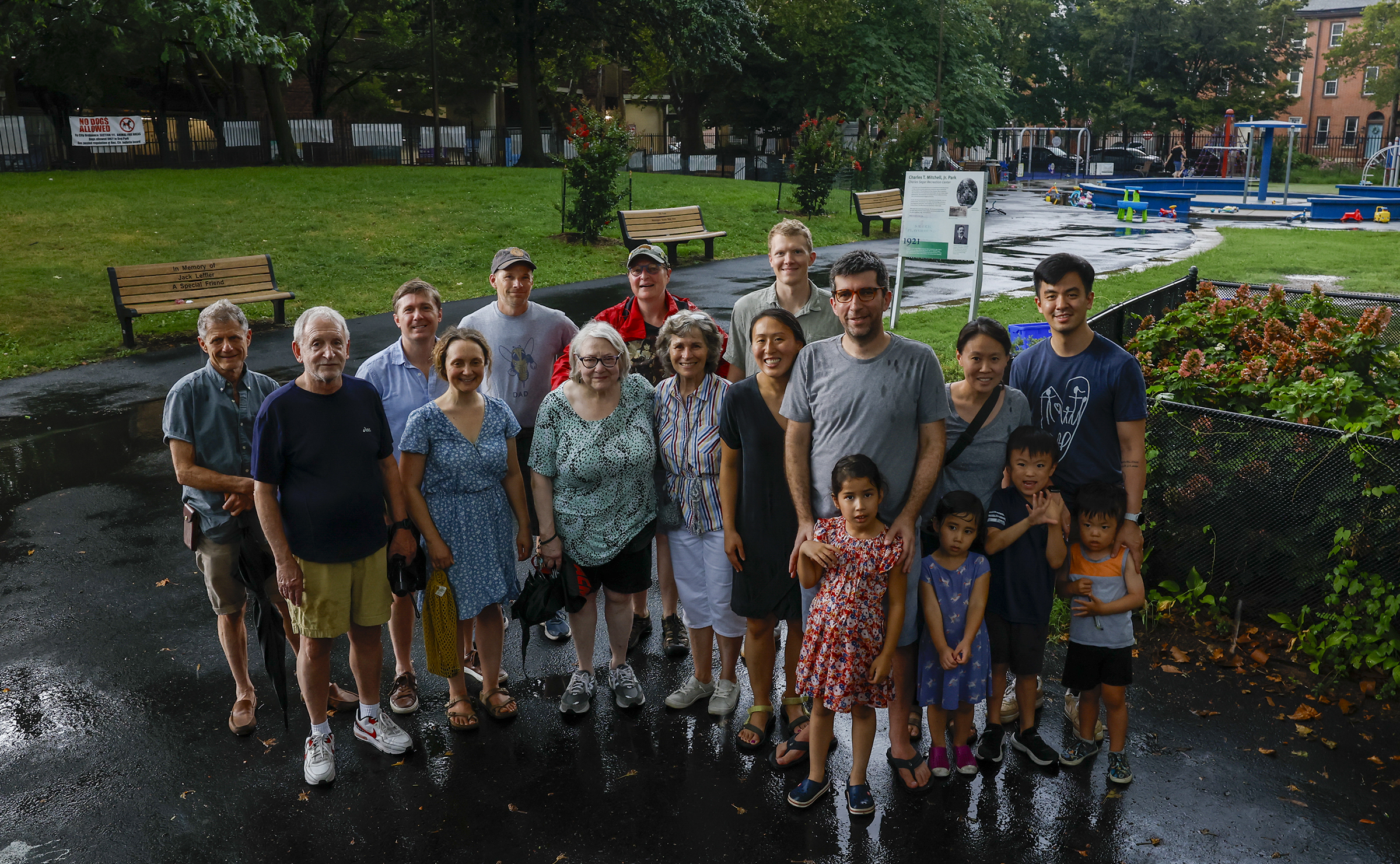
    Members of the Philadelphians for Rational Preservation gathered at Seger Park in the Washington Square West neighborhood on July 27 to talk about their opposition to the Washington Square West Historic District.

    Some property owners have grievances against the way the local nomination process works.

    In Philadelphia, citizens are empowered to nominate buildings to the local register — giving buildings protection from demolition or exterior changes — without input from the property owner until the Historical Commission considers the case.

    This practice persistently causes controversy, especially because there are few local incentives for homeowners whose properties get protected.

    In some localities, preservation protections are promulgated exclusively by planners. In others, owner consent is required.

    “The current historic nomination process is most often dictated by nongovernmental actors who operate without notice to property owners,” McClure said. “The administration’s bill is aimed at increasing transparency and basic fairness during the nomination process.”

    Mayor Cherelle L. Parker’s administration did not respond to a request for comment.

    What’s in the bill

    Squilla’s bill is thick with new provisions to the local historic ordinance. A key aspect of the legislation gives property owners at least 30 days before a pending nomination of their building is considered by the commission and protections kick in.

    While homeowners probably would not have time to radically alter the exterior of their house — and presumably wouldn’t demolish it — preservationists fear that developers will use the extra time to begin razing historic buildings.

    “No one likes the notice provision the way it’s written; that’s freaking people out,” Steinke said. “We made clear why we think that’s a problem, and we were heard. Of course, the development community would love it to be the way it’s currently expressed in the bill.”

    A Victorian home in the Spruce Hill historic district. Recently large new historic districts have been created to cover neighborhoods like Powelton Village, parts of Spruce Hill, and 1,441 properties in Washington Square West.

    The delayed provision particularly worries preservationists in combination with a proposed requirement that the commission approve permits — including demolition or exterior design work — if “material commitments” were made to plans before the attempt to protect the historic building.

    Other provisions include language to make it more difficult to protect land because it may house archaeological remains. It also limits the ability to consider a property for protection due to its relation to a landscape architect (as opposed to, say, a building designer).

    Why some preservation critics dislike the bill

    One critic of Squilla’s bill is a new group of residents angry at the costs of preservation protections to homeowners following the creation of the Washington Square West historic district.

    Despite their animus toward existing preservation rules in the city, groups like 5th Square and Philadelphians for Rational Preservation called the legislation a sop to those who least need help.

    “While this bill is a boon to developers, it doesn’t help ordinary Philadelphians,” said Jonathan Hessney of Philadelphians for Rational Preservation.

    He argues that Squilla isn’t curbing historic districts that burden homeowners, “while at the same time risks allowing genuinely historic properties to be destroyed in the new 30-day race to demolish or deface it creates.”

    A possible reform that some critics of the bill would like to see are flexible, tiered historic districts, where only a select group of buildings would be fully regulated. Demolition protections would still exist for many buildings, but most would not be subjected to oversight for changes like replacing a door or window.

    “That was discussed as something that the preservation community would like to see that was mentioned in the original draft and then stripped out,” Steinke said.

    Squilla said the pushback surprised him, given that negotiations have been held since June. He’s confident a compromise can be reached.

    Beyond the Preservation Alliance — the advocacy group with the most funding and pull in City Hall — the bill has caused alarm among historic activists.

    “It was a blindside to the progress that many stakeholders in the preservation community felt they were reaching with him,” said Arielle Harris, an advocate. “Squilla understands the preservation climate in the city — given that he was on the preservation task force — so this is out of left field.”

  • Internal documents shed light on Mayor Cherelle L. Parker’s decision to end Philadelphia’s racial diversity goals in contracting

    Internal documents shed light on Mayor Cherelle L. Parker’s decision to end Philadelphia’s racial diversity goals in contracting

    Mayor Cherelle L. Parker has said her administration relied on expert advice from a top law firm when it decided to end a Philadelphia policy prioritizing businesses owned by women or people of color in city contracting following recent court rulings that limited affirmative action-style government programs in hiring and contracting.

    “I call them my genius attorneys because they all clerked for Supreme Court justices, and they handle the hardest cases throughout the country,” City Solicitor Renee Garcia, the city’s top lawyer, recently said of the New York-based firm Hecker Fink.

    “And we went back and forth,” Garcia said. “Can we do this? Can we do this? What about this? What about that?”

    But when it came time to replace the city’s old program with a new policy, the Parker administration didn’t adopt all of the suggestions it received from Hecker Fink, internal administration documents obtained by The Inquirer show.

    Hecker Fink attorneys suggested that Philadelphia replace its old contracting system with one that favors “socially and economically disadvantaged” businesses, the documents show. Parker instead created a new policy favoring “small and local” companies.

    The differences between Parker’s program and alternatives the city could have adopted are highly technical but hugely important, attorneys and researchers who study government contracting told The Inquirer.

    Critics say the new policy indicates Philadelphia took the easy way out in the face of conservative legal attacks, instead of fighting to preserve the spirit of the old program: promoting equity and diversity in city contracting.

    Parker, however, is adamant that her “small and local” policy will achieve that goal, given that many small companies in the city are owned by Black and brown Philadelphians who have faced discrimination.

    “Our small and local business program is our disadvantage program,” Garcia said in a written statement. “Considering counsel’s advice, the City determined that a small and local business program is the best way to incorporate social and economic disadvantage in a way that is objective, content-neutral, consistent, demonstrable, and could be stood up very quickly.”

    The documents, which include confidential legal memos from Hecker and internal administration emails, show how top city officials attempted to navigate a new legal landscape after the U.S. Supreme Court in 2023 upended decades of jurisprudence on affirmative action and other race-conscious policies.

    Mayor Cherelle L. Parker said her “small and local” contracting policy will boost Philadelphia companies.

    In early 2025, the Law Department provided a spreadsheet of line-by-line edits to the city’s Five Year Plan, a long-term budgeting document, to remove language about racial and gender-equity goals submitted by city departments.

    When the Office of Community Empowerment and Opportunity, for instance, wrote that its mission involved “advancing racial equity,” the Law Department simply wrote, “remove racial,” as it did for several other agencies.

    The edits signify a stark contrast to the city’s approach under former Mayor Jim Kenney, who in 2020, operating under very different circumstances, instructed all departments to craft comprehensive racial-equity plans.

    There is no indication in the internal documents, which are primarily from 2024 and 2025, that Parker, the city’s first Black female mayor, or administration officials were eager to make those changes. And no city officials appeared in the documents to view the “small and local” policy as less aggressive or safer than the other options at Parker’s disposal when she replaced the city’s race-conscious contracting system.

    But for Wendell R. Stemley, president of the National Association of Minority Contractors, the mayor’s choice was revealing.

    “The cities that want to cave in on this issue without doing the hard work are just doing small [and] local, race- and gender-neutral,” Stemley said.

    ‘Disadvantaged’ vs. ‘small and local’

    The documents obtained by The Inquirer show that Hecker recommended the city abandon its decades-old contracting system — responsible for allotting more than $370 million each year in city contracts to historically disadvantaged firms — due to the threat of potential legal challenges, as Parker and Garcia have said.

    But they also show that the firm proposed replacing that policy with a system “setting mandatory goals for hiring socially and economically disadvantaged businesses or persons,” a race- and gender-neutral standard based on the federal Small Business Administration’s 8(a) business development program.

    Like the city’s contracting policies, the federal program previously had a stated policy of aiding business owners who were members of specific historically disadvantaged groups, such as women and Black people. But a 2023 federal court ruling in Washington, D.C., prohibited the SBA from presuming that members of those groups had faced barriers and required 8(a) applicants to demonstrate social and economic disadvantages.

    The change allowed the program to pass legal muster by not favoring race or gender groups, while still allowing the agency to consider whether each applicant had faced discrimination on an individual basis.

    Hecker, a litigation and public interest firm, suggested that Philadelphia adopt a similar approach.

    “Adopting mandatory goals for hiring socially or economically disadvantaged individuals or businesses, defined along the same race-neutral lines as in the SBA’s 8(a) program, would likely be defensible if challenged,” Hecker lawyers wrote in a May 5 memo to the city.

    An internal administration memo analyzing the city’s options on May 16 said that Hecker “recommended taking a look at the federal SBA 8(a) Business Development Program as a model.”

    “This is a program to recognize small and disadvantaged businesses,” the city’s memo said, adding that the SBA defines socially disadvantaged individuals as “those who have been subjected to racial or ethnic prejudice or cultural bias within American society because of their identities as members of groups and without regard to their individual qualities.”

    The executive order governing the city’s old minority contracting program, which aimed to award 35% of contracts to historically disadvantaged firms, expired at the end of 2024, and the city quietly ended it at some point earlier this year.

    Parker did not announce that the program had been discontinued or that it would be succeeded by her “small and local” policy until an Inquirer story published last month revealed the change.

    ‘They are different’

    The key difference between Parker’s program and the 8(a) model is that the city’s new policy gives no explicit consideration for social disadvantage, prejudice, or cultural bias.

    Garcia, the city solicitor, firmly pushed back against the notion that the city had ignored Hecker’s advice on reshaping its contracting landscape and contended that the “small and local” policy will result in equitable outcomes because many of Philadelphia’s small businesses are owned by people of color and have faced discrimination and other barriers to growth.

    “The City’s small and local business program … is more aggressive [than an SBA 8(a)-style policy] in that it is broadly applicable to small and local businesses, without creating unnecessary hurdles and confusion over the word ‘disadvantage’ or requiring onerous paperwork” for business owners to demonstrate their disadvantages, she said.

    City Solicitor Renee Garcia is the Parker administration’s top lawyer.

    Although Parker’s new program is not exclusively available to disadvantaged firms, Garcia said it “has built-in elements of social and economic disadvantaged programs like the SBA 8(a) and [U.S. Department of Transportation] programs, such as utilizing SBA business size standard caps, examining years in business, examining employee count, and personal net worth considerations.”

    But Andre M. Perry, a senior fellow at the Brookings Institution, said that while the city may be intending to help disadvantaged businesses with its “small and local” approach, specifying that goal in writing is important. The mayor’s executive order does not use the word disadvantage.

    “They are different,” said Perry, the author of Black Power Scorecard, an examination of access to property, education, and business success. “The downside of any approach that does not use some criteria for being disadvantaged is that you can ignore them.

    “There is a history that suggests that you absolutely need some process to identify groups of people who have been ignored by the city. It’s certainly not a given that you will touch those communities that have been denied opportunities in the past under ‘small and local,’” Perry said.

    ‘Too early to tell’

    Parker’s move to abandon the city’s goal of prioritizing businesses owned by women and Black and brown people has become the latest flashpoint in the debate over the centrist Democrat mayor’s approach to the new political reality under President Donald Trump’s second administration, as critics like progressive City Councilmember Kendra Brooks have accused her of “caving” to Trump.

    Parker, however, said the city had little choice but to end the old system following Students for Fair Admissions v. Harvard, a 2023 Supreme Court ruling that prohibited affirmative action in college admissions and has had widespread consequences for race-conscious government programs.

    “There were people who told us that leadership meant justifying the [old] law,” Parker said at a recent news conference announcing the contracting policy changes. “They said, ‘Forget about the Supreme Court ruling. Philadelphia should just continue functioning and operating its program even if your Law Department and these genius lawyers at [Hecker] who have clerked for Supreme Court justices [recommended abandoning it.]’

    “I want to take some advice from somebody to interpret the Supreme Court ruling right for some folks who have worked there.”

    The U.S. Supreme Court upended the legal landscape for race-conscious government programs with a 2023 case ending affirmative action in college admissions.

    But Parker also said she felt that the city’s old system was “broken” long before the Harvard decision because it failed to achieve its goal of boosting the number of “Black and brown and women and disabled business owners” in Philadelphia.

    Chief Deputy Mayor Vanessa Garrett Harley added that an administration review found that only 20% of the firms in Philadelphia’s registry of businesses owned by women, people of color, or people with disabilities were getting city contracts.

    Parker, who as a lawmaker worked on policies aimed at boosting economic opportunities for minority- and women-owned firms, said she was optimistic that pivoting to a focus on “small and local” firms would produce better results.

    Parker has not publicly discussed suggested alternatives to her new policy, including the 8(a)-style approach.

    Several government contracting attorneys and researchers interviewed by The Inquirer said that both “small and local” and “socially disadvantaged” programs have downsides and that the success of either would primarily depend on how well it is executed. Details are scant on what the new policy will actually look like, making it difficult to evaluate the potential impact.

    But experts said choosing a policy that seeks to favor disadvantaged businesses rather than any small Philadelphia firm would indicate the mayor was fighting to maintain the spirit of the old program, which sought to boost companies owned by women and people of color who have long been underrepresented among business owners and government contractors.

    “Adopting an 8(a)-style program with language prioritizing contracts for socially disadvantaged businesses would signal a desire to maintain the pre-2024 understanding that cities can procure goods deliberately, intentionally, in different ways, with preferences from disadvantaged businesses,” said Brett Theodos, a senior fellow at the Urban Institute who has written a paper about how governments can use contracting to promote equity, despite recent court decisions. “Having an (8)a-style [program] would signal that the mayor wanted to try something more.”

    Parker has defended her policy shift by invoking the bona fides of the Hecker attorneys who worked with the city. She and other city officials have noted that one clerked for liberal U.S. Supreme Court Justice Sonia Sotomayor and now works for the American Civil Liberty Union — “not somebody who would have had a conservative mindset,” as Garrett Harley put it. (Those comments later prompted the ACLU-PA to distance itself from what it described as the city’s “DEI rollback.”)

    To be sure, adopting a program in which contractors need to demonstrate social disadvantages, such as past instances of discrimination, has its own drawbacks.

    Following the 2023 federal court decision, the SBA now requires 8(a) applicants to submit “social disadvantage narratives,” or essays, increasing administrative burdens and potentially favoring savvier contractors. The U.S. Department of Transportation has a similar essay-based approach.

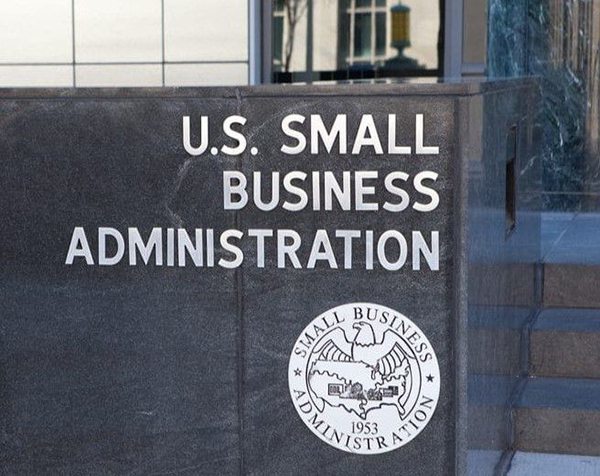
    The U.S. Small Business Administration’s 8(a) business development program is aimed at helping “socially and economically disadvantaged” firms.

    “We have heard from our businesses it is already too hard to do business in Philadelphia; these kinds of additional requirements will exacerbate an already difficult and burdensome process,” Garcia said.

    And despite being a race- and gender-neutral federal policy, the current 8(a) standard, which was adopted in President Joe Biden’s administration, may still be challenged in court.

    The lawyers at Hecker Fink, however, believed that a Philadelphia version of the policy could withstand scrutiny.

    “The next wave of conservative litigation in this space may target such programs, arguing that social or economic disadvantage is a proxy for race,” Hecker attorneys wrote in the May 2025 memo. “However, based on our assessment of the current legal landscape, the City would have a strong chance of defeating such challenges.”

    Like many diversity, equity, and inclusion initiatives cast as discriminatory by the president, the 8(a) program has come under siege since Trump took office in January. On the agency’s website, hyperlinks to guidelines on how companies can demonstrate social disadvantage have gone dead, and the Trump administration has launched an audit of the program in the wake of an alleged bribery scheme.

    None of those issues, however, address the question of whether a similar policy crafted for the city would be legally defensible. Despite Trump’s attacks, the current version of the 8(a) program’s focus on “socially disadvantaged” firms has not been overturned in court.

    Regina Hairston, president and CEO of the African-American Chamber of Commerce of PA, NJ, and DE, said the organization will wait and see how Parker’s new policy shakes out.

    “It’s too early to tell if the mayor’s policy is the right policy, but from what I’ve seen across the country, other cities are moving to [prioritize] small, medium enterprises,” Hairston said. “We don’t know if that’s the answer, but we will be monitoring it.”

    Staff writer Anna Orso contributed to this article.

  • How Chestnut Hill’s main street is staying relevant in the Amazon era

    How Chestnut Hill’s main street is staying relevant in the Amazon era

    At lunchtime on a Thursday, a week before Thanksgiving, Chestnut Hill was buzzing.

    Inside the newly expanded Matines Café, almost every table was full. People sipped warm drinks from large mugs and ate Parisian croissants and quiche. Bottles of prosecco sat on ice by one large table adorned with Happy Birthday balloons.

    McNally’s Tavern was bustling, too, with regulars sitting at the bar and at tables inside the cozy, nearly 125-year-old establishment atop the hill. Multiple generations gathered — a son taking a father out to lunch, a mother with a baby in a stroller, and two sisters, Anne and Meg McNally, running the place.

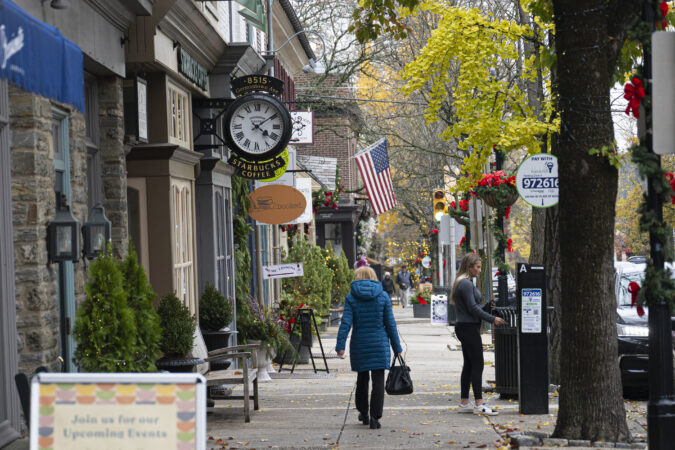
    Behind the storefronts along Germantown Avenue’s main drag, some people perused the boutiques, while others typed away on laptops in coffee shops.

    In the northwest Philadelphia neighborhood known for its wealth and postcard-picturesque aesthetic, the small-town charm of longstanding establishments — four are more than 100 years old — is now complemented by the shine of some newer shops and restaurants. Several Chestnut Hill business owners said the variety has helped both old and new spots succeed despite broader economic challenges, including inflation and tariffs, and the loss of a few restaurants.

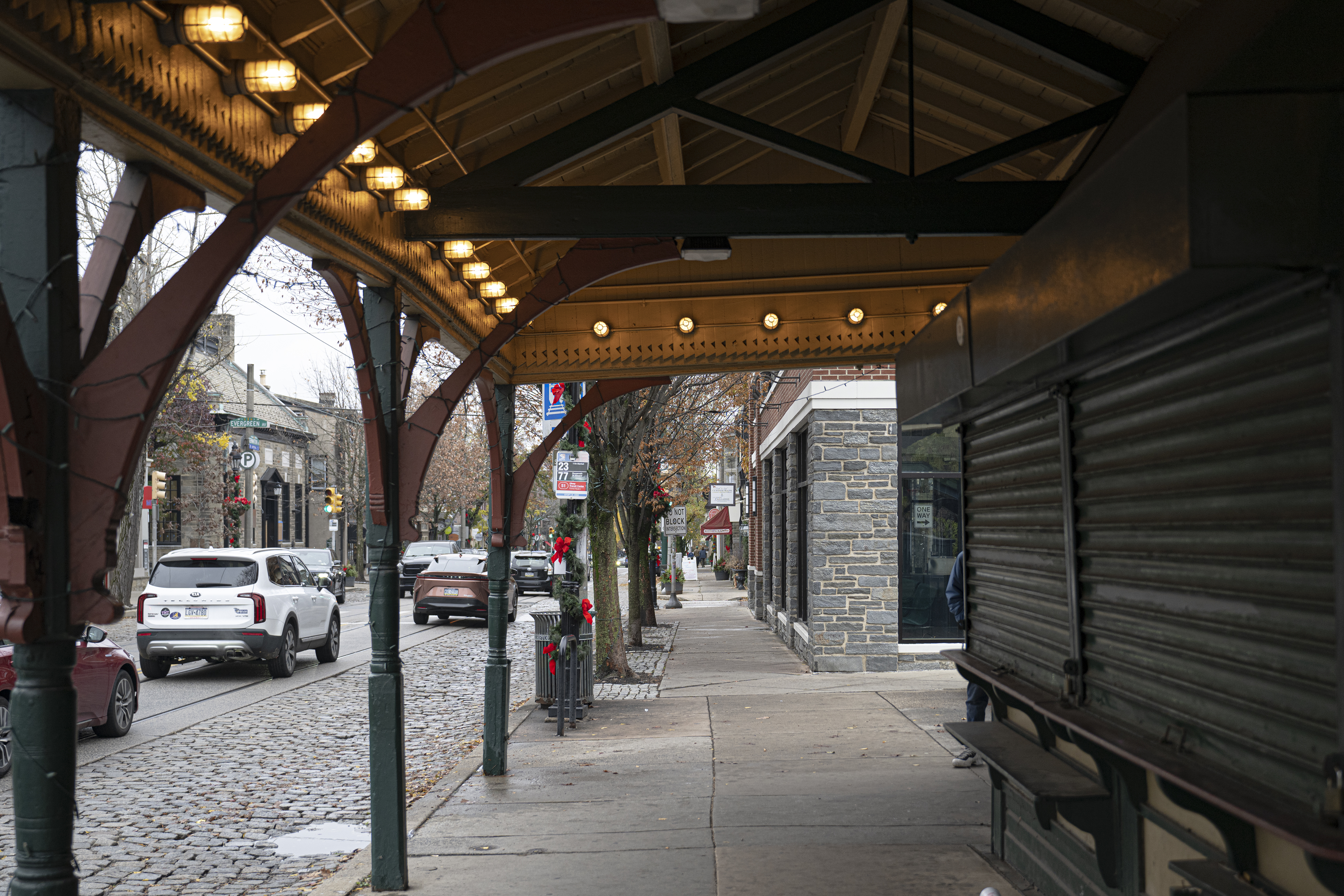
    A view down Germantown Avenue from the Chestnut Hill SEPTA Regional Rail station.
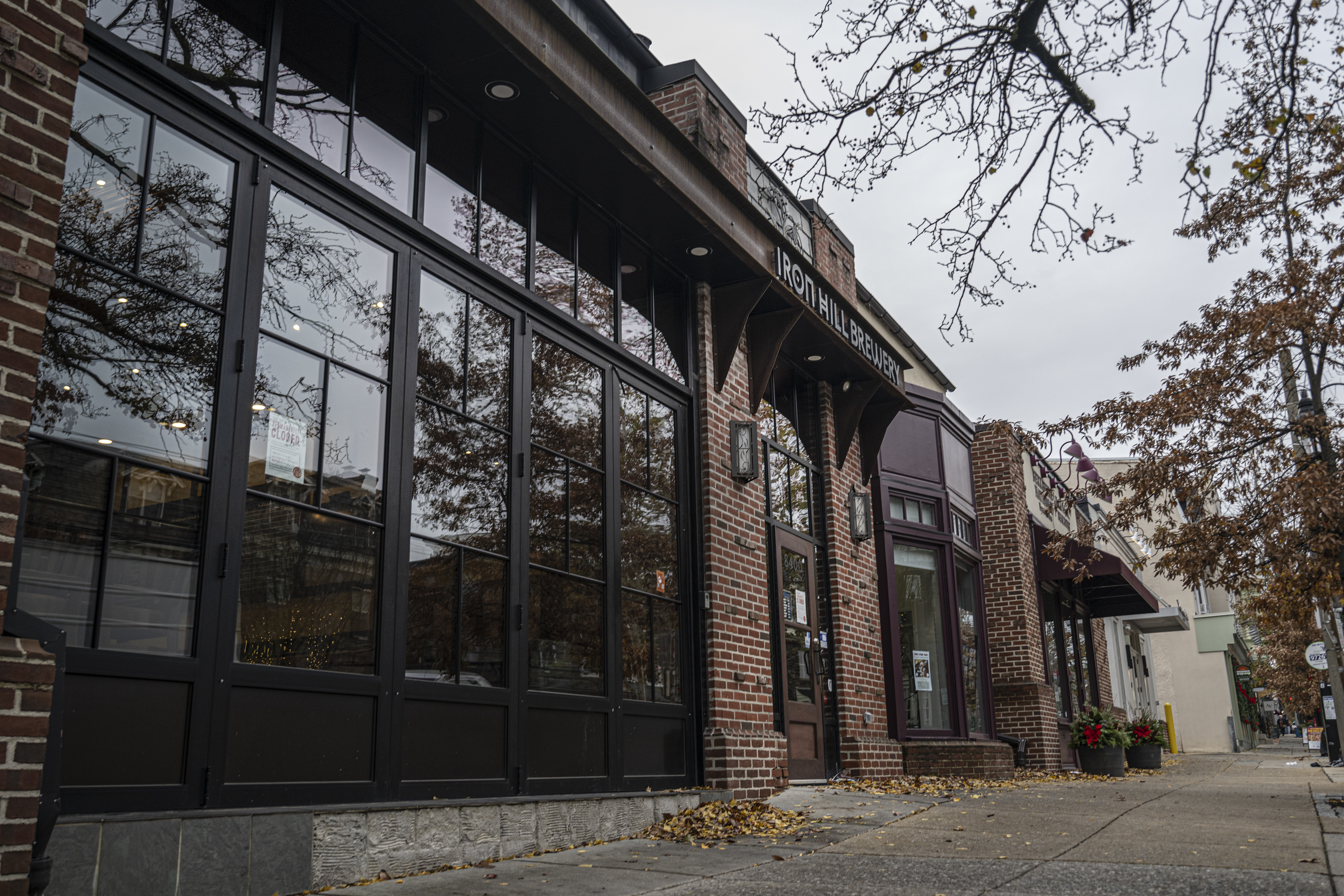
    The closed Iron Hill Brewery is shown in downtown Chestnut Hill on Nov. 19.

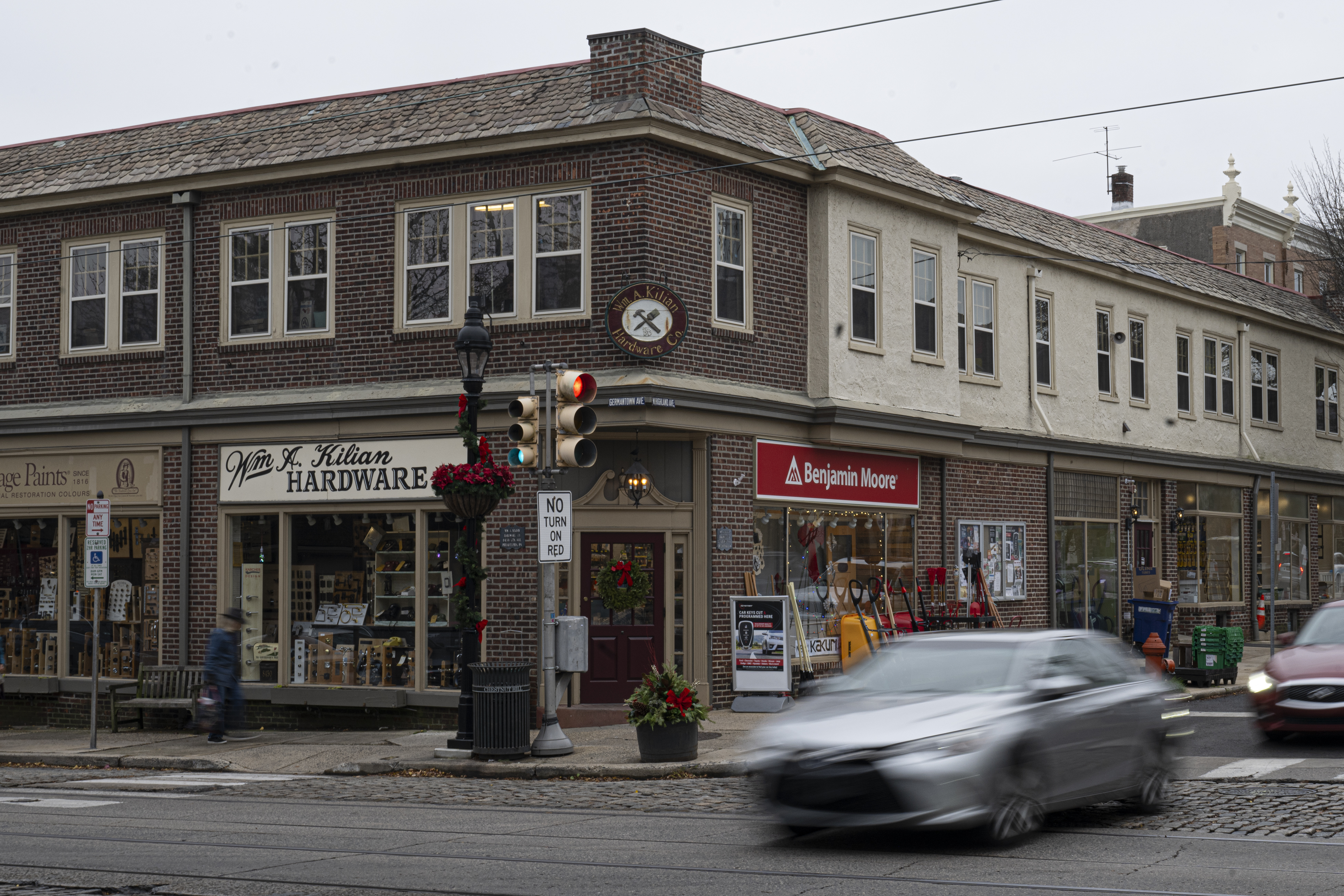
    As the owner of Kilian Hardware, which has been in business for 112 years, Russell Goudy Jr. has watched the avenue change. Fifty years ago, he said it was “basically like a shopping mall,” a one-stop shop for everyday needs.

    In recent years, however, the neighborhood has focused on attracting and retaining unique food and beverage businesses, “quaint, specialty shops,” and service-oriented businesses, which Goudy said offer experiences Amazon and other e-commerce platforms can’t replicate.

    “If you’re not giving people an experience in today’s economy, it’s very tough to compete,” said Nicole Beltz, co-owner of Serendipity Shops, which for a decade has had an expansive store on Germantown Avenue. And providing a memorable experience is never more important than during the lucrative last few months of the year.

    “When you come to Chestnut Hill over the holidays, you get what you came for,” Beltz said. “You get that charming feeling of being somewhere special for the holiday.”

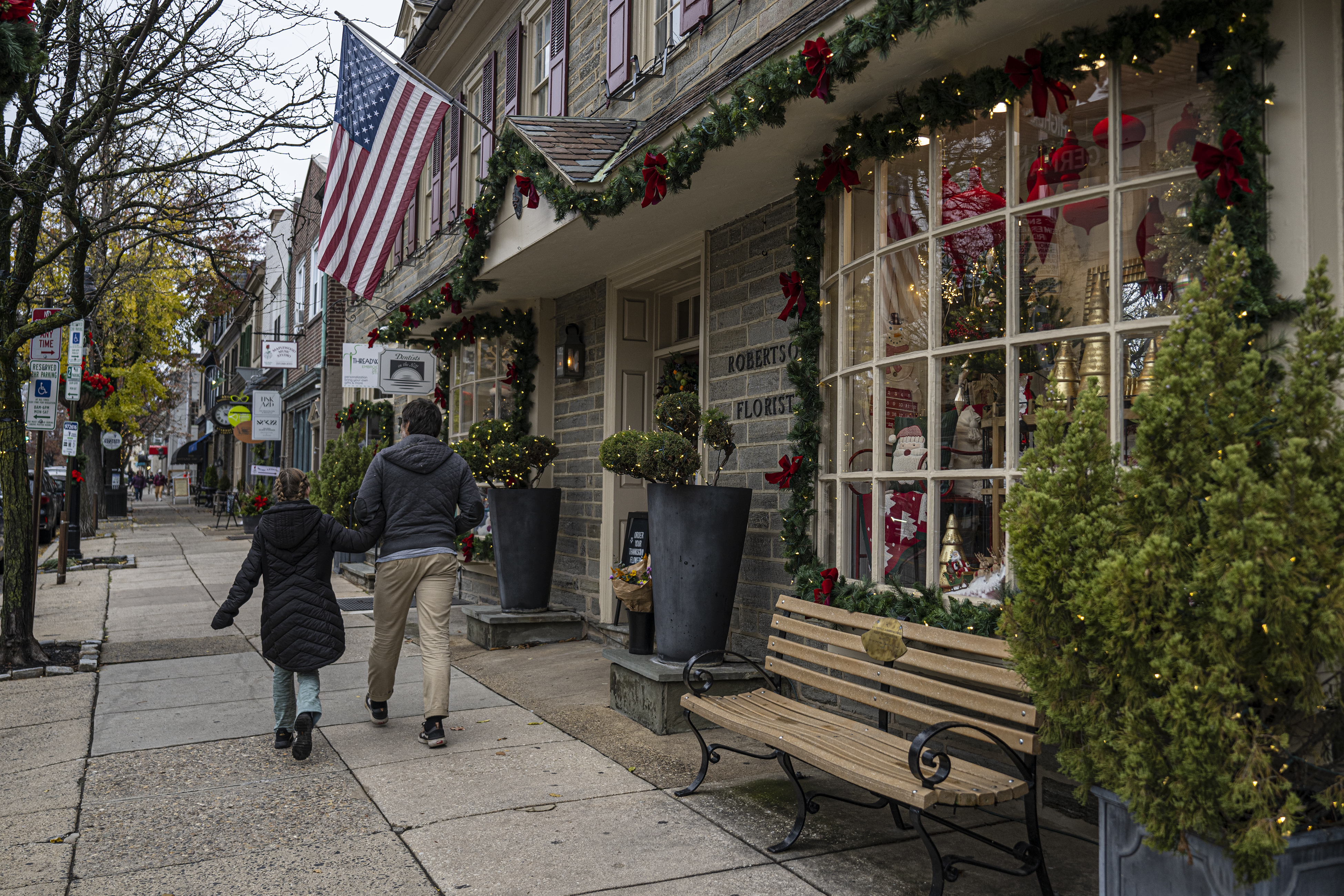
    People walk by holiday decor outside Robertson’s Flowers & Events in Chestnut Hill earlier this month.

    ‘New vitality’ coming to the Chestnut Hill restaurant scene

    During the holidays and all year long, Chestnut Hill business owners said they’re grateful that the neighborhood has held onto its charm despite recent challenges.

    During the pandemic, “it definitely felt a little grim and dark,” said Ann Nevel, retail advocate for the Chestnut Hill Business District. “The impressive thing is the old-timers, the iconic businesses, and some of the newer restaurants … pretty much all were agile enough to tough it out.”

    And a slew of other businesses have moved into the community since then. In the last four years, 20 retail shops, 20 service businesses, and 10 food and beverage spots opened in Chestnut Hill, Nevel said, while several existing establishments expanded.

    Among them was Matines Café, which opened a small spot on Bethlehem Pike in 2022 and expanded this fall to a second, much larger location on Highland Avenue. The café serves 500 people or more on weekdays, according to its owners, and even more on weekends.

    Sitting inside their original location, which is now a cozy children’s café, Paris natives Amanda and Arthur de Bruc recalled that they originally thought they’d open a café in Center City, where they lived at time. Then, they visited Chestnut Hill and fell in love, despite “a lot of empty spots” there around 2022, Amanda de Bruc said.

    A colorful storefront along Germantown Avenue in Chestnut Hill.

    “We liked the idea of living in the suburbs, which technically Chestnut Hill is not the suburbs, because it’s still Philly,” she said. But “we were looking for something that we were more used to, like Paris. There are so many boutiques in such a small area,” and everything is walkable.

    The opening of shops and cafés like Matines became a “catalyst for this new vitality, a new, more contemporary energy that has taken hold in Chestnut Hill,” Nevel said. Soon, “we’re going to see that new vitality in the restaurant scene,” including in some long-vacant storefronts.

    In 2026, former Four Seasons sommelier Damien Graef is set to open a wine bar, retail store, and fine-dining spot called Lovat Square off Germantown Avenue, Nevel said. On the avenue, a café-diner-pub concept called the Blue Warbler is under construction and also slated to open sometime next year.

    Kilian Hardware in Chestnut Hill has been in business for 112 years.

    In downtown Chestnut Hill, there are still a few empty spots, including those left by Campbell’s Place, a popular restaurant that closed this summer; Diamond Spa, which closed this fall; Iron Hill Brewery, which closed in September (right before the regional chain filed for bankruptcy); and Fiesta Pizza III, which closed last year.

    Kismet Bagels, a popular local chain, was set to fill one of the spots this summer, but its deal fell through, co-owner Jacob Cohen said in a statement. He said they could “revisit the Chestnut Hill neighborhood” in the future.

    While the future of Iron Hill will be dictated by bankruptcy proceedings — which include an auction of assets set for next month — stakeholders say conversations are ongoing about some of the other vacancies.

    Steve Jeffries, who is selling the Campbell’s building for $1.5 million, said he’s gotten a lot of interest from people who want to revive the nearly 3,000-square-foot space as a neighborhood pub, but one that is “more cutting edge.” Perhaps, he said, one that is not focused on craft beer, which has decreased in popularity, especially among younger generations.

    “The town is just screaming for other opportunities for nightlife and sports bars,” said Jeffries, executive vice president of Equity CRE. “There has been a connotation in the market that Chestnut Hill was kind of older, stuffy, that it wasn’t a nightlife town.”

    But that’s changing, Jeffries said.

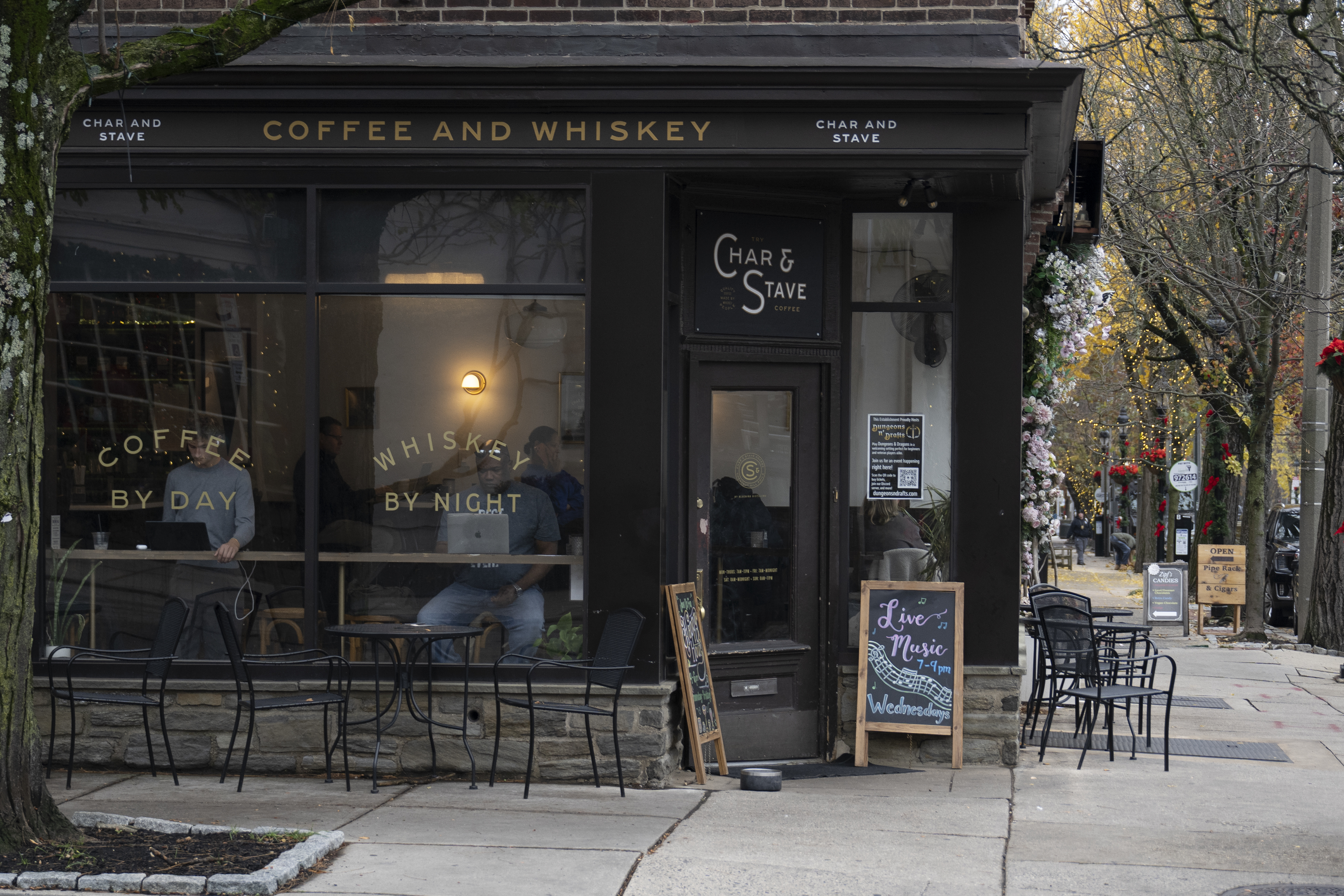
    Char & Stave, an all-day coffee and cocktail bar, has done great business since moving into Chestnut Hill, its owner, Jared Adkins, said.

    Just ask Jared Adkins, owner of Char & Stave, an all-day coffee and cocktail bar at the corner of Germantown and Highland Avenues.

    After Nevel visited Ardmore and saw the success of Adkins’ original Char & Stave, she recruited him to open a Chestnut Hill location. It started as a holiday pop-up in 2022, then became a permanent presence the next year. Since he moved into town, Adkins said, business has been booming.

    “We’re really just busy all day long,” said Adkins. The café is open until 11 p.m. during the week, midnight on the weekends, and it often brings in musicians and hosts events.

    Adkins describes Char & Stave as a place where drinkers and nondrinkers alike can spend time together, and where people can get work done with coffee or a cocktail beside them: “It’s really a gathering place that fills a niche of a nice cocktail place.”

    More changes to come for Chestnut Hill

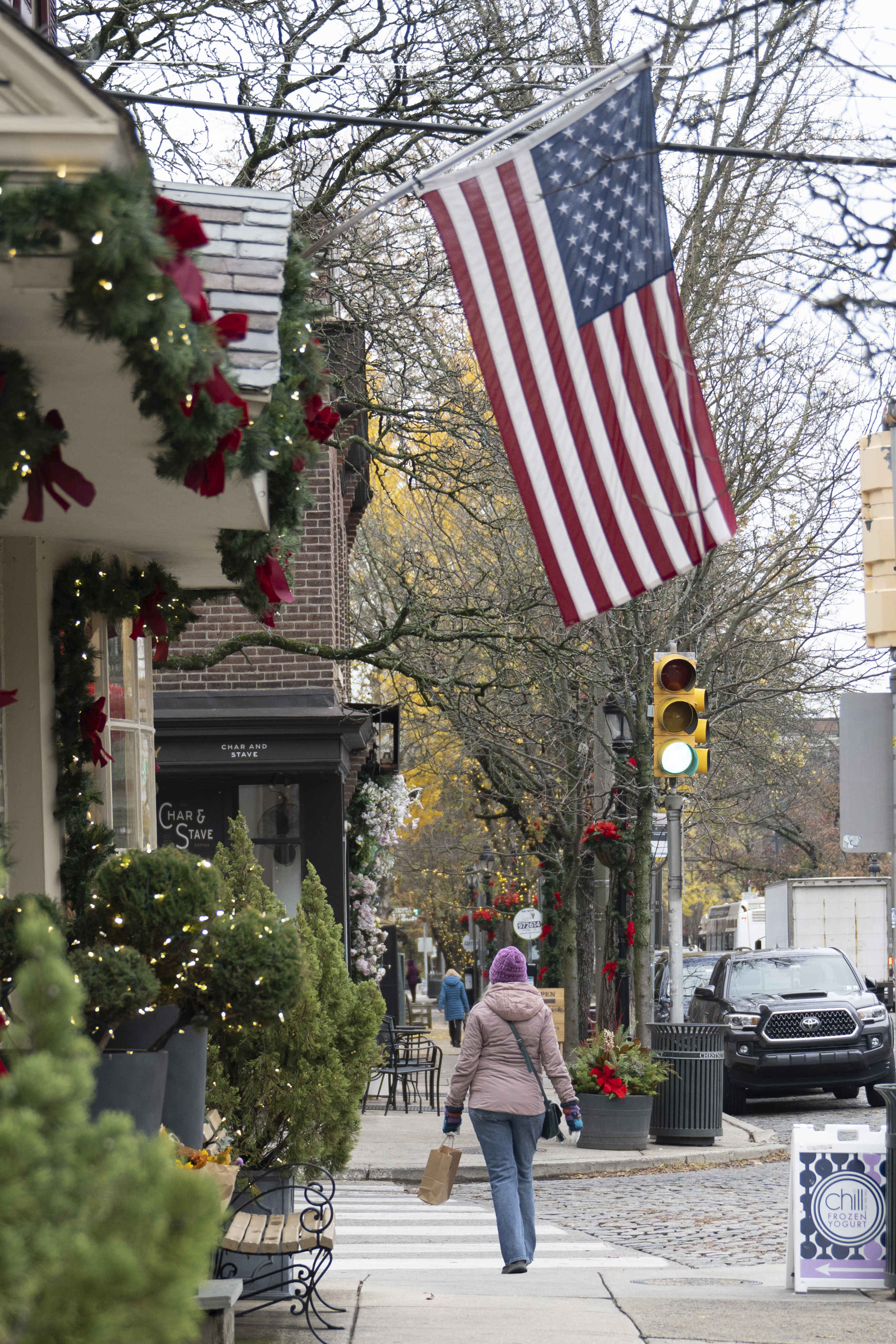
    Businesses along Germantown Avenue in Chestnut Hill are decorated for the holidays.

    Chestnut Hill business leaders and community members say they’re optimistic about the neighborhood’s continued evolution.

    As Brien Tilley, a longtime resident and community volunteer, ate lunch inside Cosimo’s Pizza Cafe, he said the community is doing well. But, he added, “it could always do better. It’s always in transition.”

    Nevel noted that restaurants require more capital to open than other businesses, so it can take awhile to fill those larger holes downtown.

    “The economy is tough,” said Anne McNally, a fourth-generation owner of McNally’s, as she sat by the tavern’s front window overlooking Germantown Avenue. But in Chestnut Hill, she gets the vibe that the community “wants us to be successful.”

    McNally and Goudy, of Kilian’s, both noted that their families bought their buildings decades ago. That has contributed to their longevity, both said, as has evolving with the customer base.

    For the McNally family, that meant transitioning from a “bar-bar,” with no clock or phone, to a bar-restaurant that closes at 10 p.m. For Goudy, it meant soliciting online orders and walk-in business from out-of-town and even out-of-state customers whose older homes require unique hardware.

    “Everything is changing,” Goudy said. “It’s important to keep changing and not to try to go back to where you were before.”

  • How Brendan Boyle became Democrats’ healthcare messenger-in-chief

    How Brendan Boyle became Democrats’ healthcare messenger-in-chief

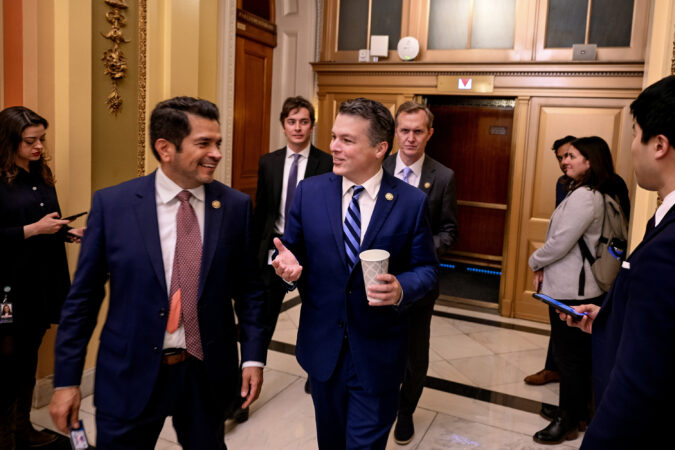
    WASHINGTON — Ahead of a morning Budget Committee meeting, U.S. Rep. Brendan Boyle gathered his senior advisers in a brightly lit conference room just off the Capitol to settle on a simple strategy.

    “Let’s keep the main thing the main thing,” he said. “Fifteen million Americans are gonna lose their healthcare because Republicans care more about tax breaks for billionaires. It’s accurate. You can describe it in a sentence.”

    Boyle, a six-term lawmaker, is the most veteran of Pennsylvania’s eight Democrats in Washington. He has been the ranking member of the House Budget Committee since 2023, meaning he is the top Democrat playing defense as the Republican-controlled Congress ushers through GOP spending priorities. It can be a futile exercise in shouting into a void — until the yelling starts to echo outside.

    Increasingly, Boyle, known as the Democrats’ “budget guy,” has been the man behind the messaging against President Donald Trump’s reconciliation bill and the shutdown fight over healthcare.

    “He’s one of our best messengers who appropriately comes across as both strong and authentic at the same period of time,” House Minority Leader Hakeem Jeffries (D., N.Y.) said in an interview late last month.

    Jeffries credited Boyle with homing in on a key statistic: Taken together, Trump’s reconciliation bill and the expiration of Affordable Care Act tax credits represent the largest cut to Medicaid in American history.

    “That one observation became core to our arguments in pushing back against that toxic piece of legislation, and it’s also one of the reasons I believe that the law is so deeply unpopular amongst the American people,” Jeffries said.

    Democrats have been recently on a roller coaster — securing big wins in the November election and then splitting over how long to withstand the government shutdown, with eight senators ultimately crossing the aisle to end the impasse. But Boyle’s messaging war is ongoing, and he thinks it is his party’s best bet for winning key midterm races in his home state, where Democrats are targeting four Republican-held seats in swing areas.

    If Democrats reclaim Congress in next year’s election, Boyle would shift from ranking member to chair of the powerful Budget Committee — becoming the first Pennsylvanian to lead it since Philadelphian Bill Gray, a Democrat who chaired it from 1985 to 1989. It would be another resumé builder for the 48-year-old lawmaker whose role in Washington keeps growing and who has not ruled out a potential Senate run in 2028, when Democratic Sen. John Fetterman’s seat would be up.

    “I get asked a lot: How do you keep this message going for the next year?” Boyle said in an interview in his Washington office. “Well, we started this five months ago, and actually more people know about it today than over the summer. Every single day, continuing to talk about healthcare, continuing a broader conversation about affordability, is absolutely what we have to do.”

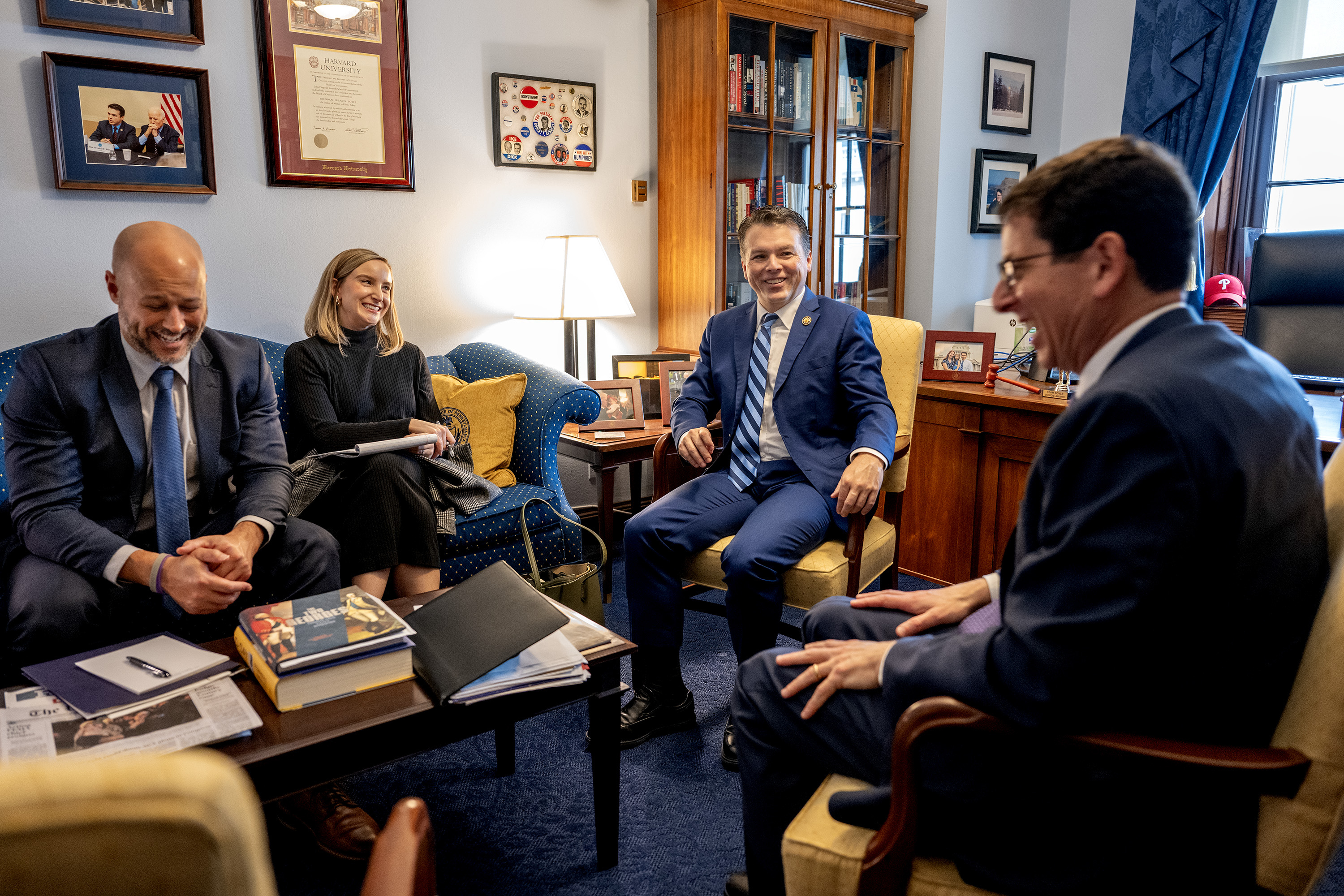
    U.S. Rep. Brendan Boyle (center) meets in his Capitol Hill office with Phillip Swagel (right), director of the Congressional Budget Office, following Swagel’s testimony before House Committee on the Budget last month. As Budget’s ranking member, Boyle has been central in shaping Democratic messaging around Republican policies.

    ‘Scrappy Irish Catholic boys from Olney’

    Boyle, who lives in Somerton with his wife and 11-year-old daughter, is an affable, earnest lawmaker in a role that is unapologetically wonky — and high-profile, especially lately.

    From Oct. 1 through the end of November — a period including the shutdown — Boyle popped up on TV news more than two dozen times, by his office’s count.

    His political beginnings were far less polished. In 2014, Boyle shocked Philadelphia’s political establishment by winning the Democratic primary over a field that included former U.S. Rep. Marjorie Margolies, scion of a powerful political family. Then a 37-year-old state representative, Boyle ran as a blue-collar, antiestablishment pragmatist from Northeast Philly. His ads cast his opponents as out of touch, and he leaned hard on his family’s story: his father, an Irish immigrant, worked at an Acme warehouse and later as a SEPTA janitor; his mother was a school crossing guard. Boyle still keeps his dad’s SEPTA cap on a bookshelf in his Washington office.

    That same year, his brother Kevin won a seat in the state House, prompting Philadelphia Magazine to profile the “scrappy Irish Catholic boys from Olney” who were reshaping the party.

    A decade later, Democrats are still striving to win back blue-collar voters. Boyle, meanwhile, has traded some of his insurgent edge for the stature of a Hill veteran. As Philadelphia elects a replacement for retiring U.S. Rep. Dwight Evans next year, Boyle will be a key ally for the new lawmaker, and a coveted endorsement during the election, though he has said he does not plan to weigh in. He has been in the thick of some of the year’s biggest fights — leading Democrats through a 12-hour reconciliation markup, testifying at a 1 a.m. Rules Committee hearing, and grinding through an overnight Ways and Means marathon.

    His younger brother has had a far more tumultuous path. Kevin lost his state House seat last year amid long-running mental health struggles.

    Boyle declined to discuss the situation beyond saying: “The last five years — almost exactly five years — have been very challenging. And I’ll just leave it at that.”

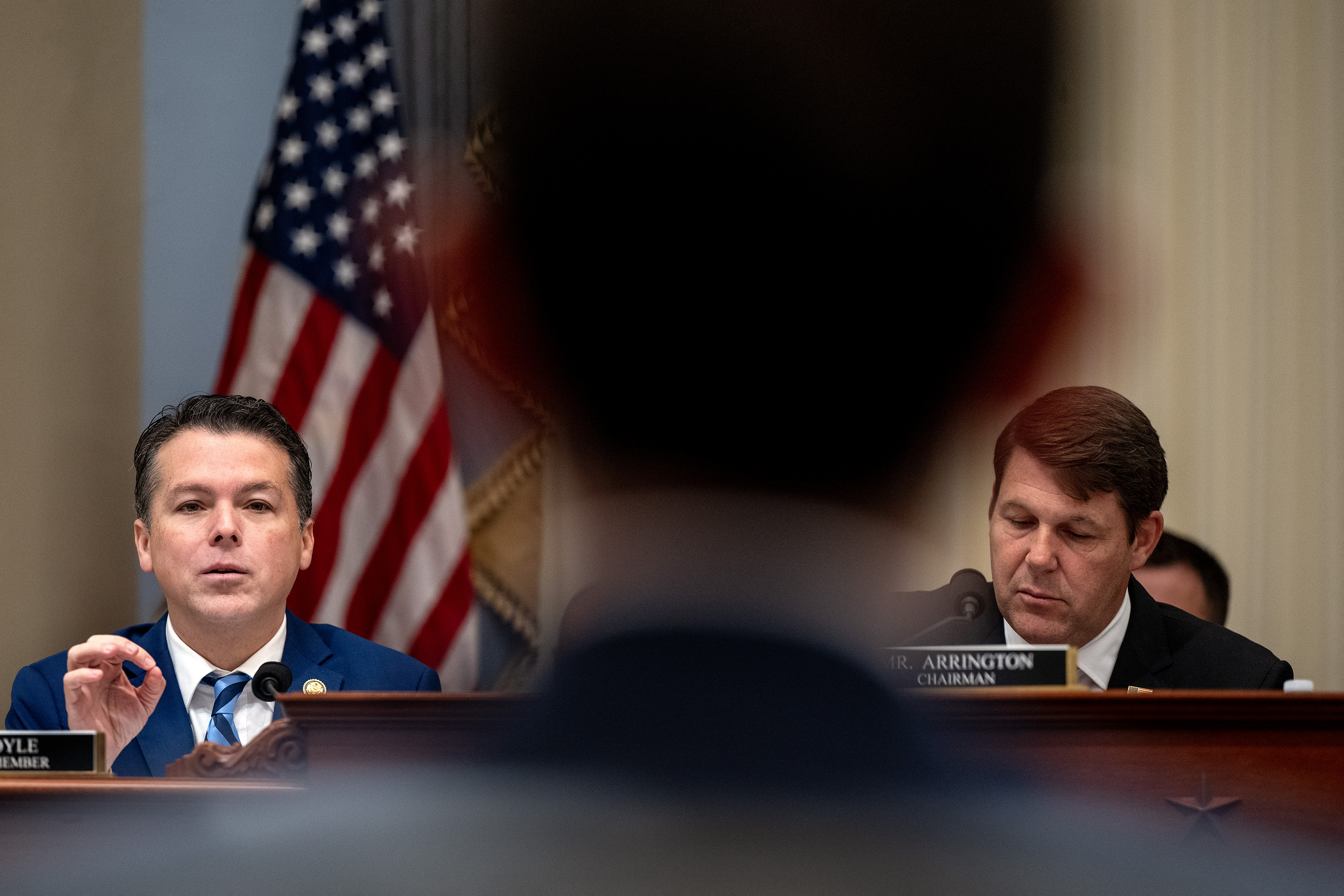
    U.S. Reps. Brendan Boyle (left) (D., Philadelphia) and Jodey Arrington (right) (R., Texas) question Phillip Swagel (back to camera), director of the nonpartisan Congressional Budget Office, during a hearing on Capitol Hill in Washington, D.C. Tuesday, Nov. 18, 2025. Arrington chairs the House Budget Committee, while Boyle is the panel’s top Democrat.

    In line for the gavel

    Before that late November hearing, Boyle had already reached out to fellow Democrats on the committee: Talk about healthcare, he urged them. Talk about affordability. Talk about it ad nauseam.

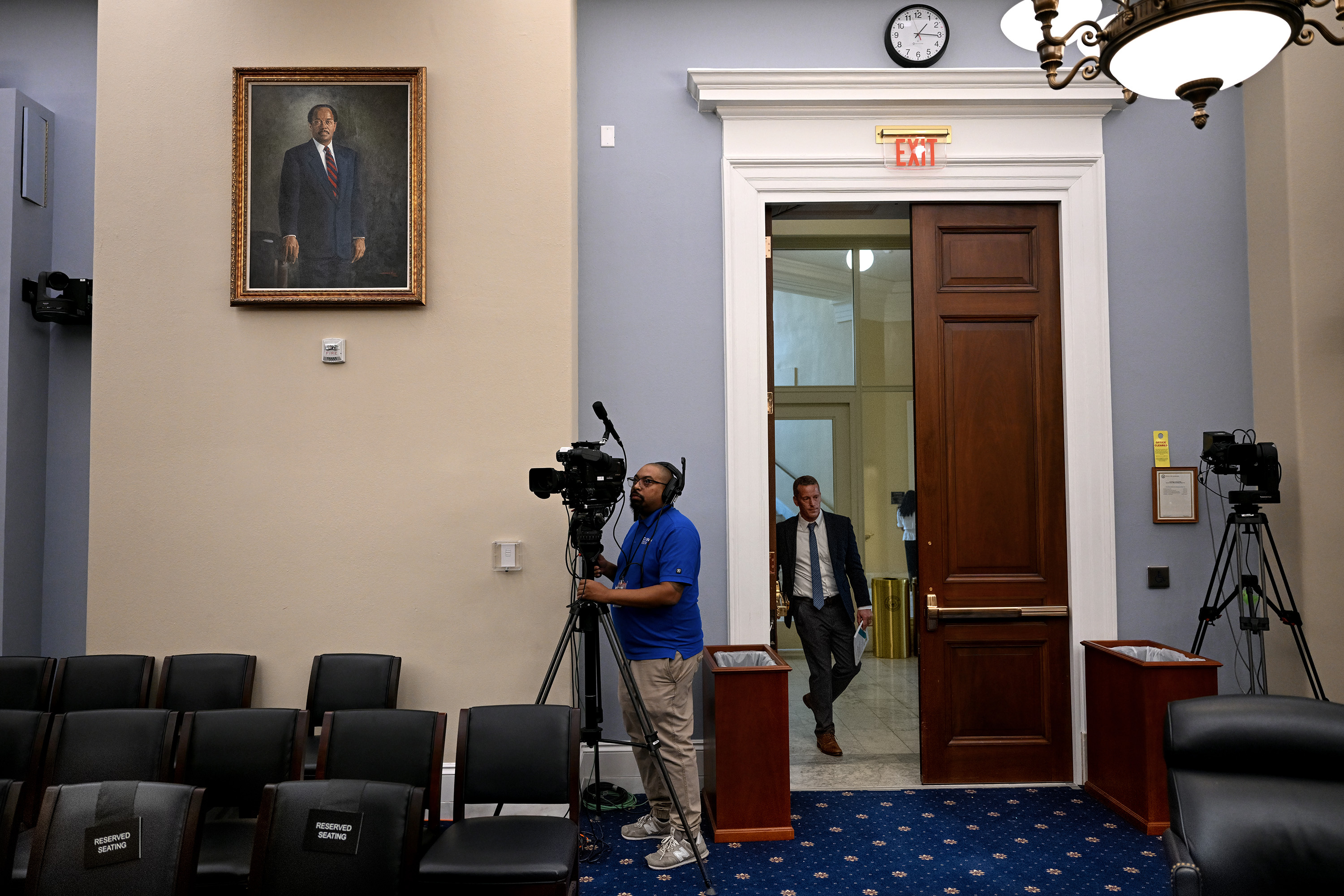
    He sat at the dais across from a portrait of Gray in an ornate hearing room, surrounded by paintings of former budget chairs, and delivered his opening remarks.

    “The president has stopped calling it the ‘Big, Beautiful Bill.’ He’s stopped talking about the bill altogether,” Boyle said. “… Because it’s not just that healthcare’s become unaffordable in America. It is beef, it is coffee, it’s electricity, almost every staple in the average consumer basket.”

    The director of the Congressional Budget Office, Phillip Swagel, was called before the committee that day and fielded questions from both sides. Democrats wanted to know Swagel’s projections on how Trump’s policies would affect everything from the national debt to the price of Thanksgiving dinners, eager for sound bites to send to constituents back home and to pressure Republicans on the healthcare debate.

    Republicans were pushing Swagel for an audit, seeking more transparency on how the nonpartisan agency comes to its projections.

    “We need to be able to cut through the politics and the partisanship and figure out where you and your team can do a better job,” said U.S. Rep. Jodey Arrington, the Texas Republican who chairs the committee.

    Boyle, whose office uses CBO projections to compile and distribute national and district-level data to Democrats, said he is open to an audit, if performed responsibly and not as a means to “discredit” the agency over numbers Republicans don’t like.

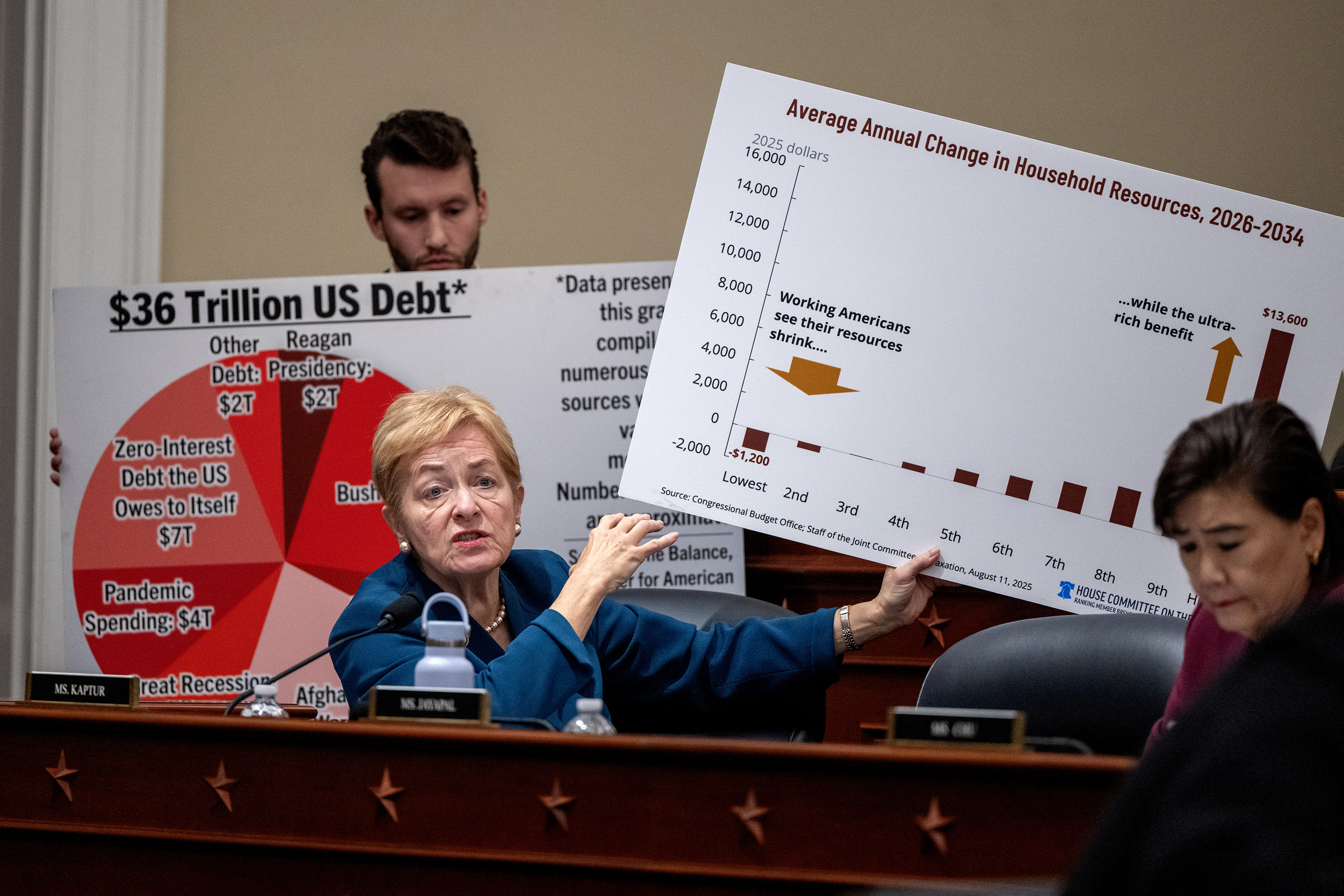
    U.S. Rep. Marcy Kaptur, a Democrat from Ohio, brings visual aids to a hearing of the House Committee on the Budget on Capitol Hill in Washington, D.C. Tuesday, Nov. 18, 2025.

    Throughout the three-hour hearing, Boyle would sidebar with Arrington, who is retiring next year. The Philly Democrat and the West Texas conservative make an unlikely pair, but the two have bonded across many late-night sessions over having younger children and their college football fanaticism — Boyle for his alma mater, Notre Dame, Arrington for Texas Tech.

    “He’s a very good communicator because he’s a really smart and thoughtful guy,” Arrington said. “I always can appreciate, whether I agree or not, with a good communicator. He’s authentic in what he believes and he’ll even say, ‘I grant you it’s not perfect,’ or ‘You make a good point.’”

    The midterms will dictate not just the party that controls Congress but also which ideological track the Budget Committee takes. If Democrats win, and Boyle takes the gavel, he plans to put more scrutiny on the administration and aim to regain some of Congress’ control over purse strings that Republicans have ceded to Trump.

    Another Pennsylvanian, U.S. Rep. Lloyd Smucker, a Republican who represents Lancaster, has announced he is running to be the top Republican on the committee following Arrington’s retirement. That means regardless of party control, two Pennsylvanians will likely be at the helm of one of the most powerful committees in Congress. Smucker, a fiscal conservative running with Arrington’s backing, said in an interview he would focus on rising national debt and getting a budget resolution adopted. He was a key negotiator for Republicans during reconciliation, helping to get conservative House Freedom Caucus members on board.

    Smucker called Boyle someone who is “serious about the budget process, and wants to make sure that it functions.”

    “He genuinely cares about strengthening Congress as an institution,” Smucker added.

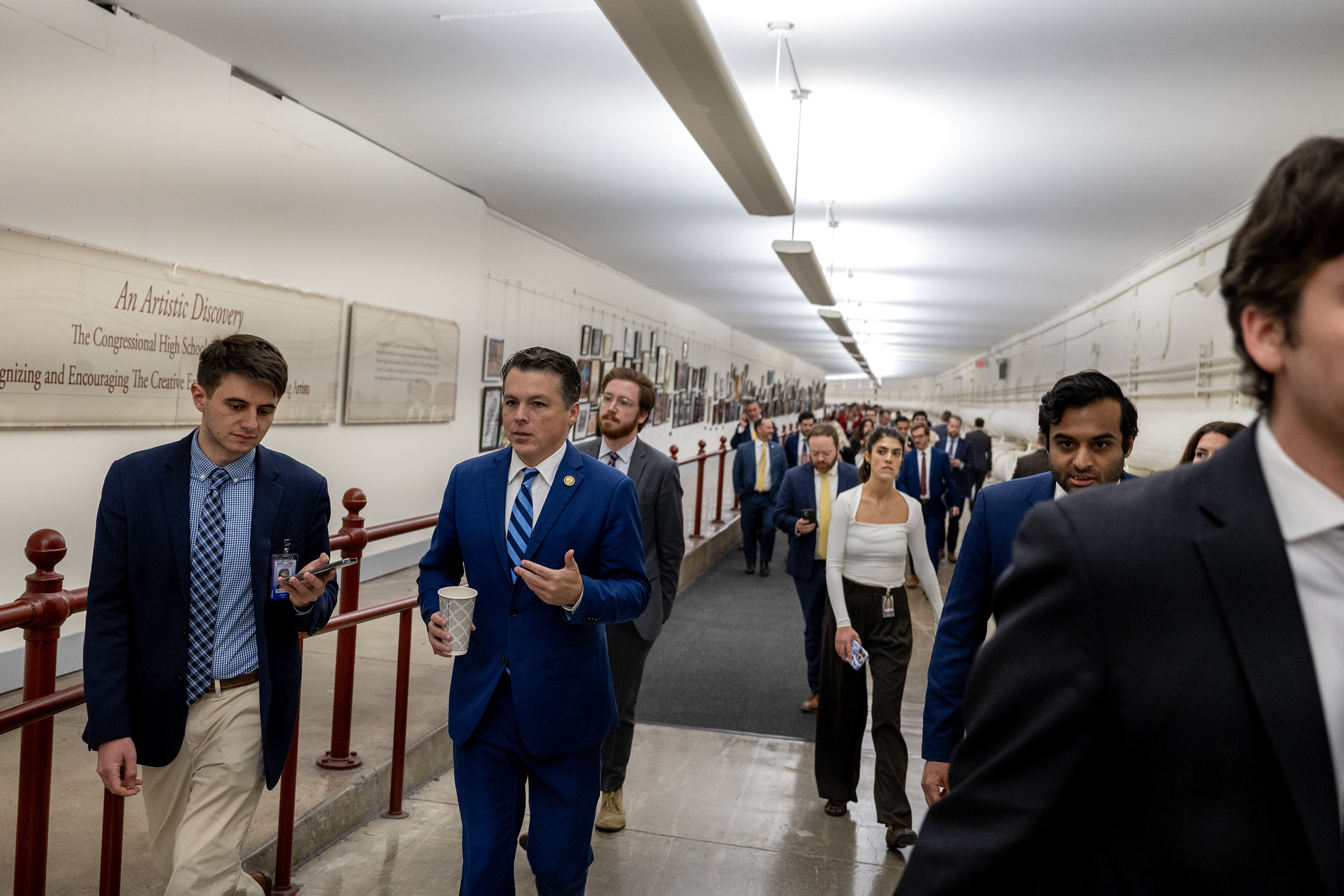
    U.S. Rep. Brendan Boyle is interviewed by Charles Hilu (left), a reporter with the Dispatch, as he moves between office buildings on Capitol Hill in Washington, D.C. Tuesday, Nov. 18, 2025.

    The road ahead

    The longer Boyle stays in the House, in a safe Democratic seat, the harder it is to think about walking away.

    In September, Jeffries appointed him the lead Democrat for the congressional delegation to the NATO Parliamentary Assembly. For Boyle, a history lover who has biographies of George Washington on his office coffee table, it’s an exciting opportunity to represent the country internationally as Trump continues to criticize the historic alliance. Boyle would become the leader of the parliamentary assembly delegation if Democrats take control of the House, just as he would take the gavel in the Budget Committee. Past committee chairs include former House Speaker Paul Ryan (R., Wis.), former Defense Secretary Leon Panetta, and former Ohio Gov. John Kasich.

    “Some really high-quality, high-caliber people have done that over the last 40 years. So that’s what I’m looking forward to in the near term,” Boyle said. “After that, come 2028, and beyond, we’ll deal with that then. But it is interesting, like the longer you’re here, and if you move up the ranks, then actually it does make it more difficult to leave.”

    A painting of former U.S. Rep. William H. Gray III hangs in the hearing room of the House Committee on the Budget on Capitol Hill. It’s been 40 years since a Philadelphia lawmaker led a House committee.
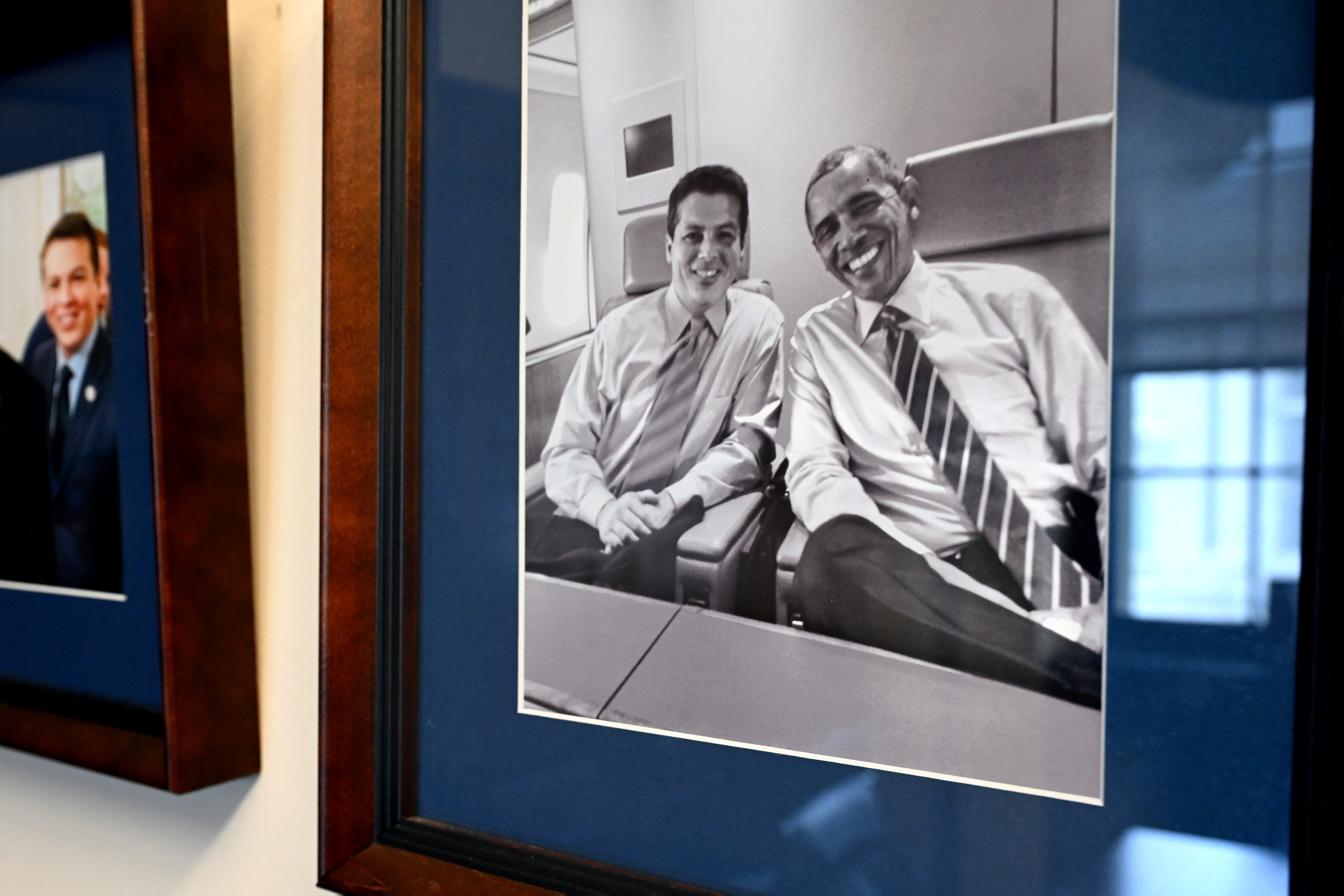
    A photo of U.S. Rep. Brendan Boyle with former President Barack Obama on Air Force One hangs in his office on Capitol Hill in Washington, D.C.

    But Boyle has not been shy about airing frustrations with Fetterman, whose term is up in 2028, sparking speculation Boyle could have an interest in a run against him.

    Boyle said he avoided criticizing Fetterman until this spring, when the senator’s positions started to directly conflict with the party messaging he was pushing out.

    “As I was doing TV opportunity after TV opportunity, what I increasingly found was that the clip they would show before I would be asked the question wouldn’t be a clip of what Donald Trump had said; it would be a clip of what my state’s Democratic senator had said,” Boyle said. “And I obviously would have to combat it.”

    Fetterman has embraced an independent streak as a purple-state senator, often willing to work with the GOP. While pleasing to voters eager to see compromise and bipartisanship in a tenuous moment in Washington, it has also alienated some progressives.

    Boyle said when it comes to the Senate, “I don’t rule anything in and I don’t rule anything out.”

    If he were to run, a challenge could be building his statewide profile. He is still relatively unknown outside Philadelphia, though he has proven to be a prolific fundraiser. Today’s politics also tend to elevate showmen and outsiders, while Boyle has the more traditional cadence of an establishment politician — disciplined, polished, and most compelling when he speaks off-script.

    Some local Philadelphia Democrats have criticized Boyle’s voting record on immigration, arguing it has not reflected the interests of the Latino community he represents in his majority-minority district. Boyle voted for the bipartisan Laken Riley Act, which requires the Department of Homeland Security to detain noncitizens who are arrested or charged with certain crimes, often forgoing due process. He was one of 46 Democrats in the House along with 12 in the Senate, including Fetterman, to support the GOP-led bill.

    “I have the same criticism as I do of Josh Shapiro: I wish he would take a stronger stance on immigration,” said State Rep. Danilo Burgos, who represents North Philadelphia. At the same time, Burgos credited Boyle as being a “good partner in our community” who always returns phone calls and texts.

    For now, Boyle keeps an extremely busy schedule. The day of the budget hearing, his schedule stretched over 15 hours. He hustled from a meeting with Social Security and Medicaid experts to a floor vote to release the Jeffrey Epstein files.

    Back in his office, where Eagles throw blankets, Phillies pennants, and a painting of Donegal, Ireland, his father’s home county, decorate the space, he sat down for his final meeting of the day.

    Gwen Mills, the international president of UNITE HERE, a labor union that represents hospitality workers, wanted advice on how to translate Democrats’ work in Washington to members frustrated with both parties.

    “Talk about affordability and how Republicans are making it worse — with the so-called beautiful bill,” Boyle suggested, running through some numbers and data before offering up a simpler sound bite:

    “It boils down to life in America is just too damn expensive right now.”

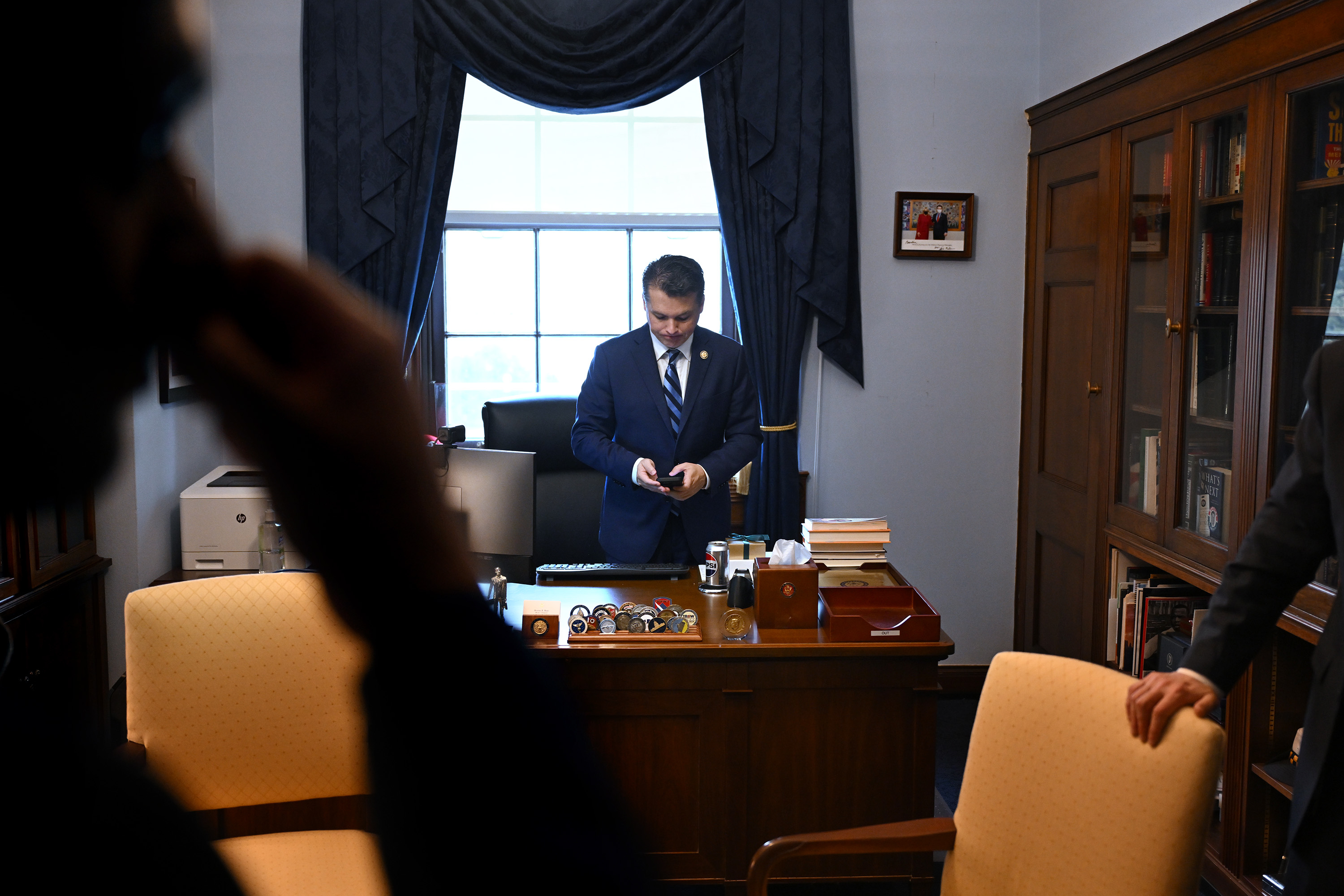
    U.S. Rep. Brendan Boyle checks his phone before leaving his office on Capitol Hill in Washington, D.C. Tuesday, Nov. 18, 2025.
  • In Chester County, inmates are getting workforce training and jobs to match post-release

    In Chester County, inmates are getting workforce training and jobs to match post-release

    Tyler Ramaley wakes up every morning grateful that he’s able to do “respectable work in a hardhat” as he clocks in for his shift at JGM, a steel fabrication plant in Coatesville.

    Nineteen months ago, that would have been impossible: He was struggling with an opioid addiction and waking up to a monotonous routine in a Chester County Prison cell.

    A new program offered at the jail, Exit, Enter, Employ, gave him an opportunity to move on from his past mistakes. He had help building his resume, getting certified in his chosen field, and, crucially, landing an interview for a job that was waiting for him after his release.

    “I was in there, and I just didn’t like who I was and I just knew I needed to change,” Ramaley, 37, said in an interview during a break from running a plasma cutter on a recent day. “It gave me a purpose to wake up every day, and it makes me not want to waste the opportunity I’ve been given.”

    Ramaley’s experience, county officials say, is just one of many success stories to come out of the E3 program since its inception in January 2023 through a partnership between the jail and the Chester County Intermediate Unit.

    More than 100 people have graduated from the course, with a recidivism rate of 2%, according to Jill Stoltzfus, the program’s career-readiness coordinator and a CCIU employee.

    “Everybody needs a second chance,” she said. “And I’m very candid with people when I interview them. Like, we’ve all made mistakes, I’m sure I’ve made mistakes that I could be in the same situation.”

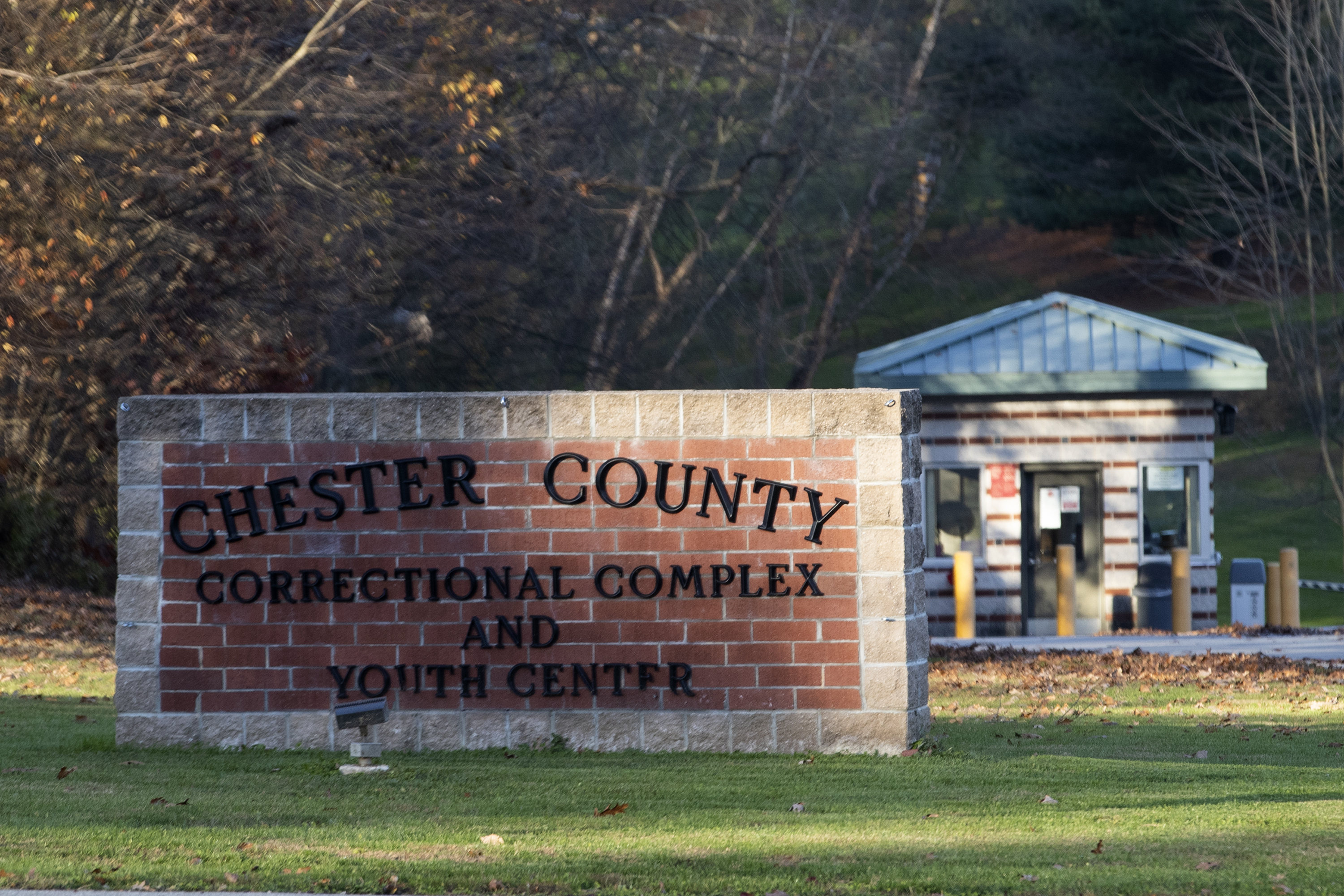
    More than 100 inmates at the Chester County Prison have graduate from the E3 program since its inception in January 2023.

    Job-readiness programs are nothing new for county jails — they’re offered almost universally across the region. But Stoltzfus said E3 is different because it provides a direct path, with job openings already lined up for graduating inmates from multiple companies that partner with the county.

    And in the first few months in those jobs, coordinators from the program follow up with former inmates, checking in to see how they are faring.

    “I don’t like the judgment we often hear of ‘Why should we fund this?’ or the idea that some people deserve a chance over others,” Stoltzfus said. “I think it’s crucial that we at least put that opportunity out to them.”

    E3 is available only to inmates who have been sentenced to county jail, meaning their crimes were not serious enough to warrant state prison time. And county officials carefully screen those who apply to the program to make sure they are ready.

    Besides workforce skills like OSHA certification and courses in customer service, E3 offers financial-planning advice, as well as cognitive behavioral therapy and anger management.

    Current partner employers, besides JGM, include J.P. Mascaro & Sons, FASTSIGNS, and MacKissic. Stoltzfus is hoping to expand the offerings to include agricultural and culinary posts.

    Howard Holland, the warden of Chester County Prison, views the program as a way to help incarcerated people prepare to reenter society in a productive way.

    “We’re engaging them in a way other than just ‘Here’s your cot, stay behind the bars,’” he said. “You just have that same cycle over and over and over again because that’s the way our institutions are run.

    “At the end of the day, we’re humans, right?” he added. “They’re here, and it’s our responsibility to, while they’re here, try to do the best we can for them.”

    Tyler Ramaley said he never thought he would be able to go to work, after years of addiction. The E3 program helped him connect with a job he loves.

    Ramaley, who was named JGM’s employee of the month in June, said the opportunity was an important step toward reversing years of bad decisions.

    His drug abuse, he said, began in 2020, when he was injured on the job while running a hammer drill at a concrete mill. The drill skipped and jerked his arm hard, shredding multiple tendons. After several surgeries, he said, he was prescribed Tramadol in bottles of 150 pills at a time. He became reliant on the pills, using them to deal with the pain.

    And when his workers’ comp ran out, he said, his doctor cut him off cold turkey and he turned to other ways to support his opioid habit and purchase drugs, racking up convictions for theft and forgery and landing in county jail.

    His moment of clarity came this spring, he said, and he graduated from E3 in April, weeks before his jail sentence ended and he was released.

    “When I was in my active addiction, I never thought I would be able to go to work and not be on something,” he said, “and there’s times I’ll stand out there and just kind of think about how happy I am here, actually doing hard work and respectable work and doing it the right way.

    “And that’s a better feeling than anything I had when I was in my addiction.”

  • Nobody likes rejection. Here’s how to soften the blow, per a new Temple study.

    Nobody likes rejection. Here’s how to soften the blow, per a new Temple study.

    Not all rejections are the same.

    How they’re communicated matters, according to a recent study by Sunil Wattal, associate dean of research and doctoral programs at Temple University’s Fox School of Business.

    Wattal found that users of an online forum, Stack Overflow, were more likely to return after their submissions were rejected if they had received a detailed reason for their rejection.

    Stack Overflow has been known for “treating its contributors harshly” because of its “rigorous quality control,” the study said, but in 2013, its rejection notice language changed to be more explanatory. Wattal compared the before and after and found that new users were more likely to return when they knew more about why their submission was rejected.

    Wattal’s findings were recently published in the study “Not Good Enough, but Try Again! The Impact of Improved Rejection Communications on Contributor Retention and Performance in Open Knowledge Collaboration.” The coauthor of the study is Aleksi Aaltonen of the Stevens Institute of Technology in Hoboken.

    While Wattal’s study focused on rejection in one online platform, he says the findings could apply in many other settings. The Inquirer spoke with him about the implications for rejection in the workplace. The conversation has been edited for length and clarity.

    What was your main finding?

    We found overall that the platform was better off — that Stack Overflow is better off — because it increased the quantity of the postings but did not decrease the quality. So there was no significant impact on the quality of posting. The net effect is the platform gained more content without really losing any quality.

    So you found that people returned more often if they were told why they were being rejected.

    Yes, the likelihood of returning was much higher if they were told more clearly why they were being rejected.

    Obviously nobody likes rejection, but sometimes, if they feel that they know the reason why it was rejected and they get a sense that they were being treated fairly, I think that kind of softens the blow in a way.

    What can your findings tell us about communicating rejection in the workplace, such as not getting hired or getting laid off?

    You see rejection in all kinds of different applications — in business, in society. Rejections are everywhere.

    E-commerce sites like Amazon, Etsy, eBay, every now and then, they encounter a product which doesn’t comply with either the ethical standards or for some other reason, and they have to take down some of those listings. Or even in companies, somebody thinks they come with a great idea, and their boss just says, No, this is not great.

    Even in those cases, I think it really helps if you give them an explanation of why their idea was rejected, and it encourages them to come back in the future and still be engaged with either the organization or the website.

    In customer service, sometimes people have to hear a “no,” that their complaint isn’t legitimate, or they’re not getting that refund. In those cases, communicating well and giving a more informative explanation of why they’re being denied is always a good idea.

    In your study with Stack Overflow, that platform wants users to keep coming back to the website to contribute to the online forum, so there’s a vested interest in sending a rejection notice that would get people to return. In business, what kind of incentive does an employer have to explain a rejection?

    In the case of, say, for example, job postings, maybe that applicant was not a good fit with that particular posting, but they could still be valuable to the company in a different role.

    It’s not a good idea, basically, to burn bridges, and it doesn’t cost a whole lot to be nice or to give a decent explanation. In terms of the cost-benefit analysis even, it’s always a good idea to give a more informative explanation just to maintain the relationship.

    Does it matter whether it’s a human that’s delivering a rejection notice, versus a computer or automated response, in terms of the outcome?

    There’s a lot of work going on right now about exactly these things, like: How do people feel about interacting with computers when computers make decisions that affect their lives in some way? I’m not sure exactly if anybody has studied rejections by computers, but I would expect that there would be some difference in the way people take rejection from humans versus computers.

    Some companies use applicant tracking systems for hiring, which screen applicants and filter candidates out. And we know that some applicants never hear back about their application. Can your study tell us anything about the effect of ghosting?

    Especially in some cases where companies receive tens of thousands of applications [for just a few open roles], probably, from a very myopic perspective, they don’t care about a lot of them. But again, from an overall brand perspective, it doesn’t take a whole lot to send out that rejection in a timely way, in a way that seems fair, to explain why it was rejected — maybe there were other better applicants, or it was not the right fit. People want to know so that they can maybe improve in the future.

  • As demand soars and resources dwindle, the Share Food Program stays focused on its mission | Philly Gives

    As demand soars and resources dwindle, the Share Food Program stays focused on its mission | Philly Gives

    To this day, George Matysik, executive director of Share Food Program, can’t bite into a South Indian dosa without remembering a daily act of kindness that mattered to him when he was a young man, a paycheck away from poverty.

    When he would arrive for his 6 a.m. shift as a housekeeper at the University of Pennsylvania’s engineering school building, the engineering school’s librarian would hand him a homemade dosa, a thin crepe redolent with the warm smells of curry and potatoes.

    “My stomach was growling by then,” he said, sitting in a warehouse full of food ready to be packed for the nearly three million people who rely on the Philadelphia nonprofit for food.

    “The moment of her handing me that dosa, I felt like I was going to be OK,” he said. Matysik, who graduated from Mercy Career and Technical High School across the street and down the block from Share’s main warehouses near Henry, Hunting Park, and Allegheny Avenues, went on to earn a degree in urban studies from Penn.

    “I felt supported,” he said. Now, Matysik leads an organization that supports people who are missing meals and are worried about getting their next ones.

    Look, Matysik said, society has many problems, and most are difficult to solve. Homelessness is complicated. Addiction grips its victims in its relentless stranglehold. “They don’t have simple solutions,” he said.

    “But with hunger, it is simple. It’s getting food to the people who need it,” he said, like the dosa that began his day of washing floors and cleaning toilets at Penn.

    “It’s frustrating to me that in the richest country in the world, a food program like Share has to exist at all,” Matysik said. “Food is a human right, and hunger is solvable. We have the resources in this country to eliminate food insecurity, and we can do it in Philadelphia if organizations like Share can get the resources.”

    But it’s daunting.

    Jimmette Hughes, a volunteer at the Canaan Baptist Church’s Family Life Center, which distributes food contributed by Share.

    Since the start of President Donald Trump’s second term in office in January, Share’s funding from the federal government has been cut by $8.5 million, or about 20% of the nonprofit’s annual expenses.

    Also, the cost of the food Share buys wholesale by the pallet has risen. The increase in food costs will come as no surprise to grocery shoppers around the nation, Matysik said. “We can all see our receipts.”

    Even as Share’s resources are being depleted, demand for the food it provides is increasing. Share distributes food to nearly 400 community partners — religious groups, food pantries, neighborhood organizations — and all of them are telling Share that more and more people are coming for food.

    Community partners report that the number of new families or individuals registering to receive food has increased 12-fold. For example, in the past, a community partner might register five new families or individuals a week. But in late October and early November, with the government shutdown and the delay in government SNAP food benefits, that number might have risen to 60.

    And more people than ever are coming to receive food. Organizations that served 100 people or families on their food distribution days were seeing 150 in line, Matysik explained.

    “It’s making it more and more challenging for families to get the resources they need,” he said.

    Patricia Edwards understands. When Edwards, a retired security guard, opened her refrigerator on Veterans Day in mid-November, she saw one box of powdered milk. That was it.

    Supplemental Nutrition Assistance Program benefits had provided barely enough in the past, but with all the back-and-forth during the shutdown, her benefits weren’t available. “I’m looking at a bare cabinet and a bare refrigerator,” she said.

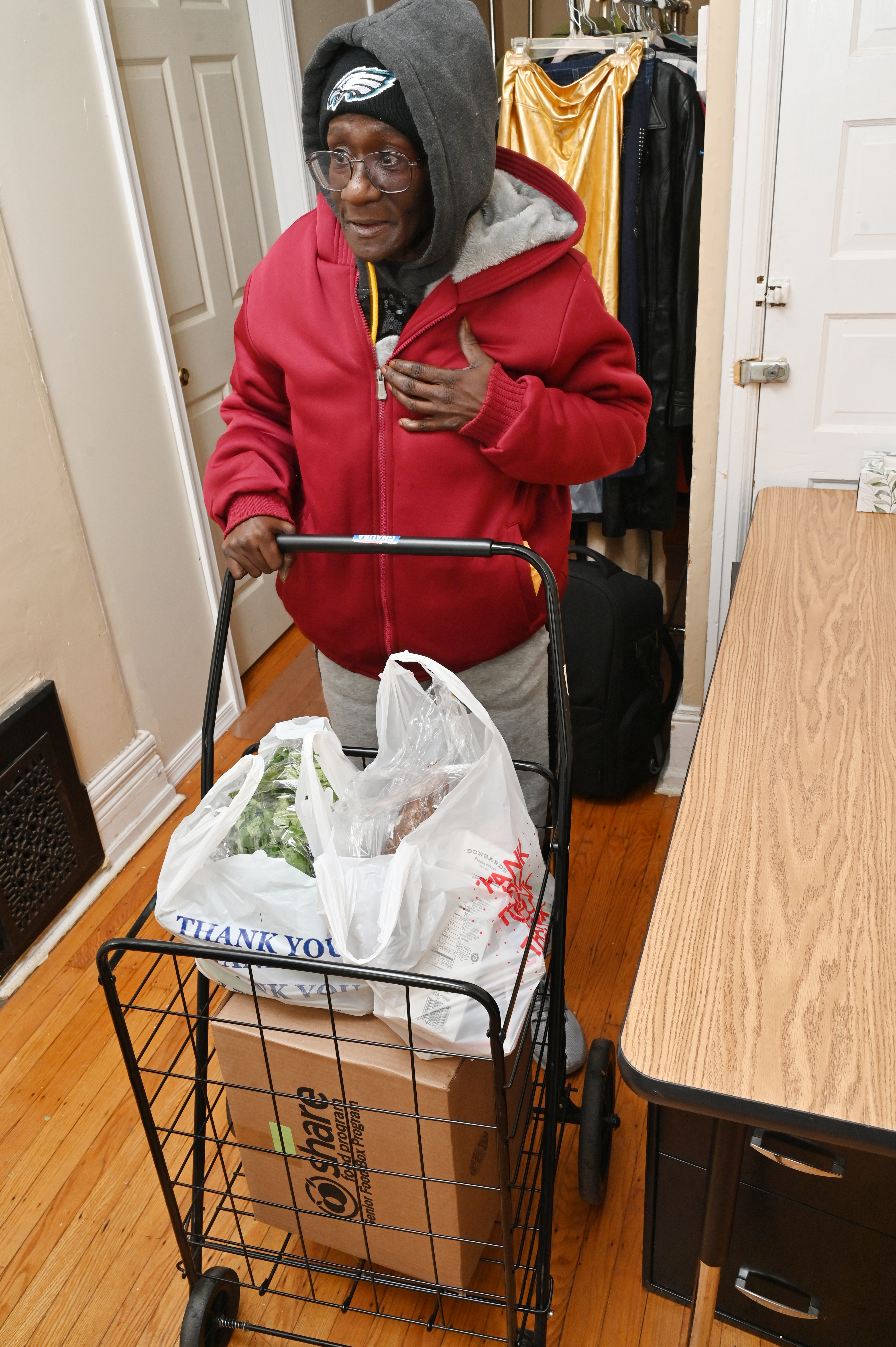
    Patricia Edwards picks up food, including a Share box of food in her cart, at the Canaan Baptist Church’s Family Life Center.

    The only reason Edwards had anything to eat leading up to Veterans Day was that a neighbor stopped by with some prepackaged meals.

    “I didn’t know what to do. I didn’t know where to go,” she said, “but a neighbor told me about this.”

    So, on that cold November day, Edwards walked a few blocks from her home in Germantown to the Canaan Baptist Church’s Family Life Center, hoping she could get some groceries at its weekly food pantry. “I need some food in the house,” she said.

    She wound up with a box of food from Share and two bags of groceries filled with tuna, noodles, cereal, and vegetables.

    “It’s a blessing,” she said.

    Of course, those blessings cost money.

    Share pays $12,000 to $14,000 a month for electricity to keep its warehouses running. Each tractor-trailer-sized truckload of food costs $40,000. Each industrial-sized freezer costs $800,000, and Share bought three of them in the last two years.

    Three years ago, Share expanded into two warehouses, one in Ridley Park in Delaware County and the other near Lansdale in Montgomery County, the better to serve people in Philly’s surrounding communities.

    Share needs money for forklifts, for payroll, for trucks. Funding pays for food, of course, but it’s also necessary to bankroll the infrastructure required to move not just boxes of food, but tons of it, to the people who need it. Share pays drivers to deliver food to homebound seniors. Even that’s a cost.

    Share also has government contracts to provide school meals to 300,000 kids per day in public and charter schools in 70 districts, including Philadelphia’s public schools.

    It’s a source of revenue, “but we lose money on it,” Matysik said.

    Beyond that, Share runs gardens and greenhouses, which serve both as food sources and educational laboratories for young people.

    Years ago, Matysik was one of those young people crossing the street from his high school to pack boxes as a Share volunteer.

    These days, his work at Share involves budgeting and fundraising — balancing demand against resources.

    “I’ve never been more disappointed in the American government,” he said, “And yet, I’m inspired every day by the American people stepping up to support organizations like ours.”

    This article is part of a series about Philly Gives — a community fund to support nonprofits through end-of-year giving. To learn more about Philly Gives, including how to donate, visit phillygives.org.

    For more information about Philly Gives, including how to donate, visit phillygives.org.

    About Share Food Program

    Mission: Share Food Program leads the fight against food insecurity in the Philadelphia region by serving an expansive, quality partner network of community-based organizations and school districts engaged in food distribution, education, and advocacy.

    People served: 2,901,243 in 2024

    Annual spending: $42 million, including $25 million distribution of in-kind donations and $6 million to purchase food.

    Point of pride: In 2024, Share Food Program supported nearly 400 food pantry partners across the region, provided more than 6,500 30-pound senior food boxes each month, ensured over 300,000 children had access to nutritious food every day through its National School Lunch Program, and rescued and redistributed nearly six million pounds of surplus food. Altogether, Share distributed 32,214,873 pounds of food.

    You can help: Volunteer your time packing boxes, rescuing food, or make calls from home to help coordinate senior deliveries.

    Support: phillygives.org

    What your Share donation can do

    • $25 supports seeds for produce growth and upkeep at Share Food Program’s Nice Roots Farm.
    • $50 feeds a school-age child for a week.
    • $100 fuels Share’s ability to transport millions of pounds of emergency food relief a month.
    • $250 nourishes a family of four for a week.
    • $500 enables Share to deliver 30-pound boxes of healthy food to thousands of older adults each month.
  • Rutgers professor seeks to spread kindness and compassion digitally

    Rutgers professor seeks to spread kindness and compassion digitally

    Yoona Kang’s Korean name means: “How can I help?”

    “Helping others is something I thought about a lot,” said Kang, a Rutgers-Camden assistant psychology professor and the creator of a new mobile app called Daily Compassion that she believes may lead to a path to help a lot of people, if only in a small way.

    She and her graduate researchers are studying how to spread kindness digitally and in everyday life through the use of the app. She defines compassion as “having genuine concerns for the well-being of others and having desire to alleviate their suffering.”

    Rutgers-Camden assistant psychology professor Yoona Kang works in her office.

    The app measures, tests, and encourages the spread of kindness — quite the opposite of the nasty doxing and mean-spirited online messaging that occurs today.

    People send messages anonymously on the app and can see, via a world map, messages being sent from one location to another.

    “Our data does show that kindness indeed spreads,” said Kang, 41. “Whether/if you receive more messages yesterday or more positive wishes yesterday, then you are likely to send more the day after.”

    That’s even though there is no pressure to reciprocate, she said, because of the anonymity of the messages.

    The research is being conducted through the school’s Compassion and Well-Being Lab, which was started by Kang, who is also a professor of prevention science.

    Her group recruited and paid 400 people across the United States to test the app in March and studied their usage. The app allows people to send messages that Kang created, including: “May you appreciate beauty.” “May you feel brave enough to begin again.” “May you experience kindness.”

    Users reported they enjoyed participating. “This app made me feel GOOD,” one wrote. “Favorite part was being able to send them, hoping someone would benefit from it,” another wrote. “Wishing people well has been a very important part of healing,” wrote a third.

    Even after using the app as little as four times on average, users reported higher feelings of well-being, she said. At 20 times or more, they reported decreased depression, she said.

    Study participants also were asked to share their political party. People living in blue and red states were sending well wishes to each other, though they didn’t know it, she said.

    Participants can send messages through the app, but they do not choose who they message because everyone is anonymous, Kang said. In some cases, the app randomly determines the user who will receive the message. In the meditation part of the app, users can send well wishes to a particular participant, as identified by an avatar, but they don’t actually know who that person is.

    “The goal was to show that people from different backgrounds, regardless of where they are located, were willing to express compassion and kindness to one another,” she said.

    Kang said her interest in kindness and compassion stems from her own experience. Her family came to America when she was 19, she said, and her parents opened a restaurant in California.

    “Suddenly, I was here working as a waitress, working 50 hours a week while going to community college full time,” she said. “From midnight to 4 a.m. or 5 a.m., I would study.”

    She had to learn basic things about living in America.

    “It really shook my foundation about my worldview, and it really motivated me to help people like me who were going through similar challenges,” she said.

    After community college, Kang got her bachelor’s degree in psychology at UCLA and her doctorate in cognitive psychology at Yale. Her dissertation was on whether compassion meditation decreased negative bias against people who experience homelessness.

    Kang then spent a decade at the University of Pennsylvania, first as a postdoctoral researcher and then as a research director. She explored the neuroscience of compassion, something that not everyone was ready to accept.

    “They thought it was a really soft concept,” she said. “I wanted to show this is science. This is quantifiable.”

    She said the team’s data show how meditation, even as little as three minutes twice daily, has an overall positive impact on well-being and decreases depression and anxiety.

    There really had not been studies that tried to quantify the spread of kindness. There is older work on the spread of loneliness and happiness, she said.

    Now that the initial study is complete, the app is available via iPhone, but Kang said she has not advertised it because she is working on making it better, based on feedback from the user study. Still, about 20 people in countries including the United States and England have found it and are using it, she said.

    While users can only send phrases she created, she wants to allow them to author their own at some point.

    “We are working on that now,” she said.

    She hopes the app eventually will encourage more people to consciously spread kindness. She would like for it to become a “quick micro-practice” daily, like teeth brushing.

    “I do see a lot of potential where this can change a lot of people’s lives,” she said, “not in a dramatic way, but in little and consistent ways. My goal is really to make small changes in the largest possible population.”

  • A surgeon father and an artist son discover a common love: robots

    A surgeon father and an artist son discover a common love: robots

    Jake Weinstein and his dad, Gregory Weinstein, both spend a lot of time thinking about robots.

    Jake, an art student, has been drawing robots since he was young, inspired after watching Star Wars films like A New Hope and Return of the Jedi with Gregory, an avid sci-fi fan. The idea of a friendly robot like C-3PO or R2-D2 stuck with the curious kid who was constantly doodling.

    His parents were “signing me up for arts classes as soon as I could walk,” said Jake, who grew up in Gladwyne. Robots were a frequent subject in his drawing, sculpture, and illustration pursuits.

    That passion may have developed partially through osmosis.

    Gregory Weinstein is a pioneer of robotic surgery for addressing head and neck cancer at the University of Pennsylvania. He regularly operates an advanced machine’s tiny, precise arms to remove tumors from patients’ throats.

    “Jake heard about robots from the very beginning because my wife [Penn radiologist Susan Weinstein] and I were constantly talking about it,” said the surgeon, who now lives in Wayne.

    Jake Weinstein and his father Gregory Weinstein at Works on Paper Gallery in Center City.

    By the time Jake got to high school, he couldn’t wait to try robotics to see if the technology he imagined matched up with reality. But the experience was deflating.

    “I was a little annoyed that the robots didn’t look pretty enough, and the goal was to shoot a ball into a net. Who cares?” said the now 24-year-old Penn student who lives in University City. “I want to see something walking and talking. It was an arm on wheels and no personality. They put me to sleep.”

    Enrolling in a joint program with the Pennsylvania Academy of the Fine Arts, Jake designed his own machines on paper. They were humanistic and expressive; a tender dome-headed machine holding a purple flower or a goofy dancer squatting as if mid-“Thriller.” Another appears with one green eye, surrounded by industrial clouds of meticulous, minimalist lines — the giant may seem intimidating, but it’s focused on the smaller robot in its palm; Jake named the piece The Caretaker.

    CR4DL3-11 is artist Jake Weinstein’s favorite. It is an ink, pencil and marker on paper, in a “Cradle” frame made from wood, paint and objects mounted to a painted wood base.

    His work soon caught the attention of Evan Slepian, who runs the Works on Paper Gallery in Rittenhouse and often features PAFA students. (Robots have also been a subject of his previous shows.)

    The gallerist has served as a mentor to Jake over the past four months as they developed his first solo exhibit “Clanker,” running through Dec. 31. (The derogatory term for robots — derived from Star Wars, too — has become a frequent punchline across the internet.)

    The show spotlights Jake’s sculpture work, too, with elaborate frames made from found wood and recycled objects that frame his drawings as well as toddler-size painted wooden and aluminum robots. Slepian says the show is performing well, with sculptures selling around $1,300 and framed ink drawings, around $2,100.

    A few of Jake’s drawings pull directly from his dad’s surgery work, depicting centimeter-long metal arms conducting surgery to replace the lungs and brain with machines.

    Weinstein uses found wood and recycled materials to frame his ink drawings like a cradle.

    Gregory finds his son’s creative visions delightful. The surgeon — a third-generation doctor from Staten Island — has fond memories of his own art classes in youth. He even contributed his own artistic efforts along his medical career: His first academic paper featured his own illustrations of an operation his colleague from Paris conducted on a cadaver.

    “You would have been the fourth generation of doctors … but as you grew up, I thought, ‘Well, that’s a silly idea.’ I just want you to do work you’re going to be happy from,” Gregory said to Jake on a recent Thursday at the gallery, adding that his grandfather dabbled in art, too.

    “My grandfather was an incredibly good artist. He wanted to study art when he and my grandmother met,” Gregory recalled, chuckling. “My grandmother said, ‘Unless you become a doctor, I won’t marry you.’”

    Gregory, however, always encouraged his son’s artistry.

    “We did lots of Legos together. That was like a father-son thing, so I guess he did introduce me to some form of sculpture,” said Jake.

    Painted wood sculptured by Jake Weinstein.

    Beyond his gallery show, Jake is also one of the artists helping to build a new arts venue in a historic bank in Old City called the Ministry of Awe, led by Philly muralist Meg Saligman.

    Jake’s art has resonated at a time when artificial intelligence has become widely accessible and the prospect of advanced robotics seems to inch ever closer to the futuristic world of The Jetsons. Still, he remains optimistic about the future.

    “Through this narrative [in the show], it’s like, ‘Let’s try and be friends with the robots. Let’s work with them. Let’s not work against them,’” he said.

    His plans for the forthcoming holiday season? Another ambitious Lego project with dad.

    “Jake Weinstein: Clanker” is on view through Dec. 31 at Works on Paper Gallery, 1611 Walnut St., Mezzanine, Philadelphia, Pa. 19103, 215-988-9999 or wpartcollection.com.