Tag: Weekend Reads

  • Remote work is on the decline in 2025, but these Philadelphia business leaders are sticking with it

    Remote work is on the decline in 2025, but these Philadelphia business leaders are sticking with it

    Debra Andrews’ marketing firm, Marketri, gets mail and phone calls out of a Market Street address in Center City. But none of her employees work in the Philadelphia area. Neither does she.

    When she started the business in 2004, having a small office in Doylestown gave the new firm a feeling of “legitimacy,” she says. But she gave up the space in 2008 when she learned the building would be converted into homes.

    “I only really at that time had one employee based in Philly and decided, well, let’s just do this remote,” said Andrews. Now she has 15 employees working across 11 states.

    The share of employees working remotely in Philadelphia has declined, according to U.S Census data, and several large employers in the region have been pushing for more in-office time. But for employers that have remained remote, some are finding that it can provide positive returns.

    For Andrews, offering remote work has allowed her to hire the best person for a role regardless of where they live, but it doesn’t mean workers get to set their own hours — they’re expected to be on from roughly 8:30 a.m. to 4:30 p.m. in their time zones, she says.

    “We run very much like a normal business, we just happen to work from our homes,” said Andrews.

    ‘An empty building is not a problem’

    Coming out of the pandemic, some businesses in the area have downsized their leased office space. Both Philadelphia and the suburbs are experiencing high office vacancy rates.

    The National Board of Medical Examiners (NBME), which has been based in Philadelphia for over 100 years and owns a building on Market Street, redesigned its space to have more collaborative areas and fewer offices, as the organization committed to allowing more remote work. It’s also leased part of the building.

    “An empty building is not a problem — it’s a challenge to solve. It’s not a reason to bring people back,” said Janelle Endres, NBME’s vice president of human resources.

    The nonprofit creates tests for healthcare professionals, and employs about 575 people, most of whom are in Pennsylvania, Delaware, New Jersey, and Maryland. Prior to the pandemic, NBME offered a hybrid work model to most employees, and it has since “doubled down” on remote work, said Endres, adopting a “remote first” approach in 2024 — as many other employers were stiffening or increasing their requirements for in-office work.

    Staff was as productive or more so when working remotely during the pandemic, and employees appreciated the setup, Endres said. Going back to pre-pandemic work norms could have created “an employee satisfaction problem,” she said.

    Some 60% of NBME employees are eligible for remote positions and choose to work remotely. Others chose to be hybrid.

    “Nobody’s raking in big bonuses here, so we have to think about: What are the things that really set us apart and make us a unique employer?” said Endres. “Work-life balance and flexible schedules [are among] those things.”

    In exchange for flexibility, Endres said, “We expect that you will contribute in really strong ways, that you’ll perform well, that you’ll give back just as much as we’re giving.”

    “Give the people what they want, and they’re going to be like, ‘I better do a good job. I don’t want to lose this job,’” Endres said.

    But committing to a remote workplace didn’t mean “everyone’s just automatically happy,” said Endres. The organization plans some in-person days throughout the year as well as digital programming to foster culture, said Jenna Mierzejewski, manager of employee experience.

    Endres acknowledged that NBME has encountered some instances where an employee seems underproductive or distracted: “We say that’s a management challenge. That’s not a remote-work challenge.”

    Remote work ‘before it was cool’

    Casey Benedict, CEO and founder of Maverick Mindshare, says her agency has been remote since “before it was cool.”

    She has a P.O. Box in Malvern so she doesn’t have to list her home address as her business location. Beyond privacy, it’s also for professionalism, she said.

    “It’s to create a little bit of a buffer between home life and business life,” said Benedict, who leads an agency focused on influencer marketing that has been remote since it launched in 2010.
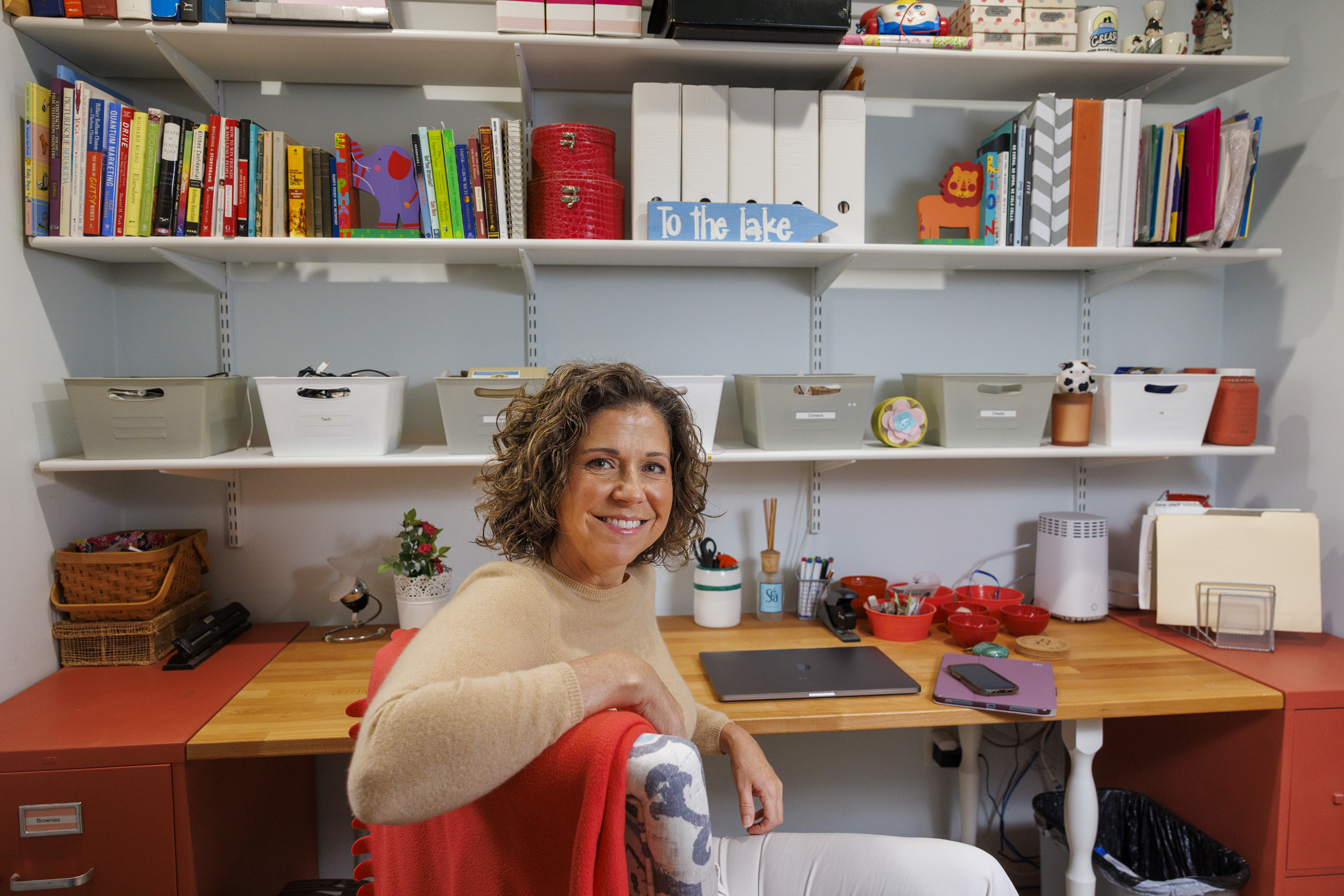
    Casey Benedict, CEO and founder of Maverick Mindshare, works from her home office.

    She wants her staff to feel like they can attend to their personal needs, whether that’s picking up a child from the bus stop or going to a doctor’s appointment, says Benedict. She has three employees who are “core to the organization.”

    “They can fully show up when they have more ownership and more control over the other parts of their lives that may pull them away from their desk,” she said.

    Allowing that kind of flexibility avoids conflict, she says. And, it pays off for the company.

    “The result is my team really does overdeliver and they enjoy what they do,” said Benedict. “They bring so much of themselves into it because they know that the structure is set up in a way to support them fully.”

    Losing the commute

    Three years before the pandemic started, three of Wendy Verna’s employees asked if they could work remotely. They told her there wasn’t enough in-person collaboration to make the commute to their South Street office worthwhile, she said.

    Verna, president and founder of marketing firm Octo Design Group, initially said no. But six months later, they started trying out remote work.

    “It wasn’t working for me,” said Verna, a self-ascribed “type A” person who likes to get out of the house and go to work. But she stuck with it because her employees were happy, and the remote setup worked for the company.

    Ultimately she figured out why she was miserable leading a remote team. “It was a control thing for sure,” she said. “I felt like, if I don’t know where you are, what are you doing?”

    She has established clear expectations for what remote work should look like at her firm. Cameras should be on for video calls, and employees should be ready to work during business hours, she says. And if employees plan to be out of town, they should let Verna know so she can determine how in-person tasks get done.

    “They’re at home, but they cannot look like they rolled out of bed, because it’s just not my brand,” said Verna.

    Verna is in the office three to four days a week, but 98% of the time, her five full-time employees, who live in the Philadelphia area, work remotely.
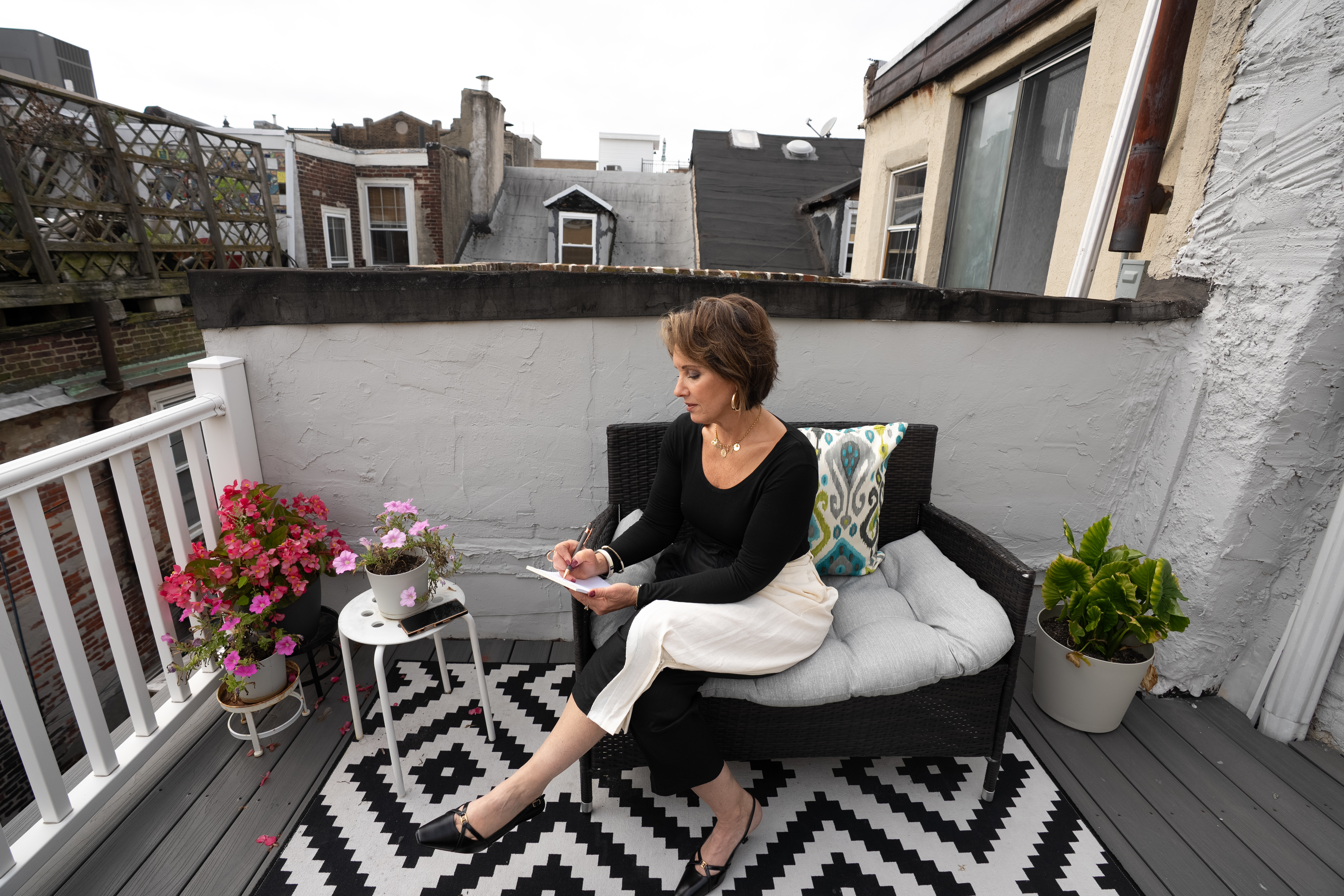
    Wendy Verna’s employees asked her to go remote three years before the pandemic. While she still goes to the office often, her employees spend most of their time working remotely.

    While she and her company have adjusted, Verna is still concerned about what employees lose by working remotely.

    A commute can be useful to prepare for the workday in the morning or process the day in the evening, she says. During pandemic-related office closures she would walk around the block a few times before and after work to get a similar effect.

    “When they sign off and you’re working from home, you run downstairs, well, all of a sudden, you’ve got chicken in the oven,” said Verna. “You don’t have time for that kind of debrief to yourself.”

    She’s also concerned about how the remote lifestyle will affect young people looking for jobs, saying, “You’re only as good as your network.”

    “This remote work is eliminating role models, and is eliminating mentors,” Verna said, “because I can’t mentor you behind a screen.”

  • The long-term vision for Union captain Alejandro Bedoya? Return to the MLS Cup final. Full stop.

    The long-term vision for Union captain Alejandro Bedoya? Return to the MLS Cup final. Full stop.

    Alejandro Bedoya has no idea.

    Don’t talk to him about the next five years; he doesn’t want to discuss them. Will his contract get extended with the Union next season? He says he has no clue.

    In fact, as he arrived for an interview to discuss his career and where it’s going from here, he joked that he didn’t even know where he was supposed to go after this meeting for a scheduled team-bonding activity — one that apparently involved barbecue.

    Bedoya is an enigma. Right now, he might be one of the few people whose off-the-field portfolio, at first glance, shows many avenues. But on this day, as captain of the No. 1 team in MLS’s Eastern Conference … no plans.

    Well, except for one: Get back to the MLS Cup final. That’s it.

    “Five years from now? I don’t know. I couldn’t tell you,” Bedoya said as he leaned back in his cushioned chair inside the Union’s film room. “What I can tell you? This team is special, and we’ve been special since preseason. We knew this team was special that long ago. I want to be a part of the team that brings an MLS Cup to this club and home to Philly.

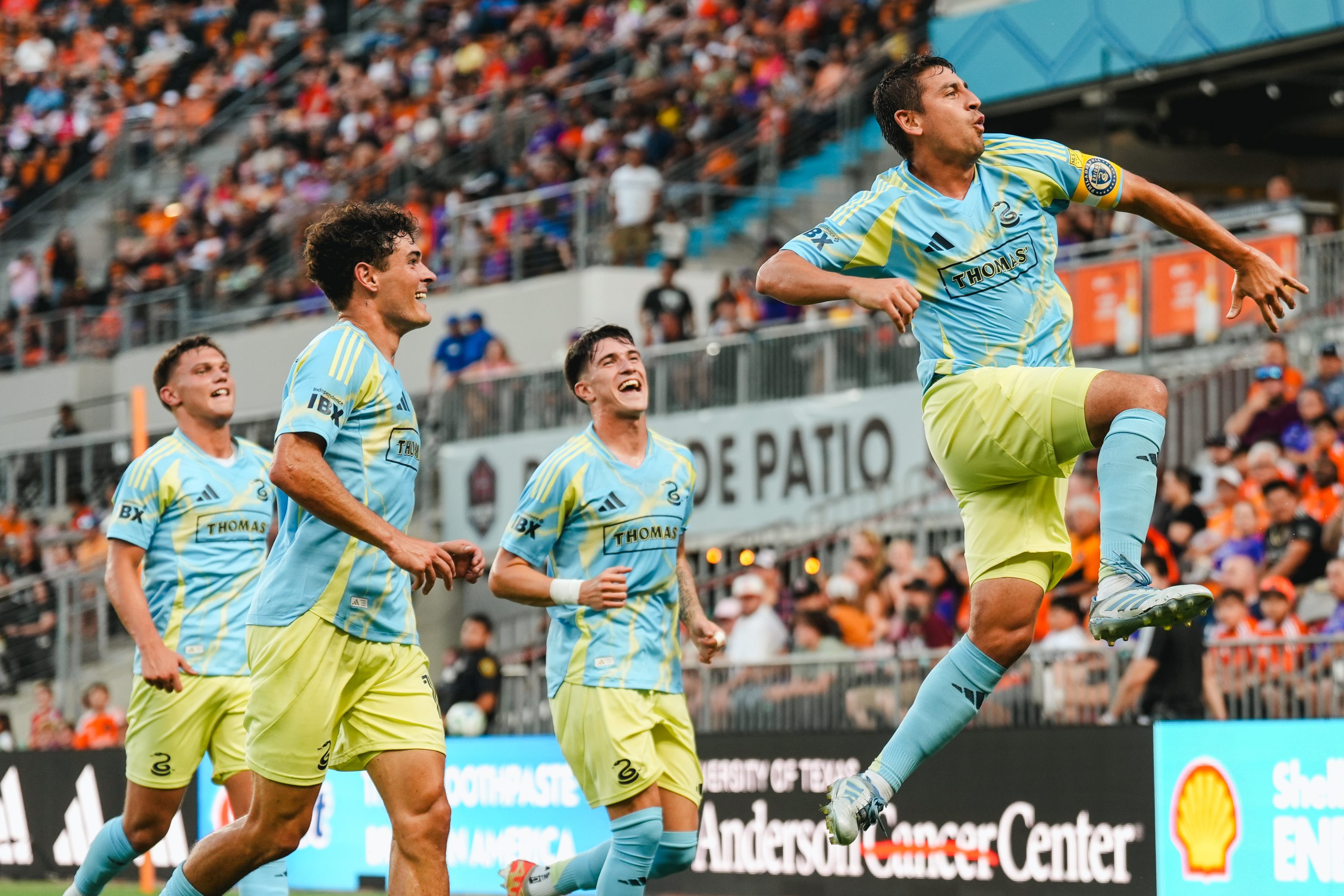
    Alejandro Bedoya (right) celebrates scoring a goal in the first half of the Union’s win against the Houston Dynamo on July 29.

    “So, to be honest, I’m not thinking about [anything past that]. I made it a point this season, especially now that we’ve been so successful, to be focused on the team. I don’t want to think too far down the line and cause any disruptions to talk about this or that or what may happen or might not.”

    It’s been an interesting 10-year run in Philly for Bedoya. He’s been the team’s leader since arriving from FC Nantes of the French first division in 2016. He’s been a vocal ambassador for ending gun violence. He’s been a staunch advocate for growing the youth game from a grassroots level.

    However, this season, he’s mainly been the utilityman that first-year manager Bradley Carnell needs.

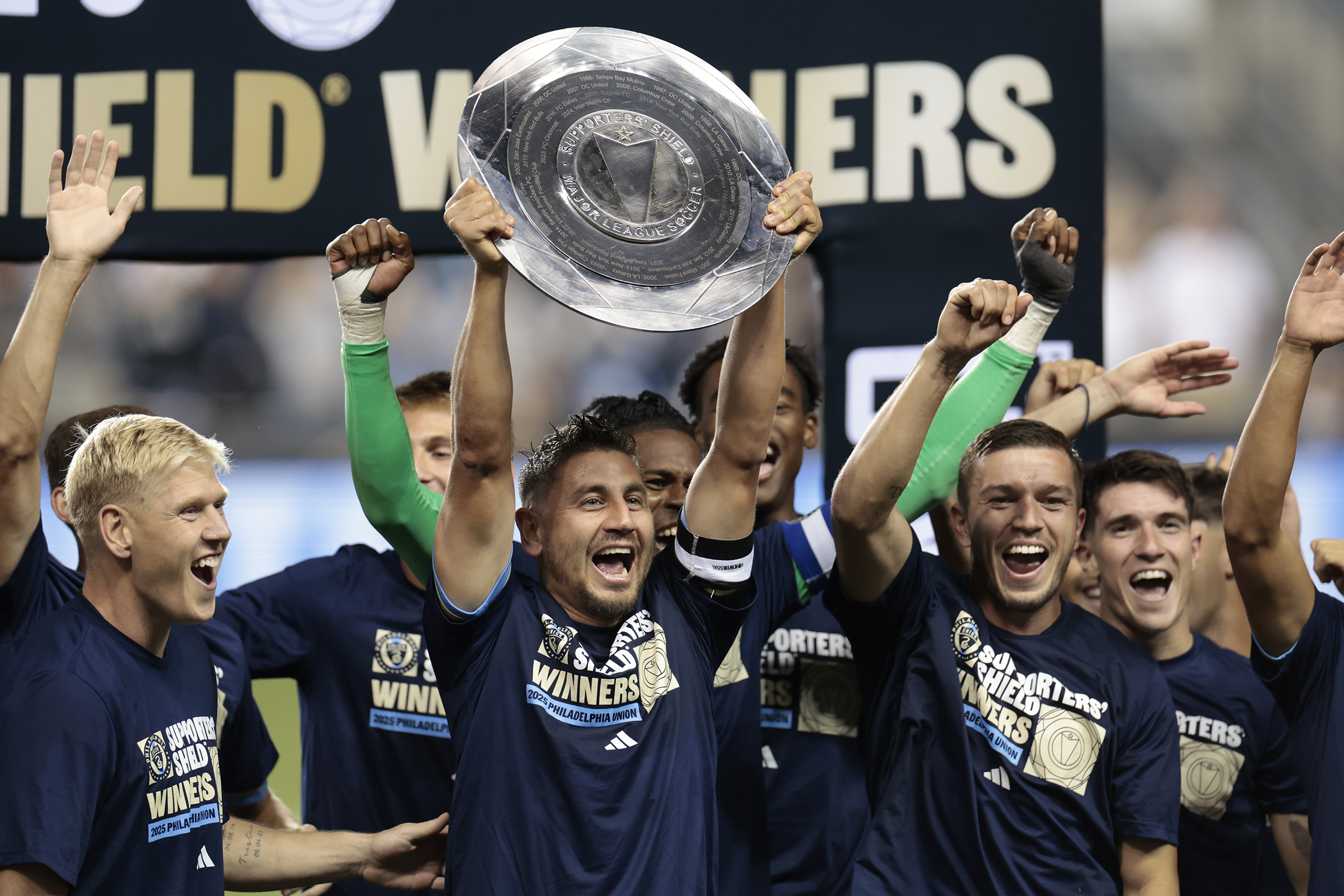
    Things get real now for the Union. Coming off a high two weeks earlier after the club captured its second Supporters’ Shield, given to the team that finishes with the best regular-season record, Bedoya now leads the Union into the playoffs with every opponent looking to beat the best.

    Alejandro Bedoya raises the Supporters’ Shield after beating New York City FC at Subaru Park on Saturday, Oct. 4.

    First up is Chicago in Game 1 of a best-of-three series on Sunday (5:55 p.m., FS1, Apple TV+).

    “He’s our leader. He’s one of the guys who holds us together,” Carnell said earlier this season of Bedoya. “That’s why he’s here. He’s committed to doing what he has to for the club. And from a leadership standpoint, there’s no one better. He’s great with the young guys, he’s great with the guys [who] have been here, and he knows what it takes to get to where we’re trying to go.”

    Taste for more

    It was 2022, and the rays of a sunny Los Angeles afternoon beamed onto Banc of California Stadium (now known as BMO Stadium), the site of the MLS Cup final. Led by then-manager Jim Curtin, Bedoya, clad in the Union’s unmistakable lightning bolt kit, took the field for warmups. He didn’t start that day, but his impact to that point was immeasurable.

    That season, at age 36, he’d played in 30 regular-season games for the club and started 27 of them. He played nearly 2,500 minutes and scored six goals along with six assists, highlighted by two goals against D.C. United on July 8, which made him just the third player in club history to join the 20-20 club.

    The fruits of his labor culminated in an Eastern Conference title and a trip to MLS’s final. But as team captain, his leadership guided the Union to its first MLS Cup appearance — and arguably one of the greatest MLS Cup finals ever.

    So what’s changed in his roles and responsibilities from that moment with that coach to this moment with this coach?

    “To be honest? Not much,” Bedoya said. “I’m still one of the captains, whether it’s me, [goalkeeper Andre] Blake or [defender] Jakob [Glesnes]. I, more so maybe than others, act as like that intermediary between the coaching staff, the technical staff, and the locker room. … I’ve been more of a glue guy, if you will. And this year, more than ever.”

    The glue-guy approach has been the case on the field too. Each year, Bedoya’s minutes have dwindled from everyday starter to strategic, none more than this season, when he was used in situations to which he’s unaccustomed, like in the Union’s 7-0 loss to Vancouver on Sept. 13, when he started at right back following the suspension of defender Olwethu Makhanya.

    In that match, the decision — and result — spoke for itself. Bedoya even acknowledged as much. But in the same breath, he noted that ebbs and flows happen in a club-first mindset.

    “We had to rotate a little bit, obviously,” Bedoya said. “Maybe I’m not the best right back. So I took that on the chin there, but we’re all about the collective here … and you have to be an unselfish guy. I think in Bradley [Carnell’s] system this year, I’ve been playing more even on the left side of midfield, which typically I haven’t played in years past. But as I said before, man, whatever it takes, I’m ready to step up and help the team out in any way.”

    A plan for now

    Despite a refusal to look into crystal balls right now, Bedoya’s future does have a number of paths. He has a certification from Harvard Business School and has become an entrepreneur and investor across several ventures.

    He has diversified, but not necessarily in a way where all roads leads back to soccer. Instead, it’s in a way that when he’s not on the field, he can spend more time doing things with his family, namely his children, Santino, age 10, and Milena, 8.

    Bedoya says the two, along with his wife, Bea Hilland, are his biggest supporters. He said he loves doing dad things, like taking them to soccer, dance, and doing school pickups when he’s not on the road.

    But in true dad fashion, sometimes he wants to just sit on the couch and watch football. He says they’re cool with that, too.

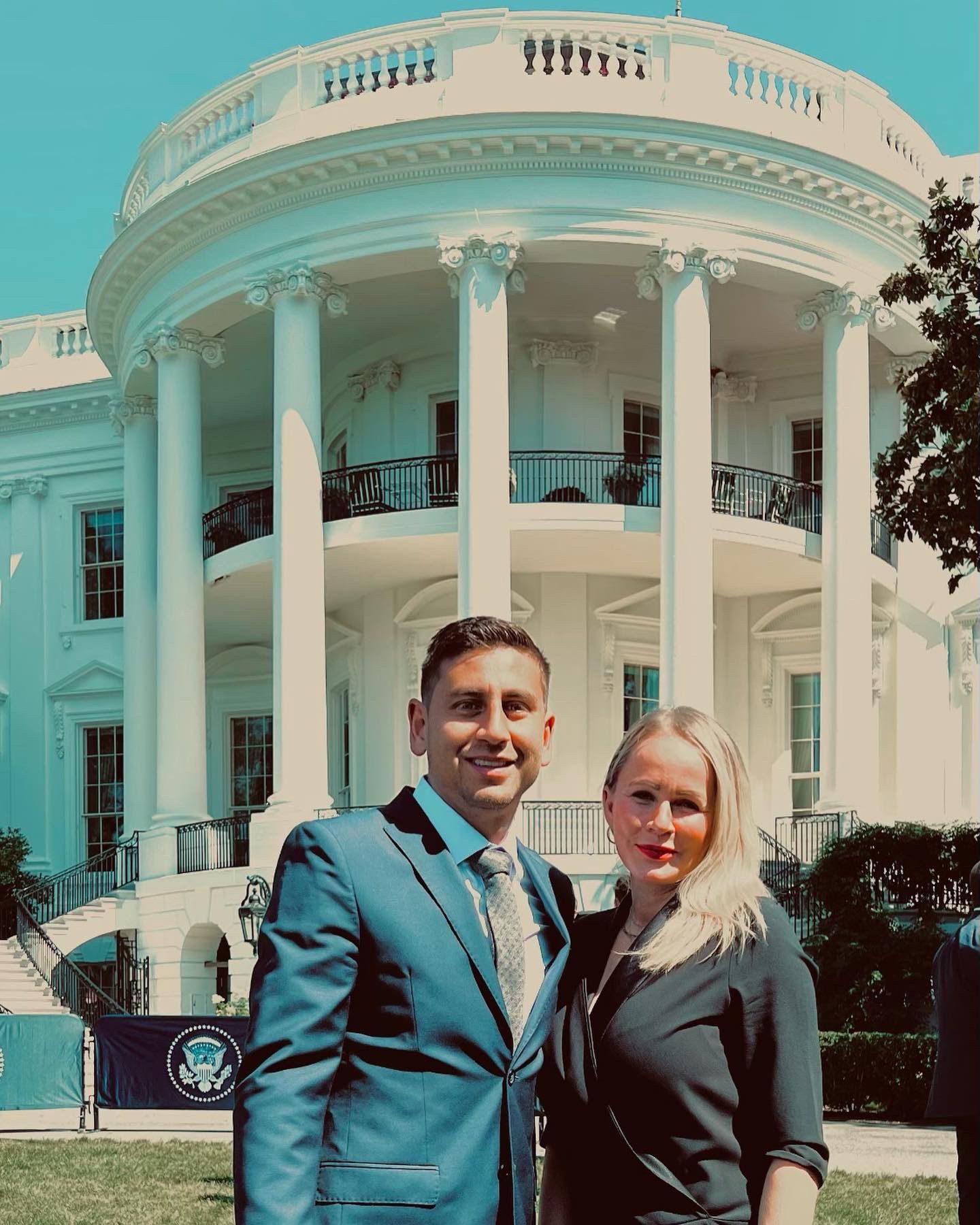
    Alejandro Bedoya (left) and his wife Beatrice Hilland (right) were on hand at the White House in 2022 for a celebration of then-President Joe Biden signing new federal gun control legislation.

    “My wife will be the first one to tell you that she plays a major role in the house, with the kids, especially as much as we travel to games,” he said. “And as an old guy myself, you feel more pain, you get more sore the day after games. And you know those Sundays when maybe we have the days off, the younger guys can come in and do even more work, but I just want to sit on a Sunday and watch [NFL] RedZone all day, you know?

    “I make it a routine to make sure every time I’m home, I do a drop off at school and pick up at school. I make sure that even when I do want to be lazy or try to recover on the sofa, that I got both of them next to me on my side … I get emotional sometimes thinking about after we won a Supporters’ Shield, like how happy they were. They’re FaceTiming friends saying, ‘We won the Shield,’ not just ‘Dad won the Shield.’ What I do matters to them, and to me, that’s everything.”

    So how does he juggle a portfolio that doesn’t seem to stop?

    “It’s finding the right balance with them,” Bedoya said. “My kids are at the age where they’re playing sports now. They’re in soccer. They’re in dance; they’re in baseball. I like being part of those special moments. I think part of the beauty of being a father and still being a player is being able to share these moments with them.”

    “Let’s go finish this thing”

    Over the course of his 15-minute interview, the only times Bedoya wasn’t stoic was when he discussed his family and what’s next for the Union. The latter only has a handful of more games before it could be bringing home MLS’s biggest prize.

    And after 10 seasons in the same league with the same team on the same mission, Bedoya knows he’s not getting any younger. There are no more long-term contracts. His playing career has become a year-over-year proposition with a goal that has been the same since Day 1.

    Bring an MLS Cup back to the Chester waterfront.

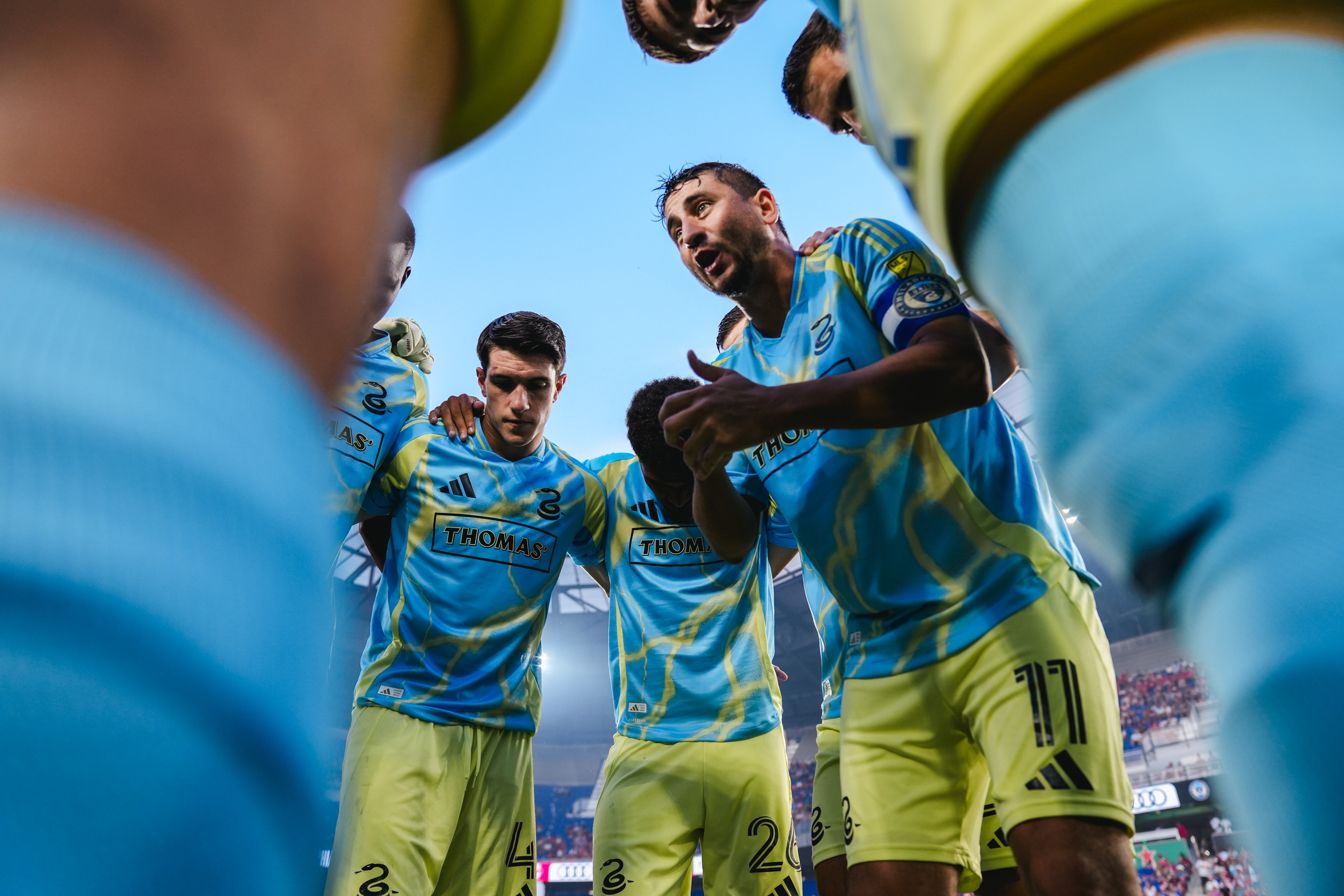
    Union captain Alejandro Bedoya is ready to be the leader the team needs as it enters into the 2025 postseason as the No. 1 team in the Eastern Conference.

    This is the year he truly feels offers the best chance to do that. Whatever happens after that, Bedoya has already affirmed is wait-and-see.

    “I can tell you from that first week [of preseason training] in Marbella [Spain], I could sense that there was something brewing,” Bedoya said. “We already had a basic kind of philosophy, philosophical model of how we want to play, but Bradley and the staff came in and amped that up to another level, to another notch.

    “As far as my place? Like I said, I’m maybe not a starter anymore, but I’ve shown even this year that even when I do start, I can still impact the game in a positive way.”

    He paused and added:

    “This team is special, I think our record and our run to this point reflects that. The standard in training and in games is high, every day. We’re the team to beat and now it’s about going out there and being dominant. Let’s go finish this thing.”

  • Villanova’s Pat McQuaide and Luke Colella have formed instant chemistry on a tight-knit team

    Villanova’s Pat McQuaide and Luke Colella have formed instant chemistry on a tight-knit team

    After Luke Colella officially transferred to Villanova this offseason, someone stopped by his hometown outside of Pittsburgh for a visit.

    It was Pat McQuaide, Villanova’s quarterback.

    McQuaide was on his way home to the Cleveland area, but decided to make a pit stop in Wexford, Pa., to meet his new wide receiver and throw to him.

    “I think that’s kind of where the chemistry started,” Colella said.

    Fast forward seven games into the 2025 season, Colella has become McQuaide’s top target within Villanova’s offense. Colella leads the Wildcats with 41 receptions — 23 more than any other receiver — 630 receiving yards, and three touchdowns. Of McQuaide’s 115 completions this season, 35% of them have gone to Colella.

    Two weeks ago, McQuaide found Colella on back-to-back drives for touchdowns against Elon. The connection keyed a 26 -point second half for the Wildcats, who rallied from 11 down at the break to defeat the Phoenix, 29-21. Colella finished the game with a career-high 10 receptions and racked up 125 receiving yards to go along with the two touchdowns, while McQuaide threw for 255 yards and the pair of scores.

    During last weekend’s dismantling of Hampton, when the Wildcats led 49-0 at halftime, McQuaide again turned to his go-to guy Colella, hitting the receiver for a 34-yard touchdown before Villanova’s starters were pulled in the second half.

    The two graduate students will look to continue their success Saturday when No. 11/12 Villanova hosts Albany (3:30 p.m., NBCSP+) on homecoming weekend. The 5-2 Wildcats are seeking their fifth consecutive win and 20th straight victory at Villanova Stadium dating back to 2022.

    Acing chemistry

    McQuaide and Colella’s chemistry extends beyond just quarterback and receiver. They have become close friends.

    “Luke’s great,” McQuaide said. “First of all, he’s a great kid. He doesn’t technically live with me, but he pretty much lives with me. He lives across the hall. He’s in my room all the time. And I think that’s probably one of the reasons why it has been so big for us this year in the passing game.”

    Villanova’s offensive coordinator Chris Boden has taken notice of the bond McQuaide and Colella have quickly cultivated.

    “They’re very tight off the field,” Boden said. “They have a great relationship. I mean, it’s just nonstop back and forth, busting each other. They’ve just been on the same page. Personality-wise, they mesh really well. They’re high energy.”

    McQuaide’s infectious energy seemingly doesn’t have an off switch. Every time he hits a receiver for a touchdown, the quarterback can be seen zipping down the field to celebrate with his teammates.

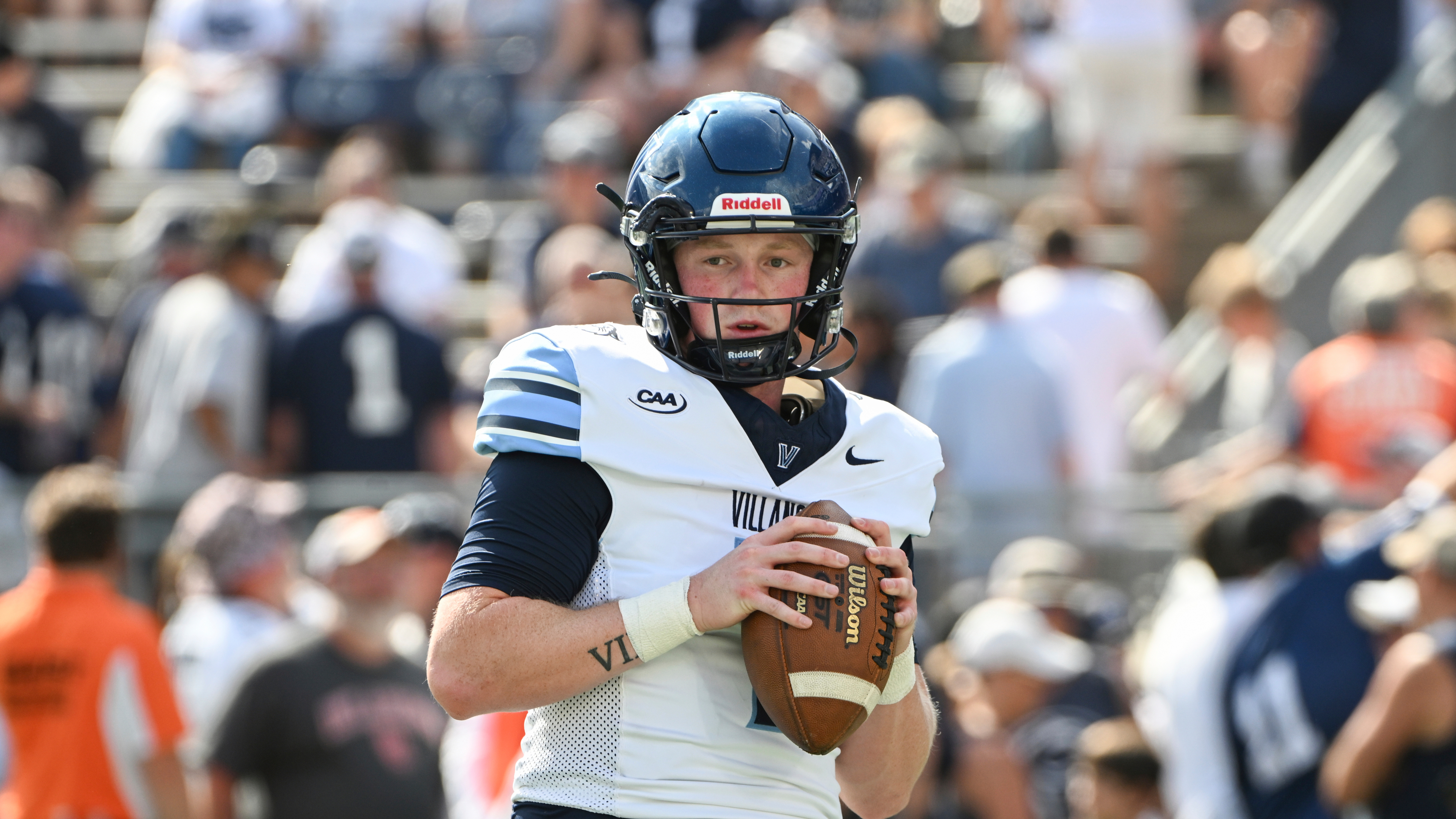
    Villanova quarterback Pat McQuaide has thrown 10 touchdowns compared to one interception this season.

    Boden, a former Villanova quarterback himself, has nicknamed McQuaide the “juice captain” of the team.

    “It’s a big part of my game, just trying to bring energy,” McQuaide said after the win against Hampton. “I just try to be a source of positive energy and try to remind everybody that we’re playing a game, and games are supposed to be fun. I think that positive energy is contagious.”

    Boden echoed that statement when asked about McQuaide’s personality.

    “He just has a very contagious personality,” Boden said. “He’s high tempo. He’ll bark at the guys, and he’s always talking. He breaks down the team. He breaks down the offense. He does it on the field as well. He’s got nonstop chatter on the field. And I’ve never had a quarterback that led with that much energy.”

    ‘What it means to be a Wildcat’

    Despite starting their college careers in different programs, McQuaide and Colella’s journeys have some similarities as graduate transfers. McQuaide, a Nicholls State transfer, and Colella, a transfer from Princeton, arrived on the Main Line this year with one final season of collegiate eligibility.

    Both players also harped that the culture of the program was a big reason why they chose Villanova.

    “A lot of people use the word culture, and I think that it’s really, really good here,” Colella said. “And I think that’s a testament to what the coaches bring to the table here. I think it’s just a really close group that gives us that feeling as soon as you walk in here, where it feels like I’ve known [McQuaide] for 10 years.”

    McQuaide credits coaches who were once former Wildcats, like Boden, for helping foster that special culture.

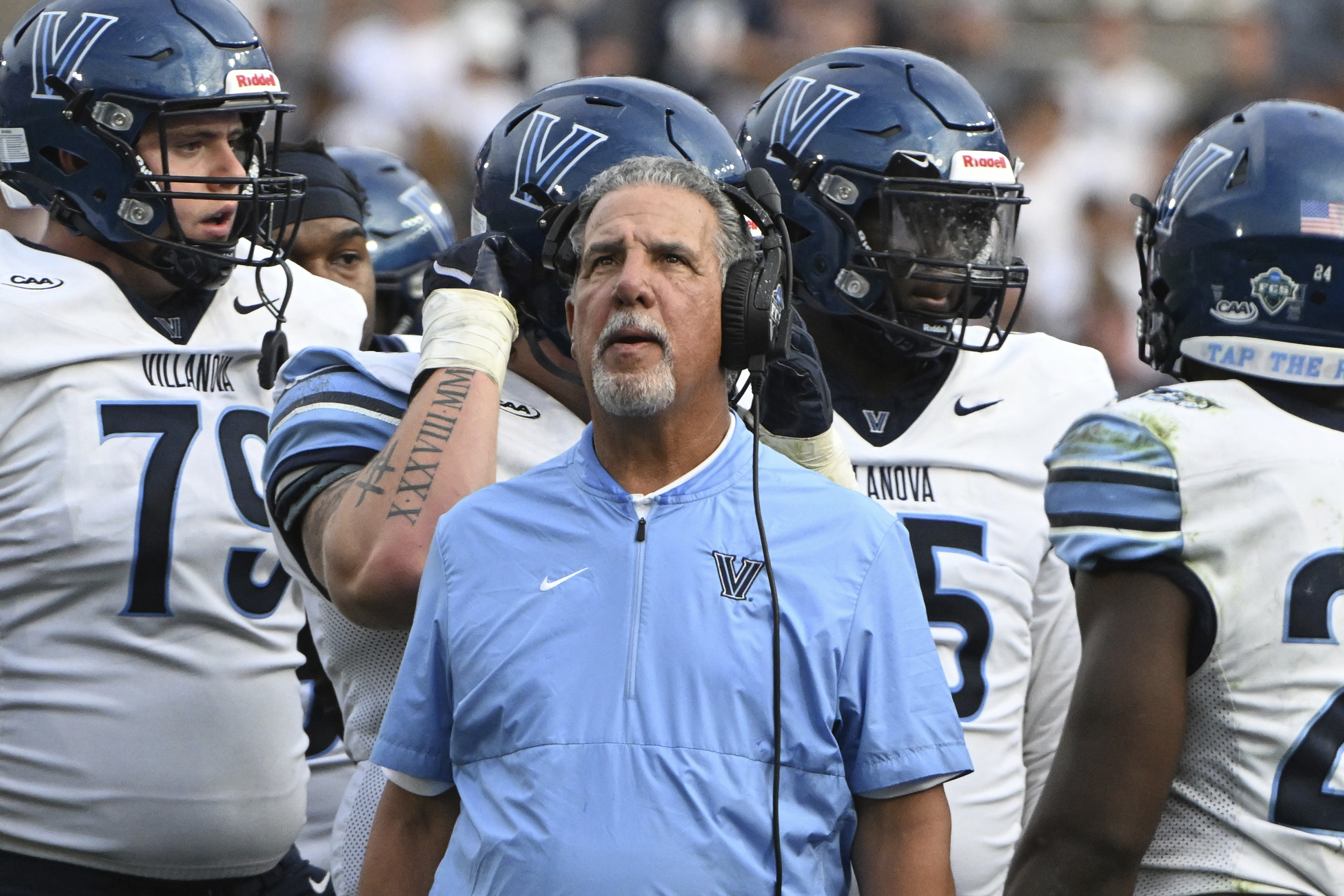
    Mark Ferrante has built a strong family culture at Villanova and has the Wildcats eyeing a fifth FCS playoff appearance in his nine seasons at the helm.

    “I think it’s great when you have coaches that come back,” McQuaide said. “We talk all the time about protecting the brand, the ‘V’, it’s a sacred thing for us, and people hate the ‘V’ outside of here. It’s bigger than just the guys that we have on this team and on this staff. I think having guys like Coach [Mark] Ferrante, who spent his whole career [here] for the most part, and Coach Boden and Coach [Forrest] Rhyne. All of those guys that played here, you can’t put a price on that.”

    For McQuaide and Colella, this season’s accomplishments are not just for them; they are for the Wildcats who played before them and the ones who will come after them. After just a few months spent on the Main Line, the two already feel the significance of what culture and family mean to Villanova as the Wildcats chase a Coastal Athletic Association title and third consecutive playoff appearance.

    “The tightness of the group is obviously set by the coaches,” Colella said. “Like, you look to our left and all the coaches are running stairs together. I’ve never seen that before. I’m sure Pat hasn’t either. They’re together right now, doing their thing. I think it’s really reflective of what it means to be a Wildcat.”

  • The OY/YO statue is coming back

    The OY/YO statue is coming back

    I recently visited my favorite piece of Philly public art, at my favorite New Jersey sculpture garden.

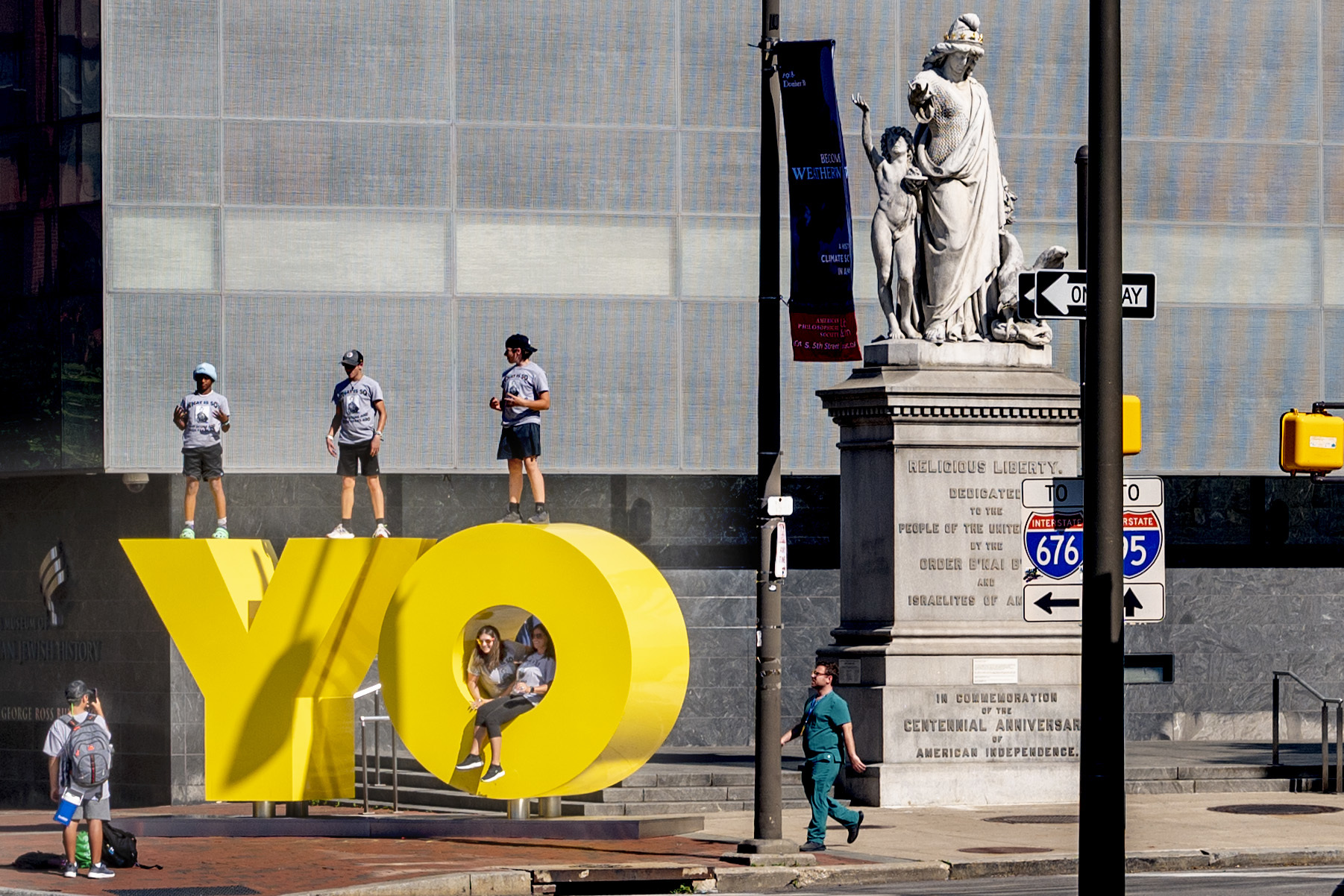
    No longer at its home outside the Weitzman National Museum of American Jewish History on the corner of Fifth and Market Streets, the bright “Lamborghini yellow” sculpture that then-curator Josh Perelman called “an ongoing love letter to the city,” had gone away for some R & R — removal and refurbishment.

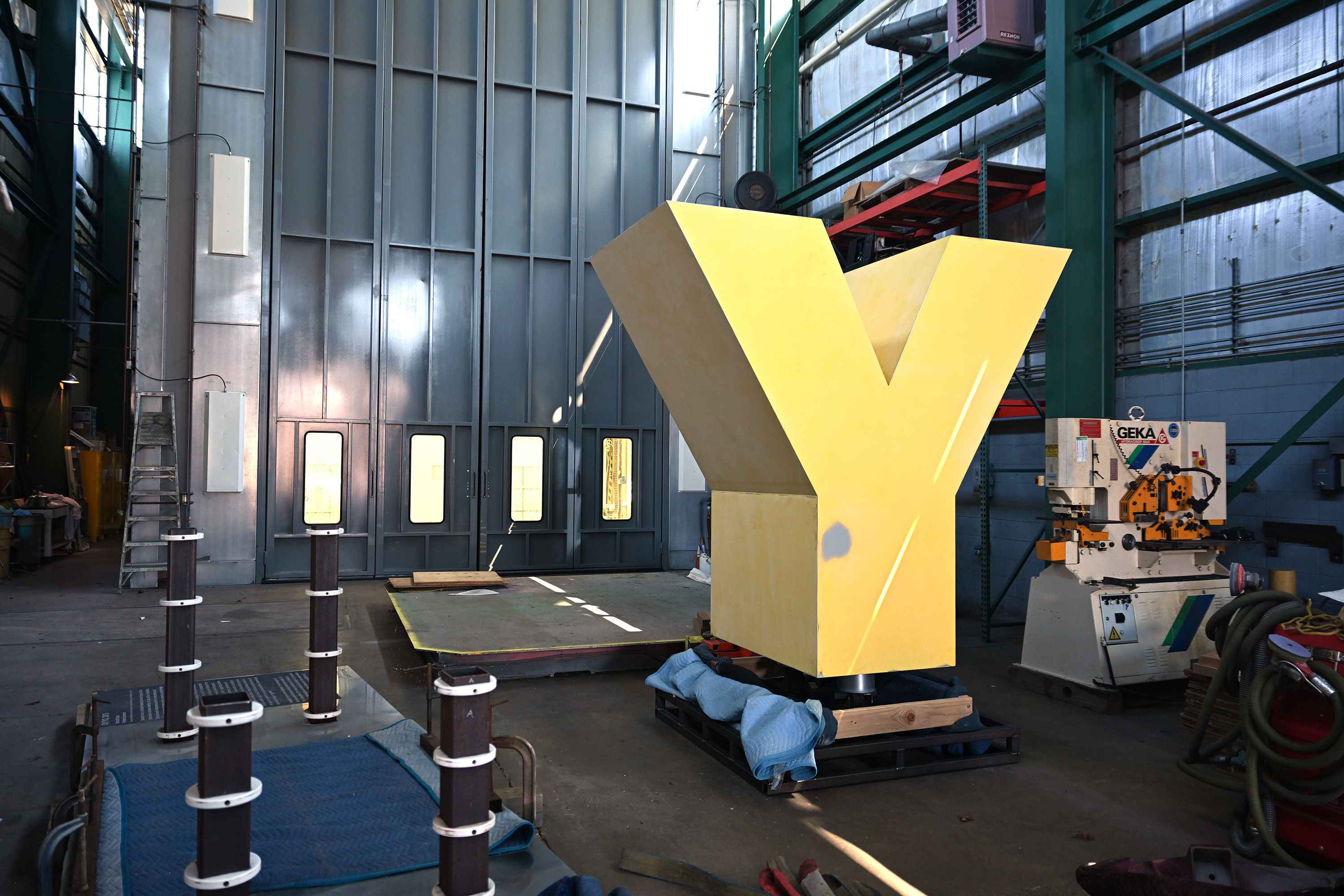
    The “Y” waits to be refurbished at the Johnson Atelier in September.

    Installed in 2022, the work by Brooklyn, N.Y.-based artist Deborah Kass quickly became one of our city’s most selfied spots — right up there with that bell just across Independence Mall.

    It was only supposed to be here a year, but it stayed around (although the museum is hopeful, it’s still not officially permanent).

    Students from Hillwood Middle School in Ft. Worth, Texas visit in 2022.

    After years on the busy corner (and all those field-tripping middle-schoolers climbing on it) the museum scheduled a removal in May of the eight foot tall Y and O letters for freshening up, planned to coincide with the continuing construction along Market Street through Old City.

    Knowing my feelings for their sculpture, the folks at the museum invited me to photograph the refurbishment.

    The letters did not require extensive work, and the aluminum was treated not unlike body work on a car: removing dents, priming, painting and leaving a durable finish.

    At the Johnson Atelier, a facility established by Seward Johnson in 1974 to give artists greater involvement in the production of their work, I was not allowed to photograph from any angle that showed any other art works in the background. And there were plenty (sigh), like an eight-foot tall metal hand sitting on the floor, right across from the “Y” (I had to sign an NDA).

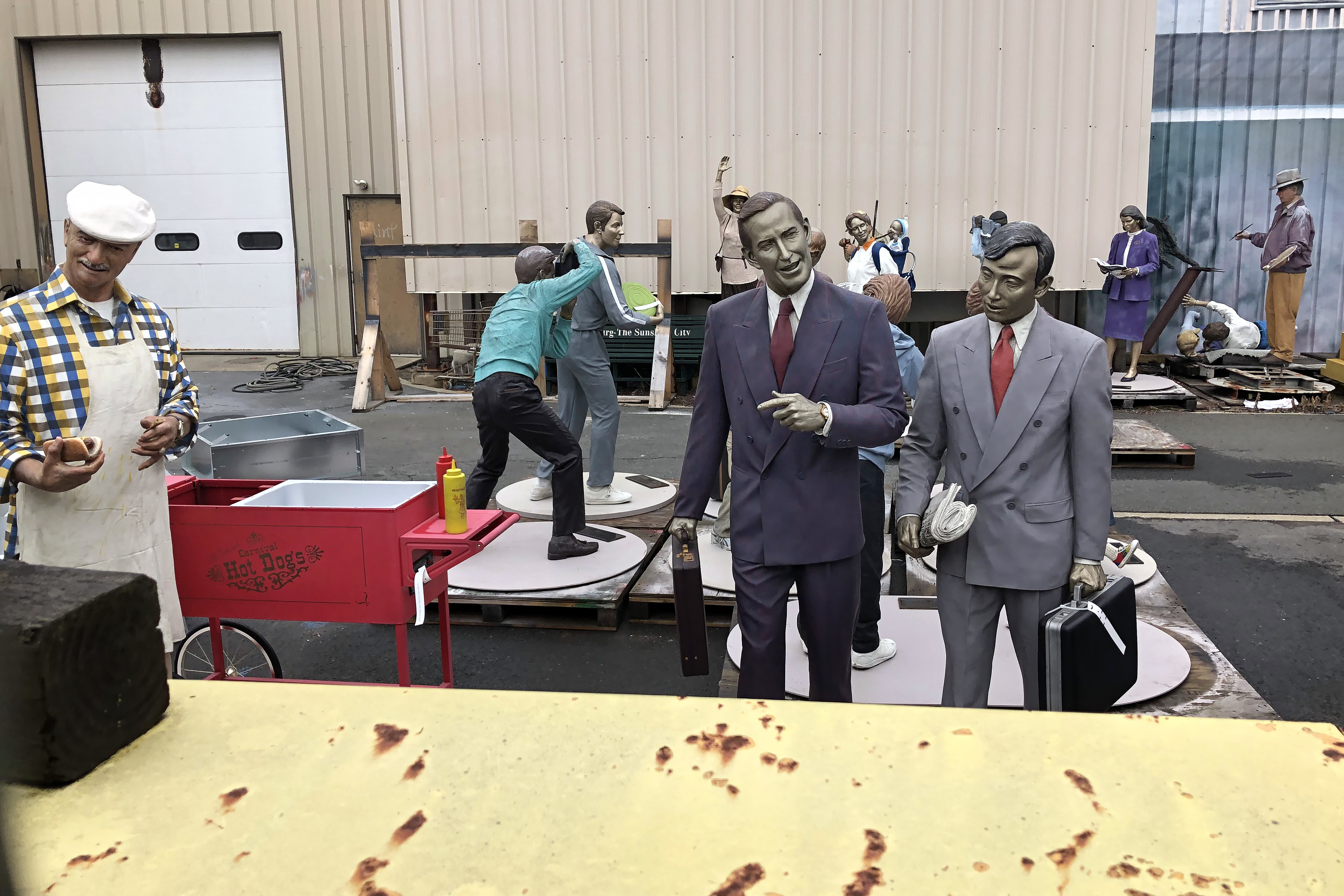
    Looking over the fence from a public area at Grounds for Sculpture in 2019. A collection of trompe-l’œil painted sculptures by Seward Johnson in the yard at the adjacent Johnson Atelier.

    Adding to the lack of visual variety, the letters went into the painting booth one at a time, so I couldn’t make a picture of them in the same frame. And I could only see the workers in the booth from outside – through a couple of windows. But that is exactly the kind of photographic challenge I most enjoy.

    Now, after a few months the two giant letters are both as good as new and are scheduled to be reinstalled this Saturday.

    Weitzman president and CEO Dan Tadmor, looking forward to its return to their corner heading into the nation’s 250th says, “Deborah Kass’s OY/YO celebrates the spirit of a city that’s always spoken in its own voice: bold, funny, and full of heart.”

    Since 1998 a black-and-white photo has appeared every Monday in staff photographer Tom Gralish’s “Scene Through the Lens” photo column in the print editions of The Inquirer’s local news section. Here are the most recent, in color:

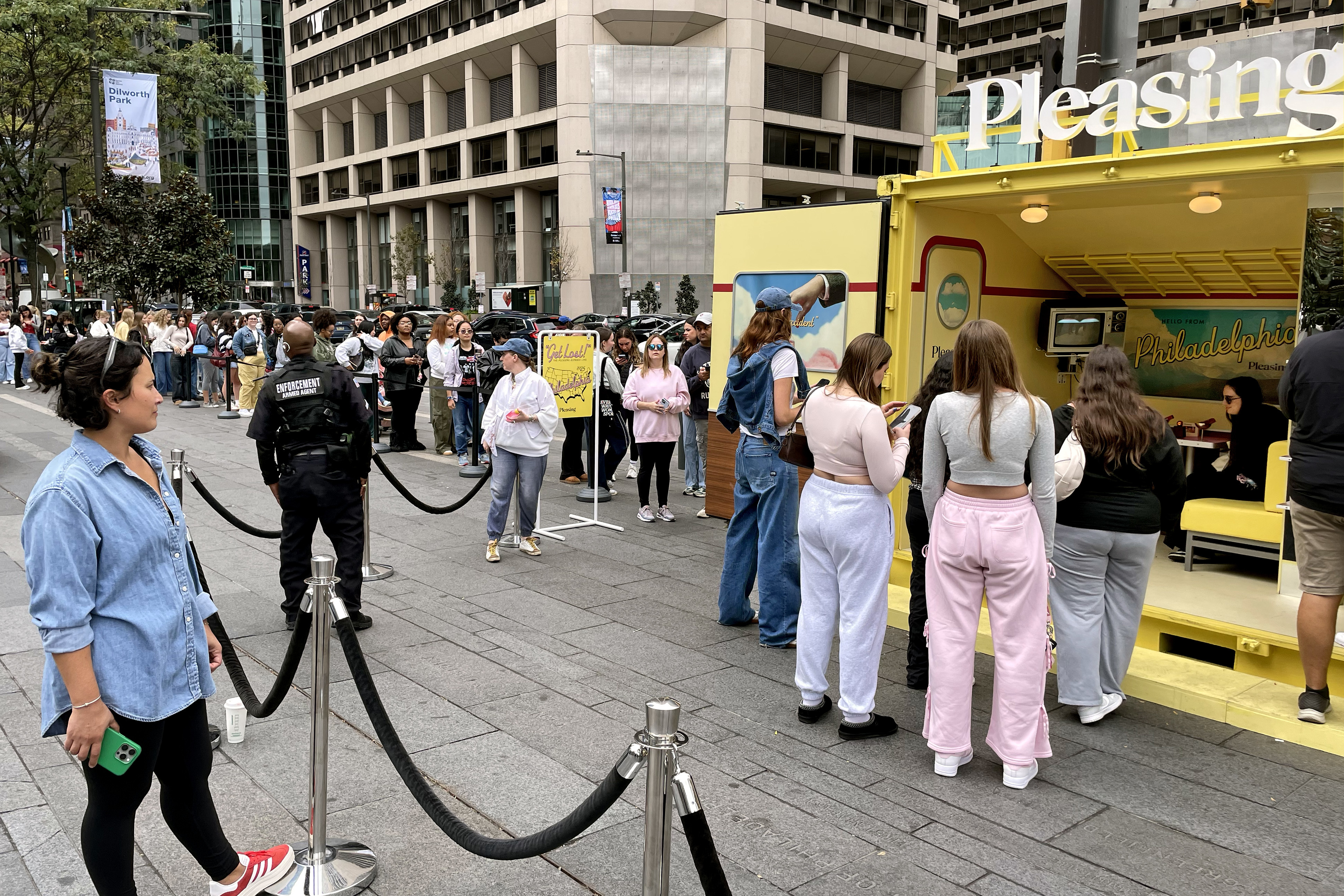
    October 20, 2025:The yellow shipping container next to City Hall attracted a line of over 300 people that stretched around a corner of Dilworth Park. Bystanders wondered as they watched devotees reaching the front take their selfies inside a retro Philly diner-esque booth tableau. Followers on social media had been invited to “Climb on to immerse yourself in the worlds of Pleasing Fragrance, Big Lip, and exclusive treasures,” including a spin of the “Freebie Wheel,” for products of the unisex lifestyle brand Pleasing, created by former One Direction singer Harry Styles.
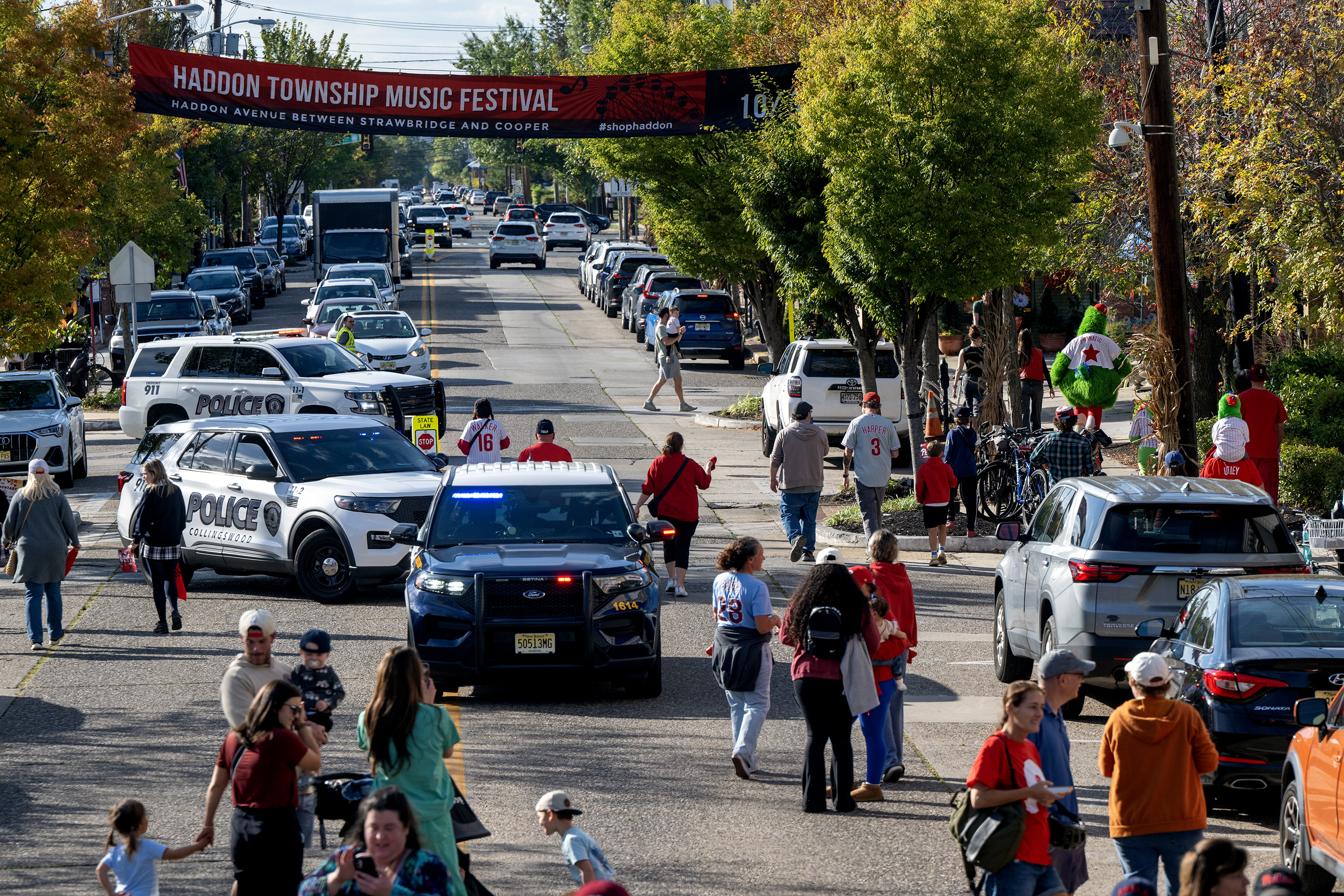
    October 11, 2025: Can you find the Phillie Phanatic, as he leaves a “Rally for Red October Bus Tour” stop in downtown Westmont, N.J. just before the start of the NLDS? There’s always next year and he’ll be back. The 2026 Spring Training schedule has yet to be announced by Major League Baseball, but Phillies pitchers and catchers generally first report to Clearwater, Florida in mid-February.
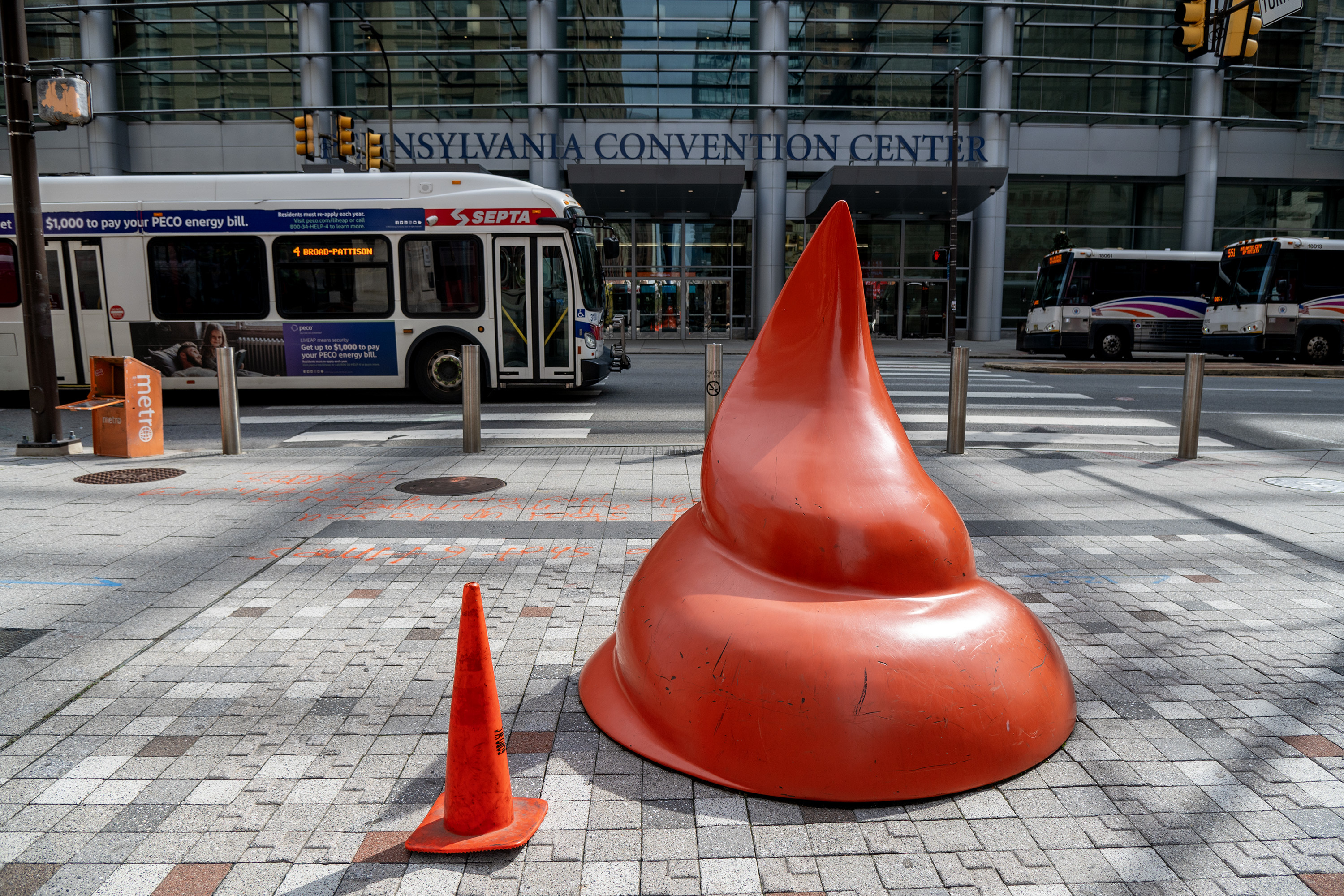
    October 6. 2025: Fluorescent orange safety cone, 28 in, Poly Ethylene. Right: Paint Torch (detail) Claes Oldenburg, 2011, Steel, Fiberglass Reinforced Plastic, Gelcoat and Polyurethane. (Gob of paint, 6 ft. Main sculpture, 51 ft.). Lenfest Plaza at the Pennsylvania Academy of the Fine Arts on North Broad Street, across from the Convention Center.
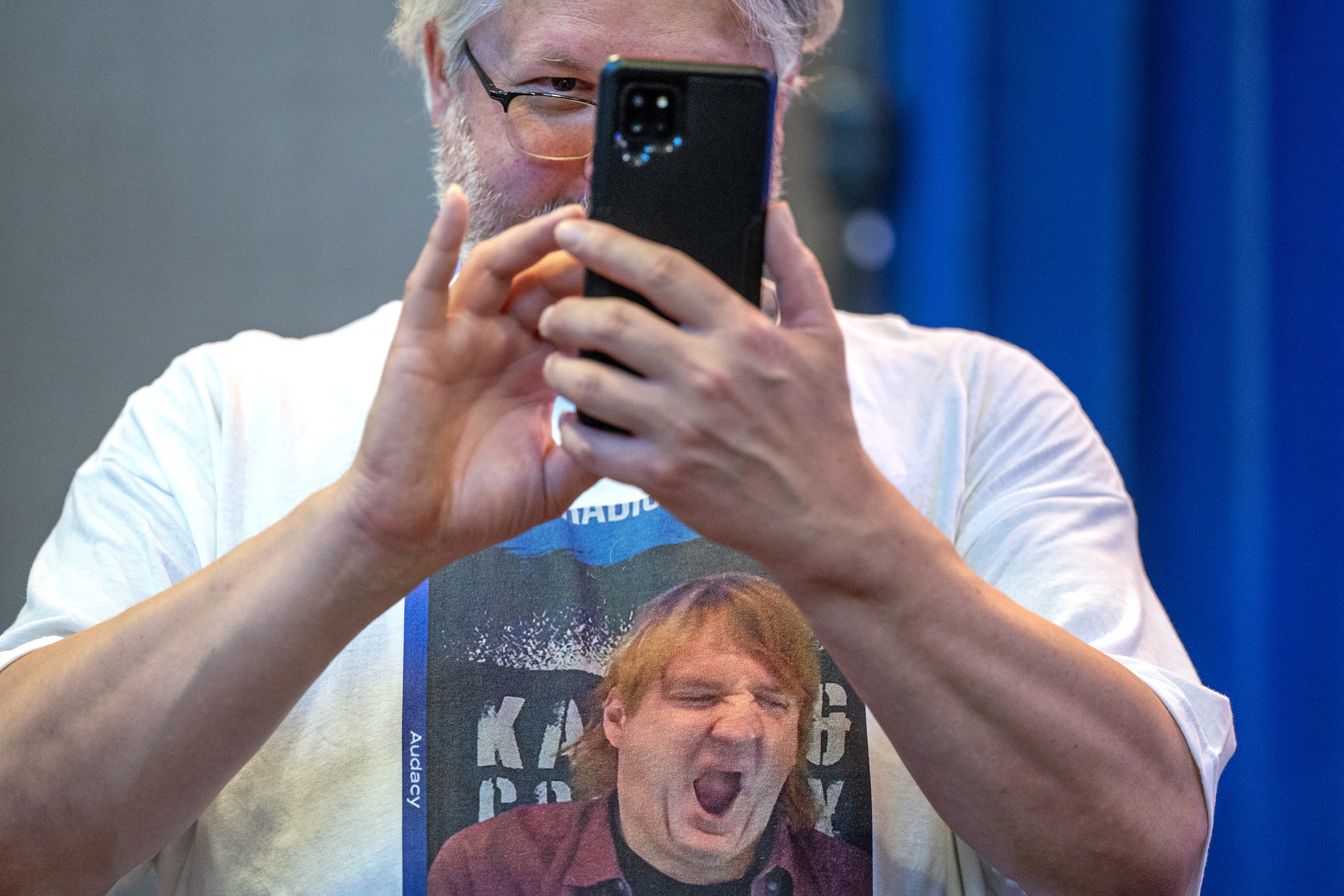
    September 29, 2025: A concerned resident who follows Bucks County politics, Kevin Puls records the scene before a campaign rally for State Treasurer Stacy Garrity, the GOP candidate for governor. His T-shirt is “personal clickbait” with a url to direct people to the website for The Travis Manion Foundation created to empower veterans and families of fallen heroes. The image on the shirts is of Greg Stocker, one of the hosts of Kayal and Company, “A fun and entertaining conservative spin on Politics, News, and Sports,” mornings on Talk Radio 1210 WPHT.
    September 22, 2025: A shadow is cast by “The Cock’s Comb,” created by Alexander “Sandy” Calder in 1960, is the first work seen by visitors arriving at Calder Gardens, the new sanctuary on the Ben Franklin Parkway. The indoor and outdoor spaces feature the mobiles, stabiles, and paintings of Calder, who was born in Philadelphia in 1898, the third generation of the family’s artistic legacy in the city.
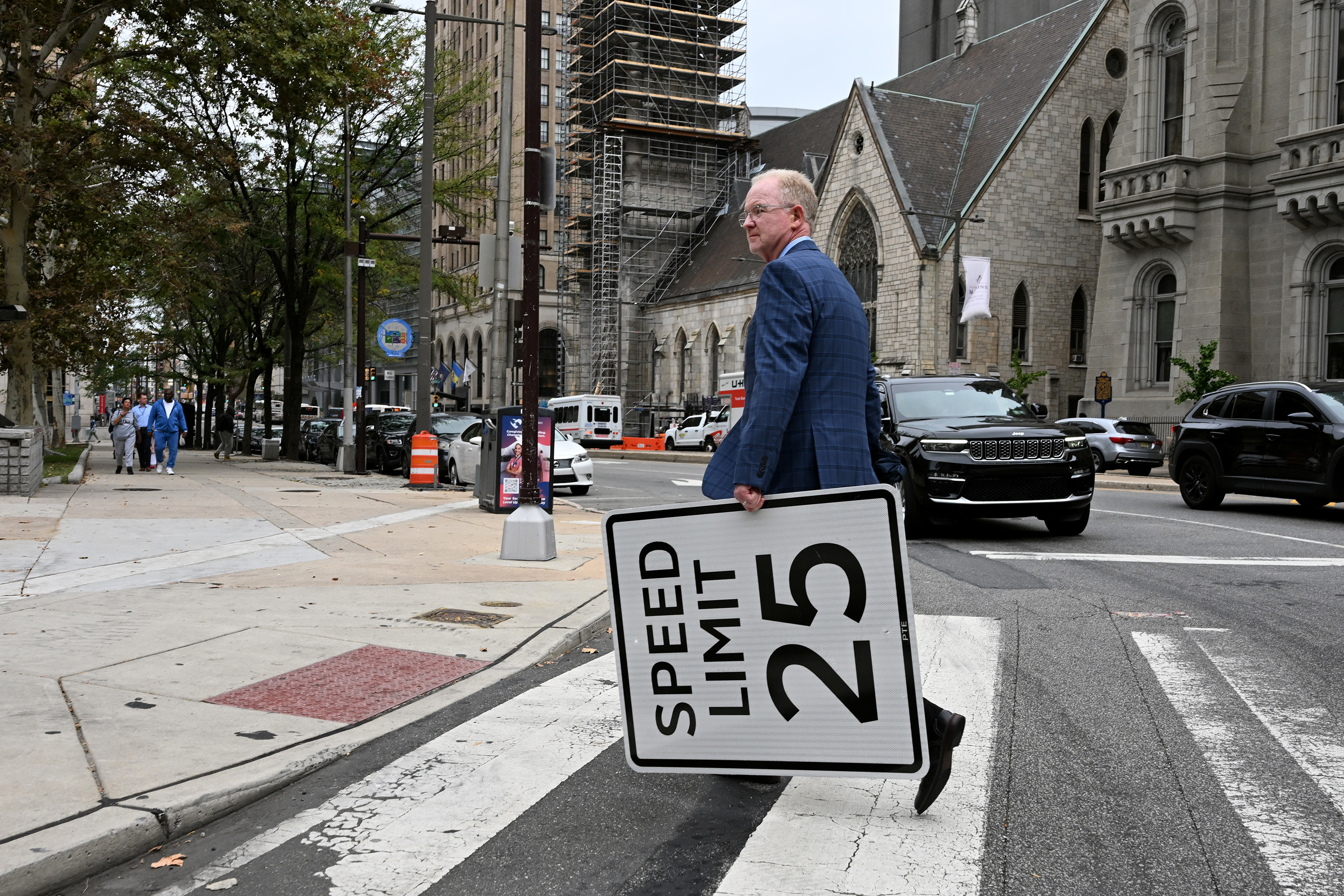
    September 15, 2025: Department of Streets Director of Operations Thomas Buck leaves City Hall following a news conference marking the activation of Automated Speed Enforcement (ASE) cameras on the Broad Street corridor – one the city’s busiest and most dangerous roads. The speed limit on the street, also named PA Route 611, is 25 mph.
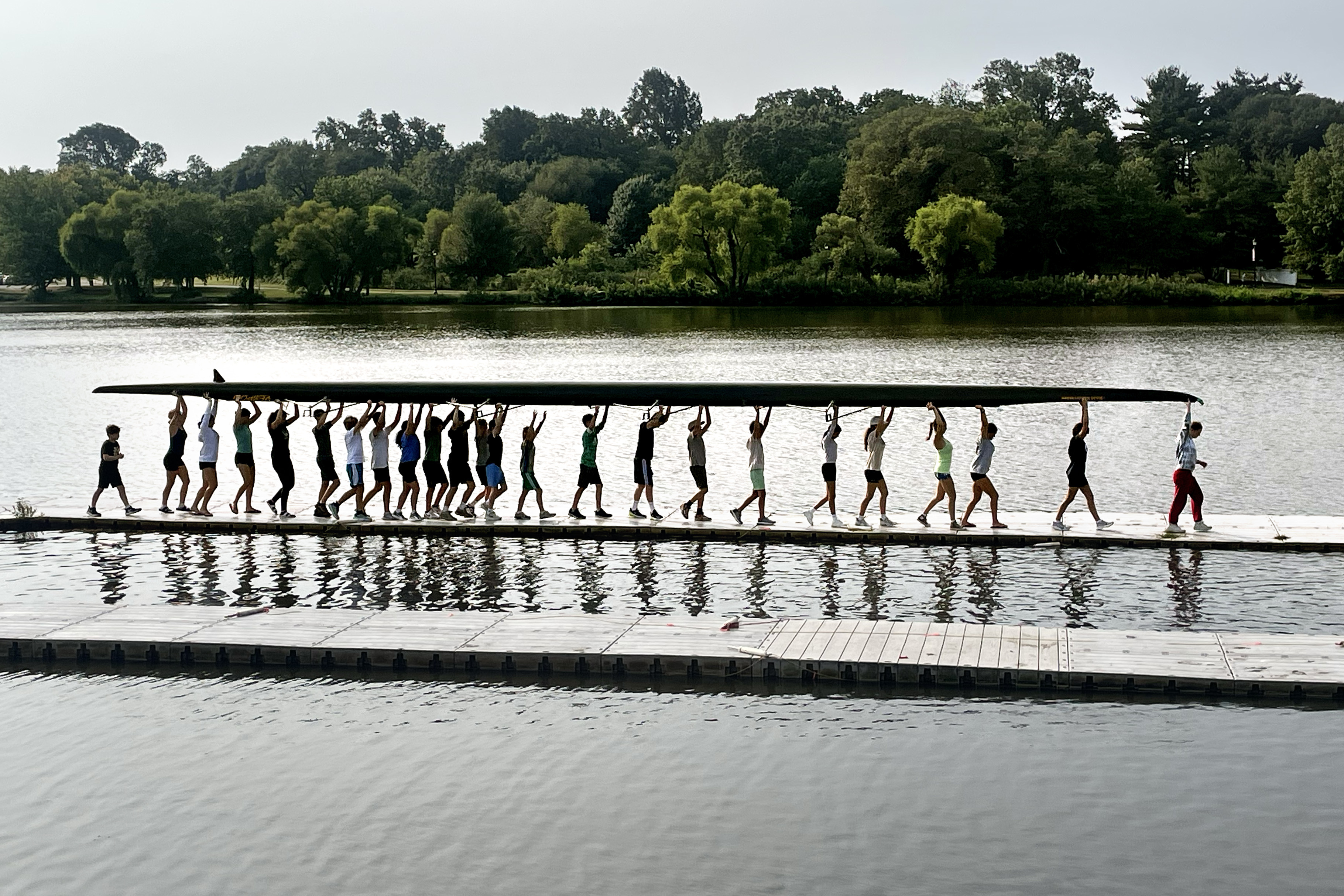
    September 8, 2025: Middle schoolers carry a boat to the water during their first outing in a learn-to-row program with the Cooper Junior Rowing Club, at the Camden County Boathouse on the Cooper River in Pennsauken.
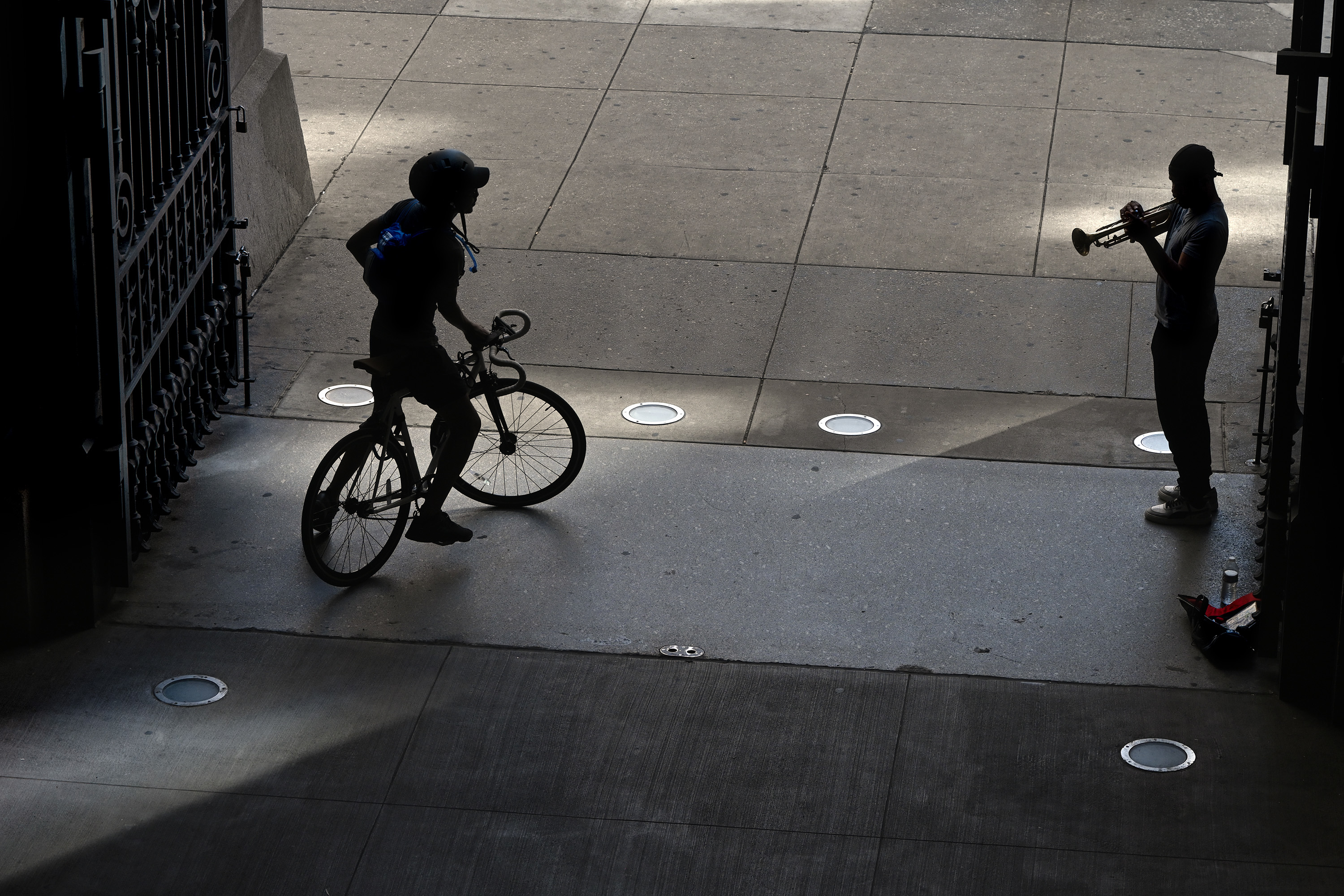
    September 1, 2025: Trumpet player Rome Leone busks at City Hall’s Easr Portal. The Philadelphia native plays many instruments, including violin and piano, which he started playing when he was 3 years old. He tells those who stop to talk that his grandfather played with Billie Holiday, Duke Ellington, Nina Simone, and Dizzy Gillespie.
    August 25, 2025: Bicycling along on East Market Street.
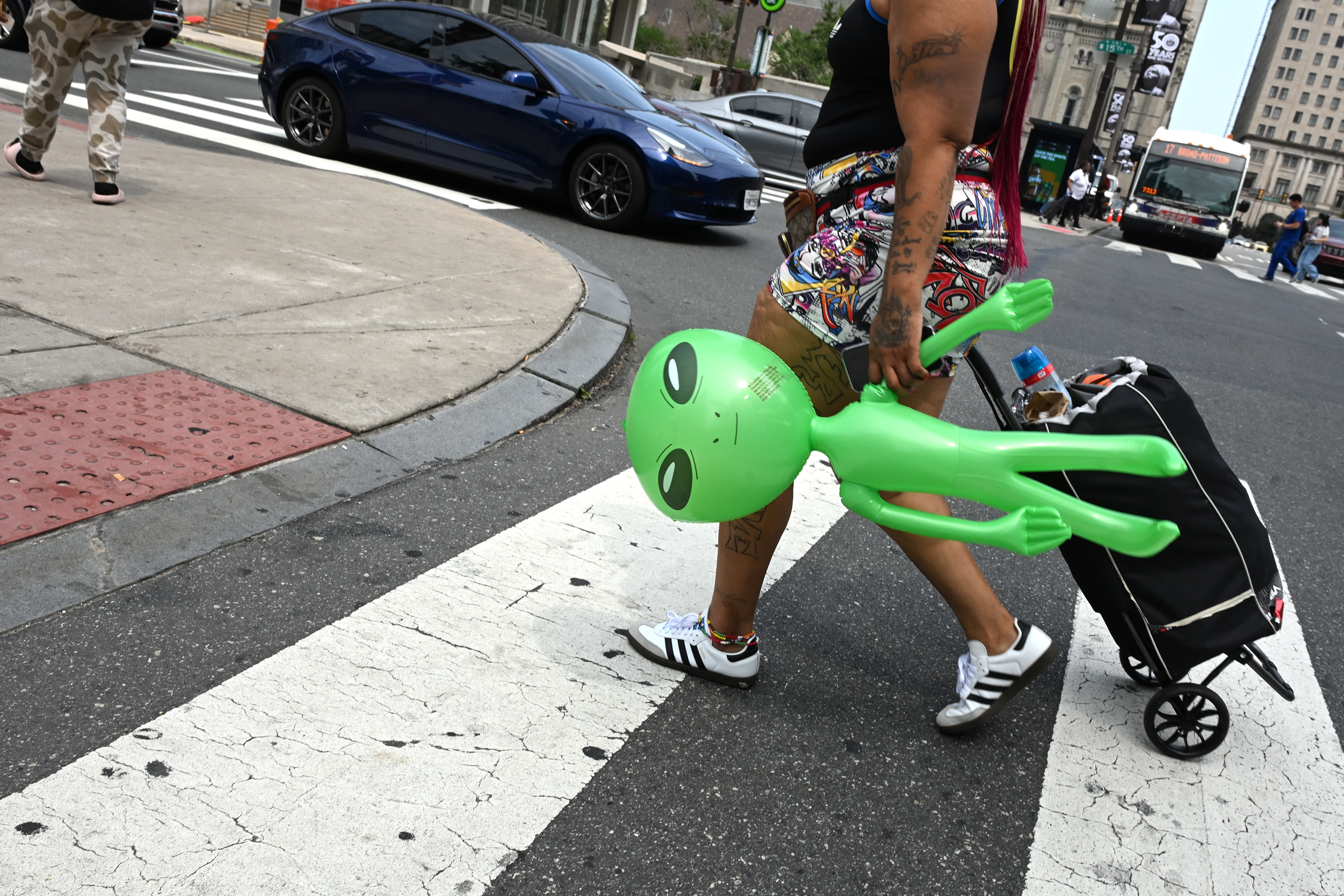
    August 18, 2025: Just passing through Center City; another extraterrestrial among us.
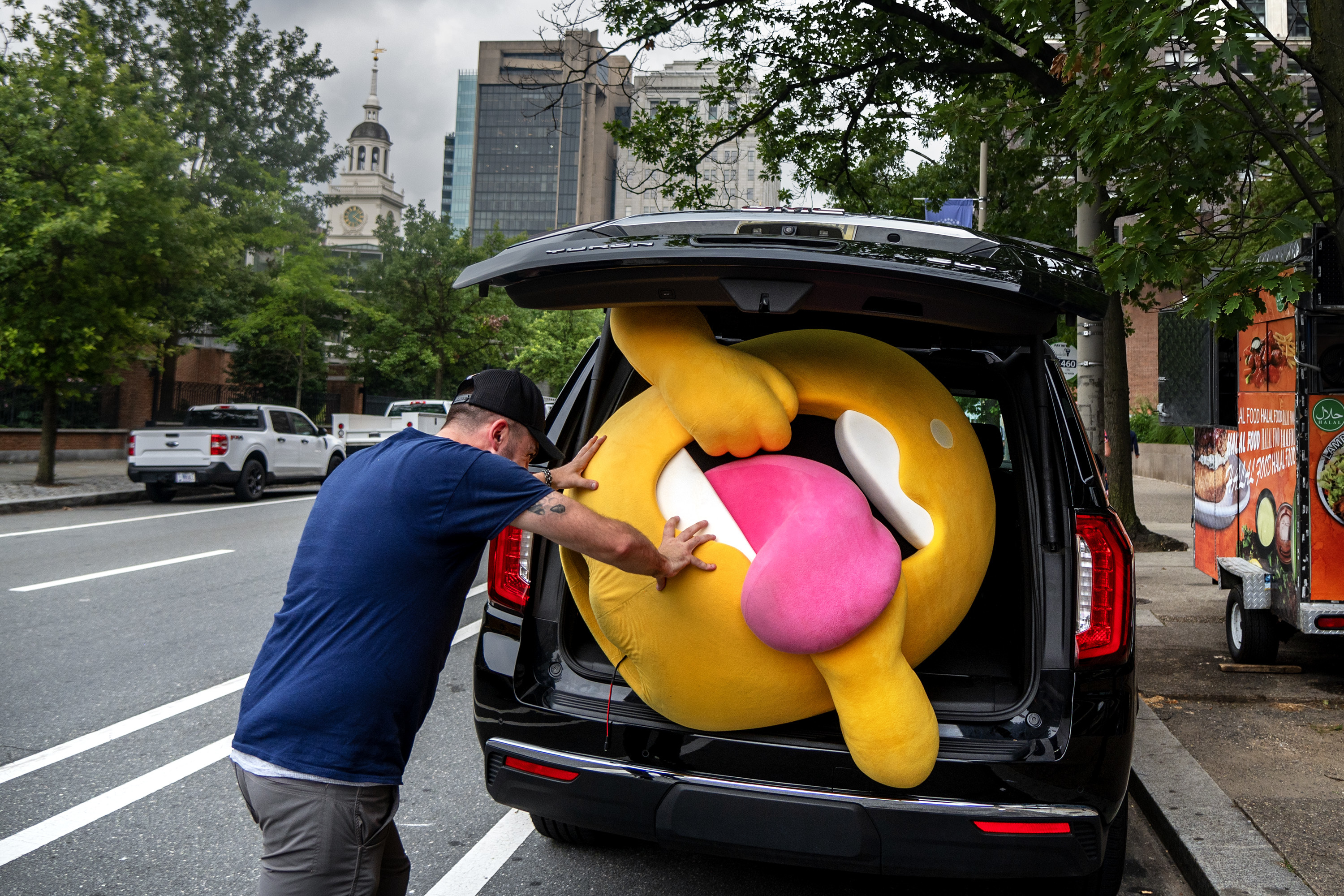
    August 11, 2025: Chris Brown stows away Tongue, the mascot for a new hard iced tea brand, after wearing the lemon costume on a marketing stroll through the Historic District. Trenton-based Crooked Tea is a zero-sugar alcoholic tea brand founded by the creator of Bai, the antioxidant-infused coconut-flavored water, and launched in April with former Eagles defensive end Brandon Graham as a partner.
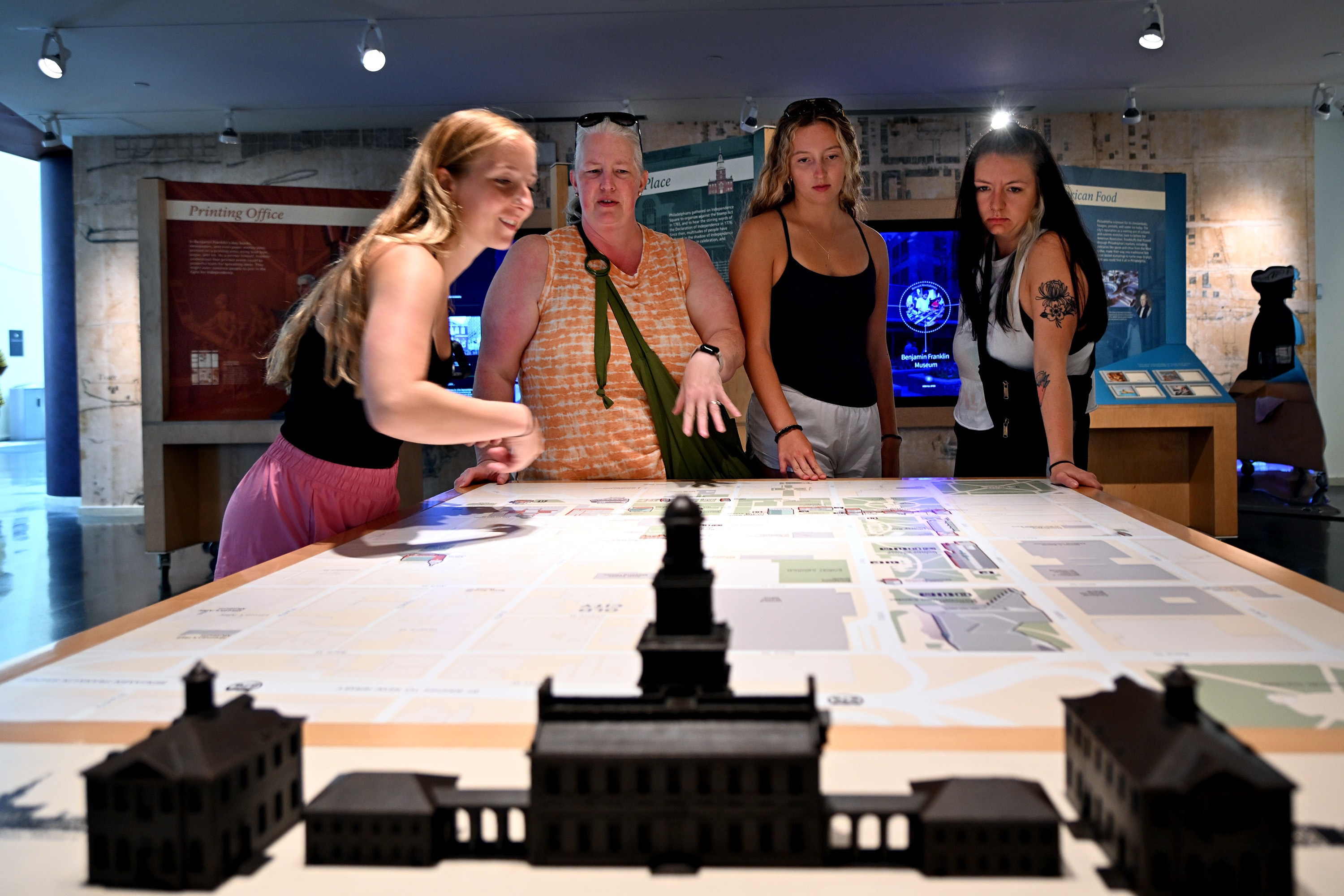
    August 4,2025: Shanna Chandler and her daughters figure out their plans for a morning spent in Independence National Historical Park on the map in the Independence Visitor Center. The women (from left) Lora, 20; Shanna; Lenna, 17; and Indigo, 29, were stopping on their way home to Richmond, Virginia after vacationing in Maine. The last time they were all in Philadelphia Shanna was pregnant with Lenna.
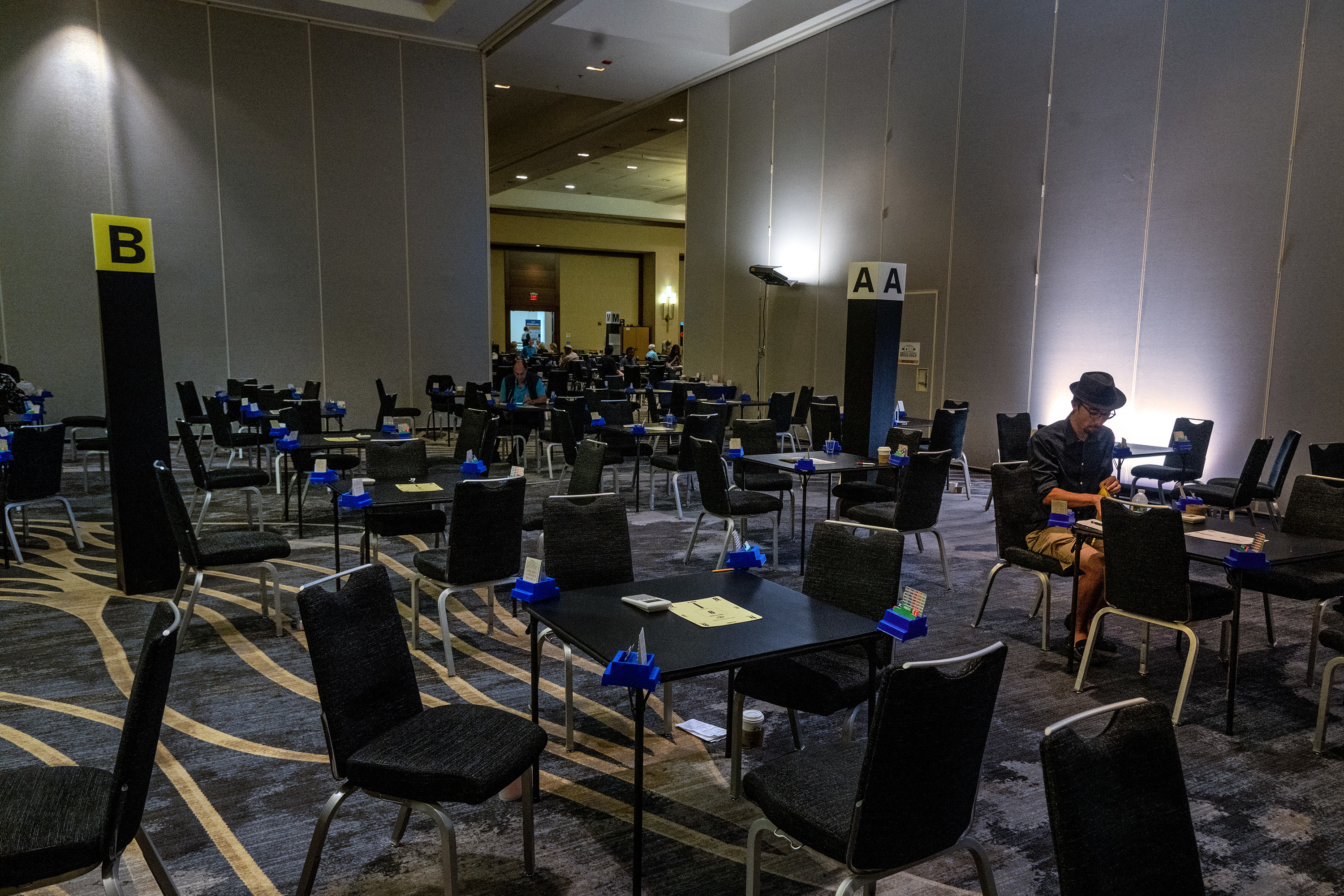
    July 28, 2025: Louis-Amaury Beauchet, a professional bridge player from Brittany, France, takes a break between game sessions in an empty ballroom during the North American Bridge Championships at the Center City Marriott with some 4000 people in town over week of the tournament. The American Contract Bridge League is hosting the week of meetings and tournaments with bridge players from all over the world. The ACBL is the largest bridge organization in North America, with over 120,000 members (down from around 165,000 before COVID). Bridge draws players of all ages and walks of life – fictional characters James Bond and Snoopy both played as do billionaires Bill Gates and Warren Buffett (who sometimes play as partners).
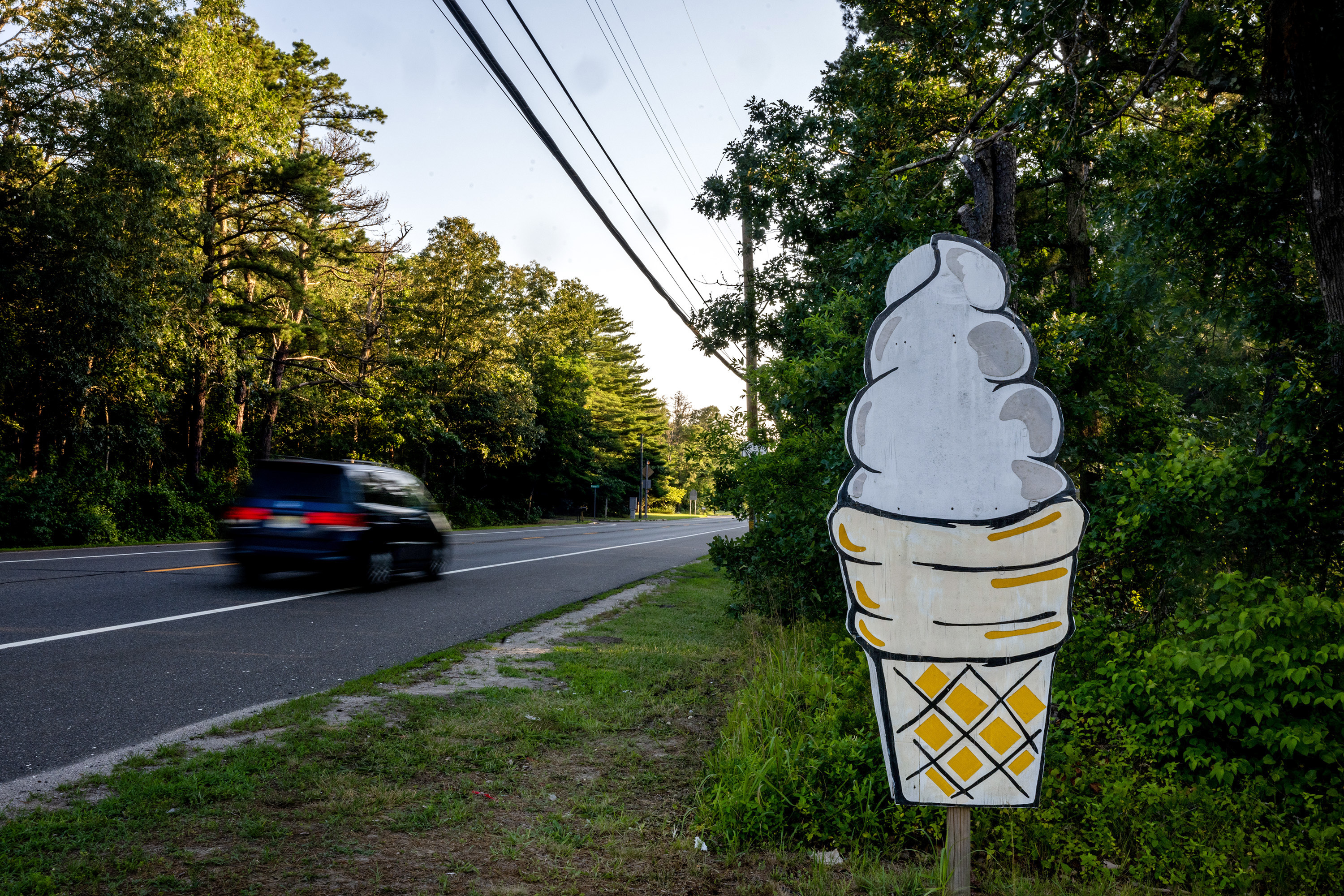
    July 21, 2015: Signage for the Kustard Korner in Egg Harbor City, on the way to the Jersey Shore. President Ronald Reagan designated July as National Ice Cream Month and the third Sunday of the month.
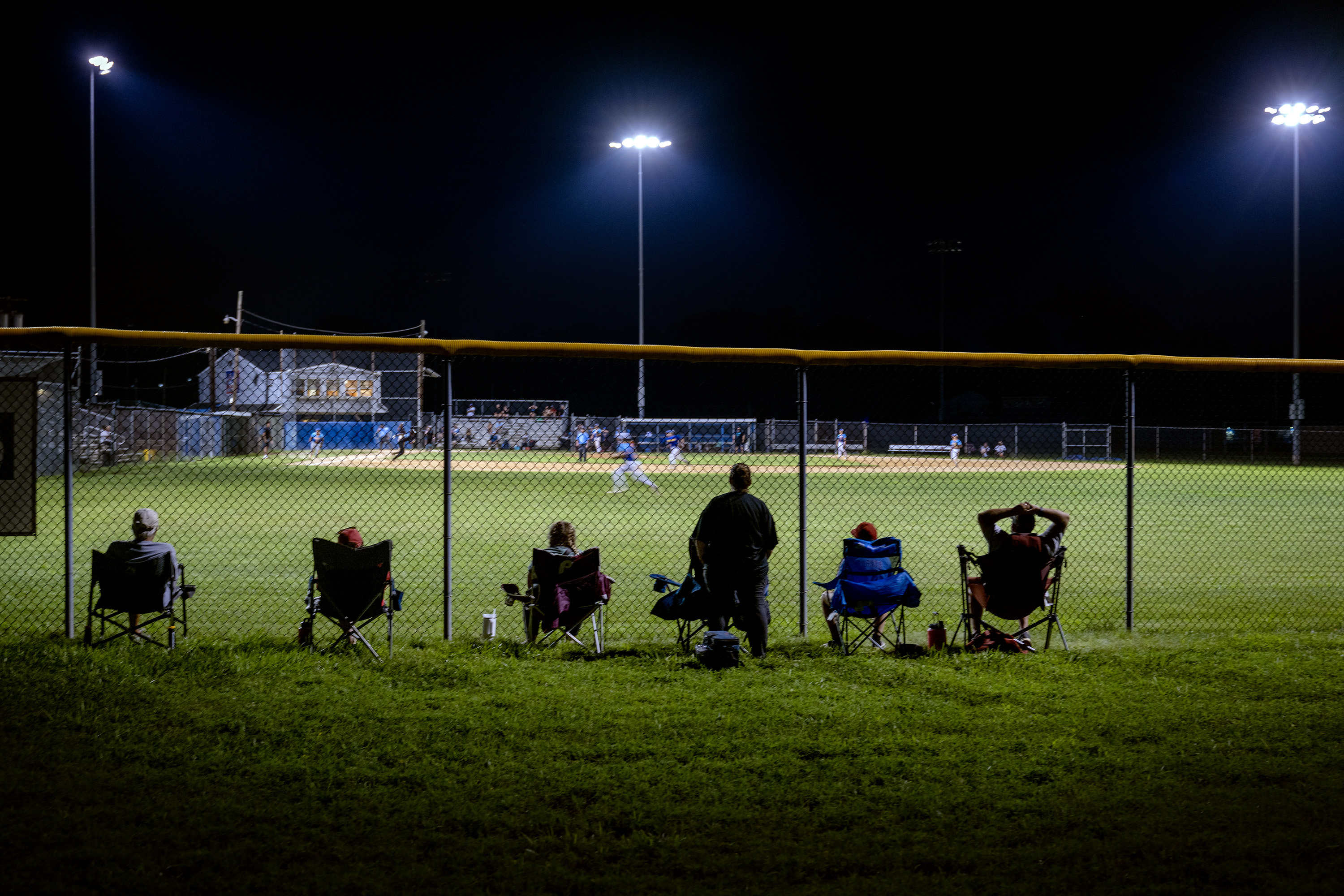
    July 14, 2025: Fans watch a game at the Maple Shade Babe Ruth Field, part of the 20th Annual Franny Friel Summer Classic, on a cool(er) night with a refreshing breeze, the weekend before the MLB All-Star Game (with Kyle Schwarber the lone Phillies representative).

    » SEE MORE: Archived columns and Twenty years of a photo column.

  • Malala Yousafzai has never watched a football game and will gladly start with the Eagles

    Malala Yousafzai has never watched a football game and will gladly start with the Eagles

    When Malala Yousafzai hit world headlines in 2012, she was 15 and lying comatose in a hospital in Birmingham, England. She had been shot in the head by Taliban militants while on her way back from school after an exam, in Pakistan’s Swat Valley.

    “I was getting defined as a brave, courageous activist, a girl who stood up to the Taliban and fighting for girls’ education. But I had still not opened my eyes and figured out what had happened, where I was supposed to now live and restart my life,” said Yousafzai, 28, whose new memoir, Finding My Way, came out this month.

    Malala Yousafzai’s “Finding My Way” is a delightfully candid memoir of her journey through her teen years, finding love, defying expectations, and reconnecting with her mission to empower girls.

    The book begins with the words, “I’ll never know who I was supposed to be.”

    She thinks about that often.

    “Maybe I would have lived a life where I felt less pressure and didn’t have to meet so many expectations. But then, I would be facing so many challenges in my own education, let alone fighting for other girls.”

    Earlier this year, the first class of girls graduated from the high school she started in her native village of Mingora. “The first class in the whole village,” she asserted, breaking into a smile on Zoom.

    Delightfully candid, the memoir speaks of Yousafzai’s high school years in Birmingham. She struggled to make friends. “By the end of it, I had only made one friend,” she said.

    Apparently, a Nobel Peace Prize doesn’t make you cool enough. “Not with friendships anyway,” she said. “Maybe the work you want to do for girls’ education, but not with making friends.”

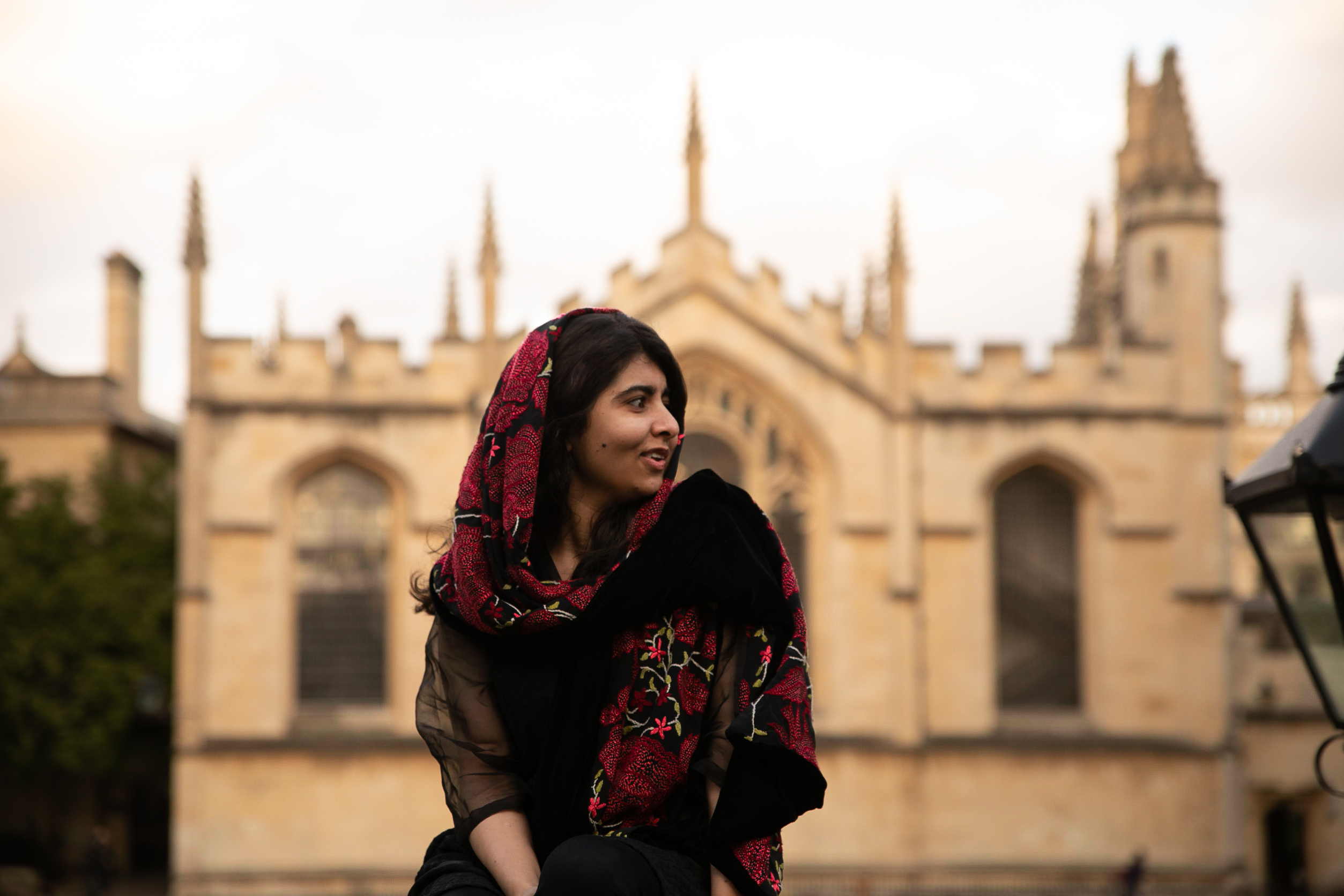
    Malala Yousafzai during her years at the University of Oxford, where, in the summer of 2018, she met Asser Malik, her now husband

    The memoir details her college years in Oxford, where she nursed heartbreaks, smoked weed, met Asser Malik whom she’d eventually marry, and, yes, made friends.

    As one reads on, the eternal image of the 15-year-old in a veil splashed across TV screens and newspapers, slowly begins to shift. Yousafzai has stepped into womanhood, and she has embraced all the heartbreak and hormones that come with it and is not ashamed to talk about it.

    “In a way, this is a reintroduction of me,” said the author. “I have talked about my love life, friendships, and mental health. It’s been a wild ride from nearly failing my exams to getting ghosted by my crush, to reconnecting with my mission of educating girls.”

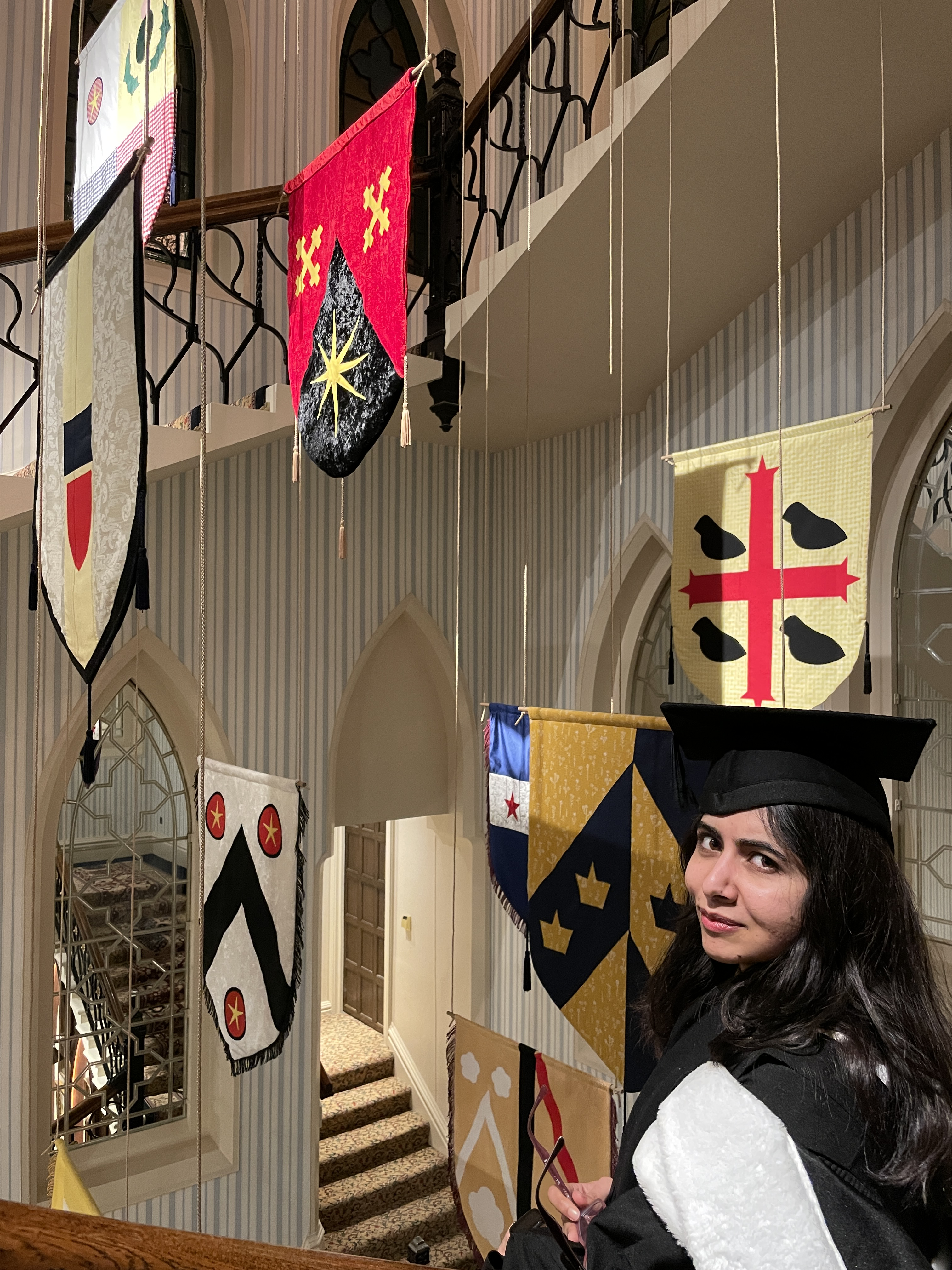
    Malala Yousafzai at her matriculation at University of Oxford, where she studied philosophy, politics, and economics at Lady Margaret Hall.

    For someone who won a Nobel at 17, topped school in Pakistan, and became a beacon of hope for girls who dream of getting an education, talking about almost failing in college wasn’t easy.

    “I realized that I cannot miss this opportunity to prioritize making friends,” she said, recalling sitting in the library and looking outside to see friends sitting in the sun and laughing.

    “I realized I wanted to be with them more than anything … It’s not just about having fun and socializing. I think learning from people can be life-changing, and it can stay with you forever.”

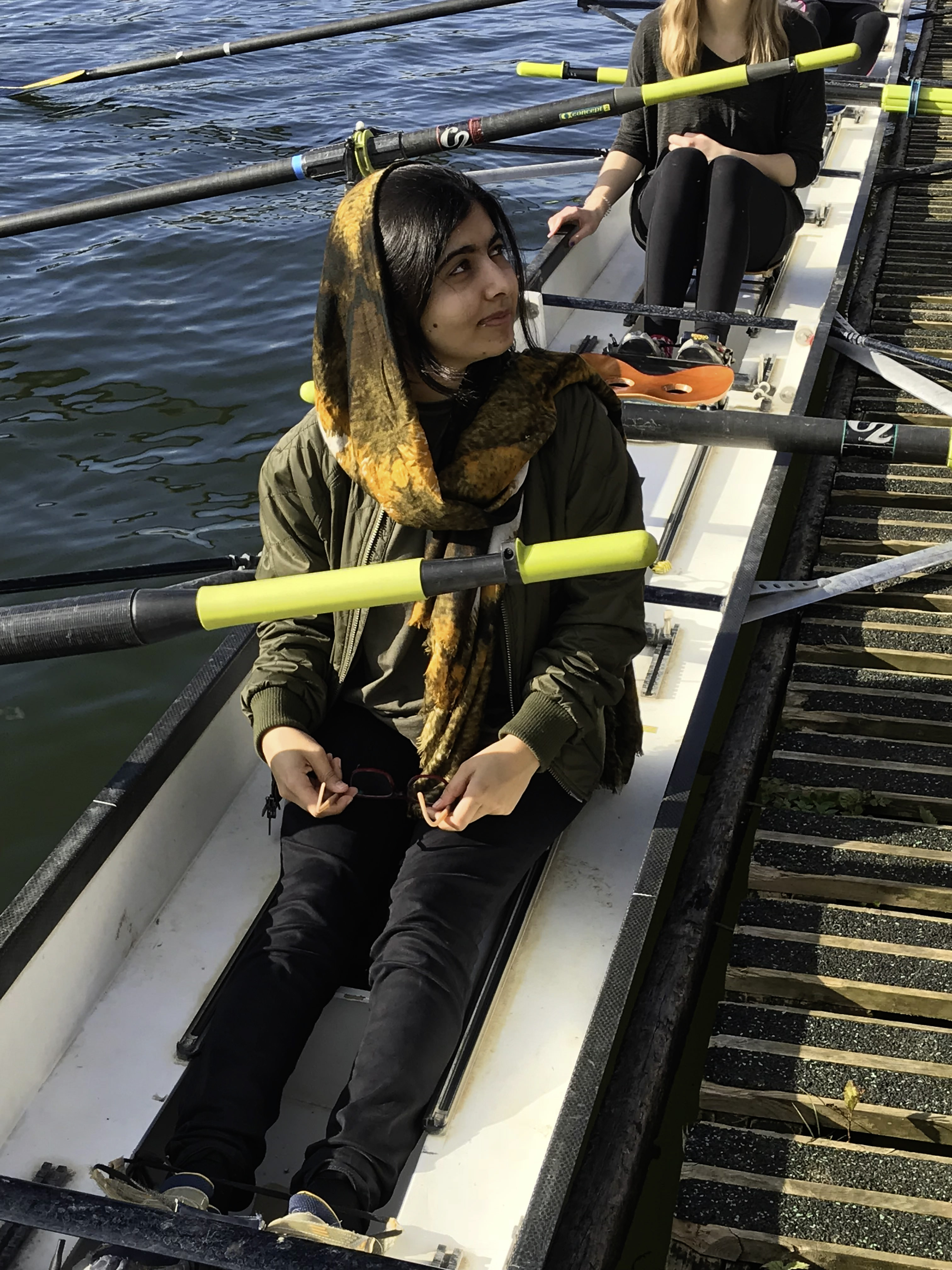
    Malala Yousafzai during her years at University of Oxford, where she joined all the societies she could find and took up rowing

    At Oxford, she attended Lady Margaret Hall, studied philosophy, politics, and economics, took up rowing, joined every society that she could find, organized social events, and attended parties.

    It’s also where, in the summer of 2018, she met Malik through mutual friends and bonded over a shared love for cricket.

    After a string of secret dates, a desire to never get married, and an eventual change of heart, she decided to tell her parents.

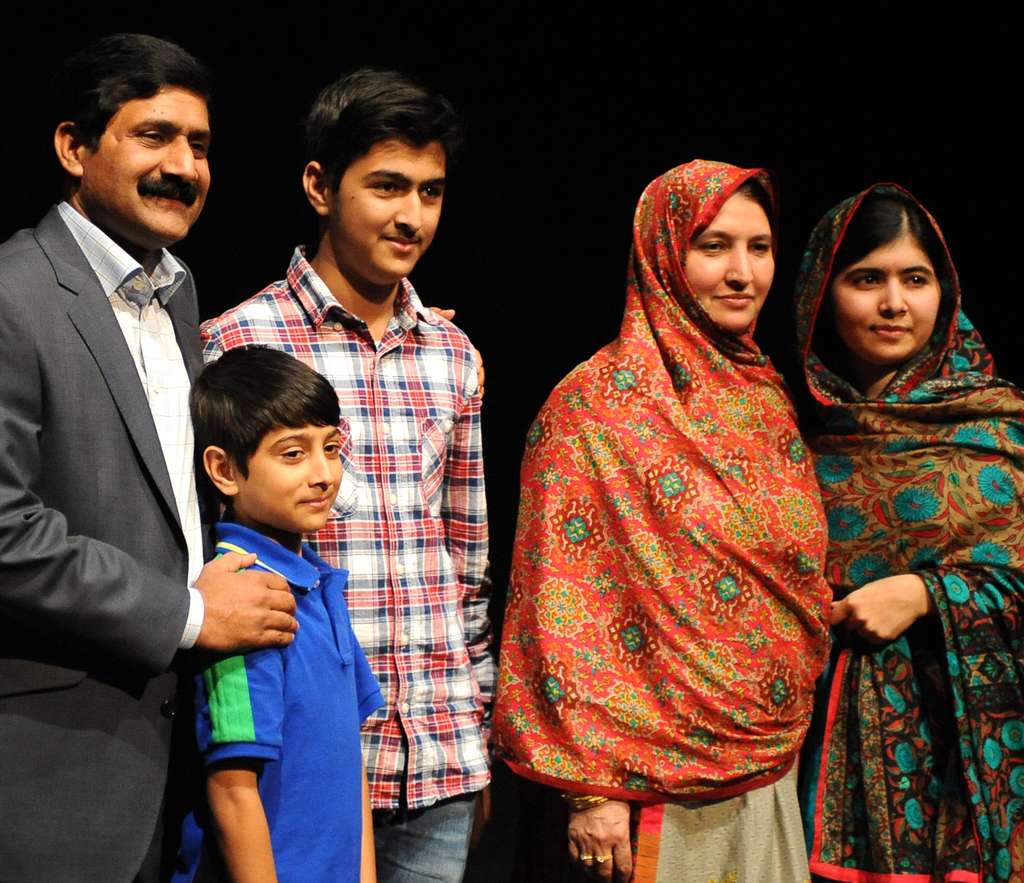
    Malala Yousafzai (right) with her family in England on Oct. 10, 2018. From left: Father Ziauddin, brothers Atal and Khushal, and mother Toor Pekai.

    She first told her forever cheerleader and father, Ziauddin, who was a schoolteacher back home in Pakistan, and asked him not to tell her mother, Toor Pekai, just yet.

    “Because I knew she would freak out.”

    Her father, she said, “took no pause and called my mom. I was like, ‘Dad, how could you do this?’ And then my mom told me off.” It felt like a betrayal. But eventually, “after all of that hide and seek, they finally approved us.”

    “I love my mom,” said Yousafzai. “Her upbringing, childhood, and experiences were so different from mine. I understand her fears, and that she wants to protect me. We constantly have these conversations. I keep telling her that we have to resist these pressures, so we can make it comfortable for more girls to be able to express themselves.”

    Malala Yousafzai visiting a Pakistani classroom as part of the Higher Education Readiness (HER) program.

    Toor Pekai, her daughter says, is “a work in progress.”

    “She just started reading the book. So we’ll find out how much more work needs to be done on her,” Yousafzai said with a laugh.

    She and Malik were married in 2021, but it wasn’t an obvious decision just because they had dated for a while. Yousafzai, running schools for girls in Pakistan and Lebanon, wondered if “embracing love and taking a big decision like marriage” would take away from everything she had achieved.

    Asser Malik and Malala Yousafzai on their wedding day in November 2021 at her parents’ home in Birmingham, England.

    “I had so many questions and doubts about marriage. We all know the issue of forced marriages and child marriage. We also know how, historically, marriage has meant more compromises for women. So I took my time, I did my research, I learned, and more than anything, I asked Asser questions.”

    One of them was, “What if I earn more than you?”

    “He would say something like, ‘If my wife earns more than me, I’ll be the luckiest husband, and I would love to just sit at home and enjoy my life.’ So I was like, ‘Wow, this guy is funny as well.’”

    “We need better men, better boys,” said Yousafzai.

    Which she said, makes her Team Conrad, referring to the Prime Video show The Summer I Turned Pretty that she binge-watched with Malik.

    For someone who was forced out of her home country, she has now learned to find a sense of belonging. “It is the home that we have in Birmingham now, where my family lives. It is when I’m with my friends, or when I’m with my husband, and we have a moment of joy together. It’s when we’re watching our favorite TV show, or holding hands. All of that is now home to me.”

    Her book tour brings her to Philadelphia on Tuesday, where she’ll be in conversation with Kylie Kelce.

    “I’m really excited to be in Philadelphia,” said the cricket fan, “and open to going to an Eagles game. I don’t think I’ve been to any of the games.

    “What is it called? American football?”


    “Malala Yousafzai: Finding My Way Book Tour,” Oct. 28, 8 p.m., the Fillmore, 29 E. Allen St., Phila., livenation.com

  • The trick these homeowners used to act fast on an in-demand Collingswood rancher with a pool | How I Bought This House

    The trick these homeowners used to act fast on an in-demand Collingswood rancher with a pool | How I Bought This House

    The buyers: Brandon Balcom, 44, vice president of product operations at BCD Travel; Dane Cox, 39, owner of Dane Cox State Farm Insurance Agency

    The house: A 3,767-square-foot, ranch-style home in Collingswood with three bedrooms and three baths built in 1955

    The price: Listed for $695,000; purchased for $735,000

    The agent: Amy Telfair, Telfair Collective

    The Ask: Brandon Balcom and Dane Cox were not looking to buy a new house. They had just purchased a fixer-upper on a beautiful oversized lot in 2021. “It was in the perfect spot,” Balcom said, “and they always say, ‘you can’t move your house.’”

    But it turned out their perfectly located house needed to be rebuilt from the foundation up and the lengthy zoning process was wearing them down. Two years into a renovation with no end in sight, their friend, real estate agent, Amy Telfair, suggested they buy a new house instead. In fact, she knew just the one.

    “We chuckled and rolled our eyes, because she’s a Realtor with vested interest,” said Balcom. But the couple agreed to check out the listing anyway.

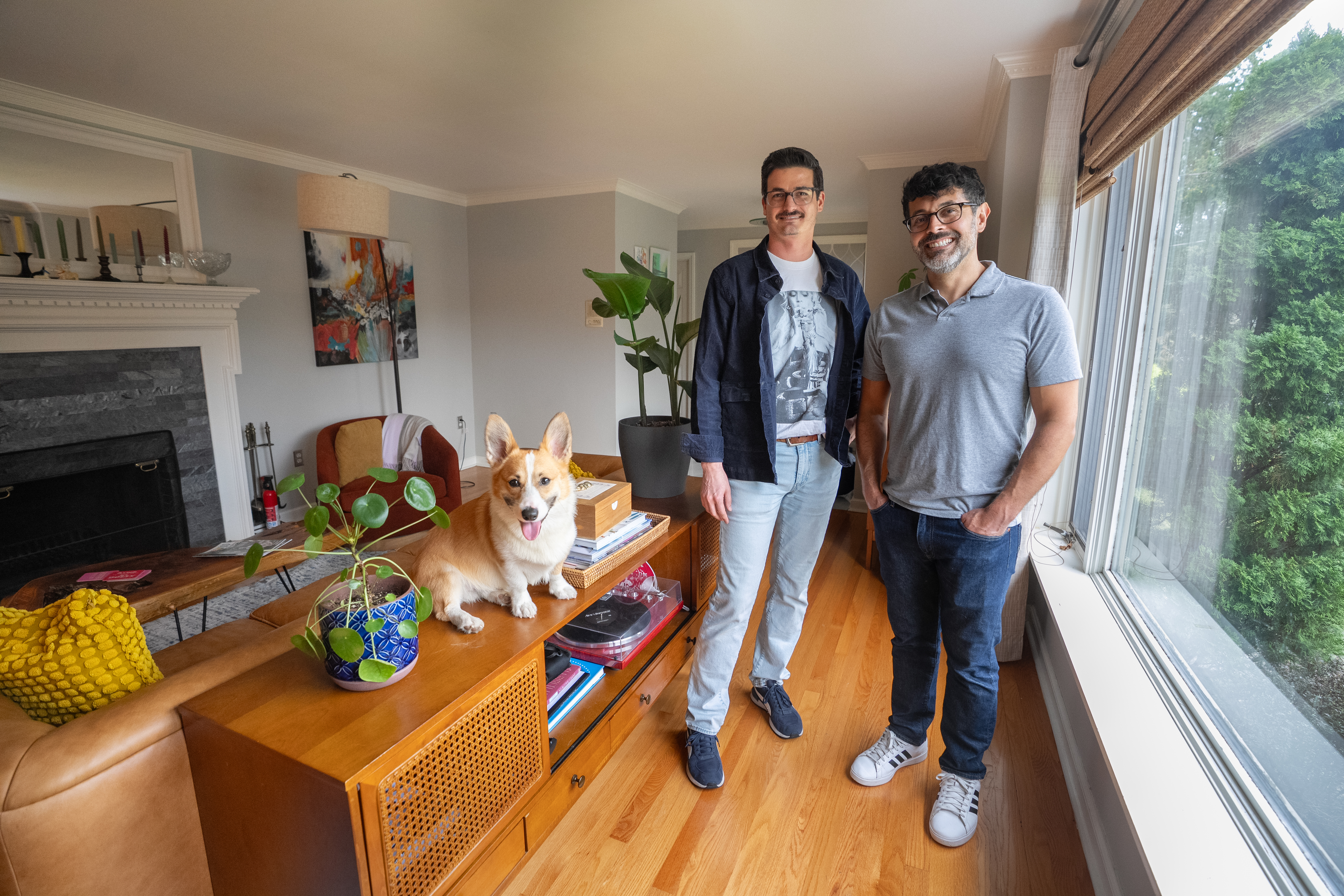
    Dane Cox and Brandon Balcom in their living room with their beloved corgy.

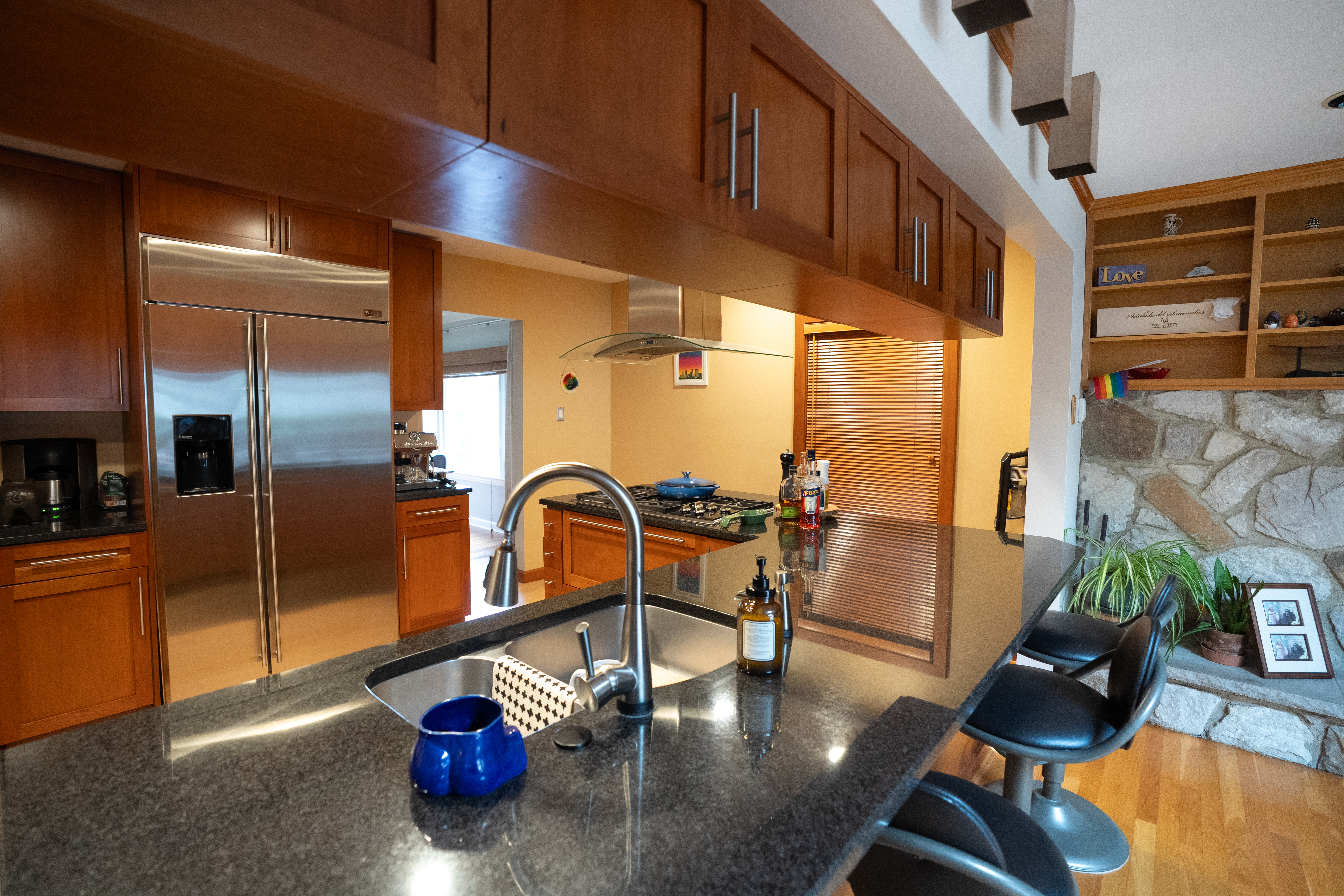
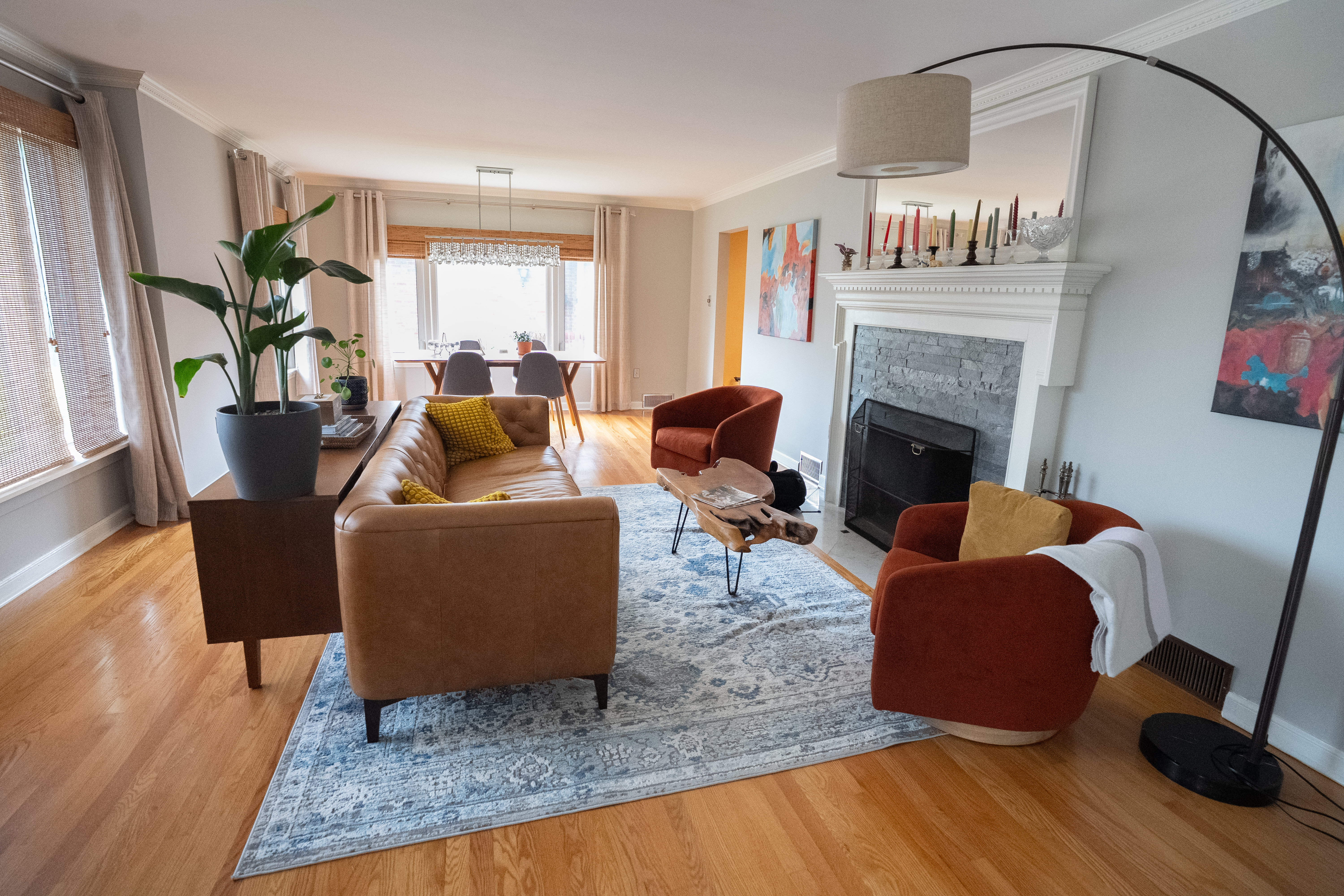
    The appeal: The house was designed in the midcentury style they loved, and, unlike their current place, it didn’t need any work. “We started dreaming very quickly about skipping all these steps,” said Balcom. The new house even had a pool, which Balcom said was part of a “years-down-the-line vision” for their current home.

    Balcom’s favorite thing was that it was perfect for entertaining, from the bar in the finished basement to the grand fireplace in the living room. When Cox heard his husband gasp at the fireplace, he knew the deal was done.

    “I was like, ‘There’s nothing I can say at this point that’s going to convince him otherwise,’” Cox said.

    The search: To get ahead of other potential buyers, the couple used a trick they learned while selling their previous house in Minneapolis: they brought their inspector to the showing.

    “We wanted to know when we left that day if there was an issue,” said Balcom. Knocking out the inspection early allowed them to waive it as a contingency, which the couple knew from experience would appeal to the sellers.

    The kitchen of the couple’s home, which is designed in the midcentury style they love.

    The couple’s inspector gave them the go-ahead, so they went to Cox’s office and “started scheming,” said Balcom.

    The deal: The couple called Telfair, whose first instinct was to get the house off the market. She didn’t want the sellers to show it over the weekend, so she asked what it would take to get the listing taken down that day. They requested an all-cash offer of $735,000 — $40,000 above the asking price. Cox and Balcom agreed, and a legal contract that required the seller to cancel upcoming showings was speedily signed.

    The money: Balcom and Cox didn’t have to hand over $750,000 in cash the day they signed the contract. They just needed to “give up any contingency on the need for financing to buy the home,” said Balcom. Documentation showing that they could pay in full would suffice.

    They had over $400,000 in savings and brokerage accounts that they could show as proof of funds, and a letter from their parents confirming another $300,000 was available if needed. “You have to have a promissory note or something from your family that says, ‘I will give this amount for the purchase of the home,” Balcom said.

    One of the main selling points was the giant fireplace in the living room.

    But they didn’t end up borrowing money from their parents. “We just needed it for a moment to show we’ve got cash,” Balcom said.

    Instead, they took out a home-equity loan on their fixer upper. “Between when we signed the contract and when we closed, we had time to pull the equity out of our existing house,” said Balcom. The loan provided them with enough cash to cover the remaining cost of their new home.

    The move: Balcom said the actual close was anticlimactic. The sellers were out of town so they pre-signed everything for the couple, who left for a family vacation the day after the paperwork was done.

    By the time they returned, the sellers had officially moved out. But they left several items that excited Balcom and Cox — including a pool table and a hot tub.

    The couple moved in over two months, taking their time to bring each room “online,” said Balcom. “Once we got the furniture, it was like, ‘OK, now we’re using this room.’”

    Any reservations? Balcom was surprised that several of the house’s nice-looking appliances were 20 years old. The previous owners “kept such good care of things,” he said.

    Some amenities, like the infrared sauna with wireless speakers in the basement, were actually pretty old.

    To listen to music, Balcom has to use the sauna’s built-in CD player, because the speakers were made before Bluetooth technology was common. “It’s like a circa-2000s car stereo,” he said, laughing.

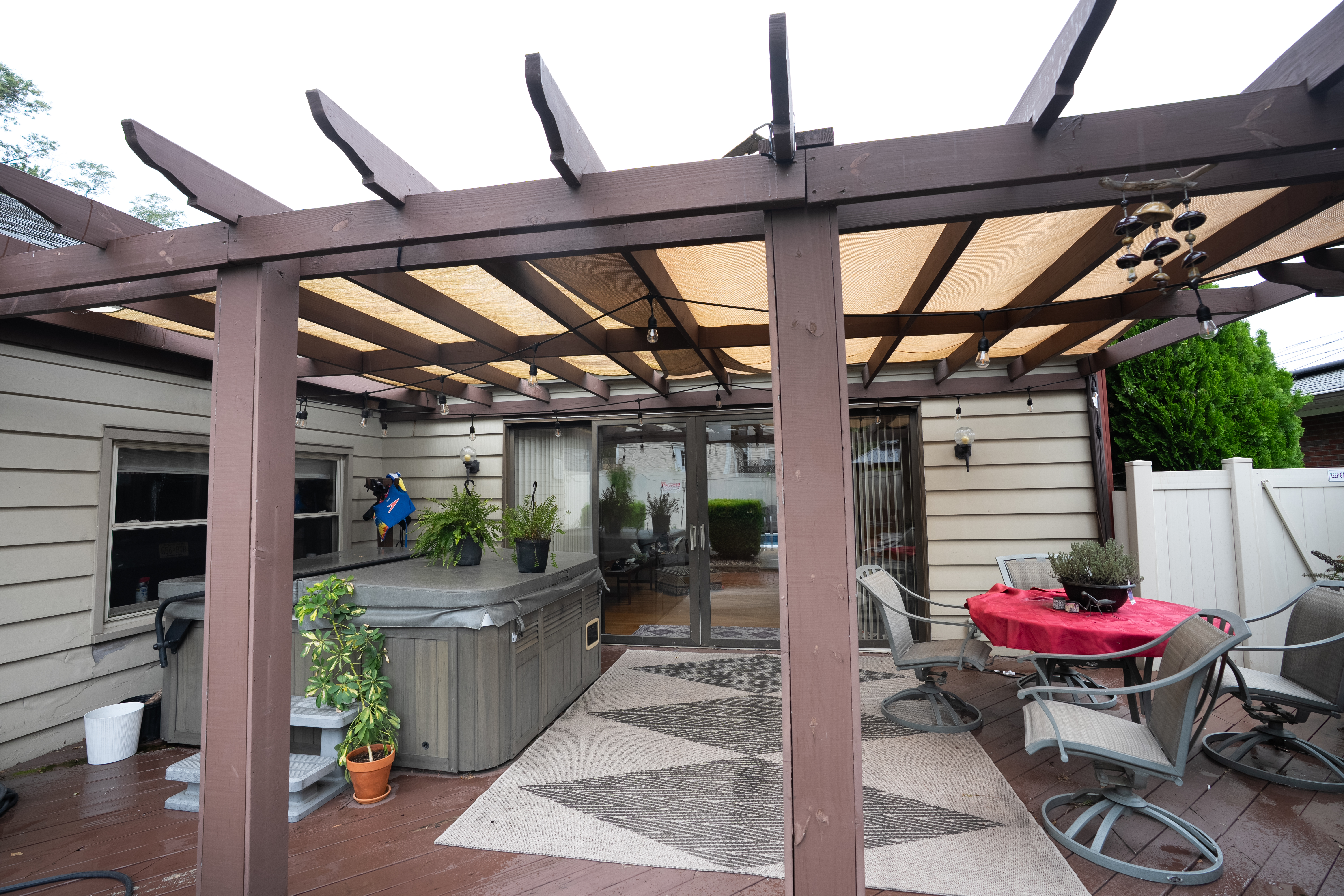
    Balcom was excited that the previous owners left the hot tub, even though it only lasted a few months.

    The hot tub is 20 years old, too. “It ended up failing at the end of winter,” Balcom said. “I was hoping we’d get two years out of it.”

    Life after close: Cox and Balcom haven’t changed anything since they moved in.

    “This house doesn’t need anything,” said Cox. Indeed, that’s why they bought it.

    Did you recently buy a home? We want to hear about it. Emailacovington@inquirer.com.

  • The Fishtown burger that broke Philly internet | Weekly Report Card

    The Fishtown burger that broke Philly internet | Weekly Report Card

    The Schuylkill sinkhole — D

    Philly’s favorite running path is at it again. A “chasm”-sized sinkhole has swallowed part of the Schuylkill River Trail between Race and JFK — big enough, officials say, that you could almost park a car in it. (“Almost” feels like a challenge.)

    The Schuylkill Banks crew fenced it off and called in Parks & Rec, the Water Department, and engineers — basically the full Avengers lineup of Philly infrastructure — to figure out what caused the hole and how to patch it before joggers start treating it like a new obstacle course.

    The Schuylkill Trail might be cursed. Every year it’s something — floods, fallen trees, now this. Until it’s fixed, cyclists and runners are being detoured, which in Philly terms means “good luck.”

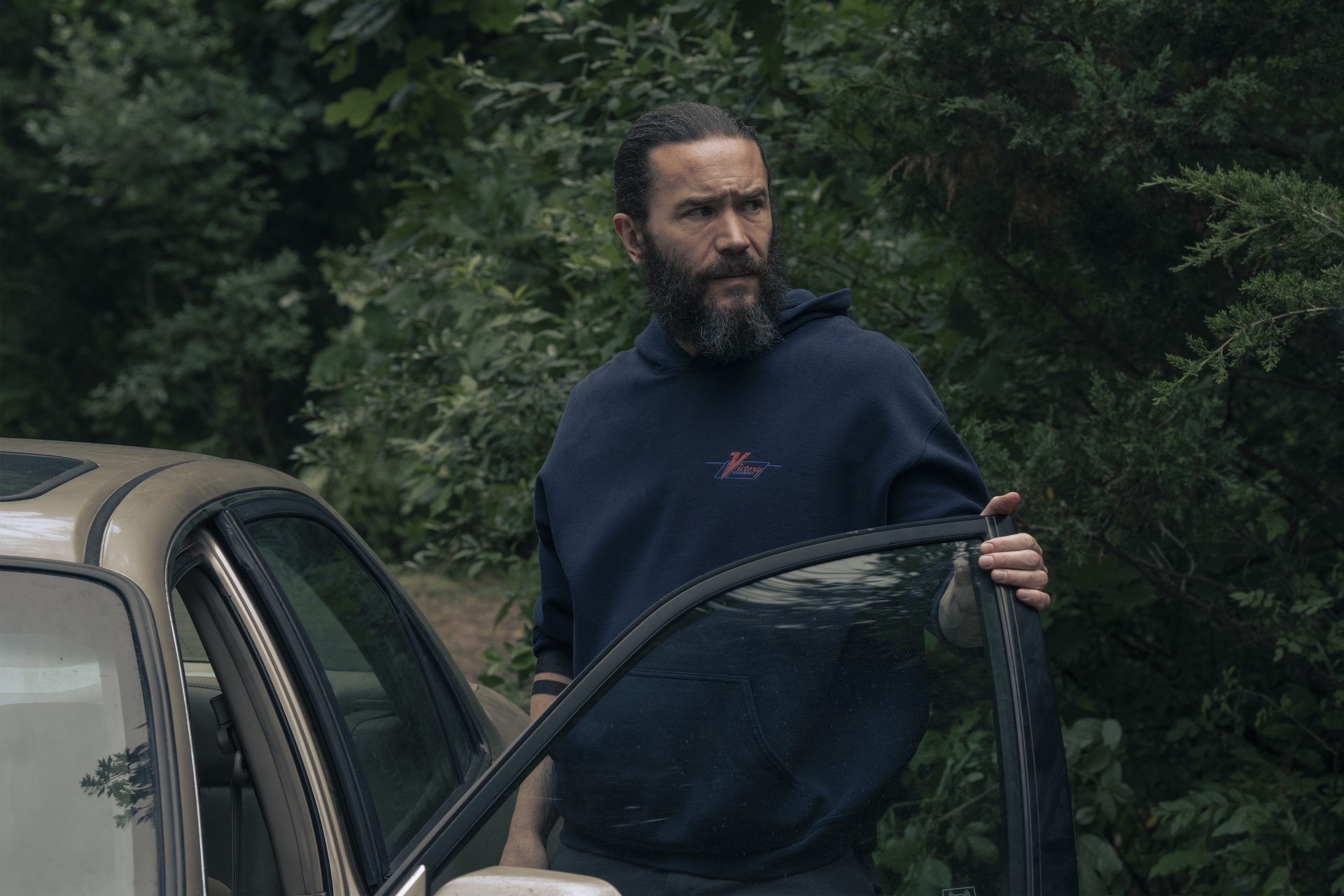
    In Task, Robbie (Tom Pelphrey) uses Sixpenny Creek Quarry as a meeting place.

    Delco goes “rural”…at least according to the NYT — C-

    Somehow, the New York Times looked at Delco — home of Villanova, Swarthmore, and approximately 47 Wawas — and decided, “Ah yes, rural America.” Because nothing says “farm country” like the Blue Route at rush hour and a Target every three miles.

    To be fair, Task creator Brad Ingelsby does paint parts of Delco as working-class, gritty, and hollowed-out, which, yeah, that’s real. But “rural”? Come on. The county has fewer farms than vape shops. The only livestock most Delco residents see are on a roast pork sandwich.

    Still, the show does get something right: that weird in-between space so many towns around Philly live in — not city, not country, just post-industrial limbo where people are hustling to hang on. It’s not the backwoods. It’s just… us. Blue-collar, blunt, and way too online to ever be called rural again.

    Philly’s 52-week flex — A-

    For America’s 250th, Philly’s not settling for a parade — we’re throwing a 52-week-long brag about how we basically invented everything. Every week in 2026 will spotlight something that started here: the first hospital, zoo, flag, computer, hot-air balloon, even the penitentiary (because nothing says “city of firsts” like also being the first to lock people up).

    It’s peak Philly — proud, weird, and wildly specific. Some of these firsts are legitimately world-changing (first medical school, first abolitionist society), while others are pure “only in Philly” energy (first Slinky, first ice-cream soda). The lineup’s got range. We went from inventing democracy to inventing dessert.

    The ‘Six-Seven’ confusion — C-

    Philly might’ve given the world democracy, the cheesesteak, and now… “six-seven,” a phrase that means absolutely nothing and somehow everything to a generation of teens who can’t stop saying it. It possibly started with Kensington rapper Skrilla’s song “Doot Doot (6 7)” and spiraled into TikToks, classrooms, and apparently South Park.

    It’s not code, it’s not deep — it’s just two numbers. Maybe it’s a street, maybe it’s a mindset, maybe it’s proof that the internet’s broken our brains. Teachers hate it, parents are confused, and kids are out here saying “six-seven” like it’s a personality trait.

    Still, if you hear it echoing down Broad Street, just nod and say it back. Six-seven. Whatever that means.

    Owner of Two Robbers – Response to Burgergate
    byu/Born-Chemistry-1303 inphilly

    Two Robbers burgergate — A+

    Philly drama doesn’t get juicier than this. Someone plastered a flyer around Fishtown calling out Two Robbers for serving a sad, gray burger — complete with a date stamp and the caption, “This is literally the burger that came out.” Reddit, of course, lost its mind.

    Comments ranged from pure joy (“I f***in love love love this level of petty”) to the perfectly Philly (“This is what you get for ordering a burger at a craft seltzeria”). One guy even chimed in with, “They got robbed — by two robbers.” Another declared the poster was “doing the Lord’s work.”

    But plot twist: the burger wasn’t theirs. The photo was actually from 9GAG, posted seven years ago under the title “Nasty Burger.” The owner jumped into Reddit like a man defending his honor, posting receipts side-by-side — the fake, the meme, and their actual burger, which, to be fair, looks great — and calling the whole stunt “diabolical.”

    Now the thread’s full of conspiracy theories that the whole thing was a genius marketing stunt (“If it is, it worked on me”) and locals promising to stop by just to try the burger. So whether this was sabotage, performance art, or Philly’s pettiest PR move — Burgergate proves one thing: in this town, we don’t do calm, we do chaos. And we’ll probably Yelp about it after.

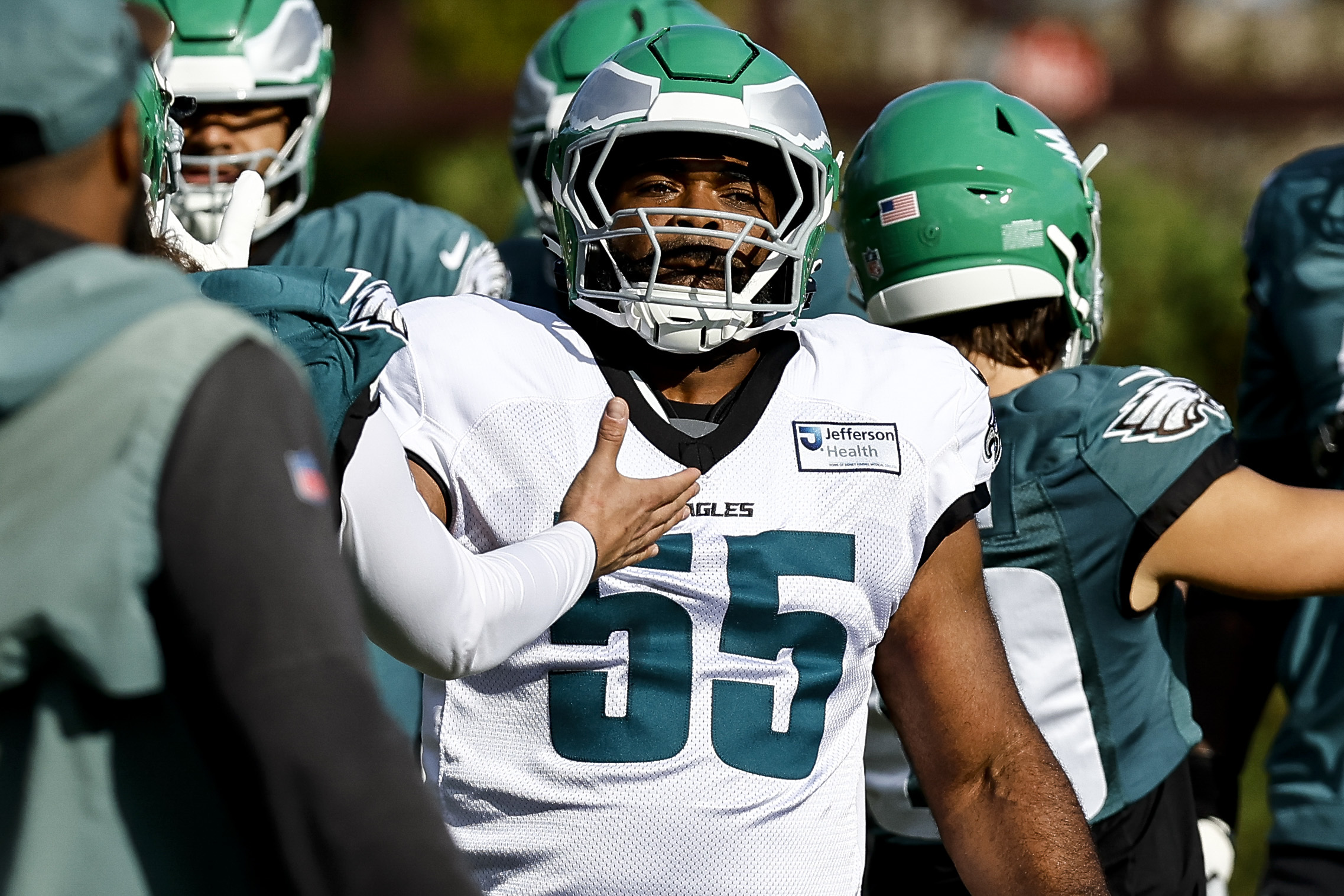
    Philadelphia Eagles defensive end Brandon Graham during practice at the NovaCare Complex on Wednesday, Oct. 22, 2025 in Philadelphia.

    Brandon Graham’s encore — A+

    Philly’s loudest legend just couldn’t stay away. After seven whole months of “retirement,” Brandon Graham is back in midnight green for his 16th season, saying he’s still got “juice left.” The Eagles desperately needed both sacks and smiles, and no one brings either like BG.

    At 37, rookies call him “the OG,” veterans call him the engine, and everyone calls him the guy who won’t stop talking in practice. “You thought you wasn’t gonna have to deal with me?” he said on his podcast. That’s the guy who strip-sacked Brady — not a man easing into retirement.

    And honestly? The timing couldn’t be better. Missed tackles, blown assignments, no spark — the Eagles’ defense has been ugly. BG can’t fix everything, but he can sure as hell remind the Birds what fight looks like.

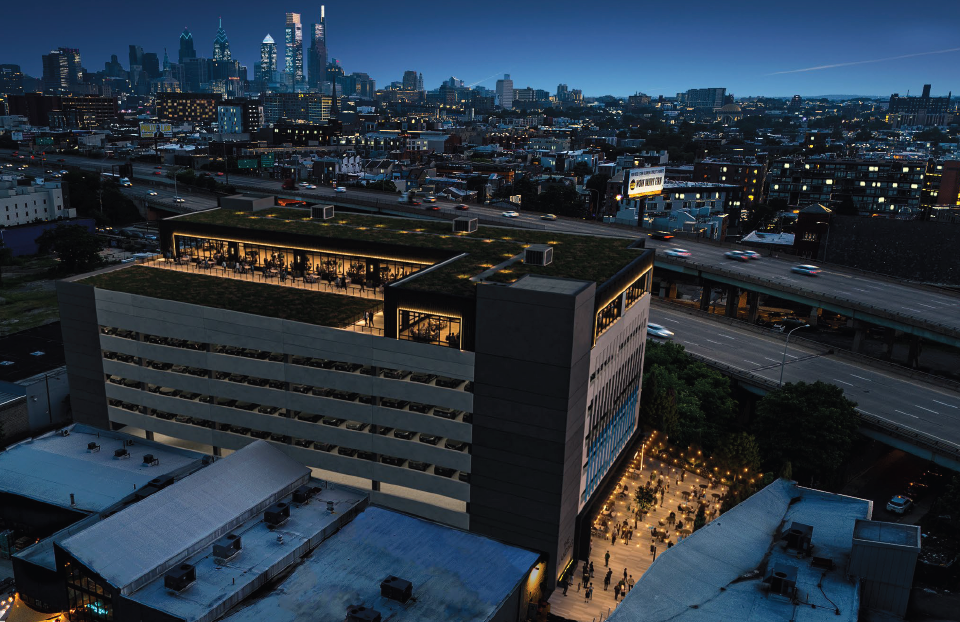
    A rendering of the garage planned for Fishtown, looking west towards Center City.

    Philly’s year of the parking garage — D+

    In a city that loves to say it’s all about bikes, buses, and tree-lined streets, somehow 2025 has turned into the Year of the Parking Garage. Three new standalone garages are in the works — in Fishtown, University City, and Grays Ferry — because apparently we looked at the skyline and thought, “You know what’s missing? More concrete boxes for cars.”

    Developers say people need somewhere to park near all the shiny new apartments, but urbanists are screaming into their reusable coffee cups. We’re talking a 1,000-car garage from CHOP (in a neighborhood already struggling with air quality), a 495-space one in University City (for a city lab and staff), and a Fishtown “garage-with-a-view” that’s trying to make rooftop parking sound sexy.

    Parking pros say it’s a losing game — sky-high taxes, slim profits, and way too many empty spaces already. Even Parkway Corp. and E-Z Park, the kings of concrete, have looked at the numbers and said, “Good luck, you’ll need it.”

    It’s the most Philly thing ever: everyone agrees it’s a bad idea, but someone’s still building it.

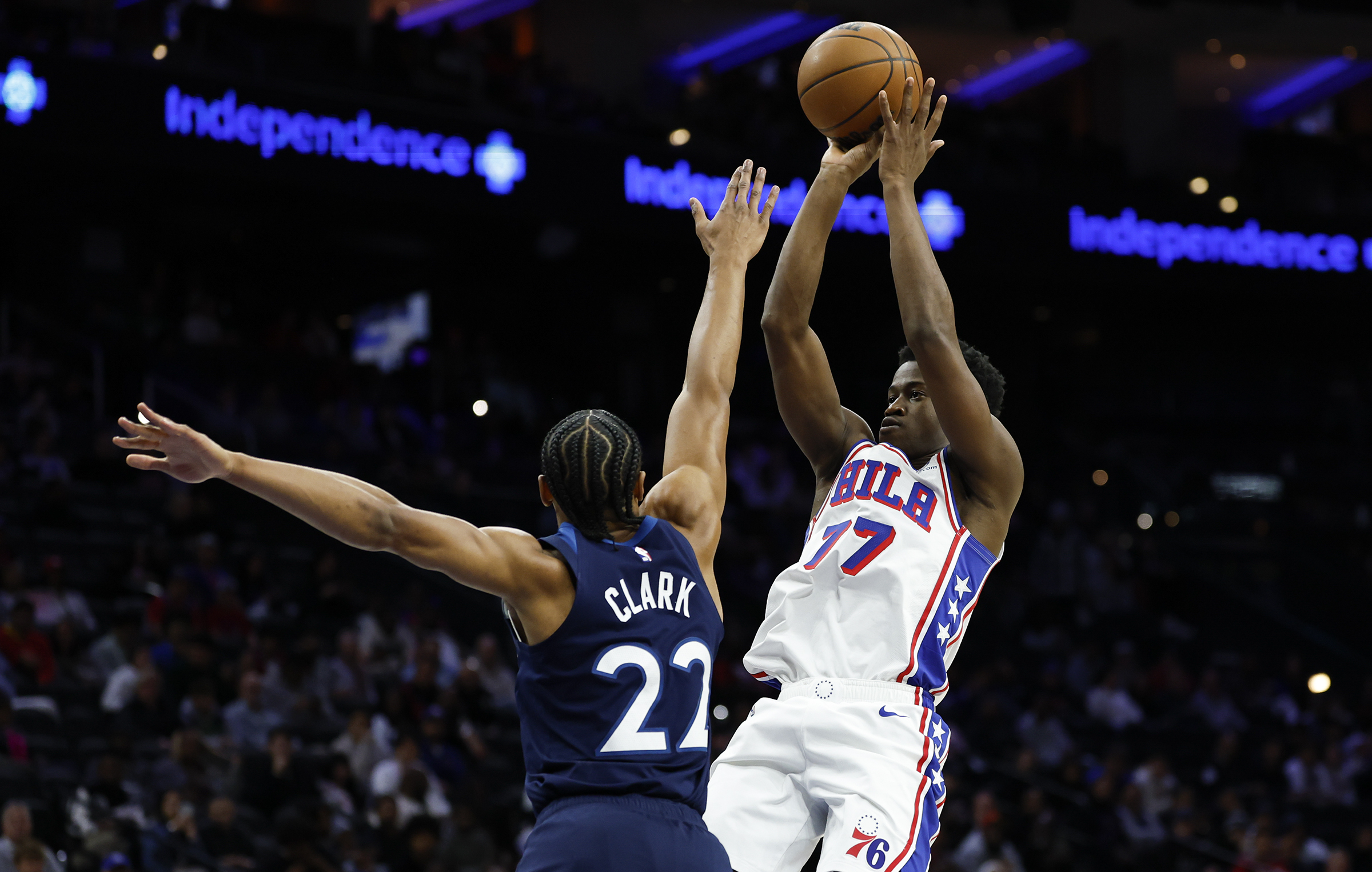
    Sixers guard VJ Edgecombe shoots the basketball against Minnesota Timberwolves guard Jaylen Clark during a preseason game on Friday, Oct. 17, 2025 in Philadelphia.

    Sixers start with a spark — B

    Nobody in Philly was expecting the Sixers to look this good out the gate. Rookie VJ Edgecombe dropped 34 points in his debut — the third-highest in NBA history — and helped the Sixers steal a 117-116 win over the Celtics. That’s right: Wilt, LeBron, and now a 20-year-old kid who apparently sleeps like a baby before facing Boston in the Garden.

    Edgecombe didn’t just show up — he looked like he’d been here for years. Calm, confident, and already saying the kind of humble stuff that makes you want to buy his jersey before Christmas. Tyrese Maxey poured in 40, and even his gentle clowning (“77 definitely got scared at the free-throw line”) couldn’t hide the fact that Philly might actually have a backcourt worth believing in.

    It’s still early, but this team has something it hasn’t had in forever: fun. For once, the Sixers aren’t pretending to be contenders — they’re just hooping. No melodrama, no birthday banners about Daryl Morey being a liar, no Teletubby coats. Just fast breaks, fresh legs, and a rookie who already has his name next to Wilt’s.

    We’ve been hurt before, so no one’s saying “This is the year.” But after one game, it’s hard not to feel a little something.

  • FBI Director Kash Patel came to Philly to talk about an investigation targeting a Kensington drug gang

    FBI Director Kash Patel came to Philly to talk about an investigation targeting a Kensington drug gang

    FBI Director Kash Patel visited Philadelphia Friday to announce the results of a large-scale investigation into a Kensington-based drug gang — the latest demonstration of how President Donald Trump’s administration is seeking to highlight what it’s called a nationwide crackdown against suspected drug dealers.

    The target of the investigation — which spanned several years — was a gang that had long run a 24-hour open-air drug market on the 3100 block of Weymouth Street, according to court documents. The group was sophisticated, the documents said, with dozens of members working specific schedules, performing specific roles — such as block owner, street dealer, or lookout — and seeking to control territory with the threat of violence.

    Members dealt drugs including fentanyl, heroin, cocaine, and crack, the documents said, and oversaw “one of the most prolific drug blocks in the city.” They also controlled parts of other nearby streets in a neighborhood where single corners have historically been able to generate tens of millions of dollars per year in drug sales.

    Prosecutors indicted 33 people in all, court records show, including Jose Antonio Morales Nieves and Ramon Roman-Montanez, whom they described as two of the group’s leaders. Most defendants were charged with conspiracy to distribute controlled substances or other drug-related crimes.

    Moralez Nieves “owned” the 3100 block of Weymouth, prosecutors said, and let dealers sell there by paying him “rent.” Roman-Montanez, meanwhile, organized street-level operations — developing schedules, doling out roles, and managing profits.

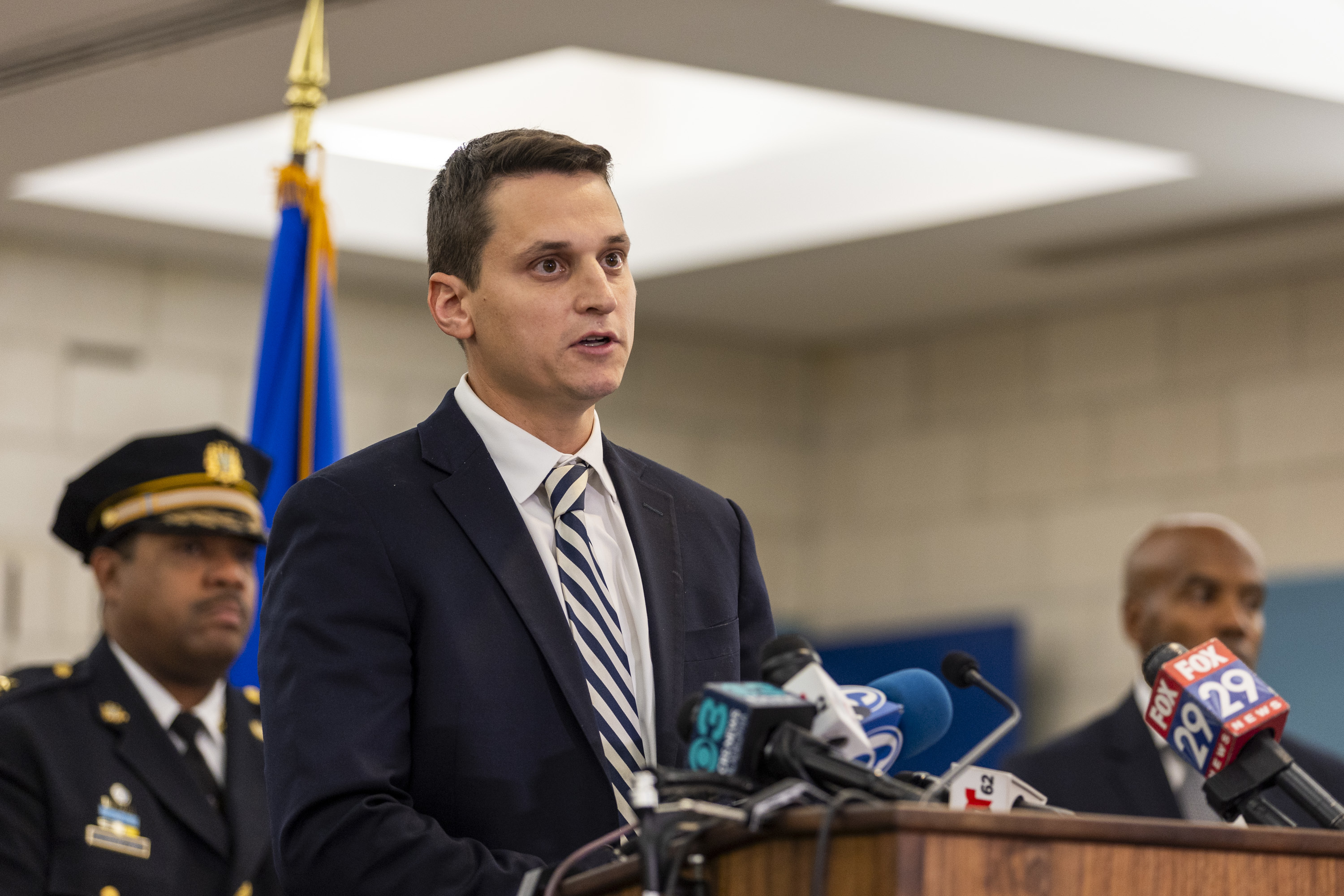
    U.S. Attorney David Metcalf said the investigation into the Weymouth Street group would effectively eliminate it.

    U.S. Attorney David Metcalf said more defendants were indicted in this case than any other federal prosecution in the Philadelphia region in a quarter-century.

    And although prosecutors did not estimate how much money the group made during its decade-long run on the block — and none of its members were officially charged with committing acts of violence — Metcalf said the arrests nonetheless “annihilated” a gang that had terrorized a long-suffering part of Kensington.

    Patel said the effort was emblematic of how law enforcement — both local and federal — can work together to address chronic issues including drug dealing and gun violence.

    “Everyone in America should be looking at this takedown,” Patel said “This takedown is how you safeguard American cities from coast to coast.”

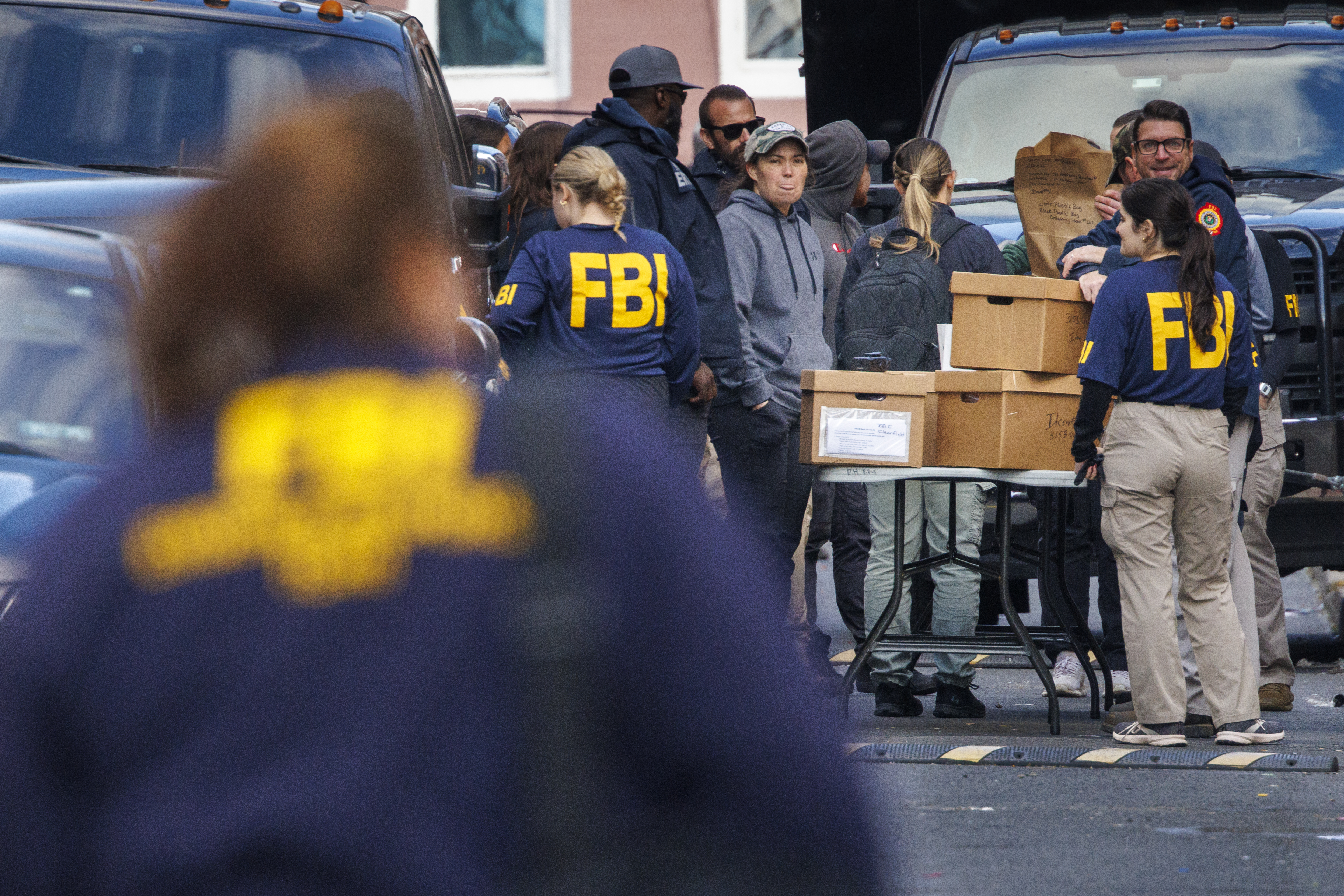
    Law enforcement and FBI at Weymouth Street between Clearfield and Allegheny Avenue on Friday, October 24, 2025.

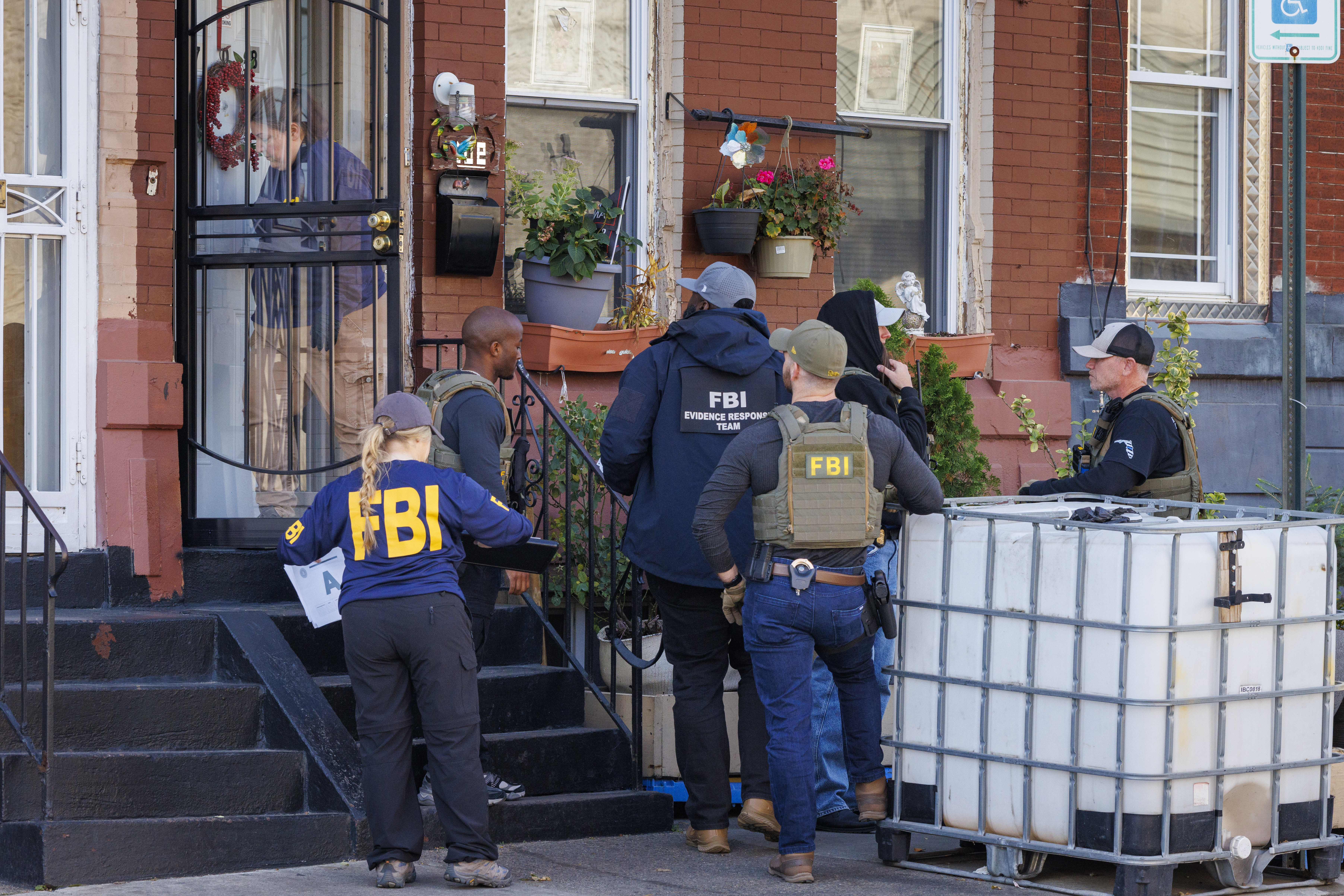
    FBI agents and Philadelphia police officers conducted a series of raids in Kensington early Friday morning in support of the initiative. Wayne Jacobs, the FBI’s top official in Philadelphia, said agents served 11 search warrants, and that 30 of the 33 defendants were in custody as of Friday afternoon.

    Philadelphia Police Commissioner Kevin Bethel said he was proud that the arrests might help bring “safety, dignity and peace” to Kensington — a neighborhood that Mayor Cherelle L. Parker’s administration has sought to prioritize throughout her two years in office, nearly tripling the police force in the neighborhood.

    While officials acknowledged that the investigation began several years ago, the results nonetheless came as Trump and some of his top cabinet officials — including Patel, Attorney General Pam Bondi, and Defense Secretary Pete Hegseth — have sought in recent weeks to promote what they’ve cast as a concerted effort to address crime across the country, particularly involving suspected drug traffickers.

    Some of the Trump administration’s initiatives have been relatively conventional, such as Friday’s raids in Philadelphia and other recent takedowns in cities such as Milwaukee and Pittsburgh.

    Trump and Patel have also touted the FBI’s arrest numbers this year, saying they are “working non-stop to make America safe again.”
    Dan Bongino, one of Patel’s top deputies at the FBI, said Friday that the Philadelphia arrests were part of that mission, writing on social media: “When President Trump told us to ‘go get em,’ he wasn’t kidding. And neither were we.”
    FBI agents were on the 700 block of East Clearfield near Weymouth Street on Friday morning.

    Still, other aspects of the campaign have been highly controversial, including Trump seeking to deploy federal troops to cities such as Chicago and Portland in response to what he’s called widespread unrest or clashes between protesters and U.S. Immigration and Customs Enforcement agents. Local officials have described Trump’s efforts as unnecessary and challenged them in court.

    Trump also moved to effectively federalize law enforcement in Washington, D.C., an effort that local officials called a “baseless power grab” in a lawsuit.
    And international tensions have started to rise over the military’s continued bombing of alleged drug-carrying boats in the Caribbean Sea and Pacific Ocean — strikes that have killed dozens of people and raised questions about whether the tactic is legal.

    Around Weymouth Street on Friday, SWAT units had dispersed by noon. Residents by then had gathered in the street along the narrow block, where some rowhouse doors were left ajar and several neighbors peered curiously from upper windows.

    Victor Ramirez, who has lived near Weymouth Street for 20 years, said police activity has become more common in the area in recent months.

    “It’s a different story almost every day,” Ramirez said outside his home.

    Ramirez said increased law enforcement activity has frightened his neighbors. He said most are “good people” who work to feed their families. Still, Ramirez said he feels more safe with the increased attention to crime in the neighborhood.

    The FBI raid Friday morning felt like a significant escalation, he said. Ramirez was surprised to see agents armed with assault rifles hopping out of armored cars and making arrests.

    The raid came on the day of a fall block party on Allegheny Avenue, which stretched between F and G Streets and intersected with neighboring Weymouth Street. The event is popular with local children, Ramirez said, and he hoped it would bring positive energy to a block that experienced an unusual morning.

  • Women hold 9 CEO positions at Philadelphia’s top 100 public companies

    Women hold 9 CEO positions at Philadelphia’s top 100 public companies

    Women filled more of the top leadership positions at large public companies in the Philadelphia area in fiscal year 2024 than they did the previous year. But workplace parity remains to be achieved.

    “We’re showing measurable but slow progress,” said Meghan Pierce, president and CEO of the Forum of Executive Women, which this week released its annual report measuring women in CEO positions and on corporate boards. “As we look at this data year to year, we are definitely discouraged by how slow progress is.”

    The Forum counted women in leadership positions in fiscal 2024 across the region’s largest 100 public companies by revenue, using data from U.S. Security and Exchange Commission filings.

    Pierce says the forum is using its platform to highlight some factors holding women back in the workforce, such as the lack of paid family leave in Pennsylvania and lack of pay transparency. These are “structural issues that might prevent someone from getting to where they deserve to be,” she said.

    Who are the region’s female CEOs?

    Still, the number of women CEOs in the Philadelphia area more than doubled last year, from four in 2023 to nine last year.

    Three were on the list last year:

    • Ellen Cooper at Lincoln National Corp.
    • Denise Dignam at Chemours Co.
    • Susan Hardwick of American Water Works Co.

    Hardwick, however, recently retired and was succeeded by John Griffith.

    The newcomers are:

    • Lori Koch of DuPont de Nemours Inc.
    • Winnie Park of Five Below
    • Mojdeh Poul of Integra LifeSciences Holdings Corp.
    • Suzanne Foster of AdaptHealth Corp.
    • Natalia Shuman of Mistras Group Inc.,
    • Nicholle Taylor of Artesian Resources Corp.

    Carole Ben-Maimon, of Larimar Therapeutics, was included on the list last year and remains CEO of that company, but Larimar is no longer among the top 100 local public companies by revenue.

    Getting more women in to CEO roles, Pierce said, will require “making long-term investments in women and putting them in the pipeline for those top jobs.”

    More female board members

    On the boards of 100 Philly-area businesses in 2024, women occupied 15 more seats than the previous year, bringing women’s representation on boards up to 30%.

    Despite that progress, six companies still have no women on their boards, an increase from three last year. That number has not increased since 2013.

    “We have to call that out,” said Pierce. “A company with no women on their boards is troubling for us.”

    In 2013, 35 of the 100 companies didn’t have women on their boards.

    window.addEventListener(“message”,function(a){if(void 0!==a.data[“datawrapper-height”]){var e=document.querySelectorAll(“iframe”);for(var t in a.data[“datawrapper-height”])for(var r,i=0;r=e[i];i++)if(r.contentWindow===a.source){var d=a.data[“datawrapper-height”][t]+”px”;r.style.height=d}}});

    A “troubling” decline in DEI reporting

    This year’s report noted that fewer area companies had chosen to report their DEI policies, racial and ethnic makeup of their boards, and/or of their workforce. In 2023, 87% of the region’s top 100 companies had shared at least some of this information, but that dropped to 62% a year later.

    Pierce said this is “troubling.” She said she expects that number to continue dropping amid President Donald Trump’s curtailing of DEI efforts, “just given the environment that we’re operating in — but maybe I’ll be pleasantly surprised.”

    The Trump administration has called for the end of federal DEI programs, and offered universities greater access to federal funding if they agreed to make certain changes, including removing gender and ethnicity from admissions decisions.

    A recent Gallup and Bentley University report also indicates that fewer people believe DEI should be a top business priority. This year, 69% of people thought DEI was “extremely or somewhat important for businesses to promote,” down from 74% in 2024, the report said.

    Editor’s note: A previous version of this story contained a percentage that could not be verified. It has been removed.

  • A new bridge could replace another spanning the Delaware River. Eventually.

    A new bridge could replace another spanning the Delaware River. Eventually.

    Pennsylvania and New Jersey turnpike officials have settled on two alternative plans for replacing the Delaware River Bridge that has linked their toll roads for 70 years.

    Traffic has mushroomed since the interchange with I-95 opened in 2018, and the four-lane span is often congested, along with highways and roads in Bucks and Burlington Counties.

    “We have a lot more traffic here … and it will keep growing,” said engineer John Boyer, the Pennsylvania Turnpike Commission’s project manager. “We need additional capacity.”

    Before the I-95 connection was finished, about 42,000 vehicles a day crossed the Delaware River Bridge. Now, that’s up to around 67,000. Average daily traffic is projected to be 90,000 vehicles by 2050.

    What are the two ‘finalist’ options for a new bridge?

    In one scenario, the new bridge would be constructed at once about 75 feet north of the existing span over four years. Pennsylvania- and New Jersey-bound lanes (six in all) would be built 15 feet apart. When finished, all traffic would be moved to the new bridge. The existing bridge would be removed.

    The other option: constructing the new bridge in stages, about 40 feet north of the existing bridge — over eight years. Initially, the first half of the new span would go up. Then four lanes of traffic would be diverted to the new half while the old bridge is demolished, after which the second half of the new bridge would be built. When complete, there would be six traffic lanes.

    What are the next steps?

    Turnpike officials are preparing a new environmental impact statement, required for federal approval and funding. The 2003 version is outdated.

    The plan is to unveil the site decision in the spring. Then would come final design and the rest of the bureaucratic steps in building transportation infrastructure.

    Construction could start in 2031.

    The final cost of the project has not yet been estimated, officials said, but it won’t be cheap.

    What’s the history of the project?

    Talk of fixing the crossing started more than 30 years ago, and by 2003, after exhaustive environmental impact and engineering studies, authorities proposed building a modern bridge alongside the old one, which would be refurbished.

    Federal highway officials signed off, but it never came together.

    In 2010, the Pennsylvania Turnpike Commission formally deferred the project “due to funding constraints,” spokesperson Marissa Orbanek said.

    A crack in a steel truss supporting the bridge closed the span for six weeks in 2017 and rekindled the idea. Engineers combed through nine possible sites north and south of the bridge and decided to replace rather than refurbish the span, as first planned.

    The Pennsylvania Turnpike Commission and New Jersey Turnpike Authority are working together on the project.

    Beginning in 2007 with Act 44, the Pennsylvanian Turnpike assumed a major role in state transportation funding that limited its ability to spend on other things. The law used turnpike toll revenues to secure bonds that would provide revenue for public transit and highway and bridge projects.

    In addition, the turnpike prioritized the connection to I-95 and widening the roadway to accommodate the additional traffic, as well as other projects — including removal of toll booths and switching to gantries that charge drivers by reading an EZ-Pass or snapping a picture of a vehicle’s license plate.

    Act 44 was a workaround for a state constitutional prohibition on the use of the gas tax for public transit and legislators’ reluctance to hike that tax for highways and bridges.

    The turnpike would contribute $750 million a year to the Pennsylvania Department of Transportation, split evenly between transit and roads.

    That formula was tweaked in 2013 with Act 89, which raised the gas tax to finance roads and bridges and cut the turnpike’s annual payment to $450 million — with all of it going to transit — through 2022.

    The toll road’s obligation to PennDot then dropped to $22 million a year.

    Will the Pa. Turnpike need to acquire properties? Where?

    It’s too early to say. Officials working on the project said they would have a better idea after the final proposal is chosen, expected in spring 2026. The two northern options are seen as likely to have fewer impacts than other alternatives considered.

    What about a shared-use path for bikers and walkers?

    Pennsylvania Turnpike officials have ruled that out, citing regulations barring pedestrians or nonmotorized vehicles on turnpikes and interstates — the connector is part of I-95 — as well as future maintenance costs. Advocates still want access.

    John Boyle, a staffer for the Bicycle Coalition of Greater Philadelphia, pointed to several toll bridges with free paths that accommodate cyclists and pedestrians.

    The Great Egg Harbor Bridge on the tolled Garden State Parkway, for instance, has bike and pedestrian lanes.

    So does the Mario M. Cuomo (Tappan Zee) Bridge, which carries the New York Thruway over the Hudson River about 20 miles north of New York City.

    And the Gordie Howe International Bridge, a toll facility between Detroit and Windsor, Ontario, nearing completion, will have separate shared-use lanes.

    What considerations guide the choice?

    Boyer said they boiled it down to picking a site that would have the lowest negative impact on the built and natural environments.

    “We’re looking at it from a 10,000-foot view in the entire corridor: commercial impacts, industrial impacts, residential impacts, and potential impacts to billboards or cell towers in the area,” Boyer said.