Tag: Weekend Subscribers

  • Penn doctor studied PCOS symptoms for more than a decade to rename the syndrome PMOS

    Penn doctor studied PCOS symptoms for more than a decade to rename the syndrome PMOS

    University of Pennsylvania doctor Anuja Dokras spent the last 14 years working to rename a common medical condition that can impact fertility in women, called polycystic ovary syndrome, or PCOS.

    Rooted in outdated science, the name often confused her patients into incorrectly thinking they had cysts on their ovaries.

    It also made people think the disorder — which affects one in eight women — was primarily gynecologic in nature, when it actually has whole-body effects.

    “We knew this was a misnomer,” Dokras said.

    An international group of experts, including Dokras, announced in May that PCOS would now be called polyendocrine metabolic ovarian syndrome (PMOS), in an article published in the medical journal The Lancet.

    The new name is meant to capture the broader hormonal and metabolic effects of the condition.

    Dokras estimates it will take another three years to formally classify PMOS as an endocrine condition, change insurance billing codes, and update published literature.

    Scientists also need to get the word out to patients, doctors, and the public at large. The previous name had been around since 1935.

    The Inquirer spoke with Dokras, director of the Penn PMOS Center, about the name change and the impact she hopes it makes.
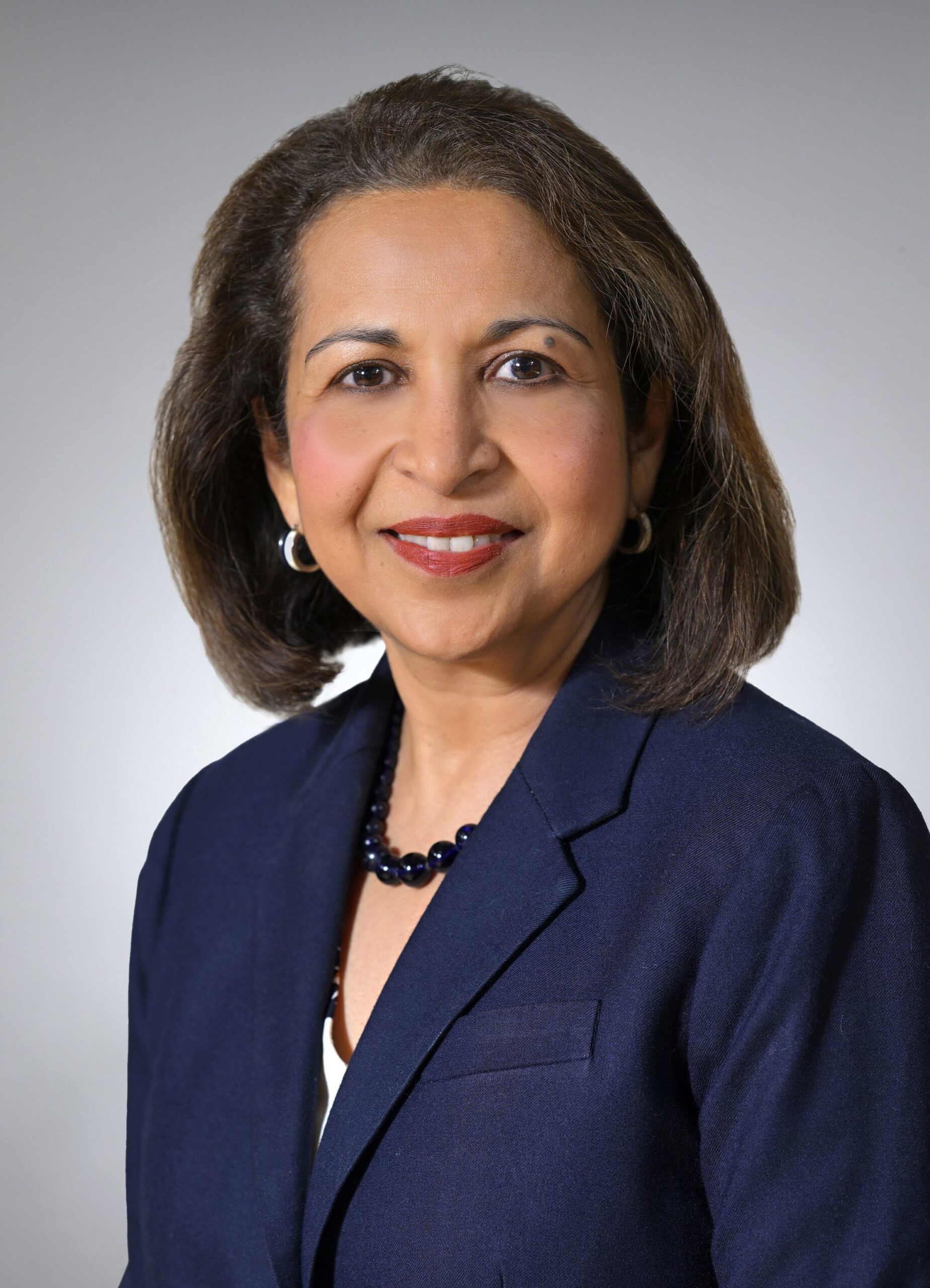
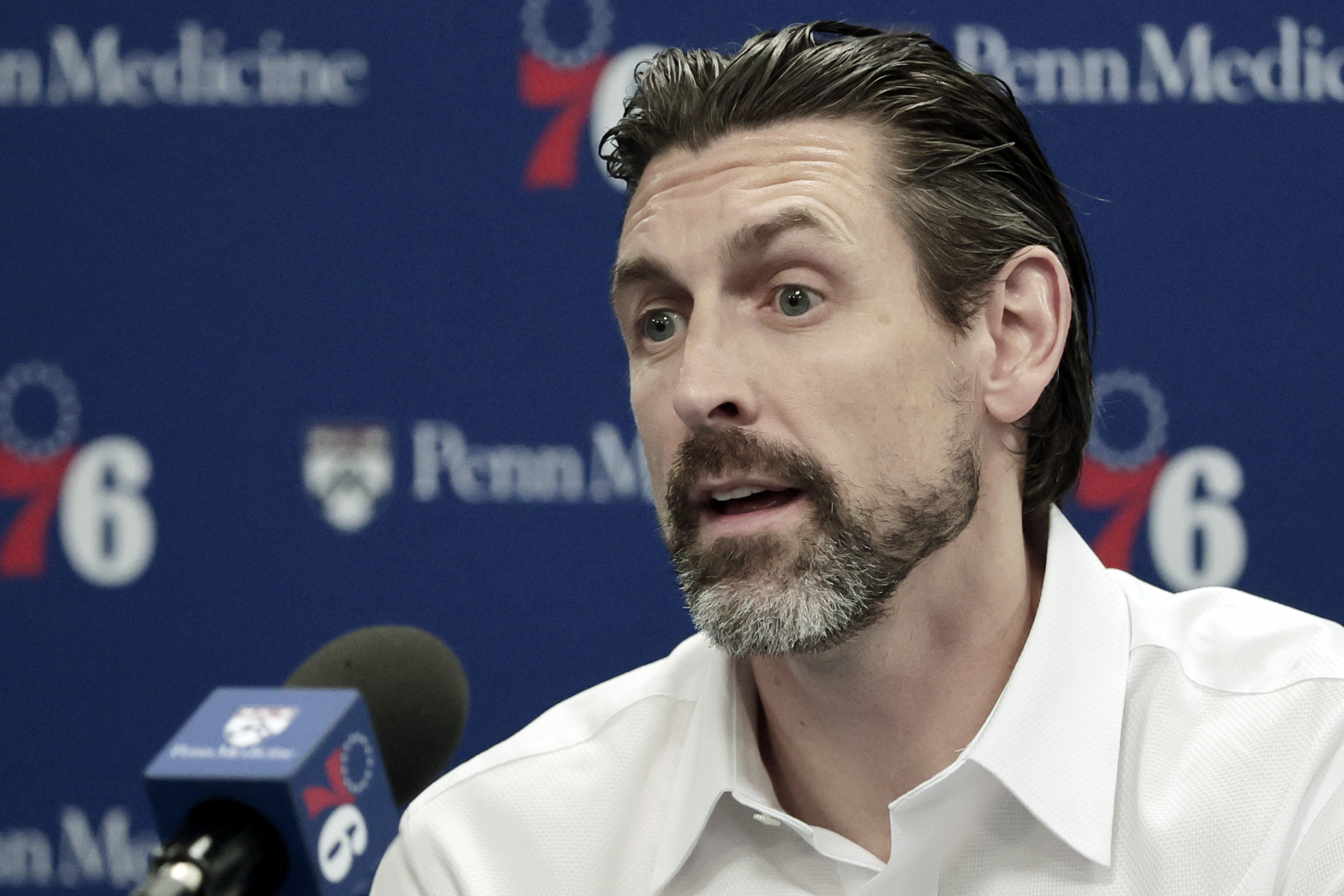
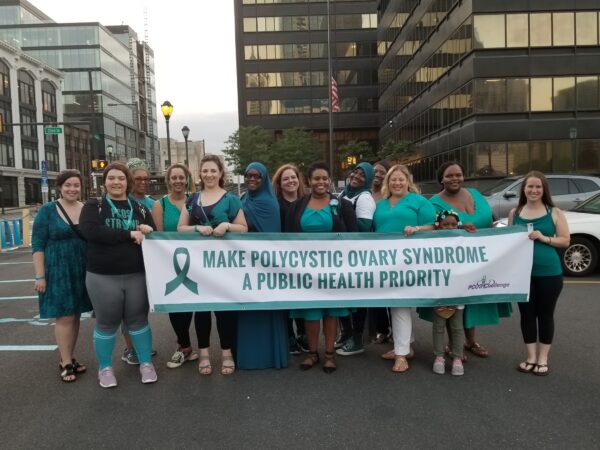
    Anuja Dokras directs the Penn PMOS Center and played a key role in the renaming process.
    What is PMOS?

    It’s the most common endocrine disorder in women.

    The presentations are typically irregular menses (menstrual periods) and increased hair growth and acne. We also typically see lots of follicles within the ovaries. Those three become the criteria for making the diagnosis.

    Research from my group and others has shown that these patients are at a high risk for cardiometabolic complications, including high cholesterol, high blood pressure, diabetes, or problems with their blood sugar and weight gain. They also have an increased risk of mental health conditions like depression, anxiety, and disordered eating.

    When did you start to question the name PCOS?

    When I began to work in this space, it was clear that women [with PCOS] did not have large cysts on their ovaries. What they had were small follicles, and each of the follicles contain eggs. It’s part of their fertility.

    As we asked patients what symptoms they were most concerned about, they talked about ovarian cysts, which was because of said misnomer.

    We spend a lot of time correcting that misinformation when patients come to see us. Then we have to reassure them and say, ‘you don’t have a big cyst in the ovary. It’s not going to rupture, it’s not going to twist.’

    How did the idea for a name change came up?

    The first time it was brought up was when we had a meeting at the National Institutes of Health in 2012. The reviewing panel came back and said, “We suggest you change the name, because the name doesn’t represent everything that you have shared with us about the advances in this condition.” That’s when the journey began.

    What did the renaming process involve?

    Surveys went out to patients and the providers that offer care. We made sure that there were responses from different world regions as well.

    The patients didn’t want a word that would be stigmatizing. If you have a condition that’s going to affect your fertility, that is not viewed favorably by families, and patients were very concerned about the choice of words. They also wanted words where there’s clarity, so you can communicate easily.

    Finally, there were workshops where the medical professional societies and patient groups across the globe sent one representative each.

    How did the name polyendocrine metabolic ovarian syndrome (PMOS) come about?

    This is an endocrine condition, which means that there are certain organs within the body that are making hormones and those hormones are not working well. They’re either over-secreted or under-secreted. The word ‘poly’ was attached, because it was not just one hormone. A lot of different endocrine glands or organs are involved.

    Then metabolic was added because there are a number of cardiometabolic abnormalities: the high cholesterol, glucose problems or diabetes, high blood pressure, and obesity.

    We left ovarian because we also had marketing input and there were some suggestions to not be completely different (from PCOS) because that’s going to be confusing.

    And we needed the word syndrome because it still describes a constellation of features.

    How has the response been to the name change?

    It was more than what we had expected. I think we live in a very different world now, where communicating with the patients is on a different level. It’s not just through publications. The patient community and the advocates got the news very quickly because of social media. It was lit up.

    In terms of getting the information out to the medical community, it’s always going to be a little slower. We’ll continue to do that at different meetings.

    We’ve said it may be a three-year transition.

    What work remains?

    The first step was the communication and getting the message out. Then in parallel, there needs to be a smooth transition in terms of our research publications. We don’t want to lose out what was published under the name of PCOS because now it’s PMOS.

    When patients go to see their doctors, there’ll have to be a transition in the electronic health records, in terms of the terminology and insurance companies trying to understand this new word PMOS. The codes for billing will need to change.

    We’re also trying to do a research reclassification. PMOS was formally considered an ovarian condition, and we’re trying to switch it now to become an endocrine condition.

    What do you hope this name change accomplishes?

    I’m hoping that, from the patient perspective, they’re going to be less worried about cysts in the ovaries. I’m also hoping they will get earlier diagnoses because the name includes endocrine and metabolic. Now we’re hoping that all these different specialties will take some ownership of the syndrome, and that way the patient is not hopping between different caregivers.

    For the researchers — I’m one of them — I do hope that there’ll be increased funding. We still have a lot of gaps in knowledge, and we need to do a lot more research.

    We hope that there would be funding, not just from the institutions that support women’s health, but from those that support diabetes, endocrinology, heart disease, dermatology, and mental health.

    We hope that a name that’s so comprehensive and broad gets more people invested in helping answer some of these very important questions.
  • The Jaylen Brown trade benefits VJ Edgecombe, who will now have the time he needs to develop

    The Jaylen Brown trade benefits VJ Edgecombe, who will now have the time he needs to develop

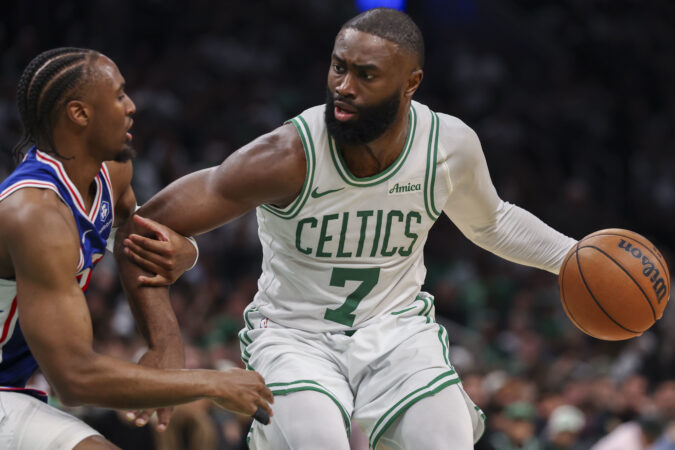
    Jaylen Brown loves attention, which is why he went on Twitch to talk about his feelings just hours after releasing a statement on social media expressing his feelings about being traded from the Celtics to the Sixers for a PED cheat and four speculative draft picks.

    While Twitch-ing, or whatever it’s called, Brown got a phone call from the coworker who probably is happiest to have him aboard: VJ Edgecombe.

    It was just 30 seconds of Gen Z acknowledgment and ego stroking, but there was a real vibe of Thank God you’re on my team so now I don’t have to play every minute of every game.

    Later, on that Twitch stream, Brown announced:

    “‘The Process is back f— on.”

    Not really.

    Call it Process 2.0, and understand that Edgecombe, properly nurtured, will be as important to its success as anyone.

    That nurturing process got a lot smoother when the Celtics gave Brown away on Wednesday.

    It could get even smoother if King James arrives.

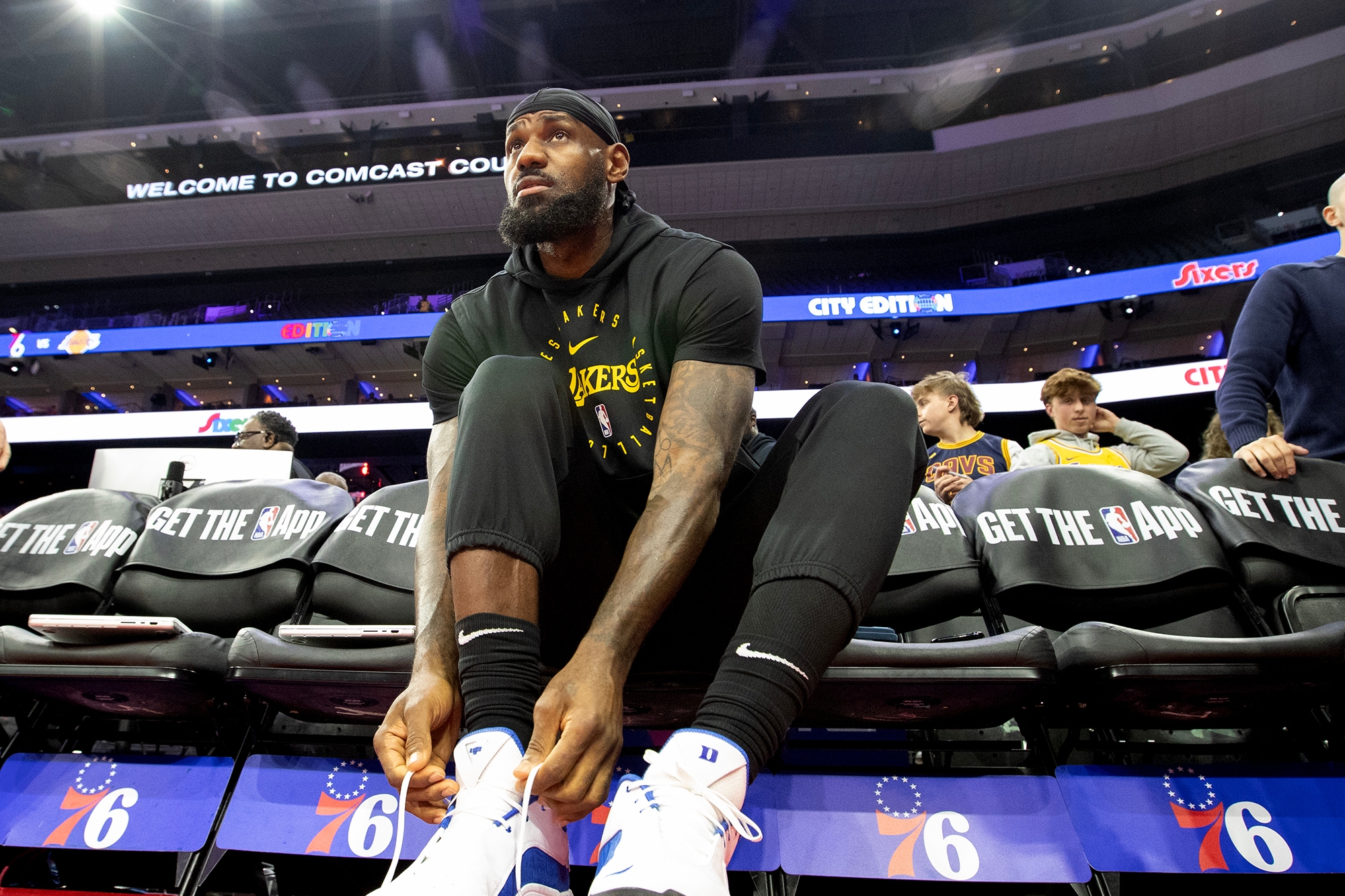
    On Thursday, LeBron James’ camp let it be known that he would consider playing next season in Philadelphia now that Brown has joined Joel Embiid, Tyrese Maxey, and Edgecombe. The King, now 41, is hunting a fifth NBA title, and Philly has become a viable contender within the last few days, even though the Sixers currently can pay him only the veteran minimum, just under $4 million. This would be a $48 million pay cut from last season with the Lakers.

    Don’t hold your breath.

    As insane as landing LeBron would be, shedding a bad contract and landing a superstar is even nuttier. And fishier.

    Something is amiss when the smartest organization in basketball gives away a top-10 player and asks in return for a broken-down PED cheater and two first-round picks that probably aren’t going to be that good anyway.

    At any rate, the Celtics on Wednesday traded Brown, a five-time All-Star, who is 29, to the Sixers for Paul George, who is 36, and who has had just one good season since he was 29. The Sixers also sent first-round picks in 2028 and 2031 and two second-round picks to Boston. The most significant aspect of the deal is that it erased the worst contract in the history of the franchise; George has two more seasons left on a four-year, $211 million deal, and he hasn’t been worth one-tenth of it.

    The move also made the Sixers an immediate NBA title contender, since Brown is everything the Sixers wanted George to be: a shot-creating athlete at all three levels who can play and defend multiple positions.

    The deal also delivers an invaluable byproduct.

    It gives Edgecombe time.

    Time to develop.

    Time to learn.

    Time to rest.

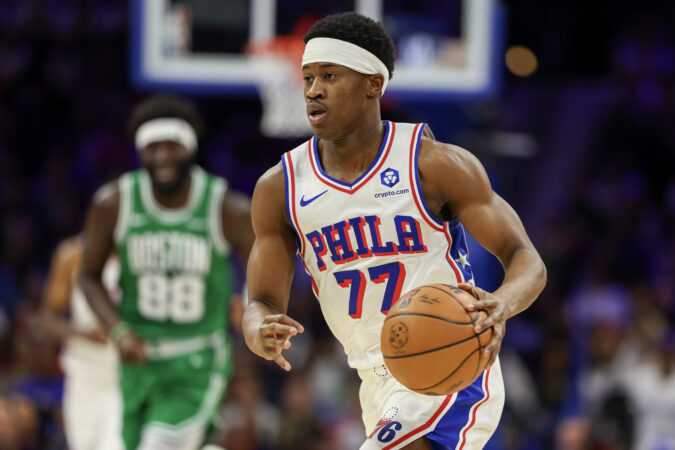
    Edgecombe not only led rookies at 35 minutes per game, he ranked 11th in the entire league and averaged the eighth-most minutes for a rookie guard in the last 17 seasons. As the Sixers dealt with injury absences of Joel Embiid as well as the early load-management strategies and the late PED suspension of George, Edgecombe proved himself too good to not protect.

    “VJ is going to be a lot better in the long run with J.B. around,” said an NBA source who is intimately familiar with the 76ers. “At the end of last season, he was pretty worn out.”

    Outside of a diminished three-point shooting percentage, the wear and tear didn’t really show up in his other raw stats. They dipped in the playoffs, but then, Embiid and George were back on the court for much of the late season and postseason. But his decision-making became errant, his shot selection more questionable, and he tended to disappear. He needed help that his big-money vets were not there to provide.

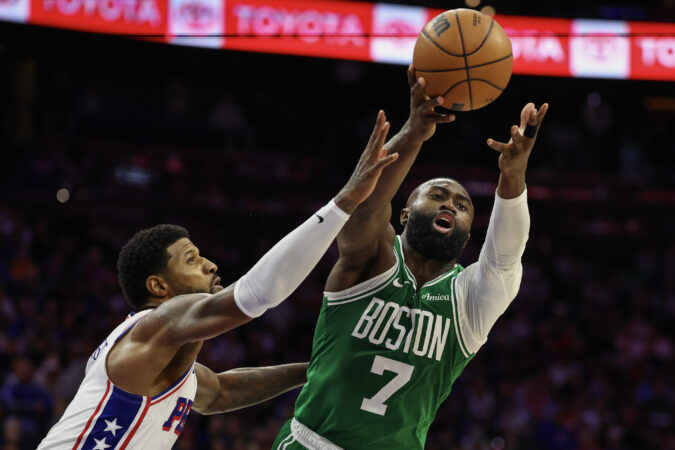
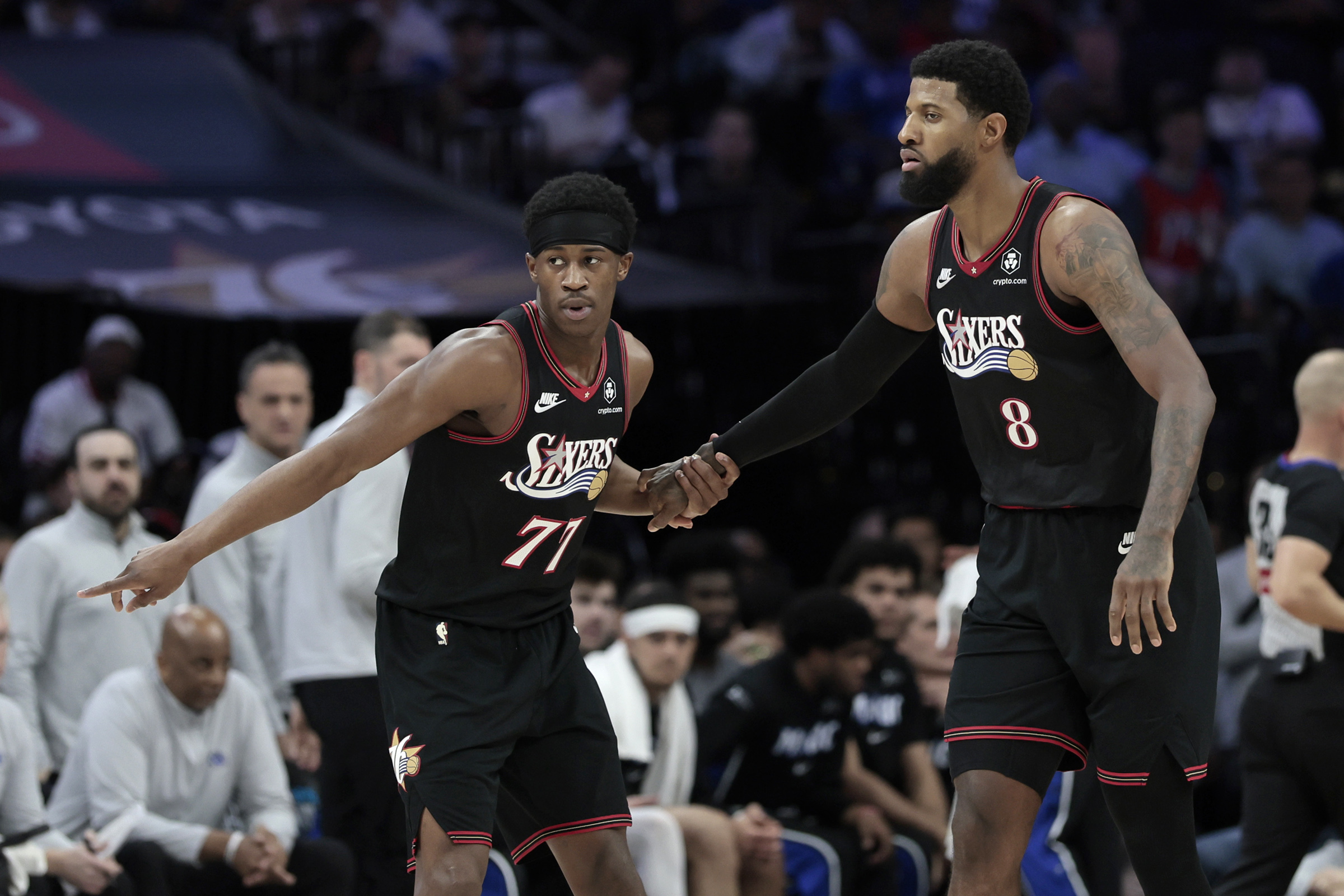
    The absence of Paul George (8) had a trickle-down effect at times on VJ Edgecombe.

    Combined, they missed 89 of 164 games, more than half. This has been the norm for both of them for the past few seasons.

    Brown plays about 20 more games a season than Embiid and George.

    That means that when Embiid misses his 30 or 35 games this season, Brown will be there to carry the load, whereas George was not.

    That also means that when Embiid plays, Edgecombe will not have to serve as the second or third offensive option, using moves he shouldn’t be making and taking shots he shouldn’t be taking for at least another season or two. When the Sixers drafted him third overall, most projections cast him as a superior athlete with unlimited defensive potential but with limited plug-and-play offensive ability. He learned fast, averaged 16 points per game, and made the All-Rookie team, but, man, there were some ugly nights and some ugly shots.

    Brown will also help Maxey get off his feet a little more. Maxey led the NBA at 38.0 minutes per game in an MVP-caliber season, but he wore down, too. Both were affected by the early injury absence of Jared McCain, and then by McCain’s exit at the trade deadline, as well as the lack of consistent contributions from guard Quentin Grimes.

    Edgecombe and Brown don’t play the same position, exactly, but they will combine with Maxey, and possibly rookie Labaron Philon Jr., to manage the primary backcourt duties.

    Brown will arrive motivated to make the best impression possible.

    He’s in line for a two-year, $140 million extension that will put him under contract for the next five seasons. He will be a more focused defender and rebounder, play-make with more alacrity, and, inevitably, he will assume the role of mentor to Edgecombe that George served last year.

    He said in Thursday‘s social media post that he was “Excited and disappointed at the same time” to be leaving Boston, where he won a title, and coming to the Sixers, who bounced him from the playoffs this spring.

    It was delivered with Brown’s typical class and polish.

    The Twitch stuff? Less classy, less polished, but just as real.

    The Celtics, meanwhile, immediately started planting narratives about how zero-time All-Star guard Derrick White is a more valuable player than Brown. ESPN insider Brian Windhorst also reported that the Celtics, after consulting their analytics, considered it imperative to get backup center Mitchell Robinson off the court when they played the Knicks. Then, on Wednesday, they signed Robinson to a three-year, $47.4 million deal.

    No wonder the Sixers knocked them out in the first round.

    There is always the possibility that this trade is not as lopsided as it seems. The Celtics certainly didn’t see the value in retaining a guy who can make more than $320 million if he’s offered an extension.

    The pocket protector crowd loves to cite and manipulate undependable metrics that diminish Brown’s obvious talent, skill, value, and performance. They insist that his playmaking fluctuates, his defense is overrated, and his shot diet doesn’t regularly generate the most efficient looks for him or his teammates.

    Remember, analytics is an industry, and it has to feed itself and convince its consumers of its necessity.

    Therein lies an irony. As much as analytics have torpedoed the Sixers’ plans, execution, and hopes over the past 14 years of “The Process,” it appears that analytics now have delivered an unexpected reward — in the form of Jaylen Brown.

    Bonus: LeBron James?

    Benefit: VJ Edgecombe.

  • Saluting the signers for the Semiquincentennial

    Saluting the signers for the Semiquincentennial

    It’s a common sound in Philadelphia’s historic district during the summer. I was photographing tourists in front of Independence Hall on Wednesday when the beat of a single snare drum a block away achieved its intended purpose.

    Just like when the fife and drum corps would relay tactical commands over the noise of the battlefield, or regulate a soldier’s daily routine, I stopped what I was going and headed in the direction of the beating pulse.

    It was coming from the normally quiet Signer’s Garden pocket park, across 5th Street.

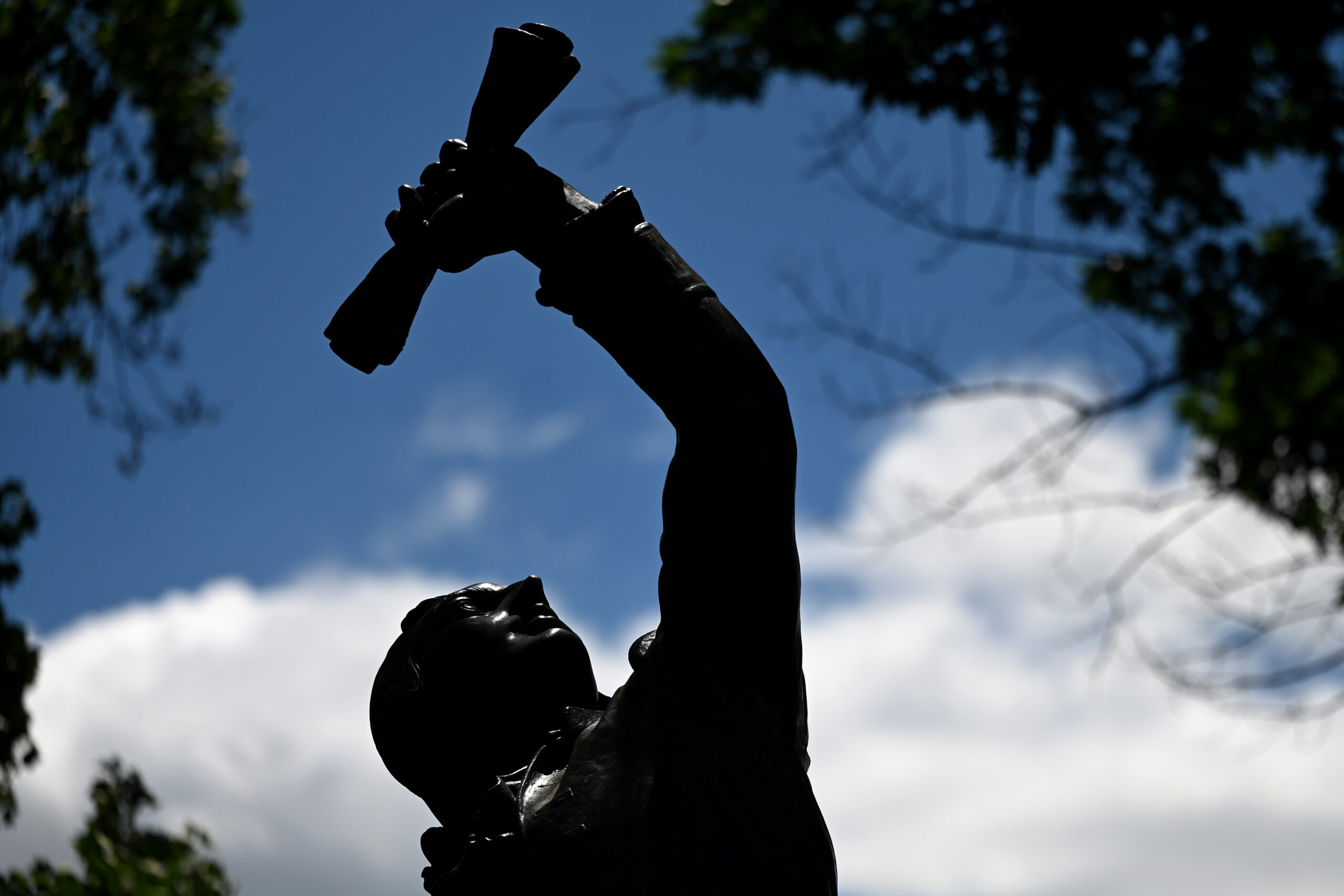
    I had intended to go there anyway to photograph the statue — “The Signer” — as I am working with present-day descendants of the signers of the Declaration of Independence on a photo essay that will be posted online this Fourth of July weekend.

    The statue was inspired by George Clymer, a Philadelphia merchant, statesman, and signer of both the Declaration of Independence and the U.S. Constitution. A National Park Service plaque at the entrance reads “it commemorates the courage of those who altered their lives, and ours, by affixing their names to these documents.”

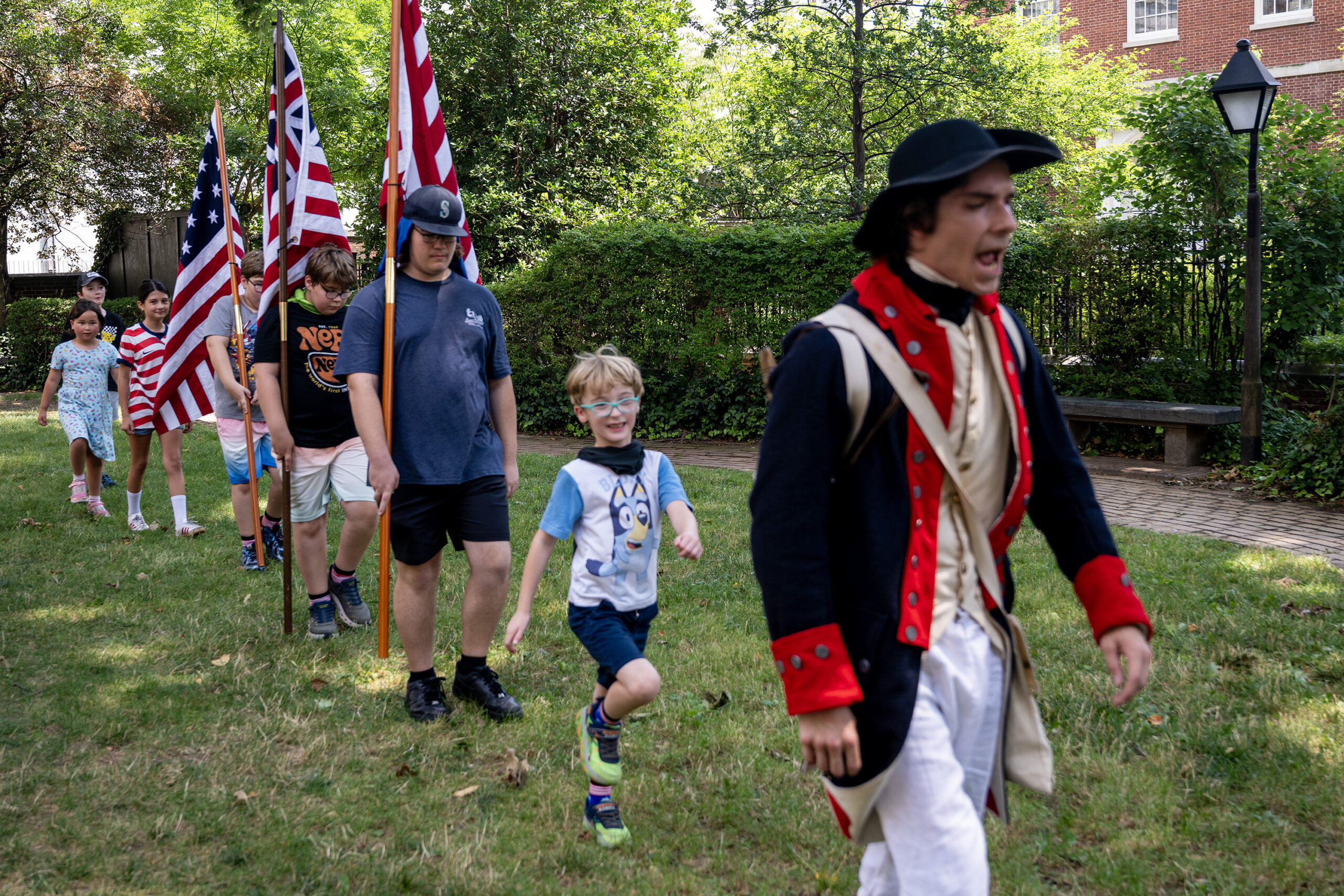
    The drum was mustering holiday week visitors for a presentation by two costumed actors from Historic Philadelphia portraying continental soldiers. I watched as the tourists watched them “draft” youngsters into their performance and found myself smiling more than once at how they engaged the kids — and the rest of us in the crowd — with some of their one-liners.

    Historic Philadelphia actor Lane Norris portraying Continental soldier Conrad Frye leads a contingent of young tourists in Independence National Historical Park Wednesday, July 1, 2026.

    Did I say, smile? I might have had a slightly more sentimental reaction. I have written before that Independence Day has always been my favorite holiday. My dad, who passed away a few years ago, was born on the Fourth of July.

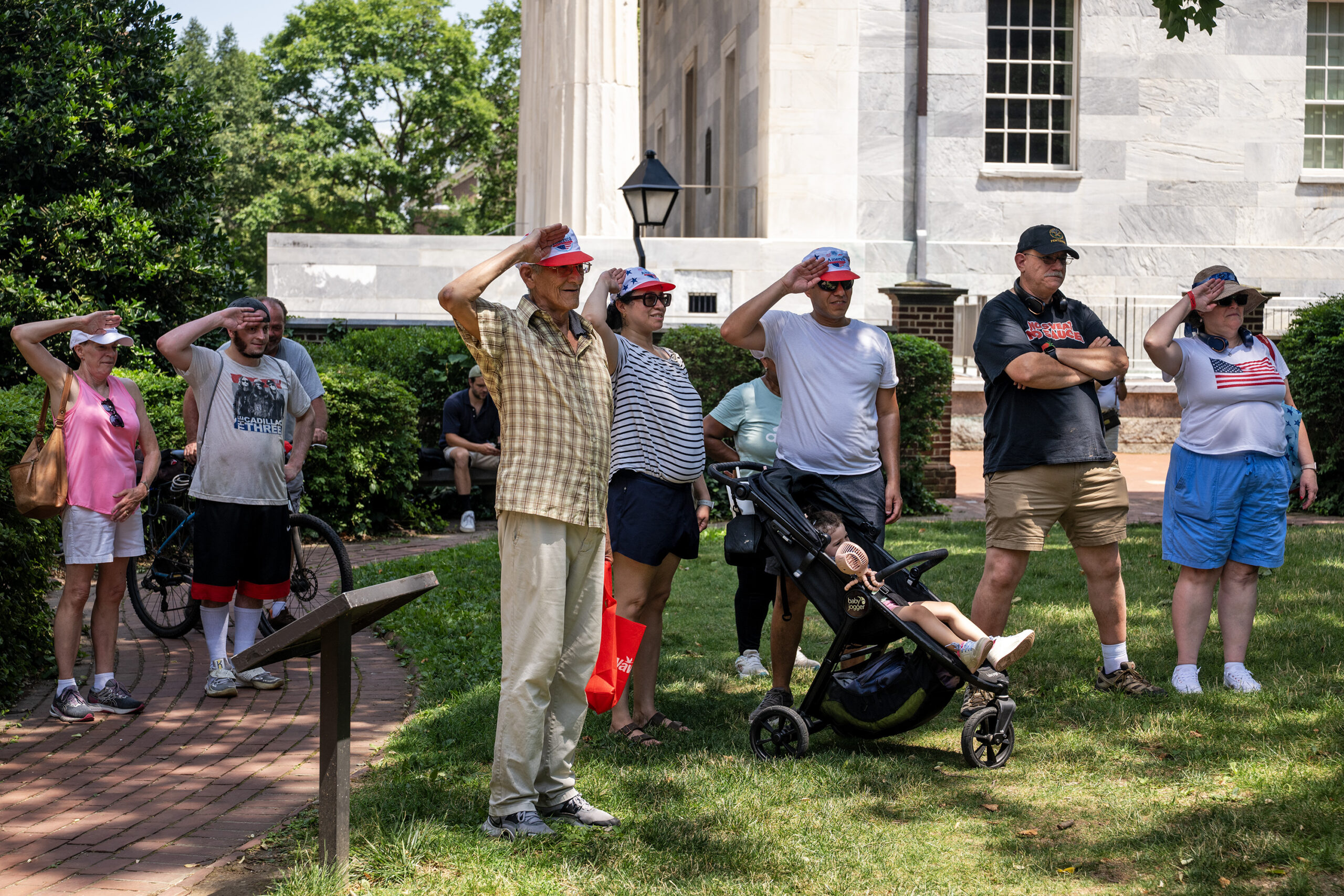
    As I looked around at the crowd I could tell everyone else was also getting into the interactive and engaging program. I photographed saluting adults who I assumed were parents, mirroring the actions of their kids doing the marching drills.

    Afterward, I learned they weren’t. They had a toddler still in a stroller. They were immigrants from Venezuela, and just happy to be here. Like me.

    We’re still in the middle of Philly’s celebration of America’s 250th birthday (with canceled events in a declared heat emergency with 100-plus degree temperatures!). Here are more of my Fourth of July photos and those of my colleagues:

    Since 1998 a black-and-white photo has appeared every Monday in staff photographer Tom Gralish’s “Scene Through the Lens” photo column in the print editions of The Inquirer’s local news section. Here are the most recent, in color:

    » SEE MORE: Archived columns and Twenty years of a photo column.

  • Frederick Douglass’ critical lesson for the 250th: ‘Contend, contend’

    Frederick Douglass’ critical lesson for the 250th: ‘Contend, contend’

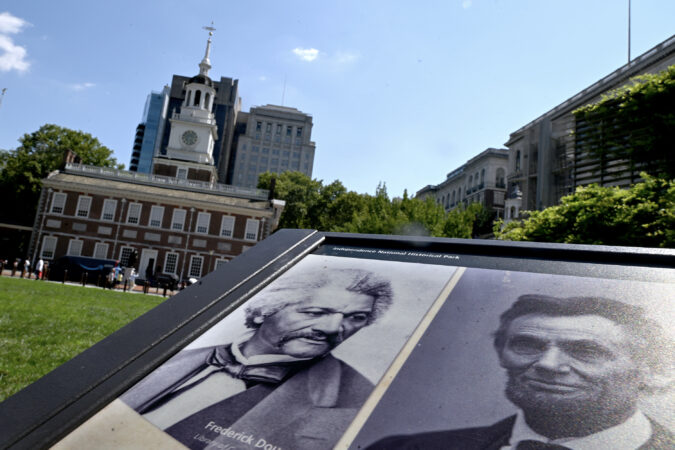
    As the country moves toward the 250th celebration, the official directive from the Trump administration is clear: be proud, be grateful, and rejoice in our great nation. This rosy narrative overlooks the global political conflicts, fractured economy, and longstanding racial and gendered inequalities that have shaped our country from its founding. These difficult realities are not footnotes to American history but a reminder of all of the ways that our nation continues to fail to live up to its espoused values. This is why one of the greatest speeches in American history resonates this time of year and especially on the eve of our nation’s 250th birthday: Frederick Douglass’s “What to the Slave is the Fourth of July?”

    Born into slavery, Frederick Douglass escaped from bondage to become the foremost African American abolitionist, orator, and intellectual of the nineteenth century. His famous “Fourth of July” speech is a profound declaration of faith in the promise of America and its “saving principles.” In this speech, delivered pointedly on July 5, 1852, not July 4, in Rochester, New York, Douglass argues that the foundations of American democracy are not fundamentally rotten, just mistaken in their implementation, and that the values enshrined in the founding mythology and documents might yet redeem America from its sins. It is a galvanizing and patriotic text, and it anticipates what W.E.B. Du Bois would say in 1935 in Black Reconstruction in America: that “democracy died save in the hearts of Black folk.”

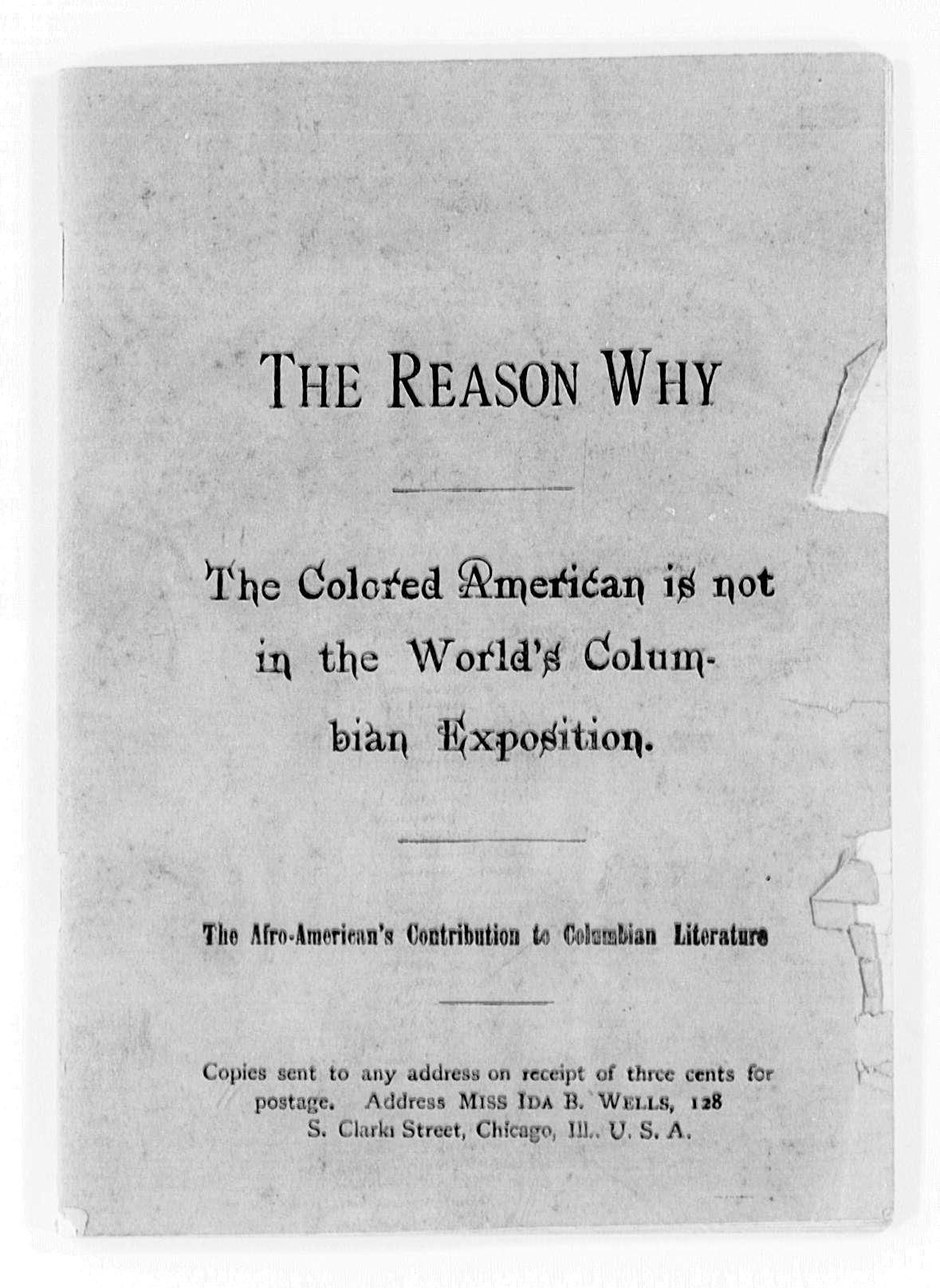
    But this year, a different piece by Douglass resonates: “The Reason Why the Colored American is Not in the World’s Columbian Exposition,” written in 1893, just two years before he died. In that pamphlet, Douglass criticizes another national commemoration that asked Americans to set aside painful realities in favor of a more flattering narrative. His argument—that the struggle against racial injustice must continue not because success is guaranteed, or even likely, but because it is the right thing to do when confronted with injustice—continues to matter today.

    The pamphlet, “The Reason Why: The Colored American is not in the World’s Columbia Exhibition,” had to be distributed and discussed from the Haitian exhibition space at 1893 World Fair in Chicago because African Americans were denied any real role in the Fair.

    In this pamphlet, Douglass protested the World’s Fair in Chicago, a grand celebration of the 400th anniversary of Christopher Columbus’s 1492 arrival in the “New World.” The fair, Douglass argued, distorted American history by erasing the contributions of Black Americans whose labor and suffering had made that very “progress” possible. By this time, Douglass had witnessed the Emancipation Proclamation and Reconstruction and the violent undoing of Reconstruction. He had seen the Supreme Court strike down the Civil Rights Act of 1875. As white Americans imposed the brutal logic of Jim Crow across the nation, Douglass came to believe that the consciences he had spent his life appealing to had been so corrupted by white supremacy that they could no longer be relied on to redeem America.

    And yet, in the closing passages of the pamphlet, Douglass did not embrace despair or advocate for retreat. Instead, he offered the metaphor of a ship that must embrace the dangers of the open sea. The ship might remain safely anchored in harbor but this safety, he argued, is deceptive. The ship must weather the storm. And he followed it up with something even more profound: “Next to victory is the glory and happiness of…contending for it. Therefore, contend, contend! That we should have to contend and strive for what is freely conceded to other citizens without effort or demand may indeed be a hardship, but there is compensation here as elsewhere. Contest is itself ennobling. A life devoid of purpose and earnest effort is a worthless life. Conflict is better than stagnation.” For Douglass, the act of contending itself is meaningful. The struggle testifies to the injustice it intends to repair.

    Made By History sponsors. FOR USE ON MADE BY HISTORY STORIES ONLY.

    The origins and reception of the pamphlet reveal the fault lines in American society at the end of the 19th century. Douglass had appealed to Black communities across the nation for funds to print the pamphlet and had received almost nothing. Discouraged, he told his collaborator, Ida B. Wells, that he wanted to abandon the effort. It was Wells who insisted otherwise, organizing with many Black women’s organizations to raise the necessary resources. Ironically, the man who would close his pamphlet urging Black Americans to “contend, contend” had to be persuaded to continue contending himself.

    The reception of the pamphlet was divided and harsh. Many prominent white journalists called Douglass a complainer. Even within the Black press, there was hardly consensus. Some Black journalists endorsed his indictment of the fair while others argued that Black economic and educational enfranchisement were more important than another lament of prejudice. This was a broader debate within the Black community that Douglass did not settle in the pamphlet. What he offered instead was something harder and arguably more important today: the argument that we must continue to fight even when we are not winning the war.

    This is an extraordinary argument coming from Douglass at the end of his life. He had every reason to give up the fight. He had spent decades working to change America, and America had proven far more resistant to that change than he had originally hoped. And yet he insisted: contend, contend.

    At this moment of democratic fracture and racial retrenchment in America, Douglass’s argument deserves a second hearing. The Supreme Court has dismantled affirmative action, executive orders have unraveled federal civil rights commitments, and disparities in housing, education, healthcare, and criminal justice persist and deepen. The fight against racial injustice must continue not because we can be assured of our triumph but because our commitment to America’s “saving principles” should not falter even when those principles seem out of reach. Douglass’s refusal to abandon the fight—his willingness to steer into the storm—is not merely a biographical detail about an American at the end of his life. It is an argument about what it means to celebrate America and her saving principles.

    Happy 250th birthday, America. Contend, contend.

    Dr. Amy Gais is a Lecturer in the Department of Political Science and Comparative Literature and Thought at Washington University in St. Louis. She is the author of The Coerced Conscience (Cambridge University Press, 2024) and is currently working on a book project on dissimulation, resistance, and freedom in African American political thought.

    Made by History takes readers beyond the headlines with articles written and edited by professional historians. Opinions expressed do not necessarily reflect the views of The Inquirer.

  • I visited the Great American State Fair on the National Mall in D.C. It wasn’t great.

    I visited the Great American State Fair on the National Mall in D.C. It wasn’t great.

    WASHINGTON — It was blisteringly hot when I showed up at President Donald Trump’s much-ballyhooed Great American State Fair on the National Mall in honor of the nation’s 250th birthday.

    As I headed off to check in as a member of the media, a friend who’d accompanied me decided to wait at a lemonade stand.

    At first, I was a little concerned, wondering how I was ever going to find her. A lemonade stand on the National Mall in Washington, D.C., was bound to be mobbed on a scorcher of a day like the one we had on Monday.

    I needn’t have worried. It wasn’t that kind of party. Crowds were so thin that I quickly spotted her standing alone and eating a snow cone that cost a whopping $8. “Even on a hot day, there was no line at the lemonade stand,” pointed out my friend, Pamela Thomas of Pathfinders Travel, who had taken the train from Philadelphia with me.

    That should give you a pretty good idea of how it was at the so-called Great American State Fair, brought to us by Freedom 250, an organization created by President Donald Trump.

    Low crowds.

    High food prices.

    Lots of walking.

    The Great American State Fair was downright boring.

    Oh, there was an 110-foot Ferris wheel borrowed from the Smithsonian Institution. I watched people stand unsheltered under the blazing sun as they waited for their turn. But that’s the only carnival ride I saw.

    This wasn’t like any state fair I’d ever attended. Where was the merry-go-round? Where was the roller coaster? The cotton candy? The local beauty queens? The fair could use a quilting demonstration and band performances. I saw only one cornhole game.

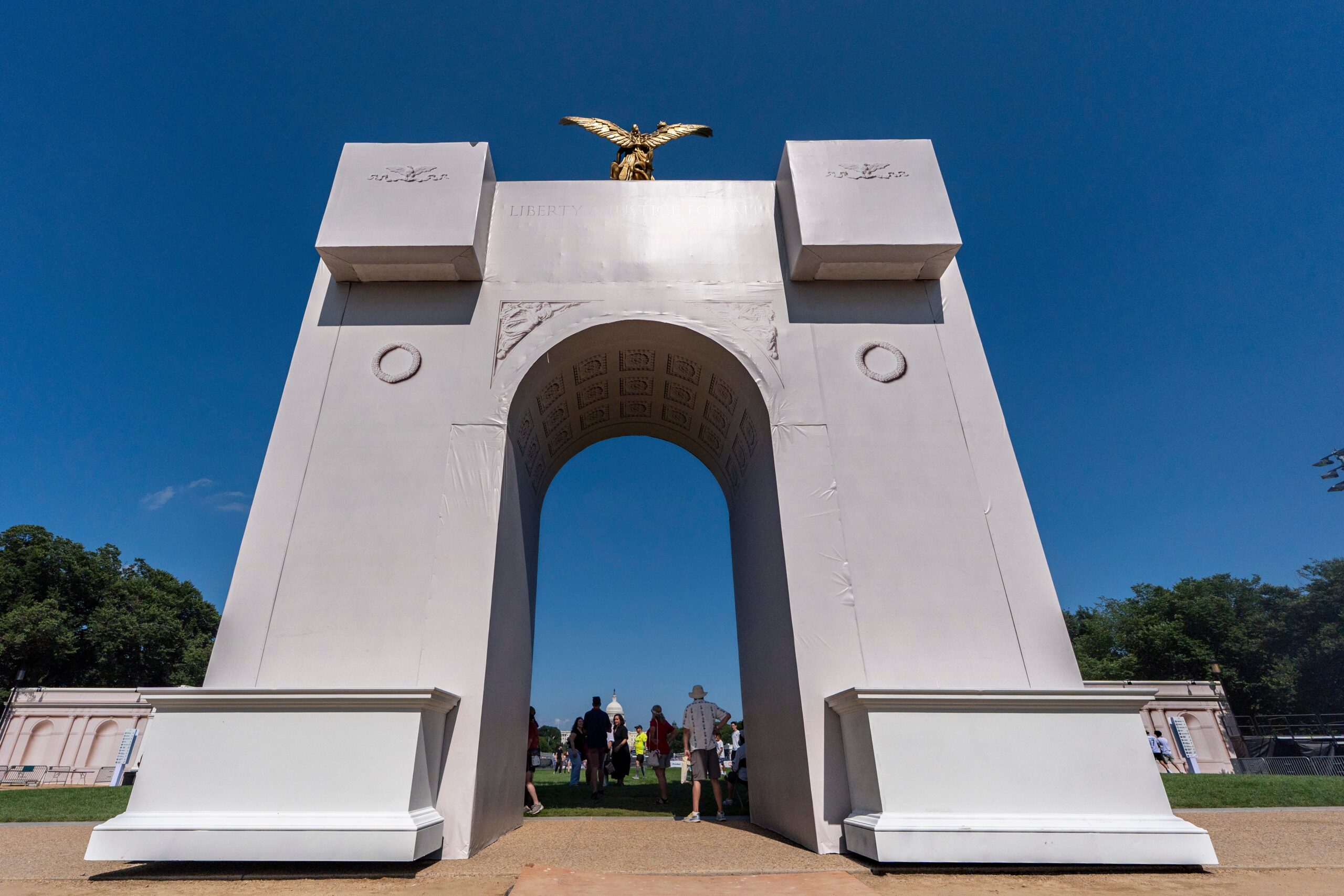
    A mockup of President Donald Trump’s proposed Triumphal Arch stands at the Great American State Fair on the National Mall on June 29.

    The so-called Great American State Fair needs a whole lot more fun and a whole lot less Trump.

    There wasn’t much for children to do besides have souvenir replicas of their new Trump passports stamped.

    I managed to find some shade while sitting on a folding chair inside an area called David’s Tent. As I cooled off, I listened to a woman onstage sing religious songs. Behind me was an aboveground swimming pool set up, ostensibly, for on-the-spot baptisms. In the spirit of inclusivity, there was also a candle-filled menorah positioned in the front of the tent.

    At one point, we made our way over to the Hawaii booth. Inside, all we saw was a large mural of the Aloha State that included a picture of former President Barack Obama that someone had defaced.

    A smiling woman offered to stamp our “passports.” There was nothing else going on in that booth. Not a flowered lei or macadamia nut in sight. No hula dance demonstration. No ukulele performance.

    Same thing with the neighboring Alaska booth.

    I made a point of checking out the North Carolina booth, which had been criticized for having images of Confederate flags on display on TV monitors. This one was a bit more inviting, with its colorful NASCAR displays. I didn’t see anything resembling a rebel flag — but I did see a bale of cotton just sitting on the floor, which can be seen as offensive because of its slavery connotations. The setup had been organized by private donors. One company, Mt. Olive Pickles, has since pulled out of the fair.

    The D.C. booth had some upbeat music playing, a fake cherry blossom tree, and a giant map of the mall that attendees stuck pins into to represent where they lived. “No go-go music?” I asked an attendant, who assured me that some was in the playlist.

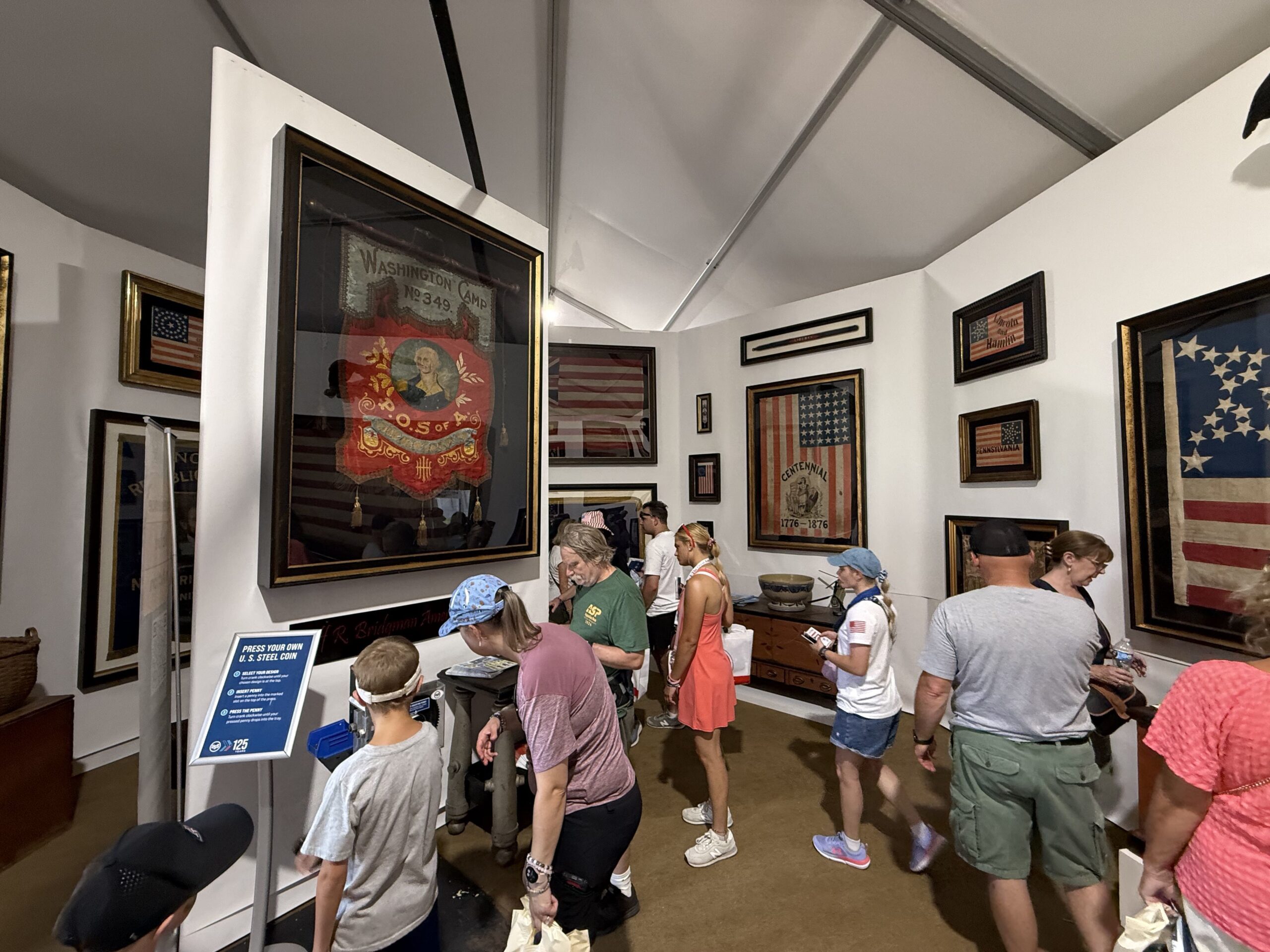
    Pennsylvania’s pavilion showcases state history and memorabilia at the Great American State Fair on June 30 in Washington, D.C.

    Pennsylvania had initially opted out of participating, but its booth opened the day after I was there, funded by private sponsors and pulled together by U.S. Sens. Dave McCormick (R., Pa.) and John Fetterman (D., Pa.) after Gov. Josh Shapiro passed on participating.

    Cape May County, a Republican stronghold, sponsored the New Jersey booth and brought in an impressive-looking eight-foot sand castle. But I noticed one small red plastic bucket of saltwater taffy that a kid was rummaging through. For an area as rich and diverse as the Garden State, the display felt incomplete.

    Soon, I had had enough.

    We stopped by the media table again on our way out and asked about what was on the schedule for later. The answer? A rodeo demonstration at 7 p.m. That was it.

    I was stunned. America deserved more and better for its 250th birthday celebration.

    So, if you decide to go experience the Great American State Fair before it is dismantled on July 10, don’t say I didn’t warn you.

  • LeBron James’ connection to Mike Gansey, how the Sixers can afford him, and what happened the last time they tried to sign him

    LeBron James’ connection to Mike Gansey, how the Sixers can afford him, and what happened the last time they tried to sign him

    Historically, Philadelphia has a rocky relationship with kings. That could change.

    Following the team’s blockbuster trade for Jaylen Brown, it seems the 76ers could be a legit candidate to land LeBron James, who will not be returning to the Los Angeles Lakers for his 24th season. Here’s why the proposition is not as far-fetched as it may seem …

    What is Mike Gansey’s connection to LeBron?

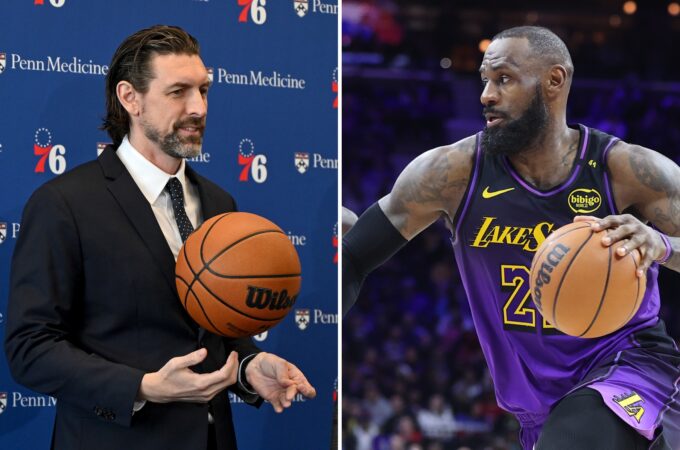
    The prospect of James coming Philadelphia was already picking up steam on social media following the Brown trade. Then, Steven Gansey, the younger brother of new Sixers president of basketball operations Mike Gansey, added fuel to the fire.

    On Wednesday, Steven posted a throwback photo of his brother (far right) alongside James (second from the right) in high school on X. He captioned the post with the eyeballs emoji, insinuating a connection.

    As the photo shows, Gansey and James have crossed paths. The two Ohio natives competed in high school. Gansey, who went to have a memorable collegiate career at West Virginia, finished as the runner-up to James in the 2001 Mr. Ohio Basketball race.

    Would Gansey make another splashy move?

    Over a decade after facing LeBron on the court, Gansey served in a variety of roles in Cleveland during James’ second stint with the Cavaliers. In 2016, when James willed the team to a 3-1 comeback over the Golden State Warriors in the NBA Finals, Gansey received a ring as the team’s director of development league operations.

    Signing James would also be in line with the Sixers president’s resume. Gansey has previously shown that he is not scared of making splashy moves — and bringing in one of the NBA’s all-time greats is a cannonball.

    As the Cavaliers general manager, Gansey was part of a front office that traded for stars Donovan Mitchell and James Harden. Now, during his first offseason leading the Sixers, he executed a trade for Brown — another top-tier player. So it wouldn’t appear Gansey is too risk-adverse to add another star to the roster.

    New Sixers president Mike Gansey has been known to make splashy moves.

    Are the Sixers actually in the mix?

    On Wednesday, Rich Paul, James’ agent and longtime friend, told Game Over podcast host Max Kellerman that between 12 and 14 teams have reached out about his client. With the Sixers appearing to be all-in this season, it would make sense that the team has interest.

    And on Thursday, ESPN’s Shams Charania reported that the Sixers are “trying to make a pitch” to James.

    Shortly after, ESPN’s Brian Windhorst also linked James to the Sixers, pointing to Tyrese Maxey’s connection through Paul and Klutch Sports.

    “A key factor in any sort of Philadelphia pursuit of LeBron is Tyrese Maxey. That is not only because of his talent, which is awesome, but he’s one of Klutch’s core clients,” Windhorst said. “He’s basically a part of LeBron’s extended family, so you would not only have Jaylen Brown as the addition, you would have Tyrese Maxey as your drawing card.”

    James has also been linked to the Heat, the Cavaliers, and the Warriors since becoming a free agent.

    How would LeBron fit with the Sixers?

    James’ time-proven versatility makes him a good fit on most NBA rosters, and the Sixers are no exception.

    James could easily slide into the four-spot over presumptive starter Dean Wade, a free-agent acquisition from Cleveland. Even if Joel Embiid is banged up during the regular season, the Sixers have two high volume scorers to take the load off James in Brown and Maxey. Last season, Brown and Maxey finished fourth and fifth in points per game, respectively.

    The 41-year-old future Hall of Famer is more than willing to take the backseat in the twilight of his career. Last year, Lakers guard Luke Dončić led the league in points per game as James served as the team’s secondary ballhandler. James averaged 20.9 points, 6.1 rebounds, and 7.2 assists in 60 games last season. With the Sixers, he would be asked to do even less.

    Could the Sixers even afford him?

    James is not looking for a big payday, which is welcome news for the cash-strapped Sixers.

    ESPN reported that the four-time MVP is willing to sign a minimum contract. This report coincides with comments from Paul, who previously explained the 41-year old’s decision will be motivated by achieving “complete happiness” — not money.

    The Sixers, after signing former New York Knicks center Ariel Hukporti on Wednesday and guard Anfernee Simons on Thursday, are now over the luxury tax and $3.2 million under the first apron, where they are hard-capped. They are now limited to veteran minimum contracts, meaning they could sign James if he is willing to play on a low-cost deal.

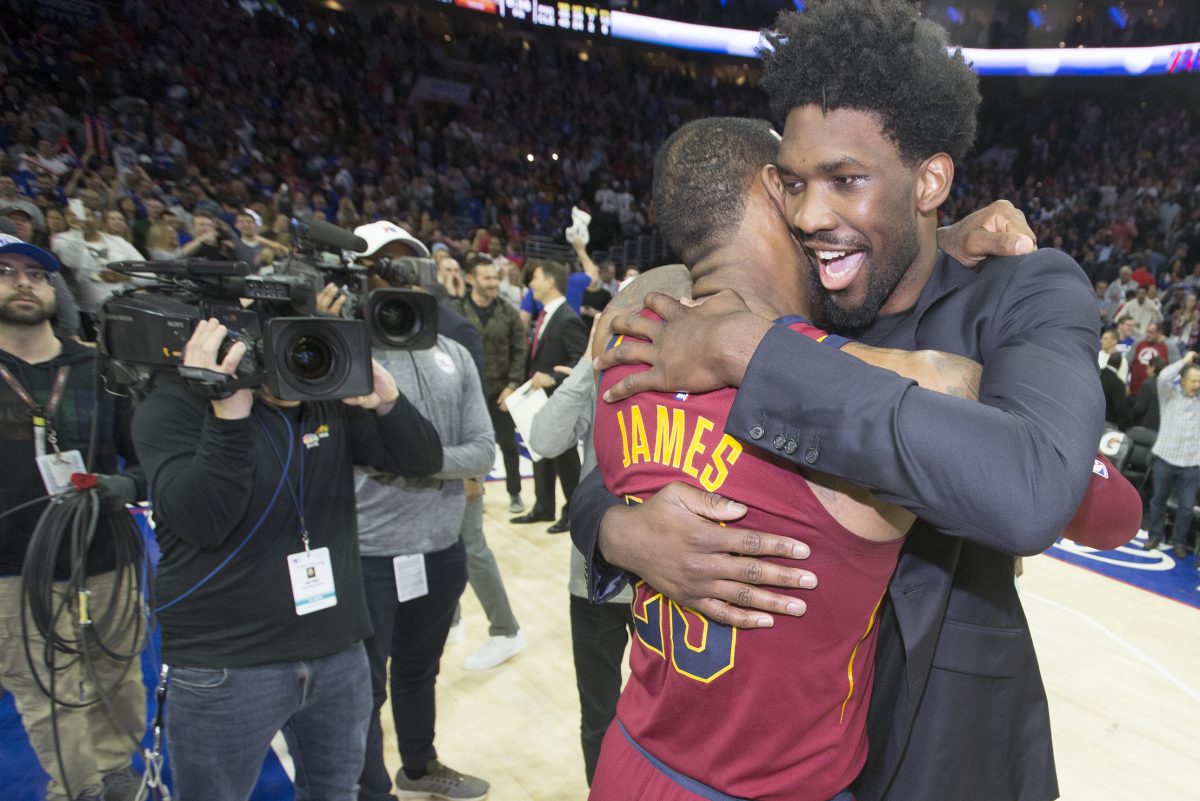
    Joel Embiid (right) tried recruiting LeBron the last time he was a free agent.

    Have the Sixers ever been close before?

    The last time James was seeking a new team, as a free-agent in 2018, he gave Philadelphia a look.

    Although many considered James to Los Angeles to be a done deal at the time, he did consider joining the Sixers. In an interview with ESPN’s Rachel Nichols after signing with the Lakers, James mentioned that he chose the Lakers over the likes of the Sixers and the Houston Rockets — two teams that boasted more talent than LA at the time — to help cement his legacy as a great.

    “I definitely thought long and hard about the possibilities of lining up alongside Ben [Simmons] and [Joel] Embiid, or lining up alongside [James] Harden and Chris [Paul],” James told ESPN in 2018. “I felt like at this point in my career, the ultimate for me — just like when I went to Miami, everyone kind of looks at me joining a super team.”

    “I like the challenge of being able to help a team get to some places they haven’t been in a while, and obviously the Lakers haven’t made the playoffs in a few years,” he added.

    Representatives from Philadelphia met with James’ camp but James did not attend the meeting. The meeting was led by then-Sixers head coach Brett Brown, who was also serving as the team’s interim president following the resignation of Bryan Colangelo.

    Leading up to that free agency, Philadelphia made an all-out push for James with Embiid taking to social media to pitch his team to James. The then-24-year-old center made a plea on Twitter (now X), and even took a shot at Colangelo by referencing a now infamous line he used on one of the burner accounts that led to his exit.

    Meanwhile, Philadelphia-based company Power Home Remodeling purchased three billboards outside of Cleveland to court James, who played for the Cavaliers at the time. Two of the billboards read “Philly Wants LeBron” and “Complete The Process” — referring to the Sixers’ motto spearheaded by former president Sam Hinkie. The third billboard featured LeBron’s number on the court alongside the numbers of the Sixers’ starting lineup.

    The rumor mill around James joining the Sixers mainly revolved around his well-known relationship with Simmons, who was known to workout with James on occasion. Both former first overall picks, the two (like Maxey and James) shared an agency in Klutch Sports. Coming out of the draft and early in his career, Simmons, a 6-foot-10 point guard, also received a hefty comparison to James because of his playmaking ability and size.

    As fate would have it, Simmons recently displayed interest in returning to Philadelphia in an interview with Men’s Health.

  • ‘Task’ to begin filming second season in Manayunk. Here’s what fans and residents need to know.

    ‘Task’ to begin filming second season in Manayunk. Here’s what fans and residents need to know.

    Editor’s note: This story contains spoilers for season one of “Task.”

    The cast and crew of the HBO crime drama Task will descend on Manayunk next week to begin filming Season 2, according to notices posted around the neighborhood and on a local Facebook group.

    The company Random Productions wrote that filming is scheduled for July 7-9, when certain streets will be closed to accommodate trailers, equipment vehicles, cast, and crew members. Parking restrictions, however, will begin earlier on specific blocks, starting Sunday, July 5.

    “We will try to keep these closures as minimal as possible and will not prevent residents from accessing driveways or parking lots,” the notices state.

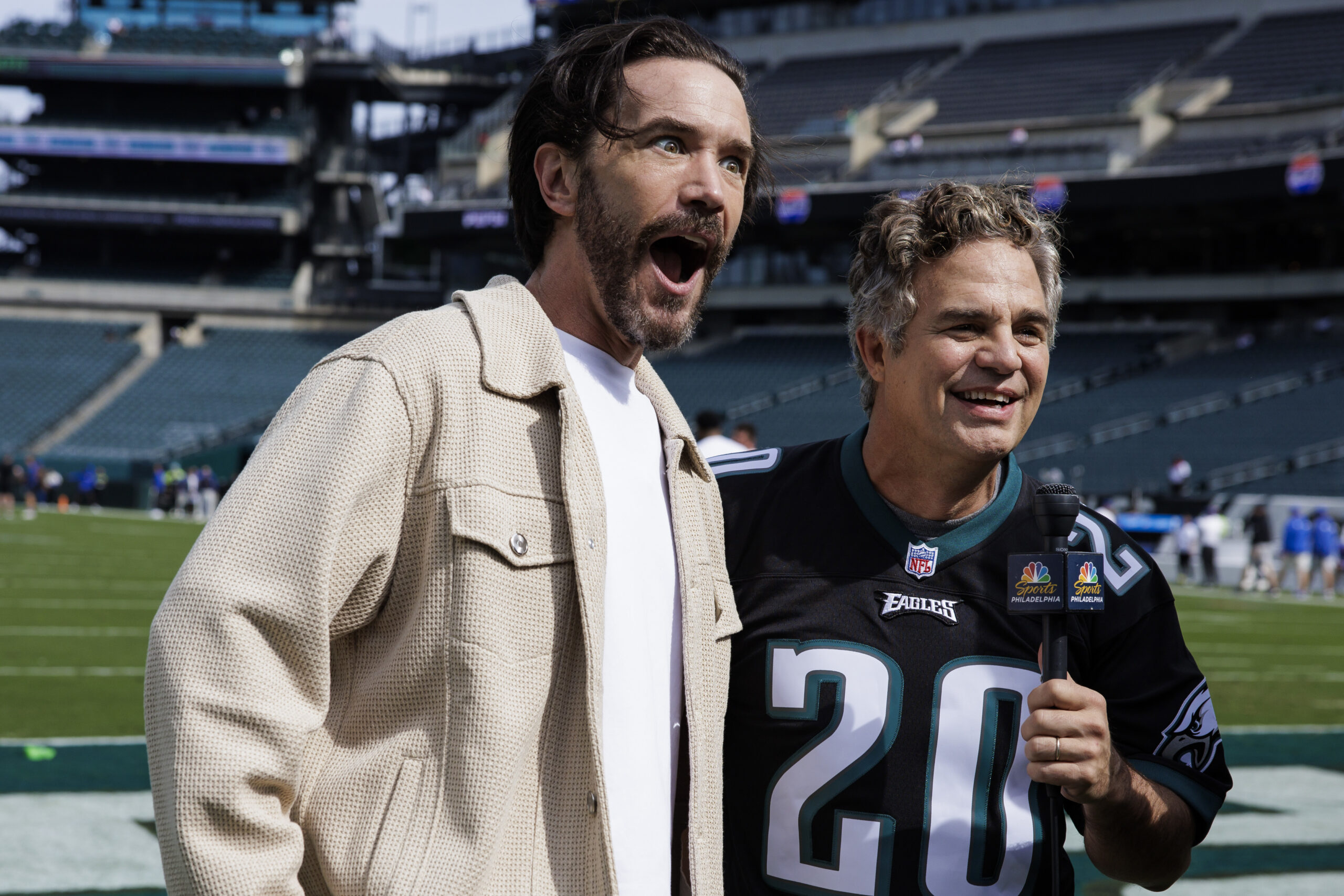
    Actors Tom Pelphrey (left) and Mark Ruffalo, from HBO’s “Task,” do interviews before the Philadelphia Eagles game against the Los Angeles Rams at Lincoln Financial Field on Sunday, Sept. 21, 2025, in Philadelphia.

    What fans need to know

    The Mark Ruffalo-led series from Mare of Easttown creator and Berwyn resident Brad Ingelsby will again center on the dogged and empathetic FBI agent Tom Brandis, this time as he spearheads a new task force where, as the logline reads, “the deeper the operation runs, the harder it is to tell who’s the target.”

    Brandis’ rival this season will be Philadelphia DEA agent Eddie Barnes, played by Mahershala Ali, the Oscar winner who starred in Moonlight, Green Book, and the 2019 HBO crime show True Detective. (Season 1 saw Brandis face off against robber Robbie Prendergrast, played to critical acclaim by Ozark actor Tom Pelphrey, who grew up in Howell Township, N.J.)

    Joining Ali as fellow DEA agents are Pillion and Harry Potter actor Henry Melling, who will play a hothead named Brennan Boylan; The Assassination of Gianni Versace star Edgar Ramirez, cast as second-in-command Miguel Contreras, described as a “devoted family man … torn between duty and guilt”; and Star City actor Adam Nagaitis, playing loyal agent Luke Clemmons.

    On the FBI side, 1923 actor Aminah Nieves will play Nataly Zamora, who Deadline described as “a no-nonsense FBI agent and dedicated young mother who fights hard to protect the community that raised her.”

    It’s not yet clear whether other cast members from Season 1 will return. That includes Silvia Dionicio and Phoebe Fox, who played Brandis’ daughters, and Andrew Russel, their incarcerated brother who killed their mother accidentally during a schizophrenic episode. The emotional and bittersweet finale concluded with Brandis testifying at his son’s trial and affirming that he would be welcome home whenever he’s released.

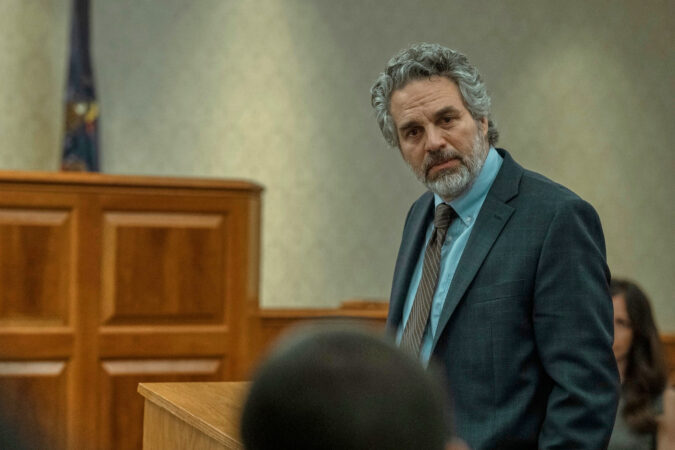
    Tom Brandis (Mark Ruffalo) hugs his family after his son Ethan’s parole hearing in the “Task” finale.

    Season 1 received millions of viewers — and, of course, a strong Philadelphia following — with the finale alone reaching an audience of 4 million in the U.S. within three days of airing. HBO has said that Task was one of its “top three fastest-growing, debut seasons.” Viewership overall outpaced Ingelsby’s Emmy-winning Mare of Easttown, which broke HBO viewership records in 2021 and may return for a second season. (It’s likely that Task, too, will receive Emmy Awards attention when nominations are announced July 8.)

    Returning to Task behind the scenes are South Philadelphia native Jeremiah Zagar, who was a director and executive producer on Season 1; the son of late Philadelphia mosaicist Isaiah Zagar will serve as executive producer. Ruffalo will again executive produce the show, alongside Ingelsby and others, including Mare of Easttown executive producer Mark Roybal.

    The first season of Task filmed in and around Philadelphia, including Delaware, Montgomery, and Chester Counties, and further out into rural Pennsylvania. Creator Inglesby has proudly said that the show is a Delco story, and his team aims for authentic portrayals of the region, down to the signature Delco accent.

    Part of that effort means hiring local crews and background actors. In Season 1, the production hired 777 Pennsylvanians as cast and crew for 177 days, investing $230 million in the regional economy.

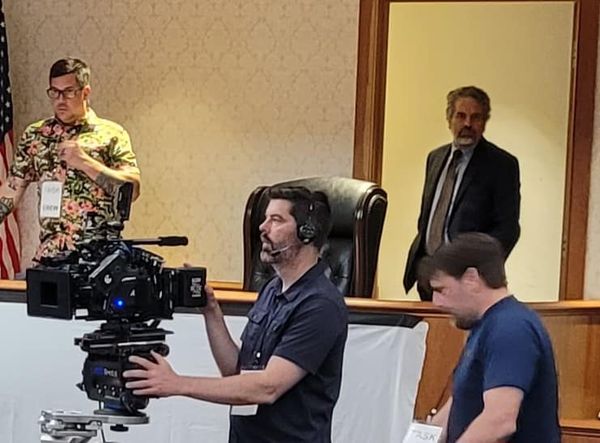
    Actor Mark Ruffalo (right in black suit) shoots for the HBO series ‘Task’ at the Delaware County Government Center and Courthouse on June 17, 2024.

    Last fall, Task received a record-breaking $49.8 million tax credit from Pennsylvania, the highest amount the state has ever granted a single production. HBO estimates that Season 2 will bring some 3,700 jobs to the state and the studio expects to invest an estimated $194.1 million in Pennsylvania’s economy as it pays for local crews and hotel accommodations, among other expenses.

    Kensington-based casting agency Heery Loftus has led local casting efforts for the show, most recently announcing a call for “Latino men who can portray organized crime figures” and “men and women of all ethnicities who can portray law enforcement personnel.”

    A premiere date for Season 2 has not yet been announced.

    “Task” showrunner Brad Ingelsby and star Mark Ruffalo on set.

    What Manayunk residents need to know

    Per two notices from Random Productions, “No Parking” signs will be posted on these streets during these dates:

    Sunday, July 5 at 6 p.m. to Wednesday, July 8 at 11 p.m.:

    • Cresson Street between Cotton Street and Gay Street

    Monday, July 6 at 6 p.m. to Wednesday, July 8 at 11 p.m.:

    • Grape Street between Silverwood Street and Cresson Street
    • Levering Street between Cresson Street and Silverwood Street
    • Cotton Street between Cresson Street and Main Street
    • Main Street between Cotton Street and Levering Street
    • Grape Street between Main Street and Cresson Street
    • Levering Street between Main Street and Cresson Street

    Wednesday, July 8 at 6 p.m. to Thursday, July 9 at 10 p.m.:

    • Dupont Street between High Street and Smick Street
    • Baker Street between Dupont Street and Green Lane
    • Baker Street between Dupont Street and Mallory Street

    These streets will be closed during these dates and approximate times:

    Tuesday, July 7 from 7 a.m. to 10 a.m. and Wednesday, July 8 from 7 a.m. to 3 p.m.:

    • Grape Street between Silverwood Street and Cresson Street
    • Cresson Street between Cotton Street and Gay Street

    Thursday, July 9 from 6 a.m. to 1 p.m.:

    • Dupont Street between Smick Street and High Street

    Please note: This breakdown of parking restrictions and street closures may not be comprehensive as the company released multiple neighborhood notices.

  • Philadelphia shipwrights hand-built a replica of the boat Washington used to cross the Delaware. Yes, you can climb on it.

    Philadelphia shipwrights hand-built a replica of the boat Washington used to cross the Delaware. Yes, you can climb on it.

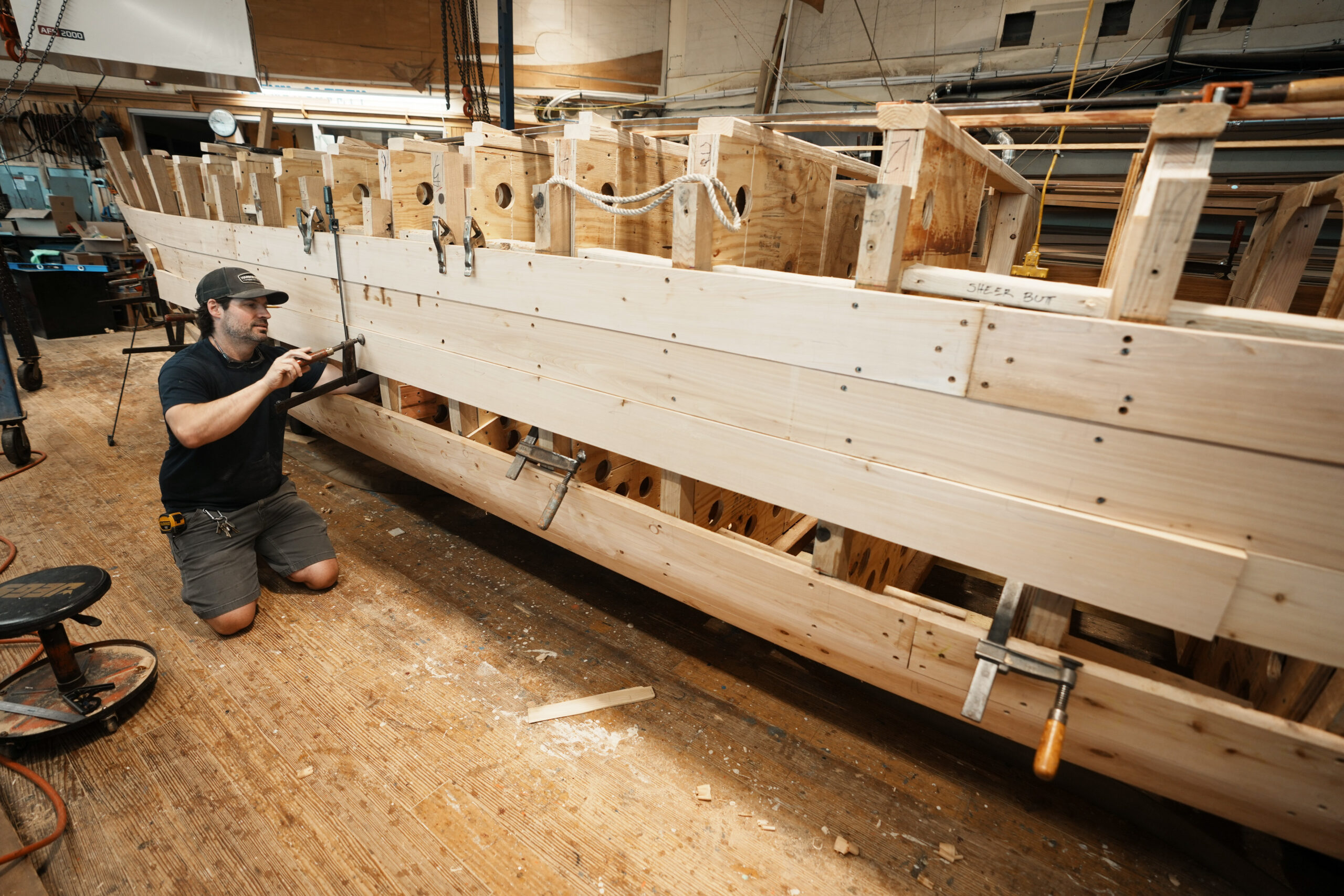
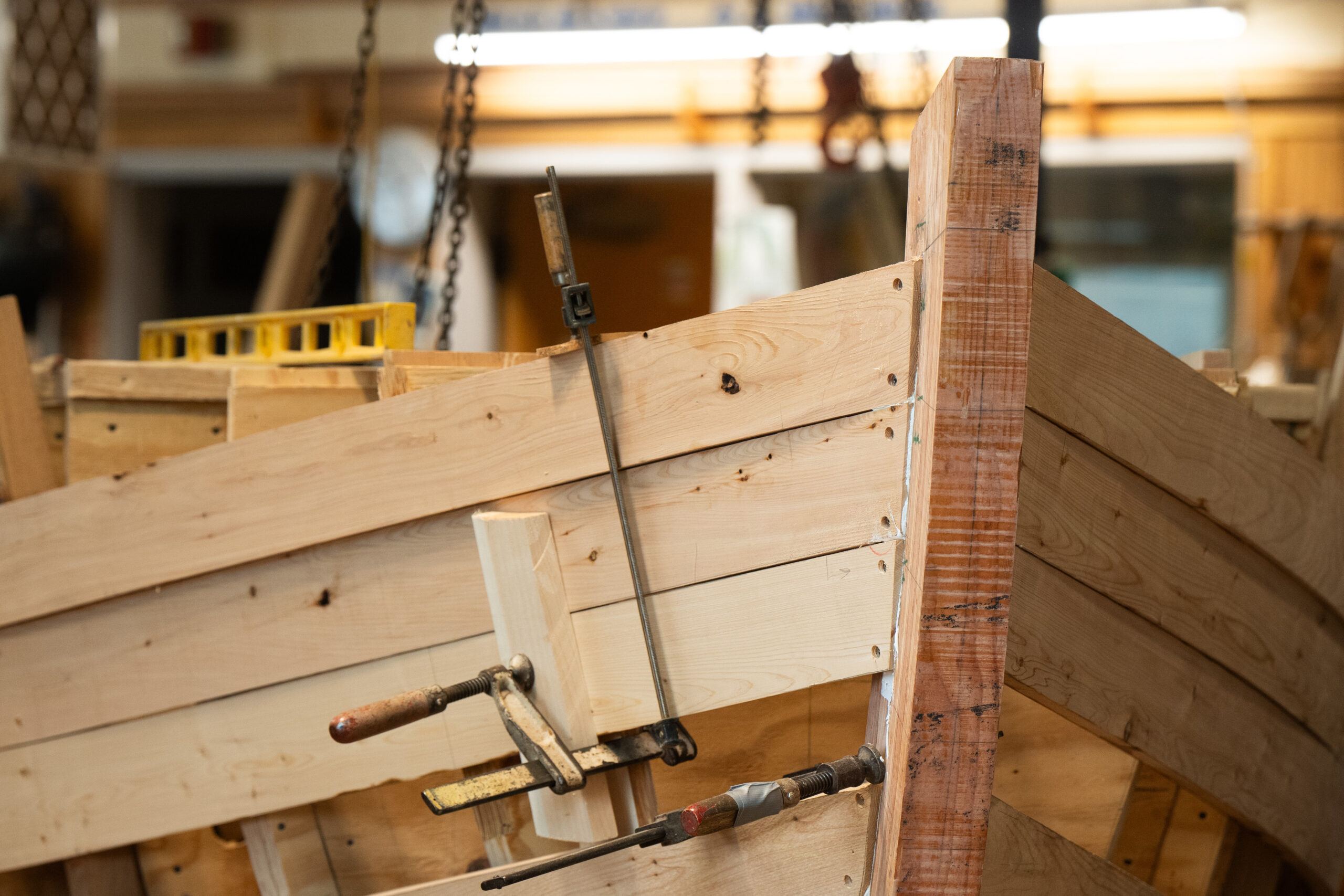
    The floor of David Dormond’s workshop is scattered with wooden planks, shaving piles, and machines that scream “DO NOT TOUCH!” In the middle of it all sits a 40-foot-long, 3500-pound wooden boat that looks like it could hold an army.

    That’s because it’s meant to. Well, sort of.

    It’s a Durham boat, named because the design was used to transport iron from Durham Ironworks in Bucks County to Philadelphia. It is better known as being the model of boat George Washington used to cross the Delaware with his Patriot troops on Christmas in 1776.

    At the Independence Seaport Museum in Philadelphia, David Dormond is replicating the boat Washington used to cross the Delaware River, June 18, 2026.

    “The moment Washington decided to use these boats to cross the Delaware and storm Trenton changed the tide of the [Revolutionary] War,” said Dormond, who is the director of the Seaport Boat Shop at the Independence Seaport Museum (ISM). “It was one of the pivotal points for the U.S. in gaining our freedom.”

    Dormond and his team have built a full-scale replica of the Durham boat to be displayed in Washington Crossing Historic Park. Authenticity was at the forefront of its construction, with Dormond committed to making the boat as historically accurate as possible.

    The wood for the replica was sourced locally, including cedar from Medford, N.J., and white oak for the framing from Reading.

    David Dormond and his team have spent more than a year constructing the boat in the Seaport Boat Shop at the Independence Seaport Museum in Philadelphia.

    “The reason we do that is to keep things just the same as they would’ve been in the 1700s,” Dormond said. “When they were building these boats, they weren’t bringing lumber in from across the country, they were using what they had available to them, so we follow in that tradition.”

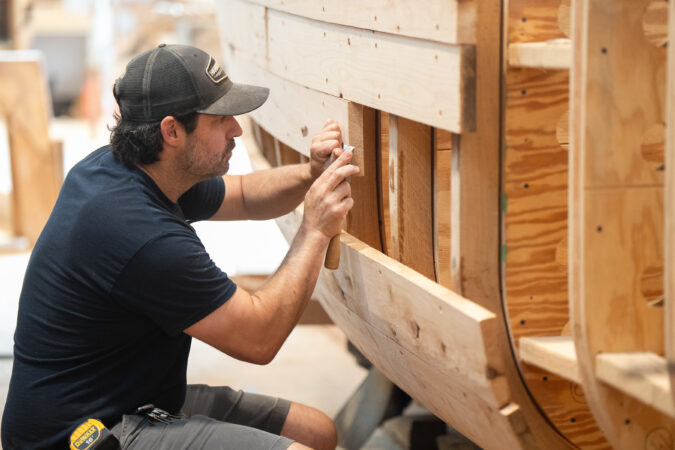
    Nearly every part of the boat was handmade by Dormond and his team, down to the bolts holding the wood together. They steam-bent the frames and used 18th-century-style spokeshaves and batten strips to help shape the boat like they would have in Washington’s day.

    But this boat, now on display in Washington Crossing Historic Park, isn’t just for viewing. Visitors will be able to board the ship and see how grand it was in height and length, but also how cramped the 8-feet-wide interior was for the 2,400 soldiers that crossed the Delaware.

    Most of the boat was handmade, with emphasis on using 18th-century materials to make it as period-accurate as possible.

    The park currently has four Durham boats that sit on the water and are used for historical reenactments. This new boat will be parked on land along the waterline, and will be the first that visitors can walk onto and interact with directly.

    “We were talking about some of the things that people are interested in learning about when they come to the park, but that they can’t necessarily experience. [And] people often asked about the Durham boats,” said Jennifer Martin, director of Friends of Washington Crossing, who collaborated on the boat project with ISM.

    Martin said civilian support played a vital role in the Revolutionary War, and part of that was boat-building.

    “This was trade work. This is something that was passed on and learned,” she said. “I think that there’s an art to handcrafting things and getting people to understand that life was very different in the 18th century.”

    At the Independence Seaport Museum in Philadelphia, David Dormond is replicating the boat Washington used to cross the Delaware River, June 18, 2026.

    Planning for the build started two years ago, with full-time construction beginning in spring 2025. The plans were made by a designer in Maine in the 1960s; Dormond and his team modified them to be truer to what they know of boat-building processes of the 1700s.

    Dormond has built boats at ISM for almost 13 years, and this one is “one of the bigger vessels that we’ve done,” he said. The shop cycles between larger construction projects and simpler boat restorations, commissioned by both institutions, like Washington Crossing, and private customers.

    “It’s a part of our history, so it’s neat to bring back and share that with the public and create something that will be a landmark for visitors at the park for years to come.”

    The Durham boat project is part of a larger revitalization of the riverside at Washington Crossing Historic Park for America’s 250th. This includes a new ADA-accessible trail complete with signs with original artwork that depicts the history being taught.

    At the Independence Seaport Museum in Philadelphia, David Dormond is replicating the boat Washington used to cross the Delaware River, June 18, 2026.

    The park has also invested greatly in a Williamsburg-style experience for the roughly 10,000 field trip students that visit every year. Activities such as hands-on butter churning, gardening, blacksmithing, woodwork, quill handwriting, and soldiers drills give visitors a glimpse into 18th-century living.

    “When people come to the park, a lot of our programs are free,” Martin said. “We wanted to be really intentional with creating more of these living history, immersive learning opportunities that people could experience every day that they come to the park.”

    Though the shop’s team has some finishing touches to make, the boat is currently on display at Washington Crossing Park, ready for visitors amid the nation’s 250th anniversary.

    It will be officially completed and installed by the end of July. It will be posted in the park indefinitely, with Dormond and his team assisting with any maintenance needs to keep it preserved for many years, and visitors, to come.

    The Durham boat is on display at Washington Crossing Historic Park, 1112 River Rd., Washington Crossing, Pa. washingtoncrossingpark.org

  • Resetting the Sixers’ roster after their blockbuster trade for Jaylen Brown and free-agency moves

    Resetting the Sixers’ roster after their blockbuster trade for Jaylen Brown and free-agency moves

    Free agency began slowly for the 76ers, with zero news until Dean Wade agreed to a four-year contract late Tuesday night.

    Legitimate movement occurred Wednesday, when the Sixers added Ariel Hukporti but rotation players Kelly Oubre Jr. and Quentin Grimes reportedly decided to join other teams.

    Then the Sixers smacked the NBA with a blockbuster stunner, acquiring Jaylen Brown from the Boston Celtics in exchange for Paul George and four draft picks.

    It was a seismic win-now swing for new president of basketball operations Mike Gansey, banking on the Joel Embiid-Tyrese Maxey era rather than toggling between two timelines or fully pivoting into a rebuild around the Maxey-VJ Edgecombe backcourt. It also was an effort to keep up in an Eastern Conference that already boasts the NBA champion New York Knicks, along with revamped Miami Heat and Toronto Raptors teams that recently traded for Giannis Antetokounmpo and Kawhi Leonard, respectively.

    After a dizzying Wednesday, here is a reset on where the Sixers’ roster stands.

    Moving in

    Jaylen Brown

    A five-time All-Star and the 2024 NBA Finals MVP, Brown is an elite attacker and shotmaker along with a stout defender. He has demonstrated he can create a successful tandem with a fellow star and be the top scoring option when needed. Last season, he finished sixth in MVP voting, after averaging 28.7 points, 6.9 rebounds, and 5.1 assists to spearhead the Celtics’ surprising 56-win season to finish in second in the Eastern Conference.

    After spending his first 10 NBA seasons cultivating a wing partnership with Jayson Tatum, it will be fascinating to track how the 6-foot-6, 230-pound Brown fits with the Sixers’ roster construction with Maxey and Edgecombe in the backcourt and Embiid (presumably) in the middle. Brown also is one of the NBA’s more outspoken personalities — even his comments on Twitch streams have caused past stirs — which will need to mesh within the Sixers’ locker room.

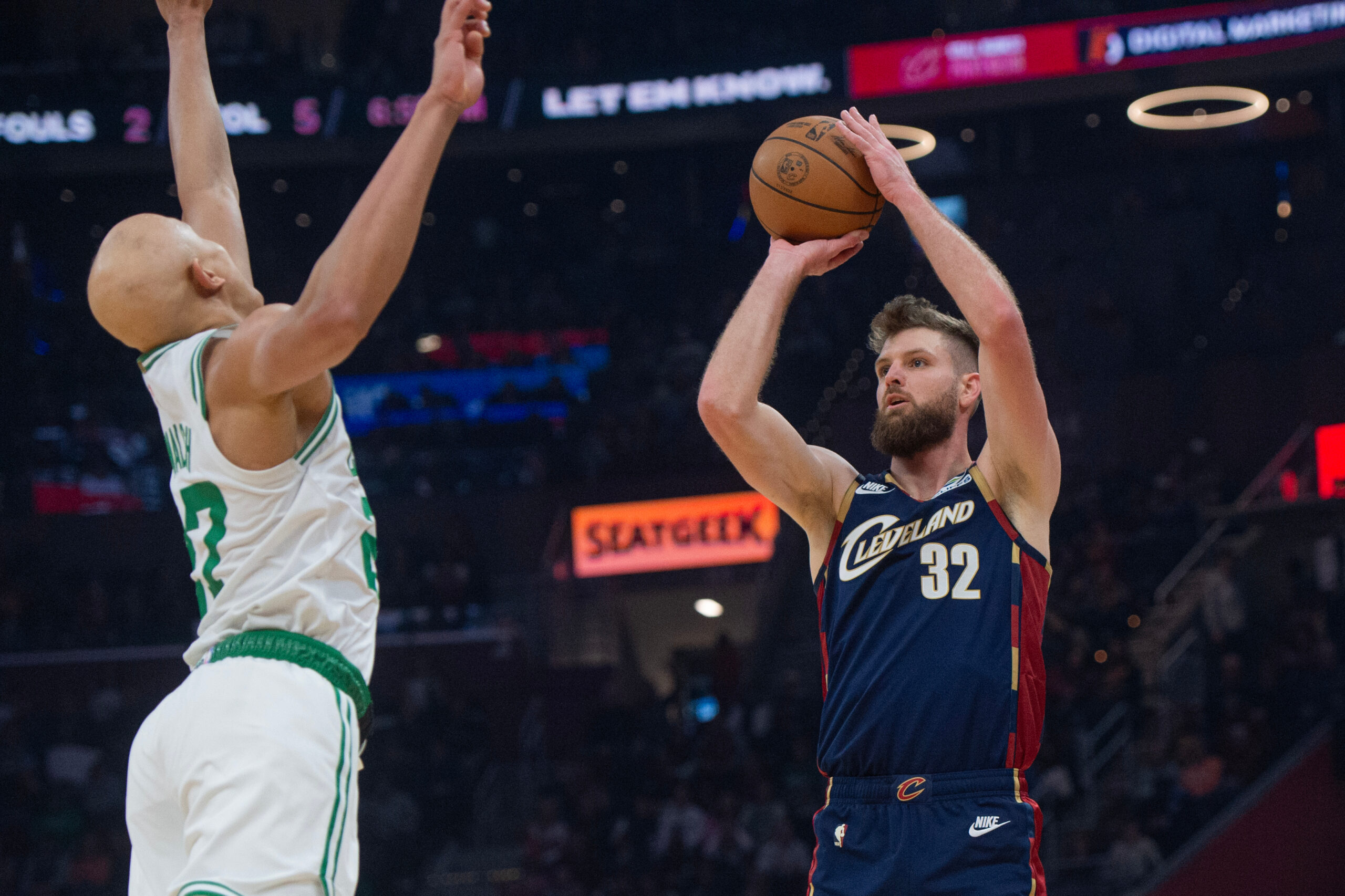
    Dean Wade (32) is another strong on-ball defender that will bring size and versatility to the Sixers.

    Dean Wade

    Wade instantly projects into the other starting forward spot next to Brown. The 6-9, 225-pound Wade is another strong on-ball defender with size and versatility. The 29-year-old also averaged 4.2 rebounds in less than 23 minutes during the past two seasons, and is a career 36.7% three-point shooter.

    The knock on Wade? Health. He has played in more than 60 games only once in his nine-year career.

    Ariel Hukporti

    Hukporti is the latest contender to become Embiid’s backup center. The 24-year-old was the third-team big man behind Karl-Anthony Towns and Mitchell Robinson on the Knicks’ title squad, and averaged less than 10 minutes across 79 games in his first two NBA seasons.

    An athletic 7-footer, Hukporti offers more pure size than Adem Bona, though Bona might be more switchable defensively and capable of playing power forward next to Embiid. And it is a bit troubling that Hukporti has struggled in similar areas — too many fouls, not enough consistency — as Bona.

    Perhaps an opportunity for increased playing time will kickstart Hukporti’s development — and productivity.

    Moving out

    Paul George

    Once a perennial All-Star and splashy free-agency signing, George’s two seasons with the Sixers will go down as a disappointment. He sustained numerous injuries in 2024-25, and last season was suspended 25 games for violating the NBA’s anti-drug policy.

    Though George was terrific on both ends of the floor down the stretch of the regular season — including in the Sixers’ rally to upset the Celtics in the playoffs’ first round — his contract had been considered difficult to trade because of his age and injury history.

    Until Wednesday, that is.

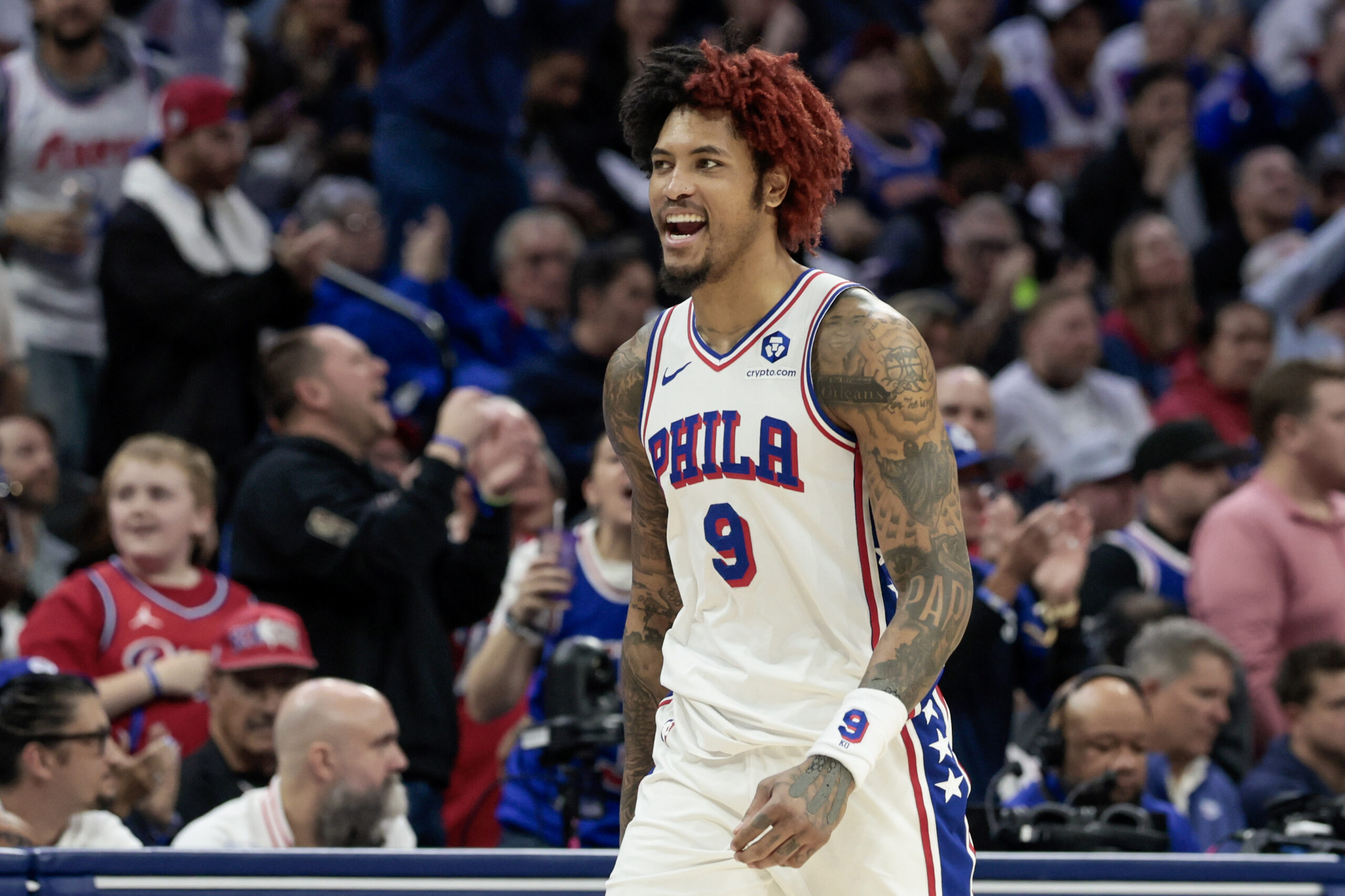
    Kelly Oubre Jr., who played three seasons in Philly, will reportedly join the Indiana Pacers.

    Kelly Oubre Jr.

    Oubre’s three-year Sixers tenure, meanwhile, should be considered a success. He morphed from late-offseason addition on a veteran’s minimum contract, to starter who played with force and flair, to veteran who put together his most efficient season at age 30.

    Before (and after?) the Brown blockbuster, it was puzzling that the Sixers decided not to match (or offer a similar deal) to the two years and “nearly” $17 million that ESPN reported Oubre agreed to with the Pacers. The Sixers held Oubre’s full Bird rights, which allows teams to re-sign their own free agents even if they are already over the salary cap.

    It is possible Oubre wanted a change of scenery — Indiana, which made the 2025 NBA Finals, is expected to regain contender status once All-NBA point guard Tyrese Haliburton recovers from Achilles surgery — or that Gansey did not value Oubre as much as former lead executive Daryl Morey. But the most cynical observer could conclude that letting Oubre walk was a move to help stay under the luxury tax.

    Quentin Grimes

    Grimes’ four-year, $60 million reported deal with the Lakers is a significant raise on the $8.7 million qualifying offer he played on this season following a messy restricted free agency.

    Grimes flashed his “attack mode” scoring punch and tenacious defense in spurts as a sixth man. But he shot a career-low 33.4% from three-point range last season, and, other than an excellent Game 5 performance on both ends in Boston, was not good enough during the playoffs for a Sixers second unit that desperately needed scoring production.

    His departure means the Sixers likely will need immediate contribution from new draftee Labaron Philon Jr., whom many evaluators considered a first-round steal at 22nd overall.

    Moves still to come

    Final roster spot(s)

    Swapping out George’s contract for Brown’s still creates a top-heavy cap sheet. The Sixers are now about $2 million under the luxury tax and $10 million below the first apron, where they are hard-capped. And assuming Hukporti’s salary comes out of the nontaxpayer midlevel exception, the Sixers still have $2.6 million from that to spend along with the $5.5 million biannual exception.

    The Sixers could add two more players to reach 15 on the full-time roster, though they have often only carried 14 to stay under the luxury tax.

    LeBron James is a free agent this summer. Could the Sixers’ recent moves interest the 21-time All-Star?

    It is reasonable to expect that the Sixers will focus on adding one more guard — unless LeBron James wants to come to Philly, of course.

    James’ agent, Rich Paul, told Max Kellerman during the pair’s Game Over podcast released Wednesday that he had spoken to between 12 and 14 teams about James. The Sixers would be silly not to be among that group that has reached out, or to join it after the addition of Brown. Gansey’s brother, Steven, also threw gas on the social media speculation when he posted a photo on X of Gansey and James as high-schoolers in Ohio and the eyeballs emoji.

    Additionally, Bona’s $2.3 million salary for 2026-27 becomes guaranteed on July 7, while Jabari Walker and Dalen Terry’s deals become fully guaranteed Jan. 10. As of Wednesday night, unrestricted free agents Andre Drummond, Trendon Watford, and Kyle Lowry (who is expected to retire) had not committed to signing with any team.

    Current depth chart

    Point guard: Tyrese Maxey, Labaron Philon Jr.

    Shooting guard: VJ Edgecombe, Dalen Terry

    Small forward: Jaylen Brown, Justin Edwards

    Power forward: Dean Wade, Dominick Barlow, Jabari Walker

    Center: Joel Embiid, Adem Bona, Ariel Hukporti, Johni Broome

  • The Sixers just turned Paul George into Jaylen Brown and transformed themselves for an unbelievable price

    The Sixers just turned Paul George into Jaylen Brown and transformed themselves for an unbelievable price

    Well, aren’t we all a bunch of idiots?

    So much for the two timelines thing.

    And for the long, arduous process of building a contender piece by piece.

    So much for all of the hand-wringing about Kelly Oubre Jr. and Quentin Grimes and LaBaron Philon Jr.

    And about Mike Gansey, for that matter.

    The 76ers did the unthinkable on Wednesday. They did it to such an extent that it still isn’t thinkable. In fact, it’s barely believable.

    Not only did the Sixers come from out of nowhere to stun the NBA by acquiring Celtics superstar Jaylen Brown, and not only did they do it for a criminally cheap price, but they also somehow managed to ship out the remaining two years and $110 million remaining on Paul George’s contract.

    And, just like that, a new window of title contention has arrived.

    That’s the most important takeaway for Sixers fans. Brown transforms the Sixers in both the short and long term. The 2024 NBA Finals MVP and a sixth-place finisher in regular-season voting this year, the longtime Celtics wing is basically the exact player you would create in a lab if you were dreaming up the perfect star to maximize a team with Tyrese Maxey and VJ Edgecombe in the backcourt. He has the size, versatility, and defensive chops to help make up for however much of that they give away at the guard position. He is a straight-line player who can get to the rim through traffic with or without the ball in his hands. He is an adequate and willing three-point shooter who showed signs of being much more than that earlier in his career. He can alternate seamlessly between primary and secondary scoring roles. Basically, he is the exact player the Sixers would have been crossing their fingers to have a chance to draft at some point in order to make the Maxey-Edgecombe pairing a legitimate contender.

    Even if only half of that was true, the Sixers would have still been justified in making this deal. The unprocessable thing about this deal is the mind-bogglingly low price Gansey somehow managed to finagle from a Celtics team that doesn’t make many bad decisions.

    Sixers president of basketball operations Mike Gansey has gotten off to a strong start in Philly.

    Consider a deal that the Lakers and Jazz struck earlier in the day on Wednesday. In exchange for the right to sign restricted free agent center Walker Kessler, a zero-time All-Star who played just five games last season before undergoing shoulder surgery, the Lakers agreed to pay:

    • a 2031 unprotected first-round pick
    • a 2033 unprotected first-round pick
    • two first-round pick swaps

    That’s what the Lakers gave up for the right to sign Kessler to a four-year, $130 million deal.

    Here is what the Sixers will reportedly give up to acquire Brown:

    • a 2031 unprotected first-round pick
    • an additional first-round pick, TBD (initial reports suggest it will either be the Clippers’ unprotected 2028 first-rounder or the Sixers’ 2028 first-rounder, whichever is more favorable).
    • two second-round picks, one in 2028 and the other in 2030

    (It’s worth noting that the Kessler deal was struck by Jazz CEO Danny Ainge, the former Celtics president who once upon a time acquired Brown and Tatum while fleecing teams in the process.)

    Jaylen Brown will partner with Joel Embiid, Tyrese Maxey and VJ Edgecombe to lead a revamped Sixers roster.

    But the real coup de grace is the inclusion of George, whose contract many believed was under water to the point that the Sixers would’ve needed to attach a first-round pick just for some other team to take it onto their books. Maybe that was errant thinking about the rest of the league’s willingness to spend $110 million over two years on a 36-year-old who has played in 78 games over the last two regular seasons and has played in more than 56 games just once since 2019. Whatever the case, the Sixers should be thrilled.

    George is a tidy anchor for such a mind-blowing deal. The Sixers basically traded him for a much better player who is 6½ years younger. The cost for the move was less than what the Raptors traded for 35-year-old Kawhi Leonard (Brandon Ingram, Gradey Dick, two unprotected firsts, a pick swap, and change), who is in the last year of his contract and will be able to walk away if the Raptors don’t give him a huge contract extension into his late 30s.

    Even if the Celtics and the rest of the NBA knows or suspects something that the Sixers don’t, even if the trade doesn’t prove to be a game changer, it still doesn’t leave them a whole heck of a lot worse off than they would’ve been over the next couple of years with George.

    Heading into the offseason, it sure looked like the Sixers would need to be in a mode of making the best of things and preparing for the day when George would move on and free up some payroll maneuverability. Instead, they’ve vaulted themselves into the realm of top-end contenders for the next three seasons.

    On Wednesday evening, FanDuel had the Sixers tied as the fifth favorite for the NBA title at 22-to-1, trailing the Spurs (2.4-to-1), Thunder (2.5-to-1), Knicks (8.5-to-1), and Celtics (14-to-1).

    Their immediate title hopes still hinge largely on the availability of Joel Embiid. The difference now is that they will not need Embiid to be anything close to his MVP prime in order to be taken seriously. Even if he is some lesser form of who he was last postseason, the Sixers can make an argument for having the edge in top-end talent regardless of matchup. Even if Embiid is absent entirely, they almost certainly should be expected to challenge for a top-four playoff seed.

    Are there ways this could go wrong? Sure. The loss of the 2028 pick would be particularly acute for a team that was presumed to need two or three solid drafts to get itself ready for the post-Embiid era. The Sixers’ depth is still a major question mark. They have a conspicuous lack of volume-capable three-point shooting on the wing. We have yet to hear Brown’s thoughts at having been traded to a place like Philadelphia, on a team with two young ball-dominant scorers and Embiid. At the same time, they can always pivot if it doesn’t work.

    There is always risk. The question is the price of it. For the Sixers, there wasn’t much to decide.