There is more than a little symbolism in Mike Gansey’s first free agent signing as 76ers president.
In handing a four-year, $39 million contract to veteran forward Dean Wade, the Sixers didn’t just add a veteran glue guy whom Gansey helped to discover during the latter’s tenure as an assistant general manager in Cleveland. They also effectively closed the door on at least one and potentially both of Daryl Morey’s shrewdest wins as a roster-builder.
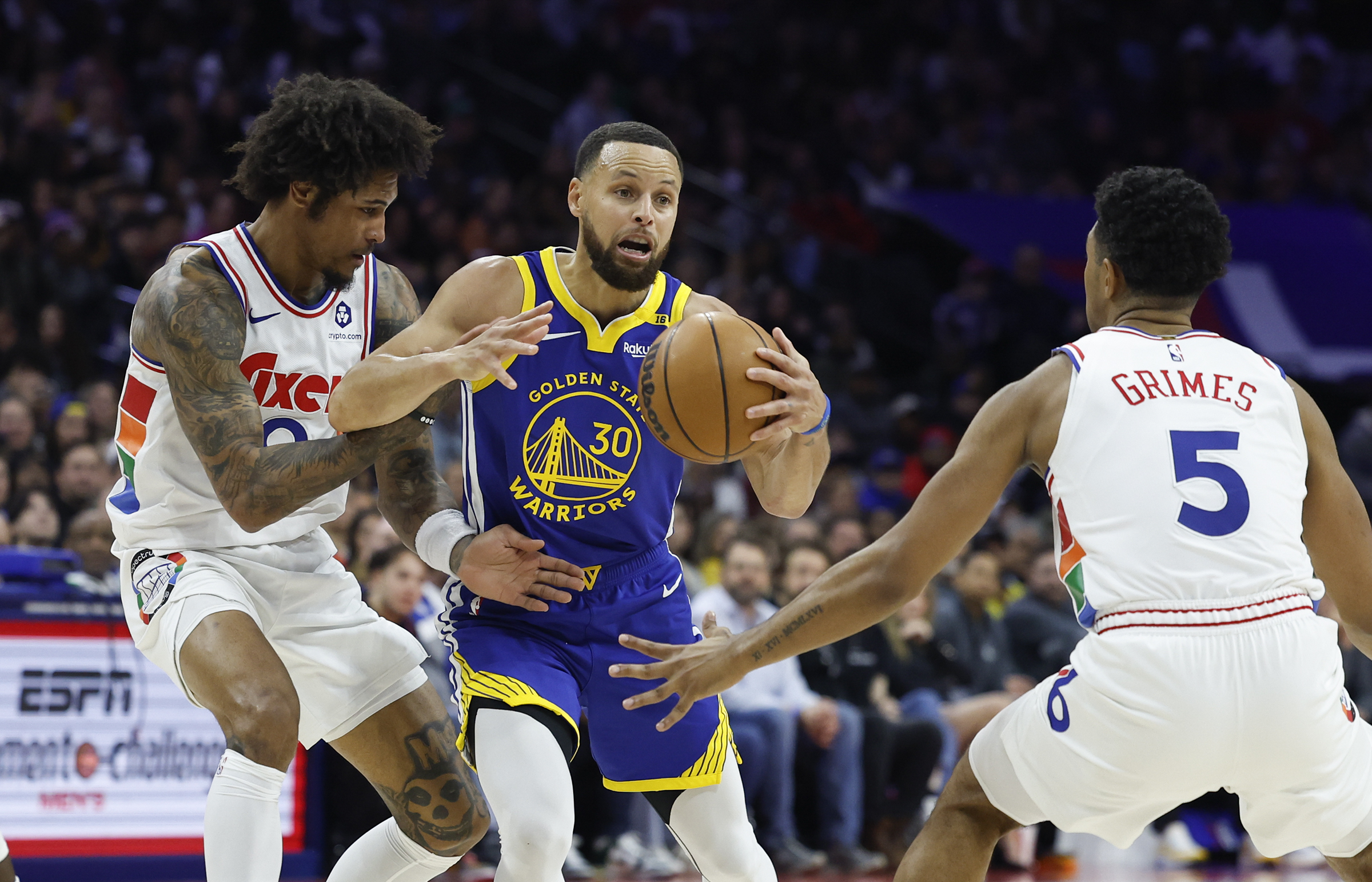
Goodbye, Quentin Grimes.
Good day, Kelly Oubre Jr?
Time will tell whether Day 1 of NBA free agency was a meaningful step in an intentional direction or just a modest change that will make the Sixers’ roster a little more sensible next season. Either way is fine.
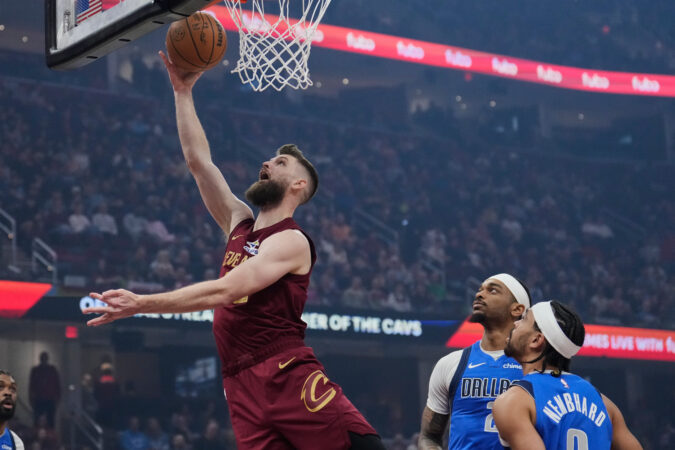
While many will focus on Gansey’s personal connection to Wade, the 29-year-old iwould have made a lot of sense on virtually any incarnation of the Sixers in the post-Ben-Simmons era. The rare stretch four who adds big value on defense, Wade developed from an undrafted free agent to a critical playoff rotation piece in Cleveland by excelling at a lot of the dirty work that exceeds the capabilities or willingness of many 6-foot-9 shooters. This postseason, the Cavaliers outscored opponents by a net of 16.2 points per 100 possessions when Wade was on the court versus off it. That’s impressive stuff.
Wade can play small alongside a couple of bigs the way he did with Evan Mobley and Jarrett Allen. He can play a power four alongside a trio of guards, as he sometimes did with James Harden, Donovan Mitchell, and Sam Merrill. He could even give Nick Nurse an option as a small-ball five, though a lot depends on the other pieces the Sixers will presumably add this offseason.
Wade is hardly a prolific scorer. Among players who have averaged 20 minutes per game in 200+ games over the last four seasons, only Nicolas Batum has scored fewer than Wade’s 5.4 points per game. But he is an effective enough shooter — .375 on about six three-point attempts over 100 possessions this postseason — to create space for others on the offensive end.
That’s all that’s needed for a team with a couple of ball-dominant scorers in the backcourt. That’s who the Cavs have been in the Donovan Mitchell era, whether paired with Darius Garland or James Harden. It’s who the Sixers figure to be with VJ Edgecombe and Tyrese Maxey.
There aren’t many value plays on the free agent market. Wade sure doesn’t count as one even at a modest $10ish million per season. But if the Sixers were going to overpay by a couple of million bucks, it made sense to do it for a player with the size and versatility that will be an absolute necessity on the wing with Maxey, Edgecombe, and this year’s first-round draft pick, Labaron Philon Jr.
Sixers guards Kelly Oubre Jr. and Quentin Grimes are free agents this summer.
When the Sixers drafted Philon, Gansey said the move was not an indication that the team would move on from Grimes, whom Morey acquired from the Mavericks in a low-cost trade in 2025, and who played well enough that year to enter free agency looking for a serious contract. Grimes was less impressive while playing out 2026 on a qualifying offer, but still agreed to a $60 million deal with the Lakers.
Oubre could still end up back in Philly, at least according to the math. The Sixers would maximize their available payroll by re-signing Oubre and then using part of the remaining MLE to add another player. Doing so could create some logistical difficulties during the season, and perhaps limit their trade possibilities, given that they’d be hard-capped at the luxury tax line.
Sixers president of basketball operations Mike Gansey is leading his first free agency in Philly.
With Oubre reportedly meeting with five teams on Tuesday, the Sixers could be better off focusing on using the rest of their MLE on a player who offers them a better mix of size, shooting, and affordability, not to mention consistency. That’s a difficult combination to find, of course. Retaining Oubre would leave the Sixers with a competitive starting five when Joel Embiid and Paul George are healthy and a potentially competent one even when one of the two veterans is out.
The important thing is that Gansey’s focus remain as much on the world beyond 2026-27. Wade fits that bill. He will be 33 years old at the end of this contract, when he will hopefully be a solid role player on a championship team. The goal now should be to find the younger versions of Wade: guys you might one day re-sign for a lot more money than you initially needed to give them. It is a difficult thing to develop, grow, and compete all at the same time. But that needs to be the goal.
With the eyes of the nation on Philadelphia for America’s 250th birthday, Mayor Cherelle L. Parker’s administration this year took over management of the city’s free July Fourth concert, which for years was produced by a nonprofit established by the city: Welcome America.
The mayor instead hired ESM Productions, a for-profit company, to put on the annual show featuring musical acts and fireworks over the Ben Franklin Parkway, and she changed the name from Wawa Welcome America to the “One Philly: Unity Concert for America” — a version of Parker’s well-known slogan, “One Philly: A United City.”
Another change: It will cost taxpayers far more than in the past.
The city is due to pay ESM Productions about $15.5 million for the show, which will be headlined by Christina Aguilera, Jill Scott, and The Roots, and feature rapper Meek Mill, according to a copy of the city’s contract paperwork with ESM, obtained by The Inquirer. The city in March signed a $10 million contract with the Philadelphia-based company, as well as a $5.5 million contract amendment.
By comparison, Welcome America’s budget for all of 2024 — including that year’s July Fourth concert,the numerous other events it manages in the build-up to the concert, and the salaries of its staff — was about $6.6 million, only about $5.3 million of which came from government grants, according to the group’s most recent federal nonprofit disclosure.
Welcome America, which is a public-private partnership with the mayor serving as a board member, receives city and state funding, as well as a corporate sponsorship. The organization has been involved in Philly’s July Fourth celebrations since 1993.
Fans react to the music as the Wawa Welcome America Festival concluded July 4, 2023 with a free concert featuring Ludacris on the Benjamin Franklin Parkway.
Last year’s iteration of the Wawa Welcome America concert cost the organization about $3 million, according to a person with knowledge of the situation who spoke on the condition of anonymity because they were not permitted to disclose that information.
The Philly taxpayer money paid to the concert’s producers does not cover additional expenses borne by the city, such as pay for police officers and sanitation workers staffing the event.
Parker’s office declined a request from The Inquirer for a copy of the contract or information on the cost of this year’s concert. Chief Deputy Mayor Vanessa Garrett Harley said in an interview that the administration would publicly disclose the costs and economic benefits of the concert after it was over.
“At a later time, we could certainly be doing a full accounting, as we’re not trying to hide anything and always want to be transparent,” Garrett Harley said.
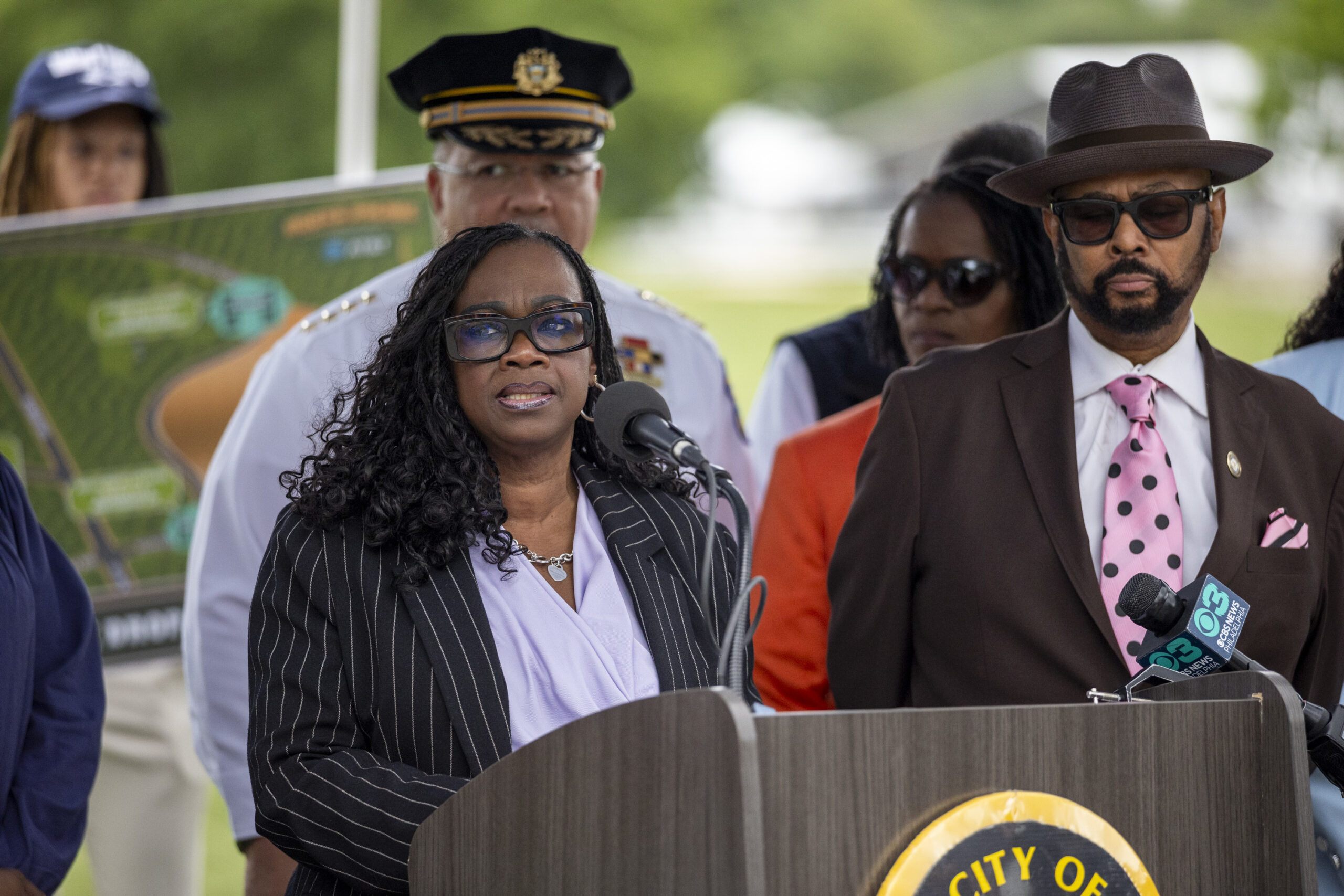
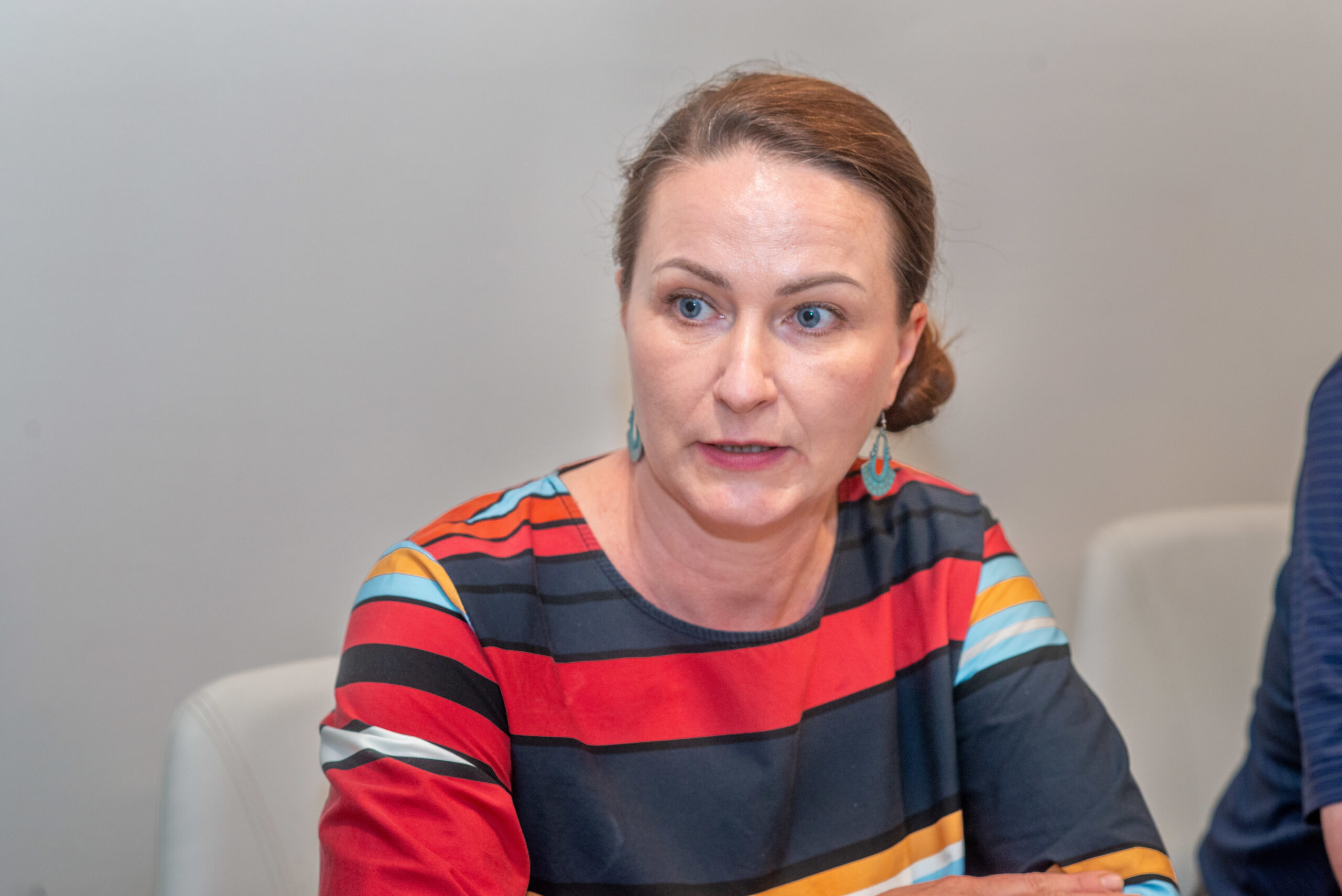
Chief Deputy Mayor Vanessa Garrett Harley speaks at Belmont Plateau in Philadelphia on May 28.
Following the interview with Garrett Harley, The Inquirer later obtained the contract, and the mayor’s office on Tuesday did not respond to follow-up questions about the cost of the concert.
ESM’s original $10 million contract with the city included a breakdown of costs, ranging from $5,000 for “furniture” to nearly $3.4 million for “talent.” It also included $1.2 million for “ESM Productions Fees” and $1 million for “Above the line Producer’s Unit.”
The contract amendment for $5.5 million, signed June 26, did not include details on costs.
A spokesperson for ESM declined to comment.
Founded in 1996 by Scott Mirkin and Jenny Woo, ESM has previously produced numerous high-profile events on the Parkway, including the 2015 papal visit and Jay-Z’s Made in America concert.
David L. Cohen, a Philly political powerbroker and former U.S. ambassador to Canada, said he has hired ESM to produce events going back to when he was chief of staff for then-Mayor Ed Rendell in the 1990s.
“They’re incredibly competent; they’re incredibly good; they do an excellent job,” he said. “I really do think they’re the best event producers in Philadelphia.”
In paperwork submitted to the city, ESM said it “has a long standing relationship” with Cohen and pointed to events he hired the company to produce at the U.S. embassy in Ottawa, Canada, as examples of its past work.
Michael DelBene, president and CEO of Welcome America, said that, despite no longer being the producer for the concert, his organization is still managing more than a dozen Semiquincentennial-related events in partnership with the city. The events kicked off on Juneteenth and will run through the Fourth.
“The celebrations that happen in the city are the implementation of the mayor’s vision, and if she chooses a team to implement that vision, that’s great, and we all support that person and that team,” DelBene said in an interview. “We’re all going to row in the same direction to make sure the city shines.”
Drama and infighting had plagued a series of nonprofit efforts and federal commissions meant to coordinate the festivities. And the COVID-19 pandemic pushed party-planning way down the priority list for the city and for state leaders who could have previously led the charge, former Mayor Jim Kenney and former Gov. Tom Wolf.
Those delays likely squandered any opportunities for a monumental building project, such as the Please Touch Museum building, which was constructed for the 1876 Centennial Exposition, or the Ben Franklin Bridge, which opened for America’s 150th birthday in 1926. They may have also cost Philly the chance for an appearance by a high-profile dignitary, such as when Queen Elizabeth II visited for the 1976 Bicentennial.
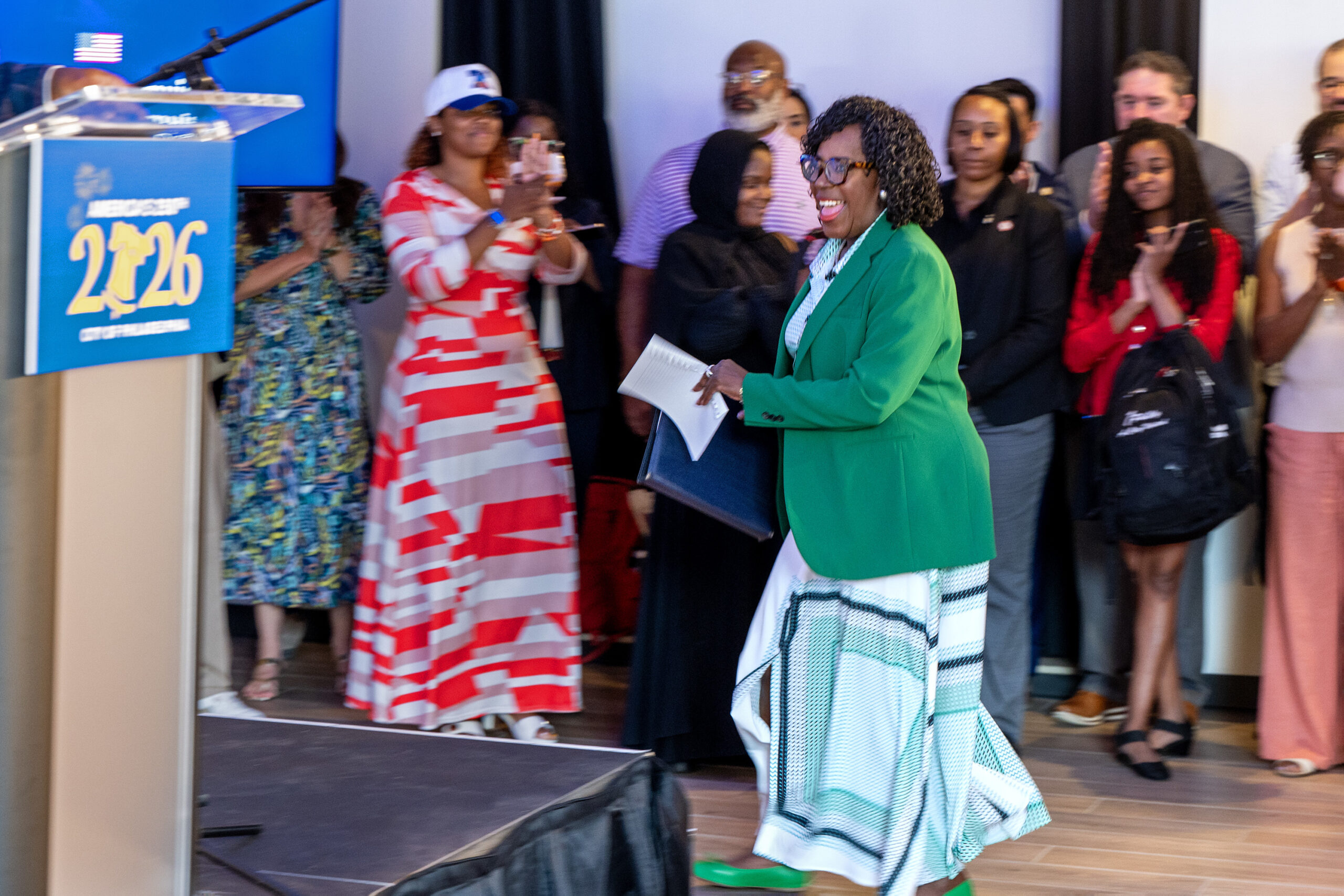
Mayor Cherelle L. Parker heads to the stage at the Independence Visitor Center Wednesday, Sept. 3, 2025 to announce a new initiative that puts city neighborhoods at the forefront of the city celebrations of America’s 250th birthday in 2026.
But the mayor eventually embraced the task in a more public way — following some public prodding from City Councilmember Isaiah Thomas — and the city’s Semiquincentennial celebrations will very much bear her stamp.
Parker has pledged to spend $120 million this year to mark the occasion, and she has made investing in communities across the city, not just the historic district, a major focus as Philadelphia this summer is also hosting World Cup games and the MLB All-Star Game. Much of that spending will pay for street work and beautification projects in neighborhood commercial corridors, 250th-themed block parties, and extra funding for annual events like the Odunde Festival.
“We want to make sure that any and everybody can participate in this regardless of your station in life,” Garrett Harley said.
‘This is her big concert’
With the official Independence Day parade — still organized by Welcome America — scheduled for Friday, July 3, there is surprisingly little in the way of official patriotic proceedings taking place on July Fourth itself.
Parker at 10 a.m. will lead a Philadelphia Freedom Awards ceremony at Independence Mall, honoring seven people, including Cohen and actor and Philadelphia-native Colman Domingo.
At 5 p.m., the concert will kick off on the Ben Franklin Parkway. Performers include Aguilera, Will Smith, DJ Jazzy Jeff, Jill Scott, The Roots, Meek Mill, and Seal. The city’s official fireworks show will begin at the show’s conclusion, around 11:30 p.m.
Fans during the Wawa Welcome America July 4th Concert on the Parkway in Philadelphia, Pa. on July 4, 2022.
Parker has several times compared this year’s show to Live Aid, the 1985 benefit concert staged in Philadelphia and London that featured in its 10-hour stateside lineup Bob Dylan, Mick Jagger, Madonna, Phil Collins, the Beach Boys, the Four Tops, Santana, Run-D.M.C., and many other musical A-listers.
“If you remember Live Aid and you think about the legacy experience we’re trying to create … that’s what we’re trying to do on July the Fourth,” Parker said in March.
Garrett Harley on Tuesday conceded the concert lineups may not be exactly comparable, but said the mayor was “really talking more about the scope and the magnitude and just the memories.”
“But to certain kids it’s gonna be bigger than Live Aid, because Christina Aguilera means to them what Stevie Wonder and some of the folks who ran Live Aid meant to others,” Garrett Harley said.
Garrett Harley disputed the notion that renaming the concert “One Philly: A Unity Concert for America” meant that it now bears Parker’s branding.
“I don’t know how a ‘Unity Concert for America’ is Parker’s branding because the whole point of this is about unity,” Garrett Harley said. “The branding is really about reminding people that we need to unify, we need to be one America, despite everything that may be going on in the country right now.”
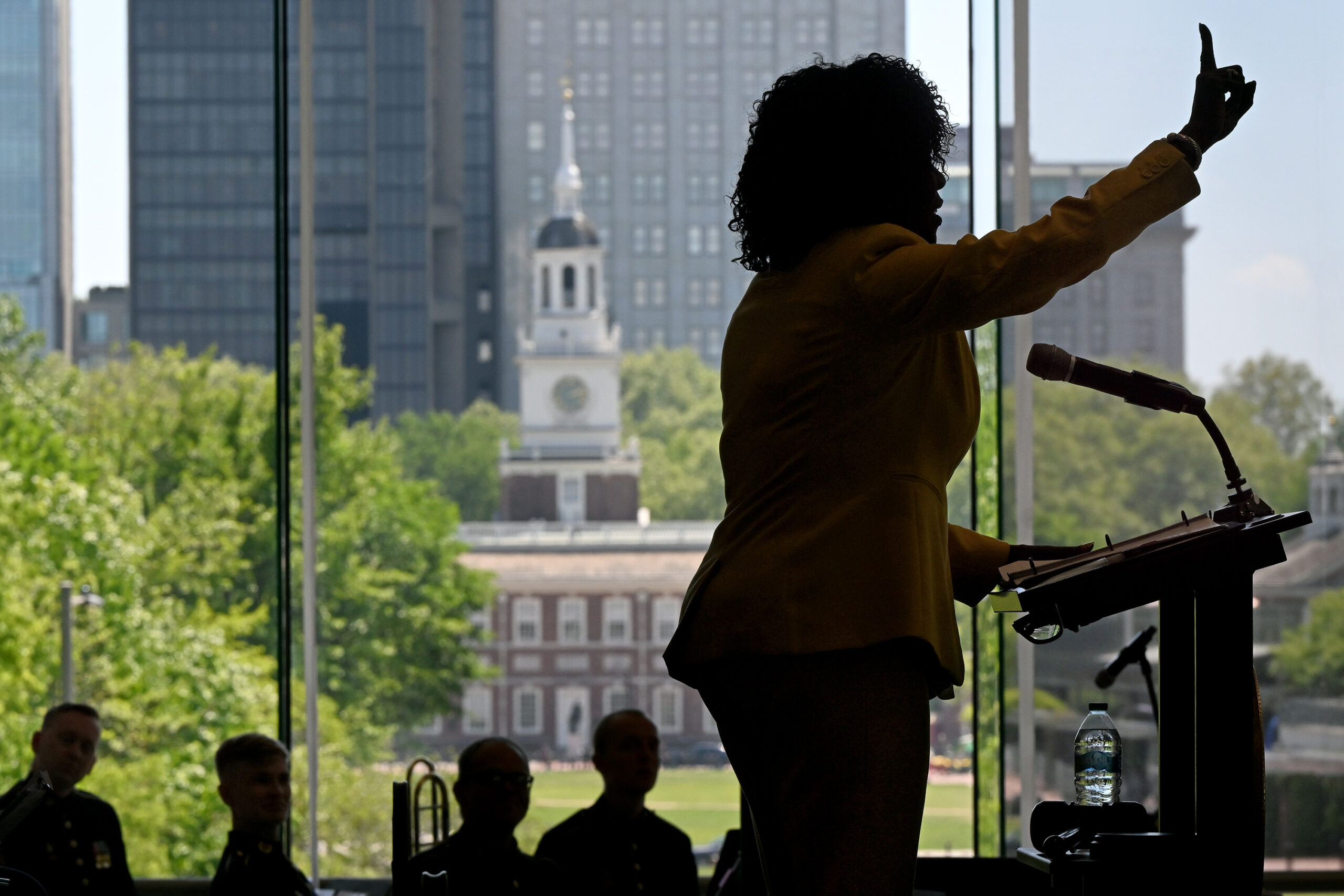
The mayor frequently concludes speeches by asking crowds to raise their index fingers and say in unison, “One Philly: A United City.” She has also had the slogan printed on city trash trucks and cans, along with her name.
Mayor Cherelle L. Parker raises a finger with her call-and-response “One Philly, A United City” mantra ending her speech during a ceremonial meeting of the Pennsylvania Senate at the National Constitution Center across the mall from Independence Hall on May 5.
“Even if it is Parker’s branding, if that’s how people see it, what would Wawa Welcome America be if not branding?” Garrett Harley added.
(Wawa, a longtime corporate sponsor for the city’s July Fourth festivities, pays Welcome America to include its branding in the event, defraying costs for taxpayers.)
Branding or not, Parker’s vision guided the planning for the concert, Garrett Harley said.
“At the end of the day, this is [Philadelphia’s] 100th mayor,” Garrett Harley said of Parker. “This was her biggest concert, and probably will be the biggest that she will ever do. She’s the first female mayor. She’s the first African American female mayor. This is her big concert.”
WASHINGTON — A replica Liberty Bell, a Knoebels amusement park bench, hundreds of bags of potato chips, and dozens of sweating tourists packed into Pennsylvania’s location at President Donald Trump’s Great American State Fair on Tuesday — a stark turnaround from when the signature 250th anniversary event opened in Washington last week without a Keystone State presence.
Pennsylvania was one of the few Democratic-led states that — describing the two-week fair as too partisan — had either decided not to participate or failed to find another host to showcase local history and memorabilia.
The interest, Gov. Josh Shapiro said at the time, was just not there.
But after a weekend-long sprint initiated by U.S. Sens. Dave McCormick (R., Pa.) and John Fetterman (D., Pa.) to dredge up that interest, Pennsylvania’s pavilion opened Tuesday with nearly every inch of the space filled.
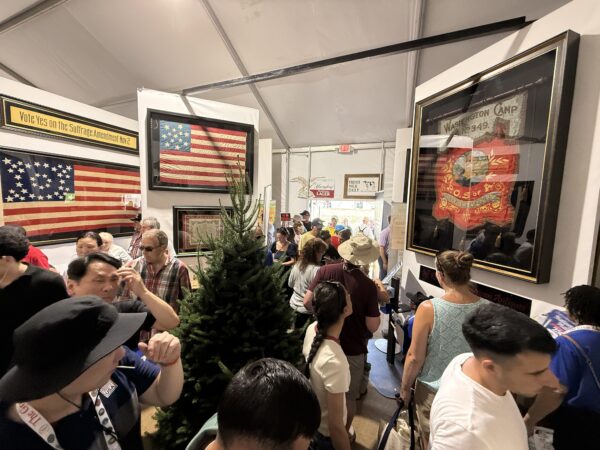
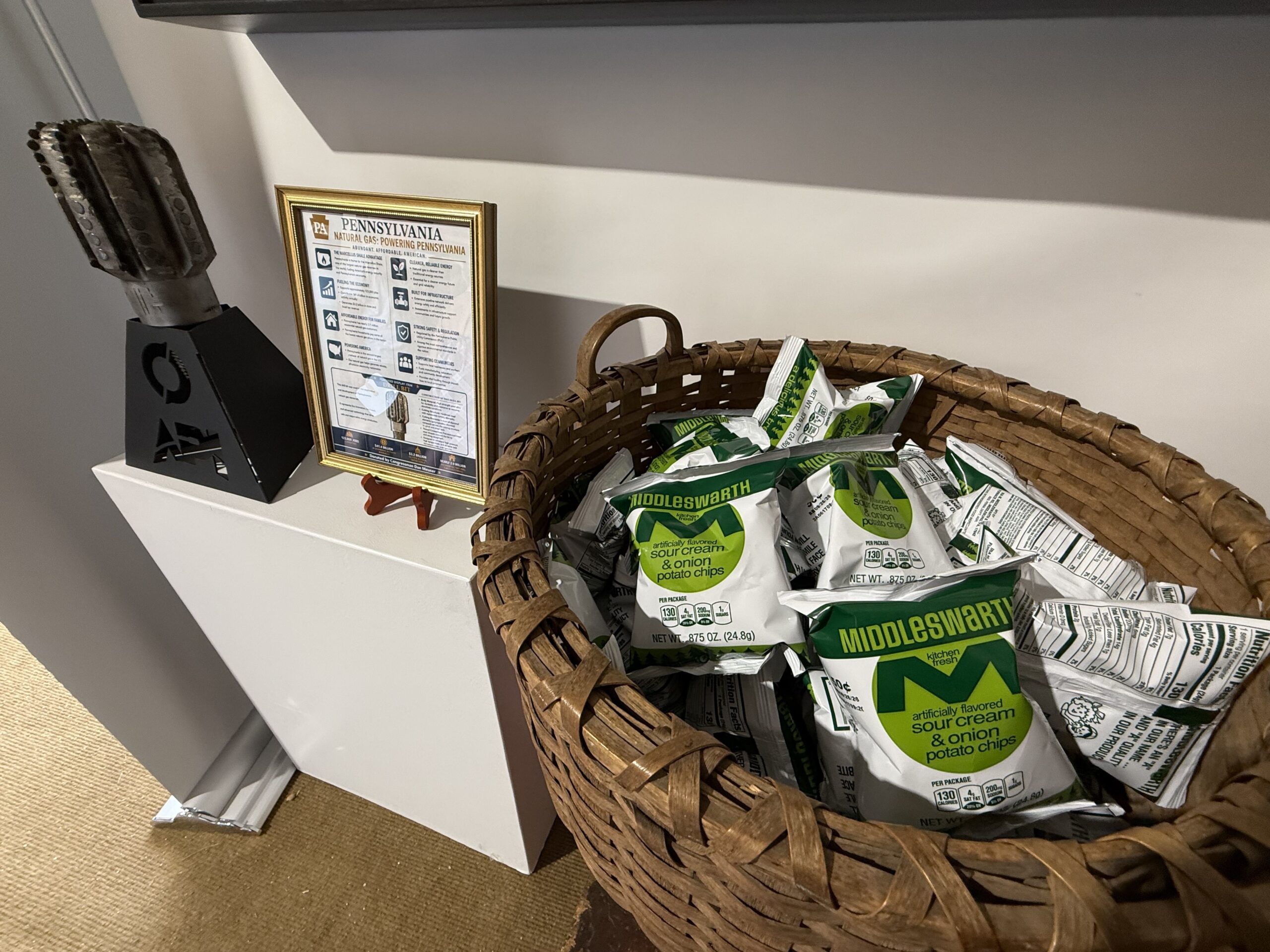
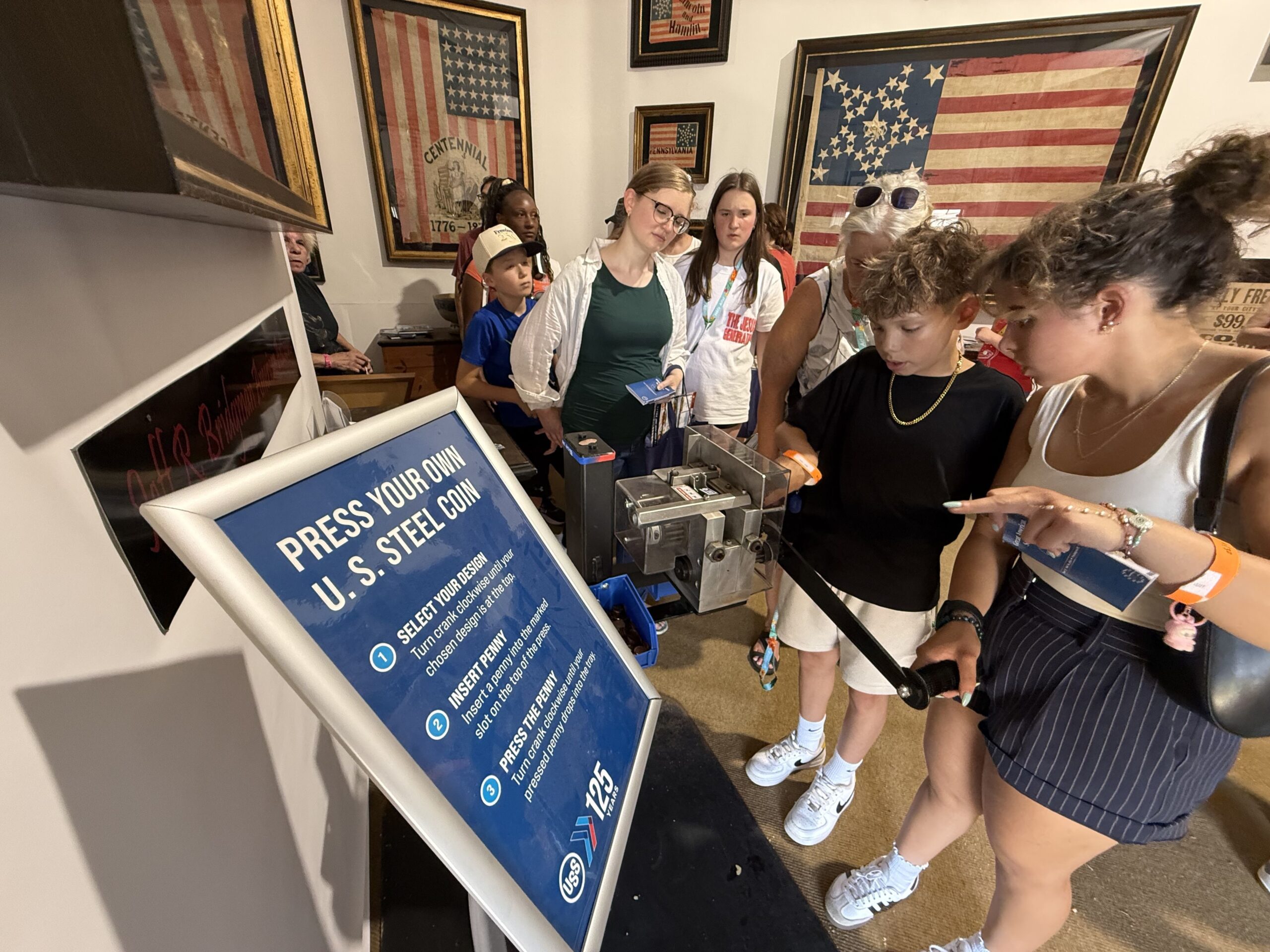
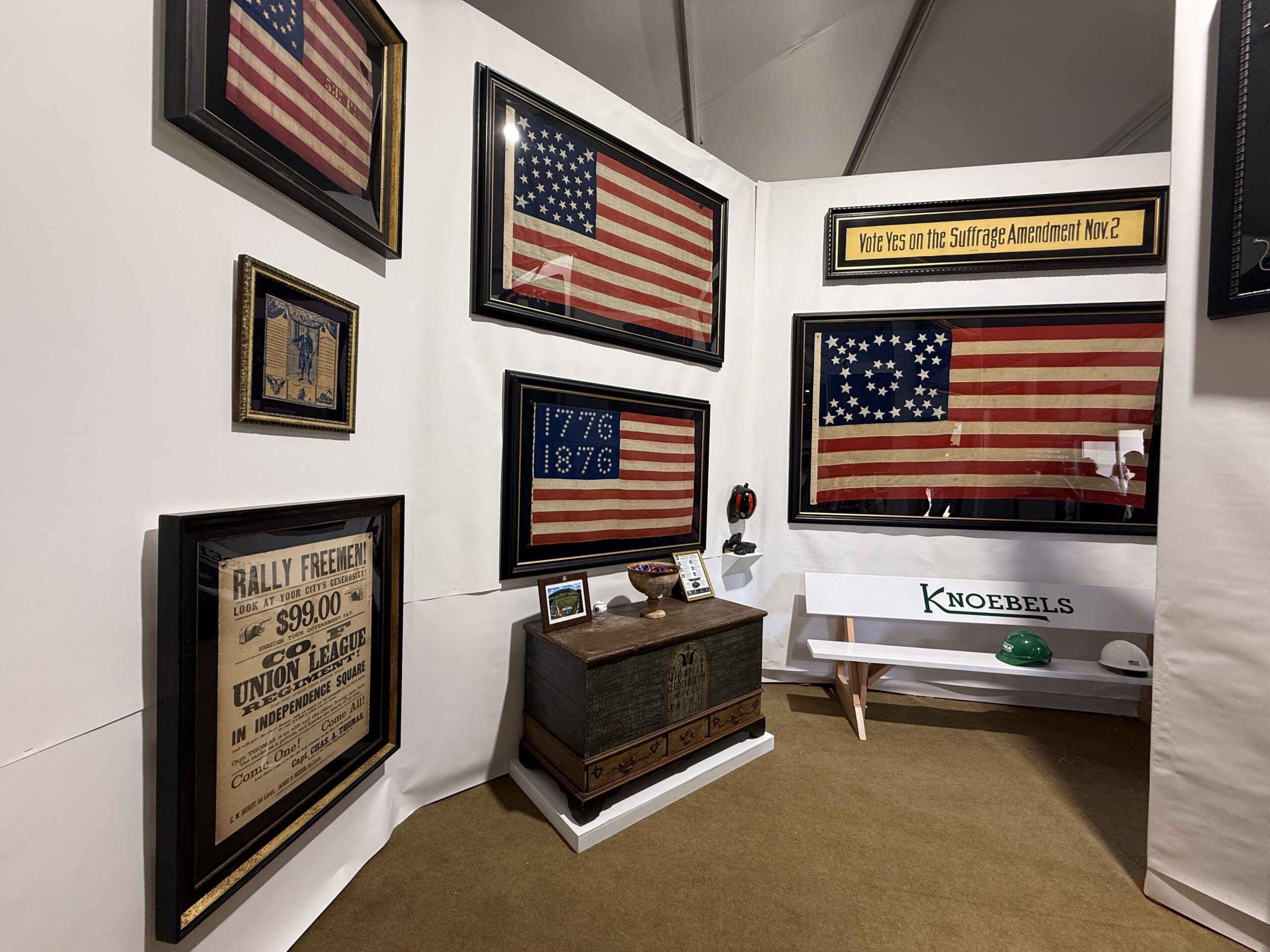
The walls were covered by antique flags and signs lent by York County’s Jeff R. Bridgman Antiques. Children stood in line for a U.S. Steel penny-press machine, grabbed bags of Middleswarth chips made in Snyder County, and Crayola crayons from Easton. (Additional chip donations from Utz and Martin’s will be arriving soon.)
Tourists collected pamphlets about Gettysburg and the Pennsylvania Farm Bureau. They took pictures of anthracite coal and a drill bit used for fracking, both of which were on loan from U.S. Rep. Dan Meuser (R., Luzerne).
Pennsylvania’s pavilion showcases a natural gas drill bit and Middleswarth chips at the Great American State Fair on June 30, 2026, in Washington, D.C.
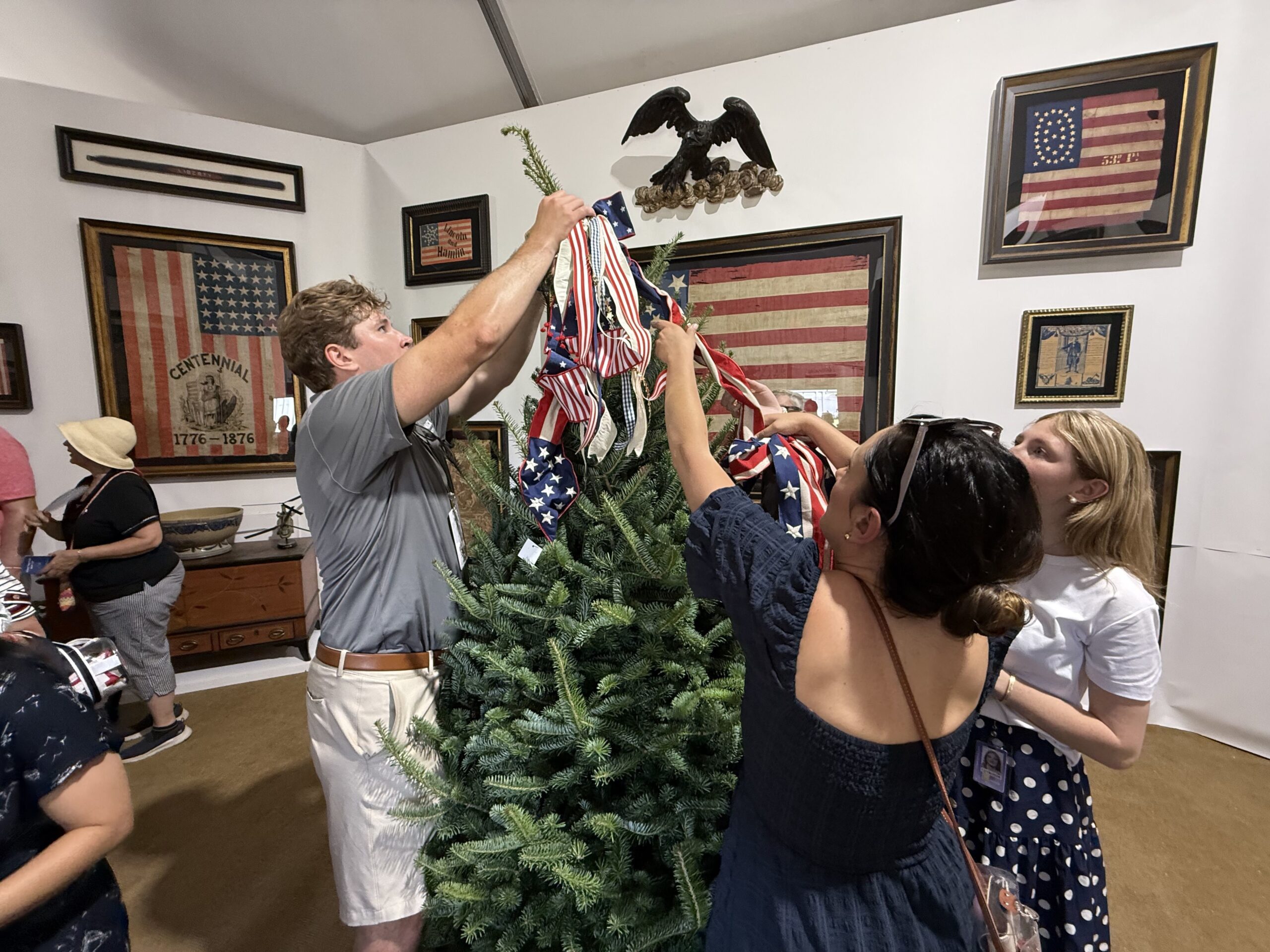
“I always look for an opportunity to highlight our industry,” Beth Ann Bossio, a Christmas tree farmer from Fayette County, said after driving three and a half hours to drop off a tree to display in the center of the space.
Pennsylvania is one of the largest producers of Christmas trees, and Bossio said it was important to her that both the state and its farmers were represented at the fair.
Beth Ann Bossio (front center), a Christmas tree farmer from Fayette County, helps staff from U.S. Sen. Dave McCormick’s office set up a tree she brought for Pennsylvania’s pavilion at the Great American State Fair on June 30, 2026, in Washington, D.C.
“That was my vision to come here, to make sure that Pa. is being reflected of what we are, and what we represent,” she said before tying an American flag-themed bow on the tree. “Farmers are very proud of that. We’re patriotic. We take pride in our land and how we steward it.”
The packed room on the National Mall came together in a rush in recent days, after Shapiro joined Democratic governors from other states in declining to use state resources to create and staff a pavilion, which his office said would have run a tab of “hundreds of thousands of taxpayer dollars.”
He also said his administration’s search for another Pennsylvania host came up short. No companies or other kinds of groups were interested, he said, even as businesses and local governments stepped up to fill the spaces in other states.
While Shapiro last week blamed the lack of interest on the president’s polarizing impact on the 250th celebrations, he said in an interview Tuesday with The Inquirer that it “was never a political exercise. This was an exercise in practicality.”
Shapiro said Pennsylvania’s pavilion would have cost the state $700,000, all of which was money he saw better spent on the major events happening in Pennsylvania this year, including the NFL Draft, PGA Championship, MLB All-Star Game, the ongoing World Cup games, and a number of events across the state for the nation’s 250th birthday.
“My focus is on spending the taxpayer dollars here,” he said.
His administration spent two or three weeks reaching out to businesses and to the Pennsylvania Chamber asking them if they wanted to participate. None of them did, Shapiro said.
“They obviously had a change of heart at the last minute. That’s fine,” Shapiro said about the revived Pennsylvania pavilion.
Organizing the booth in Shapiro’s place were the state’s two senators, a bipartisan duo who have often worked together.
McCormick said he understood Shapiro’s desire not to spend taxpayer money, but when he found out there would be nothing to represent the state that is “the center of America’s history,” he sprang into action.
The freshman Republican said he and Fetterman spoke Saturday morning and quickly made calls to the Pennsylvania Chamber of Business and Industry, the Pennsylvania Farm Bureau, and individual businesses to donate time and resources.
“It’s just inconceivable that we wouldn’t have a booth that would represent all that Pennsylvania had to offer,” said McCormick, whose staff greeted guests at the pavilion all day Tuesday.
Fetterman, who has said Pennsylvania’s role as a purple state means he should consistently work across the aisle, said he was proud to work with McCormick on the effort.
“America’s turning 250 years old,” Fetterman said alongside McCormick during an appearance in Philadelphia on Monday. “Can’t we all just celebrate that and not just find new ways to fight about the politics and the dynamic right now?”
McCormick’s office listed 23 companies or groups that signed up to help, though only a few corporate sponsors were front and center in the space.
Two large signs showcase the Marcellus Shale Coalition, a natural gas advocacy group that has a significant lobbying presence in Harrisburg. And U.S. Steel, the Pittsburgh-based company that benefited from a Trump-approved takeover by a Japanese-owned company last year, offered the penny press and colorful wristbands reading “forging the future.” Hats and signage commemorating Yuengling and Mack Trucks were lent from the Pennsylvania Manufacturers’ Association.
Tourists use a U.S. Steel penny-press machine on display at Pennsylvania’s pavilion at the Great American State Fair on June 30, 2026, in Washington, D.C.Pennsylvania’s pavilion showcases state history and memorabilia at the Great American State Fair on June 30, 2026, in Washington, D.C.
Some organizations have acknowledged earlier conversations with Shapiro’s office to participate that didn’t go anywhere.
A report from The New Republic that Pennsylvania would not be participating in the affair “caught us off guard because that was not our experience at all, nor was it what we had communicated to the [the governor’s] office,” said Jon Anzur, the senior vice president of public affairs for the Pennsylvania Chamber of Business and Industry. “It’s unfortunate that it occurred that way.”
He said the governor’s office approached the chamber less than two weeks out from the start of the fair to help get companies involved.
“It just seems odd that we were approached at the eleventh hour and now it sounds like the governor’s office is trying to point fingers when there was ample time to get ducks in a row,” he said.
The Hershey Co. is among the Pennsylvania-based companies that declined to participate.
“We were asked by Gov. Shapiro’s office in mid June and then again over the weekend by Sen. McCormick’s office,” said Todd Scott, a spokesperson for the chocolate business.
Both were told that the size of the ask and the limited amount of time to make it happen was not possible.
“We were asked so late in the game that logistically we couldn’t make that happen. We just cannot provide on a moment’s notice that amount of product that they would have been asking for,” he said.
But the summer weather was also a factor.
“There’s no refrigeration on the mall, and with extreme heat, chocolate doesn’t do well in 100-degree temperatures,” he said. “We always want to make sure that people have the best experience with our products that they can.”
But another candy company, Asher’s Chocolate Co. in Souderton, decided to join.
“Asher’s was asked to participate by the Chamber of Commerce [Monday] and agreed to donate prepackaged bite-size pieces of fudge, which were on hand,” said David Neff, who represents Asher’s. “Asher’s is deeply committed to America and celebrating America’s 250.”
“SAP is committed to the communities where our customers, employees, and partners live and work. SAP’s support of America’s 250th anniversary celebrations reflects our long‑standing commitment to supporting innovation, economic strength, and workforce development,“ SAP spokesperson Bridget Carroll said in a statement.
SAP software is used by the U.S. military and its NATO allies to track troop deployments, military supply chains, and equipment maintenance.
The military aircraft producer Lockheed Martin, which has engineering centers in King of Prussia and in Moorestown, N.J., is the top donor to Trump’s initiative, giving nearly $20 million.
This story has been updated to clarify Bob Asher’s role in Asher’s Chocolate Co.
Staff writer Joseph N. DiStefano contributed to this article.
This story was updated to clarify that Bob Asher is no longer involved in Asher’s Chocolate Co.
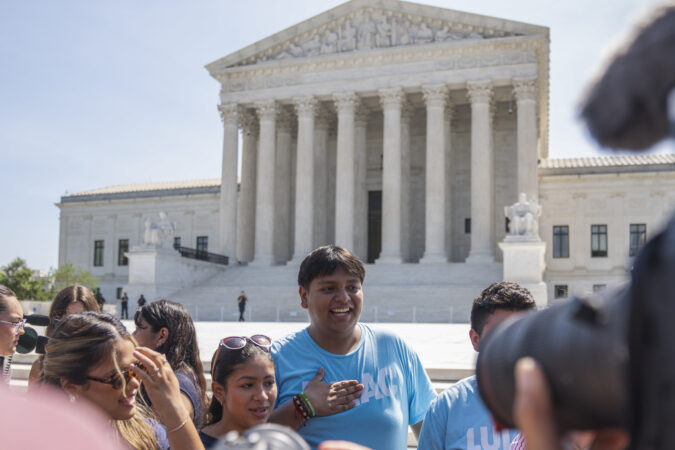
The Supreme Court upheld the principle of birthright citizenship in a ruling for the ages on Tuesday, affirming amid rancorous national debate that people born in this country are American citizens.
The decision handed a key loss to President Donald Trump in a case that represented a major goal of his administration ― the denial of citizenship for children born on American soil to undocumented parents.
Instead, the court upheld what has been recognized as the law of the land for nearly 160 years, enshrined in the Constitution by ratification of the 14th Amendment shortly after the Civil War.
“Citizenship, then and now, was the right to have rights — to freely participate in our political community. The Framers of the Fourteenth Amendment extended that promise to ‘every free-born person in this land,’” Chief Justice John Roberts wrote for the court. “We keep that promise today.”
The court ruled 6-3, with three conservative justices voting to let Trump’s proposed restrictions take effect.
Reaction flooded in immediately, with Cathryn Miller-Wilson, executive director at HIAS Pennsylvania, the immigrant-support organization, saying the decision fell “on the right side of history.”
“It shouldn’t be a surprise because birthright citizenship is enshrined in our Constitution,” she said of the decision. “But unfortunately there are many other things that have been enshrined that the Supreme Court has ignored. So it was a point of anxiety, I think, for all of us.”
Trump’s planned restrictions had been blocked by lower courts and had not taken effect.
The Pennsylvania Immigration Coalition, an advocacy organization based in Philadelphia, called the decision “a victory for families, for immigrant communities, and for the shared values that should guide our country: belonging, safety, and unity.”
“Today’s decision affirms what our communities have always known: no child’s belonging should be up for debate,” said Jasmine Rivera, the coalition executive director.
Democratic Gov. Josh Shapiro said on social media that Trump’s effort to end birthright citizenship was cruel and “goes against centuries of hard work to advance American freedom.”
Days before the nation’s 250th birthday, Shapiro said, the court affirmed “that the fundamental promise of America still rings true — that this is a land of freedom and opportunity for all.”
In New Jersey, one of the first states to sue over the issue, Attorney General Jennifer Davenport said she was thrilled by the decision.
“The president cannot change our citizenship laws with the stroke of a pen. We stood up for the rule of law, we stood up for our residents, and we won,” said Davenport, an appointee of Democratic Gov. Mikie Sherrill.
Meanwhile, House Speaker Mike Johnson (R., La.) said that he was “very disappointed” by the ruling, that it will subject the country to “serious challenges going forward and we’ll have to deal with that.”
Johnson, who has worked as a constitutional lawyer primarily on religious issues, said the 14th Amendment is being abused by people who are coming to the U.S. to have children in a practice called birth tourism.
U.S. Rep. Scott Perry, a York County Republican, railed against the court, saying that it had “failed the American people,” and that justices Roberts and Amy Barrett were joining an effort to protect birthright citizenship specifically for the children of undocumented immigrants.
“Now, more than ever, we must ensure the security of our borders and to prevent those who wish to do us harm by exploiting our immigration system are unable to do so; which means closing EVERY. SINGLE. LOOPHOLE,” Perry said in a statement.
U.S. Rep. Chrissy Houlahan, a Chester County Democrat, mentioned the path trod by her father, a Polish-born Holocaust survivor who emigrated to the U.S. as a child.
“I’m deeply grateful for the Supreme Court’s protection of the 14th Amendment, and for all of the first-generation Americans who make our community stronger,” she said on social media.
On April 1 the Supreme Court heard oral arguments on one of the most important cases of the time, one that had been expected to define who gets to be a citizen of the United States. Trump traveled to the court to hear the arguments in person, departing after government lawyers wrapped up their presentation.
There was no indication at the time of how the justices might rule, though several of the justices seemed skeptical of the administration’s arguments and peppered government attorneys with sharp questions.
When Solicitor General John Sauer argued that “we’re in a new world now,” Roberts responded, “It’s a new world. It’s the same Constitution.”
On Tuesday, the longest-serving justice, Clarence Thomas, joined by Neil Gorsuch, offered a 91-page dissent, saying the ruling added “to the sad history of the Fourteenth Amendment, which was designed and understood to secure equal rights for the freed Blacks but has instead been repurposed for political projects that the Reconstruction Congress did not support.”
On the day he was inaugurated for a second term in 2025, Trump signed an executive order to end birthright citizenship for children born in this country to undocumented immigrants. That marked an attempt to reverse legal and Constitutional precedent, which has long held that people born in the United States are U.S. citizens.
The ACLU sued within hours, and New Jersey officials went to court the next day, with then-Attorney General Matt Platkin saying, “Presidents in this country have broad powers, but they are not kings.”
Automatic citizenship also extends to children who are born abroad to U.S. citizens.
Birthright citizenship is guaranteed in the Constitution by the 14th Amendment, ratified in 1868 after the end of the Civil War. It says that “all persons born or naturalized in the United States, and subject to the jurisdiction thereof, are citizens of the United States and of the state wherein they reside.”
Trump and other opponents argue that the practice encourages people to enter the country illegally, so that children who are born here will automatically gain American citizenship. Those citizens, at age 21, can sponsor close family members to live permanently in the United States.
The Trump administration contended that birthright citizenship had limited intent, meant only to ensure that formerly enslaved people and their children were U.S. citizens.
The administration focused on the clause “subject to the jurisdiction thereof,” saying that excludes people with temporary or unlawful presence. The president’s order would have denied citizenship to babies born in the U.S. unless at least one parent is a U.S. citizen or lawful permanent resident at the time of the birth.
Trump’s opponents said reliance on those five words makes no sense, that of course people who live in the United States without permission are subject to its jurisdiction ― its laws, orders, and government regulations ― the same as everyone else.
The administration also invoked the practice of birth tourism as a main argument for revocation, elevating what was a side issue to a central cause.
It’s relatively rare, the high estimate at 26,000 births a year, from the Center for Immigration Studies, which advocates for low immigration. That’s a fraction of the roughly 3.6 million children born annually in the United States.
In Pennsylvania, all eight Democratic federal lawmakers who represent the state opposed Trump’s attempt to end birthright citizenship.
Along with 208 other Democrats in Congress, they signed an amicus brief in February arguing that the 14th Amendment set a “constitutional minimum — a floor — for birthright citizenship” and that the administration’s arguments were incoherent.
The Democrats who signed were U.S. Sen. John Fetterman and U.S. Reps. Houlahan, Brendan Boyle, Dwight Evans, Madeleine Dean, Mary Gay Scanlon, Summer Lee, and Chris Deluzio.
Some Republicans in Congress filed amicus briefs supporting Trump’s case, though none of the 11 Republicans representing Pennsylvania signed on to them.
The Republicans argued that within the 14th Amendment, the words “subject to the jurisdiction” were key.
“The Framers would have recoiled at the present debasement of citizenship, understanding that ‘jurisdiction’ requires more than mere physical presence,” they wrote. “It demands total allegiance to the sovereign. To hold otherwise places sovereignty, citizenship, and our nation’s survival in jeopardy.”
Staff writers Andrea Padilla, Sam Janesch, and the Associated Press contributed to this article.
It’s unorthodox to begin a piece by denigrating a subject of sympathy, but in this case, it applies.
Indiana Fever superstar Caitlin Clark is smug, and she’s kind of a jerk, and plays a little bit dirty herself. Also, there’s little viable argument that if she were a bit less abrasive then perhaps she would be less of a target.
But there’s no doubt that she has been a target of jealousy and resentment since her arrival in the league, and there’s less doubt that the WNBA and its officials do a pathetic job of protecting her. She is, after all, the greatest asset not only in women’s basketball, nor in the history of women’s basketball, but in the history of women’s sports.
That’s with all due respect to Billie Jean King, Babe Didrikson Zaharias, Serena Williams, et al. Clark is the queen of a mainstream team sport in an era when mainstream team sports matter more than ever. She should be treated like royalty. Instead, she’s treated like crap.
She’s filled arenas, sparked expansion, and sold millions of jerseys, both her own and those of her peers. Her reward? She’s been the victim of nine flagrant fouls since she joined the league in 2024, more than anyone else.
The latest flagrant wasn’t even called in real time, if you can believe it. As a matter of fact, it wasn’t even called a foul.
On Wednesday, while pursuing a loose ball, Phoenix Mercury forward Alyssa Thomas kneed Clark in the thigh and jammed her fist into Clark’s throat as Clark lay on the ground.
This angel of Alyssa Thomas cheapshotting shows that not only did she punch Caitlin Clark in the throat; she kneed her in the groin too.
The league should look at this, assess a flagrant, & do everything they can to protect their most important player. pic.twitter.com/xDArcPTYiS
The league reviewed the incident, declared that Thomas had committed a Flagrant 2, and suspended her for Saturday’s game against Toronto. Thomas, a hard-nosed, Draymond Green-type of player, has a history of flagrancy; last season, she elbowed rookie Kiki Iriafan in the throat and threw Angel Reese to the ground.
In the same game Clark was undercut on two jump shots, neither judged flagrant in real time or upon review. She left the game having aggravated a back injury.
That’s right: The most important player in WNBA history entered the game with a back issue, was the recipient of three dangerous fouls, and left the game having been reinjured.
She missed the Fever’s game this past Saturday, and her status is unknown for this coming Sunday’s game in Las Vegas.
She missed most of her sophomore season in 2025 with various injuries.
Not all of Clark’s missed time has been a result of hard fouls, but that’s the point. She’s the draw. Any hard foul on here should be amplified.
She should be preserved like ancient parchment. She should be protected like religious relics. She is worth 10,000 times her weight in gold and should be treated accordingly.
You should get two technicals for brushing her cheek. You should get a Flagrant 1 for coughing on her.
Intentional foul on a fast break? Twenty years to life.
Is this fair? Of course not. Is this business? Yes, it is. Business is seldom fair. If you don’t think that’s true, you should study capital gains taxes, corporate tax breaks, and film of Larry Bird in the 1980s.
It doesn’t matter that Clark is not the best player in women’s basketball history (that’s Diana Taurasi), and it doesn’t even matter that she’s not the best player today (that’s A’ja Wilson). What matters is that Clark’s the most valuable female athlete, at a time when female athletics is finally experiencing its true value.
One financial projection valued women’s sports revenues to generate at least $3 billion this year, an increase of 340% since 2022. You know what else happened in 2022? Clark, a sophomore at Iowa, became the first player in women’s Division I history to lead the nation in both points and assists. She became a phenomenon.
A cocky phenomenon; a celebrating, taunting, in-your-face phenomenon — but a phenomenon nonetheless.
For the record, I don’t like it when Steph Curry or LeBron James flaunt their cellys either. But as much as they mean to their sport, neither touches the importance of Clark either in her chosen profession or in her demographic.
Protect her at all costs.
Phil’s just desserts
Seventeen years ago, the myth of Tiger Woods collapsed when the report of an affair, a car crash, and series of mistresses revealed the greatest golfer of all time, branded as a squeaky-clean, monomaniacal über-athlete to also be one of the greatest hypocrites of all time.
No one benefited more from Tiger’s downfall than Phil Mickelson, Tiger’s biggest rival. Even after his departure to LIV Golf that sparked a wider exodus and a bitter feud, and even as Mickelson bizarrely delves further into support of far-right policies on social media, there remained a core of Mickelson supporters who adored his magnificent talent, swashbuckling style, and his entertaining public pronouncements.
That’s all over. Phil’s done.
Two weeks ago, Golf Digest reported that Phil Mickelson, Woods’ biggest rival, was kicked off The Farms Golf Club near San Diego and had his membership rescinded in the middle of a round after club officials determined that he had made inappropriate advances and contact with a female staff member. Mickelson denied the accusation.
Two days ago, Skratch Golf correspondent Alan Shipnuck produced a scathing report that detailed several more inappropriate episodes with two other women. It also supplied evidence that Mickelson cheated with at least one woman on a regular basis, paying a pro shop kid $500 to drive around the course with Mickelson’s cell phone so that if his wife, Amy, wondered what he was doing, she would think he was playing golf.
In light of the transgressions by Woods, which include various addictions, it’s been astonishing to witness the leeway given Mickelson during his three decades in the limelight. He’s been connected with insider trading, he’s been cast as an inveterate gambler — he was accused of trying to bet on the 2012 Ryder Cup, which he and the rest of the U.S. team lost by 1 point (Mickelson went 3-1-0) — and created a legion of enemies on the PGA Tour and in its galleries when he defected to LIV.
Now, this.
Now, what?
Tiger has admitted his transgressions, has faced his demons, and has largely recovered his image.
Phil never will.
The biggest difference between Mickelson and Woods is that, whatever advances Tiger made in pursuit of his infidelities, as far as we know, they were at least consensual, if not welcomed or pursued.
Mickelson isn’t the only distasteful star in professional golf — Fred Couples admitted he cheated on his wife while she was fighting cancer — he’s just the smarmiest, the creepiest, and the phoniest. Golf writers and broadcasters protect their cash cows like baseball writers did in the 20th century: They shield flawed heroes from the glare of reality.
Phil was especially alluring, since, in contrast to surly, multi-ethnic Tiger Woods, he was a generally affable Great White Hope.
Regardless, both made their beds. There, they will lie.
Another ‘Golden Goal?’
I was there for Sidney Crosby’s overtime Golden Goal that beat the United States at the 2010 Winter Olympics in Vancouver. Wayne Gretzky, the Great One, and Donald Sutherland, perhaps the greatest Canadian actor, sat just above my right shoulder, and they erupted with joy when Sid the Kid potted the winner. It was only the second time since 1952 that Canada won Olympic gold in its national sport. Most Canadians who witnessed it know where they were that day.
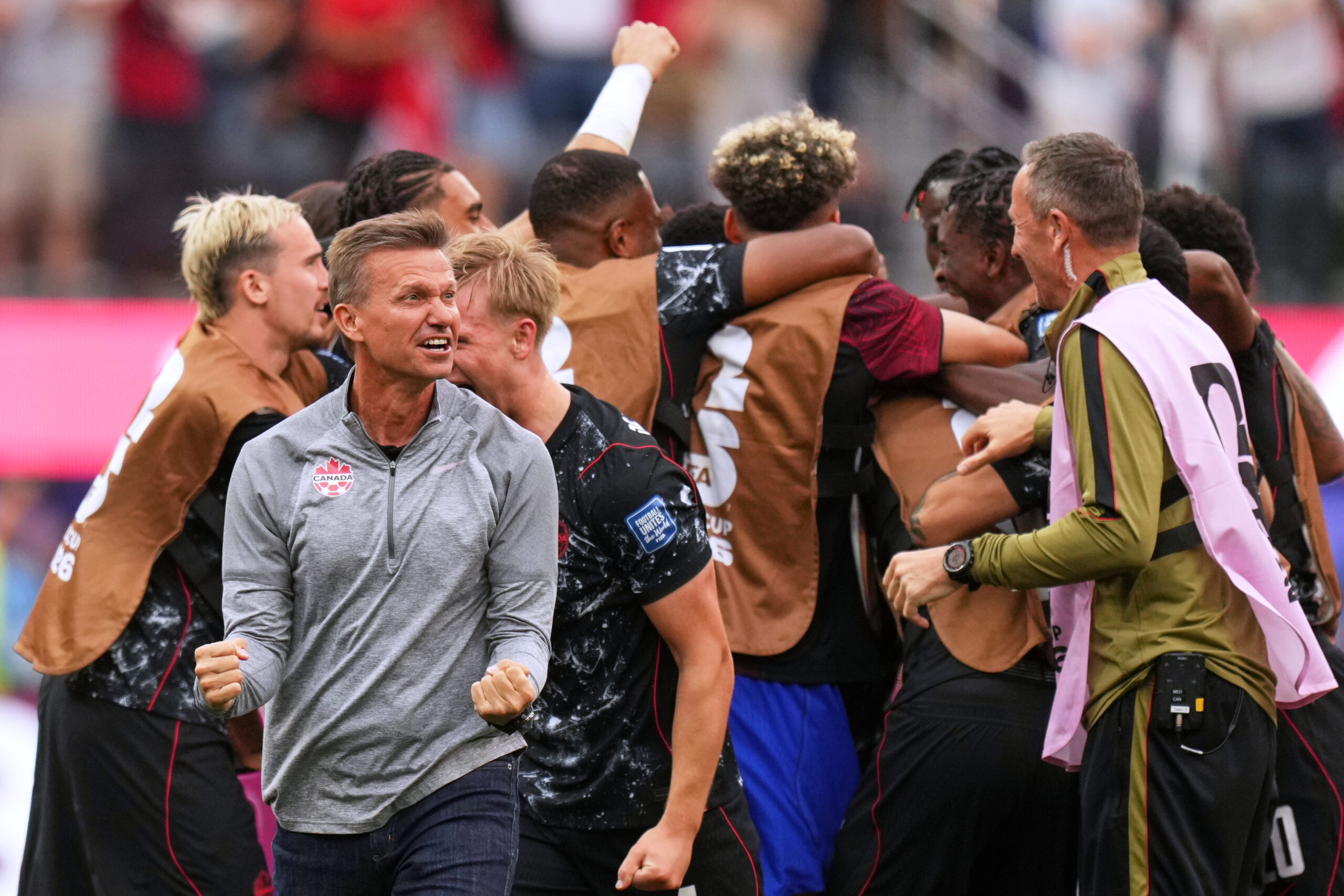
Canada head coach Jesse Marsch celebrates after Stephen Eustáquio scored their opening goal against South Africa during the World Cup round of 32 Sunday in Inglewood, Calif.
That was the sort of hyperbole coming from the Great White North when Canada beat South Africa in the World Cup’s Round of 32 knockout stage Sunday. More Canadians play soccer than hockey, and soccer ranks second in popularity with the 40 million Canadians.
“We really wanted to give this win to all the Canadians,” Stephen Eustáquio said in a television interview. He scored the winner in extra time. “When I shot, I felt everybody shot with me. Everybody put a bit of power on it and it went into the back of the net.”
It was the first time Canada reached a knockout round, though, even as one of the host nations, they didn’t host the game; they had to travel to Los Angeles because they did not win their group. The Maple Leaf flag will fly next in Houston on Sunday, when our northern neighbors, who entered the tournament ranked No. 30 in the world, will face the winner of No. 6 Morocco and No. 7 Netherlands.
Four years ago Veronika Pavliutina and her three young children landed in Philadelphia after fleeing Ukraine, escaping the war as Russia shelled their home city of Odesa.
Their big shock: the outpouring of care and kindness that greeted them here.
A Mount Airy couple, strangers, invited the family to live in their home ― just move in and take the third-floor bedroom while figuring out next steps. Neighbors delivered meals and clothes and Target gift cards, and others organized events and outings.
Pavliutina, 48, said she’ll never forget it.
But now, she said, it’s time to leave.
Federal pressure on Ukrainian war immigrants has created doubt about the family’s ability to stay in the United States and raised fears about what could happen if they do.
The government designation that allows Pavliutina and her children to live here, temporary protected status, expires for Ukraine in October. There’s been no sign the Trump administration plans to renew it, fostering uncertainty among thousands who have worked to rebuild their lives in this country.
TPS, as it’s known, is a humanitarian immigration status that can be granted to nationals of countries embroiled in war, environmental disasters, or other extraordinary circumstances. It allows people to legally live and work here and protects them from deportation.
The Trump administration wants to end TPS for some countries ― and the Supreme Court ruled on June 25 that the administration could lawfully strip protections from more than 350,000 Haitians and 6,000 Syrians, leaving them vulnerable to removal.
Pavliutina has felt the changed government attitude toward immigrants, the ICE arrests and detentions, the common resentment and casual hate.
“More and more I can see, it’s becoming not safe,” she said in an interview at the family’s home in Perkasie, Bucks County. “I may not be their target for now, but we don’t know.”
Veronika Pavliutina speaks about leaving the U.S. for Italy during an interview at the family’s home in Perkasie.
She and her two younger children, Nina, 15, and Yegor, 12 ― Polina, 19, is studying in South Korea ― intend to move to Italy in mid-July. Pavliutina doesn’t know anyone there, but for a family that is again starting over it’s a logical choice.
In Italy, Ukrainians escaping the war can receive a Permesso di Soggiorno per Protezione Temporanea, a fast-track residency permit that provides work authorization and access to healthcare.
“It makes me very sad to know they’re leaving,” said Richard McIlhenny, who with his wife, Marissa Vergnetti, welcomed the then-newly arrived family to live in their Mount Airy home. “I’m excited for their new adventure, but sad that it’s not here.”
Russia struck the southern city of Odesa on the first day of the war, Feb. 24, 2022, blowing up warehouses and air-defense systems and killing at least two dozen.
Meanwhile, 4,700 miles away in Philadelphia, McIlhenny, a real estate agent, and his wife, a preschool teacher, watched the war unfold on TV and decided to become actively involved in helping refugees.
McIlhenny contacted a childhood friend who was working in Ukraine, asking if perhaps there was a family in need. The friend knew of someone, a single mother with three children.
The Russian invasion drove a mass exodus, with an estimated 6.9 million Ukrainians leaving the country by the end of 2025, according to the Migration Policy Institute in Washington. An additional 3.7 million were displaced internally, forced from their homes to other parts of the country.
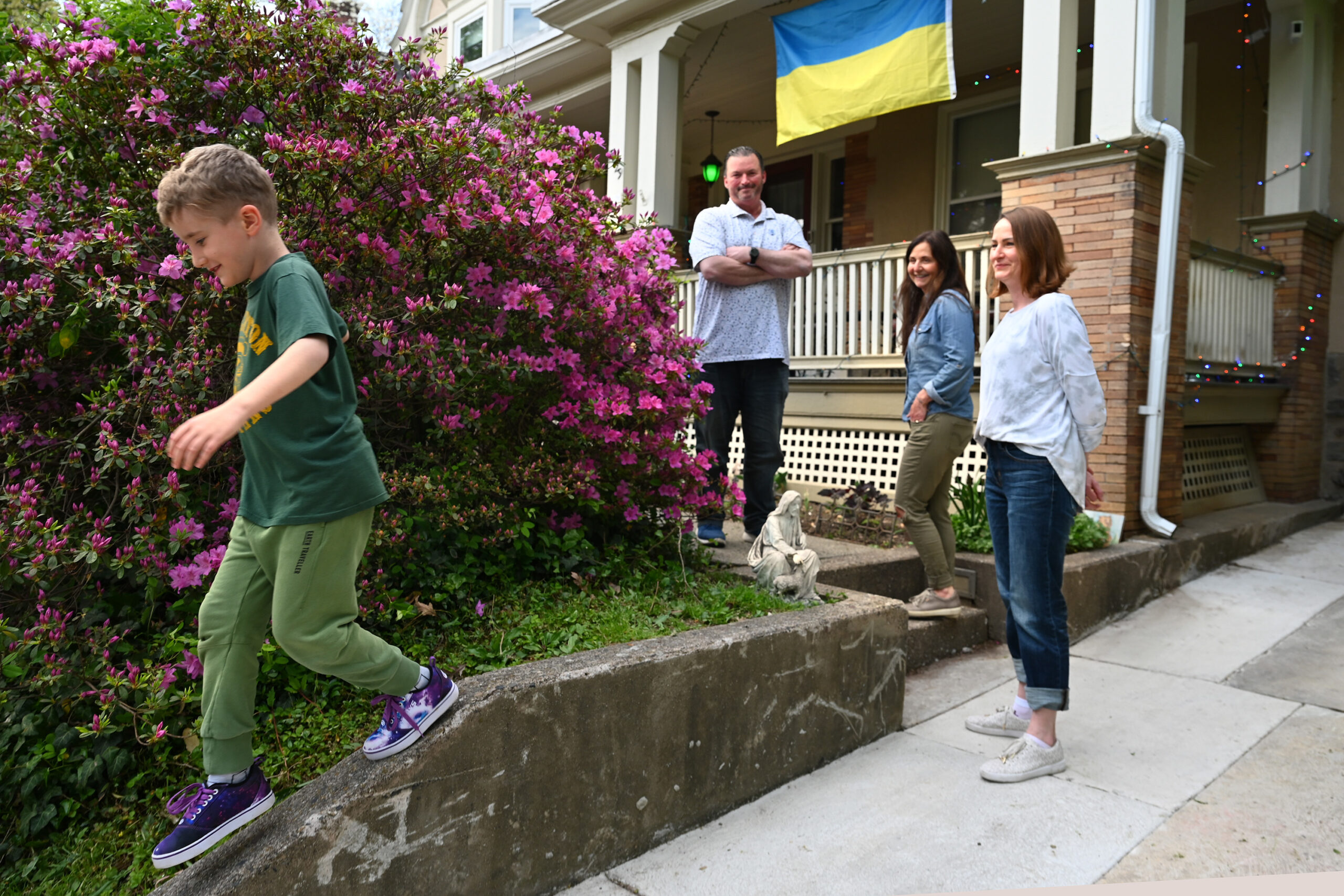
Richard McIlhenny and Marissa Vergnetti (rear) outside their Mount Airy home May 2, 2022, where they are hosting Veronika Pavliutina (right) and her son, Yegor, then 8, and her two daughters. At the time, Pavliutina and her children had just arrived, escaping the Russian shelling in Ukraine.
The United States opened its arms. And the Philadelphia region, home to one of the nation’s largest Ukrainian communities, helped lead that effort. Churches, civic groups, and families organized to help new arrivals navigate housing, employment, and schools.
Now tens of thousands of Ukrainian war immigrants face uncertainty.
“The protections Ukrainians rely on in the United States are quietly but dangerously eroding,” Krish O’Mara Vignarajah, president and CEO of Global Refuge, said in a statement earlier this year. “We’ve even seen Ukrainians swept up by immigration enforcement.”
The Trump administration placed an indefinite pause on applications for the main Biden-era humanitarian program, “Uniting for Ukraine.”
That effort admitted more than 200,000, but now expired work permits have left many struggling to maintain jobs and housing. Losing legal status can result in deportation, and some have left on their own.
Meanwhile, as of March 2025, more than 100,000 Ukrainians were in the U.S. under TPS, which has faced backlogs and delays. The designation for Ukraine is due to end on Oct. 19, the prospect of renewal clouded as Trump touts his close relationship with Russian dictator Vladimir Putin and criticizes Ukrainian President Volodymyr Zelensky.
Since 2022 TPS for Ukraine has been extended twice, each instance a nerve-fraying rise and fall of worry and relief that makes it hard to plan for the future.
The war in Ukraine continues unabated. In this photo provided by the Ukrainian Emergency Service, firefighters put out a fire in a gas station following a Russian air attack in Sumy on Thursday.
Last year, Pavliutina, who has worked as a chef, began thinking it might be time to, as she put it, self-deport.
The children adjusted to the U.S., she said, learning English, making friends, and earning good grades in school. They also hear other kids talking up Trump, whose pledge to deport millions of immigrants was central to his election campaign.
Son Yegor said he’s ready to move, “because I’m tired of America a bit.” Nina did not wish to be interviewed.
Their mother follows the news.
“It’s a little bit concerning, to be honest with you, because you don’t know when exactly it will be triggered to some kind of violence,” Pavliutina said. “For me it’s easier to think about a new country than to stay here with unknown status, with an unknown future.”
She’ll miss their house in Perkasie, she said. In fact, it was a new American friend who provided the private loan for her to buy it, an example, she said, of the extraordinary kindness that’s been shown to her family.
When she hears “Make America Great,” Pavliutina said, she thinks of the countless big and small acts of caring offered by everyday people, the Americans who help others simply because it’s their nature and think it’s a good thing to do. That’s what makes America great, she said.
“I would definitely keep it in my heart, everything and everyone who was contributing to our life here,” Pavliutina said. “I love the country. I love the people. I just don’t feel safe to stay. And I don’t see the legal way to do so.”
Philadelphia now has three Rocky statues. That is three statues celebrating a fictional Philadelphian. And while many great Philadelphians already have statues, there are so many who don't.
Who do you think should be Philadelphia’s Next Top Statue?
To decide, we’ll present you with two random Philadelphians from our list of just 26. For each matchup, you choose who deserves to be honored more. The winner will move on to the next round to face another Philadelphian.
You’ll keep going until we end up with your definitive Philadelphia’s Next Top Statue.
story continues after advertisement
story continues after advertisement
story continues after advertisement
If you're happy with , you can skip the remaining challengers, and lock them in as your choice.
story continues after advertisement
You think Philadelphia should build a statue of winner and percentageWinner of Inquirer readers agree with you. The most popular winning statues, so far, are popularWinners.
You stuck with longest for the longest, picking them over longestLength other statues.
(()=>{var be=(e,t)=>()=>(t||e((t={exports:{}}).exports,t),t.exports);var U=be(s=>{var Ae={0:”Jan.”,1:”Feb.”,2:”March”,3:”April”,4:”May”,5:”June”,6:”July”,7:”Aug.”,8:”Sept.”,9:”Oct.”,10:”Nov.”,11:”Dec.”};function $(e){return e===void 0&&(e=new Date),Ae[e.getMonth()]}var Ce={0:”Jan”,1:”Feb”,2:”Mar”,3:”Apr”,4:”May”,5:”Jun”,6:”Jul”,7:”Aug”,8:”Sep”,9:”Oct”,10:”Nov”,11:”Dec”};function O(e){return e===void 0&&(e=new Date),Ce[e.getMonth()]}function u(e){return e==null}function G(e){return typeof e==”number”&&isFinite(e)}function A(e){return G(e)&&Math.floor(e)===e}var Le=[“one”,”two”,”three”,”four”,”five”,”six”,”seven”,”eight”,”nine”],Pe=[“million”,”billion”,”trillion”,”quadrillion”,”quintillion”,”sextillion”,”septillion”,”octillion”,”nonillion”,”decillion”],z=[“th”,”st”,”nd”,”rd”,”th”,”th”,”th”,”th”,”th”,”th”],xe=[11,12,13];function _(e){if(u(e))return””;var t=+e;return A(t)?xe.indexOf(t%100)>-1?z[0]:z[t%10]:””}var Be=[“first”,”second”,”third”,”fourth”,”fifth”,”sixth”,”seventh”,”eighth”,”ninth”],je=new RegExp(/s+([^s]*)s*$/);s.apdate=function(e){return e===void 0&&(e=new Date),$(e)+” “+e.getDate()+”, “+e.getFullYear()},s.apdatetab=function(e){return e===void 0&&(e=new Date),O(e)+” “+e.getDate()+”, “+e.getFullYear()},s.apmonth=$,s.apmonthtab=O,s.apnumber=function(e){if(u(e))return””;var t=+e;return A(t)?t=10?e.toString():Le[t-1]:e.toString()},s.aptime=function(e){e===void 0&&(e=new Date);var t,o,n=e.getHours(),i=e.getMinutes(),a=i===0;if(a){if(n===0)return”midnight”;if(n===12)return”noon”}return n0?n:12):(t=”p.m.”,o=n===12?n:n-12),a?o+” “+t:o+”:”+(i<10?"0"+i:i)+" "+t},s.capfirst=function(e){if(u(e))return"";var t=String(e);return""+t.charAt(0).toUpperCase()+t.slice(1)},s.intcomma=function(e){if(u(e))return"";var t,o=+e;return G(o)?((t=o.toString().split("."))[0]=t[0].replace(/B(?=(d{3})+(?!d))/g,","),t.join(".")):e.toString()},s.intword=function(e){if(u(e))return"";var t=+e;if(!A(t))return e.toString();var o=Math.abs(t);if(o<1e6)return e.toString();var n=Math.ceil(Math.log(o+1)/Math.LN10)-1,i=n-n%3,a=t/Math.pow(10,i);return(a=Math.round(10*a)/10)+" "+Pe[Math.floor(i/3)-2]},s.ordinal=function(e,t){if(t===void 0&&(t=!1),u(e))return"";var o=+e;return A(o)?t&&o{let t=document.querySelector(`.js-reveal[data-id=”${e}”]`);t?t.classList.add(“is-hidden”):console.log(“No reveal component found with the id”,e)},Se=e=>{let t=document.querySelector(`.js-reveal[data-id=”${e}”]`);t?t.classList.remove(“is-hidden”):console.log(“No reveal component found with the id”,e)},T={init:()=>{},show:Se,hide:ve};var M,ke=(e,t)=>{M=M||window.PMNdataLayer,M?M.push({event:”misc_event”,eventAction:e,eventLabel:t}):window.location.hostname.includes(“localhost”)?console.log(“Analytics event:”,e,t,”(not actually being sent due to localhost)”):console.log(“Failed to push analytics event”,e,t)},b={event:(e,t)=>{ke(e,t)}};var p,J,Ne=()=>{p=document.getElementById(“js-inno-toast”)},Te=e=>{if(!p)return;p.innerHTML=e,p.classList.add(“is-active”);let t=()=>{p.addEventListener(“transitionend”,Me,{once:!0}),p.classList.remove(“is-active”)};clearTimeout(J),J=setTimeout(t,5e3)},Me=()=>{p.innerHTML=””},c={init:()=>{Ne()},showToast:Te};var gt=U();var y=e=>{if(e)return e.trim().toLowerCase().normalize(“NFD”).replace(/[u0300-u036f]/g,””).replace(/[^A-Z0-9 ]/gi,””).trim().replace(/ /g,”-“).replace(/–/g,”-“)};var C=()=>/Android|webOS|iPhone|iPad|iPod|BlackBerry|IEMobile|Opera Mini/i.test(navigator.userAgent);var x=(e,t=null,o=null)=>{o||(o=document.querySelector(“head”));let n=document.createElement(“script”);n.type=”text/javascript”,n.src=e,t&&(n.onload=t),o.appendChild(n)},K=()=>(window.PMNdataLayer?.[0]!==void 0&&window.PMNdataLayer[0])?.analytics?.user?.state===”Subscribed”,V=()=>{let t=(window.PMNdataLayer?.[0]!==void 0&&window.PMNdataLayer[0])?.analytics?.user?.state;return window.location.host.includes(“zzz-systest”)||window.location.host.includes(“pmn.arcpublishing.com”)||window.location.host.includes(“stage.fusion.inquirer.com”)||typeof t>”u”},Y=()=>{let t=(window.PMNdataLayer?.[0]!==void 0&&window.PMNdataLayer[0])?.analytics?.user?.hasAdsFreeReading;return!!(t&&t==1)},B=()=>window.location.host.includes(“localhost”),Z=(e,t=””)=>{let o=document.querySelector(`template#${e}`);if(!o||!(o instanceof HTMLTemplateElement))return console.log(`Couldn’t find .`),null;let n=o.content.cloneNode(!0).childNodes;if(n.length==0)return console.log(`Template ${o} has no children, returning null.`),null;n.length>1&&console.log(`Template ${o} has multiple children, only returning the first.`);let i=n[0];return i.setAttribute(“data-id”,t),i},j=(e,t)=>{let o=[…e.querySelectorAll(“[data-populate]”)];e.dataset.populate&&o.unshift(e);let n=o.filter(i=>{let a=i.closest(“[data-populate-context]”);return!a||a==e});for(let i of n){let N=i.dataset.populate.trim().split(/s*,s*/).map(w=>w.split(/s*:s*/));for(let[w,m]of N){let f=w.split(“.”).reduce((d,we)=>d?.[we],t),F=f==null||f==null,ge=m?.split(/s+/)||[“innerHTML”];for(let d of ge)d.startsWith(“.”)&&i.classList.toggle(d.substring(1),F?!1:f),!F&&(d==”innerHTML”?i.innerHTML=f:d.startsWith(“@”)?i.setAttribute(d.substring(1),f):d.startsWith(“–“)&&i.style.setProperty(d,f))}}};var Q=e=>{for(let t=e.length-1;t>0;t–){let o=Math.floor(Math.random()*(t+1));[e[t],e[o]]=[e[o],e[t]]}return e};var Ee=()=>{document.querySelectorAll(“.js-share”).forEach(e=>{e.addEventListener(“click”,()=>{qe(e)})})},De=()=>{document.querySelectorAll(“.js-share”).forEach(e=>{let t=e.dataset.url||[location.protocol,”//”,location.host,location.pathname].join(“”);e.dataset.url=t})},He=(e,t)=>{navigator.clipboard.writeText([e,t].join(” “)),b.event(“click”,`copied share text to clipboard | ${[e,t].join(” “)}`)},qe=async e=>{let t=e.dataset.text,o=e.dataset.url;if(!navigator.canShare||!C())He(t,o),c.showToast(“Copied to clipboard!”);else try{await navigator.share({text:t,url:o})}catch(n){console.log(n),c.showToast(“Hmm, something went wrong…”)}},Ie=(e,t,o)=>{let n=document.querySelector(e);n?n.classList.contains(“inno-share__button”)?(n.dataset.text=t,o&&(n.dataset.url=o)):console.warn(`${e} is not a share button`):console.warn(`${e} not found`)},L={init:()=>{Ee(),De()},updateTextToCopy:(e,t,o)=>{Ie(e,t,o)}};var X=async(e,t)=>(await fetch(`https://inq-junto.herokuapp.com/${e}`,{method:”POST”,headers:{“Content-Type”:”application/json”},mode:”cors”,body:JSON.stringify(t)})).json(),E=()=>{let t=document.querySelector(“.js-inno”).dataset.junto;if(t)return t;throw new Error(“no junto id found”)},v={getDefaultId:()=>E(),vote:(e,t=E())=>{X(“vote”,{poll:t,ballot:e})},results:async(e=E())=>await X(“results”,{poll:e})};var ee=[{name:”Betsy Ross”,category:”Civil”,born:”1752″,died:”1836″,placement:”Betsy Ross House”,bio:”She may not have actually made the first U.S. flag (according to the Smithsonian), but she did make U.S. flags for 50 years and is a Philly and national icon.”},{name:”Boyz II Men”,category:”Music”,born:”1985″,died:””,placement:”CAPA (where they formed)”,bio:’These “Motownphilly” icons started in 1985, when the Boyz met at Philadelphia High School for the Creative and Performing Arts (CAPA).’},{name:”Cecil B. Moore”,category:”Civil”,born:”1915″,died:”1979″,placement:”21st Street & Cecil B. Moore Avenue”,bio:”A leader in Philadelphiau2019s Civil Rights Movement in the 1960s who successfully campaigned to desegregate the cityu2019s building trades unions and expanded opportunities for Black workers.”},{name:”Chase Utley”,category:”Sports”,born:”1978″,died:””,placement:”Citizens Bank Park”,bio:`”The Man” helped the Phillies win it all in 2008, played in six All-Star Games, and is an important plot point in an episode of It’s Always Sunny in Philadelphia.`},{name:”Chubby Checker”,category:”Music”,born:”1941″,died:””,placement:”Italian Market”,bio:`Before the “Twist” icon made it big, the South Philly-raised musician worked at a produce stand in the Italian Market. He’s now in the Rock & Roll Hall of Fame.`},{name:”Dawn Staley”,category:”Sports”,born:”1970″,died:””,placement:”Murrell Dobbins Vocational High School”,bio:”Raised in North Philly, she transformed the University of South Carolina into a womenu2019s basketball powerhouse, winning multiple NCAA championships while also earning Olympic gold medals as both a player and coach.”},{name:”Dr. Drew Weissman & Dr. Katalin KarikxF3″,category:”Science”,born:”1959, 1955″,died:””,placement:”James G. Kaskey Memorial Park”,bio:”These Penn researchers won the Nobel Prize for Physiology or Medicine in 2023 for their work that made the mRNA COVID-19 vaccines possible. Those vaccines saved an estimated 2.5 million lives, according to a JAMA study.”},{name:”Gamble & Huff”,category:”Music”,born:”1943, 1942″,died:””,placement:”309 S. Broad St. (where Philadelphia International Records was located)”,bio:”The songwriting and production duo created the Philly sound and built Philadelphia International Records, which produced a string of hit records that helped define 1970s R&B and soul.”},{name:”Guion Bluford”,category:”Science”,born:”1942″,died:””,placement:”Overbrook High School (which he attended)”,bio:”The Overbrook High grad was an Air Force officer and pilot before becoming the first Black astronaut in space, flying aboard the space shuttle Challenger in 1983. He logged more than 688 hours in space.”},{name:”Daryl Hall & John Oates”,category:”Music”,born:”1970″,died:””,placement:’The steps of Mitten Hall at Temple: “If I had a picture of Temple, it is hanging outside of Mitten Hall and singing … hanging on those steps with friends, street corner singing.” — Daryl Hall’,bio:”They may be in the midst of a feud, but these maneating, dream-making Philly icons who have delighted the city, and the world, started at Temple University.”},{name:”Hercules Posey”,category:”Civil”,born:”1748″,died:”1812″,placement:”The President’s House Site (where he was enslaved)”,bio:”The enslaved chef who ran President George Washingtonu2019s household kitchen, both in Mount Vernon and at the President’s House in Philadelphia, later escaped to freedom.”},{name:”Isaiah Zagar”,category:”Art & Culture”,born:”1939″,died:”2026″,placement:”Palumbo Rec Center (a park near Magic Gardens)”,bio:”Philadelphia would suddenly look naked without Zagar’s tile-junk-and-mirror murals. His masterwork, Magic Gardens, is rightfully beloved, but he was also a great champion of South Street, the city, and Philadelphians.”},{name:”Jason Kelce”,category:”Sports”,born:”1987″,died:””,placement:”Philadelphia Museum of Art steps or Lincoln Financial Field”,bio:”It is only a matter of time before this Super Bowl champ is honored with a metal likeness. The question is: Do you put it next to the Linc or atop the Art Museum steps in his Mummer-celebration attire?”},{name:”Jill Scott”,category:”Music”,born:”1972″,died:””,placement:”Reyburn Park (near her childhood home)”,bio:”The Grammy winner helped define the neo-soul movement of the early 2000s with her blend of soul, hip-hop, jazz, R&B, and spoken word.”},{name:”Jim Gardner”,category:”Civil”,born:”1948″,died:””,placement:”Jim Gardner Way”,bio:”He was Philadelphiau2019s leading news anchor for more than four decades and became one of the most trusted and recognizable figures in the city.”,Notes:’for category, maybe something like “Media” or “News”?’},{name:”John Coltrane”,category:”Music”,born:”1926″,died:”1967″,placement:”The Yard on John Coltrane Street”,bio:”He developed his groundbreaking style while living and performing in Philly during the 1940s and 1950s, before becoming one of the most influential musicians in jazz history.”},{name:”K. Barry Sharpless”,category:”Science”,born:”1941″,died:””,placement:”Outside the Science History Institute”,bio:”A pioneer of u201Cclick chemistry,u201D a revolutionary method for quickly and reliably joining molecules together, he has earned not one but two Nobel Prizes in chemistry.”},{name:”Kevin Bacon”,category:”Art & Culture”,born:”1958″,died:””,placement:”Rittenhouse Square (two blocks from his childhood home)”,bio:’The Philly-grown actor is beloved for hits like “Footloose,” “A Few Good Men,” and “Apollo 13.” His father, Edmund Bacon, is referred to as “the father of Modern Philadelphia,” making Kevin true Philly royalty.’},{name:”M. Night Shyamalan”,category:”Art & Culture”,born:”1970″,died:””,placement:”Avenue of the Arts”,bio:’The king of plot twists directed many Philly-based movies, including “The Sixth Sense,” “Unbreakable,” and “Split.” He is not a favorite to win this competition, but what if … he pulled it off at the last second?’},{name:”Oscar Hammerstein II”,category:”Art & Culture”,born:”1895″,died:”1960″,placement:”Avenue of the Arts”,bio:’The Doylestown-raised songwriter composed the lyrics to classic Broadway musicals such as “Oklahoma!,” “Carousel,” and “The Sound of Music,” helping redefine the American musical. His father built the Met.’},{name:”Patti LaBelle “,category:”Music”,born:”1944″,died:””,placement:”John Bartram High School (her high school)”,bio:’The u201CGodmother of Soulu201D is known for her powerhouse vocals, hits like “Lady Marmalade,” and her famous sweet potato pie.’,Notes:’maybe add “and her famed sweet potato pie” to the bio?’},{name:”Questlove”,category:”Music”,born:”1971″,died:””,placement:”CAPA (where the Roots were formed)”,bio:”The drummer and cofounder of the Roots helped redefine hip-hop with live instrumentation while building a celebrated career as a producer, filmmaker, and cultural historian.”},{name:”Sheryl Lee Ralph”,category:”Art & Culture”,born:”1956″,died:””,placement:”Avenue of the Arts”,bio:’The actress, who has adopted Philly as her home when she is not filming, originated the role of Deena Jones in “Dreamgirls” and won an Emmy for her performance on “Abbott Elementary.”‘},{name:”The Delfonics”,category:”Music”,born:”1965″,died:””,placement:”Overbrook High School (where they met)”,bio:”The Delfonics are known for their lush harmonies and romantic hits like u201CLa-La Means I Love Youu201D and u201CDidnu2019t I (Blow Your Mind This Time),u201D which helped define the Philadelphia soul sound.”},{name:”Wanda Sykes”,category:”Music”,born:”1964″,died:””,placement:`2000 block of Sansom Street (“Philly’s Funniest Blocku201D)`,bio:”The comedy legend is known for her sharp standup and her Emmy-winning work as a writer, actor, and comedian. She was also instrumental in bringing the WNBA to Philly.”},{name:”Will Smith”,category:”Art & Culture”,born:”1968″,died:””,placement:”Tustin Recreation Center (where he shot some b-ball outside of his school)”,bio:’The Oscar- and Grammy-winning actor and rapper was, famously, born and raised in West Philadelphia. The Fresh Prince is known as much for “Men in Black” as he is for “Miami.”‘}];var We=[1,5,10],l=new Array,r=new Object,h=new Array,S=null,D=0,q,te,Fe=async()=>{l=Je(),q=await $e(),te=Oe(3),r.red=l.shift(),r.red.side=”red”,r.blue=l.shift(),r.blue.side=”blue”,H()},Je=()=>{for(let e of ee){let t={…e,id:y(e.name),marbleBaseSrc:`https://interactives.inquirer.com/projects/2026/06/statues/1782400824702/assets/_resized/statues/${y(e.name)}–marble–1200px.webp`,marbleColorSrc:{red:`https://interactives.inquirer.com/projects/2026/06/statues/1782400824702/assets/_resized/statues/${y(e.name)}–marble–red–1200px.webp`,blue:`https://interactives.inquirer.com/projects/2026/06/statues/1782400824702/assets/_resized/statues/${y(e.name)}–marble–blue–1200px.webp`},outlineSrc:`https://interactives.inquirer.com/projects/2026/06/statues/1782400824702/assets/_resized/statues/${y(e.name)}–outline–1200px.webp`,chosenCount:0};l.push(t)}return l=Q(l),l},$e=async()=>{let t=(await v.results()).ballotAsPercentages.winner;return Object.entries(t).map(([i,a])=>({id:i,count:a})).sort((i,a)=>a.count-i.count)},Oe=e=>{let t=q.slice(0,e);return t=t.map(n=>{let i=l.find(a=>a.id==n.id);if(i)return i.name}),new Intl.ListFormat(“en”).format(t)},H=()=>{let e=Z(“js-picker-stub”);return j(e,{…r,index:D,readableIndex:D+1}),D++,e.querySelectorAll(“.js-picker-button”).forEach(o=>{o.addEventListener(“click”,()=>{ze(e,o.dataset.side)},{once:!0})}),document.querySelector(“.js-pickers”).appendChild(e),e},ze=(e,t)=>{let o=t==”red”?”blue”:”red”;e.classList.add(“is-complete”),e.querySelector(`.js-picker-side[data-side=”${t}”]`).classList.add(“is-selected”),e.querySelector(`.js-picker-side[data-side=”${o}”]`).classList.add(“is-unselected”),r[t].chosenCount++;let a=r[t],N=r[o],w=[a.id,N.id].sort((m,W)=>m.localeCompare(W)).join(“-“);if(v.vote({[`${w}`]:a.id}),v.vote({side:t,[`${a.id}-streak`]:a.chosenCount},”2026-statues–FULL”),b.event(“click”,`Voted | ${a.name}`),h.push(N),l.length>0){r[o]=l.shift();let m;We.includes(h.length)?(m=_e(),H()):m=H(),document.querySelector(“.js-pickers-left”).textContent=l.length,document.querySelector(“.js-pickers-current”).textContent=a.name.trim(),h.length>12&&document.querySelector(“.js-picker-skip”).classList.add(“is-visible”),ne(m,3e3)}else oe()},oe=()=>{document.querySelector(“.js-picker-skip”).classList.remove(“is-visible”);let e=r.red.chosenCount>r.blue.chosenCount?r.red:r.blue;h.push(e),h=h.sort((i,a)=>a.chosenCount-i.chosenCount);let t=q.find(i=>i.id==e.id),o=t?Math.round(t.count):0,n=document.querySelector(‘.js-reveal[data-id=”post”]’);j(n,{winner:e.name,longest:h[0].name,longestLength:h[0].chosenCount,percentageWinner:o,popularWinners:te}),L.updateTextToCopy(“.js-share”,`I think Philadelphia should build a statue of ${e.name}. Choose your Philadelphia’s Next Top Statue.`),v.vote({winner:e.id}),T.show(“post”),ne(n,50)},_e=()=>{let e=document.querySelector(“.js-pickers”),t=e.querySelector(“.js-adbox:not(.is-visible)”);return t&&(e.appendChild(t),t.classList.add(“is-visible”)),t},ne=(e,t)=>{S&&clearTimeout(S),S=setTimeout(()=>{e.scrollIntoView({behavior:”smooth”,block:”start”})},t),window.addEventListener(“scroll”,()=>{S&&clearTimeout(S)},{once:!0})},Ge=()=>{window.addEventListener(“scroll”,()=>{Ue()}),document.querySelector(“.js-picker-skip-button”).addEventListener(“click”,()=>{b.event(“click”,`Skipped | ${l.length} candidates left`),oe()})},Ue=()=>{let e=document.querySelectorAll(“.js-picker:not(.is-in-view)”);e&&e.forEach(t=>{t.getBoundingClientRect().top{Fe(),Ge()}};var Ke=()=>{Y()&&document.querySelectorAll(“.js-adbox”).forEach(t=>{t.classList.add(“is-hidden”)})},ae={init:()=>{Ke()}};var P,se=!1,Ve=async()=>new Promise(e=>{setTimeout(()=>{console.log(“simulating createShareLink for localhost”),e(“https://inquirer.com/interactives”),Ye()},100)}),Ye=()=>{let e=document.querySelector(“.js-gift-toast-receiver”);!e||!(e instanceof HTMLElement)||setTimeout(()=>{let t=e?.querySelector(“span”);t&&(t.innerHTML=”Gift link copied to clipboard“)},20)},Ze=()=>{let e=window.services?.createShareLink;e&&(P=e),B()&&(P=Ve),P&&Xe()},Qe=async e=>{let t=”text/plain”,o=async()=>{try{return await P(window.location.pathname)}catch{e.dataset.state=”error”,c.showToast(“Hmm, we couldn’t generate a gift link…”)}},n=new ClipboardItem({[t]:o()});await navigator.clipboard.write([n]).catch(i=>{console.log(i),c.showToast(“Couldn’t copy to clipboard, try again?”),e.dataset.state=”error”}),c.showToast(“Gift link copied to clipboard!”),e.dataset.state=”complete”},Xe=()=>{document.querySelectorAll(“.js-gift”).forEach(t=>{(K()||B()||V())&&t.classList.add(“is-available”)}),document.querySelectorAll(“.js-gift-button”).forEach(t=>{t instanceof HTMLButtonElement&&t.addEventListener(“click”,()=>{t.classList.contains(“disabled”)||(t.dataset.state=”loading”,se=!0,Qe(t),setTimeout(()=>{t.dataset.state=”ready”},2e3))})});let e=document.querySelector(“.js-gift-toast-receiver”);!e||!(e instanceof HTMLElement)||et(e)},et=e=>{new MutationObserver(o=>{for(let n of o){let i=[…n.addedNodes].at(0);if(!(i instanceof HTMLElement))return;se&&c.showToast(i.outerHTML)}}).observe(e,{subtree:!0,childList:!0})},re={init:()=>{Ze()}};var tt=()=>{window.addEventListener(“message”,e=>{if(e.data[“datawrapper-height”]){let t=e.data[“datawrapper-height”];for(let o in t)document.querySelector(`#datawrapper-chart-${o}`).setAttribute(“height”,t[o])}})},ot=()=>{document.querySelectorAll(“.js-datawrapper-graphic”).forEach(e=>{x(`https://datawrapper.dwcdn.net/${e.dataset.id}/embed.js`,null,e)})},nt=()=>{window.addEventListener(“message”,e=>{let t=e.data;document.querySelectorAll(`iframe[src*=”${t.id}”]`).forEach(n=>{n.style.height=`${t.height}px`})},!1)},it=()=>{document.querySelectorAll(“.js-pym-graphic”).forEach(e=>{if(typeof window{new window.pym.Parent(e.id,e.dataset.iframe)};typeof window.pym>”u”?x(“https://pym.nprapps.org/pym.v1.min.js”,t):t()}})},le={init:()=>{tt(),ot(),it(),nt()}};var k,at=()=>{document.querySelectorAll(“.js-hover”).forEach(e=>{e.addEventListener(“click”,()=>{ce(e)}),e.addEventListener(“mouseenter”,()=>{ce(e)}),e.addEventListener(“mouseout”,()=>{de(e)})}),window.addEventListener(“scroll”,()=>{k!==null&&st()})},st=()=>{(k>window.scrollY+100||k{de(e)})},ce=e=>{e.classList.add(“is-visible”),k=window.scrollY},de=e=>{e.classList.remove(“is-visible”),k=null},ue={init:()=>{at()}};var g,I,R=!0,rt=()=>{g=document.querySelectorAll(“.js-video-autoplay”)},lt=()=>{window.addEventListener(“resize”,()=>{he()}),window.addEventListener(“scroll”,()=>{he()}),g.forEach(e=>{e.addEventListener(“volumechange”,t=>{e.muted!==R&&!C()&&(R=e.muted,ct())})})},he=()=>{let e;g.forEach((t,o)=>{let n=t.getBoundingClientRect(),i=n.height/2;n.y-i&&(e=t)}),e!==I&&(I=e,g.forEach(t=>{t.pause()}),e?e.play():I=null)},ct=()=>{g.forEach(e=>{e.muted=R})},me={init:()=>{rt(),g&<()}};var pe={init:()=>{ie.init?.(),ae.init?.(),re.init?.(),le.init?.(),ue.init?.(),T.init?.(),L.init?.(),me.init?.(),c.init?.()}};var dt=()=>{},fe={init:()=>{dt()}};var ut=document.querySelector(“.js-inno”),ye=()=>{pe.init(),fe.init()};ut?ye():new MutationObserver((t,o)=>{if(document.querySelector(“.js-inno”)){o.disconnect(),ye();return}}).observe(document,{attributes:!0,childList:!0,subtree:!0});})();
For the better part of a decade, Aaron Nola has been the Phillies’ workhorse.
It’s a role he takes pride in. Six times, he has taken down over 180 innings in a season. But lately, that durability has started to show cracks.
Last year, Nola was uncharacteristically hampered by injuries. He’s healthy now, but his bounceback season hasn’t gone according to plan. And after Monday’s 11-7 loss to the Pirates, where he allowed a season-high seven earned runs over just 4⅓ innings, the path forward isn’t clear.
“I haven’t really had a stretch like this ever in my career,” said Nola, whose season ERA has risen to 6.04.
Nola squandered a 5-0 lead the offense built against Pirates starter Braxton Ashcraft. Trea Turner and Brandon Marsh each hit solo homers in the first inning, while Bryce Harper hit a two-run shot in the third. All three homers came in two-strike counts.
But Nola had issues with homers, too. He looked efficient early with an eight-pitch first inning, and was getting a lot of batters to swing and miss. But he started to falter by the fourth. Bryan Reynolds was inches away from clearing the top of the railing in left-center, settling for a leadoff double. He scored anyway when Esmerlyn Valdez teed up a curveball over the middle of the plate for a two-run shot.
“Early in that game I thought he was going to roll,” said interim manager Don Mattingly. “The way he was throwing the ball, it seemed sharp. Good breaking ball, down in the zone, a lot of swing-and-miss early in the game. And then just got sideways. So I’m not quite sure what happened.”
For the seventh time this year, Nola failed to get out of the fifth inning, which turned ugly quickly. Nola allowed four hits — including another homer and a double — and walked two in the frame.
Three runs had already scored when Seth Johnson finally relieved him with the bases loaded, and all three inherited runs would score, too.
“It just sped up on him quite a bit there,” said catcher J.T. Realmuto. “The stuff diminished quite a bit. … You could just tell he got a little tired, it was hot, just the stuff wasn’t as good that inning.”
Although Nola induced 23 whiffs from Pirates hitters, the second-most in a game in his career, he wasn’t able to take many positives from his outing.
“A lot of runs tonight, I didn’t really do well with the lead I got, what the guys gave me. They hit really well tonight,” Nola said. “… Swing and misses, honestly, tonight it doesn’t really matter. Gave up too many hits, too many runs, got to be better at that.”
The two homers Nola allowed Monday upped his season total to 19, which is tied for fifth-most among pitchers this year.
As Nola tries to find a way to turn his season around, he has started toying with a slider as a potential different look for hitters. It can be a challenge to add a new pitch mid-season and he hasn’t thrown it much. He flashed it three times against the Pirates, generating one whiff.
“Just something different,” Nola said. “I throw so many curveballs, and I feel like we saw it tonight, if one pops, it usually gets barreled. So we’ll see.”
Nola’s shorter outing caused the Phillies to turn to their bullpen earlier than hoped, as the unit had been taxed recently after some tight games against the Nationals and Mets.
After entering the game, Johnson issued a leadoff walk to force in the go-ahead run, and then induced a grounder to Harper. He got the force out at second, but Turner flung the ball high over first base, allowing two more runs to score for the 8-5 Pirates lead. Turner’s error is his 11th of the season, which has already surpassed his full-season total of eight in 2025.
Bryce Harper (right) celebrates with Brandon Marsh after hitting a two-run home run in the third inning of Monday’s loss to the Pittsburgh Pirates.
The offense showed some life late, though. Marsh hit his second homer of the game in the eighth to start chipping away. He fell behind in the count, 1-2, to Gregory Soto, but put a good swing on a high and inside fastball. Bryson Stott and J.T. Realmuto hit back-to-back two-out singles to cut the lead to 8-7.
Derek Hill kept the line moving with a walk, but Justin Crawford was called out on strikes to end it, stranding two.
In the ninth, Mattingly opted to use righty Chase Shugart, who had blown a save against the Mets on Sunday, with the intention of preserving his higher-leverage arms. It backfired when he gave up a three-run homer to Pittsburgh catcher Endy Rodríguez that put the Pirates back ahead by four runs.
“I really didn’t feel like I have much of a choice, honestly, there,” Mattingly said. “Didn’t really feel like, where we’re at with everything, we could just keep chasing a win in with our back-end guys and lose another one. Yeah, I felt like we had to get through that with Shug. He gets two outs quick, and then little kind of a halfway flare to center, and yeah, obviously the breaking ball he hits for the homer.”
In the bottom of the ninth, Turner struck out, Schwarber grounded out, and Marsh struck out to end it.
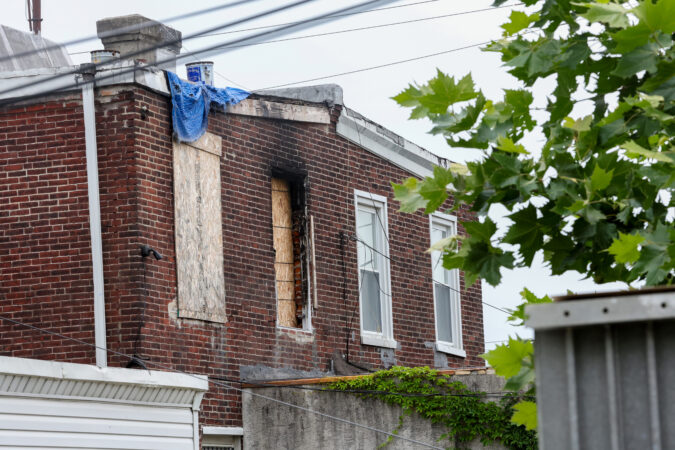
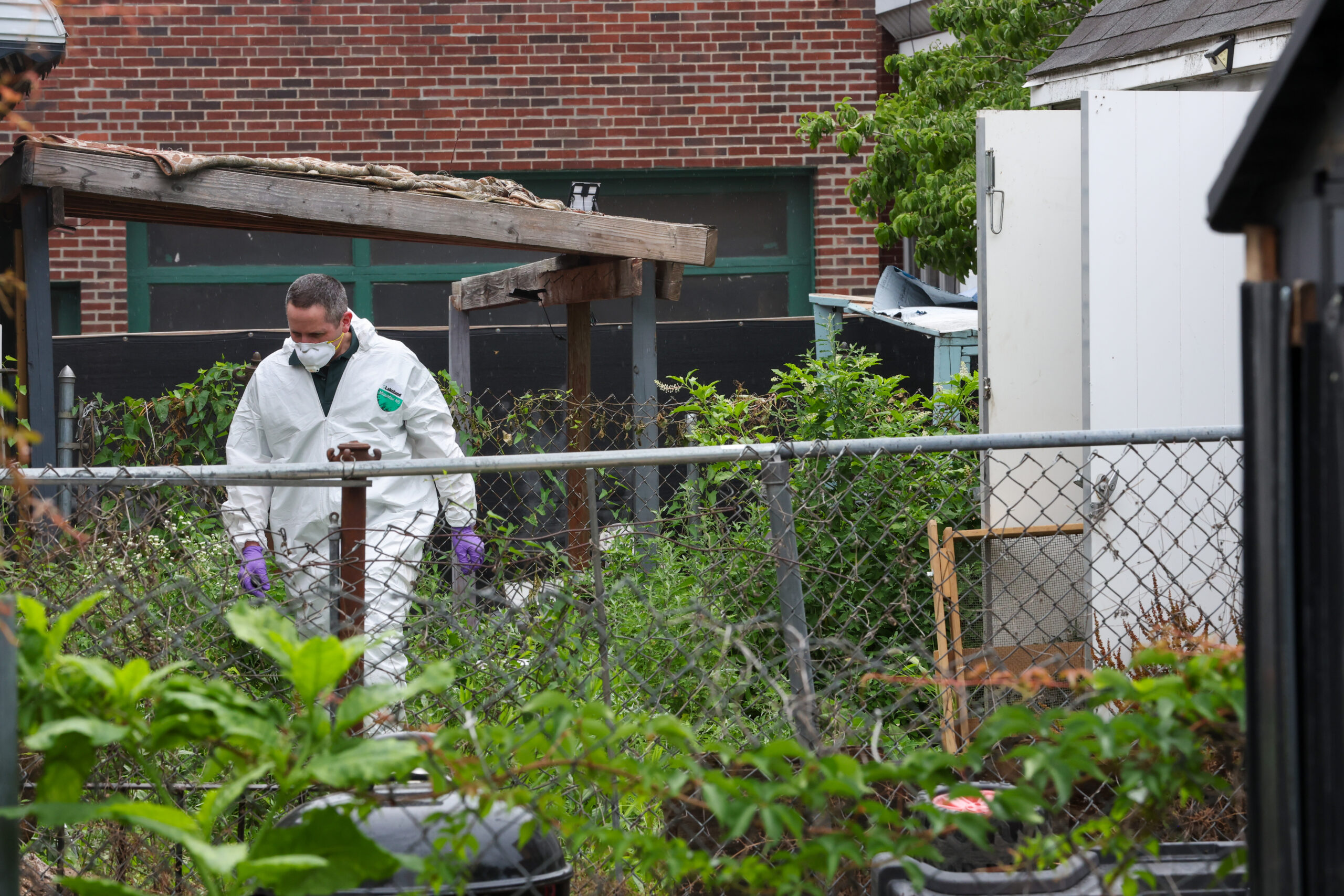
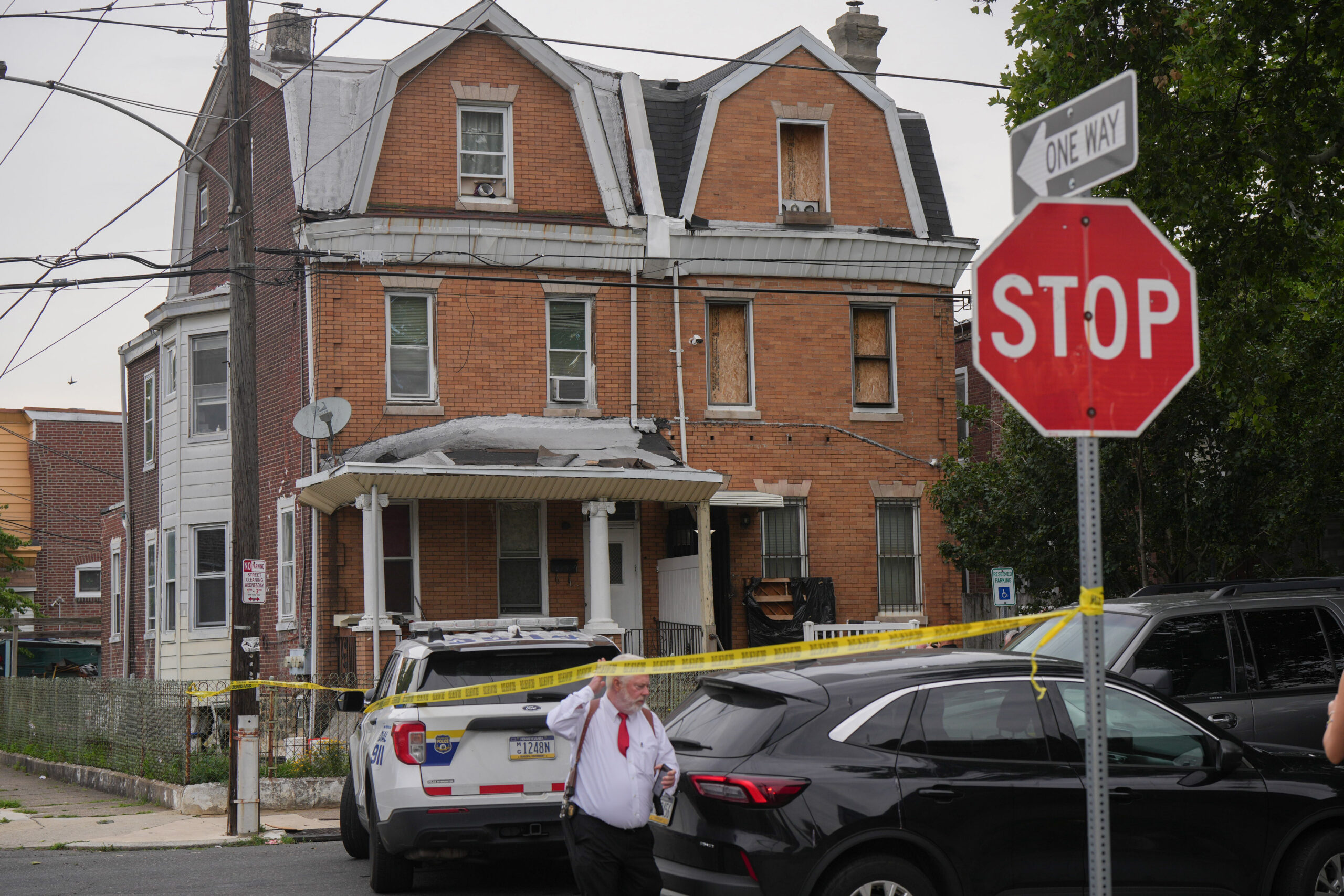
Philadelphia police found a “significant amount” of blood inside the decrepit Olney house linked to the investigation of at least two missing women, multiple law enforcement sources said.
The sources, who spoke on the condition of anonymity to discuss an ongoing investigation, said forensic testing has not yet determined whose blood it is or whether it’s even human — a process that could take several weeks to complete. But, the sources said, police are prepared to excavate the front and backyards of the West Chew Avenue home in the coming weeks in search of potential human remains.
Deputy Police Commissioner Frank Vanore declined to confirm or comment on the discovery Monday afternoon, citing the ongoing investigation. Vanore said Friday that police had not recovered any human remains from the home and were awaiting testing of the tubs of chemicals and other materials found in the basement.
Forensic investigators search the backyard of 417 W. Chew Ave. on June 27.
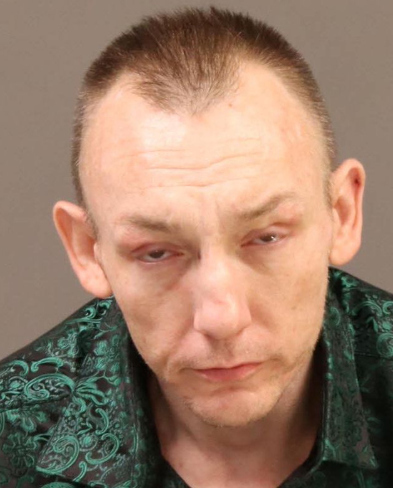
The finding marks the latest development in an unusual saga that began after the arrest of Eugene Albert Horsch, 44, the owner of the Olney home now being searched by law enforcement for a second week in connection with the disappearance of at least two women who have been missing for years.
Horsch was arrested June 19 after U.S. Park Police saw him parked in his black BMW near Sixth and Market Streets, acting suspiciously. When a ranger approached the car, police said, he heard a woman in the back seat say, “You’re going to hurt me” and saw drug paraphernalia.
Police searched the car and reported recovering two guns with obliterated serial numbers, as well as cocaine, fentanyl, and marijuana, a cattle prod, switchblade knives, handcuffs, and a fake U.S. Drug Enforcement badge featuring Horsch’s photo.
The woman with Horsch falsely identified herself to the officers as Blair Tonzelli, a 38-year-old woman who had been reported missing in Kensington in 2023, police said.
The woman, 39, later told investigators that she gave Tonzelli’s name because she had open warrants for her arrest in ongoing drug cases and that Horsch had made her fake identification cards in that name and said she could use it if she was ever stopped and questioned by police, sources said.
Eugene Albert Horsch, 44, was arrested June 19 for illegal gun possession and drug crimes.
The woman said she did not know Tonzelli or even that she was missing — but the way Horsch spoke about her and other women made her feel like something bad had happened to her, the sources said.
Philadelphia homicide detectives then began reviewing that missing woman’s case, and, alongside federal law enforcement, searched Horsch’s home at 417 W. Chew Ave. last week.
That search produced a trove of bizarre discoveries: a basement with drums filled with chemicals, bottles of unknown substances, Tonzelli’s bank card, the death certificate of another woman, and what appeared to be urns holding at least one of Horsch’s relatives’ cremated remains.
Investigators also found another handgun, materials used to grow marijuana, and a 55-gallon drum with connections to waterlines leading into a hole in the ground.
Federal investigators also discovered a multipage, unsigned, handwritten letter that appeared to describe hurting people and referenced the serial killer Ted Bundy, according to the affidavit of probable cause to search the home that was obtained by The Inquirer.
Eugene Horsch lived at 417 W. Chew Ave. with his father until he died last year.
Law enforcement sources said police were working to determine whether the writings were part of a novel or screenplay. Horsch’s late father, Raymond “R.C.” Horsch was a known drug manufacturer and erotic filmmaker who had published several works of fiction with violent, masochistic themes, including one described as an “autobiographical memoir of a caring, empathetic serial killer.”
The probe into the younger Horsch took another twist when investigators learned that Raymond Horsch’s ex-wife Amy McHale was last seen at the Olney property in 2016 and has not since be located. A lawyer for Eugene Horsch and his father said the two men had nothing to do with McHale’s disappearance and said she struggled with substance abuse and mental illness.
Horsch has been charged with illegal gun possession and drug crimes by Philadelphia authorities.
He is also facing a federal gun possession charge, court records show. The U.S. Attorney’s Office filed a complaint against Horsch on Friday, charging him with possession of a firearm by a felon and centering their allegations on the guns that park rangers found in his car during an encounter in Center City earlier this month.
Horsch has not yet been arraigned in that matter, and he remained in a city jail, held on $500,000 bail as of Monday afternoon. But the case could give federal prosecutors an opportunity to argue to a judge that he remain in federal custody until trial.
This is a developing story and will be updated.
Staff writers Jesse Bunch, Max Marin, Barbara Laker, and Chris Palmer contributed to this article.
Blair Tonzelli had been missing from Kensington for more than three years when her name turned up somewhere unexpected: on the fake ID of a woman in the backseat of a car parked near Independence Hall.
The woman showed the ID to U.S. Park Police on June 19 after they found her and Eugene Albert Horsch, 44, seated in his black BMW, with drug paraphernalia, guns, and knives stashed in the car, according to police records. The woman later told officers that Horsch made her the fake ID in Tonzelli’s name and urged her to use it if she ever got into trouble.
That encounter sparked a sprawling investigation into Horsch and an ongoing search of his Olney home for connections to Tonzelli and at least one other missing woman. Amy McHale — ex-wife of Raymond Horsch, Eugene’s father — was last seen at the Horsch property on West Chew Avenue in 2016.
Tonzelli was 35 when a friend reported her missing in early 2023. Police records now link her to Horsch following his arrest during the car stop. Philadelphia homicide detectives began probing Tonzelli’s disappearance last week and interviewed at least two women who said they believed something bad may have happened to her, according to police documents.
One reported that Horsch was “a sociopath,” and that while he had never been violent toward her, he said things that suggested he was to others. According to the police documents, the woman told detectives that Horsch said that he knew of three chemicals needed to melt human remains and that he could make a body “so small it could be flushed down a toilet.”
The woman told police that Tonzelli was a home healthcare aide who had worked in Horsch’s Olney house, according to the records. She believed Tonzelli and Horsch had a disagreement over money at one point, the records say, and that he still had access to a CashApp account under Tonzelli’s name.
Horsch remains in a Philadelphia jail after officers searched his car and found two firearms with obliterated serial numbers, as well as cocaine, fentanyl, and marijuana, a cattle prod, switchblade knives, handcuffs, and a fake U.S. Drug Enforcement badge featuring Horsch’s photo. He is being held on $500,000 bail for illegal gun and drug charges.
Jerome Brown, an attorney for Horsch, declined to comment on Monday.
Horsch has not been charged with any crimes linked to Tonzelli’s disappearance. But the statements in law enforcement records raise concerns about her well-being and have provided local and federal investigators probable cause to search the Olney property for more than a week.
Inside the boarded-up twin, officers recovered several fake IDs in Tonzelli’s name and her bank card, according to police records. Investigators also found drugs, guns, vats of unknown chemicals, a 55-gallon drum, and an unsigned, handwritten letter that graphically described hurting people.
Police said they have not recovered any human remains at the house, but law enforcement sources on Monday said there was a “significant amount” of blood inside. Investigators are awaiting forensic testing to determine whose blood it is or if it’s even human, a process that could take weeks to complete.
Police are preparing to excavate the front and backyards of the home, the sources said.
Local and federal investigators continued to scour Horsch’s home Monday for additional evidence.
In the years before her disappearance, Tonzelli struggled with an opioid addiction and floated through the streets of Kensington, spending time in and out of jail on drug and prostitution charges. David McCarty, 72, said that he lived with her for a time in a house on Wensley Street and that their friends would try to look out for one another.
Even in the throes of her addiction, Tonzelli was fiercely loyal, McCarty recalled. She once threw herself in front of a tow truck to prevent the operator from illegally taking McCarty’s car, yelling “You’re not gonna do this to my friend!”
But Tonzelli, he said, would disappear for stretches, often with a man from Olney who sold marijuana. She told McCarty she was visiting with a man named Raymond, he said.
At the time, Eugene Horsch lived with his father, Raymond “R.C.” Horsch, a convicted drug dealer and a producer of erotic films and novels. His work often focused on serial killers and the sexual exploitation of women with substance-abuse problems. The elder Horsch, who died in the Olney house in 2025, often featured women who frequented Kensington in his films.
Tonzelli typically returned from her trips to see Horsch, McCarty said, but then he didn’t hear from her after August 2022.
Joseph Gunkel said in an interview that he and a friend called police to report Tonzelli missing in February 2023 after months had passed without hearing from her.
The friend told police that Tonzelli was last seen at the Olney home of a “sketchy” man who scared her, according to police records. Tonzelli was meant to meet someone one afternoon and never showed up, and none of her acquaintances — from Philly to Florida — had heard from her since, the friend said.
McCarty grew worried as days became weeks. He knew she needed regular medical attention because of a drug-related wound that ran from her armpit down to her knee. McCarty said he replaced the gauze and applied ointment to the open gash twice a day, and Tonzelli needed daily medication to fight off the infection.
“I can’t tell you how many times I spent visiting her and putting her in the hospital,” McCarty said. ”People make choices. She’s an adult, and it didn’t matter what I’d say or what I’d do to help her.”
Gunkel said he didn’t hear from police again about Tonzelli until last week, when homicide detectives asked him to come in for an interview about her disappearance. He said he was relieved someone was finally looking into her whereabouts, even if it was three years later.
“At least reporting her missing helped out some,” he said.
Tonzelli’s Facebook page says she attended Archbishop Ryan High School. Her mother, who grew up in Fishtown, died when Tonzelli was 18, according to an online obituary.
Tonzelli’s family declined to speak this week. McCarty said that Tonzelli was estranged from her relatives but that she had a son who she talked about often.
After she went missing, McCarty urged a mutual friend to file a police report, because he worried no one else would.
“My soul just believes something was going on,” he said.