Entering his ninth season as an Eagle, Zach Ertz could see the writing on the wall. With the continued emergence of tight end Dallas Goedert and a rough four-win 2020 season at the front of mind, it seemed certain the two parties would be headed for a divorce.
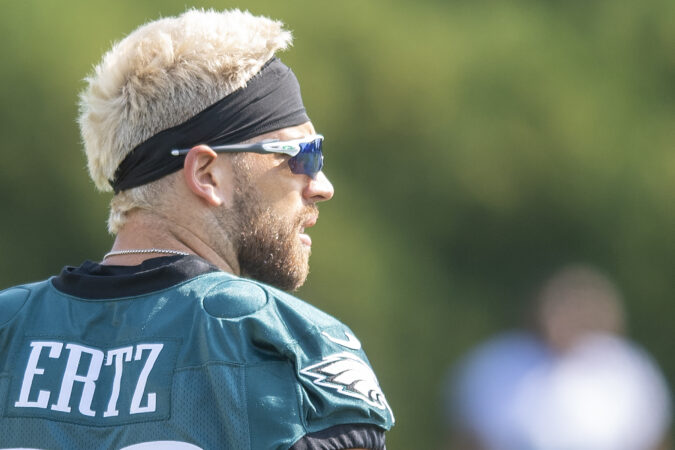
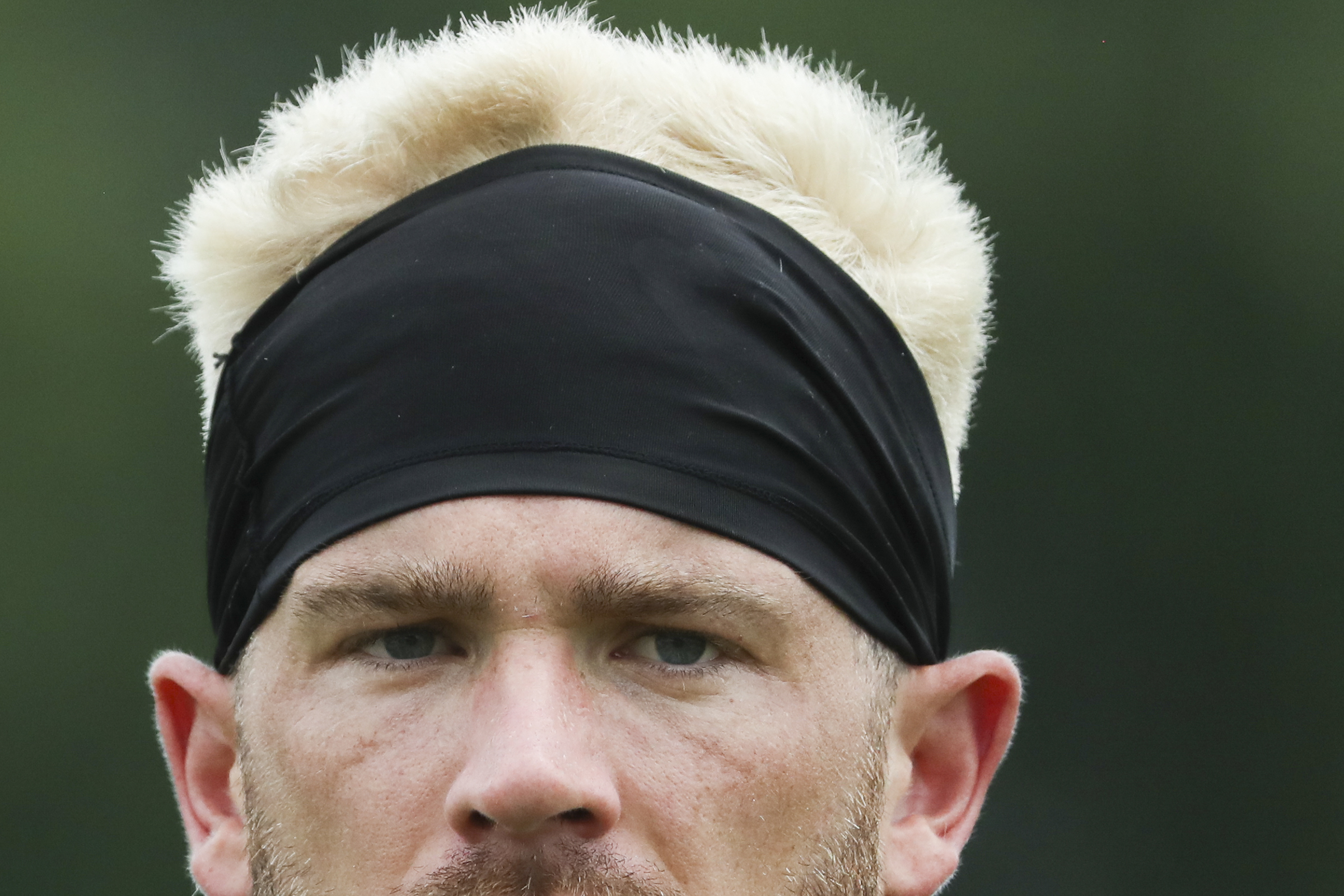
But finding a landing spot for the three-time Pro Bowler took longer than originally anticipated. Expecting to be dealt before the 2021 preseason, Ertz was still on the roster when training camp arrived. So on a whim, the veteran tight end decided to dye his hair bleach blond.
“I essentially hadn’t been there all offseason. I had ankle surgery so I was missing OTAs anyway. And I showed up for training camp with blond hair,” Ertz said on his former teammate Jason and Travis Kelce’s New Heights podcast. “I don’t regret much about my time in Philly or this career, but the one thing I do regret is kind of that phase, showing up to training camp with blond hair.”
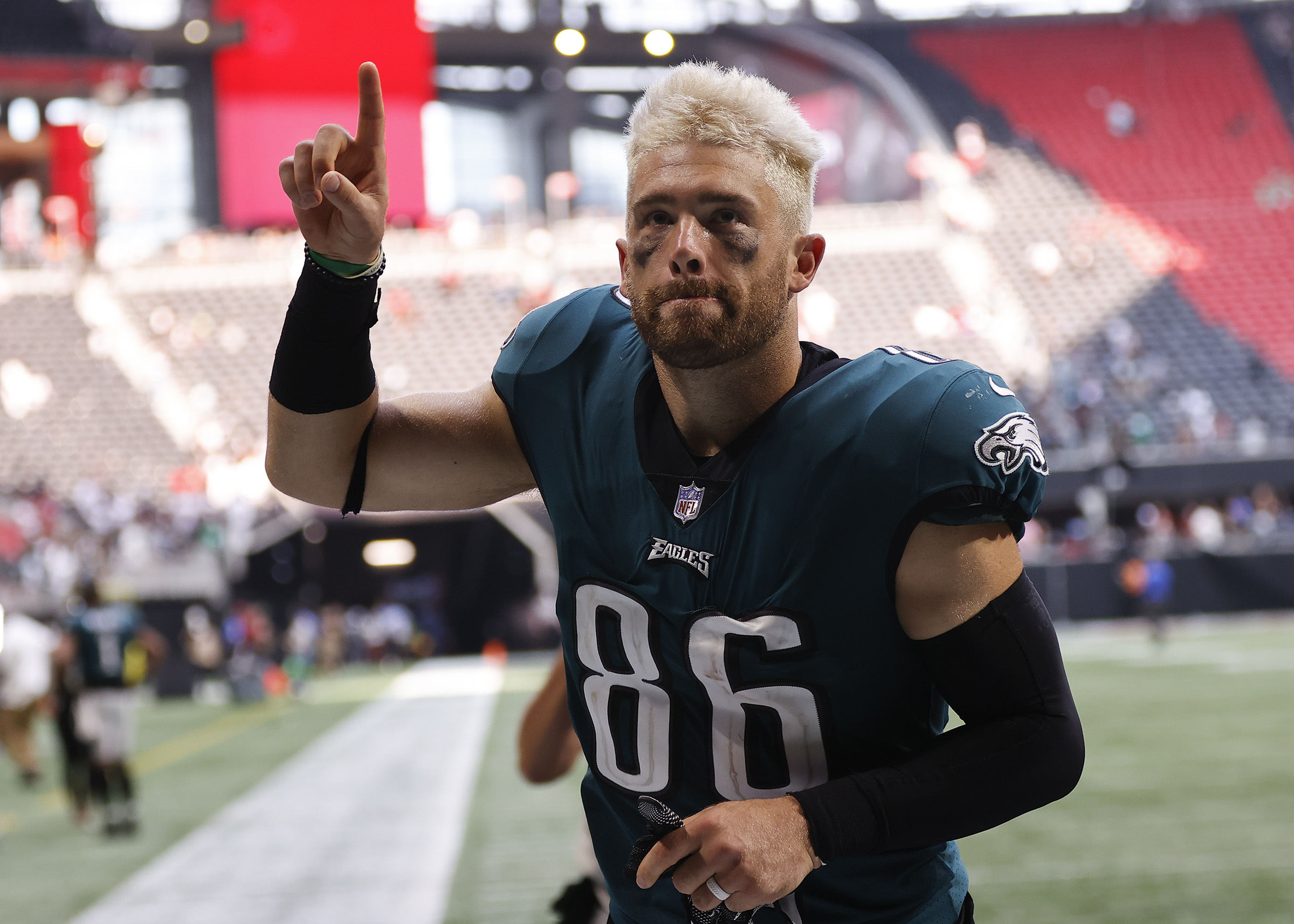
Eagles tight end Zach Ertz jogs off the field after the Eagles beat the Atlanta Falcons to open the 2021 season.
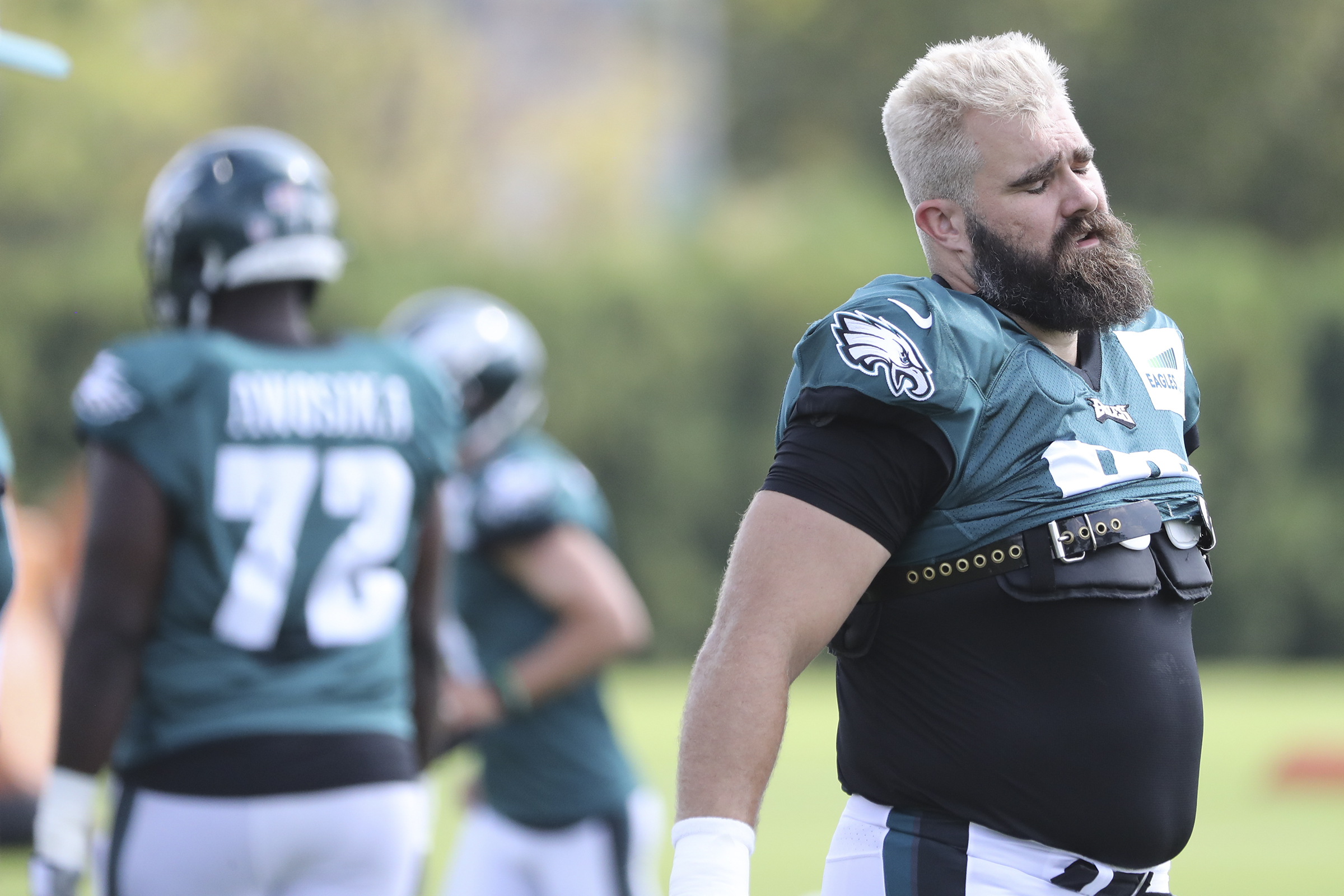
Jason Kelce, who played alongside Ertz for over eight seasons, was as sure as anyone that the Southern California native would get dealt before games started. He was so confident that he put his own head of hair on the line.
“It was so obvious, unfortunately, that my time was probably coming to an end, that Jason was like, ‘Bro, when are you getting traded? You’re going to get traded any day now. If you’re still on the team Week 1 then I’ll dye my hair,’” Ertz recalled. “I don’t think I had anything to lose in this situation.”
And as the summer days rolled on, Ertz’s wait for a trade didn’t materialize — at least not before the Eagles’ Week 1 game against the Atlanta Falcons. So when the longtime teammates ran out onto the field at Mercedes-Benz Stadium, they were rocking a matching hairdo.
“I just wanted Zach to have something to look forward to if he was still on the team, like, ‘At least Jason dyed his hair to match,’” Kelce recalled.
Most important, Ertz’s wife and former U.S. women’s national soccer team star Julie Ertz, who was also a guest on this week’s episode, said she liked her husband’s new look.
“That’s really all that matters, honestly,” Zach quipped.
As for Kelce, Ertz referred to him as Guy Fieri as both the hosts and guests reacted an image of a blond Kelce, that Jason called “the worst photo of me possible.”
Jason Kelce dyed his hair to match Ertz’s at the start of the 2021 season.
“I don’t think Kylie [Kelce] liked your hair as much as I liked Zach’s hair,” Julie joked.
Ertz remembers his Philly days
Ertz was also asked to reflect on his time in Philly.
“When you spend nine years somewhere, you’re going to always have a natural affinity for the place,” Ertz said. “Unfortunately … I wasn’t able to play my whole career [in Philadelphia].”
But what Ertz most appreciated from his time on the Eagles were his teammates. After getting selected in the second round of the 2013 draft, Ertz quickly inserted himself into a young Eagles foundation designed to remain intact for years — one that also included Kelce, Brandon Graham, Fletcher Cox, and Lane Johnson.
“The thing I look back on fondest is our core group of guys that we had together for a long period of time, with you, Lane, BG, Fletch, myself,” Ertz said. “It wasn’t easy all the time for any of us. Like there were times we’d get killed in the media or whatever it was, and I always knew you four always had my back regardless of what we were going [through]. And I hope you guys felt the same about me.
“And it is a little emotional talking about — I don’t know why — but just going through that, just being around the guys. No one is going to remember about how many yards or catches or starts we had, but I do remember the day-to-day, grinding, the stories of you kicking over a trash can because you didn’t like the way a coach was treating someone else, or Lane hiding your helmet — those are the things I remember.”
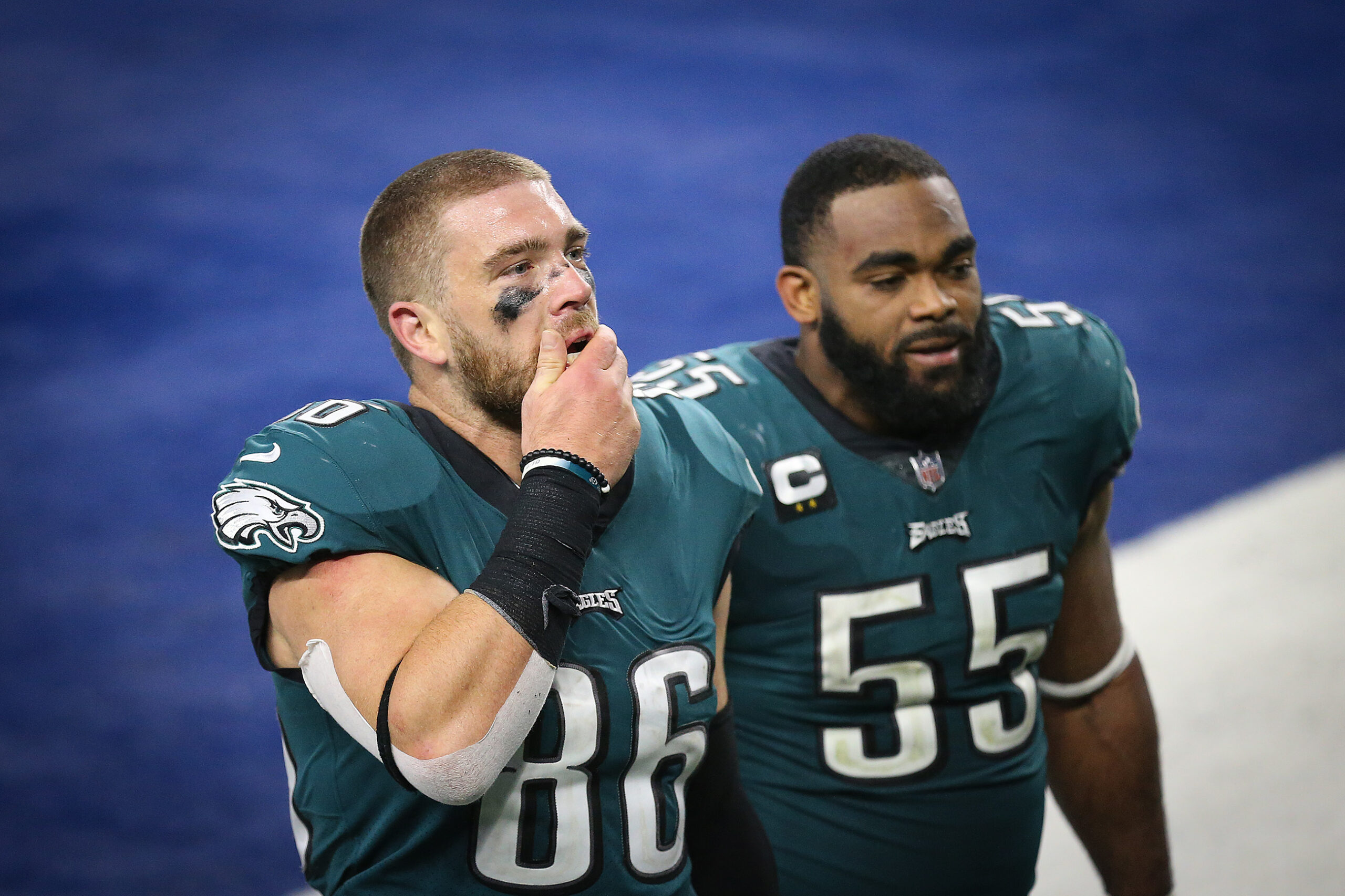
Eagles tight end Zach Ertz (left) and defensive end Brandon Graham (right) walk off the field after a 37-17 loss to the Dallas Cowboys in December 2020.
Ertz’s time in Philly ended in November 2021 when a long-awaited trade sent him to the Arizona Cardinals. The Eagles’ single-season receptions leader played two more seasons with the Cardinals and two with the Washington Commanders. But when Ertz, who is now a free agent, returned to the City of Brotherly Love with Washington, he couldn’t get the Birds’ fight song out of his head.
“Even when [I was] on the other sideline … It’s still like subtly in the back of my mind,” Ertz admitted, “singing it as I’m over there watching.”
Looking ahead, Ertz is aiming to suit up to play in his 14th NFL season, but he does not yet know where. Complicating the situation is a season-ending ACL tear that the 35-year-old suffered in a Week 14 shutout loss to the Minnesota Vikings.
But Ertz is pleased with the recovery progress he’s made and expects to be ready near the start of the season.
“We’re in a good spot. We’re like five, almost six months now from surgery, so just training every day, doing everything I can to get back to where I was,” Ertz said. “It’s a long process. There’s some long days, there’s some long weeks, some long months … it’s tough, but we’re just trying to stack these days right now.”
Ertz’s blond phase didn’t last long, but it was memorable.
A former Delaware County woman tied to an extremist group known as the Zizians has been charged with killing her parents, execution-style, inside their Chester Heights home in December 2022.
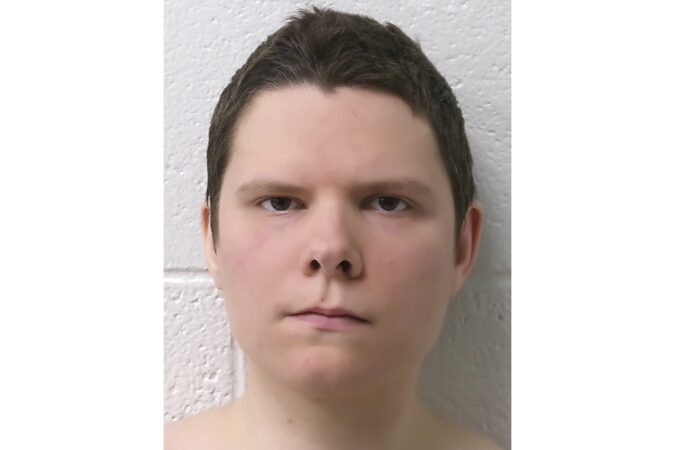
Michelle Zajko, 33, has long been a person of interest in the slayings of her parents, Richard and Rita Zajko. After years of investigation, Delaware County District Attorney Tanner Rouse filed first-degree murder charges Wednesday and accused her of shooting the couple on her 30th birthday.
New information obtained in the last few months, including ballistics evidence and an extensive download of text messages and other data from Zajko’s cell phone, allowed prosecutors to piece together the case against her, according to the affidavit of probable cause for her arrest.
Rouse, in announcing the charges Wednesday, said he believes that while Zajko planned and carried out the killings, she likely did not act alone. The investigation is continuing, he said.
Building the case against her, he said, took years of skilled and disciplined police work as investigators interviewed dozens of people and connected threads of information in several states.
“I want to emphasize — I cannot stress this enough — this is just about as exhaustive of an investigation that I’ve been a part of in my 16 years as an attorney,” Rouse said. “We don’t have a smoking gun. It is piece after piece after piece of evidence that has been collected painstakingly over many years.”
Investigators say Zajko, an alumna of Cardinal O’Hara High School and Cabrini University, drove to her childhood home on Highland Circle in Chester Heights with a plan to kill her parents. She shot them both in the head, leaving their bodies for police to find days later, after a concerned friend reported they had missed an appointment to care for Rita Zajko’s elderly mother.
The motive for the killings remains unclear.
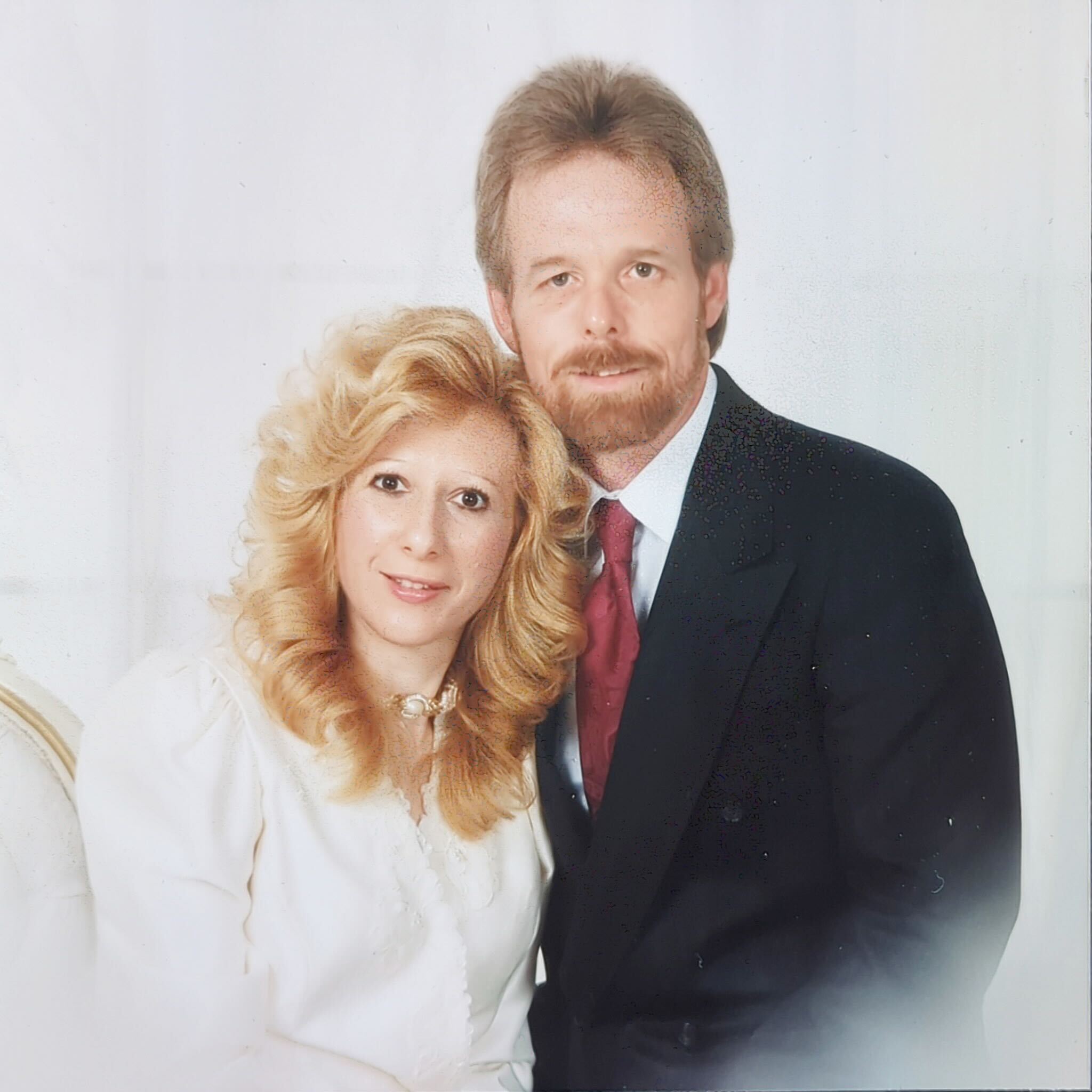
Rita and Richard Zajko, seen here in a 1993 family portrait.
Zajko told friends she had a difficult relationship with her mother, and accused her of years of emotional abuse. In online writings, Zajko said her mother criticized her constantly, arguing with her over religion and her desire to be vegan.
That strained relationship was detailed in the final text messages Zajko sent her father days before authorities say she killed him, according to the affidavit.
“Every time I interact with mom in a nonsuperficial way she spends the time insulting a life she knows nothing about, makes assumptions that imdoing nothing, etc,” Zajko wrote, the document said. “Itsuncalled for. I don’t want to speak to someone who treats me like that.”
But Rita Zajko, just nine hours before she was killed, attempted to reconcile with her daughter, sending her a happy birthday text and apologizing for whatever she had done to alienate her, according to the affidavit.
On Wednesday, Rosanne Zajko, the wife of Richard Zajko’s brother, stood alongside the prosecutor as he announced the charges against her niece. Losing her brother- and sister-in-law, she said, was “like the lights going out of our lives.”
“We don’t know yet if the trial will begin to heal the void in our lives and the ache in our hearts,” she said. “But we do know that the detectives, the DA’s office, and we, the family, have done everything possible to achieve justice for Rick and Rita.”
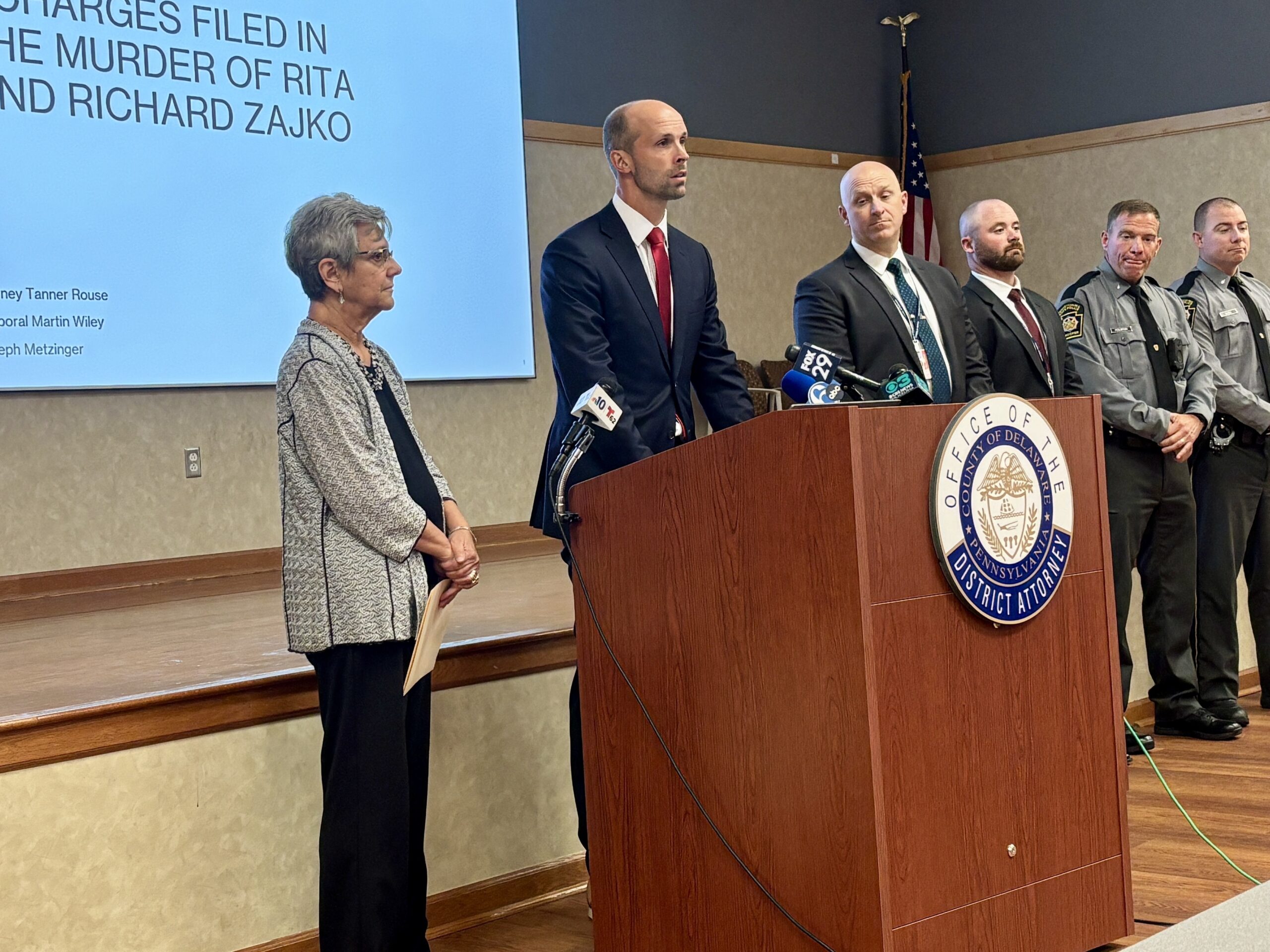
Delaware County District Attorney Tanner Rouse announces murder charges Wednesday against Michelle Zajko. Zajko’s aunt, Rosanne (left) spoke briefly about the impact the killings has had on her family.
Michelle Zajko, for her part, has said she had been unjustly accused.
In a sprawling, handwritten letter sent to The Inquirer and other news outlets last year, Zajko insisted she did not kill her parents. Rosanne Zajko said Michelle Zajko told her at the couple’s funeral in January 2023 that she had not killed her parents, but said she knew who did. She would not name the killer, her aunt said.
“I’m viscerally reminded of the witch hunts, of the Satanic Panic, of the mob that burned Joan of Arc at the stake, and of the mob that ripped apart Hippolyta,” Michelle Zajko said in the letter, written in a jail cell in Maryland, where she is awaiting trial on trespassing, gun, and drug charges. “The papers are lying. … I did not murder my parents.”
Sources familiar with the investigation say it is possible that, as an only child, Zajko may have expected to inherit her parents’ substantial estate. The value of the estate has not been made public, but the sources, who spoke on the condition of anonymity to discuss an ongoing case, say it is worth several million dollars.
A person close to Zajko said she had contacted an attorney in the weeks after her parents were killed to discuss how she could access her parents’ estate.
Zajko remains in custody in western Maryland with two other members of the Zizians, including the cultlike group’s leader, Jack “Ziz” LaSota, who identifies as female.
Zajko is also charged with illegally supplying the guns used by other members of the Zizians in a fatal shootout with a U.S. Border Patrol agent weeks before her arrest in Maryland.
In her letter from jail, Zajko said she and her friends were innocent of all criminal charges they face. She said they were being targeted by other members of the Bay Area tech community seeking to discredit them.
Members of the Zizians — a group whose philosophy encourages making decisions through reason and logic, rather than emotion — are connected to six killings across the country, authorities say. Prosecutors have denounced the group as extremists and accused them of using violence when their worldview is challenged.
For years, the deaths of Richard and Rita Zajko remained the only ones tied to the Zizians that remained unsolved.
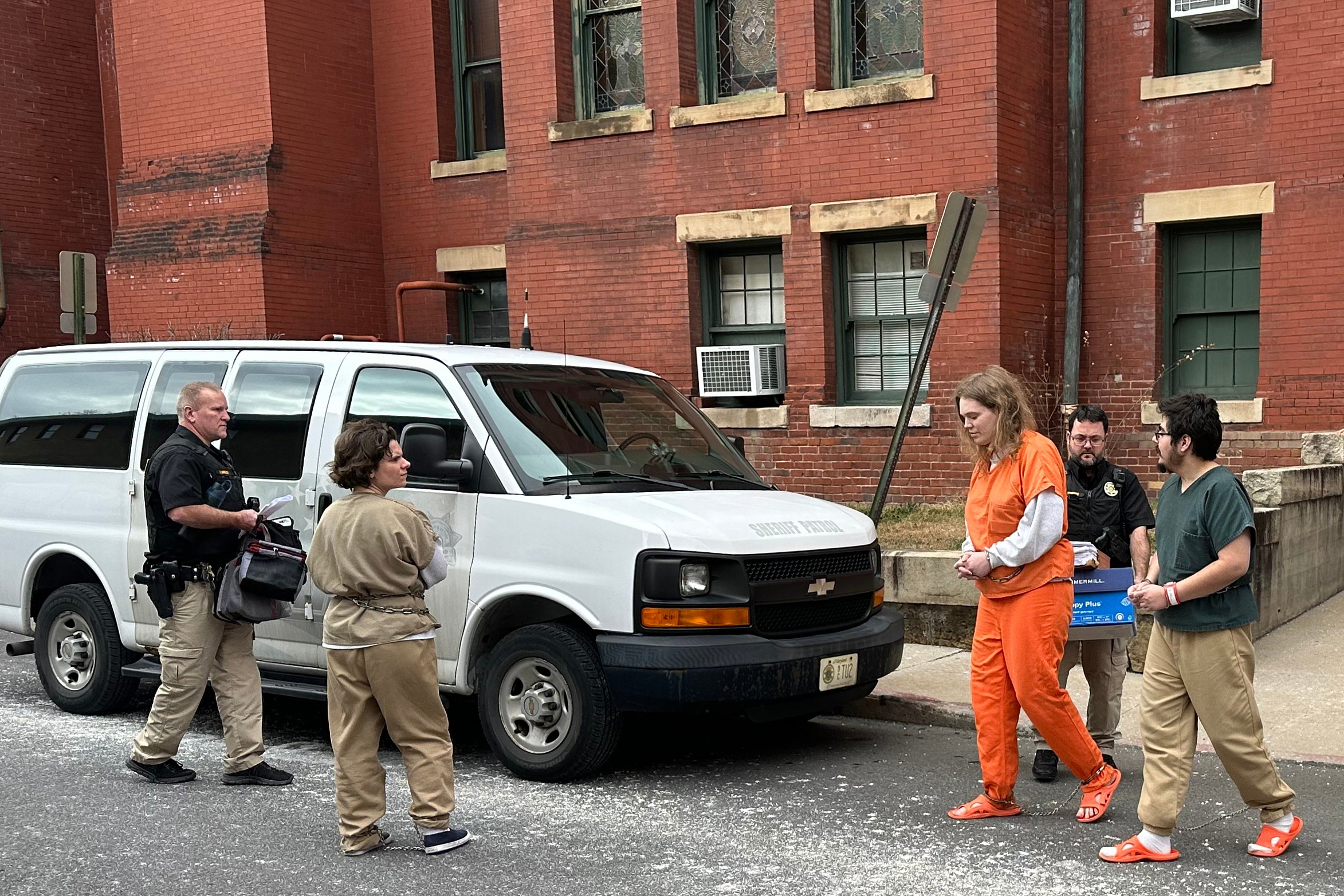
Deputies escort Michelle Zajko, left, Daniel Blank, right, and Jack LaSota, in orange, from the Allegany County Courthouse in Cumberland, Md. in January.
Almost immediately after the killings, investigators in Delaware County learned that Zajko had been at her parents’ home on the night they were shot — a neighbor’s Ring security camera recorded someone screaming “Mom!” shortly before police believe the fatal shots were fired.
The couple were found in their daughter’s childhood bedroom, which had remained virtually unchanged since she had moved out of the house decades earlier, the affidavit said.
The gun used to kill the couple was the same caliber as, and a similar model to, one Zajko had purchased in Vermont weeks earlier, investigators said. She was labeled a person of interest in the case as a consequence. But authorities said there was not enough evidence to prove she had committed the crime.
That changed this week, prosecutors said.
When investigators spoke with Zajko at her home in Vermont after her parents’ killings, she showed them a different type of ammunition from the kind found at the Chester Heights home, the affidavit said. However, while serving a subsequent search warrant there, detectives found cartridges that were an exact match — and that they said Zajko had hidden from them.
Initially, forensic investigators said they were unable to determine if the shell casings found near Rita and Richard Zajko’s bodies had been fired from their daughter’s gun. But late last fall, other casings found near trees behind Michelle Zajko’s home in Vermont, which she had used for target practice, had been fired by the same gun that killed her parents, authorities said.
Another crucial piece of evidence, investigators said, was a list found on Zajko’s cell phone titled “There are so many things we f— up” that detailed missteps, including not taking shell casings from the homicide scene, according to the affidavit.
The murder charges mark an unexpected turn for Zajko, whom friends and loved ones described as an ambitious, accomplished young woman with a keen interest in science. In her early 20s, Zajko pursued a career in bioinformatics and conducted research at Children’s Hospital of Philadelphia with colleagues from the University of Pennsylvania.
At the same time, Zajko became immersed in the Zizianmovement through online message boards, and met some of the group’s members while interning with NASA in California.
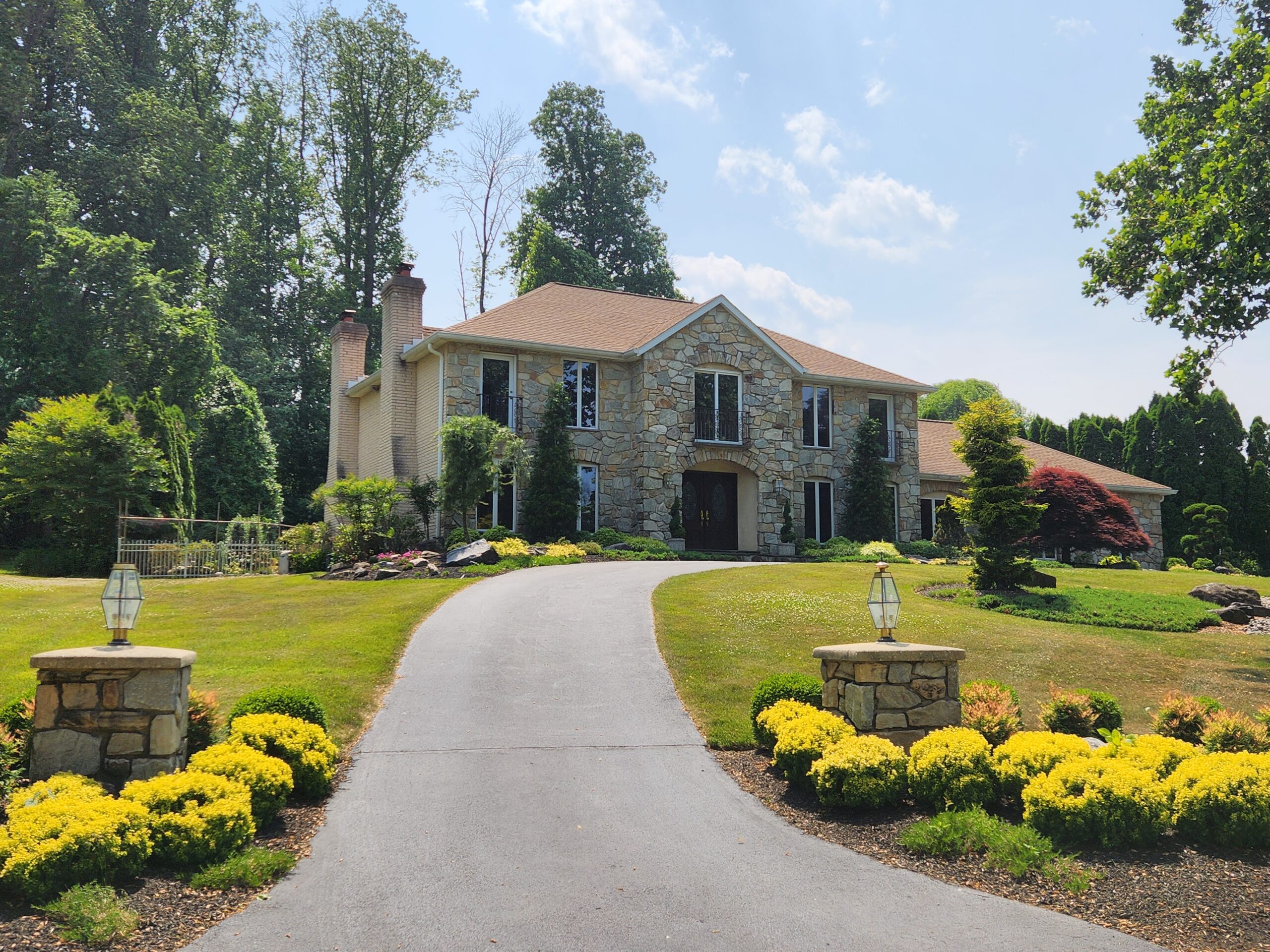
The Chester Heights, Delaware County home where Richard and Rita Zajko were murdered on New Years Eve 2022.
In 2021, partly in reaction to the COVID-19 pandemic, Zajko abandoned her scientific research and moved to rural Vermont, where she lived with other Zizians and grew close to LaSota, the group’s leader.
Zajko, in her prison letter, said that she rejects the characterization of LaSota as her “leader” and that the group does not refer to themselves as Zizians. Instead, she said that she and LaSota are close friends, and that she loves LaSota “infinitely more than I could ever express.”
Investigators now believe that Zajko, LaSota, and Daniel Blank, another Zizian, traveled to Chester Heights together on the day Zajko’s parents were killed, and intentionally left their cell phones in Vermont to prevent authorities from tracking their movements, according to the affidavit.
The three made that trip a second time weeks later, in January 2023, so Zajko could attend her parents’ funeral in Marple Township. Pennsylvania State Police troopers investigating her parents’ killings briefly detained Zajko and Blank at a hotel where they were staying in Chester.
LaSota, however, refused to answer the troopers’ questions, was charged with obstruction of justice, and remained in custody in Delaware County for months before being released on unsecured bail.
LaSota did not show up for subsequent hearings, and a bench warrant for her arrest was still active when Maryland State Police took her into custody last year alongside Zajko and Blank.
As Zajko awaits trial in both cases, Rouse, the prosecutor, said her crimes “go beyond comprehension and circumstance.”
“This is a child who killed her parents, who walked into her childhood home, took her mother to her childhood playroom, and executed her,” Rouse said. “There aren’t words or emotions that can capture it.”
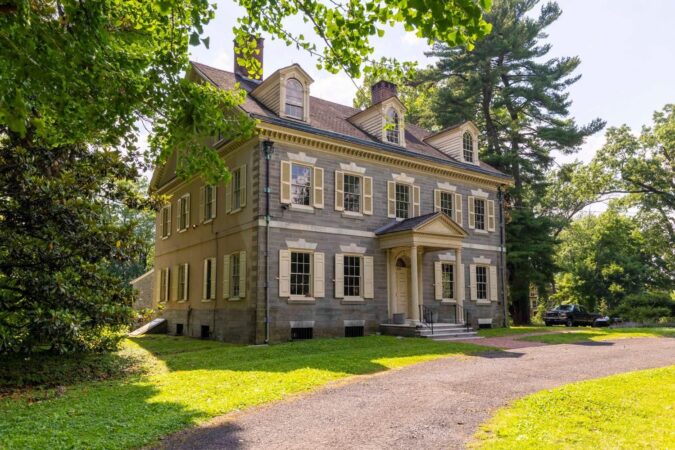
Built at the end of the 18th century on the site of a major Revolutionary War battle in Philadelphia, Upsala mansion was listed on the National Register of Historic Places in 1972.
The early Federal-style estate nestled on the border of Germantown and Mount Airy is listed at $995,000 and comes with nine bedrooms, 10 fireplaces, 15 parking spaces, and a 70-page easement agreement with a peculiar caveat — once a year, the owner must permit “a re-enactment of portions of the Battle of Germantown” on their front lawn.
“The battle reenactment is actually written into the deed. That is something any future owner of the property would be obligated to allow to happen,” said current owner Alex Aberle, who’s also a real estate agent and the property’s listing agent.
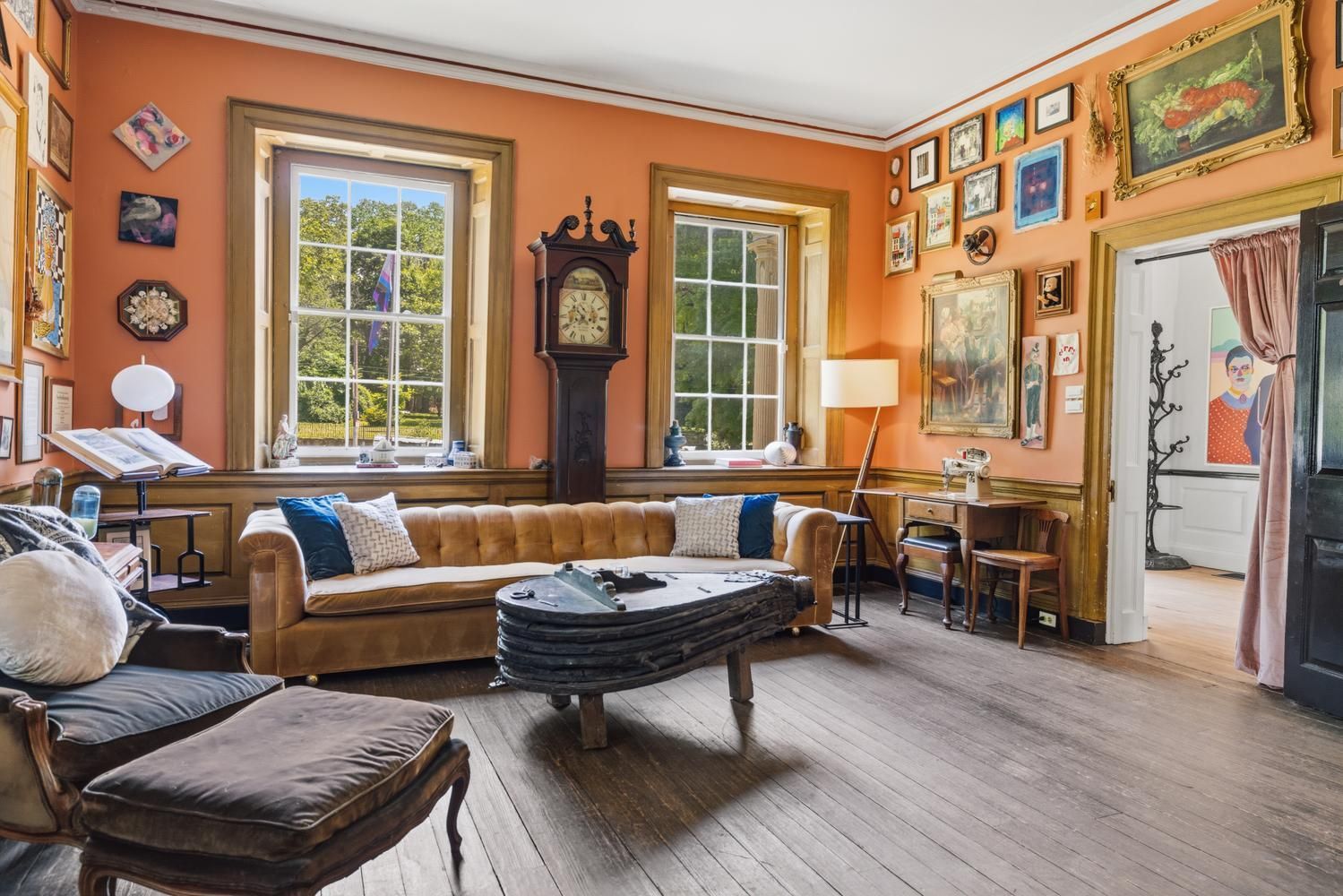
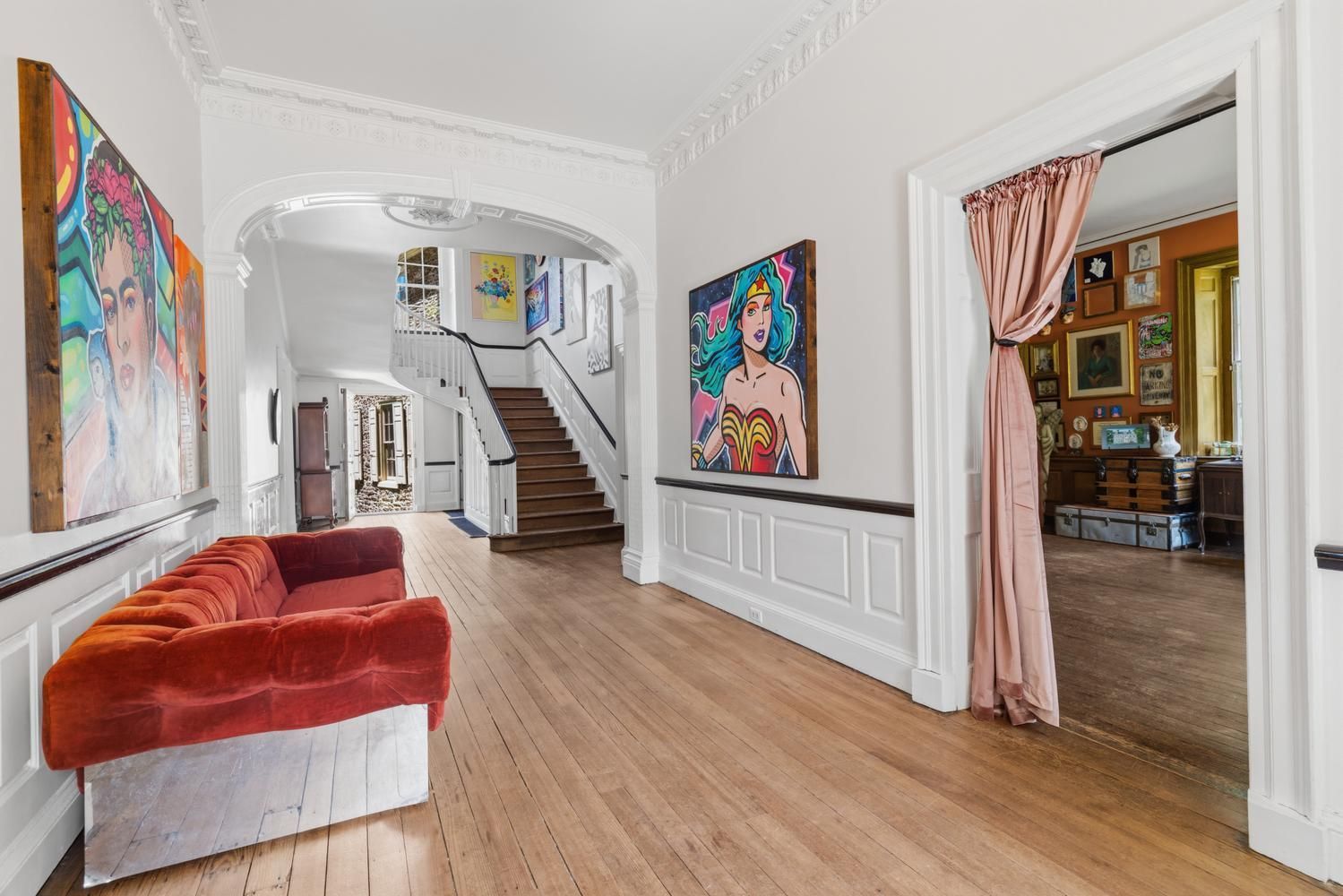
A living room in Upsala mansion, an early Federal-style building on the 6400 block of Germantown Avenue.
The easement was put in place by the National Trust for Historic Preservation when Aberle and his ex purchased the mansion on the 6400 block of Germantown Avenue in 2017 and became Upsala’s first private owners since it was converted into a historic house museum in the 1940s.
As part of the Revolutionary Germantown Festival — which commemorates the 1777 Battle of Germantown — battle reenactments were held for decades on the lawns of Upsala and Cliveden, a National Historic Trust site and mansion across the street from Upsala.
Though the mansion was built in 1798, two decades after the battle that sought to liberate Philadelphia from British control, the property served as the staging ground for the Continental Army during the Revolutionary War fight.
Aberle said he loved having the reenactments in his front yard, but Cliveden and the sites of Historic Germantown, which host the festival, haven’t held a reenactment there since 2019.
Carolyn Wallace, education director at Cliveden, said prior to the pandemic, organizers were reevaluating tactical demonstrations as part of the October festival in light of ongoing gun violence in the U.S. In 2020, organizers underwent a community engagement project called “Considering Re-enactments,” which sought to answer the question: “Is this still the best way to tell stories of the American Revolution?”
“We found it was a mixed bag so we shifted more towards living history,” she said. “We still have military personnel (reenactors), but we have not done tactical demonstrations in a number of years, though I can’t say we won’t do them again.”
And if they do, the easement still stands.
“That runs with the land — for me and for everyone else for years to come, and hopefully, forever,” Aberle said.
Built for John Johnson III, a fourth-generation descendent of the Janesen family, who were early Germantown settlers, Upsala stayed in the family until the 1940s, when it was seized due to financial issues.
Preservationists worked to save the property from demolition and from the mid-1940s until the early 2000s, it was a historic house museum before it was closed due to dwindling attendance and revenue.
The National Trust for Historic Preservation became Upsala’s owner in 2005 and Cliveden Inc., a co-stewardship organization of the National Trust, became its steward. After years of public engagement to find a new steward or use for Upsala, they put the 2.45-acre property up for sale in 2016.
Aberle and his ex, Violette Levy, beat out eight other offers by purchasing it for $550,000 cash — $51,000 more than the asking price.
They spent years doing extensive renovations like putting in central air, replacing the boiler, fixing the plumbing, and decorating.
“When we bought it, the walls were mostly varying shades of yellow and cream and now there’s no yellow left, I’m happy to report,” Aberle said.
They documented their journey on Instagram, where followers left comments about the memories they’d made at Upsala — from attending weddings there to attending a concert by the Hooters in the 1980s organized by one of the estate’s caretakers.
“I loved hearing all those stories because that’s the kind of thing you don’t see in books,” Aberle said. “It’s super special because it only comes organically.”
View of a hallway inside of Upsala mansion.
Aberle said he never had any intention of selling Upsala, but when his relationship with Levy ended and he became the sole owner of the home, it didn’t “really make sense to stay there as just one.”
“It’s definitely a family house and that was always sort of my dream for the house,” he said.
Aberle estimated that a little more than half of the mansion has been renovated. The back part of the house, where he’d planned to fix up the kitchen and put in a mother-in-law suite, is still in need of work, he said.
“My relationship didn’t last quite as long as my project did so the space is ready for someone else to come in and finish it for their family,” he said.
But another aspect of Aberle’s life did blossom because of Upsala. When he and his ex bought the mansion, it was listed by Louise D’Alessandro, a founding partner of Elfant Wissahickon Realtors. They invited her and others from the company to the first reenactment on Upsala’s front lawn after they took ownership of the property and within a year, Aberle left the real estate company where he worked and went to work for Elfant Wissahickon, where he remains.
Aberle said he’s fallen in love with the Germantown and Mount Airy neighborhoods and is only moving just around the corner from Upsala, so he plans to make himself available for any questions from future potential owners.
“The easement is really not as scary as the 70-page document might lead you to believe. I do mean it from the bottom of my heart. I spent nine years dealing with this document and working with this trust … and my plan is to make myself completely available to facilitate transition,” he said.
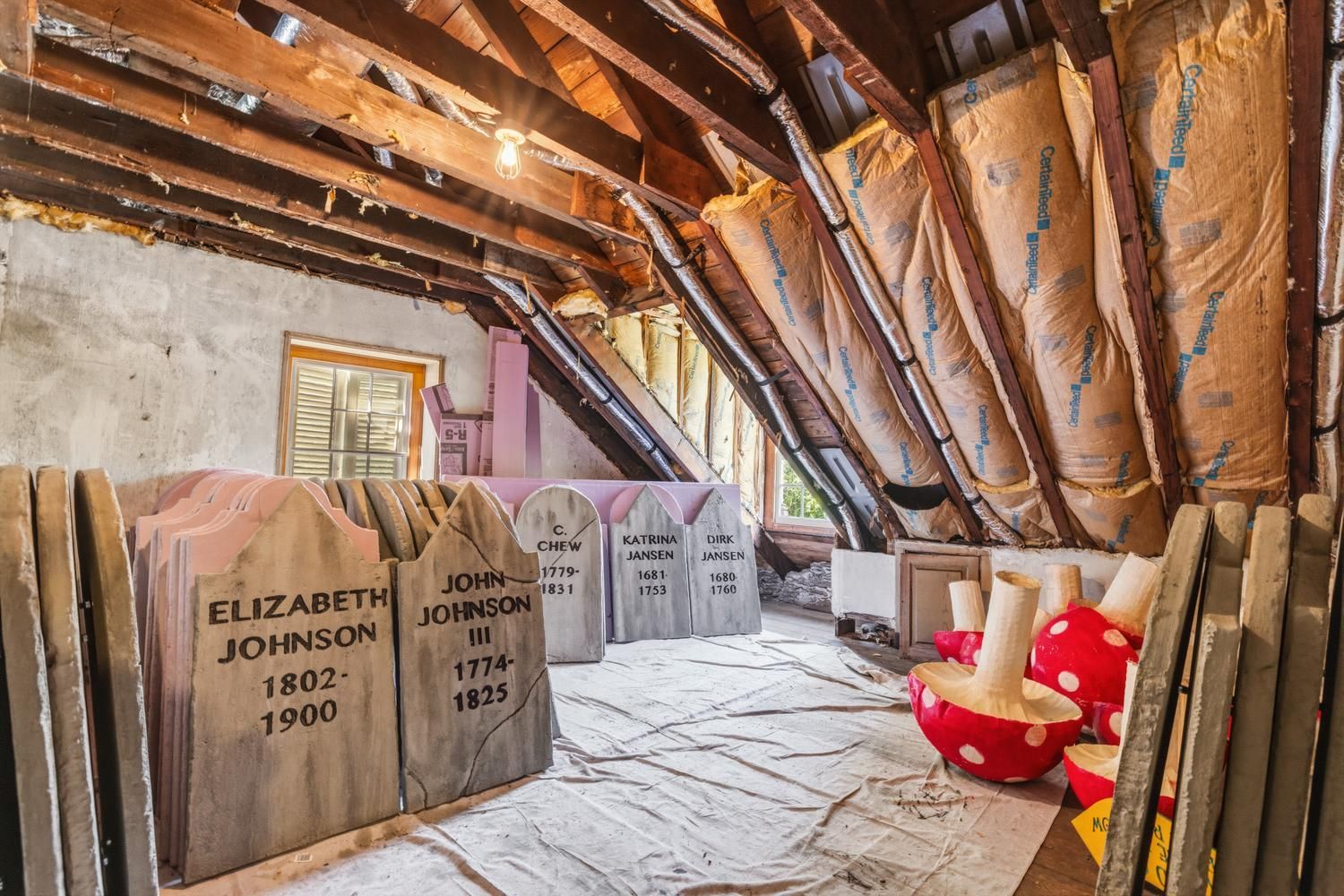
Halloween decorations, including tombstones that have the names and dates of people who once lived in or near Upsala, are stored in the attic of the property and will be sold with it.
And if you’re wondering about the listing photo that shows an attic room filled with tombstones and giant mushrooms, not to worry, those are Halloween decorations. The mushrooms are from an Alice and Wonderland-themed Halloween they did one year and the gravestones have historically-accurate names and dates on them of people who lived and died in and around Upsala.
“We set those up for a few years and added more folks each year,” Aberle said of the tombstones. “I’m leaving them in hopes someone else will carry on the tradition.”
He’s excited to see who will become Upsala’s next owner and what they will do with the historic property.
“I think the most important thing, for me, is it’s someone who will love this place as much as I do and have the desire to take care of it and love it,” Aberle said. “That’s what it deserves.”
For more information on Upsala, including the entire easement agreement, visit upsalamansion.com.
Veteran restaurateur Jeffrey Chodorow has spent decades in and around Philadelphia without ever opening a restaurant here.
That changes Thursday at the Bellevue, where the mind behind such destinations as China Grill and Asia de Cuba is opening Mr. Edison, a supper club-style restaurant and bar built around dinner, drinks, and live music.
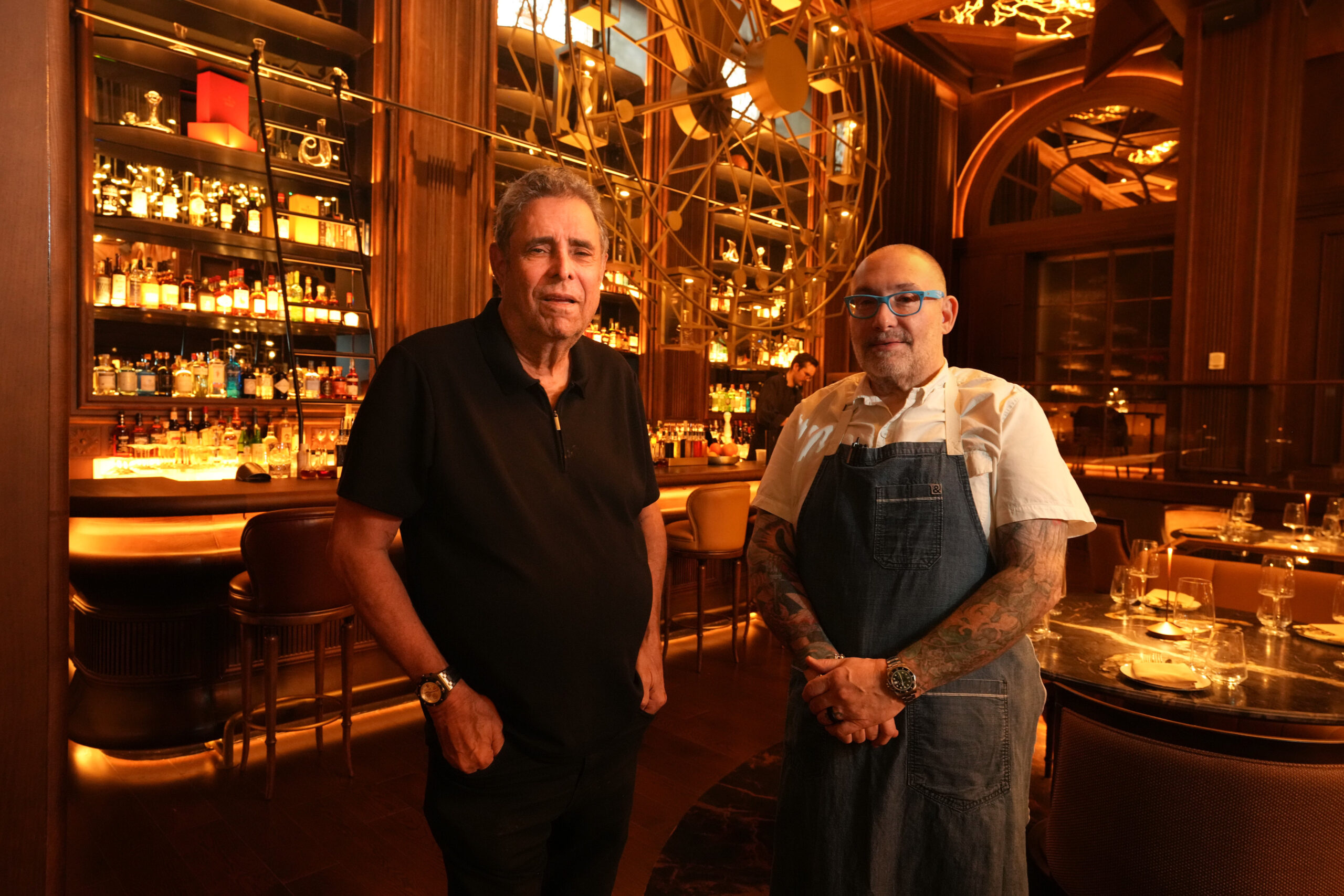
Jeffrey Chodorow (left) with chef Matt Levin at Mr. Edison at the Bellevue.
Mr. Edison is also a throwback: a large, theatrical restaurant built as much for occasion as for dinner.
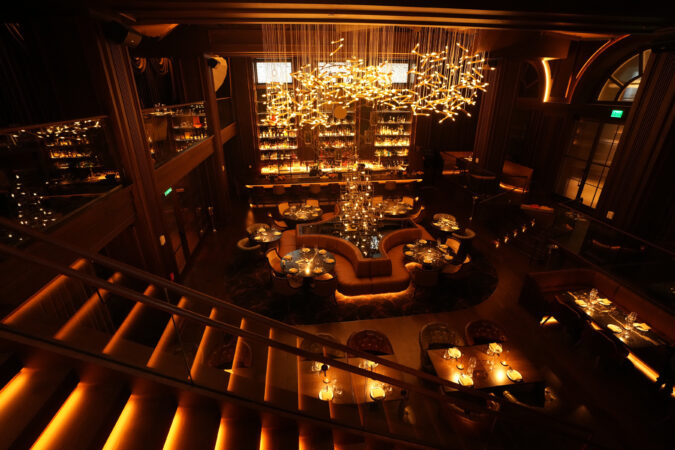
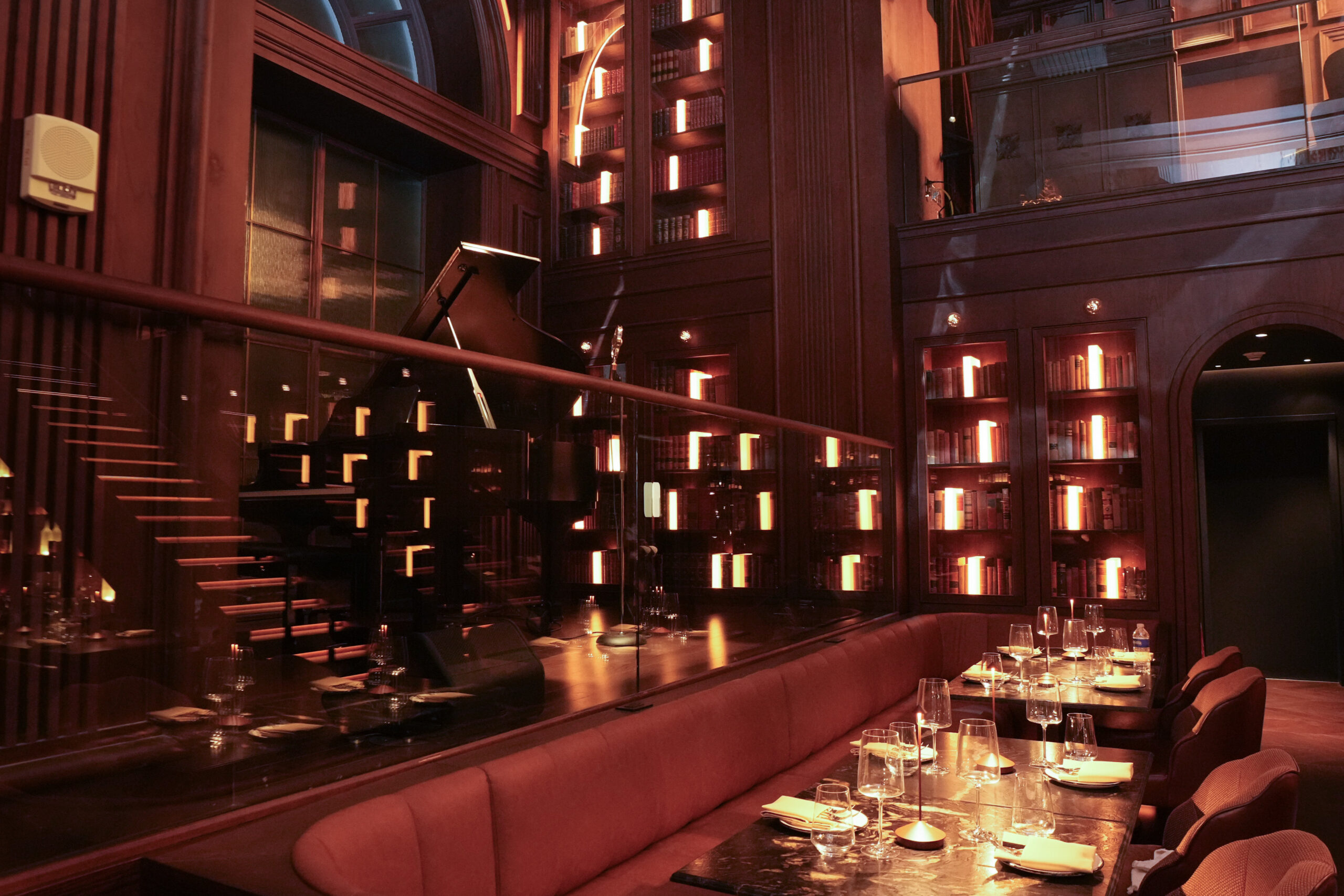
The room, in the former Polo Ralph Lauren store, announces itself immediately from the new Walnut Street entrance just west of Broad Street: a two-story space topped by a dense canopy of suspended Edison bulbs, clustered in branching formations that cast the dining room in a warm amber glow.
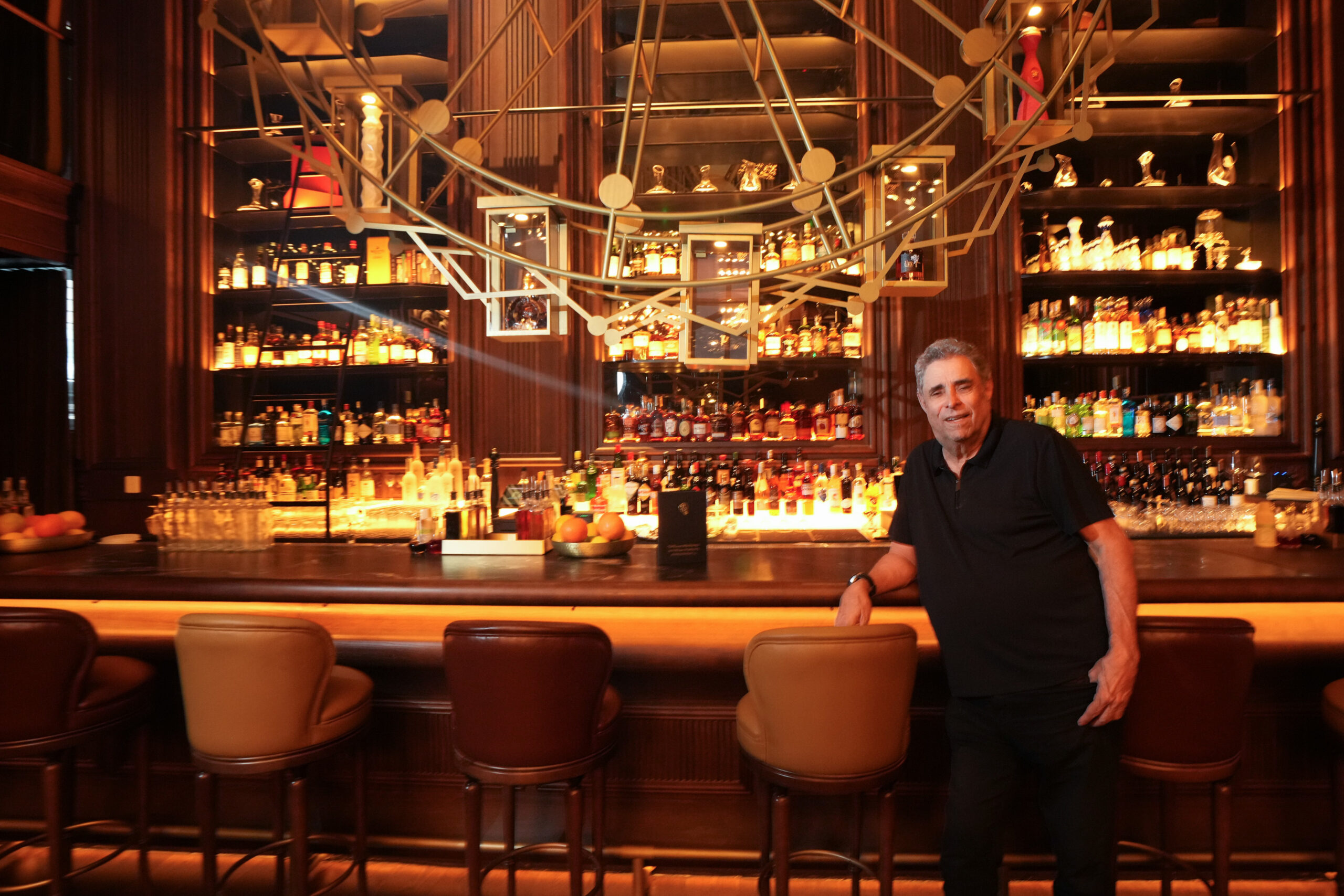
The ceiling seems to split open in places, allowing lightning bolt-like streaks of light through — all the work of Manuel Clavel of Spain’s Clavel Arquitectos. Behind the bar is a 12-foot-tall Ferris wheel, its dozen spokes each carrying a bottle of wine or spirits and turning the backbar into something like a stage set.
Caviar service at Mr. Edison.
Building owner Dean Adler, who is investing millions in the Bellevue as part of its redevelopment, put the 160-seat restaurant’s price tag at $10 million. “I think I got my money’s worth,” he said Tuesday. Adler also plans to install a library bar off the Bellevue’s lobby on the Broad Street side, where the Palm was before its closing in 2020.
“I love history, so to take a genre — a 1940s-type environment — and bring it into 2026 has been really exciting,” said Chodorow, who of late has been shuttling between his Bucks County home and Miami Beach, where he opened China Grill Bar Harbour two weeks ago.
Mr. Edison — named for Thomas Edison, who helped bring electricity to the Bellevue in 1904 — is calibrated to the building’s long identity as a grand social address. It also carries a personal connection for Chodorow. In 1982, when he was a lawyer at Blank Rome, he rented the roof for his own Rio-themed engagement party to celebrate with his wife, Linda.
“This is not a tiny little neighborhood restaurant,” Chodorow said. “This is a place where you come to have a night.”
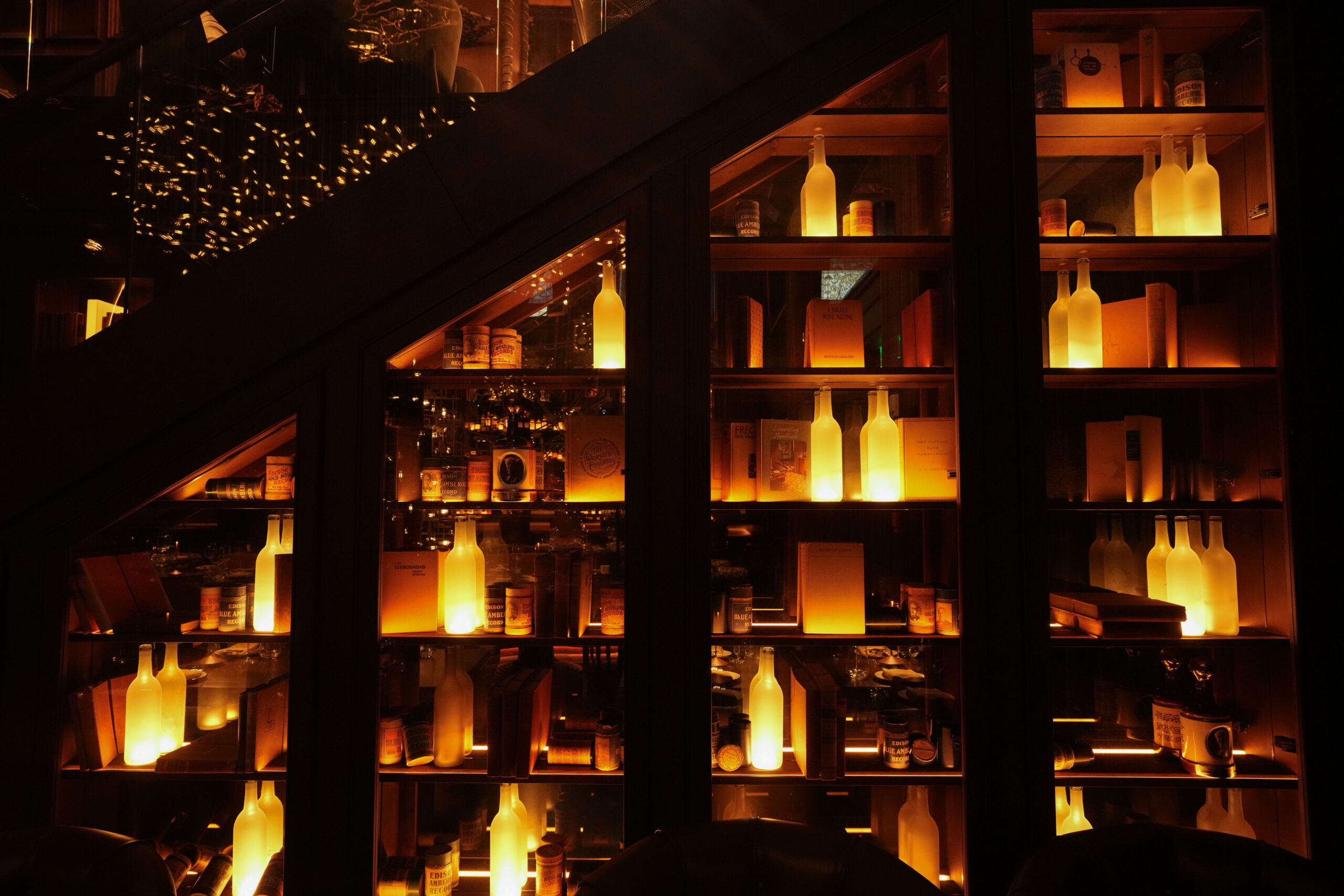
Bottles glow inside niches at Mr. Edison.
Chodorow built his reputation on restaurants that function as entertainment as much as dining. He rose in the business in the 1980s and ’90s with New York hotspots, such as Asia de Cuba, Kobe Club, and Red Square, and said he long avoided opening in the Philadelphia area because he wanted to keep work separate from family life.
With his children grown, that changed. At the Bellevue, Chodorow said, he saw an opportunity to build destination dining — a place where patrons might stop in for cocktails and snacks or settle in for dinner and stay long into the evening. The room is arranged to support both. A large bar runs along one wall; tables and banquettes wrap around in multiple zones and along a mezzanine; and a piano with an old-fashioned microphone sits on a platform to one side.
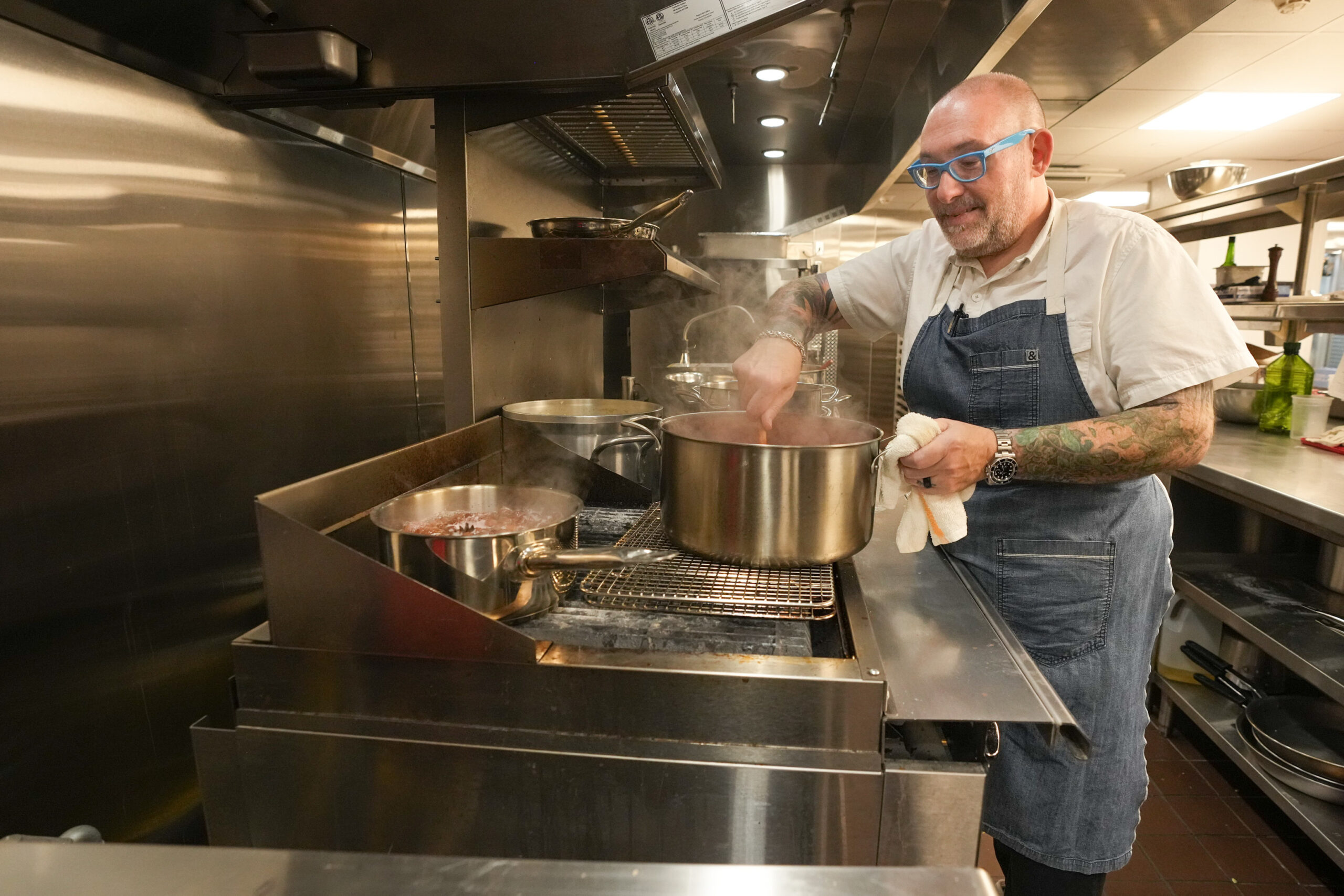
Chef Matt Levin at the stove at Mr. Edison.
“We’re trying to create an experience,” he said. “Not just a restaurant.”
To run the kitchen, Chodorow recruited chef Matt Levin to come back downtown. Levin, who made his name at Lacroix at the Rittenhouse and later at Adsum in Queen Village, has spent much of the last decade in catering, consulting, and Bucks County restaurants. Chodorow found him at Pineville Tavern in central Bucks County, where Levin had been consulting and where owner Andrew Abruzzese is an old friend and neighbor.
Mr. Edison is more interested in reworking the classics than experimentation. Levin and Chodorow drew on dishes from Philadelphia landmarks, including the crab galette from Le Bec-Fin, where Levin worked for several years, the Milan salad from Jimmy’s Milan, and duck with orange sauce from La Panetière.
Edison bulbs provide the lighting at Mr. Edison.
Levin said the menu is a way of tapping into Philadelphia’s dining memory. “I think Philadelphia has a lot of shared history,” he said. “I think people will remember bits and pieces and say, ‘Oh, I remember that — let me try it.’”
The challenge, Levin said, was to build a menu flexible enough to support several kinds of nights at once. “You want to be able to have people come in and just have a drink and a couple of things,” he said, “but also have the people who are coming in to really have dinner.”
Jeffrey Chodorow in front of the bar and Ferris wheel at Mr. Edison.
Chodorow said average tabs would be $100 to $110 per person for a dinner experience. He said roughly 25 dishes can work as a grazing menu, alongside larger-format entrees, raw-bar offerings, seafood, and steaks. Levin also brought over a foie gras tartlet with cherries and pistachio, adapted from a dish he served at Moonlight.
The beverage program leans into the Edison theme with cocktails named for his inventions, including Patent Pending and Filament No. 6.
Filament No. 6 at Mr. Edison.
For Chodorow, the point of Mr. Edison is straightforward: “I wanted something that felt special,” he said.
“I wanted people to walk in and say, ‘Wow.’”
Mr. Edison opens Thursday at the Bellevue, Broad and Walnut Streets. Hours are 4:30 to 10 p.m. Sunday through Thursday and 4:30 to 11 p.m. Friday and Saturday. The bar will remain open later.
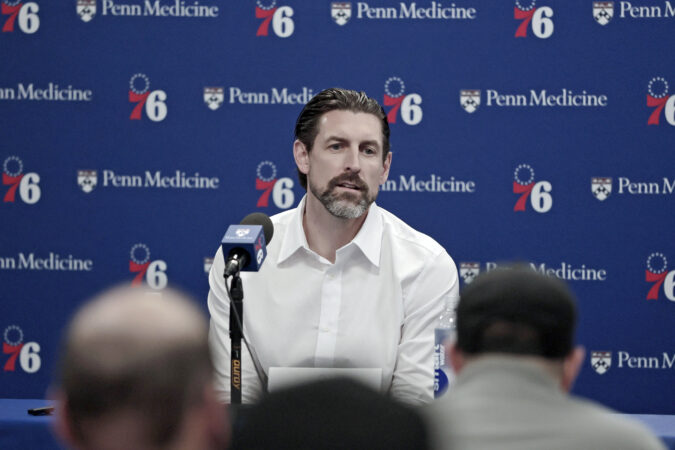
At the broadest, most general philosophical level, Mike Gansey aced his first test as Sixers president on Tuesday night. He looked at his draft board, saw a player he’d graded as the best talent by a significant margin, and then he selected that player. The process was sound.
As insignificant as it may seem, plenty of front offices mess it up. They prioritize things like roster construction or positional fit and they allow motivated reasoning to cloud the reality that all of the perfect players are long gone by the 22nd pick in the NBA draft. You must defy the odds just to select a player who ends up deserving a spot in a playoff rotation, let alone one who can make a decisive impact at a position of need. In Labaron Philon Jr., a sophomore guard from Alabama, the Sixers saw a talent so obvious that they didn’t feel like there was a choice to make.
“He’s someone that fell into our lap, so to speak,” Gansey said.
Of course, the real test is whether they are right. Not just about Philon, a dynamic ballhandler and shooter who averaged 22 points per game last season and who some mock drafts had going in the top 15. Gansey and his front office must also be correct in their evaluations of the players they could have drafted instead of Philon. Zuby Ejiofor, Chris Cenac Jr., Joshua Jefferson, to name a few. Each of those three possesses the size that Philon lacks and that a roster like the Sixers’ will eventually need on the wing alongside Tyrese Maxey and VJ Edgecombe. Each went off the board in the six picks after Philon. Two of them went to Eastern Conference playoff hopefuls (Ejiofor to the Hawks at No. 23, Cenac to the Celtics at No. 27). History will be written by the teams that got it right.
All you need to know about how the Sixers feel about Philon can be derived by the fact that they saw fit to draft him despite the overlap in skill sets with Maxey and Edgecombe and also the player they traded away for the pick they used to draft the Alabama guard. When Daryl Morey dealt Jared McCain to the Thunder with ownership’s approval, the thought was that the 2024 first-round pick’s long-term utility would be capped by his inability to play alongside two other smallish guards. He and Philon are hardly carbon copies of each other. Philon is a little longer in terms of standing reach and wingspan, and he is a quicker, more dynamic playmaker with the ball in his hands. But they both exist in the same general bucket, with the same limitations with regard to Maxey and Edgecombe.
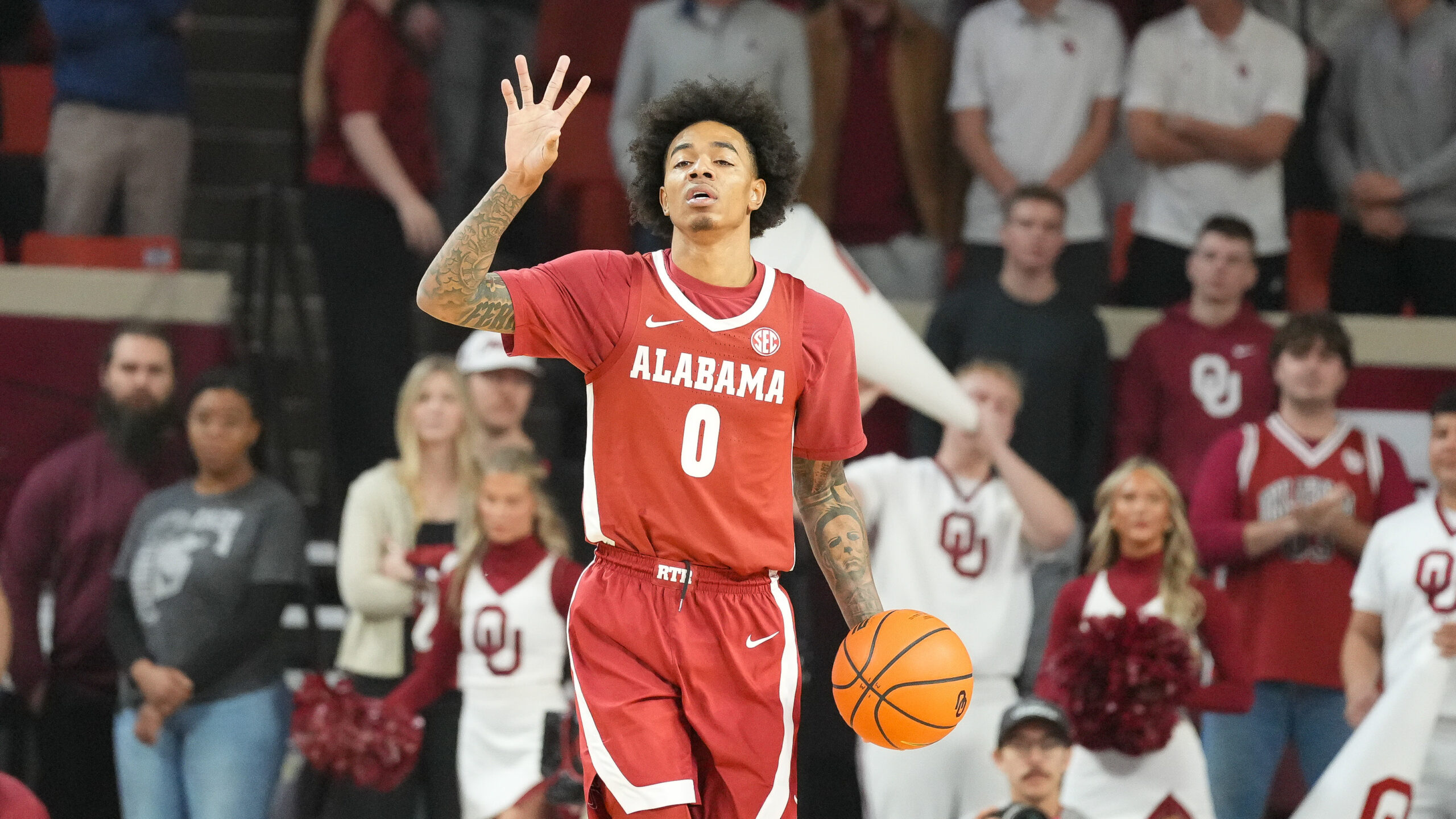
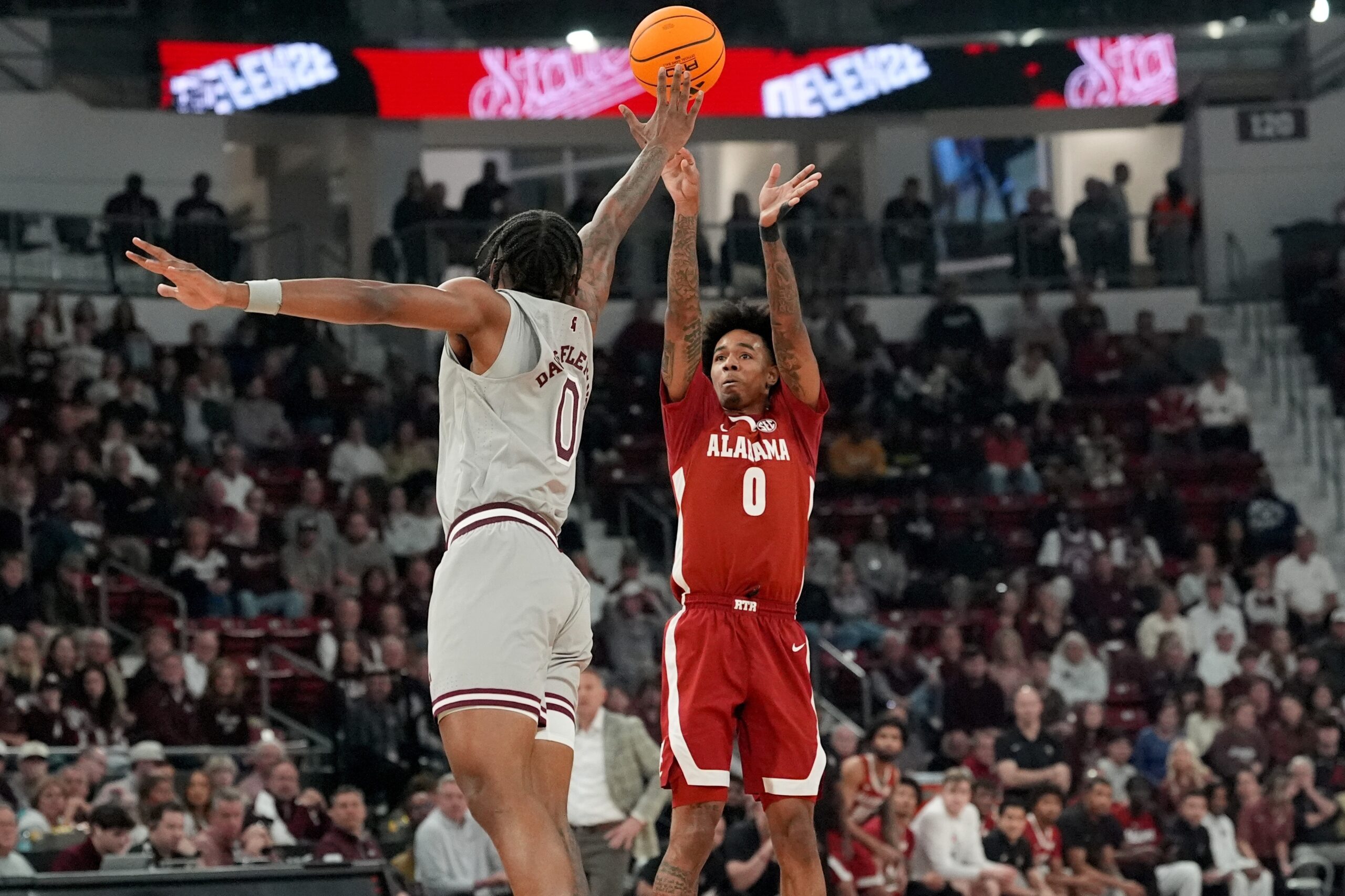
Sixers first-rounder Labaron Philon Jr. averaged 22 points in his final season at Alabama.
Speaking to reporters after the conclusion of Tuesday’s first round, Gansey and Sixers coach Nick Nurse both spent a lot of time talking about how similar Philon is to Maxey and Edgecombe.
“He’s another fast, kind of exciting guy that kind of plays a lot like Tyrese and VJ,” Nurse said. “It’s another guy with the speed, athleticism, quickness, deep range, some creativity with the ball. He’s a pretty good pick-and-roll player already, probably more advanced than a lot of guys coming out. I think he sees all the pieces of the pick-and-roll.”
Nurse and Gansey both hemmed and hawed when asked whether they envisioned using all three of their young guards on the court at the same time.
“I don’t see a lot of minutes, but maybe in certain situations we can,” Gansey said, while also deferring to Nurse.
“I think it’s a little early to answer that,” he said.
Both downplayed the significance of the question. Games are more than long enough to accommodate three guards playing starter minutes at staggered intervals. Maxey and Edgecombe both finished among the league leaders in playing time last season, perhaps counterproductively so. In a world where each averages 32 minutes per game, that would leave another 32 where one or the other is on the bench.
“My mindset is he’s talented,” Nurse said of Philon. “Let’s figure out how we’re going to get him on the floor.”
Nick Nurse and Mike Gansey saw a lot of similarities between new Sixer Labaron Philon Jr. (right) and VJ Edgecombe and Tyrese Maxey.
The Sixers will have a good problem on their hands if Philon ends up good enough to warrant more minutes than are available. It will mean the minutes he does play are valuable. The Knicks won an NBA championship with Jalen Brunson, Miles McBride, and Jose Alvarado. The Spurs had Dylan Harper playing starter minutes off the bench behind De’Aaron Fox and Stephon Castle. The Thunder had a slew of guards contribute, including the smallish McCain and Cason Wallace.
“You look at our roster, we need help at every position, one through five,” Gansey said. “Obviously, we have the big four, and I think he fits. He’s another guard so now we can kind of focus in other areas on the roster.”
However Philon turns out, the pick does offer us a little more evidence on what to expect out of Gansey and this Sixers roster. They didn’t use the No. 22 pick to select a player who might someday help alleviate the roster’s clearest current need (size on the wing). They didn’t trade it for a veteran who might’ve made them better in the short term. They didn’t use it to entice a team to take on Paul George’s contract. They did what a team in their position should be doing. They had an opportunity to draft a player they think will someday belong in a championship-caliber rotation, and they availed themselves of that opportunity. That is how it is going to need to be done: piece by piece.
NEW YORK — Bobby Marks was almost hesitant to bring up Labaron Philon Jr.’s name when asked during a Monday panel about potential sleepers in the 2026 NBA draft class.
Because Marks, the ESPN analyst who once led the New Jersey Nets’ front office, did not believe the Alabama guard would slip past No. 17.
Marks appreciated that, after Philon declared for the draft last year but then opted to return to school, he applied the feedback he received from NBA teams to his second college season. Fran Fraschilla, the longtime college basketball coach and another ESPN analyst, took Marks’ analysis a step further, declaring that Philon “could end up being the best point guard in this draft.”
That talent and potential landed in the 76ers’ lap at No. 22 overall Tuesday night at Barclays Center. Philon was a prospect new president of basketball operations Mike Gansey could not pass up selecting. And Philon’s addition further builds out a young and explosive backcourt that already features All-NBA third-teamer Tyrese Maxey and VJ Edgecombe, who finished third in NBA’s Rookie of the Year voting.
“Adding me, it’s a blur,” Philon said. “You’ve got two guys that are really shifty, two guys that know how to handle the ball, and a guy that can jump out the roof. That means everything in the backcourt. I feel like Coach [Nick] Nurse is going to have a fun time with that.”
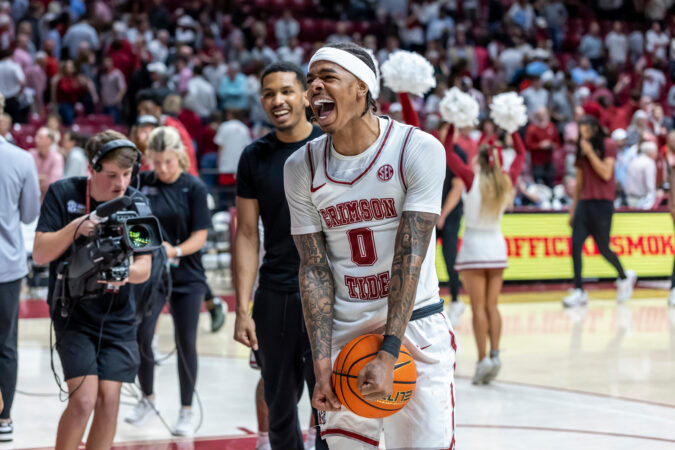
Alabama guard Labaron Philon Jr., left, said Sixers fans will get a dog on the court when he joins the team this fall.
From his freshman to sophomore college seasons, Philon significantly improved his three-point percentage (31.5% to 39.9%) and assist numbers (3.8 per game to 5.0). He doubled his scoring average from 10.6 points per game to a team-high 22, unleashing crafty moves and a willingness to take on defenders despite his slighter 6-foot-4, 185-pound frame. He was a defensive specialist, of sorts, when not required to carry the primary offensive load.
And Philon believes that playing in coach Nate Oats’ system — and next to former star guard Mark Sears as a freshman — will prepare him to join the Sixers’ excellent backcourt.
“Spending two years [at Alabama] just taught me how to play a special way of basketball,” Philon said late Tuesday. “Coach Oats, you know that style of basketball Coach Oats teaches. Being able to learn things under him and the coaching staff, I would say everybody in the program was really just looking forward to getting me better.
“I would say making the decision to go back [to school] was important. Being able to experience the first year in the NBA [draft process in 2025] but come back and hear your name called [in 2026] means everything.”
Philon’s addition also provides the Sixers with some reserve guard insurance. The Sixers lost sharpshooter Jared McCain, their 2024 first-round pick, in a controversial trade at the February deadline. And sixth man Quentin Grimes is about to enter unrestricted free agency, after signing a one-year qualifying offer following a messy restricted free agency period last summer.
Philon joins a Sixers team in an interesting spot under Gansey, who ran the draft in his previous job as the Cleveland Cavaliers’ general manager. Gansey also kept intact the bulk of the Sixers’ front office that has made strong selections in recent drafts, including Maxey at 21 in 2020 and Edgecombe third overall last year.
The Sixers finished seventh in the Eastern Conference standings during the regular season, with a 45-37 record. They then rallied from down three-games-to-one to beat the Boston Celtics in the playoffs’ first round, before getting swept by the eventual NBA-champion New York Knicks.
Sixers president of basketball operations Mike Gansy said he couldn’t pass up the chance to select Labaron Philon Jr.
In addition to Maxey and Edgecome, former perennial All-Stars Joel Embiid and Paul George are still effective — even fantastic — when available. But both veterans have struggled mightily to stay on the floor in recent seasons due to injury or, in George’s case, a 25-game suspension for violating the league’s anti-drug policy. Embiid, George, and Maxey also remain on max contracts for multiple seasons, limiting the Sixers’ financial flexibility this offseason.
But the first move of the Gansey front office era broke in the Sixers’ favor.
Because they may have snagged the draft’s biggest sleeper.
“Whatever the situation I’m put in,” Philon said, “really just growing in it and being comfortable, really. I would say that’s the biggest thing for me.”
MACUNGIE, Pa. — President Donald Trump’s speech on manufacturing in a key Pennsylvania swing district repeatedly veered into other topics and musings about elections in other states, like Maine and California.
It took the president nearly an hour to even reference by nameGOP U.S. Rep. Ryan Mackenzie, the vulnerable incumbent whose district Trump was visiting toboost his chances in this year’s midterm elections.
And GOP gubernatorial nominee Stacy Garrity did not even get a mention during Trump’s speech to roughly 1,500 attendees, including workers at the Mack Trucks facility in Macungie in Lehigh County.
Trump’s visit came just days after the company received $47 million through a Defense Department contract.
And while he touted the trucks, he spent just as much time meandering about weight-loss drugs, immigration, firearms, the role of transgender athletes in women’s sports, and the UFC fight recently held on the White House lawn. He also repeated conspiracy theories about the races for Los Angeles mayor and California governor, saying he had asked the U.S. attorney in that state to investigate after conservative mayoral candidate Spencer Pratt did not advance to the general election.
And he threw jabs at Pennsylvania Gov. Josh Shapiro amid 2028 speculation andappearedto undermine Shapiro’s Republican opponent, Garrity.
Speaking about recent victories by democratic socialist candidatesaround the country, Trumpquipped that “Shapiro is not that much better, to be honest with you.”
He referenced the Democratic governor’s potential presidential aspirations,warning that “a guy like Shapiro is going to be forced on the left, otherwise he’s not going to get the nomination.”
But though he weighed in on Shapiro, the governor’s Republican challenger’s name was noticeably absent from Trump’s list of shout-outs to GOP officials, despite the fact that Garrity spoke earlier in the event.
Trump instead heaped praised on U.S. Rep. Dan Meuser, a Pennsylvania Republican who considered a run before ultimately opting against it and enabling the state party to coalesce around Garrity.
“Meuser’s another great guy who was thinking about running for governor. I think he would have won. He was thinking of running for governor, and I said ‘I want you to stay in Congress,’” Trump said.
Trump endorsed Garrity earlier this year, but the lack of acknowledgment Tuesday was striking given the election year focus of the event and Garrity’s own promises to support Trump’s agenda.
“We need a governor in Harrisburg who will be a partner with President Trump in Washington, not an opponent in the courtrooms,” she said before Trump took the stage. “We need a governor who will fight for Pennsylvania jobs, like right here at Mack Trucks.”
State Treasurer and Republican candidate for governor Stacy Garrity is seen on a big screen as she speaks to supporters before the arrival of President Donald Trump at Mack Trucks in Macungie Tuesday, June 23, 2026. Trump did not mention Garrity when he later spoke to the crowd in the Lehigh Valley.
Trump restated his belief that tariffs have revitalized and would further boost the U.S. economy, though gas prices have reached new heights since he began a war with Iran, stymieing the flow of oil. (The Strait of Hormuz has reopened, following a tentative peace deal struck this month.)
“I placed a 25% tariff on foreign automobiles and very importantly posed a 25% tariff on medium and heavy-duty trucks, so Mack Trucks could do very well with this factory in Pennsylvania,” he said.
“They weren’t gonna come in from foreign lands and steal your jobs,” Trump added.
However, the company cited Trump’s tariffs last year as contributing to its decision to lay off hundreds of workers at its Lehigh Valley operations center, the Pennsylvania Capital-Star reported at the time.
Tuesday marked Trump’s fourth Pennsylvania appearance in his second term and his first this year ahead of November’s high-stakes midterm elections. The visit was billed as an official event as part of Trump’s American Workers First tour, but the event had the feel of a campaign rally.
Four U.S. House districts in Pennsylvania are considered competitive, the most of any state, and the eventtook place in the 7th Congressional District, which is viewed as one of the most likely to flip to Democratic control.
“We have to reelect a certain congressman,” Trump told the crowd.
In 2024, Mackenzie wonthe seat by 1 percentage point, while Trump defeated Democrat Kamala Harris and won Pennsylvania in the presidential race.
“Workers, like the ones here at Mack, are spearheading the great American comeback,” Mackenzie said.
Bob Brooks, a union leader and firefighter who won the Democratic nomination to challenge Mackenzie, praised the union workers at Mack ahead of the event for building “the literal engine for the American economy,” but he blasted Trump and Mackenzie for failing to bring down prices.
“No speech from Mackenzie can change the fact that his time in Congress has been an absolute disaster for the hardworking people of the Lehigh Valley,” Brooks said in a statement ahead of Tuesday’s event.
Lt. Gov. Austin Davis, in a media call earlier Tuesday, said Trump’s choice to rally at Mack Trucks specifically signals he and his party recognize a “real political danger” because of Trump’s policies.
“Donald Trump’s agenda is putting Congressman Mackenzie at serious risk,” Davis said. “They’re circling the wagons and trying to save that seat.”
Steve Leiby, 52, who works for Mack and attended Tuesday’s event, said he understands the tariffs Trump enacted are controversial, but he still supports them.
“It’s a big risk, if we had a war, that we didn’t make a lot of war supplies in the U.S.,” he said.
President Donald Trump leaves after a visit to Mack Trucks in Macungie, in the Lehigh Valley Tuesday, June 23, 2026.
Brent and Francine Stanley, both 60, from New Tripoli, said they support Mackenzie because he shares their conservative values. His office organized an elder-care symposium that Francine Stanley attended because the couple have a 23-year-old child with disabilities, and they were able to get connected to resources.
But they both know how competitive this election is, noting the stack of pro-Brooks mailers they have already received and predicting that Democrats will be knocking on their doors as November approaches.
“They’re really persistent, and if you don’t answer, they follow up,” Francine Stanley said. Mackenzie, she said, should consider doing the same.
Staff reporters Andrea Padilla and Sam Janesch contributed to this article.
FCC commissioner Anna M. Gomez, the only remaining Democrat on the three-member panel, wrote in a May letter to Disney that the company had “been made a target” by Trump’s FCC, and that targeting local stations “is an extraordinary and dangerous misapplication” of the agency’s authority.
“What Disney and ABC are facing is not a series of coincidental regulatory actions but a sustained, coordinated campaign of censorship and control,” Gomez wrote, “carried out through the weaponization of the FCC’s authority as a federal regulator and aimed at pressuring a free and independent press and all media into submission.”
“If the evidence does in fact play out and shows that they were engaged in race- and gender-based discrimination, that’s a very serious issue at the FCC, that could fundamentally go to their character qualifications to even hold a license,” FCC chairman Brendan Carr said on Fox News in March.
6abc viewers being asked to comment
In an attempt to fight back, 6abc, which did not immediately respond to request for comment, is asking viewers to weigh in on the early review of its broadcast license and support the station.
The FCC doesn’t make it easy. Viewers need to visit the agency’s website and submit a “express comment” using the FCC’s docket number: 26-131
The public comment period is open until June 29.
6abc renewed its broadcast license in 2023 for eight years, but the FCC could move to revoke it if it determines the station hasn’t “served the public interest” or has violated federal broadcast rules and regulations.
A Disney spokesperson said in a statement the company has “a long record of operating in full compliance with FCC rules” and was “prepared to show that through the appropriate legal channels.”
It’s been more than 40 years since the FCC has revoked a broadcast license from a TV station. The last time it happened was 1987, when the FCC stripped RKO General Inc. of its licenses in Boston, New York, and Los Angeles because of business misconduct.
The process could take years, and no changes are expected for 6abc during that time.
‘The View’ is also fighting back
It’s not just ABC’s local stations the Trump administration is targeting. The FCC is also targeting the daytime interview show The View and its ability to interview politicians.
The investigation of The View stems from an February interview featuring U.S. Senate candidate James Talarico, a Texas Democrat who at the time was facing off in a primary against U.S. Rep. Jasmine Crockett.
The FCC claimed the interview was a violation of the equal time rule, a federal requirement put into law in 1934 requiring broadcast stations to provide comparable airtime to political opponents during an election.
Disney has asked the FCC to declare The View qualifies as a “bona fide news” interview program and is exempt from the federal rules, like news programs on broadcast TV like Meet the Press and Face the Nation.
In a May filing, ABC said The View received a news exemption from the FCC in 2002, and in 24 years it hadn’t been challenged. It called the FCC’s move to go after The View “unprecedented” and an attempt to “chill critical protected speech.”
It’s a blurry line for late-night shows, which feature politicians as guests. While not technically news programs, the FCC hasn’t enforced the equal time rule on late-night shows since 2006, when it ruled then-California gubernatorial candidate Arnold Schwarzenegger’s appearance on The Tonight Show with Jay Leno qualified as a “bona fide news interview.”
But that’s changing under the Trump administration. The FCC issued a notice to broadcasters in January stating late-night and daytime TV talk shows may no longer be exempt, claiming some were “motivated by partisan purposes.”
Carr also pressured ABC affiliates to take Kimmel off the air in September. ABC ultimately suspended his show after two companies — Nexstar and Sinclair — said they would preempt it on their ABC-affiliated stations. Ultimately, ABC backed Kimmel and his show was back on TV a week later.
Some have called Philadelphia the “Paris of America.” Really.
It might be hard for locals to wrap their heads around this title, but there is some truth to the comparison — mostly due to the cities’ similarities in architecture. France was in town on Monday to take on Iraq in the World Cup, so here’s a look at some of Philadelphia’s Parisian connections and what French fans think of the comparison.
City’s architecture
The Benjamin Franklin Parkway is a popular example of Philadelphia borrowing from the French. Finished in 1929, the Parkway was designed primarily by two Frenchmen, architect Paul Philippe Cret, and city planner Jacques Gréber. Their inspiration? Paris’s Champs-Élysées, a similarly grand avenue. They boast similar end points. The Champs-Élysées starts at Place de la Concorde and concludes with the grand Arc de Triomphe, while Philadelphians can spot the Philadelphia Museum of Art from City Hall, with Logan Circle along the way.
After World War I ended, but before the signing of the Treaty of Versailles, Gréber hoped that the construction of Benjamin Franklin Parkway would bring in tourists just as the Champs-Élysées does.
“I am glad to say that, if by this work the city of Paris may be enabled to bring its sister in America the inspiration of what makes Paris so attractive to visitors,” Gréber said in 1918. “It will be the first opportunity of Paris to pay a little of the great debt of thankfulness for what Philadelphia and its citizens have done for France during the last three years.”
Additionally, Cret was the mind behind the Benjamin Franklin Bridge and redesign of Rittenhouse Square. City Hall also looks like it could have been picked up in Paris and plopped down in Philadelphia as it was built in the French Second Empire style. At Logan Circle, the Central Library of the Free Library of Philadelphia and the former Family Court building are of similar style to structures flanking the Place de la Concorde.
Along the Parkway is the Rodin Museum, which holds one of the largest collections of Auguste Rodin’s sculptures outside Paris, including The Thinker and The Gates of Hell.
Social media influencers have traveled to Philadelphia and Paris to show off the cities’ structural similarities. One influencer, who filmed various picturesque locations under Philadelphia, wrote, “sooo you’re telling me we’re not in Paris?”
Outside of architecture, the two cities also share history. Benjamin Franklin was a noted Francophile, traveling to France on many occasions. Famously, as a diplomat during the American Revolution, a 71-year-old Franklin convinced the French to support the Continental Army’s wartime efforts.
With all of those connections, it should be no surprise that the Michelin Guide named Philadelphia the “Frenchest American city” in 2023, beating out New Orleans for the title.
“The history of Philadelphia is closer to the French history and with those architects that developed special aspects of the city, it’s introduced in a different scale that you don’t have in New Orleans,” Michelin Guide editor Philippe Orain previously told The Inquirer. “You will feel closer to France in Philadelphia than in New Orleans.”
“Frenchest city in the U.S.”
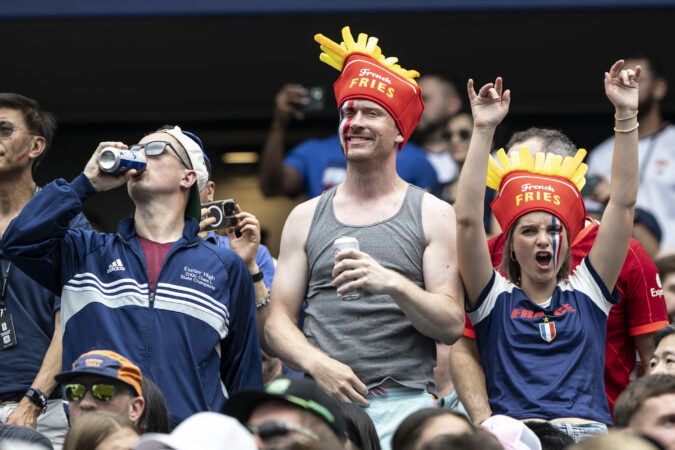
For the most part, French fans in Philadelphia for Monday’s game seemed to agree.
“The architecture looks quite French,” said French fan Tao Taumas, pointing to City Hall on Monday. “Yes, a lot, and we are living in Montreal now, and it looks exactly like the French part of Montreal.”
Vincent Magardeau, who traveled to Philadelphia with Taumas, did not fully agree with his friend’s conclusion.
“I’m pretty surprised that you say that,” Magardeau said after hearing of Philadelphia’s similarities to Paris. “But now that you say it, you can see the architecture here and there, but I wouldn’t say that this is the most French city that I could see.”
French fan Gabriel Sabinaud “never heard about anything in Philadelphia” before coming.
Gabriel Savinaud, who “never heard about anything in Philadelphia,” arrived in the city early Monday morning after staying in New York City. A local advised Savinaud to try a soft pretzel before he leaves, so he headed to the Philly Pretzel Factory near City Hall before the game. Savinaud, despite having limited time to explore, definitely saw the similarities between the two cities.
“The East side of the U.S. is definitely more European than the West side,” Savinaud said. “I’ve been to San Francisco as well, not European. No, it’s not. So [Philadelphia] is definitely more European and Parisian at some points. You’ve got tiny streets with lots of people making noise with their cars. Very similar, more similar to Paris than the West side.”
Many French fans explored Center City before taking the Broad Street Line to South Philadelphia for the game. For a moment, before it began to rain heavily, “Les Bleus” had taken over downtown.
“You can see the vibe of French people here,” Taumas said. “With the World Cup, I would say it’s a French city, because everyone is wearing French jerseys, so you might be the Frenchest city in the U.S.”
As Brixmor Property Group executives began transforming the Roosevelt Mall, they briefly debated whether to change the name.
After all, the 60-year-old Northeast Philly shopping center is undergoing a more than $70 million makeover that promises to bring it into the modern age with new tenants, upgraded facades, and a better layout.
As Brixmor executives walked around the 620,000-square-foot complex on a recent day, they said they already see the outdoor mall becoming a community hub — with a gym, an organic grocer, and new fast-casual dining options.
Despite these changes, they have decided the Roosevelt Mall should not be rebranded.
“It’s an iconic name,” said David Vender, Brixmor Property Group’s executive vice president for the north region, who is based in Conshohocken. “People know it as a landmark.”
Brixmor operates about 350 shopping centers nationwide, but some of its top executives — including new CEO Brian Finnegan, who grew up in Roxborough — have soft spots for Philly, forged by personal or family connections to the region.
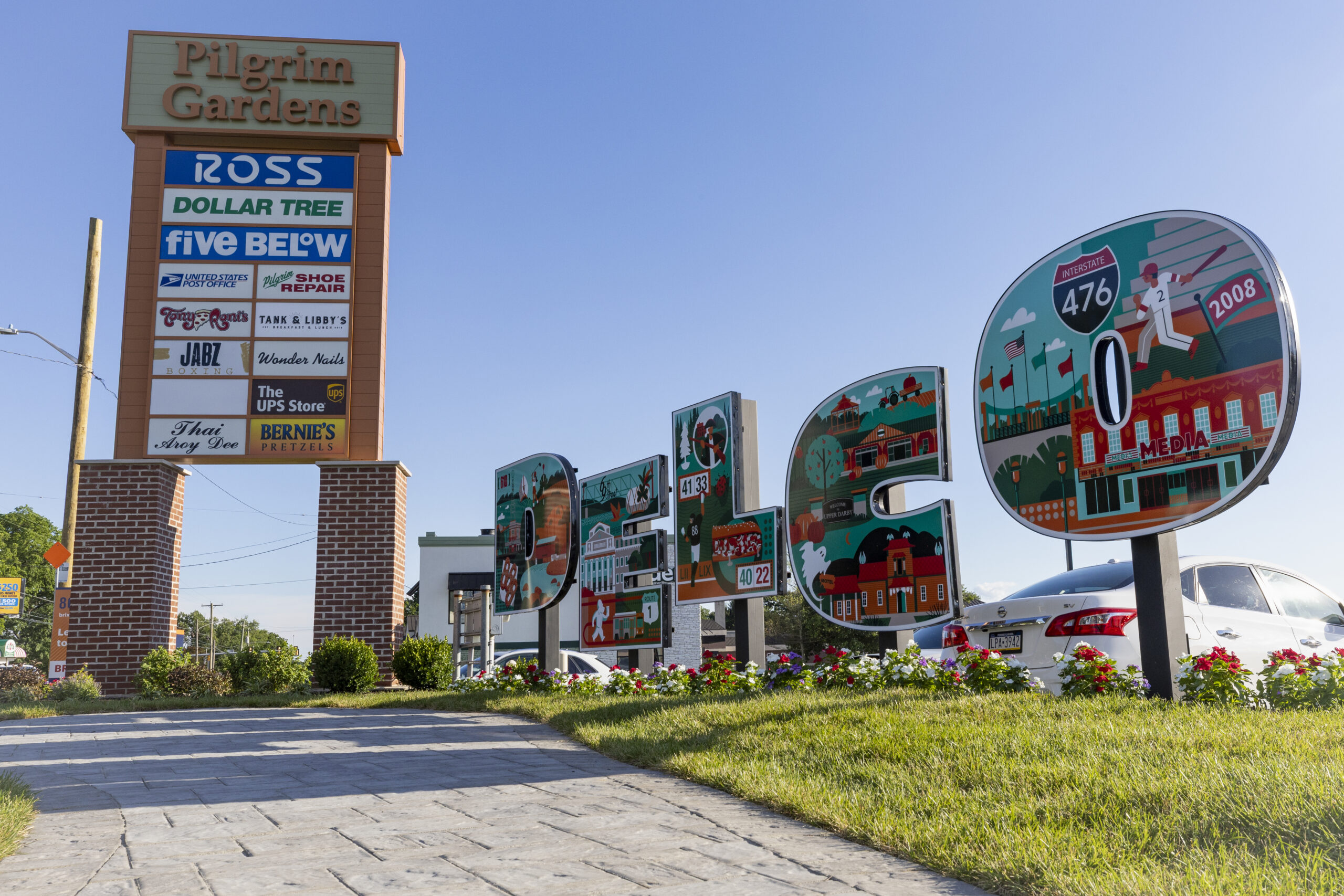
A new Delco sign is shown at Pilgrim Gardens in Drexel Hill on June 16.
And they said their connection to the community around the Roosevelt Mall has only grown stronger since last year’s plane crash, which killed eight people, injured two dozen, damaged nearby homes, and left an 8-foot-deep crater in front of the mall.
Even before the tragedy, they said, they considered how their local redevelopments affected the Philly-area residents who shop, eat, and drive by their centers every day.
At the Roosevelt Mall — which sits on 36 acres between Cottman Avenue, Roosevelt Boulevard, and Bustleton Avenue — these decisions have begun to pay off.
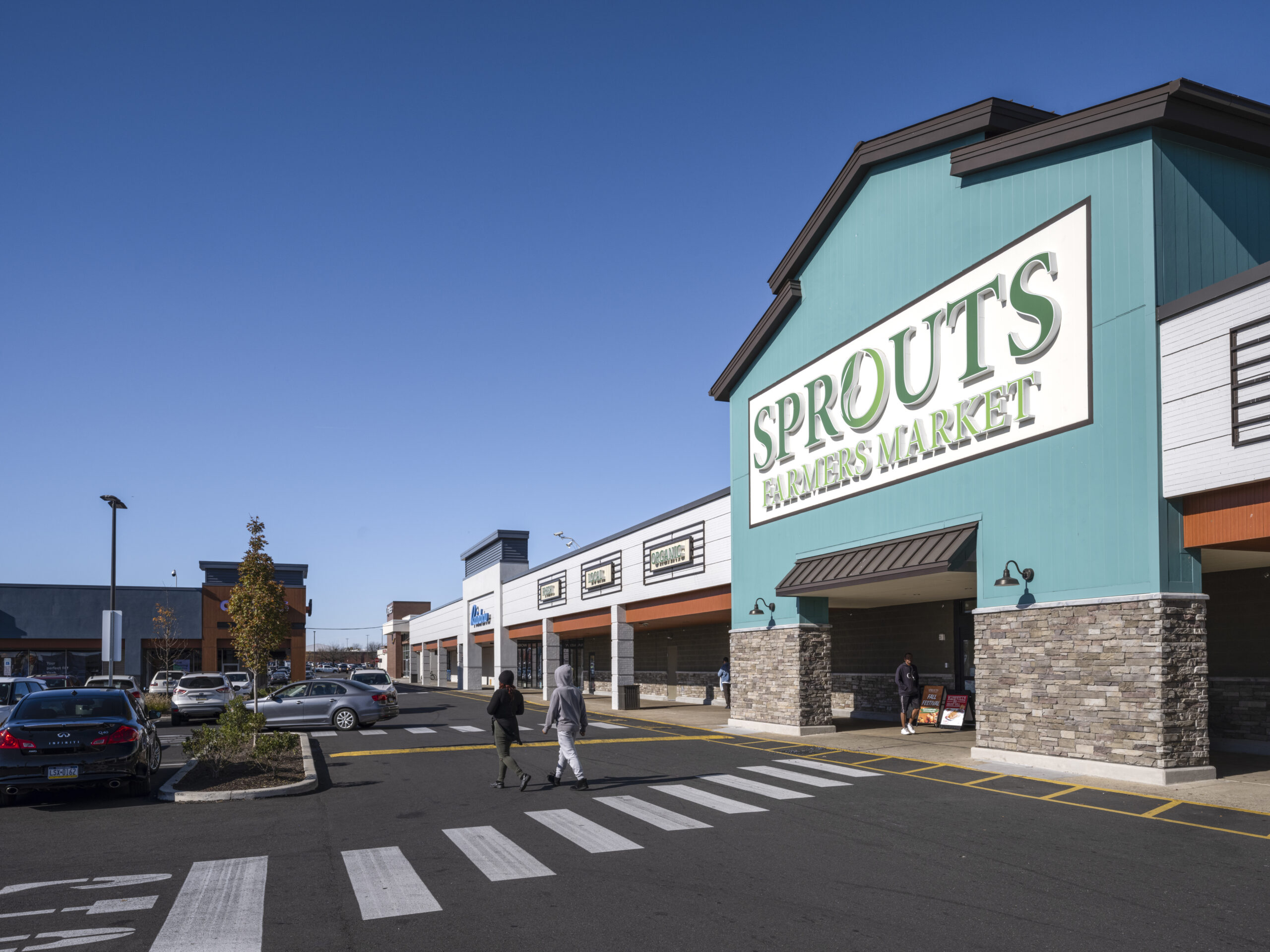
In the last year, the center logged 6.3 million visits, a 5% year-over-year increase and a 19% jump when compared with the 12 months before Sprouts Farmers Market’s 2024 opening, according to company executives.
Occupancy was over 98% this spring, they said, and customers spend about 35 minutes there on average, on par with the national average for all Brixmor complexes.
When you’re able to bring together “higher-quality food and beverage, fitness, service … then you’re also able to attract more elevated retail” stores, said Finnegan, noting that Ulta Beauty and Victoria’s Secret are among the tenants signed on for the next phase of the Roosevelt Mall’s redevelopment.
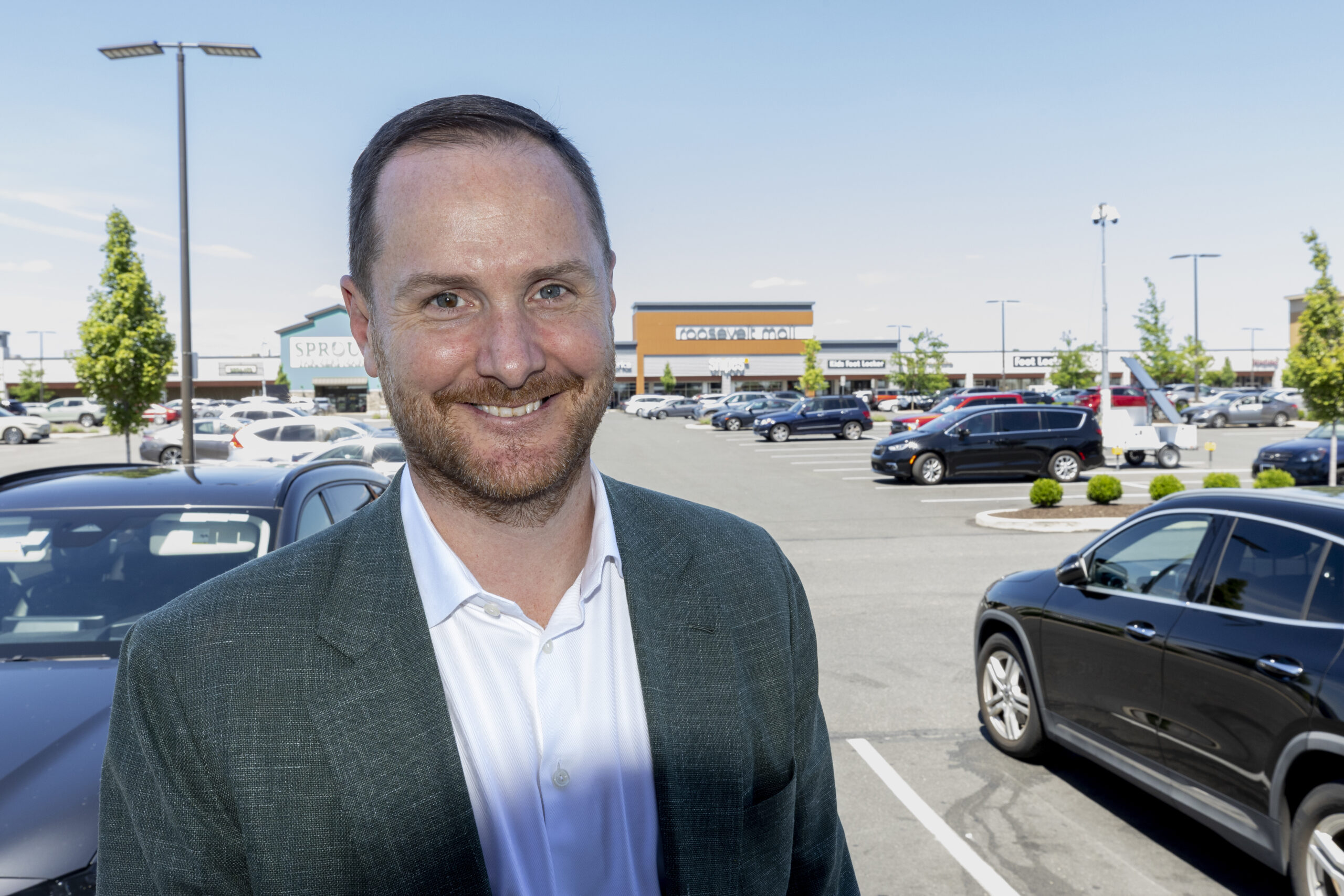
Brian Finnegan, CEO and president, at Brixmor Property Group, at the Roosevelt Mall in Northeast Philadelphia.
Achieving the tenant mix of a modern shopping center
When the Roosevelt Mall opened in 1964, its main promenade was referred to as “Chestnut Street Northeast,” with several outposts of Center City clothing stores, according to an Inquirer article from the time.
The shopping center had apparel shops, such as Baker Shoes and Famous Maid, as well as “the Cavalier, a cafeteria-style restaurant with a game room and a retail bakery,” The Inquirer reported. It was anchored by an S. Klein’s discount department store.
The Roosevelt Mall was built as part of the Roosevelt Boulevard shopping complex, bordered by Cottman and Castor Avenues. The larger development — which also had Gimbels and Lit Bros. department stores — was called the country’s largest “in-town” shopping center at the time.
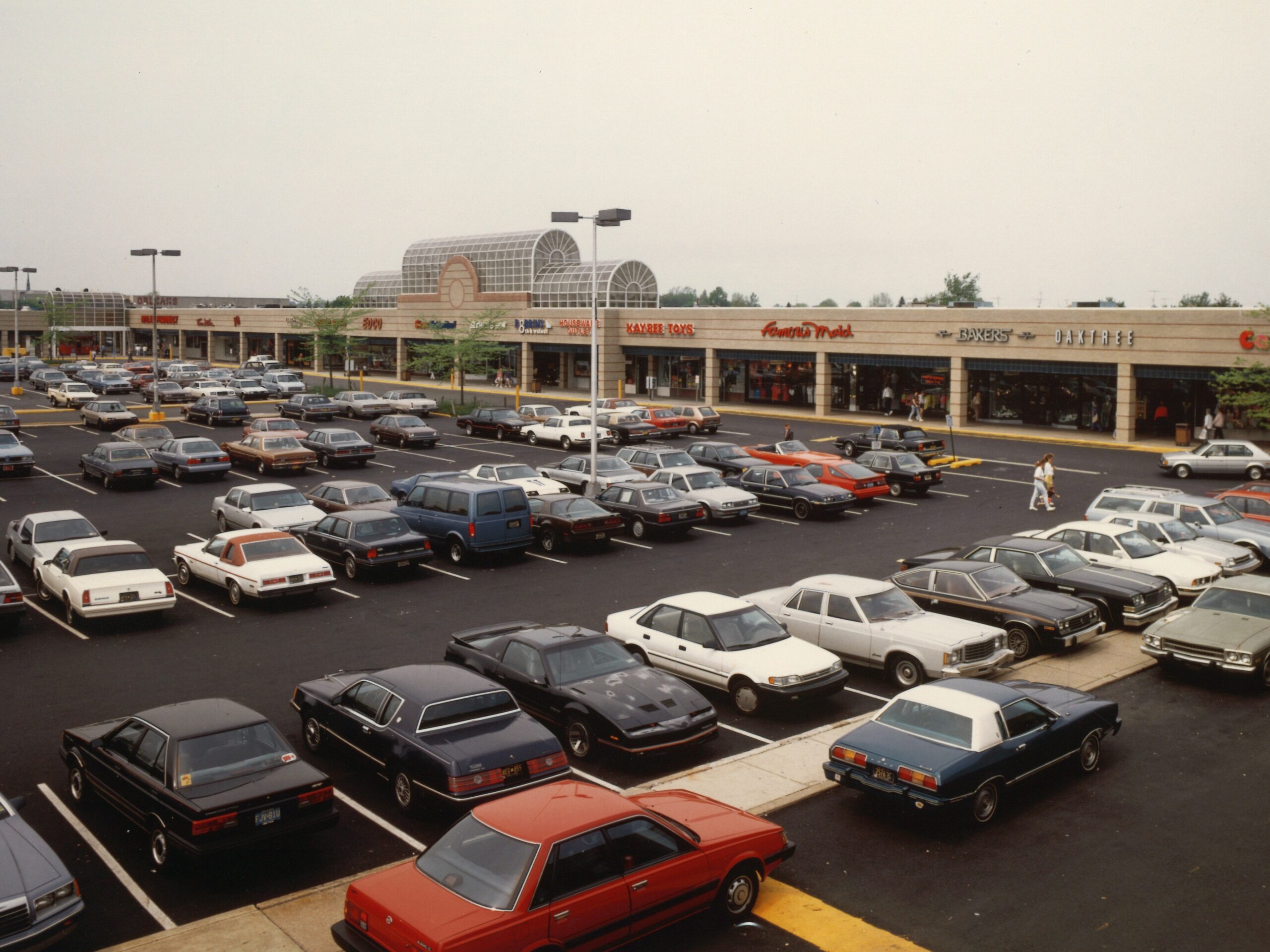
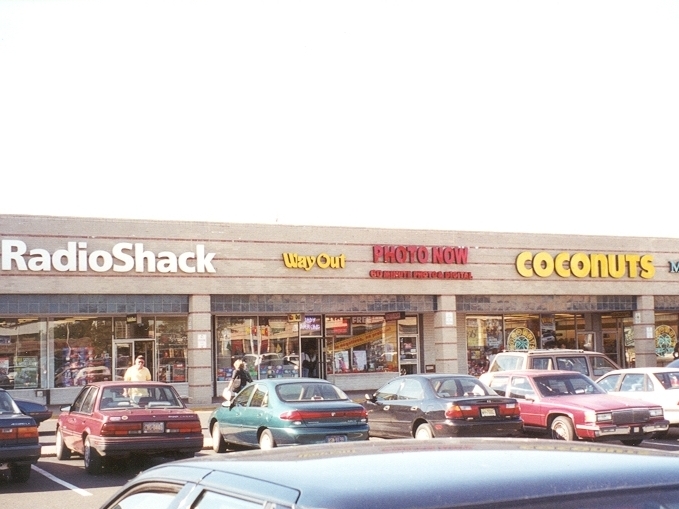
Roosevelt Mall in Northeast Philadelphia is shown in earlier days, long before Brixmor Property Group remodeled the property.
They said they have intentionally brought in tenants that customers may visit multiple times a week and added more pedestrian walkways, open-air plazas, and outdoor seating.
“Historically, shopping centers were very utilitarian, and now they’re really becoming more community assets, so we’re really careful about our merchandising mix,” said Ryan Guheen, Brixmor’s senior vice president of development.
Roosevelt Mall in Northeast Philadelphia is shown in earlier days, long before Brixmor Property Group remodeled the property.
The latest redevelopment push began around 2020, when Brixmor opened an LA Fitness outpost on the site of a former Turf Club off-track betting venue, near a new Oak Street Health clinic.
Since then, the company has constructed buildings in underused sections of the parking lot and filled them with popular chain eateries like Raising Cane’s chicken; the American-Chinese food spot Panda Express; and Tous les Jours, a Korean-French bakery and coffee shop.
Annual customer visits to Roosvelt Mall have increased 13% since Sprouts organic grocer opened there in 2024.
The 37,000-square-foot under-construction building, set to house a Victoria’s Secret and an Ulta, will also include fast-casual staples like Shake Shack and Cava, which serves Mediterranean bowls and pitas.
Tenants like these, Guheen said, provide “multiple opportunities for people to stay on property to shop retail, get their workout in, go to the bakery, get a coffee.”
Some mall retailers have found homes in shopping centers
As Brixmor executives diversify the tenant mix at their shopping centers, they say they do not see retail stores going extinct.
Elsewhere in the Northeast, the Franklin Mall, formerly Franklin Mills, has been in decline for years and was recently listed for sale. Real estate investor Dean Adler has said he wants to buy the 137-acre mall and turn it into a youth sports complex with a hotel and Margaritaville-themed water park.
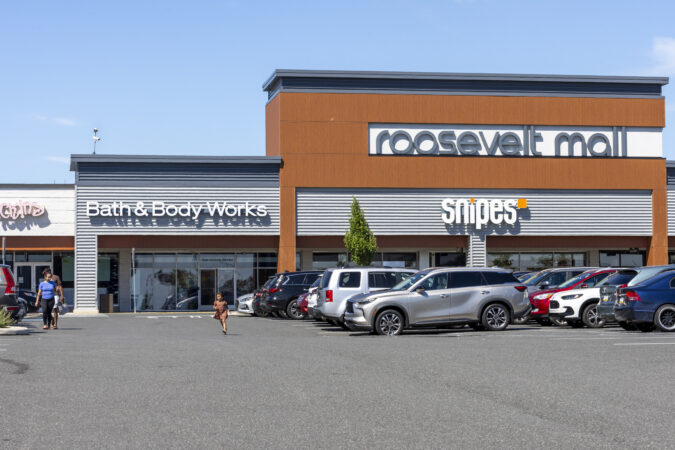
Seven miles away, the Roosevelt Mall is home to several shops that were once found almost exclusively in enclosed malls, such as Bath & Body Works, Foot Locker, and the forthcoming Victoria’s Secret. These companies’ higher-ups have pivoted in recent years, adding more locations in open-air centers.
“It’s not like retailers are leaving malls en masse … at least in the best malls,” Finnegan said. But “as they open stores in open-air shopping centers with grocery stores, with fitness uses, with elevated food and beverage, they’re seeing the sales performance” — and then want to keep investing in shopping centers.
Longer-standing retail tenants are continuing to see success, too. Finnegan said the Roosevelt Mall’s 300,000-square-foot standalone Macy’s is among the company’s top-performing locations in the region, rivaling the King of Prussia Mall store.
The department store is the center’s largest driver of traffic, recording more than 900,000 annual visits, said Brixmor executives, who are not worried about the department store closing as the Center City store did last year.
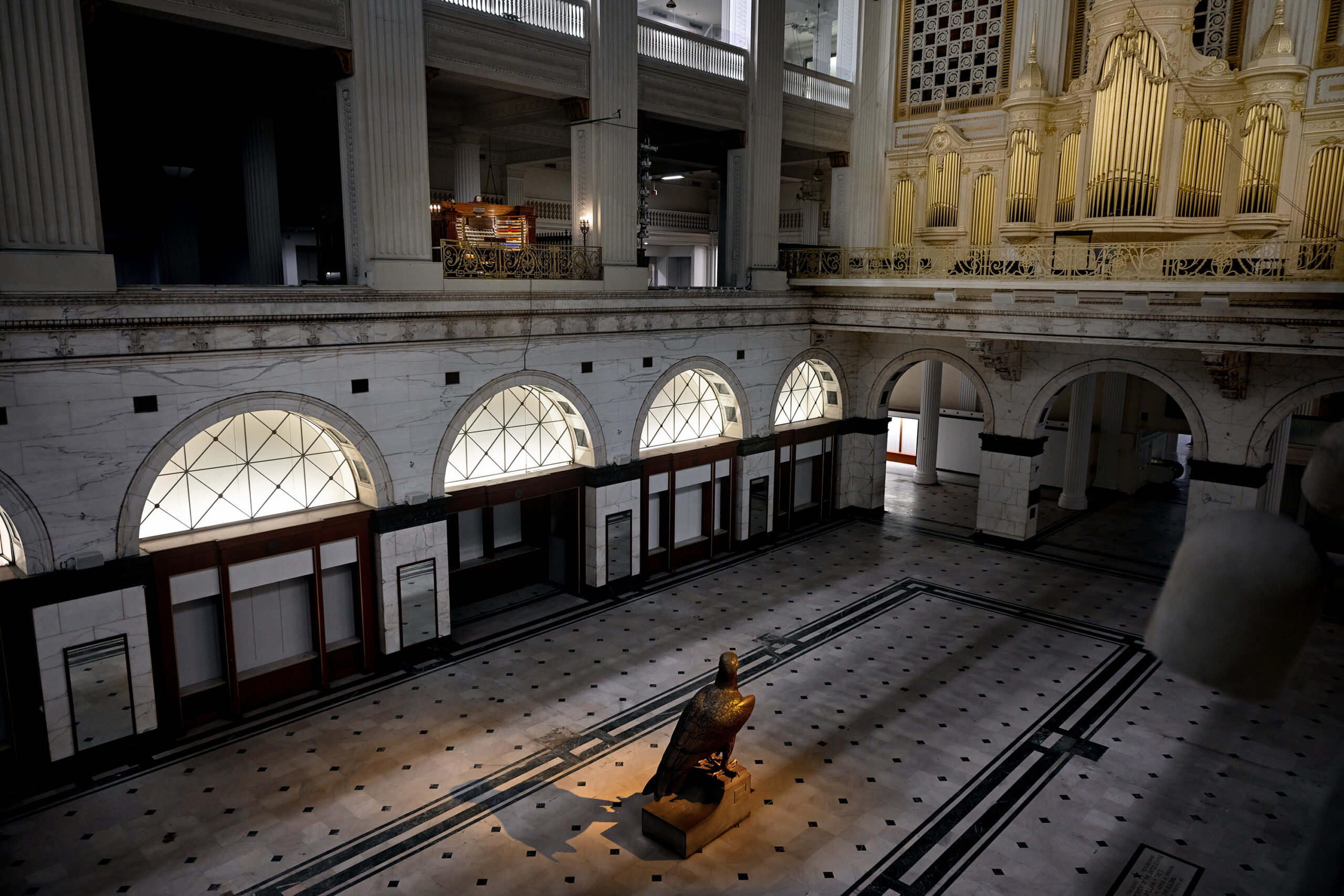
As seen in September, the Macy’s in the Wanamaker Building in Center City now sits empty. It closed last year.
Company executives said they are optimistic this momentum will continue. Along with the under-construction section, redevelopment plans also include another standalone building that has yet to break ground — and the cost of which is not included in the current price tag.
Finnegan put it simply: “Opportunity begets opportunity.”