Tag: Weekend Subscribers

  • Selling a piece of family history in a changing Ocean City

    Selling a piece of family history in a changing Ocean City

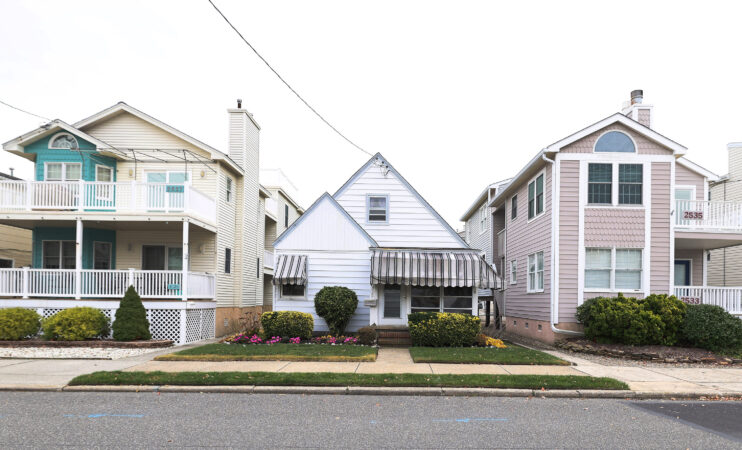
    The wrecking ball is likely coming for 2529 Asbury Ave. in Ocean City, a 957-square-foot, two-bedroom, one-bathroom postwar Cape Cod that’s been in the Smith family for 69 years. The Smiths know demolition is nearly inevitable, but they aren’t happy about it.

    “I’m hopeful somebody would keep it as is, but I think it will probably be torn down,” said David S. Smith, of Summit, N.J., a retired investment banker whose parents bought the house in the 1950s.

    There are currently 1,400 homes over 100 years old in Ocean City, and in 2024, 137 homes were demolished. Though specific details aren’t available about the age or condition of those razed houses, it is fair to say many were older and capable of being restored, said Bill Merritt, president and cofounder of Friends of OCNJ History & Culture, a group dedicated to embracing the rich, historic culture of Ocean City.

    “It’s economic driven, but also regulation driven,” he said. “Ocean City has long been a real estate developer driven place.”

    Over the years, R-2 zoning, which permits a mix of single-family and two-family dwellings, has driven up the number of duplexes.

    “The economics of that are that a single homebuyer wanting to buy an older home and fix it up, absolutely cannot compete against a developer who is going to knock it down and build a duplex,” said Merritt.

    The Smiths’ home went on the market in late October for $1.4 million. They instantly received many offers, mostly from developers.

    A house filled with memories

    Purchased in 1956 by Norman Sr. and Elizabeth Smith — affectionately known as Bole and Lib — for $13,500, the cottage was the summer gathering spot for the whole clan. That included their sons, Norman Jr., John, and David, and eventually four grandchildren and 10 great-grandchildren.
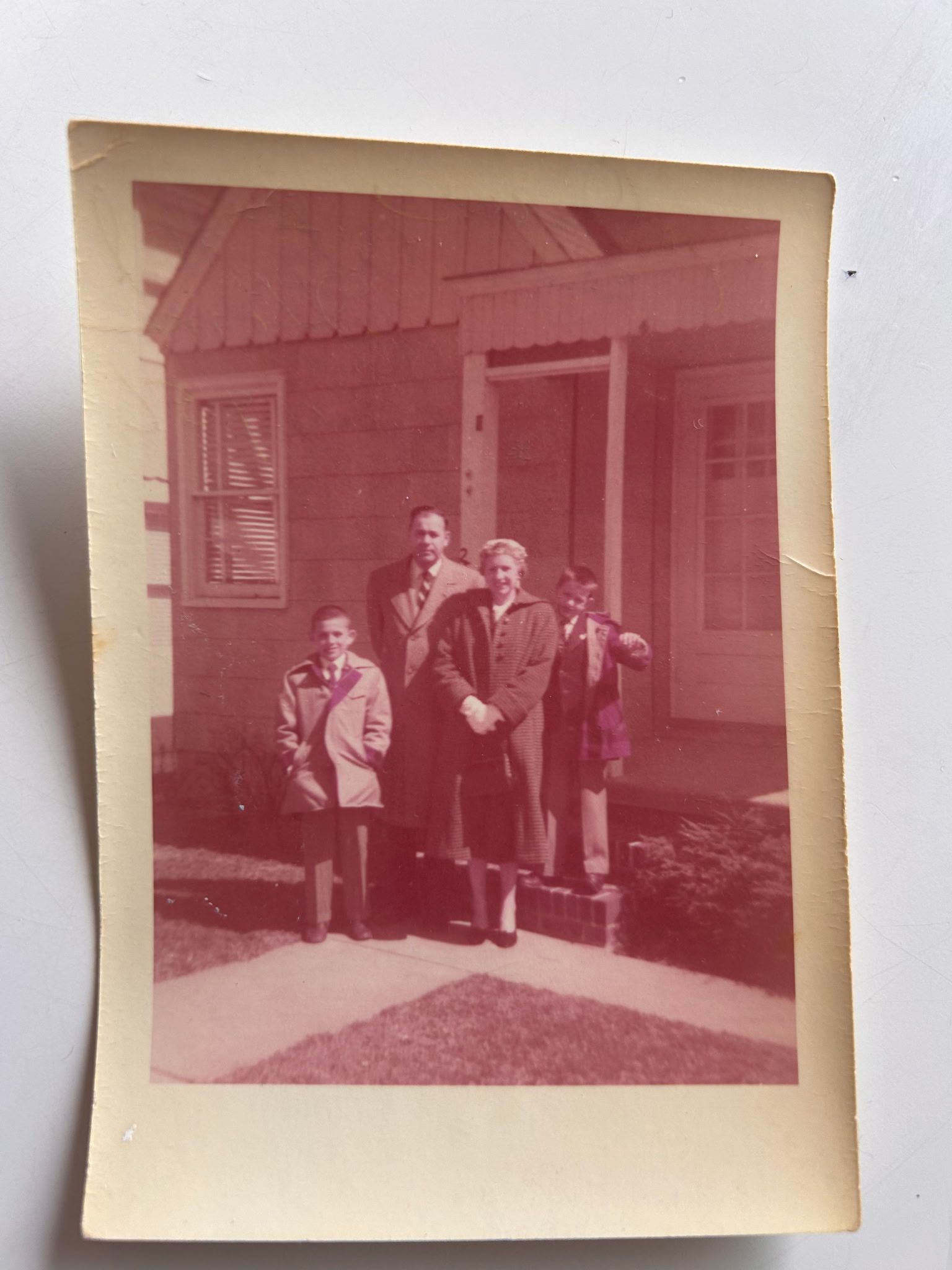
    A family photo of Norman Sr. and Elizabeth Smith and their sons John and David, taken in 1956 in front of 2529 Asbury Ave.
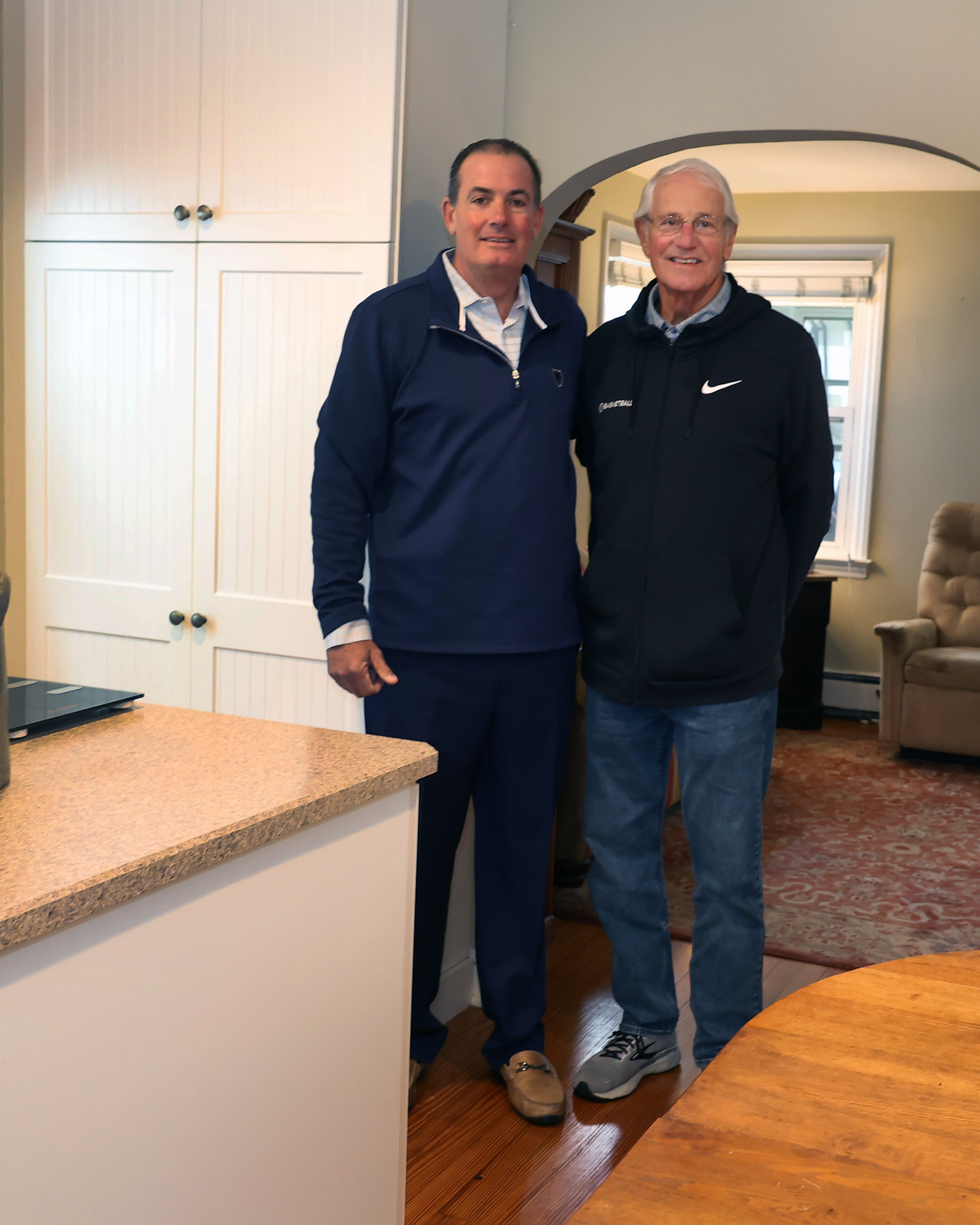
    David Smith and his uncle, David S. Smith, in the Ocean City home that’s been in their family for nearly seven decades.

    After Bole and Lib died in 1994 and 1998 respectively, their son John moved into the home. When John died this past September, the family put the house on the market.

    The house was typical for its time — it had a washing machine but no dryer, an outdoor shower in continuous use because there was only one shower inside the house, a grassy backyard, and an attic crammed with a tangle of sleeping children.

    The cottage was small but the memories loom large.

    “The attic had pull-down steps and a window where the breeze came in off the ocean,” recalled David, Bole and Lib’s son. “The oldest would get closest to the window, then the next oldest, and so on, because that’s where you got the most air. There were about four beds lined up and then you had mattresses on the floor.”
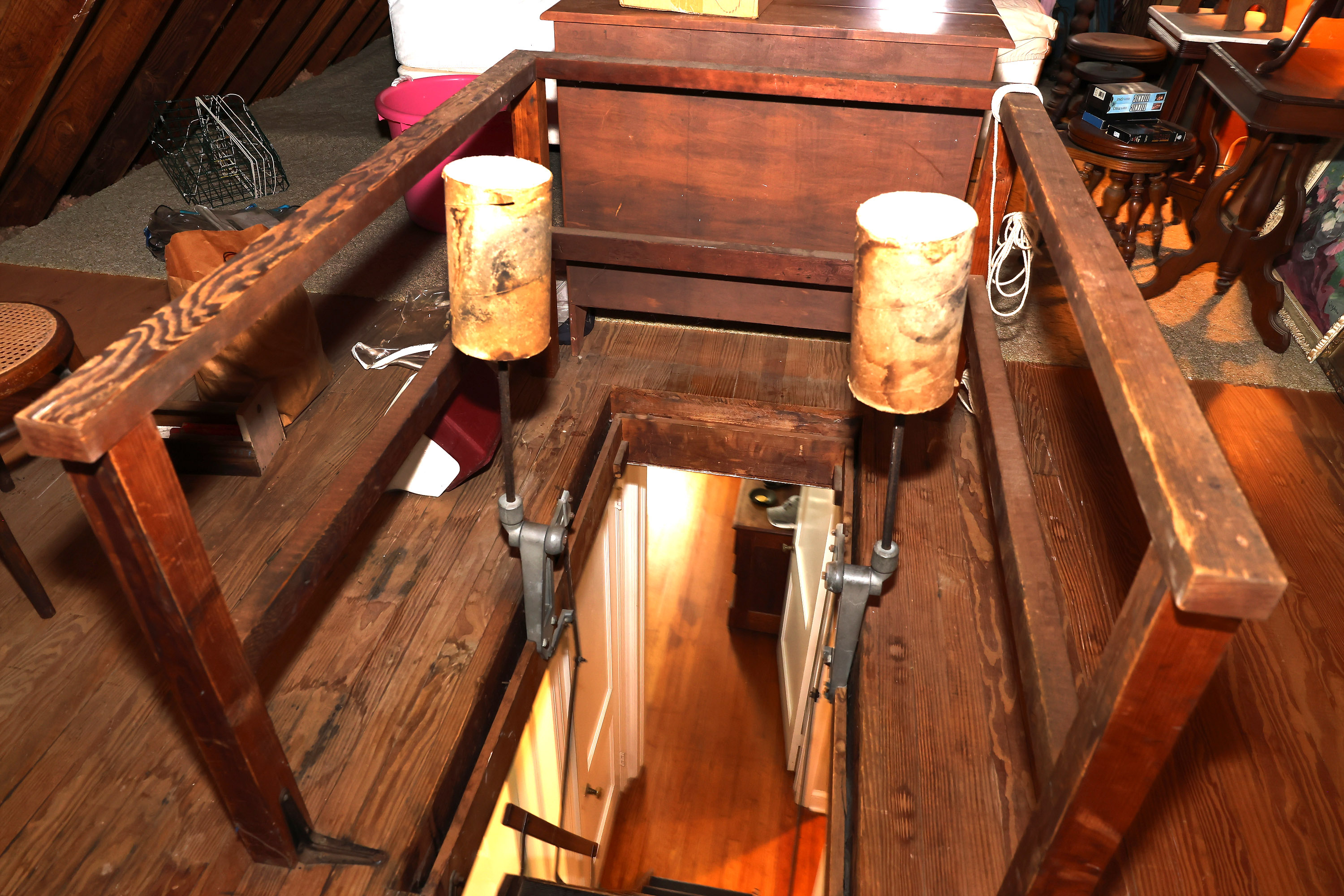
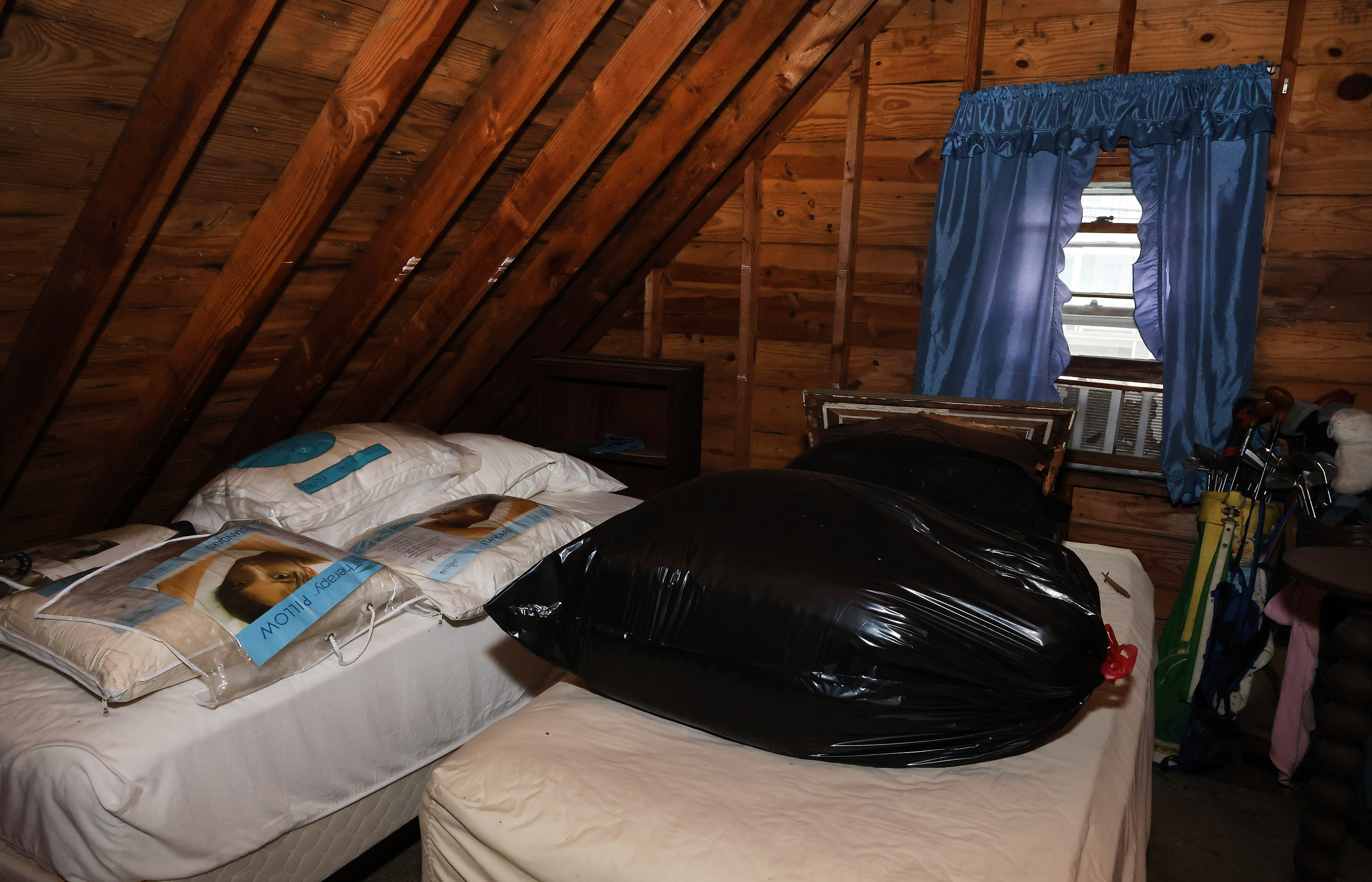
    A view from the attic into the main house from the pull-down door.
    Beds sit in the attic, where the children would sleep, sometimes 10 at a time.

    With the whole family together it was not uncommon to have up to 10 people sleeping up there, he said.

    “My parents used to send me down when I was about 8 or 9 on the NJ Transit bus,” said the younger David Smith, one of Lib and Bole’s grandchildren, and nephew of David S. Smith. He’s a Realtor with Coldwell Banker who lives in Wallingford. “I thought riding the bus by myself was the coolest thing!”

    Ocean City is where members of the Smith family formed lifelong friendships and forged their work ethic at their summer jobs. Lib and Boles’ oldest son, Norman Jr., met his wife of 61 years in Ocean City. The younger David Smith is their son.

    All of the family members had typical summer jobs at the Shore, including beach chair rentals, waitressing at the College Grill, manning the ice cream truck, and lifeguarding.

    David S. Smith won the 1968 South Jersey Lifeguard Championships in the doubles rowing event, an annual tradition that continues to this day. He was inducted into the Ocean City Beach Patrol Hall of Fame in 2004.

    He recalls hanging out on the beach with Grace Kelly’s family, who lived nearby. “That whole area was really driven by the connection to the Kelly family and their connection to Ocean City,” he said.

    But David S. Smith himself had connections to Shore royalty of sorts. His wife, Lynn, was elected Miss Ocean City Beach Patrol in 1967 and was on the cover of the book Images of America-Ocean City: 1950-1980 by Fred Miller.
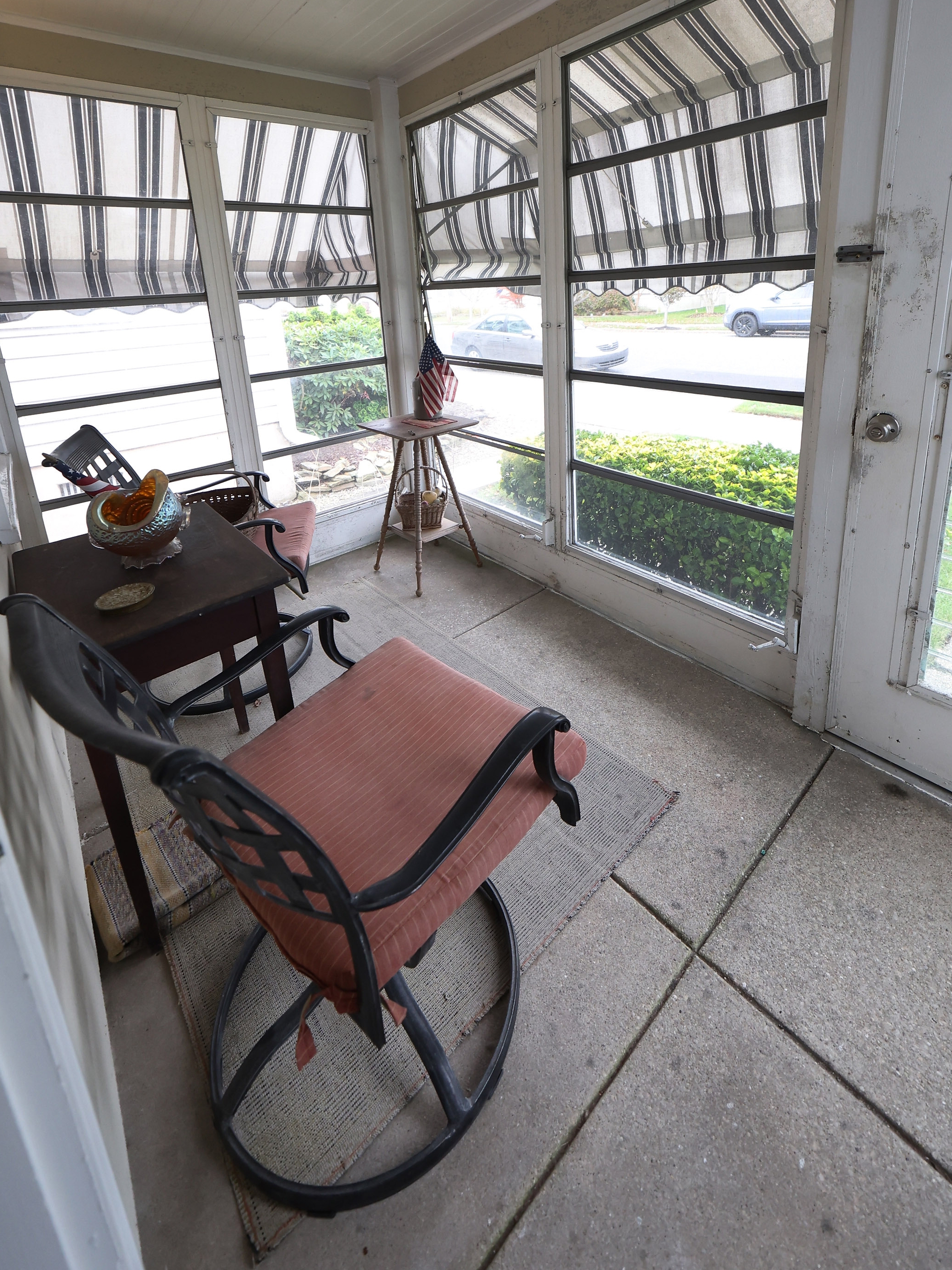
    The covered front porch of the Smiths’ cottage.
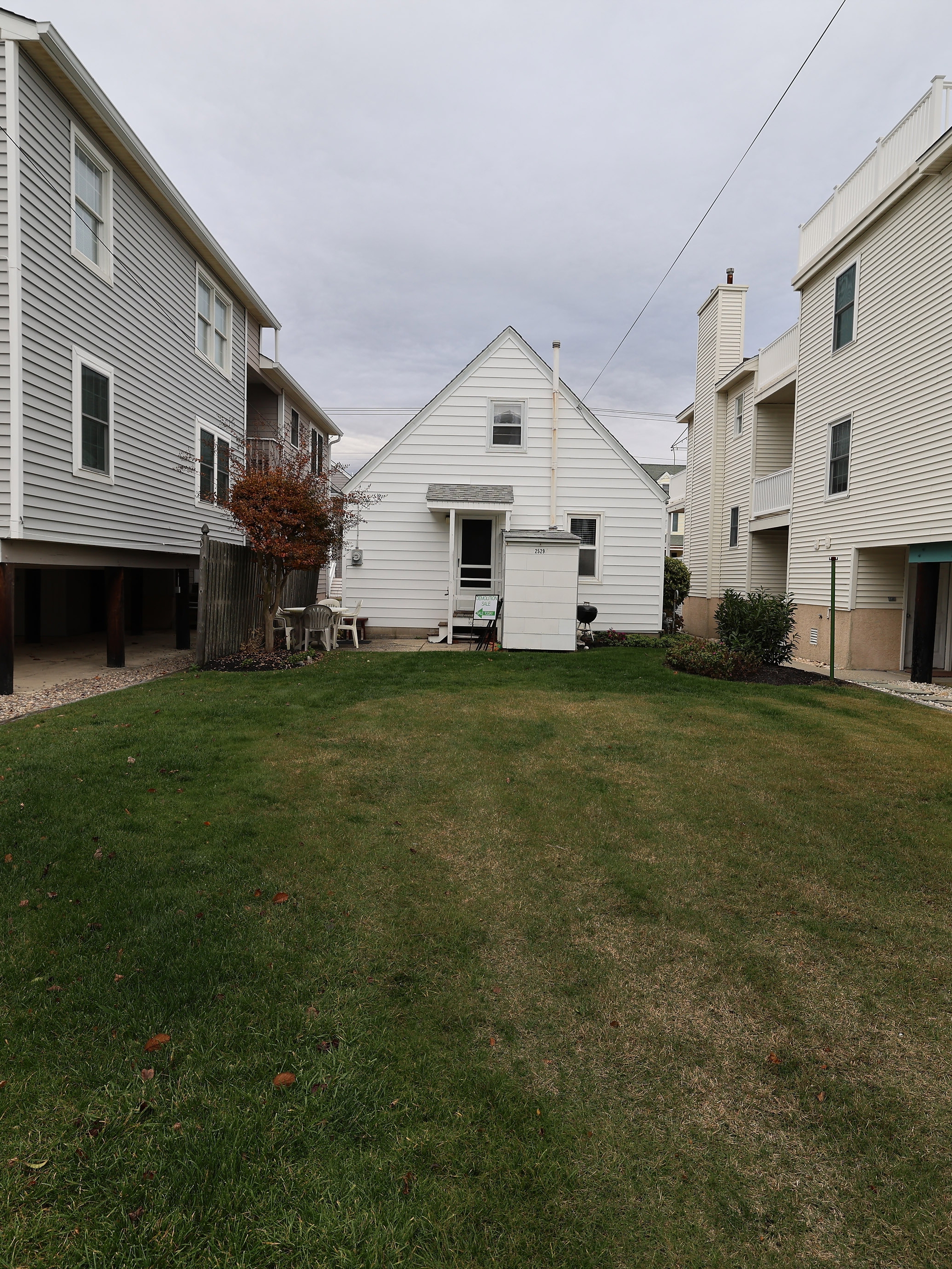
    The cottage sits on a large lot, which still is covered in grass unlike many neighbors.

    Over the decades, the home’s backyard was always in use, as the site for cookouts and quoits, a game similar to horseshoes. Family members of every generation competed while dinner was cooking on the charcoal grill.

    “The backyard of 2529 Asbury is still grass,” David S. Smith said. But at most of the nearby houses “the backyards are all stones.”

    The smell of frying scrapple was the morning alarm clock — a scent that still brings back a flood of memories for the younger David, Bole and Lib’s grandson.
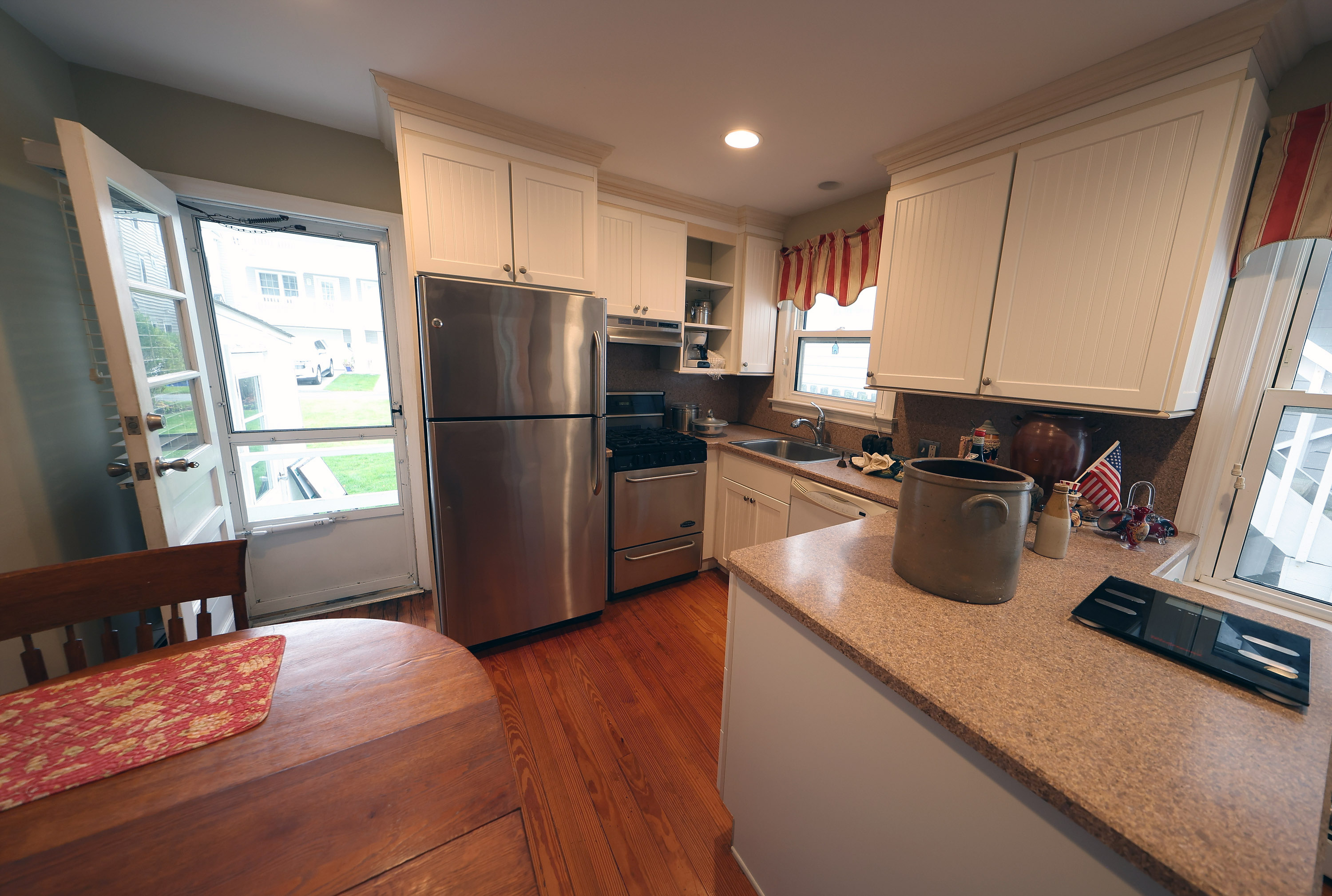
    The cottage’s kitchen brings back memories of scrapple frying in the morning.
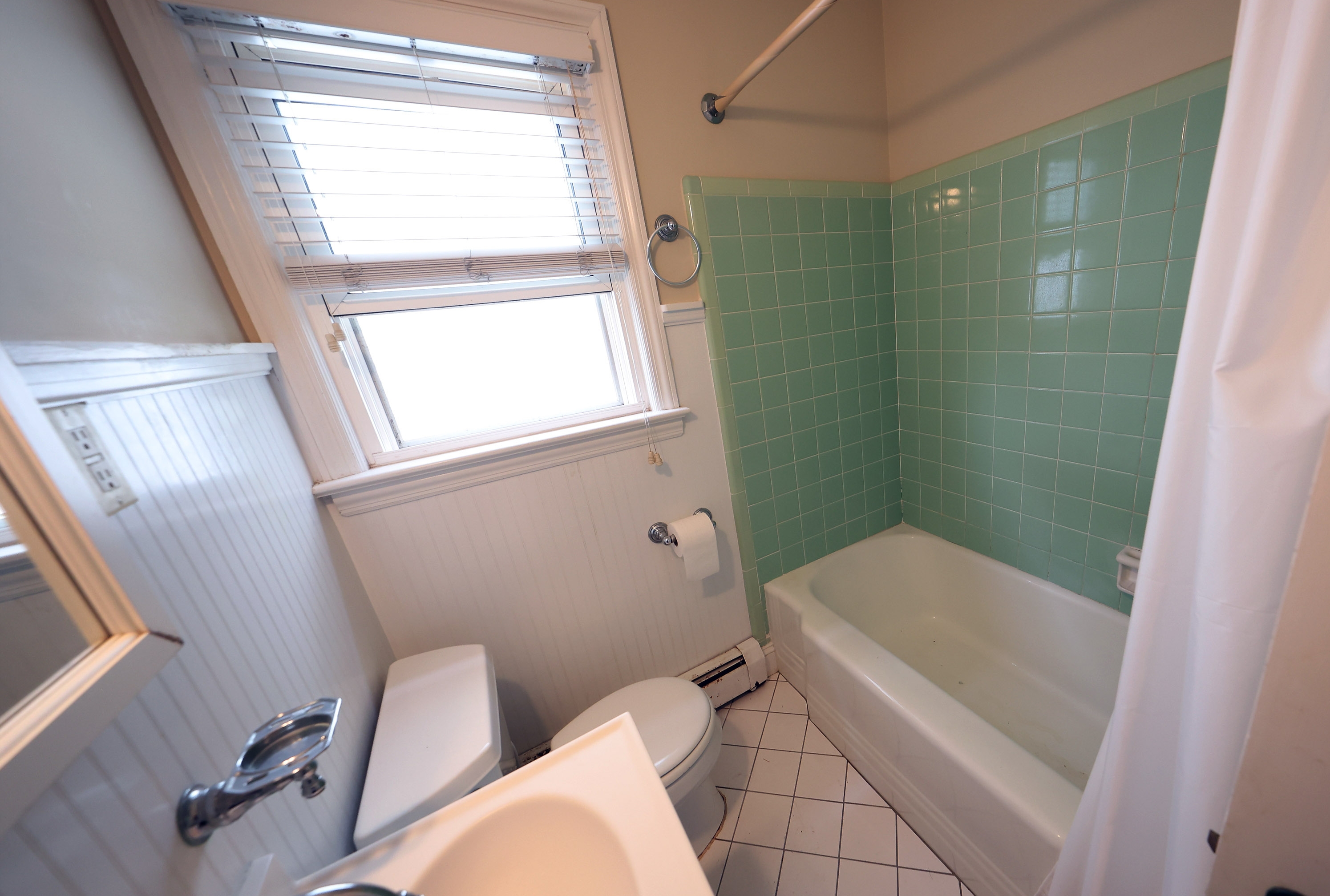
    The house’s one bathroom was used by the whole family, as well as the outdoor shower.

    A different town

    The Smiths witnessed the block transform dramatically over the years. Small cottages were razed and replaced with duplexes.

    “The Jersey Shore has changed so much,” said grandson David. “Now you see all these giant houses.”

    To help protect some of the town’s older homes, the city created a historic district in 1992, primarily between Third and Eighth Streets and Central and Ocean Avenues. That includes many homes with Victorian-era architecture, many built in the late 1800s and early 1900s.

    To maintain the area’s historical integrity, the district is protected by local ordinances that require approval for demolition, new construction, or rehabilitation projects. Merritt’s group hopes to raise awareness of these and other older homes.

    “When you knock down a house, you don’t just lose the house, but you lose the history,” he said.
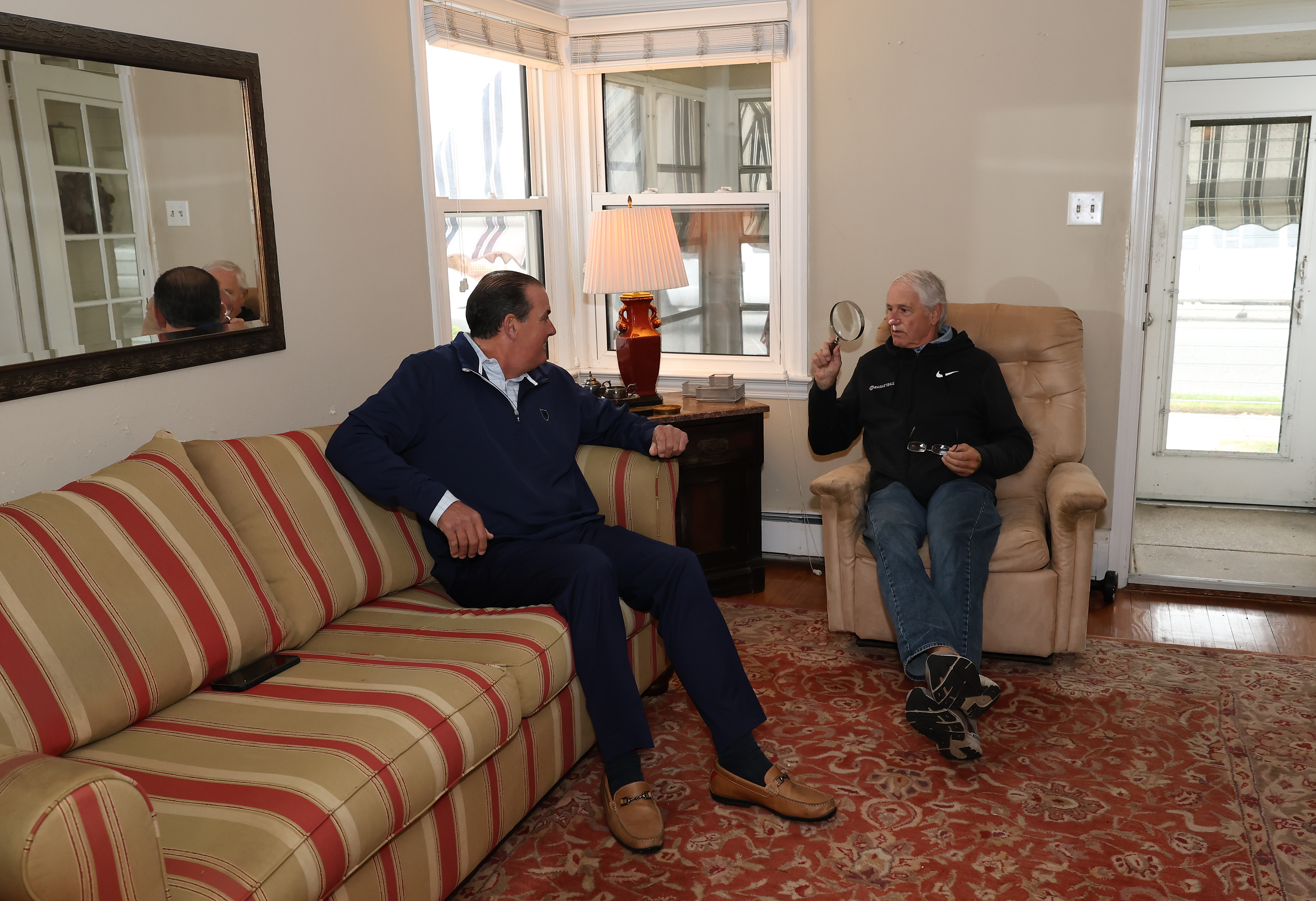
    David Smith (left) and his uncle, David S. Smith, in the living room of the cottage.

    Merritt’s house, for example, has been rumored to have been owned by the family of Grace Kelly’s boyfriend when they were teens. Merritt was recently greeted at his home by the man’s sister.

    “We had this whole conversation of how her brother took Grace Kelly to the Lifeguard’s Ball, and she showed me the pictures she had,” he recalled. “When you knock these houses down, that connection to the past is severed.”

    Merritt argues that the town loses its identity when these houses disappear.

    While the Smiths have little say in who buys their home, they hope a single-family house will replace it, rather than a duplex, which brings more cars, people, and traffic.

    “It hurts,” David S. Smith said. “We’ve had it for 69 years and there’s a lot of history.”

  • Bellwether District could soon announce its first tenants

    Bellwether District could soon announce its first tenants

    Officials for the Bellwether District say they are in “late-stage negotiations” with potential tenants to occupy the first of many buildings planned for the 1,300-acre former refinery site in South and Southwest Philadelphia.

    However, Amelia Chassé Alcivar, a spokesperson for HRP Group, the site’s owner, said during an update on the project Tuesday that she would not comment on potential tenants.

    She was responding to a question from environmental advocate Mitch Chanin about whether a data center is a possible use on the site of the Philadelphia Energy Solutions (PES) refinery that closed in 2019 after an explosion and fire.

    “I want to emphasize that no official announcements have been made at this time, so I cannot confirm … I cannot deny,” she said, adding that, “I would just generally preach caution if you’re reading anything in the press that is not confirmed by us on the record or by the company on the record.”

    Chassé Alcivar said that there are no plans to build a traditional power plant on site.

    A recent BillyPenn article cited a union official who said a cogeneration plant is being discussed for the site. Cogeneration is considered a nontraditional technology that simultaneously, and efficiently, produces heat and electricity on site.

    Chassé Alcivar said solar installations are being planned for at least some of the six million square feet of rooftops the development will have when fully built out over several phases in years to come.

    “I will share with this group that we are in late-stage negotiations with several prospective tenants,” she said.

    What’s the Bellwether District?

    HRP, which was spun off from its parent company, Hilco, is building two massive commercial campuses on the site of the former refinery.

    window.addEventListener(“message”,function(a){if(void 0!==a.data[“datawrapper-height”]){var e=document.querySelectorAll(“iframe”);for(var t in a.data[“datawrapper-height”])for(var r,i=0;r=e[i];i++)if(r.contentWindow===a.source){var d=a.data[“datawrapper-height”][t]+”px”;r.style.height=d}}});

    It plans about 14 buildings for a 750-acre industrial campus with the potential for 10,500 jobs.

    And it plans a series of smaller buildings on a 250-acre innovation campus, originally slated to house mostly life sciences companies, with the potential for 8,500 jobs. The buildings are being designed for uses such as bio-manufacturing, processing, production, and tech.

    In all, HRP plans for about 14 million square feet of buildings across the two campuses.

    The ground of the sprawling site was tainted by 150 years of petroleum-related uses. As a result, it is undergoing a complex environmental remediation.

    In its most recent history, Sunoco sold the refinery to PES in 2012. PES owned it at the time of the explosion and subsequent closure. PES went bankrupt and sold the site to Hilco Redevelopment Partners, now just HRP, in 2020.

    Sunoco is responsible for contamination up to 2012. HRP is responsible for contamination after that. The two companies are coordinating cleanup with the state Department of Environmental Protection.

    Remediation is expected to be ongoing for years. Some of the soil will be capped by buildings and parking lots. Barriers are being installed to prevent vapors from volatile organic compounds in the ground from penetrating work areas in the buildings.

    What’s complete and what’s coming

    HRP says it will invest more than $4 billion into the redevelopment.

    So far, HRP has completed a 326,000-square-foot class A warehouse on its 750-acre industrial campus with poured concrete floors and structural steel column supports off 26th Street.

    It is finishing a second, 727,000-square-foot warehouse adjacent to the first with a planned boulevard leading into the campus for a total of little more than 1 million square feet.

    Last month, Bellwether applied for a permit for a 1.4-million-square-foot building titled DrinkPAK warehouse. California-based DrinkPAK is a large manufacturer of alcoholic and non-alcoholic canned beverages.

    DrinkPAK’s website lists two existing facilities: The first in Santa Clarita, Calif., and a second scheduled to open this year in Fort Worth, Texas. A map shows a third facility projected to open in 2027 in the Northeast with a marker showing an area in Southeastern Pennsylvania.

    Chassé Alcivar did not comment on that project during the meeting.

    Other updates:

    • HRP said it is planning to widen the intersection of 26th Street and Penrose Avenue from three lanes to five. The intersection will have two left turn lanes, one straight lane, and then two dedicated right turn lanes. And a new boulevard entrance at 26th and Hartranft Streets is being created, featuring roughly seven lanes in and out.
    • The company plans to plant 10,000 trees, bring buildings up to LEED standards, and to be solar ready. LEED certification is a system developed by the U.S. Green Building Council (USGBC) to verify a building’s sustainable design, construction, operation, and maintenance.
    • Weekly readings of a benzene monitor are being taken as part of the THRIVEair Community Air Monitoring Project (CAMP) in South and Southwest Philadelphia. THRIVEair is a partnership between Drexel University and Philly Thrive, a local environmental justice organization.
    • HRP has launched a new driver education pilot program for students enrolled in construction and automotive career and technical education programs. Lack of a driver’s license has been cited as a barrier of entry to jobs.
  • 2026 Audi S3: Looks fun, sounds fun, drives fun, but keep it casual

    2026 Audi S3: Looks fun, sounds fun, drives fun, but keep it casual

    2026 Audi S3 Prestige vs. 2026 BMW 228 xDrive Gran Coupe: Battle of the little racers.

    This week: Audi S3

    Price: The 2025 starts at $48,700, according to the window sticker of the test model; the 2026 starts at $52,000.

    Conventional wisdom: Car and Driver likes the “entertaining handling, responsive powertrain, sophisticated and luxurious interior.” They were less fond of the “limited trunk space,” that there was “some road noise at higher speeds,” and that it was “not quite as raucous as the RS3.”

    Marketer’s pitch: “Upgrade the everyday.”

    Reality: It depends where all you go every day.

    What’s new: We’ve been exploring efficiency over the last two weeks with the Accord Hybrid and Prius Plug-In. The Prius had some kick, but the Audi and BMW really pack a punch.

    The little Audi sedan (which the EPA surprisingly classifies as “midsize”) is the souped-up version of the A3. That’s not to be mistaken for the super souped-up version, the RS3. Just think of the abbreviations as “Speedy” and “Really Speedy.”

    The sedan got a power boost and handling improvements for 2025. The 2026 carries on fairly unchanged.

    Competition: In addition to the BMW 2 Series, there are the Acura Integra, Cadillac CT4, and Mercedes-Benz CLA.

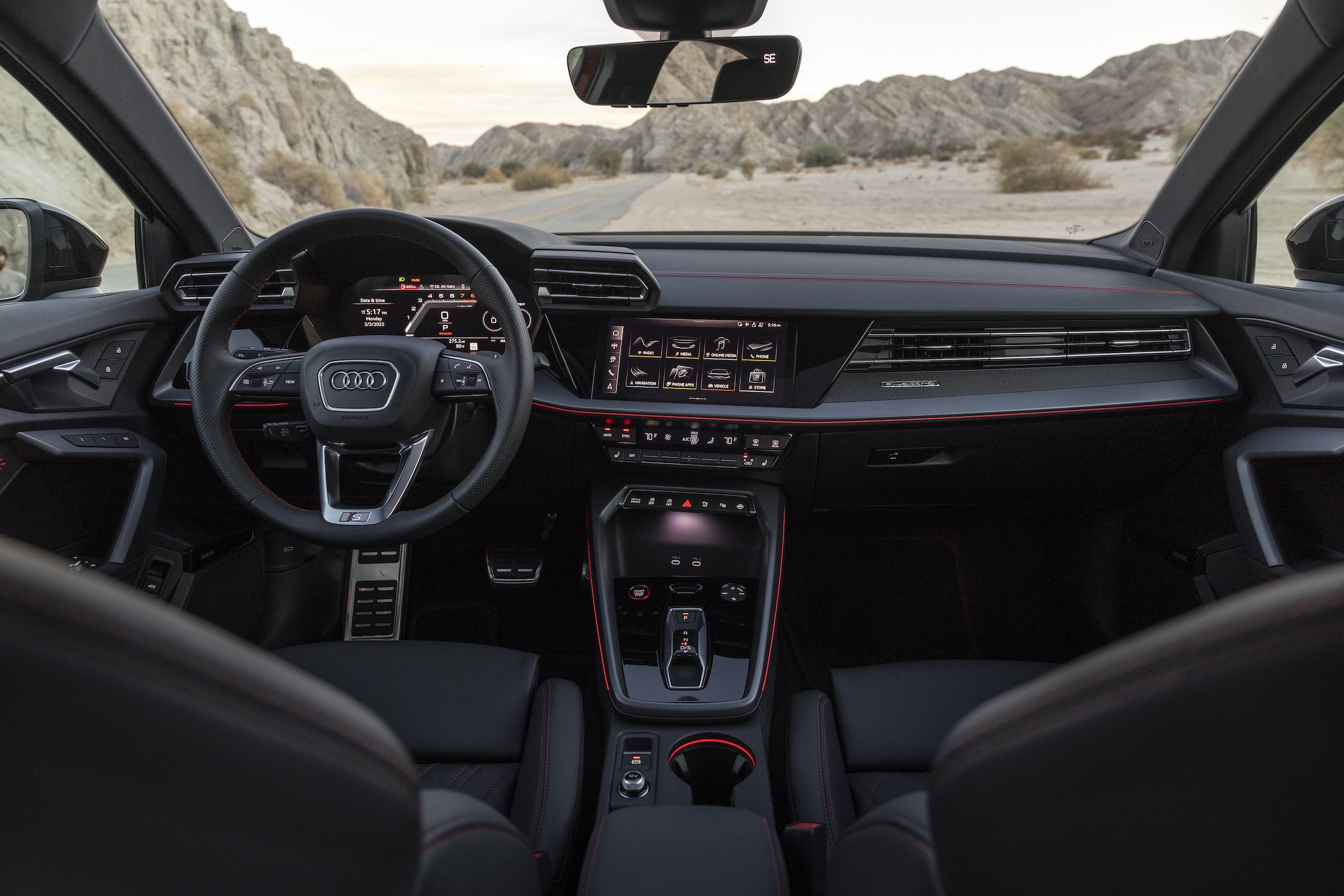
    The interior of the Audi S3 is comfortable when you’re riding up front, but not so much in the back row. The trunk helps teach how to travel light.

    Driver’s Seat: At first sit, the S3 started off strong. I hopped inside and felt instantly smitten with the no-nonsense black Dynamica faux leather interior, the firm but mostly comfortable seat, the narrow fonts in the typeface.

    Then I fired it up and heard the throaty exhaust recording that generally comes with Audi. But could this love last?

    Up to speed: The S3 certainly can get a move on. It’s powered by a 2.0-liter turbocharged four-cylinder engine that creates 328 horsepower, a lot for a small sedan, which kicks it to 60 mph in 4.4 seconds, according to Audi.

    Shifty: Audi has progressed even beyond its groundbreaking shift toggle switch and now has a shiny small shift mouse, for lack of a better term. Hold two fingers over it and push forward for Reverse and back for Drive. Kinda cool.

    You can shift the 7-speed automatic through the paddles, but with a vehicle as quick as the S3 you need to be in second gear before you finish rounding the corner at an intersection, so good luck finding the toggle. Here’s where a gearshift would come in handy.

    On the road: The S3 dazzles. It corners impressively and takes on country roads with a sense of wild abandon. What’s to prevent everyone from racing around the world like maniacs in this sedan?

    But what the Quattro all-wheel-drive system giveth, the suspension taketh away. The S3 starts to lose its charm on the highways; road seams and pocked road surfaces really jolt the little sedan abruptly. Be sure to check your dental plan before purchasing.

    Friends and stuff: You won’t squeeze much of either inside, friends nor stuff, not with this leg room, that hump, or the trunk. Feet and legs are pretty smushed.

    Farther back, the trunk seemed to identify as bigger but it’s rated at a snug 8.3 cubic feet, closer to a Miata (4.59) than a Civic (14.8). The rear seat does fold down, making things a little better.

    Play some tunes: Sound from the Sonos premium sound system is awesome — an A+. There’s a heavy echo in the surround sound, but I decided to live with it, as it only interfered with a few songs.

    Operation is all through the touchscreen. In a depressing application of function following form, the forward-reverse-volume controls live on a little round button on the console that matches the engine Start button. Beautiful to look at; disturbing to operate.

    I always love the Google Earth feature in Audi maps; it makes driving around quite scenic. Although so is looking at the actual road.

    Keeping warm and cool: The heater features a row of toggles that you push to lower and pull to raise. Somehow, though I’ve seen various toggles in different vehicles and they worked well, these black toggles felt hard to operate and distracting from the road.

    The blowers are also right in the driver’s face, which I was less enthusiastic about; there was no real way to send the air away from me.

    Fuel economy: I averaged about 24 mpg in a lively week of testing; every red light was an acceleration test. About 100 of those miles were there before me.

    Where it’s built: Ingolstadt, Germany. Just over half the parts hail from Germany as well (51%), and a mere 1% come from the U.S. or Canada.

    How it’s built: The less-fun A3 rates a 3 out of 5 from Consumer Reports for reliability, so that likely applies to the S3 as well.

    In the end: If your every day involves lots of highway, maybe this isn’t the choice.

    Next week: Let’s see how the BMW 228 compares.

  • Contractor caused construction of the W and Element hotels to go ‘off the rails,’ judge finds

    Contractor caused construction of the W and Element hotels to go ‘off the rails,’ judge finds

    When a Marriott representative visited the construction site of the W Philadelphia hotel in Center City in January 2019, months after the project should have been completed, the concrete floors were so uneven that a pen placed on the ground rolled downhill.

    The construction of Philadelphia’s largest hotel, home of the W and the Element, both part of the Marriott umbrella, began in 2015 and had a strict 2018 deadline for completion. Delays led to an avalanche of nearly 30 lawsuits with the site’s owner, construction contractor, and design company pointing fingers at each other.

    The W, which comprises 295 rooms of the 51-story building, eventually opened in 2021, roughly three years late.

    Bringing to a close 25 of the lawsuits, a Philadelphia judge issued a 69-page memo last week laying out the saga and finding the construction company responsible for the project going “off the rails.”

    Common Pleas Court Judge James Crumlish found that the construction contractor, Tutor Perini Building Corp., subcontracted the concrete work to a company that botched the job. And despite knowing about the problems, which were detrimental to the entire project, Tutor denied the issues for months.

    The judge’s finding comes after trial testimonies that took five months as the parties “turned this litigation into a challenging behemoth that made any effort at resolution impossible,” Crumlish wrote.

    A yearslong saga

    The saga began when Chestlen Development LP, the owner of the site, picked Tutor as the construction manager. The agreement capped the cost of construction at $239 million and required completion within 1,017 days after April 2015.

    An attorney for Tutor did not respond to a request for comment.

    From the outset, Tutor suffered “chronic turnover of its personnel,” the judge wrote, resulting in the loss of “institutional knowledge of key decisions.”

    Tutored subcontracted the concrete work to Thomas P. Carney Inc. Construction, a Bucks County company.

    When a different subcontractor, Ventana DBS LLC, began installing the wall-window systems, they immediately noticed a “big problem,” according to the judge’s memo. In many places the concrete wasn’t level or did not meet the elevation requirements in the design.

    Tutor pushed back, denying that there was a problem, while quietly attempting to grind the edges of the concrete slabs to address the issue.

    While denying the problem, Tutor hired outside advisers to evaluate the concrete work. But they confirmed the problem too.

    Finally, in March 2018, Tutor shared the outside reports that acknowledged Carney’s shoddy concrete work with Chestlen’s representative for the project.

    As summer 2018 began, it was clear that the project would not be completed on deadline.

    In September 2018 Tutor asked Chestlen for an extension, which the owner rejected, saying the request came “months if not years after some of the concrete issues started to become apparent,” according to Crumlish’s memo.

    The remediation of the floor began in April 2019 and was completed in October.

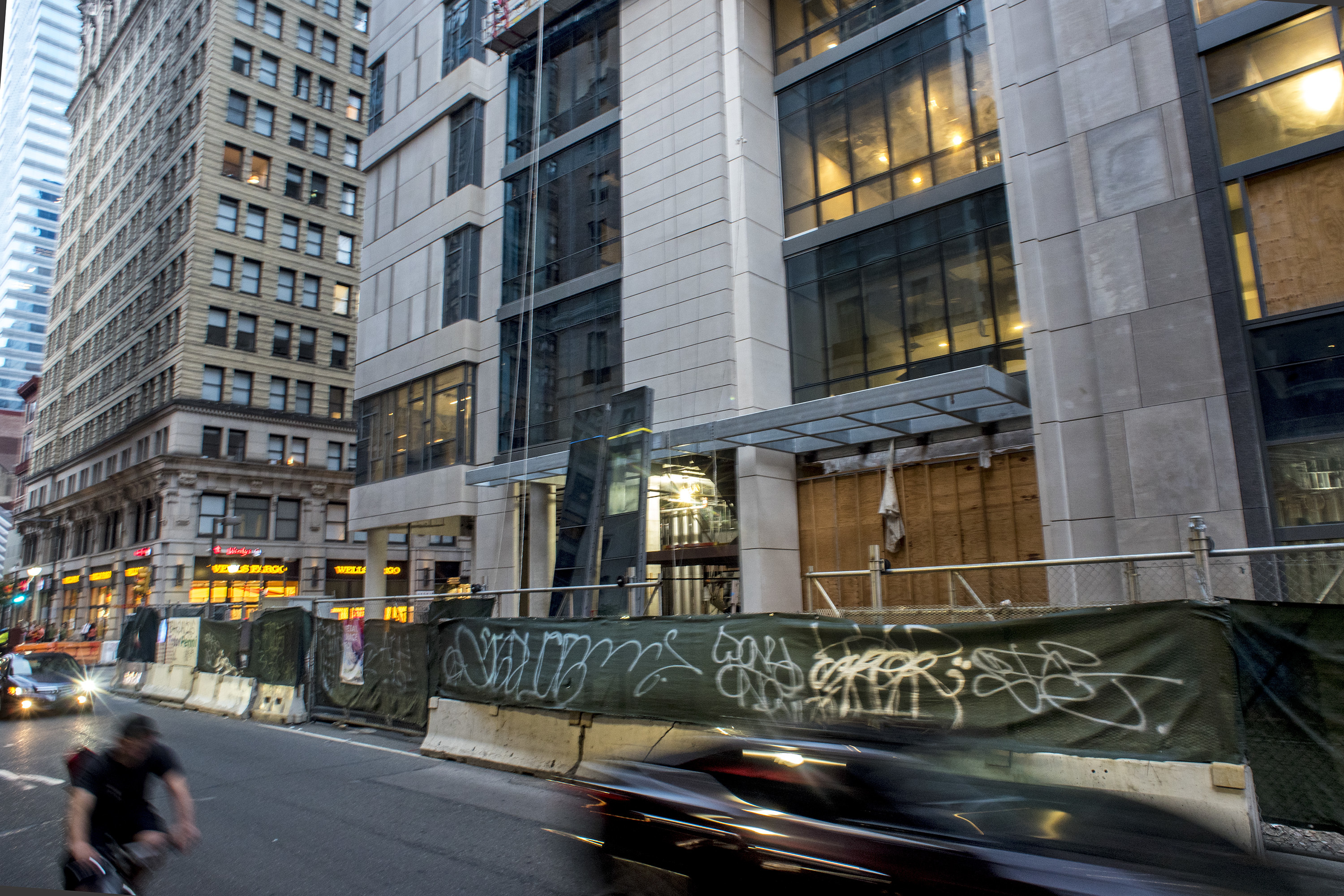
    The sidewalk area of W Philadelphia and Element Philadelphia Hotel under construction, looking northwest along the 1400 block of Chestnut Street July 2, 2019.

    The building finally obtained a certificate of occupancy in April 2021. But Marriott couldn’t open the W until August because over a hundred window vents were inoperable because Tutor failed to follow the design.

    “Tutor knew that the floors did not meet specifications but did not timely disclose its knowledge to Chestlen or consult with it,” Crumlish wrote. The judge further found that Tutor refused to work with contractors to remediate the problems in 2017 and 2018, and proceeded to install interiors over the deficient concrete floors.

    The blame game

    Throughout the litigation, the parties all blamed one another for various problems and aspects of the delay.

    Costs and liens piled up.

    Chestlen paid Tutor $239 million for the construction, accrued over $40 million in damages as set in its contract with Tutor, and paid tens of millions to remediate the floors. The property is “clouded with over $155 million in liens,” according to the judge’s memo.

    Crumlish concluded that Tutor breached its contract when it failed to oversee the concrete work and the window-wall installation, and generally didn’t fulfill its obligations.

    “Every delay in the performance and completion of the project is the responsibility of Tutor and Carney,” the judge said. The judge will decide on the amount of damages following hearings scheduled for January.

    Chestlen’s attorney was unavailable to provide comment. Carney did not respond to a request for comment.

    The W hotel is located where One Meridian Plaza used to be, before that building suffered a devastating fire in 1991 and was finally demolished in 1999.

    Filling the vacant lot, a mere block from City Hall, became a top priority for policymakers during Mayor Michael Nutter’s time in office. The hotel proposal eventually received $75 million in taxpayer support across local, state, and federal funding sources in addition to other legislative assistance.

    The project was developed by Brook Lenfest, son of the former Inquirer owner H.F. “Gerry” Lenfest, whose foundation continues to own the newspaper today.

  • Lower Merion may raise parking meter rates for the first time since 1999

    Lower Merion may raise parking meter rates for the first time since 1999

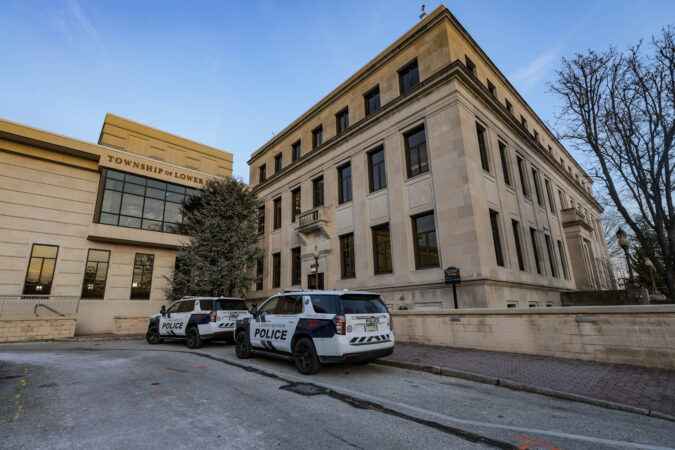
    Lower Merion’s board of commissioners is set to put multiple new ordinances on the books next month, including policies raising parking meter rates for the first time since 1999, lowering the speed limit on parts of Lancaster Avenue, and regulating where smoke and vape shops can open in the township.

    The smoke and vape shop regulation moved ahead last month, and the commissioners advanced the parking meter and speed limit changes Wednesday evening. Lower Merion’s assistant township manager, Brandon Ford, said the commissioners are poised to formally vote on all three proposals in December. Here’s everything you need to know.

    Parking meter rate may go up

    Commissioners on Wednesday moved forward an ordinance that would raise parking meter rates across Lower Merion for the first time in more than 25 years.

    Under the proposed ordinance, parking would increase from 50 cents per hour to $1 per hour across the township, with the exception of six locations in Ardmore. Parking would go up to $1.50 per hour at Rittenhouse Place, Cricket Avenue, Cricket Terrace, and township-owned parking lots five (Cricket Terrace) and six (Schauffele Plaza). The Cricket Avenue Parking Garage would stay at 50 cents per hour.

    Township staff say the proposed meter rate increase would generate around $900,000 annually and would likely drive quicker turnover in Lower Merion’s commercial corridor, generating more economic activity for local businesses.

    “The rates that we are charging have not kept up with the overall cost for maintaining those parking meters, as well as our overall parking services program,” Ford said during a Nov. 5 meeting.

    The ordinance, if passed, would not change how parking meter fees are collected. The township collects parking fees through meters, kiosks, and a mobile app.

    Commissioner Scott Zelov, who represents Bryn Mawr, Haverford, and Gladwyne, said: “It certainly is time to do this.”

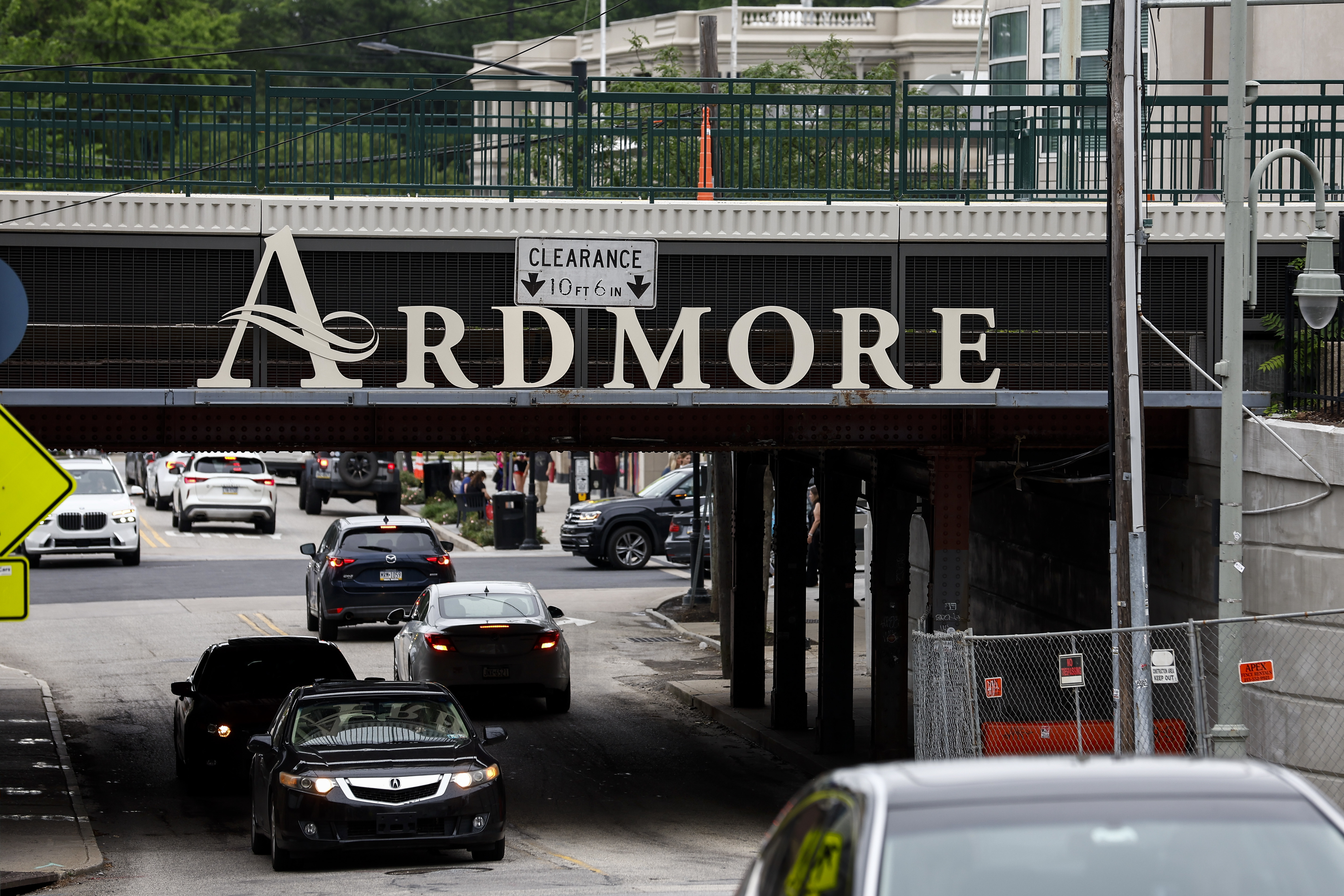
    Anderson Avenue near Suburban Square on June 8. A proposed Lower Merion ordinance would increase parking meter rates across the township in hopes of raising revenue and spurring economic activity in places like downtown Ardmore.

    Lancaster Avenue speed limit reduction

    Lower Merion is set to reduce the speed limit on parts of Lancaster Avenue from 40 mph to 35 mph, bringing township code in compliance with an earlier speed limit change by the Pennsylvania Department of Transportation.

    PennDot has already placed 35-mph speed limit signs on the selected strip of Lancaster Avenue. The board’s approval will bring the township in line with the state and allow township police to start enforcing the reduced speed limit. The speed limit change is the latest development in a major redesign of Lancaster Avenue by the state and the township.

    A study conducted by PennDot earlier this year found that, out of nearly 20,000 vehicles traveling on Lancaster Avenue between Wynnewood Road and City Avenue during a 24-hour period, only 57% were driving at or below the 40-mph speed limit. PennDot considers the intersection of Lancaster Avenue and Remington Road to be a “high crash location.”

    The ordinance, approved for advertisement on Wednesday, also bans right turns on red at three intersections: Lancaster Avenue and Remington Road for eastbound traffic, Lancaster Avenue and Haverford Station Road for westbound traffic, and Montgomery Avenue and Airdale Road for east-west traffic.

    The township aims to place automated red-light cameras at all three intersections. The first red-light camera, at Remington Road and Lancaster Avenue, is in the process of being installed. Andy Block, Lower Merion’s superintendent of police, said the camera should be up and running by the end of the year.

    Smoke and vape shop zoning

    Following a lengthy discussion that stretched across two meetings, the board of commissioners on Oct. 22 moved forward an ordinance that would decide where tobacco and vape shops can operate in Lower Merion.

    Under the proposed ordinance, if a tobacco or vape shop wanted to open in Lower Merion, it would have to be situated at least 1,000 feet from any other tobacco or vape shop and 1,000 feet from any public or private school. The rule would also apply to hookah lounges.

    Township staff said the 1,000-foot buffer would dramatically decrease the opportunity for smoke shops to operate in Lower Merion. Ford said there are currently around 1,000 properties in Lower Merion where smoke shops could operate. If the buffer ordinance were to be implemented, that number would drop to 300.

    While some commissioners inquired about creating a larger buffer, officials said doing so would likely zone smoke shops out of Lower Merion entirely, which would give smoke shop owners the legal claim to build anywhere in the community.

    During an Oct. 17 discussion of the ordinance, Commissioner Anthony Stevenson, who represents Ardmore and Haverford, said: “We need to avoid the continuation of making our township, and particularly in the Ardmore area, a vape central.”

    This suburban content is produced with support from the Leslie Miller and Richard Worley Foundation and The Lenfest Institute for Journalism. Editorial content is created independently of the project donors. Gifts to support The Inquirer’s high-impact journalism can be made at inquirer.com/donate. A list of Lenfest Institute donors can be found at lenfestinstitute.org/supporters.

  • Is Boscov’s selling the most offensively Pennsylvania outfit ever?

    Is Boscov’s selling the most offensively Pennsylvania outfit ever?

    I was lured to the Boscov’s at Granite Run the other weekend by a mailer I’d received advertising a one-day shoe sale — buy any pair, get the second for $1.99.

    I went early to beat the crowds only to find the bounds of polite society had dissipated at the shoe department and it’d become The Hunger Games, but with footwear and senior citizen tributes (who are far more ruthless than their younger counterparts).

    Flustered, I set off to browse the rest of the store. The first thing you might find yourself wondering as you wander around a Boscov’s is: “How does this place even exist?” It’s a full-scale department store that sells everything from perfume to sofas. I even discovered an entire candy counter on the second floor that during a previous visit I’d never noticed before. As it turns out, this Reading-based chain is in the fudge-making business too.

    Legions of other department stores have fallen in the last few decades — Kaufmann’s, Bradlees, Hills, Hess’s — yet Boscov’s abides. The Granite Run Boscov’s is particularly a beast unburdened by the sands of time. It was previously an anchor store for the Granite Run Mall, which was torn down around it in 2016 to make way for the Promenade at Granite Run. Only Boscov’s remains of the once-storied mall. It is a rock that shall not be moved, a pillar to in-person purchasing.

    The outfit

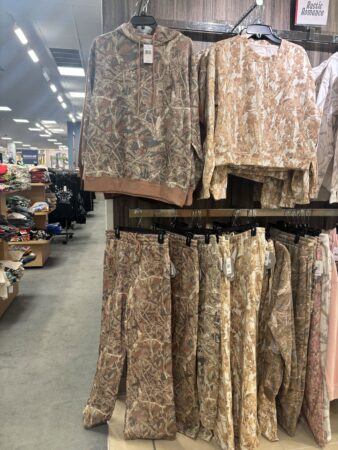
    As I was browsing the brightly-lit aisles that fateful Saturday this month, wondering if the lights might give me a sunburn, my eyes fell upon something I can never unsee: matching camouflage sweat suits.

    Here were outfits that managed to do what no state legislature or psychological expert ever has: They married rural and urban Pennsylvania.

    Boscov’s bills these matching sweat suits as “Rustic Romance.”

    As someone who spent her formative years growing up in Lycoming County — where we had the first day of hunting season off from school — I can attest that camouflage is not just for stalking prey and sitting in tree stands. It’s an entire sartorial color category all its own in rural Pennsylvania.

    Camo is mixed and matched with everything and considered appropriate for all events, from weddings to funerals (think of it like Birds gear during a playoff run). I’ll never forget looking at photos from my wedding and realizing a guest from Central Pennsylvania wore a camo baseball hat to our reception.

    Now, a matching tracksuit is something you rarely see in rural Pennsylvania, but it’s practically a closet-staple around Philly. You’ll see at least one person wearing one at every Wawa, Acme, or outdoor event you visit in the region.

    Typically paired with sunglasses, these outfits are not only comfortable but incredibly stress-free. No need to worry about what to pair your sweatshirt with because there’s only one answer, the matching sweatpants you bought with it.

    Standing stunned before these camouflage sweatsuits, which came in both his and hers, I wondered if Boscov’s had thrown back a few beverages before deciding to sell these things.

    As a Pennsylvanian, I was highly offended. We the people of this fine commonwealth are more than camo and sweat suits! We are camo OR sweat suits.

    But maybe, just maybe, by blending these two wildly different fashions together as the holidays approach, Boscov’s will also blend us. No more Philly, Pittsburgh, and the T in between. No more red counties and blue counties. This could be the one outfit to unite us all, while also helping us blend into woodland scenes.

    When I posted a picture of the camo sweatsuits on Threads, several users pointed out that Eagles quarterback Jalen Hurts recently wore a matching camouflage suit when the Birds traveled to Green Bay. I was surprised, as Hurts is typically a very stylish dude who wears Kangol hats and carries a man bag, but people suggested his outfit could have been a fashion statement indicating he was on the hunt.

    Who better though to serve as the ambassador of the camouflage sweat suit and unite our state than Hurts? He’s cool under pressure, so he could take the heat of promoting an undeniably terrible outfit for the greater good, and he grew up in Texas, so it’s safe to assume he’s familiar with camo (and we already know he’s not afraid to wear it).

    It wasn’t until I got home and looked at my photo of the sweat suits that I noticed there was a sign at the top of the store display billing these outfits as “Rustic Romance.”

    Listen, I know that Pennsylvanians’ reputation for romance does not precede us, but that’s just insulting. There’s nothing romantic about letting your partner know you want them to look more like fall foliage.

    I guarantee if you get your lady a matching camo sweat suit for Christmas, she’s not going to fawn all over you — she will hunt you down.

  • Three Nick Castellanos trades that show how little the Phillies should expect in return

    Three Nick Castellanos trades that show how little the Phillies should expect in return

    The most important variable in any negotiation is what the other side thinks you are willing to pay. Right now, the other 29 teams in Major League Baseball have every reason to think the Phillies aren’t willing to pay Nick Castellanos anything. That’s a tough starting point for Dave Dombrowski as he tries to find someone interested in trading for the veteran right fielder.

    Fact is, Castellanos is due to make $20 million this season, which is at least $18 million more than he could reasonably expect to make if he were a free agent. Even if the Phillies eat most of that money, why would a team trade anything of value for Castellanos rather than signing this year’s version of Mark Canha for a couple of million bucks?

    The only realistic option for the Phillies is to find a team that is looking to shed a similarly overpriced contract. Even then, Dombrowski may have to further incentivize an interested party. That quickly leads to a point where the Phillies are better off simply releasing Castellanos. Or walking a lot of things back before he reports for spring training.

    Here are three examples of deals that maybe, kinda, sorta, if you squint could potentially make a fraction of a smidgen of sense for both parties.

    Get excited!

    Andrew Benintendi is slashing just .245/.309/.391 in his first three years with the White Sox.

    1. Andrew Benintendi plus cash to the Phillies, Castellanos to the White Sox

    This is the baseball equivalent of one of those NBA trades in which a couple of overpriced veterans and 16 second-round draft picks change hands but nobody ends up with more than they started with. You only live once, baby.

    Benintendi has been a sunk cost the moment he signed a five-year, $75 million contract in Chicago in 2023. Was it only three years ago that the White Sox were trying? Apparently, it was.

    Benintendi hit free agency as the rare hitter still in his prime, having broken into the big leagues at 21 years old on the watch of none other than Dombrowski. He hasn’t come close to the .782 OPS he posted in his first seven seasons in the majors, hitting just .245/.309/.391 in his first three years with the White Sox. He showed a little life in the second half of last season and finished with a .738 OPS that was slightly above league average. But he didn’t show nearly enough life to warrant salaries of $17.1 million this season and $15.1 million in 2027.

    Swapping Castellanos for Benintendi would make some sense from an accounting perspective. The Phillies would be taking on an additional $12.2 million in “dead” money over two years. More importantly from a competitive standpoint, they’d be tacking on $15 million in average annual value to next year’s payroll rather than paying Castellanos $20 million up front and then being free and clear.

    But what if the White Sox included $10 million in cash to pay Benintendi’s 2027 salary? That would essentially enable the Phillies to split up Castellanos’ money over two years, saving them $10 million this year while adding $10 million next year. And, hey, maybe Benintendi gives them a little something in the outfield rotation as a Max Kepler replacement. At 31 years old, the chances of that aren’t zero.

    What’s in it for the White Sox? Well, they’d save $5 million in cash in 2027 at the expense of an extra $3 million this year. I’m not sure whether this trade makes sense for both sides or makes sense for neither side. But that’s where we’re at.

    The Orioles’ Tyler O’Neill had just 209 plate appearances and nine home runs in 2025.

    2. Tyler O’Neill to the Phillies, Castellanos to the Orioles

    Truthfully, I’m not sure how much sense this makes for either side. O’Neill signed a three-year, $49.5 million contract last offseason after a big year with the Red Sox (.847 OPS, 31 home runs). He was a major disappointment, posting a .684 OPS and nine home runs in 209 plate appearances in a season marred by injuries.

    The argument from the Phillies’ perspective goes like this. They’d essentially be signing O’Neill to a two-year, $13 million deal, given the $20 million they are saving on Castellanos. That’s pretty close to fair market value for O’Neill, who has mostly been a league-average hitter outside of his two spike years (2021 with the Cardinals and 2024 in Boston).

    The Phillies get a right-handed hitter who still might have another big season in him. Even if he doesn’t, maybe he is an adequate enough rotational corner outfielder for two years (O’Neill is heading into his 31-year-old season). They also save $3.5 million on this year’s official payroll.

    Is all of that worth $16.5 million less in spending power next offseason? Probably not.

    Likewise, what are the Orioles really gaining? Saving $13 million over two years isn’t nothing. But it’s probably not worth sacrificing the chance that O’Neill bounces back.

    Kyle Freeland, 32, has spent his entire career with the Rockies and has been better away from Coors Field.

    3. Kyle Freeland to the Phillies, Castellanos plus cash to the Rockies.

    Freeland, who has spent his entire career with the Rockies, has one year and $16 million left on his deal. That’s a lot to pay a guy who has a 5.07 ERA over the last three seasons. Castellanos has hit well at Coors Field with a .914 career OPS in 88 plate appearances. The Phillies get another piece of rotation depth in the form of a guy who has had some decent years on the road in his career. The Rockies get a guy who at least has chance of regaining some value between now and next year’s trade deadline.

  • Conshohocken-area AI data center proposal abruptly withdrawn over legal issues

    Conshohocken-area AI data center proposal abruptly withdrawn over legal issues

    A Main Line developer’s plan to turn a shuttered steel mill into a 2-million-square-foot AI data center on the outskirts of Conshohocken was stymied Monday when he was forced to withdraw his application over legal issues.

    At the Plymouth Township zoning hearing board meeting, Brian O’Neill’s team had been set to make their case for an exception that would allow a data center to be built at 900 Conshohocken Rd.

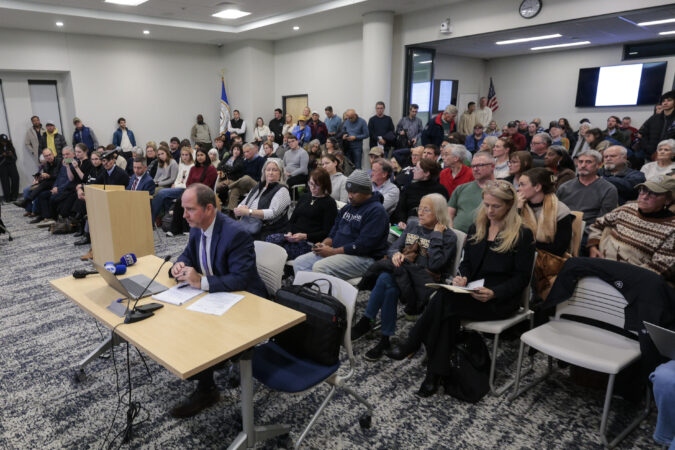
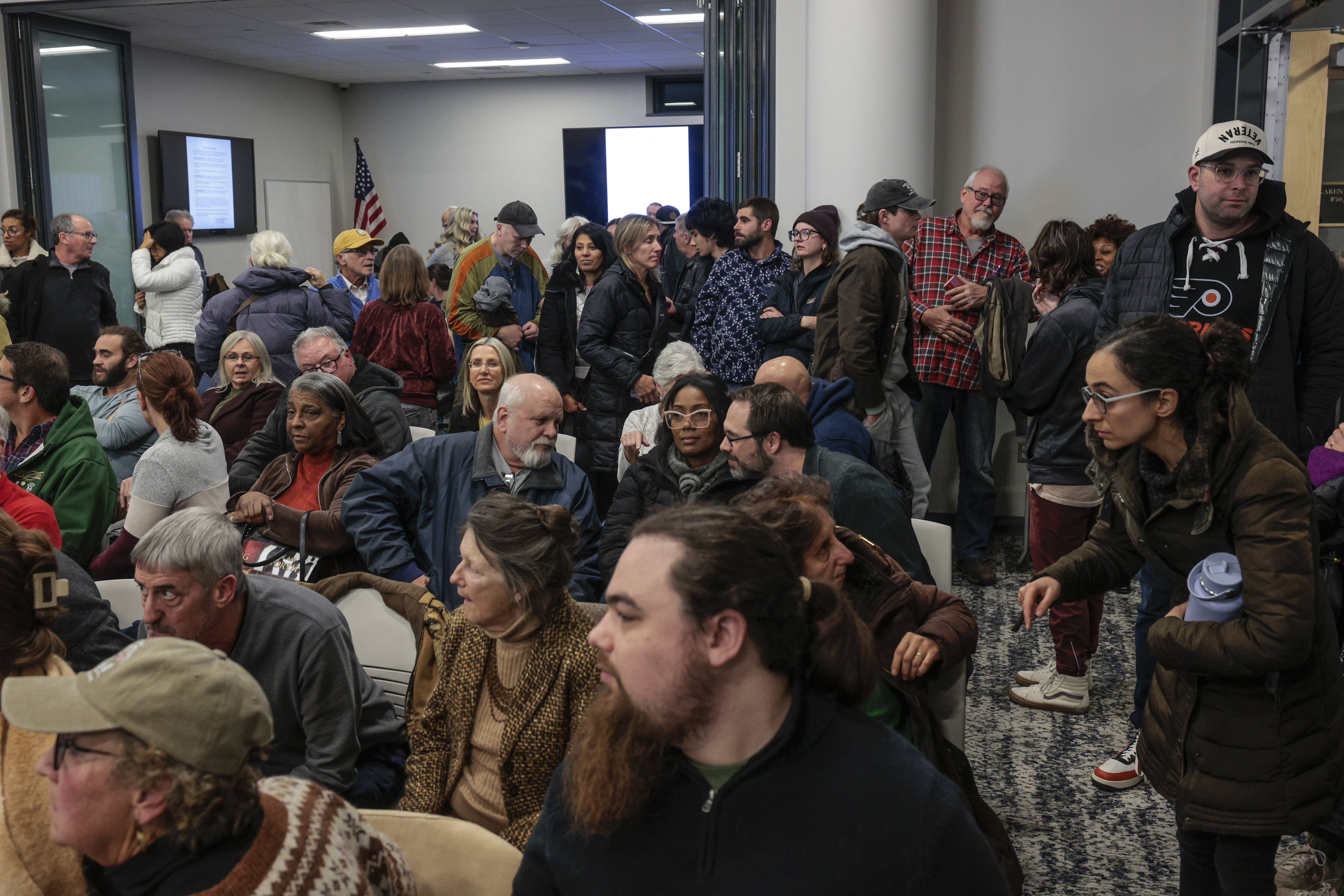
    The plan has faced neighborhood pushback, and hundreds of people packed the meeting room on Monday night. O’Neill did not appear to be among them.

    Edmund J. Campbell Jr., an attorney for O’Neill, said they wished to move the hearing to the township’s December meeting. Then an attorney for Cleveland-Cliffs, the property owner, said the prospective buyer did not have legal standing to do so.

    An agreement of sale had not been approved prior to the meeting, said Heather Fine, the attorney for Cleveland-Cliffs.

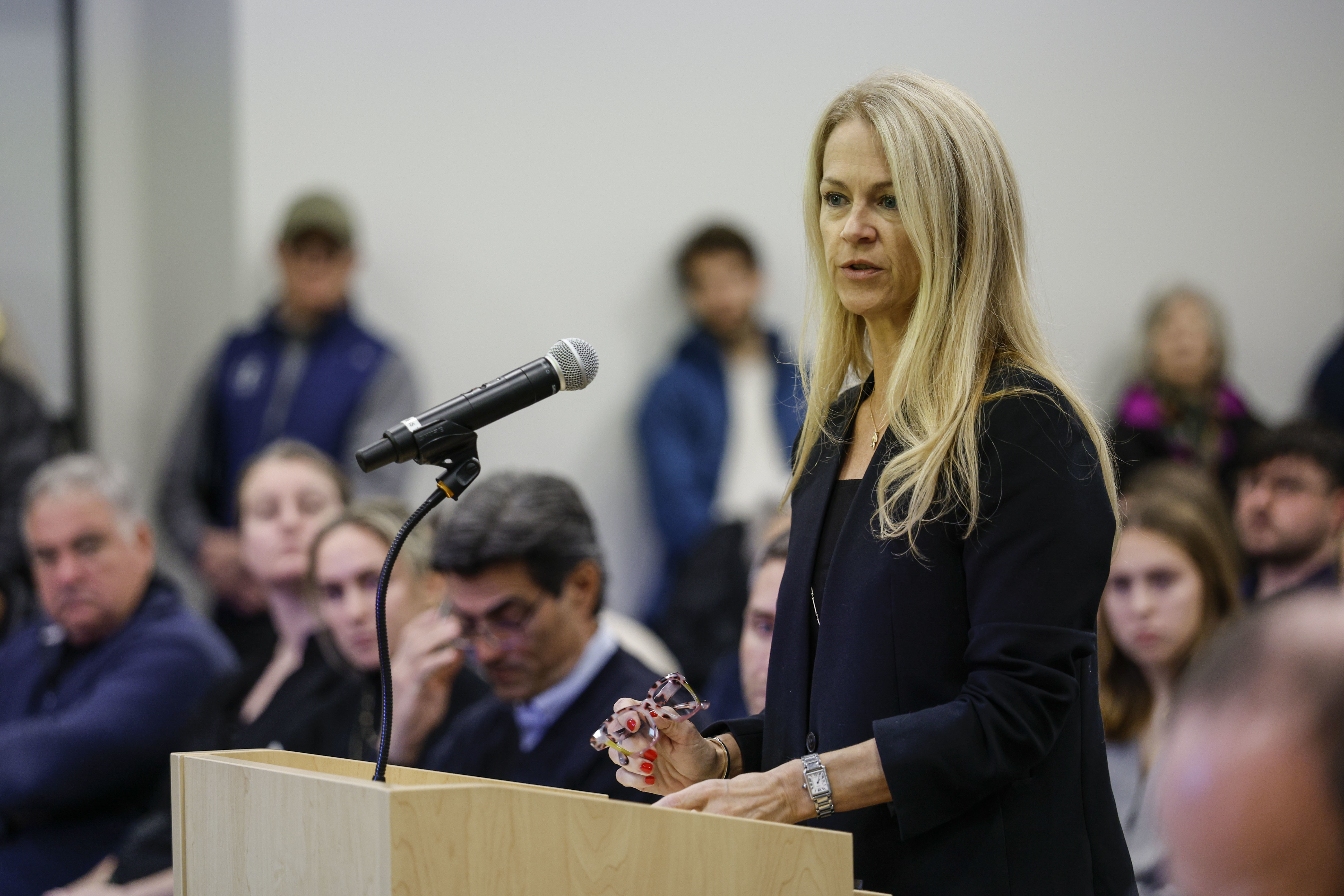
    Heather Fine, an attorney for Cleveland-Cliffs, addresses the Plymouth Township zoning hearing board on Monday.

    Campbell later asked Fine and then the board for permission to withdraw the application. Both declined to provide additional comment.

    Residents who had spent more than a month organizing in opposition to the project said they had mixed emotions.

    “It is the smallest of small wins, because we’re making it harder for something bad to happen to our community,” said Nick Liermann, an attorney who lives in a neighborhood near the former steel mill. “But we will be back in this room in a few months.”

    “Communities can be effective,” said Patti Smith, a neighbor of Liermann who has spearheaded the local data-center opposition efforts. “We have to stand up for ourselves.”

    With the withdrawal, the data center proposal is officially off the docket in Plymouth Township, zoning officer Joel Rowe said, but the applicant can resubmit a plan at any time, restarting the process.

    What the data center proposal entailed

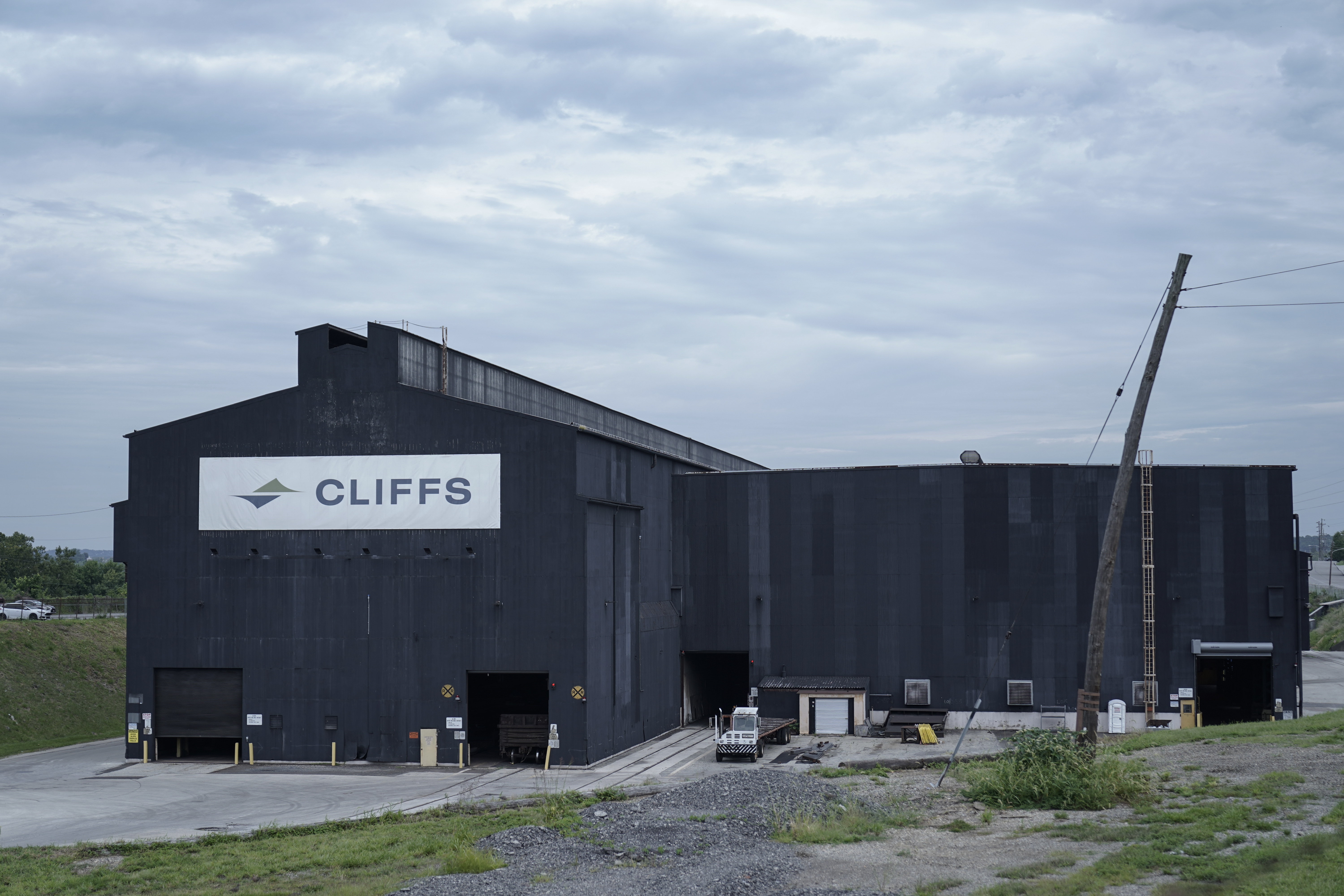
    The now-closed Cleveland-Cliffs plant near Conshohocken is shown in this 2023 file photo. A data center has been proposed for the site.

    This latest development in the Conshohocken-area data center saga occurs amid broader controversy about such facilities, which handle cloud-computing and storage for Big Tech companies.

    The construction of data centers has been fast-tracked to meet the growing demands of power-hungry AI tools like ChatGPT. Politicians on both sides of the aisle, including President Donald Trump and Gov. Josh Shapiro, have pushed for more centers, while some neighbors near proposed sites have mounted fierce pushback.

    In the Philadelphia area, Amazon is building a 2-million-square-foot data center on a former steel mill in Falls Township, Bucks County. And a 1.3-million-square-foot data center has been proposed at the former Pennhurst State School and Hospital in East Vincent Township, Chester County.

    In Plymouth Township, O’Neill had not revealed the potential tenant for his proposed data center, but indicated it would be related to the life sciences.

    The data center is proposed for a 66-acre property along the Schuylkill in the Connaughtown section of the township. The site is less than a mile from downtown Conshohocken. Its neighbors include the Proving Grounds sports complex, Tee’s Golf Center, and dozens of homes.

    A crowd of people leave the Plymouth Township zoning hearing board meeting on Monday.

    Some Connaughtown residents, along with other data center opponents from across the Philadelphia region, have rallied against the proposal. As of Tuesday, more than 1,000 people had signed an online petition urging township officials not to grant a zoning exception for the data center, citing concerns about light, noise, and air pollution; water usage; and electricity costs.

    O’Neill, meanwhile, had argued that a data center should be permitted in the “heavy industrial” zone due its to similarity to a warehouse and laboratory, which are both permitted uses under township code. He had also touted the center’s potential economic benefits, saying it could bring in $21 million in annual tax revenue and attract other companies to the area.

    “Industry hasn’t come and gone. It’s simply changed,” O’Neill said at last month’s planning board meeting. “What I’m proposing is to put 21st-century industry into an industrial building.”

    Why the data center plan was withdrawn

    The Plymouth Township zoning hearing board had been set to hear Brian O’Neill’s proposal for an AI data center outside Conshohocken on Monday.

    At the start of Monday’s standing-room-only meeting, Plymouth Township officials were expecting a long and potentially tense night.

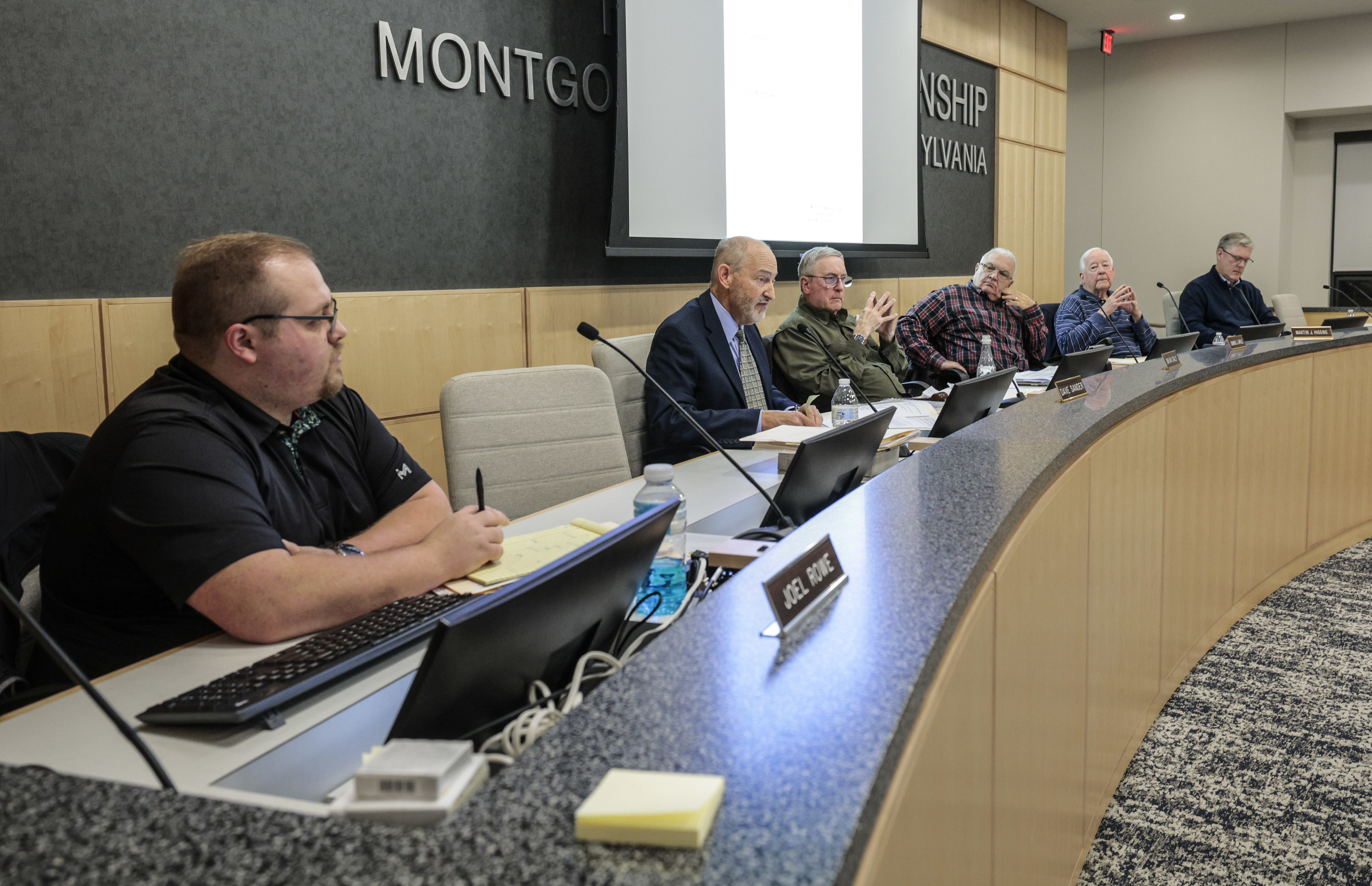
    Solicitor Dave Sander began by warning the crowd that they must maintain decorum, and said he would cut off the proceedings at 10 p.m. Police officers stood outside the room.

    Quickly, however, it became clear that Campbell, O’Neill’s attorney, had other plans, requesting a continuance to the Dec. 15 meeting. If granted, it would have marked the hearing’s second continuance: The proposal was initially supposed to be discussed at an October meeting.

    “My client would like an additional opportunity to review with [community members] the project,” Campbell said. “When we proceed, if we have had a more robust dialogue with those participants, this hearing on the 15th would be significantly more efficient.”

    Neighbors, some of whom had already attended a private meeting with O’Neill last month, objected to the last-minute request, saying that it was unlikely their minds would be changed if no significant changes had been made to the plan.

    “Is the proposal significantly different than what was displayed to community members at the Oct. 8 meeting?” asked Smith, who organized neighborhood opposition.

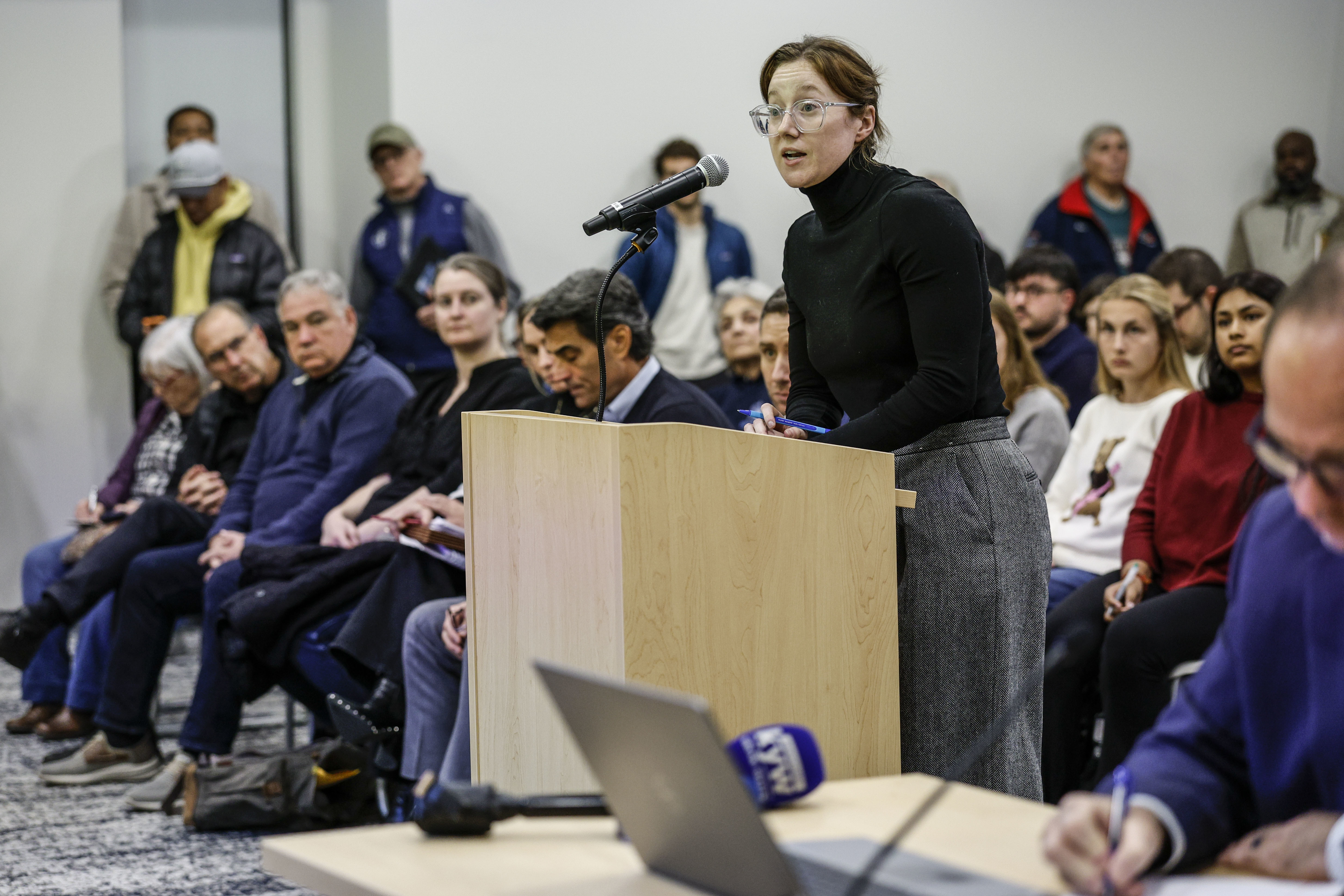
    Patti Smith, resident and organizer of anti-data center movement in the neighborhood, addresses the Plymouth Township zoning hearing board at Monday’s meeting.

    “No,” Campbell responded, later adding that they wanted more residents to be able to attend the meeting and hear from their experts who could speak to concerns, including about noise and emissions.

    Before the zoning hearing board could vote on the continuance request, Fine, the attorney for property owner Cleveland-Cliffs, took to the podium.

    “There is no standing for the prospective buyer to proceed with the application this evening,” Fine said. “That authority was not extended to the prospective buyer from the owner. There is no LOI [letter of intent] in place.”

    “My client delivered a signed agreement of sale to the owner this evening,” Campbell said. “Based on that, we have standing. … We made our application with the express consent of the owner.”

    Sander turned to Fine, asking if that was true.

    “It’s not entirely true, no,” Fine said. “The signed agreement that was transmitted to my colleague at 5:51 p.m. this evening had redline changes. Those have not been accepted by my client.”

    She did not elaborate on what those changes entailed.

    The zoning hearing board recessed before returning to accept Campbell’s motion to withdraw the application.

    As a neighbor to the site, Liermann said the unexpected turn of events left him with a more sour taste in his mouth about the developer: “The last-minute request in an attempt to obstruct the process and dissuade the public from participating, and then this ‘confusion’ over whether or not an LOI was actually signed between the developer and the owner, is incredibly disturbing.”

  • Hark! A Christmas concert is popping up at the Wanamaker Building

    Hark! A Christmas concert is popping up at the Wanamaker Building

    The Wanamaker Grand Court won’t just have the Light Show back again this year but will also host a one-night-only concert with orchestra, chorus, singers, and Wanamaker Grand Court Organist Peter Richard Conte.

    “Home for the Holidays,” on Dec. 2, will feature holiday classics like Sleigh Ride, “The Christmas Song,” and “O Holy Night,” as well as classical works, such as David Ludwig’s Hanukkah Cantata.

    The performance will be recorded by WHYY for radio and TV broadcast and streaming later in the month.

    The event is another in a series dubbed Pipe Up! programmed in the space vacated by Macy’s in March. Philadelphia philanthropist Frederick R. Haas donated $1 million to help keep the Grand Court and Greek Hall open and accessible to the public with concerts, films, and other activities in the span of a few months before building owner TF Cornerstone begins renovations on the building early next year.

    Separately, responsibility for the holiday Light Show and Dickens Village have passed from Macy’s to a partnership of the Philadelphia Visitor Center and TF Cornerstone. Both Christmastime attractions open this year on Friday, Nov. 28, and are expected to be placed on pause for 2026 and 2027 during construction.

    The Dec. 2 concert will be led by conductor Geoffrey McDonald, and features the Opera Philadelphia Orchestra and Chorus. Soprano Leah Hawkins will perform, as will the opera company’s general director and president, countertenor Anthony Roth Costanzo. Philly-based creative design agency 10th Floor Productions will craft and project art onto the Grand Court as the music is performed.

    In addition, the former Macy’s space will host a Christmas Market starting on Black Friday, as well as pop-up food service offering snacks, craft beers, and holiday fare.

    More Pipe Up! events are being planned and are expected to be announced soon, a spokesperson said.

    “Home for the Holidays,” Dec. 2, 8 p.m., Wanamaker Building, 13th and Market Sts. Pick Your Price tickets starting at $11 go on sale on Thursday at operaphila.org. The concert will be broadcast Dec. 23, 8 p.m. on WHYY TV12, WHYY radio (90.9 FM), and via whyy.org.

  • In Philly and Delco, listings and sales of luxury homes are down from last year, but prices are up

    In Philly and Delco, listings and sales of luxury homes are down from last year, but prices are up

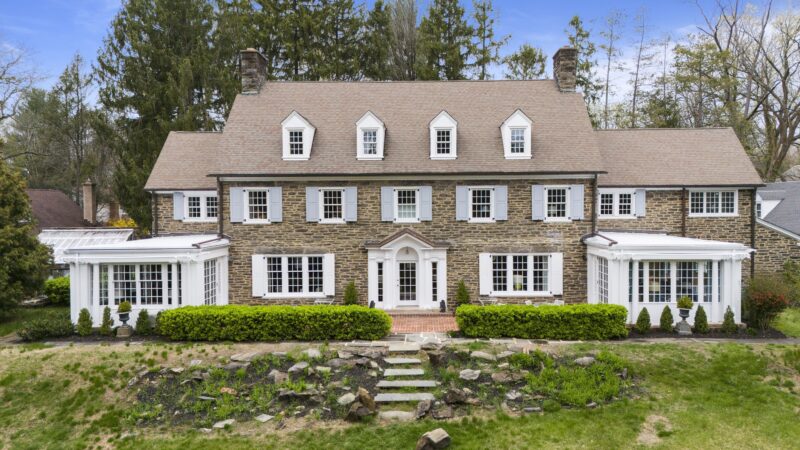
    In Philly and Delaware County, listings and sales of luxury homes are down from last year, according to an analysis by the real estate brokerage Redfin.

    The luxury home market in the counties is relatively small, “so it can be somewhat volatile,” said Chen Zhao, head of economics research at Redfin.

    In the combined market of Philadelphia and Delaware Counties, 285 luxury homes sold between July and September of this year. That’s down about 16% from the same time last year.

    Redfin defines luxury homes as those in the top 5% of an area’s prices. The median luxury sale price in this region was about $1.3 million, according to Redfin.

    A low supply of homes for sale is helping drive luxury trends. At the end of September, the number of active listings of luxury homes — 503 — was down about 23% from last year, the sharpest drop out of the 50 populous metro areas that Redfin analyzed.

    Zhao noted that luxury home owners are less likely to need to sell their properties, and decisions to hold onto multiple luxury homes during a time of economic uncertainty may be contributing to the tight supply.

    window.addEventListener(“message”,function(a){if(void 0!==a.data[“datawrapper-height”]){var e=document.querySelectorAll(“iframe”);for(var t in a.data[“datawrapper-height”])for(var r,i=0;r=e[i];i++)if(r.contentWindow===a.source){var d=a.data[“datawrapper-height”][t]+”px”;r.style.height=d}}});

    Faster price growth for luxury homes

    Prices for luxury homes have grown faster than prices for other homes both in the Philadelphia region and nationwide.

    In the combined market of Philadelphia and Delaware Counties, sale prices grew by almost 8% for luxury homes and about 6% for homes in the middle-price range over the last year.

    Nationally, luxury prices increased by about 5%. Prices for homes in the middle range increased by about 2%.

    “Luxury prices are outpacing the rest of the market because the people buying at the top end are playing by different rules,” Sheharyar Bokhari, senior economist at Redfin, said in a statement.

    Unlike middle-income homebuyers, people purchasing homes at the highest price points don’t need mortgage interest rates or prices to fall before they can afford to buy. They’re more likely to pay in cash or take out smaller loans. Some are choosing real estate as a more stable investment.

    “That demand, even at a smaller scale, is enough to keep pushing luxury prices up faster than the broader market,” Bokhari said.

    How other metros compare

    Between 2024 and 2025, luxury sales rose the most — almost 31% — in the pricey market of San Francisco. The median luxury sale price was more than $6 million.

    Luxury homes sold the fastest — in a median of 14 days — in the San Jose, Calif., region and the slowest — in a median of 130 days — in the Miami metro area.

    Florida is home to the areas where luxury prices rose and fell the most over the last year. They increased by about 15% in the West Palm Beach metro, and decreased by about 3% in the Tampa area.