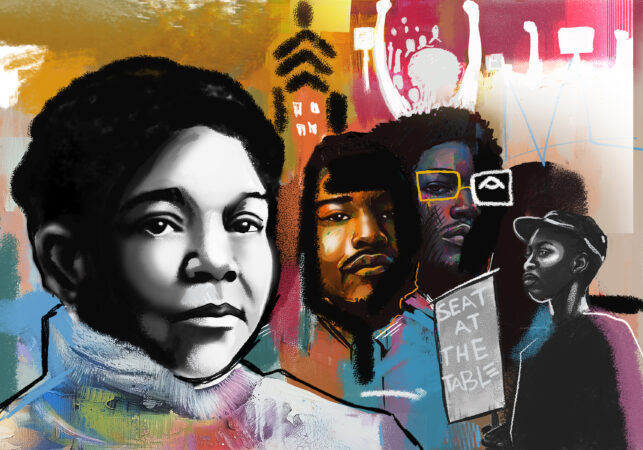
Public narratives of American democracy often emphasize founding documents, elections, and constitutional milestones while obscuring the long and contested process through which democratic practice was learned, refined, and sustained, particularly by people denied formal power.
The portrayal of Black civic life in early America is often reduced to suffering, resistance, or individual achievement, but these things conceal a deeper truth.
In 1840, Philadelphia’s Black community numbered nearly 20,000 people. This population was concentrated in the center of the city, including Society Hill, Queen Village, and Washington Square in the south, 41st and Ludlow in West Philadelphia, and Northern Liberties in the north. With this intensive concentration of people, institutions, and ideas, Black Philadelphia was a metropolitan center in its own right.
A thriving community
By 1845, the community sustained more than 17 Black churches, along with 21 public and private schools, two fraternal lodges, more than 80 mutual aid and literary societies, labor organizations, over 600 Black-owned businesses, and a printing press.
Formal democratic structures grew from these institutions. Churches functioned as civic laboratories, and mutual aid societies were exemplars of rules-based organizations.
Philadelphia was where Black life cohered into a national political identity. People who had defined themselves as African, Caribbean, Indigenous, enslaved, or free identified themselves collectively as African American.
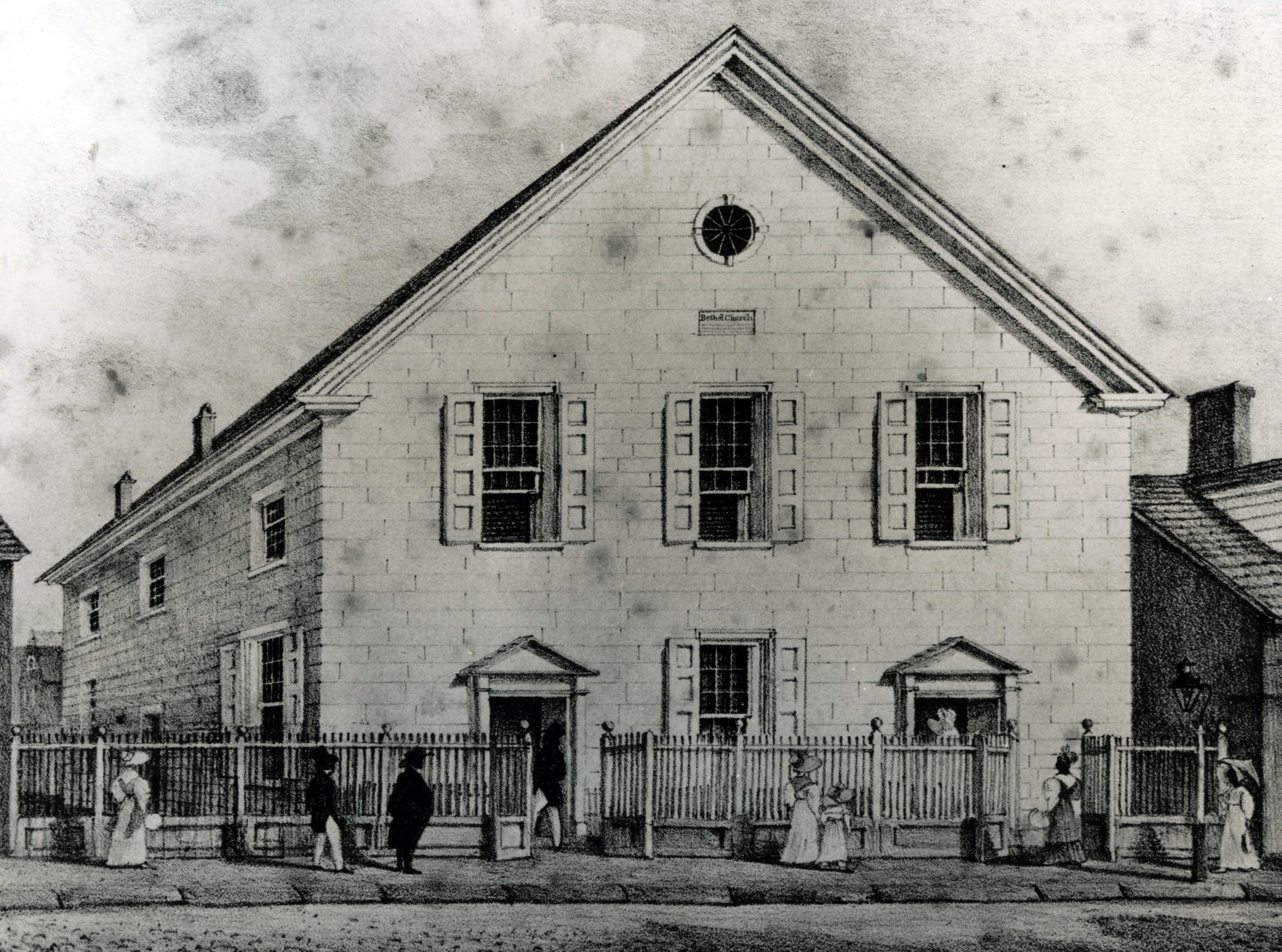
By 1814, the Black Philadelphians were organized. They defended the city at Gray’s Ferry during the War of 1812. In 1817, they met at Mother Bethel, the country’s first African Methodist Episcopal Church, to decide if they would consider emigration to Haiti or Africa. “No!” was the resounding answer.
Black organizations in Philadelphia served as national models. Conventions at Mother Bethel spawned the Colored Conventions Movement beginning in 1830, which extended concepts of civic and human rights across the United States. Constitutional scholar James W. Fox Jr. argues that these conventions articulated a national constitutionalism rooted in the Declaration of Independence, asserting that human rights were inherent and not contingent on state or local laws, a concept far ahead of its time that anticipated the post-Civil War ideas of citizenship and rights.
A melting pot
Black Philadelphia was its own melting pot, too. People arrived from the Caribbean, including Haiti, bringing revolutionary ideas. These ideas moved outward from Philadelphia nationwide and across the Atlantic through transnational anti-slavery networks. Anti-slavery Black activists Olaudah Equiano and James Somerset moved between London and Philadelphia in the 1760s. A song written by the Philadelphia-based pastor Shadrach Bassett was discovered in the papers of Nat Turner, the enslaved man who led an uprising in the Carolinas in 1831.
The understanding that there are civic rights within a democracy was a foundational concept for Black Philadelphians. In fact, we see an early use of the term “civil rights” in the records of the Social, Civil, and Statistical Association in 1863, nearly a 100 years before the 20th-century civil rights movement.
A Nov. 12, 1862, entry from the Social, Civil, and Statistical Association, showing the use of the words “civil rights.” C.S. Statistical Association of Philadelphia, Civil and Social Committee of Superintendence, Constitution, By-Laws, Roll, Minutes [Ams .54, Part 2]
Other examples: In 1842, after mobs destroyed the newly built Beneficial Hall, Stephen Smith sued the city for not protecting the structure. Smith won his case, setting a very public example of Black Philadelphians’ assertion of rights through the rule of law.
In 1861, after the Rev. Richard Robinson was forced to ride outside a trolley during a storm and died when it crashed, Black leaders organized legal aid to support his widow and challenge transit segregation.
In 1867, Caroline LeCount refused to surrender her seat on a streetcar. After being forcibly removed, she obtained a certified copy of the law, returned with a magistrate, and confronted the conductor. He was arrested on the spot.
Asserting their rights
All of this civic activism occurred before Black Philadelphians were enfranchised citizens.
Black Philadelphians boldly asserted their own democratic rights across the 18th and 19th centuries, all within the context of America’s denial of human rights with enslavement and disenfranchisement.
Yet, even as Black Philadelphians engineered this civic infrastructure, the city refused to acknowledge their achievements. Major historical texts on Philadelphia erased Black institutions entirely. Henry Simpson’s Lives of Eminent Philadelphians Now Deceased, written in 1859, doesn’t even mention Absalom Jones, James Forten, or Richard Allen, or the major religious denomination born here in Philadelphia, the African Methodist Episcopal Church.
Mother Bethel African Methodist Episcopal Church in Society Hill, founded in 1794 and rebuilt in 1809, has long been the locus of Philadelphia’s Black community, writes Michiko Quinones.
No Black churches or institutions appear in Moses King’s exhaustive civic visual history, Philadelphia and Notable Philadelphians, from 1902, a purportedly definitive account meant to define the city’s civic identity.
Arguably, there is a deeper reverence in American public memory for a woman who sewed a flag than for an entire population that defined democracy and held the nation accountable to its own written ideals. That imbalance reveals not just a lack of attention to history, but a refusal to honor people who forced democracy to become real.
The question facing Philadelphia now is whether it will recognize early Black civic engineering as foundational to its identity, or continue to exist with parallel histories, thriving yet separate. There could be no better time to ask than the 250th anniversary of our country’s founding.
Michiko Quinones is the lead public historian and cofounder of the 1838 Black Metropolis Collective.
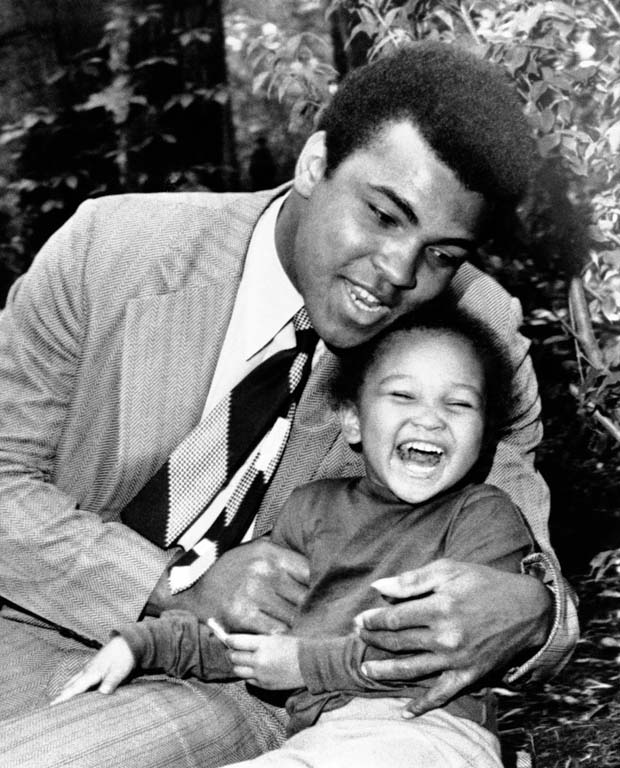
Muhammad Ali plays with his 3-year-old daughter Maryum at his home in Cherry Hill, N.J., on Monday, June 14, 1971.
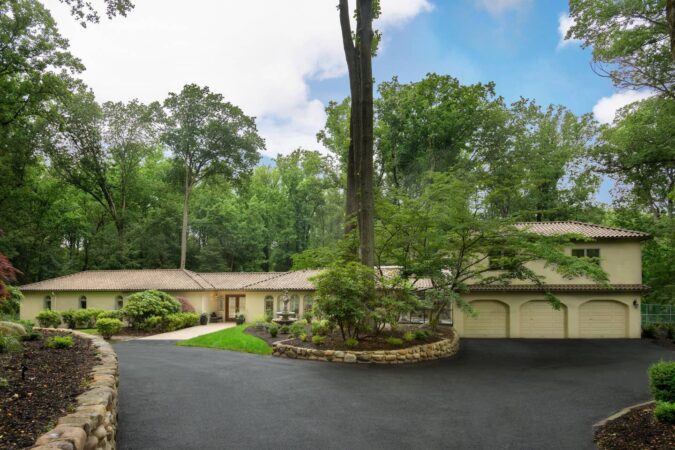
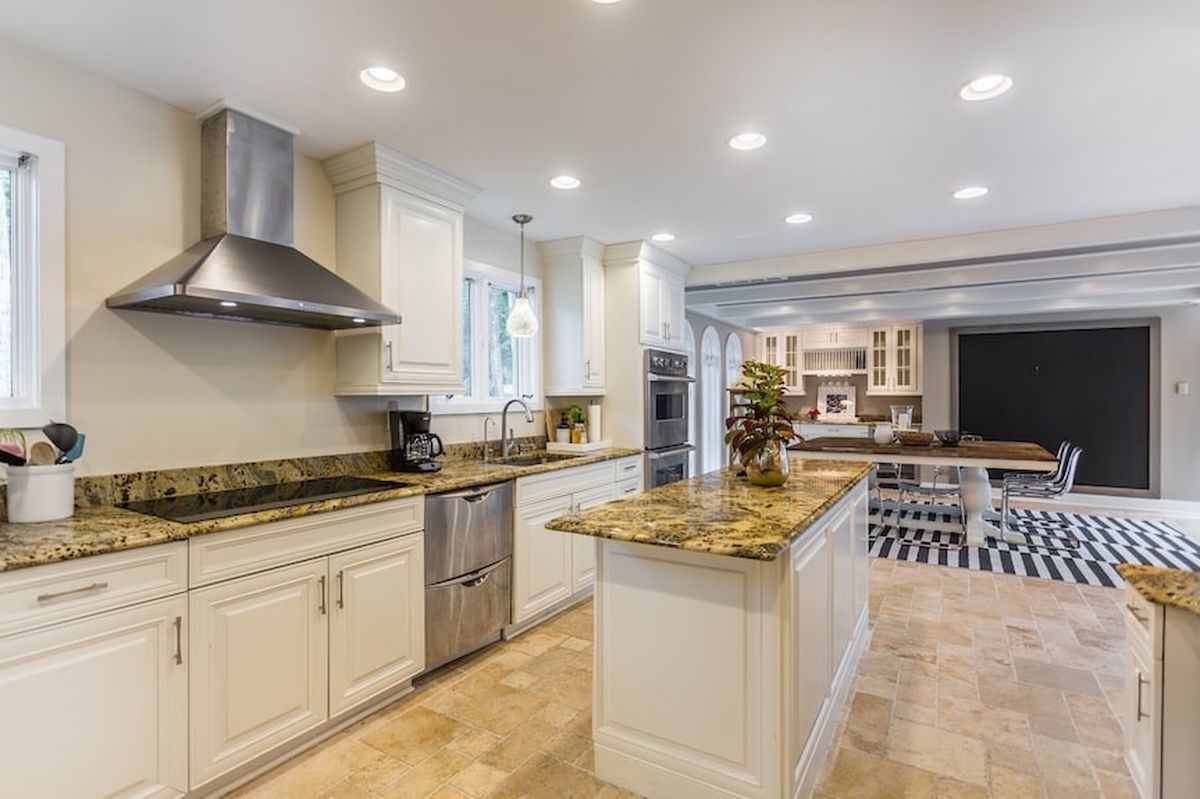
Sitting on 1.5 acres, the six-bedroom, five-bathroom estate features a kitchen with a large center island and custom cabinetry, a sun-filled greenhouse room, a spacious living area, and an in-ground pool and hot tub, with adjacent basketball and tennis courts. On the lower level of the home is a personal gym and a 12-foot wet bar.
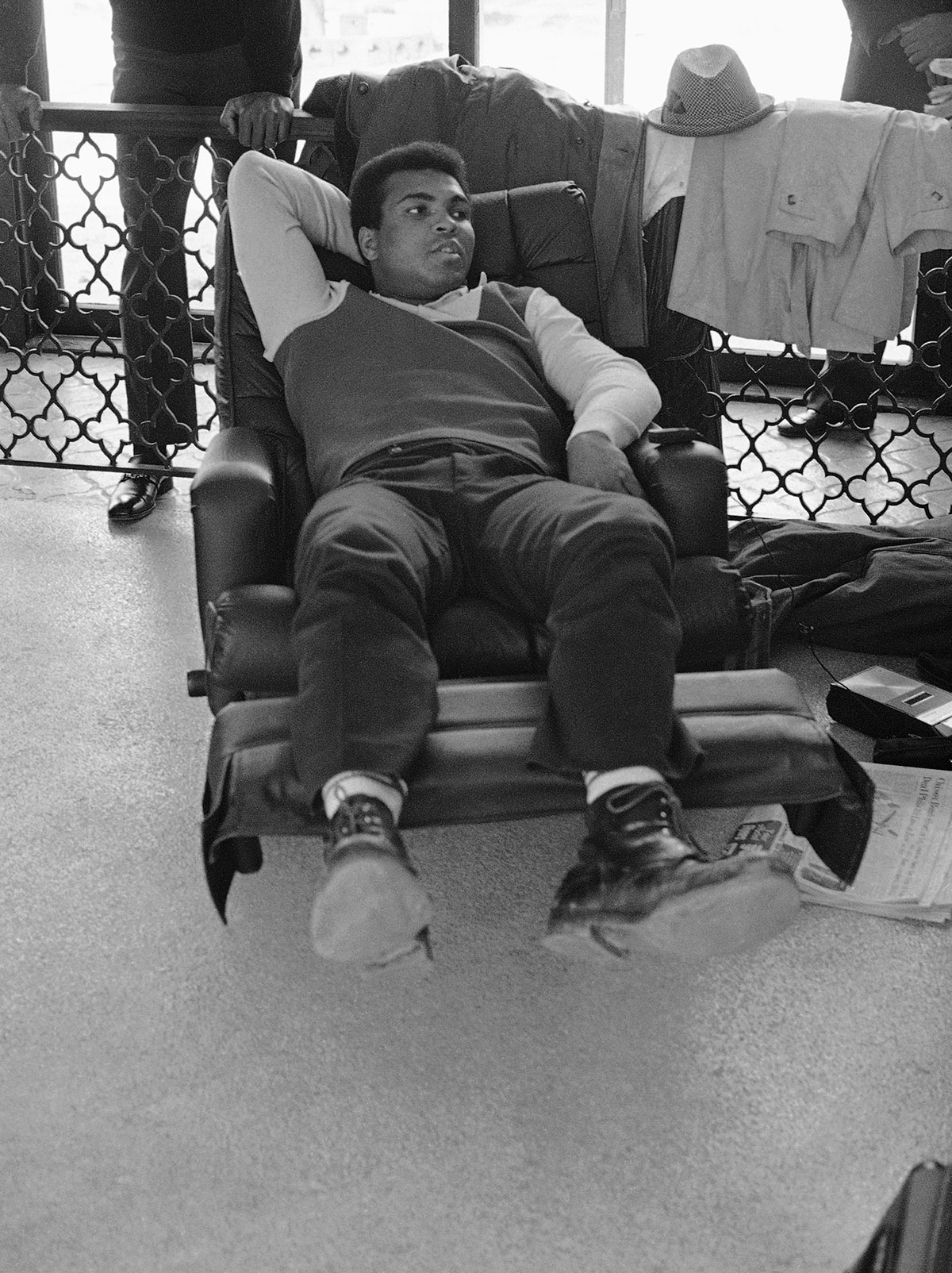
Muhammad Ali, who was defeated by heavyweight champion Joe Frazier, leans back in a reclining chair in his new home in Cherry Hill, N.J., March 10, 1971, as he answered Frazier’s promise to fight Ali again. “Good, we got a rematch, maybe in seven months, might be sooner,” Ali said.
The Champion bought the home for $103,000 in 1971. He moved to Chicago a few years later, according to the New York Times, after his friend, Camden power broker Major Coxson, was shot and killed in his home down the road from Ali’s. A major franchisee of local McDonald’s bought the home from Ali for $175,000.
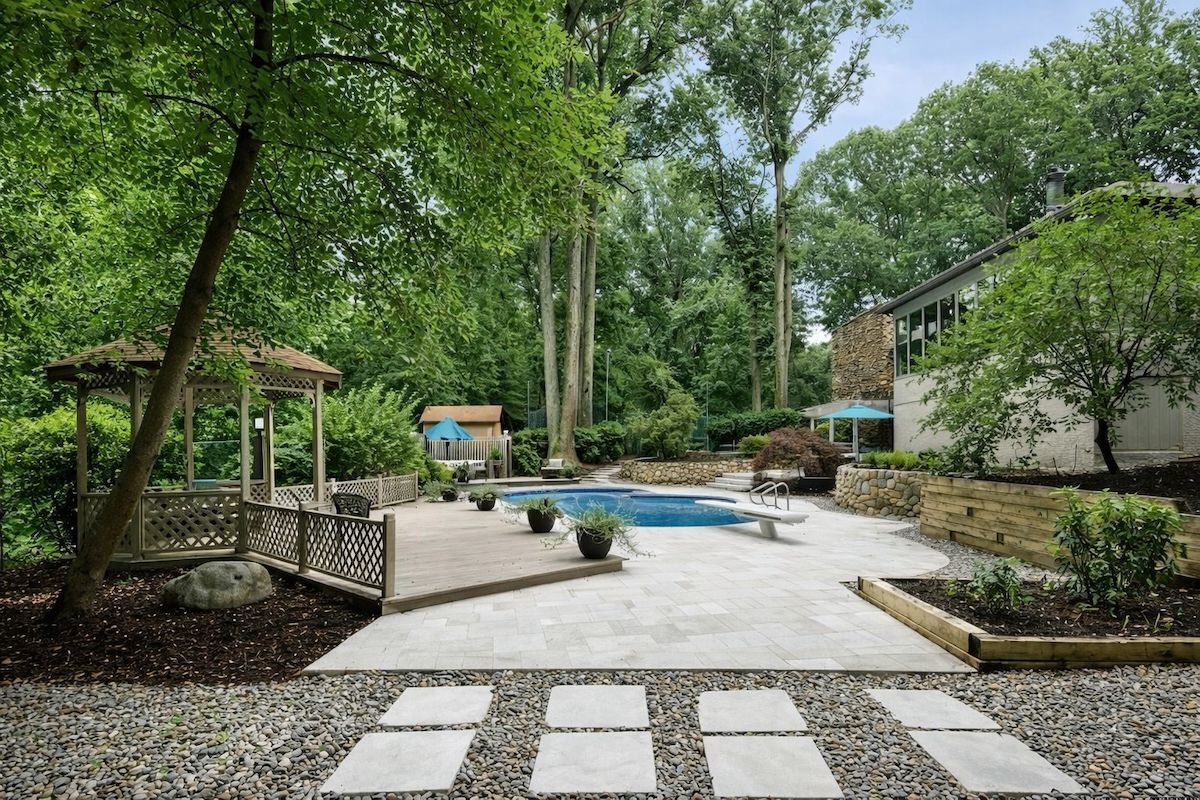
The backyard and pool area of 1121 Winding Dr. in Cherry Hill, the former home of prizefighter Muhammad Ali from 1970 to 1973. It’s now up for sale for $1.9 million in 2026.
The current owners, who purchased the Cherry Hill homein 2014, traded in the 1970s decor and design for a modern look, converting Ali’s koi pond intoacenterpiece courtyard and fire pit. However, the home retains Ali’s prayer room, which can be found in the lower level, lined with bookshelves.
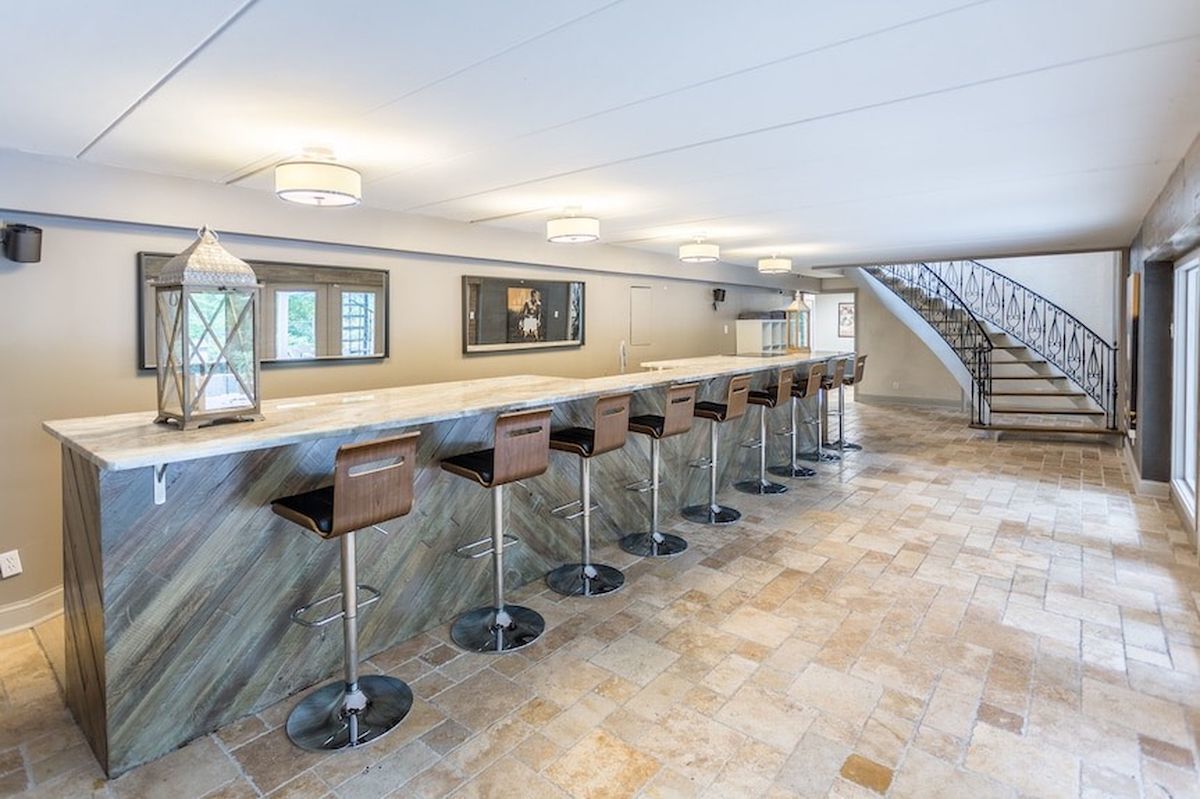
The main draw is the ample entertainment spaces, includingthe basement bar.
The downstairs bar area at 1121 Winding Dr. in Cherry Hill, the former home of Muhammad Ali from 1970 to 1973. It’s now up for sale for $1.9 million in 2026.
“There’s a spiral staircase from the main level to downstairs and you walk right into this large bar area, with tables, chairs, and a large TV setup,” Nicholas Alvini of Keller Williams said. “It really is a great entertaining house.”
The kitchen, including a large island, at 1121 Winding Dr. in Cherry Hill, the former home of prizefighter Muhammad Ali from 1970 to 1973. It’s now up for sale for $1.9 million.
In recent years, the home has been used for short-term rentals, and“wild parties” led police to visit the home 97 timesbetween 2018 and 2019, according to an Inquirer report. In response, Cherry Hill township councilalmost adopted a ban on Airbnb rentals before eventually tabling the idea after community members spoke against it.
An Inquirer analysis of the decisions and the data behind them shows the proposed closures would disproportionately affect Black students. And despite efforts to minimize the impact, schools in the most vulnerable sections of Philadelphia would also be disrupted.
The closures would mostly address buildings with hundreds of unused seats, though some largely empty buildings were spared. And eight of the closures would affect schools given the district’s worst building condition rating — though 30 more buildings in that category would stay open and receive upgrades of some kind.
Monique Braxton, district spokesperson, said the facilities plan was “designed to provide access to high-quality academic and extracurricular programs across every neighborhood regardless of zip code.”
Most affected students — 90% — would be reassigned to schools with similar or better academic outcomes, and all would be reassigned to schools with either similar or better academics or comparable or better building conditions. Receiving schools will get additional supports, Braxton said.
Overall, the proposal would shake up at least 75 schools, with 20 closing entirely, four leaving their current buildings to colocate within other schools’ buildings, and three moving to new buildings. It would create new schools and, in one case, result in a new building. Nearly50 other district schools would take in displaced students from the closing schools, with some adding grades and others modernizing to fit new programming needs.
Collectively, about 32,000 district students learn in the 75 affectedschools — more than a quarter of the district’s total enrollment — not counting children in pre-K programs.
And those are just the changes Watlington introduced this month. Other shifts, some of them major, district officials said, are expected to be announced by the time he presentsthe planto the school board next month. A final vote is planned for later this winter.
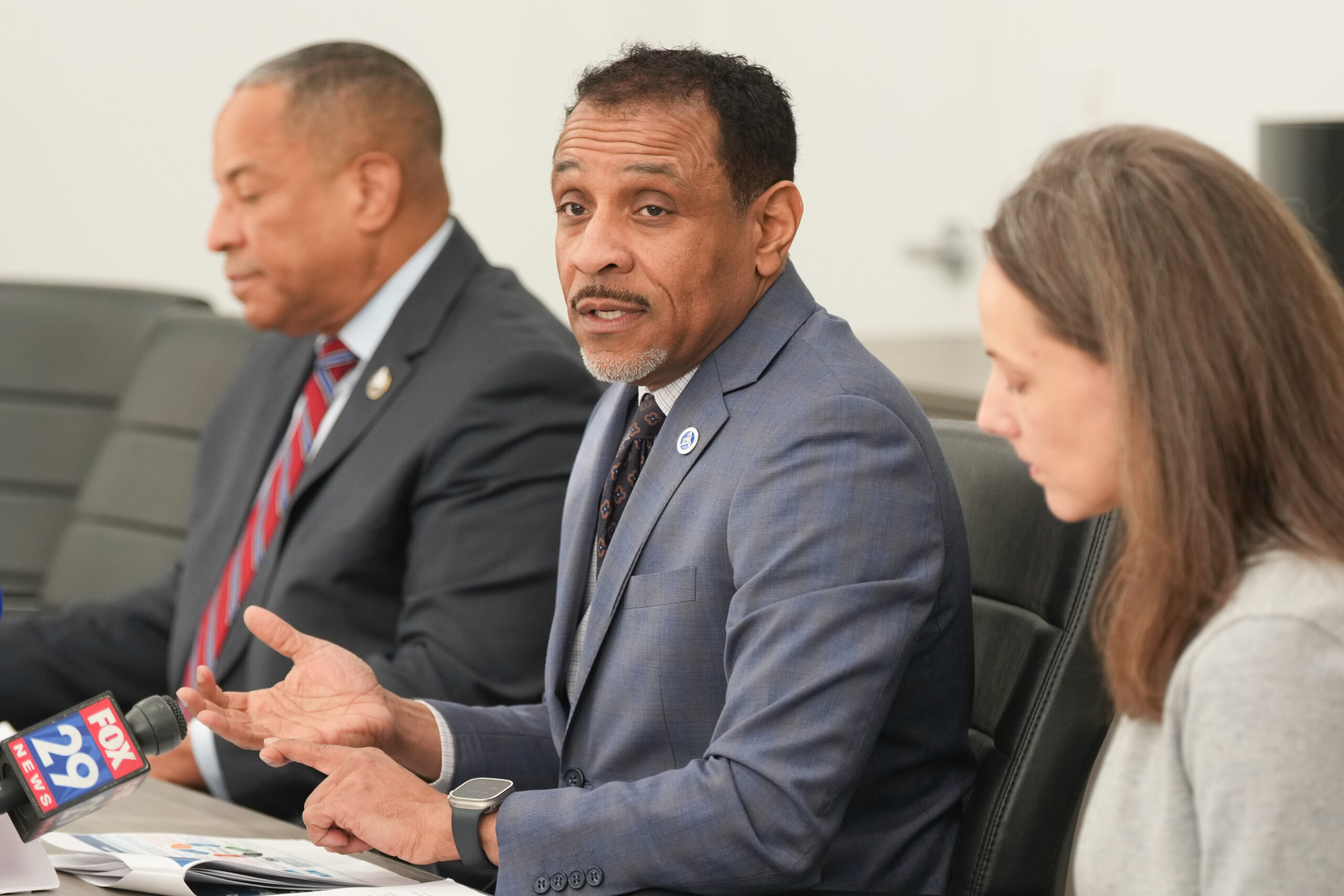
Superintendent Tony B. Watlington (center) speaks about his proposal this month for the Philadelphia school facilities master plan.
The racial impact
The 20 schools that could close have twice as many empty seats as the district’s other schools. But The Inquirer’s analysis found that the closures will hit Black students disproportionately.
Among the closing schools, about 68% of the student population is Black, compared with 40% for the rest of the district’s schools — not including disciplinary or other specialized schools.
window.addEventListener(“message”,function(a){if(void 0!==a.data[“datawrapper-height”]){var e=document.querySelectorAll(“iframe”);for(var t in a.data[“datawrapper-height”])for(var r,i=0;r=e[i];i++)if(r.contentWindow===a.source){var d=a.data[“datawrapper-height”][t]+”px”;r.style.height=d}}});
Of the district’s schools where at least 90% of the students are Black, more than half are scheduled to close or take in more students from the closures.
Overall, amajority of students in the 75 schools that could close, take in students, or change in some way are Black, at about 54% of enrollment.
Some majority-Black schools, however, are earmarked for upgrades. Bartram High would get a modern athletics facility after nearby Tilden Middle School in Southwest Philadelphia is closed and upgraded for that purpose.
Nysheera Roberts is the parent of multiple children who attend Waring Elementary, in Spring Garden, which landed on the closure list. Waring now educates under 200 students; its pupils would be sent to Bache-Martin.
Roberts is stunned that her school — which educates mostly Black students like her kids — could close.
She worries about the logistics of getting her kids to school safely further away, then getting to her job in home care in Frankford on time. She worries what will happen to her children, including the niece and nephew she now raises who have lived through significant trauma and have behavioral and learning needs, if they have to adjust to a new and larger school.
“It’s not fair,” Roberts said. “They’re hurting Black kids more.”
Paying attention to vulnerable neighborhoods
In deciding which schools to close or expand, the district considered the vulnerability of the surrounding neighborhood.
Two dozen neighborhood elementary schools were labeled “very high risk,” meaning they have likely dealt with a previous school closure, or the community is otherwise vulnerable to high poverty, housing concerns, or other factors.
(function() {
var l2 = function() {
new pym.Parent(‘school_closing1’,
‘https://media.inquirer.com/storage/inquirer/projects/innovation/arcgis_iframe/school_closing1.html’);
};
if (typeof(pym) === ‘undefined’) {
var h = document.getElementsByTagName(‘head’)[0],
s = document.createElement(‘script’);
s.type = ‘text/javascript’;
s.src = ‘https://pym.nprapps.org/pym.v1.min.js’;
s.onload = l2;
h.appendChild(s);
} else {
l2();
}
})();
Welsh, in North Philadelphia, was the only school building in a neighborhood labeled “very high risk” to land on the closing list.
Bethune in North Philadelphia and Martha Washington in West Philadelphia will colocate with other schools.
But three schools with building conditions considered unsatisfactory, poor programming options, and “very high risk” neighborhood ratings were left off the closure list. Those schools are Philadelphia Military Academy in North Philadelphia, Sheppard in West Kensington — which has successfully fought off closure in the past — and Francis Scott Key in South Philadelphia, the district’s oldest building, constructed in 1889. Sheppard and Francis Scott Key are both majority-Hispanic schools.
Sheppard Elementary School in West Kensington has faced the threat of closure in the past but was spared in the latest proposal.
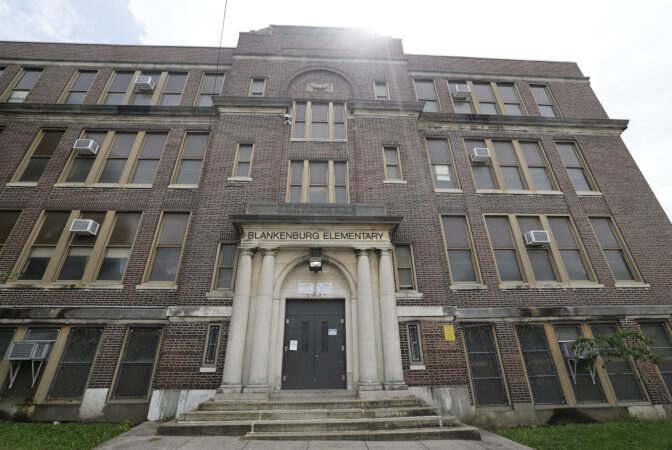
The district plan calls for closing five schools in neighborhoods it deemed to have a “high risk” of vulnerability, the level below “very high”: Blankenburg, Harding, Stetson, Tilden, and Wagner.
Watlington has made it clear that the district is phasing out middle schools when possible, in favor of the K-8 model — and of that list, four are middle schools. Only Blankenburg, in West Philadelphia, is an elementary. Also, of those schools in vulnerable neighborhoods, four of the five are rated as having “unsatisfactory” buildings, the district found.
Perhaps no section of the city faces as much disruption from the recommendations as the lower part of North Philadelphia.
Fourteen schools with a combined enrollment of 5,400 students could be affected, including the closures of Ludlow, Morris, Penn Treaty, and Waring.
“If you are closing schools during a literacy crisis, then you should be held directly accountable to the people you serve,” Young said last week.
Right sizing mostly empty buildings
Underused space was a factor in the district’s decision-making, an Inquirer analysis found.
Data released by the district last year identified about 60 schools that were more than half empty. The recommendations attempt to realign some of these schools by taking significant action on 31 of the 60 half-empty schools.
Of the 20 schools the district wants to close, 14 are currently at less than half capacity.
window.addEventListener(“message”,function(a){if(void 0!==a.data[“datawrapper-height”]){var e=document.querySelectorAll(“iframe”);for(var t in a.data[“datawrapper-height”])for(var r,i=0;r=e[i];i++)if(r.contentWindow===a.source){var d=a.data[“datawrapper-height”][t]+”px”;r.style.height=d}}});
AMY Northwest, Conwell, Robert Morris, Motivation, Tilden, and Welsh are all recommended for closure, with each educating fewer than a quarter of the students they have room for.
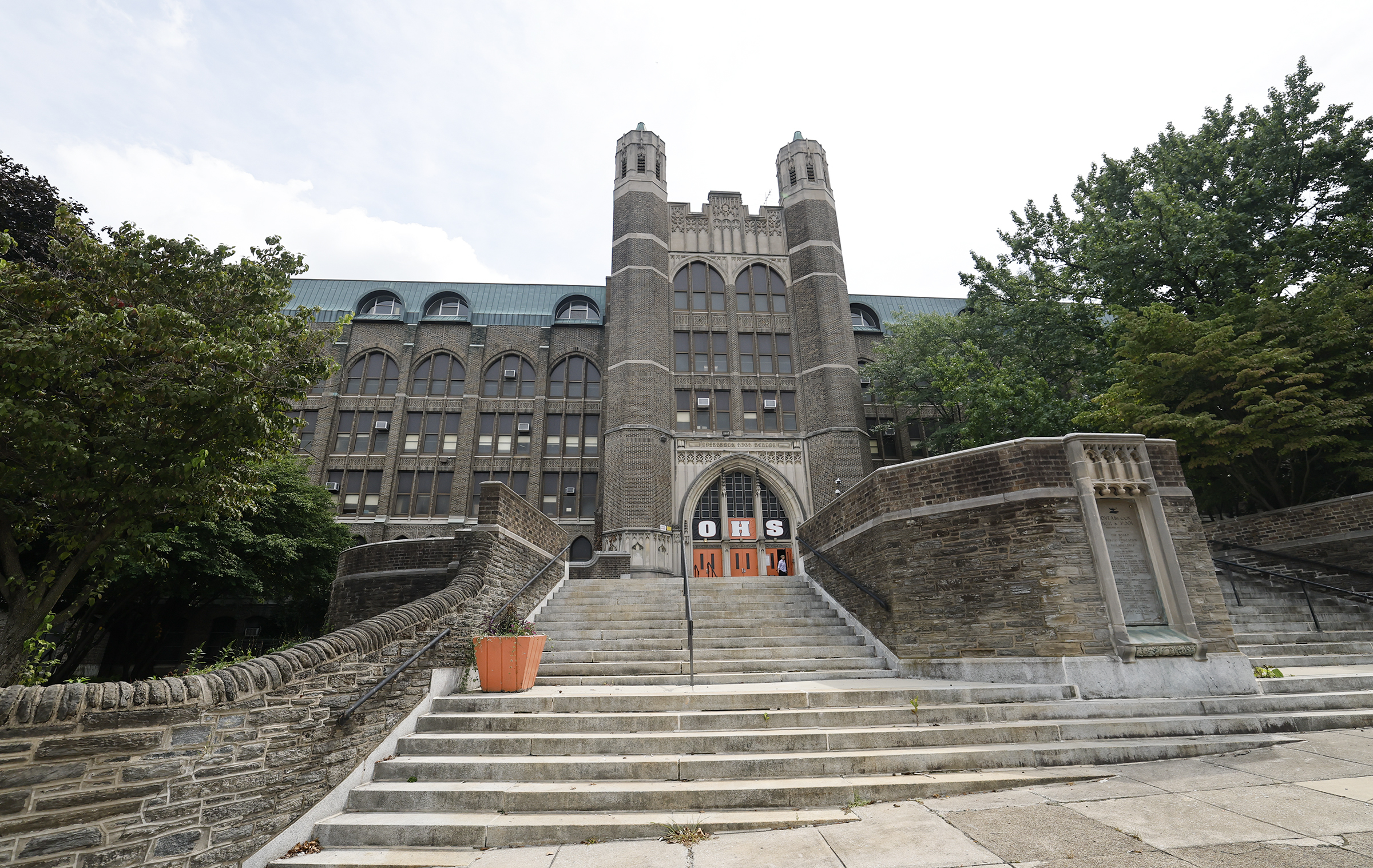
Overbrook High in West Philadelphia — a 100-year-old school with roughly one in four seats filled — would remain open but begin sharing space with the Workshop School, a small, project-based high school located nearby.
Overbrook has received millions in funding from the state for remediation and a new roof. It also has a strong alumni association.
Overbrook High School in West Philadelphia has thousands of empty seats but was not tapped for closure. Instead, The Workshop School, a small, project-based high school now located in another West Philadelphia building, will colocate with Overbrook.
Having a more robust enrollment, however, did not save some schools from landing on the closure list. Harding, Parkway Northwest, Pennypacker, Robeson, and Stetson operate at 50% to 74% of capacity but would still close.
Besides shutting down underused schools, the plan would alter an additional 17 half-empty schools by moving them into colocations, adding grades, or otherwise expanding their use by taking in students from the closing schools.
To make it work, the district’s recommendations often involve a series of logistical steps. A pair of North Philadelphia neighborhood schools built in the 1960s are one example.
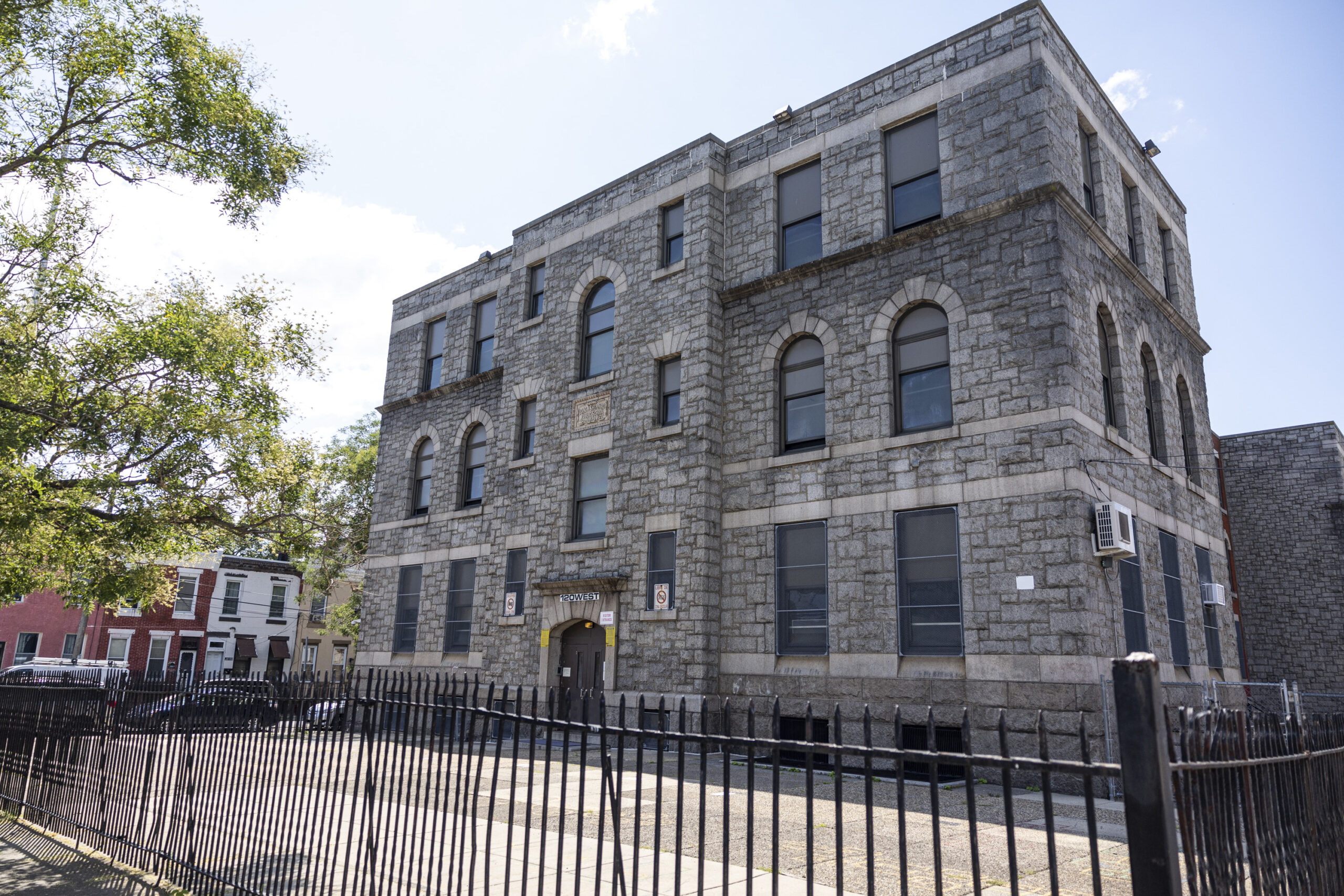
Hartranft, a K-8 school in North Philadelphia with a building rated in “good” condition but only 37% occupied, would take in students from Welsh, a school marked for closure. Welsh teaches the same grades but in a building rated “poor” about a half a mile away. The district would then convert the Welsh building into a new year-round high school.
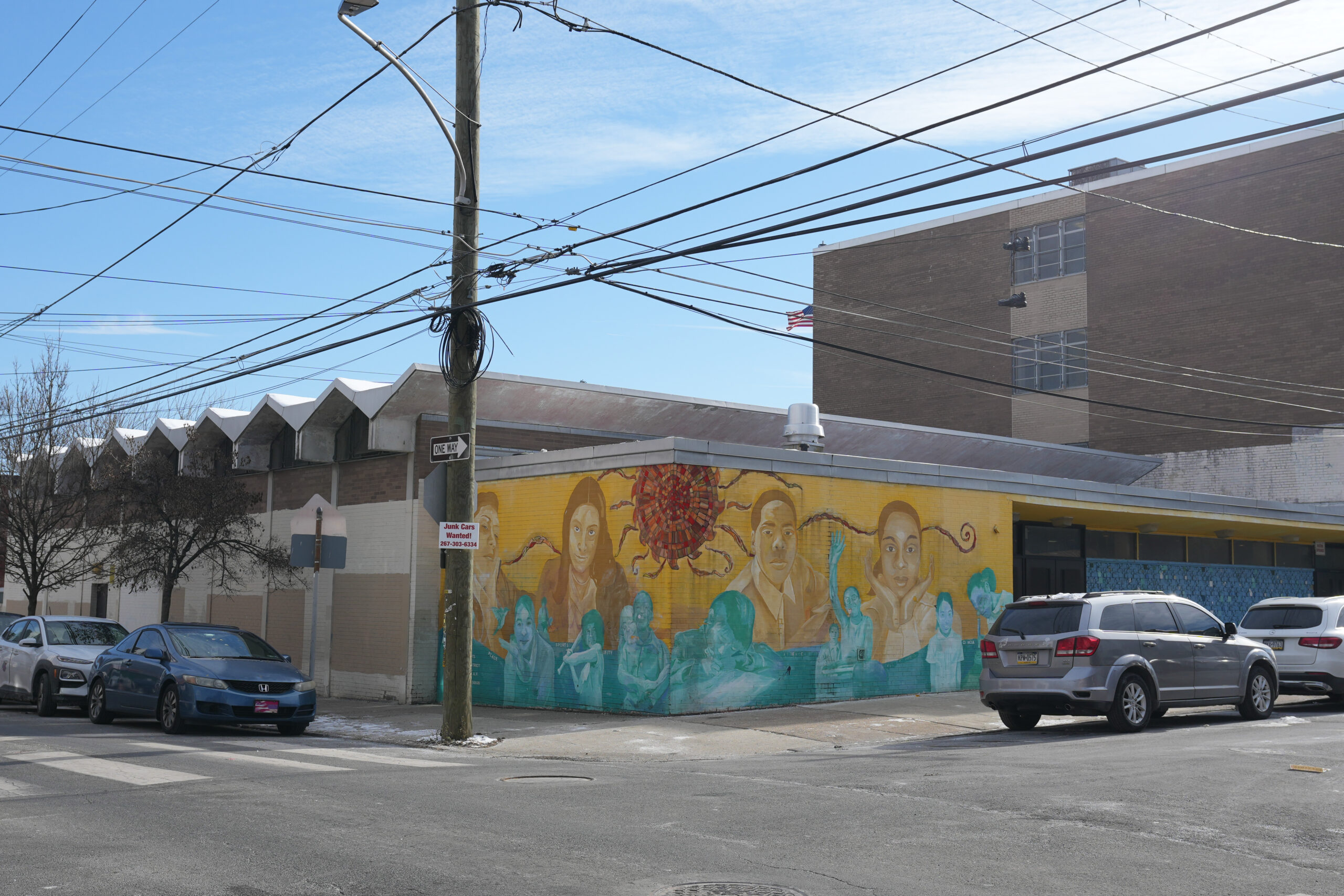
John Welsh Elementary school is on the list of 20 schools proposed to close by the 2027-28 school year.
Getting students out of (some) fatigued buildings
By one city estimate, district schools need about $8 billion in repair costs for 300-plus buildings that are about 75 years old on average. Watlington’s plan calculates the district could do it for $2.8 billion.
Even with some investments over the last decade, many schools still have asbestos, lead, or mold issues. And many schools that don’t have bad building quality ratings still need improvements.
Eight schools recommended for closure are in buildings rated “unsatisfactory” by the district, its lowest score.
An additional 30 schools also rated “unsatisfactory” would remain open under the plan, including some expected to see an increase of students.
window.addEventListener(“message”,function(a){if(void 0!==a.data[“datawrapper-height”]){var e=document.querySelectorAll(“iframe”);for(var t in a.data[“datawrapper-height”])for(var r,i=0;r=e[i];i++)if(r.contentWindow===a.source){var d=a.data[“datawrapper-height”][t]+”px”;r.style.height=d}}});
Watlington wants the district to pay for $1 billion of the plan’s price tag with its own capital funds over the next decade. That would leave $1.8 billion unfunded, and he wants the state and philanthropic funders to cover the rest.
If the full $2.8 billion plan is funded, Watlington said, the district could improve every building labeled “poor” or “unsatisfactory.”
To achieve this, some buildings could get the same kind of treatment Frankford High received — a $30 million major renovation project to remedy significant asbestos damage. Students had to relocate into an annex and another building for two years while the work was done.
The district plan calls for some of the buildings in the worst shape to receive more students. Bache-Martin, Catharine, Howe, John Marshall, and Middle Years Alternative are in buildings that need significant upgrades, according to the district’s analysis, but all would take on more pupils.
In the case of Howe, the district wants to add grades to keep students who would have attended Wagner, a middle school that is proposed to close.
The district has said Bache-Martin would receive upgrades if the plan is adopted. For other schools, neither the timeline nor the fixes they would receive are clear.
The recommendations so far only mention a handful of schools set to modernize.
Among them is Comly, a K-5 in the Somerton neighborhood.
Comly now has 660 students enrolled, putting it at 107% of its capacity. But the district recommends modernizing the school and accepting middle grades students from the Comly and Loesche catchments. Students who now attend Loesche, another K-5, go to Baldi Middle School, which is also overcrowded.
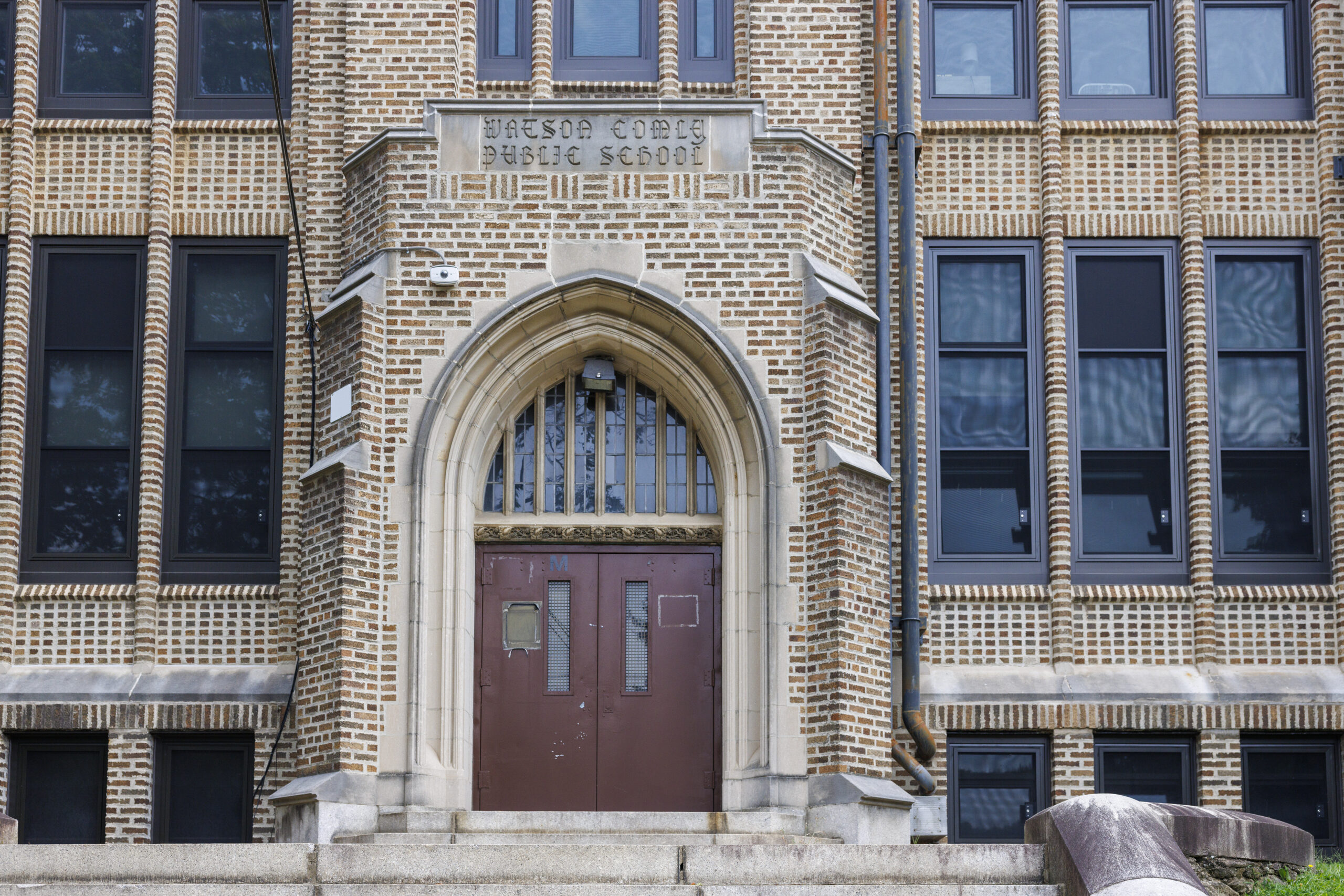
Watson T. Comly Elementary School in Somerton. It’s slated to be modernized and accept more grade levels under the district’s proposed plan.
What appears to set schools like Bache-Martin apart from some of the closures is higher occupancy. Together, about two dozen schools that are more than half occupied would remain open, even though the buildings are “unsatisfactory.”
Schools on this list — like Barton Elementary, which runs at about 80% of its capacity — are harder to shutter or colocate if no nearby school has low attendance. That makes building upgrades a more logical solution.
But those two dozen schools are not the only ones in need of significant building upgrades.
An additional 45 schools currently operate in buildings rated slightly better at “poor,” the category just above “unsatisfactory.” The district recommends closing seven of them and colocating two.
And beyond that large number of fatigued schools, many others in poorly rated buildings will remain unchanged for now, with about 10 even taking in more students.
Watlington has said that in total, 159 schools would modernize over a decade if the plan is approved and fully funded, but absent extra state and private money, that number could drop.
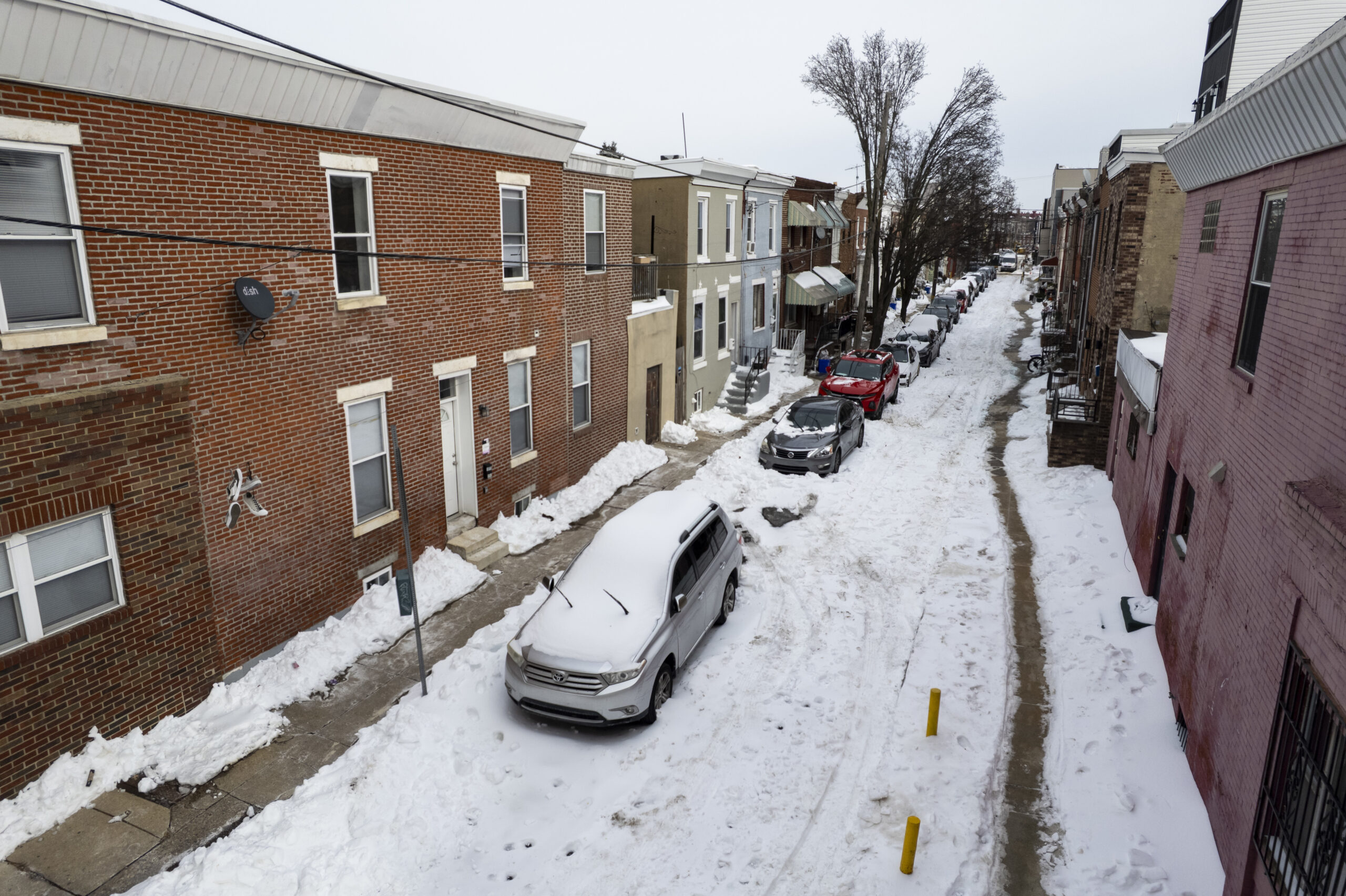
With more than 60 hours since the last bit of snow descended upon Philadelphia, the widespread complaints about the conditions of secondary and tertiary streets have reached a fever pitch.
The Philadelphia Streets Department has tried to quell the public’s concerns with daily videos of excavators diligently filling dumpsters with snow. Yet evidence of icy streets and snow banks blocking lanes dominate social media, with city data showing the street conditions vary block by block.
Between 3 p.m. Tuesday and 3 p.m. Wednesday, the city’s GPS data show, about 30% of city streets had been visited by plows. Some areas, like Center City and South Philadelphia west of Broad Street, saw most numbered streets and cross streets hit by plows during that time. Meanwhile, South Philly and Center City neighborhoods east of Broad Street saw little to no reported activity.
The same was true for large swaths of North and West Philadelphia. And neighborhoods like Overbrook, Wynnefield, and Nicetown, which have seen the fewest reported visits from city plow trucks since the storm began, saw only a handful of streets plowed between Tuesday and Wednesday afternoon, according to city data.
On the neighborhood line of Grays Ferry and Devil’s Pocket, Dani Hildebrand was one resident who felt forgotten as the streets around him were plowed and garbage picked up. Hildebrand’s block was supposed to have trash collection come through Tuesday with the one-daydelay announced by the city. But on Wednesday, bags of garbage lined his block.
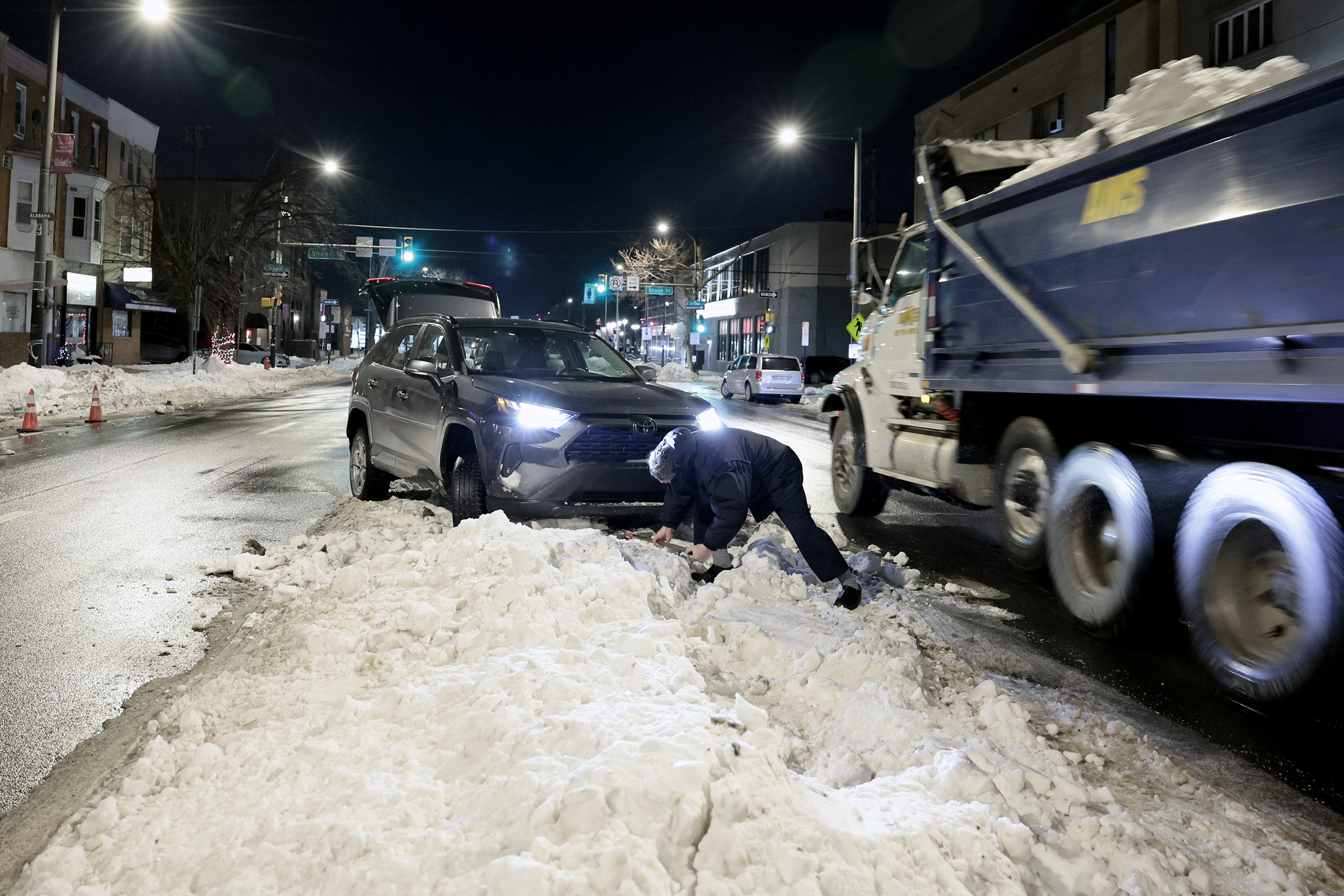
An unidentified man shovels snow from underneath his car after it became hung up when he was trying to park in the middle of South Broad Street in Philadelphia in the early morning hours of Wednesday, Jan. 28, 2026. Dump trucks filled with snow from the city’s snow removal operations were zooming by as he worked to get his car free.
The 41-year-old father of three said his school-age children yearn to leave the house, even if for an errand, but it’s not in the cards.
“Between piles of snow, trash, and dog pee and poop, it’s not ideal,” he said. “We’ve been stuck in since Sunday, and while I’m close to a market, it’s not safe to walk there with my three kids and I can’t get my car out.”
The city, for its part, has said the snow clearing would take as long as it needs to and the work would continue until all roads are dug out. Residents should expect trash-collection delays as crews navigate the snow and ice. At the same time, officials have consistently asked for patience, noting that the frigid temperatures were not aiding snow-removal efforts.
They have pointed to the 14 teams with more than 200 vehicles and excavators that are trying to move the snow and ice into storage facilities using dumpsters. Future Track trainees with the Philadelphia Streets Department have also taken up shovels to help clear crosswalks in the city.
But, the city notes, this is time-consuming work.
Wanted: Private plowers
Chris DiPiazza, owner of the Passyunk Square bakery Mighty Bread, could not afford to wait for city plows and paid for a private service to clear his street Tuesday afternoon.
After the storm, the bakery was unable to make or receive deliveries because the city had not plowed Gerritt Street, the narrow road it’s on. Adding to frustrations, DiPiazza said, snowplows that had come through the adjacent 12th and 13th Streets had left giant snow piles on both ends of the block.
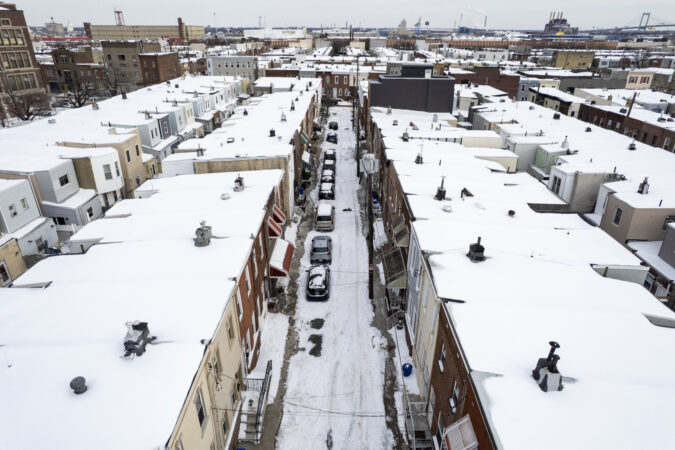
The 700 block of Hoffman is still covered in snow on Wednesday, Jan. 28, 2026 in South Philadelphia.
A 311 operator said it could take upward of three days for plowing to occur, DiPiazza said.
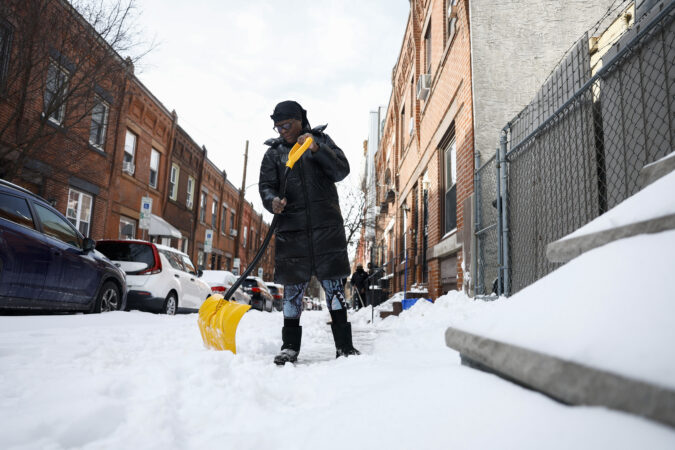
That news was especially frustrating when residents are expected to do their part by shoveling sidewalks in front of their homes within six hours of snowfall stopping, but the city is not fulfilling its own end of that promise, DiPiazza said.
“The city’s responsibility is to make the streets safe for people to drive, and they didn’t do that,” he said.
SEPTA vs. ice
For SEPTA’s size and reach, the organization is not so different from the average Philadelphian living without a plowed street.
The snow-covered roads were especially difficult for bus routes through secondary and tertiary streets after the storm, SEPTA spokesperson John Golden said.
“Those streets are hard to navigate on a good day,” he said.
The lagging plow service made SEPTA pause service for many bus routes.
“Some of our buses just aren’t able to navigate the streets because of lack of plowing,” Golden said.
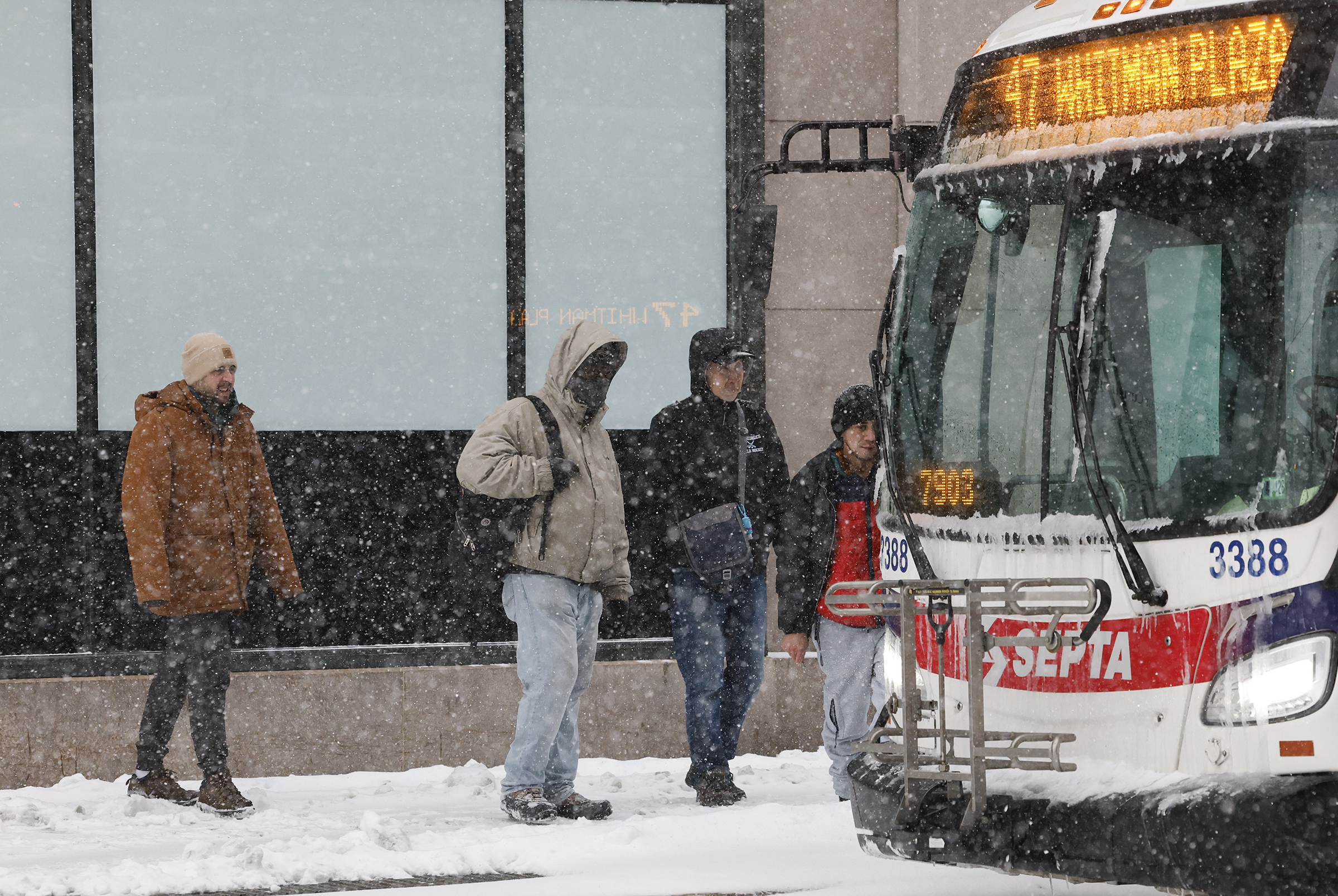
SEPTA riders board the 47 bus at 8th and Market Streets with the snow falling on Sunday, January 25, 2026.
But service had returned to all but a handful of routes by Wednesday afternoon. The weekend storm was not particularly onerous for SEPTA compared with other large storms in years past, Golden said,but he noted the frigid temperatures in the days following have made things difficult. Ice is not melting as quickly as it usually does, leaving the roads treacherous.
Golden said that while SEPTA officials have been in frequent contact with the streets department about problem spots, they don’t have any special recourse besides waiting for the city to clear the streets.
How does 2026 compare with 2016?
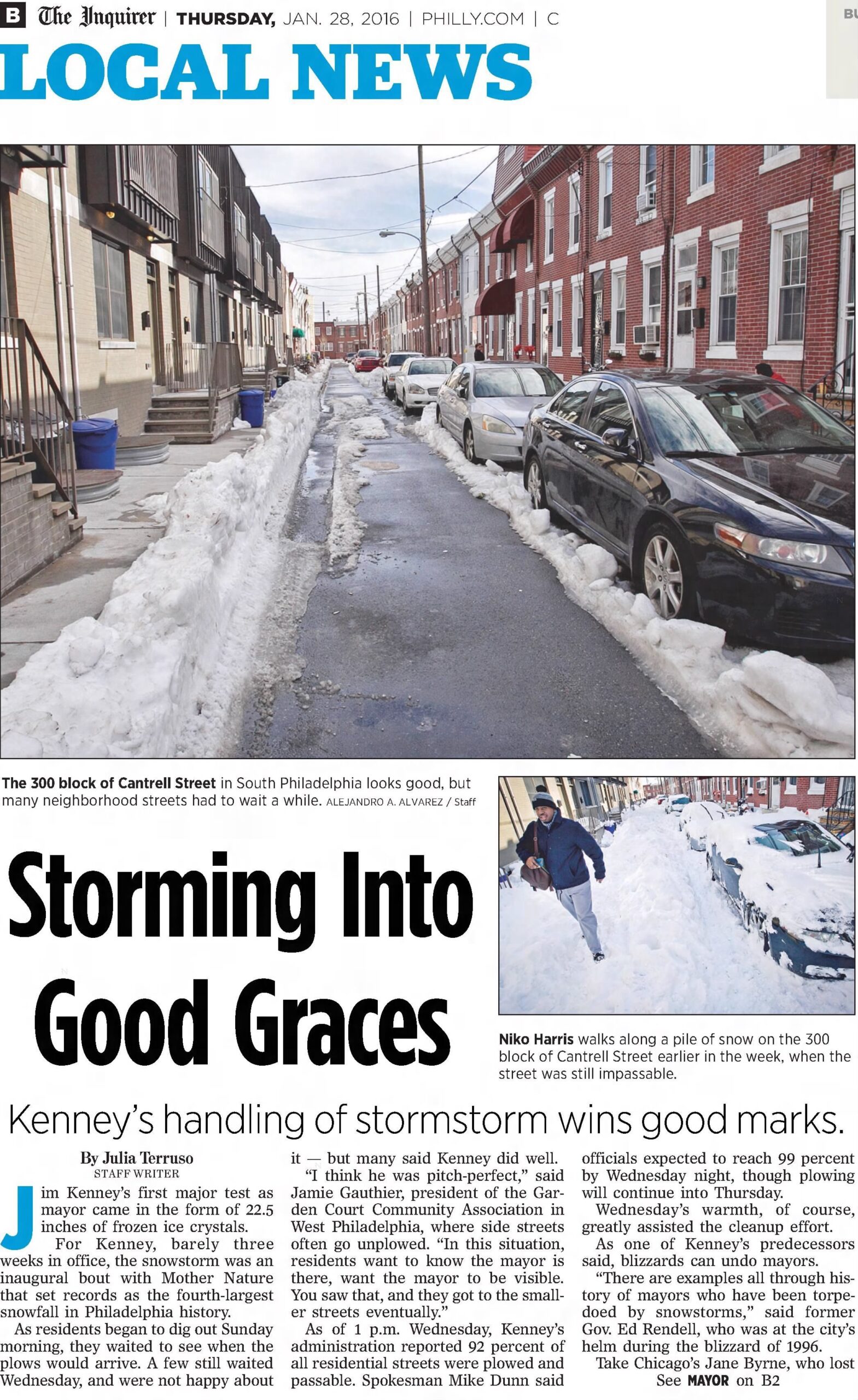
When the city was smacked with 22.5 inches of snow in January 2016, it was the fourth-largest snowfall in Philly history, and newly sworn-in Mayor Jim Kenney’s first major test in office.
At the time, many side street residents issued the same complaints heard with this most recent storm — they were the last to be dug out, and entire blocks were locked in.
But by the fourth day of storm cleanup, a Kenney spokesperson claimed 92% of all residential streets “were plowed and passable” and the administration was taking in kudos for what many — though not all — said was a job well done.
The front page of The Philadelphia Inquirer’s B section in January 2016, following a major snowstorm that was similar to the January 2026 storm. The article reported some complaints of snow plow delays, but residents were largely complimentary of then new Mayor Jim Kenney’s handling of the storm.
Though 9.3 inches fell this time around, city officials have said the conditions were very different. The temperature drop has been the largest hurdle so far, providing no help in melting the ice. The city still urges patience and says teams are working nonstop.
For parents whose children took part in virtual learning Wednesday and residents who were sick of parking wars and icy crosswalks with another potential snowfall on the way, patience was almost gone.
Residents in North and West Philly shared frustrations on social media of parking shortages because mounds of ice left people nowhere to go; some were even parking at an angle in parallel spots, to the chagrin of others. Bus stops were piles of dirty, frozen ice, and crosswalks remained icy.
For Hildebrand, it was all very discouraging.
“A plan could have been made and implemented, since the city knew about this a week before it happened, but it truly seems like bare minimum effort,” he said.
On the second day her kindergartener was off from his Philadelphia public school because of snow, Karen Robinson shut herself away in her Fairmount home, hoping to take a 15-minute meeting for an important work project.
Her husband had put up a baby gate to signal to 5-year-old Sam that mom was briefly off limits.
Naturally, “my son crawled under the baby gate to come find me,” said Robinson, whose son attends Bache-Martin Elementary. “If I’m working, he wants to be right next to me.”
Superintendent Tony B. Watlington Sr. gave beleaguered parents a reprieve Wednesday afternoon, saying schools would re-open for in-person learning Thursday. But the week was tough for many to navigate.
For parents who rely on hourly work, or jobs that have no remote flexibility, the inclement weather-forced school changes have meant either foregoing pay or figuring out childcare arrangements that are often costly, complicated, or both.
North Philadelphia mom Asjha Simmons’ son attends a charter school that’s been closed — no virtual learning — since Monday.
Simmons runs her own business, so is able to be flexible with her schedule and stay home with her son. But she’s getting antsy.
“I feel forced to be in the house and it’s killing me,” Simmons said. “I would rather be in the gym than in the house. And I don’t even go to the gym.”
Simmons’ son, who’s 12, relishes the down time since “he has every screen known to man on,” she said. She keeps the snacks coming, and it’s all good. (He was less than thrilled when Simmons made him shovel snow, she said.)
Leigh Goldenberg said she was having uncomfortable flashbacks to the pandemic, when her daughter completed virtual kindergarten.
“For me, it’s an emotional regression to that terrible time,” said Goldenberg. “And I feel for the people that didn’t build up that muscle before.”
Virtual school with a fifth grader is much easier than virtual school with a kindergartener, said Goldenberg, whose daughter attends Kirkbride Elementary in South Philadelphia. Her daughter spent 30 minutes on Tuesday completing schoolwork, and managed to keep herself busy socializing with friends online and outside, a short walk away in their neighborhood.
Goldenberg is trying to keep things in perspective — this is not forever, this is not the pandemic.
But, she’s still frustrated.
“All the suburban schools around us went back already, but here in the city, we’re stuck with a giant pile of snow at the end of our street, and it feels pretty unfair,” she said.
Coral Edwards was prepared for Monday’s snow day, but when the district announced a virtual day Tuesday, she began to panic.
“I was like, oh my gosh, there’s a real possibility the entire rest of the week will be virtual,” said Edwards, who lives in Graduate Hospital and has a seven-year-old son who attends Nebinger Elementary and a four-year-old daughter in a private prekindergarten program.
Her daughter’s pre-K is reopened Wednesday with a two-hour delay. And that means dropoff time came when Edwards would haveneeded to be helping her first grader with virtual learning. So instead, she paid to send both children to Kids on 12th, a Center City school open the full day, so she can get her work done as a marketing consultant and leadership coach.
The scramble has also summoned up emotions and frustrations she last experienced during the pandemic, when her son was 1 and his daycare shut down. While she acknowledged that she is “incredibly privileged,” she said the fact thatparents like herself are in such a bind speaks to a larger systemicproblem with childcare, Edwards said.
“There’s literally no one to help us,” she said. “There’s just no systemic support whatsoever.”
Streets are being plowed, SEPTA is running, and trash is getting picked up, “but there’s nothing in press conferences about how we’re supporting parents and students,” Edwards said. “The schools are like, ‘we have this virtual learning environment’ — are we just supposed to pull another parent out of our butts?” she said.
Edwards’ husband works in-person as a research physician running a lab, and the burden of childcare logistics falls to her.
“There’s a lot of rhetoric about supporting parents, and raising women up, … but when push comes to shove, something about our kids’ childcare is changed or tightened, it falls on those people,” she said.
Hannah Sassaman, a West Philadelphia parent of a district fourth grader and ninth grader, is making it through.
“We had another fourth grader live here for 24 hours randomly. I think they went to school? My ninth grader seems to be going to school. We’re just lucky we don’t have little kids,” said Sassaman.
“The questions that I have knowing that the storm was coming for over a week,” Sassaman said, “is what could the administration have done to help resource our sanitation workers and the rest of our incredible city servants to really focus on what it would take to get our kids back in schools, our teachers and the other staff back in their buildings safety to support not just the economy, but also all of the important supports and services kids access at schools every day?”
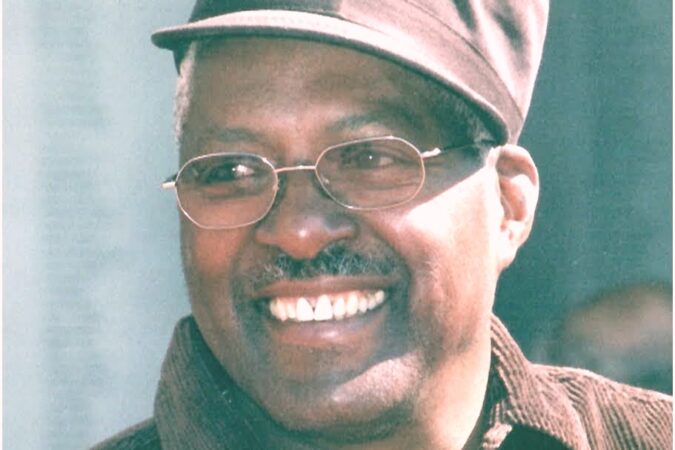
Evonn Wadkins, 88, formerly of Philadelphia, retired Philadelphia Mounted Police Officer, basketball and football star at Simon Gratz High School, builder, carpenter, plumber, bus driver, and volunteer, died Sunday, Jan. 11, of complications from a stroke at Bryn Mawr Extended Care Center.
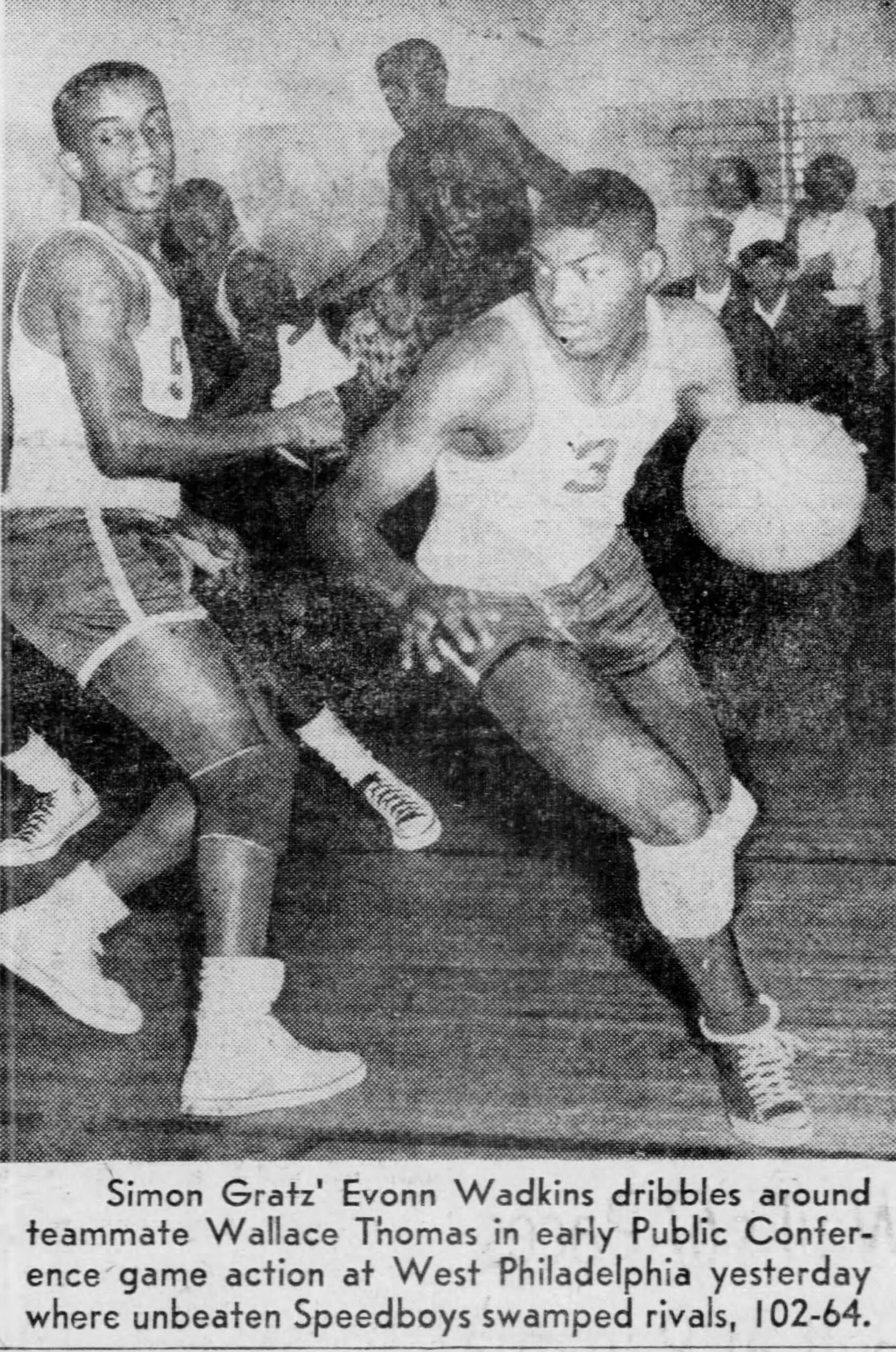
A gifted athlete with an innate desire to help others and be part of a team, Mr. Wadkins played basketball and football on Philadelphia playgrounds, in youth leagues and high school, and later with adults in semipro leagues and the Charles Baker Memorial Basketball League. He usually scored in double digits for the Gratz basketball team and went head-to-head against the legendary Sonny Hill and Wilt Chamberlain.
He overcame a severe ankle injury when he was young and retired from the Baker League years later only after age and ailments forced him off the court. He was a “speedy end” on the football team at Gratz, the Daily Journal in Vineland said in 1955.
His name appeared often in The Inquirer and other local newspapers in 1955 and ‘56, and they noted his 55-yard touchdown catch against Dobbins, 25-yard scoring reception against Vineland, and 44-yard scoring catch-and-run against Northeast in 1955.
Mr. Wadkins (right) drives with the ball in this photo that was published in The Inquirer in 1956.
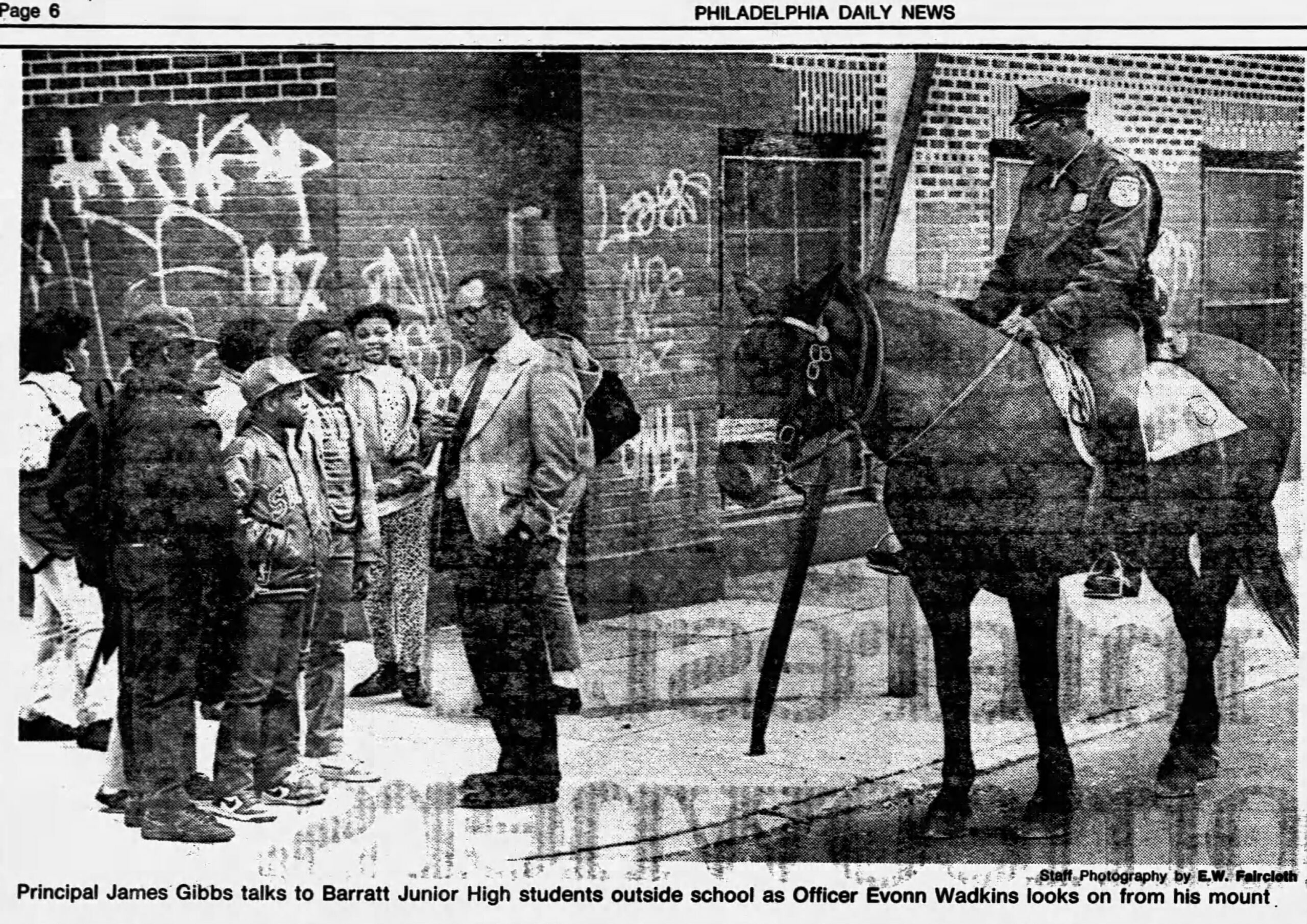
Mr. Wadkins graduated from the Philadelphia Police Training Center in 1963 and spent 11 years patrolling Fairmount Park and elsewhere in the Traffic Division. He transferred to the Mounted Unit — and met Cracker Jack — in 1974, and officer and horse rode the Philly streets together until they both retired in 1988.
“When he went on vacation, nobody could ride Cracker Jack,” said Mr. Wadkins’ wife, Elaine. “They could groom him. But Cracker Jack wouldn’t let anyone else ride him.”
He also worked construction side jobs with neighbors and friends, and learned plumbing, heating, and carpentry skills. “Family and friends are still sleeping comfortably on his one-of-a-kind beds more than 40 years later,” his family said in a tribute.
He drove a school bus for the School District of Philadelphia for 10 years in the 1980s and ’90s, and made friends with many of the students. He moved with his wife to Goochland, Va., 35 miles northwest of Richmond, in 1998.
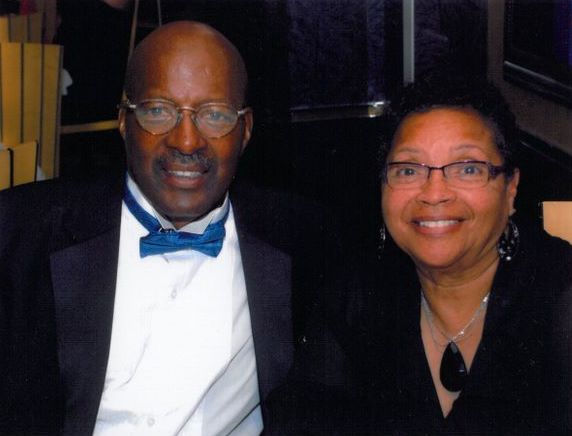
Mr. Wadkins and his wife, Elaine, married in 1959.
He joined the Goochland chapter of the NAACP and volunteered at the Second Union Rosenwald School Museum. At the Second Union Baptist Church, he mentored boys and young men, and supervised the media ministry.
He was serious about community service. “He never met a stranger,” his wife said.
Evonn LeFrancis Wadkins was born June 4, 1937, in Philadelphia. He was the fifth of six children and earned his high school degree at night school after leaving Gratz early.
He met Flora Elaine Poole at Gratz in 1954, and they married in 1959. They set up house in West Philadelphia a few years later and had daughters Evette and Elise, and a son, Evonn.
This photo of Mr. Wadkins on his horse appeared in the Daily News in 1987.
Mr. Wadkins, familiar with Fairmount Park from his time on police patrol, liked to share historical tidbits when the family drove through. He loved cars and traveled to Canada with his wife and to Germany with his brother to shop for several that caught his eye.
He and his family traveled to Florida for a New Year’s party and to South Dakota to fly over Mount Rushmore. He and his wife cruised the Caribbean and toured the United States and Europe.
He even flew with a friend to two Super Bowls. “He was a man on the go,” his family said.
Mr. Wadkins liked McDonald’s pancakes and coached a few youth league basketball teams, one to a championship. When asked how he was doing, his usual response was: “Livin’ slow.”
Mr. Wadkins enjoyed time with his family.
His wife said: “He was a good provider. He was a great husband.”
In addition to his wife and children, Mr. Wadkins is survived by five grandchildren, five great-grandchildren, a brother, and other relatives. Two brothers and two sisters died earlier.
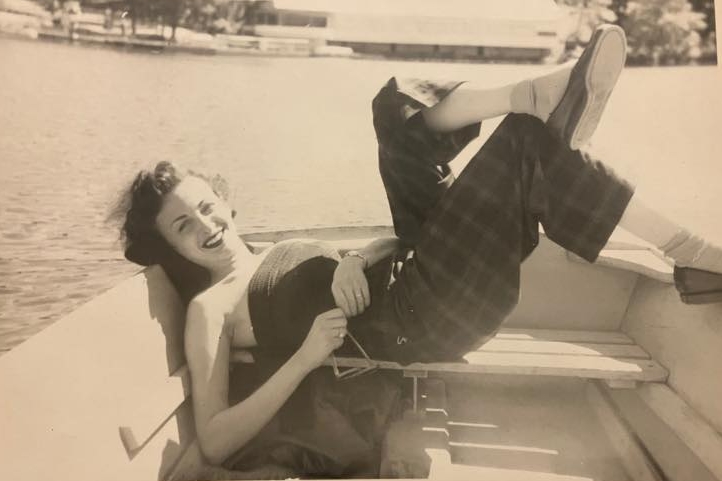
Helen Cherry, 101, formerly of Philadelphia, prolific illustrator, artist, and show tunes devotee, died Thursday, Jan. 15, of age-associated decline at her home in the Woodland Pond retirement community in New Paltz, N.Y.
“It was her decision entirely,” said her daughter, Lynne. “She knew her own mind and made the decision that it was time for her to take flight to the Great Beyond.”
A lifelong artist, Mrs. Cherry grew up drawing and painting in West Philadelphia. She earned a scholarship to the old Philadelphia College of Art, sold illustrations to the Jack and Jill children’s magazine, and took a 20-year hiatus in the 1950s and ’60s to rear her three children.
She resumed her career at 50 in 1974 and went on to illustrate 30 books and dozens of magazine stories for Highlights, Cricket, and other publications. Using a combination of her maiden name, Cogan, and her married name, Cherry, she was published under thepseudonym of Helen Cogancherry.
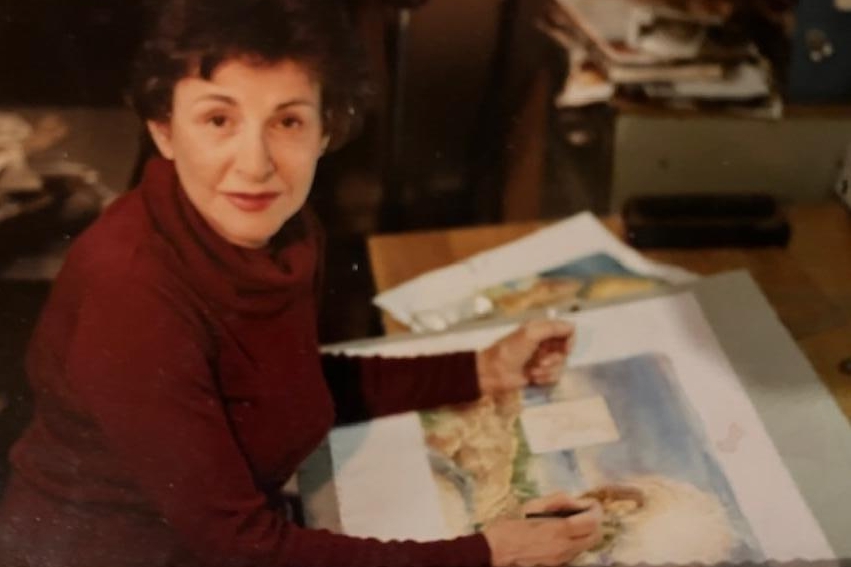
Mrs. Cherry at work illustrating 1991’s “Fourth of July Bear.”
“She was always an artist,” said her daughter, also an illustrator and writer. “Art was her hobby, her passion, her work. She said it was something that she can’t not do.”
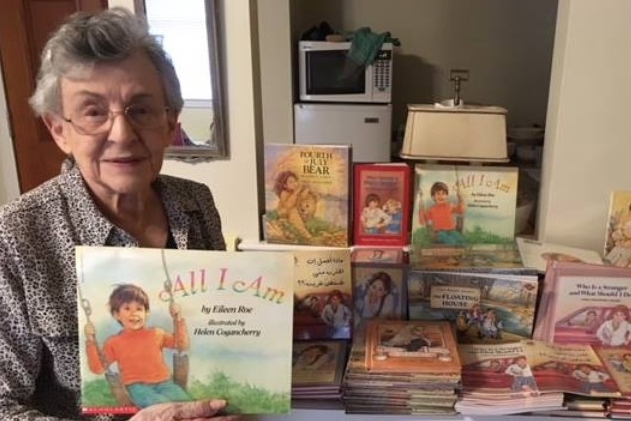
Mrs. Cherry was a keen and imaginative observer of life, adept at creating visuals that reflected the concepts of the writers with whom she worked. She illustrated many children’s books, such as All I Am, Warm as Wool, and The Floating House.
She told The Inquirer in 1986 that a book she illustrated helped a girl she knew address a difficult childhood situation. “That made a profound impression on me,” she said. “I saw how my little books could help children.”
Her career was featured in several publications, and she told The Inquirer that breaking back into the business in the 1970s was “discouraging at first.” She said: “I remember coming home sometimes and telling my husband that it was hopeless. He kept encouraging me to keep at it.”
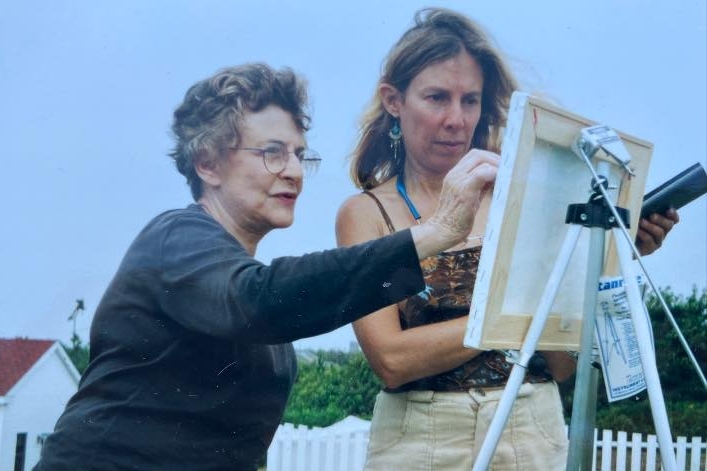
Mrs. Cherry (left) and her daughter, Lynne, work on a project.
Helen Cogan was born July 9, 1924, in a West Philadelphia rowhouse beneath the elevated railroad tracks. The middle of three children, she looked up to her sister, Molly, and cared for her younger brother, Robert, while her parents ran the small grocery store they lived above.
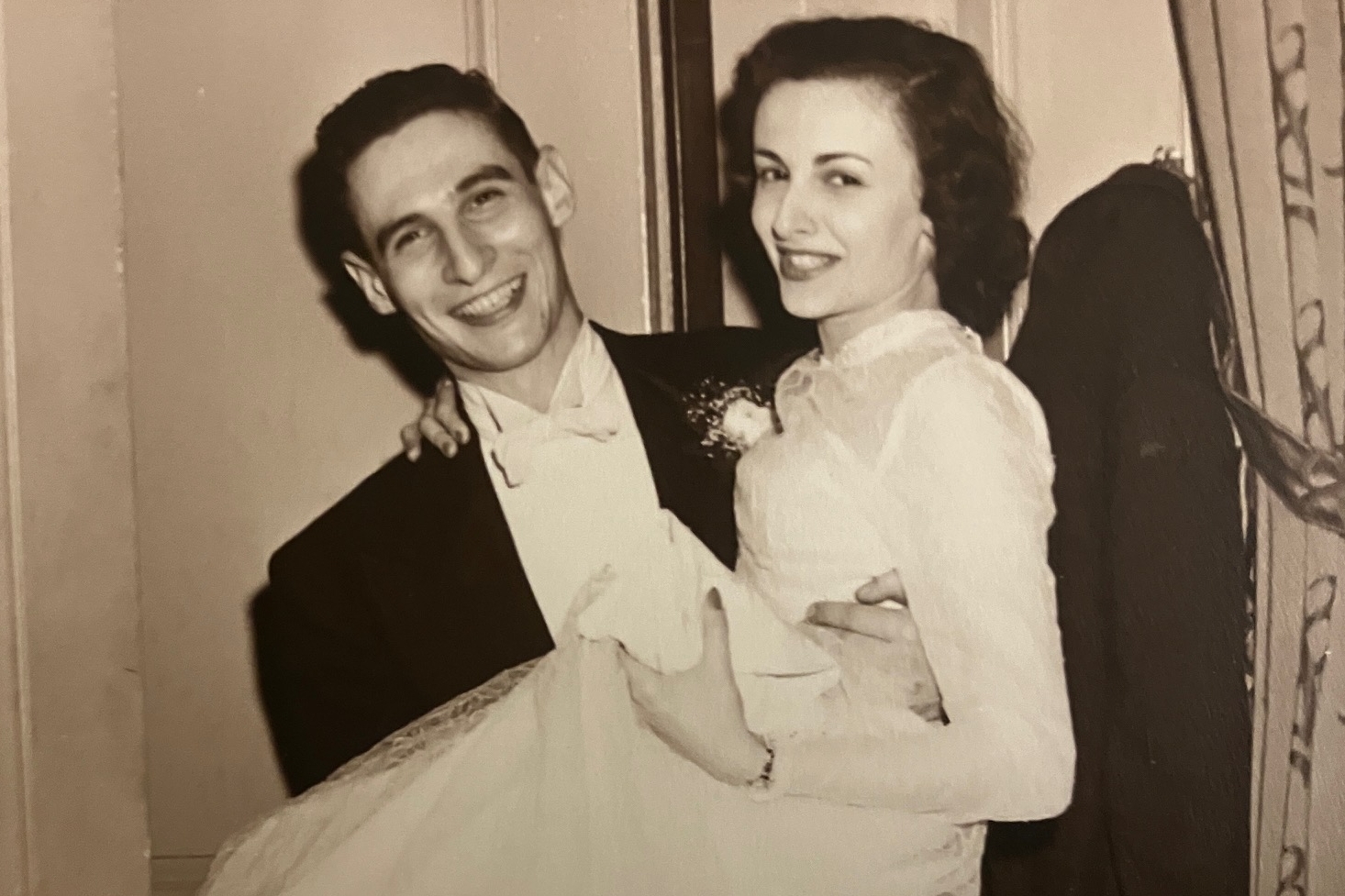
She contributed illustrations to the yearbook and graduated from West Philadelphia High School. She met Herbert Cherry in French class and sent him beautifully illustrated letters while he served overseas during World War II.
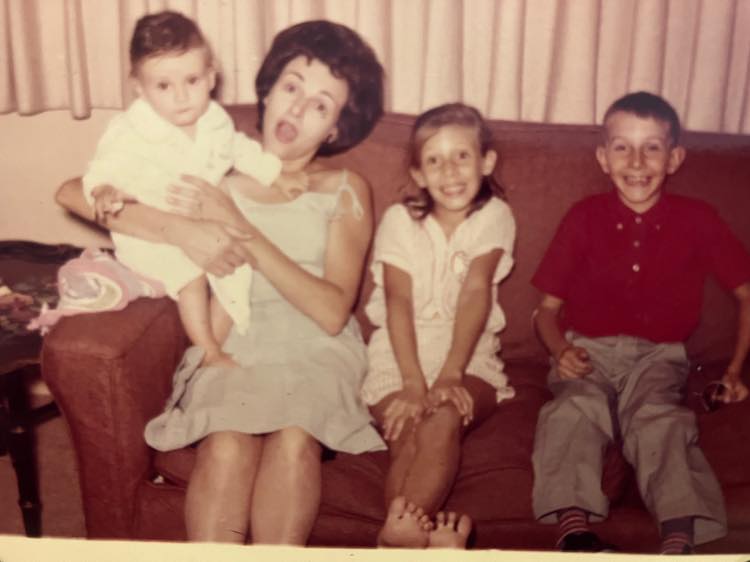
They married in 1950 and had a daughter, Lynne, and sons Steven and Michael. She helped her husband operate Cherry’s Pharmacy in Ridley Park for years, and they lived in Milmont Park and Wallingford in Delaware County, and Carlisle, Pa. She moved to New Paltz after her husband died in 2000.
Mrs. Cherry often sang show tunes with family and friends, and while she worked. She whipped up memorable meals, especially on holidays, and enjoyed idyllic summers on family vacations at the Jersey Shore in Ventnor.
Mrs. Cherry grew up in West Philadelphia.
She tutored her children and their friends, and later her grandchildren, in drawing and painting. She showed everybody, her daughter said, “how to be a good human being in this world.”
On Facebook, friends called her “warm,” “beautiful,” and “a talented giver.” One said: “The joy she radiated her whole life long was magical.”
Her daughter said: “She was quiet and understated but strong.”
Her favorite song was “Life is Just a Bowl of Cherries.” It opens with: “Life is just a bowl of cherries. Don’t take it serious. Life’s so mysterious.”
Mrs. Cherry enjoyed time with her children.
In addition to her children, Mrs. Cherry is survived by five grandchildren, a great-granddaughter, her brother, and other relatives. Her sister died earlier.
A memorial service was held Sunday, Jan. 18. A celebration of her life is to be held later.
Running a retail or restaurant business in Philadelphia isn’t easy.
But some local programs can provide much-needed cash for specific purposes like equipment purchases, store improvements, and security.
Here are four to consider.
The Storefront Development Program
Operated by the Philadelphia Department of Commerce, the Storefront Development Program provides as much as $15,000 in matching funds to upgrade and beautify your storefront, including masonry and brick pointing, exterior painting, new windows or doors, facade lighting, signage and awnings, see-through security grills, cornices, and similar enhancements. Only businesses in certain commercial corridors are eligible and projects must be planned and approved in advance.
Justin Coleman, owner of Bake’n Bacon in South Philadelphia, used the program to replace deteriorating windows, update doors, and repaint his storefront’s exterior.
“The program helped us cover half the expenses for our 11-foot windows, which was a tremendous assistance,” he said. ”The new paint made a significant difference, and the upgrades to the exterior of my business improved visibility and curb appeal.”
InStore Forgivable Loan Program
Also administered by the city’s Department of Commerce, the InStore Forgivable Loan Program offers forgivable loans of up to $100,000, which are interest-free for the first five years. They can be used for interior build-outs, equipment purchases, and other improvements.
Forgiveness is given if the business is open and operating at the same location for the full five-year term. Like the Storefront Development Program, only businesses located in certain areas of the city are eligible.
Business Security Camera Program
The city’s Department of Commerce also provides up to $3,000 in matching funds for businesses and property owners that install exterior security cameras through the Business Security Camera Program.
Companies that participate must register their cameras with the Philadelphia Police Department’s SafeCam system, so police can request access to footage when needed. Participants must either own the property or have permission from the landlord and can only use contractors approved by the city. The application process also requires photos and cost estimates.
“I wanted to have as many exterior security cameras around my storefront, as there can be a lot going on out there,” said James Singleton, owner of men’s clothing store Smooth Like That in Olney. “These cameras are good for the commercial area, making everyone feel safer.”
Stabilization grants
The Merchants Fund was founded in 1854 in Philadelphia to initially support retired merchants with pensions. But today the fund aids active small businesses with financial needs.
The fund offers stabilization grants, which are intended to help stabilize a business when it can identify a specific issue or challenge that it doesn’t have the financial means to address, said Jill Fink, the fund’s executive director.
“Often these are capital expenses — equipment, repairs, or improvements — that have a real shelf life, and small businesses simply don’t have the thousands of dollars needed to replace them,” she said. “Our goal is to make an investment that actually fixes something so that the business can keep operating, serve its neighborhood, and in some cases create a new revenue stream.”
The fund provides one-time grants of up to $10,000 to eligible Philadelphia-based small businesses. They must be independently owned; have a physical storefront, food truck, or kiosk; have been in business for at least two years; and demonstrate financial need, with annual revenue between $50,000 and $750,000. Professional services firms, nonprofits, and real estate, childcare, and eldercare businesses are not eligible.
At the Link Studios in Old City, which sells hair and beauty products and services, the fund helped owner Carla Clarkson turn an unused space into something functional. She used the grant to buy shelving, storage, air purifiers, heating and air, and paint. She was also able to access coaching and mentorship from other business owners.
“The networking alone was incredibly valuable,” Clarkson said. “I met other entrepreneurs and nonprofit leaders, and that directly led to new opportunities for my business.”
Fink, a former business owner, stresses the additional resources that her fund provides beyond just grants.
“We work to try and find ways to connect businesses with each other because being a small-business owner can be a very lonely place,” she said. “There’s lots of times in their business they might have friends or family that don’t necessarily understand the stress and pressure that a small business is under.”
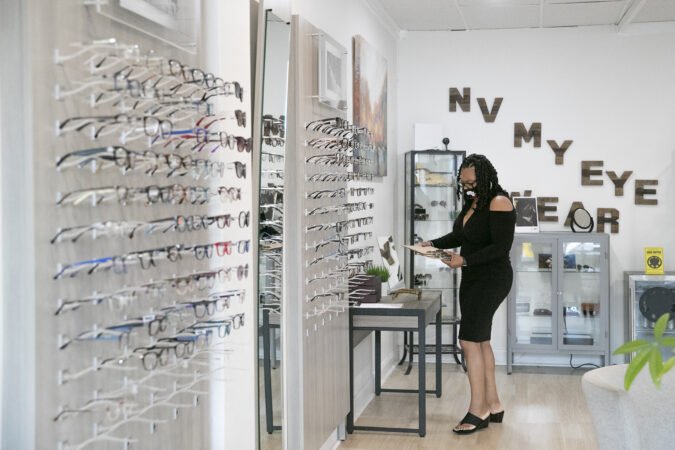
When machines at the NV Optical store in West Philadelphia went down, owner Tiffany Easley said, the business couldn’t afford the necessary repairs, and the Merchants Fund was an enormous help.
“It was less than 30 days from application to repair. The timing lined up perfectly and made a huge difference for our business,” she said. “They don’t just give you money. They understand small business struggles and connect you to resources that are vital to long-term growth.”
The Merchant Fund’s next enrollment period opens March 15.
Whether you’re pursuing a City of Philadelphia program or a stabilization grant from the Merchants Fund, your business is expected to be licensed, registered, and have all necessary permits from the city and state. And it must be current on both federal and local taxes or enrolled in an approved payment program.
The Wistar Institute’s long-standing president and CEO Dario Altieri will step down at the end of the year after leading the independent biomedical research institute for 11years, officials announced Monday.
Wistar plans to launch a national search for his successor, but did not share further details.
Altieri joined Wistar in 2010 as its cancer center director and first chief scientific officer. Five years later, he was promoted to the role of president and CEO.
During his tenure, the West Philadelphia-based institute’s annual budget quadrupled to more than $100 million, and its endowment tripled to $277 million, according to a news release.
The number of independent labs also grew from 30 to 41, and two new research centers were created.
Its cancer center, which Altieri directs, received its third consecutive renewal as a National Cancer Institute (NCI)-designated Basic Cancer Center with an “exceptional” rating.
“Due in large part to Dario’s efforts, Wistar is exceptionally well positioned for continued growth and success,” said Rick Horowitz, the board’s chair, in a statement.
The 67-year-old started his career in Milan, Italy, where he underwent his medical training. He has served in faculty roles at the Scripps Clinic and Research Foundation, Yale University, and the University of Massachusetts Medical School.
As a cancer biologist who still leads aresearch laboratory, he has authored more than 260 research papers and been listed as an inventor on 13 patents.
“[I] look forward to dedicating my time to the values of work that have defined me since I was a medical student: laboratory research, teaching and mentoring,” Altieri said in a Monday statement released by the institute.
When Mayor Cherelle L. Parker unveiled her much-anticipated plan to address Philadelphia’s housing crisis last year, there was predictable criticism from the political left. Activists said the proposal drafted by the moderate Democrat would not do enough for the city’s poorest residents.
Less predictable was that a majority of City Council stood with them.
Even the Council president, a centrist ally of the mayor, sided with a progressive faction that just two years ago had been soundly defeated in the mayor’s race — but whose new de facto leader in City Hall has proven adept at building alliances across the ideological spectrum.
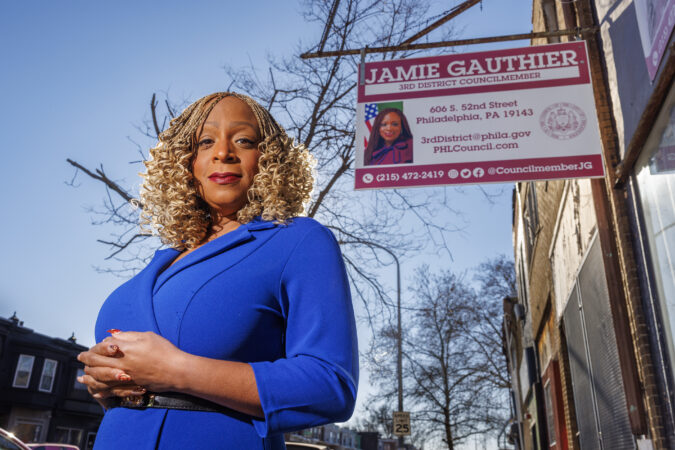
At the center of that shift was Jamie Gauthier.
The second-term Democratic lawmaker from West Philadelphiahas solidified herself over the last year as a leading voice on Council and a counterweight to Parker. She has worked within the system as opposed to trying to break it, maintaining relationships with power players who disagree with her on policy.
She counts Ryan N. Boyer — the labor leader who is Parker’s closest political ally — among those who consider her a “thought leader.”
“Over the last year, what you saw,” Boyer said, “is her modulate her positions to become more practical.”
Gauthier has generally voted with progressives, including last year when she opposed the controversial Center City 76ers arena proposal. But she has also endeavored to be a team player, at times compromising on ideological battles to focus on priorities in her district.
Last year, she voted for Parker’s plan to cut taxes for businesses and corporations when other progressives opposed it, because her main priority was securing housing funding. She has not opposed some tough-on-crime efforts in the Kensington drug market, instead allowing her colleagues who represent that area to dictate the policy there.
She says she is trying to use her political capital where it matters.
“Why would I take a protest vote and tank a relationship with a colleague when I’m going to need them later?” she said. “I want to win.”
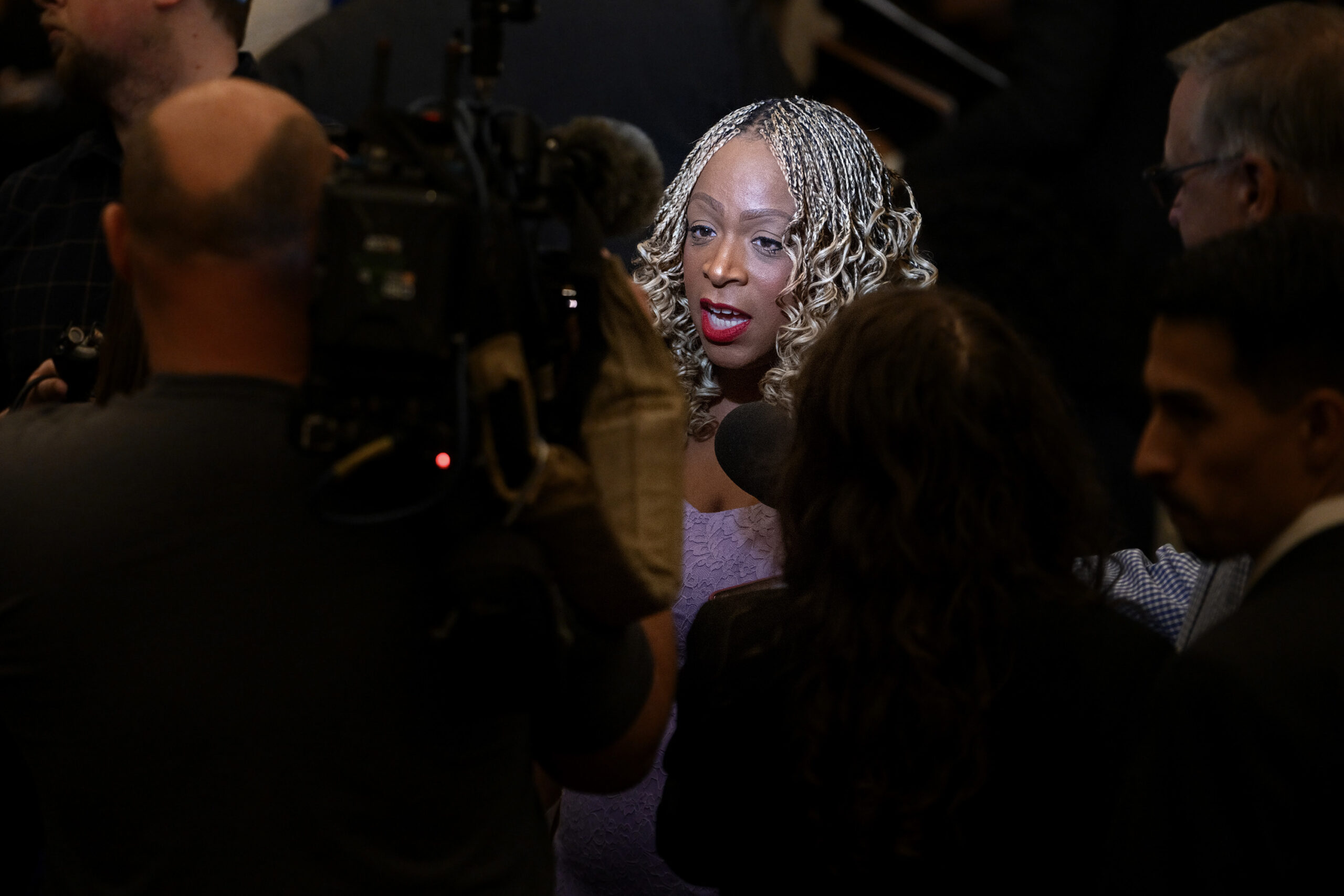
Councilmember Jamie Gauthier talks with news media following a special session of City Council on March 24, 2025.
The fact that Gauthier is a district Council member who represents a large swath of the city west of the Schuylkill also gives her cachet with colleagues. Council has a long tradition of honoring how members want their own neighborhoods to be governed.
Gauthier, who leads Council’s housing committee, has used the influence to make West Philadelphia something of a testing ground for left-of-center policy. Plenty oppose what they see as draconian restrictions on real estate development in her district.
Others see a progressive champion, and some political observers think Gauthier could amass enough support to run for mayor one day. She doesn’t deny that she has thought about it.
But for whatever politics Gauthier can navigate in City Hall, she knows she can rise only if she is successful at home.
‘Not just a lone actor’
When Parker took office, Council was in a moment of upheaval. Council President Kenyatta Johnson was the new leader of the chamber, and several prominent voices were gone after they had resigned to run for mayor themselves.
One was Helen Gym, who was seen as the leader of Council’s left flank. There were questions about who would fill the void once Gym was gone.
Gauthier, 47, an urban planner by trade, did not come up through an activist movement in the same way Gym did, and was a bit more reserved in her style.
But she carries the mantle for the same theory of governance: that lawmakers should prioritize the vulnerable, and that what is good for business is not necessarily good for everyone else.
That set Gauthier on an ideological collision course with Parker, a former Council member who ran for office on a promise to uplift the middle class, a group the mayor believes has been too often ignored.
It came to a head in the fight over Parker’s Housing Opportunities Made Easy, or H.O.M.E., initiative.
Parker wanted to set unusually high income eligibility thresholds for some of the programs so that middle-class families could unlock government subsidies they may not otherwise qualify for. A significant portion of Council, meanwhile, wanted the money to go initially to Philadelphians most vulnerable to displacement.
Parker was clear-eyed about who was leading the charge.
“Councilmember Jamie Gauthier, she may be comfortable and OK with telling Philadelphia homeowners, working-class Philadelphians, that they have to wait and there is no sense of urgency for them,” Parker said in a December interview on WHYY. “But that is not a sentiment that I support or agree with.”
Gauthier is quick to point out that she did not work alone, and that one member of a 17-member body cannot accomplish much. Alongside Councilmember Rue Landau, a fellow Democrat and a housing attorney by trade, Gauthier worked for months to win over her colleagues.
Gauthier didn’t think Parker helped her own cause. A “line was crossed,” she said, when Parker took the fight outside City Hall and to the pulpit. Amid negotiations with Council, the mayor went to 10 churches on one Sunday in December to lobby for support, saying her vision was to not “pit the ‘have-nots’ against those who have just a little bit.”
Mayor Cherelle L. Parker speaks to the crowd at The Church of Christian Compassion in the Cobbs Creek neighborhood of West Philadelphia on Sunday, Dec. 7, 2025. Parker visited 10 churches in Philadelphia on Sunday to share details about her HOME housing plan.
To Gauthier, the divisiveness was coming from the mayor’s office.
“I wish the mayor and her administration were more open to other people’s ideas, were more OK with disagreement on policy issues, and more aware of Council as a completely separate chamber of government,” Gauthier said, “as opposed to a body that works for her.”
That is a candid assessment of the relationship between Parker and City Council from Gauthier. Few lawmakers from the mayor’s own party have criticized her publicly.
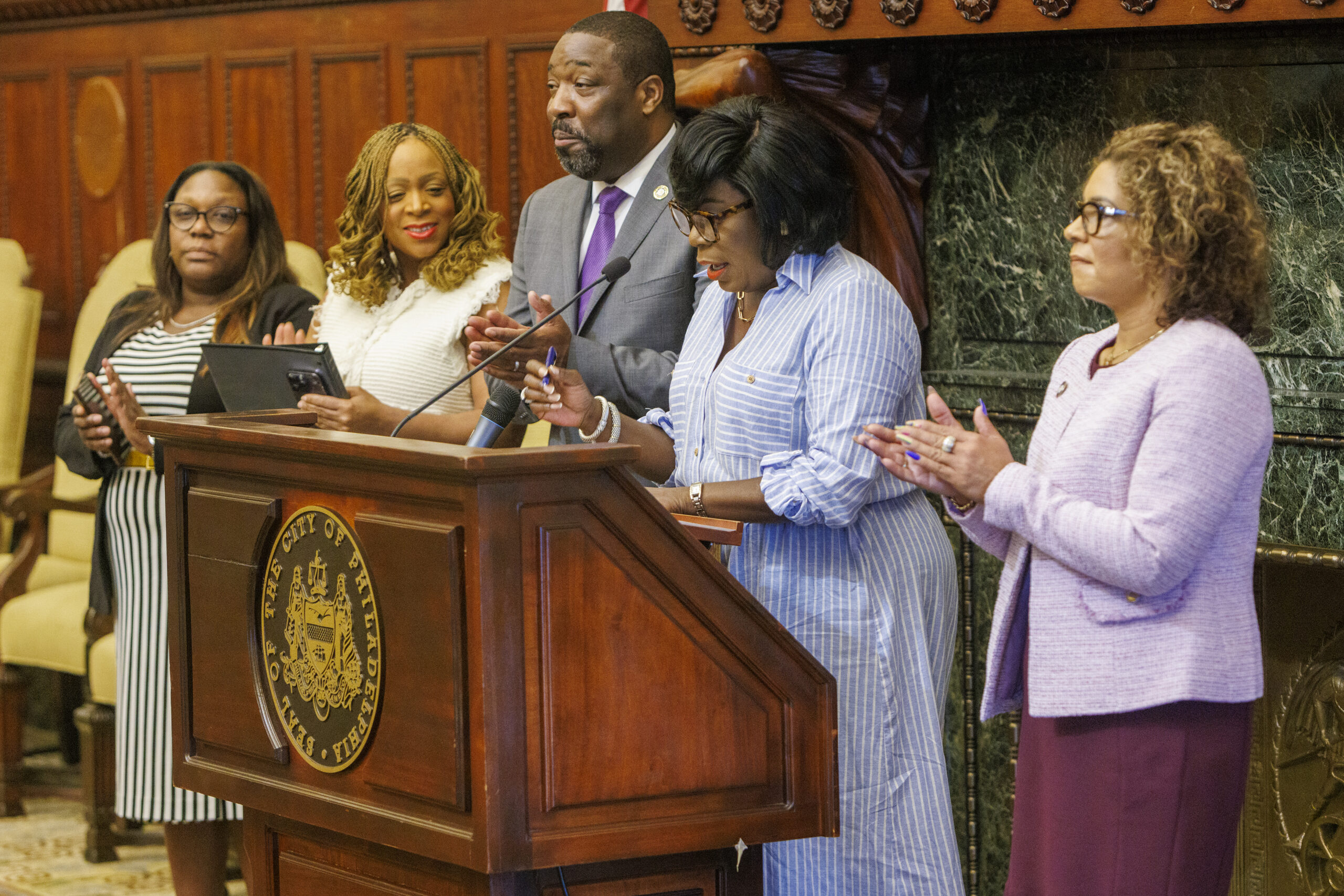
Philadelphia Mayor Cherelle Parker holds a press conference regarding her first budget flanked by members of city council in her reception room, Philadelphia City Hall on Thursday, June 6, 2024. Council members from left are Kendra Brooks, Jamie Gauthier, council president Kenyatta Johnson, and Quetcy Lozada.
State Rep. Rick Krajewski, a West Philadelphia Democrat and a progressive who has worked closely with Gauthier, said the fight over H.O.M.E. showed that Gauthier has learned “the diplomacy required to be an effective legislator.”
“It was a good example of not being afraid of a conflict that felt important to stand up for,” he said, “but then to not just be a lone actor, but organize with other colleagues and allies.”
Gauthier’s most important ally was Johnson, who negotiated directly with Parker through the process and controls the flow of legislation in the chamber.
The two go back years. Before Johnson was Council president, he made a point of welcoming new members, a gesture that has always stuck with Gauthier. They worked closely to secure funding for gun violence prevention. And Gauthier said that since Johnson took the gavel, he has been more open to working with progressives than his predecessor was.
He does not talk about that publicly. What he will say is that he works in partnership with Gauthier because she understands “the bigger picture in terms of how we move forward as the institution.”
“I consider her to be a pragmatic idealist,” Johnson said. “She wears her heart on her sleeve, and she really believes in actually doing the work.”
She was also supported by real estate interests, some of whom now have buyer’s remorse.
After Gauthier pulled off a shock win, she arrived in Council and quickly aligned with the progressive bloc. Through her first two terms, she has used councilmanic prerogative often, and has voted with her district Council colleagues so that they can do the same.
She admits that it is an effective tool for accomplishing her goals quickly.
Carol Jenkins, a Democratic ward leader in West Philadelphia, said Gauthier’s use of councilmanic prerogative is “part of her maturation.”
“That’s the power you have,” Jenkins said.
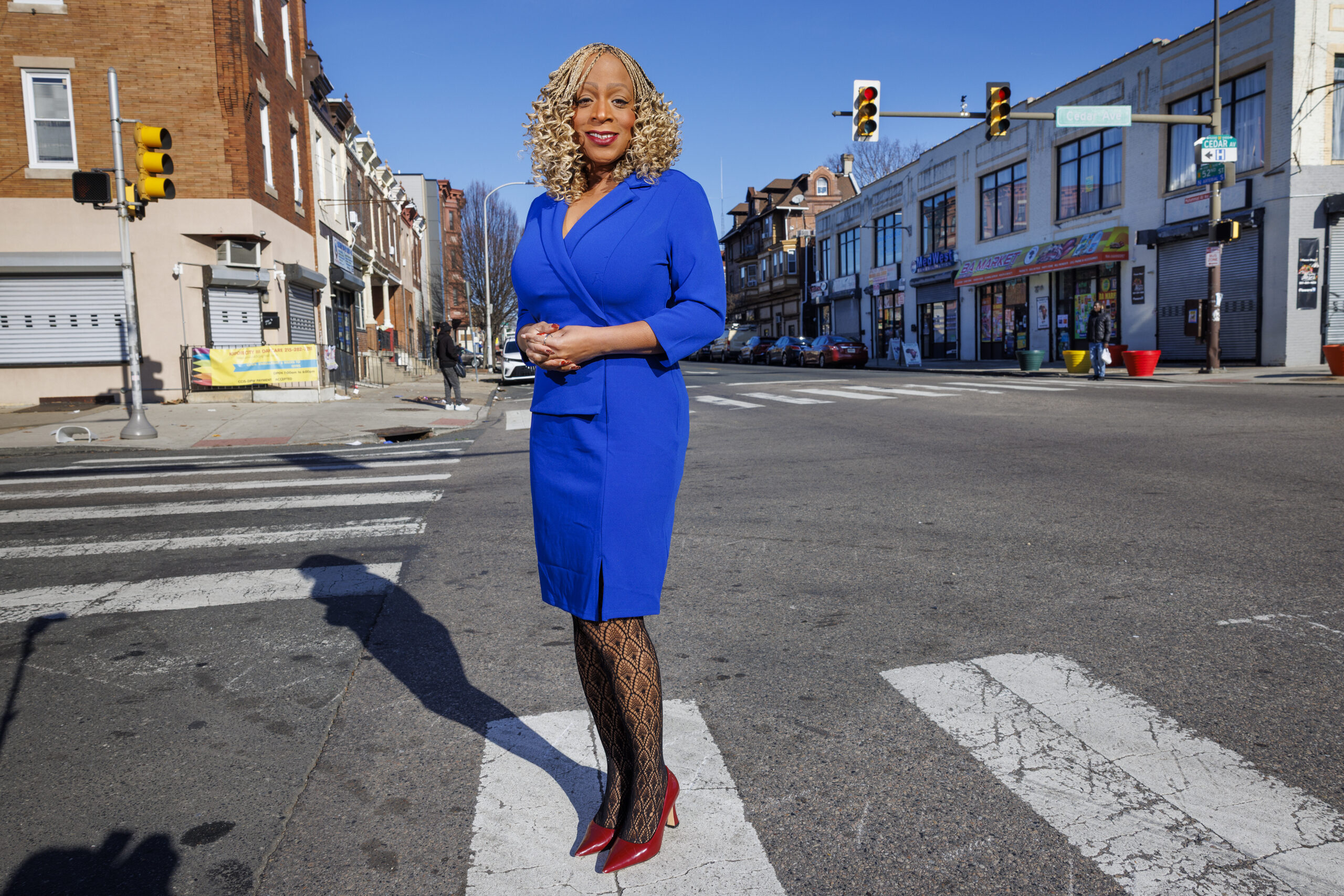
City Councilmember Jamie Gauthier in her district near 52nd Street and Cedar Avenue in Philadelphia on Monday, Dec. 22, 2025.
However, her most notable use of councilmanic prerogative has been in housing policy, and some developers say her district is now the most hostile to growth in the city.
In Gauthier’s first term, she championed legislation to create what is known as a Mixed Income Neighborhood overlay. In essence, it requires that developers building projects with 10 or more units in certain parts of her district make at least 20% of their units affordable. That is defined as accessible for rental households earning up to 40% of the area median income.
For Gauthier, it’s a tool to slow the rapid gentrification of her majority-Black district.
But developers say that growth has slowed significantly in the areas covered by the overlay since it took effect in 2022. Some have said they avoid seeking to build in the 3rd District entirely. The only major project currently in the works in the area is a parking garage.
Ryan Spak, an affordable housing developer who said he considers Gauthier a friend, has been among the most outspoken critics of the overlay. He said while Gauthier’s “moral compass is pointed in the right direction, her policies don’t math.”
“You would never ask a restaurant to give away its ninth and 10th meal for 40 cents on the dollar, with no additional discounts or benefits,” he said, “and expect that restaurant to survive.”
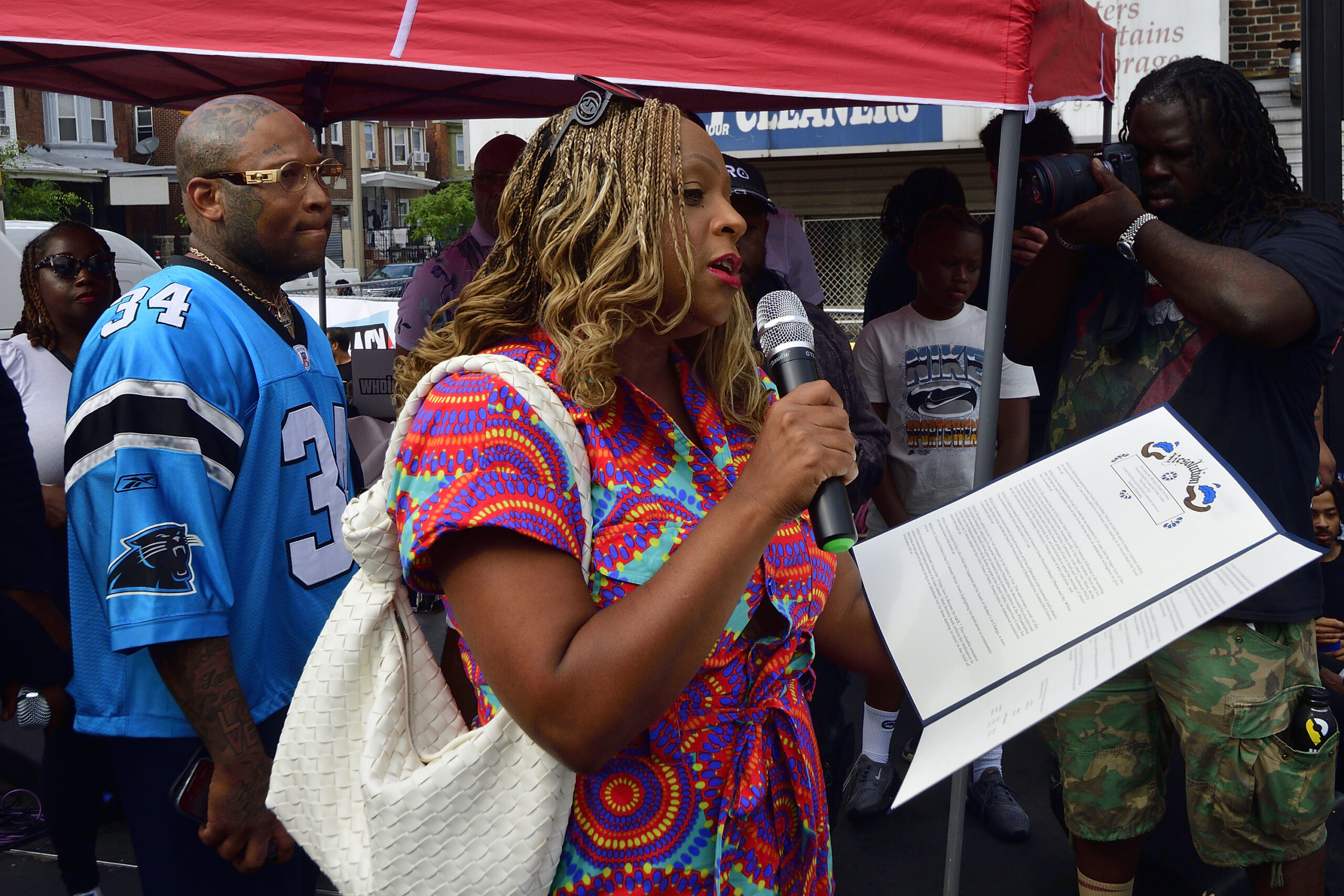
Councilmember Jamie Gauthier reads out a citation honoring Rapper Mont Brown during a street naming ceremony for the Southwest Philadelphia native at the 13th Annual Stop the Violence Kickback Block Party at 55th Street and Chester Avenue, in Southwest Philadelphia on August 17, 2024.
Gauthier said she has made adjustments, and she championed legislation to accelerate permitting and zoning approvals. The mandate, she said, is necessary because the market won’t build enough affordable housing on its own.
“As untenable as it is to them that they can’t make the numbers work, it’s untenable to me that people can’t afford to live here,” Gauthier said. “So we can come together and we can fix that. But I’m not going to move from my position that we have to demand affordability.”
Mayoral buzz, but no ‘stupid campaigns’
Gauthier is one of several names that have been floated in political circles as potential candidates for mayor in 2031, which would be Parker’s final year in office if she runs for and wins a second term. Several of her Council colleagues, including Johnson, are seen as potential contenders.
“I’d be lying if I didn’t say that mayor could be interesting one day,” Gauthier said. “I also don’t believe in stupid campaigns. So I would never do that if I didn’t think I had a path.”
Boyer said he has counseled Gauthier to pursue moderate policy and avoid being “label-cast” as far left. He said Philadelphia is not Chicago or New York, and he doesn’t see the city electing an uber-progressive to be the mayor any time soon.
“Philadelphia has always been a real center-left community,” Boyer said, “and just because you’re the loudest isn’t the most popular.”
The left may have other plans. Robert Saleem Holbrook, a progressive activist, said that Gauthier would be an “ideal candidate” for higher office and that the city’s leftists would back her.
Probably.
“So long as she stays true and supportive of progressive ideals,” Holbrook said. “You can’t compromise on your way up.”