Tag: West Philadelphia

  • People who are self-employed could become exempt from paying a Philly business tax | City Council roundup

    People who are self-employed could become exempt from paying a Philly business tax | City Council roundup

    Philadelphia-based independent contractors and others who are self-employed could soon become exempt from paying certain business taxes as part of a measure aimed at easing tax burdens on small businesses.

    City Councilmember Mike Driscoll, a Democrat who represents parts of Northeast Philadelphia, introduced legislation Thursday to carve out entrepreneurs, sole proprietorships, and businesses that have only one employee from having to pay the city’s business income and receipts tax, commonly known as BIRT.

    Also on Thursday, members floated legislation to address the rising cost of water bills and introduced a bill to make it easier for restaurants to secure outdoor dining permits.

    What was the meeting’s highlight?

    Relief for the small(est) businesses: The bill is likely to find support in Council, where lawmakers have been searching for ways to provide relief to small businesses after earlier this year eliminating a popular tax break that allowed companies to exclude their first $100,000 in income from business taxes in Philadelphia.

    That exemption effectively meant that thousands of small businesses did not have to pay the tax. However, Mayor Cherelle L. Parker’s administration in June successfully moved to eliminate the exemption, saying the city was likely to lose a court battle over the matter.

    The change came after a medical device manufacturer sued the city, saying the exemption violated state law, which includes a “uniformity” clause that prohibits municipalities from creating different classes of taxpayers.

    Now, thousands of businesses newly have to pay the BIRT beginning with 2025 tax bills that are due in April. If Driscoll’s measure is adopted, it would begin in the 2026 tax year, meaning that eligible business owners would see the exemption when paying taxes due in April 2027.

    He said the legislation addresses concerns from small businesses that the impending tax bills will be financially unsustainable for them.

    “A $50,000 business should not face a $3,200 tax hike,” Driscoll said. “That is not policy. That is displacement.”

    Driscoll said that the city’s law department approved his legislation and that he is confident it does not violate the uniformity clause.

    What else happened this week?

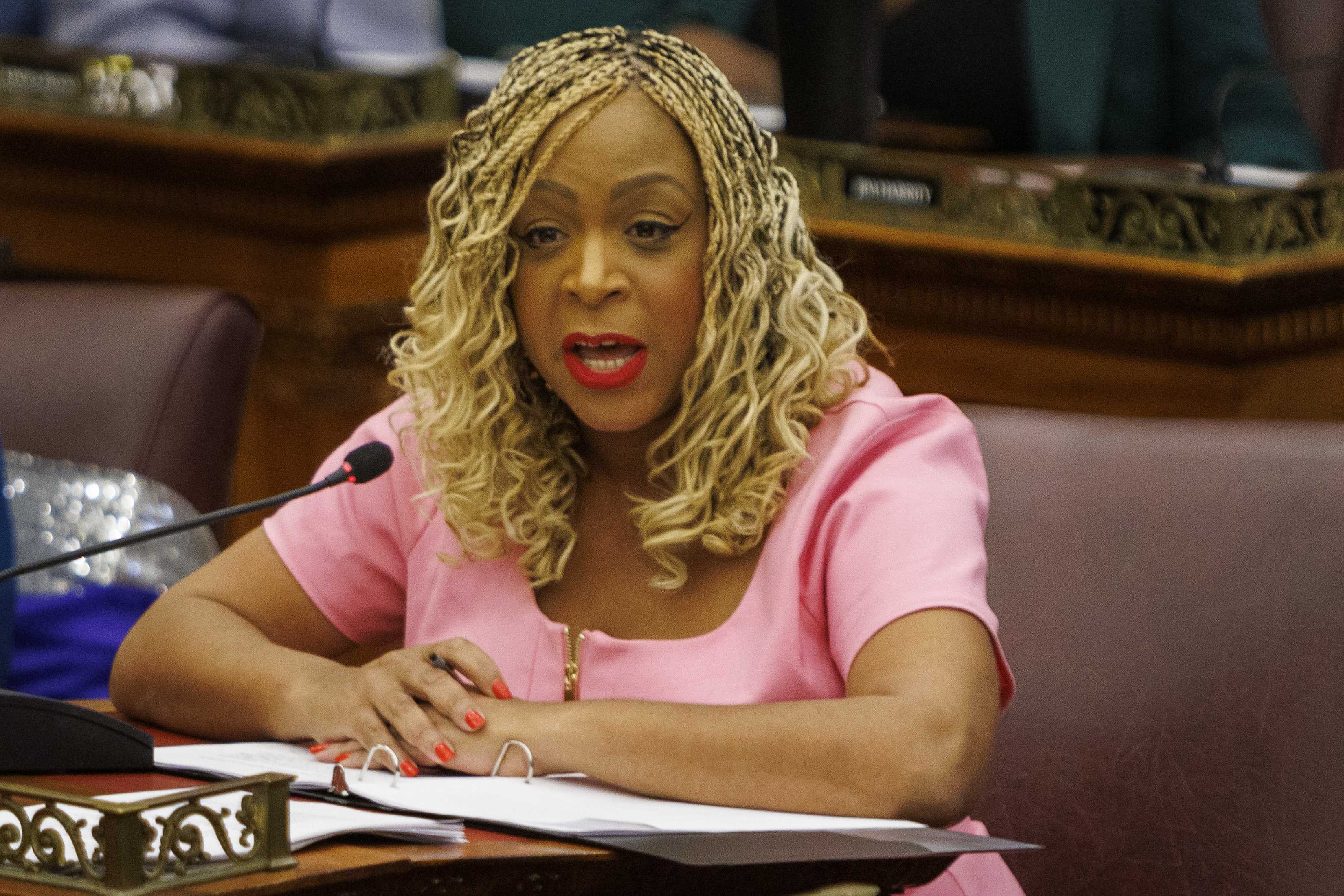
    Making water more affordable: Council will consider a package of legislation to address rising water bills. Councilmember Jamie Gauthier of West Philadelphia introduced three measures:

    • A bill that expands eligibility for payment assistance programs to people who earn up to 300% of the federal poverty level. (This year, the FPL is $32,150 for a family of four.) There is currently a tiered assistance structure for people who earn up to 250%.
    • A bill requiring that the city reduce a resident’s water bill if it rose because of a water meter failure that lasted more than a year.
    • A resolution to hold hearings on whether lawmakers can expand assistance programs to renters. The Philadelphia Water Department does not allow bills to be in renters’ names.

    A spokesperson for Gauthier said the package of legislation has 10 cosponsors — a majority of Council — making it likely to pass.

    Parker opposes incineration ban: A Council committee on Monday advanced a bill to ban the city from incinerating trash, over the objections of Parker’s administration.

    Currently, the city sends about two-thirds of the trash it collects to landfills and one-third to a waste-to-energy incinerator in Chester operated by Reworld, formerly known as Covanta.

    Both of those contracts expire June 30, and Gauthier wants to prohibit the Parker administration from signing a new deal.
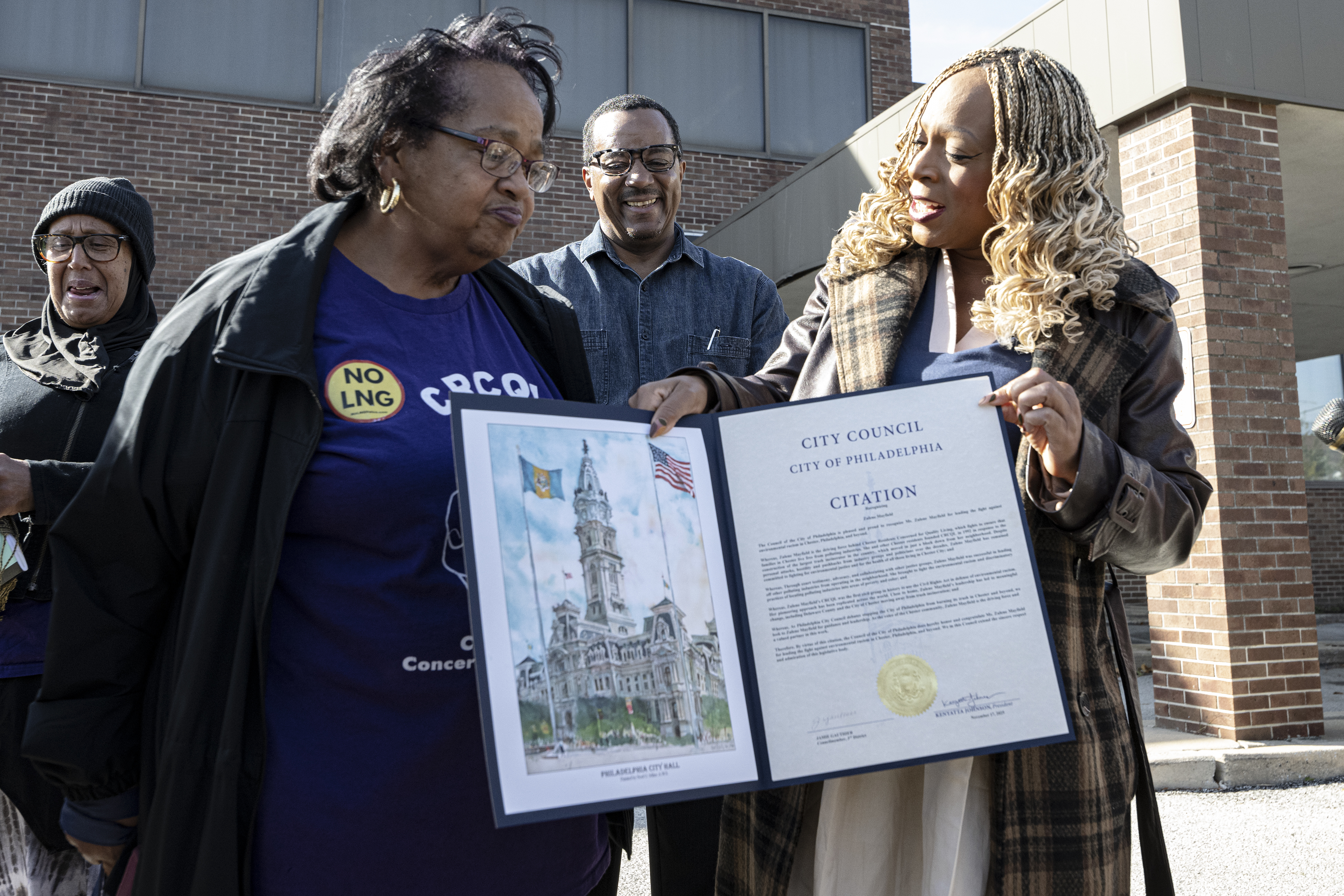
    Chester resident Zulene Mayfield, left, Philadelphia Councilmember Jamie Gauthier, right, and Chester Mayor Stefan Roots meet to discuss Gauthier’s “Stop Trashing Our Air Act,” which would ban the city from incinerating waste, during a visit with lawmakers and staff in Chester, Pa., on Friday, Nov. 7, 2025.

    On Monday, Chester officials pleaded with Philly to end its relationship with the facility, saying it contributes to high rates of illness.

    Reworld defended its record, saying it exceeds government regulations.

    Carlton Williams, who leads the Philadelphia Office of Clean and Green Initiatives, asked lawmakers to hold off approving a ban on incineration to allow the city time to study the issue.

    But the committee approved the measure, sending it to the full Council for a vote as early as Dec. 4.

    Dining out: Council is taking another crack at streamlining the city’s drawn-out permitting process for outdoor dining.
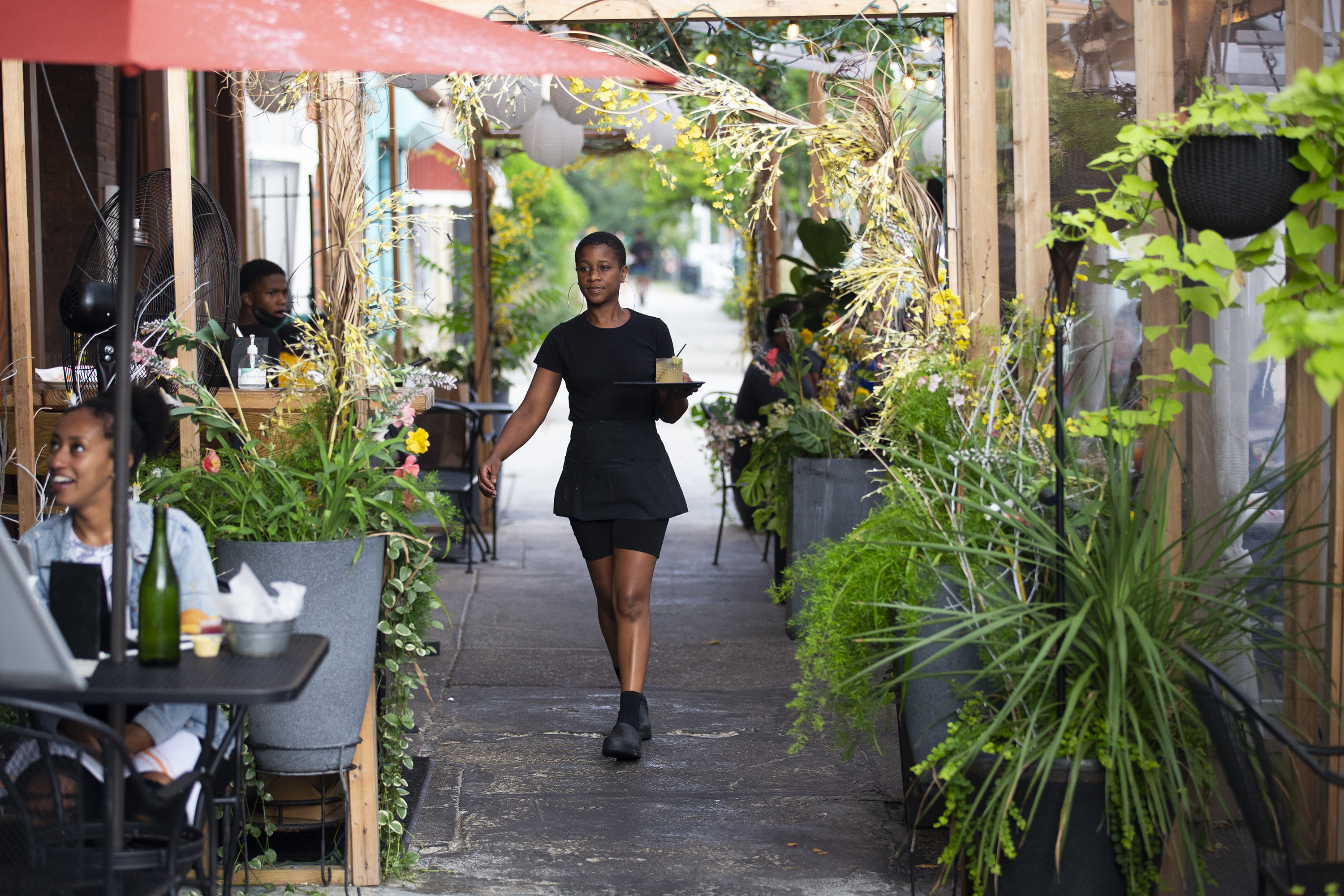
    The outdoor dining area at Booker’s Restaurant and Bar at 5021 Baltimore Ave. in 2021.

    Councilmember Rue Landau, who represents the city at-large, said it can take more than a year and a half for restaurants to get licensed if they are not in areas around Center City and a handful of commercial corridors in other neighbors.

    Beyond those locations, restaurants must get their district Council person to sponsor zoning legislation, which can take months.

    Landau introduced legislation Thursday to expand the “by-right” areas where sidewalk cafes can exist without special zoning. Where the areas are expanded to will be up to district Council members.

    Quote of the week

    Danny Garcia trains for an upcoming fight in August 2024.

    All in the family: Council members on Thursday honored boxer Danny Garcia, a North Philly native and an illustrious fighter who is retiring from the sport. He appeared in Council chambers to thank members and tell the city how much he loves it back.

    Staff writers Jake Blumgart and Beatrice Forman contributed to this article.
  • Creative resistance is as American as apple pie — especially in Philadelphia

    Creative resistance is as American as apple pie — especially in Philadelphia

    Art matters. And because it does, artists and art institutions have been targets of authoritarian regimes from Red Square to Tiananmen Square. Black Lives Matter Plaza, located near the White House, was removed in March. That same month, President Donald Trump issued an executive order targeting the Smithsonian Institution and interpretive signs at National Park Service sites, including the President’s House.

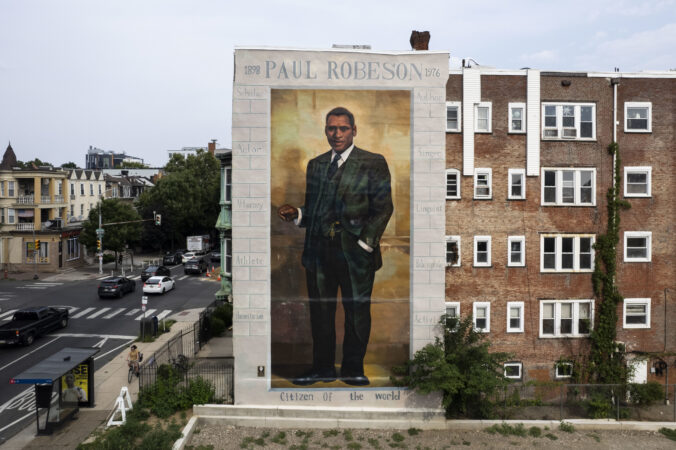
    Paul Robeson, athlete, singer, actor, and human rights activist, lived his final years in West Philadelphia. At a protest rally in London in 1937, Robeson said: “The artist must elect to fight for freedom or for slavery. I have made my choice. I had no alternative.”

    With democracy now under assault, “Fall of Freedom,” a national artist-led protest, has issued a call for creative resistance, of actions against authoritarian control and censorship, to take place in venues nationwide beginning Friday.

    “Fall of Freedom is an urgent reminder that our stories and our art are not luxuries, but essential tools of resistance,” Pulitzer Prize-winning playwright Lynn Nottage wrote in a statement. “When we gather in theaters and public spaces, we are affirming our humanity and our right to imagine a more just future.”

    Creative resistance is as American as apple pie, and this city is, after all, the birthplace of our democracy.

    The political cartoon “Join, or Die,” published in 1754 in the Pennsylvania Gazette, became a symbol of the American Revolution and stoked public opinion against Britain.

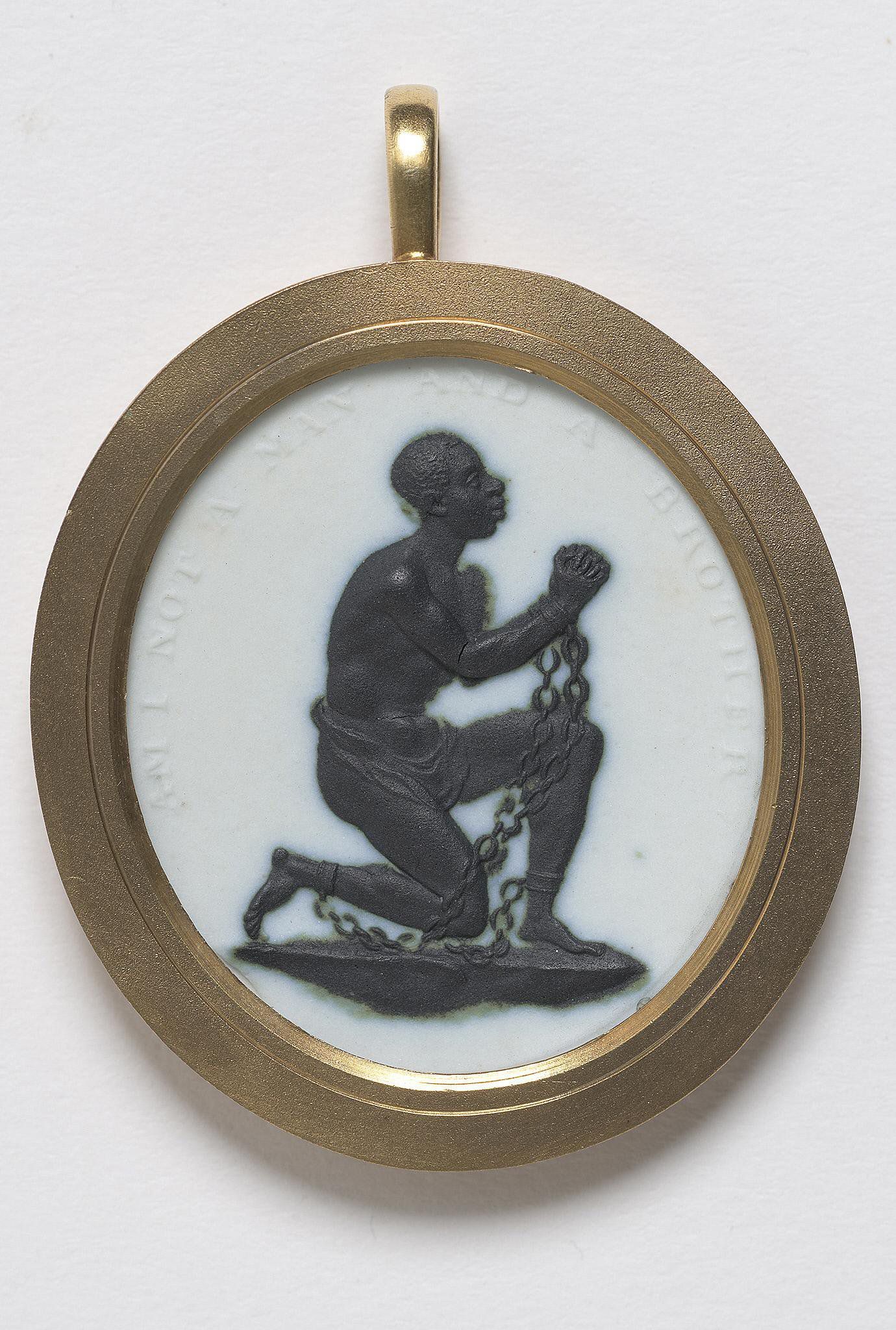
    During his tenure as president of the Pennsylvania Abolition Society, Benjamin Franklin helped distribute Josiah Wedgwood’s anti-slavery medallion “Am I Not a Man and a Brother.” In a letter to Wedgwood, Franklin wrote, “I am persuaded [the medallion] may have an Effect equal to that of the best written Pamphlet in procuring favour to those oppressed people.”

    Wedgewood medallion with the words “Am I not a man and a brother” in relief along the edge, ca. 1780s, from the collection of the Philadelphia Museum of Art. The museum’s education materials on the medallion stipulate that it was “modeled by William Hackwood and fabricated by Josiah Wedgwood in England in 1787 for the Society for Effecting the Abolition of the Slave Trade, this medallion functioned as a potent political emblem for promoting the abolition of slavery. It reached the United States in 1788, when Wedgwood sent a batch to Philadelphia for former enslaver and ‘cautious abolitionist’ Benjamin Franklin to distribute.”

    And indeed it did. Wedgwood’s engraving became the iconic image of the anti-slavery movement. It was printed on broadsides, snuffboxes, decorative objects, and household items. Abolitionist art was part of domestic life in Philadelphia.

    The American Anti-Slavery Society, whose founding members included Philadelphians James Forten, Lucretia Mott, and Robert Purvis, commissioned a copper token featuring a related “Am I Not a Woman and a Sister” design. Proceeds from the sale of the token were used to fund the abolition movement.

    Abolitionists used art to create a visual language of freedom. Artists created illustrations and paintings that showed “how bad slavery was.” There were theatrical performances and public readings of Harriet Beecher Stowe’s Uncle Tom’s Cabin, the best-selling novel of the 19th century.

    Robert Douglass Jr. studied at the Pennsylvania Academy of the Fine Arts. He is considered Philadelphia’s first African American photographer. Active with the National Colored Conventions movement, Douglass created a counternarrative to derogatory racial stereotypes. His daguerreotype of Francis “Frank” Johnson, a forefather of jazz, is in the collection of the Historical Society of Pennsylvania.

    On the heels of the Jazz Age, a group of religious activists formed the Young People’s Interracial Fellowship in North Philadelphia in 1931. The fellowship brought together Black and white congregations for dialogue, cultural exchange, and joint activism.

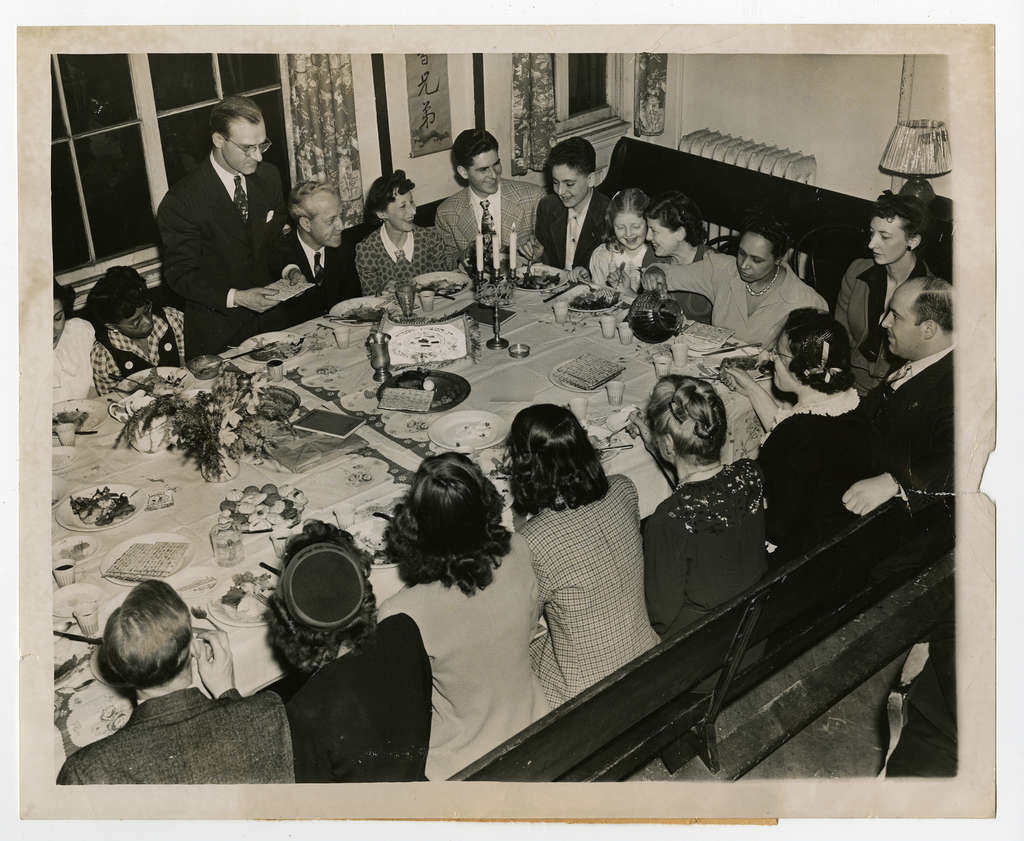
    A 1944 seder at Fellowship House.

    In 1941, the organization evolved into Fellowship House, whose mission was to resist racial discrimination through education, cultural programs, and community organizing.

    Notable cultural figures who spoke at Fellowship House include Marian Anderson, Dave Brubeck, and Robeson. In April 1945, seven months before the release of the short film The House I Live In, Frank Sinatra, the film’s star, stopped by Fellowship House to speak about the importance of racial tolerance. He told the young people that “disunity only helps the enemy.”

    The film’s title song, an anti-racism patriotic anthem, became one of Sinatra’s signature songs.

    Abel Meeropol, an educator, poet, and songwriter, composed both the film’s title song, “The House I Live In,” and the anti-lynching poem and song, “Strange Fruit,” which would become inextricably associated with one of Philadelphia’s jazz greats.

    Born on April 7, 1915, at Philadelphia General Hospital in West Philly, Billie Holiday, née Eleanora Fagan, is one of the greatest jazz singers of all time.

    No artist has met the moment with more courage than Lady Day, whose 1939 recording of “Strange Fruit” was named song of the century by Time magazine in 1999, and was added to the National Recording Registry in 2002.

    Strange Fruit is a timeless and empowering act of creative resistance.

    While Holiday is sui generis, jazz musicians were the vanguard of the civil rights movement.

    At so-called black and tan clubs like the Down Beat and the Blue Note, Black and white people intermingled on an equal basis for the first time.

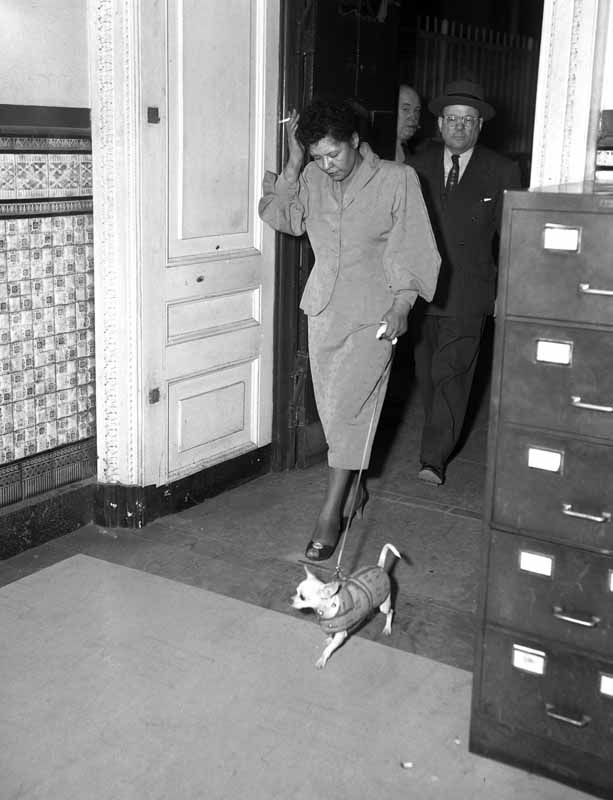
    Billie Holiday leaving City Hall in 1956 after her release following a drug bust. Police Capt. Clarence Ferguson walks behind her.

    Jazz clubs were constantly harassed by Philadelphia police led by vice squad Capt. Clarence Ferguson and his protégé, Inspector Frank Rizzo. The nightspots became battlegrounds in the struggle for racial justice. Jazz musicians’ unbowed demeanor fashioned a new racial identity.

    In remarks to the 1964 Berlin Jazz Festival, the Rev. Dr. Martin Luther King Jr. riffed on the importance of jazz and the jazz culture. He observed: “It is no wonder that so much of the search for identity among American Negroes was championed by jazz musicians. Long before the modern essayists and scholars wrote of racial identity as a problem for a multiracial world, musicians were returning to their roots to affirm that which was stirring within their souls.”

    “Much of the power of our Freedom Movement in the United States has come from this music,” he added. “It has strengthened us with its sweet rhythms when courage began to fail. It has calmed us with its rich harmonies when spirits were down.”

    At a time when our constitutional rights are being trampled and American history is being whitewashed, I am answering “Fall of Freedom’s” call — as a cultural worker and as a Philadelphian.

    Under the “Fall of Freedom” banner, and in collaboration with Scribe Video Center, I will lead a walking tour of Holiday’s Philadelphia.

    We will trace her footsteps through Center City and South Philly. We will visit the clubs where she sang, the hotels where she stayed, and the site of the jazz club immortalized in the Tony Award–winning play Lady Day at Emerson’s Bar and Grill. Along the way, we will also highlight places connected to Robeson.

    Courage is contagious. When we gather on South Broad, we are the resistance.

    Faye Anderson is the founder and director of All That Philly Jazz, a place-based public history project. She can be contacted at phillyjazzapp@gmail.com.

  • SEPTA trolley tunnel will stay closed until next week

    SEPTA trolley tunnel will stay closed until next week

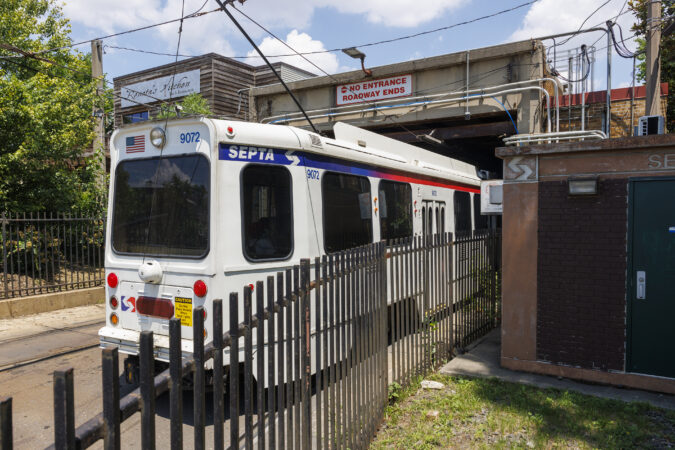
    Philadelphia’s trolley tunnel has been closed for most of the last two weeks as SEPTA contends with glitches in the connection between the overhead catenary wires and the pole that conducts electricity to the vehicle.

    The tunnel will remain closed at least until next week for repairs, and city trolleys will operate from West Philadelphia. Riders can take the Market-Frankford El to get to and from Center City to 40th and Market Streets.

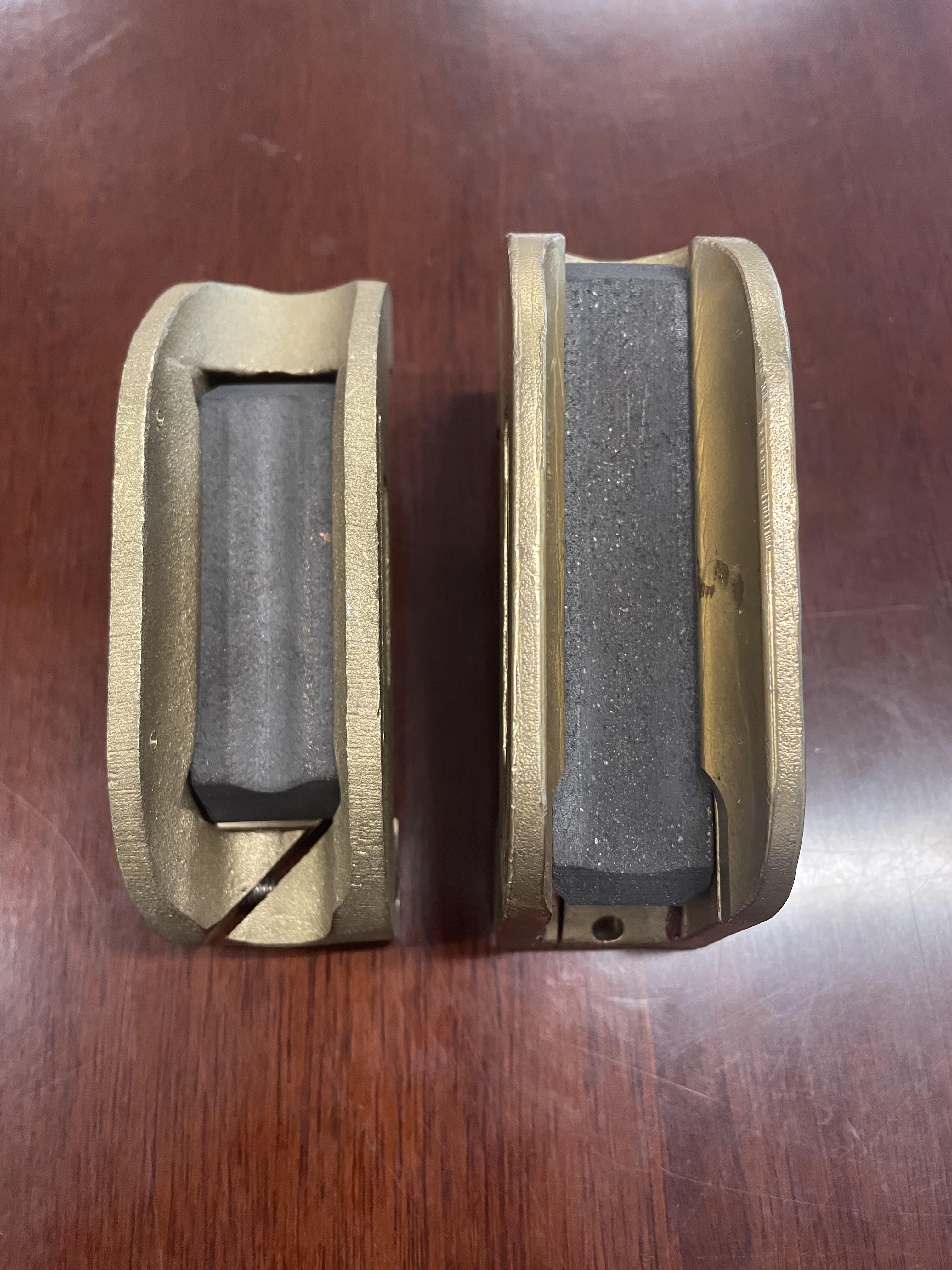
    At issue is a U-shaped brass part called a slider that carries carbon, which coats the copper wires above that carry electricity.

    “There’s a lot of friction and heat. The carbon acts as a lubricant,” said John Frisoli, deputy chief engineer for SEPTA.

    A 3-inch slider (left) and a 4-inch slider, which coats electric-powered wires with carbon to reduce friction. When they fail, trolleys are stranded.

    Earlier in the fall, SEPTA replaced 3-inch sliders with 4-inch models in an effort to reduce maintenance costs, but the carbon in the longer units wore out sooner than they should have, causing metal-on-metal contact between the trolley and the copper wires.

    Soon after, there were two major incidents when trolleys were stranded in the tunnels. On Oct. 14, 150 passengers were evacuated from one vehicle and 300 were evacuated from a stalled trolley on Oct. 21.

    SEPTA went back to the 3-inch sliders.

    On Nov. 7, SEPTA shut down the tunnel to deal with the issue, which had cropped up again, then reopened it on the morning of Nov. 13, thinking it was solved. But it discovered further damage to the catenary system and the tunnel was closed at the end of the day.

    “It’s just unfortunate that we’re dealing with the damage that decision caused,” said Kate O’Connor, assistant general manager for engineering, maintenance, and construction.

    The transit agency is running test trolleys and has found minimal wear of the wires rather than the extensive wear earlier, O’Connor said. Her department is working on a plan to replace wires by sections and will continue test runs until it’s determined the tunnel is safe for passenger traffic again, she said.

    “We have far more traffic in the tunnel than on the street — all five routes use it — and the overhead system there is more rigid,” O’Connor said.

    Trolleys have been unaffected traveling on the street. Jason Tarlecki, acting chief deputy engineer for power, said that the wires have “a lot more upward flexibility to absorb the shock,” he said, leading to less friction.

    The Federal Transit Administration on Oct. 31 ordered SEPTA to inspect the overhead catenary system along all its trolley routes.

    The directive came in response to four failures of the catenary system in September and October, including the tunnel evacuations.

  • West Philly affordable housing project could finally advance, almost 6 years after it was proposed

    West Philly affordable housing project could finally advance, almost 6 years after it was proposed

    An affordable housing project slated for a junkyard in Cedar Park took a step forward Wednesday, when a Philadelphia judge rejected a neighbor’s challenge. The courtroom victory brings the 104-unit, two-building project, which was conceived in 2020, closer to reality.

    Common Pleas Court Judge Idee Fox ruled that the new zoning of a triangular group of parcels on Warrington Avenue, which allows for buildings up to seven stories, was legal.

    Melissa Johanningsmeier, who lives next to the planned development, sued the city to stop the project in 2023, arguing that the building was inconsistent with the city’s goal of preserving single-family homes in Cedar Park.

    Johanningsmeier said in court filings she would be harmed by the parking, traffic, and loss of green space if the project were to proceed.

    The homeowner told Fox during a two-day October bench trial that there was widespread discontent with the project in the neighborhood.

    The judge seemed skeptical, as Johanningsmeier’s attorney didn’t provide witnesses or evidence to support claims of widespread backlash to the project that has been promoted by City Councilmember Jamie Gauthier.

    It was not for her to decide whether the project was the best idea, Fox said, but whether the zoning was constitutional.

    “If the community is unhappy with what’s being done, they have the right to express their concerns to the councilwoman at the ballot box,” Fox said.

    Junkyard controversy

    The project dates to 2020, when New York affordable housing developer Omni formulated plans to add 174 reasonably priced apartments to the West Philadelphia neighborhood.

    But the developer’s plans for the junkyard at 50th and Warrington met opposition due to the proposed buildings’ height — six stories — and parking spaces for less than a third of the units.

    Omni’s plan required permission from the Zoning Board of Adjustment to move forward, which was more likely to succeed with neighborhood support. So they compromised.

    A new design unveiled in 2021 pushed the buildings back to the edge of the site, to avoid putting neighboring homes in shadow. A surface parking lot would offer 100 spaces for the 104 affordable apartments.

    These concessions appeased almost all of the critical neighbors and community groups. Many of them supported Omni before the Zoning Board of Adjustment, which granted the project permission to move forward.

    But Johanningsmeier remained a critic. She lives on the border of the property and challenged the zoning board’s ruling in Common Pleas Court. Judge Anne Marie Coyle ruled in her favor, arguing the new building “would unequivocally tower over the surrounding family homes.”

    In the aftermath, Gauthier passed a bill to allow the project to move forward without permission from the zoning board. Johanningsmeier then sued over that legislation as well.

    Councilmember Jamie Gauthier in City Council in 2024.

    Affordable housing and fruit analogies

    The issue at the heart of the case was whether a zoning change to allow for large multifamily buildings was considered spot zoning on the small parcel, which Johanningsmeier’s lawyer argued was inconsistent with the types on buildings on surrounding properties.

    Just because the “mega apartment buildings” are for residential use doesn’t make the project similar to the surrounding zoning, which mostly allows single-family homes and duplexes, Edward Hayes, a Fox Rothschild attorney representing Johanningsmeier, told Judge Fox on Wednesday.

    “A cranberry and a watermelon are fruit,” Hayes said. “They are not the same.”

    And while affordable housing is a laudable cause, the attorney said, that doesn’t mean that the city should “shove it down the throat of a community” in the form of large buildings that are out of character with the rest of the neighborhood.

    An attorney representing the developer, Evan Lechtman of Blank Rome, told the judge existing buildings of similar height are nearby, across the railroad track in Kingsessing.

    “We are transforming a blighted, dilapidated junkyard into affordable housing,” the developer’s attorney said.

    Johanningsmeier’s lawyer, Hayes, declined to comment after the ruling, which could be appealed.

    Gauthier celebrated the outcome as a victory against gentrification.

    “Lower-income neighbors belong in amenity-rich communities like this one, where they can easily access jobs, healthcare, groceries, and other necessities,” said Gauthier. ”I hope the court’s ruling puts an end to gratuitous delays.”

    Housing advocates note that the years of neighborhood meetings and lawsuits over the project are an example of why housing, and especially affordable units, has become so expensive to build in the United States.

    In the face of determined opposition from even a single foe, projects can incur millions in additional costs.

    “It’s a travesty that one deep-pocketed opponent has been able to block access to housing for over 100 families in my neighborhood for years,” said Will Tung, a neighbor of the project and a volunteer with the urbanist advocacy group 5th Square. “It’s more expensive than ever to rent or buy here, and this project would be a welcome change to its current use as a derelict warehouse.”

  • A former Philly ward leader was sentenced to a year in federal prison for stealing $140,000 from the ward and his church

    A former Philly ward leader was sentenced to a year in federal prison for stealing $140,000 from the ward and his church

    A former West Philadelphia ward leader and onetime staffer for State Sen. Vincent Hughes was sentenced Wednesday to one year in federal prison for stealing more than $140,000 from his ward and a church where he served as a deacon.

    Willie Jordan, 68, had pleaded guilty to two counts of wire fraud over the summer. During his sentencing hearing Wednesday before U.S. District Judge Harvey Bartle III, Jordan said that he was sorry and that there were no excuses for his misconduct.

    “It was a bad decision,” Jordan said. “It was just wrong.”

    Bartle agreed, telling Jordan that although he appeared to have lived an otherwise noble life — dedicating his time and career to serving the public — stealing from institutions that sought to help people was inexcusable.

    “What’s so disappointing is you had a position of trust … and you abused that position of trust,” Bartle said. “And the amount of money you took were not insignificant sums.”

    Jordan for years was the unpaid leader of the 44th Ward in West Philadelphia and also a deacon at Mount Calvary Baptist Church in North Philadelphia. Prosecutors said that he had near-total control over the finances of both organizations, and that from 2020 to 2024 he took advantage of that status by writing checks to himself to cover personal expenses, including credit card and utility bills, purchases from airlines and furniture stores, and costs associated with a relative’s funeral.

    In all, prosecutors said, he stole more than $57,000 from the church and $85,000 from the ward, and often claimed the money was to reimburse the organizations for expenses they never incurred. To further conceal his wrongdoing, prosecutors said, he sometimes wrote false entries on checks’ memo lines, saying they were to pay for items such as Easter baskets or summer youth programs.

    Much of the fraud occurred while Jordan was working in Hughes’ office, prosecutors said, where he was a longtime top aide and had a six-figure state salary.

    Jordan’s attorney, Sam Stretton, said that Jordan retired from that job earlier this year amid the federal investigation into his crimes, and that he also is no longer a ward leader.

    Assistant U.S. Attorney Louis Lappen said in court that the repeated nature of Jordan’s wrongdoing, and his status as a well-paid public employee, made his crimes stand out.

    “He’s somebody who should have known better,” Lappen said.

    Stretton said Jordan “made a terrible mistake but is an otherwise good person.” He said Jordan has already repaid the $57,000 he stole from the church and is continuing to donate hundreds of dollars per month to help cover its bills and other expenses. Jordan also is continuing to make restitution payments to the ward, Stretton said.

    Several of Jordan’s relatives wept in the courtroom after Bartle imposed his sentence. The judge then paused and addressed Jordan again before adjourning the hearing.

    “You’re going to have to pay the price of your crimes, but there is life after prison, and I hope you will continue to be a useful and productive citizen,” Bartle said. “There is redemption.”

  • 3,000 protested conditions for Philly’s Black students in 1967. Here’s how these city kids remembered it.

    3,000 protested conditions for Philly’s Black students in 1967. Here’s how these city kids remembered it.

    The students walked together, chanting over the hum of Center City traffic, holding a homemade sign and shouting into a chilly November sky.

    “Hey hey!” they yelled. “Ho ho! Black history will never go!”

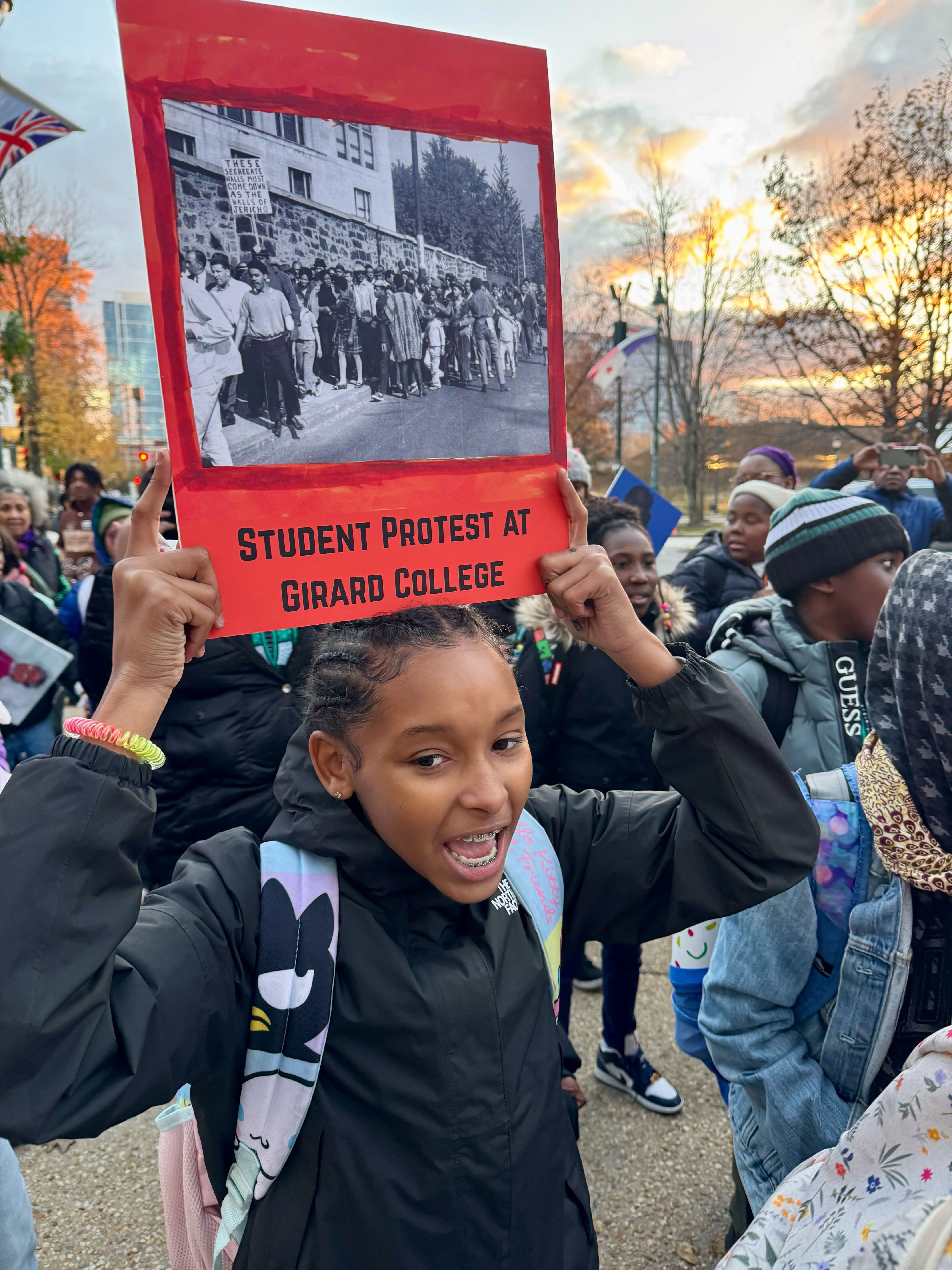
    Fifty-eight years to the day after 3,000 youth and their supporters walked out of Philadelphia School District schools to protest conditions for Black students, a clutch of kids from the Jubilee School held a march Monday to commemorate that landmark action, which historians say was a seminal moment both for the city and school integration across the country.

    Miles Matti, a fifth grader at Jubilee, a private school in West Philadelphia, walked with his brother, Theo, a third grader.

    “We’re doing it because those kids had every right to be heard,” said Miles, 10.

    Students from the Jubilee School walk to commemorate the 1967 Philadelphia student walkout, where thousands of Philadelphia School District students demanded better treatment of Black students.

    The timing of the celebration was important, organizers said — not just on the anniversary of the demonstration, but 20 years after Philadelphia became the first district in the United States to implement African American history as a graduation requirement.

    For months, Jubilee students studied the walkout. They conducted research, wrote poetry, made plans for honoring participants in the demonstration, and mapped a route — from the old School District of Philadelphia headquarters at 21st and the Benjamin Franklin Parkway, to the Free Library’s central branch, where there would be music and stories.

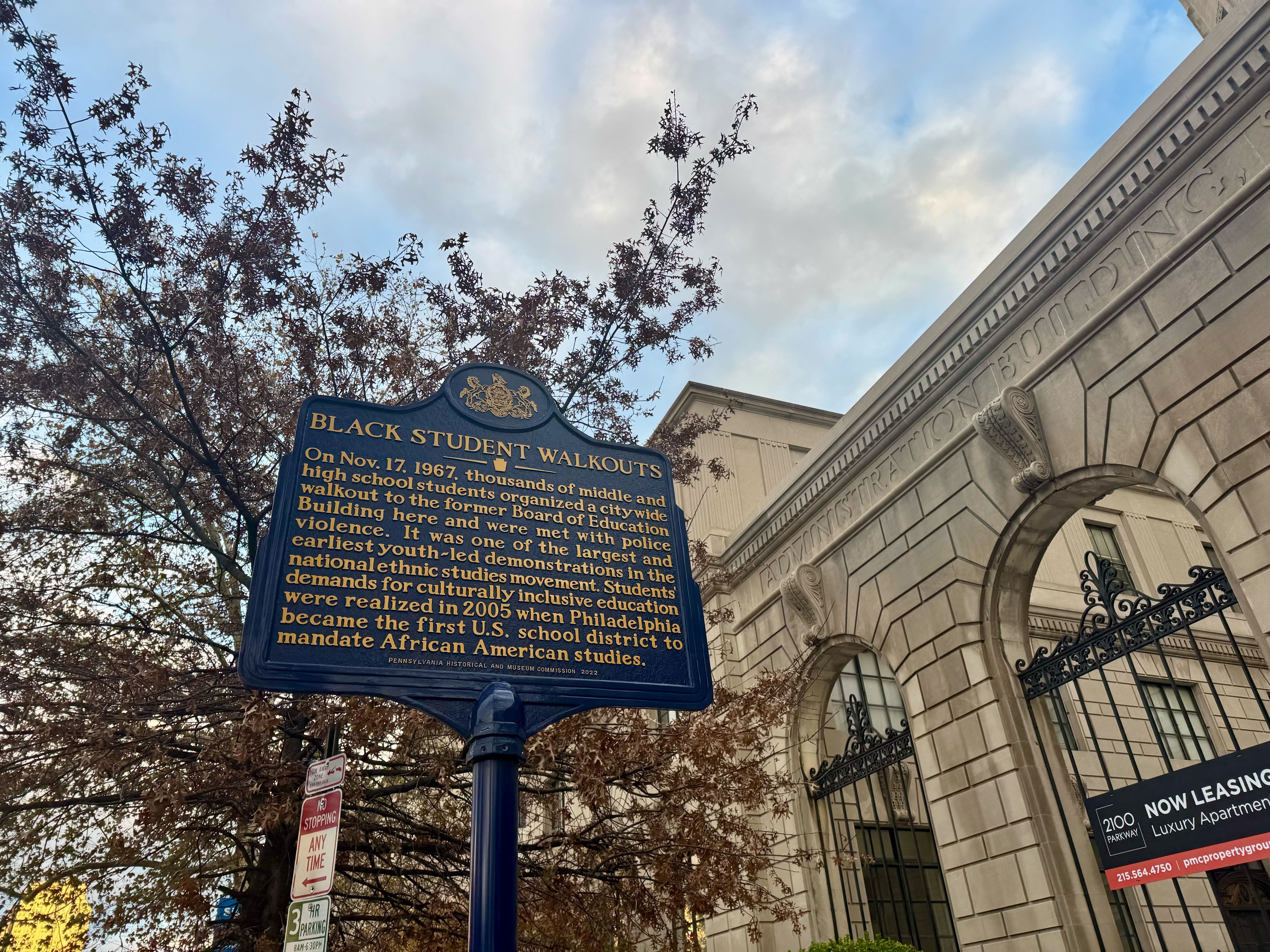
    The group honored four former Masterman students who, in 2020, won approval from the city’s Historical Commission to have a marker permanently erected outside the old district building noting the 1967 walkouts.

    Khaseem Bailey, a sixth grader with a strong voice and energy to spare, led the chants as the group, flanked by teachers, parents, and supporters, made its way down the Parkway.

    It was important to remember, Khaseem said.

    “They were marching for Black rights and student rights,” he said. “And so are we.”

    ‘It was not a flash mob’

    The Nov. 17, 1967, walkout took 10 years to plan, said Walter Palmer, now 91, and one of the chief architects of the event — a decade spent organizing, teaching nonviolent strategies, training students, pairing them with elders.

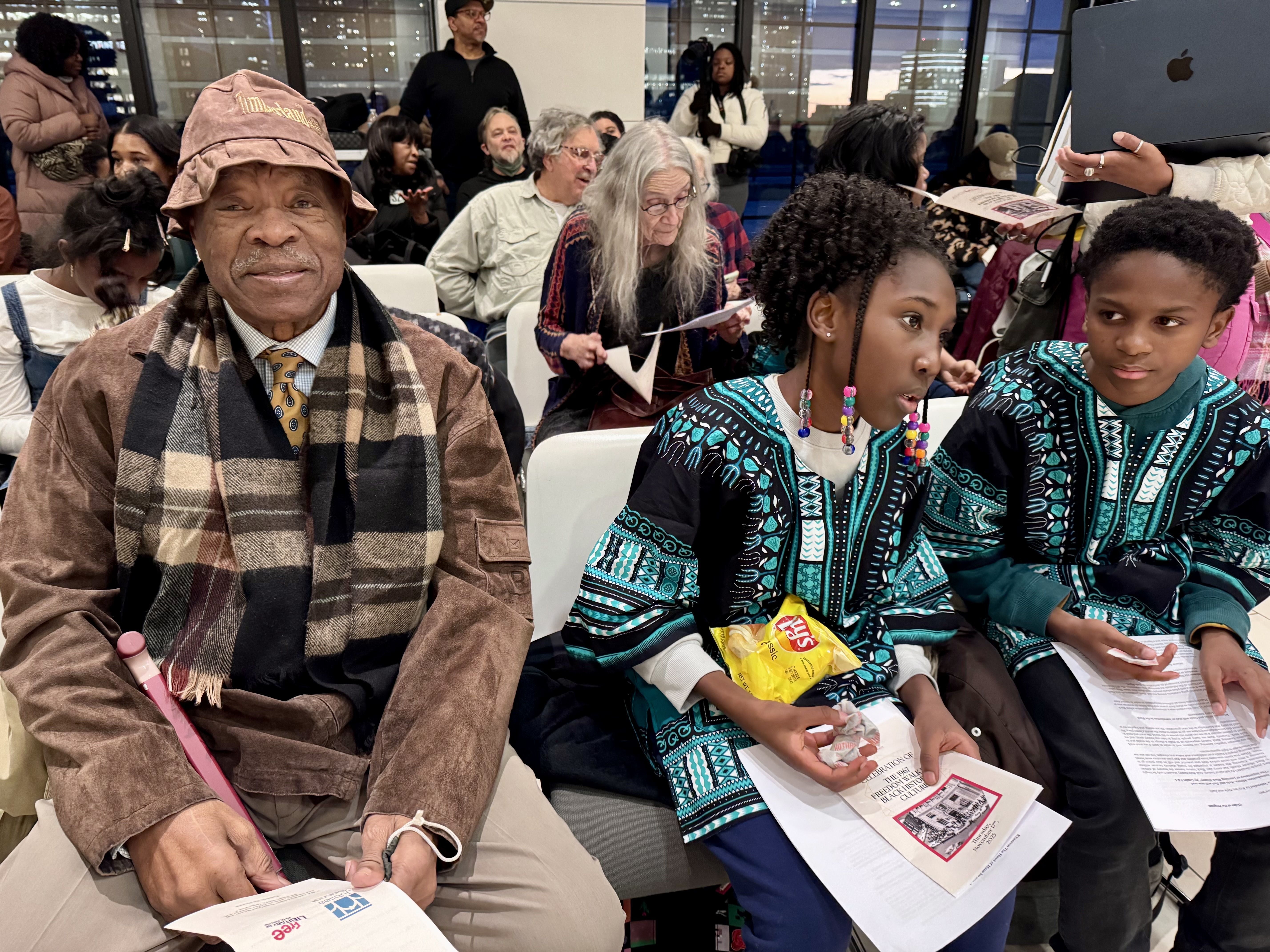
    Walter D. Palmer, who helped organize the 1967 Philadelphia student walkout, was honored at a program by students from the Jubilee School, sitting next to him.

    The time seemed right that November. By that point, Black students made up the majority of the district’s pupils, and they attended integrated schools, but conditions were unequal.

    “Black students were harmed for using African names, wearing African clothing,” said Palmer.

    Organizers came up with a list of 25 demands — from allowing students to wear their hair in Afros to infusing Black history in the district curriculum.

    “It was not a mistake,” said Palmer. “It was not a flash mob. There were no cell phones; there were no microphones. These young people, they were just hungry.”

    A historical marker commemorating the 1967 Philadelphia student walkout stands outside the former offices of the School District of Philadelphia, at 21st and Benjamin Franklin Parkway.

    Students pulled fire alarms and poured out of their schools, with many meeting at the School District of Philadelphia headquarters. Representatives were chosen to speak to then-Superintendent Mark Shedd, who took their requests seriously.

    Newspaper accounts described the demonstration as being like a “picnic,” but then-Police Commissioner Frank Rizzo called in 100 officers in riot gear. They began swinging at students and releasing police dogs.

    Fifty-seven people were arrested, and dozens injured, some seriously. The event made national headlines.

    Marilyn Kai Jewett, another walkout participant, told the students their celebration was especially timely.

    “We cannot let anyone whitewash our history,” Jewett said. “We are under attack. We cannot stop — we’ve got to fight until we die. The evil will not prevail. Goodness always prevails. Just keep doing what you’re doing.”

  • Is 2025 Philadelphia’s year of the parking garage?

    Is 2025 Philadelphia’s year of the parking garage?

    Three large stand-alone parking garages have been proposed in Philadelphia this year, unusual projects in a city where parking operators have long complained that high taxation makes it difficult to run a business.

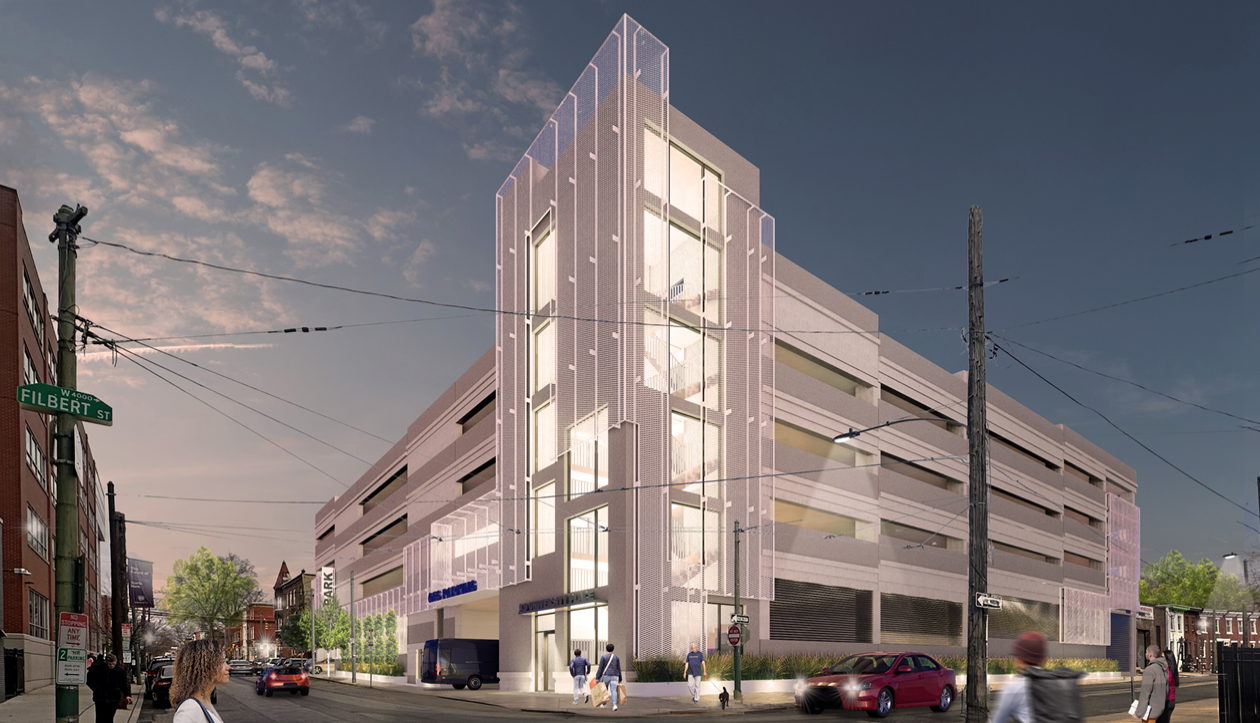
    The latest is a 372-unit garage near Fishtown and Northern Liberties at 53-67 E. Laurel St. near the Fillmore concert hall and the Rivers Casino.

    The developers see it as a strong bet for an area of the city that has seen a surge of apartment construction, which, due to Philadelphia’s parking laws, requires developers to only build spaces to serve a fraction of the units.

    “There’s been about 2,500 units that have come online within a 5- to 10-minute walk” of the planned garage, said Aris Kufasimes, director of operations with developer Bridge One Management. “When you’re building those on 7-1 [apartments to parking spaces] ratios, that leaves a massive hole. Where is everybody going to put their vehicles?”

    Despite central Philadelphia’s walkability and high levels of transit access, two other developers have made similar calculations this year.

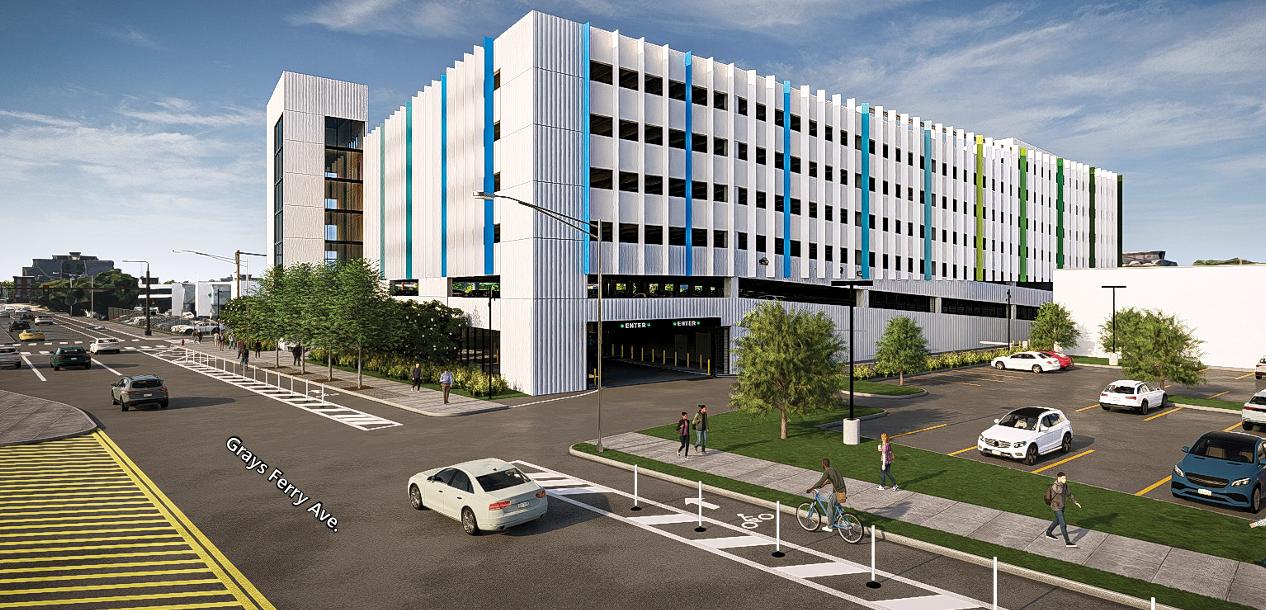
    In the spring, Children’s Hospital of Philadelphia (CHOP) revealed plans for a 1,005-space parking garage in Grays Ferry along with a shuttle service to spirit employees to the main campus a mile away.

    In August, University Place Associates unveiled plans for a 495-unit garage. About a fourth of it will be reserved for the use of the city’s new forensic lab, but the rest will be open to the public.

    All three projects have baffled environmentalists and urbanists, who thought Philadelphia was moving away from car-centric patterns of late 20th-century development.

    It’s also surprised parking operators in the city, who say national construction cost trends and high local taxation make it difficult to turn a profit.

    Legacy parking companies in Philadelphia like E-Z Park and Parkway Corp. have been selling garages and surface lots for redevelopment as anything other than parking. They say the city has lost 10,000 publicly available spaces in the last 15 years, bringing the total to about 40,000 in Center City.

    “I don’t think I’ll ever build another stand-alone parking facility,” said Robert Zuritsky, president of Parkway Corp. and board chair of the National Parking Association. “It doesn’t make any sense.”

    Zuritsky and other parking companies have long noted that operators in Philadelphia, who often have unionized workforces, get hit with parking, wage, property, and the Use and Occupancy Tax.

    When combined with the soaring cost of building new spaces across the nation, it’s difficult to turn a profit in Philadelphia.

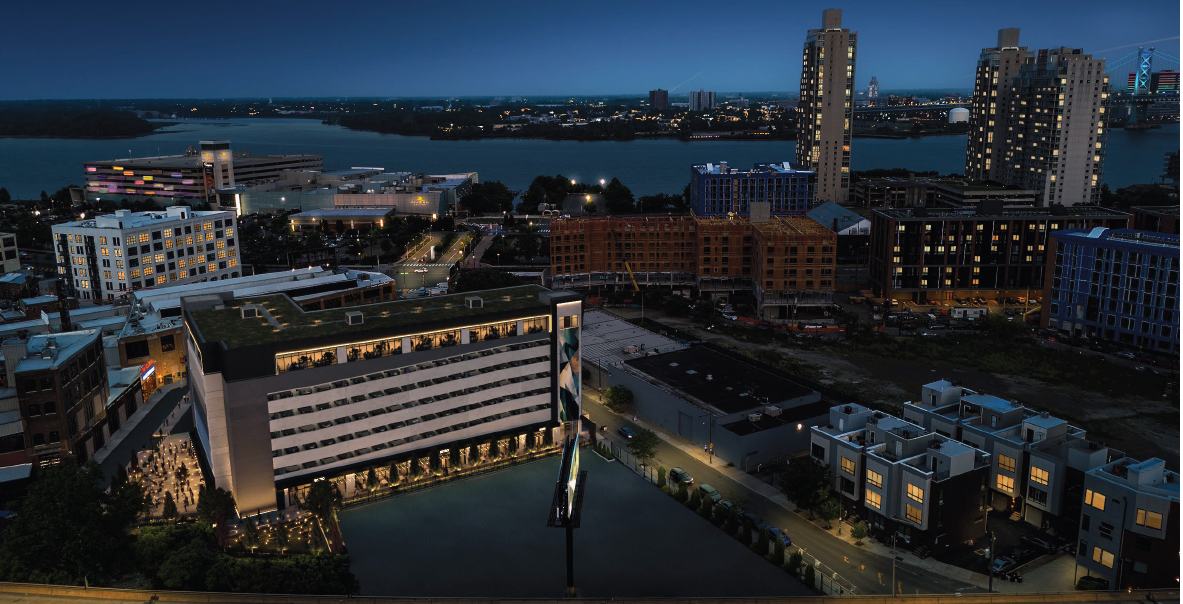
    A rendering of the Fishtown garage, looking towards the Delaware River.

    Zuritsky says it costs $60,000-$70,000 a space to build an aboveground lot in today’s environment and $100,000 to $150,000 below ground.

    “It’s like building a house for a car,” he said.

    Depending on hyperlocal peculiarities, Zuritsky says that taxation in Center City can eat up to 60% of the money they bring in and that to profit from new construction, an operator would have to charge $3,000 per space a month.

    “I wish people luck, the ones that are moving in,” said Harvey Spear, president of E-Z Park. “Between taxes, insurance, and labor, it comes to, like, 70-some percent of what we take in. We have more equipment now that does away with a lot of labor; we’re trying to compensate with that.”

    Urbanist and environmental advocates, meanwhile, have condemned the new garage projects, arguing that they will add to carbon emissions, air pollution, and traffic congestion.

    “A massive parking garage less than half a mile from the El [in Fishtown] is the wrong direction for any city that claims to take climate action seriously,” said Ashlei Tracy, deputy executive director with the Pennsylvania Bipartisan Climate Initiative. “SEPTA is already working to get more people out of cars and onto transit, but projects like this one and the one from CHOP only make that harder.”

    Here are the parking projects in the pipeline.

    Fishtown: 372 spaces

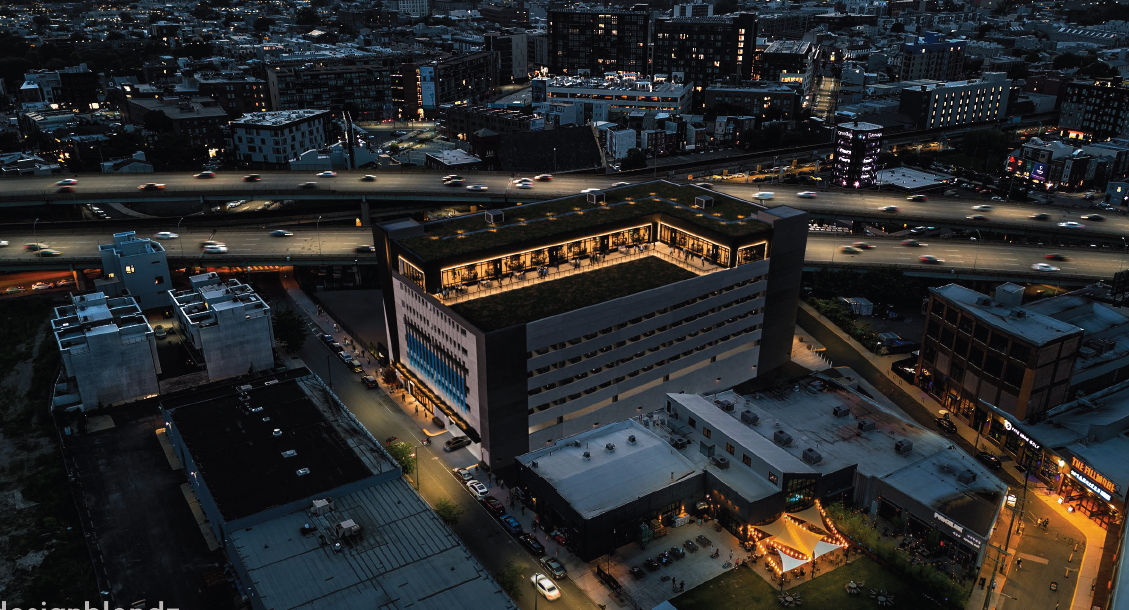
    The garage, with architecture by Philadelphia-based Designblendz, doesn’t just contain parking. It includes close to 14,000 square feet of commercial space on the first floor, which the developer hopes to rent to a restaurant — or two — on the edges of one of Philadelphia’s hottest culinary scenes.

    Another over 16,000-square-foot restaurant space is planned for the top floor, with views of the skyline and river. Both the top and bottom floors also could be used as event spaces.

    Kufasimes says that this aspect of the project could partly offset the kinds of costs that parking veterans warn of.

    “Our due diligence team went through those numbers and vetted them pretty thoroughly: The returns are what they needed to be,” Kufasimes said. “It’s got a multifunction of income streams, so we think that that really will help play a larger role.”

    Kufasimes also said a parking garage made sense in an area that’s seen more development than almost any other corner of Philadelphia. When investors purchased the land at 53-67 E. Laurel St. and approached his company for ideas, they met with other stakeholders in the neighborhood and determined parking would be appreciated.

    “It wasn’t necessarily all about the profit,” Kufasimes said. “A lot of people this day and age, that is their number-one goal. If this is a slightly lower return in the long run but can be better accepted by the community as a whole, we think that actually raises the value of the asset.”

    An overhead-perspective rendering of the Fishtown garage.

    At an October meeting of the Fishtown Neighbors Association, that argument appeared to pay off. Unlike most community meetings where a large new development is proposed, there were no adamant opponents of the project. The project also includes a 20,000-square-foot outdoor space, a green roof, and a to-be-decided public art component. All of that helped, too.

    “It’s nice seeing a parking garage, of all things, be as pedestrian-friendly and thoughtful as this,” one speaker said during the Zoom meeting.

    University City: 495 spaces

    The garage at 17 N. 41st St. is part of a larger complex of developments in a corner of West Philadelphia’s University City.

    Dubbed University Place 5.0, it largely exists because of a major expansion of the municipal bureaucracy west of the Schuylkill.

    For years the city has sought a new location for its criminal forensics laboratory. The debate became heated in City Hall, with numerous Council members making the case for locations within their districts.

    Councilmember Jamie Gauthier pushed for its location in University City Place 3.0, a newly built, state-of-the-art life sciences building that was coming online just as its intended industry was slowing down in the face of higher interest rates.

    To get the crime lab, Mayor Cherelle L. Parker’s administration said the police department would need ample parking. That’s where the new garage comes in.

    In June, Gauthier passed a zoning overlay that cleared away the regulatory hurdles to the project. Six weeks later, the developers revealed University City Place 5.0, which has 29 parking spaces on the ground floor reserved for official use by forensics vehicles and 100 spaces reserved for city employees.

    A rendering of the proposed University City parking garage as seen from 42nd and Filbert Streets.

    Designed by Philadelphia-based ISA Architects, the garage is also meant to serve University Place Associate’s other large developments in the area. Akin to the Fishtown garage, they have also sought to make the development pedestrian friendly, with a dog park, green space, and public art.

    The local community group, West Powelton Saunders Park RCO, also embraced the proposal.

    “The community met regarding this project back in August, and … they were all in support of this project,” Pamela Andrews, president of the West Powelton Saunders Park RCO, said at the city’s September Civic Design Review meeting. “We have a tremendous problem with parking, and the community members felt this was a much needed and welcome addition.”

    Grays Ferry: 1,005 parking spaces

    CHOP’s thousand-car parking garage by far has been the most controversial of the proposals. But it also makes the most economic sense for the owner. Unlike the other garages — or those owned by Parkway and E-Z Park — it will be owned by a nonprofit and exempted from many of the taxes that make it so expensive to own parking in Philadelphia.

    A rendering of the new parking garage CHOP plans for Grays Ferry.

    The hospital purchased the property at 3000 Grays Ferry Ave., next to the Donald Finnegan Playground, for almost $25 million last year.

    The seven-story development, which, plans show, would have far fewer amenities than its University City and Fishtown counterparts, is meant to serve CHOP’s new research facilities in Fitler Square and the new patient tower set to open in 2028.

    “We recently secured permits and have begun construction on the new parking garage at 3000 Grays Ferry Ave.,” a CHOP spokesperson said. “The full construction is expected to go through the fall of 2026. CHOP continues to engage with the community by providing support, timely updates and addressing feedback during construction.”

    At the time of its unveiling, CHOP argued that the massive garage was needed as SEPTA threatened to become unreliable due to a political funding crisis in Harrisburg. But detractors appeared almost immediately to denounce the hospital for worsening air quality in a lower-income neighborhood that is already a hot spot for asthma.

    The project’s design was derided at the city’s advisory Civic Design Review panel and has attracted protest rallies, unlike its counterparts in University City or Fishtown.

    There are no regulatory hurdles to the development, but changes in the political or economic landscape could make it difficult to embark on a large capital project. Notably, the University of Pennsylvania proposed an 858-space garage in 2023 for the nearby Pennovation Center and has never broken ground.

  • Councilmember Gauthier pursues more red tape for university land sales in West Philly

    Councilmember Gauthier pursues more red tape for university land sales in West Philly

    Philadelphia Councilmember Jamie Gauthier has made it clear that she is unhappy with St. Joseph’s University.

    The school sold much of its West Philadelphia campus to Belmont Neighborhood Educational Alliance, a nonprofit led by Michael Karp, a developer of student housing.

    In City Council on Tuesday, St. Joe’s confirmed that the sale has closed.

    In reaction, Gauthier had authored legislation that sought to require more community oversight when large institutions make significant land sales in University City, which is part of her district. She thinks this sale might not be the last, given the turbulent state of higher education.

    Her original legislation was deemed legally dubious by the city’s law department and by most zoning attorneys consulted by The Inquirer.

    Gauthier amended the bill and got the new version passed by City Council’s Rules Committee on Tuesday.

    “It is an indisputable fact that college campuses significantly impact the communities that surround them,” Gauthier said at the hearing.

    “As higher education undergoes its most significant change in our lifetime,” she continued, “we must ensure that land-use decisions are made with their communities in mind, and recent actions by multiple universities prove this will not happen without legislative action.”

    The original bill sought to regulate how higher education institutions use their land, which is illegal. Zoning concerns land use generally, not only land use of specific actors.

    Gauthier amended the bill so it is triggered not by a change in ownership from a university to a non-higher education buyer, but by a proposed change away from educational use on lots over 5,000 square feet.

    So if a university sold land to a housing developer, the law would be triggered. It is not clear it would be triggered by what St. Joe’s did, which was selling land used for university purposes to another educational provider that claims to want to start a teaching college.

    The amendments also removed clauses that would have required neighborhood residents to join the Philadelphia City Planning Commission when it reviews land-transfer proposals, as is required by this bill.

    Gauthier pushed back against arguments that her bill is an overreach by noting that it simply requires a meeting with neighborhood groups, a review by the planning commission, and a demolition moratorium if there are no permits for new construction.

    “This bill doesn’t cripple anyone’s property values,” Gauthier said. “It doesn’t restrict anyone’s use or density rights. It adds more eyes and more transparency to land-use decisions for major properties that change entire neighborhoods. The idea that this could ever be wrong is simply preposterous.”

    The IPEX building at St. Joseph’s University in Philadelphia on Sept. 12.

    Representatives from a host of West Philadelphia neighborhood groups testified in support of Gauthier’s bill. They detailed their anxieties about living in the shadow of large institutions with expensive real estate portfolios and their frustrations with what they felt had been duplicity by St. Joe’s during a public engagement campaign about the sale.

    During neighborhood meetings earlier this year, attendees detailed their desire for a community college, health clinic, parking, or affordable housing on a post-sale St. Joe’s campus.

    They said they felt that the university ignored their feedback.

    “This thing about community engagement, we feel as though it was false,” said Jacquelyn Owns, a committeeperson in the 27th Ward. “It was just something to keep the community quiet while they did exactly what they wanted to do.”

    St. Joe’s representatives argued that Karp’s plans for the site are in keeping with the neighborhood’s broad desires, given that his Belmont organization runs charter schools.

    St. Joe’s also noted that it will still retain some property in the area affected by Gauthier’s bill and contended that the legislation would have deleterious effects on higher education institutions in University City.

    “It probably would devalue our real estate holdings, which, in turn, would then devalue our balance sheet, which would then restrict our ability to offer financial aid,” said Joseph Kender, senior vice president at St. Joe’s. “It would restrict our ability to start new construction projects. It would restrict our ability to offer new academic programs.”

    A lawyer for St. Joe’s, Ballard Spahr zoning attorney Matthew McClure, said that even the amended bill might still be illegal.

    Despite the protests by St. Joe’s, Council’s Rules Committee passed the amended bill.

    That may be the last movement on the controversial legislation for a while. At its October meeting, the planning commission requested a 45-day hold on the bill to consider its ramifications more thoroughly. That means the full City Council will not be able to consider it until late November.

  • Before the Day of the Dead, a time to welcome departed dogs and cats as families create ‘pet ofrendas’

    Before the Day of the Dead, a time to welcome departed dogs and cats as families create ‘pet ofrendas’

    The spirits of the pets come first, treading home on soft, shadowy paws, making their way by the light of altar candles and guided by the eternal tie of love.

    They are welcomed with offerings of favorite treats and fresh water, and by the careful placement of old toys and worn collars that have become cherished mementos.

    It’s a new tradition connected to the Day of the Dead, the ancient Mexican holiday where people honor and celebrate the lives of family members at a time when the wall between worlds melts.

    Now, in Philadelphia and elsewhere, people have begun to recognize not just human relatives but those with wings and whiskers, the departed dogs, cats, birds, and other animals that enriched their lives. And who, like family, continue to be mourned and missed.

    The souls of pets are said to return on Oct. 27, a few days before the Dia de Muertos on Nov. 1 and 2.

    “The day,” said Gerardo Coronado Benitez, manager of the Association of Mexican Business Owners of Philadelphia, “is not about death, but about celebrating and remembering people, keeping memories alive. Of course many people want to keep alive the memories of their pets.”

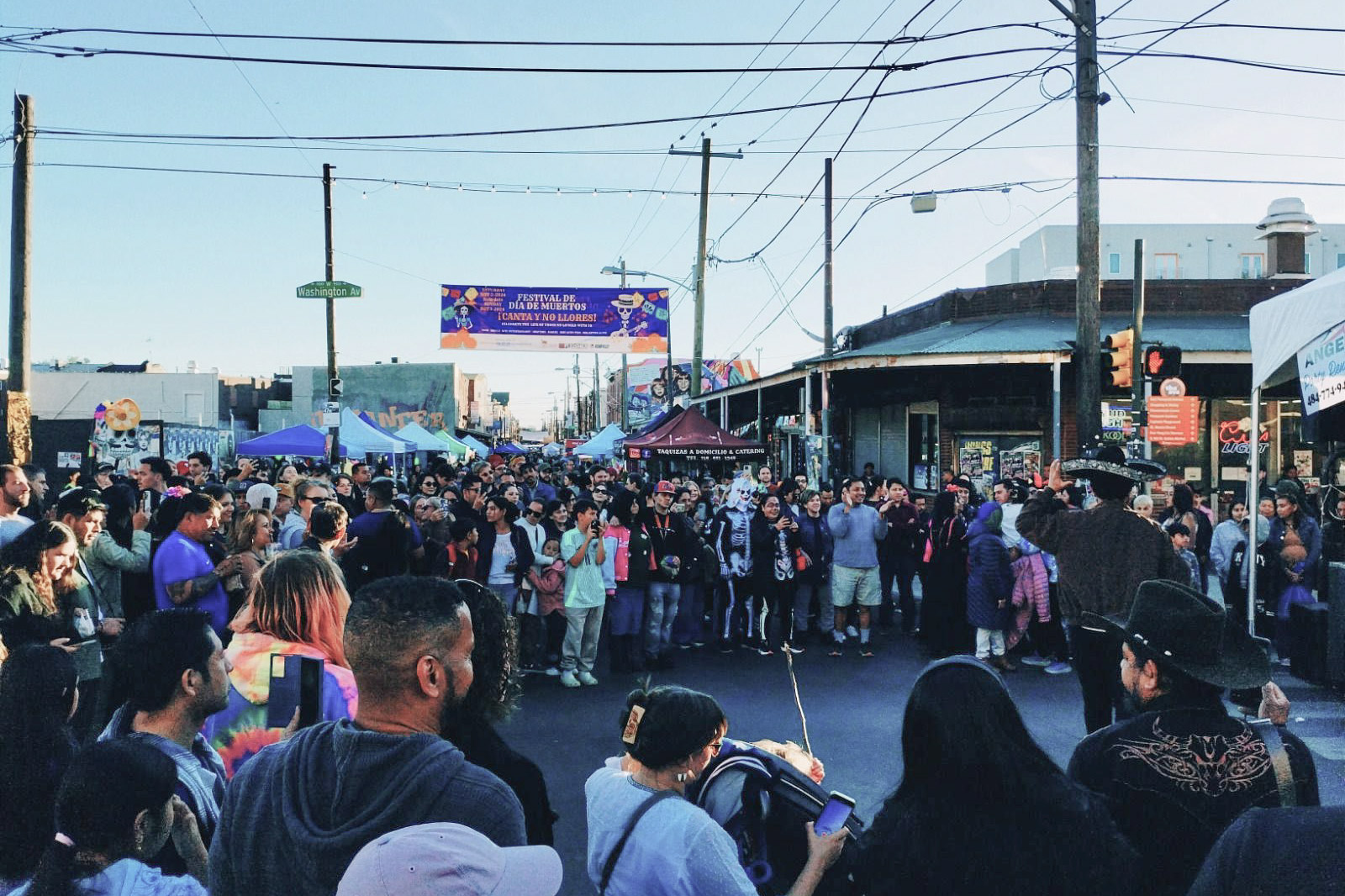
    He is helping organize a big Day of the Dead event at the Italian Market on Nov. 2, where people will be able to place photos of relatives and pets on a community ofrenda ― a decorated altar ― at Ninth Street and Washington Avenue.

    A crowd gathers at last year’s Day of the Dead celebration at the Italian Market in South Philadelphia.

    Others have set up altars in their homes. These ofrendas may be adorned with traditional marigolds, with candy skulls, paper skeletons, and photographs. But they may also feature a snatch of fur or a whisker left behind.

    Genesis Pimentel-Howard created an ofrenda for her cat, Mobi, on a bedroom shelf of the West Philadelphia home she shares with her husband, Yaphet Howard.

    It’s hard for her to talk about Mobi, who died suddenly in May at only 4 years old.

    He was, she said, an adorable menace. Mobi loved to poke at and play with the couple’s other cat, Sannin, though Sannin didn’t always appreciate the attention.

    Mobi sometimes stole food from the trash. And he managed to push over and break Pimentel-Howard’s flat-screen TV. Still, she said, he followed her everywhere. She couldn’t even use the bathroom without him trailing her inside.

    “A sweet momma’s boy,” she said. “Always next to me.”

    On the ofrenda, Pimentel-Howard placed her grandmother’s pearls. And photos of her family dogs, Ella and Red, and her hamster, Shia LaBeouf. She added a shadow box that holds Mobi’s collar and an impression of his paw.

    “I’ll stay up as late as I can to welcome him,” she said. “I like to think he’ll be around.”

    Genesis Pimentel-Howard lights a candle for her late cat, Mobi, beside a lovingly crafted ofrenda in her Philadelphia home on Monday. The altar glows with candlelight, welcoming the spirits of her beloved departed pets. The ritual is part of a growing tradition tied to Día de los Muertos.

    The roots of the Day of the Dead go back 3,000 years, to Aztec and Mayan traditions. It is celebrated not only in Mexico but also in wider Latin America and in communities across the United States.

    Dogs have always played an important role. The ancients considered them sacred, guides that led souls through the afterlife. They revered the Mexican Hairless dog, the Xoloitzcuintle, or Xolo for short.

    It’s a Xolo dog, Dante, that guides Miguel to meet his ancestors in Coco, the popular animated Disney movie. And it’s a song from the movie, “Remember Me,” that has become the soundtrack for countless social media posts about departed pets.

    In Philadelphia, the Italian Market festival welcomes all who wish to take part in its Day of the Dead event to South Ninth Street between Federal and Christian Streets from 11 a.m. to 5 p.m. on Nov. 2

    The Fleisher Art Memorial in South Philadelphia also will hold a big Day of the Dead celebration. Everyone is invited to help with final preparations for the ofrenda from 2 to 9 p.m. on Oct. 31, and to come to the Day of the Dead event the next day.

    “The animals, that’s family, too,” said María De Los Angeles Hernández Del Prado, the artist who led the creation of the Fleisher’s large, three-part ofrenda, which includes a section devoted to pets. “They’re the same as us, they just don’t talk the same language.”

    Pimentel-Howard knew after Mobi died that she would find a way to honor him, along with the other animals she has loved.

    “You don’t know what it’s like to lose an animal,” she said, “until you’ve lost one.”

  • Community College of Philadelphia interim president is selected for permanent role

    Community College of Philadelphia interim president is selected for permanent role

    Alycia Marshall, who has been serving as interim president of Community College of Philadelphia since April, was unanimously endorsed for the permanent role Tuesday.

    The board of trustees, at an 8 a.m. meeting, approved making an offer of employment to Marshall, who had served as provost and vice president for academic and student success at CCP for nearly three years before stepping into the interim role.

    Marshall was among four finalists for the job.

    “Congratulations,” Board Chair Harold T. Epps said to Marshall during the Zoom meeting, which lasted about 10 minutes. “You have earned it through a very tough and challenging process. …We look forward to working with you.”

    Epps cited Marshall’s “stellar work” through the interim period as a factor in the board’s decision and said she had “the full confidence” of the board.

    “I’m a little bit emotional,” Marshall said at the meeting. “I’m very excited. I’m honored. I’m deeply humbled, pleased, ecstatic, and looking forward to the road ahead and the journey ahead.

    “I am fully committed to this institution, to our students, most importantly, and to the college community.”

    Alycia Marshall

    Epps said contract negotiations with Marshall would begin immediately to lead the college, which had an enrollment of 12,400 credit students and 1,381 noncredit students last spring. No terms or salary of her employment were released.

    Marshall will follow former CCP President Donald Guy Generals, who led the college for 11 years and was forced out of the job in April and placed on paid administrative leave through the end of his contract.

    Philadelphia Mayor Cherelle L. Parker congratulated Marshall in a statement.

    “The Parker administration supports CCP, Dr. Marshall, and the board in its mission,” she said.

    Maria Baez, student government president, was on the search committee and said while she liked all four candidates, Marshall was her first choice.

    Alycia Marshall speaks at a Community College of Philadelphia forum where she appeared as one of four finalists for president. She got the job Tuesday.

    “As a student, I see her passion for the students,” Baez said. “I see how connected she is with the students. Her heart is for the students.”

    Junior Brainard, co-president of the faculty and staff union, said: “As a union, we are looking forward to Dr. Marshall finally making good on the agreement we signed back in March,” referring to a contract agreement. “That includes SEPTA passes for all students, smaller class sizes, and improvements to health, safety, and working conditions that will be figured out through various committees.”

    During a finalist forum, Marshall addressed free SEPTA passes for students. While the college couldn’t offer the benefit to all students — it would cost about $2 million — a pilot will begin in the spring at the college’s West Philadelphia site, she said.

    Brainard said the college has to do better. The pilot only serves half the students at the West Philadelphia site and just 3% of the student body, he said.

    Marshall said in an interview Tuesday afternoon that the goal is to find alternative funding sources and expand the program to the entire college.

    She said among her priorities will be increasing and strengthening transfer partnerships, with the recently announced program with Cheyney University, an historically Black college in Delaware and Chester counties, as a model.

    “Many of our students have transportation issues and perhaps reasonably cannot drive the 25 miles to Cheyney University,” she said. “So Cheyney at CCP is going to provide opportunities to complete a bachelor’s while staying on our campus. It’s symbolic of where I would like to work together with faculty, staff and the administrators and the board … on really strengthening those pathways.”

    She cited workforce development and strengthening partnerships with K-12 schools, too, including expanding dual enrollment opportunities and reaching into areas of the city that the college currently is not penetrating enough.

    When Marshall was named as interim, Epps cited her “academic and organizational leadership, along with her extensive expertise in STEM, her focus on mentoring and serving underrepresented student populations.”

    Marshall, 51, received her bachelor’s in mathematics from the University of Maryland Baltimore County, her master’s in teaching from Bowie State University, and her doctorate in mathematics education from the University of Maryland.

    A native of Maryland, she started her career as an adjunct professor at Anne Arundel Community College in Maryland, near Annapolis, and later became a full tenured professor and chair of the mathematics department.

    She was promoted to associate vice president there and founded the African American Leadership Institute and spent a total of nearly 23 years at the Maryland community college. She’s also a rising presidents fellow with the Aspen Foundation, a nonprofit aimed at creating thought leaders in their fields to address critical challenges.

    Alycia Marshall, then interim president of Community College of Philadelphia, speaks at commencement in May.

    At a campus interview session for the job, Marshall said she would lead both internally and externally, focusing on faculty and staff satisfaction as well as building relationships with funders and donors.

    She said she has already met more than 20 City Council members and state legislators.

    Marshall acknowledged that an employee satisfaction survey she commissioned when she became interim president showed low morale and promised to address it “through ensuring transparency and frequent communication.” The results of that survey haven’t been publicly released.

    Marshall said that over the last six months, she learned to be comfortable not knowing what will happen next. After a board meeting earlier this month, a consultant who is the liaison to the presidential search committee said on a still-active microphone that Marshall had not been well-received on campus.

    Marshall said at the interview session that she did not agree with that and that she has developed relationships with people across the college.

    “If you have worked directly with me, you will know I am here for the students and I am here to support faculty and staff,” she said.

    Marshall, who maintains a residence in Maryland, said she would move to the city full time if selected for the job.

    The other finalists for the job were: Jesse Pisors, former president of Pasco-Hernando State College in Florida; Jermaine Wright, vice president for student affairs at City University of New York-Lehman College; and Lisa Cooper Wilkins, vice chancellor of student affairs at City College of San Francisco.