Tag: Women’s Sports

  • The WNBA’s rapid growth means a rise in gambling, and it’s affecting the players

    The WNBA’s rapid growth means a rise in gambling, and it’s affecting the players

    Growing up in a family of six in Poughkeepsie, N.Y., former Villanova women’s basketball star Maddy Siegrist said the closest thing she witnessed to a sports bet was when the Super Bowl rolled around. And even then, it was friendly wagers.

    “It just wasn’t a thing in our house,” said Siegrist, who now plays for the WNBA’s Dallas Wings. “I didn’t grow up with people who bet. Plus, there were no apps or anything. I knew people that did boxes on the Super Bowl. That was the extent of my knowledge.”
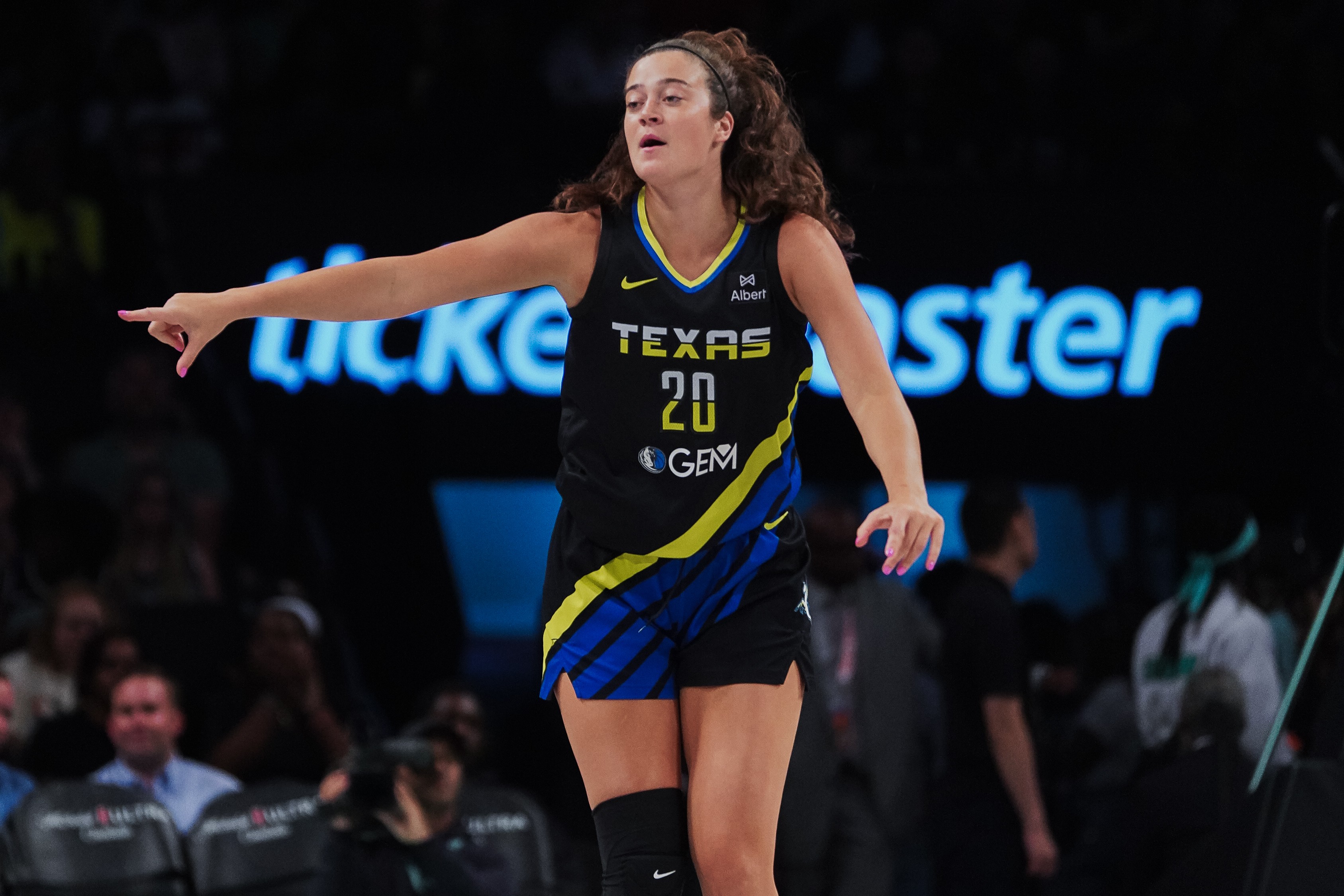
    Maddy Siegrist didn’t grow up around sports betting, but it’s now inextricably tied to her profession.

    Since Siegrist went pro in 2023, however, legalized sports betting has infiltrated virtually every corner of sports. Siegrist said the WNBA benefits from the sports gambling population laying bets on games. That translates to more eyes watching women’s professional basketball, which generates a bigger fan base, which spurs continued growth of the sport and its brand.

    But Siegrist, 25, is quick to point out a darker side to the sports-gambling intersection, “one of the rougher parts that people don’t think about,” she said.

    Public vitriol directed at athletes is nothing new. But add the sports gambling component and a bettor’s ability to wager on virtually any aspect of a game or performance at the click of an app, and the result can be toxic. Often, negative fan reaction is the result of a losing bet, and social media has exacerbated the issue.

    “Any pro athlete will kind of give you the same [story]: These are people betting from their house that you’re going to go under [a projected stat total] or your team’s going to win,” Siegrist said. “With the world of social media, just how much hate people get is truly amazing. I’m not a super controversial player. I don’t have the spotlight like some of my other teammates. But if you have a bad game or a good game, you can get anywhere from 50 to 100 [direct messages] or comments on your social media that are crazy.”
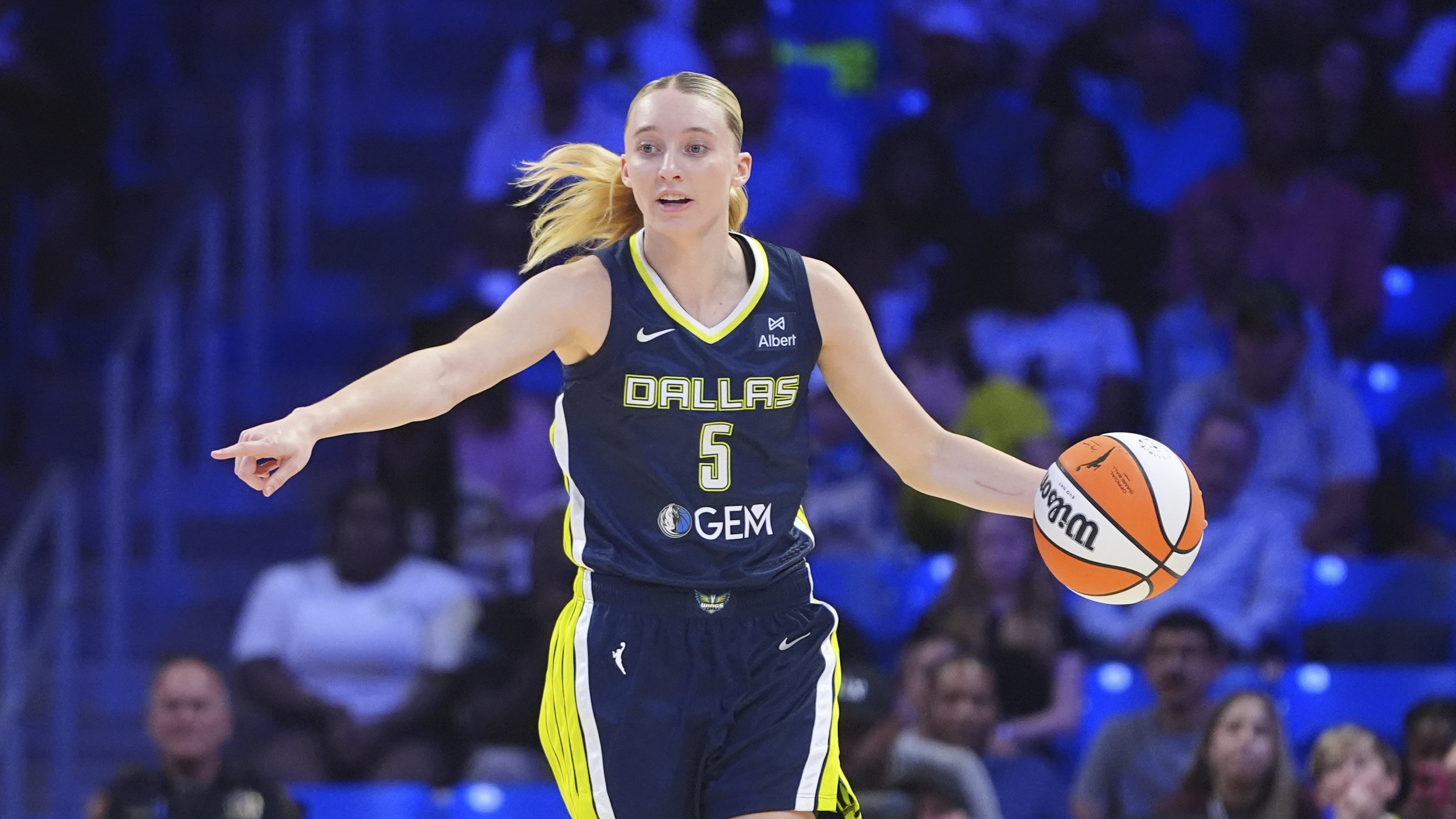
    Dallas Wings guard Paige Bueckers, a teammate of Maddy Siegrist, is one of the WNBA’s brightest young stars.

    Betting burden

    No longer are the WNBA and college women’s basketball considered unattractive markets for sports gamblers. Players like Indiana Fever star Caitlin Clark and Paige Bueckers, Siegrist’s teammate on the Wings, are among the stars generating buzz, and, by extension, causing a spike in gambling activity on the sport.

    Female athletes, professional and amateur, shoulder many challenges beyond maintaining elite performance on the court or field. That includes playing in the age of the ever-growing legalized sports betting industry — especially the proliferation of multimillion-dollar business partnerships between pro sports leagues like the WNBA and gaming companies like BetMGM.

    And sports remain corrupted by the underworld of illegal gambling, where pro athletes can turn to a side hustle to try to score millions illicitly. The recent unsealing of the federal indictments that involve illegal gambling schemes, the NBA, and purported organized crime members is one such example, and Siegrist said she had followed those recent announcements.

    While the WNBA and the players’ union continue collective bargaining negotiations, there are developments regarding salary structure in the league’s latest proposal. The changes could temper a longstanding gripe by professional women’s basketball players: that their compensation is not commensurate with the gargantuan salaries made by male pro hoops players — as they shoulder the shared burden of scrutiny from bettors and fans alike.

    According to a source with knowledge of the situation, the league’s latest proposal includes language that defines a maximum salary structure with a guaranteed $1 million base for 2026 and projected revenue sharing pushing total earnings for max-salary players to more than $1.2 million. This follows an agreement to extend the current labor agreement to Jan. 9

    The average player’s salary is projected to exceed $500,000 in 2026, while the minimum salary is projected to be more than $225,000 — up from approximately $102,000 and $66,000, respectively, in 2025.

    Institutional support

    Once the WNBA season starts, Siegrist said she drastically reduces her social media use to keep her mind clear of clutter and keep the focus on basketball.

    “You have to take it for what it is. Obviously, social media helps you build your brand, stay connected,” she said. “From that perspective, it’s great. It’s really allowed athletes to monetize off of themselves, and it gives fans a unique perspective into seeing these people’s lives, which I think is great.

    “Twitter [now known as X] is the worst. I definitely try to not go on at all during the season. … Sometimes I like to scroll on TikTok, take my mind off stuff. But I don’t ‘like’ anything that has to do with the WNBA on TikTok. I think for me, it’s definitely a balance.”

    The WNBA has taken steps to combat hate and negative fan behavior directed at the league’s players and personnel. Earlier this year, the league launched the “No Space for Hate” initiative, a “multidimensional platform designed to combat hate and promote respect across all WNBA spaces — from online discourse to in-arena behavior.”

    One of the campaign’s goals is the use of artificial intelligence to safeguard the players’ and teams’ social media pages and to automatically detect, report, and delete hate speech and harassment.

    “As interest in sports betting grows around the WNBA, we are taking clear, concrete steps to protect players and safeguard the integrity of the game. Player safety remains our highest priority,” the WNBA said in a statement. “We’ve enhanced security, expanded monitoring of online threats, and increased fan education. We are also working closely with our gaming partners to monitor betting activity and ensure our systems protect the game. These safeguards are constantly being reviewed and strengthened to ensure we keep the players safe and our game secure.”

    Around the time the WNBA launched “No Space for Hate,” sportsbook behemoth BetMGM announced its partnership with the reigning champion Las Vegas Aces. BetMGM also is an authorized gaming partner with the league.
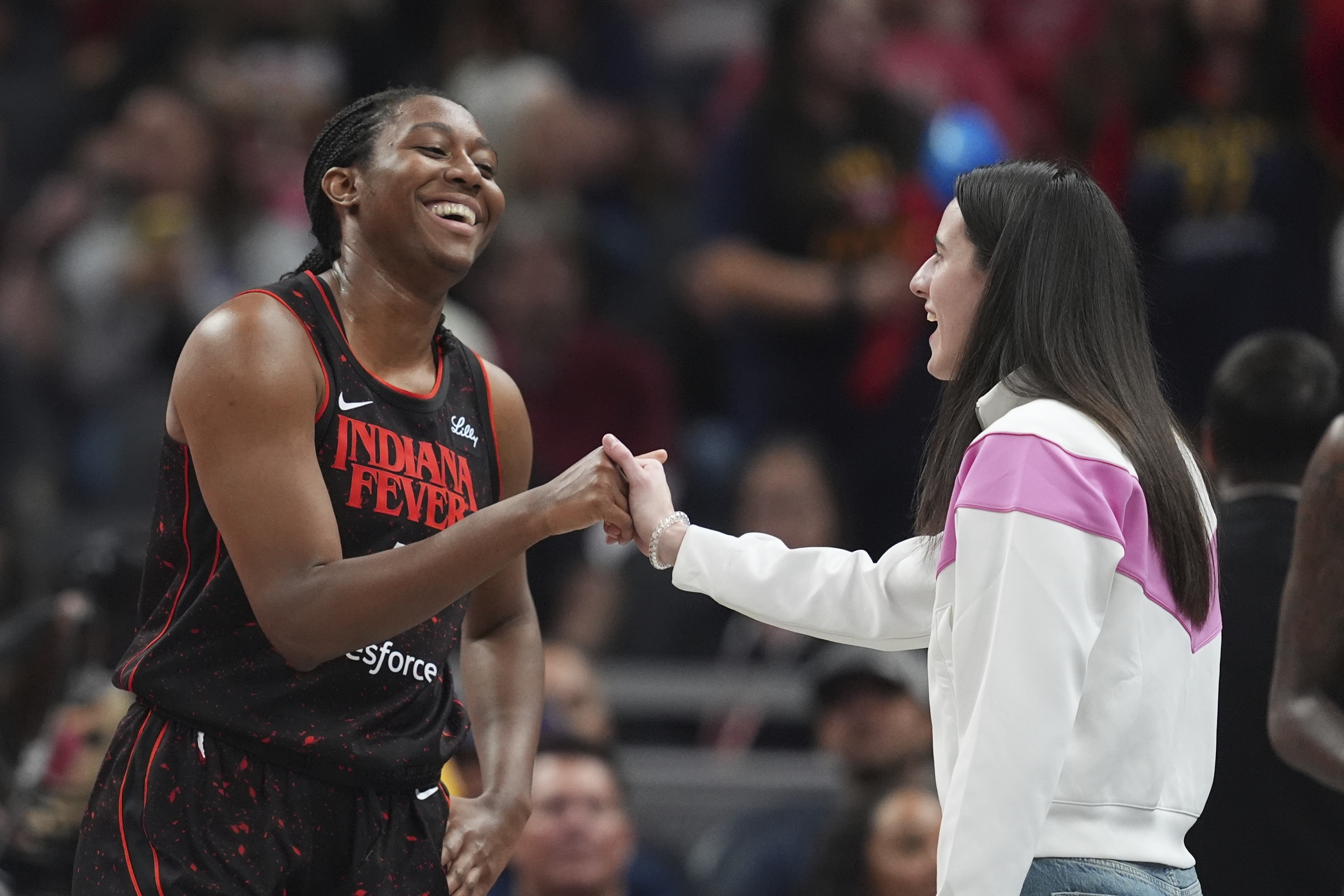
    Even while injured, Caitlin Clark (right), here with another former top overall pick in Aliyah Boston, generates a ton of buzz around the WNBA.

    “The NBA and WNBA are very different in terms of scale and seasonality — the NBA is a much bigger league, but both have shown strong year-over-year growth,” said BetMGM trading manager Christian Cipollini. “The WNBA benefits from its summer schedule when there’s less competition for attention, and star power like Caitlin Clark has driven a major uptick in engagement. Even after Clark’s injury this [2025] season, handle remained well above pre-Clark levels, which speaks to the league’s momentum.”

    Cipollini said BetMGM — and the gaming industry as a whole — is committed to sports integrity.

    “That includes athlete harassment, and we’re working with the leagues on this issue from several angles,” he said.

    Historical perspective

    During his 42 years (1978-2020) as head coach of the Villanova women’s basketball team, Harry Perretta said gambling on women’s college basketball was never an issue for him and his players, simply because the interest wasn’t there. Of course, the bulk of Perretta’s Villanova coaching career unfolded before the 2018 Supreme Court ruling that legalized sports betting state to state.

    “I guess you always might have bookies on campus. But I used to tell [players], ‘You really don’t want to get involved,’” said Perretta, 70. “People who get themselves in trouble are people who make bets without putting money down. Next thing you know, they’re behind the eight ball.”

    There was that 1998 ’Nova-UConn women’s game, though. Nykesha Sales was on the cusp of becoming Connecticut’s career scoring leader before she sustained a devastating Achilles injury. But before UConn’s game against Villanova, Perretta and longtime UConn women’s coach Geno Auriemma agreed to let Sales score an uncontested basket after tipoff to reach the milestone. Villanova then was allowed to score its uncontested basket, before the “real” game began. Then-Big East commissioner Mike Tranghese also had agreed to the gesture.

    “We let Sales score a basket, and I checked to see if there was an over/under on that game,” Perretta said. “I checked out of curiosity. When we let her score the two [points], and then Connecticut let us score two, I didn’t want anybody saying something crazy. There was no betting on that game, but I checked. That did go through my mind when that whole sequence occurred.”

    In the final two years of Perretta’s Villanova tenure — during which he coached Siegrist, Perretta said he started to see a lot more betting lines on women’s college basketball games, particularly around the start of the NCAA Tournament. The dual salvos of legalized sports betting and amateur athletes securing name, image, and likeness deals had reshaped the sports landscape.

    Siegrist — who married Perretta’s son Stephen, a Drexel assistant women’s basketball coach, in late October — said that going back to her ’Nova playing days, players were consistently educated on the dangers of associating with any illegal gambling operation or people within that culture.

    “I have it ingrained from college and the NCAA, ‘No gambling ever, or else you’re not going to be able to play.’ I’ve tried to keep that mentality,” Siegrist said.

    The bigger challenge, she said, is now balancing her career in the online sports wagering fishbowl.

    “People are crazy. They’ll post something from five years ago and comment a hundred times, ‘You suck.’ It’s a pain to go through and delete it all,” Siegrist said. “The Wings pay a company to manage social media, the outside comments, and take them down right away if they’re threatening or hate[-related]. We’re going to see more and more of that, which I think is great.

    “These leagues and organizations are just trying to protect their players. At the end of the day, everyone is just trying to play the game they love to the best of their abilities. When you try and focus on that, these are all ways to keep the main thing the main thing.”
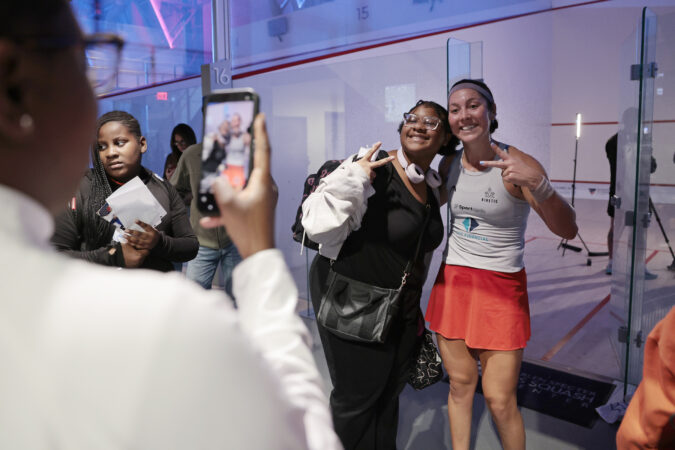
  • Squash players like Amanda Sobhy gambling on more attention for the sport in U.S.

    Squash players like Amanda Sobhy gambling on more attention for the sport in U.S.

    Before the 2018 Supreme Court ruling that legalized sports betting, professional squash player Amanda Sobhy said players were allowed to have their cellphones during matches to communicate with coaches.

    After that landmark decision, the rules changed. Not that squash boasts a large betting handle (the amount of money wagered by sports bettors).

    “I have never encountered anything remotely close to betting,” Sobhy said. “We’re too nice of a sport.”

    Yes, U.S. gamblers probably aren’t scrambling online to lay down a wager on squash matches that feature Sobhy — No. 11 in the women’s squash world rankings — and another elite opponent. Even if a bettor wagers on a squash event, there are limited types of bets an individual can place. Predicting the match winner is the simplest bet.

    But Sobhy said she hopes the tide changes, and that betting enthusiasts will turn their attention to the squash court, too.

    “[Squash officials] know that’s a huge avenue to get more eyeballs onto the sport and get more people invested in it,” said Sobhy, 32. “I always say, to make a successful event, you basically need booze and betting. In a lot of events, we don’t have either. It’s a great sport, but when you don’t have people who know about the sport, and they’re trying to get into it, you need something else.”

    Unlike some of her peers in other sports, Sobhy said squash affords a comfortable living — for men’s and women’s players — and that pro squash athletes would not be tempted to earn separate income through illicit gambling schemes, as was the case in the federal indictments unsealed in October, which involved illegal poker games and a prop betting scheme, and which named NBA coaches and current and former players as defendants.

    “We’re very lucky as a sport. We are big enough where top players can make a living, and that’s their sole job,” said Sobhy, who resides in Florida after living in Philadelphia for several years after the pandemic. “We get sponsorships, and players can be OK financially. Our association [U.S. Squash] has been adamant for equal prize money in majors. Men and women have an equal amount of tournaments and opportunities. In order for the sport to grow, we need to work together and elevate as equals, rather than profiling only the men.”

    Sobhy, a Harvard graduate who has won six national titles, said her sport is popular with bettors around the globe, but that interest hasn’t yet translated to the U.S. market, where the gaming industry has partnered with many pro sports leagues in multimillion dollar deals.

    “You don’t have big American betting platforms engaged in squash,” Sobhy said. “Europeans and Brits bet on squash. I’m all for betting. You can’t be a cookie-cutter, safe sport but want the sport to be bigger at the same time. You have to be bold, take risks, be a bit more controversial. You have to elevate the platform to get more eyeballs. If we want squash to become bigger, we definitely need to get betting included.”

  • How a switch to a Philly-area club helped Jocelyn Nathan’s journey to Penn State volleyball

    How a switch to a Philly-area club helped Jocelyn Nathan’s journey to Penn State volleyball

    STATE COLLEGE, Pa. — Jocelyn Nathan, a defensive specialist in her third season with Penn State women’s volleyball, is from Delaware, a state not known for its volleyball prowess.

    Her graduating class at Wilmington Friends had just 50 students, a “second family” she had attended classes with since elementary school.

    “I think that [family-like] dynamic is something that I really wanted to bring to the rest of my life,” said Nathan, a Wilmington native. “Penn State is huge, but I wanted to bring a close-circle vibe to campus. I wanted to bring that small-town aspect to a bigger stage. And I feel like I’ve done a really good job of it.”

    Nathan enjoyed her upbringing, but it didn’t help her gain traction on the recruiting trail. She wasn’t on a top club team, which meant she wasn’t invited to U.S. training sessions and didn’t attend nationals every year like most high-profile recruits.

    So, the 5-foot-6 defensive specialist took charge.

    She switched club teams to Conshohocken-based East Coast Power, an uncomfortable change for a then-15-year-old who went from knowing nearly everyone in her hometown to knowing none of her teammates or coaches.

    But that move set Nathan up for success she never dreamed of.

    “When I set my hopes out, I was like, ‘Maybe I’ll get noticed by some lower Division I teams,’” Nathan said. “And it never had anything to do with not believing I could get to that level. It was just, you see what you are working with because not many people knew who I was.”

    Her father, Len, who played soccer and baseball at Swarthmore College, compiled highlight tapes to send to college coaches. Nathan sent countless emails to schools in search of offers.

    And with the help of Roberta McGuiney (née Holehouse), who played volleyball at Penn State from 2005 to 2008 and coached Nathan with East Coast Power, Nathan secured an offer from the Nittany Lions.

    She appeared in just two sets during her freshman year. She said she spoke “maybe 100 words” all season as she acclimated to a her new, environment.

    But during her sophomore campaign, Nathan broke out. Penn State coach Katie Schumacher-Cawley lauded Nathan’s “fiery” personality, one she noticed during the recruiting process and has only grown since.

    “I think [Nathan] is one of the best teammates around,” Schumacher-Cawley said. “I never question if she’s ready or if we should put her in. She knows the game well. She competes hard. She’s a great teammate. And I’m really happy for her success.”

    Nathan tallied 69 digs in 59 sets across 22 matches as a sophomore. And she saved her best for last.

    In the national championship match against Louisville, she totaled a season-high-tying 10 digs as Penn State won its eighth NCAA title. Nathan believes she’s the first Delaware native to win a national championship in women’s volleyball.

    “It gives me goose bumps to think about it, just knowing where I came from,” Nathan said. “I think it just made everything feel so great. Not only could I represent Delaware, but [I could] also be a symbol for the little girls who are trying to get to a Division I school.”

    One year after adding an eighth star to their uniforms, the Nittany Lions are back in the NCAA Tournament for a 45th straight season. As the No. 8 seed in the Texas Region, Penn State will face South Florida at 5:30 p.m. Friday in Austin, Texas. If the Nittany Lions advance, they will face the winner of No. 1 Texas and Florida A&M.

    Nathan is having another strong season in Happy Valley. She has appeared in all 30 matches and tallied career-highs in digs (130), sets played (94), and assists (17).

    And through her success at the national level, she has remained grounded in her roots.

    “I’ve always wanted to make people feel welcome,” Nathan said. “And I strive to do that with one new person every single day. That was something I wanted to carry with me, not just to the volleyball court, but to school and to everyday life.”

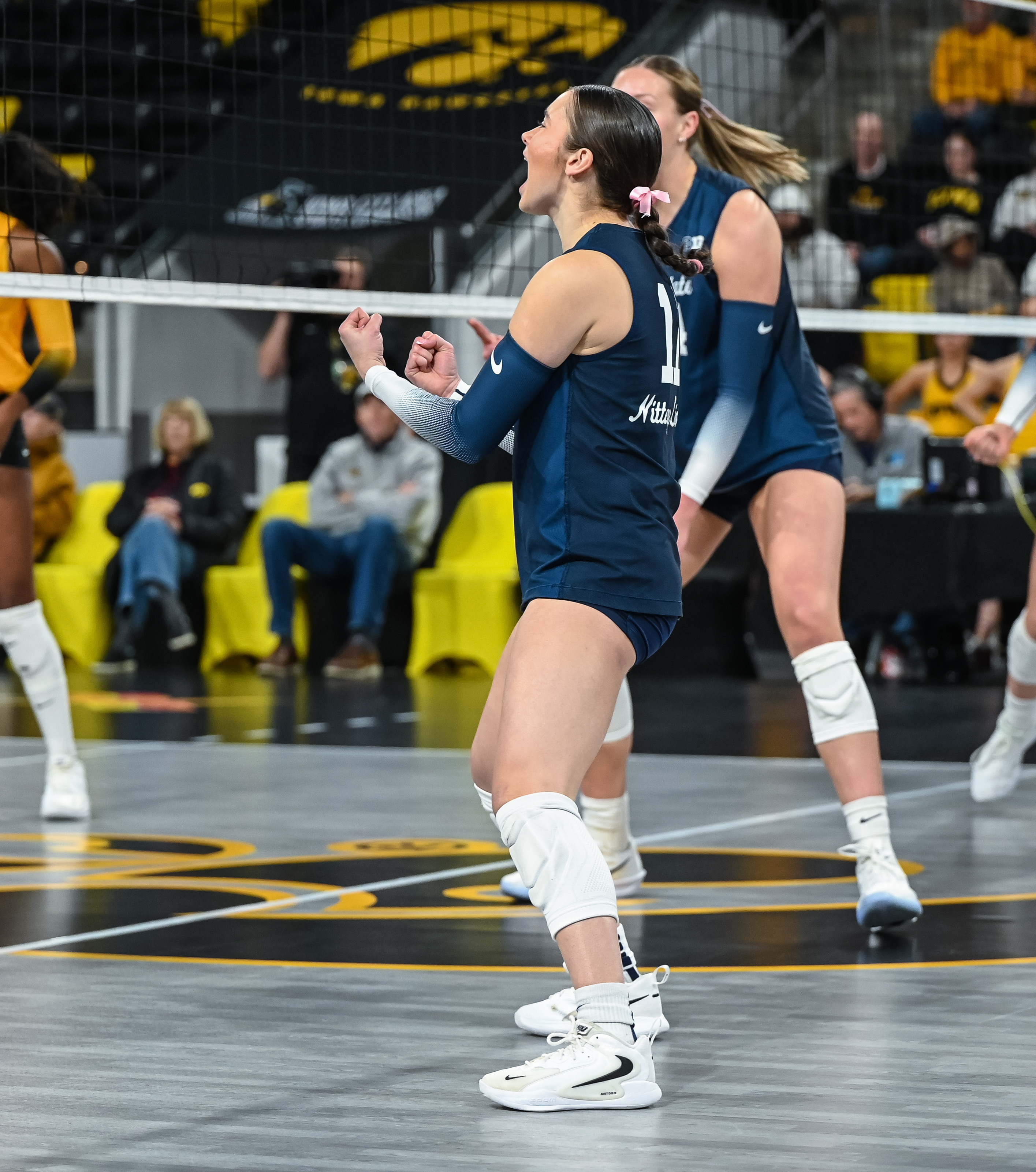
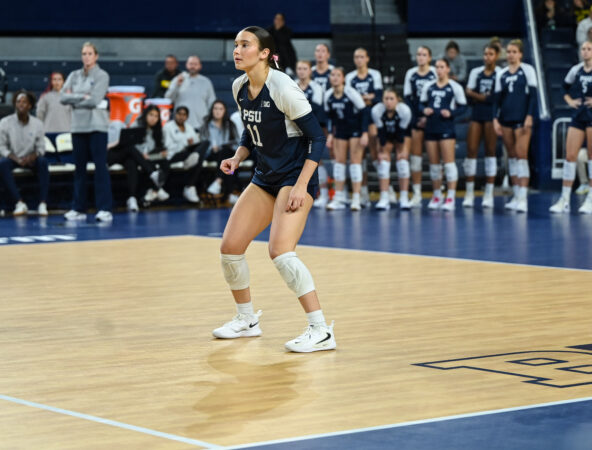
    Penn State’s Jocelyn Nathan celebrates during a game against Iowa.
  • Here’s how the men’s and women’s brackets shape up in the Big 5 Classic

    Here’s how the men’s and women’s brackets shape up in the Big 5 Classic

    The third annual men’s Big 5 Classic returns to Xfinity Mobile Arena on Saturday. The event will feature the teams from the Division I Philadelphia schools, a tradition that has been around for more than 70 years.

    The Villanova women are in the championship for the second consecutive year on Sunday at Finneran Pavilion in the women’s Big 5 Classic.

    Here’s a look at the men’s and women’s Big 5 brackets:

    Men’s bracket

    • Fifth place: Drexel vs. La Salle, 2 p.m. Saturday
    • Third place: St. Joseph’s vs. Temple, 4:30 p.m.
    • Championship: Penn vs. Villanova, 7:30 p.m.

    All games will be broadcast on NBC Sports Philadelphia. The championship features two teams that are seeking their first Big 5 crown in the new format. This also is the teams’ first appearance in the championship game.

    Both teams have first-year coaches, with Kevin Willard at Villanova and Fran McCaffery at Penn, and both won pod games by double digits to earn a spot in the final.

    The men’s side tips off on Saturday for the third straight year, but there is one change in the matchups. For the first time since the format debuted, St. Joe’s will not be in the championship to defend its crown.

    St. Joe’s will play Temple in a rematch of the 2023 title game for third place. St. Joe’s beat Drexel on Nov. 8 to begin pod play, setting up a showdown with Penn. The Quakers’ 83-74 upset win sent them to their first Big 5 championship game.

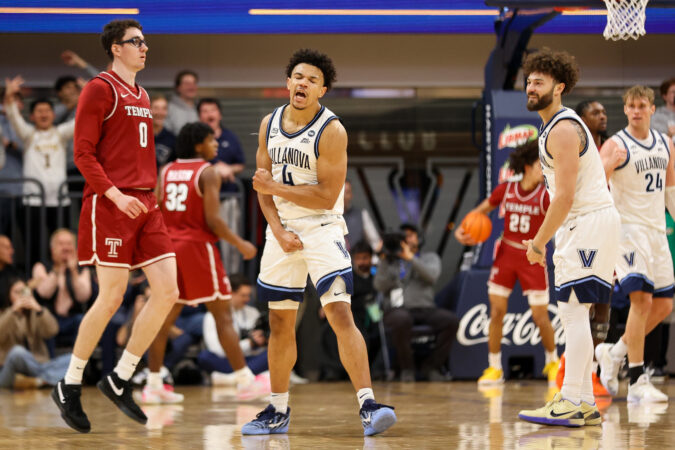
    Temple returns to the third-place game for the second consecutive season. Coach Adam Fisher’s team defeated La Salle, 90-63, but was unable to beat Villanova in what essentially was a semifinal game. The Wildcats outscored the Owls by 17 in the second half for a 74-56 victory.

    La Salle will take on Drexel in the fifth-place game . The Explorers lost to St. Joe’s in the championship last season but lost both of their pod games, to Temple (90-63 on Nov. 11) and Villanova (70-55 on Nov. 19) this season.

    Drexel coach Zach Spiker uses a timeout to draw up some plays for his team against St. Joe’s on Nov. 8.

    Drexel is in the fifth-place game for the third consecutive year after being added to the Big 5. The Dragons lost to St. Joe’s (76-65 on Nov. 8) and Penn (84-68 on Nov. 21) in pod play.

    Women’s bracket

    • Fifth place: Penn vs. La Salle, noon Sunday
    • Third place: Drexel vs. Temple, 2:15 p.m.
    • Championship: St. Joe’s vs. Villanova, 4:30 p.m.

    Temple entered the season on a mission to defend its Big 5 championship. Those aspirations were dashed after the Owls’ 88-58 loss to Villanova on Nov. 22 in a rematch of last year’s final.

    Now the Wildcats will be playing in the main event on Sunday (all games on NBC Sports Philadelphia+ and the NBC Sports app) after losing a year ago. They will play St. Joe’s, which is a year removed from a third-place finish. The Hawks earned their way to the championship game after defeating Penn, 74-53, on Nov. 24 and beating Drexel, 57-55, five days later.

    Temple’s loss to Villanova sends it to the third-place game against Drexel. The last time the teams played was Nov. 23, 2024, and the Owls won, 52-43.

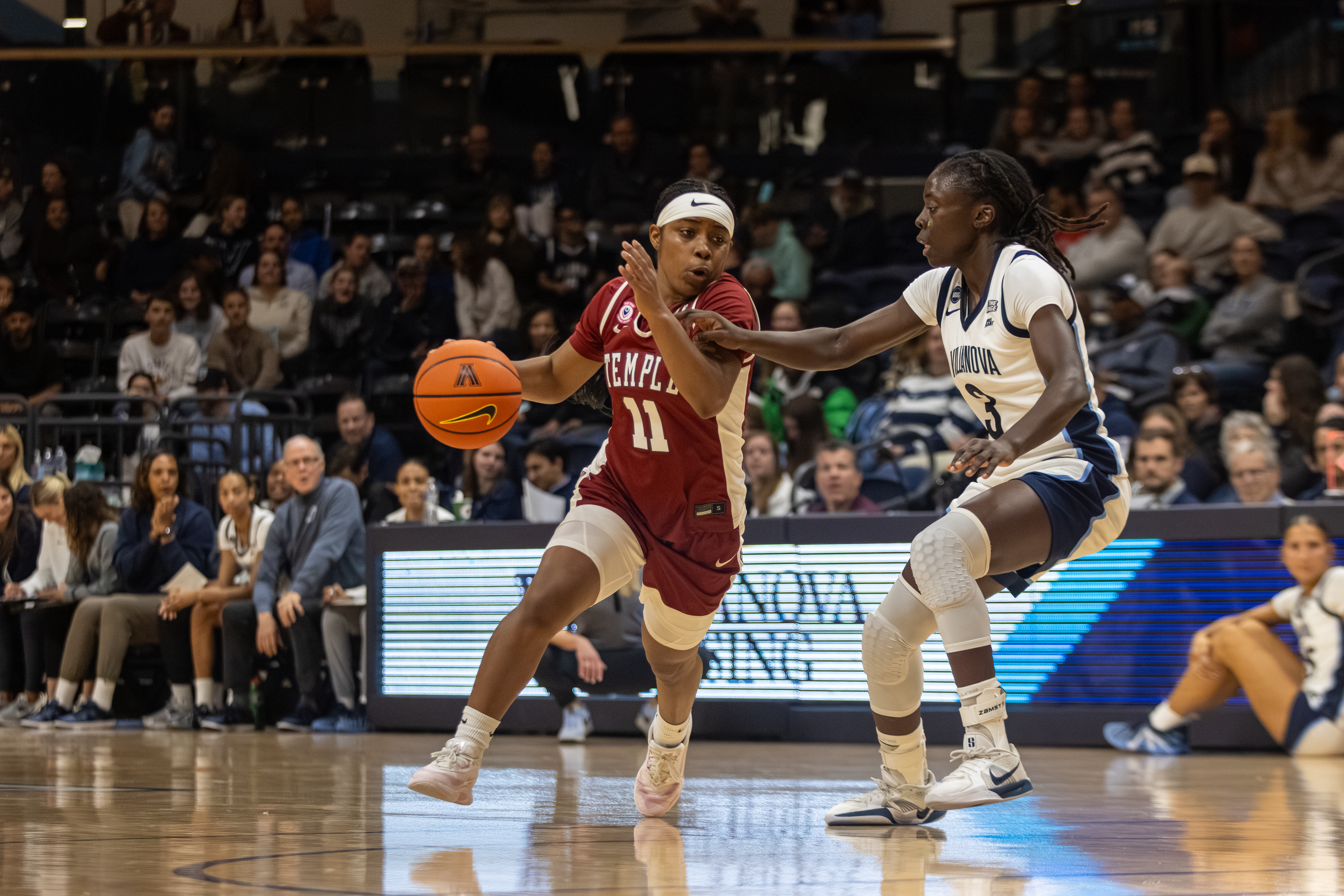
    Temple’s Tristen Taylor drives against Villanova’s MD Ntambue on Nov. 22.

    The Dragons beat Penn, 72-55, on Nov. 3 and had the two-point loss to St. Joe’s on Saturday.

    The first game of the day will feature La Salle and Penn. The Explorers are 5-2 but have yet to win a Big 5 pod game in the two seasons of the new format for the women. La Salle has lost its four pod games by an average of 17.8 points, and both of its losses this season are by double digits.

  • Catarina Macario stars again as the USWNT sweeps Italy to end its year

    Catarina Macario stars again as the USWNT sweeps Italy to end its year

    FT. LAUDERDALE, Fla. — Catarina Macario scored in her third straight international match and the United States women’s national team defeated Italy 2-0 on Monday night in the final game for the national team this year.

    The United States has scored in 16 straight matches, including all 15 this year. The national team wrapped up 2025 12-3-0.

    Macario scored the opening goal in the 20th minute with a strike from the corner of the box and up over Italy goalkeeper Francesca Durante’s head and into the side netting of the far post.

    Jaedyn Shaw added a second goal before halftime, taking a pass from Alyssa Thompson before squaring up and calmly finishing out of Durante’s reach to make it 2-0.

    Claudia Dickey earned her fifth clean sheet in her sixth appearance in goal for the USWNT.

    Macario had a pair of goals a 3-0 victory over Italy on Friday night in Orlando, Florida. Olivia Moultrie, who scored the other goal on Friday, was available off the bench Monday.

    Macario, who plays for Chelsea, led the team this year with eight goals, including seven goals in her last seven starts. She nearly got a second goal at Ft. Lauderdale’s Chase Stadium but it was disallowed because of a foul, denying her a third brace in her last three international games.

    Macario and Emily Fox were among the players named earlier Monday as nominees for the women’s U.S. Soccer Player of the Year award, joining Rose Lavelle, Thompson, and Sam Coffey.

    U.S. coach Emma Hayes made five changes to the starting lineup from Friday’s victory in the first game against Italy, going with veterans Naomi Girma, Lindsey Heaps, Fox and Macario. Three teenagers started for the United States, including 19-year-olds Claire Hutton and Jordyn Bugg and 18-year-old Lily Yohannes.

    The USWNT will next gather from Jan. 17-27 for the team’s annual camp in Carson, Calif., with a match planned against Paraguay and another against an undetermined opponent.

  • WNBA proposes $1.2M max player salary amid ongoing CBA negotiations

    WNBA proposes $1.2M max player salary amid ongoing CBA negotiations

    One day after the WNBA and Women’s National Basketball Association (WNBPA) agreed to extend the current collective barging agreement (CBA) through Jan. 9, the league has reportedly come to the negotiating table with a new proposal that increases player compensation.

    The league’s latest offer includes a maximum $1 million guaranteed base salary with projected revenue sharing raising max players’ total earnings to more than $1.2 million in 2026, a source close to the situation told USA TODAY Sports. They spoke on condition of anonymity because they’re not authorized to speak publicly about ongoing negotiations.

    The offer also raises the league’s minimum salary to more than $225,000 and the average salary to more than $500,000, up from $220,000 and $460,000, respectively, in the WNBA’s previous proposal on Nov. 18.

    The latest proposal also raises the salary cap to $5 million a season per team, an increase from $1.5 million salary cap in 2025. The salary cap would reportedly increase over the length of the CBA and be directly tied to the league’s revenue growth each year, although the specific revenue sharing details weren’t disclosed.

    USA TODAY Sports reached out to the WNBA and WNBPA for comment.

    Although the WNBA and WNBPA are on the record saying players deserve a significant pay increase in the next CBA, the sides have differing opinions on how to go about it has led the current standoff.

    The league previously proposed a maximum salary of more than $1.1 million — including both the base salary and revenue sharing component — available to more than one player per team on Nov. 18, but the proposal didn’t move the needle for the players. Both sides subsequently agreed on the Nov. 30 deadline to extend the CBA for a second time as revenue sharing and pay structure remain points of contention in negotiations.

    Last season, the minimum salary was $66,079, while the supermax was worth $249,244. Only five WNBA players made more than $225,000 last season: Kelsey Mitchell at $269,244, Arike Ogunbowale at $249,032, Jewell Loyd, at $249,032, Kahleah Copper at $248,134, and Gabby Williams at $225,000

    The current CBA was previously set to expire on Oct. 31 after the WNBPA exercised its right to opt out of the agreement in October 2024. However, the WNBA and players association agreed to a 30-day extension to extend the deadline to Nov. 30 to allow more time for a deal to be reached. The new deadline has been moved to Jan. 9, 2026, and both sides have the option to terminate the extension with 48 hours’ advance notice.

    The league and players association previously agreed to a 60-day extension in 2019, three days before the last CBA was set to expire on Oct. 31, 2019. A new deal was subsequently reached on the current CBA on Jan. 14, 2020 and singed into effect three days later on Jan. 17, 2020. The WNBA has not had a work stoppage in its nearly 30-year existence.

  • Catarina Macario’s two goals lead the USWNT to win over Italy, 3-0

    Catarina Macario’s two goals lead the USWNT to win over Italy, 3-0

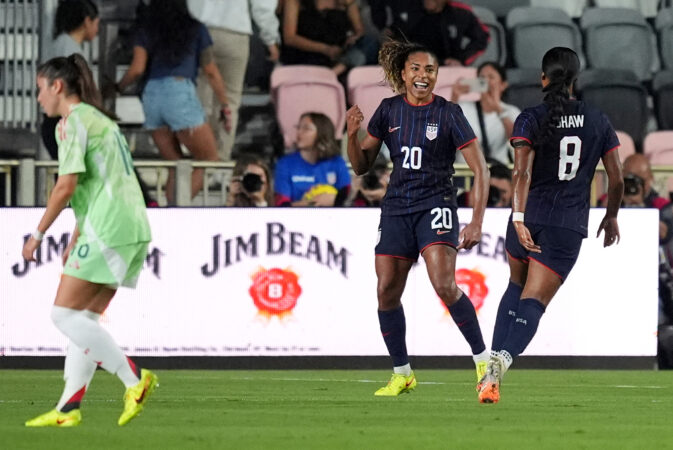
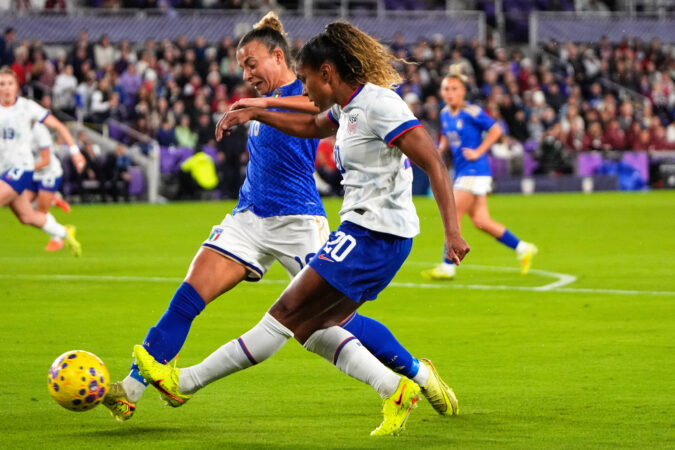
    ORLANDO, Fla. — Cat Macario scored two goals and the United States defeated Italy 3-0 on Saturday night in a friendly match at Inter&Co Stadium.

    It was the first of two friendlies between the teams, with the second scheduled for Dec. 1 in Fort Lauderdale.

    Olivia Moultrie also scored while goalkeeper Claudia Dickey earned the shutout in just her fifth appearance at the senior level.

    “I think obviously we wanted to keep building on the performances we had last camp, and the emphasis on coming out strong and sticking to our principles, and I think that’s what we did,” said U.S. veteran Rose Lavelle, who earned her 116th cap. “Overall, I think a really good team performance.”

    The United States wasted no time in attacking Italy’s goalie Laura Giuliani, scoring inside the first two minutes.

    Fresh off their NWSL title with Gotham, Lilly Reale found teammate Lavelle to start the sequence. Lavelle then went wide to Alyssa Thompson, who quickly returned the ball. Lavelle found Moultrie, who went far side for her second goal in as many appearances with the team.

    “We talked about starting fast and starting strong, and I think the momentum carried out,” Moultrie said. “We had a really good week of training, so I feel like it flowed into the first minutes of the game.”

    An offside call on Lavelle at the 48-minute mark denied Moultrie her second goal.

    In the 64th minute, Sam Coffey dribbled down the middle and found Macario breaking on her left. Macario took the pass and fired a shot far side to give the United States a two-goal lead.

    Macario added her second in the 76th minute when she snared a pass from the team’s youngest player, 18-year-old Lily Yohannes, and fired a shot from the top of the right side of the box to the far side of the goal.

    It was Macario’s 15th goal in 28 international appearances. Macario has now been involved in 18 goals in her last 14 U.S. appearances.

    “It was a great win, it’s always a pleasure being with this team,” said Macario, who has 12 goals and six assists since February of 2022. “I feel so happy to be in this environment, and I feel like it really just helps you be the best version of yourself.

    “Lucky enough that (U.S. coach) Emma (Hayes) knows me very well, and she knows what I can bring to the team. This was a good year … in which I have just been trying to find some consistency … just trying to find my rhythm.”

  • Philadelphia is on a long list of potential cities for the 2031 women’s World Cup

    Philadelphia is on a long list of potential cities for the 2031 women’s World Cup

    NEW YORK — The United States Soccer Federation proposed 14 American sites among 20 possible venues to host games for the 2031 Women’s World Cup, including seven U.S. stadiums to be used for next year’s men’s tournament.

    FIFA released the bid books Friday for the 2031 and 2035 women’s tournaments. There is only one bidder for each, a U.S.-Mexico-Costa Rica-Jamaica proposal for 2031 and a United Kingdom plan for 2035. FIFA is to formally confirm the bids at its congress on April 30.

    Twenty-six additional U.S. stadiums were mentioned as suitable venues for a 48-nation tournament the bidders project would draw 4.5 million fans and generate about $4 billion in revenue, up from $570 million for 2023 in Australia and New Zealand and a projection of $1 billion for the 2027 tournament in Brazil.

    Proposed ticket prices of $35 for the cheapest seats in the opening round to $120 to $600 for the final were listed in a ticket grid. FIFA has refused to release a grid for next year’s men’s tournament, saying only prices initially ranged from $60-$6,730 but could fluctuate with dynamic pricing. The bid book said premium seating would average 10%-20% of capacity at the majority of 2031 stadiums.

    Lincoln Financial Field last hosted a women’s World Cup in 2003.

    Fifty sites in all were mentioned in the joint 2031 bid. Final decisions likely will not be made for several years.

    The bid book also said “other suitable cities are included” beyond the specified 14 “as part of the broader bid framework with the understanding that they will continue to be equally considered for the purposes of stadium selection.”

    “By proposing more than the required 20 sites, the joint bidders demonstrate a commitment to securing the best possible hosting conditions and ensuring the tournament represents the full diversity of our region on a global scale,” the bid book stated.

    The 2026 U.S. sites included in the 2031 proposal are Arlington, Texas (AT&T), Atlanta (Mercedes-Benz), East Rutherford, N.J. (MetLife), Houston (NRG), Inglewood, Calif. (SoFi), Kansas City, Mo. (Arrowhead), and Seattle (Lumen Field).

    MetLife Stadium in East Rutherford, N.J., hosted this year’s Club World Cup final and will host next year’s men’s World Cup final.

    The seven others are Charlotte, N.C. (Bank of America), Denver (Empower Field), Minneapolis (U.S. Bank), Nashville (Geodis Park), Orlando (Camping World), San Diego (Snapdragon), and Washington (proposed NFL venue on the RFK Stadium site).

    Orlando and Washington were sites of the 1994 men’s World Cup.

    Mexico’s three sites for next year’s World Cup also are proposed for the women’s tournament, Mexico City (Azteca), Guadalajara (Akron), and Monterrey (BBVA), along with a fourth in Torreón (Corona).

    National stadiums are proposed in Kingston, Jamaica, and San Jose, Costa Rica.

    The national stadium in Kingston, Jamaica will host its first women’s World Cup games.

    Other U.S. venues listed as possibilities are Foxborough, Mass. (Gillette), Philadelphia (Lincoln Financial Field), and Santa Clara, Calif. (Levi’s), all venues for next year’s men’s World Cup.

    Additional sites included were Baltimore (M&T Bank), Birmingham, Ala. (Protective), Carson, Calif. (Dignity Health Sports Park), Cincinnati (TQL), Cleveland (Huntington Bank Field), Columbus, Ohio (Lower.com Field), Frisco, Texas (Toyota), Glendale, Arizona (State Farm), Harrison, N.J. (Sports Illustrated), Los Angeles (Memorial Coliseum), Miami (Chase), Nashville (Nissan), New York (Etihad Park), Orlando (Inter & Co), Pasadena, Calif. (Rose Bowl), St. Louis (Energizer Park), San Francisco (Oracle Park), Sandy, Utah (America First Field), and Tampa, Fla. (Raymond James).

    Second possible sites in cities, all with lower capacities, were included for Houston (Shell Energy), Kansas City, Mo. (CPKC), and Washington (Audi Field).

    Indianapolis was listed for a proposed stadium.

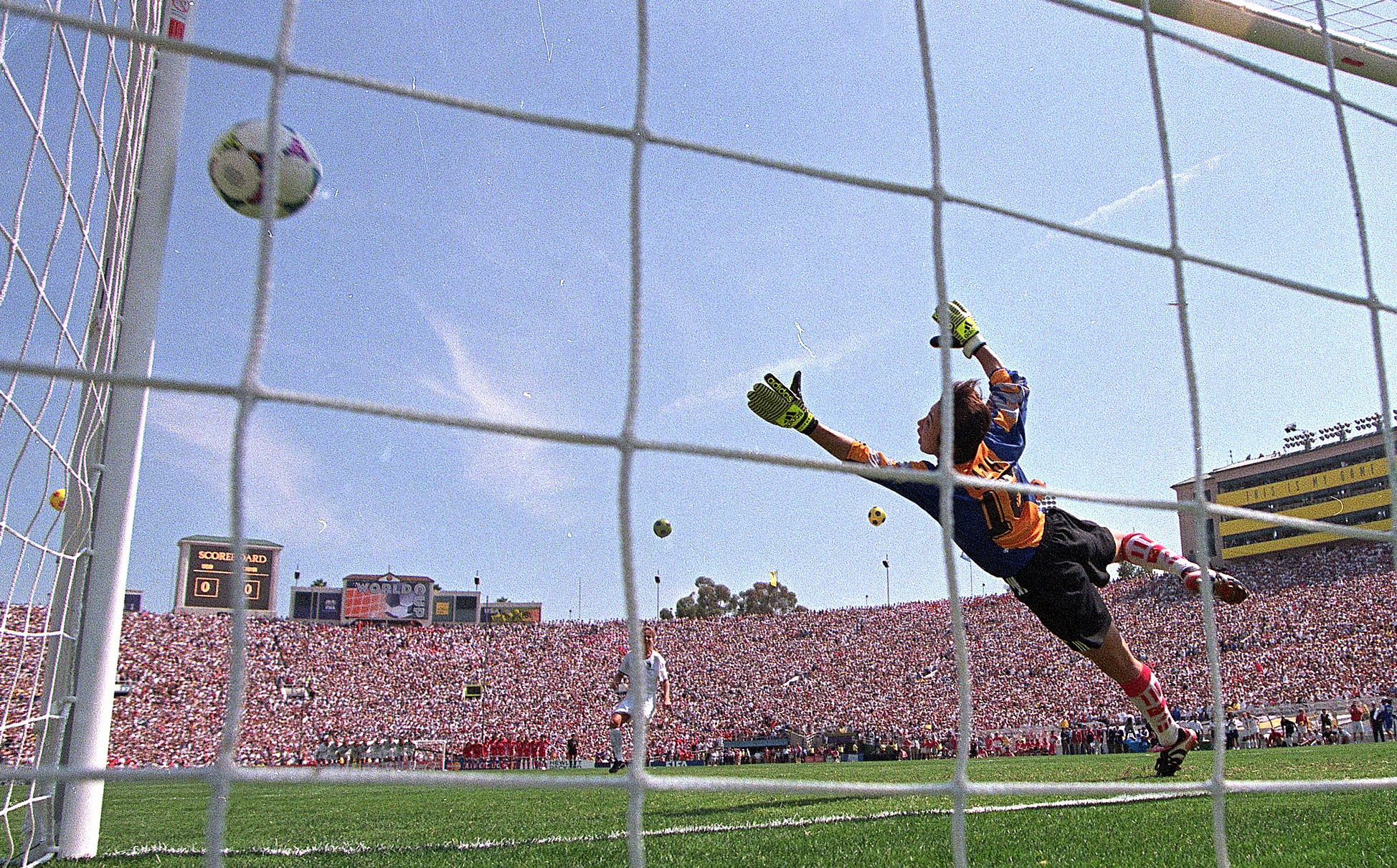
    The Rose Bowl in Pasadena, Calif., hosted the 1999 women’s World Cup final – still one of the most famous games in women’s soccer history.

    Miami’s Hard Rock Stadium was the only 2026 World Cup venue not included.

    Chicago was not listed after dropping out of bidding to host in 2026 because of what it said were FIFA’s burdensome financial demands.

    Additional possibilities in Mexico are Pachuca (Miguel Hidalgo) and Querétaro (Corregidora) along with Universitario as an alternate choice in Monterrey. Saprissa was listed as an alternate site in San Jose, Costa Rica.

    Organizers envision fan festivals and watch parties in conjunction with games. Revenue from marketing and sponsorships is projected at $1.4 billion.

  • The AP women’s basketball poll turns 50. Its story starts here, at The Inquirer

    The AP women’s basketball poll turns 50. Its story starts here, at The Inquirer

    While most of America is running to stores or shopping online on Black Friday, today’s date marks a golden moment in the history of women’s college basketball.

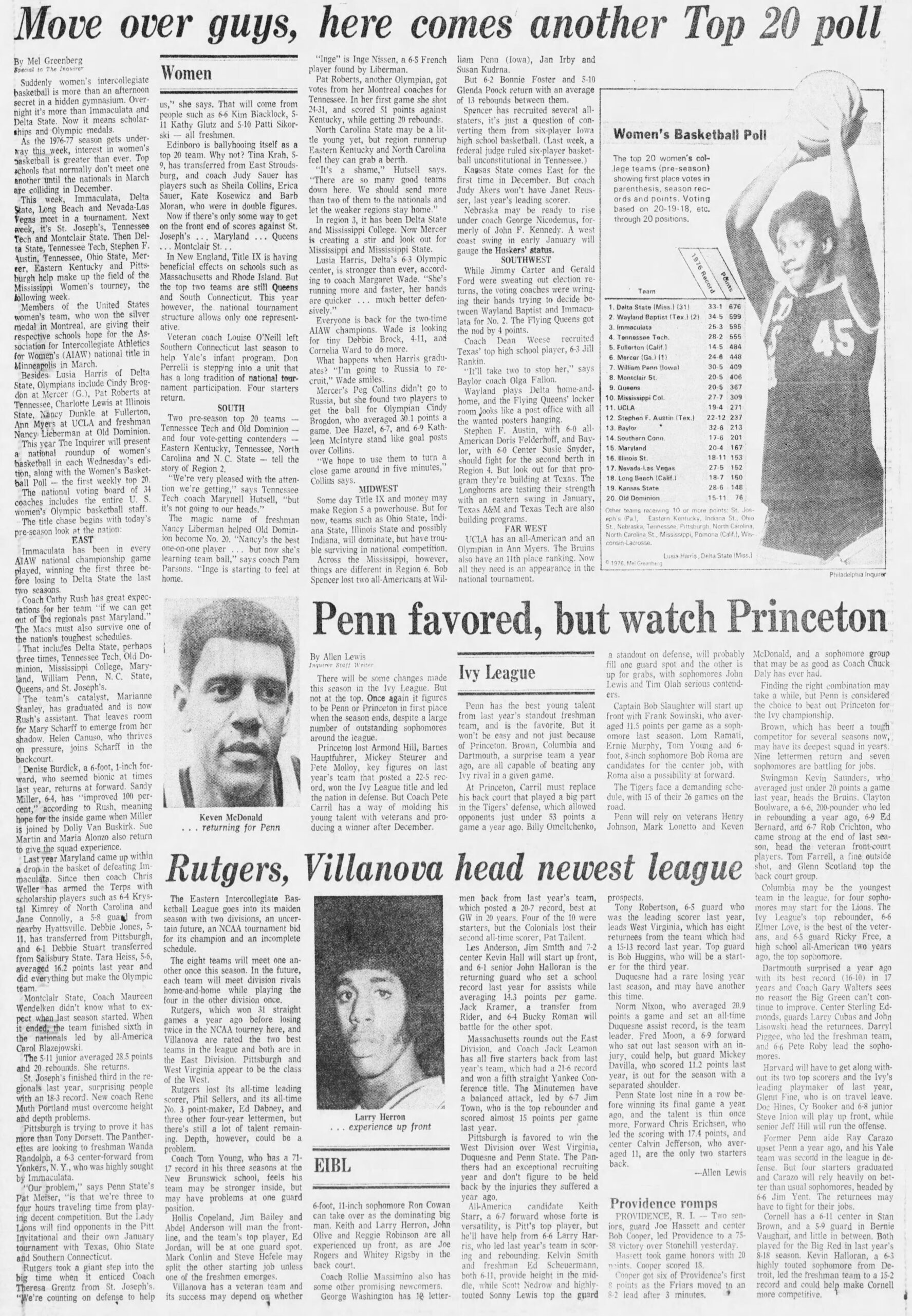
    On Nov. 28, 1976, The Inquirer’s annual college basketball preview included a story with a headline proclaiming, “Move over guys, here comes another Top 20 poll.”

    Just below was a graphic of Delta State’s center Lusia Harris, the consensus national player of the year, overlooking the Top 20, complete with an added national preview.

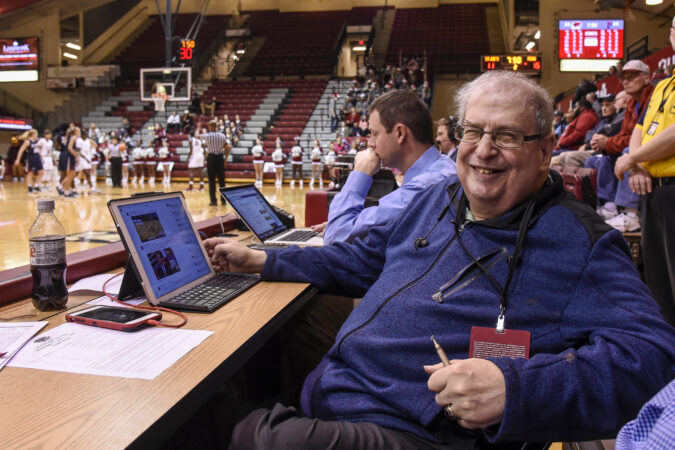
    And thus, under the stewardship of this writer, inside the Inquirer offices was born an institution that led to seismic change in terms of national attention on women’s basketball. Two years later, at the request of the College Sports Information Directors of America, the Associated Press began running those first-of-their-kind weekly rankings. This season, the poll celebrates its 50th anniversary.

    A clipping from the Sunday, Nov. 28, 1976 Philadelphia Inquirer. Page 14-F featured the first edition of Mel Greenberg’s women’s basketball poll.

    Just as the 50th anniversary of the Title IX landmark federal legislation bringing equal opportunity to women in collegiate sports was celebrated in 2022, so too will the poll’s 50th anniversary be celebrated all season.

    Technology helped spur the poll’s growth, from the pre-NCAA era to 1981-82, when the organization started sponsoring women’s championships. (Before then, women’s championships were held by the Association for Intercollegiate Athletics for Women.) This writer handled the tabulation operation through 1993-94, which is when Connecticut began an appearance streak that totals 610 times through this week.

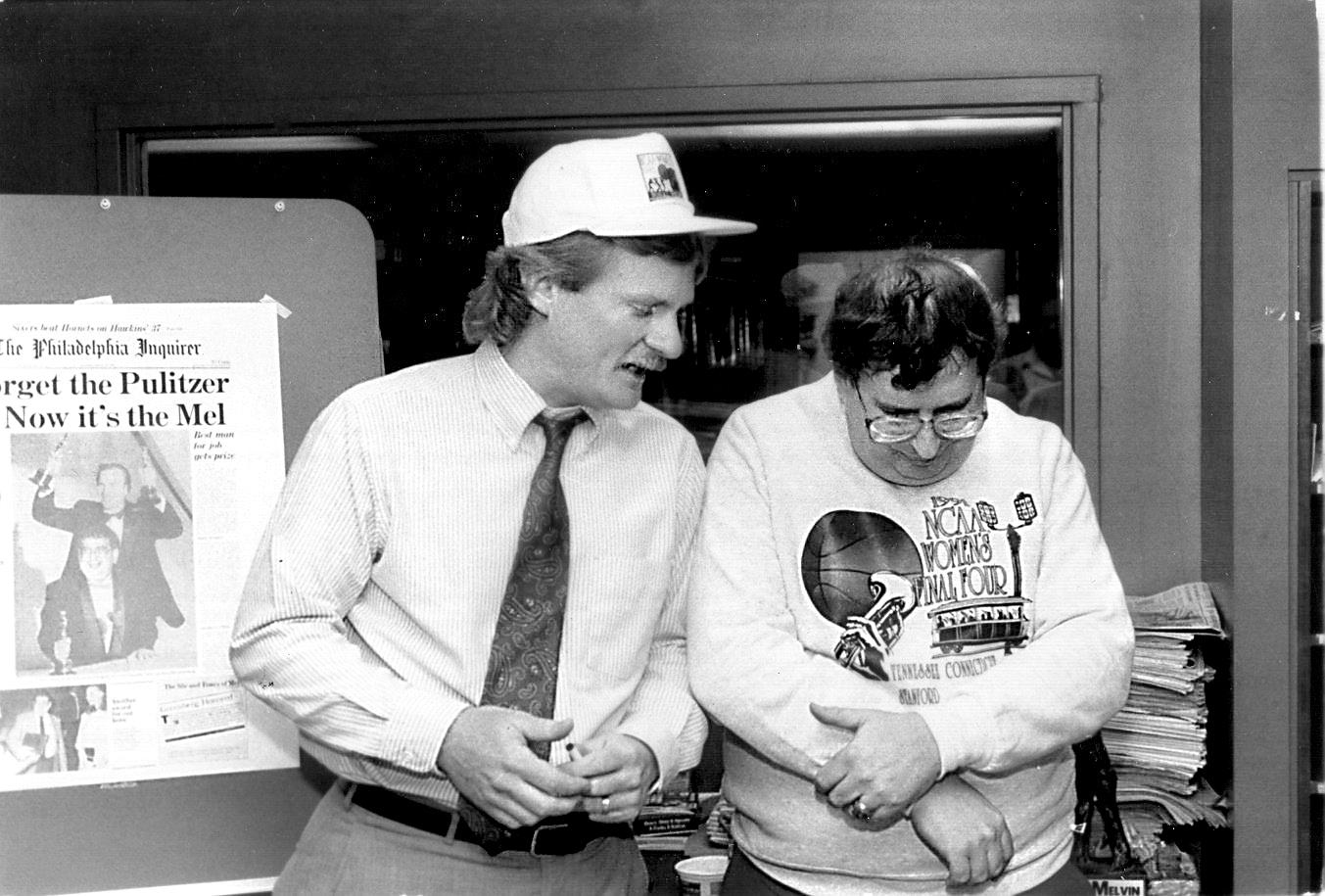
    Mel Greenberg, right with former Inquirer editor William J. “Butch” Ward, inside the Inquirer offices as Greenberg is honored for winning the first Women’s Basketball Association Media Award.

    Until 1994-95, coaches did the voting because writers were at a minimum nationally.

    Fifty years ago, the poll was created using typewriters and $70 calculators that today cost a couple of bucks. It evolved from telerams, faxes, floppy discs, and Radio Shack TRS-80 calculators to giant hard drives, laptops, Blackberries, and, ultimately, smartphones and iPads today.

    Early on, a sports media relations professional at North Carolina State called looking for information, but I wasn’t keeping records. An hour later, legendary Wolfpack coach Kay Yow, a voter, called to lecture me on the importance of preserving history.

    Fortunately, Colleen Matsuhara, who phoned in then-Cal Fullerton coach Billie Moore’s vote from out West, was keeping tabs, so the first six missing weeks from the records were restored. Today, that has evolved into a spreadsheet of all polls, among other records, and this is now the 889th week of the poll.

    Two people most excited about the poll creation were based here — this writer’s Temple classmate, Dick “Hoops” Weiss, the acclaimed men’s writer, and Mike Flynn, who, until recently, ran national AAU powerhouse, the Philadelphia Belles.

    Way back I said one day to them, “You think I’m going to do this the next 50 years?”

    They nodded in the affirmative.

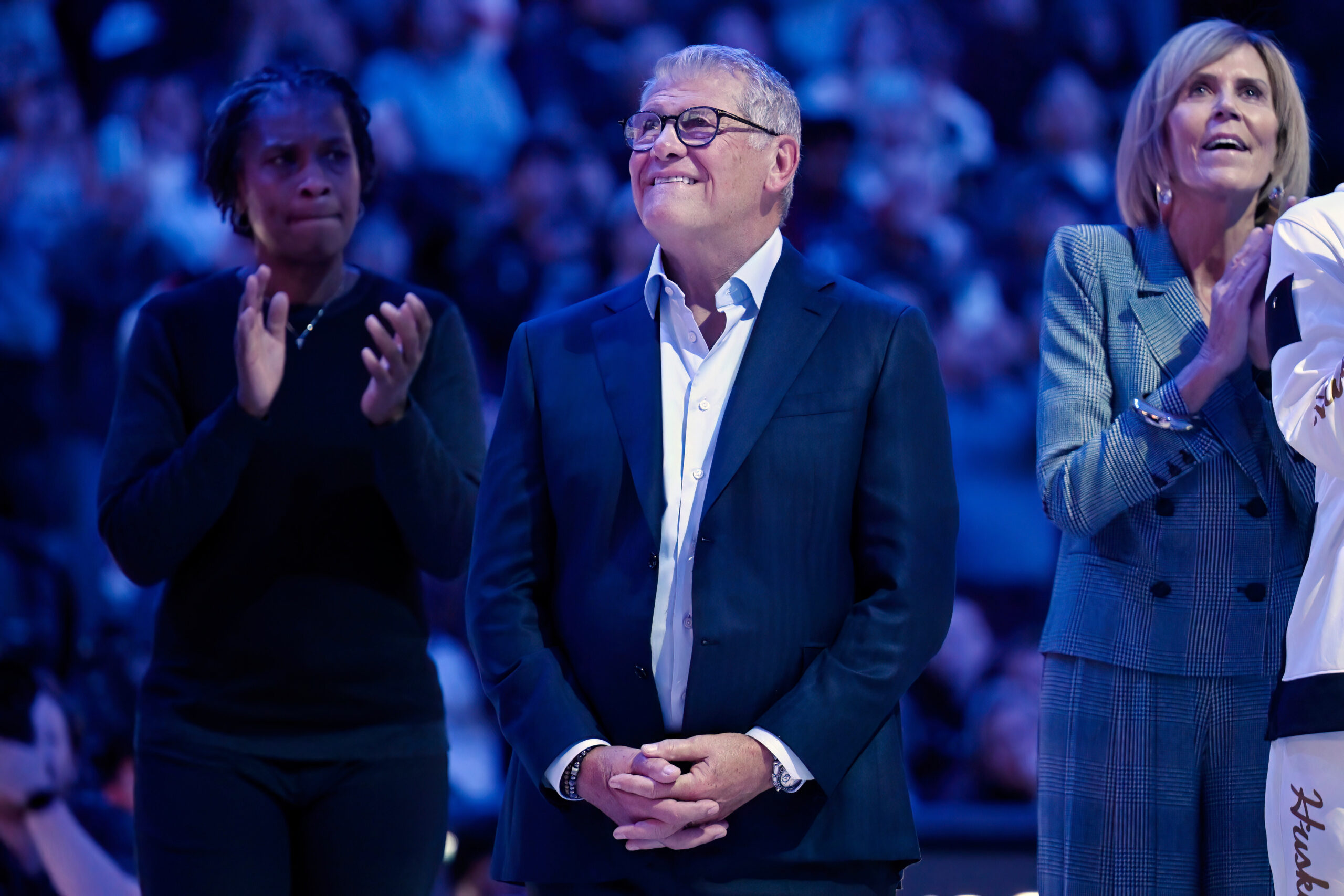
    UConn head coach Geno Auriemma, center, reacts after a championship banner reveal at Gampel Pavilion on Nov. 9.

    Grandpa Geno

    A few years after Philadelphia hosted the Women’s Final Four in 2000, Geno Auriemma’s UConn squad was back in town to face Villanova. Over at the hotel where his Norristown posse were hanging out, Auriemma’s brother noted that perhaps some decisions would have to be made in the near future.

    Two days later, UConn signed another No. 1 recruit, so he wasn’t going anywhere.

    I saw his brother again shortly after that and quipped that one day someone is going to say they came to Storrs, Conn., because they like Geno’s grandfatherly ways.

    Geno’s birthday is March 23, right in the middle of March Madness. Decades later, the date gets noted at an NCAA Tournament news conference, and now-WNBA standout Paige Bueckers shouts out, “Yeah, we call him Grandpa.”

  • Temple’s Drew Alexander is emerging as a three-point shooter off the bench

    Temple’s Drew Alexander is emerging as a three-point shooter off the bench

    Temple guard Drew Alexander entered this season with six career field goals and 17 career points. She redshirted her freshman year in 2023-24 and never played more than eight minutes in a game last season.

    Owls coach Diane Richardson made a point in the offseason that she was going to use her depth, which included Alexander.

    She was one of the first players off the bench in Temple’s season opener against George Mason on Nov. 3 and immediately made an impact. Known for her sharpshooting abilities, Alexander made three three-pointers and scored 13 points in the Owls’ 94-85 overtime win. She has since made at least one three-pointer in four of Temple’s first six games and has emerged as a key bench piece.

    “I know that my role on the team is to shoot the ball, rebound, and defend,” Alexander said. “I know every time I step on the floor, no matter if it’s for 30 minutes or 30 seconds, I have to do my role no matter what and play the hardest that I can.”

    Alexander grew up in Durham, N.C., and had a basketball in her hands at 3 years old. Her father, Darryl, played ball at Central Michigan and overseas. He taught her how to shoot, which has become her strength. They used to take 100 form shots before workouts and then put up 200 three-pointers a day.

    She started to receive college scholarship offers after her freshman year, and following her sophomore year at Greensboro Day School, she made a major decision.

    Alexander decided to attend Shabach Christian Academy in Maryland and played for the DMV Lady Tigers on the AAU circuit. To do that, she had to move to the Washington area, which meant leaving her family. Alexander spent that year living with her AAU coach, Sam Caldwell.

    “It was a little difficult not seeing my parents every day, but also it was a good experience for me to get adjusted to the college level the next year,” Alexander said.

    Caldwell led Alexander to Temple. Alexander graduated a year early and reclassified to join the Owls for the 2023-24 season.

    She redshirted her first year with the Owls and played on the scout team while learning the playbook. She had a limited role off the bench last season, but that mostly was because her expected role had been filled.

    Richardson likes to have one high-level three-point shooter on the court. Last season, that often was guard Tarriyonna Gary, who led the team in threes, making 72 of 188 attempts (38.3%).

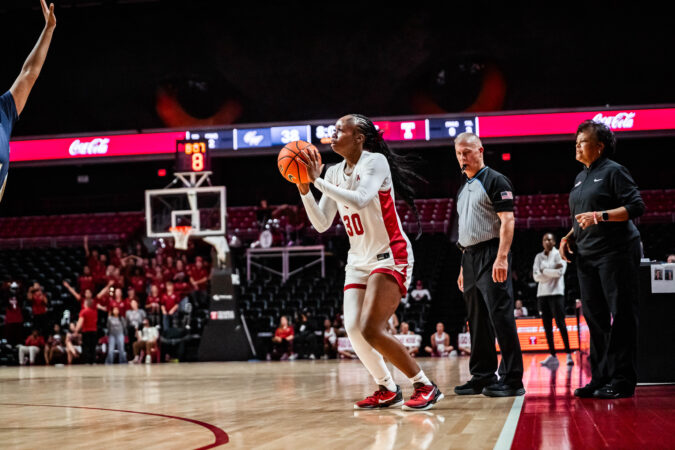
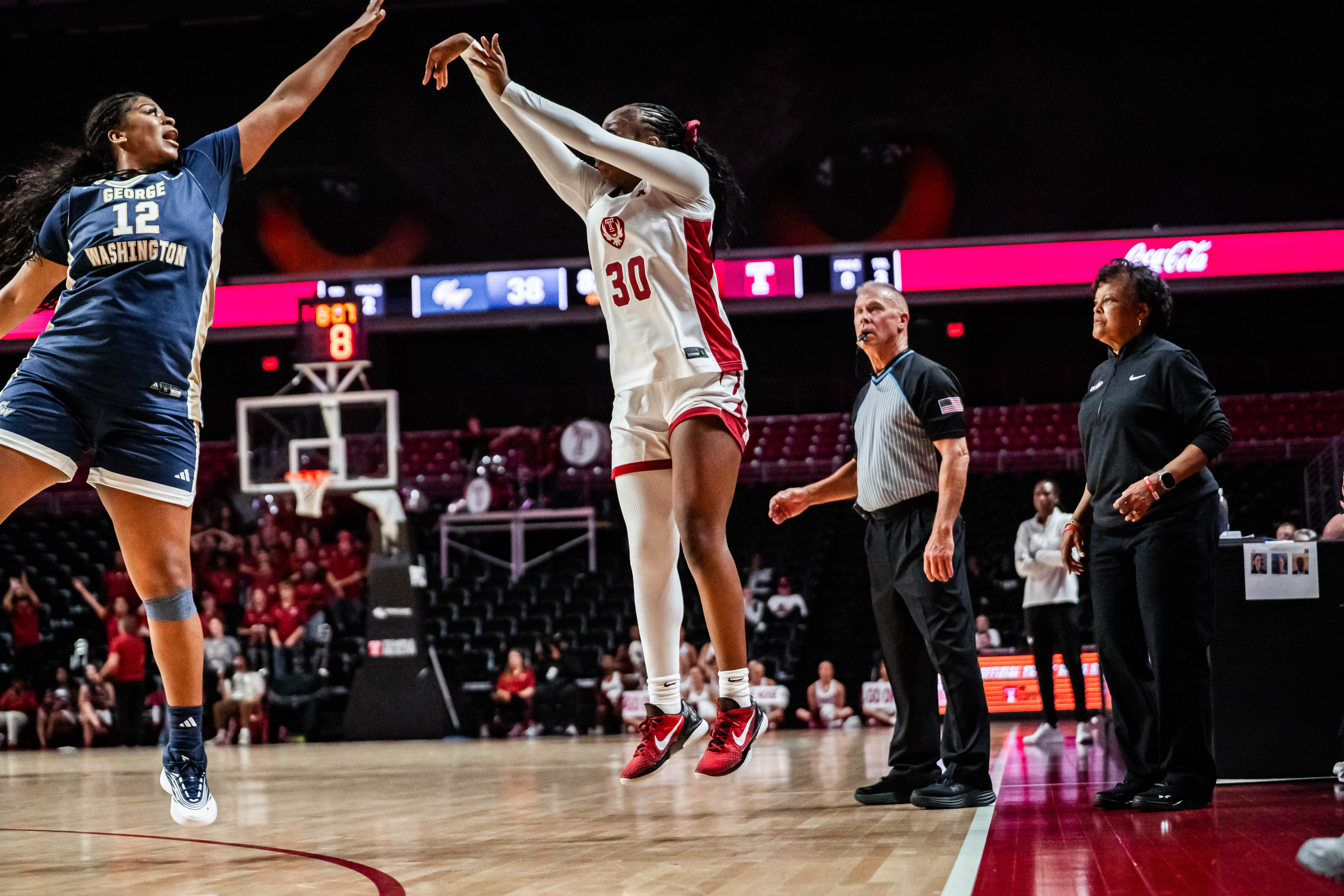
    Drew Alexander shoots a three-pointer against George Washington.

    With Gary occupying the shooting role, Alexander did not see the court much. However, the role was up for grabs after Gary graduated, and she has taken it.

    “Her ability to come in and immediately make an impact within the first possession she touches the ball is a really good thing for us,” assistant coach Myles Jackson said. “I think her development throughout the year and her confidence throughout the year are only going to be improved.”

    Alexander finished with 13 points in the Owls’ first two games to surpass her total from last season. She came into the season hoping to have a role coming off the bench, but even she was not expecting to have that kind of performance to start the year.

    “I wasn’t expecting to have 13 points in the first two games,” Alexander said. “My confidence is really high right now, and I feel like I am in a really good spot.”

    Alexander’s shooting has earned her a spot in the rotation, but she still has plenty of room to grow on defense and in getting rebounds.

    As the Owls, who entered Friday with a 3-3 record, move further into the season, Alexander’s growth and confidence will continue to play a role on the court.

    “I think she’s going to keep progressing,” Jackson said. “We are going to see a really good Drew Alexander come February and March.”