A new push to let Philadelphia bars stay open past 2 a.m. is being mounted by local trade groups and bars as the largest global sporting event arrives in the city in June.
The Pennsylvania Restaurant and Lodging Association, which represents restaurants, bars, and other hospitality businesses, wants state lawmakers to create a temporary permit that allows Philadelphia bars to serve alcohol until 4 a.m. during the 2026 FIFA World Cup, which will come to Philadelphia and 15 other cities in North America from June 11 to July 19.
“When we’re trying to attract tourists from all over the world to a destination in the United States to enjoy the World Cup, we want to make sure that Philadelphia is offering at least the same amenities as the other host cities,” said Ben Fileccia, senior vice president for strategy for the restaurant and lodging association.
Many of the most popular U.S. host cities allow bars to serve alcohol past 2 a.m., including New York, Miami, and Kansas City. Other popular international destinations, such as Mexico City and Toronto, also allow it.
Philadelphia officials did not immediately return a request for comment.
Any changes to bar closing times would have to come from new legislation, as the Pennsylvania Liquor Control Board does not have the authority to change the liquor code to allow bars to sell alcohol after 2 a.m., said PLCB spokesperson Shawn Kelly.
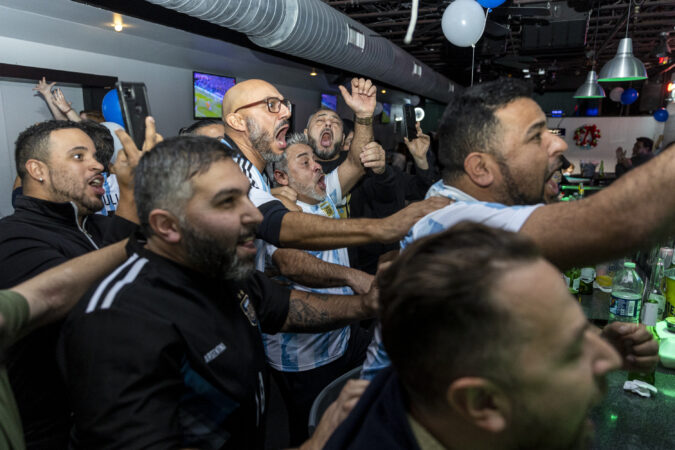
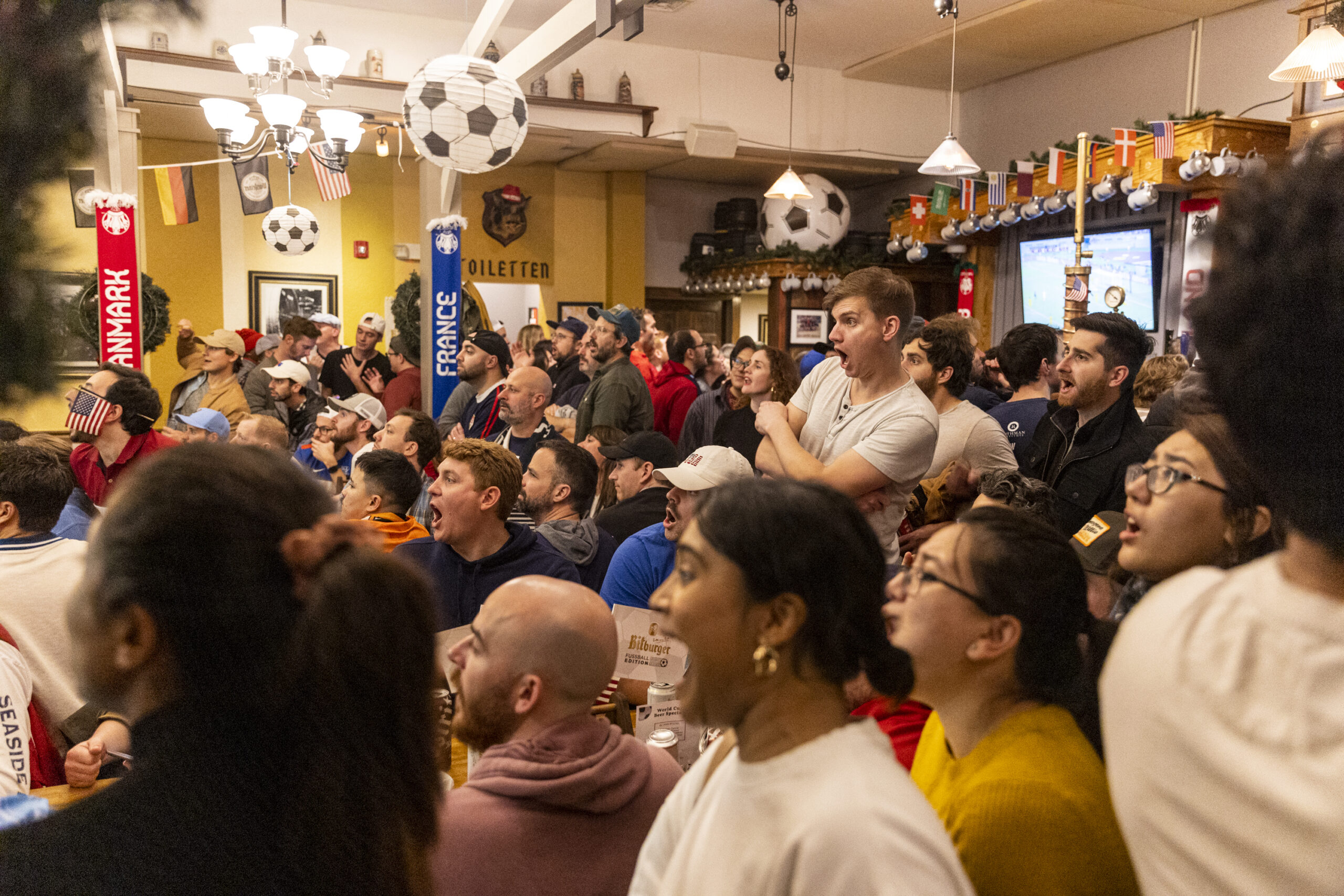
The crowd cheers and celebrates USA’s first goal against the Netherlands in the World Cup at Brauhaus Schmitz bar in Philadelphia, Pa., on Saturday Dec. 3, 2022.
Philly’s chance to prove 4 a.m. closing times work
Fileccia said this permit would allow bars to take advantage of the estimated 500,000 soccer fans expected to stay in Philadelphia for the six matches being played at Lincoln Financial Field.
Zek Leeper, co-owner of Founding Fathers sports bar in Southwest Center City, does not see this just as a way to earn more revenue with a surge of tourists coming to Philadelphia.
“This is our chance to prove that 4 a.m. nightlife can work in Philadelphia. Setting up a temporary license also allows the city and state to pull it back, depending on how it goes,” Leeper said. “With the amount of tourists this year, when is this opportunity going to come up again to justify giving this a try?”
Leeper and other local bar owners feel confident that the crowds will show up for late-night matches. “We host soccer games from leagues around the world, and those fans are committed. They have consistently shown up whenever the game is on,” Leeper said.
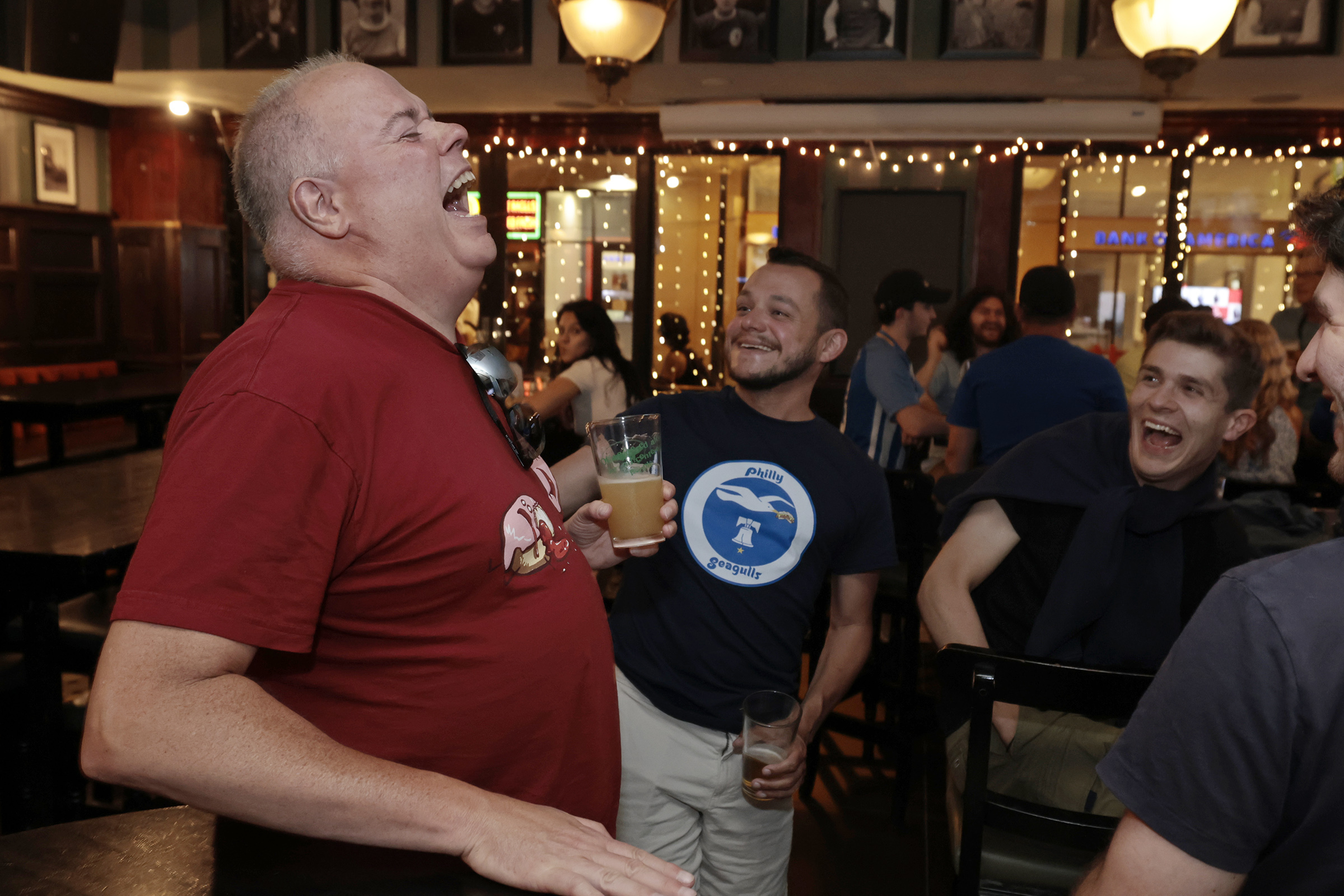
Steve Maehl (left) of Oconomowoc, Wisconsin laughs as Philly Seagulls President John Fitzpatrick and Dan Peck of Brighton, England (right) look on during the supporter meetup, to kickoff the summer series weekend, at Fadó Irish Pub in Phila., Pa. on Thursday, July 20, 2023.
Philadelphia soccer fans are already known to work deals with local bars to open as early as 7 a.m. Leeper said upward of 50 people will pack into the bar at sunrise to watch games. While there are no games being played in Philadelphia past 9 p.m. during the World Cup, at least eight of the group stage matches in June will be broadcast on the East Coast starting at midnight or 11 p.m.
With a 90-minute match, plus halftime and added time, there could be a handful of cases where bartenders have to face down a packed crowd of fans and ask them to leave before the final whistle, Leeper said.
There’s also the element of international tourists coming from cities that do not have a 2 a.m. cutoff, such as London and Tokyo, leading some visitors to find ways to late-night party outside of licensed establishments, Fileccia said.
Philly bars were allowed to close later during the 2016 DNC
Lawmakers allowed bars to stay open until 4 a.m. during the 2016 Democratic National Convention in Philadelphia. Bars and restaurants with contracts or association with the convention could apply for $5,000 special-event permits to serve alcohol past 2 a.m.
Fileccia said the details for a similar permit in 2026 are not available yet, as the effort is just underway. But he and others at PRLA want to bring the Philadelphia Police Department, the Philadelphia Department of Commerce, and other stakeholders to the table to find out the best resolution, he said.
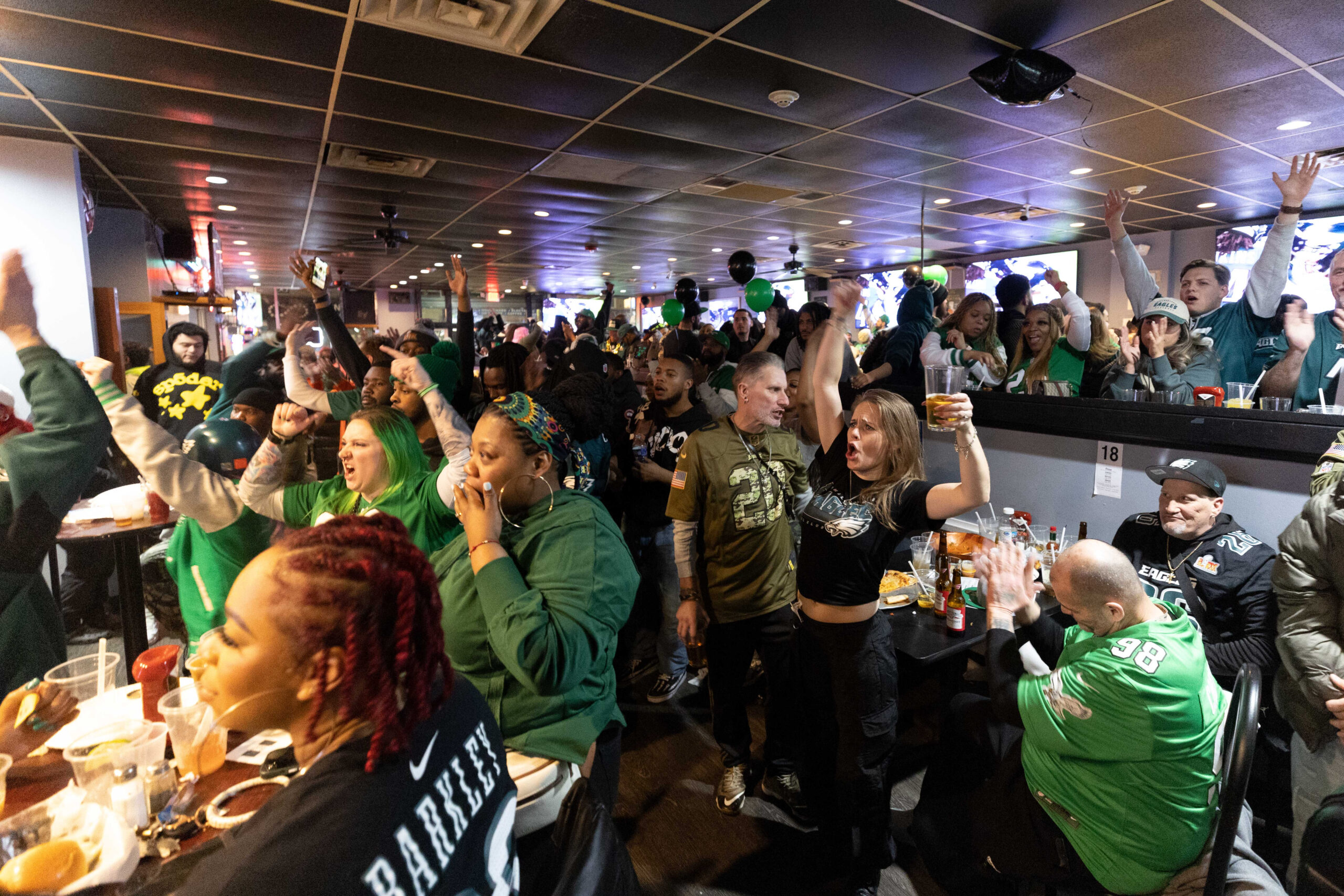
Fans react to the Eagles play the Chiefs in the NFL Super Bowl LIX, in a bar near Frankford and Cottman Aves., Saturday, Feb. 8, 2025, in Philadelphia.
Will there be enough interest in late-night partying?
With millions of tourists in Philadelphia this year for the international and national events, there will be increased foot traffic throughout the city, but will there be a late-night crowd to meet the moment?
That is the question Chuck Moran, executive director of the Pennsylvania Licensed Beverages and Taverns Association, is asking despite his support for temporarily keeping bars open later.
“The one thing that I’ve been hearing across the state is that ever since COVID, the late-night crowds have left,” Moran said. “There could also be issues with finding staff who want to work till 4 a.m. in a bar.”
Moran said he would rally behind the cause but would look to other measures to maximize revenue for local restaurants and bars, such as allowing liquor-license holders to operate a “satellite location,” letting them serve liquor at a second establishment under their original license. That would open the door to partnerships with restaurants without liquor licenses, Moran said. State Rep. Pat Gallagher, a Philadelphia Democrat, introduced a bill to do just that last June.
No legislation on keeping Philly bars open later has been introduced yet, but Fileccia hopes to get the ball rolling with lawmakers in the coming months before the first match in Philly on June 14. Even with the window closing on getting new rules passed, Kelly said the PLCB turned around special-event permits in less than two weeks before the start of the 2016 DNC.
After months of speculation, it finally became official on Tuesday that the Ivory Coast national team will call the Union’s facilities home during the World Cup.
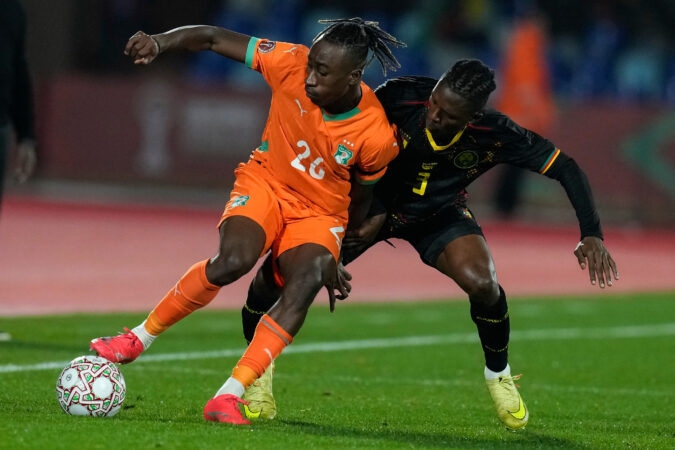
The news wasn’t too surprising. Côte D’Ivoire, as the nation is internationally known in French, will play two of its Group E games in Philadelphia: its opener on June 14 against Ecuador and its finale on June 25 against Curaçao. In between, Les Éléphants will play Germany on June 20 in Toronto.
The winner of Group E also could return to Philadelphia for the round of 16 game on July 4 if it wins a round of 32 contest on June 29 in Foxborough, Mass.
“We welcome Les Éléphants to Philadelphia Union’s stadium as their home away from home, and promise to show them the best of what we have to offer during their time here this summer,” Meg Kane, host city executive of Philadelphia’s World Cup organizing committee, said in a statement.
The team should get an especially warm welcome from the West African immigrant community in West and Southwest Philadelphia. Ivory Coast is one of the many countries in the melting pot, and the Ivory Coast team in the former Philadelphia Unity Cup soccer tournament was a perennial title contender.
From the Union’s side of things, their WSFS Bank Sportsplex was expanded last year for moments like this. English club Chelsea got a taste last year when it used Chester as a base camp during the Club World Cup, and the Ivory Coast will be the first visiting squad to take full advantage.
“Hosting Côte d’Ivoire on our campus is a tremendous honor for the Philadelphia Union and our entire region,” Union president Tim McDermott said. “We’ve built one of the most unique sports campuses in North America specifically to support and develop world-class soccer, and there’s no better validation of that vision than welcoming recent African champions to train here.”
McDermott added that “from Chester to Wilmington to Philadelphia, this is an incredible opportunity to showcase the passion, hospitality, and excellence of our facilities and our soccer community on the global stage.”
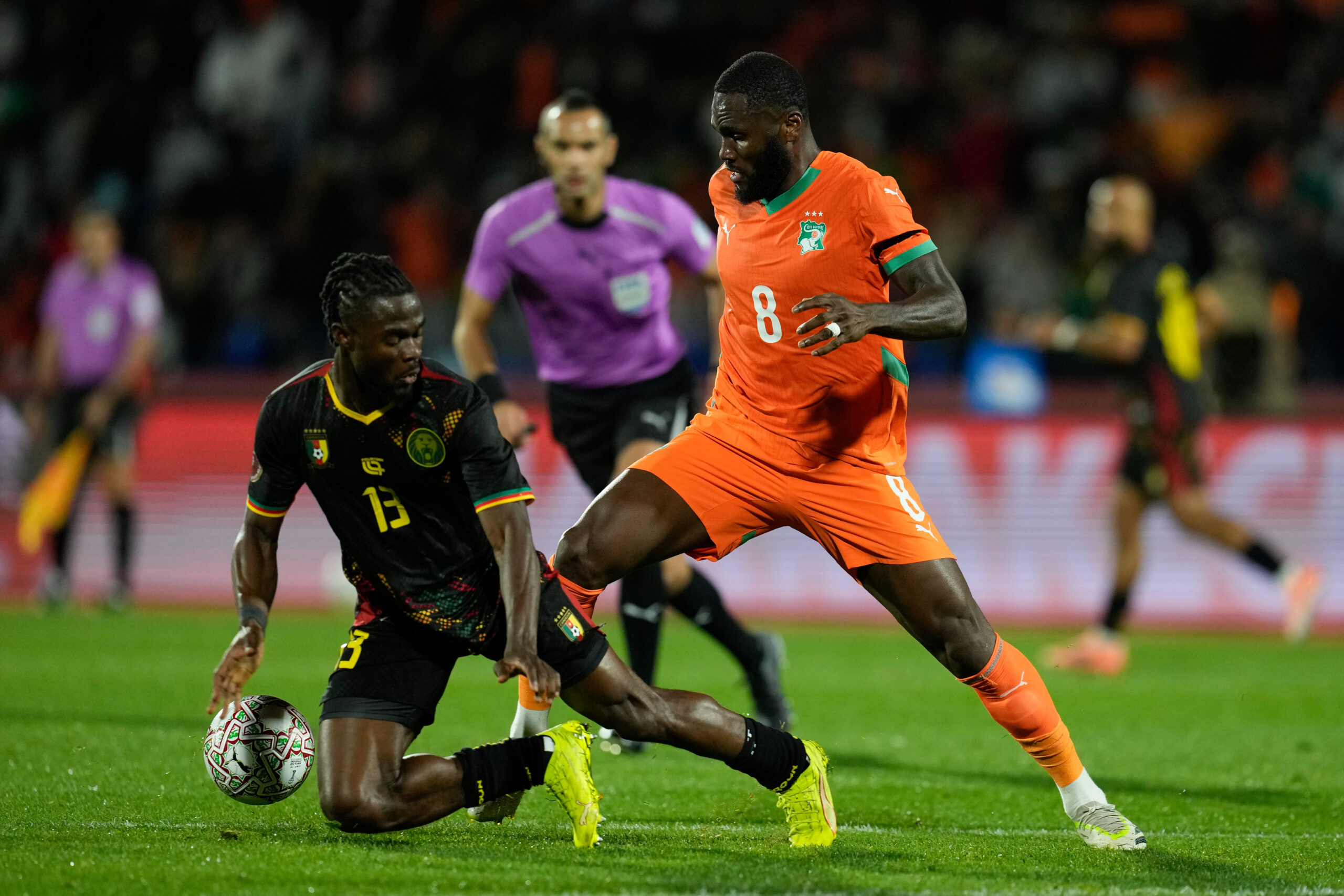
Franck Kessié (right) is one of Ivory Coast’s veteran stars.
His mention of Wilmington was intentional, even though a key detail was missing.
FIFA traditionally publishes the base hotels for teams at World Cups, even though it’s a seemingly obvious security risk. For this World Cup, when the governing body assembled the group of potential sites for base camps across the continent, each training venue was paired with a hotel nearby.
The Union’s facilities were paired with the Hotel DuPont in Wilmington, an easy bus ride down I-95 from Chester. But the hotel was not named in the announcement.
Philadelphia’s organizing committee and the Delaware Tourism Office did say on social media that Wilmington “will host Côte D’Ivoire,” and some national teams have announced the hotels at which they’ll stay.
The Union’s facility is the only base camp that FIFA offered in the Philadelphia area. The next-closest is in Atlantic City, centered on Stockton University, and no one has claimed it yet. The closest base camp that has been publicly announced is Brazil’s in Morristown, N.J., with the Seleçao playing in East Rutherford and Philadelphia.
Ivory Coast will arrive here after an 8-0-2 run through African World Cup qualifying, with 25 goals scored and zero conceded. The team also has won three Africa Cups of Nations, most recently in 2023, and reached the quarterfinals this year. But it has never gotten past the group stage at a World Cup.
Star players include midfielders Franck Kessié (Al-Ahli, Saudi Arabia) and Ibrahim Sangaré (Nottingham Forest, England) and forward Amad Diallo (Manchester United, England). Two others have ties to the U.S.: forward Wilfried Zaha plays for Charlotte FC in MLS, and forward Yan Diomande went to school at DME Academy in Daytona Beach, Fla.
Diomande also played for AS Frenzi, a team near Orlando in the United Premier Soccer League — an amateur and semipro circuit that’s effectively the fourth tier of the American game. He won the best player award in the 2023 National Finals when he helped his team win the title, and scouts started watching him there.
In January of last year, Diomande signed with Spain’s Leganés, which was in La Liga at the time. Leganés was relegated at the end of the season, but Diomande did enough to earn a $23 million move to Germany’s RB Leipzig.
He has taken off like a rocket since then, with eight goals and five assists in 21 games. Leipzig has reportedly put a $118 million price tag on him, with big-time suitors including England’s Liverpool and Arsenal and Germany’s Bayern Munich.
If Diomande plays well at the World Cup, the spotlight will grow even bigger, and Philadelphia will have had a front-row seat.
Last June, I was in my office at the Xfinity Mobile Arena when I saw sparks flying on Pattison Avenue. That’s not a metaphor. I saw literal sparks, plumes of red and black smoke, and heard a steady beat of drums. Thousands of people were marching toward Lincoln Financial Field, chanting, with all the gusto in the world, to a soccer match.
It was 10:30 a.m.
As a lifelong Philadelphian, I know our love of sports. I’ve witnessed my fair share of tailgates, and in the last three years, I’ve seen that devotion, up close and personal, in my role as governor of the Philadelphia Flyers. But as I stared out my office window and watched this parade of passion, I was struck by the extraordinary power and potential of the FIFA World Cup ’26 in Philadelphia this summer.
Since 2000, we have experienced some of the largest and most significant events ever to take place in our city, from the papal visit in 2015 to the Democratic National Convention the following year, to the 2017 NFL Draft. I’ve had the privilege of helping to lead many of these civic efforts and, no doubt, 2026 promises to be a game changer with America’s 250th anniversary, PGA Championship, ArtPhilly, and Major League Baseball’s All-Star Week.
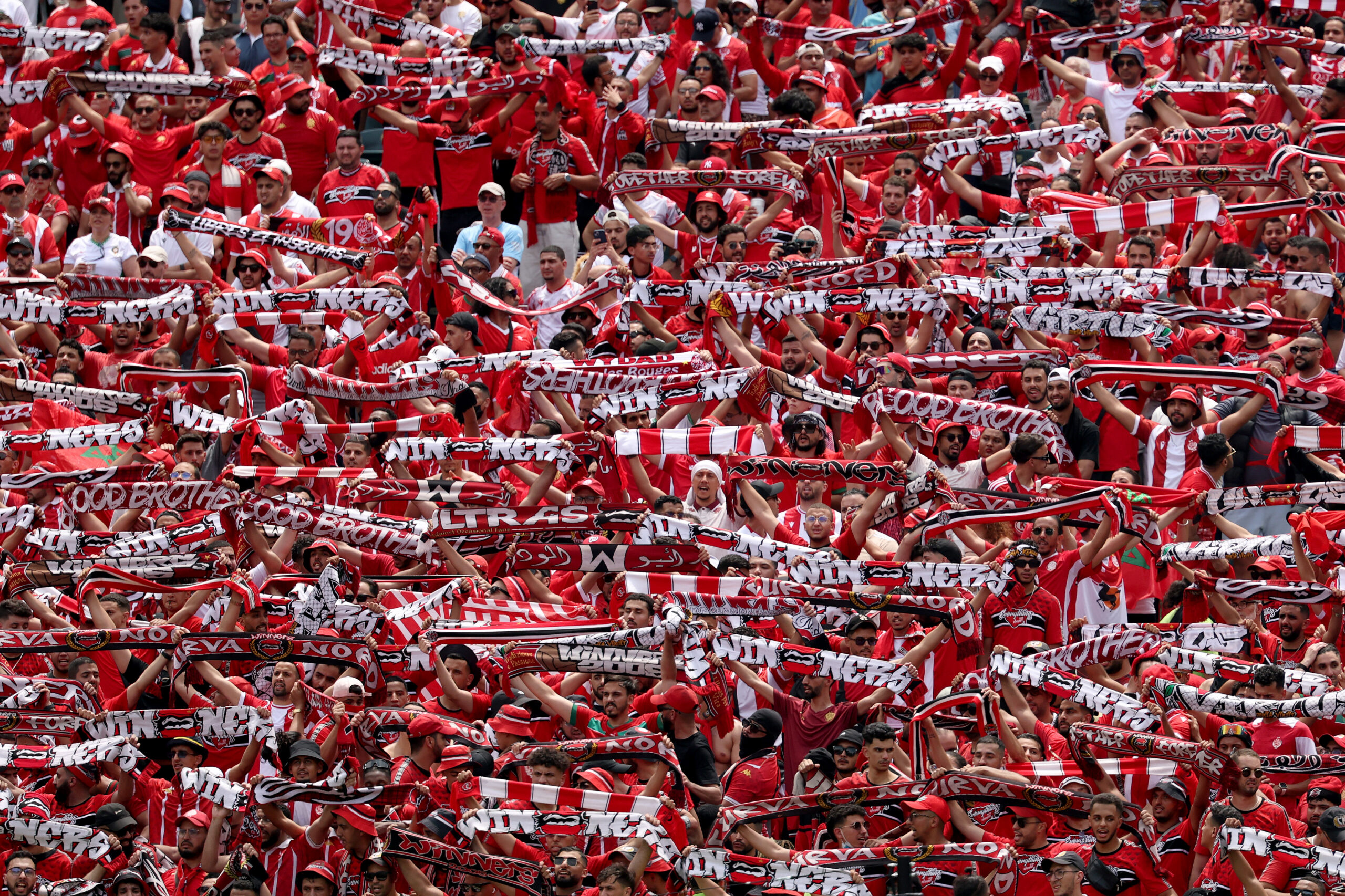
Wydad AC fans cheer during the FIFA Club World Cup match in June against Manchester City FC at Lincoln Financial Field.
But what I learned last summer, as Moroccan fans flooded the stadium complex, was that soccer is the world’s love language. It unites sports, culture, and national pride. Fans live and breathe every minute from opening kick through stoppage time. There is no arriving late to a match, and there is no movement from one’s seat during it.
I’m frequently asked, “Are we ready for 2026?” The answer is yes, because Philadelphia hosts major international events so well. But what I’m not sure we are ready for is what a spectacular celebration the FIFA World Cup is.
I’m not sure we understand just how important this sport — and this tournament — is to the world. And I’m not sure we realize there is no host city more ready to embrace the fans who will come for this party than Philadelphia.
That’s what makes this so exciting for 2026 — and so important beyond this year.
FIFA chose Philadelphia to host six of the tournament’s 104 matches here, including a Round of 16 match on July 4. We have been asked to play host to soccer fans from around the globe, especially those who will root for Brazil, the Ivory Coast, Croatia, Curaçao, Ecuador, Haiti, France, Ghana, and a few yet-to-be-determined national teams.
It’s crucial we recognize that among the many reasons Philadelphia was selected by FIFA was our authentic passion for sports and our unabashed pride for this place we call home.
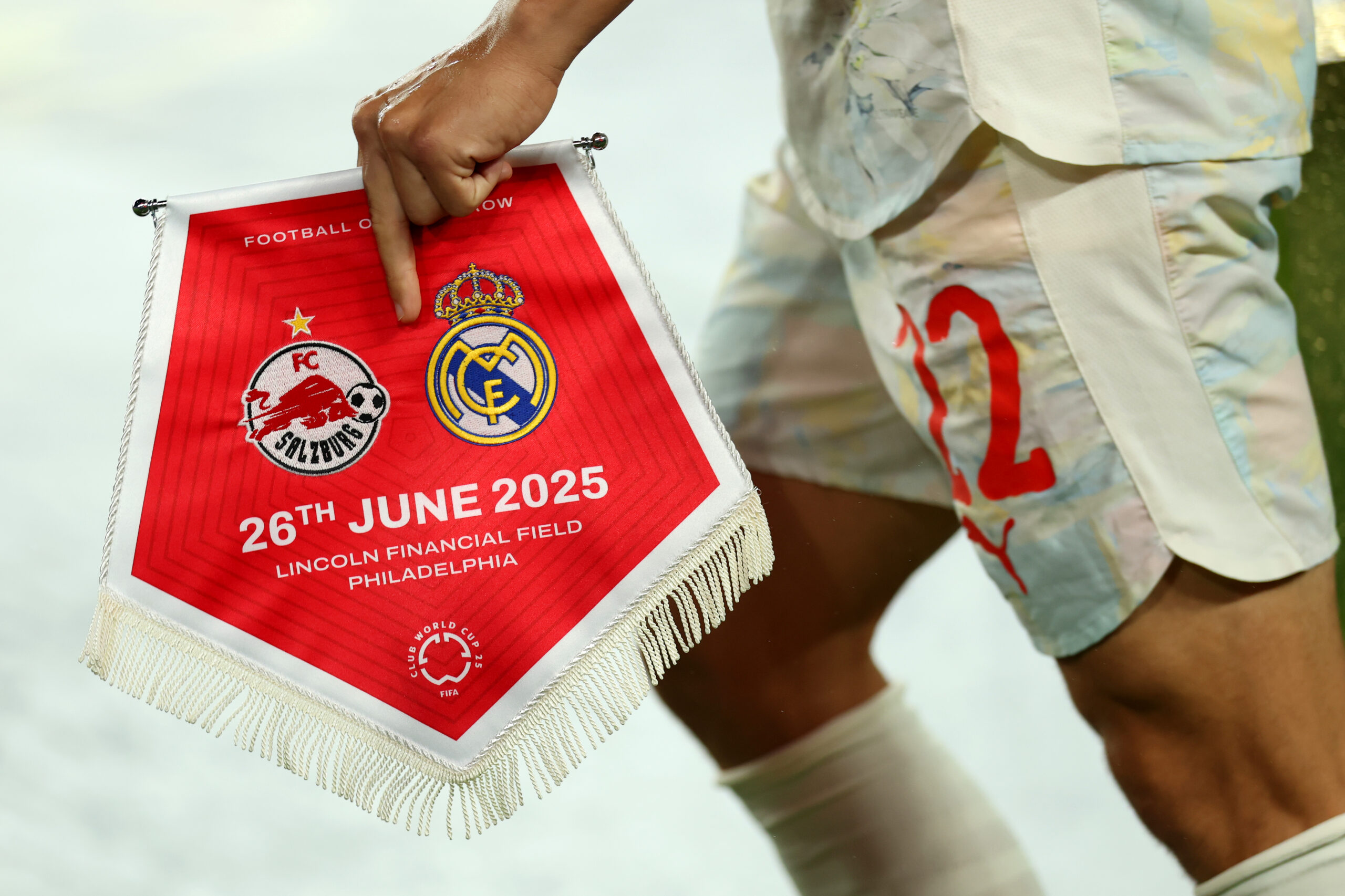
The match pennant is held by Stefan Lainer of FC Salzburg as he walks out prior to a FIFA Club World Cup match in June against Real Madrid CF at Lincoln Financial Field.
We know Philadelphia can shine on the world stage. We know that hundreds of thousands of visitors will walk our streets, dine in our restaurants, and experience our neighborhoods. The global media will spotlight our skyline and highlight our stories. Investment will flow into tourism and community development. But to unlock the economic, cultural, and civic potential of the FIFA World Cup, and of 2026, we need one important thing.
We need you to be here. We need every Philadelphian to help us welcome the world.
So, how can you do that?
Come to the FIFA Fan Festival at Lemon Hill, which will be free to enter during the tournament. And don’t just come once!
Adopt a rooting interest among the teams coming here, in addition to our U.S. men’s national team.
When visitors ask where to eat (and they will!), give them your best hidden neighborhood gem.
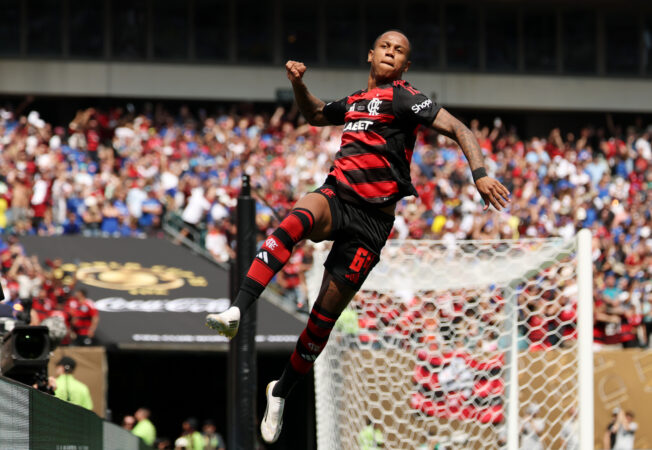
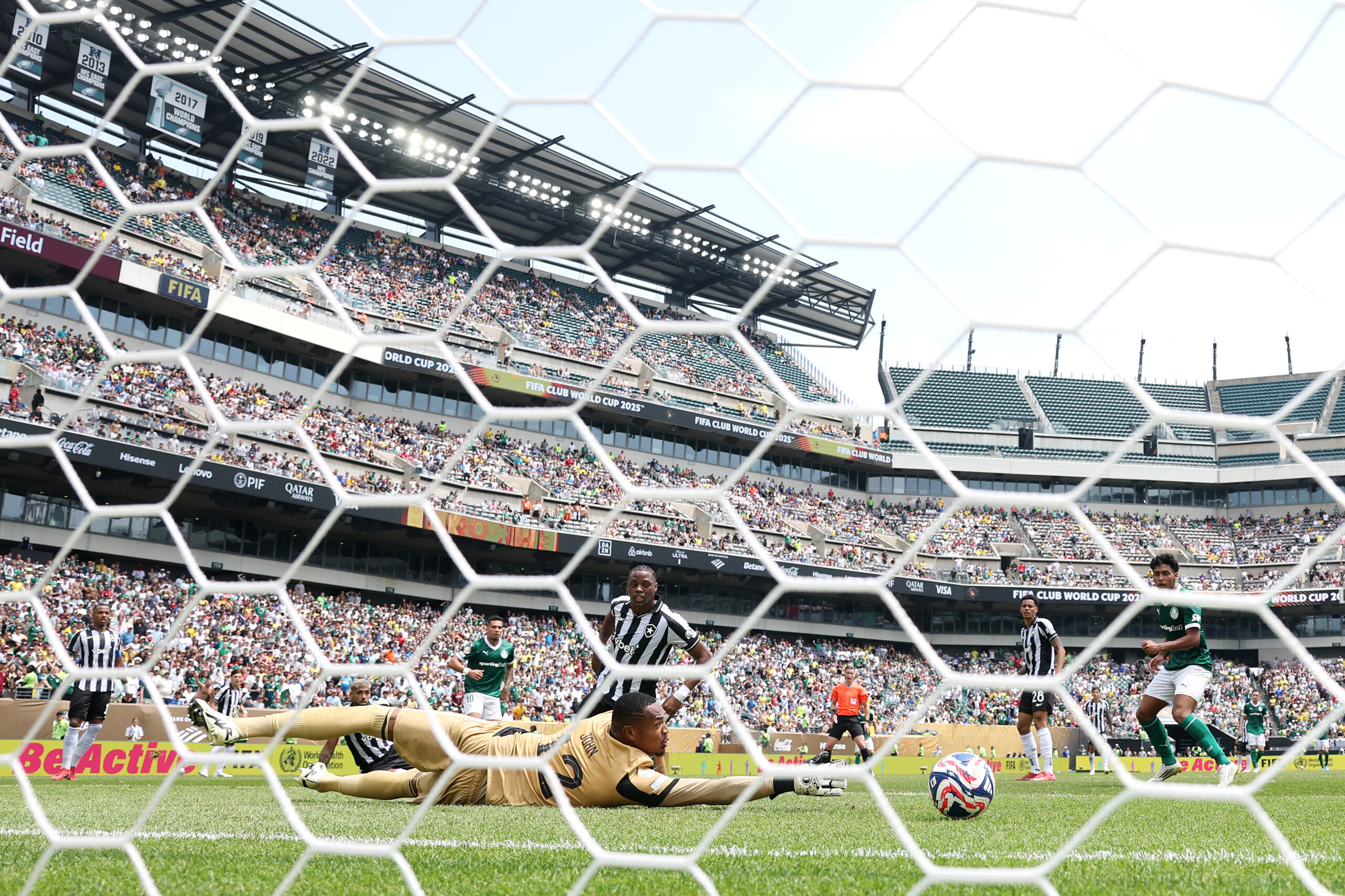
Paulinho of Palmeiras scores his team’s first goal past John of Botafogo during a FIFA Club World Cup at Lincoln Financial Field in June.
If someone asks what they absolutely must do or see when here, tell them your favorite experience, whether it’s in arts and culture, history, culinary, or even shopping.
And when you’re asked to take a picture at the top of the “Rocky Steps,” happily do it!
What makes Philadelphia special is its people. It’s why we won our bid in 2022, and it’s why this year has the potential to be a launchpad for Philadelphia as a global destination. This summer, the eyes of the world will be on us, and we want them to see the best of who we are: welcoming, inclusive, fun, proud, and united.
But to show that, we need you to be here. We need you to be part of the action. And we need you to help us make history together.
Daniel J. Hilferty is the chairman and CEO of Comcast Spectacor and governor of the Philadelphia Flyers. He has served as cochair of Philadelphia Soccer 2026 since 2021, alongside Michelle Singer.
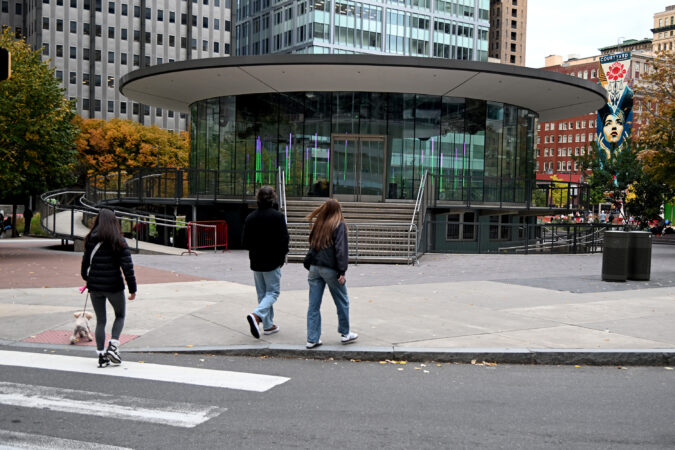
The saucer in LOVE Park finally has a timeline for its revival.
After years of seeking ideas from business owners and other Philadelphians, city officials expect work on the historic building to begin in May, the city’s Parks & Recreation Department says.
But officials are still working to select a partner for the project.
In May, the city issued a “request for expressions of interest” (RFEI) from “visionary businesses, particularly those in food, beverage, retail, or hospitality,” who wanted to partner on the saucer.
City officials said the interest exceeded expectations, with more than 50 applicants submitting ideas. They included “coffee and cafe concepts, casual food offerings, beer garden hybrids, and informal meeting spaces,” according to Parks & Recreation spokesperson Ra’Chelle Rogers.
Among applicants, there was a focus on “flexible, welcoming concepts that function as a true public amenity, encouraging people to meet, linger, and connect in the park,” Rogers said.
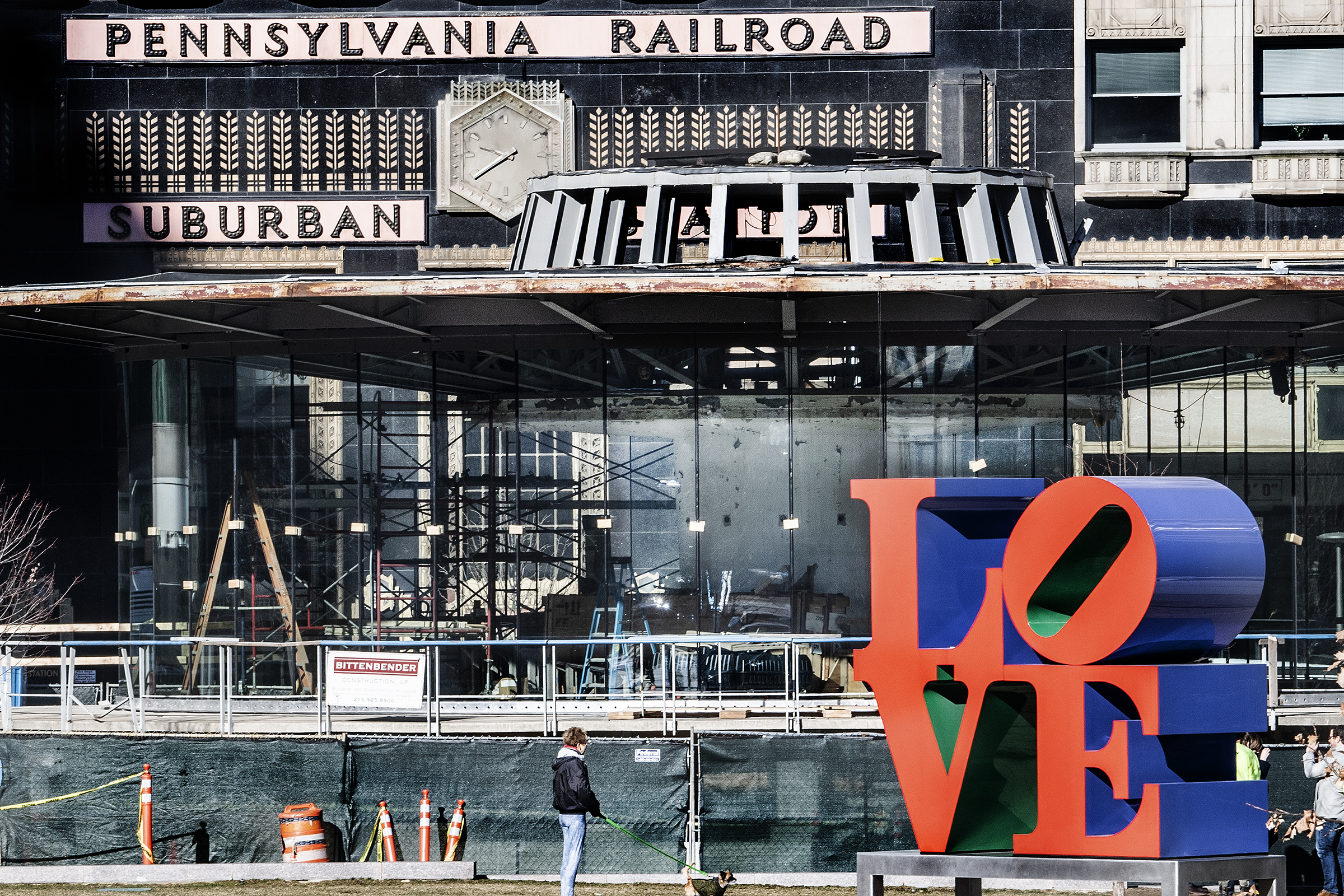
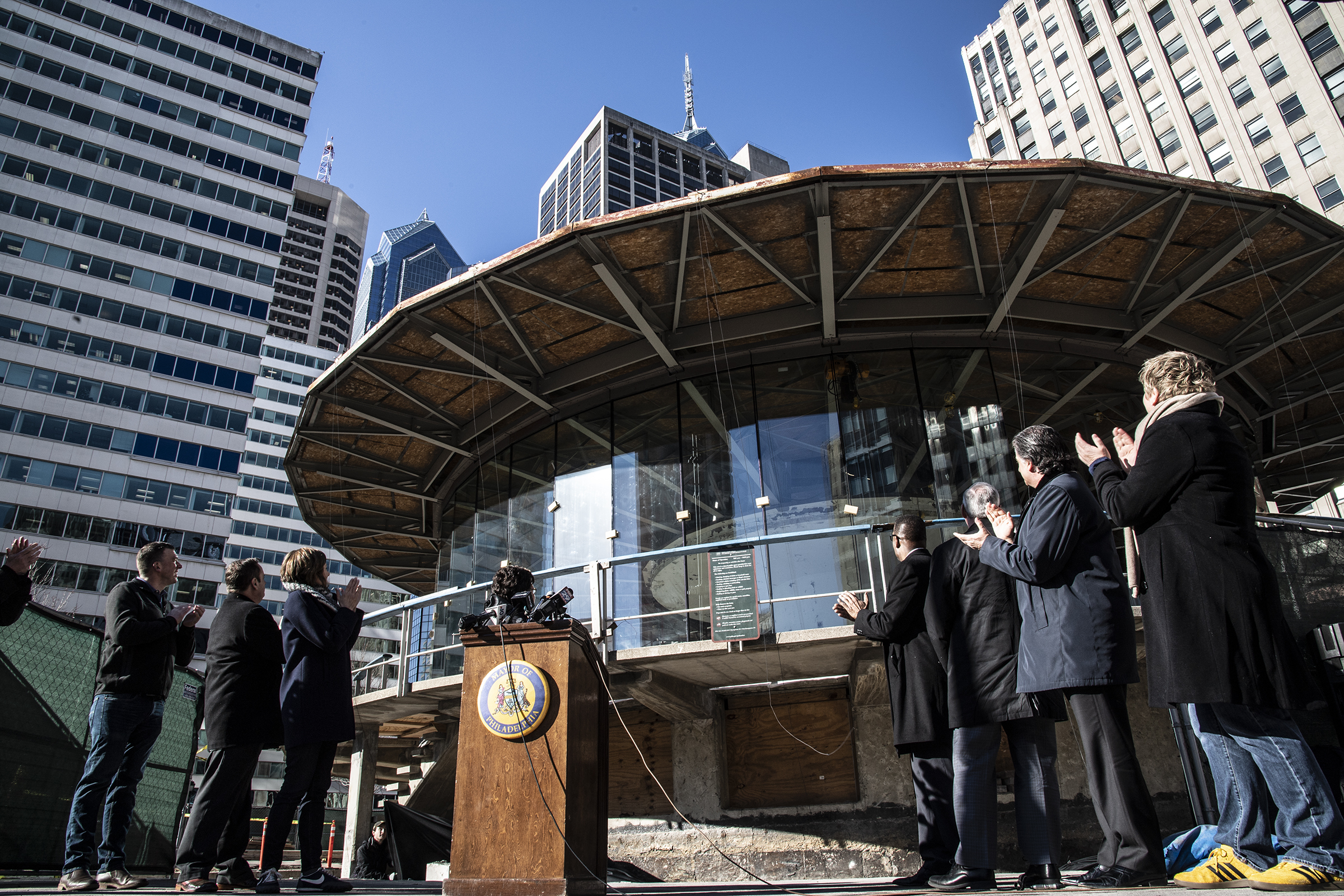
The saucer building in LOVE Park is pictured in March 2019, amid early renovations for a bar-restaurant concept that never panned out.
In light of the demand, the city is moving into its next stage, requiring prospective partners to visit the saucer at 3 p.m. on Feb. 18 and submit a proposal online by March 18.
Prospective partners do not need to have submitted an idea in the spring, Rogers said. Any experienced food, beverage, hospitality, or community operator with the capacity to “generate sustainable revenue to support the park” is encouraged to apply, Rogers said.
“The saucer has always been envisioned as a people-first space — one that complements the park, supports programming, and welcomes both residents and visitors,” said Susan Slawson, the city’s parks & recreation commissioner. The RFEI process has given officials “confidence to move forward with a flexible, inclusive model designed for the way people actually use LOVE Park.”
The saucer, also referred to as the UFO, was added to the Philadelphia Register of Historic Places last year. Built in 1960, the building predates LOVE Park, and first served as the city hospitality center. It later housed offices for park staff.
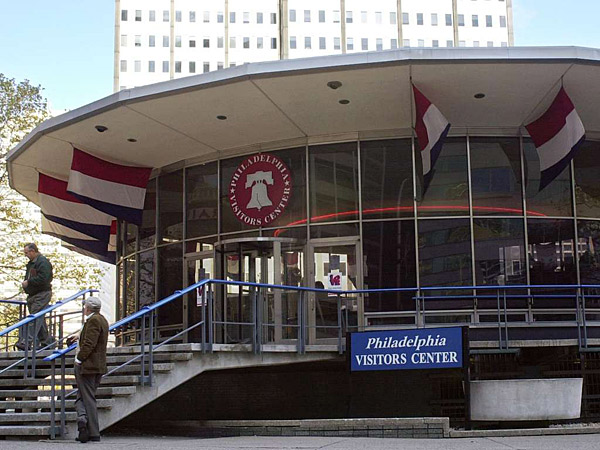
An undated file photo of LOVE Park’s saucer building when it served as the Philadelphia Visitors Center.
For more than a decade, however, the circular structure near 16th Street and JFK Boulevard has largely sat dormant (the building has opened to the public for the Festival of Trees, a Children’s Hospital of Philadelphia fundraiser, during recent holiday seasons).
In March 2019, city officials applauded the early construction of a bar-restaurant that was set to fill LOVE Park’s saucer building. The pandemic later caused the restaurateurs to bow out of the project.
As for this latest request process, city officials said they plan to select a partner by April, and begin work a month later. The timing could coincide with Philly’s celebration of America’s 250th birthday, as well as the city’s hosting of World Cup matches and the MLB All-Star game.
The office of Councilmember Jeffery Young, whose district includes LOVE Park, is set to fund “key utility and infrastructure improvements” at the saucer, according to the city statement, and public grants are being sought to offset other upfront costs.
“Bringing an active, public-facing partner into the saucer is a milestone for LOVE Park and for Philadelphia,” Young said. “I’m proud to support improvements that make the saucer a welcoming hub for years to come.”
Maybe it’s because I’ve watched every blessed one of them, starting as a curious, nearly 8-year-old boy in 1967, but the Super Bowl has always felt like the ultimate barometer of where the American Experiment is at. Super Bowl LX (that’s 60, for those of you smart enough not to take four years of Latin in high school) was no exception. The actual game was something of a snoozefest, but the tsunami of commercials revealed us as a nation obsessed with artificial intelligence, sports betting, weight loss, and anything that can lift us from middle-class peonage without having to do any actual work. As Bad Bunny said, God bless America.
Bad Bunny’s real message: From P.R. to Minnesota, we are neighbors
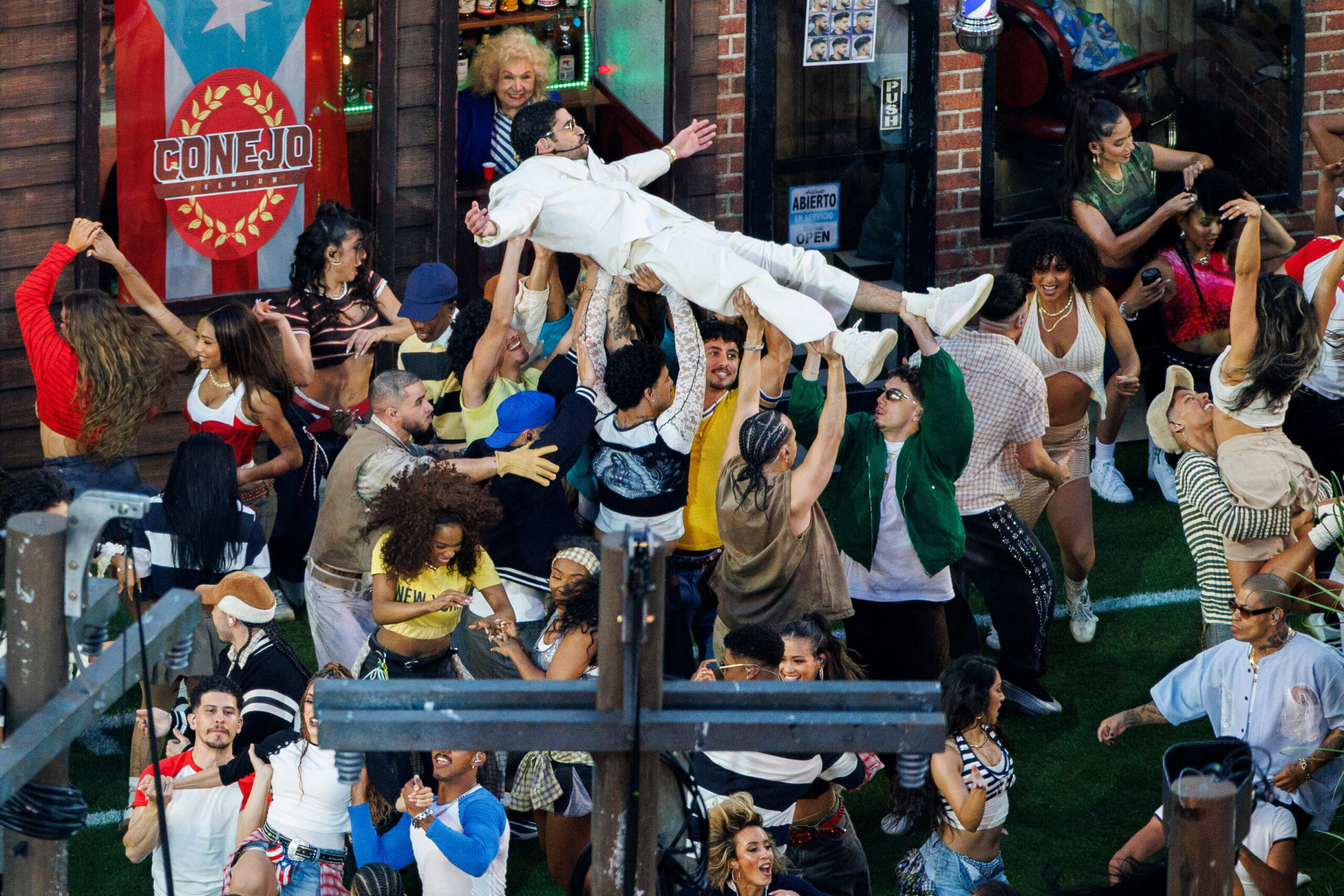
Bad Bunny (center top) performs Sunday during the halftime show of the NFL Super Bowl XL football game between the Seattle Seahawks and the New England Patriots in Santa Clara, Calif.
Right-wing media prattled on for months about how Bad Bunny, the Puerto Rican reggaeton superstar who is the world’s most streamed artist, would politicize and thus ruin the NFL’s halftime extravaganza at Super Bowl LX in Santa Clara, Calif.
The babble became a scream seven days before the Big Game kicked off, when Bad Bunny won the record of the year Grammy Award and began his acceptance speech with the exhortation “ICE out!” adding, “We’re not savages, we’re not animals, we’re not aliens — we are humans, and we are Americans.”
But on the world’s biggest stage Sunday night — seen by 135 million in the United States, a Super Bowl record — Bad Bunny sang not one word about Donald Trump, not that MAGA fans even bothered to hold up a translation app. The white-suited Benito Antonio Martínez Ocasio danced his way through the history of Puerto Rico and the Americas writ large, from the plantations of yore to the exploding power lines of the hurricane-wracked 21st century. He whirled past an actual wedding, stopped for a shaved ice, and for 13 spellbinding minutes turned a cast of 400 into what his transfixed TV audience craved at home.
BadBunny built his own community — a place not torn asunder by politics, but bonded by love and music.
Without uttering one word — in Spanish or English — about the dire situation in a nation drifting from flawed democracy into wrenching authoritarianism, the planet’s reigning king of pop delivered the most powerful message of America’s six decades of Super Bowl fever. Shrouded in sugar cane and shaded by a plantain tree, Bad Bunny sang nothing about the frigid chaos 2,000 miles east in Minnesota, and yet the show was somehow very much about Minneapolis.
Bad Bunny finally gave voice to what thousands of everyday folks in the Twin Cities have been trying to say with their incessant whistles.
We are all neighbors. The undocumented Venezuelan next door who toils in the back of a restaurant and sends his kids to your kids’ school is a neighbor. But Haiti is also a neighbor, as is Cuba. We are all in this together.
The word I kept thinking about as I watched Bad Bunny’s joyous performance is a term that didn’t really exist on New Year’s Day 2026, yet has instantly provided a name to the current zeitgeist.
The great writer Adam Serwer — already up for the wordsmithing Hall of Fame after he nailed the MAGA movement in 2018 in five words: “The cruelty is the point” — leaned hard into the concept of “neighborism” after he traveled to Minneapolis last month. His goal was to understand an almost revolutionary resistance to Trump’s mass deportation raids that had residents — many of whom had not been especially political — in the streets, blowing those warning whistles, confronting armed federal agents, and tracking their movements across the city.
Serwer visited churches where volunteers packed thousands of boxes of food for immigrant families afraid to leave their homes during the U.S. Immigration and Customs Enforcement raids, and talked to stay-at-home moms, retirees, and blue-collar workers who give rides or money to those at risk, or who engaged in the riskier business of tracking the deportation raiders.
“If the Minnesota resistance has an overarching ideology,” Serwer wrote, “you could call it ‘neighborism’ — a commitment to protecting the people around you, no matter who they are or where they came from.” He contrasted the reality on the ground in Minneapolis to the twisted depictions by Trump and his vice president, JD Vance, who’ve insisted refugees are a threat to community and cohesion.
Of course, it’s not just Minneapolis, and it’s not just the many, liberal-leaning cities — from Los Angeles to Chicago to New Orleans and more — that were the incubators of the notion that concerned citizens — immigrant and nonimmigrant alike — could prevent their neighbors from getting kidnapped. Even small towns like rural Sackets Harbor, N.Y., the hometown of Trump’s border czar Tom Homan, rose up in protest to successfully block the dairy farm deportation of a mom and her three kids. It’s been like this everywhere regular folks — even the ones who narrowly elected Trump to a second term in 2024 — realize mass deportation doesn’t mean only “the worst of the worst,” but often the nice mom or dad in the house, or church pew, next to theirs.
Only now that it’s arrived is it possible to see “neighborism” as the thing Americans were looking for all along, even if we didn’t know it. It is, in every way, the opposite vibe from the things that have always fueled fascism — atomization and alienation that’s easy for a demagogue to mold into rank suspicion of The Other.
I’m pretty sure Bad Bunny wasn’t using the word neighborism when the NFL awarded him the coveted halftime gig last fall. But the concept was deeply embedded in his show. He mapped his native Puerto Rico as a place where oppression has long loomed — from the cruelty of the sugar plantations to the capitalist exploitation of the failed power grid — but where community is stronger.
Then Benito broadened the whole concept. Reclaiming the word America for its original meaning as all of the Western Hemisphere, Bad Bunny name-checked “Chile, Argentina, Uruguay, Paraguay, Bolivia, Peru, Ecuador, Brazil,” and Canada, as well as the United States. These, too, are our neighbors. “God bless America,” he shouted — his only message of the night delivered in English.
So, no, Bad Bunny never mentioned Minneapolis, but a tender moment when he seemingly handed the Grammy he’d won just aweek ago to a small Latino boy had to remind viewers of the communal fight to save children like the 5-year-old, blue bunny hat-wearing (yes, ironic) Liam Conejo Ramos, who was just arrested, detained, and released by ICE. (A false rumor that the Super Bowl boy was Ramos went viral.)
But arguably, this super performance had peaked a few moments earlier, when the singer exited the wedding scene stage with a backward trust dive, caught and held aloft by his makeshift community in the crowd below. Bad Bunny had no fear that his neighbors would not be there for him. Viva Puerto Rico. Viva Minneapolis. Viva our neighbors.
Yo, do this!
Some 63 years after he was gunned down by a white racist in his own driveway, the Mississippi civil rights icon Medgar Evers has been having a moment. A fearless World War II vet whose bold stands for civil rights as local leader of the NAACP in America’s most segregated state triggered his 1963 assassination, Evers’ fight has become the subject of a best-selling book, a controversy over how his story is told at the Jackson, Miss., home where he was killed, and now a two-hour documentary streaming on PBS.com. I’m looking forward to watching the widely praised Everlasting: Life & Legacy of Medgar Evers.
After the Super Bowl, February is the worst month for sports — three out of every four years. In 2026, we have the Winter Olympics to bridge the frigid gap while we wait for baseball’s spring training (and its own World Baseball Classic) to warm us up. Personally, I try and sometimes fail to get too jacked up around sleds careening down an icy track, but hockey is a different story. At 2:10 p.m. on Tuesday (that’s today if you read this early enough), the puck drops on USA Network for the highly anticipated match between the world’s two top women’s teams: the United States and its heated rival Canada. Look for these two border frenemies to meet again for the gold medal.
Ask me anything
Question: How is it that some towns have been able to prevent ICE from buying warehouses and turning them into concentration camps, while others say they are helpless against the federal government? What does it mean that several are planned for within a couple of hours of Philly? — @idaroo.bsky.social via Bluesky
Answer: Great question. It seems ICE and its $45 billion wad of cash are racing in near-secrecy to make this national gulag archipelago of 23 or so concentration camps a done deal. The places where they’ve been stopped, like one planned for Virginia, happened because locals were able to pressure the developer before a sale to ICE was concluded. That’s no longer an option at the two already purchased Pennsylvania sites in Schuylkill and Berks Counties. The last hope is pressure from high-ranking Republicans, which may (we’ll see) have stopped a Mississippi site. Pennsylvanians might want to focus, then, on GOP Sen. Dave McCormick. Good luck with that.
What you’re saying about …
It’s conventional wisdom that the best argument for a Gov. Josh Shapiro 2028 presidential campaign is his popularity in his home state of Pennsylvania, the battleground with the most electoral votes. So it’s fascinating that none of the dozen or so of you who responded to this Philadelphia-based newsletter wants Shapiro to seek the White House, although folks seem divided into two camps. Some of you just don’t like Josh or his mostly centrist politics. “I think he’s all ambition, all consumed with reaching that top pedestal, not as a public servant, but because he thinks he deserves it,” wrote Linda Mitala, who once campaigned for Shapiro, but soured on his views over Gaza protesters, New York Mayor Zohran Mamdani, and other issues. Yet, others think he’s an excellent governor who should remain in the job through 2030. “Stay governor of Pa. when good governance and ability to stand up to federal (authoritarian) overreach is dire,” wrote Kim Root, who’d prefer Kentucky Gov. Andy Beshear for the White House.
📮 This week’s question: A shocking, likely (though still not declared) Democratic primary win for Analilia Mejia, the Bernie Sanders-aligned left-wing candidate, in suburban North Jersey’s 11th Congressional District raises new questions for the Dems about the 2026 midterms. Should the party run more progressive candidates like Mejia, who promise a more aggressive response to Trump, or will they lose by veering too far left? Please email me your answer and put the exact phrase “Dems 2026” in the subject line.
Backstory on how the F-bomb became the word of the year
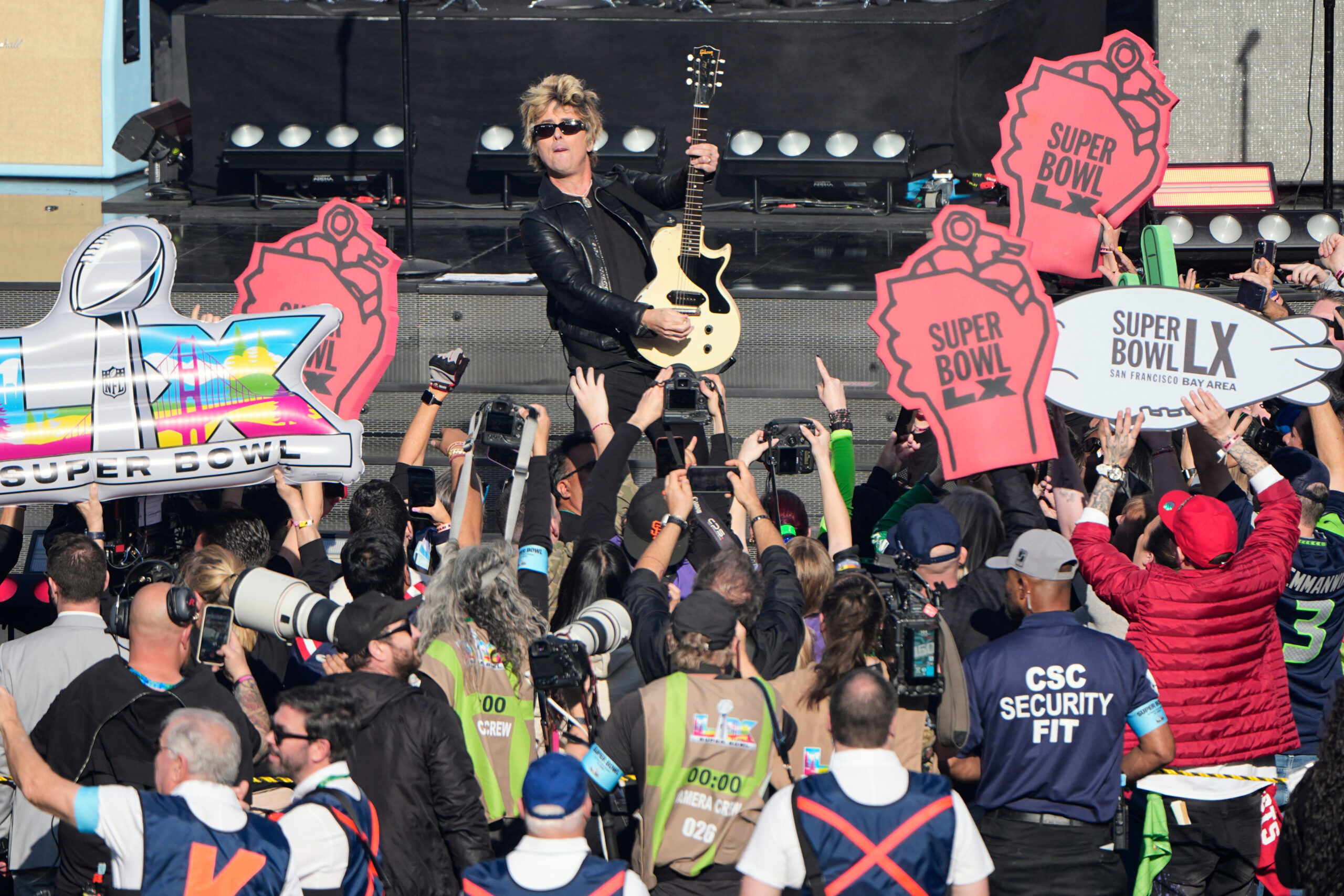
Billie Joe Armstrong of Green Day performs Sunday before the start of Super Bowl XL in Santa Clara, Calif.
I’m old enough to remember when the world’s most famous comedy riff was the late George Carlin’s “Seven Words You Can Never Say on Television” — its point driven home by Carlin’s 1972 arrest on obscenity charges that went all the way to the U.S. Supreme Court. A half century later, you still can’t say dirty words on broadcast TV — cable and streaming is a different story — but that fortress is under assault. In 2026, America is under seemingly constant attack from the F-bomb.
It is freakin’ everywhere. When the top elected Democrat in Washington, House Minority Leader Hakeem Jeffries, cut a short video to respond to the president’s shocking post of a racist video that depicted Barack and Michelle Obama as apes, he said, “[F-word] Donald Trump!” If uttered in, say, 1972, Jeffries’ attack would have been a top story for days, but this barely broke through. Maybe because that word is in the lexicon of so many of his fellow Democrats, like Mayor Jacob Frey, who famously told ICE agents to “get the [F-word] out of Minneapolis,” or Minnesota Sen. Tina Smith, who begged federal agents to “leave us the (bleep) alone.” (Smith is retiring at year’s end and seems to no longer give a you-know-what.)
The poor guys with their finger on the silence button at the TV networks, where you still can’t say Carlin’s seven words, can barely keep up. The F-bomb was dropped at this year’s Grammys, where award-winner Billie Eilish declared “(Bleep) ICE!” as she brandished her prize. The F-bomb was dropped, of course, at the Super Bowl, when the only true moment of silence during 10-plus hours of nonstop bombast came during Green Day’s pregame performance of “American Idiot,” when NBC shielded America’s tender ears from hearing Billie Joe Armstrong sing about “the subliminal mind(bleep) America.”
We’re only about six weeks into the new year, but it’s hard not to think that Merriam-Webster or the other dictionary pooh-bahs won’t declare the F-bomb as word of the year for 2026, even if I’m still not allowed to use it in The Inquirer, family newspaper that we are. So what the … heck is going on here? One study found the F-word was 28 times more likely to appear in literature nowthan in the 1950s, so in one sense it’s not surprising this would eventually break through on Capitol Hill or on the world’s biggest stages.
But the bigger problem is that America’s descent into authoritarianism and daily political outrage has devolved to such a point where, every day, permissible words no longer seem close to adequate for capturing our shock and awe at how bad things are. Only the F-bomb, it turns out, contains enough dynamite to blow out our rage over masked goons kidnapping people on America’s streets, or a racist, megalomaniac president who still has 35 months left in his term. Yet, even this (sort of) banned expletive is losing its power to express how we really feel. I have no idea what the $%&# comes next.
What I wrote on this date in 2019
What a long, strange trip for Amazon founder Jeff Bezos, one of the four richest people on the planet. Today, Bezos is in the headlines for his horrific stewardship of the Washington Post, which has bowed down on its editorial pages to the Trump regime, lost hundreds of thousands of subscribers, and laid off 300 journalists. It’s hard to recall that seven years ago, Bezos and Trump were at war, and there was evidence Team MAGA had enlisted its allies from Saudi Arabia to the National Enquirer to take down the billionaire. I wrote that “a nation founded in the ideals of democracy has increasingly fallen prey to a new dystopian regime that melds the new 21st century dark arts of illegal hacking and media manipulation with the oldest tricks in the book: blackmail and extortion.”
My first and hopefully not last journalistic road trip of 2026 took me to Pennsylvania coal country, where ICE has spent $119.5 million to buy an abandoned Big Lots warehouse on the outskirts of tiny Tremont in Schuylkill County. I spoke with both locals and a historical expert on concentration camps about their fears and the deeper meaning of a gulag archipelago for detained immigrants that is suddenly looming on U.S. soil. It can happen here. Over the weekend, I looked at the stark contrast between Europe’s reaction to the Jeffrey Epstein scandal — where ties to the late multimillionaire sex trafficker are ending careers and even threatening to topple the British government — and the United States, where truth has not led to consequences so far. The Epstein fallout shows how the utter lack of elite accountability is driving the crisis of American democracy.
One last Super Bowl reference: Now that football is over, are you ready for some FOOTBALL? Now just four months out, it’s hard to know what to make of the 2026 World Cup returning to America and coming to Philadelphia for the very first time, and whether the increasing vibe that Donald Trump’s United States is a global pariah will mar the world’s greatest sporting event (sorry, NFL). Whatever happens, The Inquirer is ready, and this past week we published our guide to soccer’s biggest-ever moment in Philly. Anchored by our world-class soccer writer Jonathan Tannenwald and Kerith Gabriel, who worked for the Philadelphia Union between his stints at the paper, the package provides not only an overview of the World Cup in Philly, but previews the dozen teams who will (or might) take the pitch at Lincoln Financial Field, with in-depth looks at the powerhouses (France) as well as the massive underdogs (Curaçao). June is just around the corner, so don’t let the paywall become your goalkeeper. Subscribe to The Inquirer before the first ball drops.
By submitting your written, visual, and/or audio contributions, you agree to The Inquirer’s Terms of Use, including the grant of rights in Section 10.
Philadelphia will play a starring role in this summer’s celebration of the 250th anniversary of the Declaration of Independence. The Union will have a jersey fit for the party.
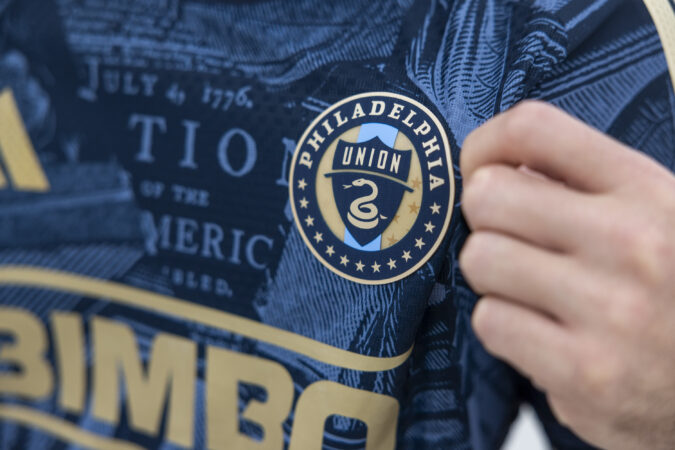
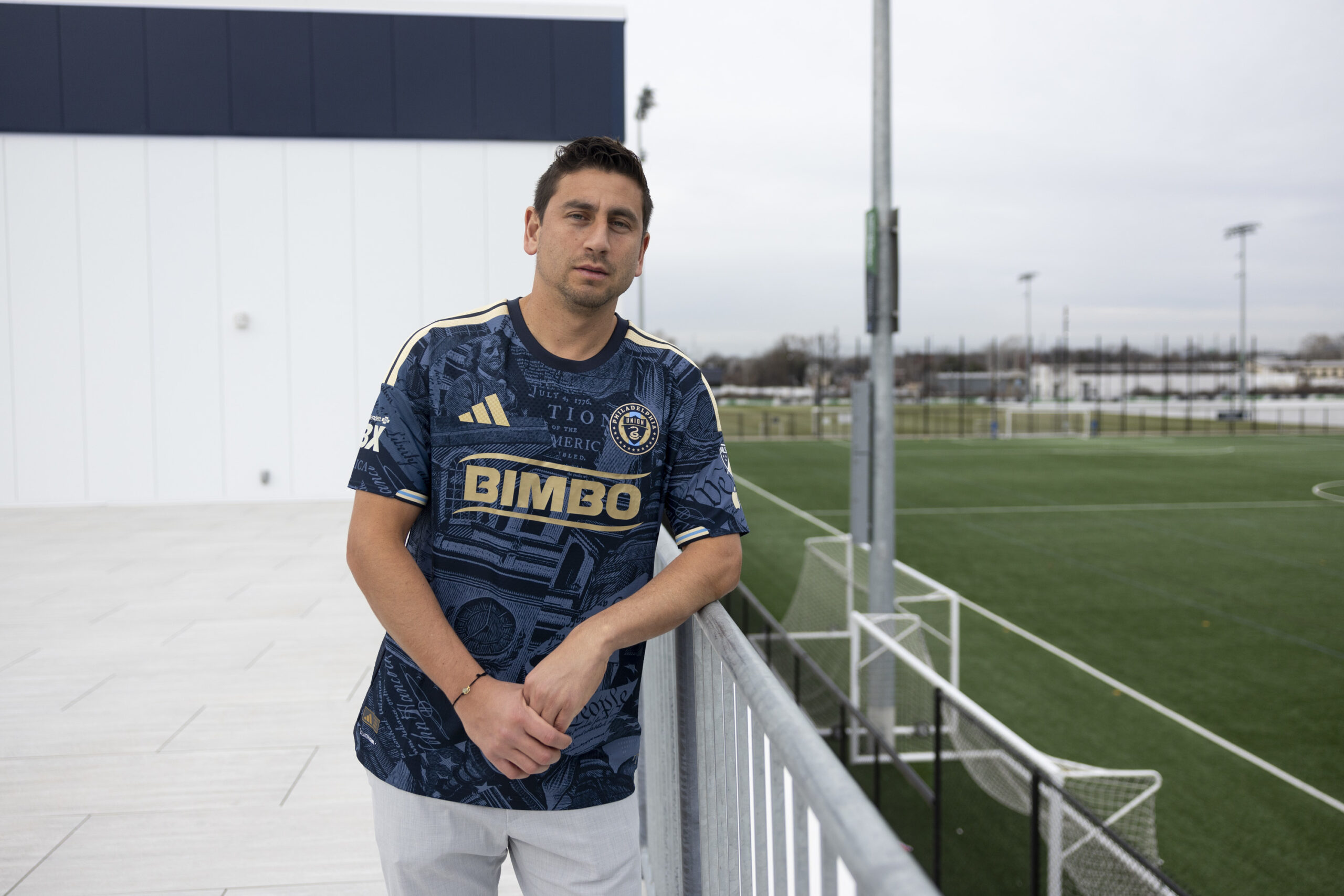
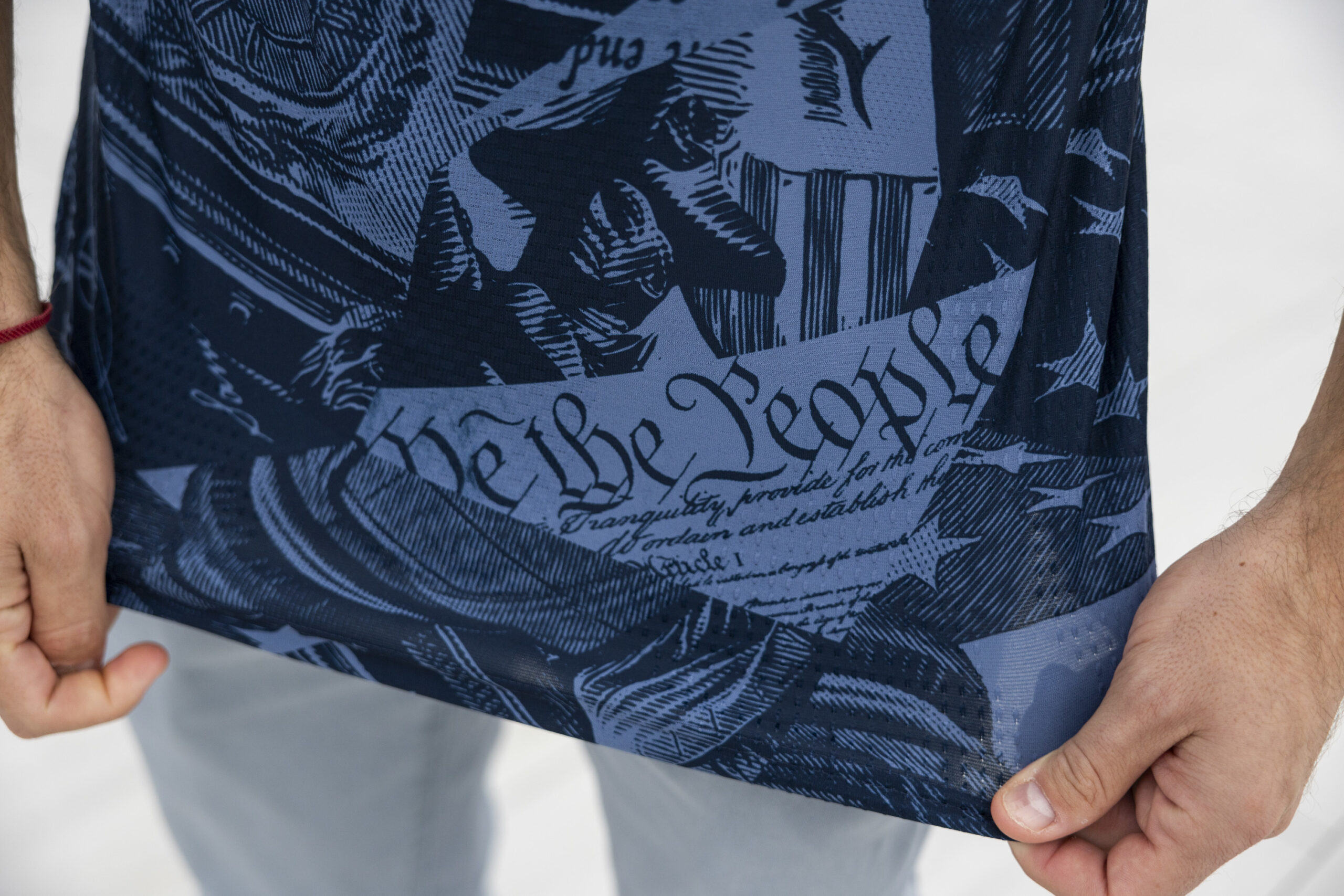
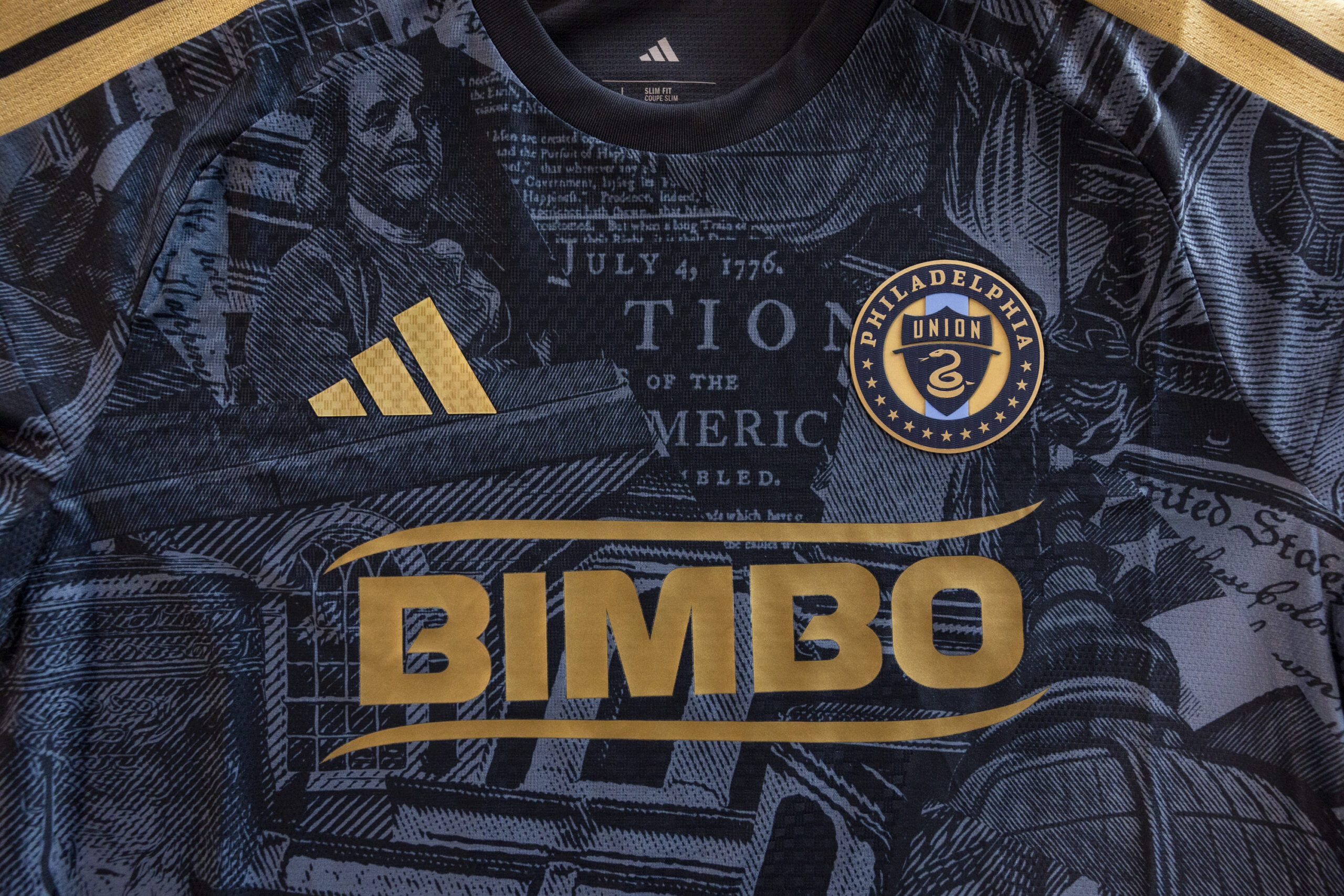
The club’s new home kit, unveiled Tuesday, is a navy blue jersey with an all-over pattern that features illustrations of some of Philly’s most recognizable landmarks and script from the Declaration of Independence.
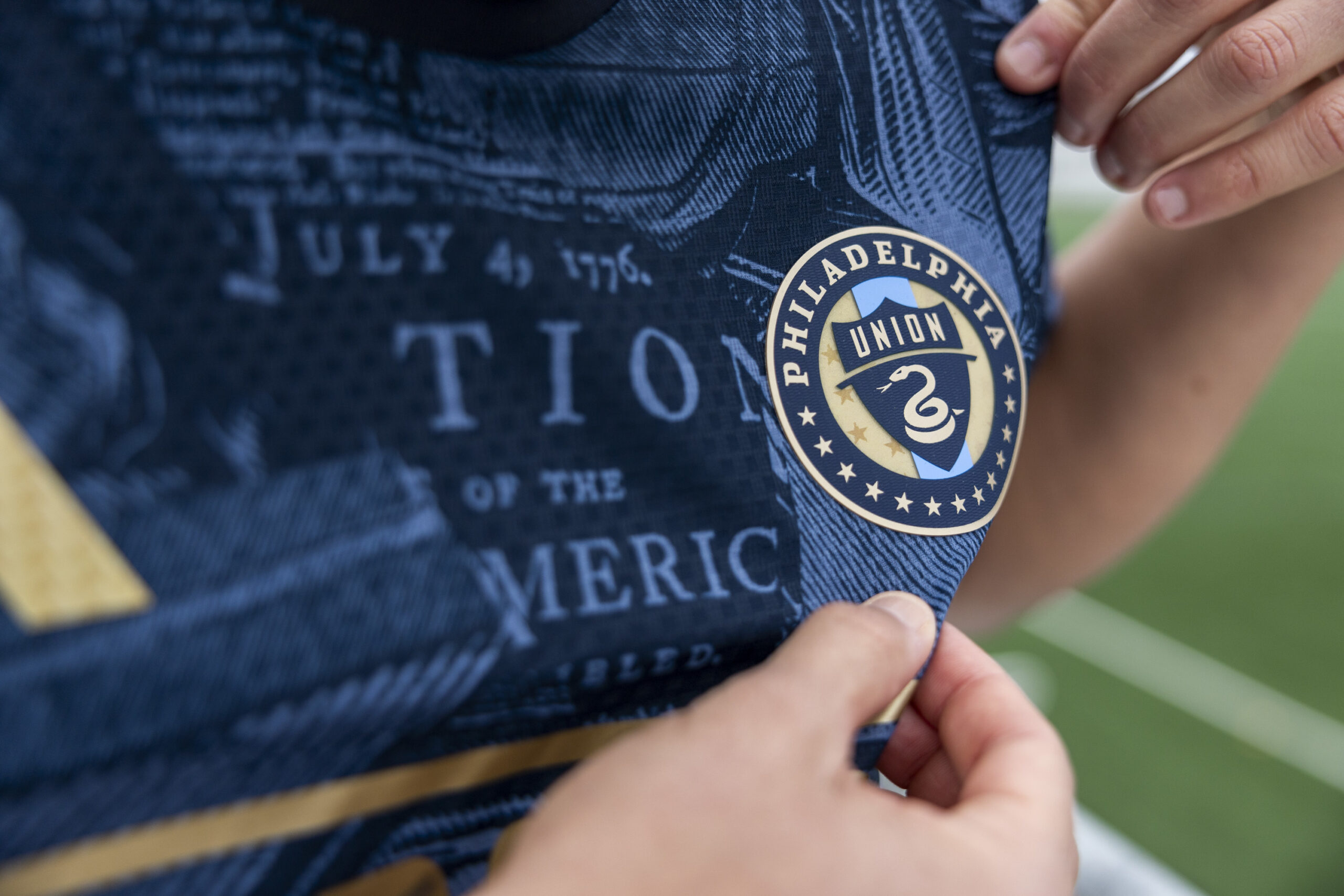
Included in the pattern are illustrations of the Liberty Bell, Independence Hall, and even a portrait of Benjamin Franklin near the shoulder. A fragment of the Declaration of Independence, including the date of July 4, 1776, is printed just below the jersey’s collar, between the Adidas logo and the club’s crest.
“Being here in Philadelphia, the birthplace of the country, we just thought there was a really incredible opportunity to create something that represents the Philadelphia Union, that represents our city, and represents the country,” said Amanda Young Curtis, the Union’s senior vice president of marketing and communications. “This is, hopefully, a jersey that people think they can wear to a Union game, to a semiquincentennial celebration, or to a U.S. men’s national team game or watch party.”
The Union should have their first opportunity to play in their new uniform when the club hosts Trinidad’s Defence Force FC in the second leg of their first-round Concacaf Champions Cup matchup on Feb. 26. The Union’s MLS home opener is scheduled for March 1 against New York City FC.
Union midfielder Alejandro Bedoya showcases the new jersey for the season at the WSFS SportsPlex in Chester on Jan. 14.
The 1776 script also appears in the bottom corner of the jersey in gold. The jersey will be paired with dark blue shorts and socks to complete the Union’s home uniform.
The Union hope their bold new home kit can be a staple for this summer’s Independence Day festivities and fans at the FIFA World Cup, which will return to American soil for the first time since 1994.
This year, kits across MLS will feature a special nod to this summer’s World Cup, co-hosted by the U.S., Canada, and Mexico. On jerseys for American teams, the team logo will feature a holographic star pattern. For the three Canadian clubs, the holographic pattern will be maple leaves.
Union forward Milan Iloski shows off the new kit ahead of the Union’s 2026 season, which features various historical Philadelphia landmarks.
The kit, designed in partnership between the Union and Adidas, MLS’s jersey provider, will replace the navy kit that the club debuted in 2024. The team’s away jersey, a light blue shirt that features a yellow lightning pattern, will continue to be used.
Milan Iloski had high praise for the creative team behind the jersey’s design, calling it “a beautiful kit.” The Union midfielder also pointed out the kit’s versatility for this summer’s slate of festivities.
“I think it’ll be a kit that can be worn anywhere,” Iloski said. “I mean, you could wear it to a game, you can wear it to a party, you could wear it anywhere. With the World Cup coming here in America and the 250th anniversary, it felt like the perfect opportunity to do a big kit, to do something different, and I think they nailed it.”
Alejandro Bedoya has played in a lot of Union jerseys over the span of his career. But he says this year’s kit is among the best he’s seen, calling it a “work of art.”
Union midfielder Alejandro Bedoya, who shows off the raised crest on the Union’s new home kit, described it as a “work of art.”
“As a player, you’re often told [to] play for the badge, play for the shirt,” he said. “There’s no better representation of what that actually means than putting it on this jersey. You’re literally rocking Philadelphia here, and the history, and everybody who’s come through here. … Now we have even more of a reason to go out there on the field and really rep our city proudly.”
The Union wanted the kit to tell a story while representing the history and culture of Philadelphia. Fortunately for the club, the timing of its release made it easy to determine what story should be told.
“In soccer culture, not just with the Union, the jersey represents way more than just the team,” Curtis said. “It tells a story. In a way, the story was pretty clear for 2026.”
A first look at the new kit for Union’s 2026 season features various historical Philadelphia landmarks and documents depicted in the jersey to represent club, city, and country.
The Union are scheduled to host a number of pop-up retail locations in Philadelphia this weekend for fans interested in buying the new kit. They will set up at the Independence Blue Cross RiverRink Winterfest from 6:30 p.m. to 8:30 p.m. on Friday. Saturday’s pop-up is scheduled from noon to 2 p.m. at the Independence Visitor Center, and the club will be at Dilworth Park from noon to 2 p.m. on Sunday.
The team’s retail location at Subaru Park also will be open from 9 a.m. to 5 p.m. on Saturday and Sunday.
However, it appeared that fans could purchase the jerseys over the weekend, as a fan noted that the kit was on the shelves at the Mount Laurel location of Dick’s Sporting Goods on Sunday. Repeated attempts for comment from both the store’s location and from Dick’s corporate office went unreturned.
The post and others like it caused a social media storm of reactions, mostly positive from fans and style aficionados trying to determine if the leak was the team’s new primary uniform or a special third kit.
Now they have their answer.
Inquirer staff writer Kerith Gabriel contributed to this article.
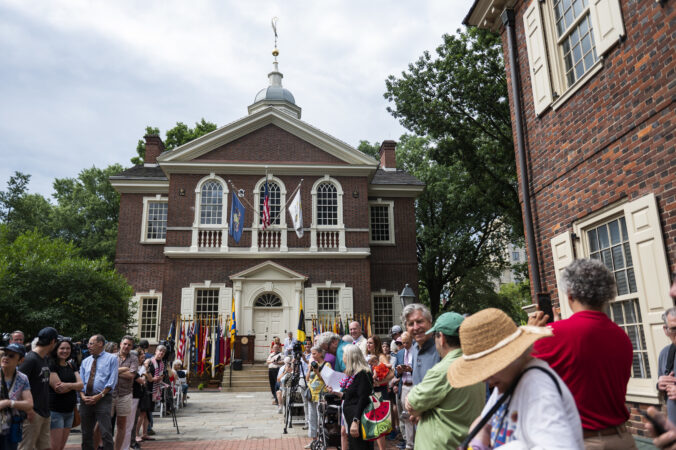
In June 1776, before the Declaration of Independence was signed, a group of leaders from Philadelphia and its surrounding 10 counties — Bucks, Berks, Chester, Lancaster, York, Cumberland, Bedford, Northampton, Northumberland, and Westmoreland — met in Carpenters Hall for the Pennsylvania Provincial Conference. There, the Commonwealth of Pennsylvania was born.
Carpenters Hall, a hidden landmark just two blocks from Independence Hall in Philadelphia’s Old City, is the true birthplace of Pennsylvania, where the state declared its independence from Britain — jump-starting the framework of the state’s influential constitution that would serve as a model for the U.S. Constitution.
Now, the little-known and privately owned historic site is celebrating Pennsylvania’s 250th birthday — which coincides with America’s Semiquincentennial — by holding commemorative events across the state to reflect on Pennsylvania’s history and ask residents how the state constitution should be strengthened in 2026 and beyond.
“It’s the piece of the story we should own and celebrate and use as a platform for civic engagement,” said Michael Norris, the executive director of Carpenters Hall.
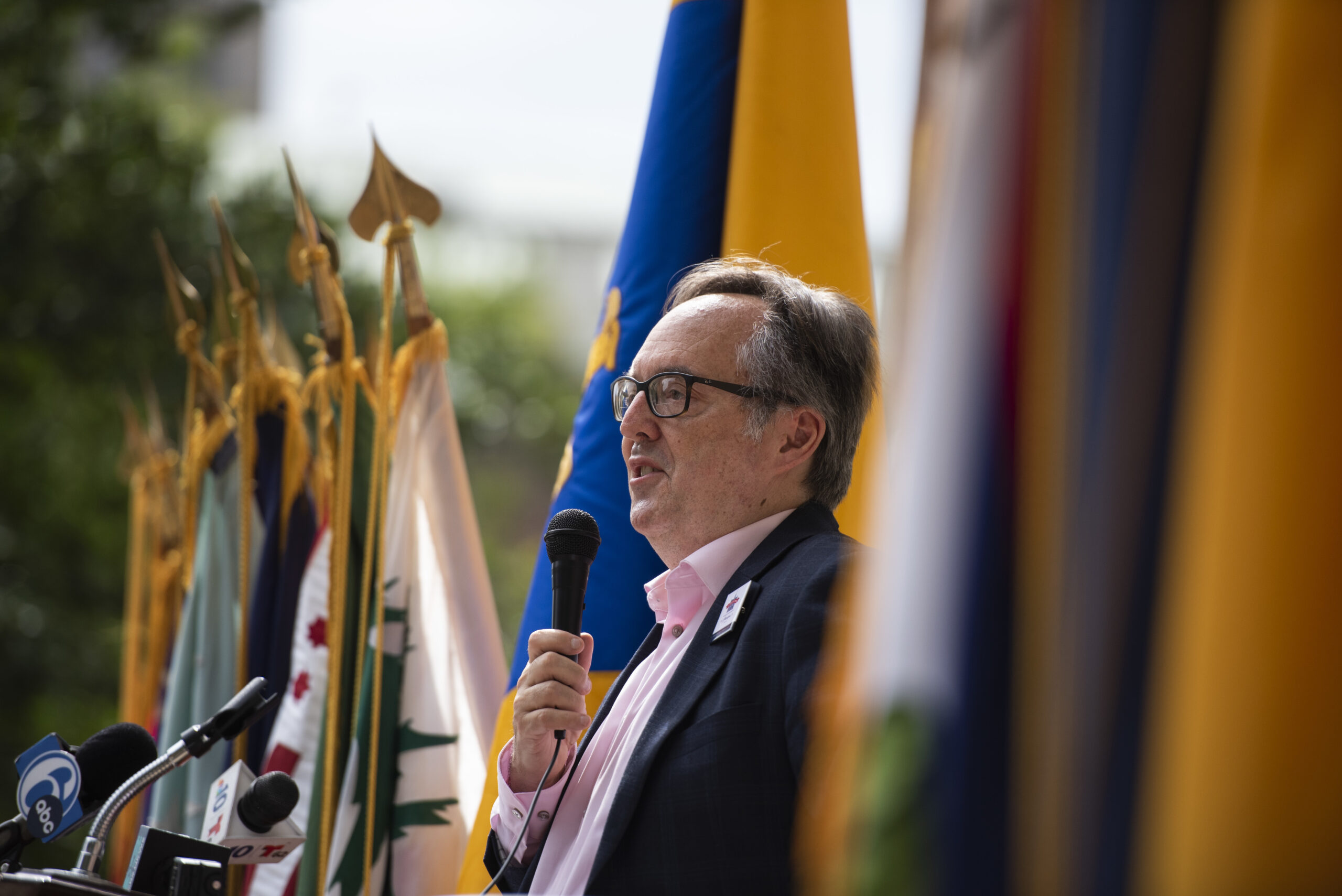
Executive director Michael Norris makes remarks at the reopening ceremony at Carpenters Hall on July 3, 2023.
Last week, Norris and others from Carpenters Hall traveled from Philadelphia — the state’s first capital— to Harrisburg to announce their yearlong schedule of events celebrating Pennsylvania’s founding, including those about the state’s constitution and its past and future.
At a news conference last week, Rep. Mary Isaacson (D., Philadelphia) noted that she occupies the seat once held by former Pennsylvania House Speaker Benjamin Franklin. She said she sees the Carpenters Hall events as “more than learning about a key moment in Pennsylvania history.”
“It’s also about exploring the vital importance of our state constitution in our democracy today and what citizens can do to engage,” she added.
The commemorative events include an interactive town hall series hosted in Philadelphia, Pittsburgh, Harrisburg, and Erie to discuss the importance of the Pennsylvania Provincial Conference in the United States’ founding. The group will also host several events at Carpenters Hall, including the installation of a blue historical marker outside the hall on June 18, in addition to a three-part virtual lecture series on Pennsylvania’s constitution.
The events, funded by America 250 PA and the Landenberger Family Foundation, are open to the public and intended to reach Pennsylvania’s “lifelong learners” who are interested in history and civics,as well as the legal community, who will be eligible for Continuing Legal Education credits for attending the virtual lectures, Norris said.
“To me, 250 is about reflection and engagement,” Norris said. “It’s not about parties and buildings. It’s really a moment to reflect and say, ‘What are we doing here? Do we still want this democracy, and how do we protect it and keep it going?’”
The Carpenters’ Company — the nation’s oldest craft guild, which built and still owns Carpenters Hall — will also conduct polling about how Pennsylvania’s constitution, as well as the U.S. Constitution, should be changed to better represent citizens in a modern time, Norris said. The poll results will be made public at an in-person event in Philadelphia on Sept. 28, the 250th anniversary of when the state constitution was ratified.
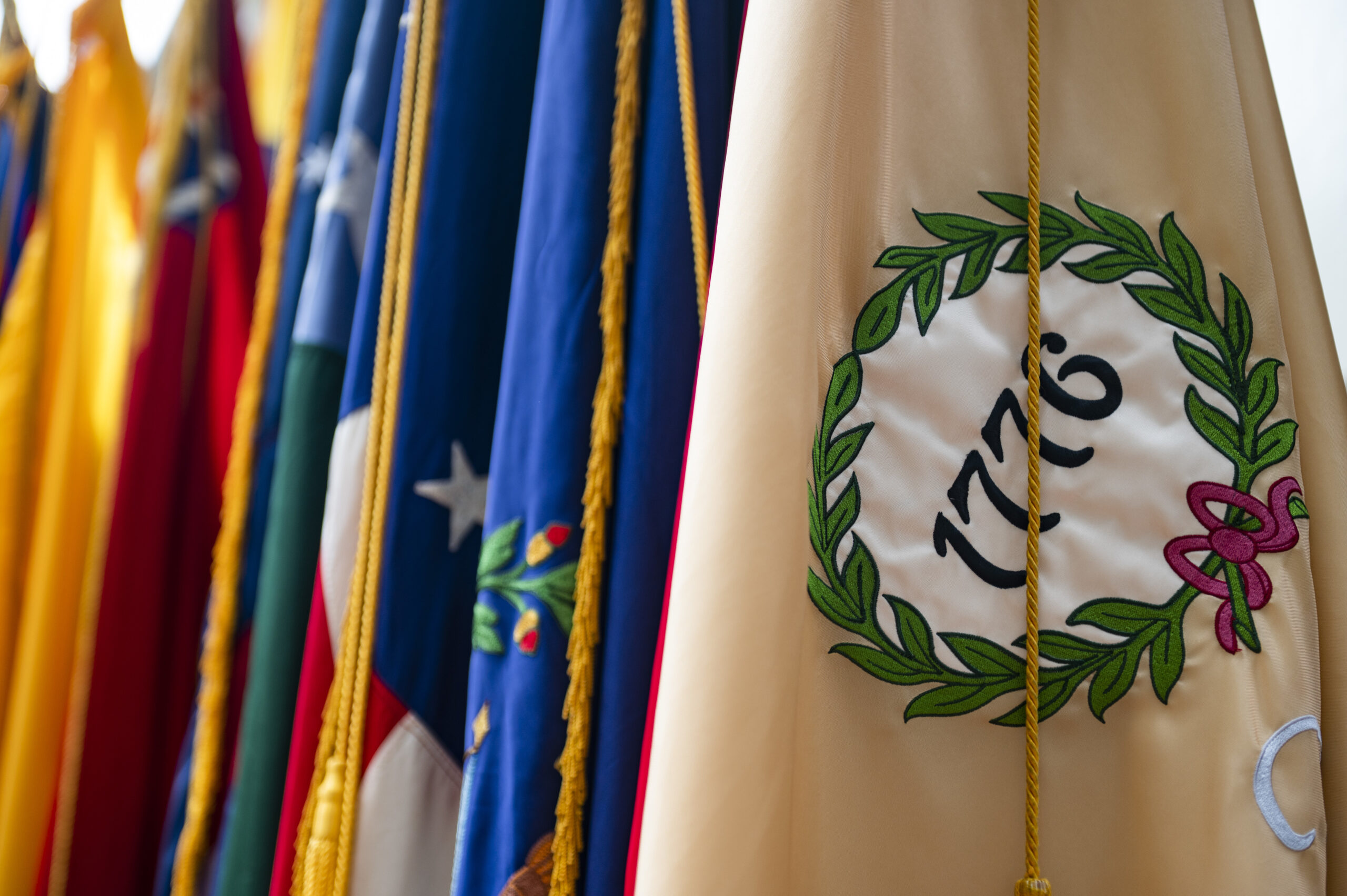
Historic flags are displayed outside at the reopening ceremony at Carpenters Hall on July 3, 2023. The building opened for the first time to the public since April 2022.
Rhode Island was the first colony to declare independence from England in May 1776, and Delaware became the first state in December 1787. Pennsylvania followed days after, and its constitution influenced the country’s founding documents. Pennsylvania’s expansive constitution — viewed as radical at the time — focused on personal freedoms and liberties in its “Declaration of Rights,” after which the Bill of Rights was modeled.
Carpenters Hall was the nation’s first privately owned historic landmark, and remains owned by the Carpenters’ Company today, which offers free admission for 150,000 visitors each year. Because it is privately owned, it is not overseen by the National Park Service, which has in recent weeks dismantled exhibits about slavery at the nearby President’s House Site in Independence National Park thatPresident Donald Trump’s administration contends “inappropriately disparage” the United States.
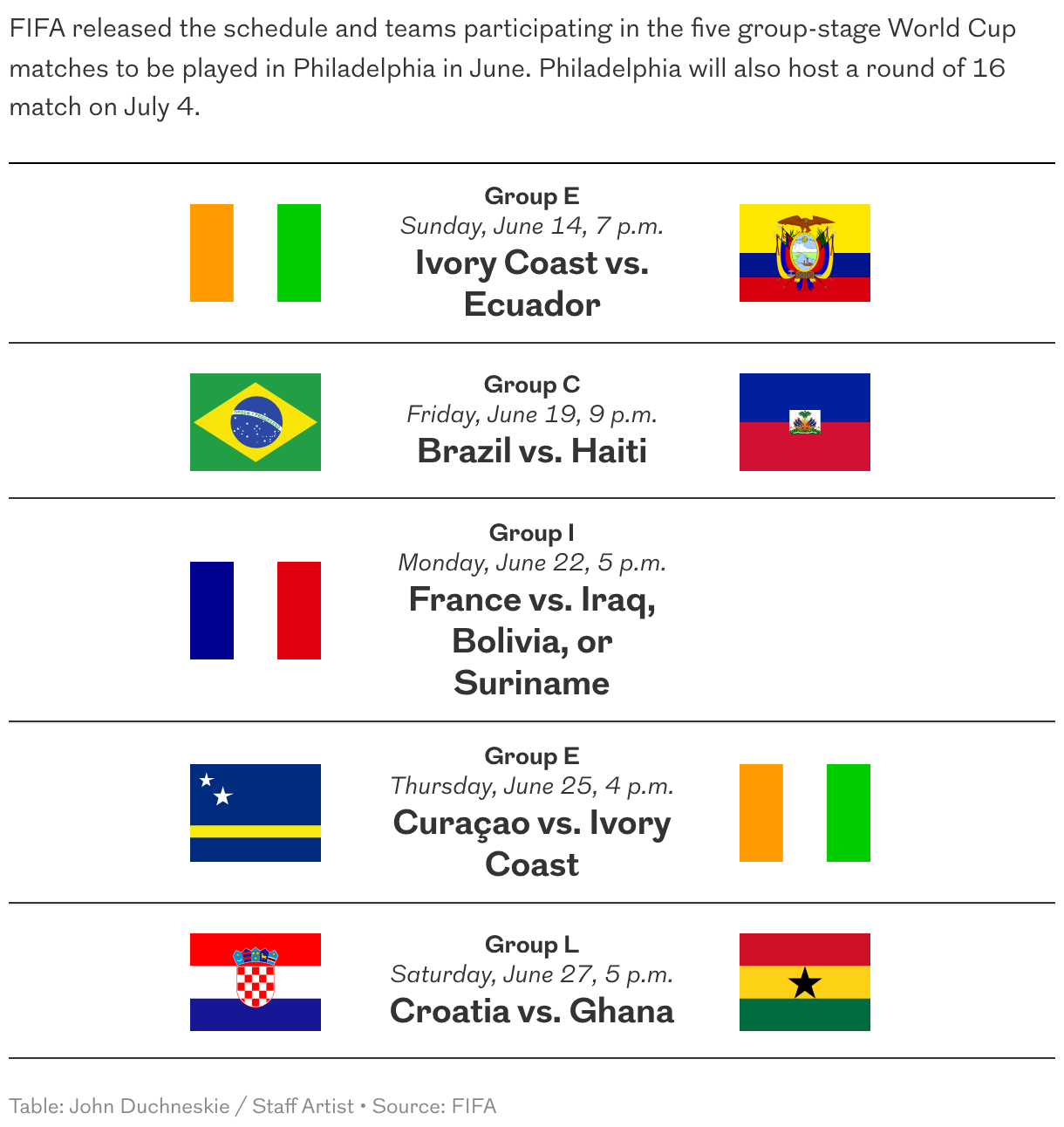
Nine nations will compete in five group stage matches this summer, plus two more in a knockout game on July 4. Here’s what you need to know about those countries and their fans — and what those fans need to know about Philly.
The long road to World Cup qualification isn’t over for six non-European countries.
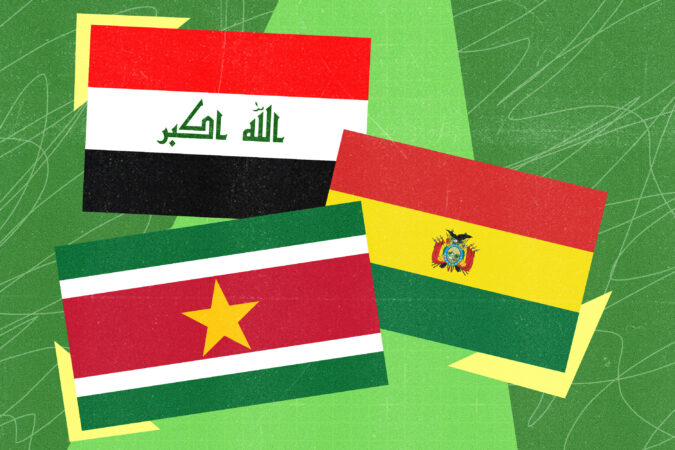
Of those final six, three, in Iraq, Bolivia and Suriname will head to a FIFA playoff round in late March to battle it out for the last spot in Group I. Win, and in addition to a berth into the World Cup alongside Norway, France and Senegal, a stop in Philly awaits for one of the three group stage games to be played against France on June 22 (5 p.m., Fox29, tickets).
No pressure.
What’s that road look like? For Suriname and Bolivia, it’s a first-round, single-elimination playoff match in Monterrey, Mexico, on March 26 (5 p.m.). The winner will then face Iraq, again in Monterrey on March 31. That game is currently scheduled to start at 9 p.m.
Your matchups for the FIFA World Cup 26 Play-Off Tournament! 🆚
Here’s your guide to all three ahead of March’s playoff rounds, the key players who could help their nation get over the hump, and if any of these three nations have previously had a footprint here in Philly.
About the nations
BOLIVIA
Confederation: CONMEBOL; FIFA world rank: 76
A seventh-place finish in grueling CONMEBOL qualifiers is what led to the South American nation needing to win two more matches for a trip to what would be its fourth World Cup finals appearance. Coincidentally, it would be Bolivia’s first trip since 1994, the last time the event was held in the United States — should they qualify. Bolivia will look to advance out of the group stages, something it hasn’t done in any of its previous appearances in 1930 and 1950.
IRAQ
Confederation(s): AFC and WAFF; FIFA world rank: 58
The Lions of Mesopotamia, as this team is affectionately known are looking for just its second ever World Cup berth, qualifying for the 1986 edition in Mexico. The team qualified for this year’s FIFA playoff by way of originally finishing third in their qualifying group, and then needing to playing a pair of inter-confederation playoff matches. The first one against Saudi Arabia, saw the Saudis book its second consecutive trip to the World Cup at the expense of Iraq. Iraq would redeem itself by defeating the United Arab Emirates, securing this final opportunity to qualify. As the nation with the highest FIFA ranking of the three, Iraq will face the winner of March 26 first round playoff match between Bolivia and Suriname.
A second place finish in Group A of Concacaf World Cup qualifying is what kept hopes alive for this tiny South American nation which is home to a little over 600,000 people according to 2024 World Bank data. Nestled between, Guyana and French Guiana, this Dutch colony is just two matches away from qualifying for its first ever World Cup. To get it over the hump, the country appointed former Ajax manager Erik Ten Cate as its coach in December ahead of the March playoff match against Bolivia. Ten Cate, 71, has experience with the national team as its assistant in 2023.
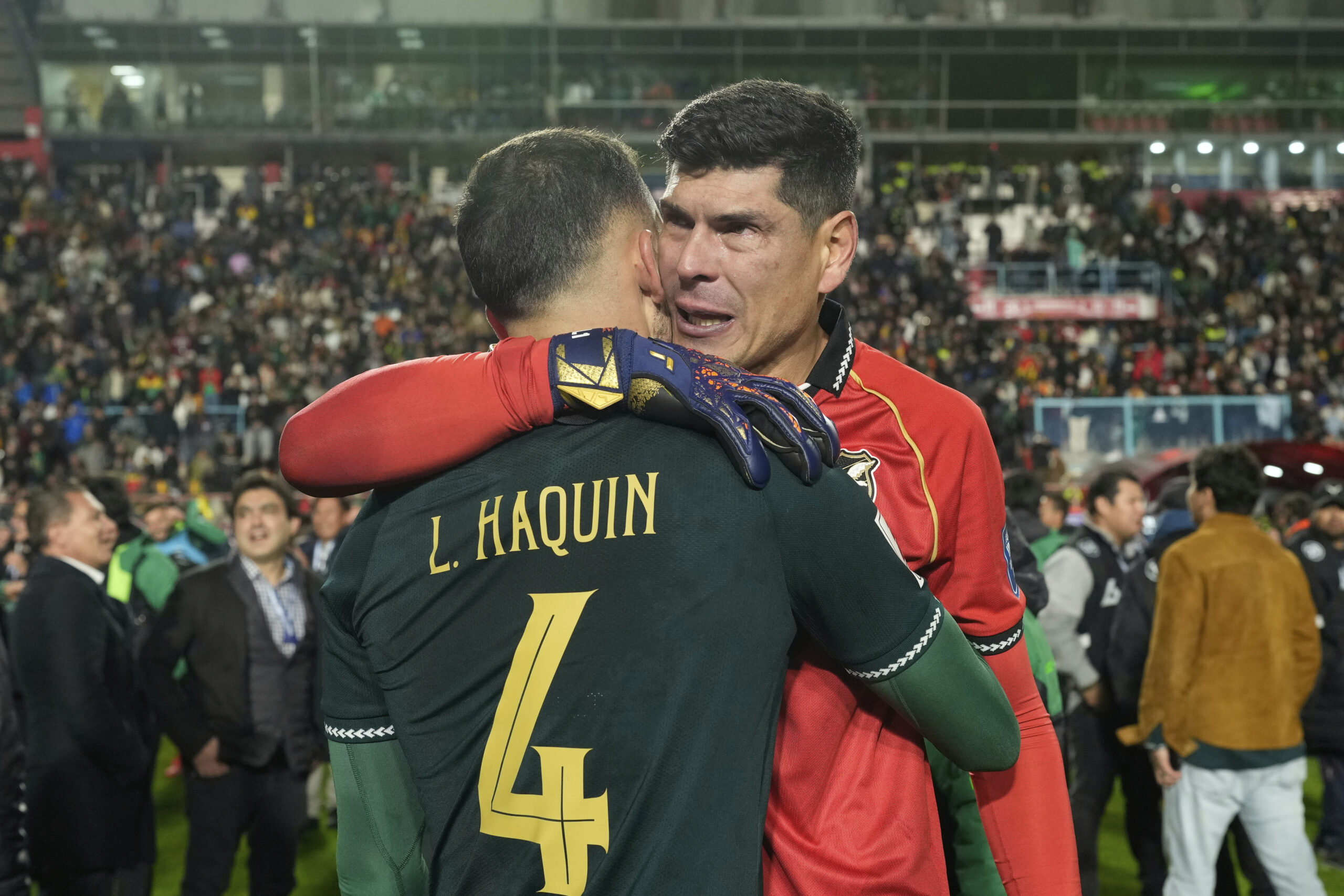
Bolivia’s goalkeeper Carlos Lampe (right) celebrates with teammate Luis Haquin following their team’s 1-0 victory against Brazil in a 2026 World Cup qualifying match on Sept. 9, 2025.
Players to watch
Carlos Lampe (Bolivia): The longtime goalkeeper wasn’t in net for his nation in the 2024 Copa America tournament in the United States, but is expected to lead this team in March’s playoff round. Lampe, 38, who has dual citizenship in Argentina, plays his club ball for Bolívar La Paz in the first division of the Venezuelan league.
Sheraldo Becker (Suriname): Becker has had a healthy career in Europe as a forward since 2019. Currently, he’s signed with CA Osasuna in Spain’s La Liga, but is on loan with Mainz 05, in Germany’s top division. He appeared in in 20 matches for his country including six games during qualifying.
Aymen Hussein (Iraq): Hussein ranks fifth all-time on his nation’s list of top goalscorers. Since debuting for his national team in 2015, Hussein, 30, has had 88 appearances, scoring 31 goals, 12 of which have arrived in World Cup qualifying campaigns. He’s expected to lead again as Iraq will look to qualify for the World Cup for the second time ever.
Philly ties
While it would be a first for both Suriname and Iraq to have passed through the Greater Philadelphia Region as a soccer nation, Bolivia trained at WSFS Sportsplex took part in a June 12, 2024 friendly against Ecuador at Subaru Park in Chester as part of a tune-up game ahead of that summer’s Copa America tournament. Bolivia was in a group with the U.S. men’s national team and in the first match for both countries, the Americans trounced the South American nation, 4-0.
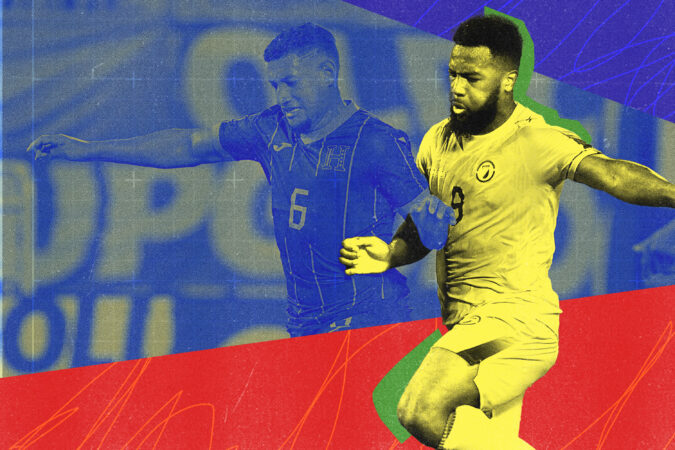
Every World Cup is full of great stories, and Haiti will bring a lot to town this summer.
Les Grenadiers have qualified for their first men’s tournament since 1974, after not being able to play any of their home games in their own country because of political unrest. Their matchup against five-time champion Brazil in Philadelphia is one the nation really wanted because there are historic cultural and soccer ties between the countries.
But for as big as that game will be, there will be an even bigger story on the field for local soccer fans.
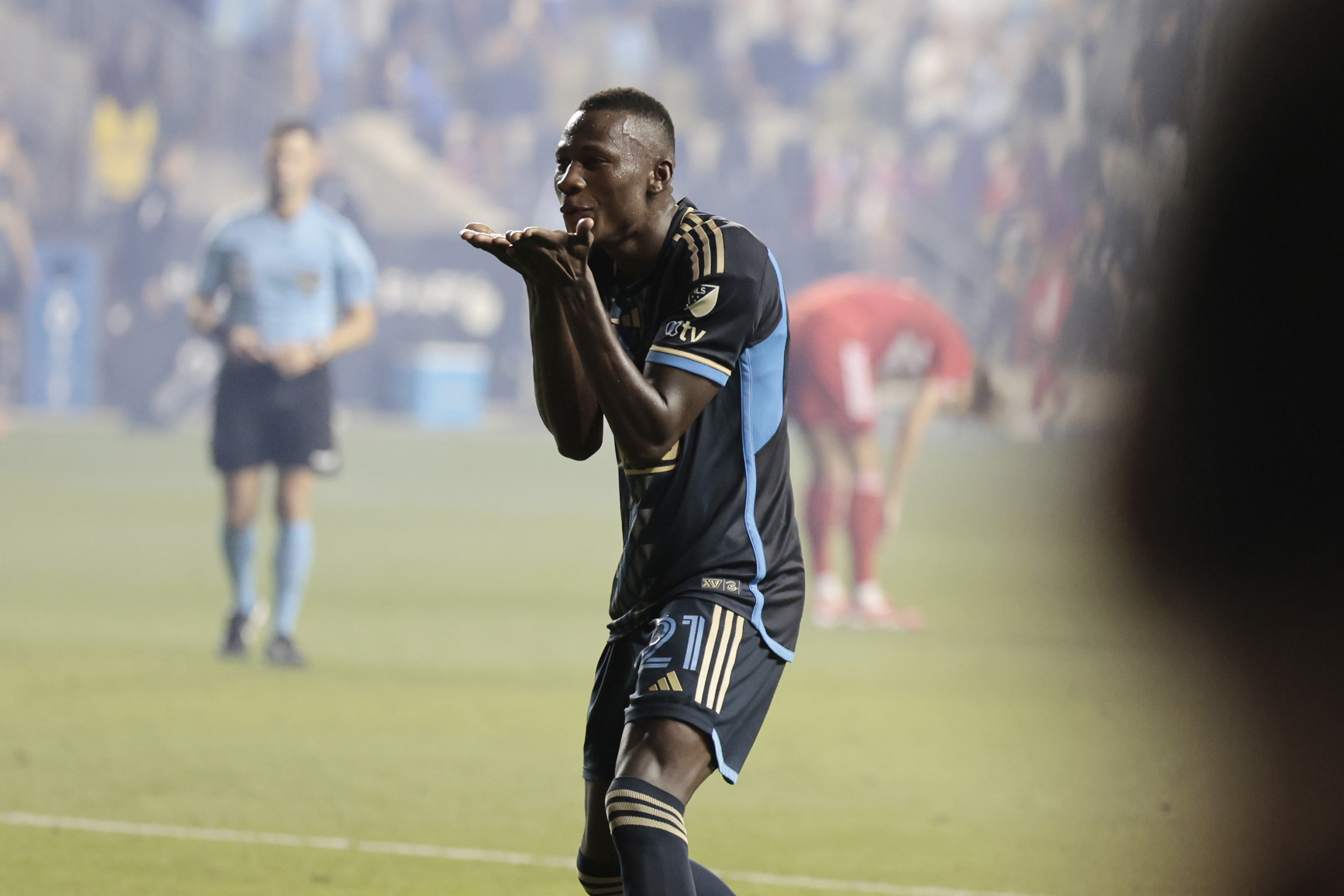
If Union midfielder Danley Jean Jacques makes Haiti’s squad, and he will as long as he’s healthy, he’ll have the rare privilege of getting to play a World Cup game in his club’s home city. Not his home stadium, since the game will be played at the Eagles’ home in South Philly, but it’s still an amazing thing.
“I’m very happy to be playing here in Philly because I know the atmosphere,” Jean Jacques told The Inquirer earlier this year. “I think all the fans in Philly will come to support me, and it will be a pleasure to play here.”
The last time anyone from the Concacaf region, which covers North and Central America, played a men’s World Cup game in their home city was in 1986 in Mexico. There will be many opportunities for it to happen this summer, but Jean Jacques will be the only one with a chance to achieve the feat in Philadelphia.
Haiti’s World Cup schedule
(all times Eastern)
Saturday, June 13: vs. Scotland in Foxborough, Mass., (9 p.m., FS1)
Friday, June 19: vs. Brazil at Lincoln Financial Field (9 p.m., Fox29, tickets)
Wednesday, June 24: vs. Morocco in Atlanta, (6 p.m., FS1)
Haiti’s manager, Sébastien Migné, has never set foot in the country since taking the job in 2024. … Haiti is one of the countries currently under a travel ban imposed by the Trump administration. The team’s official delegation will be able to travel here, but fans who live in the country might not be able to. … Asked about the ban at the World Cup draw in December, Migné told reporters: “It depends on Mr. Trump.” … The largest populations of Haitian expatriates in North America are believed to be in New York, northern New Jersey, Miami, and Montreal. … Haiti’s best Concacaf Gold Cup run in the modern era was in 2019, when it made the semifinals. It won the title in 1973 and was runner-up in 1971 and ’77. … Though the nation’s men’s team hadn’t made a World Cup since 1974, its women’s team got there in 2023. Attacking midfielder Melchie Dumornay of French club OL Lyonnes is one of the world’s top young players.
Union midfielder Danley Jean Jacques is expected to be a big piece of Haiti’s World Cup squad.
Three players to watch
Duke Lacroix: Here’s another Haiti story with a Philly angle, and this one might be even more surprising. Lacroix played at Penn from 2011 to 2014. Now 32, he has carved out a solid career in the second-tier USL Championship. A North Jersey native with Haitian ancestry, he earned his first national team cap in 2023.
Danley Jean Jacques: We’re mentioning him again here because it’s that big of a deal. He also could become the first active Union player to play in a World Cup game. Olivier Mbaizo was the first active Union player to make a World Cup roster, with Cameroon in 2022, but he didn’t get on the field.
Derrick Etienne Jr.: One of a few Haiti players with ties to MLS, Union fans have seen him plenty over his years with the New York Red Bulls, Atlanta, Columbus, and currently Toronto.
For a Haitian feast in Philly, get to Gou, says food writer Hira Qureshi: You’ll find fritay platters, flaky pâté pastries, griot, Rasta pasta, and hearty stews at this Olney BYOB. Crowd favorites include the zel poul (fried chicken wings glazed with mango-flavored Rhum Barbancourt, jerk seasoning, and Faye’s hot honey) and Gou’s signature plantain cups — crispy plantain shells with spicy pikliz slaw and generous heaps of shrimp, lambi (conch), oxtail, or griot.
Owned by husband-wife duo Imma and Emmanuel Laguerre and partner Yves Atoulon, Gou is one of the most exciting Caribbean restaurants in Philly’s dining scene, which is why you’ll find it on The 76, The Inquirer’s annual list of essential area restaurants. 📍5734 Old Second St., ☎️ 267-335-4176, instagram.com/gouphilly
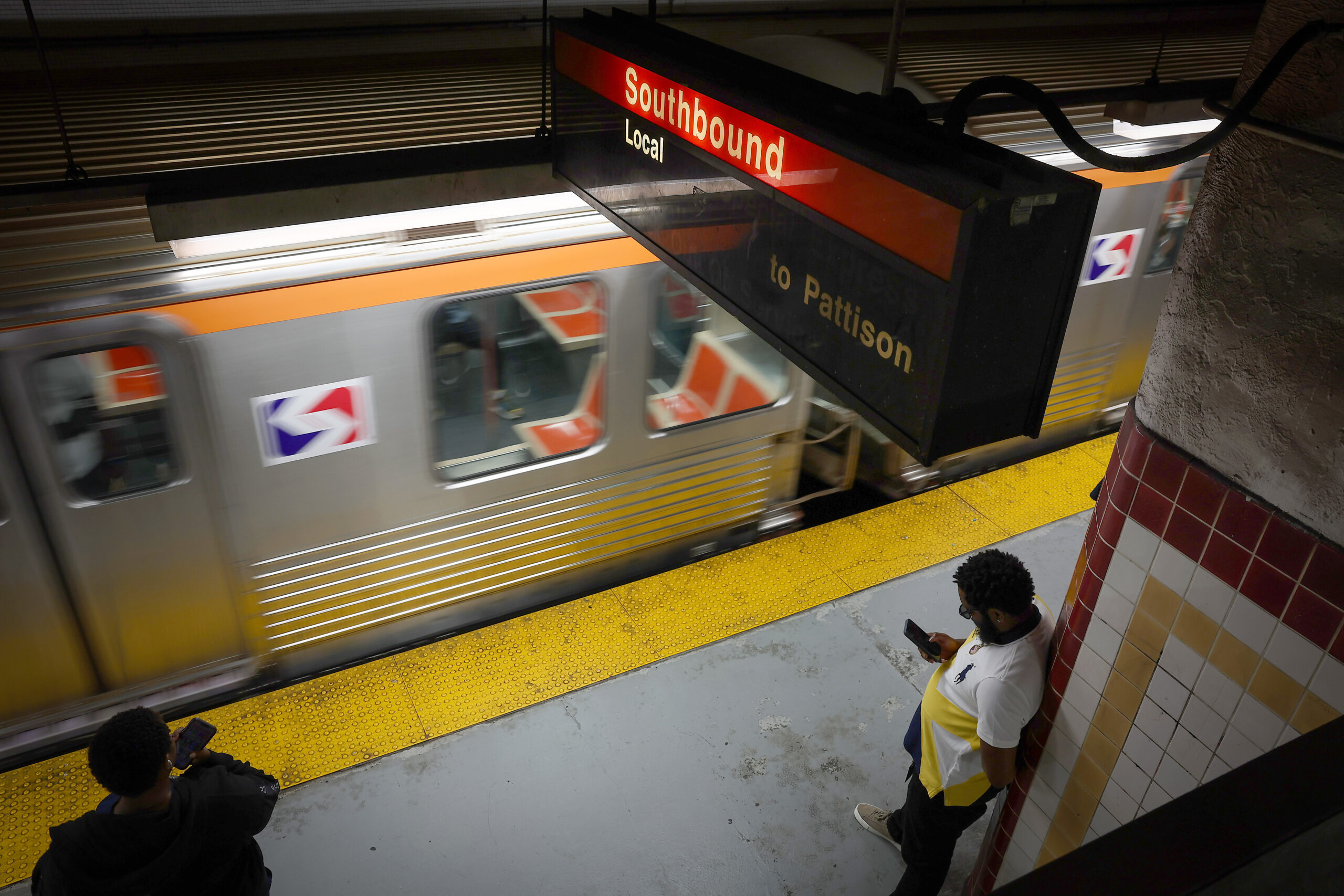
SEPTA’s Broad Street Line train is a direct path from the city to the stadium on game day.
Navigating Philly
The best way to navigate getting to the stadium area where the games will be held is via SEPTA, the city’s public transportation system. The network has its own app and is fully integrated into apps, including Google Maps, Apple Maps, Transit, and CityMapper.
Whether you’re coming in by way of Philadelphia’s international airport or its main train hub, William H. Gray III 30th Street Station, it’s easy to get around Philly’s Center City district and other neighborhoods by bus, train, or trolley.
Don’t feel like figuring out all the schedules? Taxis or ride shares via Uber or Lyft also are quick and convenient options.