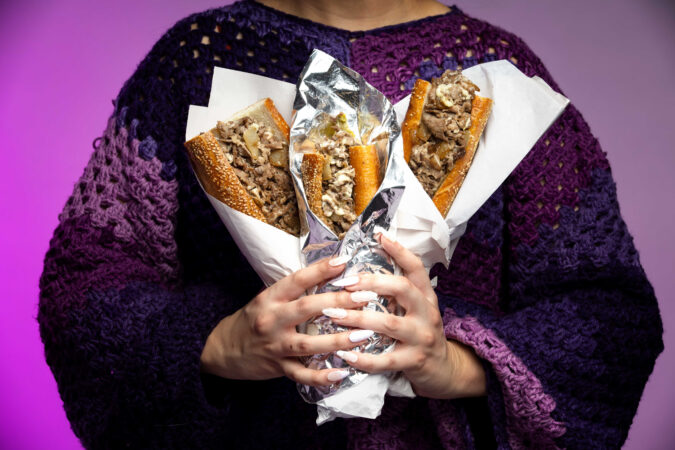
What are the foods that tourists should try on their trip to North America for the World Cup? Apparently, the Philly cheesesteak is way up there, even higher than tacos in Los Angeles or Cuban sandwiches in Miami.
With the 2026 World Cup spanning 16 host cities across three countries, writer Amy Harris found a tour of 16 “completely different food cultures” for this guide. Canada Sports Betting scored the “hero” dish of every host city based on source frequency, local support, tourist recognition, city-specificity, and cultural significance. The result: a ranking of the most unique city-specific dishes.
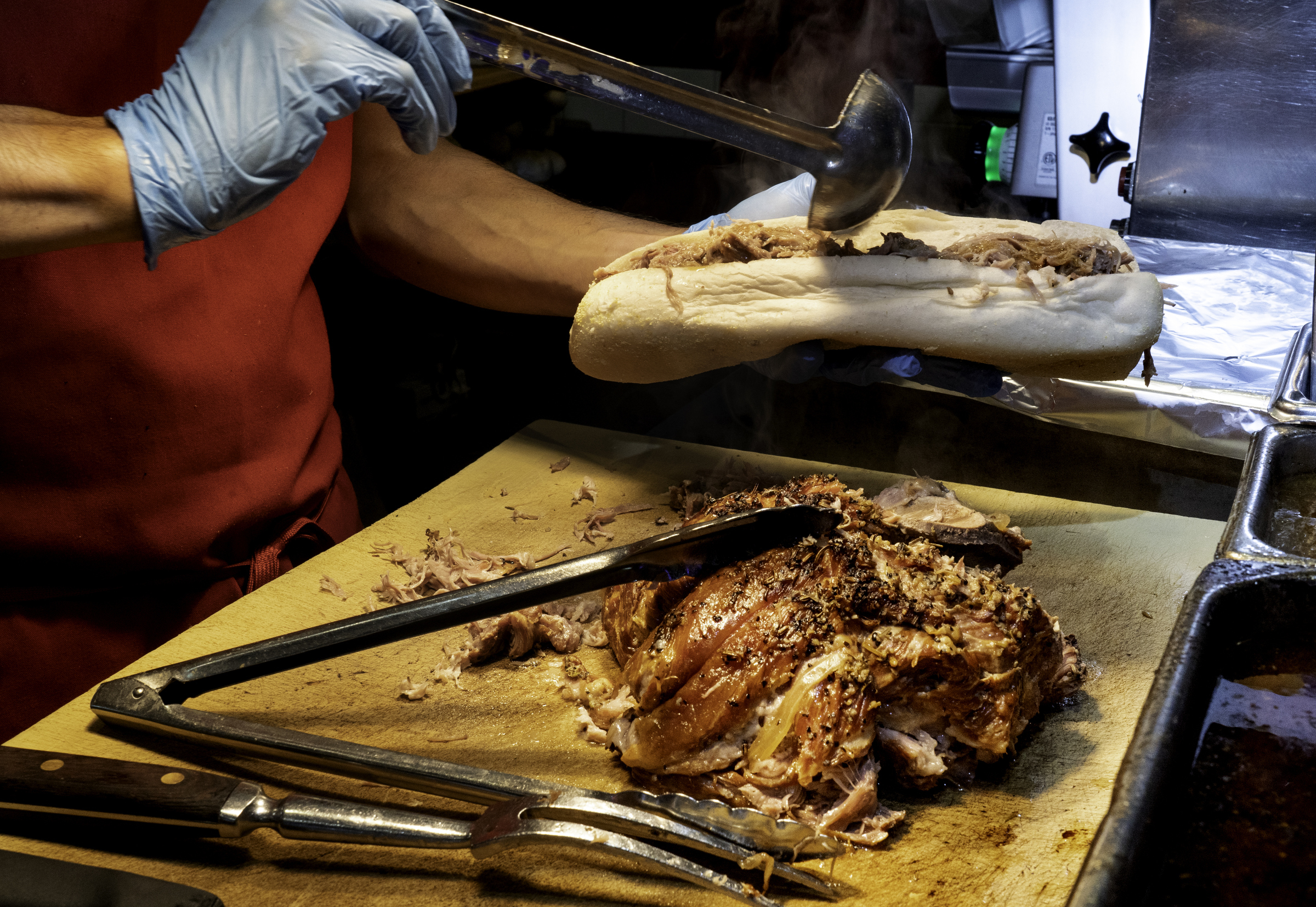
In Philadelphia, “the cheesesteak … defines the city’s entire culinary reputation internationally,” Harris wrote. The iconic sandwich with “shaved rib eye on a hoagie roll with Whiz, provolone, or American was invented by Pat Olivieri in South Philadelphia in 1930,” she continued. “Locals will tell you DiNic’s roast pork at Reading Terminal Market is actually the city’s best sandwich. That internal argument is part of what makes Philadelphia interesting.“
The cheesesteak is, for better or worse, depending on your point of view, No. 3 on The Inquirer’s 76 iconic Philly foods, with only one other sandwich — the hoagie — surpassing it. (Water ice was also rated above cheesesteaks on The Inquirer list.)
“The cheesesteak, much like the city in which it was invented, is a working-class sandwich,“ wrote Inquirer reporter Tommy Rowan. “Its rugged beauty is in its simplicity.“
The pulled pork at DiNic’s Roast Pork, Reading Terminal Market, Tuesday, September 26, 2018, in Philadelphia. JESSICA GRIFFIN / Staff Photographer
Guadalajara’s torta ahogada landed in first place, followed by the Viet-Cajun crawfish in Houston. Cabrito al pastor — young goat roasted over live coals — from Monterrey came in third; and the burnt ends — charred tips of a smoked brisket point — from Kansas was fourth.
And all the way in 15th place: New York pizza.
“New York ranks 15th not because its food is unremarkable, but because its most iconic dish has become the world’s most replicated food,” Harris wrote. “New York pizza is made everywhere from Tokyo to Nairobi. That is a consequence of the city’s cultural influence, not a failure of its food.”
But a great cheesesteak? Sorry, you have to come to Philly for that.
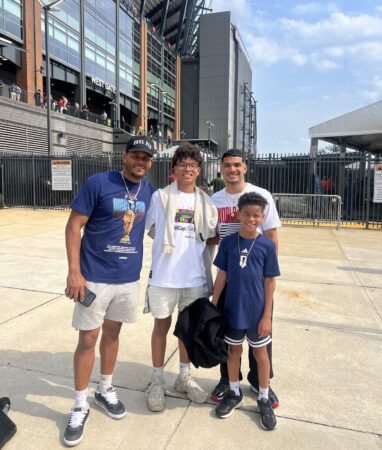
Georgette Luna planned her Father’s Day weekend down to a T, splurging $3,000 on three tickets to the Friday World Cup match in Philadelphia. The Fishtown resident, her husband, and her father — who traveled from New York — would go to Reading Terminal Market, she thought, barhop to mingle with fans before the game, and then head to the stadium early to tailgate before seeing Brazil take on Haiti.
She had purchased the tickets on the third-party ticket resale platform StubHub last fall, but the seller she bought the tickets from never transferred them. She called StubHub frequently in the months, weeks, and finally days leading up to the match, wondering when the transfer would go through.
Every time, a StubHub representative said her “tickets would transfer to her on the day of the game,” Luna said. But by Friday, the group — who could not wait to see Brazil play, since their favored Chileans did not qualify for the World Cup — never made it into the stadium.
“We’re standing outside the stadium and obviously everybody is in full celebration, and here we are, supposed to be living this World Cup moment together for the first time, and there’s just this feeling of disappointment,” Luna said.
As the World Cup takes over the country, people across U.S. host cities have shared the same story: Fans in Atlanta, Boston, Dallas, Houston, New Jersey, Seattle, and, of course, Philadelphia arrived at stadiums hoping their tickets would be transferred to no avail, with most facing issues with StubHub. Other reports indicate fans are having similar issues on SeatGeek.
StubHub, for one, blames FIFA’s tech infrastructure and the rollout of a new mobile phone app weeks before the tournament for why tickets have not been transferring on time. FIFA has urged fans not to buy tickets on third-party platforms, saying it “may result in issues, including the inability to cancel or accept transfers,” as well as a higher risk of fake or invalid tickets.
But fans who lost out on a generational moment are more interested in how platforms like StubHub plan to resolve these issues.
Stephanie Fred of Bristol and her 9-year-old son, Levi, are heartbroken after their tickets to the Monday France vs. Iraq game never materialized, even as they stood outside the stadium. To make matters worse, Levi, a soccer player himself, had been trying to see his favorite player, French superstar Kylian Mbappé.
Mbappé scored two goals, tyingfor the second-most goals scored by a player in men’sWorld Cup history. Fred’s son could hear the cheers from outside the stadium. He broke down into tears that did not stop even later that night, she said.
During Philadelphia’s first World Cup game, between Ecuador and Ivory Coast, Jayden Quezada, 17, and his parents came to Philadelphia from Bensalem, hoping for an Ecuadorian victory. But they were turned away. The night before the game, the trio had spent $4,350 to get three tickets through the TickPick app after seeing a social media advertisement. By the time they arrived at the stadium, the tickets still had not been transferred to their FIFA app.
“They have been the biggest fans since before I was born, and they don’t get to go to Ecuador often because of work,” Quezada said. He said they would try to get a refund, but missing the game was “really sad because we were looking forward to feeling the Ecuadorian pride.”
For that game, a line of more than 50 fans waited for help with their failed tickets. Monica Rojas, 22, and her friend Jose Avil, both Spanish speakers, were confused about what to do after the ticket office explained the problem with their ticket in English. The pair had driven two hours from New York, after having bought tickets on StubHub for $2,000, including parking. After a FIFA volunteer interpreter intervened, the pair found out their tickets had been refunded.
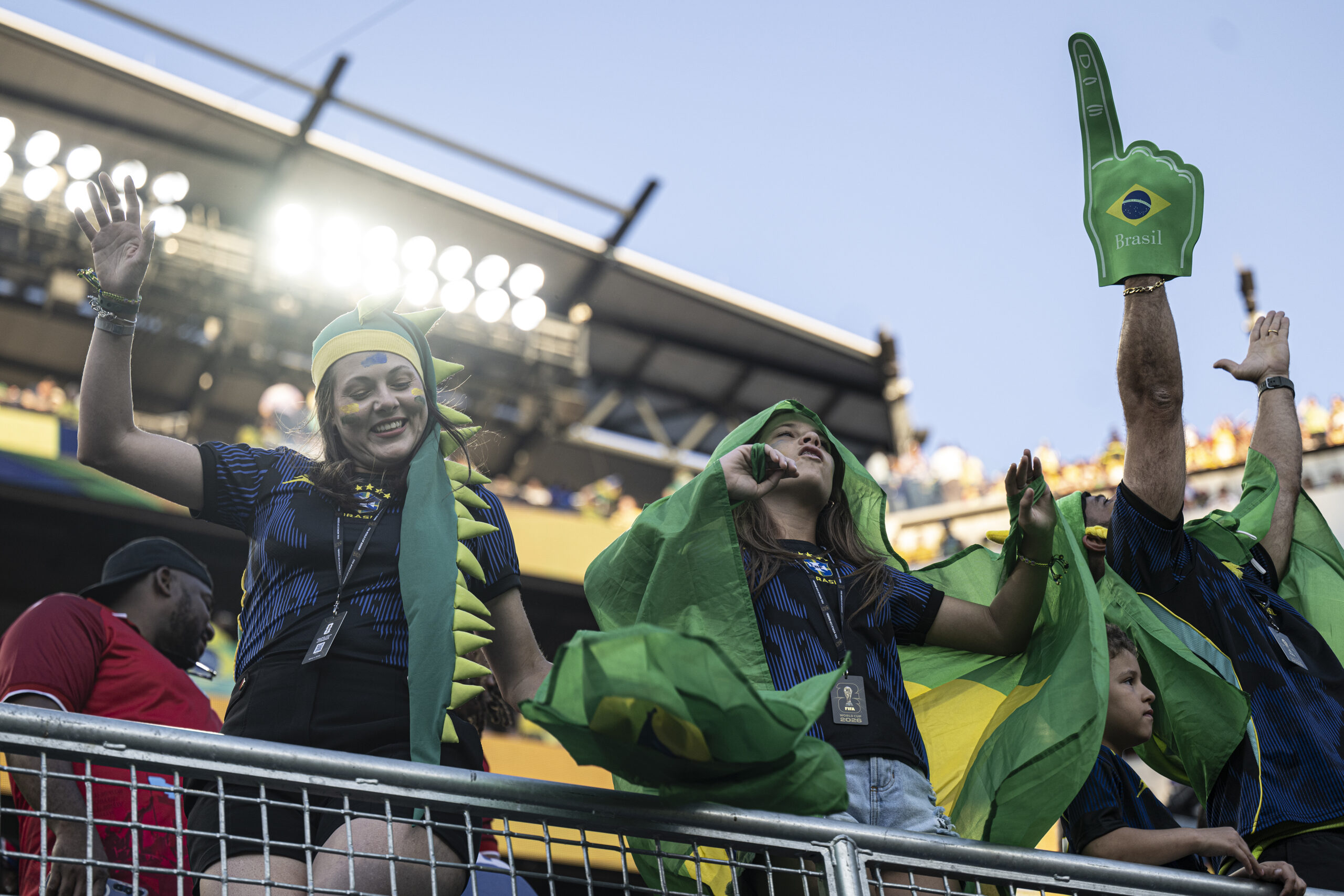
Brazilian fans cheers before a FIFA World Cup Group C soccer match between Brazil and Haiti at Lincoln Financial Field on Friday, June 19, 2026, in Philadelphia.
StubHub blames FIFA
StubHub is aware that fans are not receiving the tickets that they bought, and a company representative blamed FIFA.
“The issues fans have experienced at this World Cup are largely driven by performance problems with the event organizer’s own ticketing infrastructure, which has created transfer failures across all resale platforms,” a StubHub spokesperson said.
StubHub said the launch of a new FIFA app right before the World Cup began has led to delays, failed transfers, and access issues that have affected all resale platforms, not just StubHub.
The ticket reseller also said sellers are required to fulfill their ticket orders or they face financial penalties and bans from the platform.
Bad actors on resale platforms can engage in a practice called “speculative ticketing,” where buyers will list a ticket that they do not yet own on StubHub and other platforms, in the hope that they will find a cheaper ticket later and recover profit, said Scott Friedman, owner of the Ticket Talk Network podcast and an industry veteran who is helping to sue StubHub on behalf of 160 buyers and sellers who said company practices harmed them.
StubHub does offer a “FanProtect Guarantee‚” a promise the company will find replacement tickets or refund the order when a ticket does not transfer. But the policy repeatedly states that resolving these issues falls under StubHub’s “sole discretion.”
StubHub ticket protection measures can look like replacement tickets, a full refund, or a voucher worth 120% of the value of the tickets. During the World Cup, the company said, it is prioritizing replacement tickets so fans can get to a match.
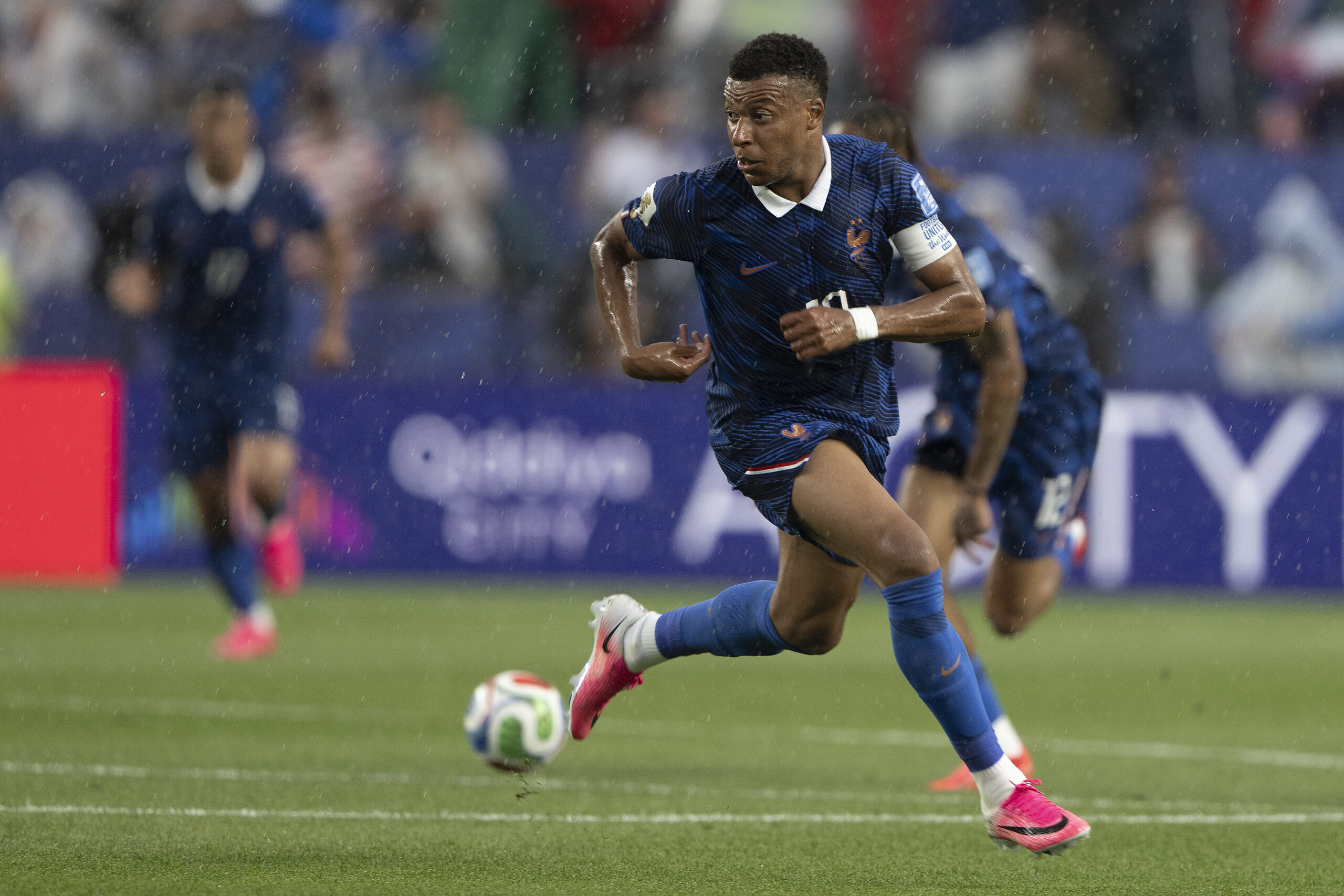
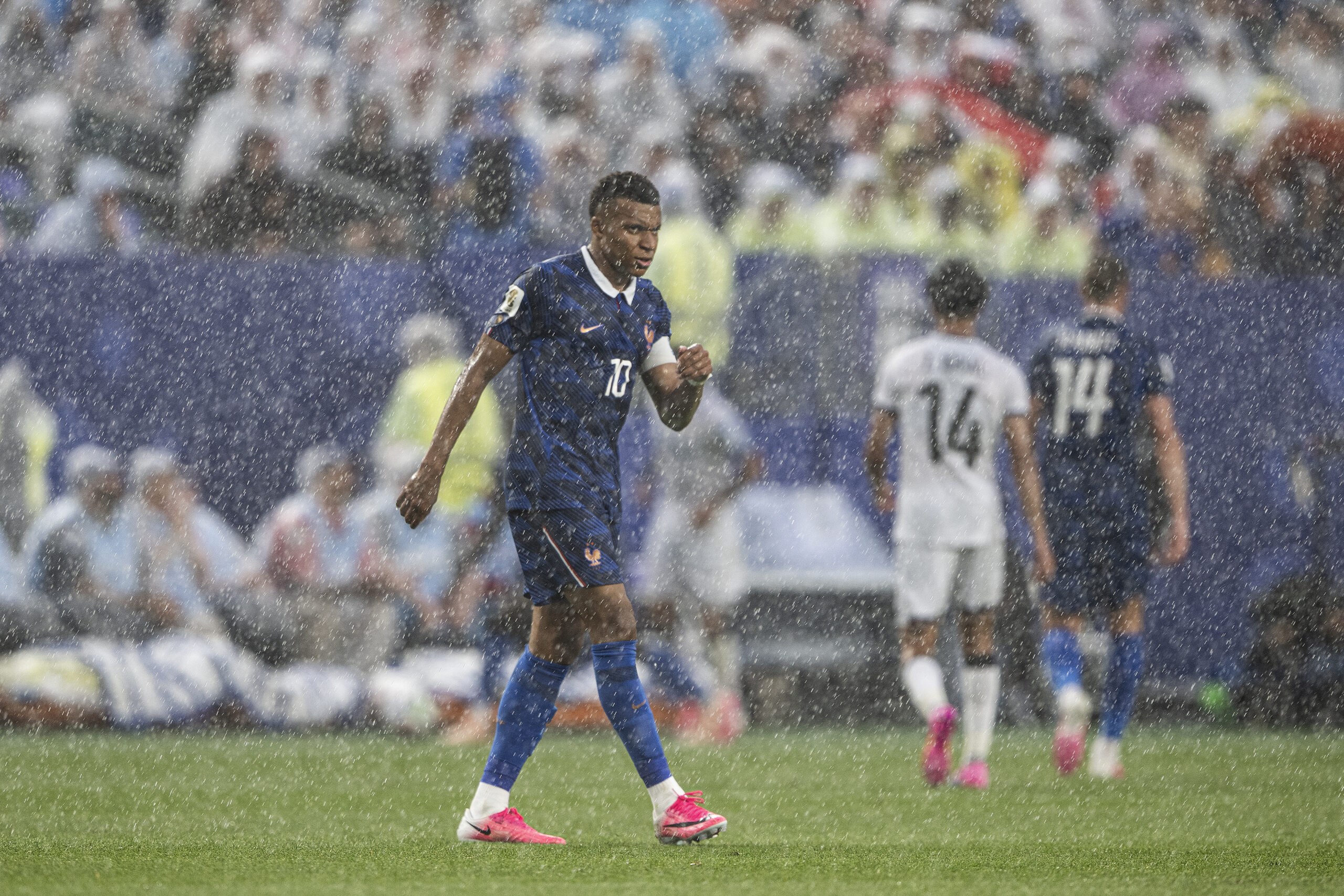
France forward Kylian Mbappé sprints for a pass against Iraq during the first half of a FIFA World Cup Group I soccer match Monday, June 22, 2026, at Lincoln Financial Field in Philadelphia.
Refunds can’t replace a once-in-a-lifetime moment
All of this leads to confusion, and eventually disappointment, when the tickets never show, Luna said. As she and her family, hanging their heads low, took a depressing train ride home from the stadium last week, Luna continued to try to get answers.
Finally, on Monday, she said, she received word StubHub would refund her June 19 match tickets and gift her similar tickets to the July 4 match in Philadelphia, which she said she would accept. But, later, Luna was told she would only receive replacement tickets.
“Is this a wonderful outcome? For sure, but my father and I would have been happy with the perfect weekend that we had planned for ourselves as it was,” Luna said. “While they’re doing right by us, there are so many people who aren’t getting this result.”
Fred’s family got word Tuesday that StubHub would provide them with tickets to France vs. Norway in Boston on Friday. Fred does not mind the drive as long as Levi can achieve his dream of seeing Mbappé play.
“We don’t get this type of opportunity from where we come from,” Fred said. “Being able to provide a World Cup experience for our kids just means the world to us, and having that be ripped away from us, it was just so hard to process.”
After a pair of electrifying matches in which the United States displayed arguably its most dominant performance at a World Cup, just one more match remains in Group D for the Americans, a primetime showdown with Turkey on Thursday (10 p.m., Fox29, Telemundo 62).
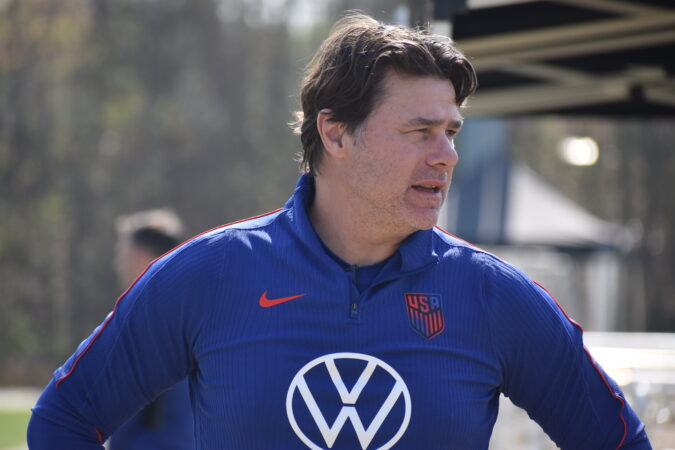
With the U.S. awaiting its round of 32 opponent on July 1, it’s anyone’s guess whom Mauricio Pochettino, the U.S. men’s head coach, will start against Turkey, which has been eliminated from advancing after losing to Paraguay in its second match.
Right now, we know that Christian Pulisic is trying to return to the lineup after missing the USMNT’s 2-0 win over Australia in Seattle last Friday. But will Pochettino trot him out or offer even more rest before the knockout round match?
Christian Pulisic (center) was active in Wednesday’s practice ahead of their final match in Group D against Turkey on Thursday.
It’s what our team of soccer writers weighs in on this week as the U.S. looks to finish strong in a match that matters very little.
I really don’t know what to think about this game, since there are no actual stakes in it.
Sure, it’s nice that the U.S. has clinched first place and will now play a World Cup game with no standing stakes for the first time since 1998. (That one was the polar opposite of this, as the Americans were eliminated from progressing after two games.)
But how much will Pochettino rotate his lineup? Even being out at the team’s camp, it’s tough to say.
It’s also unclear what Turkey will do. A team with lots of attacking talent has taken 62 shots over its two games combined so far, but failed to score in both. Will this be the day they finally find the net? And if so, what will it do for their mentality?
Something tells me that’s coming, and the U.S. had better be ready.
Prediction: United States 2, Turkey 2
Will United States head coach Mauricio Pochettino consider shuffling his lineup to give other players on the roster a chance to start in a World Cup match?
Honestly, after a deeper dive into this one, the question is not so much will the U.S. win, but who will play. This might be a good chance to give players who haven’t seen the field yet the chance to prove to Pochettino that they can be effective in key moments, particularly against a bona fide soccer nation like Turkey, even if this installment of their starting 11 has yet to inspire.
Let’s see a strong performance from Brenden Aaronson and Mark McKenzie, two local guys who cracked the roster but are still looking for their first minutes. Matt Freese has been fantastic in goal, but let’s not forget that his backup is Matt Turner, who was the U.S.’s No. 1 for a while, even under Pochettino.
— U.S. Soccer Men's National Team (@USMNT) June 24, 2026
This game scratches the itch for those players who have yet to make an appearance. If that’s the mindset Pochettino employs, then motivation alone from those guys should be enough for the U.S. to take three points and finish off a perfect group stage performance heading into next week.
Win, lose, or draw against Turkey, the U.S. is moving on to the knockout round. It’s great news for an American side trying to win its second-ever knockout match in its history, but it’s terrible news for prognosticators.
There’s little way to be sure of who will play for either the U.S. or Turkey, making Thursday’s match as unpredictable as the average Week 18 NFL game.
— U.S. Soccer Men's National Team (@USMNT) June 24, 2026
Chris Richards, Antonee Robinson, Tyler Adams, and Folarin Balogun will all sit out on Thursday to avoid getting another yellow card against Turkey.
That said, the sheer quality we’ve seen from the USMNT this tournament (and the lack thereof from Turkey) should equate to another three points for the U.S.
To paraphrase Whose Line is it Anyway?, this is a game “where everything is made up and the points don’t matter.” With the U.S. already clinching first place in Group D and a spot in the round of 32, they can afford to let Pulisic rest his calf.
.
Turkey has nothing to play for, except pride. It’s just their second appearance at the World Cup since 1954, and in a game with so many unknowns, the only sure thing is The Crescent Stars will be playing hard to avoid going home scoreless and winless.
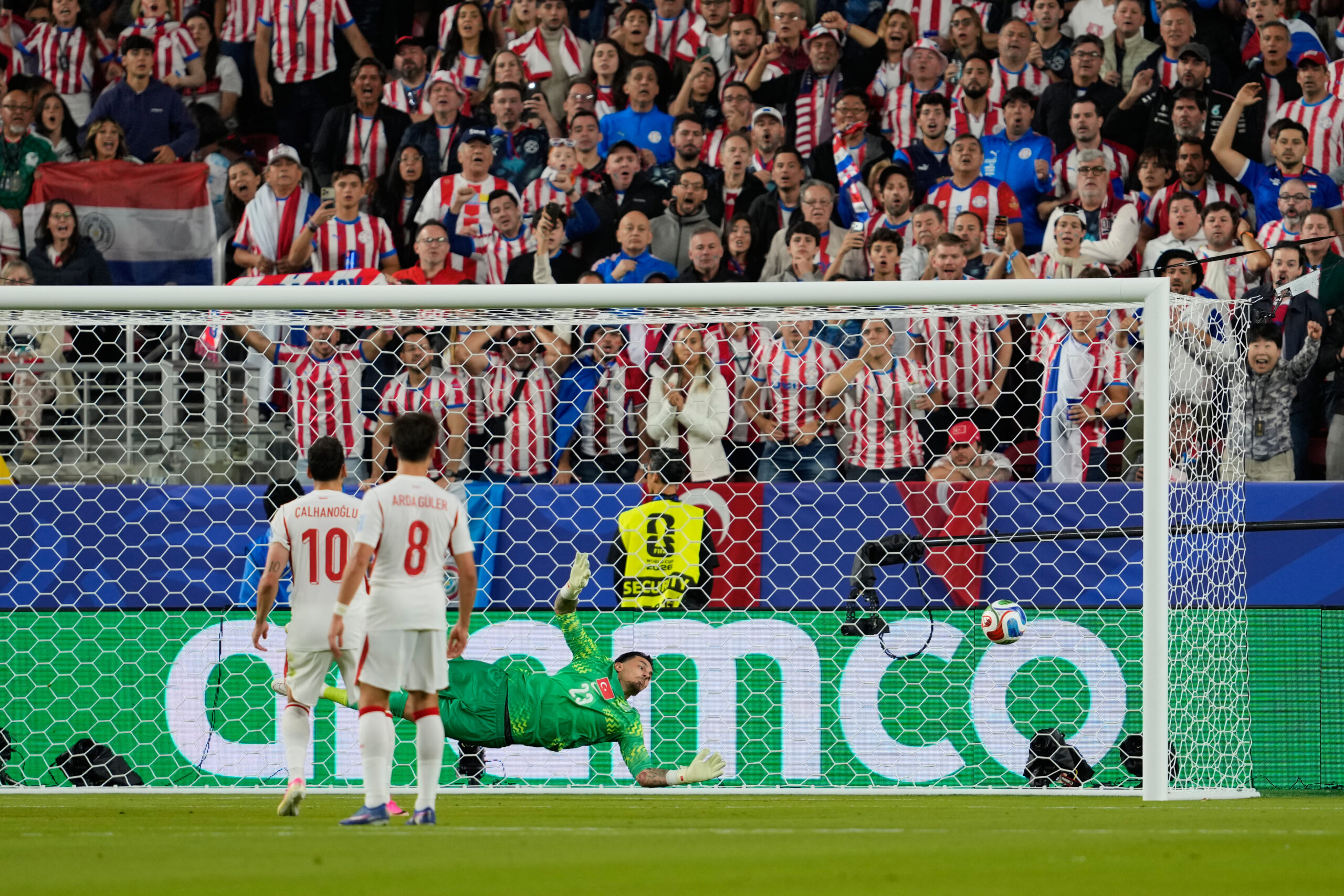
Turkey goalkeeper Ugurcan Cakir (23) makes a save during his country’s World Cup Group D match against Paraguay. Turkey, which has been eliminated from advancing, has not scored in the tournament.
Turkey certainly hasn’t lacked aggressiveness this tournament, but success hasn’t followed. Through two games, they’ve taken 62 shots, but zero have found the back of the net, the most in a World Cup since 1966, according to the Athletic.
During the second half of France’s dominant win over Iraq in Philadelphia on Monday, the refs worked hard to move the storm-delayed game along, eliminating the second-half water break and adding minimal stoppage time. That feels like the mood of this game — Turkish pride against a U.S. team already looking toward July 1.
The World Cup has arrived in Philadelphia and out of town visitors are flocking to the games, and learning about Rocky’s curse.
But how much of the money they’re spending will actually stay in Philadelphia?
The World Cup games were originally expected to generate a $770 million economic impact in the Philadelphia region, Axios reported in 2024. But just $30 million to $90 million is likely to stay in the region and benefit the local economy, according to estimates in a new report by the Economy League of Greater Philadelphia.
Thousands have visited the Lemon Hill FIFA Fan Festival since it kicked off on June 11, and used SEPTA after the first Philly-hosted match earlier this month. Philadelphia International Airport also estimated a bump in travel through the airport around the June 19 game between Brazil and Haiti.
But not all spending is equal.
U.S. cities are spending hundreds of millions of dollars to host World Cup matches, but are limited in how much revenue they can amass from the events, according to a ProPublica analysis of host city contracts, including Philadelphia’s.
Some of the money coming into the city during the World Cup would have been spent in Philadelphia anyway, but perhaps differently, the Economy League report indicates.
While the city is gaining World Cup visitors, it may be losing out on regular business travelers and others that would have come toPhiladelphia if not for the World Cup, the report said. Meanwhile, some who are spending money to enjoy the tournament in Philadelphia are residents, who would be spending money in the city anyway. And some fan spending is flowing directly to FIFA and other platforms, rather than to the city’s economy.
The report highlights three areas seeing most of that spending: The stadium district, Center City hotels and restaurants, and the Fan Festival at Lemon Hill.
“The commercial corridors beyond this core, which make up most of the city, are unlikely to see much benefit without deliberate effort, because visitor spending follows the path of least friction — toward where people sleep, arrive, or already intend to go,” the report says.
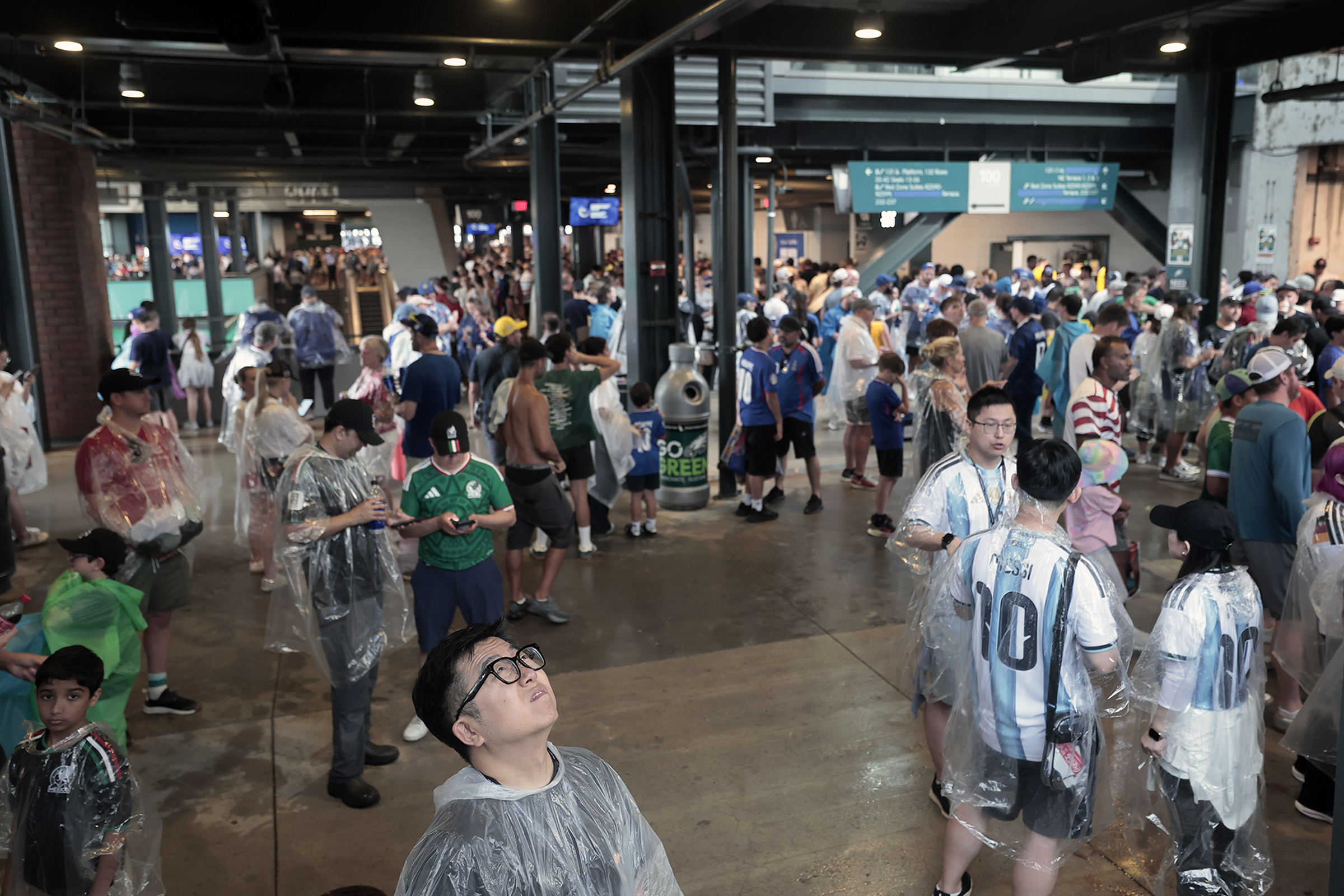
A man looks to the skies during the rain delay of the France vs. Iraq 2026 FIFA World Cup Group 1 soccer match at Philadelphia Stadium on Monday.
In the stadium district, where customers have bought tickets to attend games, they’re spending on merchandise and concessions — but few of those dollars trickle down to local independent businesses.
In Center City, hotels and restaurants are benefiting most, but it’s not as though they wouldn’t be getting business without the games, the report notes.
Some local food trucks and independent vendorscan make money at the FIFA Fan Festival at Lemon Hill. But because the venue is gated, surrounding businesses only profit if visitors leave the festival site.
And locals are paying the price of hosting the World Cup in other ways.
Residents who live around the Fan Festival at Lemon Hill are unable to catch a Lyft or Uber from homebecause of festival restrictions, and parking in the area requires applying for a special permit. The Philadelphia Parking Authority dolled out thousands of tickets in the first few days of the festival.
Still, the report outlines, much can be gained locally through the World Cup. Lemon Hill is set to receive $4 million in improvements, and some other benefits are harder to quantify.
“Philadelphia has shown it can move large crowds and stage a global event capably, and the reputational and civic returns, while hard to value, are real,” the report outlines.
IRVINE, Calif. — If you’re new to soccer, this is the sort of thing you should know about as you learn the sport. And even if you’re a veteran of the game, you might not have realized it had happened.
For many years, FIFA’s first standings tiebreaker at World Cups was soccer’s tradition of goal difference: goals scored minus goals conceded. But this time, it has switched to head-to-head result, the format used by the Union of European Football Associations in the Champions League and other continental tournaments.
It didn’t exactly go unnoticed when it was announced, but it wasn’t seen as a big deal. Now, though, it has become a growing controversy.
The issue isn’t so much about determining group winners, though the U.S. has benefited on that front. If goal difference was the first tiebreaker, the Americans wouldn’t have clinched first place yet.
The U.S. win over Australia combined with Paraguay’s win over Turkey last week clinched first place in the group.
They have because Paraguay beat Turkey a few hours after the U.S. beat Australia. That left the U.S. with six points, Paraguay and Australia with three each, and Turkey with none.
Since the U.S. has beaten Paraguay and Australia, it has the tiebreaker over both. So if Turkey beats the U.S Thursday night (10 p.m., Fox29, Telemundo 62) and there’s a winner in Paraguay-Australia (10 p.m., FS1, Universo), the U.S. will keep first with a tie on six points. With a goal difference tiebreaker, even though the Americans are sitting at a strong plus-5, a big loss plus a big win in the other game could have changed things.
The bigger issue tournament-wide is how head-to-head has eliminated teams after two games — and it’s magnified further by the best eight third-place teams qualifying.
If goal difference was the first tiebreaker, a last-place team could jump to third in the last minute and have a prayer of making the cut. Instead, five of the tournament’s 48 squads were eliminated before playing their finales: Turkey, Haiti, Jordan, Panama, and Tunisia. (Haiti’s elimination came in Philadelphia with the loss to Brazil.)
Cecilio Waterman’s Panama joined Haiti as Concacaf teams eliminated from advancing after two games.
There has been some outrage among purists about this in Europe, even though they’re more used to the format than they might admit because of the Champions League. But even the talking heads who understand the head-to-head way’s benefits have agreed with something that Americans ought to be able to see, too.
It’s more fun when more teams are alive going into the last round of games. If goal difference was the first decider, there could be a dose of chaos along with the stars, underdogs, and however many goals are scored.
Fortunately, Philadelphia’s last two group games will have drama. On Thursday, Curaçao, one of this tournament’s greatest underdog stories, could snatch one of the top eight third-place finishes if it upsets Ivory Coast (4 p.m., FS1, Universo) and Germany beats Ecuador in the Meadowlands (4 p.m., Fox29, Telemundo 62). On the flip side, if Ecuador wins that game, Ivory Coast will have to win or tie to keep hold of second.
Then on Saturday, Ghana and Croatia will have lots to play for (5 p.m., FS1, Universo). Ghana could steal first place if Panama upsets England in the Meadowlands (5 p.m., Fox29, Telemundo 62), while Croatia needs a win to finish second and avoid playing a group winner in the round of 32.
Ghana’s tie with England on Tuesday in Foxborough, Mass., means the Black Stars still have a slim chance of winning their group.
Wondering what the players think? Alas, you won’t get much out of the U.S. camp. All they care about is winning games. But at least veteran centerback Chris Richards brought some humor.
“On our end, we just want go into the next round with nine points,” he said. “I haven’t really thought too much about the rule change — I feel like the rules are always changing, so I’m kind of confused myself. But as long as we keep winning, that’s the number one thing.”
Christian Pulisic got right to the point when he arrived to meet the media before Wednesday’s practice.
“Can I guess the first question?” he said, knowing full well what it would be. Of course everyone wanted to know how he and his rehabbed calf were feeling.
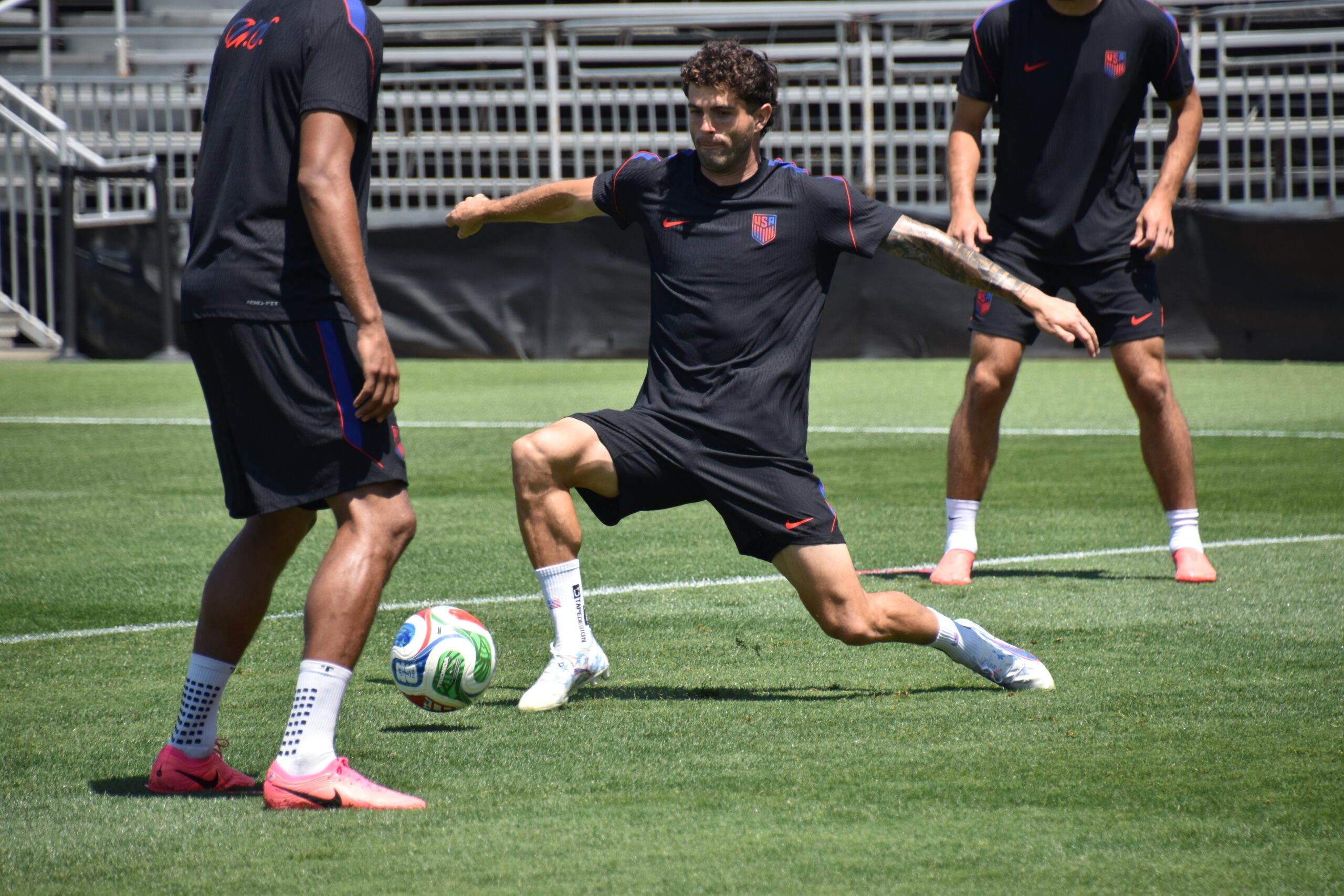
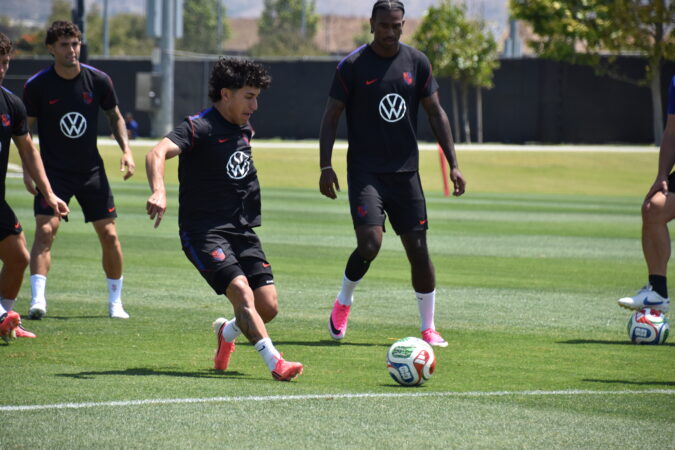
Christian Pulisic reaches for the ball in a drill at Wednesday’s practice.
“I’m feeling good,” he said as he headed into a third straight day of full participation. “I’ve obviously joined with the team in the last few days. So I’m feeling good, positive going into [the game], and hopefully I’ll be able to play a part in it tomorrow.”
The Hershey native reconfirmed that he was kicked in his left calf in practice a few days before the U.S.-Paraguay game (he politely declined to say who did it), then again in the first half of the contest.
“Throughout the first half I felt good, and then I started to notice it a little bit, and I think adrenaline definitely carried me through,” he said. “I think I had a pretty strong contusion, strain, whatever you want to call it.”
It might have hurt more emotionally than physically that he couldn’t play against Australia. He certainly took in as much of that day as he could as a spectator.
“I never really feared the worst, but I obviously didn’t want it to keep me out any longer than it had to,” Pulisic said. “And I was really trying to get ready for the last game — I feel like I could have gone, but it just wasn’t quite there.”
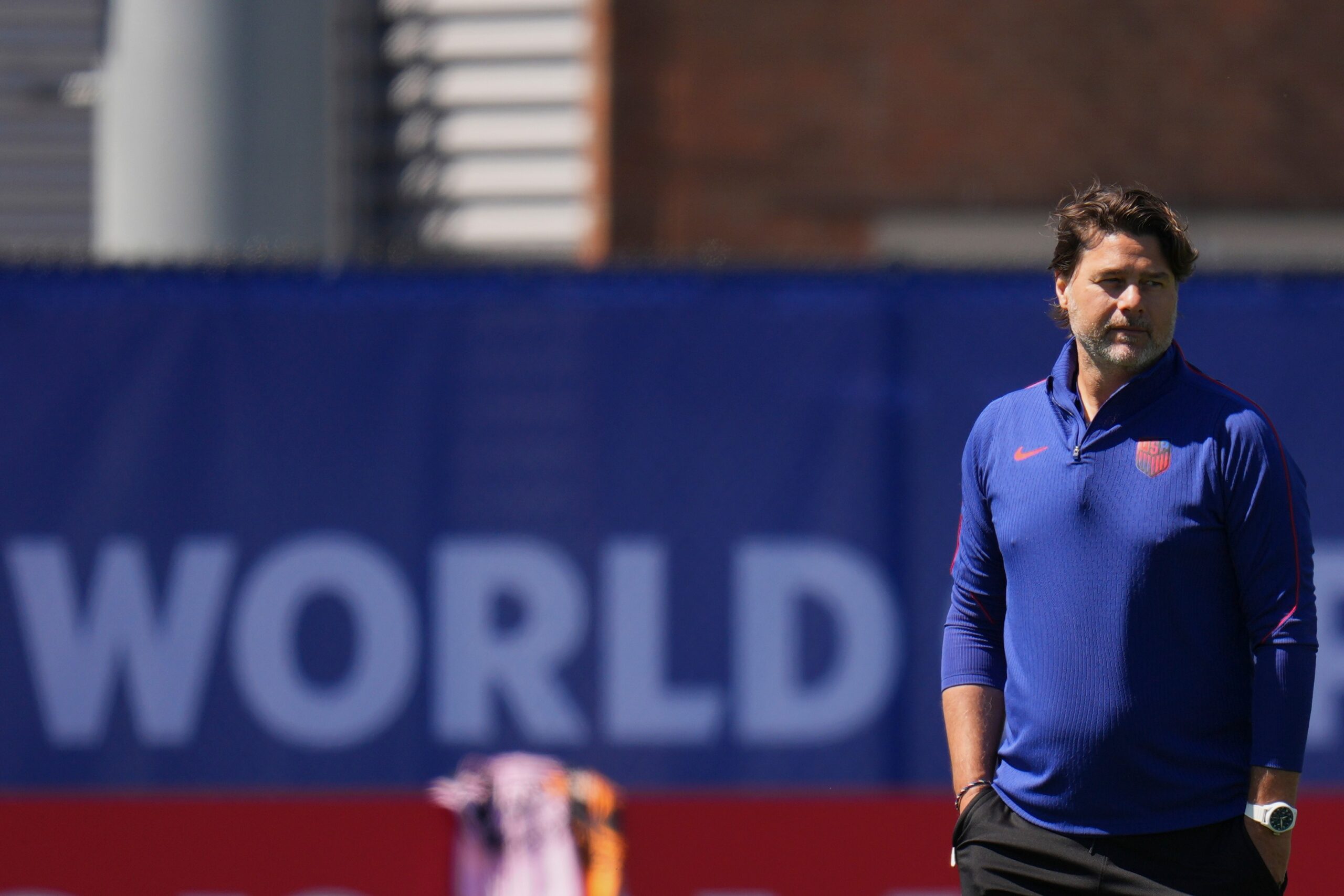
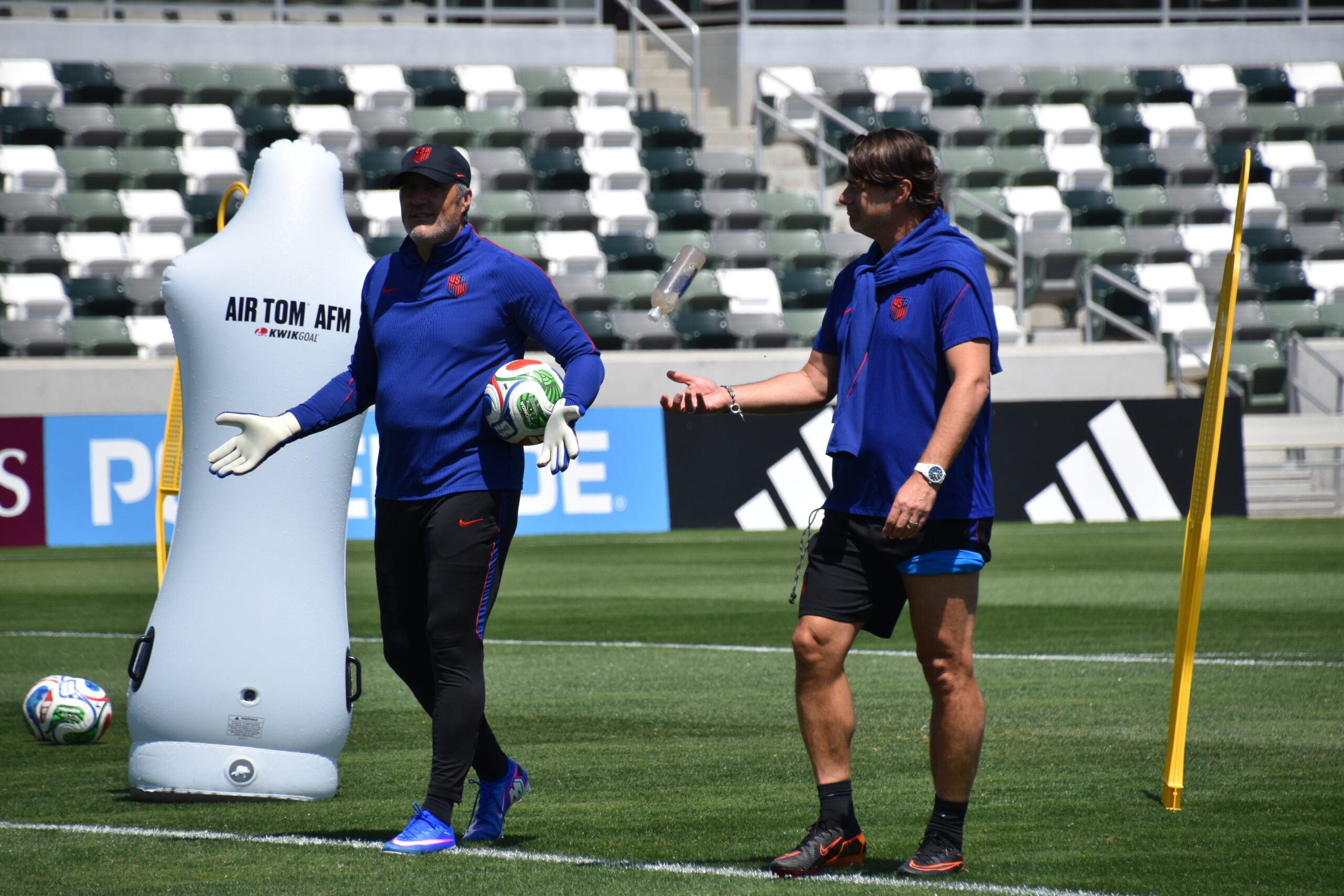
U.S. manager Mauricio Pochettino (right) and goalkeeper coach Toni Jiménez at Wednesday’s practice.
Players with yellow cards won’t play vs. Turkey
In his news conference Wednesday afternoon, U.S. manager Mauricio Pochettino confirmed that the four players with yellow cards — Tyler Adams, Folarin Balogun, Richards, and Antonee Robinson — won’t play vs. Turkey so that they don’t pick up another and get suspended for the round of 32.
“I think it isn’t necessary to take a risk and then to take another yellow card, and be not available for the next stage,” Pochettino said. “And I think that is a little bit a normal and easy answer: not to play with them from the beginning.”
He said of Pulisic’s status: “He’s available, and then we need to decide if it’s possible for him to play from the beginning or be on the bench and play in the second half.”
Cristian Roldan is also dealing with a minor quad injury, and has not practiced for the last few days.
“We need to assess tomorrow if he can be available,” Pochettino said. “I think he’s evolving really well. If it’s not for tomorrow, hopefully for next week.”
DANA POINT, Calif. — Fifteen months ago, Mauricio Pochettino walked out of SoFi Stadium at the low point of his tenure as the U.S. men’s soccer team’s manager.
Not only had his players lost both games at the Concacaf Nations League final four, but they had lost badly, with a squad including many of the program’s stars. He had taken the job to prepare one of the World Cup’s cohosts for the biggest stage, and everything felt about as far from ready as possible.
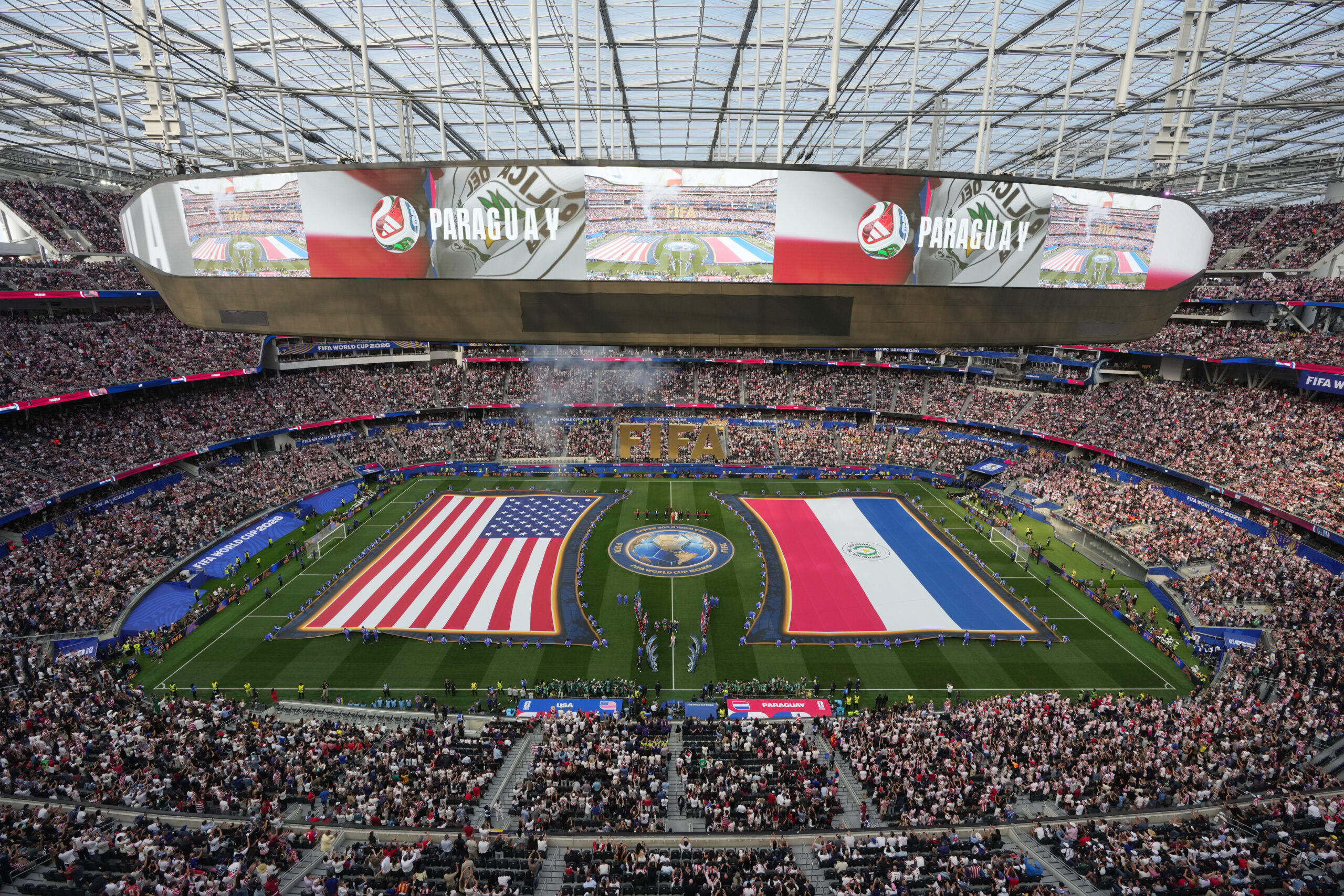
Two weeks ago, Pochettino was back on the same field, about an hour north of here, joined by many of the same players. This time, they charged to a 4-1 rout of Paraguay in the Americans’ World Cup opener, jolting the tournament and the nation to attention.
“I didn’t recognize it,” he said in a gathering with media at his office in the team’s swanky hotel along the Pacific Ocean. “Because it was empty” the first time.
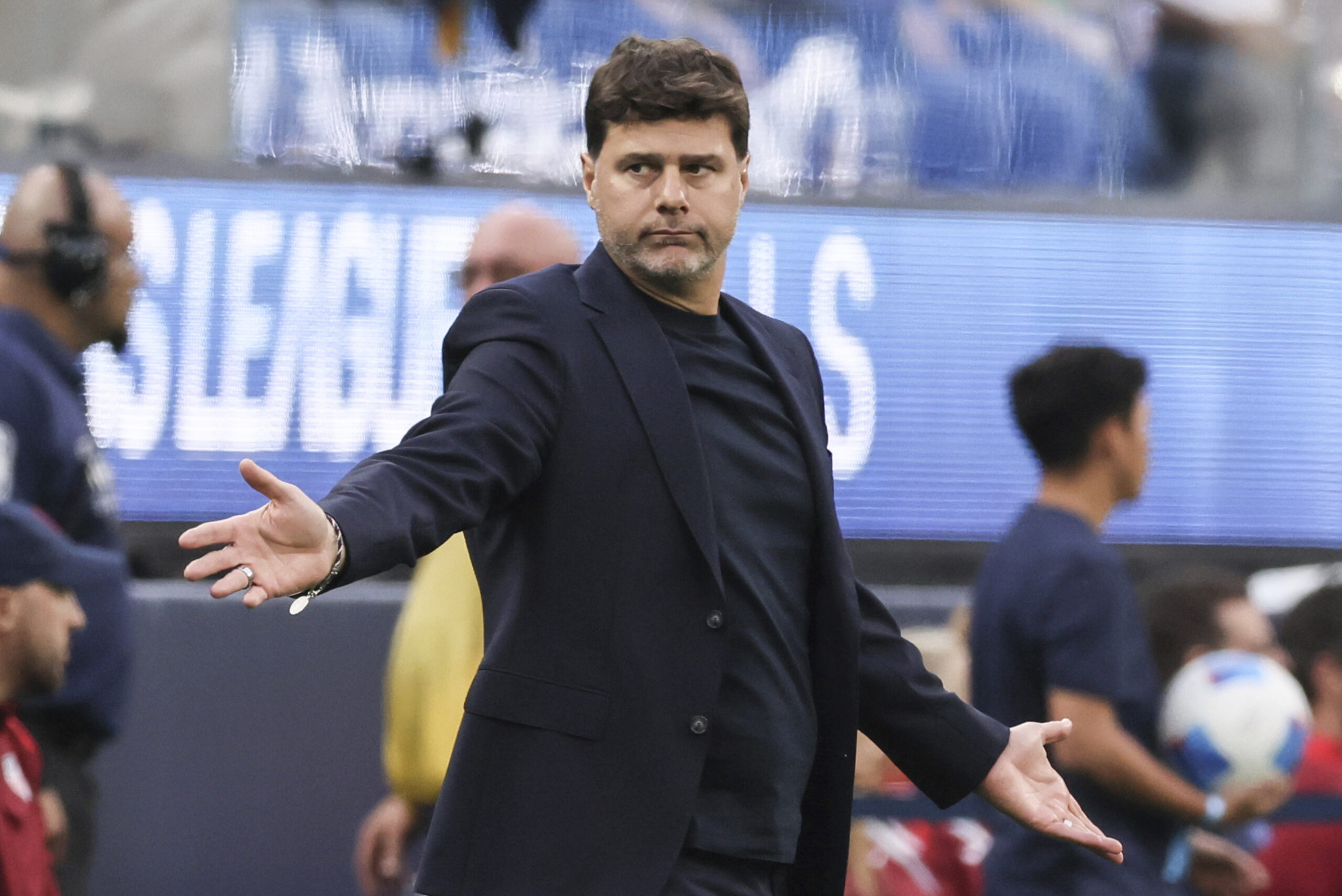
Mauricio Pochettino’s frustration showed during the U.S. team’s loss to Panama in last year’s Concacaf Nations League semifinals.
Indeed, the stands were mostly empty when the U.S. played Panama in the semifinals, then Canada in the third-place game. They were filled only in the other halves of those doubleheaders, when Mexico won twice to take its first Nations League title after three straight U.S. triumphs.
“I was crying afterward in the dressing room, because I felt so sad for all the American people, for the players, for the staff,” Pochettino recalled. “I said, ‘OK, we play in our own place, our own country, and 70,000 Mexican people’ … I cannot accept that.”
This time, as he put it, was “a completely different vibe, different energy.” The place was full, and backing the hosts. Sure, that it was a World Cup helped, even with the ticket prices. But it was clear from the moment the crowd joined in singing the national anthem that there really were U.S. national team fans in the stands.
There’s still a long way to go this summer, with progression to the knockout rounds and first place secured before Thursday’s group stage finale against Turkey (10 p.m., Fox29, Telemundo 62). And the U.S. team hopes there will be a long way still to go after that.
But given this game’s lessened stakes, there’s a moment to stop and survey just how far the program has come.
A big crowd was on hand on June 12 in Inglewood, Calif., for the U.S. World Cup opener against Paraguay.
‘The person you used to be’
The most striking feature of Pochettino’s office is a balcony with a postcard view of the water, the surfers in it, and the stunning sunsets beyond them. Ranked No. 2 is a wall covered with a U.S. Soccer logo and one of the team’s slogans for the tournament: Why Not U.S.?
Within the lines of type, Pochettino wrote a series of motivational phrases, some of his creation and some by others.
Growth is often painful, for it means saying goodbye to the person you used to be.
The talent has brought us here, but it is heart, effort, and unity that will make us unforgettable.
Heart turns effort into belief — and when everything hurts, heart keeps us fighting together.
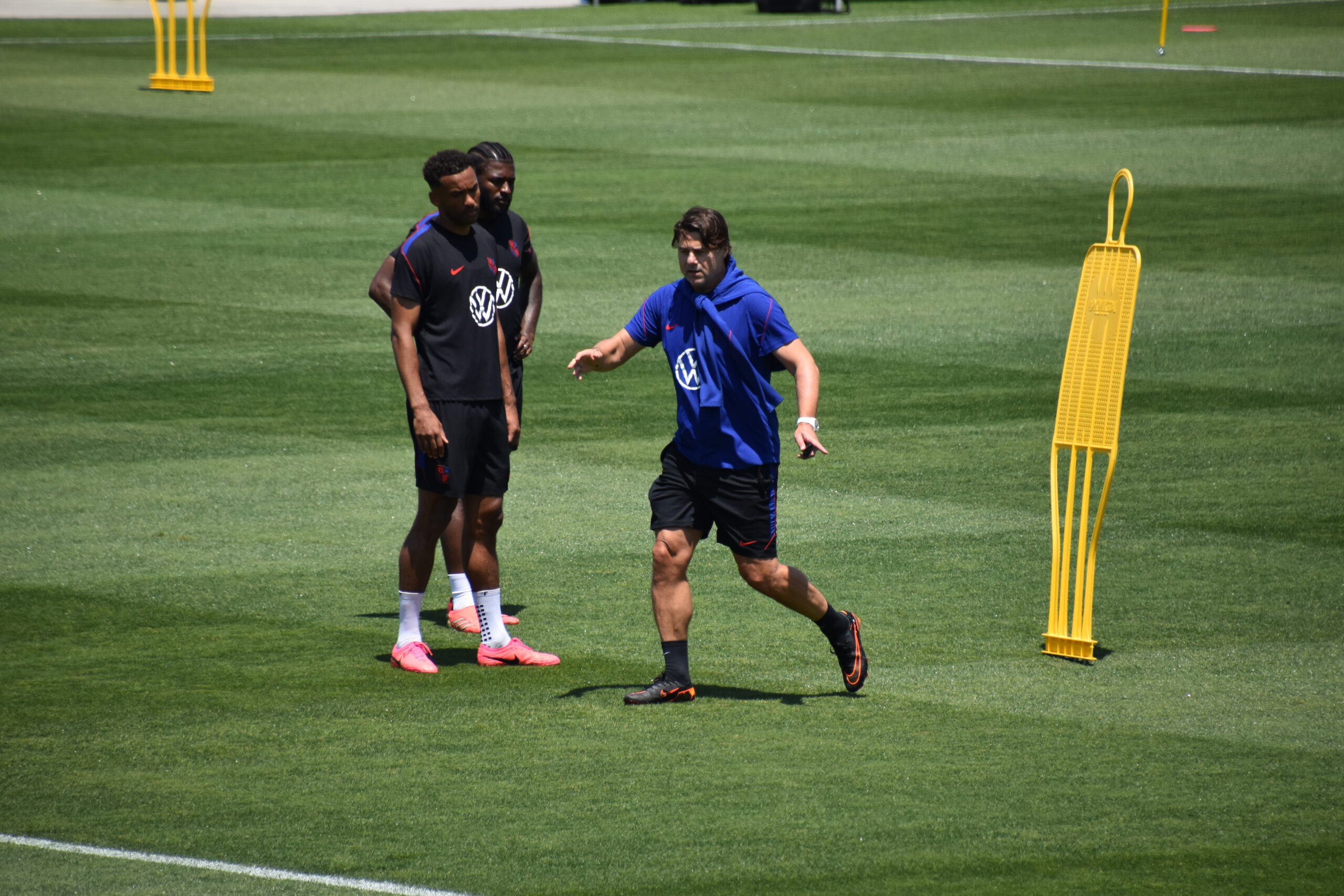
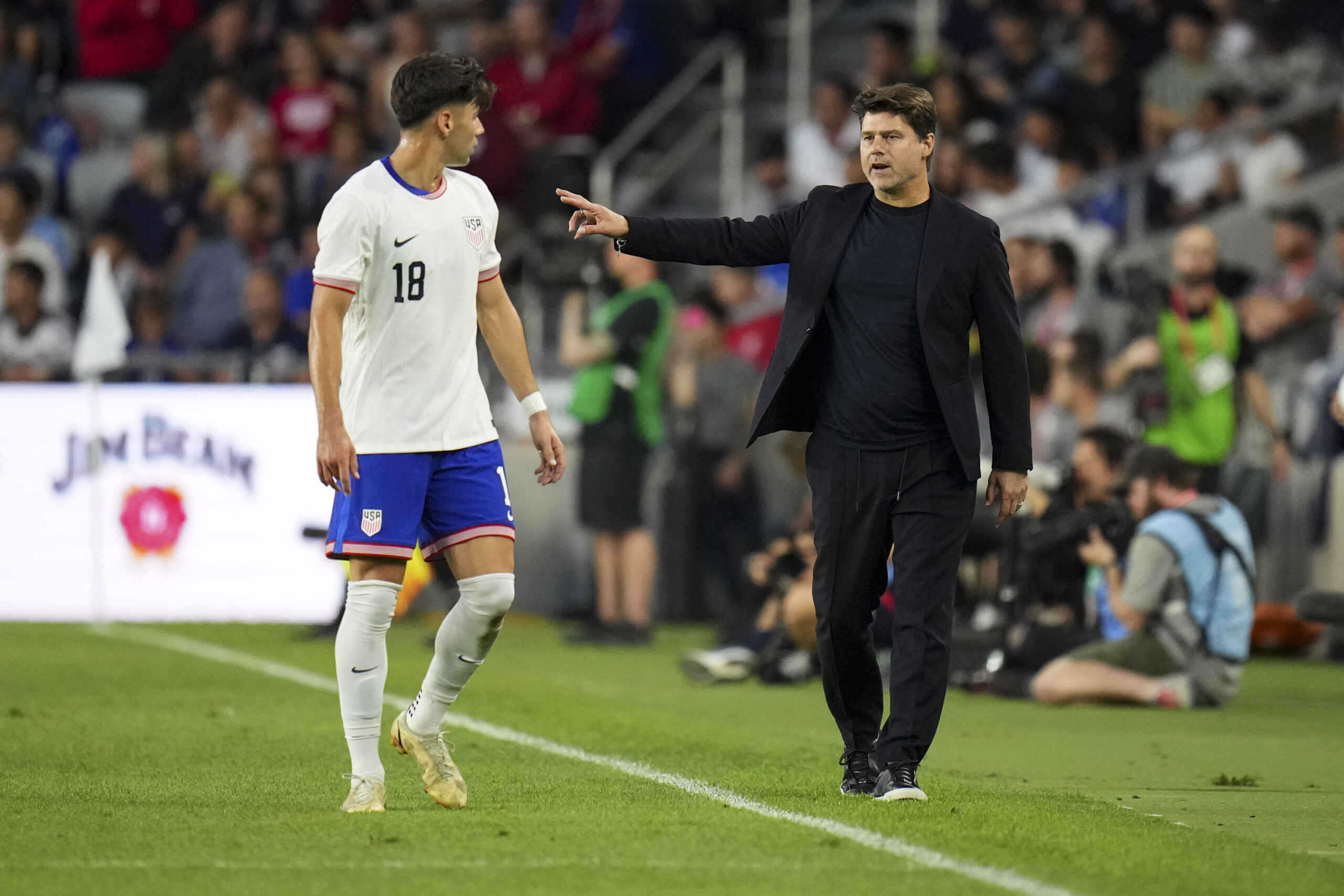
Mauricio Pochettino (right) giving instructions to Auston Trusty (left) and Mark McKenzie during Tuesday’s U.S. practice at the team’s base camp in Irvine, Calif., ahead of Thursday’s match against Turkey.
“I think every single quote represents our journey from day one to today and beyond,” he said.
They’re also more proof of how Pochettino values the psychological side of the sport, a factor that’s even more important with national teams than it is with clubs.
National teams can’t buy players to boost their talent the way clubs can, especially Pochettino’s previous employers at England’s Chelsea and Tottenham Hotspur and France’s Paris Saint-Germain. If a national team’s top players aren’t delivering, all the manager can do is drop them, call in other players, and hope they do enough.
That’s what happened after the Nations League failure.
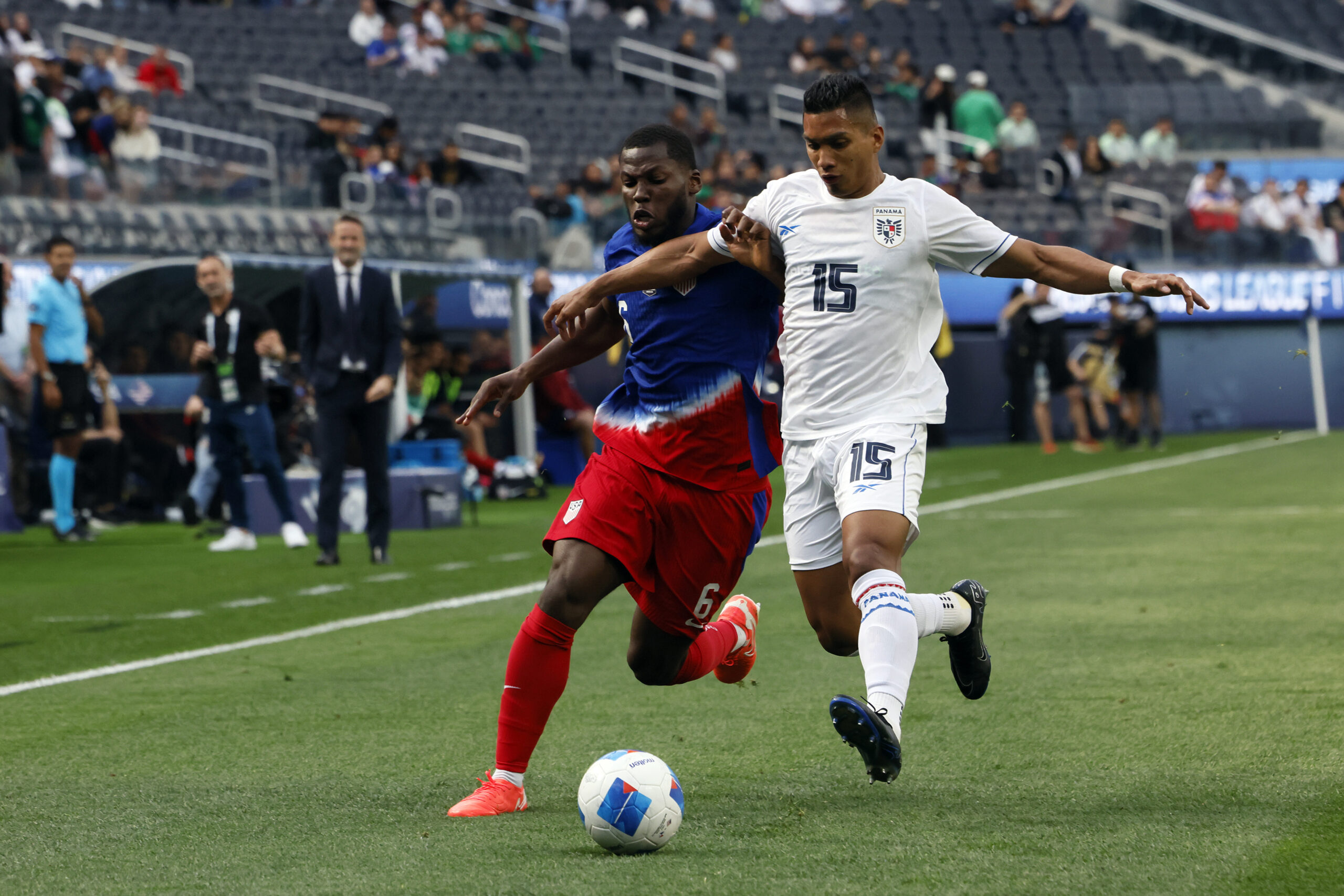
Yunus Musah (left) is perhaps the highest-profile player who has fallen out of the national team rotation during Mauricio Pochettino’s tenure.
“Maybe we didn’t feel or see how difficult the process was going to be,” Pochettino said. “We were so naive when we signed our contract. … We misjudged the situation — it was worse than we really believed.”
‘We were knocked out’
He and the assistants he brought with him came in believing that the players would immediately be as all-in on working toward the World Cup as the staff.
“And then we arrived here, we received a big punch,” he said, mimicking it, “and we were knocked out for a while.”
Pochettino was, as he relayed in these remarks with an expletive, shocked.
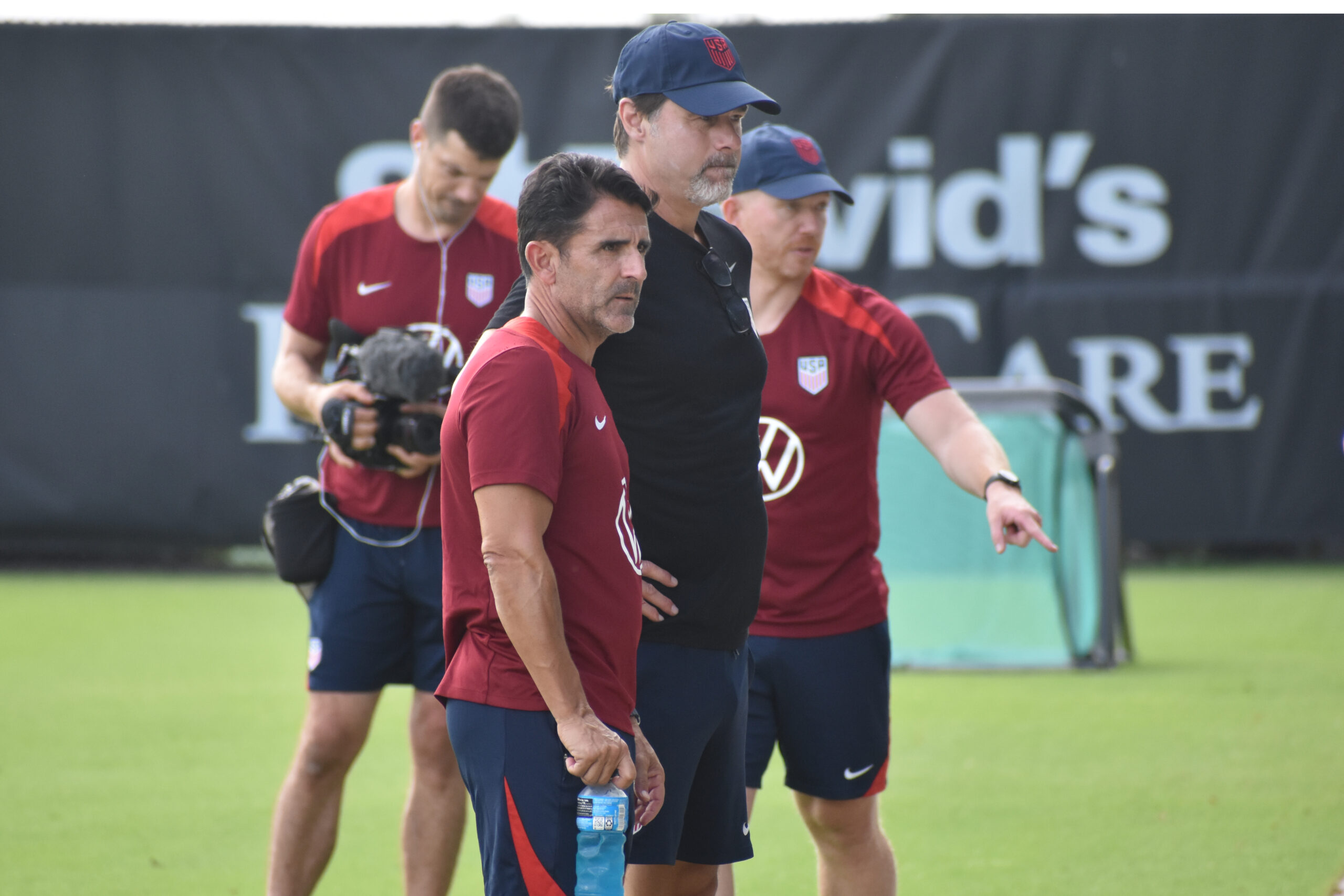
Mauricio Pochettino (center, in cap) and top assistant Jesús Pérez (foreground) during a U.S. practice last October.
“We were so excited about that, because it was so close to the World Cup,” he said. He expected in turn that people would be “desperate to help everyone, to be involved, come to the national team. And what’s the opposite?”
He felt it as soon as he took charge in the fall of 2024. By the time the Nations League final four arrived, he said “that punch, we expected” — words as damning as any he has said in his tenure.
“I think it was more a plan to have this punch that was painful, but it was necessary for people to realize in which place we were,” Pochettino said. “For the players to realize that this way, it was impossible to arrive in a good condition to the World Cup.”
We’ll never know what would have happened if the U.S. had won the Nations League title with its stars playing well. But because it didn’t, Pochettino moved quickly to start tearing things down, bringing in a slate of new players to challenge incumbents from the summer’s Gold Cup into the autumn.
Max Arfsten (left) is one of the new players who has gained Mauricio Pochettino’s trust.
There were a lot of questions along the way, and among outsiders, uncertainty as to whether the move would pay off. But when the Americans beat Japan in September, they showed they had reached the corner to turn around. Over the ensuing months, they got there.
Now, Pochettino has a galvanized group, and some of its biggest names have led the way in the World Cup. The U.S. might not be able to win it all, but there’s no questioning the players’ commitment now.
At one point, Pochettino was asked how much he has learned about American culture in the job. He has been asked that a few times in his tenure, and unfortunately hasn’t had much to answer with — not least because he and his staff don’t live in the United States.
This time, he had more to say.
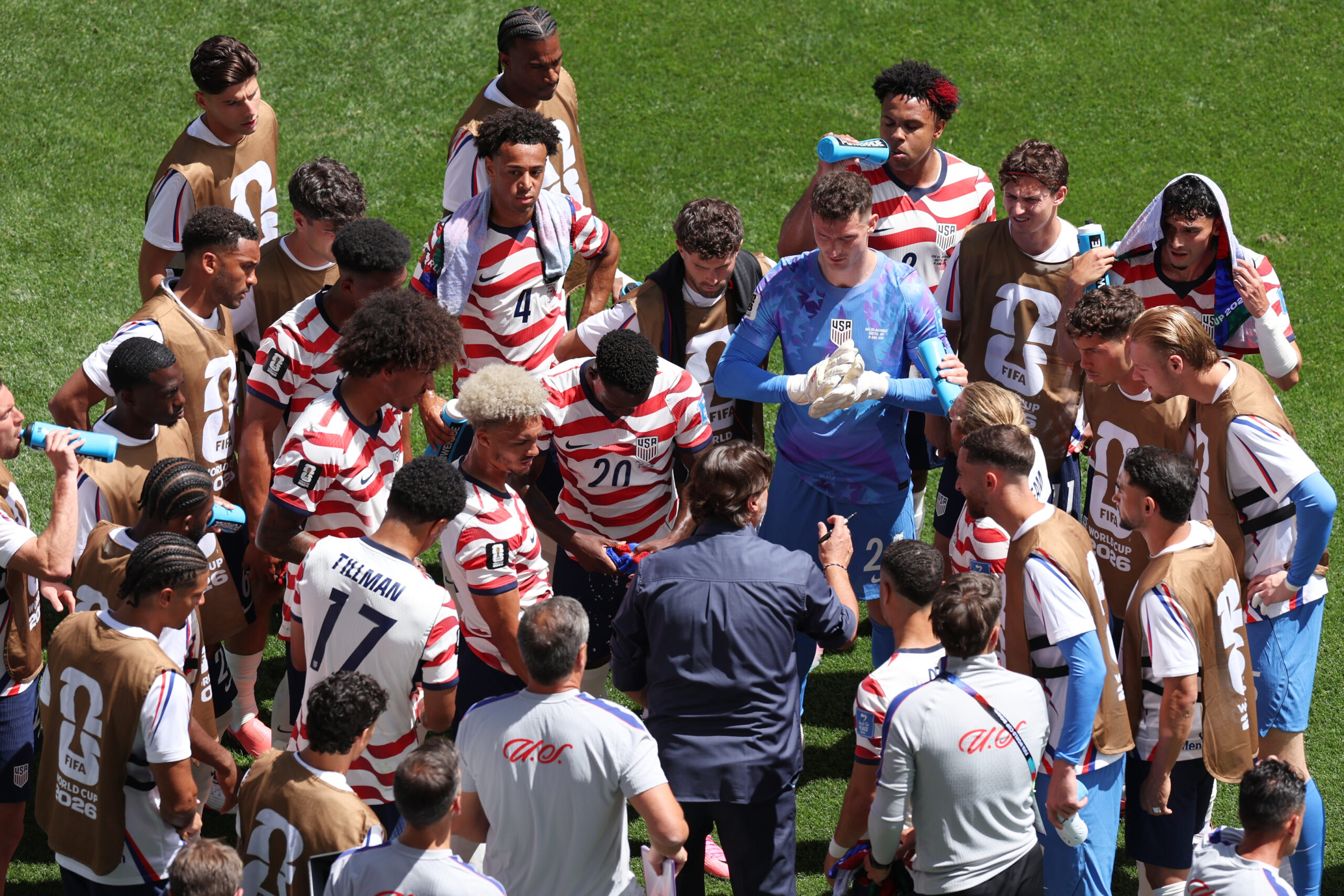
Mauricio Pochettino (center) talking to his players during a hydration break in the U.S. match against Australia last Friday in Seattle.
“People are very approachable, they make you feel comfortable, it’s very welcoming,” he said. “You go to some place like Nashville and you go to a bar, and if you are alone, you make friends so quick. And it looks like in a few minutes, you belong that in that place.”
That, he said, “was a massive surprise. … Different states and everything, but you have the same essence of the human being.”
If it’s tempting to want such a message that can resonate in a divided country — especially during a unifying event like a World Cup — it bears saying that Pochettino probably hasn’t experienced the full depths of what has caused the divisions.
But conversations with people who know him bring up a reminder: He’s one of many foreign visitors, especially from his native Argentina, who look up to the United States culturally and see the good before the bad.
“The country is massive and the people are so good,” Pochettino said. “I think we’ve learned a lot, I think we are much better people now, knowing the country and the culture of the people here.”
He made a wisecrack about America’s reputation for junk food, a subject that the world has lived out in coming to our shores this summer. (Ask the Netherlands fans who went to Buc-ee’s, a famed Southern convenience store chain.)
“People say Americans have no healthy food. Yes, you have healthy food,” citing a trip he took to a Whole Foods supermarket. “But also you have the food that makes you feel, you know, like Chick-fil-A.”
He even said at one point that “when you are here, I think it’s difficult now to see yourself living in another place” and that “we will miss” the country.
Here was Mauricio Pochettino’s speech to the crowd at the start of the day:
That opened the door to ask if he’d like to stay in the job after his contract ends following the World Cup. There have been some discussions with U.S. Soccer, but the widespread presumption remains that he’ll go.
He avoided a direct answer, saying his focus now is on the World Cup.
“And then if we want to stay, we have months to talk, or days or weeks, because it’s four years until the next World Cup,” he said, later adding: “We told the federation we are open, but now I think it’s not to be distracted.”
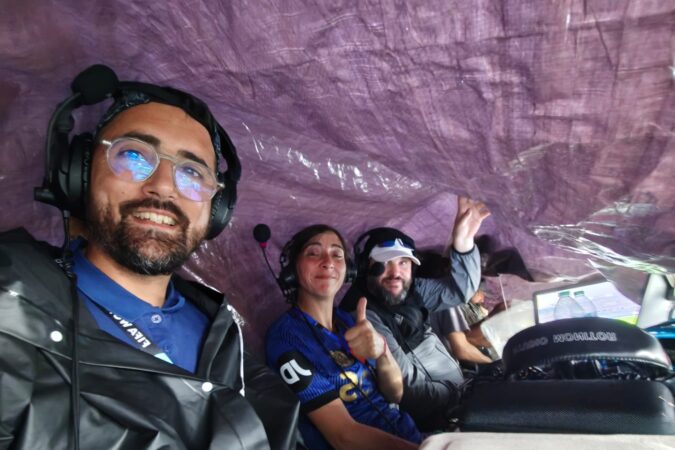
But while the players could go to the locker rooms and the fans could go to the concourses, broadcasters calling the action couldn’t just go off air. Even worse, the TV and radio areas are in the upper-deck stands, part of extra media seating FIFA always builds at World Cups. So there was no cover overhead when it was only raining.
While FIFA put plastic covers on the tables, that wasn’t enough to protect all the expensive equipment and the people using it. So the team at France Info, one of the many French radio stations broadcasting the game, had to get creative.
Virginie Lorda, the crew’s technician, found a hardware store a few blocks from their hotel in Center City, and bought a tarpaulin and some ropes to tie it onto the table. Then when the rain started falling, the tarp came out.
Broadcaster Julien Froment documented it all on his social media feeds, adding to the spectacle of a night with a two-hour delay in the game. The next morning, he talked with The Inquirer about it as the crew headed back to France’s base camp in Boston.
“I have to give the credit to Virginie,” Froment said. “She had the idea to set this up, a little bit at the last minute, to protect us. … It was a mix of French and American expertise.”
Summers can get very hot in France — the country recorded its hottest day ever on Tuesday, and highs are expected to top 100 degrees multiple times this week. But the sky doesn’t explode like it does here, even if that feels normal to Americans.
“You all are used to this,” Froment said. “For us Europeans, to have to deal with a thunderstorm, it’s a bit new. This one was a grand premiere.”
It’s worth noting that when Philadelphia hosted the Club World Cup last year, the city got pretty lucky. There were big storms on nongame days, and multiple games in other cities got hit. But no action here got delayed or postponed.
France superstar Kylian Mbappé getting drenched by the storm that arrived in South Philadelphia late in the first half of Monday’s game.
So maybe we were due, and unfortunately it happened during an especially star-studded game. France’s Kylian Mbappé scored two of Les Bleus’ goals in the 3-0 win, including a viral sensation of a hit for the opener, and reigning world player of the year Ousmane Dembélé capped things off with his first World Cup tally.
To the city’s credit, the stands were almost totally full when the game resumed. No one went home even with the long delay, wanting to make the most of a rare chance to see these players in person.
Though it’s unusual for American stadiums to have media seating in the middle of the stands, it’s the norm in Europe and elsewhere. There aren’t broadcast booths the way there are at American football, baseball, and soccer stadiums.
The locations of the “media tribune,” to use the world’s game’s phrase, can vary. At Chelsea’s famed Stamford Bridge in London, you can almost touch the team benches. At Lyon’s modern Groupama Stadium in France, which hosted the 2019 women’s World Cup final, you’re up in the heavens.
But no matter the distance from the field, there’s almost always a roof over the stands in some form.
“We’re in the open air to capture the atmosphere — it’s the tradition,” Froment said. “We’re used to being outside. But the big difference between European and American stadiums is we aren’t protected here. There’s no roof, there’s nothing to protect us from the elements.”
That is especially the case at the stadiums Froment’s crew has been to so far in New England and the Meadowlands. France isn’t playing at the indoor venues in Atlanta, Houston, or Dallas; or in Seattle or Los Angeles, where the stadiums are open-air but the stands are covered.
But Froment has enjoyed the experience overall, marveling at America’s modern stadiums that are palatial compared to European soccer cathedrals with decades of history but fewer amenities.
Les supporters donnent de la voix pour le retour des Bleus et des Irakiens ! Sous une pluie battante ! 20min d'échauffement puis début de la deuxième mi-temps à 01h50, si tout va bien 🤣 #FRAIRA@franceinfopic.twitter.com/0UztF6cH2J
“Here, you get the feeling that everything is almost at extremes,” he said. “The stadiums are huge, built specifically for the fans. I’m kind of shocked by how many snack bars and concession stands there are. … It really represents a different kind of consumerism — a different sports culture — compared to what we’re used to in Europe.”
They’re also a lot bigger than most stadiums in France. The biggest, the Stade de France in suburban Paris, seats 80,000; the second, Marseille’s Vélodrome, seats just over 67,000; and the venues in Lyon and Lille are the only others nationwide over 50,000.
Asked his opinion of Lincoln Financial Field, Froment called it “the best stadium I’ve been to at this World Cup,” helped by location, architecture, and the vibe of the broader Sports Complex.
“It’s a little different,” he said. “At MetLife Stadium [in North Jersey], it doesn’t have personality. It feels like it could be any stadium in the world. In Philadelphia, you feel like there’s a story there.”
(We couldn’t help responding that he’s far from alone in those opinions.)
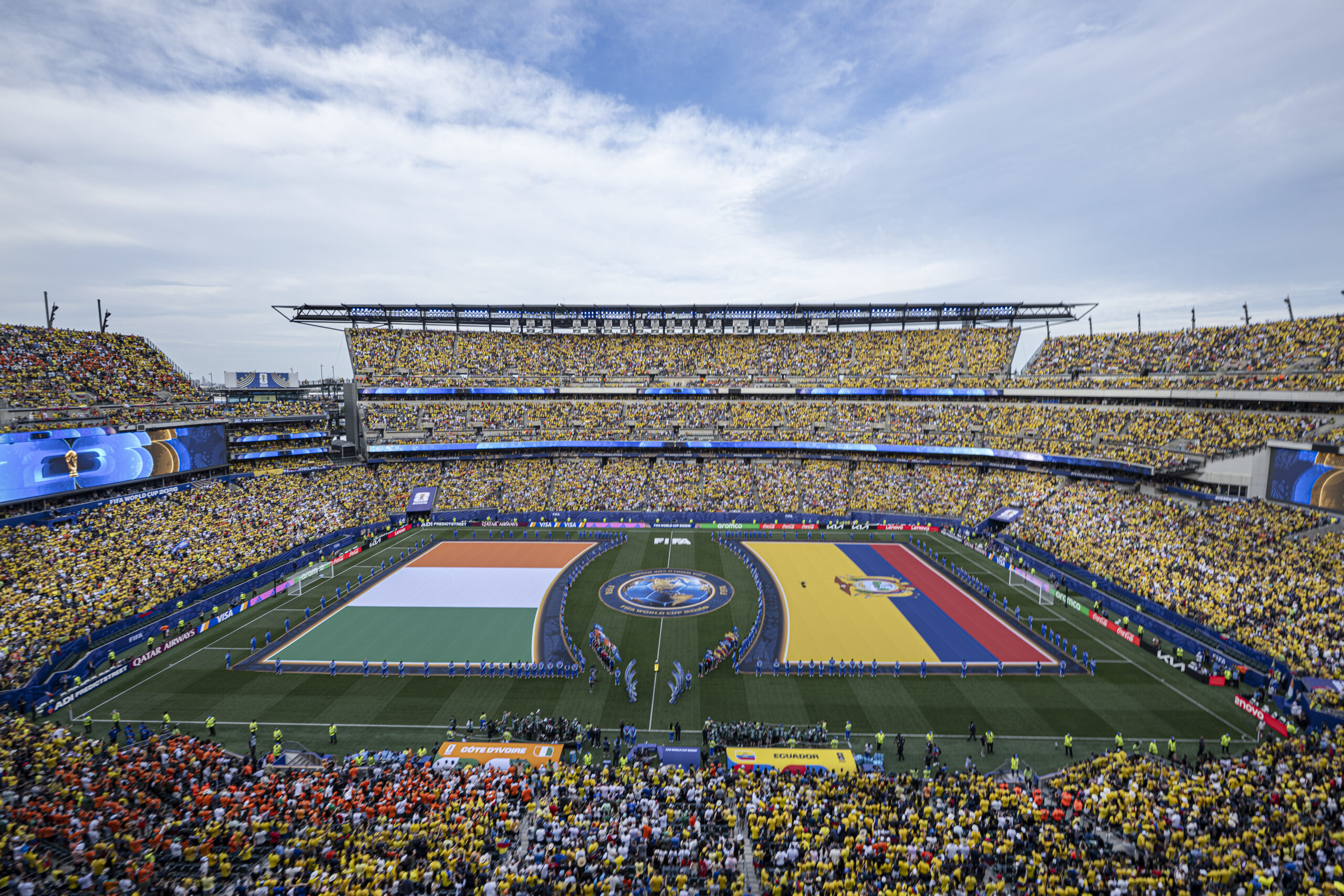
A view of the stands at the start of the Ivory Coast-Ecuador game, which like all of Philadelphia’s World Cup games so far drew a full house.
He had some time to explore as well. There were a few trips to Reading Terminal Market, and walks to the Liberty Bell and the Rocky Steps — documenting France fans’ night-before pep rally at the latter.
It’s playing the hits, sure. But it’s also a reminder of how warm a welcome Philadelphia has put on for its international guests this summer, and that Center City being easy to walk around is another of its great assets.
IRVINE, Calif. — Trying to guess what’s on U.S. men’s soccer team manager Mauricio Pochettino’s mind when it comes to starting lineups is usually a fruitless endeavor. He likes to keep his cards close to the chest, and doesn’t reveal them until he has to on game day.
But all of his players, not just outsiders, know the four players sitting on a yellow card suspension threat heading into Thursday’s group stage finale against Turkey (10 p.m., Fox29, Telemundo 62): Tyler Adams, Folarin Balogun, Chris Richards, and Antonee Robinson. And they know the risk of playing Christian Pulisic as he finishes recovering from a calf injury.
That opens the door for backups who haven’t featured much yet to get a shot. Two of them have talked with the media so far this week, left wingback Max Arfsten and attacking midfielder Alejandro Zendejas. They both said they’re ready to jump in if called.
“Training hard, been waiting for the opportunity, but I’m sure it’ll come,” Zendejas said. “That’s obviously a coach’s decision, and something I’ve got to respect, but I’ve always said it all depends how I’m on the field. I’m working hard, having fun, really enjoying this dream that I’m living right now, so I couldn’t ask for more.”
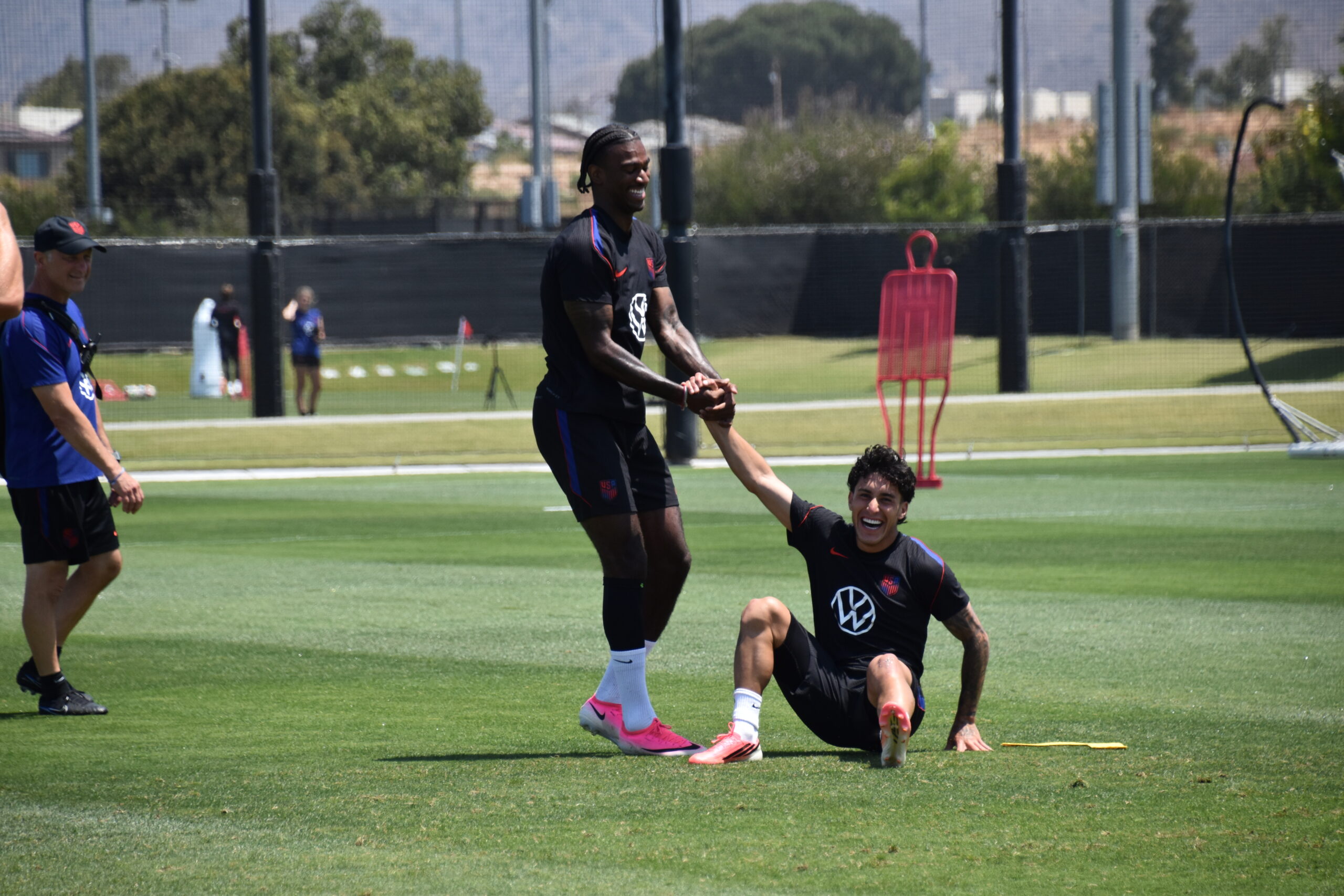
Alejandro Zendejas (right) shares a laugh with Haji Wright after hitting the deck during a drill.
Arfsten said before Tuesday’s practice that as of then, the players “haven’t heard anything about” who will start Thursday.
“That’s obviously the coach’s decision and whatever he decides, obviously we’re going to be on the same page with that,” he added.
As Arfsten continued at the mic, he left no doubt that all 26 players are well-trained at handling pesky inquiries from the media.
“It’s a tough question — good thing I’m not a coach,” he said at one point. “But honestly, I think the most important thing is, no matter who’s playing, to go out and try and get three points. Just because I think the momentum of the two wins is what’s keeping the energy high right now, and three would be even more.”
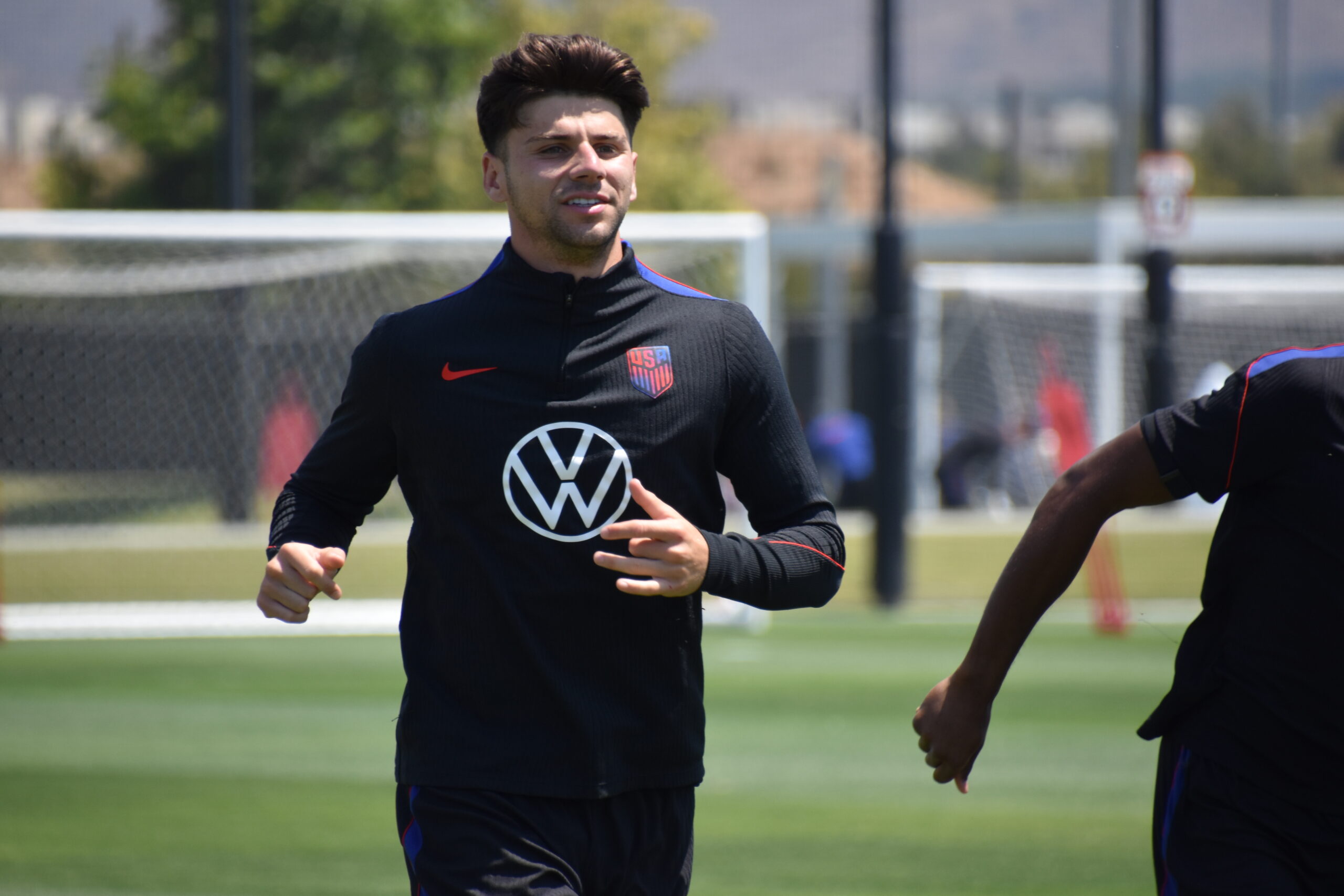
Max Arfsten jogging during Tuesday’s practice.
He at least signaled that the tone of training sessions hasn’t changed with first place in the group sealed.
“Obviously everyone’s happy that we’ve already advanced, but at the same time, regardless of if we’ve advanced or not, training is still very competitive, it’s very intense,” Arfsten said. “And I think that’s the culture that the coach has created: no matter what, that everyone’s still trying to prove something.”
One starter likely to keep his place is goalkeeper Matt Freese. The Wayne native showed in the first two games why he earned Pochettino’s trust as the No. 1 in net.
He is also perhaps the team’s most steadfast player when it comes to a one-day-at-a-time mentality. So when he was asked about potential lineup rotations in front of him, he barely flinched.
“It’s a coach’s decision, obviously, and we’ve got 26 guys here who all want to play, and who all are ready to play, and are working hard every day in training,” Freese said. “And we as a group have full confidence in all 26 of us. So really, we’re focused on continuing to prepare and work hard in training, and be ready for whatever.”
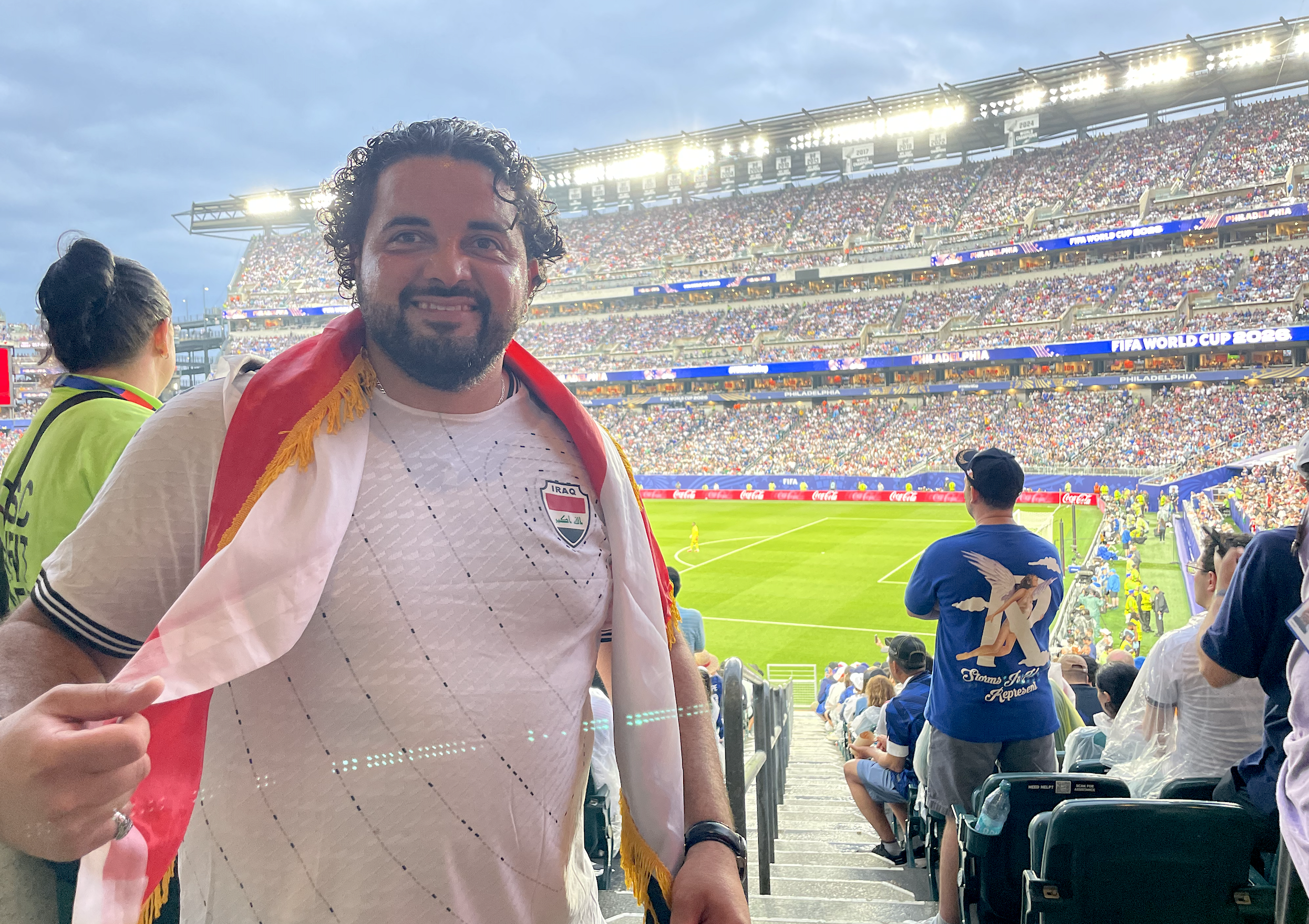
Despite the distance and the costs of his airfare, his weekend stay at a Center City hotel, and his lower-level ticket to the match, there was no way he was going to miss the opportunity to see Iraq, win or lose, take on France in the World Cup on Monday.
So when he got to his seat inside Philadelphia Stadium (Lincoln Financial Field, as it’s known to Philadelphians), after months of planning and waiting, after repeated screen refreshes to remain in a queue to buy a ticket during one of FIFA’s early presales, it still almost felt like serendipity.
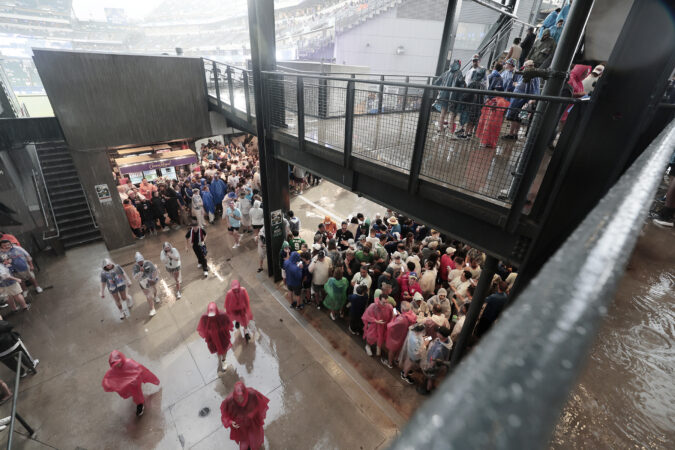
The torrential downpour that cascaded on and off over the region halted the game for 2 hours, 10 minutes. It also sent poncho-clad fans scattering into the concourses in search of shelter.
And in the aftermath, as it would appear, anything else they could get their hands on.
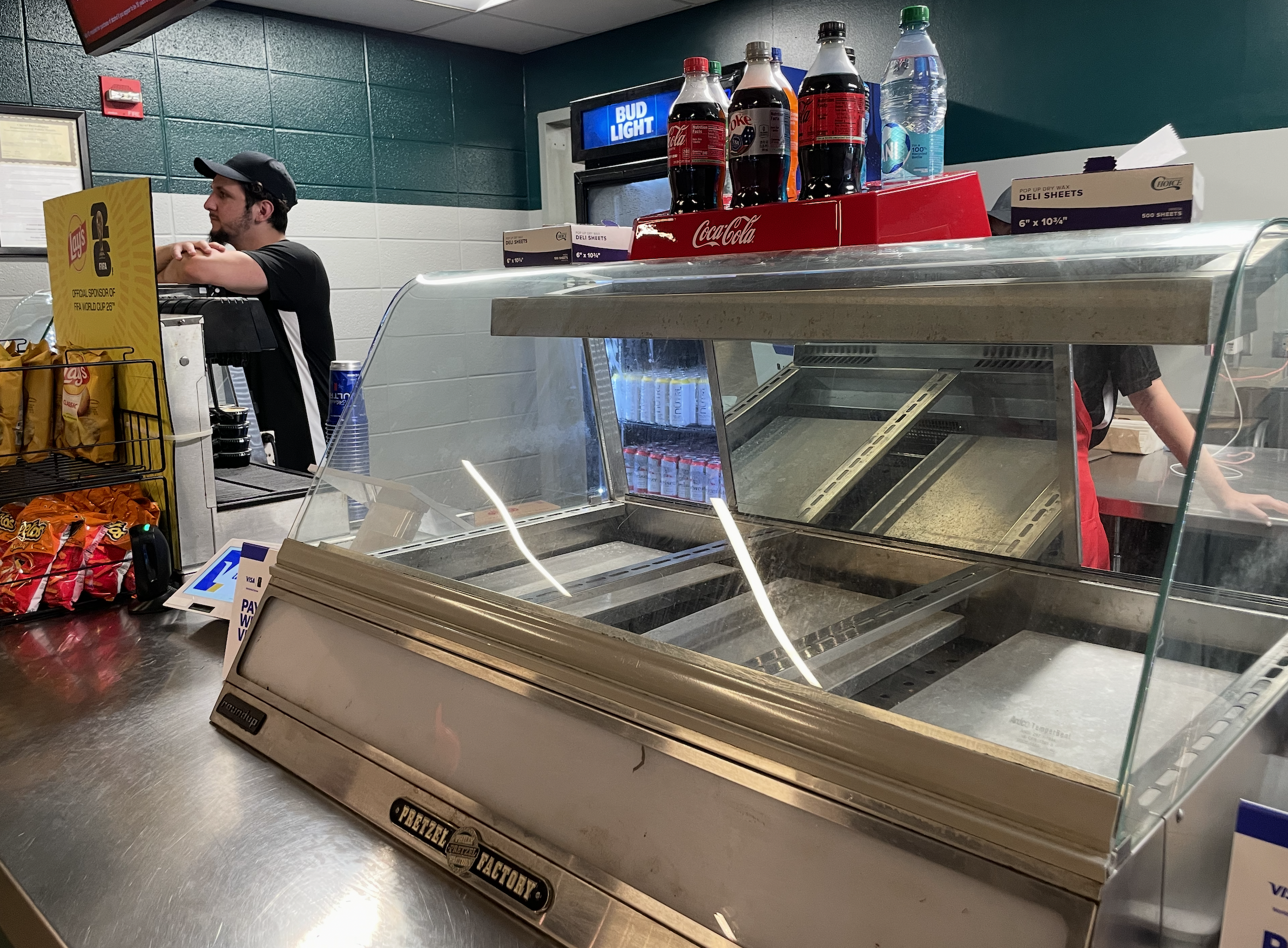
By the time play resumed a little after 8 p.m., concession stands on the main concourse of the stadium had little to nothing left by way of food and drink.
The popcorn and hot dog concession between Sections 104 and 105? Barren. The Philly Pretzel concession selling twists and nuggets a few sections down? A stadium worker said they sold out in about 30 minutes.
The Philly Pretzel Factory concession had only snack food following the rain delay during Monday’s World Cup match between France and Iraq.
“People just kept coming,” said one worker, who chose to stay anonymous because they weren’t supposed to speak publicly on what their tired eyes just witnessed. “We had this pretty stocked, and that rain delay just cleared everyone out. It’s much the same at every concession stand, if you want to look.”
It’s what Al-Hasani realized as he waited for only a water. Fortunately, the Philly Favorites concession between 104 and 106 was able to oblige.
“I get it,” Al-Hasani said. “There was nothing else to do. You know you’re down here, it’s hot, it’s tight [with people], you can’t go back to your seat because of the rain, so after the singing and the waiting and the singing, people got to do something, so you eat.”
Mustafa Al-Hasani, an Iraq fan who traveled to Monday’s match from Iowa, said that the whole experience in both the match and the 2-hour-plus rain delay is something he’ll never forget.
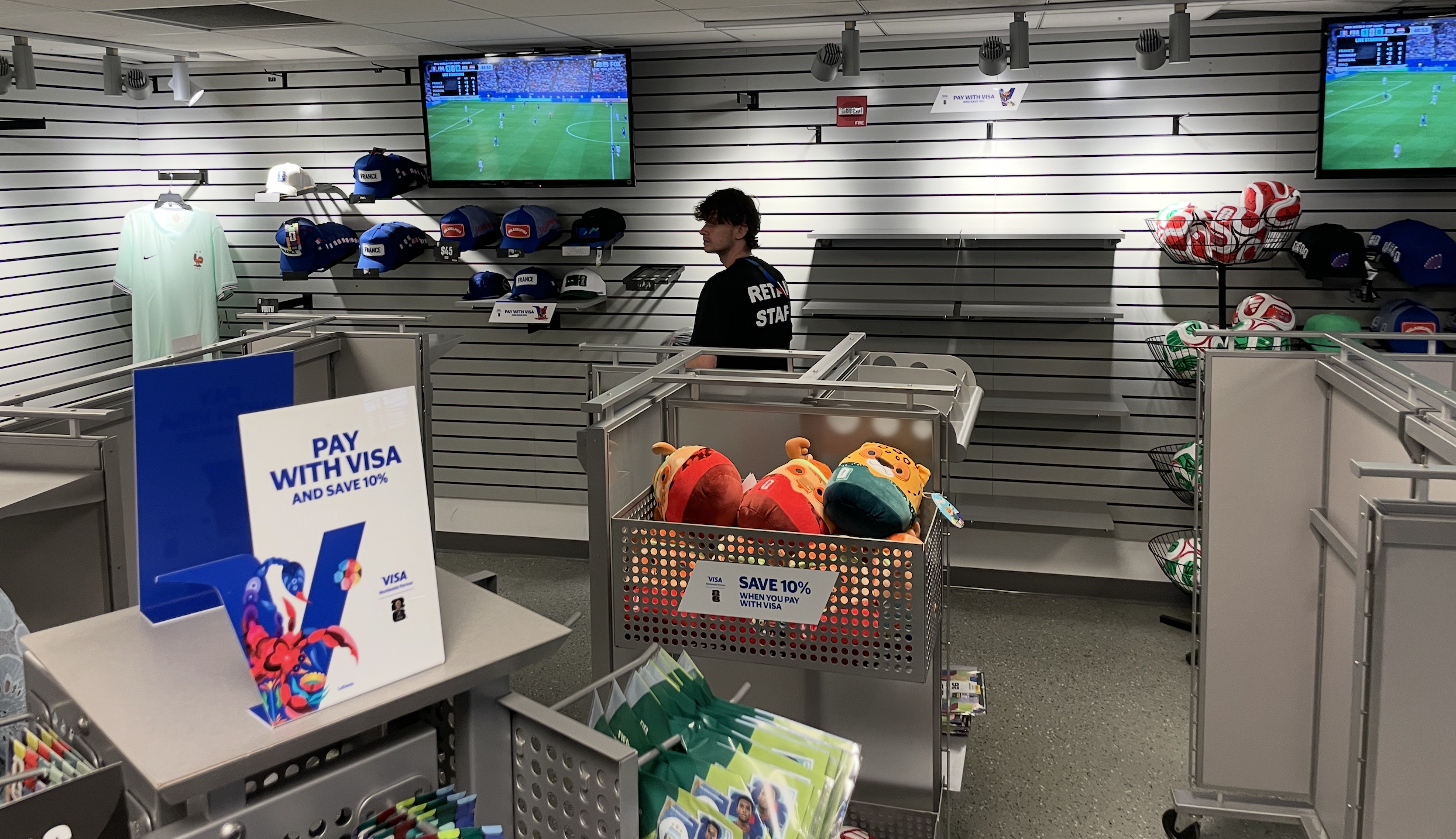
Judging by the small FIFA team store just outside the southwest corner of the stadium, in addition to eating, fans at loose ends shop. By the look of the lines during the rain and the sight of the store after, fans made it a ravenous way to pass the time.
The store, which has capacity of about 15 customers, was giving people just five minutes in-store so they could offer other people an opportunity, according to a worker. By the time the game finished, shelves were empty, odd-sized jerseys remained on display, and the high-priced World Cup collectibles in the glass behind the counter seemed the only thing in abundance for purchase.
The FIFA Store’s satellite offshoot located near the southwest terrace inside Philadelphia Stadium was mostly bare after a rain delay that lasted more than two hours during Monday’s match between France and Iraq.
“One guy came in, dropped $800 on one sale,” a worker recalled. “It was crazy. We see this kind [of frenzy] for like concert T-shirts here, like I remember people went wild for Taylor Swift stuff when she was here, but this was intense. It felt like people were buying whatever they could get their hands on.”
A request for comment from FIFA regarding the rain and fans went unreturned. Despite many of the concession workers being the same folks you’d see on an Eagles game day — or apparently, a Taylor Swift concert — through its arrangement, FIFA has both naming rights and management of all 16 match venues across the United States, Mexico, and Canada.
As of Tuesday afternoon, Philadelphia was the only city that experienced a rain delay of this magnitude in the World Cup. In the end, it was France that scored twice more after halftime en route to the 3-0 win, advancing to the knockout stage.
“This was incredible, the whole experience is a memory,” Al-Hasani said. “The rain, the people, the game, all of it. You have to take it all in. Everyone was so nice, [at concessions] you got what you needed if they had it, and I think we were just all trying to get through it together. Philly’s great, I’ve been here before, but this is an experience I don’t think I’ll ever forget.”
Gov. Josh Shapiro thinks sports could be the key to unity ahead of the nation’s 250th anniversary.
“To me, sports is still one of the few things that allows people from all different walks of life, and different political views, to actually come together and enjoy each other’s company,” Shapiro said in an interview with 6abc while in Philadelphia for Monday’s World Cup match between France and Iraq.
“We worked really, really hard to stack these events up,” Shapiro told6abc. “And I was really purposeful about this, that as we celebrate our history, we have to find ways to come together.”
Shapiro has attended two of the three World Cup games held in the city so far, taking in Ivory Coast’s 1-0 win over Ecuador on June 14 before attending France’s 3-0 victory against Iraq.
VisitPA has committed $31.6 million to Philadelphia Soccer 2026 to help aid World Cup costs. Through this sponsorship, the state, including Shapiro, has access to tickets and suites.
“The Commonwealth has access to a mix of suite, VIP, and general admission tickets, which are being used to host business leaders, prospective partners, and other guests to further strengthen Pennsylvania’s economic development and promote the Commonwealth as the best place to visit, live, and do business,” Rosie Lapowsky, a spokesperson for Shapiro, wrote in an email.
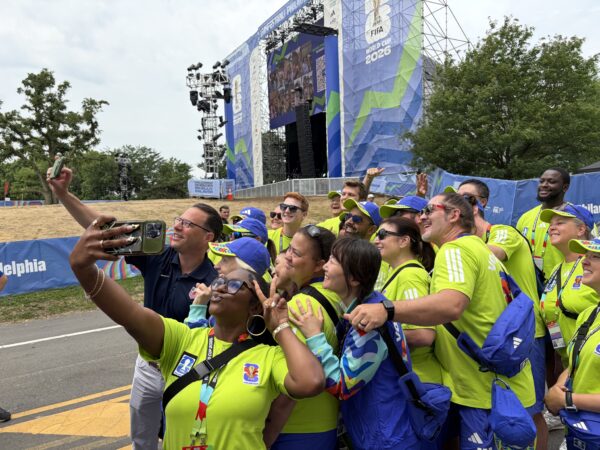
Shapiro said he stopped by the FIFA Fan Festival at Lemon Hill before the game and admired how welcoming Philadelphians were to tourists from all over the globe.
“We are welcoming people,” Shapiro said. “We want you here, and we want you to celebrate not just a great sport; we want you to celebrate the greatest country on the face of the earth at this important moment as we celebrate the 250th birth of this nation.”
Fan fests are being held in multiple locations, allowing Pennsylvanians to bask in the World Cup excitement across the state.
“We were really insistent that this fan fest not be the only one, that we have them across the state,” Shapiro told The Inquirer during that event. “So we got one in Scranton, Reading, and Pittsburgh, and I think we’re going to see a lot of the excitement in there, too.”
Shapiro, a potential 2028 presidential candidate, is among the many possible 2028 aspirants to attend World Cup events. According to Politico, California Gov. Gavin Newsom, Secretary of State Marco Rubio, and Health and Human Services Secretary Robert F. Kennedy Jr. have all also attended games.
Politico reported that, ahead of the games, Shapiro distributed 700 free tickets to Philadelphia community organizations to make the games as accessible as possible and bring people together.
“I think it [the World Cup] has a great way of allowing us to kind of blur our differences and find our commonalities and come together,” Shapiro told 6abc.
Staff writer Owen Hewitt contributed to this article.