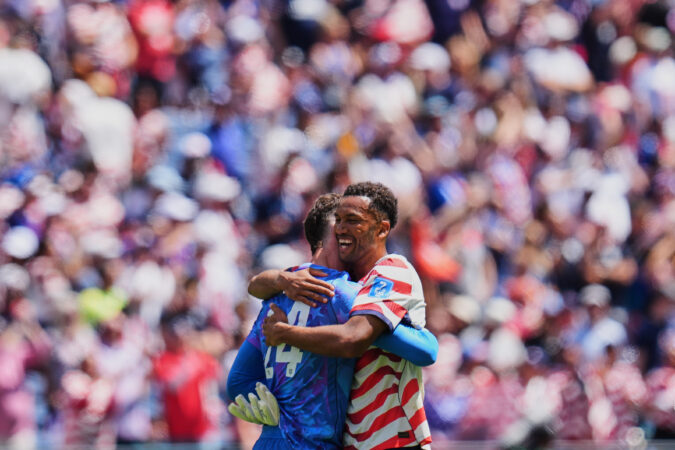
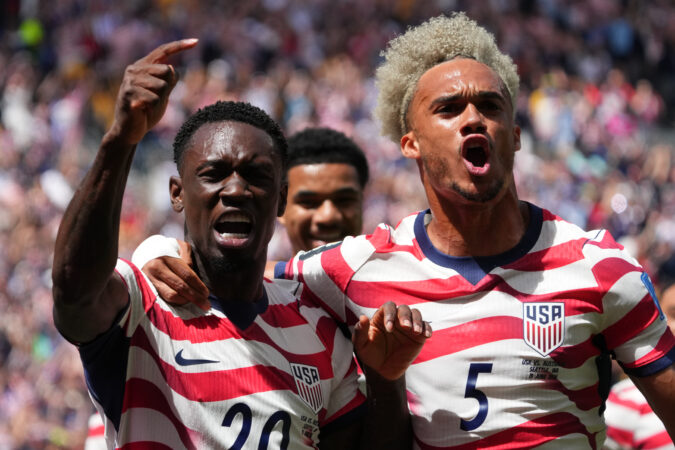
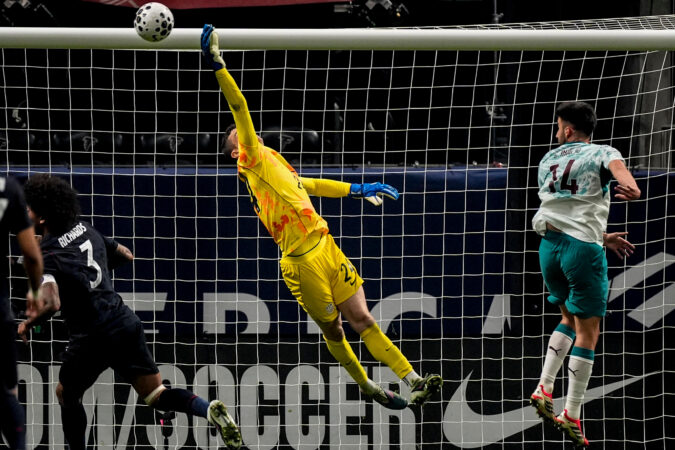
SEATTLE — At the final whistle of the U.S. men’s soccer team’s 2-0 win over Australia on Friday, Auston Trusty walked over to Matt Freese to offer a big hug.
They didn’t know that a photographer from the Associated Press was standing nearby to capture the moment. But soon enough, everyone found out.
“He came over to me and said, ‘Two Delco-heads just had a shutout in the World Cup together. That’s fate,’” the Wayne-born Freese said after his shutout in net. “And I laughed and I said, ‘Yeah, who would have thought?’”
Perhaps Jim Curtin, or other coaches across the Union ranks who worked with the duo over the years. But not too many people beyond Chester, or Wayne in those days, since that was YSC Academy’s first home.
“It’s obviously such a cool thing to have known him for so long, and I knew him outside of the soccer world too,” Freese said of Trusty. “We were just friends. So it’s incredible.”
That wasn’t the only karmic coincidence of the day. Trusty made his World Cup debut in front of not just his wife, daughter, in-laws and cousins, but also two of his first youth soccer coaches with the old Nether United club in Nether Providence, Delaware County: Tor Hotham and John Waraksa.
Like so many people around American soccer, they circled this day in this soccer-mad city and decided they had to be there. The reward was beyond measure.
“To have them fly here, not knowing if I’m going to play or not, to come here and be here for this game where I actually make my World Cup debut, it’s just all meant to be,” Trusty said.
The Media native beamed with pride again when he reflected on finally reaching this moment at age 27, 11 years after going to an under-17 World Cup with Christian Pulisic, Tyler Adams, Alejandro Zendejas, and Haji Wright.
“When you’re a little kid, dreaming about the stadiums you play in and the atmospheres and everything involved, to play in a home turf World Cup, get minutes, it’s a dream come true,” Trusty said.
Freese had his family in attendance too, plus his girlfriend’s family, and old friends from high school at Episcopal Academy. He shouted out one of the closest, Michael Hinkley, a soccer teammate back then who went on to play basketball at Dickinson.
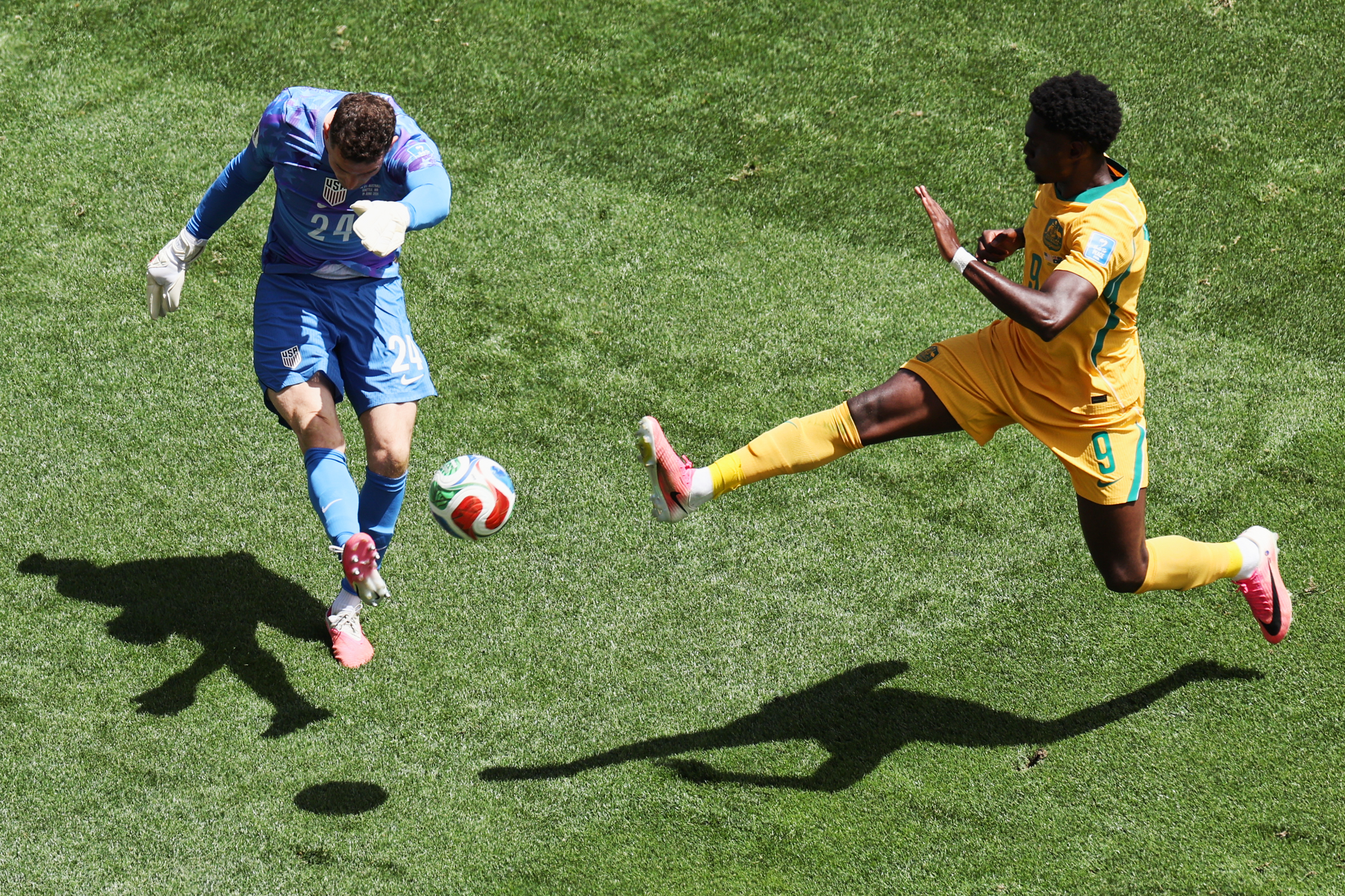
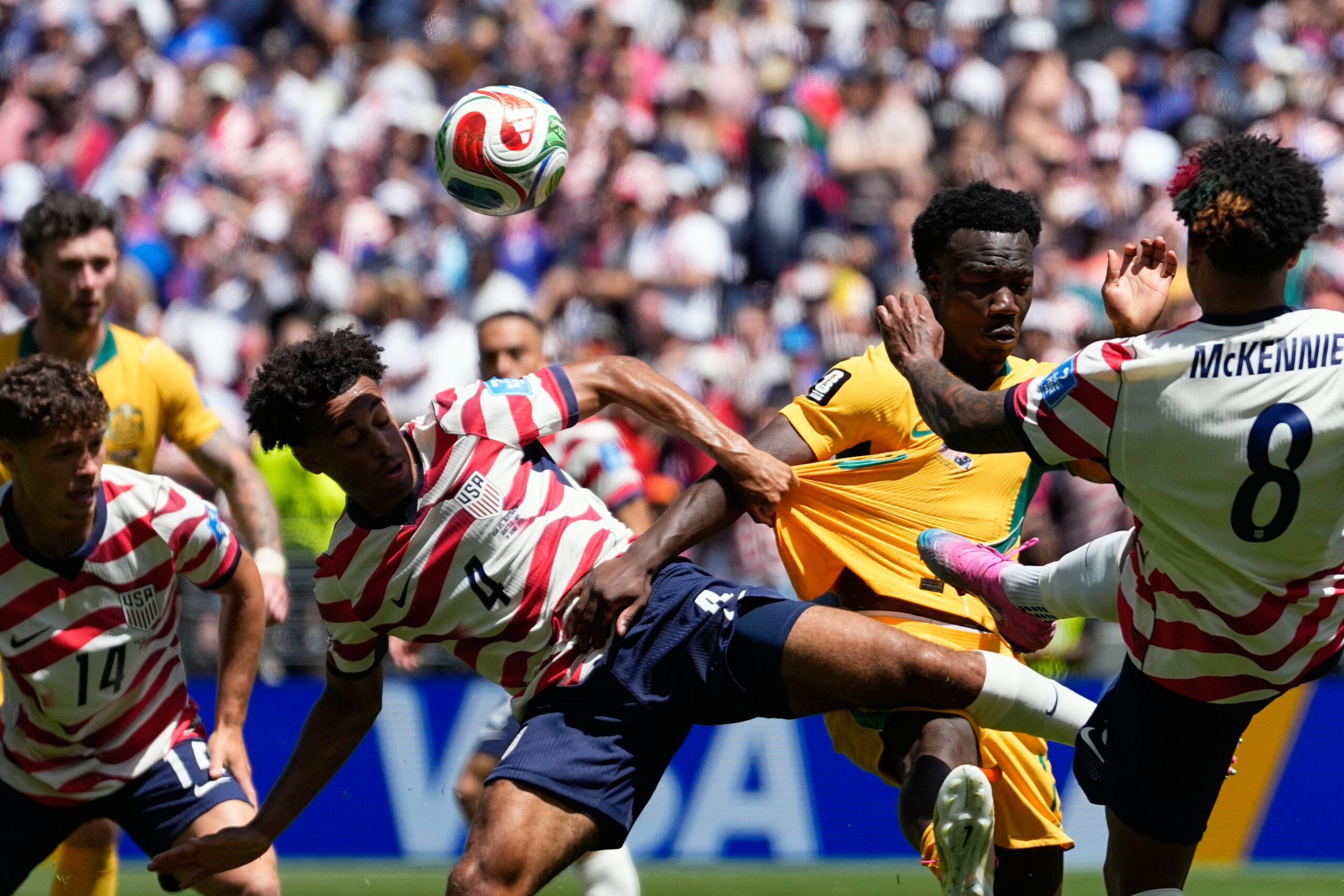
Matt Freese (left) clearing the ball in front ofAustralia’s Mo Touré during the first half.
“Obviously incredible support,” Freese said. “It means a lot to play in front of them, and play in front of everyone in this country.”
That support fueled the U.S. team all day, with the stands full and roaring well before kickoff. Trusty said the atmosphere “gives you chills,” especially when the crowd sang The Star-Spangled Banner over the orchestral rendition on the speakers.
“The atmosphere is one of those things you dream of,” Freese said. “I’ve heard ‘the 12th man’ is what they call the crowd here. It was definitely a 12th man for us — I think it was a 12th, 13th, 14th, 15th man for us today.”
But things were getting dicey when Trusty and Joe Scally entered the game in the 80th minute as defensive reinforcements. Australia was gaining momentum even though it hadn’t scored, and an already physical game was getting even more fractious.
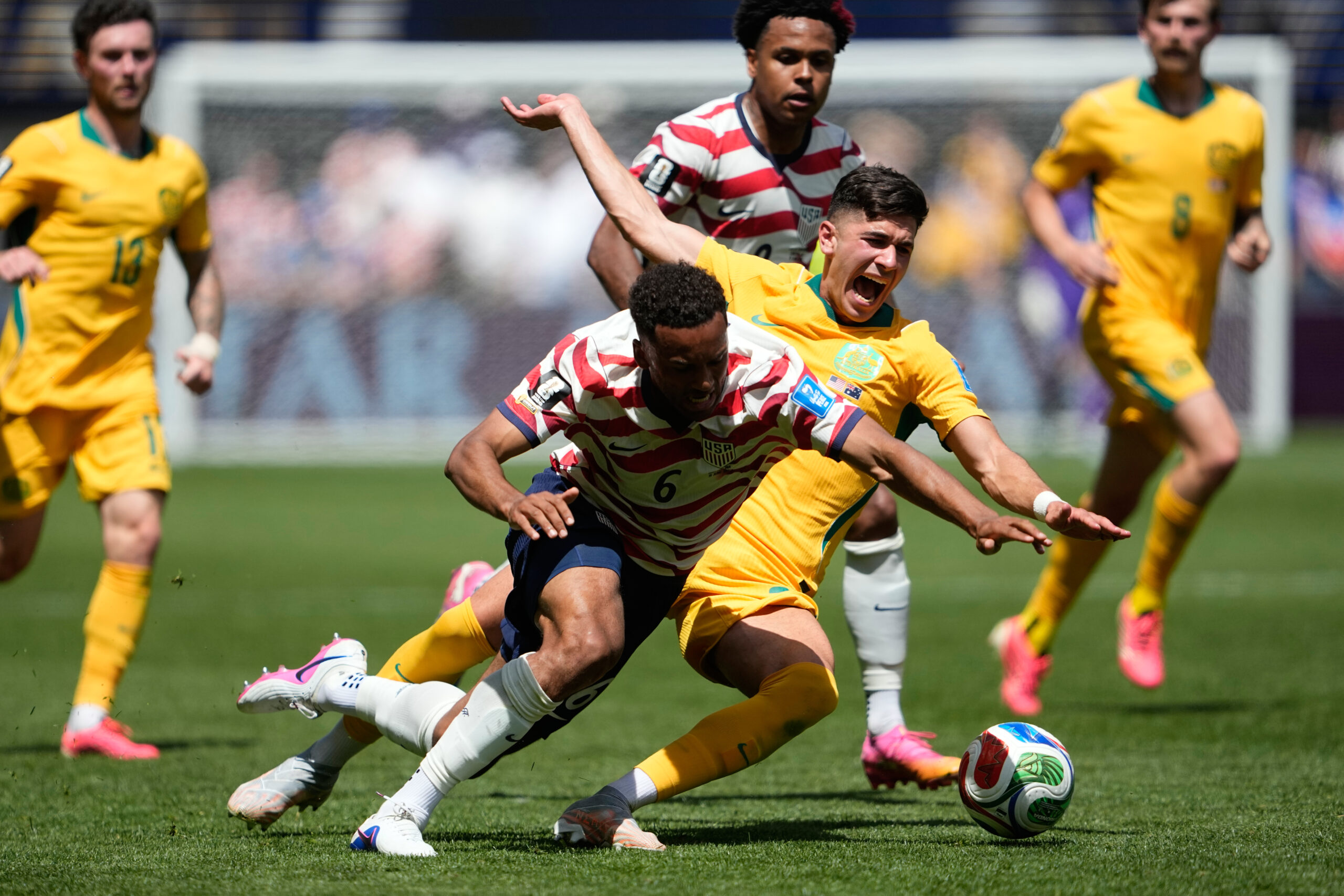
Auston Trusty (left) tussling with Australia’s Cristian Volpato.
It got especially chippy in the last few minutes, but those two and the rest of the Americans kept their heads and finished the job. They did so at both ends, ensuring Australia didn’t score while also keeping a foot on the gas pedal in attack.
“Just keep the pressure up,” Trusty said. “They weren’t really pressing too much, they kind of had like a halfway-block [formation], and obviously in a back five [defensively], they want pressure on them. So just continue the press that we had and the movement we had, and really just keep momentum.”
Mission accomplished on all counts. Not only did the U.S. men qualify for the knockout rounds before the group stage finale against Turkey, but the program has two wins in one World Cup group stage for the first time since the inaugural tournament in 1930. And thanks to Turkey’s loss at the end of the night, the U.S. clinched first place with a game to spare.
“We came into the tournament wanting to make a statement,” Freese said. “The first part of that’s done, but, you know, there’s a lot more statements we want to make.”
Luc Cherisson did not have to come as far and live as long and hard as so many who have been waiting to watch Haiti in the World Cup again. But he had his own way to make. The general manager of a rental-car business in Atlanta, an immigrant who left his homeland for America when he was just 20, Cherisson is 36 now, with a friendly face and an amiable disposition that suggest he is always happy to assist his customers with their SUV reservations. He flew into Philadelphia International Airport on Friday morning for his home country’s World Cup match against Brazil, and he would fly back to Atlanta on Saturday morning, a little hungover if a slight miracle materialized at Lincoln Financial Field.
“Even if we lose, it’s still a win for me,” he said a few hours before the match, as he lingered in a parking lot outside Xfinity Mobile Arena. “And if Haiti wins, it will be a party all night.”
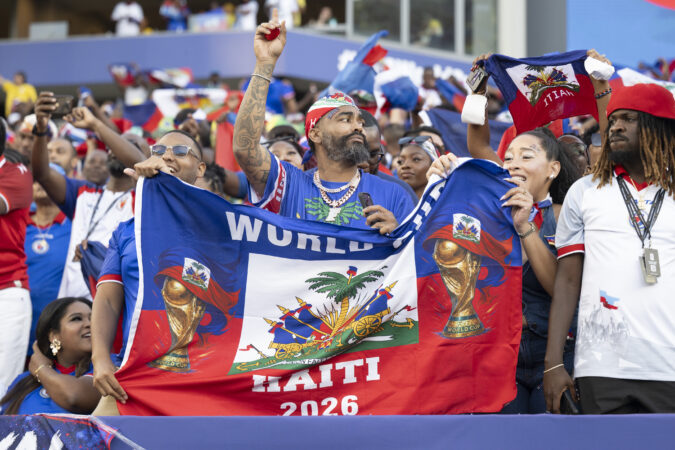
There was no miracle. There was only an easy 3-0 victory for Brazil, though Cherisson and the thousands of Haitian natives and fans who attended the match may yet have caroused deep into the Philadelphia night, just for the sake of their home country’s presence here. This is Haiti’s first appearance in the World Cup since its only other one, in 1974. For Cherisson and those like him, for a nation long riven with poverty and corruption and violence, where roving gangs control the capital city of Port-au-Prince and practically govern the country, there is honor and glory merely in earning the right to be here.
“It’s amazing,” Cherisson said. “It’s the biggest sporting event in the world. Just being part of the World Cup is fantastic.”
It might sound silly and Pollyannish to regard just competing at the highest level and grandest stage of the world’s most popular sport as worthy of such pride. How much of FIFA’s multibillion-dollar budget goes toward orange slices and participation trophies? But one has to have just an inkling of the hold that soccer has in Haitian society to appreciate why Cherisson would pay a small fortune to travel to Boston to see Haiti’s 1-0 loss to Scotland last Saturday, to make that 24-hour trip into town for Friday night’s game, and to secure tickets for Haiti’s match against Morocco in Atlanta next Wednesday. Why no one at the Linc much cares that Haiti has now been outscored 18-2 in the five World Cup matches in its history. Why this all matters so much.
The author Madison Smartt Bell, for instance, who in 2014 completed a trilogy of rich and gorgeously written historical novels about Toussaint Louverture and the Haitian Revolution, still owns a patch of land in the northern part of the country, not far from the forests where the revolution was conceived in 1791. One day, Bell saw several children scurrying around on rough, spiny ground, playing soccer not with a ball or even an empty can of condensed milk, but with a rock.
On his next visit to Haiti, he brought them a regulation soccer ball. The children were ecstatic, but after 10 minutes, they paused their game for a moment. Something sharp had punctured and deflated the ball. So they went back to kicking and passing and shooting the stone.
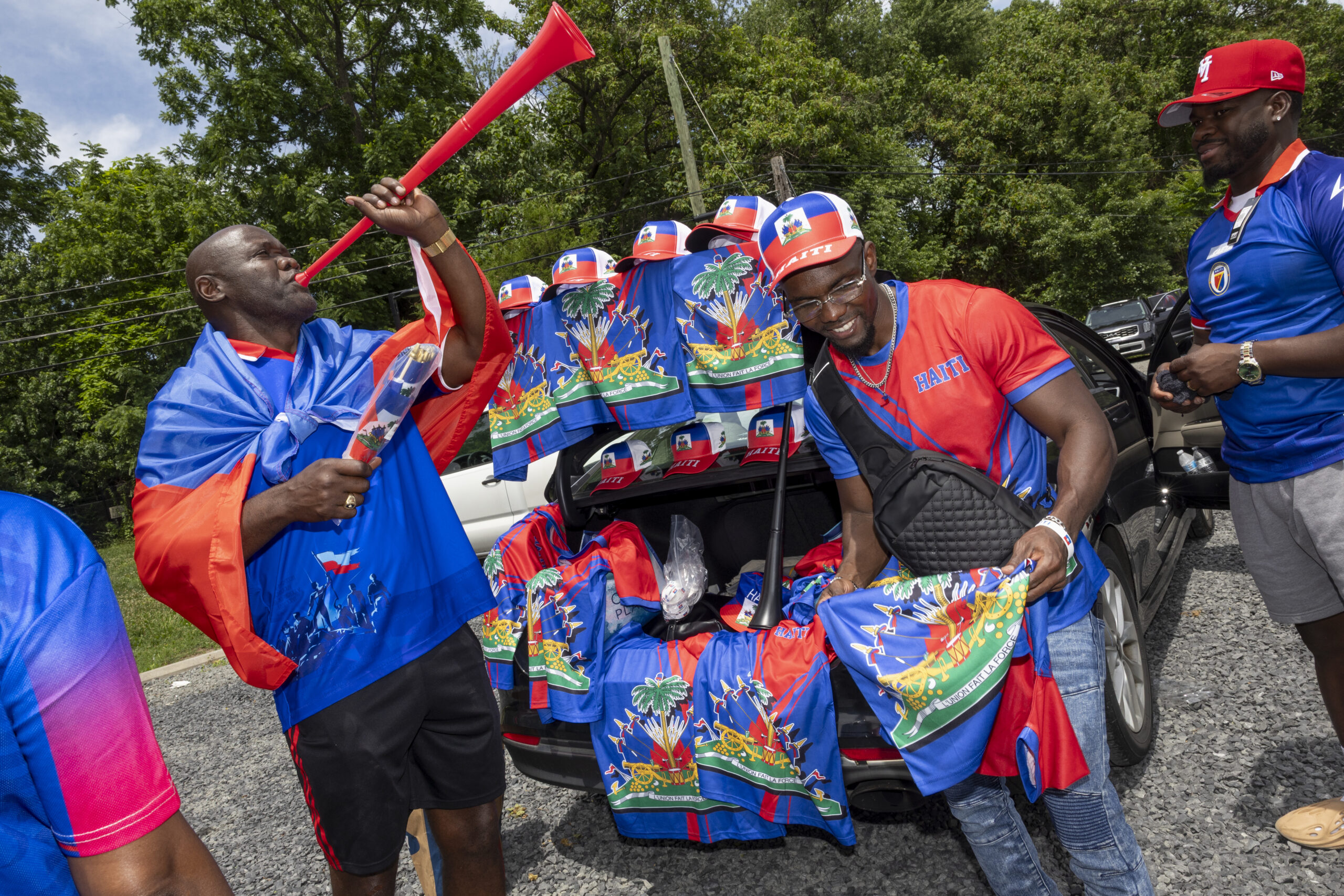
A Haiti soccer fan blows a plastic horn outside of the Discovery Center in Philadelphia earlier on Friday.
“I think that gives you some idea,” Bell said in an email, “of the importance of soccer in Haitian culture.”
If that doesn’t, this might: Before Haiti’s first match in the ‘74 World Cup, against Italy, “extraordinary legends spread all throughout the country,” said Terry Rey, a Temple University professor of Latin American studies who has written extensively about Haiti and even lived there for six years in the 1990s. Customarily, because their national team had not qualified for the World Cup yet, Haitians divided their loyalties when the event commenced every four years. The poor rooted for Brazil, the elites for Argentina.
But now Haiti, at last, was part of the spectacle. So peasants somehow found the funds to buy transistor radios and batteries so they could listen to the match. People painted and decorated tap taps, the vans and pickup trucks that are used as taxis in the country, with renditions of the team’s players. And when Haitian star Emmanuel Sanon scored the game’s first goal, “people will tell you there wasn’t a place in the entire nation where you didn’t hear someone screaming,” Rey said. Italy won the match, 3-1.
Are these unfavorable final scores irrelevant to the Haitian people? No. It’s just that the sport itself carries so much meaning there, offers so cleansing a respite from all that ails the country. The 1994 World Cup began in July with Haiti trapped amid a period of tumult and persecution, its people under the thumb of a junta regime run by Raoul Cédras, the former head of Haiti’s military, who had taken power in a coup three years earlier. From January to June that year, there was no electricity available anywhere. Then, just in time for the World Cup, the lights went on. There was electricity, and there was cable TV. Cédras had bought the rights to broadcast the tournament, and the opportunity to watch it would quell any widespread desire for a revolt against the regime.
“Haitians love soccer,” Rey said. “It’s just powerful.”
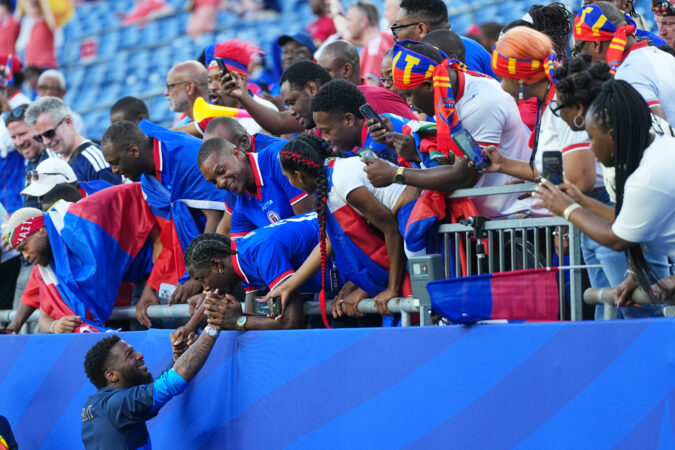
They loved it Friday night, despite the lopsided outcome, despite another loss for a nation waiting for a win that would mean everything. Late into the match, late into the night, having traveled so far and still waiting so long, they were chanting and singing in the parking lots and stomping their feet in the stands and standing to cheer, happy to have reason to be proud. Funny. In a city where there is a long and treasured tradition of telling outsiders and interlopers to go kick rocks, this celebration was still joyous enough.
The United States’ dream start to the FIFA World Cup continued with a 2-0 win over Australia in Seattle that secured the Americans’ place in the knockout round.
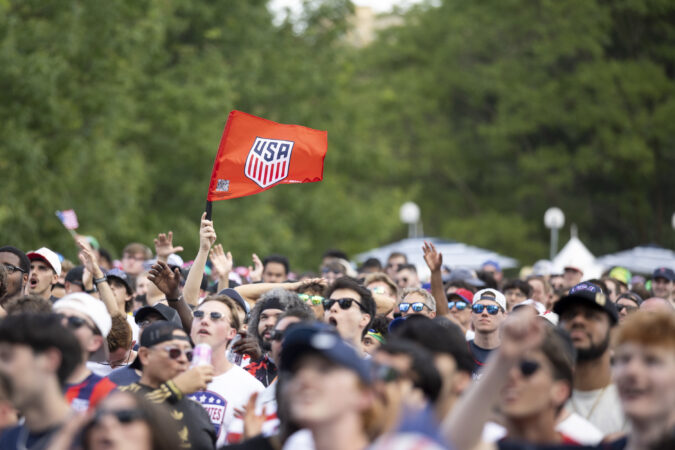
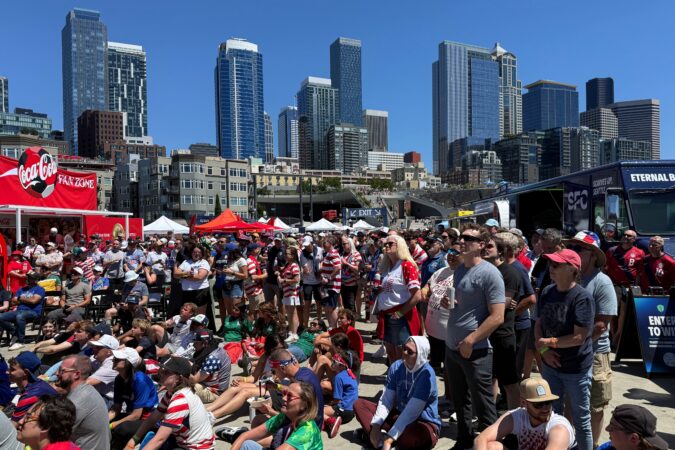
Fans in Philadelphia packed the FIFA Fan Festival in Lemon Hill on Friday to take in the match.
The crowd on hand for U.S.-Australia, the first World Cup match of the day on Friday, was in favor of the Stars and Stripes, but Haitian and Brazilian fans took in the spectacle before their squads’ scheduled meeting at Philadelphia Stadium (8:30 p.m., Fox29).
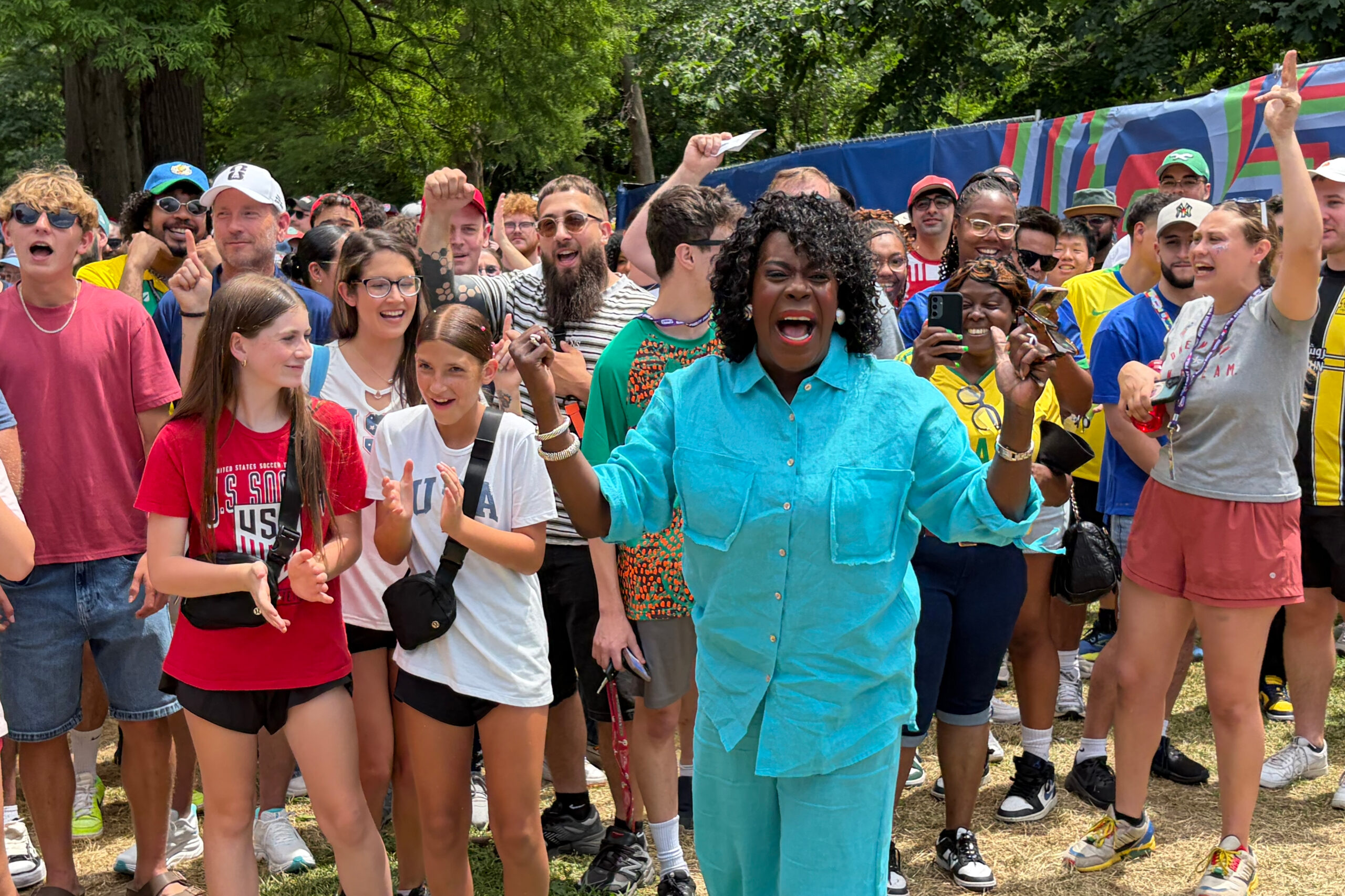
Mayor Cherelle L. Parker helped open the gates of the fan festival before the USMNT’s clash with Australia.
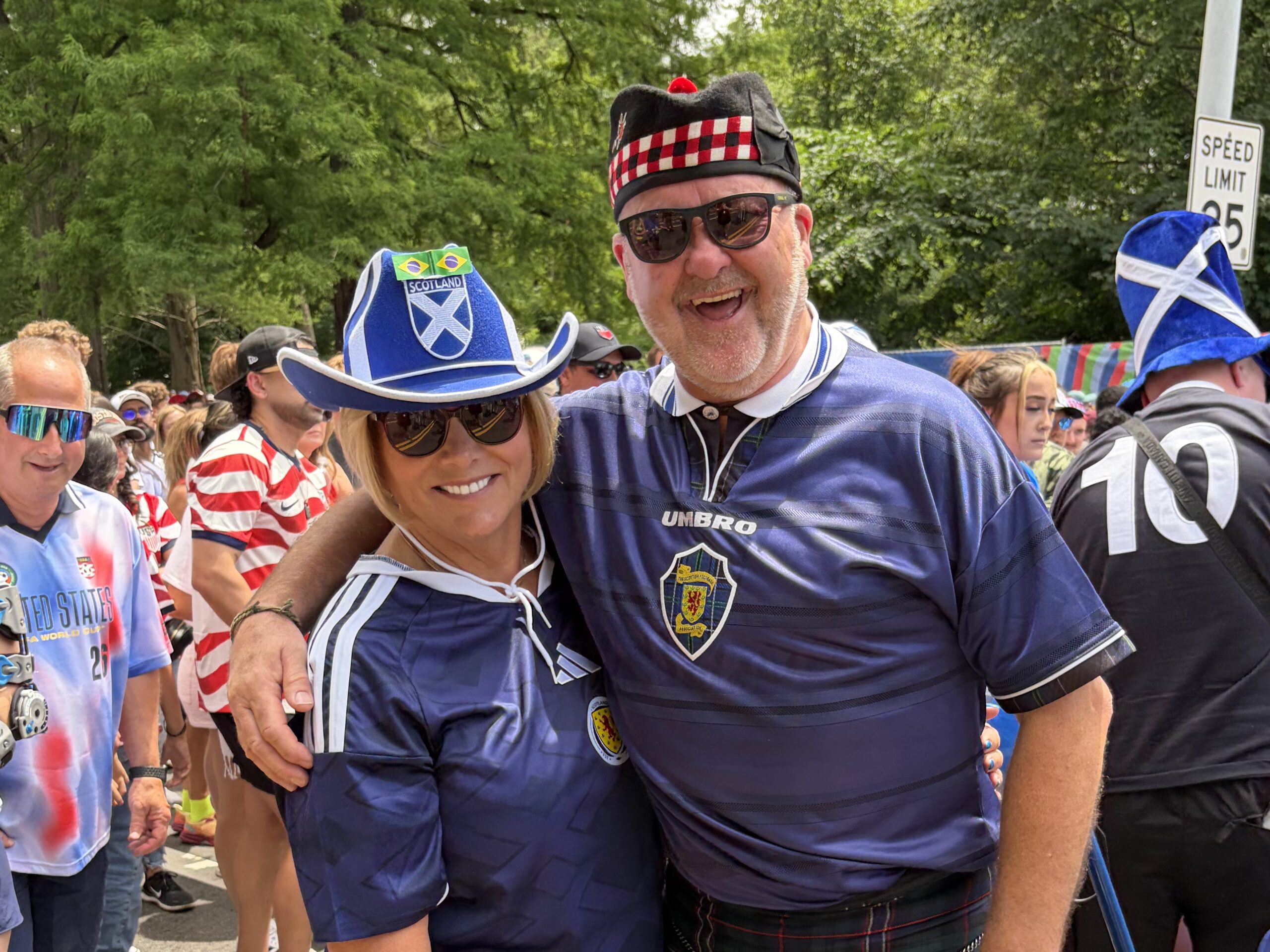
Parker walked into the crowd waiting at the festival’s main gate and posed for photos with fans waiting in line, including one with a group of traveling Scottish supporters.
Parker said she was appreciative that fans are showing up to the city and the festival “authentically, as themselves.”
“We are a global culture, and we are one people,” Parker said. “What makes America and the world so amazing, is that all of us, no matter the fabric, no matter the patchwork in our quilt, we make up a global humanity, and an American community that’s representative of everyone. I’m excited about it all.”
Philadelphia Mayor Cherelle L. Parker at the opening of the FIFA Fan Festival.
After greeting fans waiting to get into the festival on Sedgley Drive, Parker greeted a few vendors inside the festival. She stopped at the Bank of America tent to make a bracelet — she chose a black band with all the Philly-specific charms and a World Cup trophy charm — then stopped into the FIFA store on the festival grounds.
With the help of a few store associates, Parker picked out some kits and World Cup merchandise, including both Brazil jerseys, a sea foam France away jersey, a yellow Curaçao jersey, two World Cup logo shirts, and a stripes U.S. jersey.
Parker said she’s enjoyed seeing soccer fans out and about in the city.
“We were on the parkway, and Brazil was turning it out and up,” Parker said. “Everywhere we’ve been, they’re like, ‘Philadelphia is beautiful, the experience is great.’ You can be a visitor one time, but they’ll feel Philadelphia.
“You have to feel the energy here. We are not like any other city in the nation. There is something special about Philadelphia, and being able to share that Philly-ness with the world is something really exciting.”
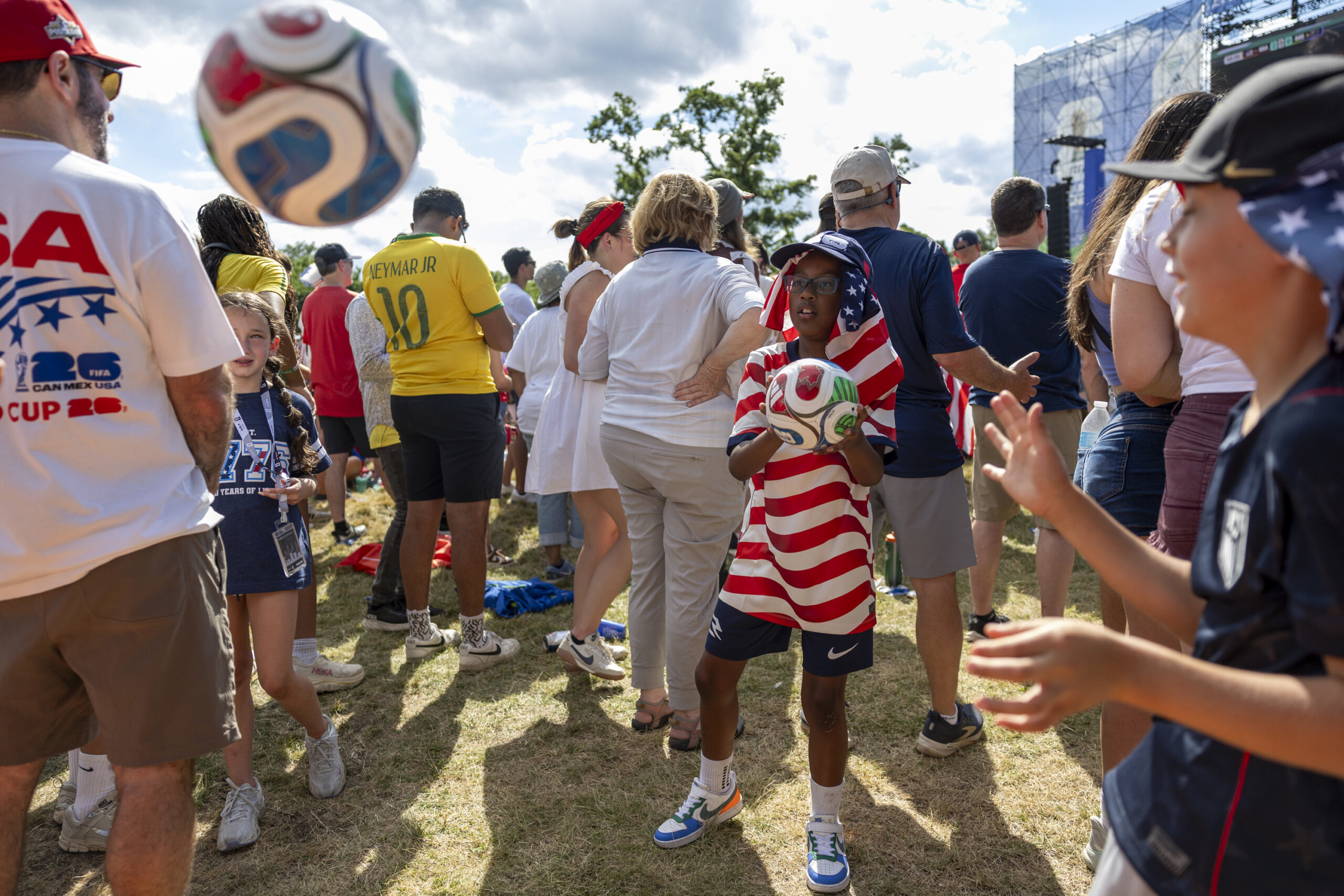
Moses Bango, 8, (center), playing with his friends Rudy Townsend, 8, (right), and Quinn Medaglia, 9, (left), at the FIFA Fan Festival at Lemon Hill Park on Friday.
Early arrivals
A line to enter the festival had already formed an hour before it opened to spectators at 2 p.m.
Friday was the first time a U.S. match coincided with a match being played in Philadelphia, making the fan festival a watch party for American fans and a prematch hangout for Brazilian and Haitian fans.
The festival is free to the public with registration, but only 15,000 people can be on the festival grounds at once.
The festival did not reach full capacity during the U.S. match, but it got close. Festival organizers said attendance peaked at 14,000.
According to the festival, more than 100,000 people entered its grounds in its first three days of operation.
Gus Sanchez, who stood near the front of the line on Friday afternoon, said he and his family arrived around noon after biking over from Northeast Philly.
Sanchez said he wanted to watch the U.S. men’s team take on Australia with a crowd, leading him to come over to the festival.
“It’s something I can’t explain,” Sanchez, 53, said. “Seeing people from different countries getting together, having fun, enjoying the game.”
Most of the fans waiting to enter the festival were wearing U.S. garb, but fans of Haiti, Brazil, and even Scotland, which kicked off with Morocco at 6 p.m., were represented.
Alex Nelson said he traveled from Prestwick, Scotland, about 30 miles south of Glasgow, to the U.S. to experience the environment of the World Cup.
He arrived in Philadelphia from Boston, where the Scots played Haiti last Saturday, to take in Scotland-Morocco at the fan festival on Friday.
Nelson, sporting a tartan kilt, said he’s loved his time in Philly so far.
“Very clean city,” Nelson said. “Everybody has been so helpful. Everybody’s mixed in — the Brazilians, the Moroccans, USA, all mixed. That’s what it’s all about.”
Alex Nelson poses with his wife before entering the FIFA Fan Festival on Friday afternoon.
Match moments
The lively crowd had plenty to celebrate, as the U.S. went up, 1-0, after Cameron Burgess knocked in an Australian own goal in the 11th minute.
The crowd erupted as the States took the lead, with chants of “U-S-A” following a frenetic celebration.
The crowd at the Fan Festival goes wild as the U.S. goes up, 1-0, on an Australian own goal.
American fans celebrated again as Alex Freeman doubled the States’ lead with a goal in the 43rd minute.
Their celebration was placed on a temporary hold, as the goal was called offside on the field and disallowed, but after a Video Assistant Referee check confirmed Freeman’s goal counted, the crowd got another opportunity to cheer.
Double celebration for Alex Freeman’s goal to put the U.S. up 2-0 before the half — once before the VAR, and once after
Fans looked on nervously as Australia angled to get back into the match in its final 20 minutes, and they shouted when the game got chippy in its closing moments.
The U.S. is through to the knockouts, and the crowd at the Fan Festival is loving it:
SEATTLE — It turned out that the U.S. men’s soccer team didn’t need Christian Pulisic to beat Australia, and make history in doing so.
With the star playmaker unable to shake off a calf injury, the Americans used two first-half tallies and a raucous atmosphere in Seattle to earn a 2-0 win, before a packed-to-the-roof crowd of 66,925.
The win clinched qualification for the knockout rounds, and marked the first time since 1930 that the U.S. men’s program has won two games in a World Cup group stage.
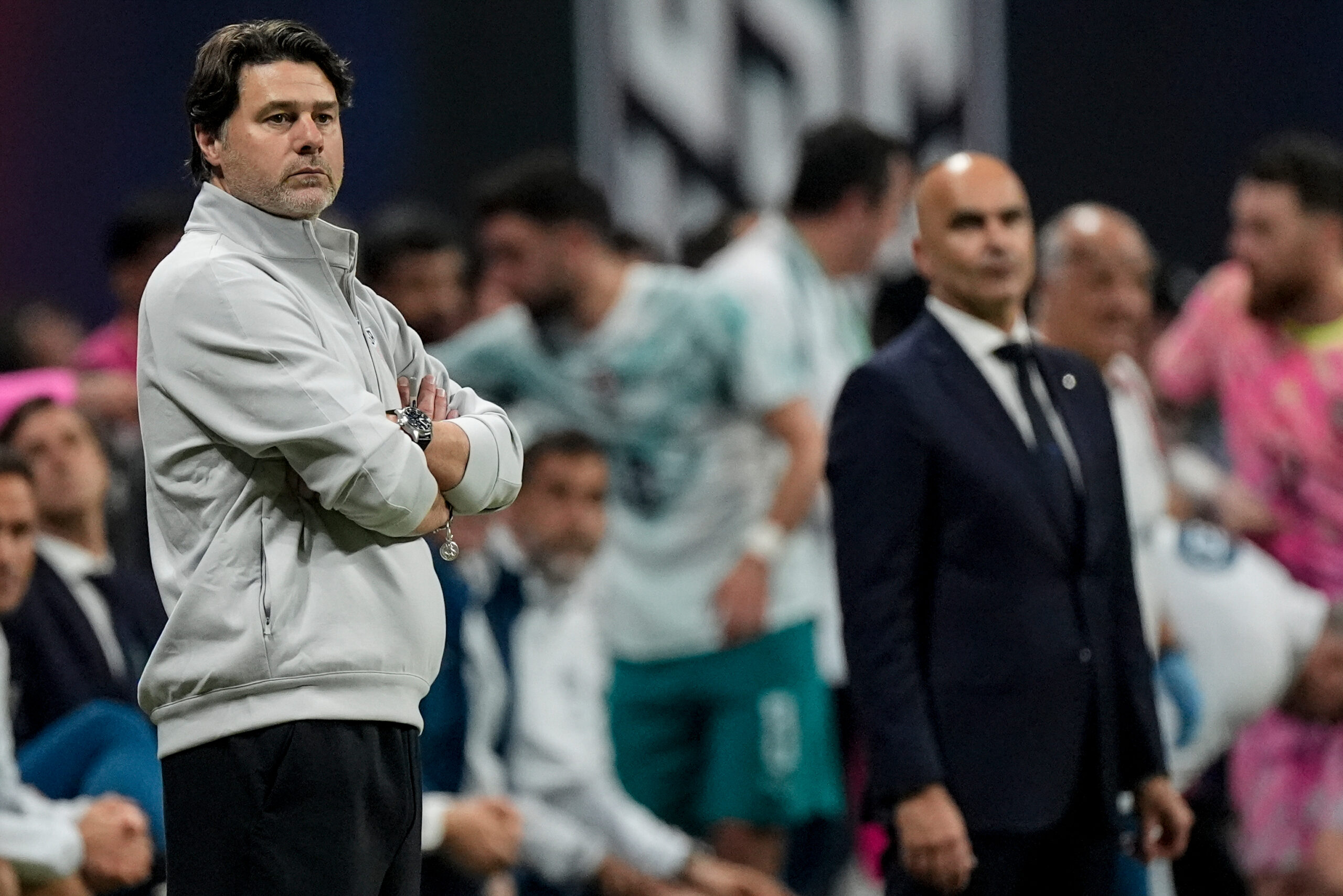
U.S. manager Mauricio Pochettino started Ricardo Pepi in the open lineup spot, leading to a tactical change. The Americans rolled out a 3-5-2 formation, with Pepi and Folarin Balogun paired up top.
It didn’t take long for that to pay off. In the 11th minute, Antonee Robinson sprung Balogun down the left flank. He ran almost to the end line, then laid a pass into an onrushing crowd that included Pepi, Sergiño Dest, and three Australian defenders. The ball hit one of them, Cameron Burgess, and pinged into the net.
The statisticians at TruMedia noted this marked the first time in World Cup history that one team benefited from own goals in consecutive games, following the opening tally of the U.S.’ win over Paraguay.
During the rest of the first half, the action was as physical as expected. Each team committed eight fouls in the period, and German referee Felix Zwayer left more potential ones uncalled. There were two yellow cards, for Jordan Bos’ tackle on Tyler Adams in the 16th minute, and Alessandro Circati’s hard hit on Malik Tillman in the 32nd.
The mood came to a boil in the 38th when Alex Freeman collided head-to-head with Paul Okon-Engstler, and both players stayed down for a while. Fortunately, neither had to leave the game.
The Americans got their second in the 43rd, and in controversial fashion. After Dest and Tillman combined to draw a foul on the right wing, Robinson served the free kick wide to Dest at the top of the 18-yard box. He ripped a shot that hit the crowd, flew up in the air, and Freeman jumped to head it past Matt Beach.
The controversy was that the flag was up for offside, and it sure looked at first like there was good reason. Balogun and Weston McKennie were indeed off when Dest shot. But Freeman wasn’t, and since Balogun didn’t touch the ball, the video review officials called it a good goal.
Australia manager Tony Popovic admitted how deep a hole his team was in by making three substitutions at halftime, including taking out Burgess. Another, replacing striker Mohamed Touré with Nestory Irankunda, raised the question of why Irankunda surprisingly hadn’t started.
Popovic had another complaint in the 63rd when Adams, who was risking a suspension for yellow card accumulation, knocked Connor Metcalfe over in the box off the ball and it went uncalled.
This was the start of the Socceroos gaining momentum, and Wayne’s Matt Freese was forced into his first proper save of the day in the 65th. A few seconds later, Chris Richards shoved Irankunda outside the box as Freese was charging off his line toward them, Zwayer didn’t blow his whistle, and Popovic was angry again.
Pochettino finally made his first substitution in the 74th, sending in Sebastian Berhalter for Pepi and taking the U.S. back to a one-striker setup.
Tyler Adams (left) and Weston McKennie (right) battling with Australia’s Nestory Irankunda during the second half.
The crowd might have preferred hometown hero Cristian Roldan, and a lot of people wanted to see Adams taken off before picking up that feared second booking.
Instead, there were two other defensive substitutions in the 80th: Joe Scally for Dest and Media’s Auston Trusty for Robinson.
Tempers flared again in the 88th when Australia’s 6-foot-6 centerback Harry Souttar and Balogun got each other in mutual headlocks. There was a brief coming together of the teams, and both players were booked. Australia’s Jacob Italiano was also booked amid the scuffling.
As six minutes of stoppage time began, the crowd gave another hearty “USA!” chant. Then they had a brief laugh in the 93rd when Zwayer cramped up on the field, and needed some medical assistance. Players from both teams came over to lend a hand.
Pochettino then made two last substitutions, withdrawing Balogun for Haji Wright and McKennie for Gio Reyna.
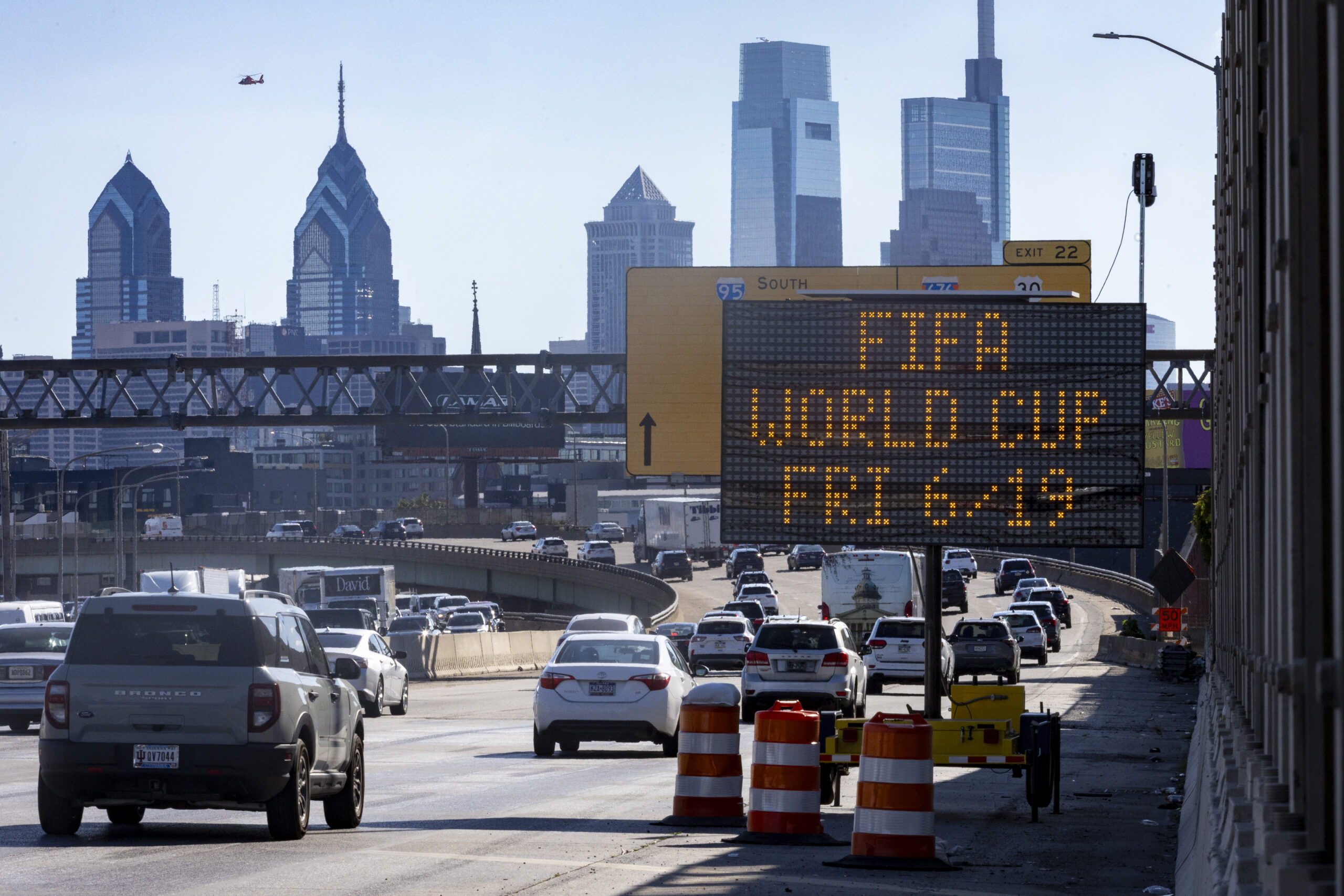
Haiti’s June 19 World Cup match against soccer’s most decorated nation, Brazil, held at Philadelphia’s Lincoln Financial Field, encapsulates the contradictions at the heart of FIFA’s flagship event this summer.
A traffic sign on I-95 informs drivers of expected traffic delays to occur because of the World Cup match — Brazil is set to face Haiti — on Friday at Lincoln Financial Field in Philadelphia.
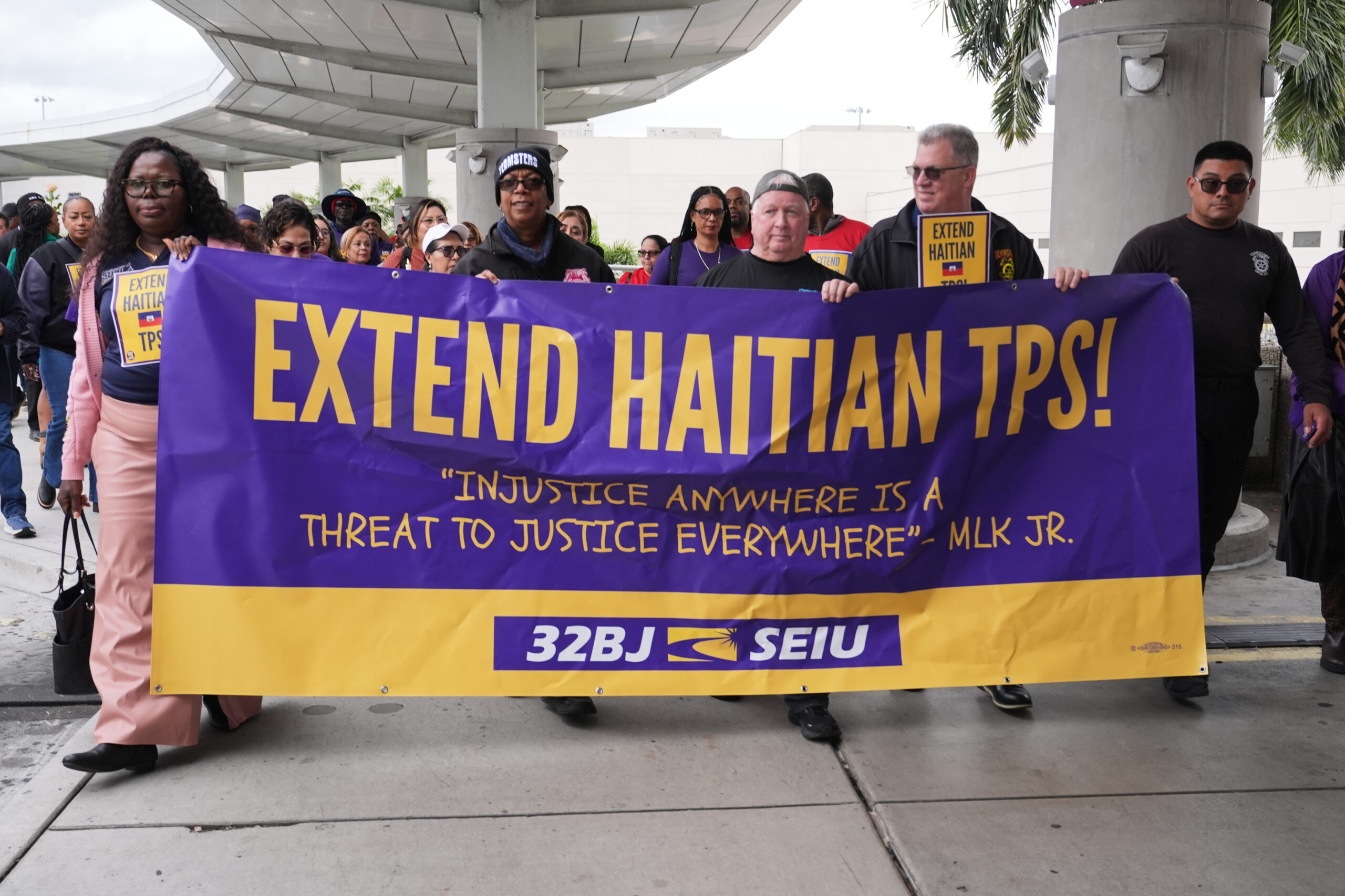
The World Cup — and Haiti’s first appearance in it since 1974 — is a welcome distraction from the humanitarian and security crisis at home. For many Haitians, however, the Trump administration’s cruel immigration policies, including its effort to terminate this Caribbean country’s temporary protected status (TPS) — a form of protection against deportation to dangerous situations — casts a shadow over the tournament.
Since a catastrophic 2010 earthquake, Haitians have dealt with one disaster after another, including a cholera epidemic, devastating hurricanes, increasing violence, and chronic political instability.
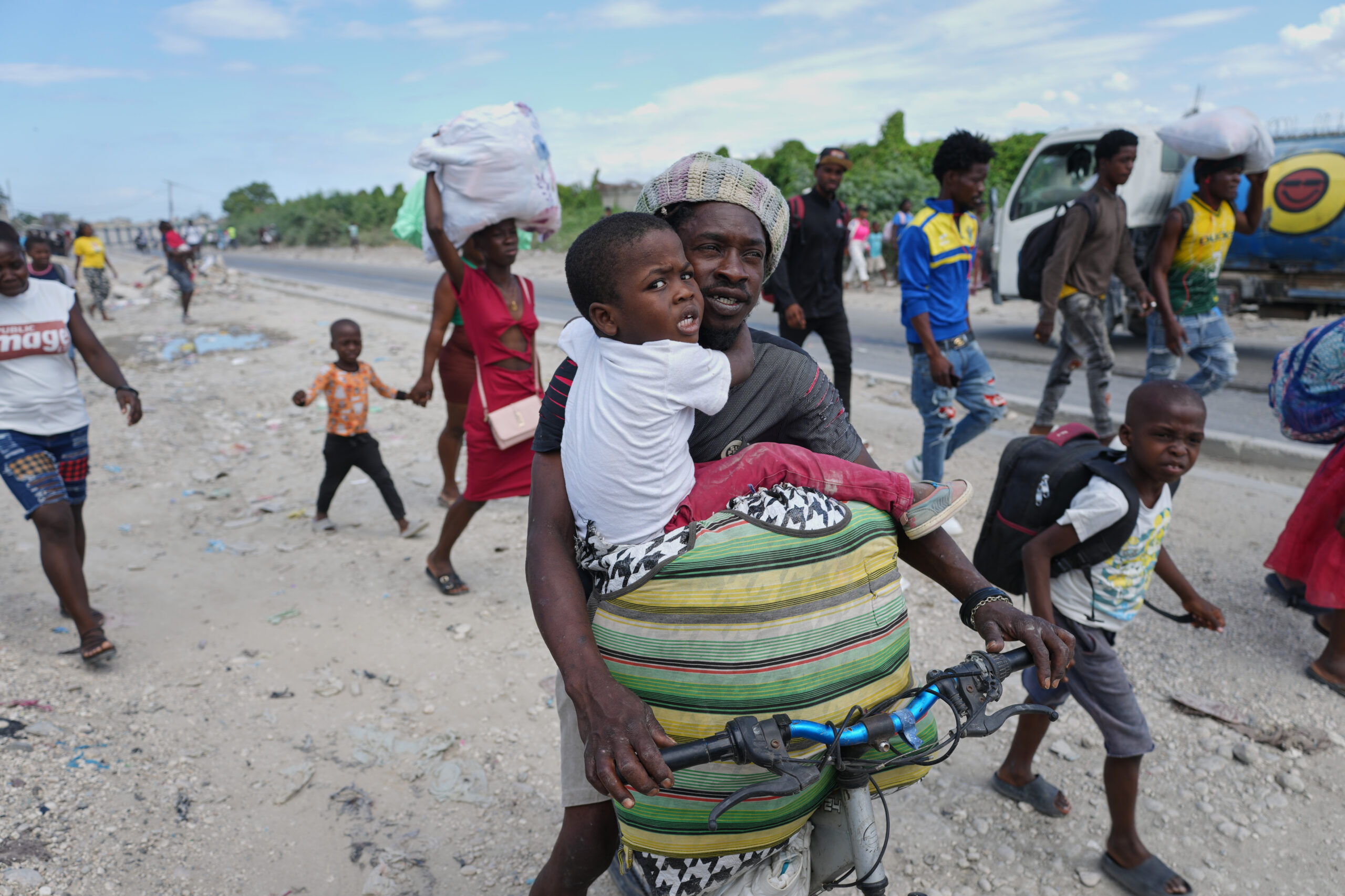
The current crisis, during which criminal groups have consolidated control over most of the capital, Port-au-Prince, and expanded to at least four more of Haiti’s 10 regions, has killed thousands, displaced more than 1.5 million people, and led to widespread sexual violence.
Even before the World Cup began, the odds were stacked against Haiti’s “Grenadiers” — a nickname that pays homage to the revolutionary soldiers who fought for Haiti’s independence in 1804. The squad managed to top their regional qualifying group for the tournament despite not being able to play a single game on home soil; their national stadium is in an area controlled by criminal groups. It was a remarkable feat — one that ended Haiti’s 52-year wait to participate in another World Cup, and became a source of immense pride for Haitian soccer fans around the world.
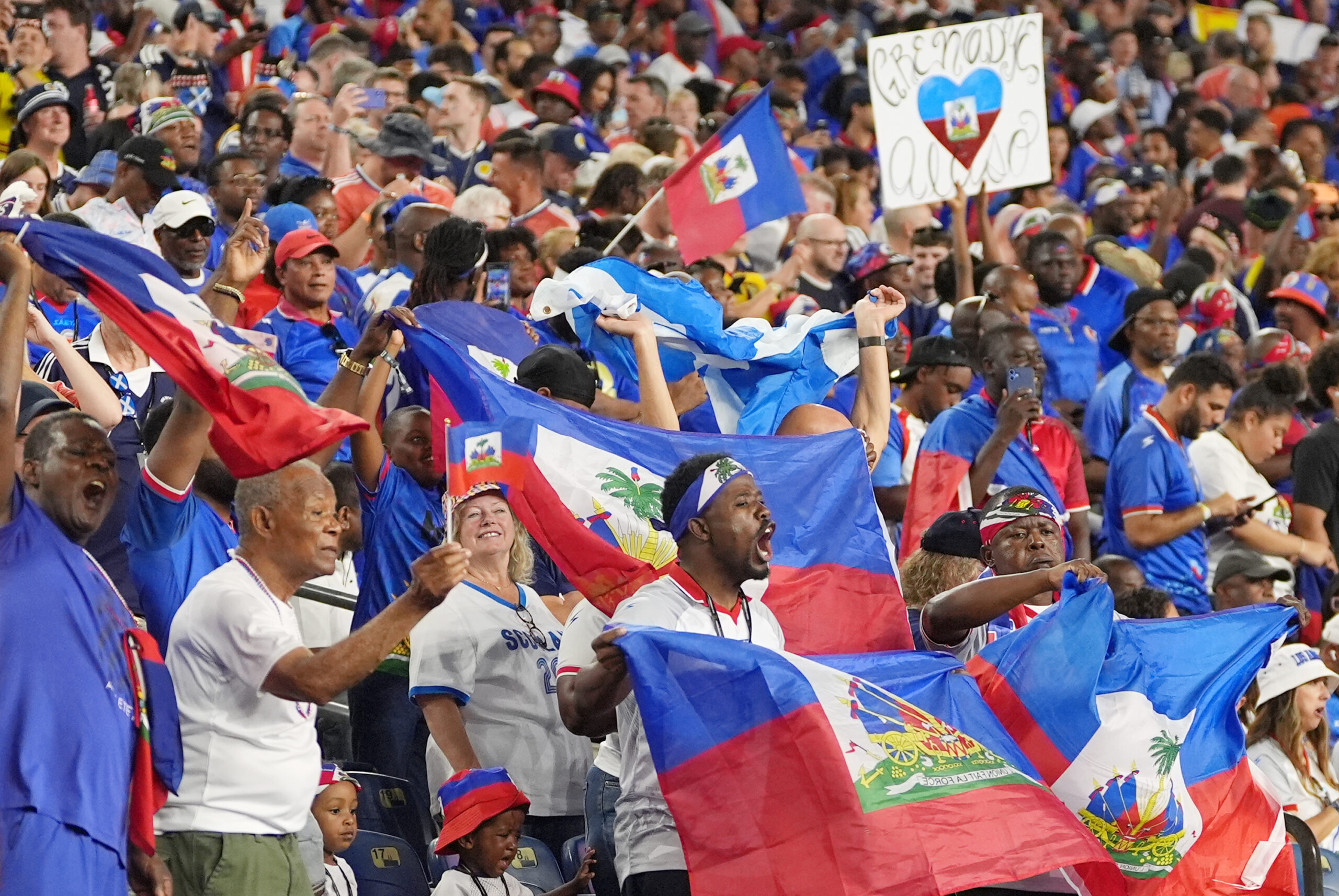
Haiti fans cheer during the World Cup Group C soccer match between Haiti and Scotland in Foxborough, Mass., near Boston, on June 13.
For the coming weeks, Haitians will be celebrated on the world stage and their players welcomed with open arms, but their fans may find their paths to the stadiums — or to the United States itself — inaccessible.
In Philadelphia, many by now will have already seen proud Haitian fans sporting their team’s blue and red jerseys. But while the World Cup inspires hope and pride for Haitians living in the U.S., the Trump administration’s immigration policies, including the possibility of U.S. Immigration and Customs Enforcement presence at or near World Cup venues, may elicit anxiety, fear, and exclusion.
Haiti is one of 39 countries affected by U.S. government travel restrictions that prevent fans from supporting their countries in person this summer. Although the ban includes an exception for athletes, Woodensky Pierre, the only Haitian player based in the country, missed a vital pre-tournament match after his U.S. visa wasn’t approved in time. He landed at Miami airport shortly after the game began and was later embraced by his teammates on the pitch at the final whistle.
It is the attempts to terminate Haitians’ temporary protected status, however, that pose the most serious human rights concerns for Haitians who are already in Philadelphia and other cities.
Under U.S. law, the Department of Homeland Security can designate a country for this status when conflict, environmental disasters, or other circumstances temporarily prevent its nationals from returning safely, or when the country cannot adequately handle their return.
TPS protects beneficiaries from removal, allows them to apply for work and travel authorization, and prevents Homeland Security officials from detaining them solely based on their immigration status.
Haiti first received this designation after the 2010 earthquake. Since then, and because conditions in Haiti itself have not improved, hundreds of thousands of Haitians in the U.S. have built lives, raised families, and become essential contributors to local communities, including in Philadelphia. Approximately 330,000 Haitians now have TPS in the United States.
Haitian TPS holders in the U.S. need stability, protection, and a durable path forward, writes Robbie Newton.
The Trump administration is now trying to strip Haitians of this protection.
Despite clear evidence that the human rights crisis in Haiti is worsening, the Department of Homeland Security insists that “country conditions have improved to the point where Haitians can return home safely.” A Supreme Court decision on the legality of ending this protection is expected this summer.
Residents flee their homes to escape clashes between armed gangs in Port-au-Prince, Haiti, in May.
Terminating the protection would have devastating consequences, exposing hundreds of thousands of Haitians to detention and possible return to the “cataclysmic” situation unfolding at home, where they would face serious risks of kidnapping, extortion, and other abuses by criminal groups.
For the 15,000 Haitians protected by TPS in the state of Pennsylvania, making it to the World Cup and cheering on their team represents a powerful symbol of hope and unity at a precarious time for the community.
Other soccer fans who root for the underdog will very likely cheer on Haiti as it makes its way through all of its Group C matches (and, hopefully, into the knockout stage). But support for Haiti should extend beyond the World Cup. The U.S. government should renew temporary protected status for Haitians.
Haiti’s Grenadiers deserve their place at the World Cup. For Haitian TPS holders in the U.S., the stakes go far beyond the tournament.
Robbie Newton is a senior coordinator and in the sport and human rights team at HumanRights Watch.
SEATTLE — There was no surprise news about Christian Pulisic from U.S. men’s soccer team manager Mauricio Pochettino in his news conference before Friday’s game against Australia (3 p.m., Fox29, Telemundo 62). Pochettino did not rule the star playmaker in or out, and that was not surprising.
“As you know, he was training in an individual way the whole week,” Pochettino said. “But like always, I think tonight, the day before the game, we have a meeting with our medical area, and we will assess the whole group, the players, and tomorrow we will communicate all the things that we can agree tonight.”
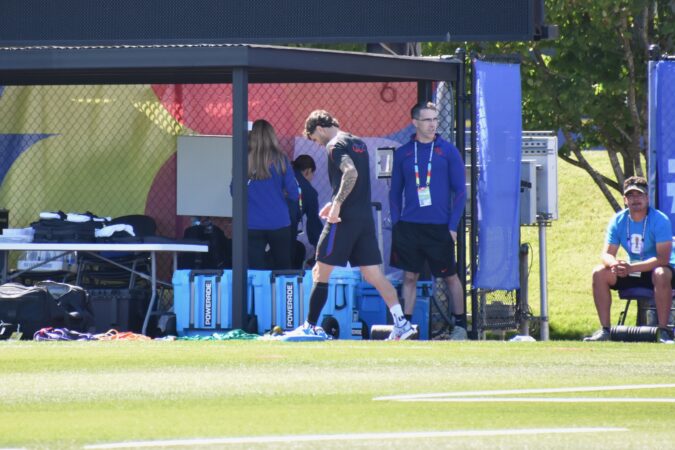
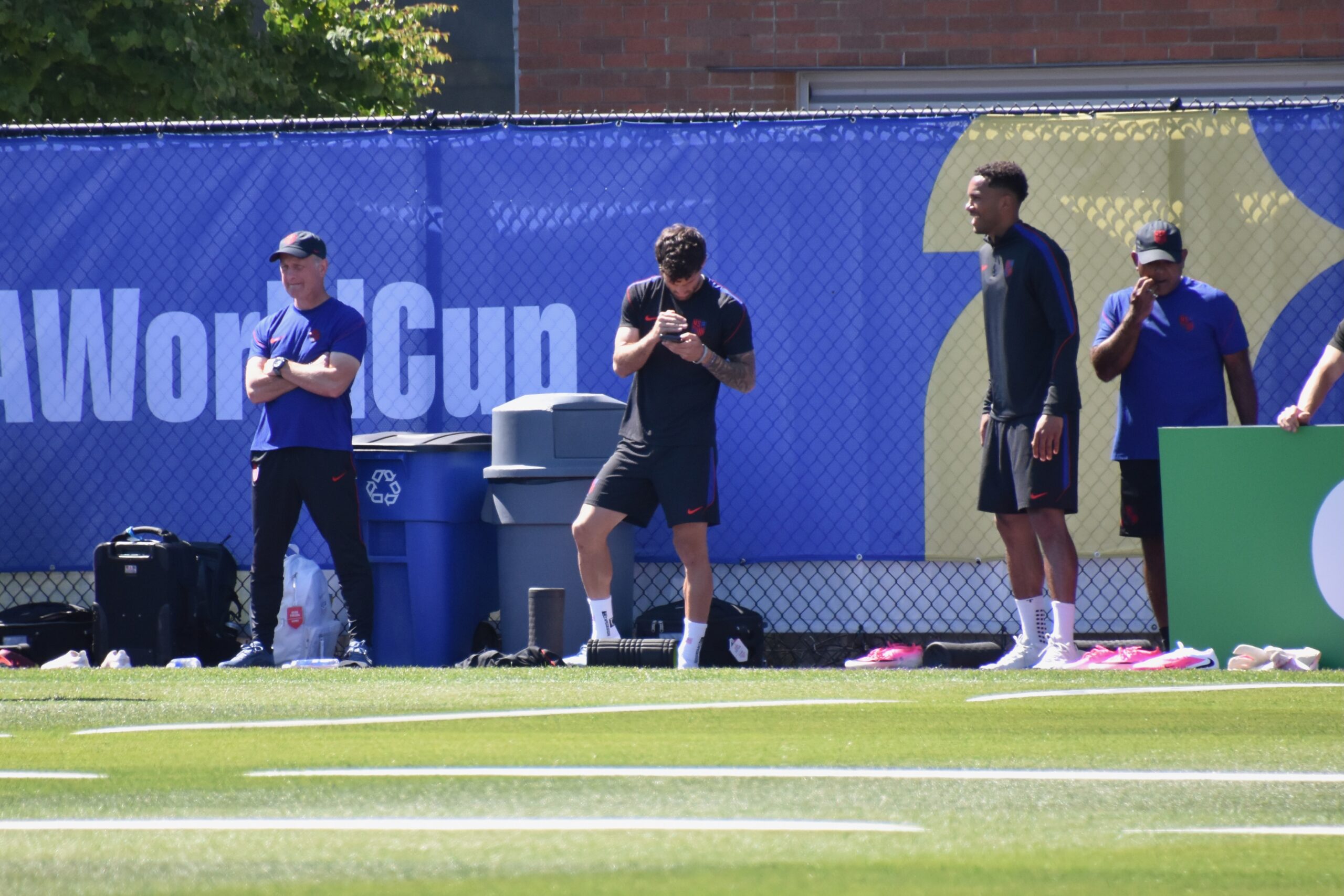
Pulisic was seen briefly at the start of Thursday’s practice, then headed off to work on his own. When he arrived, he wasn’t wearing the sleeve over his injured left calf that he sported on Wednesday. But after a few minutes, he sat down on a bench by the sideline and put it on.
“He is evolving, he is much better from [last] Friday,” Pochettino said. “I think at the moment we’ll see. … He’s doing a massive effort trying to be ready.”
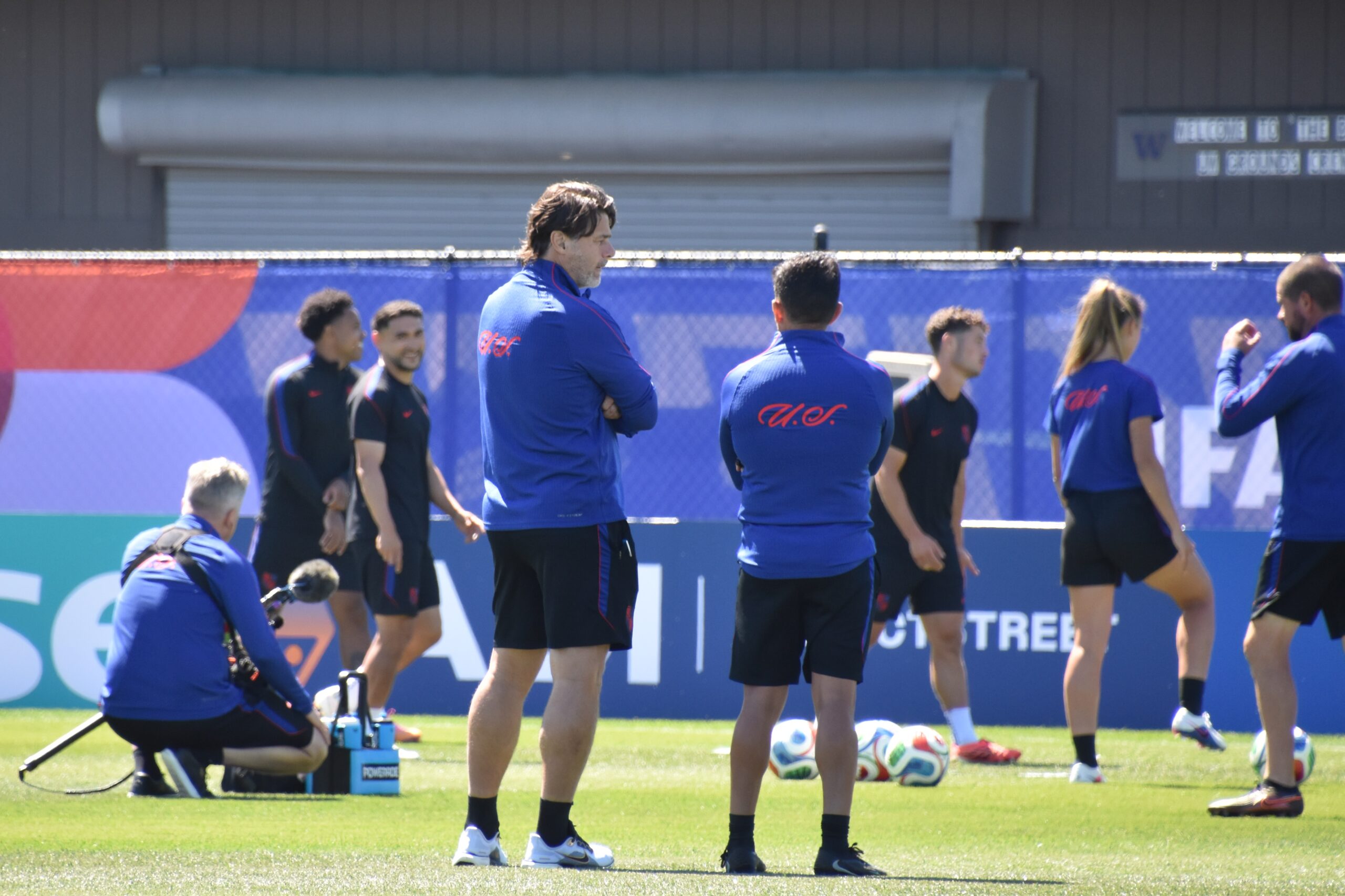
Mauricio Pochettino (left) and his top assistant Jesús Pérez at Thursday’s practice.
The manager also praised Pulisic for being “strong and with a great mentality” as the Hershey native works to be ready for kickoff.
Asked who might play if Pulisic can’t go, Pochettino didn’t answer. This was no surprise either.
“I will tell tomorrow if that is the situation,” he said. “At the moment, we are evaluating all the possibilities just in case, and then we will decide when we have the confirmation in one or another direction tonight.”
What is no secret is that when these teams met in a friendly in suburban Denver in October, it was far from friendly on the field. Australia played a physical game, with a focus on Pulisic that forced him off the field injured in the 31st minute.
When Christian Pulisic (center) first appeared Thursday, he wasn’t wearing the sleeve over his injured calf that he wore Wednesday. He put it on later.
All of the U.S. players are ready for round two, and so is the manager.
“I think we need to play on the edge of the line, not crossing the lines of the rules,” Pochettino said. “I think we are going to try, all, to be very close to this thin line. That allows us to take some advantage [with] the rules.”
Later in the day, Australia manager Tony Popovic was asked if he expects this game to be similar to the last. He didn’t answer directly.
“Since then we feel we’ve improved,” he said. “We’re a better team now than what we were in October and I’m sure the U.S. is as well.”
Popovic also was asked if he expects Pulisic to play.
“I’m sure he’ll play if he’s fit — he’s one of their best players, an outstanding footballer,” Popovic said. “We expect Christian to definitely play if he’s available, and if he’s not, we’ve looked at some of the players that have played when he hasn’t been there.”
Pochettino grew up in Argentina, played 20 times for his country (including at the 2002 World Cup), and like many Argentines is fiercely proud of his roots. So of course he was thrilled to see the Albiceleste start its World Cup campaign by routing Algeria, 3-0, with a hat trick from Lionel Messi — whom Pochettino coached at Paris Saint-Germain in the 2021-22 season.
“I am Argentino, and I really enjoyed the performance,” Pochettino said, quickly adding “but I’m going to give my life for the USA.”
He didn’t have to worry about offending anyone this time.
“I think it’s difficult to describe Messi,” Pochettino said. “Six World Cups, all that he achieved in his career in different clubs [in] collective and individual ways — woof. Is he the best? For sure, yes.”
(Not that he was ever going to answer with Brazil’s Pelé, Argentina’s foil for decades; or Portugal’s Cristiano Ronaldo, Messi’s modern foil.)
“Argentina is an amazing team,” Pochettino said of the reigning champions, noting his friendship with their manager Lionel Scaloni and some of his staff. “Lionel is, for me, the best coach today in this World Cup. … The fans — amazing.”
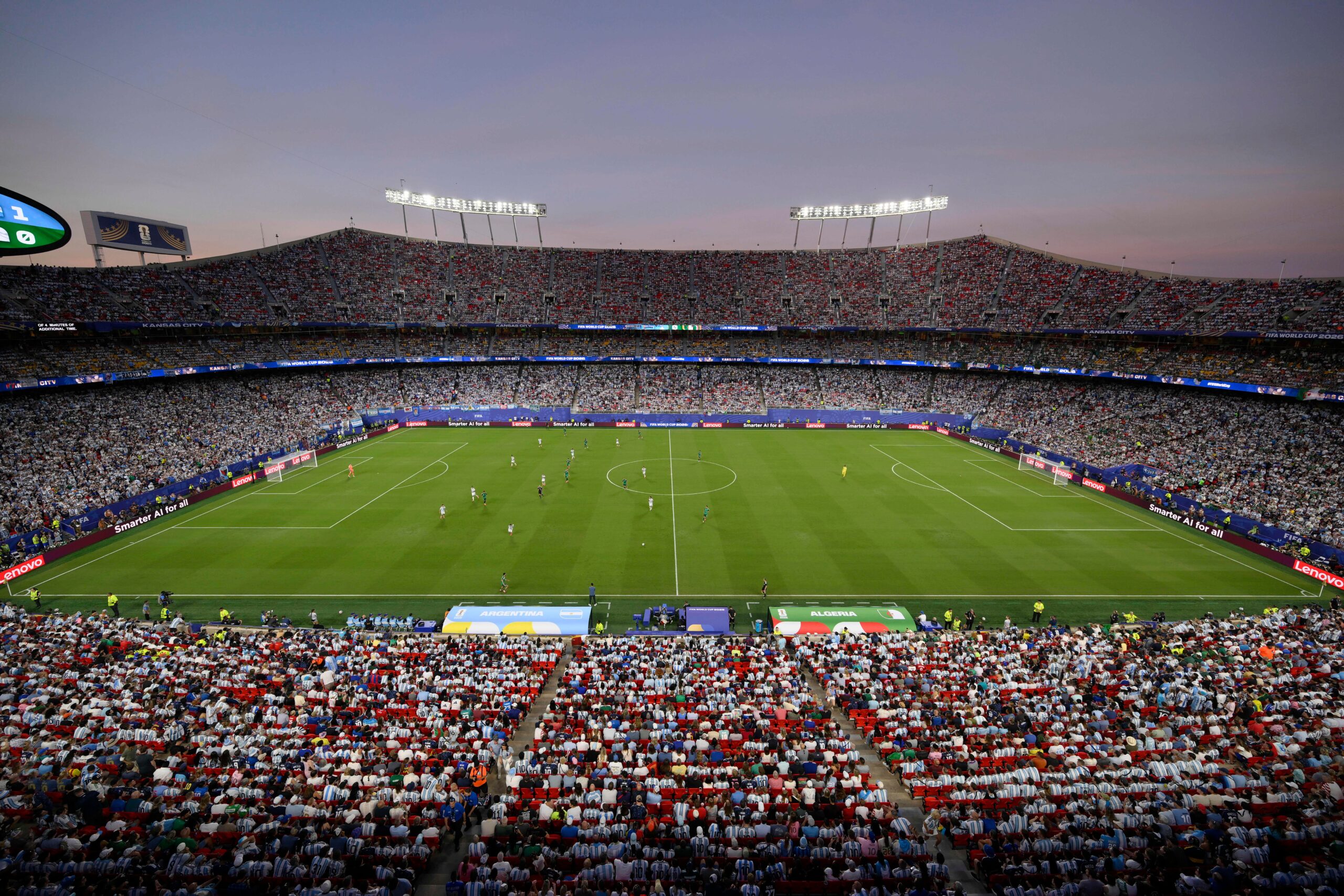
The packed crowd of Argentina fans in Kansas City on Tuesday.
He paused there to make a gesture showing the importance of Argentina’s legendary fan base, that has filled stadiums to the brim for decades. Kansas City’s Arrowhead Stadium was the latest to see the show, as a full house roared into the night.
“And then the cherry [on top]? Messi,” Pochettino concluded.
This isn’t Pochettino’s first trip to Seattle. In 2014, his first game with England’s Tottenham Hotspur was a friendly against the Sounders at the same stadium he’ll work Friday.
“I saw the ambience and the atmosphere and the people, and I hear that they are very passionate people here,” he said. “I’m looking forward [to] tomorrow, to share all together a great night, I hope with a good result and good performance.”
The vibrant scene in Seattle as Fox’s studio show goes on air:
At one point during Thursday’s practice, Pochettino walked to the end of the field, then up a hill behind the net, took out his phone, and recorded a little video. What was that about?
He joked in the news conference that it was “to see how everything looks without me,” mocking Argentines’ reputations for big egos. He also joked that he was watching for spies, though that line fell a little flat in a sport where spying actually happens.
As it turned out, he was just taking a video for himself, with a view in front of him of Lake Washington and the facilities on a classically big-time American college campus. Though the U.S. team was only there for a short time, Pochettino appreciated the setting.
“It was amazing, beautiful facilities,” he said. “We know that they were working for months, only for us to spend maybe an hour and a half, two hours. … Thank you to the people that made it possible to have, in perfect condition, the field and all the facilities.”
SEATTLE — Like any sport, soccer is a game of players, tactics, skills, and decisions. But when it comes to emotions, no sport is like the world’s most famous one.
Not for nothing did soccer resist the long march of analytics far longer than increasingly-global basketball, baseball, ice hockey, gridiron football, and others. (Americans might not know cricket, for example, but that bat-and-ball game has its own volume of statistics.)
So, yes, we can talk about player matchups in Friday’s U.S.-Australia showdown for first place in Group D (3 p.m., Fox29, Telemundo 62). We can talk about the Socceroos’ impressive striker Nestory Irankunda and 6-foot-6 centerback Harry Souttar. And we can certainly talk about whether Christian Pulisic will shake off his calf strain in time.
But it’s impossible to avoid this moment’s romantic side. The Emerald City is rich with a half-century of soccer history, from the NASL’s Sounders to the MLS version, always drawing big and passionate crowds. In recent years, the NWSL’s Reign have joined them, with their own robust fan base watching stars of the women’s game.
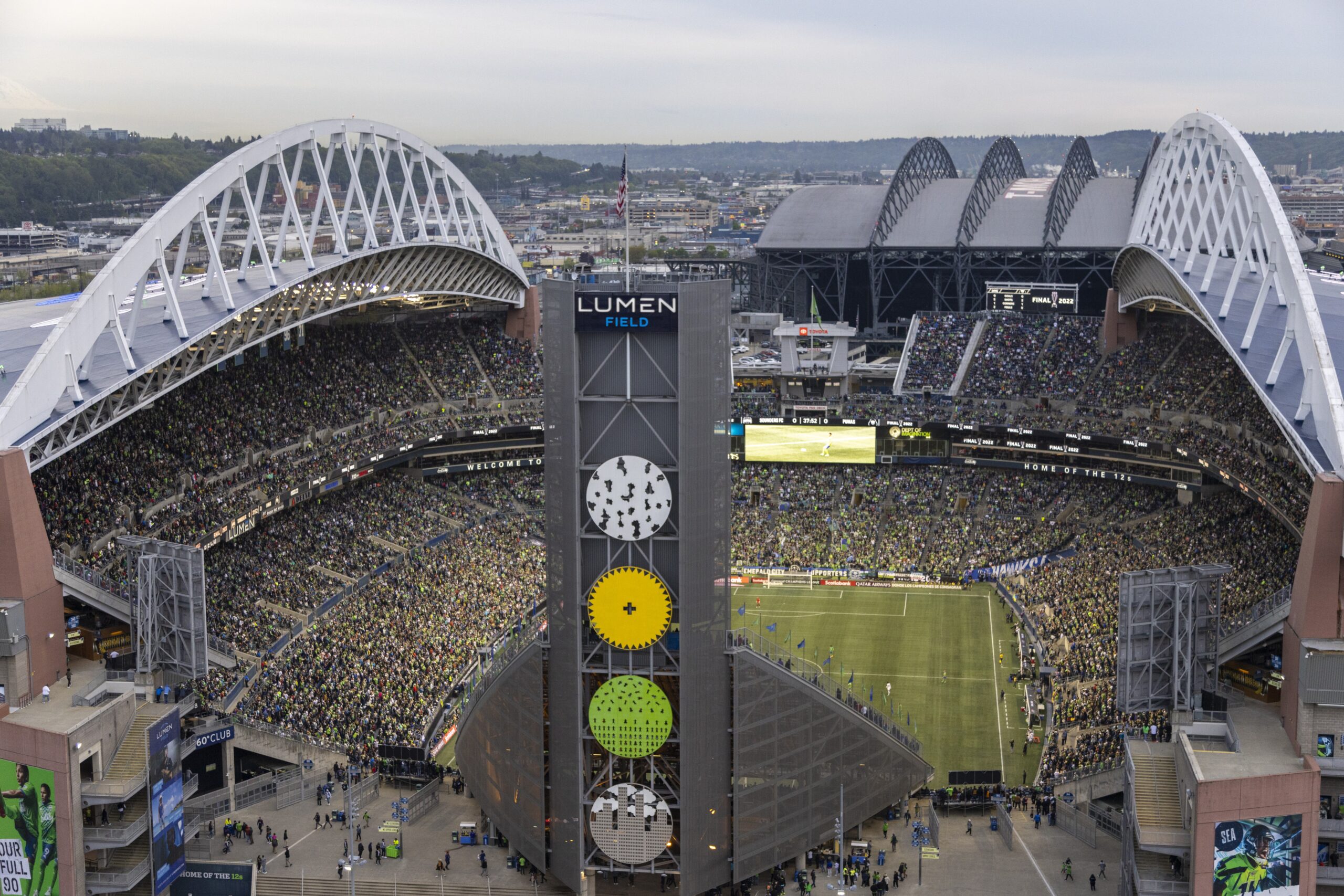
Seattle fans show up in big numbers for soccer games at Lumen Field, the home of MLS’s Sounders and the NWSL’s Reign.
Now, at last, that hole is filled, and with style. Since the day in early 2024 when FIFA announced the U.S. would play a group game here, Seattle has been counting down to this moment, and so have fans across the country.
A game in this city, with its stage towering over the south side of downtown, is a joy any time. But a World Cup game here is on American soccer’s bucket list. So it’s natural that U.S. and Sounders midfielder Cristian Roldan, in his 12th season with the only club of his career, has led the welcome committee for the squad.
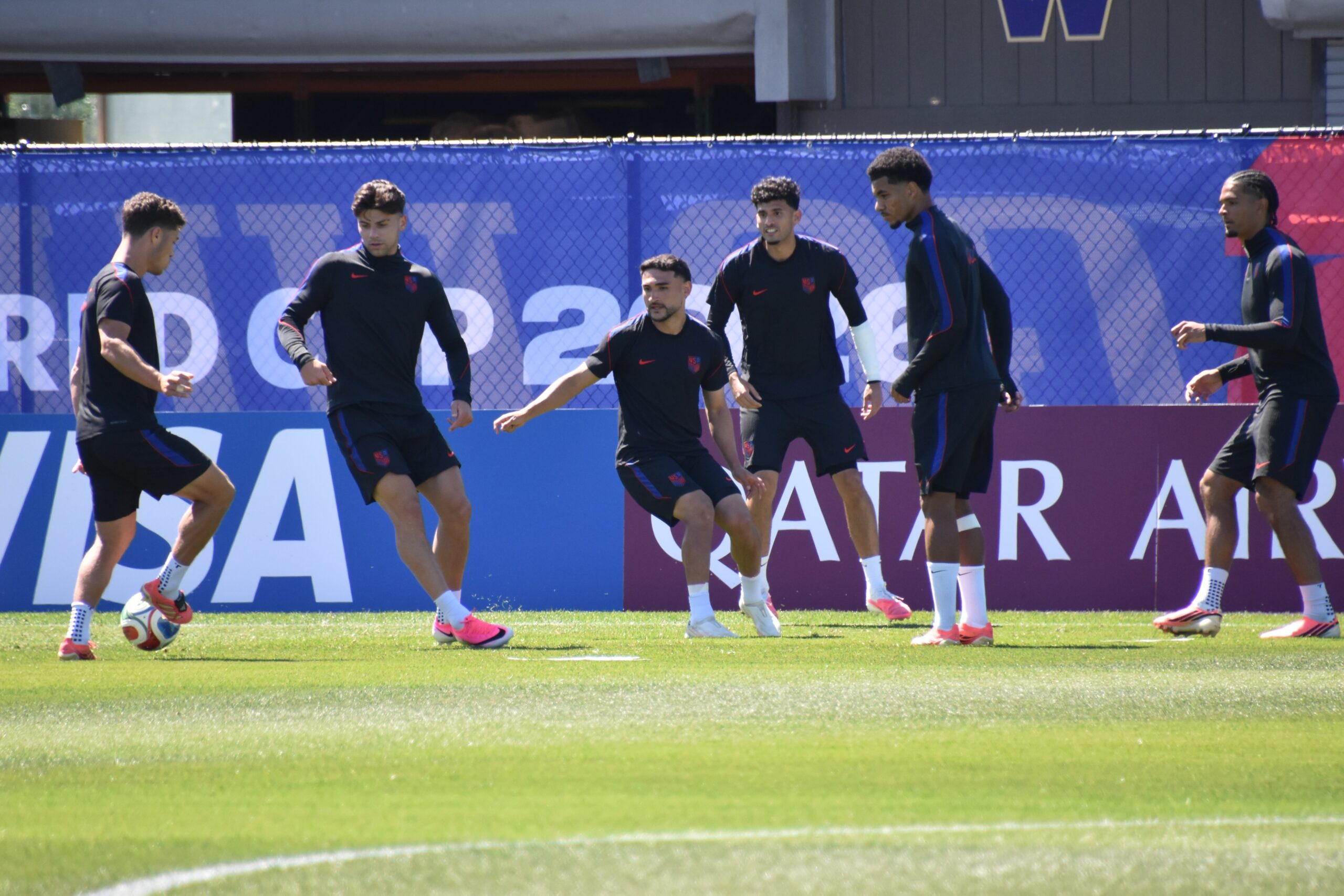
Cristian Roldan (center) at work on his old college field during Thursday’s practice.
“I’ve told them that the city is ready, that the city is energized,” he said before Thursday’s practice at the University of Washington, his alma mater — with its own famed sports theaters in football’s Husky Stadium and basketball’s Palestra-like Hec Edmundson Pavilion.
“We haven’t had a game here in a long time, and we’ve been desperate to host a World Cup game, a U.S. men’s national team game,” Roldan added. “So they’re going to feel the crowd, feel the energy, and it’s about feeding off it.”
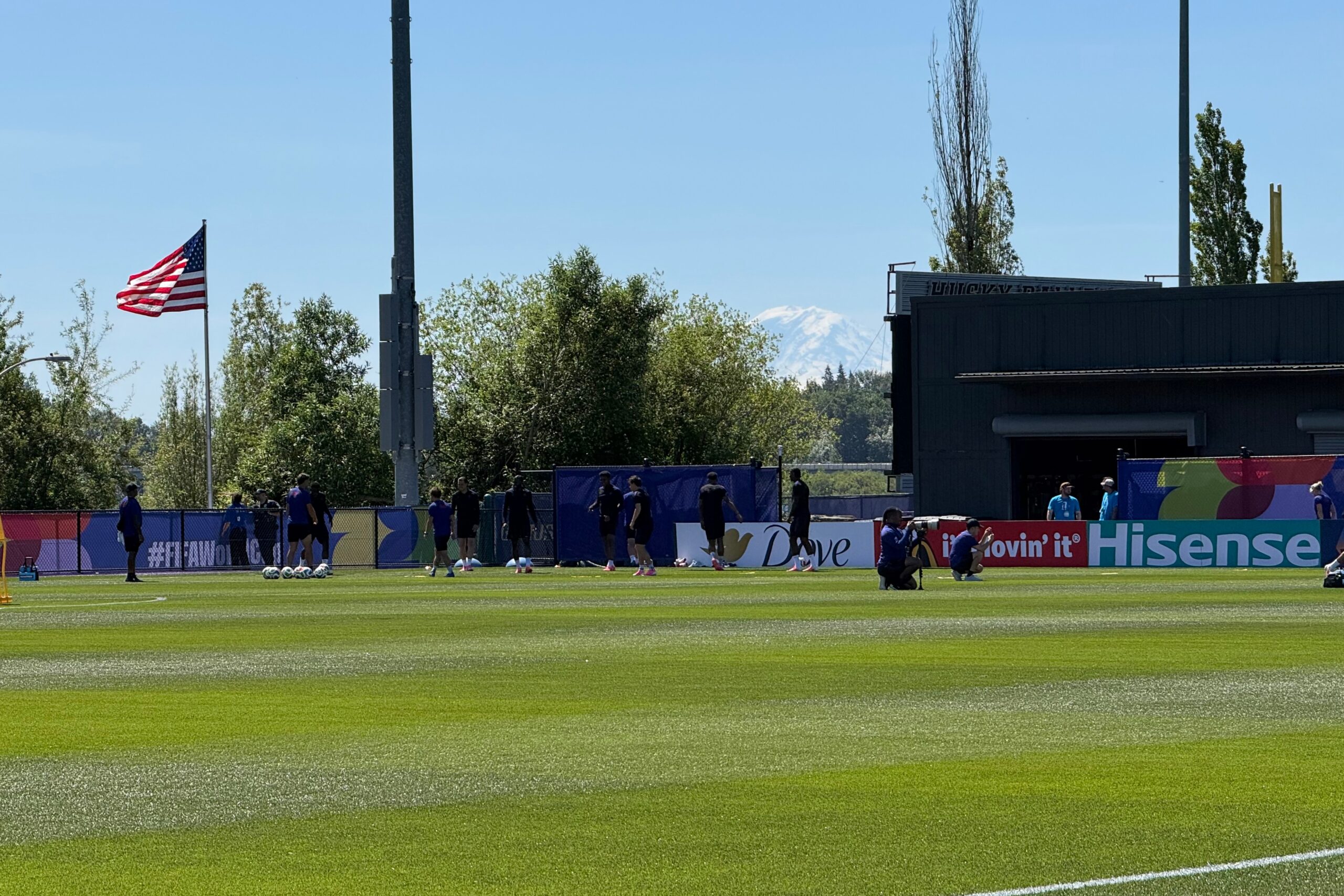
He felt it even more as he set foot on his old college field, with glittering Lake Washington a stone’s throw away and Mount Rainier towering beyond. On the same day that Penn product Duke Lacroix returned to his alma mater in Philadelphia ahead of Haiti’s clash with Brazil on Friday, a similar scene unfolded thousands of miles west.
“I’m thankful to have this full circle moment,” Roldan said. “I don’t think people realize how special it is for me to be here and enjoying this experience with the men’s national team.”
Mount Rainier looming in the background over the scene at the U.S. team’s practice.
Come lunchtime, a walk through downtown showed what awaits. Fans in U.S. jerseys were all over, from Pike Place Market (Seattle’s version of Reading Terminal) to the glistening waterfront.
Fox’s studio show set up shop on one of the piers, with the ferries crossing Puget Sound as one backdrop and a boisterous crowd as another.
The players are excited to experience it, especially those who haven’t before. Because the stadium usually has artificial turf, the U.S. men haven’t been here since the 2016 Copa América Centenario, when grass was installed like it has been this summer. (The World Cup’s grass also helped bring the women’s team here in April, ending a nine-year drought.)
“I’ve obviously spoken to ‘Roldy’ and other people who’ve said how much of a soccer culture Seattle has, and I’m really looking forward to experiencing that firsthand,” defender Antonee Robinson said. “The first game that was played in that stadium looked amazing. So I’m looking forward to being a part of it, too.”
Roldan isn’t expected to start, and he knows it. But if he gets on the field as a substitute, the roar that rises will no doubt be as great as a U.S. goal.
“I’m getting goosebumps just thinking about it,” he said. “This is a place that I call home, and I’ve called home for a while. … I’ve given my heart and soul to this club. To be able to see the field would be a dream come true, and I think it would be special not only for me, but I think for the city of Seattle as well.”
International soccer supporters, be warned — clothe the Rocky statue at your own risk.
The fans of the Ecuadorian national team learned Sunday what many NFL fans already know about draping their colors over the statue of Rocky on the steps of the Philadelphia Art Museum.
Ecuadorian supporters fitted Rocky with a yellow La Tri kit, then saw their team concede a 90th-minute winner in its FIFA World Cup group-stage opener against Ivory Coast on Sunday at Lincoln Financial Field (aka Philadelphia Stadium).
The effects of the “Rocky curse” are well-documented when it comes to football, but it was relatively untested on the beautiful game. Ecuador lost, 1-0, to the Ivorian side, which entered the tournament ranked 10 spots behind La Tri in the FIFA World Ranking.
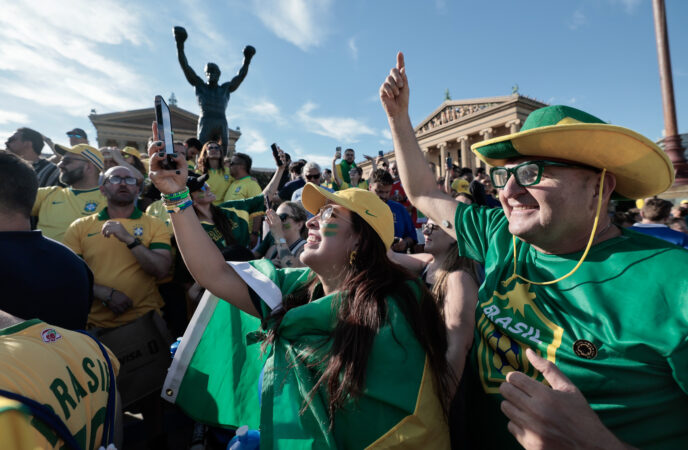
With Brazil coming to Philly for a Group C match against Haiti on Friday (8:30 p.m., Fox29), Movimento Verde Amarelo, Brazil’s main supporters’ group, went to great lengths to ensure the yellow and green of the Canarinho stayed off the Rocky statue.
The Rocky statue was roped off with a four-post retractable nylon stanchion, with four members of MVA, sunglasses on and earpiece in, standing at attention at each corner as Brazilian fans gathered for a rally in front of the Art Museum.
The bodyguards discouraged fans from draping any Brazilian garb on the statue, holding signs that read:
“Operation Rocky Protectors — Attention: it is forbidden to put Brazilian colors on the statue.”
Matheus Henrique, 30, was one of the MVA members protecting the statue. Henrique, a native of Belém, Brazil, moved to Los Angeles a decade ago for college.
On the eve of Friday’s FIFA World Cup Group C match between Brazil and Haiti, Brazil fans rally for their team on the Art Museum steps in Philadelphia on Thursday, June 18, 2026.
Henrique is friends with the person who helped organize Brazil’s takeover of the steps and responded when a call went out for volunteers to guard the statue.
“It’s a superstition, we heard,” Henrique said. “We’re enjoying the event as well.”
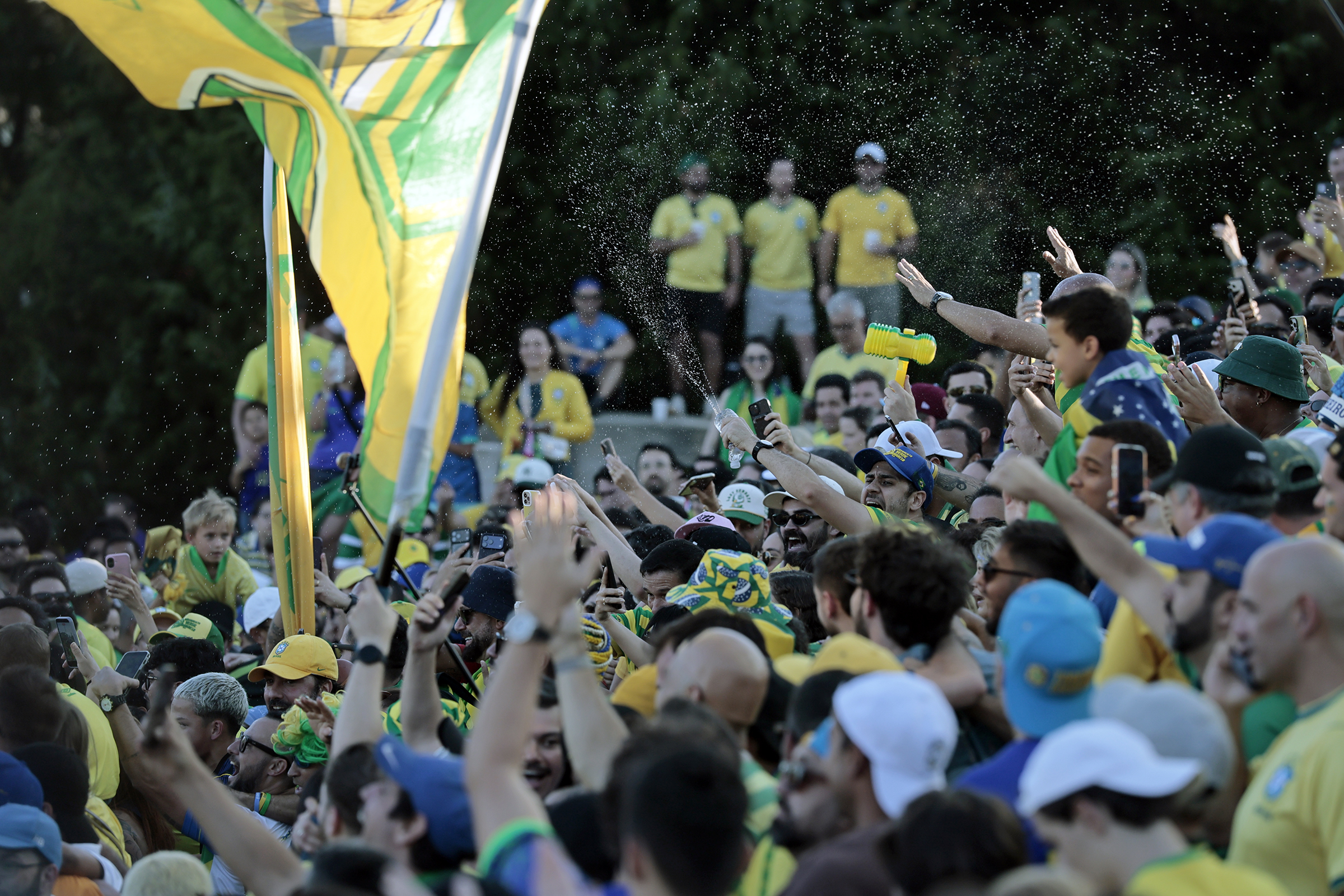
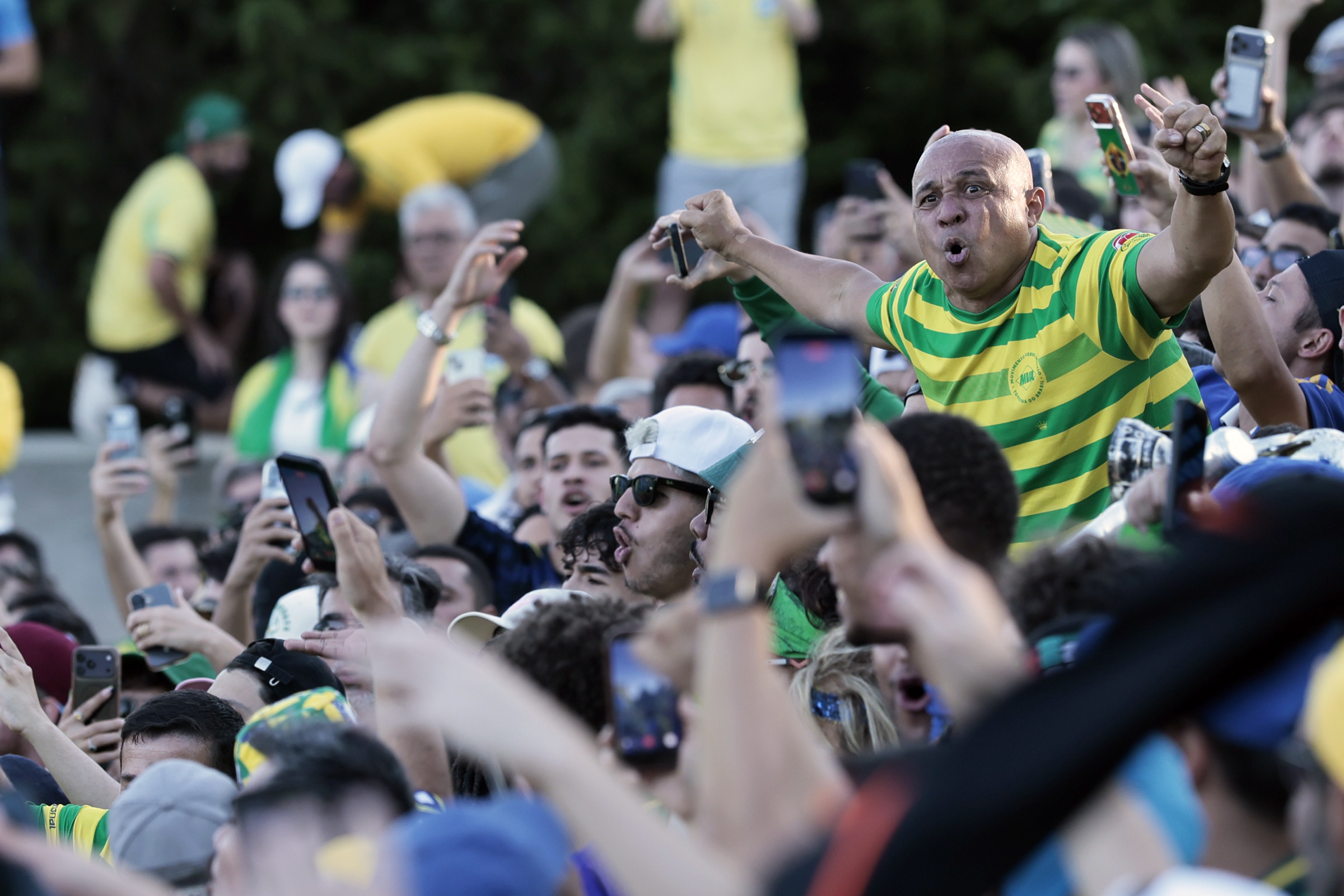
There was plenty of enjoyment to go around for Brazilian supporters as they scaled the steps in front of the Rocky statue on Thursday evening. Fans danced, sang, set off smoke flares and drummed for hours, making The Oval feel more like Rio de Janeiro than Fairmount.
And, thanks to the statue guards and forewarnings from MVA and Visit PA, Rocky remained shirtless throughout the evening.
The MVA Instagram account posted a warning to its members to abstain from clothing the Rocky statue before Brazilian fans gathered at the steps on Thursday.
“Attention Brazil Fans,” a translated version of the group’s post reads. “It is totally forbidden to put a Brazilian shirt on the Rocky Statue in Philly!!!!!”
Meanwhile, Visit PA warned international fans about the Rocky curse.
“Countless football teams (as in American Football, not Fútbol — same curse, different sport) have all dressed the Rocky Statue in their colors and gone on to lose,” its Instagram post read. “Ecuador dressed Rocky last weekend. Coincidence? Sadly, history says no.”
Henrique was confident about Brazil’s match with Haiti, but he said the team needs all the luck it can get after starting the World Cup with a 1-1 draw against Morocco. Henrique said he had to chide a few people getting too close to the statue.
“Some people don’t know,” Henrique said. “I didn’t know about the superstition until today. Let’s not play with luck. We need luck.”
Henrique plans to watch Friday night’s match from the FIFA Fan Festival in Lemon Hill, but he feels as if he’s already done his part to help the Brazilians avoid an upset.
Gonna Fly Now
After successfully avoiding Rocky’s wrath, Brazil will enter Friday night’s match as favorites over Haiti, which dropped to No. 85 in the FIFA World Ranking after losing its opener to Scotland.
Brazil, ranked No. 5 in the FIFA World Ranking, will be without national legend Neymar for the match. The 34-year-old winger, nursing a calf injury, was not among the group of players that arrived at the Sofitel in Center City on Thursday afternoon.
On the eve of Friday’s World Cup match between Brazil and Haiti, Brazil fans rally for their team on the Art Museum steps in Philadelphia.
Brazilian supporters welcomed players to the team’s hotel, creating a festive but crowded scene at 17th and Sansom around 4 p.m.
Brazil’s team bus arrived to the hotel at 5:10 p.m., and a few Brazilian players, including Gabriel and Raphinha, greeted fans as they walked from the bus to the hotel.
The Seleção will look to secure all three points against the Haitians at Philadelphia Stadium on Friday night. The team and its supporters can rest easy knowing it will not be the next victim of the Rocky curse.
I’ve been thinking a lot about the speech Frederick Douglass gave on the 76th anniversary of the signing of the Declaration of Independence. Posed as a question, “What to the Slave is the Fourth of July?” the answer written in commentary form hasn’t lost its power or relevance in Philadelphia in 2026: “What, to the American slave, is your Fourth of July? I answer: a day that reveals to him, more than all other days in the year, the gross injustice and cruelty to which he is the constant victim.”
This summer will place Philadelphia in the spotlight not only with the celebration of America’s Semiquincentennial, but also as a host city for the FIFA World Cup, the PGA Championship, and the MLB All-Star Game.
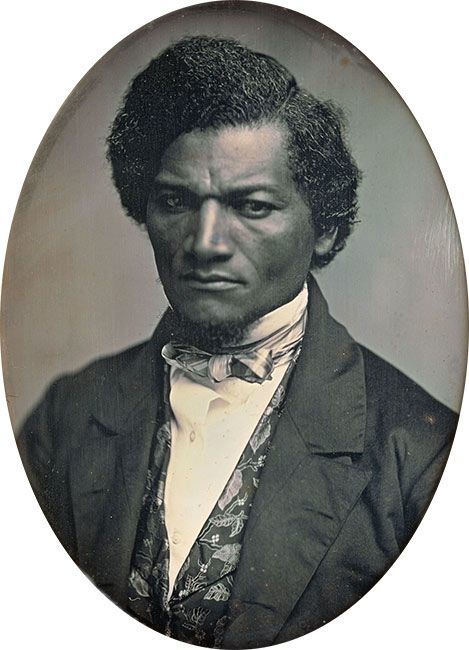
Frederick Douglass, ca. 1847-1852.
Just as Douglass decried our delusions of progress and challenged why victims of a broken system would celebrate their own oppression, we see that patterns repeat.
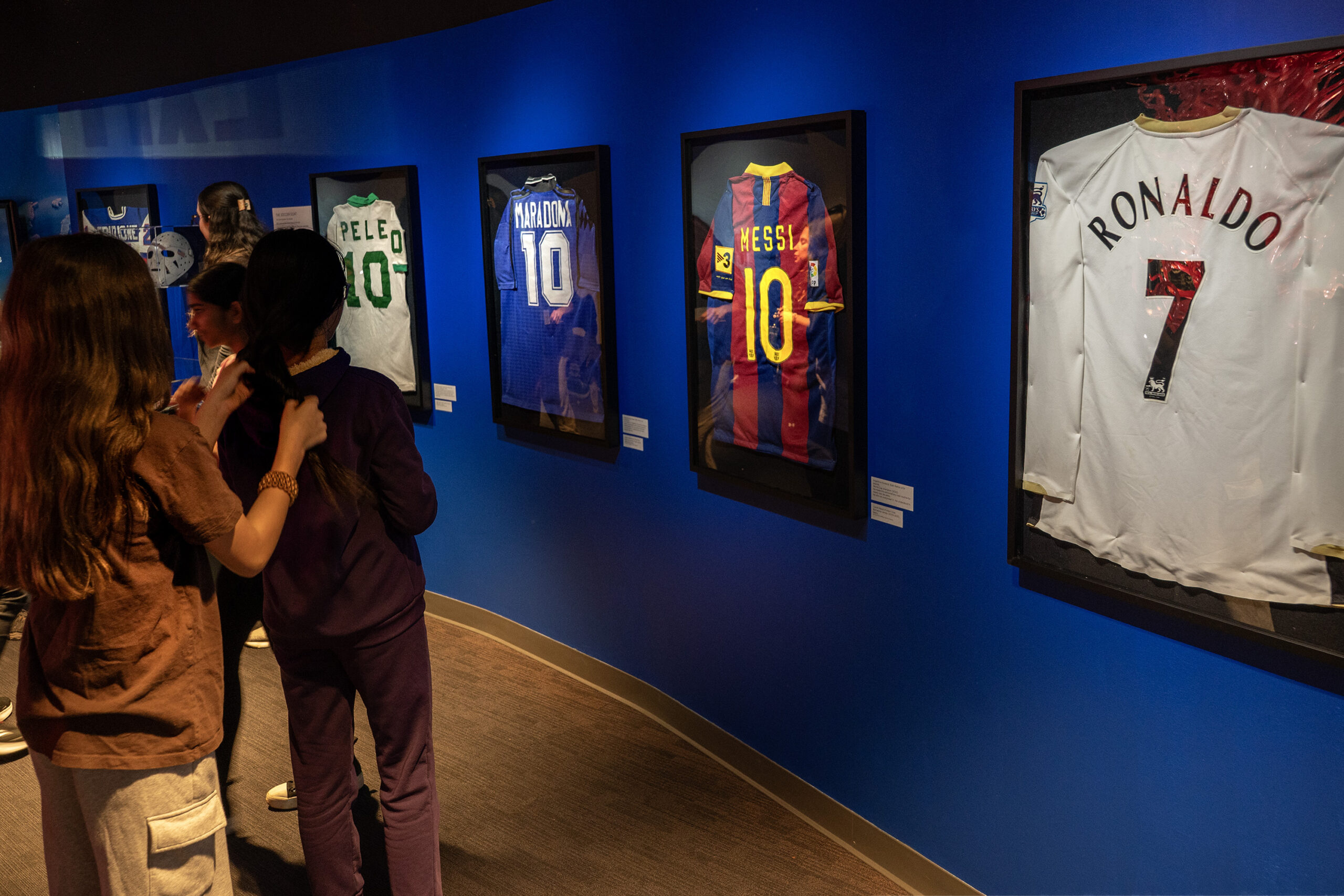
Soccer jerseys on exhibit at at the National Liberty Museum.
The events themselves will serve as an excuse for an influx of federal security agents — and there is nothing that makes me feel safe about them coming to Philadelphia this summer to keep us “safe.”
And we continue to ignore our broken carceral system, which hungrily awaits the failures of everything listed above.
As Douglass wrote in his famous speech: “I say it with a sad sense of the disparity between us. I am not included within the pale of this glorious anniversary! Your high independence only reveals the immeasurable distance between us. The blessings in which you, this day, rejoice, are not enjoyed in common.”
We hold these truths …
This summer is not just about the nation, but about Philadelphia trying to put its best foot forward to show the few gleaming spots in our house, while keeping visitors from seeing the dirt inside the closet or under the couch.
As Douglass likely experienced in 1852, I can already see the faces of some reading this and thinking, This is not the time for all your talk. We cannot allow Philadelphia to be disparaged.
I am not disparaging Philadelphia — I am holding onto the city’s multiple truths.
This is a great city and is the birthplace of independence for some — but instead of serving as the cheerleaders for despots and a city that submits to our nation’s current “king,” we should be the city that serves as the vanguard of resistance. Our city cannot stand on both sides of history and hold hands with our oppressors simply because we are desperate to be noticed.
As it was with Douglass 175 years ago, where we stand today will be remembered tomorrow.
The need for plain speaking
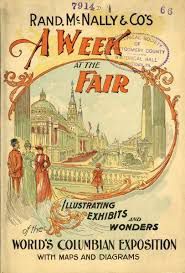
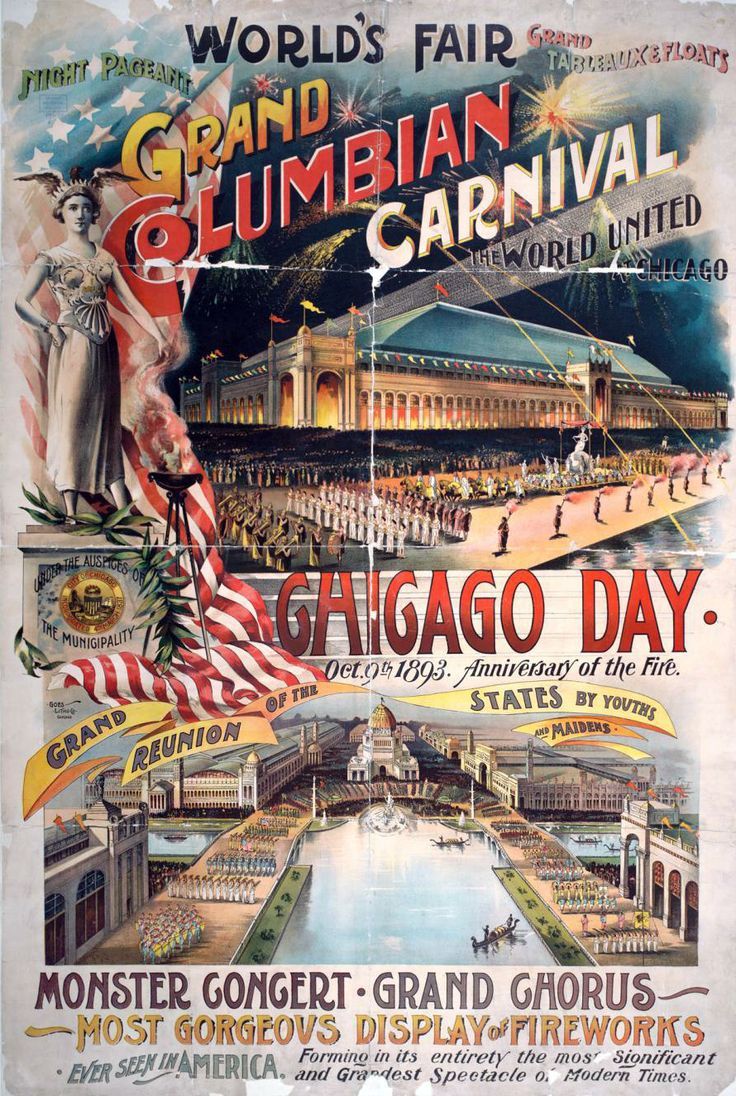
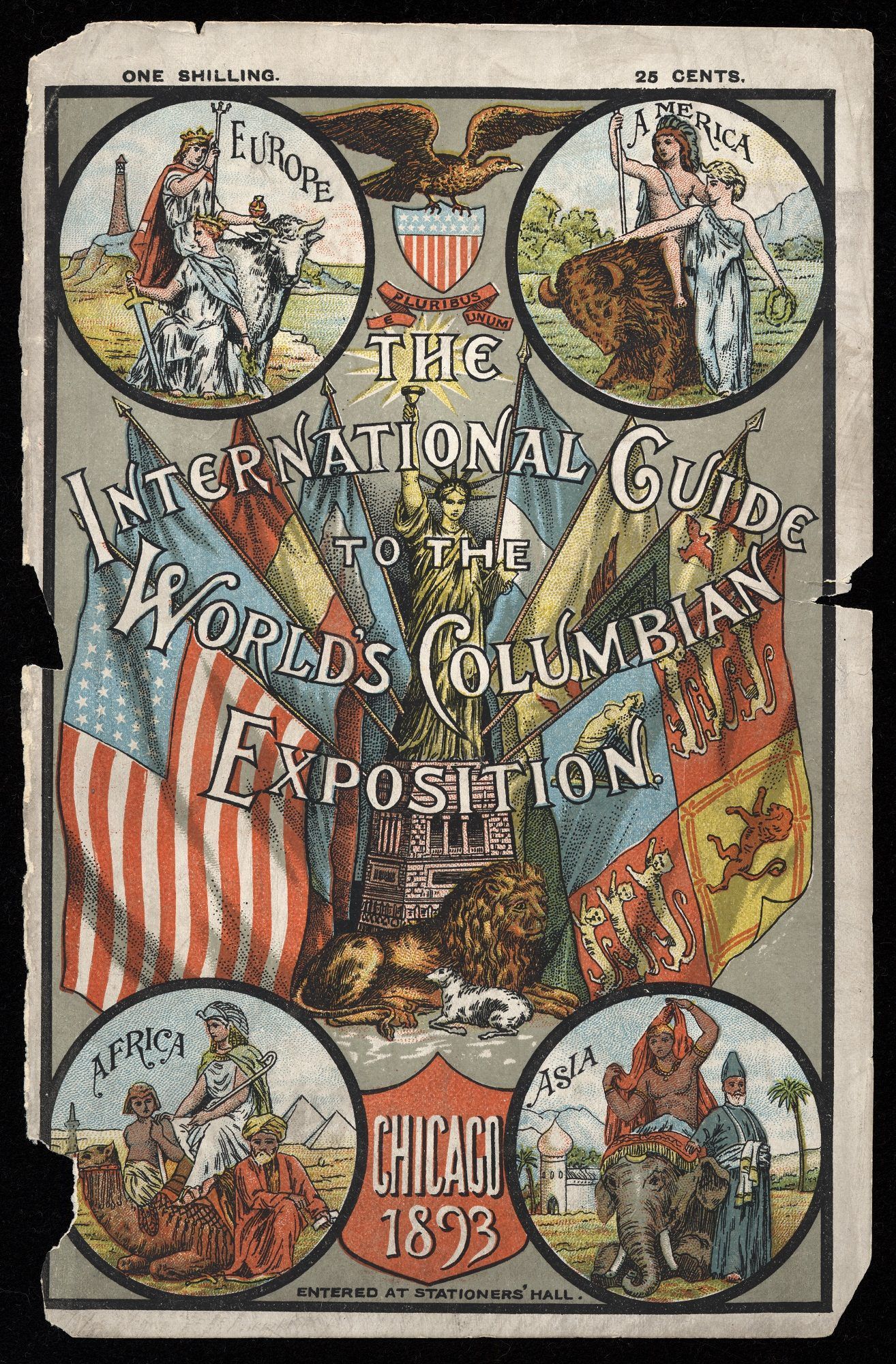
Forty years after Douglass shared his words about the Fourth of July, America had once again chosen to celebrate its history and place in the world — this time through the 1893 World’s Fair in Chicago, which marked the 400th anniversary of Christopher Columbus’ landing in the Americas.
Program from the 1893 World’s Fair in Chicago.Program from the 1893 World’s Fair in Chicago.
Just four years earlier, the event had been held in Paris, and marvels such as the Eiffel Tower were shared with the world, showing the importance and ingenuity of the host nation.
This era is often referred to as the “Gilded Age,” a time our current president fondly looks back on and wishes we would return to. “We were at our richest from 1870 to 1913. That’s when we were a tariff country,” President Donald Trump said in March. But it was also a time defined by government corruption, inequality, and exploitation, and it took place only 28 years after the end of slavery in America.
While Paris gave the world the Eiffel Tower, the 1893 World’s Fair in Chicago introduced the world to Cracker Jack, the first dishwasher, and the first Ferris wheel — which stood 264 feet tall and carried 2,000 passengers — a monument to America’s greatness!
While the fair was about all of America, the only space for Indigenous peoples was in the exotic exhibits of peoples from around the world. While the fair was about all of America, white women asked for their place within the fair and, after initially being denied a role, were eventually granted one through the creation of the World’s Congress of Representative Women.
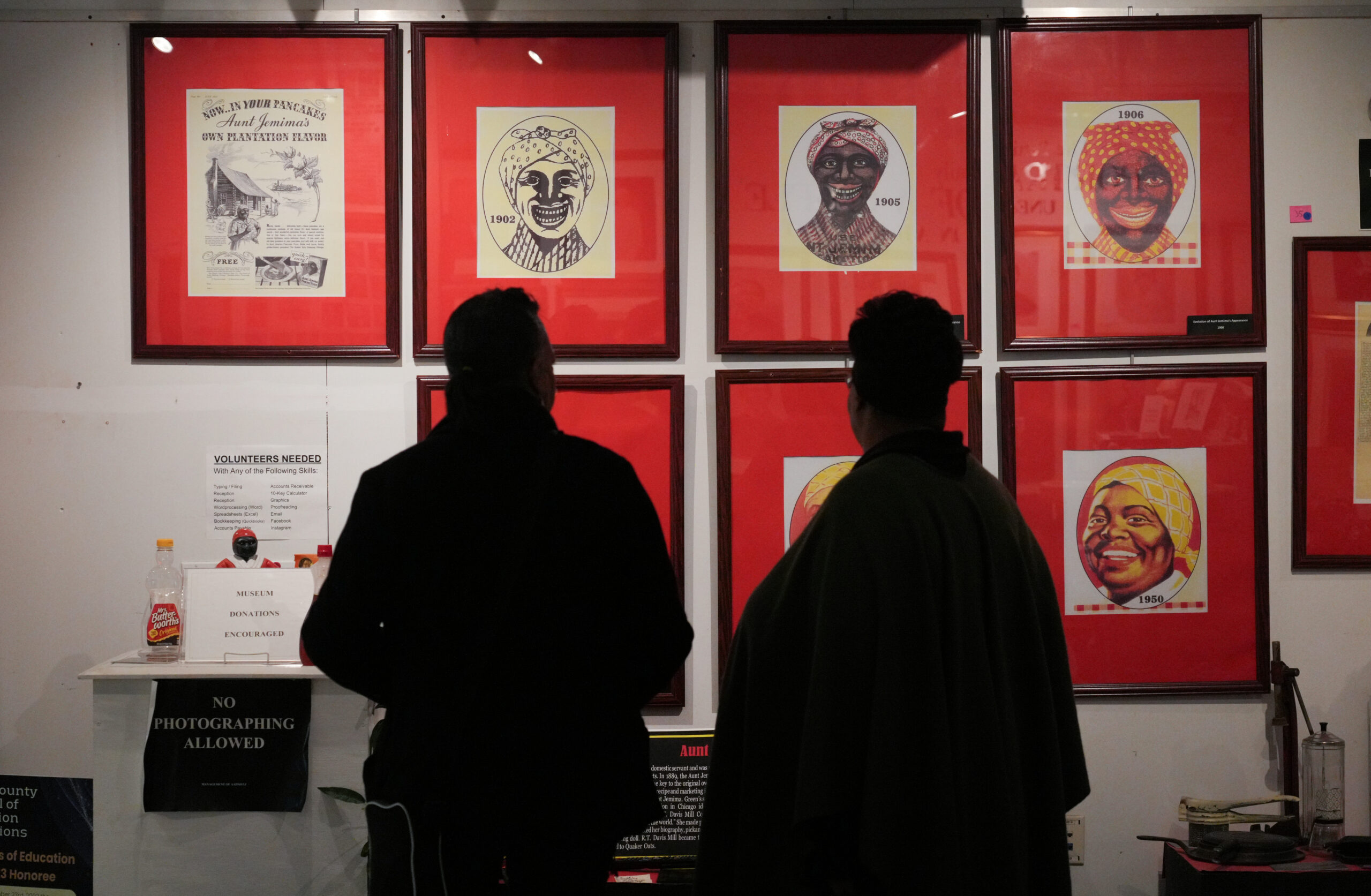
Aunt Jemima in ads at the African American Heritage Museum of Southern New Jersey.
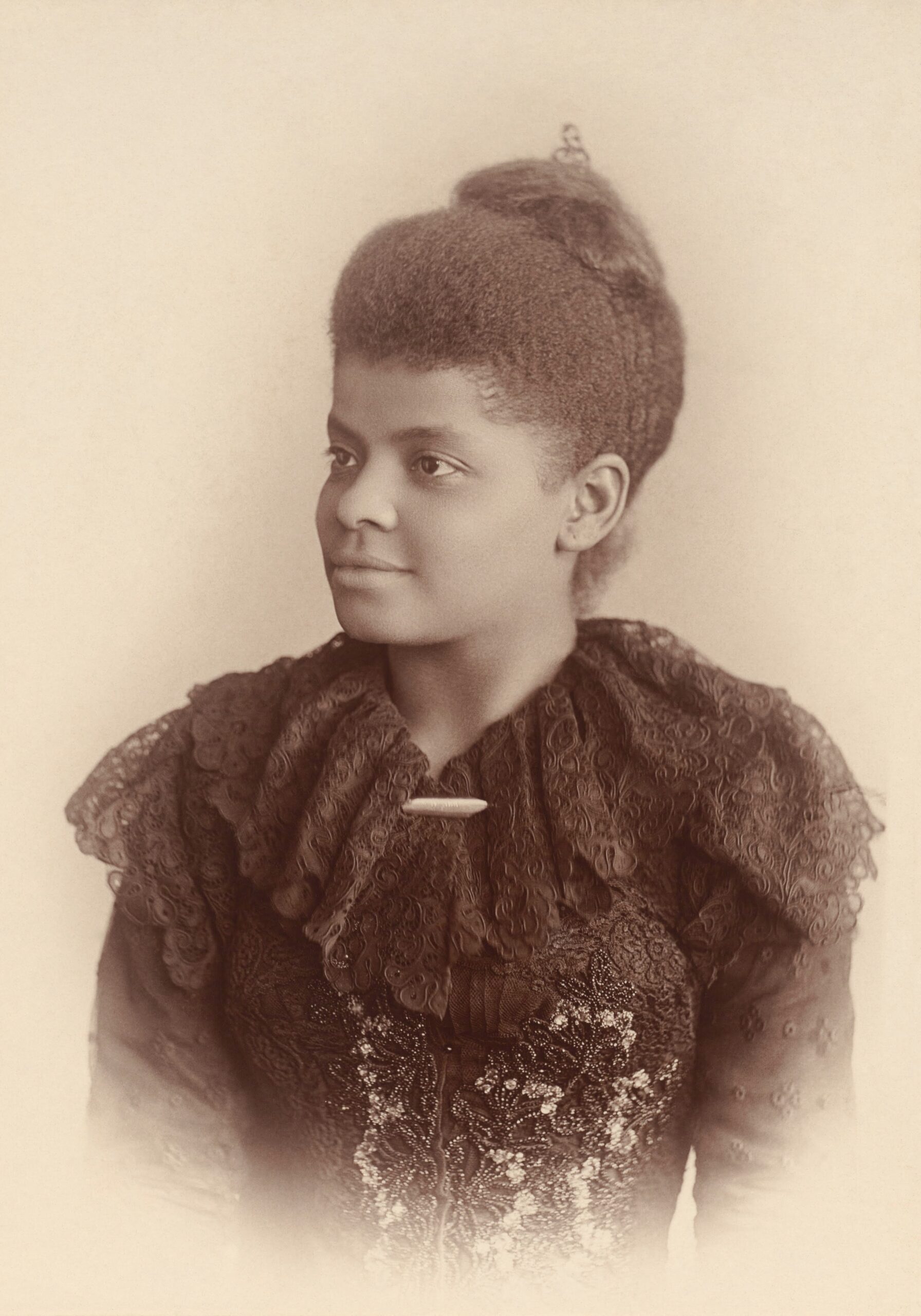
While the fair was about all of America, African American luminaries such as Douglass and Ida B. Wells were denied any formal space or role. Instead, it was determined by organizers that participation of African Americans would be marked by introduction to the character Aunt Jemima — a fictional depiction playing to all fantasies of the happy slave and the way of life lost after emancipation — and through Negro Day, during which the organizers of the fair gave away 2,000 free watermelons to visitors.
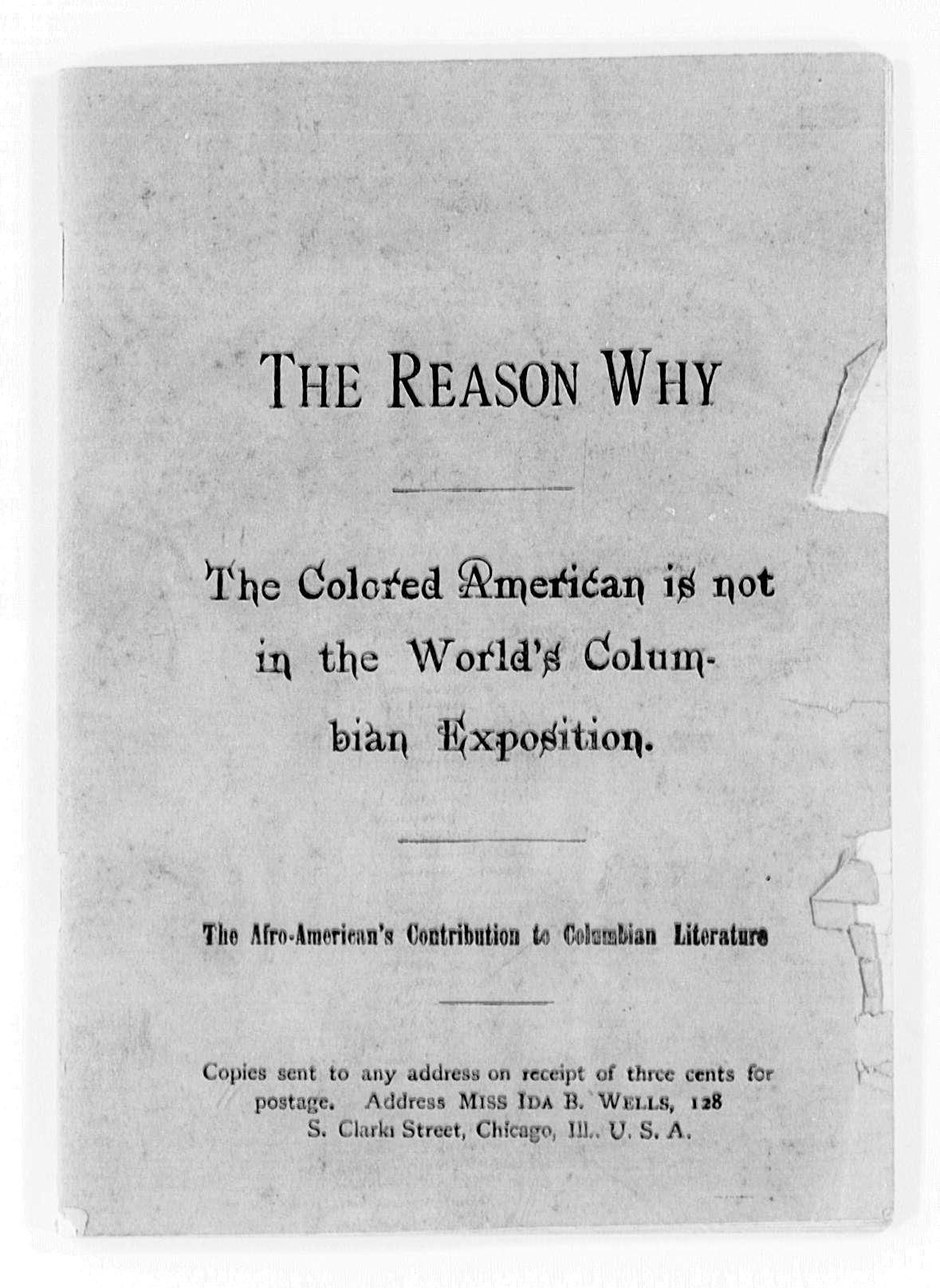
After being denied any real role within the fair, African American leaders appealed for sponsorship to the newly recognized World’s Congress of Representative Women, and that group said no — foreshadowing the next 150 years of American politics. With that denial, African American leadership turned to the Haitian delegation and received support from the only country that successfully established a new government from a slave revolt.
The pamphlet distributed from the Haitian exhibition space at the 1893 World’s Fair in Chicago.Ida B. Wells Barnett, c. 1893.
It was from the Haitian exhibition space that an alternative conversation took place, one that started with “The Reason Why: The Colored American is not in the World’s Columbia Exhibition,” a pamphlet which explained the current condition of the American Negro, but also spoke to the history, the successes, and a vision for the future.
In it, Douglass wrote that “it involves the necessity of plain speaking of wrongs and outrages endured, and of rights withheld, and withheld in flagrant contradiction to boasted American Republican liberty and civilization. It is always more agreeable to speak well of one’s country and its institutions than to speak otherwise; to tell of their good qualities rather than of their evil ones.”
I live and work in Kensington, an area of Philadelphia built during the Gilded Age to create wealth for a few. Our community is literally still trying to recover from that era; we have no interest in bringing it back or celebrating the destruction it caused.
Just as during the Gilded Age — when a false history was celebrated in order to justify and whitewash the failures of America — we are walking into the trap of reproducing our mistakes without recognizing the current conditions, or centering the voices of those most affected by them.
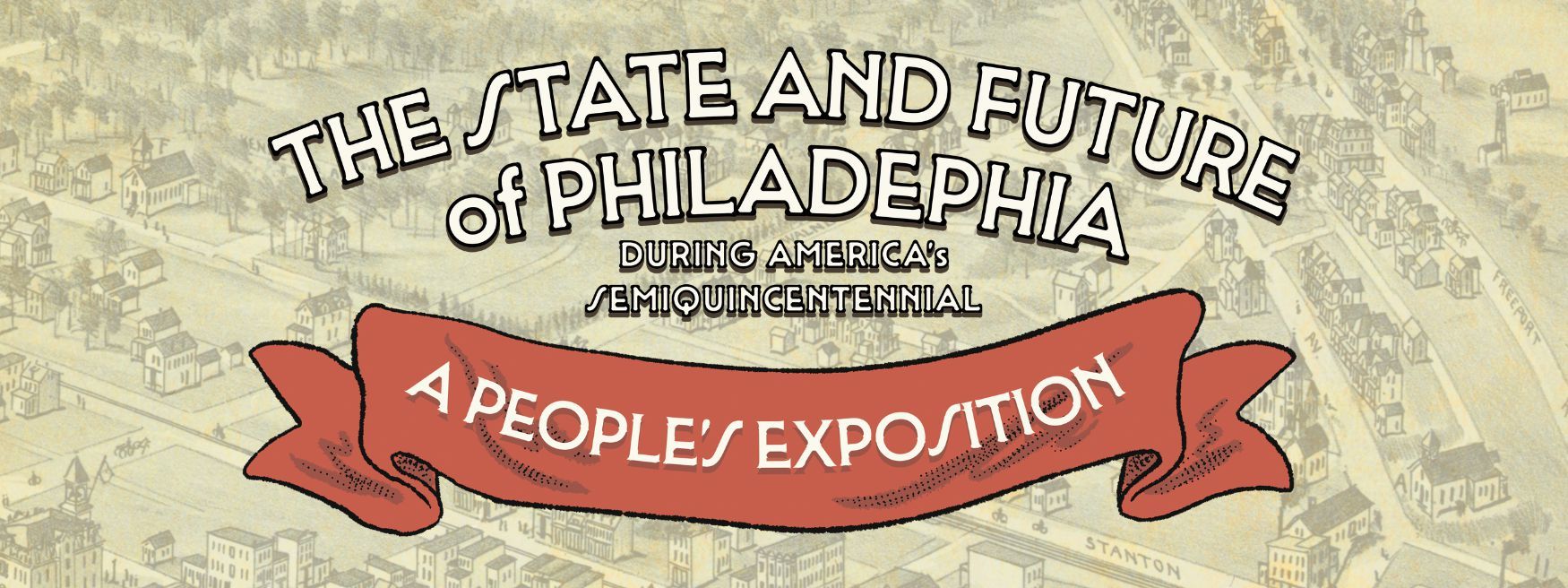
The 1893 World’s Fair in Chicago promotional flier.“A People’s Exposition” 2026 promotional flier.
Welcome to ‘A People’s Exposition’
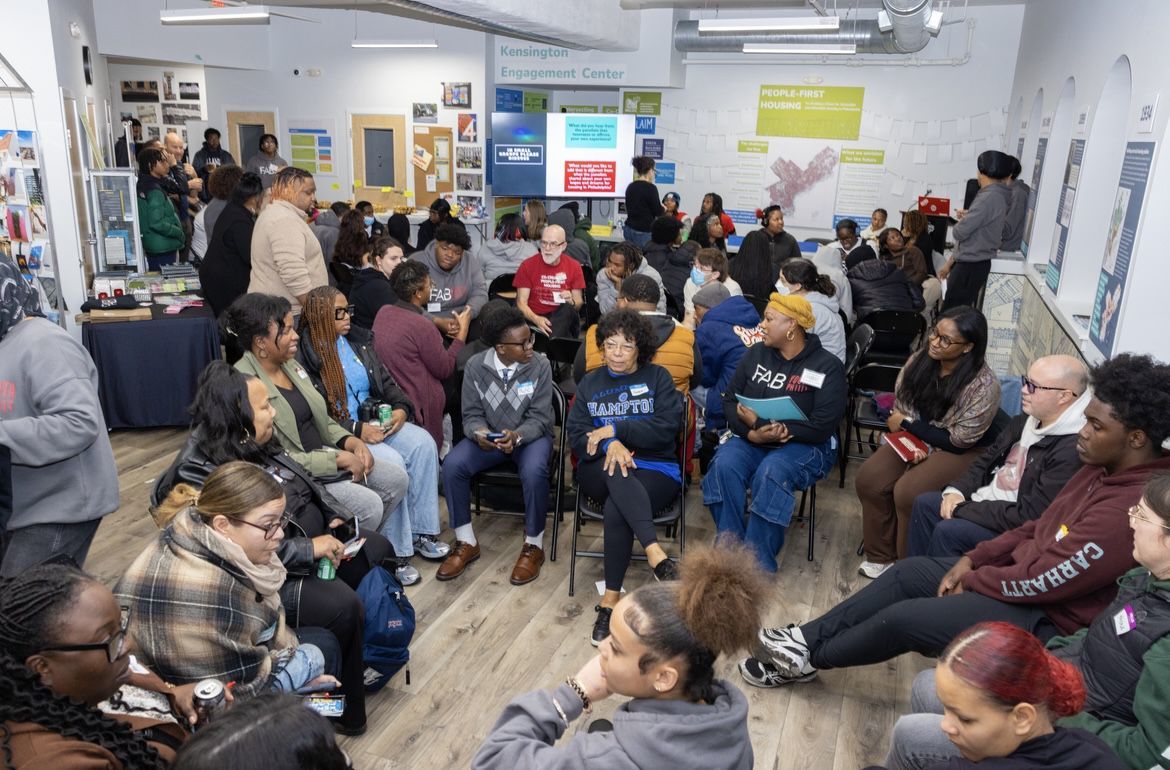
In the spirit of Douglass and Wells, and the ways they challenged “the celebration of oppression,” New Kensington Community Development Corp., along with partners throughout the city, invite you to participate in “A People’s Exposition” at the Kensington Engagement Center — to take a critical and honest look at our city’s challenges, to envision a just and equitable future, and to act on cocreated solutions.
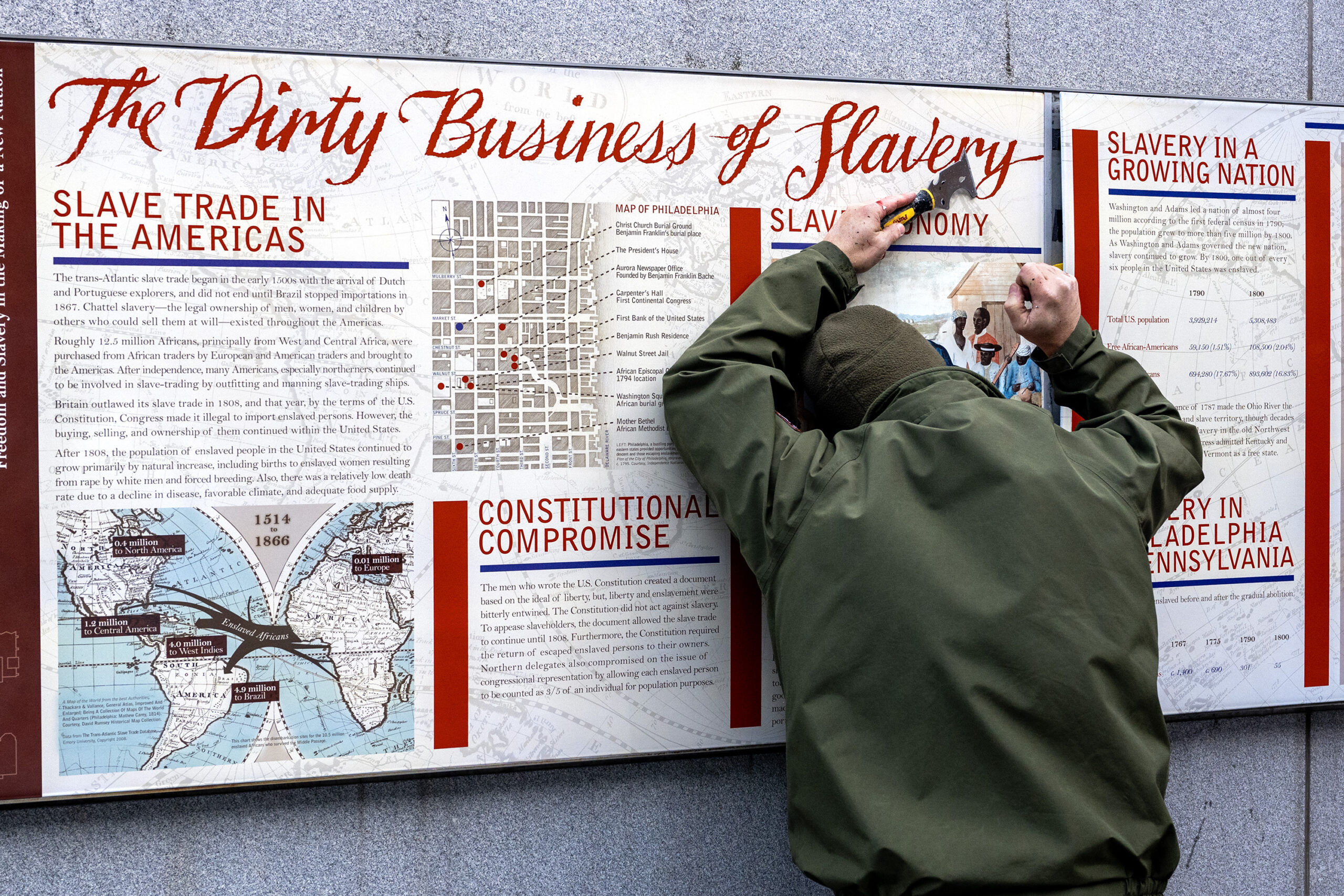
Opening on May 20 and running through October, partners from across the city will collectively create a welcoming space where we can learn about the status of Philadelphia’s most pressing issues, including the housing crisis, poverty and workforce development, the criminal justice system, youth and education, and community food systems and transportation.
We invite you into a space of the curious and the committed, to learn and connect to current efforts and campaigns that are working toward addressing our city’s greatest needs.
Leaving off with hope
We all need and deserve celebration and joy. Philly has many things to be proud of — be it housing wins, Chinatown wins, or the daily wins of just making it another day on the right side of the grass — but we can and should hold two truths at once.
While many in our city will only want to take part in performative displays of national and civic pride without facing the true underbelly of our nation and city, I encourage us all to resist whitewashing and to support participatory processes to fight the oppressive and exploitative machine that continues to be built and executed 250 years after independence. As a true patriot would.
Participants in a teen town hall at the Kensington Engagement Center.
And as Frederick Douglass did on the Fourth of July.
He challenged us to remember that for many, there is very little, if anything, to celebrate, and we should instead be engaged in reflection and organizing to put into action what is necessary to create a just society for all.
“I do not despair of this country,” he wrote. “There are forces in operation, which must inevitably, work the downfall of slavery … I, therefore, leave off where I began, with hope.”
Bill McKinney is a Kensington resident and the executive director of the New Kensington Community Development Corp.
All images courtesy of the New Kensington Community Development Corp., except where noted.
ATLANTA — If fans of the U.S. men’s soccer team wanted to see an A-level squad take on Portugal’s stars, they didn’t get it.
But if U.S. manager Mauricio Pochettino wanted to see what would come of a slew of auditions for spots on his World Cup roster, he certainly got that.
Pochettino tested 20 players across four formations over the course of 90 minutes in a 2-0 loss to Portugal on Wednesday night inside Mercedes-Benz Stadium.
For a second straight game, Pochettino decided to try something new instead of working toward his best starting lineup. He deployed a 4-2-3-1 with no formal striker at the top, instead putting Christian Pulisic up there in front of Tim Weah, Weston McKennie, and Malik Tillman.
USMNT head coach Mauricio Pochettino (left) continued to experiment with formations and personnel during their loss to Portugal.
That freed Weah of the defensive responsibilities he had as a right back on Saturday, and Pochettino reinforced the role a little more by starting Alex Freeman there. The defense also included Media’s Auston Trusty at centerback and Wayne’s Matt Freese at goalkeeper, with the latter move seemingly cementing Freese as the No. 1 in net.
The point of putting Pulisic up top was to get him closer to goal, and that genuinely happened in the first few minutes. The U.S. had some very nice attacking plays, and Portugal’s defense worked well to keep shots from going in.
In the 22nd minute, Weah showed the virtue of playing him higher up the field with a burst down the right wing and cross for Pulisic. Alas, the Hershey native fluffed his chance, and the ball bounced past McKennie as it ran away.
When Pulisic shot narrowly wide from 20 yards in the 36th, it seemed the U.S. was building more momentum. But Portugal then went right down the field and scored. Bruno Fernandes drove forward, then tore up the U.S. defense with a gorgeous backheel pass for Francisco Trincão to finish.
Both teams decided the starters had done their work in the first half, and began a parade of substitutions as the second kicked off. Portugal made seven (of 11 allowed), and the U.S. made three: striker Patrick Agyemang for Pulisic, Tanner Tessmann for McKennie in midfield, and Max Arfsten for Antonee Robinson on the back line.
Those moves restored the U.S. to the 3-4-2-1 formation that many observers had wanted to see. Alas, it did not stop Portugal from scoring a second goal in the 59th, though the tactical change wasn’t why.
In fact, it was something worse — a corner kick play that completely fooled the Americans.
With almost everyone from both teams lined up near the goal mouth, Fernandes swung a service to one two Portuguese players who stood unmarked atop the box, second half substitute, João Felix. He hit an inch-perfect smash through the crowd that Freese likely couldn’t see until too late.
Freese made up for it in the 64th with a nice diving save on a long-range hit from Ruben Neves. That was one of three stops he made on the night.
Three minutes later, Pochettino sent in Folarin Balogun for Tillman and Joe Scally for Weah, putting the U.S. in a two-striker setup — effectively a 3-4-1-2 instead of a 3-4-2-1. The next subs, in the 79th, made it a 4-4-2: Brenden Aaronson and Gio Reyna entered for Freeman and Sebastian Berhalter.
Trusty was the last U.S. player to exit, replaced by Mark McKenzie in second-half stoppage time after cramping up. It was a sour ending to what had been a very good game overall for Trusty, on his own and in tandem with Chris Richards.
At the final whistle, it was pretty clear that the score didn’t matter to either team. But it will have to U.S. fans. Their hopes for a statement win in 2026 before the World Cup now rest with the tournament squad’s two warmup games, against Senegal and Germany in early June.
"Yes, he felt frustrated, but that is what we want, and what we expect."
Mauricio Pochettino analyzes Christian Pulisic's night as a striker: