Tag: World Cup

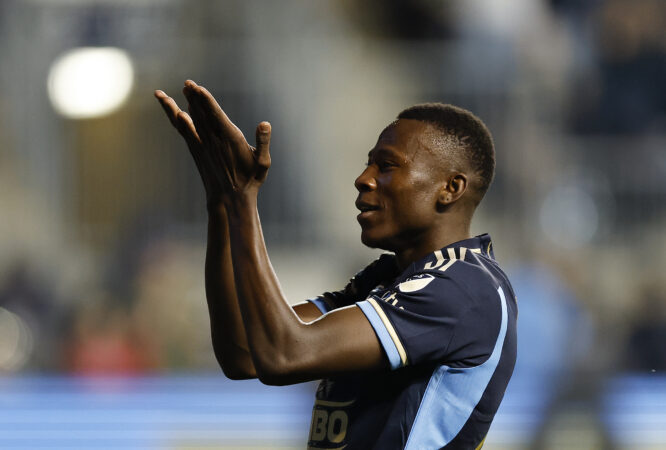
  • The Union’s Danley Jean Jacques celebrates helping Haiti reach its first men’s World Cup since 1974

    The Union’s Danley Jean Jacques celebrates helping Haiti reach its first men’s World Cup since 1974

    In soccer as in life, sometimes more than one thing happens at once. Right now, the Union have so many things happening that your head could end up on a swivel.

    There’s the ongoing investigation into sporting director Ernst Tanner’s alleged misconduct, for which there were no new updates by the close of business Thursday.

    There’s the rest of the team’s preparations to resume the playoffs on Sunday vs. New York City FC at Subaru Park (7:55 p.m., FS1, Fox Deportes, Apple TV) after three weeks without a game.

    There’s the fact that next year’s schedule was announced Thursday with three rounds of this year’s playoffs still to go. (Early schedule releases are good, but this one took almost everyone by surprise.)

    And on top of all of that, there are the epic swings of emotions that two of the Union’s stalwart players experienced while playing for their national teams.

    Andre Blake’s Jamaica came up painfully short of qualifying for next year’s World Cup, with ties at Trinidad and home vs. Curaçao. The first made the second game a must-win, but the Reggae Boyz could only manage a scoreless tie while hitting the post three times.

    Those results sentenced Jamaica to March’s inter-continental playoffs in Mexico that will clinch two of the six remaining World Cup tickets. Blake and company will play Oceania runner-up New Caledonia, and the winner will play Africa’s Democratic Republic of the Congo for a Cup berth.

    At the same time, Danley Jean Jacques’ Haiti reached the world game’s biggest stage for the first time since 1974. Despite not being able to play a true home game for years because of domestic unrest, Les Grenadiers beat Costa Rica 1-0 and Nicaragua 2-0. When tradition-rich Costa Rica and Honduras played a scoreless tie on Tuesday, Les Grenadiers clinched first place in their group.

    Even better, Tuesday was Haiti’s national holiday, celebrating its centuries of independence from France.

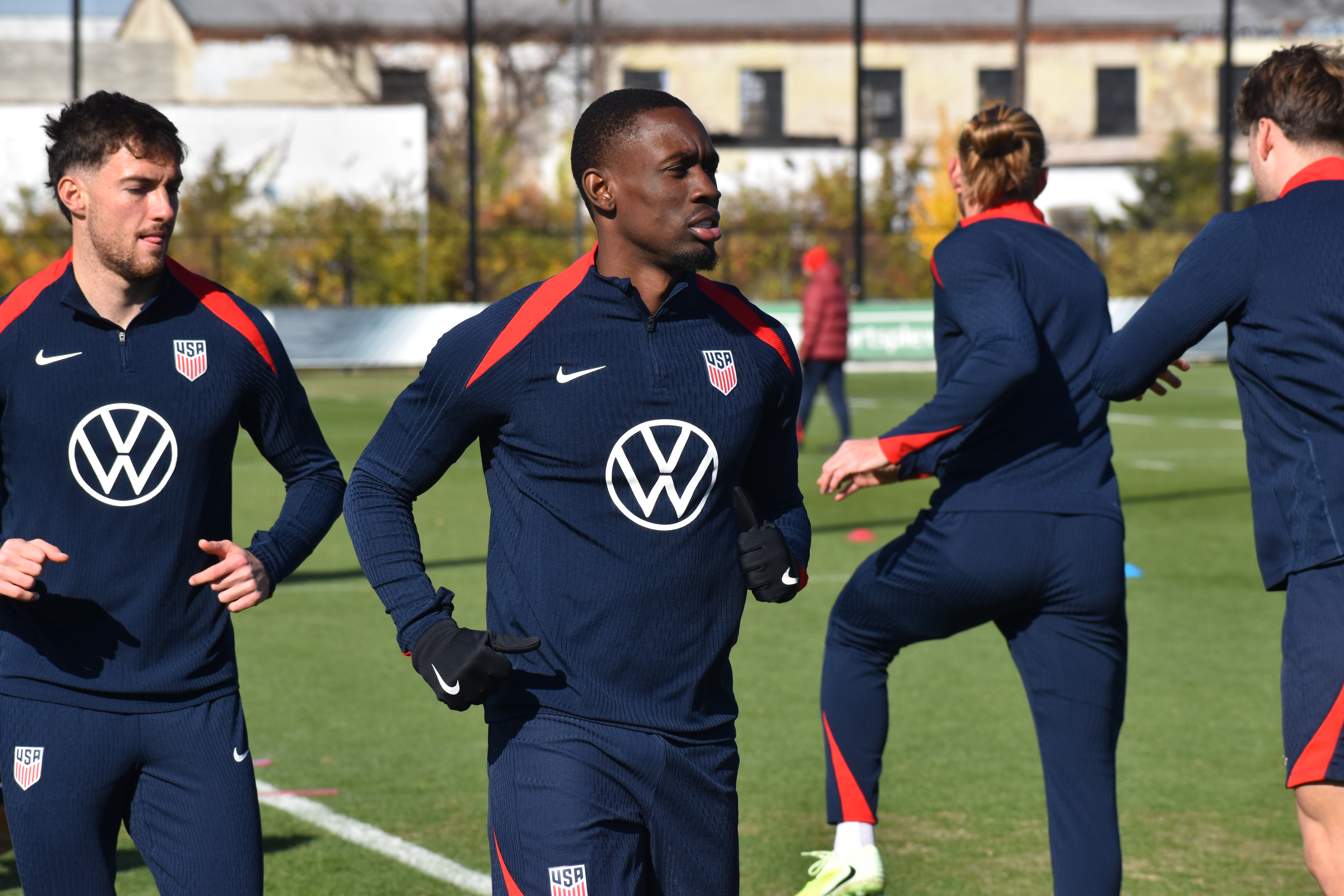
    “I’m very proud to have qualified my country for a World Cup,” Jean Jacques said at Thursday’s Union practice, speaking in his native French. “It feels good, and I think it makes all Haitian people in general feel good.”

    Unfortunately, the 25-year-old midfielder was suspended from the finale because of yellow card accumulation, so watched from the stands of Haiti’s neutral-ground “home” in Curaçao. But he was able to take part in the celebrations.

    “It was a bit stressful, because I wanted to play, I wanted to give everything for my country,” Jean Jacques said. “But I was confident in my teammates. I knew they would do the rest of the work. I had done the most I could, and I was very confident that my teammates would get it done.”

    Because Haiti’s game finished before Costa Rica-Honduras, the team didn’t know at its final whistle whether it had qualified. So they all waited on the field, following the other game on mobile phones. TV cameras were still rolling and captured the joy when the news came across.

    “Representing Haiti means many things,” Jean Jacques said. “You have to give your heart. Every time I represent Haiti, I try to give my maximum, I try to give everything for my country. I don’t want to come up short for my country — I try to give my maximum, and I feel very, very good to represent Haiti.”

    Some players documented their celebrations on Instagram, and fans flooded their comments to celebrate. There were also great scenes in Haiti’s capital, Port-au-Prince, and throughout the Haitian diaspora across North America.

    “It had been a long time since Haiti qualified for a [men’s] World Cup, and now we’ve done it,” Jean Jacques said. “I think they [at home] are proud, and I hope they will stay behind us and push us and give us strength. They will help us in the future, because I think we have more to give.”

    Coincidentally, Jean Jacques isn’t the only player on Haiti’s team with ties to Philadelphia. Outside back Duke Lacroix, 32, is an Ocean County, N.J., native who played his college soccer at Penn from 2011-14.

    Lacroix has played professionally ever since in the U.S. second-division USL Championship, for a range of teams. At his current home, the Colorado Springs Switchbacks, he has many teammates with Union ties, including Matt Real and Anthony Fontana.

    “He told me that he spent some time here, and about the city,” Jean Jacques said of Lacroix. “He said it’s a nice city and I’m in a good club. … I can say he’s a good player who plays strong, is very serious, and works hard.”

    It’s also a coincidence that Jean Jacques’ closest friend on the Union, Olivier Mbaizo, was the first player to make a World Cup squad while with the club. Jean Jacques could be the second, with lots of people in Chester and beyond hoping Blake ties him on that mark.

    “It means many things for me. I think it would mean many things for the club, too,” Jean Jacques said. “The team deserves this, because it’s a good club, with a good setup. I hope there will be other players, too, who will be able to be part of the World Cup, because it’s a good thing for the club.”
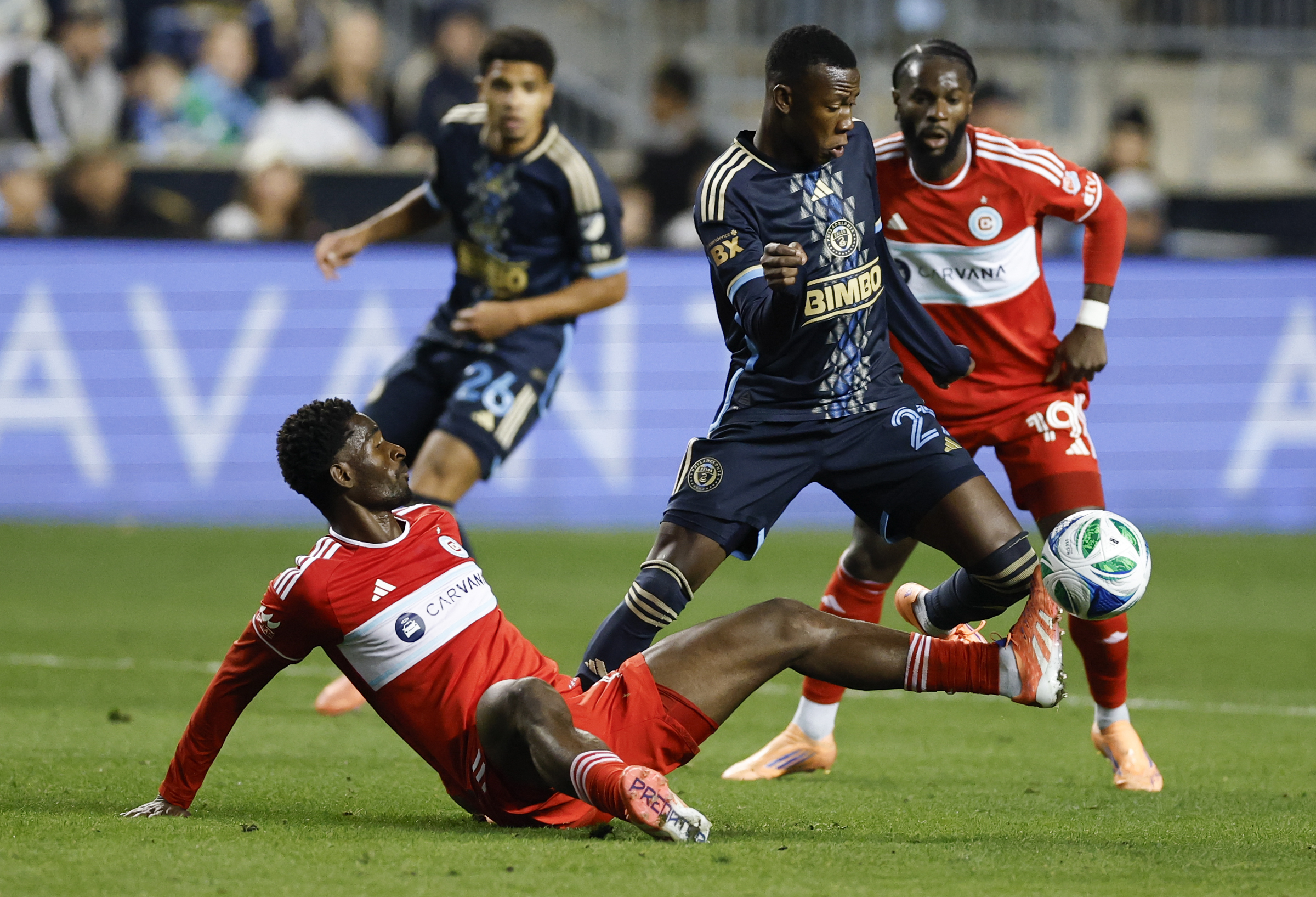
    Danley Jean Jacques (center) in action with the Union during their playoff series against Chicago last month.

    He also took a moment to praise the club’s young Americans who have played in youth World Cups lately: Frankie Westfield at the under-20 level and Cavan Sullivan at the under-17 level.

    “I think they will keep growing,” he said.

    There’s a long way to go until next summer for Jean Jacques, Haiti, and the Union. But he has allowed himself a moment to dream of what it will be like if he steps onto the field in a World Cup game — perhaps even at Lincoln Financial Field if Haiti is drawn to play here.

    “It has always been a dream to play in a World Cup, to qualify my country, so I’m very happy,” he said. “I’m waiting for the moment when it arrives, and I’ll see how it goes. But no matter what, whether I’m on the field or off it, I’ll support my teammates and give everything for the country.”

    2026 FIFA World Cup qualifying playoffs

    All games will be played in March as single-elimination rounds. The inter-continental playoffs will be played in Guadalajara and Monterrey, Mexico, while the European playoffs will be played on home fields.

    Inter-continental playoffs

    Bracket 1: New Caledonia (Oceania) vs. Jamaica (Concacaf); winner plays Democratic Republic of the Congo (Africa)

    Bracket 2: Bolivia (South America) vs. Suriname (Concacaf); winner plays Iraq

    European playoffs

    In all the brackets listed below, the first game’s winner will host the second-round contest.

    Bracket 1: Wales vs. Bosnia & Herzegovina, Italy vs. Northern Ireland

    Bracket 2: Ukraine vs. Sweden, Poland vs. Albania

    Bracket 3: Slovakia vs. Kosovo, Turkey vs. Romania

    Bracket 4: Czech Republic vs. Republic of Ireland, Denmark vs. North Macedonia
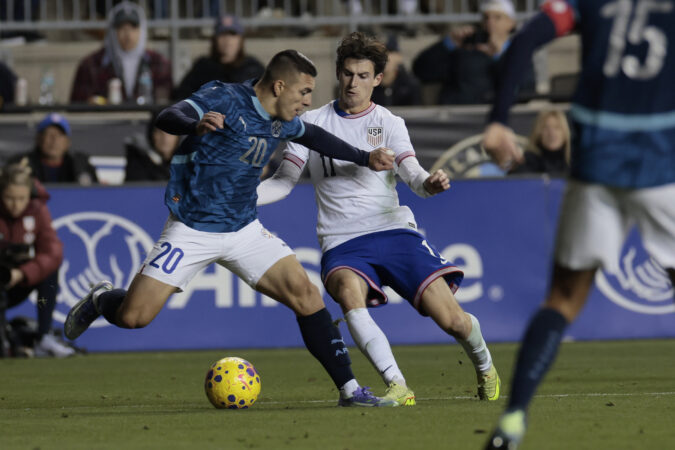
  • Projecting the USMNT’s World Cup roster after its last game of the year: Several locals in; surprises on the bubble

    Projecting the USMNT’s World Cup roster after its last game of the year: Several locals in; surprises on the bubble

    TAMPA, Fla. — From the time Mauricio Pochettino took over the U.S. men’s soccer team last year, each moment has had two meanings.

    Along with trying to win games, every pass, shot, tackle, save, or failure has been about trying to make the World Cup team. That mentality is burned deep into American soccer’s psyche, as it has been for many decades, and it’s even deeper when the tournament is on home soil.

    The competition is made more difficult by how few opportunities there are to compete. Tuesday’s U.S.-Uruguay game was the 22nd match of Mauricio Pochettino’s tenure, with two more in March before the World Cup roster is named in late May.

    That is the same number of games (24) the Eagles played in their entire 2024 campaign, from the preseason through the Super Bowl — to say nothing of how many games there are in other sports’ calendars.

    U.S. manager Mauricio Pochettino.

    On top of that, in none of those 22 games has Pochettino had every member of his A squad healthy. Christian Pulisic, Tyler Adams, Weston McKennie, Folarin Balogun, Chris Richards, Sergiño Dest, and others have missed significant time along the way.

    Then combine those absences with the Nations League flop in March, which forced Pochettino to blow up his plans and bring in a bunch of less-talented challengers to try to outhustle the stars. The result is the roller-coaster path the U.S. team has been on this year, reaching a smooth track only in the last two months.

    This has made projecting a World Cup roster quite difficult. It’s a game fans love to play, and the media often enjoys it too. But the absences, the results, and the quick cadence of FIFA windows this fall made it more sensible to wait.

    Now, though, the Americans have wrapped up their work for the year. The 24 players on this month’s squad headed back to the club world on Wednesday morning, and that side of the game will reign until late March.

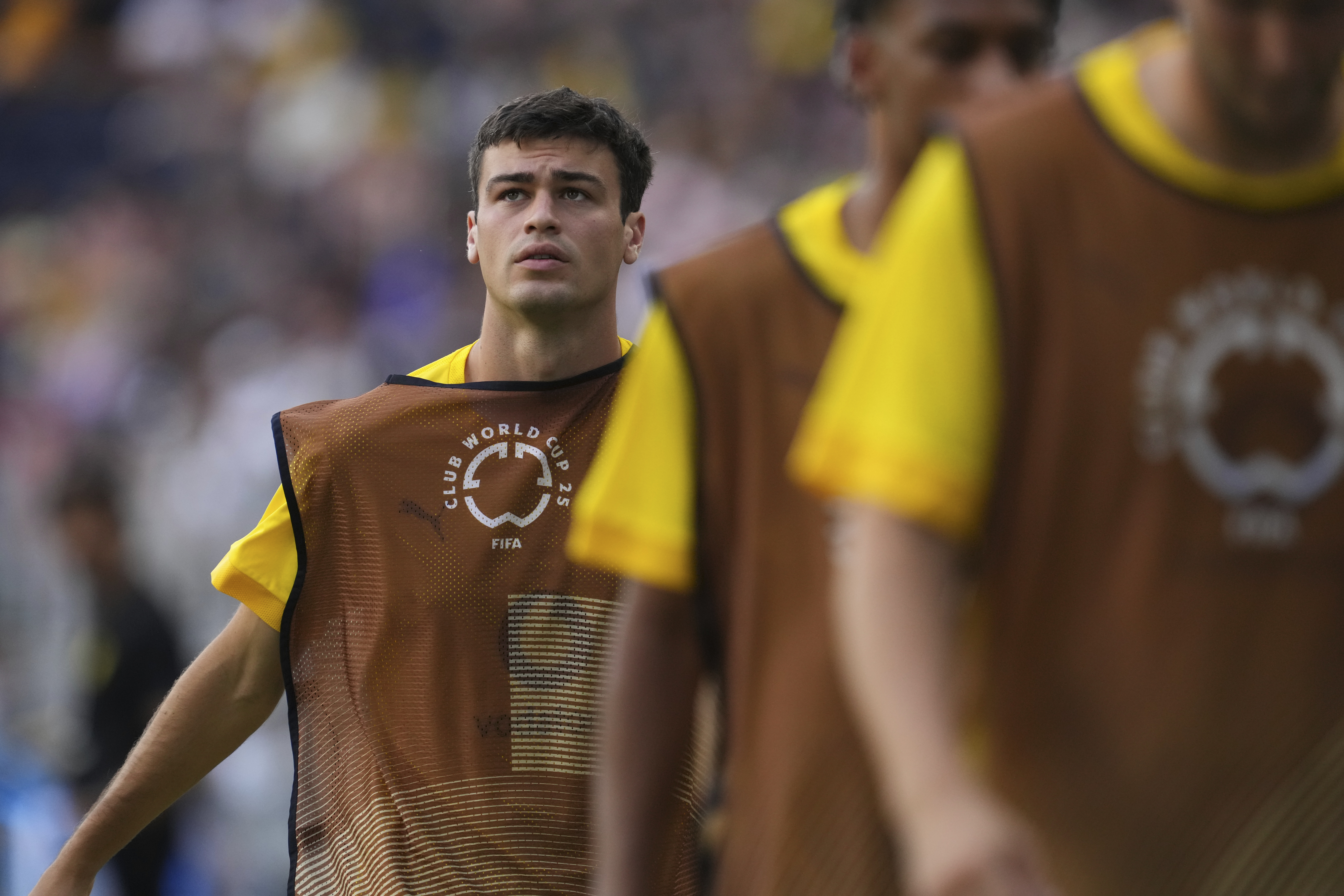
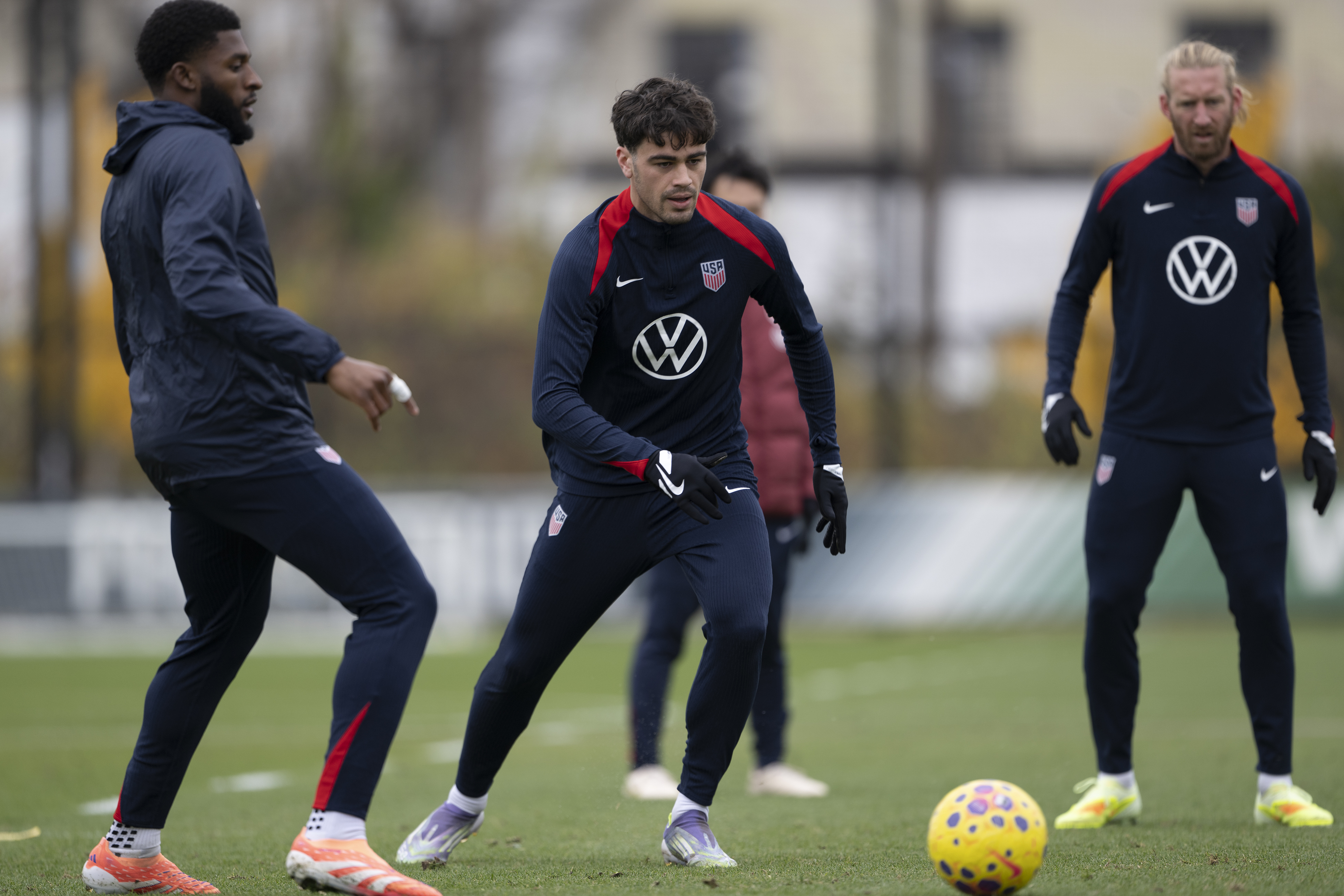
    Gio Reyna is one of the players who left a big and positive impression in this month’s games.

    So this moment feels right to look at the bigger picture. Here’s my view of the race to make the plane to Atlanta, where the 26-player World Cup team will gather at U.S. Soccer’s new national training center before its pretournament friendlies.

    The projection is broken down by the six main positions in Pochettino’s tactics: goalkeeper, outside back, centerback, central midfielder, attacking midfielder, and striker. Each position then has players who look like they’re in, those on the bubble (in alphabetical order), and a few words of analysis.

    Goalkeepers

    In: Matt Freese (New York City FC), Patrick Schulte (Columbus Crew)

    Bubble: Roman Celentano (FC Cincinnati), Jonathan Klinsmann (Cesena, Italy), Zack Steffen (Colorado Rapids), Matt Turner (New England Revolution)

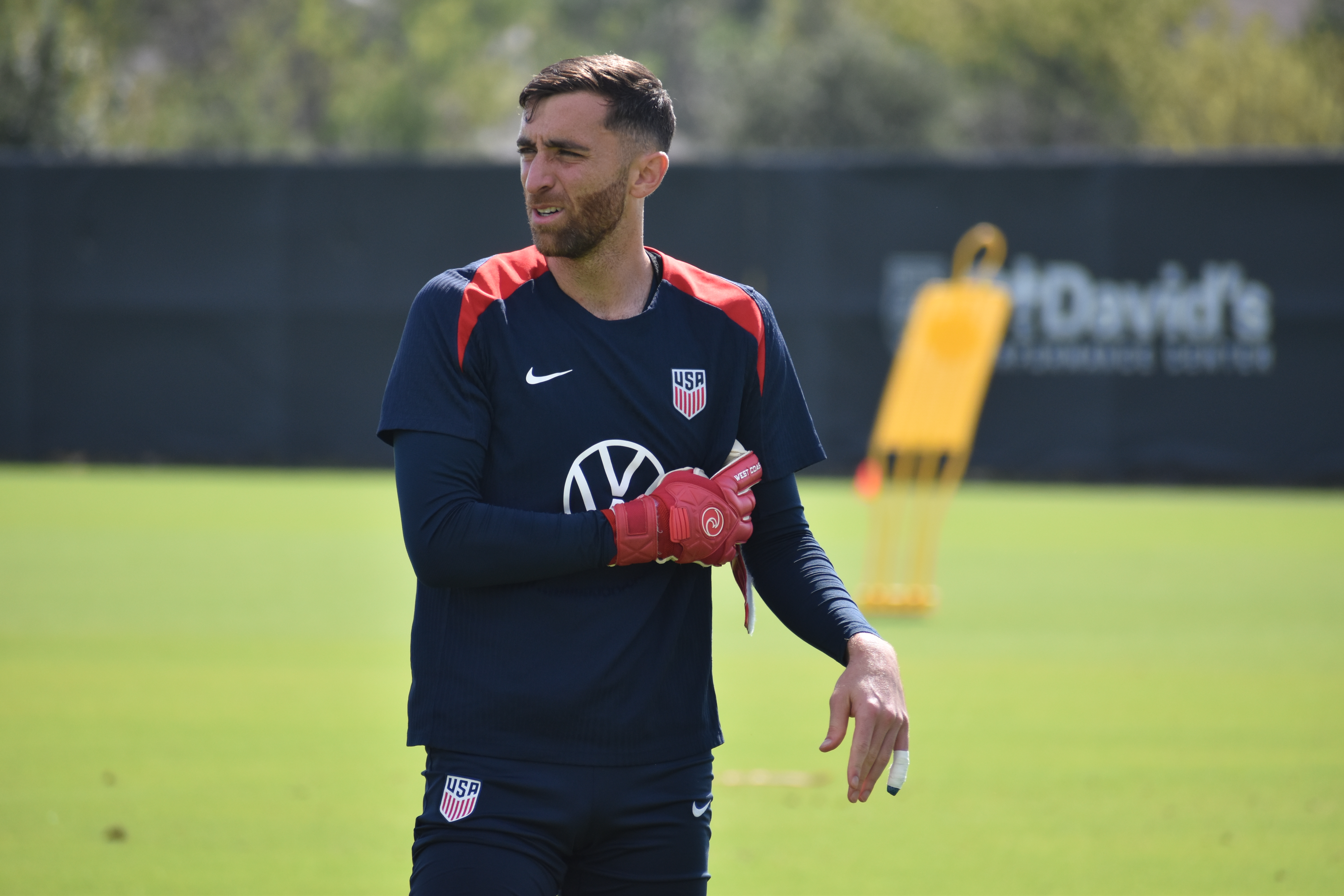
    Matt Freese making a save during one of the U.S. men’s team’s practice sessions in Chester last week.

    Analysis: Unless something goes off the rails for Freese, the Wayne native is in line to become the most surprising U.S. starting goalkeeper at a World Cup for generations. He was given a chance in June and has not let it go, playing 13 of the Americans’ 14 games since the start of the summer.

    Schulte, at age 24, is a fine starter in Columbus, a capable backup with the U.S., and a leading name for the 2030 cycle.

    Turner’s fall is as surprising as Freese’s rise. The locked-in starter from the 2021 Gold Cup through this past March is now not just out of games, but out of rosters. Even a move back to New England to get the playing time he lacked in Europe hasn’t gotten him back in Pochettino’s good graces.

    Matt Turner is on the outside looking in with the U.S. squad right now.

    Celentano and Klinsmann, son of former U.S. manager Jürgen Klinsmann, have been in a few U.S. camps. Steffen, of Downingtown, unfortunately is on the outside looking in right now, despite his talent. He’ll have to hope for a strong start next year in Colorado that vaults him over the field.

    Outside backs

    In: Max Arfsten (Columbus Crew), Sergiño Dest (PSV Eindhoven, Netherlands), Alex Freeman (Orlando City), Antonee Robinson (Fulham, England), Tim Weah (Marseille, France)

    Bubble: Kristoffer Lund (FC Köln, Germany), John Tolkin (Holstein Kiel, Germany)

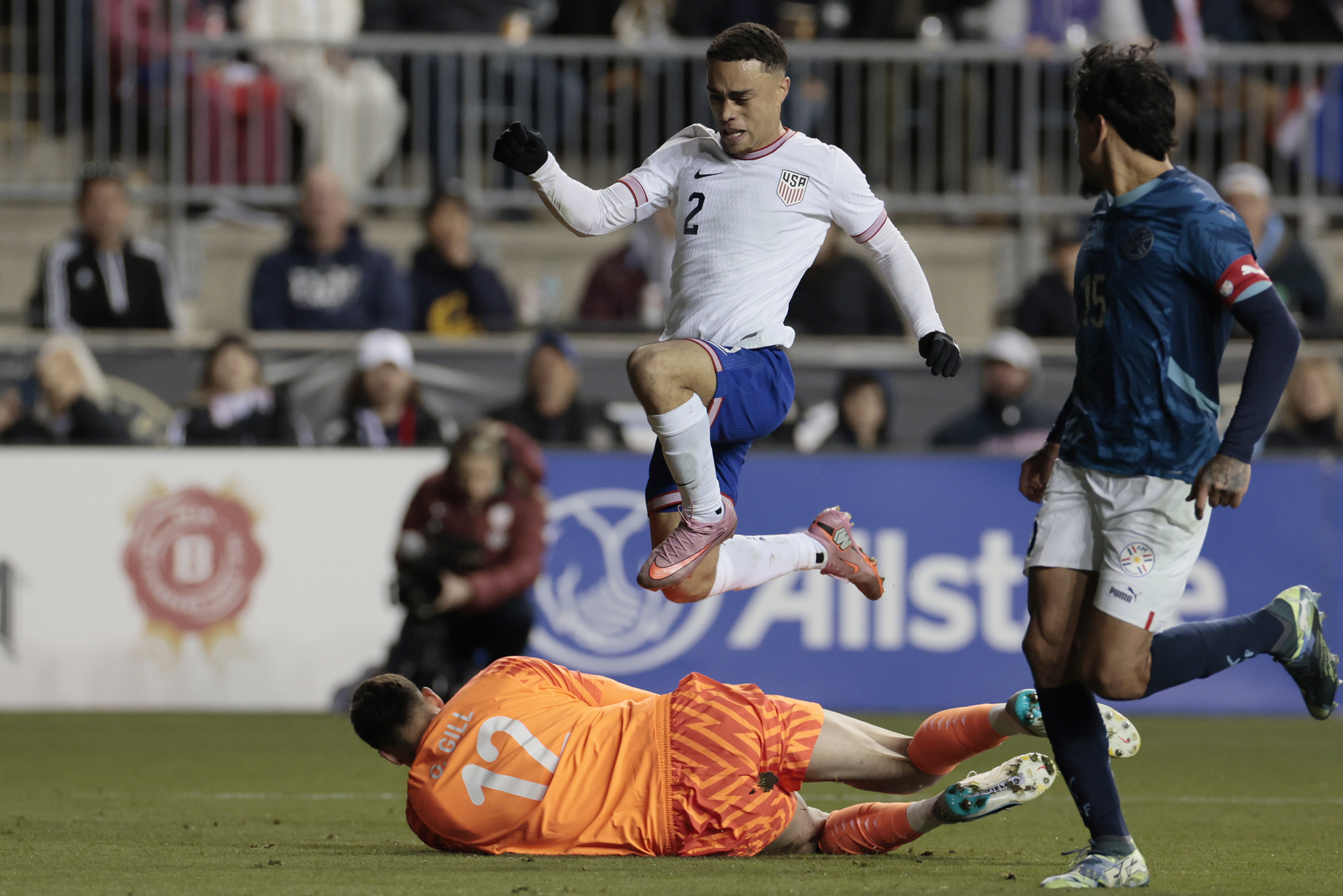
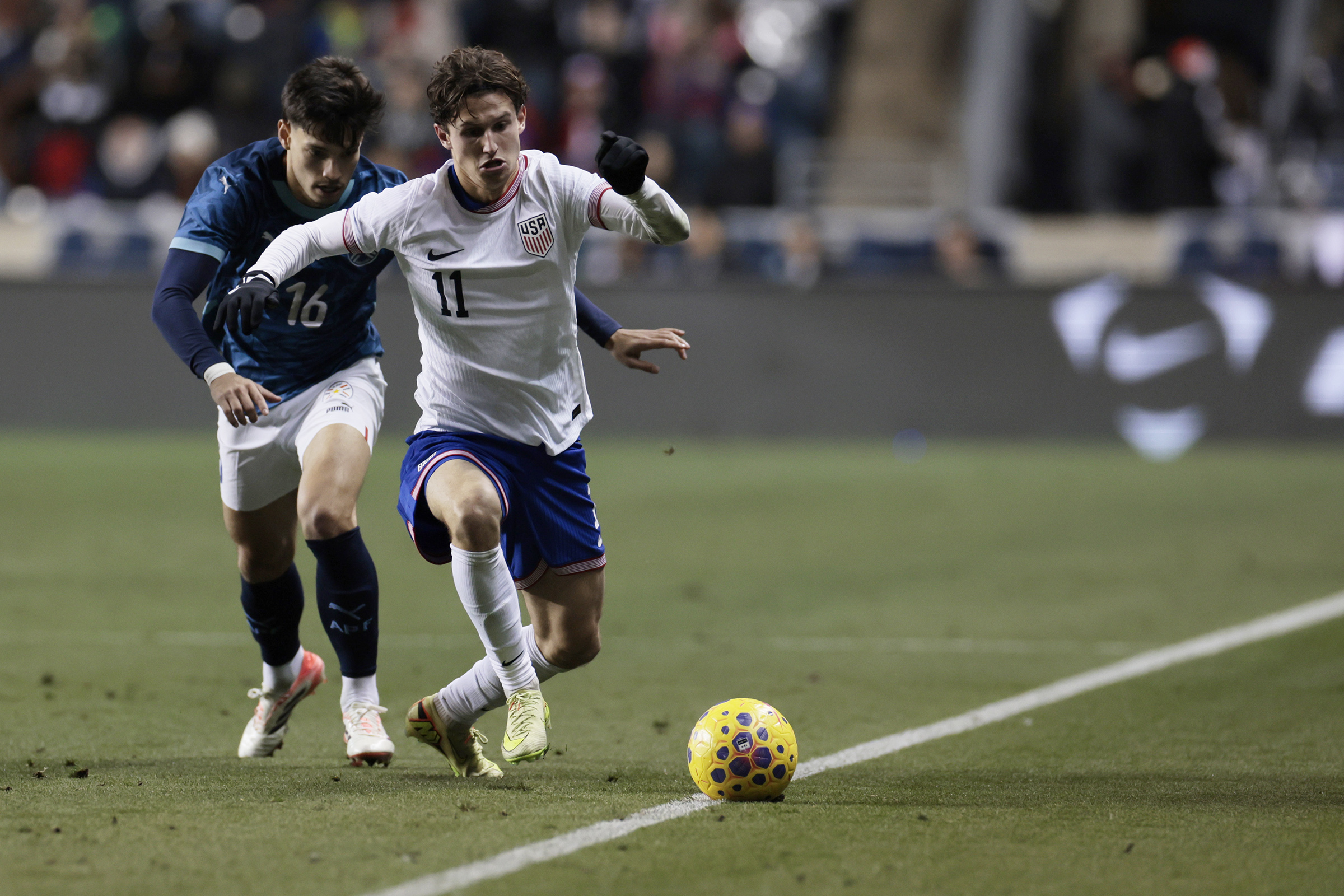
    Sergiño Dest (2) in action against Paraguay at Subaru Park on Saturday.

    Analysis: With one exception, this position is easy to line up. All five of the “in” names are locks to make the squad unless Robinson can’t recover from a long-term knee issue. From here, the view is if he’s healthy on June 1, that’s all that matters.

    Dest and Weah are the other big names, each capable of thriving in the right wingback role and playing the left side if necessary.

    Earlier this year, a reader complained to me on social media that the underwhelming Gold Cup squad might only produce the last players picked for a World Cup squad. I responded that if that was to happen, that squad would be a smashing success, no matter its results.

    Arfsten and Freeman are the proof of that, having shot to well-earned prominence this year. Though they wouldn’t start if the three others are healthy, they are more than capable backups.

    Lund and Tolkin are on the bubble in case Robinson ends up out. Tolkin played well against Uruguay on Wednesday in his first U.S. cap since the Gold Cup; Lund hasn’t been called in since October of last year.

    Centerbacks

    In: Mark McKenzie (Toulouse, France), Tim Ream (Charlotte FC), Chris Richards (Crystal Palace, England)

    Bubble: Noahkai Banks (Augsburg, Germany), Tristan Blackmon (Vancouver Whitecaps), Cameron Carter-Vickers (Celtic, Scotland), Miles Robinson (FC Cincinnati), Joe Scally (Borussia Mönchengladbach, Germany), Auston Trusty (Celtic, Scotland), Walker Zimmerman (free agent, last with Nashville SC)

    Chris Richards working out during a practice in September.

    Analysis: Ream and Richards aren’t just locks, they’re expected starters. The third starting spot is up for grabs, and there’s a lot of competition.

    McKenzie isn’t just projected as in here out of hometown loyalty to the Union alumnus from Bear, Del. His play for the national team and Toulouse puts him above a field in which no one else has truly stepped up.

    From here, the bet is Pochettino will take two more, and the race is wide-open.

    Blackmon has played some for Pochettino but isn’t at the needed level. Carter-Vickers didn’t play for the U.S. in October, a big warning sign, then suffered an Achilles injury at Celtic. Robinson is a U.S. regular but hasn’t quite done well enough to ensure a plane ticket.

    Scally can play multiple positions and is listed here because right centerback is where he projects under Pochettino. After being out of the picture for a while, he played there against Paraguay, got torched on a goal, then didn’t play vs. Uruguay.

    Mark McKenzie (left) and Auston Trusty (right) grew up with the Union together, and could go to the World Cup together.

    Trusty played the full game vs. Uruguay and did well at both ends of the field. Zimmerman is last in line, but if he lands at a big club in MLS free agency and starts the year strong, he could be an emergency option.

    Banks is a big wild card. The 18-year-old Hawaii native stands 6-foot-4, is starting to earn regular playing time at Augsburg, and has held his own in the Bundesliga’s cauldron. Pochettino called him up in September, but hasn’t since. If Banks keeps playing, he might just make it.

    Central midfielders

    In: Tyler Adams (Bournemouth, England)

    Bubble: Sebastian Berhalter (Vancouver Whitecaps), Johnny Cardoso (Atlético Madrid), Aidan Morris (Middlesbrough, England), Cristian Roldan (Seattle Sounders), James Sands (St. Pauli, Germany), Tanner Tessmann (Lyon, France)

    Tyler Adams (left) is one of the U.S. team’s biggest stars.

    Analysis: Adams is a lock — a star, a veteran, and the team’s most vocal leader. From there, the question will be how deep Pochettino goes at the position.

    Tessmann, Roldan, and Morris lead the way, with Tessmann the closest to a lock. That takes the total to four, and the guess here is one more will make it.

    Berhalter made quite a statement in Tuesday’s win over Uruguay, with a goal and an assist off a corner kick. That puts him ahead for now of Cardoso, who has tons of talent and is at a huge club but has a history of playing poorly for the U.S. He’s also coming off an injury. If he’s healthy by March, he could get one shot at a ticket in that month’s friendlies.

    Sands helps his case with versatility, as he also can play centerback. He got a look in October and wasn’t bad, but he wasn’t called back this month even though there was room for him.

    Attacking midfielders

    In: Brenden Aaronson (Leeds United, England), Weston McKennie (Juventus, Italy), Christian Pulisic (AC Milan, Italy), Malik Tillman (Bayer Leverkusen, Germany), Alejandro Zendejas (Club América, Mexico)

    Bubble: Diego Luna (Real Salt Lake), Jack McGlynn (Houston Dynamo), Gio Reyna (Borussia Dortmund, Germany)

    Union alum and Medford native Brenden Aaronson in action for the U.S. on his former home field at Subaru Park.

    Analysis: The “in” players are locks as long as they’re healthy, with Zendejas the only one close to a question. Pulisic obviously is a starter, with Tillman or McKennie in line to run next to him.

    From there, Pochettino can make subs based on situations. Medford’s Aaronson is an ideal defensive closer, and Zendejas provides width and creativity.

    The last pick could come down to Luna, whom Pochettino rightly adores for his toughness; or Reyna, whose talent is forever followed by injury fears. It would be great to see both make it, but there might not be room unless another position is sacrificed. Reyna has the advantage now and will keep it if he plays regularly for his club.

    McGlynn is a long shot, but a hot streak with Houston next year could bring his magic left foot back to the picture.

    Strikers

    In: Folarin Balogun (AS Monaco, France), Ricardo Pepi (PSV Eindhoven, Netherlands), Haji Wright (Coventry City, England)

    Bubble: Patrick Agyemang (Derby County, England)

    Folarin Balogun (center) might finally be the U.S. team’s long-awaited top striker.

    Analysis: It’s truly remarkable that the highest-profile position is one at which the U.S. has the fewest questions. Never before in the program’s 36-year modern era has there been a striker depth chart with this much quality.

    If Balogun, Pepi, and Wright are healthy, they’ll be on the plane, and that will be it. If any of them are injured — which Pochettino and every U.S. fan will pray doesn’t happen — Agyemang is first in line to come in.

    The field drops so far from there that right now no other strikers truly are in consideration.

  • The USMNT’s players appreciate the team’s tough schedule leading up to the World Cup

    The USMNT’s players appreciate the team’s tough schedule leading up to the World Cup

    TAMPA, Fla. — Once the U.S. men’s soccer team knew it wouldn’t have to qualify for next year’s World Cup as a cohost, it faced a different challenge.

    Having no qualifiers to play meant the program would have to fill its calendar with exhibition games, which the world’s game calls “friendlies” even when they aren’t polite. (Look no further than the brawl that ended Saturday’s U.S.-Paraguay match in Chester.)

    Since it started to matter in June, U.S. Soccer could have picked several lesser opponents to try to rack up wins for public perception. But it knew those would have been empty calories, and many fans would have agreed.

    So manager Mauricio Pochettino and his staff chose the harder path: aim high, suffer along the way, and come out the other side sharpened.

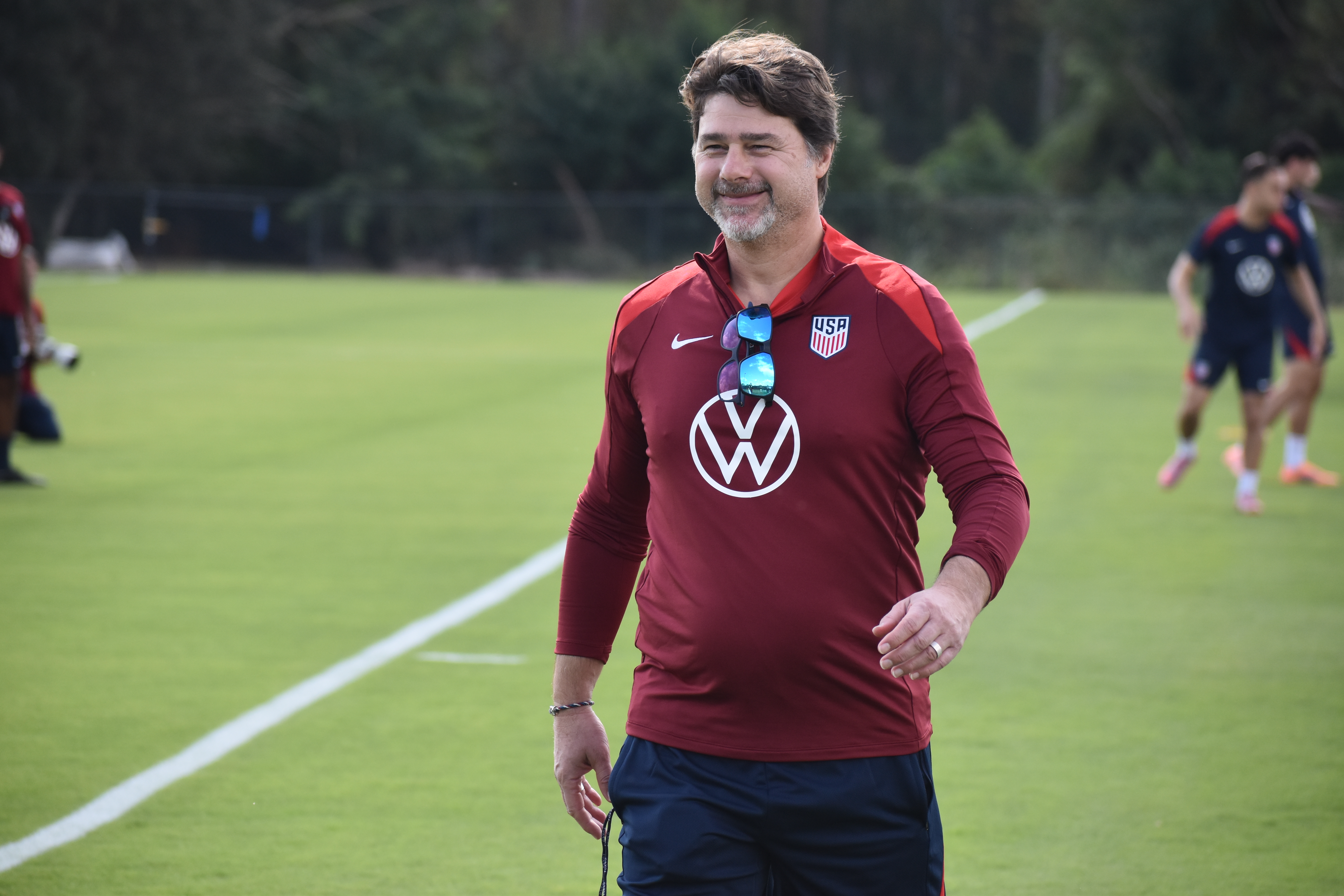
    U.S. manager Mauricio Pochettino at Monday’s practice in Tampa.

    There was certainly suffering for a while: a 2-1 loss to Turkey and a 4-0 blowout to Switzerland in June, and a 2-0 loss to South Korea in September.

    Pochettino’s words after the Switzerland game were as true then as they are now, with the U.S. on a four-game unbeaten run against Japan, Ecuador, Australia, and Paraguay.

    “We knew that we wanted to play with two important teams in Europe like Turkey and Switzerland,” he said. “When we decided to play them, it’s because we wanted the players to feel the high level. And when you take the risk, this accident can happen.”

    Had the Americans not turned results in their favor, as they have over the last four games, the ride would still be bumpy. Perhaps some critics would claim to prefer the easier path.

    But the good results have further justified a correct decision.

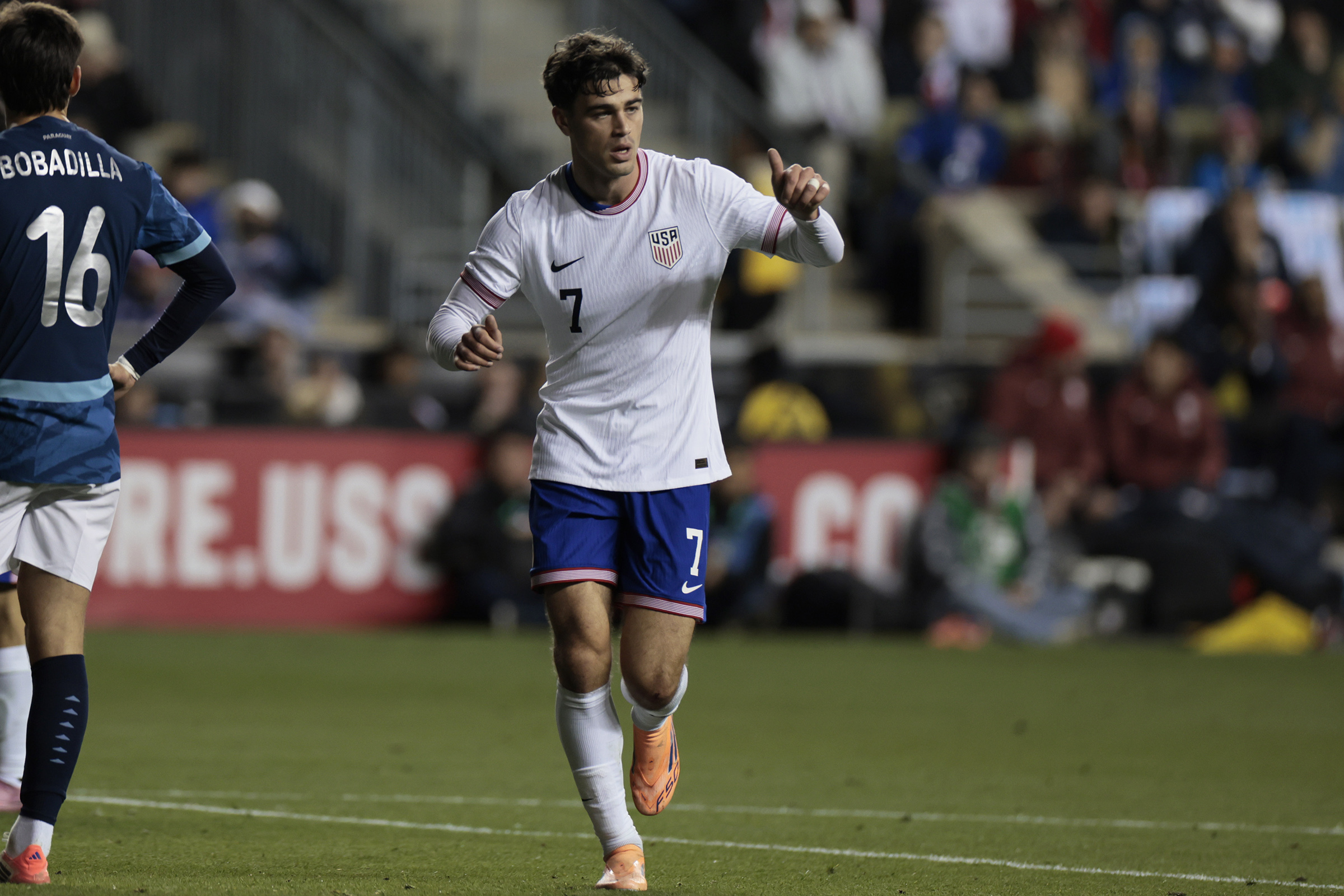
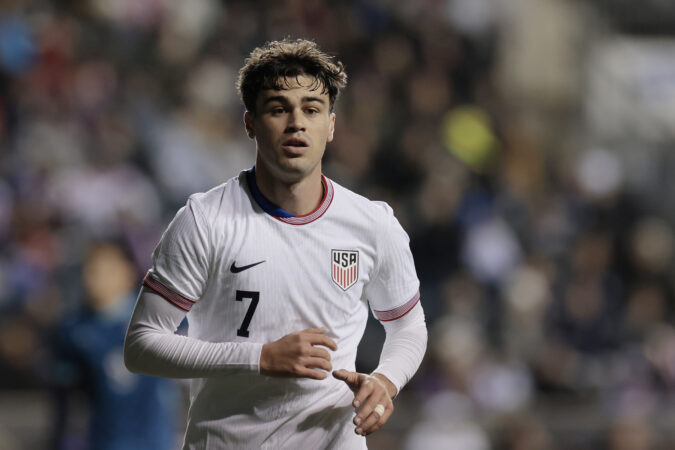
    Gio Reyna (left) celebrating after scoring the opening goal for the U.S. against Paraguay at Subaru Park on Saturday.

    Now the hill grows steeper. After facing Turkey and Switzerland in June, South Korea and Japan in September, Ecuador and Australia last month, and Paraguay last week, the U.S. closes its year by facing South American superpower Uruguay at the Tampa Bay Buccaneers’ Raymond James Stadium on Tuesday (7 p.m., TNT, Universo).

    Next March’s games, the last before the World Cup is set, are expected to be against Portugal and Belgium at Atlanta’s Mercedes-Benz Stadium — a fittingly glamorous stage in U.S. Soccer’s new hometown.

    ‘A real, raw passion’

    All 10 of those teams were or will be in the top 40 of FIFA’s global rankings at the time of the matchup, with nine in the top 25 and five in the top 20. (The U.S. sits 16th, and has for all but one ranking period over the last year.)

    And since the opponents had their own World Cup qualifiers to play, U.S. Soccer earns more credit for getting them over here in the rare times they were available.

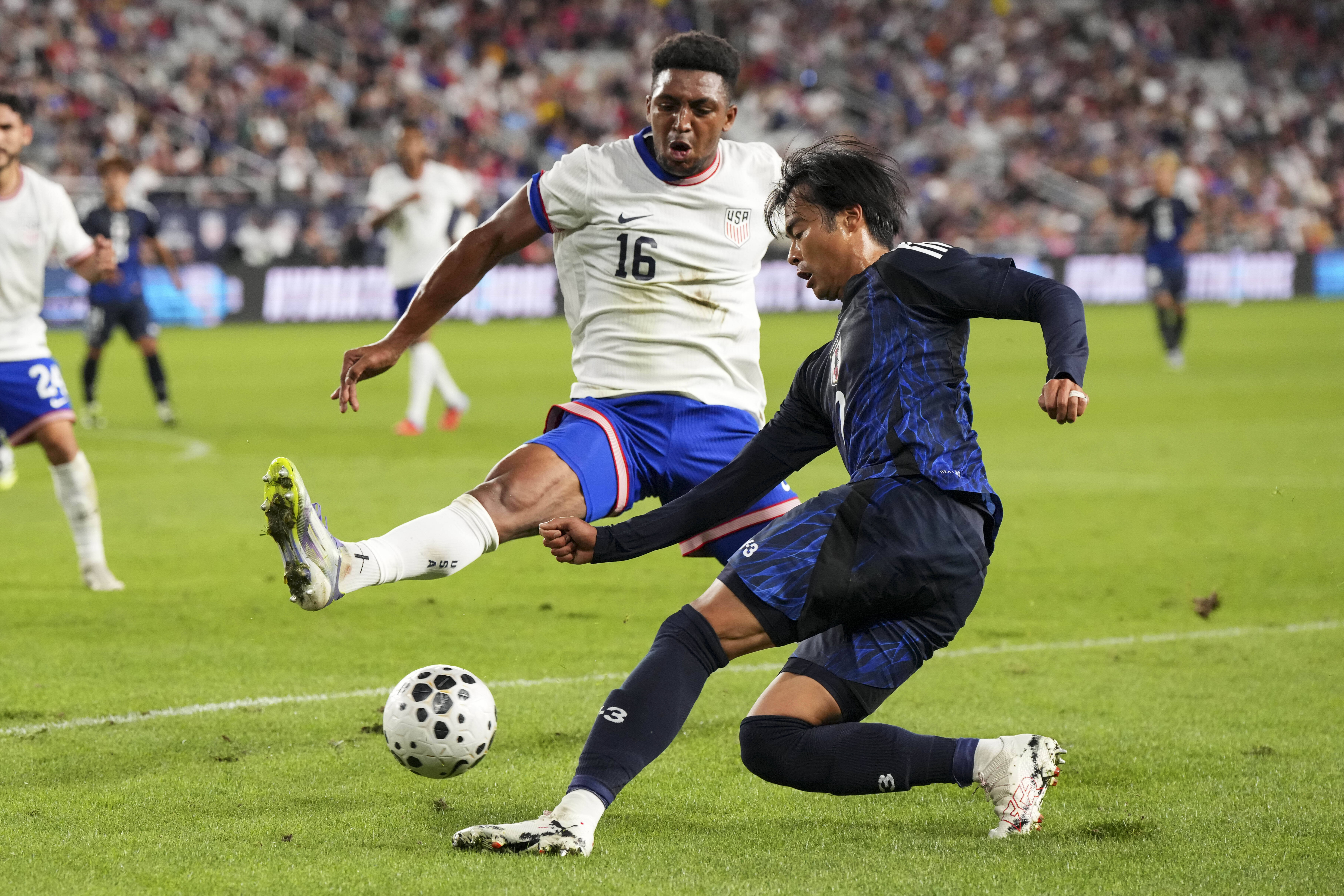
    Alex Freeman (left) defending Japan’s Kaoru Mitoma during their matchup in September.

    “That’s ultimately what you want,” former Union centerback Mark McKenzie said. “I think any competitor wants to play against the best of the best, and as you go into a World Cup where we don’t have the luxury of a qualification period, you want to play against opponents who ultimately you have the potential to see in the World Cup. So I think when you play against those teams that are especially high-ranked, it puts you up to bat, and to figure out where you stand against those kinds of teams.”

    The competitive juices especially come out when the U.S. plays South American opponents. Though big-name European nations draw more fan interest, South American teams deliver an unmatched mix of talent and passion.

    “There’s a real, raw passion that comes along with that,” McKenzie said. “There’s a sense of real pride that South American teams play with. You hear it with the national anthems — the stadium is rocking because their supporters are all singing and screaming their anthem.”

    McKenzie tries to bring the same mentality to playing for his country, and to his teammates.

    “We have that mentality of, it’s not every day you get the chance to represent your crest, [or] every day you get to be one of 20-some-odd players to step on that pitch,” he said. “So, yeah, we’re going for the same mentality. We approach each game [as] it’s not a friendly match, but this is a preparation for what’s to come.”

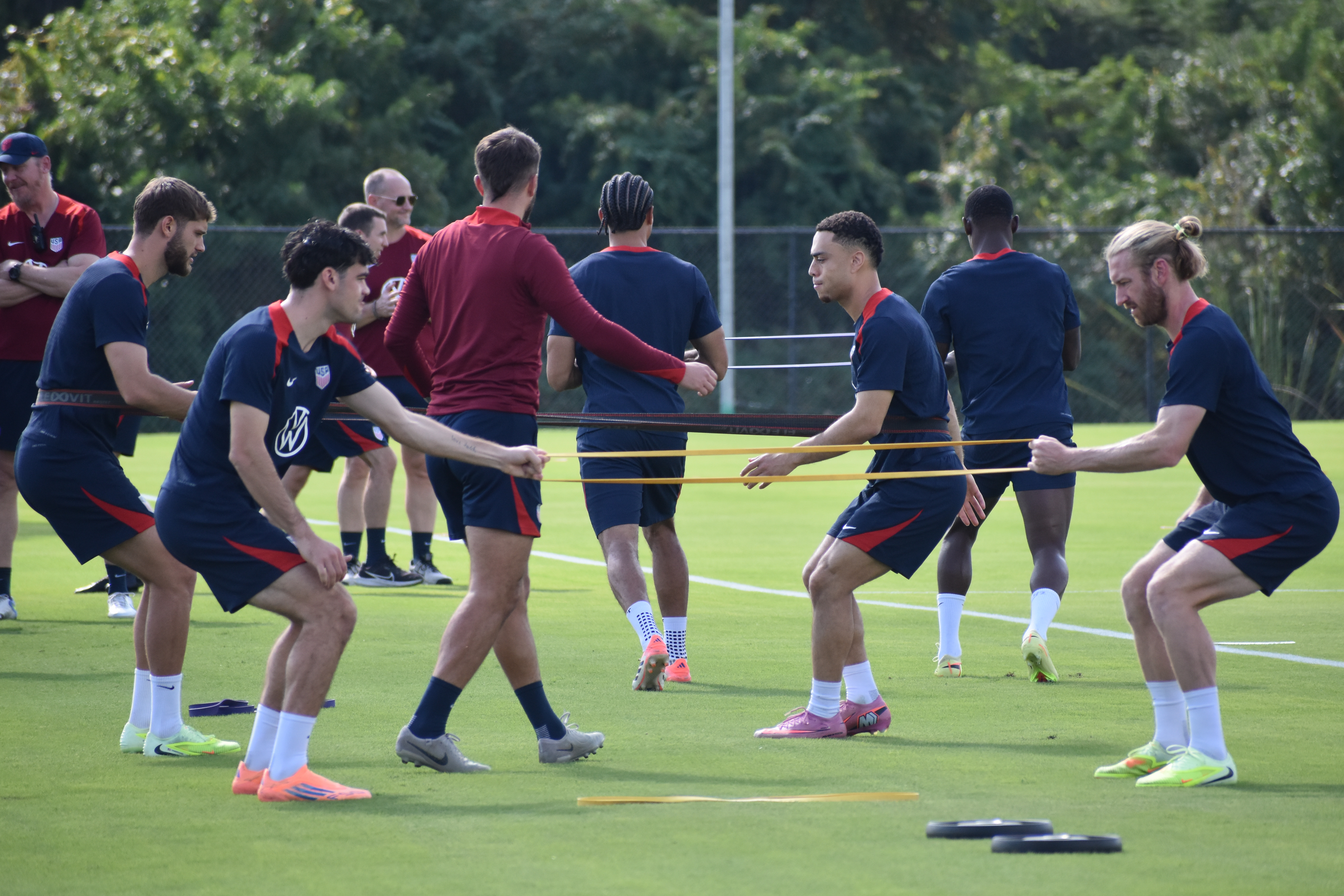
    Gio Reyna (second from left) and Tim Ream (right) are among the U.S. players shown stretching at Monday’s practice.

    The U.S. has a long history of big games against South American foes. Its first guest appearance in a Copa América, South America’s continental championship, was in 1993 — a year before facing Colombia and Brazil in the first men’s World Cup hosted here.

    Kasey Keller’s 10-save masterclass against Brazil in 1998 still lives in the history books, as does a 1999 upset of an Argentina squad that Pochettino played for. More recently, the U.S. hosted two Copa Américas, in 2016 and last year, and in them faced six of the continent’s 10 teams.

    That Uruguay landed the knockout blow in last year’s group stage makes this meeting even more of a benchmark.

    Among the players who have gotten the message is outside back Alex Freeman, one of the younger members of this group but with a fast-rising profile.

    “I feel like it’s a good test for us,” he said. “I feel like, especially in our home country, we need these tests. We need to show what we’re capable of and what we can do, and I feel like just knowing that we’re able to compete against these teams, it’s just a good step for us, and for the U.S. in general for soccer.

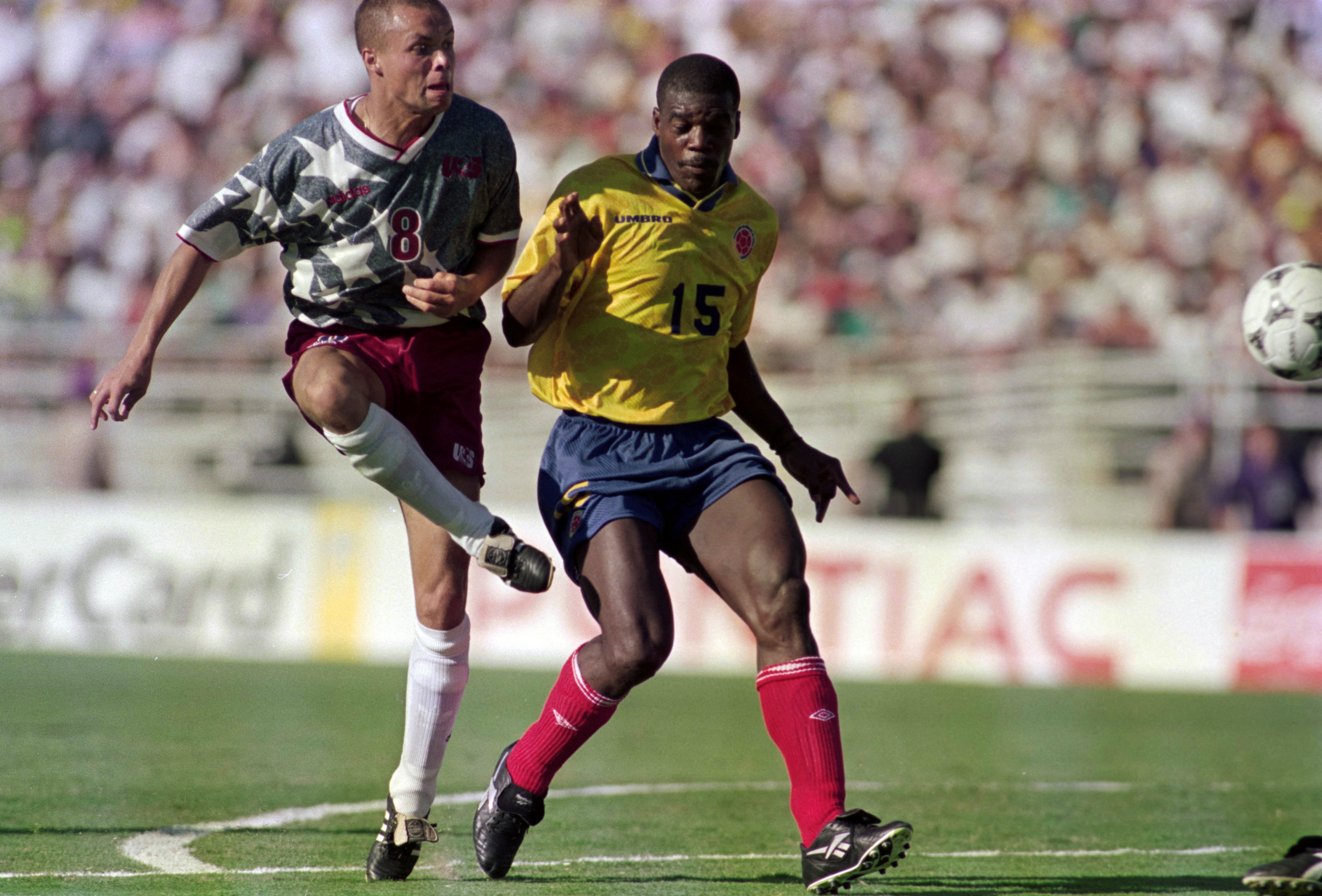
    Long before he was the Union’s sporting director from 2015-18, Earnie Stewart (left) scored a historic goal to help the U.S. men upset Colombia at the 1994 World Cup.

    The USMNT’s pre-World Cup friendly opponents

    Here’s a look at the teams the U.S. has played in friendlies since the start of June, and will play leading up to the World Cup.

    After the World Cup roster is announced in late May or early June, the tournament squad will play two friendlies against teams and in cities that are still to be announced.

    The FIFA rankings below are as of the date of the matchup, or as of this week for games that haven’t happened yet.

  • Gio Reyna seizes his moment with the USMNT, and is now in the World Cup race

    Gio Reyna seizes his moment with the USMNT, and is now in the World Cup race

    From the moment the U.S. men’s soccer team’s starting lineup was announced Saturday, all eyes were fixed on Gio Reyna.

    Not only was he about to play for his country for the first time since late March, but he was starting for the first time since last year’s Copa América group stage finale — a loss to Uruguay that sent the U.S. out in the group stage on home soil, and sent manager Gregg Berhalter out of his job.

    Reyna, 23, didn’t make any of Mauricio Pochettino’s squads until the Nations League final four in March because of a groin injury. Then he didn’t play in the semifinal loss to Panama, and was an ineffective second-half substitute in the third-place game loss to Canada.

    For all Reyna’s talents — and he has perhaps the most natural talent of any U.S. player besides Christian Pulisic — Pochettino declared him not “ready to play in the way that we expect from him” on the eve of the third-place game.

    Gio Reyna hadn’t been with the U.S. men’s soccer team since March.

    That was how far he had fallen, in terms of fitness, form, and playing time at his club, Germany’s Borussia Dortmund.

    Nor was he done falling. Reyna went to the Club World Cup with Dortmund instead of the Gold Cup and the friendlies before it, because Dortmund wanted him at their games and Pochettino didn’t want players at the friendlies whom he wouldn’t have afterward.

    Would that be salvation? No, it was almost the opposite. Reyna got off the bench only once in Dortmund’s five tournament games, a mostly useless 12-minute cameo in the group stage finale.

    Only after that did he finally leave for newer pastures, a move many outsiders had hoped to see for years. Borussia Mönchengladbach bought him for about $4.5 million up front and $3 million in incentives. It was miles below what Dortmund expected when a 17-year-old Reyna made his first-team debut in early 2020.

    Gio Reyna watched almost all of Borussia Dortmund’s Club World Cup run this summer from the bench, finally leaving the club afterward.

    It was to be a fresh start, but it barely started before Reyna suffered the latest of seemingly countless muscle injuries in September. He returned to action in mid-October, but only as a substitute.

    So it was a pretty big surprise when Pochettino called him up to the national team this month. But over the course of the week in Chester, it felt increasingly inevitable that he would start Saturday against Paraguay at Subaru Park.

    Meeting the moment

    Right on cue, there he was, and the message was clear. This was Reyna’s shot. Would he take it?

    The answer came within four minutes.

    It was a broken play out of a corner kick, the ball pinging around off all manner of limbs on both teams. Eventually, it fell to Max Arfsten, and he chipped a cross into the crowd. Reyna rose highest and met it with a header that caromed in off the crossbar.

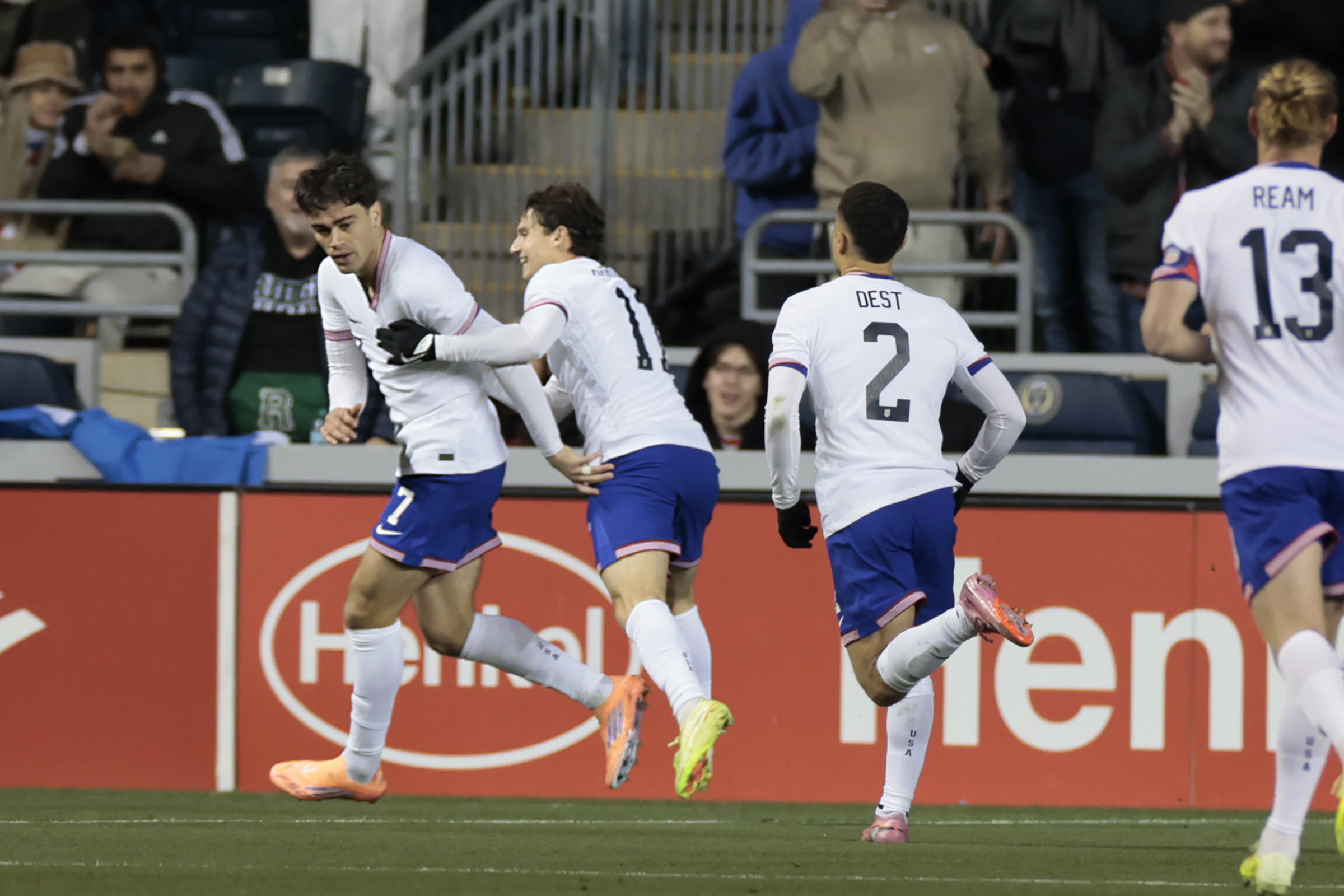
    As the crowd roared, Reyna ran toward the corner flag, pointing to the U.S. badge on his jersey. Within seconds, his teammates had swarmed him to celebrate.

    “I know the kind of player he is, and I’m just really happy for him — he deserves it,” said Medford’s Brenden Aaronson, who started with Reyna in the attacking midfield spots. “He’s been through a lot with injuries, with all this stuff. But whenever he plays for the national team, he’s always there, and it’s awesome to see. … He’s confident in his ability, he knows what he can do, and that’s the beauty of him.”

    There wasn’t time in the moment to point out that Reyna has not in fact always been “there” when with the national team. That was the whole point of the 2022 World Cup scandal that nearly torpedoed him.

    When that goal went in, though, it was a moment for his immense burden of history to be a privilege, not a weight. The tally was his ninth for the U.S., passing his legendary father Claudio’s eight.

    Gio Reyna (left) celebrates with Brenden Aaronson (center) and other teammates after scoring the game’s opening goal.

    And for once, Claudio wasn’t invoked because of that scandal, or all the times Claudio interfered with U.S. Soccer officials before then, or yelled at referees from the sidelines in Gio’s youth days, or by genetics passed his ego on to his son.

    By the time Gio emerged from the locker room to meet one of the biggest media packs at a U.S. game in quite a while, he had already texted with his father.

    “It was just fun, love,” Gio said. “He was obviously happy for me that I passed him, but I had no idea. So he was more making fun of me for the fact that it was my first header I’ve ever scored.”

    The pressure on him is earned

    The negative side of the burden struck twice after that. On Paraguay’s 10th-minute equalizer, Reyna was late and slow to challenge Junior Alonso before he launched the long ball that sprung Miguel Almirón for a dazzling assist on Alex Arce’s goal.

    In the 50th, Reyna had a look to shoot in the 18-yard box and didn’t take it, choosing instead to dribble into what became a crowd of defenders.

    Those were small moments, but they mattered. Just as pressure is a privilege, Reyna knows his talents bring extra scrutiny.

    The scale tilted back his way in the 71st. Reyna combined superbly with Folarin Balogun to create the winning goal. The man of the hour had delivered again, and the U.S. went on to close out a 2-1 win.

    “I think in the end, performances like this that can help everybody here,” Reyna said. “But I want to have, more importantly, seven or eight good months in the rest of the season with Gladbach. And then I believe if I keep performing like I did tonight, then I’ll have a good chance to make the team and have an impact there, too.”

    There’s still a ways to go, and as Pochettino said, plenty for Reyna to do to earn a seat on the plane next summer. But in a moment when he was asked to step up, he did, and in national team soccer there are never many moments. So when you get one, you have to take it.

    “He showed why he started, and yes, confirmed that he’s a player that needs to improve because he needs to play more in his club,” Pochettino said. “But we can see today that he was great: scored and assisted. And the way that [he has] always the capacity to read the game, and find the free space in between the lines, I think that was a nightmare for Paraguay, and I think he did a very good job.”

    Reyna thanked Pochettino in turn, with some notable humility.

    “I knew it was an opportunity for me to to show that I belong here,” he said. “He’s been great with me all week, working with him, and just trying to give me the freedom and the confidence to sort of be myself. So I can’t thank him enough, obviously, for the start and just for the relationship that we’ve really built this camp.”

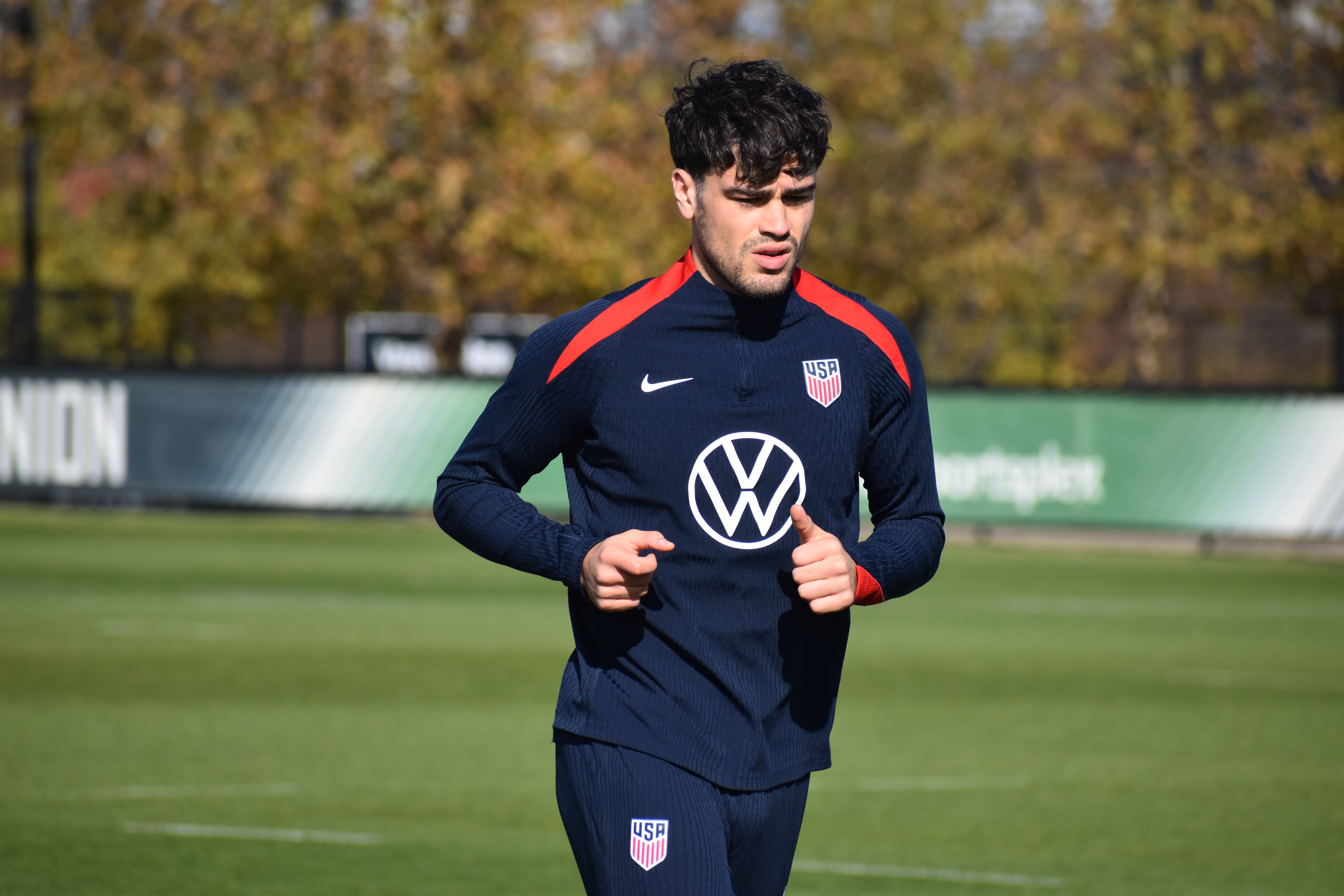
    Gio Reyna (center) working in practice during the week.

    The stakes only get higher from here, and so does the quality of opponent the U.S. will face. After meeting Uruguay on Tuesday in Tampa, Fla. (7 p.m., TNT, Universo), to close out this month, it’s expected that March’s games will see big-time opponents from Europe. Portugal, France, and Belgium are reportedly on the radar, with Atlanta’s Mercedes-Benz Stadium set as a fittingly big-time venue.

    Time will tell if Reyna earns the right to be there. For now, he’s only in the race. But that alone is the best place he’s been in for a long time.

  • Sixers and Comcast hope to open up a block of East Market for ‘pop-ups’ during the World Cup and America 250

    Sixers and Comcast hope to open up a block of East Market for ‘pop-ups’ during the World Cup and America 250

    The companies that own the 76ers and Flyers earlier this year made a high-profile commitment to help transform the long-distressed East Market Street corridor.

    The first development to come out of that promise? Perhaps a mini-soccer pitch. Or a pop-up beer garden.

    The teams recently hired a contractor to demolish buildings they own on the 1000-block of the beleaguered thoroughfare with the goal of eventually erecting a major development that could help revitalize the area.

    But, until then, City Councilmember Mark Squilla said Friday the teams and city leaders hope to “activate” the lots slated for demolition with “pop-up” opportunities related to the FIFA World Cup and the nation’s 250th birthday being hosted in Philadelphia next summer.

    “The goal was: If they could demolish it by then and fill it, we could program an open space on 1000 Market Street,” Squilla said, tossing out the soccer pitch and beer garden ideas as examples. “This will give us an opportunity to try to do something special for 2026 while we’re doing a longterm plan for East Market.”

    (function() { var l = function() { new pym.Parent( ‘sixersbuild__graphic’, ‘https://media.inquirer.com/storage/inquirer/ai2html/sixersbuild/index.html’); }; if(typeof(pym) === ‘undefined’) { var h = document.getElementsByTagName(‘head’)[0], s = document.createElement(‘script’); s.type = ‘text/javascript’; s.src = ‘https://pym.nprapps.org/pym.v1.min.js’; s.onload = l; h.appendChild(s); } else { l(); } })();

    Jacklin Rhoads, a spokesperson for the teams’ development venture, said Friday the demolitions come as the partners “continue to make progress towards future development on East Market Street.”

    “The demolition of these vacant storefronts improves the streetscape and will give us the ability to work with community partners to activate the site ahead of groundbreaking,” Rhoads said. “We are committed to working with the City to help jump start the revitalization of Market East and this is the next step in that process.”

    The teams’ commitment to work together as Market East boosters stems from the controversial and since-abandoned proposal by the 76ers’ owner, Harris Blitzer Sports & Entertainment, to build an arena in Center City.

    The basketball team had pitched that proposal as an opportunity to rejuvenate the blocks east of City Hall. But when the plan crumbled in January — in no small part due to opposition from the Flyers’ owner, Comcast Spectacor — the teams vowed to work as partners both on a new arena in the South Philadelphia stadium complex as well as on a joint development venture for East Market Street.

    The Sixers and Flyers recently hired a joint venture of New York-based Turner Construction Co. and Indiana-based AECOM Hunt to manage construction of the arena, which will be home to the city’s NBA and NHL teams and its planned, as-yet-unnamed WNBA team.

    And the teams have hired Philadelphia- and Norristown-based contractor Pride Enterprises Inc. to demolish the vacant storefronts they own on East Market Street in Center City.

    Tearing down and popping up

    Demolitions are so far only planned for part of the 1000-block, across the street from where the Sixers had previously envisioned building their new home.

    HBSE and Comcast Spectacor — a subsidiary of the Philadelphia-based entertainment, cable television, and internet giant — bought properties on East Market Street in a series of transactions totaling $56 million earlier this year. The buildings were formerly home to Rite Aid, Reebok, and other stores totaling 112,000 square feet.

    The properties currently slated for demolition are 1000-1024 E. Market St. That includes most of the former stores on the block’s south side. The teams also own 920-938 E. Market St., the western half of the adjacent block, but those properties are not currently planned for tear-downs.

    The teams’ plan to flatten the stores, making the space temporarily available for events related to the FIFA World Cup or the nation’s 250th anniversary next summer.

    Squilla said an East Market task force will be announced soon, and that group would have input on what happens at the site assuming it is demolished in time for the 2026 celebrations.

    After that, the teams will redevelop the properties, although plans aren’t finalized, Rhoads said. The teams declined to provide any details about the redevelopment project’s ambitions or scale.

    The city Department of Planning & Development did not respond to a request on the status of the development plans.

    The neighborhoods around East Market, a thriving department store district that has languished for decades, have recently begun to rebound with the development of hundreds of apartments and neighborhood retail to serve new residents.

    Stadium construction vets tapped for South Philly arena

    The new arena in South Philly will replace the Flyers and Sixers’ current home at the recently renamed Xfinity Mobile Arena, which was known as the Wells Fargo Center until this year.

    Currently, Comcast Spectacor owns the building, and the 76ers pay rent. For the next facility, the teams will be joint owners.

    The teams have tapped an outfit with ample experience in stadium and arena construction for the job. Over the past 20 years, Turner-AECOM Hunt joint ventures have built the Barclays Center in Brooklyn, the SoFi Stadium and Intuit Dome in Los Angeles, State Farm Arena in Atlanta, and Nissan Stadium in Nashville.

    In Philadelphia, they built the Eagles’ Lincoln Financial Field, the FMC Tower, the One uCity Square office building in University City, and the Chubb Center in Center City, the insurance company offices set to open next year.

    For the South Philly project, the partners, doing business as PACT+, have brought on Philadelphia-based union contractors to do much of the work, including Black-owned general construction company Perryman Construction, construction manager Hunter Roberts Construction Group, and Camfred Construction.

    The teams haven’t said how large the arena will be. HBSE and Comcast Spectacor in June hired a design team at the firm Populous and Moody Nolan.

    David Adelman, the Philadelphia student housing developer and investor who chairs the teams’ development venture, in a statement promised “the most technologically advanced and fan-focused sports and entertainment venue.”

    Adelman earlier said the new arena will open in 2030, and the WNBA team will play its first game there.

    The project “is a chance to build something that becomes part of Philadelphia’s fabric,” said Turner’s Philadelphia-based vice president, Dave Kaminski, in a statement.

    Jason Kopp of AECOM Hunt promised “cutting-edge amenities for athletes, performers, and visitors.”

    Although the teams are making moves related to the new arena, they don’t yet appear to have shared much of their plan with City Council President Kenyatta Johnson, whose 2nd District includes the South Philadelphia stadium complex.

    Building an arena at that location will likely require involve fewer legislative and bureaucratic hurdles than the 76ers’ abandoned Center City proposal. But in Philadelphia, Council members hold enormous sway over their districts, and the teams will likely need Johnson’s support if they want a smooth approval process.

    Johnson was asked Thursday what the teams need to do to meet their proposed timeline for opening the arena in 2030.

    “I have no idea,” Johnson told reporters. “That’s not even on my radar at the moment.”

    Staff writer Mike Newall contributed to this article.

  • Joel Embiid talks about his first love — soccer — and more with Men in Blazers’ Roger Bennett

    Joel Embiid talks about his first love — soccer — and more with Men in Blazers’ Roger Bennett

    Joel Embiid says he did not start playing basketball until age 16. A young Embiid had dreams of being a footballer until the 7-footer grew too tall for that to be in the cards.

    Even though he can’t play anymore, he’s still a passionate fan of Real Madrid and, of course, the Cameroonian national team. With the World Cup set to come to Philadelphia in 2026, there might not be anyone more excited than Embiid.

    Soccer “is already huge, but having a World Cup here, it’s going to be even bigger,” Embiid said on the Switch the Play podcast with Roger Bennett of Men in Blazers. “I’m excited. I’m going to be all over the place. I’ve never been to a World Cup game before, so I’m going to go to a lot of them, especially to follow some of the best teams. Hopefully Cameroon makes it. Right now it doesn’t look likely.”

    Cameroon is in second place in its qualifying group and is tied for fourth in points for a group runner-up spot. The top four runners-up advance to a playoff that gives them a second chance to qualify for the World Cup. If Cameroon can’t make it, Embiid is also intrigued to follow England, but he expects that team to “choke again.”

    Embiid said he thinks his experience playing soccer growing up helped improve his footwork for basketball.

    “Hakeem [Olajuwon] was another one that started so late and made it into basketball, and he credits his football skills to be able to get better so fast. I think there’s a lot of similarities where — I’ve always been a type of guy to observe, and then you show me one thing, and I’m able to do it after one or two tries, and just pick stuff up so fast. If you’re not coordinated enough, or if you don’t have good footwork, that’s not going to be possible, and that goes back to football, using your feet and having soft feet.”

    His experiences growing up playing other sports before getting into basketball have him encouraging his young son to do the same. So Embiid won’t push him to specialize in any one sport — except for soccer, which he plays every Sunday. But Arthur is already enjoying following in his father’s footsteps.

    “He seems to be in love with basketball, but that’s where I struggle,” Embiid said. “I started at 16, and maybe I was lucky. It takes a lot of work to be able to make it to the NBA within three years of starting playing basketball, maybe a little bit of luck, but it took a lot of work. That’s where you’re like, if I started at 16, why should any kid start playing basketball at 6 years old? That’s where you’ve got to find that balance.”

  • The U.S. launches a continent-wide bid for the 2031 women’s World Cup, and Philadelphia wants in

    The U.S. launches a continent-wide bid for the 2031 women’s World Cup, and Philadelphia wants in

    NEW YORK — After months of speculation and waiting, the United States’ big bid to organize the 2031 women’s World Cup across the continent became official on Monday.

    The U.S. launched its effort with Mexico, Costa Rica, and Jamaica, with one eye on the tournament’s expansion to 48 teams and another on giving women’s soccer in the Concacaf region a big boost.

    “We’re proud to lead this bid, and we chose to do it together with our Concacaf partners because this moment is bigger than any one country,” U.S. Soccer Federation president Cindy Cone said at a news conference with officials from the three other countries and a number of former star players.

    More than 30 U.S. cities have expressed interest in getting involved, including Philadelphia. The city was a host the last time the women’s World Cup was in the U.S., in 2003, and will host the men’s tournament for the first time next year.

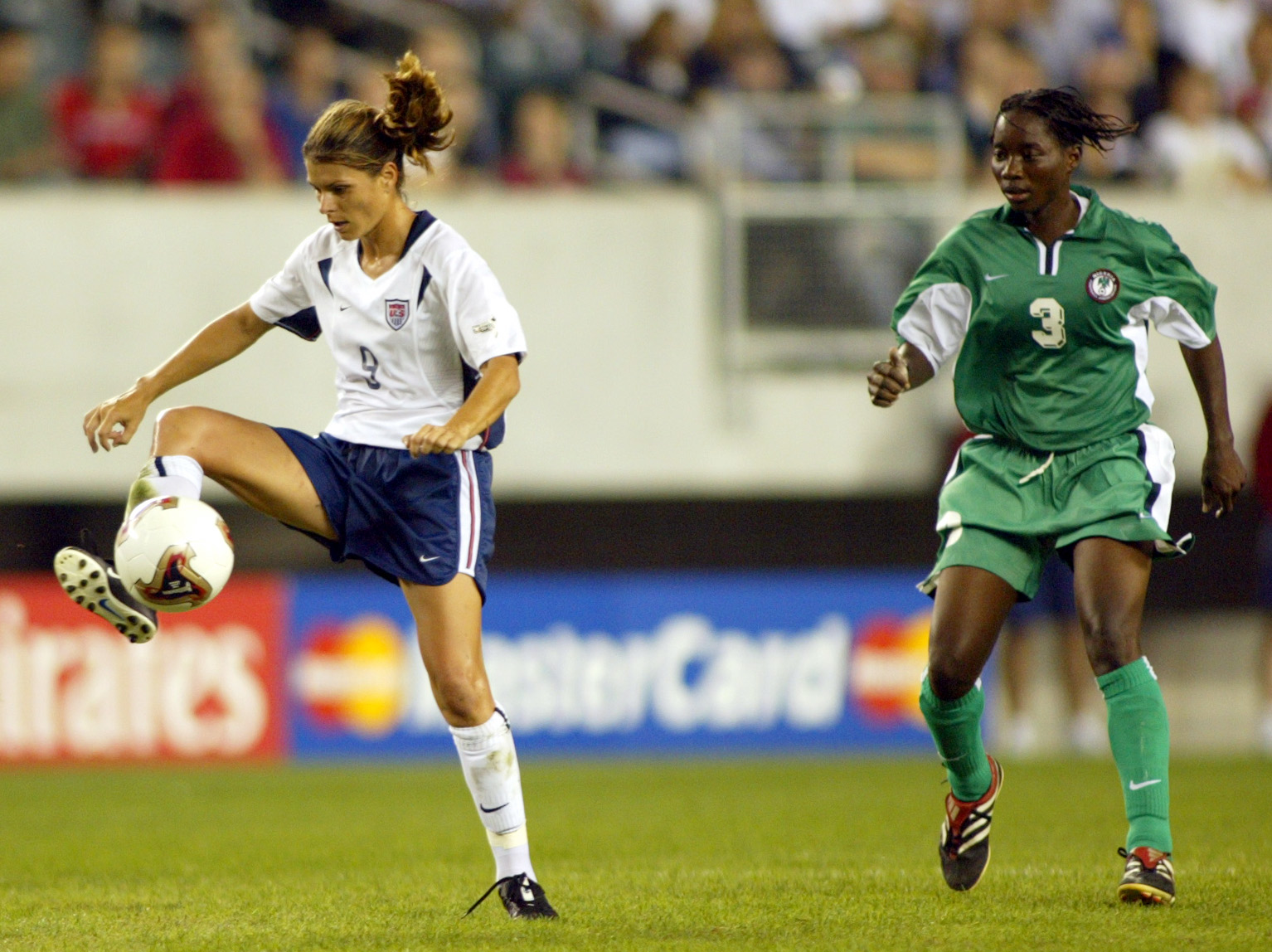
    Mia Hamm (left) led the United States’ win over Nigeria at Lincoln Financial Field in the 2003 women’s World Cup.

    “We are excited for the possibility to host the women’s World Cup and learning the bid process, and we’re definitely interested to learn more,” PHL Sports deputy executive director Brea Stanko told The Inquirer. “We hosted the women’s World Cup in 2003 — it’s grown exponentially. It was a great event for us, and we’re excited to see what we could bring here.”

    The World Cup would come a year after Philadelphia’s WNBA team launches, continuing the growth of women’s sports in the city.

    “You can see the growth of the sport, as we heard tonight,” said Maria Grasso, chiefs sales officer for the Convention and Visitors Bureau. “I think that’s truly exciting for us. We have a tremendous relationship with FIFA, as well as U.S. Soccer, which just gives us all the reasons we [are] really excited about this, like the rest of this room.”

    The official bid book is due in November, and this bid is expected to be the only one worldwide. While it’s not official yet, it’s likely just a formality. And though the due date is a month from now, the host cities don’t have to be officially set when the bid book goes in.

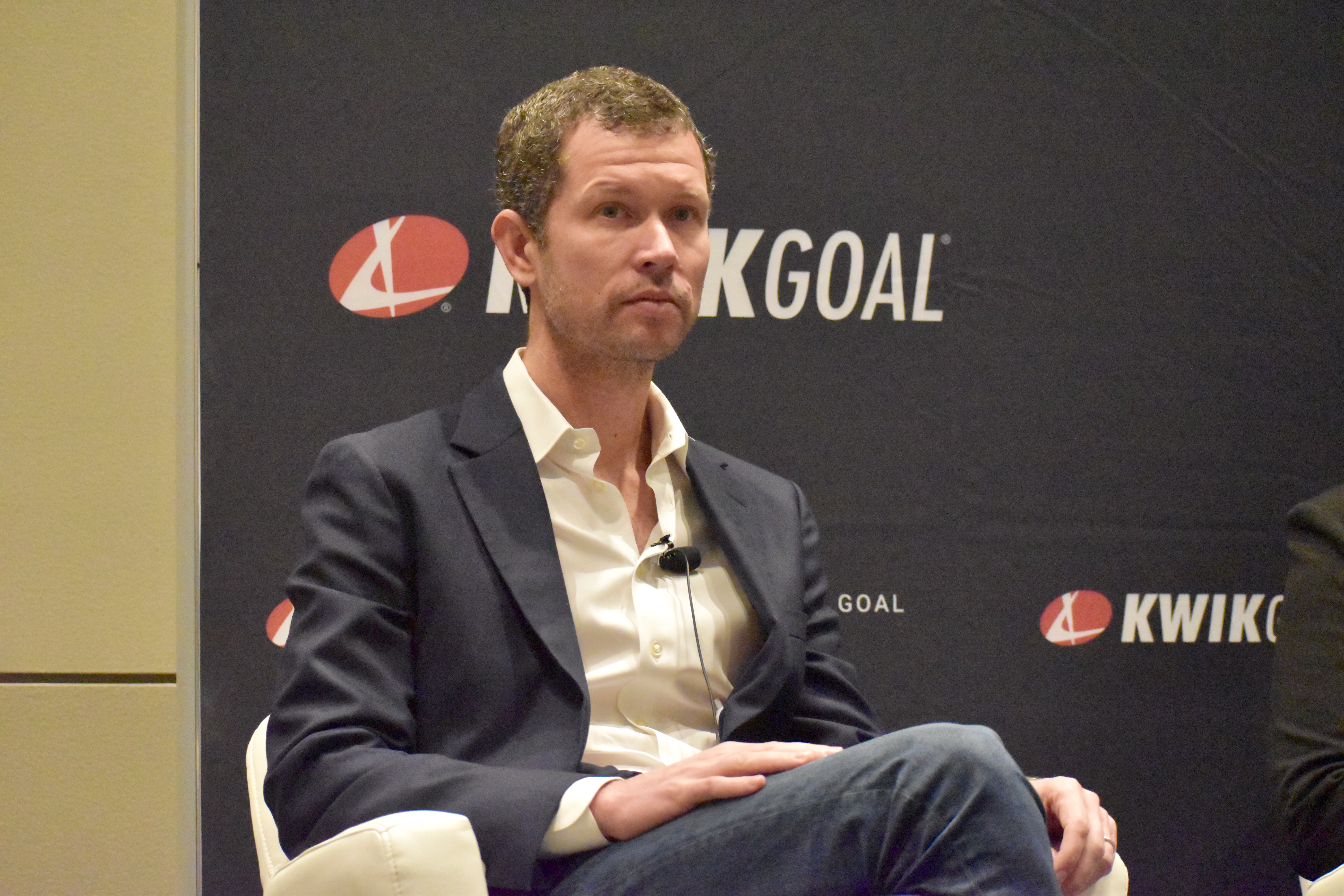
    U.S. Soccer Federation CEO JT Batson in January.

    Cone and U.S. Soccer CEO JT Batson said the selection process won’t happen until after next year’s men’s tournament is done, given how much work is going into that. (For comparison, North America’s 2026 men’s bid won a vote in 2018, and cities were picked in 2022.)

    “As the only bidders for the FIFA 2031 women’s World Cup, I admit I like our chances,” Cone said with a laugh. “When we are officially selected, we’ll work with FIFA to deliver the biggest, most impactful women’s sporting event in history.”

    FIFA’s vote is expected next April at the global governing body’s congress in Vancouver, the host city of the 2015 women’s World Cup final and one of the many hosts of next year’s men’s tournament.

    “Our confederation’s commitment to women’s football has never been stronger, and hosting the FIFA women’s World Cup [in] 2031 will build on this momentum,” Concacaf president and FIFA vice president Victor Montagliani said in a statement. He was unable to attend in person.

    U.S. Soccer president Cindy Cone

    Cone said when she pitched the multi-country idea to Montagliani, “he didn’t hesitate for a second. He jumped in immediately, offered his full support, and has been one of the strongest advocates for our vision from day one.”

    It will be the third time the U.S. hosts the tournament, after the groundbreaking 1999 edition and the on-short-notice 2003 edition. Mexico hosted a world championship for women’s national teams in 1971 before FIFA officially launched a women’s World Cup 20 years later, and the country will become a three-time men’s World Cup host next year — 1970, 1986, and 2026.

    Costa Rica and Jamaica, meanwhile, will host a senior-level FIFA tournament for the first time.

    “One of our goals of an inclusive 2031 women’s World Cup was [to be] an instigator for investment, obviously in our countries, but also across the region and ultimately the world,” Batson said. “And for Jamaica and Costa Rica to show the world that they can host a Women’s World Cup and obviously field great teams, that is a great motivator to programs and countries all across the world.”

    Mexico hosted an unofficial women’s soccer world championship in 1971. In modern times, FIFA has officially recognized the event’s significance in growing the sport.

    The proposed venues in the other countries aren’t official yet, nor is how many games each country will get. Mexico will have choices to make, with Monterrey, Guadalajara, and Mexico City set to be host cities next year. Monterrey in particular has become a hotbed for the women’s game in recent years.

    Costa Rica and Jamaica will presumably use their national stadiums: the former’s 42,000-seat modern venue in San José, and the latter’s historic 35,000-seat venue in Kingston.

    “To realize that there’s a chance that globally, people can experience this on this great of a scale, and for the U.S. to recognize the beauty of that, and to be in partnership with us, it means so much,” said former Jamaican national team player Cheyna Matthews, who played in the 2019 and 2023 World Cups and for seven years in the NWSL.

    “I just think about the impact that this is going to have for young girls in Jamaica,” Matthews continued. “I think even young boys who aspire to be part of the Reggae Boyz [Jamaica’s men’s team], I think that this just provides an opportunity for them to see it. Because some can’t travel, some have never left Kingston. … I think that it will obviously inspire, but it’ll continue to have that dividend later on.”