Tag: World Cup

  • The USMNT, USWNT, and your kid’s youth team are all different. U.S. Soccer is fine with that.

    The USMNT, USWNT, and your kid’s youth team are all different. U.S. Soccer is fine with that.

    Sometimes, it feels like there’s a distance between the U.S. men’s and women’s soccer teams, even though they wear the same crest.

    Over the years, various people involved with both programs have tried to close that gap, including at U.S. Soccer headquarters. Sporting director Matt Crocker is definitely on that list, and high up on it.

    That’s especially true when he talks about his vision of “the U.S. Way,” the creation of an on-field guidebook for the whole governing body. Many people will instinctively conclude that Crocker is sending a sermon from the mount, given how often the governing body has tried to do that over the years.

    But it isn’t that simple, and it’s not just Crocker saying so. The last few months of on-field results at the senior levels have offered proof.
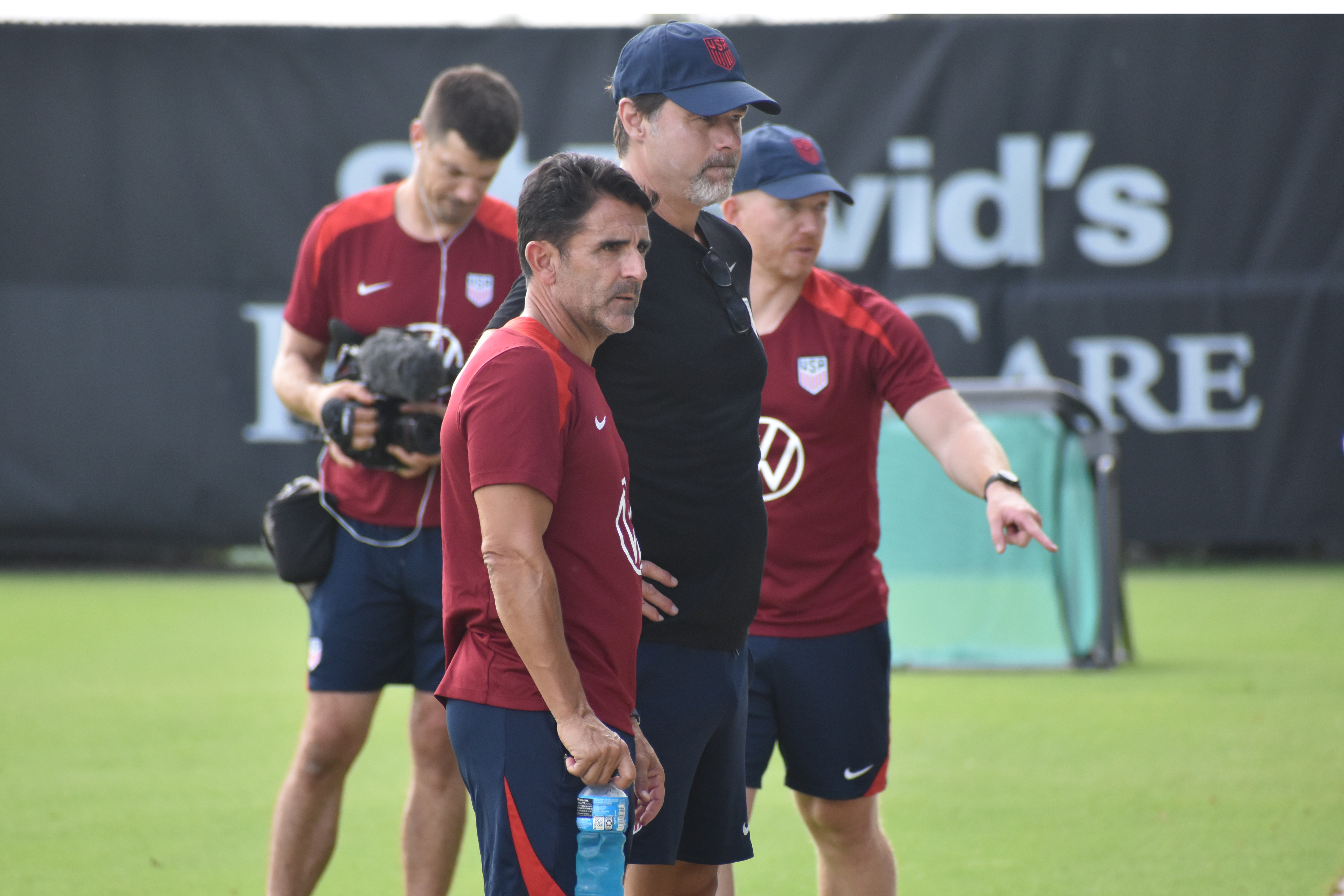
    Mauricio Pochettino (center) and his top assistant Javier Pérez (left) at a U.S. men’s soccer team practice in October.

    In some countries, every national team would be required to play the same way. Think of the Netherlands and Spain, for example, two programs with decades-long histories of putting philosophy over pragmatism.

    Crocker is more pragmatic. Once he hired Mauricio Pochettino to coach the senior men and Emma Hayes to coach the senior women, he wanted to get out of their way. He does not stop Pochettino from playing a 3-4-2-1 formation, and Hayes from playing a 4-3-3.

    “They are arguably two of the best coaches in the world,” Crocker told The Inquirer. “Who am I, in my experience, to dictate how they should be playing or not playing? I think the idea of that, for me, is not the way I work.”

    His experience gives him power if he wants to exercise it. Before joining U.S. Soccer in 2023, previous stops for the native Welshman included seven years at English soccer’s governing body, the Football Association. He planted seeds that have now made the nation elite on both the men’s and women’s sides.
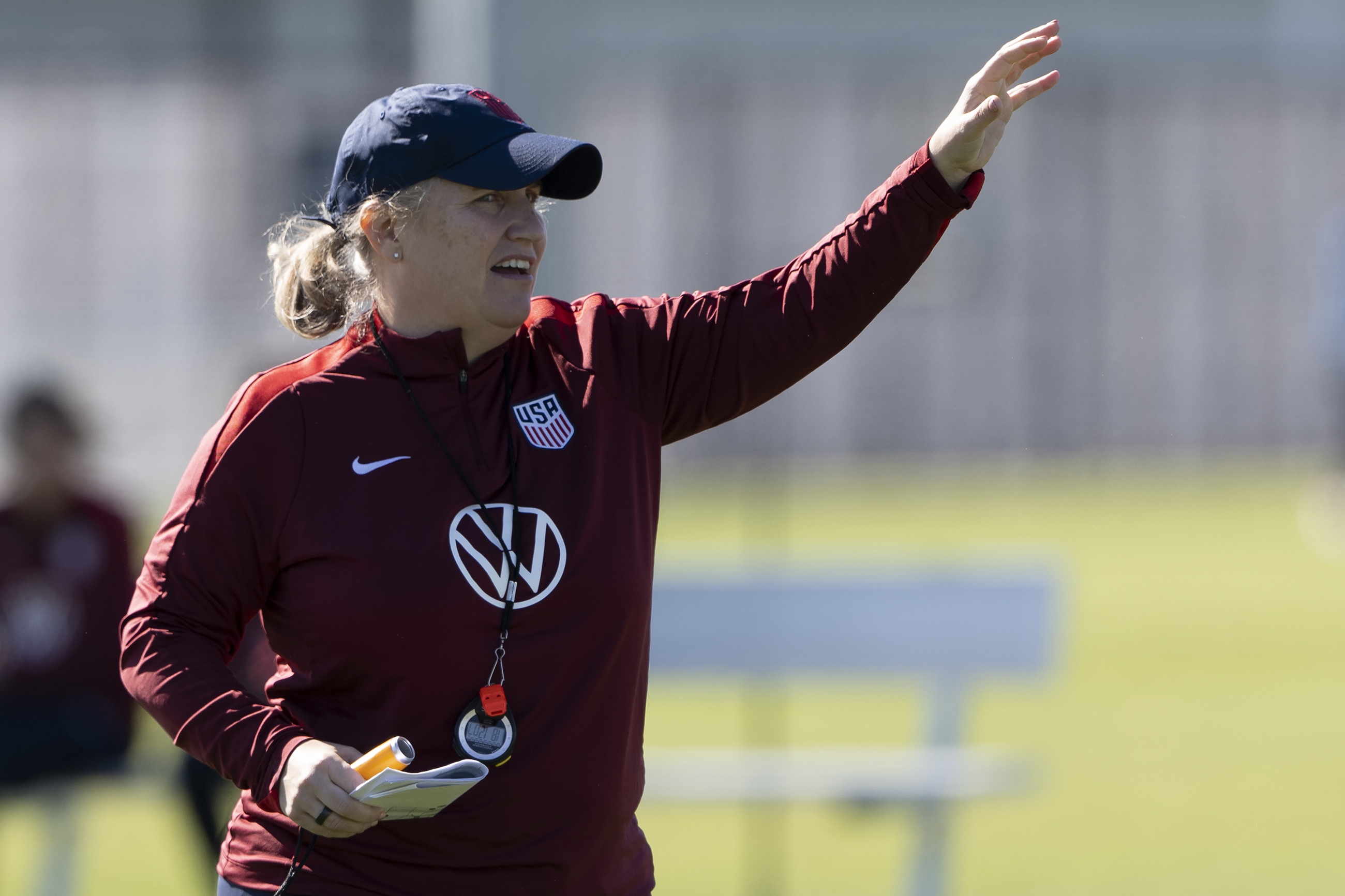
    Emma Hayes at a U.S. practice in Chester in October.

    But no, what Crocker said is what he meant.

    “Of course, there’s going to be a framework … of how we want them to work,” he continued. “But ultimately their job is to provide winning teams, and I think they’re doing a pretty good job at doing that. And my job is to make sure that they get what they need to be able to do that.”

    If you only follow soccer casually, you might not think much of this. If you’re deep in the sport, especially the American game, you know it matters to hear that from someone so high-ranking.

    “The way I see it is, my job is not to dictate every single detail of how everything needs to look or feel,” Crocker said. “I need to use their experiences, because they’ve got more than me in those areas of what winning looks like.”
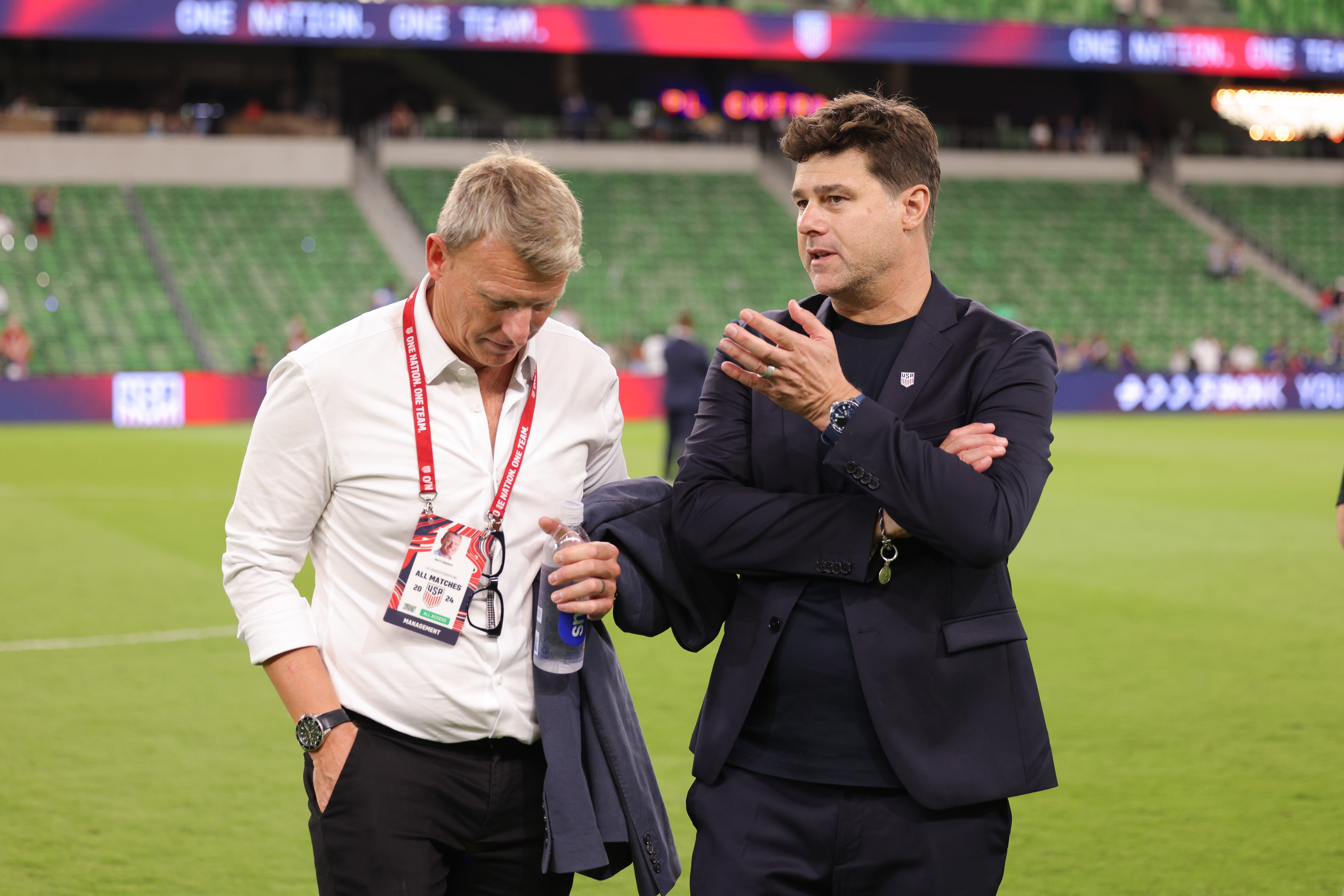
    Matt Crocker (left) listening to Mauricio Pochettino at a U.S. game last year.

    Hayes vouched for this, and not by making light of the size of her trophy mantel. She knew Pochettino before taking the U.S. job because they overlapped at English club Chelsea, and she knew American soccer from many years of working here before returning to her native London in 2012.

    “Mauricio’s ideas on how to win football matches might be different to mine, for example, but we both have ambition to win football matches,” Hayes said. “And we both have an appreciation that American players have their own unique set of qualities that we can lean into.”

    How they execute from there is up to them.

    “Yes, the U.S. Way is very clear and overarching — that sits above our WNT and MNT and all our other 27 teams,” Hayes said, using the abbreviations for the senior women’s and men’s teams. “But within that, some of those differences are in and around the game model.”

    That might not sound like much, but it really does matter.

    Emma Hayes has had immense success since arriving as the U.S. team’s manager two years ago.

    It all starts with youth soccer

    If there’s distance between the men’s and women’s teams, it often feels like there’s a canyon between the senior squads on TV and the youth teams your kids play on. That, too, has seemed deliberate at times, with so many factions in the sport wanting to do what they want instead of working together for the game as a whole.

    America’s youth soccer landscape, which better resembles an industrial complex — and really feels that big, in terms of scale — has a long history of rebelling against being told what to do by U.S. Soccer. Crocker quickly became well-versed in this when he took his job, and has spent a lot of time trying to change the tone.

    “I think we have to recognize that what we do in state X can’t just be replicated and put into state Y,” he said. “Everyone’s unique and individual, and we have to listen to their individual needs. But we’ve also got to be clear on the framework of the things that are fundamental, and that we are going to do irrespective.”

    He admitted that the scale of this country “scares you to death” for such a project, compared to how he built the England DNA program at the FA in 2013.
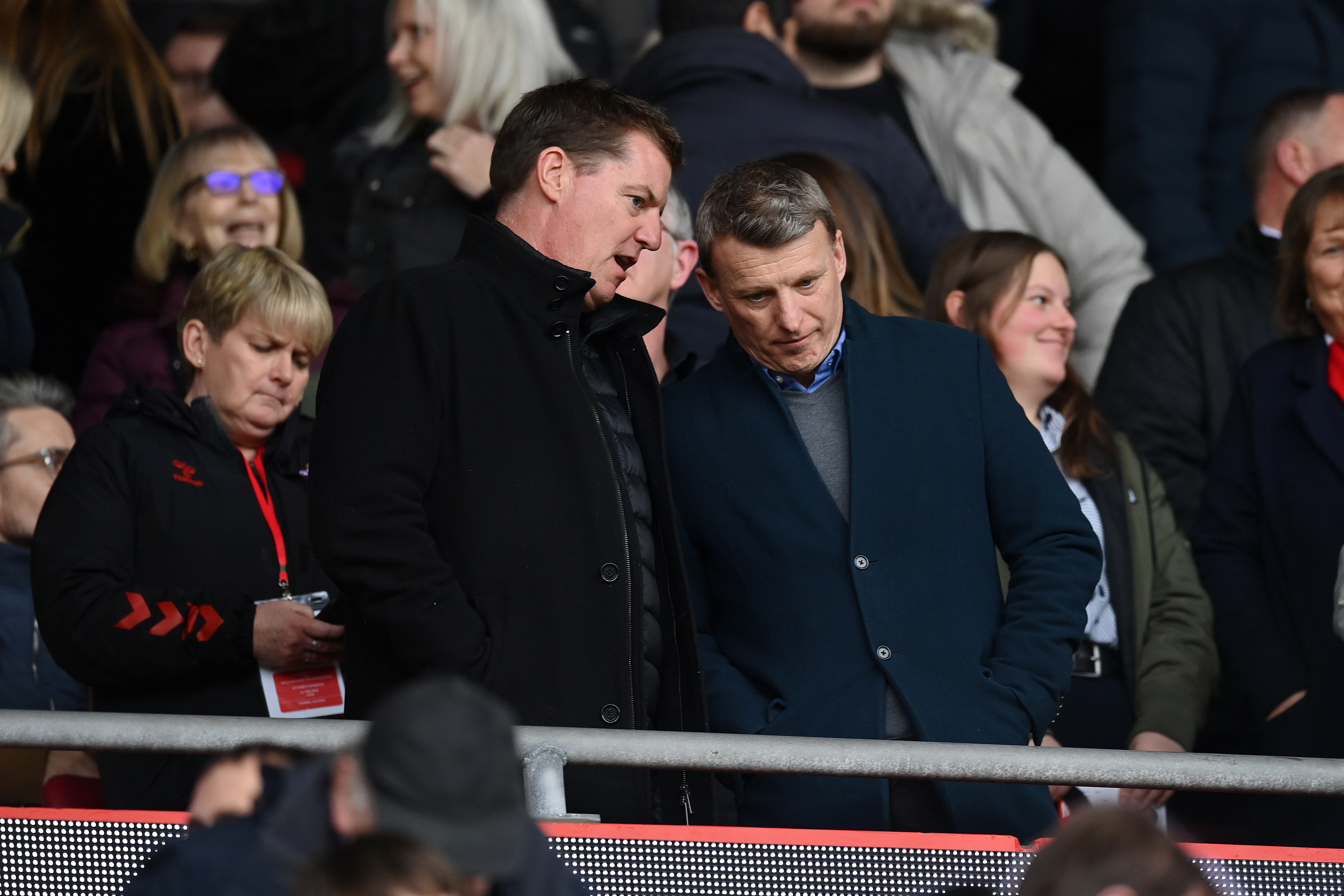
    Before joining U.S. Soccer, Matt Crocker (right) spent seven years at England’s Football Association, and also worked twice for English club Southampton.

    “You could bring every county FA to St. George’s Park, all of which were within a three-hour drive [from the national training center],” Crocker said. “You could mandate, you could then put people out into those environments to support it, and you could do it where you could really monitor something on a much smaller scale. Doing this is something I’ve never experienced before.”

    That literal geography, not just youth soccer politics, influenced his journey to now.

    “I don’t think there’s one silver bullet that you need to take, or you go, ‘It’s not going to work because of X,’” he said. “I just think we have to recognize the uniqueness of the country, build on that as a positive, but also remember not to make the same mistakes as others that have gone before us.”

    Then came words that a lot of people — especially the youth coaches out there — have wanted to hear.
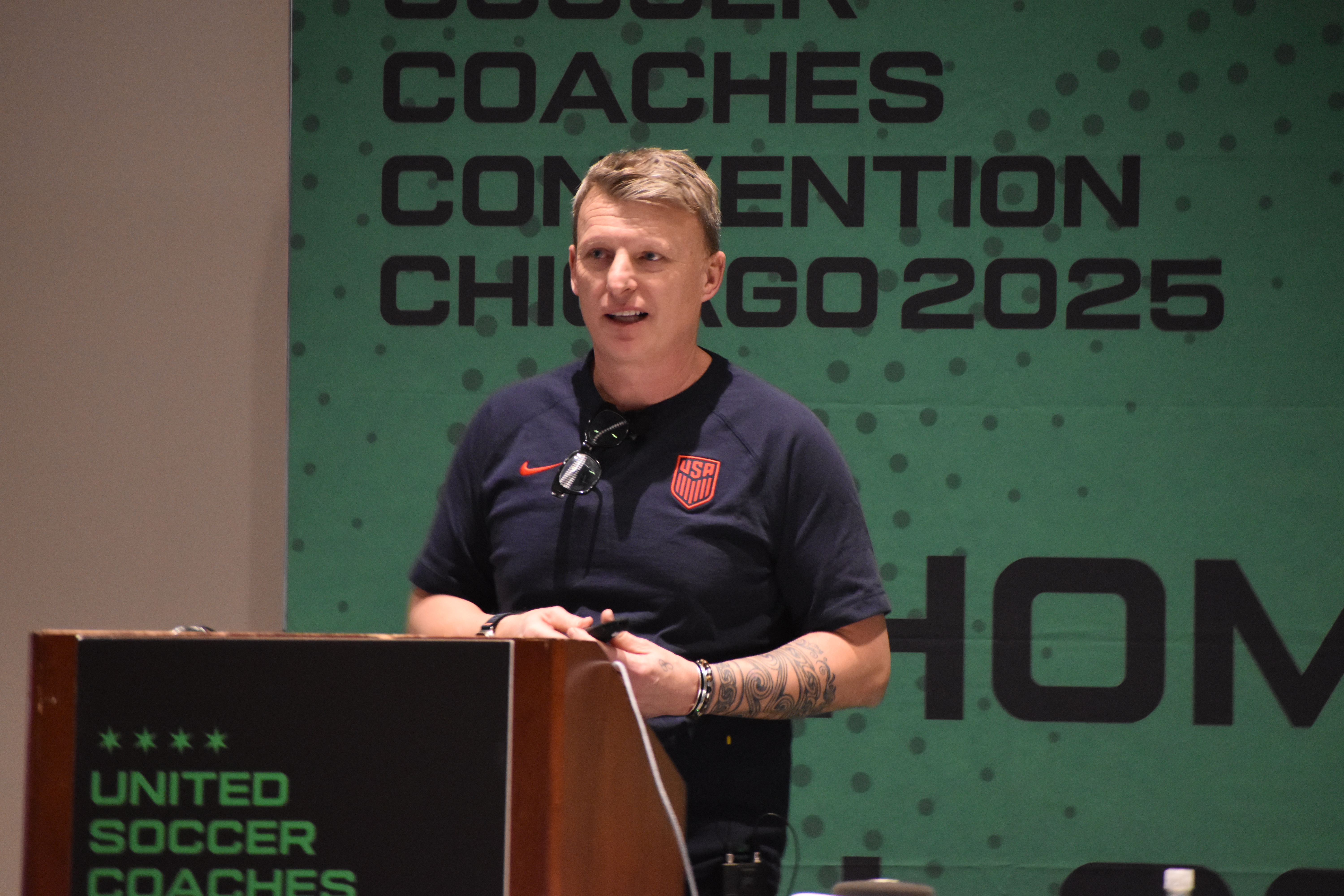
    Matt Crocker speaking at the United Soccer Coaches convention last January, to an audience that isn’t always on U.S. Soccer’s side.

    “I say this respectfully [because] I wasn’t here, but what I heard was U.S. Soccer was telling: We told, we told, we told,” Crocker said. “And now our job is to listen, to work, to problem solve, but to bring everyone together.”

    Anecdotally, it’s been working. At various events this year where Crocker has spoken to youth and amateur teams, he has been warmly received. But the hardest part is yet to come, as a recent moment showed.

    ‘More worried about their bottom line’

    Earlier this month, Crocker spoke to a crowd of the governing body’s sponsors and donors. Some of them wore track jackets of their youth clubs, but most were in business clothes. Crocker shared the stage with deputy sporting director and onetime Union centerback Oguchi Onyewu and U.S. men’s legend Landon Donovan.

    “For those who are not familiar with the youth soccer landscape in this country, it’s a bit of a disaster, right?” Donovan said. “It really is. There’s so many competing interests.”
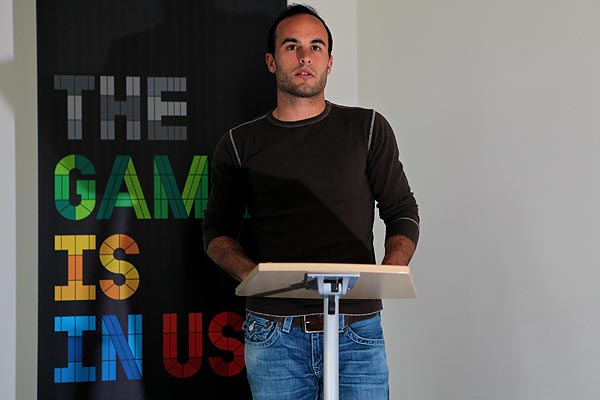
    U.S. men’s national team legend Landon Donovan says that the youth model might be too far gone to suggest anything that would affect their bottom line.

    He spoke of a local club near his home in southern California, but knew it could have been countless others.

    “People are very content with their little fiefdom and their little salary and their club and their control and their power,” Donovan said. “So what’s the incentive now for these clubs to change? … We do have national pride, but they’re more worried about their bottom line than they are [about] growing U.S. soccer.”

    The words were as true as they were damning.

    “I think the saying is, do what you’ve always done and you’ll get what you’ve always got,” Crocker said. “There’s been a lot of talk about, there’s a player that plays in this league over here that has to drive or fly thousands of miles because this league is falling out with this league, and they won’t play each other. And that’s not putting the child, that’s not putting the sport, at the heart of what we’re all about.”
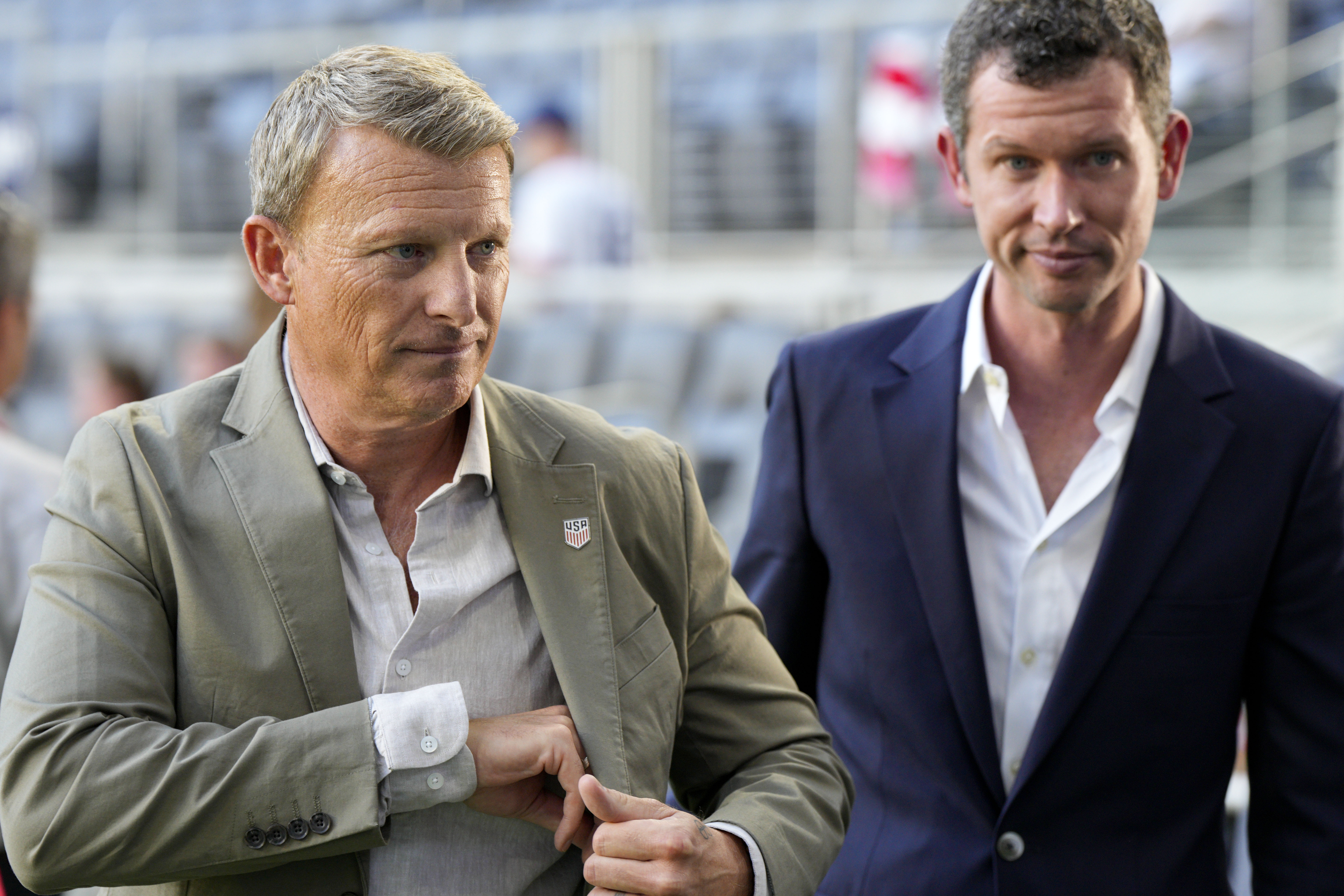
    Matt Crocker (left) with U.S. Soccer Federation CEO JT Batson.

    It’s true for the boys and men, and it’s true for the girls and women. It’s an enormous task, but Crocker is willing to give from his side, and that is noticed.

    “I think it’s being respectful to environments that have already been created,” he said. “Us as U.S. Soccer, being the national federation, the people that should be really saying, ‘Hey this is what player development and the game could look like in this country’ — it’s about time we spoke up and started to share some of that. But it’s not through a dictator approach, it’s through more of a collaborative way of doing things.”

    Crocker’s plans are due to be published in January, the same month Philadelphia will host the 2026 United Soccer Coaches convention. It won’t be easy for him to get that crowd on his side, for the reasons Donovan made clear. If Crocker can, though, the benefits could last long past the World Cup.
  • Here’s what ticket prices are looking like for World Cup games in Philly following FIFA’s latest presale

    Here’s what ticket prices are looking like for World Cup games in Philly following FIFA’s latest presale

    For those hoping to get into a World Cup game in Philly, the assumption was that obtaining a ticket, even at face value, would be costly.

    Well, that was correct, and on Thursday, fans interested in attending learned just how much.

    FIFA’s random selection presale was the third in a four-part lottery phase in which interested buyers from around the world were able to select their match by venue or by the team they’d most like to see.

    It also marked the latest opportunity to obtain tickets in the aftermath of last week’s World Cup draw.

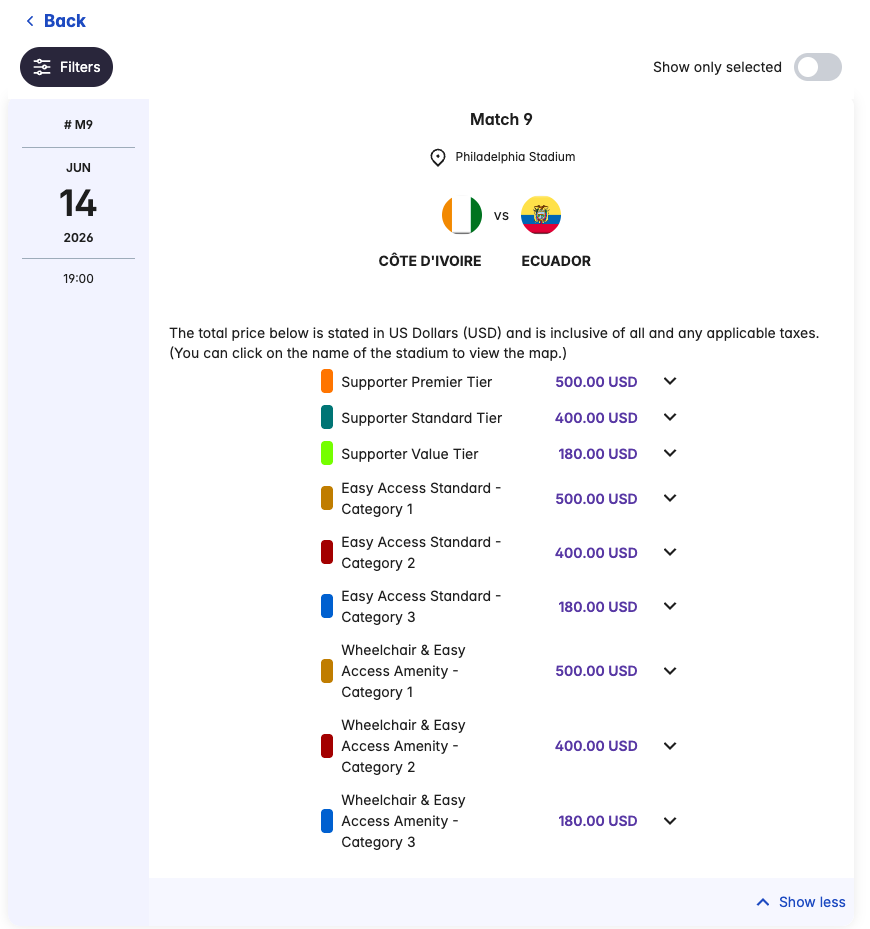
    Among the 72 group stage matches scheduled to be held in the United States, Canada, and Mexico this summer, five will take place at Lincoln Financial Field, with the Ivory Coast and Ecuador kicking off Philly’s slate of matches on June 14.

    So what’s it looking like?

    The least expensive seat for that match was $180 under Category 3 tiered pricing (which applies to upper-level seating and designated supporter sections). The most expensive ticket was $500 for a Category 1 seat (lower level, prime placement) or another section called a Supporter Premier Tier.

    The cheapest ticket price was $180 for upper deck seats at Lincoln Financial Field for the World Cup opener between the Ivory Coast and Ecuador.

    The costliest tickets were for the June 19 match between Brazil and Haiti, with the cheapest seat coming in at $265 and the priciest Category 1 tickets at $700. Even Category 2 seats, which generally are still lower- to mid-level but have corner sightlines, were $500 per seat.

    While it remains to be seen, prices for France’s game in Philly on June 22 could mimic the Brazil game as both are high-powered nations in the top 10 of the latest FIFA World Rankings, complete with rosters expected to draw a crowd. France awaits whom it will play at the Linc, as a FIFA playoff in March will determine whether it will be Iraq, Suriname, or Bolivia.

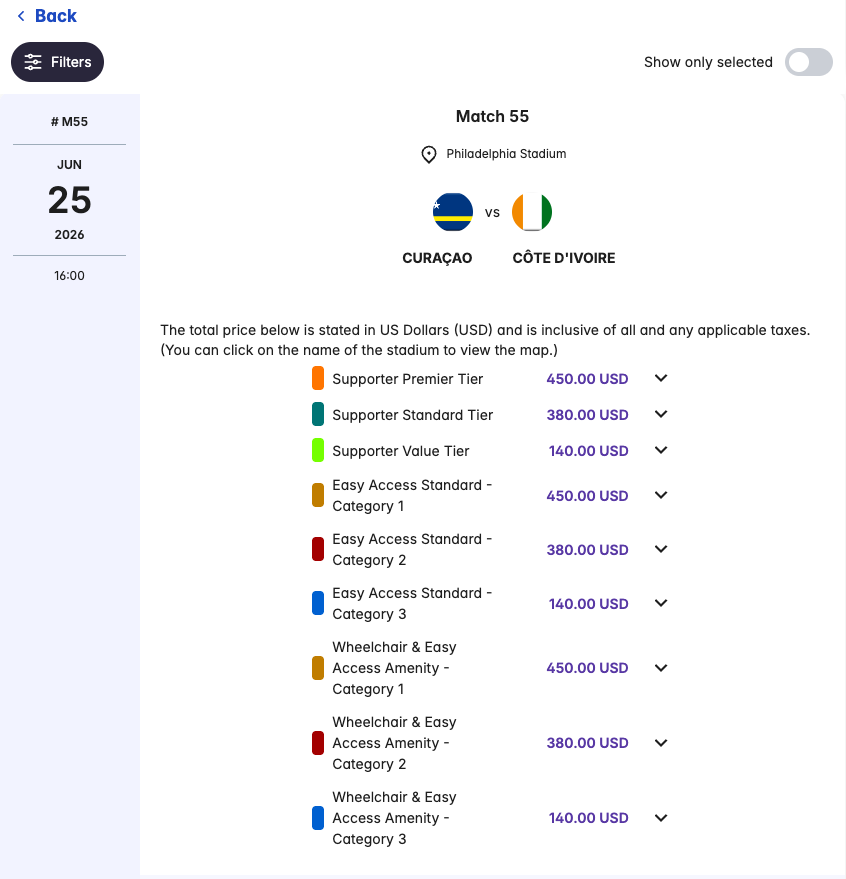
    The least expensive game in Philly as of Thursday’s presale was the June 25 match, which features Ivory Coast against Curaçao. Lower-level tickets were $450 for Category 1 and $380 for Category 2 seats. For those who don’t mind sitting in the 200-level section, the price is $140 each.

    The game between Ivory Coast and Curaçao on June 25 looked to offer the most affordable path to securing World Cup seats.

    It’s believed that with fan bases not as large as some of the other matches coming to Philly, this might be the best chance for people looking to obtain tickets, not just in the presale but perhaps when tickets officially hit the resale market.

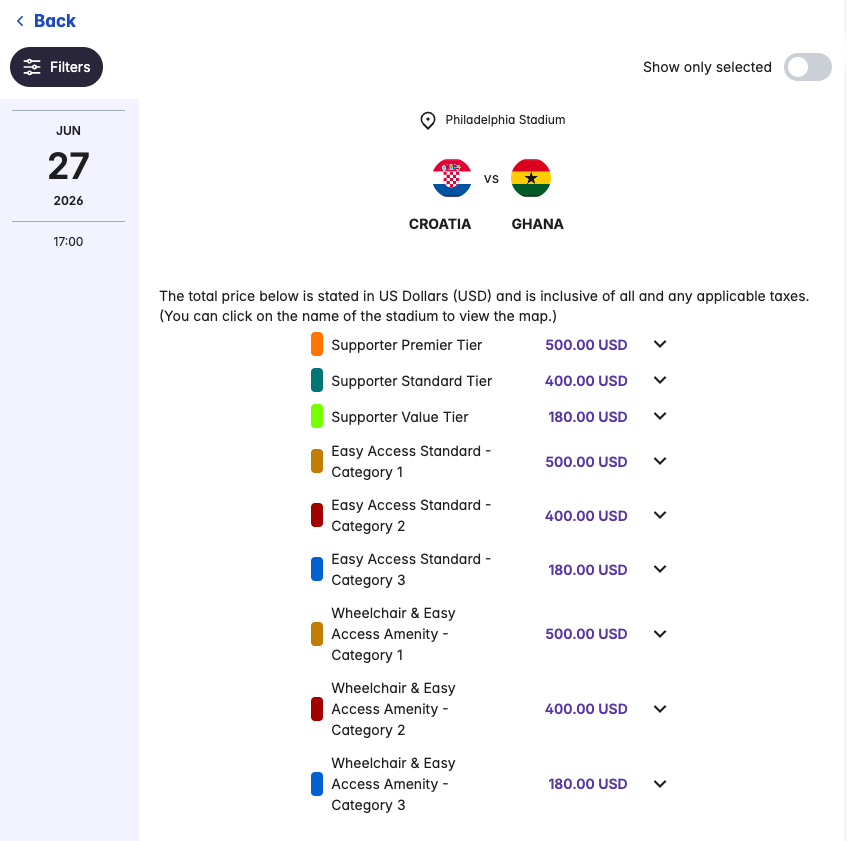
    The final group stage match at the Linc, Croatia against Ghana on June 27, offers a live look at Croatian midfield legend Luka Modric, who at age 40, will be playing in his final World Cup. Although Ghana has consistently been a strong nation in past World Cups and enters as one of the better nations throughout Confederation of African Football (CAF) qualifying, the draw is Modric — and FIFA knows that.

    Tickets for that match in the presale start at $500 for Category 1, and the least expensive ticket is $180 for a Category 3 seat.

    Croatia-Ghana on June 27 offers fans a live look at probably the last time Croatian midfield legend Luka Modric will chase World Cup glory.

    So how does it all work?

    Interested fans must create a FIFA ID. Creating one is quick, and once you do, you’ll be able to enter the lottery, which runs through 11 a.m. on Jan. 13. FIFA says it will alert people who have won by Feb. 5 if they’ve earned the right to purchase tickets.

    Still, you could find out sooner by checking your bank or credit card statement and noticing a balance decrease of hundreds or thousands of dollars.

    In the process, fans are entered into a queue to buy, which on Thursday had potential purchasers experiencing wait times of up to 30 minutes. Once there, fans can access two ticket portals: the random selection draw, which allows them to choose one game or preferred venue, and another in which fans can select a preferred team and choose from that nation’s three matches throughout the group stage.

    From there, a debit or credit card goes on file, from which, if selected, FIFA will automatically pull funds from the account beginning on Feb. 9. Incidentally, there’s no guarantee that fans will receive their full allocation, as there are options for ticket sales to be “completely successful” or “partially successful.”

    What does the latter mean? Here’s is FIFA’s explanation:

    “‘Partially successful’ means you received some, but not all, of the tickets you applied for. For example, if you requested tickets for three different matches but were allocated tickets for only one or two of them, your application is considered partially successful. If you are allocated tickets for any match, you will always receive the full quantity you requested for that match; you will never receive fewer than requested.”

    The random selection draw is the last presale before FIFA will release remaining tickets in what’s sure to be a first-come, first-served frenzy. This late sales phase is expected to launch closer to the start of the tournament.

  • Philly’s Greyhound station gets city’s OK to be resurrected

    Philly’s Greyhound station gets city’s OK to be resurrected

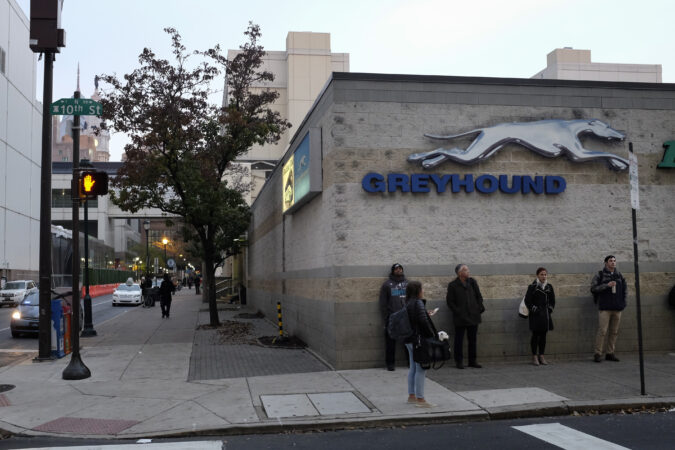
    City Council passed legislation Thursday to restore the abandoned Greyhound terminal on Filbert Street as Philadelphia’s new intercity bus station in time for an expected flood of tourists in 2026.

    Under the measure, the Philadelphia Parking Authority will operate the station on behalf of the city, collecting fees from bus companies to pay costs.

    A refurbished facility is scheduled to open in May 2026, which would resolve more than two years of chaos after Greyhound ended its lease, forcing the city to allow the bus companies to operate at the curbs of public streets with few amenities and no shelter for riders.

    The saga was embarrassing, and it became more untenable for city leaders with Philadelphia set to host celebrations of the 250th anniversary of the Declaration of Independence, and a round of international FIFA World Cup soccer matches.

    The plan came together over the last few months as at least three city departments collaborated and reached an agreement with the parking authority. Mayor Cherelle L. Parker’s administration sent a bill to Council.

    Councilmember Curtis Jones Jr. said in a Finance Committee hearing last week that he found the speed of “galvanized” departments working together impressive.

    “You can’t put that genie back in the bottle. I know you can cooperate now, and that’s going to be the expectation from now on,” Jones said.

    Greyhound ran the terminal at 10th and Filbert Streets for 35 years but ended its lease in June 2023 as the bus line (and its corporate parent) began shedding real estate and leases in the U.S. to cut costs.

    First, the buses operated along the 600 block of Market Street. Since November 2023 they have loaded and unloaded passengers in the open along Spring Garden Street.

    “This is an opportunity that kind of came from the heavens,” said Mike Carroll, the city’s assistant managing director for transportation.

    PPA has a 10-year lease agreement with the property’s owner, 1001-1025 West Filbert Street LLC, with an option to extend it.

    Bus companies would pay a $40 fee for each stop in the city until the terminal is open, when it would be increased to $65. A smaller number of buses subsidized by the Pennsylvania Department of Transportation under a program to provide rural service would pay $16 a stop.

    Operating the renovated terminal will cost $4.7 million to $4.8 million annually, Carroll said.

    City officials say they plan to keep researching other possible locations for an intercity bus station but note the lease provides stability.

    PPA will provide 24-7 security, 16-hour daily custodial coverage, maintenance staff, and an on-site program manager under terms of an intergovernmental agreement with the city that is part of the legislation.

    It also will be responsible for enforcing rules, such as one that will require buses to bypass the heart of Chinatown.

    Since the parking authority regulates rideshare and taxi services, its enforcement officers will help keep traffic flowing around the station, officials said.

    Councilmember Nina Ahmad pressed city officials to plan for retail tenants and other ways to generate municipal revenue.

    “There’s an element of rush,” Ahmad said during the Dec. 3 hearing. “I understand the urgency, but I hope we don’t overlook things that we should be doing to make it really a transit-oriented development.”

  • These 20 Philadelphia neighborhoods will have painted Liberty Bell replicas for 2026

    These 20 Philadelphia neighborhoods will have painted Liberty Bell replicas for 2026

    Philly is getting ready to dress itself up — with Liberty Bells. Lots of Liberty Bells.

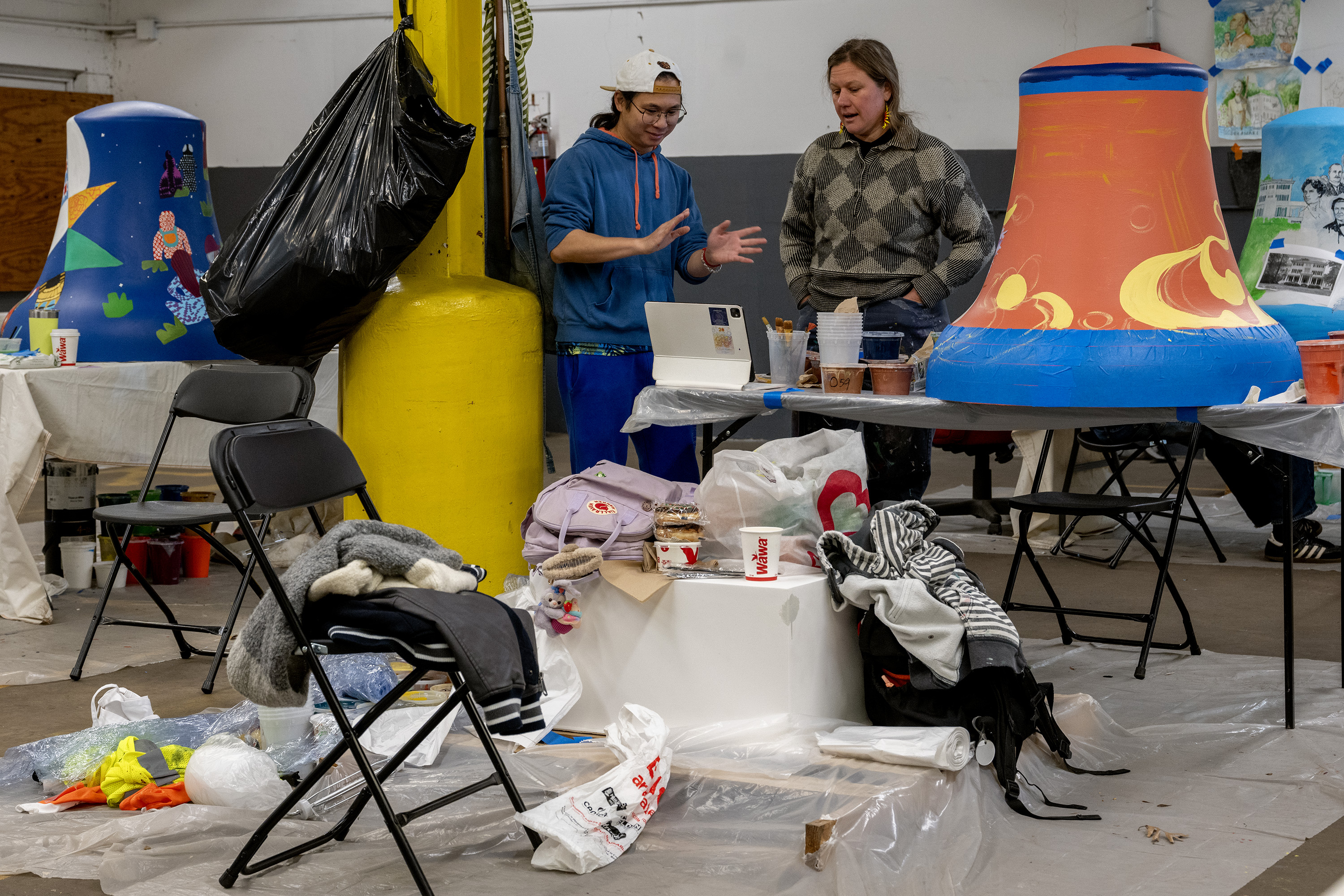
    Organizers of Philadelphia’s yearlong celebrations for America’s 250th anniversary in 2026 gathered in a frigid Philadelphia School District warehouse in Logan on Tuesday, offering a special preview of the 20 large replica Liberty Bells that will decorate Philly neighborhoods for the national milestone.

    Designed by 16 local artists selected through Mural Arts Philadelphia — and planned for commercial corridors and public parks everywhere from Chinatown and South Philly to West Philly and Wynnefield — the painted bells depict the histories, heroes, cultures, and traditions of Philly neighborhoods.

    As part of the state nonprofit America250PA’s “Bells Across PA” program, more than 100 painted bells will be installed across Pennsylvania throughout the national milestone, also known as the Semiquincentennial. Local planners and Mural Arts Philadelphia helped coordinate the Philly bells.

    “As Philadelphia’s own Liberty Bell served as inspiration for this statewide program, it makes sense that Philly would take it to the next level and bring these bells to as many neighborhoods as possible,” Mayor Cherelle L. Parker said in a statement. “We are a proud, diverse city of neighborhoods with many stories to tell.”

    Kathryn Ott Lovell, president and CEO of Philadelphia250, the city’s planning partner for the Semiquincentennial, said the bells are a key part of the local planners’ efforts to bring the party to every Philly neighborhood.

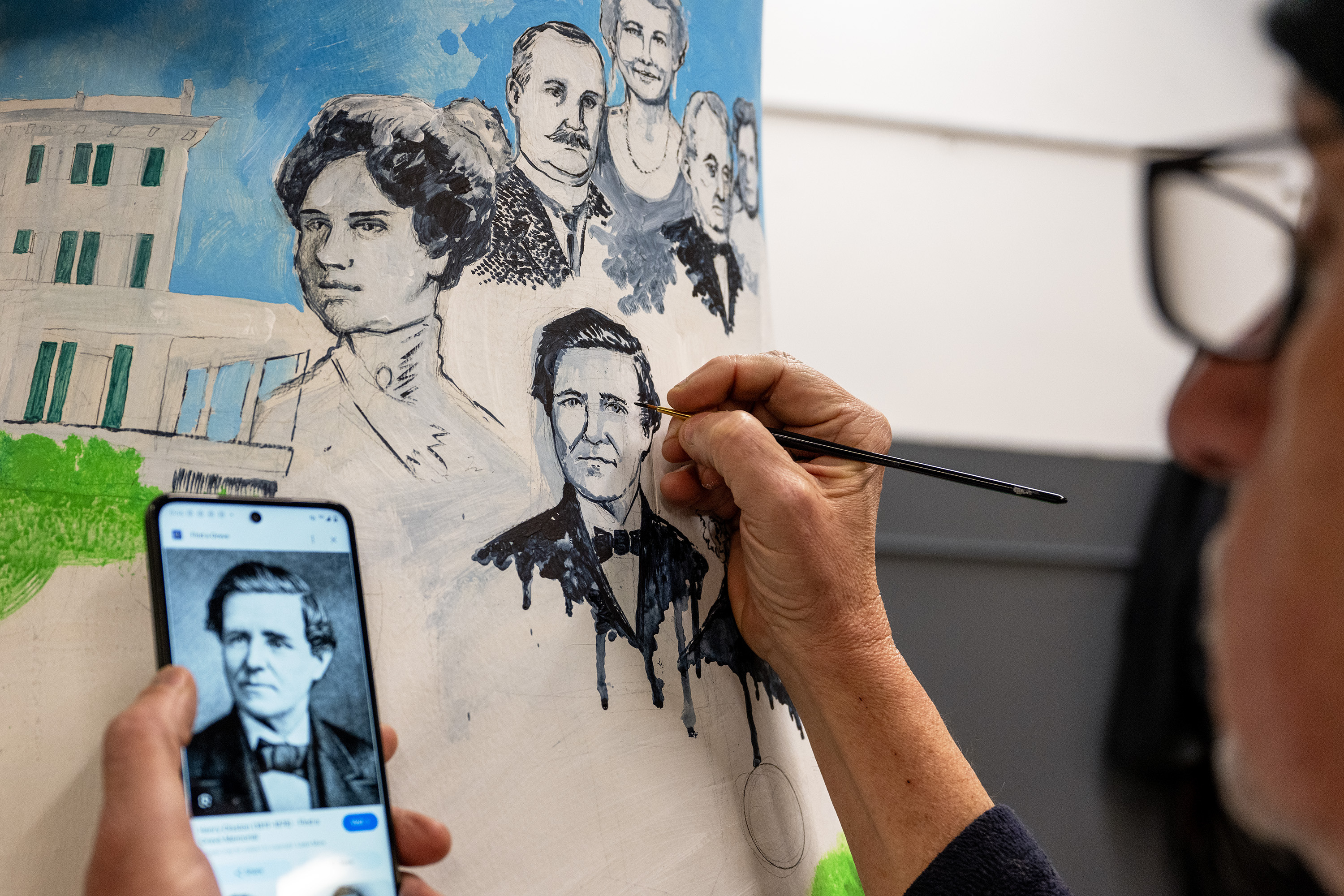
    Local artist Bob Dix paints a portrait of industrialist Henry Disston on his bell.

    “The personalities of the neighborhoods are coming out in the bells,” she said, adding that the completed bells will be dedicated in January, then installed in early spring, in time for Philly’s big-ticket events next summer, including six FIFA World Cup matches, the MLB All-Star Game, and a pumped-up Fourth of July concert.

    Planners released a full list of neighborhoods where the bells will be placed, but said exact locations will be announced in January. Each of the nearly 3-foot bells — which will be perched on heavy black pedestals — was designed in collaboration with community members, Ott Lovell said.

    Inside the massive, makeshift studio behind the Widener Memorial School on Tuesday, artists worked in the chill on their bells. Each bell told a different story of neighborhood pride.

    Chenlin Cai (left) talks with fellow artist Emily Busch (right) about his bell, showing her concepts on his tablet.

    Cindy Lozito, 33, a muralist and illustrator who lives in Bella Vista, didn’t have to look for inspiration for her bell on the Italian Market. She lives just a block away from Ninth Street and is a market regular.

    After talking with merchants, she strove to capture the market’s iconic sites, history, and diversity. Titled Always Open, her bell includes painted scenes of the market’s bustling produce stands and flickering fire barrels, the smiling faces of old-school merchants and newer immigrant vendors, and the joy of the street’s annual Procession of Saints and Day of the Dead festivities. Also, of course, the greased pole.

    “It’s a place where I can walk outside my house and get everything that I need, and also a place where people know your name and care about you,” she said, painting her bell.

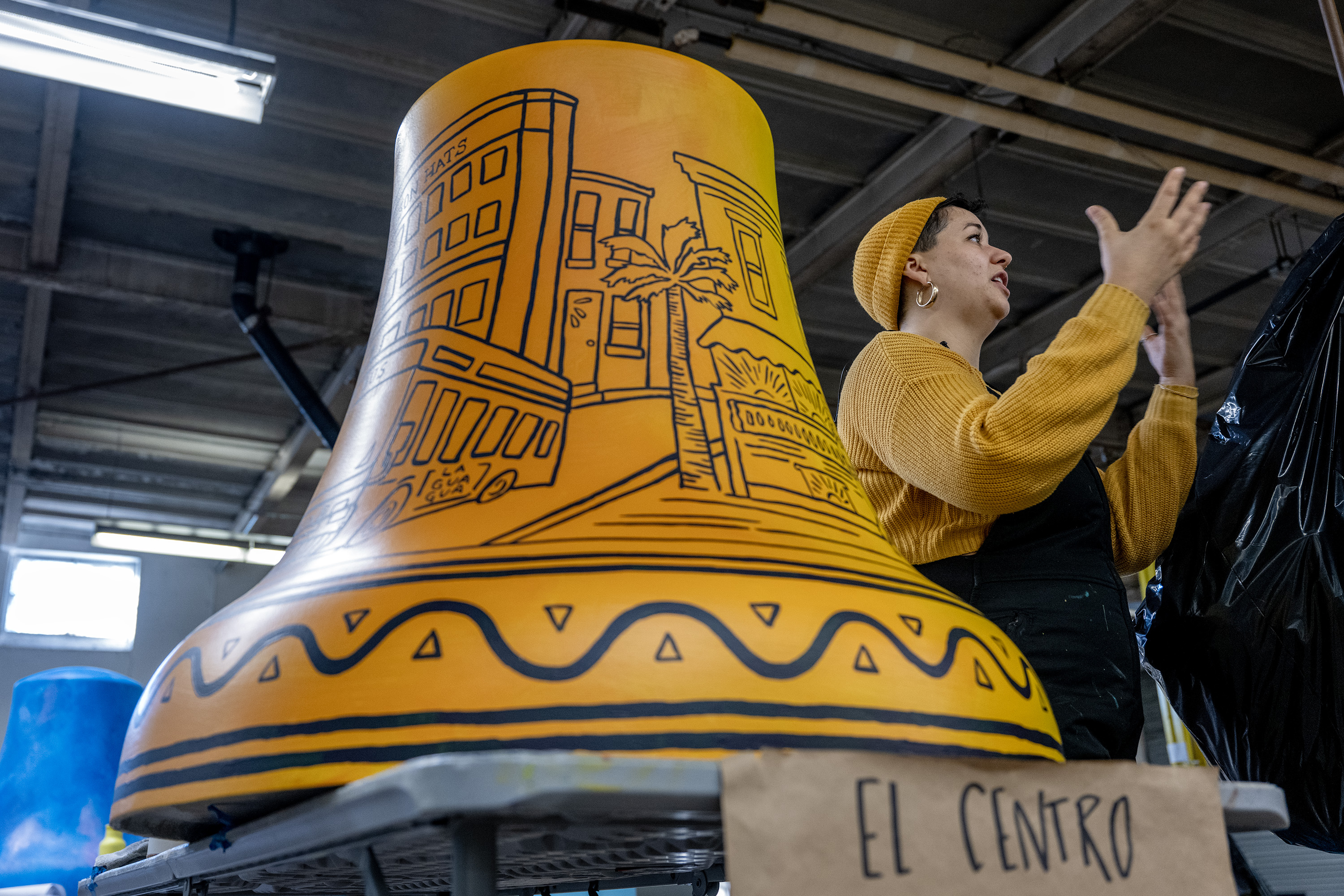
    For her bell on El Centro de Oro, artist and educator Symone Salib, 32, met twice with 30 community members from North Fifth Street and Lehigh Avenue, asking them for ideas.

    “From there, I had a very long list,” she said. “People really liked telling me what they wanted to see and what they did not.”

    Local artist Symone Salib talks with a visitor as she works on her bell.

    Titled The Golden Block, the striking yellow-and-black bell depicts the neighborhood’s historic Stetson Hats factory, the long-standing Latin music shop Centro Musical, and popular iron palm tree sculptures.

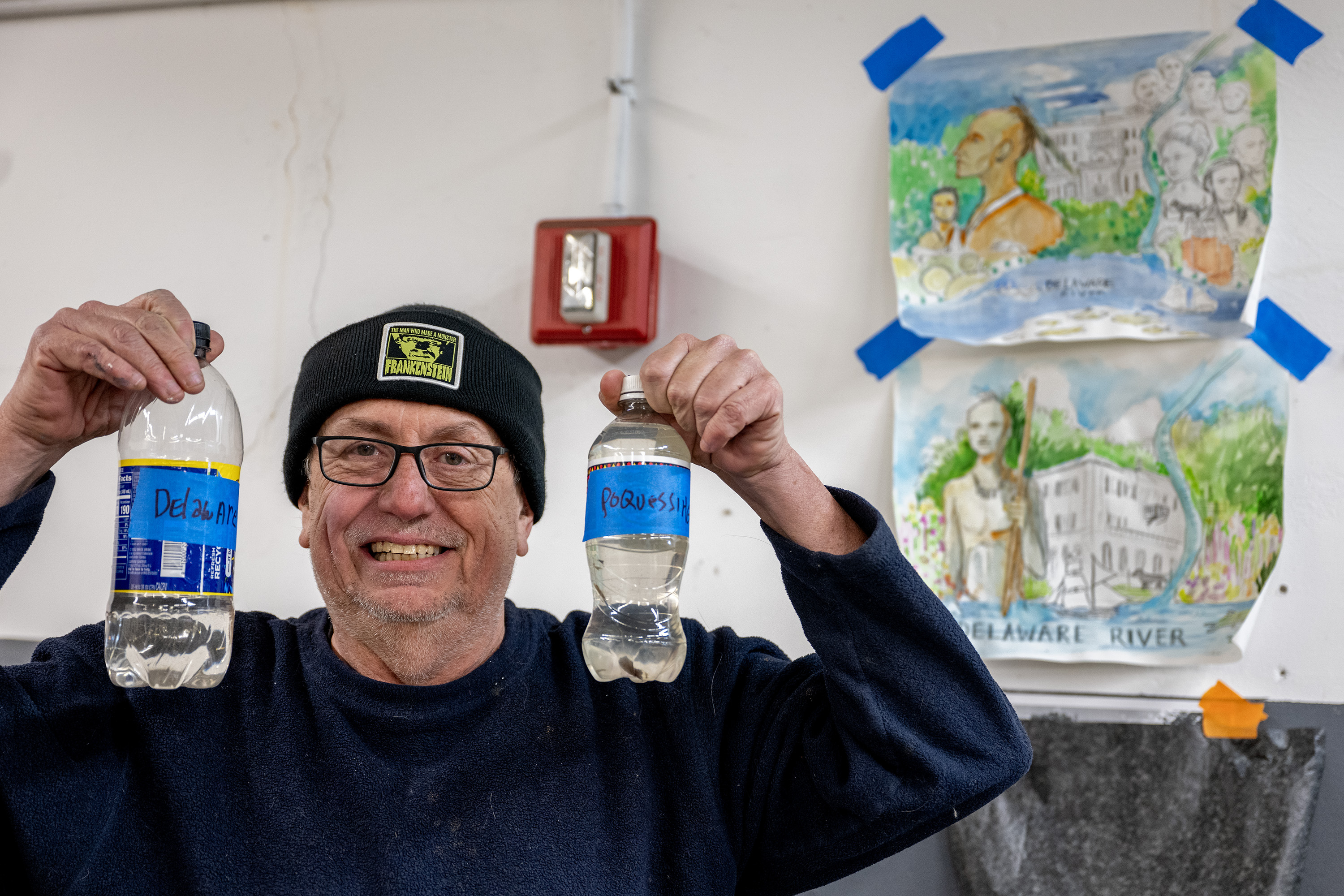
    To add that extra bit of authenticity to his bell depicting Glen Foerd, artist Bob Dix, 62, mixed his paints with water bottled from the Delaware River, near where the historic mansion and estate sits perched in Torresdale, overlooking the mouth of Poquessing Creek.

    “I like to incorporate the spirit of the area,” he said, dabbing his brush in the river water. “I think it’s important to bring in the natural materials.”

    Local artist Bob Dix displays waters he collected from the Delaware River and Poquessing Creek to use in his painting of one of 20 replica Liberty Bells representing different neighborhoods Tuesday, Dec. 9, 2025.

    Planners say they expect the bells to draw interest and curiosity similar to the painted donkeys that dotted Philadelphia neighborhoods during the 2016 Democratic National Convention.

    Ott Lovell said organizers will install the bells around March to protect them from the worst of the winter weather.

    “I don’t want any weather on them,” she said with a smile. “I want them looking perfect for 2026.”

    The bell locations

    • Chinatown

    • City Hall

    • El Centro de Oro

    • Fox Chase

    • Germantown

    • Hunting Park

    • Logan Square

    • Mayfair

    • Mount Airy

    • Ogontz

    • Olney

    • Parkside

    • Point Breeze

    • Roxborough

    • South Philadelphia

    • Southwest

    • Torresdale

    • University City

    • West Philadelphia

    • Wynnefield

  • Ale Ayiti: Philly’s Haitian Americans celebrate a rare World Cup bid

    Ale Ayiti: Philly’s Haitian Americans celebrate a rare World Cup bid

    The first World Cup I remember was in 1970. I was a kid in Guatemala, and my brothers and I were so excited. It was the year the Brazilian seleção included Pelé, Jairzinho, Rivellino, Tostão, Gérson, and Zé Maria — there may be no more beautiful example of the sport of soccer than what they showed us.

    The Guatemalan team was not in the World Cup that year (or ever 😢), but El Salvador was, and although they were unlikely to advance very far, we felt a lot of Central American solidarity and rooted for them — the underdoggiest of the underdogs.

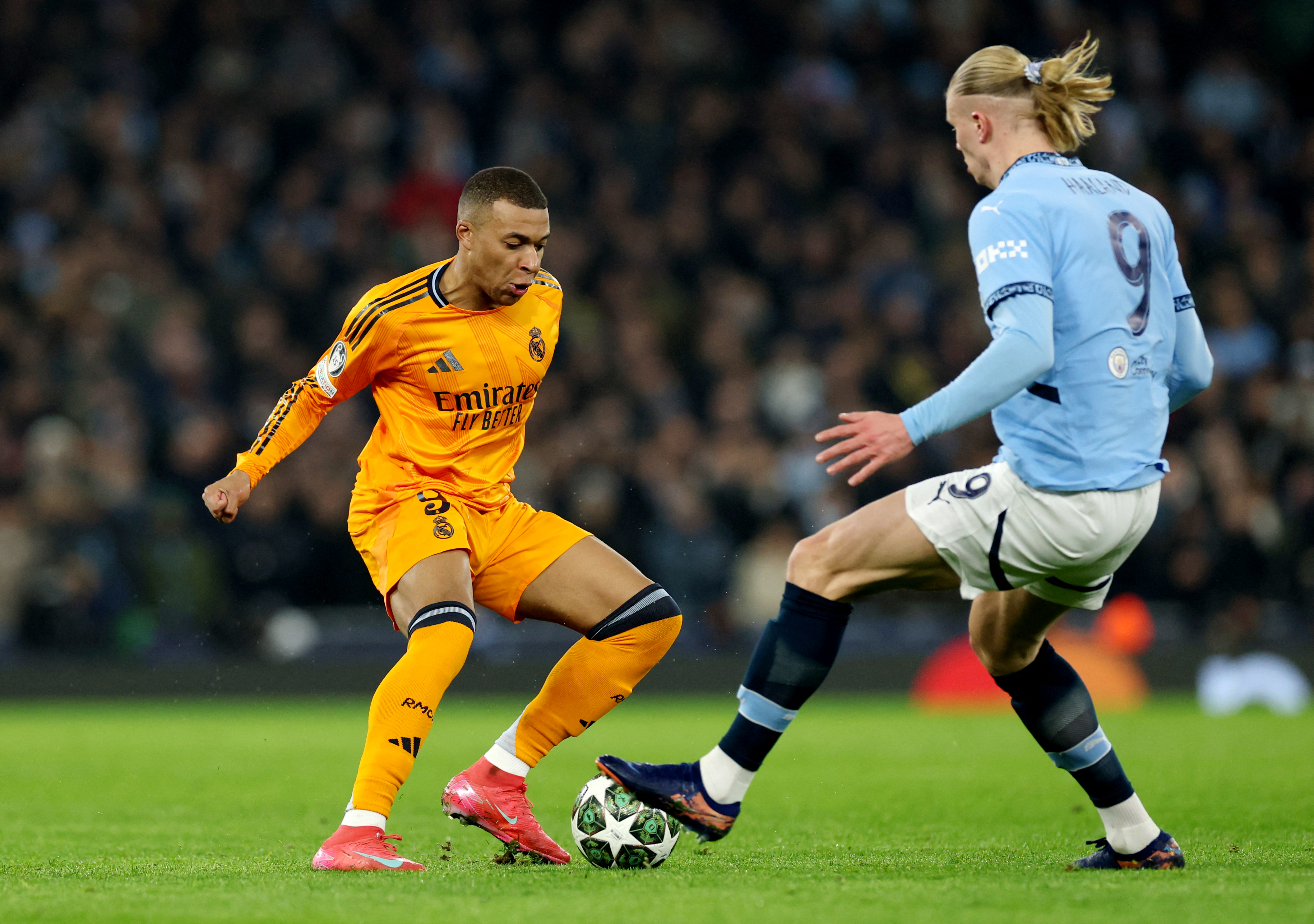
    I expect to root for the underdog again next year, when Brazil and Haiti take the field in World Cup play in Philadelphia. Brazil is a five-time world champion; Haiti last competed at this level 52 years ago.

    Philly’s Haitian community doesn’t care if it’s a little lopsided.

    “Most Haitians adore Brazil,” the Rev. Dr. Josephys Dafils told me via email, “and now Haiti will face the mighty Brazil on American soil. This is the thrill and magic of soccer. Haitians and Haitian Americans will travel to be part of this historic moment. Many of us will gather for a tailgate celebration outside the stadium, even without tickets, which are extremely expensive. We will bring food, music, vendors, and a traditional Haitian band called rara.”

    Numa St. Louis agreed: “For Haitian Americans, this event is more than just a game; it’s a moment of immense pride and emotion. As a Haitian American and die-hard soccer fan, the feelings that arise from witnessing Haiti step onto the world stage are overwhelming. It represents a long-cherished dream; a chance for a nation often faced with adversity to showcase its talent, passion, and spirit on an international platform.”

    “The joy of supporting Haiti, coupled with the opportunity to share the occasion with Brazilian fans,” he told me via email, “underscores the camaraderie found in the beautiful game.”

    Dafils, who at one time served as a youth soccer coach in Haiti, said that for the national team to make it to the World Cup at all, they had to overcome almost insurmountable obstacles.

    “Armed groups have taken control of nearly 85% of [Haiti’s] capital, as well as major cities across the country. More than one million Haitians have been forced to flee their homes,” he said. “Many people no longer have access to electricity, clean running water, or food. Families are constantly moving from one neighborhood to another in search of safety. [And] amid this dire situation, the Haitian national soccer team has accomplished the extraordinary.”

    An example of that? They had to play all the qualifying matches outside of Haiti.

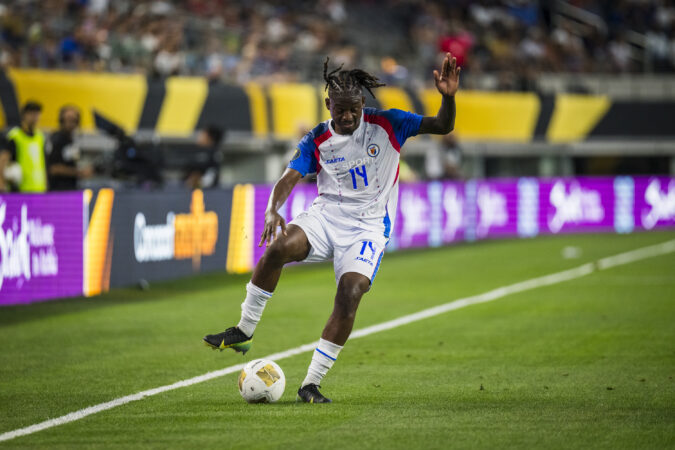
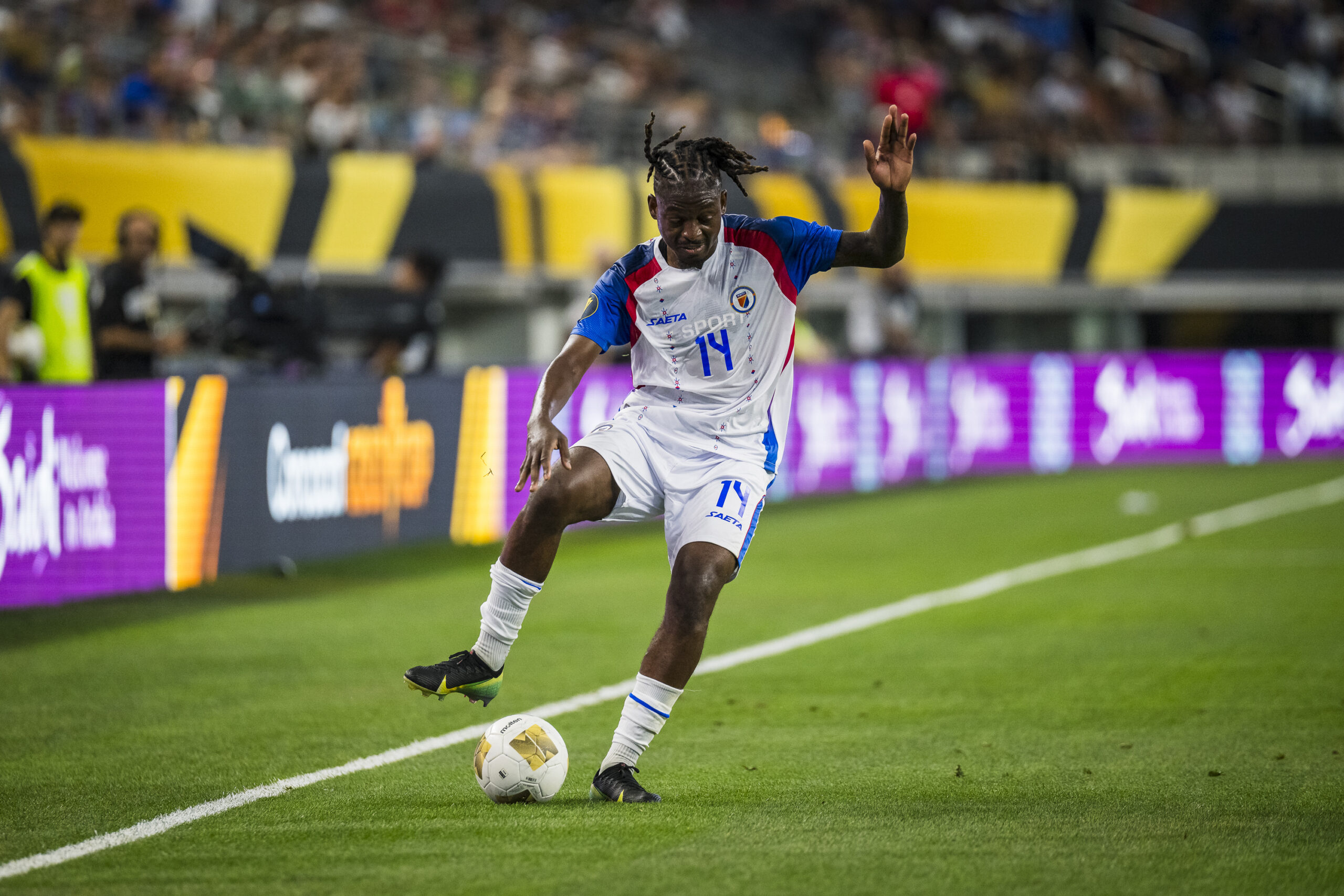
    Haiti’s Leverton Pierre controls the ball during a CONCACAF Gold Cup soccer match in June against the United States in Arlington, Texas.

    “I have cried tears of joy since Nov. 18, 2025 — the day Haiti qualified for the 2026 World Cup,” Dafils told me. “Nov. 18 also marks the anniversary of the Battle of Vertières in 1803, when Haiti secured its independence from France. The symbolism is profound.”

    St. Louis makes another historic connection: Next year’s tournament will also coincide with America’s 250th anniversary, adding another layer of significance.

    The Haitian community has a long history in Philadelphia. Hundreds of white slaveholders and those they enslaved fled the Haitian Revolution, first arriving in Philadelphia in 1793; many of those enslaved people gained their freedom here in the years between 1793 and 1796. The community grew and saw waves of immigration throughout the 20th and 21st centuries, prompted by political turmoil and natural disasters.

    It’s estimated that some 12,000 members of the community are currently legally residing under temporary protected status.

    Those Haitian immigrants, like their peers across the U.S., have felt the impact of the singularly ugly lies JD Vance and Donald Trump fabricated about Haitians during the campaign, and after Trump became president, the decision to not renew protected status when it expires in February.

    The shadow of Trump’s immigration policies “loom large” — even over an event like the World Cup match, according to St. Louis.

    “The cancellation of the Temporary Protected Status program threatens to strip many Haitians of their legal ability to remain in the United States, leaving them vulnerable to deportation,” he said. “Furthermore, Haiti is among the 19 countries whose citizens are banned from entering the U.S., which will hinder potential visitors from attending the matches.”

    But he and Dafils always return to the thrill and magic of the World Cup match.

    “It has taken 52 years for Haiti to return to the World Cup. None of us know when we will see this again. I was not yet born in 1974, and I never thought I would witness such a moment,” Dafils said.
    “This match symbolizes hope,” St. Louis said, “a celebration of cultural connections that transcend borders. Even amid political challenges and the looming impact of immigration policies, this gathering promises to foster unity among diverse communities, showcasing the power of sports to uplift and inspire.”

    “As the day approaches, the anticipation grows for what promises to be an exhilarating clash, filled with heartwarming moments, passionate displays, and the acknowledgment of Haiti’s journey,” he added.

    What a beautiful game. Ale Ayiti!

  • Your next chance to get FIFA World Cup tickets starts Thursday

    Your next chance to get FIFA World Cup tickets starts Thursday

    The 2026 FIFA World Cup is officially six months away, and Philadelphians’ next chance to buy general admission tickets starts Thursday.

    From Dec. 11 to Jan. 13, fans can enter a lottery for the chance to buy World Cup match tickets, like the two previous lottery phases. The “random selection draw” is the third of several ticket sale phases leading up to the World Cup’s first match on June 11, 2026, in Mexico City.

    During the first two ticket phases, the United States, Canada, and Mexico (in that order) drove the bulk of ticket sales, according to FIFA. Fans in 212 countries have bought tickets.

    However, since the final draw on Friday, the World Cup matchups and schedule have been finalized. This will be the first ticket sale phase in which fans can apply for single-game tickets for exact matchups and teams.

    Next year’s World Cup will take place in 16 cities across the United States, Canada, and Mexico, including in Philadelphia, where six matches will be played. Powerhouses Brazil and France, home to some of the world’s best players, are confirmed to be playing in the City of Brotherly Love.


    Brazil’s Raphinha (center) celebrates with teammate Vinícius Júnior after scoring his side’s opening goal against Venezuela during a World Cup qualifying match.

    How to enter the random selection draw for FIFA World Cup tickets

    To enter the ticket lottery, applicants must first create a FIFA ID at FIFA.com/tickets.

    The lottery application form will become available on FIFA’s website starting at 11 a.m. Thursday and will close at 11 a.m. on Jan. 13.

    Log in during the application window and complete the random selection draw application form.

    Winners will be selected in a random draw, with notifications starting soon after Jan. 13. Those selected will receive an assigned date and time to purchase tickets, subject to availability.

    Single-match tickets to all 104 games, plus venue-specific and team-specific options, will be made available to choose from. That means fans in the Philadelphia area could buy tickets for matches at Lincoln Financial Field — if selected.

    Fans who have applied to previous ticket sale lotteries must submit a new application form.

  • The Trump regime murders that aren’t on video | Will Bunch Newsletter

    There’s this idea in the sports world that when your team wins a championship like the Super Bowl, fans can’t really complain about whatever happens in the next season or two. The author of that maxim has obviously never been to Philadelphia, which is experiencing a 1776-level revolt over the Eagles’ three-game losing streak and the increasingly erratic play of the Super Bowl MVP, quarterback Jalen Hurts. So much for brotherly love, pal.

    If someone forwarded you this email, sign up for free here.

    Trump’s body count is a lot higher than two men on a wrecked ship

    A malnourished child receives treatment at Banadir Hospital in Mogadishu, Somalia, in May.

    You might have thought it would have happened when hundreds of men — in apparent conflict with a judge’s order, and often based on nothing more than a misreading of their tattoos — were shackled and flown to a notorious El Salvador torture prison.

    Or maybe it would have been making billions of dollars on crypto investments or real-estate deals with foreign dictators while running the government. Or pretending that climate change doesn’t exist. Or pardoning hundreds of bad guys, including those who launched an insurrection against the United States on Jan. 6, 2021. Even the president’s friendship with the world’s most notorious sex trafficker wasn’t exactly it.

    No, the thing that finally caused the mainstream media to go all Watergate all the time on Donald Trump and his Pentagon chief was a lot more simple, if harder to stomach: the early September murder by drone strike of two men — their identities still unknown to the world, or most of it — clinging to a piece of ship-wreckage in the Caribbean Sea near Venezuela.

    Flip on the favorite show of the Beltway set — MS Now’s Morning Joe — and there practically is no other story than the second attack on the seemingly helpless victims of an initial drone strike that killed their nine comrades. The media is demanding to learn what did self-proclaimed “Secretary of War” Pete Hegseth know about the strike, and when did he know it. Commentators are calling the killing a war crime at best, a murder at worst. An unnamed lawmaker who saw a video of the second strike told reporters that the film is nauseating.

    Pressure on the Trump regime to release this 45 or so minutes of footage of the boat attack is intensifying, and it’s not hard to understand why. It’s a bit like 2020’s video of the excruciating cop murder of George Floyd in Minneapolis, which made a problem that activists had been talking about for decades — police brutality — so real for everyday folk that millions took to the streets.

    Likewise, people have been calling Trump names — including the “f-word,” fascist — ever since the Manhattan real-estate mogul descended the escalator at Trump Tower to run for president in 2015. But somehow the mental image of men reportedly begging to be saved seconds before an admiral gives the order to obliterate them has captured the angry imagination in a way that past Trump outrages did not. No wonder Trump has flip-flopped on releasing the video.

    Look, I’m glad the media and Congress, including some Republicans, are finally taking seriously the idea that major felonies are being committed in Trump World. Still, the two men killed in what’s called the double-tap strike came after nine other people had already been blown up, in an attack against civilians of a nation America is not at war with, who were accused of committing a crime — drug trafficking — that is not a capital offense.

    There is no legal, let alone moral, justification for this attack — and it was the first of a series of drone strikes that have killed at least 86 people. There’s a strong case that every one of these is a war crime. It’s just that the killing of the two men clinging to debris appears even more egregious.

    This highlights an even weightier issue. From Day One of Trump’s second term, there has been a callous indifference to human life — a hallmark that the current U.S. government unfortunately shares with many other authoritarian regimes throughout history. But the media, and the watchdogs, have struggled to convey this reality with so many of the deaths taking place off camera.

    So far, the worst crime has been the rash move back in the first weeks of the new administration by Trump’s billionaire then-ally Elon Musk and his so-called Department of Government Efficiency, or DOGE, to dismantle the U.S. Agency for International Development (USAID) — a once-thriving $34-billion-a-year agency that funded food, medicine, classrooms and other aid in developing nations.

    The Musk team labelled USAID as inefficient and out of whack with Trump’s new priorities like curbing immigration. This despite the fact that experts saw the American agency as the best projector of “soft power” around the globe as it saved literally millions of lives, especially for children under age 5.

    “We are now witnessing what the historian Richard Rhodes termed ‘public man-made death,’ which, he observed, has been perhaps the most overlooked cause of mortality in the last century,” Atul Gawande, a surgeon who worked with USAID in the Joe Biden years, wrote last month in the New Yorker. Gawande estimated that the wanton destruction of USAID programs that offered vaccines and fought AIDS and infectious disease outbreaks caused 600,000 needless deaths in the first 10 months of the Trump regime, with millions more to come.

    This week, the philanthropic Gates Foundation reported that for the first time in the 21st century, mostly preventable deaths of children under age 5 are rising instead of falling, and the main culprit is cuts in development aid, led by the United States. “We could be the generation who had access to the most advanced science and innovation in human history,” the billionaire philanthropist Bill Gates said, “but couldn’t get the funding together to ensure it saved lives.”

    The MAGA comebacks to cries that Trump is a fascist dictator often claim that innocent people aren’t getting slaughtered as happened under Adolf Hitler or Mao Zedong or other historic despots. The truth is that the regime’s cruelty-is-the-point demagoguery is inevitably becoming a death cult, epitomized by Musk’s chainsaw DOGE shtick. The murder happens in small batches, on boats off South America, and it also happens in big lots in places like famine-plagued South Sudan, as children die from aid cuts to badly needed health centers.

    And increasingly, Trump’s death cult is taking root here at home, from the 25 humans, and counting, who’ve died in ICE’s overcrowded detention centers this year, to individuals like Roberto Carlos Montoya Valdez, who was struck by cars while running away from immigration agents who raided a Home Depot parking lot in Southern California. This is before we know the full and likely lethal impact of alarming health policy changes from Robert F. Kennedy Jr.’s Health and Human Services Department, and the toxic anti-vaccine culture he promotes.

    We should be just as outraged by the deaths that take place out of sight, in dusty and remote places on the other side of the world, as by two premeditated murders captured in a MAGA snuff film. Understanding the nature of Trump’s cult of death is critical for folks to find the courage to rise up and stop this before it gets much, much worse.

    Yo, do this!

    • The one thing that truly sets MS Now’s Rachel Maddow apart from her peers as an opinionated late-night cable-news host is her love for history, and her ability to put today’s crisis in the context of what came before. In her second life as a top podcaster, Maddow’s sweet spot has become America before, during, and immediately after World War II, and what memory-holed stories from that era tell us about today. Her new audio series, Burn Order, is about immigration, paranoia and demagoguery — not now, but in the unconscionable internment of Japanese-Americans in the 1940s. Two episodes in, it’s her best podcast yet.
    • I’ve never really kept my promise to include great restaurants and bars in this space, but here goes. During last week’s fairly frantic journalistic sojourn to New Orleans, I took one night off and grabbed a beer in what might be the greatest American dive bar, Jake and Snake’s Christmas Club Bar. This shotgun shack of a watering hole in the middle of an otherwise residential street has to be seen to be believed, both on the ramshackle outside and in the dark interior pumping 1950s rockabilly and lit only by — what else? — Christmas lights. There is no better way to kick off your holiday season.

    Ask me anything

    Question: All things considered, the U.S. has weathered this first year of the second Trump regime OK. But three more years of this? Any guesses as to what happens between now and then? — Shawn “Smith” Peirce (@silversmith1.bsky.social) via Bluesky

    Answer: Weathered? Just barely. But I do exit 2025 slightly more optimistic than I began the year, thanks to the size of the No Kings protests and the growing resolve of citizen resistance to immigration raids. What happens in the next three years? I think 2026 will be pivotal. Trump will surely look at his sagging polls and double down on dictatorship, which could include misguided foreign wars, more aggressive use of troops at home, and efforts to somehow nullify next November’s midterms. I also think these will fail, which means a Democratic Congress in 2027 and 2028 that will certainly impeach Trump and restrain his worst impulses. If not, I may be writing this newsletter from my prison cell.

    What you’re saying about…

    The question I posed here two weeks ago about the John F. Kennedy assassination was a good, evergreen topic ahead of a long break. Maybe it was my boomer-heavy readership, but all but one respondent didn’t believe that Lee Harvey Oswald acted alone. “I also saw Jack Ruby shoot Oswald on live television, another searing memory,” wrote Laura Hardy, who was 8 in 1963. “Nothing ever added up in my mind. Still doesn’t. Was it the Russians? The CIA? The mob?” The one naysayer was Armen Pandola, who argues that “JFK was a fairly conservative Democrat at the time…Where is the motive?”

    📮 This week’s question: This has been asked before, but it’s still the most important thing going. Trump is appearing in public with a bruised, bandaged hand, prone to weird digressions or outbursts. So what is the deal with his health? Please email me your answer and put the exact phrase “Trump’s health” in the subject line.

    Backstory on an all-too fitting venue for Trump’s Pa. speech

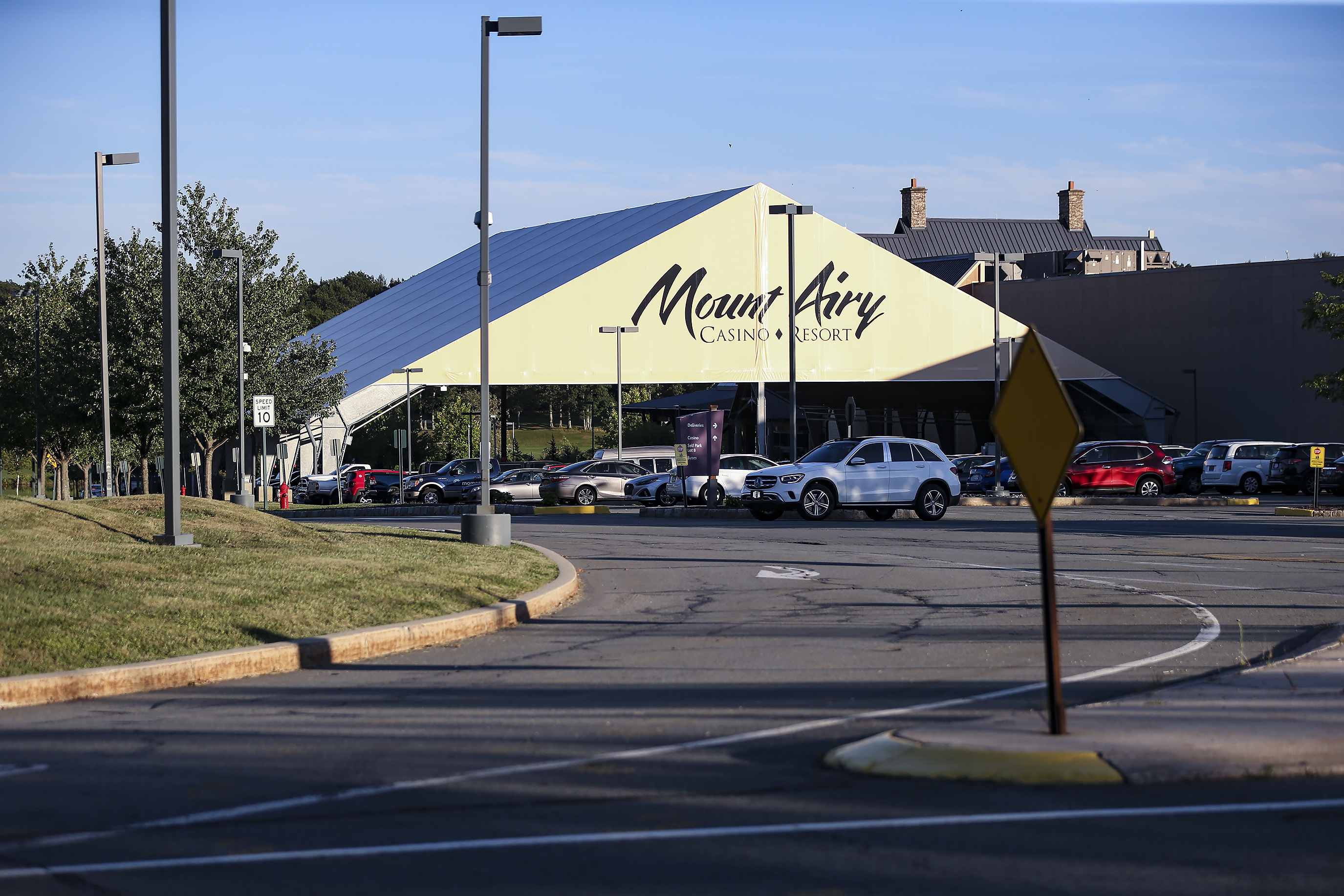
    The Mount Airy Casino Resort in Mount Pocono, Pa.

    Donald Trump may be constitutionally ineligible to run again for president — no seriously, he can’t — but that factoid apparently isn’t stopping the 47th POTUS from campaigning in the critical swing states. Why else did Trump choose Pennsylvania — a state he visited a gazillion times as a candidate — as the location for a major speech on the economy, to convince citizens that what they are seeing in supermarket aisles is not what’s happening? I can’t even imagine what Trump will say Tuesday night, but I was stunned to learn the regime’s choice of venue: The Mount Airy Casino Resort, the former honeymoon haven in Mount Pocono.

    It’s not just that Trump is touting economic security in a casino, which seems way too fitting in an America where so many folks have decided that the only way they’ll ever get rich is through gambling, whether that’s a get-rich-quick investment in crypto or meme stocks, or by an addiction to the betting sites like DraftKings that are devouring the sports world. Or that the backdrop might remind people that Trump was the rare entrepreneur who drove his own Atlantic City casinos — supposedly a license to print money — into bankruptcy.

    The real problem is that the Mount Airy Lodge is the epitome of the real Trump economy: Public corruption. Like Trump’s real-estate empire, the original Mount Airy Lodge fell on hard times in the 1990s, and its longtime owner died from a self-inflicted gunshot wound in 1999. The supposed savior was the state’s headlong rush into casino gambling and northeastern Pennsylvania’s landfill magnate Louis DeNaples, long dogged by allegations of ties to Scranton’s organized crime family. In 2008, DeNaples was indicted on four counts of perjury tied to his casino permit application; ultimately the politically connected businessman turned over the casino to a trust chaired by his daughter and saw the charges dropped. But the Mount Airy Resort Casino remains dogged by controversy, including a recently proposed $2.3 million settlement with its table-games dealers who accused the owners of years of wage theft.

    But Trump considers DeNaples “a close friend,” and the Mount Airy casino nabbed a $50 million federal bailout loan during the COVID-19 pandemic in the final year of Trump’s first term. Five years later, is there a positive story about the Trump economy that can be told from this stage of dropped felony charges, alleged wage theft, and government largesse for the well-connected? Don’t bet your nest egg on it.

    What I wrote on this date in 2015

    Ten years ago, I was fascinated by the decades-long political rise of Vermont senator and then-White House hopeful Bernie Sanders. This left-wing curmudgeon and relic of the 1960s didn’t capture the White House but changed America, for good. On Dec. 9, 2015, I touted my Amazon Kindle Single e-book about Sanders (The Bern Identityit’s still available!) and offered highlights. I wrote: “Politics mattered then, before Chicago and Kent State and Watergate and all the cynicism, and the unvarnished, authentic voice of Bernie Sanders is bringing that feeling back for many.” Read the rest: “5 things I learned writing an e-book about Bernie Sanders.”

    Recommended Inquirer reading

    • Did I mention that I went to New Orleans? I wrote two columns from the scene of Homeland Security’s immigration raid that the Trump regime has branded “Catahoula Crunch” in a gross homage to the Louisiana state dog. The first piece looked at Day One of the operation — the Big Lie behind the raids that claim to target criminals but instead go after day laborers, usually without criminal records — and the fear that pervaded the Latino community. The second column was a much more hopeful look inside the growing citizen resistance, as I profiled the everyday folks who are taking risks to blow whistles, chase cars, and generally impede Trump’s mass deportation agenda.
    • Last week — if you could somehow make it through the sickening bromance between Donald Trump and FIFA, the world governing body of soccer — we finally learned the key groupings and early-stage matches of the 2026 men’s World Cup finals across the United States as well as our now frenemies Canada and Mexico. You won’t be surprised to know that The Inquirer’s soccer writer extraordinaire Jonathan Tannenwald was all over the key developments. We learned who the U.S. team will play: Paraguay, a to-be-determined European qualifier, and Australia, in a June 19 Seattle match I still want to attend if I can start a GoFundMe (kidding…maybe) for the astronomical ticket prices. The Philadelphia matches include perennial contenders France and Brazil as well as a Curaçao-Ivory Coast showdown that I’m excited for because I might be able to afford it. The World Cup is going to be one of the biggest stories of 2026, and you know the Inquirer will cover this like an Italian center back. This alone will be worth the price of a subscription, so what are you waiting for?

    By submitting your written, visual, and/or audio contributions, you agree to The Inquirer‘s Terms of Use, including the grant of rights in Section 10.

  • There are 72 group stage games in next summer’s FIFA World Cup. Here are 10 of the best.

    There are 72 group stage games in next summer’s FIFA World Cup. Here are 10 of the best.

    With 48 teams spread across 12 groups in a World Cup for the first time, the 72 group-stage games next summer will be a lot to take in.

    Here are our picks for the top 10 to watch, in chronological order. In two cases, we’ll note the ones we would have put at the top of a ranking by quality.

    Canada vs. Italy

    If Italy wins its qualifying playoff

    Group B, 3 p.m. June 12 in Toronto

    There are a lot of great stories across the 48 teams, especially the many first-timers and first-in-a-long-timers. But that doesn’t mean there are a lot of must-circle games. In truth, a tournament this big — too big for a lot of tastes — could create a diluted group stage.

    But don’t tell that to the northernmost of the three cohosts. This will be the first men’s World Cup played on Canadian soil, and the Canucks will start against the winner of the European playoff bracket with Italy, Northern Ireland, Wales, and Bosnia and Herzegovina.

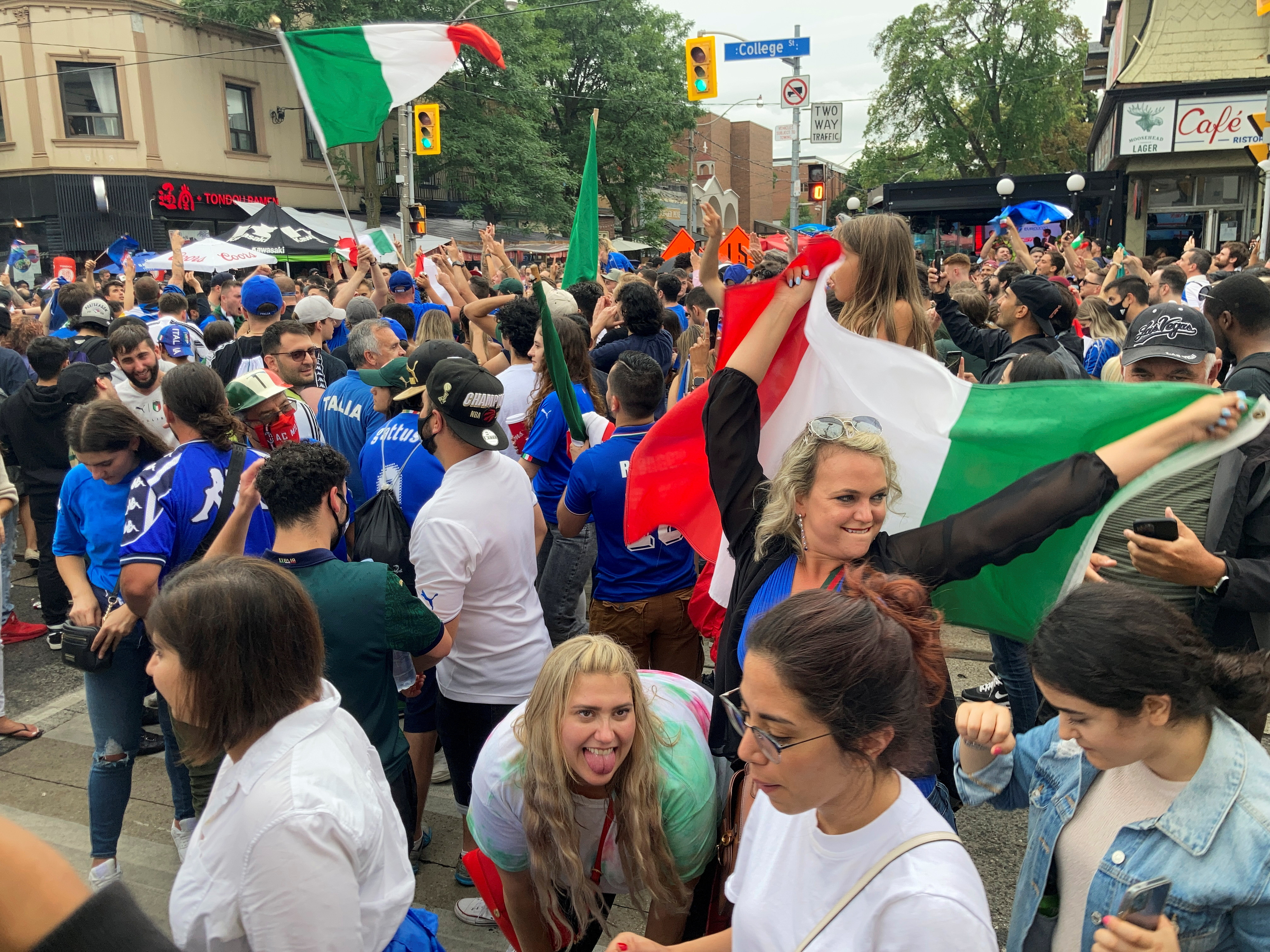
    If Italy emerges from that qualifying playoff, a Canada-Italy matchup in a city with a raucous Italian expat community would be electric. (It also likely would be as expensive a ticket at Toronto’s 45,736-seat stadium as a custom Armani suit.)

    Among the many Little Italy neighborhoods in North America, Toronto has long had one of the most vibrant.

    The Azzuri are favored to win that bracket, but not a slam dunk. They’ve missed the last two World Cups in catastrophic fashion, and if they beat Northern Ireland, they’ll have to face Wales or Bosnia and Herzegovina on the road. If they get the job done, you’ll hear the cheers from College and Bathurst up north all the way to Passyunk and Snyder down south.

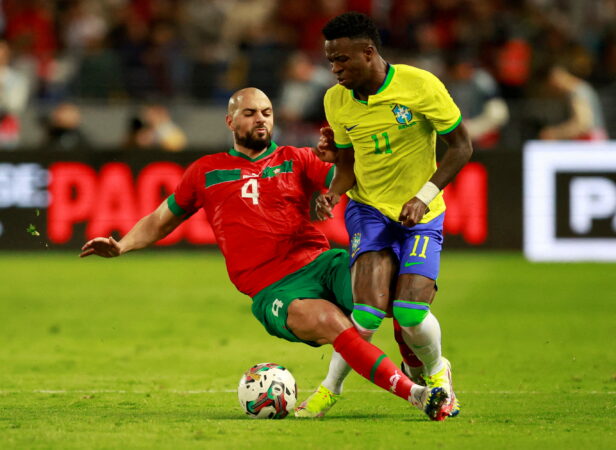
    Brazil vs. Morocco

    Group C, 6 p.m. June 13 in East Rutherford, N.J.

    Group C will have the most fun vibes, with Scotland and Haiti as the other teams — both are ending decades-long waits to return to men’s soccer’s biggest stage. Their fan bases will be boisterous, and the Scots’ Tartan Army will be massive. But in soccer terms, this will be the best matchup.

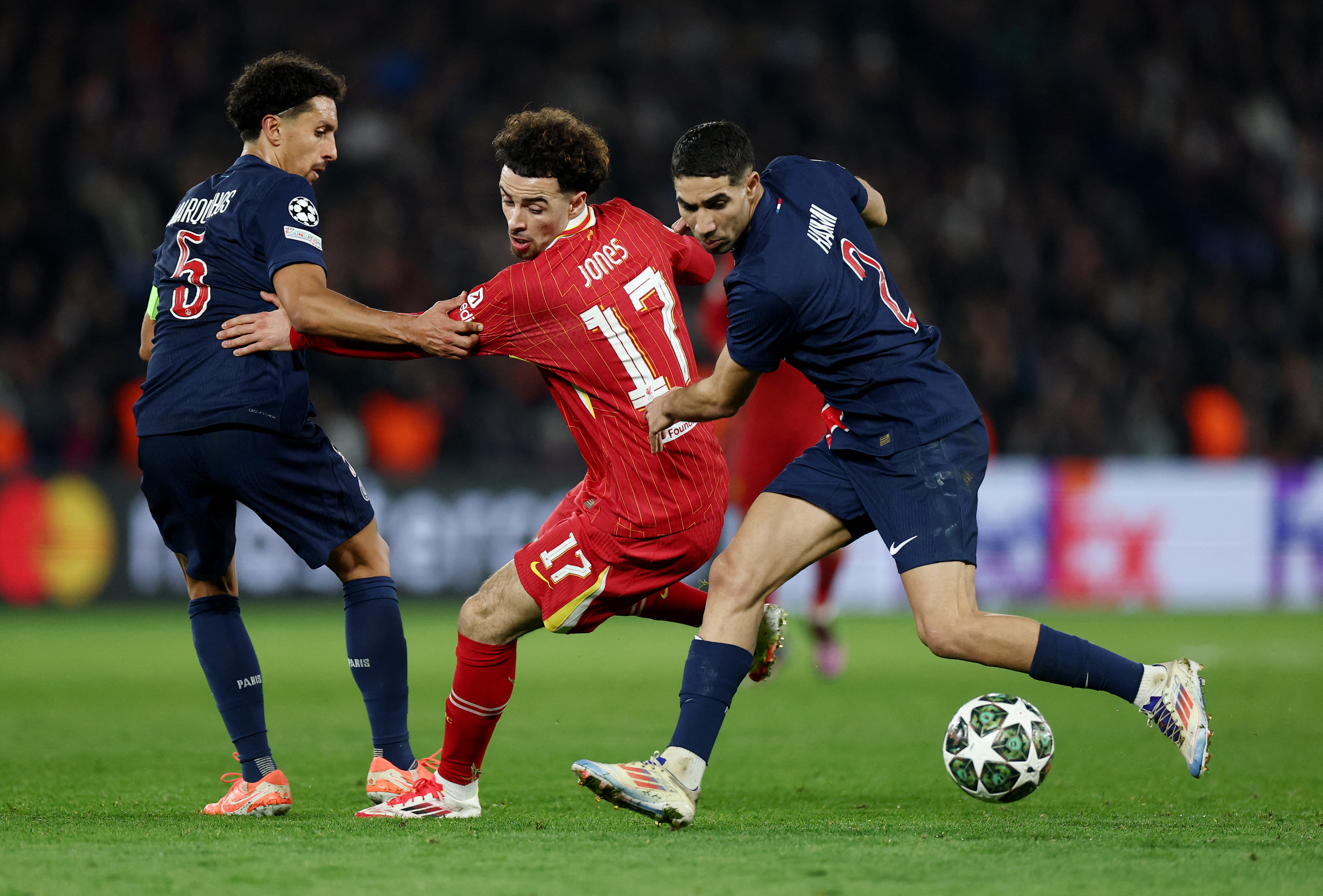
    The Seleçao’s quest for an unparalleled sixth title goes through an African power that is loaded with talent and skill. Fans rightly will dream of watching Brazil’s Vinícius Júnior or Estêvão charge at Morocco’s all-world outside back Achraf Hakimi, and Hakimi will charge the other way at his Paris Saint-Germain teammate Marquinhos.

    Paris Saint-Germain teammates Marquinhos (left) and Achraf Hakimi could play against each other in the World Cup.
    Netherlands vs. Japan

    Group F, 4 p.m. June 14 in Arlington, Texas

    This game also will feature lots of skill across the field.

    The Dutch, forever in search of their first World Cup title, have midfielders Frenkie de Jong, Ryan Gravenberch, Tijjani Reijnders, and Xavi Simons in their prime, with Cody Gakpo up front. Japan counters with just as much class: Takefusa Kubo, Takumi Minamino, Kaoru Mitoma, and Ao Tanaka.

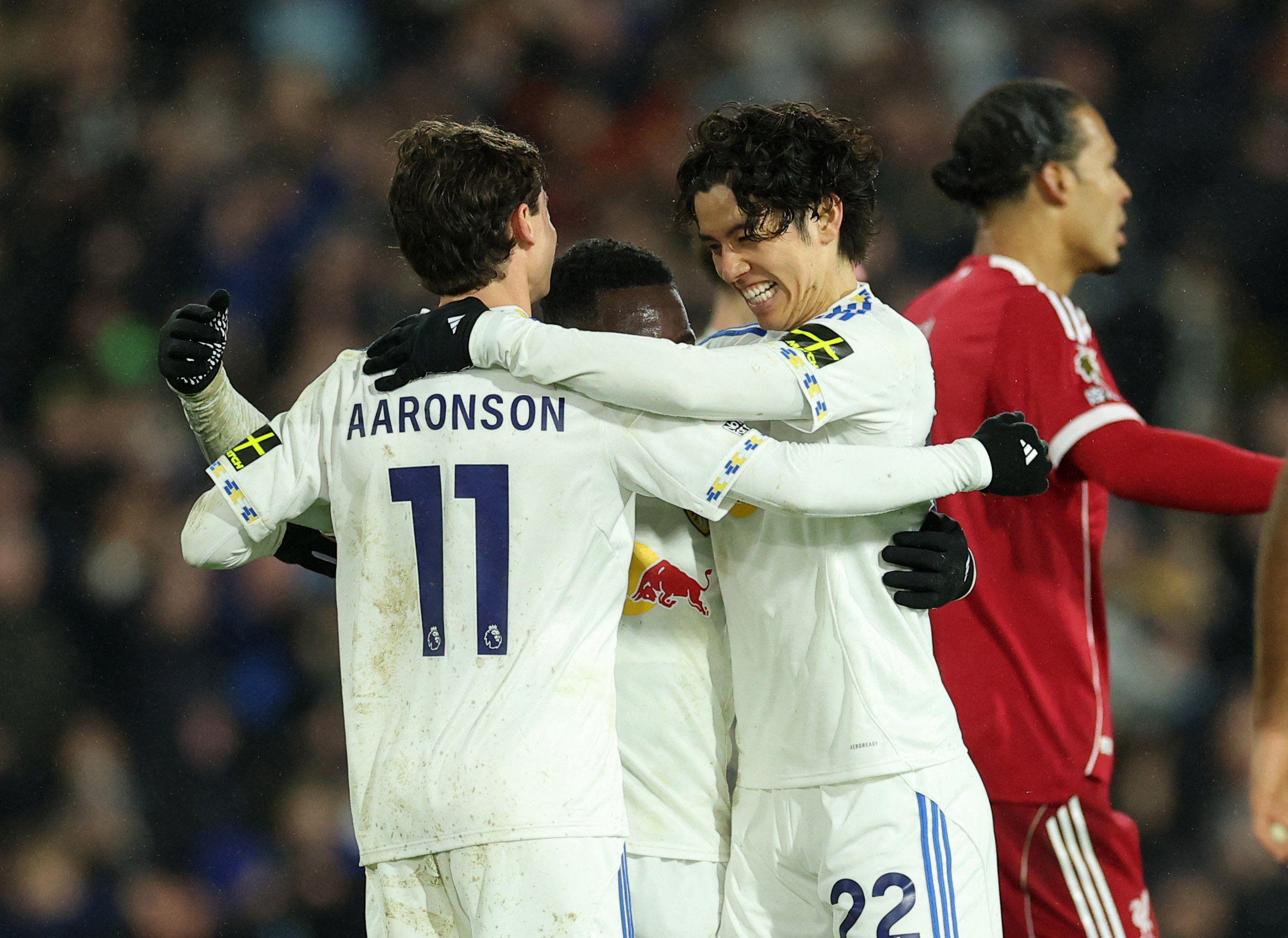
    Japan’s Ao Tanaka (right) is teammates with Medford’s Brenden Aaronson at English Premier League club Leeds United.

    England vs. Croatia

    Group L, 4 p.m. June 17 in Arlington, Texas

    England will arrive in its former colonies as one of the favorites to win the World Cup, and for good reason. After decades of underachievement, the Three Lions finally have the right mix of talent, tactics, and chemistry to win it all.

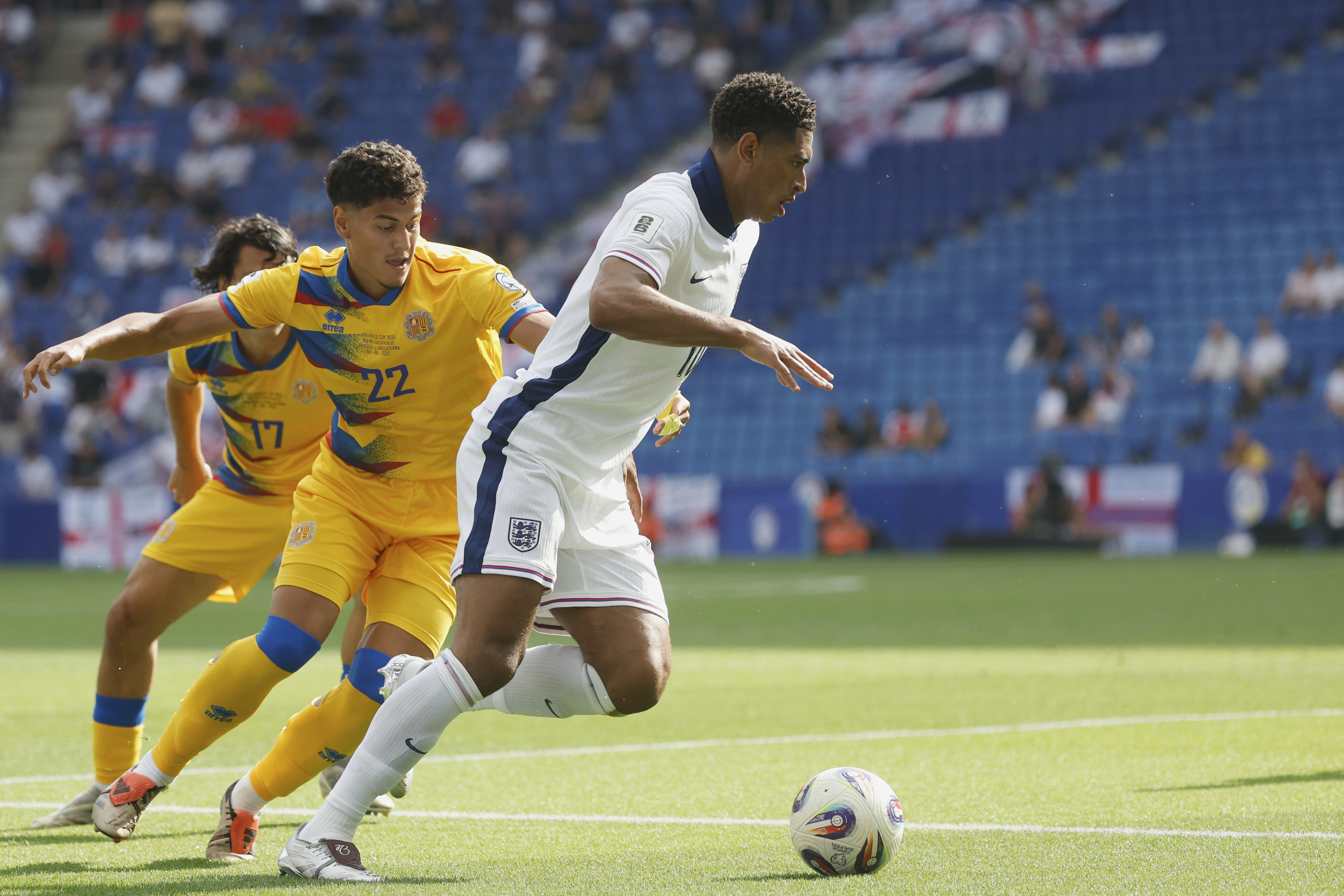
    Their toughest group test should be their opener, as Croatia’s ageless playmaker Luka Modrić matches wits with his former Real Madrid teammate Jude Bellingham. Both teams’ fans also haven’t forgotten that in their last World Cup meeting, Croatia memorably beat England on penalty kicks in the 2018 semifinals.

    Jude Bellingham (right) on the ball for England in World Cup qualifying.

    Mexico vs. South Korea

    Group A, 9 p.m. June 18 in Guadalajara, Mexico

    Eight years since their last meeting in a World Cup, they will cross paths again in what could be a wide-open game.

    Mexico is under huge pressure to reach el quinto partido, a fifth game at a World Cup, for the first time since 1986 — perhaps not coincidentally the last time the tournament was on home turf. If Raúl Jiménez’s squad can topple Son Heung-Min’s squad, El Tri would take a big step in the right direction and toward winning the group.

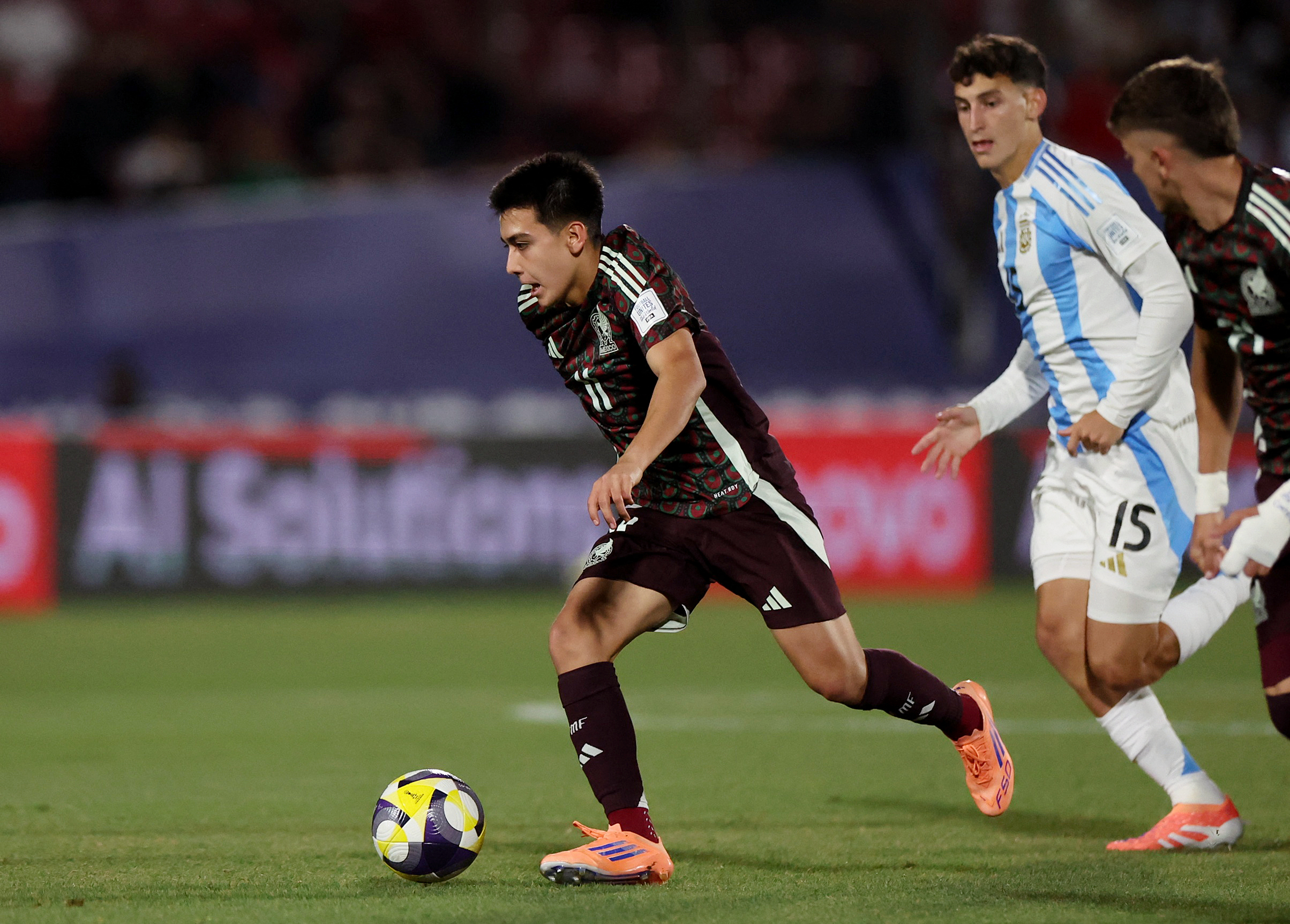
    Expect many eyes south of the Rio Grande to be on Gilberto Mora, a 17-year-old who is Mexico’s newest phenom. He looks like the real thing so far, but the World Cup is a stage beyond anything he’s seen.

    Gilberto Mora played for Mexico at the under-20 World Cup this year and could play on the big stage next year.

    Ecuador vs. Germany

    Group E, 4 p.m. June 25 East Rutherford, N.J.

    World Cup upsets don’t have the same stakes as in the NCAA Tournament, but picking them is always trendy. This one goes to the top of the list, with a potential midfield battle of Germany’s Florian Wirtz and Jamal Musiala vs. Ecuador’s Moisés Caicedo and Kendry Páez.

    Florian Wirtz (right) in action for Germany.

    U.S. vs. Turkey

    If Turkey wins its qualifying playoff

    Group D, 10 p.m. June 25 in Inglewood, Calif.

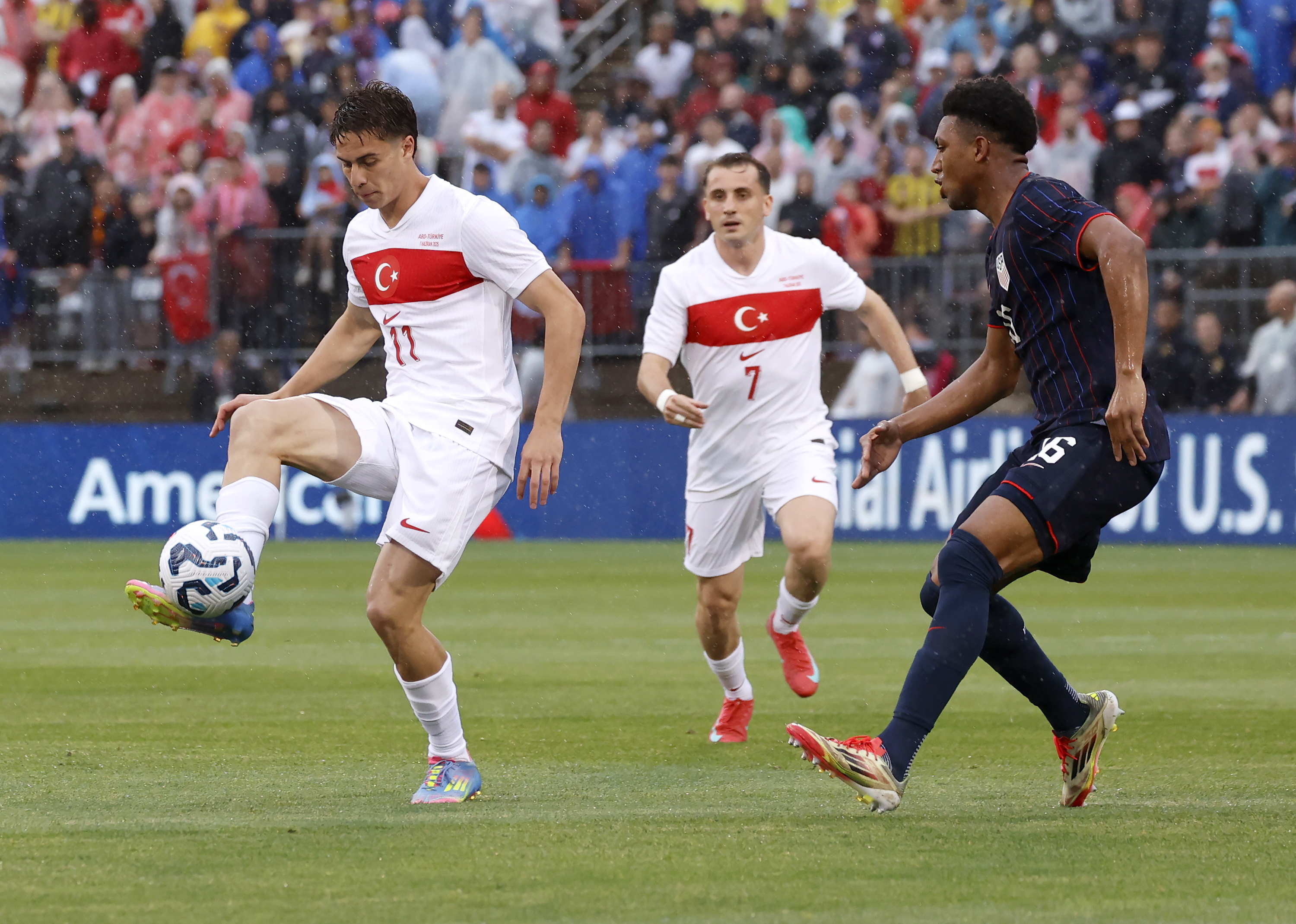
    Though the U.S. has one of the easiest groups it could have wanted, this potential matchup is here on merit. Arda Güler and Kenan Yıldız are great young playmakers, and they have Hakan Çalhanoğlu’s veteran experience behind them.

    When these teams met in June, Turkey beat a far-from-top-quality American squad. Now, the big names might take their shot. And since this is the Group D finale, the winner could take first place.

    It’s just a shame that FIFA and whoever else was in the room decided to stick the kickoff time so late on a Thursday night for most of the country.

    Kenan Yıldız (left) on the ball for Turkey when it beat the U.S. in June in East Hartford, Conn.

    Norway vs. France

    Group I, 3 p.m. June 26 in Foxborough, Mass.

    For all the gaudiness of the World Cup draw’s entertainment acts, you could hear a pin drop in the Kennedy Center’s fabled Concert Hall when the serious business started. Then, every once in a while, the crowd would gasp.

    The onlookers gasped mightily when Norway landed in France’s group.

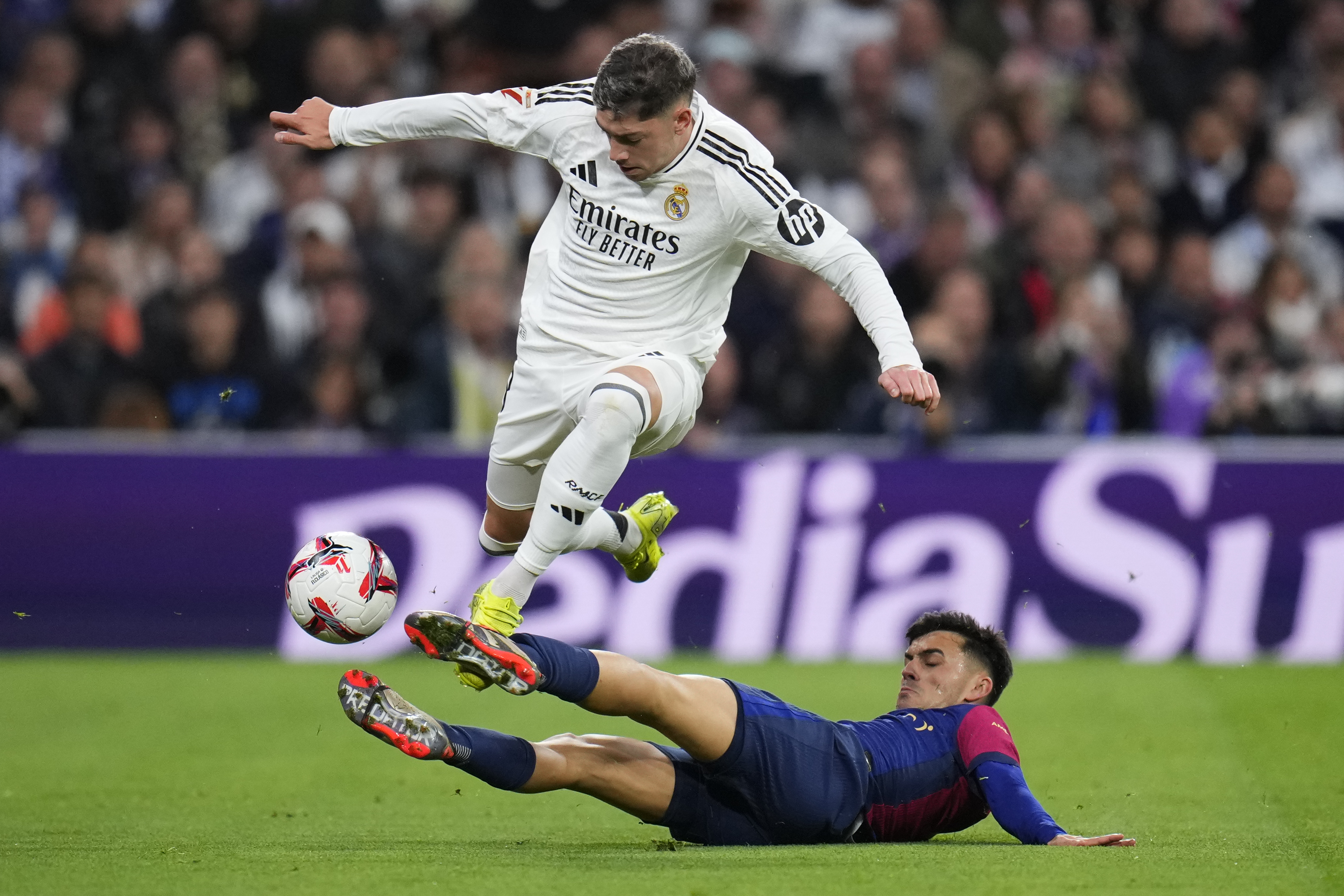
    The striker duel of Les Bleus’ Kylian Mbappé and the Landslaget’s Erling Haaland will be the biggest superstar clash of the group stage. In the midfield, Norway’s terrific playmaker Martin Ødegaard could clash with France’s N’Golo Kanté or Aurélien Tchouaméni.

    It will be the group-stage finale for both teams, too, with France aiming to take another step toward a third straight men’s World Cup final. That makes this game No. 2 behind Brazil-Morocco as the best overall.

    Kylian Mbappé (left) and Erling Haaland have played against each other in the UEFA Champions League, but never in the World Cup.
    Uruguay vs. Spain

    Group H, 8 p.m. June 26 in Guadalajara

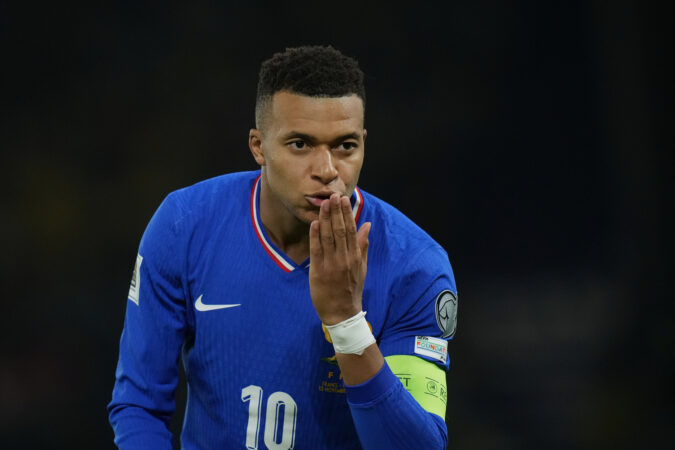
    This game might turn out to be a dud because Uruguay has been playing pretty badly lately and doesn’t look like it will turn it around before the summer. But Federico Valverde play against a slew of players he knows well as a Real Madrid stalwart.

    Spain will be worth watching no matter what. Electric teenager Lamine Yamal is the world’s game’s new superstar, and La Roja’s list of talents is among the sport’s longest: Gavi, Pedri, Rodri, Mikel Merino, Dani Olmo, Nico Williams, Martín Zubimendi, and more.

    Uruguay’s Federico Valverde (right) and Spain’s Pedri (bottom) play on opposite sides of the Real Madrid-Barcelona rivalry, one of soccer’s most famous clashes.

    Colombia vs. Portugal

    Group K, 7:30 p.m. June 27 in Miami Gardens, Fla.

    If Jamaica wins its intercontinental playoff bracket, Andre Blake would face Cristiano Ronaldo in the Reggae Boyz’ first men’s World Cup game since 1998. But since that’s not guaranteed — and really not guaranteed right now, given how Jamaica failed in Concacaf qualifying — we’ll pick a certainty.

    In particular, we’ll pick the certainty of Colombia’s outstanding fan base. The Cafeteros always have boisterous backing in the United States, thanks to the big expat community here, and they will be deafening in South Florida.

    On the field, the marquee will have Ronaldo and Colombia’s Luis Díaz. But these days, Ronaldo isn’t his country’s best player. Vitinha, João Neves, and Rafael Leão are ahead of the biggest name.

  • Ranking the five World Cup group stage matches headed to Philly next summer

    Ranking the five World Cup group stage matches headed to Philly next summer

    When the World Cup arrives in town next summer, diehard soccer fans and casual followers will tune in to see the action. If you’re one who doesn’t know everything about all the teams that will play at Lincoln Financial Field, we’re here to help.

    Here’s our ranking of the five group games Philadelphia will host.

    5. Curaçao vs. Ivory Coast

    Group E, June 25, 4 p.m.

    Curaçao will be one of this World Cup’s great underdog stories. The former Dutch territory leveraged its diaspora in the Netherlands to recruit talented players like brothers Leandro and Juninho Bacuna. Their manager is a Dutch legend, Dick Advocaat.

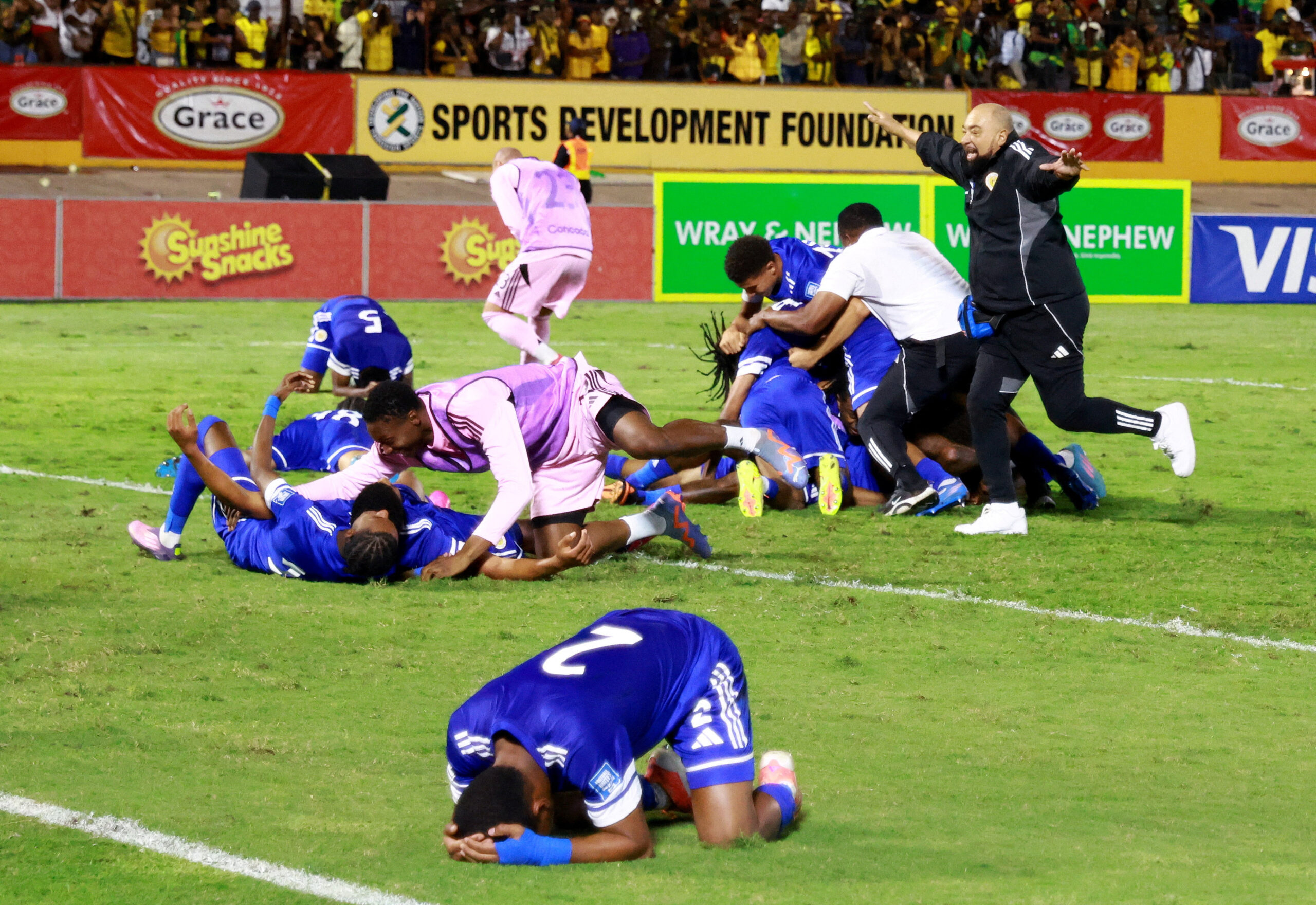
    Curaçao’s celebrations at the final whistle of its tie at Jamaica last month that clinched the Caribbean island’s first World Cup qualification.

    The Blue Wave will probably be routed by Germany and Ecuador in their first two group games, so this could be their tournament farewell. Hopefully, though, they will get a nice send-off from a city that loves underdogs.

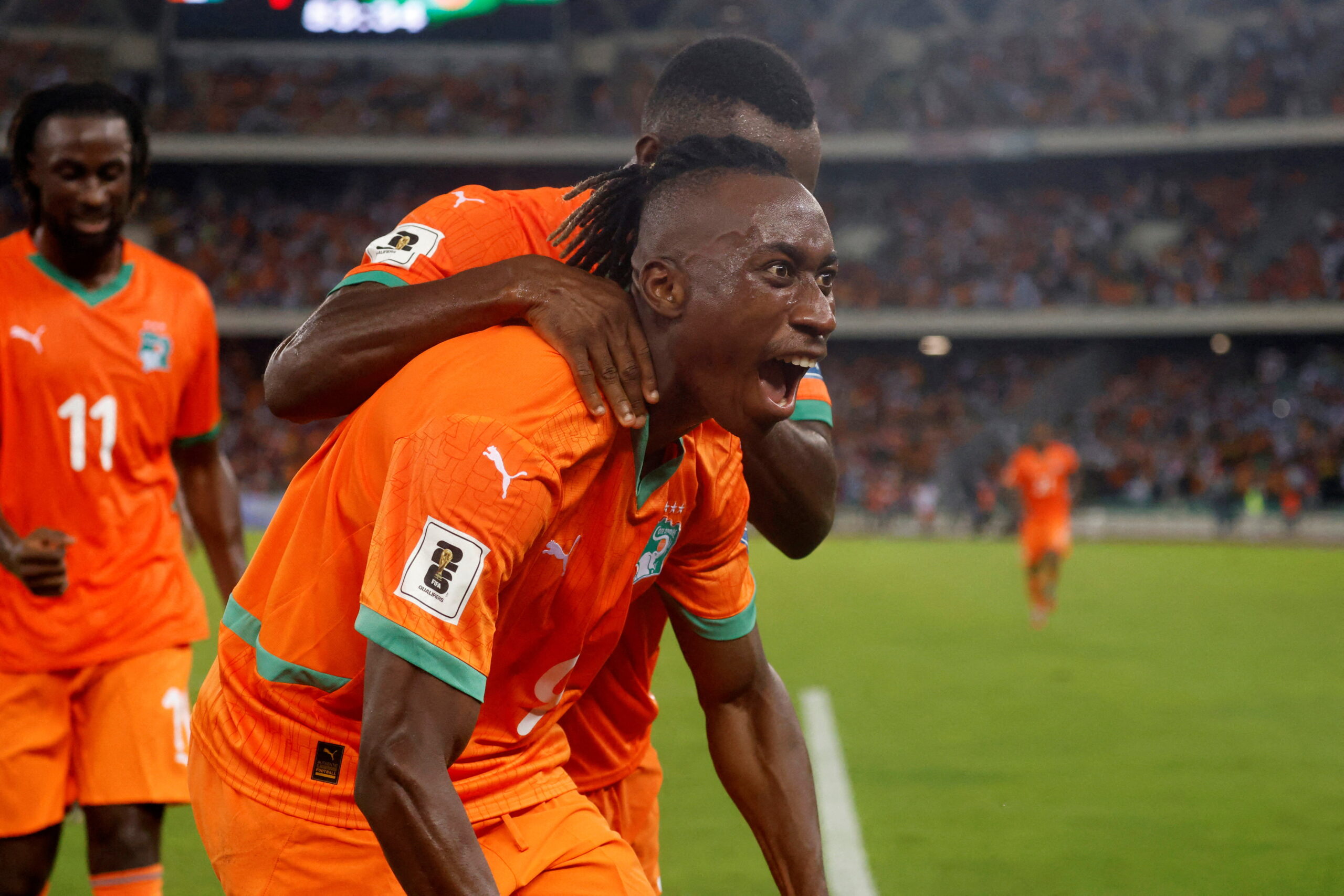
    Ivory Coast is led by midfielder Franck Kessié and forwards Amad Diallo and Sébastien Haller. You’ll also want to keep an eye on 19-year-old winger Yan Diomande. He lived for a few years in the United States as a young teen, and played high school and youth club soccer in Florida before turning pro in Europe in November 2024.

    The other upside to this matchup is that since the teams’ fan bases aren’t huge, there’s a chance local fans will be able to get tickets for it. Perhaps only a small chance, because there will be huge demand — and exorbitant prices — for every World Cup game no matter who’s in it.

    Yan Diomande celebrates scoring a goal for Ivory Coast in a World Cup qualifier in October.

    4. Ivory Coast vs. Ecuador

    Group E, June 14, 7 p.m.

    Picking the game to rank fourth was even harder than picking the game to rank fifth. It came down to star power vs. potential atmosphere in the stands, and the tie went against the atmosphere.

    So we apologize to Ivory Coast for putting both of its games at the bottom. We also apologize to the tens of thousands of Ecuador fans who will ensure that Philadelphia’s first men’s World Cup game is a fast sellout. La Tri’s faithful have a long track record of traveling all over the U.S. when their team plays here, and creating boisterous atmospheres.

    They will create another sea of yellow at the Linc, for a team that not only has a strong chance of advancing but of winning its group.

    Ecuador’s back line consists of Pervis Estupiñán, Piero Hincapié, Willian Pacho, and Angelo Preciado. Moisés Caicedo is a superstar in midfield, Kendry Paez is one of the world’s most-hyped young phenoms, and veteran Enner Valencia finishes the job up top.

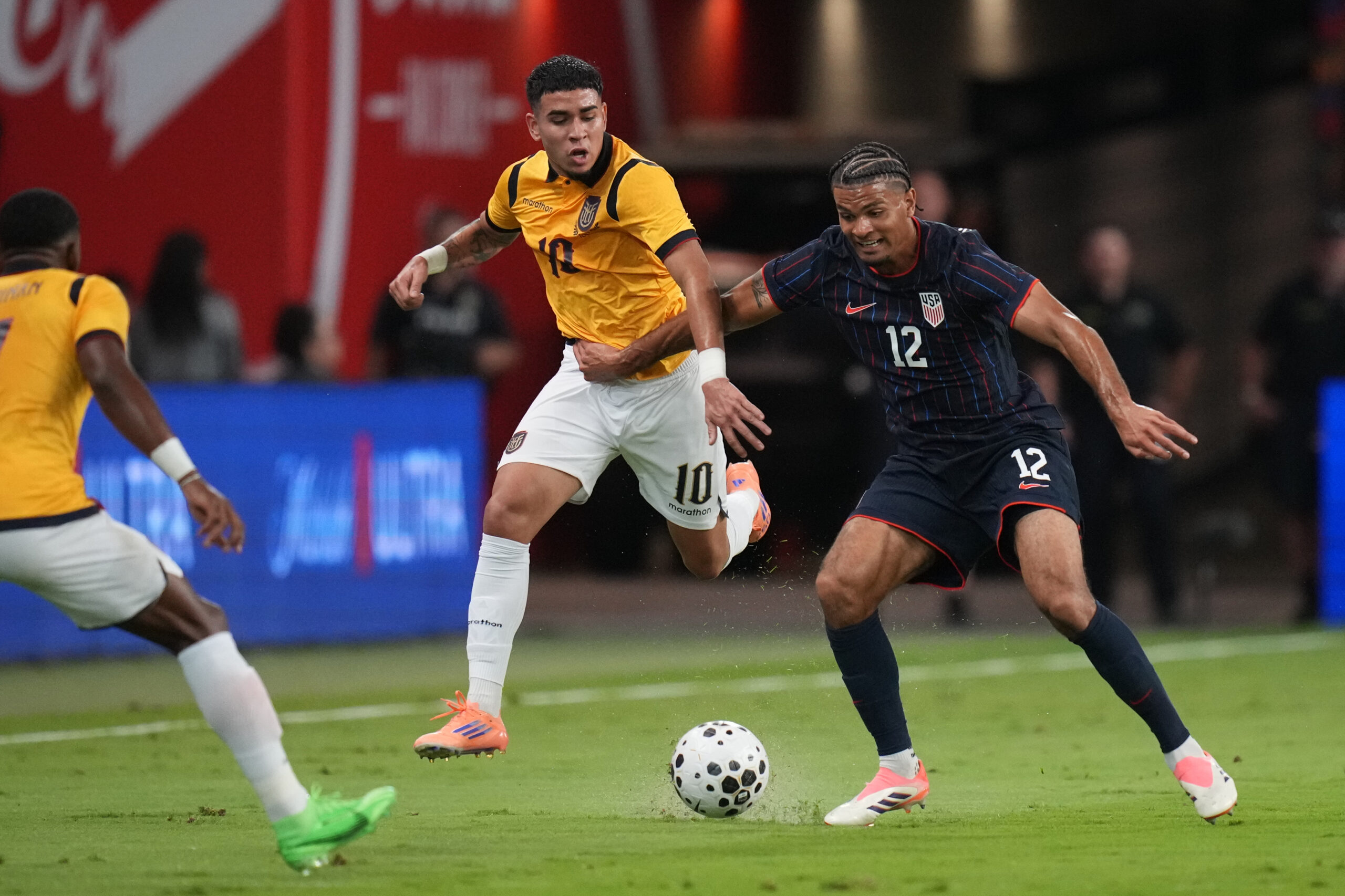
    Kendry Paez (center) played for Ecuador against the United States in October.

    3. Croatia vs. Ghana

    Group L, June 27, 5 p.m.

    We said players break ties, and no one’s better for that than legendary Croatian playmaker Luka Modrić. He will be atop the marquee for this game, and he won’t just draw Croatia fans in their famed red-and-white checkerboard jerseys. Anyone who has relished watching his club career with Real Madrid and AC Milan will want to be there, as Modrić plays in his final World Cup at age 40.

    But he will have to share the headlines, and not just with fellow veteran stars Mateo Kovačić and Ivan Perišić. Ghana has its own share of big names, including midfielder Mohammed Kudus and forwards Antoine Semenyo and Iñaki Williams.

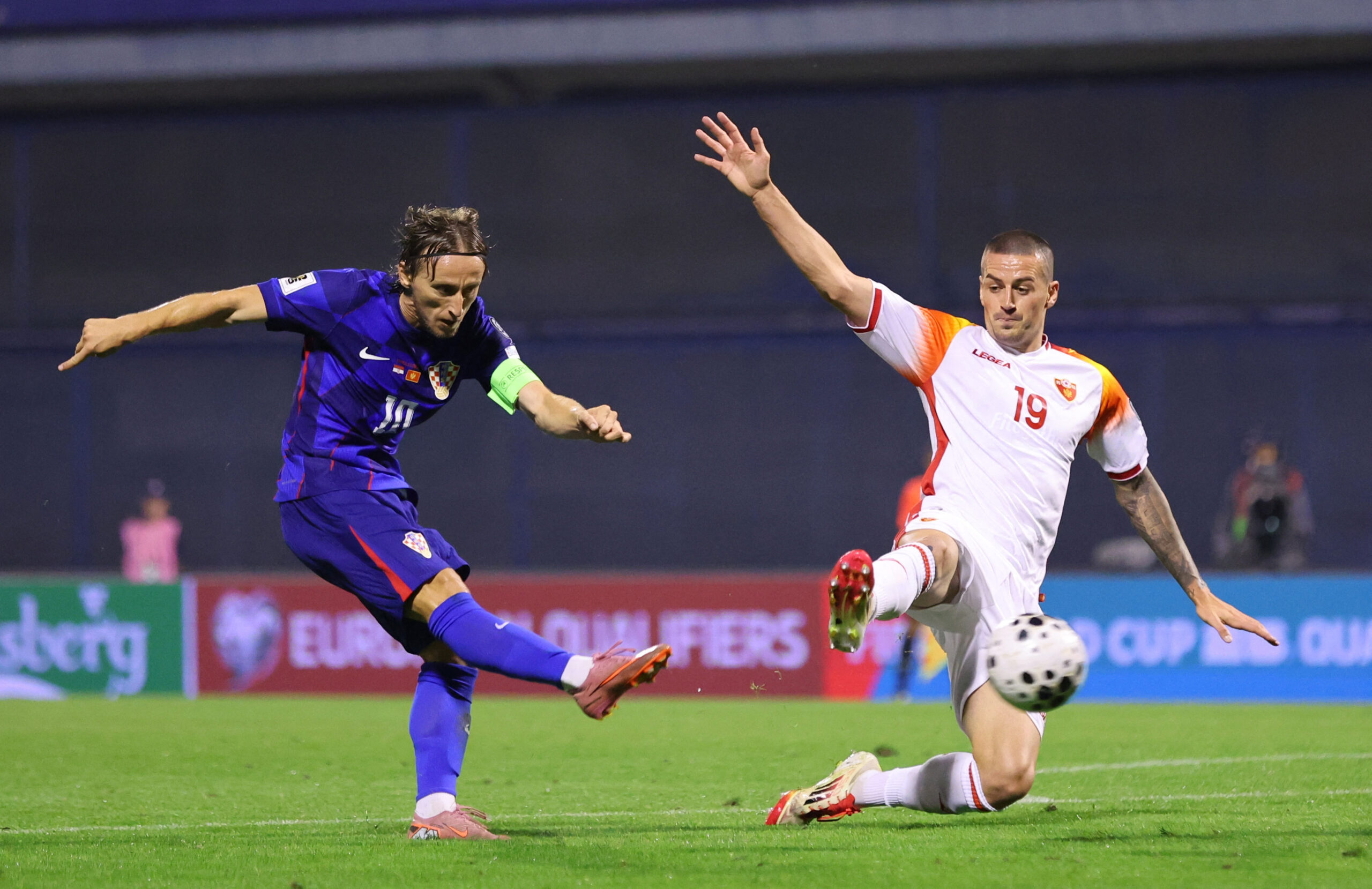
    Even at age 40, Croatia’s Luka Modrić (left) remains one of the soccer world’s great midfield wizards.

    2. France vs. Bolivia, Suriname, or Iraq

    Group I, June 22, 5 p.m.

    Now for the easy part. France commands attention with star power and success. Kylian Mbappé led Les Bleus to the 2018 World Cup title and the 2022 final, and there’s every reason to believe they could make another deep run next year.

    From reigning world player of the year Ousmane Dembélé to fast-rising youngsters Bradley Barcola, Désiré Doué, and Michael Olise — just a few of the many names that could go here — France has a depth of elite talent that almost no other national team can match.

    They also have a national anthem in “La Marseillaise” that’s perfect for belting out from the stands, even on a hot summer evening.

    Philadelphia will be treated to it all.

    We’ll know which team France will face after the intercontinental playoffs in March. Bolivia hasn’t been to a men’s World Cup since 1994, when Marco Etcheverry and Jaime Moreno played before becoming some of MLS’s first stars. Iraq hasn’t been on this stage since 1986.

    From here, and from the view of many followers of soccer in North and Central America, there will be a soft spot for Suriname. Like Curaçao, the nation that’s officially in South America’s land mass has leveraged its Dutch connections to rise up Concacaf’s ranks.

    The Natio are led by forward Sheraldo Becker, who played with Medford’s Brenden Aaronson in 2023-24 at Germany’s Union Berlin. He then moved to Spain, first at Real Sociedad and now at Osasuna.

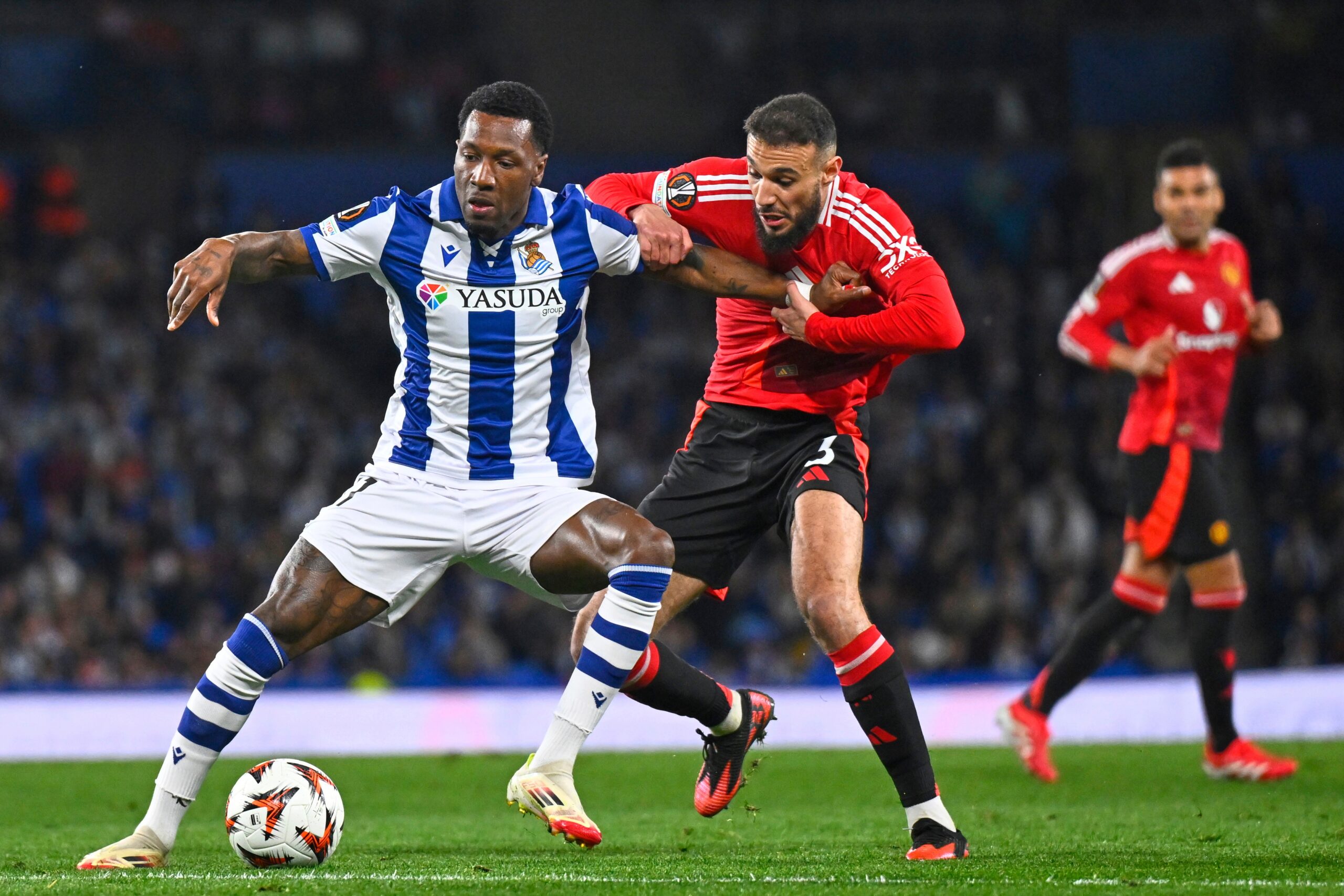
    Sheraldo Becker (left) in action with Spain’s Real Sociead last season.

    1. Brazil vs. Haiti

    Group C, June 19, 9 p.m.

    The top pick was obvious, but just in case, here’s a little more juice for it. A few hours after the World Cup schedule was announced, this writer went to the Big 5 Classic and was asked by a few friends and colleagues about the games coming here.

    The answer always started with Brazil, and every time it didn’t finish before that one word produced an amazed reaction.

    That’s the power of the most decorated team in men’s World Cup history. The Seleçao’s five championships are the record, and they are the only team to play in every men’s World Cup there’s ever been. Philadelphia will be the 60th all-time city in which Brazil has played a men’s World Cup game.

    Nor can any team match the nation’s history of superstars, from Garrincha to Pelé to the original Ronaldo — all wearing the eternal yellow-and-green jerseys.

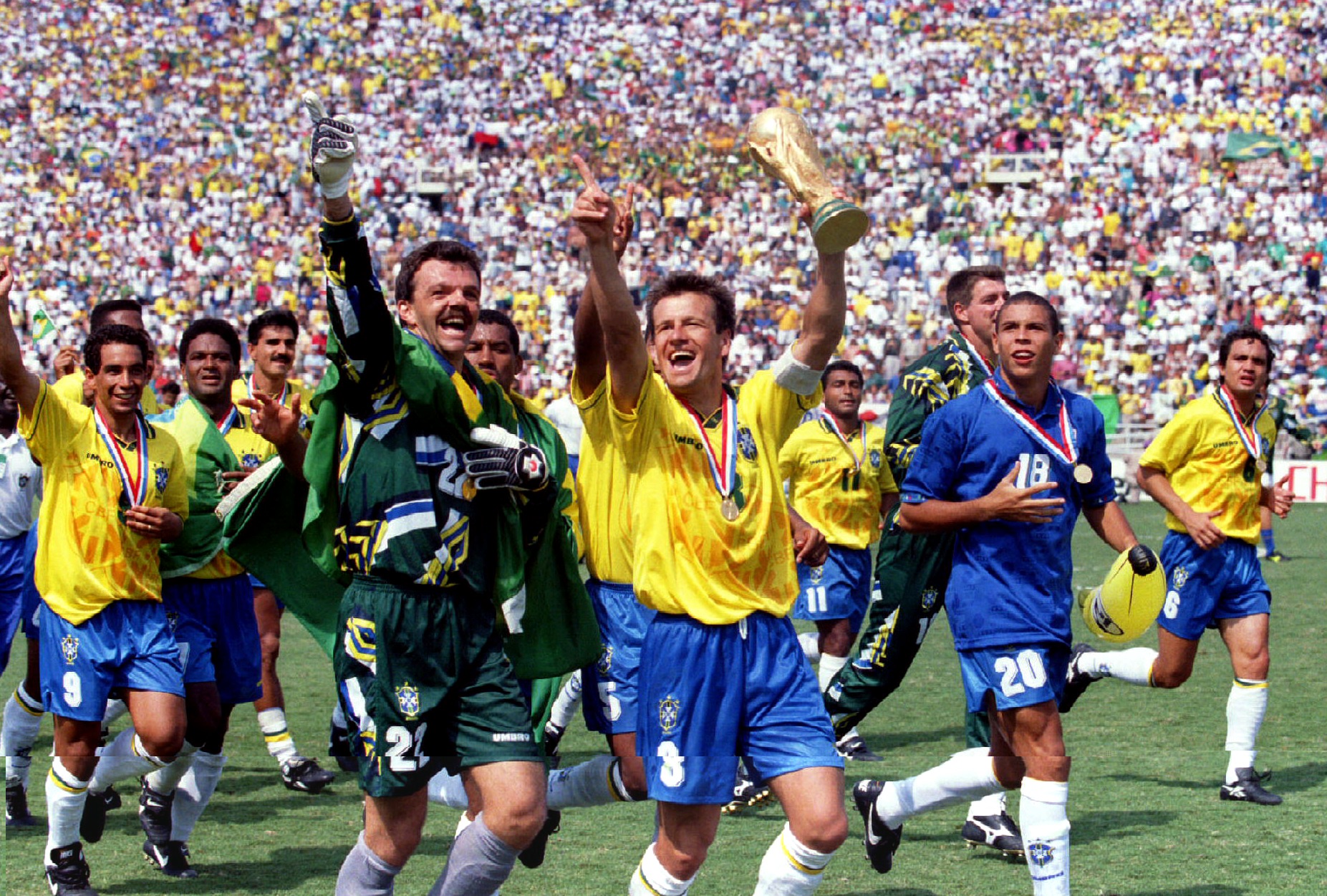
    Dunga lifted the trophy and paraded it around the Rose Bowl when Brazil won the 1994 men’s World Cup in the United States for its fourth title.

    The current squad didn’t always look good on the way to qualifying for this World Cup, but its talent is undeniable. Marquinhos and Gabriel Magalhães anchor the defense, Bruno Guimarães leads the midfield, and then comes the Carnaval: Vinícius Júnior, Rodrygo, Richarlison, Raphinha, and the latest new phenom, Estêvão.

    Now comes what might be the final piece of the puzzle, famed manager Carlo Ancelotti. He coached many of these players at Spanish club Real Madrid, and has the clout to make the big decisions necessary to pick the World Cup team.

    What makes this specific game even better is Brazil’s opponent. Haiti is in its first men’s World Cup since 1974. Its vibrant diaspora across North America will flock to town, even if the Trump administration bans travelers from the nation itself.

    Les Grenadiers also have two players with Philadelphia ties, Union midfielder Danley Jean Jacques and Penn alumnus Duke Lacroix. As rare as it is to play in any World Cup, it’s even rarer to get a homecoming game on soccer’s biggest stage.

  • Philly fans are ready for the ‘once in a lifetime experience’ of hosting a World Cup in their hometown

    Philly fans are ready for the ‘once in a lifetime experience’ of hosting a World Cup in their hometown

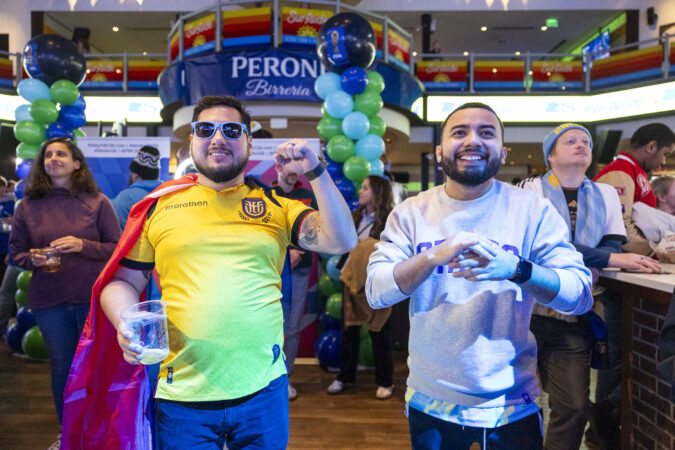
    Friday morning at Stateside Live! felt like a fever dream for Philadelphia sports fans.

    Pennsylvania governor Josh Shapiro stood above guests on the second floor of the entertainment venue surrounded by Phang, Gritty, Swoop, and the Phanatic as they prepared for the Philadelphia Soccer 2026 World Cup final draw watch party.

    “We won this bid to host the FIFA World Cup next year because we’ve got the greatest fans on the face of the earth,” Shapiro said. “The eyes of the world are going to be on Philly next year when we celebrate USA 250. … FIFA World Cup is going to be great. And let’s pray for a USA-Mexico matchup on July 4th right here in Philly.”

    Almost three hours from the John F. Kennedy Center for the Performing Arts, where the World Cup Final Draw was hosted, Philadelphia sports fans — including Union season ticket holders Donna and Gary Brown — gathered as they waited in anticipation to learn the fates of their favorite nations.

    “I’ve only been able to see the World Cup one other time and that was when we lived in Orlando and it was amazing,” Gary said. “But again, it’s our hometown now and our hometown team, so it just makes it even more special that it’s going to be here. It’s Philadelphia, it’s the birthplace of our country … and it’s our country’s 250th birthday.”

    The final draw was a pivotal moment for fans, as it sets the stage for what is expected to be an unforgettable summer of soccer, with the U.S. joining Canada and Mexico as host nations, and Philly being one of 11 American cities to host games.

    To witness history, Jim House, 45, and his son Maxwell, 13, made the trip from Atlantic City.

    “We really wanted to check out what’s happening with the World Cup,” Jim said. “It’s a once in a lifetime experience for my son and myself to hang out together and get to see all this.”

    Maxwell added: “I’m really excited for the World Cup. I’ll be watching a lot of the games.”
    During Friday’s draw, qualified teams — with a few spots left to be decided — were placed into 12 groups of four to make up the 48-team World Cup field. The United States was placed in Group D, alongside Paraguay, Australia, and the winner of a March 2026 UEFA playoff between Turkey, Romania, Slovakia, and Kosovo.

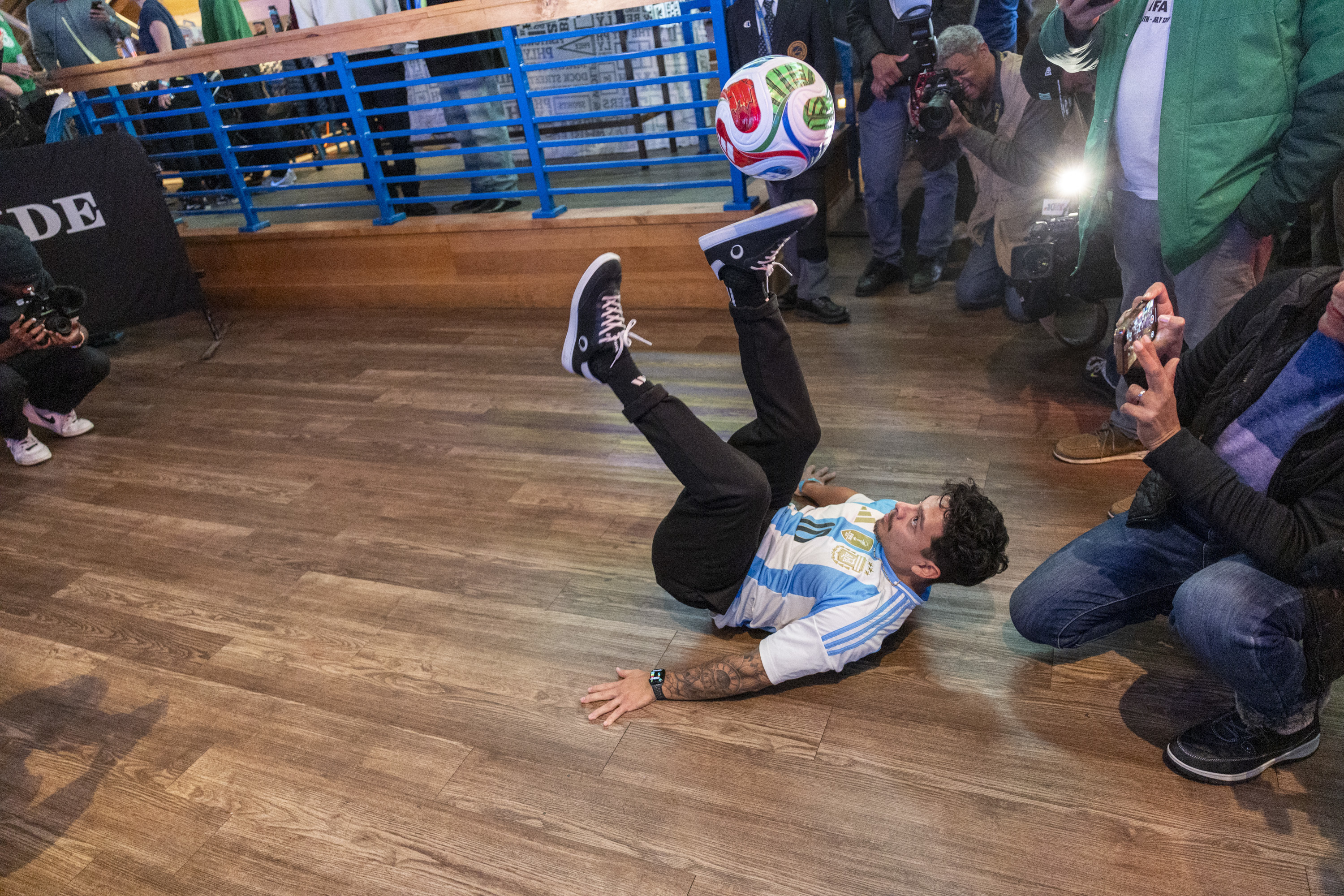
    Gabriel Luzbet of Harrison, N.J., juggles a soccer ball during the FIFA World Cup draw watch party at Stateside Live! on Friday.

    After seeing their grouping, Chester native Jared Micklos believes the United States has a good chance to advance to the knockout rounds.

    “The World Cup is a tricky tournament,” Micklos said. “It’s as much about the teams as it is the order you’re playing in. I think there’s a team we know well. We just played Paraguay and obviously that was a good result for the U.S. The play-in game, if that’s Turkey, I think it gets a lot trickier. That’s a difficult team. So, if they win the playoff, our group probably gets a little bit tougher.”

    Philadelphia will host six matches, including five Group Stage games and a round-of-16 match on the Fourth of July. Some fans, like 65-year-old Vorhees native George Flunt, don’t plan on missing a minute. Flunt already has his tickets for all six games, and spent a total of $11,000 to attend.

    “It’s a splurge, a little,” Flunt said. “Well worth it. It’s a true world event. We don’t get too many of those here in Philly. To bring in all the different countries together and showcase how good this city is, it really means a lot.”

    window.addEventListener(“message”,function(a){if(void 0!==a.data[“datawrapper-height”]){var e=document.querySelectorAll(“iframe”);for(var t in a.data[“datawrapper-height”])for(var r,i=0;r=e[i];i++)if(r.contentWindow===a.source){var d=a.data[“datawrapper-height”][t]+”px”;r.style.height=d}}});