Eight area organizations have been named as host city supporters for the six matches in Philadelphia ahead of this summer’s FIFA World Cup, beginning June 14.
Comcast, Independence Blue Cross, PECO, Penn Medicine, the Eagles, and tourism board Visit PA were named, along with Conshohocken-based pharmaceutical giant Cencora, and the William Penn Foundation, a philanthropic organization.
According to a release from Philadelphia Soccer 2026, the organization tasked with the planning and execution of events, “these organizations will play a vital role in ensuring the success of the tournament while creating a powerful and lasting legacy of this generational event for the City of Philadelphia and the Commonwealth of Pennsylvania.”
Perhaps more importantly for these companies, the designation approves them to advertise and have branded signage in-stadium at Lincoln Financial Field (which will be renamed to Philadelphia Stadium for the matches), offer rights to host activations at FIFA’s fan fest at Lemon Hill Mansion, and, according to a release, offers “exclusive hospitality and ticketing opportunities, and visibility through local marketing and promotional campaigns.”
Renderings provided last year of what Philadelphia’s version of FIFA’s fan fest site on the grounds at Lemon Hill will look like.
Historically, FIFA, soccer’s world governing body, has kept stringent rules around who can advertise or align. But in the last several years, it has granted host cities the ability to look for businesses willing to put up a financial commitment to aid in offsetting the cost of putting on the tournament — and add its name to FIFA’s list of global supporters.
The designation for host city supporters was afforded through a minimum financial commitment of $5 million, according to a report from the Philadelphia Business Journal.
The deal would also appear to grant specific naming rights. In Wednesday’s announcement, Penn Medicine referred to itself as the host city’s “official medical services provider,” in reference to the games coming to Philadelphia.
“We’re all extremely excited to see the World Cup come to Philadelphia,” said Dr. Patrick J. Brennan, chief medical officer for the University of Pennsylvania Health System. “Being the official medical services provider for the Philadelphia World Cup 2026 host city, in what will be the largest sporting event Pennsylvania has ever seen, is a great responsibility that we’re ready and excited for.”
Philadelphia Soccer 2026 projects an economic infusion of nearly $770 million into the city, as half a million visitors are expected to come to Philly for the five group-stage matches and a Round of 16 knockout game on July 4.
Being front and center as a host city supporter is an immense opportunity for exposure for these organizations, many of which have been tasked with, or have taken on, legacy projects long after the tournament passes through.
“The William Penn Foundation is interested in helping to ensure that this global moment delivers meaningful, lasting benefits for Philadelphians,” said Shawn McCaney, the organization’s executive director. “We’ve focused our investment on strengthening community soccer programs and facilities, as well as improving Lemon Hill so that it can serve as a vital park space for residents and visitors to the city for years to come. These investments strongly align with our commitment to improve public spaces for the people of Philadelphia.”
Pleas to consider boycotting the World Cup in the United States this summer are rising amid President Donald Trump’s fraying relationship with Europe.
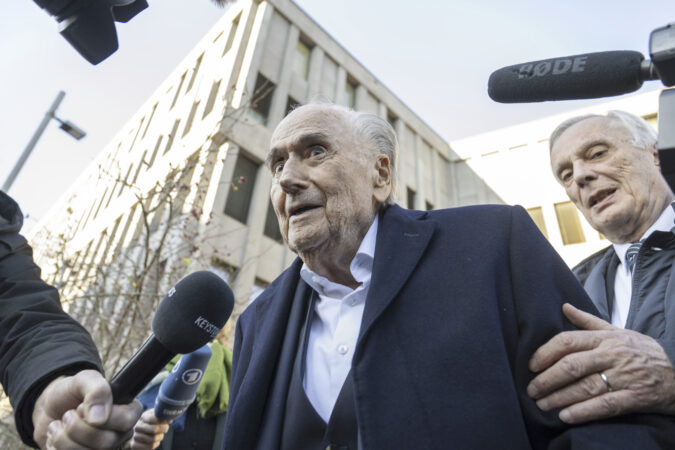
Sepp Blatter, the controversial former president of FIFA, advised football fans in a social media post on Monday to “stay away” from America and the World Cup.
Elsewhere, Oke Göttlich, president of the Bundesliga club St. Pauli and a vice president of the German Football Association, said that the time had come to “seriously consider and discuss” a boycott, according to an interview in the Hamburger Morgen Post.
A spokesperson for FIFA declined to comment.
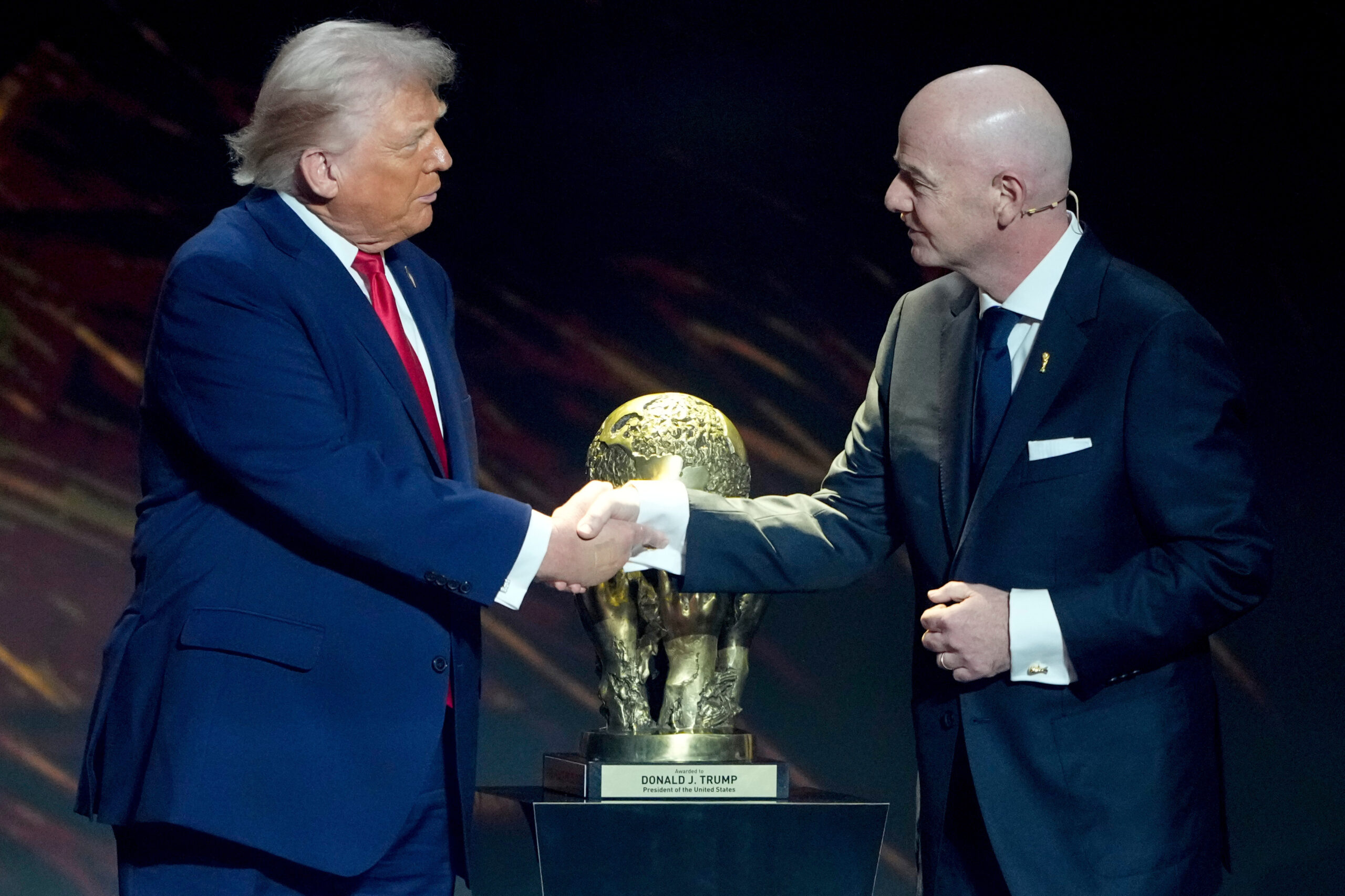
FIFA president Gianni Infantino (right) gave U.S. president Donald Trump the inaugural “FIFA Peace Prize” at last month’s World Cup draw.
The U.S. is co-hosting the World Cup with Canada and Mexico for about five weeks starting in June. The tournament has already been criticized for exorbitant ticket prices. Now Trump’s policies, including a desire to take control of Greenland from fellow NATO member Denmark, are increasing debate about boycotting the event in response.
“What were the justifications for the boycotts of the Olympic Games in the 1980s?” Göttlich told the German newspaper, referring to several countries skipping the Olympics in Moscow after the former USSR invaded Afghanistan.
“By my reckoning, the potential threat is greater now than it was then,” Göttlich said. “We need to have this discussion.”
Opposition has also come from British politicians and Mark Pieth, who led a committee to oversee reforms at FIFA last decade. He’s said that fans should boycott the World Cup because of America’s increasing authoritarianism.
Philadelphia City Council’s first meeting of 2026 on Thursday comes as tensions rise over President Donald Trump’s immigration crackdown and as Mayor Cherelle L. Parker continues to sidestep that conversation while focusing on advancing her signature housing initiative.
They will also tackle the city’s waste-disposal practices, a long-standing law requiring Council members to resign before campaigning for higher office, and the city budget.
Meanwhile, events largely outside Council’s control, including potential school closings and Philly’s role in the nation’s 250th birthday, are also expected to prompt responses from lawmakers.
Here’s what you need to know about Council’s 2026 agenda.
‘Stop Trashing Our Air’ bill up for vote
The first meeting of a new Council session rarely features high-profile votes, but this year could be different.
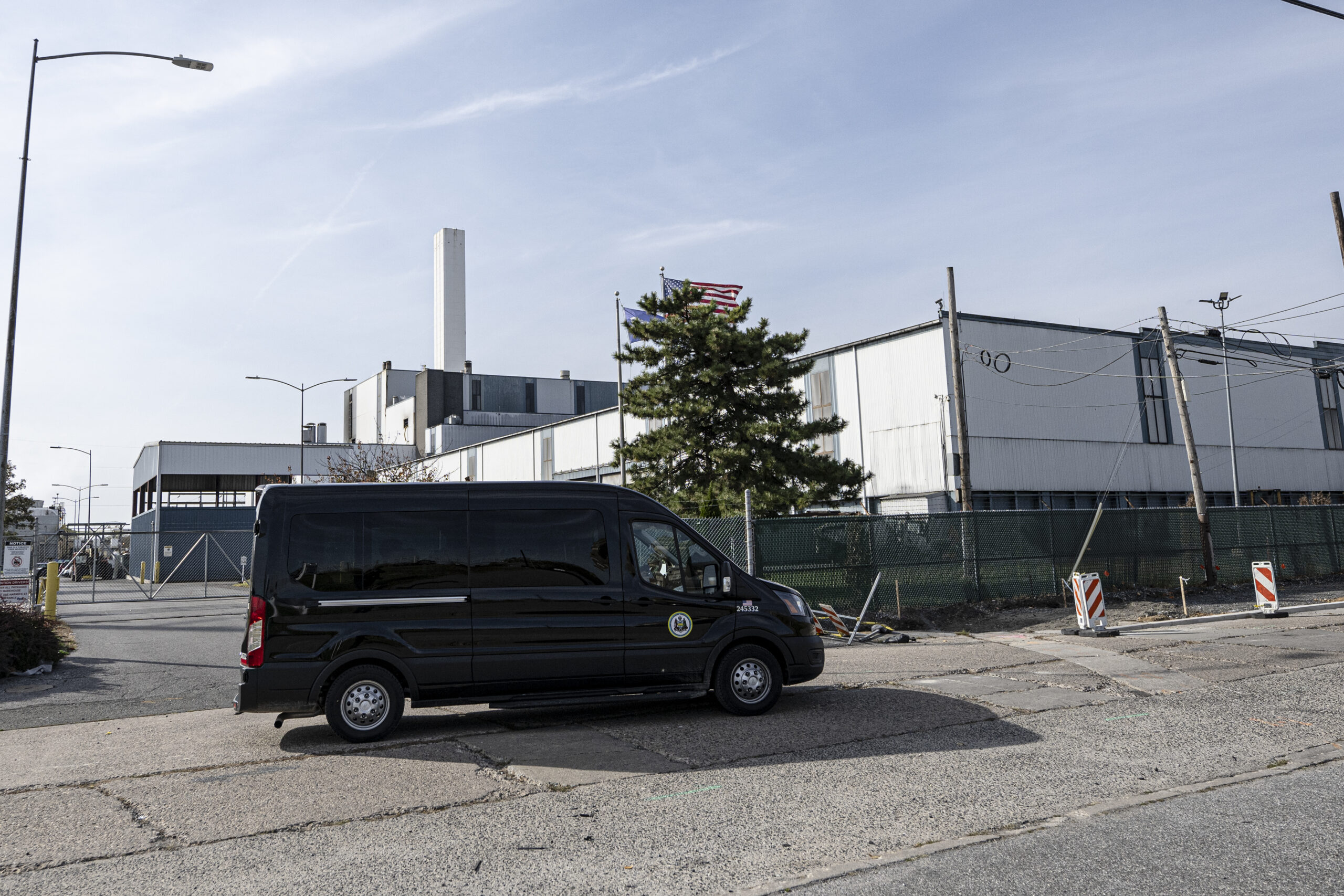
Currently, the city government sends about a third of the trash it collects to the Reworld trash incinerator in Chester, with the rest going to landfills. Those waste-disposal contracts expire June 30, and Gauthier is hoping to take incineration off the table when new deals are reached.
The Reworld incinerator in Chester, Pa., on Friday, Nov. 7, 2025.
“Burning Philadelphia’s trash is making Chester, Philadelphia, and other communities around our region sick,” Gauthier has said, pointing to elevated rates of asthma and other ailments and a legacy of “environmental racism” in Chester. The low-income and majority-Black city downriver from Philly has been home to numerous heavy industrial facilities.
Reworld has said its waste-to-energy facility, which produces some electricity from burning trash, is a “more sustainable alternative to landfilling.”
At a hearing last year, Parker administration officials said the city is including language in its request for proposals for the next contracts that will allow the city to consider environmental impacts. But they asked lawmakers not to vote for a blanket ban on incineration to allow the city to study the issue further.
Parker waiting for Council to reapprove $800 million in bonds for her H.O.M.E. plan
The biggest agenda item left hanging last month when lawmakers adjourned for the winter break was a bill to authorize the Parker administration to issue $800 million in city bonds to fund her H.O.M.E. initiative.
Parker had hoped to sell the bonds last fall, and Council in June initially authorized the administration to take out new debt. But lawmakers made significant changes to the initiative’s first-year budget, especially by lowering income thresholds for some programs funded by the H.O.M.E. bonds to prioritize the lowest-income residents.
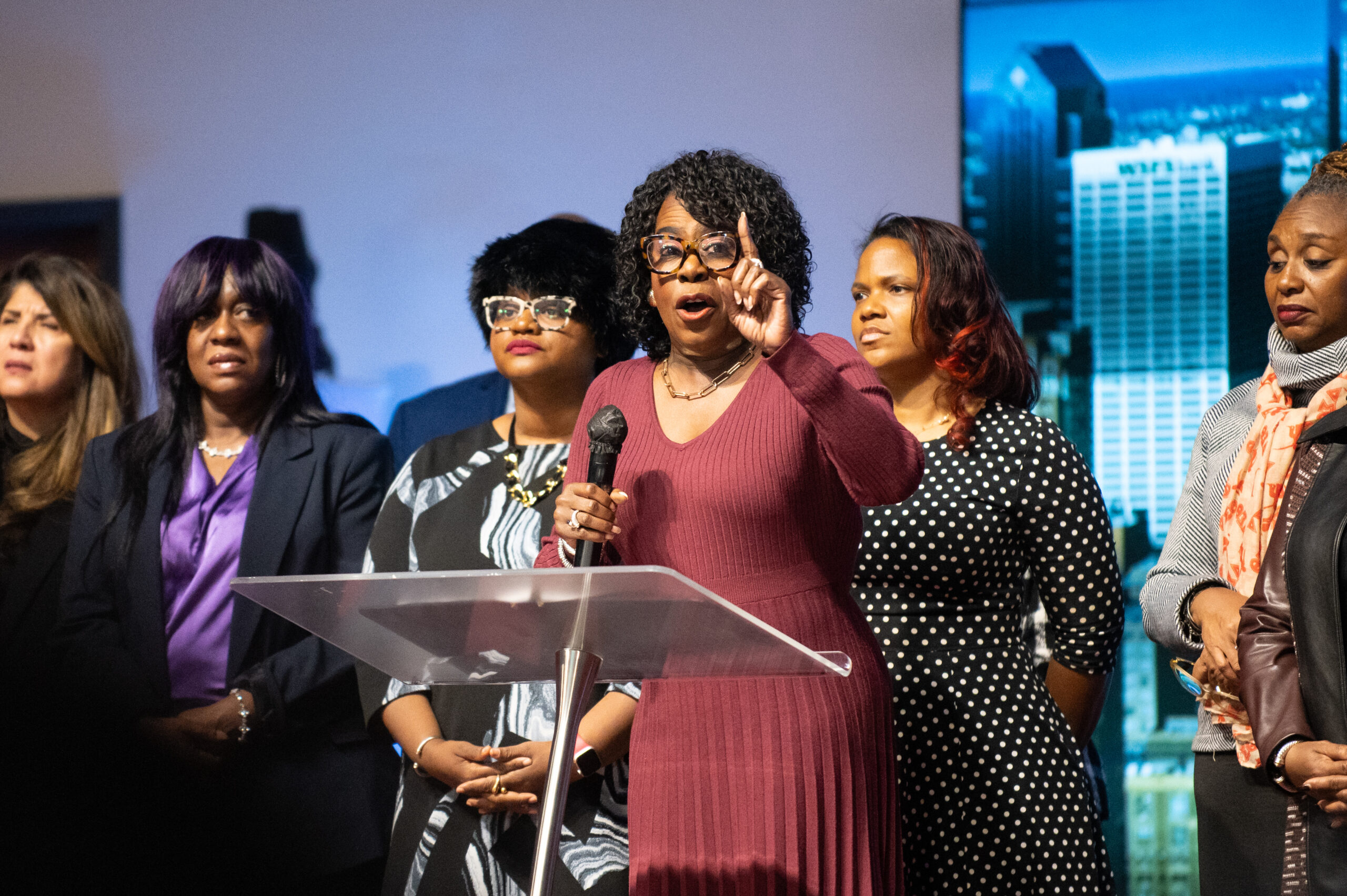
Mayor Cherelle L. Parker speaks to the crowd at The Church of Christian Compassion in the Cobbs Creek neighborhood of West Philadelphia on Sunday, Dec. 7, 2025. Parker visited 10 churches in Philadelphia on Sunday to share details about her H.O.M.E. housing plan.
“Council members have always been supportive of the H.O.M.E. initiative,” Johnson said. “H.O.M.E. advances City Council’s goals to expand access to affordable homeownership for Philadelphians … and to ensure that city housing investments deliver long-term benefits for families and neighborhoods alike.”
Currently, Council members and other city employees are required to quit their jobs to run for higher office. Lawmakers have tried several times over the last 20 years to repeal the law, but they have been unsuccessful. Changing the rule requires amending the city’s Home Rule Charter, which a majority of voters would have to approve through a ballot question.
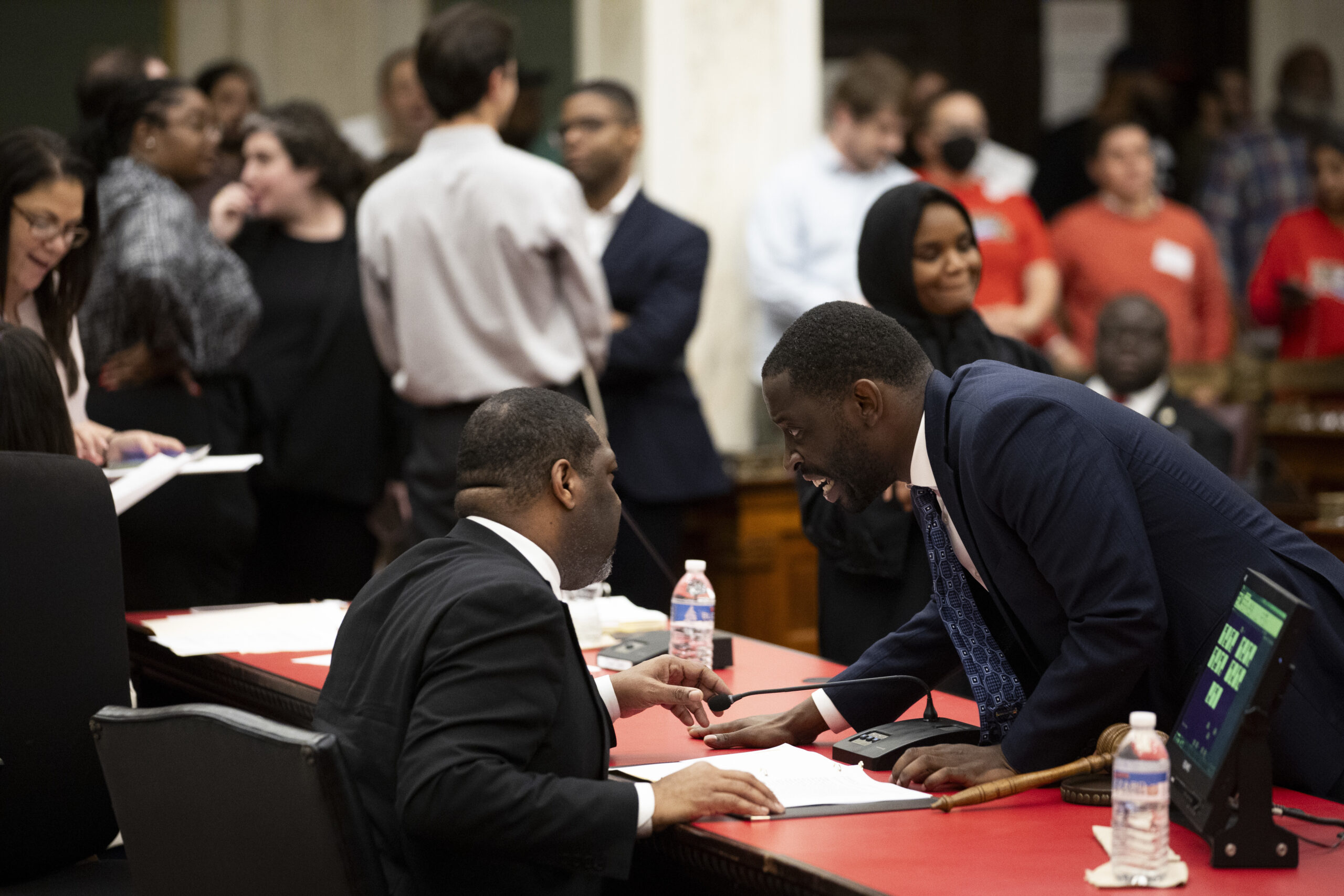
Council President Kenyatta Johnson talks with Councilmember Isaiah Thomas at City Hall on Wednesday, Dec. 11, 2024 in Philadelphia.
The latest attempt, spearheaded by Councilmember Isaiah Thomas, would not entirely repeal the resign-to-run law, but instead would narrow it to allow elected officials to keep their seats only if they are seeking state or federal office, such as in Congress or the state General Assembly. Council members who want to run for mayor would still have to resign.
Thomas, a Democrat who represents the city at-large and is rumored to have ambitions of running for higher office, plans to make minor amendments to the legislation this spring, a spokesperson said, before calling it up for a final vote. The goal, Thomas has said, is to pass the legislation in time for a question to appear on the May primary election ballot.
The mayor, however, cannot control what other local elected officials say about national politics, and Trump’s immigration crackdown appears to be stirring stronger local reaction heading into his second year in office.
Meanwhile, progressive Councilmembers Rue Landau and Kendra Brooks this year are expected to introduce legislation aimed at constricting ICE operations in Philadelphia.
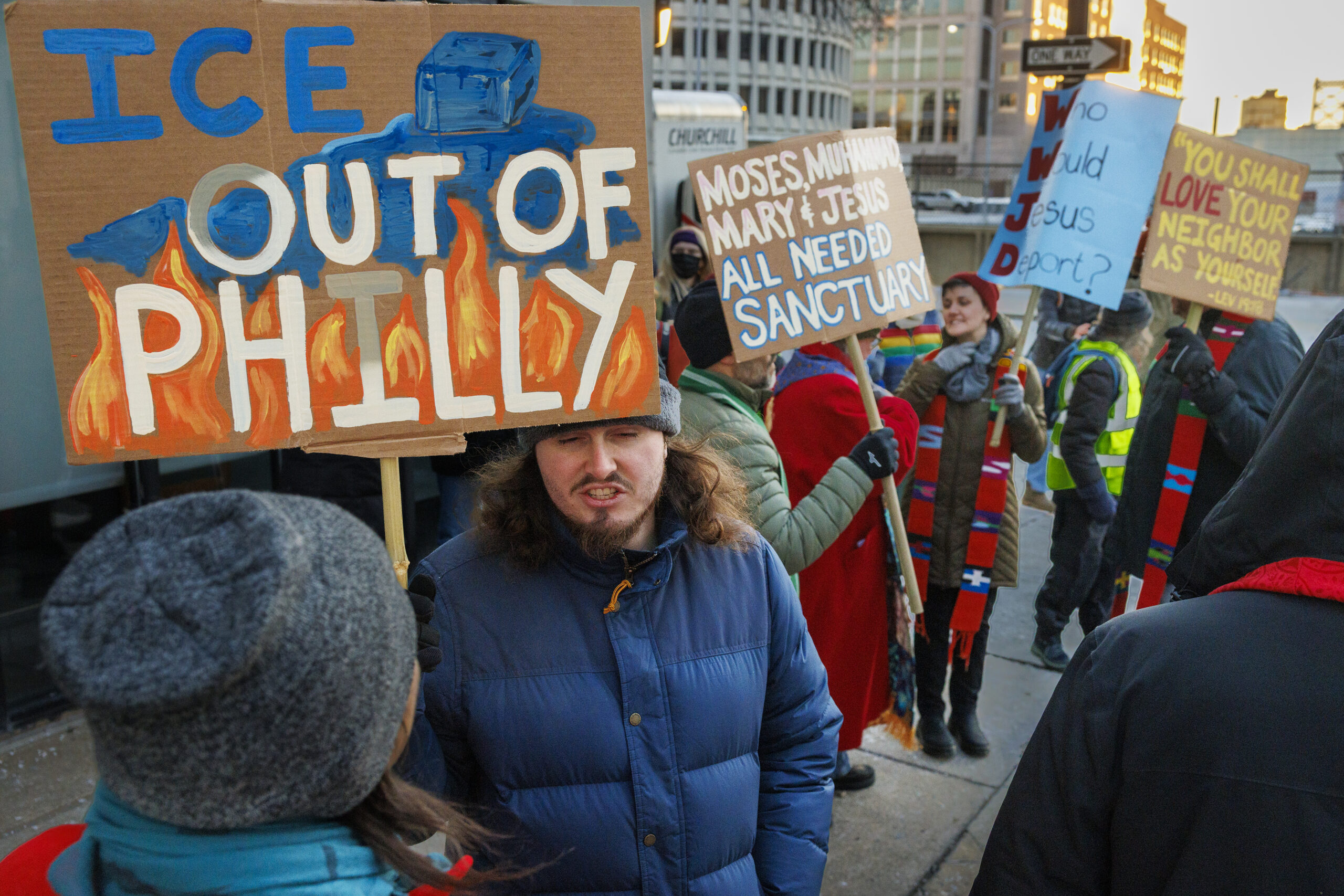
Demonstrators from No ICE Philly gathered to protests outside the U.S. Immigration and Customs Enforcement, office at 8th and Cherry Street, Philadelphia, Tuesday, Jan. 20, 2026.
It is not yet clear what the lawmakers will propose. But Brooks, who has called on Parker to take a firmer stand against Trump, recently criticized the Philadelphia courts for allowing agents to seize suspects leaving the Criminal Justice Center. She said officials who in her view have failed to stand up to ICE are engaged in “complicity disguised as strategic silence,” and she vowed to force those who “cooperate with ICE in any way” to testify in Council.
“Cities across the country are stepping up and looking at every available option they have to get ICE out,” Brooks said at a news conference earlier this month. “In the coming days, you will hear about what my office is doing about city policy. These demands must be met or face the consequences in Council.”
Landau added Philly cannot allow “some masked, unnamed hooligans from out of town [to] come in here and attack Philadelphians.”
“We are saying, ‘ICE out of Philadelphia,’” she said.
Parker has said her administration has made no changes to the city’s immigrant-friendly policies, but she continues to be tight-lipped about the issue.
The Pennsylvania Office of Open Records last week ruled in favor of an Inquirer appeal seeking to force Parker’s administration to disclose a September letter it sent the U.S. Department of Justice regarding local policies related to immigration.
The administration still has not released the document. It has three more weeks to respond or appeal the decision in court.
South Philly arena proposal still in the works
After the 76ers abandoned their plan to build a new arena in Center City a year ago, the team announced it would partner with Comcast Spectacor, which owns the Flyers, to build a new home for both teams in the South Philadelphia stadium complex.
The teams announced last fall they have selected an architect for the new arena, which is scheduled to replace the Spectacor-owned Xfinity Mobile Arena, formerly the Wells Fargo Center, in 2031.
If the teams are still planning to open the new arena on their previously announced timeline, legislation to green-light the project could surface as soon as this spring. But so far, there has been no sign of movement on that front.
“There is currently no timeline for introducing legislation to build a new Sixers arena in South Philadelphia,” said Johnson, whose 2nd District includes the stadium complex. “At the appropriate time, my legislative team and I will actively collaborate with Mayor Cherelle L. Parker’s administration on drafting any legislation related to the Sixers arena before it is introduced in City Council.”
School closings and 2026 celebrations also on the horizon
In addition to its legislative agenda, Council this year will likely be drawn into discussions over school closings and the high-profile gatherings expected to bring international attention to Philly this summer.
Johnson said his agenda includes “making sure Philadelphia has a very successful celebration of America’s 250th Birthday that results in short and long-term benefits for Philadelphia.”
Staff writers Jake Blumgart, Jeff Gammage, and Kristen A. Graham contributed to this article.
The exact details aren’t all set yet, but the picture is starting to come together in U.S. Soccer’s buildup to this summer’s FIFA World Cup.
Four of the big pieces are well-known: the games the men’s national team will play before the tournament kicks off. They’ll face Belgium and Portugal at Atlanta’s Mercedes-Benz Stadium on March 28 and 31, respectively, with the game against the Portuguese sold out at the 71,000-seat venue.
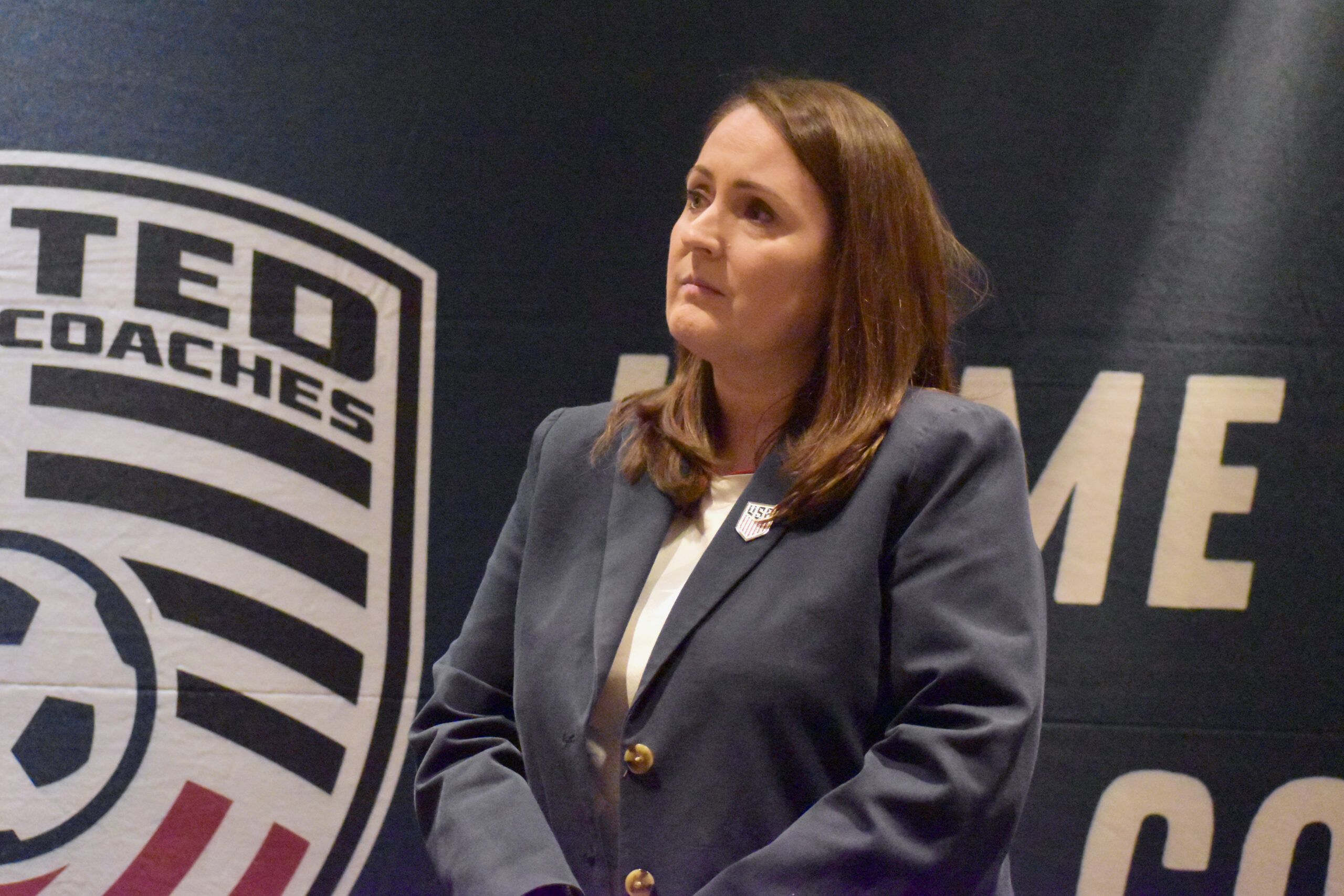
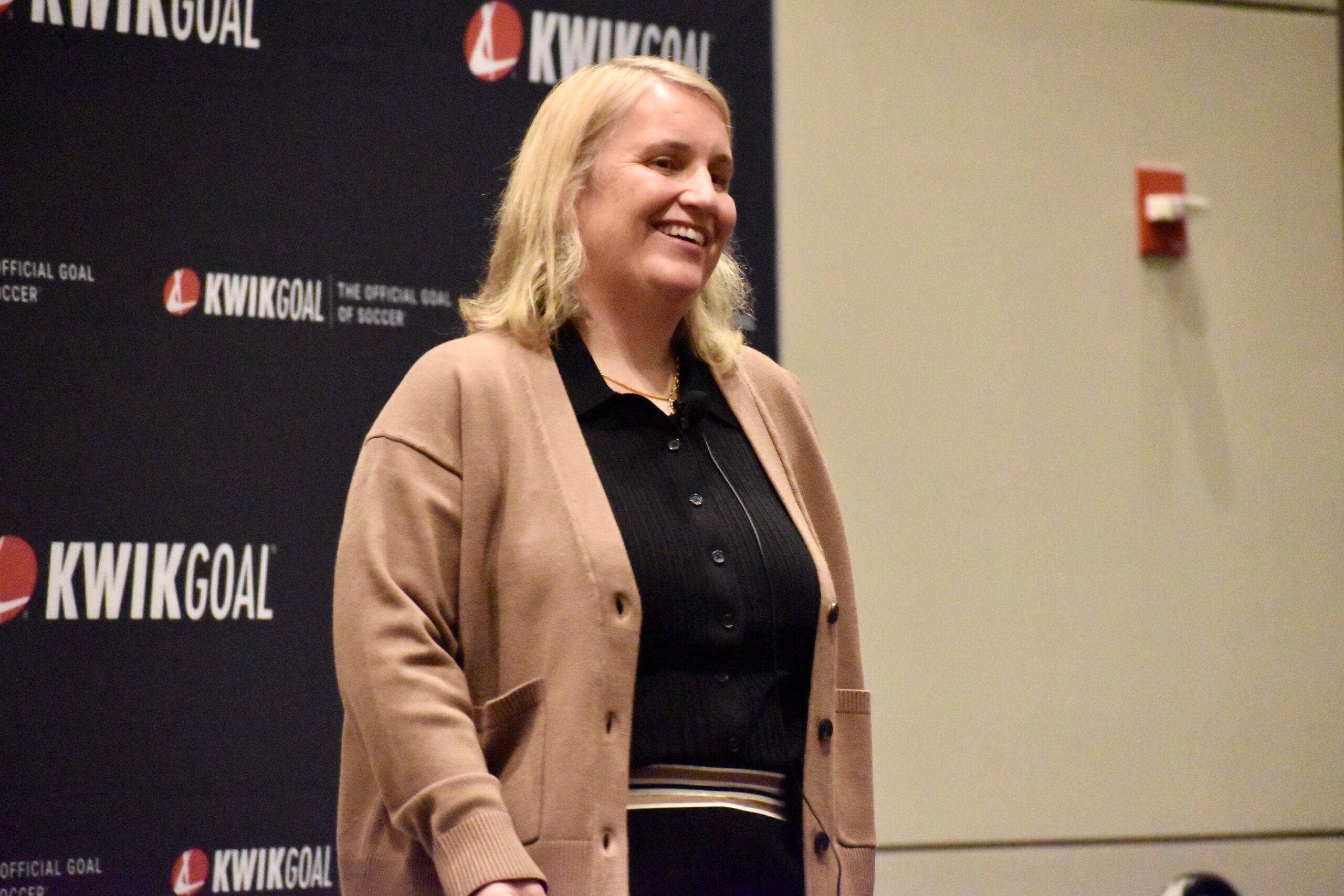
The World Cup team will be announced at an event in New York in late May. U.S. Soccer Federation chief marketing officer Catherine Newman revealed the news during a speech Friday at the United Soccer Coaches Convention, and said the event will be open to the public in some form.
She did not specify the exact date or venue, so it’s unclear just how many fans will be able to attend.
U.S. Soccer Federation chief marketing officer Catherine Newman.
The team’s training camp will start right after that at the new national training center in suburban Atlanta. U.S. manager Mauricio Pochettino has already said he’ll set the roster before camp starts, not wanting to leave any choices until the last minute.
There will be two tournament warm-up games: First, Senegal on May 31 in Charlotte, followed by a match against Germany on June 6 in Chicago. After that, the team will head to southern California to get ready for its World Cup opener against Paraguay on June 12 in Inglewood, Calif.
Another milestone along the way will be the unveiling of the team’s World Cup jerseys in mid-March. Some renderings have already made the rounds on social media, of a red-and-white horizontal striped primary kit and a navy alternate kit with a star pattern.
“You’ve seen the leaks, I’m sure — I’m not going to stand up here and pretend that you haven’t,” Newman said. “And [I] will not confirm or deny if they’re true either. But what I can say is that the kits are absolutely fantastic, they look brilliant, and importantly, the players helped us to design them.”
Perhaps the details of how that happened will become known upon the official announcement.
Newman tried to make the case that “what we are trying to do with a lot of things at U.S. Soccer is to make sure that if you can’t attend a match, that you can attend things with U.S. Soccer … Just come in and be a fan, that’s all we ask.”
But those words will be met with skepticism from some fans, for one big reason: ticket prices.
People who’ve paid attention know that U.S. Soccer has no influence on World Cup ticket prices. In fact, the 2026 host nations’ bid book proposed prices far lower than what FIFA decided on.
But there have been complaints for years about the prices of tickets for U.S. Soccer’s own games, whether in big NFL stadiums or smaller MLS venues.
So it will be noticed that as of Friday, tickets for the Belgium game were available for $44 through the governing body’s official sales page, run by Ticketmaster. Unfortunately, the news was less positive for the other games: $73 and up for Senegal, $122 and up for Germany, and $193 and up for what’s left for Portugal.
That doesn’t seem to fit with Newman’s claim that “we are not an expensive option in the U.S.,” even as she referred to $40 tickets and a free “block party” at last year’s U.S. women’s team game at SoFi Stadium. That’s the venue where the U.S. men will play two of its three World Cup group games.
“We try very hard to think about that as part of our pricing, and to make it as affordable as we can,” Newman said. “And if we think about those four matches, there will be fan activations for all fans that our commercial partners are helping us [with], and there will be no cost to the fans. It is very important to us that fans can participate and can be part of it.”
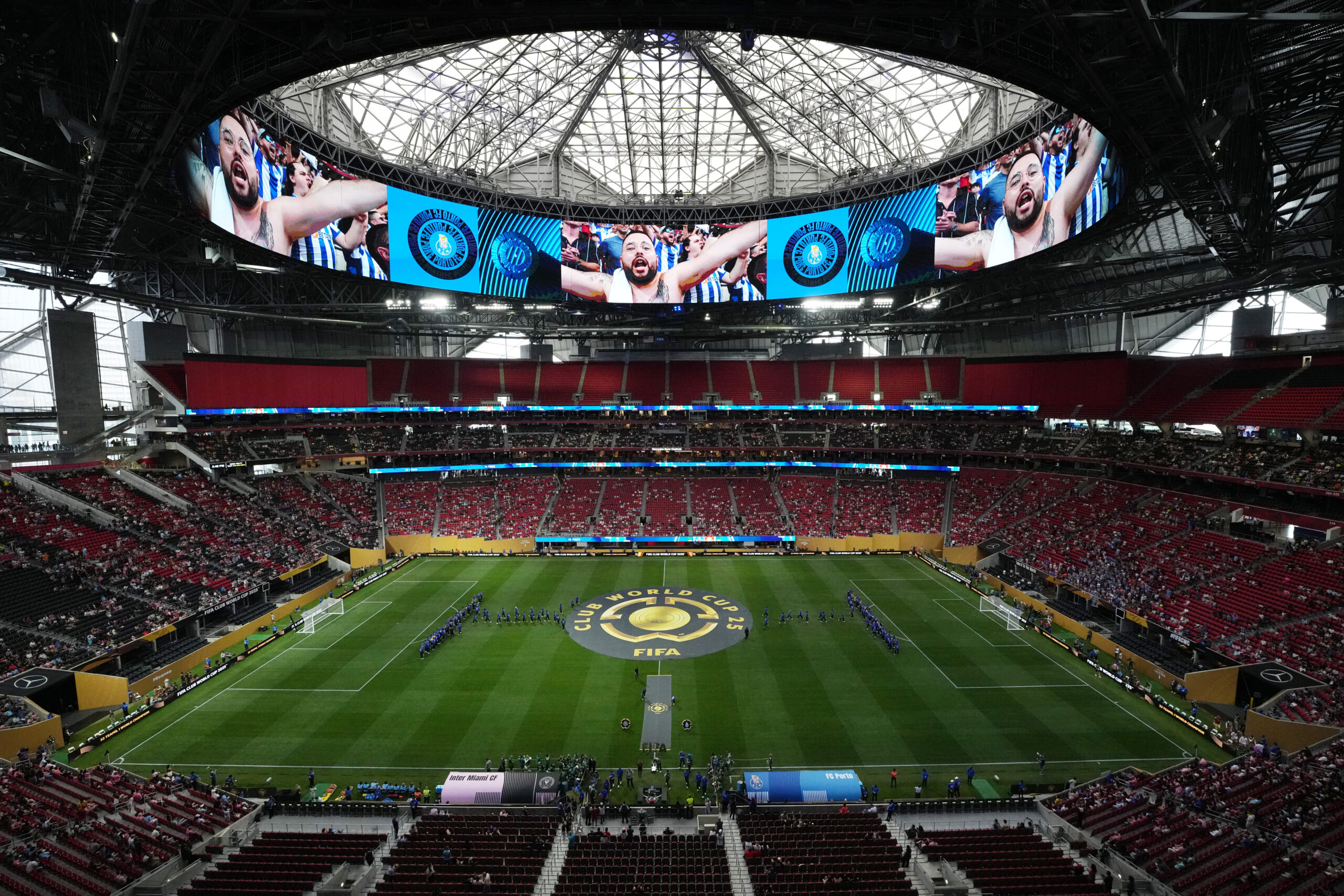
Atlanta’s Mercedes-Benz Stadium will host the U.S. men’s soccer team’s March games against Belgium and Portugal.
She pivoted from there to more community-oriented events like watch parties, noting that U.S. Soccer is working with the American Outlaws supporters’ group to promote events across the country.
“Soccer isn’t about just being in the stadium,” Newman said. “It’s about how you watch at home, and how you have those other parts. And that is where it’s incumbent on all of us as part of the soccer community to make sure that people feel part of that.”
As true as that point is on its own, the words might not satisfy fans who want to take their family to a game, and look at ticket prices before anything else.
This week’s column talks about heroes with feet of clay, SEPTA’s starts and stops, and America’s 250th birthday celebrations.
No one’s hero
Philadelphia Sheriff Rochelle Bilal is having her 15 minutes of fame this week, with her comments at a news conference alongside District Attorney Larry Krasner spreading across social media. After the killing of Renee Good by U.S. Immigration and Customs Enforcement agent Jonathan Ross in Minneapolis, Krasner stated that he would hold federal officers accountable for any violation of the law. Bilal warned that the feds “don’t want that smoke” and called ICE “fake wannabe law enforcement.” She even scored an interview with CNN’s Erin Burnett.
That’s all well and good, but there’s one big problem with Bilal’s position: The sheriff ultimately has no ability to protect Philadelphians from ICE.
Despite her title and natty uniform, it is Police Commissioner Kevin J. Bethel who serves as the city’s top law enforcement official, not Bilal. This is a good thing because the sheriff’s track record is disastrous.
Despite running for the office in 2019 as a reformer, Bilal began her tenure by firing Brett Mandel, her chief financial officer, just five weeks into his tenure. Mandel had flagged her use of what he described as a slush fund. A longtime good government advocate, Mandel objected to using city funds to pay for things like parking tickets and six-figure media consulting contracts.
While Bilal was basking in the media spotlight of talking tough against ICE, Bethel was not amused. Given Mayor Cherelle L. Parker’s clear strategy to avoid poking the orange bear, Bilal’s comments forced the commissioner to make clear in a statement that it is the Philadelphia Police Department that runs law enforcement in the city, not the sheriff.
If people are looking for a genuine local hero in the national crisis over immigration enforcement, why not opt for Keisha Hudson instead? Hudson, who leads the local Defenders Association, has put together a new unit specializing in immigration cases. An immigrant from Jamaica herself, Hudson has both the right job and the right life experience to help residents who have been mistreated by ICE.
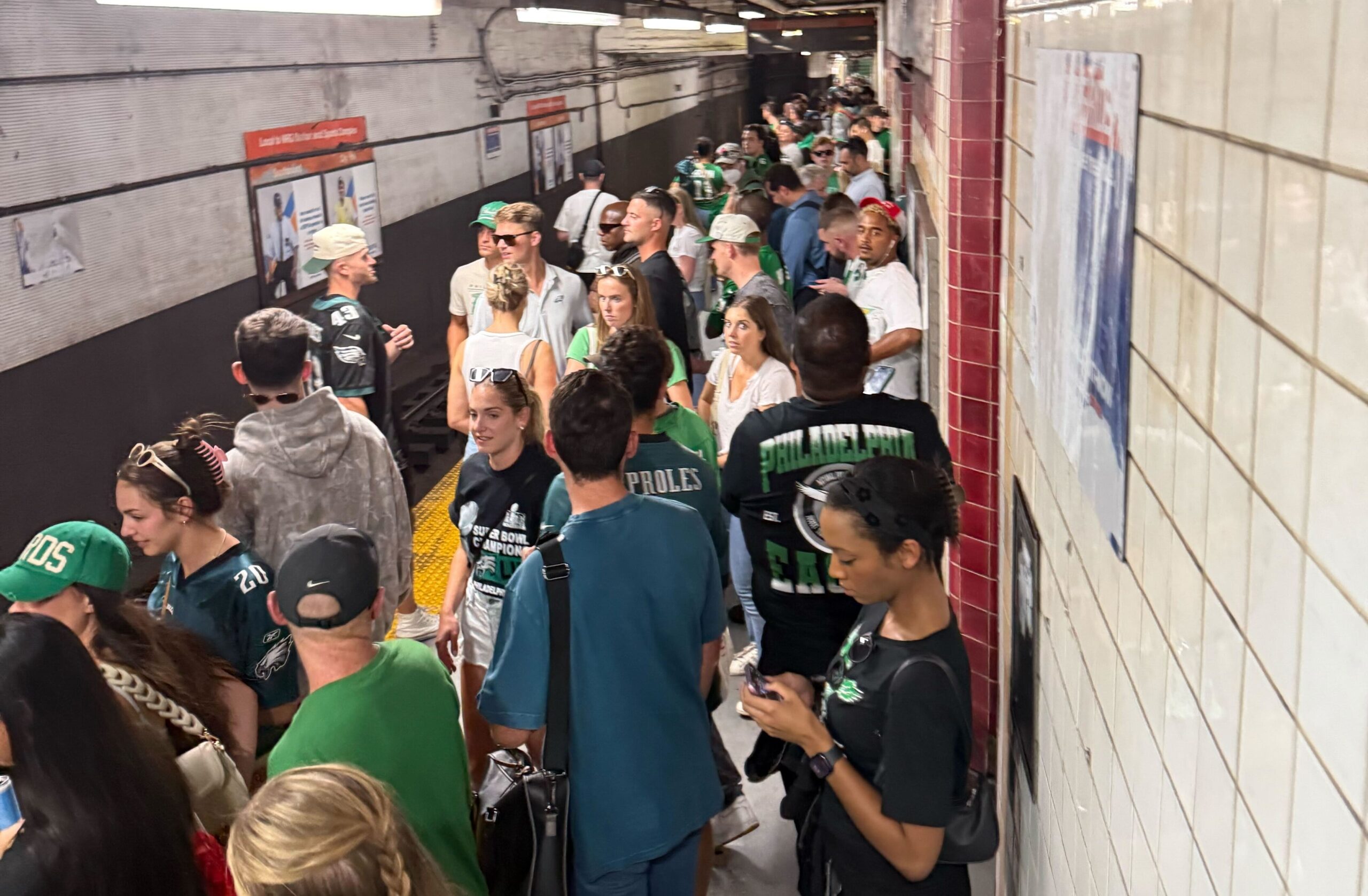
Eagles fans wait for a Broad Street Line train at City Hall station.
The wheels on the bus
During the yearslong debate over transit funding in Pennsylvania, one consistent drumbeat is that SEPTA needed to become more efficient if it wanted to get more support.
Of course, SEPTA already does more with less when compared with other major agencies, with cost-per-ride lower than in Boston and Washington, D.C. Additionally, trying to save money can sometimes cost agencies in the long run, or at the very least cost scarce political capital.
In fact, most of the current crises SEPTA faces are the result of trying to save money or insufficient political will. For example, better capitalized agencies would have replaced the Regional Rail fleet a decade or so ago. Meanwhile, the weekslong closure of the trolley tunnel happened because the agency tried using a new part — in the hope that it would be replaced less frequently and cost less.
Perhaps the Broad Street Line felt left out of the chaos because operations there have become a new pain point for riders. The 1980s Kawasaki trains are well-built. They are also nearly 45 years old. When I first started at The Inquirer five years ago, then-SEPTA General Manager Leslie Richards told me she hoped to avoid replacing the trains until the 2040s. Recent issues on that line make me question that timeline.
For weeks, the trains have struggled with mechanical issues. Riders have reported jam-packed trains that have been forced to skip stops, line adjustments, and other delays. According to a spokesperson, door faults and general vehicle malfunctions have contributed to the problems.
It all came to a head at the end of Sunday’s Eagles game.
After a door issue disabled a train near Snyder Station, already dejected fans were forced to wait until 9 p.m. to catch a ride home. SEPTA is spending $5 million to upgrade the traction motors, which should help. What’s really needed, however, are new trains.
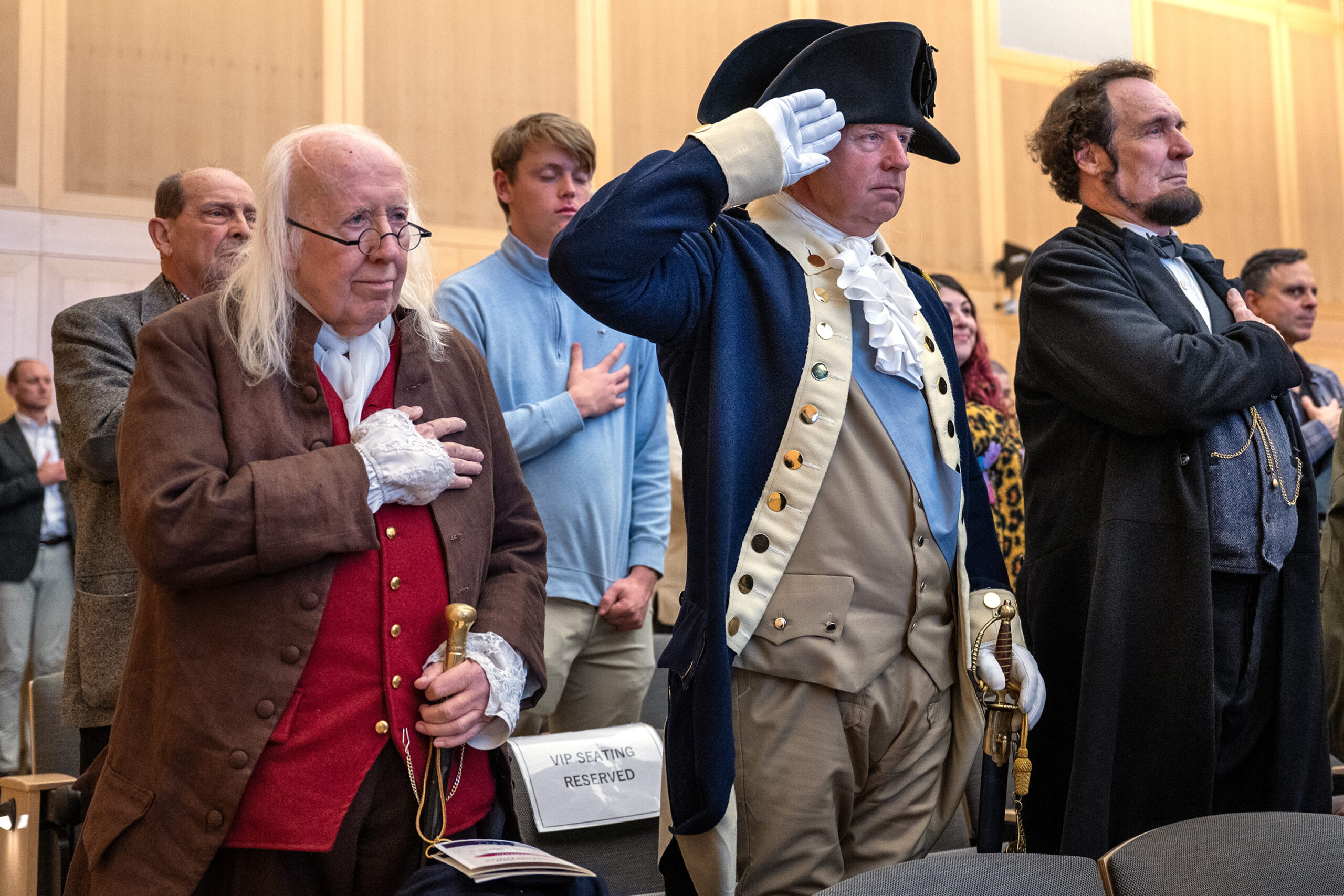
Historical interpreters (from left) Benjamin Franklin, Gen. George Washington, and President Abraham Lincoln stand with other audience members for the Presentation of the Colors, as the U.S. Mint unveils new coins for the Semiquincentennial at the National Constitution Center in Philadelphia in December.
Let’s get this party started
The United States is celebrating a big one this year. America’s big 250th birthday party is here … can you tell?
I can’t. While big events like the World Cup are planned for later this year, there is currently little to indicate that 2026 is any different from 2025. The patriotic bunting that sprouted all over Philadelphia during the Civil War and the Centennial has yet to appear.
Some fans would put Tim Weah on the list, or Chris Richards thanks to his recent rise in the English Premier League. They have good cases, as does Folarin Balogun with his talent at striker.
Does Antonee Robinson also merit a claim? That might become a barroom debate as the World Cup nears, over those early-morning Premier League games on the big screen.
It might not help that he’s a left back, a position that’s often easy to overlook — even though the U.S. didn’t have a really good one for years before he arrived in 2018. (His senior U.S. debut happened to arrive at Subaru Park.) Nor does it help that he has been injured in recent months.
But no American currently in the Premier League, the top domestic league in the world, has played more games there than Robinson’s 145 since 2020. That ranks No. 8 all-time among U.S. men’s national team players in English top-flight history, and four of the men above him are goalkeepers.
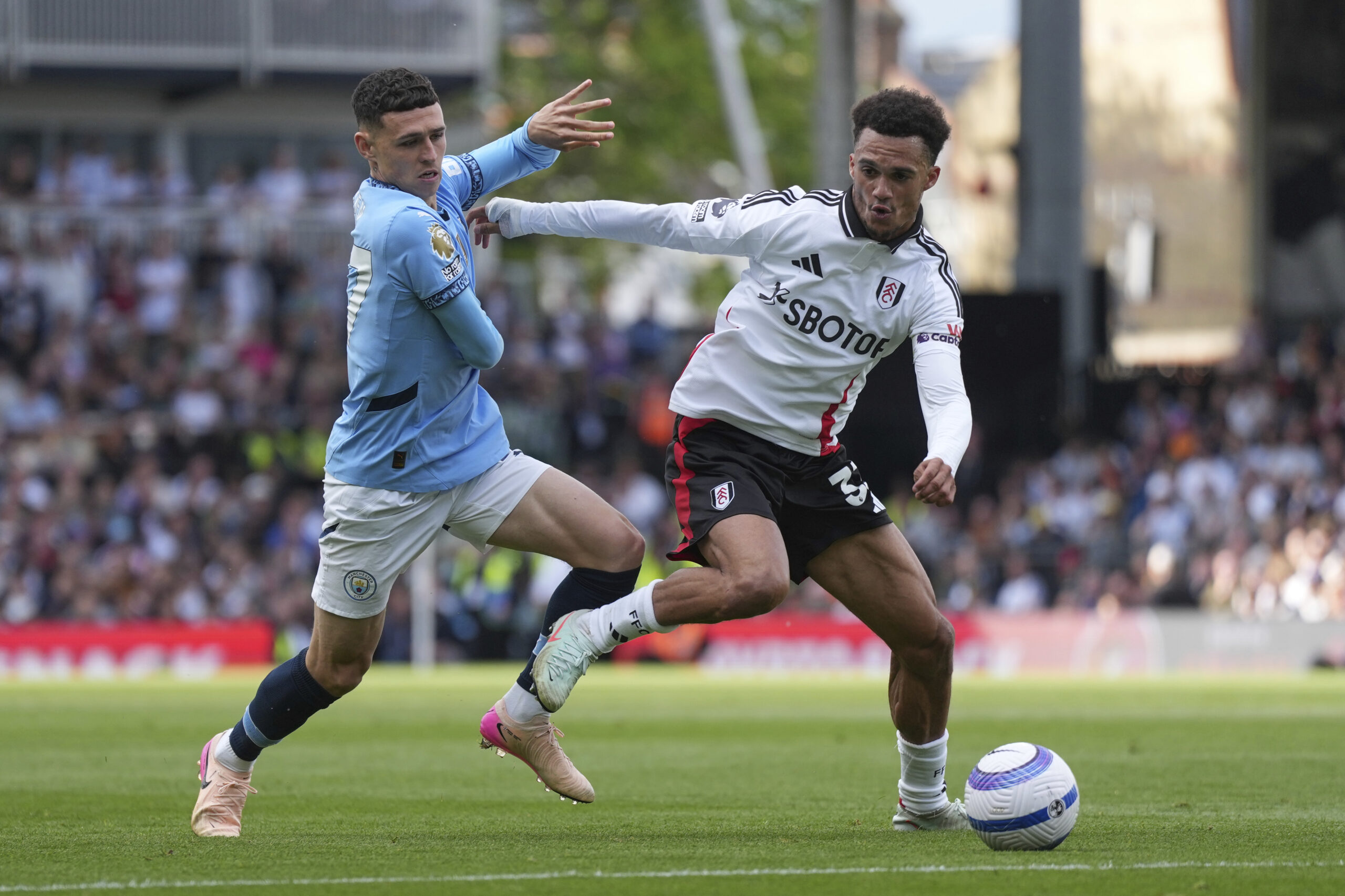
Antonee Robinson (right) on the ball for Fulham against Manchester City last season.
Robinson is widely regarded as a leader in the U.S. locker room, but those injuries have kept him from conveying it for over a year. He hasn’t played for Mauricio Pochettino’s squad since November 2024 because of knee issues. The closest he came was last October, when he made the squad but was ruled out of games.
Now, though, he’s finally healthy. He returned to action last month and started six straight games. If he stays healthy until the summer, every World Cup roster projection will have him in ink.
Robinson said he isn’t thinking about that yet. But he is thinking about the March FIFA window when the U.S. will play its last games before the World Cup is set, high-profile friendlies against Portugal and Belgium in Atlanta.
“The goal is obviously going to be that at the end of the season,” he told The Inquirer. “I’ll have my eye on March for now, trying to make sure I’m fit for that and get back in the team. Because realistically, I’ve not played for the States in over a year now, so my position’s kind of gone. I need to earn it — I need to get back, called up in the squad, healthy, and playing the game again.”
Antonee Robinson at work during last October’s U.S. national team camp, when he made the squad but wasn’t fit to play in games.
An easy fit in Pochettino’s playbook
Robinson should look very good in the 3-4-2-1 formation that Pochettino has used lately. The 28-year-old has played the setup’s left wingback role for clubs over the years, and knows its combination of defensive hustle and charging forward to help the attack.
“You never know what each game’s going to demand, but I think it definitely suits me,” he said. “The team’s been playing it really well, so I’m looking forward to hopefully getting back in the team, playing it, and just getting to grips with getting that chemistry back with the boys.”
Watching film of the November U.S. wins over Paraguay and Uruguay, Robinson said “it looked really fluid — it looked like they’d all got to grips with how ‘Poch’ wants us all to play.”
Robinson generally plays a more traditional left back role in a back four at Fulham, but he has similar liberty to get forward. This reporter attended the Jan. 1 game at Crystal Palace, a London derby to ring in the new year, and focused on Robinson’s work on and off the ball.
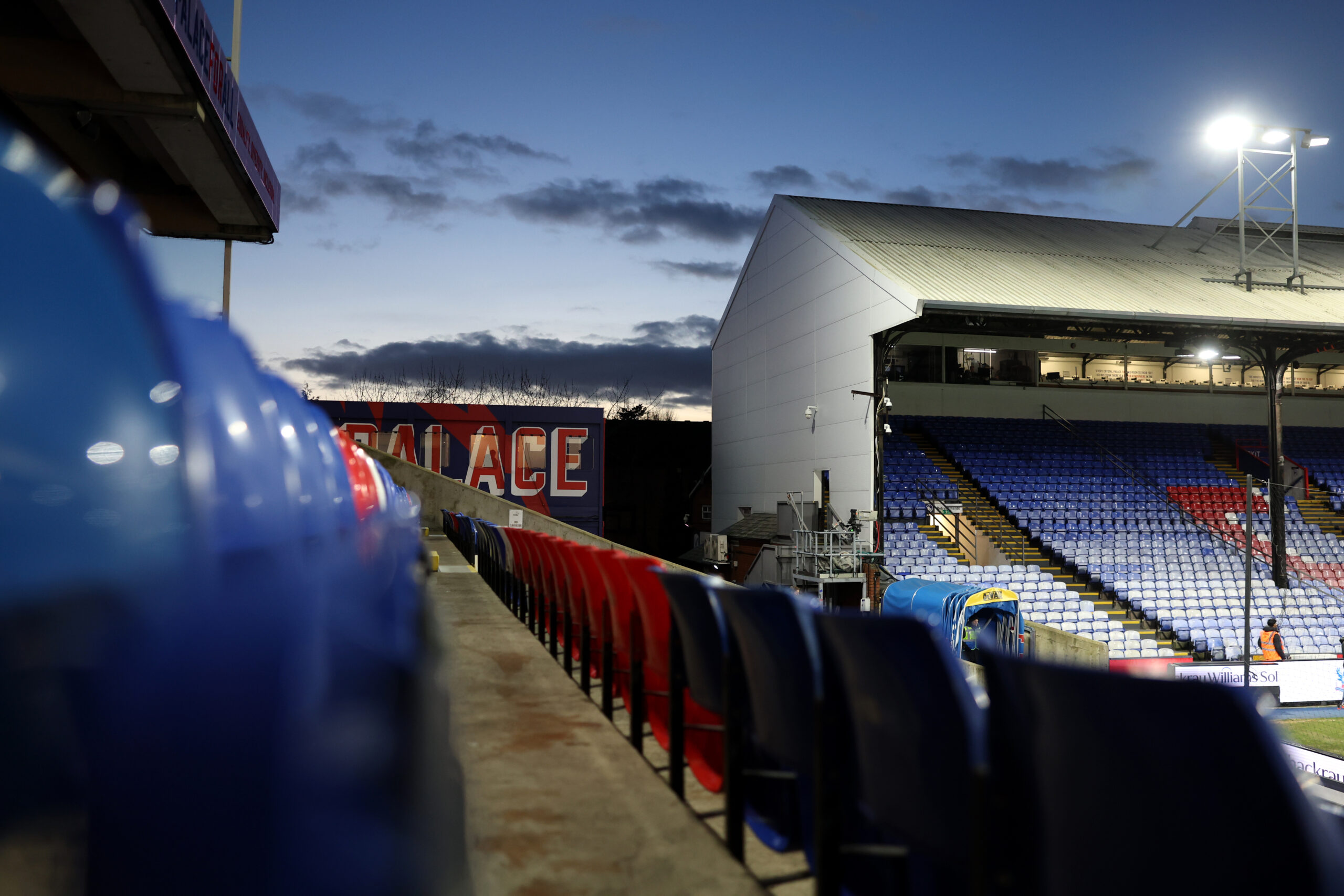
It was a good game to pick, played at one of England’s many great old stadiums. Selhurst Park’s main stand was built 101 years ago, with the press box perched in the back. No one minds that the view is occasionally blocked by cast-iron columns that hold up the roof.
The 101-year-old main stand at Selhurst Park, with columns supporting the roof near the front and the press box at the back.
Down on the field, Robinson had three tackles and two clearances, won four of his six duels, and completed 50 of 61 passes. Five of those passes went into the attacking third, and he created three scoring chances for teammates — including a terrific cross that Mexican national team striker Raúl Jiménez headed off the post.
Off the ball, it was a lesson to watch Robinson’s positioning. An outside back is always waiting for the split-second moment when everything could change. Unfortunately, that happened in the wrong way on Palace’s goal, as Nathaniel Clyne cut past Robinson before teeing up Jean-Philippe Mateta’s finish.
But Robinson made up for the lapse with a big role in Fulham’s 81st-minute equalizer. He gave a key pass before a teammate’s assist, then continued his run to pull apart Palace’s defense.
Fate denied him the chance to play against another U.S. stalwart, Palace centerback Chris Richards, who was deservedly just named U.S. Soccer’s Male Player of the Year for 2025. Richards suffered a foot injury in late December and missed four games. (His first game back made the wrong kind of headlines: the Eagles were stunned by sixth-tier Macclesfield in the FA Cup.)
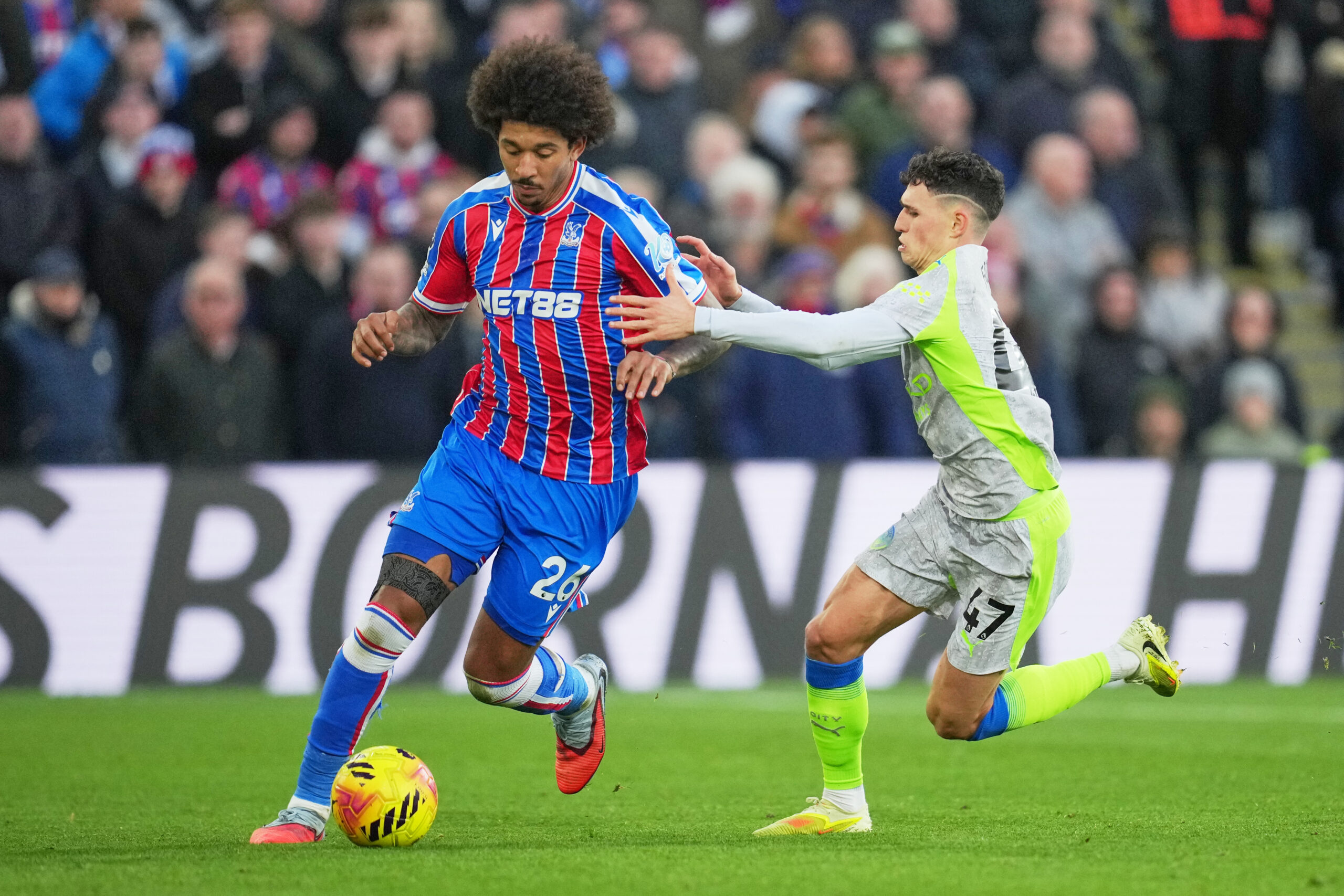
While Antonee Robinson plays in west London for Fulham, Chris Richards (left) plays in south London for Crystal Palace – though he’s out injured right now.
Asked if it would have been better or worse to play against Richards, Robinson answered with a hearty laugh.
“It would have been worse,” he said. “I don’t want them at their strongest, and he’s a big part of that. Disappointed that I didn’t get to see him, but for us, their team not being as strong as they could have been is a benefit.”
Robinson has continued playing well since, helping Fulham to a seven-game unbeaten run through this past weekend. But at that point, he didn’t think he was all the way back yet.
“I’m just trying to get up to speed, really,” he said. “I haven’t had a lot of training sessions since I’ve been back at the team, and it’s been a lot of games over this period.”
Asked how far off his best he thinks he is, he said “it’s hard to tell, really — I feel good physically, which helps.”
The mental side was the next step.
“It’s just all the little details in games that have come from playing a lot of games … obviously I haven’t had a long spell out of the [club] team for years now,” Robinson said. “I’m sure it’ll come back soon enough, but happy enough that I’ve been in the team … I feel like I’m contributing, so that’s the main thing.”
He referred to absences from Fulham specifically, scattered games for the club from last April through September. The nine games missed from mid-October to mid-December were indeed his longest time out with the club, but that doesn’t measure his summer shutdown that cost him the Concacaf Gold Cup.
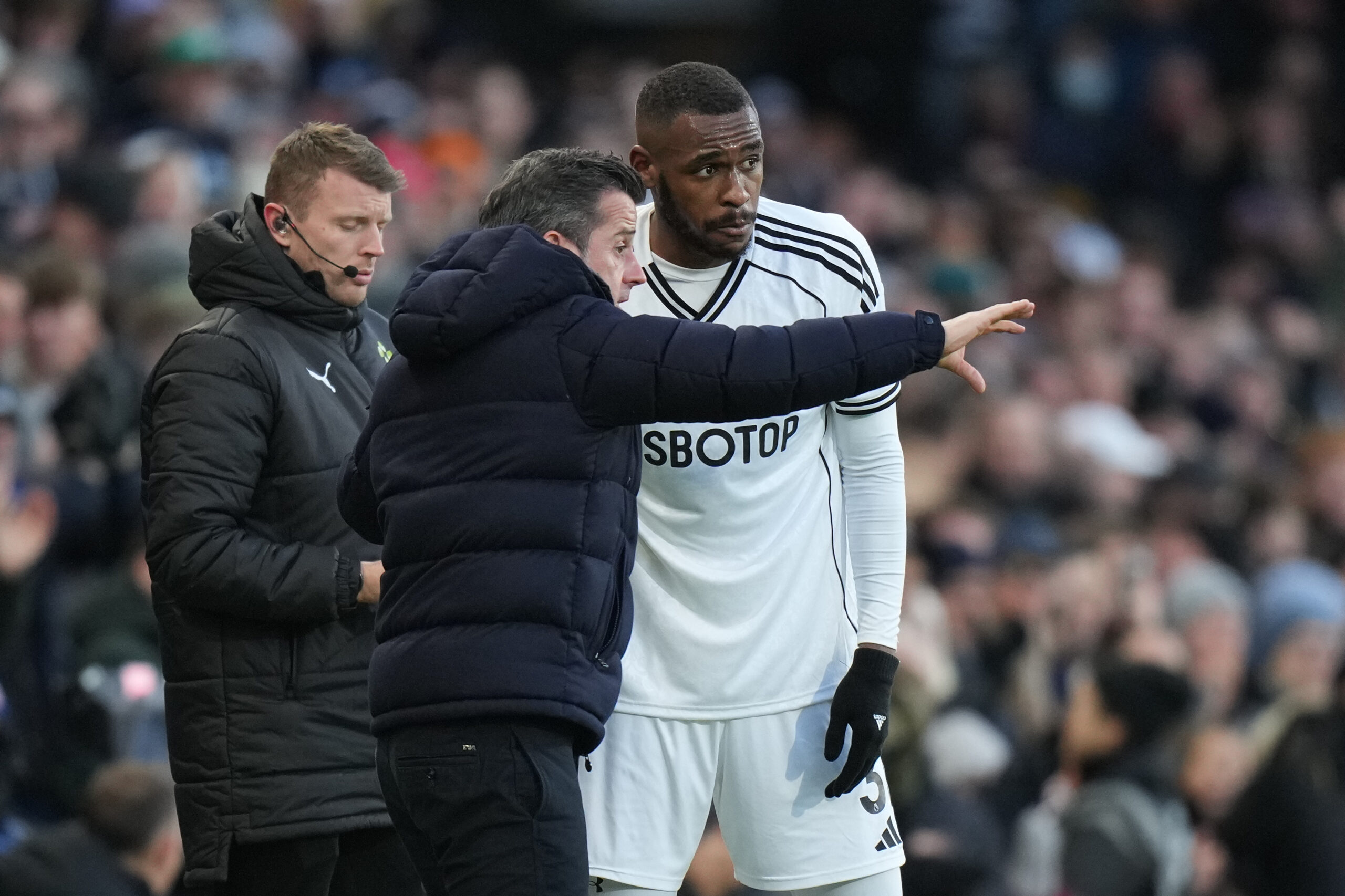
“He’s a crucial player for us right now, like he was last season, two seasons ago, three seasons ago,” Fulham manager Marco Silva said. “He’s getting better and better. Of course, it was a long absence from a player like him that …was always ready, week in, week out, going to the national team, coming back, always ready to play.”
Fulham manager Marco Silva (center) gives instructions to centerback Issa Diop during a game earlier this month.
Robinson said he’s been “keeping in touch” with U.S. Soccer’s medical team, and the men’s program’s top assistant coach Jésus Pérez.
“Just to kind of check on how I’m feeling,” Robinson said. “I think it was a surprise to them as much as me how quickly it kind of turned around, from not being involved to playing 90 minutes back-to-back-to-back [upon his return]. So they’re just checking in making sure I’m OK, and making sure that I feel good in how I’m doing, how I’m playing.”
There’s a long way to go until March. Fulham has 11 Premier League games before then, including visits to Manchester City, Manchester United, and Brenden Aaronson’s Leeds United on Jan. 17. The club could also play two more FA Cup rounds after Saturday’s win over Middlesbrough, where Robinson came off the bench to face U.S. midfield candidate Aidan Morris.
But it’s no surprise that Robinson is thinking ahead. The World Cup is the sport’s pinnacle, and playing one on home turf is an honor like no other.
“For [the] boys, myself included, lads who have been in and out of the team, it’s the last sort of audition to put yourself forward to be in that World Cup squad — which is going to be a huge honor for whoever gets called up,” he said. “It’s a big goal for everyone who’s in the pool. … I’m just, for everyone’s sake, myself included, hoping that everyone stays in form, stays healthy and gives themselves the best chance to link up with the team and make sure we have the strongest squad possible.”
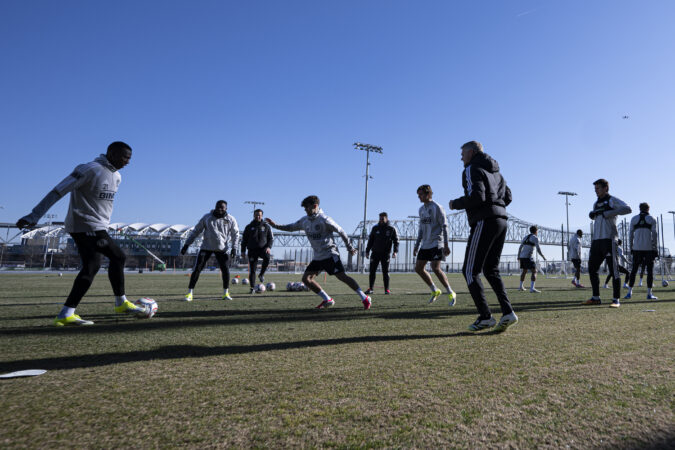
When the Union took the field Monday for their first preseason practice, it had been exactly 50 days since their 2025 season ended.
If you think that isn’t much time, you aren’t alone. But it was enough for a lot to happen.
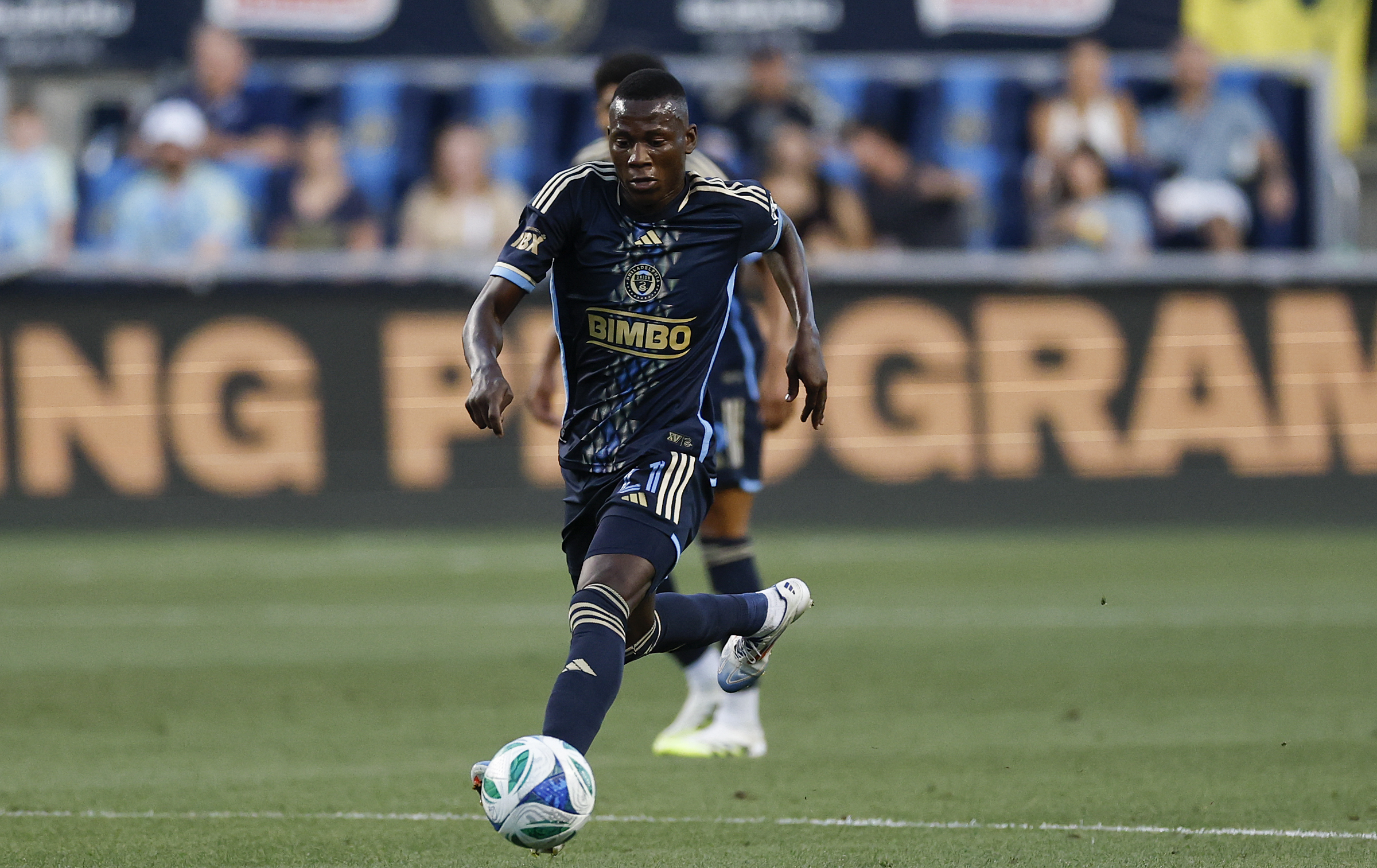
Tai Baribo, Jakob Glesnes, and Kai Wagner were sold, while Mikael Uhre, Chris Donovan, and others found new homes as free agents. Striker Ezekiel Alladoh and centerbacks Japhet Sery Larsen and Finn Sundstrom arrived, with Larsen’s signing announced Tuesday for a transfer fee of around $938,000. (There’s likely to be another new centerback too, in Geiner Martínez.)
Some returning players have new numbers, including new homes for soccer’s most famous numbers of all. Milan Iloski got the No. 10, becoming the first player to wear it since Dániel Gazdag and the 10th in team history; and Bruno Damiani got the No. 9, the 11th player to wear that shirt.
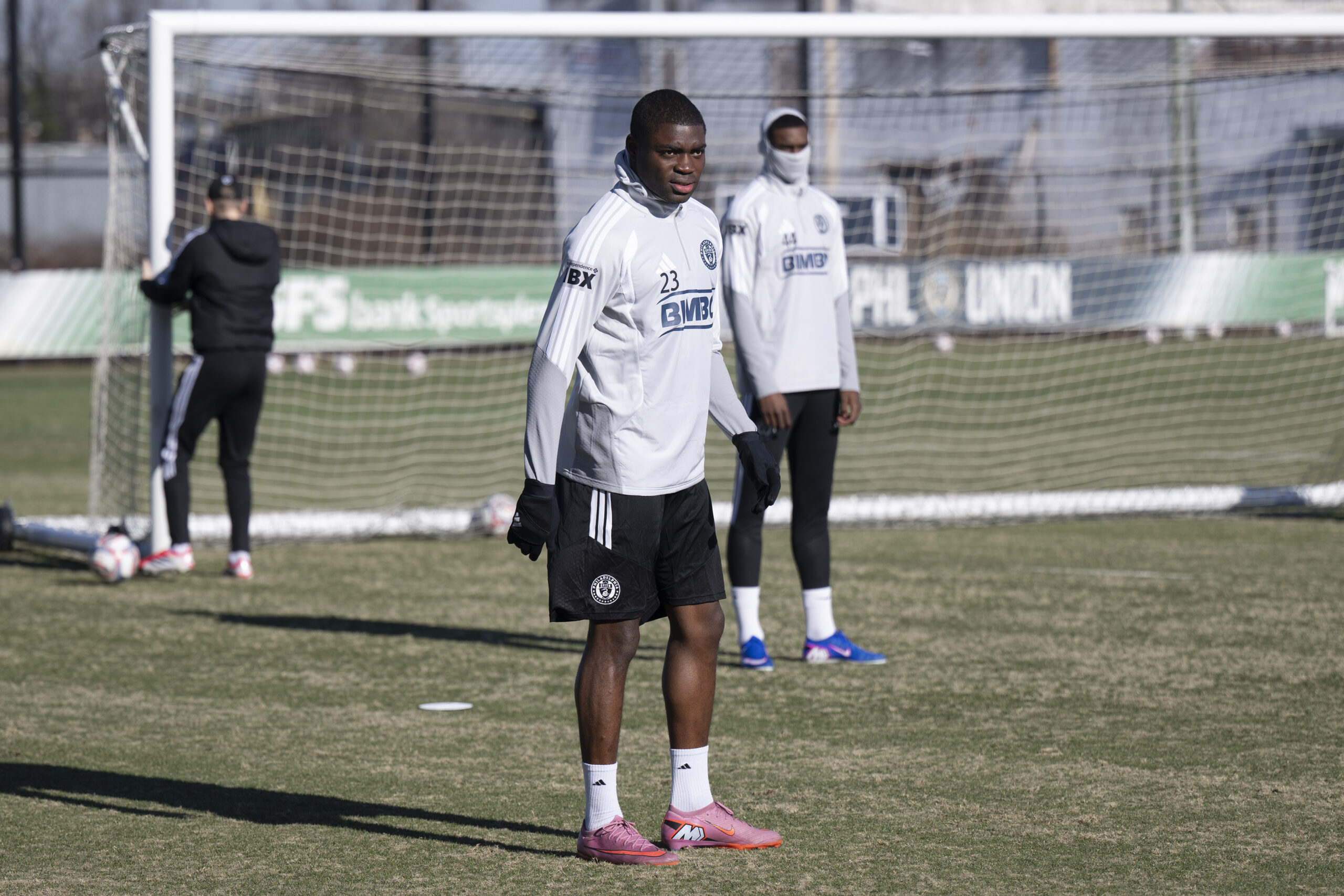
Offseason signing Ezekiel Alladoh at practice with the Union at Subaru Field in Chester on Tuesday.
Alladoh, meanwhile, is the Union’s first No. 23 since Kacper Przybylko in 2021, and the ninth in team history. Larsen got No. 5, which had been Glesnes’ — one of a few signs the 25-year-old Denmark native is ticketed to start.
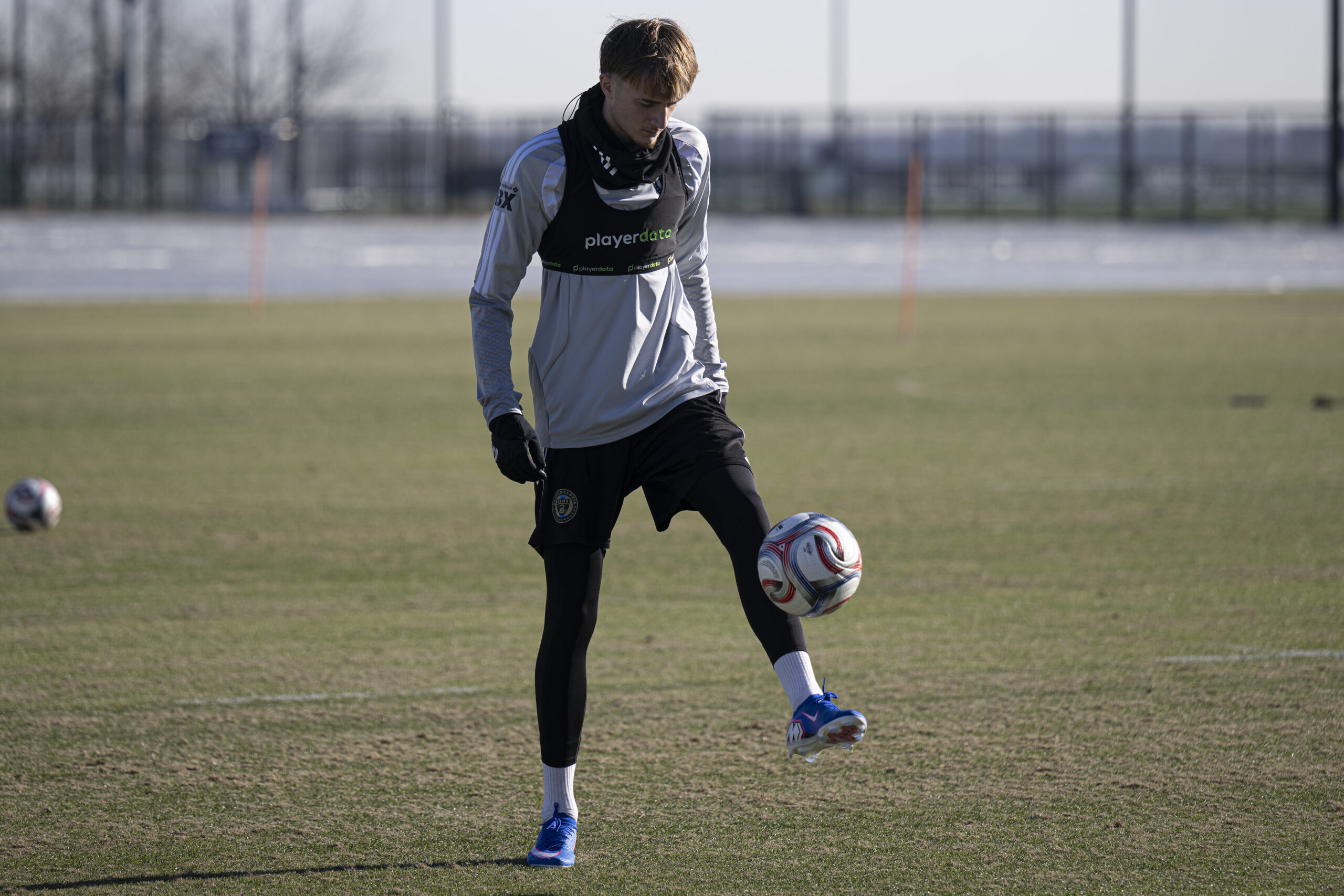
Tuesday was the first day that practice in Chester was open to the media, and it brought another interesting sight: 16-year-old forward Malik Jakupovic, a much-touted striker prospect, training with the first team. He’s on a reserve team contract right now, but a promotion this year would be welcomed by many observers.
A few other reserve players were also out there, including striker Stas Korzeniowski and centerback Rafael Uzcategui. Korzeniowski, a central New Jersey native and former Penn player, earned praise last year for scoring 12 goals in his first pro season with Union II.
One thing that hasn’t changed is sporting director Ernst Tanner’s status. Major League Soccer’s investigation into his alleged misconduct remains open, and he still is on administrative leave. The latter isn’t expected to change until the former does, and no one involved has put forth a timetable for a resolution.
Malik Jakupovic dribbles a ball during a Union practice at Subaru Field in Chester.
The Union’s sporting decisions continue to be made by a committee of manager Bradley Carnell, director of academy and professional development Jon Scheer, assistant sporting director Matt Ratajczak, and scouting director Chris Zitterbart. Carnell and Scheer will meet the press on Friday, a day before the team heads to Spain for two weeks.
Then there’s something else that has happened since November, not directly about the Union, but certainly connected to them: the World Cup draw.
Danley Jean Jacques knew then that he would have a chance to play on soccer’s biggest stage, but he didn’t know exactly where or against whom.
Now we all know: Haiti will play Scotland, Brazil, and Morocco, and the game against Brazil will be in Jean Jacques’ adopted hometown.
Union midfielder Danley Jean Jacques on the ball against Toronto FC at Subaru Park on Aug. 9.
“I’m very happy to be playing here in Philly because I know the atmosphere,” he told The Inquirer. “I think all the fans in Philly will come to support me, and it will be a pleasure to play here.”
Jean Jacques was only 4 years old then. But he knows the history, and how much his home country wanted to draw Brazil in Les Grenadiers’ first men’s World Cup appearance since 1974.
“I know that the Haitian people like Brazil, but they’re going to root for us,” he said. “It will be fun to play against Brazil because the Haitian people like Brazil — but I think they like us more than Brazil.”
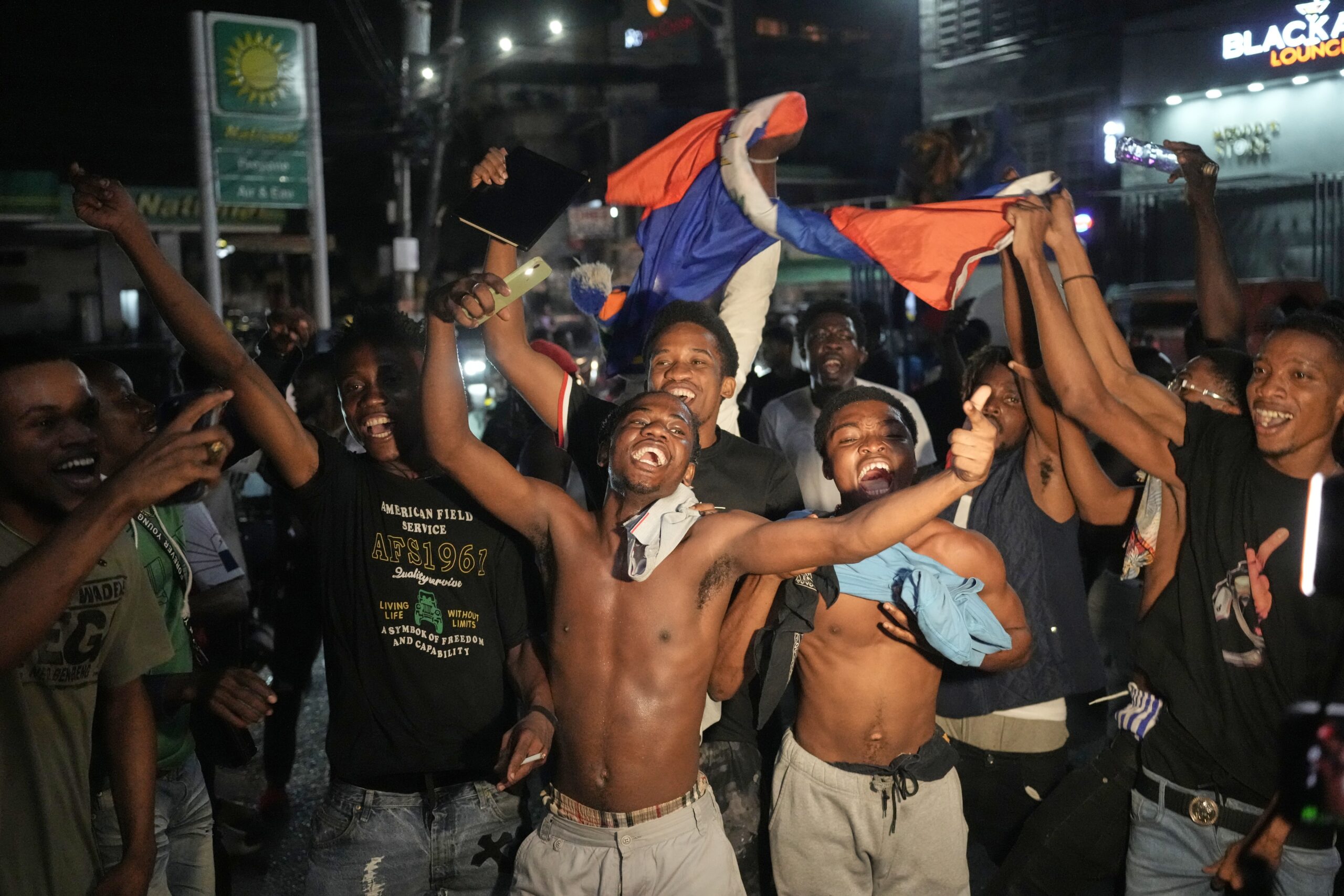
Fans in Haiti celebrating their team’s qualification for the World Cup in November.
And how about dueling with players like Vinícius Júnior, the star of Brazil and Real Madrid?
“Yes, that would feel good,” Jean Jacques said. “To play against players like that is a pleasure. I’ll be preparing well to play against them and give it my all.”
Vinícius Júnior played for Real Madrid at Lincoln Financial Field in the Club World Cup last summer.
A place in soccer history
It’s pretty rare for players to be able to play a World Cup game for their country in their club team’s home city. It’s even rarer for players from Concacaf, the region that spans North and Central America.
The last time anyone from around here came close was in 2006 in Germany. Kasey Keller played for the United States in Gelsenkirchen, about an hour’s drive from his club home in Mönchengladbach.
It didn’t happen in 1994, when the U.S. last hosted, because the U.S. didn’t have a major professional league. That year’s national team did most of its tournament prep in a long residency camp.
To land all the way on the nose, you have to go back to 1986 in Mexico. The hosts had many players on clubs in Mexico City and Monterrey, where El Tri held its games that summer.
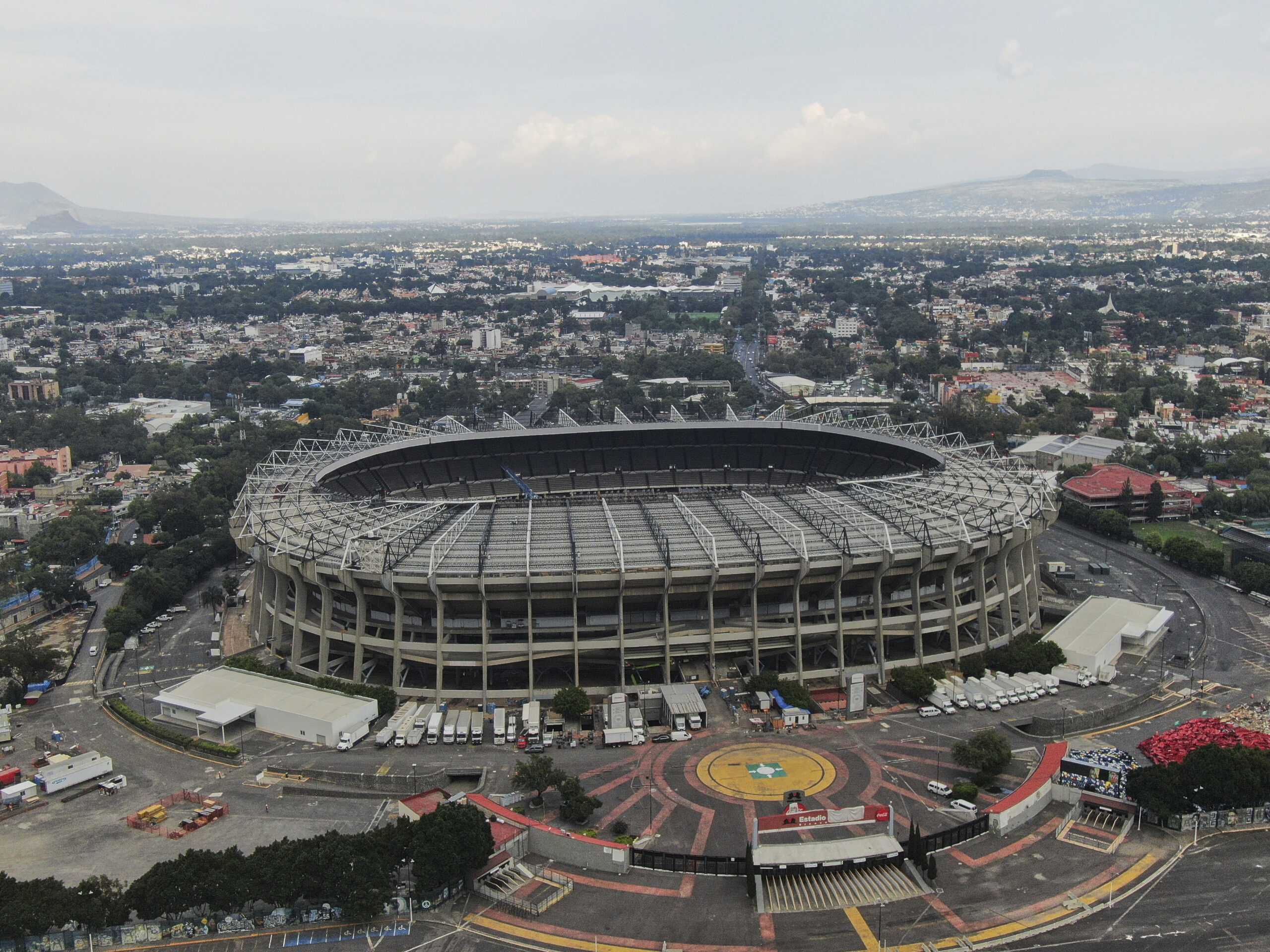
Mexico City’s famed Estadio Azteca will host a men’s World Cup for the third time this summer.
The closest modern equivalent arguably comes from women’s soccer: U.S. captain Lindsey Heaps played a 2024 Olympics semifinal in Lyon as a player from OL Lyonnes.
“It’s a very comforting feeling,” Heaps said. “As a player, you get an extra boost of confidence.”
Jean Jacques could end up being one of many players who get the honor in this tournament, and not the first chronologically. Mexico and Canada play their first two group games before Brazil-Haiti kicks off, El Tri in Mexico City and Guadalajara and the Canucks in Toronto and Vancouver.
The United States’ Cristian Roldan could also beat Jean Jacques by a few hours if he makes the team and plays in Seattle against Australia, on the same day as Brazil-Haiti.
Cristian Roldan could play for the United States against Australia in Seattle, his longtime club home with the Sounders.
It’s still a rare honor over soccer’s full history, so there should be no playing it down. But Jean Jacques has plenty to do before the summer, as the Union start their season in just over a month with a return to the Concacaf Champions Cup.
For now, that is at the front of Jean Jacques’ mind. After spending some time off in Miami and with friends in France, he says he’s ready to get back to work.
“We focus on the new season that’s going to start soon,” he said. “We have the Champions Cup in the near future, and we’re going to prepare well for that to start the year well.”
Like so much of life, the year in soccer has raced out of the blocks without waiting for the starter’s gun.
The Union’s preseason started Monday, while the English Premier League’s winter circus played at full blast. While their fellow Americans were vacationing, Medford’s Brenden Aaronson and the rest of the circuit’s U.S. players spent the holidays working not just to win games, but to earn places on the World Cup team.
They’re at a sprinter’s pace in women’s soccer, too. Gotham FC will play in the inaugural FIFA women’s Champions Cup later this month in London and has already been in Spain for a week preparing.
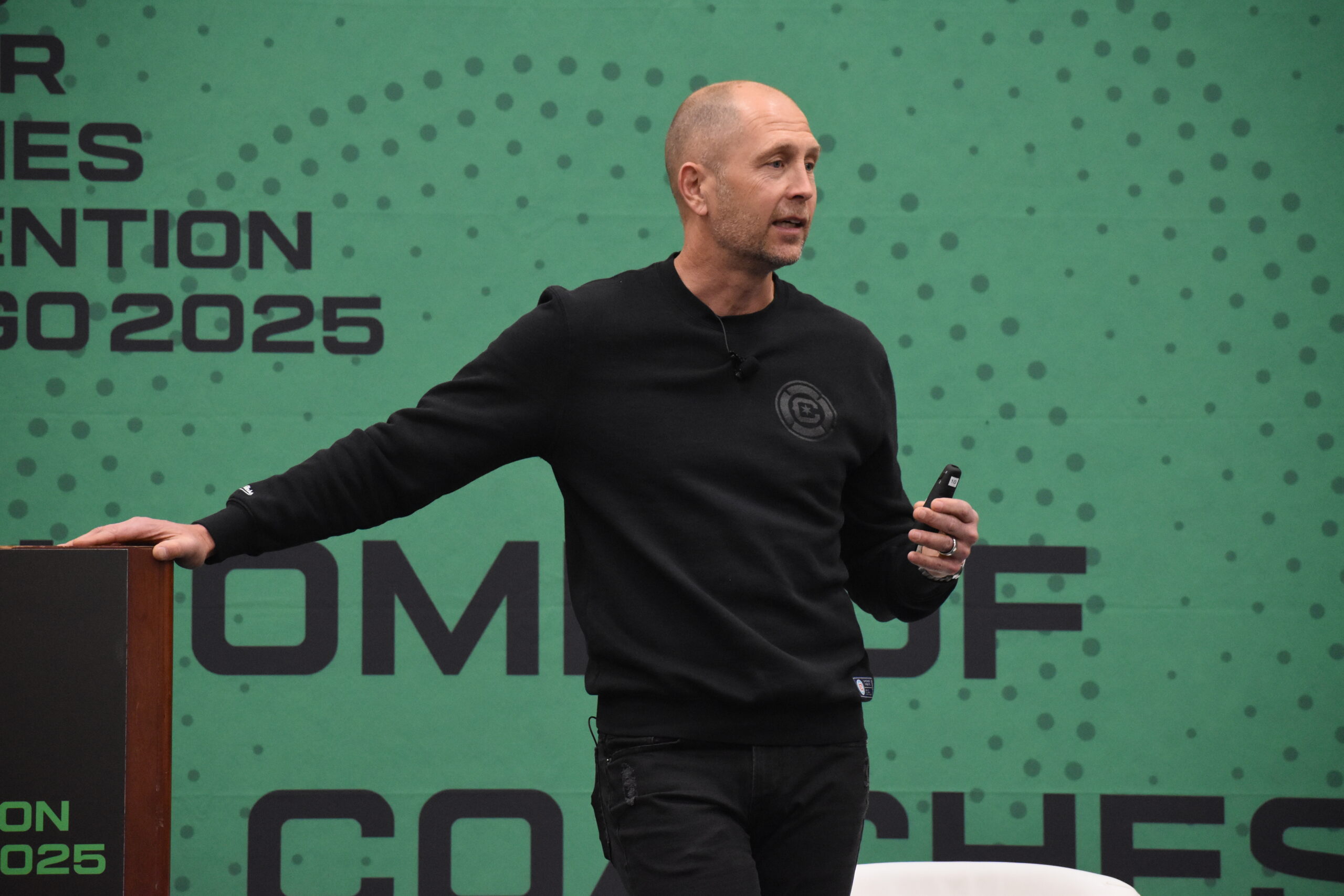
Former U.S. men’s national soccer team manager Gregg Berhalter, now in charge of the Chicago Fire, speaking at last year’s coaches’ convention in Chicago.
Amid all this, the event that’s usually American soccer’s annual curtain-raiser will take place in Philadelphia this week. From Wednesday to Saturday, the United Soccer Coaches Convention will draw thousands to the Pennsylvania Convention Center for the traditional festival of speeches, exhibits, and All-America honors.
The association has organized conventions in almost all of its 85 years, and Philadelphia has been a frequent host. It was last here in 2023, and this will be the 11th time since 1989. That history has also been profitable for the organization, which is headquartered in Kansas City, Mo., but has many members in this part of the country.
There’s always a little extra shine when the convention happens in a World Cup year, and this one will be no exception. Nor will it be lost on anyone that it’s in a World Cup host city.
On top of that, Paul Payne, who became the association’s president in April, has strong Philadelphia ties. He grew up in the region and coached soccer at Conestoga High School, the University of Scranton, then Bloomsburg for more than 20 years.
“I think it’s a great way for us as an association to kick off, with our connection with U.S. Soccer [and] our national teams,” said Payne, who noted that he delivered The Inquirer for two years as a child. “The World Cup doesn’t start in June — to me, it’s started already. And I think you’re going to see that ramp up with a lot of the activities of U.S. Soccer, and, obviously, the United Soccer Coaches Convention in Philly this year.”
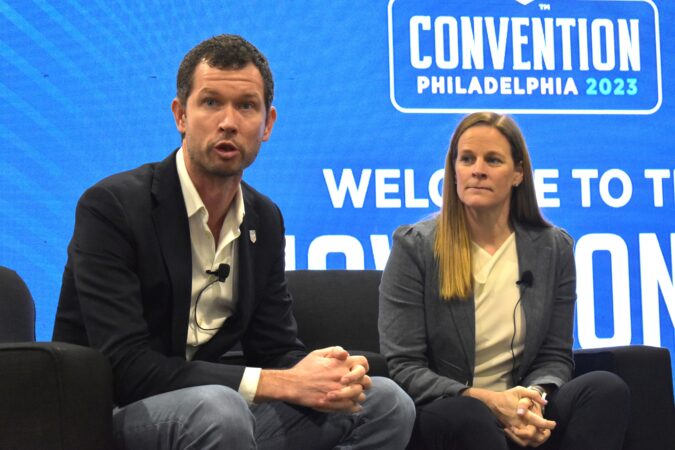
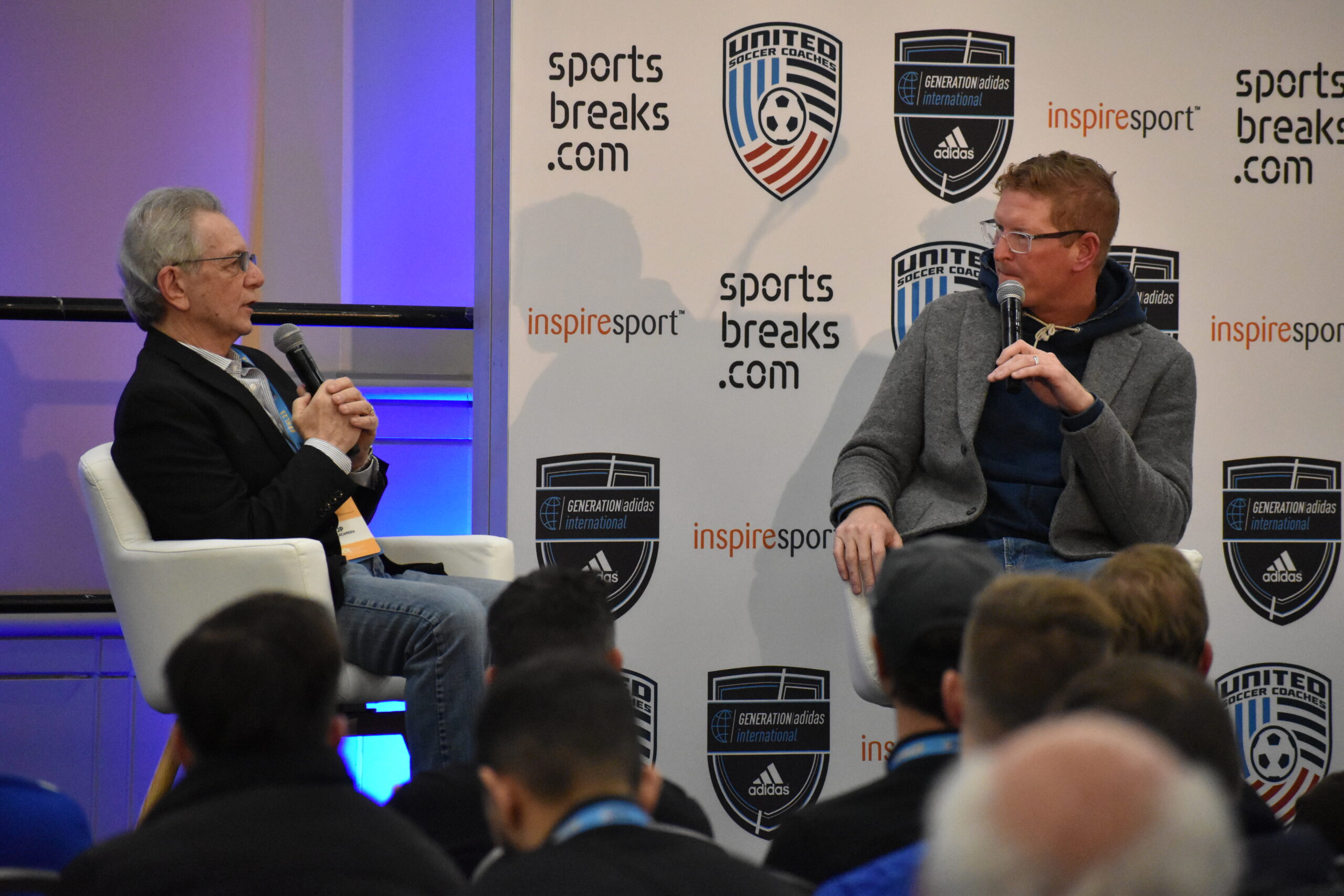
Former Union manager Jim Curtin (right) with longtime soccer broadcaster JP Dellacamera at the 2023 coaches’ convention in Philadelphia.
Star players and coaches on stage
As usual, the speakers will span the range of the sport. Amid the dozens of high school, college, and youth coaches, famous ex-players on stage will include Tab Ramos, John Harkes, Jozy Altidore, Jay DeMerit, and Delran’s Peter Vermes.
Heather Mitts will share the stage with her husband, former Eagles quarterback A.J. Feeley, on Friday, while her former teammates, Lori Lindsey and Heather O’Reilly, have an event on Thursday.
Lindsey also will join Carli Lloyd, Alexi Lalas, and JP Dellacamera for a Fox Sports panel on Friday previewing the network’s coverage of this summer’s World Cup.
Guests from abroad will include former Manchester United player Nicky Butt, former England women’s manager Mark Sampson, and Portugal men’s manager Roberto Martínez. Expect Martínez to draw a big crowd — and perhaps face a few questions about playing the United States in March.
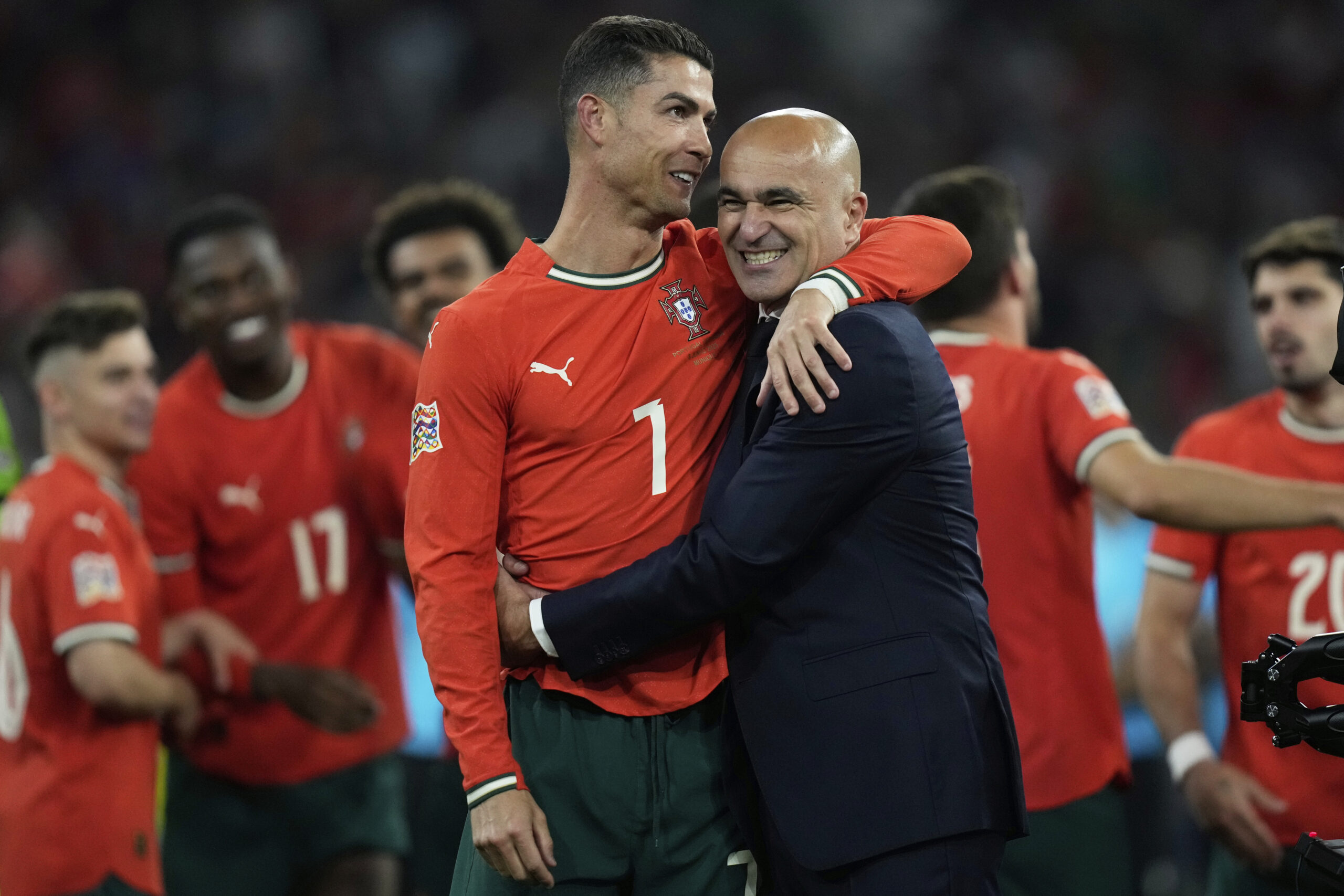
Roberto Martínez (right) with superstar Cristiano Ronaldo at Portugal’s UEFA Nations League title game win last summer.
The Union will be well-represented, with manager Bradley Carnell, academy director Jon Scheer, reserve team head coach Ryan Richter, and goalkeeper coach Phil Wheddon scheduled to speak.
U.S. Soccer also will have lots of dignitaries there: from president Cindy Cone to CEO JT Batson, sporting director Matt Crocker, vice president of strategy Emily Cosler, and Soccer Forward Foundation executive director Lex Chalat. A number of coaches from across national teams will hold seminars, though Mauricio Pochettino and Hayes won’t be there because of other commitments.
“It will be great to get insight into the preparation for the World Cup,” Payne said. “The youth coaches in Ardmore, they want to know what’s going on with the big shots. It’s neat to hear. … All of a sudden, you’re connected to the highest level, and you have a personal seat there to what’s going on.”
Saturday night will bring the annual Walt Chyzowych lifetime achievement awards, named for one of Philadelphia’s soccer legends, at the Marriott next door on Market Street. Former U.S. men’s star goalkeeper Tony Meola is this year’s honoree, and it’s always special when the event is in Chyzowych’s adopted home.
Emma Hayes has long been a regular at the coaches’ convention, but she won’t be there this year because of the U.S. women’s team’s January camp.
The public can attend the convention, though it has never been cheap. It’s $665 for the week this year for nonmembers, with extra outlays for some of major ceremonies. (The Chyzowych event doesn’t cost extra, but its regulars often fill the room.) Most attendees will have already registered when they arrive.
There are day passes available from Wednesday through Saturday for $250 each. There also are tickets just for the exhibit hall, $50 for Thursday night and $75 for the day Friday or Saturday. It’s quite a scene, with vendors hawking everything from newfangled soccer balls to travel packages for youth tournaments.
Day passes haven’t always existed for the convention, but Payne wanted them to expand the audience — particularly to youth coaches who don’t have the money to pay for the whole thing.
“If they’re unsure what this is really about, it gives them a chance to get a glimpse of it and experience what this convention is,” he said. “And hopefully it whets their appetite, so they say next year, ‘You know, what I’m going to ask my club to fund me to go all four days,’ or ‘I’m going to ask my high school for professional development money.’”
But Zillow’s ranking of the country’s 50 most-populous metros is based on housing market fundamentals that have nothing to do with one-off events. The company examined markets’ home value growth and competitiveness.
“Competition among buyers will be stiff, and sellers will have the upper hand in this year’s hottest markets,” Mischa Fisher, Zillow’s chief economist, said in a statement. “Shoppers will need to tap all the resources they can muster in these fast-moving markets, from their team of experts to tech aids to financial assistance, but successful buyers will quickly gain equity.”
In the Philadelphia area, the number of homes for sale last year was about 40% lower than the average pre-pandemic. And demand is outpacing supply. That has made local housing markets more competitive.
Two in five homes sold for more than the asking price from September 2024 to September 2025. And homes typically spent just 13 days on the market in the year ending in October 2025.
During that same period, 22% of listings had a price cut on Zillow. Among the 50 most-populous metros, this share ranged from 13.5% to 33%.
And Zillow estimates that Philadelphia-area home values grew by 3%. It forecasts that values will grow by another 1.7% over the next year.
window.addEventListener(“message”,function(a){if(void 0!==a.data[“datawrapper-height”]){var e=document.querySelectorAll(“iframe”);for(var t in a.data[“datawrapper-height”])for(var r,i=0;r=e[i];i++)if(r.contentWindow===a.source){var d=a.data[“datawrapper-height”][t]+”px”;r.style.height=d}}});
This is Zillow’s second recent recognition of the strength of local housing markets. Last month, the company revealed that Philadelphia was the only large city that made its list of the 20 most popular housing markets of 2025. That analysis included many more markets — not just the largest ones — and the list was dominated by midsize cities in the Midwest.
On Zillow’s list of the predicted hottest major metros of 2026, Hartford, Conn., knocked Buffalo, N.Y., from the No. 1 spot. Zillow had ranked Buffalo as the hottest metro two years in a row.
In Hartford, more than two-thirds of homes sold above the listing price on average between September 2024 and September 2025. That’s the largest share among major metros. The typical home for sale spent about a week on the market. And Zillow expects home values to grow by about 4% from October 2025 to October 2026.
The New York metro area, which includes parts of New Jersey and Pennsylvania, ranked third-hottest for 2026. Among major metros, it had the lowest share of listings with a price cut: 13.5%.
LONDON — You can learn a lot about England’s famed Premier League from watching it on TV or online, given how much coverage it gets in the United States. But as with many things in life, there’s nothing like actually being there.
And in particular, there’s nothing like seeing it in England’s capital city.
Though soccer has helped make cities like Manchester, Leicester, and Newcastle world-famous, London’s scene dwarfs them all.
The English game’s four professional leagues have 14 teams within the city limits, including seven in the top flight this season: Arsenal, Brentford, Chelsea, Crystal Palace, Fulham, Tottenham Hotspur, and West Ham United. Many American fans know them well these days, from the big fan bases of Arsenal, Chelsea, and Spurs to the U.S. national team stars at Palace and Fulham.
But it’s the rest of London’s tapestry that makes the scene so vivid: Millwall in the second-tier Championship, AFC Wimbledon in third-tier League One, and countless semipro and amateur sides like 133-year-old Dulwich Hamlet. The Hackney Marshes sports complex in east London has 88 soccer fields, and used to have 135.
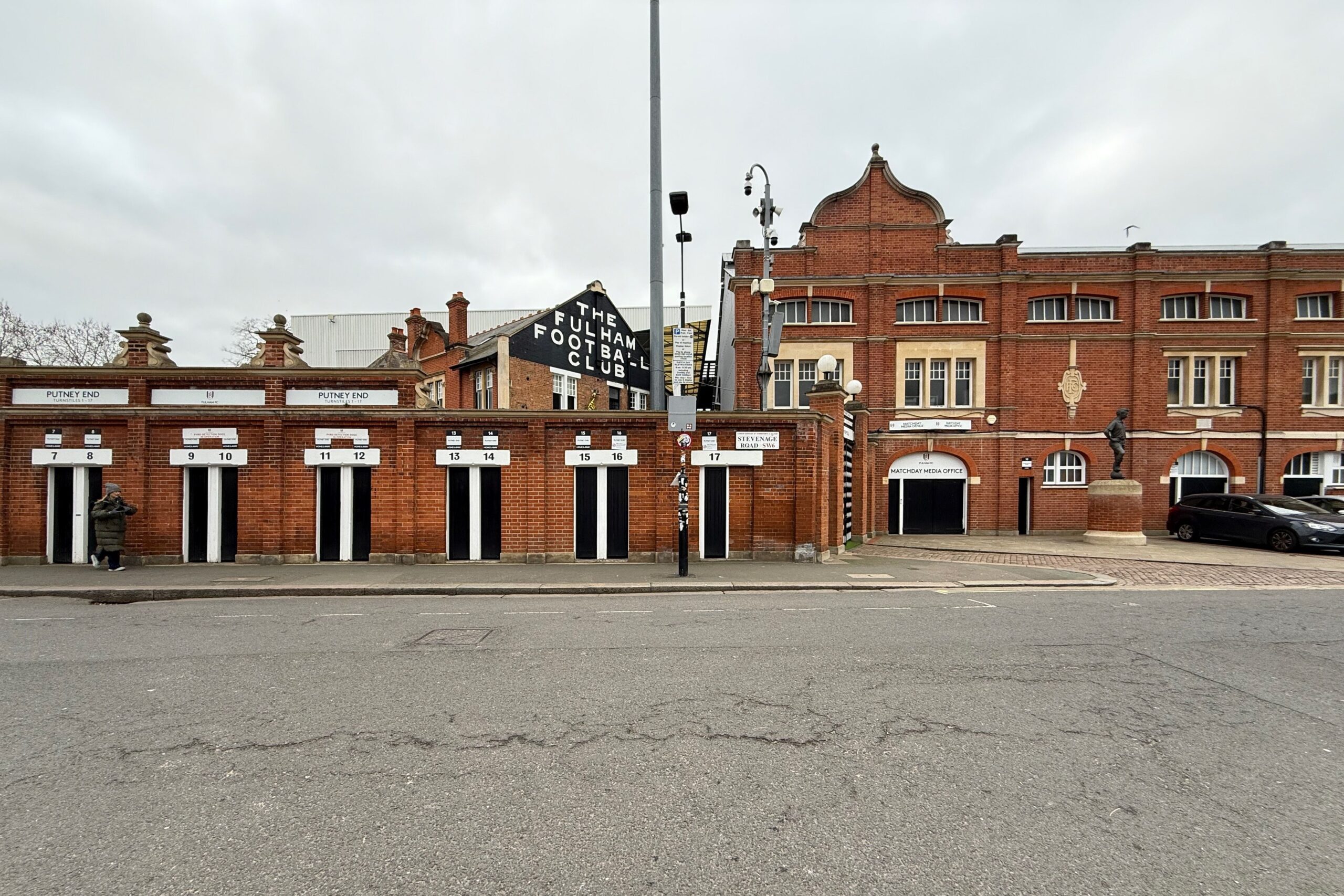
Outside the 121-year-old Johnny Haynes Stand at Fulham Craven Cottage stadium in London.
On any given Saturday, London’s trains and buses are a kaleidoscope of jerseys, scarves, and hats. Arsenal fans in red head to north London as blue-clad Chelsea fans head south. Fulham fans in black and white walk along the Thames River to 130-year-old Craven Cottage; West Ham fans in claret and blue ride to the modern stadium built for the 2012 Olympics.
A clutch of Norwich City fans who came from afar stood out in green and yellow. Their trip to Queens Park Rangers on New Year’s Day would be rewarded with a 2-1 win, including a goal from American striker Josh Sargent. At the same hour, his countryman Haji Wright was across town with Coventry City at Charlton Athletic.
Just beyond the city limits, an old friend of this reporter checked in as a longtime Watford fan. His Hornets hosted Birmingham City, just before Kai Wagner moved to Birmingham from the Union.
It was fun to watch the scene, but there was serious business at hand. The stretch of games from mid-December through the first weekend of January is the signature time of the season — especially Boxing Day, the day after Christmas. The stretch from Dec. 26 through Jan. 1 is to English football what Thanksgiving weekend is to the NFL and college football.
Norwich City have the breakthrough as Josh Sargent heads home from close range 💥 pic.twitter.com/tJdoNXHQsn
The action was nearly constant, even though the Premier League played just one game on Boxing Day this year. That gave some extra spotlight to the lower leagues, and they were happy to have it.
There was also another matter: When the calendar flipped to 2026, it became a World Cup year. All over the world, races are on to make national squads for the tournament, and many of those races will play out on Premier League stages.
How much are players thinking about that right now? A lot for some, not so much for others. But they all know in some form.
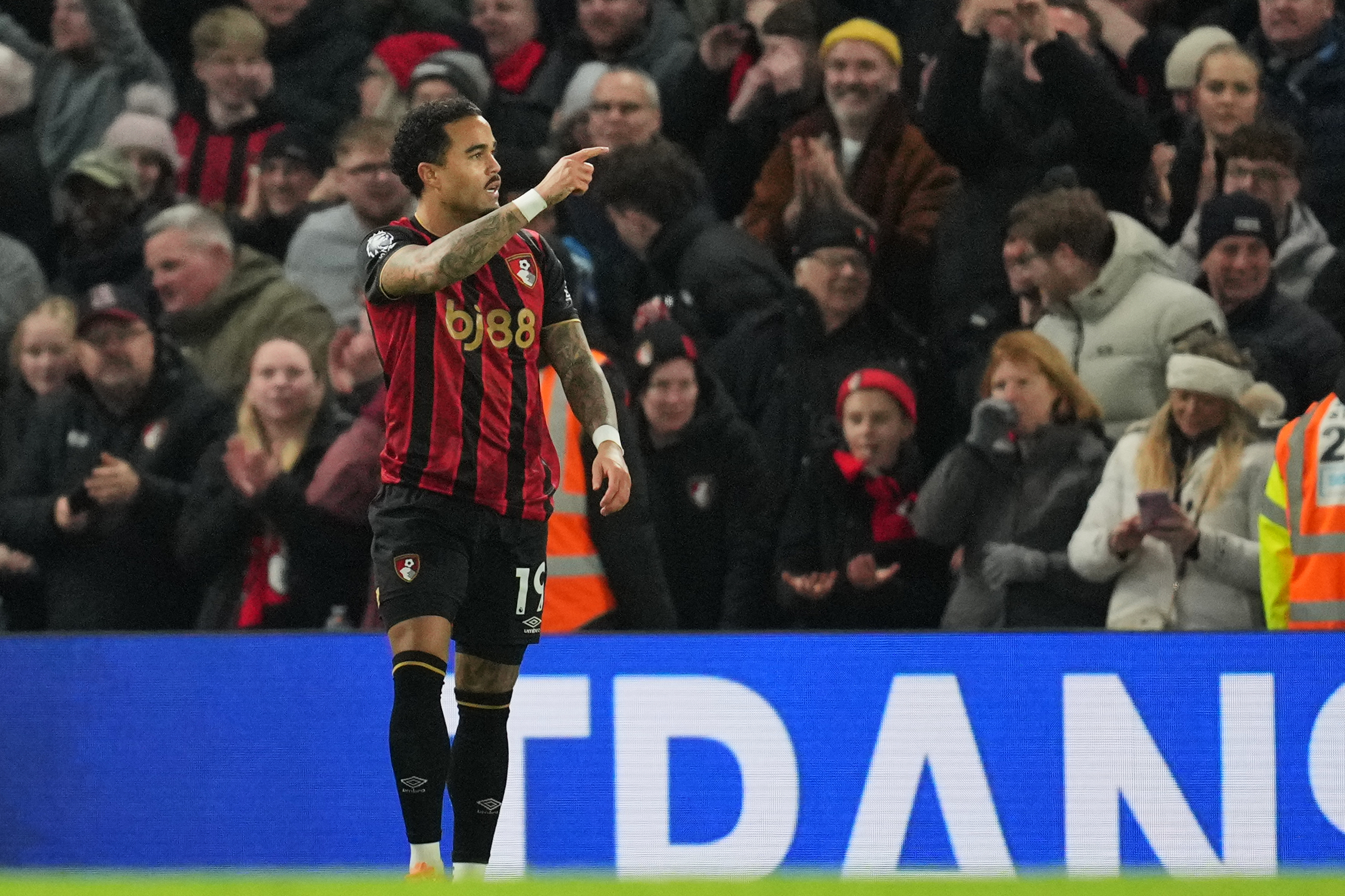
“One hundred percent,” said Netherlands forward Justin Kluivert, the son of Dutch legend Patrick Kluivert and a club teammate of U.S. stalwart Tyler Adams at Bournemouth. “Every single game that I’m playing now, I want to show the coach that he’s got to put me in the starting 11.”
Justin Kluivert celebrates after scoring for Bournemouth against Chelsea on Dec. 30.
It’s necessary to explain here that it isn’t always easy for the media to talk with players in the Premier League, or in European soccer generally. The world’s game hasn’t shared American sports’ long tradition of players meeting the press on a regular basis.
Former Bournemouth winger Antoine Semenyo could come to Philadelphia this summer with Ghana’s national team. He just joined Manchester City in an $84 million deal, and one of his last games with the Cherries was the one where Kluivert spoke — a 2-2 tie at Chelsea. The move wasn’t sealed yet at that point, so it was no surprise that Semenyo went nowhere near a microphone.
Nor was there much from Arsenal’s Brazilian forward Gabriel Jesus when he scored a brilliant goal in the Gunners’ 4-1 rout of Aston Villa on Dec. 30, fueling the league leaders’ dreams of a first Premier League title in 22 years.
Three days earlier, Jesus had returned from a long injury absence in a win over Brighton. There was much talk among journalists and team staff about how badly he wants to make Brazil’s squad — which will play its tournament opener in Philly against Haiti. But alas, we didn’t hear it from the man himself.
Fortunately, another familiar face did stop by. Brighton’s Diego Gómez joined the Seagulls 12 months ago from Inter Miami, and two months ago played for Paraguay against the U.S. at Subaru Park.
Gómez should easily make the Albirroja’s World Cup squad, which means he’ll see the Americans again in their tournament opener in Los Angeles. In this moment, he was annoyed that his well-taken goal couldn’t stop a 2-1 loss, but he was happy to talk with someone who knew of him.
“I’m thinking about what’s coming up here,” Gómez said in his native Spanish. “Then there’s the World Cup, but my head is here at the club. … My thoughts are not on the World Cup, nothing like that. My thoughts are on what’s going to happen here at the club.”
(He did say he watched Miami’s MLS Cup title win, and that he was “very happy for the team because they really deserve it.”)
Diego Gómez (right) on the ball for Brighton against Arsenal on Dec. 27.
Then there are players whose World Cup hopes hinge on March’s last qualifying playoffs. Sixteen teams in Europe and six teams from the rest of the world will compete for the six berths left to claim. One will go to a nation that will play superpower France in Philadelphia this summer, and another could go to Jamaica, and subsequently favoring the Union’s longtime goalkeeper in Andre Blake.
Among the European contests is Sweden, whose outside back Gabriel Gudmundsson is a Leeds United teammate of Medford’s Brenden Aaronson. He has a good reason to not have the World Cup on his mind yet: Leeds is fighting to avoid being relegated out of the Premier League.
“No, because I need to focus here — it’s the most important,” Gudmundsson said after watching Aaronson score a big goal against eternal rival Manchester United. “When the time is there, I will be fully ready, of course. But [for] the time now, I have the white shirt [of Leeds] on, so that’s what matters.”
Leeds’ Brenden Aaronson (right) and many others playing in Europe know that their play also serves as an observation period ahead of this summer’s World Cup.
Leeds, unlike London, is a one-team town. It’s similar to Philadelphia in how the local football team unifies the city, even if the kinds of football are different.
But the World Cup unifies the planet, from England to the United States and everywhere else imaginable. Just a few months remain until it does so again.