The U.S. men’s soccer team set another viewership record in its loss to Belgium, despite the lopsided 4-1 defeat.
A combined total of 45.986 million viewers watched on Fox (33.006 million) and Telemundo (12.9 million), whether via traditional television or online streaming.
It is the biggest audience for a television event since Super Bowl LX, and not too far off this year’s NFL conference championship games. The AFC matchup drew 48.6 million viewers, and the NFC drew 46.1 million.
Fox also said its audience alone was the biggest for any non-NFL broadcast since Game 7 of the 2016 World Series, when the Chicago Cubs ended their infamous championship drought. That mark was previously held by this year’s college football national championship game, which drew 30.1 million viewers across a range of ESPN channels.
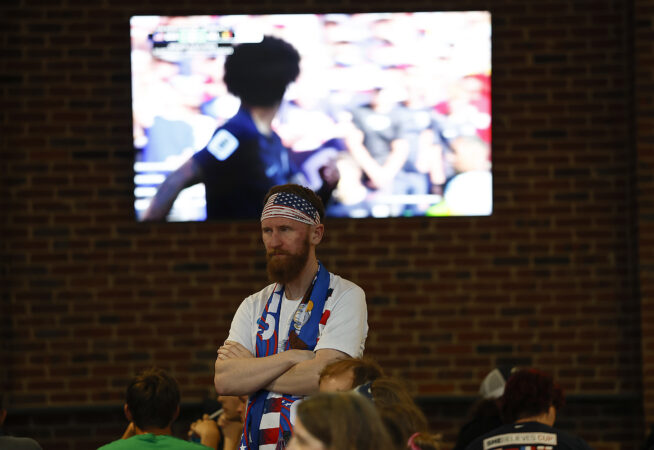
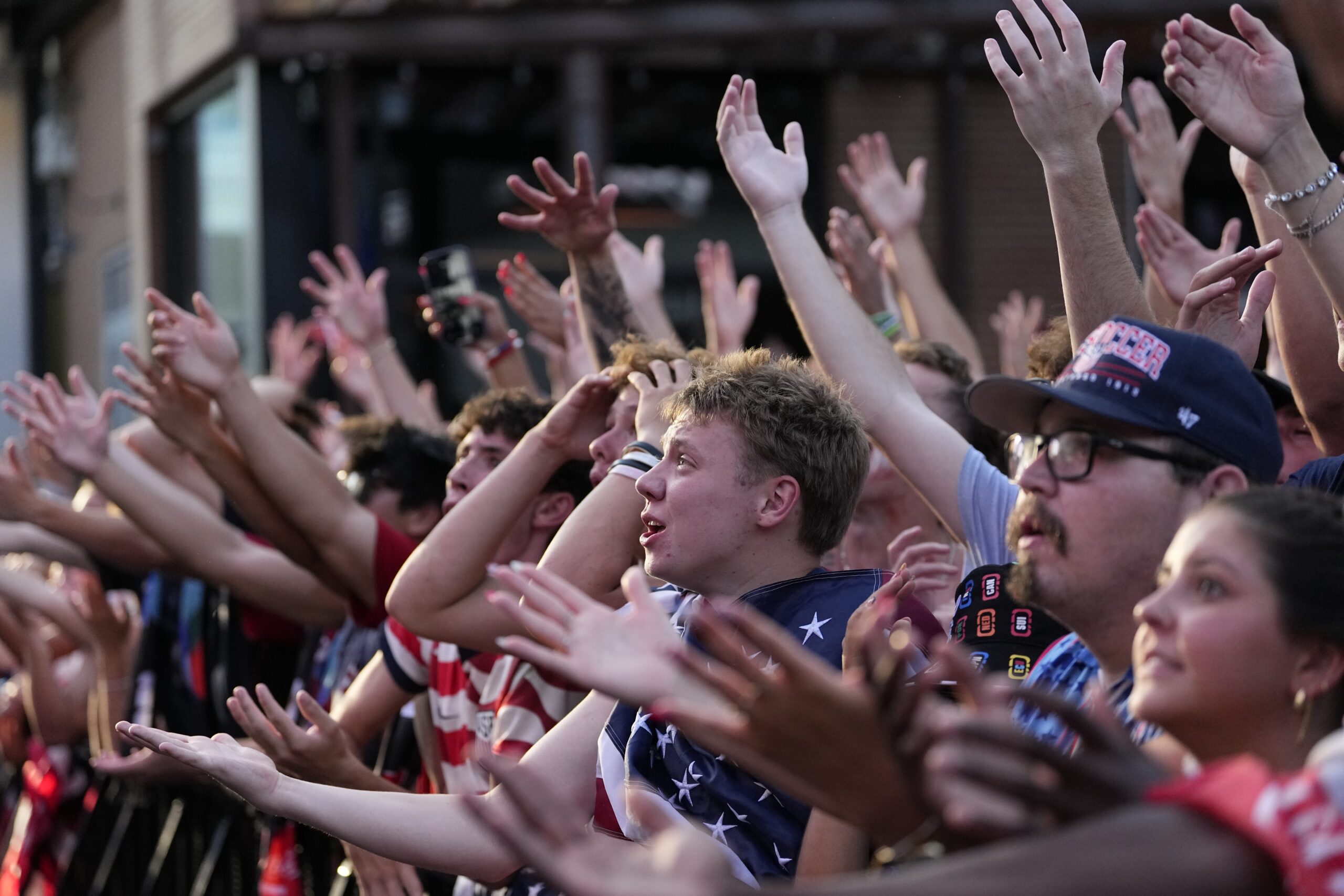
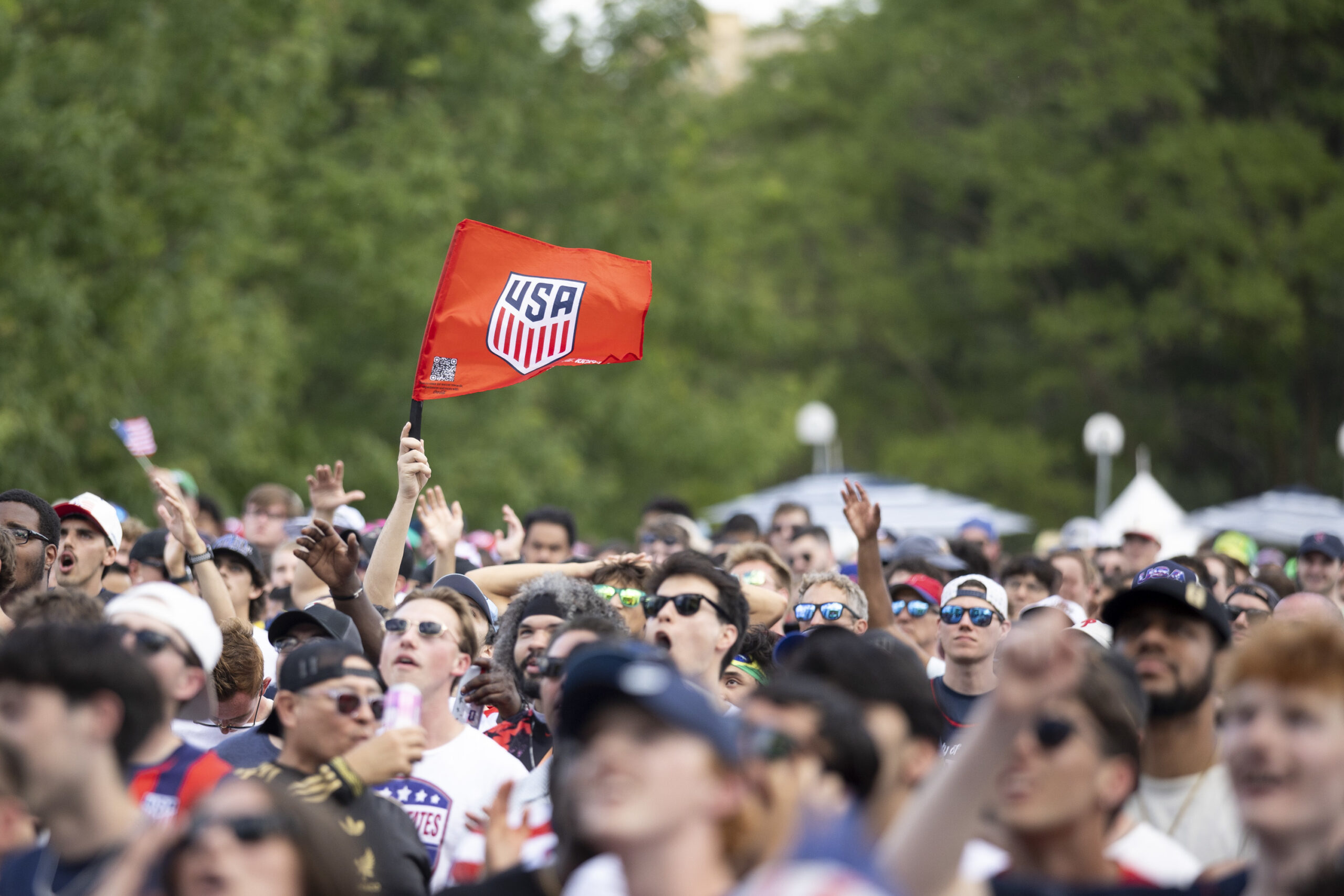
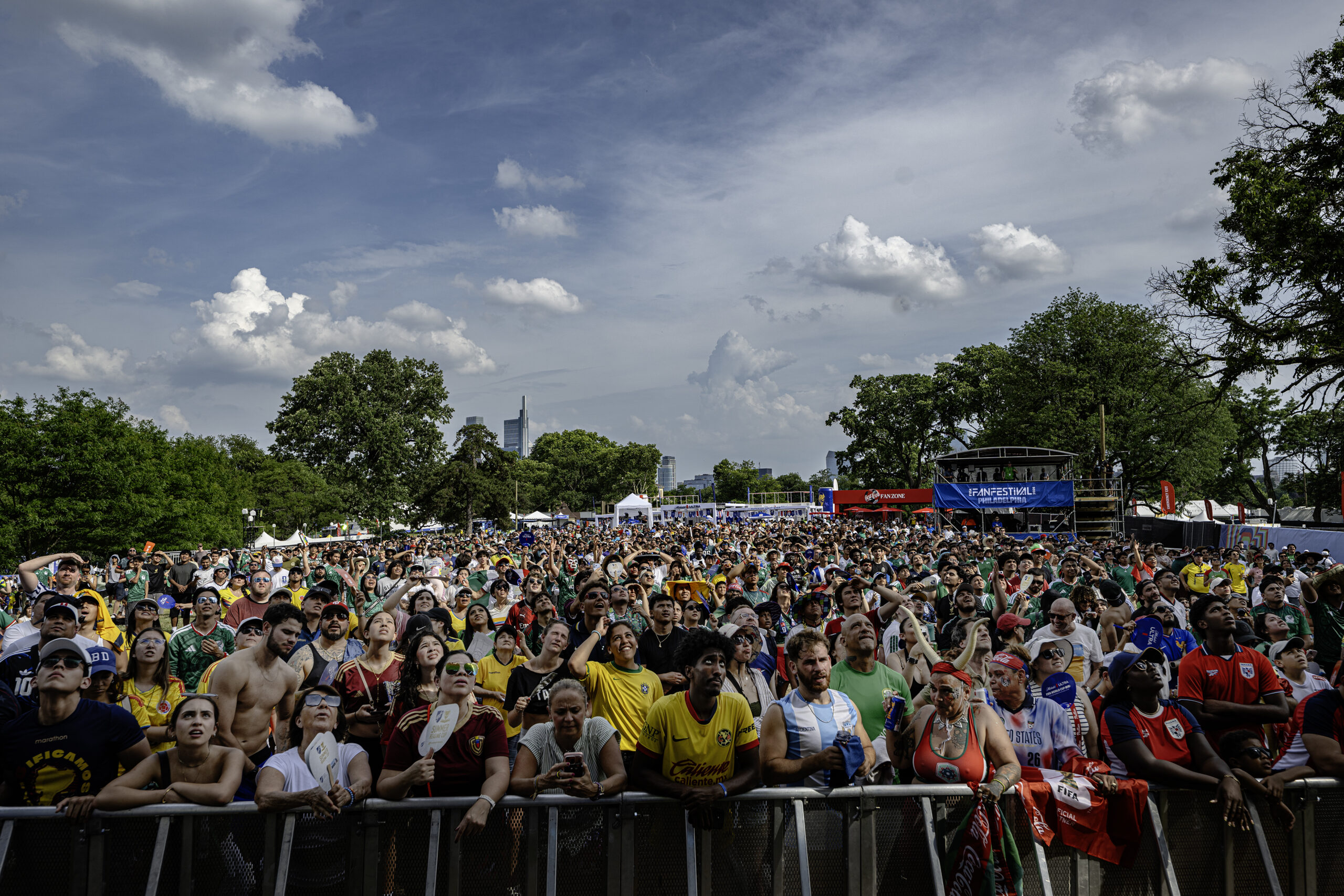
Fans watching the U.S.-Belgium gane at a viewing party in Kansas City, Mo.
Fox noted that Philadelphia was the network’s No. 5 local ratings market for U.S.-Belgium, with a 14.22 rating and a 38 share. That means around 38% of all households watching television at that time tuned in to the game.
It wasn’t lost on U.S. fans that the blowout score turned some casual viewers sour. But the World Cup overall has continued to be a big deal, and that seems unlikely to change.
England’s dramatic 3-2 win over Mexico on Sunday night drew an audience worth a Sunday night NFL game: 44.952 million viewers combined between Fox (21.752 million) and Telemundo (23.1 million, a network record for soccer).
Earlier Sunday, Norway’s upset of Brazil in the Meadowlands drew 28.373 million viewers combined.
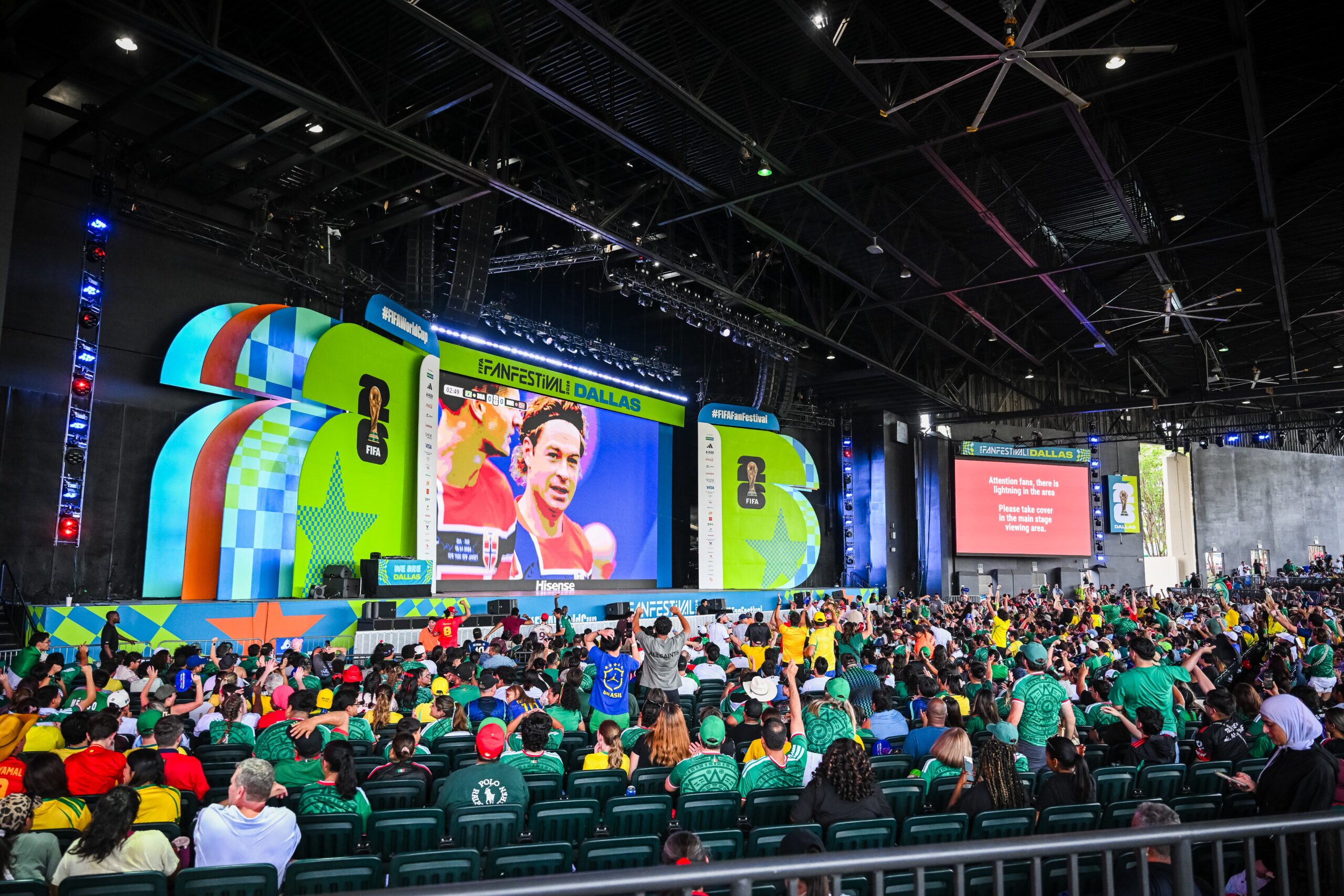
Fans watching Norway-Brazil at the official World Cup fan festival in Dallas.
According to publicly-available data so far, 12 games this summer attracted audiences of over 20 million viewers across the two networks, including four in the round of 16: U.S.-Belgium, Mexico-England, Brazil-Norway, and Paraguay-France in Philadelphia on July 4 (22.924 million).
Data compiled by The Inquirer show that the top five soccer audiences in U.S. history, and seven of the top 10, have all come during this World Cup.
We’ll see if the numbers grow again in the quarterfinals, which include a Saturday doubleheader of England vs. Norway and Argentina vs. Switzerland (5 and 9 p.m., Fox29 and Telemundo 62).
If all the favorites prevail, the semifinals would be France-Spain and England-Argentina. The first of those would match two of the sport’s biggest superstars, Kylian Mbappé and Lamine Yamal; the second would pit Jude Bellingham and Harry Kane against Lionel Messi in a renewal of one of soccer’s most famous rivalries.
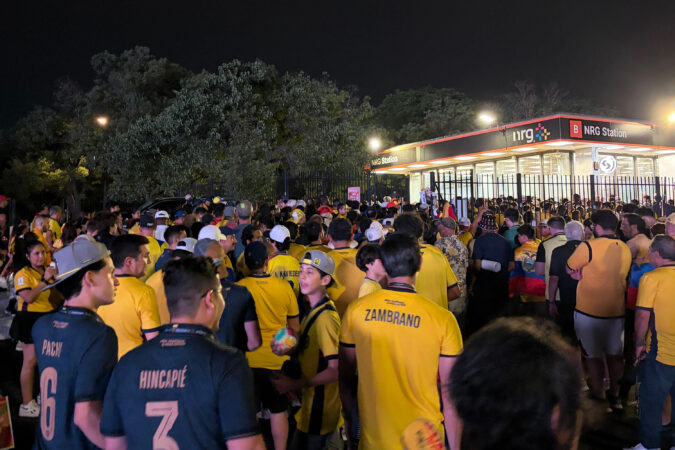
After Brazil beat Haiti in a World Cup match last month, 29,162 fans swarmed NRG Station to catch the subway.It was SEPTA’s second-highest reported crowd for a single stadium-complex event.
And the largest? The 31,087 people rode the B line after the Eagles won the NFC Championship in January 2025.
For three summer weeks, Philadelphia visitors leaned on transit — 155,333 passengers rode the subway also known as the Broad Street Line alone, SEPTA said.
From June 14 through July 4, the city hosted six World Cup matches, FIFA’s Fan Fest, and celebrations of the 250th anniversary of Independence Day.
“This was a unique opportunity for SEPTA — possibly one we will not get again for many years,“ spokesperson Andrew Busch said. ”We think there is a lot we can learn that will help improve special event service and everyday operations.”
Regional Rail also saw bumps in ridership, as did transit, primarily bus routes, serving the Fan Fest at Lemon Hill in Fairmount Park, SEPTA said. Bus routes 32 and 48 provided direct service, while Routes 7 and 49 had stops within walking distance of the festival entrance.
It helped that Brazil and Haiti’s June 19 game fell on the federal holiday of Juneteenth … and that sponsor Airbnb paid SEPTA to provide free rides home for people using the Broad Street Line on match days between halftime and the final whistle.
On July 4, when Paraguay and France met in an elimination round game and people were coming to Independence Day events, ridership on the overall system was up 15% compared to the previous year. Broad Street Line ridership was 62%; Regional Rail was up 48% and the lines serving FanFest were up 21%.
Transit agency analysts focused on post-match boardings on northbound trains at NRG Station because it was the most straightforward way to identify fans who attended the game and traveled on SEPTA, officials said.
Some riders headed to the stadium area were going to Stateside Live or checking out pregame festivities.
Customer service lessons learned, according to SEPTA:
Using megaphones to communicate with riders in crowded stations broke through the noise, helping people unfamiliar with SEPTA navigate.
Bringing a DJ to NRG Station soothed post-match crowds waiting for outbound trains. “More than a couple of dance parties broke out, and we think it helped keep the atmosphere festive,” Busch said.
SEPTA moved its start and end point for the B Line for the Sports Express trips from Fern Rock to Girard, easing crowds in Center City and shortening turnaround time.
Ridership on the Airport Regional Rail line typically increased 20% or more on the day before and day after a match.
Regional Rail’s Trenton line on the Northeast Corridor also carried more passengers than usual, as people took NJ Transit from New York City and northern New Jersey and connected to SEPTA.
While there were complaints about crowding, few major incidents were reported.
SEPTA gets another test next week with the MLB All-Star Game July 14 and related events, though they are expected to have a smaller impact.
One person after another shuffled toward her from the funeral line snaking down the center aisle, through the vestibule of St. Anthony of Padua Catholic Church, out to Forest Avenue in Ambler, and I wondered as I approached her how long Meg Kane could keep this up. The sad, grateful smile. The long, tight hugs. The posture she maintained, straight as a soldier, when the shock and grief simmering within her should have sent her to her knees.
It was Friday, April 12, 2024. Eight days had passed since the house fire that killed her parents — the kind of unbelievable tragedy that interrupts a local newscast, helicopters hovering over the smoldering ruins. Unbelievable, too, because it had happened to Meg. Over the quarter-century that we have been close, she has risen through the public relations industry to a place of power and influence within Philadelphia without compromising the qualities that made her, above all else, a decent human being. It always seemed that her intelligence and drive, her character and achievements, melded to form a shield that would protect her from catastrophe. Something like this doesn’t happen to someone like Meg, I thought that day, as if such a thought were anything other than a mind trick, a weak attempt to reconcile how and why my friend’s mother and father were dead.
The line stretched to more than 200 people, perhaps more than 300. No one standing in it should have been surprised at its length. Meg had relationships and connections throughout the Delaware Valley, of course, but more than that, she and her family had embodied the blending of some beautiful and long-conflicted aspects of Philadelphia’s history and culture. They had learned to live with and revel in the tensions inherent in certain traditions here. Their roots were that deep. Their hearts were that open. Hers most of all.
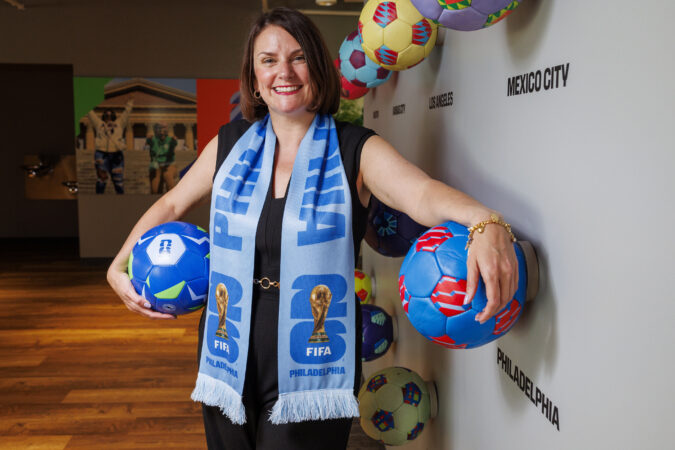
That background is one reason Meg has been the ideal face of the campaign to bring the World Cup to Philadelphia and promote it once it was here, to play up and celebrate the happy marriage of soccer and the city. It also is the reason that — through every match, every publicity event, every meeting, every long and restless night before and during this tournament, all while the eyes of the globe had been on Philadelphia — she has been holding all that pride in the same palm as so much pain.
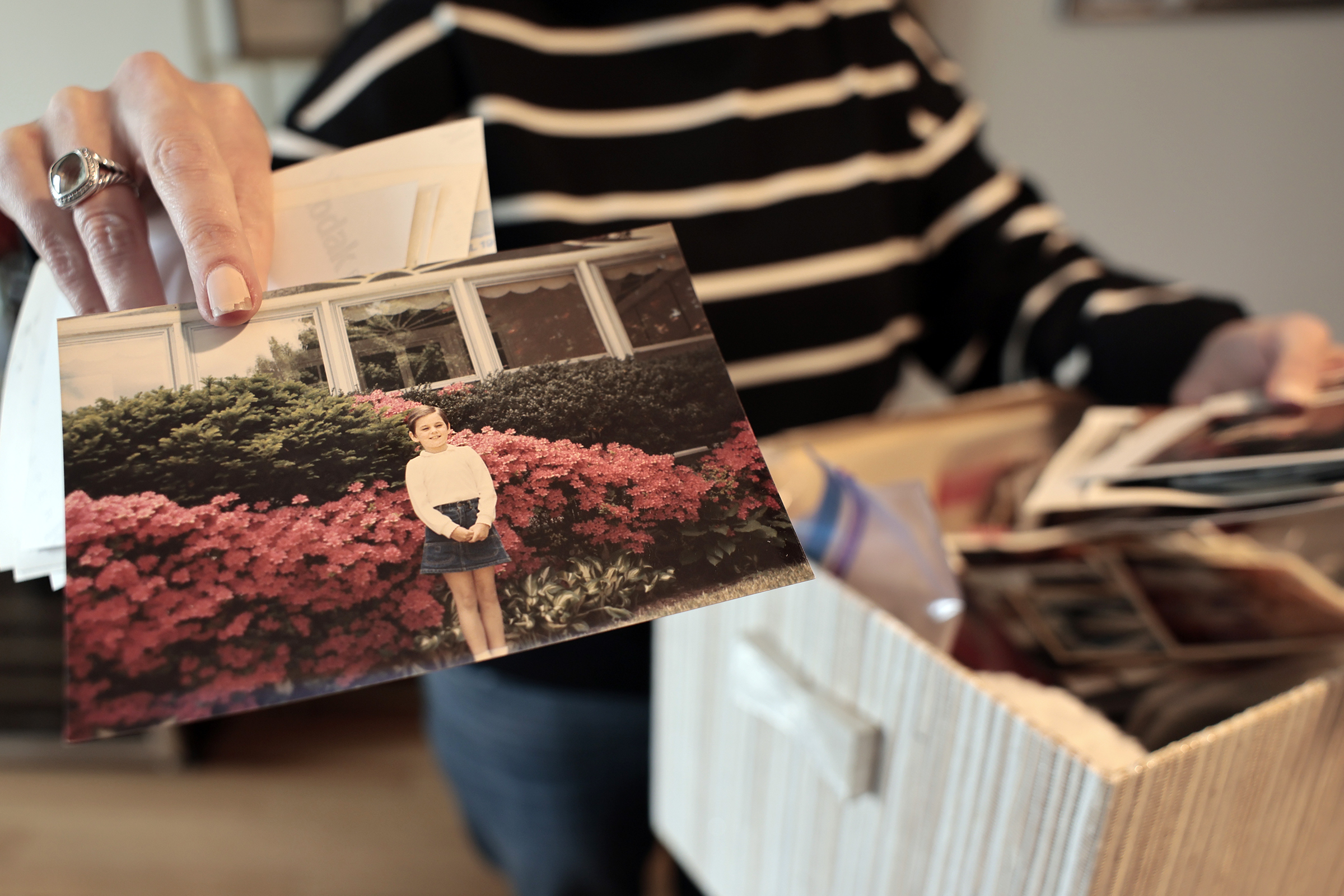
Meg Kane looks at a photo of her mother among old family photos in her Philadelphia apartment in May. The photos were recovered from the scene of an April 2024 house fire in Ambler that killed both of her parents.
Everything essential in life
There she is again. Another quickie interview on Fox29. Another guest spot on a PHLY Sports panel. Another four paragraphs of insightful quotes to us at The Inquirer. Another Amtrak ride up to New York or 14-hour flight to Doha, Qatar, to see what she could learn, then another debrief with her colleagues at Philadelphia Soccer 2026. Here’s what they did. Here’s why it did or didn’t work. Here’s what we can and should do.
Nothing new for Meg Kane. Nothing out of the ordinary. Revitalizing Tastykake’s brand and business when its headquarters relocated from Hunting Park to the Navy Yard … making ready the way for Pope Francis’ visit to town in 2015 … counseling the Philadelphia Orchestra and the archdiocese … all this at the tenderest of ages, all this before she turned 45 in January.
“When the odds are against us,” said her friend Christopher Pinto, the development lead of the Philly Pops, “this city calls Meg Kane to make the impossible possible.”
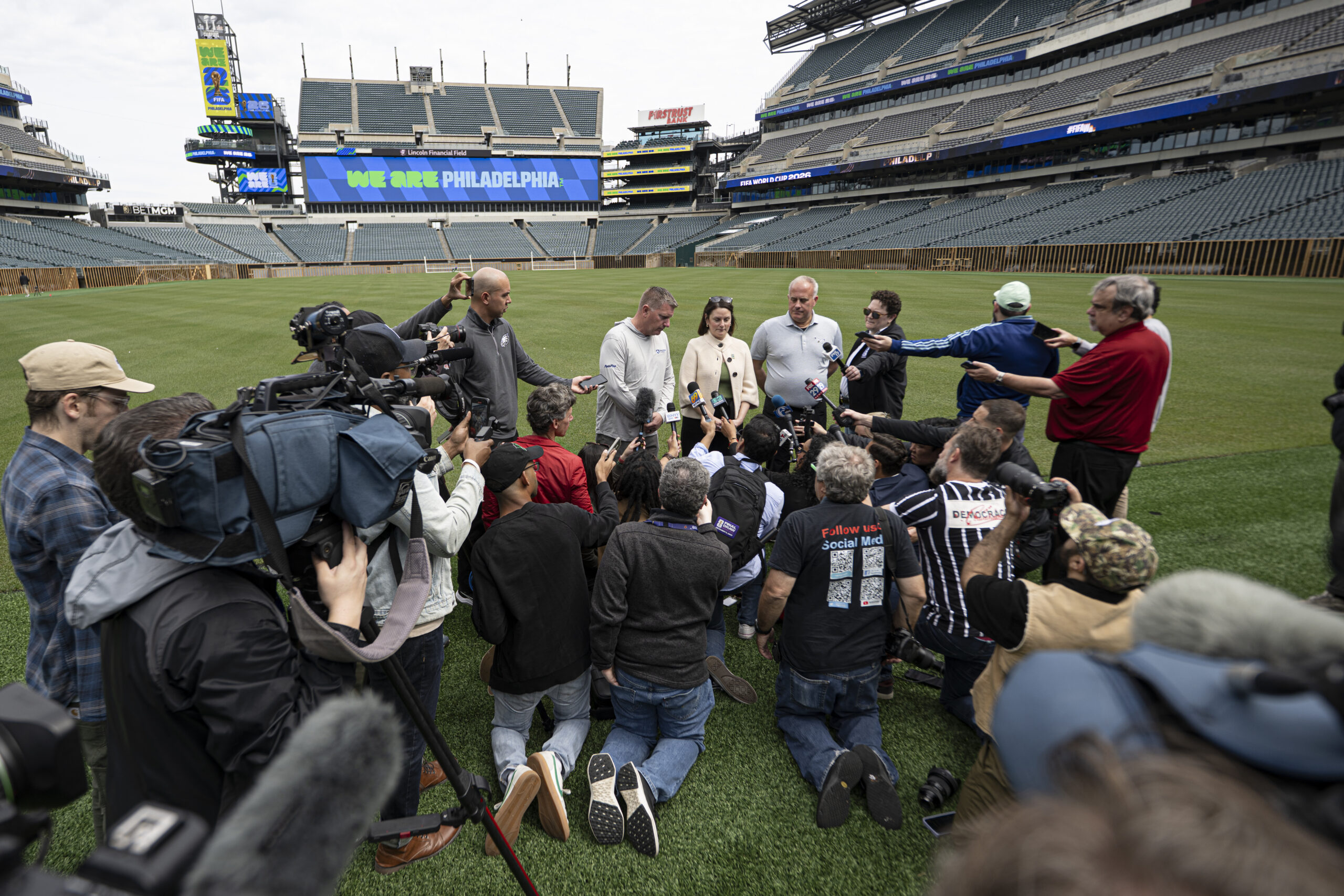
Meg Kane (center) speaks at a press conference about preparations for the FIFA World Cup in May at Lincoln Financial Field.
Who was better to evangelize about Philadelphia, to make the case that it was an ideal location for the biggest event in the world’s most popular sport? Who else had the requisite combination of local expertise and enthusiasm to share the multitudes that the city contained? Meg’s mother, Debbie, and biological father, Richard, had divorced not long after Meg was born. Debbie then married Steve Wood in September 1983 — a Little Flower alumna and a North Catholic graduate reconnecting 15 years after they’d met as teenagers on the Wildwood boardwalk.
Meg wasn’t yet 3 when Steve became her stepfather, but the word was appropriate only in its most literal sense. He was Dad, too, and she was his daughter, full stop, and everything that was essential in his life became essential in hers …
… and everything included their early-afternoon car trips together starting when Meg was 7, when Steve would pick her up after another half-day at St. Martin of Tours School and drive down I-95 to 13th and Walnut, to the bar that Steve and his brother, Bill, had opened in 1980, to Woody’s — to the best-known gay social establishment that Philadelphia has ever known. While Steve balanced the books, Meg — still in her Catholic school uniform, her plaid skirt and saddle shoes — sat at the bar, the daytime bartenders fixing her fresh cherry Cokes, making them the right way, muddling the fruit and filling her glass with fountain soda, the little girl chatting up the customers and playing Ms. Pac-Man on the arcade machine upstairs and remaining mostly oblivious, never thinking anything there was strange or sinful, her parents never suggesting anything was.
As a child, Meg Kane’s afternoons sometimes included stops at her dad and uncle’s bar, Woody’s.
The cognitive dissonance might have caused constant friction in one family or torn another apart. It didn’t exist within Meg’s. Steve had one rule about the visits that Meg, her younger sister, Liz, and their younger brother, Stephen, made to Woody’s: If you see someone there you know, keep it to yourself. “It was important we never outed anybody,” Meg said. “At that time, there were people for whom Woody’s was an oasis, an escape, the one place they could be themselves.”
The bartenders there picked up extra work at Liz’s and Stephen’s christening parties. Bill’s partner, Lee Mallon, showed up to the family’s annual Christmas party dressed as Santa. Debbie, who became a principal at Norwood-Fontbonne Academy in Chestnut Hill after years of teaching in the archdiocese, loved to tell the story about the earnest couple who made an appointment to tell her something troubling … except the delicate topic had nothing to do with the couple’s children. The husband had been downtown, and he and his wife had been praying about whether to share what he saw with Debbie, and, well … Your husband walked into Woody’s. And Debbie let out a belly laugh. Oh, I know … By the way, have you forgotten what my last name is?
At the height of the AIDS crisis in the 1980s and ’90s, Steve and Bill kept employees on the payroll even though they couldn’t work anymore, held celebration-of-life luncheons at the bar, and covered the cost of memorial services and burials when no one else would. Those trips to hospitals and funeral parlors were rarely, if ever, spoken of within the Wood family. Steve’s mother had died when he was 4 and his father when he was 13. His siblings had raised him, and he considered business associates to be friends and friends to be family, and maybe a young woman who later would be charged with uniting a diverse but territorial city behind a common mission had to grow up immersed in such acceptance, such label-free loyalty.
There was Meg, riding with Steve every morning during her high school years from their new home in the Montgomery County suburbs to Academy of Notre Dame in Villanova — a school with a great speech-debate program for a teenager who knew she’d end up talking for a living — the two of them listening to WIP throughout those 45-minute commutes. “It’s how I learned to be a sports fan,” she said. “My passion was cultivated because of our relationship.” There was Liz, going her own way at Mount St. Joseph Academy. There was Stephen, heading off to St. Joseph’s Prep. But it wasn’t until Meg’s freshman year at La Salle, when a male student she didn’t know knocked on the door of her dorm room to thank her — Your family owns Woody’s, right? I don’t know what I would have done without it — that she perceived her family as resting at the center of every Venn diagram of Philadelphia, sharing something in common with every group and subgroup.
I met her during the first semester of her junior year at La Salle, when she took a journalism class I was teaching in the fall of 2001. It is an intimidating thing to be a 26-year-old adjunct professor, to have taught for just two years, and to suspect immediately that one of your students is smarter and wiser and more sophisticated than you are. Ten days into the term, on Tuesday, Sept. 11, she proved she was.
Class began at 9 a.m. I tried to get 20 minutes worth of lecture time in as black smoke billowed from the World Trade Center towers and my students, a few of whom hailed from New York and North Jersey, chewed their fingernails and fidgeted in their chairs. Finally, Meg shot me a look that said, I know you mean well, but … please, we gotta get out of here. When the class reconvened later that week, I asked for the students’ forgiveness for my stupid officiousness, for my failure to read the classroom, and we spent the rest of the period discussing and venting about the terrorist attacks and their aftermath. In September 2011, Meg sent me a letter — not an email, not a direct message, a letter, on paper, more permanent — recalling that week. You did what a teacher is supposed to do, she wrote. You earned our trust, and you never lost it. It remains a treasured gift, that letter and its contents, that benefit of the doubt, that measure of grace that I hadn’t earned and didn’t deserve.
By then, Steve and Bill had sold Woody’s and opened another bar, Knock, and Meg had lifted off and would continue climbing in her career: from La Salle — she was her class’s commencement speaker — to graduate school at Maryland; from earning a master’s degree to planning and publicizing some of the city’s biggest events; from getting a text message in November 2019 from Angela Val, who was the CEO of the city’s convention and visitors bureau at the time, to meeting her that night at the Ritz Carlton. We need you, Val told her. We’re going to bid on the World Cup.
It was the project of a lifetime. It gave her the runway and credibility to open her own PR firm, Signature 57, in 2021. It put her front and center as the captain of the city’s World Cup cheerleading squad — “the Pied Piper of Philly soccer,” someone called her. And she still could be the daughter and sister and friend she’d always been, ready at a moment’s notice to give whatever had to be given. Drive five hours one way to attend the funeral of a colleague’s parent? It’s a day. What’s a day? Get off a plane after a week of work in Ireland and head straight to a chamber of commerce dinner that night? Work an 80-to-100-hour week? Of course. How else would she be there for her family if she didn’t excel in her professional life, if she didn’t squeeze her responsibilities and extra efforts into the smallest possible windows of time?
Yes, she thought it, too: Something like this doesn’t happen to someone like me. But things did happen. Debbie retired and, without her work in education, struggled in the void, losing weight, chain-smoking so much that her favorite blanket became pocked with holes where fallen ashes — and even the still-lit tip of one of her Merit Menthols, as she was dozing off — had burned through the wool. Stephen moved back in with his parents after finishing at Penn State and stayed with them for nine years, teaching English at Norwood, helping Steve care for Debbie. Liz and her husband, Michael McCabe, both faculty members at La Salle College High School, lost a baby daughter, Eleanor, and one night, Steve sat with Meg at his dining room table, a Phillies game on TV in the background. He had grown up without a mother and father. He had watched dear friends waste away to a deadly virus. Yes, these things and more did happen, but “my dad,” Meg said, “had an incredibly positive view of the world,” and at the table, he described to her how he had tried to comfort Liz.
Don’t despair, he said. Don’t despair. It’s the only way to keep going.
The horror of a ticking clock
On Thursday, April 4, 2024. Meg was in a room at the Fairmont in Washington, D.C., already awake for close to two hours, writing and rewriting speeches and teleprompter scripts for the Horatio Alger Association Awards, a three-day event for the philanthropic juggernaut that had become a signature project for Signature 57: a CEO’s retirement, the introduction of 12 new members, two major dinners, an undertaking so massive that Meg and four coworkers bunkered for a week in the hotel to complete it.
Still in her pajamas, she was trudging to the bathroom to wash her face when her phone buzzed and lit up pink, the color that meant Liz was calling. She assumed something was wrong with Francis, Liz and Mike’s 4-month-old son.
Meg looked at her phone. It was 6:42 a.m.
Liz?
Meg, she shrieked, I’m watching the house burn down!
What?
I’m watching the news. I’m holding the baby, feeding the baby, and the house is on fire!
Meg told Liz to call the police. She put her phone down and walked to the bathroom, violently shaking, and did not wash her face. She called her boyfriend, Keith Audit, and told him, I need you to find out if my parents’ house in on fire, and Liz called back and said that the police had told her that someone would be in touch and she had tried calling Steve’s phone but it had gone right to voicemail and Liz kept saying, It’s definitely the house, and I don’t know what to do, and then Meg said out loud an irrational thing: We have to call Norwood. Stephen’s a teacher. Stephen’s not going to make it to school. Someone has to let Norwood know to get a sub. And Meg hung up with Liz and called Shannon Craige, Norwood’s curriculum director, who told her the students were on spring break and Norwood was closed.
Meg looked at her phone. It was 6:53 a.m.
She called Stephanie Bambach, the vice president of Signature 57, who was in a room above her. When she arrived at Meg’s room, Bambach was surprised that Meg’s demeanor was as measured as it was. She was not surprised that Meg’s voice was trembling.
I have to finish writing the remarks for Saturday night, Meg said. I’m only halfway done. I can’t leave.
It doesn’t matter, Meg.
Meg reopened her laptop and emailed every document and every draft of every unfinished document to Bambach. She grabbed a black striped sweater and a pair of black leggings, went into the bathroom, and got dressed.
“I remember looking at myself in the mirror,” she said later, “and saying, ‘You will never wear these clothes again.’”
Bambach arranged for a car service to pick up Meg at the hotel and drive her back to Philadelphia. The two of them rode an elevator down to the lobby. Meg held her room key. She tried to hand it to Bambach.
In case, Meg said, someone needs to use my room.
Bambach didn’t take the key. Keep it. Good thoughts. It’s going to be OK. You might come back.
I’m not coming back, Meg said. It’s not going to be OK.
In the back seat of a black sedan, Meg’s phone rang again.
I’m at the house, Liz said. I just spoke with a detective. Mommy and Daddy didn’t make it.
Meg took a deep breath. Where. Is. Stephen?
He’s OK, Liz said. He got out.
Meg looked at her phone. It was 7:43 a.m.
The black sedan pulled up to her apartment. Keith was waiting for her. She threw her bags in his car, and they drove to Temple University Hospital’s burn unit. Stephen was there, in a bed in a room in the back, his face and body covered in soot. That acrid, sickening odor. Physically, somehow, he was fine.
“We were the luckiest people on that floor,” Meg said later. “He was going to get out of that bed and go home. That day couldn’t have been worse, but my God, it could have been.”
She looked at her phone. It wasn’t yet 11 a.m.
Miles away
Two months. That’s how long she stepped away. From the World Cup campaign. From Signature 57. From everything except what was gone and what remained.
The fire’s official cause was undetermined. Its damage was incalculable. Steve and Debbie had no wills. Their birth certificates and Social Security cards were gone. Meg had to pick up the mail and pay the mortgage and pay other bills and access both their personal bank account and the finances for Knock and show up for every meeting with every lawyer and builder and contractor, everything moving incredibly fast and in slow motion at the same time, so many dear memories now coldly cataloged on an Excel spreadsheet.
She did not talk about the fire at all in public and only rarely in private. Her last name was not Wood; few strangers, if any, knew her connection to the tragedy. The relative anonymity was meager relief from the pressure she piled on herself. Who else could handle the fallout? Who else could inch everyone a little closer to normal again? It had to be her.
She didn’t have a newborn to raise, like Liz and Mike did. She hadn’t awakened in the dead of night to dodge flames and hold her breath to keep smoke from seeping into her lungs, like Stephen had. Hell, her poor brother couldn’t even cradle his baby nephew two months after their parents’ deaths: A potent combination — a crackle of July 4 fireworks and a quick post-traumatic contemplation of the fragility of human life — compelled him to hand Francis off to someone, anyone, before something terrible happened again. Nothing she was dealing with came close. Hell, she had been 150 miles away when the house went up. She hadn’t even been there.
Her friends worried that she was pushing herself to the brink of a breakdown and beyond. “She’s really not someone who leans on people,” Bambach said. “I wish she had leaned on us more in the aftermath. So much of her identity is who she is as a leader of Signature, of Philly Soccer, and accepting help from people was a position she was really uncomfortable with. As her friend, I had moments when I wished she would just ask for help.”
Two months. She couldn’t bring herself to take more time away from work. She ping-ponged between her guilt over what she had to do for her family and her guilt over her desire to return to her career. “I really struggled with that,” she said. “Everyone is replaceable at work. If I’m not there, does it run better without me? Are people doing better? Philadelphia World Cup 2026 — is it running better and smoother? Are they finding this to be easier without me? I thought about that even with Signature 57. I’m the founder and CEO, and I still grapple with that. You can go to dark places.”
Meg Kane was out of town the night a house fire killed her parents.
The things that remain
On the kitchen table of her Fairmount apartment, Meg Kane reached into a box to handle the delicate pieces of her parents’ past and her present. Three pages from a memoir by talk-show host Mika Brzezinski, their edges singed black, survived the fire; Meg found them when she first returned to the house’s site. A couple of old family photo albums, the pictures mounted under sticky plastic, the books stashed in a sealed Tupperware container, seem untouched, save for their smoky smell. “It’s really hard to …” she said. “It takes you back there.” So does a black magnetic card that she lifted out of the box. The key to her room at the Fairmont. She kept it.
There’s a vision she can’t shake: Steve waking Stephen up, making sure he got out of the house, then remaining at Debbie’s side, knowing he could not leave her, his children knowing he never would. He had to be so scared in those final moments. He had to be so brave.
“At the end, there’s just grief,” Meg said. “I’m not sure I’ve dealt with the grief. I don’t know I’ve felt it all the way. I don’t know that I’ve allowed it to be something I fully felt.”
So she stores it away, lets it out only during the brief and rare breaks in her schedule, when the events and interviews have paused and some stillness and quiet return to her life. In May, Stephen proposed to his girlfriend, and at the engagement party, Meg pulled him aside for a conversation. It lasted 15 minutes. “It was the talk that everybody was avoiding all night,” he said, a talk about how much he had grown over the last few years, “the kind of talk you would want from your mom or dad.”
It was the happiest moment in a spring and summer that have had many happy ones. She partied on Lemon Hill in Fairmount Park and marched with several hundred Croatian soccer fans from Center City to Old City and rode a subway train quaking from the chants and songs of Brazil’s futbol fanatics, and she saw Philadelphia reveal itself as a world-class sports showcase. They are just Band-Aids, to be sure, covering the paper cuts of knowing that her parents never got to meet their son’s fiancée or hear their grandson speak his first word. But for those of us fortunate enough to call her a friend, they are the answer to the question we were asking as we stood in that church two years ago. How would she get through each day? How would she keep this up?
She did it by holding on to something a father told his daughters. She did it in the only way any of us can. She remembered that she has loved and is loved, and she did not despair.
The World Cup may have moved on from Philadelphia, and the United States may have bowed out of the tournament, but the FIFA Fan Festival in Lemon Hill is bringing in events designed to keep the party going.
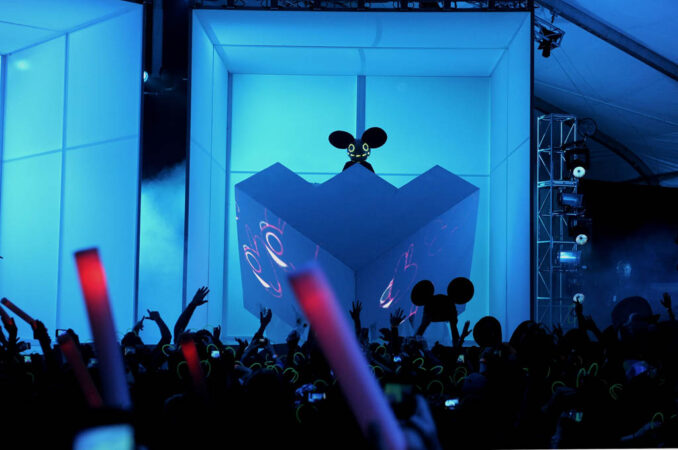
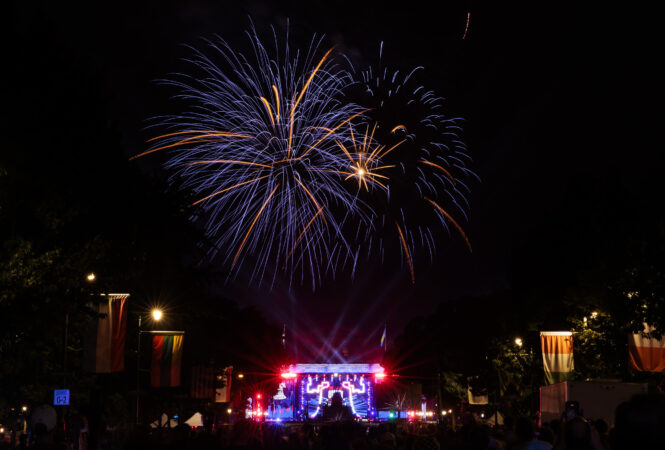
As 10 days and eight nations remain in the World Cup, the Fan Festival’s commitment to remain open for the full 39 days of the tournament begins Sunday with four concerts, including pop star Bebe Rexha (July 17) and world-renowned electronic DJ Deadmau5 on July 16.
Typically, a Deadmau5 ticket starts at $85, according to secondary market sites. His concert, and the others, are free; fans just need to register on FIFA’s Fan Festival website for a daily ticket. Access into the festival is on a first-come, first-served basis with a max capacity of 15,000 people.
“Deadmau5 has shaped electronic music with his level of production and technicality. Bringing his unique live performance style to FIFA Fan Festival Philadelphia is something special,” Michael DelBene, executive producer of FIFA Fan Festival in Philadelphia, said. “We truly believe there is something in this lineup for everyone and we hope to see visitors and Philadelphians alike come out and join us at Lemon Hill for their favorite act.”
Moar Free Shows 'n' Stuff
♦️ Thursday, July 16 ♦️ 7 PM ♦️ Lemon Hill, East Fairmount Park
— FIFA World Cup 26 Philadelphia™ (@FWC26Philly) July 9, 2026
In addition to Deadmau5 and Rexha, singer-songwriter Wisin performs on Sunday, followed by the return of the All-American Rejects, a pop-punk band that was one of the early acts at the Fan Festival on June 13.
With the World Cup set to end July 19, DelBene and Philadelphia Soccer 2026 noted that there could be further acts to come in addition to local artists, “cultural organizations, and community groups.”
FIFA Fan Festival at Lemon Hill Park as seen capacity crowds during the World Cup. They’re hoping that continues with a slate of free concerts next week.
FIFA Fan Festival free concert schedule
Sunday, July 12: Wisin, 2 p.m. (Festival gates open at noon and close at 4 p.m.)
Monday, July 13: All-American Rejects, 7 p.m. (Festival gates open at 5 p.m. and close at 9 p.m.)
Thursday, July 16: Deadmau5, 7 p.m. (Festival gates open at 5 p.m. and close at 9 p.m.)
Friday, July 17: Bebe Rexha, 7 p.m. (Festival gates open at 5 p.m. and close at 9 p.m.)
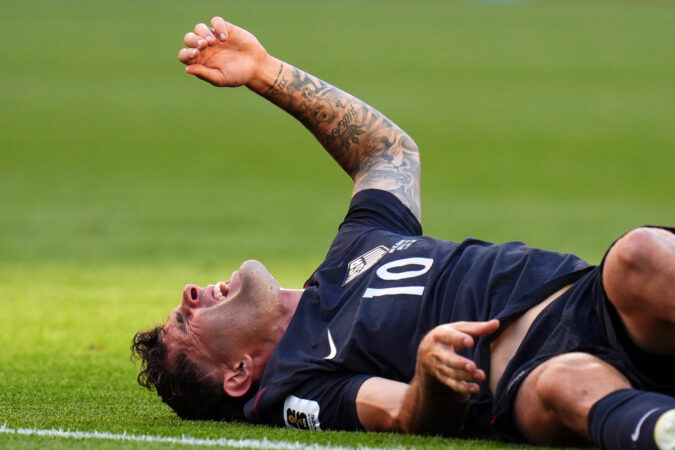
U.S. star Christian Pulisic fractured his right leg during the Americans’ World Cup loss to Belgium and will be sidelined for several weeks, a person familiar with the injury said Thursday.
The person spoke to the Associated Press on condition of anonymity because the diagnosis, first reported by the Athletic, had not yet been announced by the U.S. Soccer Federation.
Pulisic has a bone bruise and a microfracture of his tibia and fibula, the person said. He is expected to be able to resume training before AC Milan’s Serie A opener at Torino on Aug. 23, the person added.
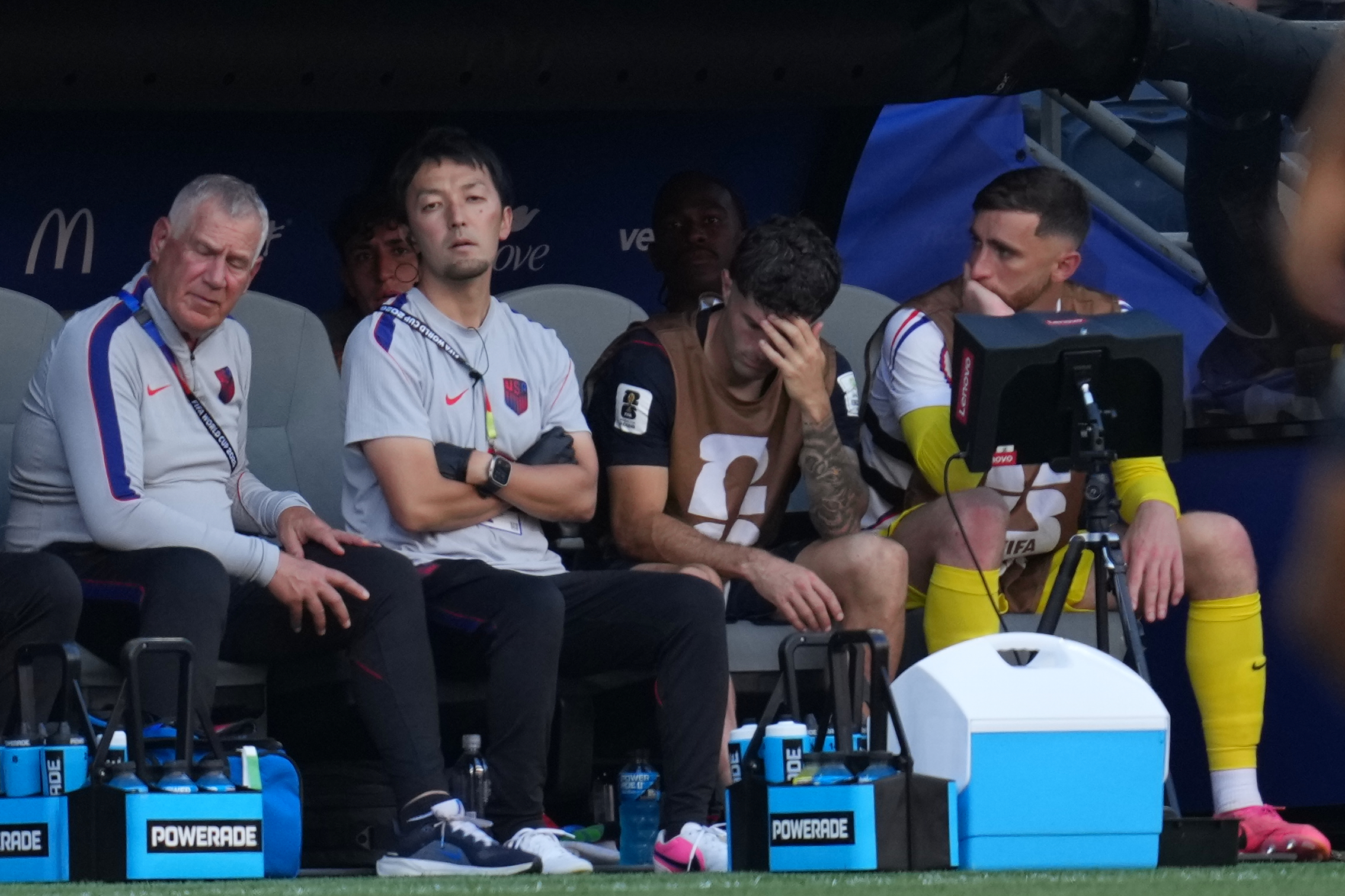
Christian Pulisic (second from right) on the bench after leaving the U.S.-Belgium game.
Pulisic hit a leg of Belgium captain Youri Tielemans while attempting a shot in the 52nd minute of Monday’s 4-1 round of 16 loss in Seattle. He remained in the game but was hobbling, and Sebastian Berhalter replaced him in the 59th minute.
The Hershey native failed to score in the World Cup, missed one of the Americans’ five matches because of a calf injury, and left two other games early. He has 33 goals in 90 international appearances.
Pulisic, who turns 28 in September, is entering his fourth season with Milan.
The first week of July has typically been one of Philadelphia’s most violent, with recent Independence Day weekends marked by mass shootings, police officers shot, and bursts of violence that left a dozen dead.
But this year, amid a dramatic decline in violence and a flood of visitors to the city, the holiday weekend was noticeably calmer than in years past, offering another encouraging sign that the dramatic decline in shootings held through one of its toughest tests.
Twenty-three people were shot from July 1 through July 7 — a slightly higher total than most weeks in 2026, but nearly half the average number of shooting victims during the same period over the last decade, according to city data. In 2021, at the height of the city’s gun violence crisis, more than 70 people were shot in that week alone.
If the current pace continues, Philadelphia is on track to record fewer than 200 homicides for the first time since the 1960s, a remarkable turnaround from just five years ago, when nearly three times as many people were killed.
(function(){function e(){window.addEventListener(`message`,function(e){if(e.data[`datawrapper-height`]!==void 0){var t=document.querySelectorAll(`iframe`);for(var n in e.data[`datawrapper-height`])for(var r=0,i;i=t[r];r++)if(i.contentWindow===e.source){var a=e.data[`datawrapper-height`][n]+`px`;i.style.height=a}}})}e()})();
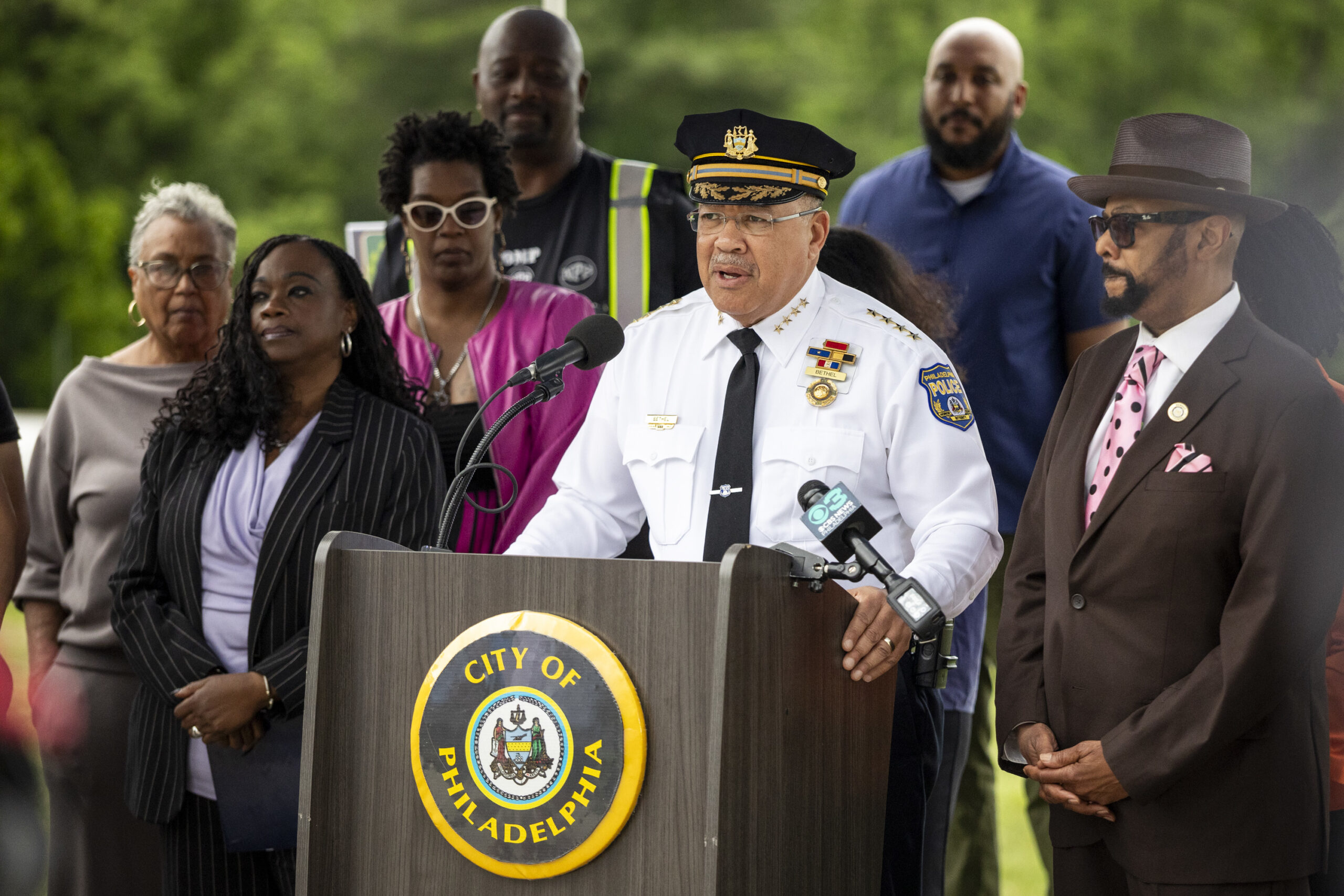
Philadelphia Police Commissioner Kevin Bethel said in an interview that the July Fourth weekend is historically one of the most challenging for urban police departments.
Bethel said he and other city, state, and federal law enforcement officials spent about two years planning for this holiday weekend, preparing for potential crises that never came.
Anticipating hundreds of thousands of visitors for FIFA Club World Cup events and the nation’s 250th birthday celebrations, the department canceled many officers’ vacation requests over the last month and, on the Fourth, deployed more than 2,000 members of local and state law enforcement across the city, he said.
Philadelphia Police Commissioner Kevin J. Bethel, speaks at a press conference on the details for the Roots Picnic in May 2026.
Reinforcements from the Pennsylvania State Police and neighboring municipalities helped the city maintain staffing levels in neighborhoods that have historically seen more violence, Bethel said. Officers worked in the record-breaking heat, he said, with some starting their shifts at 7 a.m. and clocking out only after the concert on the Parkway ended at 3 a.m.
The FBI took the lead on monitoring the skies, Bethel said, intercepting several drones that were flying illegally. (None of the drones, he said, was flying with “nefarious” intent.)
He called the weekend a validation of the city’s planning and broader work that has contributed to the decline in gun violence.
“I can’t tell you how many people grabbed me and said they felt welcomed and felt safe,” he said of the events over the last month. “Let’s own the win. Let’s not hide from it.”
Bethel also said there had been no acts of violence around the approximately two dozen bars that were approved to stay open until 4 a.m. from June 11 to July 19 to accommodate crowds attending the FIFA, July Fourth, and MLB All-Star celebrations.
“We’re seeing zero issues,” he said.
Soccer fans gather to watch Mexico play South Africa on a giant screen during the opening day of the FIFA Fan Festival at Lemon Hill on Thursday, June 11, 2026, in Philadelphia.
The reduction in violence over the holiday weekend fits a broader pattern. Shootings and homicides in the city began to decline in 2023, mirroring a national trend, and have continued to fall. So far this year, 90 people have been killed in homicides — less than a third of the number recorded at the same time three years ago, according to police data.
Just as there was no clear explanation for the spike in crime that began in 2019, criminologists and law enforcement officials say, it is similarly difficult to pinpoint the reasons for its decline. But there are theories: an overall return to normal life after the pandemic, expanded community-based violence prevention programs, more arrests in shootings and homicides, and targeted prosecutions of some of the city’s most violent gangs.
One measurable change has been the police department’s improved clearance rates, which researchers have long viewed as a potential deterrent to future violence.
The homicide clearance rate — the share of killings solved, including arrests made this year in both new and older cases — has climbed to nearly 99%, up from about 47% in 2022. The clearance rate for nonfatal shootings has risen to about 41%, roughly double what it was in 2021.
Bethel said those arrests take would-be shooters and victims off the streets and interrupt cycles of violence.
“We’re impacting retaliation, we’re impacting somebody being shot again, we’re impacting someone who may shoot and kill somebody,” he said.
Jeff Asher, a New Orleans-based national crime analyst, said because the decline is likely driven by many programs and societal changes, it is hard to know what will sustain the progress.
“I keep expecting [the crime rate] to stop falling, and it’s just not,” he said in an interview. “So, maybe this is the new normal. We just can’t say with a ton of confidence.”
Still, the quieter weekend was not wholly peaceful.
Three men were killed between Friday and Monday morning, leaving families and neighbors to mourn loved ones even as the city showed signs of sustained progress.
On Monday morning, Shawn Caddell, 32, was killed during a robbery inside a Logan beer deli, police said. And on Sunday, two men were slain in areas that have long been hot spots for shootings: Emanuel Aguirre, 27, was fatally shot in the Hunting Park section of North Philadelphia, and Donald McPhaul, 51, was gunned down on Salford Street in West Philadelphia.
A 16-year-old in South Philadelphia was among more than a dozen people who were shot and survived.
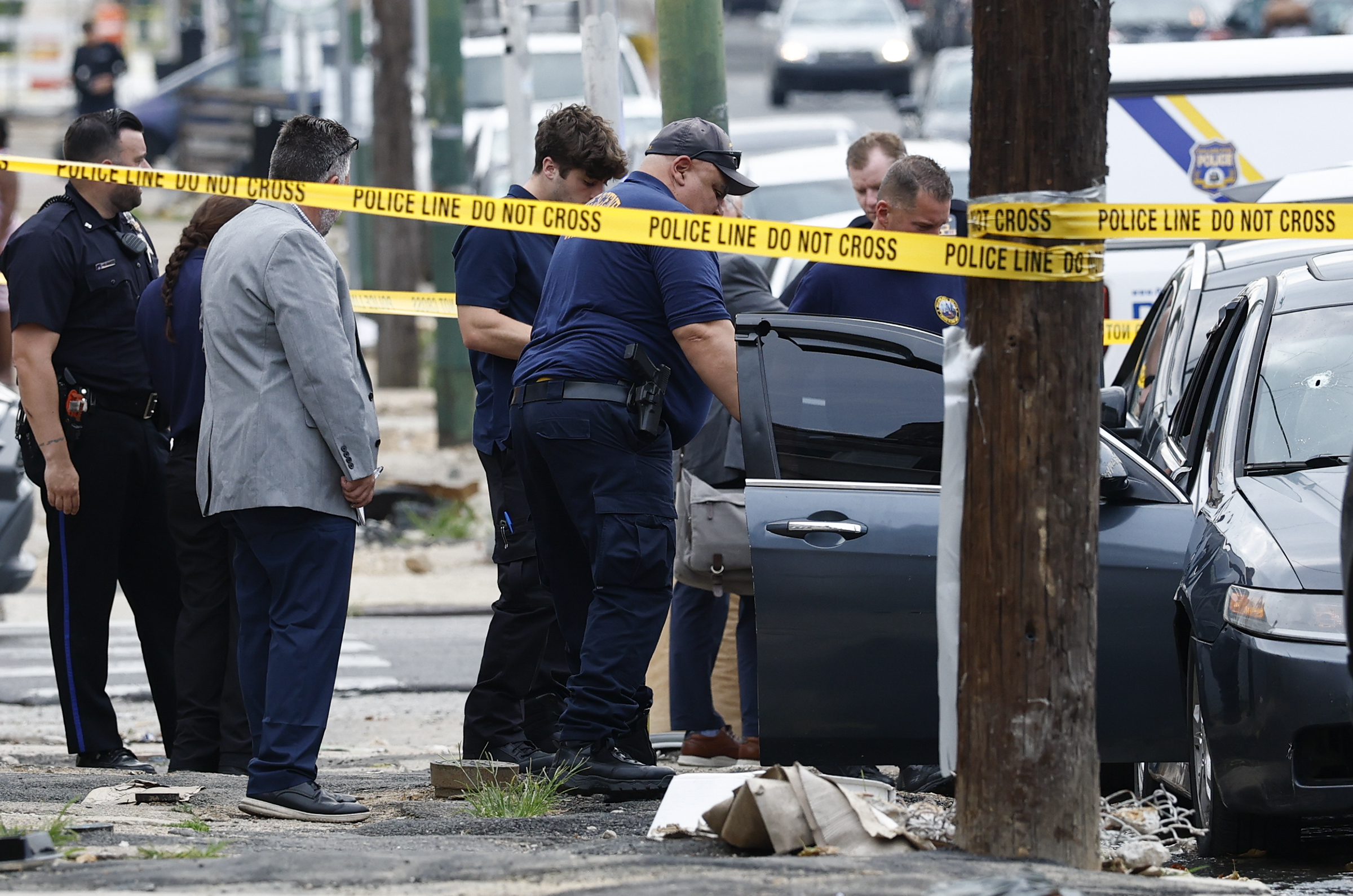
Philadelphia police examine a car with a bullet hole after a man was fatally shot along the 500 block of East Wyoming Avenue on July 5, 2026.
Bethel said the pockets of the city that have long experienced higher rates of violence — and that continue to see shootings, albeit fewer, today — remain a priority.
“We are never going to give up in those communities,” he said. “We are going to keep working in those areas.”
Recent polls have found that a majority of Philadelphians have noticed the decline and feel safer. But for residents on blocks where shootings remain a recurring threat, a citywide trend line can feel distant from daily life.
Chantay Love, president of the victim-advocacy organization EMIR Healing Center, said the communitiesseeing recurring violence are still grappling with “the trauma and collateral damage that is left behind” from the last six years.
Linda Days, 72, who lives in the area, said the shooting that killed McPhaul was another reminder of the violence she has come to expect since moving there seven years ago from Olney.
Standing in her doorway on Tuesday, Days said it feels as if gunfire has become part of the soundtrack outside her home. But during the Fourth of July weekend, she said, she is especially careful to stay inside.
“I don’t even come out to watch the fireworks,” she said.
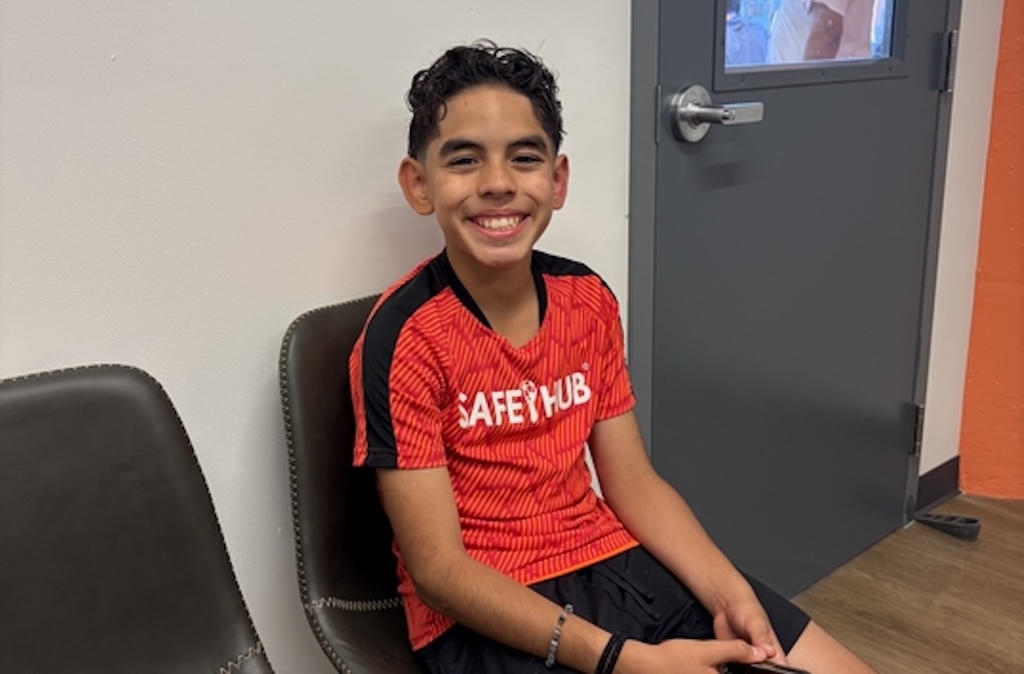
It’s hard for Cesar Castellanos to dream of a better way to celebrate his 12th birthday.
After celebrating his actual birthday with a few friends last Friday, Castellanos, a student at Juniata Park Academy, traveled to Lincoln Financial Field for Philly’s final World Cup match, the round of 16 game between France and Paraguay.
But Castellanos wasn’t just there to watch.
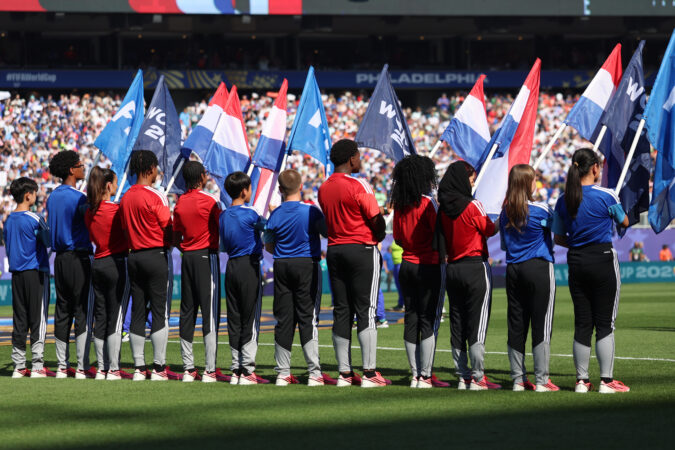
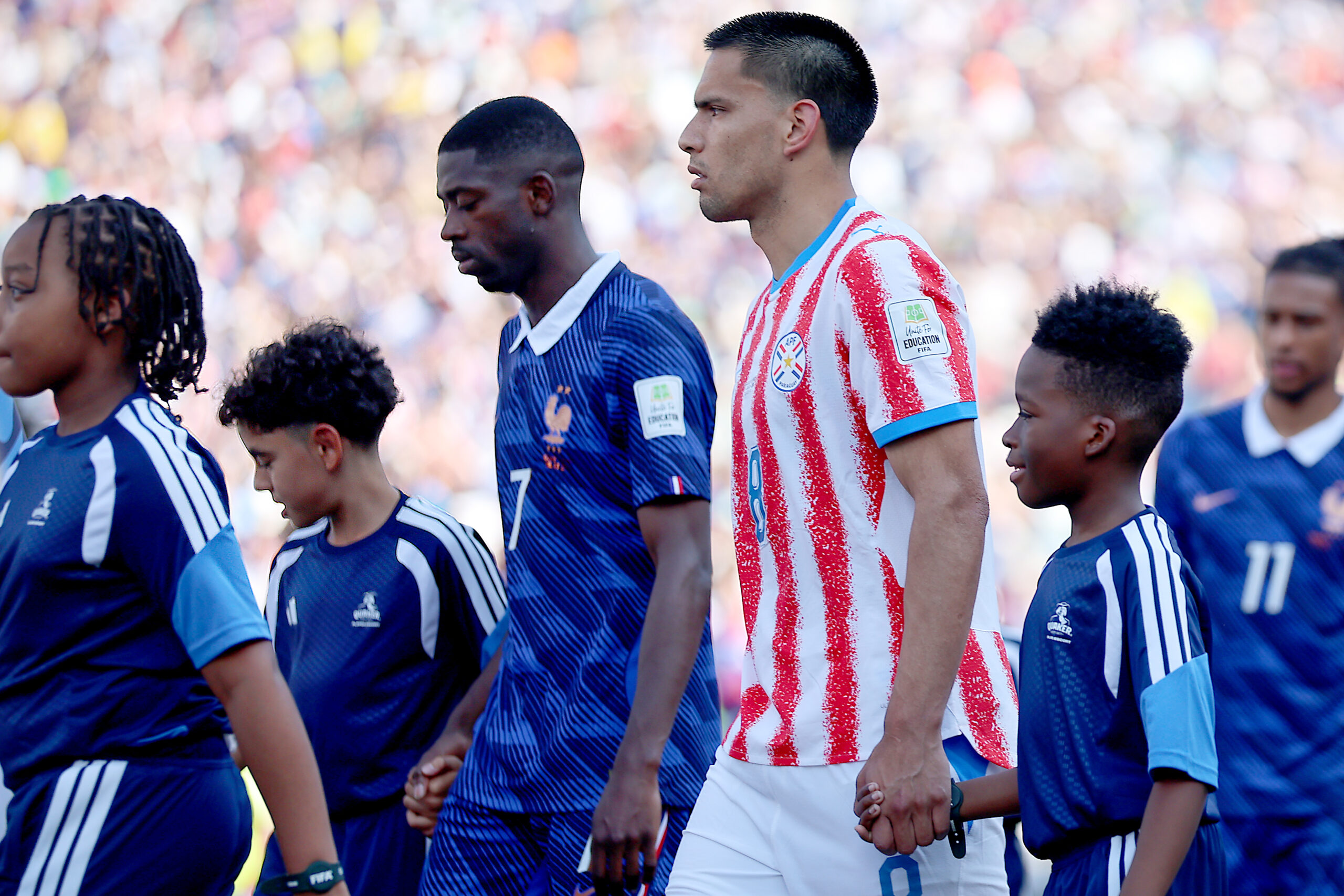
The soccer-loving middle schooler walked onto the field with the players as a part of FIFA’s player escort program.
Cesar Castellanos (left), 12, walks on to the field with France forward Ousmane Dembélé before they play Paraguay in the FIFA World Cup Round of 16 match in Philadelphia on July 4.
Castellanos is a regular participant at Safe-Hub Philadelphia, a soccer-centric nonprofit that opened a campus in the Harrowgate section of Kensington in 2022.
Safe-Hub is one of four community organizations Quaker Oats partnered with in Philadelphia to send children from underprivileged areas to World Cup matches. Safe-Hub hosted two nutritional clinics for its participants, and children who attended both were given a chance to be selected as player escorts.
Castellanos attended both sessions, one on Martin Luther King Day and the other on Presidents’ Day. A few months later, he found out he had been selected for the round of 16 match on July 4.
“I was really going crazy when I realized I got the chance,” Castellanos said before the match.
Cesar Castellanos got the opportunity to walk out for the World Cup’s final game in Philly, with the reigning Ballon d’Or winner Ousmane Dembélé.
Castellanos has played soccer at Safe-Hub for almost three years, starting in early elementary school. The aspiring midfielder follows international soccer closely and intends to continue playing through high school and beyond.
As such, Castellanos was elated at the opportunity to be up close and personal with some of the game’s best players. After the tournament’s group stage, when it became clear that a star-studded French team could advance to the round of 16 match in Philadelphia, he began rooting hard for Les Bleus to return.
He got his wish, with France meeting Paraguay for a matchup at the Linc on July 4. Castellanos did not know which team he would be paired with beforehand, though he hoped for one of France’s international superstars. As a native Spanish speaker, he could handle walking out with the Paraguayans, but he started learning some basic French, just in case.
Sure enough, once he got into the tunnel before the match, Castellanos got paired with Ousmane Dembélé. Aside from being a star player for France, Dembélé is a forward for France’s biggest club team, Paris Saint-Germain, and the reigning winner of the Ballon d’Or, an award given to the top player worldwide.
Castellanos couldn’t contain his excitement. He started to cry tears of joy, which led to some extra affection from the French side.
“I had to keep my cool,” Castellanos said. “I couldn’t go crazy. But I was so excited … I was crying. Mbappé gave me a hug. Dembélé gave me a hug.”
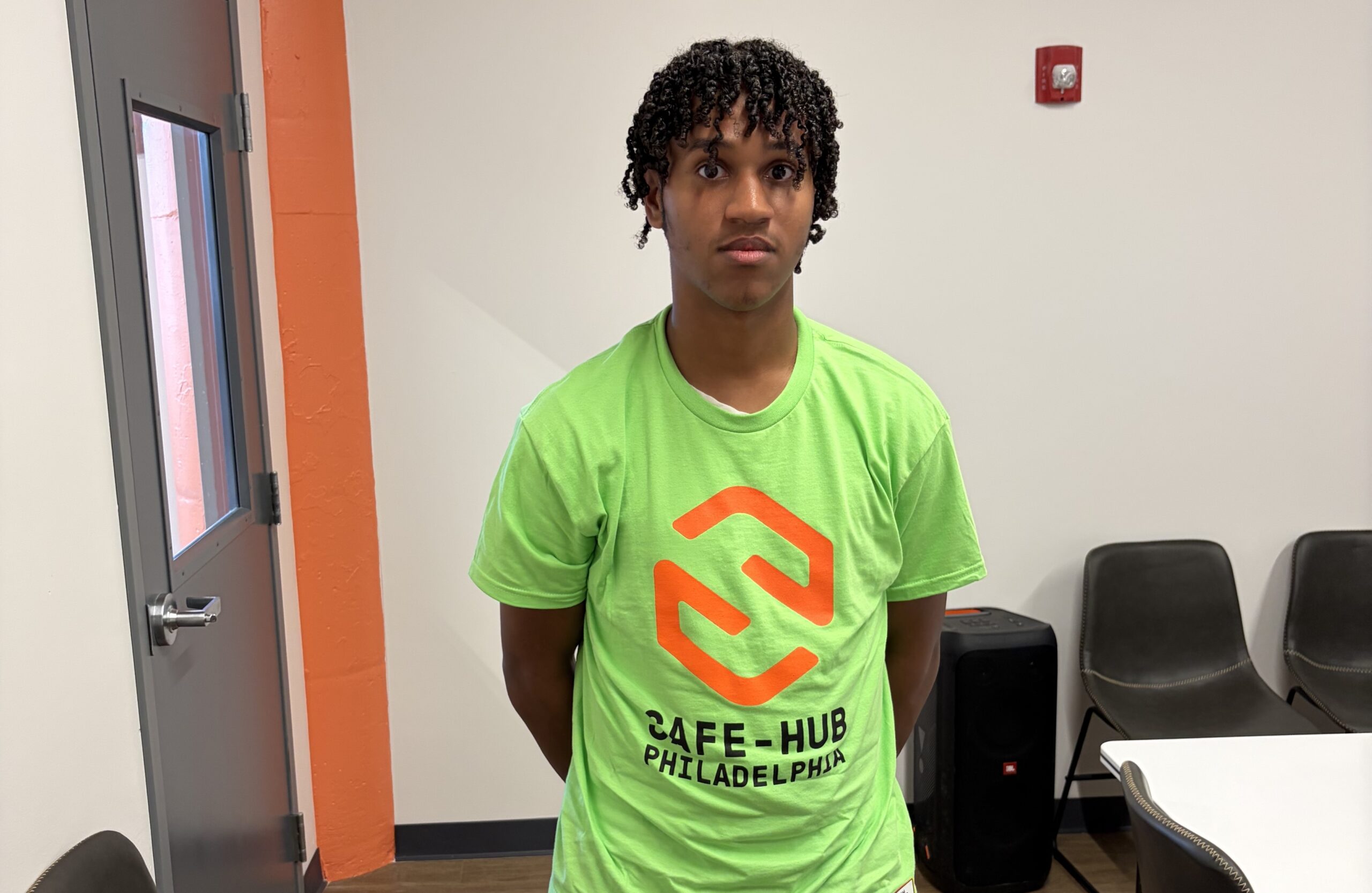
Castellanos was not the only Safe-Hub participant on the field for the match. Isaac Oquendo was a flag bearer for the match, holding Paraguay’s flag on the pitch as the national anthems of each country played inside the stadium.
Isaac Oquendo is a Kensington-area youth who received an opportunity to be a part of the matchday activities during Philly’s final game of the FIFA World Cup.
Oquendo, 16, is a student at Roman Catholic and has been playing soccer at Safe-Hub for a year. Oquendo is part of the nonprofit’s PlayMakers program, which offers higher-intensity soccer training as well as off-field life skill workshops. As part of the program, Oquendo traveled to Boston for Festival 26, a youth soccer summit featuring delegations from across the world.
Oquendo said the opportunity to get on the pitch with the players was an “amazing experience.”
“I had a lot of fun,” Oquendo said. “It was great being with people who love the sport as much as I do, and seeing the players right behind me.”
Oquendo said he received a brief lesson from World Cup organizers on how to hold the flag and where to stand on the field before he walked out. After the pre-match festivities ended, both Castellanos and Oquendo got to watch France’s win over Paraguay from the 100-level.
“It was nerve-wracking,” Oquendo said. “It was a great experience, but it’s so nerve-wracking, going on the field and seeing the players walk past you. It was something else.”
When this World Cup finally took a day off on Wednesday, it had been 27 days since the tournament began.
That was just one day fewer than it took to contest the entire 2022 edition in Qatar, and four days fewer than the 2018 one that was the last men’s World Cup played in June and July. (The Qatar edition was moved to November and December to get out of the Middle East’s summer heat.)
So if you feel like it’s been a lot, you aren’t alone. Between the controversies that engulfed the U.S. team’s exit and the mania of so many other dramatic games, a day to rest and recharge wasn’t the worst thing.
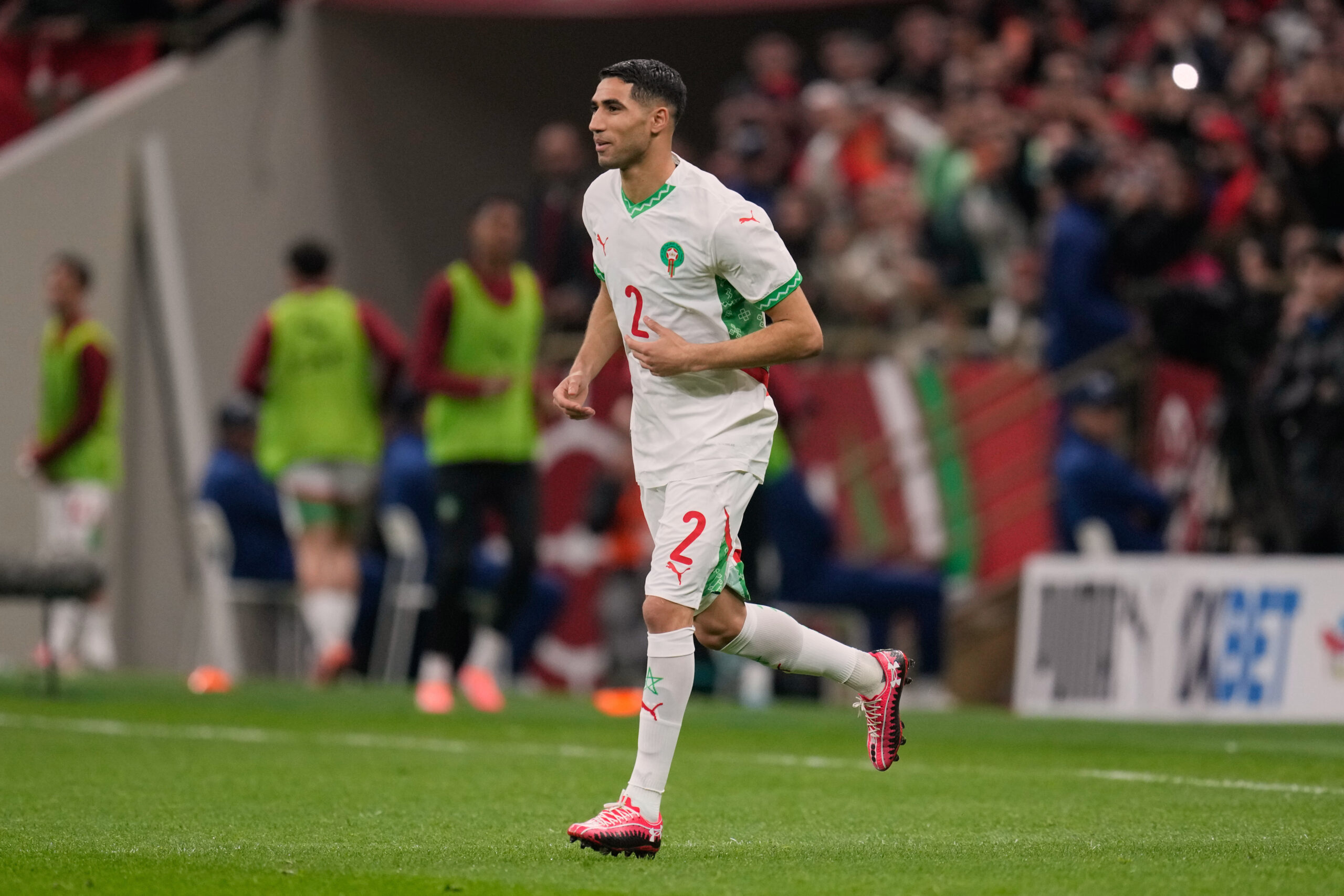
Morocco’s Achraf Hakimi will look to guide his country past mighty France on Thursday in the quarterfinals of the World Cup.
Now, the quarterfinals are here, and all four games have major star power. The first one might be the best of them: France vs. Morocco on Thursday in Foxborough, Mass. Morocco’s Achraf Hakimi will face many current and former teammates at his French club, Paris Saint-Germain, while trying to lead the Atlas Lions to their second straight semifinal four years after they became the first African team to make it that far.
Philadelphia needs no introduction to France’s galaxy of talent at this point, having seen Les Bleus win both games they played in town. Now here they go again: Michael Olise, Ousmane Dembélé, Désiré Doué, Bradley Barcola, and, above all, Kylian Mbappé. They’ve been unstoppable so far, bringing not just their quality but a real motivation to carry Les Bleus to a historic third straight final.
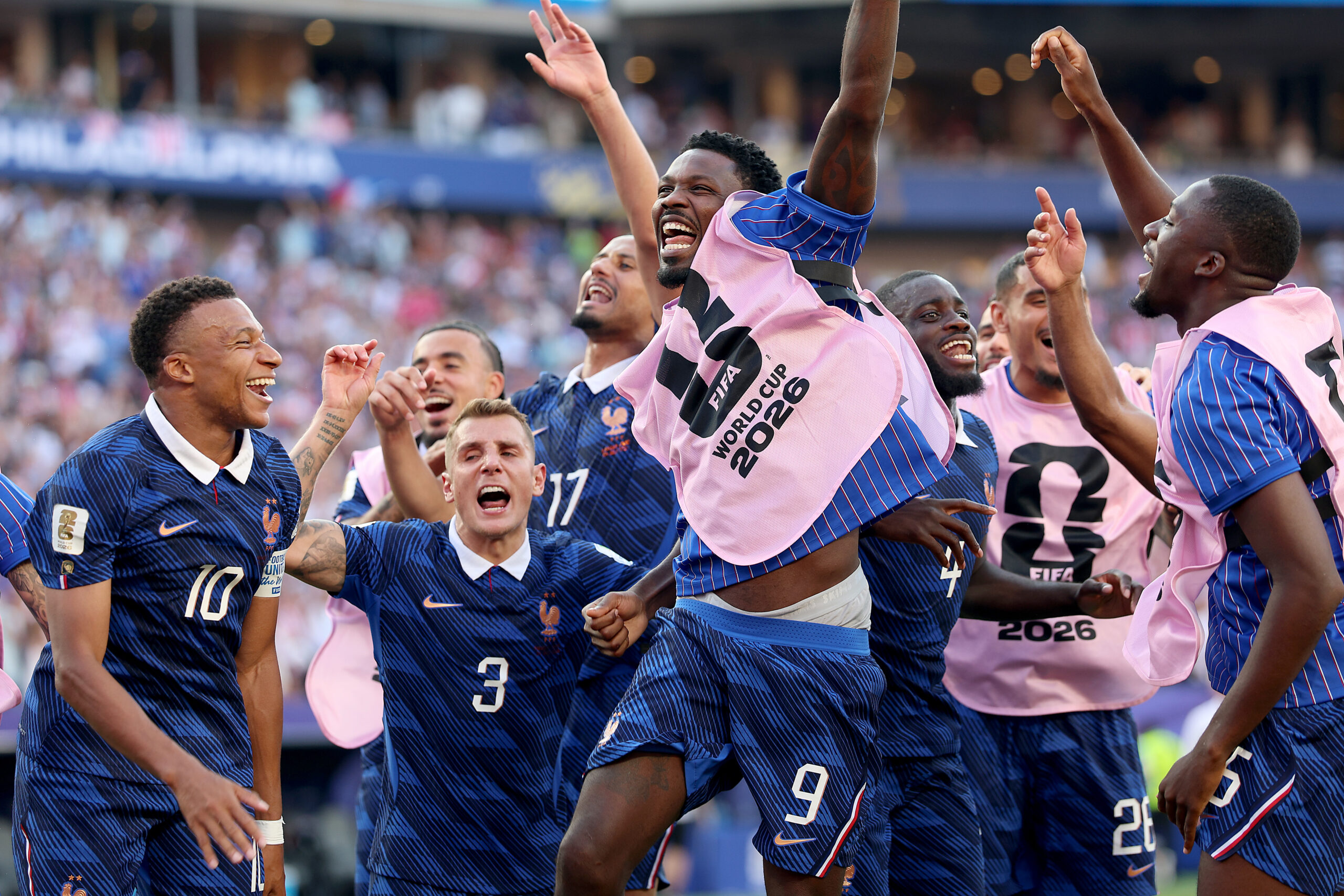
Kylian Mbappé (left) and Marcus Thuram (center) leading France’s celebrations after their Round of 16 win over Paraguay in Philadelphia’s last World Cup game.
The France-Morocco winner will play the winner of Friday’s Spain-Belgium matchup in Inglewood, Calif. Spain’s Lamine Yamal keeps earning headlines as the game’s top young phenom, and if France and La Roja advance, that semifinal would be a box office smash.
As for Belgium, speaking of motivation, let’s see how this game goes for them. The Red Devils had all that any team could need against the U.S., but will they be as fired up this time?
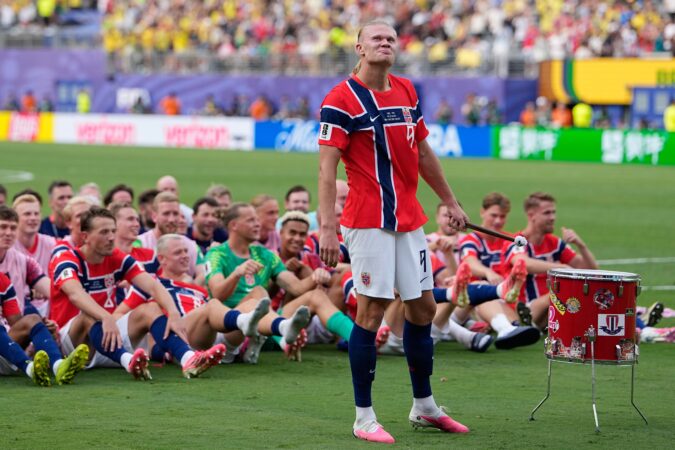
The other quarterfinals will be played Saturday. First, England faces Norway in Miami Gardens, Fla., a matchup of a lot of players who know each other. Nine of Norway’s players play in the English Premier League, including superstar striker Erling Haaland at Manchester City and playmaker Martin Ødegaard at Arsenal.
Those two clubs, in turn, have nine combined players on the Three Lions’ squad. City has newly signed $155 million midfielder Elliot Anderson, starting defenders Marc Guéhi and Nico O’Reilly, backup defender John Stones, and backup goalkeeper James Trafford. Arsenal has wingers Eberechi Eze, Noni Madueke, Bukayo Saka, and central midfielder Declan Rice.
Crystal Palace also has a player on each side, Norway forward Jørgen Strand Larsen and England backup goalkeeper Dean Henderson.
We’ll see how all that familiarity plays out on the field. We’ll also see what impact the weather has on the 4 p.m. kickoff, a forecast high of 90 degrees, South Florida’s humidity, and the perennial threat of thunderstorms.
Lionel Messi’s Argentina return to Kansas City, Mo., where the reigning World Cup champions played their tournament opener, for the last quarterfinal. They came awfully close to not making it back, needing a stunning late comeback from a two-goal deficit to beat Egypt, 3-2, in the round of 16.
Can Switzerland do what Egypt and Cape Verde couldn’t: finish the job and knock Messi out of his last World Cup? The task will be especially tough if standout playmaker Johan Manzambi can’t recover from the injury that caused him to miss the round of 16 win over Colombia.
MESSI’S 8TH GOAL OF THE TOURNAMENT DRAWS ARGENTINA LEVEL WITH EGYPT 🇦🇷
If England and Argentina advance, they’ll renew one of soccer’s most famous rivalries for the first time at a men’s World Cup since 2022. That would be quite a scene, especially under the roof in Atlanta.
World Cup quarterfinals schedule
All games are televised on Fox29 in English and Telemundo 62 in Spanish. All times listed are local to Philadelphia.
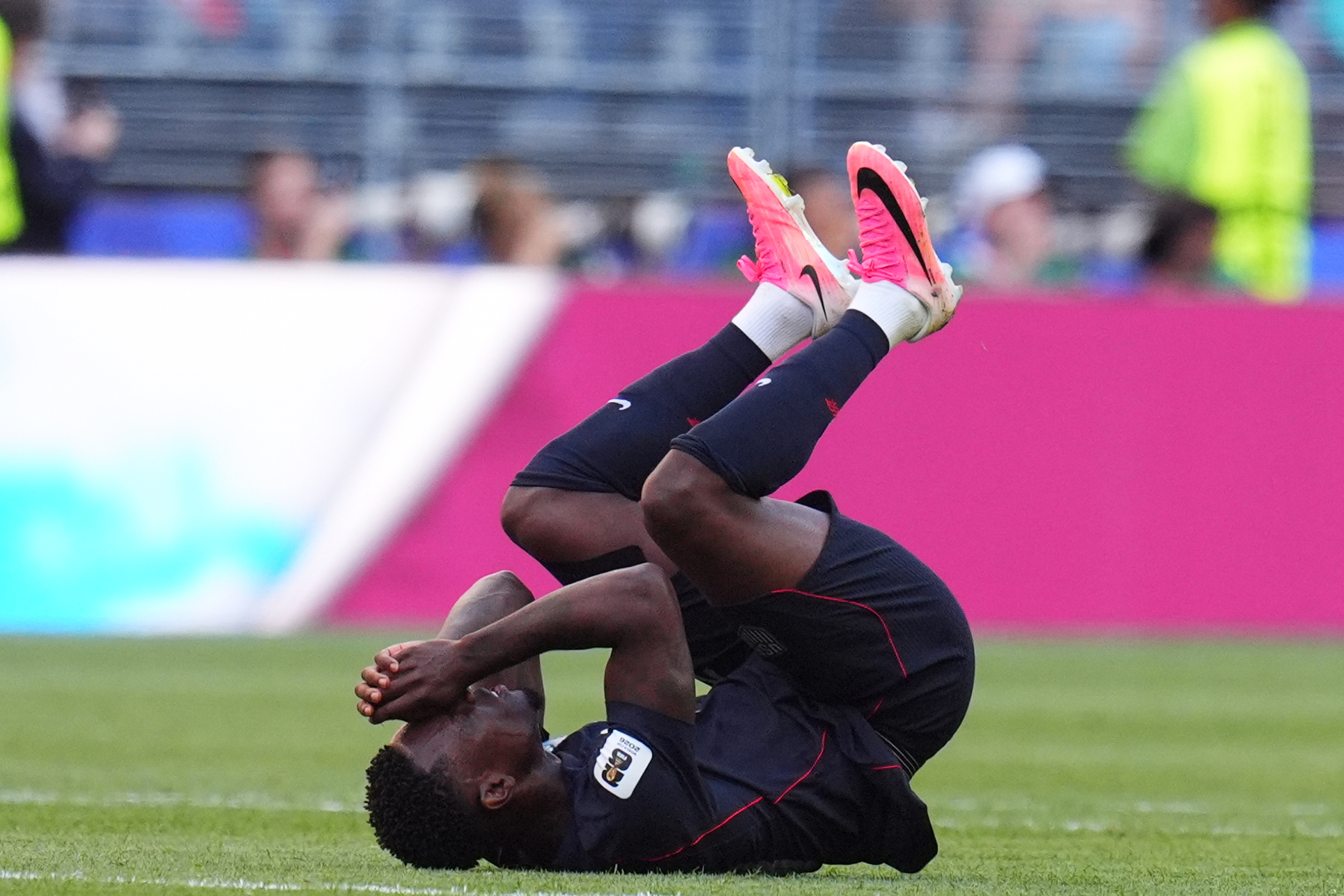
SEATTLE — Even many who think Folarin Balogun’s red card was justified don’t blame him for the global fallout over the last few days.
It isn’t his fault that he’ll be forever known as the player President Donald Trump lobbied FIFA president Gianni Infantino to get back on the field.
“When that decision’s overturned, of course it’s going to be controversial,” he said, “So for me, it’s something that didn’t really surprise me too much. But as a player, my job is just to go out there and focus on my job.”
Folarin Balogun reacts after Belgium’s third goal, which blew the game open.
“I can only be honest, you know. I don’t think we had a good game today collectively,” he said. “We played well in the other games. We were very intense; we were able to generate energy with the crowd. And today, we didn’t give the crowd a lot to cheer for. That’s the most disappointing thing — that’s the part that hurts the most for me, personally.”
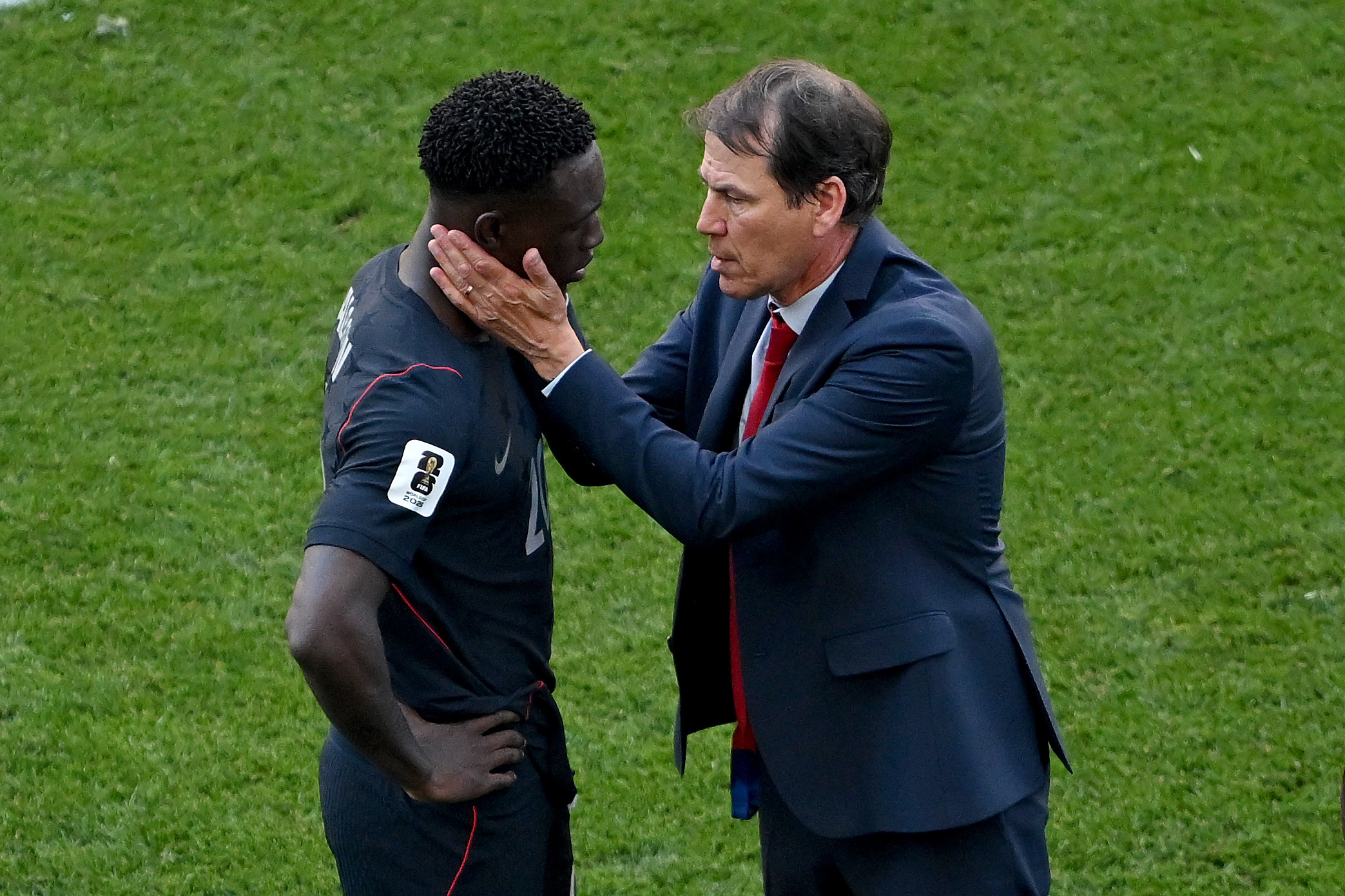
And he acted with grace again when he went to speak with Belgium manager Rudi Garcia, whom he has known for a while, after the final whistle.
“This is a game, there’s winners and losers, and similar to when I was given the red card, you have to handle it in the right way,” he said. “So, us losing today again, of course there’s huge disappointment. But for me, I wanted to just say congratulations to Belgium and Rudi Garcia and wish them good luck for the rest of the tournament.”
Belgium manager Rudi Garcia (right) consoling Folarin Balogun in their conversation after the game.
Garcia returned the favor in his postgame news conference.
“This wasn’t his fault,” he said. “He isn’t the one to blame, that’s what I told him. I appreciated that he came to see me.”
How much did the scandal motivate Belgium? Any team could draw easy motivation from saying Trump and FIFA stacked the deck, so let’s go beat the U.S.
“No, we just wanted to win the game on the field,” veteran goalkeeper Thibaut Courtois said. “It was a bit bizarre, it wasn’t the fault of the U.S. team or Balogun. … Whether he played or not, it was important for us to win.”
Not all of his teammates were so polite.
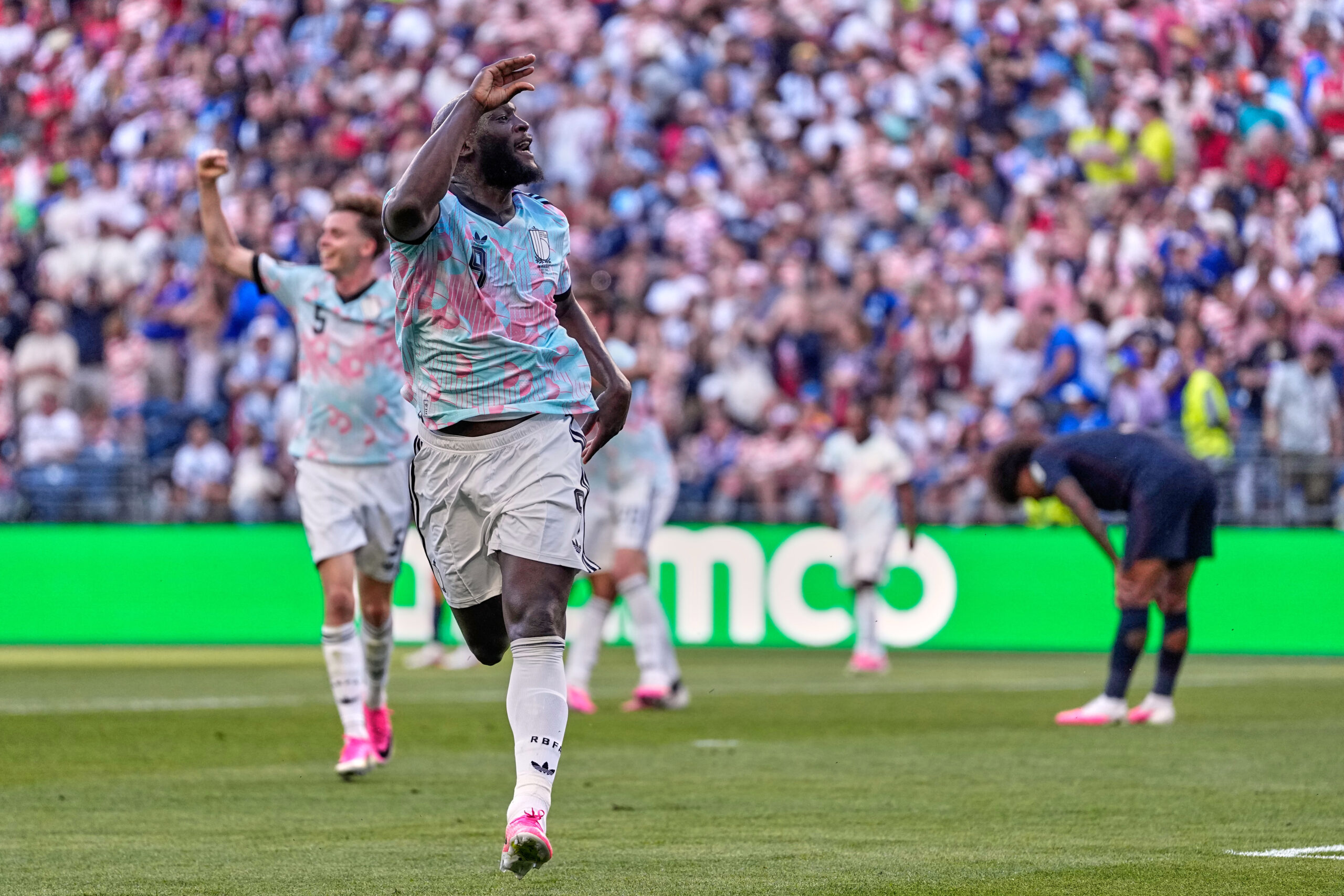
Belgium’s Romelu Lukaku gave the universal gesture to talk less after scoring his team’s fourth goal.
“There’s always a justice somewhere in life,” midfielder Nicolas Raskin said. “And the fact that something happened like that, you can call it what you want, but we don’t think that was fair. And I think today, it just brought us a little bit of luck that we needed to win the game.”
One of the Red Devils’ biggest stars, midfielder Youri Tielemans, had stronger words about why his team “had a fire in us” throughout the game.
“Of course we aren’t going to hide it,” he told Belgian TV network RTBF. “We had a meeting about it when we got the news, and afterward, we said we have no excuse. Whether he plays or not, it’s up to us to show that we should talk on the field, and that’s what we did today. So I’m very happy, and very proud of the team.”
When Romelu Lukaku scored his team’s fourth goal to cap the 4-1 win, he gave the universal “talk less” gesture to the crowd. The team then got together for a celebration that midfielder Axel Witsel acknowledged was a version of “the Trump dance.” Then they did it again in the postgame locker room.
Over the last decade, I’ve grown used to waking up before dawn and writing about a soul-crushing defeat from the night before. Usually it’s on a Wednesday, but somehow Donald Trump is always involved. Monday’s 4-1 demolition of the U.S. men’s national soccer team by Belgium pretty much confirmed that I won’t live to see Americans win the World Cup in my lifetime, so it’s time for acceptance. But these last three weeks have been a blast, and the party isn’t over. Sometimes the tritest words are also the truest: Maybe the real World Cup was the friends we made along the way.
Future generations will remember America’s 250th for its state of denial
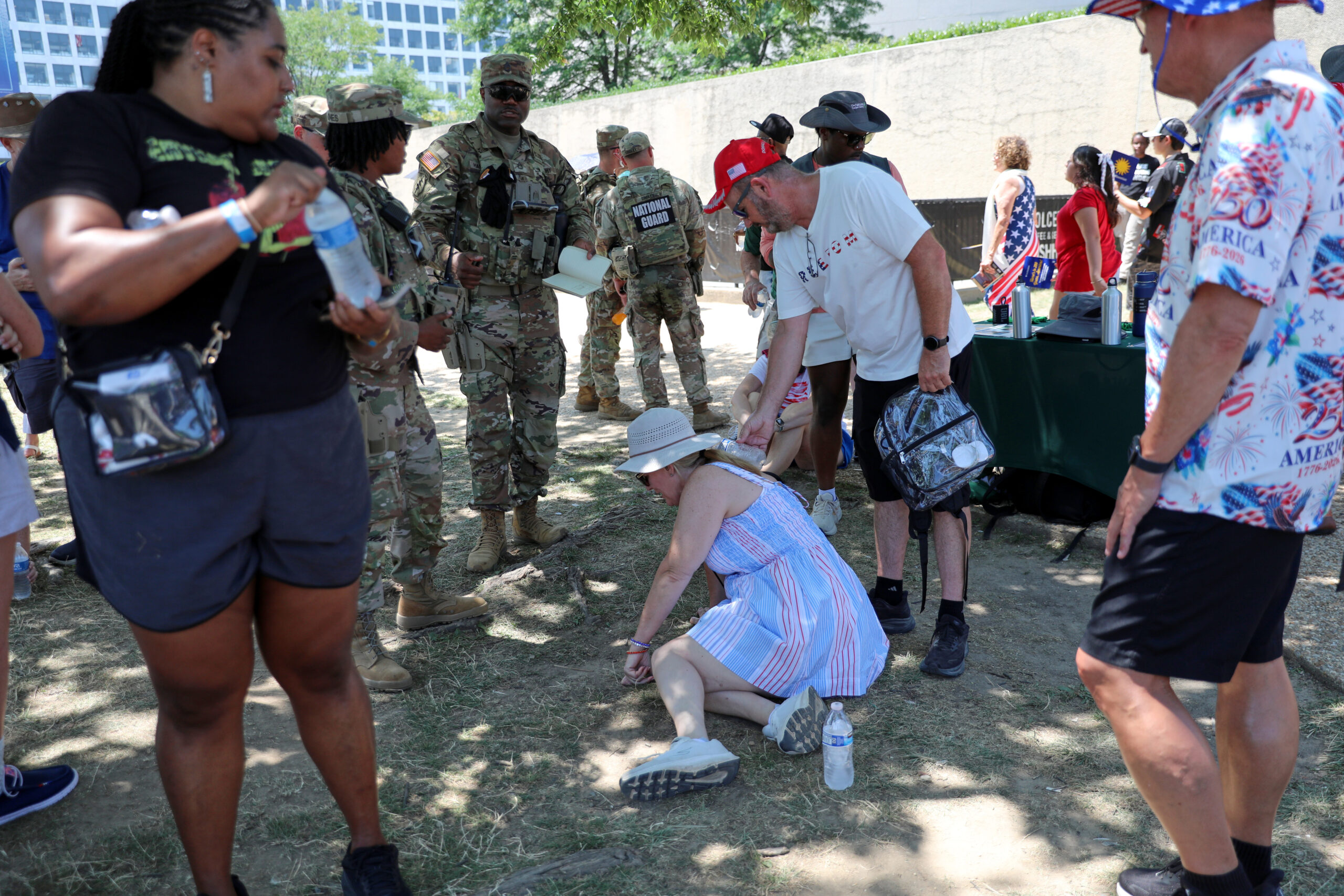
Visitors experiencing excessive heat sit on the ground at the National Mall in Washington during Independence Day events honoring the nation’s 250th anniversary on Saturday.
The long-awaited arrival of the 250th birthday of the United States inspired a lot of talk about everything that’s changed since July 4, 1776, especially as “the man on a hobby horse” sinks to the founders’ worst fears about democracy and demagoguery.
But historians of the future may dwell on another huge difference between the day the ink started drying on the American Declaration of Independence and July 4, 2026.
Thomas Jefferson — his work as chief author of the nation’s founding document wrapped up — bought a new thermometer that morning and recorded the temperature in Philadelphia three times in his diaries that day, including a temperate 1 p.m. reading of 76 degrees.
Jefferson’s thermometer might not have been up to the task of keeping up with Philadelphia’s climate 250 years later. On Saturday’s Semiquincentennial, temperatures maxed out at 101 degrees — the third straight day that the mercury reached that mark, which had never happened since records began in 1870. But with the fetid, humid air, it felt more like 110 degrees for anyone brave enough to celebrate America’s birthday outside.
Philly should have seen this train coming. I mean, literally. Two days earlier, officials just outside of Reading, nearly two hours northwest of America’s founding city, plowed ahead with a welcoming party for Union Pacific’s Big Boy No. 4014, the world’s largest operating steam locomotive — even as the railway relic ran an hour late, with some thermometers posting 106 degrees.
The result was what local officials called “a mass casualty event” — no one died, but rescue teams were summoned from neighboring counties to help revive more than 100 people suffering from heat exhaustion, in desperate need of water or an IV. Some 35 of the would-be train spotters were rushed to the hospital.
“It was a little bit chaotic,” an EMS director told the local TV station in Reading. “I don’t think anyone anticipated the weather or the volume of crowds.”
The scientific group World Weather Attribution, which tracks the impact of human-made global warming, said last week’s heat dome over the Eastern Seaboard was indeed a rare event, yet — without the contribution of burning fossil fuels to a warming planet — it “would have been so extreme as to be virtually impossible.”
Heat waves aren’t new. I was just 7 but still remember the July Fourth week of 1966 — exactly six decades ago — when it also topped 100 degrees. It’s one of the few things I remember from that grade-school time because it was so incredibly rare. Today, “once-in-a-century” heat waves are routine all over the planet. In June and looming again this week, Western Europe — where few homes are air-conditioned — has sweltered under temperatures that climate scientists weren’t expecting until around 2050.
This suffocating July Fourth could have been — to steal a phrase from the multiplex marquee — America’s “disclosure day,” exposing the truth of a threat to humankind that’s been hiding in plain sight. Instead, it was our “denial day,” led by our planet’s denier-in-chief, Donald Trump, whose 250th birthday card to America only read: “Don’t look up.”
The denial was immediate, as the president insisted — ignoring the experts who warned that the triple-digit temperatures and intense, gathering thunderstorms might spark a much bigger “mass casualty event” in Washington, D.C. — on going ahead with his bombastic and self-serving speech and a fireworks show that lasted well into the early morning hours of July 5.
Our modern-day seersucker-wearing mayor of Jaws might as well have told the broiled holiday weekend throng, “But, as you see, it’s a beautiful day, the beaches are open, and people are having a wonderful time” — as ominous John Williams music swelled in the background.
The denial was also metaphorical to the max — and not just when those predicted storms arrived and panicked MAGA Trump supporters were forced to take refuge at the National Museum of African American History and Culture, the history and culture their movement is so eager to erase.
In New York Harbor, U.S. Coast Guard vessels forced the storied environmental sloop Clearwater — which took part in the historic Bicentennial tall ships parade back in 1976 — to leave the July 4 Parade of Ships because of two anodyne political banners taped to its sails: “Save the Clean Water Act” and “Indigenous Rights, Racial Justice, Climate Solutions.” Don’t look up, not even at a tall ship.
Hours later, during the fireworks show, the Brooklyn Bridge caught fire, which had nothing to do with climate change, yet felt like a coded message from the overheated planet nonetheless.
But maybe we shouldn’t wade too deeply into the metaphors when the worst denial is the all-too-real policy stuff. Every day, some nightmare headline about killer floods or disappearing glaciers is met with some nonsensical action from the U.S. government based on Earth 2, where none of this is happening.
As the climate-change-intensified heat dome settled in over the Eastern United States, Trump issued pardons for nine people — and you really can’t make this stuff up — who’d been convicted of felony violations of the Clean Air Act by selling or installing devices for diesel trucks that defeated their emissions controls, because polluting our spacious skies is no longer a crime in Trump’s America.
America continues to get a whopping 82% of its energy from polluting fossil fuels, and that’s unlikely to drop over the next 30 months, regardless of how many Trump voters can cheat death on looming “mass casualty events.” But POTUS 47 warned voters he planned to set the world on fire if he returned to the White House.
What’s harder to understand, frankly, is why the people who should be fighting Trump on climate change are running away from the front lines. Yes, I’m talking about Democratic Party leaders who’ve tossed climate action down the memory hole in the 2026 campaign — either terrified that any mention of climate will undercut their single-minded focus on affordability, or distract from fighting Trump’s brand of autocracy.
And ditto for newsroom leaders who seem to have decided that environmental journalists are the first people to lay off, not to mention the other world chieftains who ought to be challenging Trump’s destructive policies, but are meeting the moment with a shrug. Even Canada’s center-left prime minister, Mark Carney, is now backing away from the aggressive climate action he once supported, claiming, “It’s too expensive.”
That’s a lot of malarkey, as the president who just four years ago passed the largest climate action bill in U.S. history might say. Clean energy continues to rise elsewhere in the world because the alternatives, like wind and solar, are ultimately cheaper and also a source of desperately needed job creation. The fossil-fuel-boosted heat wave of July 4, 2026, proved that inaction is a threat not only to our lives and our liberty but also to the pursuit of happiness. It’s hard to celebrate 250 years of American democracy when climate denial is exposing that system as so badly broken.
Yo, do this!
Did I mention the World Cup isn’t over? If you are a true fan of the Beautiful Game, you’ll brush off the quadrennial disappointment of the U.S. men’s team and get excited to watch one of the greatest generations of international soccer superstars we’ve ever seen. One of the more intriguing of the four quarterfinal matchups this weekend will occur when Harry Kane and his English squad face Erling Haaland and his Norwegian upstarts in the Miami heat. The match kicks off at 5 p.m. Saturday on Fox.
The new movie scene for the July Fourth holiday was a disappointment, so the heat wave was a perfect opportunity for revisiting the classics of the 1970s and ’80s with the generation that had not been born yet. We went back to the late Rob Reiner’s first great serious film, the coming-of-age saga Stand By Me. It’s hard not to feel nostalgia today for a time when 12-year-olds had to entertain themselves without iPhones and could disappear into the woods overnight, which felt less strange in 1986 when the movie was first released. It felt truly like a faint signal from a lost planet.
Ask me anything
Question: Talk about Mitch McConnell’s demise. — Wendy (@wensilver.bsky.social) via Bluesky
Answer: Well, Wendy, that’s not exactly a question, and while the New York Times is reporting that the Kentucky senator and former majority leader was unconscious and in cardiac arrest when paramedics found him on June 14, his staff insists McConnell is still alive. That hasn’t stopped conspiracy theories that McConnell is on life support until August, when his replacement, named by GOP lawmakers, could avoid a messy November election. I don’t know about that, and I agree that it’s very poor form to speak ill of the dead. So the fact that he’s still alive is an ideal moment to remind everyone that his hijacking of the U.S. Supreme Court and his cowardice during Donald Trump’s second impeachment both started America on the path toward tyranny. So get well soon, senator. You still have a lot to answer for.
What you’re saying about …
Last week’s question about whether you are happy or concerned about progressive Democrats doing well in the 2026 primaries brought a mix of interesting responses that aren’t easy to categorize. Most of you want Dems who will fight harder than the current crew. “I have been voting since 1968, always for Democrats, but seldom with enthusiasm,” wrote Stephen Boone. “Finally, in my old age, there are a few decent politicians. I want more AOCs! More Zohran Mamdanis! …” Others felt more cautious. Wrote Thomas Desmond: “I think the progressive candidates are fine in deep blue seats, but may not be a great idea in purple or light-red seats that could prove winnable this year.”
📮 This week’s question: It may be water under the bridge next week, but Donald Trump’s personal role in overturning the arguably wrongly given red card to U.S. star Folarin Balogun has sparked a heated debate. Was the red card an injustice to be reversed by any means necessary? Or did Trump’s involvement ruin the World Cup? Please email me your answer and put the exact phrase “Trump Balogun” in the subject line.
Backstory on Trump ruining the World Cup like everything else
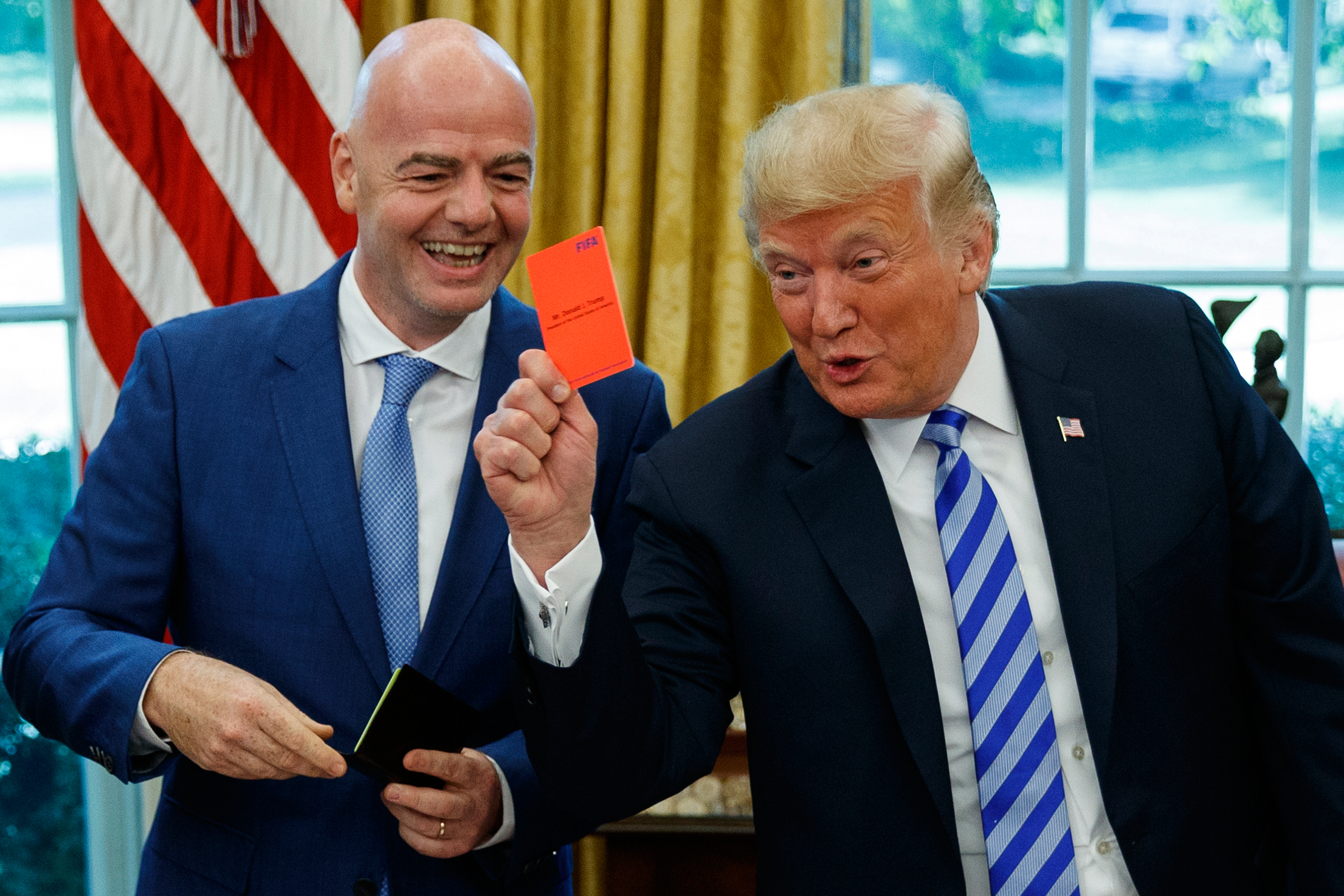
President Donald Trump holds up a red card during a meeting with FIFA president Gianni Infantino in the Oval Office of the White House in August 2018.
If the big-screen tragedy of the U.S. men’s soccer team’s same-as-it-ever-was Round of 16 exit from the 2026 World Cup on Monday night had a theme song, it should have been John Lennon’s “Instant Karma.” For its first four (mostly) exhilarating matches, the USMNT gave a nation that was desperate for both an escape from relentless bad news — but also a connection to a wider world — the good vibes it desired. It truly felt like the Americans could go further than ever before (in modern times) in the planet’s greatest sporting event. TV ratings soared. Watch parties were packed. A broken land was coming together.
To longtime soccer fans, the red card handed out last Wednesday to the U.S.’s top goal scorer, Folarin Balogun, for stepping (seemingly unintentionally) on the ankle of a Bosnian player during a 2-0 victory — a harsh punishment that meant not only his ejection from the pitch but a suspension for the upcoming Belgium match — was the essence of our love/hate relationship with soccer. It may be a beautiful game, but it’s the ugly calls that we debate for decades. For a non-soccer fan and malignant narcissist like Trump, for whom anything that goes against his desired outcome is proof of the world’s unfairness toward him, the looming loss of America’s star striker was an opportunity to act like the strutting strongman of a personalist dictatorship.
There were too many ironies to bear — especially the fact that Trump had just gone all the way to the U.S. Supreme Court to fight to strip U.S. citizenship from people like Balogun, who was born to British-Nigerian parents in 2001 during an American visit, and millions of other immigrants who aren’t as talented with their feet. But the other irony was that — like so many corrupt schemes, whether from the mafia or the Trump White House — the president’s soccer coup failed. It felt like Trump had attacked the positive zeitgeist around U.S. men’s soccer with a neutron bomb. Balogun rarely even touched the ball. We’ll never know how much of Belgium’s 4-1 rout of the mistake-prone U.S. was simply a European powerhouse outclassing the Americans, as has happened so many times before, and how much was Trump destroying the juju.
It did seem fitting that this sordid affair played out over the weekend of America’s 250th birthday, as it was more confirmation that Trump, in spite of what the hat says, actually has no clue what makes America great. If any one principle stood out from the founders’ 1776 and 1787 experiments, it is that the United States was to be based on fairness and following the rules, with no king imposing his will. The single greatest thing about America’s presidential elections was not who won, but the fact that the loser accepted the results, and there was a peaceful transfer of power — until Jan. 6, 2021. Likewise, nothing could ruin the often unbridled joy of the World Cup faster than a rigged competition.
I’m still looking forward to the next 12 days, to watching the pinpoint passing of Argentina’s Lionel Messi or the raw power of Norway’s Erling Haaland, and to seeing who can actually win the World Cup on the pitch, and not in a back room. We already know the tournament’s biggest loser: Donald Trump.
What I wrote on this date in 2014
Looking back on this Attytood blog post from 12 years ago today is a reminder of how debates can evolve over time. My short piece on July 7, 2014, was a riff on an op-ed that called newspapers’ online comment sections in those early internet years “a hate crime” that should be cordoned off because of the vitriol spewed at immigrants or others outside the traditional American hierarchies. Back then, I disagreed, taking the side of free speech absolutism. “These are people who shouldn’t be censored … just set straight,” I argued. “The one true powerful weapon against offensive free speech … is your free speech, and mine.” Time proved me wrong: The Inquirer now avoids comments on most articles, including my columns. It turned out that “the wisdom of the crowd” that newsroom reformers once hailed was fatally infected with racism, sexism, and other forms of hate.
Only one column last week, as I enjoyed the July Fourth holiday by spending time with family and watching countless hours of soccer. In that piece, I wrote about an American 250th birthday that should have been a meditation on what makes our nation great, and where we so desperately need to improve — but which Donald Trump used as an excuse to rob the cash register when no one was looking. The president’s staggering $2.2 billion-plus payday during his first full year back in office — accomplished with a mix of crypto flimflammery, informed stock trading, and dealings with foreign dictators — is a five-alarm fire for the rule of law.
One final thought about the 250th birthday of the United States as the moment recedes into the rearview mirror. It’s true that 2026 has been a lousy year, economically, for newsrooms, but you would never know that from reading The Inquirer’s remarkable coverage of such an eventful time. I’ve already praised our world-class World Cup coverage, but our overworked staff also went out and covered a July Fourth party that happened despite killer heat, biblical storms, and a plague of locusts (not really, but it felt that way). This included some real accountability journalism, such as the Trump regime’s efforts to twist the truth around George Washington and slavery, as well as questioning the cost of the big day for city taxpayers. It was also a reminder that Philadelphia has been a hotbed for journalism and the rugged practice of bringing the First Amendment to life since the early days of the republic. Help keep it going another 250 years by subscribing to The Inquirer.
By submitting your written, visual, and/or audio contributions, you agree to The Inquirer’s Terms of Use, including the grant of rights in Section 10.