Tag: World Cup

  • Philadelphia’s World Cup love affair shows just how far we’ve come

    Philadelphia’s World Cup love affair shows just how far we’ve come

    Karl Wallenda walked across Veterans Stadium on a tightrope, dazzling a nearly sold-out crowd when he stopped halfway to do a headstand and unfurl American flags from the ends of his balancing pole.

    It was exactly what the more than 50,000 fans came to see between games of a Phillies doubleheader on Memorial Day 1976. And the show across the street, a soccer game featuring Pelé and other all-time greats — didn’t stand a chance against The Great Wallenda.

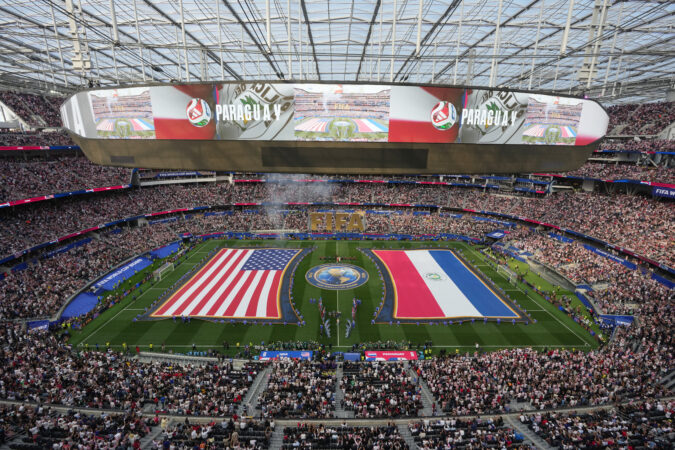
    Philadelphia has become soccer-infused this summer with six games of the World Cup at the sports complex Center City bars were packed Monday afternoon hours before France and Iraq played, banners hung from City Hall, the Broad Street Line carried fans to Lincoln Financial Field, and even the mayor was spotted last week buying soccer jerseys.

    The games are so massive that the Phillies had a rare Friday off last week because Brazil and Haiti were playing at what is temporarily called Philadelphia Stadium.

    But 50 years ago, soccer was still finding its footing in Philadelphia. And that’s why the eyes of the city were fixated above Veterans Stadium while Pelé, Italian superstar Giorgio Chinaglia, and Bobby Moore — the captain of the last English team to win the World Cup — were in a match across the street.

    The soccer icons played for Team America in the Bicentennial Cup against the English National Team at JFK Stadium in front of just 16,000 fans and a lot of empty bleachers.
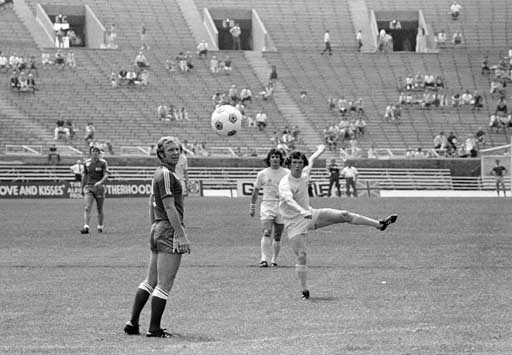
    Play during the Bicentennial Cup between Team America and England before a sparse crowd at JFK Stadium in South Philadelphia on May 31, 1976.

    Philadelphia now has a professional team with staying power, local players on the U.S. team that have people dreaming this summer, and a stadium full of crazed fans. That was hard to imagine 50 years ago, when the gods of soccer passed through without much notice.

    “Jeez, 50 years,” said Bob Smith, a Trenton native and member of the National Soccer Hall of Fame who played for Team America against the British. “There’s no comparison. The game just grew, and the community grew. The spread of the game is just unbelievable.”

    Gateway to soccer

    Smith learned to play the game as a 9-year-old when an Irish neighbor in Trenton organized a recreation league. He played four-on-four for hours with his buddies and organized games against kids from neighboring towns. Today, the sport is played everywhere, but it was concentrated in the 1960s to neighborhoods in Trenton, just like in Philadelphia.

    Soccer was huge to those who knew it.

    And a mystery to those who didn’t.

    “We’d go to our high school field on weekends to train and see like 2,000 people in our football stadium,” Smith said. “We were freshmen in high school, and we knew exactly where we fit in the spectrum of sports. ‘Who are these guys running around with shorts on?’ But we just fell in love with it.”

    Smith was plucked as a teenager by Manfred Schellscheidt, the legendary coach who assembled an All-Star team with the best players in New Jersey. Schellscheidt brought the Jersey boys to his German hometown, where they beat every team they played. It was an unbelievable experience, Smith said, and it gave him and his buddies the confidence that they could do it.

    “I was like ‘Damn, I can do that,’” Smith said. “We felt like ‘we’re OK here.’”
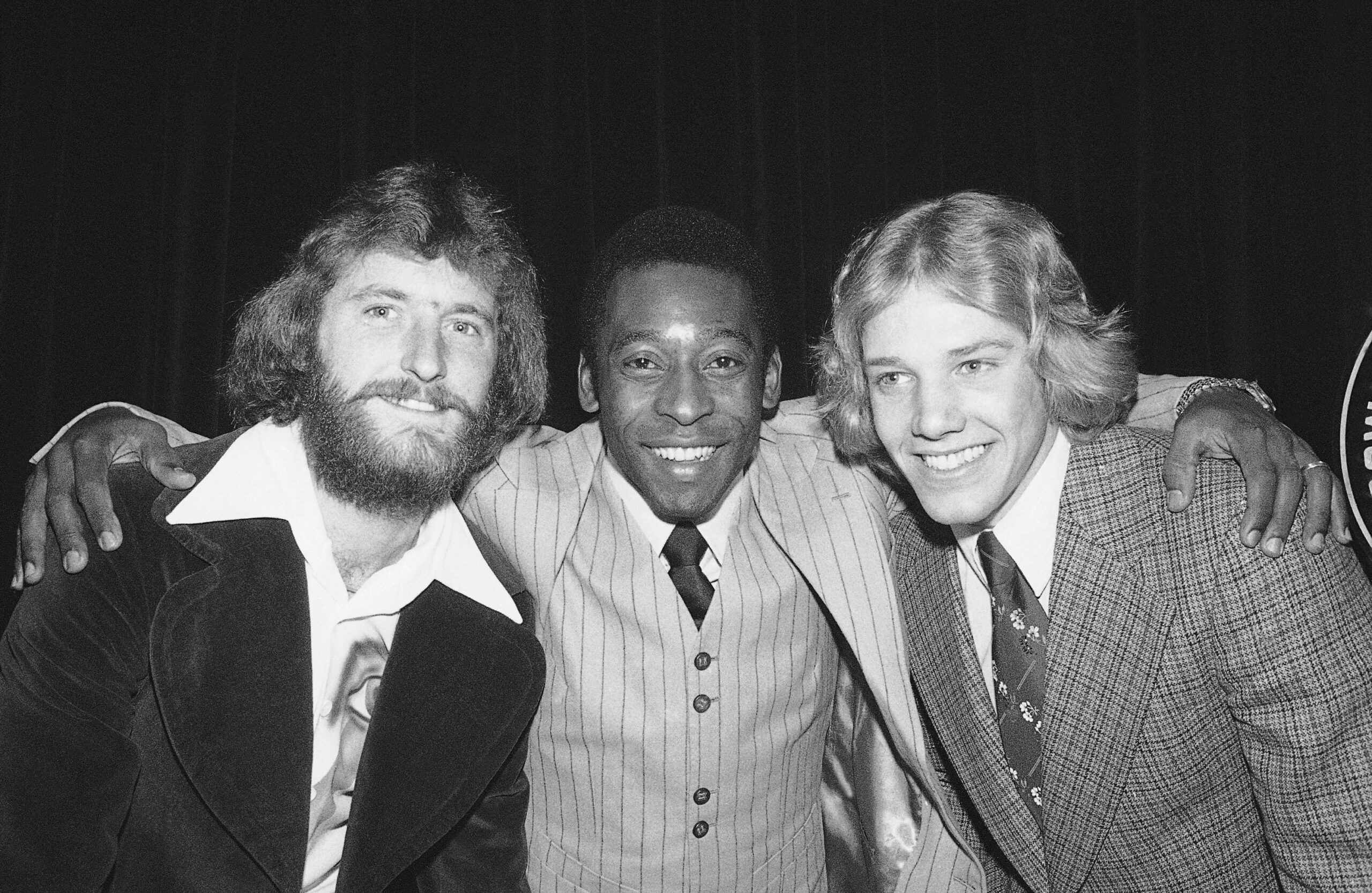
    Bob Smith (left), a Trenton native, shown with soccer star Pelé (center) and Bob Rigby on Jan. 6, 1976.

    Smith played at Rider University before turning pro with the Philadelphia Atoms and helping them win the North American Soccer League championship as a rookie. The league didn’t pay the players enough for soccer to be a full-time gig, so he worked as a laborer at a construction site during the day and practiced in South Philly at night. But he was still a professional soccer player.

    “A lot of guys were schoolteachers,” Smith said.

    This U.S. team started nine players in their World Cup opener who are on professional teams overseas. Smith, who had 18 games for the U.S. team, played overseas in 1975, with Dundalk F.C. in Ireland. Unlike today’s players, Smith and Dave D’Errico — his buddy from New Jersey — didn’t get paid much. No team was looking then for an American player, Smith said.

    “When we got off the plane, a guy picked us up at the airport in Dublin,” Smith said. “We signed this five-quid-a-week contract. We stayed over top [of] this garage, and I pumped gas at night, making a quid an hour.

    “But we were in Ireland playing soccer. What the heck? We didn’t care. You were broke your entire career playing soccer. I never cared about what I made because it was a thrill of a lifetime.”

    ‘It was just wild’

    The starving artist returned to the U.S. after a year abroad and joined the New York Cosmos, which had become America’s traveling band of soccer stars. They had Pelé and Franz Beckenbauer on the field and Mick Jagger and Henry Kissinger in the dressing room after games.

    “The Cosmos years were like a circus,” Smith said. “It was just wild.”

    The NASL brought Pelé out of retirement in 1975 with the hope that the all-time great could spread the gospel of soccer through the country. Every Cosmos game felt like the opponent’s biggest game of the season.

    “It was always a show,” Smith said. “The expression with us was always, ‘We’re with him.’ There was a lot going on in restaurants and clubs and all that. We went to Denver and they rode him on a horse. There was so much marketing stuff, and he got pulled into an awful lot of stuff.

    “I felt sometimes that he was being pushed to sell the game to this country, and I think that was difficult to him. He just wanted to get on the field and play with the guys. Off the field, it was crazy with the commitments he had to fulfill. But he did it 100% with a great attitude. But it was tiring.”
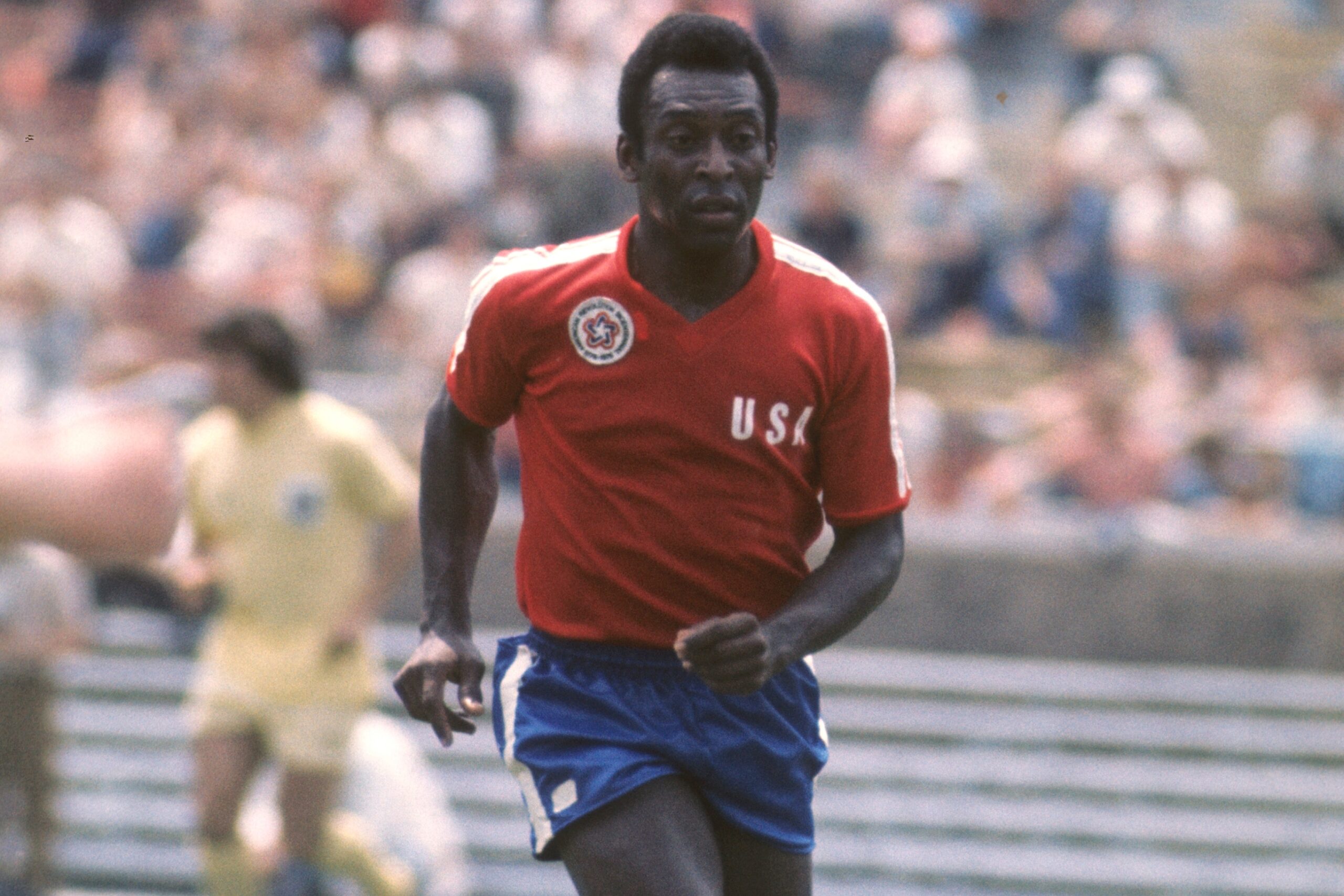
    Pelé playing for Team America against England in the American Bicentennial Cup in 1976, played at JFK Stadium, which is where Xfinity Mobile Arena now stands in the sports complex.

    The 1976 Bicentennial Cup was another attempt to grow the game as Brazil, England, and Italy came to America for tuneups before qualification began for the 1978 World Cup. They played in Washington, New York, and Seattle before finishing in Philadelphia.

    The organizers knew that the U.S. national team wouldn’t be able to keep pace with the world powers, so they filled Team America with the stars of the NASL. That’s how Smith and Delaware County’s Bobby Rigby got to play with a dream team. The stars of the soccer world came to South Philly.

    Philadelphia just wasn’t yet ready in 1976 to embrace what was happening. The city was too distracted by the guy walking in the sky.

    “It was such a thrill to play with those guys,” Smith said. “It was a great honor, and it was also a blur.”
  • Rain shuts down FIFA’s Fan Festival, but World Cup fans find creative ways to keep the fever going

    Rain shuts down FIFA’s Fan Festival, but World Cup fans find creative ways to keep the fever going

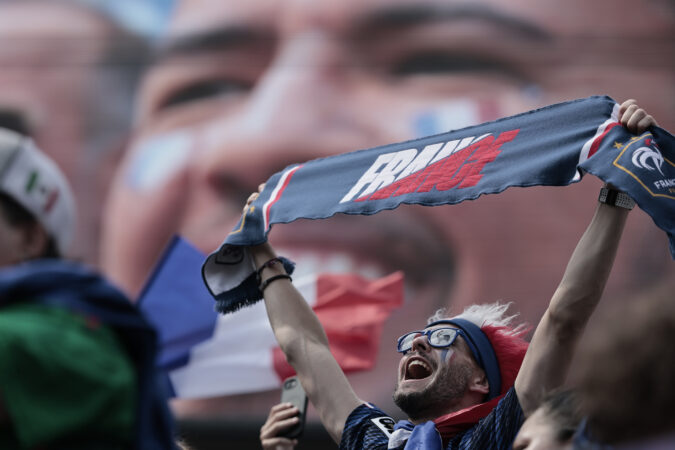
    Heavy rain might’ve washed out the FIFA Fan Festival a little more than an hour after its opening, but fans of Les Bleus spread out to different corners of the city to watch their side take on Iraq.

    A weather delay at halftime brought on by heavy thunderstorms extended the game by a little over an hour, but French supporters were eventually treated to a 3-0 win over Iraq that secured France a trip to the knockout round and pushed them one step closer to winning Group I.

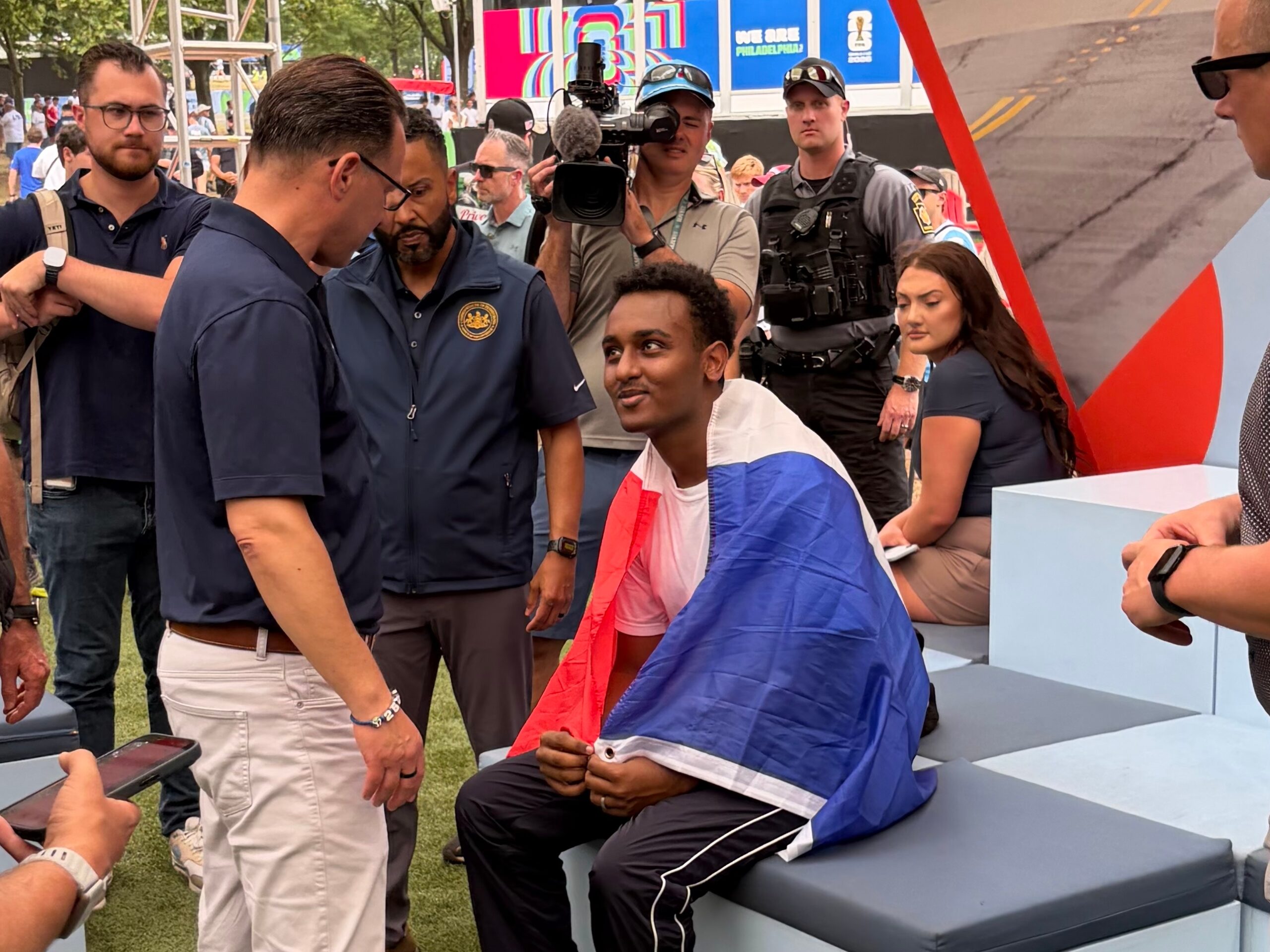
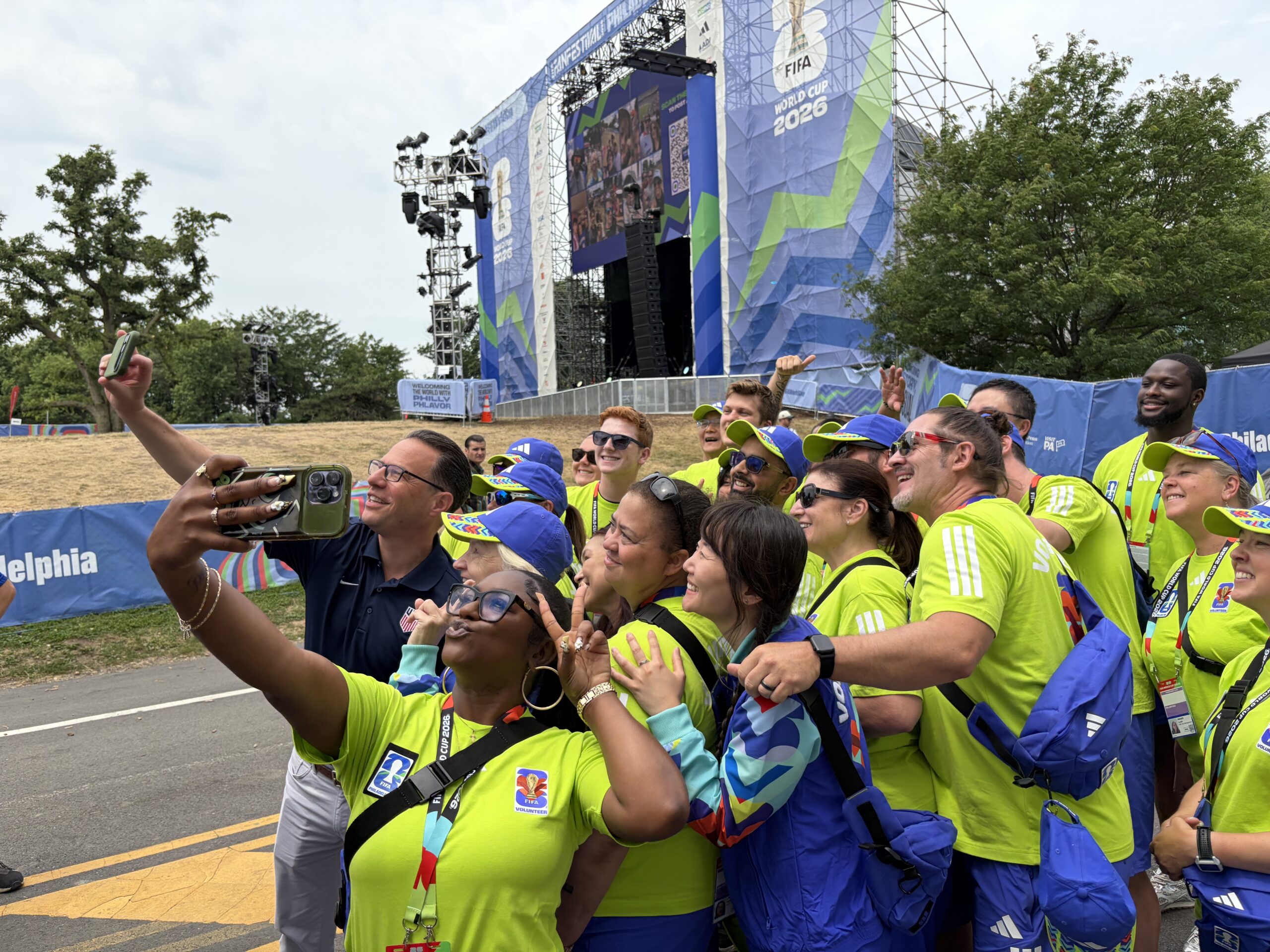
    Pennsylvania Gov. Josh Shapiro (top left), poses with volunteers at FIFA Fan Fest at Fairmount Park in Philadelphia on Monday.

    Shapiro visits Fan Festival

    Before extreme weather caused it to close for the day, Gov. Josh Shapiro became the latest elected official to visit the FIFA Fan Festival at Lemon Hill Park on Monday afternoon.

    Shapiro, sporting a navy blue U.S. Soccer polo, walked the festival grounds before Monday’s first match, between defending champion Argentina and Austria.

    “What a unique event and historic moment for our city at this historic juncture of 250 years,” Shapiro said. “To be able to be together and just celebrate one another, celebrate this great sport and enjoy yourself … I think the world needs some more togetherness, needs some more cheer, and this is a great opportunity for that.”

    He was greeted by lines of volunteers entering the festival, then followed in Mayor Cherelle L. Parker’s footsteps by customizing a charm bracelet at the Bank of America tent.

    He chose charms that read “250.”

    In a brief news conference in front of the festival stage, Shapiro hailed Philadelphia’s Fan Festival as the best “in the country.”

    “This is Philly, man,” Shapiro said. “We know how to do big things. It’s extraordinary to see people come out happy and joyful, cheering for their team. Unlike a typical Philly sports event, our fans aren’t cheering against others. There’s just happiness and joy. … I’m glad that Philly is a welcoming city and welcoming people from all across the world to be here.”

    Shapiro stopped to chat with dozens of attendees inside Visit PA’s booth and play a large arcade-style video game with a young fan in a Paris Saint-Germain kit. He asked French fans in line if Argentina’s Lionel Messi or France’s Kylian Mbappé was the better player, and stopped with an Argentina fan to recount Messi’s performance in Argentina’s win over Algeria.

    One of the people Shapiro introduced himself to was 18-year-old Esra Asfaw, who had a French flag draped over his shoulders. Asfaw, a George Mason student originally from Addis Ababa, Ethiopia, said he did not know who Shapiro was when the Governor introduced himself.

    “I was so surprised,” Asfaw said.

    Asfaw traveled up from Virginia to Philadelphia to see Les Bleus face Iraq at Lincoln Financial Field. He paid $1,089 on the resale market for his 200-level seats. Asfaw said he was not worried about the outcome of the match, instead fretting about the weather.

    Gov. Josh Shapiro greets Esra Asfaw inside the Visit PA tent at the FIFA Fan Festival.

    “Maybe the match might get delayed,” Asfaw said. “That’s the only thing I’m worried about. If it rains and they play, then that’s enough for me.”

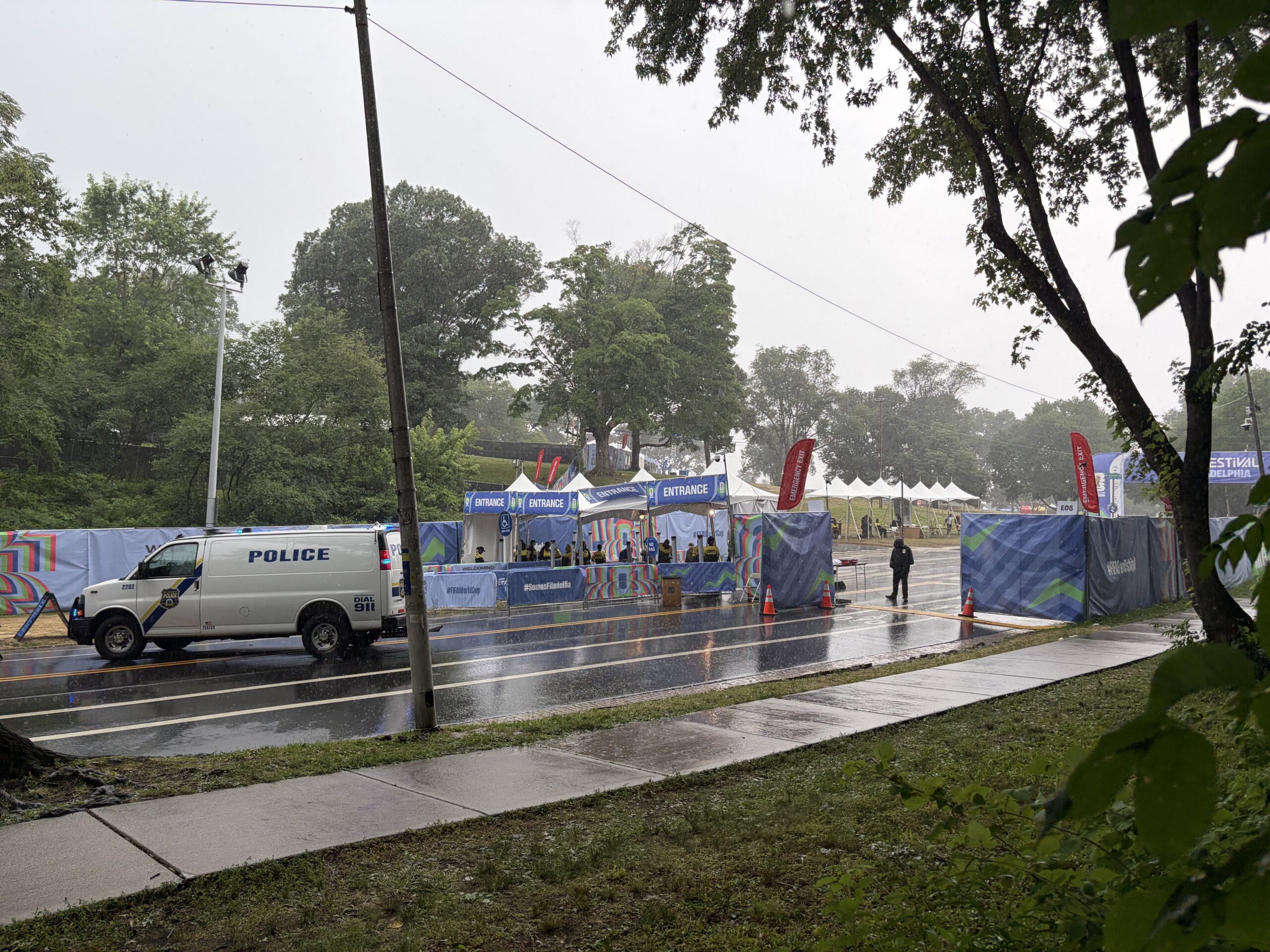
    Rain routinely doused Philadelphia throughout Monday. A heavy storm led the Fan Festival to turn off the broadcast of Argentina-Austria around 1:40 p.m., less than two hours after the festival opened to the public.

    Festival goers were asked to evacuate the grounds as a mid-afternoon storm approached, and the area was drenched by the time Argentina and Austria reached halftime. Many of the festival attendees sought refuge in the welcome center tent set up along Kelly Drive, streaming the Argentina match from their phones.

    Stormy weather shut down the World Cup Fan Festival in Lemon Hill on Monday.

    The tent cleared out once the festival announced it was ceasing operations for the day at 1:53 p.m.

    Locals love Les Bleus

    The Fan Festival shut down for the day, but the prematch party continued on across the city.

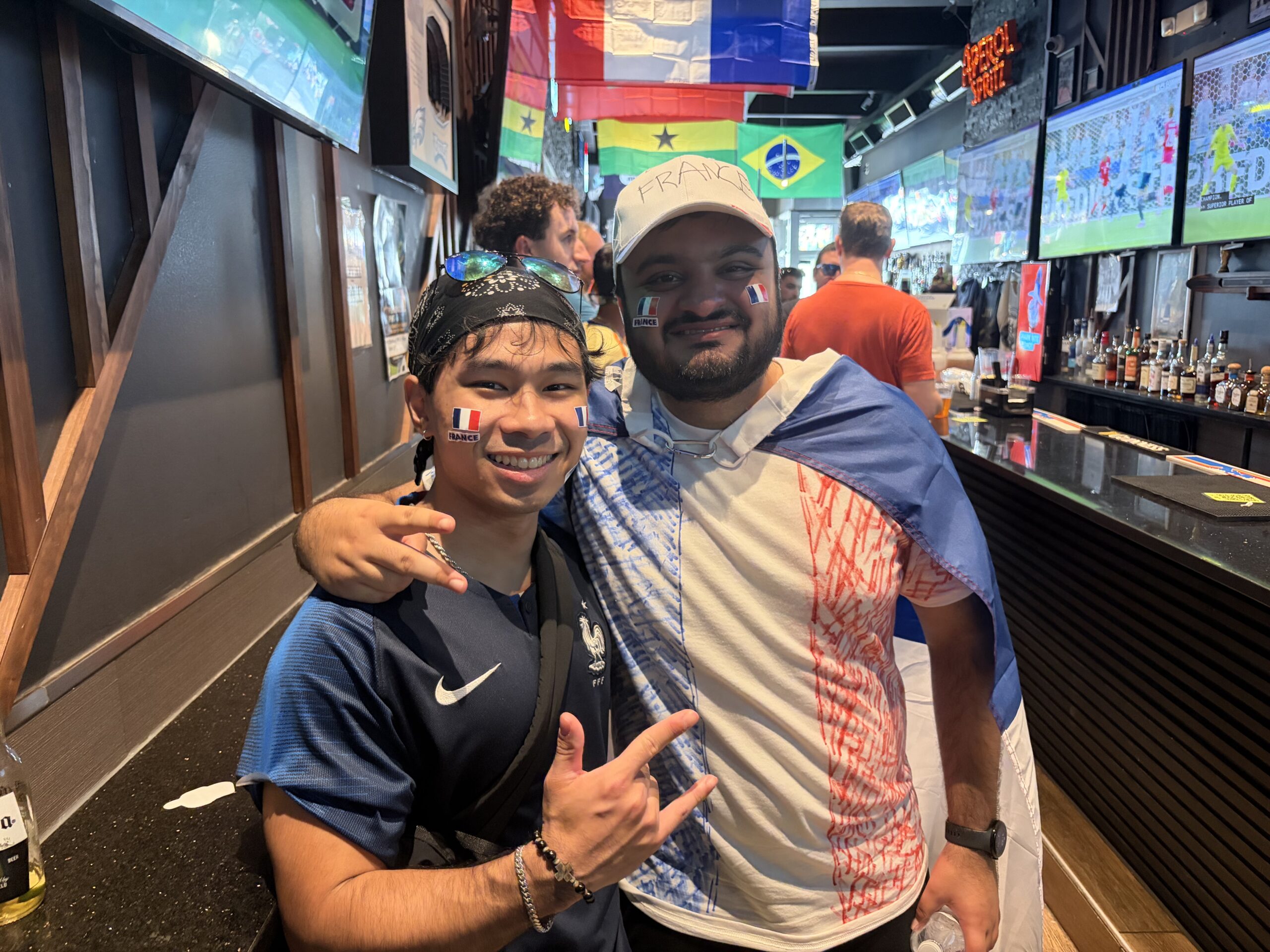
    Mahir Sanori and Gene Lazarraga staked out their spot across from the bar at Lion Sports Bar in Chinatown by 3:20 p.m., more than an hour before France and Iraq’s scheduled kick-off time.

    Sanori and Lazarraga have no connection to France, aside from Lazarraga’s French classes at Delran High School in Burlington County, but the former high school classmates chose to cheer on Les Bleus.

    Gene Lazarraga (right) and Mahir Sanori (right) pose for a photo at Lion Sports Bar in Chinatown.

    “We were both free this day, so [we said], ‘Let’s just do it,’” Sanori said.

    Lazarraga was wearing a Nike-branded navy blue French kit, while Sanori sported a white T-shirt colored in with fabric marker to make the French tricolor.

    The pair also picked up some France face stickers and a French flag at Walmart, the latter of which was draped over Sanori’s shoulders.

    Sanori and Lazarraga arrived just after Lion Sports Bar finished hosting a group of French supporters for prematch festivities, but both said they appreciated the influx of global culture brought to the region by the beautiful game.

    “Seeing all these different groups of people come together, that’s kind of a rare sight in America,” Lazarraga said. “Especially with the sports here, people just go at each others’ throats. But, different countries [are] coming together, everyone’s just having a fun time. I just enjoy that vibe. That’s why we’re here right now.”

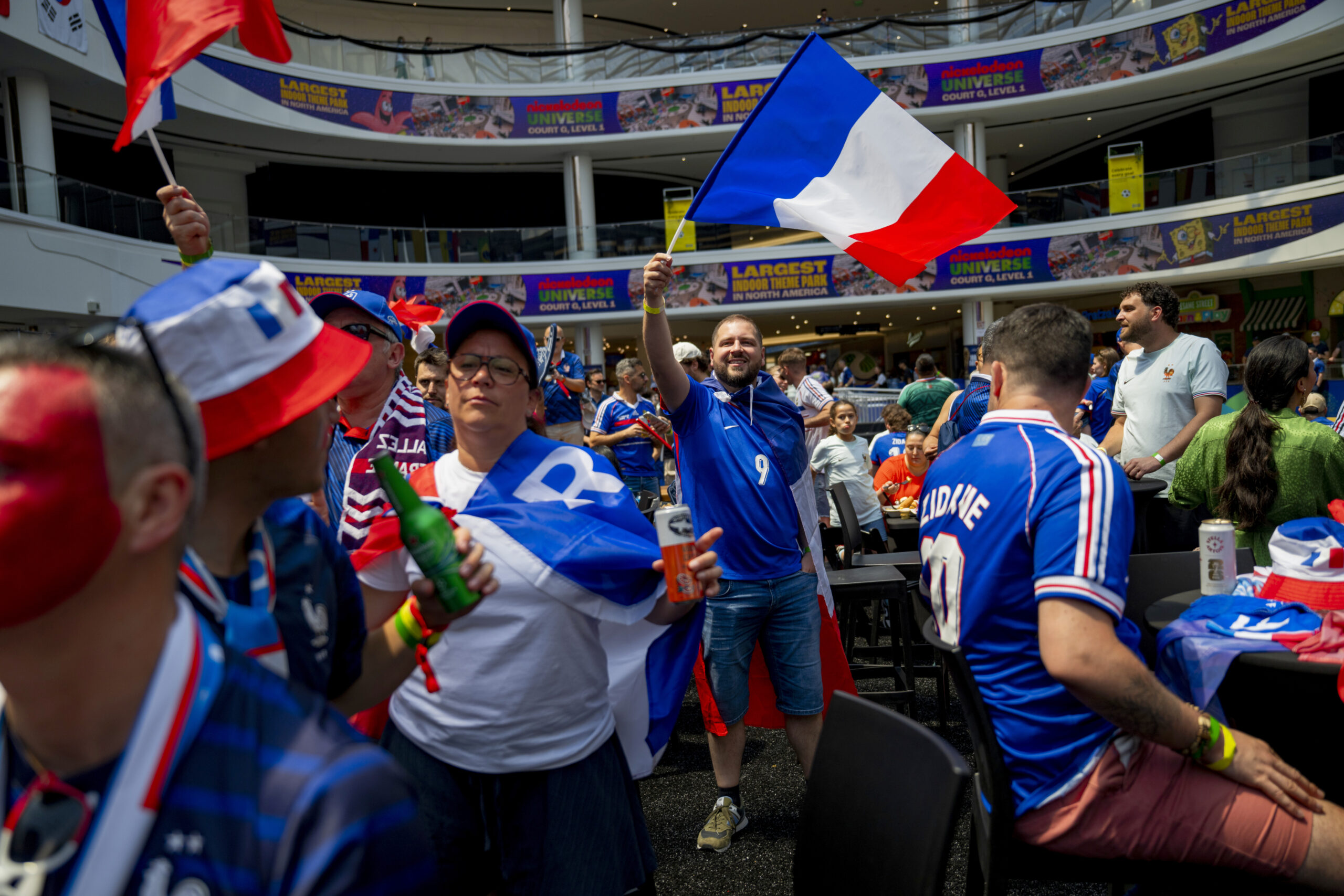
    Later in the evening, French fans packed into The Good King Tavern in Queen Village to watch their side face Iraq.

    The French bistro’s bar, which has just one TV, was at capacity by 4:15 p.m., leading the restaurant to stage an impromptu opening of its upstairs wine bar, Le Caveau.

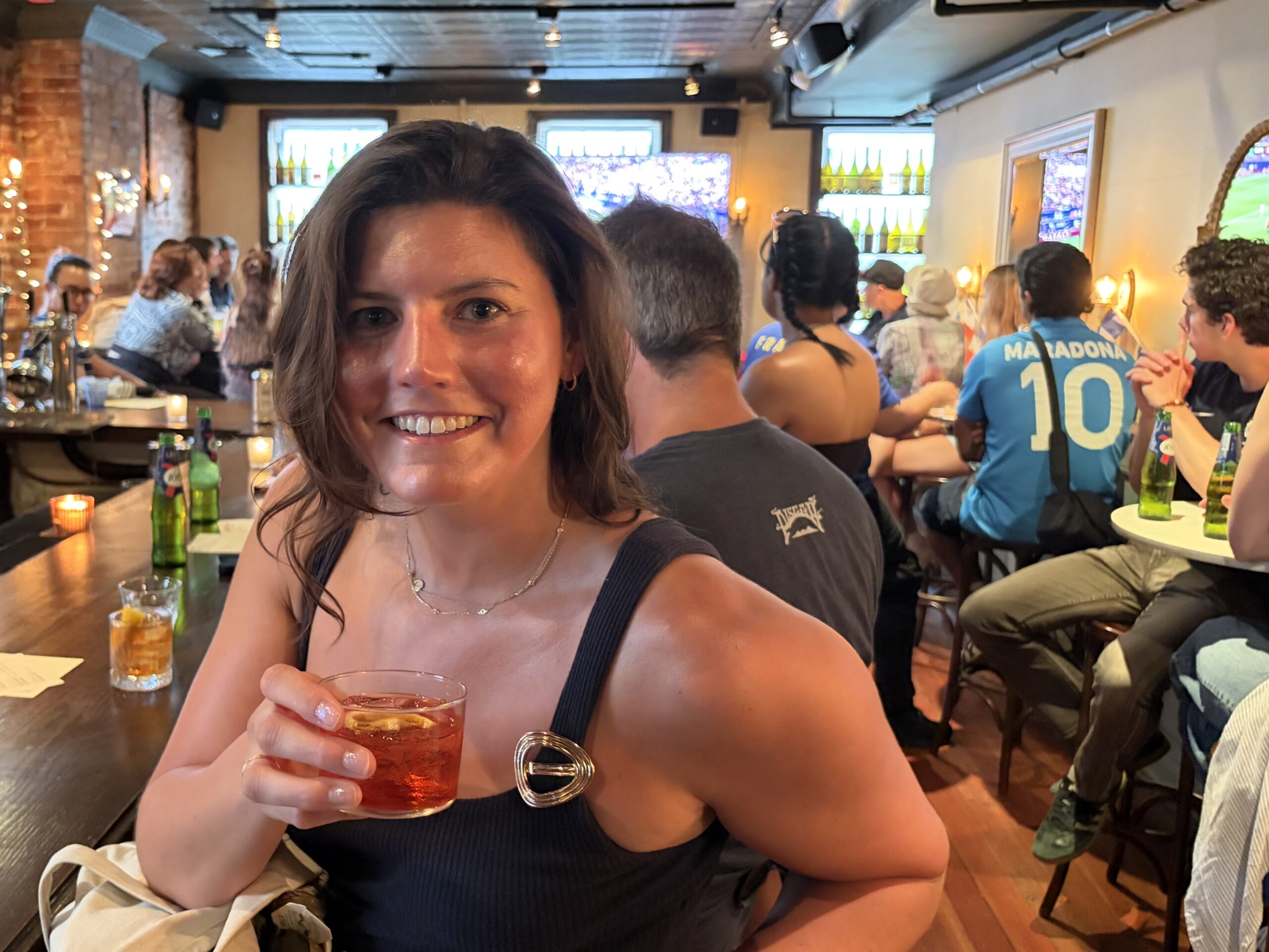
    Kim Krzaczek was one of the French fans who sat at the bar turned toward its TV as the match kicked off. The Philly native became a soccer fan through attending World Cup watch parties for previous tournaments at Bardascino Park in East Passyunk.

    Kim Krzaczek sits at Le Caveau wine bar during France-Iraq.

    “That was when I started getting into it, ‘cause it was a fun, neighborhoody vibe,” Krzaczek said. “It was nice to do something different, especially during the summer.”

    Krzaczek spent her 37th birthday at the bar cheering on France. She described herself as a Francophile and knows the language, but has not been to France.

    Krzaczek did see one of its biggest clubs, Paris Saint-Germain, play in the UEFA Champions League during a trip to Barcelona in October.

    “I was just astonished when I was there,” Krzaczek said. “It was like Philly when I was there. There’s people climbing everything. So I was like, ‘Oh, I guess I could do this.’ That was pretty much it for me.”

    The French bistro roared as Les Bleus took a 1-0 lead over Iraq behind a 14th minute goal from Mbappé.

    A line out the door at The Good King Tavern. The French bar — with only one TV — was full up when I arrived at 4:15 and has only gotten more crowded since.

    German bar Brauhaus Schmitz, on the other hand, still has plenty of room minutes before kick.

    [image or embed]

    — Owen Hewitt (@oyounothing.bsky.social) June 22, 2026 at 4:55 PM

    Around the corner on South Street, the larger Brauhaus Schmitz hosted a smaller contingent of French fans that were glued to the German bar’s many televisions. And back in Chinatown, supporters stood shoulder-to-shoulder in Lion Sports Bar’s narrow barroom to watch the match.

    Those who stayed through the halftime rain delay were treated to two more goals from the French, including another from Mbappé that tied Miroslav Klose as the second-highest scorer in the history of the men’s World Cup. Messi, who scored both of Argentina’s goals in a 2-0 win over Austria, holds the record with 18.

  • The USMNT-Paraguay game was almost the most-watched soccer broadcast in U.S. history

    The USMNT-Paraguay game was almost the most-watched soccer broadcast in U.S. history

    Updated on June 22: Telemundo had to restate its viewership figures because of what it called “Nielsen’s revised data.” As a result, the network’s audience measurement fell to 7 million viewers.

    On the same day, a Fox spokesperson confirmed to The Inquirer that the network’s viewership figures are for broadcast windows longer than just the game itself. As such, the spokesperson said the “match window” number, to use the industry term, was 19.9 million viewers.

    That means the combined number in the record book is now 26,900,000 viewers. That total ranks No. 3 all-time among soccer broadcasts in the United States, behind the 2014 men’s World Cup final and the 2015 women’s World Cup final.

    Our original story follows below.

    The final viewership numbers from the U.S.-Paraguay game landed on Tuesday, and they revealed a new record for the most-watched soccer game in American broadcast history.

    Fox reported an audience of 18.037 million in English and Telemundo reported 9.5 million in Spanish, with both networks counting their TV and online audiences. The combined total of 27,537,000 broke a mark that had stood since the 2014 World Cup final, which drew a reported 27,314,274 viewers across ABC, Univision, and their respective streaming platforms.

    Philadelphia was Fox’s No. 9 ratings market for U.S.-Paraguay, a network spokesperson told The Inquirer.

    The combined audience was bigger than that of the decisive Game 5 of the NBA Finals on ABC, 24.5 million viewers according to ESPN. The series averaged 20.6 million viewers per game.

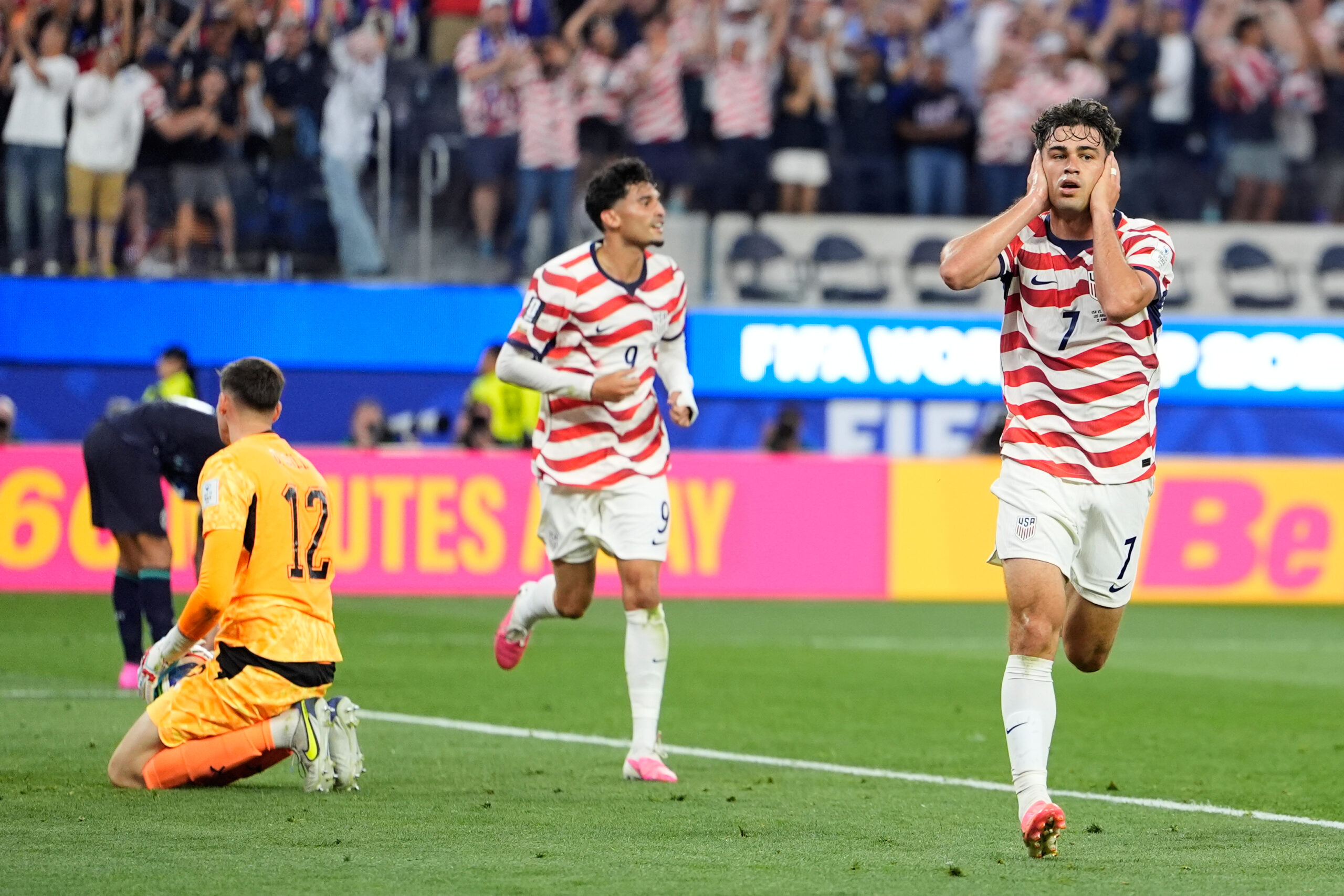
    Gio Reyna (right) scored the final goal in the U.S.’ 4-1 win over Paraguay.

    The peak audience of Game 5 was 33 million viewers. Fox’s peak for U.S.-Paraguay was 21.526 million and Telemundo’s was 7.1 million, for a combined 28.626 million.

    U.S.-Paraguay isn’t the only game that has drawn a big audience. The Mexico-South Africa tournament opener last Thursday had a combined 20.586 million viewers, with Fox drawing 7.186 million across all platforms and Telemundo drawing 13.4 million. The latter number is the biggest ever audience for any soccer game on a Spanish-language network.

    Mexico-South Africa was the most-watched World Cup group stage game not involving the U.S. — for all of two days. Saturday’s Brazil-Morocco game in the Meadowlands beat it, drawing a combined audience of 21.219 million: 10.019 million on Fox and 11.2 million on Telemundo.

    Those two contests now stand as Nos. 10 and 11 in the all-time rankings. Sunday’s Netherlands-Japan game also makes the top 20, with 17.238 million reported viewers: 8.838 million on Fox and 8.4 million on Telemundo.

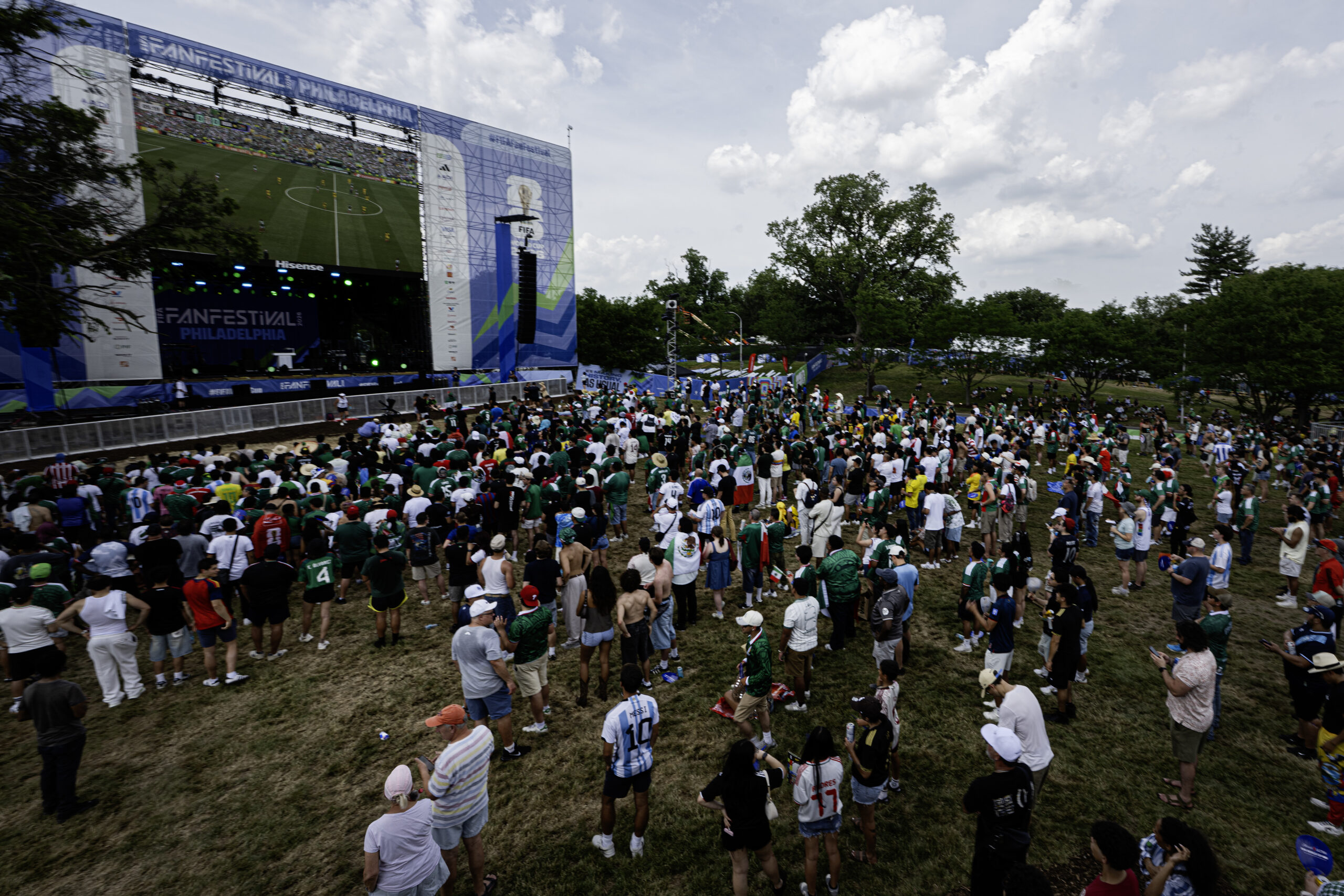
    Fans watching the Mexico-South Africa game on the big screen at Philadelphia’s World Cup fan fest on Lemon Hill.

    Of the 12 games with publicly reported data so far, nine have reached combined audiences over 10 million viewers. One of them is Philadelphia’s first World Cup game, Ivory Coast vs. Ecuador on Sunday, which drew 13.473 million viewers across FS1 (4.273 million), Telemundo (9.2 million), and their online streams.

    Based on publicly-available data, the record men’s World Cup audience on an English-language network remains the 2014 U.S.-Portugal game, which drew 18.71 million viewers on ESPN. The overall soccer record in English is the 2015 women’s World Cup final, where Fox’s primetime broadcast of the U.S. triumph drew 25.632 million viewers.

    For over a decade, The Inquirer has compiled a database of the most-watched soccer broadcasts in U.S. history. Click here to see the full list.

  • The next big question for the USMNT: Managing yellow cards in the World Cup group stage finale

    The next big question for the USMNT: Managing yellow cards in the World Cup group stage finale

    IRVINE, Calif. — Until now, the U.S. has played only one game in a World Cup that didn’t matter in the standings: in 1998, when it was eliminated from advancing before the group stage finale.

    On Thursday, the total will rise to two. But this time, it will be because the Americans have already clinched first place.

    That makes for a very different vibe, not just from this team’s past but from most teams at any World Cup. It also makes for a serious question: How many regulars should rest, and how many should play to stay in rhythm?

    This was the question of the day as the Americans returned to practice on Monday.

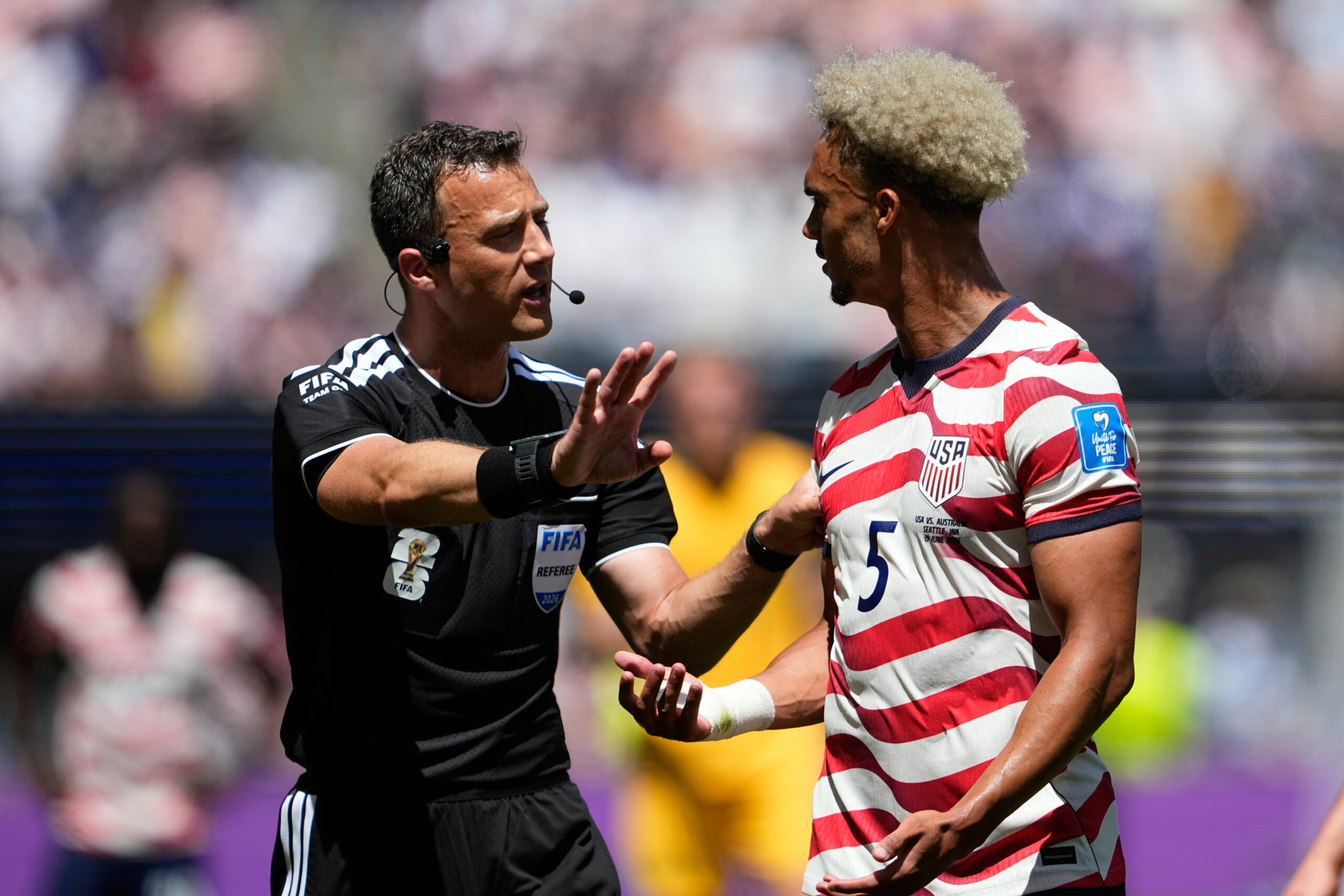
    Antonee Robinson (right) is one of four U.S. players at risk of a suspension for yellow card accumulation.

    Common sense says players on yellow cards should sit, because if they get booked again they’ll be suspended for the round of 32 games when they’re really needed. Those are defenders Chris Richards and Antonee Robinson, midfielder Tyler Adams, and striker Folarin Balogun. All four are big-time players.

    We won’t hear from manager Mauricio Pochettino until Wednesday. We might hear from Richards, Robinson, or Adams before then. We did hear from Balogun on Monday, when the U.S. returned to practice. He and Alejandro Zendejas met with the media.

    “I want to play every game — it’s the sort of player I am,” Balogun said. “It’s what’s got me to where I am, being available. I think the most important thing for a professional athlete in any sport is to be available, and I’m no different.”

    But he quickly turned from there to pragmatism.

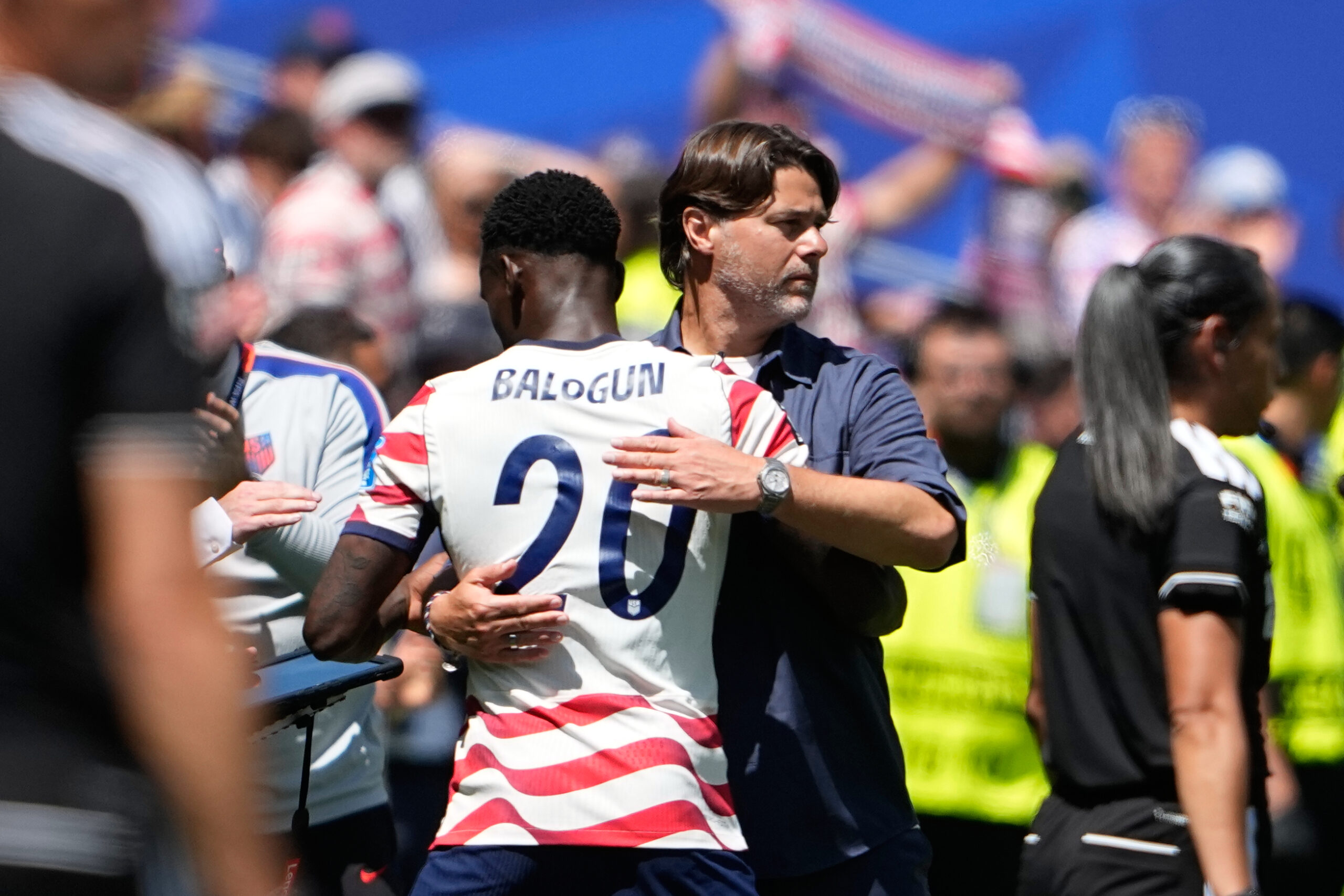
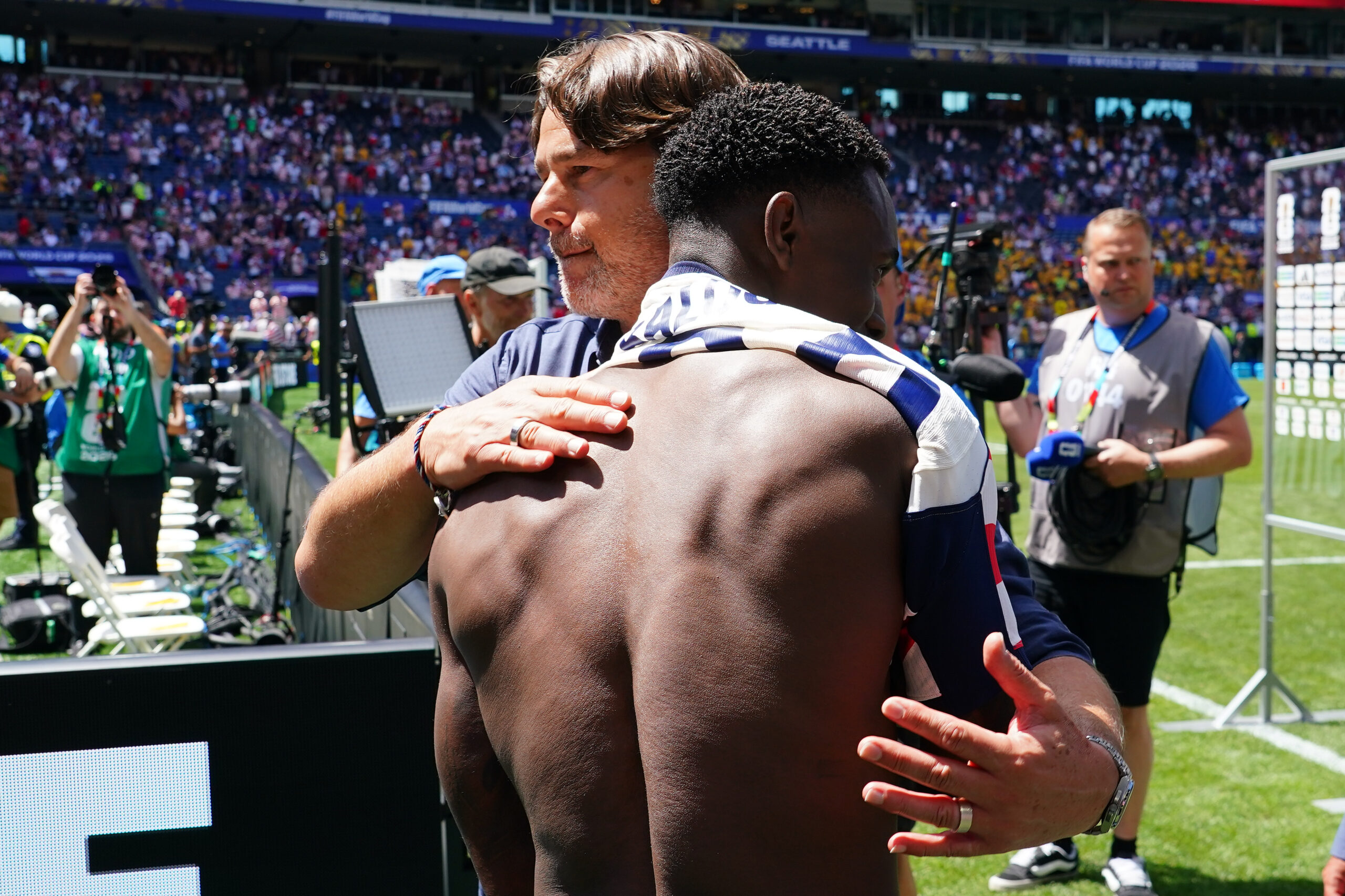
    Folarin Balogun (left) giving Mauricio Pochettino a hug after the U.S.-Australia game.

    “So of course I want to play, but it’s also important to be smart,” he said. “I wouldn’t want to pick up a yellow card and miss the round of 32.”

    Balogun also said the team’s overall focus for the game remains on winning.

    “The most important thing is to go out there and win,” he said. “Regardless of whatever team the coach decides to play, the objective and the aim is to go out there and win. Three wins from three games, it’s an opportunity to create history, and to put a positive message out there — not just for ourselves, but toward other teams.”

    Pulisic returns to practice

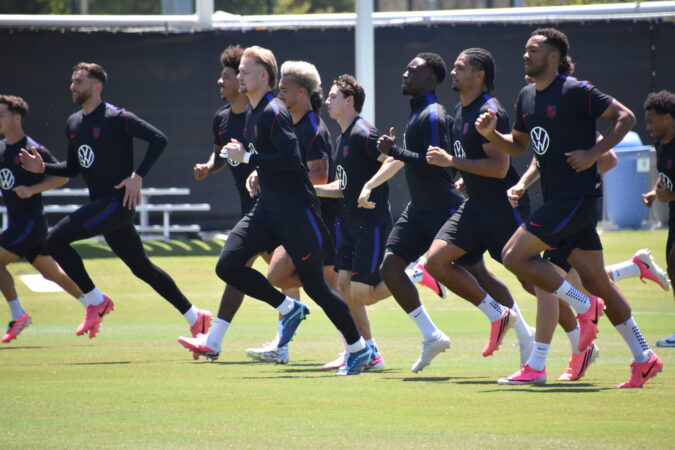
    Star playmaker Christian Pulisic was back on the field in practice for the U.S. men’s soccer team on Monday, taking part for the first time since before the tournament opener against Paraguay.

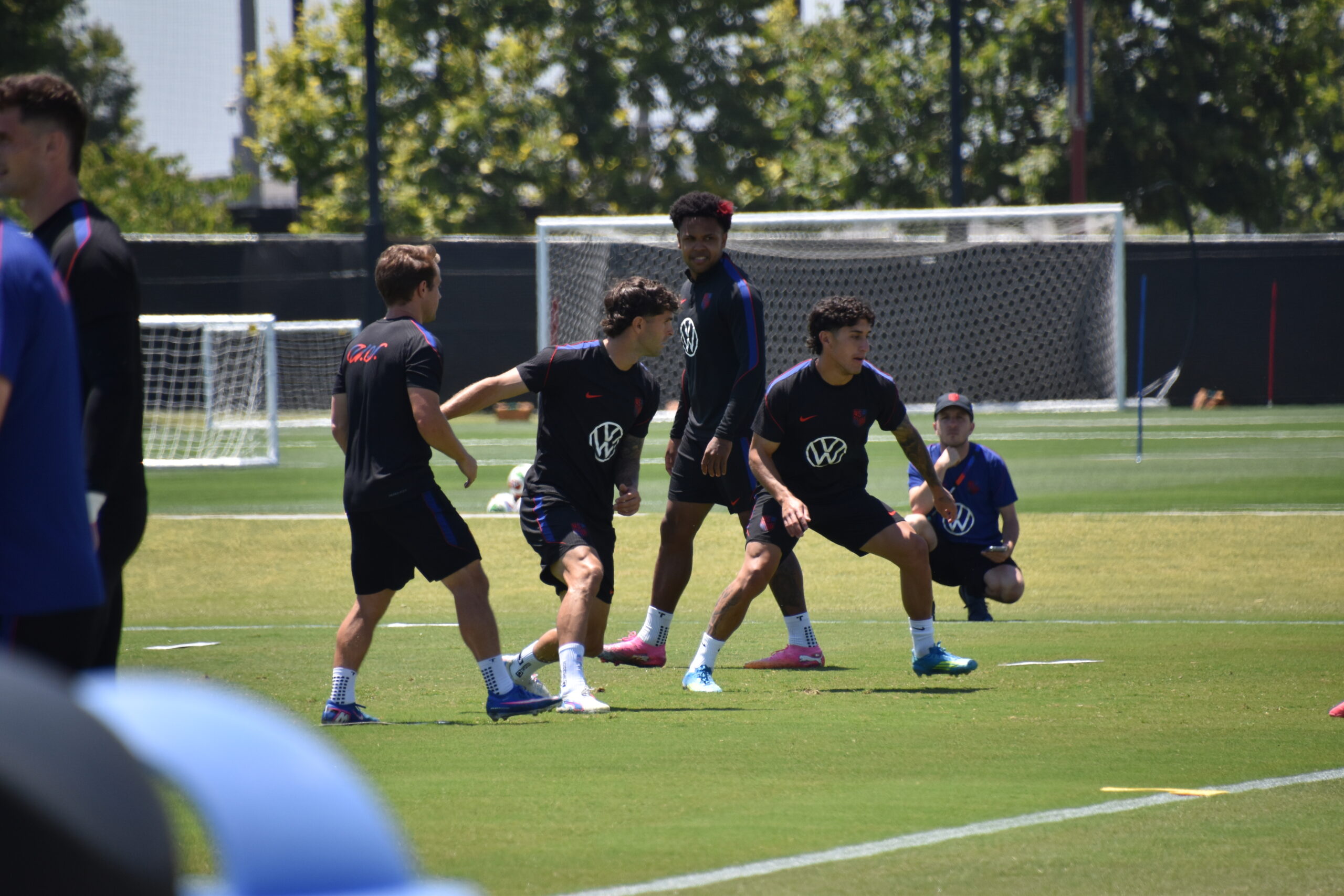
    Christian Pulisic (second from left) in a drill during Monday’s practice.

    That was a good sign as the Hershey native finishes recovering from the calf injury that kept him out of the second group stage contest against Australia. But it’s just one step, and practice was open to the media only for the first 15 minutes. So we don’t know what happened after that.

    Whether Pulisic should play against Turkey is another debate. If he’s fit, a few minutes could do him good, but it will be a risk. For now, it was a good sign to see him making progress.

    The other injury news is that midfielder Cristian Roldan is day to day with a muscle strain. If he can’t play against Turkey, that will leave the U.S. shallow.

    Immigrants’ success stories

    The diversity of the United States means players come from a variety of backgrounds and locations. That thread links Balogun, who was born in New York to Nigerian parents and grew up in England, to Zendejas, who grew up on both sides of the Texas-Mexico border in El Paso and Juárez.

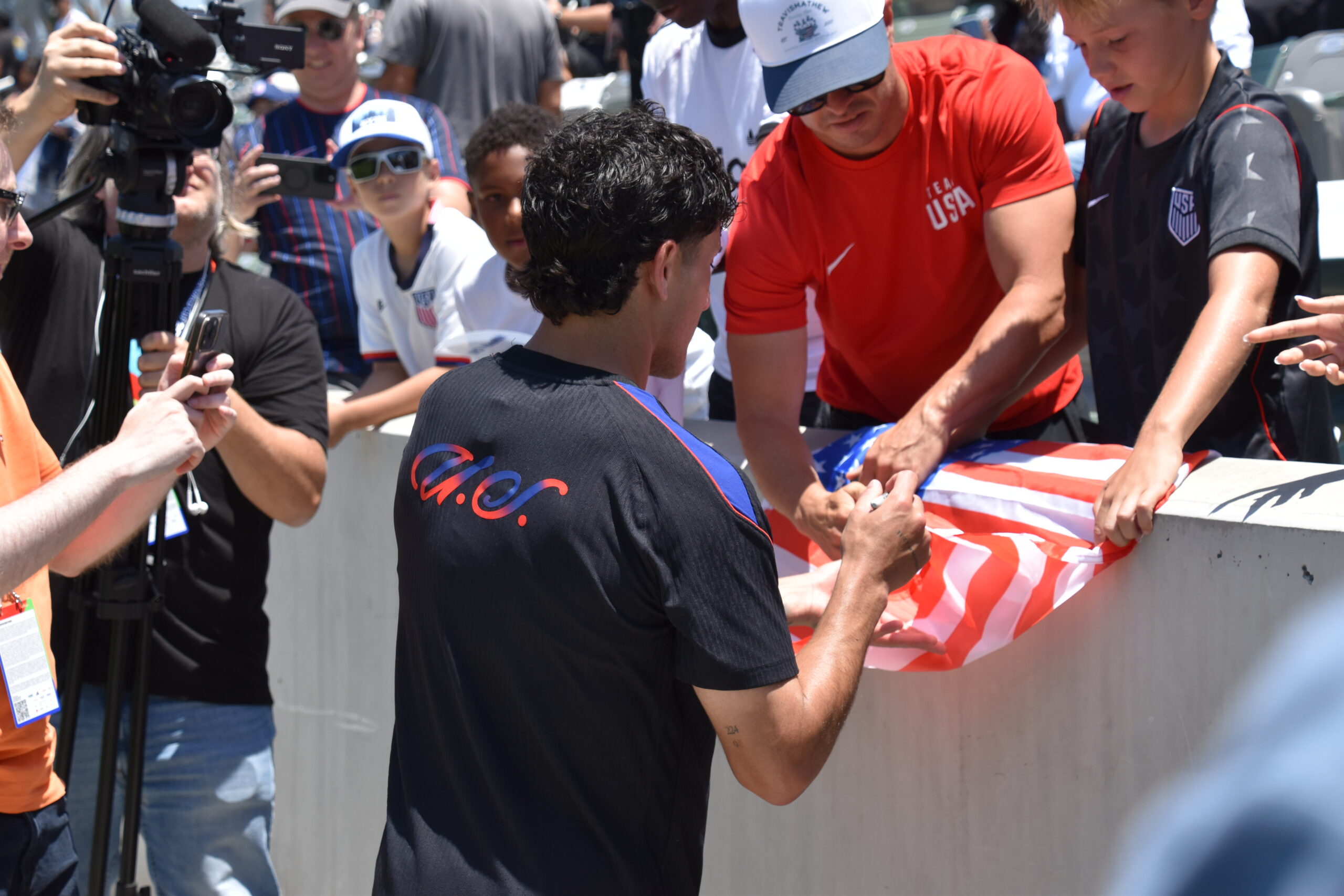
    Alejandro Zendejas autographs a fan’s American flag during the U.S. team’s open practice at the start of their World Cup training camp in Irvine.

    “It is truly an honor and a source of pride to be here representing the entire Latino community,” said Zendejas, who shares that honor with other players including Ricardo Pepi and Roldan. “It’s a dream come true — for [them] just as much as for me — to be here and show people that dreams can become reality.”

    Balogun called himself “proud to be American and to represent America.” He knows well that, as he said, “the story has picked up a bit of attention, but I think it’s expected. We’re at the World Cup, and it’s an opportunity for the fans to get to know more about us as players.”

    Zendejas, by the way, wore an eye-catching 1994 World Cup throwback hat as he spoke. His sponsorship deal with Adidas got him it for free; it costs $40 for the rest of us.

    “I don’t know much about this World Cup — I should but I don’t,” he quipped, knowing that tournament was played four years before he was born.

    Alejandro Zendejas did his turn with the media wearing a very sharp 1994 World Cup throwback hat.

    He admitted adidas gave it to him, and it’s a modern recreation, not an original.

    But it still looks good.

    [image or embed]

    — Jonathan Tannenwald (@jtannenwald.bsky.social) June 22, 2026 at 10:45 AM

    Antonio Freeman stops by

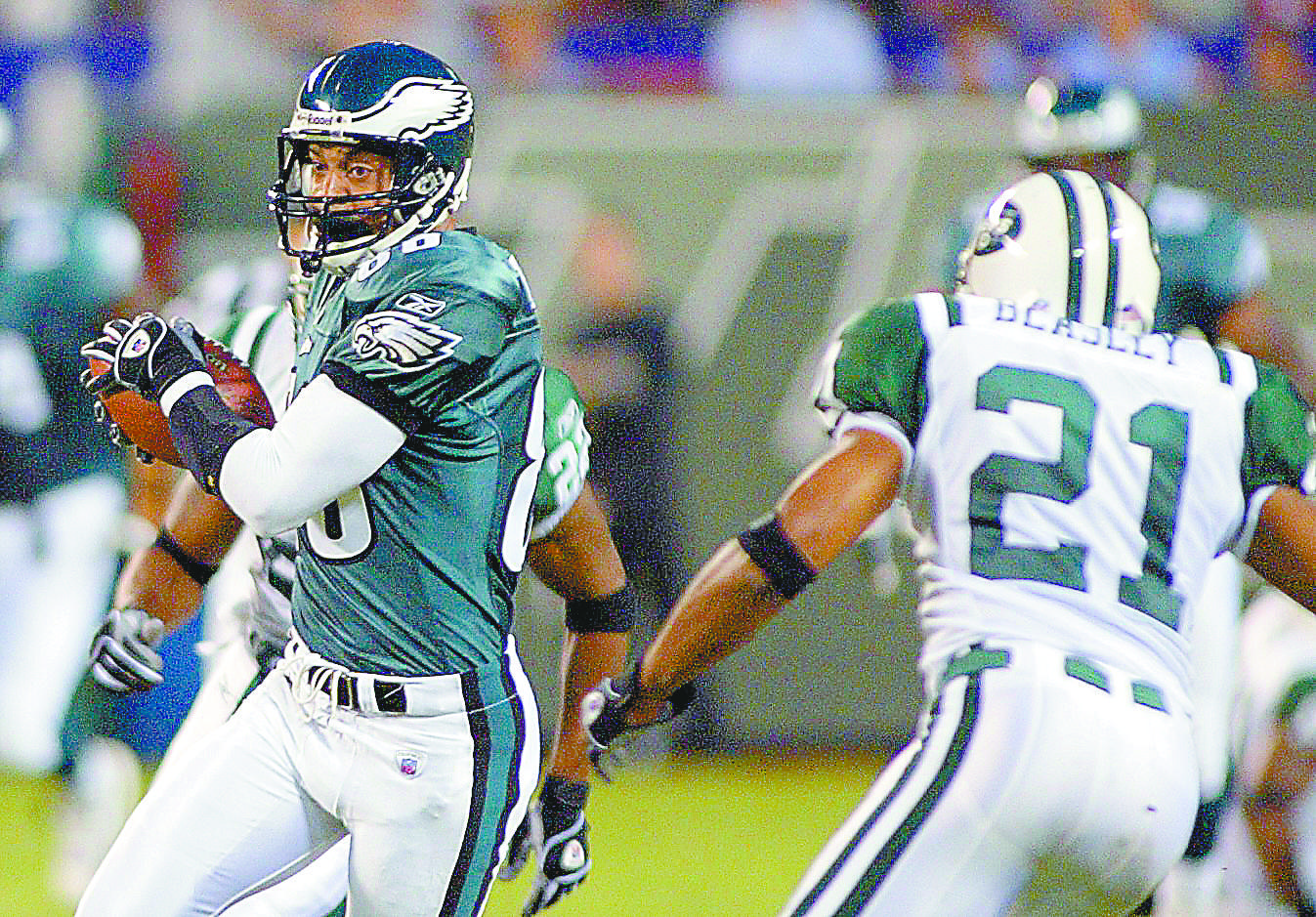
    Alex Freeman’s fast rise with the U.S. team has no bigger fan than his father, former Eagles and Green Bay Packers wide receiver Antonio Freeman. When Alex scored the game’s second goal against Australia, he achieved the rare feat of scoring a World Cup goal in a stadium where his father scored two touchdowns 30 years earlier.

    Antonio stopped by Monday’s practice to talk with the media and share his joy.

    “I’m sure Alex has heard enough from other people about my success and my moments,” he said. “I don’t really talk about those moments too much. But it was definitely a full-circle moment. to just have a father-and-son combination in any sport have an impact on a game in the same stadium, same state, it’s pretty amazing.”

    He called it “a credit to all the work that Alex has put in, the commitment that he’s made. This is his ride, and I’m just happy to be his biggest supporter.”

    Antonio Freeman stops by #USMNT practice and meets the press:

    [image or embed]

    — Jonathan Tannenwald (@jtannenwald.bsky.social) June 22, 2026 at 12:25 PM

    And what was the father’s message to his son after the game?

    “He just continued to amaze me, and that’s all it is,” he said. “When I see him, it’s like, ‘Yeah, boy, that’s what I’m talking about!’ — that’s our little thing. But just keep working, Alex, keep being you. People love who you are, don’t change, just keep working hard.”

    He also praised soccer’s growth in the United States, saying this World Cup “has really heightened the awareness in the U.S., and people from all walks of life are getting involved, rallying behind the [U.S.] team.”

    Antonio Freeman with the Eagles in a 2002 game against the Jets.
  • Philly has been called the ‘Paris of America.’ Here’s what French fans in town for the World Cup think.

    Philly has been called the ‘Paris of America.’ Here’s what French fans in town for the World Cup think.

    Some have called Philadelphia the “Paris of America.” Really.

    It might be hard for locals to wrap their heads around this title, but there is some truth to the comparison — mostly due to the cities’ similarities in architecture. France was in town on Monday to take on Iraq in the World Cup, so here’s a look at some of Philadelphia’s Parisian connections and what French fans think of the comparison.

    City’s architecture

    The Benjamin Franklin Parkway is a popular example of Philadelphia borrowing from the French. Finished in 1929, the Parkway was designed primarily by two Frenchmen, architect Paul Philippe Cret, and city planner Jacques Gréber. Their inspiration? Paris’s Champs-Élysées, a similarly grand avenue. They boast similar end points. The Champs-Élysées starts at Place de la Concorde and concludes with the grand Arc de Triomphe, while Philadelphians can spot the Philadelphia Museum of Art from City Hall, with Logan Circle along the way.

    After World War I ended, but before the signing of the Treaty of Versailles, Gréber hoped that the construction of Benjamin Franklin Parkway would bring in tourists just as the Champs-Élysées does.

    “I am glad to say that, if by this work the city of Paris may be enabled to bring its sister in America the inspiration of what makes Paris so attractive to visitors,” Gréber said in 1918. “It will be the first opportunity of Paris to pay a little of the great debt of thankfulness for what Philadelphia and its citizens have done for France during the last three years.”

    Additionally, Cret was the mind behind the Benjamin Franklin Bridge and redesign of Rittenhouse Square. City Hall also looks like it could have been picked up in Paris and plopped down in Philadelphia as it was built in the French Second Empire style. At Logan Circle, the Central Library of the Free Library of Philadelphia and the former Family Court building are of similar style to structures flanking the Place de la Concorde.

    Along the Parkway is the Rodin Museum, which holds one of the largest collections of Auguste Rodin’s sculptures outside Paris, including The Thinker and The Gates of Hell.

    Social media influencers have traveled to Philadelphia and Paris to show off the cities’ structural similarities. One influencer, who filmed various picturesque locations under Philadelphia, wrote, “sooo you’re telling me we’re not in Paris?”

    Outside of architecture, the two cities also share history. Benjamin Franklin was a noted Francophile, traveling to France on many occasions. Famously, as a diplomat during the American Revolution, a 71-year-old Franklin convinced the French to support the Continental Army’s wartime efforts.

    With all of those connections, it should be no surprise that the Michelin Guide named Philadelphia the “Frenchest American city” in 2023, beating out New Orleans for the title.

    “The history of Philadelphia is closer to the French history and with those architects that developed special aspects of the city, it’s introduced in a different scale that you don’t have in New Orleans,” Michelin Guide editor Philippe Orain previously told The Inquirer. “You will feel closer to France in Philadelphia than in New Orleans.”

    “Frenchest city in the U.S.”

    For the most part, French fans in Philadelphia for Monday’s game seemed to agree.

    “The architecture looks quite French,” said French fan Tao Taumas, pointing to City Hall on Monday. “Yes, a lot, and we are living in Montreal now, and it looks exactly like the French part of Montreal.”

    Vincent Magardeau, who traveled to Philadelphia with Taumas, did not fully agree with his friend’s conclusion.

    “I’m pretty surprised that you say that,” Magardeau said after hearing of Philadelphia’s similarities to Paris. “But now that you say it, you can see the architecture here and there, but I wouldn’t say that this is the most French city that I could see.”

    Gabriel Savinaud, who “never heard about anything in Philadelphia,” arrived in the city early Monday morning after staying in New York City. A local advised Savinaud to try a soft pretzel before he leaves, so he headed to the Philly Pretzel Factory near City Hall before the game. Savinaud, despite having limited time to explore, definitely saw the similarities between the two cities.

    “The East side of the U.S. is definitely more European than the West side,” Savinaud said. “I’ve been to San Francisco as well, not European. No, it’s not. So [Philadelphia] is definitely more European and Parisian at some points. You’ve got tiny streets with lots of people making noise with their cars. Very similar, more similar to Paris than the West side.”

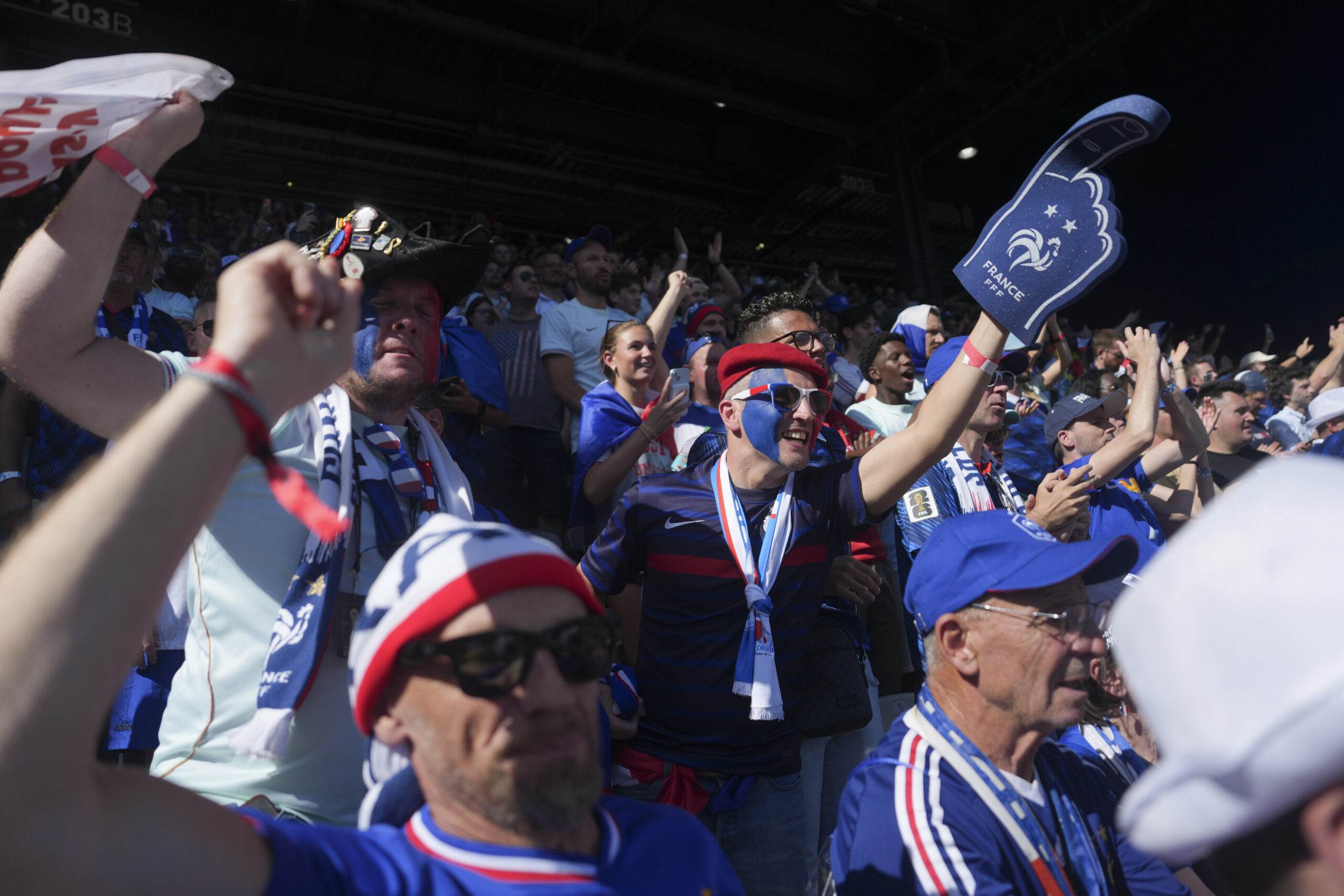
    Many French fans explored Center City before taking the Broad Street Line to South Philadelphia for the game. For a moment, before it began to rain heavily, “Les Bleus” had taken over downtown.

    “You can see the vibe of French people here,” Taumas said. “With the World Cup, I would say it’s a French city, because everyone is wearing French jerseys, so you might be the Frenchest city in the U.S.”

  • Can the USMNT really win this World Cup? Probably not, but the players are allowed to believe it.

    Can the USMNT really win this World Cup? Probably not, but the players are allowed to believe it.

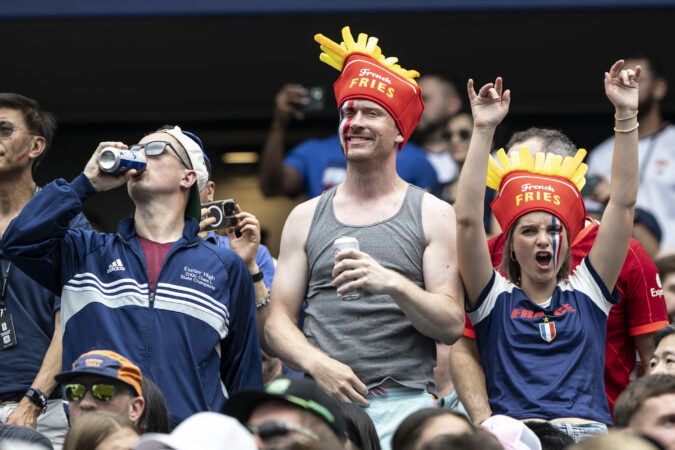
    IRVINE, Calif. — On any given day in Seattle, there are a lot of things in the air: the breeze off Puget Sound, the seagulls that steal your french fries, and other substances for which the city is well-known.

    It wouldn’t be fair for an outsider to ask if the last of those factored into the sudden outbreak of hype around the U.S. men’s soccer team. The atmosphere at Friday’s U.S.-Australia game needed no enhancement, with that crowd showing the nation and the world why Seattle’s soccer culture is the real deal.

    But something has caused people to start asking if the U.S. men can win this World Cup. So let’s answer it.

    No, this team is a long way from such a … height, let’s say.

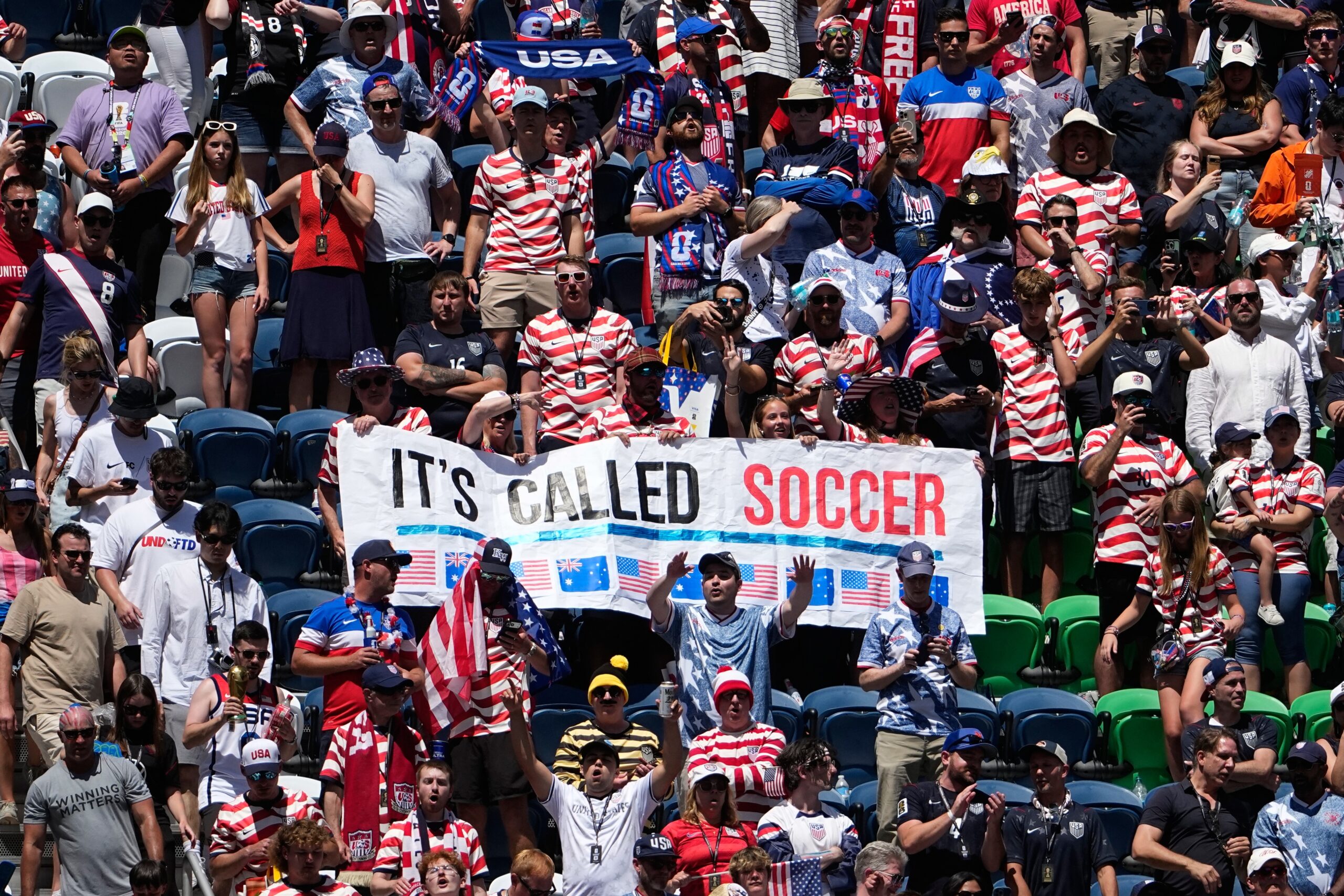
    A sign from U.S. fans at the game against Australia, with two teams that call the sport “soccer” instead of England’s “football.”

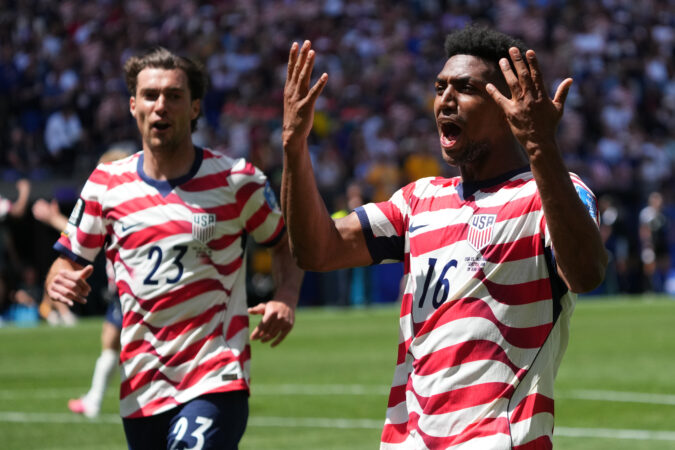
    Yes, the Americans have won two games in a men’s World Cup group stage for the first time since 1930. Yes, they have won their group for the first time since 2010, and clinched qualification for the knockout rounds with a game to spare for the first time in the program’s modern era, which started in 1990.

    But the teams they’ve beaten so far, Paraguay and Australia, looked the part of the 41st- and 27th-ranked teams in FIFA’s global standings, which they were when the tournament kicked off. The U.S., meanwhile, has done something that should be within reach for a No. 17 team with home-field advantage on the world’s biggest stage.

    When the U.S. faces Turkey in the group stage finale on Thursday in Inglewood, Calif. (10 p.m. Fox29, Telemundo 62), the hosts will again face a team ranked below them. Turkey is No. 22. How much will that actually prove, compared to a potential matchup with Belgium in the round of 16 or Spain in the quarterfinals?

    Even the first knockout game in the round of 32 could be a trap. Though the U.S. is already set to head to the Bay Area for a game on July 1, the team across the field won’t be known until the group stage ends. It will be the third-place team from group B, E, F, I, or J, depending on which eight of the 12 third-place finishers in the tournament advance.

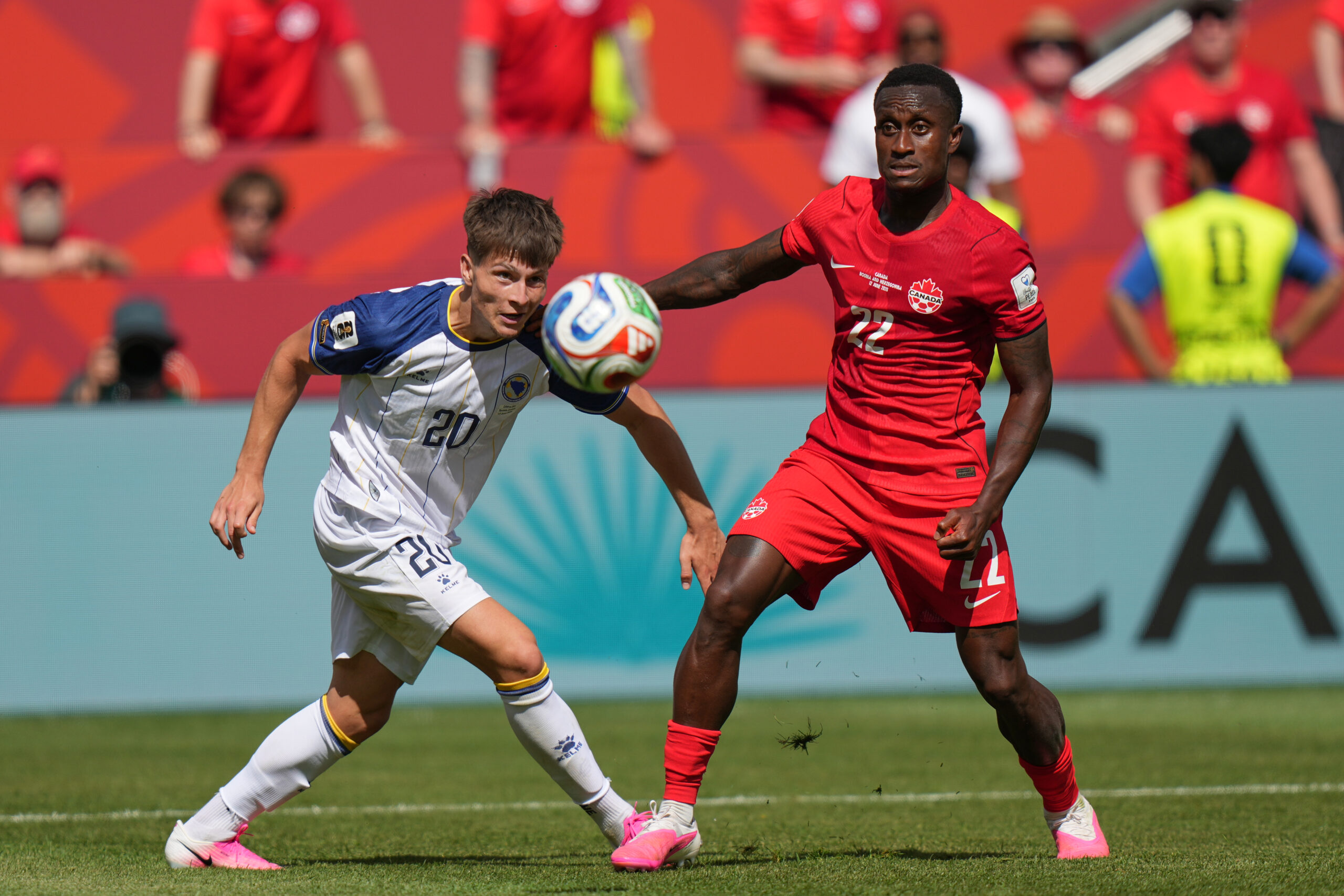
    A U.S.-Bosnia game would be a reunion for Bosnia’s Esmir Bajraktarević (left), who grew up in Wisconsin and played for the New England Revolution.

    The Athletic has a forecasting formula that projects Bosnia & Herzegovina, ranked No. 64, as the most likely candidate right now. As they’d say on “Let’s Make A Deal,” you take the offer right there. Upcoming games could put Ivory Coast, Ecuador, Japan, Sweden, Norway, or Senegal behind the other doors.

    But if it is Bosnia, it would still be a measuring stick, and not just because the U.S. men have won just one knockout-round game in their history (against Mexico in 2002).

    The Americans’ all-time record against European teams in World Cups is 3-14-7, and the only win of the modern era was against Portugal in 2002. The other two were against England in 1950 and Belgium in 1930. (Coincidentally, both games had heroes from Philadelphia, Walter Bahr and Bart McGhee.)

    Sometimes, the insistence on measuring American soccer against Europe is just a thing in the heads of fans and media. But the results record is still long and one-sided, even compared to other continents. The U.S. is 3-2-0 against teams from South America, 2-2-0 against teams from Africa, and 2-1-1 against teams from Asia.

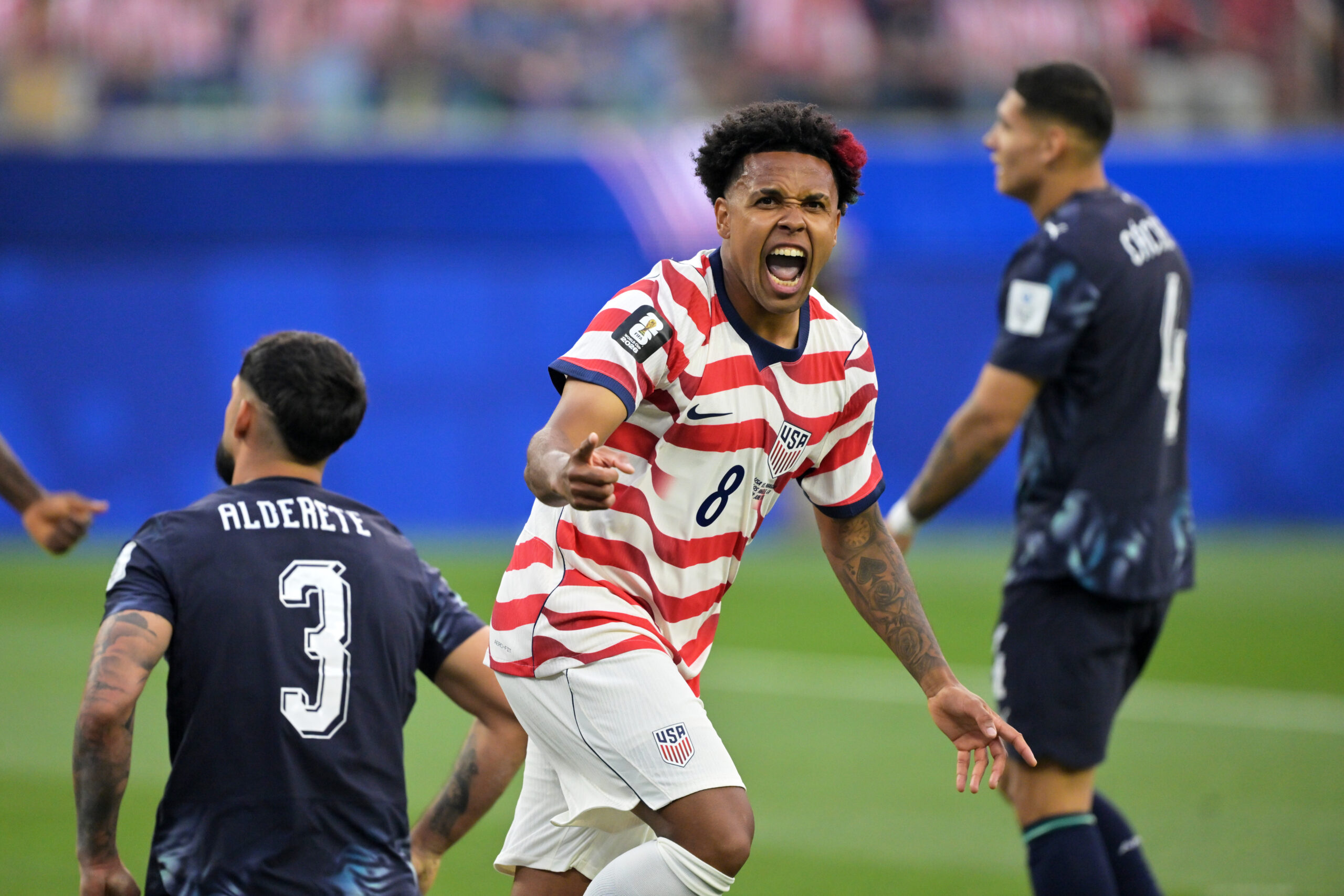
    Weston McKennie (center) and the U.S. men recorded their third World Cup win over a South American team by beating Paraguay.

    Why it’s different for the players

    If reading this makes you feel like it’s spoiling the party, sometimes that’s the job of a professional cynic. So we’ll balance it by saying the warning only applies to outsiders. It’s perfectly fine for the players and coaches to believe they can go all the way, because they need that belief along with everything else to win games on the biggest stage.

    “Obviously, we take it one game at a time, but every game, every tournament that we play, we want to win,” centerback Chris Richards said. “So I don’t think it’s ridiculous to say that we want to win it.”

    Nor was it outrageous, even if it was certainly headline-grabbing, when manager Mauricio Pochettino told The Athletic last week that “we should dream without limits.”

    “If I dream of touching the moon, of being up on the moon, maybe I can get close to the moon,” he said. “If I only dream of getting close to it, I’ll stay on Earth. It’s so powerful, isn’t it? Believing that you can do it.”

    Mauricio Pochettino embracing Folarin Balogun after the U.S.’ win over Australia.

    It had to help Friday. The players found out that morning, just a few hours before kickoff, that its catalyst, Christian Pulisic, wasn’t healthy enough to play.

    “We were all ready to prepare for this game, and whenever we heard that the coach gave us the lineup, the next player, the next man up was ready,” said Ricardo Pepi, who was that next man.

    “I think that we built the victory in our attitude,” Pochettino said after the Australia game. “I told the player: the first action when we started the game, did you see how Pepi and Balogun go to press?”

    We sure did, and it set the tone that led to the game’s first goal in just 11 minutes. Australia had to boot the ball out to beat it, and one of those clearances led to the throw-in that started the scoring play. The U.S. worked the ball around the back line, Antonee Robinson sprung Balogun down the left wing, Pepi charged up the middle, and Cameron Burgess put the ball in his own net.

    They didn’t let up, either, as physical as the game got. After winning the first game with style, the U.S. won the second with grit, as the teams combined for 28 called fouls and plenty more uncalled.

    How the Turkey game will go is impossible to know right now, with the U.S. already group winners and Turkey already eliminated. It’s the first game without qualification stakes for the Americans since 1998, when they lost their first two games and were eliminated before the third.

    Will Pochettino rotate his lineup a lot? It makes sense at first, but there are caveats. There’s a history of teams that rest players in their third game ending up rusty in their first knockout game, and this time there are six days between the second and third group contests — then another six between the round of 32.

    There’s a clear case to rest Pulisic and players on yellow cards: Tyler Adams, Robinson, Richards, and Balogun. If they get another booking in this game, they’re out of the round of 32 contest. But beyond them (and it’s a lot, for sure), Pochettino might want to keep the rest in a good rhythm.

    At least it’s a good problem to have. The results so far and the manner of earning them signal that the U.S. can make a run in this World Cup. But winning the title is a different question. That still feels too high of a task, and it will eventually become clear.

  • Four Frenchmen skipped work to go to the World Cup in Philly. They’re already planning to return for an Eagles game

    Four Frenchmen skipped work to go to the World Cup in Philly. They’re already planning to return for an Eagles game

    Eight years ago, when FIFA announced that the World Cup would be coming to the United States in 2026, a student in France felt a rush of excitement. He and his friends had been watching the international soccer tournament on television since they were kids.

    They’d never seen it in person. The last time their native country hosted the competition was in 1998, before all four Frenchmen were born. In the years since, they’d tried to make it to a game, but to no avail.

    Russia hosted in 2018, but the four friends were unable to get visas. Qatar hosted in 2022, but this time, they were attending different colleges, which made traveling logistically complicated. So, they looked ahead to 2026 and started saving money.

    A heavy France contingent was part of an announced attendance of 68,274 at New York/New Jersey Stadium for their first game of the World Cup.

    One man picked up extra work shifts at his Parisian brasserie. Another taught English lessons on the side. All four made a conscious effort to cut back on drinking and eating out.

    There was one problem. The men worked in upscale restaurants, and summers were extremely busy. The Parisians knew that they wouldn’t be able to get a few days off, let alone a few weeks.

    In the spirit of Ferris Bueller, the 20-something-year-olds decided to tell a white lie. And now, three years and $12,000 in savings later, they are in Philadelphia, enjoying everything it has to offer (unbeknownst to their employers).

    “Momo,” the Parisian waiter who organized this trip, participated on the condition that he and his friends’ last names would be omitted (out of fear of losing their jobs).

    It was a risk traveling here but one he says has been “absolutely” worth it. For more than a week, the Frenchmen have been exploring the city, rating each experience on a 1-to-3 scale.

    Eating through Philadelphia

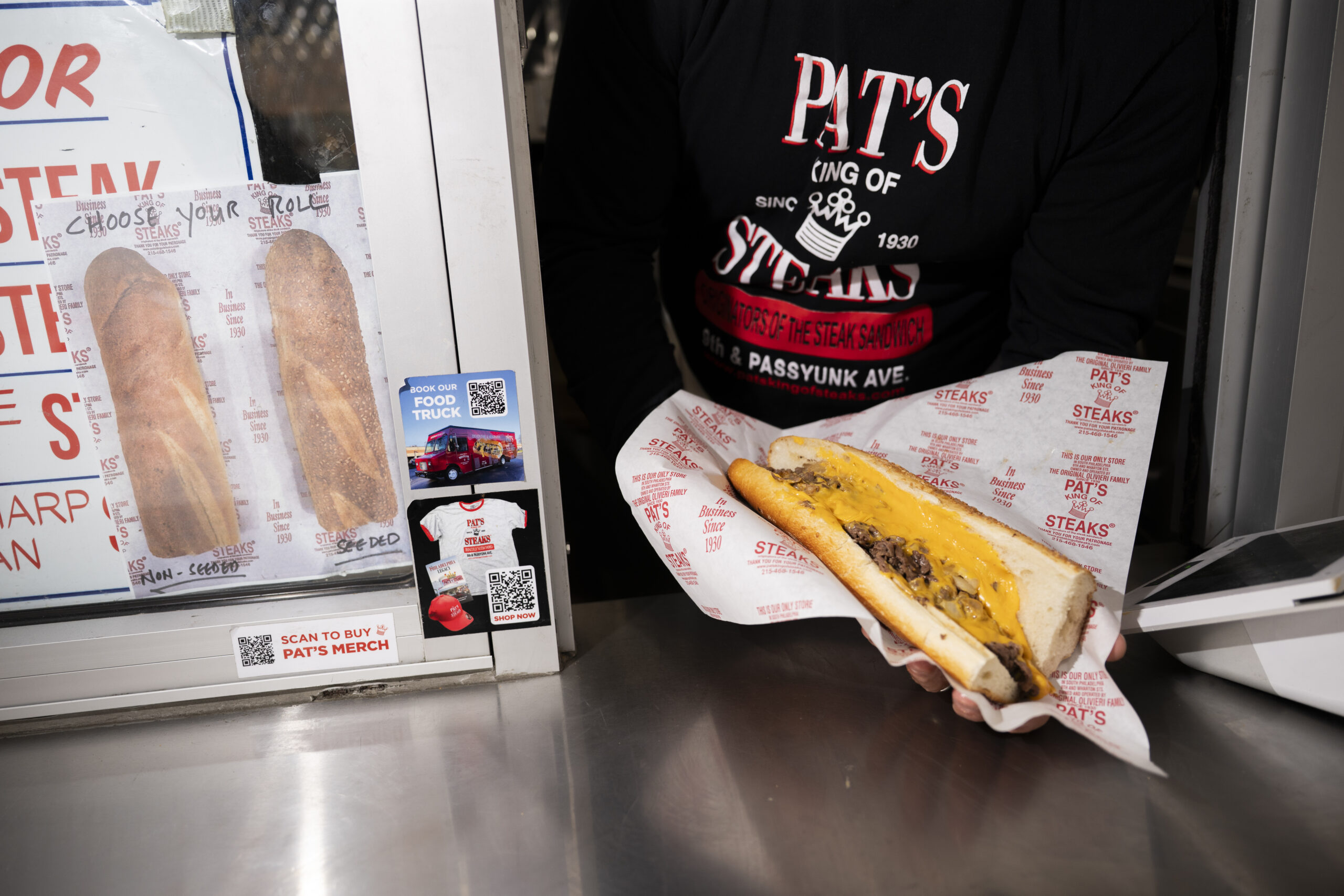
    Their first stop was Pat’s. Momo and his friends — Micha, Anto, and Titi — accidentally ended up at Geno’s. They asked customers where they could find Pat’s, to which he said they responded, “What the [expletive].”

    “We turned around and there’s the building,” Momo said. “And we’re like ‘Ohhhh.’”

    They each bought two cheesesteaks, with a soda and fries, to compare the difference. It was negligible. Pat’s edged out Geno’s in their rating system, just because they thought the “crown on the cup was cooler.”

    What did stand out were the condiments.

    For these four Frenchmen, a trip to Pat’s Steaks was on the menu which they gave the edge to over Geno’s.

    “We had what you call Cheez Whiz,” Momo said. “I’ve never had something like this. It was good. Interesting flavor. It’s not cheese, but it was good anyway.”

    He added: “Micha wanted me to mention that we enjoy ranch sauce. It is very good. We had this brand, Hidden Valley.”

    They’ve since gone to Ricci’s for hoagies. Grandma’s Pizza, Del Rossi’s, and Parc are also on the agenda (that is, if they can get a table at Parc).

    “Somebody told me what the hoagie was yesterday,” Momo said. “I had never heard hoagie. So, I got the hoagie today. It was good hoagie, I think it was Italian hoagie.

    “We gave Ricci’s a 3 [rating]. It was unique. There’s nothing Italian about it. But it was so good. The sandwich itself, you’d never find it in Italy, but it was so unique that we just enjoyed it. So we gave it three stars.”

    This is a substantial amount of food — and the portions are much bigger than they are in France — but the Frenchmen are quickly burning off the calories. They say they are walking approximately “five miles a day” to see the sights (and save some money).

    Exploring the city by foot

    The four friends are partially doing this out of necessity. They are staying at an Airbnb in South Philadelphia. SEPTA isn’t as comprehensive as the train system in Paris. But exploring the city by foot has led to some enlightening experiences.

    One of the first things they saw were “Philadelphia 250″ signs on buildings and billboards. After conversing among themselves, and coming up with no answers, Momo decided to ask a passerby.

    “We said, ‘What is 250?’ ” he said. “‘What are these numbers?’ I asked the man on the street, ‘Sir, what is 250?’ He was like, ‘Our anniversary this year, 250.’

    “And I was like, ‘Oh, OK, yes, yes, yes. I understand.’ Because then I remember the whole Revolutionary War stuff. They were telling me fireworks and baseball and all of this other American stuff that we’ve never seen before. So, we said we’ll stick around and we’ll go to it.”

    Fans of France were in full force during the team’s World Cup match against Senegal. They head to Philly to face Iraq at 5 p.m. Monday.

    Other areas of confusion have included Uber delivery robots (“in Paris, we just have guys on mopeds”) and knowing where you can and cannot smoke a cigarette.

    The smoking alone has led to some interesting encounters. Last Sunday night, while at dinner in Fishtown, the Frenchmen tried to take a smoke break outside a restaurant.

    They were promptly told to relocate, and met another local who had been told the same. They started talking about the Eagles — Momo and Micha want to buy a jersey — and he gave them some recommendations.

    A few minutes later, they said goodbye, and the man signed off with a “Go Birds.”

    “And I was like, ‘Go Birds?’” Momo said. “And he’s like, ‘Go Birds.’ I thought he meant pigeons or seagulls. I didn’t know he meant Eagles.

    “He’s like, ‘People say Go Birds all the time here.’ I was like, ‘Even when the Eagles are not playing?’ He said, ‘Yeah.’ That’s interesting. That would be like saying, ‘Allez Paris Saint-Germain’ when Paris Saint-Germain are not playing. Why would you say it now? Just say it later, when they are playing.”

    A ‘devastating’ encounter with Rocky

    While on another five-mile walk on Wednesday, the Frenchmen decided to see Rocky. They were very excited; Micha and Momo had both watched the film for the first time on their flight over. They weren’t expecting a statue, though.

    The four friends said that they thought Rocky was a real person, and assumed they were en route to meet a world-class boxer.

    Finding out he was fictional was “devastating,” in Momo’s words. But the visit still earned high marks.

    “Me and Micha gave Rocky statue a 10, even though 3 is the highest rating,” he said. “Because we just watched the movie, so we think, ‘Oh this is a 10 rating.’”

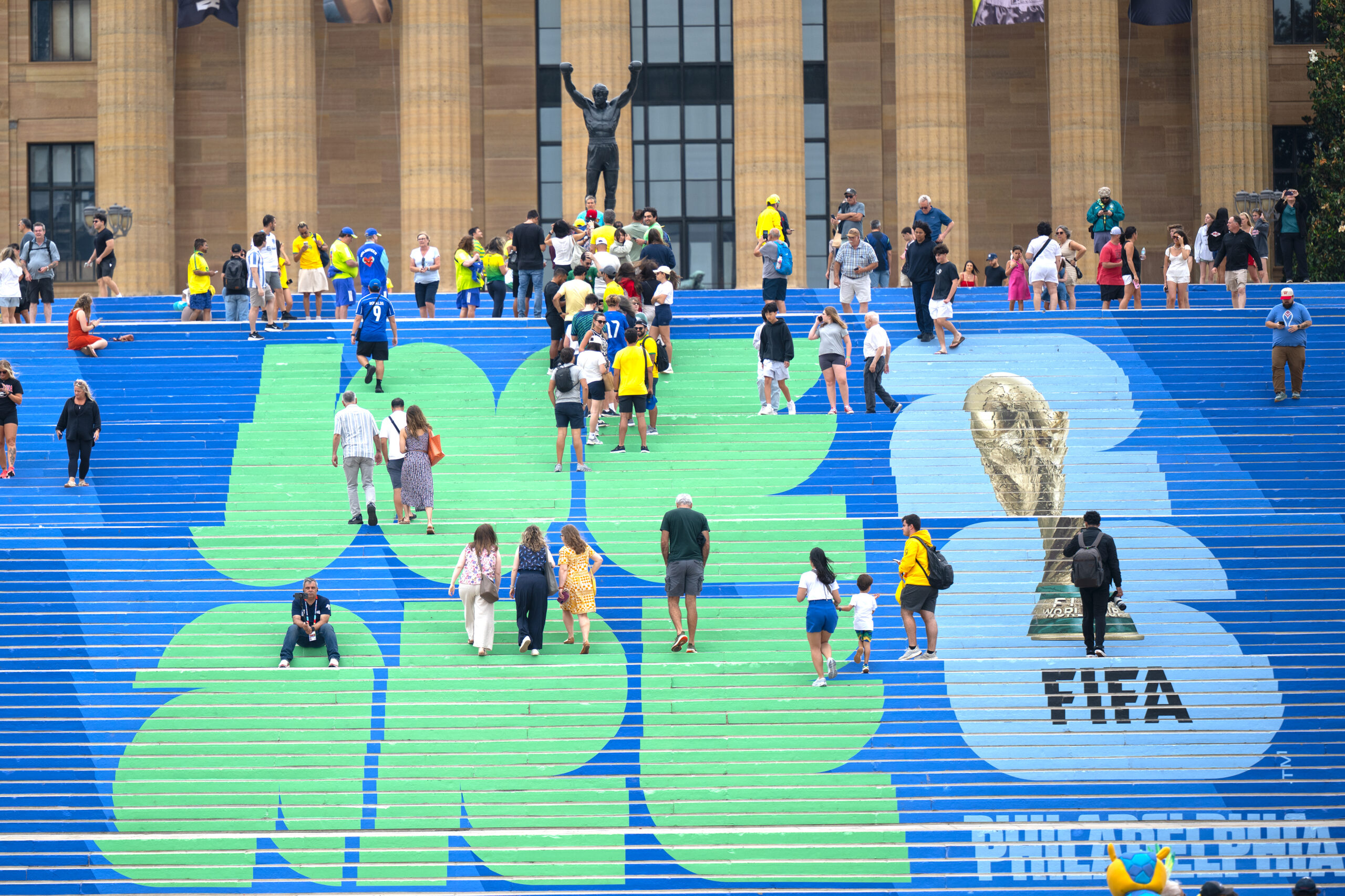
    Brazilian and soccer fans climb the steps of the Rocky statue, marked with a FIFA World Cup logo, on Thursday, June 18, 2026, in Philadelphia, ahead of Friday’s FIFA World Cup Group C match between Brazil and Haiti.

    While they were there, the Parisians heard about the Rocky curse. Unlike Ecuador’s fans, they will not be falling victim to it.

    “I said, ‘Sir, we’ve paid too many American dollars to come this far now to watch France lose to Iraq in Philadelphia, so that will not be happening,’” Momo said. “If people come here and I see it happen, I’ll take [the jersey] off myself. I’m not watching France lose here.”

    The four friends, who are staying through the Fourth of July when Philly will host its final World Cup game, have a lot of sights to see until then. On Saturday, they headed to Citizens Bank Park. This week, they’ll try to visit the Philadelphia Museum of Art.

    But the main attraction, of course, is Les Bleus, who will play Iraq at Lincoln Financial Field at 5 p.m. Monday (Fox 29). Anto found himself getting emotional about this earlier in the week.

    His friend asked what was wrong; Anto said he was in disbelief that the Frenchmen were finally on the precipice of their first World Cup.

    “Then I thought about it,” Momo said. “We’ve sacrificed going out with our friends to save up for this. We said on the plane ride, even if something goes wrong we’re going to try to enjoy, because we’ve been saving forever.

    “Even seeing France play one game at the World Cup … I’ll be telling my kids about that for the rest of my life. It’s something that I’ll never forget.”

    The four friends could’ve gone to other American cities. France has also played in New Jersey, and will play in Boston next Friday. But they chose Philadelphia, and are glad they did.

    “It’s funny,” Momo said. “If New York were a little cheaper, we would have gone to New York, and never gotten any of the experiences here. But I’m happy that we picked a city that I feel like most Europeans don’t think about.

    “They think about New York and Miami and LA. But now I can go home and tell people, ‘Yo, go to Philadelphia. It’s interesting.’”

    He added: “They say that people in Philadelphia are mean and rude. They say the same thing about Paris. It’s not true; the people are very helpful. I feel like people here would help you if you need help, just in the way that people in Paris would do the same. If you need help, people would help you.

    “I have not met one mean person. Super helpful and accommodating and hospitable to me and my friends.”

    The Frenchmen have enjoyed it so much that they are already planning their next trip, to the Linc in the fall.

    It’ll be tricky because the Eagles’ season overlaps with Paris Saint-Germain’s (and the four friends are season-ticket holders). But they’re determined to find a way to make it work.

    “We’ve heard of Eagles before,” Momo said. “I’ve heard of Jalen Hurts and Saquon Barkley, when he jumped over that football player. We will definitely come back. And if not for Eagles, just to explore the city.”

  • Strong storms and downpours Monday could affect Philly’s next World Cup match

    After 10 months of precipitation deficits, the region is expected to experience severe storms and much-needed rain on Monday — unfortunately, the worst might coincide with the timing of the France vs. Iraq World Cup match in South Philly.

    The strongest could arrive around the scheduled start of the match, at 5 p.m., said Brian Hurley, senior branch meteorologist with the federal Weather Prediction Center in College Park, Md.

    Given how daytime heating can add volatility to the atmosphere, with severe-thunderstorm threats in the Mid-Atlantic region, he said, in the late afternoon “we’re always asking for it.”

    The Storm Prediction Center in Norman, Okla., which issues those severe storm watches, listed a 2% chance of tornadoes, and an “isolated” twister can’t be ruled out, said Nick Guzzo, meteorologist with the National Weather Service in Mount Holly.

    The storm center listed a 15% chance of damaging straight-line winds with gusts approaching 60 mph.

    With the anticipated moisture capacity of the atmosphere on Monday, localized downpours that could wring up to 2 inches of rain in a hurry could set off localized flooding.

    “Not everyone will get them,” said Hurley.

    He said a round of heavy showers is likely in the late afternoon or early evening, and then it’s possible that rains will shut off, with even an outside shot at a rainbow.

    But more rain is likely later at night and during the overnight hours.

    Overall, forecasters said, just about every area of the region should get a half-inch of rain.

    Officially, Philadelphia has had 10 consecutive months of below-normal precipitation. All of New Jersey and Chester County are under state-declared “drought emergencies,” although conditions have been improving.

    Most of the rest of the region is in “moderate drought,” according to the interagency U.S. Drought Monitor.

    On the plus side, no more extreme heat is in the forecast, with highs topping out in the 80s through next Sunday.

  • When in New Jersey for the World Cup, do as the locals do. (Go to a mall.)

    When in New Jersey for the World Cup, do as the locals do. (Go to a mall.)

    EAST RUTHERFORD, N.J. — Benjamin Klevge, a soccer fan from Pamiers, France, had the front-facing camera open on his phone and a wide smile on his face. He crouched down, struggling to fit the Statue of Liberty into the frame.

    It wasn’t the actual Statue of Liberty, though. It was a 60-foot replica, encrusted with more than 1 million green jelly beans, towering above the entrance to a three-story candy store.

    And Klevge wasn’t in New York. He wasn’t even outdoors. He was roaming the gaping halls of the American Dream, a three-million-square-foot megamall in East Rutherford, N.J. He took more pictures in front of an indoor water park a few steps away as a Backstreet Boys song from the previous century played over the loudspeakers.

    “C’est magnifique,” he said, before switching to English. “It’s beautiful.”

    Fans who attended the opening match of this World Cup this month in Mexico City could wander a warren of neighborhood streets alive with music and the smell of grilled meat on their way to the iconic Estadio Azteca.

    Other citadels of soccer — whether Maracanã Stadium in Rio de Janeiro, which hosted the 1950 and 2014 finals, or Madrid’s Santiago Bernabéu, where the final was played in 1982 — are similarly embedded in dense, urban landscapes, helping to animate the heartbeats of their respective cities.

    Then there’s MetLife Stadium — or “New York New Jersey Stadium,” as World Cup officials have poetically rebranded it for the summer — which will host eight matches in this tournament, including the final.

    For fans accustomed to ballparks with more of the local flavor outside, it has become a punchline. They deride it as a remote island in a sea of asphalt, an inaccessible behemoth surrounded by swampland and a tangle of highway. And for the most part they’re right.

    But there’s another island out there.

    On Tuesday, before a match between France and Senegal, Klevge and thousands of others fans flooded the American Dream mall, which is connected to the stadium by an elevated footpath, and tried to make the best of an odd situation.

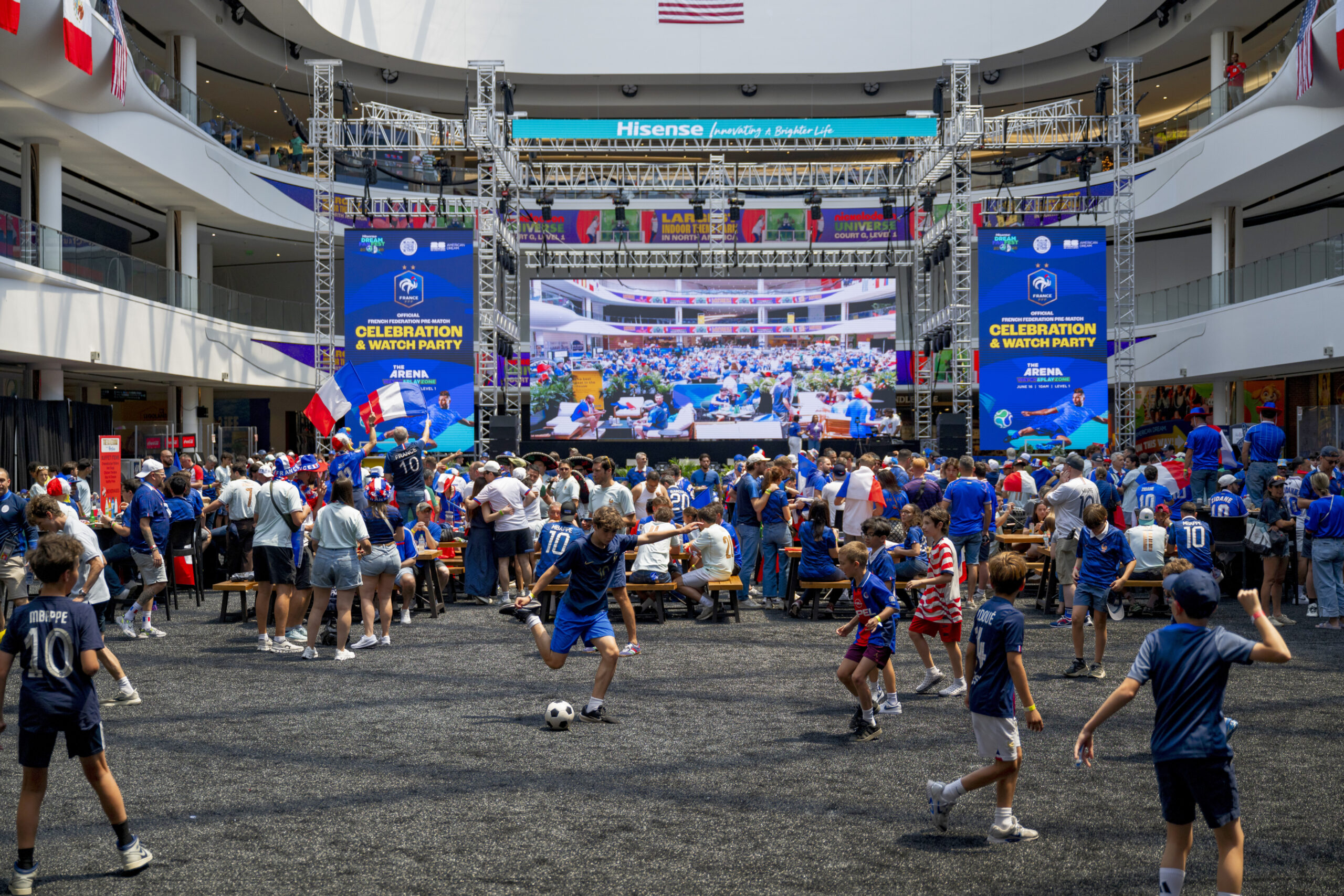
    Children from France kick play during a World Cup watch party at American Dream earlier this month.

    “Exit?” Klevge asked a reporter after taking his selfies and apologizing for his limited English. He tapped two fingers on his lips. “For smoking?”

    Erected in 2021, the American Dream is the second-largest shopping mall in the country. It has hundreds of stores, several dozen eateries and a host of attractions not commonly found indoors: a go-kart track, a water park, a ski slope and five roller coasters.

    This month, the air-conditioned cathedral to commerce represents the only public gathering space — besides the generic official “fan zones” immediately outside the stadium — accessible to the 82,500-capacity stadium by foot.

    “It’s kind of confusing. We’re just in a mall,” said Dawda Daye, 30, a Senegalese fan from Houston, who arrived there by taxi with his wife. “But it’s convenient, and everyone seems to be enjoying it and having fun.”

    Indeed, fans of both teams on Tuesday — just like the crowds supporting Brazil and Morocco over the weekend — seemed open to embracing the weirdness of the setting. The resulting rowdy energy was similar to the atmosphere at any major soccer match around the world — just entirely different.

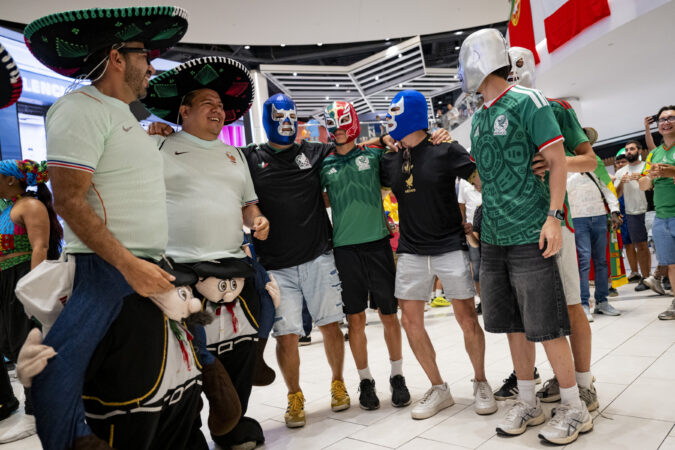
    Three hours before kickoff, four men in French jerseys juggled a plush soccer ball, purchased moments earlier from an Ikea kiosk, outside a Verizon store.

    A Senegalese drum troupe rapped out a mesmerizing beat for a swaying group of soccer fans marching near the cash register of a Mrs. Field’s cookie stand.

    The sunlit space normally containing the mall’s NHL regulation-size ice rink had been converted into a sort of simulation of a beer garden, filled with picnic tables where scores of fans clapped and sang. Above them towered a screen roughly the size of the penalty area on a soccer field that displayed a video feed of the very same picnic zone they were in — meaning the fans were cheering real-time images of themselves cheering.

    “In the U.S., everything is bigger,” said Benoit Berthier, 39, a Frenchman working in Montreal, who was eating a pastry at a cafe a few steps away. “But what they did inside is good. If you have one thing you know how to do in America, it’s entertain.”

    In a food court connected to H Mart, the Korean American grocery chain, two men wearing the jersey of Rayan Cherki, a young French star, blew into vuvuzelas as they squeezed between groups munching on traditional Korean snacks.

    On the third floor — there are five levels to the American Dream — a trio of Frenchman puzzled over a digital map of the shopping center, tapping on the screen to find a place to eat.

    “This kind of mall is unusual for French people,” said Gérald Grégoire, 52, one of the fans. “What’s most surprising is the size of the parking lot.”

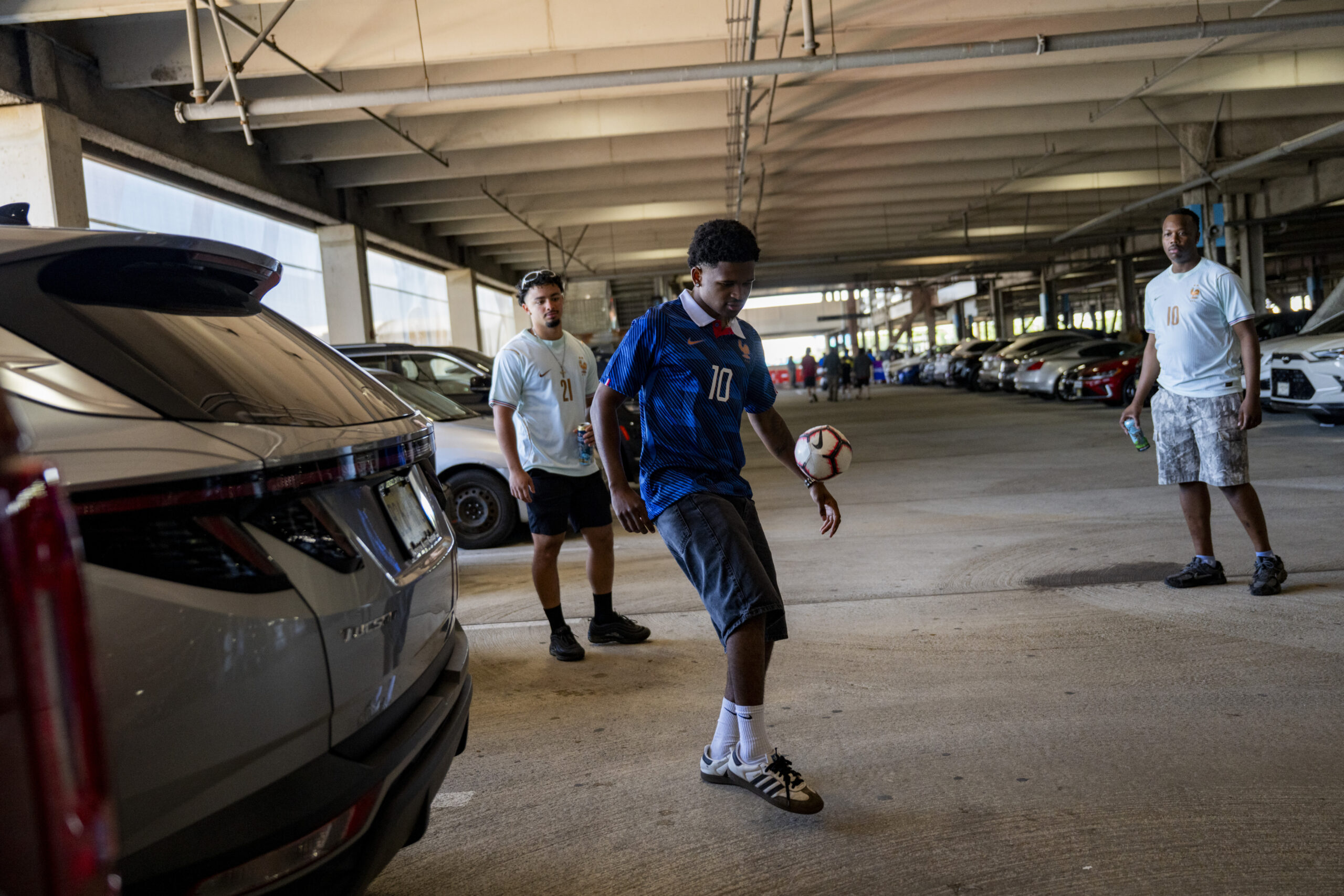
    Three friends kick a small soccer ball in the American Dream parking garage.

    During American football season, when the New York Jets and the New York Giants share MetLife Stadium, the parking lots there can hold close to 30,000 cars, a perfect setting for that quintessentially American sports tableau: tailgating.

    A handful of World Cup stadiums — like Lincoln Financial Field, where opposing fans played drinking games together before a match — are allowing tailgating this summer. MetLife is not one of them.

    “We heard there was no tailgating, so we said, ‘OK, we’re not going to the stadium, we’re going to the mall,’ ” said Carlos Orbe, 35, who was visiting from Tampa, Fla., with his fiancée, Julia Szenberg.

    Undeterred, the two grabbed a case of hard seltzers, took a cab to the American Dream and found some space between a row of parked cards in the mall’s indoor parking complex.

    They stood in a circle with a dozen or so other fans, sipping their drinks and periodically kicking a soccer ball that bounced their way. Asked about the people in the juggling circle, Szenberg, 36, who was born in Paris, shrugged.

    “We don’t know them,” she said. “But now they’re our family. This is the real American dream, happening in the mall parking garage.”

    This article originally appeared in The New York Times.

  • The joy the World Cup has brought to Philadelphia feels like the escape we didn’t know we needed

    The joy the World Cup has brought to Philadelphia feels like the escape we didn’t know we needed

    By the time you read this, Philadelphia will have hosted two matches in the FIFA World Cup and will be steadfastly preparing for a third in quick succession come Monday.

    France, a favorite by many to win the whole tournament, will take on Iraq in the second game of Group I, but if it’s anything like the previous two matches, the game itself will once again not be the story.

    Because for the past two games, the attraction has been that of the fans, and the unbridled passion people have for not just a team and its players, but the nation so many have bought jerseys for, the emblem they proudly wear above their heart, or in the middle of their chest.

    This spectacle of what will result in 104 matches of underdogs becoming story lines, a U.S. men’s national team exercising the type of dominance very few expected, has also seen Philly lead the way on the main stage, creating lasting memories for thousands of fans who have flocked to the city, all while becoming lore, in the process.

    In the lead-up to the World Cup, the story lines circulated the unforeseen, the question marks that surrounded what the World Cup’s return to the United States would look like.

    In the U.S., it arrived amid the backdrop of widespread deportations by Immigration and Customs Enforcement officials and travel bans on over 70 countries.

    It came on the heels of perceived rampant greed from FIFA, which enacted dynamic pricing for the first time, sending ticket prices soaring to the highest they’ve ever been. They opened the door for broadcasters to run advertisements midgame, under the guise of hydrating tired players.

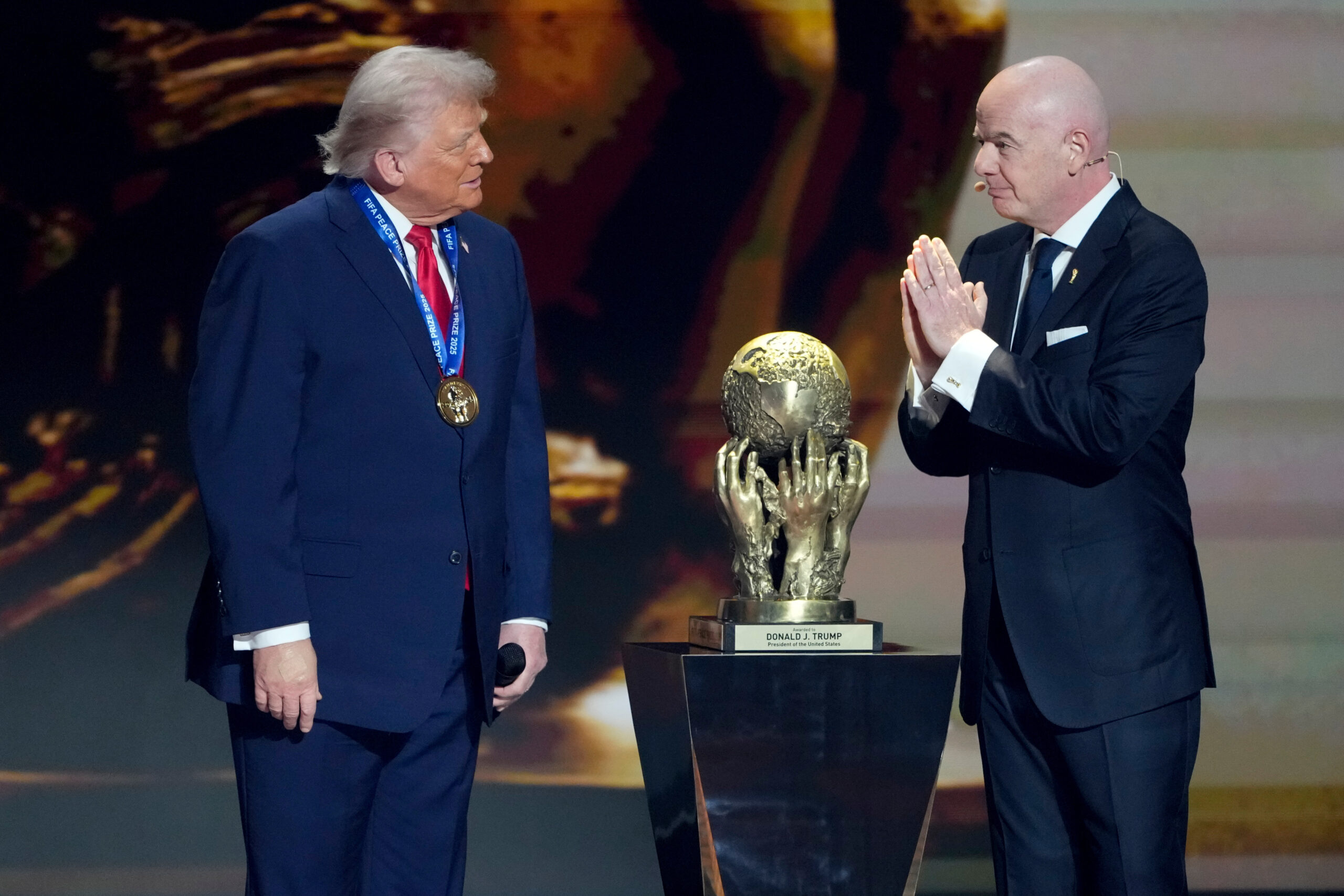
    FIFA president Gianni Infantino (right) gives President Donald Trump the inaugural FIFA Peace Prize at the World Cup draw last December.

    Let’s not forget the lobbying of the sitting U.S. president in the process, going as far as to create an inaugural peace prize for him while his administration destabilized governments and enabled a war in the Middle East.

    But look at how quickly all of that has fallen into the backdrop.

    Soccer in its purest form has provided an escape for a nation that desperately needed one. And what it’s also proved in the process is that people of different races, colors, and creeds don’t hate each other as much as their social media algorithms might suggest.

    Proof was on display right here in Philly in the form of fans who packed the stands over the last two matches.

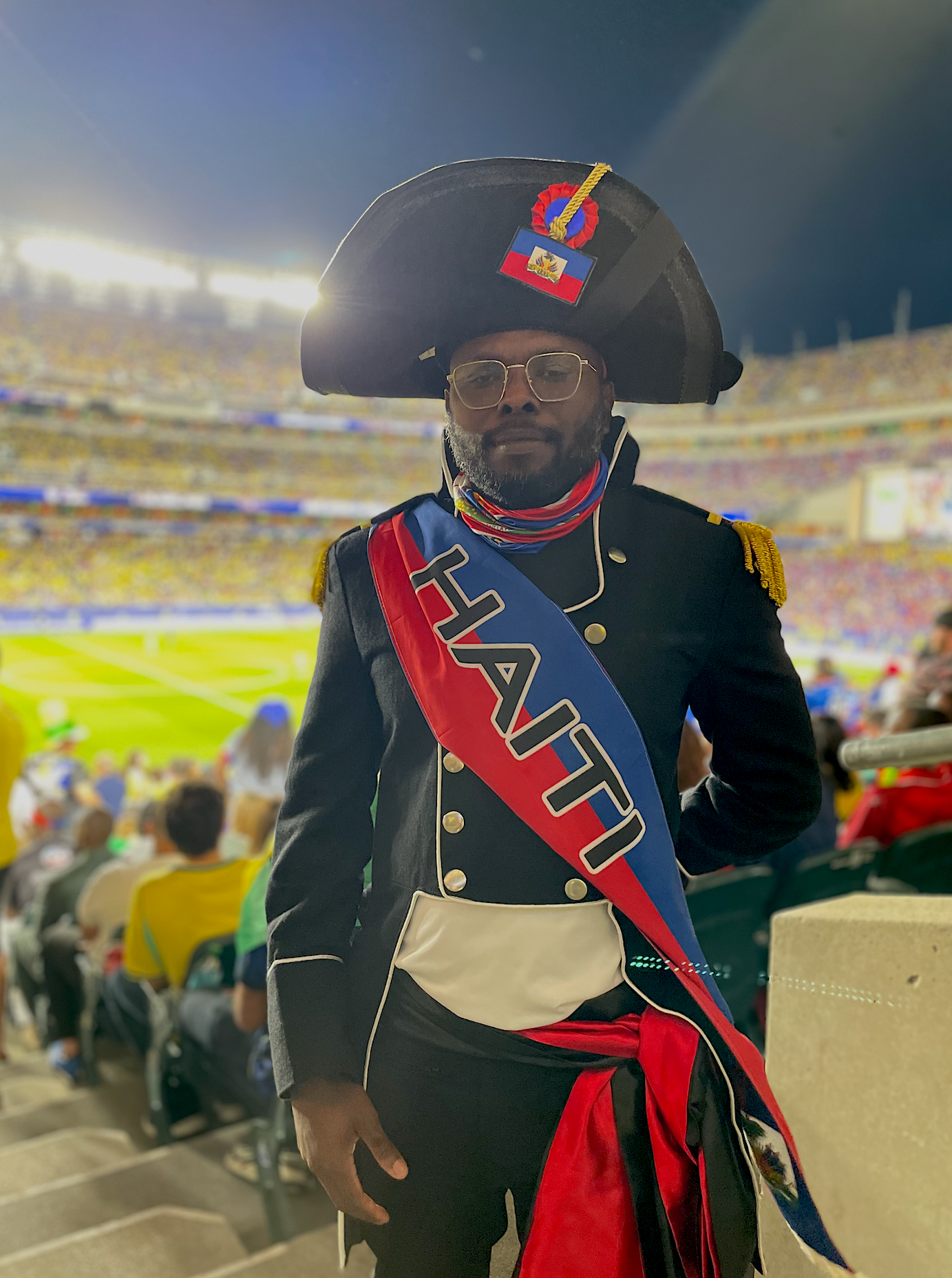
    Fans like Maxence Jeanty, a 41-year-old Haitian native living in Chicago who traveled to Philly from the Windy City, dressed in a suit depicting liberator Jean-Jacques Dessalines, a key figure of the Haitian Revolution.

    Maxence Jeanty, 41, a fan from Chicago arrived at the FIFA World Cup game between Brazil and Haiti, dressed as Jean-Jacques Dessalines, the leader of the Haitian revolution.

    “When I was growing up in Haiti as a kid, I watched the World Cup, and I’ll never forget watching the 1994 World Cup,” Jeanty said. “It’s been so long that my people haven’t made it to the World Cup that the choice was to choose either Brazil or Argentina [as the nation to support]. But now, we’re stepping on the field as equals, and no matter what happens, we’re stepping on the field as equals. The pride that brings to me and to every Haitian fan here, man, that’s indescribable.”

    We witnessed massive gatherings on the most iconic steps of our fair city from supporters who, like Jeanty, boarded planes just to be a part of the moment.

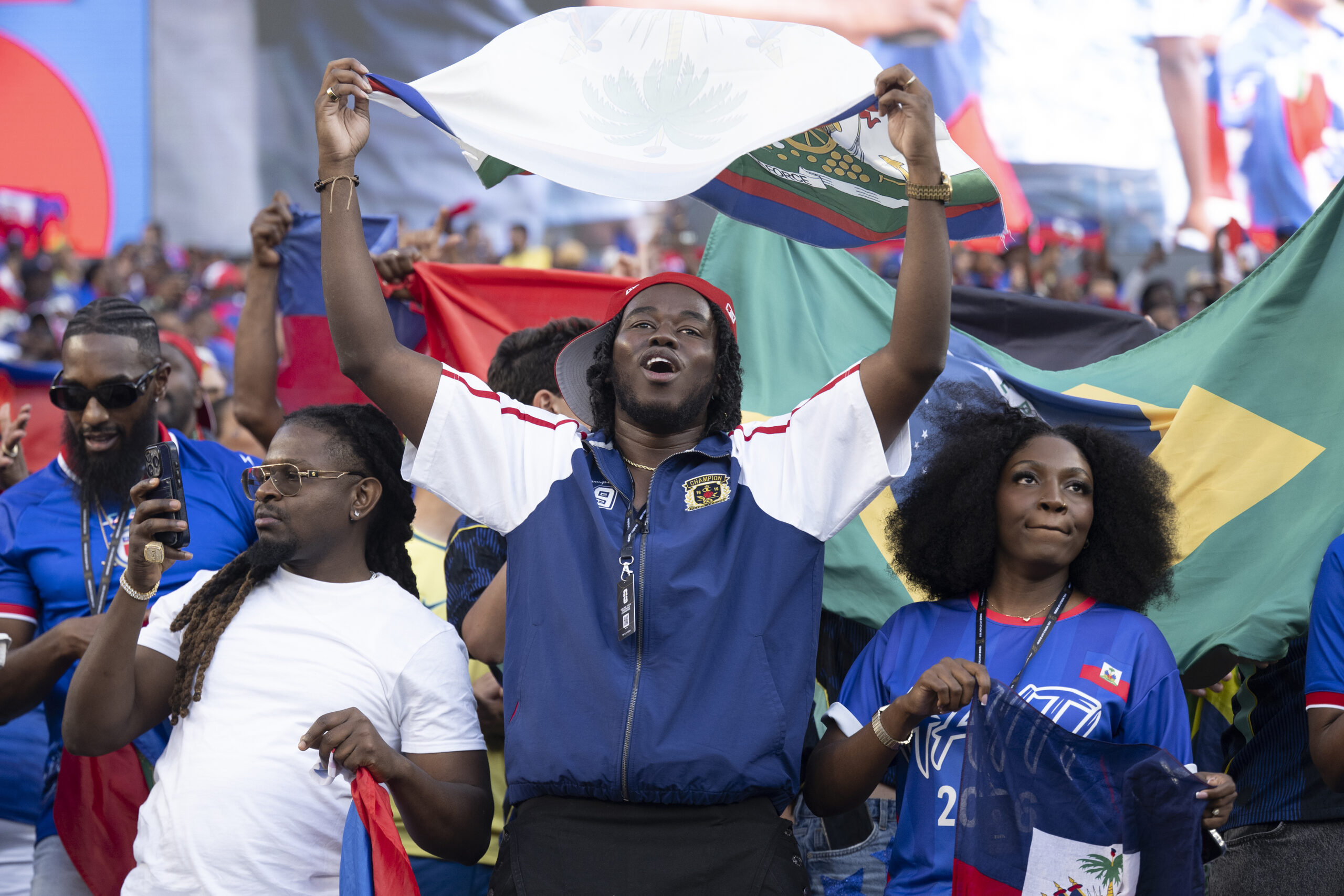
    Haiti fans celebrate during Friday’s FIFA World Cup Group C soccer match against Brazil.

    Only a week and a half in, the World Cup has become for so many a momentary cure for what ails, the escape we didn’t know we needed. Lifelong supporters hang onto every kick, and casual fans are amazed by the sights and sounds.

    Along the way, we’ve met supporters of other nations who’ve never met and have become instant friends. We saw dance parties on subway cars, in parking lots, and in the middle of streets.

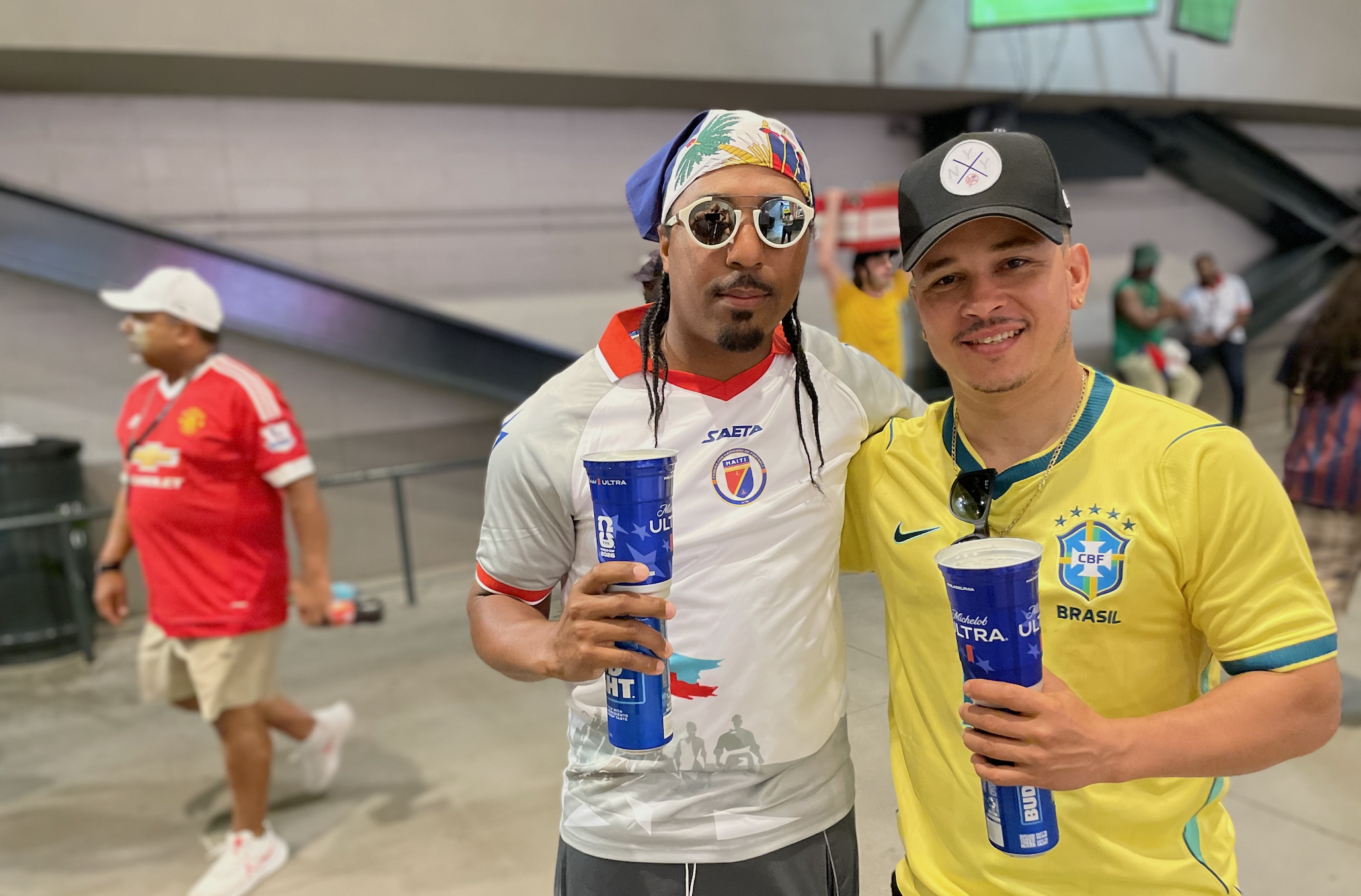
    Lucas Maninhu, 31, who arrived from New York and was draped in Brazil’s jersey, wanted to introduce me to his “new best friend,” a Haitian man who only wanted to go by Greguity. The two met in the parking lot on the day of the Brazil-Haiti match, struck up a conversation, walked into the stadium, and watched most of the game together.

    Brazil fan Lucas Maninhu (right) and Haitian fan Greguity met at the World Cup match in Philly between Brazil and Haiti. Both said they’ve become “best friends” in the process.

    “We met tonight,” Maninhu said. “We are here for different teams, but it doesn’t matter, tonight this is my boy. We’re all here for the same reason.”

    And look, FIFA knows this. It knows the unifying power this tournament has had on the masses since before the end of the Second World War.

    It’s why, despite laying the claim of being “Football for All,” this edition of the World Cup, from a financial perspective, has felt like football for the few.

    But those few continue to sell out arenas, flock to stadium stores to buy World Cup merchandise, and drink $7 purified water. Outside the stadium, games are setting broadcast records, and people are filling the bars and restaurants across North America. There’s money to be made all around.

    Let’s not forget the FIFA Fan Festivals, the official watch party situated in Philly at Lemon Hill. It’s made that neighborhood a noisy one, but it’s a good noise.

    Think about it. At its core, the first 10 days of the World Cup have allowed many Americans to take a sigh of relief, to have something to look forward to, or have on in the background while life is happening in real time.

    Cam Gorman, 23, of Gilbertsville, Pa., cheering with Philly Sports Guy Jamie Pagliei (front, center) at the FIFA Fan Festival in Lemon Hill as the U.S. beat Australia on Friday.

    Here at home, you can try to equate the fervor to the Eagles winning it all in 2018, and then again in 2024, but it’s a different vibe, because this isn’t about wins or losses. To many fans, this is about the sheer joy that having the sport in their backyard has delivered.

    It feels like the reprieve America needed, and Philly’s place in all of it has not gone unnoticed.