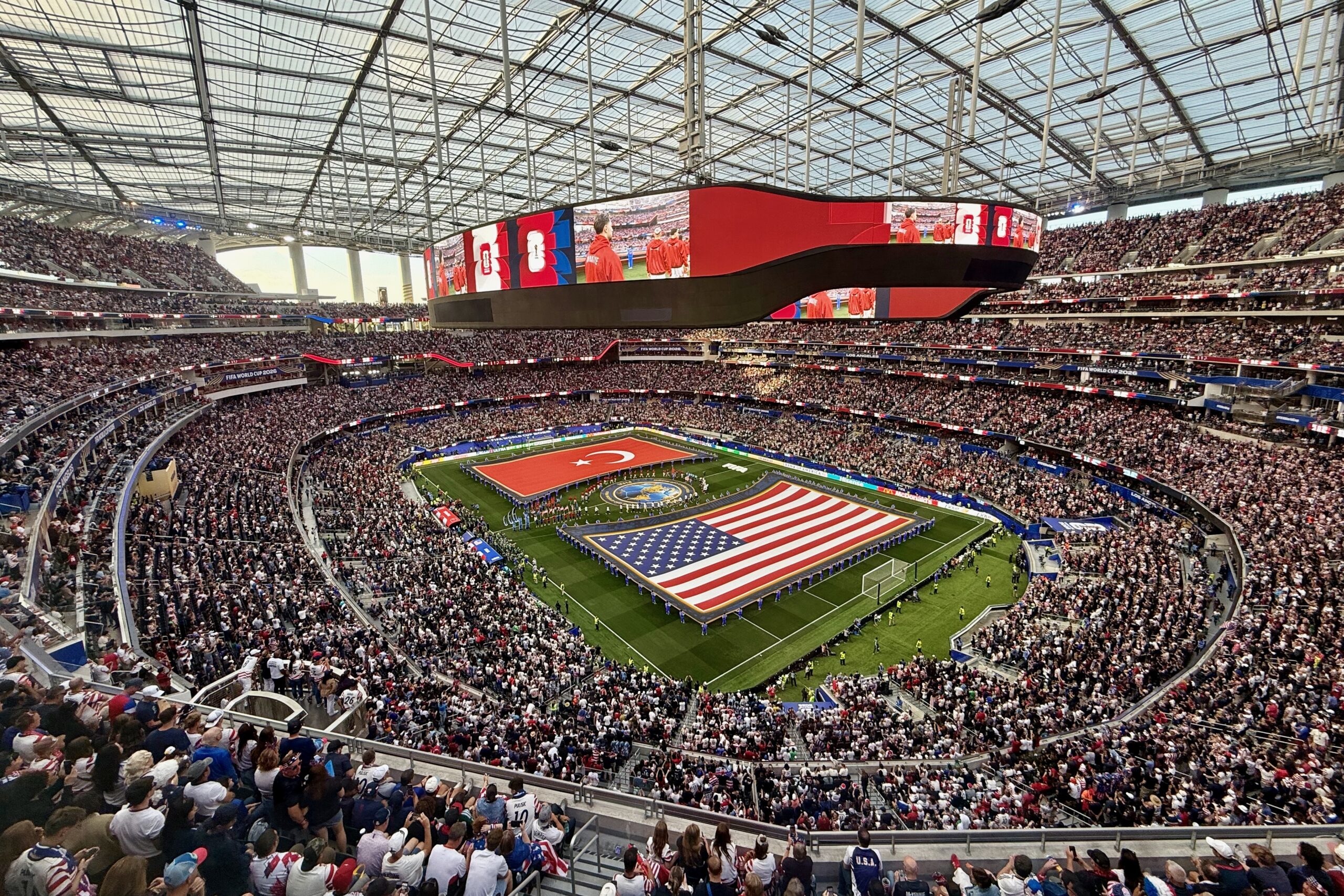
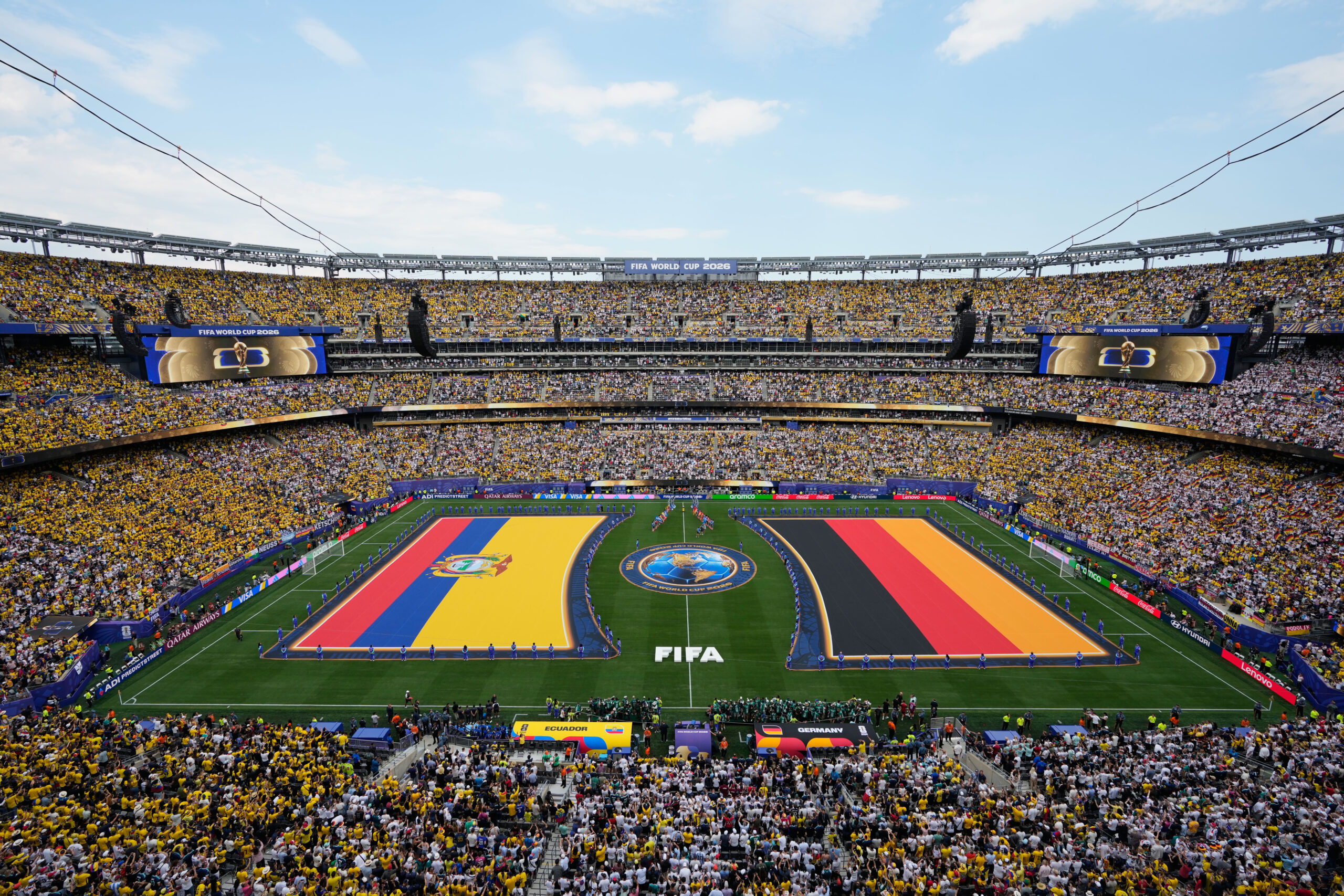
SAN JOSE, Calif. — No one needed the reminder at this point, but it came anyway.
While the U.S. men’s soccer team’s charter flight from Orange County to the Bay Area was in the air, a lightning bolt struck the World Cup when Paraguay toppled Germany.
Germany undoubtedly wasn’t good enough, and not for the first time in this tournament. There must have been kegs worth of angst in the air at Brauhaus Schmitz on South Street, Philadelphia’s most famous fussball destination, among fans who’d dreamed of seeing the four-time champions come to town on July 4.
But to lose to the same Paraguay squad that the U.S. ran off the field in their tournament opener? That was a shock and the latest of many lessons in this World Cup.
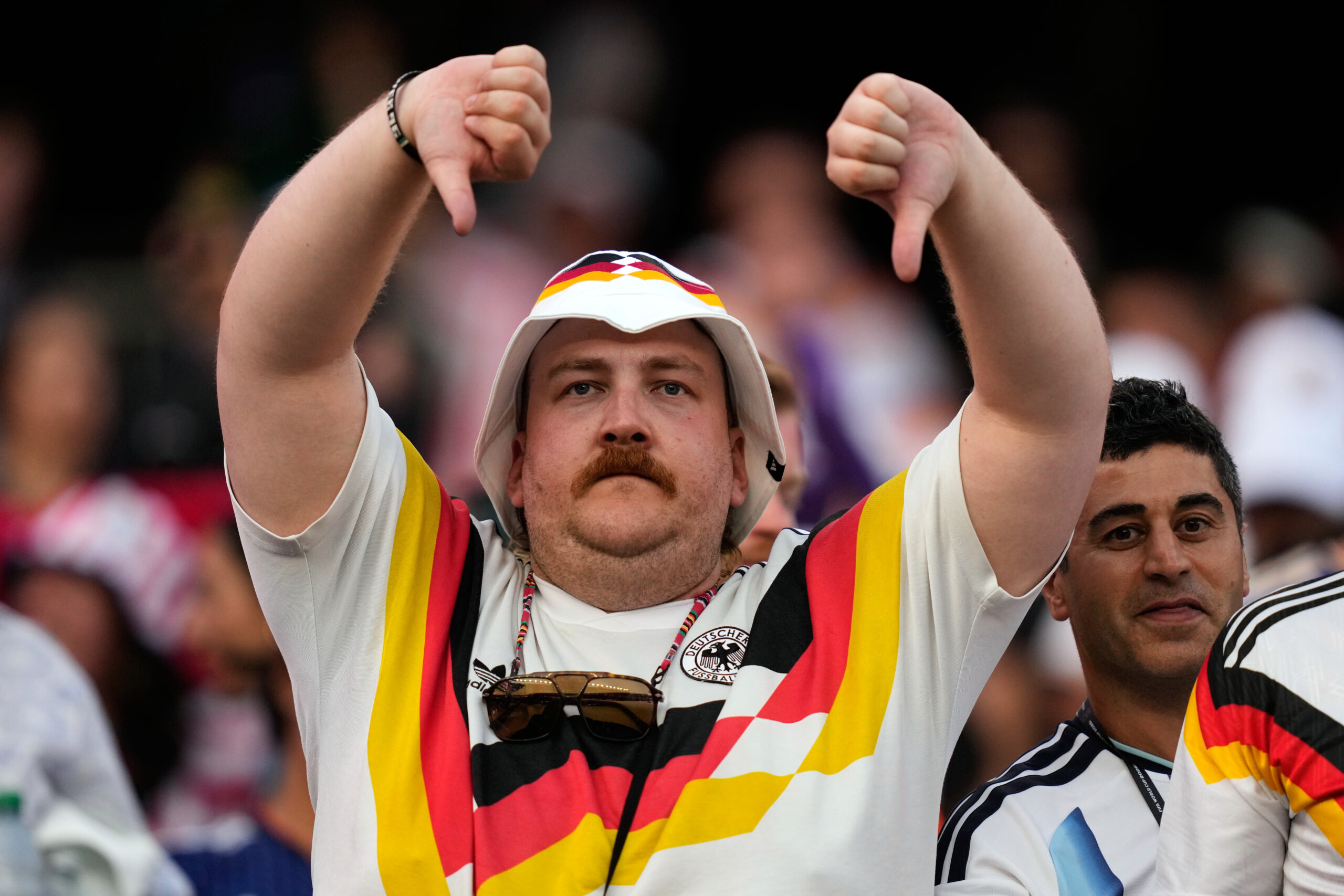
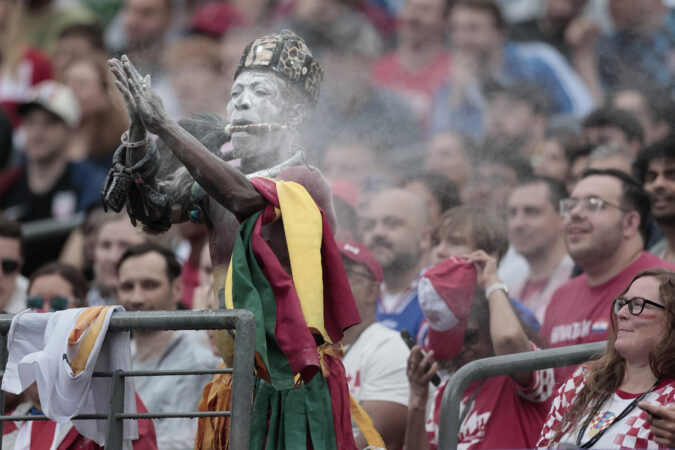
A Germany fan at Monday’s game offers his opinion of the four-time World Cup champions’ upset loss to Paraguay.
Yes, anyone can get a result against anyone else these days. Which means the 64th-ranked Bosnia and Herzegovina team the U.S. faces on Wednesday night has more than a chance against the cohosts, who return to the site of an infamous loss in the 2016 Copa América and a triumph in the Gold Cup final a year later.
There’s no taking any World Cup game for granted these days, especially when it’s a knockout contest. Nor can you take a moment off, as all three of Monday’s games proved. Before Paraguay-Germany, Japan gave up a 95th-minute winner to Brazil. Afterward, the Netherlands played a lot of ugly soccer, gave up a 90th-minute equalizer to Morocco, then lost on penalties.
“Hopefully we can get it done in regular time — the extra 30 minutes plus pens can get a little bit dangerous,” U.S. centerback Chris Richards said. “We saw the upset yesterday, so us going into this game, [it’s] making sure that we take care of business and go on.”
The point really should have been hammered home in the American camp by the last-kick-of-the-game loss to Turkey in the group stage finale. But if it was your youth soccer team, Little League baseball team, or CYO basketball team, wouldn’t you make one last nudge before the big game?
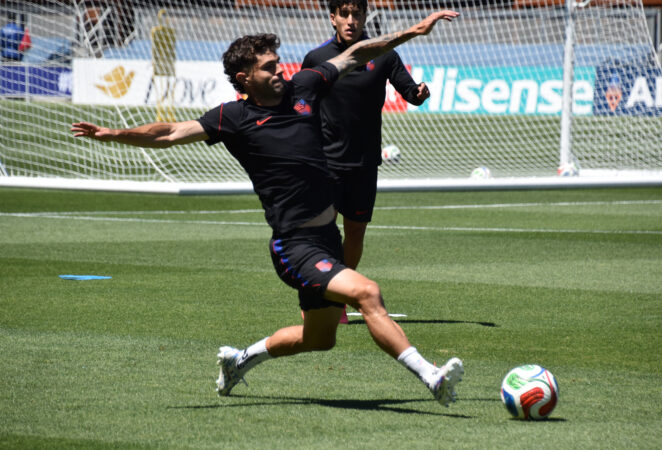
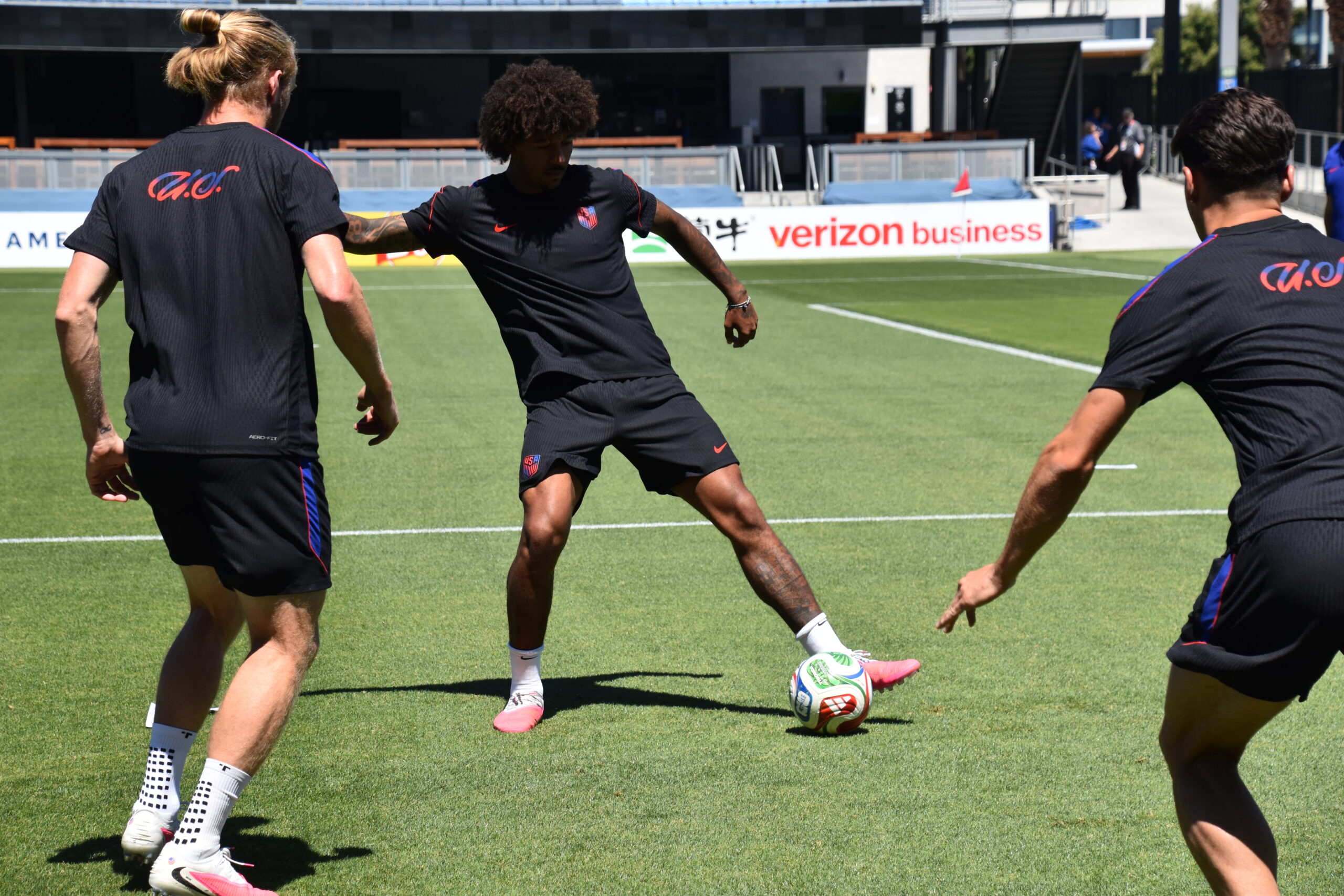
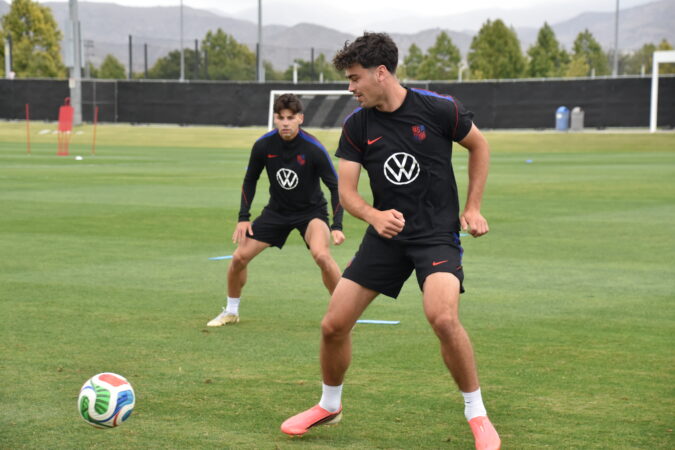
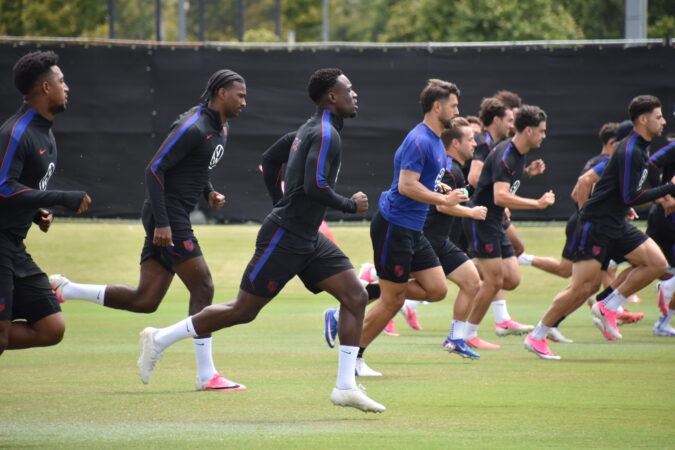
Chris Richards (center) on the ball during a drill at Tuesday’s practice.
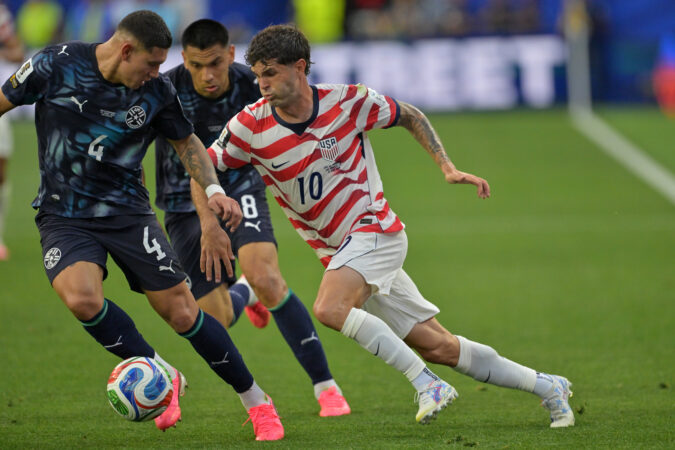
“It’s a World Cup. You’re never going to get the so-called favorite winning every single time,” said playmaker Christian Pulisic, who called himself “definitely ready” to start after coming off the bench against Turkey.
“This is soccer. This is the way things go: you can defend all game and win in a penalty kick shootout, and that’s the beauty of the game,” he continued. “So we have to be ready for whatever’s to come tomorrow. We don’t think it’s going to be easy by any means, so we have to put on a really high-level performance.”
If it feels like this point has been overstated this week, it’s because it ranks so much higher than everything else there is to say.
Sure, there’s a tactical analysis to write about how Richards will fare against 40-year-old Bosnian striker Edin Džeko, a veteran of big clubs including England’s Manchester City, Italy’s AS Roma and Inter Milan, and Germany’s Wolfsburg and Schalke. Or how young right winger Esmir Bajraktarević will fare against U.S. defender Antonee Robinson.
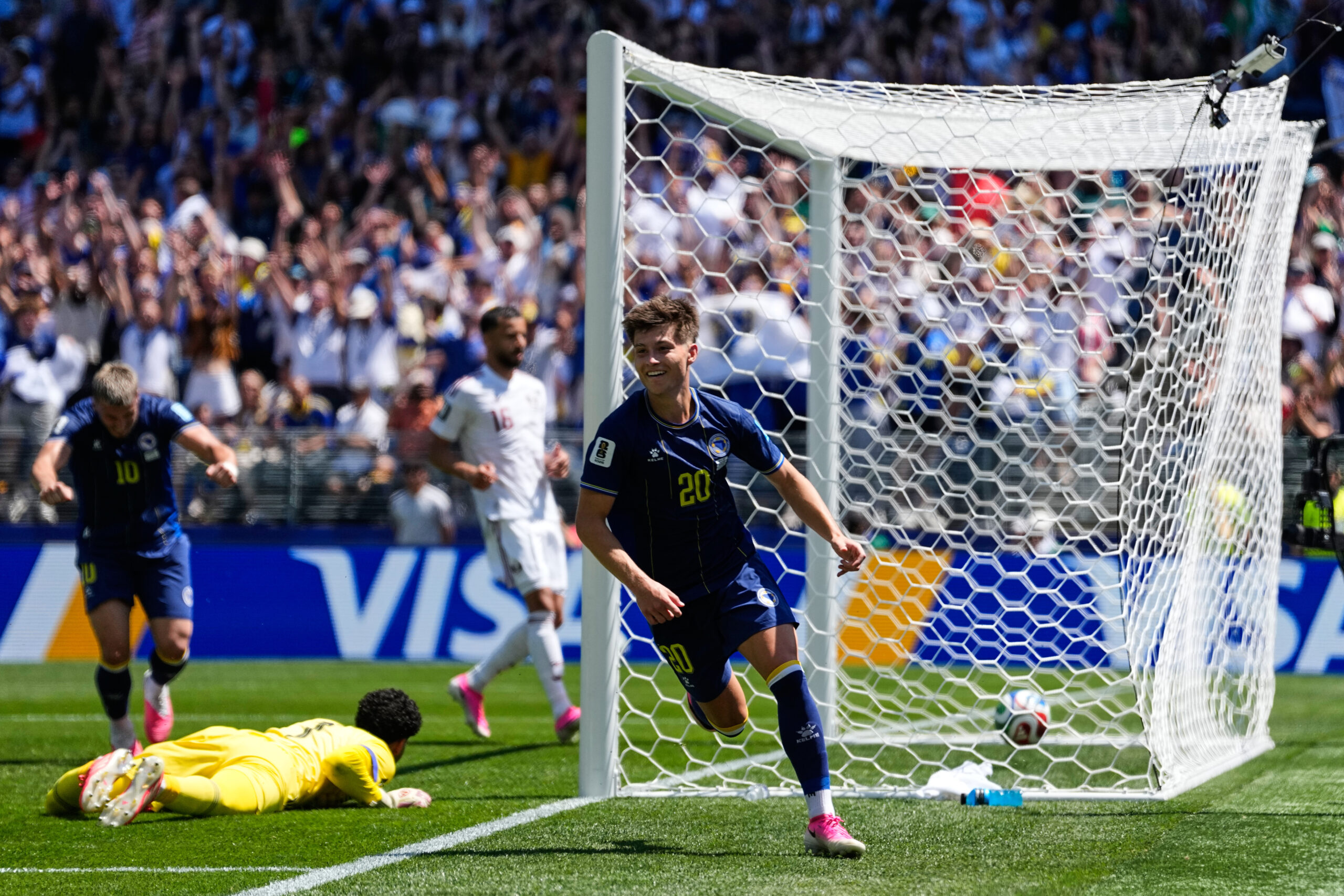
Esmir Bajraktarević celebrates one of Bosnia’s goals against Qatar in their group stage finale last Wednesday.
He spent a season in the Chicago Fire’s youth academy (2019-20), then moved to the New England Revolution, where he turned pro and spent three seasons before a move to Dutch club PSV Eindhoven — and is now teammates with U.S. veterans Ricardo Pepi and Sergiño Dest and formerly Malik Tillman.
Along the way, Bajraktarević played for U.S. youth national teams at the under-19 and under-23 levels, and earned one cap for the senior U.S. squad in a January 2024 friendly. But because that wasn’t in an official competition, he could change nationality.
When Bosnia called a few months later, he made the switch, and debuted in the fall. A year and a half later, he scored the shootout penalty kick that qualified the Dragons for this World Cup with a playoff upset of Italy.
But if the U.S. team has its way, that story will become just a sidebar when the opening whistle blows. At that point, the motto will become one that’s well-known at the other end of San Francisco Bay from here, in Oakland: Just win, baby.
Even Tillman, who was born in Germany and has grown into understanding American sports, gets the point.
“Yeah, it’s true,” he said, when asked his opinion. “In the end, the win is the most important. And I think after, of course, you can analyze the game, but if you go to the next round, this is the most important.”
I asked Mauricio Pochettino what he thinks of the "Just win, baby" slogan – and whether his saying "it's the final of the World Cup tomorrow" means more focus on winning at all costs, and less on tactics.
Pochettino gave a long answer. Here it is in video form:
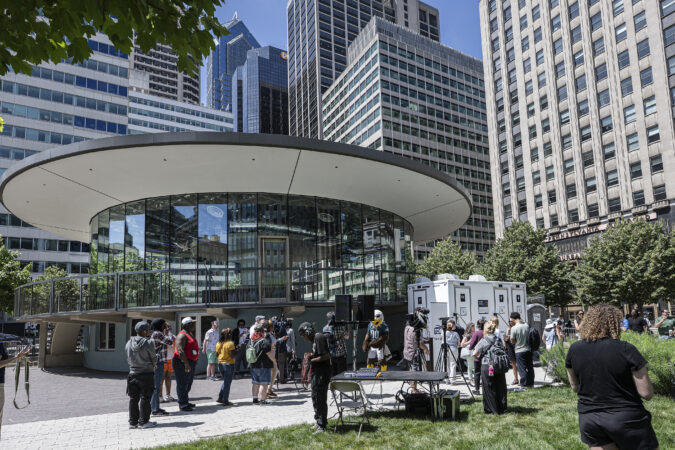
More than six decades after it landed in LOVE Park, Philadelphia’s long-shuttered “flying saucer” building is preparing for its next mission. The first step begins Saturday — not inside the circular glass pavilion itself, but with a new outdoor beer garden surrounding it.
Broad Street Beer Garden at LOVE Park is the opening phase of a food-and-drink operation led by Broad Street Brewing, the Bucks County brewery selected by the Philadelphia Department of Parks & Recreation as its operator after years of fits and starts.
Saturday’s debut, on the final FIFA World Cup game in Philadelphia and amid the hoopla surrounding America250 festivities, will feature a beer garden with a limited food menu. Two Philadelphia companies, Rival Bros. Coffee and High Street Hospitality Group, will be involved as well. High Street, which operates Fork, a.kitchen, and the Bread Room, will assume a larger culinary role when the restored pavilion itself reopens in early 2027 as a year-round cafe, restaurant, and coffee bar. Its name has not yet been announced.
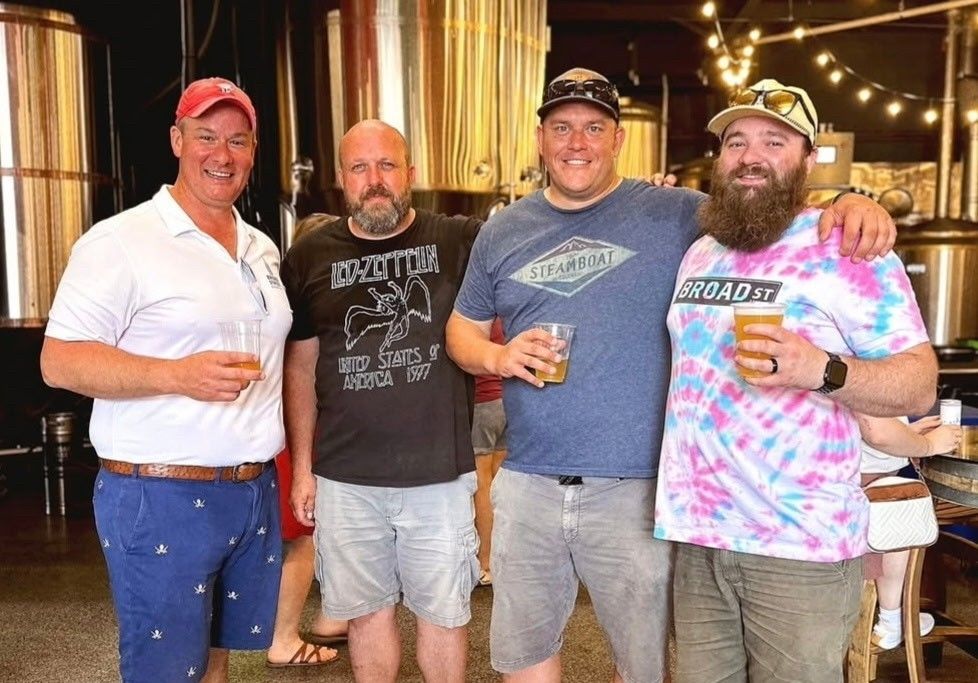
Broad Street Brewing’s partners (from left) Ed Webber, Tim Lohse, and Brandon Wellington with brewer Andrew Balmer.
For the Parks & Recreation Department, the concession is about more than filling the building at 16th Street and JFK Boulevard. Revenue from the operation will be reinvested in LOVE Park and the Benjamin Franklin Parkway, helping fund programming, maintenance, and improvements.
“This has been a long time coming,” said Katie Burns Kays, the department’s director of business and event development. “Our goal wasn’t just to find somebody to fill the space. We wanted a strong partner who would bring the kind of energy and story we want to be telling at LOVE Park, for both residents and visitors.”
Kays said officials hope the arrangement becomes “a sustainable funding model for our public spaces.”
Broad Street Brewing, which opened three years ago in Bristol, emerged from a field of applicants that included Four Corners Management, operator of Parks on Tap; Triple Bottom Brewing Co.; Tica’s Taco; Bower Penn, which operates Bower Cafe locations; and Little Susie’s Coffee & Pie, according to city documents.
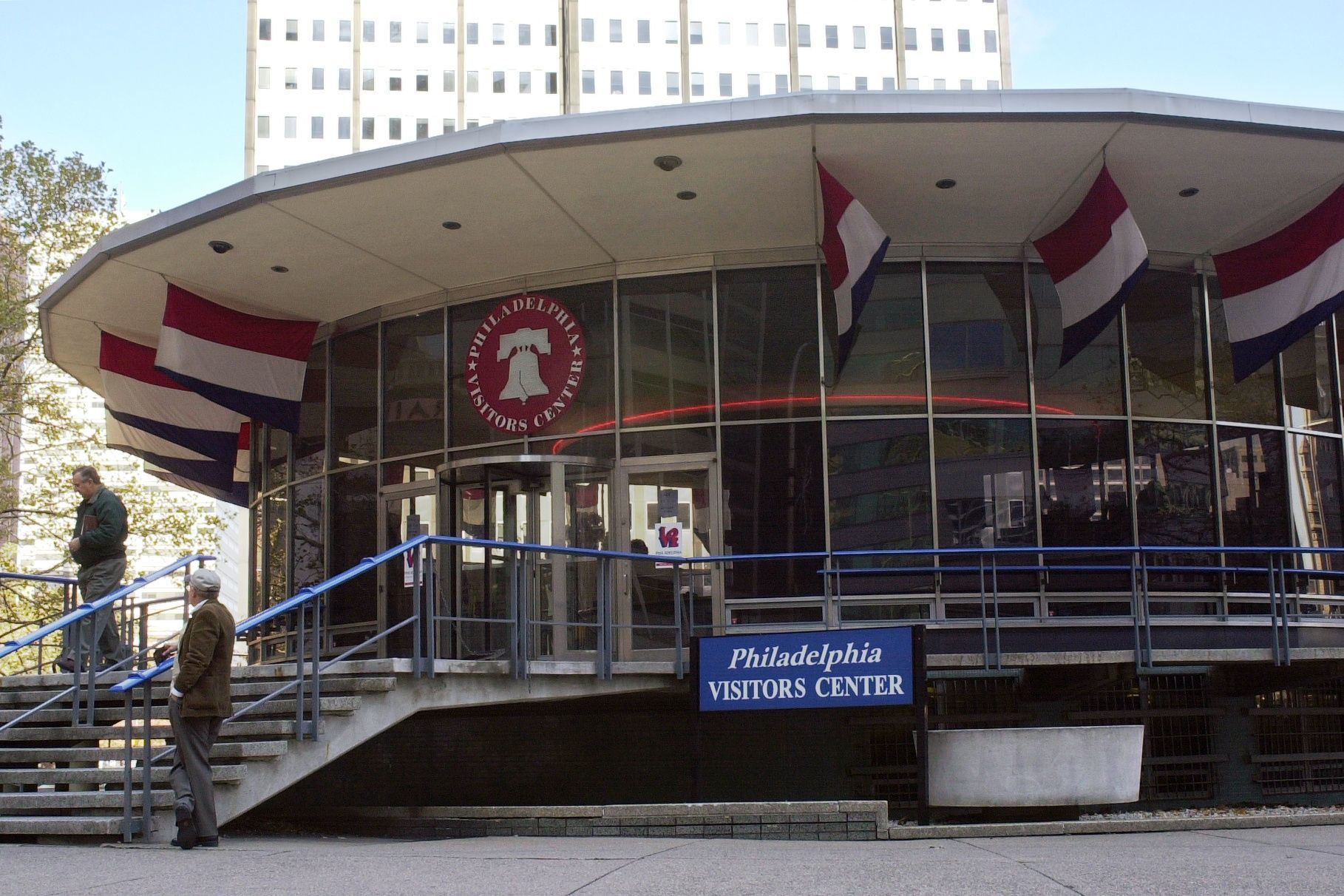
The center in November 2001, just before the Independence Visitor Center opened at Sixth and Market Street.
Kays said the city used what it calls a “best value” procurement process, weighing community engagement, operational experience, partnerships, and programming alongside revenue. Financial terms were not disclosed. The department’s standard concessions run for one year with up to four renewals, and Parks & Recreation plans to seek City Council approval this fall for a longer-term agreement to support the investment, Kays said.
“It’s exciting to feature three local businesses rather than a national chain,” Kays said. “We really want visitors to experience Philadelphia through Philadelphia businesses.”
For Broad Street co-owner Brandon Wellington, the project is also something of a homecoming. When Wellington lived at Broad and Race Streets, he first began brewing beer before setting the hobby aside for more than a decade. During the pandemic, he and longtime friends Ed Webber and Tim Lohse left their previous careers to launch Broad Street. Although the brewery established its production facility and taproom there, Wellington said the long-term goal was always to return to Philadelphia. He reached out to High Street partner Ellen Yin — whom he knew through his commercial kitchen-ventilation business — about partnering.
The opening phase will occupy the terrace surrounding the pavilion and about a third of the adjacent lawn, with about 250 seats divided among cafe tables, picnic tables, and Adirondack chairs. Wellington said the goal was to create a gathering place for commuters, office workers, tourists, and park visitors while bringing regular live music and community programming to LOVE Park. The initial beverage program will feature at least eight Broad Street beers on draft.
Broad Street Brewing expects to operate the outdoor beer garden through late October, serving beer alongside grab-and-go items such as smash burgers and maintaining a presence during Christmas Village as the permanent indoor build-out continues.
Once the historic pavilion can be outfitted with a commercial kitchen, the partners expect to open a year-round operation with about 100 indoor seats. High Street will oversee the food program, while Rival Bros. anchors the cafe. Wellington said they also envision rotating guest chefs and an automated tap wall pouring Broad Street beers alongside selections from breweries across Philadelphia. The indoor operation is expected to debut around March 2027.
“I just don’t want people to think this is simply a beer garden,” Wellington said. “While it’s being quarterbacked by a brewery, this will be Center City’s ultimate open-air hub — an oasis where local commuters, corporate professionals, and tourists can relax and connect.”
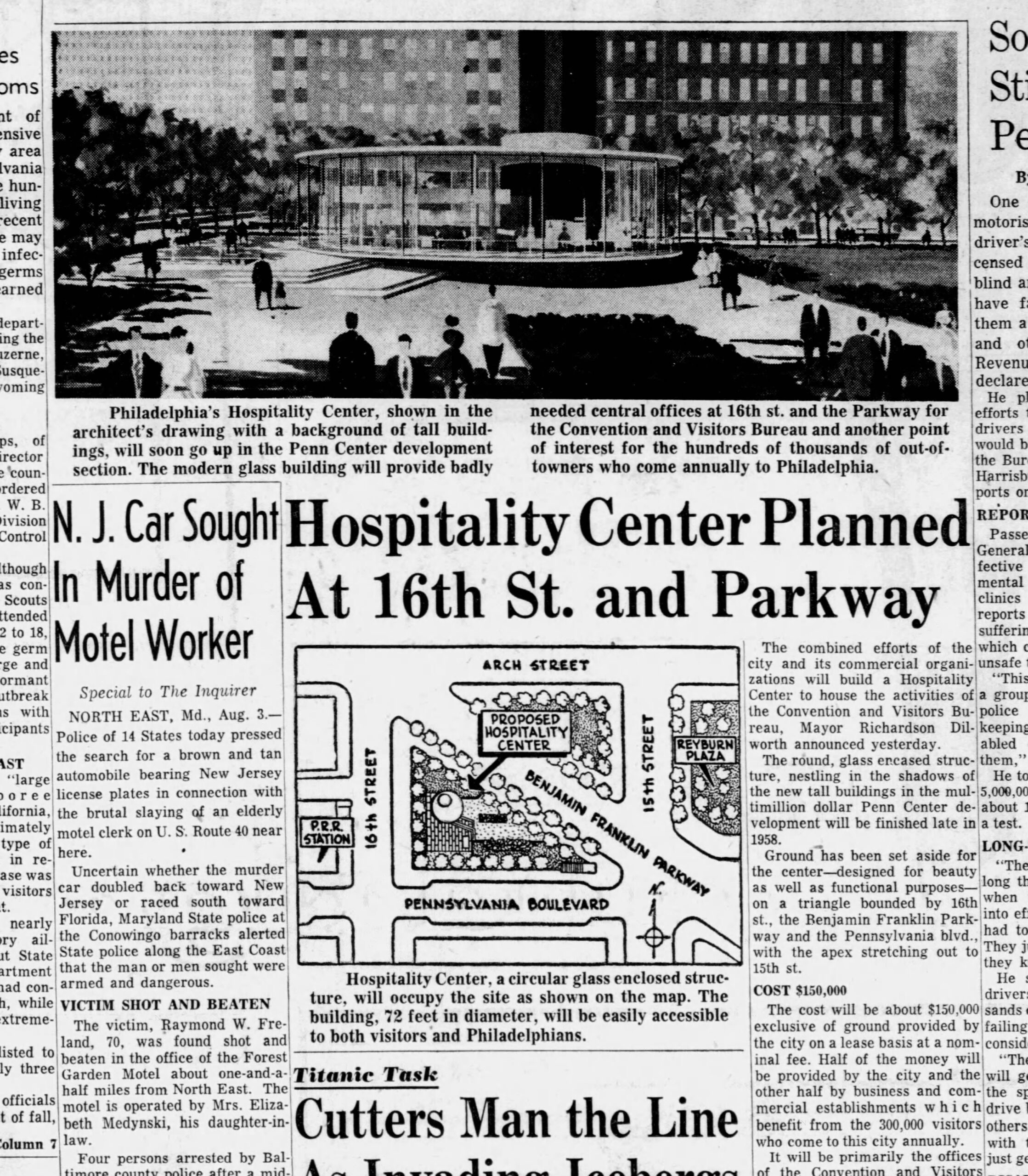
On Aug. 4, 1957, The Inquirer reported the plan for what become the flying saucer-like building. In those days, Ben Franklin Parkway extended through what is now JFK Plaza to City Hall.
Long before it became known as Philadelphia’s “flying saucer,” the pavilion was conceived in the late 1950s as the Philadelphia Hospitality Center at what was then the corner of 16th Street and Pennsylvania Boulevard. News accounts placed the price tag at $150,000, exclusive of the land provided by the city.
Designed by Roy F. Larson of Harbeson, Hough, Livingston & Larson, the circular building opened in 1960 as a visitor information center for an era when families increasingly arrived by automobile. Its broad cantilevered roof and nearly continuous glass walls embodied the optimism of the Space Age and Philadelphia’s postwar redevelopment under city planner Edmund Bacon.
The pavilion predates both Robert Indiana’s LOVE sculpture and the boulevard that now borders it. When it opened, the roadway, which bisected the plaza, was called Pennsylvania Boulevard. Following President John F. Kennedy’s assassination in 1963, it was renamed John F. Kennedy Boulevard, giving the plaza the name by which it is now universally known.
Renamed the Fairmount Park Welcome Center shortly after opening, the building later served as park offices, a cafe, a concession stand, and exhibition space. After the Independence Visitor Center opened at Sixth and Market Streets in 2001, however, it gradually lost its original purpose and sat vacant for years.
Its future appeared uncertain during LOVE Park’s 2016-18 reconstruction. Although some questioned whether the aging structure should be demolished, preservation advocates successfully argued that it was among Philadelphia’s finest surviving examples of midcentury modern civic architecture. The city instead invested about $5.6 million to restore the pavilion, replacing its roof, mechanical systems, and custom-curved glass while preserving its distinctive appearance. It was added to the Philadelphia Register of Historic Places in 2025.
Last year, the city broadened its search, seeking a cafe, taproom, or other community-oriented food-and-beverage concept instead of a traditional restaurant. More than 50 prospective operators responded.
Kays said the city deliberately slowed the process to avoid repeating earlier missteps.
“The city has tried this before, and the business was not set up for success,” she said. “We wanted to be much more intentional this time.”
For Ecuadorians in Philadelphia, seeing their country in the World Cup is not just a chance to watch good soccer but also a way to embrace their culture and community in the face of heightened scrutiny under the Trump administration.
As Ecuador went head-to-head with Germany last week, some Ecuadorian Philadelphians gathered in bars across the city, donning yellow and cheering on their team.
“It’s been nice to be able to see how all the community has come together,” Yvonne Cedeno said at a watch party at Tradesman’s in Center City. “Whether you’re Mexican, Colombian, Ecuadorian, just seeing people in our community getting together, especially within this political environment, is just so great. It makes me happy to be Ecuadorian.”
Though Philadelphia is a sanctuary city with some of the nation’s toughest restrictions on ICE, immigration arrests have still surged in the city and state. In January 2026 alone 802 arrests were made in Pennsylvania, more than tripling the amount just a year prior. Raids have often targeted predominantly Latino communities in both the city and suburbs.
Cathryn Miller-Wilson, executive Director of HIAS Pennsylvania, said these raids have created intense anxiety in the community, with some clients telling staff they have opted to stay home during World Cup celebrations, fearing running into ICE agents at games or events.
“They’re absolutely only watching from home because it’s too scary otherwise,” Miller-Wilson said. “It’s definitely a problem, really since 2025, but especially now, where there’s this confluence of joyful celebration, but also of the threat of increased ICE presence.”
Still, many Latinos, who make up 16% of the city’s residents, have embraced the chance to celebrate their community during the World Cup, which has featured nine Latin American countries. Tuesday evening, Ecuador will face Mexico in a knockout match after last week’s 2-1 win over Germany secured the nation’s spot in the elimination round.
Cedeno, 37, said the World Cup has always given her family a way to express their love for their culture by making traditional Ecuadorian dishes and coming together to cheer for their country.
“Last game we woke up at 6 a.m. just to make a traditional Ecuadorian dish called encebollado, which takes hours to make,” Cedeno said, referring to the traditional stew often made with tuna and yuca. “And we all got together and we watched the game and rooted for Ecuador, so it definitely brings the World Cup definitely brings our family closer”
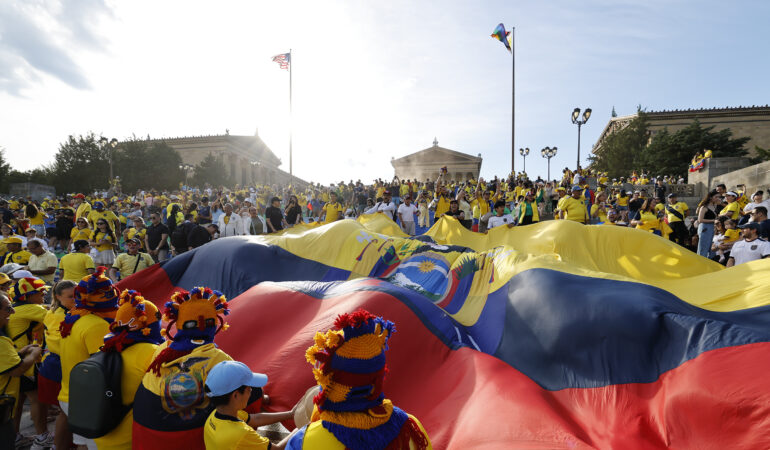
Ahead of Ecuador’s math against Côte d’Ivoire at Lincoln Financial Field on June 14, a sea of yellow jerseys flooded around the Rocky statue in front of the Philadelphia Museum of Art.
Rowan Teran, 24, said the scene filled him with pride — even if the team fell short that game.
“I grew up Latino in a very Jewish-dominated community. I kind of wasn’t proud of who I was,” said Teran, who grew upLower Merionafter his father immigrated from Ecuador.“And then growing up, I became much more proud. And then one day you see thousands of Ecuadorians wearing your jersey, singing the national anthem that you wanted to sing when you were younger, and you just feel proud to be who you are.”
Teran, who also attended the watch party at Tradesman’s, highlighted that the joy surrounding the World Cup feels like an act of resistance against the Trump administration.
”See what we are,“ Teran said. ”You don’t want any of us here, and now there are hundreds of thousands of us here, and the city’s even better.”
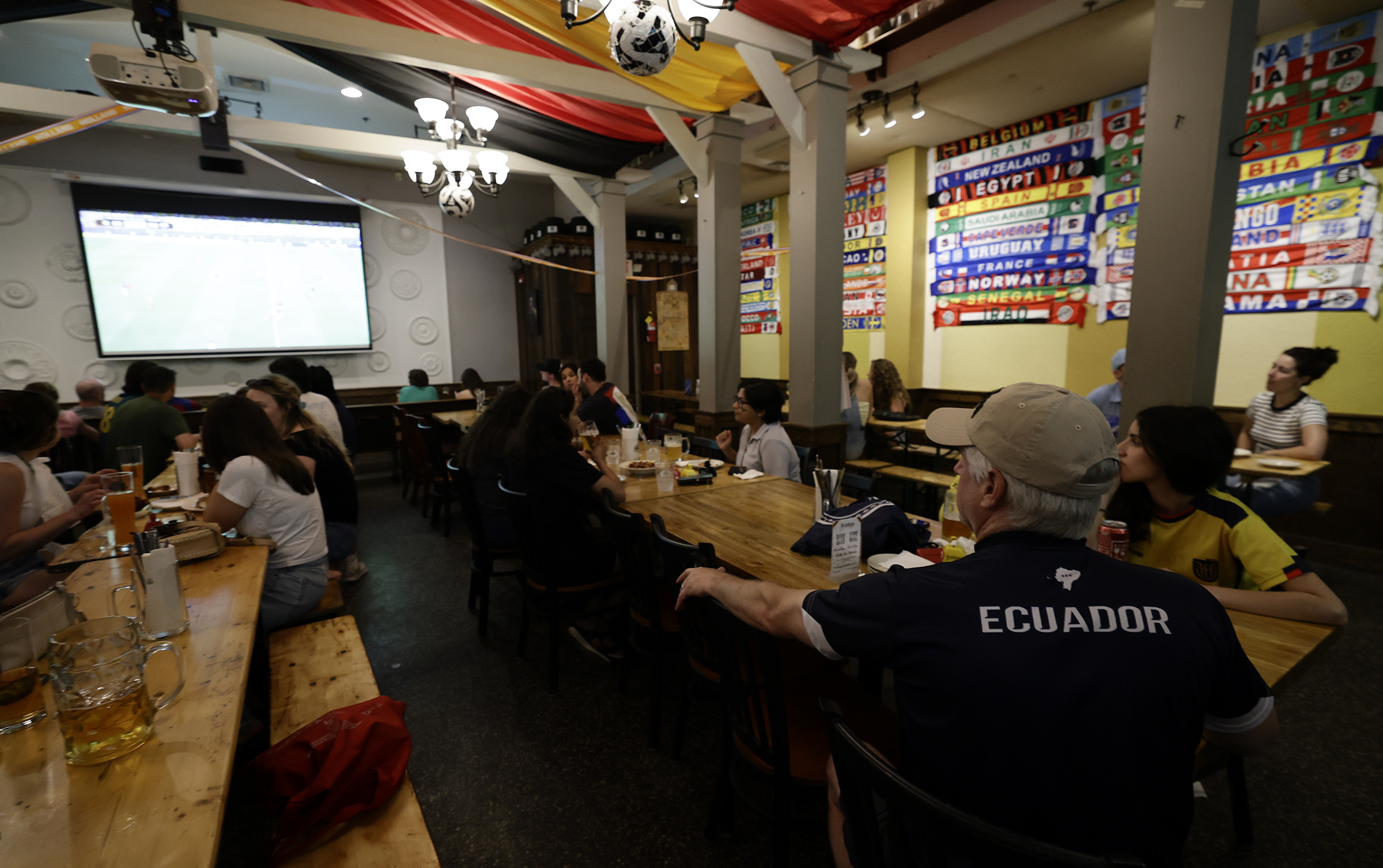
Soccer fans watch Ecuador take on the Ivory Coast during a World Cup soccer watch party at Brauhaus Schmitz on Sunday, June 14, 2026.
Christina Barradas, 44, is Mexicanbut came out to Tradesman’s to cheer on Ecuador alongside her Ecuadorian husband. She said while the World Cup has been great for the community, it’s a temporary respite from the struggles they’re facing.
“It’s an opportunity to put on your jersey, to put on the colors, but we still don’t feel 100 percent free and safe,” Barradas said.
On South Street,Nina Cueva-Castillo, 41, sat with the only other two yellow jerseys among a sea of Germany fans at Brauhaus Schmitz.
Cueva-Castillo said the games give Philly’s Ecuadorian community visibility it usually does not have.
“I love how people now know us,” Cueva-Castillo said. “They know our jersey, they know our colors, they know our flag. It’s a breath of fresh air to be ourselves, to be accepted, to be welcome, and for people to be like, ‘You know what, they are just like us’.”
What amazes me about the fact that America turns 250 on Saturday is that I’ve been alive now for 27% of U.S. history. When I was 17 and watched the Bicentennial parade of tall ships down the Hudson River from my dad’s conveniently located Manhattan skyscraper office on July 4, 1976, I thought I was celebrating ancient history. I was wrong. In a big, diverse world, the United States remains a young adult among nations. Like most young adults, we have a lot of issues.
Trump thinks anything besides stealing the election is ‘a big yawn’
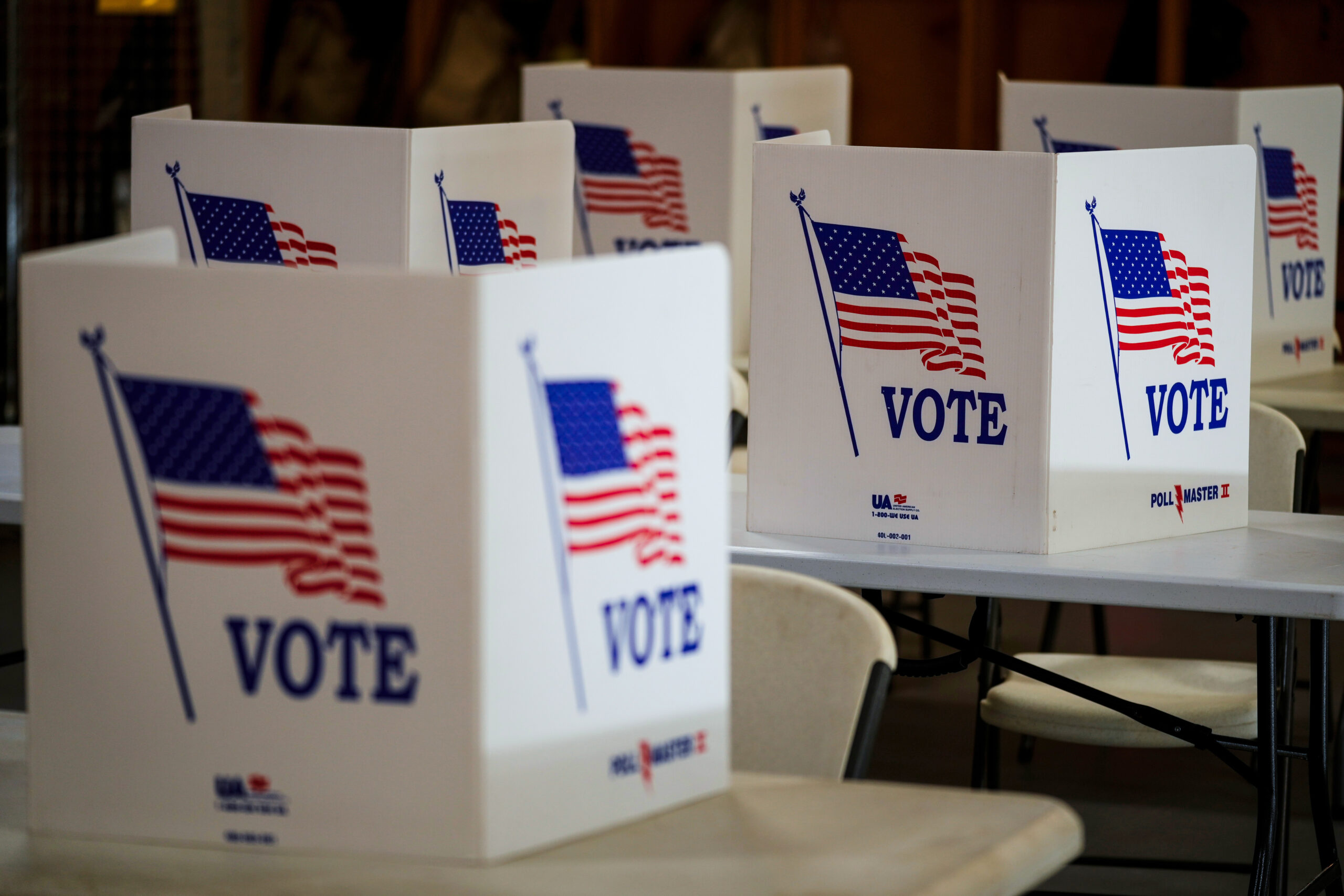
Voting booths are set up at a polling place in Newtown in 2024.
Donald Trump gets a lot of flak, and deservedly so, for telling so many lies. On Monday, he held an Oval Office press availability, and much of what he said — false claims that other nations don’t have birthright citizenship or mail-in voting — was flat-out untrue.
But nothing is scarier than when the 47th president speaks the truth about what’s really on his mind. Because the only thing that’s in Trump’s brain right now is stealing the November midterm election by changing the rules in his favor … or worse. If Trump’s vocal cords were not so weak and diminished, he’d have been screaming the quiet part out loud.
“Here’s what I would like to say,” Trump said of the still-unsigned housing bill, which passed in the House by a 396-13 vote. “It’s a yawn. Some people say it’s wonderful. To me, compared to the SAVE America Act, just about everything is a big yawn.”
In quainter times, Trump’s disrespect for the housing bill — a grab bag of measures all geared toward encouraging contractors to build more units, which would lower both purchase prices and rents — might be the political gaffe of the year. Currently, only 29% of Americans think it’s a good time to buy a house, and nearly two-thirds are more likely to vote for a Congress member who helped lower prices. Republicans who voted for the bill are desperate for a win.
Trump doesn’t care. He’s forgotten his “forgotten Americans” who think the rent is too damn high, not to mention the GOP members of Congress who’ve followed him off the cliff. But that’s not even close to the most alarming thing about Trump’s Oval Office moment of truth.
The president says the only thing he cares about — even with his conflict in Iran becoming another “forever war,” and with the economy down the toilet for everyone who’s not a tech trillionaire — is a bill that critics say would be a disaster for free and fair U.S. elections. One report found that some 12 million people who fairly and successfully voted in the 2020 presidential election don’t have the documentation — such as a birth certificate or passport — that the bill requires.
We don’t know how such a massive drop in turnout would change the election results, or whether a weakened Trump can pressure theGOP to find a way to pass a bill with zero Democratic support. But we do know this: The president’s maneuvers are not even the worst thing Trump has done this month on the steal-this-election front. Not by a long shot.
The Trump regime has been signaling for months that it sees the U.S. intelligence community — spy agencies like the CIA — not as a tool for finding out what comes next in the Persian Gulf, or if or when China is invading Taiwan, or when Vladimir Putin’s Russian empire will fall. No, Trump wants secret agents who can creatively invent theories of foreign-born election fraud that would demand a strongman response.
We saw this coming back in January, when the regime dispatched Trump 47’s first director of national intelligence, Tulsi Gabbard, to Fulton County, Ga., to oversee an FBI raid of voting materials from the 2020 election that Trump, with no evidence, continues to dispute. That link made it clear the regime is looking to create links to foreign actors.
When Gabbard left the administration this spring, Trump named a temporary replacement who can serve through the November election: Bill Pulte, who also continues to lead the Federal Housing Finance Agency. Pulte lacks a key prerequisite for his new job — any experience in intelligence whatsoever — but has the only quality that matters to Trump: undying loyalty. Pulte’s main focus in the housing job has been combing through the mortgage records of the president’s political enemies, looking for undotted i’s and uncrossed t’s that could be used to manufacture criminal charges from nothing.
In just a few days at intelligence, Pulte has not disappointed his boss. He showed up Monday and immediately began firing current staffers, with a rumored list of hundreds. The steep reduction in eyeballs on the world’s trouble spots is disturbing, but what’s even more alarming is the one person Pulte has hired.
The newsletter SpyTalk described Pulte’s new chief of staff, Christina Norton, as “a party-loving MAGA activist with no background in national security issues but who last year boasted of running ‘the largest election integrity operation the Republican Party has ever seen’ …”
The pairing of Pulte and Norton is an alarm bell that the national intelligence team under Trump will have one job: investigating fantastical “foreign election plots” that will be cited to justify radical measures like sending troops to polling places, seizing voting machines, or worse.
SpyTalk noted that Norton, in her active Instagram feed, “talks about supervising more than 200,000 Republican poll watchers ‘standing guard’ at polling booths and vote-counting stations across the country” during her 2024 stint at the Republican National Committee.
Yet, intelligence is just one of many tools in the federal government that the obsessive Trump is working to activate ahead of a November election that polls suggest will be a “blue wave” for Democrats hoping to retake Capitol Hill. Trump has issued several executive orders seeking to assert federal control over voting, which has been a state and local function throughout 250 years of American history.
That effort suffered a bit of a setback Monday, when the U.S. Supreme Court ruled that states can continue to count mail-in ballots that are postmarked before Election Day but arrive after the polls have closed. But that will not stop the Trump regime from politicizing the U.S. Postal Service ahead of November.
Last week, Postmaster General David Steiner told Congress that USPS plans not to deliver mail-in ballots in states that don’t turn their voter rolls over to the Trump regime, a demand many governors have resisted so far. “President Trump does not believe that elections he loses are valid,” Democratic Michigan Sen. Elisa Slotkin said after the hearing. “It’s all part of his authoritarian playbook.”
This all feels very familiar. In the lame-duck days after Trump’s 2020 election loss to Joe Biden, the 45th president — instead of packing up to return to Mar-a-Lago — got busy putting in a new team at the Pentagon, ordering the U.S. Department of Justice to probe alleged voter fraud, challenging vote count certifications in court, and urging state lawmakers to seat rival slates of electors. Most pundits laughed this off, but I wrote a column — “So, is President Trump staging a coup, or what?” — that ran on Nov. 10, 2020, nearly two months before the actual attempted coup on Jan. 6, 2021.
Now Trump is not only staging another coup, but he is yelling about it, in your face. There is nothing he won’t try over the next five months to prevent a Democratic Congress from investigating how he and his family have made billions of dollars off the American presidency.
When Trump says anything that’s not election meddling is a “big yawn,” this should be our wake-up call. The time for a full-court press — lawsuits, public hearings, and investigative journalism — can’t wait until after the election. The new putsch has already begun.
Yo, do this!
If you didn’t think I raced to download the new audiobook of Zayd Ayers Dohrn’s tale of growing up in the radical Weather Underground in the 1970s and ’80s — Dangerous, Dirty, Violent, and Young: A Fugitive Family in the Revolutionary Underground — then you must be new around these parts. Dohrn had already used his unique access to his parents — Bernardine Dohrn and Bill Ayers, revolutionary royalty — and their friends to tell a history of that era’s far left in 2022’s award-winning podcast, Mother Country Radicals. His new book aims to go deeper into the psychology of what it was like to be raised as a toddler on the run from the FBI, or whether bombings and bank robberies can change the world. That’s a question — also explored in this viral essay — with new resonance in the Trump era.
A few weeks ago, I suggested that folks see the new movie The Sheep Detectives. The film is already streaming on Amazon Prime (which produced it), and Sunday’s rare night off for the World Cup offered the excuse to finally watch. I can now highly recommend it. The movie — with an adapted script by the acclaimed showrunner of HBO’s Chernobyl, Craig Mazin — manages to merge police procedural cliches with moving thoughts about prejudice, existentialism, and what it means to belong to a flock. Even a flock of talking sheep.
Ask me anything
Question: Is Markwayne [Mullin, the Homeland Security secretary and former Oklahoma senator] the least qualified cabinet level official in American history? — Richard McGovern (@richardmcgovern.bsky.social) via Bluesky
Answer: Good question from Richard, a fellow long-suffering Philadelphia Union fan. Not because I know the answer, when there are rivals for the title like Donald Trump’s war-losing “Secretary of War” Pete Hegseth, to name just one. But Mullin is now behind a move so outlandish that it showed me I haven’t lost my capacity for shock after all. This weekend, Trump nominated a previously unknown former Oklahoma state trooper named Lance Schroyer to run U.S. Immigration and Customs Enforcement, a powerful agency with 22,000 agents and a budget of around $30 billion a year. It turns out that just recently, Schroyer was heading a security detail for Mullin in Washington, D.C., and has become a close enough friend that he is an occasional dinner guest. Yes, he hired his bodyguard to run the equivalent of a large corporation. Stay tuned for all of this to unravel.
What you’re saying about …
I guess we’re not as close as we thought, as very few of you were eager to share your July Fourth plans with me or discuss what America’s 250th birthday means at such a dark moment. The ones who did reply are looking forward to spending time with family and friends, but all that patriotic jazz, not so much. “Probably, we will have our usual picnic and take the grandkids to see the local fireworks, but I have no intention to watch any special programming or parades, etc.” Marianne Zollers wrote. “It will just make me sad. Such a different feeling compared with the Bicentennial which was such a joyous and happy occasion for my entire family.”
📮 This week’s question: One of the big stories of 2026 that’s finally getting a lot of attention is the success of more progressive Democrats, including democratic socialists, in key primary races against party moderates. Is this a good thing, lifting up candidates who’ll fight against Trump and for the working class? Or do you worry Republicans will capitalize against their opponents with more left-wing views? Please email me your answer and put the exact phrase “2026 progressive Democrats” in the subject line.
Backstory on crossing the World Cup off my bucket list
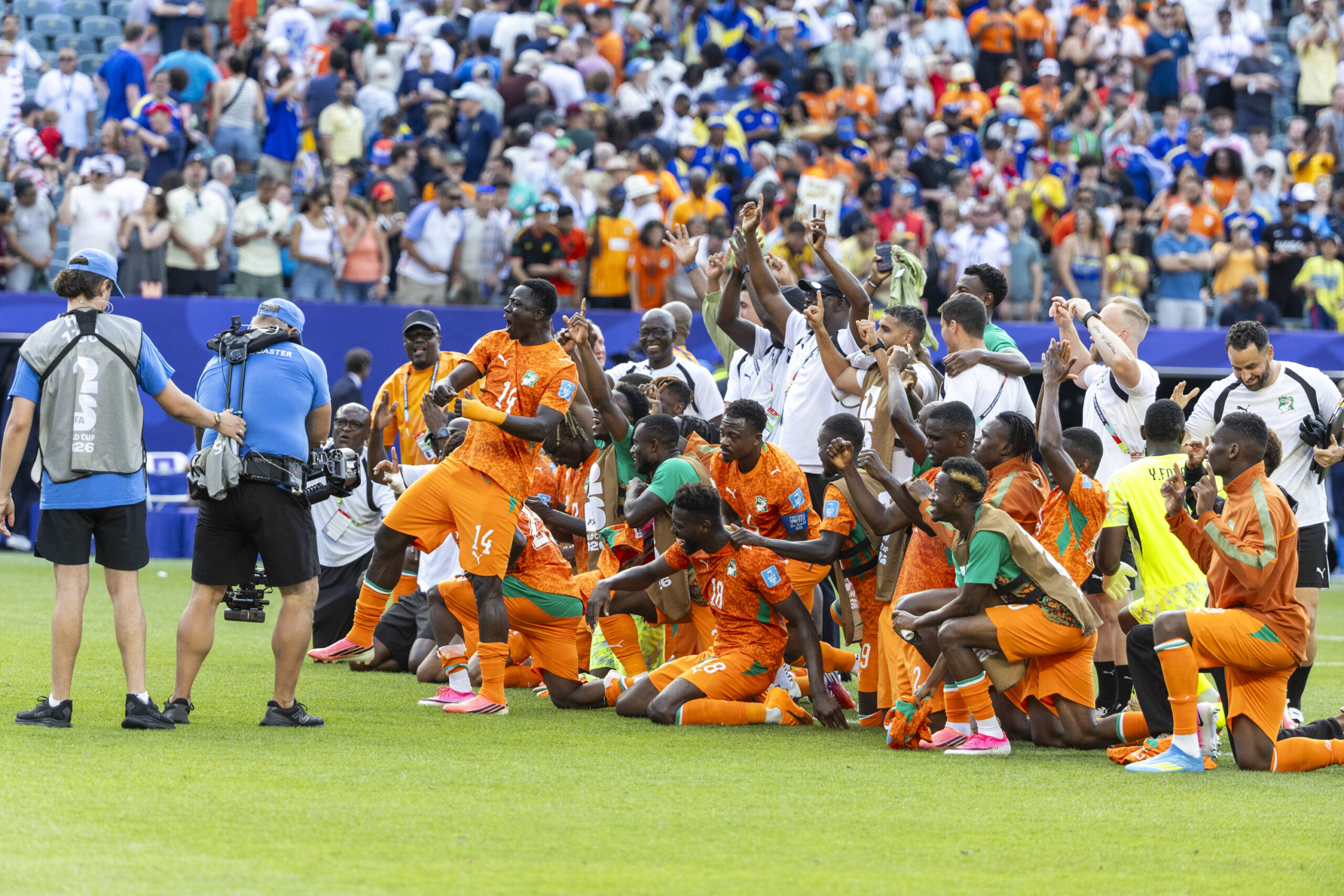
The Ivory Coast team celebrates their win in the middle of the field against Curaçao with a score of 2-0 for the FIFA World Cup at the Lincoln Financial Field in Philadelphia on Thursday.
I can’t say exactly when, but at some point during my first-ever in-person World Cup match between Côte d’Ivoire and Curaçao, watching from the thin air of the top deck of the temporarily renamed Philadelphia Stadium, it struck me: My decades-long dream of being there for the world’s greatest sporting event was not like what I’d imagined.
And yet, in some weird, quasi-religious acid test kind of way, it was even better.
I’ve been to countless sporting events going back to 1968, but never one where the vibe was basically: So happy to be here. I’ve certainly never been to a game where the PA announcer uttered something before the match about giving a big hand to both teams — and the sold-out crowd obliged. Fans would have burned down Section 220, Row 27, where I was sitting, if this had happened during an Eagles-Cowboys game. During a tense match with a place in the Round of 32 on the line, the gathering repeatedly did the wave and threw their vocal cords more behind the halftime singalong of the Bruce Channel 1961 oldie “Hey! Baby” than either of the two decisive goals by Côte d’Ivoire’s Les Éléphants.
Up in nosebleed country, many of the fans repped soccer jerseys, but they were for club teams like Liverpool or Christian Pulisic’s USA No. 10, joined by me in my Philadelphia Union T-shirt. We were Philly’s soccer aficionados, desperate to be a part of maybe the only time in our lives the World Cup would take place in the City of Brotherly Love. A match pitting the smallest nation to ever qualify for the FIFA tourney (Curaçao, population 158,000) and an African underdog was pretty much the only way to crash the party without a bank loan. (Full disclosure: I paid about $280 apiece for two seats on StubHub — much like buying a stock, it could have been more or less, depending on how one timed it.)
No, this wasn’t much like the Eagles games played here, where excitement merges with pins and needles of anxiety. On a picture-perfect late afternoon in June, bookended by the Philadelphia skyline and a lazy Delaware River, it felt more like a rock concert. It wouldn’t have seemed out of place if folks had started batting a beachball around at this soccer Woodstock. There was a mind-meld of the faithful, who saw FIFA and its commercialization as the devil, with the loudest boos for the TV-ad-laden “hydration breaks,” but with — I swear to God — a loud roar for the announcement of the attendance: 68,324. In a city where a 1976 Bicentennial match of some of the world’s best players took place in a mostly empty stadium, soccer is indisputably here to stay.
Fans walked out of Philadelphia Stadium beaming less over the final score and more about the instant karma of the afternoon. After years of tavern taunts and ridicule from sports-talk radio, localsoccer die-hards lived long enough to see America’s founding city become the world’s co-capital of the sport that, for its true believers, passes all understanding. It was all too beautiful. If I can somehow make it to Spain or Portugal or Morocco in 2030 (because, hey, I need a new bucket list now), I will be sure to wear some flowers in my hair. Soccer time will be a love-in there.
What I wrote on this date in 2019
I’ve been writing about the topic of journalism reform since the mid-2000s, or around the time it became clear to me and a lot of other folks that newsrooms needed to change or die. My fear, circa 2006 or so, was that we’d start seeing entire communities without newspapers or the accountability journalism that flows from that — which is exactly what happened in Youngstown, Ohio, when its paper closed seven years ago. I wrote: “The loss of the Youngstown Vindicator every morning doesn’t mean that the region’s 200,000 people will no longer be getting information. It just increases the likelihood they’ll be getting bad information — intentionally manipulated, and sometimes out-and-out fakery.”
Only one column this week, as I took a well-deserved day off to attend the World Cup. In that piece, I looked at the sorry state of justice in America on the eve of its 250th birthday, with an emphasis on the outrageous sentences — ranging from 30 to 100 years — handed down to left-wing anti-ICE protesters convicted of rioting in North Texas. The U.S. Department of Justice that pushed these virtual life sentences is also pardoning the right-wing rioters of Jan. 6, 2021, as well as billionaire fraudsters who donate money to MAGA players and causes. They’ve made a mockery of liberty and justice for all.
Let’s be honest: People — not to mention sheep (see above) — can’t get enough of a murder mystery, especially a real-life true crime. It’s been a while since a crime saga has riveted Philadelphia readers as much asthe stench of possible foul play that is growing at a home on West Chew Avenue in the city’s Olney section that police have branded a crime scene as they search for clues in the disappearance of two local women. Since the case broke open last week, nearly a dozen Inquirer reporters have produced riveting articles about the discovery of drugs, chemicals, and “a significant amount of blood” at the Horsch family residence, profiles of the two missing women — Amy McHale and Blair Tonzelli — and interviews with neighbors who talked about living next door to “a house from a scary movie.” The backstory here is that — whatever you may have heard about AI — it still takes a lot of human shoe-leather to get to the bottom of a story like this. Subscribing to The Inquirer is a twofer: You get to hurdle the paywall to read compelling journalism and feel good about being a supporter.
By submitting your written, visual, and/or audio contributions, you agree to The Inquirer’s Terms of Use, including the grant of rights in Section 10.
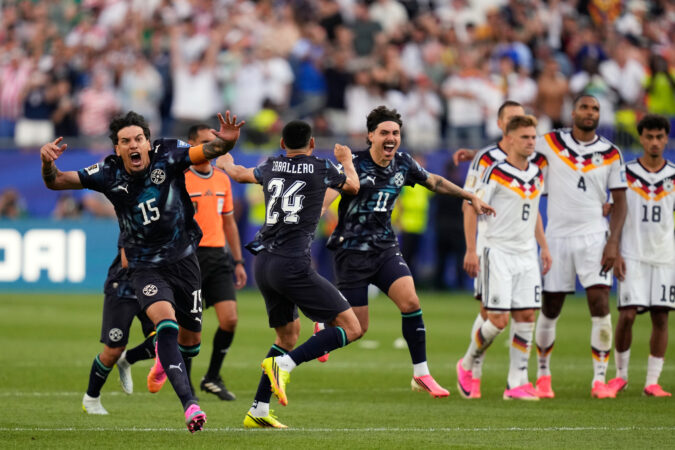
FOXBOROUGH, Mass. — Jose Canale scored on the first sudden death penalty kick, Orlando Gill made two key saves in the shootout, and Paraguay beat Germany 4-3 on penalties Monday to earn the biggest upset of the 2026 World Cup so far.
The round of 32 match ended 1-1 after extra time. Paraguay took the lead when Julio Enciso scored on a header late in the first half, but Kai Havertz equalized in the 52nd minute for four-time champion Germany.
“We had to analyze every player, every detail. Thanks to that I was able to only miss two penalties,” Gill said afterward. “This is for all the people of Paraguay.”
Paraguay, ranked 34th by FIFA, is the deepest betting long shot to win a World Cup match and did it against 12th-ranked Germany.
The Paraguayans will next face the winner of Tuesday’s match between France and Sweden in the round of 16 on Saturday in Philadelphia. A win in that match would land them back in Foxborough for a quarterfinal match on July 9.
“I think we deserved one more game and to be honest considering everything that was said, everything we went through,” Canale said. ”What I wan to highlight from our team is how united we are. … Today was a game we really needed to show our true colors.”
Germany had won six of seven penalty shootouts in major tournaments, including six straight since losing to Czechoslovakia in the 1976 European Championship final.
In the only previous World Cup match between the teams, Germany beat Paraguay 1-0 in the round of 16 at the 2002 tournament. Nearly a quarter-century later, Paraguay has its revenge.
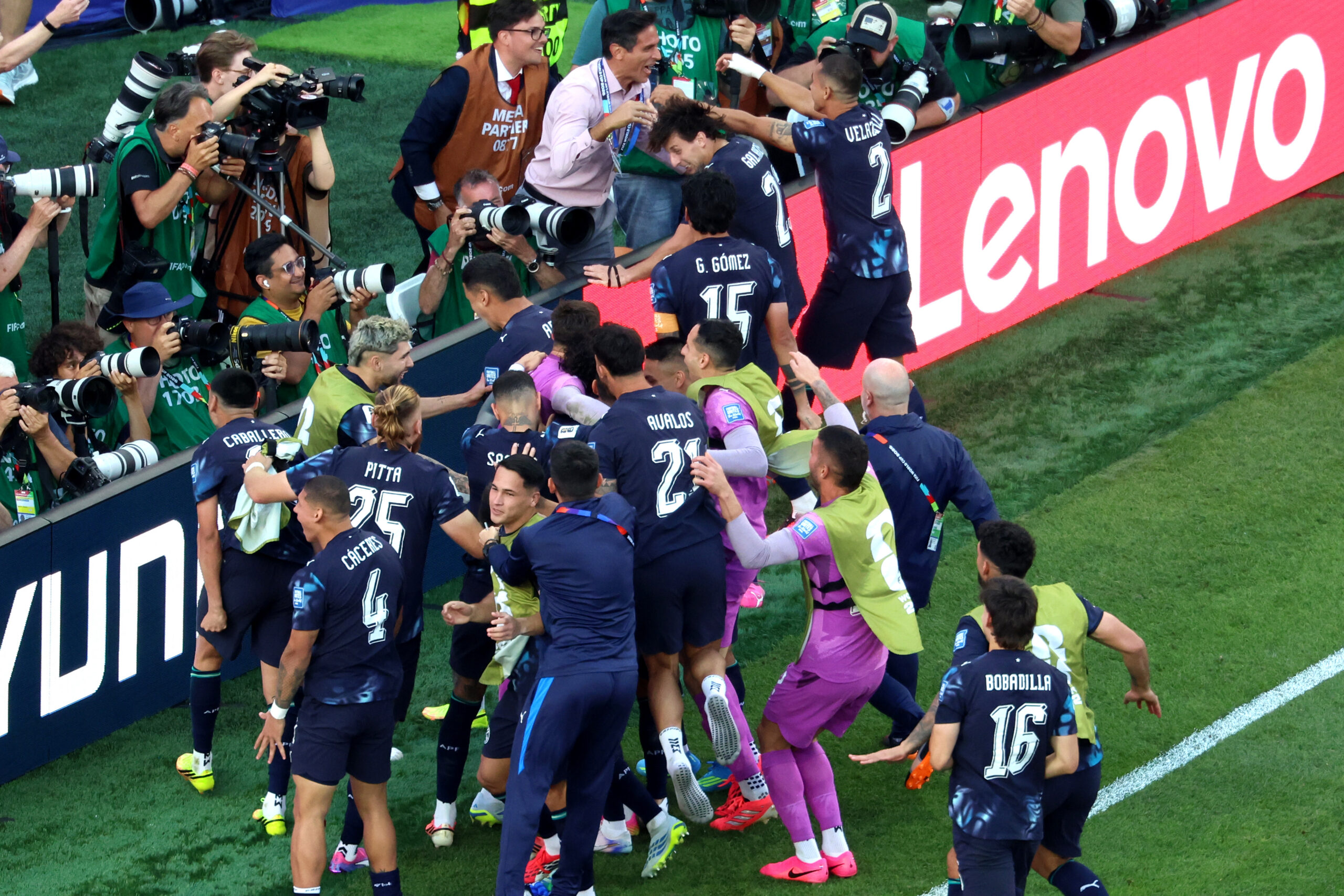
Paraguay’s players celebrating at the end of the shootout.
Paraguay had appeared in five previous knockout games but failed to score in each. It advanced only once in those previous occasions, winning on penalty kicks against Japan in the round of 16 at the 2010 tournament in South Africa. It fell that year to eventual champion Spain in the quarterfinals.
Monday was Germany’s first knockout game since the 2014 final in Brazil when the Germans beat Argentina 1-0 to capture their fourth World Cup title. The Germans were eliminated from the group stage at the last two World Cup tournaments.
“We had very big plans for this World Cup. It’s very difficult to disappoint again,” Havertz said. “It was difficult to create chances and keep the pace.”
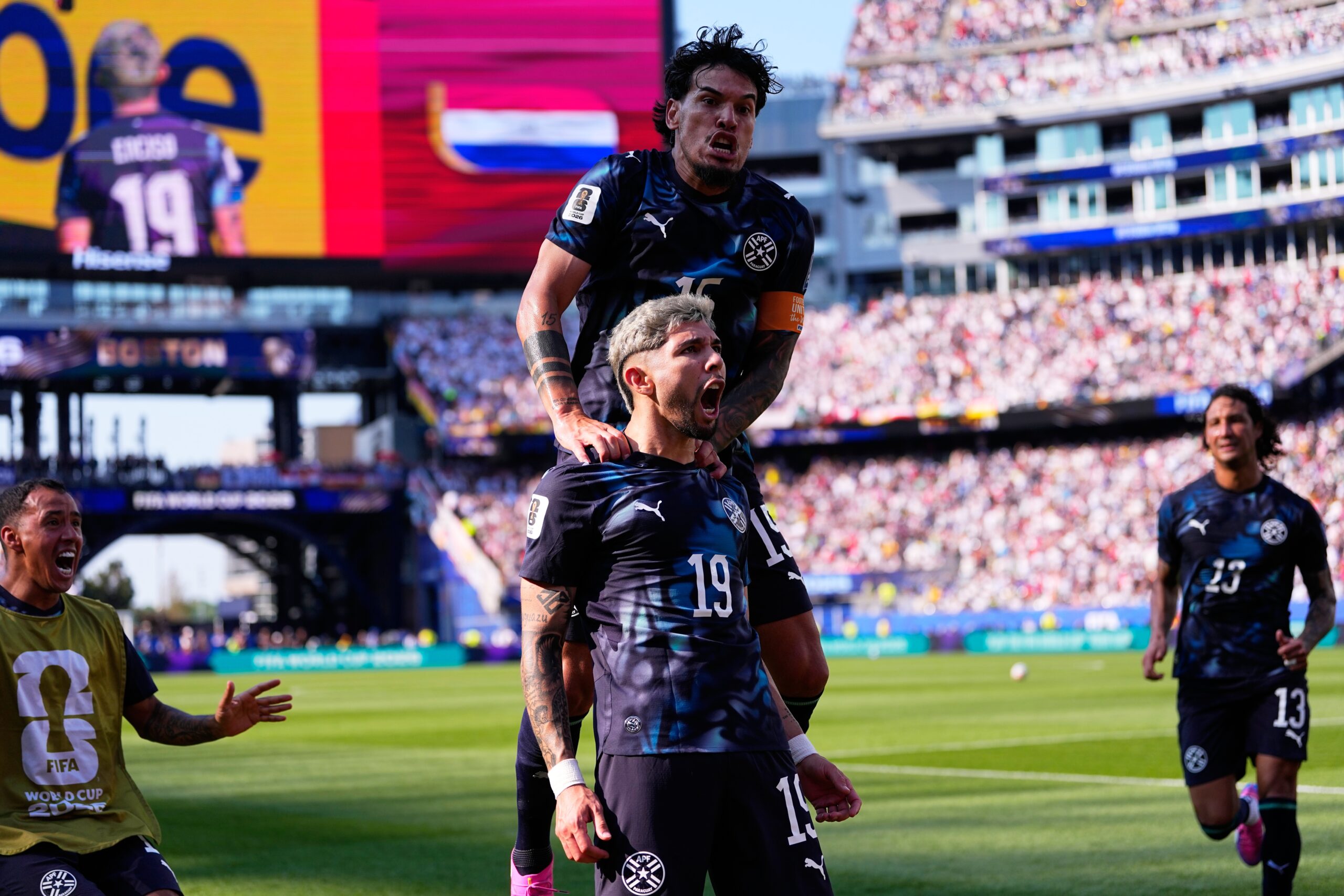
Paraguay broke the early stalemate in the 42nd minute Monday with some perfect ball movement to set up Enciso.
Paraguay’s Julio Enciso (19) celebrates his goal with teammates.
Miguel Almiron split Germany’s Aleksandar Pavlovic and Nathaniel Brown with a left-footed pass to Matias Galarza. Galarza sent a cross to Enciso, who was unmarked by Germany’s defenders and easily headed it past goalkeeper Manuel Neuer.
In the second half, Havertz took a cross from Florian Wirtz, which he got just enough head on to redirect it past Gill.
And then in extra time, Germany appeared to take a 2-1 lead in the 102nd minute when Jonathan Tah headed in a corner kick by Nathaniel Brown that was just above the reach of Gill. But a video review ruled that Waldemar Anton has pushed Gill to the ground before the shot and the goal was disallowed.
Germany, whose 10 goals in the group stage was tied for the most of any team, struggled to find a way through Paraguay’s 4-5-1 setup. The Germans had 78% of the possession in the first half.
As expected, Paraguay was without defender Omar Alderete, who left with an injury in the second half of the team’s 0-0 draw against Australia. Canale started in his place.
IRVINE, Calif. — The assertion on these pages of the importance of this World Cup’s first knockout round for the U.S. men’s soccer team drew a noteworthy response from a history-minded reader.
“Just because they changed how to make it from 32 to 16 doesn’t automatically make doing it more meaningful,” it said. “Not to be too ‘Bluesky reply guy’ but portraying it otherwise empowers FIFA’s money grab imo. On Wednesday the USMNT will try to do something they’ve done 5 of the last 8 men’s World Cups.”
Those are fair points, especially the one about FIFA grabbing money. The U.S. men have indeed been among the last 16 teams standing at five of the eight World Cups they played in from 1990-2022: ‘94, 2002, 2010, ‘14, and ‘22.
So the point that was made here is worth clarifying. It’s not just about being able to claim a title of being one of the best 32, 16, or any fewer national teams based on World Cup finish. It’s about the mentality of knockout soccer on the sport’s biggest stage, and how different it is from anything else.
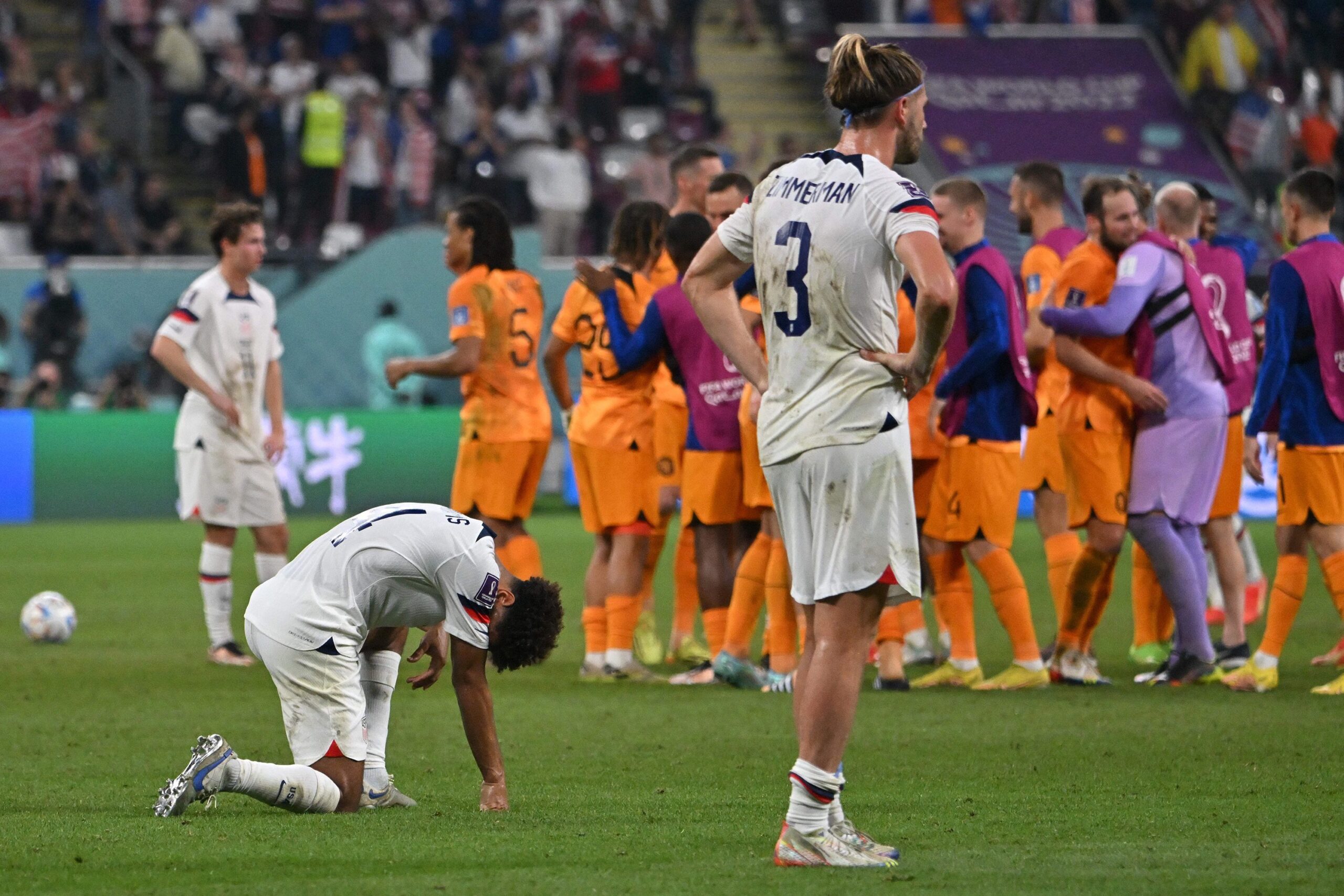
Tyler Adams (left) and Walker Zimmerman on the field at the end of the U.S.’ loss to the Netherlands that knocked them out of the 2022 World Cup in the round of 16. This year’s tournament is the first with a round of 32.
It’s also about whether U.S. players of this era can prove themselves in the way they’ve long told us they can. Lose the round of 32 contest to Bosnia & Herzegovina on Wednesday (8 p.m., Fox29, Telemundo 62), and all the promises go up in smoke.
That pressure might not be the same as the kind the superstars of Brazil, Argentina, England, and so on face every day. But it’s still a significant burden, and a particular kind for a team with DNA built on fighting for respect.
“I think everyone knows in the back of our minds what this could do for this country,” attacking midfielder Gio Reyna said before Monday’s practice, the last before the U.S. team headed north to the Bay Area for Wednesday’s game in Santa Clara.
“Not that we’ve really spoke about it or thought about it much — we’re pretty much just focused on each game in front of us at this moment, as it is win or go home,” he continued. But they don’t have to.
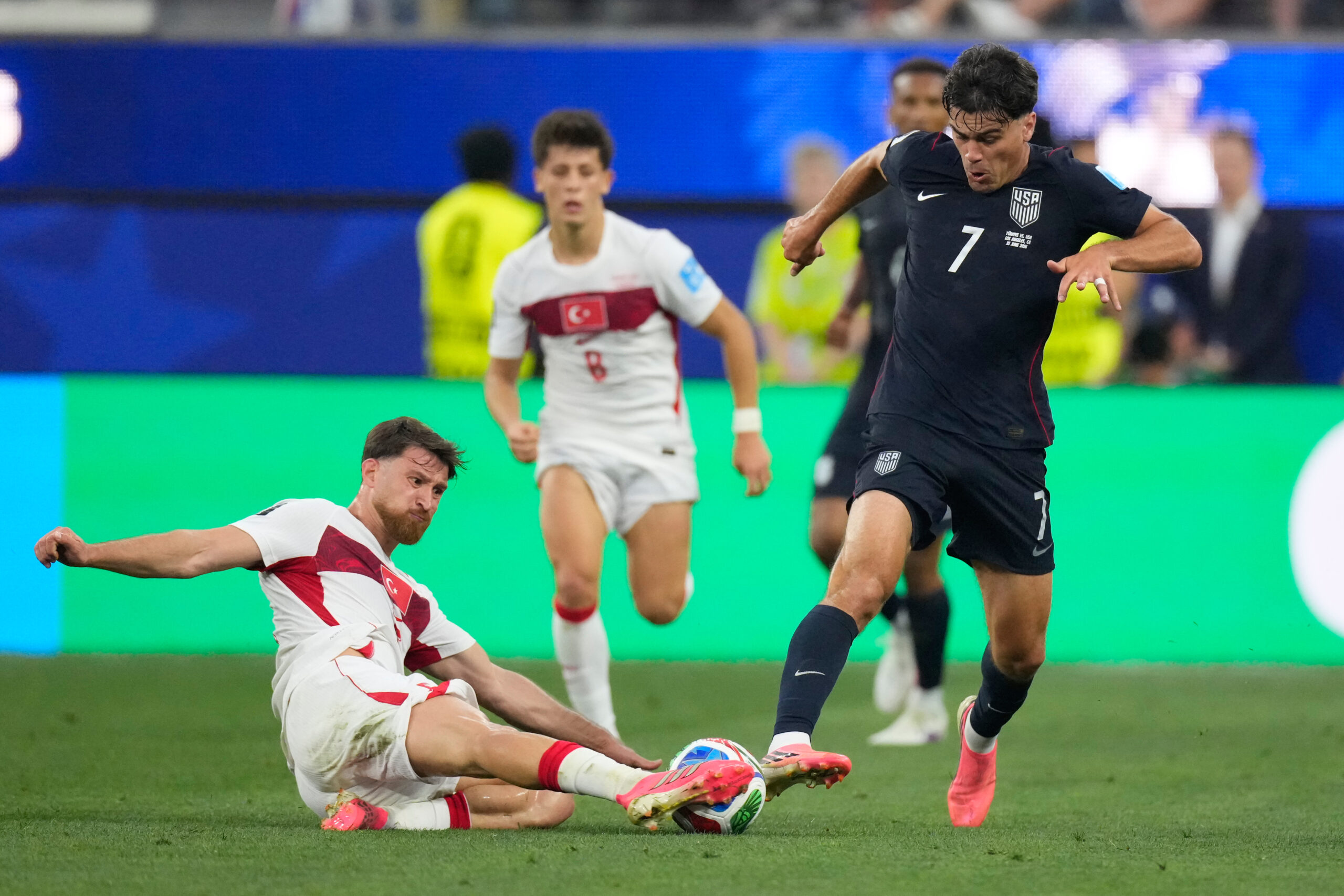
Gio Reyna (right) in action during the U.S.-Turkey group stage finale.
“We feel the country rallying around us,” he said. “We see the momentum it’s bringing to the sport in this country just through the group stage. But we also understand that if we make a nice run in the tournament, what it could really do for the sport.”
Reyna and centerback Tim Ream were the two players who spoke Monday. Both were part of the 2022 team that took the U.S. back to the men’s World Cup after failing to qualify for 2018. Now Ream is this team’s captain, and its oldest player.
“Would it be weird if I told you I don’t really feel too much pressure at this minute?” he said. “I just think there’s so much pressure that we put on ourselves.”
He acknowledged in his next breath that “it feels very different this time around than 2022, I will say that,” though “not because of the round of 32 or because that was a round of 16.”
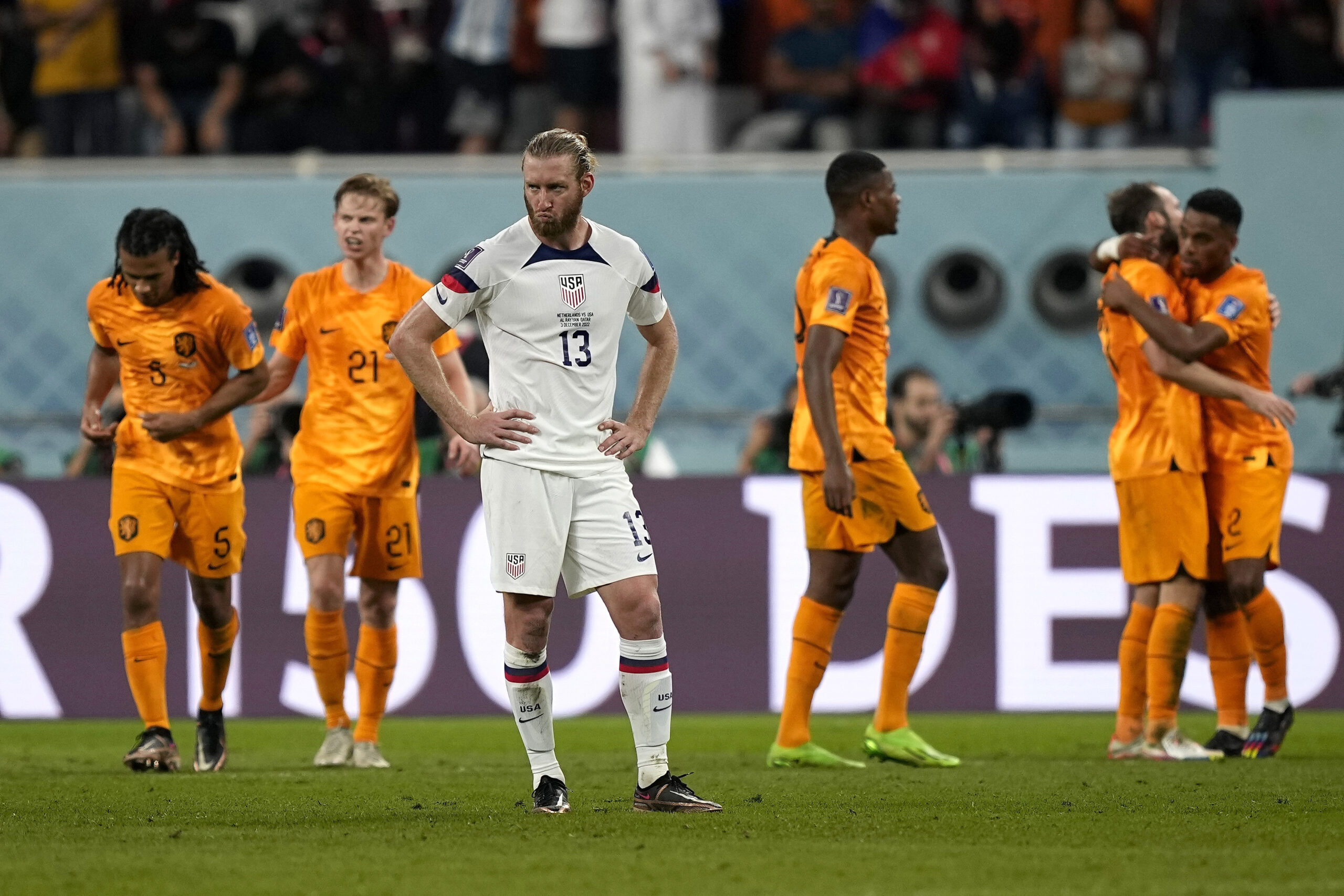
Tim Ream (center) on the field after the Netherlands scored its third goal against the U.S. in 2002.
Instead it’s because of what is already in the players’ minds.
“I think we put so much expectation on ourselves as players — and I said this at the beginning of the tournament — but I think we felt more pressure for that first game against Paraguay than anything,” Ream said. “And that’s coming from ourselves, not from anything on the outside.”
The burden might weigh a little extra on Reyna, too, and not just because of the scandal that engulfed him and his family four years ago. Even if everything back then had been clean-cut, he’d still be the son of U.S. legend Claudio Reyna, who played for the U.S. at the 1998, 2002, and 2006 World Cups — but not in 1994 because of a hamstring injury.
“I always like to say it’s just another game of football, but at the end of the day, I think everybody knows what this game is,” Gio said. “World Cups only come around every four years, and especially on home soil, this opportunity will really never come back.”
IRVINE, Calif. — Right now is a good time to remember that the U.S. men’s soccer team has won just one World Cup knockout game in its history.
In fact, every day for the rest of this tournament is a good time to remember that, especially leading up to Wednesday’s round of 32 contest with Bosnia & Herzegovina (8 p.m., Fox29, Telemundo 62).
This is the moment that the players have dreamed of, whether since growing up or since leaving Qatar four years ago. This is the moment Mauricio Pochettino was hired for, with U.S. Soccer bringing in hedge fund billionaires to help fund the famed manager’s salary.
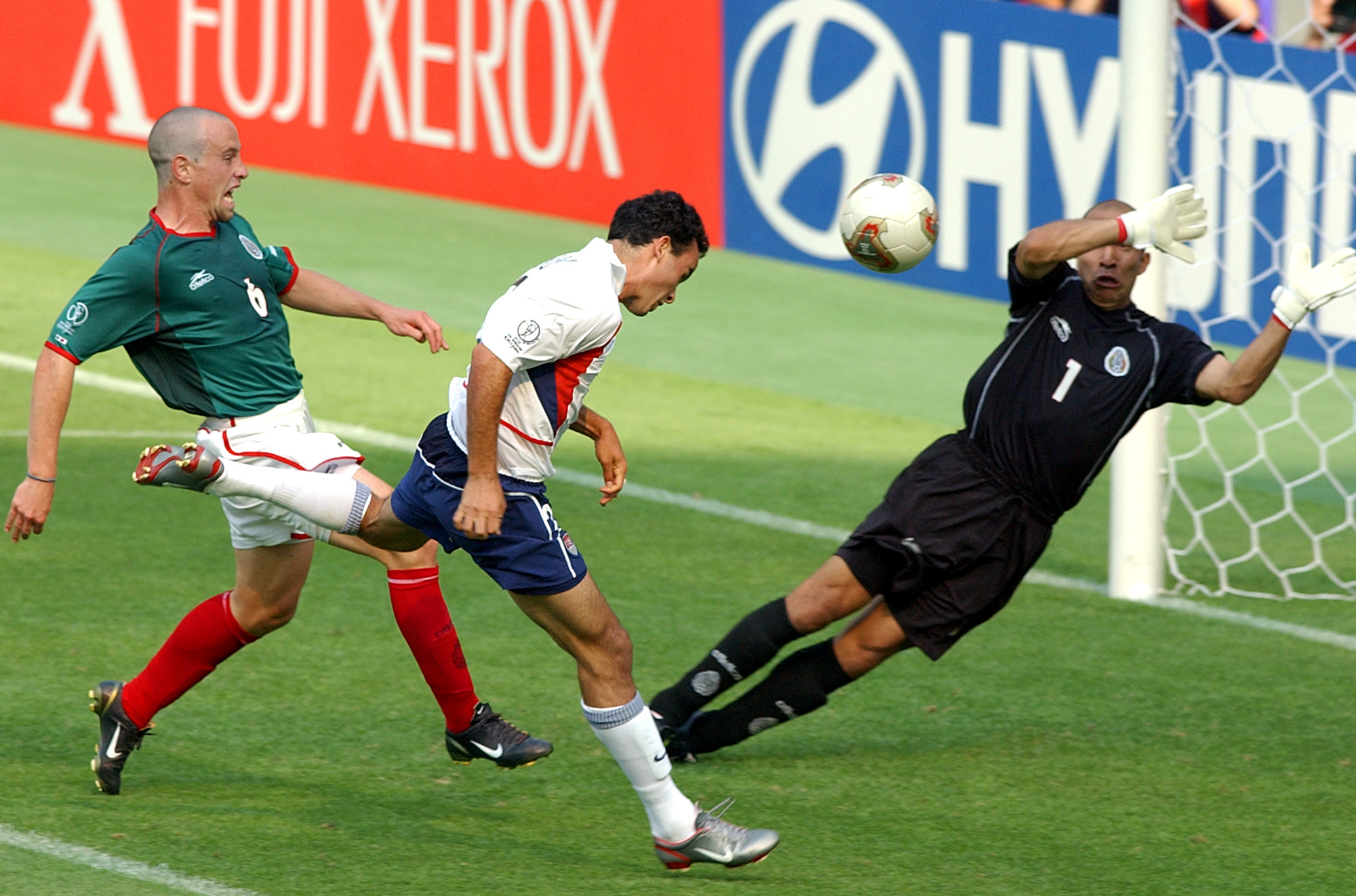
And this is the moment when history echoes. The U.S. men have played eight World Cup knockout games all-time, from their first in 1930 (a 6-1 loss to Argentina) to their latest in 2022 (a 3-1 loss to the Netherlands). Their lone victory came in 2002, 2-0 over Mexico.
Landon Donovan (center) heads in one of the U.S.’ goals in its win over Mexico in the 2002 World Cup round of 16.
Beyond that? 7-1 to Italy in 1934, 1-0 to Brazil in 1994 (more on that in a moment), 1-0 to Germany in the 2002 quarterfinals, 2-1 in extra time to Ghana in 2010, and 2-1 in extra time to Belgium in 2014.
If reading that opens some old wounds, apologies. But it’s necessary to explain why one of the most tense moments of any World Cup, the start of the knockout rounds, is especially tense for this program. There is no sterner test of a national team’s quality than whether it can win the do-or-die contests that live longest in the memory.
The last time the U.S. men played a World Cup knockout game on home soil was 1994 at the old Stanford Stadium — just down the road from the 49ers’ NFL palace in Santa Clara where Wednesday’s game will take place.
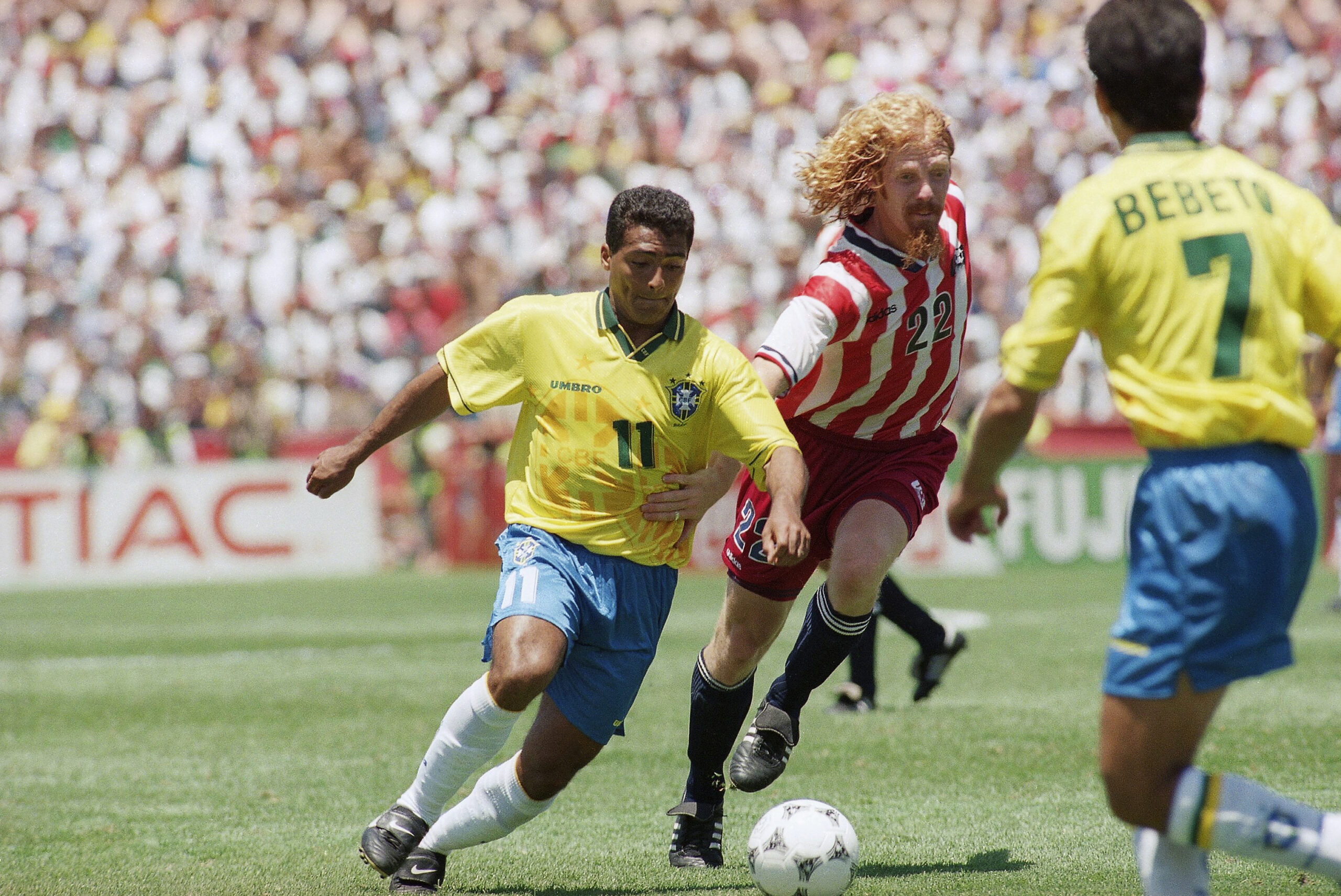
It was a stroke of coincidence, if not quite fortune, that the Americans landed in a July 4 matchup with Brazil after finishing third in their group. Finishing second would have sent them to Washington to play Spain, and finishing first would have had them at the Rose Bowl (where they already were) to play Argentina.
Brazilian superstar Romário (left) dribbling past Alexi Lalas in the 1994 U.S.-Brazil World Cup game.
Challenging the team that would go on to win the title was always going to be a mountain of a task. But the U.S. battled gamely, losing 1-0 to a Seleçao squad that saw defender Leonardo sent off in the first half for a nasty elbow to American star Tab Ramos.
This time, the U.S. is favored, and not just by the bookies. Bosnia & Herzegovina is No. 64 in FIFA’s global rankings, well below the U.S.’ No. 17.
The Dragons are also the lowest of the five third-place teams across the field that the U.S. could have faced, depending on which eight groups’ third-place finishers advanced. The opponent could have been from Group E, F, I, or J in other circumstances, and those teams turned out to be No. 23 Ecuador, No. 38 Sweden, No. 15 Senegal, and No. 28 Algeria.
On top of that, Bosnia is the second-lowest-ranked team of all eight. Only No. 73 Ghana is lower. (The others not named yet are No. 28 Paraguay and No. 46 Democratic Republic of the Congo.)
Bosnia & Herzegovina’s Esmir Bajraktarević was born in Appleton, Wisconsin, to parents who emigrated to the United States after escaping the Bosnian war of the 1990s.
Still, an American sports fan watching soccer in the summer needs only to think of any given March to know it’s never so easy.
The players know this, even someone like Balogun who has spent almost his entire life in Europe.
“I can feel the difference in the atmosphere,” he said. “So for me, there’s a change in my mindset and mentality as well. Not that I wasn’t taking it seriously before, but you can go to another gear. Because you want it more, and I don’t want the journey to end.”
Another point he made about himself might feel especially resonant to a U.S. fan base that has seen Balogun prove his worth as the striker the program long craved.
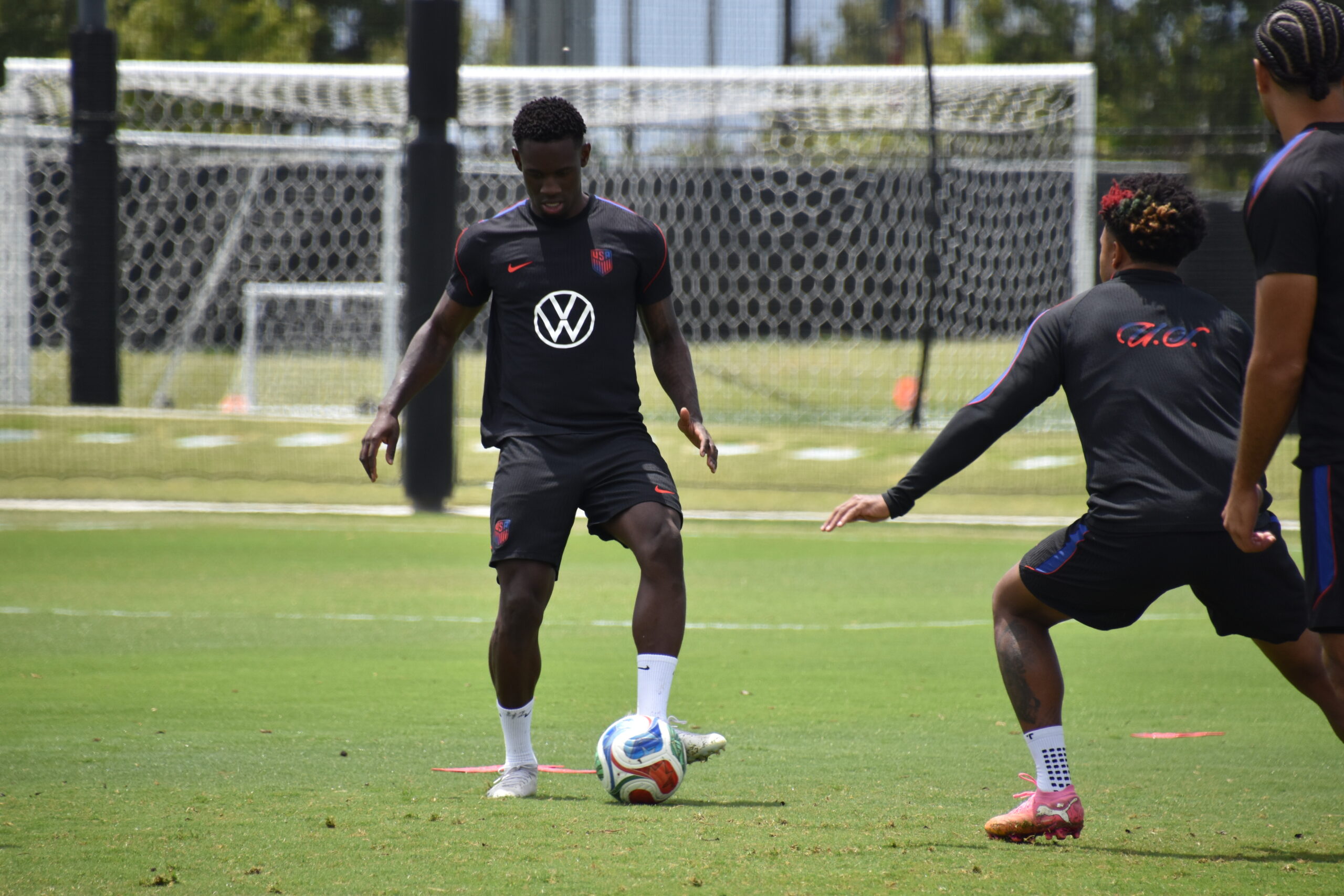
Folarin Balogun (left) during a United States men’s national soccer team practice at Great Park in Irvine, California on Sunday.
“This the business end,” he said, “and this is the stage where, in my opinion, the big players step forward and the big players carry the pressure and make things happen.”
The growing strength of the U.S. player pool is a project that has taken decades to fulfill, and could still take many more years to deliver a true World Cup contender. But a tournament on home soil is an opportunity unlike any other to make a statement, whether to the soccer world or to the non-soccer American public.
So while it may feel cliché to say this is one of the biggest moments in U.S. men’s program history, it’s also true.
“From my personal experience, the best way to break history is not to think about what hasn’t been done,” Balogun said. “It’s just to think about what you need to do and just to think about what needs to be done in order to progress. And as I said, that’s just to win on Wednesday.”
IRVINE, Calif. — For Philadelphians new to seeing a World Cup in person, it might feel like the road to this point began when FIFA picked the city to host games in 2022.
For others, it might feel like the first steps were taken when the U.S.-Canada-Mexico joint hosting bid won the formal vote in 2018, or when the bid was filed the year before.
In fact, the process began much longer ago than that, in 2007. That’s when U.S. Soccer Federation officials started seriously thinking about bringing the men’s World Cup back to the United States for the first time since 1994.
Nineteen years is a long time in American sports, and especially American soccer, where so much changes from year to year, not just decade to decade. So as the 2026 spectacle unfolds, it’s worth taking a moment to step back and turn to the history books.
There aren’t too many Americans who’ve been on the entire ride. In fact, there’s barely anyone at U.S. Soccer who has been, in part because the presidency has changed hands twice since 2007.
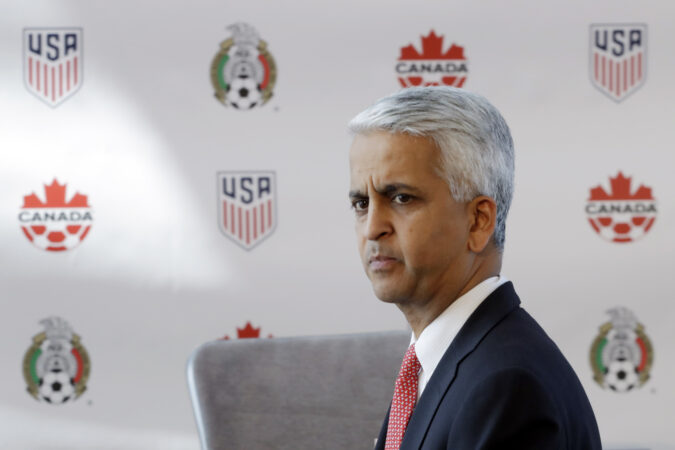
One who has and who knows Philadelphia well is Sunil Gulati. The longtime economics professor at Columbia University led U.S. Soccer from 2006-18 and has also served on the FIFA Council and the former FIFA Executive Committee.
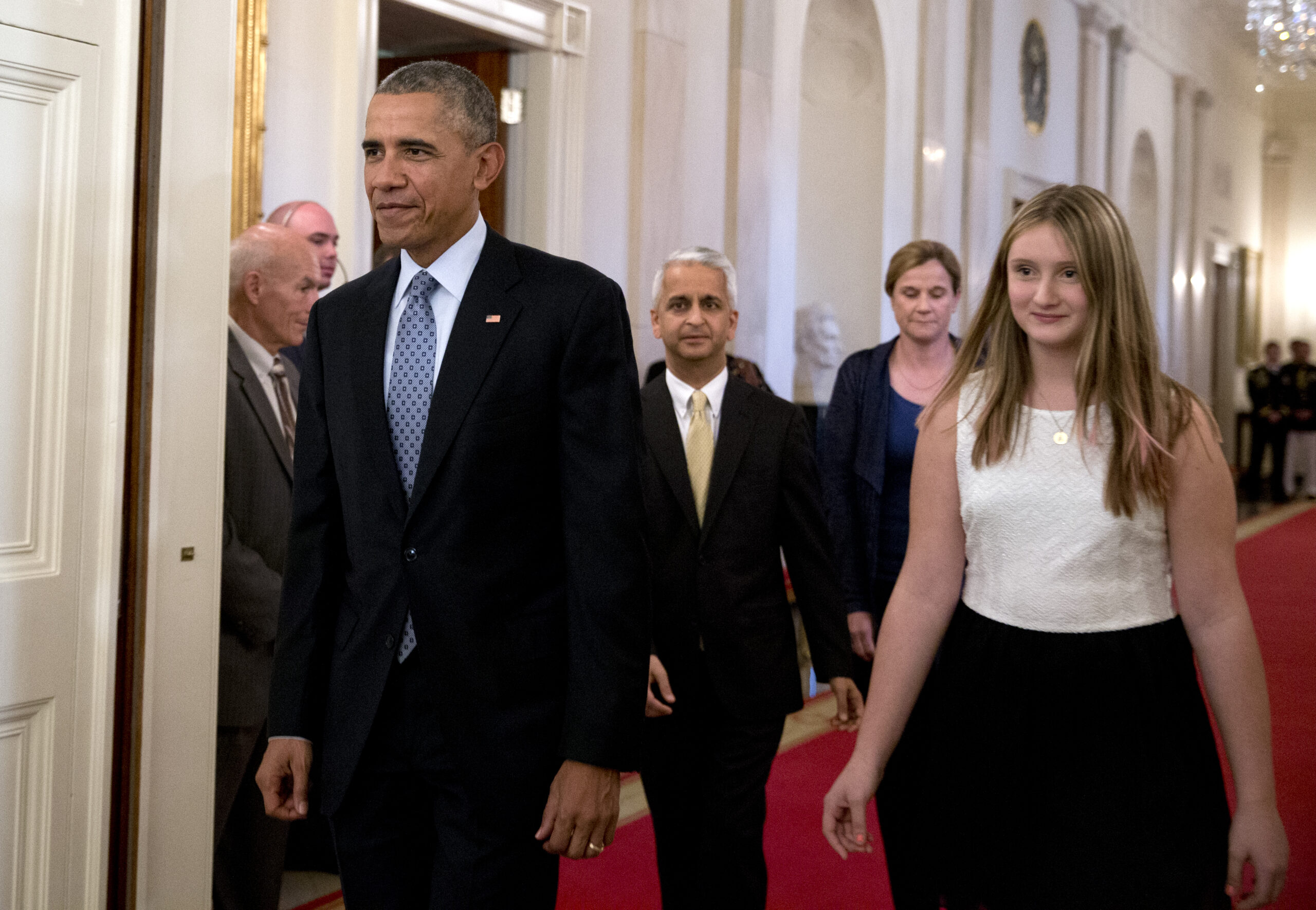
Sunil Gulati (center) walking behind Barack Obama in 2015 at a White House ceremony to honor the U.S. women’s soccer team’s World Cup win.
Few people have seen more of soccer’s growth in this country up close, not just in his years as president but in a variety of roles across Major League Soccer, FIFA, and recently as the chair of European soccer confederation UEFA’s Club Financial Control Body.
Gulati has a lot of stories to tell, and not all of them are allowed to see the light of day. But he was happy to share some with The Inquirer as he enjoys this tournament just like the rest of us.
‘The day after’
When U.S. Soccer took those first steps in 2007, Gulati had been president for less than a year, and it was only 13 years since the 1994 tournament — not too long in World Cup terms. But some flickers of the afterglow were still there, and he knew how long it would take to bring the fire back.
“The ’94 World Cup had been highly successful, and hosting an event like the World Cup generates a lot of positive benefits — and they’re not pure economic benefits, including this [2026] World Cup,” he said. “It was never about the financial returns to the federation, or federations, in this particular World Cup, and there are three of them.”
In his view, “it was always about trying to increase the demand for the game, [and] accelerate the growth of the game in the United States. It’s [wondering] what does the sport look like the day after?”
That acceleration included building the foundations of a soccer infrastructure in this country. Many future power brokers had launchpad moments in 1994: future U.S. Soccer CEO Dan Flynn, promoter and media personality Charlie Stillitano, broadcaster Derek Rae, and future women’s World Cup, Olympics, and NWSL executive Marla Messing.
Above all, that World Cup produced Major League Soccer, as FIFA required the U.S. to launch a top-level league as a condition of hosting.
“All the people that worked in senior positions or in entry-level positions that became part of the landscape in the sport … those people became important players in the growth of the game in different ways,” Gulati said. “And obviously, then if you talk about MLS, the development of the league leads to huge changes in infrastructure, the stadiums in particular, training facilities.”
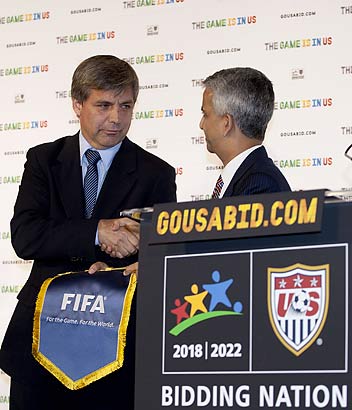
Harold Mayne-Nicholls (left), the head of the FIFA Inspection Delegation, exchanges a FIFA banner with then U.S. Soccer president Sunil Gulati at the conclusion of FIFA’s bid inspection for the 2018 and 2022 World Cups.
Gulati believed another World Cup could do even more. So the long road began, with U.S. Soccer going in on 2022 when it became clear 2018 was going to Europe.
For some time, it seemed like effort would pay off. But in December of 2010, a day came that will live in soccer’s infamy.
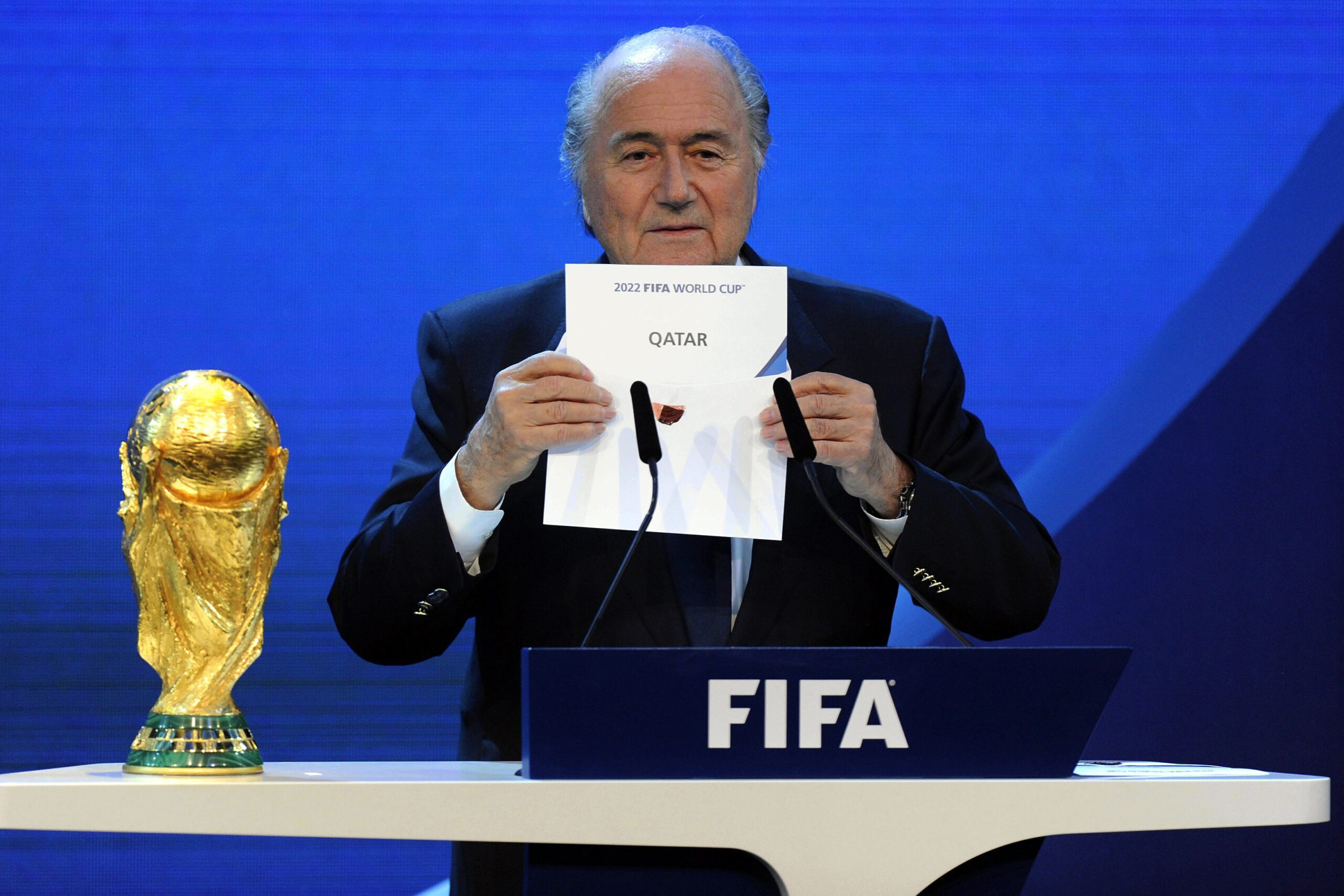
So many people around the sport remember where they were when then-FIFA president Sepp Blatter pulled Qatar’s name out of the envelope instead of the United States’. It hurt as much as any loss on the field, perhaps even more to some people.
But Gulati was ready for the gut punch because he sensed it might be coming.
Perhaps the most infamous day in FIFA’s modern history: when then-president Sepp Blatter announced on Dec. 2, 2010, that Qatar would host the 2022 men’s World Cup.
“I had a better inkling, I think, than members of my team that it was going to go the wrong way for us,” he said. “Because we had a pretty accurate vote count, and that vote count relied on three European votes. And I had a pretty good idea that we weren’t going to get those — the votes that the weeks earlier, I was quite confident that we were going to get.”
Had those three votes on FIFA’s executive committee gone the U.S.’ way in the final round of voting, it would have been an 11-11 tie, and Blatter would have broken it in America’s favor.
“It didn’t shock me, but I think it probably shocked some other members of the team who maybe weren’t quite as close to the vote count,” Gulati said. “And it was obviously a huge disappointment, but not a shock.”
“Right after the decision, I wasn’t sure if I ever wanted to go near this process again, or if I wanted to start right away,” he said, and he referred to an even stronger version of that line he gave to France’s Le Monde newspaper earlier this month.
“On the one hand, I wanted to immediately jump into our next bid,” that version went, “and on the other, I told myself that I never again wanted to have anything to do with that kind of thing, or with those people.”
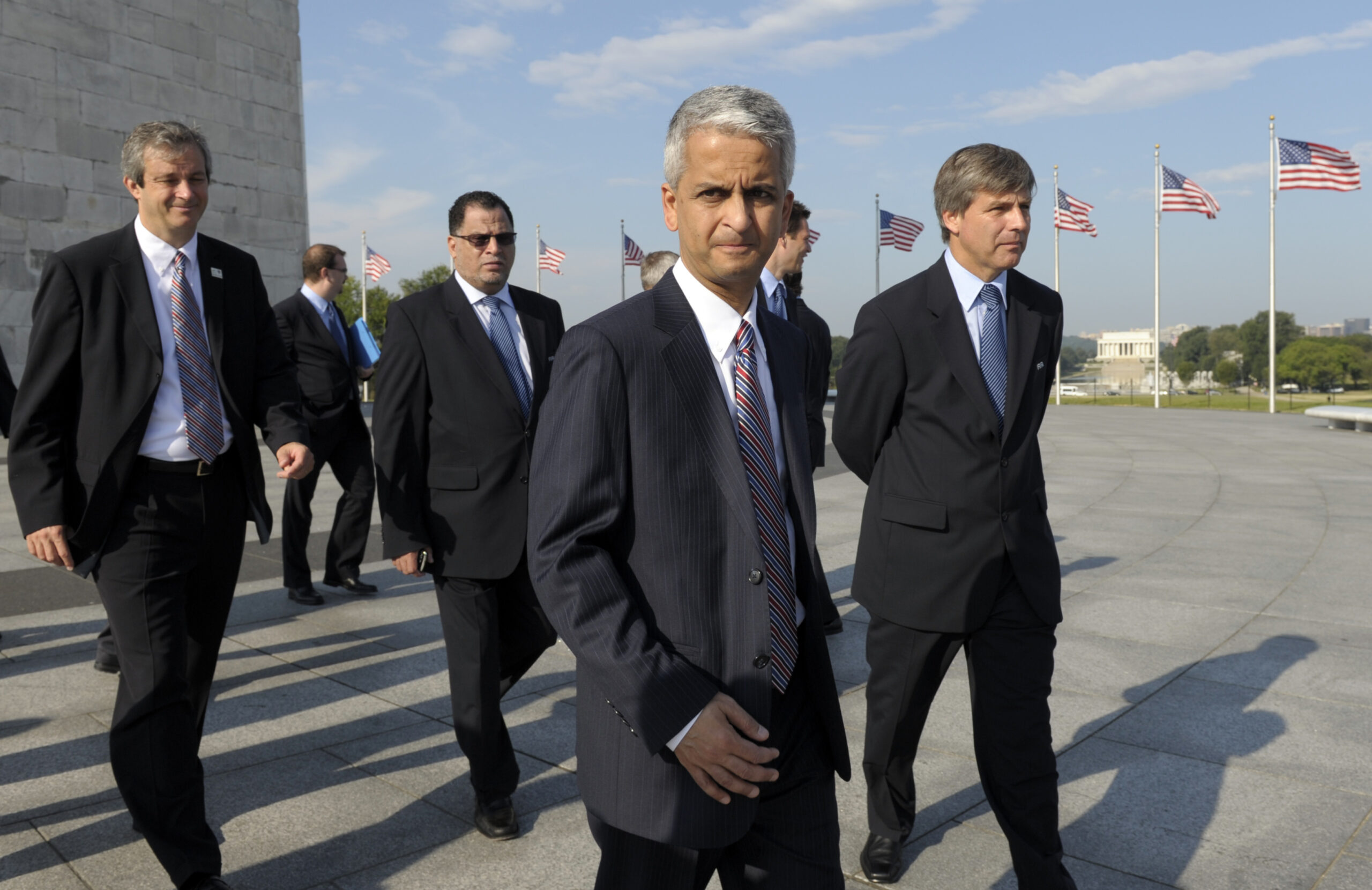
Sunil Gulati (center) with various international soccer officials at the Washington Monument in D.C. in 2019.
As allegations that Qatar bribed FIFA officials to win the bid piled up, it would be a few years before the winner of Gulati’s internal battle emerged. When it did, the soccer landscape had changed in an even more epic way.
On May 27, 2015, the U.S. Department of Justice raided the Baur au Lac hotel in Zurich, Switzerland, and arrested a slew of international soccer officials. A few hours later in Brooklyn, N.Y., the department formally announced the charges and the people charged.
That day would lead to Blatter’s resignation and a pile of other impacts, including reforms to the World Cup bidding process.
Since Gulati was on the FIFA Executive Committee at that point, he had a role in those reforms. He acknowledged to The Inquirer that he wanted “to try to influence what the rules of the competition, in terms of the bidding process, would be. And those changed, which then allowed us to be more comfortable bidding again.”
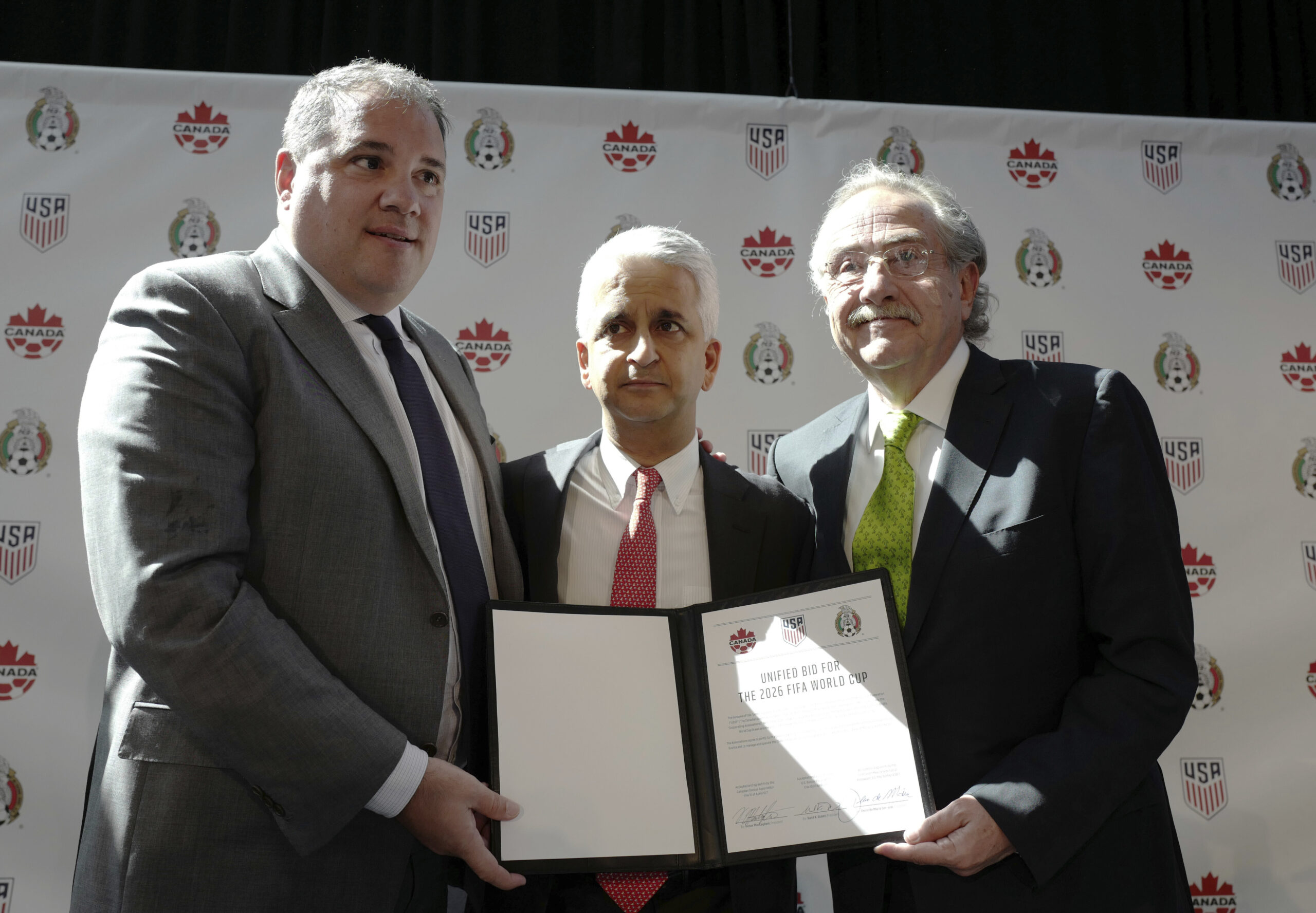
By the end of that year, the wheels were in motion, and in 2016, Gulati started pushing for a multicountry plan. It started with just the U.S. and Mexico, as Gulati worked with the then-chairman of the powerful TV network Televisa, Emilio Azcárraga Jean. Then Canada joined the fold.
“There were some cultural reasons, frankly, that I wanted to do it with Mexico, about Hispanic relations, Mexico-U.S. relations, and so forth,” Gulati said. “And then we’re having a parallel set of discussions with Victor Montagliani, who was the president of the Canadian federation, and it eventually came to the three of us doing it together.”
From left, Victor Montagliani Sunil Gulati, and then-Mexican soccer federation president Decio de Maria presenting their joint bid to host the 2026 men’s World Cup.
Gulati knew a multicountry bid would look better to FIFA, but it would take convincing U.S. Soccer’s board first.
“I preferred having a 90% chance of winning 75% of the World Cup games than a 75% chance of hosting it all,” he said.
He also preferred the new FIFA president. Gulati played a key role in getting Gianni Infantino elected. During the election vote at the 2016 FIFA Congress, Fox’s TV broadcast repeatedly showed him working the hall.
Another aspect doesn’t attract big headlines but has had a huge impact behind the scenes. This is the first men’s World Cup where FIFA hasn’t had a national-level local organizing committee, run by domestic staff in the host countries, that handles marketing, venue deals, political relationships, and so on.
Instead, FIFA has tried to do almost everything itself. And as even casual soccer fans have seen by now, it has not gone well — especially just north of here in New Jersey.
Gulati didn’t want to go too far down that road in public, but he opened the door enough to sense what was beyond it.
“Some of the key figures in this World Cup are people that work for FIFA, which is fine, but it’s different, certainly,” he said.
Asked if FIFA was told that they weren’t going to be able to unilaterally rule over North American governments, he said: “They understood that. And that’s obviously posed a bunch of challenges … Not just state, local, federal, but three countries in this case.”
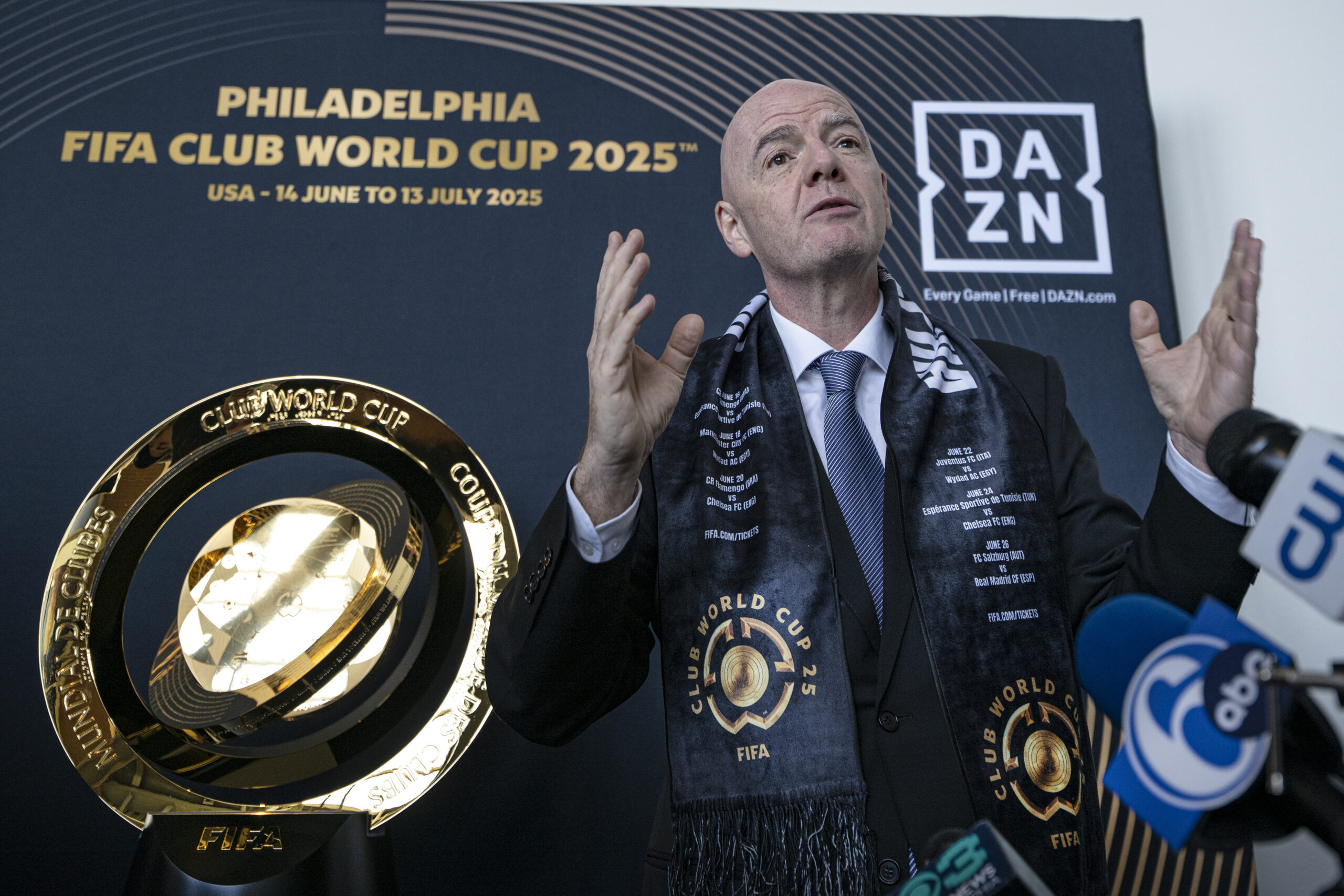
FIFA president Gianni Infantino (left) on a visit to Philadelphia last year to promote the Club World Cup.
And asked in particular about dealing with state and local governments that don’t exist in other countries, Gulati said: “That’s obviously come up, and I get it. But look, there’s always some issues that come up in these things, whether it’s immigration or taxes, or who’s going to pay for what, or exclusivity, all those things — those are kind of par for the course in World Cups.”
A moment later, he added: “Maybe it’s a little bit easier given the obvious differences in governance that exist in other countries.”
In the end, Gulati is an optimist about this World Cup’s long-term potential, including for Philadelphia specifically. He knows the city well, and knows the spotlight it’s in this summer.
“I think what it can do is bring greater attention to the sport and greater attention to the city if it becomes an important attraction, and games go well, and people feel at home, and it’s welcoming, and so on,” he said. “Philadelphia, it’s a great sports city, it’s got great venues. And hopefully, some of the teams that are playing there — and the fans more importantly — come, and they talk about it, and there’s more people that want to visit in the future.”
Philadelphia has a long-standing reputation as an underdog city, but when it comes to hosting the FIFA World Cup, Anne Ryan, Pennsylvania’s Deputy Secretary of Tourism, sees Philadelphia as a front-runner.
Ryan visited the FIFA Fan Festival as it hosted “PA Day” on Saturday, which included visits from a Ben Franklin impersonator, Philadelphia Union mascot Phang and Hersh the Hershey Bar.
“I’m a Philadelphian,” Ryan said. “I do love that underdog mentality, but are we underdogs anymore? We’re ranking [at the] top as one of the best host cities in the country, because of our Fan Fest and our experiences.”
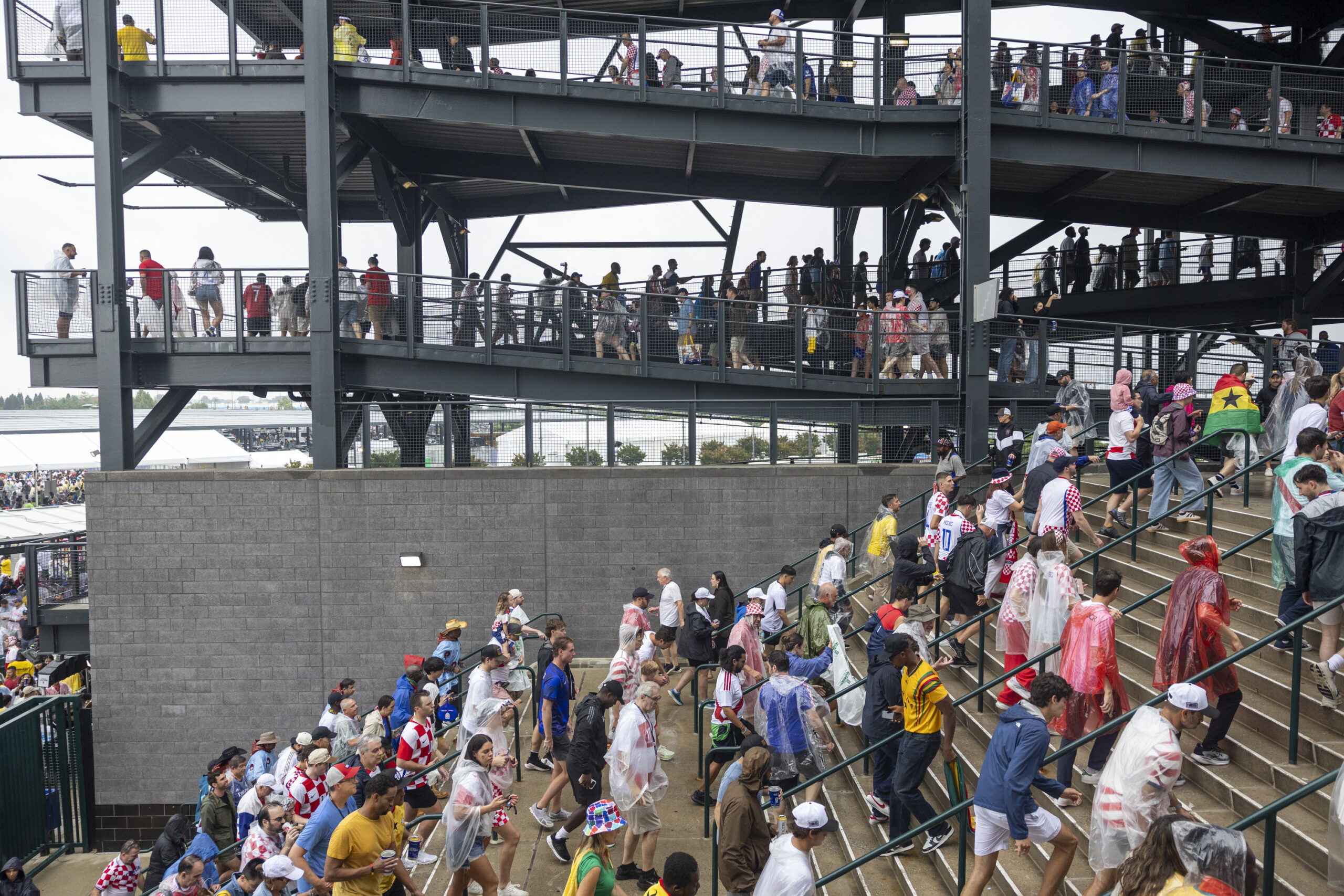
Despite cloudy and rainy conditions, crowds of fans entered the festival grounds again on Saturday for Croatia-Ghana, Philadelphia Stadium’s fifth and final group stage match.
Croatians and Ghanaian supporters were well-represented in the crowd, and both went home happy, despite a 2-1 win for Croatia. Ghana, who advanced to the knockout round as one of the eight best third-place teams, had already secured a round of 32 spot entering Saturday’s match, and Croatia was able to get off the third-place cut line by surpassing Ghana for second.
English fans at the festival went home happy, too, as England finished atop Group L with a 2-0 win over Panama.
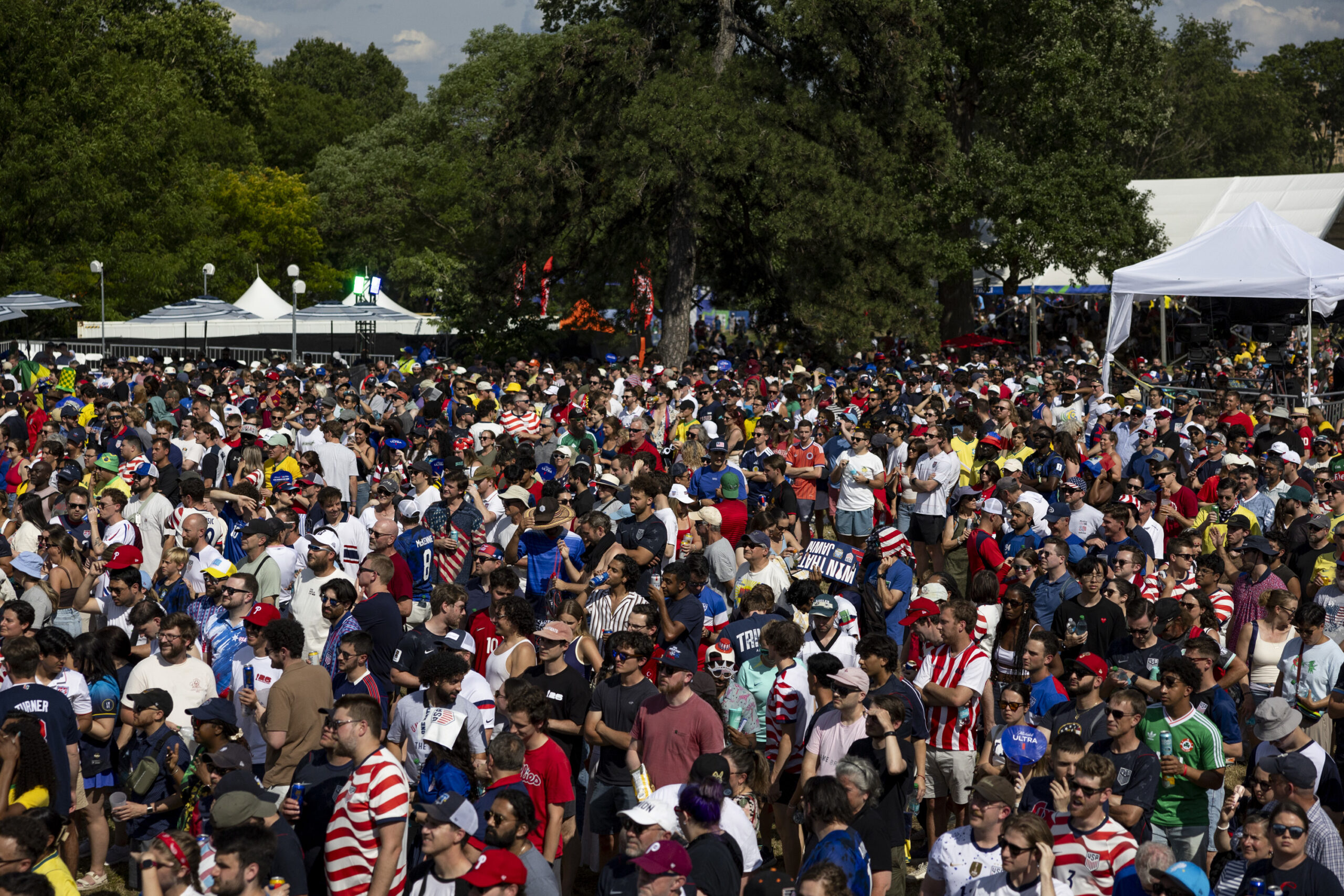
While the state office of tourism has not formally measured the economic impact driven by Philadelphia hosting the World Cup, Ryan said the success of the free Fan Festival in Lemon Hill — which has hosted 250,000 fans since opening on June 11 — is a good indicator of how many fans have visited Philadelphia during the tournament.
“The fact that we’ve already had 250,000 attendees here, it’s just insane,” Ryan said at the festival on Saturday. “Some of our original projections were 15,000 [visitors] a day. And then, to have close to 54,000 just last Friday alone, has been fantastic.”
Ryan said her office could see through flight data and bookings of Airbnbs and other rental properties that plenty of international fans were traveling to Philadelphia for the tournament.
According to Ryan, visitors on flights from France to Philadelphia International Airport are up 59%, year over year. Passengers from the Netherlands to PHL airport are up 48%, and up 25% from the United Kingdom.
The tourism office also considered the economic profile of the nations Philadelphia was hosting, and how people from those nations like to travel. The World Bank Group classifies three of the nations Philadelphia hosted in the group stage — Haiti, Ivory Coast and Ghana — as “lower middle income” nations as it relates to gross domestic product per capita.
If fans from those nations successfully navigate partial or full travel restrictions to follow their team, they’re more likely to pick a high-capacity rental than a traditional hotel.
Over 250,000 people have already come through Philly’s FIFA Fan Festival during the World Cup.
“There was so much projection pertaining to the World Cup, like, ‘Is this going to be a flop, because all of our hotels aren’t sold out?,’” Ryan said. “But you have to look at the teams we’re hosting and how they travel. Ghana, Haiti, Curaçao, Brazil, Ecuador — they’re not staying in a boutique hotel in Center City. Our three bedroom-plus Airbnb bookings are up 53%, year over year, for June and July.”
Ryan said overall, in the five-county region surrounding Philadelphia, Airbnb bookings are up 48%.
“They came, and they’re riding,” Ryan said. “They’re taking SEPTA. And we’ve actually heard good feedback. We did some man-on-the-street interviews with visitors. People [are] really complimenting SEPTA and our buses, and the transit here.”
And despite high ticket costs, another sell-out crowd watched Croatia-Ghana at Philadelphia Stadium (aka Lincoln Financial Field). The World Cup broke its attendance record after Thursday’s slate of matches, with 3,605,357 fans attending matches across the continent entering Friday. After Saturday’s match, 341,620 fans have attended five World Cup matches at the Linc.
While it will take time for the city’s official accounting to come out on hosting the tournament, Ryan suggested the stats and indicators in key areas show the city is positioned to meet, and potentially exceed, its pre-tournament estimation of 500,000 visitors generating $770 million worth of economic impact.
The Ghana-Croatia game on Saturday had a sellout crowd of 68,324 people.
“I’m a betting girl, and I’m going to say for the World Cup, we’re probably going to net out close to 800,000 [visitors],” Ryan said. “And the $770 million in economic impact, I wouldn’t be surprised if that’s closer to $900 million, based off of that increase.”
More visitors are likely on the way to Philadelphia because of how the tournament’s group stage shook out. If Germany beats Paraguay on Monday, and France beats Sweden on Tuesday in the round of 32, it would set up a match between the Germans and the French, two star-studded European powers, on July 4 in a round of 16 match at Philadelphia Stadium.
“We’re still waiting to hear who we’re hosting on July 4,” Ryan said. “Let’s see what our hotels and Airbnbs look like after Tuesday.”
After 72 games over 17 days in the group stage, the first 48-team World Cup has officially reduced to the 32 that will contest the knockout rounds.
If that doesn’t feel like much of a reduction, you aren’t alone. The old adage that the World Cup is really two tournaments in one, the group stage and the knockouts, feels more true than ever this summer.
But now the drama kicks up another gear, as it’s win or go home for every team left standing. Here’s what to know about the 32 games remaining before the July 19 final in North Jersey.
All games are televised on Fox29 in English and Telemundo 62 in Spanish, except for two in the round of 32 on FS1: Belgium vs. Senegal on July 1 and Switzerland vs. Algeria on July 2. All times listed are local to Philadelphia.
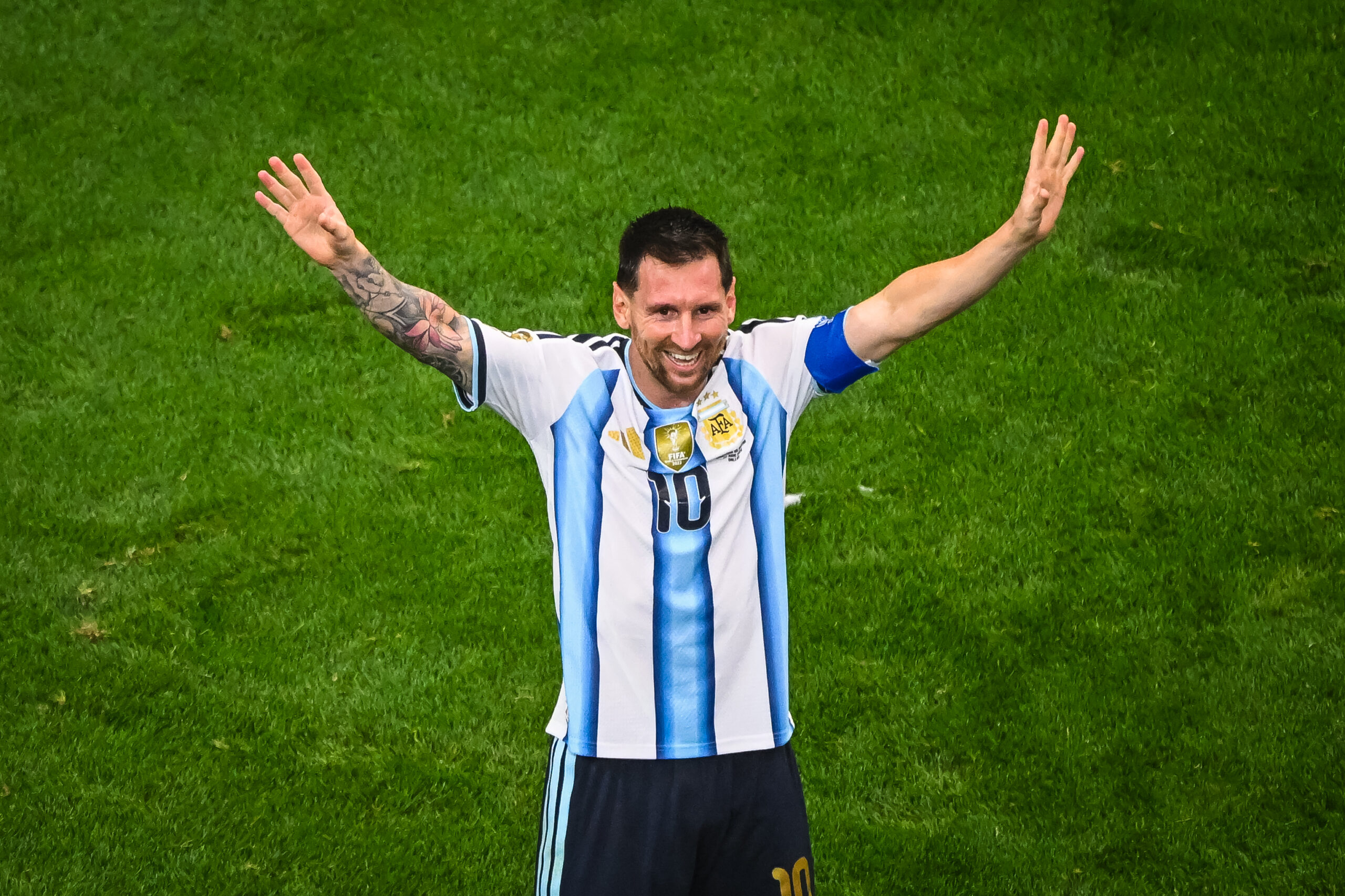
Lionel Messi hopes to help Argentina become the first back-to-back men’s World Cup champion since Brazil in 1958 and 1962.
Round of 32 schedule
The number and letter next to each country denotes where it placed in its group during group stage games.
Sunday
3 p.m.: 2A. South Africa vs. 2B. Canada in Inglewood, Calif.
Noon: Argentina or Cape Verde vs. Australia or Egypt in Atlanta
4 p.m.: Switzerland or Algeria vs. Colombia or Ghana in Vancouver, B.C.
If the U.S. can make the round of 16, it will hope for another big home-field advantage in Seattle.
Quarterfinals
July 9
4 p.m.: Germany, Paraguay, France, or Sweden vs. South Africa, Canada, Netherlands, or Morocco in Foxborough, Mass. (winner goes to semifinal 1)
July 10
3 p.m.: Portugal, Croatia, Spain, or Austria vs. United States, Bosnia & Herzegovina, Belgium, or Senegal in Inglewood, Calif. (winner goes to semifinal 1)
The Meadowlands will host a World Cup final for the first time, after the 1994 men’s and 1999 and 2003 women’s finals were played in the Los Angeles area.