Tag: World Cup

  • The America-turns-250 column Donald Trump doesn’t want me to write

    The America-turns-250 column Donald Trump doesn’t want me to write

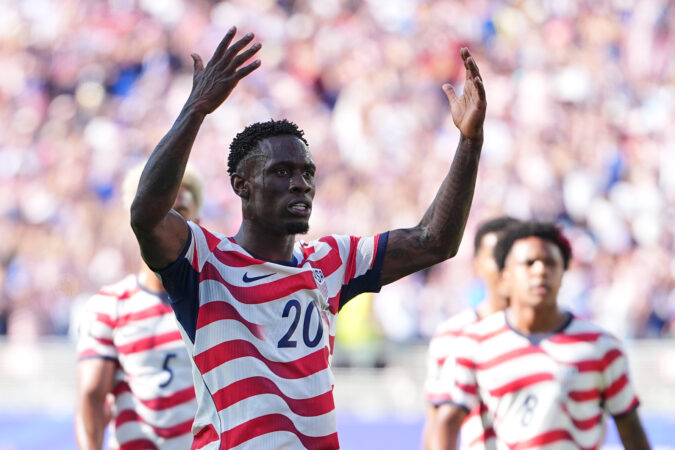
    It was right after birthright citizen Folarin Balogun tapped in another game-winning goal for U.S. men’s soccer in the World Cup Wednesday night that I had a moment of clarity about where things are in America as our nation turns 250.

    I’d gone to Union Yards, the outdoorsy beer hall adjacent to Chester’s soccer palace, Subaru Park, not only to catch the game but also a vibe that I’d wanted to turn into this column.

    The euphoria after Balogun’s goal — a red-bearded man in a colonial tri-corner hat and the two older veterans who’ve saluted through all of the prematch “Star-Spangled Banner” jumping to their feet, as a little girl in cornrows danced on a table — was the bucket-list moment I’d come there for.

    I saw a beer-recipe melting pot of Americans cheering the immigrant-heavy rainbow coalition of U.S. soccer, showing yet again — just as we did in 1976, when I was 17 — that the people instinctively know how to celebrate what’s actually great about our country no matter how much our leaders try to muck it up.

    I’d joked with my editors earlier in the week that I might lose my columnist license (not an actual thing, although maybe it should be) if my piece that runs on the weekend of the United States Semiquincentennial wasn’t a Big Think essay on what the American Experiment all means — to the extent that anyone can actually think through the fireworks, traffic jams, and 100-degree temperatures.

    That’s when it hit me. That was exactly the column Donald Trump was counting on from me and every other opinion writer in America ahead of Independence Day. The 47th president needed a week when the pundits put on their wide-angle lenses and put away the magnifying glasses, while his “forgotten Americans” headed off to the beach or the fireworks show, or gorged themselves on six hours of World Cup soccer every day, and stopped watching the news.

    An international jewel thief needs to create a distraction. Because if you’d been paying attention during the nation’s summer vacation week, you’d have seen that Trump is robbing us blind.

    The July Fourth holiday gave the Trump regime an opportunity for the ultimate Friday news dump, the now time-honored tradition of releasing the worst stuff when people will be unplugged for a few days. In this case, the dump was a federally mandated financial disclosure form that revealed the stunning extent to which Trump has cashed in on his power and influence as president since taking office in January 2025.

    The top-line numbers defy belief. Trump, who reported earning at least $622 million in 2024, his last year as an out-of-power businessman, revealed that he made at least $2.2 billion in 2025, and it’s hard not to see a lot of this as coming from turning the institution of the American presidency into a cash cow.

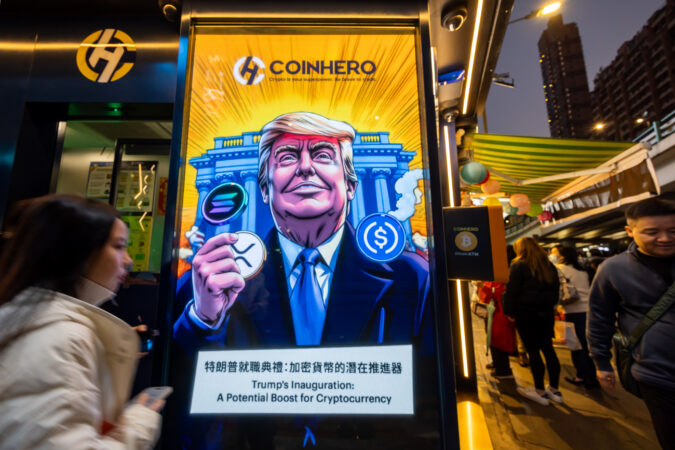
    Consider the $636 million Trump made by releasing a so-called meme coin — an asset whose value is tied to nothing beyond its own hype — that depicted his fist-pumping reaction to the 2024 assassination attempt in Butler, Pa., and which was released literally hours before he took the oath of office again. Not only is this a staggering amount, but Trump pocketed this cash by fleecing thousands of middle-class folks who voted for him.

    Publicly available information from last year showed that some 764,000 individuals who bought the Trump meme coin after its launch lost money. How many investors profited from the $TRUMP coin? Just 58 — and no one got nearly as rich as the man pictured on the coin.

    Yet, Trump’s other sources of wealth are almost as troubling — especially the real estate and crypto deals with foreign nations that have an enormous stake in the president’s policy decisions. That’s especially true when the investment arm of the United Arab Emirates bought nearly half of the Trump family’s main crypto venture, World Liberty Financial, contributing to his at least $1.4 billion in crypto-related earnings. The U.S. and the UAE are (or were) key allies in the war-torn Persian Gulf.

    But the important thing to understand about Trump’s money: It’s not a case in which the issue is that these deals are a lot shadier than the financial profiteering by, say, Jimmy Carter or Warren G. Harding or whomever. None of Trump’s 44 White House predecessors seriously profited from the presidency while they were still in office.

    Carter put his peanut farm in a blind trust. On the flip side, Spiro Agnew pleaded no contest to a felony charge for accepting just a few thousand dollars in the White House — not billions. There is absolutely no precedent for Trump’s naked greed and for how he trades on his office for personal profit.

    Yet, the president thinks that by declaring his crimes on a public document, voters will think it isn’t a crime — even if he releases that form over July Fourth to hedge his bets.

    Indeed, the scale and scope of the president’s grift is vast and overwhelming, which is the point. I’m just now getting to a different Trump family scandal, in which the president approved a lucrative tungsten mining deal with Kazakhstan whereby his sons are key investors, propped up with up to $1.6 billion in loans from Trump’s Pentagon.

    Trump took questions about his family’s 2025 cash bonanza as — and you can’t make this up — he prepared to fly for the first time in the $400 million luxury jet that was gifted by Qatar and which, after a brief stint as Air Force One, is slated to go to Trump’s presidential library (a.k.a. Trump) in 2029.
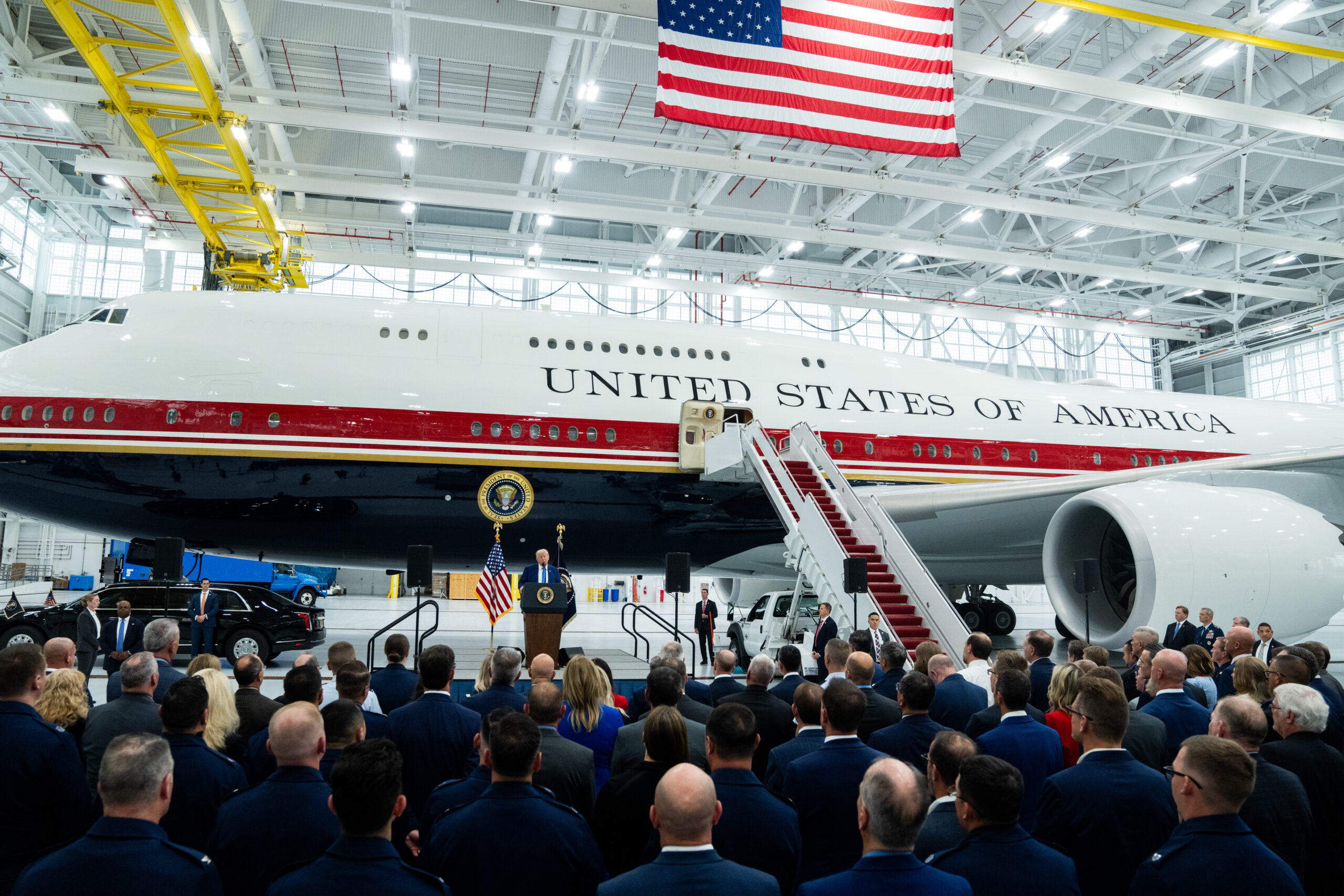
    President Donald Trump delivers remarks next to the new red, white, and blue Boeing 747 jetliner donated by the government of Qatar that will be used as Air Force One, at Joint Base Andrews, Md., in June.

    Still, the national media — and a lot of social media, as well — gave more attention to the Trump disasters that are easier to visualize, including troops guarding his green algae swamp at the Lincoln Memorial Reflecting Pool and empty fields at his Freedom 250’s disastrous Great American State Fair, which sits nearly empty while thousands pack bars for the international joy of the World Cup, or line the rainbow-colored routes of Pride Month parades.

    One of the many ironies here is that Trump is inadvertently doing America a July Fourth favor by highlighting a key part of the flawed wisdom of the nation’s founders. In declaring independence in 1776 and creating a government that aimed for people-powered democracy with checks and balances on unbridled autocracy, the mad scientists of the American Experiment also expressed their fears for our future.

    “The only path to a subversion of the republican system of the Country is, by flattering the prejudices of the people, and exciting their jealousies and apprehensions, to throw affairs into confusion, and bring on civil commotion,” Alexander Hamilton wrote in 1790. “When a man unprincipled in private life, desperate in his fortune, bold in his temper … is seen to mount the hobby horse of popularity, he may ‘ride the storm and direct the whirlwind.’”

    This Fourth of July week, I’ve been thinking a lot about the 1770s, but also the 1970s. For the second-half baby boomers like myself, it’s impossible not to experience the nation’s 250th anniversary without sepia-toned memories of July 4, 1976 — the U.S. Bicentennial.

    Things were both so similar and so different.

    Just as democracy stares into the abyss now, the assassinations, riots, and bombings of the late 1960s and early ’70s felt like the apocalypse to those who lived through it. But the Watergate scandal — yes, the very thing JD Vance and others on the far-right are dismissive of now — and the way courts and newsrooms and members of Congress responded had created a new hopeful yearning in the summer of 1976.
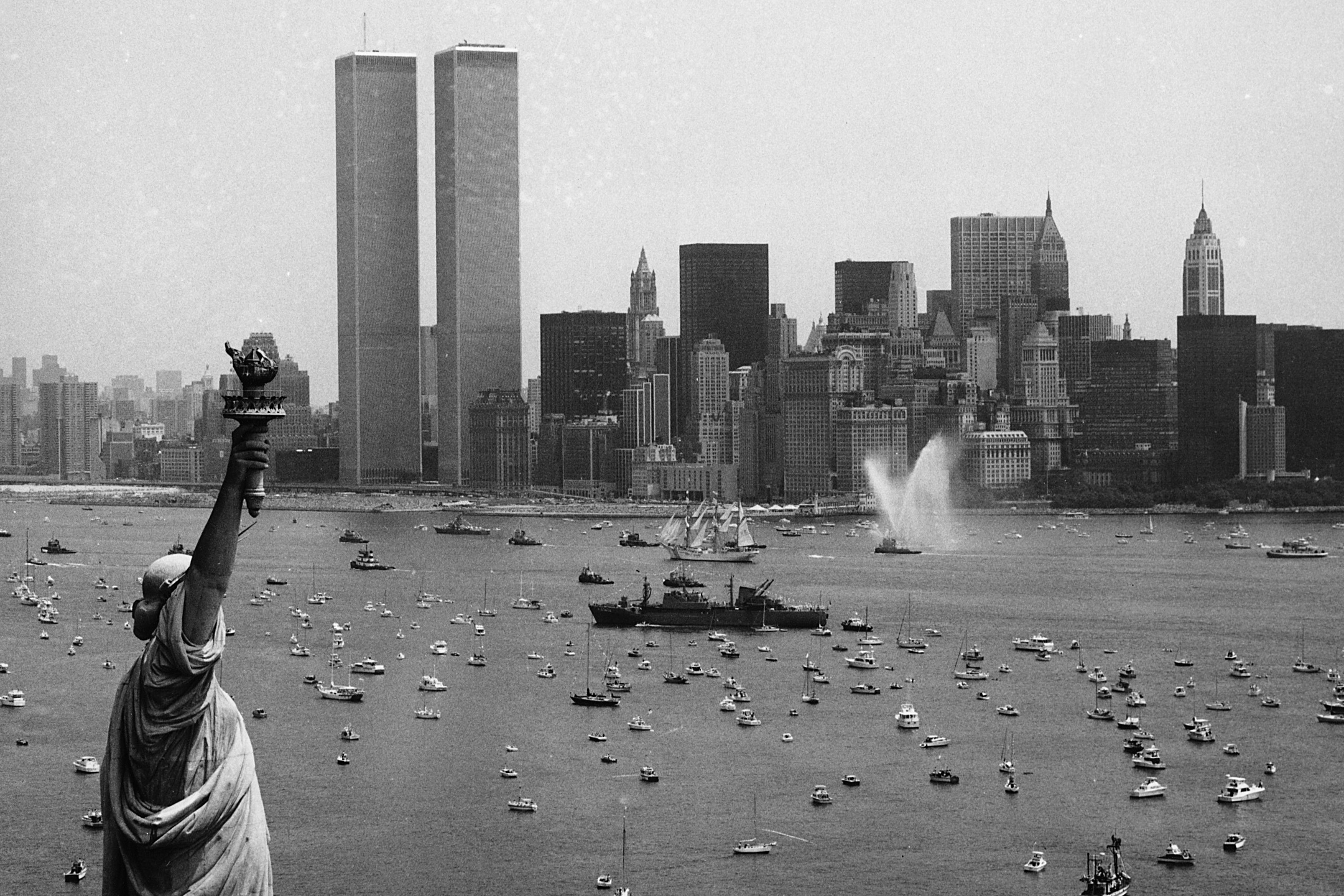
    Ships participate in Operation Sail between the Statue of Liberty and the Twin Towers to celebrate the U.S. Bicentennial in New York on July 4, 1976.

    That feeling is what made the day I enjoyed with my family as a 17-year-old a half-century ago — watching those glorious tall ships glide down the Hudson River from my dad’s high-rise office on 10th Avenue, then cramming into a subway to get to the fireworks over the Statue of Liberty — still bring back chills today. There was an unexpected sense of togetherness — and, naively in hindsight, that a storm had passed.

    It’s different in 2026. The whirlwind that Hamilton warned us about is directly overhead, and the man is still riding, however clumsily, the hobby horse. The institutions that saved us ahead of 1976 are shells of their former selves, as if a neutron bomb had struck.

    And yet, the fundamental essence of what can make America actually great someday remains intact: its people. This summer, millions of us are showing that Americans want things that can bring us together, and also to celebrate what makes us all different and all special, whether on a soccer pitch or a parade route laced with pink.

    The question is, how do we take this positive energy and stop the whirlwind? How do we celebrate a 250-year slow-bending of the arc of the moral universe without losing our focus on the ongoing crime scene at 1600 Pennsylvania Avenue?

    When the president’s Freedom 250 sets off 850,000 fireworks over Washington on Saturday, think of every single blast as about $2,000 that Trump pocketed for himself, and then it might be possible to comprehend the scope of his crime against our citizenry.

    Don’t let the president hijack the Fourth of July to rob the focus from what matters most, the things we need to write and discuss and march against every week: his unprecedented criminality. The bombs are bursting in air, but only when we unleash our people power and seek justice will we see the dawn’s early light of a new nation again.

    Happy birthday, America.
  • Malik Tillman’s heroics helped the USMNT survive Folarin Balogun’s red card and make World Cup history

    Malik Tillman’s heroics helped the USMNT survive Folarin Balogun’s red card and make World Cup history

    SANTA CLARA, Calif. — Malik Tillman’s shoe was broken.

    He’d been stepped on by a Bosnian player, not hard enough to need to leave the game but enough to need a replacement cleat from the bench.

    The new one didn’t have any magic dust, but it didn’t need it. Tillman practices free kicks a lot, so he was ready when the moment came.

    His team was a goal up, a man down, and fighting with every ounce it had to secure its first men’s World Cup knockout win in 24 years. In the 82nd minute, the chance to regain momentum finally arrived.

    Bosnia’s Stjepan Radeljić held back Sergiño Dest, earning the U.S a free kick just outside the 18-yard box. Tillman, with a bloodied sock underneath that new shoe, stepped up to score the goal that clinched the 2-0 win.

    “I’ve been dreaming about this game. I’ve been dreaming about maybe taking a free kick and scoring a free kick,” he said. “I practiced this in training, and today I think I showed what I can do.”

    Soccer now has its own version of Curt Schilling’s bloody sock saga in the American sports history books — though Tillman is much more soft-spoken than the former pitcher who played for the Red Sox, Phillies, and more.

    As Tillman ran toward the end line to celebrate, his teammates joined him in a joyous mass, fusing its energy with a crowd that had dug in just as much down the stretch. That energy came through loud and clear all night, in hopes of seeing a new chapter in a story that began when the Bay Area hosted the U.S. men’s soccer team’s first World Cup knockout game of its modern era in 1994.

    “I’m a different type of person on the pitch,” Tillman said. “Of course, maybe you don’t really see my emotions, but if you score a goal like this, you guys saw my emotions. It’s a great feeling, and, of course, a very proud moment for me.”

    It’s easy to say that the Americans don’t face the kind of pressure as the world’s traditional powers like Brazil, Argentina, England, and Germany. Even next-door neighbor Mexico deals with more, thanks to a rabid fan base that spans both sides of the Rio Grande.

    But this time, the weight on the U.S. was massive. A squad of players long hyped as a golden generation had to win this game, or else they’d be tarred as failures in the big moment.

    The stakes rose even higher when cohosts Canada and Mexico won their round of 32 contests first. Imagine the reaction in the soccer world had the U.S. failed to match them.

    There still will be plenty at stake when the Americans play Belgium in the round of 16 on Monday in Seattle. This team still hasn’t beaten a really good opponent in this World Cup, or in general for a while. Nor has anyone forgotten that the ninth-ranked Red Devils thumped the U.S., 5-2, in March in Atlanta, even if that was a friendly with different squads.

    The U.S. also still has a poor all-time record against European teams in World Cups. Wednesday’s win was just the fourth win in 26 such games, against 15 losses and seven ties. Raising the win total to five now would make an all-time impact.

    About the red card

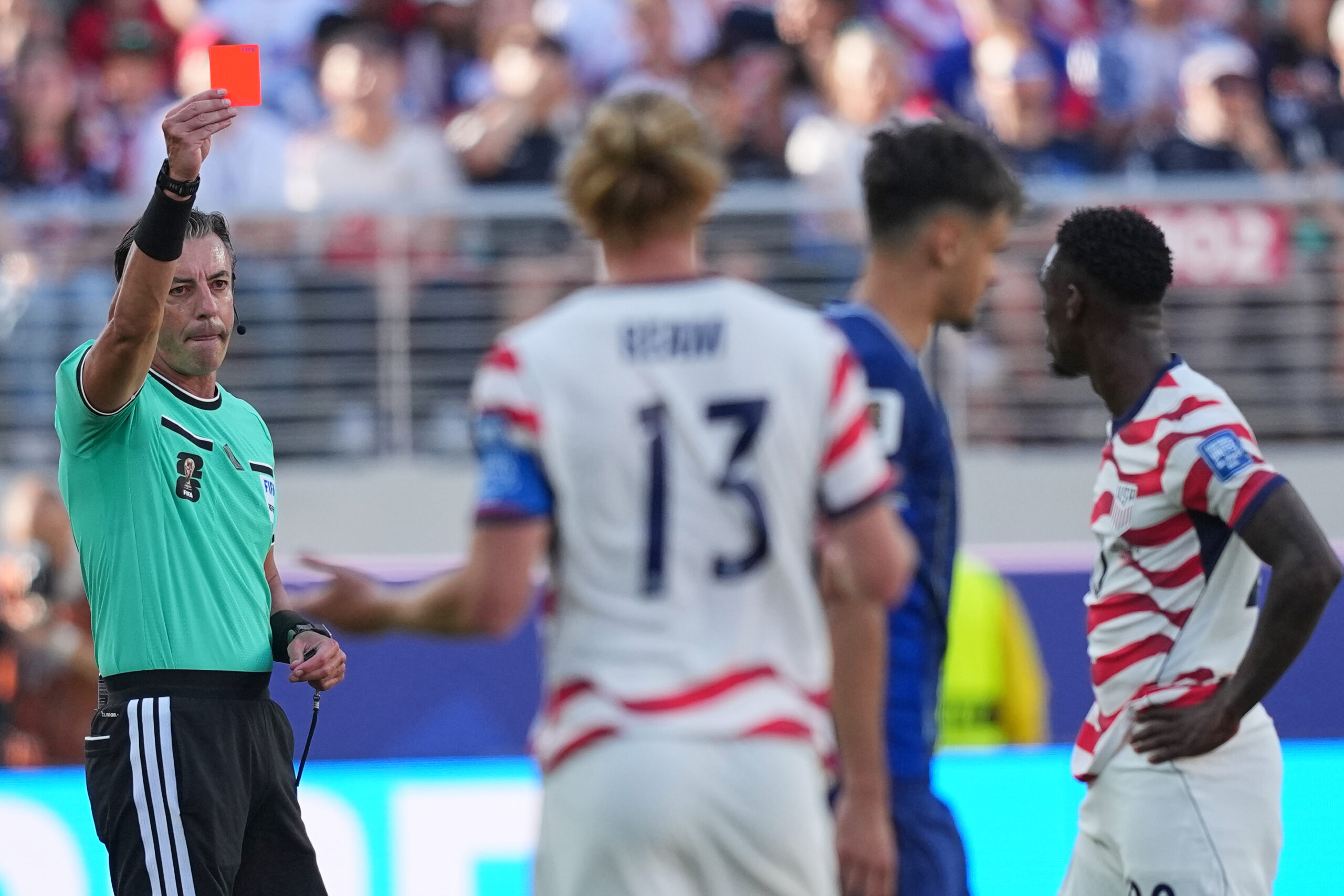
    The call certainly was controversial, and by the letter of the law, referee Raphael Claus might have relied too much on slow-motion replay footage instead of watching at real-time speed.

    But the decision was not totally wrong. First and foremost, any time a replay shows a player dragging his studs down an opponent’s calf and landing on the foot almost certainly will be a red.

    An obvious counter to that is that Lionel Messi wasn’t sent off in Argentina’s group game against Algeria for landing his studs in an opponent’s calf even more directly.

    This is life in the sport, and every player knows it. Had Balogun been hit in a similar way, even though the initial collision was 50/50, U.S. fans surely would have brayed for the opponent’s dismissal.

    Also, if Balogun had been given a yellow card right away, the odds might have decreased that a video review would upgrade the call to a red.

    Referee Raphael Claus (left) showing the red card to Folarin Balogun.

    Because there was no card initially, when Claus went to the monitor, all he could do was give a red or let it go. The rules mandate that a video review of a call with no card can’t lead to a yellow. FIFA’s rules also mean U.S. Soccer can’t appeal the decision, though it almost certainly would have lost.

    “Typical FIFA,” U.S. veteran Tyler Adams said of the rule book. But he didn’t totally argue with the call.

    “You’re asking the wrong person, with how I tackle,” he said. “I think it’s a yellow card. I think when you slow everything down, it’s always going to look worse. I don’t want to say too much.”

    It definitely will sting the U.S. to face Belgium’s stars without the striker who has more than justified the hype around his talent. Ricardo Pepi presumably will start, with Haji Wright coming off the bench.

    Ricardo Pepi (right) subbed on in the 87th minute to help close out the game.

    Pepi didn’t stop to talk with the media after Wednesday’s game, but Wright did. The last U.S. striker to score in a World Cup before Balogun’s three this summer declared himself “always ready and always prepared to give my best for the team.”

    There also was lots of support for Balogun from his teammates.

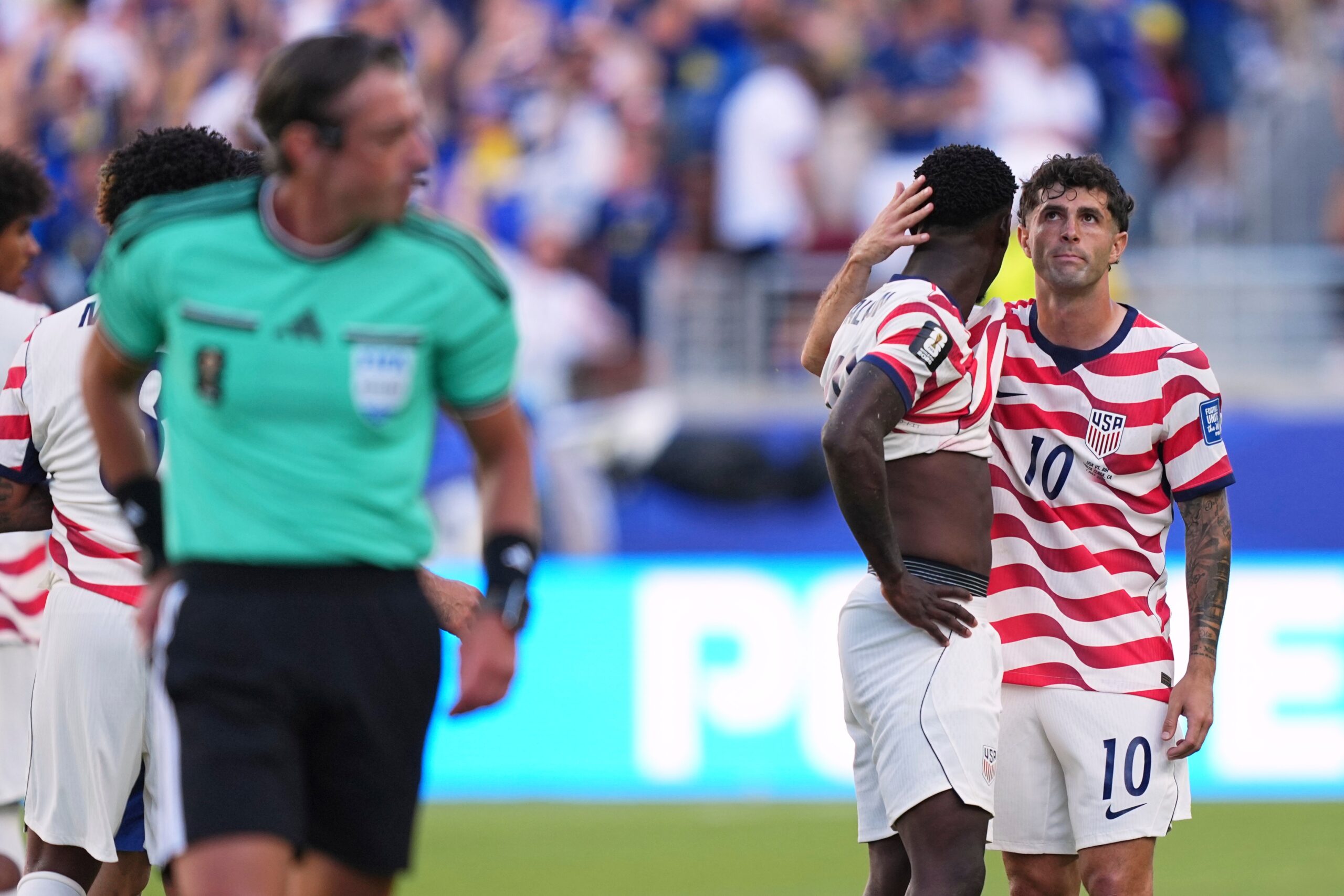
    “He’s done so much for us, and now we’ve got his back,” Christian Pulisic said, and Chris Richards said nearly the same words.

    Christian Pulisic (right) consoles Folarin Balogun after the striker’s ejection.

    Freese’s satisfaction

    Let’s close this piece on a positive note.

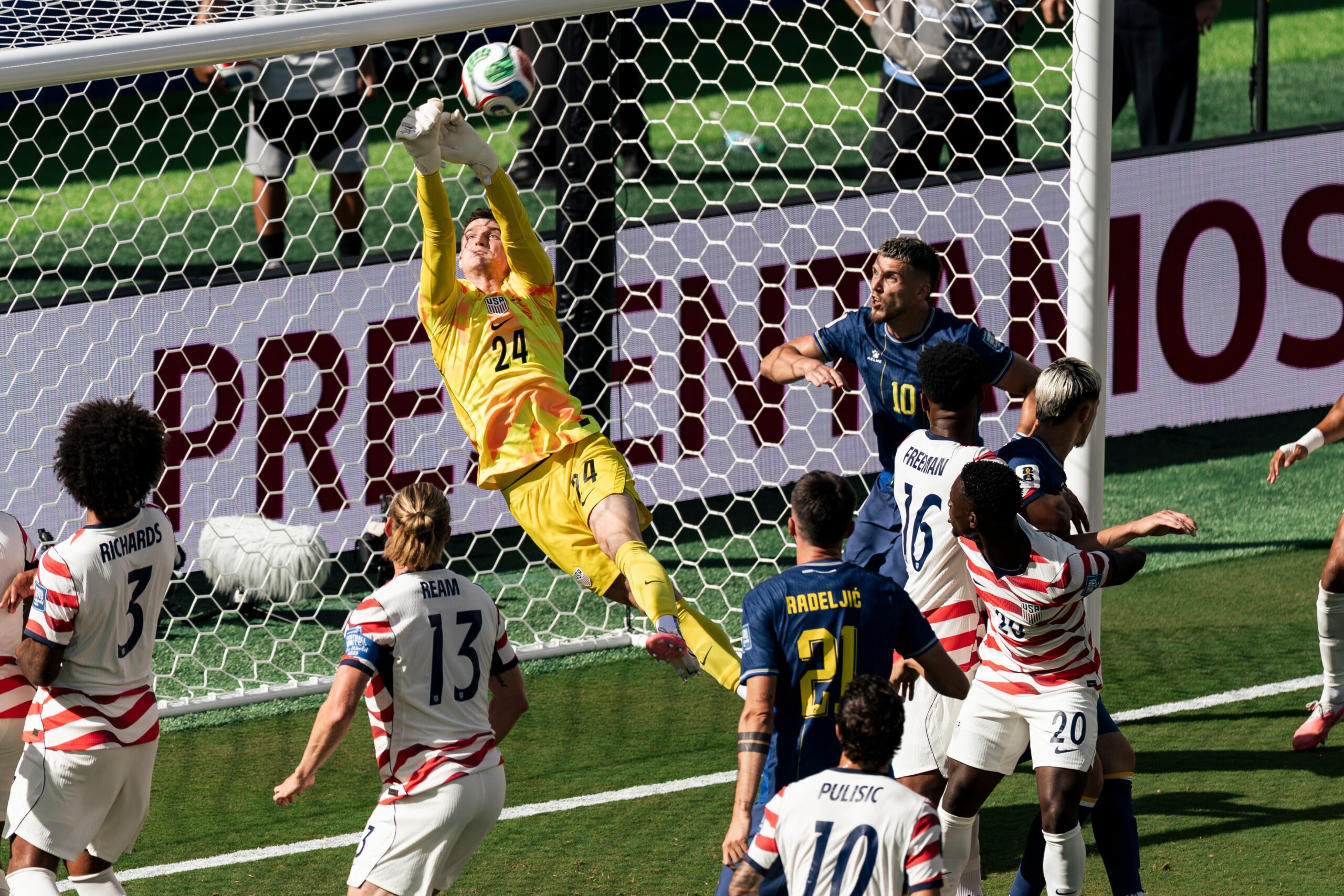
    Matt Freese grew up in Wayne idolizing Tim Howard, the U.S. Hall of Famer who cemented his legend with 16 saves in the 2014 World Cup’s 2-1 loss to Belgium. Freese didn’t have to be that busy against Bosnia, but his three stops and command of his box still were plenty to confirm his status as the No. 1 in net.

    Now he has a historic reward: being the goalkeeper of record for the first World Cup knockout win in so long.

    “It means, really, more than I can say,” Freese said. “You dream of putting your name up there with the guys that you watched growing up. And there’s a lot more to do, but it’s an honor and a privilege to be in goal for this team.”

    Matt Freese (center) making one of his big stops in Wednesday’s game.
  • Philly’s final World Cup game is going to be hot. Here’s how fans can beat the heat.

    Philly’s final World Cup game is going to be hot. Here’s how fans can beat the heat.

    Philadelphia’s final World Cup game on July 4 will feature plenty of red, white, and blue both inside and outside the stadium when tournament favorite France returns to the city for a round-of-16 knockout round against Paraguay on Saturday (5 p.m., Fox29).

    But the fans will be enduring another day of a brutal heat wave when temperatures are forecast to top out near 100, with steamy, shirt-soaking humidity.

    In addition, potentially strong storms are possible around game time.

    With another anticipated sold-out crowd packing Philadelphia Stadium, FIFA says it is proactively taking steps to help fans beat the heat, planning to place cooling tents with water available to fans “within the stadium footprint at the Stadium Fan Experience,” located just inside the main gates.

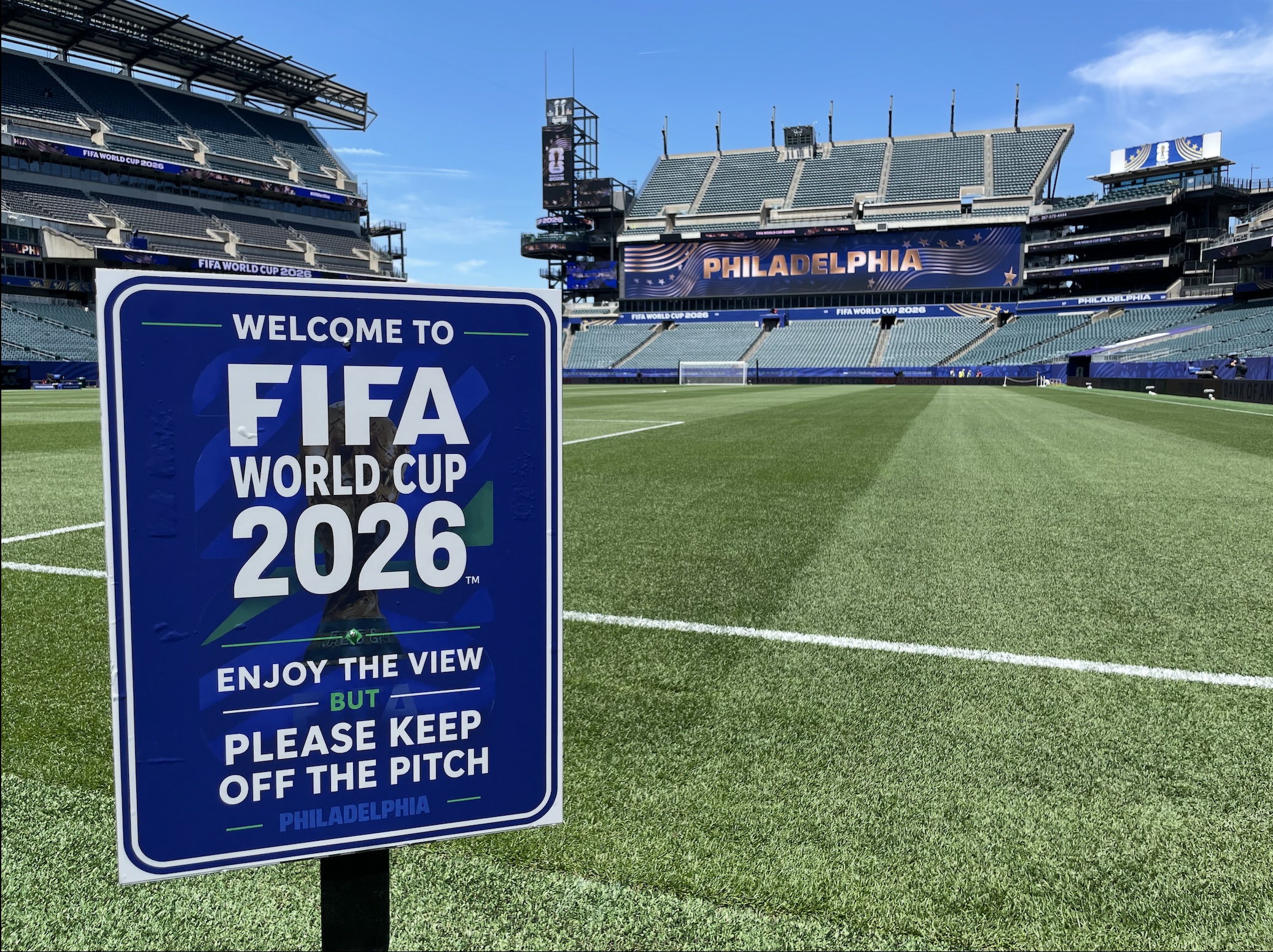
    Lincoln Financial Field, known as “Philadelphia Stadium,” is set to host its final game in this World Cup, a Round of 16 game between France and Paraguay on Saturday.

    Additionally, FIFA reminds all fans that they may bring one 20-ounce soft-plastic water bottle into the stadium upon arrival. For those who recall, the resized bottle came only after FIFA last month reduced the size from 1 liter to 20 ounces, following an initial pullback from allowing fans to bring in water altogether. After much pushback, soccer’s governing body relented and allowed the reduced size of an unopened bottle upon arrival as the guideline for all 16 venues.

    “FIFA is committed to protecting the health and safety of all players, referees, fans, volunteers and staff through a tiered heat mitigation model,” a FIFA spokesperson told The Inquirer via statement. “Through close collaboration with the City of Philadelphia, medical experts and emergency authorities, FIFA remains committed to delivering a safe, resilient and memorable tournament experience for everyone involved.”

    Fans attending matches have found ways to beat the heat through metallic cups, keeping drinks colder for longer, offered at the stadium with the purchase of a beverage.

    Where to find water inside Philadelphia Stadium

    If you’re looking to refill your water bottle once inside or just don’t want to wait in long lines at concessions for one, here’s a listing of where all of the water fountains are located in the concourses of each level.

    • 100 Level: Sections 103, 118, and 122
    • 200 Level: Sections 204 and 222
    • Club Level: Sections C3, C19, C24, and C38
    Four of the five matches in Philadelphia have been announced sellouts with Saturday’s final Philly game expected to be the same amid high temperatures.

    What time can fans enter the stadium?

    Fans can enter the stadium and seek shade in the concourses as early as 2 p.m. when gates will officially open, according to a FIFA spokesperson. Teams will emerge for warm-ups one hour before kickoff, and the pregame ceremony will begin 30 minutes before kickoff. For fans looking to head down early via SEPTA’s Broad Street Line, there will be select express trains to the stadium, with SEPTA planning to run additional trains on game day. Fare will be $2.90 as customary, with the return ride after the game free for all fans for up to two hours after the match.

    What’s happening at the FIFA Fan Festival?

    FIFA’s Fan Festival, organized by Philadelphia Soccer 2026, will be just one part of a host of activities planned on July 4 along the Parkway, including the scheduling of a massive concert currently under a bit of controversy.

    However, passing all of that, the last stop on Philly’s PHLASH bus that goes along the Parkway will stop at the Fan Festival, which is scheduled to open its gates at noon on Saturday, showing the first round of 16 match of the day between Canada and Morocco (1 p.m., Fox29).

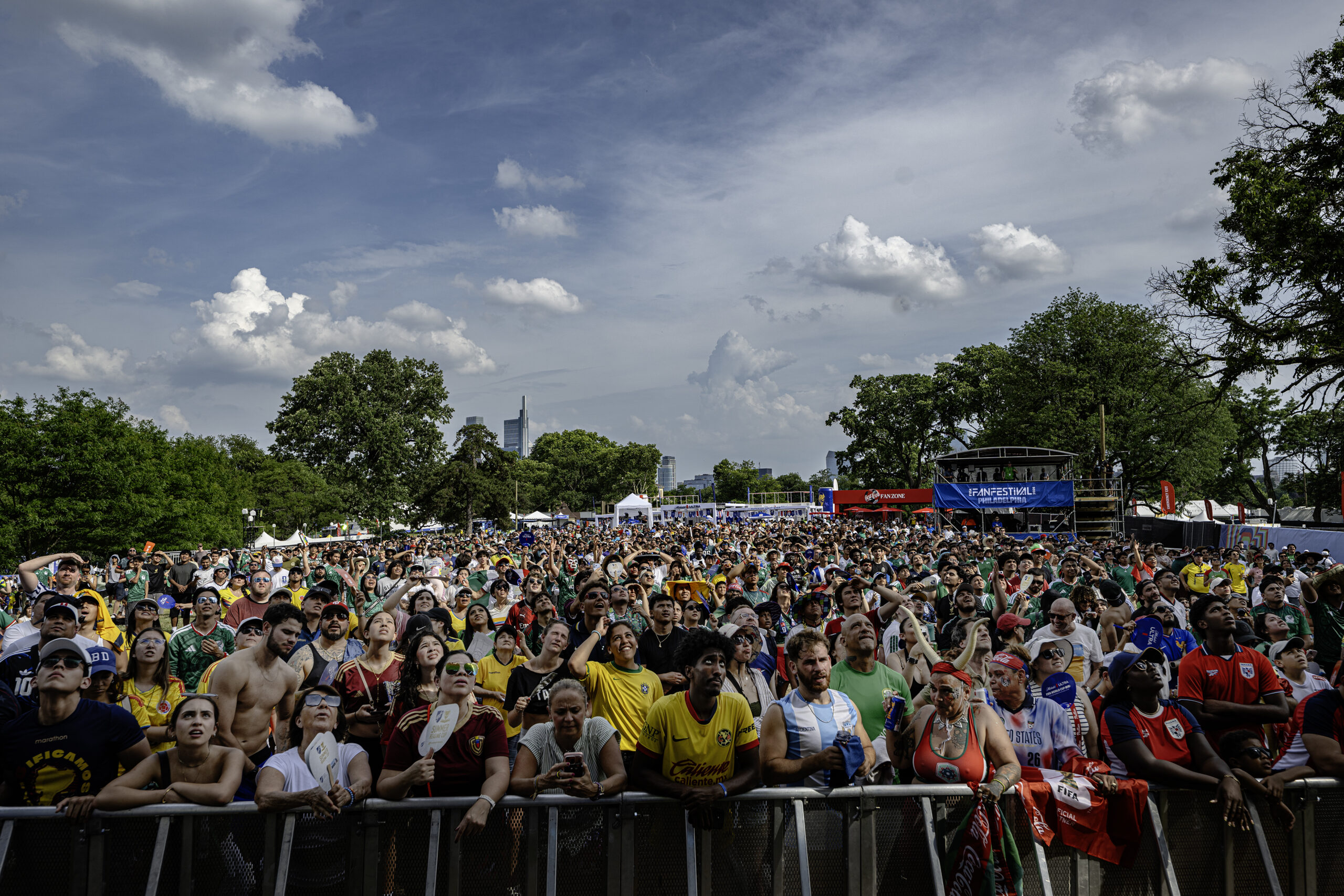
    Event officials say soccer fans gathering to watch Philly’s final game at the FIFA Fan Festival at Lemon Hill will have several ways to beat the heat.

    Nothing is expected to change from what fans can bring onto the festival grounds from the items clearly marked on a longstanding list that was promoted during the Fan Festival’s Know Before You Go campaign released in early June.

    Bottles are allowed on Fan Festival grounds and don’t have to be of the disposable variety, as canisters up to 32 ounces are allowed — but they must be plastic. Additionally, FIFA Fan Festival allows fans to bring their own personal misting fans as well, but the water container can’t exceed 1.5 liters, and handheld fans cannot be battery-operated.

    Melissa Ferdinand, spokesperson for Philadelphia Soccer 2026, told The Inquirer that times are already being adjusted for Thursday and Friday to mitigate fans entering at the hottest part of the day, with temperatures expected to reach triple digits. On Saturday specifically, Ferdinand reiterated what’s on-site and what fans can bring to stay cool and enjoy the match.

    “FIFA Fan Festival Philadelphia has a variety of ways to help attendees beat the heat and enjoy the event safely,” Ferdinand said. “Cooling tents, misting tents, free water refill stations, shaded areas and multiple medical stations are available for anyone feeling the effects of the heat. Additionally, attendees are encouraged to bring a refillable water container with them.”

  • They were owned by Peter Frampton and hung with The Rolling Stones, but the Fury couldn’t make soccer happen in Philly

    They were owned by Peter Frampton and hung with The Rolling Stones, but the Fury couldn’t make soccer happen in Philly

    The word spread through the Veterans Stadium locker room: The Rolling Stones were at the bar across the street, and the Fury were invited.

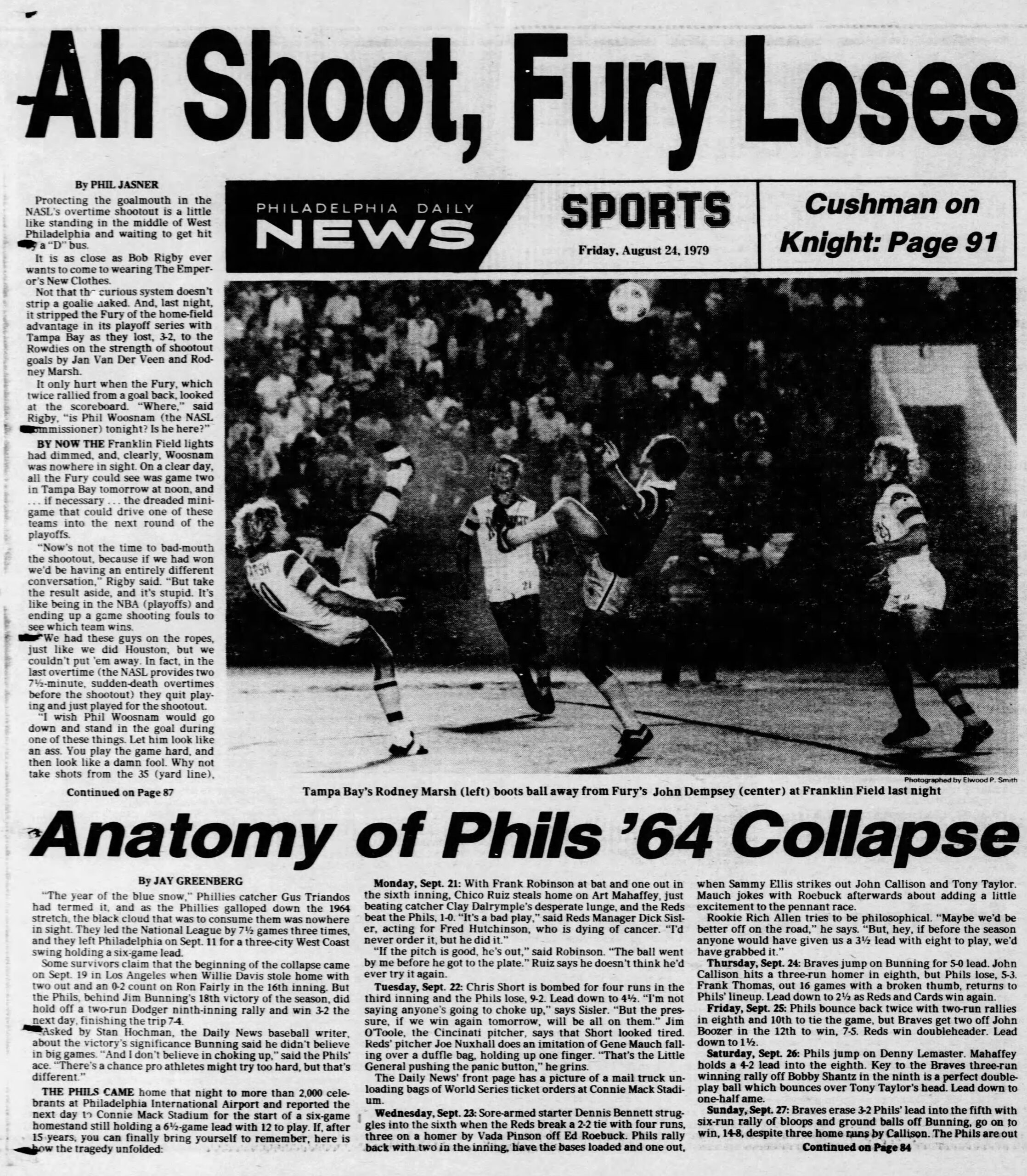
    The Philadelphia Fury played on artificial turf that goalkeeper Bob Rigby said “might as well have been black rocks on Iwo Jima.” The crowds, Rich Reice said, often were so sparse that he could point to the people he knew in the stands. The players didn’t make much, the team lasted only three seasons, and the losses piled up.

    The team’s publicist, Thom Meredith, said a few years ago on a podcast that the Fury — a North American Soccer League franchise that debuted in 1978 — were “a poster child for what not to do.”

    But the players still had someone waiting for them at the back entrance of the Holiday Inn, opening the door and ushering them to where the Stones were hanging while a mob of fans were kept in the hotel lobby.

    The Fury was owned by rock stars — Peter Frampton, Paul Simon, and Rick Wakeman of Yes had stakes — and rock executives like Stones manager Peter Rudge and music agent Frank Barsalona. They entered when the NASL was riding the momentum of Pelé, who had retired a season earlier.

    But that wave faded, and the Fury struggled to grab Philly’s attention before moving to Montreal in 1980, leaving Philadelphia without a first-division men’s soccer team until the Union arrived in 2010.

    “The Fury is a story in and of itself,” Rigby said. “Oh my God. Really. There’s aspects of it that are mind-boggling. It’s a fascinating tale.”

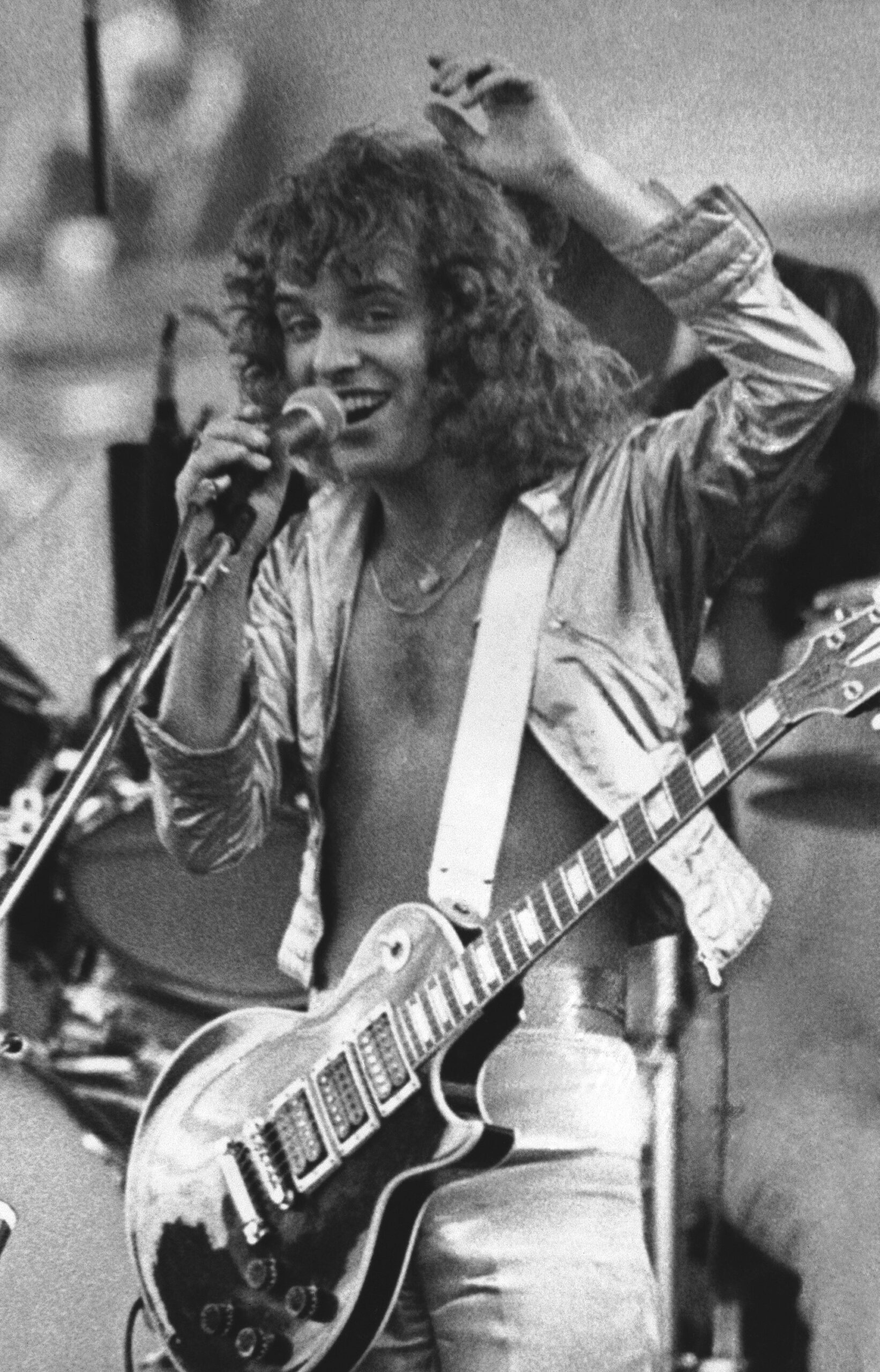
    Peter Frampton, one of the owners of the Fury, performs during a concert at JFK Stadium in 1977.

    The sport has been met this summer in Philadelphia with fanfare as the city hosts its sixth World Cup match on Saturday at Lincoln Financial Field. But the game still was a curiosity to most of the region in the 1970s. Philly had soccer hot spots — places like Kensington, Frankford, and Roxborough, along with ethnic clubs in Bucks County — surrounded by soccer deserts.

    The Fury players grew up in those soccer neighborhoods, and that was enough to get them a drink with the Rolling Stones.

    “They were just as excited to talk to you as you were excited to talk to them,” said former Fury player Bill Straub. “You were a professional soccer player, and they were wide-eyed. What’s it like to play professional soccer? It was nothing to us. It was just what we did.

    “These rock stars all grew up wanting to be professional soccer players in the Premier League. And we were here, we wanted to be rock stars.”

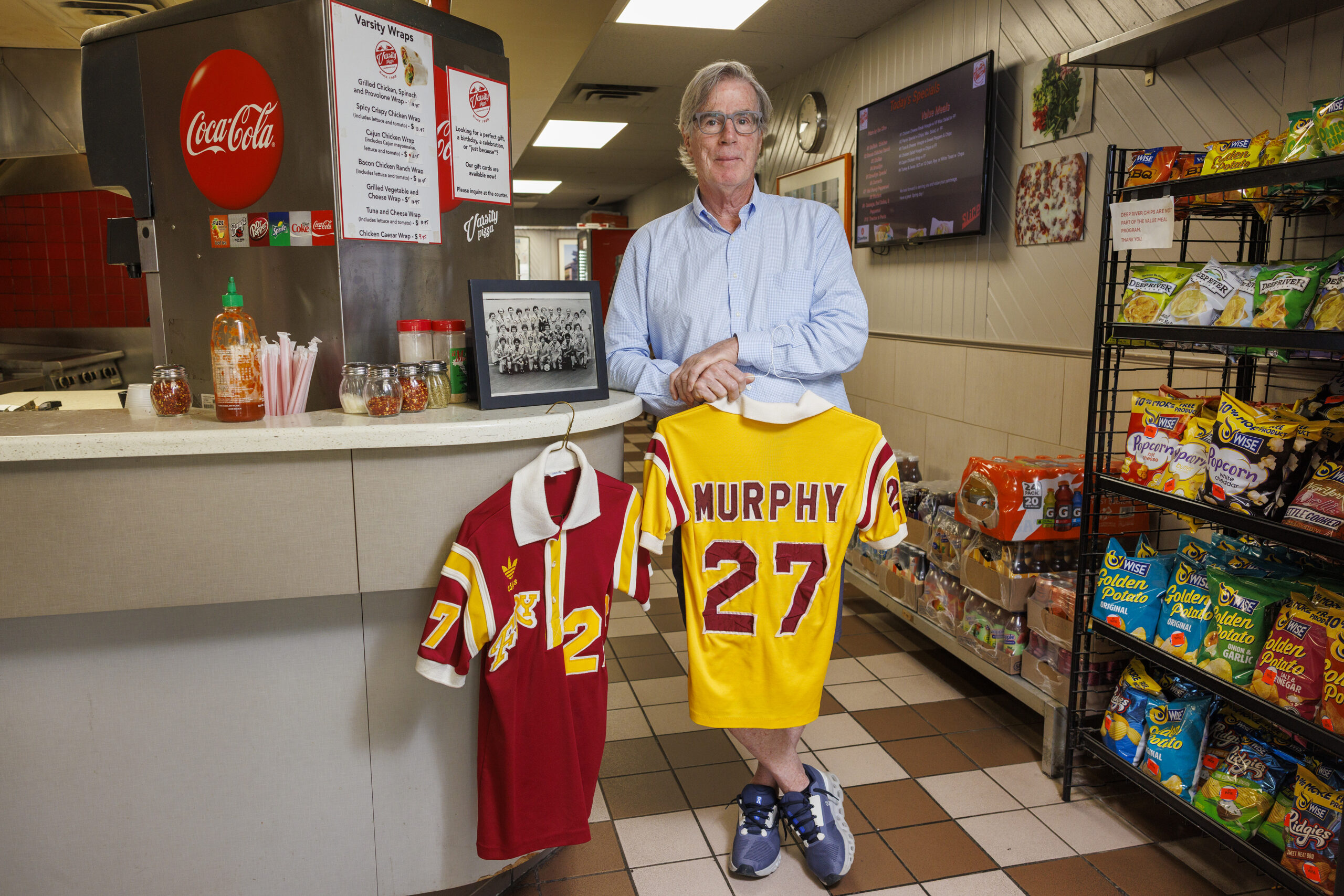
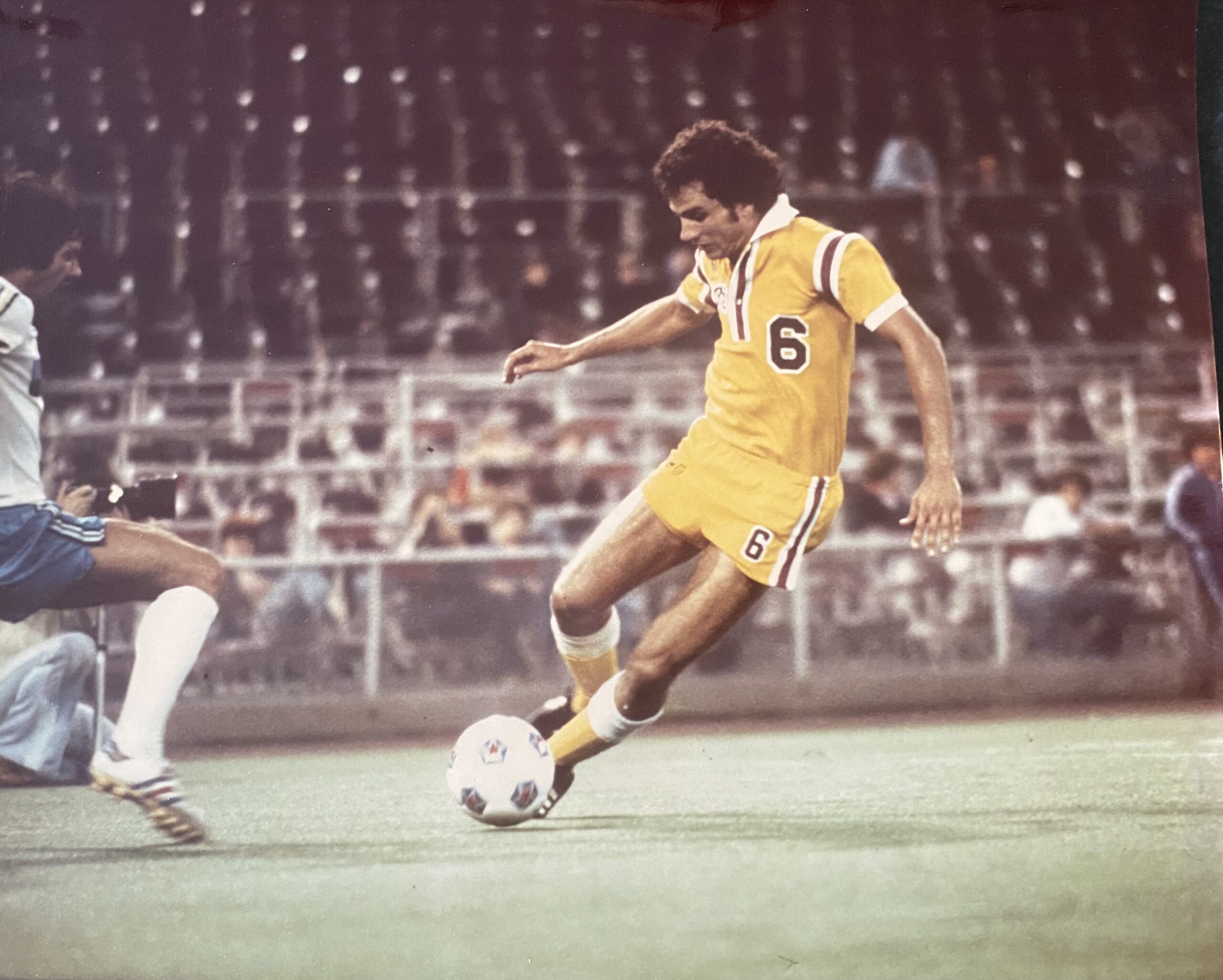
    Kevin Murphy when he played for Philadelphia Fury. He now owns Varsity Pizza and Subs in Lawrenceville, N.J.

    A mini-circus

    Philadelphia had an NASL team for four seasons, but the Atoms flamed out shortly after winning an unlikely title in 1973 as an expansion team. The local owners sold the team in 1975 to a Mexico-based group that stocked the roster for a season with Mexican players. Interest dipped lower, and the team folded with $90,000 in unpaid bills.

    The NASL returned to Philly a year later when the league added six expansion franchises. The Fury signed Irish midfielder Johnny Giles, 1966 World Cup champ Alan Ball, and former Chelsea forward Peter Osgood.

    “They have books written about him,” former Fury player Brooks Cryder said. “The Wizard of Os, they used to call him. But it was a little soon for soccer in the United States.”

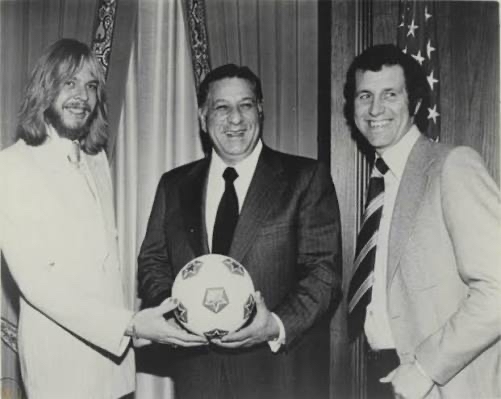
    Rick Wakeman of Yes with Philadelphia mayor Frank Rizzo and Fury player Peter Osgood.

    The real attractions were the stars in the crowd. An Amtrak train brought a cast of A-listers from New York for the season opener at the Vet. Gilda Radner, James Taylor, and Peter Wolf of the J. Geils Band joined owners Frampton, Simon, and Wakeman in a super box.

    “It wasn’t the Cosmos with Pelé,” Straub said. “That was a real circus. But this was a mini-circus here in Philly because you never knew who was going to show up.”

    The Fury drew 18,191 to their opener, but the crowds soon dwindled. The Fury averaged 8,075 fans in 1978 and had the league’s lowest attendance in the 1979 (5,624) and 1980 (4,465) seasons. They had cheerleaders, held free clinics at schools, and even tried to spice up their uniforms. Nothing worked. Veterans Stadium felt cavernous.

    “It was tough because it seemed like everyone was far away from the actual field,” Dave MacWilliams said. “It was a different environment, for sure. I wanted it to succeed and do well, but it was tough.”

    The team’s uniforms were designed by fashion designer Sal Cesarani after Ralph Lauren outfitted the Cosmos. Barsalona told The New York Times in 1978 that the Fury wanted their uniforms to have “a touch of show business and a lot of sex appeal.”

    They were inspired by the wife of owner Larry Levine, who Barsalona said struggled to follow the play at a soccer game but enjoyed seeing “guys running around in what looked like their underwear.” Cesarini had simple instructions: the tighter, the better.

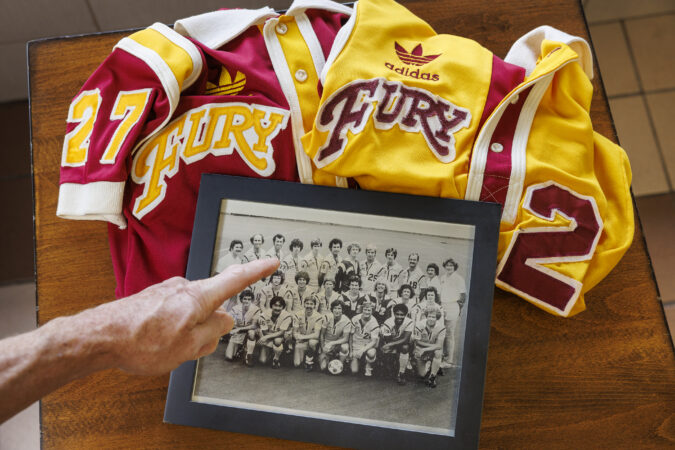
    The burgundy and gold jerseys, which were made by Adidas, had a three-button collar and capped sleeves. The shorts were two inches shorter than the usual soccer shorts. It was as close to underwear as Cesarini could get.

    “Looking back, they do show a lot of leg,” Reice said.

    Kevin Murphy, shown at Varsity Pizza and Subs in Lawrenceville, N.J., displays his Fury jerseys from the 1970s.

    The stars

    Kevin Murphy was a senior at Pennington Prep near Trenton when a group of Fury decision-makers visited his home to meet his parents and ask if he was willing to turn pro. The new franchise planned to use its draft pick on Murphy as the NASL introduced a rule allowing teams to draft high schoolers.

    Murphy was in, as Walt Chyzowych — “Philadelphia soccer royalty,” Murphy said — told him earlier that year that he had the skills to be a pro. A few months later, he sat in a suite at the Vet with Frampton to sign his contract.

    “It was Frampton’s birthday,” Murphy said. “I thought, ‘Well, I probably made a good decision.’ That was pretty amazing.”

    Pelé retired in 1977, but the NASL still was filled with some of the game’s biggest names. The Cosmos had Giorgio Chinaglia, Carlos Alberto, and Franz Beckenbauer. The Los Angeles Aztecs had George Best. Johan Cruyff played for the Washington Diplomats, Gerd Müller was with the Fort Lauderdale Strikers, and the Tampa Bay Rowdies had Oscar Fabiani and Rodney Marsh.

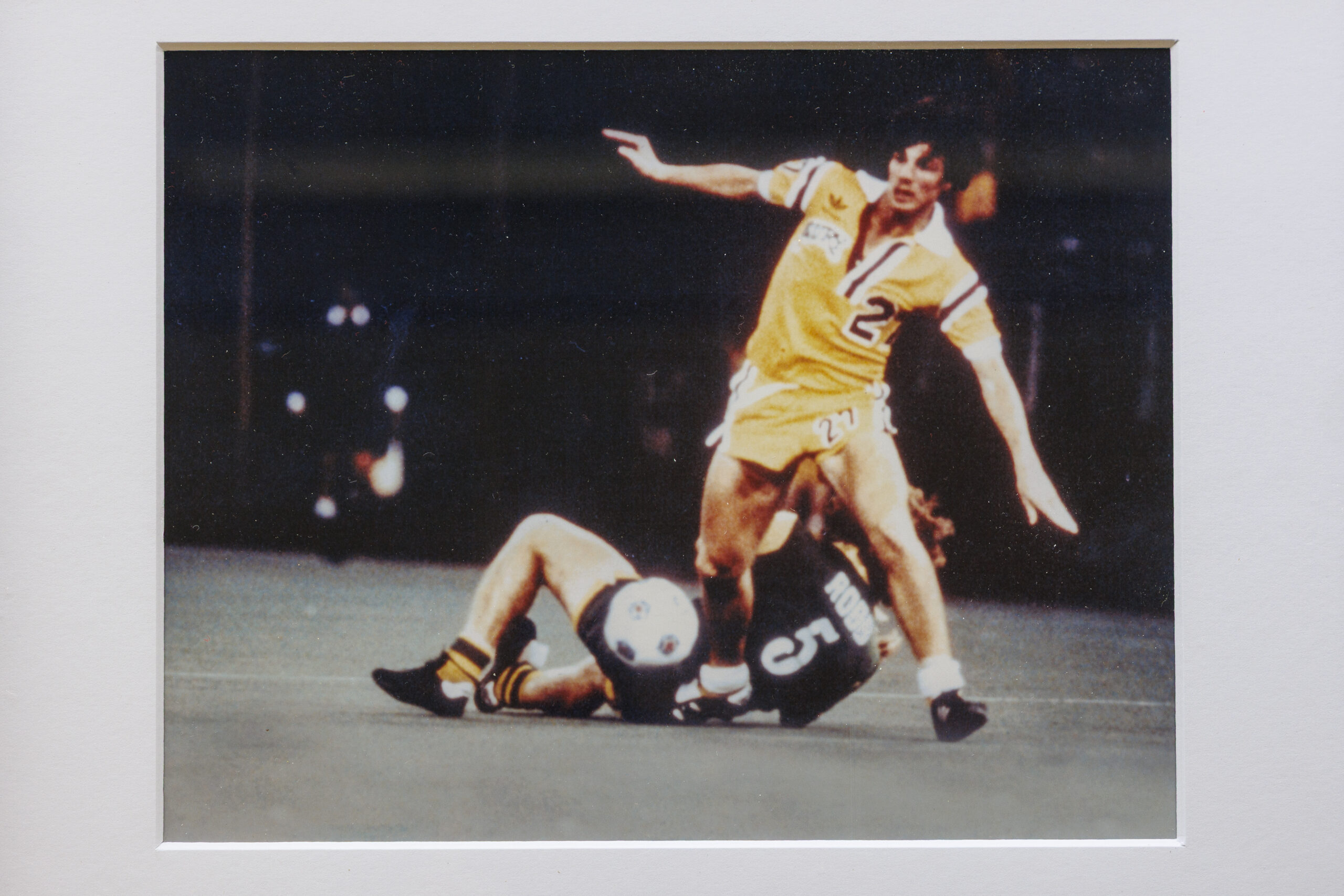
    Bill Straub playing for the Fury at Veterans Stadium.

    The foreign Fury players had great careers overseas but were past their primes and did not draw in Philly. They filled their roster with a cast of locals. Straub went to Germantown Academy, MacWilliams played on a cinder field in Kensington, and Bobby Smith was from Trenton. Rigby grew up in Ridley and was on the cover of Sports Illustrated. Cryder learned to play at a YMCA in Roxborough, and Pat Fidelia went to Rancocas Valley Regional High School.

    “It was exciting because as American players we had a chance to play in a professional league,” Fidelia said. “But you knew sooner or later that it wasn’t going to last because we weren’t getting paid much at all. It was like we were amateur players in a professional league. My first contract was $20,000. They gave you a car and an apartment to share with two other players.”

    The Fury could not match the star power of the other NASL squads, but they did have actual rock stars. The players could score tickets to any concert they wanted. They were backstage at JFK Stadium, in boxes at the Spectrum, and saw the Stones at a tiny theater in North Jersey.

    “We would drive back and we’d say, ‘This is unbelievable. How are we in these places?’” said Straub, who was working at his family’s jewelry store while playing for the Fury.

    The Fury played a charity game at Franklin Field with Wakeman and other members of Yes. Frampton, whose industry-shifting live album Frampton Comes Alive! was released in 1976, regularly popped into the locker room after games. And Murphy found himself backstage at Madison Square Garden standing with Dan Aykroyd before riding an elevator with Meat Loaf, Debbie Harry, and the Wailers.

    “That was pretty good,” Murphy said. “It was more than pretty good. It was awesome.”

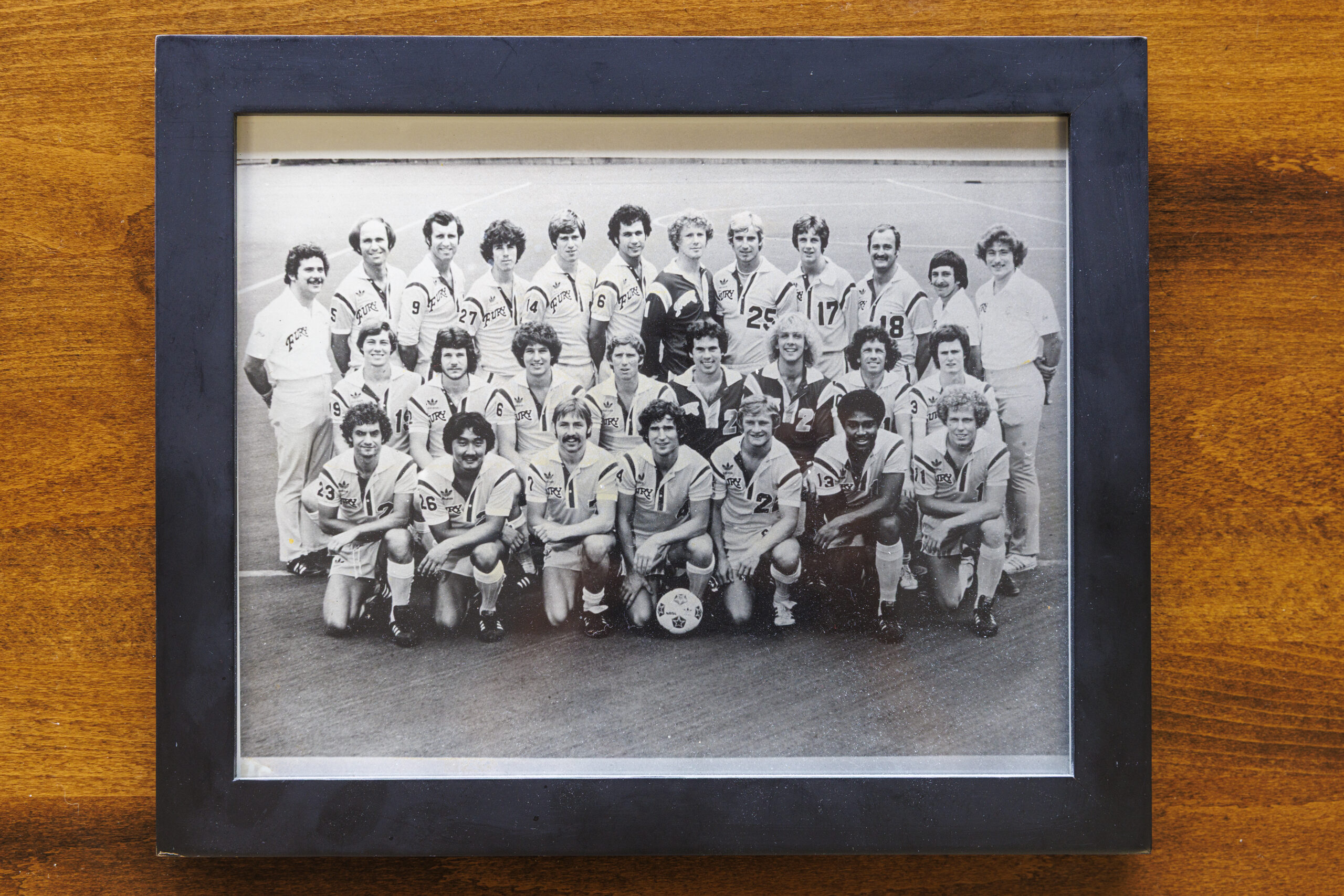
    Kevin Murphy’s photograph of the Fury.

    ‘No sun. No sun.’

    The Fury fired their first manager midway through the season, finished the year with a player-manager, and hired Marko Valok in 1979. The former Yugoslavian national team coach didn’t speak much English.

    “I used a line from him for years on the kids I coached,” said Reice, who coached soccer at Neshaminy High School for 17 seasons. “If I took a bad shot at goal, he would say, ‘Reach, why you make present to goalie?’ He would be thinking in Yugoslavian and then it would come out in English.”

    Rigby, the goalie for the Atoms’ title squad, returned to Philly during the 1979 season after being traded from the Aztecs. He was told by the Fury to join the team in Houston, but they said Rigby would be on the bench. That was good by Rigby, since he had not practiced in a week while his trade was finalized and spent his final night in L.A. at a going-away party with his Aztecs teammates at Best’s bar in Hermosa Beach.

    And then Valok approached him in the locker room and asked through an interpreter if he was ready to go.

    “I have no clothes and no intent to play,” Rigby said. “I’m literally not playing. I’m just coming in. Honest to God. I played a half. I’m thinking, ‘If this is the onus of coming back to Philadelphia, I probably made the biggest mistake of my life.’ But what was I supposed to say, ‘I’m not going to play’ in front of a new team?

    “Then I’m sitting during the pregame meal, and Marko Valak stands in front of the team with a chalkboard for 45 minutes just drawing arrows all over the place. Speaks no English. I’m going, ‘I just left five guys who played in the World Cup final and the most tightly run team,’ and I’m like, ‘What is this?’”

    The Fury’s 1979 playoff game at Franklin Field against the Tampa Bay Rowdies headlined the back page of the next day’s Daily News.

    Frank Worthington, a Fury forward from England, left the team that season when Valok had the team practice at the public fields in FDR Park instead of the Vet or JFK Stadium. He flew to Memphis, visited Graceland, and returned to the Fury after a few days.

    The Fury advanced that season to the playoffs despite having a losing record and played the Houston Hurricane at the Astrodome. The team practiced at the stadium and then returned to their hotel. Valok told his players to stay inside — “No sun, no sun,” he said — and rest for the game.

    “I look out the window when we get back, and Frank is laying out, reflecting himself with a sun blanket,” Reice said. “All of the energy is being zapped out of his body. Frank was a free spirit, to say the least.”

    The Fury still had enough energy to win that game before falling in the next round to Tampa Bay. The franchise lasted one more season before soccer left Philadelphia again.

    A cast of rock stars tried to make soccer happen in Philadelphia, but it proved to be too tall a task. Nearly 50 years later, the game has found its place in Philly. The Linc has been a happening this summer. If only the Holiday Inn — which was razed in 2019 — was still here to see it.

  • Spoiler alert: New technology brings TV sports moments to viewers in record time, and before others see it first

    Spoiler alert: New technology brings TV sports moments to viewers in record time, and before others see it first

    Joe Krell still remembers getting a call from his brother celebrating after Brandon Graham sealed an Eagles victory with a strip-sack of Tom Brady in Super Bowl LII.

    Krell, the vice president of engineering at Comcast, had not seen the play when his brother called. His feed of the game was delayed, and the surprise of the play was spoiled.

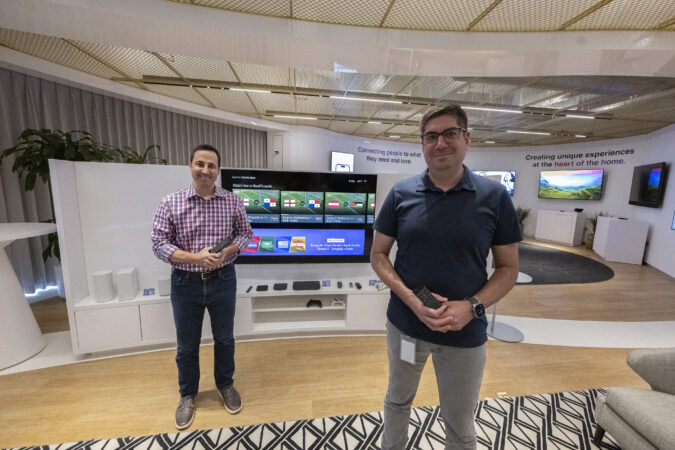
    Now, Krell is leading the team of software engineers that helps some fans watch games with as little delay as possible.

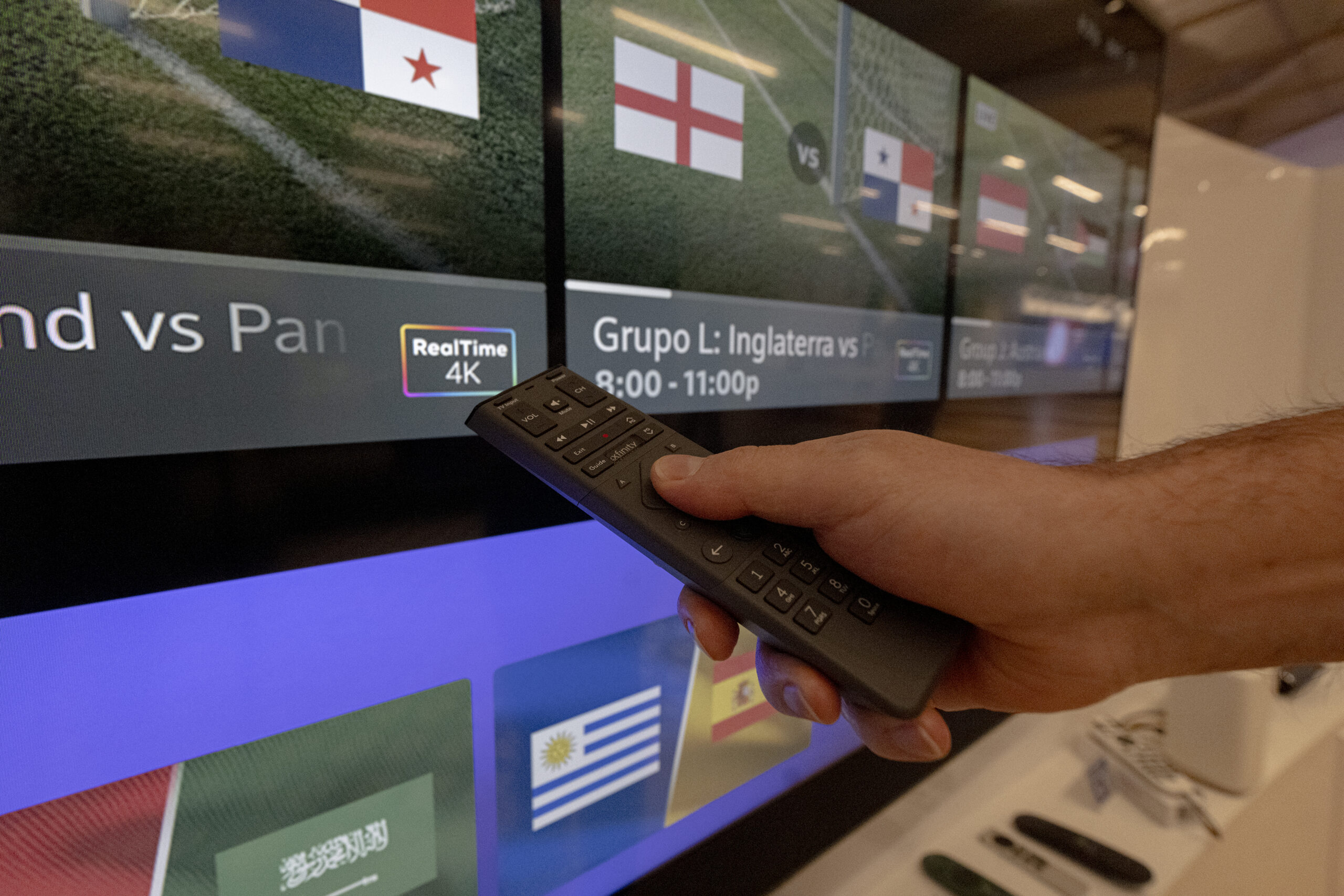
    This summer, the company’s Realtime 4K technology is delivering live action from matches at the FIFA World Cup to Xfinity customers’ TVs roughly 17 seconds after it takes place on the pitch. The broadcast is 20 seconds faster than a standard high-definition stream and two seconds faster than an over-the-air signal, according to Vito Forlenza, Comcast’s vice president of sports entertainment.

    “It’s about how we limit that amount of buffering and get those video segments to the device as fast as possible,” Krell said Wednesday from the Comcast Technology Center.

    The technology debuted ahead of Super Bowl LX in January, and Krell’s team has continued to develop it (alongside other sports initiatives) in an effort to create a spoiler-free viewing experience.

    “Now I don’t have to worry about turning my phone over, or turning it off,” Forlenza said. “Nobody’s going to spoil it on me. I could actually be on social media if I wanted to be and not have the experience ruined. I could have all my notifications on; I could be in all my chats with my friends and family [and] not have the experience ruined. Maybe I’ll ruin it for them.”

    A demonstration of the RealTime 4K technology on Wednesday on a TV at Comcast Labs.

    New for the World Cup is a feature called “Smart Boost” that allows Xfinity internet customers to automatically prioritize their TV on their server when watching a Realtime 4K broadcast of a World Cup match.

    Forlenza said the company got good feedback from customers who used the technology to watch the Super Bowl and the Winter Olympics in February.

    During the group stage of the World Cup, the customizable multiview function, which was developed by software engineers in Philadelphia, allowed Xfinity customers to take in multiple matches at once. When it launched in 2024, the multiview platform was not customizable, but Krell’s team, after feedback from customers, has engineered it to allow viewers to watch any combination of games across traditional broadcast options and streaming.

    “You get something out there, you learn from it, build into it,” Krell said.

    Instead of having preset combinations for multiview options, the technology assembles the combination of channels a viewer wants to watch as they request them, allowing Xfinity to offer the service with more channels on a larger scale.

    The National Association of Broadcasters recognized Xfinity’s multiview as one of its products of the year for 2026 in April, and in June it won a Stream TV award in the category of innovation in content delivery and distribution.

  • USMNT fight past Bosnia and Herzegovina for its first World Cup knockout win in 24 years

    USMNT fight past Bosnia and Herzegovina for its first World Cup knockout win in 24 years

    SANTA CLARA, Calif. — The U.S. men’s soccer team finally ended its 24-year wait to win a World Cup knockout game, though it came at a cost.

    Wednesday’s 2-0 win over Bosnia and Herzegovina featured goals by Folarin Balogun and Malik Tillman, but also a red card to Balogun that means he’ll miss the round of 16 matchup against Belgium in Seattle on Monday (8 p.m., Fox29, Telemundo 62).

    When the 11th minute passed, the U.S. had gone the longest it had in any game of this World Cup without scoring a goal. That was a low bar to clear in the big picture, but there also definitely were nerves on both sides of the field. Matt Freese had to make two big stops early, but it took until the 18th minute for the Americans to really test Bosnian goalkeeper Nikola Vasilj.

    Balogun was the first player to find the back of the net, in the 31st minute, and not long after he’d gone down inside Bosnia’s 18-yard box, though without enough contact to earn a penalty kick. He was then frustrated a second time by the offside flag, and that call was also correct.

    The breakthrough finally came in the 45th minute. Tim Ream intercepted a Vasilj clearance and knocked the ball forward to Tyler Adams, who made a backheel flick into space. The ball rolled to Tillman, who turned and played the ball forward toward Balogun. He had some work to do, but a misplay by Bosnian centerback Tarik Muharemović gave the striker room to collect the ball and slot it home.

    As the crowd of 68,827 roared, Balogun celebrated with LeBron James’ “Silencer” dance move. The basketball star — quite a soccer fan himself — returned the compliment on social media right away.

    Balogun then came inches from doubling the lead in first-half stoppage time, at the end of a lovely teamwide sequence. Alas, his close-range flick hit the crossbar and flew out of bounds.

    The U.S. held a 5-1 advantage in shots halftime, a sign of how they’d come into the game but also how many nerves there were.

    The game’s first substitutions came in the 51st minute, in a triple-move from Bosnia manager Sergej Barbarez, one of which was star striker Edin Džeko, after pulling up lame. The other moves were tactical, including the much-anticipated arrival of winger Esmir Bajraktarević — a 21-year-old winger who grew up in Wisconsin to parents who fled the Bosnian war of the 1990s.

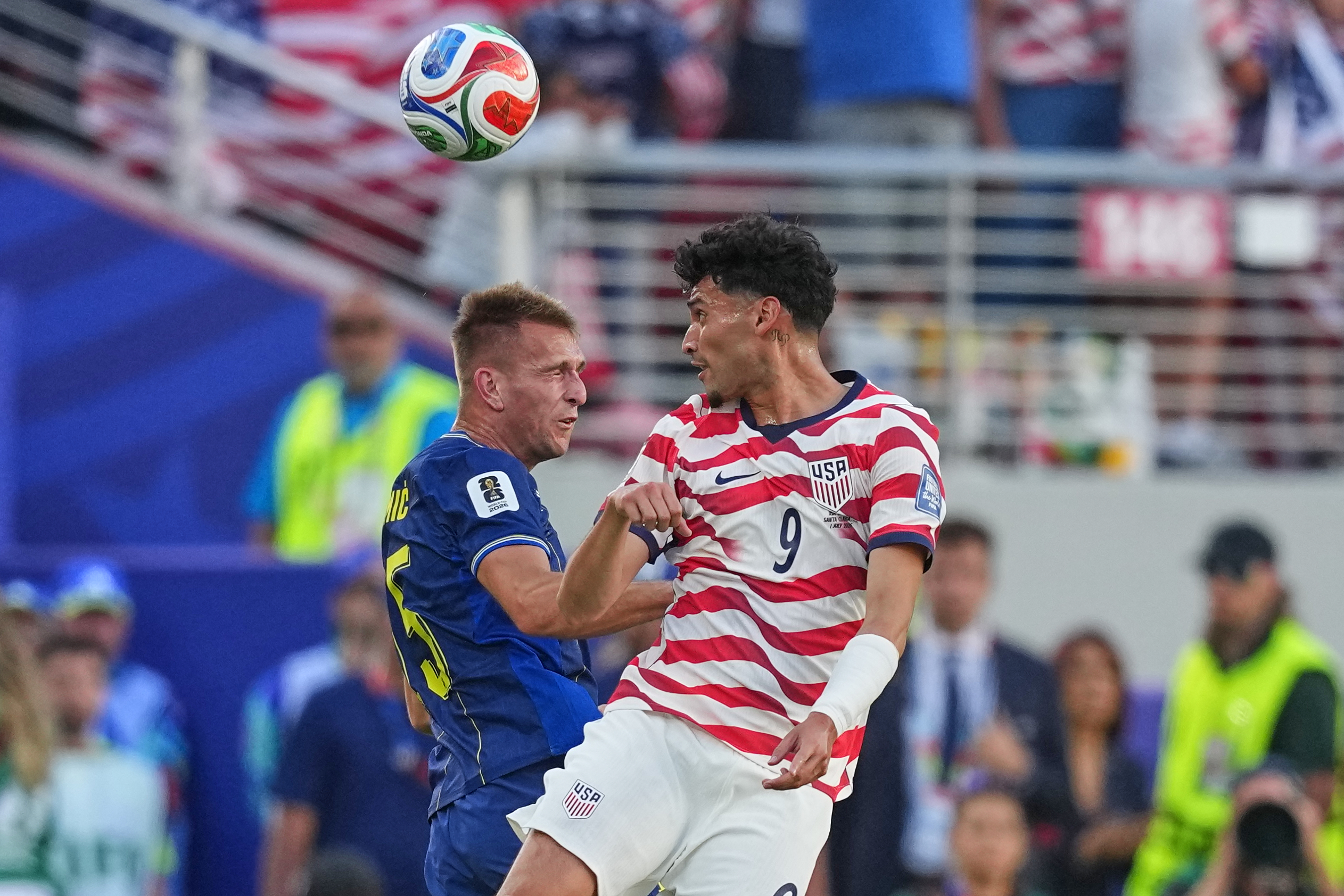
    Balogun’s ejection came in the 64th, after the video review officials watched him rake the studs of his right cleat down the back of Muharemović’s right calf in a tussle. It looked like a 50/50 challenge at first, but the replays clearly showed a cardinal sin for a soccer player — even if he didn’t intend it. By the time Raphael Claus left the monitor, it wasn’t too surprising that he pulled the red card out.

    The ejection meant Balogun would miss not just the rest of this game, but will miss the U.S.’s round-of-16 showdown with the Belgians.

    Now, it was about playing defense, and every U.S. player did his part. Even Tillman, usually much more of an attacking player, got stuck into a loose ball in the 77th.

    Soon after that, the U.S. broke free on a counterattack and Christian Pulisic forced the ball in, but he was clearly offside when Tillman passed to him.

    The biggest break finally came in the 82nd. Stjepan Radeljić held back Sergiño Dest, Claus booked the Bosnian defender, and the U.S. had a free kick on the edge of the 18. Tillman spun it right past Bosnia’s defense and into the net, unleashing a huge celebration from U.S. players and fans alike.

    U.S. manager Mauricio Pochettino finally made his first substitutions in the 88th minute, sending in Ricardo Pepi and Sebastian Berhalter for Pulisic and Dest. In stoppage time, Gio Reyna replaced Weston McKennie.

    There were still plenty of nerves from there, including 10 minutes of stoppage time. But the Americans held on, with the crowd cheering every save, block, and sequence of passes — and exhaling as two Bosnian shots in the final moments went inches wide of Freese’s net.

    Then, at the final whistle, there was the biggest unleashing of all. Thirty-two years after the U.S. men played the first World Cup knockout game of their modern era in the Bay Area, they finally delivered the sight that everyone here had waited so long for.

    This generation of American players finally has its biggest World Cup win.

  • Mayor Parker defends decision to host July 4th Parkway concert despite dangerous heat and high price tag

    Mayor Parker defends decision to host July 4th Parkway concert despite dangerous heat and high price tag

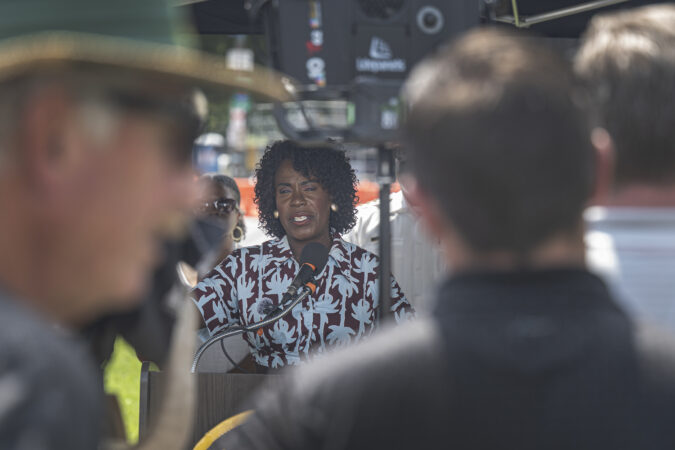
    Mayor Cherelle L. Parker on Wednesday defended the city’s upcoming July Fourth concert, a seven-hour outdoor spectacle featuring performances from Christina Aguilera, Jill Scott, The Roots, and more, amid concerns over the nearly 100-degree forecast and revelations that the event will cost taxpayers millions more than in years past.

    The city has dealt with high temperatures before and has battle-tested personnel and protocols prepared for the evening, Parker told reporters at a news conference in front of the stage at the foot of the Philadelphia Museum of Art steps.

    She also addressed the detractors head on.

    “I do not apologize to anyone about making sure that the city of Philadelphia, as the sixth-largest city in the nation, the birthplace of democracy, we were going to have a celebration that is fitting to and for our historical significance and prominence,” Parker said. “One that could be seen, respected, and honored, not just in our city and commonwealth and nation but in the world.”

    Parker described the concert as the largest July Fourth concert in the city’s history. For an occasion as momentous as the nation’s 250th anniversary in the city that bills itself the birthplace of America, Parker said Philadelphia must rise to the occasion and prove it can achieve ambitious undertakings.

    Parker said her administration scaled up the experience, including moving the stage back to accommodate an estimated 300,000 concertgoers, and made the stage larger.

    “We won’t get a second chance to do this over again, Philadelphia,” Parker said. “We only turn 250 years old once in a lifetime.”

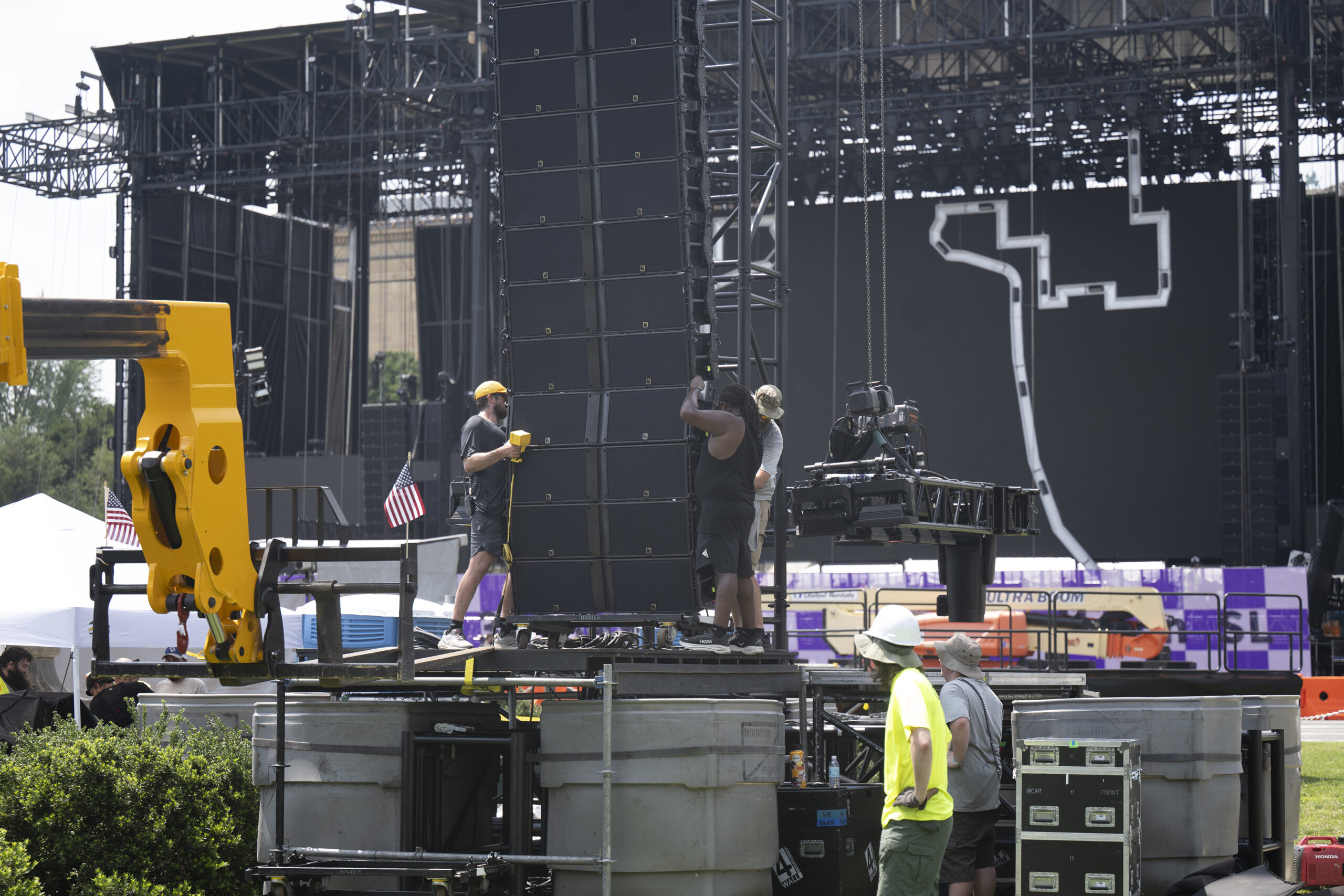
    Ground crews set up speakers on the stage on Wednesday in preparation for the July 4 concert expected to draw thousands to the Benjamin Franklin Parkway.

    Parker recalled feeling the mounting pressure to prove Philadelphia could rise to the occasion of honoring the nation’s 250th anniversary shortly after the start of her tenure as mayor.

    “‘Philadelphia lacks ambition. They’re thinking too small. We need a leader. Where is the legacy project?’” Parker recalled from the discourse of the time. “The critics were right. Philadelphia, as the birthplace, we couldn’t do what every other city was doing. We couldn’t just do something that was average, something that was mediocre. What we did had to be a reflection of this moment and our history.”

    Parker’s news conference came hours after The Inquirer reported online that this year’s July Fourth concert will cost taxpayers millions more than in years past because the mayor’s administration hired ESM Productions, a for-profit company, to put on the annual show. For years, the concert has been produced by Welcome America, a nonprofit established by the city.

    The Inquirer reported that the city is set to pay ESM $15.5 million to put on the show, and that last year’s iteration of the Welcome America concert cost the organization about $3 million.

    Parker defended ESM and its founder, Scott Mirkin, as “the gold standard in planning large-scale global events, not just in America but across the world.” And she vowed that the city would produce a “fiscal impact report” after the event to account for how much money the city spent on this year’s festivities.

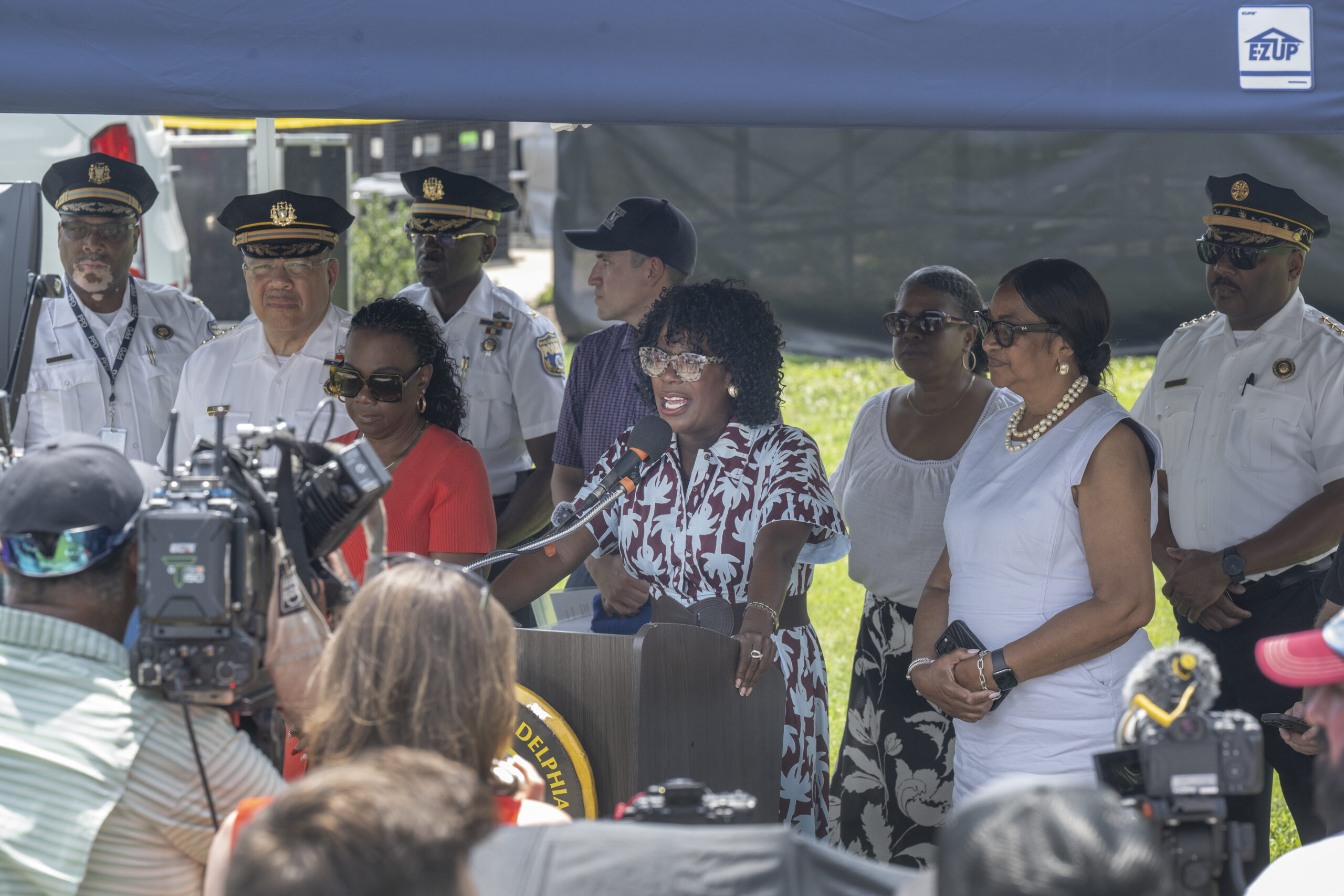
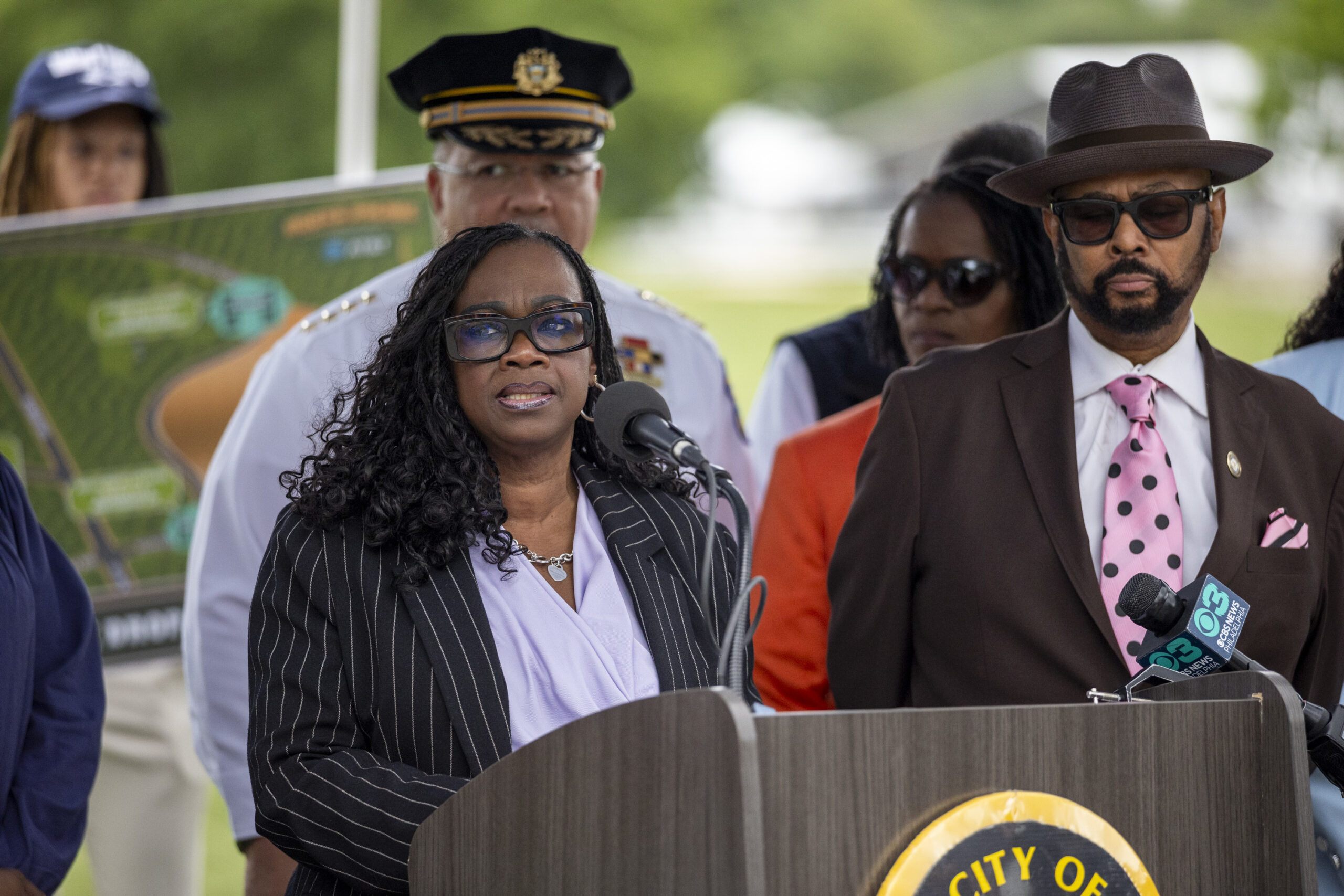
    Mayor of Philadelphia Cherelle L. Parker speaks during a news conference under a tent Wednesday, July 1, 2026, in Philadelphia, outlining public safety and transportation plans ahead of a July 4 concert expected to draw thousands to the Benjamin Franklin Parkway.

    She also noted that former Mayor Jim Kenney put his own stamp on the annual July Fourth concert when he took office in 2016 — and took some heat for it. The Roots had headlined the concert since 2009, but Kenney’s administration went a different direction and The Roots were sidelined.

    Roots drummer Ahmir “Questlove” Thompson didn’t mince words at the time, writing on Facebook that the decision was “arrogance in the HIGHEST order courtesy of your new leader.”

    When Parker took office, she knew she wanted the spotlight back on the beloved local hip-hop group.

    “I’m proud to have The Roots back home,” Parker said.

    In terms of weather and safety, the city has proven this summer that it can host large-scale events in the heat seamlessly, said Philadelphia Police Commissioner Kevin J. Bethel.

    The city has already hosted five World Cup games, which have gone off without a hitch, Bethel said. For the July Fourth event, the department will be executing one of its largest deployments since the papal visit in 2015. That will include hundreds of officers across Center City and many more at the stadium and along the Parkway.

    “I want everybody to come and have a good time. Don’t mess up the party,” Bethel said.

    In order to keep people cool, the city will run 40 air-conditioned cooling centers, 150 pools and spray grounds, enhanced homeless service outreach, and extra fire department medics, said Dominick Mireles, Philadelphia’s deputy managing director for community safety. Along the Parkway, there will be misting fans and shade structures, he added.

    Parker said she’s confident every Philadelphian interested in participating will be able to do so safely and will look back on the day fondly.

    “I want people to remember where they were when America turned 250 years old and what we did here in the place when it all happened,” Parker said.

  • Mayor Parker changed things up for this year’s July 4th concert — and it’s costing Philly’s taxpayers millions more

    Mayor Parker changed things up for this year’s July 4th concert — and it’s costing Philly’s taxpayers millions more

    With the eyes of the nation on Philadelphia for America’s 250th birthday, Mayor Cherelle L. Parker’s administration this year took over management of the city’s free July Fourth concert, which for years was produced by a nonprofit established by the city: Welcome America.
    The mayor instead hired ESM Productions, a for-profit company, to put on the annual show featuring musical acts and fireworks over the Ben Franklin Parkway, and she changed the name from Wawa Welcome America to the “One Philly: Unity Concert for America” — a version of Parker’s well-known slogan, “One Philly: A United City.”

    Another change: It will cost taxpayers far more than in the past.

    The city is due to pay ESM Productions about $15.5 million for the show, which will be headlined by Christina Aguilera, Jill Scott, and The Roots, and feature rapper Meek Mill, according to a copy of the city’s contract paperwork with ESM, obtained by The Inquirer. The city in March signed a $10 million contract with the Philadelphia-based company, as well as a $5.5 million contract amendment.

    By comparison, Welcome America’s budget for all of 2024 — including that year’s July Fourth concert, the numerous other events it manages in the build-up to the concert, and the salaries of its staff — was about $6.6 million, only about $5.3 million of which came from government grants, according to the group’s most recent federal nonprofit disclosure.

    Welcome America, which is a public-private partnership with the mayor serving as a board member, receives city and state funding, as well as a corporate sponsorship. The organization has been involved in Philly’s July Fourth celebrations since 1993.

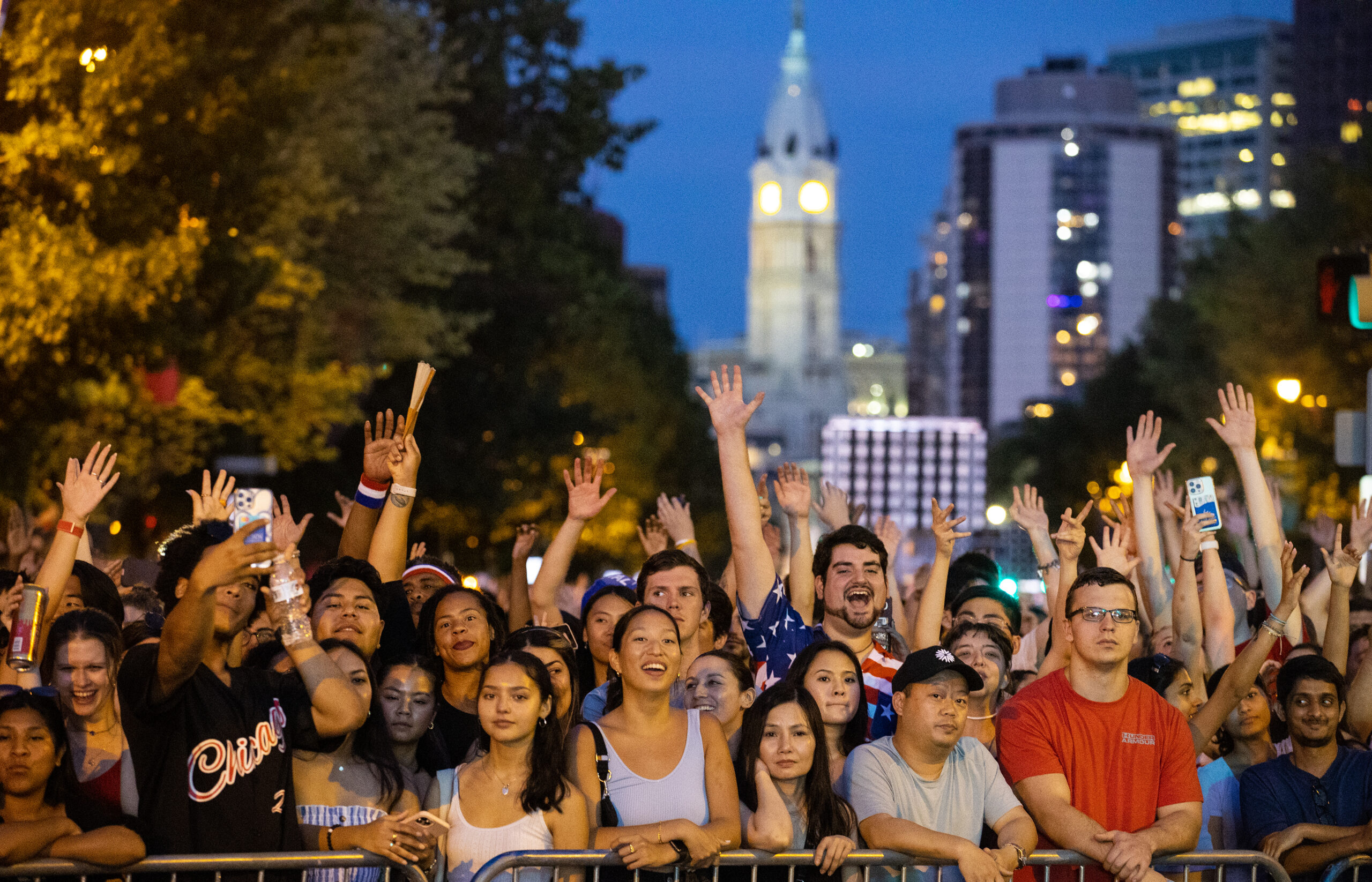
    Fans react to the music as the Wawa Welcome America Festival concluded July 4, 2023 with a free concert featuring Ludacris on the Benjamin Franklin Parkway.

    Last year’s iteration of the Wawa Welcome America concert cost the organization about $3 million, according to a person with knowledge of the situation who spoke on the condition of anonymity because they were not permitted to disclose that information.

    The Philly taxpayer money paid to the concert’s producers does not cover additional expenses borne by the city, such as pay for police officers and sanitation workers staffing the event.

    Parker’s office declined a request from The Inquirer for a copy of the contract or information on the cost of this year’s concert. Chief Deputy Mayor Vanessa Garrett Harley said in an interview that the administration would publicly disclose the costs and economic benefits of the concert after it was over.

    “At a later time, we could certainly be doing a full accounting, as we’re not trying to hide anything and always want to be transparent,” Garrett Harley said.

    Chief Deputy Mayor Vanessa Garrett Harley speaks at Belmont Plateau in Philadelphia on May 28.

    Following the interview with Garrett Harley, The Inquirer later obtained the contract, and the mayor’s office on Tuesday did not respond to follow-up questions about the cost of the concert.

    ESM’s original $10 million contract with the city included a breakdown of costs, ranging from $5,000 for “furniture” to nearly $3.4 million for “talent.” It also included $1.2 million for “ESM Productions Fees” and $1 million for “Above the line Producer’s Unit.”

    The contract amendment for $5.5 million, signed June 26, did not include details on costs.

    A spokesperson for ESM declined to comment.

    Founded in 1996 by Scott Mirkin and Jenny Woo, ESM has previously produced numerous high-profile events on the Parkway, including the 2015 papal visit and Jay-Z’s Made in America concert.

    David L. Cohen, a Philly political powerbroker and former U.S. ambassador to Canada, said he has hired ESM to produce events going back to when he was chief of staff for then-Mayor Ed Rendell in the 1990s.

    “They’re incredibly competent; they’re incredibly good; they do an excellent job,” he said. “I really do think they’re the best event producers in Philadelphia.”

    In paperwork submitted to the city, ESM said it “has a long standing relationship” with Cohen and pointed to events he hired the company to produce at the U.S. embassy in Ottawa, Canada, as examples of its past work.

    Cohen, who is close to Parker and is working with the mayor to lure the Democratic National Convention back to Philly, said he had “nothing to do with their hiring.”

    Michael DelBene, president and CEO of Welcome America, said that, despite no longer being the producer for the concert, his organization is still managing more than a dozen Semiquincentennial-related events in partnership with the city. The events kicked off on Juneteenth and will run through the Fourth.

    “The celebrations that happen in the city are the implementation of the mayor’s vision, and if she chooses a team to implement that vision, that’s great, and we all support that person and that team,” DelBene said in an interview. “We’re all going to row in the same direction to make sure the city shines.”

    ‘Any and everybody can participate’

    By the time Parker took office in January 2024, Philadelphia was already behind in planning the celebration for America’s Semiquincentennial.

    Drama and infighting had plagued a series of nonprofit efforts and federal commissions meant to coordinate the festivities. And the COVID-19 pandemic pushed party-planning way down the priority list for the city and for state leaders who could have previously led the charge, former Mayor Jim Kenney and former Gov. Tom Wolf.

    Those delays likely squandered any opportunities for a monumental building project, such as the Please Touch Museum building, which was constructed for the 1876 Centennial Exposition, or the Ben Franklin Bridge, which opened for America’s 150th birthday in 1926. They may have also cost Philly the chance for an appearance by a high-profile dignitary, such as when Queen Elizabeth II visited for the 1976 Bicentennial.

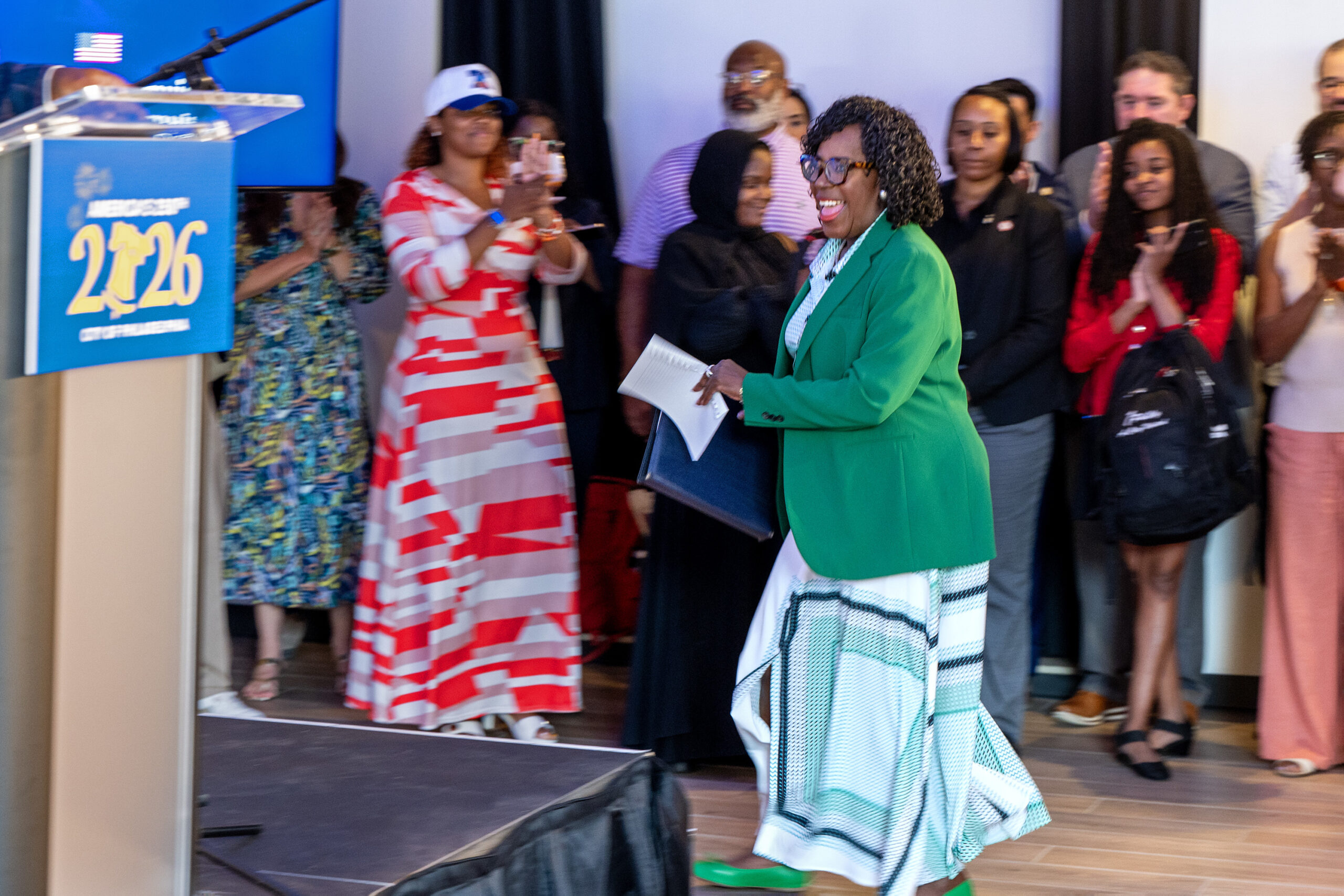
    Mayor Cherelle L. Parker heads to the stage at the Independence Visitor Center Wednesday, Sept. 3, 2025 to announce a new initiative that puts city neighborhoods at the forefront of the city celebrations of America’s 250th birthday in 2026.

    Parker, who campaigned on combating the city’s gun violence crisis and improving basic services, did not at first appear to make the Semiquincentennial a top priority. She dedicated no money to the celebration in her first budget proposal, which was focused on public safety and public cleanliness. And she helped squelch a proposal from former Gov. Ed Rendell to build a monument for the 250th in LOVE Park.

    But the mayor eventually embraced the task in a more public way — following some public prodding from City Councilmember Isaiah Thomas — and the city’s Semiquincentennial celebrations will very much bear her stamp.

    Parker has pledged to spend $120 million this year to mark the occasion, and she has made investing in communities across the city, not just the historic district, a major focus as Philadelphia this summer is also hosting World Cup games and the MLB All-Star Game. Much of that spending will pay for street work and beautification projects in neighborhood commercial corridors, 250th-themed block parties, and extra funding for annual events like the Odunde Festival.

    “We want to make sure that any and everybody can participate in this regardless of your station in life,” Garrett Harley said.

    ‘This is her big concert’

    With the official Independence Day parade — still organized by Welcome America — scheduled for Friday, July 3, there is surprisingly little in the way of official patriotic proceedings taking place on July Fourth itself.

    Parker at 10 a.m. will lead a Philadelphia Freedom Awards ceremony at Independence Mall, honoring seven people, including Cohen and actor and Philadelphia-native Colman Domingo.

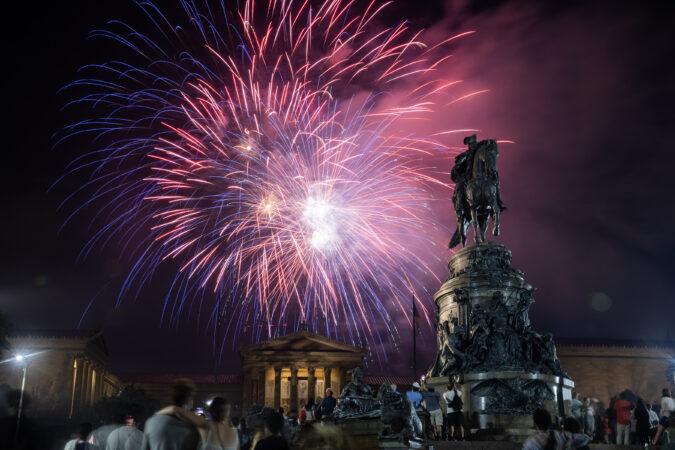
    At 5 p.m., the concert will kick off on the Ben Franklin Parkway. Performers include Aguilera, Will Smith, DJ Jazzy Jeff, Jill Scott, The Roots, Meek Mill, and Seal. The city’s official fireworks show will begin at the show’s conclusion, around 11:30 p.m.

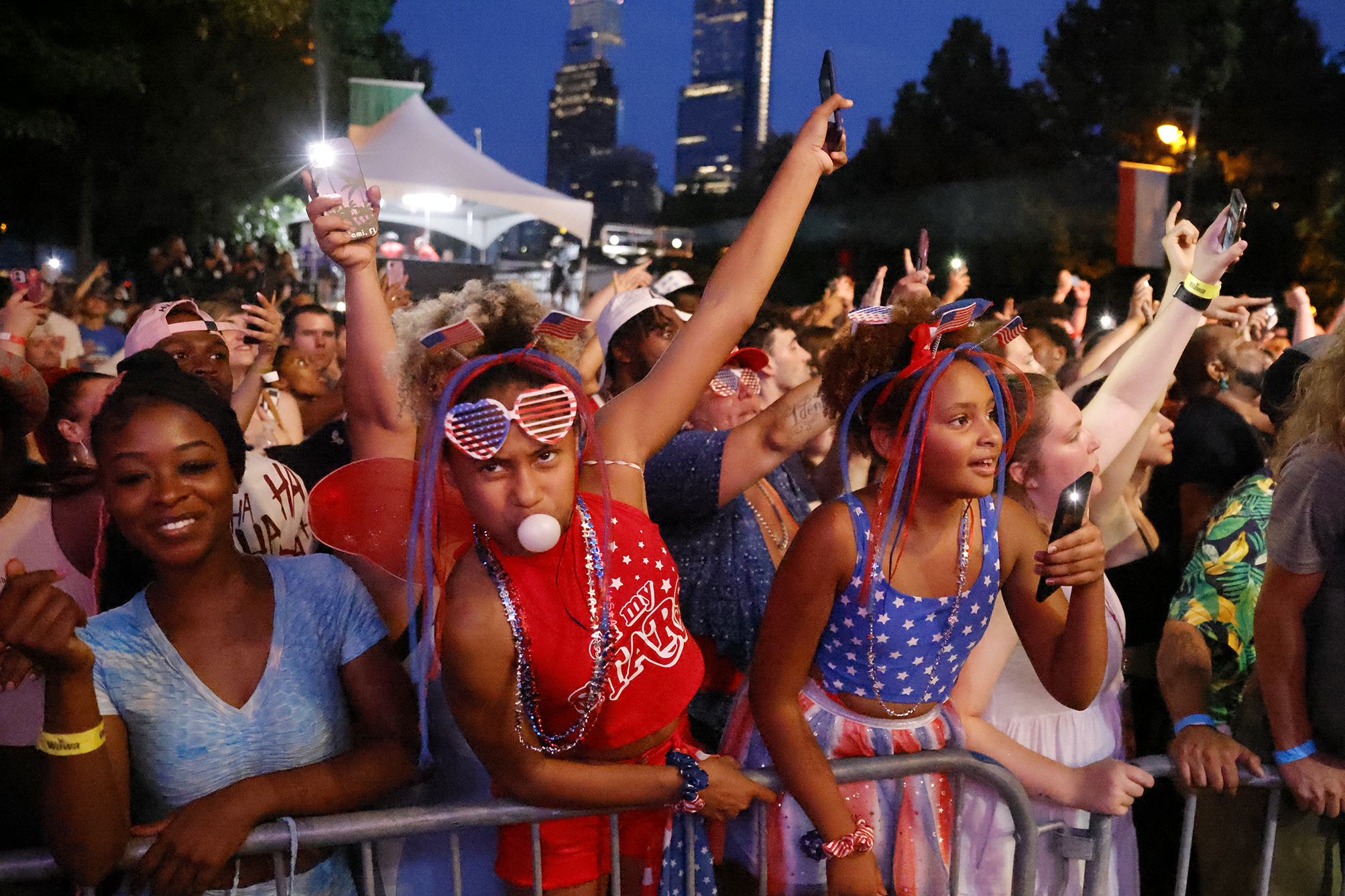
    Fans during the Wawa Welcome America July 4th Concert on the Parkway in Philadelphia, Pa. on July 4, 2022.

    Parker has several times compared this year’s show to Live Aid, the 1985 benefit concert staged in Philadelphia and London that featured in its 10-hour stateside lineup Bob Dylan, Mick Jagger, Madonna, Phil Collins, the Beach Boys, the Four Tops, Santana, Run-D.M.C., and many other musical A-listers.

    “If you remember Live Aid and you think about the legacy experience we’re trying to create … that’s what we’re trying to do on July the Fourth,” Parker said in March.

    Garrett Harley on Tuesday conceded the concert lineups may not be exactly comparable, but said the mayor was “really talking more about the scope and the magnitude and just the memories.”

    “But to certain kids it’s gonna be bigger than Live Aid, because Christina Aguilera means to them what Stevie Wonder and some of the folks who ran Live Aid meant to others,” Garrett Harley said.

    Garrett Harley disputed the notion that renaming the concert “One Philly: A Unity Concert for America” meant that it now bears Parker’s branding.

    “I don’t know how a ‘Unity Concert for America’ is Parker’s branding because the whole point of this is about unity,” Garrett Harley said. “The branding is really about reminding people that we need to unify, we need to be one America, despite everything that may be going on in the country right now.”

    The mayor frequently concludes speeches by asking crowds to raise their index fingers and say in unison, “One Philly: A United City.” She has also had the slogan printed on city trash trucks and cans, along with her name.

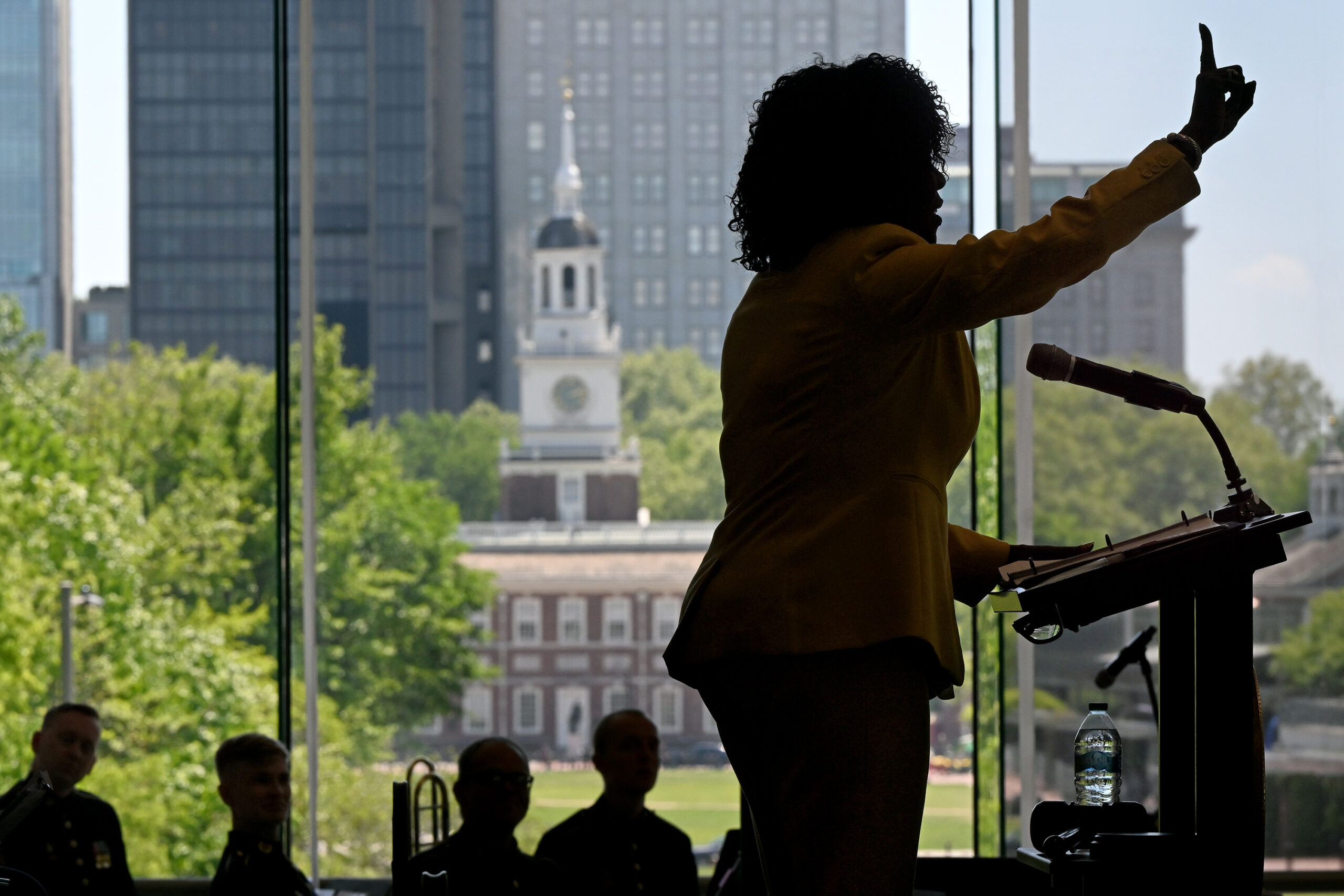
    Mayor Cherelle L. Parker raises a finger with her call-and-response “One Philly, A United City” mantra ending her speech during a ceremonial meeting of the Pennsylvania Senate at the National Constitution Center across the mall from Independence Hall on May 5.

    “Even if it is Parker’s branding, if that’s how people see it, what would Wawa Welcome America be if not branding?” Garrett Harley added.

    (Wawa, a longtime corporate sponsor for the city’s July Fourth festivities, pays Welcome America to include its branding in the event, defraying costs for taxpayers.)

    Branding or not, Parker’s vision guided the planning for the concert, Garrett Harley said.

    “At the end of the day, this is [Philadelphia’s] 100th mayor,” Garrett Harley said of Parker. “This was her biggest concert, and probably will be the biggest that she will ever do. She’s the first female mayor. She’s the first African American female mayor. This is her big concert.”

  • It’s World Cup knockout time for the U.S. against Bosnia. Our writers weigh in on who wins and why.

    It’s World Cup knockout time for the U.S. against Bosnia. Our writers weigh in on who wins and why.

    Going solely off paper, the U.S. men’s national team has the talent to defeat Bosnia and Herzegovina and advance to the FIFA World Cup’s Round of 16. Oddsmakers all over have the United States winning and have even built parlays around the notion.

    When the U.S., No. 15 in FIFA world rankings, plays No. 61 Bosnia in San Francisco on Wednesday (8 p.m., Fox29), it will be the U.S. seeking its first win in the knockout stages since 2002. During the last World Cup in Qatar in 2022, the USMNT lost 3-1 to Netherlands in the round of 16.

    This is Bosnia’s first knockout-round appearance and just the second time qualifying for the tournament since its debut at the 2014 edition in Brazil.

    This feels ripe for the taking. But again, this World Cup might go down as one of the most shocking in recent memory with teams in the knockout stage in their first-ever World Cup (see Cape Verde) and some even needed a playoff game to even make the tournament (see Democratic Republic of Congo). To equate this to casual American fans, this is March Madness, this is Florida Gulf Coast’s Sweet 16 run circa 2013, or tiny Fairleigh Dickinson knocking off No. 1 Purdue in 2023.

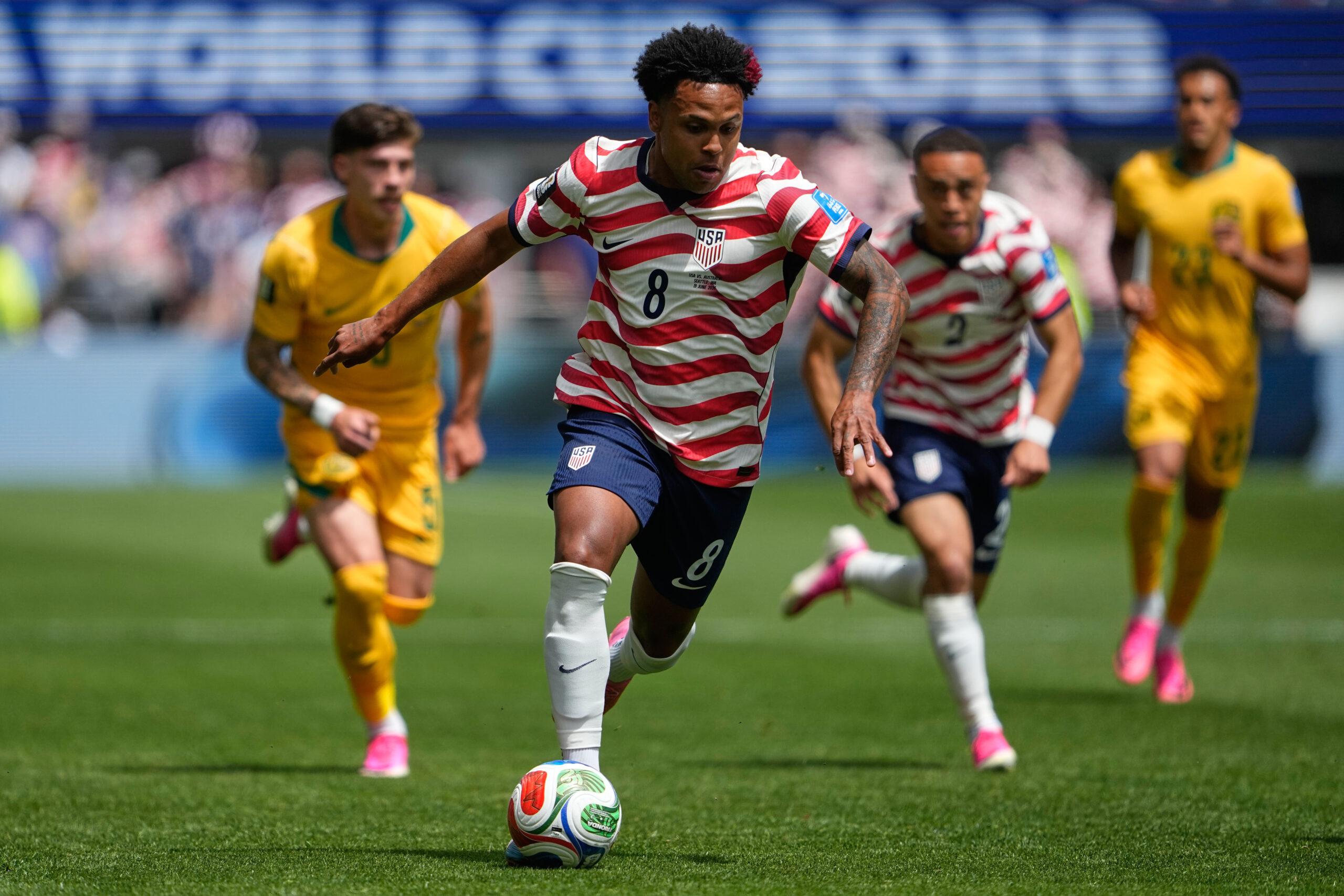
    Weston McKennie (8) has been one of the U.S. men’s national team’s toughest players in this World Cup.

    It’s been a must-watch because the underdogs are bringing it. What does that mean for the United States, a team that showed dominance through the group stage but is coming off an eye-opening loss to Turkey entering the knockout phase?

    Did that loss recenter these players, and they’re ready to show what they learned against a Bosnia team happy to still be in the fight? Or will there be a World Cup-ending theater late on Wednesday night?

    Our team of writers take a look at the matchup and the tournament at large to offer where they think this one will end up.

    Jonathan Tannenwald

    I know it will shock all of you that I’m a cynic by nature, not just profession. The stakes for the U.S. losing this game are almost higher than for winning it, because everything the program has done for the last eight years — not just since 2022 — goes up in smoke if they go out now.

    Meanwhile, Bosnia is on house money, and I can only imagine how many emotions will be in Esmir Bajraktarević’s mind as he plays against the nation he used to represent. But in the end, the U.S. has the better talent and should have another electric home crowd behind it in the Bay Area.

    That’s good for one goal, and a first-choice starting lineup (even if the bench isn’t full) is worth another.

    Prediction: United States 2, Bosnia and Herzegovina 0

    Bosnia’s Esmir Bajraktarević (left) was in the U.S. youth system before committing to playing for Bosnia in the World Cup.

    Kerith Gabriel

    How this plays out for me is largely determined by the lineup U.S. manager Mauricio Pochettino puts out against a really big, physical Bosnia team that bullied its way to four points against Canada and Qatar after shaking off a 4-1 beat down to Switzerland in its second game of Group B.

    There are guys who need to be on the field for the U.S. in the biggest moments. Chris Richards is one of them. Tyler Adams is another, and obviously, a healthy Christian Pulisic and locked-in Matt Freese make the difference.

    Plus, moving to the next round on U.S. soil, on the West Coast, where the Americans have already found success, feels natural. Frankly, they should want it more. So if we’re talking about what’s at stake for the U.S. vs. what Bosnia stands to gain, it’s tough to see how this American contingent doesn’t take that into account, play the best 11 of the 26, and move on. But I’ll hedge that it won’t come easy.

    Prediction: United States 1, Bosnia and Herzegovina 1 (U.S. wins 5-4 on penalty kicks)

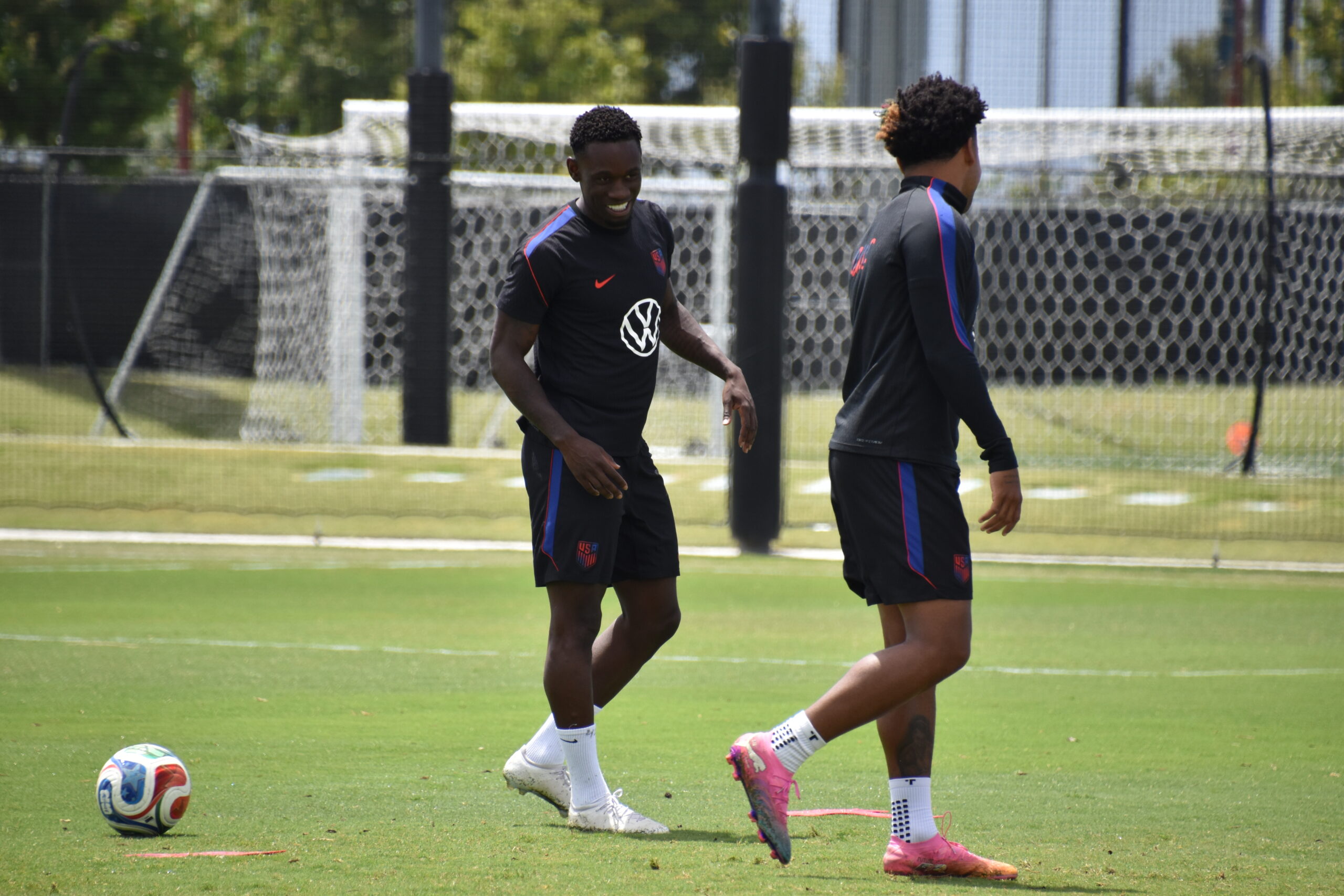
    Folarin Balogun (left) is all smiles during the U.S. national team’s practice at Great Park in Irvine, California, this week.

    Owen Hewitt

    Key American players like Adams, Folarin Balogun, and Tim Ream watched from the bench as the U.S. conceded a 98th-minute winner to Turkey in the USMNT’s group stage finale.

    But since the Americans had already secured the group and a place in the knockout rounds, the worst the loss could do was produce a temporary sting. Now, a loss could end it all. The U.S. will need to follow up a strong group stage performance with its second-ever win in a knockout game at the World Cup.

    A win in the expanded knockouts wouldn’t quite have the magnitude of the “dos a cero” round of 16 win over Mexico in 2002, but knockouts are knockouts.

    The U.S. has played confidently at this World Cup, something it will need to continue to snap a 10-game losing streak against European sides. The Bosnians will be a tough test, but a well-rested American team should overcome its recent form against Europe.

    Prediction: United States 2, Bosnia and Herzegovina 0

  • France and Paraguay will meet on July 4 in Philadelphia’s last World Cup game

    France and Paraguay will meet on July 4 in Philadelphia’s last World Cup game

    From the moment the World Cup draw was announced in December, Philadelphia and the soccer world started dreaming of a potential France-Germany showdown on July 4.

    Alas, that dream did not come true, thanks to Germany’s upset loss to Paraguay on Monday. But the other half of the equation has delivered, as the city already saw in the group stage. France will return to town as the favorite to win it all, with its superstar attacking core firing on all cylinders.

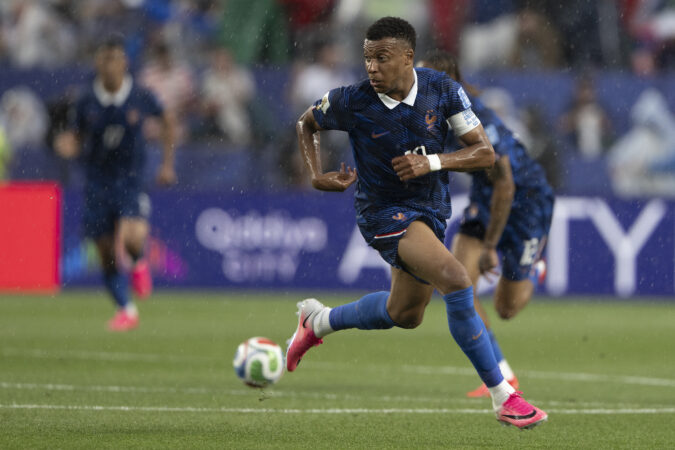
    After scoring 10 goals in the group stage, the most of any of the 48 teams in the tournament, Les Bleus laid a 3-0 hammering down on Sweden in the Meadowlands on Tuesday. Kylian Mbappé scored twice to match Lionel Messi’s six goals in the tournament to date, and Bradley Barcola struck his second goal of the summer.

    Ousmane Dembélé, the reigning world player of the year with the Ballon D’Or award, has four goals, and Desiré Doué has one. The fifth superweapon, winger Michael Olise, has a team-leading five assists — and came inches from a spectacular first World Cup goal on Tuesday when a bicycle kick attempt hit the post.

    Paraguay will arrive in town after overcoming its 4-1 loss to the United States in its group stage opener. La Albirroja beat Turkey, 1-0, held Australia to a scoreless tie, then toppled Germany in a penalty kick shootout after a 1-1 tie.

    This was the team that looked much more like the one that rode a stingy defense to its first World Cup berth in 16 years, finishing sixth in South America’s 10-team round robin with the second-lowest goals allowed total (10).

    Paraguay’s roster has many familiar faces to fans of MLS. Miguel Almirón (Atlanta United), Andrés Cubas (Vancouver Whitecaps), and Braian Ojeda (Orlando) play in the league now, and three others used to: Matías Galarza (Atlanta), Diego Gómez (Inter Miami), and Alejandro “Kaku” Romero Gamarra (New York Red Bulls).

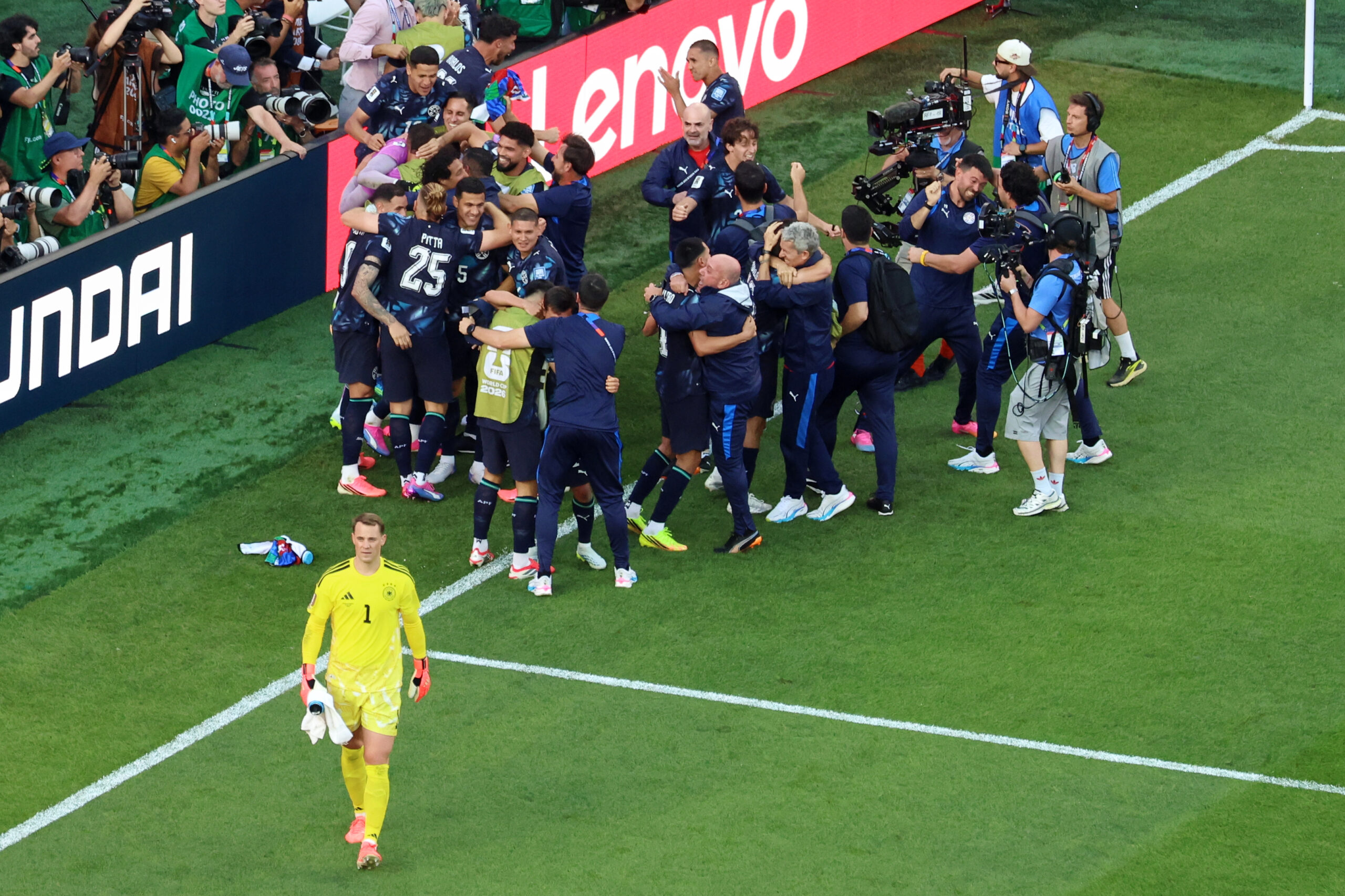
    Paraguay’s celebrations after upsetting Germany in a penalty kick shootout on Monday.

    It’s easy to say the matchup is offense vs. defense, but France is also plenty stingy. It has allowed just two goals in four games so far, one each to Senegal and Norway. That’s what manager Didier Deschamps has always demanded in his 14-year tenure, just as he did as a player: the midfield anchor and captain of France’s 1998 World Cup and 2000 Euros champions.

    Sometimes, over the years, it has felt like that approach has stifled France’s constellation of stars. But the results have ultimately come: Euros runner-up in 2016, World Cup champion in 2018, UEFA Nations League champion in 2021, and runner-up to Lionel Messi’s Argentina in 2022’s all-time classic final.

    This time, this team is all in for Deschamps’ final tournament on the bench. Even Mbappé, often criticized for not playing enough defense at his club, Real Madrid, is doing his part.

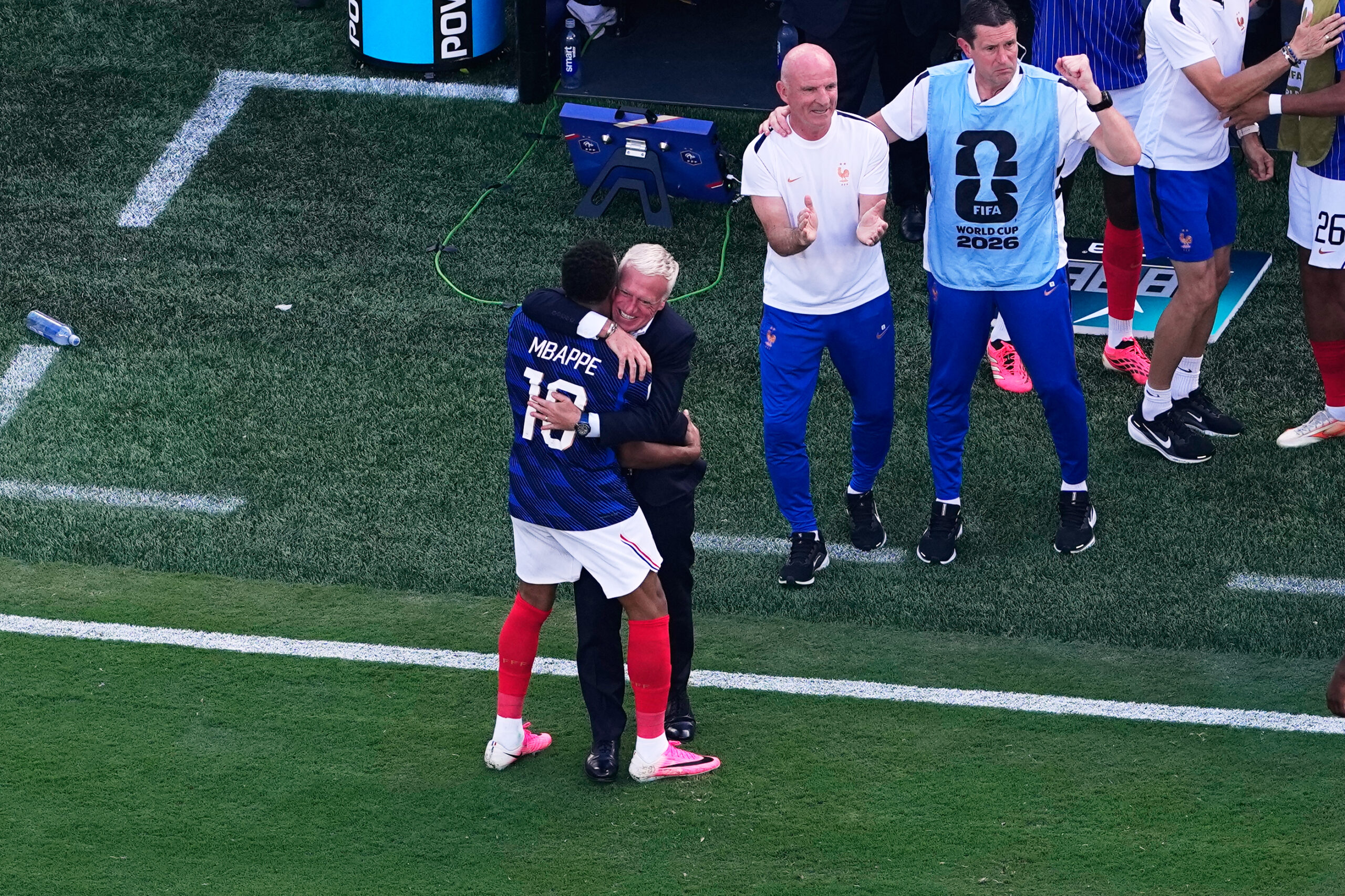
    They’re also in for Deschamps himself, as his mother died recently. He left the tournament for a few days to attend to that and returned in time for Tuesday’s contest. When Mbappé opened the scoring, he ran over to give his manager a big hug.

    Deschamps looked just as thrilled, no matter how much of Mbappé’s sweat landed on his suit on a hot day.

    Kylian Mbappé (left) embracing Didier Deschamps after scoring France’s opening goal against Sweden.

    Now France is aiming to become just the third team in men’s World Cup history to make three straight finals. Brazil did it in 1994, ‘98, and ‘02, winning the first and third (and losing the second to France); and Germany did it in 1982, ‘86, and ‘90, winning the last of them.

    The world is watching and waiting to see how far this team goes. Philadelphia already had a front-row seat once, the 3-0 win over Iraq where Mbappé scored a spectacular strike and Dembélé scored his first major-tournament goal after many years of trying. Now the city gets a second turn.

    France’s first visit also made headlines for the thunderstorms that delayed the start of the second half by two hours. Saturday’s game could land in Mother Nature’s crosshairs again, with the heat dome expected to crack that day and send the sky exploding. It’s just a question of what time, and whether it happens early enough to pass by kickoff.

    With that big caveat, the countdown is on. Clashes between European and South American teams have defined World Cups for generations, and this one will add another chapter to the history.