SANTA CLARA, Calif. — Malik Tillman’s shoe was broken.
He’d been stepped on by a Bosnian player, not hard enough to need to leave the game but enough to need a replacement cleat from the bench.
The new one didn’t have any magic dust, but it didn’t need it. Tillman practices free kicks a lot, so he was ready when the moment came.
His team was a goal up, a man down, and fighting with every ounce it had to secure its first men’s World Cup knockout win in 24 years. In the 82nd minute, the chance to regain momentum finally arrived.
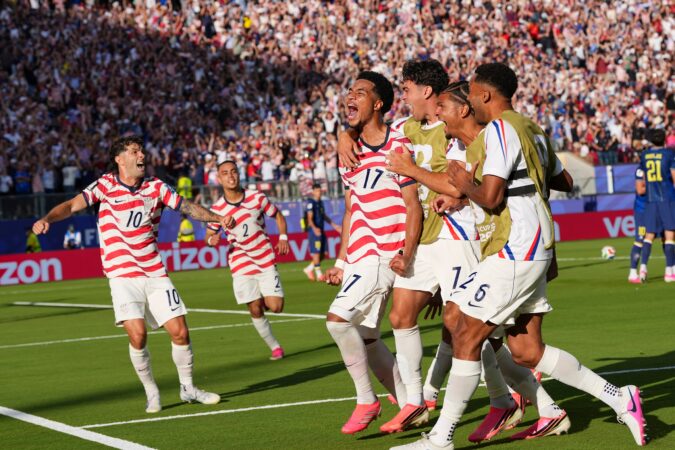
Bosnia’s Stjepan Radeljić held back Sergiño Dest, earning the U.S a free kick just outside the 18-yard box. Tillman, with a bloodied sock underneath that new shoe, stepped up to score the goal that clinched the 2-0 win.
“I’ve been dreaming about this game. I’ve been dreaming about maybe taking a free kick and scoring a free kick,” he said. “I practiced this in training, and today I think I showed what I can do.”
Soccer now has its own version of Curt Schilling’s bloody sock saga in the American sports history books — though Tillman is much more soft-spoken than the former pitcher who played for the Red Sox, Phillies, and more.
As Tillman ran toward the end line to celebrate, his teammates joined him in a joyous mass, fusing its energy with a crowd that had dug in just as much down the stretch. That energy came through loud and clear all night, in hopes of seeing a new chapter in a story that began when the Bay Area hosted the U.S. men’s soccer team’s first World Cup knockout game of its modern era in 1994.
“I’m a different type of person on the pitch,” Tillman said. “Of course, maybe you don’t really see my emotions, but if you score a goal like this, you guys saw my emotions. It’s a great feeling, and, of course, a very proud moment for me.”
It’s easy to say that the Americans don’t face the kind of pressure as the world’s traditional powers like Brazil, Argentina, England, and Germany. Even next-door neighbor Mexico deals with more, thanks to a rabid fan base that spans both sides of the Rio Grande.
But this time, the weight on the U.S. was massive. A squad of players long hyped as a golden generation had to win this game, or else they’d be tarred as failures in the big moment.
The stakes rose even higher when cohosts Canada and Mexico won their round of 32 contests first. Imagine the reaction in the soccer world had the U.S. failed to match them.
There still will be plenty at stake when the Americans play Belgium in the round of 16 on Monday in Seattle. This team still hasn’t beaten a really good opponent in this World Cup, or in general for a while. Nor has anyone forgotten that the ninth-ranked Red Devils thumped the U.S., 5-2, in March in Atlanta, even if that was a friendly with different squads.
The U.S. also still has a poor all-time record against European teams in World Cups. Wednesday’s win was just the fourth win in 26 such games, against 15 losses and seven ties. Raising the win total to five now would make an all-time impact.
About the red card
The call certainly was controversial, and by the letter of the law, referee Raphael Claus might have relied too much on slow-motion replay footage instead of watching at real-time speed.
But the decision was not totally wrong. First and foremost, any time a replay shows a player dragging his studs down an opponent’s calf and landing on the foot almost certainly will be a red.
An obvious counter to that is that Lionel Messi wasn’t sent off in Argentina’s group game against Algeria for landing his studs in an opponent’s calf even more directly.
This is life in the sport, and every player knows it. Had Balogun been hit in a similar way, even though the initial collision was 50/50, U.S. fans surely would have brayed for the opponent’s dismissal.
Also, if Balogun had been given a yellow card right away, the odds might have decreased that a video review would upgrade the call to a red.
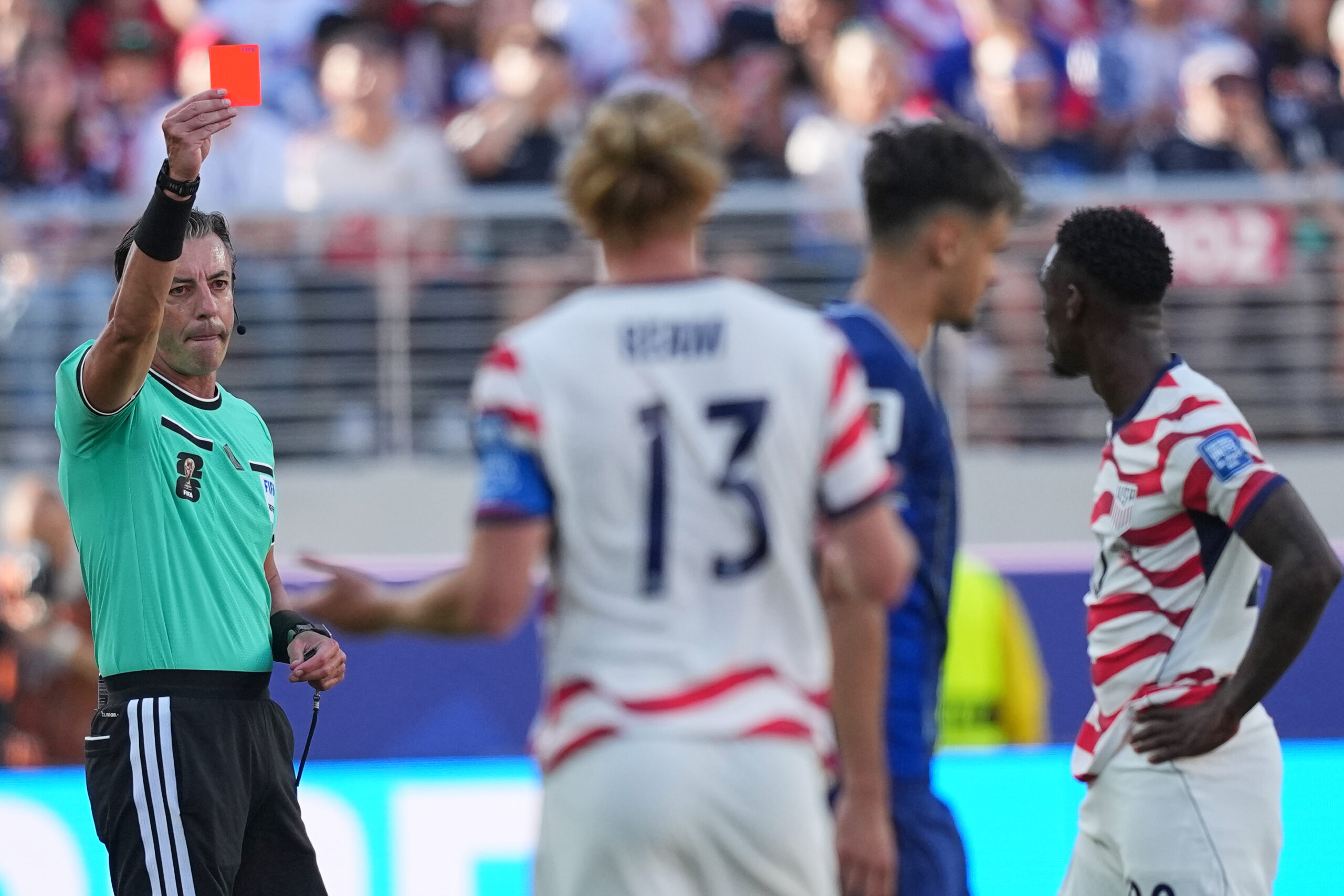
Because there was no card initially, when Claus went to the monitor, all he could do was give a red or let it go. The rules mandate that a video review of a call with no card can’t lead to a yellow. FIFA’s rules also mean U.S. Soccer can’t appeal the decision, though it almost certainly would have lost.
“Typical FIFA,” U.S. veteran Tyler Adams said of the rule book. But he didn’t totally argue with the call.
“You’re asking the wrong person, with how I tackle,” he said. “I think it’s a yellow card. I think when you slow everything down, it’s always going to look worse. I don’t want to say too much.”
It definitely will sting the U.S. to face Belgium’s stars without the striker who has more than justified the hype around his talent. Ricardo Pepi presumably will start, with Haji Wright coming off the bench.
Pepi didn’t stop to talk with the media after Wednesday’s game, but Wright did. The last U.S. striker to score in a World Cup before Balogun’s three this summer declared himself “always ready and always prepared to give my best for the team.”
There also was lots of support for Balogun from his teammates.
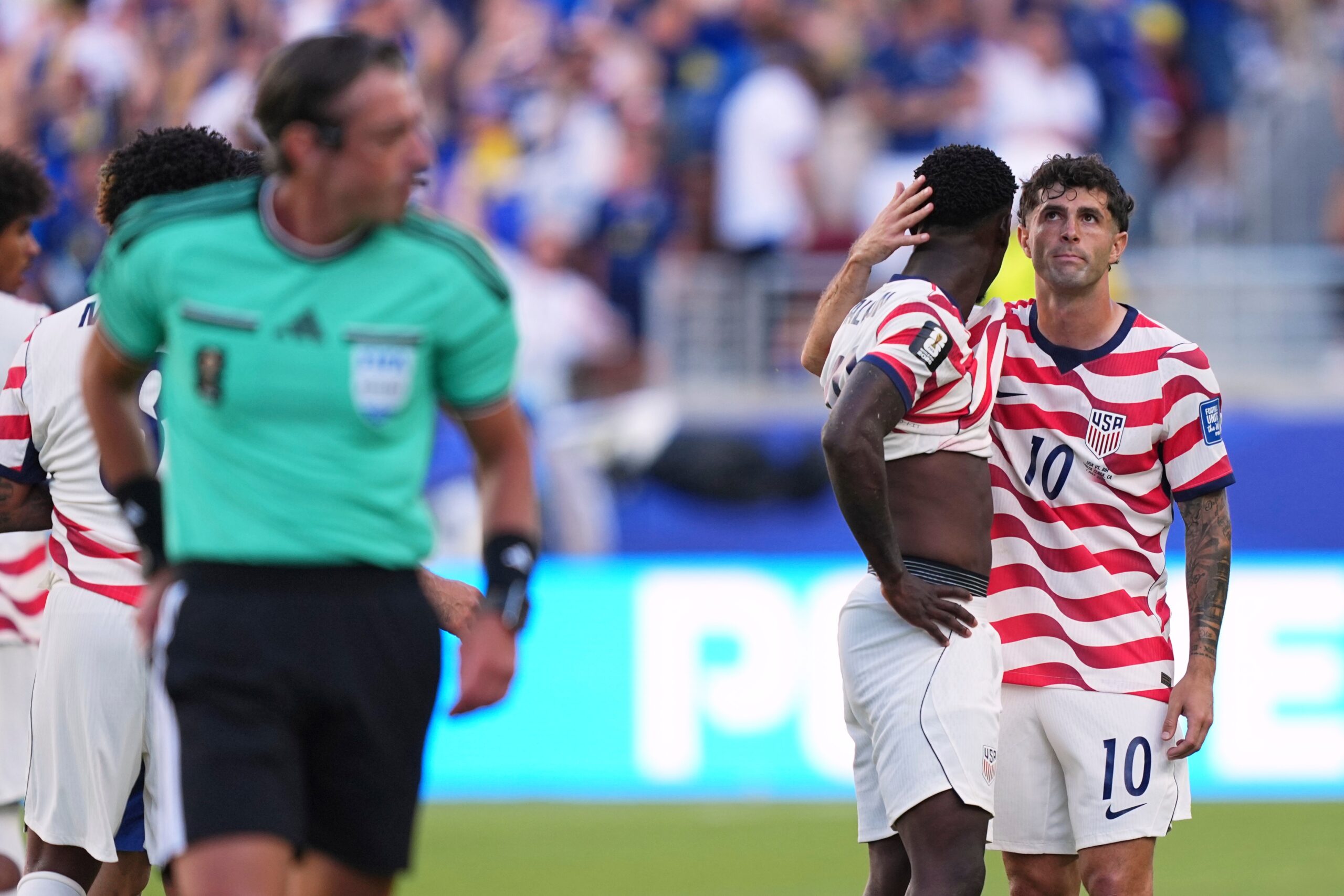
“He’s done so much for us, and now we’ve got his back,” Christian Pulisic said, and Chris Richards said nearly the same words.
Freese’s satisfaction
Let’s close this piece on a positive note.
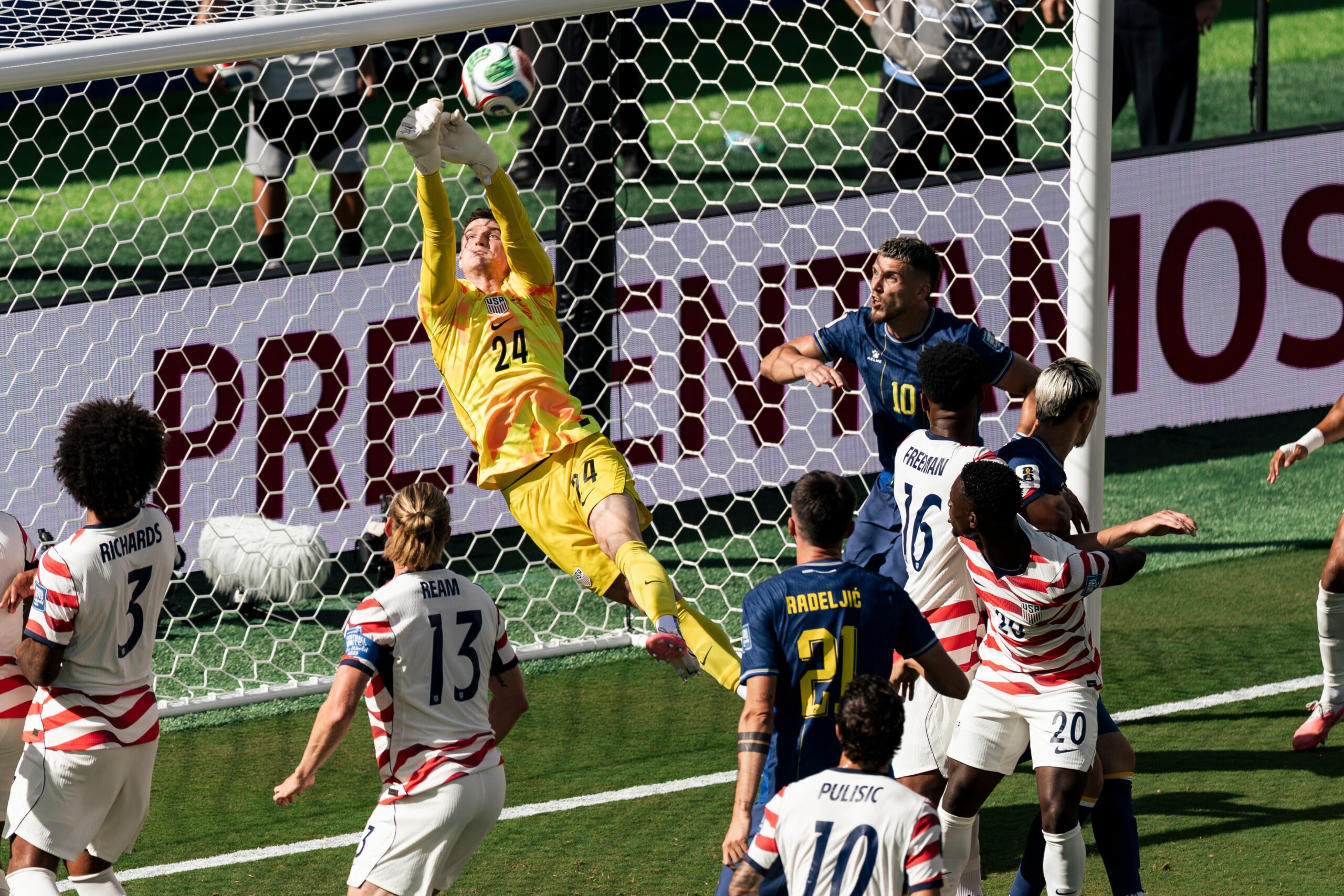
Matt Freese grew up in Wayne idolizing Tim Howard, the U.S. Hall of Famer who cemented his legend with 16 saves in the 2014 World Cup’s 2-1 loss to Belgium. Freese didn’t have to be that busy against Bosnia, but his three stops and command of his box still were plenty to confirm his status as the No. 1 in net.
Now he has a historic reward: being the goalkeeper of record for the first World Cup knockout win in so long.
“It means, really, more than I can say,” Freese said. “You dream of putting your name up there with the guys that you watched growing up. And there’s a lot more to do, but it’s an honor and a privilege to be in goal for this team.”
Leave a Reply