The U.S. men’s soccer team set another viewership record in its loss to Belgium, despite the lopsided 4-1 defeat.
A combined total of 45.986 million viewers watched on Fox (33.006 million) and Telemundo (12.9 million), whether via traditional television or online streaming.
It is the biggest audience for a television event since Super Bowl LX, and not too far off this year’s NFL conference championship games. The AFC matchup drew 48.6 million viewers, and the NFC drew 46.1 million.
Fox also said its audience alone was the biggest for any non-NFL broadcast since Game 7 of the 2016 World Series, when the Chicago Cubs ended their infamous championship drought. That mark was previously held by this year’s college football national championship game, which drew 30.1 million viewers across a range of ESPN channels.
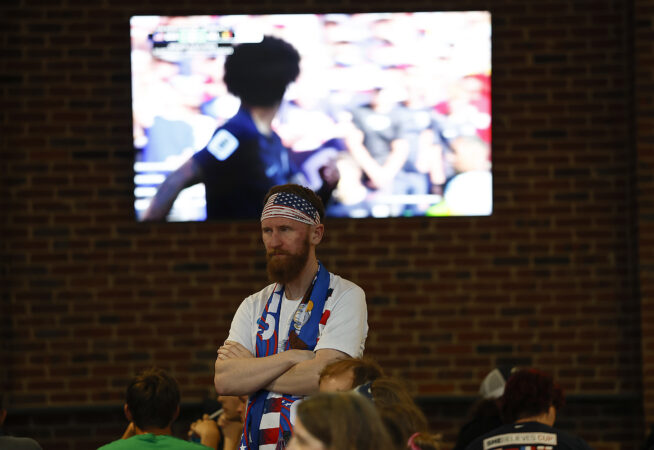
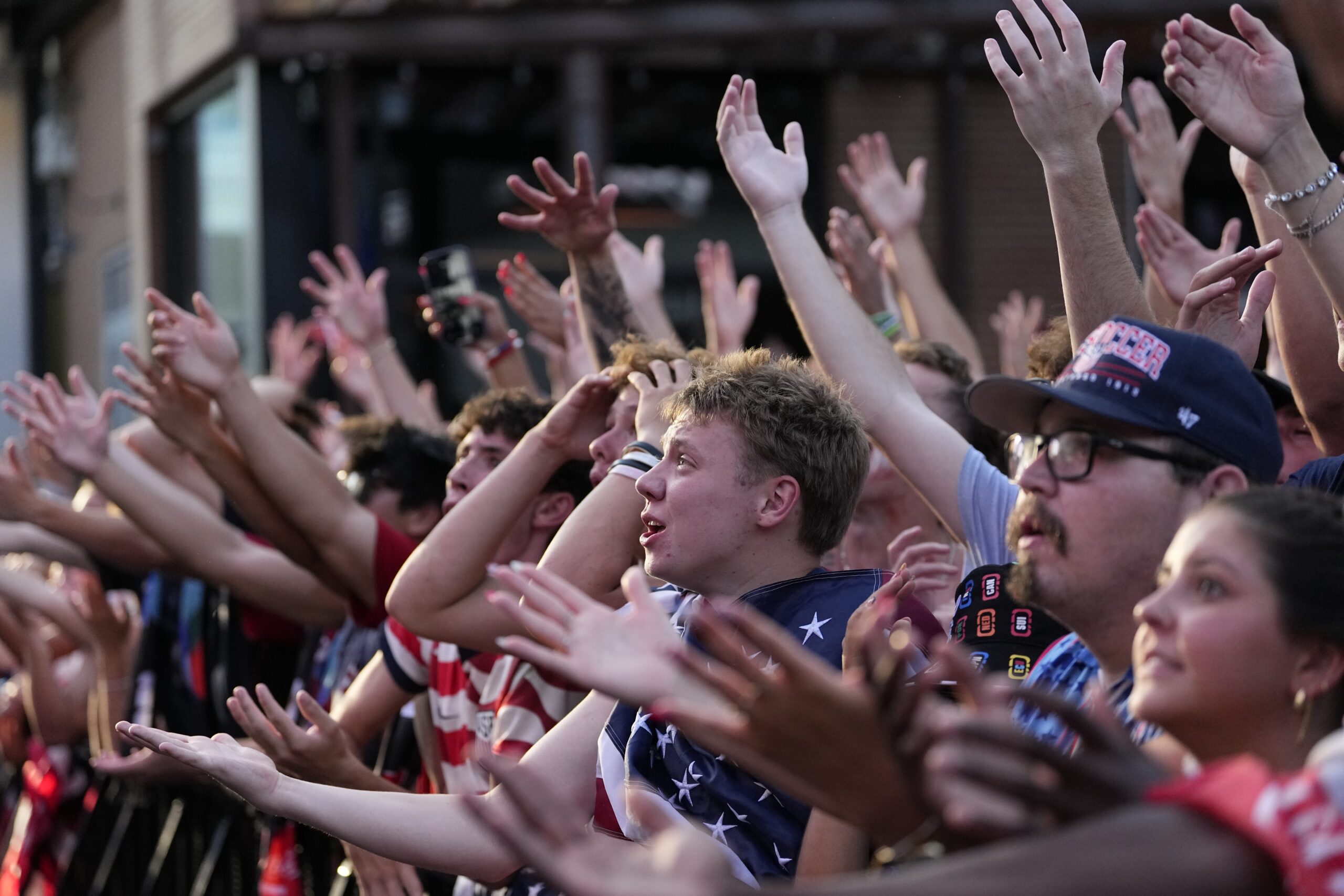
Fans watching the U.S.-Belgium gane at a viewing party in Kansas City, Mo.
Fox noted that Philadelphia was the network’s No. 5 local ratings market for U.S.-Belgium, with a 14.22 rating and a 38 share. That means around 38% of all households watching television at that time tuned in to the game.
It wasn’t lost on U.S. fans that the blowout score turned some casual viewers sour. But the World Cup overall has continued to be a big deal, and that seems unlikely to change.
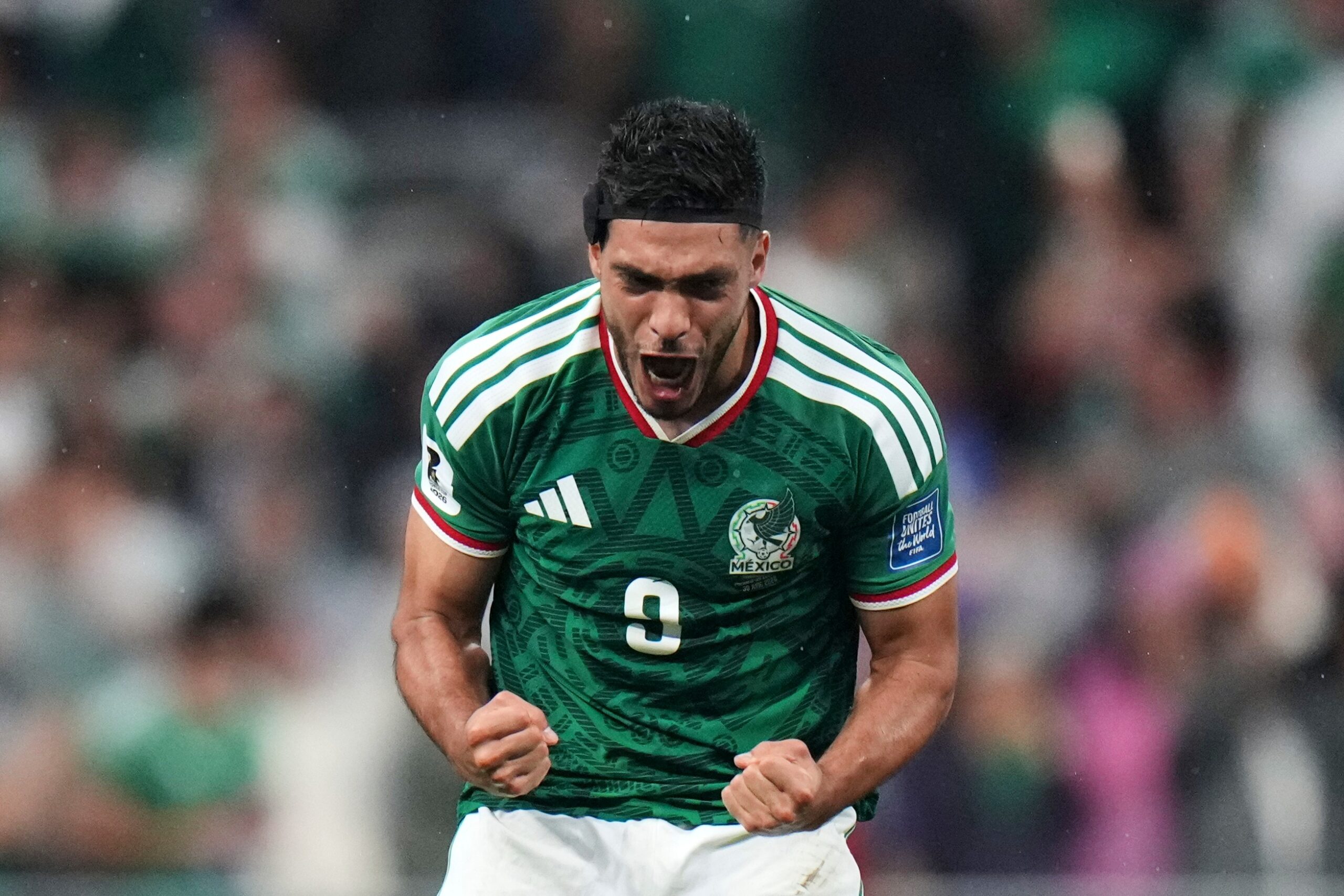
England’s dramatic 3-2 win over Mexico on Sunday night drew an audience worth a Sunday night NFL game: 44.952 million viewers combined between Fox (21.752 million) and Telemundo (23.1 million, a network record for soccer).
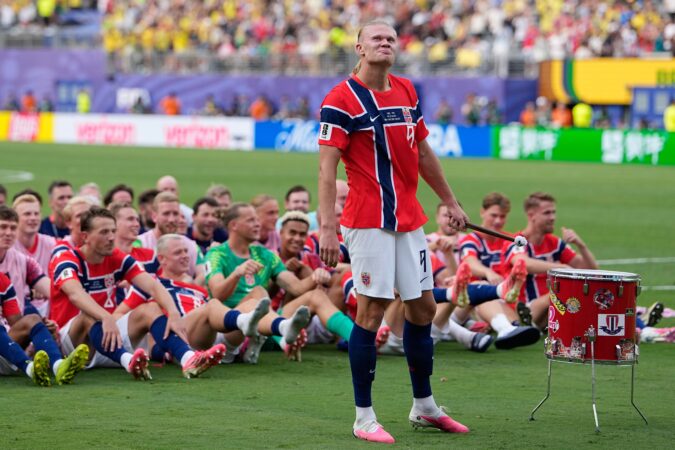
Earlier Sunday, Norway’s upset of Brazil in the Meadowlands drew 28.373 million viewers combined.
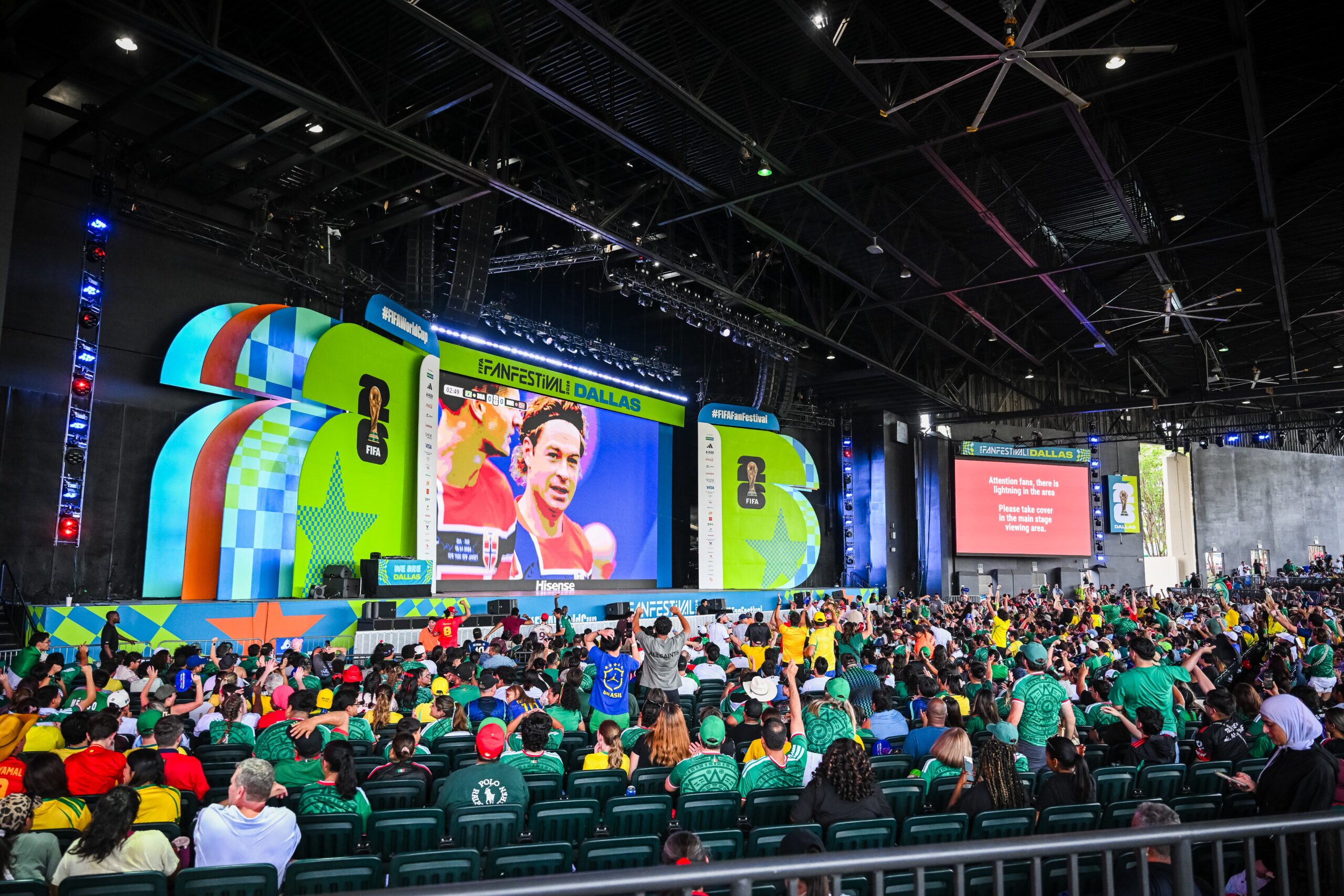
Fans watching Norway-Brazil at the official World Cup fan festival in Dallas.
According to publicly-available data so far, 12 games this summer attracted audiences of over 20 million viewers across the two networks, including four in the round of 16: U.S.-Belgium, Mexico-England, Brazil-Norway, and Paraguay-France in Philadelphia on July 4 (22.924 million).
Data compiled by The Inquirer show that the top five soccer audiences in U.S. history, and seven of the top 10, have all come during this World Cup.
We’ll see if the numbers grow again in the quarterfinals, which include a Saturday doubleheader of England vs. Norway and Argentina vs. Switzerland (5 and 9 p.m., Fox29 and Telemundo 62).
If all the favorites prevail, the semifinals would be France-Spain and England-Argentina. The first of those would match two of the sport’s biggest superstars, Kylian Mbappé and Lamine Yamal; the second would pit Jude Bellingham and Harry Kane against Lionel Messi in a renewal of one of soccer’s most famous rivalries.
When this World Cup finally took a day off on Wednesday, it had been 27 days since the tournament began.
That was just one day fewer than it took to contest the entire 2022 edition in Qatar, and four days fewer than the 2018 one that was the last men’s World Cup played in June and July. (The Qatar edition was moved to November and December to get out of the Middle East’s summer heat.)
So if you feel like it’s been a lot, you aren’t alone. Between the controversies that engulfed the U.S. team’s exit and the mania of so many other dramatic games, a day to rest and recharge wasn’t the worst thing.
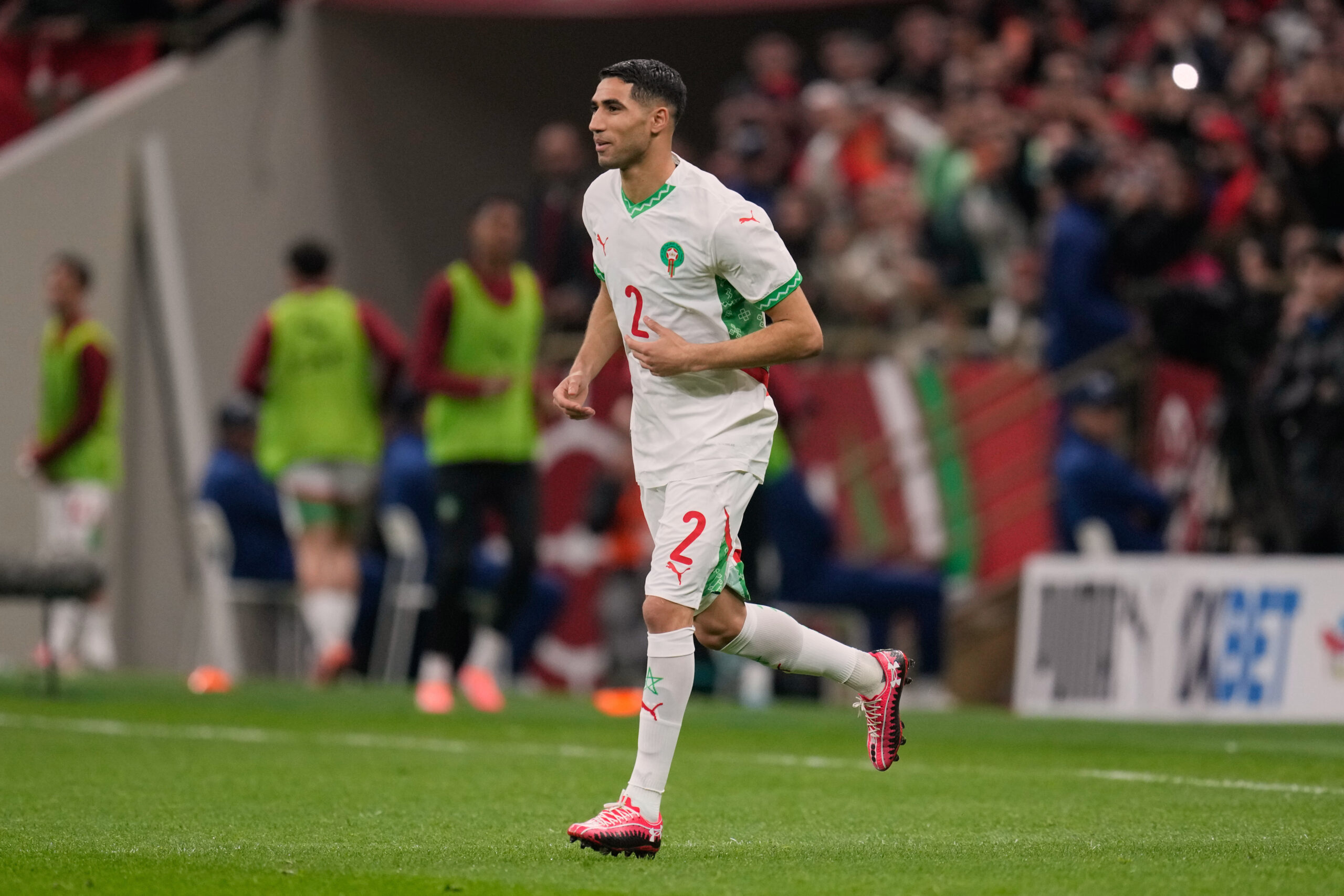
Morocco’s Achraf Hakimi will look to guide his country past mighty France on Thursday in the quarterfinals of the World Cup.
Now, the quarterfinals are here, and all four games have major star power. The first one might be the best of them: France vs. Morocco on Thursday in Foxborough, Mass. Morocco’s Achraf Hakimi will face many current and former teammates at his French club, Paris Saint-Germain, while trying to lead the Atlas Lions to their second straight semifinal four years after they became the first African team to make it that far.
Philadelphia needs no introduction to France’s galaxy of talent at this point, having seen Les Bleus win both games they played in town. Now here they go again: Michael Olise, Ousmane Dembélé, Désiré Doué, Bradley Barcola, and, above all, Kylian Mbappé. They’ve been unstoppable so far, bringing not just their quality but a real motivation to carry Les Bleus to a historic third straight final.
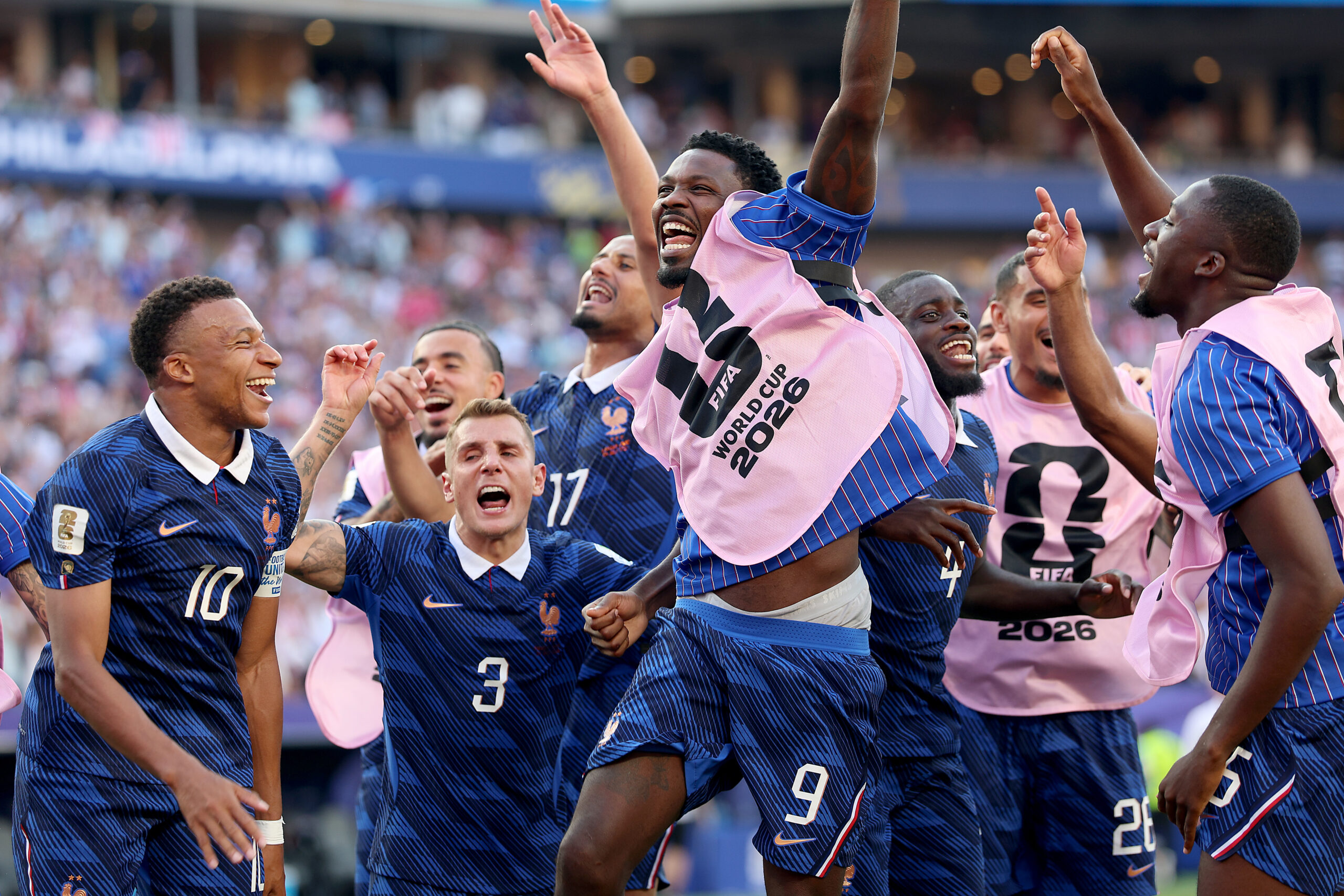
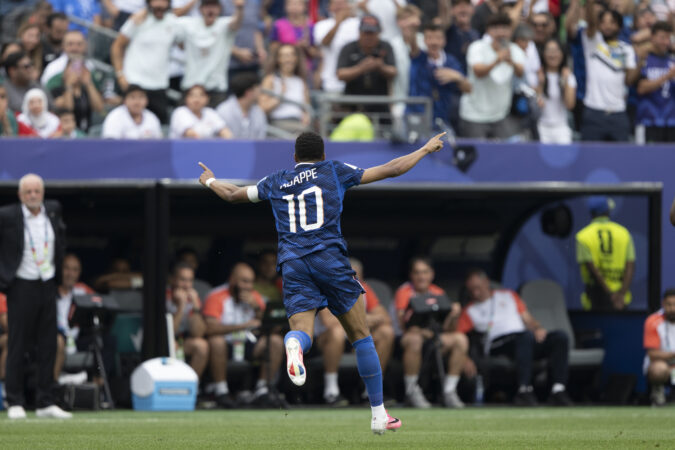
Kylian Mbappé (left) and Marcus Thuram (center) leading France’s celebrations after their Round of 16 win over Paraguay in Philadelphia’s last World Cup game.
The France-Morocco winner will play the winner of Friday’s Spain-Belgium matchup in Inglewood, Calif. Spain’s Lamine Yamal keeps earning headlines as the game’s top young phenom, and if France and La Roja advance, that semifinal would be a box office smash.
As for Belgium, speaking of motivation, let’s see how this game goes for them. The Red Devils had all that any team could need against the U.S., but will they be as fired up this time?
The other quarterfinals will be played Saturday. First, England faces Norway in Miami Gardens, Fla., a matchup of a lot of players who know each other. Nine of Norway’s players play in the English Premier League, including superstar striker Erling Haaland at Manchester City and playmaker Martin Ødegaard at Arsenal.
Those two clubs, in turn, have nine combined players on the Three Lions’ squad. City has newly signed $155 million midfielder Elliot Anderson, starting defenders Marc Guéhi and Nico O’Reilly, backup defender John Stones, and backup goalkeeper James Trafford. Arsenal has wingers Eberechi Eze, Noni Madueke, Bukayo Saka, and central midfielder Declan Rice.
Crystal Palace also has a player on each side, Norway forward Jørgen Strand Larsen and England backup goalkeeper Dean Henderson.
We’ll see how all that familiarity plays out on the field. We’ll also see what impact the weather has on the 4 p.m. kickoff, a forecast high of 90 degrees, South Florida’s humidity, and the perennial threat of thunderstorms.
Lionel Messi’s Argentina return to Kansas City, Mo., where the reigning World Cup champions played their tournament opener, for the last quarterfinal. They came awfully close to not making it back, needing a stunning late comeback from a two-goal deficit to beat Egypt, 3-2, in the round of 16.
Can Switzerland do what Egypt and Cape Verde couldn’t: finish the job and knock Messi out of his last World Cup? The task will be especially tough if standout playmaker Johan Manzambi can’t recover from the injury that caused him to miss the round of 16 win over Colombia.
MESSI’S 8TH GOAL OF THE TOURNAMENT DRAWS ARGENTINA LEVEL WITH EGYPT 🇦🇷
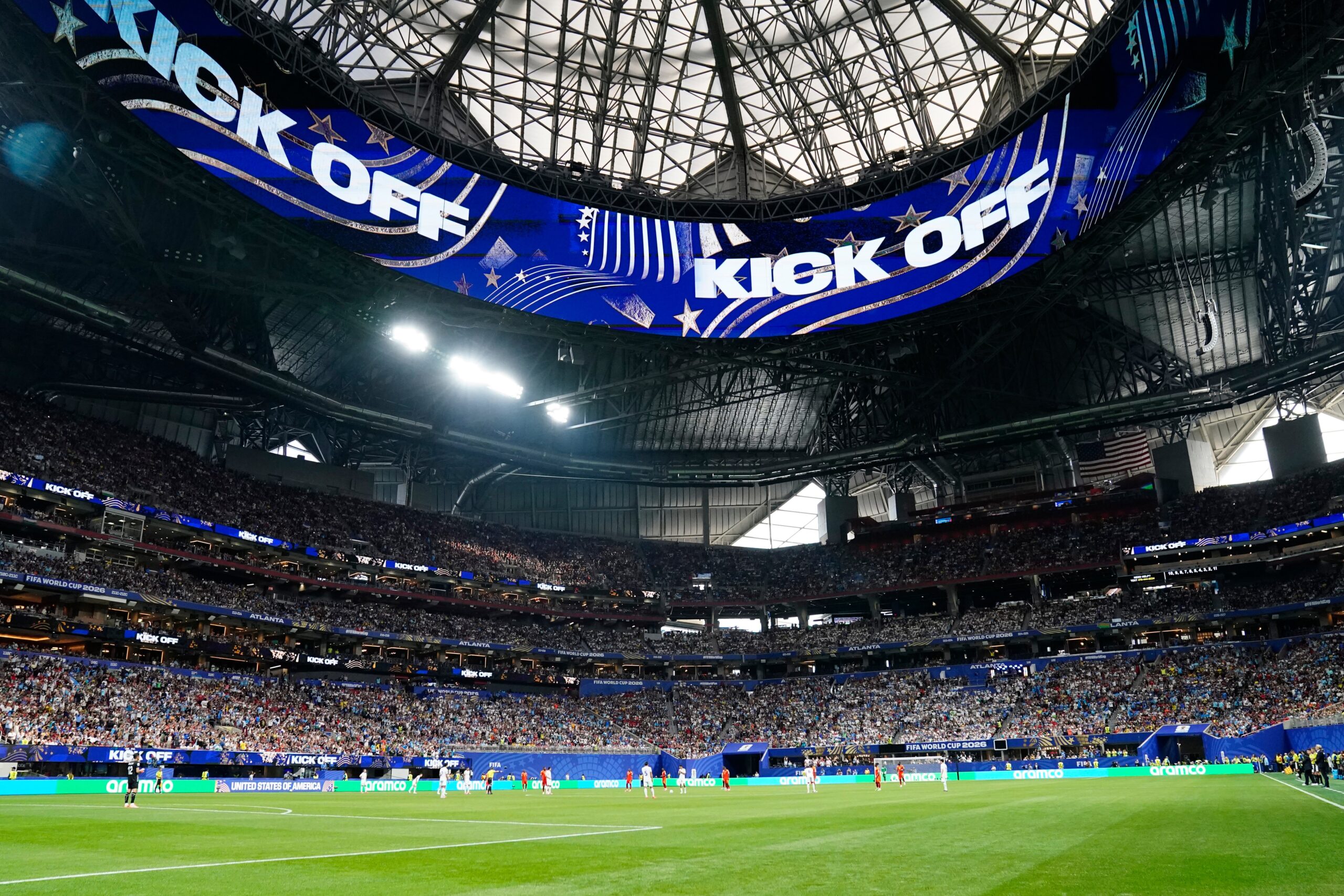
If England and Argentina advance, they’ll renew one of soccer’s most famous rivalries for the first time at a men’s World Cup since 2022. That would be quite a scene, especially under the roof in Atlanta.
World Cup quarterfinals schedule
All games are televised on Fox29 in English and Telemundo 62 in Spanish. All times listed are local to Philadelphia.
SEATTLE — Even many who think Folarin Balogun’s red card was justified don’t blame him for the global fallout over the last few days.
It isn’t his fault that he’ll be forever known as the player President Donald Trump lobbied FIFA president Gianni Infantino to get back on the field.
“When that decision’s overturned, of course it’s going to be controversial,” he said, “So for me, it’s something that didn’t really surprise me too much. But as a player, my job is just to go out there and focus on my job.”
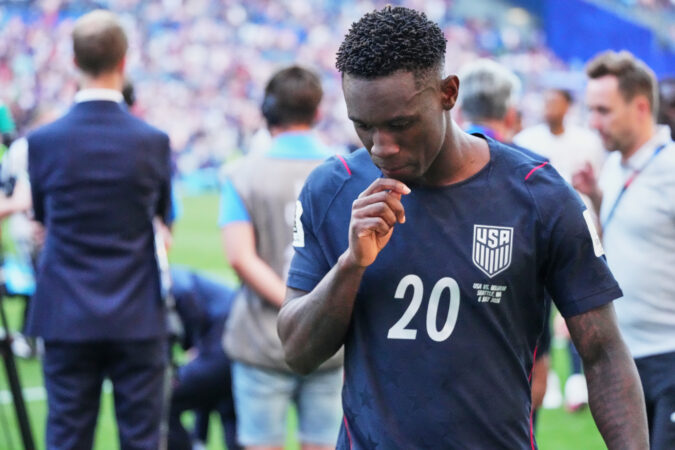
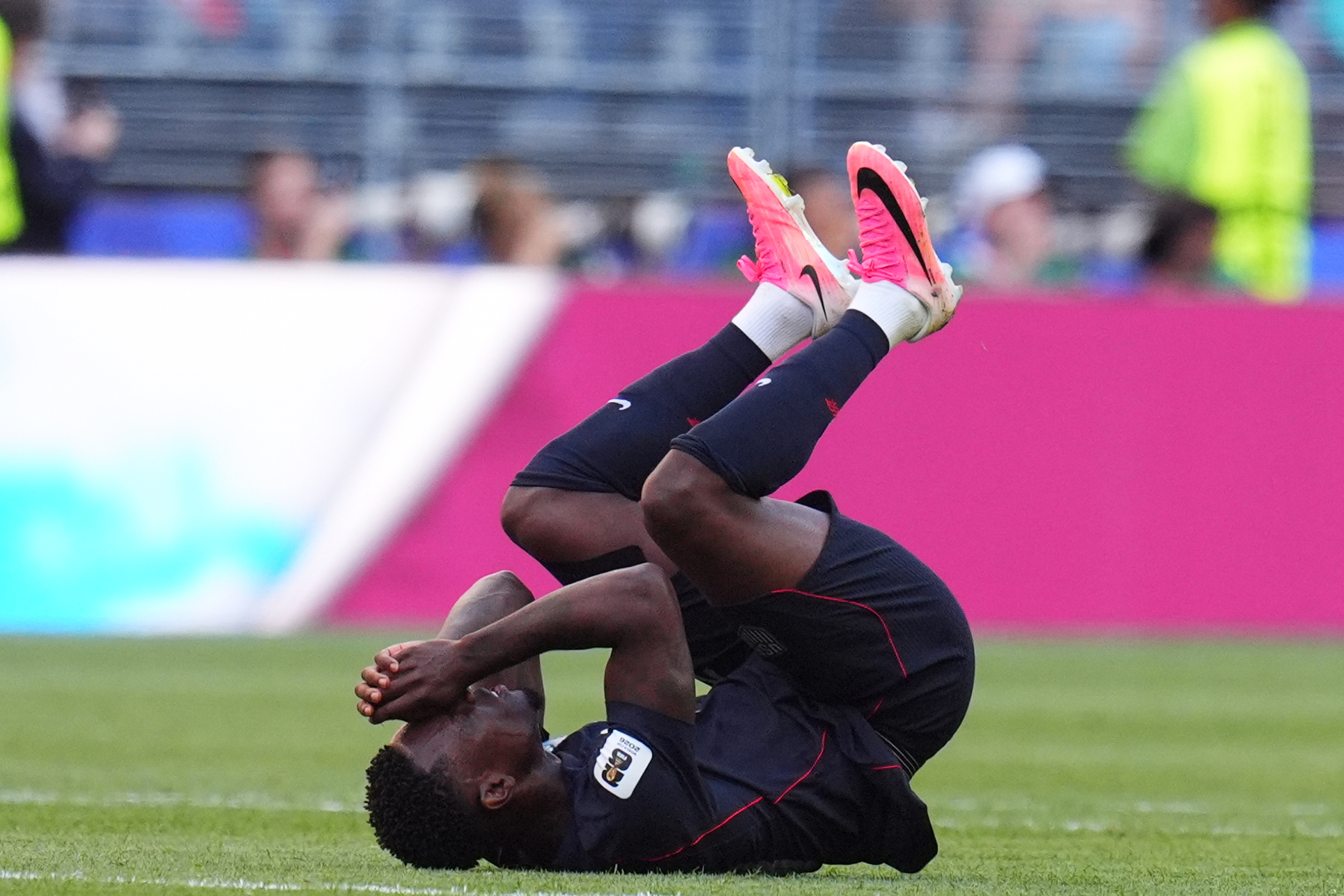
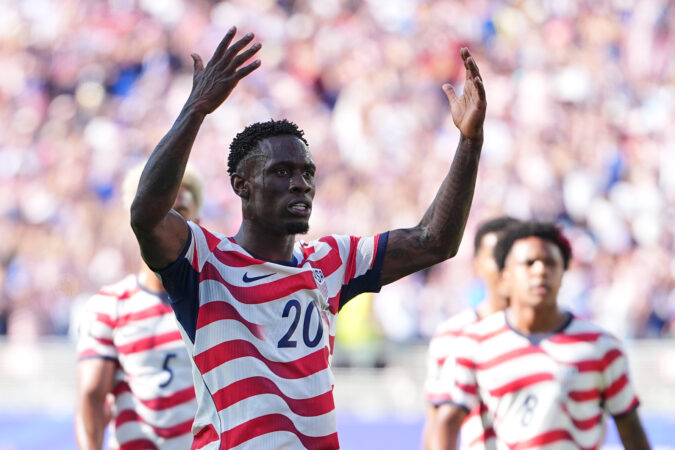
Folarin Balogun reacts after Belgium’s third goal, which blew the game open.
“I can only be honest, you know. I don’t think we had a good game today collectively,” he said. “We played well in the other games. We were very intense; we were able to generate energy with the crowd. And today, we didn’t give the crowd a lot to cheer for. That’s the most disappointing thing — that’s the part that hurts the most for me, personally.”
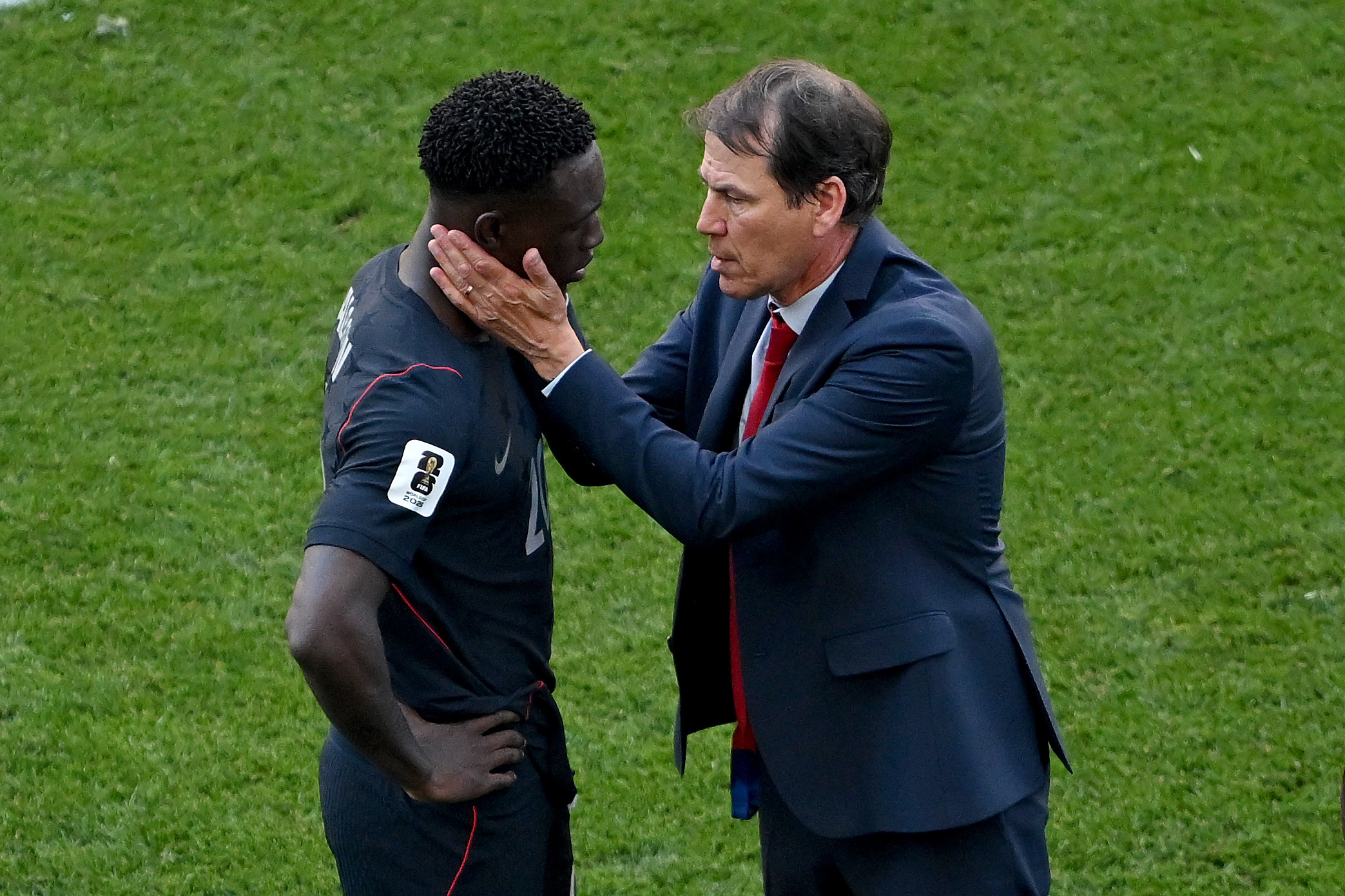
And he acted with grace again when he went to speak with Belgium manager Rudi Garcia, whom he has known for a while, after the final whistle.
“This is a game, there’s winners and losers, and similar to when I was given the red card, you have to handle it in the right way,” he said. “So, us losing today again, of course there’s huge disappointment. But for me, I wanted to just say congratulations to Belgium and Rudi Garcia and wish them good luck for the rest of the tournament.”
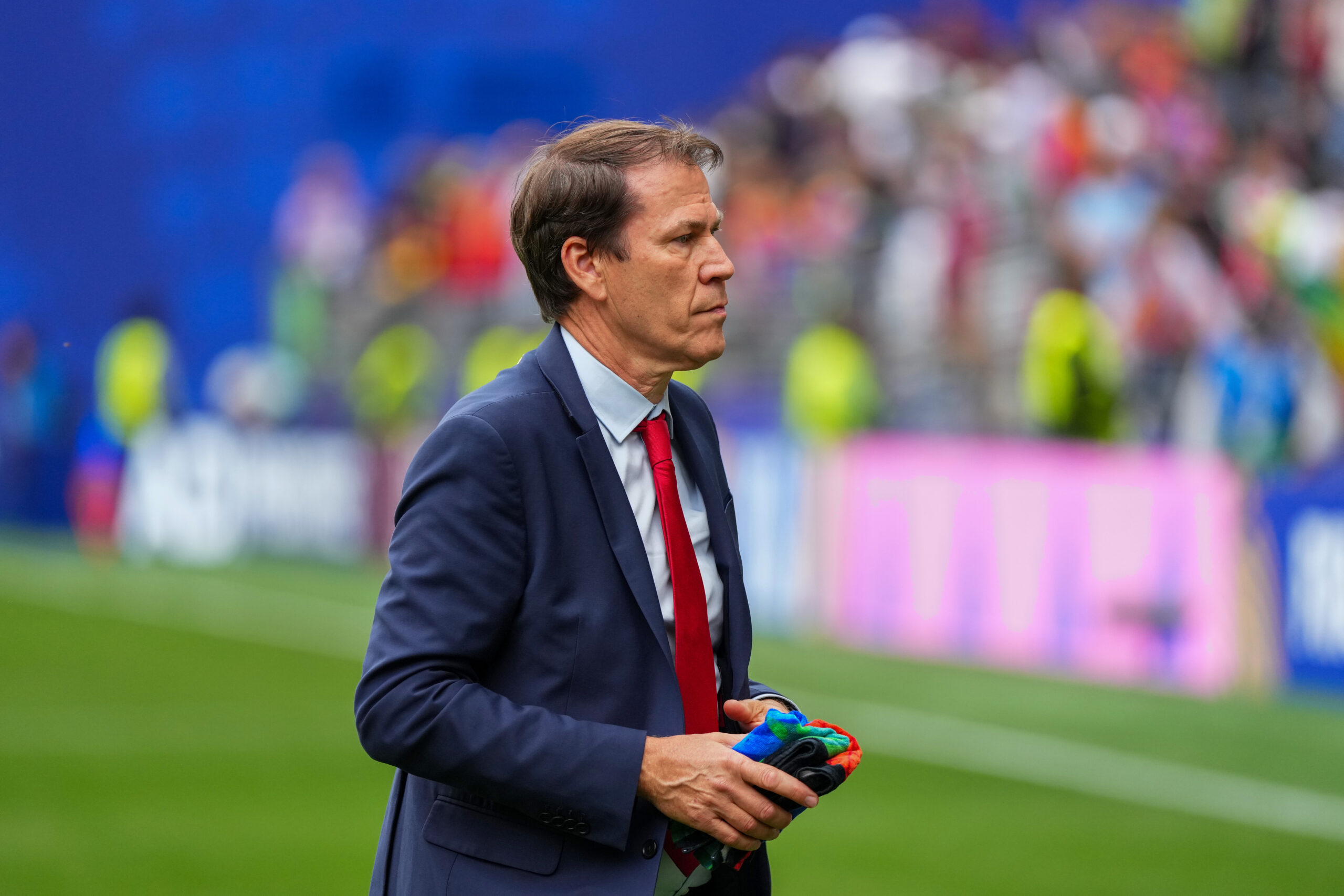
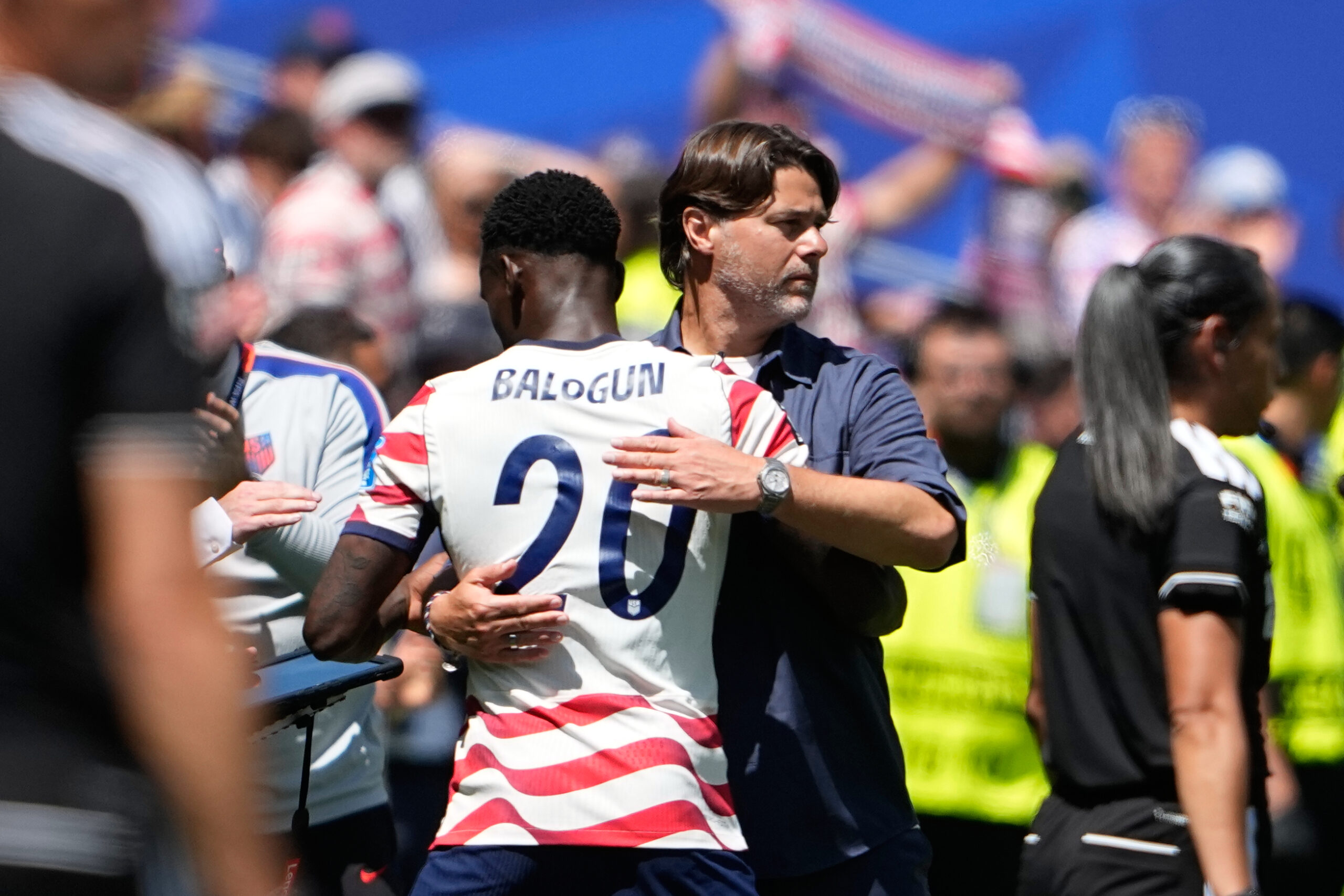
Belgium manager Rudi Garcia (right) consoling Folarin Balogun in their conversation after the game.
Garcia returned the favor in his postgame news conference.
“This wasn’t his fault,” he said. “He isn’t the one to blame, that’s what I told him. I appreciated that he came to see me.”
How much did the scandal motivate Belgium? Any team could draw easy motivation from saying Trump and FIFA stacked the deck, so let’s go beat the U.S.
“No, we just wanted to win the game on the field,” veteran goalkeeper Thibaut Courtois said. “It was a bit bizarre, it wasn’t the fault of the U.S. team or Balogun. … Whether he played or not, it was important for us to win.”
Not all of his teammates were so polite.
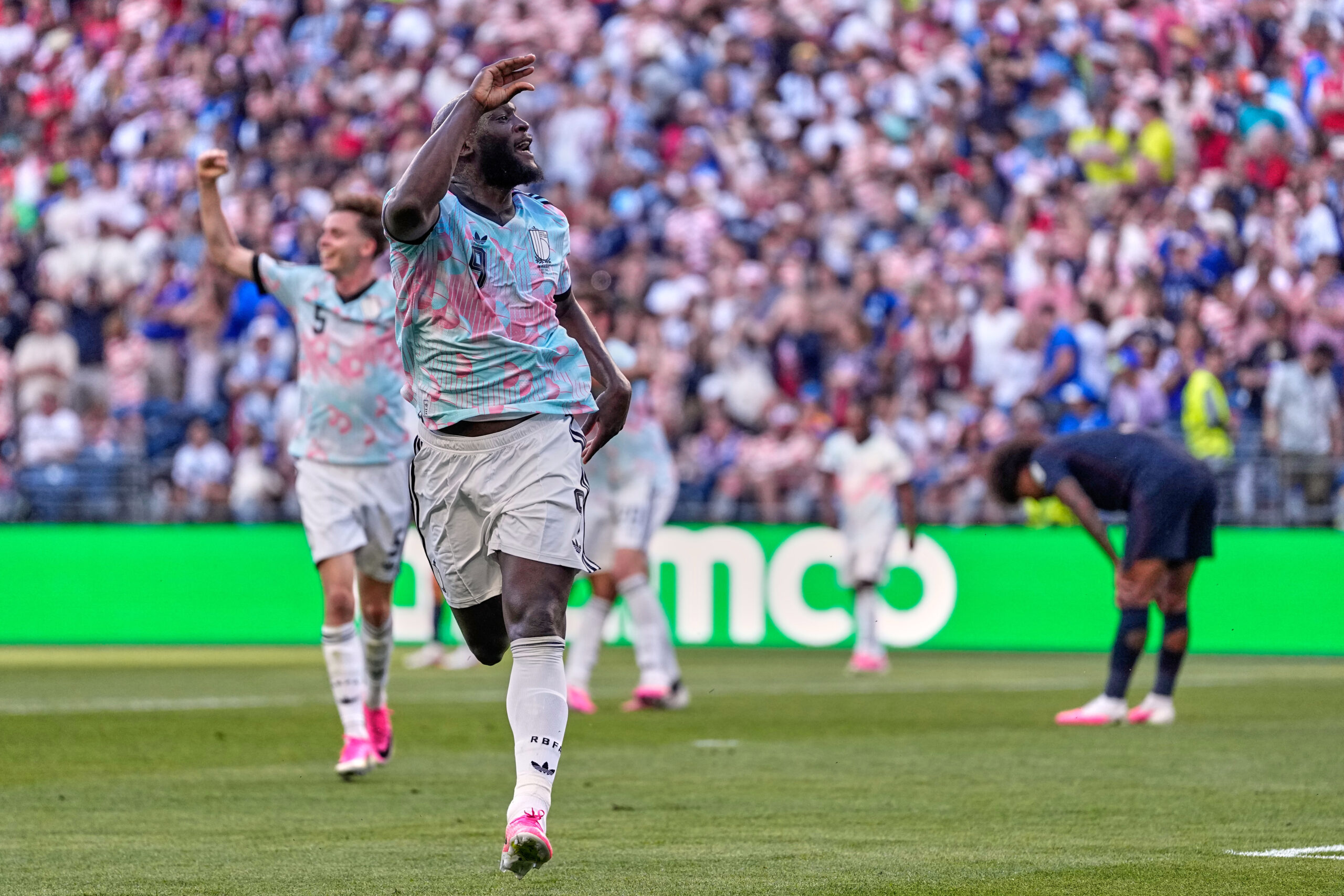
Belgium’s Romelu Lukaku gave the universal gesture to talk less after scoring his team’s fourth goal.
“There’s always a justice somewhere in life,” midfielder Nicolas Raskin said. “And the fact that something happened like that, you can call it what you want, but we don’t think that was fair. And I think today, it just brought us a little bit of luck that we needed to win the game.”
One of the Red Devils’ biggest stars, midfielder Youri Tielemans, had stronger words about why his team “had a fire in us” throughout the game.
“Of course we aren’t going to hide it,” he told Belgian TV network RTBF. “We had a meeting about it when we got the news, and afterward, we said we have no excuse. Whether he plays or not, it’s up to us to show that we should talk on the field, and that’s what we did today. So I’m very happy, and very proud of the team.”
When Romelu Lukaku scored his team’s fourth goal to cap the 4-1 win, he gave the universal “talk less” gesture to the crowd. The team then got together for a celebration that midfielder Axel Witsel acknowledged was a version of “the Trump dance.” Then they did it again in the postgame locker room.
SEATTLE — The hype around this World Cup didn’t just start when the last one ended four years ago. It took off as soon as the U.S. was picked as host, on the eve of the 2018 edition for which they failed to qualify.
By the time this summer arrived, there was enough evidence to believe these players could make the history they dreamed of, wanting to do things no U.S. men’s team had done before on soccer’s biggest stage.
So a bar was set for them. The program had just one knockout game win in its history. Winning two would mean a quarterfinal berth. It also presumably would mean toppling a giant somewhere along the way.
Once the draw was made last fall, the name of that giant was Belgium, the nation that sent the U.S. home in 2014. That made an easy measuring stick for this generation. If they were that much better, they’d do what their predecessors hadn’t.
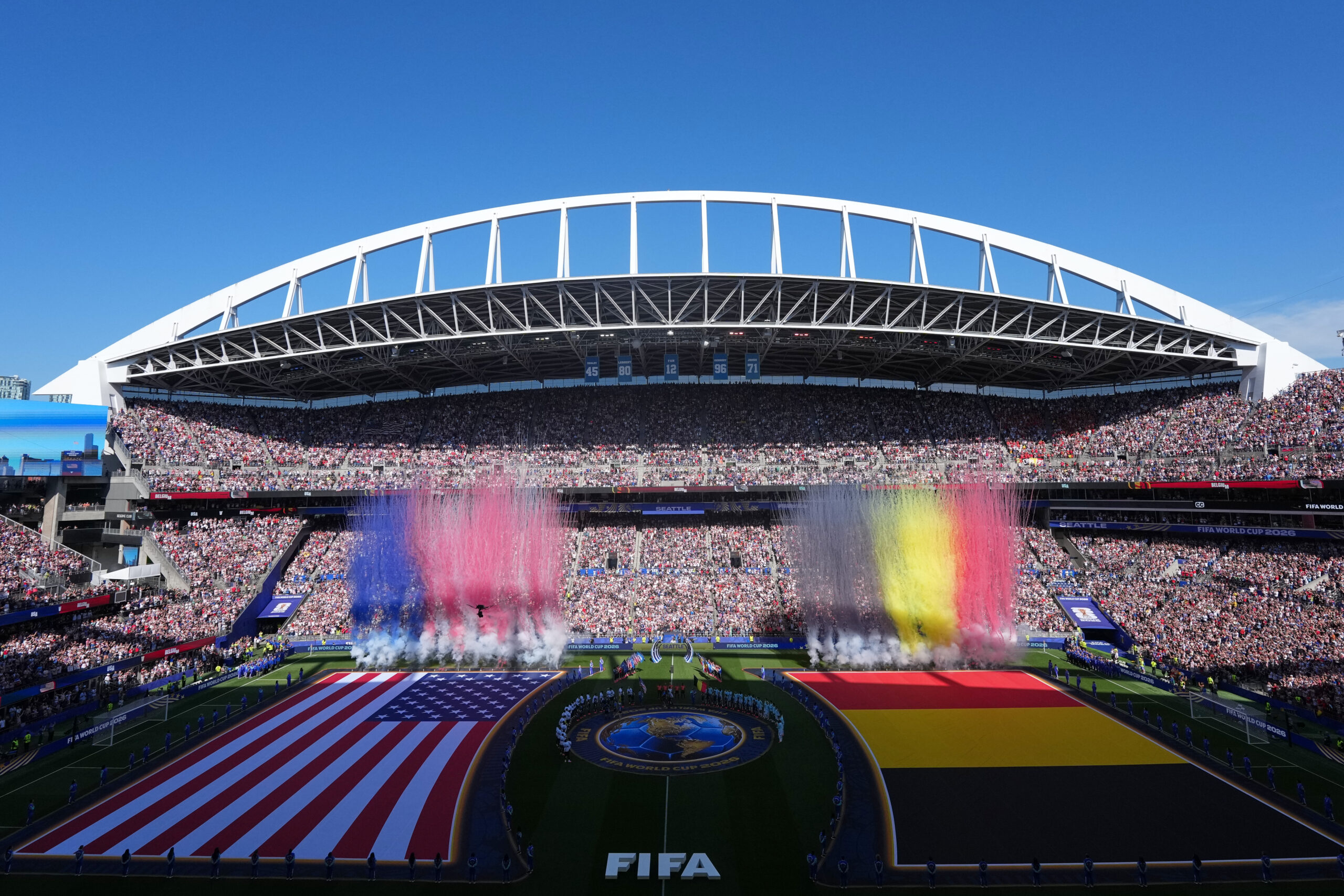
The scene just after the national anthems in Seattle, when the packed crowd of U.S. fans hoped for a historic win.
For this game turned out to not be just about Balogun on the American side. The whole squad blew it on the biggest stage, and they knew it.
“This moment hurts more, stings more, than probably any other moment in my life,” Wayne-born goalkeeper Matt Freese said after a horror game, especially on Belgium’s third goal that blew the game open, when he was stripped of the ball after straying out of his 18-yard box.
“Yes, it stings,” midfielder Tyler Adams said. “This was a moment to have the opportunity to advance and really try and do something special, and we fell short.”
Asked why the team was so flat, he answered: “It’s a great question. I wish I had the answer right now. I don’t know.”
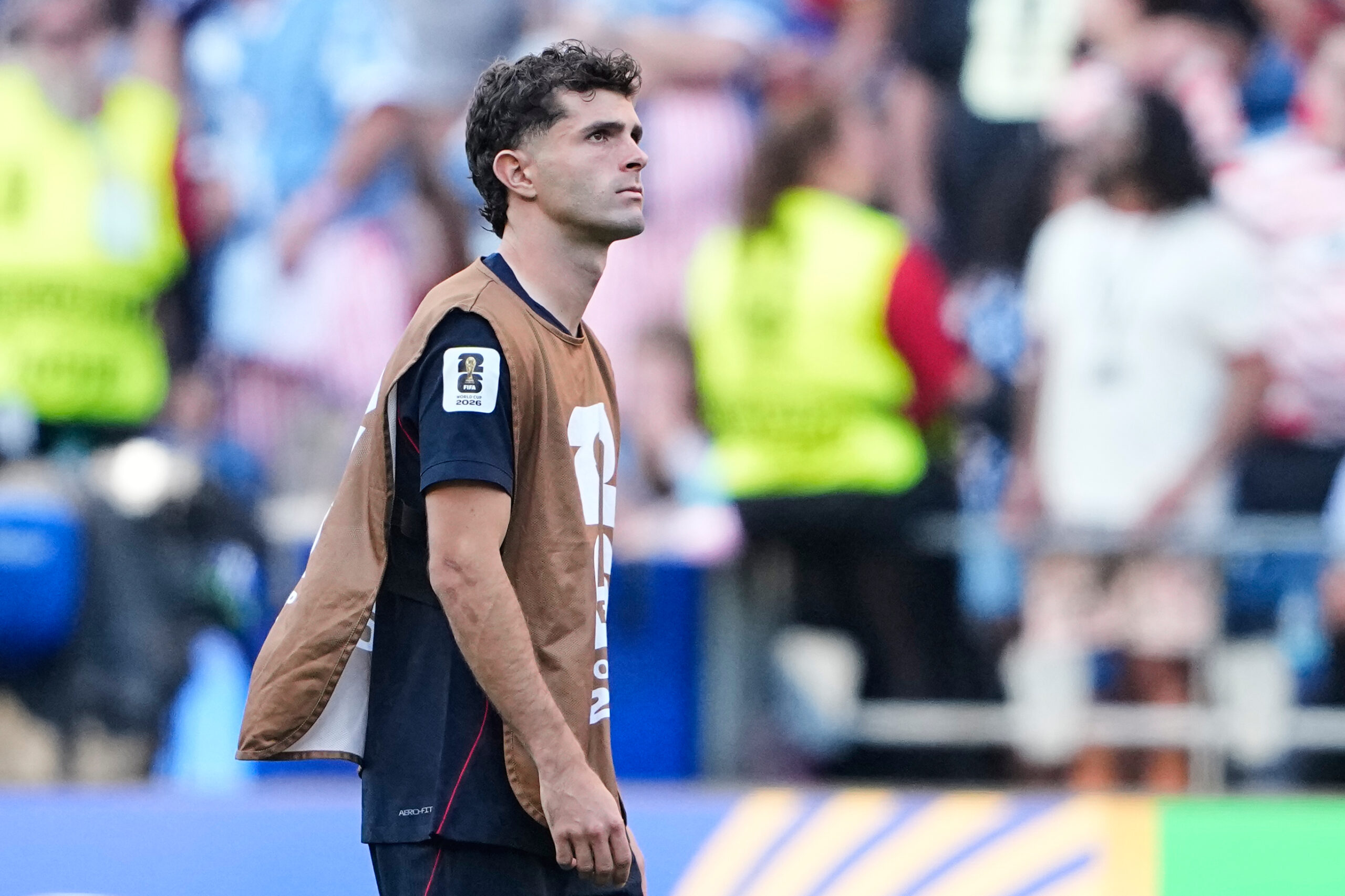
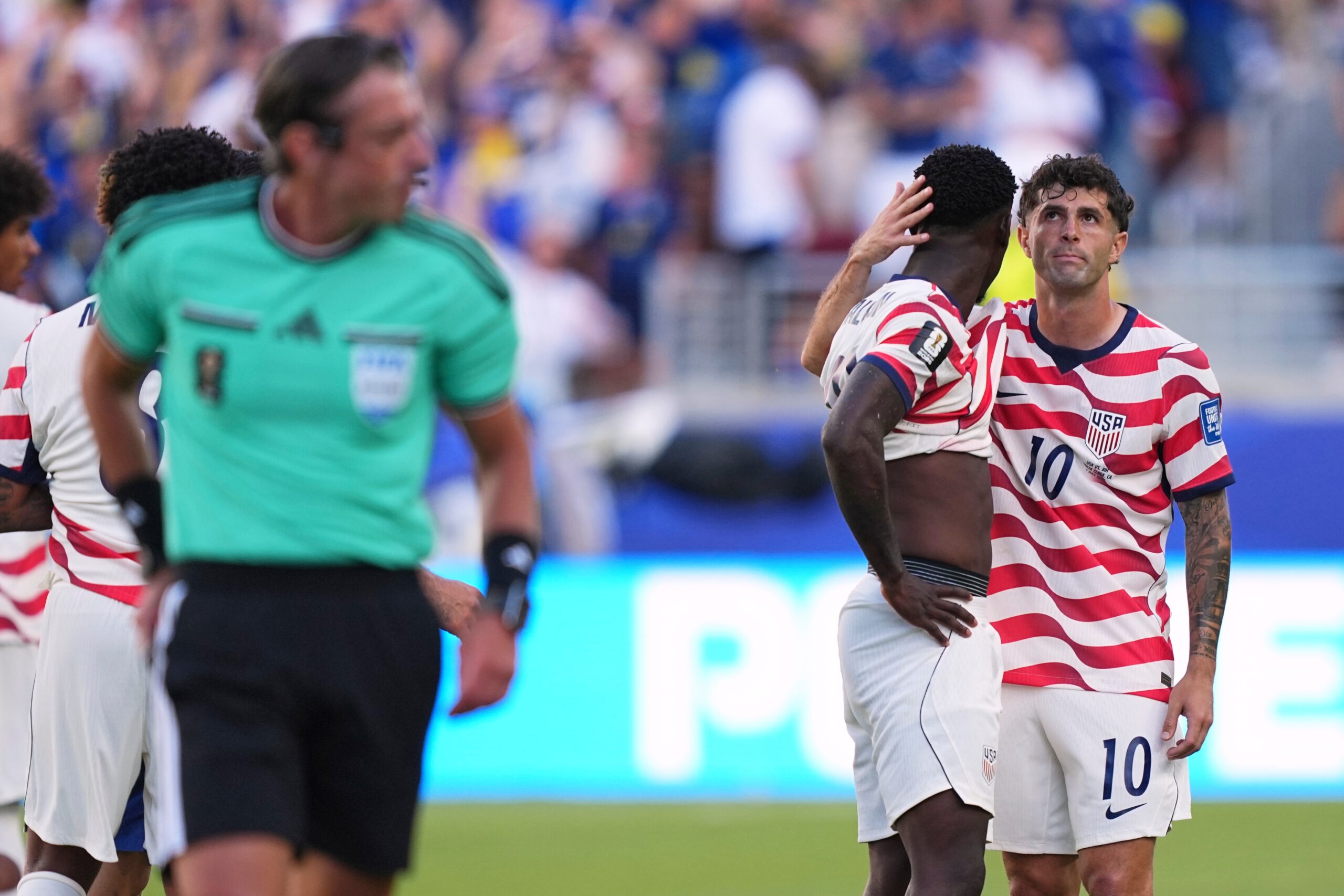
Christian Pulisic tried to lift the mood, but he took some tough questions after leaving a game injured for the second time in this tournament. Along with that, the team’s most important attacker didn’t play the entirety of any game, though at least in the Bosnia win he played 88 minutes.
Christian Pulisic played 224 minutes across four games in this World Cup.
“I didn’t quite have the moments I was hoping to, to try to help us to really push and get over this next step of beating a really good team,” he said. “So I’m disappointed with myself, of course, but I’m going to try to stay positive. I did a lot of good things, and the team did as well.”
Gio Reyna also was underwhelming. After earning enough of Pochettino’s affection to make the World Cup team, he played just 131 minutes over the five games, took two shots, created one chance, and scored a goal that was beautiful, but in a game that already was won.
“If we lose to Bosnia, it’s obviously a big disappointment, and then if we win today, it’s probably a very big achievement for the group,” he said. “So it felt like we kind of just almost did what was expected. … It’s hard to say, I guess, what’s needed to make the next steps to really push through.”
One thing would be the biggest stars delivering in the biggest moments. That has happened for Kylian Mbappé’s France, Lionel Messi’s Argentina, Jude Bellingham’s England, and Erling Haaland’s Norway.
But it did not happen for the United States.
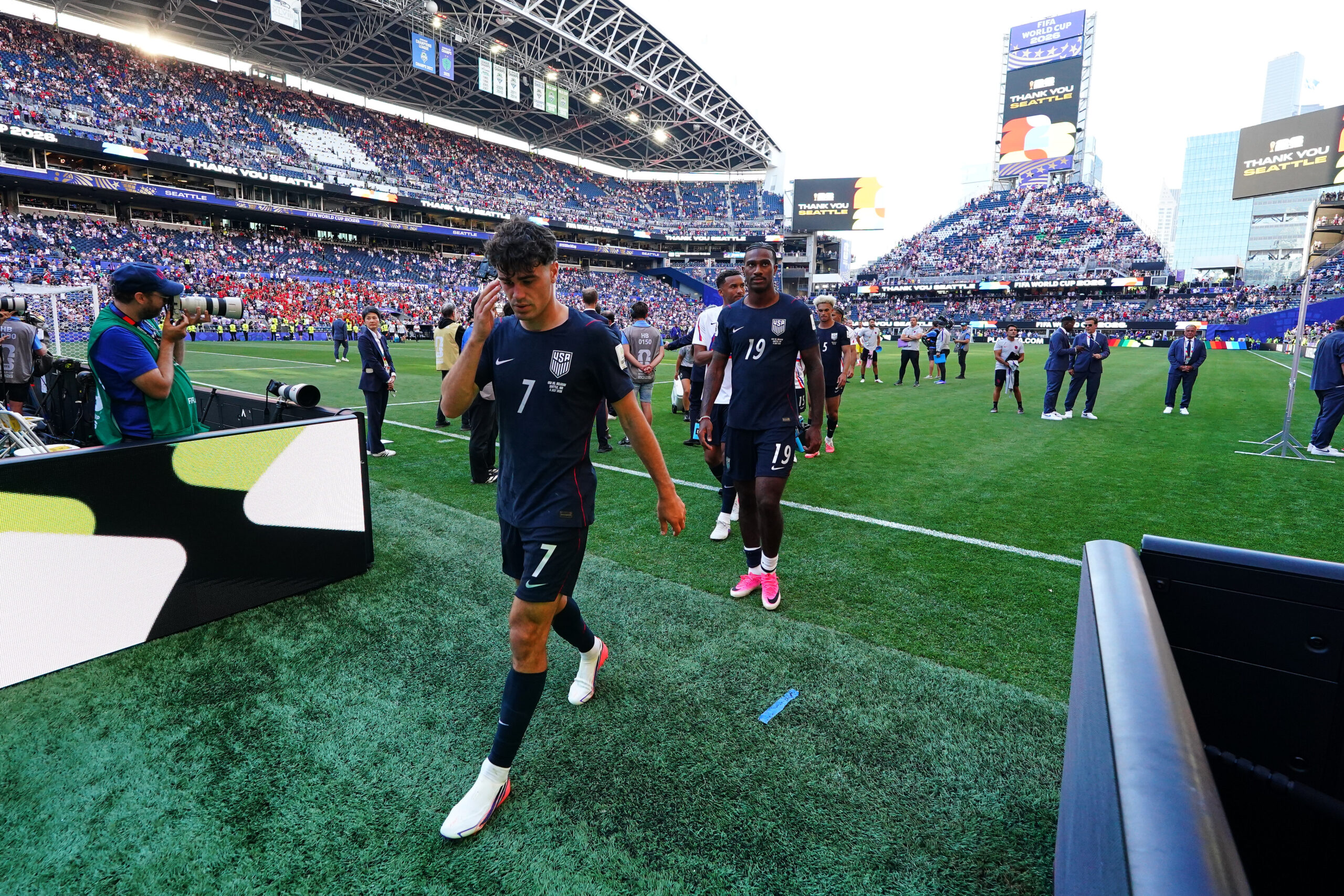
Gio Reyna (left) walks off the field after the loss to Belgium.
Will it be worth splashing cash on another big name? Or, since he wasn’t clearly better in the biggest moments than his American predecessors, should there be a serious conversation about whether it’s necessary?
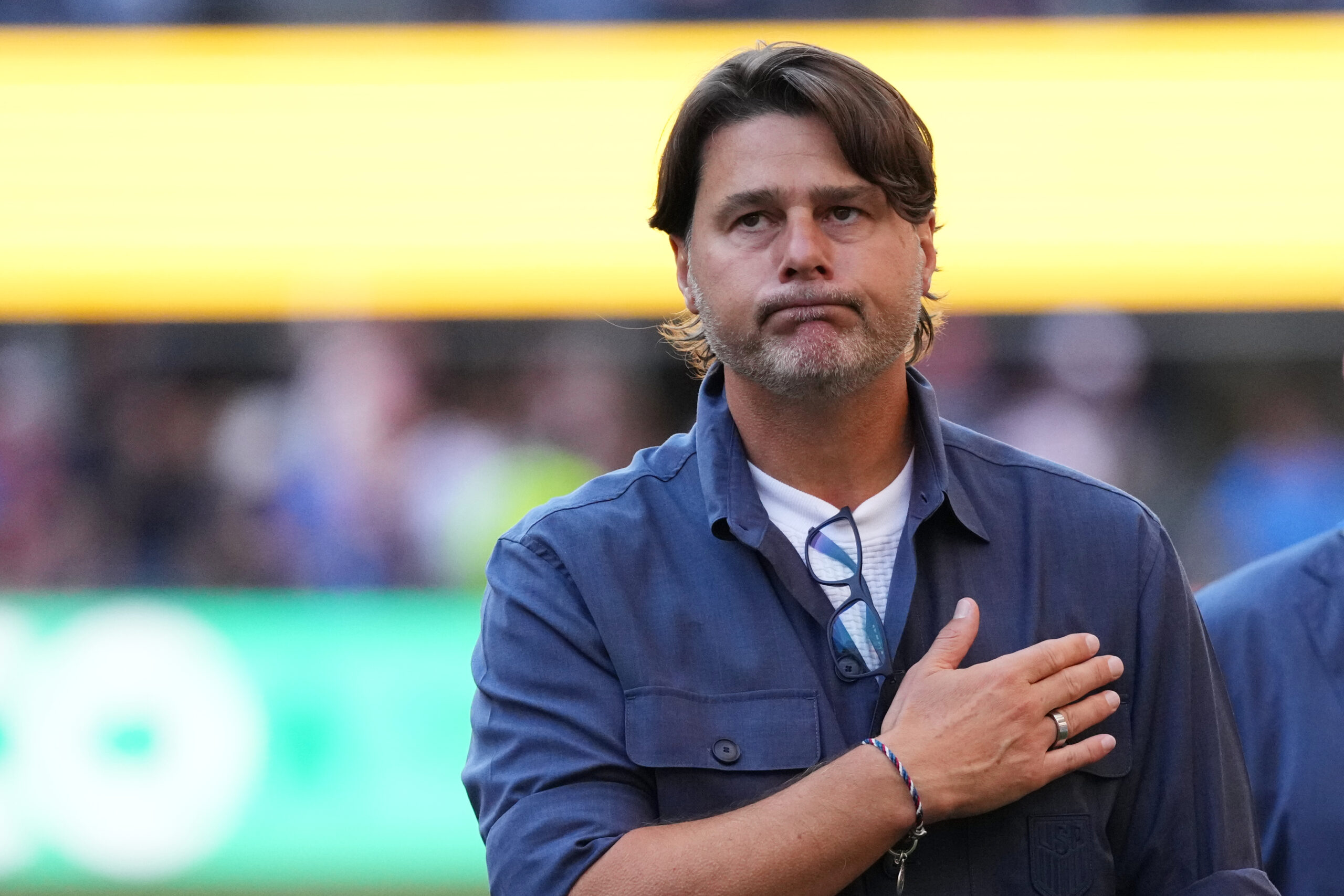
Mauricio Pochettino’s gesture of thanks to U.S. fans after the final whistle.
Former Los Angeles FC manager (and longtime stalwart U.S. player) Steve Cherundolo also is on the list. New Jersey native Pellegrino Matarazzo, who has made his coaching name at European clubs, is too, though he might want more time overseas before coming home. Former Union coach Jim Curtin would be on the list if he hadn’t just been hired by Austin FC.
But will the donors lean on U.S. Soccer to go for another famous name?
One of those donors, Scott Goodwin, has quite a few friends in the soccer world — and some at the White House, too: The New York Times reported that he called them to complain about Balogun’s red card.
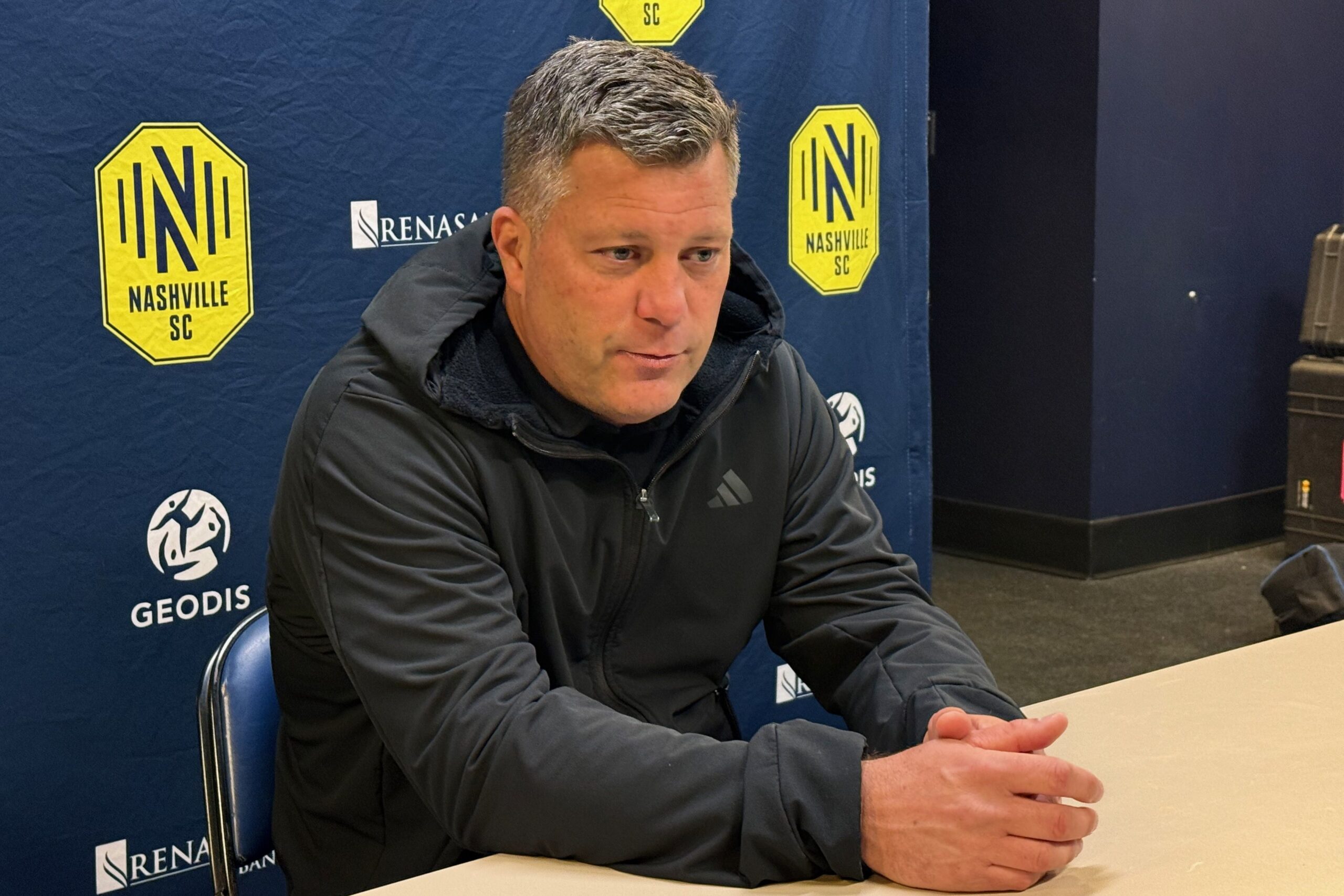
B.J. Callaghan talking with the media when Nashville SC visited the Union earlier this year.
Two years ago, Goodwin called his soccer friends to complain about the U.S. team’s flop at the Copa América. They included two former U.S. players who remain well-known in soccer circles, MLS executive Alecko Eskandarian and broadcaster-turned-investor Kyle Martino.
Goodwin was so angry at the U.S. team’s performance that he said, as he recalled to the New York Post last month: “This is a chance to get an amazing coach.”
Then, as The Athletic put it just before the World Cup started, “To Goodwin, there were three names that fit the bill: Klopp, Pochettino and Manchester City’s Pep Guardiola.”
None of them were American. None had ever coached in the United States. Was there an implicit view there that no American could be good enough for the job?
Good questions for U.S. Soccer CEO JT Batson and chief operating officer Dan Helfrich: Do they think the difference between a big-name foreigner and a qualified American is worth another $6 million bet? And how much sway will the donors hold this time?
U.S. Soccer declined to make leadership available to the media on Tuesday. A spokesperson told The Inquirer that there might be an availability in the coming days.
And what about a second term for Pochettino, who’s now out of contract? The players grew attached to him, but that happens with almost any manager. He has talked with U.S. Soccer about another term, but there also have been plenty of hints that he’d like to go back to Europe.
“I think now, because we were talking with the federation, it’s about to rest a little bit, to think, to have conversation, and then see what the decision is from the federation and from us,” Pochettino said Monday night. “I think we’ve built a very good relationship, but now is not a moment to talk about that. … For sure, in the next weeks, we can start to talk — if the federation wants to talk.”
Late Tuesday morning, U.S. Soccer issued a statement about its side of those talks.
“We had positive conversations with Mauricio before the World Cup about the future,” the federation said. “We agreed we would continue those conversations following a chance to rest and reflect post-World Cup.”
It hinted at the future, but only barely.
“We have a great deal of respect and gratitude for Mauricio, his staff and everyone part of the program,” it said. “We have shared excitement about our potential and also shared clarity about the amount of work at all levels still required to achieve our ambition.”
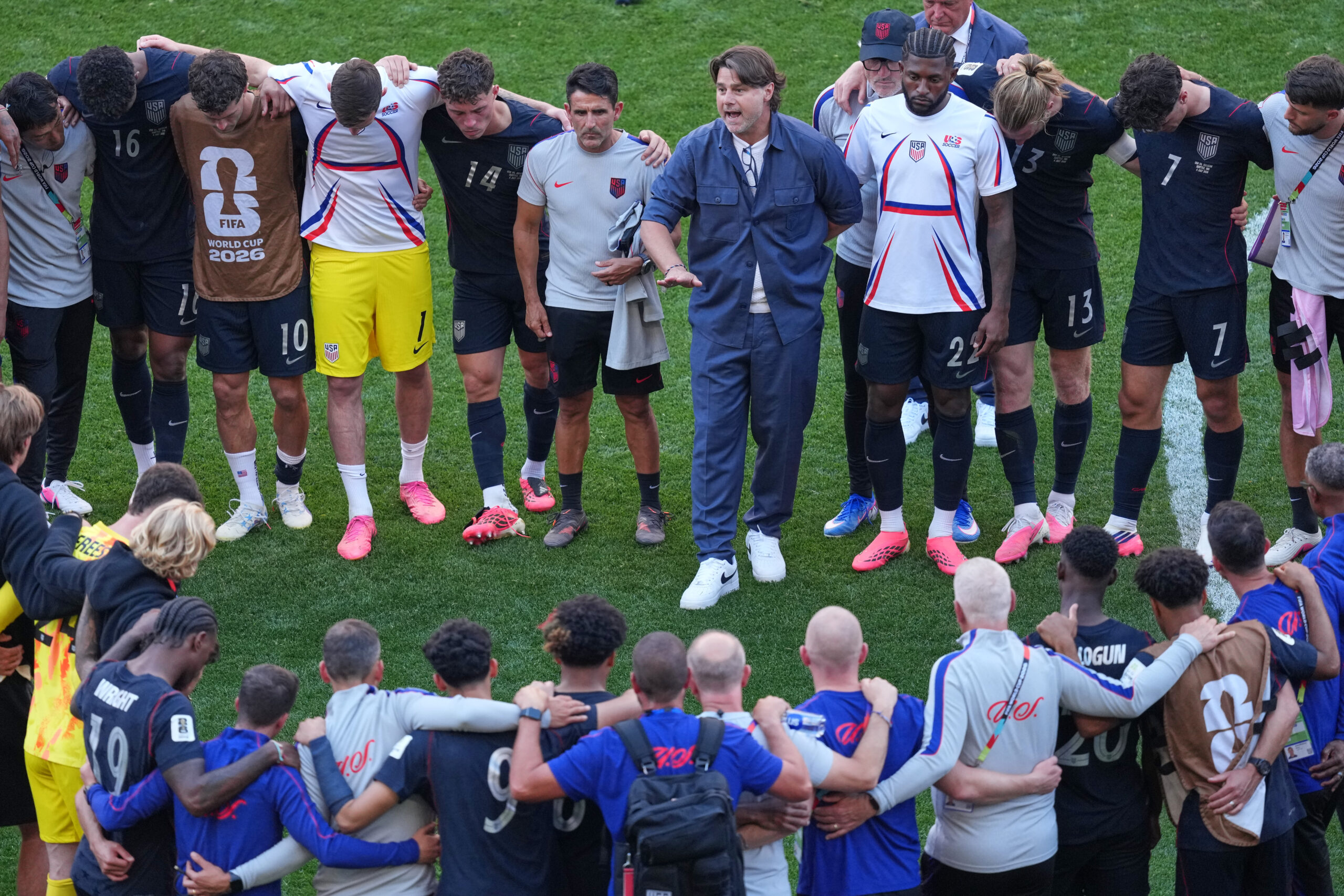
Mauricio Pochettino (center) addressing players and staff after the loss.
SEATTLE — The game the U.S. men’s soccer team dreamed of for so many years proved to be a nightmare.
Belgium blew the Americans off the field, 4-1, in the round of 16, as Charles de Ketelaere scored two goals and created the third. Malik Tillman scored the Americans’ game-tying goal in the first half, but it was all they could muster in a game in which they were outshot, 15-7, including 7-2 on target.
The Red Devils were on the front foot right away, with Timothy Castagne forcing Matt Freese into his biggest save of the tournament after just 45 seconds. At the other end, Belgium goalkeeper Thibaut Courtois repeatedly slowed play down when the ball came to him, drawing boos from the packed crowd in Seattle but otherwise quieting the venue.
The game plan paid off in the ninth minute. After a long passing sequence that pulled the U.S. defense apart, Alex Freeman was short with an attempted headed clearance, Weston McKennie failed to get the loose ball, and Nicolas Raskin slipped a short pass for an unmarked De Ketelare to tap in from close range.
When the midhalf hydration break arrived, Belgium had a 7-0 advantage in shots. But soon after play resumed, the Americans’ first attempt of the game went in the net in remarkable fashion.
Brandon Mechele pushed over Balogun about 22 yards from goal, Tillman stepped up for the free kick, and his shot at goal deflected off the head of a leaping Hans Vanaken. The crowd of 66,925 erupted with so much joy that the stadium stands shook.
MALIK TILLMAN FORCES THE EQUALIZER FOR THE @USMNT 🇺🇸
Belgium, however, was unmoved. Not even two minutes passed before De Ketelaere put the Red Devils back in front. Leandro Trossard beat Sergiño Dest off the dribble, sent in a cross, and De Ketelaere jumped between Antonee Robinson and Tim Ream — flat-out overpowering the latter — to head the ball in.
At halftime, it was 2-1, and the shots were 11-3. Pochettino made his first substitution at halftime, pulling Dest and sending in Gio Reyna. It made the U.S. more lively, but it did nothing to stop Belgium from scoring a catastrophic third goal.
Mechele hit a simple long ball out of the back, and Freese gambled by coming far off his line to try to play it. But he failed to, De Ketelaere picked his pocket from behind, and the ball rolled to Vanaken. All he had to do was put a shot on frame, and, though Ream tried to backtrack, he couldn’t block the ball.
After that, Pochettino withdrew Christian Pulisic, who had been clattered in a challenge that went uncalled a few minutes earlier, and sent in Sebastian Berhalter.
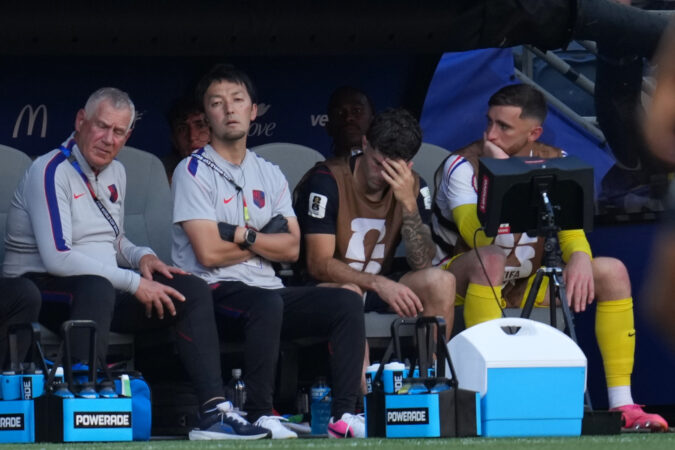
When the Hershey native sat down on the bench, he put his head in his jersey, disconsolate. But he hadn’t been that effective when on the field.
Christian Pulisic is visibly upset on the bench after being subbed off in the second half pic.twitter.com/2a0UHTCene
Pochettino sent Ricardo Pepi in for Tyler Adams in the 72nd, but the move didn’t produce many chances. The Americans only mustered three more shots the rest of the way.
It was significant that the U.S. men won a World Cup knockout game for the first time in 24 years. But this team, with players hyped as a golden generation of talent, had aimed higher — and so had Pochettino, paid $6 million per year by U.S. Soccer’s big donors from the private equity world.
In the end, what they produced wasn’t any better than their predecessors: a round of 16 loss to a familiar foe and an exit with a whimper instead of a bang.
The U.S. men’s soccer team’s World Cup round of 32 win over Bosnia and Herzegovina broke the record for the most-watched soccer game in American broadcast history.
Fox’s English broadcast drew an audience of 26.395 million viewers, and Telemundo’s broadcast in Spanish drew 9.8 million, between TV and streaming platforms. The combined total of 36,195,000 blows away the previous record of 27,314,274 that watched the 2014 men’s World Cup final between Argentina and Germany on ABC and Univision.
That record actually has been broken twice this summer. The Mexico-Ecuador round of 32 game, played a day before U.S.-Bosnia, drew an audience of 29.33 million: 24.429 million on Fox’s platforms and 9.1 million on Telemundo’s.
Mexico’s World Cup games have also been big draws for U.S. TV viewers.
Fox’s U.S.-Bosnia audience also set a new record for the biggest audience to watch a soccer game on a single network. That mark had been the 25.632 million who watched the 2015 women’s World Cup final between the U.S. and Japan, which was a prime time kickoff, since the tournament was in Canada.
According to the data published by the networks so far, 27 games in this World Cup have drawn combined audiences of over 10 million viewers. Eleven have drawn audiences over 15 million, and seven have drawn over 20 million — including all of the U.S.’s group games, and Mexico’s group-stage contest vs. South Korea and round of 16 win over England.
The data isn’t complete, as the networks haven’t released data for all of their broadcasts. Particularly, there are gaps in the simultaneous games at the end of the group stage and the round of 32.
SEATTLE — U.S. men’s soccer team star striker Folarin Balogun will be available to play in Monday’s World Cup round-of-16 game after all.
FIFA announced just before the team’s practice on Sunday that the one-game suspension that came with Balogun’s red card against Bosnia in the round of 32 has been suspended “for a probationary period of one year.” The governing body said it invoked Article 27 of its disciplinary code, which says, “The judicial body may decide to fully or partially suspend the implementation of a disciplinary measure.”
It’s a special treatment that world soccer’s governing body has only given twice in its history.
At the 1962 World Cup, Brazilian star Garrincha had a red card overturned after lobbying from his nation’s federation and host Chile’s president — and, allegedly, a potential bribe to a referee, allowing him to play in the final.
Last November, FIFA suspended two games of a three-game ban given to Portugal’s Cristiano Ronaldo after he elbowed a Republic of Ireland player in a World Cup qualifier. That allowed him to play in two group games this summer that he otherwise would have missed.
“In line with article 27 of the FIFA Disciplinary Code, the implementation of the match suspension is suspended,” the governing body’s statement said.
Balogun was ejected during the U.S. round-of-32 win for running the studs of his right cleat down Bosnia’s Tarik Muharemović’s right calf before catching the back of his foot.
Referee Raphael Claus didn’t call it at first, but the video review officials saw it and recommended that Claus take a second look. Once he did, the red card felt inevitable.
FIFA does not allow appeals of red cards, but the governing body can decide on its own to suspend a suspension.
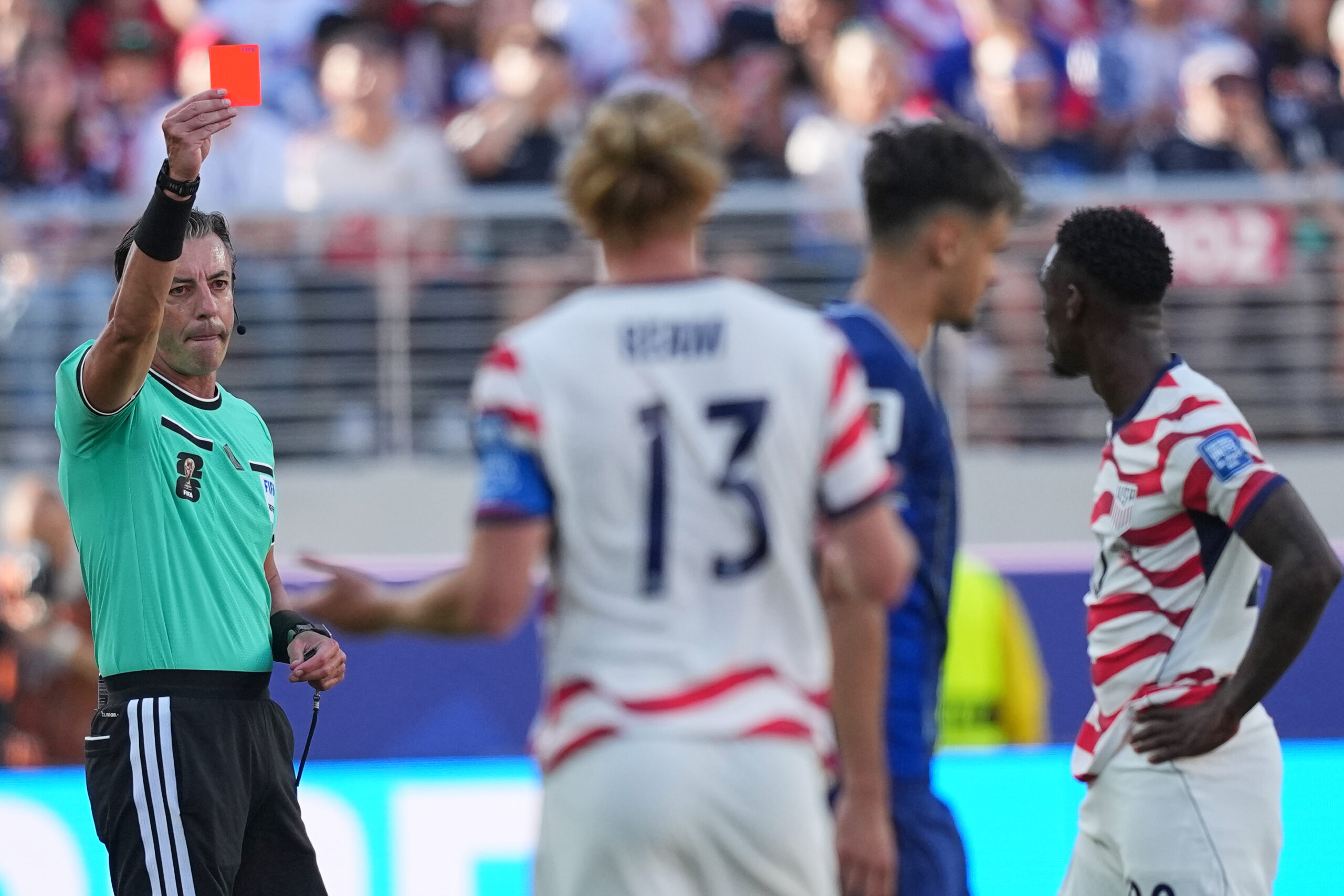
Referee Raphael Claus (left) showing Folarin Balogun the red card in Wednesday’s game.
There’s some irony in the fact that when the ejection happened, FIFA was criticized for Claus’ use of a slow-motion replay that might have been against the rules of video reviews. But FIFA’s announcement made no mention of that.
“We accept the decision of the Disciplinary Committee and are pleased that Folarin Balogun is eligible to compete [Monday],” U.S. Soccer said in a statement. “Our full attention is focused on the round of 16 match against Belgium in Seattle, and we look forward to the continued support of our amazing fans.”
Confusion over the rules
Star playmaker Christian Pulisic opened a can of worms when he said, “Obviously we made that appeal, and felt like there was a good chance, because anyone can look at that and say it was super harsh.”
A U.S. Soccer spokesperson was asked if there was, in fact, an appeal or if Pulisic misspoke, given the federation’s previous statement that no appeal was possible. The response was that U.S. Soccer was “engaged in the process” with FIFA’s disciplinary committee, but no details were given.
Christian Pulisic (right) consoling Folarin Balogun after the ejection.
U.S. players found out about the decision on the bus ride over to Friday morning’s practice. Balogun was not among the players who spoke when they arrived. He said on Saturday that he disagreed with the decision, but had moved on in part to be a role model for fans watching.
“We weren’t quite sure if it was true or not,” centerback Chris Richards said of the moment he heard the news. “I think everyone knows with AI and with this and that, [there] can be a few question marks. But ultimately we found out through social media, so it was cool to finally get the confirmation that it was true.”
Asked what it means that Balogun got treatment only previously accorded to Ronaldo, he said: “I don’t know what goes on behind the scenes — I don’t know if they’re comparing Flo to Cristiano Ronaldo or what’s going on. I try to focus on what goes on on the field, but clearly they saw something in the decision that they thought deserved to be overturned.”
Fellow defender Alex Freeman said, “I had no clue” that it was in the works.
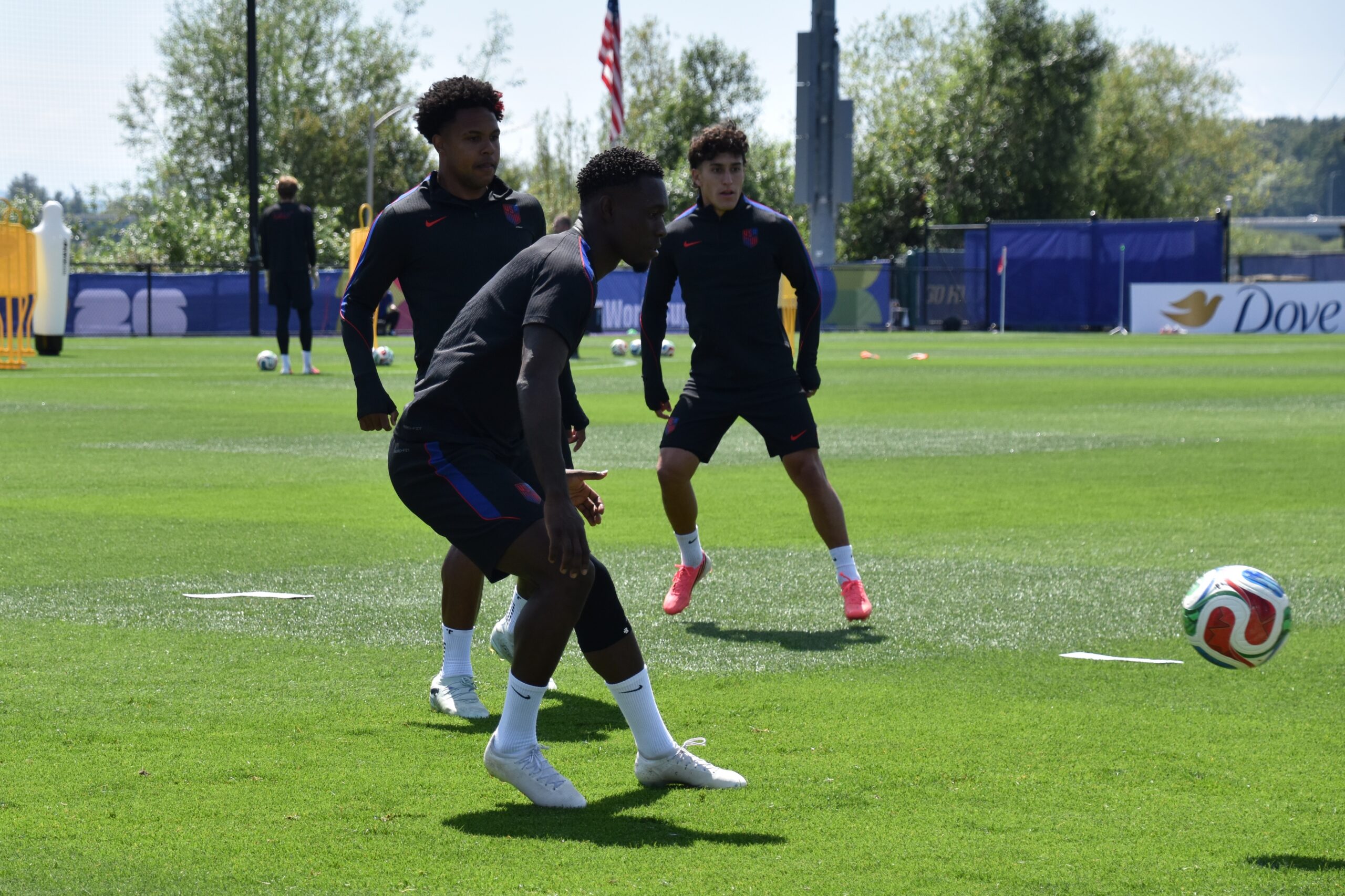
Folarin Balogun working in a drill with teammates on Friday.
“I think it’s a little strange for us,” he said. “I have no clue how it happened, but for us, we’re just happy that it happened, and happy that we’re able to go in and have a phenomenal player like Balogun to be able to go in and play.”
A statement from Belgium’s federation said it was “astonished by FIFA’s decision,” and that “in order to safeguard the legitimate rights of all participating teams and to protect the fundamental principles of fair play in our sport, both at this FIFA World Cup and at future editions of the tournament,” it was “investigating all potential options.”
But it did not say what those options could be.
Belgium manger Rudi Garcia said, “the Belgian federation isn’t just defending itself — it’s defending football in general.”
Belgium manager Rudi Garcia was even more blunt in his news conference Sunday afternoon.
“I didn’t know that at FIFA’s headquarters, July 5 is the same thing as April 1 in Europe,” referring to a calendar date that also applies in the United States. “I think you should refer to the statement by my federation … The Belgian federation isn’t just defending itself, it’s not just defending the national team. It’s defending football in general. It’s defending its integrity, defending its ethics.”
Another question on the subject drew a quick “Don’t waste your time asking about it” answer. And when Garcia was asked if he believed his star striker Romelu Lukaku would get the same treatment from FIFA, he answered: “Ah, I can’t answer that question.”
But those reactions were just the tip of the iceberg.
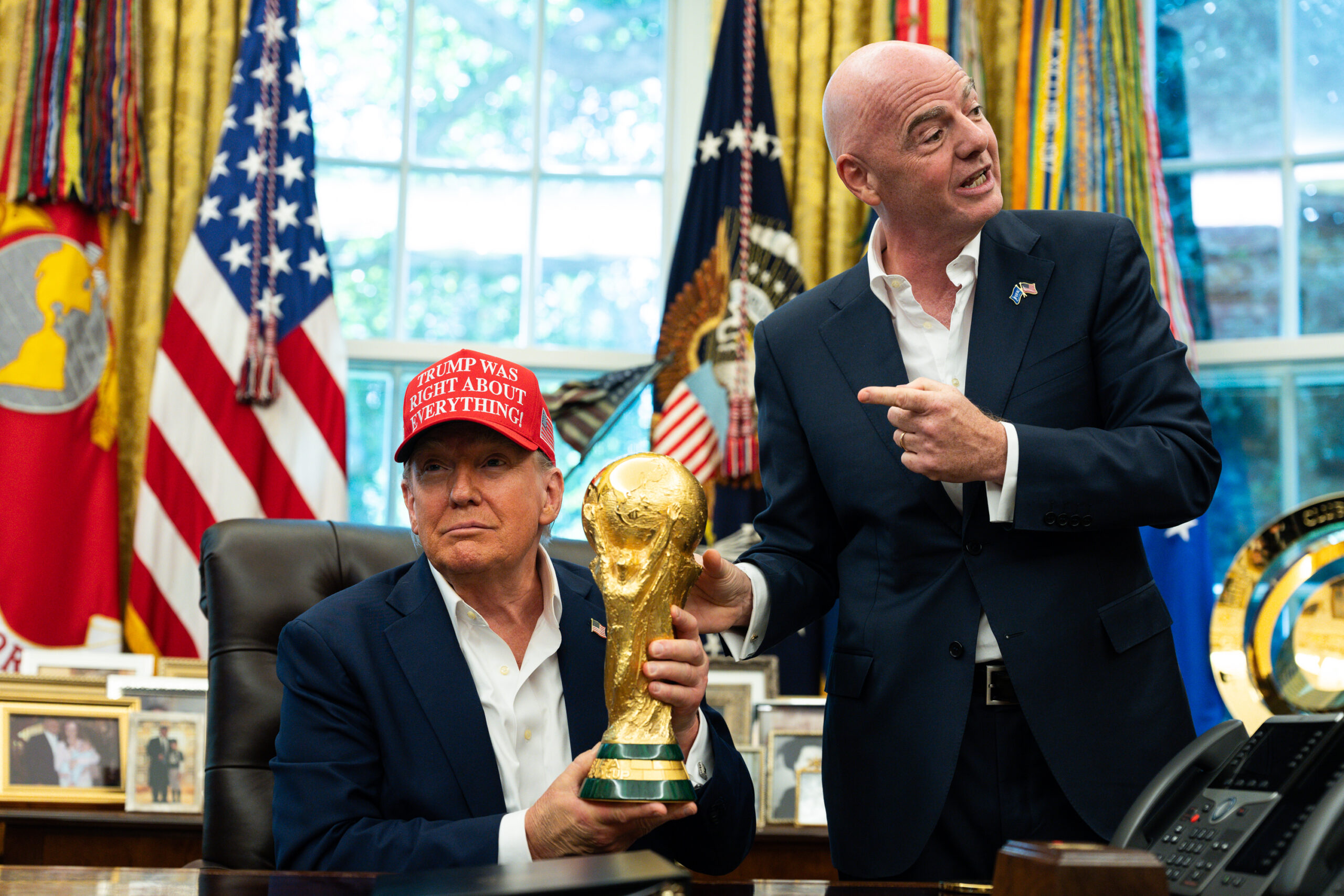
FIFA president Gianni Infantino (right) giving U.S. President Donald Trump the men’s World Cup trophy at the White House last year.
Trump lobbied his friend
A source with knowledge of the matter confirmed reports that President Donald Trump personally called FIFA president Gianni Infantino to lobby for Balogun’s suspension to be overturned.
A request for further comment from FIFA has not yet been returned.
Sources in Seattle said there was a point in the past few days when Trump or Vice President J.D. Vance might attend Monday’s game, with authorities in town preparing for them to visit. But it was confirmed on Friday that they are not.
U.S. manager Mauricio Pochettino said he wasn’t involved in any lobbying by U.S. Soccer, though he named CEO JT Batson as someone who was. Pochettino also said he didn’t know about Trump’s involvement until reporters told him at his news conference.
“No, we cannot mix that,” he said. “That is a decision from FIFA with the evidence that happened before, and that’s it.”
But he was, of course, very happy that the decision went his team’s way.
United States head coach Mauricio Pochettino said, “I think it’s fair, the decision, to not punish us more.”
“It’s not only because I am the coach of the U.S. men’s national team that I need to defend my side,” Pochettino said. “I think it’s 100% — or 99%, because there are always some people, 99.9% — we all agree that was an unfair red card.”
He also was not surprised that it became such a big deal.
“I come from cultures in Argentina [in] Europe where fútbol, soccer, is more than a religion. It does not surprise me that in this country, that feeling has started to grow.”
Pochettino spoke repeatedly of his respect for Garcia, whom he has known a long time. But beyond that, he said “I think it’s fair, the decision, to not punish us more. Because I think it was enough. And now focus on the game.”
Staff writer Dugan Arnett contributed to this article.
SEATTLE — The players of the U.S. men’s World Cup squad came together from 13 states and homes in four nations abroad. The club teams they represent span 10 leagues around the world’s game.
They are not the same, in many ways. But they are American, and that never feels more true than on the Fourth of July.
This time, it isn’t just the nation’s Independence Day. It’s the first one since 1994 in which the U.S. men are active in a World Cup. And like that one, it happens to be on their own soil.
“It is special,” centerback and team captain Tim Ream said. “It’s double-special because it’s during the World Cup, and triple-special because it’s here in the U.S.”
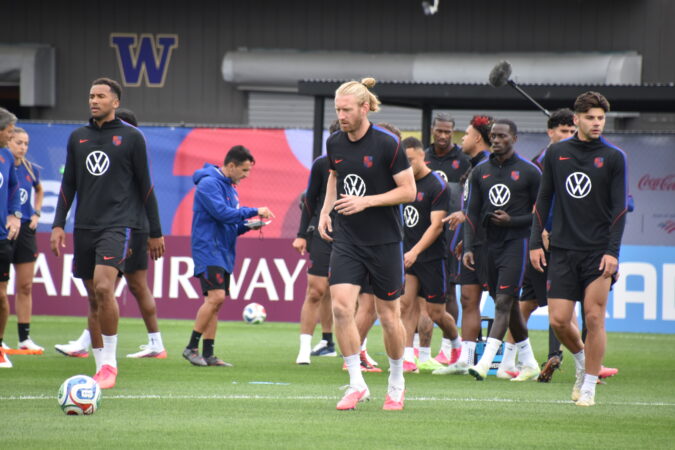
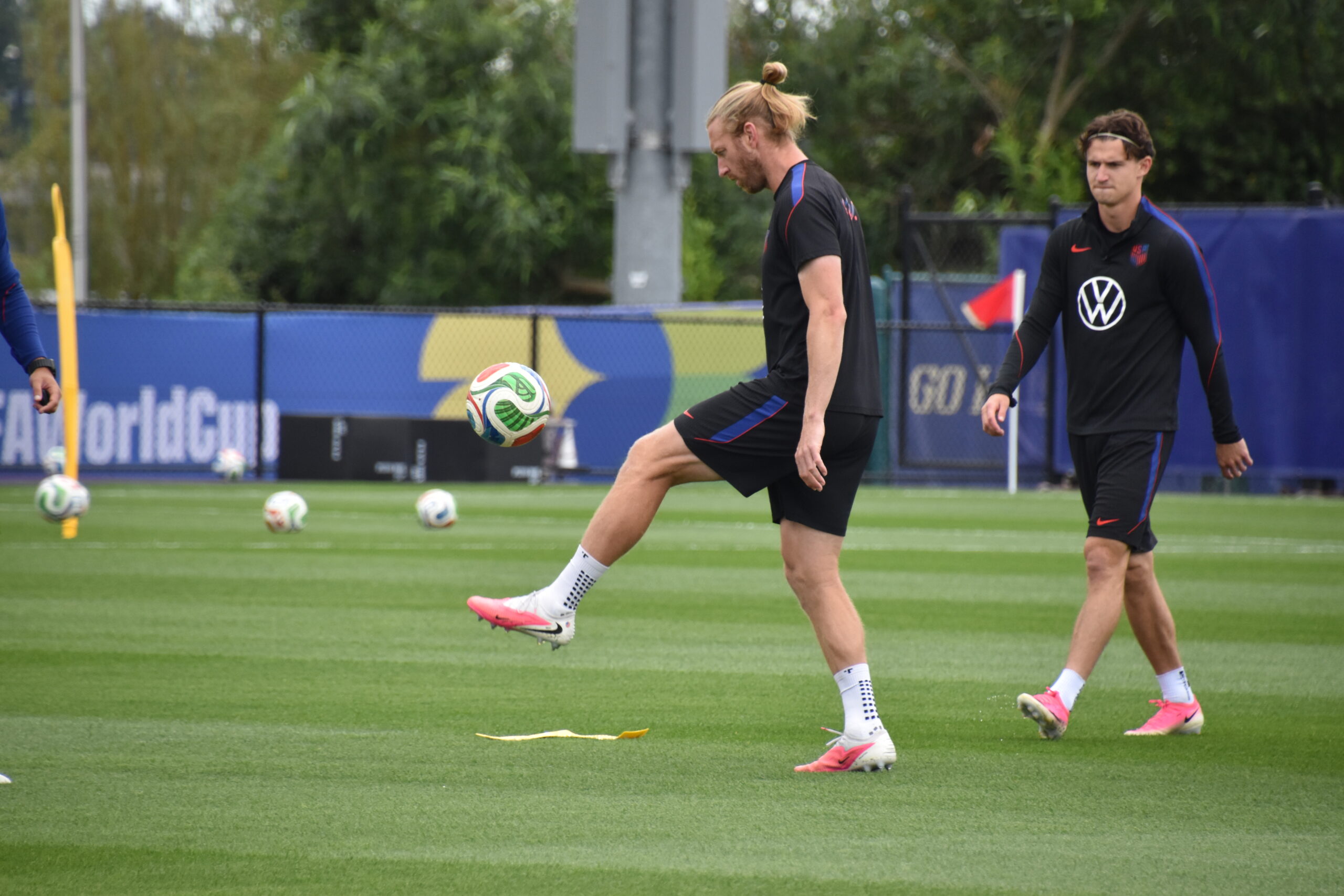
It was a working holiday for Tim Ream (center) and the U.S. men’s soccer team.
The St. Louis native then made a point of highlighting his belief that the team’s diversity is a strength.
“We’ve said this: With all our different backgrounds, where we all have grown up, it’s a true representation of what America is,” he said. “It’s a melting pot of personalities, of characters, and, like I said, it’s a perfect representation of what the U.S. is and what it’s about.”
Ream has even seen manager Mauricio Pochettino, a fiercely proud Argentina native, embrace the national spirit.
“He’s obviously taken to the culture, and at the same time, has added his bit of culture to us as well,” Ream said, which makes Pochettino the latest of many Argentines to do that in this country. From players and coaches to broadcasters like Telemundo’s famed Andrés Cantor, the country has a long history of sharing its passion — and immigrants — with the U.S.
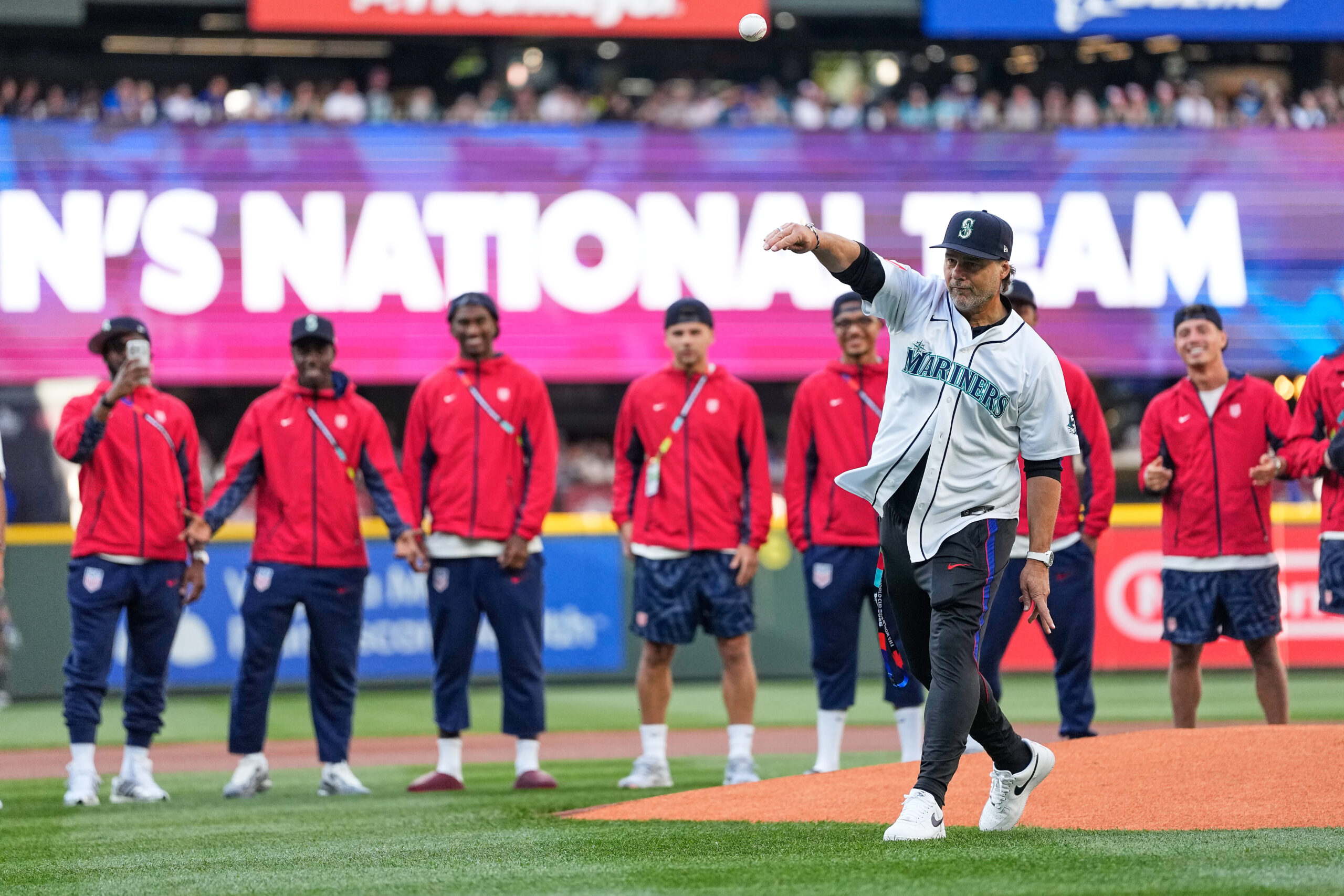
U.S. manager Mauricio Pochettino got to sample a classic piece of American culture by throwing out the first pitch at the Seattle Mariners baseball game on Friday.
“As he said after the first here in Seattle [the U.S.’s group stage win over Australia], he felt something with ‘Country Roads’ being played and blasted through the stadium [postgame],” Ream said. “The group is such a melting pot [with] staff, players, and, again, it’s just an incredible representation of who we are as people. But, yeah, he definitely won’t let us forget that he’s still Argentine at the end of the day.”
The 38-year-old Ream has experienced the holiday in multiple ways, too. When he played in England from 2012 to 2024, he spent some Fourths over there instead of over here. Then he returned to MLS to join Charlotte FC, where he’s now in his third season.
“It’s a little bit different celebrating here than over there,” he said. “A lot of people [in England] don’t actually know why we celebrate the Fourth, which is crazy to me because they were a big part of why we celebrate.”
That line drew a round of hearty laughs, even from the English media who have been following the U.S. team during the World Cup.
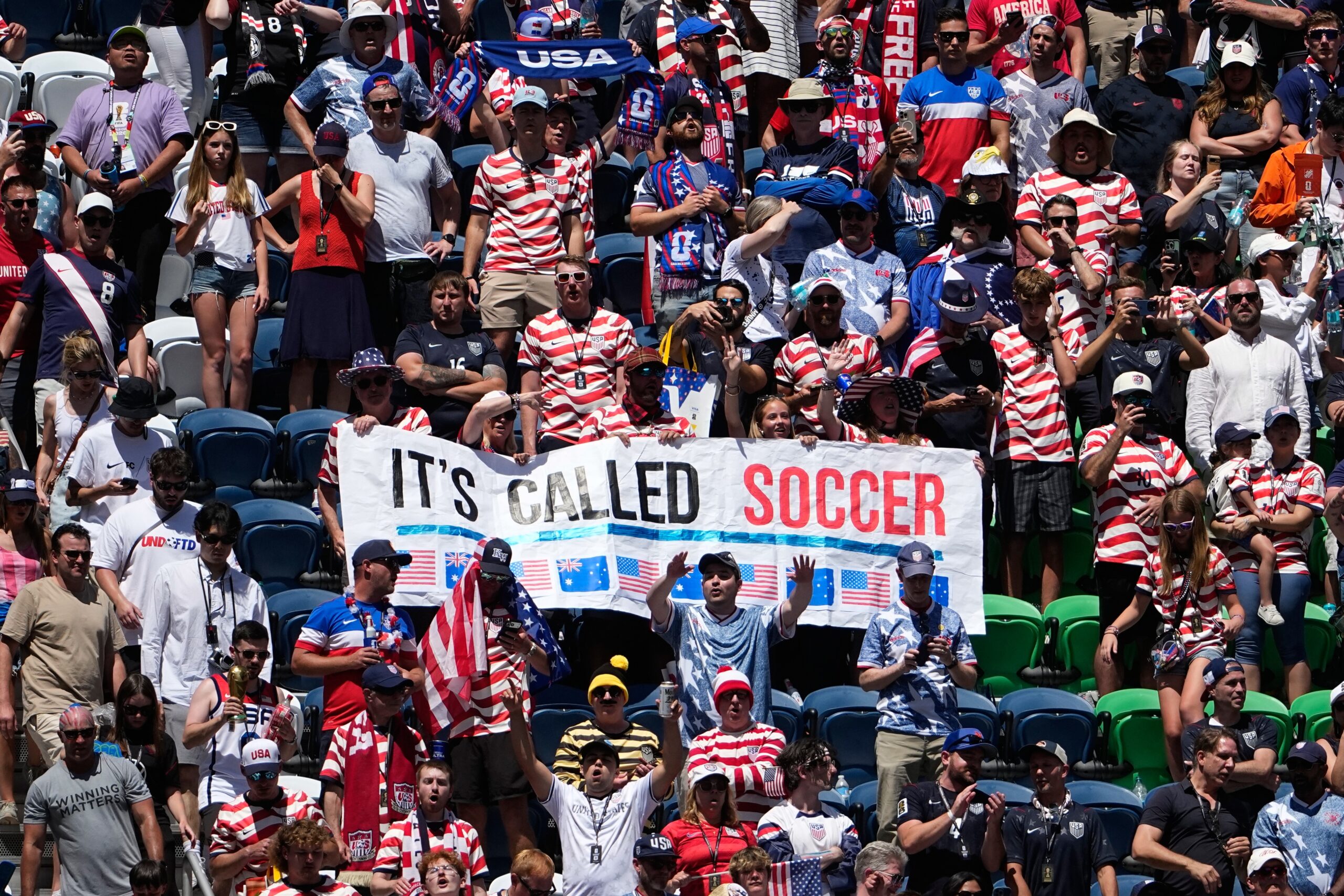
At the U.S.-Australia group game in Seattle, some fans brought a banner that read “IT’S CALLED SOCCER” to poke fun at England.
“The memories for me are just the typical standard: barbecue, enjoy time with family all day, fireworks in the evening, and just celebrating, obviously, what it means to have freedom, to have independence,” Ream said. “It doesn’t have to be this big, extravagant thing, but just acknowledging why we are a country, and how we became a country, and how we became independent is enough for any of us.”
There wasn’t going to be much extravagance for the team as it worked through the holiday. But there would be time in the evening to gather with friends and family and watch Seattle’s big fireworks show from a rooftop downtown.
Then they’ll be back at it, trying to give the nation one more festival in Monday’s round of 16 game against Belgium (8 p.m., Fox29, Telemundo).
“We are, as we all continue to say, very aware of the impact that we’re having around the country, the impact we’re having on generations of people and fans and supporters,” Ream said. “Aware, but it’s not something that is at the forefront of our thinking at the minute. It’s more the game, and what we have to do to continue to move on.”
Though this is the first time that a World Cup’s round of 16 is the second knockout round, some of the matchups are loaded with history.
One of them will take center stage in Philadelphia’s July 4 festivities. France and Paraguay have met twice in World Cups, and both were momentous.
In the 1998 round of 16, La Albirroja held Les Bleus scoreless on home turf for 114 minutes until defender Laurent Blanc scored a sudden-death winner. (Soccer briefly settled games that way.)
In the 1958 group stage, French striker Just Fontaine scored a hat trick in a 7-3 win on the way to totaling 13 goals in the tournament — still the most goals by one player in one World Cup.
That record could fall this summer, thanks partially to another French superstar. Kylian Mbappé has six goals so far, one behind Lionel Messi’s tournament-leading seven for Argentina. Yes, the extra round helps, but both are in the all-world category. Not many people will argue if they beat Fontaine’s mark.
Messi’s next chance to score is Tuesday, when he leads the Albiceleste into Atlanta to face Mo Salah’s Egypt.
Philly fans won’t have to travel far (if they can get tickets) to see one of the round’s most star-studded clashes: Brazil’s Vinícius Júnior vs. Norway’s Erling Haaland on Sunday in New Jersey’s Meadowlands.
Strangely, the five-time World Cup champion Seleçao have never beaten the Vikings in three friendlies and one World Cup meeting. Norway pulled off a 2-1 upset in the 1998 group stage.
Monday’s Portugal-Spain showdown in suburban Dallas will have the most rivalry spice. The next-door neighbors have met 41 times dating back to 1921, but just twice in World Cups: the 2010 round of 16 and the 2018 group stage. We’ll see if this round of 16 game sends Spain on the same path it followed in 2010 to its first World Cup title.
Finally, we come to the games that will matter most in our part of the world. All three cohosts are still alive, but they all face big tests.
Canada goes first on Saturday, facing Morocco in Houston. The Atlas Lions made the 2022 semifinals and are looking sharp again this summer.
Then comes an all-time Sunday night on this continent’s most famous soccer stage. Mexico, fresh off its first knockout win since the last World Cup it hosted in 1986, hosts England at the Estadio Azteca.
🔥¡GOL DE QUIÑONES A NIVEL DE CANCHA! 🗣️⚽
Julián Quiñones firmó una joya para abrir la cuenta y poner en ventaja a México🇲🇽 sobre Ecuador🇪🇨 en estos Dieciseisavos de Final. 🏟️💥
¿Qué te pareció la definición del goleador mexicano?👇
— Telemundo Deportes (@TelemundoSports) July 1, 2026
While there’s no question that the Three Lions have the better talent, they’ve never played at anything like Mexico City’s 7,220-foot altitude. Will that plus a deafening home crowd propel El Tri to a famous win?
Finally, there’s the world’s version of Monday Night Football in Seattle. The U.S. men play the biggest game in program history when they face Belgium, trying to win two knockout games in one World Cup for the first time. It’s the game so many people have dreamed of for years, and now it’s finally here.
SEATTLE — America’s national pastime crossed paths with the world’s favorite game on Friday evening when the Seattle Mariners hosted the U.S. men’s soccer team at their game against the Toronto Blue Jays.
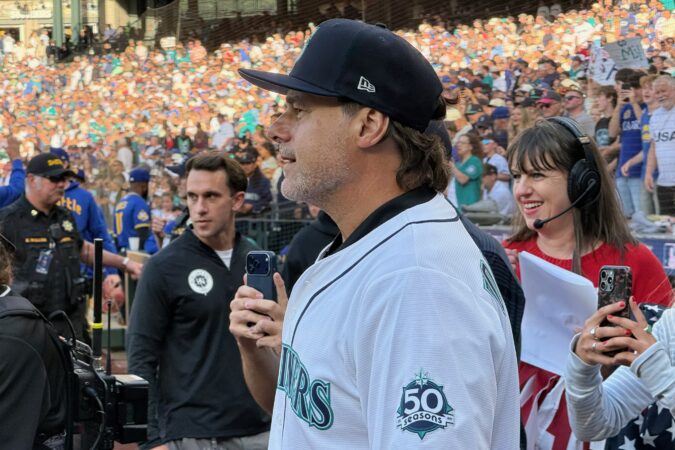
The U.S. squad met the Mariners in their clubhouse before the game, and were introduced to a cheering crowd one-by-one on a red carpet. Manager Mauricio Pochettino then stepped to the foot of the mound and threw the ceremonial first pitch.
Mauricio Pochettino throws a fine first pitch for a soccer manager who might not ever have picked up a baseball before this morning:
Pochettino practiced some in the morning, before his team got to work on the University of Washington’s soccer field across town. The Huskies’ baseball team lent balls and gloves, and U.S. backup goalkeeper Matt Turner — who played shortstop at St. Joseph Regional High School in north Jersey — gave his boss some tips on throwing form.
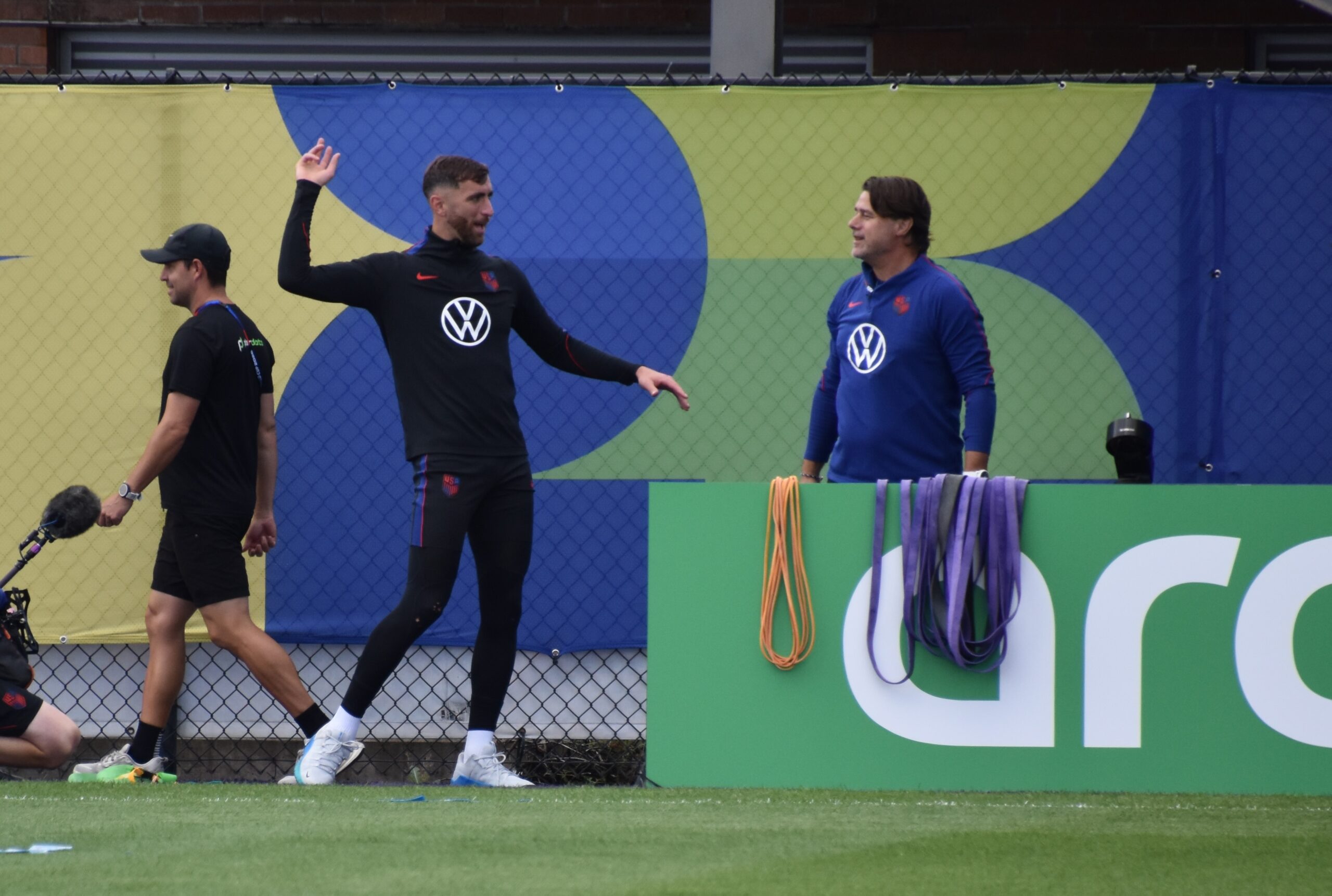
Matt Turner (left) giving Mauricio Pochettino advice on how to throw a baseball at Friday morning’s U.S. practice.
“It’s amazing to be here again and feel your support,” Pochettino told the crowd. “The city is amazing. It’s a baseball city. It’s a soccer city. Thank you so much — thank you to the 12th man.”
That bonus reference to Seahawks football fans was one of a few cultural crossovers in a city with big stadiums are a block from each other at the southern edge of downtown.
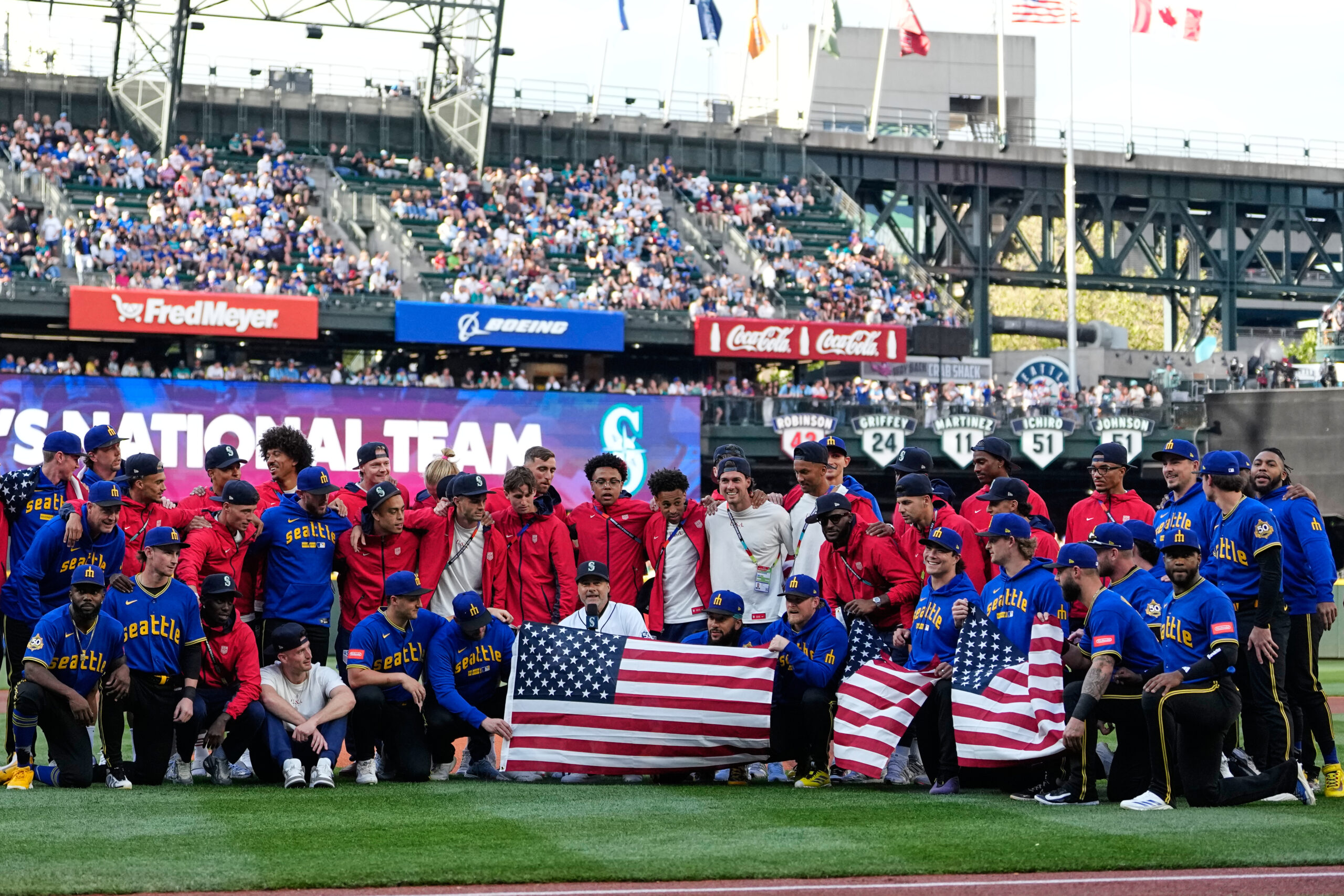
The U.S. men’s soccer team and the Mariners got together on the field for a photo after the ceremonial first pitch.
Between the Mariners and Jays’ pregame warmups, John Fogerty’s classic baseball anthem “Centerfield” played on the T-Mobile Park public address system while extra time of the Argentina-Cape Verde game was shown on the big screen, including the moment Argentina took a lead. A gaggle of fans with field access gasped as they watched the goal.
A few minutes later, the World Cup’s official song, “Dai Dai” by Shakira and Burna Boy, was the DJ’s pick for the playlist. And not long after that, the fans gasped again when Cape Verde tied the score a second time, then once more when Argentina scored a late winner.
“To have the USA team here earlier [in the tournament] and now to have them back, I think is pretty cool,” Wilson said. “And a chance to meet some of these guys, and [have] the fans give them a chance to show their appreciation for the job that they’ve done. Obviously, this is a global event that has been followed all over the world, and it’s exciting. It brings people together.”
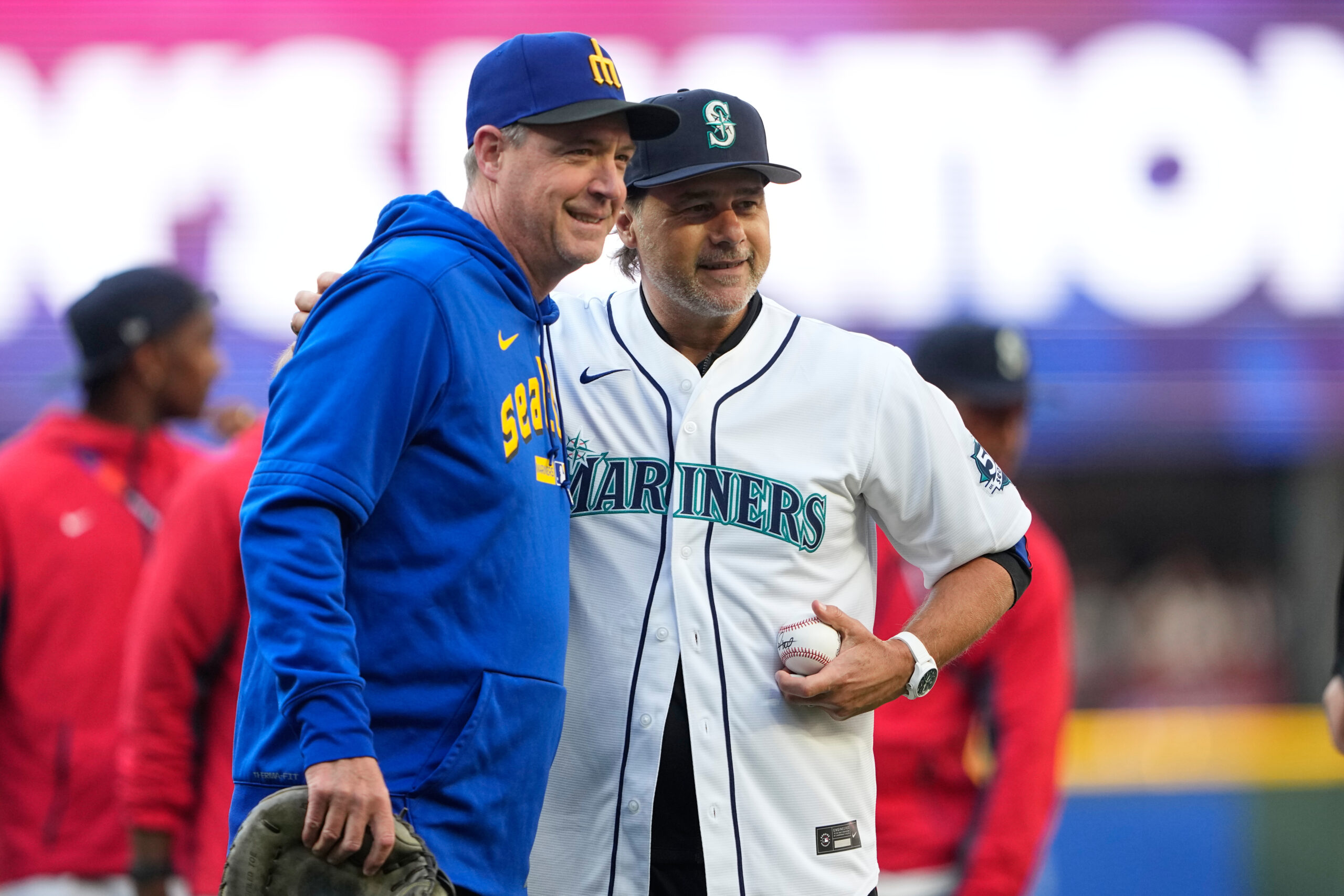
Mariners manager Dan Wilson (left) with Mauricio Pochettino.
That appreciation certainly arrived. Though the Blue Jays always bring lots of fans for their visits here thanks to a big fan base in nearby Vancouver, there were big cheers as the U.S. players were introduced individually. Cristian Roldan drew the biggest, as the Seattle Sounders stalwart was saved for last. He brought the Mariners’ trident out with him and said a few words as the U.S. and Mariners squads gathered for a group photo.
“Thank you, Seattle — thank you for the love and support,” Roldan said. “Let’s go win a World Cup! Go USA; go Mariners!”
The Mariners’ active roster is as global as any in baseball, with players from six countries. Center field Julio Rodríguez, a Dominican Republic native, has befriended French World Cup winner and soon-to-be Orlando City playmaker Antoine Griezmann. (Rodríguez wasn’t around to talk about that on Friday because he’s sidelined with a concussion.)
“We have players from all over, and many of them played soccer as kids,” Wilson said. “I think that’s what the beauty of the event of the World Cup is: It affects so many people. Yeah, these guys are watching the games, and you always know when a team scores because you hear it down the hall. So it’s pretty fun.”
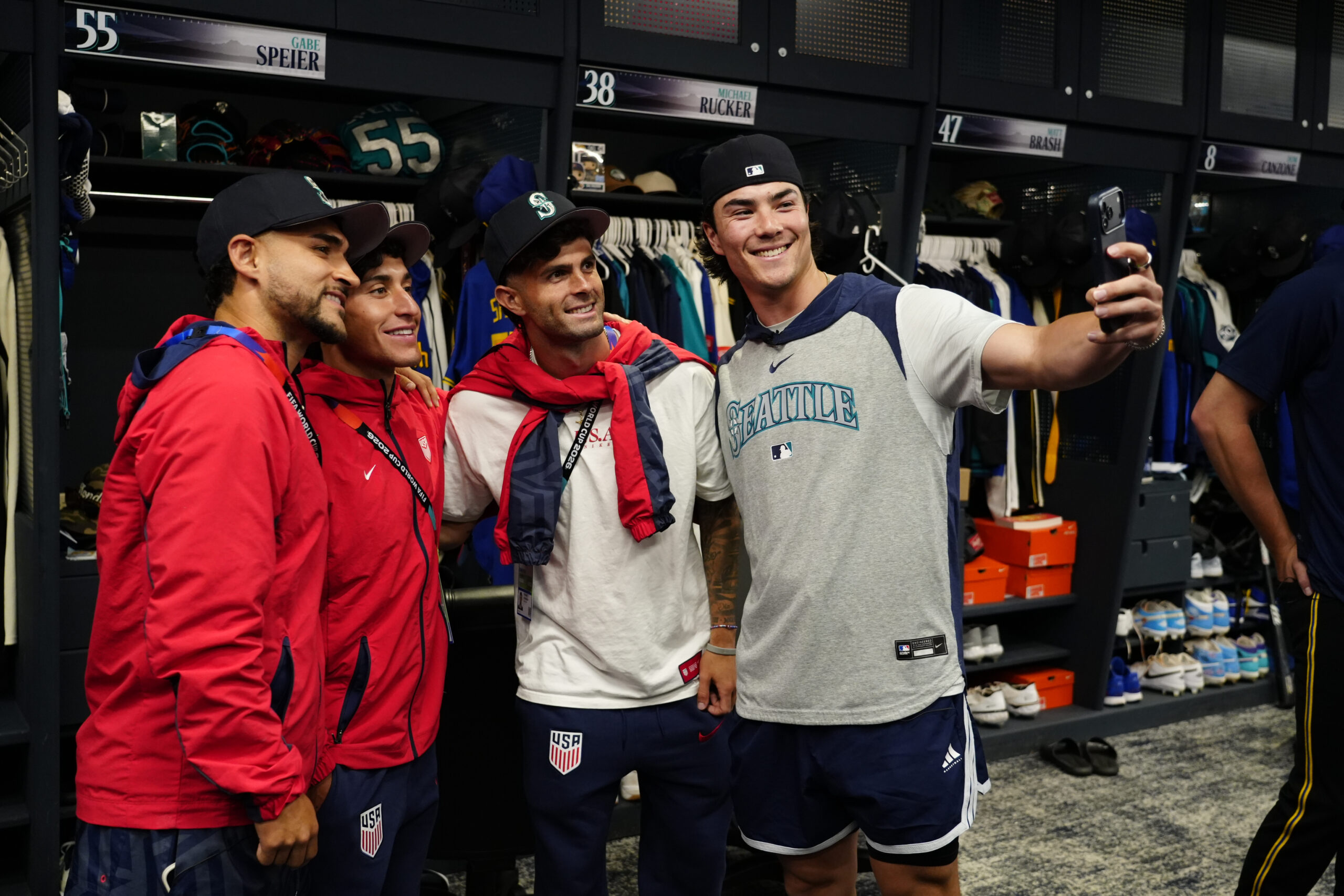
Mariners pitcher Bryan Woo (right) took a selfie in the locker room with (from left) Cristian Roldan, Alejandro Zendejas, and Christian Pulisic