Author: Jonathan Tannenwald

  • The USMNT’s sour World Cup group stage ending should be motivation for the bigger games to come

    The USMNT’s sour World Cup group stage ending should be motivation for the bigger games to come

    INGLEWOOD, Calif. — It’s a good thing that the U.S. men’s soccer team’s 3-2 loss to Turkey on Thursday didn’t matter for the standings. Because in many other circumstances, it would have been infuriating, not just annoying.

    Had the game finished tied, there would have been very few complaints. Everyone knew coming in that the lineup would have a lot of rotation. An unbeaten run through the group stage would have kept up the good vibes, even with that changed squad giving up two goals.

    Instead, giving up a last-kick-of-the-game goal meant the questions that followed were far less positive.

    “Having that moment in the last moment where they score, it’s tough,” said Medford’s Brenden Aaronson, whose first World Cup start included four tackles, three defensive recoveries, three shots, 21-of-22 passing, and a first-touch misfire toward an open net in the 62nd minute that overshadowed much of the rest of his night.

    “We wanted to walk away with no losses in the group stage, but we’ve got to take it, as it was still a fantastic group stage,” Aaronson said. “We had so many really good performances, and even before the group stage, in the friendlies. We’re at a top level. I’m not worried whatsoever, and we’re going to move on to the next one and be ready to go for Bosnia” in the round of 32.

    Other players were more positive, in particular Sebastian Berhalter. He had an assist and a terrific goal in the game, and tried to set a tone by stepping to the microphone first.

    Asked if the final score affects the team’s momentum, he said bluntly, “No, it doesn’t. … I think we gave everything we had, and we’ll be ready for the knockouts.”

    Manager Mauricio Pochettino was flat-out defiant, saying “no one congratulated us for finishing first in a very difficult group.”

    He repeatedly chided the media, saying at one point: “Your questions are a little bit weird, but I am so happy, and the players are happy, because I think we perform, we compete, and we are first. … Maybe I am confused, but the mood, the vibes [are] like we go home tonight and Turkey stays.”

    Tyler Adams, who watched from the bench to avoid getting another yellow card, was asked if it’s better to flush the moment as Berhalter wanted or keep it as motivation heading into the knockout rounds.

    “It’s not going to be perfect,” he said. “No tournament is perfect. You live and you learn. I think a lot of the guys will take lessons from that game. A lot of good performances otherwise.”

    A moment later, goalkeeper Matt Turner was asked the same question. His inclusion in the starting lineup was perhaps the most controversial of the nine changes Pochettino made from the Australia game.
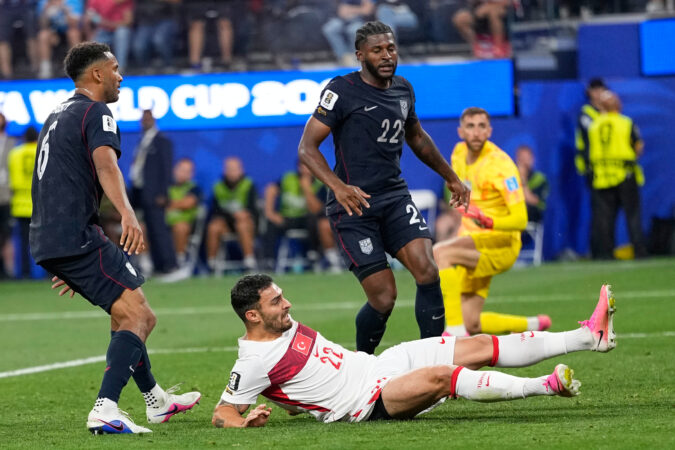
    Matt Turner (left) watches Turkey’s players celebrate the game-winning goal.

    “When it’s 2-2 at the end there, that probably would have been the more fair result given the chances both sides had, but this is football, and we know how cruel the game can be,” he said. “We let our guard down, and we got punished for it. We were all in positions to make a play, and none of us could make the decisive play.”

    Alejandro Zendejas, who finally got to make his World Cup debut, had a similar opinion.

    “It’s always the worst, especially on the last play of the game, when that happens — when I think we had the game controlled, pretty dominated in my opinion,” he said. “But yeah, it’s a time to take the night or the day to reflect on the game, and then turn the page right away to focus on the next round for sure.”

    In the big picture, the result didn’t matter — a rare luxury for a U.S. team that for decades has scrapped for every point it has gained at men’s World Cups. But it still did in a way, because a last-second goal like that has to matter.
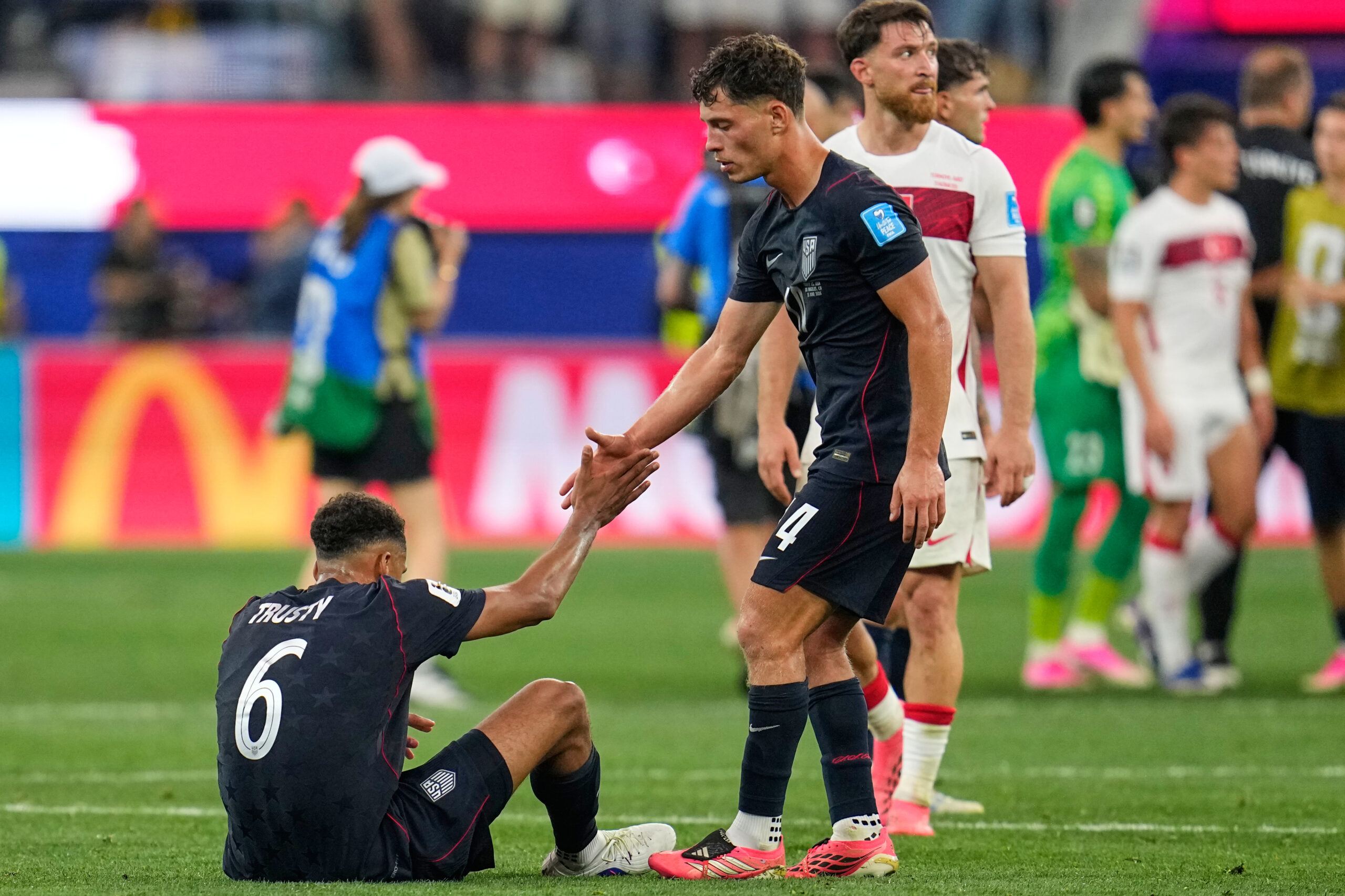
    Sebastian Berhalter (right) helping Auston Trusty (6) to his feet after the final whistle.

    And when the Americans, who won Group D, next take the field, on July 1 against Bosnia & Herzegovina in Santa Clara, Calif. (8 p.m., Fox29, Telemundo), the result will be all that matters. Bosnia & Herzegovina finished third in Group B.

    “You can always take these things as fuel,” Aaronson said. Many U.S. fans will hope the team does so.

    Auston Trusty’s moment of history

    Whatever ends up happening to the U.S. in the knockout rounds, one moment will stay in the history books for a long time. Media native Auston Trusty became the first men’s player born and raised in the Philadelphia region to score a World Cup goal when he slammed in Berhalter’s corner kick service in the third minute.

    “I’m a center back usually, playing in a left back spot [in this game],” Trusty said. “I can advance up, I can show different parts of my game going forward. I live and breathe for corners, and then had the opportunity and took advantage of it.”

    The only other male player to have lived in the area and scored a World Cup goal was Bart McGhee. He immigrated from Scotland to Philadelphia as a child and scored the program’s first-ever World Cup goal in the inaugural tournament in 1930.

    “It means everything,” Trusty said. “I absolutely didn’t know that stat. … I think it’s an honor to score a goal and even participate in this competition, let alone score a goal. So yeah, just a dream come true.”

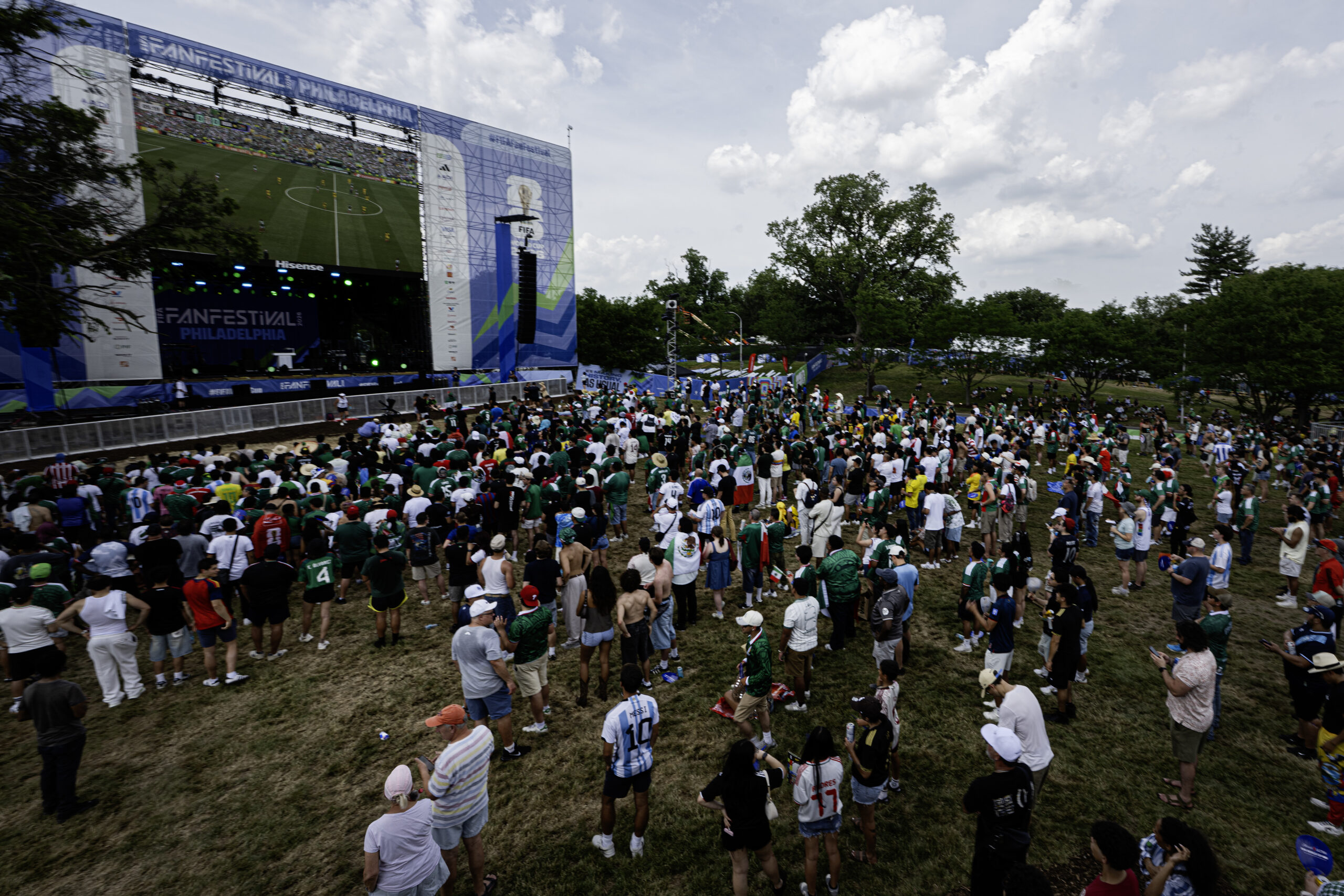
    His celebration was as vibrant as the shot, as he screamed and raised a finger while sprinting away toward the U.S. bench. And back home, a big crowd at Philadelphia’s fan fest on Lemon Hill roared just as loudly.

    Coincidentally, Trusty said, the celebration was similar to how he celebrated his first goal for the Union in 2018.

    “I don’t know why I did that,” he quipped. “I didn’t plan for that, but pretty cool. It’s kind of full circle.”

    Trusty’s night ended on a sour note when he got stepped on by Turkey’s Oğuz Aydın, rolled an ankle, and managed to suffer a hamstring cramp as he hit the ground. He went back in the game (in part because the U.S. was out of substitutions), then slipped amid the chaos of the last goal.

    By the time he emerged to the media, he had that ankle wrapped, but otherwise, he didn’t seem any worse for wear.
  • A last-second goal costs the USMNT a 3-2 loss to Turkey in its World Cup group finale

    A last-second goal costs the USMNT a 3-2 loss to Turkey in its World Cup group finale

    INGLEWOOD, Calif. — With first place already secured, the U.S. men’s soccer team finished out its World Cup group stage slate with a 3-2 loss to Turkey on Thursday.

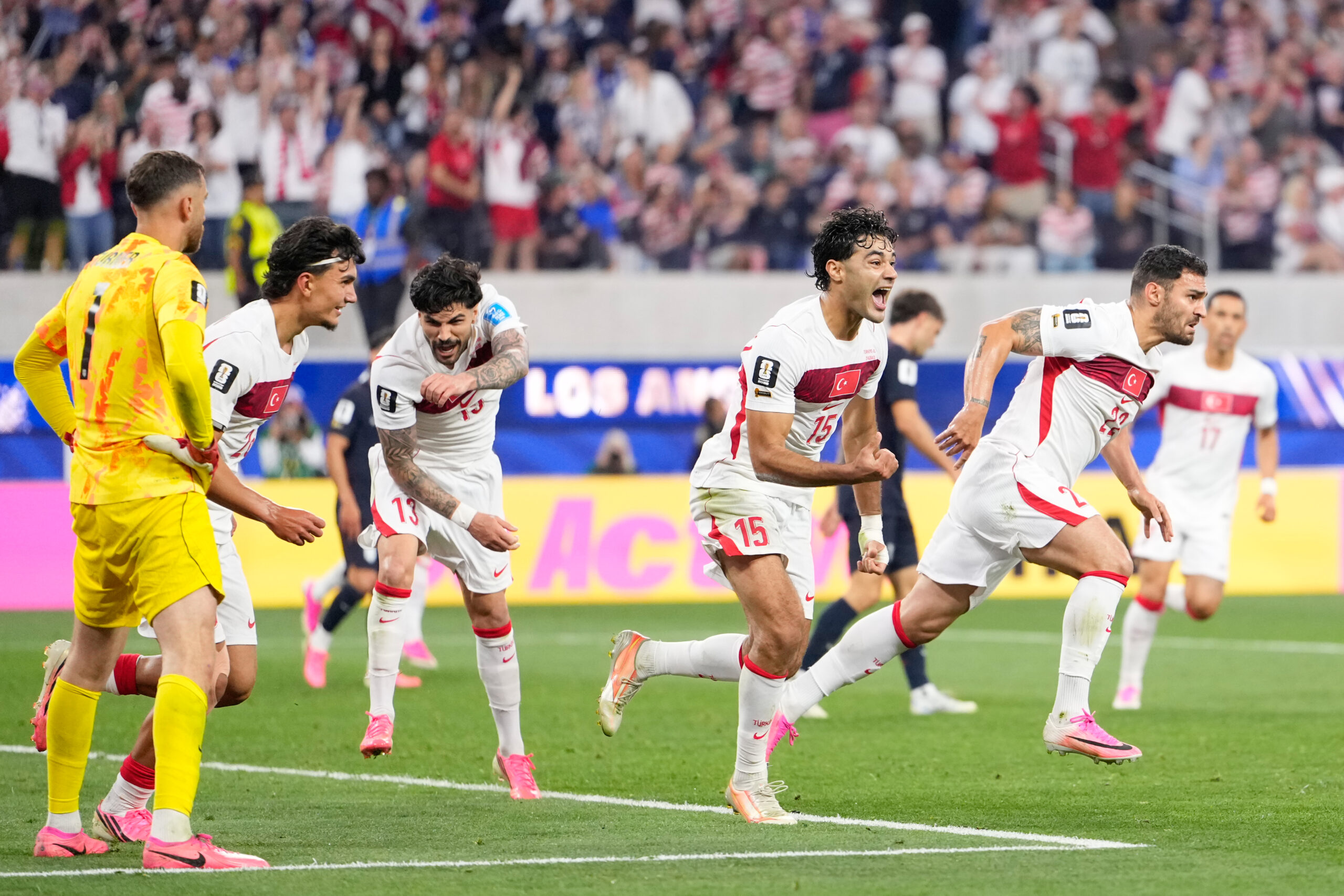
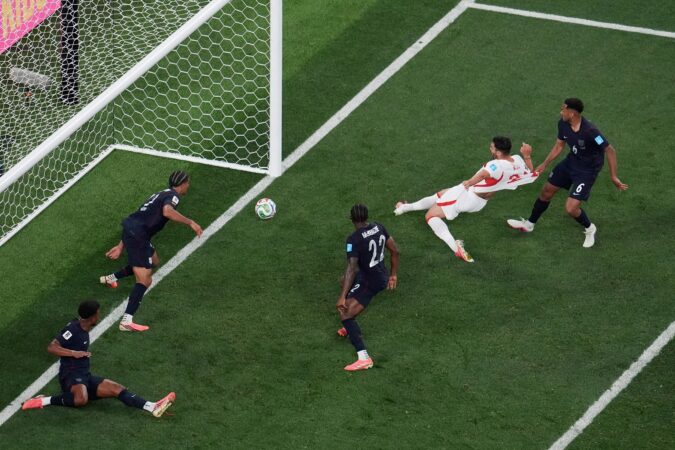
    Kaan Ayhan scored the winner with the last kick of the game in the 98th minute, denying the Americans an unbeaten group run after wins in the first two games.

    That took the air out of what had been a raucous crowd of 70,492 that watched Media’s Auston Trusty score the second-fastest U.S. goal in men’s World Cup history, and Sebastian Berhalter tie the score early in the second half after Turkey led 2-1 at halftime.

    Still, with the group already wrapped up, the U.S. is set to face Bosnia & Herzegovina in the round of 32 on July 1 in Santa Clara, Calif. (8 p.m., Fox29, Telemundo 62). That matchup was confirmed earlier Thursday by other results across the final round of the group stage.

    Against Turkey, U.S. manager Mauricio Pochettino started the night by making even more lineup rotations than he’d hinted at. There were nine changes from the last starting group against Australia, and 10 from the opening game against Paraguay. Weston McKennie goes down as the only player to start all three games, and Ricardo Pepi as the only other player to start two.

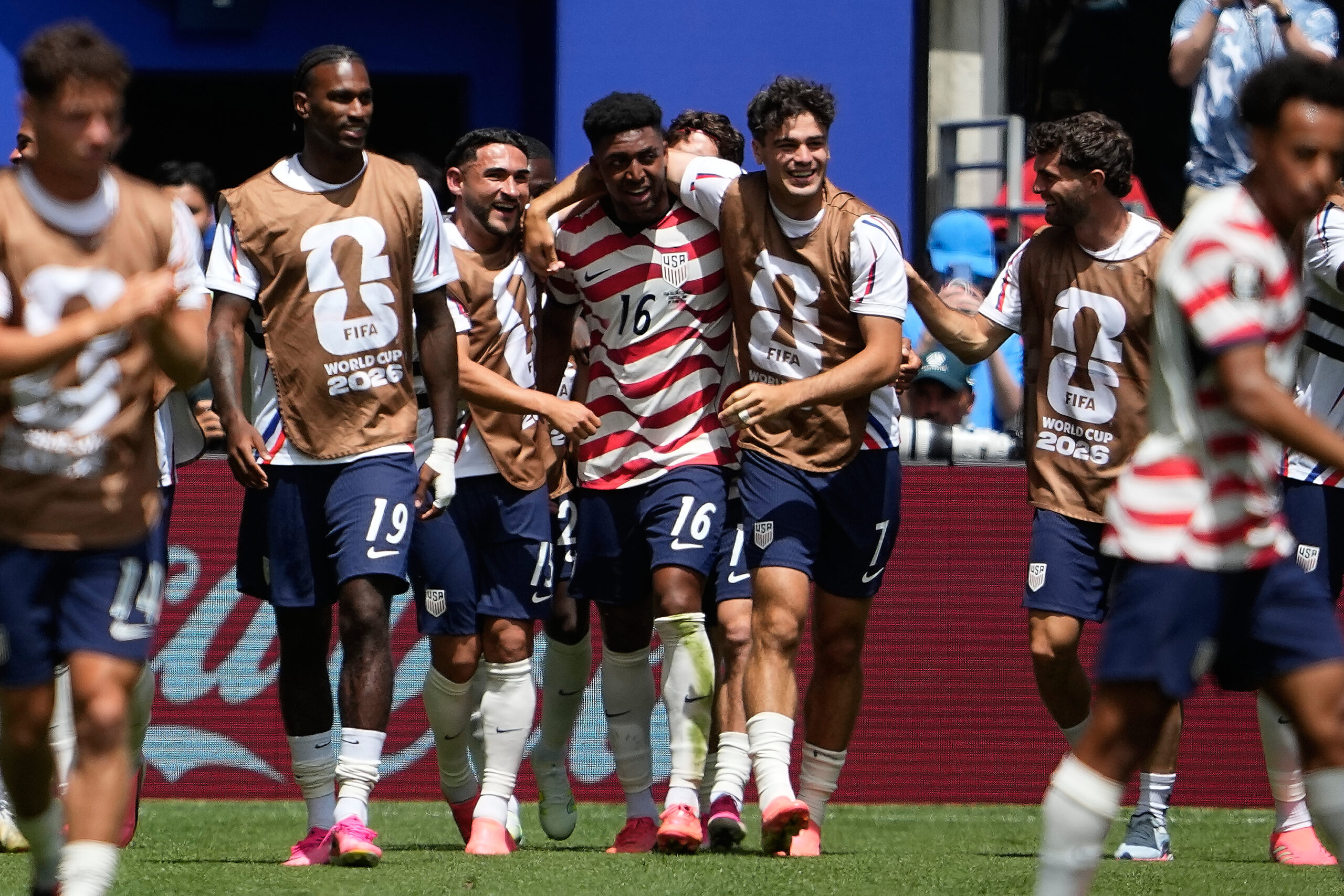
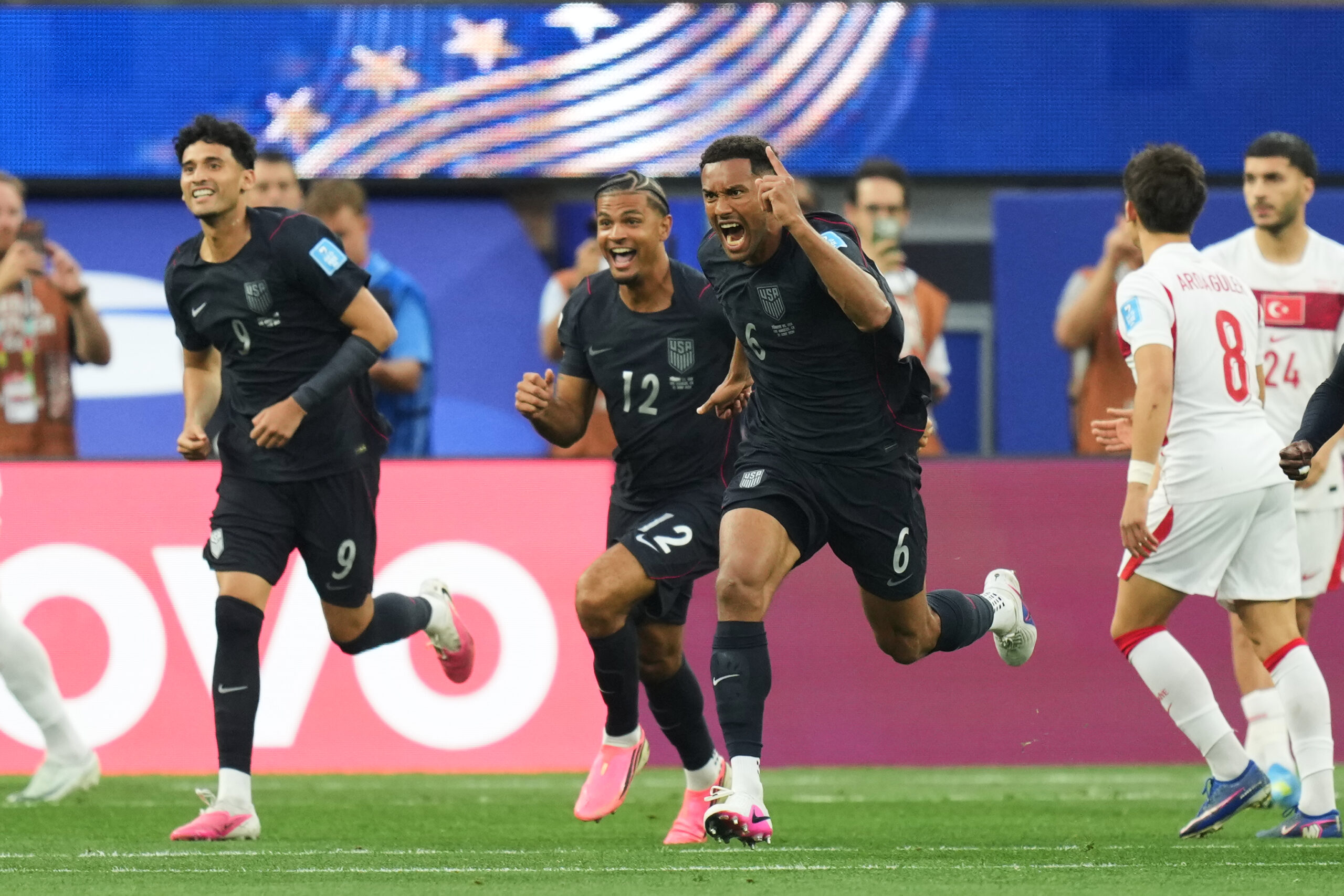
    Trusty got things going by smashing in a Sebastian Berhalter corner kick that fell right at his feet. The Media native and Union product ran away screaming as he celebrated his first national team goal, and the first U.S. goal at a men’s World Cup scored by a player born in the Philadelphia region.

    Media’s Auston Trusty (6) celebrates scoring his side’s first goal against Turkey during Thursday’s Group D finale for the United States.

    The only other American goal scorer to have resided in the area was Scotland-to-Philadelphia immigrant Bart McGhee in 1930, the first tournament in history.

    It was also the second-fastest scored by a U.S. player at a men’s World Cup, topping John O’Brien’s fourth-minute tally against Portugal in 2002. (Clint Dempsey’s strike in 30 seconds against Ghana in 2014 will be a lot harder to beat.)

    Alas, the lead only lasted seven minutes. It started with Arda Güler of Spanish superpower Real Madrid taking a pretty pass from Oğuz Aydın, then beating Mark McKenzie twice off the dribble as he ran forward. The first move cleared a path for Barış Alper Yılmaz, and the second came when Yılmaz returned the ball to Güler for an easy finish past Matt Turner.
    McKenzie nearly made up for it in the 29th when the U.S. got another corner kick and he cashed in a rebound. But he was offside when Pepi’s initial shot was saved by Uğurcan Çakır, so it didn’t count.

    Orkun Kökçü put Turkey ahead in the 31st by capping off the kind of move Turkey was supposed to make throughout this tournament: fast, skilled passing leading to a precise finish. Güler was in the middle of the buildup along with Turkey’s other superstar, Kenan Yıldız of Italy’s Juventus.

    Now, at last, the team that had taken 62 shots over its first two games without scoring — the most of any team in the tournament, and the highest total without a goal since stats started in 1966 — was finally finding the net. And of course it had to come in this game, not just for the U.S.’ sake but for the sake of a team already eliminated from advancing.

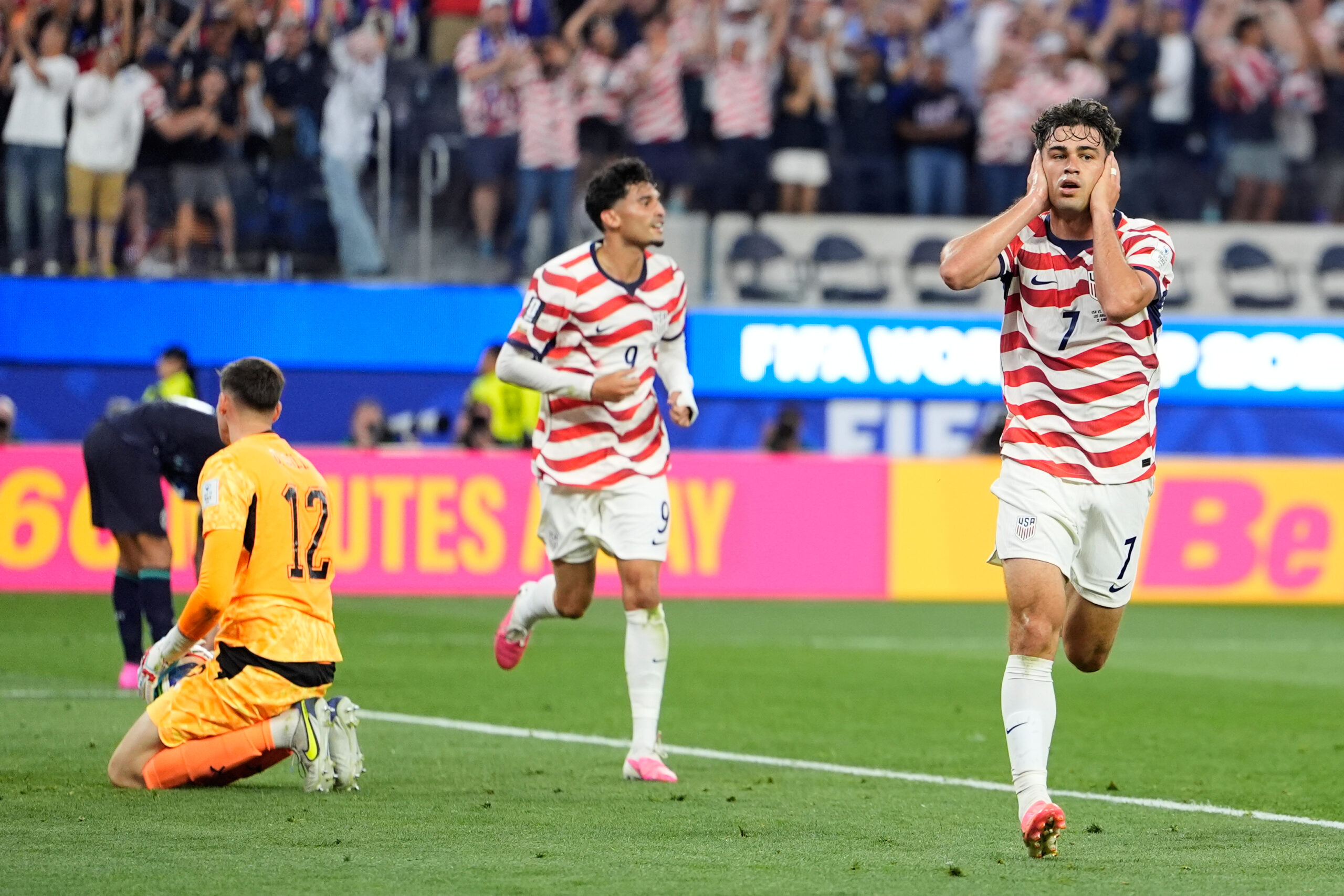
    The U.S. flew out of the gates again to start the second half, and this time Berhalter finished a goal instead of starting it. McKenzie launched a throw-in, Turkey’s Abdülkerim Bardakcı knocked it down in the box, the ball deflected out to Berhalter, and he lashed in a first-time hit from the 18-yard line.

    Christian Pulisic was the first substitute to enter, replacing Tim Weah in the 58th. It wasn’t a surprise that he played, but it was a bit surprising that he came in so early.

    Four minutes later, Brenden Aaronson caught a piece of a loose ball off Çakır’s save of a Pulisic shot, but his first-touch attempt rolled far off target.

    A trio of subs entered in the 77th: Sergiño Dest, Alex Freeman, and Alejandro Zendejas for Aaronson, Gio Reyna, and Joe Scally. That set up the U.S. with three centerbacks for the rest of the night, plus Trusty continuing his start on the left flank.

    Malik Tillman was the last substitute to enter, replacing McKennie in the 86th.

    Unfortunately, the night ended on a bad note for Trusty. He was clipped by Aydın and went down in a heap. But at least he could walk off under his own power, and he returned to the game after a short spell on the sideline.

  • ‘It’s a dream’: Union goalkeeper Andrew Rick is helping the U.S. World Cup team

    ‘It’s a dream’: Union goalkeeper Andrew Rick is helping the U.S. World Cup team

    IRVINE, Calif. — It was the day after Andrew Rick played in the one MLS game he had featured in for the Union this year, and it had not gone well. The 20-year-old was in net for a 4-3 loss at Orlando City, with the decisive goal landing in the 90th minute after the Union had rallied from 3-1 down to tie the score.

    Rick was still in a bad mood when he got home, so he decided to distract himself by playing video games.

    Then the phone rang.

    “It wasn’t a saved contact, and I just saw that it was U.S. Soccer,” he said.

    He picked up, of course, and found veteran U.S. men’s national team staffer Sam Zapatka on the line. The program wanted to have some extra goalkeepers on hand for practices, and wanted Rick to be one of them.

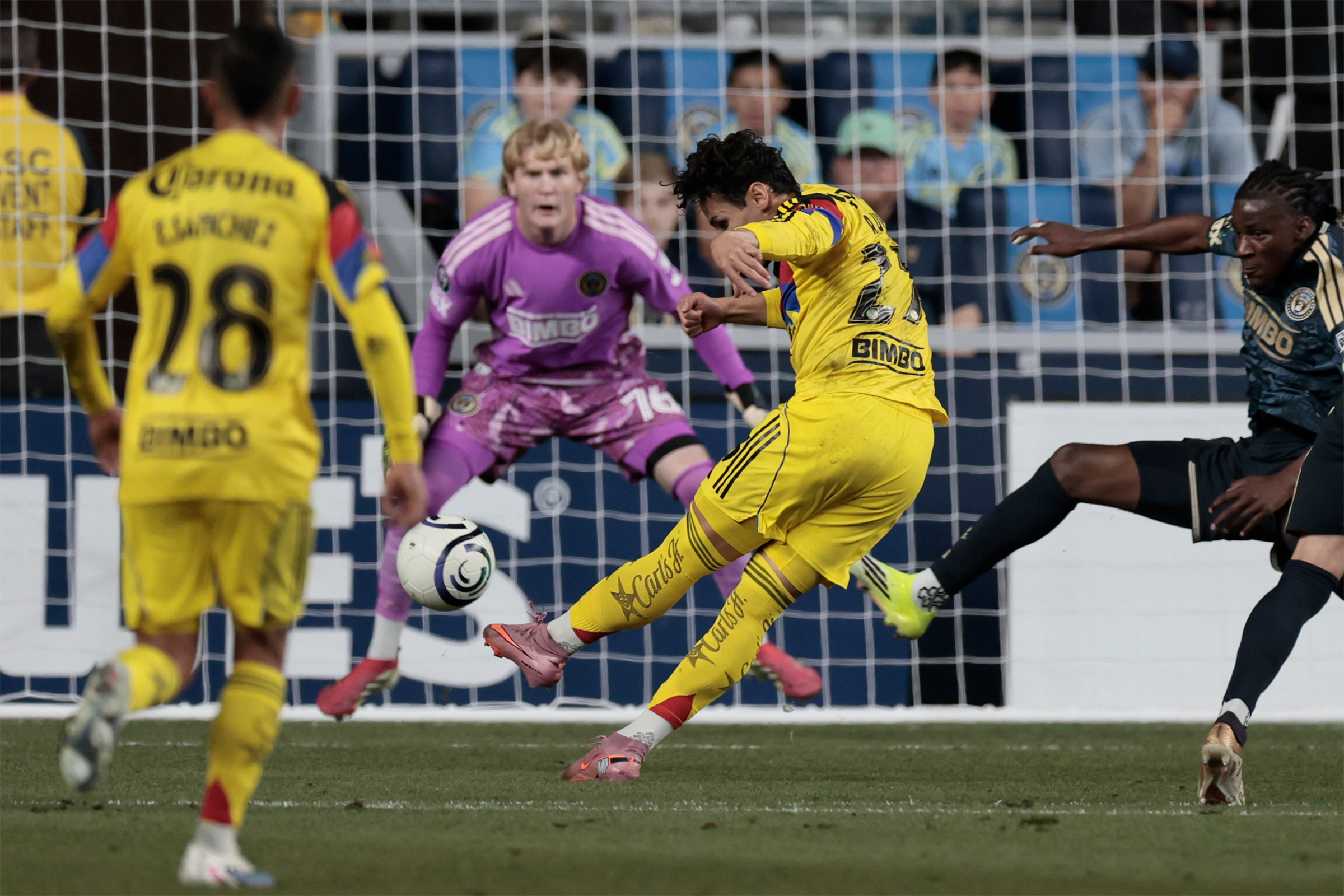
    Andrew Rick (second from left) watching a shot come his way in the Union’s Concacaf Champions Cup home game against Mexico’s Club América in March.

    “It was not a great day for me up until that call,” Rick said. “He let me know the news, and I changed my mood immediately, to say the least.”

    Two weeks later, he set off for the journey of — well, maybe not a lifetime, since the point is he might play in a World Cup some day. But certainly his lifetime to date.

    “It’s a dream,” Rick said. “I wouldn’t think that at this stage of my career, I would be in the place that I am in now, and to have the ability to train with all these [players] — and a lot of them I’ve watched play when I was pretty young — to now get this experience to train with them and be a part of the group, it’s unbelievable to say the least.”

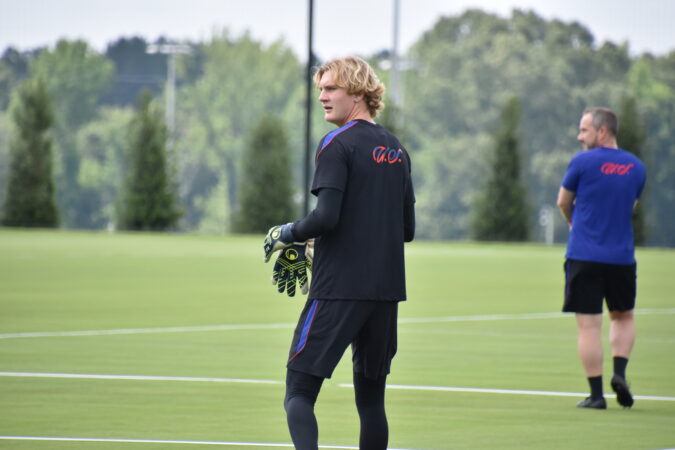
    Rick is one of three goalkeeper prospects, all the same age, who have been with the U.S. team this summer. At first, it was him and Diego Kochen of Spanish superpower FC Barcelona, a highly-touted player who has been to a few senior camps already. Kochen left in the first week of the tournament, amid news of a potential loan move for next season, and Julian Eyestone of English Premier League club Brentford came in.

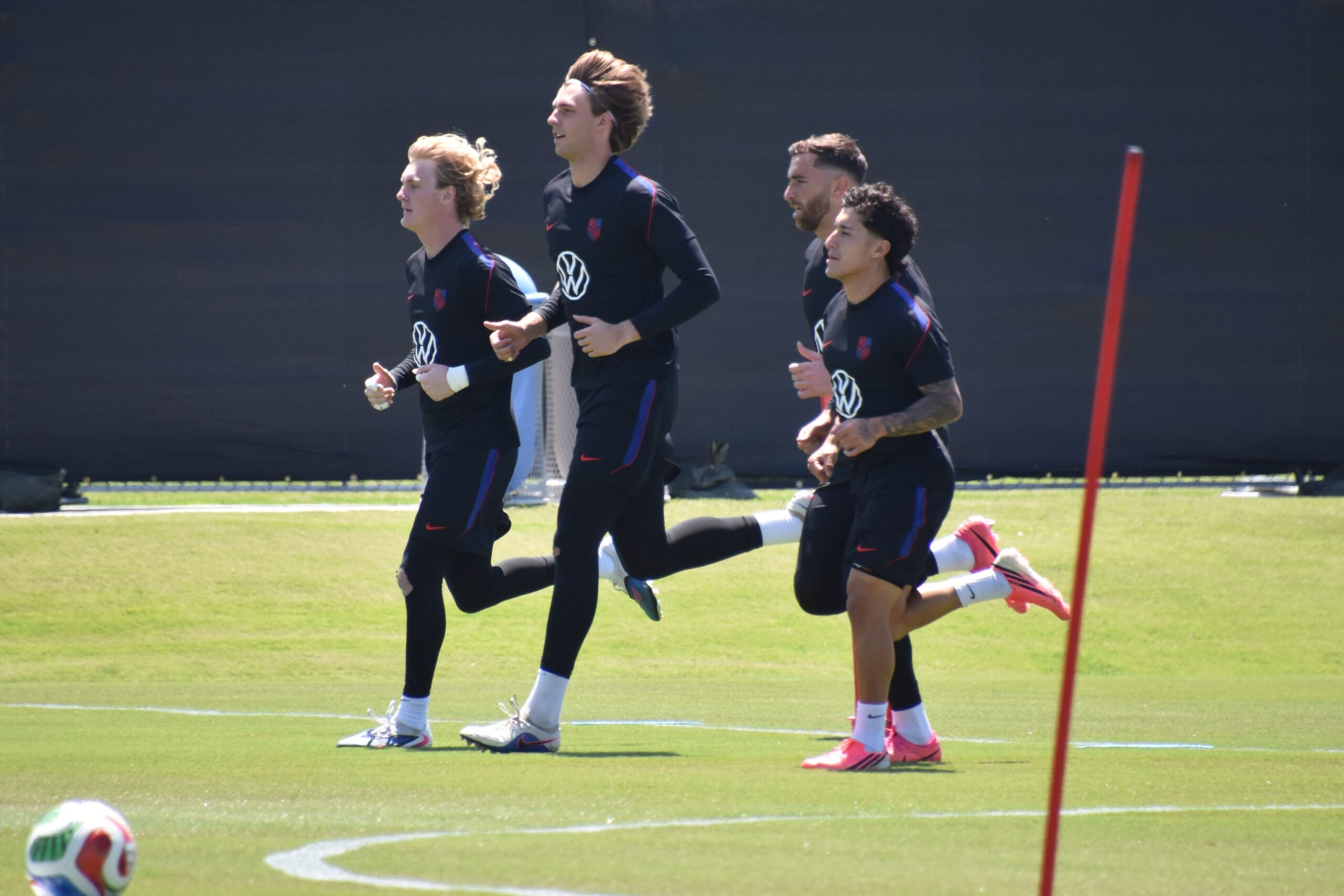
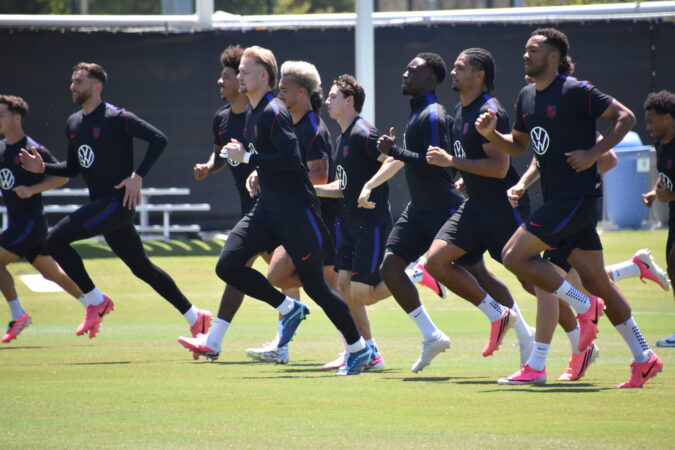
    Andrew Rick (left), Julian Eyestone (second from left), and other players jogging at a recent U.S. practice.

    So not only has Rick gotten to hang with the stars, but he’s the only one of the trio who will have been there the whole time.

    New and old friends

    “Me and Julian are super-close,” he said, noting they were roommates on a U.S. under-20 squad that went to Argentina in March. He had not met Kochen until now, but they got along well too.

    “We have a lot in common just from age alone, and there’s not a lot of other guys here that are our age,” Rick said. “So just being able to be around those guys and have someone closer to my age is nice, just because we can talk a bit more and fit in together. And Diego, he’s been in this environment before, so he also kind of helped me fit in with the other guys and reach out and talk to them a bit.”

    Among the senior players, none means more to Rick than Matt Freese. They’ve known each other for around eight years, and Rick watched Freese on a similar journey to his: from the Union’s youth academy to becoming Andre Blake’s backup on the first team.

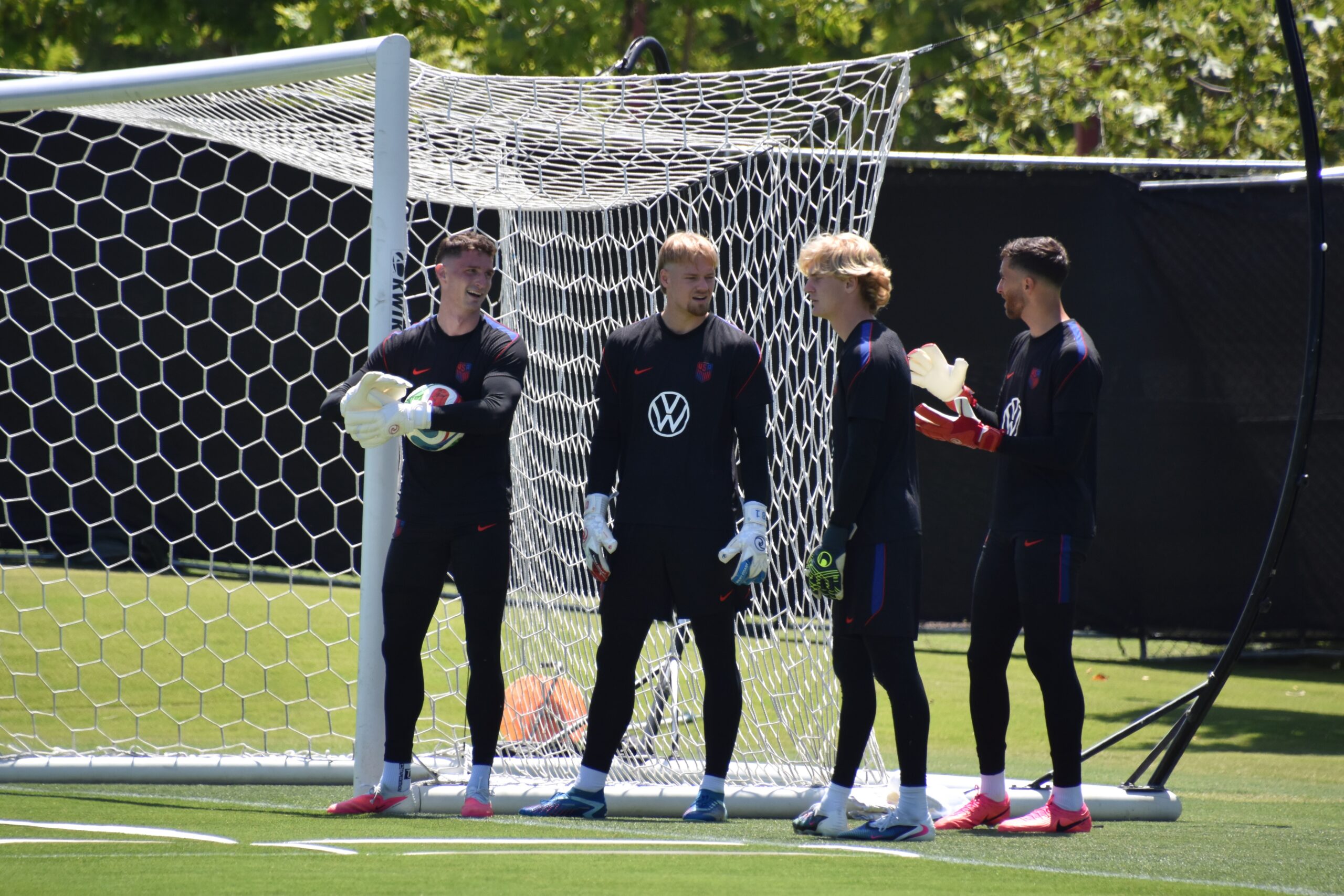
    Andrew Rick (second from right) with the three U.S. goalkeepers on the World Cup team: from left, Matt Freese, Chris Brady, and Matt Turner.

    “Freese has been there for my first Union II training, my first [Union] first team training, and my first men’s national team training,” Rick said. “I’ve known of him for probably, I don’t know, since I’ve been a Union fan. When he was joining was kind of when I started to really get into it, and when I was joining the academy … And obviously he’s a great role model, amazing person.”

    Freese returned the favor, joking that Rick “might have been, like, two when I met him.” But the praise that ensued was sincere.

    “He’s doing a great job,” Freese said. “I think for [all of] them, it’s such a unique experience to be able to be within the group in an environment like this, training every day but also getting to know us off the field. Certainly on the field as well, and being tested and seeing what the future may hold for them.”

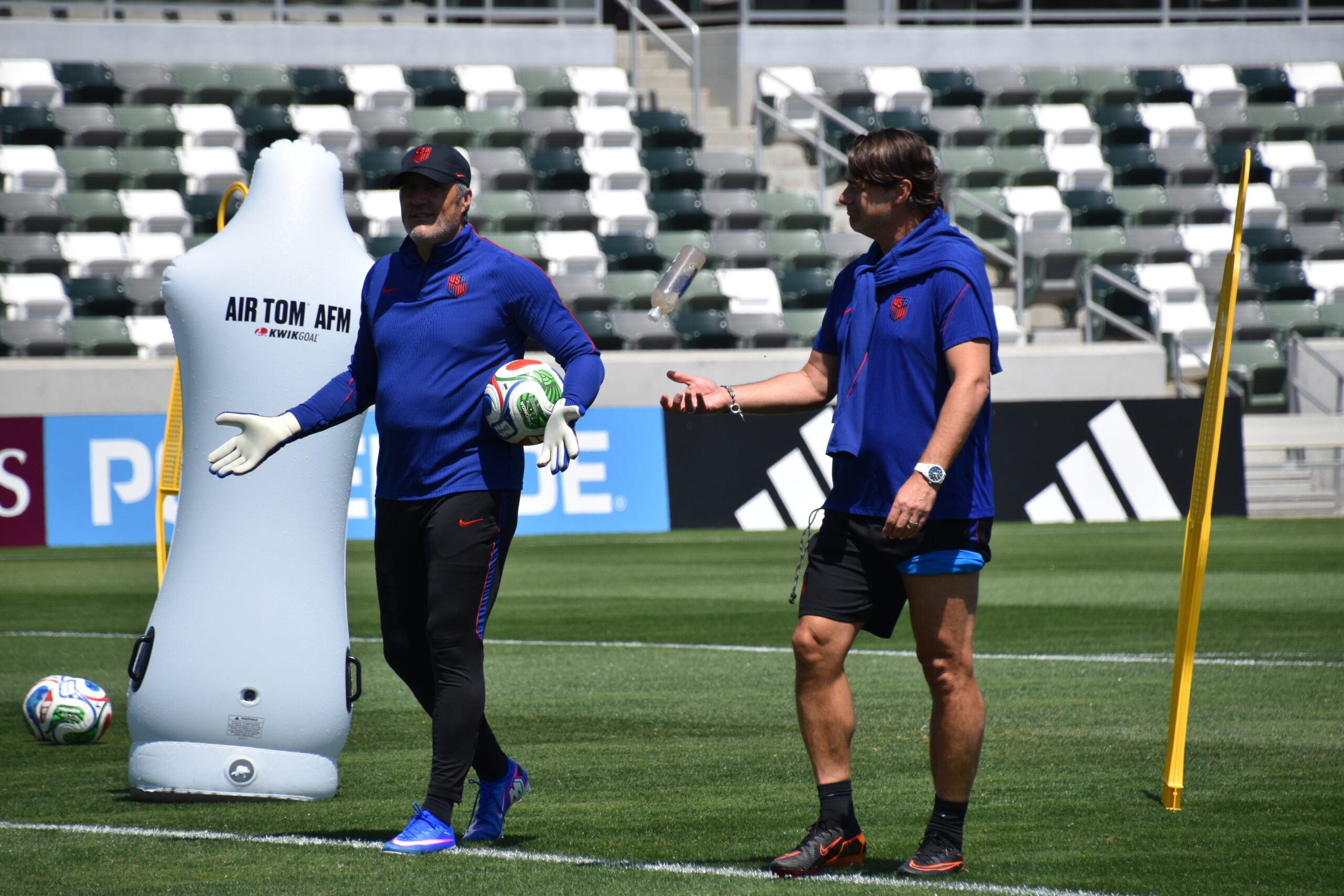
    Manager Mauricio Pochettino has been paying attention too. There’s certainly a practical side to having extra bodies on hand, but Pochettino is also happy to do something for the bigger picture.

    Mauricio Pochettino (right) with goalkeeper coach Toni Jiménez.

    “I think, always, we’re thinking to try to help develop young players, even if we don’t know if we’re going to be here or not in the future,” Pochettino said, referring to his contract expiring after the World Cup. “But I think we need to work like we are going to be forever here, on a long-term process. That is why one thing is to get the result today, and provide everything to the federation and the team [for] the possibility to perform now, today or yesterday; but at the same time, to help, in parallel, the evolution and development of the young kids that are going to be the important players for the future of this country.”

    Rick confessed to being an extra level of thrilled because he’s a fan of English club Tottenham Hotspur, perhaps the best-known former home for Pochettino.

    “My first day he welcomed me. We just a quick conversation about just where I’m at and all that,” Rick said. “I was a huge ‘Poch’ fan as a kid, now I get to to be coached by him. So it’s an honor.”

    A day in the life

    On most practice days — and there have been more than usual, with a week between games so far in the first 48-team World Cup — Rick has been amid the first team’s action. Other days, the prospects work separately with assistant goalkeeper coach Jack Robinson.

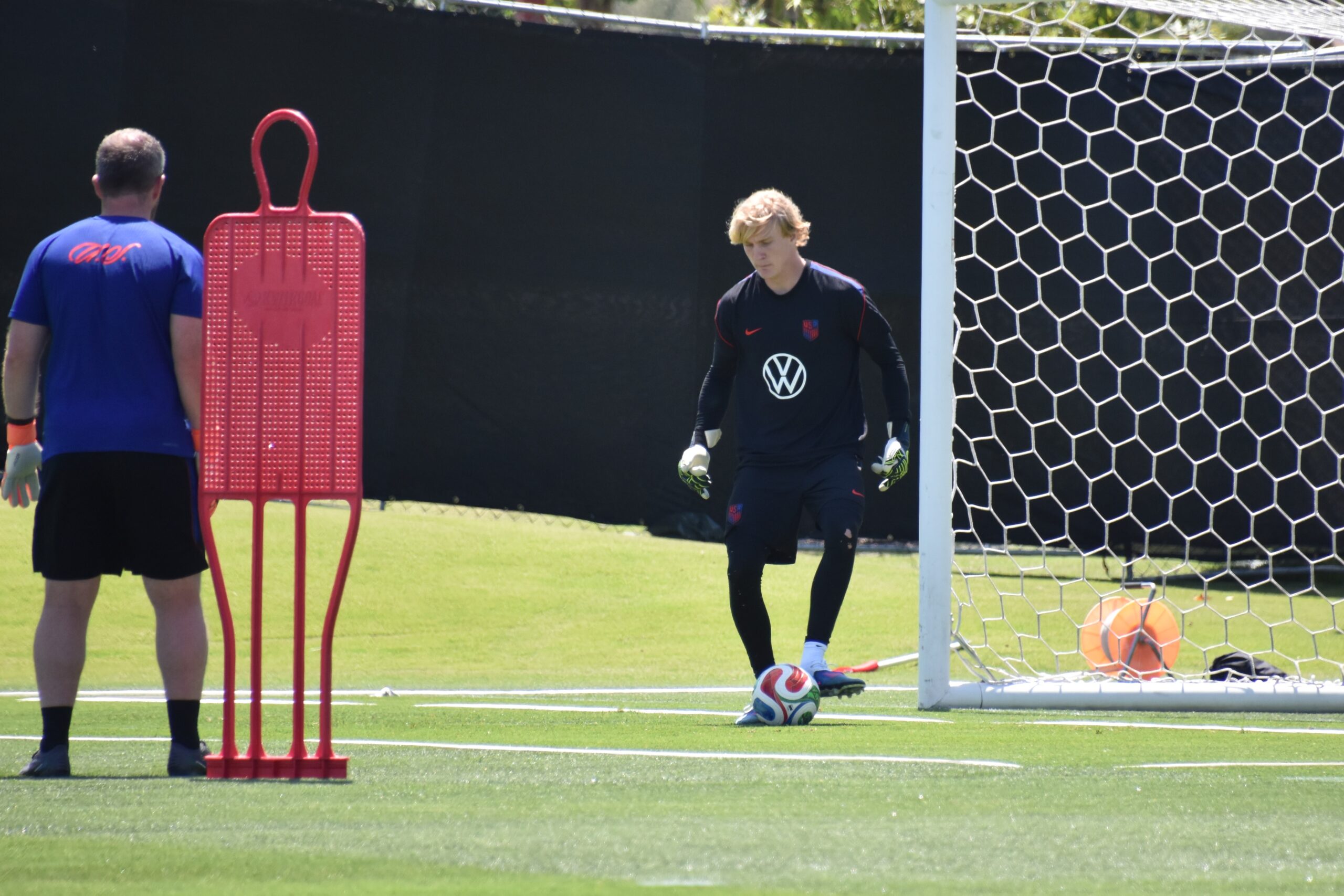
    Andrew Rick getting some work in with the ball at his feet.

    “I think this World Cup’s a bit different to the last, at least talking to some of the other guys, and just seeing it in general,” he said. “But I think the main thing is just being exposed to the environment. If I ever want to get back to this level — and hopefully when I do get back to this level — just knowing what it’s like, and knowing some of these guys and building that relationship with them now while I’m here, is going to be so important down the road for me.”

    When game day arrives, Rick and Eyestone get to spend most of it with the first team.

    “We’re basically with the team until they walk out, and then we go into these seats that are right behind the bench,” Rick said. “So we’ll walk in with the team, we’ll watch warm-ups from the pitch. We’ll be in there for the team talk before the game, and then once they walk out, we’ll go to a separate section that’s right behind the bench and watch from there.”

    At halftime, it’s back to the locker room, then back to the stands, then on to the field to join what have so far been celebrations and applause for the big crowds.

    He’s well aware that his up-close perch would cost a fan thousands of dollars.

    “The ticket prices are crazy, but the good thing is it’s not affecting attendance,” Rick said. “I’m not going to lie, I was a little surprised — I was expecting a lot of people to be scared of $3,000 tickets for one [person], but it seems thankfully I’m wrong. Because, I mean, Seattle was amazing. Best experience I’ve ever had with a crowd, there.”

    Keeping up with the Union

    He has talked with colleagues back in Chester, naming goalkeeper coach Phil Wheddon (who worked with U.S. national teams in the past), Nathan Harriel, and fellow goalkeeper George Marks. Rick also was well aware that he’ll come home to a new manager, as Bradley Carnell was fired a few days after he left town.

    Rick knows interim manager Ryan Richter well, since Richter was promoted from coaching the Union’s reserve squad. But it turns out their relationship goes back much farther.

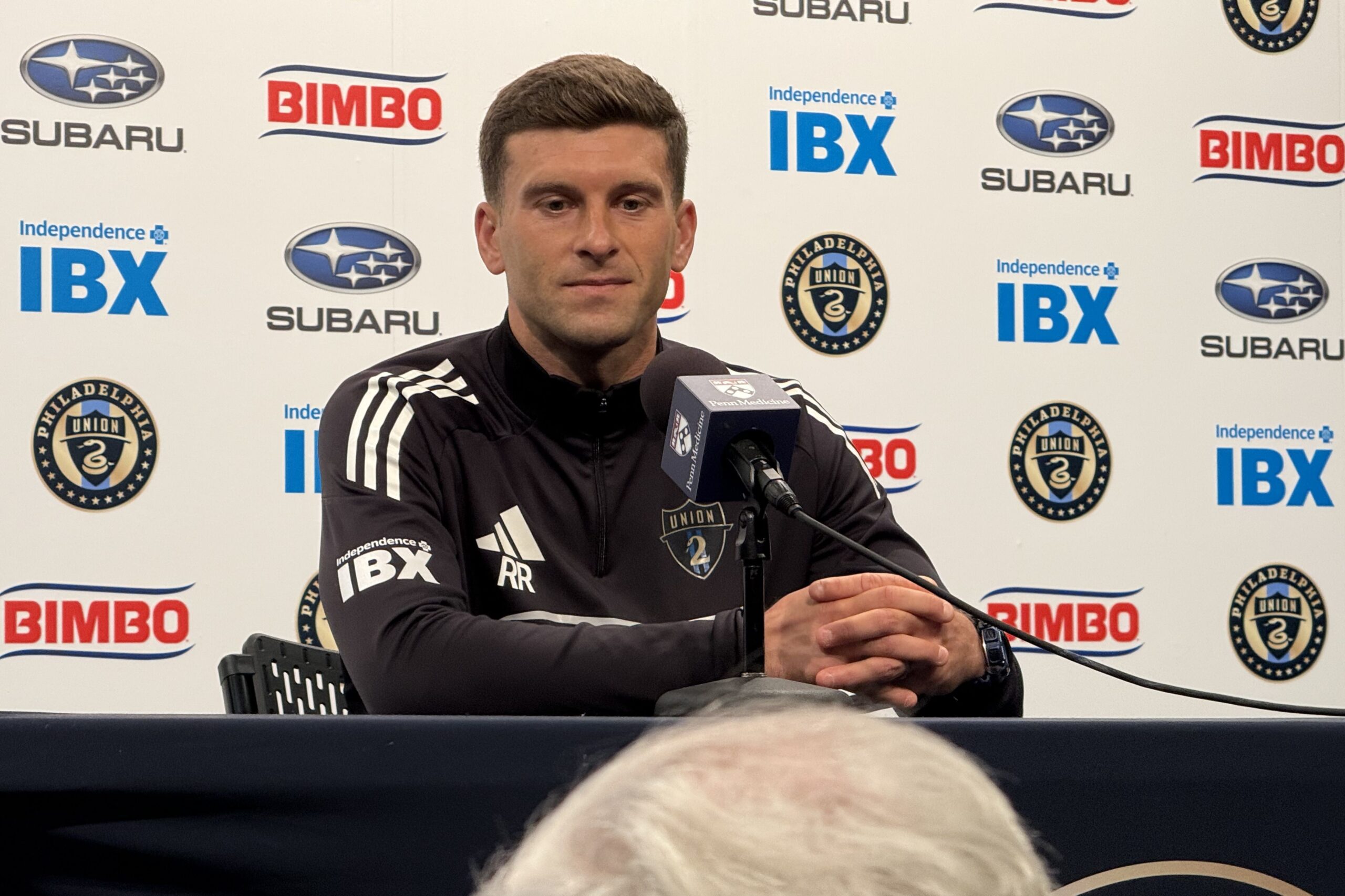
    After the Union fired manager Bradley Carnell, Union II head coach Ryan Richter was promoted to the top job for the time being.

    “He was my Union Juniors coach when I first started, he was my u-12, coach. He was my u-15 coach, he was my union first team assistant coach, then he was Union II coach, and now he’s the first team head coach,” Rick said. “So I feel like I’ve kind of been there every step of the way through the pathway with him. He’s a great guy, and I know how he wants to play and all that super-well just. … I’m proud of him.”

    That moment of reflection led to Rick looking back at his own growth along the way.

    “If I’m being honest, coaching u-12 Andrew is very frustrating, and then coaching u-15 Andrew is also very frustrating,” he said. “But I give him credit, because he’s been dedicated through it all, and now he’s got the ultimate goal which is being the first team head coach.”

    At a moment like this, Rick can dream of his ultimate goal, too. However long it takes him to get there, at least this summer has given him a special way to see the path.

  • A quiet World Cup rule change could become a loud controversy in the final group-stage games

    A quiet World Cup rule change could become a loud controversy in the final group-stage games

    IRVINE, Calif. — If you’re new to soccer, this is the sort of thing you should know about as you learn the sport. And even if you’re a veteran of the game, you might not have realized it had happened.

    For many years, FIFA’s first standings tiebreaker at World Cups was soccer’s tradition of goal difference: goals scored minus goals conceded. But this time, it has switched to head-to-head result, the format used by the Union of European Football Associations in the Champions League and other continental tournaments.

    It didn’t exactly go unnoticed when it was announced, but it wasn’t seen as a big deal. Now, though, it has become a growing controversy.

    The issue isn’t so much about determining group winners, though the U.S. has benefited on that front. If goal difference was the first tiebreaker, the Americans wouldn’t have clinched first place yet.

    The U.S. win over Australia combined with Paraguay’s win over Turkey last week clinched first place in the group.

    They have because Paraguay beat Turkey a few hours after the U.S. beat Australia. That left the U.S. with six points, Paraguay and Australia with three each, and Turkey with none.

    Since the U.S. has beaten Paraguay and Australia, it has the tiebreaker over both. So if Turkey beats the U.S Thursday night (10 p.m., Fox29, Telemundo 62) and there’s a winner in Paraguay-Australia (10 p.m., FS1, Universo), the U.S. will keep first with a tie on six points. With a goal difference tiebreaker, even though the Americans are sitting at a strong plus-5, a big loss plus a big win in the other game could have changed things.

    The bigger issue tournament-wide is how head-to-head has eliminated teams after two games — and it’s magnified further by the best eight third-place teams qualifying.

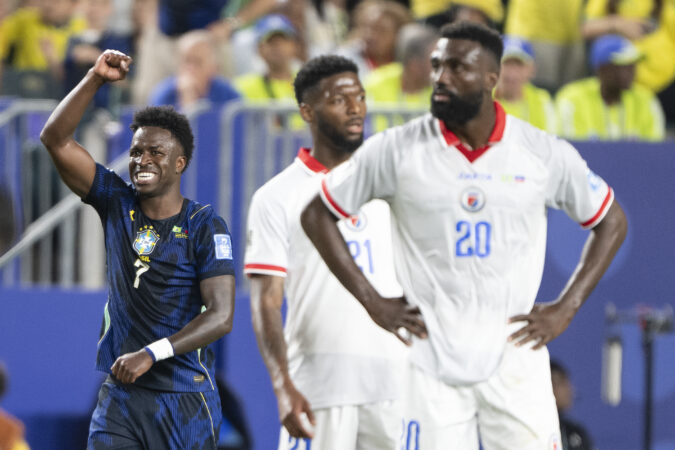
    If goal difference was the first tiebreaker, a last-place team could jump to third in the last minute and have a prayer of making the cut. Instead, five of the tournament’s 48 squads were eliminated before playing their finales: Turkey, Haiti, Jordan, Panama, and Tunisia. (Haiti’s elimination came in Philadelphia with the loss to Brazil.)

    Cecilio Waterman’s Panama joined Haiti as Concacaf teams eliminated from advancing after two games.

    There has been some outrage among purists about this in Europe, even though they’re more used to the format than they might admit because of the Champions League. But even the talking heads who understand the head-to-head way’s benefits have agreed with something that Americans ought to be able to see, too.

    It’s more fun when more teams are alive going into the last round of games. If goal difference was the first decider, there could be a dose of chaos along with the stars, underdogs, and however many goals are scored.

    Fortunately, Philadelphia’s last two group games will have drama. On Thursday, Curaçao, one of this tournament’s greatest underdog stories, could snatch one of the top eight third-place finishes if it upsets Ivory Coast (4 p.m., FS1, Universo) and Germany beats Ecuador in the Meadowlands (4 p.m., Fox29, Telemundo 62). On the flip side, if Ecuador wins that game, Ivory Coast will have to win or tie to keep hold of second.

    Then on Saturday, Ghana and Croatia will have lots to play for (5 p.m., FS1, Universo). Ghana could steal first place if Panama upsets England in the Meadowlands (5 p.m., Fox29, Telemundo 62), while Croatia needs a win to finish second and avoid playing a group winner in the round of 32.

    Ghana’s tie with England on Tuesday in Foxborough, Mass., means the Black Stars still have a slim chance of winning their group.

    Wondering what the players think? Alas, you won’t get much out of the U.S. camp. All they care about is winning games. But at least veteran centerback Chris Richards brought some humor.

    “On our end, we just want go into the next round with nine points,” he said. “I haven’t really thought too much about the rule change — I feel like the rules are always changing, so I’m kind of confused myself. But as long as we keep winning, that’s the number one thing.”

    Pulisic ‘feeling good,’ hopes to play

    Christian Pulisic got right to the point when he arrived to meet the media before Wednesday’s practice.

    “Can I guess the first question?” he said, knowing full well what it would be. Of course everyone wanted to know how he and his rehabbed calf were feeling.

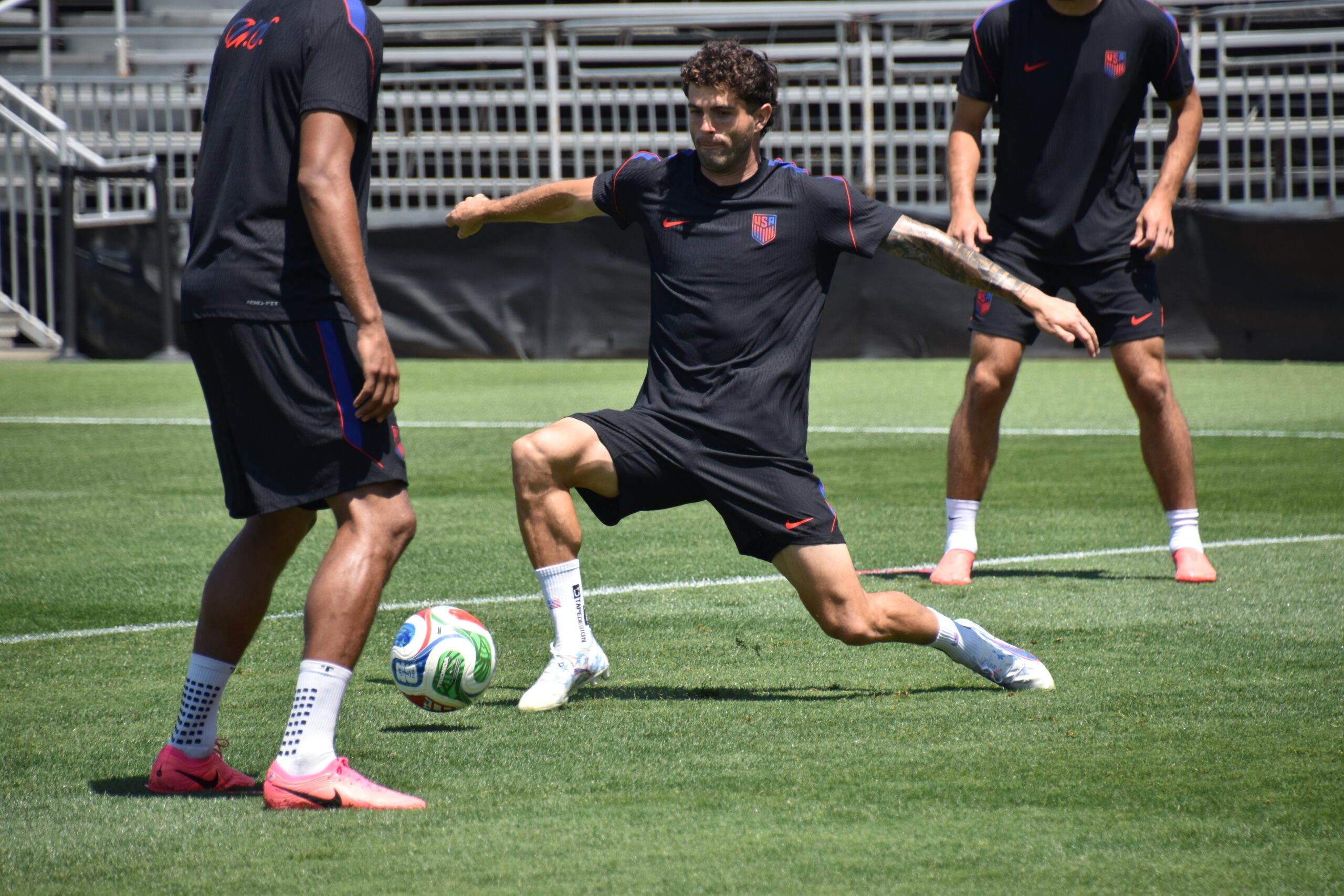
    Christian Pulisic reaches for the ball in a drill at Wednesday’s practice.

    “I’m feeling good,” he said as he headed into a third straight day of full participation. “I’ve obviously joined with the team in the last few days. So I’m feeling good, positive going into [the game], and hopefully I’ll be able to play a part in it tomorrow.”

    The Hershey native reconfirmed that he was kicked in his left calf in practice a few days before the U.S.-Paraguay game (he politely declined to say who did it), then again in the first half of the contest.

    “Throughout the first half I felt good, and then I started to notice it a little bit, and I think adrenaline definitely carried me through,” he said. “I think I had a pretty strong contusion, strain, whatever you want to call it.”

    It might have hurt more emotionally than physically that he couldn’t play against Australia. He certainly took in as much of that day as he could as a spectator.

    “I never really feared the worst, but I obviously didn’t want it to keep me out any longer than it had to,” Pulisic said. “And I was really trying to get ready for the last game — I feel like I could have gone, but it just wasn’t quite there.”

    U.S. manager Mauricio Pochettino (right) and goalkeeper coach Toni Jiménez at Wednesday’s practice.

    Players with yellow cards won’t play vs. Turkey

    In his news conference Wednesday afternoon, U.S. manager Mauricio Pochettino confirmed that the four players with yellow cards — Tyler Adams, Folarin Balogun, Richards, and Antonee Robinson — won’t play vs. Turkey so that they don’t pick up another and get suspended for the round of 32.

    “I think it isn’t necessary to take a risk and then to take another yellow card, and be not available for the next stage,” Pochettino said. “And I think that is a little bit a normal and easy answer: not to play with them from the beginning.”

    He said of Pulisic’s status: “He’s available, and then we need to decide if it’s possible for him to play from the beginning or be on the bench and play in the second half.”

    Cristian Roldan is also dealing with a minor quad injury, and has not practiced for the last few days.

    “We need to assess tomorrow if he can be available,” Pochettino said. “I think he’s evolving really well. If it’s not for tomorrow, hopefully for next week.”

  • Mauricio Pochettino’s worst moment as USMNT manager became the stage for his best one

    Mauricio Pochettino’s worst moment as USMNT manager became the stage for his best one

    DANA POINT, Calif. — Fifteen months ago, Mauricio Pochettino walked out of SoFi Stadium at the low point of his tenure as the U.S. men’s soccer team’s manager.

    Not only had his players lost both games at the Concacaf Nations League final four, but they had lost badly, with a squad including many of the program’s stars. He had taken the job to prepare one of the World Cup’s cohosts for the biggest stage, and everything felt about as far from ready as possible.

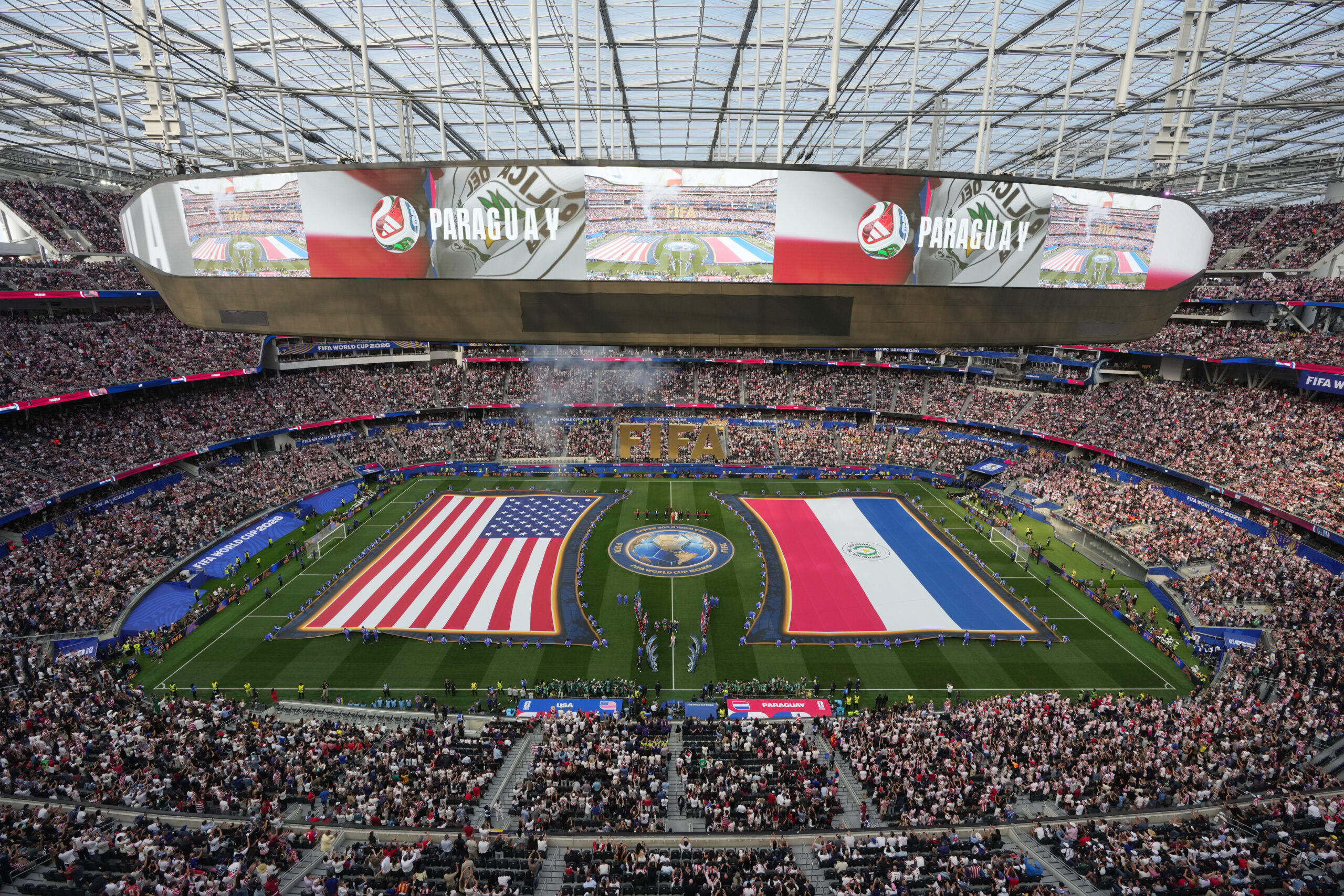
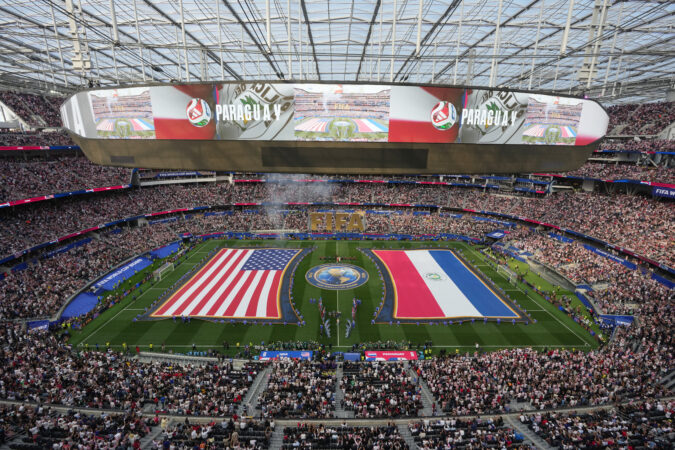
    Two weeks ago, Pochettino was back on the same field, about an hour north of here, joined by many of the same players. This time, they charged to a 4-1 rout of Paraguay in the Americans’ World Cup opener, jolting the tournament and the nation to attention.

    “I didn’t recognize it,” he said in a gathering with media at his office in the team’s swanky hotel along the Pacific Ocean. “Because it was empty” the first time.

    Mauricio Pochettino’s frustration showed during the U.S. team’s loss to Panama in last year’s Concacaf Nations League semifinals.

    Indeed, the stands were mostly empty when the U.S. played Panama in the semifinals, then Canada in the third-place game. They were filled only in the other halves of those doubleheaders, when Mexico won twice to take its first Nations League title after three straight U.S. triumphs.

    “I was crying afterward in the dressing room, because I felt so sad for all the American people, for the players, for the staff,” Pochettino recalled. “I said, ‘OK, we play in our own place, our own country, and 70,000 Mexican people’ … I cannot accept that.”

    This time, as he put it, was “a completely different vibe, different energy.” The place was full, and backing the hosts. Sure, that it was a World Cup helped, even with the ticket prices. But it was clear from the moment the crowd joined in singing the national anthem that there really were U.S. national team fans in the stands.

    There’s still a long way to go this summer, with progression to the knockout rounds and first place secured before Thursday’s group stage finale against Turkey (10 p.m., Fox29, Telemundo 62). And the U.S. team hopes there will be a long way still to go after that.

    But given this game’s lessened stakes, there’s a moment to stop and survey just how far the program has come.

    A big crowd was on hand on June 12 in Inglewood, Calif., for the U.S. World Cup opener against Paraguay.

    ‘The person you used to be’

    The most striking feature of Pochettino’s office is a balcony with a postcard view of the water, the surfers in it, and the stunning sunsets beyond them. Ranked No. 2 is a wall covered with a U.S. Soccer logo and one of the team’s slogans for the tournament: Why Not U.S.?

    Within the lines of type, Pochettino wrote a series of motivational phrases, some of his creation and some by others.

    Growth is often painful, for it means saying goodbye to the person you used to be.

    The talent has brought us here, but it is heart, effort, and unity that will make us unforgettable.

    Heart turns effort into belief — and when everything hurts, heart keeps us fighting together.

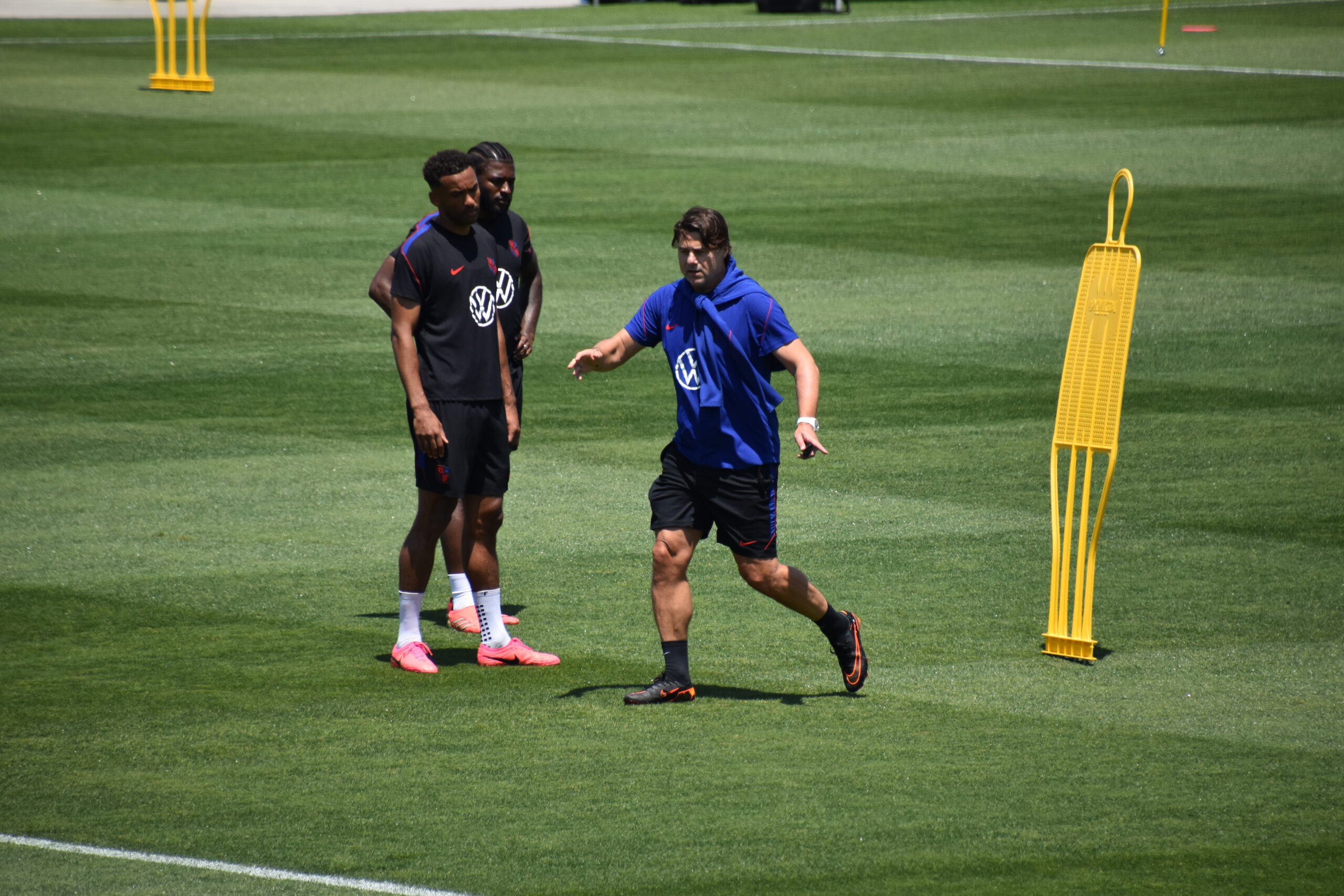
    Mauricio Pochettino (right) giving instructions to Auston Trusty (left) and Mark McKenzie during Tuesday’s U.S. practice at the team’s base camp in Irvine, Calif., ahead of Thursday’s match against Turkey.

    “I think every single quote represents our journey from day one to today and beyond,” he said.

    They’re also more proof of how Pochettino values the psychological side of the sport, a factor that’s even more important with national teams than it is with clubs.

    National teams can’t buy players to boost their talent the way clubs can, especially Pochettino’s previous employers at England’s Chelsea and Tottenham Hotspur and France’s Paris Saint-Germain. If a national team’s top players aren’t delivering, all the manager can do is drop them, call in other players, and hope they do enough.

    That’s what happened after the Nations League failure.

    Yunus Musah (left) is perhaps the highest-profile player who has fallen out of the national team rotation during Mauricio Pochettino’s tenure.

    “Maybe we didn’t feel or see how difficult the process was going to be,” Pochettino said. “We were so naive when we signed our contract. … We misjudged the situation — it was worse than we really believed.”

    ‘We were knocked out’

    He and the assistants he brought with him came in believing that the players would immediately be as all-in on working toward the World Cup as the staff.

    “And then we arrived here, we received a big punch,” he said, mimicking it, “and we were knocked out for a while.”

    Pochettino was, as he relayed in these remarks with an expletive, shocked.

    Mauricio Pochettino (center, in cap) and top assistant Jesús Pérez (foreground) during a U.S. practice last October.

    “We were so excited about that, because it was so close to the World Cup,” he said. He expected in turn that people would be “desperate to help everyone, to be involved, come to the national team. And what’s the opposite?”

    He felt it as soon as he took charge in the fall of 2024. By the time the Nations League final four arrived, he said “that punch, we expected” — words as damning as any he has said in his tenure.

    “I think it was more a plan to have this punch that was painful, but it was necessary for people to realize in which place we were,” Pochettino said. “For the players to realize that this way, it was impossible to arrive in a good condition to the World Cup.”

    We’ll never know what would have happened if the U.S. had won the Nations League title with its stars playing well. But because it didn’t, Pochettino moved quickly to start tearing things down, bringing in a slate of new players to challenge incumbents from the summer’s Gold Cup into the autumn.

    Max Arfsten (left) is one of the new players who has gained Mauricio Pochettino’s trust.

    There were a lot of questions along the way, and among outsiders, uncertainty as to whether the move would pay off. But when the Americans beat Japan in September, they showed they had reached the corner to turn around. Over the ensuing months, they got there.

    Now, Pochettino has a galvanized group, and some of its biggest names have led the way in the World Cup. The U.S. might not be able to win it all, but there’s no questioning the players’ commitment now.

    ‘The same essence’

    At one point, Pochettino was asked how much he has learned about American culture in the job. He has been asked that a few times in his tenure, and unfortunately hasn’t had much to answer with — not least because he and his staff don’t live in the United States.

    This time, he had more to say.

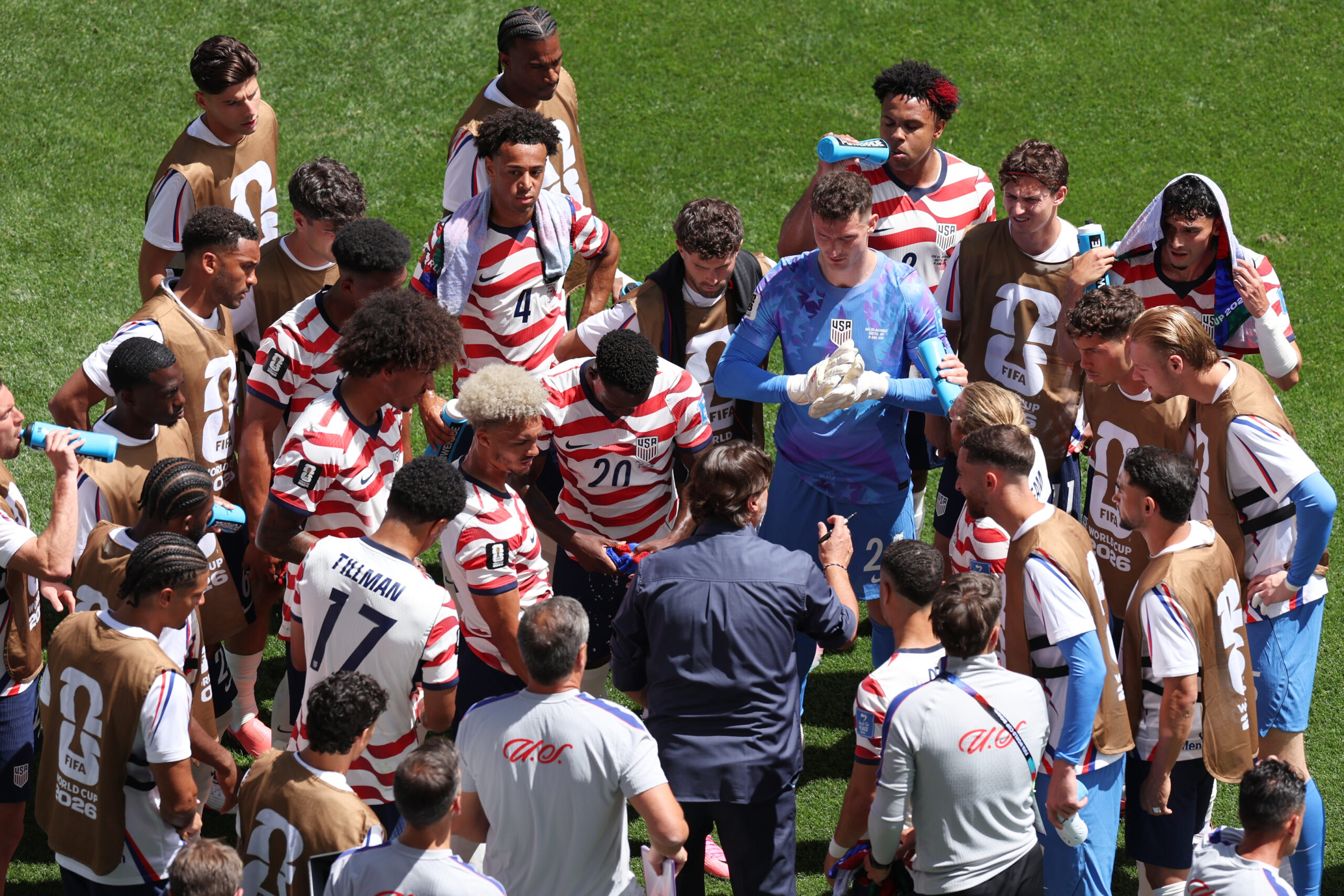
    Mauricio Pochettino (center) talking to his players during a hydration break in the U.S. match against Australia last Friday in Seattle.

    “People are very approachable, they make you feel comfortable, it’s very welcoming,” he said. “You go to some place like Nashville and you go to a bar, and if you are alone, you make friends so quick. And it looks like in a few minutes, you belong that in that place.”

    That, he said, “was a massive surprise. … Different states and everything, but you have the same essence of the human being.”

    If it’s tempting to want such a message that can resonate in a divided country — especially during a unifying event like a World Cup — it bears saying that Pochettino probably hasn’t experienced the full depths of what has caused the divisions.

    But conversations with people who know him bring up a reminder: He’s one of many foreign visitors, especially from his native Argentina, who look up to the United States culturally and see the good before the bad.

    “The country is massive and the people are so good,” Pochettino said. “I think we’ve learned a lot, I think we are much better people now, knowing the country and the culture of the people here.”

    He made a wisecrack about America’s reputation for junk food, a subject that the world has lived out in coming to our shores this summer. (Ask the Netherlands fans who went to Buc-ee’s, a famed Southern convenience store chain.)

    “People say Americans have no healthy food. Yes, you have healthy food,” citing a trip he took to a Whole Foods supermarket. “But also you have the food that makes you feel, you know, like Chick-fil-A.”

    He even said at one point that “when you are here, I think it’s difficult now to see yourself living in another place” and that “we will miss” the country.

    Here was Mauricio Pochettino’s speech to the crowd at the start of the day:

    #USMNT

    [image or embed]

    — Jonathan Tannenwald (@jtannenwald.bsky.social) June 8, 2026 at 12:50 PM

    That opened the door to ask if he’d like to stay in the job after his contract ends following the World Cup. There have been some discussions with U.S. Soccer, but the widespread presumption remains that he’ll go.

    He avoided a direct answer, saying his focus now is on the World Cup.

    “And then if we want to stay, we have months to talk, or days or weeks, because it’s four years until the next World Cup,” he said, later adding: “We told the federation we are open, but now I think it’s not to be distracted.”

  • Soccer Extra: Electric Action in Philly

    Soccer Extra: Electric Action in Philly

    On the latest Soccer Extra, Lisa Carlin and Jonathan Tannenwald break down the USMNT’s impressive start to the 2026 World Cup as Mauricio Pochettino’s squad tops Group D and prepares for the knockout stage. We also look at the latest All-Star action across different nations and the growing soccer excitement in Philadelphia as the city continues to shine on the world stage during this historic summer of soccer. Don’t miss the analysis, storylines, and biggest moments from around the game. Watch here.

  • When storms hit the France-Iraq game in Philly, a French radio station stayed on air from under a tarp

    When storms hit the France-Iraq game in Philly, a French radio station stayed on air from under a tarp

    Everyone knew that there was a risk of thunderstorms in Philadelphia on Monday, and Mother Nature delivered on cue.

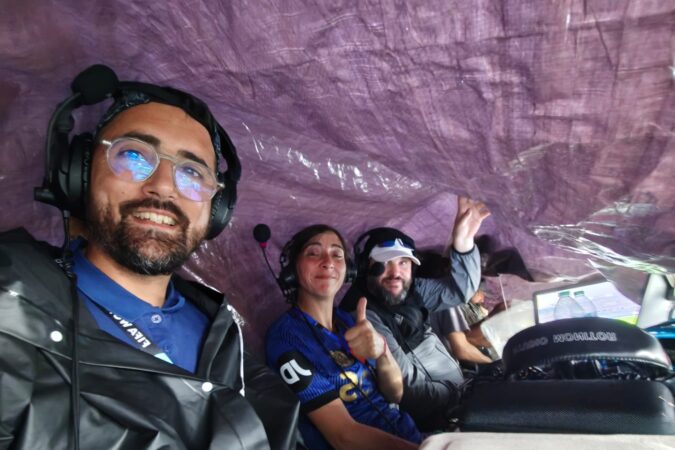
    But while the players could go to the locker rooms and the fans could go to the concourses, broadcasters calling the action couldn’t just go off air. Even worse, the TV and radio areas are in the upper-deck stands, part of extra media seating FIFA always builds at World Cups. So there was no cover overhead when it was only raining.

    While FIFA put plastic covers on the tables, that wasn’t enough to protect all the expensive equipment and the people using it. So the team at France Info, one of the many French radio stations broadcasting the game, had to get creative.

    Virginie Lorda, the crew’s technician, found a hardware store a few blocks from their hotel in Center City, and bought a tarpaulin and some ropes to tie it onto the table. Then when the rain started falling, the tarp came out.

    Broadcaster Julien Froment documented it all on his social media feeds, adding to the spectacle of a night with a two-hour delay in the game. The next morning, he talked with The Inquirer about it as the crew headed back to France’s base camp in Boston.

    “I have to give the credit to Virginie,” Froment said. “She had the idea to set this up, a little bit at the last minute, to protect us. … It was a mix of French and American expertise.”

    Summers can get very hot in France — the country recorded its hottest day ever on Tuesday, and highs are expected to top 100 degrees multiple times this week. But the sky doesn’t explode like it does here, even if that feels normal to Americans.

    “You all are used to this,” Froment said. “For us Europeans, to have to deal with a thunderstorm, it’s a bit new. This one was a grand premiere.”

    It’s worth noting that when Philadelphia hosted the Club World Cup last year, the city got pretty lucky. There were big storms on nongame days, and multiple games in other cities got hit. But no action here got delayed or postponed.

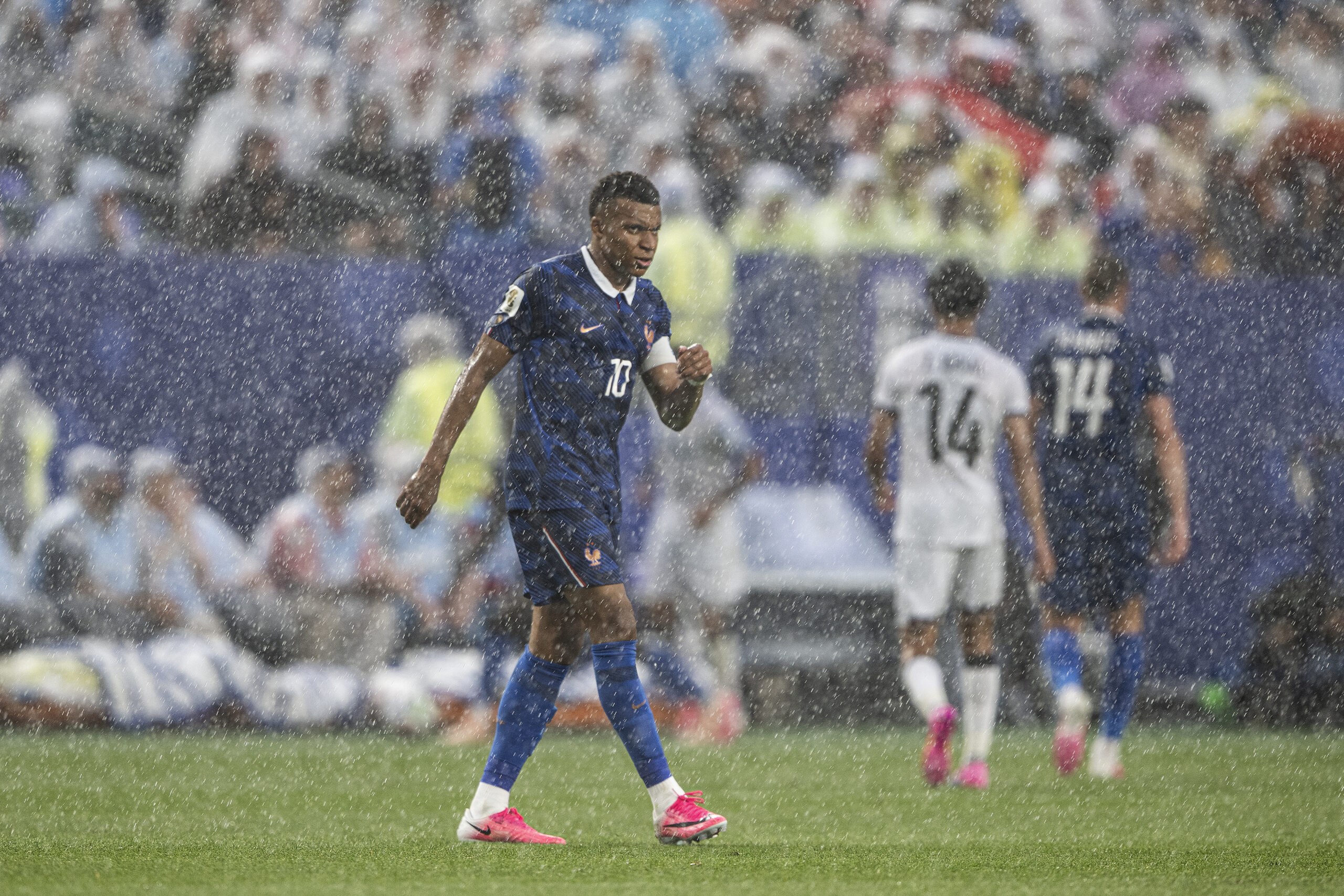
    France superstar Kylian Mbappé getting drenched by the storm that arrived in South Philadelphia late in the first half of Monday’s game.

    So maybe we were due, and unfortunately it happened during an especially star-studded game. France’s Kylian Mbappé scored two of Les Bleus’ goals in the 3-0 win, including a viral sensation of a hit for the opener, and reigning world player of the year Ousmane Dembélé capped things off with his first World Cup tally.

    To the city’s credit, the stands were almost totally full when the game resumed. No one went home even with the long delay, wanting to make the most of a rare chance to see these players in person.

    Though it’s unusual for American stadiums to have media seating in the middle of the stands, it’s the norm in Europe and elsewhere. There aren’t broadcast booths the way there are at American football, baseball, and soccer stadiums.

    The locations of the “media tribune,” to use the world’s game’s phrase, can vary. At Chelsea’s famed Stamford Bridge in London, you can almost touch the team benches. At Lyon’s modern Groupama Stadium in France, which hosted the 2019 women’s World Cup final, you’re up in the heavens.

    But no matter the distance from the field, there’s almost always a roof over the stands in some form.

    “We’re in the open air to capture the atmosphere — it’s the tradition,” Froment said. “We’re used to being outside. But the big difference between European and American stadiums is we aren’t protected here. There’s no roof, there’s nothing to protect us from the elements.”

    That is especially the case at the stadiums Froment’s crew has been to so far in New England and the Meadowlands. France isn’t playing at the indoor venues in Atlanta, Houston, or Dallas; or in Seattle or Los Angeles, where the stadiums are open-air but the stands are covered.

    But Froment has enjoyed the experience overall, marveling at America’s modern stadiums that are palatial compared to European soccer cathedrals with decades of history but fewer amenities.

    “Here, you get the feeling that everything is almost at extremes,” he said. “The stadiums are huge, built specifically for the fans. I’m kind of shocked by how many snack bars and concession stands there are. … It really represents a different kind of consumerism — a different sports culture — compared to what we’re used to in Europe.”

    They’re also a lot bigger than most stadiums in France. The biggest, the Stade de France in suburban Paris, seats 80,000; the second, Marseille’s Vélodrome, seats just over 67,000; and the venues in Lyon and Lille are the only others nationwide over 50,000.

    Asked his opinion of Lincoln Financial Field, Froment called it “the best stadium I’ve been to at this World Cup,” helped by location, architecture, and the vibe of the broader Sports Complex.

    “It’s a little different,” he said. “At MetLife Stadium [in North Jersey], it doesn’t have personality. It feels like it could be any stadium in the world. In Philadelphia, you feel like there’s a story there.”

    (We couldn’t help responding that he’s far from alone in those opinions.)

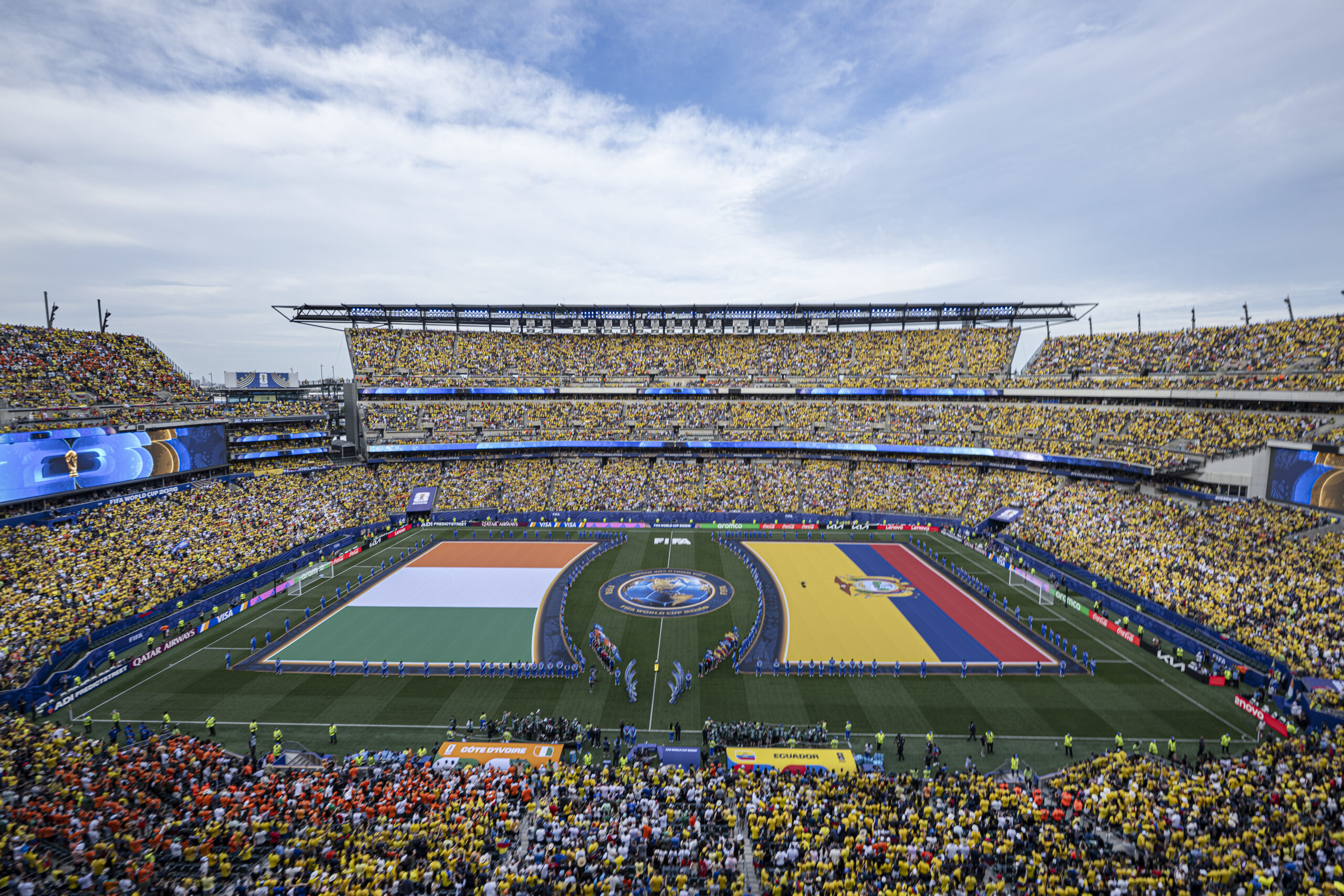
    A view of the stands at the start of the Ivory Coast-Ecuador game, which like all of Philadelphia’s World Cup games so far drew a full house.

    He had some time to explore as well. There were a few trips to Reading Terminal Market, and walks to the Liberty Bell and the Rocky Steps — documenting France fans’ night-before pep rally at the latter.

    It’s playing the hits, sure. But it’s also a reminder of how warm a welcome Philadelphia has put on for its international guests this summer, and that Center City being easy to walk around is another of its great assets.

    There might be a second chance to welcome France, too, if Les Bleus win their group and the round of 32 game afterward.

    “I find the city really nice,” Froment said. “It’s less oppressive than New York. You can breathe more easily.”

  • USMNT players are waiting with everyone else to learn what changes will come in the group stage finale

    USMNT players are waiting with everyone else to learn what changes will come in the group stage finale

    IRVINE, Calif. — Trying to guess what’s on U.S. men’s soccer team manager Mauricio Pochettino’s mind when it comes to starting lineups is usually a fruitless endeavor. He likes to keep his cards close to the chest, and doesn’t reveal them until he has to on game day.

    But all of his players, not just outsiders, know the four players sitting on a yellow card suspension threat heading into Thursday’s group stage finale against Turkey (10 p.m., Fox29, Telemundo 62): Tyler Adams, Folarin Balogun, Chris Richards, and Antonee Robinson. And they know the risk of playing Christian Pulisic as he finishes recovering from a calf injury.

    That opens the door for backups who haven’t featured much yet to get a shot. Two of them have talked with the media so far this week, left wingback Max Arfsten and attacking midfielder Alejandro Zendejas. They both said they’re ready to jump in if called.

    “Training hard, been waiting for the opportunity, but I’m sure it’ll come,” Zendejas said. “That’s obviously a coach’s decision, and something I’ve got to respect, but I’ve always said it all depends how I’m on the field. I’m working hard, having fun, really enjoying this dream that I’m living right now, so I couldn’t ask for more.”

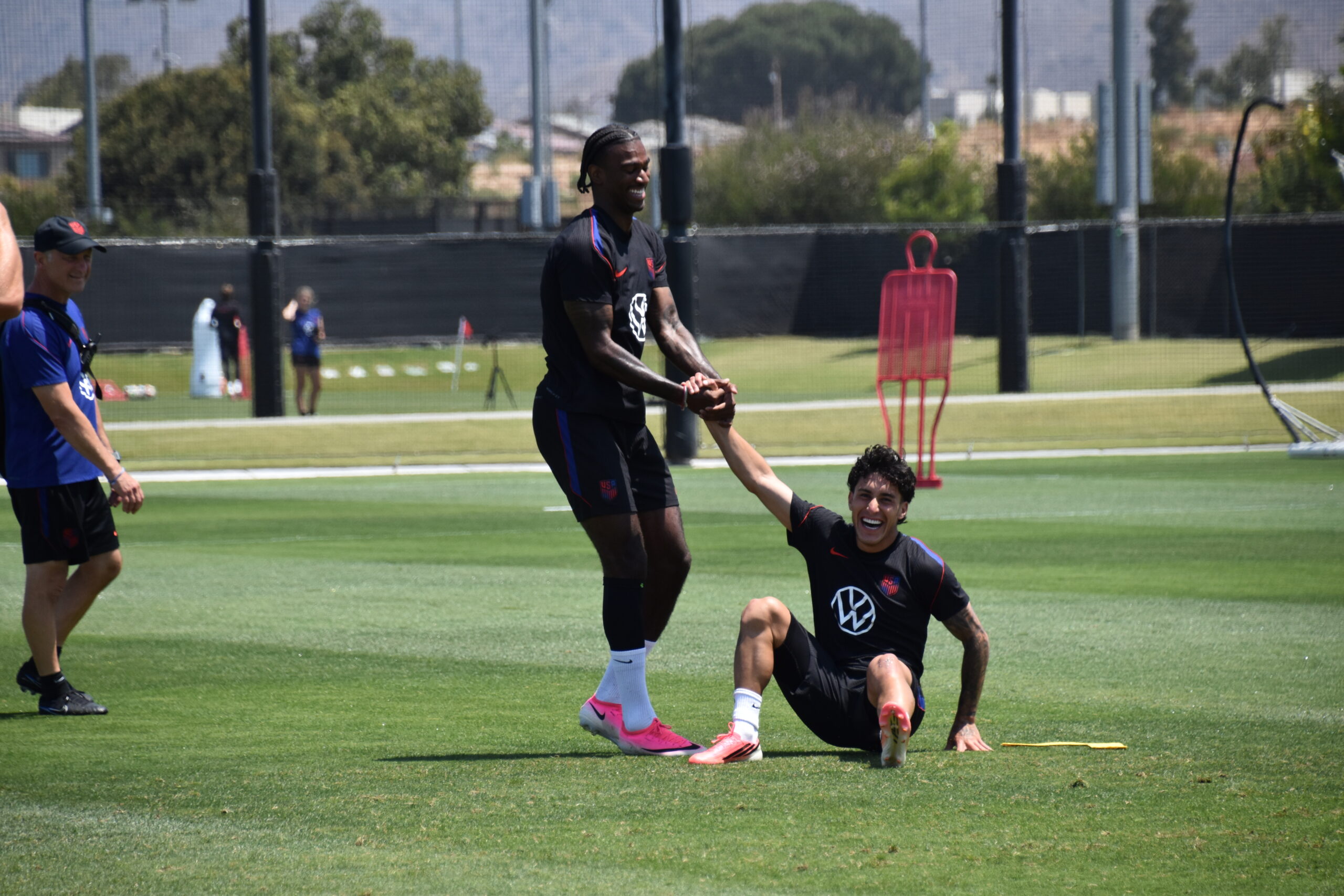
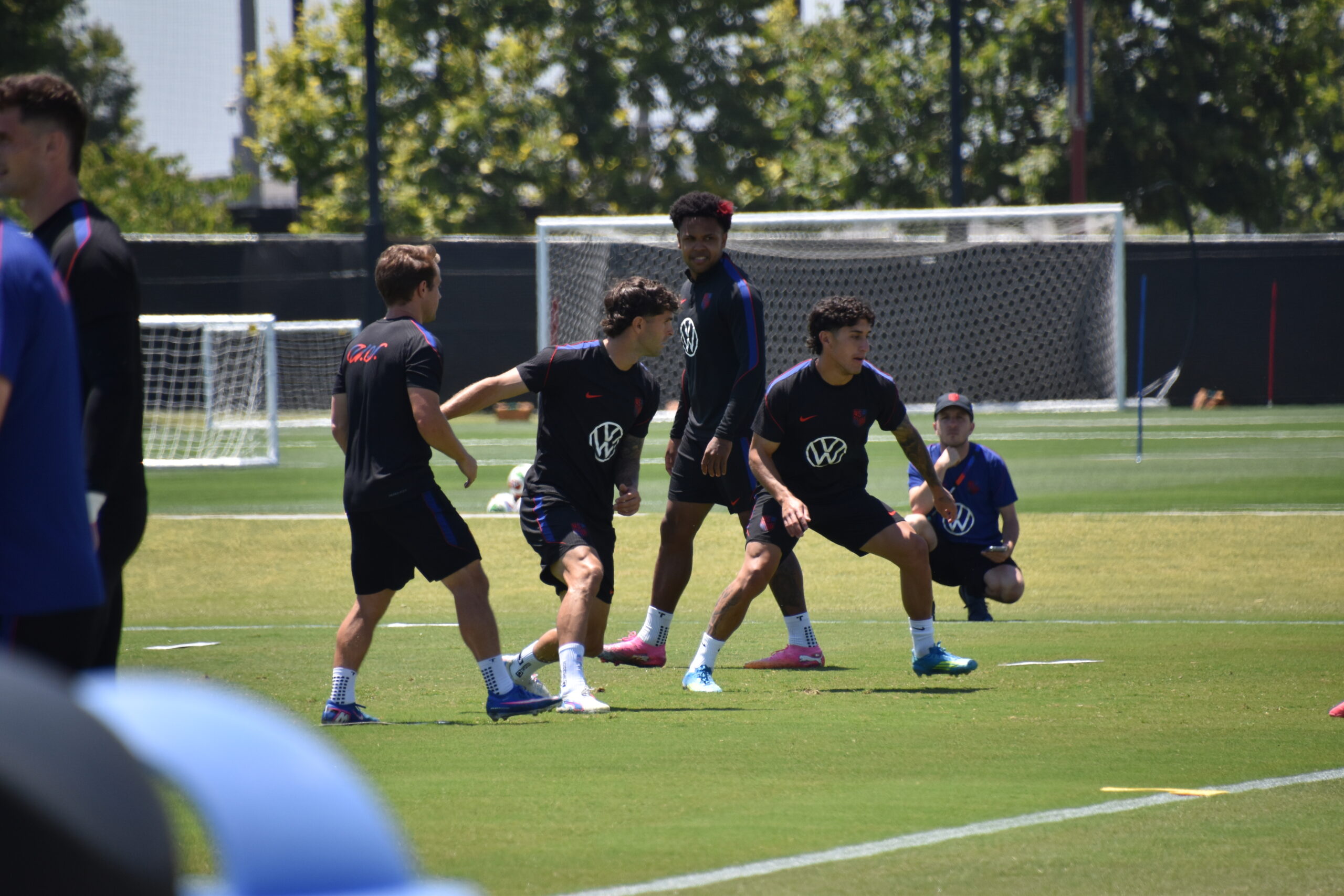
    Alejandro Zendejas (right) shares a laugh with Haji Wright after hitting the deck during a drill.

    Arfsten said before Tuesday’s practice that as of then, the players “haven’t heard anything about” who will start Thursday.

    “That’s obviously the coach’s decision and whatever he decides, obviously we’re going to be on the same page with that,” he added.

    As Arfsten continued at the mic, he left no doubt that all 26 players are well-trained at handling pesky inquiries from the media.

    “It’s a tough question — good thing I’m not a coach,” he said at one point. “But honestly, I think the most important thing is, no matter who’s playing, to go out and try and get three points. Just because I think the momentum of the two wins is what’s keeping the energy high right now, and three would be even more.”

    Max Arfsten jogging during Tuesday’s practice.

    He at least signaled that the tone of training sessions hasn’t changed with first place in the group sealed.

    “Obviously everyone’s happy that we’ve already advanced, but at the same time, regardless of if we’ve advanced or not, training is still very competitive, it’s very intense,” Arfsten said. “And I think that’s the culture that the coach has created: no matter what, that everyone’s still trying to prove something.”

    One starter likely to keep his place is goalkeeper Matt Freese. The Wayne native showed in the first two games why he earned Pochettino’s trust as the No. 1 in net.

    He is also perhaps the team’s most steadfast player when it comes to a one-day-at-a-time mentality. So when he was asked about potential lineup rotations in front of him, he barely flinched.

    “It’s a coach’s decision, obviously, and we’ve got 26 guys here who all want to play, and who all are ready to play, and are working hard every day in training,” Freese said. “And we as a group have full confidence in all 26 of us. So really, we’re focused on continuing to prepare and work hard in training, and be ready for whatever.”

  • The USMNT-Paraguay game was almost the most-watched soccer broadcast in U.S. history

    The USMNT-Paraguay game was almost the most-watched soccer broadcast in U.S. history

    Updated on June 22: Telemundo had to restate its viewership figures because of what it called “Nielsen’s revised data.” As a result, the network’s audience measurement fell to 7 million viewers.

    On the same day, a Fox spokesperson confirmed to The Inquirer that the network’s viewership figures are for broadcast windows longer than just the game itself. As such, the spokesperson said the “match window” number, to use the industry term, was 19.9 million viewers.

    That means the combined number in the record book is now 26,900,000 viewers. That total ranks No. 3 all-time among soccer broadcasts in the United States, behind the 2014 men’s World Cup final and the 2015 women’s World Cup final.

    Our original story follows below.

    The final viewership numbers from the U.S.-Paraguay game landed on Tuesday, and they revealed a new record for the most-watched soccer game in American broadcast history.

    Fox reported an audience of 18.037 million in English and Telemundo reported 9.5 million in Spanish, with both networks counting their TV and online audiences. The combined total of 27,537,000 broke a mark that had stood since the 2014 World Cup final, which drew a reported 27,314,274 viewers across ABC, Univision, and their respective streaming platforms.

    Philadelphia was Fox’s No. 9 ratings market for U.S.-Paraguay, a network spokesperson told The Inquirer.

    The combined audience was bigger than that of the decisive Game 5 of the NBA Finals on ABC, 24.5 million viewers according to ESPN. The series averaged 20.6 million viewers per game.

    Gio Reyna (right) scored the final goal in the U.S.’ 4-1 win over Paraguay.

    The peak audience of Game 5 was 33 million viewers. Fox’s peak for U.S.-Paraguay was 21.526 million and Telemundo’s was 7.1 million, for a combined 28.626 million.

    U.S.-Paraguay isn’t the only game that has drawn a big audience. The Mexico-South Africa tournament opener last Thursday had a combined 20.586 million viewers, with Fox drawing 7.186 million across all platforms and Telemundo drawing 13.4 million. The latter number is the biggest ever audience for any soccer game on a Spanish-language network.

    Mexico-South Africa was the most-watched World Cup group stage game not involving the U.S. — for all of two days. Saturday’s Brazil-Morocco game in the Meadowlands beat it, drawing a combined audience of 21.219 million: 10.019 million on Fox and 11.2 million on Telemundo.

    Those two contests now stand as Nos. 10 and 11 in the all-time rankings. Sunday’s Netherlands-Japan game also makes the top 20, with 17.238 million reported viewers: 8.838 million on Fox and 8.4 million on Telemundo.

    Fans watching the Mexico-South Africa game on the big screen at Philadelphia’s World Cup fan fest on Lemon Hill.

    Of the 12 games with publicly reported data so far, nine have reached combined audiences over 10 million viewers. One of them is Philadelphia’s first World Cup game, Ivory Coast vs. Ecuador on Sunday, which drew 13.473 million viewers across FS1 (4.273 million), Telemundo (9.2 million), and their online streams.

    Based on publicly-available data, the record men’s World Cup audience on an English-language network remains the 2014 U.S.-Portugal game, which drew 18.71 million viewers on ESPN. The overall soccer record in English is the 2015 women’s World Cup final, where Fox’s primetime broadcast of the U.S. triumph drew 25.632 million viewers.

    For over a decade, The Inquirer has compiled a database of the most-watched soccer broadcasts in U.S. history. Click here to see the full list.

  • The next big question for the USMNT: Managing yellow cards in the World Cup group stage finale

    The next big question for the USMNT: Managing yellow cards in the World Cup group stage finale

    IRVINE, Calif. — Until now, the U.S. has played only one game in a World Cup that didn’t matter in the standings: in 1998, when it was eliminated from advancing before the group stage finale.

    On Thursday, the total will rise to two. But this time, it will be because the Americans have already clinched first place.

    That makes for a very different vibe, not just from this team’s past but from most teams at any World Cup. It also makes for a serious question: How many regulars should rest, and how many should play to stay in rhythm?

    This was the question of the day as the Americans returned to practice on Monday.

    Antonee Robinson (right) is one of four U.S. players at risk of a suspension for yellow card accumulation.

    Common sense says players on yellow cards should sit, because if they get booked again they’ll be suspended for the round of 32 games when they’re really needed. Those are defenders Chris Richards and Antonee Robinson, midfielder Tyler Adams, and striker Folarin Balogun. All four are big-time players.

    We won’t hear from manager Mauricio Pochettino until Wednesday. We might hear from Richards, Robinson, or Adams before then. We did hear from Balogun on Monday, when the U.S. returned to practice. He and Alejandro Zendejas met with the media.

    “I want to play every game — it’s the sort of player I am,” Balogun said. “It’s what’s got me to where I am, being available. I think the most important thing for a professional athlete in any sport is to be available, and I’m no different.”

    But he quickly turned from there to pragmatism.

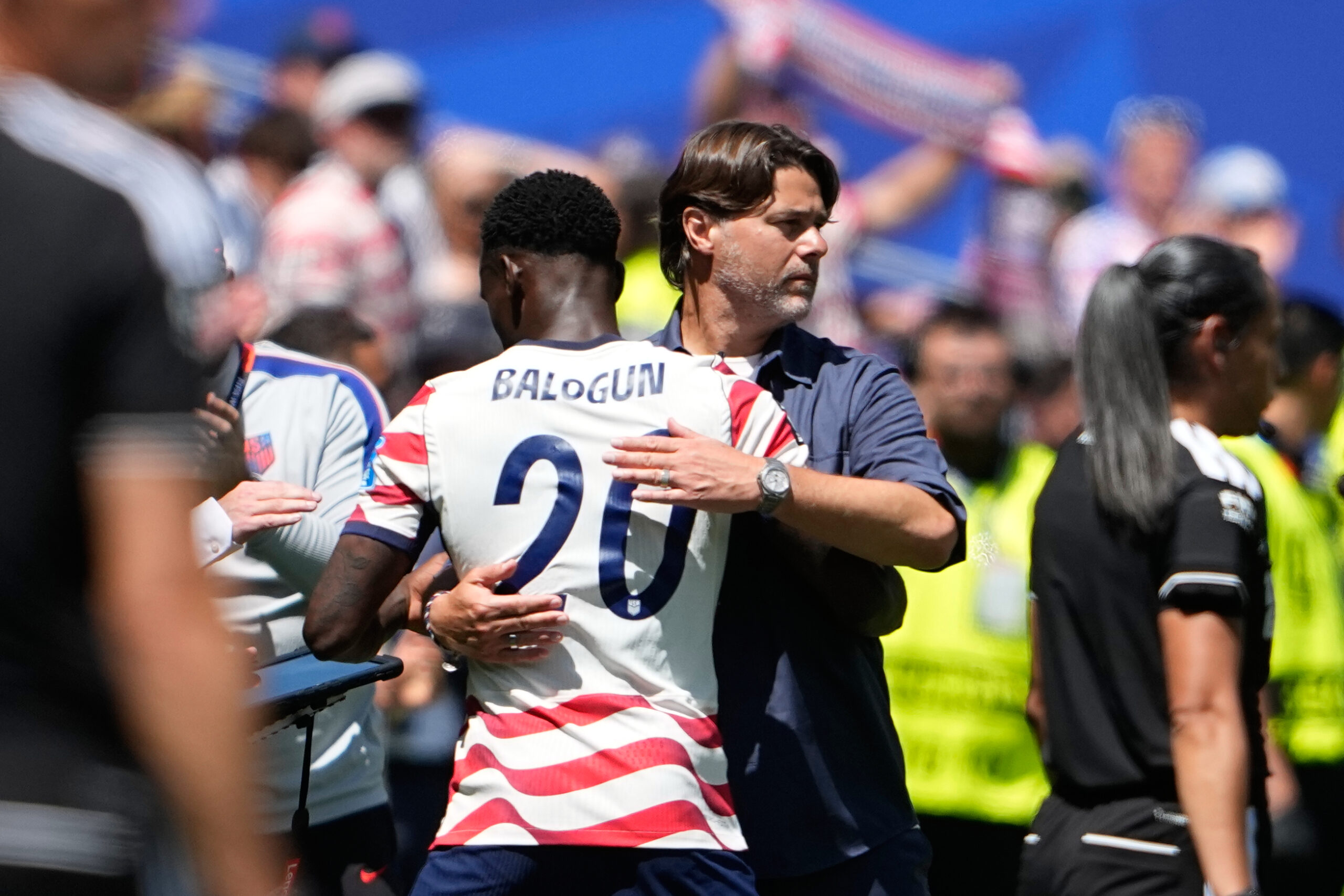
    Folarin Balogun (left) giving Mauricio Pochettino a hug after the U.S.-Australia game.

    “So of course I want to play, but it’s also important to be smart,” he said. “I wouldn’t want to pick up a yellow card and miss the round of 32.”

    Balogun also said the team’s overall focus for the game remains on winning.

    “The most important thing is to go out there and win,” he said. “Regardless of whatever team the coach decides to play, the objective and the aim is to go out there and win. Three wins from three games, it’s an opportunity to create history, and to put a positive message out there — not just for ourselves, but toward other teams.”

    Pulisic returns to practice

    Star playmaker Christian Pulisic was back on the field in practice for the U.S. men’s soccer team on Monday, taking part for the first time since before the tournament opener against Paraguay.

    Christian Pulisic (second from left) in a drill during Monday’s practice.

    That was a good sign as the Hershey native finishes recovering from the calf injury that kept him out of the second group stage contest against Australia. But it’s just one step, and practice was open to the media only for the first 15 minutes. So we don’t know what happened after that.

    Whether Pulisic should play against Turkey is another debate. If he’s fit, a few minutes could do him good, but it will be a risk. For now, it was a good sign to see him making progress.

    The other injury news is that midfielder Cristian Roldan is day to day with a muscle strain. If he can’t play against Turkey, that will leave the U.S. shallow.

    Immigrants’ success stories

    The diversity of the United States means players come from a variety of backgrounds and locations. That thread links Balogun, who was born in New York to Nigerian parents and grew up in England, to Zendejas, who grew up on both sides of the Texas-Mexico border in El Paso and Juárez.

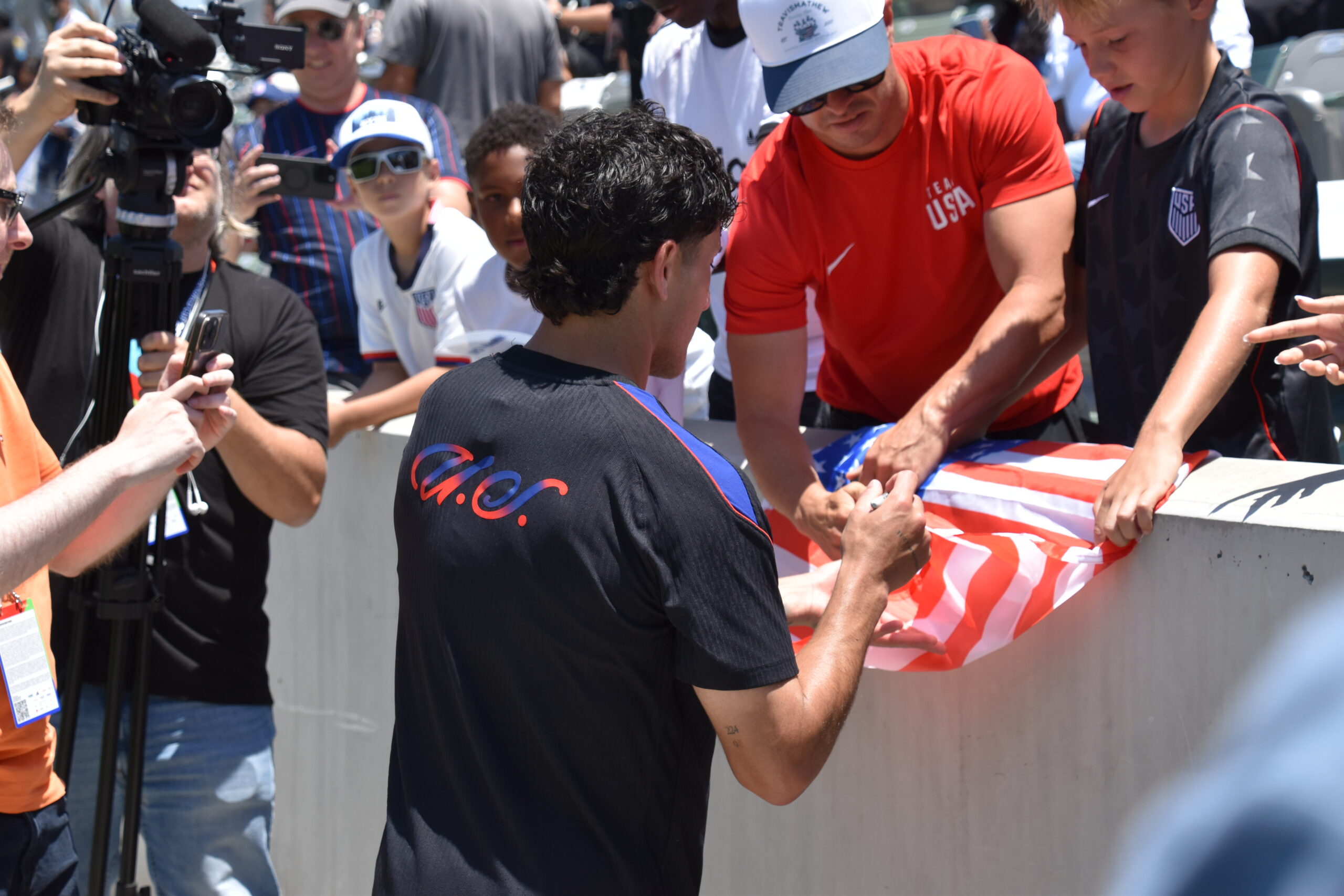
    Alejandro Zendejas autographs a fan’s American flag during the U.S. team’s open practice at the start of their World Cup training camp in Irvine.

    “It is truly an honor and a source of pride to be here representing the entire Latino community,” said Zendejas, who shares that honor with other players including Ricardo Pepi and Roldan. “It’s a dream come true — for [them] just as much as for me — to be here and show people that dreams can become reality.”

    Balogun called himself “proud to be American and to represent America.” He knows well that, as he said, “the story has picked up a bit of attention, but I think it’s expected. We’re at the World Cup, and it’s an opportunity for the fans to get to know more about us as players.”

    Zendejas, by the way, wore an eye-catching 1994 World Cup throwback hat as he spoke. His sponsorship deal with Adidas got him it for free; it costs $40 for the rest of us.

    “I don’t know much about this World Cup — I should but I don’t,” he quipped, knowing that tournament was played four years before he was born.

    Alejandro Zendejas did his turn with the media wearing a very sharp 1994 World Cup throwback hat.

    He admitted adidas gave it to him, and it’s a modern recreation, not an original.

    But it still looks good.

    [image or embed]

    — Jonathan Tannenwald (@jtannenwald.bsky.social) June 22, 2026 at 10:45 AM

    Antonio Freeman stops by

    Alex Freeman’s fast rise with the U.S. team has no bigger fan than his father, former Eagles and Green Bay Packers wide receiver Antonio Freeman. When Alex scored the game’s second goal against Australia, he achieved the rare feat of scoring a World Cup goal in a stadium where his father scored two touchdowns 30 years earlier.

    Antonio stopped by Monday’s practice to talk with the media and share his joy.

    “I’m sure Alex has heard enough from other people about my success and my moments,” he said. “I don’t really talk about those moments too much. But it was definitely a full-circle moment. to just have a father-and-son combination in any sport have an impact on a game in the same stadium, same state, it’s pretty amazing.”

    He called it “a credit to all the work that Alex has put in, the commitment that he’s made. This is his ride, and I’m just happy to be his biggest supporter.”

    Antonio Freeman stops by #USMNT practice and meets the press:

    [image or embed]

    — Jonathan Tannenwald (@jtannenwald.bsky.social) June 22, 2026 at 12:25 PM

    And what was the father’s message to his son after the game?

    “He just continued to amaze me, and that’s all it is,” he said. “When I see him, it’s like, ‘Yeah, boy, that’s what I’m talking about!’ — that’s our little thing. But just keep working, Alex, keep being you. People love who you are, don’t change, just keep working hard.”

    He also praised soccer’s growth in the United States, saying this World Cup “has really heightened the awareness in the U.S., and people from all walks of life are getting involved, rallying behind the [U.S.] team.”

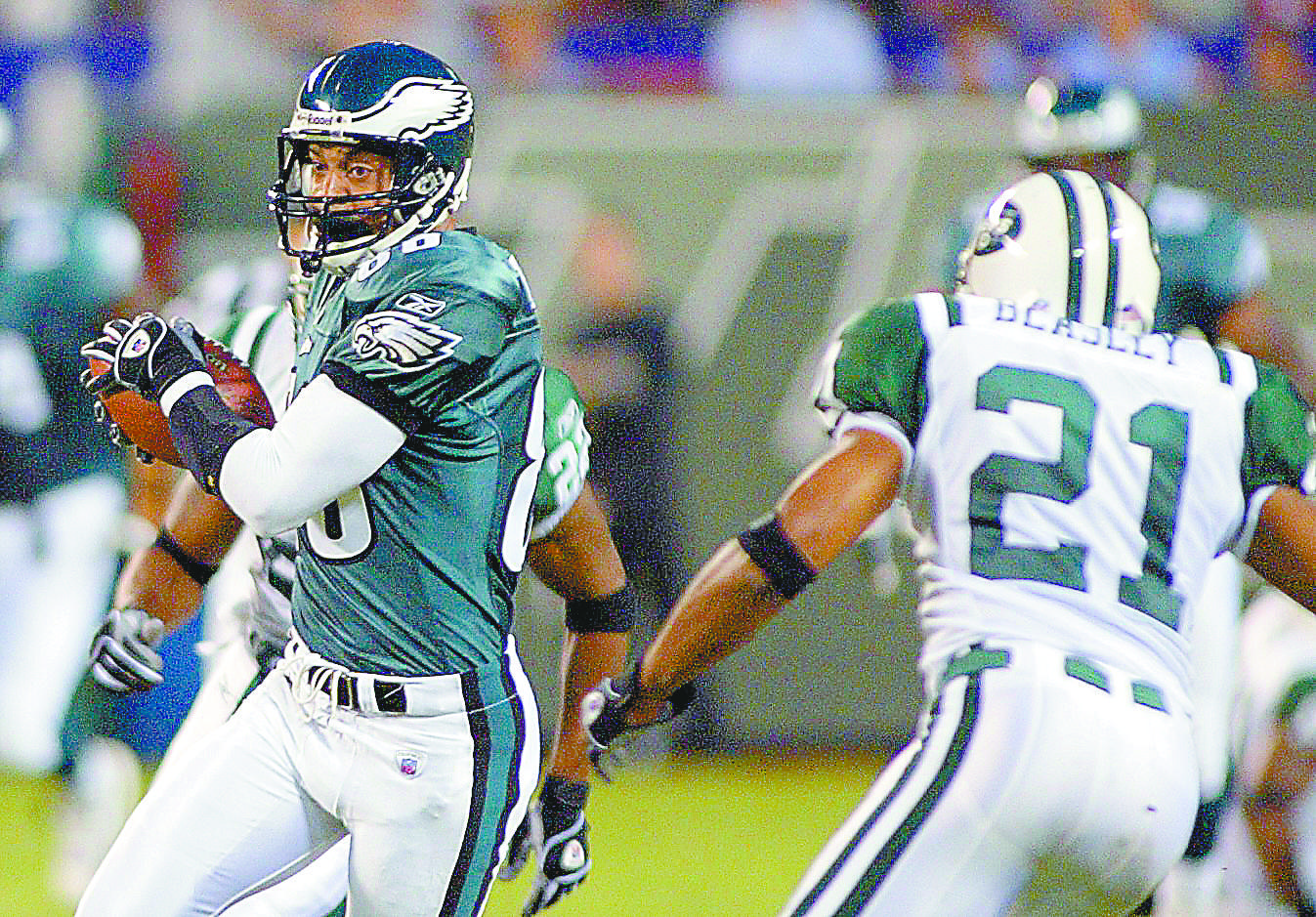
    Antonio Freeman with the Eagles in a 2002 game against the Jets.