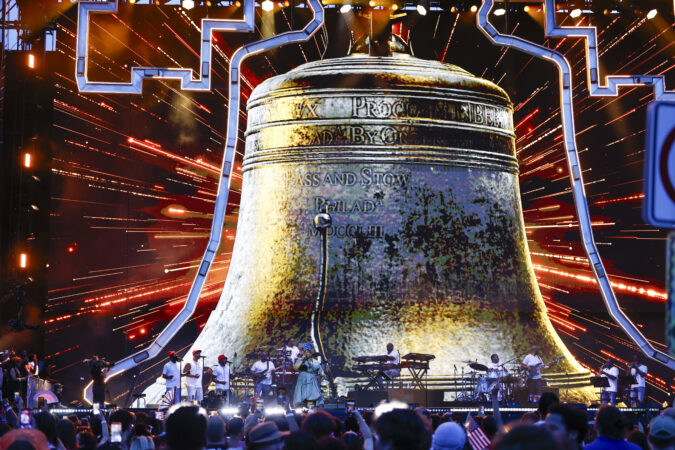
An unscheduled and dramatic light and sound show — this one produced by nature — interrupted Philadelphia’s July Fourth extravaganza Saturday night, forcing crowds to evacuate the Parkway three hours before the man-made fireworks show was scheduled to start.
People were told to leave the area and seek shelter midway through the One Philly: Unity Concert for America. But city officials were not quite ready to call it a Semiquncentennial — a year in the planning — and two hours later the city announced the event would resume with a shortened schedule and the fireworks finale. This time, the manmade kind.
Forecasters had been warning for the last two days that potent thunderstorms were possible Saturday night, as so often happens when a heat wave begins to break down.
July Fourth marked the third consecutive day that the temperature had reached 100 in Philly, tying a record set in 1963 and 2011, and the atmosphere on Saturday, congested with water vapor, was exhibiting clear evidence that it was about to pop. A severe-storm watch covered the entire region.
Earlier, declaring a measure of independence from steaminess that made the atmosphere feel like sweat itself, hundreds of thousands in the region celebrated the day 250 years ago when rebellious colonists gathering in Philadelphia announced to the world they had formed a fragile new nation.
From a ceremonial burial to a patriotic pet parade, for a day at least, anxieties over divisiveness, a national identity crisis, historical controversies, AI, or the state of the economy and the world yielded to an air of celebration robust enough to compete with the heat.
About the only serious clouds during the day were the ominous storm forecasts, but the day belonged to the sun, albeit a hot one.
It was a day to savor the fact that the nation has been able to withstand a Civil War; two World Wars; a Great Depression; and a Cold War nuclear stare down with the Soviet Union, whose life span it has exceeded by about 180 years.
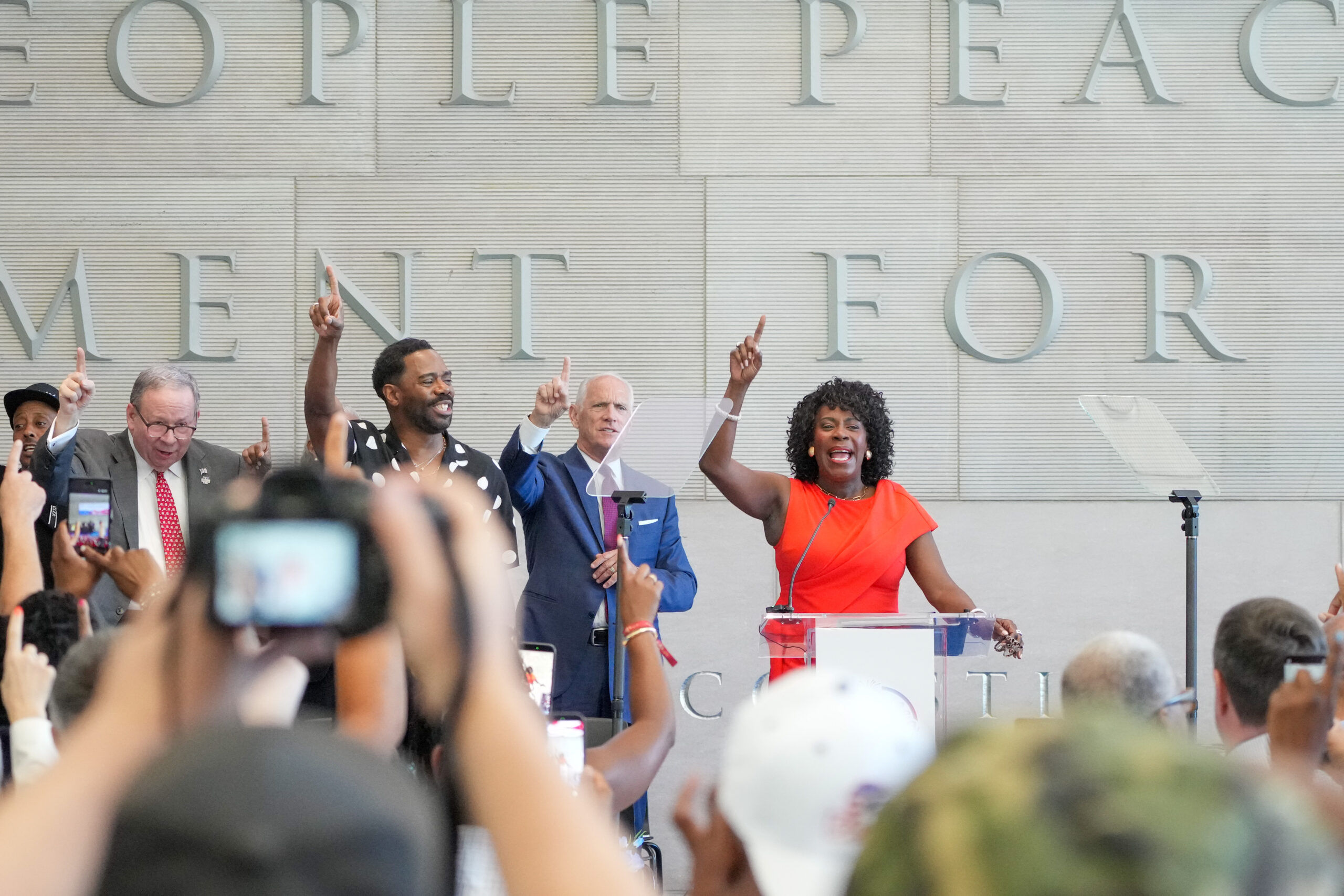
And as the festivities got underway, a ceremony on Independence Mall, where the Declaration of Independence was read on July 4, 1776, suggested the United States plans to stick around for a while. That would be the burial of the national time capsule, to be opened in 2276.
“I know that we’re here for a burial,” said Mayor Cherelle L. Parker, but “this one is about hope … about believing that the generations who come after us will build a stronger nation.”
One piece of evidence that people were ready to make a patriotic day of it was the fact that by 11 a.m., the wait to visit Independence Hall was seven hours; two hours just to enter Independence Square. Maps became impromptu fans for people waiting to see the Liberty Bell. Yet the crowds were enduring it all with a remarkable equanimity on a day when people evidently were primed to savor a remarkable occasion.
The daytime events included the Celebration of Freedom event and the must-see Betsy Ross House Patriotic Pet Parade.
City officials were aware that the Unity Concert For America and fireworks might interrupted by a natural light show but they were determined to proceed come thunder or high water. Fireworks had been scheduled for 11:45 p.m.
The sun ruled through the afternoon, and the triple-digit heat indexes appeared powerless to mute the enthusiasm of the crowds.
They certainly weren’t factors in the time capsule event, where onlookers showed up adorned in red, white, and blue, along with Indy, a bald eagle. Tucked into the capsule were items from the three branches of government, all the territories, and all the states, including a whale bone from Maine and poems from Alabama.
“A time capsule is more than a collection of artifacts,” Parker said. “It’s a message from one generation to the next about who we were, what we valued, and what we believed was worth preserving.”
What some people were on Saturday, even those enjoying themselves and not complaining, was certifiably hot.
(We will eschew saying hotter than a firecracker, but note that this publication used that phrase to describe the record July Fourth heat in 1966.)
British pop-rock vocalist Seal, who was the opening act at 5:45 p.m., did complain: “I know it’s hot, but it’s not hot enough.” Wearing a banana-yellow blazers, Seal, of Nigerian and Brazilian descent, proclaimed, “It’s only 105. I want it to be 110.”
Actually, it got only 101, and that was indeed hot enough for most folks.
Adorned in red, white, and blue, people gathered in the shade at the Independence Beer Garden across Sixth Street from Independence Mall, escaping some of the heat to sip beer with the World Cup displayed on a big screen.
Sandra Rahn, from Jacksonville, Fla., was among the escapees. She was taking a break from the sun to watch the game. Her Yorkie pup, Matilda, was cooling off alongside her, following the Patriotic Pet Show at the Betsy Ross House.
Rahn, her husband, and Matilda, arrived Wednesday to celebrate the country’s 250th, attending as many outdoor events as they could so Matilda could be part of the festivities.
“Everybody’s excited and outside; it’s been great,” Rahn said.
On Monday, they are to head home to Florida, where they hope to “cool off.”
For the record, at 3 p.m. the heat index in Philly was 103; in Jacksonville, 98.
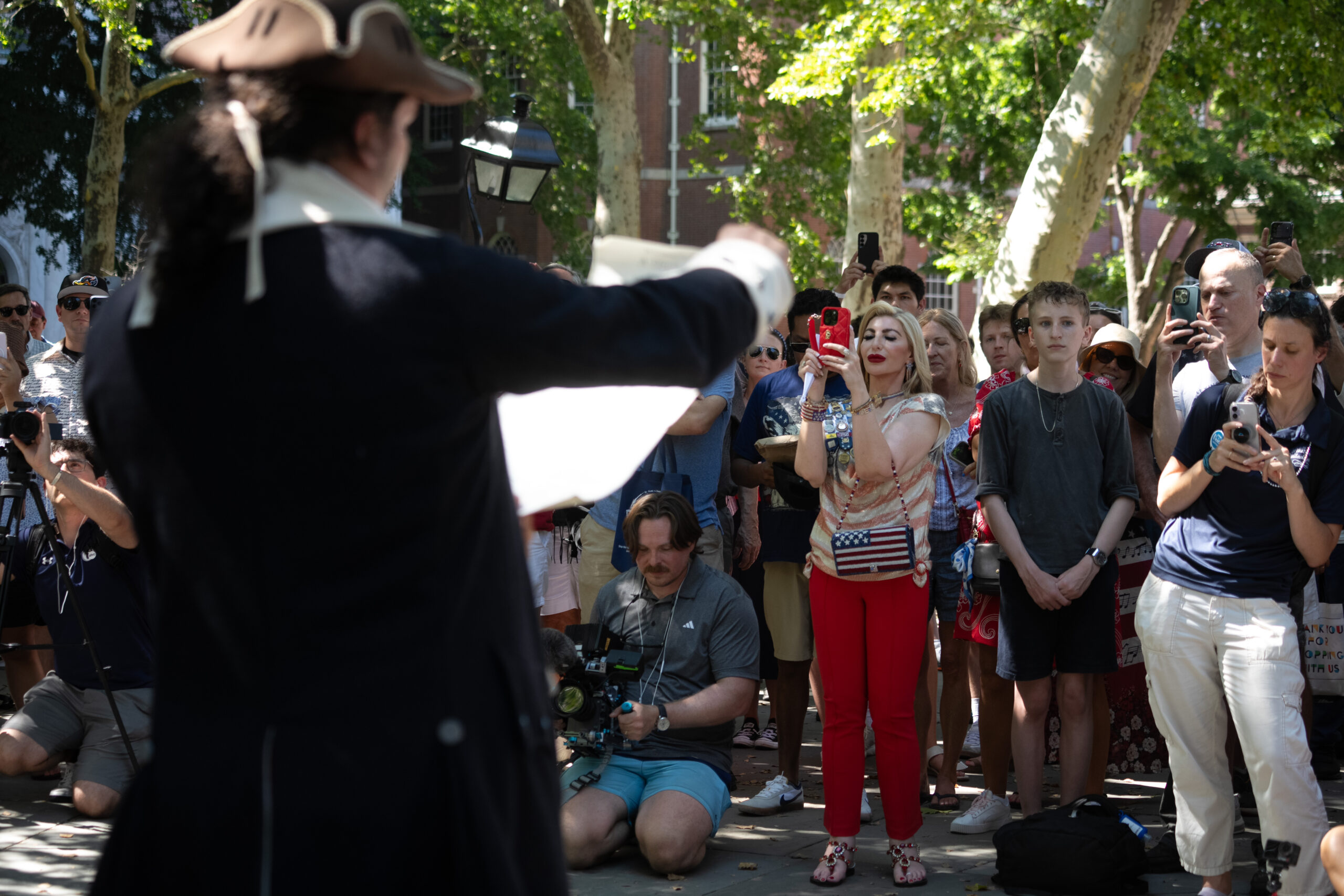
And hidden in plain sight among those braving the serpentine line to visit Independence Hall were numerous time travelers from the Revolutionary era.
Aaron Patrick journeyed — like many Revolutionary War soldiers once had done — from Carlisle, Cumberland County, and donned a wool waistcoat and a black tricorn hat as he made his way through the line. Temperature check: about 93 degrees Fahrenheit.
“Everyone’s hot,” Patrick said. ”I’m just a little warmer than most.”
The outfits start with a linen shift for women or a linen shirt for men, said Abby Harting, a historical clothing expert. “It’s naturally cool, wicks sweat away — it’s perfect for a muggy, hot day, because the fabric does the same thing it did 250 years ago,” Harting said.
On top of the linen, the boys and men in the group wore a light wool waistcoat, while the girls and women wore a “stay,” which serves the same purpose as a bra, and another layer. Harting noted the women’s layers were designed to last for years and adapt to a person’s changing body.
She said their decision to dress up was a bit of “experiential archaeology,” and a great way to imagine what those in 1776 were experiencing — both mentally and physically — as they adopted the Declaration of Independence.
For Washington, D.C.-area couple Katelyn and Zachary Damm, their historical hobby started with the tricorn hat given to Zachary by his father-in-law. From there, they turned to Amazon to order their clothes.
The buffs prepared for their trip by reading about the era and studying the Declaration of Independence, Zachary Damm said.
“All of our freedoms date back to this day,” Katelyn Damm said. “That makes it special.”
Period dressers were not to be outdone by Bruno, a canine star at the Betsy Ross House.
The 18-year-old yellow Labrador retriever, sporting big blacked-out goggles and using a baby-dog stroller to move around, immediately stole the show at the Patriotic Pet Show. With his long fluffy blond hair waving in the breeze, Bruno’s confident smile told the crowd everything they needed to know: This veteran was here to bring home gold.
Not all the activities were of a festive nature. Striking Peco workers picketed outside the power company’s headquarters.
Outside the Liberty Bell, about 200 folks gathered in the yard next door at the President’s House to honor the nine people enslaved by George and Martha Washington in the 1790s. This year, attendees said the annual independence gathering, with its focus on freedom, truth, and remembrance, felt different.
On Friday, a federal appeals court gave the legal go-ahead for President Donald Trump’s administration to install the panels it wants to replace the original slavery exhibit.
“Over the last six months, since the president issued an executive order, they have tried to whitewash and bend history in a way that doesn’t tell the whole story of the country,” said Dawn Chavous, spokesperson for Avenging the Ancestors Coalition. “We are here because it’s important to not only remember, but protect and defend the history of America, which includes Black and African American history.”
Primarily, however, people went about the business of celebrating across the region.
In Doylestown, Gov. Josh Shapiro joined the Fourth of July parade, and, of course, people gathered for holiday block parties.
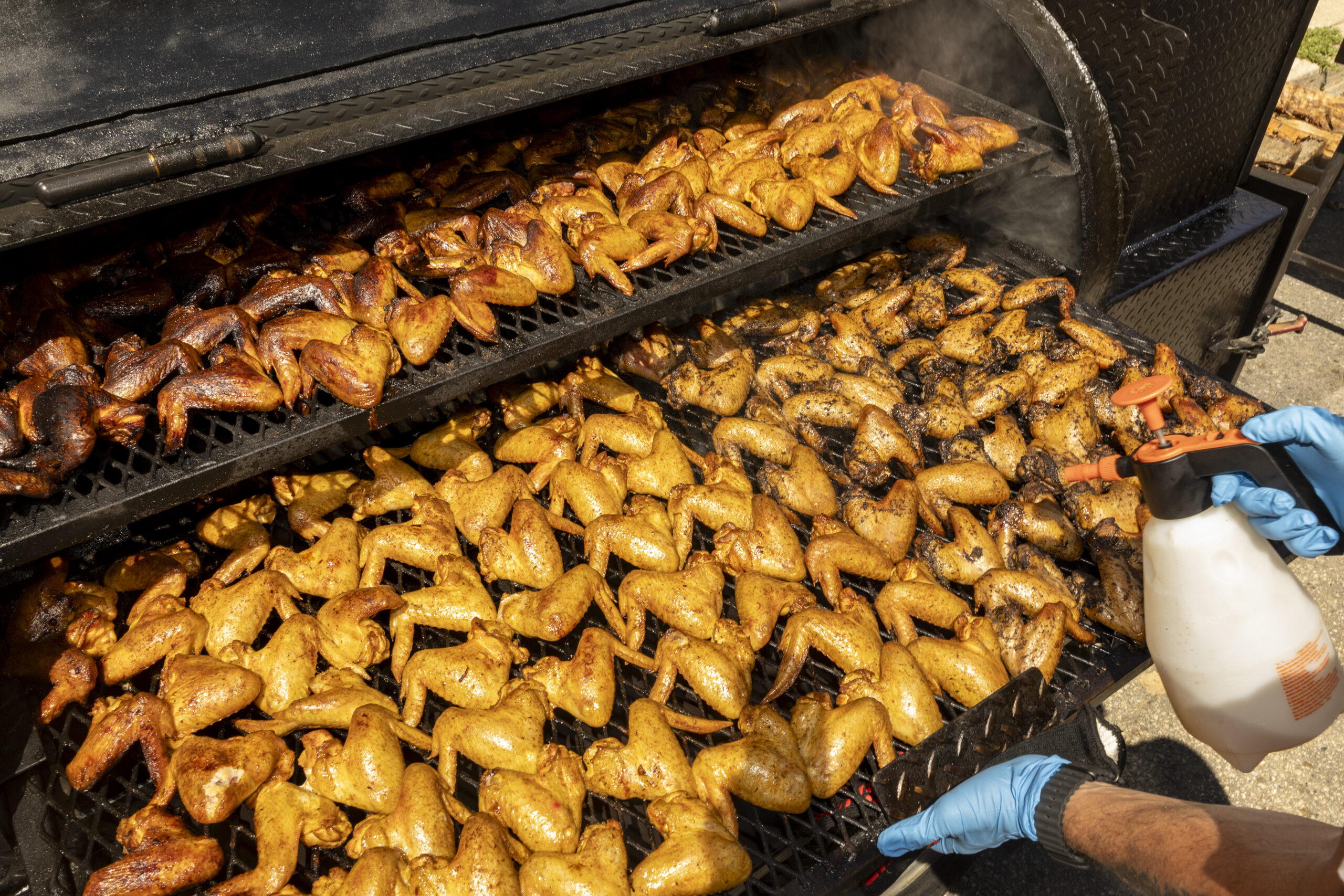
In Philly’s Ludlow section, Johanna Rodriguez and Michael Cunningham mixed fresh lemonade as they watched their daughter and son splash around in the swimming pool in the middle of their Jefferson Street block.
Rodriguez said the block takes Fourth of July seriously because it’s one of the only times everyone comes outside to enjoy the festivities and see each other in person.
“Obviously, having a block party with all the neighbors coming together is always the best,” Rodriguez said. ”Just hanging out and talking about the old days. It brings back the classic vibes.”
No one appeared to be complaining about the heat from the grill or the sun.
For the record, according to Thomas Jefferson, on the afternoon of July 4, 1776, at what is now Independence Mall the temperature was a pleasant 76 degrees.
Staff writers Maggie Prosser, Isabel Maney, and Michelle Myers contributed to this article.
Leave a Reply