For most Americans, driving is a normal part of everyday life. In much of the United States, a car is required for most trips to visit friends, commute to work, or go to the grocery store.
The side effects of this auto-dependence are catastrophic, argue the coauthors of a new book called Life After Cars.
There is the obvious danger from crashes, which kill roughly 110 Americans every day, but there’s also environmental devastation wrought by mass car ownership, social isolation engendered by the built environment, and soaring costs for American households.
Did you know that the largest source of microplastics strangling oceans come from the tiny particles thrown off by tires? Or that in 1969, more than 40% of U.S. kids walked or biked to school while today only 11% do?
The conversation has been edited for length and clarity. Aaron Naparstek is a cowriter but was not featured in this Q&A.
For most Americans, driving is part of everyday life. Why do you think that needs to be reevaluated?
Gordon: Forced car dependency isn’t really working, even for people who love driving.
Many Americans do love driving, but the type of driving that most Americans do is terrible. It would be great if most of the driving we did was on the open road, the camping trip, or the road trip, but most people are driving to work; they’re driving to get groceries. Those are such stressful trips that it would be great to provide alternatives.
Goodyear: The price of real estate in walkable neighborhoods and transit-rich neighborhoods tells us that there is a real appetite for living in places where car dependence is not a given and where there are options.
We’ve gotten to the point in this country where walkable neighborhoods have become a luxury good. We think walkable neighborhoods are something that should be available to everybody.
You argue that America’s car culture severely limits the freedom of children. When I was a kid, I walked to school or to friends’ houses. Today, that’s rarer because of the threat of cars. And parents’ freedom is limited, too, because they have to drive their kids everywhere.
Gordon: Cars and traffic fatalities are one of the leading causes of deaths for children in this country. You’re not wrong if you think to yourself, I don’t want my child walking to school because of the roads they might have to cross.
Most of my friends and family who live in car-dependent suburbs have to serve as chauffeurs for their children until they’re at least 16. If they can’t afford another car, they have to continue negotiating how they’re going to get places after that.
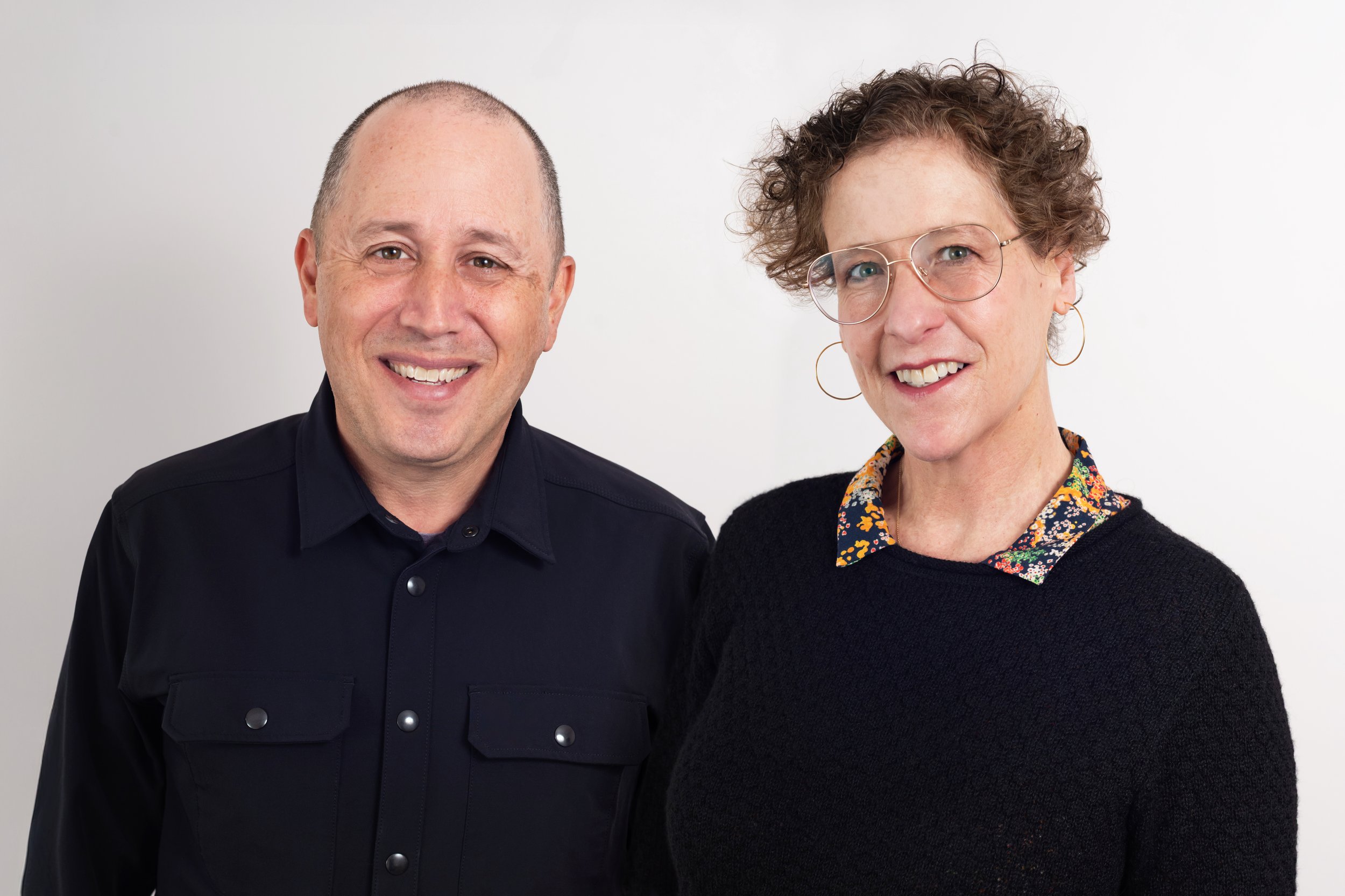
Doug Gordon and Sarah Goodyear are coauthors of the new book “Life After Cars.”
We live in a walkable neighborhood. My kids walk and take transit to school. There are some mornings where they get up and leave the house and I don’t see them because they’re totally independent. We want that freedom to be available to all parents.
It’s also robbing kids of their ability to be kids, to learn about the world around them, to navigate their neighborhoods, to interact with shopkeepers and their neighbors. If we want to create better American citizens, we have to start creating walkable places for children.
You have a chapter on the effect that cars have on the environment, a lot of which was news to me, like the fact that up to 340 million birds die every year in America from car strikes.
Goodyear: It’s on all fronts. Transportation is a huge contributor to climate change. If SUVs globally were a nation, they would be in the top 10 for carbon emissions.
But there’s all sorts of unintended consequences, like habitat fragmentation. Roads cut up our natural areas to the extent that animals can’t seek mates and their genetic diversity is really constrained by these islands that they’re living on between roads.
We really don’t think about the effect of road noise, which increases stress hormones in animals that leads to them being less effective at reproducing.
These things are happening constantly all around us, and we don’t even think about it. And as we sprawl outward, we’re not thinking about what all of the effects are on wildlife.
I’m old enough to remember when if you were driving cross country, your windshield would be covered with bug splatter. That doesn’t happen anymore because there are not as many bugs. Cars are one of the reasons that’s true.
You compare tech companies of today and the automobile industry in the early 20th century. Negative effects of cars have been known — and resisted — for a long time. But through media and political campaigns, the industry was able to argue that efforts to regulate the technology would undermine progress. Sounds familiar!
Gordon: Cars were the original ‘move fast and break things’ technology. The Silicon Valley ethos is exactly the same.
The cover for their new book.
It was important for us in the book to document that early history [of resistance to cars] because we’ve lost sight of that outrage.
There’s this myth building around cars that we had this love affair, and it was the inevitable march of progress that got us all behind the wheel. But at the outset, that was not the case at all.
There was deep, deep resistance, and we’ve forgotten that because none of us know a world without cars. Getting people to understand that this was not inevitable is the first step toward changing our future trajectory.
You try to end the book on a hopeful note. But a lot of the human-centric cities in Europe and East Asia are possible because those countries have comprehensive mass transit. The U.S. doesn’t and isn’t likely to for the foreseeable future.
Gordon: It does boil down to transit. Almost all of this stems from density and transit and all of those things that we are lacking in the United States. It’s a long battle. We are planting trees, and we will not get to sit under their shade.
Goodyear: We started this podcast seven years ago. I’ve been covering these issues as a journalist for 20 years, so I have had a pretty good look as issues of livable streets and reducing car dependency have gone from being fringe to being much more mainstream.
Just the fact that this book came out from a major publisher is huge. Another metric is that in almost every city on our book tour there has been a local elected official on the panel with us. And these are younger politicians.
What’s really been missing in the United States is leadership on these issues. The advocacy community has been there, and it’s growing. But what hasn’t been there is political leadership to make the changes that we all know are necessary. I see that changing, and that gives me hope.
By the end of thisyear, Montgomery County will have three emergency short-term shelters with beds for 190 people in Pottstown, Lansdale, and Norristown.
In late 2024, it had zero full-time shelters, even as homelessness soared to new heightsin the county — Pennsylvania’ssecond wealthiest.
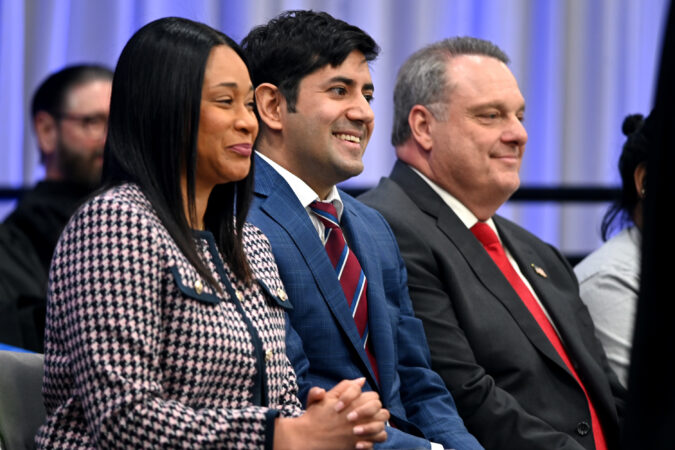
The three-member board of commissioners is currently composed of two Democrats and one Republican, but in the past year they have operated with an unusual degree of cohesion on both the challenge of homelessness and on a county budget that included a small property tax increase.
“We came in with similar goals around addressing the homeless problem throughout the county,” said Tom DiBello, the Republican commissioner. “We all heard it when we were campaigning [in 2023] and when we got elected, we felt that we needed to do something. We can’t continue doing it the way it’s always been done in the past, where people just kept talking about it.”
Although the Montgomery County commissioners have formed a united front on many issues last year, housing policy issues are more likely to divide them in 2026.
But the Democrat commissioners, Neil Makhija and Jamila Winder, have ideas about how to get around those limitations to directly fund more affordable housing and encourage local governments to allow more building.
DiBello is not excited about many of the proposals being considered by the two Democrats. He opposes creating new county-level taxes and says zoning powers should be left to localities.
Still, DiBello has further housing policy goals he would like to pursue — such asdeveloping more affordable homes for senior citizens.
As the county releases its 2026 housing blueprint, expected early this year, the first round of these debates will begin in earnest. This planning document, created by county government staff with commissioner feedback, lays out goals for the county based on a comprehensive housing policy — the first its seen in recent memory, Makhija says.
“It’s going to be the first time that the entire board has had a voice and a view on what our role is to address a crisis in the cost of housing,” said Makhija. “There are things we can do to help people.”
How the shelters got built
Making policy to address homelessness is difficult because many municipalities and community groups fight against having shelters placed in their neighborhoods.
The number of people in Montgomery County experiencing homelessnesshas grown with the cost of housing. In 2024, there were 435 people living without a roof over their heads. In 2025, the number grew to 534.
Meanwhile, Montgomery County’s last full-service homeless shelter closed in 2022.
Opposition to new shelters or affordable housing bloomed in Norristown, where officials said the rowhouse-dominated municipality was already asked to shoulder too many social services, and in Lower Providence where the local government denied a shelter application (the legal fallout is ongoing).
The county commissioners decided to get involved by courting local governments and personally attending zoning hearings about potential placements. DiBello attended meetings in Pottstown, near where he lives. Winder went to hearings in Norristown, including one that stretched past midnight, then stuck around to discuss neighbors’ concerns.
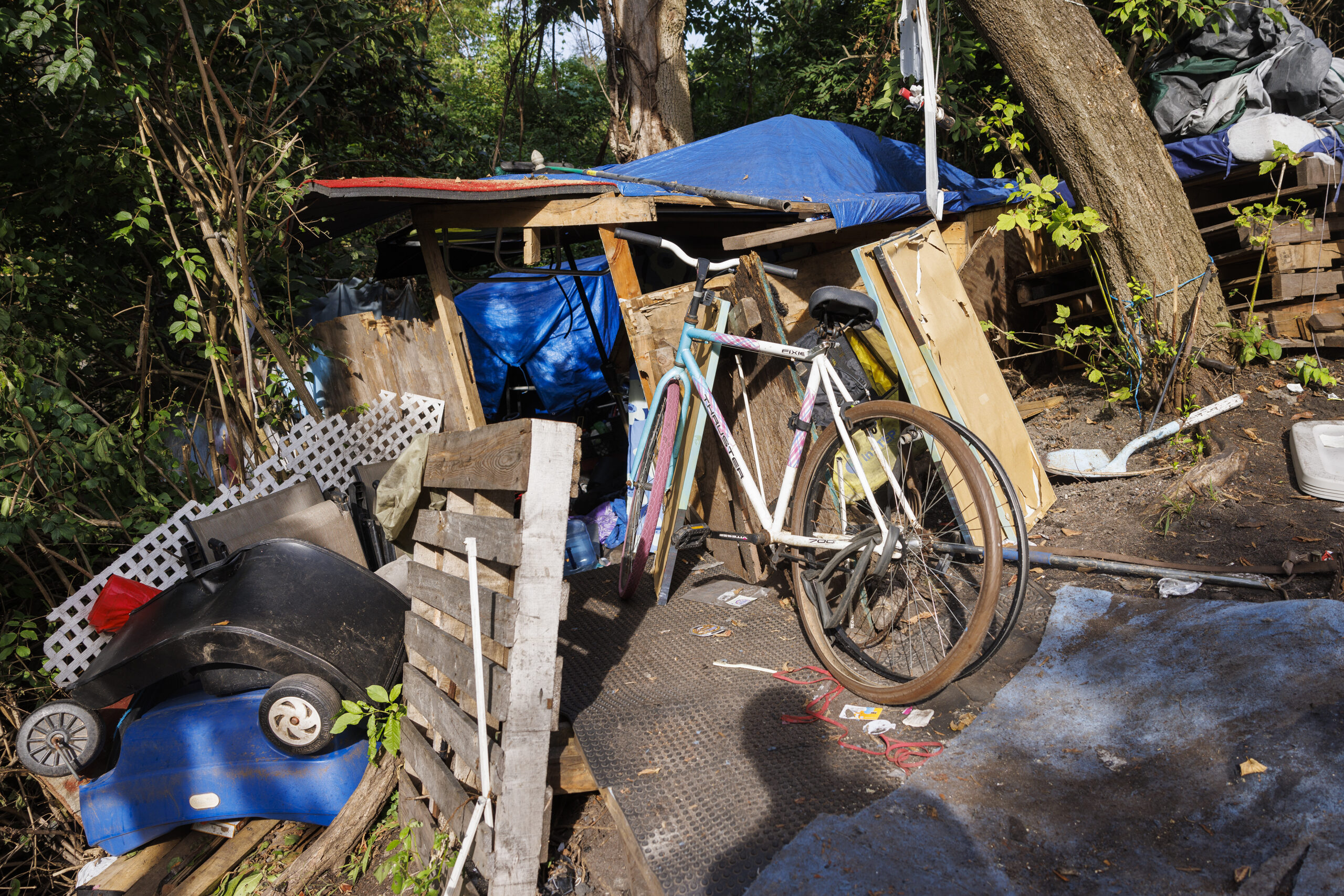
A homeless encampment near the Schuylkill River Trail and Norristown in Montgomery County.
In some parts of the county, efforts to address the issue overcame opposition.
Communities like East Norriton have established more code blue shelters, which only operate during freezing weather, and inwealthy Lower Merion, a new affordable housing complex for seniors and people with disabilities, called Ardmore House II, is under construction.
“It takes political courage in these moments,” Winder said,referring to local officials who have embraced shelters and affordable housing. “Sometimes you have loud voices in the room and just have to say, well, this is the right thing to do.”
The commissioners provided $5.3 million in county funding for the shelters. The county also provided a quarter of Ardmore House II’s $20 million budget. And as federal funding cuts loom under President Donald Trump’s administration, the commissioners have also been engaging with philanthropists and foundations.
Earlier this month, Nand Todi, president of Montgomery County-based Penn Manufacturing Industries, announced a $1 million donation to the Lansdale shelter.
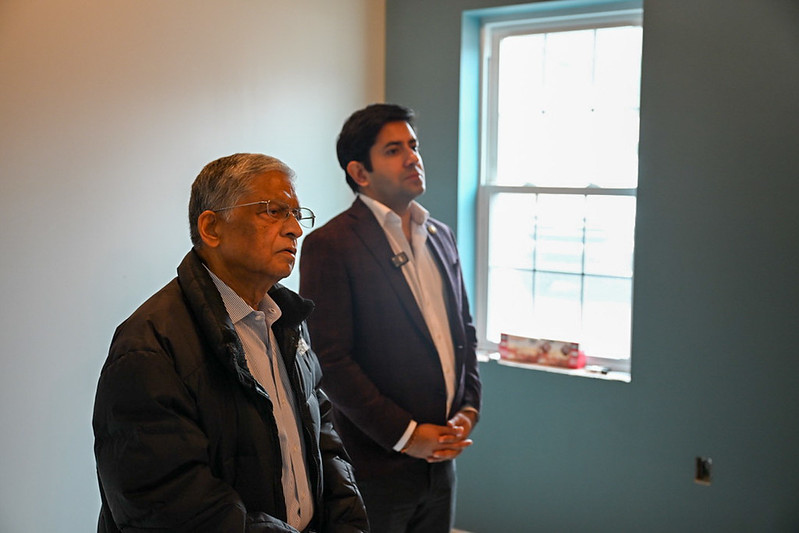
Nand Todi, president of Montgomery County-based Penn Manufacturing Industries, and County Commissioner Neil Makhija at a walk-through of the completed Lansdale shelter.
Winder hopes this example of generosity is just the beginning.
“I come from the private sector, so I believe in public-private partnerships,” said Winder. “We’re home to some of the largest corporations in the southeast area. We know that companies have social responsibility goals. So how do we partner with corporations?”
What can a county government do?
Thisyear, the commissioners want to continue to tackle housing issues.
But county-level politicians do not have large budgets at their command, and unlike their municipal-level counterparts, they do not set zoning policy.
Makhija and Winder wantto push those limits.
For example, the county dispenses infrastructure grants, and Makhija says the rules around that funding could be rewritten to incentivize municipalities to reform their zoning codes, perhaps using model ordinances established by the county.
Such ordinances could, for example, allow more transit-oriented development. Or they could legalize accessory dwelling units — small living spaces such as a garage apartment or in-law suite that can be rented out.
“If you have a grant program and it says these are the requirements, then people are going to prioritize getting those things done,” said Makhija, though, he said, he still has to make the case to his colleagues.
He also noted that county planning staff can help implement new municipality policies.
DiBello is skeptical of the county getting involved in local zoning policy.
“The governing structure in Pennsylvania is that municipalities are autonomous to county and state when it comes to zoning,” said DiBello. “It’s up to the communities.”
The Democrats would also like to find revenue sources to pay for more housing projects without increasing the property tax, which would cut against their goal of affordability.
“There are opportunities for us to advocate to the state legislature, to give counties like ours other means to generate revenue,” said Winder. “It’s not sustainable to continue to burden taxpayers by increasing property taxes, and we can’t fund these programs unless we have the money to do so.”
DiBello is also opposed to creating new taxes (if Harrisburg allows it), and doesn’t want to see more property tax increases either. But he still wants to see proactive housing investments by county government.
These debates will unfold next year as the housing blueprint dominates the commissioners’ agenda.
“We’re the second wealthiest county in Pennsylvania, and people struggling to find housing can be quite invisible in these communities,” said Winder. “We’ve got an embarrassment of riches, but there are people that are struggling and so we’re trying to be on the ground helping to solve these issues.”
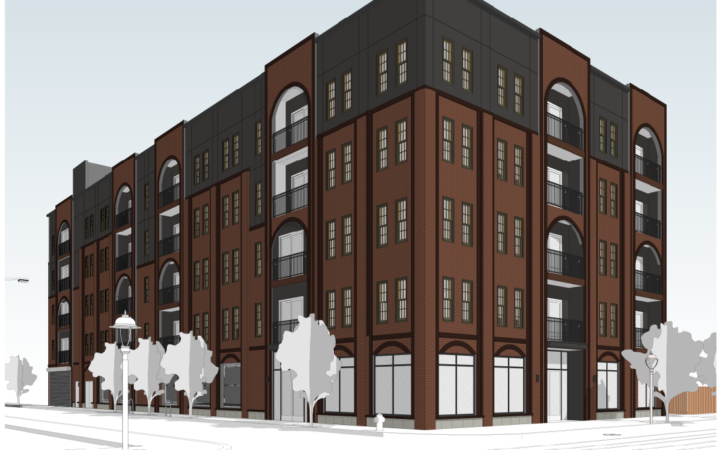
A new 46-unit apartment building is coming to 5322-28 Germantown Ave., from longtime Northwest Philadelphia developer Ken Weinstein.
The five-story building is in Germantown’s Penn Knox area. It also will include over 1,600 square feet of commercial space and 17 parking spaces.
The project comes amid a burst of new multifamily construction in Germantown, a neighborhood that garnered little interest from few developers in the second half of the 20th century.
“The demand for housing in Germantown continues to outpace the supply so more housing, at all income levels, is needed,” Weinstein said.
“Germantown is located near good public transit and Fairmount Park and is viewed as much more affordable than hot city neighborhoods in and around Center City,” he said.
Weinstein said that he will break ground on the building during the first week of January and that funding and contracting is already secured.
The project did not require any relief from the city’s Zoning Board of Adjustment, so Weinstein was not legally required to consult with the neighborhood group, Penn Knox Neighborhood Association.
But he met with the community group anyway to hear concerns they might have with the project.
“This is not an out-of-town developer; this is a developer from the area. He’s part of the community,” said Deneene Brockington, chair of the Penn Knox Neighborhood Association. “So I think there is a level of respect, and I think willingness to do as much as possible [in response to neighborhood concerns] as long as it doesn’t compromise the project.”
Brockington said that the community group’s main concerns were about building materials and lighting and that the developer had addressed both.
Weinstein said parking wasn’t the principal concern he heard from neighbors because the building is in a commercial corridor.
The apartment building’s 17 spaces are not required by the zoning code. Weinstein said he would have liked to include more, but he was constrained by the fact that all the spaces had to be on the ground floor and that the site’s land use rules require that he include commercial space.
“Underground parking is too expensive in middle neighborhoods like Germantown,” Weinstein said. “There will always be a divide between the number of parking spaces developers want to provide and what neighbors want.”
The building will include 28 one-bedroom apartments and 18 two-bedroom units, with rents ranging from $1,450 to $2,200. There will be no subsidized or affordable units set aside.
The project is expected to be completed within 18 months of the groundbreaking next month.
There is no definite tenant for the commercial space, but Weinstein has some ideas.
“With Uncle Bobbie’s moving to a new location, I would love to see a cafe or coffee shop lease the first floor,” Weinstein said. “There would be a lot of demand from students and staff at GFS [Germantown Friends School] and from the community.”
As California-based canned beverage manufacturer DrinkPAK eyed an East Coast expansion, Pennsylvania was always at the top of their list of potential sites.
But in the end Philadelphia’s Bellwether District — the sprawling site of the former South Philadelphia oil refinery — won out not only over other states like New Jersey, but other possible Pennsylvania destinations likeScranton and the Lehigh Valley as well.
“We looked at other geographies, but ultimately we’d like to be where the people are, where the jobs are,” said Jon Ballas, president of DrinkPAK. “We’re not scared of building in large city centers. It just provides an energy that doesn’t exist out in the more general manufacturing landscapes.”
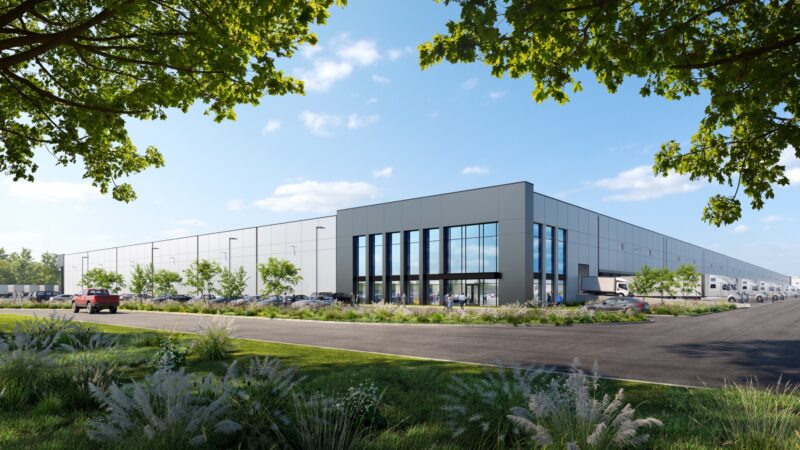
The 1.4 million-square-foot factory will be the first tenant for the 1,300-acre Bellwether District, which developer HRP Group (formerly known as Hilco Redevelopment Partners) hopes to turn into a new industrial and life sciences hub in the city.
Contractors broke ground on the manufacturing facility earlier this month, and the building’s shell should be complete by this time next year. Then construction on the internal mechanics will begin, with plans to complete it by April 1, 2027.
Once it’s operational, DrinkPAK’s manufacturing facility will operate 24 hours a day, seven days a week, cranking out 3 billion cans a year.
The factory will employ 174 people, largely on site because DrinkPAK doesn’t employ a lot of truck drivers. The workers will be operating the production line and managing machinery.
“We’re committed to hiring the best in the industry, [offering] competitive wages, some of the best benefit programs out there,” said Ballas. “These are very attractive jobs, high-paying jobs.”
DrinkPAK doesn’t work with the major soda or beer companies. Instead it manufactures cans for a variety of smaller, specialty beverage brands including alcoholic seltzer, energy drinks, and lower-calorie soda products.
“We’re not making your typical Coke and Pepsi,” said Ballas. “We’re making a lot of this innovative, better-for-you-type products.”
DrinkPAK was founded in 2020 and already has factories of similar capacity to its future Philadelphia facility in Southern California and in Texas.
There is some regional variation (more canned wine in California, and more health drinks on the coasts), but its production line’s output is largely determined by broad trends in the industry.
“Beverage is very cyclical,” said Ballas, and the facility needs to be designed with flexibility to make what’s most in demand. Right now, he noted protein drinks are “the hottest trend.”
“It takes a specific type of liquid handling equipment to handle all the protein hydration, to get that into solution in order to carbonate it into a can,” he said.
DrinkPAK’s facility is in the portion of the Bellwether District slated for industrial use, with the idea that warehouses and factories would be the tenants.
The HRP Group already built a 326,000-square-foot warehouse and second 727,000-square-foot warehouse, which were both built on spec — meaning without a prospective tenant in mind.
But the 3 billion-can production facility is the first official tenant.
“We’re looking forward to delivering this building for DrinkPAK and playing a small role in their company’s incredible growth trajectory,” said Andrew Chused, chief investment officer for HRP Group.
“DrinkPAK’s decision to build its flagship East Coast facility here is the first big step in turning this site into the dynamic commercial ecosystem we always envisioned,” said Chused.
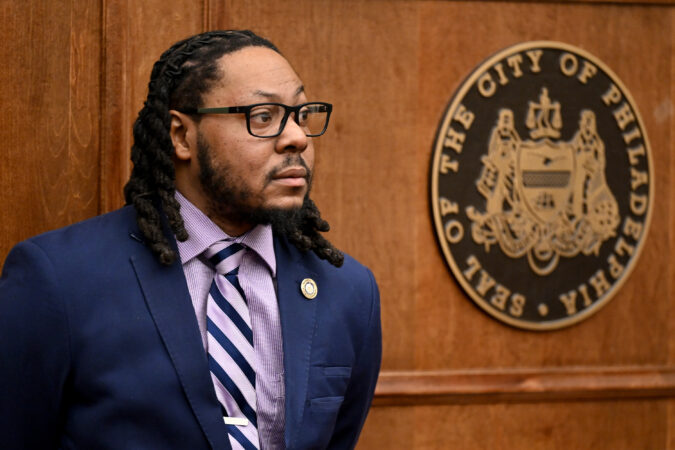
Philadelphia Councilmember Jeffery “Jay” Young introduced legislation at the last City Council meeting of 2025 that would ban residential development from the area that once housed Hahnemann University Hospital.
The bill would create a new zoning overlay — a hyperlocal patch on the code — covering the area “bounded by the north side of Race Street, the east side of North 16th Street, the south side of Callowhill Street, and the west side of North Broad Street.”
That covers the area where developer Dwight City Group plans to convert two former Hahnemann University Hospital patient towers into 288 apartments, and other related properties including those owned by Drexel University and Iron Stone Real Estate Partners.
The project does not yet have building orzoningpermits. The legislation would make the projectimpossible unless the developer could convince the Zoning Board of Adjustment to make an exception, if the law is passed.
Young pitched the bill as an employment-generating measure in the long term.
“It is for commercial preservation in that part of our district,” Young said last week. “We want to make sure that area keeps producing jobs for our city.”
Dwight City Group declined to comment on the legislation.
In an interview earlier this year, the company’s CEO Judah Angster said the apartments planned for the Hahnemann University Hospital patient towers would be moderately priced one- to two-bedroom units.
“We stick with middle-market apartments, not super high-end,” Angster said at the time. “We like to believe that there’s a lot of space for affordable luxury product in the area. That’s the only thing we do.”
But he also cautioned that the redevelopment would take a while, saying the buildings might not be leased up until 2030.
City Council returns on Jan. 22. The earliest Young’s bill could be enacted is February.If Young proceeds with the bill, the tradition of “councilmanic prerogative” would likely guarantee its passage because other Council members are usually unlikely to vote against a district member’s bills that only affect their territory.
Developers, good government groups, and housing advocates frequently decry City Council’s use of zoning overlays to create custom land use tweaks to specific corners of City Council districts, especially when they seem designed to help or hurt a particular project.
“Choking housing supply isn’t the direction that our city should take,” said Mohamed “Mo” Rushdy, who is managing partner of the Riverwards Group and chair of the Philadelphia Housing Development Corp.
“Overlays that prohibits housing units is generally a bad idea,” Rushdy said. “Overlays that target a ‘specific’ project is, let me be politically correct here, is simply unwise and not right.”
Young said his bill is simply meant to preserve the possibility of jobs, especially as a new 20-year tax abatement is considered next year for the redevelopment of old commercial, industrial, and public buildings into housing.
“Next year, we’re going to be facing, potentially, a bill that will allow abatements for underutilized commercial properties,” Young said. “We want to make sure that those benefits that the property owners can reap, that Philadelphians see those benefits with the creation of jobs in those locations.”
Almost 20 years after the Philadelphia Housing Authority (PHA) moved out of its Center City headquarters, a long-promised mixed-income tower will finally begin construction early next year.
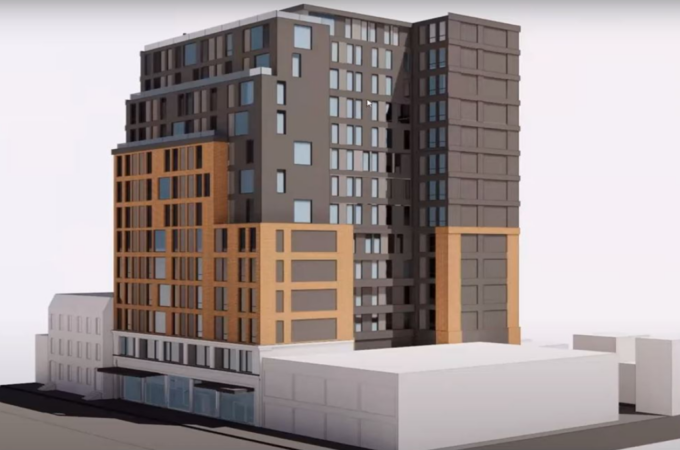
The 14-story building is being built by Philadelphia developer Alterra Property Group, which may also manage the site after it opens. PHA will hold a 99-year ground lease on the property at2012 Chestnut St., which will be its only affordable building in Center City.
“It’s a multifamily, mixed-use, mixed-income building in a high opportunity neighborhood,” said Kelvin Jeremiah, president and CEO of PHA.
It “would afford residents a huge opportunity to live in an area that has access to transportation, employment opportunities, and a whole host of amenities literally right outside of their building entrance,” he said.
The tower will have 121 apartments, 40% of which will be rented at market rate with the rest targeted at tenants below 80% of area median income (or almost $83,000 for a three-person household). It will have 28 studios, 63 one-bedroom, and 30 two-bedroom units.
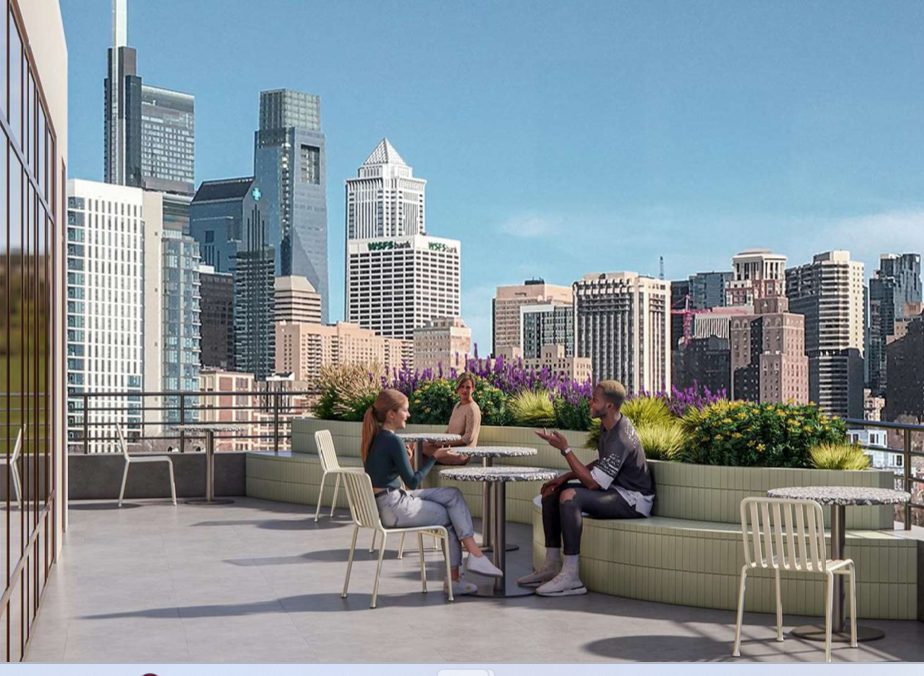
It also will have 2,000 square feet of commercial space, parking available off-site, and amenities that include a roof deck. The project was designed by JKRP Architects.
“I’m looking to break ground in Q1 of next year,” said Mark Cartella, Alterra’s senior vice president of development and construction. “It’s been a long time coming, so we’re excited to finally be going vertical here.”
What took so long?
PHA moved out of its Chestnut Street headquarters in January 2008, leaving a four-story husk. The agency cycled through numerous plans for the property, including a new headquarters and selling the land to a private developer.
The partnership with Alterra began in 2016. At that time, the project would have had 200 units, a majority of them market rate, and the developer would have held the 99-year ground lease on the property.
But neighborhood pushback and the resulting negotiations delayed the proposal until 2020. Then the pandemic caused more chaos, followed by a spike in construction costs and elevated interest rates that killed the original financing plan.
That led to a new strategy in which PHA issued bonds backed by the future rents of the market-rate units to help pay for the project, along with additional funds from federal housing programs, and a $2 million boost promised by Council President Kenyatta Johnson from funds available through Mayor Cherelle L. Parker’s Housing Opportunities Made Easy (H.O.M.E.) initiative.
“By adding high-quality, affordable apartments alongside retail space in the area, this project helps ensure that our downtown remains vibrant, diverse, and accessible to working families and individuals,” Johnson said in a statement.
“The PHA project will also help deliver a more inclusive Center City that reflects the full spectrum and diversity of Philadelphia’s residents,” he said.
A rendering of the roof deck planned for the new mixed-income building proposed by PHA and Alterra.
The 95-year-old headquarters was demolished in early 2024, but groundbreaking has been delayed in the current unpredictable national economic and political environment.
“You can probably sum that all up with it’s just general uncertainty with the change of[presidential]administration, as well as just getting through the design development process with a lot of folks having input,” said Cartella of Alterra.
“This is a little bit beyond the [usual] design development process with Alterra,” he said. “It’s more stringent than what we typically have to go through.”
Jeremiah has repeatedly expressed concerns about how long the development process can take in Philadelphia, especially in combination with federal guidelines and requirements.
But as this process nears its end — 18 years after the move, 10 years since bringing on Alterra, and two since demolition — he is feeling optimistic.
“It is the first PHA built development in Center City,” said Jeremiah. “That’s going to be a signature project for me, for the city, for affordable housing.”
Philly’s biggest development projects could bring more than 2,500 new homes and apartments; 1,800 parking spaces; and 118,000 square feet of storage space.
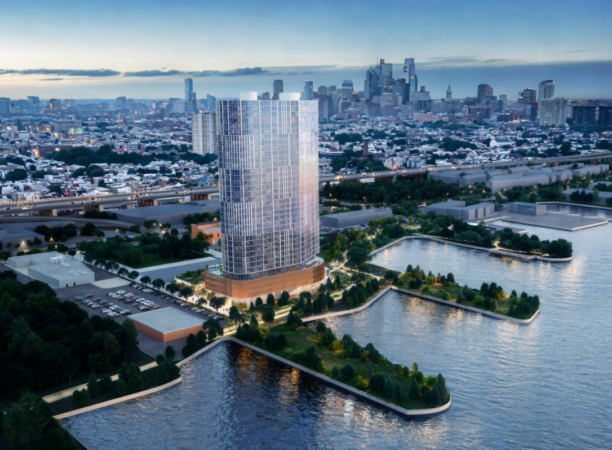
A rendering of the 380-foot tower proposed near Pennsport by a New York capital management firm.Perkins Eastman
Some developers still have big plans though, and if they want to build more than 50 new homes, or any project of over 50,000 square feet, they need to submit their plans to the Planning Commission for public input via the Civic Design Review committee.
story continues after advertisement
This year, 18 projects across Philadelphia went before the committee. These projects are large enough to remake neighborhood commercial corridors and create new hyperlocal landmarks, for better or worse. Most will be breaking ground in the new year.
Here’s your guide to what the committee considered this year.
What is Civic Design Review?
The Civic Design Review committee isan advisory-only board of architects, planners, and other experts who provide feedback on developments that will have an outsized impact on the cityscape.
“CDR gives communities a meaningful opportunity to make their voices heard, educates the public on principles of good design and use of shared spaces, requires developers to respond to questions in a public forum,” says Jessie Lawrence, the city’s director of Planning and Development.
But just because a project goes through Civic Design Review doesn’t always mean it will get built. The 76ers proposed Center City arenawent through the process, and famouslycame to naught earlier this year.
Nonetheless, Civic Design Review is still a rough proxy for what Philadelphians can expect to see in the near future. Here’s your guide to what the committee considered this year.
275 apartment units for Southwest Center City
1601 Washington Ave. | Ori Feibush of OCF Realty
Atrium Design Group
The former site ofHoa Binh Plaza has seen multiple redevelopment efforts since the popular Vietnamese shopping mall’s pre-pandemic closure. This latest isthe third from Feibush, who is offering a scaled-down version of an earlier 400-unit plan, with 10% of the units slated for affordable housing and 200 underground parking spaces.
Status: Ground breaking is slated for the second half of 2026.
84 apartments in Southwest Center City
914 S. Broad St. | Carl Dranoff of Dranoff Properties
JKRP Architects
Dranoff has been developing residential buildings on this stretch of South Broad Street for two decades. He has planned a new apartment building on this propertyfor years. He saw the drive-through McDonald’s that formerly occupied the site and closed in 2021, as a poor fit for one of Center City’s major thoroughfares.
Status: Ground breaking is projected for autumn 2026.
372-car garage for Fishtown and Northern Liberties
53-67 E. Laurel St. | Bridge One Management
Designblendz
As apartments have sprouted along this stretch of the Delaware River in recent years, new parking spaces have not kept apace. Investors hired Bridge One Management tobrainstorm new uses for this property, and the company thinks demand for parking is high enough for a new garage. The project also has 14,000 square feet of commercial space on the ground floor and another 16,000 on the roof.
Status: Permits have not yet been filed.
59-room hotel for Fishtown
1224 Frankford Ave. | Roland Kassis of Kassis & Co.
Gnome Architects
The developer who most helped remake Fishtown into the ultrahip neighborhood it is today haslong wanted to build a hotel on this vacant lot on the commercial corridor. An earlier, taller version of the project was approved before the COVID-19 pandemic, but those permits lapsed.
Status: Ground breaking is slated for the second half of 2026.
75 apartments in Kensington
3408 B St. | Dwight City Group
Raymond F. Rola
Far from the parts of Kensington where development is booming,this apartment project is meant to be priced to attract people who already live in the neighborhood. The developer, known for adaptive reuse, plans to revive the two-story remnants of a derelict warehouse as a base for the six-story apartment building.
Status: The project awaits a zoning board hearing in January.
162 units for rent and purchase in Port Richmond
2620 and 2650 Castor Ave. | Tim Ajvazi
Ambit Architecture
These two neighboring projects are thework of the same developer and were considered by the Civic Design Review in tandem. At 2650 Castor Ave., 68 homes are planned across eight triplexes and 22 duplexes. At 2620 Castor Ave., there is a proposal for a four-story apartment building of mostly one-bedroom units, which the zoning board approved earlier.
Status:: The zoning board approved the project on 1650 Castor Ave. on Wednesday.
232 new homes in North Philadelphia
2200 N. Eighth St. | Andre Herszaft
Harman Deutsch Ohler Architecture
This project has beenin the works for two years, and to gain community support before the zoning board the New Jersey-based developer has more than halved the number of planned units. Instead of apartments, the old trolley barn at this location will be replaced by dozens of duplexes and triplexes, assuming it wins permission from the ZBA.
Status: Neither zoning nor demolition permits have been filed yet.
384 apartments in Roxborough
4889 Umbria St. | Genesis Properties and GMH Communities
Oombra Architects
Thisapartment building is the largest in recent memory for the Northwest Philadelphia neighborhood of Roxborough, and while community groups were unhappy, they had few means to push back against it. The developer plans almost one-for-one parking at the site, but no commercial development, although a few existing businesses on site will remain, including furniture retailer Love City Vintage and Javies beer distributor.
Status: Ground breaking is slated for next year.
167 apartments in Manayunk
4045-61 Main St. | Urban Conversions
CBP Architects
This seven-story project from architect CBP Architects required thedemolition of a historic textile mill to move forward. Its proximity to the Schuylkill presented another challenge, which developers solved by proposing 160 parking spaces on its first two floors to lift the project out of the flood zone.
The project also required permission from the zoning board, where a height reduction was mandated. But the developer successfully argued the project was impossible with fewer stories and the ZBA reconsidered and will now allow its original size.
Status: Permitted, but ground has not been broken yet.
45 units for East Germantown
6225 Germantown Ave. | MGMT Residential
Ingram/Sageser
This deserted warehouse, tucked off Germantown Avenue, is slated for a small,four-story apartment building with a floor of parking. The developer still needs to demolish the old building.
Status: A demolition permit was issued in July, but the building still stands.
81-unit apartment building for Mt. Airy
6903-15 Germantown Ave. | Tierview Development
Barton Partners
Thisfive-story building includes space for retail, 11 parking spots in the rear, and plenty of greenery and brick detailing to fit in with its surroundings. Seven of the units are priced to be accessible to lower-income families, but all of the units are targeted to below-market-rate prices.
Status: Ground breaking slated for the first half of 2026.
495-car garage in University City
17 N. 41st St.. | University City Associates
ISA
This garage is called University Place 5.0 and is meant to accompany the developer’s earlier life-sciences-oriented University Place 3.0 next door. It is meant to provide vehicle storage for the developer’s existing holdings, and especiallyfor the city’s criminal forensics laboratory, which will have reserved use for a fifth of the space. Councilmember Jamie Gauthier fought for the crime lab in her district, and she had to change the property’s zoning to enable the garage.
Status: Ground breaking is slated for early next year.
This West Philadelphia developer isexpanding to a new part of the city with a project that redevelops the former St. Divine Mercy School into a 35-unit apartment building along with two new buildings to house the rest of the units. Sixteen will be slated for lower-income residents.
Status: Leasing for the former school begins in January; the two new buildings have yet to break ground.
204 apartments in North Philly
1322 West Clearfield St.| J Paul Inc.
Canno Design
This building, from architects CANNODesign,stirred controversy in its corner of North Philadelphia over what neighbors saw as a lack of adequate parking (although there were 82 underground spaces in the plans). The project needed a variance from the Zoning Board of Adjustment (ZBA), and was granted permission to move forward in December.
Status: Approved by the zoning board, but hasn’t broken ground yet.
65 affordable apartments in Sharswood
2006 Cecil B. Moore Ave. | PHA and the Frankel Enterprises
Blackney Hayes
This senior housing development is one of the last pieces of the Philadelphia Housing Authority’s 10-year redevelopment of North Philadelphia’s Sharswood neighborhood. (Itmoved its headquarters there from Center City.) This piece of the project is being orchestrated in partnership with the Frankel brothers, who are known for affordable housing projects across the city.
Status: Ground breaking is slated for autumn 2026.
620 apartments for Pennsport
1341 S. Christopher Columbus Blvd. | Brevet Capital Management
Perkins Eastman
This property to the east of Pennsport has seen many mega-project proposals come and go. The latest from a New York capital management firm promiseshundreds of new units, and more towers if the first round goes well.
Status: Permits have been filed but a ground-breaking date remains unknown.
1,005-car garage in Grays Ferry
3000 Greys Ferry Ave. | Children’s Hospital of Philadelphia
THA Consulting Inc.
CHOP is in the midst of a big expansion, and wants more employee parking. The site is about a mile from the hospital complex, and CHOP plans shuttles for the last leg of commutes. The projectstirred controversy for its location in a low-income neighborhood with already elevated asthma levels, which advocates say will be exacerbated by more cars.
Status: Under construction.
118,000 square feet of storage space in Fox Chase
7801 Oxford Ave. | BG Capital
Vissi Architecture
The developer reduced the planned size of its self-storage space to stave off community opposition to the project, which won approvals from the ZBA this summer. But BG Capitalnever intended to build the project itself, and instead is seeking to sell the permitted property to a developer with more experience in the self-storage industry.
Status: Permitted, unbuilt, and for sale.
Staff Contributors
Reporting: Jake Blumgart
Graphics: John Duchneskie
Editing and Digital Production: Erica Palan
Copy Editing: Lidija Dorjkhand
Subscribe to The Philadelphia Inquirer
Our reporting is directly supported by reader subscriptions. If you want more journalism like this story, please subscribe today
Another former religious building is being redeveloped into apartments, with an assist from a law City Council passed in 2019 to preserve large, neighborhood-scale historic buildings like churches.
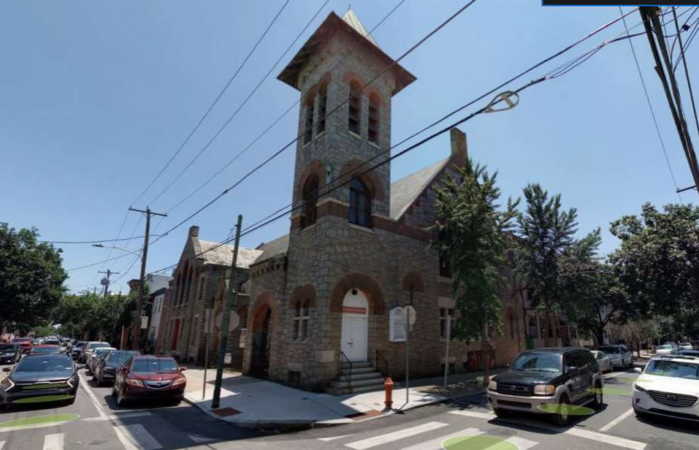
The former St. John’s Baptist Church at 13th and Tasker Streets is slated to house 26 rental units. The church dates to 1892 and is currently vacant.
The developer is Annex Investments II, owned by Drew Palmer, and the design of the remodel is by Philadelphia-based Toner Architects.
The church, which sits at the northeastern corner of the Miracle on 13th Street block, is zoned for single-family residential.
But the 2019 law passed by district Councilmember Mark Squilla makes it easier to convert “special use properties” — such as churches or theaters — to new uses no matter their underlying zoning, if the building is historically protected.
St. John’s Baptist Church was added to the local Register of Historic Places in 2020 after the advocacy group Preservation Alliance of Greater Philadelphia nominated it.
The bill was passed following the St. Laurentius debacle in Fishtown, where a handful of neighbors managed to delay a redevelopment project with lawsuits until the building was in poor enough shape that it had to be razed.
The 2019 law makes such legal warfare more difficult to wage.
These new zoning laws are “facilitating an increasing number of adaptive reuse projects of historically designated properties, preserving them while returning them to productive, taxpaying use and strengthening their surrounding neighborhoods,” said Paul Steinke, who leads the Preservation Alliance.
On Tuesday the project was given a preliminary review by the Architectural Committee, which advises the Historical Commission.
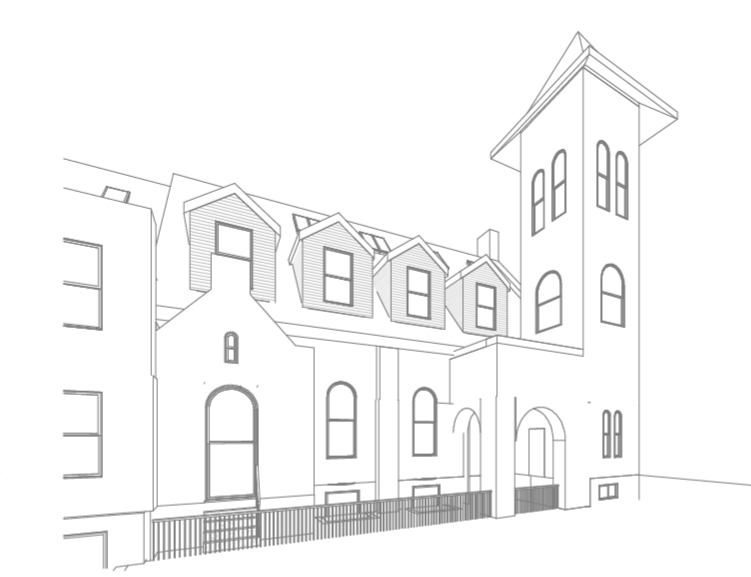
As part of the conversion, the developer wants to insert additional floors to the church building, which is beyond the Historical Commission’s jurisdiction. The plan also includes adding large dormers to the roof to allow more light into the future residences and replacing the dilapidated slate roof with asphalt.
The proposed new dormers can be seen in this rendering, lining the church’s roof.
The Architectural Committee objected to both of those exterior changes.
“The dormers are pretty significant on this, and we’re looking to find a way to make those more subtle,” said Nan Gutterman, who sits on the committee.
Sara Shonk Pochedly of Toner Architects noted the dormers are the same size as those added to other redeveloped churches reviewed by the Architectural Committee, but this building is smaller in size so the new additions look larger.
Because this was a preliminary review meeting, the committee did not indicate how it would vote to advise the larger commission.
“We always appreciate when a church is given another life,” said Justin Detwiler, who sits on the Architectural Committee. “Thank you and your applicant for doing that and being sensitive. These are not easy projects.”
Palmer did not attend the committee meeting and did not immediately respond to a request for comment. Ian Toner of Toner Architects declined an interview request at this early stage in the development process.
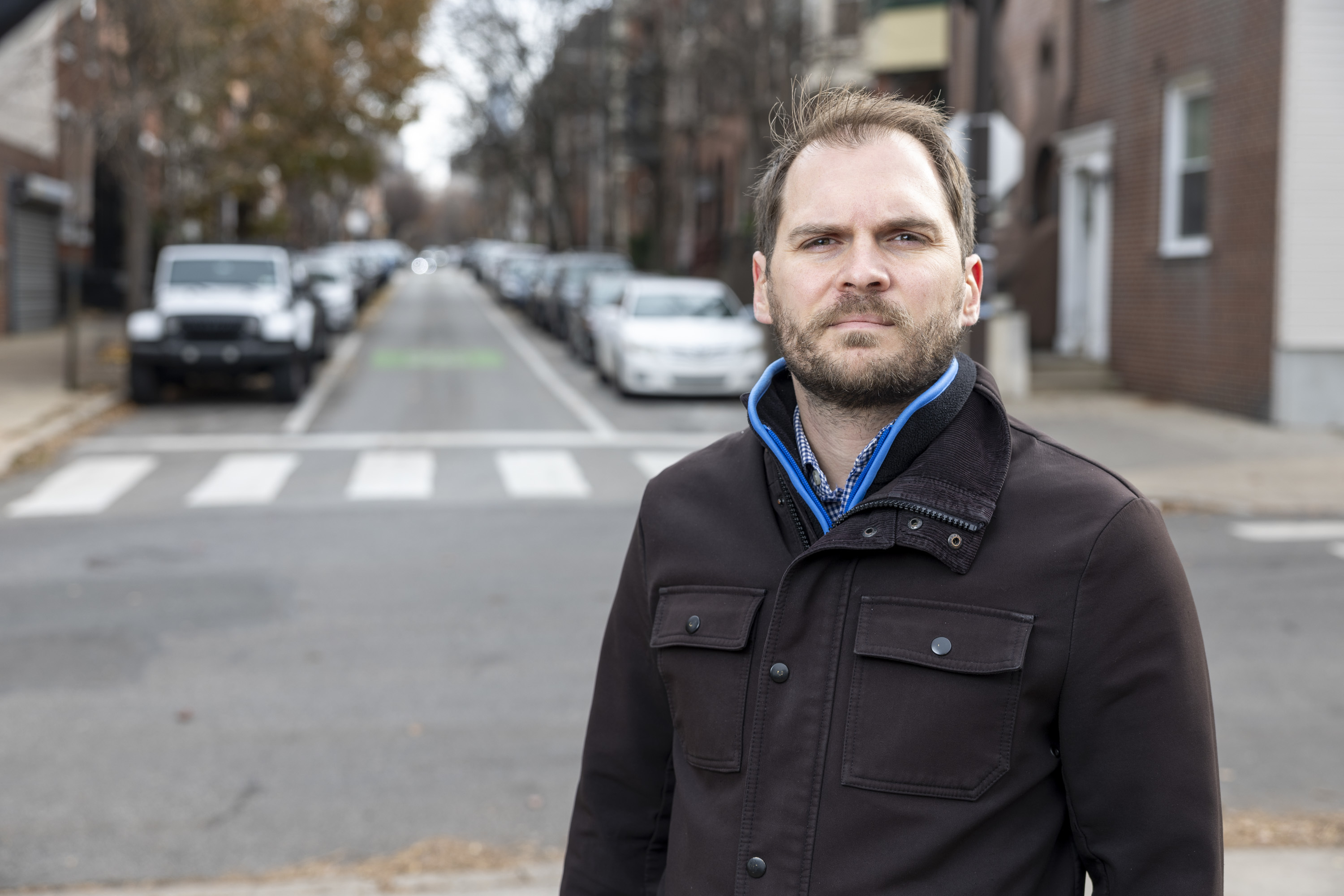
When Adam Sawyer and his wife, Marissa Tan, moved to Philadelphia in 2024 from Baltimore, they were attracted to Center City by its proximity towork and mass transit.
The couple figured if they sold their car, they could even afford to rent in one of the thousands of new, high-rise apartments that have been built across Center City over the last 10 years.
Tan had just gotten a new job with the Cooper University Hospital in Camden, and Adam needed access to 30th Street Station for work. They eventually settled on the PMC Property Group’s Riverwalk North at 23rd and Arch Streets and have been impressed by the city, its transit system, and life without a car.
Adam Sawyer and his wife, Marissa Tan, moved to Philadelphia in 2024 from Baltimore.
“One of the things I love about living in a city is that you’ll be walking down the street and there are five different events you didn’t even know about,” Sawyer said. “Festivals, farmers markets, just activity, people doing things. I love that Philadelphia has so much energy.”
In many ways Sawyer and Tan — who are both 35 — are representative of the people who have taken up residence in the new apartment buildings across Center City. Between Pine and Vine Streets, river to river, 3,500 new apartments have opened since 2023.
Center City District (CCD) set out to learn more about who is calling these apartments home, with a survey of more than two dozen buildings constructed since 2015.
Like Sawyer and Tan, the vast majority of respondents to CCD’s survey are under 45 (83%), more than half don’t own a car (55%), and close to half moved from outside the Philadelphia area (44%). Sawyer works remotely like 21% of respondents, and Tan works in healthcare like 32% of them.
window.addEventListener(“message”,function(a){if(void 0!==a.data[“datawrapper-height”]){var e=document.querySelectorAll(“iframe”);for(var t in a.data[“datawrapper-height”])for(var r,i=0;r=e[i];i++)if(r.contentWindow===a.source){var d=a.data[“datawrapper-height”][t]+”px”;r.style.height=d}}});
In a city where a fifth of all residents live in poverty, the respondents aren’t representative of the average Philadelphian in many ways. The buildings surveyed have an average rent of $2,645, well above the median of $1,387.
But the results show that there is a market for the kind of new buildings that are still being proposed. They alsohighlight that many people are attracted to the most central parts of Philadelphia because it offersmore density, walkability, and other urban characteristics that few other American cities can boast.
“People actively choose Philadelphia over other cities and metropolitan areas because we outperform them in some ways,” said Clint Randall, vice president of Economic Development with CCD, which is funded by downtown property owners and provides advocacy and services like additional security and cleaning downtown.
“The city spent so many decades shrinking,” Randall said. “When you see this entire skyline of high-rise apartment buildings emerge, it contradicts what longtime Philadelphians think they know about this place, which is that it does not grow or attract residents.”
Reversing reverse commuting
Center City District’s survey confirmed a longtime finding of the organization’s other research reports: People who live downtown are likely to work there or very close by.
In Philadelphia, reverse commuting is common, a testament to the fact that many private-sector employers have remained outside the city to avoid wage and business taxes. But among survey respondents, only 12% commuted to the suburbs for work compared to almost 40% citywide.
Over half of respondents work in either Center City or University City, and a similar proportion work in either healthcare (32%) or in the jobs more typically associated with office towers: “business, professional, or financial services” (27%). Twenty-one percent work from home.
“A lot of people are in medicine, in healthcare. I see a lot of scrubs,” said Kaz Rivera-Gorski, about her building One Cathedral Squareat 17th and Race Streets.
window.addEventListener(“message”,function(a){if(void 0!==a.data[“datawrapper-height”]){var e=document.querySelectorAll(“iframe”);for(var t in a.data[“datawrapper-height”])for(var r,i=0;r=e[i];i++)if(r.contentWindow===a.source){var d=a.data[“datawrapper-height”][t]+”px”;r.style.height=d}}});
“I would imagine there’s a good amount of people that work remotely, too,” said Rivera-Gorski, who is a management consultant who works from home. “I see people on their laptops in the shared spaces during the day.”
Seventy percentof respondents said their jobs are within walking, biking, or transit distance from their homes, while 80% of them said that owning a car was not necessary to enjoy daily life in Philadelphia.
That’s part of what attracted Sawyer and Tan, even though another part of Philadelphia’s allure was that it was closer to family in central and eastern Pennsylvania (the couple have a Zipcar membership).
“While I do drive, I really, really dislike driving,” Sawyer said. “I’ve lost people. Everybody has, to either accidents or crashes or DUIs. So we were open to selling our car and became more and more convinced it was a good idea.”
window.addEventListener(“message”,function(a){if(void 0!==a.data[“datawrapper-height”]){var e=document.querySelectorAll(“iframe”);for(var t in a.data[“datawrapper-height”])for(var r,i=0;r=e[i];i++)if(r.contentWindow===a.source){var d=a.data[“datawrapper-height”][t]+”px”;r.style.height=d}}});
Retaining out-of-towners
Randall said that he was surprised by the proportion of CCD’s respondents who reported having moved to Philadelphia from outside the region. (A recent Realtor.com report showed that Philadelphia switched from having mostly local interest in rental listings before the pandemic to mostly out-of-towners today.)
The survey also found that the majority of Center City dwellers planned to be living in Philadelphia inthree to five years, with 45% planning to continue renting and 16% hoping to buy.
“You hear about the transience of other places like D.C. or Boston, and it seems like people are here [in Philadelphia] and they intend to stay,” Randall said.
That is certainly the goal of Annika Verma, a student at Temple University who lives in the Logan Lofts in Callowhill.
“I am already calculating: Can I get an entry-level job? What salary would work for the rent in this area?” Verma said. “I would love to stay. The area seems ideal for me in terms of commuting or walking. Anything, everything is a 15-20 minute walk or bus ride away.”
Sawyer and Tan are hoping to stay in Philadelphia, too. They are currently searching Center City for a condo to buy. They may try to stay in their current Logan Square neighborhood for its proximity to the Schuylkill River Trail and 30th Street Station.
“We love it,” said Sawyer, who notes that they’ve lived in three cities in Texas, Cooperstown in New York, and Baltimore before this. “But our favorite place we’ve ever lived is here in Philadelphia.”
The Wanamaker Building was built to be an icon of modern retail, a colossal temple of middle-class consumerism in the heart of Philadelphia.
Over 100 years later, the palatial department stores of Wanamaker’s heyday are gone,and the building’s new owners are remaking it for a different age following the closure of Macy’s earlier this year.The building will offer loft-style apartments and, plans filed with the city show, a rooftop pool.
New York-based TF Cornerstone has submitted plans to the Philadelphia Historical Commission that show the changes to the retail space. Both the exterior and parts of the interior — the Grand Court and organ — are protected. The developer is seeking permission to add more entrances and retail space on the ground floor, among other changes.
TF Cornerstone and local partner Alterra Property Group plan to resurrect original aspects of the building’s design, while acknowledging the realities of retail today, which means carving out space on the street and within the building for smaller businesses.
“It’s most likely not going to be one tenant across the entire area. Retail is just different” today, said Mark Faulkner, an architect with New York-based Practice for Architecture and Urbanism (PAU), which is in charge of the design of the building’s retail section.
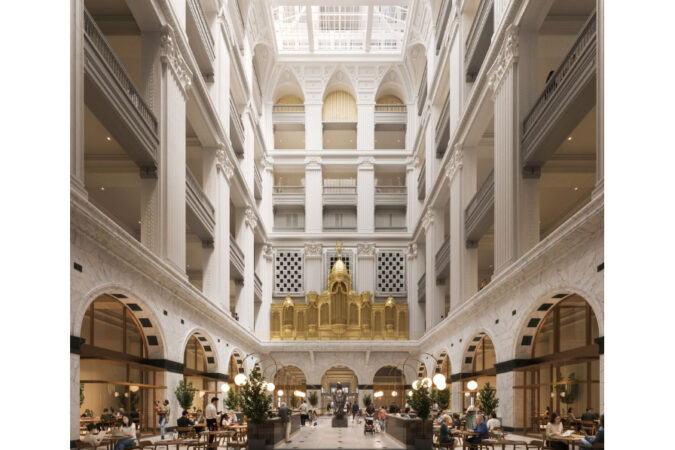
“We’ve been providing a lobby and an arcade that leads you to that center space but also allows for smaller retail and smaller individual stores around the ground floor and some of the upper floors,” Faulkner said. In the Grand Court itself, “we’ve been focused on a food and beverage offering.”
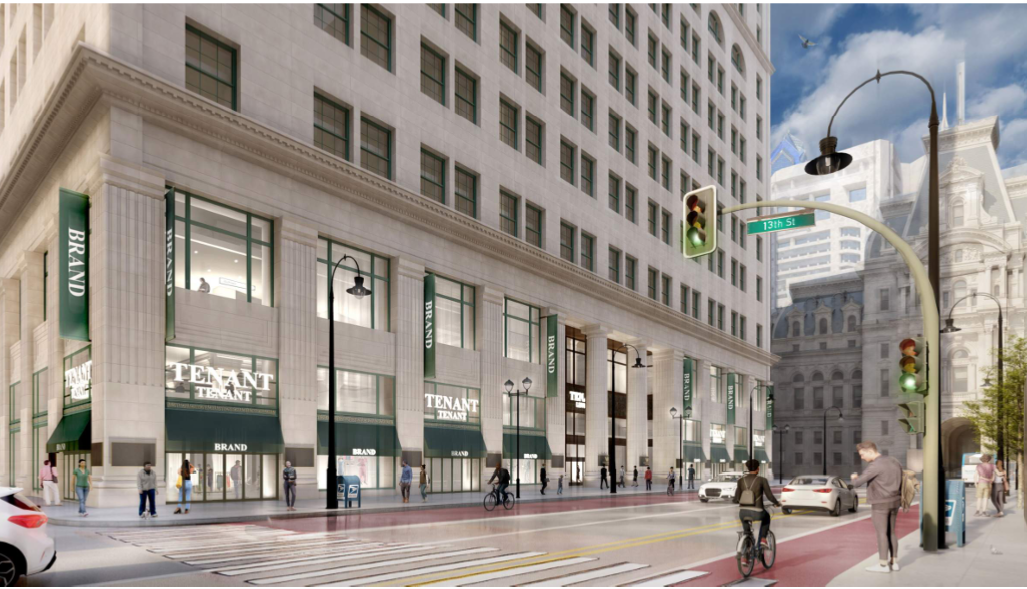
Renderings created by PAU also show two new entrances on Market Street, one on Chestnut, another on 13th and on Juniper. The proposals submitted to the city include options with multicolored or white themed signage.
The signs themselves would be made of bronze with backlit acrylic faces. The colorful sign option could match a prospective tenant’s logo.
A rendering of the Wanamaker Building with multiple new storefronts on Market Street, with white signage (another version offered multi-hued signs).
The Chestnut Street ground floor of the building has already seen some new entryways and retail spaces added, such as the Starbucks at the southeastern corner.
Inside the building, one of the biggest changes will be the removal of a steel platform that covers the huge, historic skylight and blocks the sun from warming the Grand Court, as TF Cornerstone and Alterra previously announced.
But Faulkner emphasized that only the obstructing floor, which is just a couple decades old, will be removed, not any of the building’s original touches.
The platform covering the skylight currently serves as the pre-function space for the Crystal Tea Room, which will remain open during construction. That congregation space will be relocated.
As an accompaniment to that major change, on the ground floor, the architects have also been studying the original detailing and paint schemes of the Wanamaker’s heyday to see if more of that original grandeur can be revived.
“The Grand Court is one of the most amazing parts of this project, and once people see natural light flood into that space, it will be even more amazing,” Faulkner said. The developers also will be “refreshing the finishes in the Grand Court that respond more to the original condition back from when it first opened.”
Philadelphia-based JKRP Architects is leading design of the remainder of the building, including a few floors of renovated office space, the conversion of the rest of the floors to loft-style apartments, and the rooftop.
The plans submitted to the historical commission include some aspects of JKRP’s plans, which showan 18-by-60-foot rooftop pool with a depth of four feet at the northwestern corner of the roof, near the newly operational skylight, as well as a hot tub.
TF Cornerstone plans to begin renovations in February, and the work will last years.