Author: Jake Blumgart

  • PHA says former Germantown Settlement properties will be reopened by 2029 — at great cost

    PHA says former Germantown Settlement properties will be reopened by 2029 — at great cost

    For over 15 years, dozens of properties once owned by disgraced nonprofit Germantown Settlement have sat derelict and mostly empty.

    In 2024, the properties were given to the Philadelphia Housing Authority (PHA). This month the agency finally announced its plans: $84 million will be spent to gut and rehabilitate 113 units and build 40 apartments for seniors.

    Most of the properties will be earmarked as rentals for very low-income Philadelphians at 30% of area median income, or roughly $32,000 for a family of three. The former Settlement buildings are a mix of rowhouses, duplexes, and small apartment buildings.

    “I was shocked and dismayed by the conditions,” said Kelvin Jeremiah, CEO of PHA. “It’s going to cost a lot of money to get it back to habitable use.”

    Some critics of the plans say the amount PHA plans to spend beggars belief. Spilt 153 ways, $84 million is almost $550,000 a property.

    Longtime Northwest Philadelphia developer Ken Weinstein says his company could build new units at $284,000 a unit, and small developers who are active in the neighborhood can rehab houses for $152,000 apiece.

    “We have limited government resources, and we have so many people that need subsidies to put a roof over their heads,” Weinstein said. “I don’t know why we wouldn’t stretch our dollars as far as possible.”

    (function() {
    var l2 = function() {
    new pym.Parent(‘GERMANTOWN.html’,
    ‘https://media.inquirer.com/storage/inquirer/projects/innovation/arcgis_iframe/GERMANTOWN.html’);
    };
    if (typeof(pym) === ‘undefined’) {
    var h = document.getElementsByTagName(‘head’)[0],
    s = document.createElement(‘script’);
    s.type = ‘text/javascript’;
    s.src = ‘https://pym.nprapps.org/pym.v1.min.js’;
    s.onload = l2;
    h.appendChild(s);
    } else {
    l2();
    }
    })();

    Weinstein emphasized that he thinks Jeremiah has been a transformative and innovative leader for PHA, but he doesn’t understand why the agency isn’t trying to get the properties back into productive use in a more cost-effective way.

    He noted that PHA has sold scattered site single-family units it owns in the area to small developers for low-cost revitalization, with deed restrictions in place to keep them affordable in the long term.

    Weinstein also points to PHA’s campaign to obtain struggling new apartment buildings as an example of its capacity for flexibility and cost sensitivity. Jeremiah has said the purchases are being made because they cut the agency’s costs in half in contrast to building new.

    “I thought it was brilliant that PHA set out to buy existing apartment buildings at $200,000 a unit. That is a much better way to address the affordability issue in housing,” Weinstein said. “I don’t know why PHA would go out of their way to spend 2½-times that to rehab and newly construct in Germantown.”

    The transfer of the former Germantown Settlement properties from the Redevelopment Authority to PHA was controversial in 2024. Some residents felt a community engagement campaign had been ignored. Many attendees had expressed a desire for more homeownership opportunities.

    Jeremiah says that after a community meeting earlier this month, he is open to using 16 of the properties for affordable homeownership.

    “We heard that they would like to see a more balanced community, and so we’re going to work through what that means,” Jeremiah said. “We are revisiting some of the suggestions that we heard from the community, and we are going to revise our plans.”

    But Jeremiah says that sales to small developers for homeownership units, even with deed restrictions, would not help the poorest Philadelphians.

    When PHA does sell scattered site homes for private redevelopment, the rebuilt houses primarily go to those making 60% of area median income or $64,000 for a family of three.
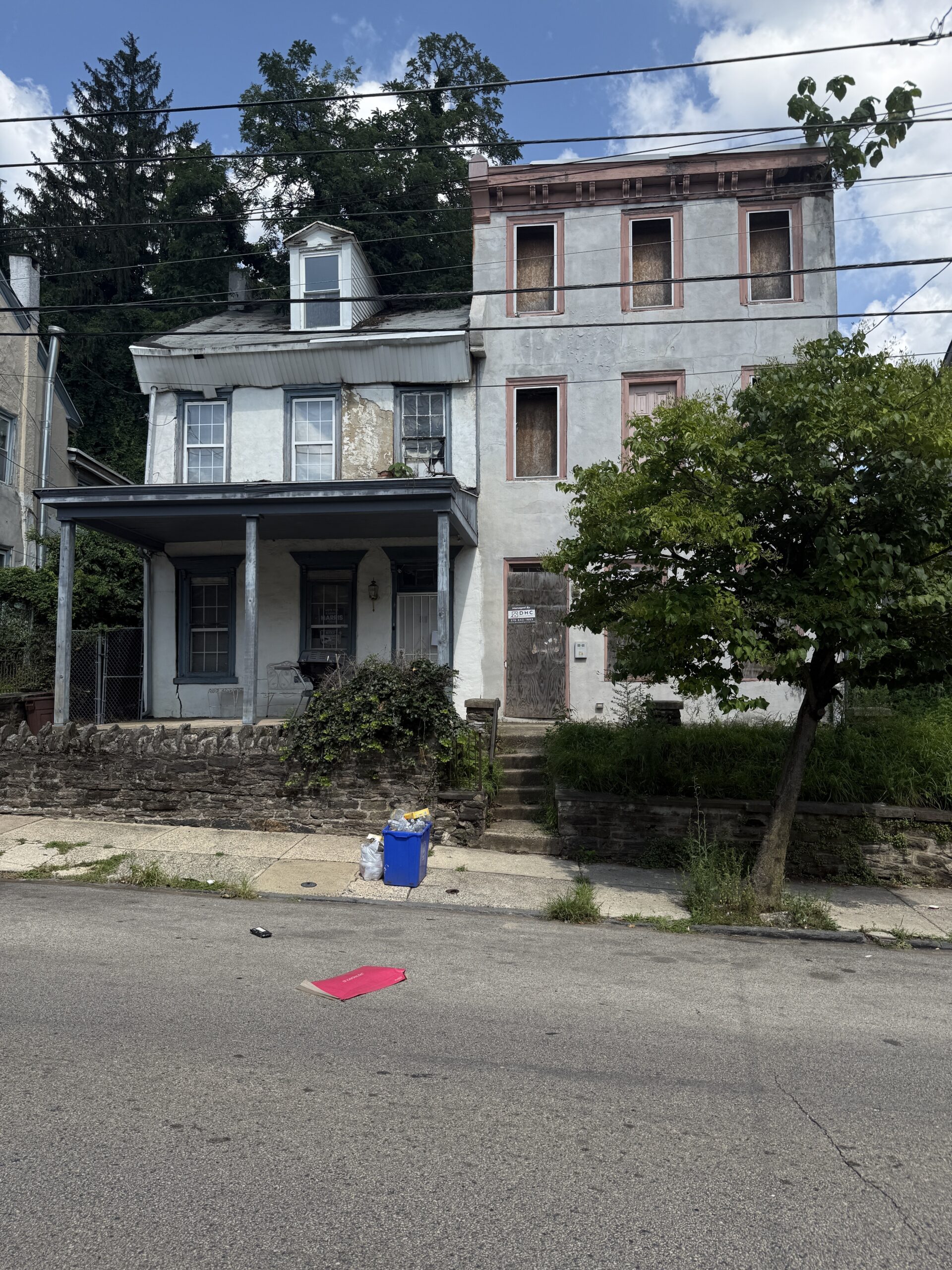
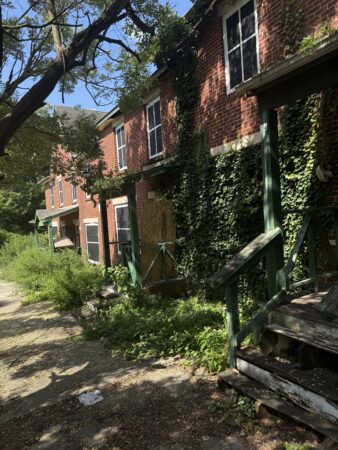
    A former Germantown Settlement property, courtesy of Kelvin Jeremiah.

    The lowest-income residents, who make half that, are the overwhelming majority of PHA’s tenants. They are not in a position to buy a home — even a subsidized and permanently affordable one.

    “A mom and pop [developer] would be hard-pressed to maintain permanent affordability,” Jeremiah said.

    Keeping the former Germantown Settlement properties as PHA-run rentals will guarantee a repository of affordable units no matter how this corner of Northwest Philadelphia evolves, he said.

    “Some of our assets are in communities that are rapidly becoming unaffordable,” Jeremiah said. “Our assets in those communities ensure we are maintaining some level of affordability.”

    Jeremiah himself has often criticized how much it costs PHA to build or gut rehabilitate projects, but he notes that the agency is restricted by a variety of federal regulations.

    “The construction costs are untenable for us, but it’s driven by the regulatory requirements that we must adhere to,” he said. “I have no flexibility.”

    Jeremiah estimates that the rehabilitation work will begin in 2027, after PHA hopefully secures Low Income Housing Tax Credits this year. Once begun, he expects the project to take 15 months, so at earliest the homes will be ready for habitation again in 2028.

    Many of the former Germantown Settlement properties have fallen into ruin over the last 10 years, with copper wiring stripped out and mold or insect infestations harrowing their interiors.

    The city demolished the Blakemore Apartments because of their poor condition. Its site is where PHA will build a new 40-unit building for seniors. (PHA received 121 of 140 of the expired nonprofit’s units, with the rest going to smaller developers.)

    The former Germantown Settlement properties are heavily concentrated in two sections of East Germantown, creating pockets of dense vacancy near the intersection of Church Lane and Lena Street and on the 40th blocks of Wister and Garfield Streets.

    For Councilmember Cindy Bass, who represents the neighborhood, PHA is the right entity to redevelop these long troubled buildings.

    “It’s very important to preserve affordable housing, and that’s what we’re doing here,” Bass said. “This is not for profit. This is for people.”
  • A Walnut Street building where John Lennon and Roger Ailes once worked just sold for a steep discount

    A Walnut Street building where John Lennon and Roger Ailes once worked just sold for a steep discount

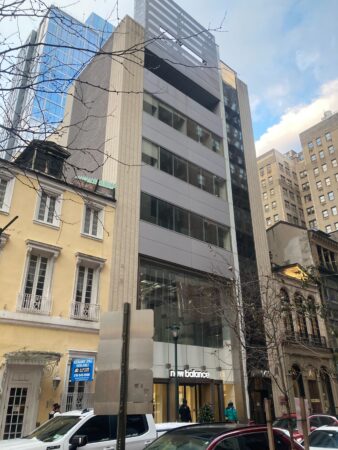
    Another Philadelphia office building has sold for a small fraction of what it last changed hands for, this time in the heart of Center City’s retail district.

    The six-story property at 1619 Walnut St. was purchased by Marc Zollinger, a Swiss investor and CEO of the company MZP AG, which is listed as the purchaser. Zollinger’s LinkedIn profile shows that he formerly worked in Philadelphia for Miller Investment Management.

    The property sold for over $5 million, a dramatic decrease from when the seller Nuveen Real Estate purchased it in 2013 for over $19 million, according to a person familiar with the sale.

    Neither Nuveen or Zollinger responded to a request for comment.

    The office space in 1619 Walnut is wholly vacant, although real estate firm Keller Williams still holds a lease for two floors of now empty office space.

    The retail picture at the property is more positive, with shoe seller New Balance occupying nearly 4,000 square feet on the ground floor with a lease that expires in 2035.

    The sale price is seen as an unusually good deal for the location. Although the second-tier office space available in the building is the exact kind of product that has been hard hit by the rise of hybrid work since the COVID-19 pandemic, the upper floors of 1619 Walnut are seen as ideal for conversion into apartments.

    “The sale price is an anomaly. … [Zollinger] bought it at an astoundingly good price,” said Larry Steinberg, head of the urban retail division for real estate services firm Collier’s Philadelphia office, who was not involved with the deal. “It would make a lovely residential conversion.”

    The property’s sale was handled by JLL, a real estate services company, which advertised the building as an ideal office-to-residential conversion. The property enjoys the most flexible zoning in Philadelphia’s code, making such a transition relatively simple.

    “With rectangular floorplates measuring approximately 4,900 square feet, the floor plan of the building makes it an ideal candidate for a conversion to boutique residential,” reads JLL’s promotional materials for the sale. “Given the existing layout of each floor, the redevelopment would accommodate a variety of modern open layouts with access to an abundance of natural light.”

    JLL estimates that the office floors could accommodate up to 20 residential units, depending on the size of the apartments.

    The building was purpose built for KYW radio in 1937 and, later, its television division. The influential Mike Douglas Show was based out of the building for much of its run, employing Roger Ailes, later of Fox News fame, in the late 1960s. In the early 1970s, John Lennon and Yoko Ono guest-hosted the show from the building for a week, interviewing people including Chuck Berry and Ralph Nader.

    More recently, between 1997 and 2009, 1619 Walnut was home to the influential French restaurant Brasserie Perrier.

    JLL’s Jim Galbally, who led the sales team, told real estate analytics firm CoStar that the purchase represented a “rare opportunity to acquire a retail, mixed-use asset along Walnut Street, Philadelphia’s premier high avenue.”

  • After delays, Lehigh Avenue apartment project is ready to begin construction under a new owner

    After delays, Lehigh Avenue apartment project is ready to begin construction under a new owner

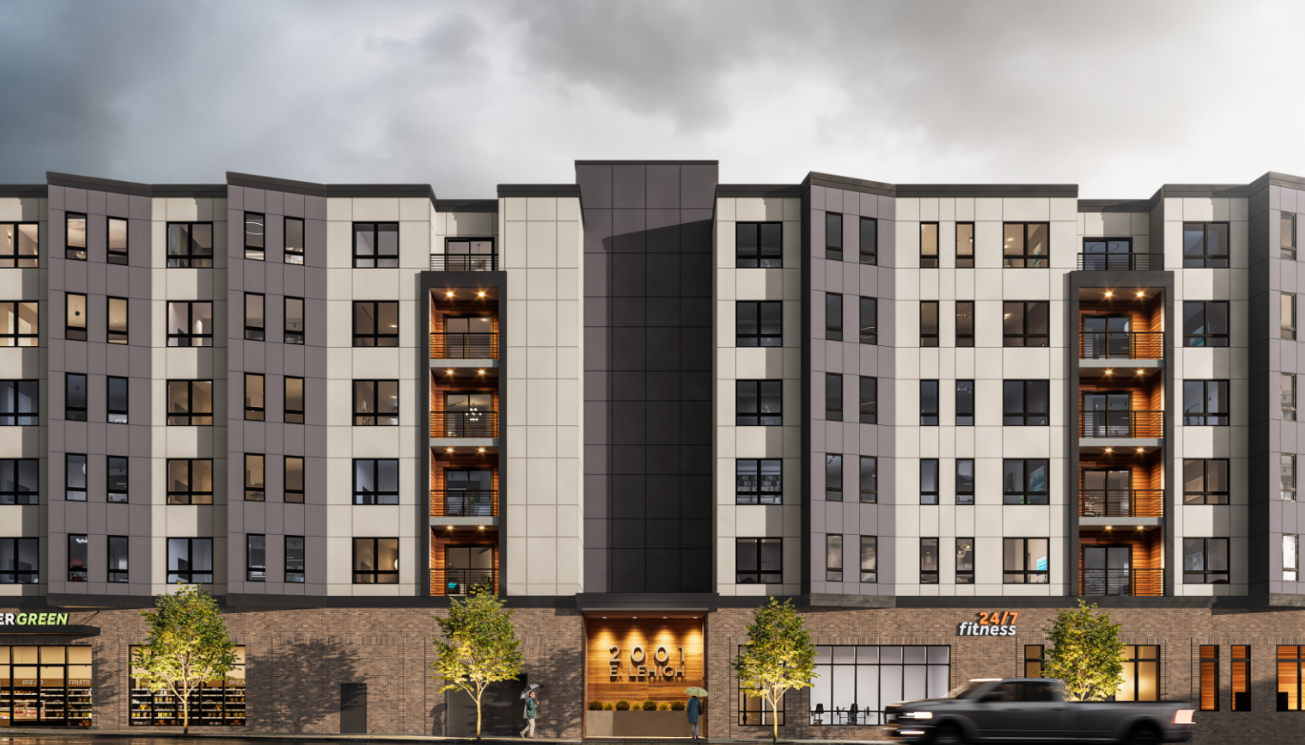
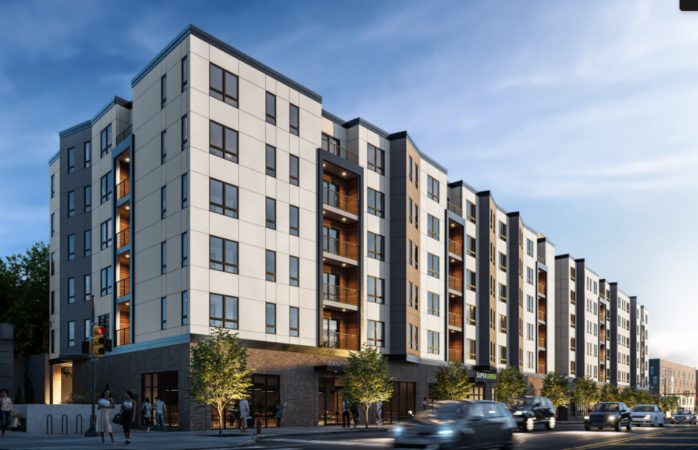
    A six-story apartment project at 2001 E. Lehigh Ave. is moving forward with a new owner after years of delay amid a difficult development environment.

    Five-lane Lehigh Avenue divides the southern portion of Kensington, which has experienced development more akin to the boom in Fishtown, from the parts of the neighborhood to the north that are at the heart of the city’s opioid crisis.

    But along the northern edge of the avenue, next to the Conrail tracks, a series of auto-oriented and light-industrial properties have been redeveloped as housing in recent years.

    “That whole corridor has continued developing. It’s even pushing over the tracks further up north, too,” said Brian Corcodilos, CEO of Designblendz, the architect for the project. “We’re confident that … this area continues to rent up.”

    The former owner of 2001 E. Lehigh, developer Isaac Singleton, secured zoning approvals for the project in 2023 and 2024. City records then show the property sold for $2.5 million in January 2025.

    A demolition permit for the property was issued this week to an address associated with developer Roman Ovrutsky — whose home The Inquirer profiled last year — and Corcodilos said their team expects construction to begin by early spring.

    Ovrutsky’s version of the project will feature 146 apartments, a slightly smaller number than Singleton proposed, and a little over 6,000 square feet of commercial space on the ground floor. The project will also have 54 underground parking spaces.

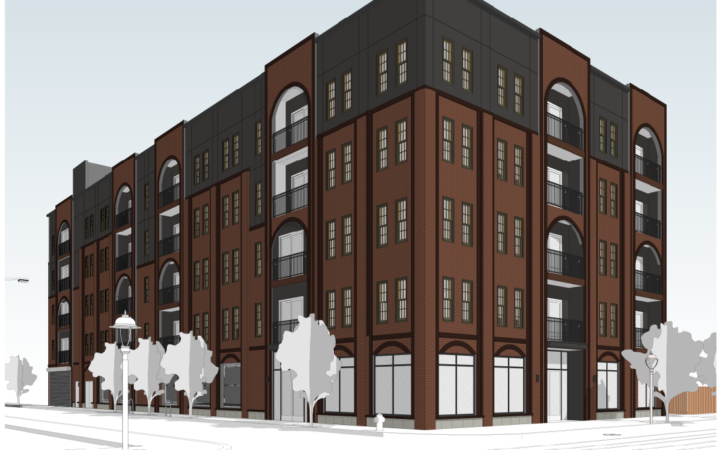
    Designblendz has updated the visual palette for the project by adding darker grays and slate-colored hues.

    Corcodilos said that changes in federal tax policy in President Donald Trump’s Big Beautiful Bill have enabled clients to begin building again. A lull in recent years was caused by heightened interest rates and an apartment glut that made it hard for developers to charge the rents necessary to pay back the loans on their projects.

    The former design for the building included greens and browns. The new vision features slate-colored hues.

    Corcodilos said developers have also found that more projects are making sense if they use either the city’s mixed-income housing zoning bonus — which allows taller or denser construction in exchange for an affordability component — or if they base their financing on catering to some tenants who use federal rent voucher subsidies.

    “That’s how a lot of these projects are getting done,” Corcodilos said.

    It’s illegal in Philadelphia to discriminate against renters using vouchers, but it’s common for landlords to discourage those tenants, and many buildings owners don’t proactively advertise to subsidized tenants.

    But in recent years, increasing numbers of landlords have seen the advantage of tapping into a large tenant base with almost guaranteed payments.

    Another property just north of Lehigh Avenue at 2200 E. Somerset St. was sold last year to the Philadelphia Housing Authority, after many of its tenants ended up being voucher holders.

    “A lot of these big buildings that are going up, the only way they’re penciling is if there’s some sort of an affordability component to it,” Corcodilos said.

    Beyond Kensington, Designblendz is seeing an increase in work this year due to developer-friendly changes in the federal tax code, opportunities in affordable housing provision, and an easing of the overall apartment glut, he said.

    “I’m not getting a sense at the moment that clients are worried about not filling their units,” Corcodilos said. “Obviously things slowed down a little bit over the last year and a half for the industry. But what we’re seeing right now, it’s busier than ever.”

  • Developer Iron Stone transfers two Hahnemann properties to new ownership

    Developer Iron Stone transfers two Hahnemann properties to new ownership

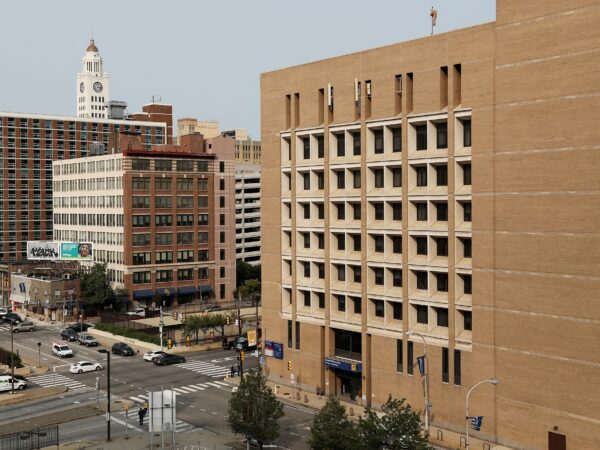
    Philadelphia-based Iron Stone Real Estate Partners transferred control of two of their former Hahnemann University Hospital properties in the last two weeks.

    The investment group acquired a portfolio of Hahnemann properties in 2021 and began redeveloping them into laboratory and office space.

    But in recent weeks Iron Stone disposed of two of these properties.

    The company donated the New College Building at 245 N. 15th St. to Drexel University on Dec. 31.

    “It’s a charitable donation,” said Jason Friedland, director of operations and investments at Iron Stone. “We felt that that building was best served with Drexel owning it and using it for a long time, long-term, for their research.”

    When Iron Stone acquired the New College Building five years ago, Drexel occupied the property’s medical labs and was one of the few remaining tenants in the Hahnemann campus.

    Back then the university was considering moving this Center City operation to the suburbs in the short term and to University City in the long term.

    “The generous gift will provide the university with flexibility as it continues to consolidate operation of its College of Medicine on its University City campus,” Drexel spokesperson Britt Faulstick said in an email statement. “Plans for the New College Building will be determined in the future.”

    On Jan. 6, Iron Stone sold the Broad and Vine Parking Garage at 1416 Wood St. to the Philadelphia Parking Authority for $21.3 million.

    The 850-space garage had been exclusively for Hahnemann’s use. Iron Stone renovated the vacant garage after the bankruptcy and hired Metropolis Technologies — the largest parking operator in the United States — to run it.

    The acquisition is the first time the Parking Authority has purchased a garage built by someone else, said Rich Lazer, executive director of the Parking Authority.

    “Most of our garages, outside of the airport, are Center City-based, so its nice to push out onto North Broad,” Lazer said. “Our garages are lower cost than private garages, so it’ll help us maintain reasonable pricing.”

    The authority plans to retain Metropolis Technologies as the operator, Lazer said.

    Iron Stone still owns a couple former Hahnemann properties, including the 120,000-square-foot Race Street Laboratories at 1421 Race St. and the 15,000-square-foot building at 231 N. Broad St., which is fully leased by Bayada Home Health Care Inc. with a third of the space and Dynamed Clinical Research with the rest.

    Race Street Laboratories was developed to tap into the life sciences and biomedical market, which boomed during the pandemic but has slowed substantially as interest rates spiked. Currently the building has only one tenant, Sbarro Health Research Organization, with 7,500 square feet of space.

    Friedland said Iron Stone plans to move its headquarters from University City’s FMC Tower to one of Race Street Lab’s unused floors.

    As for the rest of the space, Iron Stone is exploring alternative uses as the life sciences market continues to struggle.

    “We’re seeing where the opportunities are in commercial real estate,” Friedland said. “We have a couple things we’re exploring, but we’re not really in a rush.”

    New York-based Dwight City Group has purchased most of the remainder of the former Hahnemann buildings.

    Their plans for an apartment building were complicated by a bill introduced in December by Councilmember Jeffery Young to ban housing from the former hospital site.

    But on Dec. 24, in advance of City Council action on the legislation, the developer received zoning permits for a 361-unit apartment complex at 222-248 N. Broad St. Dwight Group says they are nonetheless in negotiations with Young to secure his support.

  • Hahnemann developer secures permits for apartments in advance of Council housing ban

    Hahnemann developer secures permits for apartments in advance of Council housing ban

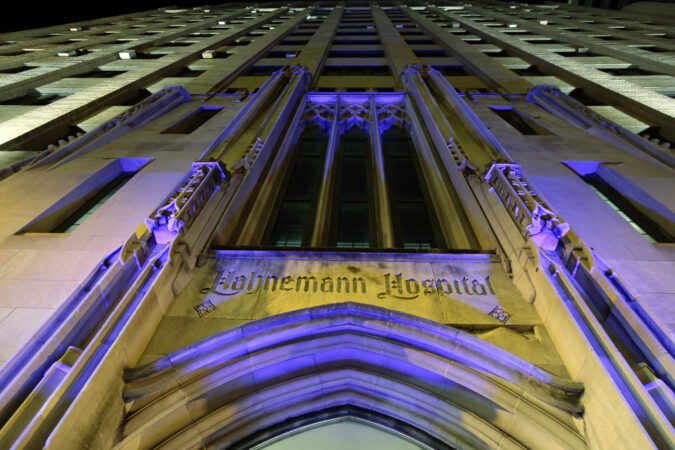
    Philadelphia Councilmember Jeffery “Jay” Young introduced a bill at the last City Council meeting of 2025 to ban residential development from the area around former Hahnemann University Hospital.

    The proposal covers properties near Broad and Race Streets with owners that include Drexel University, Iron Stone Real Estate Partners, and Brandywine Realty Trust.

    But only one known residential project slated for the area is covered by the bill: Dwight City Group’s proposal to redevelop the Hahnemann Hospital patient towers into hundreds of apartments.

    If enacted by City Council, which returns on Jan. 22, the bill could have stopped that redevelopment.

    But on Dec. 24, Dwight City Group secured a zoning permit for 222-48 N. Broad St. to build a 361-unit apartment building — far larger than the original plan — with space for commercial use on the first floor.

    With that permit secured, the project could move forward regardless of whether Young’s bill is enacted.

    Dwight City Group, however, says they are concentrating on ongoing conversations with Young.

    “We are working along with Councilman Young and the community to ensure that this project meets the needs and goals of the district,” said Judah Angster, CEO of Dwight City Group.

    The permits show some changes to the original plan. In interviews last year, the developer said the plan contained 288 units and that ground-floor commercial was unlikely.

    Young said the proposed housing ban is about preserving jobs by allowing only commercial development at the former hospital site.

    “As the city continues to look for ways to incentivize development, we need to ensure jobs and economic opportunities are at the forefront, with engagement from all stakeholders,” Young said in an email. “We look forward to working [with] all stakeholders as this legislation moves through the process.”

    Young’s bill confused and outraged many observers as a blatant example of spot zoning, in which legislation is used to help or hurt a particular project.

    But the tradition of “councilmanic prerogative” would likely guarantee its passage because other Council members are unlikely to vote against a bill that affects only one district.

    Nevertheless, the housing and transit advocacy group 5th Square has begun a campaign against the legislation and issued a petition earlier this week calling for its withdrawal.

    “The site on Broad and Race Street lies on top of an express subway stop and benefits from proximity to Center City jobs, shops, and cultural amenities,” the petition reads. “Since the shuttering of Hahnemann in 2019, the site currently provides little value to Philadelphians or tax dollars to the city despite its central location.”

    The proposed housing ban legislation comes after repeated controversies that have pitted Young against a variety of parties, including the Philadelphia Housing Authority, Mayor Cherelle L. Parker, multiple North Philadelphia neighborhood groups, safe streets advocates, and the building trades unions.

  • The Shops at Liberty Place are for sale

    The Shops at Liberty Place are for sale

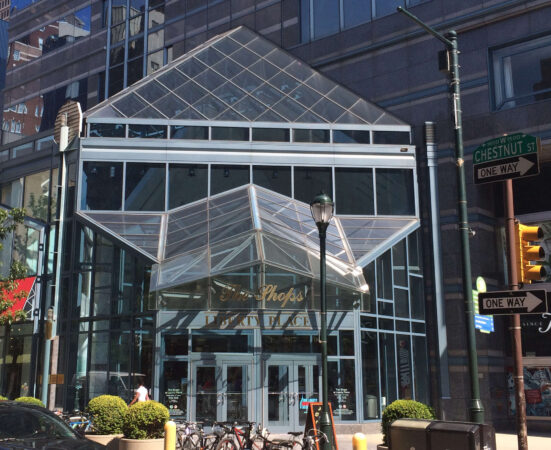
    The 147,201-square-foot mall between the Liberty Place towers, two of Philadelphia’s most iconic skyscrapers, is up for sale.

    Chicago-based Metropolis Investment Holdings sees a sale of the Shops at Liberty Place as a way to put the property in the hands of a company that specializes in retail.

    “With the property established as a leading retail destination in Center City, we believe it is at a natural point for a new owner to build on this foundation with additional investment and fresh ideas,” Tom Dempsey, head of asset management for Metropolis, said in an email.

    Metropolis is focused on office real estate and owns the 61-story One Liberty Place. The company purchased both properties in 1999.

    The sale of the Shops at Liberty Place is not an indication that Metropolis is planning to sell the skyscraper, too.

    “We are focused on our office portfolio, and One Liberty Place will continue to be a cornerstone asset for Metropolis,” Dempsey said. “It has demonstrated strong and consistent performance, benefits from a loyal tenant base, and remains one of Philadelphia’s most iconic and competitive office buildings.”

    There is no listed price, but a source familiar with Metropolis’ thinking says they are hoping to sell the Shops for $20 million.

    The shops at 1625 Chestnut St. are 77.7% occupied and include tenants like Jos. A. Bank, Victoria’s Secret, and Bloomingdale’s. The food court proved especially popular and has long been a draw for office workers.

    In 2024 indoor minigolf facility Puttshack opened as part of a wave of experiential retail in Center City.

    “The venue is particularly strong in group sales, hosting corporate events, social gatherings, and celebrations, which reinforces its role as a destination — its mix of entertainment, dining, and social interaction helps drive consistent foot traffic and contributes to the overall vibrancy of The Shops,” Dempsey said.

    Real estate brokerage Jones Lang LaSalle (JLL) is handling the sale of the Shops at Liberty Place.

    The company’s listing for the Shops at Liberty Place describes it as an “established in-fill urban location with significant population density and economic demand drivers” and boasts its “irreplaceable location along highly trafficked Chestnut Street within Philadelphia’s premier shopping district.”

    JLL says that it attracts 5.1 million visitors a year.

    An aerial view of One Liberty Place, the Shops at Liberty Place, and Two Liberty Place taken during 1990.

    The Shops at Liberty Place opened in 1990, three years after One Liberty, which famously broke the gentleman’s agreement that no building in Philadelphia be taller than William Penn’s hat atop City Hall. Two Liberty Place also opened in 1990.

    The Shops at Liberty Place proved a bright spot on Chestnut Street, which has long been overshadowed by Walnut Street as Center City’s premier shopping destination.

    The Inquirer’s architecture critic, Inga Saffron, praised the design of the building’s entrance, which seeks to echo its sister skyscrapers that soar above.

    “The glass structure sits a generous distance back from the hectic corner, providing plenty of elbow room for harried pedestrians,” she wrote in 2016. “The best detail is the batwing canopy over the doors. … The canopy’s angles recall the tiered chevrons that distinguish the crowns on Liberty Place’s towers.”

    The Shops at Liberty Place’s occupancy suffered a blow following the COVID-19 pandemic, but its general neighborhood is looking healthy. Both the Liberty Place skyscrapers have strong occupancy, and Center City’s residential population is climbing.

    “We’ve managed the asset carefully through challenging times,” Dempsey said. “Today, the property is well-positioned with a diverse mix of tenants, including strong experiential and destination offerings, and continues to attract interest from retailers and visitors alike. We see solid potential for continued growth and momentum under new ownership.”

  • Cars are essential to American life. They’re also toxic for the environment, humans, and society, these authors say.

    Cars are essential to American life. They’re also toxic for the environment, humans, and society, these authors say.

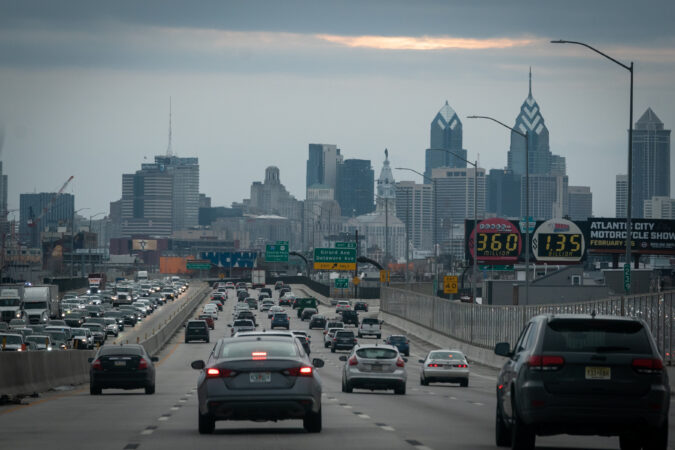
    For most Americans, driving is a normal part of everyday life. In much of the United States, a car is required for most trips to visit friends, commute to work, or go to the grocery store.

    The side effects of this auto-dependence are catastrophic, argue the coauthors of a new book called Life After Cars.

    There is the obvious danger from crashes, which kill roughly 110 Americans every day, but there’s also environmental devastation wrought by mass car ownership, social isolation engendered by the built environment, and soaring costs for American households.

    Did you know that the largest source of microplastics strangling oceans come from the tiny particles thrown off by tires? Or that in 1969, more than 40% of U.S. kids walked or biked to school while today only 11% do?

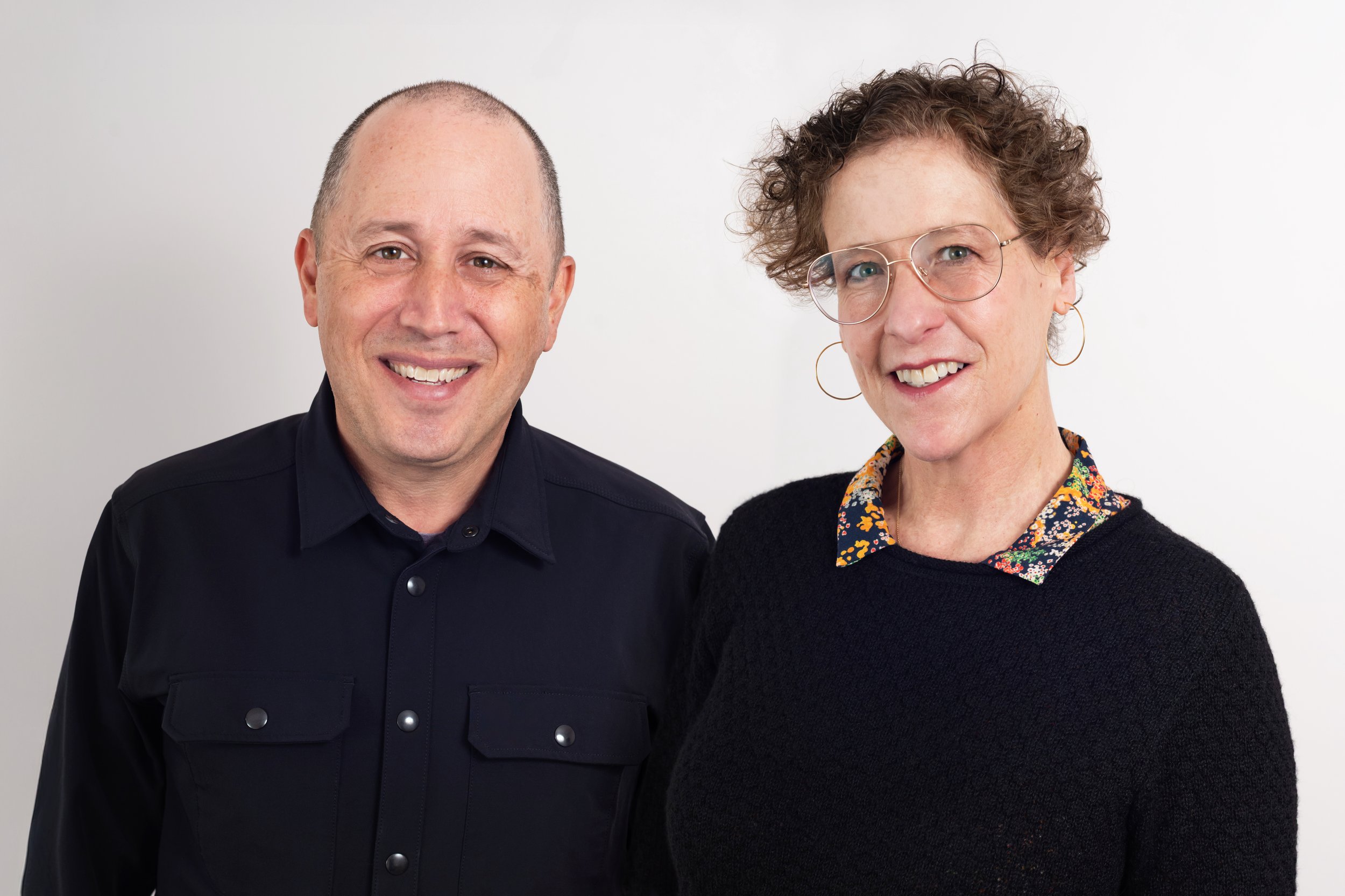
    Life After Cars is by Sarah Goodyear and Doug Gordon, hosts of a podcast called The War on Cars, a facetious name they adopted because opponents of non-car traffic infrastructure often accuse advocates of waging such a crusade.

    The conversation has been edited for length and clarity. Aaron Naparstek is a cowriter but was not featured in this Q&A.

    For most Americans, driving is part of everyday life. Why do you think that needs to be reevaluated?

    Gordon: Forced car dependency isn’t really working, even for people who love driving.

    Many Americans do love driving, but the type of driving that most Americans do is terrible. It would be great if most of the driving we did was on the open road, the camping trip, or the road trip, but most people are driving to work; they’re driving to get groceries. Those are such stressful trips that it would be great to provide alternatives.

    Goodyear: The price of real estate in walkable neighborhoods and transit-rich neighborhoods tells us that there is a real appetite for living in places where car dependence is not a given and where there are options.

    We’ve gotten to the point in this country where walkable neighborhoods have become a luxury good. We think walkable neighborhoods are something that should be available to everybody.

    You argue that America’s car culture severely limits the freedom of children. When I was a kid, I walked to school or to friends’ houses. Today, that’s rarer because of the threat of cars. And parents’ freedom is limited, too, because they have to drive their kids everywhere.

    Gordon: Cars and traffic fatalities are one of the leading causes of deaths for children in this country. You’re not wrong if you think to yourself, I don’t want my child walking to school because of the roads they might have to cross.

    Most of my friends and family who live in car-dependent suburbs have to serve as chauffeurs for their children until they’re at least 16. If they can’t afford another car, they have to continue negotiating how they’re going to get places after that.

    Doug Gordon and Sarah Goodyear are coauthors of the new book “Life After Cars.”

    We live in a walkable neighborhood. My kids walk and take transit to school. There are some mornings where they get up and leave the house and I don’t see them because they’re totally independent. We want that freedom to be available to all parents.

    It’s also robbing kids of their ability to be kids, to learn about the world around them, to navigate their neighborhoods, to interact with shopkeepers and their neighbors. If we want to create better American citizens, we have to start creating walkable places for children.

    You have a chapter on the effect that cars have on the environment, a lot of which was news to me, like the fact that up to 340 million birds die every year in America from car strikes.

    Goodyear: It’s on all fronts. Transportation is a huge contributor to climate change. If SUVs globally were a nation, they would be in the top 10 for carbon emissions.

    But there’s all sorts of unintended consequences, like habitat fragmentation. Roads cut up our natural areas to the extent that animals can’t seek mates and their genetic diversity is really constrained by these islands that they’re living on between roads.

    We really don’t think about the effect of road noise, which increases stress hormones in animals that leads to them being less effective at reproducing.

    These things are happening constantly all around us, and we don’t even think about it. And as we sprawl outward, we’re not thinking about what all of the effects are on wildlife.

    I’m old enough to remember when if you were driving cross country, your windshield would be covered with bug splatter. That doesn’t happen anymore because there are not as many bugs. Cars are one of the reasons that’s true.

    You compare tech companies of today and the automobile industry in the early 20th century. Negative effects of cars have been known — and resisted — for a long time. But through media and political campaigns, the industry was able to argue that efforts to regulate the technology would undermine progress. Sounds familiar!

    Gordon: Cars were the original ‘move fast and break things’ technology. The Silicon Valley ethos is exactly the same.

    The cover for their new book.

    It was important for us in the book to document that early history [of resistance to cars] because we’ve lost sight of that outrage.

    There’s this myth building around cars that we had this love affair, and it was the inevitable march of progress that got us all behind the wheel. But at the outset, that was not the case at all.

    There was deep, deep resistance, and we’ve forgotten that because none of us know a world without cars. Getting people to understand that this was not inevitable is the first step toward changing our future trajectory.

    You try to end the book on a hopeful note. But a lot of the human-centric cities in Europe and East Asia are possible because those countries have comprehensive mass transit. The U.S. doesn’t and isn’t likely to for the foreseeable future.

    Gordon: It does boil down to transit. Almost all of this stems from density and transit and all of those things that we are lacking in the United States. It’s a long battle. We are planting trees, and we will not get to sit under their shade.

    Goodyear: We started this podcast seven years ago. I’ve been covering these issues as a journalist for 20 years, so I have had a pretty good look as issues of livable streets and reducing car dependency have gone from being fringe to being much more mainstream.

    Just the fact that this book came out from a major publisher is huge. Another metric is that in almost every city on our book tour there has been a local elected official on the panel with us. And these are younger politicians.

    What’s really been missing in the United States is leadership on these issues. The advocacy community has been there, and it’s growing. But what hasn’t been there is political leadership to make the changes that we all know are necessary. I see that changing, and that gives me hope.

  • How Montco is addressing homelessness with an unusually bipartisan effort

    How Montco is addressing homelessness with an unusually bipartisan effort

    By the end of this year, Montgomery County will have three emergency short-term shelters with beds for 190 people in Pottstown, Lansdale, and Norristown.

    In late 2024, it had zero full-time shelters, even as homelessness soared to new heights in the county — Pennsylvania’s second wealthiest.

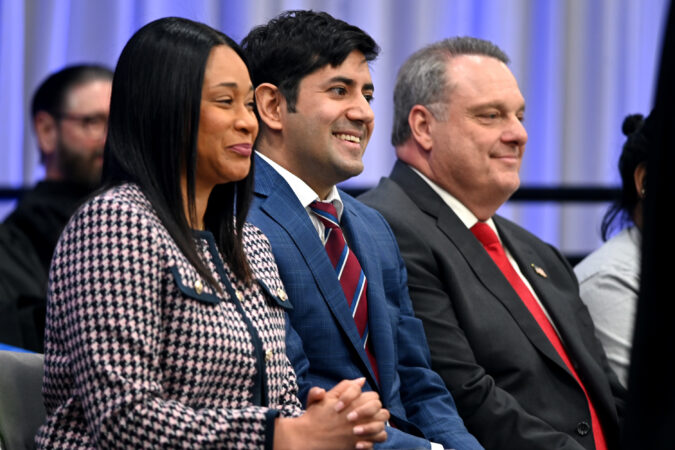
    The three-member board of commissioners is currently composed of two Democrats and one Republican, but in the past year they have operated with an unusual degree of cohesion on both the challenge of homelessness and on a county budget that included a small property tax increase.

    “We came in with similar goals around addressing the homeless problem throughout the county,” said Tom DiBello, the Republican commissioner. “We all heard it when we were campaigning [in 2023] and when we got elected, we felt that we needed to do something. We can’t continue doing it the way it’s always been done in the past, where people just kept talking about it.”

    Although the Montgomery County commissioners have formed a united front on many issues last year, housing policy issues are more likely to divide them in 2026.

    In Pennsylvania, county governments’ revenue sources are restricted to the politically sensitive property tax. And counties have no direct influence over municipal-level zoning restrictions that limit how much housing can be built.

    But the Democrat commissioners, Neil Makhija and Jamila Winder, have ideas about how to get around those limitations to directly fund more affordable housing and encourage local governments to allow more building.

    DiBello is not excited about many of the proposals being considered by the two Democrats. He opposes creating new county-level taxes and says zoning powers should be left to localities.

    Still, DiBello has further housing policy goals he would like to pursue — such as developing more affordable homes for senior citizens.

    As the county releases its 2026 housing blueprint, expected early this year, the first round of these debates will begin in earnest. This planning document, created by county government staff with commissioner feedback, lays out goals for the county based on a comprehensive housing policy — the first its seen in recent memory, Makhija says.

    “It’s going to be the first time that the entire board has had a voice and a view on what our role is to address a crisis in the cost of housing,” said Makhija. “There are things we can do to help people.”

    How the shelters got built

    Making policy to address homelessness is difficult because many municipalities and community groups fight against having shelters placed in their neighborhoods.

    The number of people in Montgomery County experiencing homelessness has grown with the cost of housing. In 2024, there were 435 people living without a roof over their heads. In 2025, the number grew to 534.

    Meanwhile, Montgomery County’s last full-service homeless shelter closed in 2022.

    Opposition to new shelters or affordable housing bloomed in Norristown, where officials said the rowhouse-dominated municipality was already asked to shoulder too many social services, and in Lower Providence where the local government denied a shelter application (the legal fallout is ongoing).

    The county commissioners decided to get involved by courting local governments and personally attending zoning hearings about potential placements. DiBello attended meetings in Pottstown, near where he lives. Winder went to hearings in Norristown, including one that stretched past midnight, then stuck around to discuss neighbors’ concerns.

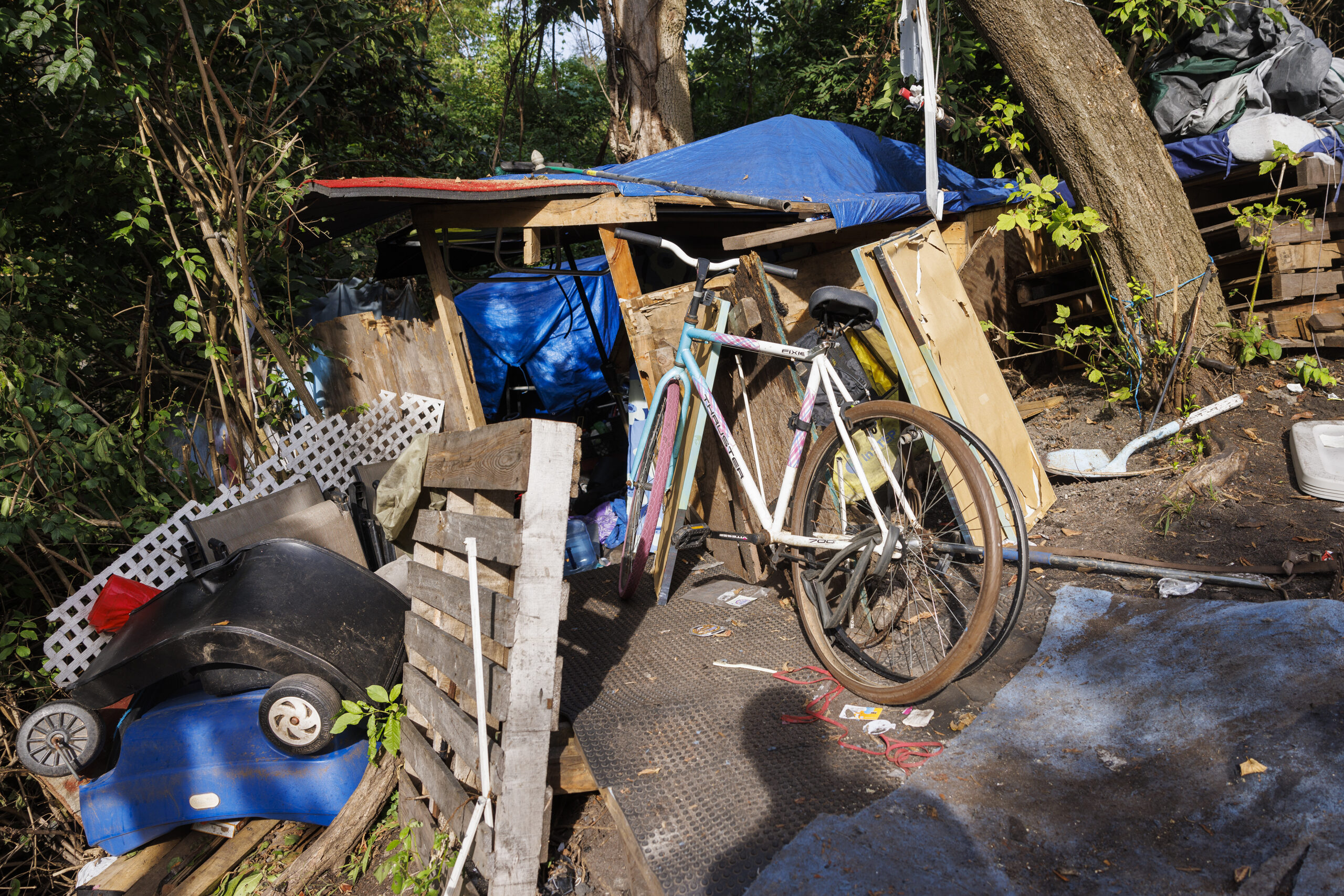
    A homeless encampment near the Schuylkill River Trail and Norristown in Montgomery County.

    In some parts of the county, efforts to address the issue overcame opposition.

    Communities like East Norriton have established more code blue shelters, which only operate during freezing weather, and in wealthy Lower Merion, a new affordable housing complex for seniors and people with disabilities, called Ardmore House II, is under construction.

    “It takes political courage in these moments,” Winder said, referring to local officials who have embraced shelters and affordable housing. “Sometimes you have loud voices in the room and just have to say, well, this is the right thing to do.”

    The commissioners provided $5.3 million in county funding for the shelters. The county also provided a quarter of Ardmore House II’s $20 million budget. And as federal funding cuts loom under President Donald Trump’s administration, the commissioners have also been engaging with philanthropists and foundations.

    Earlier this month, Nand Todi, president of Montgomery County-based Penn Manufacturing Industries, announced a $1 million donation to the Lansdale shelter.

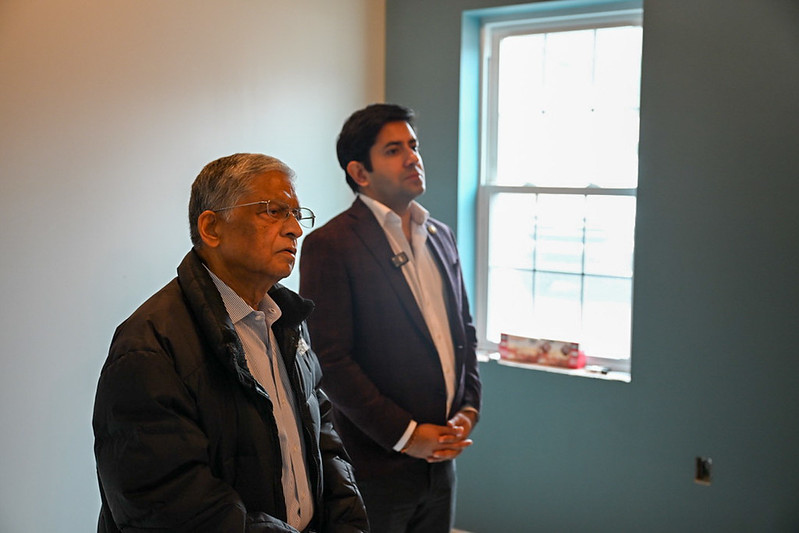
    Nand Todi, president of Montgomery County-based Penn Manufacturing Industries, and County Commissioner Neil Makhija at a walk-through of the completed Lansdale shelter.

    Winder hopes this example of generosity is just the beginning.

    “I come from the private sector, so I believe in public-private partnerships,” said Winder. “We’re home to some of the largest corporations in the southeast area. We know that companies have social responsibility goals. So how do we partner with corporations?”

    What can a county government do?

    This year, the commissioners want to continue to tackle housing issues.

    But county-level politicians do not have large budgets at their command, and unlike their municipal-level counterparts, they do not set zoning policy.

    Makhija and Winder want to push those limits.

    For example, the county dispenses infrastructure grants, and Makhija says the rules around that funding could be rewritten to incentivize municipalities to reform their zoning codes, perhaps using model ordinances established by the county.

    Such ordinances could, for example, allow more transit-oriented development. Or they could legalize accessory dwelling units — small living spaces such as a garage apartment or in-law suite that can be rented out.

    “If you have a grant program and it says these are the requirements, then people are going to prioritize getting those things done,” said Makhija, though, he said, he still has to make the case to his colleagues.

    He also noted that county planning staff can help implement new municipality policies.

    DiBello is skeptical of the county getting involved in local zoning policy.

    “The governing structure in Pennsylvania is that municipalities are autonomous to county and state when it comes to zoning,” said DiBello. “It’s up to the communities.”

    The Democrats would also like to find revenue sources to pay for more housing projects without increasing the property tax, which would cut against their goal of affordability.

    But for that they would need permission from Harrisburg, which Republicans in the state Senate have denied.

    “There are opportunities for us to advocate to the state legislature, to give counties like ours other means to generate revenue,” said Winder. “It’s not sustainable to continue to burden taxpayers by increasing property taxes, and we can’t fund these programs unless we have the money to do so.”

    DiBello is also opposed to creating new taxes (if Harrisburg allows it), and doesn’t want to see more property tax increases either. But he still wants to see proactive housing investments by county government.

    These debates will unfold next year as the housing blueprint dominates the commissioners’ agenda.

    “We’re the second wealthiest county in Pennsylvania, and people struggling to find housing can be quite invisible in these communities,” said Winder. “We’ve got an embarrassment of riches, but there are people that are struggling and so we’re trying to be on the ground helping to solve these issues.”

  • New building will bring 46 apartments to Germantown

    New building will bring 46 apartments to Germantown

    A new 46-unit apartment building is coming to 5322-28 Germantown Ave., from longtime Northwest Philadelphia developer Ken Weinstein.

    The five-story building is in Germantown’s Penn Knox area. It also will include over 1,600 square feet of commercial space and 17 parking spaces.

    The project comes amid a burst of new multifamily construction in Germantown, a neighborhood that garnered little interest from few developers in the second half of the 20th century.

    “The demand for housing in Germantown continues to outpace the supply so more housing, at all income levels, is needed,” Weinstein said.

    “Germantown is located near good public transit and Fairmount Park and is viewed as much more affordable than hot city neighborhoods in and around Center City,” he said.

    Weinstein said that he will break ground on the building during the first week of January and that funding and contracting is already secured.

    The project did not require any relief from the city’s Zoning Board of Adjustment, so Weinstein was not legally required to consult with the neighborhood group, Penn Knox Neighborhood Association.

    But he met with the community group anyway to hear concerns they might have with the project.

    “This is not an out-of-town developer; this is a developer from the area. He’s part of the community,” said Deneene Brockington, chair of the Penn Knox Neighborhood Association. “So I think there is a level of respect, and I think willingness to do as much as possible [in response to neighborhood concerns] as long as it doesn’t compromise the project.”

    Brockington said that the community group’s main concerns were about building materials and lighting and that the developer had addressed both.

    Weinstein said parking wasn’t the principal concern he heard from neighbors because the building is in a commercial corridor.

    The apartment building’s 17 spaces are not required by the zoning code. Weinstein said he would have liked to include more, but he was constrained by the fact that all the spaces had to be on the ground floor and that the site’s land use rules require that he include commercial space.

    “Underground parking is too expensive in middle neighborhoods like Germantown,” Weinstein said. “There will always be a divide between the number of parking spaces developers want to provide and what neighbors want.”

    The building will include 28 one-bedroom apartments and 18 two-bedroom units, with rents ranging from $1,450 to $2,200. There will be no subsidized or affordable units set aside.

    The project is expected to be completed within 18 months of the groundbreaking next month.

    There is no definite tenant for the commercial space, but Weinstein has some ideas.

    “With Uncle Bobbie’s moving to a new location, I would love to see a cafe or coffee shop lease the first floor,” Weinstein said. “There would be a lot of demand from students and staff at GFS [Germantown Friends School] and from the community.”

  • Why a California company decided to manufacture 3 billion canned beverages a year in Philadelphia

    Why a California company decided to manufacture 3 billion canned beverages a year in Philadelphia

    As California-based canned beverage manufacturer DrinkPAK eyed an East Coast expansion, Pennsylvania was always at the top of their list of potential sites.

    But in the end Philadelphia’s Bellwether District — the sprawling site of the former South Philadelphia oil refinery — won out not only over other states like New Jersey, but other possible Pennsylvania destinations like Scranton and the Lehigh Valley as well.

    “We looked at other geographies, but ultimately we’d like to be where the people are, where the jobs are,” said Jon Ballas, president of DrinkPAK. “We’re not scared of building in large city centers. It just provides an energy that doesn’t exist out in the more general manufacturing landscapes.”

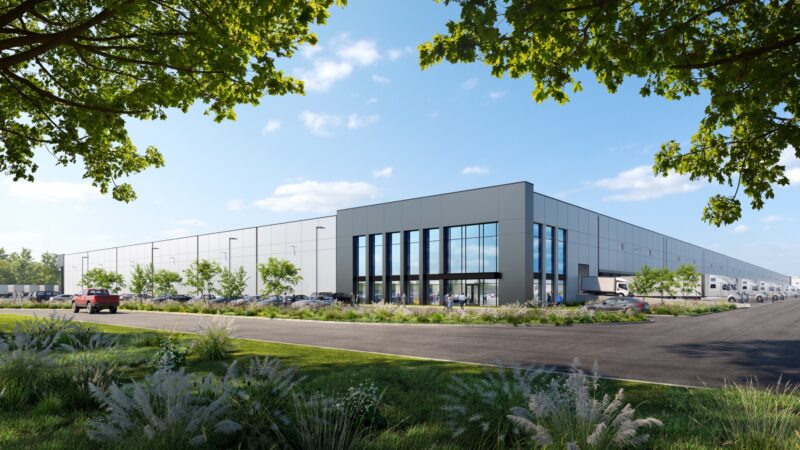
    The 1.4 million-square-foot factory will be the first tenant for the 1,300-acre Bellwether District, which developer HRP Group (formerly known as Hilco Redevelopment Partners) hopes to turn into a new industrial and life sciences hub in the city.

    Contractors broke ground on the manufacturing facility earlier this month, and the building’s shell should be complete by this time next year. Then construction on the internal mechanics will begin, with plans to complete it by April 1, 2027.

    Once it’s operational, DrinkPAK’s manufacturing facility will operate 24 hours a day, seven days a week, cranking out 3 billion cans a year.

    The factory will employ 174 people, largely on site because DrinkPAK doesn’t employ a lot of truck drivers. The workers will be operating the production line and managing machinery.

    “We’re committed to hiring the best in the industry, [offering] competitive wages, some of the best benefit programs out there,” said Ballas. “These are very attractive jobs, high-paying jobs.”

    DrinkPAK doesn’t work with the major soda or beer companies. Instead it manufactures cans for a variety of smaller, specialty beverage brands including alcoholic seltzer, energy drinks, and lower-calorie soda products.

    “We’re not making your typical Coke and Pepsi,” said Ballas. “We’re making a lot of this innovative, better-for-you-type products.”

    DrinkPAK was founded in 2020 and already has factories of similar capacity to its future Philadelphia facility in Southern California and in Texas.

    There is some regional variation (more canned wine in California, and more health drinks on the coasts), but its production line’s output is largely determined by broad trends in the industry.

    “Beverage is very cyclical,” said Ballas, and the facility needs to be designed with flexibility to make what’s most in demand. Right now, he noted protein drinks are “the hottest trend.”

    “It takes a specific type of liquid handling equipment to handle all the protein hydration, to get that into solution in order to carbonate it into a can,” he said.

    DrinkPAK’s facility is in the portion of the Bellwether District slated for industrial use, with the idea that warehouses and factories would be the tenants.

    The HRP Group already built a 326,000-square-foot warehouse and second 727,000-square-foot warehouse, which were both built on spec — meaning without a prospective tenant in mind.

    But the 3 billion-can production facility is the first official tenant.

    “We’re looking forward to delivering this building for DrinkPAK and playing a small role in their company’s incredible growth trajectory,” said Andrew Chused, chief investment officer for HRP Group.

    “DrinkPAK’s decision to build its flagship East Coast facility here is the first big step in turning this site into the dynamic commercial ecosystem we always envisioned,” said Chused.