Caitlyn Collins thought the grinding metal sounds and subsequent bang outside her Hammonton home Sunday were coming from her heater.
It would take a moment to realize the loud crash came from a helicopter that had landed just beyond her backyard around 11:25 a.m., minutes after taking off from Hammonton Municipal Airport. Unable to get through to 911 — many people were already calling to report the crash— she, her husband, and a neighbor drove past a “giant fireball” in her backyard to the open field and took in the grim scene.
A trail of mechanical parts, which federal investigators said spanned about the length of a football field, was scattered in the open space.
Collins later learned the fireball was actually another helicopter, which video captured engulfed in flames and spinning out of control before it crashed in her backyard.
“It was unidentifiable as anything at that point,” she said. “It never even crossed our minds that that could have been a whole other vessel.”
The Hammonton police chief called it one of the worst aviation crashes in recent memory, killing pilots Kenneth Kirsch, a 65-year-old from Carneys Point, Salem County, and Michael Greenberg, a 71-year-old resident of Sewell, Gloucester County.
As federal authorities continue their investigation into what could have led to the crash, a South Jersey town has begun to process the harrowing scene and tragic deaths of two pilots who were described as good friends known for making an effort to fly every few weeks.
Collins takes some comfort in knowing she and her husband did everything they could to help.
“He actually was running paramedics back and forth on our golf cart because it was so muddy back there that cars were getting stuck,” she said.
Collins, meanwhile, stayed by the second helicopter, a red Enstrom model F-28A. It was on its side with Kirsch still held by his seat belt, but his body partly on the grass.
Collins, who is not a medical professional, did the only thing she could think of at the moment. She held Kirsch’s hand and offered lighthearted conversation. She asked him if he could hear the sirens, explaining they were the first responders on their way to help. Collins even tried to joke with Kirsch, saying this is probably not how either of them envisioned spending their Sunday.
“I wanted to make sure he knew that he was not alone, that he wasn’t in the middle of a field by himself, or in the woods or anything,” she said.
Police would show up within minutes.
Greenberg, who was in an Enstrom model 280C, was pronounced dead at the scene.
Hammonton Police Chief Kevin Friel, who has been in the department for 33 years, said he’s responded to about five air collisions during his tenure, Sunday’s crash being among the worst.
In addition to Hammonton police and the Hammonton Volunteer Fire Department, various neighboring first responders and partner agencies rushed to the scene or remained on standby, including AtlantiCare EMS, Waterford Township Fire Department, and Collings Lakes Fire Department.
The New Jersey Forest Fire Service was there in case a fire broke out in the nearby tree line and the New Jersey Department of Transportation helped reroute traffic.
The parcel of land where the helicopters crashed was close to U.S. Routes 30 and 206.
Friel said first responders worked quickly to secure both crash sites, which is of the essence when compromised aircraft are involved. First responders were worried the helicopter, which was already ablaze, could lead to an explosion. Meanwhile, there was a concern the helicopter Kirsch was in could catch fire.
Neither of those scenarios panned out.
Firefighters extinguished the helicopter in Collins’ backyard and EMS was able to get Kirsch out of the helicopter and airlift him to Cooper University Hospital. He would later die from his injuries.
The Federal Aviation Administration and the National Transportation Safety Board continue investigating. The NTSB said the helicopters were slated to be taken from the crash site to a secure location Tuesday. A preliminary report is expected to be made available in about 30 days.
For now, Friel continues to check in with people who were on the scene. That same night, personnel who were part of the initial response held a debriefing.
“It helps people to deal with the traumas and things that they see, instead of compartmentalizing it and stuffing it down and having them become either physically or mentally ill from dealing with the traumas,” he said.
Collins was devastated to learn Kirsch died. She remembers the corners of his mouth turning upward after she told her joke.
“I thought he was going to be a miracle,” she said. “There was no doubt in my mind that he was a fighter, that this was going to be just one of those stories that he could tell again and again and again.”
Two men stopped by Apron Cafe, a breakfast spot overlooking Hammonton Municipal Airport’s runway, before they took off in separate helicopters late Sunday morning for what the restaurant owner described as one of their frequent flights together over the years.
Minutes later, about 11:25 a.m., Apron Cafe patrons and staff could see one of the helicopters spiraling, engulfed in flames not far in the distance.
“I looked up and I could see in the distance the one spiraling down and then I see the other one coming down,” said the cafe’s owner, Sal Silipino. “It was hard to believe that they were crashing.”
Local authorities identified the pilots Monday as Kenneth Kirsch, a 65-year-old from Carneys Point, Salem County, and Michael Greenberg, a 71-year-old resident of Sewell, Gloucester County.
Hammonton Police Chief Kevin Friel said that Greenberg died at the scene. Kirsch died at an area hospital after being flown there.
Just what led to the crash remains under investigation by the Federal Aviation Administration and the National Transportation Safety Board.
The parcel of land where the helicopters crashed was an open field amid a busy area. U.S. Routes 30 and 206 are nearby, as are Atlanticare Hammonton Health Park, an assisted living facility, and homes.
“It was a miracle,” Silipino said. “There was so much in that area that they could have landed on top of.”
Federal investigators remained on site Monday cataloging debris that spanned nearly the length of a football field and was “made up of parts of the main rotor and tail rotors,” according to the NTSB.
The agency said the helicopters are slated to be taken from the crash site to a secure location Tuesday. The preliminary report is expected to be made available in about 30 days.
This article contains information from the Associated Press.
Twenty-five years after Calvin Helton was killed in what remains the deadliest mass shooting in Philadelphia history, his mother, Veronica Conyers, feels frozen in time.
Her son, forever 19 in the West Philly rowhouse where he was killed execution-style with six other people ranging from 15 to 54 years old. And Conyers, left to spend the years since fighting to keep his memory alive.
“I’m not healed,” she said of losing her firstborn, who had dreamed of being a Navy SEAL. “I want everybody to know the truth behind this massacre.”
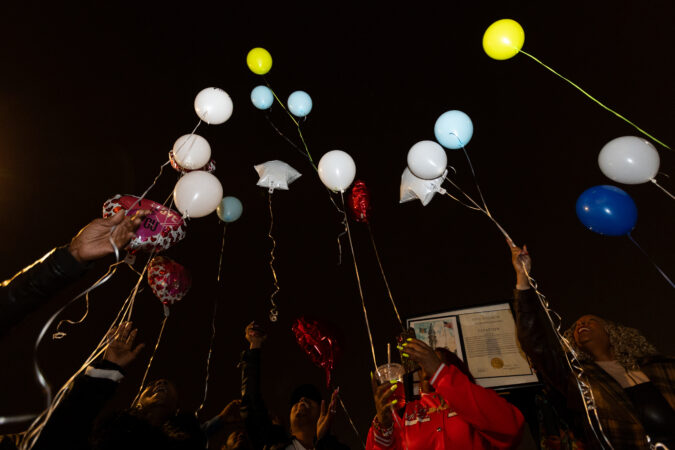
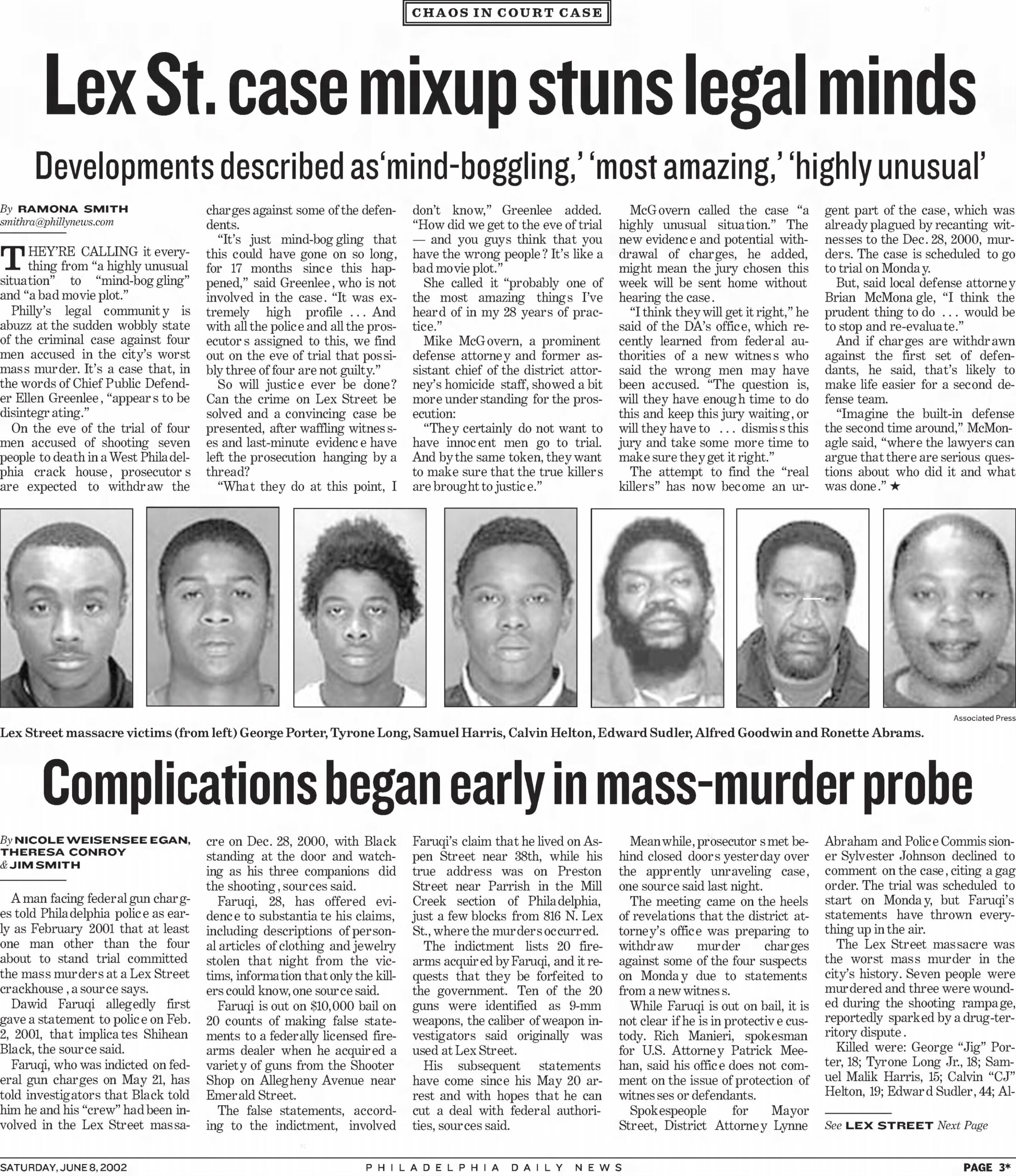
These days, that truth is shared with anyone who will listen and at annual vigils that celebrate the victims’ lives. There are Samuel “Malik” Harris Jr., 15; Tyrone Long, 18; George “Jig” Porter, 18; Ronnette Abrams, 33; Edward Sudler, 44; and Alfred Goodwin, 54.
Despite the notoriety of what came to be known as the Lex Street massacre, Conyers remains hurt by how the deaths never garnered protests, and how the interest in the homicides came in the form of sensational headlines.
The shooting, after all, took place in a house known for drug activity during a turbulent period in the neighborhood, when residents complained of rampant drug dealing and concerns over safety.
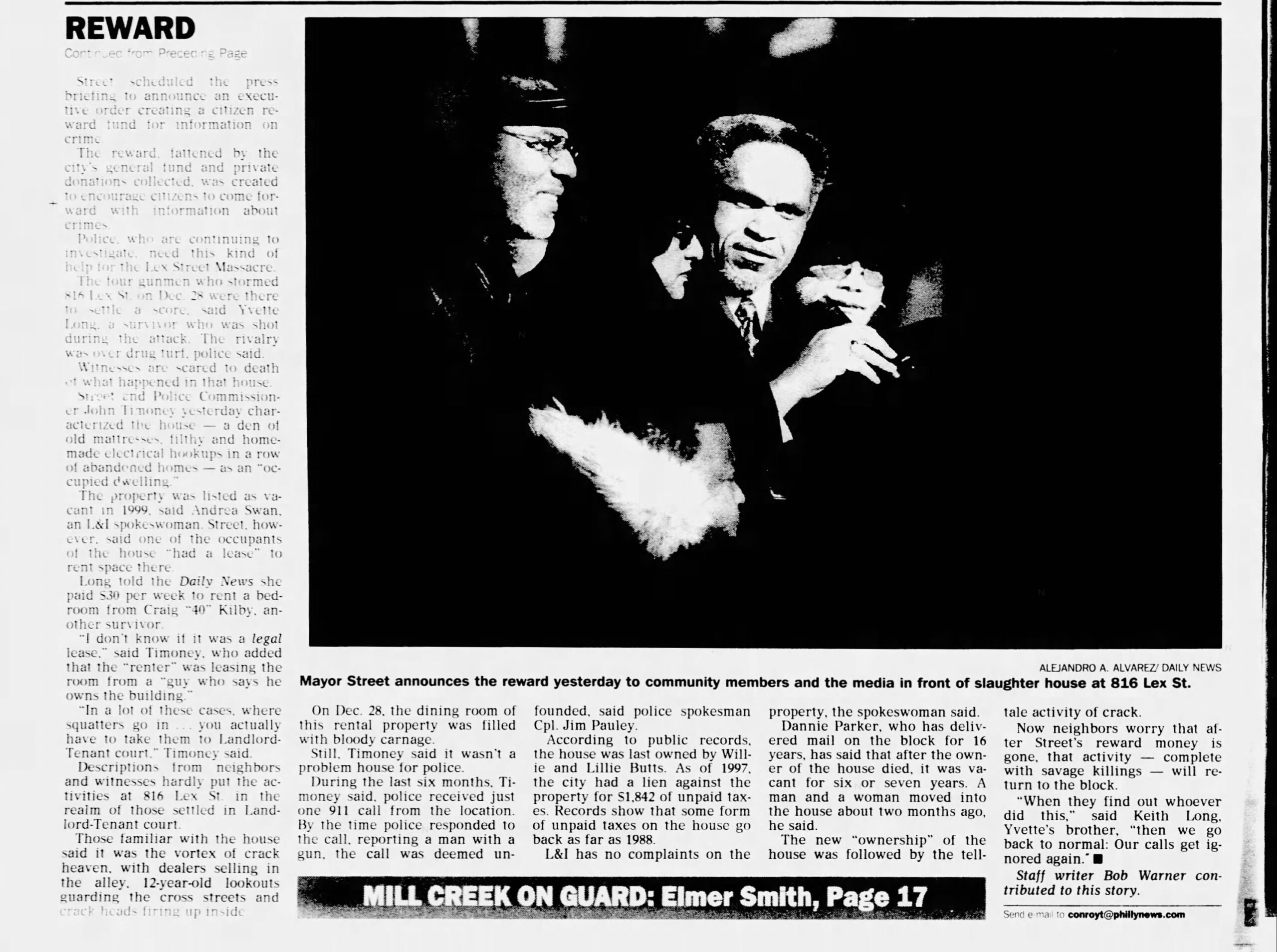
Coverage of the Lex St. Massacre in Jan. 2001.
Conyers felt public sentiment regarding the homicide was sealed, doomed to be forgotten, once police and prosecutors attributed the shooting to a drug-turf dispute.
It would later turn out the killings stemmed from a dispute over the trade of a car and a broken clutch. But Conyers felt the damage had been done by police and media reports.
“They slandered my son’s name, saying he a kingpin and he was drug dealer,” she said, adding he was a good student and never gave her any trouble.
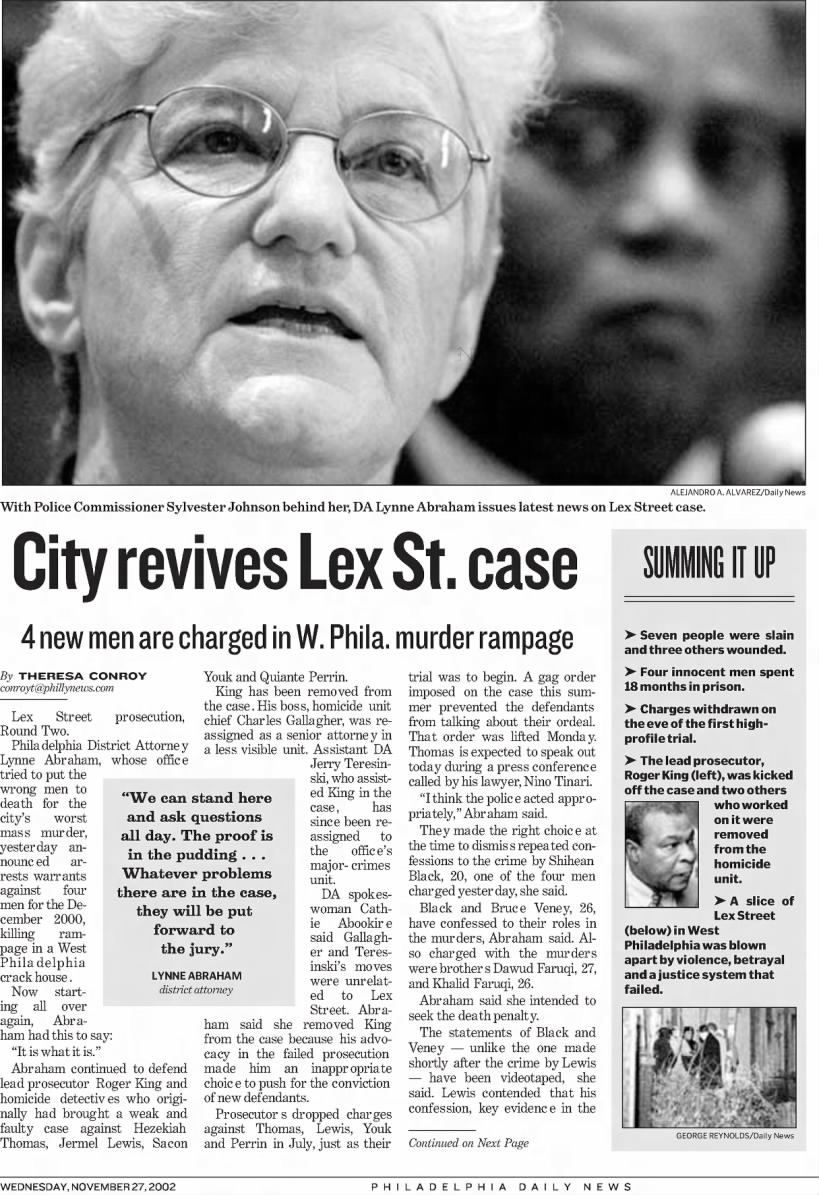
Coverage of Lex St. case in 2002.
The initial bungle in the investigation, which involved allegations of coerced confessions by police, also stunned legal minds at the time. Four men spent 18 months in jail and faced a possible death sentence, only for charges to begin to be dropped just as the first trial was set to begin. Those men would go on to successfully sue the city for $1.9 million over their imprisonment.
Police arrested brothers Dawud Faruqi and Khalid Faruqi in late 2002, as well as Shihean Black and getaway driver Bruce Veney, in connection to the killings.
In the various trials, it was revealed Black traded his Chevrolet Corsica for Porter’s Dodge Intrepid. But Porter blew the Corsica’s clutch, and when Black would not trade the cars back, Porter used his spare key and took back the Intrepid.
Black found Porter on the 800 block of North Lex Street and an argument escalated into a shooting.
Black pleaded guilty to first-degree murder and the brothers were convicted of seven counts of that charge. All three received seven consecutive life sentences. Veney, the getaway driver, pleaded guilty to third-degree murder, receiving 15 to 30 years in prison.
Tameka Porter, George’s sister, has led the vigils that take place every Dec. 28. She feels a lot of hurt from how public sentiment placed blame on the victims for being in that house.
Coverage of the Lex Street massacre in 2002.
“No one is at fault but the killers,” she said.
Even so, Porter tries not to think about what people might say. “It doesn’t matter how he died or who did it, he’s gone.”
Her brother and Helton were best friends, she said, recalling that both were smart and charming, and loved to flirt with girls. Her brother never got in trouble or was arrested for drugs, she said. That’s what she wants people to know.
On Sunday, Porter held the annual vigil at the Lucien Blackwell Community Center. The neighborhood looks drastically different after a Philadelphia Housing Authority effort in the aughts to revitalize the area, building 18 new homes.
It was an intimate affair, though it did not set out to be so.
Porter and one of Helton’s cousins talked about how they wanted to celebrate all that the victims meant to them. Councilmember Jamie Gauthier echoed the sentiment.
“Today is about honoring them,” she said. “It is about holding space for the survivors, and it is about standing with families and with our community members here in Mill Creek and across our city who continue to carry the weight of gun violence.”
Conyers stayed quiet, holding back tears. She wore a sweatshirt that read “Lex St. Fallen Soldiers.” On it was the now-very faded photo of her son.
June Rodriguez, 54, was riding his bike home after his shift at Bob & Barbara’s Lounge early Saturday morning — he refused to own a car in order to stay in shape — when he was killed in a hit-and-run.
Rodriguez was turning onto North 56th Street from Lancaster Avenue in Overbrook around 3:45 a.m. when the driver of a red SUV swerved into him and drove away, according to Philadelphia police.
In between angry sobs, his mother, Miriam Rodriguez, described a violent deaththat ran so counter to the way her son lived. She said his chest was crushed, his spine severed, and the driver just left him on the cold street.
“Growing up, he was always a good kid and everybody loved him, he had that kind of charisma,” she said. “It’s hard for somebody to come and hit him with a car and not do nothing about it.”
Police are investigating, looking for tips that could lead to an arrest.
Meanwhile, the sudden death of the longtime DJ, a decades-long presence at Bob & Barbara’s, has left a hole in Philly’s queer community and the house music scene.
Born in the Bronx, Rodriguez was always into music, his mother said. He took to the oldies and the salsa music his mother would play when cleaning the house. His love of music spread to dance, and he eventually got into breakdancing.
Rodriguez’s love of music was contagious, according to those who knew him, and garnered him many friends when he arrived in Philly around the mid-aughts.
Though straight, Rodriguez was a longtime member of the drag show DJ team at Bob & Barbara’s and well-known among Philly’s LGBTQ+ community, playing at Pride events.
June Rodriguez (L), 54, and his son Skye Rodriguez. The older Rodriguez was a beloved Philly house DJ and well-known ally and presence in the LGBTQ community. He was killed in a hit-and-run.
When Rodriguez’s only son, Skye, came out to his father as transgender, the DJ was “fully on board” and seamlessly began introducing him as his son, Skye Rodriguez said. Rodriguez was even trying to get his son to leave Reading and move to Philly, where he would have access to a larger LGBTQ+ community.
“He wanted me to be as happy as possible,” SkyeRodriguez said. “He was like, ‘You know, I’ll do anything I can to get you here.’”
In the days after his death, longtime friends and acquaintances have flooded social mediawith remembrances.
Bob & Barbara’s mourned Rodriguez in a Facebook post. He’d had a decades-long relationship with the bar, working as door greeter, security, and occasional barback over the years. His latest venture there was learning how to tend bar, according to the lounge.
“His passion for music radiated through every part of his life and he created an expansive and diverse community through his art,” the post read.
Cameron Guthrie, a longtime friend who met Rodriguez in the now-closed Liaison Room, said Rodriguez was so beloved because of how supportive he could be, even to borderline strangers.
“He was everybody’s biggest fan,” said Guthrie, who also DJs, and remembers how Rodriguez was constantly telling him he should be playing in New York City, especially when his music wasn’t finding an audience in Philly.
“When others would read you to filth, he’d root for you.”
The community Rodriguez built has been visible in the days following his death. Outside of the online tributes, his son said a local music festival, called Departed, dedicated proceeds from its after-hours party Saturday to his funeral expenses. Rodriguez had been slated to play the after-hours event.
“I didn’t realize how many friends and people loved him until I went to the set that he was supposed to play the other night, and saw how many people showed up for him,” his son said.
Guthrie and other DJ friends organized a similarly popular dance party Sunday at Penn Treaty Park. A GoFundMe that said Rodriguez created “a sanctuary on the dance floor” has raised more than $17,000 for funeral expenses.
Safe-streets advocates, meanwhile, are calling attention to the dangerous conditions on the strip of road where Rodriguez was killed.
A long stretch of Lancaster Avenue has long been identified, by the city’s own calculations, as one of the most dangerous in Philadelphia, part of the 12% of city streets that account for 80% of traffic deaths and serious injuries. It has been listed on what is called the high-injury network for years.
Just in September, a 77-year-old pedestrian was killed in a hit-and-run at 54th Street and Lancaster Avenue, not far from where Rodriguez was killed.
The strip does have a bike lane, but advocates say it should be protected to prevent reckless drivers from using it as a shoulder or turning lane.
“The frequent appearance of one road on the high-injury network is proof that the current configuration is unsafe for everyone, and PennDot, who controls the street, is not doing enough to fix it,” Philly Bike Action said in a statement, adding Rodriguez’s death was the seventh cyclist fatality in the citythis year.
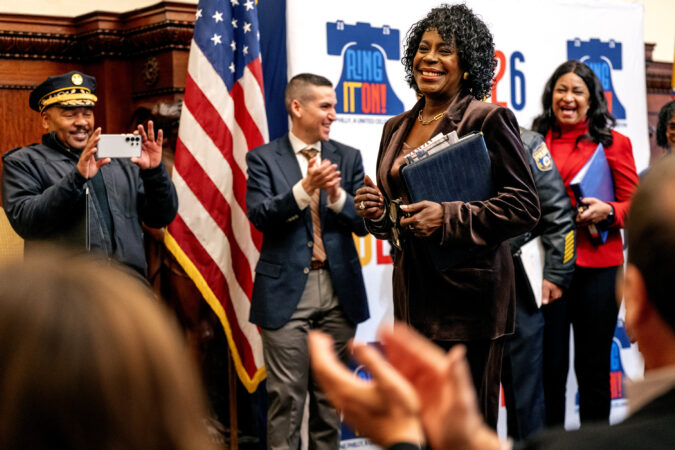
City officials want New Year’s Eve to set the tone for what’s slated to be a year of blockbuster celebrations for the country’s 250th birthday.
“We want the city to feel the excitement, and quite frankly, the potential of 2026 from the very beginning,” said Mayor Cherelle L. Parker in a Monday news conference that laid out the details of the New Year’s festivities and hyped up the public for other events such as the FIFA World Cup and the 2026 Major League Baseball All-Star Game.
The city will host its first-ever New Year’s Eve concert featuring LL Cool J, DJ Jazzy Jeff, Los Angeles rock band Dorothy, and Philadelphia High School for Creative and Performing Arts graduate Adam Blackstone — no tickets required and free.
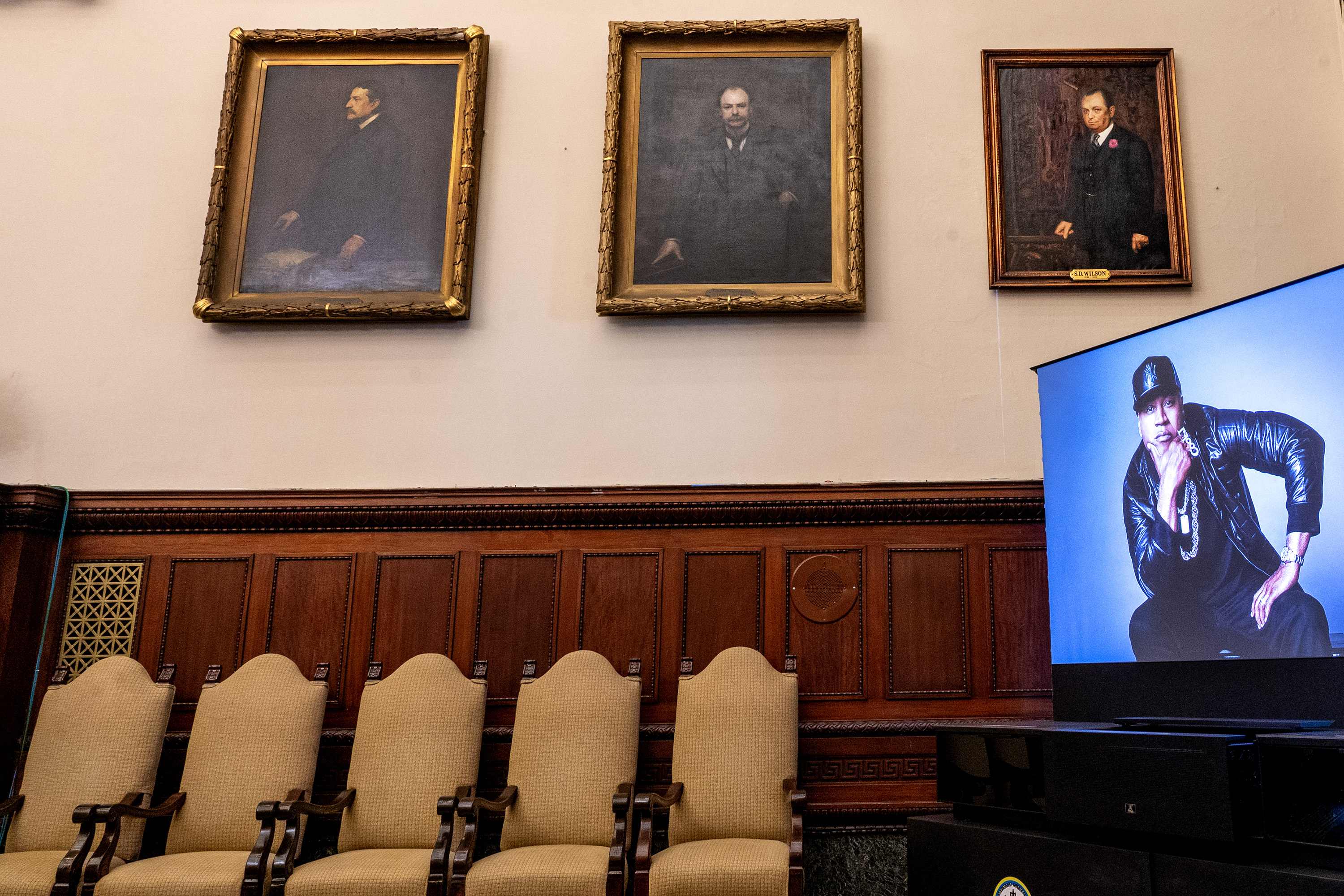
An image of New Year’s Eve concert headliner LL Cool J is under portraits of former mayors in the Mayor’s Reception Room at City Hall.
The Ben Franklin Parkway will open at 6 p.m. so people can have enough time to get through security scanners before the concert kicks off at 8 p.m. In all, some 25,000 people are expected to fit in the secure perimeter, according to event planners.
Blackstone will premiere his new song, “Brotherly Love,” and the music will keep going until the countdown and fireworks.
The Delaware River Waterfront Corp., which has operated a barge full of fireworks for approximately 30 years, will be kicking up the pyrotechnics a notch with three barges. As usual, there will be two fireworks shows along the river, one at 6 p.m. and another at midnight.
“From Spruce Street Harbor Park to Cherry Street Pier, from Pennsport to Port Richmond, from the Parkway to the waterfront, we are going to light up the Philly sky for 2026,” said DRWC president and CEO Joseph Forkin.
People can take part in an assortment of family-friendly activities at Cherry Street Pier and Independence Blue Cross RiverRink Winterfest, which are ticketed experiences. A replica of the Liberty Bell will leave the National Liberty Museum for the night to ring in the new year at the pier.
Police Commissioner Kevin Bethel said police will be out in full force — as is the norm, specific numbers of officers deployed were not disclosed — and reminded the public to celebrate safely, and leave the weapons at home if they’re going to the concert. Bethel also encouraged people to ditch the dangerous tradition of celebratory gunfire.
Bethel noted the 1999 case of Joe Jaskolka, only 11 years old at the time, who was struck in the head by so-called celebratory fire.
“Get your pots and pans and bang the pans,” Bethel said, reminding residents that what goes up must come down.
Fire Commissioner Jeffrey Thompson offered a similar safety warning regarding fireworks: Leave it to the professionals. Even sparklers aren’t safe, he said. Though often seen as a safe alternative for young people, Thompson said they are not, burning at 1,500 degrees.
Still, officials feel confident that New Year’s Eve celebrations will be a boon for Philadelphia’s spirits and ideally the economy, though Parker said the final price tag was not yet available — a report on the cost and return on investment will be available after the event is done, she said.
Yet New Year’s Eve is only the beginning and a bit of a test run for the rest of the year.
The very next day, the Mummers strut on Broad Street with plumes and satin with a brass accompaniment.
After that, it’ll be a spate of sporting events and conventions, on top of already scheduled events like Wawa Welcome America.
Jennifer Nagle, with the Philadelphia Convention and Visitors Bureau, said the year is already looking to be a busy one for hotels and that new traditions, such as the New Year’s Eve concert, along with external recognition from places like the Michelin Guide, are placing the city on the “national and global stage.”
Nagle said 1.5 million room nights are set to be booked in Philadelphia. Visitors are additionally projected to spend $950 million, which will result in $1 billion in economic impact.
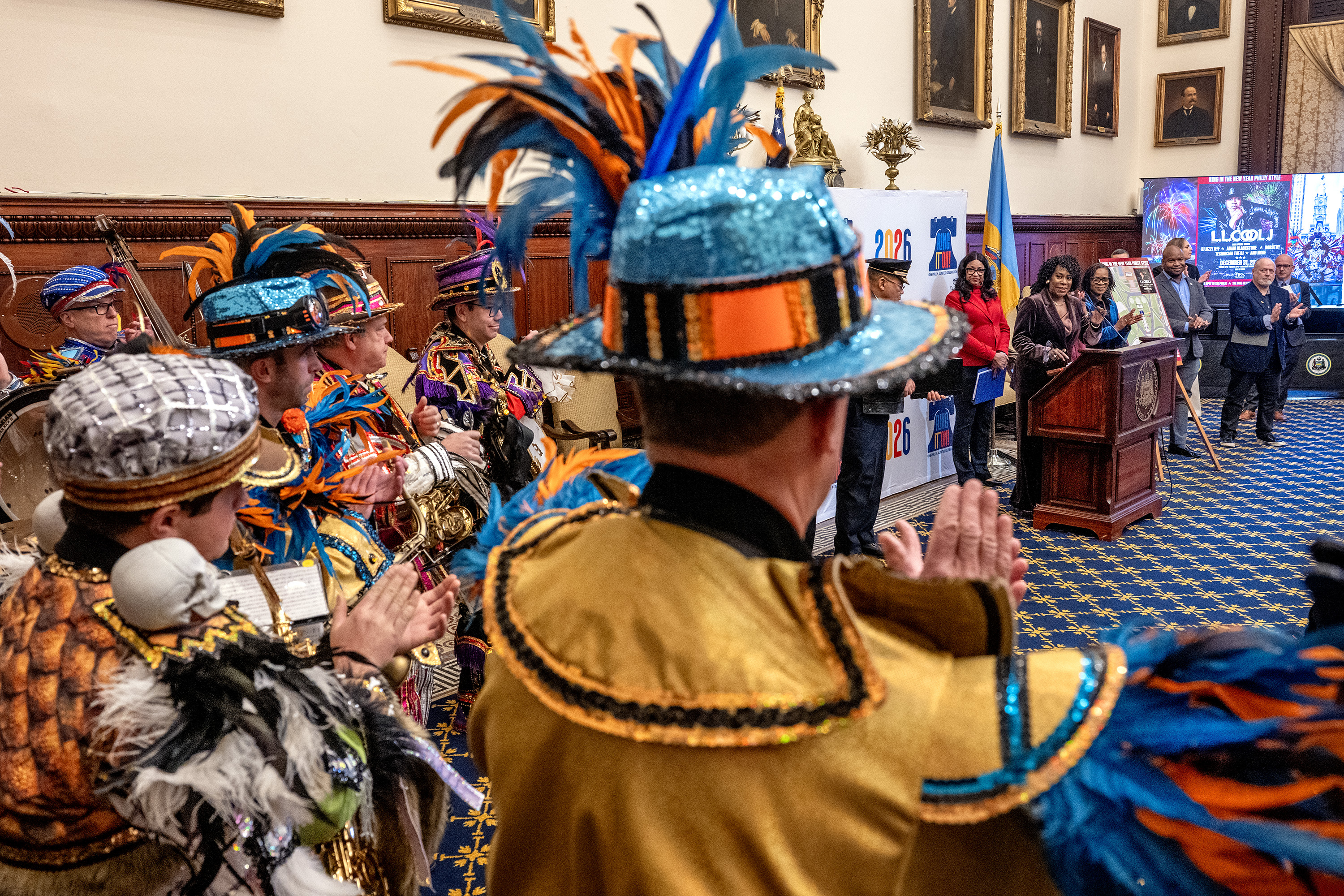
The Quaker City String Band performs before a news conference where city officials shared details on how Philadelphians and visitors can ring in the New Year and celebrate the official kickoff of the nation’s 250th anniversary,
Friends, family, and celebrities take stock of the year on social media with carousels of photos noting the year’s highlights.
Malala Yousafzai, the Nobel Peace Prize laureate and Pakistani education advocate, is no different.
In a brief post shared with her 3.7 million Instagram followers, Yousafzai shared seven photos and looked back fondly on her travels to Egypt, Greece, Tanzania, and Ireland.
She celebrated sampling pastries across Europe during her Finding My Way book tour and “seeing a long-held dream of building a school become reality in the north of Pakistan.”
But tucked in the seven-photo carousel of the 28-year-old — slide five to be precise — is a photo of her wearing a Kelly Green Philadelphia Eagles T-shirt as she’s getting ready to eat some Popeyes.
There’s no confirmation regarding when or where the photo was taken. But we do know Yousafzai was in Philadelphia promoting her new memoir in October, with Eagles superfan Kylie Kelce moderating the conversation.
Yousafzai, who didn’t think she’d been to any American football games when she spoke to The Inquirer ahead of her visit, said she was open to seeing the Birds in real life.
Could Kelce’s fandom have spread to Yousafzai, who prefers cricket?
The Inquirer tried to get some answers from the spokesperson handling the book tour stop. Did Kelce get the Eagles-curious Yousafzai to give the Birds a chance? Was the T-shirt a gift from the event? Alas, it’s a Sunday smack-dab in the middle of the holiday season, so we did not immediately hear back, though we’ll certainly report back if we do.
Still, a potential fandom is not out of left field. Yousafzai is no stranger to Eagles country.
Two years after the Taliban boarded her school bus and shot her in the head for advocating for girls’ rights to an education, the National Constitution Center awarded Yousafzai its 2014 Liberty Medal. She spent the day in Philly, attending the Forbes Under 30 Summit and meeting local students. During her visit, she was welcomed with open arms.
The man, Victor Acurio Suarez, is unable to live on his own, always cared for by his younger brother. He tried to flag down a U.S. Immigration and Customs Enforcement agent in a Lowe’s parking lot near his home in September, apparently thinking the officer could help him find work. Instead, he was arrested and placed in detention and is scheduled for an Immigration Court hearing on Jan. 16.
“Given Mr. Suarez’s medical and functional limitations, I am concerned that he is unable to safely care for himself, effectively represent himself in legal processes, or access the necessary support without his family,” the governor wrote to Judge Dennis Ryan.
Meyer also advocated for Acurio Suarez in a series of social media posts, saying, “I want Delawareans to know about Victor Acurio Suarez,” and calling what has happened to him “deeply disturbing.”
Meyer’s advocacy is notable. While many elected officials have spoken out against President Donald Trump’s broader immigration policies, advocating for specific individuals has been typically reserved for high-profile cases like Kilmar Abrego Garcia, the Maryland man who was illegally deported to El Salvador’s notorious CECOT prison, returned to Moshannon Valley Processing Center, and was recently released.
Meyer argued that with no criminal history, not even a traffic violation, Acurio Suarez “poses no threat to public safety.”
Yet how much weight the backing of a governor carries in the immigration system remains to be seen.
In the past, someone with Acurio Suarez’ profile might have been allowed to stay home as their case moved forward in Immigration Court.
A medical assessment submitted for his asylum application this week said Acurio Suarez has autism and aphasia, a language disorder that affects his ability to produce or understand speech.
Dr. David W. Baron noted Acurio Suarez can’t safely live on his own. He requires supervision to perform daily hygiene activities or cook and has a hard time communicating his needs to others, a condition made worse by being in an unfamiliar setting while in detention, where he doesn’t have access to the support needed for his neurocognitive disabilities.
Still, as the Trump administration pursues a mass deportation agenda, undocumented immigrants without violent criminal histories are increasingly held in mandatory detention, unable to seek release on bond, as their cases play out.
It’s unclear what impact the governor’s letter might have. The judge on the case can only approve or deny the asylum application.
ICE does have discretion in releases but has so far denied a September request from Acurio Suarez’ attorney, Kaley Miller-Schaeffer.
“The letter from the governor, if anything, could maybe persuade ICE to relook at the request for release on parole,” she said, noting that Meyer’s letter brings more attention to the case.
An ICE spokesperson said in a statement that the agency was committed to the “health, safety, and welfare of all detainees in custody.”
“ICE’s National Detention Standards and other ICE policies require all contracted facilities to provide comprehensive medical and mental health screenings from the moment an alien arrives at a facility and throughout their entire time in custody,” the statement said.
Miller-Schaeffer said she will still have to prove Acurio Suarez met all the strict requirements for asylum in Immigration Court. Should ICE not reconsider releasing Suarez on bond, he will remain in Moshannon Valley Processing Center until he is either granted asylum or deported.
Deportation could be deadly, according to Acurio Suarez and his brother. In addition to lacking the necessary support to perform daily tasks, Acurio Suarez fears the gang that drove him and his brother to flee the country would find him again in an effort to recruit or kill him.
Acurio Suarez told Baron he fled to the United States in 2021 after a group of gang members beat and kicked him with steel-toe boots, knocking out his gold front teeth and stealing them. The group was part of Los Lobos, a criminal organization with a national presence in the country, designated a foreign terrorist organization by U.S. Secretary of State Marco Rubio this year.
Acurio Suarez said the group also set his home on fire after they learned his younger brother reported the attack to the police.
According to the Global Initiative Against Transnational Organized Crime, gang violence has risen in Ecuador amid economic hardship and subsequent battles over the illicit economy. The Geneva-based group estimates that the country will reach about 9,100 intentional homicides in 2025, a 40% increase from the previous year.
In his passionate defense of Acurio Suarez, Meyer said the 52-year-old is at “high risk of re-victimization by the Los Lobos gang” should he be deported.
“If you believe compassion belongs in our immigration system, join me in calling for Victor’s release,” Meyer wrote.
The deaths of four undocumented immigrants being held in federal detention facilities, including Delaney Hall Detention Facility in New Jersey and Moshannon Valley Processing Center in Pennsylvania, have sparked an outcry among immigration advocates and a U.S. senator.
Haitian-born Jean Wilson Brutus, 41, died of what U.S. Immigration and Customs Enforcement said it suspects were natural causes while in Delaney Hall on Dec. 12. Advocates believe he is the first detainee to die in Delaney. He had been taken into custody the day before.
“There must be a clear accounting of what happened in this tragedy, and Delaney Hall must be closed so that this stain can be removed from our community of Newark,” said U.S. Sen. Cory Booker (D., N.J.), who has introduced legislation to end the use of private prisons to detain immigrants and condemned the “inhumane conditions” at Delaney Hall.
Two days after Brutus’ death, ICE said, Fouad Saeed Abdulkadir, born in Saudi Arabia and an Eritrean citizen, complained of chest pain in Moshannon.
The agency said Moshannon staff performed cardiopulmonary resuscitation on the 42-year-old in the facility’s medical department until emergency medical responders arrived and pronounced him dead. Pennsylvania State Police and the Clearfield County coroner are investigating the death.
Abdulkadir, known as Imam Fouad, had been in custody for 215 days, according to ICE.
ICE did not immediately report more details about Abdulkadir’s health, but a fundraiser for his funeral claims the Ohio Islamic leader had been pleading for medical care for over a year.
The agency said Brutus had no signs of distress when he was brought into Delaney Hall, nor did he have a history of cardiovascular issues.
Advocates with the Shut Down Detention Campaign, a coalition of immigration advocacy groups calling for Moshannon’s closure, called the rise in deaths of detainees a “predictable outcome.”
They say the increase in fatalities runs parallel to the rise in immigration arrests as President Donald Trump mounts his mass deportation plans. The latest federal data available reported more than 65,000 immigrants were detained as of November, a two-thirds increase since Trump retook office.
“Four lives lost in one week. This is not coincidence, it is policy and it is systemic,” said the Shut Down Detention Campaign in a statement. “Prisons, such as ICE detention centers are sites of neglect, isolation, retaliation, and death.”
In announcing the deaths, ICE said that comprehensive medical care is provided to detainees and that the agency is committed to “ensuring that all those in custody reside in safe, secure, and humane environments.”
Oversight of these facilities under the Trump administration, however, has diminished. The Office of Civil Rights and Civil Liberties, which was investigating conditions at Moshannon under the previous administration, was essentially dismantled along with other watchdogs.
The recent spate of deaths means more than 20 people have died in ICE custody this year, according to the agency’s required reporting. That compares with 11 deaths in 2024 and seven in 2023. An NPR analysis found 2025 already has the most deaths of ICE detainees since a 2004 peak of 32 fatalities.
What we know about the detainees
ICE said Brutus entered the country through Hidalgo, Texas, in 2023 and was paroled, pending immigration proceedings. But he began to have trouble with the law in 2024. Between July and October, police in Elizabeth, N.J., arrested Brutus for criminal trespassing three times, releasing him each time.
The Elizabeth Police Department arrested Brutus two more times this November — once for criminal trespassing and another time on two counts of criminal mischief and property damage. ICE says despite an immigration detainer, Brutus was released both times in November.
ICE arrested Brutus on Dec. 11. He died the next day.
Abdulkadir had a very different experience. He became a permanent resident in 2018, according to ICE, but was convicted in April 2024 of wire fraud and theft of public money. Prosecutors said he underreported his income to fraudulently claim more than $80,000 from Ohio’s Temporary Assistance to Needy Families program, the Supplemental Nutrition Assistance Program, and Medicaid benefits.
He was sentenced to 21 months in prison. Months later, ICE issued a separate immigration detainer and warrant for his arrest. ICE said Abdulkadir had remained in its custody since, pending a hearing with the Executive Office for Immigration Review.
The two other people who died in ICE custody had been held at Adams County Detention Center in Mississippi and North Lake Processing Center in Michigan.
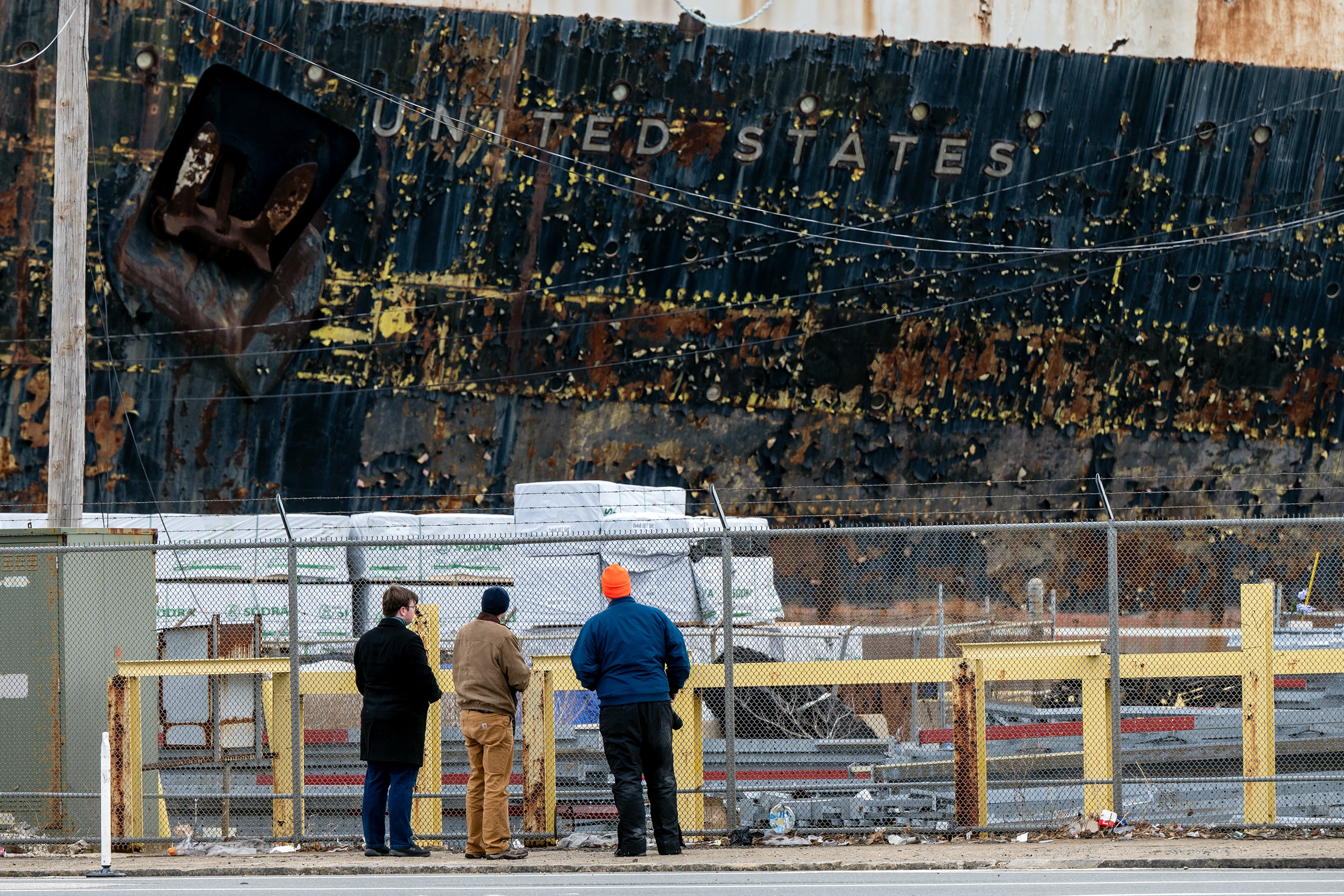
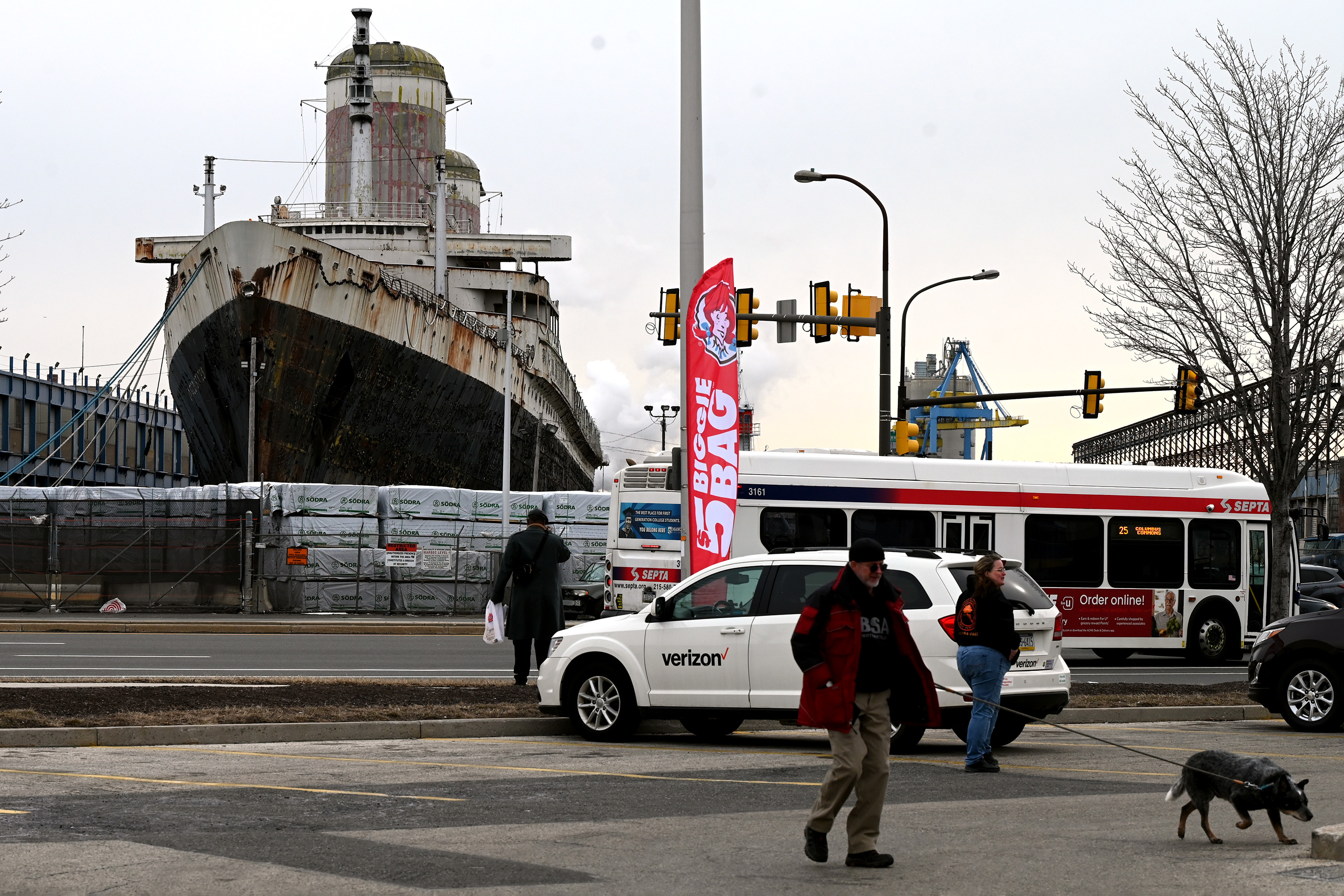
The 990-foot SS United States could be making waves as an artificial reef at the bottom of the Florida Panhandle coast as early as March, according to a tentative timeline from its new owners in Florida.
Even so, hope still springs eternal for the most ardent swath of ship enthusiasts who would rather see it restored to its former glory than swimming with the fishes.
As tourism officials in Okaloosa County report being about 80% done with the remediation work required to meet state and federal requirements for sinking, the New York Coalition to Save the SS United States has urged the New York City Council to intervene to the best of its abilities: a move that appeared to be gaining some traction in recent weeks, until it wasn’t.
A resolution introduced by NYC council member Gale A. Brewer last year finally got a committee hearing in late November.
The symbolic gesture calls on Congress to pass legislation that would allocate funds for restoration and to bring the ship to New York City’s Gowanus Bay Terminal. It also appeals to President Donald Trump, a fellow New Yorker, to sign the legislation.
Okaloosa County, respectfully, is hearing none of it.
“We purchased the vessel specifically to become the world’s largest artificial reef,” said county spokesperson Nick Tomecek. “Anybody that thinks otherwise, that’s just pipe dreams.”
Brewer is aware the odds are against those hoping to reacquire the ship. She acknowledged the resolution was a “Hail Mary” during last month’s committee hearing.
Though the resolution moved to the full council, it has not been put on the calendar for a vote — the last session of the year was Thursday.
The SS United States is pulled out into the Delaware River and ready to bid its farewell from Philadelphia as people gather to watch it leave in the Delaware River in Gloucester City, N.J., on Wednesday, Feb. 19, 2025.
Brewer could not speak to why the resolution did not get a hearing until a year after she introduced it, but she understands how, despite support on the 51-member council, it has not been put to a vote in the full body.
“Just like in Philly, we got everything under the sun — restaurants, small business, parking, it’s just endless,” Brewer said. “I think there’s lots of support, but it’s not like number one on anybody’s list.”
Brewer said the priority would be to stop the sinking of the ship. Once the SS United States was in New York City, preservationists, donors, and lawmakers could figure out the best way to redevelop the ship, though she could see it as a restaurant.
In many ways, the New York City resolution is also a tried-and-tested approach. As the SS United States faced eviction from its berth along the Delaware River, the conservancy launched public campaigns calling on Florida Gov. Ron DeSantis, New York Gov. Kathy Hochul, and Pennsylvania Gov. Josh Shapiro to step in and help the vessel find a new home.
Passenger ship aficionados take a last look at the SS United States docked at pier 80 in South Philadelphia Wednesday, Feb. 19, 2025 before it is towed away to Alabama
The conservancy sent its pleas to then-President Joe Biden, as well as members of Congress on both sides of the aisle.
Much to the chagrin of preservationists, no politico ever came, despite the conservancy’s assurances that whoever championed the ship would be rewarded with all the jobs redevelopment would create.
Whether Trump, his administration, or this iteration of Congress would intervene at the eleventh hour is anyone’s guess.
The New York Coalition to Save the SS United States, which launched as a nonprofit in October 2024, wrote to Trump this year asking him to intervene shortly before the ship left Philadelphia, to no avail.
In a lawsuit filed in U.S. District Court in Pensacola after the ship’s departure, the coalition said it had “no means of knowing whether the Executive Branch of the United States is even aware of the Letter, let alone whether it is being considered.”
The White House did not immediately respond to questions about whether the ship’s saga had reached Trump’s desk and if the administration would be inclined to step in.
Either way, time is working against the coalition.
The suit warned of how some of the prep work in Mobile, Ala., could hinder preservation efforts.
“… the twin stacks of SSUS will be removed, as will other parts of her superstructure,” read the suit. “Once this is done, any hope of preserving the Ship afloat and intact will be lost forever.”
Those smokestacks were indeed removed at the end of summer.
So were all portholes and windows, along with the ship’s radar mast and propeller, according to an Okaloosa County update last week.
Despite the coalition’s fears laid out in the suit, Dan Sweeney, who cofounded the group, hit a more optimistic note, saying it was not too late to stop a reefing.
“The Big U remains an important symbol of America,” he said of the SS United States. “It could also prove to be a robust economic development engine. These two reasons are more than enough for us to continue the effort, and many people across the country agree. For us, it’s ‘damn the torpedoes.’”
Okaloosa County officials, meanwhile, say the months ahead will be used to finish cleaning the ship, removing nonmetal items, cutting holes throughout the ship because the sinking will not be able to be done with explosives, and coordinating with state and local agencies on a sink date.
Should work continue at its current pace and no delays in inspections, the SS United States could be sunk as early as March.
Alex Fogg, the natural resources chief for Destin-Fort Walton Beach, said weather delays, of course, are always possible.
Tomecek reiterated that the county was working with the SS United States’ previous owners to build a land-based museum, which would feature the eye-catching smokestacks and other preserved ship memorabilia and artifacts.
He understands the renewed interest in “saving” the ship, though it would have been turned into scrap had Okaloosa officials not stepped in. In any case, Tomecek said, these efforts come too little, too late.
“I think that when [the SS United States] was sold to the county, a lot of folks kind of woke up and realized what was going on, when, in fact, they should have been worried about her the past 30 years, when she was sitting in Philadelphia,” Tomecek said.
Lil’ Filmmakers, a Roxborough-based nonprofit, was supposed to have $170,000 in the bank.
The mission of helping young people become storytellers through film and media had caught the attention of major donors in 2025. The city awarded it a $28,000 anti-violence grant, and one of Michael Jordan’s charitable organizations issued a separate $35,000 grant. Funding should not have been a problem, according to CEO Janine Spruill, who started the program in 1999.
But on Aug. 27, neither she nor her fourstaffers, nor her summer program participants, had gotten paid by the Federation of Neighborhood Centers, the Philadelphia nonprofit that managed their money.
She remembers FNC staff telling her they had decided not to processpayroll because they were trying to “figure some things out.” Without specifics, Spruill walked away suspecting the worst.
“I went into a bit of a panic mode,” Spruill said, upset that she hadn’t even been given a heads-up. “I ended up crying my eyes out because I said, ‘Oh, my God, I raised all this money, and they’re telling me they don’t have it.’”
Other organizations that had contracts with FNC soon realized that they, too, were having issues accessing their funds. They reported overdue invoices, payroll issues, and spotty communication with FNC.
As the weeks turned into months, Spruill said, FNC would not let her access the money she had raised. She had to launch emergency fundraisers.
The announcement many of the groups dreaded arrived in November. FNC’s grant management services — known as a fiscal sponsorship program in the nonprofit world — would shut down Dec. 31.
“This choice does not come lightly,” said FNC’s announcement on its website. “It comes after years of carrying work that we believed in wholeheartedly — often beyond our capacity — because we care deeply about every project, every leader, and every community member who trusted us with their mission.”
FNC’s collapse, by its own admission, is a story of an organization that grew too quickly and let basic accounting principles go by the wayside. Demir Moore, the nonprofit’s new CEO as of Aug. 26 and a former Lil’ Filmmakers intern, insisted FNC’s collapse was due to a “lapse of management” and “absolutely not attributable to malfeasance or embezzlement.”
FNC spent itself into a deficit over the course of years, continuously using money belonging to one group to pay for another, according to Thaddeus Squire of Social Impact Commons, an organization aiding FNC as it winds down.
“That deficit started to become unrecoverable,” he said. “Money that was borrowed was not put back.”
Moore declined to say how much money FNC has or how many groups are affected by the end of the fiscal sponsorship program. FNC has about 50 groups on its rolls, he said, but some have not been active or have no funds with the nonprofit.
Still, it is unclear how the nonprofit was able to operate the way it did for years. Sorting out just how FNC’s fiscal sponsorship program unraveled is going to take time, Moore said, declining to comment on leadership turnover in the last year.
Attempts to reach past FNC leadership for insight on what transpired were unsuccessful.
And while Moore described a round-the-clock effort to sort out how much every group should have in its account, he would not say for certain whether groups would get all their funds back by the time FNC shuts down.
When the ‘safe approach’ loses control
When run right, a fiscal sponsor can be a boon to newer community groups that do not have a tax-exempt status. By contracting with fiscal sponsors, which are registered as 501c3s, these smaller groups can apply for grants.
Donors are left assured that a more established nonprofit is guiding the smaller or newer group, said Brian Mittendorf, the H.P. Wolfe Chair in Accounting at Ohio State University, who specializes in nonprofit accounting.
“Financial difficulties at fiscal sponsors are much less frequent just because their position … is typically an indicator that they have strong financial controls and other infrastructure in place,” he said, adding that signing with a fiscal sponsor is “often viewed as the safe approach.”
Fiscal sponsors can also be of much help to registered nonprofits that would rather focus on providing services than on managing administrative tasks.
In exchange for a fee, the sponsor signs on to manage and distribute grants, offer reports, and take on a range of tasks, such as payroll or legal questions, giving community groups peace of mind.
For Lil’ Filmmakers, the promise of back-office support led it to contract with FNC nearly a decade ago. Spruill said the monthly accounting report FNC sent her would sometimes require adjustments, but she cited no major issues until this year.
The first red flag came in March. Spruill said FNC did not pay the rent for Lil’ Filmmakers’ studio in Roxborough. FNC ultimately took care of the late fees and cut the rent check, so Spruill said she chalked it up as a one-time occurrence.
Teens at the Lil’ Filmmakers nonprofit learn the ins and outs of filmmaking.
What Spruill and other community group leaders could not see was an organization Moore said could not keep up with its own expansion. The nonprofit recorded a revenue of $774,000 in 2019 taxfilings, which peaked at $4.76 million in 2023.
A years-old message from then-CEO Jerry Tapley remained on the FNC website until this summer, touting more than 50 projects ranging from urban farming and the arts to animal rescue work. The organization’s work affected 250,000 people annually in “Philadelphia and beyond,” he wrote.
Moore said that as the nonprofit grew, FNC was not always collecting key documentation, such as receipts. Community groups were allowed to draw checks for funds they did not have, and balance statements given to groups were out of date or inaccurate.
When Moore stepped down as FNC board president and took over as CEO, the first thing he did, in an attempt to take stock of finances and accounts, was freeze outgoing payments.
While Moore described the move as a necessary first step, community groups struggled to pay for basic overhead, and some sought outside help. Soon, Philanthropy Network Greater Philadelphia and Social Impact Commons, an organization that supports fiscal sponsors, were working with FNC — but it was too late.
There did not appear to be any nefarious intent behind the mismanagement, Social Impact Commons’ Squire said, but FNC’s system allowed some projects to spend into the negative and for debt to snowball.
Social Impact Commons recommended FNC shut down its fiscal sponsorship program and “stop trying to catch up,” according to Squire.
Clarity may not come for at least several more weeks
Sharon Wilson, Lil’ Filmmakers’ attorney, said one of her biggest frustrations is what she finds to be a general lack of transparency as FNC winds down operations, despite her repeated requests for updates in writing.
“All of the information that was learned about FNC’s internal problems, and the fact they were failing other nonprofits other than Lil’ Filmmakers, was all gleaned outside of them,” she said.
The way Moore explains it, the reason FNC has not outright said all community groups would be made whole is that figuring out who is owed what will take at least several more weeks. He said FNC does have funds available, but until the reconciliation process is complete, “no final conclusions can be made about individual project balances or what each project’s final financial position will be.”
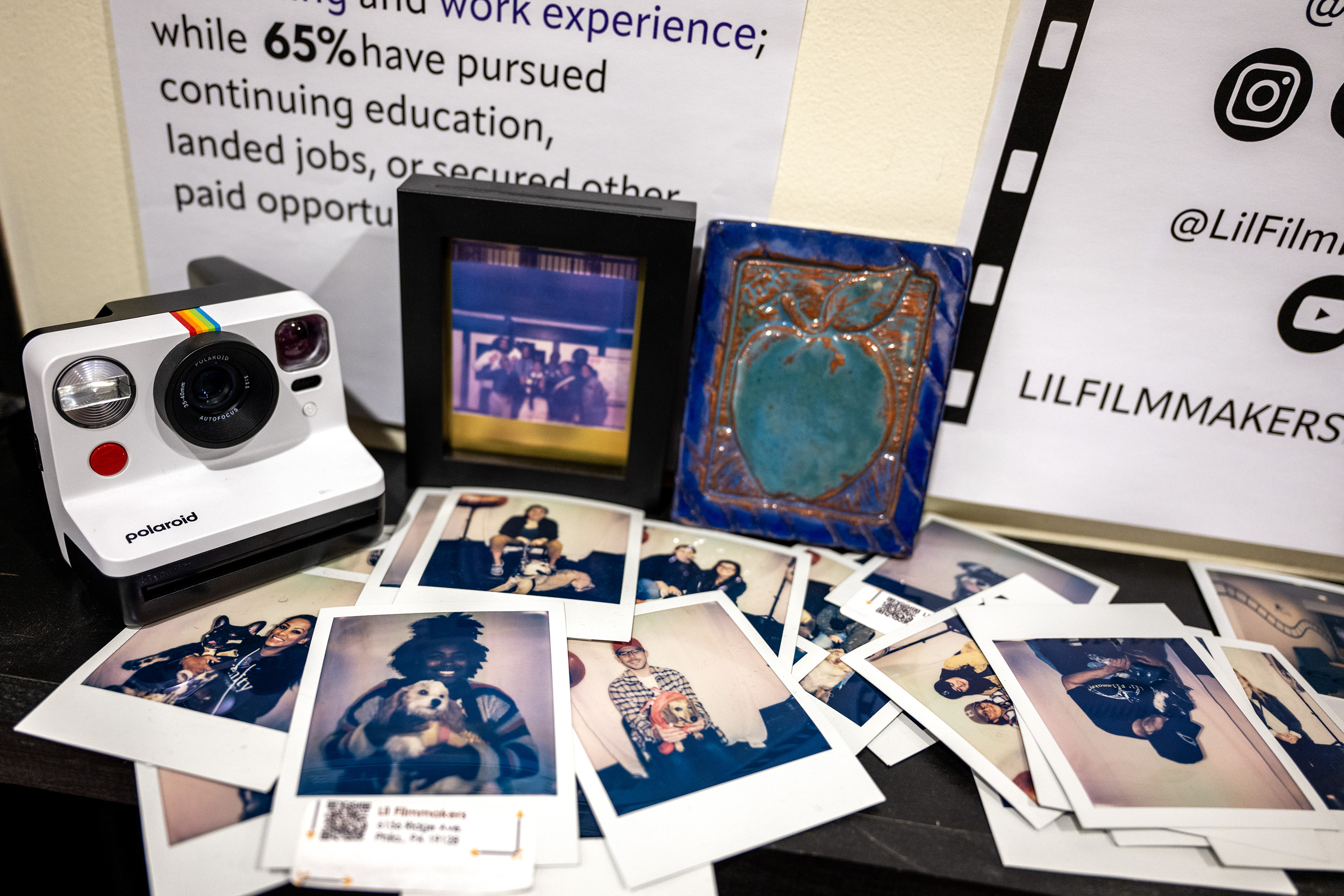
Polaroids from a community pet day at Lil’ Filmmakers Thursday, Dec. 4, 2025. The Roxborough based nonprofit and other community groups claim they have been unable to access their funds managed by FNC, which insists it’s not a case of embezzlement or financial malfeasance
For now, multiple third parties, including the city, are working to move the process along.
The Philadelphia Office of Public Safety, for example, said Lil’ Filmmakers and three other anti-violence grant recipients with awards managed by FNC are in different parts of the process. Together, the groups had roughly $380,000 in city-issued funds awarded, which the city said are largely accounted for.
Though the final spending report for Lil’ Filmmakers remains in dispute, it might be resolved by the end of the month, according to the city.
In the meantime, a public safety office spokesperson said staffers were working with organizations to help close their accounts with FNC and offering technical assistance to its grant recipients, including bookkeeping and fiscal sponsor matchmaking.
Still, the office said, there is not much it can do for other grants awarded by other donors.
Complicating moneymatters further, some organizations used a California-based fundraising platform called Flipcause to collect donations. Last month, California’s attorney general sent a cease-and-desist order to the company, ordering it to halt operations after more than a dozen nonprofits in the state accused Flipcause of withholding funds. The platform also faces a class-action lawsuit in federal court.
In all, Moore said, FNC organizations have about $100,000 being withheld by Flipcause; Lil’ Filmmakers is not one of them.
Moore did not rule out that some groups might have less in their accounts than they were initially told in their FNC financial statements because of accounting discrepancies.
Squire went a step further, adding that philanthropic fundraising would be necessary.
“We’re cautiously optimistic that despite a lot of genuine harm that’s been done, that we can at least get people sorted out and back on their feet in the next few months,” Squire said.
The goal, he said, is that each of the groups needing to be placed with a new fiscal sponsor to access their money will have a new one by the end of the first quarter of 2026.
The results of the internal audits will likely determine any legal recourse or investigations. For example, the Pennsylvania Bureau of Corporations and Charitable Organizations, part of the Department of State, can impose fines against charities and revoke their registrations if they are found to be violating the state laws that govern them.
But Spruill, her staff, and her teaching artists cannot afford to keep waiting.
Lil’ Filmmakers has launched another fundraising campaign, this time for $50,000, so programming can continue uninterrupted.
When speaking about the financial setback, Spruill remains defiant.
“We refuse to let this stop the stories that need to be told,” reads her plea to donors.