Numerous changes are afoot in the Philadelphia School District, with Superintendent Tony B. Watlington Sr. promoting some staffers and shifting others around amid multiple departures from the system.
The changes took effect July 1.
Watlington, in an announcement sent to staff detailing the changes, said he was “confident this team will help us build on our momentum as we continue improving outcomes for students, strengthening support for our schools, and advancing our goal of becoming the fastest-improving large urban school district in the country.”
The personnel shifts include:
Brenda Elliott, who became interim deputy superintendent of academic services when Jermaine Dawson left Philadelphia to become Baltimore’s superintendent, got that job permanently.
Elliott came to Philadelphia a year ago as associate superintendent of student life and innovation. She’s a former Tennessee state superintendent for school turnaround who has worked in a number of urban districts, including with Watlington in North Carolina.
She also spent time as a teacher, principal, and officer in the U.S. Army.
Tomás Hanna, who was associate superintendent for secondary schools, is now associate superintendent for student life and school operations.
Noah Tennant, assistant superintendent for Learning Network 13, is keeping that job, but is also now interim associate superintendent for secondary schools while a search for a permanent administrator is completed.
Michael Farrell is now chief academic officer. He had been chief learning officer. The new title combines two jobs: chief of curriculum and instruction and chief learning officer.
Nathalie Nérée became chief of special education, diverse learners, and wellness. She had previously been chief of special education and diverse learners.
Nyshawana Francis-Thompson, who was chief of curriculum and instruction, became senior adviser for strategic initiatives and innovation.
Jamina Clay, who had been an assistant superintendent supervising a learning network, is now assistant superintendent of school management and organization.
Kelly Espinosa, who has served as the principal of Fanny Jackson Coppin Elementary, is now interim assistant superintendent for Learning Network 4, replacing Clay. Janis Butler, a retired principal who often fills in as an interim principal in the district, will run Coppin.
Two more retired educators are now serving as interim assistant superintendents — Wilfredo Ortiz for Learning Network 8 and Lucy Feria for Learning Network 9. Ortiz replaces RenatoLajara, who’s now superintendent in Bethlehem; Feria replaces Ariel Lajara, who left Philadelphia to run the Vineland school system in South Jersey.
When a deal was struck to save 340 classroom-based jobs in the Philadelphia School District, Mayor Cherelle L. Parker and Superintendent Tony B. Watlington Sr. declared it “Christmas in June.”
It’s July now, but manystaffers still don’t have clarity on exactly who’s allowed to come back to positions that were almost cut and how that affects vacancies system-wide.
“It’s a mess, and it’s getting messier,” said Alison Andrawos, a teacher at Potter-Thomas Elementary in North Philadelphia who accepted a job in another district after learning this spring that her position would be cut and still doesn’t know whether it will be restored.
Monique Braxton, the school district spokesperson, said the system is “moving forward with restoring the approximately 340 school-based positions approved in the revised budget,” but that staffing the positions is separate from restoring them.
“We have been meeting with our union partners on implementation and are now working with principals on school staffing,” Braxton said in a statement. “All approved positions will be restored in the district’s budget system by Wednesday, July 9.”
The complex process is causing additional uncertainty for teachers and staff members andprolonging an already tumultuous hiring season as the district deals with fallout from 17 forthcoming school closings and the back-and-forth over millions in cuts stemming from a $300million district budget deficit.
Watlington this spring directed school principals to build their 2026-27 budgets factoring in the cuts, including about $50 million in school-based trims and the elimination of 340 classroom jobs. Parker then proposed a $1-per-trip rideshare tax she said would cancel the classroom cuts, but City Council balked, and for a time, the position losses appeared inevitable.
But restoring the positions was always going to be complicated.
Schools’ hiring timeline means that many of the teachers, counselors, and climate staff who were told they were going to be force-transferred because of the cuts sought and found new jobs over the past few months, either inside the district or elsewhere. Now, those workers eithermust rescind their acceptance of those new jobs or say “no thanks” to returning. Either way, that creates new vacancies in July, months after most schools have filled jobs and when many people are on vacation.
“We haven’t heard whether our positions are going to be reinstated, we don’t know what positions are available, and we don’t know what we’re doing in a few short weeks,”said Andrawos, an English as a second language specialist who began teaching in Philadelphia schools in 1997.
‘I’m pretty sure I’m going to be leaving’
Andrawos saidshedidn’t want to leave the city, but amid the worry of the past few months, she felt she had to explore jobs outside the district. Andrawos has been offered a position at a Delaware County school that comes with a raise and a shorter commute.
“I’m pretty sure I’m going to be leaving the School District of Philadelphia because of this,” Andrawos said.
Shesaid the decision is tough — she’s forged real bonds with her students’ families, and has been fielding messages saying they hope she stays at Potter-Thomas.
It’s not clear whether Andrawos’ position at Potter-Thomas, in North Philadelphia, will be restored because of the complicated way budgets are built, and the latitude principals have to shift positions based on school need and their own judgment calls.
Jobs are filled in city schools two ways — first, by a process called site selection, where principals hire any candidate they choose for open positions. Once the site selection window closes, district staff without positions choose from among open jobs in seniority order. Site selection closed weeks ago; force transfers without jobs have had their hiring sessions pushed back multiple times so far, and are still waiting.
Jane Roh, a spokesperson for the Philadelphia Federation of Teachers, said the union notified members June 19 that all positions cut due to the deficit would be restored; the PFT was told that district notifications to affected employees would immediately follow. So far, that has not happened.
That leaves staff sweating andfrustrated by a lack of answers, some said.
A roller coaster
One K-8 teacher, who asked that his name be withheld because he feared repercussions, was on the force transfer list because of budget cuts. With no notice that’s being walked back, he’s left with the possibility of having to get emergency certified to teach in another subject area, which would mean taking more courses.
The uncertainty is tough, and the answer to every question posed to the district and the union so far has been, we don’t know yet.
“For this whole summer, where teachers are supposed to have the space to reflect and rest and plan, we can’t do that to any degree,” the K-8 teacher said.
A teacher at a district high school, who also asked to remain anonymous because her employment situation is not settled, is in a similar boat. When her position was cut because of the deficit, she site selected into a job at another district high school.
The process has been frustrating, she said. She once got an email saying her transfer was canceled, but that turned out to be incorrect, though she never got official notice from the district about its error and had to make calls herself to figure it out.
When Parker and Watlington made their good-news announcement, she had no idea what to make of it. She still doesn’t, the teacher said.
“I’m on this roller coaster; I literally don’t know which school I’m going to work at in the fall,” said the high school teacher, who would be teaching different classes, depending on where she lands. “I want to prepare for the upcoming school year, and that’s impossible if you don’t know what you’re teaching.”
The school had been overstaffed four years ago as it navigated a complicated, unprecedented transition from a charter school back to a district school. It has soared, adding programs and opportunities and building a strong school culture; the community fears weathering steep staff cuts would jeopardize its progress.
Sarah Apt, a longtime Olney teacher active in the pushback against cuts, said Wednesday that the school was told it’s getting back three of its 17 staffers.
“We’re happy about that, but still fighting for more,” said Apt.
Among those still in limbo is Eric Baker, an Olney English teacher who’s been struggling with the back and forth, and the possible implications for the school he’s come to love — the school recruited students for a college prep track that’s potentially losing most of its teachers, including Baker.
“Because of this uncertainty, I’ve had to interview other places. I don’t know where I’m going to go. I would rather have the certainty of knowing where I’m going to work than having to deal with this,” said Baker. “It’s been frustrating.”
Superintendent Tony B. Watlington Sr. has promised “white-glove treatment” for families and schools affected by a facilities master plan that will close 17 schools and modernize 169 over the next decade. And he appointed a Philadelphia School District veteran to lead the charge.
Shakeera Warthen-Canty, formerly assistant superintendent of school operations and management, was recently named head of the new School Transition Office, tasked with implementing the $3 billion plan remaking schools across the city.
Warthen-Canty and four other employees will work in the new office, which will also pull in as-needed help from departments across the district — school safety, transportation, student placement, facilities, and more.
“We know that this is going to be a big task, but it’s going to be met,” said Warthen-Canty, who’s spent decades in the district as a teacher and principal. “We know there have been some challenges, but we want to make sure our communities and families know that we have a place where you can get answers.”
Warthen-Canty officially assumed the new role Wednesday ahead of the 2026-27 school year, which Watlington has designated as a planning year for schools affected by closures and other major shifts.
Experts in their communities
Initially, the office will focus on schools closing, merging, and undergoing major renovationsin the 2027-28 school year; other projects are slated to happen in subsequent years.
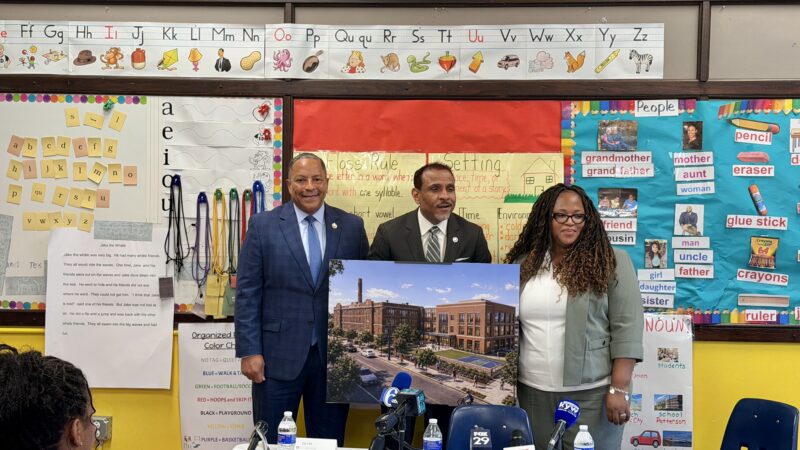
Watlington announced the office’s formal launch at Patterson Elementary in Southwest Philadelphia, a school set to undergo a $45 million renovation as it grows from a K-4 to a K-8. It will take in some students from nearby Tilden Middle School, which is slated to close.
The transition office will be key as the complex work moves along, said Warthen-Canty. Patterson is slated to get 13 additional classrooms, a new gym or cafeteria, and an elevator.
“Some of the pieces of what that looks like, what elements need to be there, we need the Patterson team to work alongside of us,” she said.
Folks on the ground “know their communities, they’re experts in their communities. And that’s a part of the planning,” she said.
System-wide, how many projects can be completed and in what time frame is not assured.
The district will allocate $1 billion of its capital budget over the next 10 years to complete some of the projects, but it’s also banking on $2 billion from philanthropic and state sources — money that’s not guaranteed.
And while Warthen-Canty believes the facilities plan will ultimately expand opportunity and better position the district to advance students’ academics, she knows some of its transitions — particularly the closures — will be tough.
“My heart goes out” to affected families and schools, Warthen-Canty said. “Even people that are being co-located or merging, those are major changes.”
Part of the work, Warthen-Canty said, is going to be convincing families in schools where those major changes are happening that should they shouldremain in the district.
In the case of the school system forcing families to leave their schools and go elsewhere, “we want to make sure that there’s extracurriculars in these schools they’re going to. We’re increasing the art and music,” Warthen-Canty said. “What are the resources we can put in place so that we’re ensuring that when the students get there that they’re going to have that well-rounded education, increased opportunities?”
Seventy-five Philadelphia students thought the stakes were high when they debuted 1776: The Musical in front of a crowd that included former President Joe Biden, former Pennsylvania Gov. Ed Rendell, and Mayor Cherelle L. Parker at Philadelphia’s High School for Creative and Performing Arts last week.
Then came the hate — racist, bigoted comments on social media posts about the production, which was dreamed up by Rendell, who wanted students to learn about the “sacrifices and compromises” that went into building the nation as it celebrates its 250th birthday.
Racially incendiary and antisemitic comments were made under social media photos of the diverse cast, which includes students of color and women playing the Founding Fathers as they debate forging a new nation and ultimately adopt the Declaration of Independence.
Thomas Jefferson (played by Maxwell Henderson, left) and John Adams (played by Jackson Preisser, right) argue during a scene from the opening night of 1776: The Musical at the Philadelphia High School for Creative and Performing Arts on Wednesday, June 24, 2026.
The comments, which have since been deleted, rattled some of the young actors’ families enough that over the weekend, one of the leads withdrew from the production over fears for his safety.
The hatred was a low point — “completely dehumanizing,” said Wyatt Wynne, 17, who plays John Hancock.
But it has galvanized the remaining students: actors, technicians, and musicians from public, private, and charter schools around the city.
Growing up in North Philadelphia, Dhonte Hawkins-Durante, 16, said he was extra conscious of the importance of positive Black male role models. He was thrilled that a fellow Black actor was one of the play’s John Adams. (1776 is double cast, with two actors sharing most roles.)
Losing a Black lead — especially because he was driven out by hate — was crushing, said Hawkins-Durante.
“But instead of losing hope, I turned it into this motivation,” said Hawkins-Durante, a student at Mastery Charter-Lenfest. “If they’re not hating, we’re not doing anything right. It gave me more weight to carry, but the best weight.”
Luciana Jean-Louis, 14, who plays Roger Sherman, a delegate from Connecticut, said the social media hate “broke my heart” and felt personal, she said.
But it turned into a “way to empower myself, and a moment where I felt very proud of where we all come from.”
Cast members posed with guests before opening night of 1776: The Musical at the Philadelphia High School for Creative and Performing Arts on Wednesday, June 24, 2026.
Officials with Celebrating 1776!, the organization producing the play at CAPA and at other sites throughout the city through Aug. 15, condemned the posts in a statement.
“Our production makes a deliberate and proud choice to present a diverse cast telling one of America’s most defining chapters,” the statement said. “The founding of this nation is rooted in human struggle, idealism, and ambition, and it deserves to be told by the full breadth of human talent. Our cast does exactly that, with exceptional skill and commitment.”
‘You constantly have to prove yourself’
Suhaila Madison‘s first reaction to the hateful comments was fury, she said.
“It really fried me,” said Madison, 15, who’s homeschooled. Madison is relatively new to the stage, and has fallen in love with the process, and with working with a group of students from different parts of the city, different backgrounds, different races. The blowback first felt like it was diminishing the story and the young people working hard to tell it.
Then she gathered with her castmates and felt a new sense of purpose.
Brooklyn Weaver, 17, a CAPA student, felt like she had a lot on her shoulders playing Thomas Jefferson. As a person of color, “you constantly have to prove yourself to these different people who might not support you being at this higher level,” she said.
Seeing racist comments on social media isn’t especially shocking, Weaver said, but it hit differently when it targeted her castmates.
“It gave me a different passion for the show,” said Weaver.
“Some people weren’t taking it as seriously before, but they are definitely taking it very seriously now,” Weaver said.
And the show — which chronicles a fractious, imperfect but ultimately history-making Continental Congress wrestling with questions of liberty and freedom — also takes on a different meaning, Weaver said.
“This is what America’s supposed to be: everyone in this land coming together to retell these stories of our forefathers,” she said.
Shepherding a cast and crew of 75 youth, Phillip Brown, executive producer of Celebrating 1776!, was prepared for a lot of contingencies.
But the social media vitriol, and having to replace a principal actor in less than a day, wasn’t on the list of things he was prepared for, Brown said.
(Student Walddys Fernandez, who had played a more minor part, stepped up to take the John Adams role on very short notice, blowing the producing staff and cast away with his preparation and verve.)
Former Mayor Ed Rendell meets cast members (from left) Abigail Adams (played by Chloe Chau), John Dickinson (played by Gregory Rist) and Ben Franklin (played by Jayden Duvene) during opening night of 1776: The Musical at the Philadelphia High School for Creative and Performing Arts on Wednesday, June 24, 2026.
But helping the students process and heal what happened has been humbling and powerful, said Brown.
“It created a wonderful kind of opportunity to really teach the students the power of art, theater, and how to use their voice,” said Brown. “When you’re doing something this powerful and provocative, people are going to have strong opinions. It was almost like this was the ire and the fuel that everyone needed to really dig in — they’re taking the anger that they feel about this situation, and they’re using it to strengthen their voice, not to soften it.”
Philadelphia students are among the friendly faces welcoming the expected more than 1 million visitors to the city this summer.
Youth from Ss. Neumann Goretti High School and Girard Academic Music Program are official staff greeting tourists and giving directions and Philly recommendations over six weeks.
Planning for the huge undertaking of celebrating America’s 250th birthday in its birthplace began years ago, and Kathryn Ott Lovell, president and CEO of the Philadelphia Visitor Center Corporation, knew that she needed reinforcements.
“It was going to be hard to scale our mission and reach as an organization, short of building a visitor center on every corner,” said Lovell.
Enter the Phambassadors, a corps of 10,000 Philadelphians who volunteer to be a welcome wagon of sorts for the tourists arriving in town, some of whom were trained via a Philly-themed boot camp. Lovell, who “was born with this irrational love for Philly,” she said, arbitrarily picked the number 10,000, she said, hoping to attract that number of volunteers by the end of the year. The Philadelphia Visitor Center got there months ahead of schedule.
And when Lovell heard that Neumann Goretti had launched a hospitality program, creating the Youth Phambassador corps felt like a natural extension, both as a way to expand the welcome wagon and a means to help develop the next generation of tourism and hospitality professionals.
Lovell, Philadelphia’s former Parks and Recreation Commissioner, wanted to make it a paid opportunity, a city summer program with training and a stipend for participating students. Twenty Neumann Goretti students signed on, plus six students from GAMP, the South Philadelphia magnet school.
Training was held this month for the 26 Youth Phambassadors to learn both soft skills and hard skills — customer service, visitor engagement, and even citizen diplomacy via the World Affairs Council.
The Youth Phambassadors, who are working with an adult supervisor, are stationed both inside the Visitor Center at Sixth and Market Streets and around the historic district.
The hope is to have the students show off the city, but also “that it’s a portal into the hospitality and tourism world for the kids as they have a really wonderful experience,” Lovell said.
Both schools would still close under the plan, which is now in the school board’s hands. Instead of merging into large neighborhood high schools, however, the small, selective-admission schools would be absorbed by magnets.
Watlington said the tweaks would still allow the district to bring more high-quality academic and extracurricular opportunities into neighborhood schools while acknowledging the need to manage limited resources.
Butstudents, staff, parents — and some powerful allies at both schools — say Watlington’s counter-proposalisn’t enough. Both communities are still fighting.
Under the revised plan, Lankenau would merge with Saul, not Roxborough, and Robeson would merge into Motivation, not Sayre.
State Rep. Morgan Cephas (D., Phila.) recently visited the Philadelphia Flower Show, where she and other officials marveled at Lankenau students’ exhibit, which examines abundance, roots, and connections through culturally important plants. The display won a gold medal and the prestigious Alfred M. Campbell Memorial Trophy.
The dichotomy struck Cephas, she said. Lankenau students “are at the Flower Show, and [the district] is trying to close the school?”
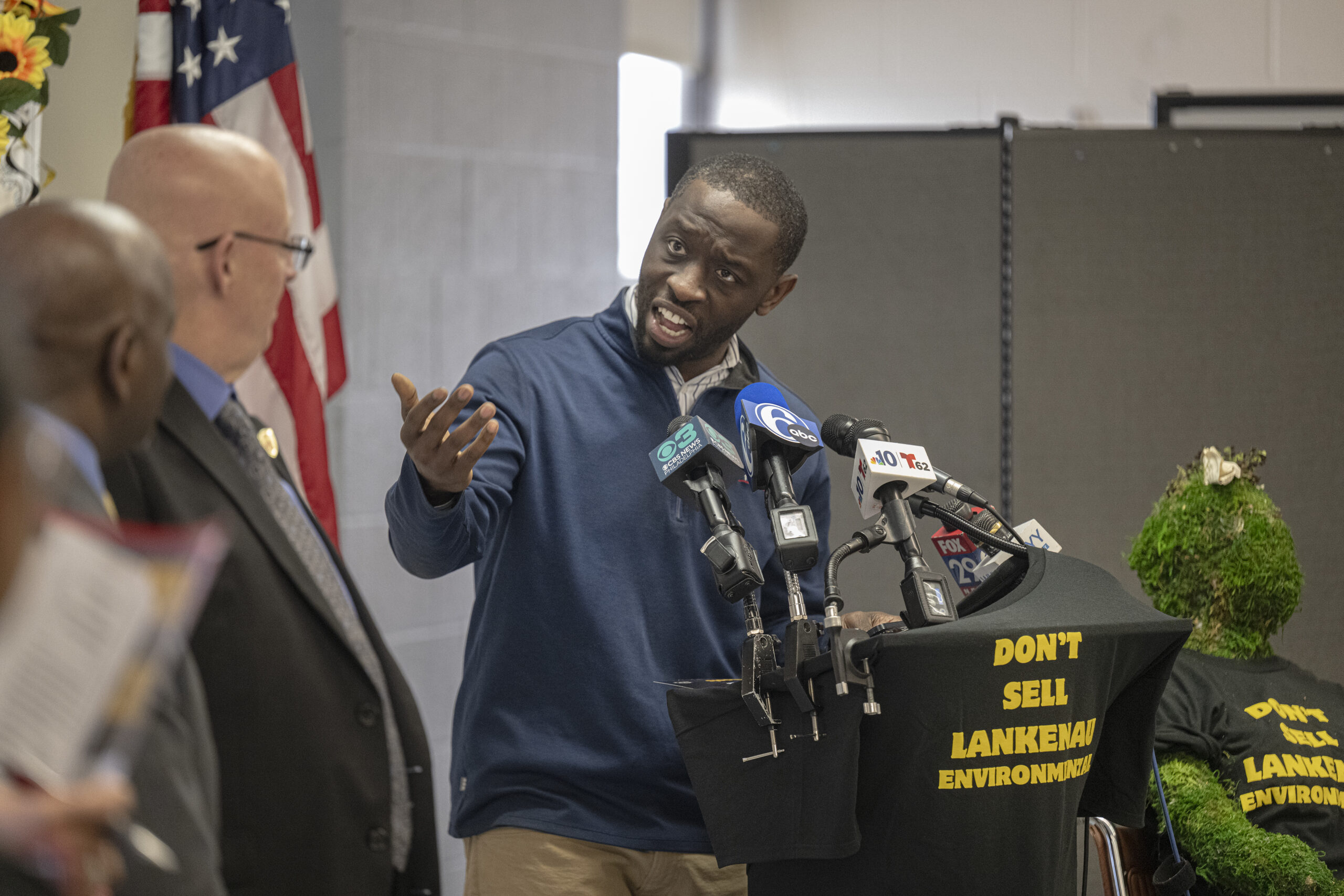
On Wednesday, students, parents, lawmakers, and Philadelphia Federation of Teachers officials gathered at Lankenau to drum up support for Gov. Josh Shapiro’s budget proposal. But really, it was another save-our-school rally.
A ‘prime example of a successful school’
Lankenau “is a prime example of a successful school,” said Messiah Stokes, an 11th grader at the Upper Roxborough school. The school has a 100% graduation rate, and is Pennsylvania’s only three-year agriculture, food, and natural resources career and technical education program.
The school itself sits on 17 acres,which district officials have proposed giving to the city — though a 1970s legal agreement could foil that plan. Lankenau is also adjacent to 400 more wooded acres via the Schuylkill Center for Environmental Education. The environmental center shares its land and its opportunities with students, who hold bird-watching clubs on breaks and hold classes outside when weather permits, and have abundant internship opportunities.
“My school is a prime example of a successful school,” said Stokes.
Watlington has said that Saul — the city’s agricultural magnet on a working farm on Henry Avenue — has a mission that’s closely aligned with Lankenau’s, but supporters say Lankenau’s success is closely tied with its wooded campus, its streams, and its ecosystems.
Councilmember Isaiah Thomas speaks at Lankenau High School during a gathering to support the efforts to fight closing recommendations on Wednesday.
Councilmember Isaiah Thomas, chair of City Council’s education committee, is incredulous that the district is attempting to close the school, which educates mostly Black students.
“I wonder if Lankenau did everything that it currently does: graduation rate … community involvement, the educators’ participation — I wonder if Lankenau was 98% white, will we be closing Lankenau?” Thomas said.
Still, “small schools are worth the investment,” said Amy Szymanski, a special-education teacher at the school. “Shutting down a school doesn’t just impact one community, it shakes other schools that have to absorb the impact as well.”
Szymanski urged district officials and decision makers to come up with different plans.
‘Culture is not transferable’
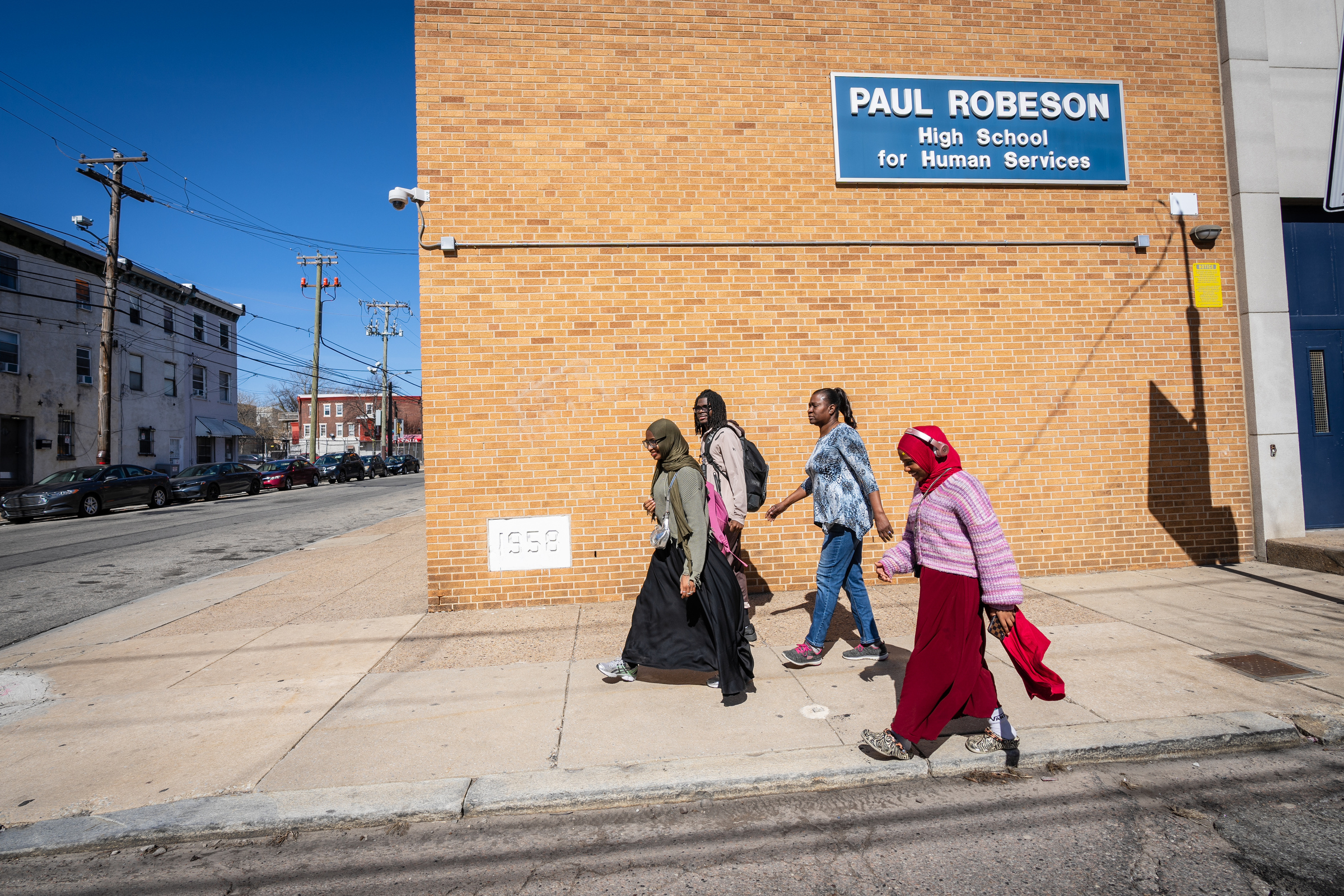
Robeson did everything the district asked it to do and then some, said Elana Evans, a longtime educator at the West Philadelphia school.
The school was heralded as a model for other Pennsylvania public schools by former Gov. Tom Wolf. It won citywide prizes and sent a student to Harvard University. Its students successfully petitioned district leaders for air-conditioning in their building. And its staff secured donations to have a major cafeteria renovation, though its building is still judged in “poor” condition by district standards.
“Why can’t Paul Robeson have a new school?” said Evans, who previously taught at University City High, closed by the district in 2013. “Haven’t we proved ourselves, haven’t the kids sacrificed enough? Haven’t they shown what they can do and what they’re willing to do?”
Students walk outside Paul Robseon High School with Elana Evans, a Robeson teacher (in blue) in this 2025 file photo.
And though moving to Motivation, in Southwest Philadelphia, may be slightly more palatable for some Robeson parents, for most, it won’t, said Evans.
“Students would still have to go to 60th Street, traveling a distance,” said Evans. “If those parents wanted them to go toMotivation, they would have picked Motivation.”
The district has said it wants to preserve the successful Robeson culture, just elsewhere, but Kyana Hopkins, said that won’t work.
“Culture is not transferable,” Hopkins said. “Make it make sense.”
Samantha Bromfield, president of Robeson’s Home and School Association, said the district will lose families if Robeson goes away.
“Understand that a parent like me will send my child back to being homeschooled” if Robeson closes, Bromfield said. “Your choice doesn’t fit my criteria of what I’m looking for my children.”
Inheritance, and questions
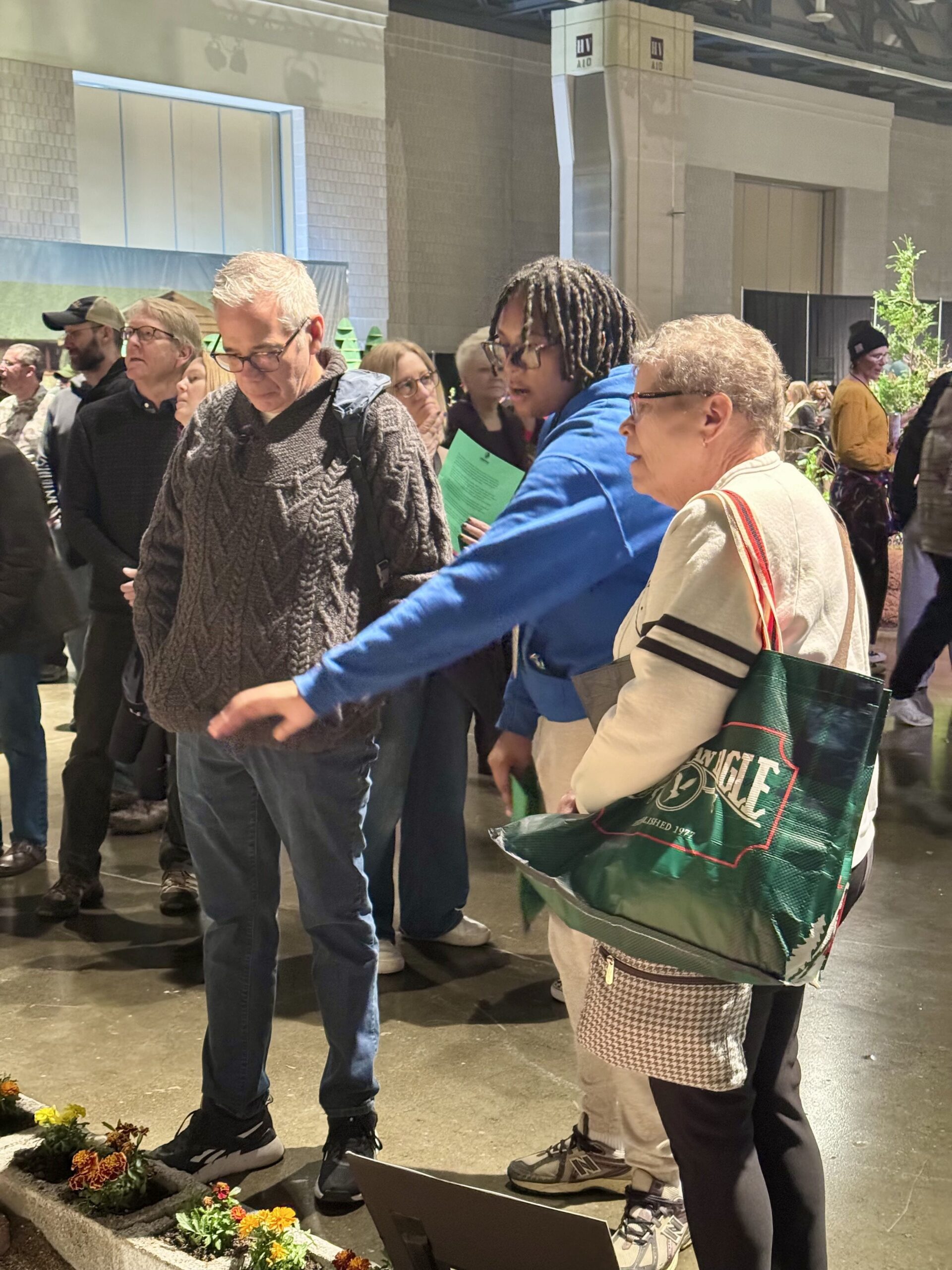
The Flower Show was abuzz Wednesday, with a crowd hovering around the Lankenau exhibit. “Inheritance” — a verdant wonderland showcasing plants grown from local seeds, set around a weathered wooden table — asked viewers to think of the question, “What tastes like home to you?”
Lankenau High senior Sasha John (blue hoodie) explains her prize-winning school’s Philadelphia Flower Show exhibit to visitors on Wednesday.
Several Lankenau students staffed the exhibit, answering questions — and showing visitors green “Keep LANK Open” fliers, encouraging passersby to share words of support for the school with the school board and City Council.
“It doesn’t make sense to me,” said Amelia Pennycooke, a Lankenau senior, of the proposed closing. “We have so many opportunities at Lank.”
Lankenau High School’s exhibit, which the school’s eco art class worked on all school year, won a gold medal and the Alfred M. Campbell Memorial Trophy at the Philadelphia Flower Show. “Inheritance” examines the question “what plants taste like home to you?” It was designed and built by Lankenau students.
Noel Alford, a Lankenau parent, said the school needs to remain open, its land not used for any other purpose. The amendment to Watlington’s plan falls short, she said.
“Saul is a mistake,” said Alford. “Saul is an agricultural school. They are two different magnet schools.”
While elected officials have no say in which schools close, Thomas said it’s up to them to keep pressuring the board to rethink some closures, including Lankenau’s.
“This is a legacy moment for us as elected officials,” said Thomas. No one “wants to add that black mark on their career that says you were the person that was in charge when this injustice took place.”
For the first time, Philadelphia School District students have guaranteed bathroom and water breaks. Recess is promised. Silent lunches and collective punishment are forbidden.
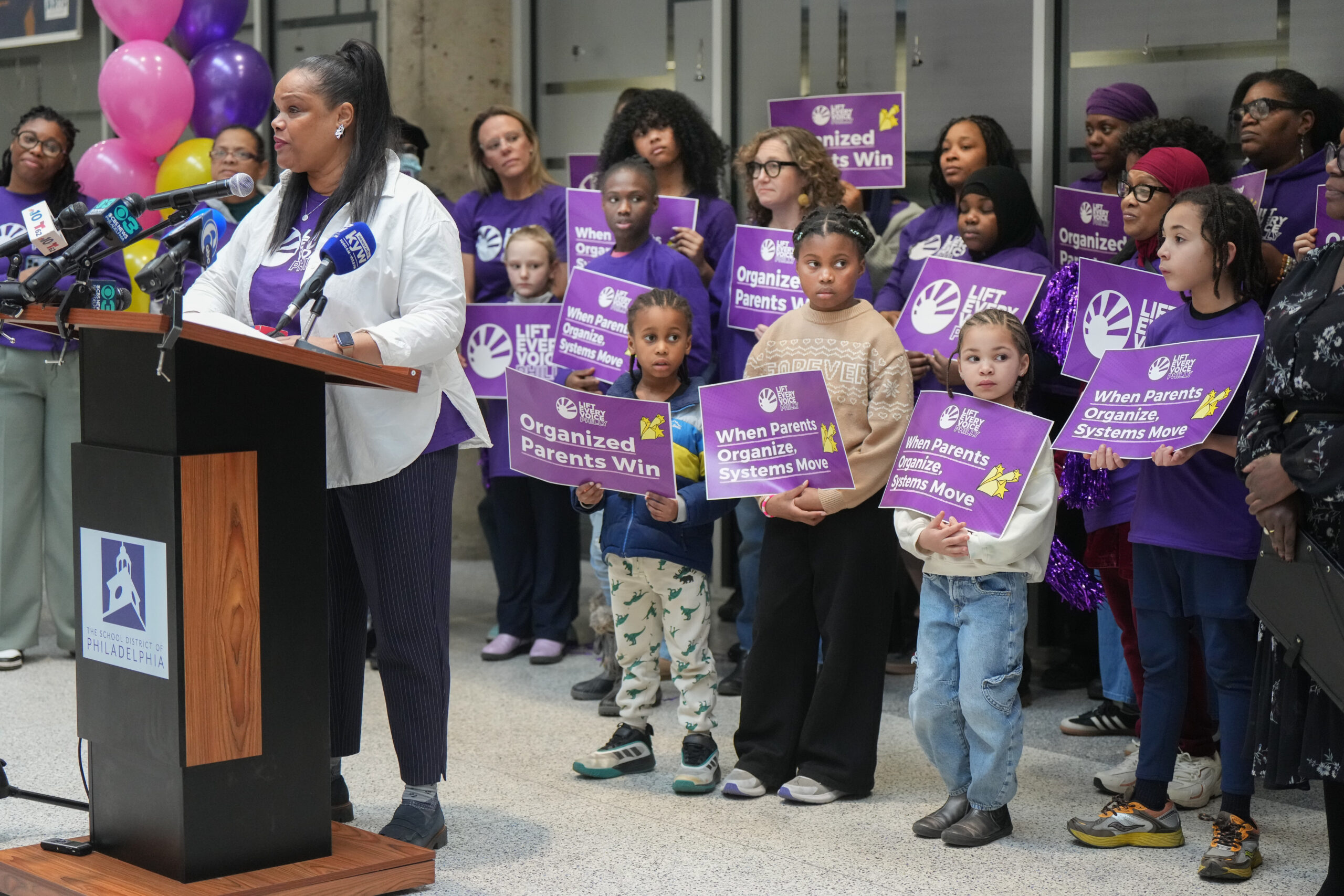
Philadelphia’s school board just adopted the district’s first-ever comprehensive wellness policy, two years after a group of parents began pushing a “joy campaign” because, parent Jamila Carter said, “we refused to accept the unacceptable.”
Jamila Carter speaks during a news conference celebrating the wellness policy / joy campaign at the school district building, in Philadelphia, on March 2, 2026.
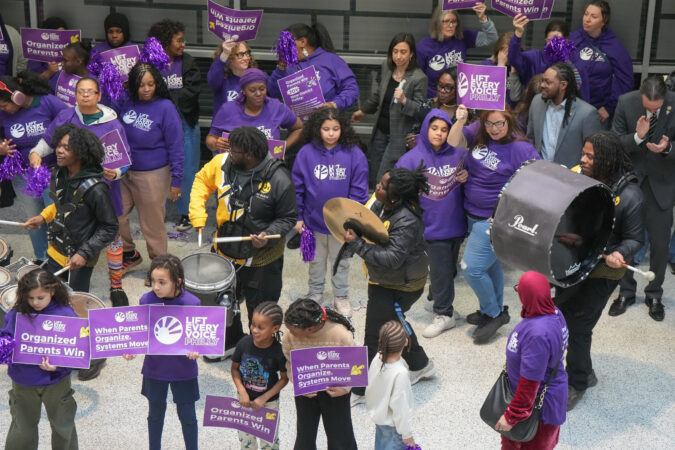
In the past, said members of Lift Every Voice — a grassroots, Black-led parent organization growing in numbers and clout in the city — students inside some district schools weren’t allowed to drink water during the day. Entire classes were punished for the misdeeds of one or two students. And sometimes, parents sent their children to school in diapers because children weren’t always allowed to use the bathrooms.
The group of moms weren’t trained advocates, but they learned quickly, pushing the school board and district to codify rights that weren’t always guaranteed.
Now they are — on Thursday night, the school board signed off on bathroom and water breaks and mandatory recess and movement breaks for every 90 minutes of seated time for elementary school students.
With pom-poms and dancing, a drum line and cheers, Lift Every Voice members celebrated their victory at district headquarters Monday.
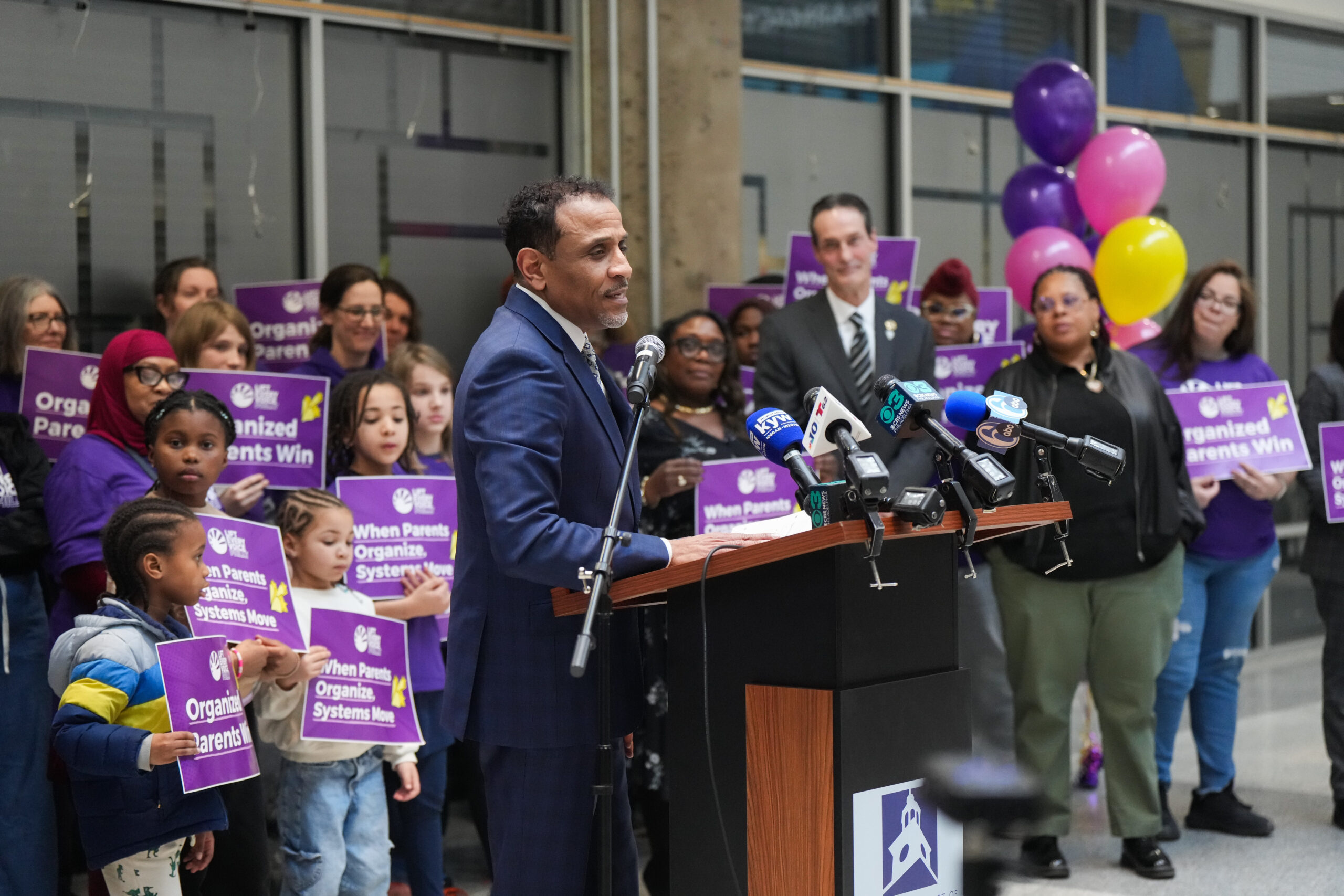
Superintendent Tony B. Watlington Sr. speaks during a news conference celebrating the wellness policy / joy campaign, at the school district building, in Philadelphia, on March 2, 2026.
Superintendent Tony B. Watlington Sr., who now routinely talks about joy as one of the district’s core values, credited the parents for pressing the issue.
“You know what Frederick Douglass once said? He said, ‘Power concedes nothing without a demand. It never has and it never will.’ And so I want to thank the members of Lift Every Voice. I wish we had done this much sooner. But I’m pleased that we’re doing it today,” Watlington said.
Amy Faulring, a parent of two district students, said it was a happy day, but the campaign taught parents a sobering thing.
“Even in some of the best schools, these practices were happening, in buildings that families fight to get into and feel proud of,” said Faulring. “That tells us this wasn’t about one school, it was about culture, and culture does not shift by accident. When basic protections aren’t written down, they become negotiable. They depend on which building you’re in or which parent feels empowered enough to speak up. Codifying this into policy changes that.”
The policy, Faulring said, “sets a clear floor, it creates consistency, and it makes dignity non-negotiable.”
The priorities, said Lift Every Voice member LaTi Spence, came right from kids.
“Our children told us what was wrong,” said Spence. “They told us what it felt like to sit in classrooms thirsty, how hard it was to have silent lunches. They told us where joy was missing.”
Councilmember Kendra Brooks said the policy fixes things that parents and students had to tolerate for too long.
“When we think about children holding their bodies because bathroom access is protected, or sitting for hours without movement, or rushing through silent lunches, that’s not discipline,” Brooks said, who was a parent activist before she was a politician. “That’s not discipline. That’s not rigor. It’s actually dehumanizing.”
Half days are disappearing in the Philadelphia School District.
Beginning in the 2026-27 school year, the district won’t have a single early dismissal — for teacher planning, report card conferences, or any other purpose.
Student attendance tumbles whenever Philadelphia has a half day, and parents scramble to plan for childcare when they happen, Superintendent Tony B. Watlington Sr. said.
At the superintendent’s request, the board amended the 2026-27 calendar, changing eight previously scheduled half days to zero.
Some days previously scheduled for professional development will now be full days off for students, and report card conferences — previously held over two half days — will now be scheduled on a single day off for students.
“When we have half days in the school district, it significantly impacts our student attendance,” Watlington told the board. “We now have clear data over 3½ years that when we have half days for professional development and the like, it lowers our overall student attendance.“
Watlington has emphasized student attendance as a key driver of academic improvement, and overall, Philadelphia’s student and teacher attendance has risen during his tenure, which began in 2022.
But half days were responsible for the largest single year-over-year drop in attendance in recent years. In December 2025, 54% of district students attended school 90% of the time or more, down from 66% over the same time period in 2024.
In January 2026, regular student attendance was 51%, down from 53% in January 2025, a dip Watlington said was “largely attributed to disruptions in the calendar.”
Controlling for half days, regular student attendance would have been 70% last month — proof, Watlington said, that half days need to disappear.
“This is very important,” the superintendent said, “because we know if we can get student regular attendance up, kids just learn more when they’re in school more.”
Half days planned for March, April, and May this school year will remain on the calendar, but the half day planned for students’ last day of the school year, June 11, is now a full day.
Frustration and anguish spilled over Thursday night as Superintendent Tony B. Watlington Sr. presented his sweeping, $2.8 billion facilities plan to the school board at a heated, lengthy meeting.
Watlington revised the plan to include 18, not 20 school closings — saving Conwell Middle School and Motivation High — and still wants to modernize 159 schools over a decade. He pitched it as a “once-in-a-lifetime” opportunity to drive academic improvement.
But the community did not seem impressed — at an anti-school-closure rally prior to the meeting, and at the public session itself, which stretched on for more than eight hours, into the early hours of Friday morning.
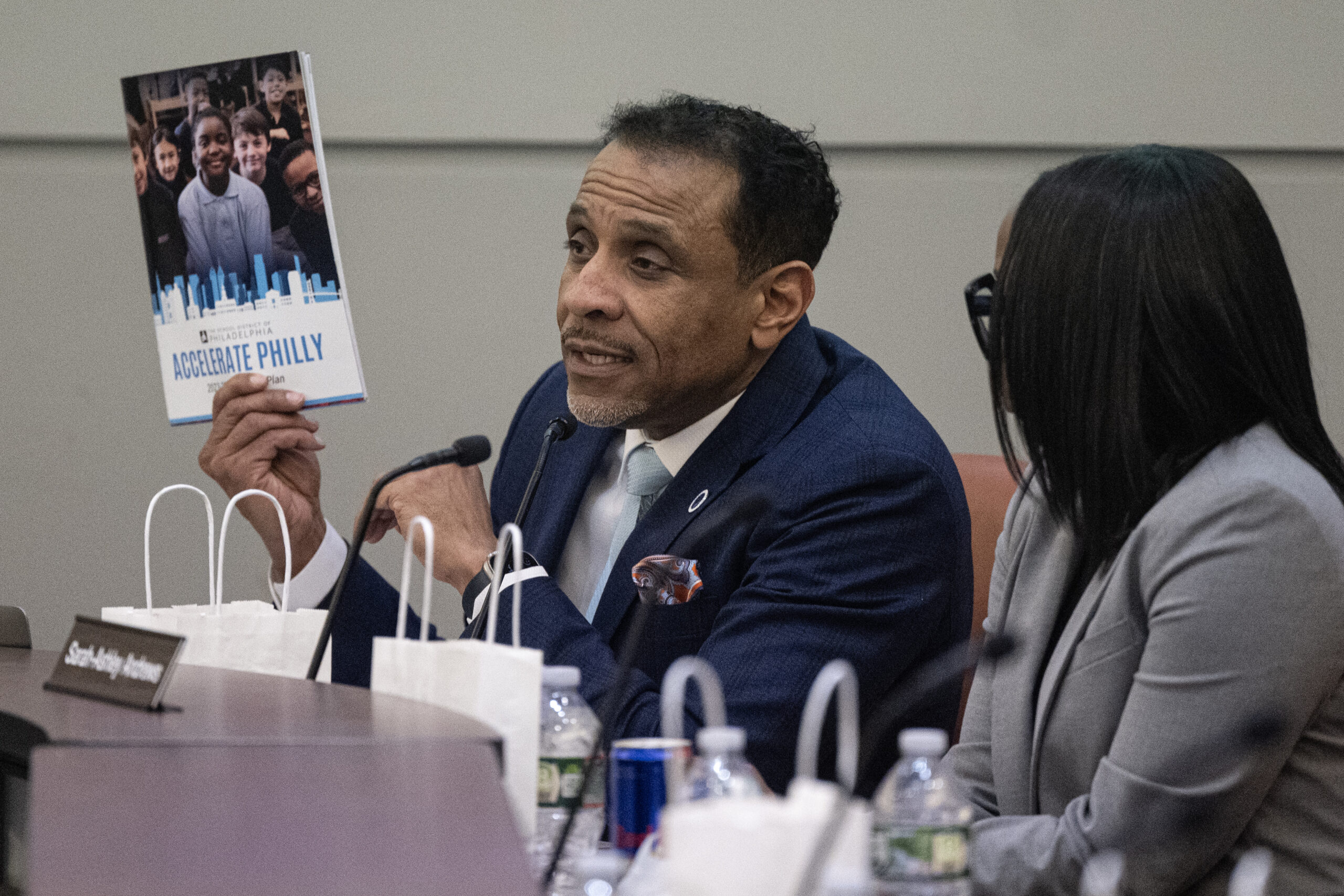
Tony B. Watlington Sr., superintendent of the School District of Philadelphia, presents his facilities plan during Thursday’s board meeting.
“Dr. Watlington, you’re breaking my heart,” said Amanda Chandler, a teacher at Harding Middle School, one of the schools on the chopping block.
The district’s plan “isn’t an opportunity — it’s calculated abandonment,” said Beth Cole, a teacher at Stetson Middle School, which is also slated to close.
Watlington first unveiled the facilities plan, which was years in the making, in January. After weeks of community meetings, the superintendent formally presented the blueprint — with some tweaks — to the school board Thursday. The board has not yet said when it will vote on the plan, but has scheduled a March 12 town hall to hear more public feedback.
‘Massive upheaval’
The district has 70,000 empty seats in schools citywide. For example: Watlington said he recently watched a recording of a 1969 Overbrook High graduation. The school educated 5,000 students then. Now, it has fewer than 500.
And while some schools are underenrolled, some are overfull, particularly those in the Northeast. Inequities are widespread, also. For instance, only half of city students have access to Algebra 1 in eighth grade, barring them from admission to Masterman, a top city magnet that requires algebra for admission.
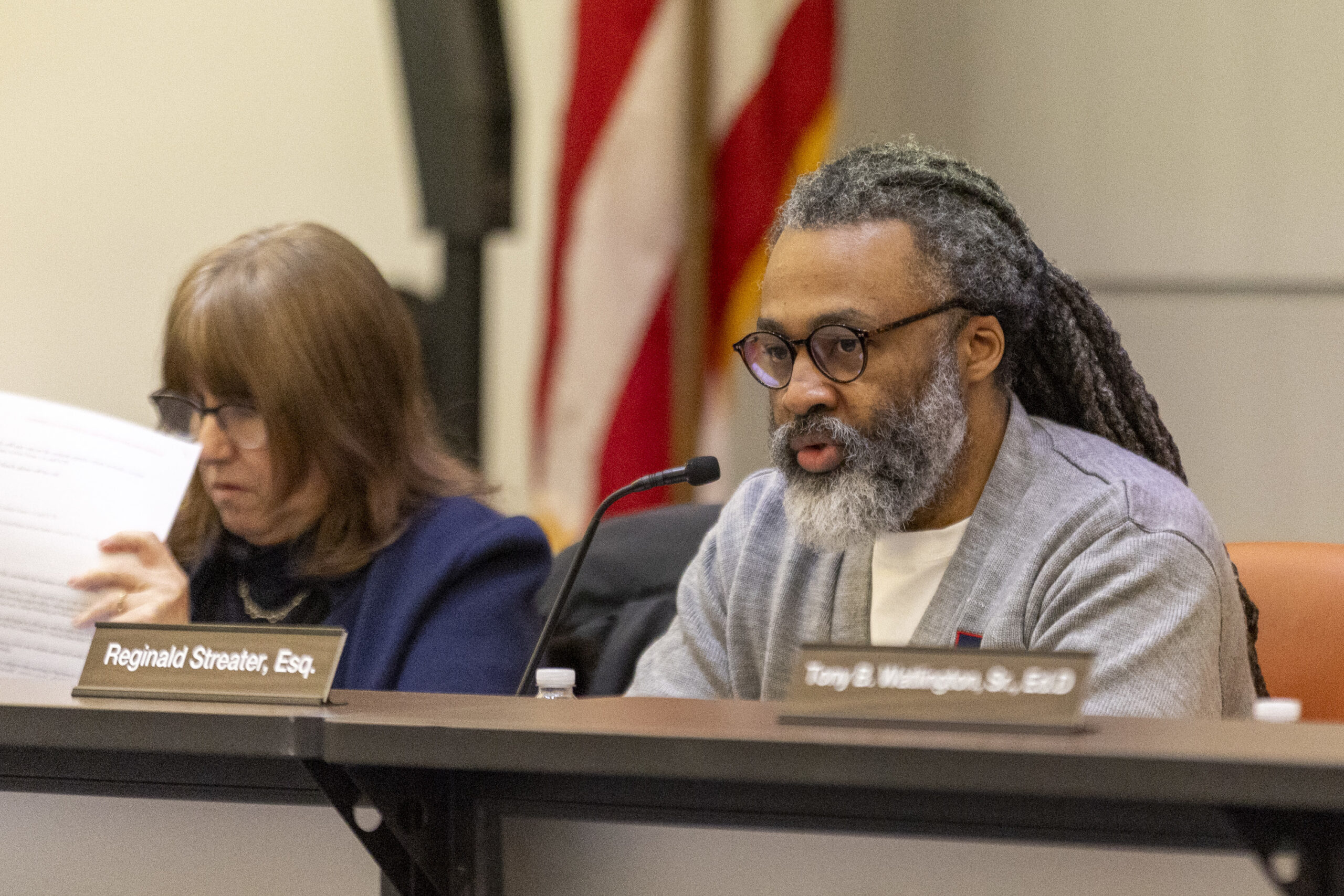
The board must address all those issues, said Reginald Streater, school board president.
School board president Reginald Streater said the board must deal with 70,000 empty seats in city schools.
“We have chronic underfunding, coupled with enrollment shifts that have materially created structural challenges that no district board can simply absorb without consequence to the district,” Streater said. “These realities have materially affected our ability to accelerate our fight against systemic chronic underachievement within the School District of Philadelphia.”
Streater did not weigh in on the details of the plan, but some other board members did, indicating there may be some pushback when it comes time to vote.
Board memberCrystal Cubbage said she wanted a “bolder plan” including more new buildings. (Watlington’s version proposed a single new building in the lower Northeast for the Arts Academy at Benjamin Rush.)
“I’m struggling to reconcile this massive upheaval, and the $2.8 billion price tag, with the fact the plan is not explicitly designed to produce better outcomes for all of our children,” Cubbage said.
Audience members in the packed board room cheered as board member Wanda Novales voiced criticisms of the plan.
Novales said she recognized the complex challenges the board and district face, but “the standard cannot simply be operational efficiency,” Novales said. “I am struggling to see the heart …that sees the lived realities of our neighborhoods.”
Areas like Kensington and Fairhill have long been underresourced, Novales said, and the plan falls short in providing opportunities to students there.
“This conversation cannot just be about buildings. It must be about students,” Novales said.
Joyce Wilkerson, the longest-serving member of the school board, and a member of the School Reform Commission, the board’s predecessor, said the district has known it had to “rightsize” for years.
“We can’t afford to be locked in inaction,” Wilkerson said.
More pushback
Students from the affected schools spoke pointedly about the proposed changes.
Jade Colon, a student at Stetson Middle School, in Kensington, said her school’s roof has leaked for years. It’s never been properly fixed.
“We are told this plan is about equality, yet we see our neighborhood — one that has already faced decades of disinvestment — being asked to sacrifice yet again,” said Colon. “True equality isn’t found in a swing space or a longer walk to a different building across dangerous intersections like Kensington and Allegheny. True equality is found in investing in schools we already have.”
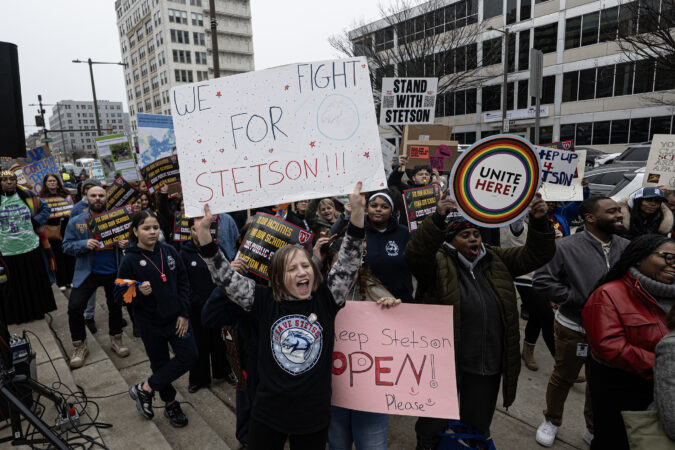
Students rally before a School District of Philadelphia board meeting Thursday outside the district’s headquarters in Philadelphia, as community members protest proposed school closures.
David Samuel, who attends Parkway Northwest, another school on the closing list, said the school is “building strong children.”
Virtually all Parkway Northwest students are on track to graduation.
“Those are lives being moved forward,” Samuel said. “Closing Parkway Northwest wouldn’t be closing a school; it would be closing my home.”
The plan drew pushback from a number of politicians who showed up to voice displeasure to the board.
“I do not have the words to describe how disappointed I am by the district’s proposal today,” City Councilmember Jamie Gauthier said, underscoring concerns about harm to Black and brown students.
Removing Motivation from the closing list is a good step, said Gauthier, who represents a West Philadelphia district. But she wants Watlington to consider removing Robeson, Blankenburg, and Parkway West, too.
The superintendent said the district has done its best to spread opportunity, but he acknowledged the difficulty of the decisions in front of the board.
“In an ideal world, I never believe in closing schools,” Watlington said, a remark met with some groans from the crowd. “I would never want my child’s school to be closed, to be frank.”
Superintendent Tony B. Watlington Sr. on Thursday presented the Philadelphia School District’s long-awaited facilities master plan to board members, with revisions leaving two fewer schools slated to close than initially proposed.
Plans now included 18 closures and six other co-locations, as well as one new school building and other investments.
Of the district’s 307 buildings, most schools — 159 in all — would be modernized under the proposed plan. The district in January pointed to Frankford High, which closed for two years because of asbestos issues and just reopened in the fall with $30 million worth of work to spruce it up, as an example of modernization.
An additional 122 schools would fall into a “maintain” category, meaning they would receive regular upkeep. And six facilities would be co-located, meaning two separate schools would be housed under one roof, each with its own principal and team.
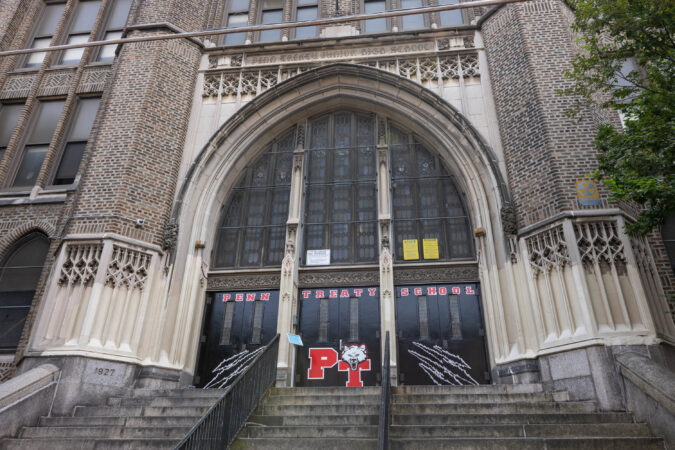
Finally, 18 schools would be recommended for closure. Among them is Penn Treaty, now a 6-12 school, which would close in its current form, but go on to house the current Bodine High School, a magnet in Northern Liberties. Bodine’s building would become the home of Constitution High, which now occupies a rented space in Center City.
As proposed, Watlington’s plan would cost $2.8 billion over 10 years. The district would put up $1 billion via capital borrowing during that time — leaving $1.8 billion unaccounted for that the superintendent said would need to be covered by state money or philanthropic support. If the district doesn’t get all or some of that amount, the plan would have to be amended.
Will some schools definitely close? Which ones?
Right now, the closures are just a proposal, and the school board is slated to have the final say. They could adopt all, some, or none of Watlington’s recommendations.
If the closures are approved, no school would be shuttered before the 2027-28 school year. And should some schools close, no job losses are expected, Watlington said last month.
Initially targeted for closure were Conwell Middle School in Kensington and Motivation High in Southwest Philadelphia, but both have since been spared. Both magnet schools accept students citywide, and their proposed closures saw opposition from powerful allies including several City Council members and Pennsylvania House Speaker Joanna McClinton.
That change, Watlington said, was not due to politics, and came after the district “poured through thousands of feedback loops from a number of Philadelphians.”
The board, meanwhile, is expected to vote in the coming weeks, though no date has been set.
What will happen to students who attend closing schools?
Every affected student would be routed to a new school. A new transition office would work closely with impacted communities to make sure academics, attendance, and social-emotional needs don’t suffer, Watlington said.
“These families will get gold-standard, red-carpet treatment directly from the superintendent’s office,” he pledged.
Why are these changes necessary?
The district hasn’t had a facilities master plan in more than a decade. It has 70,000 empty seats citywide, with some schools overcrowded and others with entire unused floors. It’s also got a lot of aging buildings — the average district school is nearly 75 years old — and many have environmental and/or significant systems issues.
Officials said they want to solve district-wide disparities: Some schools have art, music, and ample space for physical education, plus extracurricular activities, and some have few of those things.
How were school buildings’ fates determined?
Watlington said there was no formula to determine his recommendations. But four factors entered into the decision: building condition, utilization, the school’s ability to offer robust programming, and neighborhood vulnerability — a new measure that considers things like poverty and whether the area has lived through prior school closings.
The district formally launched the final phase of its facilities master planning process in late 2024. Since then, officials have hosted 47 community conversations and received 13,700 survey responses from people in every zip code in the city. Officials heard from a project team of 30 members and received feedback from nine advisory groups composed of more than 170 members.
The district later launched surveys to gain more input, with the topline result being that Philadelphians didn’t want their local schools closed. Many respondents outlined fears about potential hardships that closing schools could create, such as longer walks to school or tough bus rides in unfamiliar or unsafe areas.
And they flagged worries about merging schools and having large grade spans in a single building.
When did the district last close schools?
Mass school closures last happened in 2012 and 2013, when 30 schools shut.
That process hit economically disadvantaged neighborhoods disproportionately, did not yield substantial savings, and generally led to worse academic outcomes and attendance for students.
The mistakes of 2012 informed this go-round, officials said. They have promised better services for schools, students and families affected by any coming transitions.