Author: Kristen A. Graham

  • These Philly schools are slated for big upgrades as the district works to modernize buildings

    These Philly schools are slated for big upgrades as the district works to modernize buildings

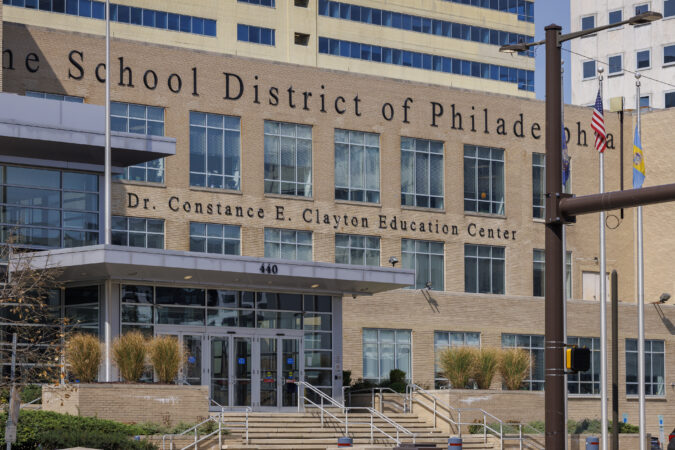
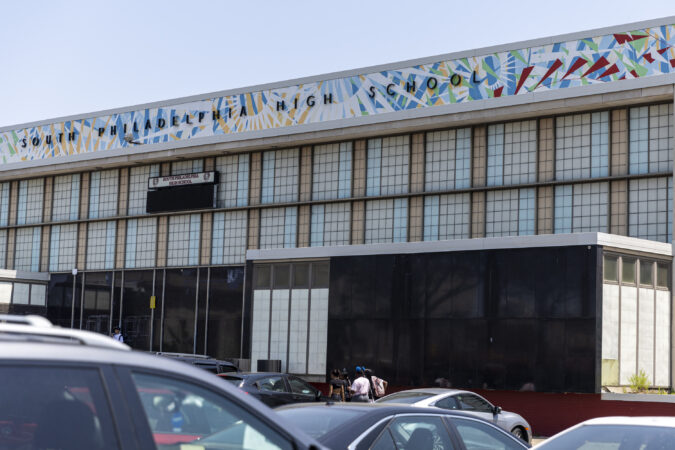
    Nearly $58 million for South Philadelphia High School. Over $27 million for Forrest Elementary in the Northeast. Almost $55 million for Bartram High in Southwest Philadelphia.

    Ahead of a Tuesday City Council hearing on the Philadelphia School District’s proposed facilities master plan, district officials have dangled the carrot that would accompany the stick of 20 school closings.

    The district released Monday morning how much it would spend on modernization projects at schools in each City Council District if Superintendent Tony B. Watlington Sr.’s plan is approved by the school board this winter.

    The totals range from $443 million in the 9th District — which includes parts of Olney, East and West Oak Lane, Mount Airy, and Oxford Circle — to nearly $56 million for the 6th District in lower Northeast Philadelphia, including Mayfair, Bridesburg, and Wissinoming.

    The district’s announcement comes as the plan has already raised hackles among some Council members, and City Council President Kenyatta Johnson has said he’ll hold up the district’s funding “if need be” if concerns are not answered to Council’s satisfaction.

    Tailoring the release to Council districts — including highlighting one major project per district — appears to be an effort to calm opposition ahead of Tuesday’s hearing.

    Details on every school that would get upgraded under Watlington’s plan — 159 in total — have not yet been released.
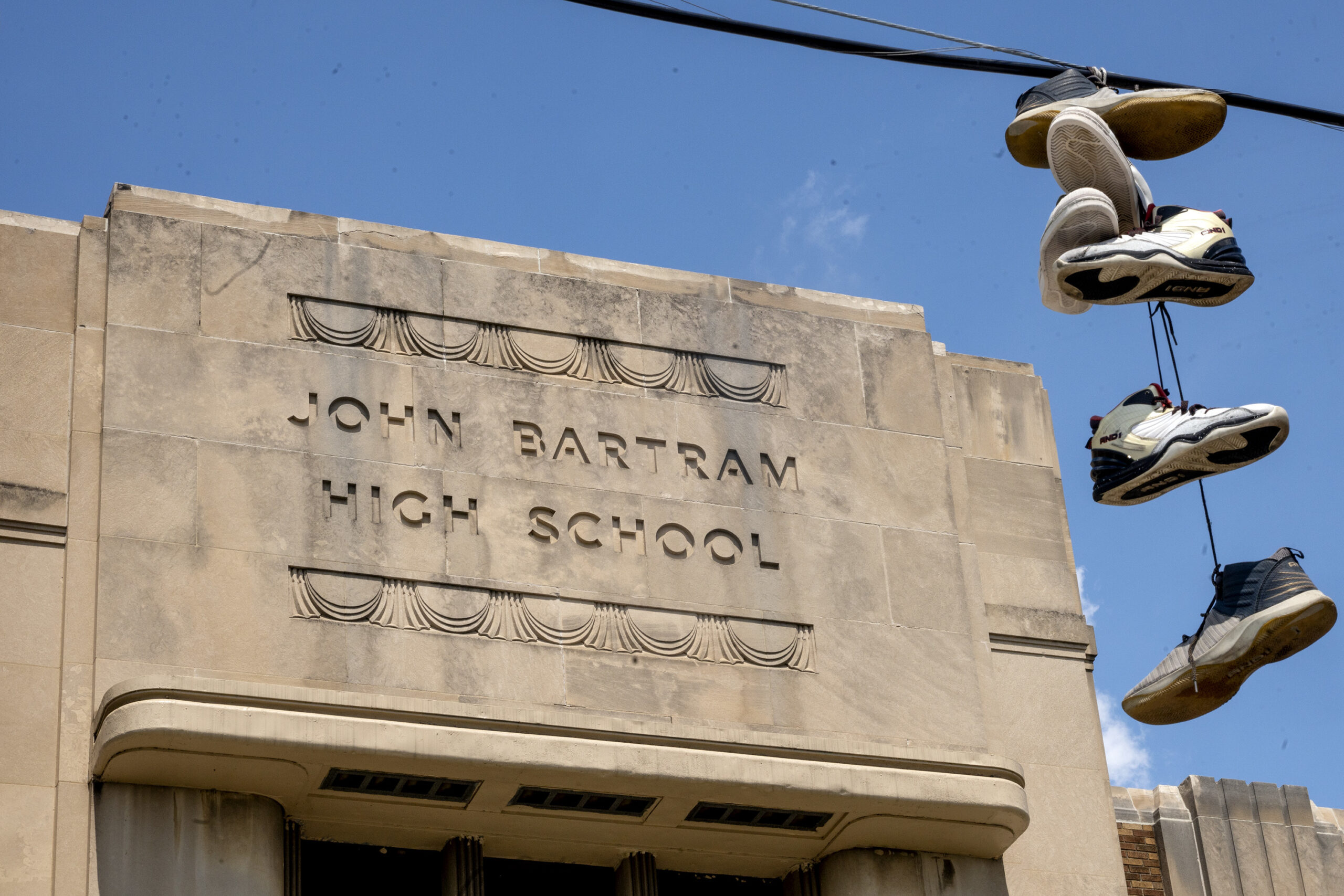
    John Bartram High School at 2401 S. 67th St in Southwest Philadelphia.

    Watlington has stressed that the point of the long-range facilities plan is not closing schools, but solving for issues of equity, improving academic programming, and acknowledging that many buildings are in poor shape, while some are underenrolled and some are overenrolled.

    “This plan is about ensuring that more students in every neighborhood have access to the high-quality academics, programs, and facilities they deserve,” Watlington said in a statement. “While some of these decisions are difficult, they are grounded in deep community engagement and a shared commitment to improving outcomes for all public school children in every ZIP code of Philadelphia.”

    But at community meetings unfolding at schools across the city that are slated for closure, Council members have expressed displeasure about parts of the plan — a preview, perhaps, of Tuesday’s meeting.

    Councilmember Quetcy Lozada, represents the 7th District, including Kensington, Feltonville, Juniata Park, and Frankford. Four schools in her district — Stetson, Conwell, Harding, and Welsh — are on the chopping block.

    “The fact that they are being considered for closure is very concerning to me,” Lozada said at a meeting at Stetson Middle School on Thursday.
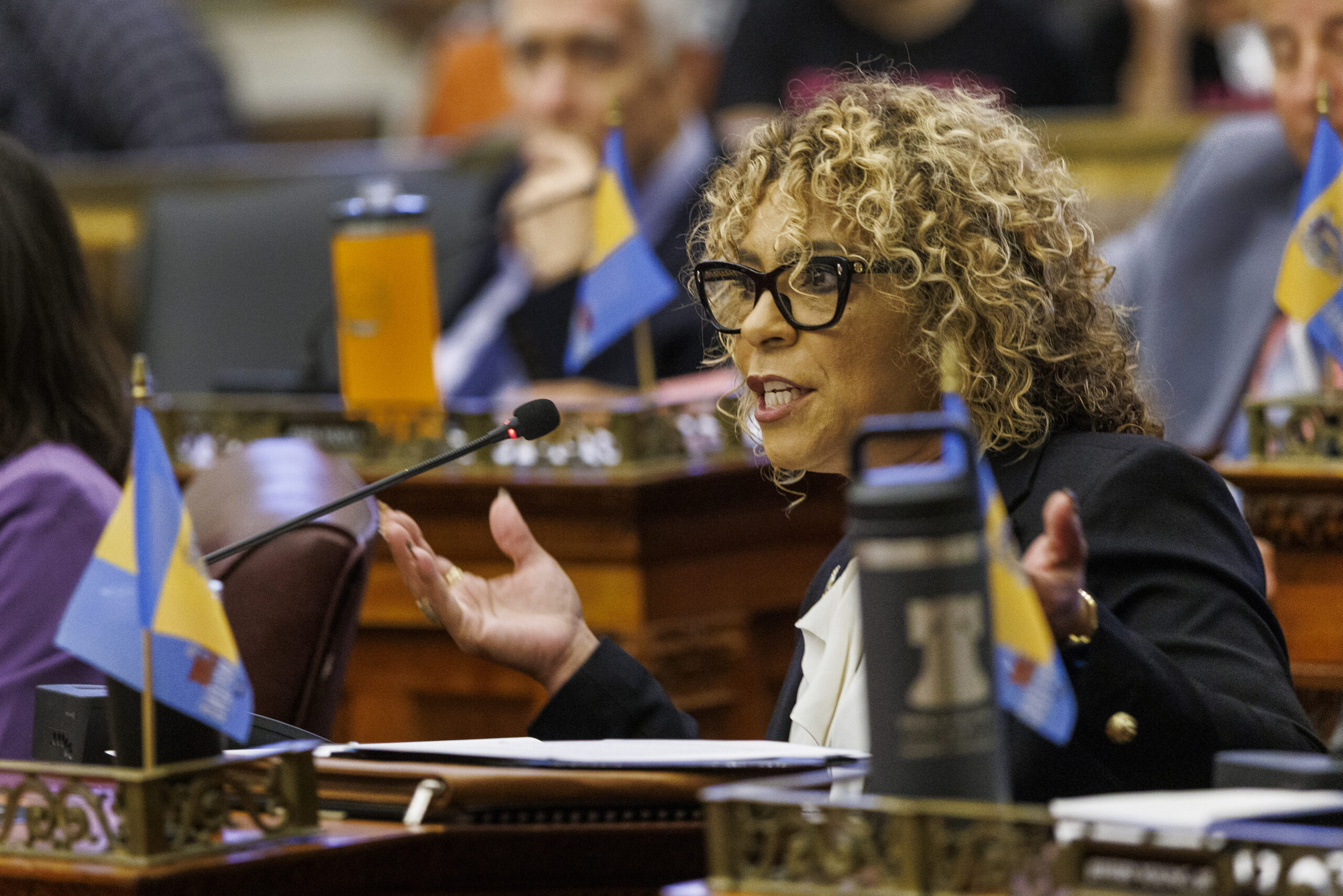
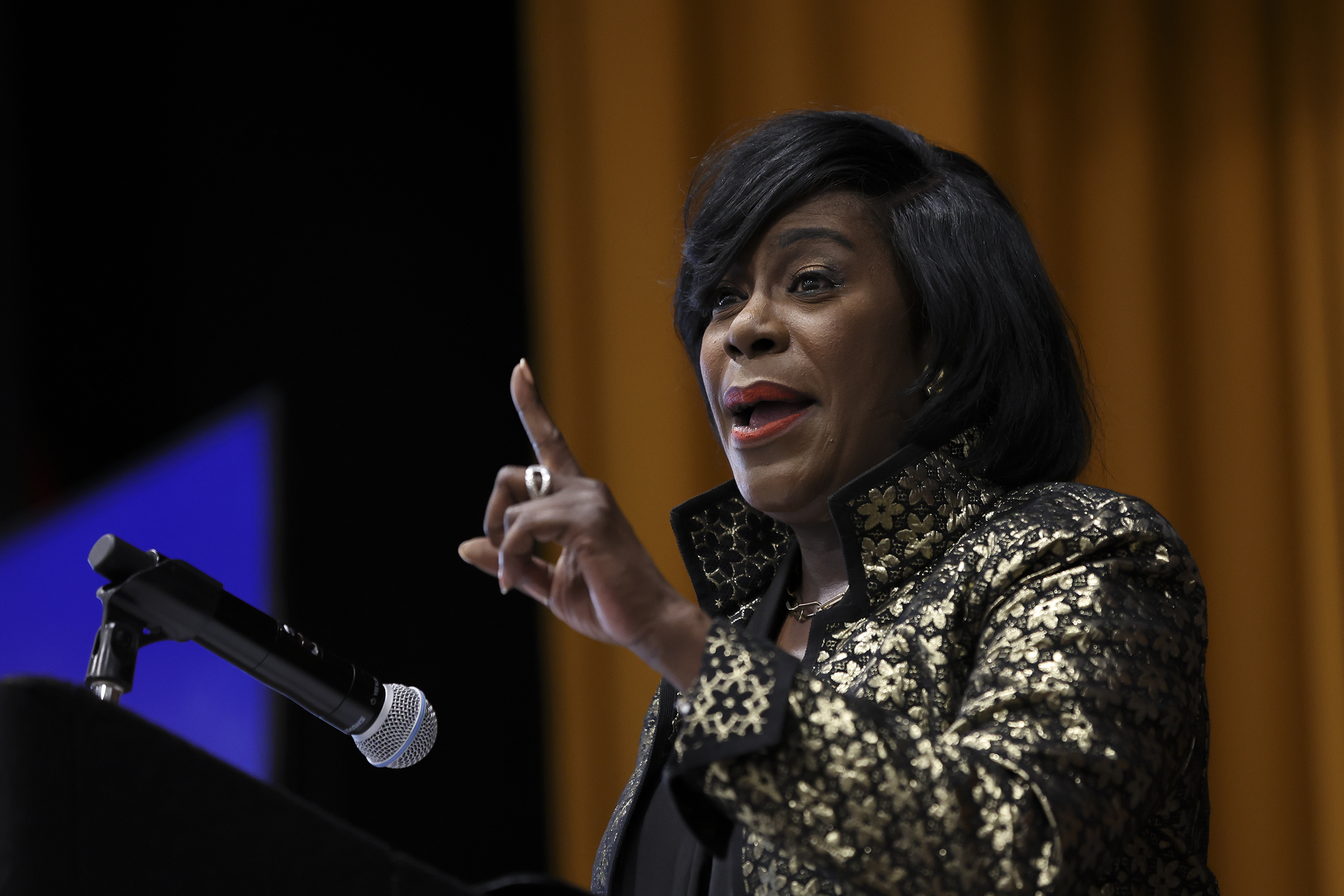
    Councilmember Quetcy Lozada is shown in a 2025 file photo.

    Councilmember Cindy Bass, speaking at a Lankenau High meeting, objected to closing schools that are working well. (Three schools in Bass’ 8th District, Fitler Elementary, Wagner middle school, and Parkway Northwest High School, are proposed for closure. Lankenau is in Curtis Jones Jr.’s district but has citywide enrollment.)

    “I do not understand what the logic and the rationale is that we are making these kinds of decisions,” said Bass.

    While Council members will not have a direct say on the proposed school closures or the facilities plan, Council wields significant control over the district’s budget. Funding for the district is included in the annual city budget that Council must approve by the end of June.

    Local revenue and city funding made up about 40% of the district’s budget this year, or nearly $2 billion. Most of that is the district’s share of city property taxes which, unlike other school systems in Pennsylvania, are levied by the city and then distributed to the district.

    (function() {
    var l2 = function() {
    new pym.Parent(‘schools_districts2’,
    ‘https://media.inquirer.com/storage/inquirer/projects/innovation/arcgis_iframe/schools_districts2.html’);
    };
    if (typeof(pym) === ‘undefined’) {
    var h = document.getElementsByTagName(‘head’)[0],
    s = document.createElement(‘script’);
    s.type = ‘text/javascript’;
    s.src = ‘https://pym.nprapps.org/pym.v1.min.js’;
    s.onload = l2;
    h.appendChild(s);
    } else {
    l2();
    }
    })();

    Where will the money go?

    Despite city and schools officials saying in the past that the district has more than $7 billion in unmet facilities needs, Watlington has said the district could complete its plan — including modernizing 159 schools — for $2.8 billion.

    Officials said further details about modernization projects and the facilities plan will be released before the Feb. 26 school board meeting, where Watlington is expected to formally present his proposal to the school board.
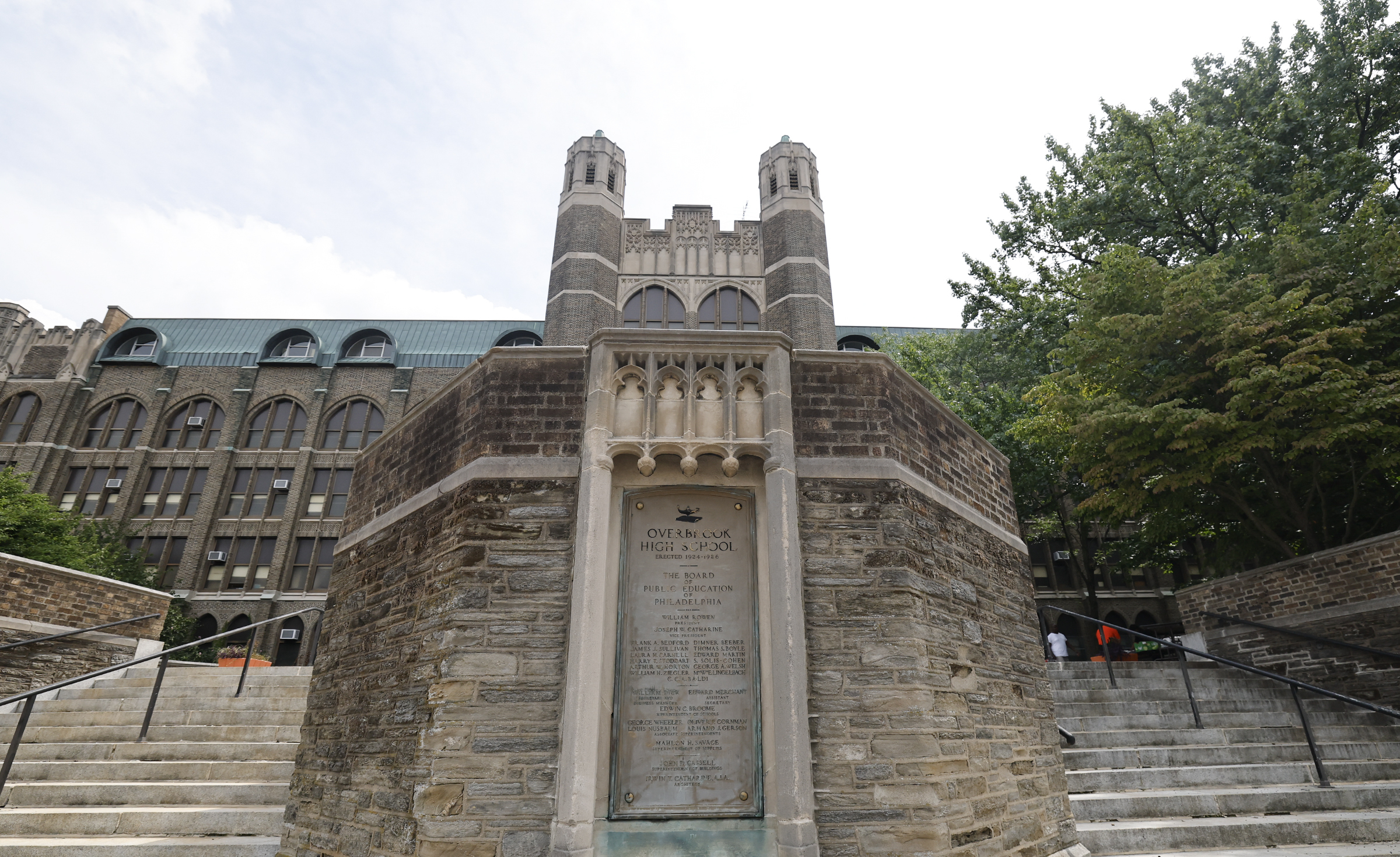
    Overbrook High School, in West Philadelphia, will get major renovations in preparation for The Workshop School, a small, project-based district school, colocating inside the building.

    Here are the total proposed dollar amounts per Council district and the 10 big projects announced Monday:

    • 1st District: $308,049,008. Key project: $57.2 million for South Philadelphia High, turning the school into a career and technical education hub and modernizing electrical, lighting, and security systems.
    • 2nd District: $302,284,081. Key project: $54.6 million for Bartram High, to renovate the school and grounds, career and technical education spaces, restroom and accessibility renovations, new painting, and new athletic fields and facilities (on the site of nearby Tilden Middle School, which is slated to close). Motivation High School would close and become an honors program inside Bartram.
    • 3rd District: $204,947,677. Key project: $19.6 million for the Sulzberger site, which currently houses Middle Years Alternative and is proposed to house Martha Washington Elementary. (It currently houses MYA and Parkway West, which would close.) Improvements would include heating and cooling and electrical systems, classroom modernizations, and the addition of an elevator and a playground.
    • 4th District: $216,819,480. Key project: $50.2 million for Overbrook High School, with updates including new restrooms, accessibility improvements, and refurbished automotive bays. (The Workshop School, another district high school, is colocating inside the building.)
    • 5th District: $290,748,937. Key project: $8.4 million for Franklin Learning Center, with updates including for exterior, auditorium, and restroom renovations, security cameras, accessibility improvements, and new paint.
    • 6th District: $55,769,008. Key project: $27.2 million for Forrest Elementary, including modernizations that will allow the school to grow to a K-8, and eliminate overcrowding at Northeast Community Propel Academy.
    • 7th District: $388,795,327. Key project: $32.3 million at John Marshall Elementary in Frankford to add capacity at the school, plus a gym, elevator, and schoolwide renovations.
    • 8th District: $318,986,215. Key project: $42.9 million at Martin Luther King High in East Germantown for electrical and general building upgrades and accommodations for Building 21, a school that will colocate inside the King building.
    • 9th District: $442,934,244. Key project: $42.2 million at Carnell Elementary for projects including an addition to expand the school’s capacity, restroom renovations, exterior improvements, and stormwater management projects.
    • 10th District: $275,829,539. Key project: at Watson Comly Elementary in the Northeast, an addition to accommodate middle grade students from Loesche and Comly, and building modernizations. District officials did not give the estimated cost of the Comly project.

    What’s next?

    The facilities Council hearing is scheduled for 10 a.m. Tuesday at City Hall. It will also be livestreamed.

    Members of the public also have the opportunity to weigh in on the facilities plan writ large at three community town halls scheduled for this week: Tuesday at Benjamin Franklin High from 4:30 to 6:30 p.m., Friday at Kensington CAPA from 4:30 to 6:30 p.m., and a virtual meeting scheduled for 2 p.m. on Sunday.

    Meetings at each of the schools proposed for closure continue this week, also; the full schedule can be found on the district’s website.
  • The Philly School District tried to close Paul Robeson HS before. Now, it’s back on the chopping block.

    The Philly School District tried to close Paul Robeson HS before. Now, it’s back on the chopping block.

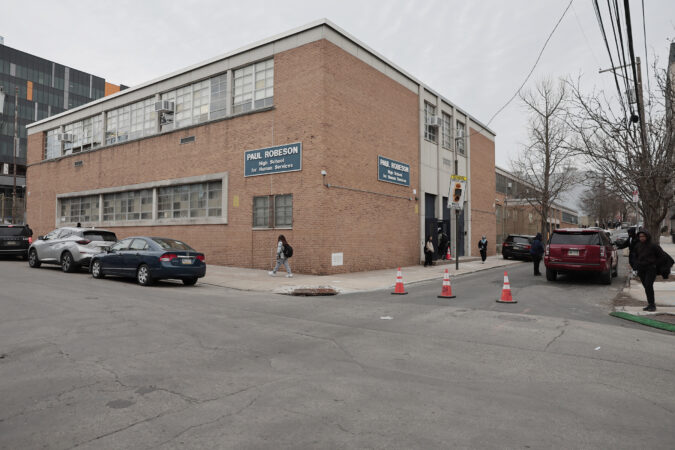
    In 2022, the governor of Pennsylvania stood on a stage at Paul Robeson High in West Philadelphia and hailed the small school as “a model for what can happen in Pennsylvania.

    But four years later, the Philadelphia School District has recommended closing Robeson, suggesting its small size limited students’ opportunities. Superintendent Tony B. Watlington Sr. wants its students to attend Sayre High, where Robeson would become an honors program, losing its separate identity, administration, and staff.

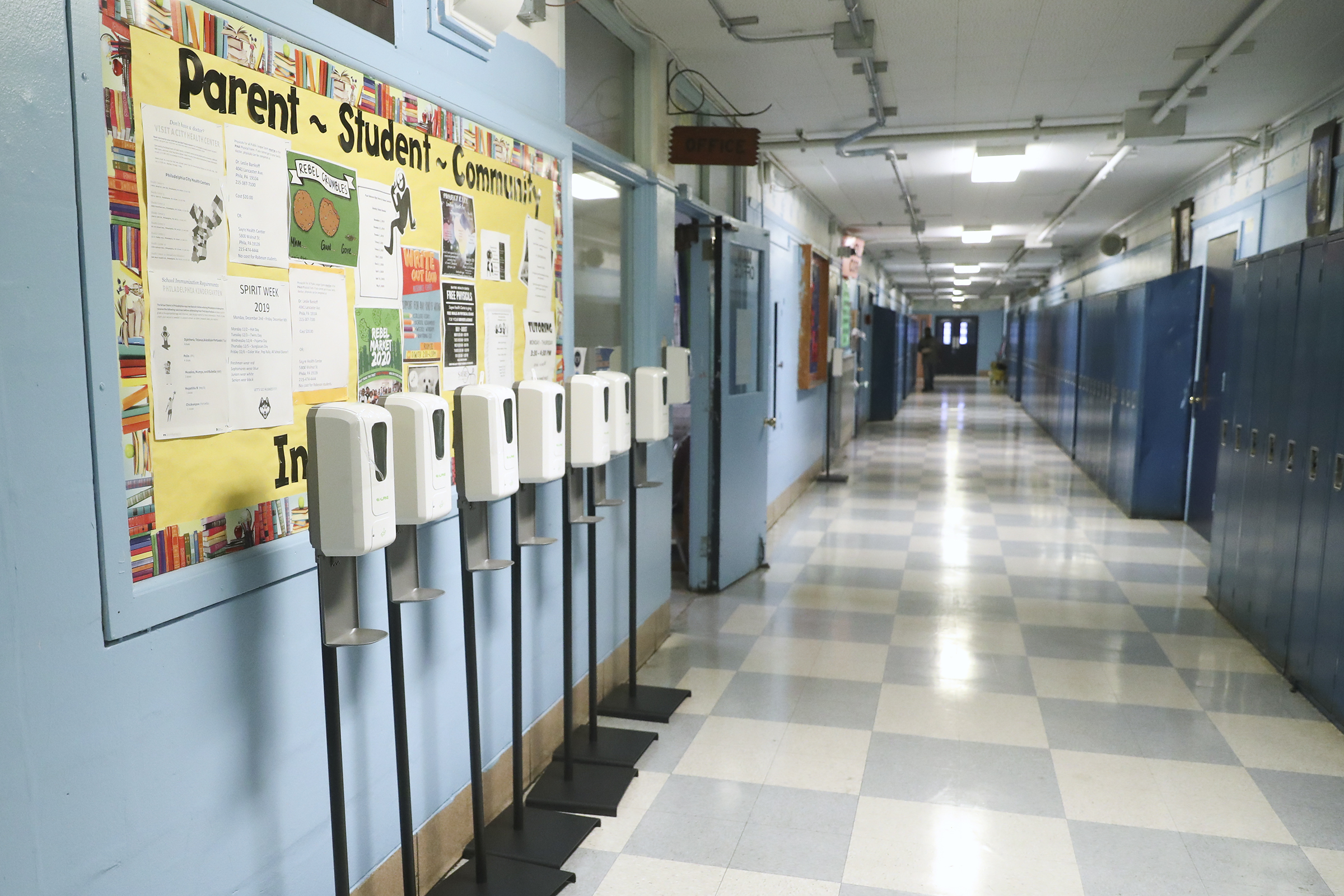
    A hallway at Paul Robeson High School, which the district is attempting to close for the second time.

    Having Robeson listed among 20 schools slated for closure was the worst kind of déjà vu for some in the Robeson community: In the last round of large-scale Philadelphia school closures, district officials recommended closing Robeson and sending students to Sayre, which is about two miles away.

    “This is the exact same plan,” said Andrew Saltz, who helped organize the Robeson community against closure in 2013 and who is doing it again 13 years later. “We need a different plan.”

    The community is speaking out, hoping to persuade the school board to save Robeson again when it votes on Watlington’s recommendations later this winter.

    An upward trajectory

    Robeson soared after successfully fending off its last attempted shutdown.

    By 2017, it was named the district’s most-improved high school. It built upon its core of dedicated teachers and students; though most Robeson students come from its own West Philadelphia neighborhood, it is a citywide school, meaning they have to apply to be there.

    Robeson expanded existing partnerships and formed new ones that gave students opportunities to get onto nearby college campuses. Richard Gordon, who came to lead the school in 2013, was recognized as national principal of the year. (Gordon has since been promoted to assistant superintendent in the district.)

    Multiple Robeson teachers have been honored as among the district’s best.

    The school sent a student to Harvard, a coup for any district high school, let alone one without strict academic criteria. Its students successfully pushed to get their school air-conditioned. School staff secured outside funding to renovate the cafeteria.

    Then-Principal Richard Gordon (front, tie), then-assistant principal Lawrence King (rear, gray sweater) and members of the Robeson High student body in the newly renovated cafeteria in this 2022 file photo.

    Then-Mayor Jim Kenney visited Robeson to tout its success. So did then-Gov. Tom Wolf.

    Elana Evans, a beloved Robeson teacher and the school’s special education compliance monitor, has already weathered one school shutdown — she taught at the old University City High School, closed in 2013

    That loss was brutal, Evans said. But she is proud of what the community has built at Robeson.

    “It’s an amazing story that continues to stay amazing because we still keep growing,” Evans said. “To say, ‘OK, you’re going to merge with this school, and your name is just going to fade to nothing,’ is, to me, disrespectful.”

    District officials are pitching Robeson’s closure — and the closings writ large — as a move to expand opportunities for all students.

    Sayre, with Robeson as a part of it, would get modernized career and technical rooms and equipment in the facilities plan, Sarah Galbally, Watlington’s chief of staff, told the Robeson community. Sayre would get more accessibility features; renovated stormwater management, roof, and restrooms; and new paint.

    But that didn’t convince Evans.

    “You say one thing, ‘This is how it’s going to look like,’ but for real for real, stop gaslighting me,” Evans said.

    ‘They needed something small’

    Samantha Bromfield homeschooled her twins for seven years, and was wary when she enrolled her children in public school — until Robeson made her believe.

    The move to shut the school frustrated and saddened her, Bromfield said. She and many other Robeson parents said they would not send their children to Sayre.

    “If you as a board choose to close Paul Robeson, I choose to pull my children from the public school system,” Bromfield said at meeting held at Robeson on Saturday. “They needed something small. They needed a family. They needed someone who could hold their arms around the children and say, ‘Hey, are you having a bad day?’”

    Multiple parents echoed Bromfield’s statements.

    The district is choosing to invest in some schools but not others under the facilities proposal, they said.

    Cassidy got a new school, why not us?” one parent told district officials, referring to a $62.1 million new building for a West Philadelphia elementary school.

    ‘Y’all don’t know’

    Ahrianna DeLoach, a Robeson ninth grader, struggled in middle school but is soaring at Robeson, she said, because of the nature of a place where teachers know every student’s name.

    “I don’t want it to close down,” DeLoach said. “I was looking forward to graduating from this school. It would devastate me if I couldn’t.”

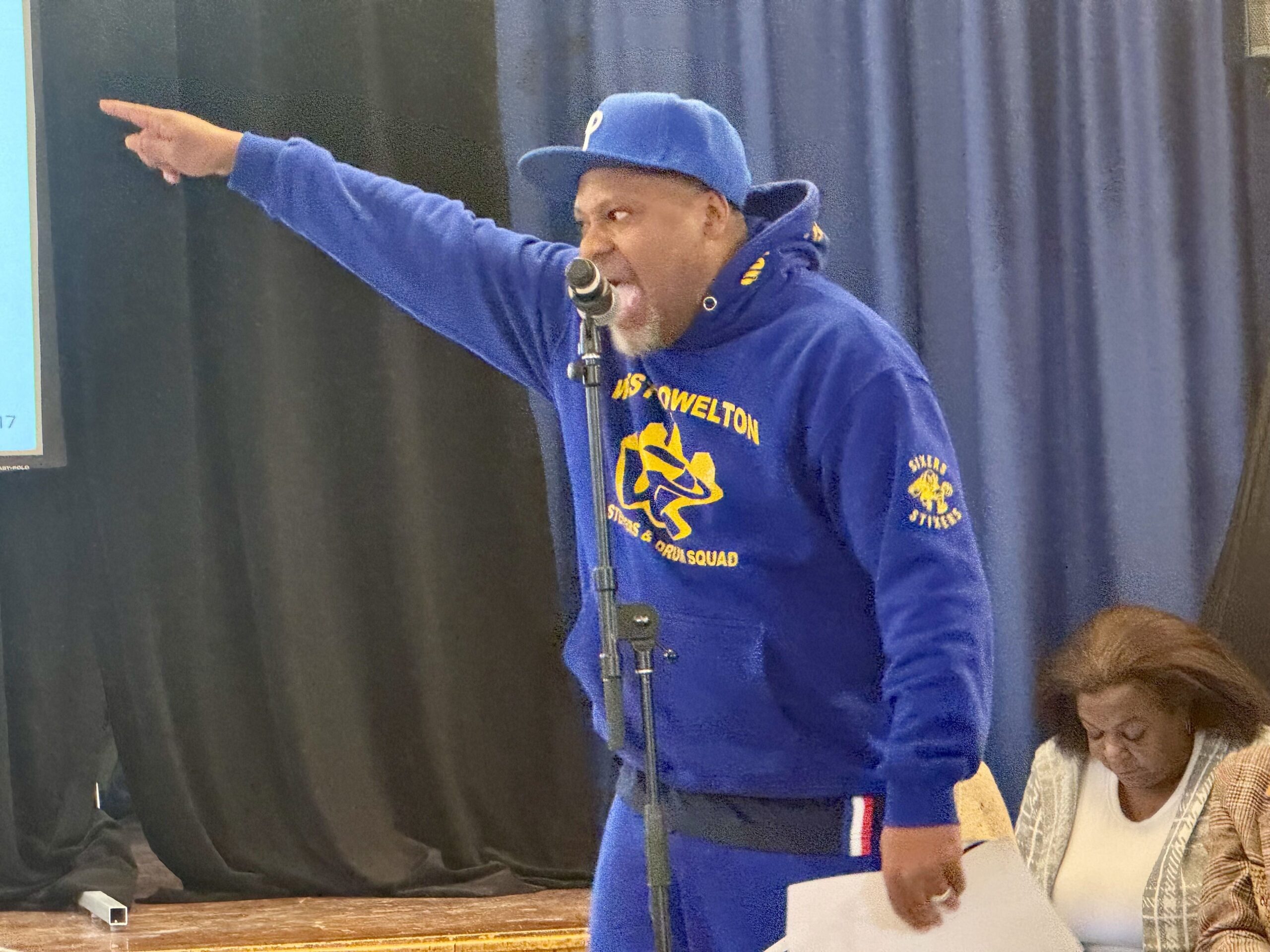
    Antoine Mapp Sr., a West Philadelphia resident, expresses frustration that the Philadelphia School District is attempting to close Paul Robeson High School. Mapp spoke at a district meeting on the subject.

    West Philadelphia resident Antoine Mapp Sr. graduated from University City High, but has been spending time at Robeson since he was 11. Mapp’s West Powelton Steppers and Drum Squad rehearses inside the Robeson gymnasium.

    It feels especially cruel to lose Robeson as gentrification creeps in, Mapp said, and with gun violence still plaguing Philadelphia. He worries about the routes children would have to take to get to Sayre, and about neighborhood rivalries.

    “You guys don’t understand what it’s like living in the community or our neighborhood, or what we go through,” Mapp said. “Y’all don’t know how hard it is just to go to the store in our community. Y’all don’t know what it’s like trying to go to an activity in our neighborhood. We have none of those things. Now you want to take this school away from us and send our kids to different communities. I want you to know that the crime rate and the murders are going to increase and there’s nothing y’all can do about it.”

  • There was possible measles exposure at Philadelphia International Airport last week

    There was possible measles exposure at Philadelphia International Airport last week

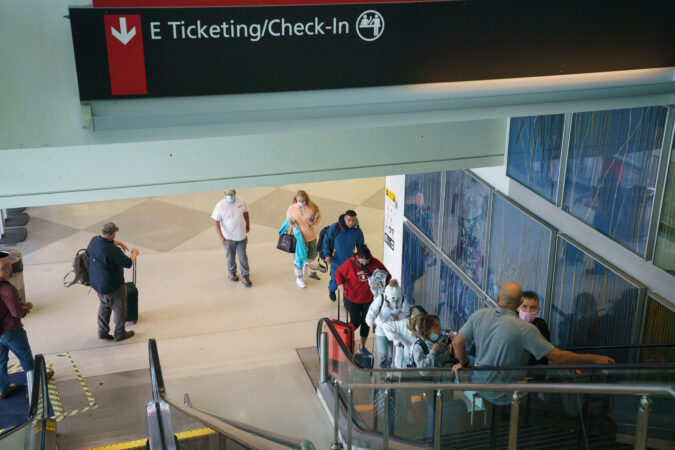
    A person infected with measles traveled through Philadelphia International Airport last week, city health officials are warning.

    The infected person spent time in Terminal E of the airport between 1:35 and 4:30 p.m. Thursday.

    Measles is highly contagious and spreads via airborne particles when an infected person coughs, sneezes, or talks. The virus can linger in the air for up to two hours after the infected person moves.

    Palak Raval-Nelson, Philadelphia’s health commissioner, said he believed there was no threat to the general public, but encouraged those who are not protected against measles to take action.

    Children under a year old, pregnant people without immunity, and those with a weakened immune system who were exposed and who develop symptoms through March 5 should call their doctor immediately. They’re also asked to call their local health department and Philadelphia’s Health Department if they live outside the city.

    Symptoms of the disease are fever, runny nose, cough, and watery, red eyes — as well as a rash.

    Those who have immunity do not need to do anything. Those with immunity include people born before 1957, those who have already had measles, and those who have received two doses of the measles, mumps, and rubella vaccine.

    Measles, in some cases, can lead to pneumonia, brain infection, and death, health officials say.

    Measles cases are on the rise both internationally and throughout the United States. There’s a large outbreak currently in South Carolina.

  • This Pa. 6-year-old is the Girl Scout Cookie queen — she just sold 100,000 boxes

    This Pa. 6-year-old is the Girl Scout Cookie queen — she just sold 100,000 boxes

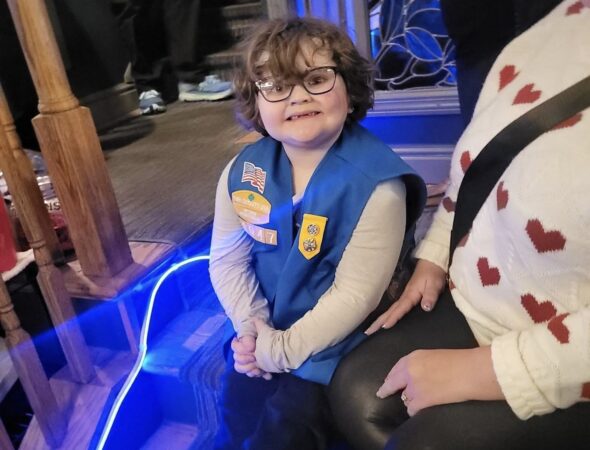
    Pim Neill, 6, means business.

    “I want to sell the most Girl Scout cookies,” Pim told her dad, Luke Anorak-Neill early in the cookie-selling season.

    Pim, a firecracker in blue glasses, likes a challenge, and her dad was game to help her try. So he took her to knock on doors in their Pittsburgh neighborhood. They handed out fliers and made phone calls. They asked around at church and at local businesses they frequent.

    “If people are going to buy cookies, we want them to know that Pimmy’s selling them,” Anorak-Neill said.

    By dint of hard work, Pim hit 5,000 boxes a few weeks ago. Anorak-Neill asked her what her ultimate goal was: she said 10,000.

    @lifeofapim

    ♬ original sound – Luke Mandel Anorak-N

    Anorak-Neill shot a quick video of his daughter talking about her goal and uploaded it to TikTok. Social media could only help the cause, he figured.

    “Hi, my name is Pim. Do you want to buy some Girl Scout cookies?” the pint-size entrepreneur said.

    The video went viral — it’s been viewed more than 5 million times. And Pim’s sales soared.

    First, she crushed the single-season sales record. Her new aim is to overtake the lifetime record – 180,000 boxes. (She’s got about a month left.)

    On Sunday, moments after she passed the 100,000 boxes mark, Pim was nonchalant.

    Why does she like selling cookies?

    “It makes people happy,” said Pim.

    A record breaker from way back

    Pim “has always been a record breaker,” said Anorak-Neill.

    She was a Top 10 reader at age 4, and loved selling popcorn for her school last year and collecting gifts for a local toy drive.

    Girl Scout cookies seemed like a natural fit, though Pim and her dads had a bit of a rough start. The first troop Anorak-Neill approached for Pim rejected her because of her disabilities, Anorak-Neill said.

    “They said, ‘We don’t want that in our troop,’” said Anorak-Neill. “They said, ‘Go find a playgroup for disabled kids.’”

    Pim didn’t realize what happened, but Anorak-Neill was disheartened. But he forged on, and found a brand-new troop of Daisy Scouts — the youngest Girl Scouts — that welcomed Pim.

    Her cookie-selling prowess has changed the game for the troop, whose initial goal was maybe being able to go on some camping trips. (Individual sales count, but Pim’s sales help her troop, too.) A trip to Niagara Falls — a prize for serious cookie sellers — went from being a lofty goal to being a lock.

    At a recent troop meeting, the grown-ups noted that Pim and the other girls never needed to sell another box if they wanted to stop.

    “But everybody wants to still do cookie booths and fundraise,” said Anorak-Neill. “This is fun for everybody. It’s a win for Girl Scouts.”

    Unstoppable Pim

    The online love for Pim has buoyed the family: Pim, Anorak-Neill, and his partner, Don Neill. Neill has had serious health challenges and is awaiting a double lung transplant, Anorak-Neill said.

    Pim’s fans adore her.

    “SHE IS 6 and 86 AT THE SAME TIME. OH MY GOD I LOVE HER SO MUCH,” someone commented on TikTok.

    “Pim gonna sell the most cookies in the history of the Girl Scouts,” another person wrote.

    “pim girl don’t worry I just brought 6 boxes,” said another.

    Anorak-Neill described the global love for Pim — and appreciation for her sales savvy — as “life changing.”

    But while the scope of Pim’s reach has been a surprise, her appeal is not, her dad said.

    “Pim’s unstoppable,” he said.

  • Students and parents — joined by the Pa. House speaker — are fighting a plan to close Southwest Philly’s Motivation High

    Students and parents — joined by the Pa. House speaker — are fighting a plan to close Southwest Philly’s Motivation High

    Confronted with the possible closure of their beloved school, the Motivation High community came prepared to fight back.

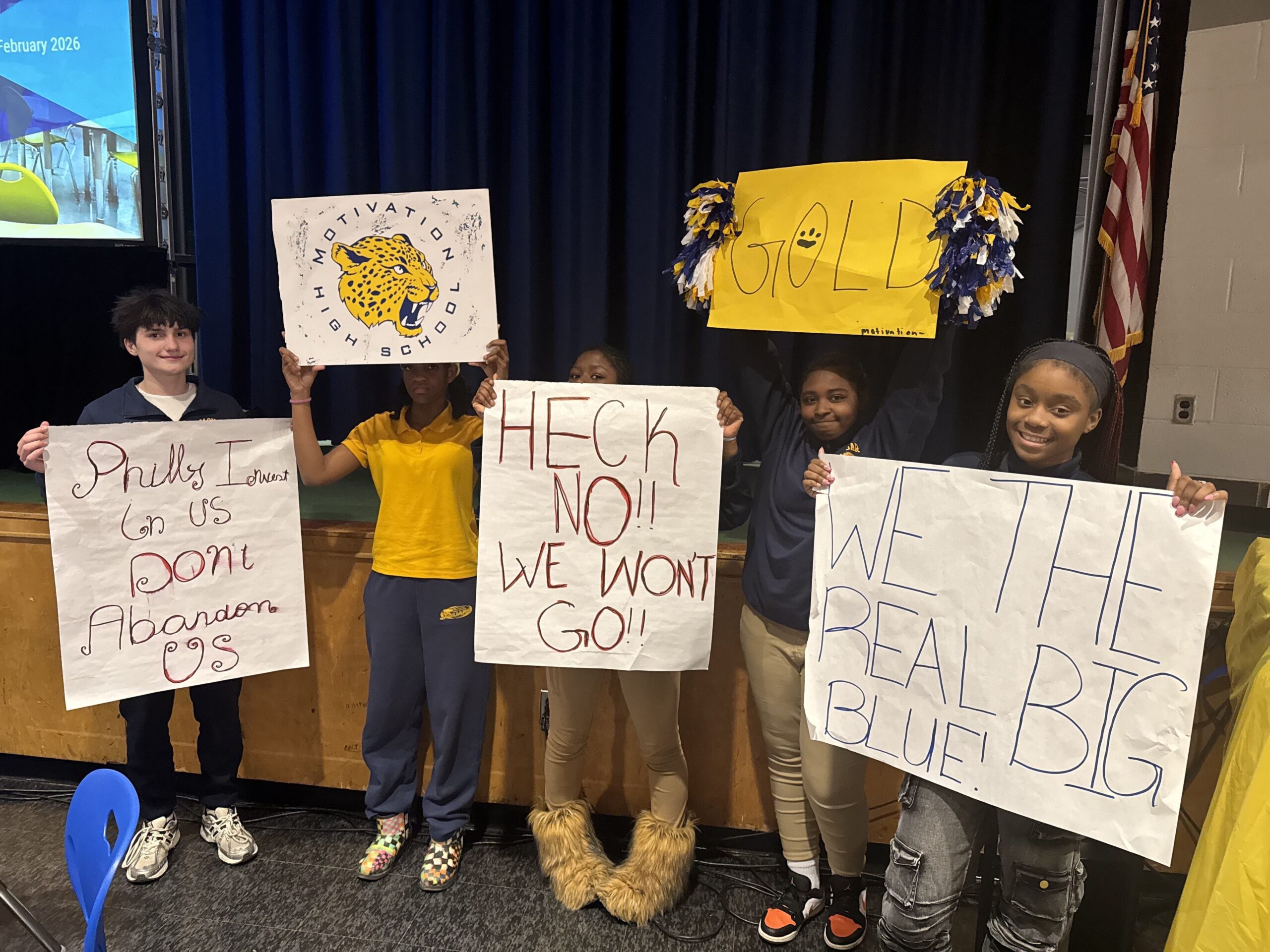
    As community members entered their Southwest Philadelphia school’s auditorium Wednesday night, students waving signs and carrying blue-and-yellow pompoms handed out leaflets: on one side were Motivation’s stats — building condition, graduation rate, attendance, suspensions.

    On the other were stats for Bartram High, the school they would be assigned to attend if their school closes in 2027, as proposed under the Philadelphia School District facilities plan. The data for Motivation, a magnet, are stronger across the board, sometimes starkly so — Bartram is a neighborhood school with no admissions criteria, and its attendance and graduation rates are lower, and its suspensions higher.

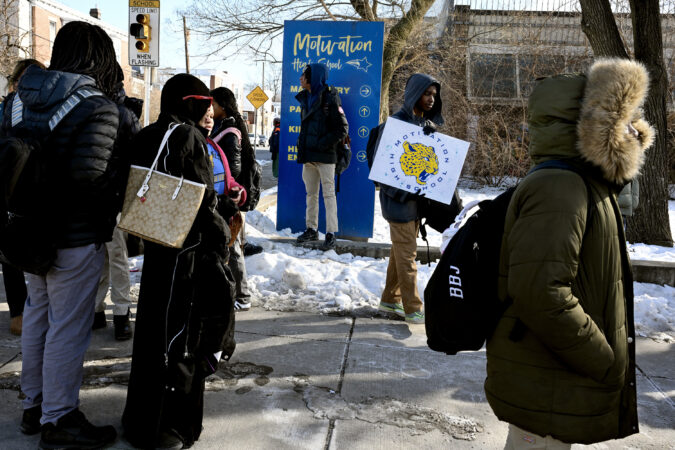
    Motivation High students hold signs they made to protest the Philadelphia School District’s planned closure of their school.

    Motivation has only 150 students enrolled this year. The school system cited low enrollment as one reason for the closure. But district officials have been clear: The recommendation was also driven by a desire to reinvigorate struggling neighborhood high schools.

    “Why are we put in with Bartram to make Bartram look good, when we stand out on our own?” one Motivation student asked district staff pointedly.

    The opposition from the Motivation community lays bare an issue at the crux of the school system’s plan: To reach its stated goal of advancing all students, the district says it must displace some. Often, that has pitted communities against one another.

    Residents in a restless crowd at Motivation on Wednesday, including one of the state’s most powerful politicians, Pennsylvania House Speaker Joanna McClinton (D., Philadelphia), said they were not having it.

    “It’s like you want us to water flowers that just weren’t growing from the beginning,” one parent told officials. “You want to uproot kids who have found their place. You can count my child right out of that plan. She ain’t going to Bartram.”

    ‘It’s the lottery system’

    Motivation began as a Bartram program, housed in a separate building, for academically talented students. But in 2004, Motivation became its own school, eventually moving to the former Turner Middle School building at 59th and Baltimore.

    Motivation thrived as the only criteria-based high school in Southwest Philadelphia. But like a number of smaller magnets, it was hit hard by 2021 changes to the district’s special admissions policy.

    The district that year moved to a centralized lottery system, taking away from principals any discretion over who got admitted to the schools. It said it did so for equity reasons and to solve for demographic mismatches at some schools — though Motivation’s student body had been representative of its neighborhood and the city as a whole.

    In the past, schools like Motivation filled most of their ninth-grade classes with students who met the district-set criteria, and also admitted students who were close but came with a strong recommendation from another school, or had compelling personal circumstances that explained why they missed meeting the magnet standards.

    Those extra admissions ended with the district policy change, and Motivation’s enrollment plummeted. It was never a huge school, by design — topping out at 400 students prior to the pandemic.

    It doesn’t seem fair, said Nehemiah Bumpers, a Motivation 10th grader.

    “Why are you guys moving us for having low enrollment scores?” Bumpers said. “It’s the lottery system that drastically changed our enrollment.”

    McClinton, who attended the Wednesday meeting, was similarly frustrated.

    “When you talk about the enrollment being diminished, it’s because you changed the playbook for principal Teli,” McClinton said of veteran Motivation principal Rennu Teli-Johnson, whom the House speaker praised.

    “She knows every one of these kids,” said McClinton, whose House district includes both Motivation and Bartram.

    Motivation students walk out

    The school board has yet to vote on the proposal to close Motivation and 19 other schools. But the possible closure has roiled the student body.

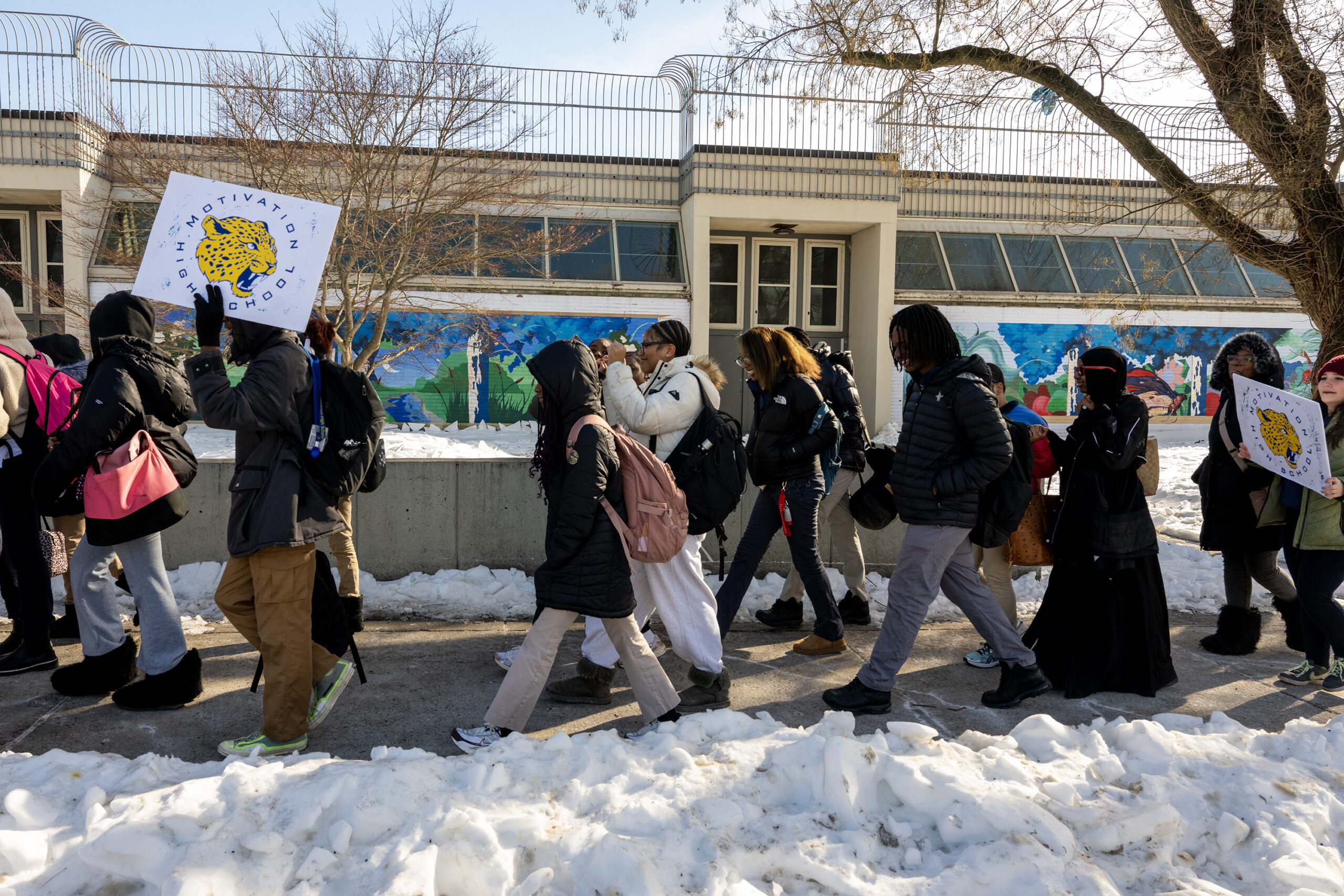
    This week, most Motivation students walked out of school, staging a protest over the district’s plan.

    Students walk out of Motivation High School in Southwest Philadelphia on Monday, protesting that their school is one of 20 that the Philadelphia School District has tagged for closure.

    Zanaya Johnson-Green, an 11th grader, said students were beside themselves, even those who will graduate before the school is planned to be folded into Bartram in the fall of 2027.

    “Motivation has given me so many opportunities, and I don’t want to see it go,” Johnson-Green said. “No one wants the school to close. This is having a bad effect on all of us.”

    The district has, in recent years, invested millions in sprucing up the Motivation building, which if the school does close would become district “swing space” — a place where schools can move to accommodate building repairs or other overflow needs.

    “Why spend all that money just to push us into Bartram and use this school as a swing space?” Bumpers asked.

    Motivation High School in Southwest Philadelphia, on Baltimore Avenue in Southwest Philadelphia, is shown in this 2025 file photo.

    But much of the energy at the meeting was spent talking about the safety at Bartram — with parents and students pressing the district on how they could guarantee staff and student welfare, and district officials saying they would use a planning year and community wisdom to address concerns.

    “Disaster!” someone in the audience shouted when Associate Superintendent Tomás Hanna talked about his hope that those with worries would step up to the plate to help plan for a Bartram transition.

    A Motivation student shook her head.

    “Why do we have to reap what you sow when you stopped paying attention to neighborhood schools all those years? Why do we have to suffer the consequences, lose opportunities?” the student said.

    Monica Allison, a Cobbs Creek neighbor and ward leader, made it clear that though she was fighting against the Bartram closure, wounds inflicted from prior school closures, dating back to John P. Turner Middle School and George Wharton Pepper Middle School, were also on people’s minds.

    “You closed John P. Turner and you didn’t ask us,” Allison said. “Now we’re back with another closure. It’s ridiculous. You keep talking about elevating Bartram at the expense of other kids. The neighbors are really tired of this.”

    The speaker speaks out

    John Young, a Motivation teacher for the last decade, said his students were living their civics lesson by protesting the district’s plan. The district is in a tough spot, he said — coping with the fallout of charter schools that took students from traditional public schools, dealing with its own decision to create greater high school choice.

    But, Young said, “this decision is going to continue that trend of pushing our students to homeschool, pushing our students to charter schools. This decision is not going to solve the problem, it is going to hollow us out.”

    Pa. House Speaker Joanna McClinton blasted the Philadelphia School District at a public meeting Wednesday night, saying its officials had disadvantaged Motivation High by changing rules around special admissions, then used low enrollment as one reason to close the school.

    A visibly upset McClinton spoke last on Wednesday night. The district must invest in both schools, she said — not just one.

    The district officials she addressed all had good jobs, McClinton emphasized. They could afford to send their children to whatever kind of school they felt was best for them. Southwest Philadelphia parents might not be wealthy, but they deserve to make choices, too, the speaker said.

    “It’s not fair that you’re pitting Black children in Bartram against Black children in Motivation,” McClinton said. “Not one of your children go to Motivation or Bartram. I don’t get millions of dollars in Harrisburg for you to waste it away to make this a swing space.”

  • This beloved Kensington middle school just celebrated its 100th year. It may not be open much longer.

    This beloved Kensington middle school just celebrated its 100th year. It may not be open much longer.

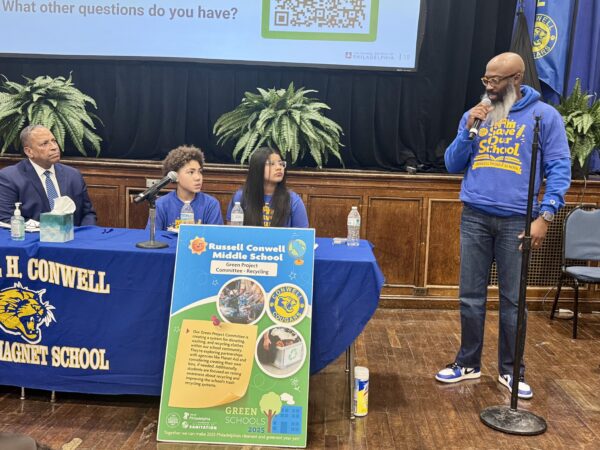
    Russell H. Conwell Middle School celebrates its 100th anniversary this year.

    It may not remain open to see many more.

    The Philadelphia School District has proposed closing Conwell and 19 other schools as part of its facilities planning process, which will shake up schools citywide.

    A student-made sign hangs in the Conwell Middle School auditorium. The Philadelphia School District is attempting to close Conwell, a magnet 5-8 school in Kensington, and 19 other schools. The community is fighting the closure.

    Conwell, in Kensington, is a very small school by any standard. This year, just 109 students are enrolled in a building that holds 500. That’s down from 490 students in the 2015-16 school year and 806 in 2009-10. The school used to occupy two buildings; it has since shrunk to one.

    But it is also a rarity — a standalone magnet middle school. Community members and local officials are mounting a fight against closing the school, which they say has committed teachers and staff members who help students excel against the odds.

    The district’s plan, which the school board is expected to vote on this winter, calls for Conwell students to move to AMY at James Martin, another citywide admissions magnet in Port Richmond, which just opened in a new building with only 200 students. Meanwhile, the district has proposed closing its only other free-standing magnet middle school, AMY Northwest. No changes have been proposed for Philadelphia’s four other magnet middle schools, all of which are attached to high schools.

    Neighborhood issues, enrollment declines

    Conwell’s enrollment issues are tied closely to its setting.

    The building sits on Clearfield Street in the heart of Kensington. Fewer and fewer parents have been choosing to send their kids into ground zero of the city’s opioid epidemic, despite Conwell’s myriad partnerships, the outside investments it has attracted into its facility in recent years, and the school’s long history of excellence.

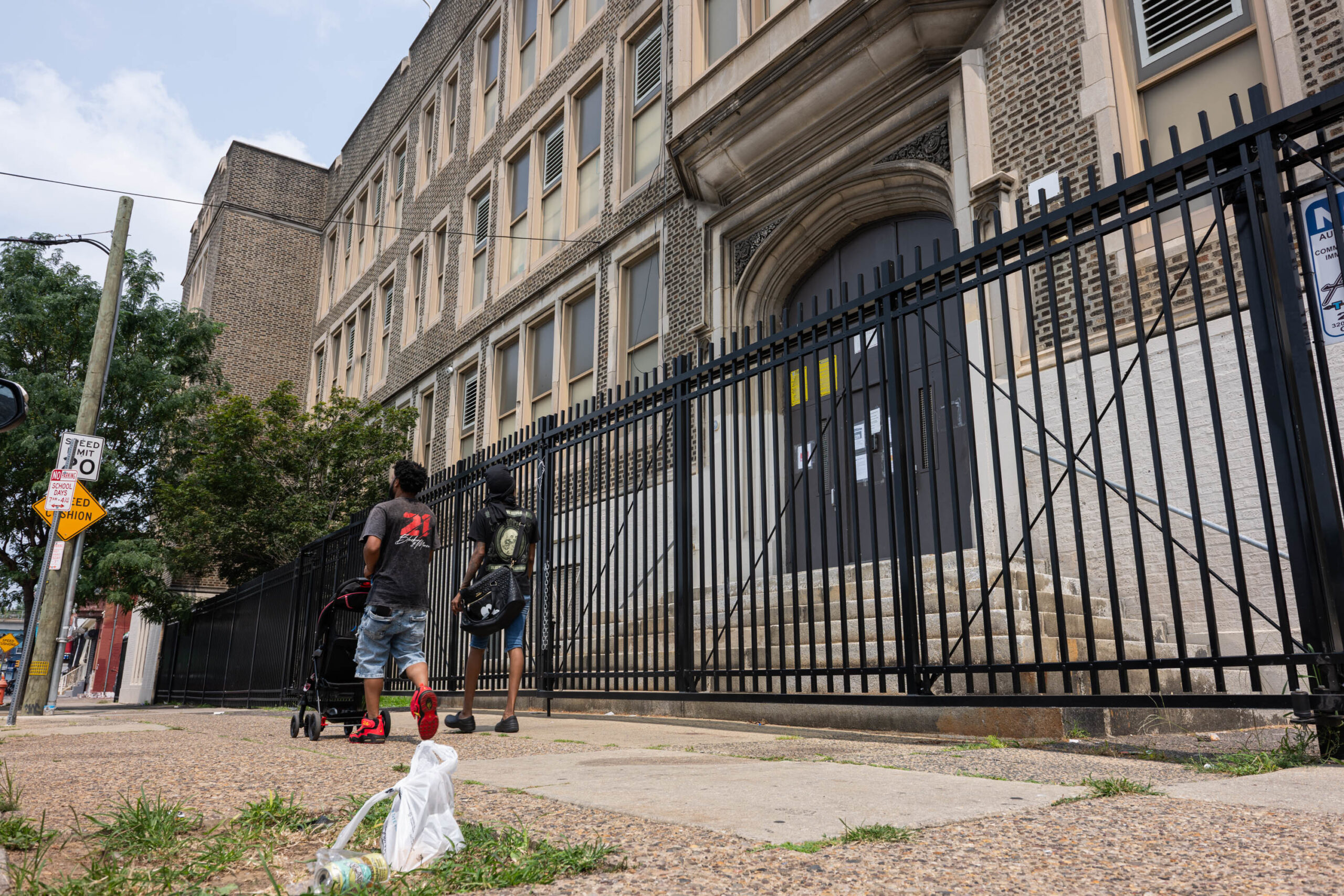
    The exterior of Conwell Middle School in Kensington, photographed in August.

    Parents, neighbors, students, and politicians, however, are furious that the district is choosing to abandon Conwell and the neighborhood.

    “If this school closes, it won’t just be students who feel the loss,” Conwell student Nicolas Zeno told officials at a district meeting Thursday. “It’ll be the community. If the concern is safety, then invest. If the concern is environment, then repair.”

    Community member Vaughn Tinsley, who runs Founding Fatherz, a nonprofit mentoring group, suggested closing Conwell would harm its students.

    “These students have been victims,” Tinsley said. “These students have seen and witnessed things they shouldn’t have witnessed. Most adults haven’t seen some of the things that these kids have seen, and yet still they come here, yet they’re still committed to excellence, yet they still stand up and still do what they’re supposed to do in the classroom. How dare we take that away from them?”

    Watlington has proposed using Conwell as “swing space” — district property that other schools can move into temporarily if their buildings require repairs.

    Tosin Efunnuga, Conwell’s nurse, wiped tears from her eyes as she beseeched district officials to keep the school open.

    “To have those doors close would be such a disservice,” Efunnuga said. “We need 100 years more.”

    Councilmember Quetcy Lozada, whose district includes Conwell, said she was “angry” and “frustrated” by the recommendation to close the school.

    “It’s underutilized because of what’s happening on the outside,” Lozada said at the Conwell meeting. “There’s nothing wrong with what is happening on the inside other than successful academic learning, support for families. We are saying to these families, we are punishing them because as a city, we can’t respond to the public safety issues that we have on the outside, and that is just not fair.”

    ‘What are y’all doing?’

    Emotions ran high inside the Conwell auditorium last week.

    Even before Deputy Superintendent Oz Hill finished his presentation about the rationale for the closures and the specific plan for Conwell, parents burst out with concerns.

    “What are y’all doing? Y’all making a mess,” one parent shouted. “You say the building is old. So what? It’s clean in here.”

    Another said her child would not be going to AMY at James Martin, formerly known as AMY5.

    “I don’t think you understand how much of a battle there is between Conwell and AMY5,” the parent said. “You don’t know the battles these kids have with each other.”

    Conwell has a strong alumni network — a rarity for a middle school — that has turned out in force to support the school since the proposed closure was announced.

    Alexa Sanchez, Class of 2017, grew up in Kensington and came to Conwell as a bright but unruly student — she acknowledges that she got in fights, egged the school, and disrespected teachers. But Conwell is rooted in its neighborhood, Sanchez said, with dedicated staff who helped her rise to earn a college degree and a good job in business.

    “They didn’t give up on students like me,” Sanchez said. “My future didn’t look promising at first, but in the long run, it did. You shouldn’t really close the school on a community that doesn’t look promising if you’re not from here.”

    Other alumni, including Robin Cooper, president of the district’s principals union, and Councilmember Isaiah Thomas, chair of Council’s Education Committee, have spoken out for Conwell.

    Conwell “shows up” for Kensington and the city, running a food pantry, hosting Police Commissioner Kevin Bethel’s swearing-in ceremony and an event marking Cherelle L. Parker’s 100th day as mayor, noted Erica Green, the school’s award-winning principal. Staff and students participate in neighborhood cleanups and advocate for help amid the opioid crisis.

    “We are what the city needs,” Green told the school board recently. During Green’s tenure, she has helped win money for a new schoolyard, a new science, technology, engineering, and math lab, and more.

    “These investments were made for Kensington students,” Green said. “We owe it to them, to their neighborhood. Do not push them out once the neighborhood changes and thrives. Conwell’s success is rooted in its people, its history, and its impact.”

    Mayor Cherelle L. Parker speaks during an event to mark her 100th day in office at Conwell Middle School in Kensington in April 2024.
  • Teachers at this Philadelphia charter just voted to unionize

    Teachers at this Philadelphia charter just voted to unionize

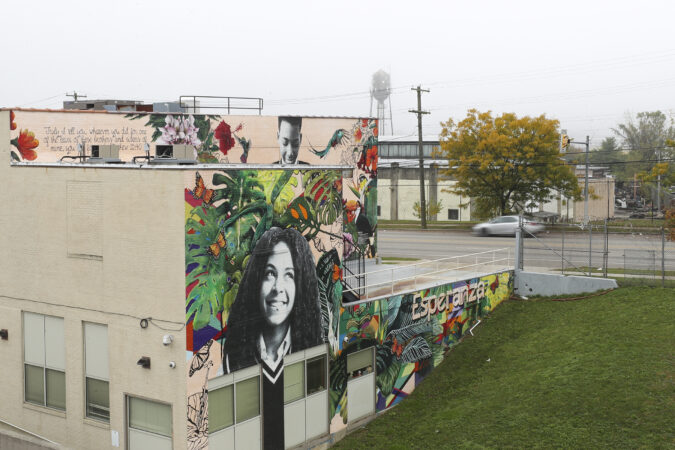
    Esperanza Academy Charter High School teachers and staff have unionized.

    The brand-new Esperanza High School Collective, a chapter of the American Federation of Teachers, now represents nearly 80 staff at the school.

    The move comes during a period of turmoil at the school, after some employees were laid off abruptly in December. Current and former staff say there have been sudden and arbitrary changes at the school, including larger class sizes and fewer staff working directly with children.

    Union recognition was hard fought — a majority of the staff signed union cards in the fall, but the Esperanza administration declined to voluntarily recognize the collective.

    Instead, the AFT had to go through the National Labor Relations Board, which held an election in late January. In all, 87% of the Esperanza Academy Charter High School staff voted to unionize. (Staff at Esperanza’s elementary and middle schools have not unionized.)

    Wendy G. Coleman, president of AFT Pennsylvania, said the organization was “thrilled” to welcome Esperanza Academy high school staff.

    “These dedicated educators and staff work tirelessly to ensure that their students receive the best possible education, and AFTPA is ready to work just as diligently to help them secure better class sizes, higher wages, and adequate resources for every member in their first contract,” Coleman said in a statement. “As we know, our members’ working conditions are our students’ learning conditions, and we’re excited to see what the future holds for the Esperanza High School Collective in their first contract.”

    Esperanza is the sixth of Philadelphia’s 81 charter schools to form a union; the vast majority of Pennsylvania charters are not unionized.

  • Changes to Philly’s special-admission process exacerbated low enrollment at some magnets. Now, the district is trying to close them.

    Changes to Philly’s special-admission process exacerbated low enrollment at some magnets. Now, the district is trying to close them.

    Lankenau High’s 11th-grade class is tiny — just 25 students.

    That’s one of the reasons why closing the school is for the best, Philadelphia School District Associate Superintendent Tomás Hanna said at a community meeting last week.

    At small schools, Hanna said, programming options are limited and “what’s left behind is very difficult environment for young people.”

    The district proposes merging Lankenau into Roxborough High as an honors program — a move that officials say will maximize opportunities for students at both schools. That proposal has been met with fierce opposition from the Lankenau community, whose members say stripping the school of its identity and removing it from its unique location on 400 wooded acres is unjustifiable.

    But the district is responsible for some of the enrollment issues at Lankenau and some of the other 20 schools that Superintendent Tony B. Watlington Sr. has recommended for closure. Schools with large numbers of empty seats were targeted under the plan, which the school board is expected to vote on this winter.

    When the school system dramatically revamped its special-admissions process in 2021, moving to a centralized lottery from a system where principals had discretion over who got into the district’s 37 criteria-based schools, enrollment dropped at some magnets.

    For the 2022-23 school admissions cycle, Lankenau, Motivation, Parkway West, and Parkway Northwest — four of the 20 schools tagged to close — had dozens of unfilled seats in their ninth-grade classes.

    window.addEventListener(“message”,function(a){if(void 0!==a.data[“datawrapper-height”]){var e=document.querySelectorAll(“iframe”);for(var t in a.data[“datawrapper-height”])for(var r,i=0;r=e[i];i++)if(r.contentWindow===a.source){var d=a.data[“datawrapper-height”][t]+”px”;r.style.height=d}}});

    The district set academic standards for admission to those schools, and stopped allowing schools to admit students who were close to meeting academic requirements and who demonstrated they would be a good fit for the individual schools, as had been done in the past. (Officials said they wanted to centralize admissions to avoid demographic imbalances at schools; those four magnets did not have a history of them.)

    The district’s using Lankenau’s tiny now-junior class to justify closings infuriated many, including Matthew VanKouwenberg, a science teacher at the school.

    Lankenau’s size “is a district-designed and district-created problem,” VanKouwenberg said. Though the lottery was begun for equity reasons, “the result is disastrous.”

    But Tonya Wolford, the district’s chief of evaluation, research, and accountability, said Lankenau, Motivation, Parkway West, and Parkway Northwest had declining numbers of students applying prior to the lottery changes.

    And for years, those schools accepted large numbers of students who didn’t meet the district’s criteria, Wolford said.

    Dramatic enrollment drops after district orders

    The data are clear: After the district pushed changes to the admissions process, the four schools all saw dramatic drops in enrollment — and some of them never recovered.

    Motivation, in West Philadelphia, had a freshman class of 83 students and a total enrollment of 336 in 2022-23. It saw a 77% drop in its ninth- grade class — just 19 freshman in 2023-24. The school now has 151 students, and the district wants to close it and make it an honors program inside Sayre High School. It is operating at only 15% of its full capacity.

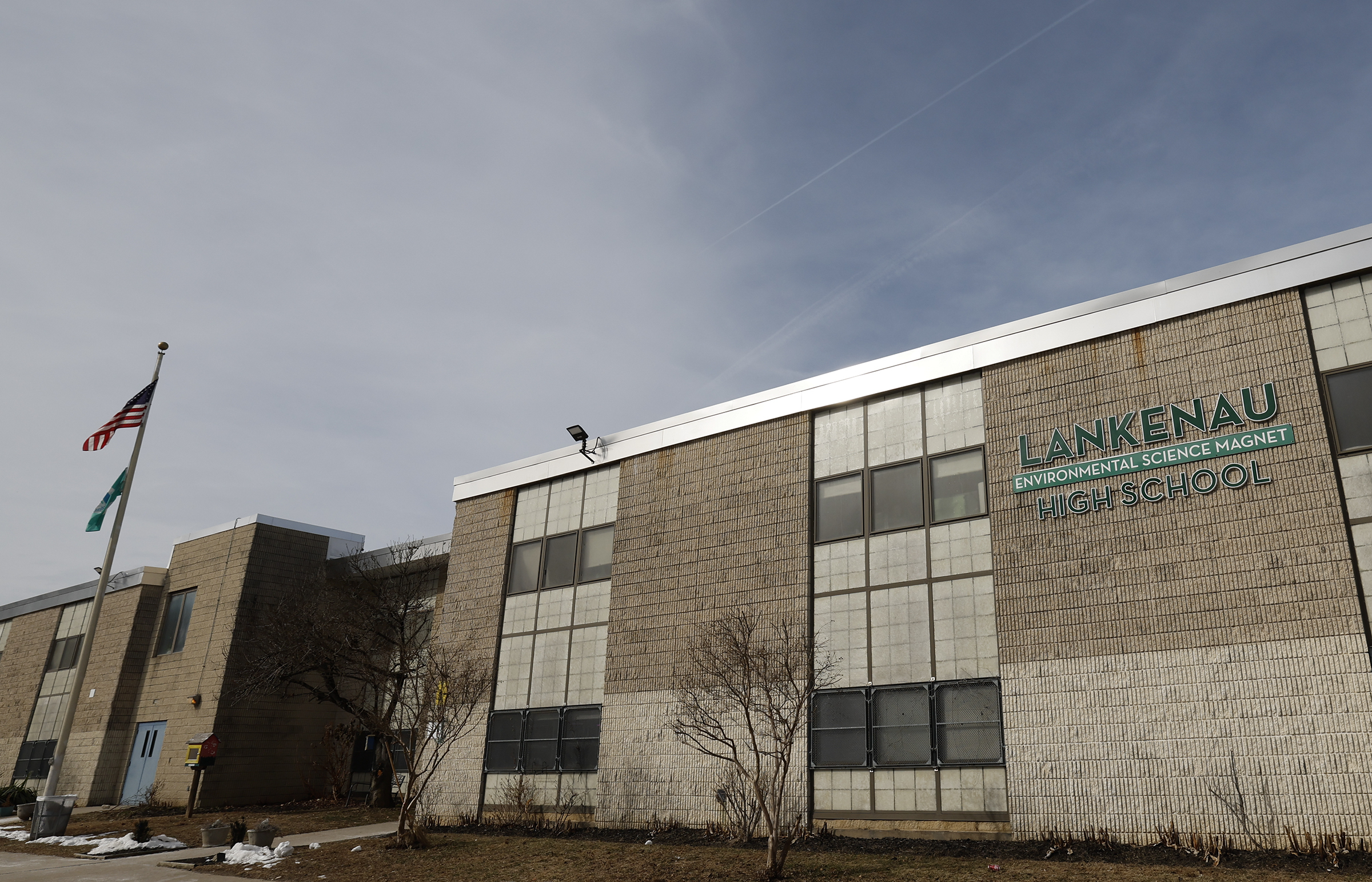
    The Lankenau Environmental Science Magnet High School in Roxborough.

    Lankenau, in Upper Roxborough, had 91 freshman in 2022-23, then 31 in 2023-24, a 66% decline. It now enrolls 225 students. The school is using 49% of its capacity.

    Parkway Northwest had 77 ninth graders in 2022-23, then dropped to 30 in 2023-24, a 61% decrease, and is 60% full. It’s got 248 students this year, and the district wants to close it and make it an honors program of Martin Luther King High.

    And Parkway West had 54 freshman in 2022-23, then 19 the following year, a 65% decrease. It now has just 140 students, and is using 40% of available seats. It’s proposed to close and become part of Science Leadership Academy at Beeber.

    A staffer who worked at Parkway West as the special-admissions process changes rolled out said they were devastating to the school, which typically filled three-quarters of its slots for incoming ninth graders with students who qualified on every measure, and a quarter by feel.

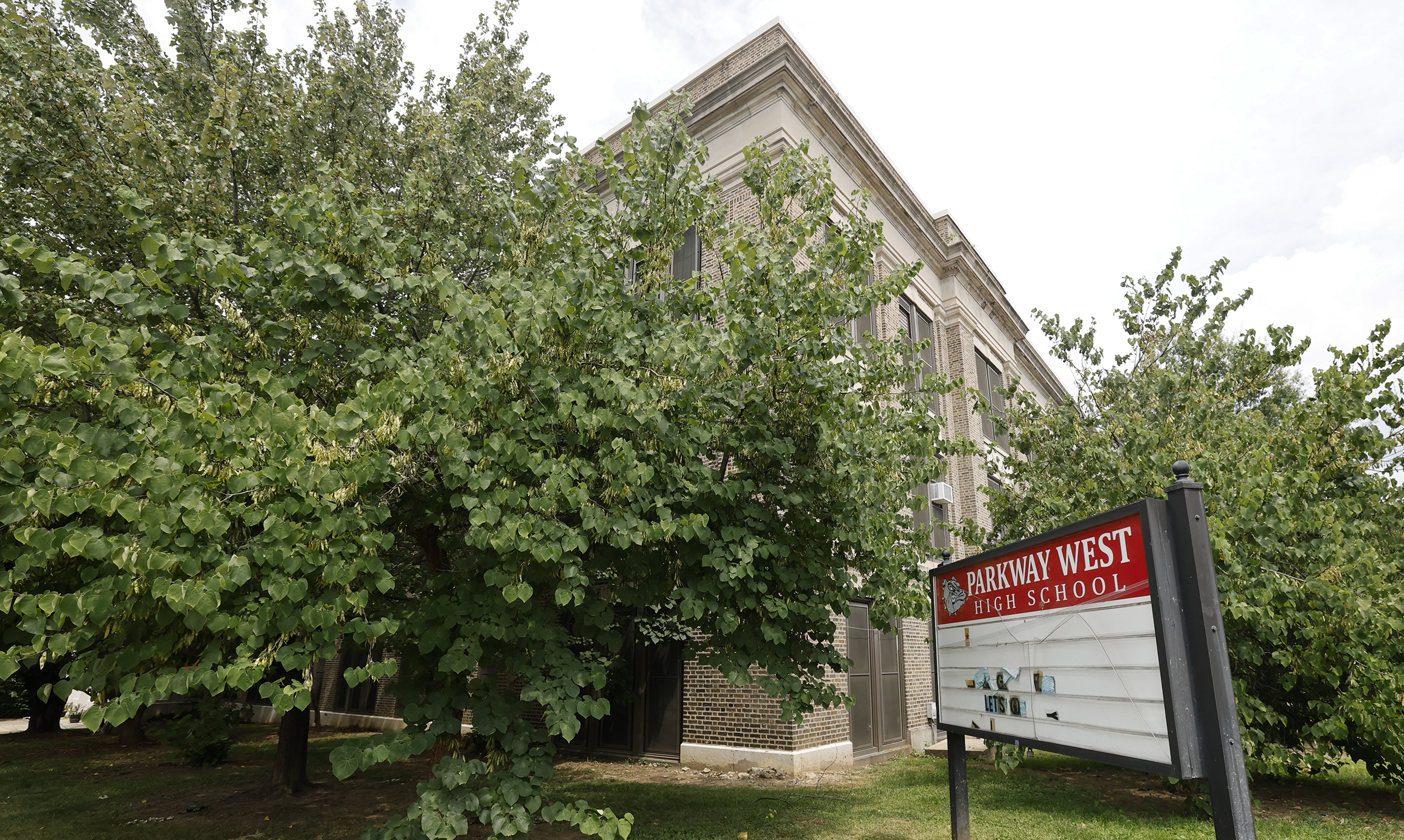
    Parkway West High School, in West Philadelphia, is proposed to close under a Philadelphia School District facilities proposal.

    “We found kids who maybe missed one criteria, but they were good kids, and had strong recommendations,” said the staffer, who asked not to be identified because they were not authorized to speak to a reporter.

    When Parkway West lost that ability, its enrollment tumbled, and never recovered.

    Lankenau community members say interest in their unique school has never waned, but the size of their incoming classes continues to be limited by the district — even beyond the admissions changes.

    For the applicant class set to start high school in the fall, 107 students listed Lankenau as their first choice, staff said, and 95 have accepted Lankenau’s school board offer.

    But since 2022-23, district officials have limited Lankenau to two sections of ninth graders, and with class sizes capped at 33. So despite having interest and students enough for 99 freshmen, it won’t have staff for more than 66.

    In the last few years, staffers said, more than 66 students show up at the start of the school year. But with only enough teachers for 66, classes are overcrowded and some students end up transferring out.

    “That is the only reason we lose enrollment,” said Erica Stefanovich, a Lankenau teacher. “We wouldn’t be in this situation if they hadn’t put us in it. This is an artificial problem.”

    But, Wolford said the trend lines were clear for Lankenau and other schools.

    In 2019-20, for instance, the prior to the district’s admissions changes just 34 students met Lankenau’s criteria, but 81 students accepted offers for the ninth-grade class, Wolford said. That same year, eight students qualified for Parkway Northwest on paper, but 34 were admitted, according to district data.

    Schools like Lankenau and Parkway Northwest “were existing without following the criteria,” said Wolford.

    Trees, bees, and a Lorax

    Lankenau is putting up a spirited battle to stay open.

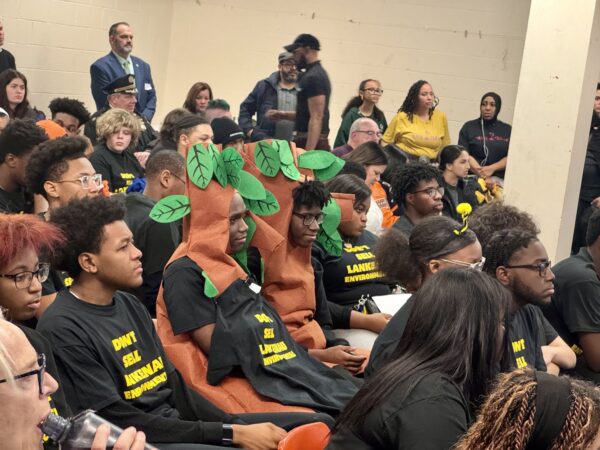
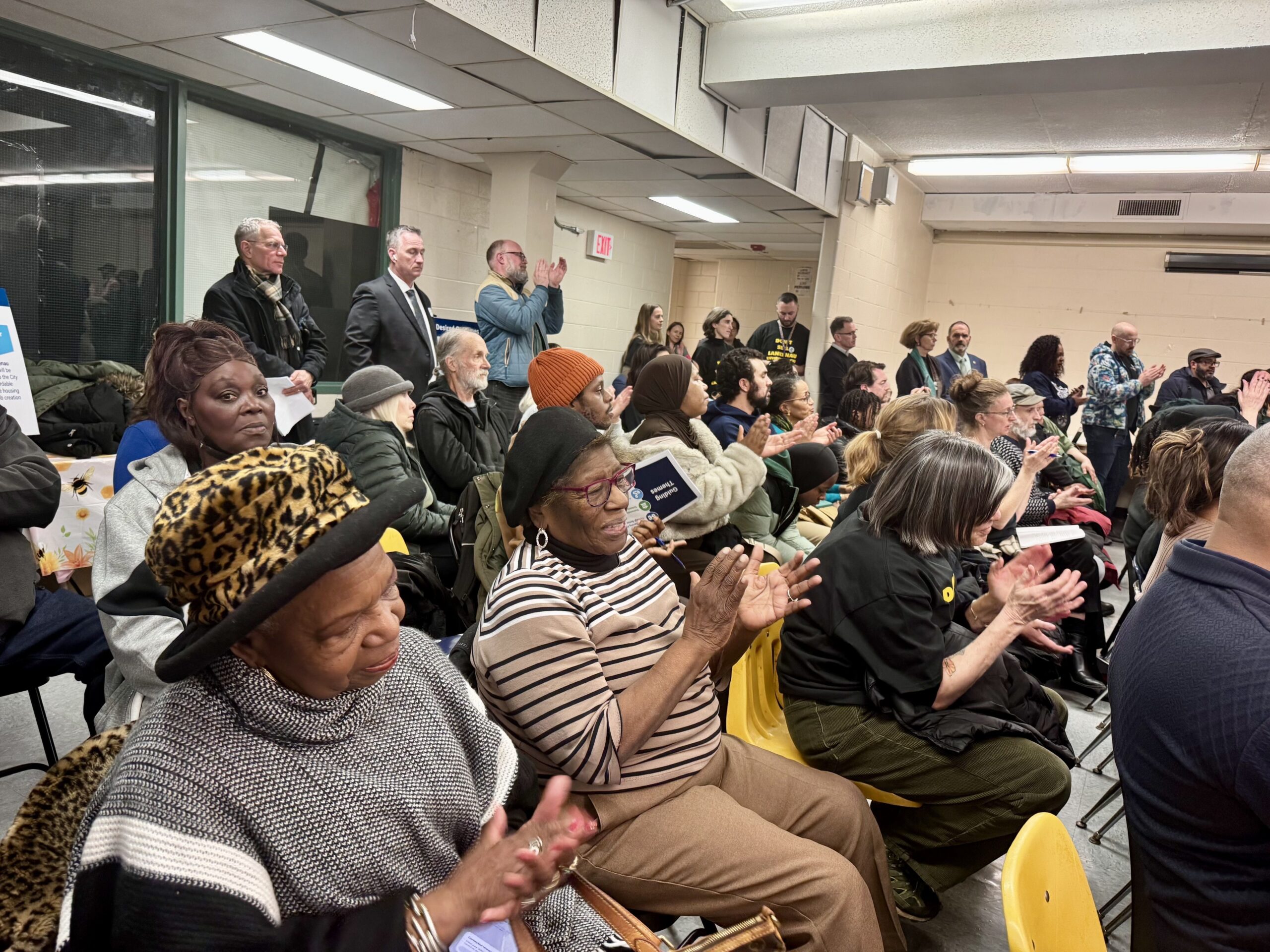
    Last week, an overflow crowd — more than 100 students, staff, parents, representatives from Lankenau’s many partner organizations, and community members — packed the school for a student showcase and district-led meeting about the closure. Some students dressed as trees, bees, and a Lorax, the Dr. Seuss character who “speaks for trees” — to emphasize the importance of their school’s setting amid 400 acres of woods.

    Community members at Lankenau High School applaud a student telling district officials why the school should not close. Lankenau is one of 20 Philadelphia School District schools proposed for closure.

    First, Lankenau students wowed visitors with presentations — about their study of natural resources, about the experience of foraging for ingredients to brew their own artisan teas — and then, it was down to business. Lankenau is too small, officials said, and the district must find ways to offer a more equitable experience for all students.

    “I don’t discount that there is magic inside of these walls,” Deputy Superintendent Oz Hill said. “What I’m sharing with you is if we can take that magic and enhance it with more extracurricular activities, more expanded academic programming, the sky’s the limit.”

    The parents, students, and staff in the audience weren’t having it.

    Lankenau was just certified to become the state’s only three-year agriculture, food, and natural resources career and technical education program — a designation that took years to achieve, and cannot transfer to a new building.

    Officials are proposing closing Lankenau a year and a half from now; that’s not enough time for the district to reapply for the designation for a new Lankenau-inside-Roxborough CTE program.

    District officials said at the meeting that they believe their “close relationship” with the state education department will give them enough time to get a new Roxborough program certified in time for the Lankenau closing.

    Multiple parents told district leaders they would not send their children to Roxborough High.

    And Akiraa Phillips, a Lankenau ninth grader, said she couldn’t imagine attending school in another setting.

    In Lankenau’s current setting, “learning doesn’t stop at the desk. Our campus is the classroom,” Akiraa said. “We learn science by being in it. Here, we don’t just talk about ecosystems, climate, and sustainability, we walk through it. That kind of learning sticks with you. You can’t stick this into any random building and expect it to work.”

    The community turned out in full force, but politicians and other decision-makers were in the room, too. Three school board members, including president Reginald Streater, attended the meeting.

    State Sen. Sharif Street (D., Philadelphia), the front-runner to replace U.S. Rep. Dwight Evans in Congress, said he “was against closing the school,” but noted that the decision didn’t rest with him, and said the state needed to better fund schools “because we have not met our obligation to fully fund the program.”

    And Councilmember Cindy Bass said she was particularly incredulous that the district was attempting to close a successful magnet — Lankenau has a 100% graduation rate.

    “If it works, why are you breaking it?” Bass said. “I do not understand what the logic and the rationale is that we are making these kinds of decisions. We’re not just closing a school, we’re disrupting the lives of young people.”

  • Greenberg Elementary students have been relocated as Philly schools continue to face cold-weather issues

    Greenberg Elementary students have been relocated as Philly schools continue to face cold-weather issues

    Building woes triggered by a sustained blast of cold weather continue at some Philadelphia schools.

    Staff at Strawberry Mansion High reported that about half the building was without heat Monday, with some classrooms in the 40s and hallways not much warmer.

    And staff and students at Greenberg Elementary in the Northeast had to relocate to the old Meehan Middle School after nearly a week of virtual school because of heating problems.

    “Due to insufficient heat throughout the building, Greenberg is not able to safely support in-person learning at this time,” district officials wrote to parents this weekend. “Our facilities team is actively working to resolve the heating issue as quickly as possible. At this time, the repair timeline is still being assessed, but we will continue to provide updates as more information becomes available.”

    Meehan is one of the district’s “swing spaces” — it no longer operates as a school, but is used as an alternate location for schools that need it. It recently housed Thomas Holme Elementary while a new building was constructed for that school. It’s unclear how long Greenberg students will need to stay at Meehan.

    The move rankled some Greenberg parents, who had logistical and safety concerns about sending their children to a different location.

    Katy Foley-Gallagher, mom of a Greenberg kindergartener and third grader, said virtual learning was a challenge — on days she had to work, her husband had to take off from his job to manage their daughter and son.

    But moving to Meehan isn’t ideal either, Foley-Gallagher said.

    “Everybody’s getting anxious — this is disrupting their learning,” said Foley-Gallagher. “They district is not taking care of their building, and they don’t keep up with the infrastructure at all.”

    The school system, which a 2023 landmark court ruling acknowledged has been underfunded for decades, has billions in unmet building needs. Superintendent Tony B. Watlington Sr. has proposed a facilities master plan that would cost $2.8 billion and require closing 20 buildings, as well as modernizing 159 others.

    It’s not yet clear whether Greenberg would receive upgrades as part of that process. And that plan, which the school board is expected to vote on this winter, would take years to implement.

    Greenberg, like other district schools in the Northeast, is overcrowded, with over 1,000 students in a building whose capacity is 800. Students can no longer leave their classrooms for art or music; those rooms have been repurposed to accommodate extra classes.

    “They’re going to put them back in these crowded rooms,” said Foley-Gallagher. “Greenberg is such a good school, but I worry that this is going to drive people out of the school, out of the city.”

    She and other parents said they had concerns about their children being on a campus with Lincoln High, another overcrowded school.

    District officials said they were taking steps to ensure “a smooth transition for students and families” as Greenberg relocates to Meehan.

    The district is providing shuttle service for students who normally walk to Greenberg, though the shuttle leaves at 8 a.m., a half hour after classes begin.

    “We understand that unexpected changes can be challenging for families, and we appreciate your patience and partnership as we work to restore normal building operations,” district chief operating officer Teresa Fleming wrote in an email to parents. “The safety and well-being of our school community remain our highest priority.”

  • The Philly School District’s admissions policy could be viewed as unconstitutional and discriminatory, federal judges rule

    The Philly School District’s admissions policy could be viewed as unconstitutional and discriminatory, federal judges rule

    A federal appeals court revived a lawsuit challenging the legality of Philadelphia School District’s special-admissions process Monday, ruling the policy could be seen as “blatantly unconstitutional” and ”race-based.”

    The U.S. Court of Appeals for the Third Circuit sent the case filed by three Philadelphia parents — which a federal judge tossed in 2024 — back to a lower court.

    The ruling could have long-term implications for the admission process for citywide magnet and special-admissions schools, which has been controversial since its inception.

    While it will have no immediate impact on the school district’s process, the ruling means the case could now proceed to trial.

    The district changed the way it admits students to criteria-based schools in 2021, moving from a system where principals had discretion over who got into the district’s 37 special-admissions schools to a centralized, computer-based lottery for any student who met academic criteria.

    For the city’s five top magnets, all students who met the standards and lived in certain underrepresented zip codes gained automatic admission.

    Officials at the time said they were changing the policy as they “made a commitment to being an antiracist organization” after an “equity lens review” of admissions practices.

    The demographics of some selective public schools do not match the city’s demographics. Masterman, for instance, has much higher concentrations of white and Asian students than the district does as a whole.

    Although the school district has defended its policy change, a panel of federal judges on Monday ruled that it could be viewed as discriminatory.

    “School District officials made public and private statements — both before and after the enactment of the Admissions Policy — that could support a finding that the Policy was intended to alter (and did alter) the racial makeup of the schools,” Judge Thomas Michael Hardiman wrote for the three-member panel.

    “So a reasonable fact finder could conclude that the School District acted with a discriminatory purpose,” the panel wrote. The panel included Hardiman, a George W. Bush appointee; Cheryl Ann Krause, a Barack Obama appointee; and Arianna Julia Freeman, a Joe Biden appointee.

    A district spokesperson said Monday that the school system does not comment on ongoing litigation.

    The legal team representing parents Sherice Sargent, Fallon Girini, and Michele Sheridan — including lawyers from America First, an organization formed by Stephen Miller, a top aide to President Donald Trump called the action “a major victory.”

    “School officials don’t get to rig admissions systems to satisfy ideological goals,” said Gene Hamilton, America First Legal’s president, and a former Trump deputy counsel. “This ruling affirms a basic constitutional principle: government cannot discriminate by race, whether openly or by proxy. AFL will continue fighting to secure accountability and restore equal protection.”

    What did the initial lawsuit argue?

    Sargent, Girini, and Sheridan sued in 2022 to end the policy, to stop the district from using “racially discriminatory criteria” for magnet school admissions, and to award damages to those who might have been damaged by the “gerrymandered lottery” policy.

    A federal judge ruled in favor of the school district in 2024 without a trial, writing that “no fair-minded jury could find that the changes to the admissions process were implemented with racially discriminatory intent or purpose.”

    The district has defended its position, saying it was geography, not race, that gave certain students preferential admission to magnets like Masterman, Central, the Academy at Palumbo, and George Washington Carver High School of Engineering and Science.

    Five admissions cycles have happened since the overhaul.

    Adjustments have been made since the initial rollout — including dropping a controversial, computer-graded essay, adding ranked choice, adding sibling preference, and giving automatic admission to students who attend middle schools with attached high schools and meet academic standards — but the underpinnings remain, as does the preference for qualified students from underrepresented zip codes at selected schools.

    Sargent’s daughter, who is Black, qualified academically for the George Washington Carver High School of Engineering and Science; Girini’s son, who is white, qualified for Academy at Palumbo; Sheridan’s child, who is biracial, met standards for Palumbo. All were denied admission to their top-choice schools, though they gained admission to other district magnets.

    As a result of the shift to the lottery — and changes to admissions criteria — admissions offers to Black and Hispanic students increased significantly at most of the highest-profile schools, and offers to white and Asian students decreased at most.

    What did Monday’s ruling say about the admissions policy?

    District lawyers have said the admissions overhaul “was race-neutral and motivated by legitimate goals, such as increasing objectivity and improving access for qualified students from underrepresented geographic areas.”

    But the appeals panel found that the federal judge who dismissed the case “did not adequately consider the evidence of why the School District implemented the Policy in the first place, including the School District’s stated goals, the historical context behind the ‘equity’ aims, and statements made by School District officials.”

    Before the admissions changes took effect, then-Superintendent William R. Hite Jr. issued an anti-racism declaration in 2020 following the killing of George Floyd by Minneapolis police and the resulting racial justice movement.

    Hite said it was “imperative that we take a laser focus on acknowledging and dismantling systems of racial inequity. For us, this goes deeper and far beyond focusing on individual acts of prejudice and discrimination, but refers to uprooting policies, deconstructing processes, and eradicating practices that create systems of privilege and power for one racial group over another.”

    The school board also included in its Goals and Guardrails, guiding principles by which it judges district progress, a guardrail asking the district to increase the percentage of qualified Black or Hispanic students who qualify for criteria-based schools.

    “These statements and actions, taken together in context, could support a finding that the School District adopted the Admissions Policy to achieve racial proportionality,” the appeals panel wrote.

    What comes next?

    Monday’s ruling has no impact on the existing admissions process, which is already underway for the 2026-27 school year.

    And it is not yet clear what will come of the case after it returns to a lower federal court, but it could potentially now proceed to trial.