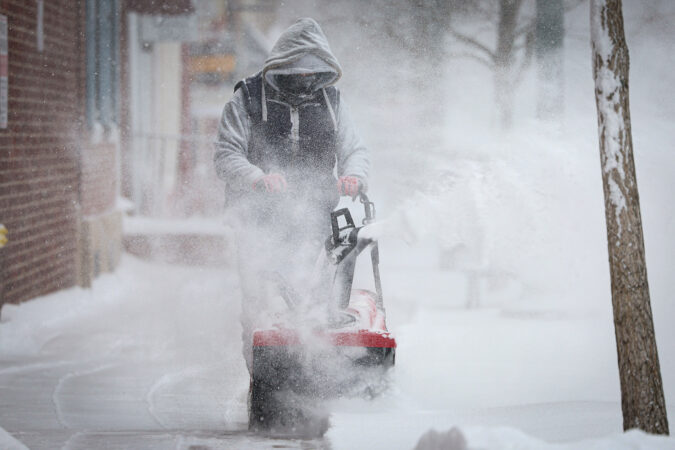
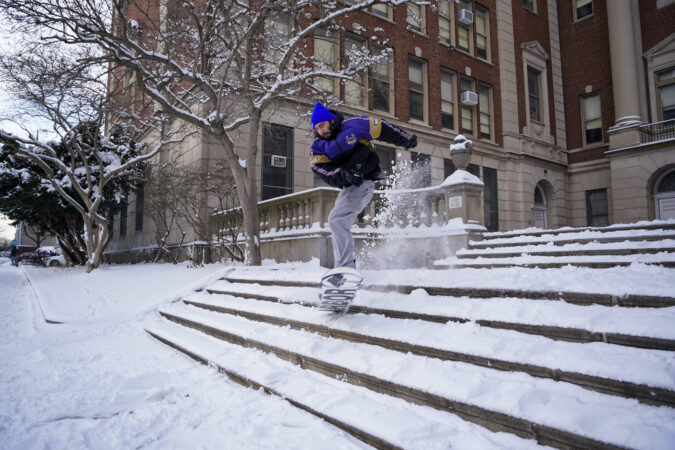
“Given the conditions of the roads and the issues that the mayor and others have talked about, and out of an abundance of caution,” district offices will remain closed Tuesday, and after-school programs and athletics are also closed, Watlington said.
The superintendent prioritizes in-person learning, he said, but Tuesday “and any subsequent inclement weather days will be remote learning days.”
Virtual instruction, closures and delays beyond Philly
Districts around the region were starting to make similar calls.
Haddon Heights, in South Jersey, had already called a two-hour delay.
The Cheltenham School District is also going virtual.
“After consulting with my team, many roads remain unpassable and are likely to refreeze after dusk, making bussing on Tuesday too risky,” Superintendent Brian Scriven told families in a message Monday afternoon.
Schools have increasingly been turning to online instruction during winter storms, though some districts use a different calculus on when to go virtual. New Jersey schools do not allow for virtual instruction.
Scriven said Cheltenham administrators were “hopeful schools will return to normal operations as soon as possible,” and would communicate any additional schedule changes before Wednesday.
Upper Darby schools also announced virtual instruction.
“Unfortunately, we are going to need another day to continue to remove snow and ice,” Superintendent Dan McGarry told families Monday afternoon.
Officials with the Centennial School District in Bucks County also said they would have virtual instruction, telling community members in a message that “conditions remain challenging, and our facilities personnel are hard at work clearing lots and entryways.” Central Bucks also called a remote learning day.
The Colonial School District, meanwhile, announced a second traditional snow day Tuesday.
“More work needs to be completed on our secondary roads to make it safe for our students to travel on Wednesday,” Superintendent Michael Christian said in a message to families. In the event of more inclement weather, Christian said, the district would have virtual instruction.
Camden schools will also be closed on Tuesday. So will Cherry Hill, Winslow, Woodbury, and Washington Township, among others.
Letitia Grant was gobsmacked when she learned her daughter’s school was slated for closure.
“That can’t happen,” she said.
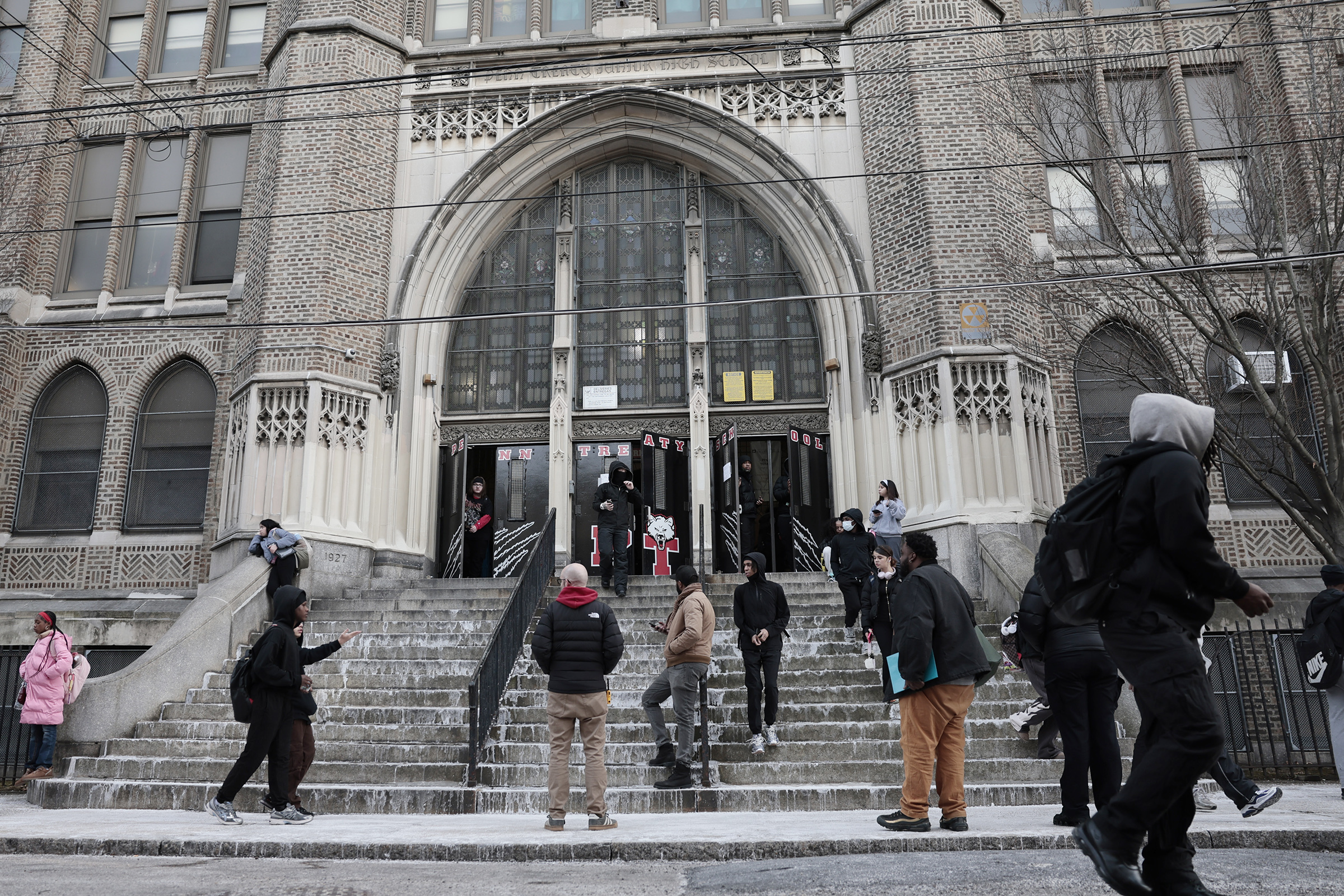
Penn Treaty High School, where Grant’s daughter is in the eighth grade, is one of 20 schools proposed for closure as part of a massive reshaping of the Philadelphia School District announced Thursday.
The plan — which Superintendent Tony B. Watlington Sr. said he would present in full to the school board on Feb. 26 — would affect every neighborhood in the city. In addition to closing 20 schools, it proposes colocating six others, and making changes, including renovations and grade restructuring, at an unspecified number of schools.
But Grant is focused on what it means for her daughter, who loves her teachers, her counselor, and the friends she has made at the Fishtown school.
Grant was looking forward to seeing her daughter cross a stage to collect her diploma at Penn Treaty’s 2030 high school graduation, she said. She is not sure what will come next.
School officials stand by outside for afternoon dismissal at Penn Treaty Middle School, 600 East Thompson Street, in Philadelphia on Thursday, Jan. 22, 2026.
Penn Treaty, which now has just 345 students in grades six through 12 in a building that can accommodate 1,200, would cease to exist under the plan, and Bodine High, a district magnet in Northern Liberties, would move to the Penn Treaty building and add a middle school.
After dismissal Thursday, the day families learned of the closure, Grant’s daughter and her friend stopped their biology teacher to chat. The teacher is her daughter’s favorite, Grant said.
Grant fears the changes will meanthe district will be “piling too many kids per classroom.”
The facilities plan will touch every neighborhood in the city for years to come, with ripples for students, teachers, and families. Here are some of their stories.
At Waring, parents worry — and prepare to sound off
As parents dropped their children off Friday morning at the Laura Wheeler Waring School in Spring Garden, faces were grim.
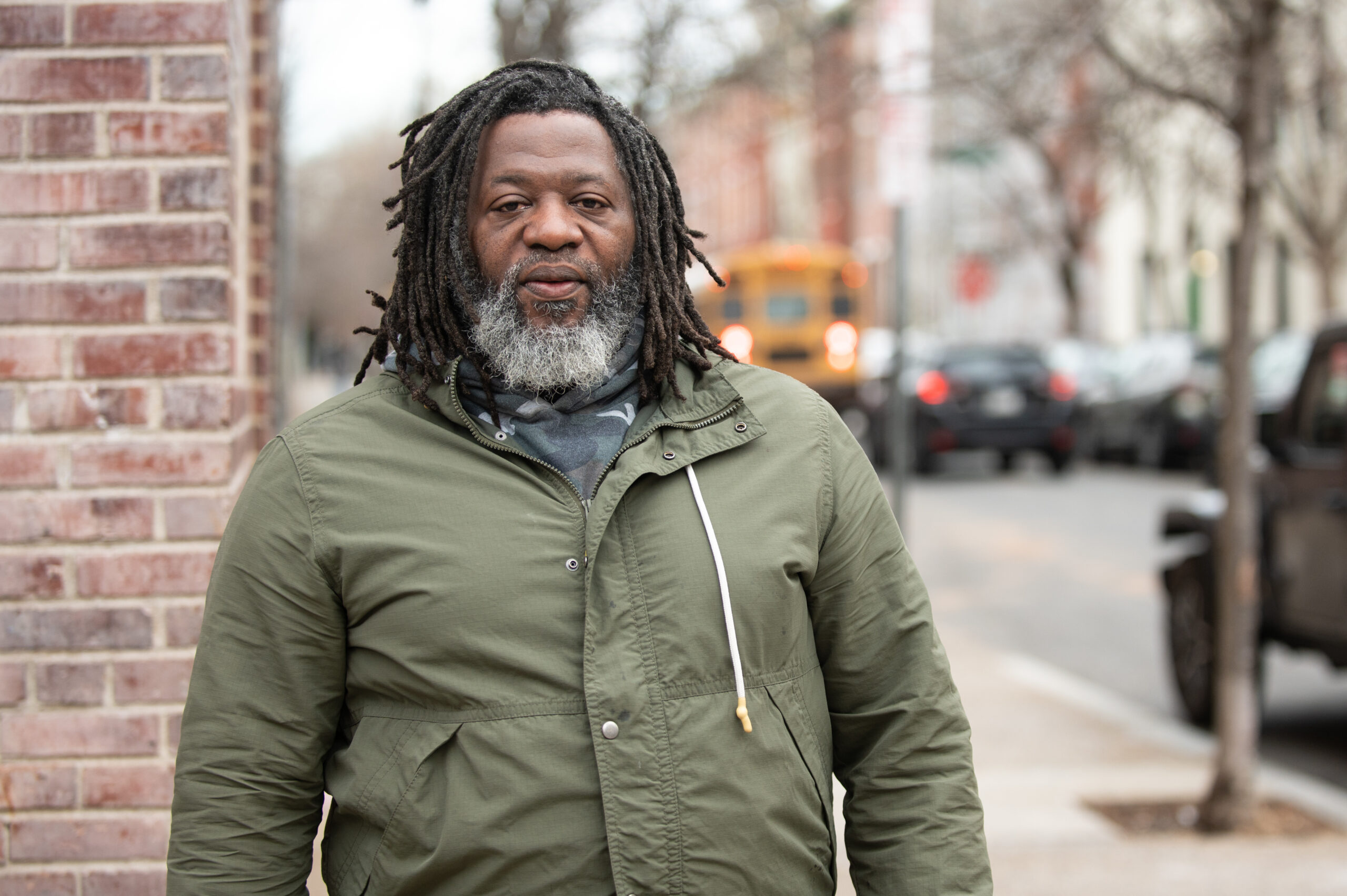
“We’re pissed off because it’s a great school,” said Isheen Bernard, whose son attended Waring and whose daughter is a third grader there now. Waring was identified for closure; under the plan, Masterman middle school students would eventually take over the building, with Waring students sent to Bache-Martin.
Isheen Bernard, 48, poses for a portrait after dropping his child off at Laura Wheeler Waring Public School in the Spring Garden section of Philadelphia on the morning of Friday, Jan. 23, 2026. Under a new school district plan, Laura Wheeler Waring Public School would be closing in the 2027-2028 school year.
Nysheera Roberts graduated from Waring herself, and so did her mother. Now, she has children there, and her nieces and nephews also attend.
Shutting the school down would be hurtful and heartbreaking, Roberts said. Waring has just under 200 students in a building that can house 437.
“It’s a piece of our history,” she said.
Taking her daughter to Bache-Martin would be a major inconvenience for her, her children, and other neighborhood families, Roberts said. Now, she can easily drop her baby off at a nearby daycare before popping over to Waring with her children, then heading off to work. But Bache-Martin is too far for younger children to walk to from the family’s home — a problem because Roberts does not always have access to a car.
“They shouldn’t be taking our school away from these children,” she said.
Nysheera Roberts, 35, poses for a portrait after dropping her children off at Laura Wheeler Waring Public School in the Spring Garden section of Philadelphia on the morning of Friday, Jan. 23, 2026. Under a new school district plan, Laura Wheeler Waring Public School would be closing in the 2027-2028 school year.
Every Waring parent she has spoken to is upset, Roberts said. She knows the district plans to allow public comment on its plan, and thinks affected families won’t hold back.
“They’re gonna have a lot of parents speaking,” Roberts said. “And I’m gonna be one of them.”
Many schools Mack attended as a child have been closed, so he was not completely surprised that Morris was identified for closure. But he worries about the effect the closing will have on the younger children at the school, who are just settling into the rhythms and routines of Morris.
“You’re telling kids who are already not used to school to go to a new environment and just kind of pick up where they might have left off,” he said. “That’s not conducive to a positive learning environment.”
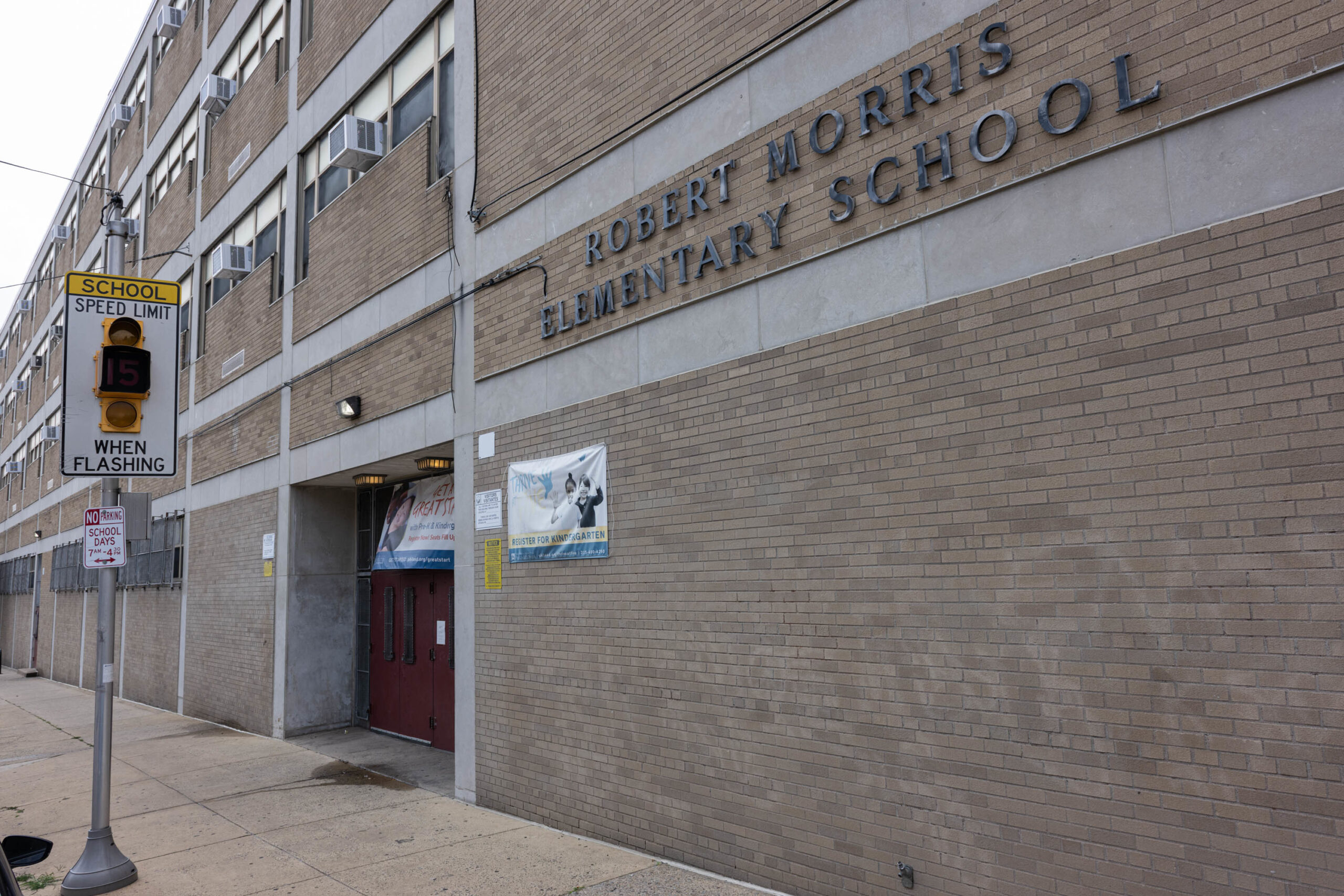
Exterior of Robert Morris Elementary School on Thursday, Aug. 7, 2025, in Philadelphia.
His older children, who are in fourth through eighth grade, have not always had an easy time — often, the teacher they had in the fall left before the spring, and they had to cope with many new teachers or substitutes.
“The kids know they’ll be here longer than their teacher in many cases,” Mack said. “Teachers just pass through, and a lot of kids think that way.”
When Mack was growing up, teachers knew his parents, and they often grew up in the same community as he did, attended the same church. He understands those connections may not still be possible, but said the generational relationships schools used to build produce results.
“Schools have a lot of behavioral issues that I feel as though permanent teachers who have that longevity, of knowing your mom and having been friends with your auntie, add credibility and respect to a teacher’s voice,” Mack said.
Moving more students into existing schools will tax those schools, he said. Will they be overcrowded? Can they guarantee equal or better learning outcomes?
“I think it falls on the school district to pour more resources into teaching staff, because teachers are going to have to wrangle 30 kids in a classroom,” Mack said. “One effort I’d like to see is for the district to identify and vet teachers who want to teach in Philadelphia, in the same schools, for their career.”
Not on the closing list, but big changes are still coming to Moffet
Moffet Elementary shows up nowhere on the school closing list.
But parents at Moffet, in Kensington, learned that massive changes are planned for their school, too. Moffet families were told that children in grades K-4 will be shifted to Hackett Elementary. Moffet, now a K-5, will become a 5-8 school. Hackett is now a K-5; it will become a K-4 with a larger catchment.
“Parents are very upset,” said Katy Hoffman-Williamson, mother of a first grader and president of Moffet’s Family School Organization. “Our WhatsApp thread is blowing up.”
Moffet, she said, is “this really special gem of a school in our neighborhood. There’s only two classes per grade, the Family School Organization is super involved, and all the teachers go above and beyond what they’re supposed to do. It’s an incredibly diverse school, a really special place.”
Technically, Hoffman-Williamson’s catchment school is Ludlow, which was tagged for closure. She chose Moffet carefully and doesn’t love the idea of sending her son to a larger school, or having him transition to a new school in third grade, when he will have to start taking state tests.
“If I didn’t find a school like this, I would have moved, and there’s so many families that are like mine,” Hoffman-Williamson said. “Some families might find the transition to middle school easier, but for the most part, we’re really upset.”
Some academics are alarmed
Julie McWilliams, an anthropologist of education and codirector of the University of Pennsylvania’s urban studies program, studied past city school closings for her forthcoming book Schools for Sale: Disinvestment, Dispossession, and School Building Reuse in Philadelphia.
McWilliams, who is also a Philadelphia School District parent — her children attend Fanny Jackson Coppin in South Philadelphia — said she was not shocked by the number of school closures, based on history and the district’s messaging this time around.
But she was “horrified” by some of the choices the district made, including closing William T. Tilden Middle School in Southwest Philadelphia. The 5-8 school previously took in students from two schools in Southwest Philly that the district previously closed. And she hopes that the school board listens to the people these decisions will galvanize.
“I’m hoping that this is just a starting point to really tease out which choices here are big mistakes and actually were just thoughtless choices,” McWilliams said. “North Philadelphia got crushed in closings last time. Southwest got crushed. I know that’s where the empty seats are, but they’re going to be creating deserts in neighborhoods that have already suffered.”
Akira Drake Rodriguez, a Penn assistant professor who, with McWilliams, is part of the Stand Up for Philly Schools coalition organizing against closures, was also alarmed by the Tilden closing in particular.
“That whole neighborhood of Southwest Philly is charter schools,” Rodriguez said. “Do you really think they’re going to stay in traditional public schools when you close Tilden?”
She predicted enrollments at some schools marked for closure would plummet as parents face uncertainty around their future.
“The district hasn’t really given people a ton of confidence around managing large-scale modernization efforts,” Rodriguez said.
Edwin Mayorga, a SUPS member, an Academy at Palumbo parent, and an associate professor of educational studies at Swarthmore College, said any school closure is troubling.
“It’s about asking ourselves, ‘What are the conditions that have produced a school that has declining enrollments, or toxic conditions in the facility?’ and trying to start from there,” he said.
Students are going home from school Friday with charged computers, but Watlington, speaking at a city emergency services news conference, said he wanted students to focus on having fun.
“We’re inviting students and staff to enjoy this snowfall, which will be the most I’ve seen during my nearly four years here in Philadelphia,” the superintendent said. “Sledding is appropriate. Snow angels are appropriate, and [Police Commissioner Kevin Bethel] gave us permission to have one or two safe and fun snowball fights.”
If conditions require more days out of school buildings, “every subsequent day will be a remote learning day,” Watlington said.
Philadelphia Achdiocesan high schools and parochial elementary schools also will have a virtual day Monday.
Suburban schools prep
Philadelphia isn’t the only district that has already announced plans or warned that closures were likely.
In Upper Darby, school officials told families Thursday night to prepare for the prospect of virtual instruction on Monday, and possibly Tuesday.
“If the weather is more significant than anticipated, and there are power outages in the area, we will shift to a snow day,” with no virtual school, Superintendent Daniel McGarry said in the message.
In the Cheltenham School District, Superintendent Brian Scriven told families that “if weather conditions require us to close schools and offices,” the district will have a traditional snow day Monday. Tuesday is to be determined — and Wednesday could be virtual instruction, “if conditions are significant enough,” Scriven said.
Colonial School District Superintendent Michael Christian told parents Friday that “if the accumulation is as high as some meteorologists are projecting, we would call for a traditional snow day on Monday and quite possibly Tuesday as well.” And Wednesday could be a virtual instruction day, Christian said.
Meanwhile, the Council Rock School District said that “if school buildings must close on Monday,” students would have virtual instruction.
The school system would see sweeping changes: 20 school closures, six co-locations, more than 150 modernization projects and one brand-new building.
All parts of the city would be affected under the blueprint, which will be formally presented to the school board Feb. 26 and is not final.
The $2.8 billion project is necessary, officials said, because of 70,000 extra seats across the district, poor building conditions in many schools, and disparities in program offerings.
Here’s a breakdown of Watlington’s plan:
If you are reading this story and cannot see the charts, click here.
window.addEventListener(“message”,function(a){if(void 0!==a.data[“datawrapper-height”]){var e=document.querySelectorAll(“iframe”);for(var t in a.data[“datawrapper-height”])for(var r,i=0;r=e[i];i++)if(r.contentWindow===a.source){var d=a.data[“datawrapper-height”][t]+”px”;r.style.height=d}}});
window.addEventListener(“message”,function(a){if(void 0!==a.data[“datawrapper-height”]){var e=document.querySelectorAll(“iframe”);for(var t in a.data[“datawrapper-height”])for(var r,i=0;r=e[i];i++)if(r.contentWindow===a.source){var d=a.data[“datawrapper-height”][t]+”px”;r.style.height=d}}});
window.addEventListener(“message”,function(a){if(void 0!==a.data[“datawrapper-height”]){var e=document.querySelectorAll(“iframe”);for(var t in a.data[“datawrapper-height”])for(var r,i=0;r=e[i];i++)if(r.contentWindow===a.source){var d=a.data[“datawrapper-height”][t]+”px”;r.style.height=d}}});
Wholesale changes are coming to the Philadelphia School District, with Superintendent Tony B. Watlington Sr. poised to propose a massive reshaping of the system, including closing 20 schools.
The plan, years in the making, would touch the majority of the district’s buildings and bring change to every part of the city: over a decade, 159 would be modernized, six colocated inside existing schoolbuildings, 12 closed for district use, and eight closed and given to the city.
At least one new building would be constructed.
The 20 closures, which would not begin to take effect until the 2027-28 school year, would be scattered through most of Philadelphia, with North and West Philadelphia hardest hit.
Watlington released some details of the blueprint Thursday — including the list of proposed school closures—and acknowledged that the changes will roil some communities.
Watlington is scheduled to present his proposal to the school board next month, with a board vote on the plan expected this winter.
(function() {
var l2 = function() {
new pym.Parent(‘school_closing1’,
‘https://media.inquirer.com/storage/inquirer/projects/innovation/arcgis_iframe/school_closing1.html’);
};
if (typeof(pym) === ‘undefined’) {
var h = document.getElementsByTagName(‘head’)[0],
s = document.createElement(‘script’);
s.type = ‘text/javascript’;
s.src = ‘https://pym.nprapps.org/pym.v1.min.js’;
s.onload = l2;
h.appendChild(s);
} else {
l2();
}
})();
Philadelphia, the nation’s eighth-largest school system, now has 216 schools in 307 buildings, the oldest of which was constructed in 1889. It has 70,000 empty seats citywide, though some of its schools, especially those in the Northeast, are overcrowded.
But, Watlington said, “this is not just about old buildings.” Philadelphia’s academics are improving, and faster than most big-city districts, but most of its students still fail to meet state standards — just 21% hit state goals for math, and 35% for English.
“We must find ways to more efficiently use all of our resources so that we can push higher-quality academic and extracurricular programming and activities into all of our schools across all the neighborhoods of Philadelphia, while at the same time addressing under- and overenrolled schools,” the superintendent said.
If the school board adopts Watlington’s plan as proposed, the number of empty space in school buildings would decrease, with district schools going from a 66% utilization rate to 75%. The changes would also allow for the district to offer more students prekindergarten, algebra in eighth grade, and career and technical education and Advanced Placement courses, officials said.
“Part of the problem here is there’s so much disparity in the School District of Philadelphia,” said Watlington, who suggested the plan will improve equity.
Every building judged in “poor” or “unsatisfactory” condition — there are now 85 citywide — would either close or be upgraded within a decade, though the information released Thursday did not include details on upgrade plans.
There are no guarantees, however. The plan comes with a $2.8 billion price tag — only $1 billion of which the district will cover with its capital funds. The rest of the money is dependent on state and philanthropic support, neither of which is a given.
If the extra funding does not come through, Watlington said, fewer schools in disrepair could be modernized, or the district would have to make other revisions to the plan.
Officials said a backup plan would take longer to complete — 16 years, instead of a decade. The $1 billion version would not allow the school system to upgrade all schools currently rated unsatisfactory or poor. Instead, it would have 45 buildings in the those categories in 2041.
A possible closure list
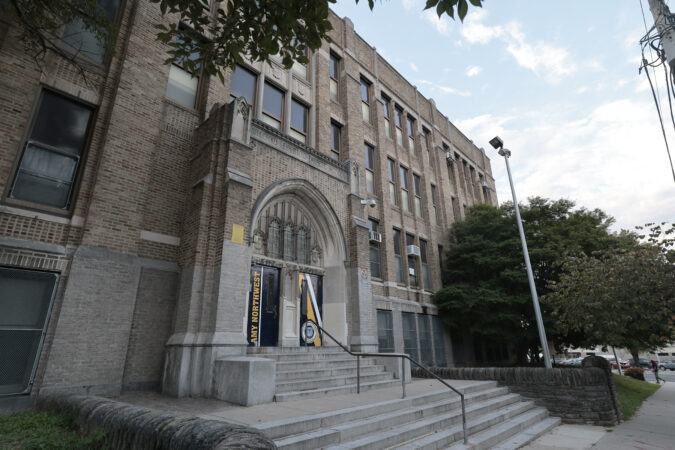
Watlington indicated he wants to close these schools: Blankenburg, Fitler, Ludlow, Robert Morris, Overbrook Elementary, Pennypacker, Waring, and Welsh elementary schools; Conwell, AMY Northwest, Harding, Stetson, Tilden, and Wagner middle schools; and Lankenau Motivation, Parkway Northwest, Parkway West, Penn Treaty, and Robeson high schools. (Some of those schools, like Lankenau and Robeson, would become programs inside other schools — Roxborough High would use Lankenau, and Sayre would useRobeson. Others would close outright, with students assigned elsewhere.)
And he named six schools that would move into other school buildings while maintaining their individual structure and identity: Martha Washington, Building 21, the Workshop School, the U School, a new Academy at Palumbo Middle School, and a new K-8 year-round school.
Students at the affected schools will all move into schools with similar or better academic outcomes or building conditions, or schools that are better by both measures, Watlington said. Transition resources will be available for schools, students, and families from closing schools and for schools that take in new students.
The changes will also affect far more students than those in the 20 schools being shut down or in those sharing locations; closures mean the district would eventually need to redraw at least some school catchment boundaries, which dictate the neighborhood school each child attends.
Watlington said he did not anticipate job losses as a result of the closures.
School officials stand by outside for afternoon dismissal at Penn Treaty Middle School, 600 East Thompson Street, in Philadelphia on Thursday, Jan. 22, 2026.
Fewer transitions, more standard grade configurations
Officials said they arrived at the blueprint after analyzing data and gathering feedback across the city — in meetings and surveys, and based on wisdom from advisory panels and a planning team. (Some advisory panel members said they had real concerns about the process, felt they got too little information, and saidtheir input was not seriously considered. Some had called for a pause in the process and a plan with no closings.)
Parents, staff, and community members identified four main themes that informed the recommendations, Watlington said: strengthening K-8 schools, reinvesting in neighborhood high schools, reducing school transitions for students, and expanding access to grades 5-12 criteria-based high schools.
The plan dramatically shrinks the number of grade spans in the district.
Currently, there are 13 different kinds of school configurations. Going forward, there be just six grade bands: K-4, K-8, K-12, 5-8, 5-12, and 9-12. (Six schools will be exceptions, however.)
Philadelphia is leaning into a “strong K-8 model,” Watlington said. He recommended closing six middle schools, with some elementary schools adding grades to accommodate.
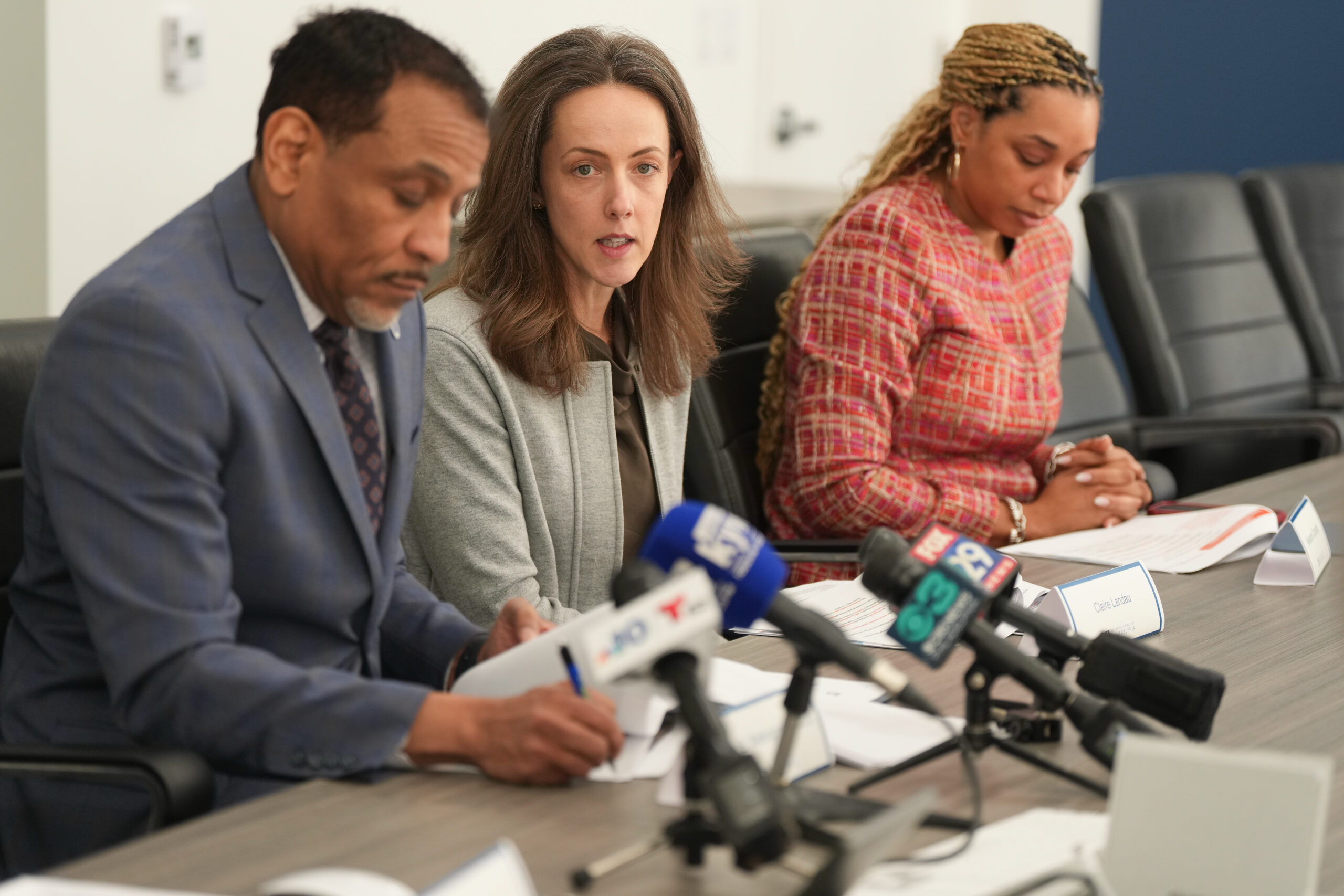
From left to right, Superintendent Tony B. Watlington, senior adviser Claire Landau, and chief of communications and customer service Alexandra Coppadge speak to reporters on Tuesday about their proposed master plan for Philadelphia schools.
It is also turning some high schools that now house four grades into middle-high schools, with 5-12 spans. South Philadelphia High will get investments to its career and technical education space and add fifth through eighth grades, for instance. A new Palumbo Middle School will open, colocated with Childs Elementary in Point Breeze; its students will get preference for admission to the Academy at Palumbo, a South Philly magnet.
Investments in the Northeast, and elsewhere
The single from-scratch construction announced will be in the Lower Northeast — a new Arts Academy at Benjamin Rush, a popular magnet now in the Far Northeast. That new building, which will house students in fifth through 12th grades, would rise on the site of the old Fels High School in Oxford Circle.
A new neighborhood high school will open in the current Rush Arts building, if the plan is approved.
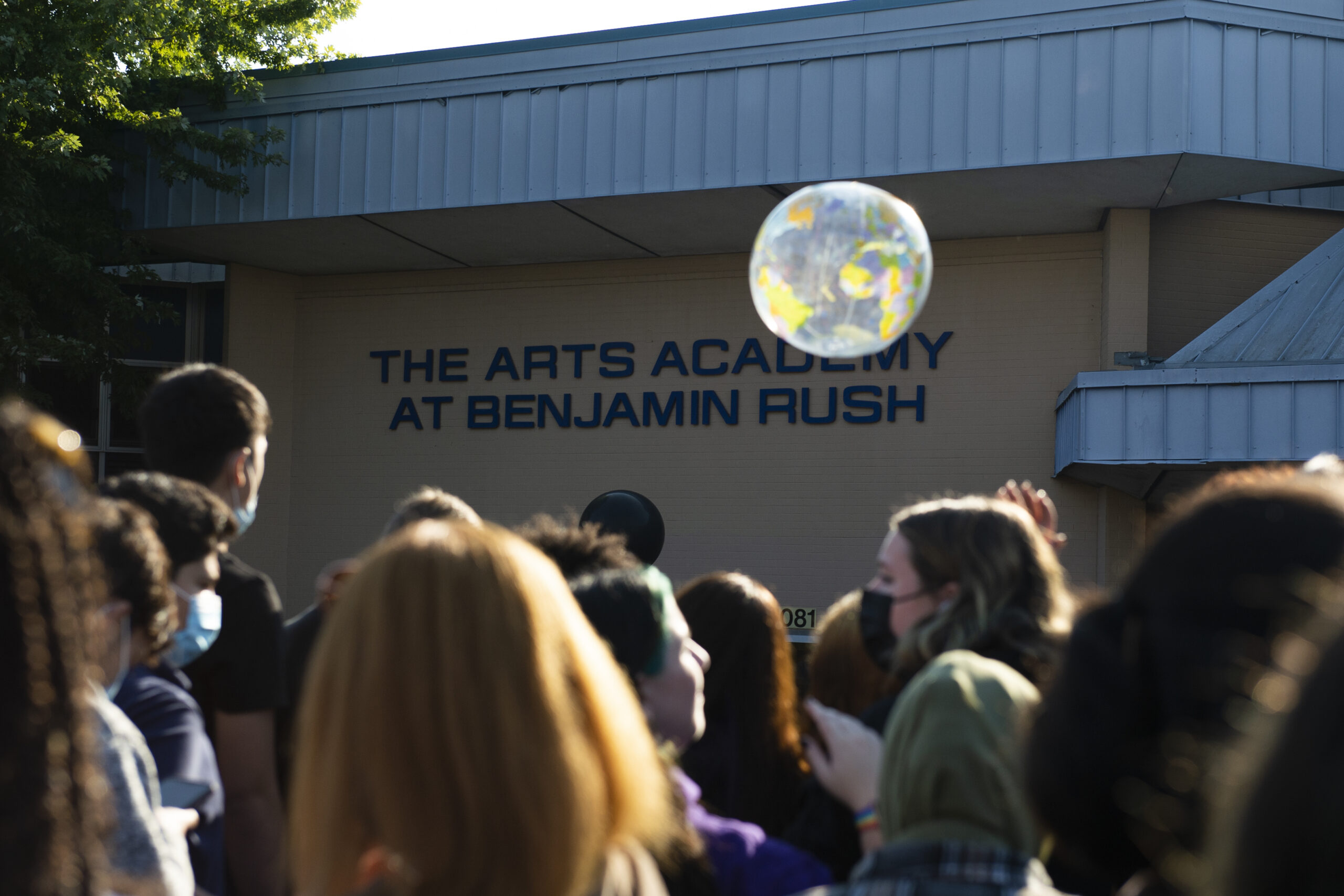
The Arts Academy at Benjamin Rush, shown in this 2022 file photo, will move to a new building constructed in the lower Northeast under the facilities master plan now under consideration. A new catchment high school would open in the Rush Arts building.
Comly, Forrest, and Carnell — all Northeast schools — would be modernized and get additional grades to relieve overcrowding.
Masterman, one of the city’s top magnets, has long been overcrowded — its middle school would move to Waring, in Spring Garden, one of the closing schools.
“It’s really important to note this is not a plan to just funnel resources into the Northeast part of Philadelphia, where the population is increasing faster or in a different way than other parts of the city,” Watlington said. “This is not just build out, invest in some areas, divest in others.”
Learning from past mistakes
Watlington said he knows the plan will be difficult for some to swallow, and does not achieve every aim.
But, he said, “we are not going to make good the enemy of perfect.”
Still, Watlington and others vowed this closure process — the first large-scale closures in more than a decade — would not repeat the mistakes of 2012 and 2013, when 30 schools were shut to save money.
A new transition team will focus on what students and schools need, from social and emotional supports to safety and academic help.
School board president Reginald Streater and Superintendent Tony B. Watlington Sr. are shown in this 2025 file photo.
“These families will get gold-standard, red-carpet treatment directly from the superintendent’s office,” Watlington said.
The superintendent said he will urge the board to “strongly consider” his recommendations.
“We have one shot to get this right,” Watlington said. “We believe this is as good a plan as we can bring to the board, and so we’re going to recommend strongly that the board adopt these recommendations.”
School board president Reginald Streater said the facilities planning process was “critical” to bettering student outcomes.
Watlington, Streater said in a release, has led “meaningful community engagement with families, educators, and community members across our city. The board looks forward to receiving the full set of recommendations and carefully considering them as we work together to ensure all of our school facilities and student rostering practices best support access to high-quality educational experiences and opportunities for all students.”
Mayor Cherelle L. Parker gave good marks to the plan.
“It is ambitious, it’s thorough, and it’s grounded in what I believe matters most, and that’s achieving the best outcomes for our students,” Parker told reporters. “I’m proud that the district has taken what I would describe as a clear-eyed look at really what matters for our children.”
‘It feels like a family member is dying’
Outrage mounted for some Thursday as district officials began notifying affected communities and groups.
“It’s heartbreaking,” said Sharee S. Himmons, a veteran paraprofessional at Fitler Academics Plus, a K-8 in Germantown. “It feels like a family member is dying.”
Himmons is enrolled in the district’s Pathways to Teaching program, taking college courses to earn her degree and teacher certification. She was sitting in her math class at La Salle University when she found out Fitler was slated for closure. She began crying. She failed a test she was taking because her concentration was shot, she said.
Fitler Academics Plus Elementary School in Germantown is among the 20 schools that would close under the proposed plan.
“This school is such a staple in the neighborhood,” she said. Fitler is a citywide admissions school, but draws many students from the area. Himmons’ own sons attended Fitler, and she wanted to teach there after her college graduation.
“This isn’t over,” she said. “We’re going to fight — hard.”
Arthur Steinberg, president of the Philadelphia Federation of Teachers, said he is waiting to see more granular details of the plan, including the list of schools that will be upgraded and what fixes are promised, and hopes for information about how much weight was given to every factor that went into the decisions.
But, Steinberg said, “it is devastating for any community to lose their school — the parents, the kids, and the staff.”
As for the process that led the district to this moment, Steinberg said it was abundantly clear even to advisory panel members that their viewpoints were just points of information for Watlington’s administration, that no promises about heeding any advice were made.
Either way, the closure of 20 schools and more changes that will have ripples across the city for years to come all lead back to one factor, he said.
“Without the chronic underfunding of the district,” Steinberg said, “we wouldn’t have gotten to this point.”
Robin Cooper, president of the union that represents district principals, said the announcement was destabilizing, even though officials had warned closings were coming.
“It’s a loss of history, a loss for Philadelphia,” Cooper said. “Schools are a family, and some families are breaking up.”
Staff writer Sean Collins Walsh contributed to this article.
The Philadelphia School District is poised to announce soon which of its aging buildings it will fix up and which it might close, or consolidate, or reimagine in the coming years.
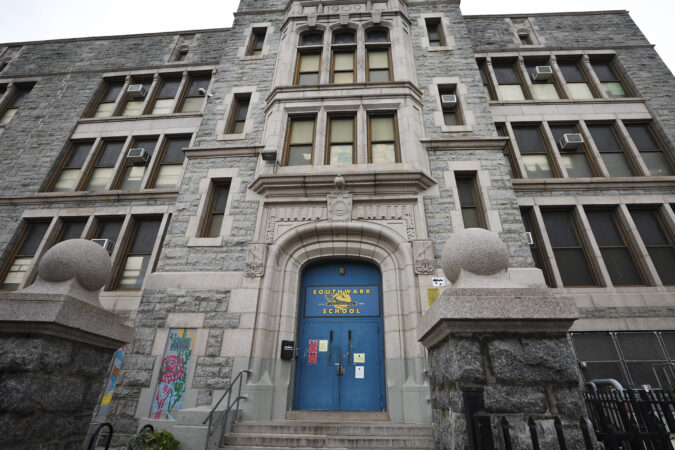
But teachers and parents at one South Philadelphia elementary school say they cannot wait for help and have appealed to Superintendent Tony B. Watlington Sr., Mayor Cherelle L. Parker, and others.
“Southwark School is desperately in need of changes,” a letter signed by 300 people and sent to Watlington and Parker on Friday read. “Our children are learning in an unhealthy environment that no child should have to experience.”
In many ways, Southwark, a K-8 facility constructed in 1905, is a thriving school — it has strong academics, a diverse student body of about 900, a dual language immersion program, and a robust complement of activities. Southwark is a community school, with city-paid resources including free before- and after-school care.
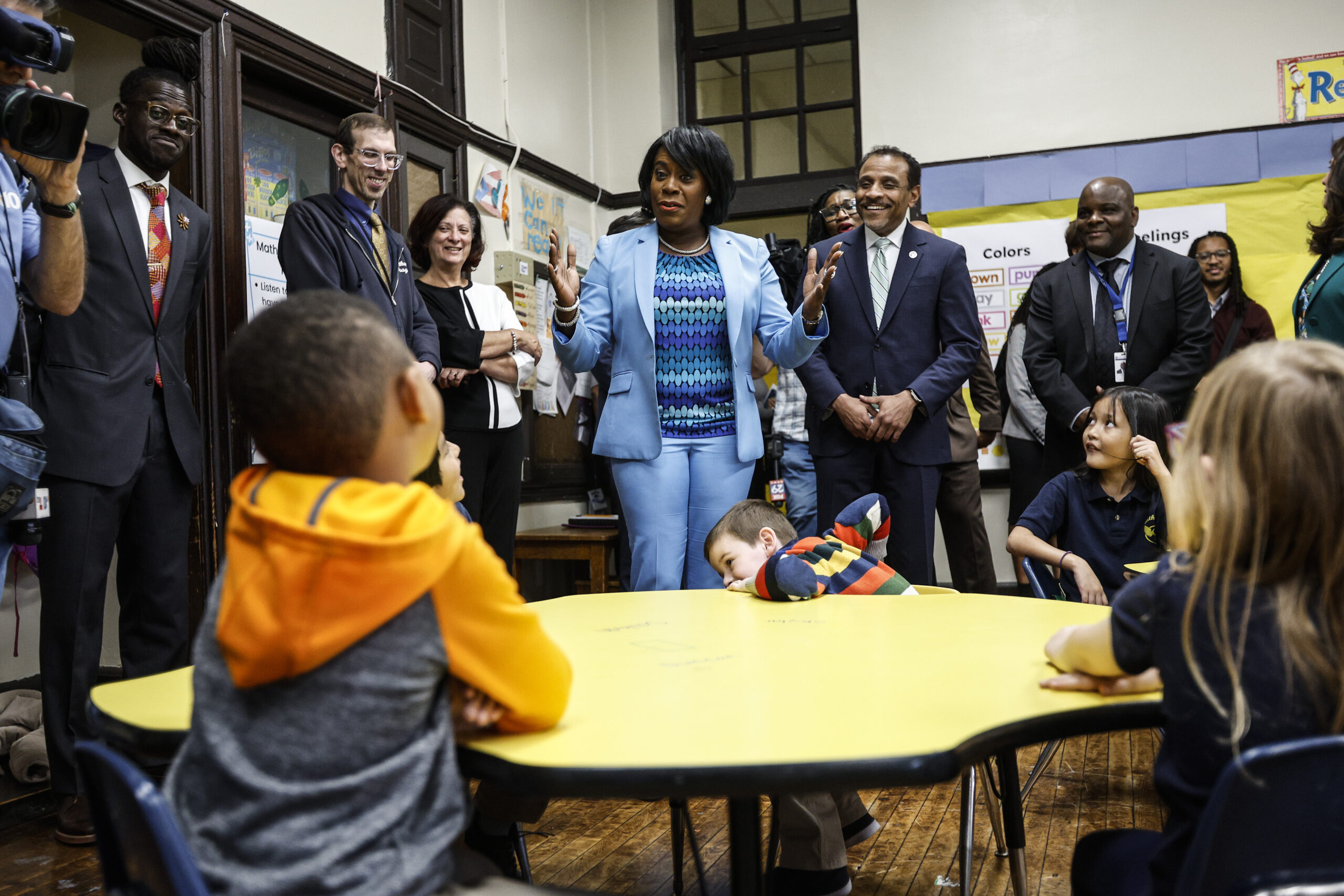
Mayor Cherelle Parker and Superintendent Tony B. Watlington Sr. visit a classroom at Southwark Elementary to discuss the city’s extended day extended year programming in this 2024 file photo.
But it also has issues including bathrooms that “break down nearly every day,” the letter said. “The plumbing has gotten so bad that sewage comes dripping down from the ceiling into classrooms.”
The letter outlined other issues including a rampant bug and rodent problem, a stairwell covered in graffiti and trash, dank hallways, a lack of adequate ventilation, and more.
“Our children tell us that classrooms feel like prisons because the windows can’t be opened fully and they have opaque coverings,” the letter read.
Nyera Parks, a Southwark second-grade teacher, said she doesn’t think the community is asking for too much.
“These conditions are affecting the children’s health, their focus, their sense of safety,” Parks said. “It’s the bare minimum — we’re asking for a clean and safe school.”
Responding to teacher and parent concerns, district chief operating officer Teresa Fleming said in a letter sent Monday the school system “has already taken concrete action to address conditions at Southwark while continuing to plan for sustained improvement.”
Fixes Fleming cited include “mass”trapping, plaster and plumbing work, and adjustments to the cleaning staff.
Some staff have reported “visible improvement in cleanliness and operational response,” Fleming wrote in the letter to State Rep. Elizabeth Fiedler (D., Philadelphia). “At the same time, we recognize that some of Southwark’s challenges are rooted in aging infrastructure and require longer-term planning. My team is developing an actionable plan that includes feasibility reviews of plumbing systems, HVAC needs, and cafeteria kitchen capacity, with attention to major shared spaces, including the gymnasium, cafeteria, and auditorium.”
Southwark, according to data released by the district this summer, is in “poor” building condition. It is also operating at 104% of its building capacity.
Fleming said the school “will likely receive facility enhancements” through the forthcoming facilities master planning process.
‘It shouldn’t have to be like this’
The first thing Jennifer O’Shaughnessy, a teacher and part of the morning care staff, does when she gets to Southwark early is pick up trash. Then, when she gets to the cafeteria, where kids will eat breakfast, she grabs wipes to clear the mouse droppings that have accumulated overnight.
At least once a week, O’Shaughnessy said, “the kids are eating breakfast and we see a mouse come out, and then they’re standing up, screaming. We tell them it’s going to be OK, but it shouldn’t have to be like this.”
O’Shaughnessy has worked at Southwark for 15 years and is now the upper school coordinator, teaching writing and a elective and supporting other educators. She loves the school so much she sends her own daughter to Southwark.
But it troubles her that because of the old heating system, the school’s classrooms are either freezing or so hot students sometimes get nosebleeds.
“I’ve had teachers take their kids into the hallway because it’s too hot in their classrooms,” O’Shaughnessy said. “It’s 80, 90 degrees in there, and you can’t think. And when the heat is not on, it’s freezing and you have students with winter jackets on.”
City demographics and Southwark’s burgeoning popularity have brought new life to the school, but have also strained the building.
Bathrooms are a particular issue. The restrooms that get the most use are in the basement, near the cafeteria. But those bathrooms are frequently closed because of plumbing issues and other problems.
Last month, a student told O’Shaughnessy they couldn’t use the bathroom because no toilets were working. There had been no news of a closure, so O’Shaughnessy went in to investigate.
“Every toilet was running over,” she said. “I went in there and almost lost my lunch. They had taped off half the stalls because flood water was running over. The other toilets were clogged.”
O’Shaughnessy had the bathroom shut down, leaving a common problem — there are a few other bathrooms, but not enough to accommodate the large student population’s needs.
‘It’s still a mess’
Appealing to the superintendent and mayor was not the teachers’ and parents’ first move. They worked within the system, staff said, putting in countless work orders and making more direct appeals to district officials.
Southwark recently got a permanent building engineer — that has helped some, said Justin Guida, the school’s STEM teacher, but the problems can never be rectified by one employee.
“We get a little Band-Aid here and there, it looks like they helped, but it’s still a mess,” said Guida, who lives in the neighborhood and has worked at Southwark for 10 years. “When the kids complain because of the bathrooms or the food or the bugs or mice, it breaks my heart. The kids say, ‘I love Southwark, but it’s dirty.’”
Southwark teachers say that school material often get ruined by rodents.
“We’re growing plants as a science experiment, and the plants get destroyed because they’re getting eaten by the mice,” Guida said.
Guida knows the district has billions in unmet facilities needs, but the changes Southwark needs are not all costly, he said.
“Can the windows get uncovered so we can see out them and have natural light come in? Can we clean the fire towers that our kids have to walk through?” he asked.
Parks, the second-grade teacher, is frustrated by air filters that do not get changed, especially given the high rates of asthma among Southwark children.
In 2023, Southwark was temporarily closed because of damaged asbestos, with the school split between South Philadelphia High and Childs Elementary. The damaged asbestos was removed, but Parks and others worry about the asbestos that remains in the building.
Parks attended Southwark as a child and is dismayed that her second graders may not be having the same experience she had as a student. She never had sewage leaking from bathrooms into her classroom, or had lessons interrupted by a mouse scurrying across the floor.
“I remember feeling safe there,” she said. “Some of the things that I’m seeing in the building now are not how I saw and experienced it when I was there. How are they able to learn and feel comfortable in these types of conditions?”
Parks and others who signed the letter to Watlington and Parker have asked for fixes including repainting hallways, ensuring every classroom has a working lock, and guaranteeing that stairways and outdoor areas will be regularly cleaned, that every room has air-conditioning and regular air filter changes, and that there are specific plans for long-term bathroom repairs.
Fiedler said that she appreciated Fleming’s response, but that Southwark’s conditions generally “are a major concern.”
“We know that there’s many years of deferred maintenance in the School District of Philadelphia and across the commonwealth,” Fiedler said. “I think this is a really good, really sad, and scary example of a place where more needs to be invested.”
A Philadelphia charter school is building its own college.
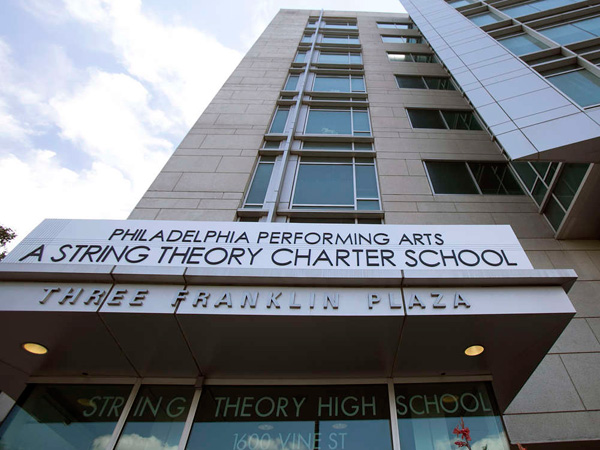
Students at the Philadelphia Performing Arts Charter School, a K-12 facility of about 2,500 with campuses in South Philadelphia and Center City, should soon be able to graduate with high school diplomas and 60 college credits — for free.
PPACS is not the only early college in the city — the Philadelphia School District has Parkway Center City Middle College, and other schools allow students to take college courses while in high school. Some schools offer dual enrollment, and a new early college charter will open in the city in the fall.
But instead of partnering with existing colleges, String Theory, the education management organization that runs PPACS, is in the process of openingits own degree-granting institution.
String Theory College will focus on design, technology, and entrepreneurship, offering PPACS students more flexibility than prior dual-enrollment partners had, said Jason Corosanite, the college president. Students won’t have to leave the school’s Vine Street campus to attend classes, either.
“The whole goal is to get all kids prepared for college, with as many college credits as possible,” Corosanite said.
The college already has Pennsylvania Department of Education approval, and its Middle States Commission on Higher Education accreditation vote is scheduled for March, commission officials said. Once schools are candidates for accreditation, that opens up college transferability, student loans, and Pell grant opportunities, though PPACS students pay no tuition because the school is a publicly funded charter.
Corosanite said he is confident the school will gain Middle States approval and ultimately be able to offer students associate’s degrees.
With Philadelphia’s crowded higher education market and a looming college enrollment cliff, it’s fair to question whether the city needs more degree-granting institutions, said Shaun Harper, a professor of education, public policy, and business at the University of Southern California. Some would say it does not.
But, Harper said, “if this new creation is going to expand access and make higher ed more affordable, I think that is a spectacular thing. We need more innovative models in education that create more seamless pipelines from high school to college.”
Harper’s research once centered on the experiences of high-achieving Black and Latino boys in New York schools who, once in college, “suddenly they realized that they were not as prepared for college as they had been led to believe by their high school teachers and by the grades they received in high school.”
That makes Harper consider whether String Theory students “are really going to be pushed to do college-level work, and perform like college students would otherwise be able to perform? I think that is a thing to be concerned about.”
Ultimately, Harper said, he is intrigued by the model.
“There’s a real opportunity for [String Theory] to ensure that they are providing the right kinds of professional learning and professional development experiences for these educators, so they amass the skills that will be able to make the curriculum much more complex, much more college-level,” Harper said. “They may have a real shot here at teaching the rest of the nation something that ultimately becomes replicable.”
High school and college in one stop
The seeds of the idea trace back to PPACS’ first high school graduates — the Class of 2017.
When Corosanite and other String Theory officials tracked those students, “some of our best and brightest kids were dropping out of college because of cost,” he said. “It wasn’t because they couldn’t do it. They were looking at the value proposition of these schools and dropping out. I felt the burden of, ‘We’re telling all these kids, yeah, you have to go to college,’ and then they graduate and can’t afford life. How do we solve for that?”
Enter String Theory College.
Theprogram is already underway — about 40 students who participated in a pilot program are on track to graduate with college credits in June, and about 40 more are in 11th grade now.
The college will initially be open only to students enrolled in PPACS. Going forward, every 11th- and 12th-grade honors and Advanced Placement course at the school will be a college-level course, and the PPACS faculty who teach the courses are college faculty.
Course offerings include multivariable calculus, linear algebra, biotechnology, entrepreneurship, anddesign.
Students still have access to the trappings of high school: All non-honors classes are still within the PPACS confines. And students must still meet state requirements for their high school diplomas — they are learning math, but it might be a design-focused math class, for instance.
“Kids still have their high school experience — they still come to school on time, they still go to the lunchroom with everybody they go to school with,” Corosanite said. “They still see their friends, they still have prom, but they also have college. It makes it a lot easier.”
There is no budget impact for PPACS, Corosanite said. The school,which as a charter is independently run and publicly funded, pays the college a per-credit hour rate that is roughly equivalent to community college, and that money covers teachers’ salaries and benefits.
“We’re trying to be as efficient as possible with the classes the teachers have, and the college is in our building,” he said. “We’ve designed it to be cost-neutral. This is not a moneymaker — it’s mission-driven.”
Going forward, Corosanite dreams of a graduate school of education — String Theory already offers continuing education for teachers — and offering college courses to other schools and districts.
‘This is a good opportunity’
Hasim Smith, a PPACS senior, was pitched on the idea of taking college classes in high school when he was a 10th grader.
Smith’s dad had heard about the pilot program and urged his son to go for it.
“He said, ‘This is a good opportunity. I don’t want you to miss out on it,’” Smith said. “I like to challenge myself and do things that other people see as hard. And I like that it’s free — it helps with college costs.”
Smith was game and now, at age 18, he’s looking forward to collecting his high school diploma and transferring dozens of credits to another college. (He’s already been accepted to 10 and is awaiting more decisions.)
The courses are challenging, he said, but manageable, especially with his teachers’ support. He’s enjoyed the design challenges in particular, Smith said.
“We had to learn a lot — it gets really deep. We have to learn about design, and different theories, and entrepreneurship,” Smith said.
He had always thought he might want to pursue nursing as a career, but his String Theory college experience has him also considering architecture, he said.
How to apply
The college-in-a-high-school program has a limited number of slots for students who will be in 10th through 12th grade for the 2026-27 school year, and is accepting applications for those seats and for its incoming ninth-grade class.
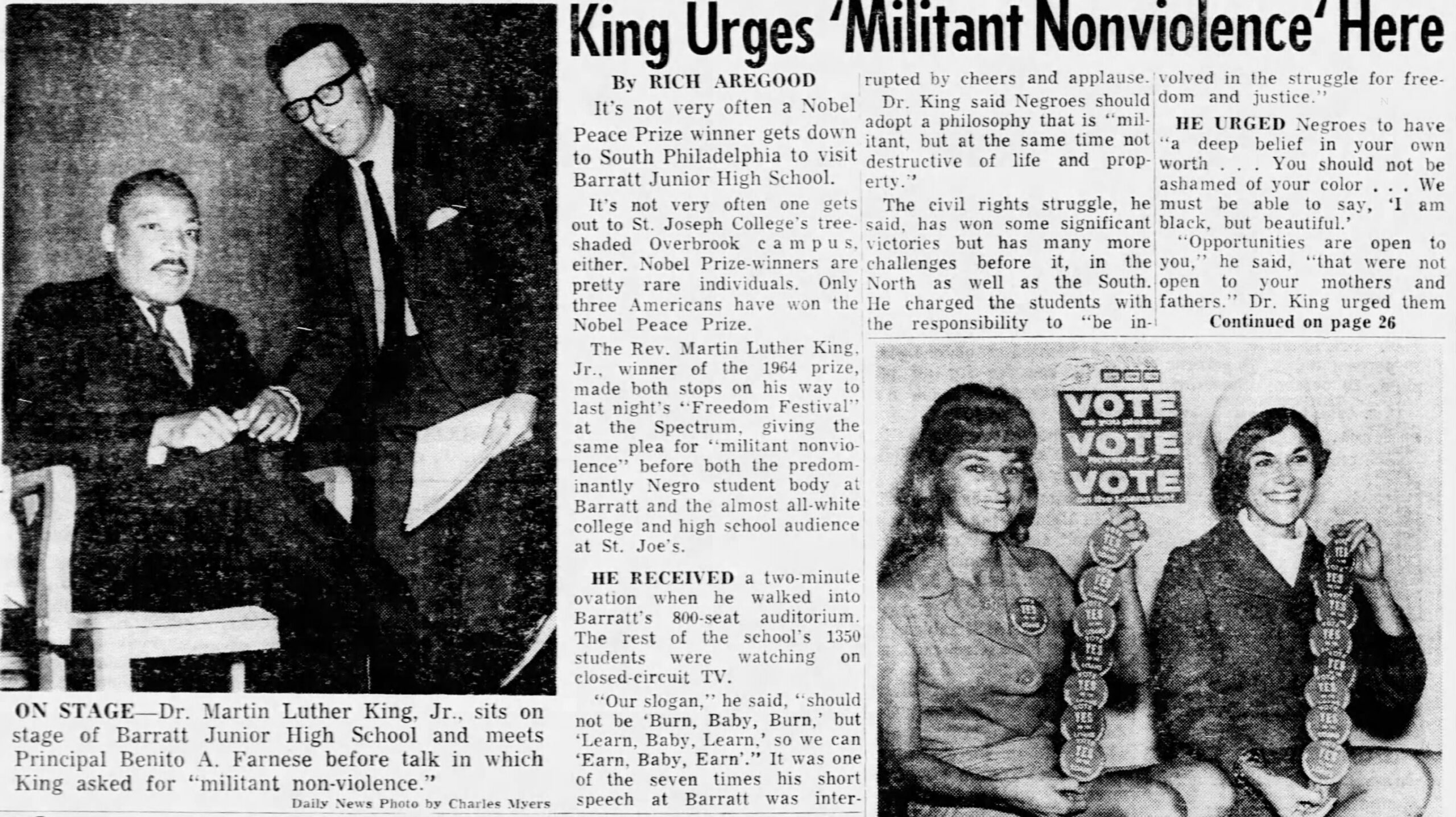
The limousine door burst open, and the Rev. Dr. Martin Luther King Jr. stepped out onto the sidewalk in front of Dennis Kemp’s South Philadelphia school.
Kemp was 13 that day in October 1967, a member of the stage crew and the basketball team asked by the principal of Barratt Junior High to greet the school’s surprise special guest.
“In just about every Black household that I went into those days, there were three pictures hanging: Jesus, John Kennedy, and Dr. King,” said Kemp, now 72. “To actually meet this guy, it just blew me away.”
“What is your life’s blueprint?” King asked the students. “This is a most important and crucial period of your lives, for what you do now and what you decide now at this age may well determine which way your life shall go.”
The community will mark the historic moment Monday, on Martin Luther King Jr. Day, with a showing of the speech in the auditorium of the school now known as Childs Elementary, then a day of service projects inside the building. One group hopes to apply to havea historical marker commemorating the visit placed outside the school.
Kemp is glad that people still view and discuss King’s speech. Although he was a child, he sensed that he was part of something significant.
Though nearly 1,000 students had packed into the Barratt auditorium, crowding into aisles and leaning over balconies, the room was silent save for King’s voice, Ben Farnese, then the school’s principal, told The Inquirer in 2006. In a nearby overflow room, 450 more students watched King on closed-circuit TV.
“I took it in,” said Kemp, who was in the auditorium. “I said, ‘I’m going to keep this with me as long as I live.’”
Charles Carter, a ninth grader who was in the auditorium, remembers the quiet.
“Just figure — kids can be a little rowdy,” Carter said. “But we were transfixed, we were glued. We weren’t rowdy that day.”
Jeffrey Miles, another Barratt student, had a good seat that day. He had heard a speaker was coming to school, and he was excited — he thought it might be Georgie Woods, the prominent DJ.
After he heard King speak, he couldn’t help himself.
“I had the end seat, and I jumped up out of my seat,” said Miles, who had turned 14 a few weeks before King spoke. “The speech was so exhilarating and so electrifying, I couldn’t control myself. He was walking down the aisle with [DJ] Georgie Woods, and I said, ‘Dr. King, can I shake your hand?’”
King said yes. Miles grabbed his hand, which was sweaty — a detail that sticks in his mind, along with the sound of the Barratt students clapping thunderously for King.
A belief in ‘somebodiness’
King was in town for a “Stars for Freedom” show at the new Spectrum, opened the prior month in South Philadelphia.
The Philadelphia Daily News recounted Martin Luther King Jr.’s visit to Barratt Junior High in October, 1967.
“I know you’ve heard of that new impressive structure called the Spectrum, and I know you’ve heard of Harry Belafonte and Aretha Franklin and Nipsey Russell and Sidney Poitier and all of these other great and outstanding artists,” King said. He told the students to urge their parents to attend. “And I hope you will come also, for it will be a great experience and, by coming, you will be supporting the work of the Civil Rights Movement.”
King did not use notes, Farnese said. He spoke for 20 minutes, an address that would eventually be known as his “What is Your Life’s Blueprint?” speech.
The Barratt students, seventh, eighth, and ninth graders, were poised to move into a time that would determine the course of the rest of their lives.
The great civil rights figure, who had by that time already won the Nobel Peace Prize, told the young people to have “a deep belief in your own dignity, your own worth, and your own somebodiness. Don’t allow anybody to make you feel that you are nobody.”
Take pride in your color, your natural hair, King told the students, most of whom were Black.
“You need not be lured into purchasing cosmetics advertised to make you lighter, neither do you need to process your hair to make it appear straight,” King said. “I have good hair and it is as good as anybody else’s in the world. And we’ve got to believe that.”
‘Learn, baby, learn’
King urged the crowd to set upon a path to excellence, whatever that looks like.
“I say to you, my young friends, that doors are opening to each of you — doors of opportunity are opening to each of you that were not open to your mothers and your fathers,” King said. “And the great challenge facing you is to be ready to enter these doors as they open.”
Kemp remembers being surprised that King came to South Philadelphia.
“Our neighborhood was pretty poor,” said Kemp, who grew up as one of nine children in a family that struggled. “There really wasn’t too much to look forward to in our neighborhood.”
King acknowledged the “intolerable conditions” faced by many of the children he addressed. But, he said, it was incumbent on them to stay in school, to build a good life.
“Set out to do a good job and do that job so well that the living, the dead, and the unborn couldn’t do it any better,” King said. “If it falls to your lot to be a street sweeper, sweep streets like Michelangelo painted pictures.”
The civil rights hero told students to commit to “the eternal principles of beauty, love, and justice. Don’t allow anybody to pull you so low as to make you hate them.”
King, who encouraged peaceful resistance, urged “a method that can be militant, but at the same time does not destroy life or property.”
“And so our slogan must not be ‘Burn, baby, burn,’” King said, referring to a chant that had become associated with the 1965 Watts riots in Los Angeles. “It must be ‘Build, baby, build. Organize, baby, organize.’ Yes, our slogan must be ‘Learn, baby, learn’ so that we can earn, baby, earn.
“And with a powerful commitment, I believe that we can transform dark yesterdays of injustice into bright tomorrows of justice and humanity.”
‘I’ll never forget it’
Some of the members of the Barratt class in the room that day soared: Kevin Washington, who was on the basketball team with Kemp, went on to become the first Black president of the national YMCA.
Kemp was bright, but his family’s economic struggles weighed on him, he said. He dreamed of college, but it wasn’t in reach. He ended up leaving South Philadelphia High without a diploma, eventually earning a GED.
He raised children, built a life working — often in maintenance. He spent time as a school basketball coach.
After suffering medical and marital issues, Kemp fell on hard times. He spent four months without a home, sleeping in parks and at 30th Street Station.
“Dr. King’s speech really helped,” he said. “That used to come to mind when I was on the street. I’ll never forget it.”
Kemp rallied; he now lives in an apartment in South Philadelphia.
Jeffrey Miles is photographed at his home in Philadelphia on Friday, Jan. 16, 2026. Miles was 13 in October 1967 when he shook the hand of the Rev. Dr. Martin Luther King Jr. and witnessed a speech that altered the course of his life.
The speech also altered the course of Miles’ life.
“I was a member of a gang in South Philly,” said Miles, now 72. “I never paid attention to adults and teachers. But that day I paid attention to Dr. King.”
King’s words — reach for more, do your best, no matter your struggles — resonated. He buckled down at school, graduated from high school, from college. He became an optician and even taught students at Salus University.
“When Dr. King said, ‘instead of burn, baby, burn, learn, baby learn,’ that gave me a window,” said Miles, who lives in West Oak Lane. “It gave me hope.”
Philadelphia students are performing the best they have in math in years, showing steady improvement since the pandemic.
Still, just a quarter of city third through eighth graders passed Pennsylvania math assessments, with 25.1% of students scoring proficient or advanced on the 2024-25 exam, up from a 22% pass rate the prior year and 18.9% in 2016-17.
That means the district surpassed the school board’s goal of a 22.2% pass rate for last school year — but fell well below the 2029-30 target of 52% proficiency.
Philadelphia students still lag Pennsylvania averages considerably, though — for the 2024-25 year, 41.7% of students in grades three through eight statewide passed math tests.
Scores are slightly stronger in the lower grades. Overall, 33.7% of Philadelphia third graders passed the state test, compared to 27.4% the prior year. The board’s third-grade target is 57.5% for 2029-30; it was 28% last year, a nod to prior performance.
Officials said the jumps are due in part to the new math curriculum the district adopted in 2023-24.
The school board devoted its full Thursday night progress monitoring session to examining math goals. The highlighted findings include:
Attendance correlates with math scores
Students’ attendance generally correlates to their math performance. Of pupils who attended school 90% of the time or more, the highest percentage of students were at or above benchmark (29%) and the lowest percentage needed the most intense interventions (24%).
The reverse is true for students who are considered “chronically absent” — those who attend school less than 80% of the time. In that category, more than half of students — 52% — needed intense interventions, and just 7% scored proficient or above.
Improvements for students learning English
English language learners’ math skills are improving, as measured by Star tests, which the district gives periodically throughout the school year to measure student learning.
The math proficiency of third grade English learners, for example, was up year-over-year as marked by the winter Star exam. This school year, 23% of English learners passed the test, compared with 18% at the same point in 2024-25.
Slight improvements for students with disabilities
Students with disabilities scored lower. Overall, 11% of students with disabilities passed the winter Star exam, up slightly from 10% last year.
Focus on early math skills
Officials said gains were made in part because of a focus on building foundational math skills.
Students in kindergarten and first and second grades all saw jumps from fall to winter in mastering skills such as numeral recognition, addition to 10, and subtraction to 10, as measured by Star tests. The district showed significant gains in third grade performance this year.
Nearly 20 people witnessed an assault in the Cheltenham High football team’s locker room last fall, according to an external investigation commissioned by the school district.
No one tried to stop it, “and several participated freely in it,” Superintendent Brian Scriven told the Cheltenham community in an e-mailed message Thursday. “Several students also filmed the assault.”
The assault — which happened Sept. 3 — ultimately resulted in the cancellation of the team’s season in October and led to the hazing investigation, for which Scriven released the results Thursday night. His message did not include additional details about the assault.
Though a pattern of hazing was “not fully substantiated,” Scriven wrote, other troubling findings include: inadequate student supervision in the locker room, “a failure to prioritize student safety by the coaching staff and/or adult volunteers,” no anti-bullying or anti-hazing education for team members, and “a toxic and negative culture within the current football program.”
The team’s head coach, according to a 2025 Cheltenham news release, had been Terence Tolbert, a business teacher at the school and a former semi-professional football player. When reached Thursday, Tolbert declined to comment.
Cheltenham’s football program will be rebuilt eventually, Scriven said, and the district will adopt investigators’ recommendations, including identifying, hiring, and training a “new coaching staff with strong commitment to leading student-athletes in a positive and responsible manner,” and strengthening team supervision.
But, Scriven said, fielding a team in 2026 is not a given for the district.
The superintendent alluded to “a general lack of credibility on the part of many of those interviewed during the investigatory process” and said parent, student, and staff cooperation going forward is crucial.
“Those students who were not involved in this situation are especially important to rebuilding the culture of our program,” Scriven said. “If all of these conditions are met, the district will stand up a football team for the 2026 season.”
It is not yet clear whether the students involved could face punishment or criminal charges. Multiple students have ongoing Title IX and disciplinary matters, which could affect their eligibility to play football. Cheltenham Township police and the Montgomery County District Attorney’s Office are both still investigating the incident, according to the district’s message Thursday.
Staff writer Robert Moran contributed to this article.