Author: Kristen A. Graham

  • Kids get free dental care at this Philly school. Officials say it’s a model that could be replicated in schools with empty space.

    Kids get free dental care at this Philly school. Officials say it’s a model that could be replicated in schools with empty space.

    Crystal Edwards didn’t see a dentist until she had a deep cavity at age 10: growing up in a struggling Philadelphia family, the resources to access dental checkups just weren’t there.

    So she jumped at the opportunity to locate a dental clinic in the school where she is now principal, W.D. Kelley, a K-8 in North Philadelphia.

    “This dental clinic is saving lives,” said Edwards.

    Tucked into a converted science lab on the school’s third floor, the Dental Clinic at William. D. Kelley, operated by Temple University’s Maurice H. Kornberg School of Dentistry, is nearing its third year of operation. It is open to all Philadelphia children, including those who do not attend Kelley, regardless of insurance status.

    School district officials have pointed to the Kelley clinic as a model as it prepares to make facilities master plan decisions, which will result in closing, combining, and reconfiguring some school buildings. The clinic is an example, they say, of how the system could use available space in some of its schools for public good.
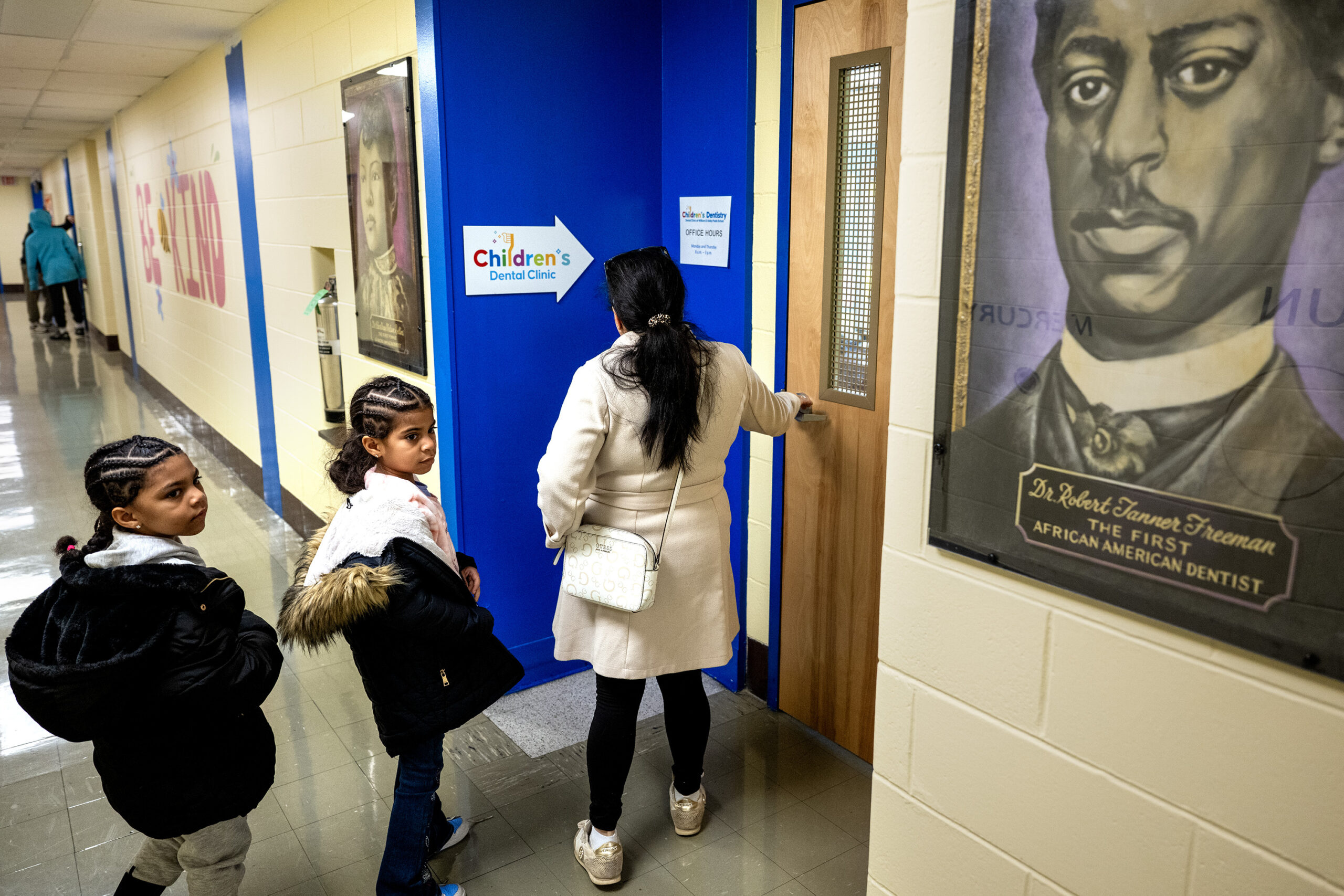
    Soribel Acosta arrives at the Dental Clinic at William D. Kelley public school on Thursday, with her children, Andrea Jimenez (left), 6. And Sayra Jimenez, 7.

    “This is certainly a great example of what can happen when a university partners with a school district to create life-changing opportunities and outcomes for young people,” Superintendent Tony B. Watlington Sr. said in a statement in 2023, when the clinic opened.

    Temple dental school officials said more clinics could follow elsewhere in the city.

    Taking care of every child

    The underlying concept is simple, said Eileen Barfuss, the Temple dental professor who leads the clinic.

    “If your tooth hurts, if you’re not feeling well, you’re not going to learn,” said Barfuss. “In the past, there have been a lot of barriers to care for dentistry that weren’t there for medicine, but preventative care is so important so it doesn’t get to the point of pain.”

    The clinic accepts all comers, including those who are uninsured or underinsured, and sometimes treats students’ parents. (Most, but not all, patients have Medicaid dental, and grants help cover treatment for those without insurance.)
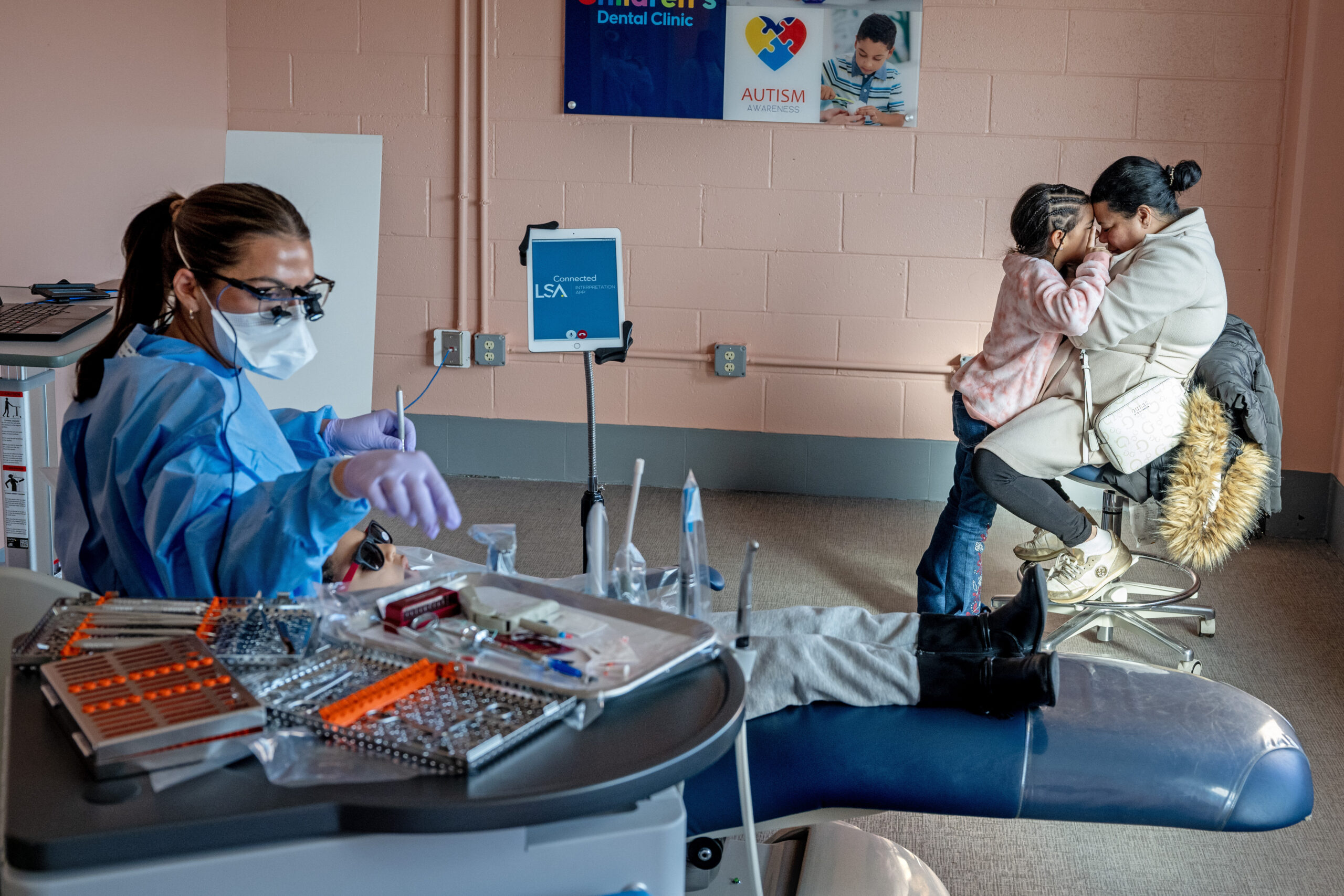
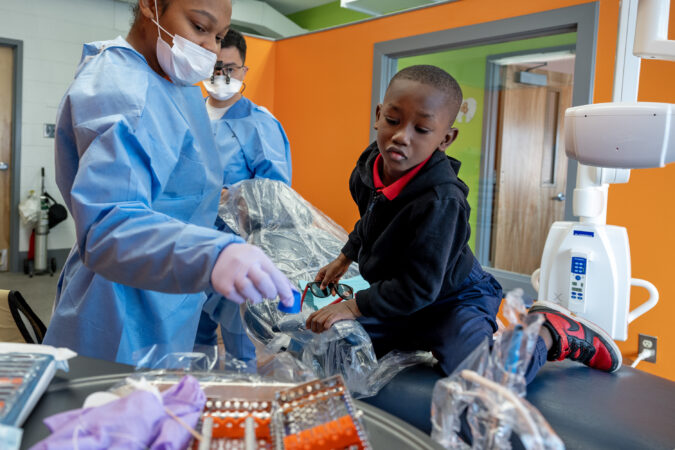
    Temple dentistry student Carly Pandit works on the teeth of Andrea Jimenez, 6, as her mother, Soribel Acosta, entertains sister Sayra Jimenez, 7, waiting her turn in the char at the dental clinic at William D. Kelley public school on Thursday.

    “We try to take care of every child in the Philadelphia School District,” said Barfuss. “There’s a place that they can come and get comprehensive care and establish a dental home.”

    To date, the clinic has seen nearly 700 patients, some of whom are repeat visitors. Patients are treated both by Barfuss and dental students she supervises.

    Students do come from other schools to the clinic; Barfuss said her team does outreach at community events and spreads the word through the district’s school nurses, who often send patients to the clinic. And staff teach lessons in Kelley classrooms on oral health and the importance of seeing a dentist twice a year.

    Being in a school helps normalize the dentist for many kids, who might poke their heads into the clinic to look around and see the friendly dental staff in their scrubs in the hallways, Barfuss said.

    ‘This is a good dentist’

    On Thursday, Fatoumata Bathily, a fourth grader with pink glasses and a bright smile, swung her legs down from a Kelley clinic dentist chair after a successful checkup.
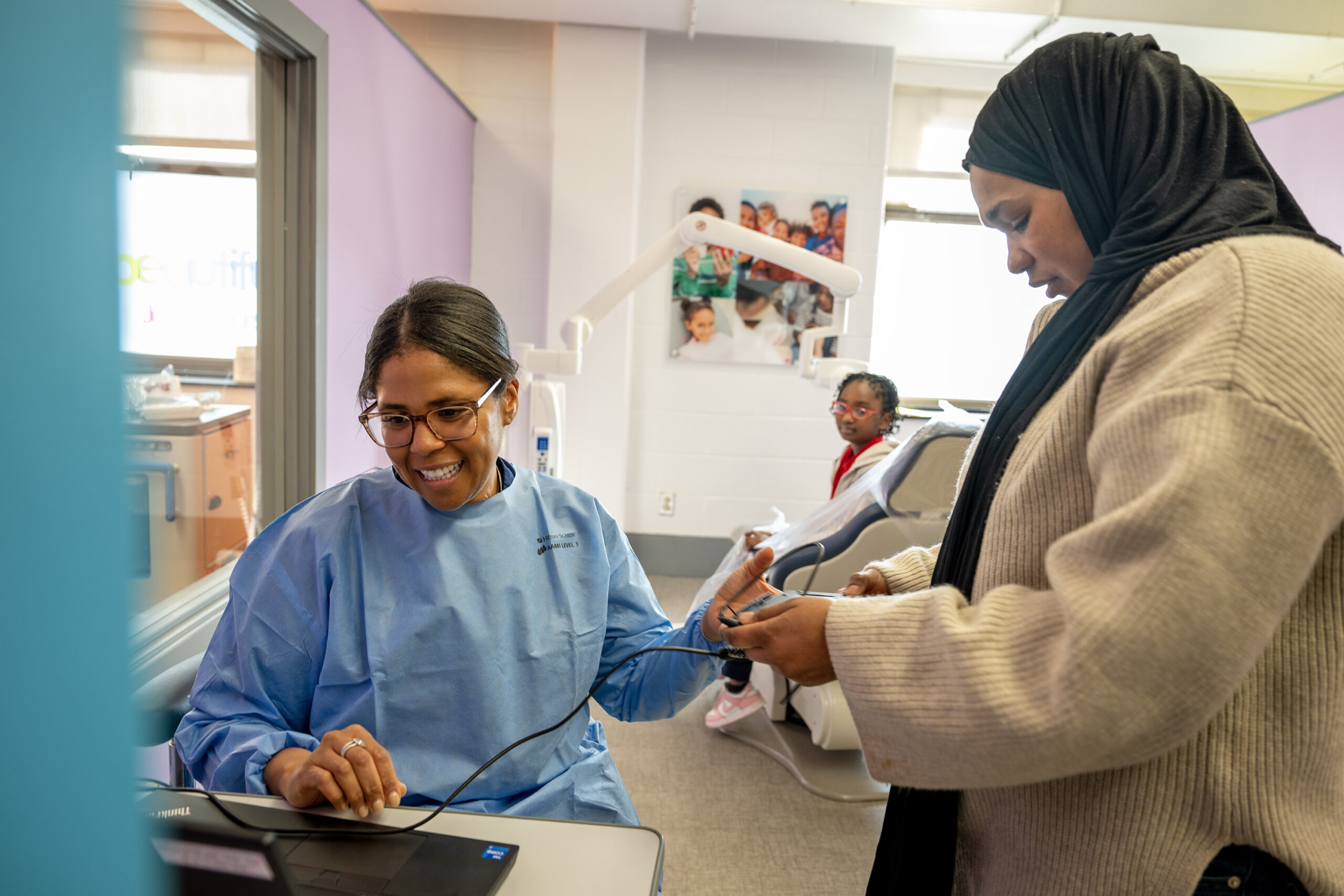
    Eileen K. Barfuss (left), a pediatric dentist and Temple dentistry instructor consults with Fily Dramera after her daughter Fatoumata Bathily (rear), 9, was seen by a Temple student dentist at the Dental Clinic at William D. Kelley public school on Thursday.

    “It’s good here,” said Fatoumata, who attends nearby Robert Morris Elementary, and came for preventive care along with her brother, Abubakr. “This is a good dentist. I like that it’s colorful, and the people are nice.”

    Amid Ismail has wanted to bring such a model to the city since he became dean of Temple’s dental school in 2008. Decades ago, some schools offered dental care via city services, but as funding dried up, those clinics went away, Ismail said.

    Ismail raised the idea of a Temple-district partnership, but it took several years to get off the ground. Edwards, an award-winning principal who takes pride in bringing the community into Kelley, got the vision intuitively, he said.

    Temple paid to transform a large science lab into the dental clinic; the district provides the space and does not charge rent. There are four chairs, including one in a space specifically designed for patients with autism who might need a quieter environment and more room. Rooms are bright and modern.

    “The message to the parents and caregivers is that this is a nice place where all treatment is provided,” Ismail said. “A lot of children do have dental problems, but here we can treat them easily — they miss one class, max, and they don’t have to stay a long time.”
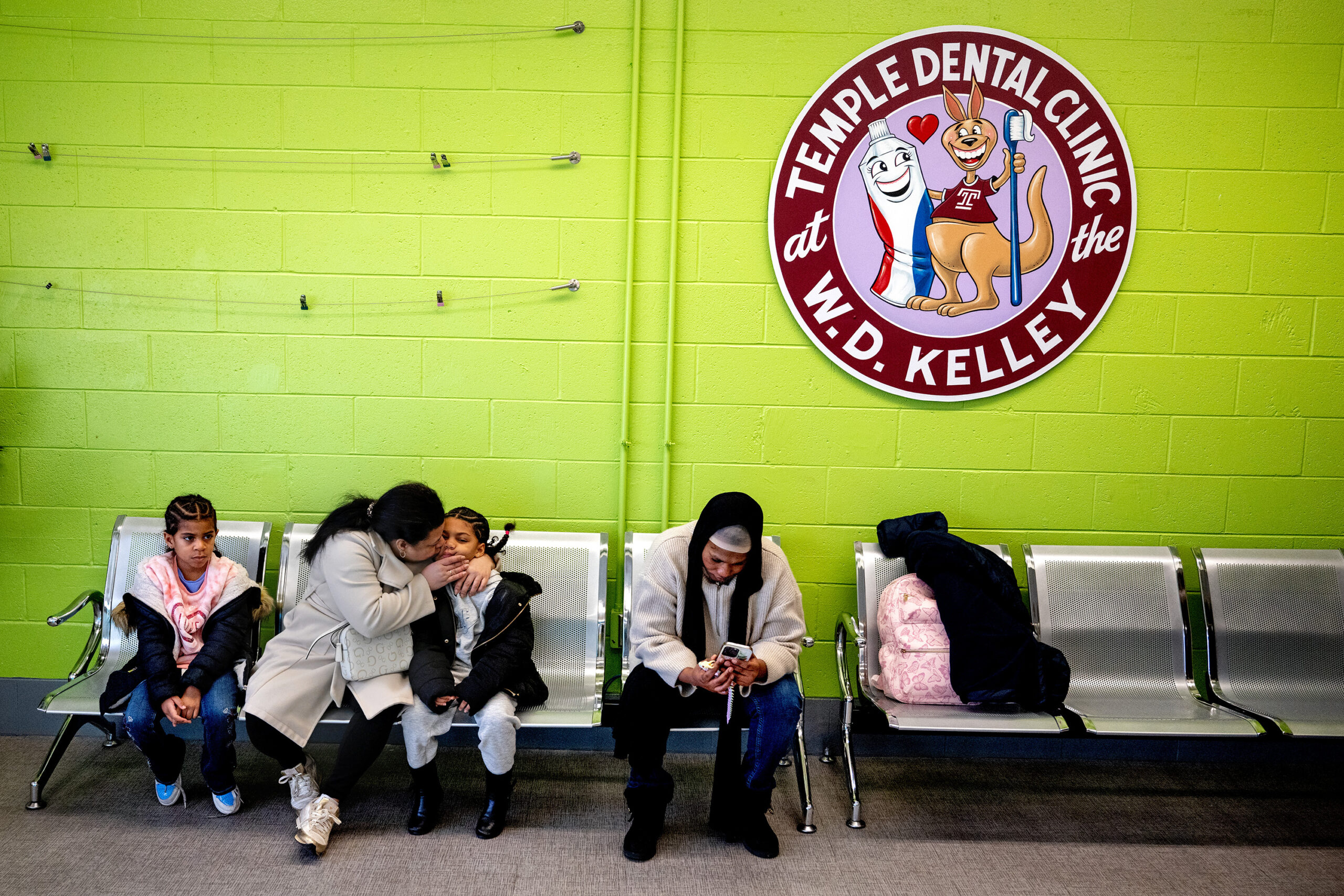
    Soribel Acosta waits for their appointment with her children, Sayra Jimenez (left), 7; and Andrea Jimenez (right), 6, at the Dental Clinic at William D. Kelley public school on Thursday.

    The clinic, which is about to celebrate its third anniversary, just expanded its schedule — it’s open four days a week, and officials eventually hope it will be open five days.

    Edwards fought for the clinic to come to Kelley, and it’s been just the boon she had hoped, she said.

    “This is a historic community that was really devastated and hard hit by the crack and drug pandemic,” said Edwards. “The dental office has really given us leverage on how to serve the community better.”

  • Two new ‘year-round’ public schools, with a special model and resources, are coming to Philadelphia

    Two new ‘year-round’ public schools, with a special model and resources, are coming to Philadelphia

    Two new schools are coming to the Philadelphia School District.

    Both schools, a K-8 and a high school, district officials said Wednesday, will have resources to help eliminate long-standing achievement and opportunity gaps for kids from underresourced communities.

    They’ll be part of the “North Philadelphia Promise Zone,” Superintendent Tony B. Watlington Sr. announced. Watlington said they would be the first schools in the United States to replicate the success of the acclaimed Harlem Children’s Zone, with the blessing of its founder, Geoffrey Canada,who pioneered a model that takes a birth-to-career approach to tackling generational poverty.

    Watlington said the schools would be “true year-round schools.” They would bring a new approach to the new Philadelphia public schools, where prior attempts to replicate the Harlem Children’s Zone blueprint have shown mixed results.

    Harlem Children’s Zone runs charters in New York City, but the proposed Philadelphia schools will be run by the district using the organization’s educational model, which includes extra resources and a longer school day and school year, as well as extensive social service supports.

    Members of the West Philadelphia Marching Orange & Blue perform before Philadelphia Mayor Cherelle L. Parker speaks on the state of Philadelphia schools during a gathering at Edison High School in Philadelphia, Wednesday, Jan. 7, 2026.

    “We’re going to be partners in opening these two state-of-the-art schools,” Watlington said at his state of the schools address, held Wednesday at Edison High School in North Philadelphia.

    The district has big hopes for the schools, which officials said will be opened in existing Philadelphia school buildings — no new school structures will be involved.

    “Not only will they get better, but get better faster than our district average. We’re going to make sure the school is staffed with the very best, most effective principals,” Watlington said. “We’re going to ensure that these schools are staffed with the very best, most effective teachers.”

    They will be schools of choice, meaning parents can opt into having their children attend rather than basing enrollment on where students live.

    The schools will also pull in Temple University; Watlington said that via the Temple Future Scholars program, “every single one of these graduates from this K-8 and high school” will be college-ready.

    Many details were not clear Wednesday, including when the schools will open, what the year-round model will look like, the exact relationship with Harlem Children’s Zone, how the schools will be funded, and who will staff them. The district said it could not give more details immediately.

    News of the new schools caught an important partner off guard. Arthur Steinberg, president of the Philadelphia Federation of Teachers, said Watlington’s speech was the first he heard of the initiative.

    “Any changes in working conditions must be negotiated with the PFT,” Steinberg said. “We will not agree to anything that requires members to work additional days or hours.”

    Watlington said the K-8 school will open first, and he has tapped Aliya Catanch-Bradley, the respected principal of Bethune Elementary in North Philadelphia, to lead the efforts to open the North Philadelphia Promise Zone schools.

    Catanch-Bradley said it was too soon to discuss the particulars about the schools, which will be built with significant community involvement.

    But, she said, North Philadelphia is a prime location for the cradle-to-career Harlem Children’s Zone model.

    “We know that it’s not a food desert, because food… deserts are natural,” she said of North Philadelphia. “It is food insecure by design, right? And so, we now know that you have a resource drought there, to which it’s going to take an intentional pouring of all types of resources to wrap around a community, to help expand and become a very successful ecosystem.”

    Philadelphia district officials will take time to study Harlem Children’s Zone, “but also to understand the landscape of Philadelphia, what needs to be augmented to echo the needs of this community,” Catanch-Bradley said.

    Mayor Cherelle L. Parker campaigned on the promise of year-round schools, and her administration has put extended-day, extended-year programs into 40 district and charter schools. But those programs are essentially before- and after-care and summer camps, paid for with city funds and offered free to 12,000 students, rather than traditional year-round education.

    Harlem Children’s Zone schools have longer school days and longer school years. It’s not clear what form the proposed North Philadelphia Promise Zone schools might take, and how these efforts would differ from prior attempts around the country to replicate the success of the Harlem Children’s Zone. Former President Barack Obama in 2010 highlighted the model and selected 20 communities, including Philadelphia, to start “Promise Neighborhood” programs that would improve access to housing, jobs, and education. Those efforts were met with varying degrees of success, and no schools opened in Philadelphia.

    Watlington’s new-school announcement capped a two-plus-hour, pep-rally-style event where he and others underscored progress the district has made in the past year — and since the superintendent came to Philadelphia four years ago.

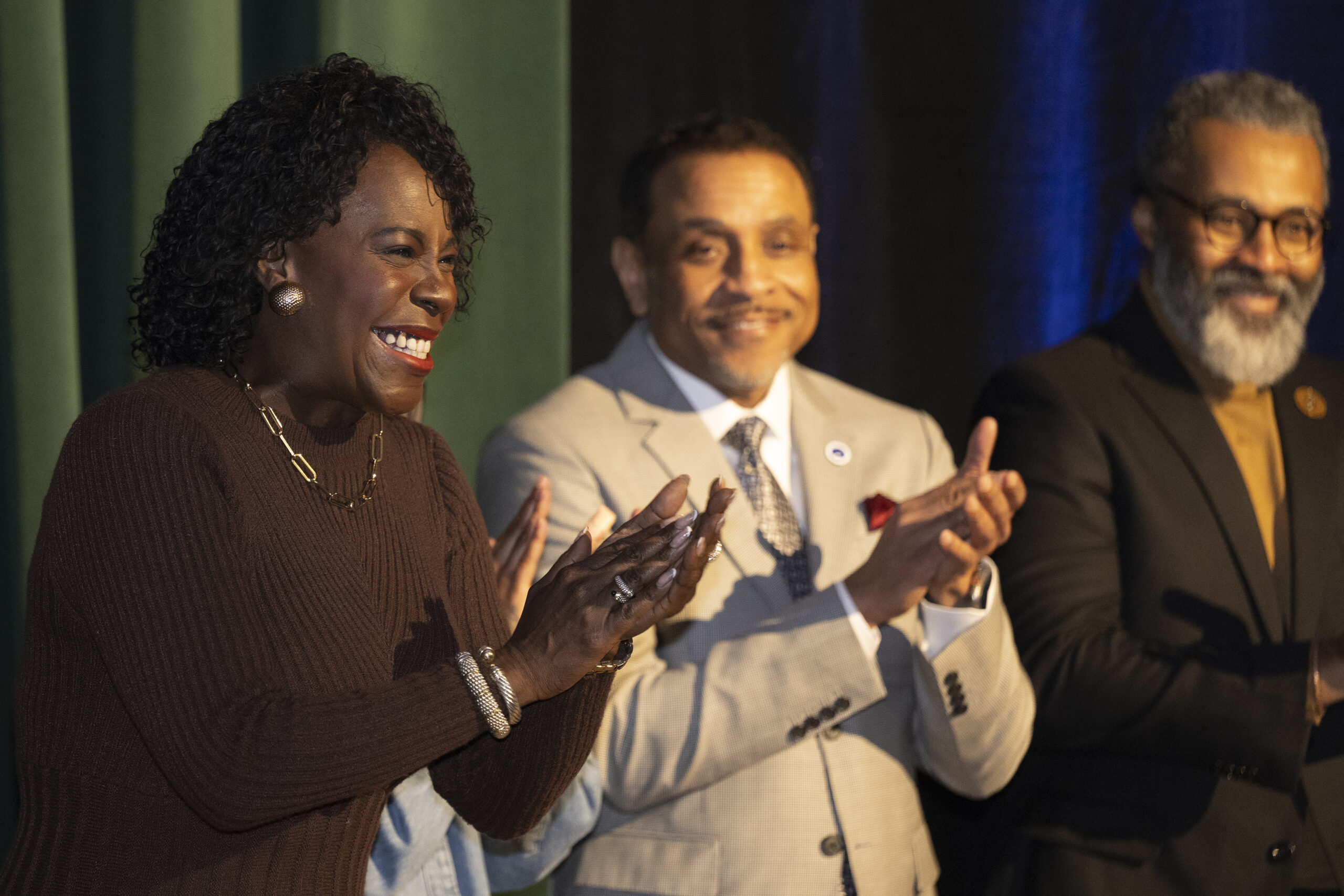
    Philadelphia Mayor Cherelle Parker (left), Superintendent Tony B. Watlington Sr. (center), and school board president Reginald Streater during a ceremony on the state of Philadelphia schools at Edison High School on Wednesday.

    Other news from the state of Philadelphia schools event

    Parker, who led off the event, said she was pleased with the state of schools.

    “The school district has continued to make steady and meaningful progress,” Parker said. “Test scores are rising, attendance is rising. Dropout rates are declining, and those gains are real, and they reflect what happens when we invest in our students.”

    Parker emphasized her desire to have the city take over a list of abandoned district buildings. The school board took the first step in December, voting to authorize Watlington and his administration to begin negotiating with the city to do just that.

    Parker said that some of the buildings have been vacant for as long as 30 years. The district has not yet released a list of buildings to consider transferring, but the mayor said it includes at least 20 former schools.

    “I want you to be clear about what my goal and objective is,” Parker said. “It’s not OK for me to have 20, 21 buildings consistently vacant, red on the school district’s balance sheet, generating no revenue and not at all working at their best and highest use. We’re going to find a way to do what has never been done in the city of Philadelphia before — develop a plan for those persistently vacant buildings.”

    Watlington also ran down a laundry list of accomplishments, including ongoing fiscal stability and improvements on the National Assessment of Educational Progress, known as the nation’s report card.

    He said the district would “retire” its structural deficit completely by 2029-30 though declined to give details.

    He and Reginald Streater, president of the city’s school board, said the district still has a ways to go but has made strides. More than half of all district students still fail to meet grade-level standards in reading and math.

    But, Watlington said, “I can assure you we’re making progress. We’re going to double down. More for our children, not less. More opportunities, more access, more exposure, more good things to come in 2026.”

  • Parents and teachers want smaller classes and no school closures. Here’s what else they said in Philly’s facilities planning survey.

    Parents and teachers want smaller classes and no school closures. Here’s what else they said in Philly’s facilities planning survey.

    The Philadelphia School District now has the feedback officials said they needed before making decisions about school closings and reconfigurations.

    The topline result: Philadelphians don’t want their local schools closed.

    Some urged prioritizing small classes. Others suggested adding more magnets, like Masterman; pouring more resources into neighborhood K-8s and high schools, and modernizing facilities.

    But while Superintendent Tony B. Watlington Sr. promised to use the feedback to shape the district’s plan, he and other district leaders have said school closings are a given — the district has 70,000 excess seats in schools across the district of 113,000, and dozens of buildings that are in poor shape.

    That process is expected to play out this year. It initially was to have yielded decisions in December, but Watlington said his administration needed more time to analyze data and reach out to school communities before ordering sweeping changes that they say are necessary.

    Watlington now says he will present a draft facilities plan sometime this winter, with more feedback and revisions to come before a board vote. The timeline for a final vote is not clear.

    In an email, he thanked those who participated in the survey and other parts of the planning process. “We have, and will continue to take your feedback very seriously, as we know these will be difficult decisions that could impact many families,” he wrote, adding that there will be additional “community conversations” before the final plan goes to the board.

    The district last engaged in a similar process in 2012, closing 30 schools by 2013, a hugely controversial process that officials later said did not improve academic outcomes for students or yield significant long-lasting savings for the district. Officials have said they will undertake the process more deliberately and with different aims in this incarnation.

    More than 8,000 parents, teachers, students, and community members participated in Watlington’s survey, sharing their priorities for the long-awaited facilities master planning process.

    Boosting neighborhood high schools, strengthening K-8s

    The new survey data, released by officials as winter break began, did not yield surprises, but reiterated themes that will be tough for the cash-strapped district to balance.

    Officials had previously identified four main topics that have emerged from more than a year of analyzing data and gathering feedback — strengthening K-8 schools, reinvesting in neighborhood high schools, reducing school transitions for students, and expanding access to grades 5-12 criteria-based high schools.

    Survey respondents rated each of those “important” or “very important” — with reinvesting in neighborhood high schools (85%) and strengthening K-8 schools (81%) at the top of the priority list.

    Overall, those who responded to the survey support their local schools, want strong schools close to where they live, and want the buildings closest to where they live to be renovated, not shut down.

    Respondents raised concerns around several topics districtwide: overcrowding, inadequate staffing, school safety, insufficient supports for students with disabilities, student behavior issues, facilities quality and cleanliness, and support for libraries, recess, and extracurricular activities.

    Some also expressed worries about transparency in the facilities planning process, and worries that when the district says its goal is “better use of space” it means that it will close schools.

    They outlined fears about potential hardships that closing schools could create, such as longer walks to school or tough bus rides in unfamiliar or unsafe areas. And they flagged worries about merging more than one school into a single building and having large grade spans in a single building. (Though some said they relished the idea of having many grades in one spot.)

    In their own words

    Respondents had plenty of ideas for officials as they plan steps that will have implications for the city for years to come. Here are some excerpts from survey responses:

    “I believe that we should stop closing schools and update areas so that we can utilize small class sizes. The ONLY way to accomplish meeting the needs of students, emotionally, physically, psychologically, and educationally is to have SMALL class sizes,” one person wrote.

    By closing buildings and combining schools, some children will have to walk an additional distance, most likely making them late or just deciding on certain days that the travel distance is just not worth it,” another respondent said.

    We need new high schools, middle schools, especially with vocational training. Current year textbooks, technology, air-conditioning, and programs for Tech and Art,” said another writer.

    Many [Philadelphia high schools] currently lack basic college-preparatory opportunities — few or no Honors or AP courses, limited world languages, and minimal enrichment options. This pushes academically motivated students into magnet schools, leaving neighborhood schools underenrolled and concentrated with students who have the highest support needs,” wrote one commenter.

    More schools like Masterman will prevent families from leaving the city if their child cannot get in through the lottery. It is beneficial to Philadelphia as a whole to keep these parents/families in the city instead of fleeing to the suburbs,” wrote one person.

  • Racist, antisemitic graffiti scrawled outside Roxborough High School

    Racist, antisemitic graffiti scrawled outside Roxborough High School

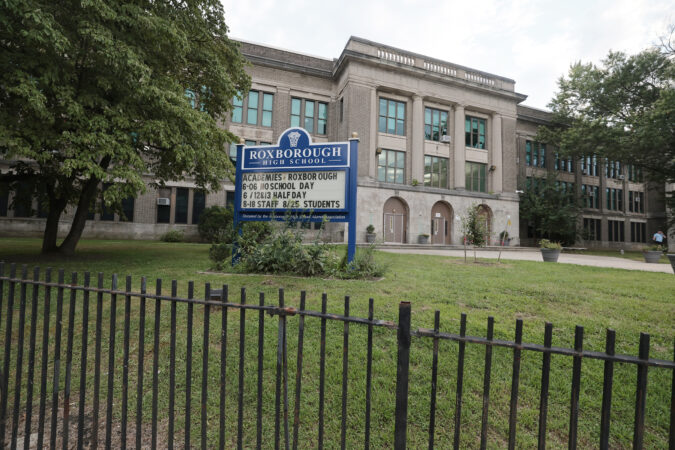
    Vandals scrawled racist and antisemitic graffiti outside Roxborough High School over the weekend.

    Philadelphia Police Department officials and State Rep. Tarik Khan (D., Philadelphia) confirmed the existence of the graffiti, which included a swastika and a racial epithet written multiple times.

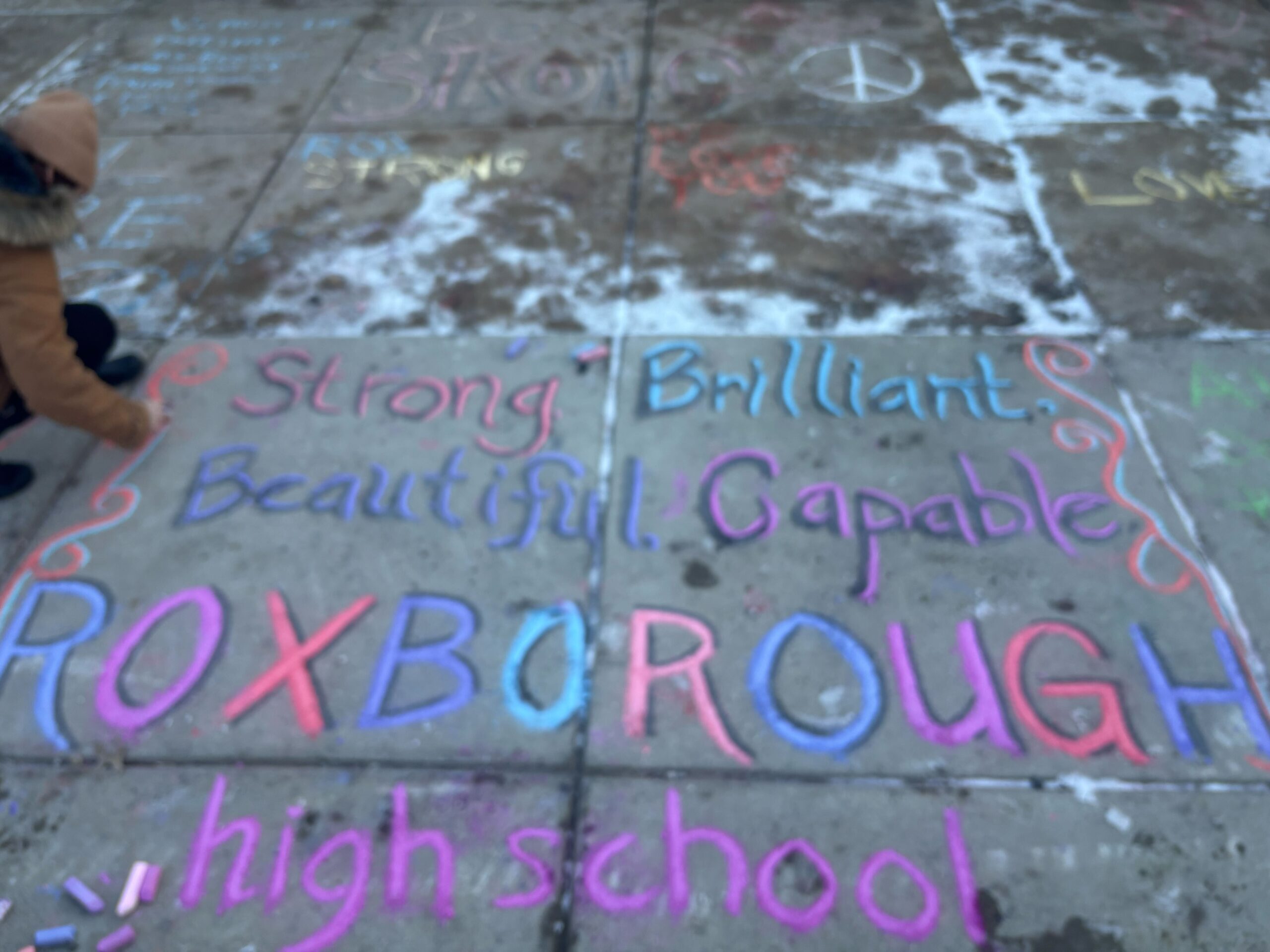
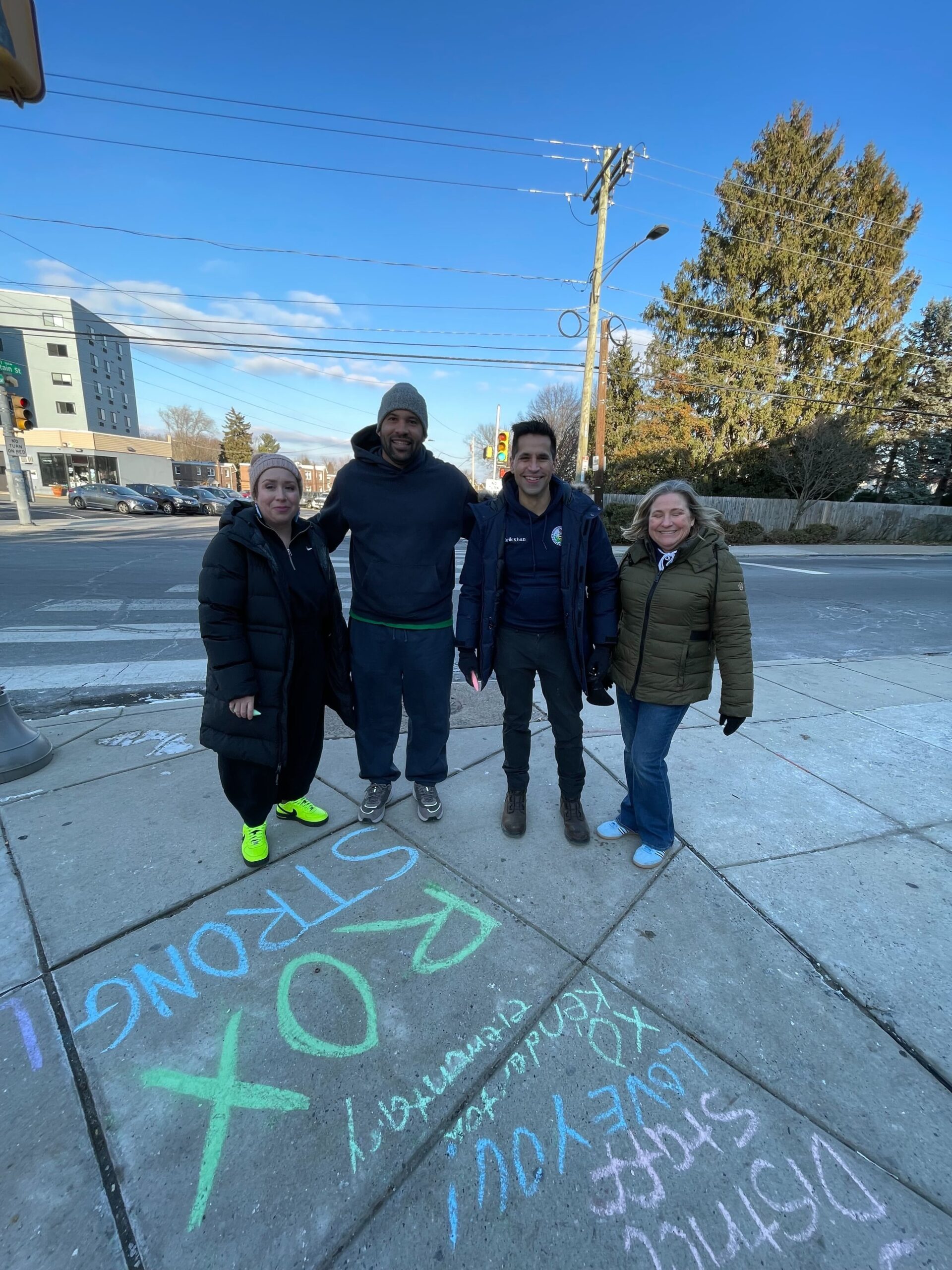
    After officials painted over the messages on Sunday, school administrators and community members gathered to counter the hate, chalking positive messages onto the sidewalk.

    “Welcome. Peace. Love. RHS,” people wrote in blue and yellow chalk Sunday afternoon. “Strong. Brilliant. Beautiful. Capable.”

    Several members of the group said they also plan to be outside Roxborough High on Monday morning, welcoming students back to school after a long winter break.

    “Let me be clear: targeting students in the middle of the night is cowardice, and it does not define us,” Khan wrote in a message shared on social media Sunday. He also came to the school to chalk messages. “Our community is bigger than a racist. … Our students are bigger. … Every student deserves to feel safe and respected when they walk into school, not have to deal with hate meant to scare and intimidate them.”

    Kristin Williams Smalley, Roxborough’s principal, informed the school community about the graffiti in a letter sent Sunday afternoon.

    “We are deeply disappointed by these actions,” Williams Smalley wrote. “We wish to remind everyone that we have a zero-tolerance policy for harassment or hate speech of any kind, and we will investigate all matters involving racist remarks and other hate speech.”

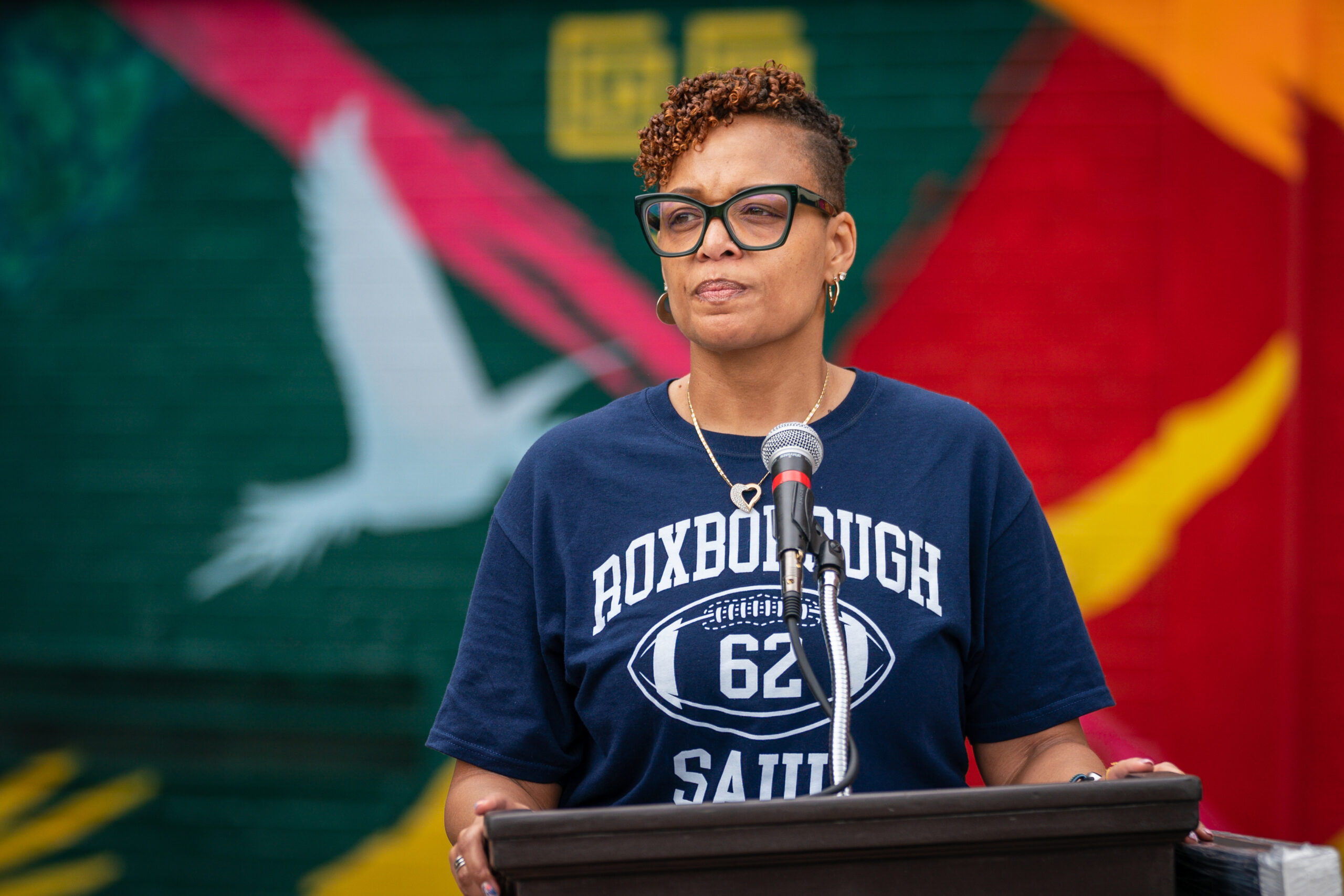
    Kristin Williams Smalley, principal at Roxborough High School, is shown in this 2023 file photo speaking at a mural dedication for Nicholas Elizalde.

    Roxborough — and the district — are diverse communities, and that’s a point of pride, Williams Smalley said.

    “We all play a role in supporting a positive and supportive school culture. We encourage you to speak with your children and have conversations about the seriousness and potential consequences of these unacceptable behaviors.”

    Students — whether alleged victims or not — should report bullying, harassment or discrimination, the principal said.

    “Please keep in mind that the young people around you are watching and listening,” Williams Smalley wrote. “We encourage all of us to be the role models they deserve. Words are powerful and we truly believe that if you work to build bridges of empathy and understanding, and demonstrate respect, our young people will follow and will create a community where everyone feels valued, seen and heard.”

    ‘No person needs to see that’

    Marge LaRue, whose grandson, Nicholas Elizalde, was shot and killed outside Roxborough in 2022, was also among the group that gathered. She and her daughter Meredith Elizalde, Nicholas’ mother, have remained involved with Roxborough staff and students since Nick’s murder.

    Members of the Roxborough High community chalked positive messages outside the school on Ridge Avenue after racist and antisemitic graffiti was scrawled at the school.

    LaRue and Elizalde’s immediate concern was making sure the mural, memorial garden, and scoreboard dedicated to Nick were not defaced. They were not.

    But they also wanted to show up for the students and staff.

    “That’s Nick’s community, the Roxborough community,” said LaRue. “Those hateful messages — I don’t know where they came from. No school, no person needs to see that, on their school, in their community.”

    Roxborough High supporters, including Meredith Elizalde, Eric Chappelle, State Rep. Tarik Khan, and Megan McCarthy-May, the school’s assistant principal, stand outside the school after chalking positive messages to counter racist and antisemitic graffiti.

    Police responded to the vandalism Sunday, a spokesperson confirmed, but no further information was available. School officials said city police and the district’s school safety office were investigating the incident.

  • 2026 Mummers Parade drew thousands to a Philly tradition despite disruptive high winds

    2026 Mummers Parade drew thousands to a Philly tradition despite disruptive high winds

    With sequins and glitter, music and pageantry, the nation’s oldest folk parade strutted through downtown Philadelphia on Thursday, delighting thousands who lined Broad Street despite fierce, damaging, and bitter winds.

    Over 125 years, there have been weather events — postponements because of cold, rain and snow and, in 2021, a COVID cancellation. But for the first time in Mummers history, one part of the parade was suspended.

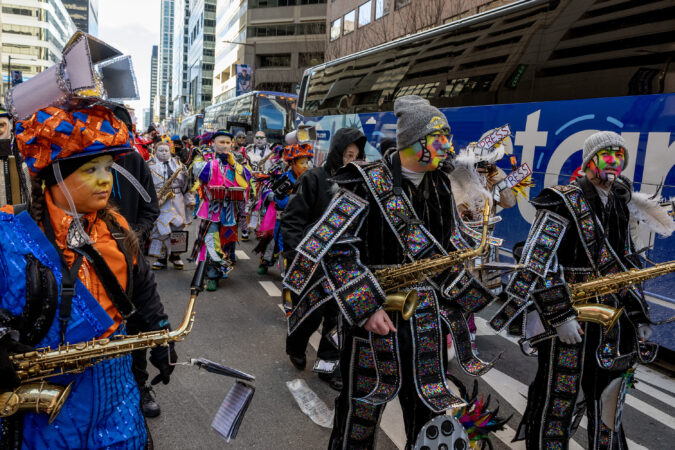
    The popular String Band Division called off its competition because of punishing winds that destroyed props and sent five people to the hospital early Thursday morning during parade setup. Each of the 14 string bands marched later Thursday, playing music in costumes and makeup, but solely for entertainment purposes and not with their planned routines.

    A full string band competition, with judges and routines the clubs have spent a full year devising and practicing, will happen on a yet-to-be-determined date, after logistics and finances are worked out.

    Still, the 2026 parade was quintessentially Philadelphia — not perfect, but full of heart-on-its-sleeve scrappiness.

    Ryan Echols, president of the Hegeman String Band, said the group had shortened its performance and packed up props due to the gusty wind, but still came to play.

    “The parade still goes on, regardless,” said Echols. “We’re still here to perform for the city of Philadelphia.”

    The cancellation had thrown a wrench in the day, said Nick Magenta, captain of the Polish American String Band.

    “You get used to all these years — how the parade goes, how the morning goes,” he said. “When you have something like those, it kind of throws you off your focus.”

    Still, Mummer morale remained high, he said.

    “You can’t change it, regardless,” said Magenta. “Everyone is just looking forward to being out here and celebrating the new year.”

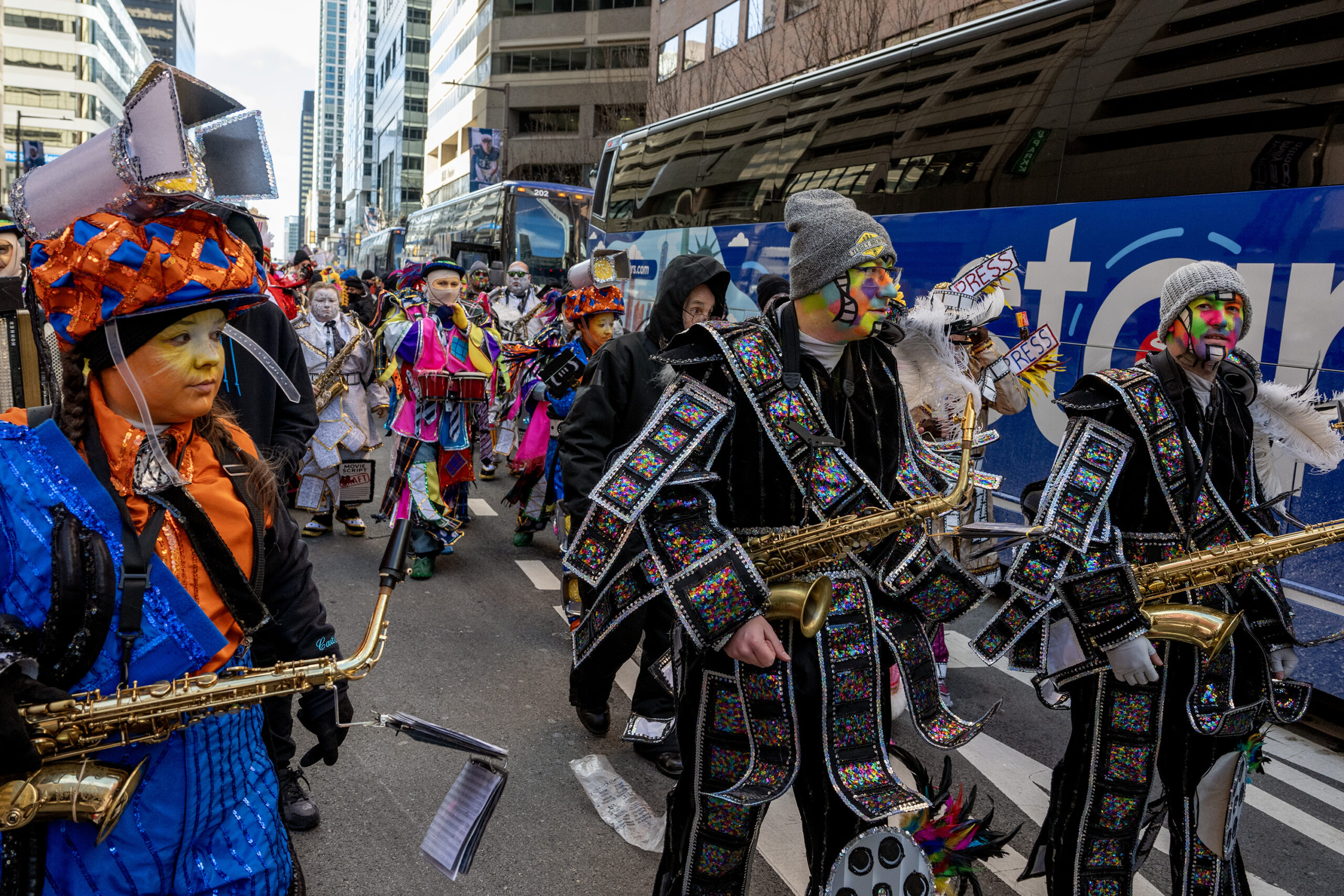
    Musicians with the Uptown String Band arrive on buses, to play for their theme of “From Script to Screen,” highlighting the golden age of Hollywood movie making.

    ‘Things were just being ripped out of our hands’

    String band officials saw the forecasts: possible snow squalls and wind gusts early Thursday morning. They monitored forecasts hour by hour.

    But in the 5 a.m. reality of readying “a mobile Broadway show,” it quickly became apparent that they were not gusts, but, on Broad Street, sustained 30-mile-per-hour winds. As clubs set up their elaborate props, five people sustained injuries that sent them to the hospital. Some clubs had important set pieces destroyed.

    “We did everything precaution-wise — sandbags and all of that,” said Sam Regalbuto, president of the Philadelphia Mummers String Band Association. “But as they were trying to assemble, things were just being ripped out of our hands.”

    Regalbuto quickly called a meeting of association delegates, and the consensus was to suspend the competition but still march. Only a little differently, not putting anyone at a disadvantage, because several bands had lost key pieces of their show.

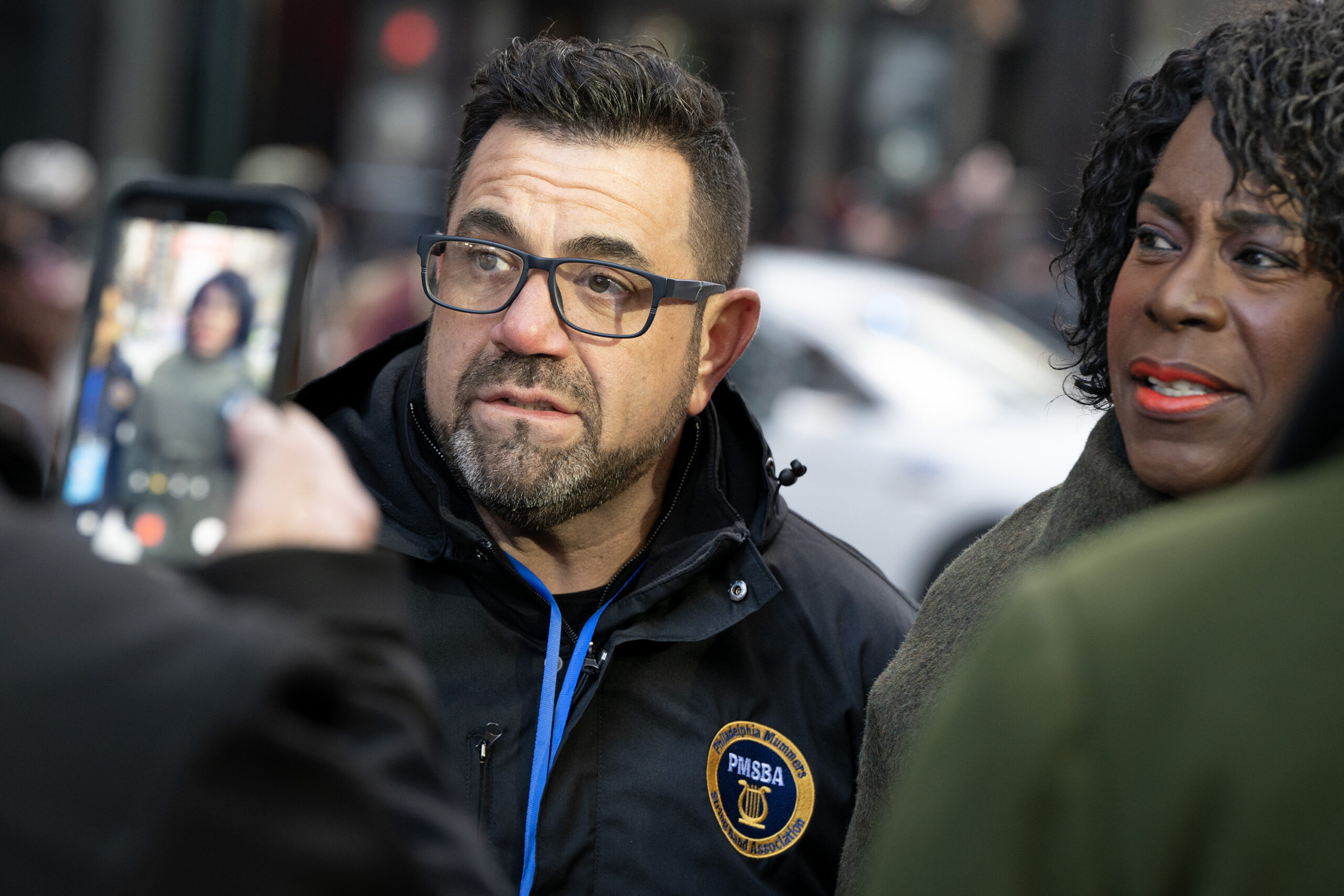
    Sam Regalbuto, president of the Philadelphia Mummers String Band Association, pauses for a photo with Mayor Cherelle L. Parker, during the Mummers Parade Thursday. The string band competition was suspended because of high winds that destroyed props and caused injuries during morning setup. The bands still marched and played their music, but did not carry props, and would not be judged.

    Even into the afternoon, winds were still brisk, with temperatures in the 30s. (Cold temperatures are scheduled to continue into the weekend.)

    “We’ve lost sets, we’ve lost props that we’ve worked 365 days to put together to bring you the best possible string band spectacular that we do every year,” he said. “It was very hard for all of us, as a unit, to make this decision.”

    After the last Comic Divisions finished, it was showtime for the strings, with Duffy String Band leading off.

    Crowds seemed unfazed by the amended show. Some Mummers wore beanies instead of their typical elaborate headpieces.

    A jubilant Mayor Cherelle L. Parker’s spirits were undimmed by the changes.

    “I want you to remember how much time, energy, and practice and effort goes into preparing,” Parker said. “Don’t forget about the generations of families who are here. We are proud, and this is our Philly tradition.”

    ‘Our thing, together’

    Dressed in handmade, bedazzled Colonial-era costumes, Joe Bongard, 47, and his teenage daughter, Lucy, were the first Mummers to march.

    By parade time, it had almost seemed like they hadn’t slept in days, the Bongards said. Father and daughter had been preparing since September.

    Bruce Platt, a parade marshal for 17 years, holds back the rush of Froggy Carr wenches as they take off for their TV start time march,

    In the final hours before Parade Day, Lucy sewed her bejeweled and sparkled red-white-and-blue Colonial-era woman’s costume. Meanwhile, her father, who is in his first year as captain of Golden Sunrise Fancy Club, applied finishing touches to his Ben Franklin outfit and practiced his knee step for the dance routine.

    Poised in the warming glow of the television cameras, their patriotic sequins and feathers rustling in the icy wind, Joe and Lucy Bongard said this is what they love to do.

    “It’s our thing, together,” Joe Bongard said.

    Proudly watching her husband and daughter from the grandstand, Erika Bongard laughed when she said that, for her, the Mummers Parade represented something else entirely. “Honestly for me, lots of cleaning, because there is sequins and glitter everywhere for months,” she said, recording as Joe and Lucy began to strut and dance to Rocky theme song “Gonna Fly Now,” officially kicking things off.

    “Clearly, Lucy got her rhythm from me, and not Joe,” said Erika Bongard, beaming about her daughter’s smooth steps.

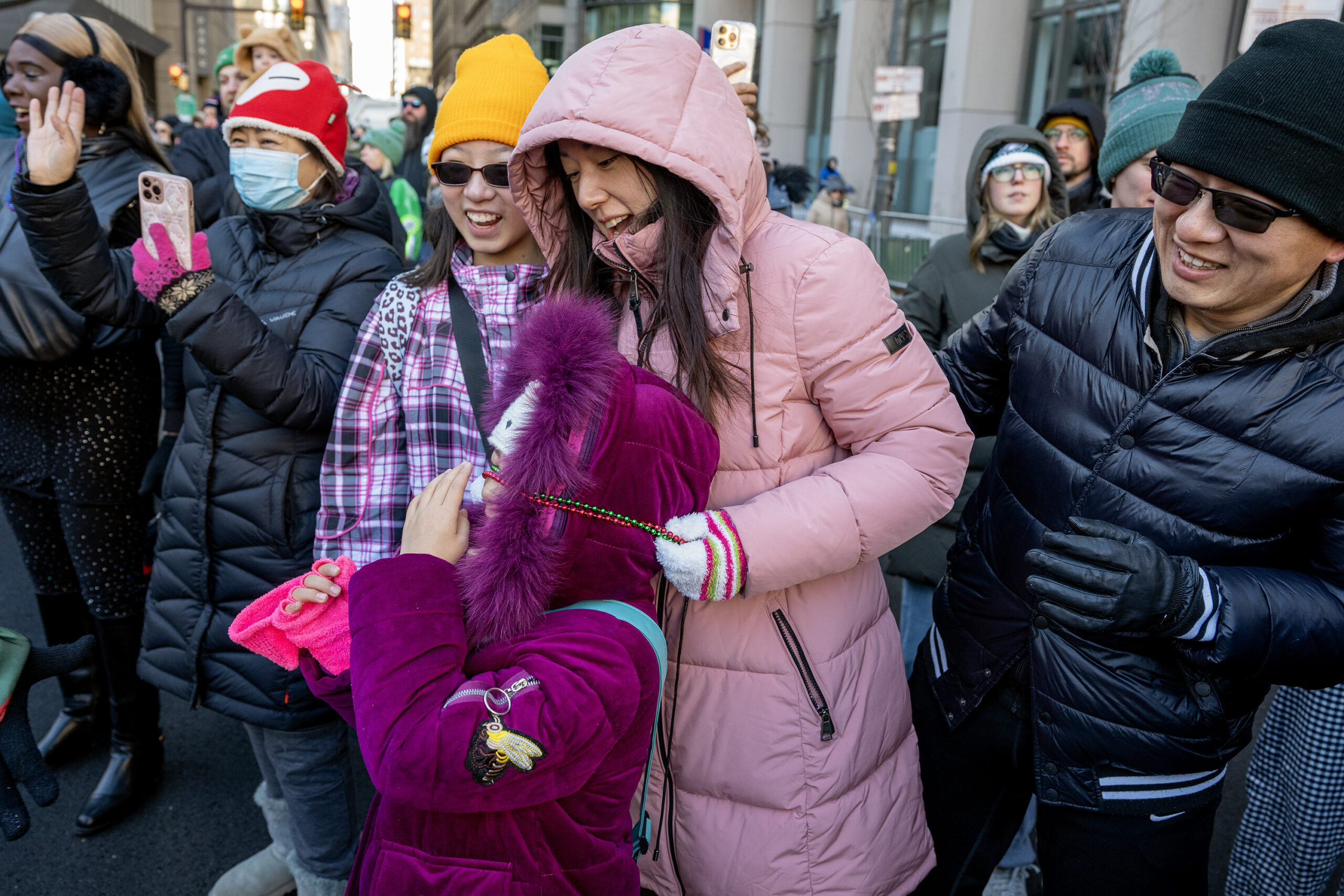
    McKenna Wei, 7, gets help putting on a set of beads given to her by a passing Mummer Wench as the Newtown Square family watches the Mummers Parade Thursday, the 125th anniversary of Philly’s iconic New Year’s Day celebration. From left is grandmother Qin; sister Mabel, 12; mom, Helen and dad, Michael.

    Nearby, Ellie Jozefowski, 75, fought back tears as she strutted in a sequined Flyers jacket. The tears come easily every year for Jozefowski, a parade veteran of more than three decades.

    Thursday was no different. They flowed freely as four generations of Jozefowskis marched together for Golden Sunrise, including Ellie’s 7-month-old grandson, Peter, bundled up in a cheesesteak costume and carried by his mother, Molly.

    “I’m crying because I’m happy!” shouted Ellie Jozefowski.

    Farther back in line, Mummer Brian Creamer, of South Philly, shivered over his coffee. His young daughter, Amita, also a Mummer, had helped him bejewel his pirate king costume. He would not miss it for the cold or the wind, he said.

    “It’s about spreading the new year joy,” he said.

    Even farther back, wenches Ricky Dinaro, 35, and his pal, Anthony Putnick, warmed themselves on the regenerative powers of Miller Lite.

    They’d been born into the parade, they said, and marched all their lives. They had been drinking for hours.

    “I stayed up all night,” said Putnick, of the MGK Outsiders NYB.

    Others had found their way into the longest-running continuous folk parade.

    Cheyenne Cohen, of Golden Sunrise, grew up in Northern California before joining the Mummers three years ago after she moved to Philly. There was nothing like the Mummers in Santa Cruz, she said, adding that she now also works at the Mummers Museum in South Philly.

    “Absolutely, the most welcoming community,” she said of her sequined and feathered found family.

    It was a parade of firsts for the Mummers of the Philadelphia Chinese Community Organization United troupe.

    Celebrating its inaugural year, the Chinatown Mummers danced traditional Chinese folk dances, which many members practiced late nights after their restaurant jobs.

    “We want to welcome people to Chinatown and show our culture,” said member Holly Ming.

    In the crowded grandstands, new and old fans shivered.

    Kenzie McBride thought what better year to score front-row grandstand seats for her stepmother, Jennifer Smithson, than the 125th anniversary?

    Smithson, bundled in a blanket, approved.

    “It’s been on my bucket list,” she said.

    And though some would-be parade-goers stayed home because of the string band news, plenty came out to enjoy the iconic parade anyway.

    In the grandstands as darkness fell, Patrick Finnegan, 46, of Oreland, danced with his son, Dylan, 6, on his shoulders. His 8-year-old twins, Arielle and Melody, were by his side.

    It was the first time he had brought the kids to the parade.

    The cancellations didn’t affect their fun, Finnegan said.

    “It’s all about riding the train downtown to see the Mummers,” Finnegan said, mid-strut. “My wife thinks I’m crazy.”

  • Mummers string band competition has been ‘suspended’ because of high winds but the bands are still marching

    Mummers string band competition has been ‘suspended’ because of high winds but the bands are still marching

    Weather concerns have snarled Philadelphia’s New Year’s Day plans.

    The string band competition has been “suspended until further notice,” the Philadelphia Mummers Parade and Philadelphia String Band Association announced Thursday morning.

    High winds, “wind damage during unloading and setup and safety concerns” prompted the call, officials said in a statement.

    “In the spirit of celebrating New Year’s Day and this important milestone for our city and nation, the String Bands will all still march in full costume and makeup and perform for TV, internet, and live audiences on Broad Street and City Hall,” the statement said. “They will march without props. Times and order will remain the same. Safety of performers is of utmost importance when making this decision.”

    This year marks the 125th anniversary of the iconic parade.

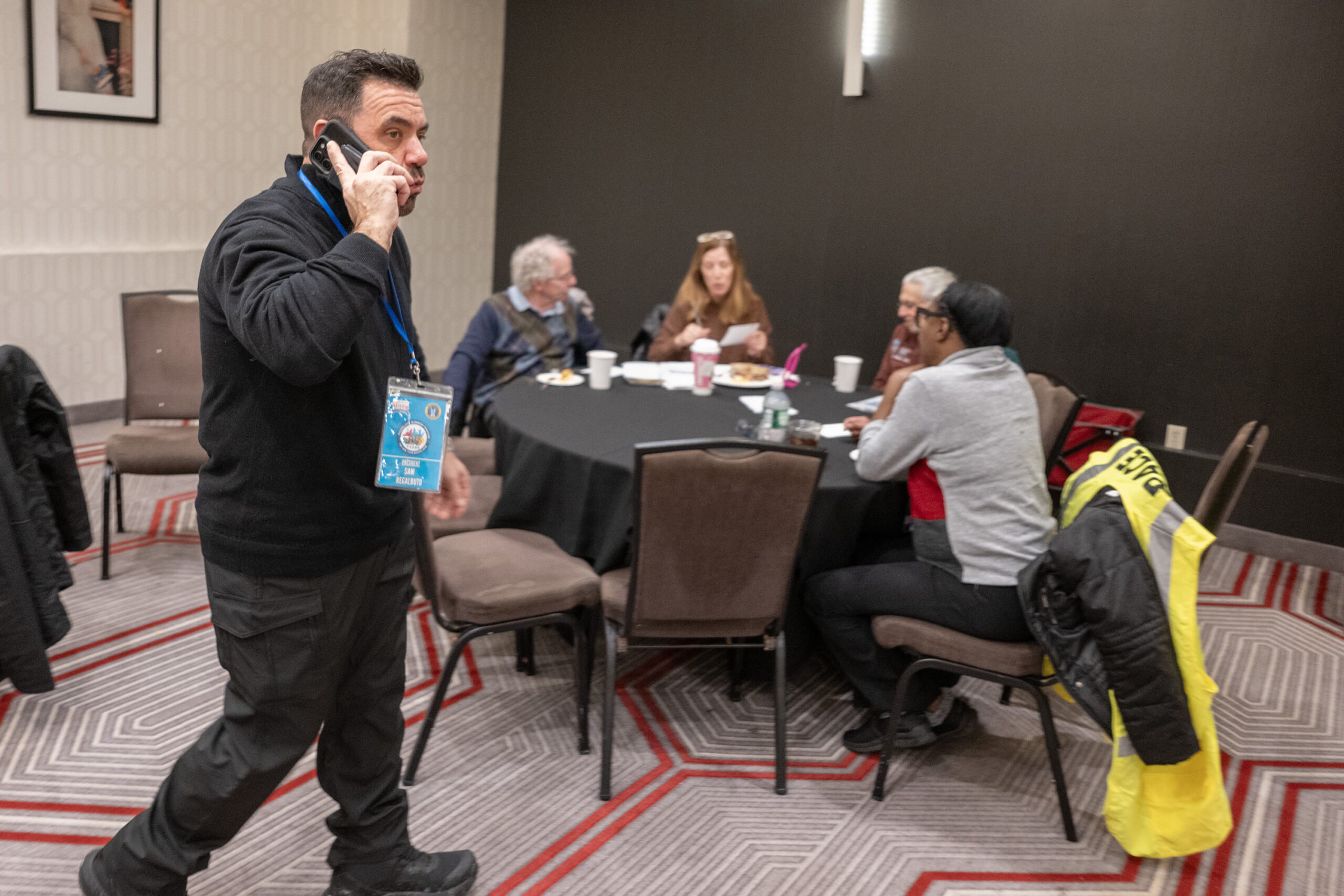
    Sam Regalbuto, president of the String Band Association, at the Mummers headquarters hotel Thursday, Jan. 1, 2026, after the string band competition was suspended because of high winds that destroyed props and caused injuries to club members during morning setup.

    Sam Regalbuto, president of the String Band Association, said that the clubs were caught off-guard by “the squalls that came through, the wind changes that happened without us knowing.”

    Several club members were sent to hospitals with minor injuries sustained during attempted setup this morning, Regalbuto said. All have been treated and released.

    “We’ve lost sets, we’ve lost props that we’ve worked 365 days to put together to bring you the best possible string band spectacular that we do every year,” he said. “It was very hard for all of us, as a unit, to make this decision.”

    The call came after String Band Association delegates voted on whether to postpone, Regalbuto said.

    Ultimately, “we just think, safety, safety, safety, first,” he said.

    It was important to clubs to still put on a show for those fans who are crowding Philadelphia streets expecting to see Mummers, said Regalbuto. Though there will be no props, the string bands will “still come in full costume, full makeup, and entertain you, the viewers, at home, and our fans here on the parade route. So please, if you’re thinking of not coming, we’re here. We are performing for you, and we will give you the best show that we can possibly give you.”

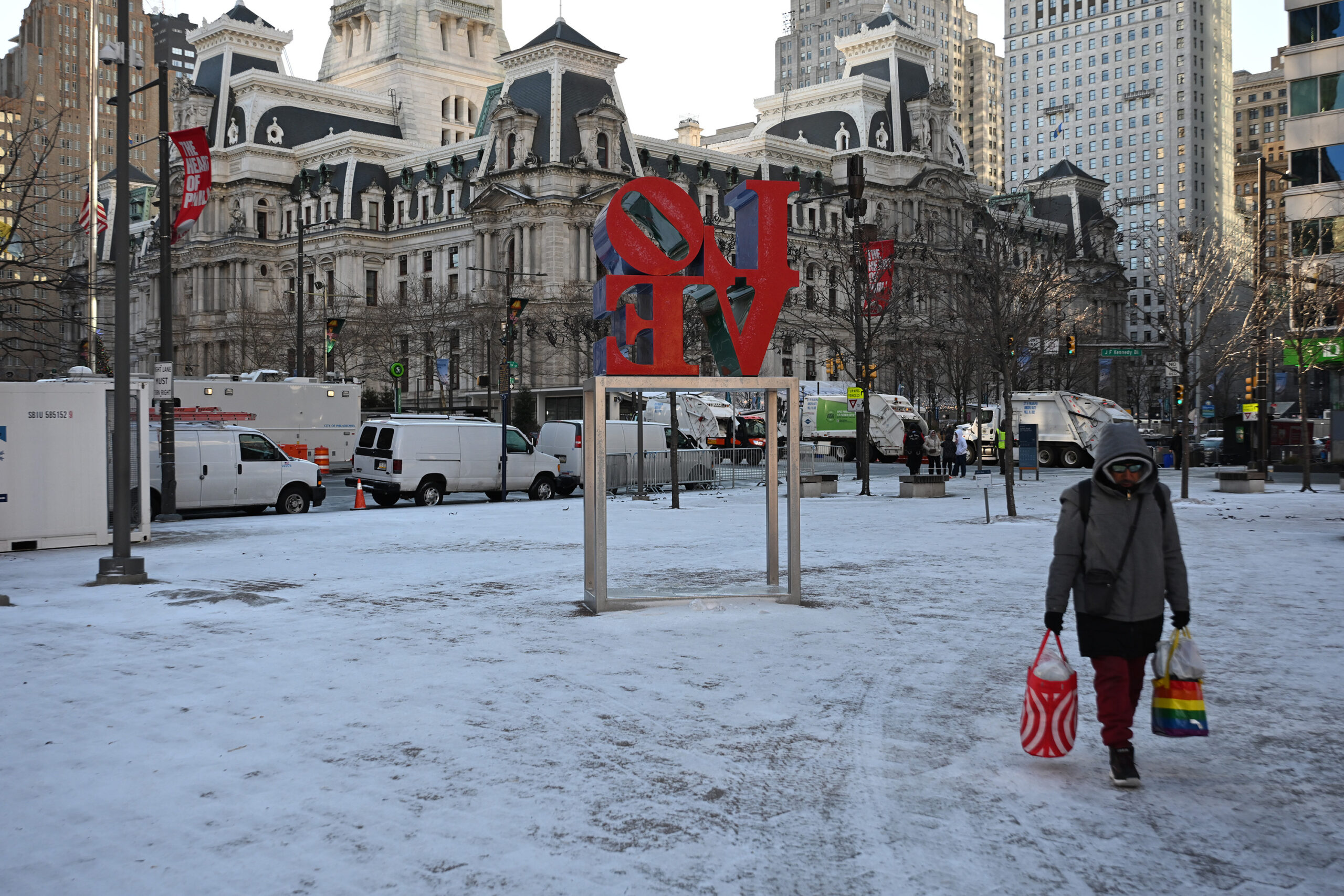
    An early morning snow squall left a dusting in LOVE Park before the start of the Mummers Parade near City Hall Thursday, Jan. 1, 2026. This year marks the 125th anniversary of Philly’s iconic New Year’s Day celebration.

    A 5 a.m. shocker

    Nick Guzzo, a meteorologist with the National Weather Service in Mount Holly, said snow squalls and wind “did not come out of nowhere.”

    On Wednesday, the National Weather Service issued a warning for snow squalls between 2 a.m. and 10 a.m. Thursday.

    “Snow squalls can produce intense bursts of heavy snow and gusty winds, resulting in rapidly reduced visibility and poor road conditions, making travel difficult and potentially dangerous. Extra care should be taken as a result with any travel early on New Year’s Day,” officials wrote on Wednesday.

    Regalbuto said the string bands were closely monitoring hourly weather updates and city messages overnight, but were expecting lesser winds, and gusts, not the sustained wind blasts that ultimately came “shooting from City Hall, straight up Market, and straight up JFK.”

    Because the string bands are essentially “a mobile Broadway show,” with heavy, elaborate pieces that require significant work to install, that setup began in the predawn hours, at about 5 a.m., Regalbuto said.

    It became apparent quickly that a Thursday string band competition would be dangerous.

    Winds “destroyed multiple sets for different organizations,” he said. “We did everything precaution wise — sandbags, and all of that. But as they were trying to assemble, things were just being ripped out of our hands.”

    It was then that Regalbuto convened his delegation. The vote was clear.

    “We knew that there was already an unfair advantage, because some clubs had already lost their sets,” he said.

    Weather reports called for gusts of up to 30 miles per hour well into the afternoon.

    “We just had to batten down the hatches,” Regalbuto said.

    A rescheduled competition, Regalbuto said, will be held “very soon” at a to-be-determined venue once logistics and financials are worked out. Planning meetings will begin Friday.

  • Montgomery County school board votes to fire the principal who reportedly made antisemitic remarks

    Montgomery County school board votes to fire the principal who reportedly made antisemitic remarks

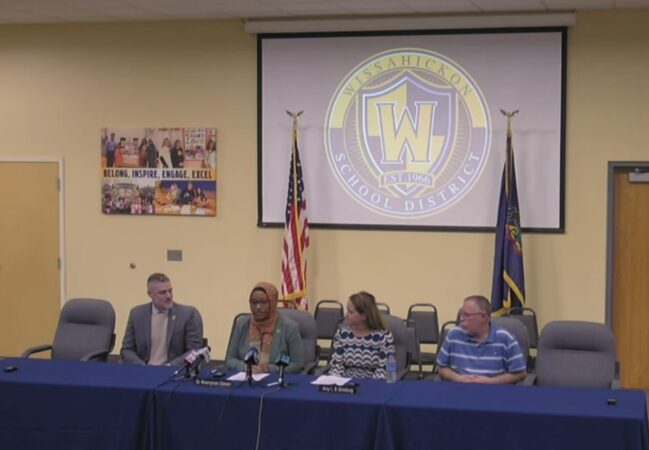
    The Wissahickon school board moved Tuesday night to fire an elementary school principal who was recorded making antisemitic remarks.

    The vote to fire Philip Leddy, who had been principal of Lower Gwynedd Elementary, was unanimous.

    Sue Kanopka, the former Lower Gwynedd principal who had been promoted to curriculum supervisor for the school system, will return as acting principal.

    Dan Strauss, a board member who is Jewish, said at the special board meeting he was pleased with the board’s swift actions around Leddy.

    “This incident was something that was extremely personal for me and my family, and I witnessed you acting swiftly and decisively, leaving no room for doubt that antisemitism has no place in our district,” said Strauss, a Democrat. “I’ve also personally had a chance to speak with the parent who received the voicemail, and they’ve shared with me that even though this has been a dark moment for their family, immediate and continued response from the district has been overwhelmingly supportive.”

    Officials with the Jewish Federation of Greater Philadelphia have said that in the recording, Leddy was heard saying something about “Jew money” and that “they [Jews] control the banks.”

    Leddy was asked if the parent he was speaking to was a lawyer and then remarked, “the odds probably are good.”

    District officials said Leddy, who could not be reached for comment, acknowledged that he made the call, thought it had disconnected, and continued speaking.

    No actions were taken Tuesday against the other staff member who was present when Leddy made his comments, but who allegedly did not report them. That staffer has been placed on leave as the matter is investigated.

    No members of the community spoke in support of Leddy.

    One resident, Jesse Klein, called his swift firing “a public shaming and execution,” contrasting what he saw as a difference in Wissahickon’s responses to Leddy’s comments and its response to some Jewish parents’ concerns over the district’s handing of student discourse about the Israel-Hamas war and the pro-Palestinian movement.

    Klein and Danielle Parmenter, a Wissahickon resident and a rabbi, said those concerns have been minimized.

    “That inconsistency is deeply destabilizing, and it erodes trust,” Parmenter said.

    Leddy’s firing “was necessary,” Parmenter said. “Antisemitism must never be tolerated, especially from those entrusted with the care of children.”

    Carmina Taylor, another Wissahickon resident, said the Black community is “in support of the way you’ve handled the situation, and how you’re trying to have a meeting of healing for the Jewish community, but understand that the Black community is also hurting for the way we’ve been treated over the years. … We hope that you’re mindful of our concerns as well.”

  • As a Philly student, her high school lifted her up. Now, she’s giving back in a major way.

    As a Philly student, her high school lifted her up. Now, she’s giving back in a major way.

    Sonia Lewis endured the worst year of her life when she was a senior in high school — her mother almost died and Lewis had to step up to take care of her family.

    But the principal and teachers at her Philadelphia high school lifted her up, helped her get to college, and Lewis took care of the rest — multiple advanced degrees, a thriving career, a national profile.

    As Lewis racked up accomplishments, it was always in the back of her mind to return the favor to her school, somehow.

    “For me, who I am today is really a huge part is Bodine High School,” she said.

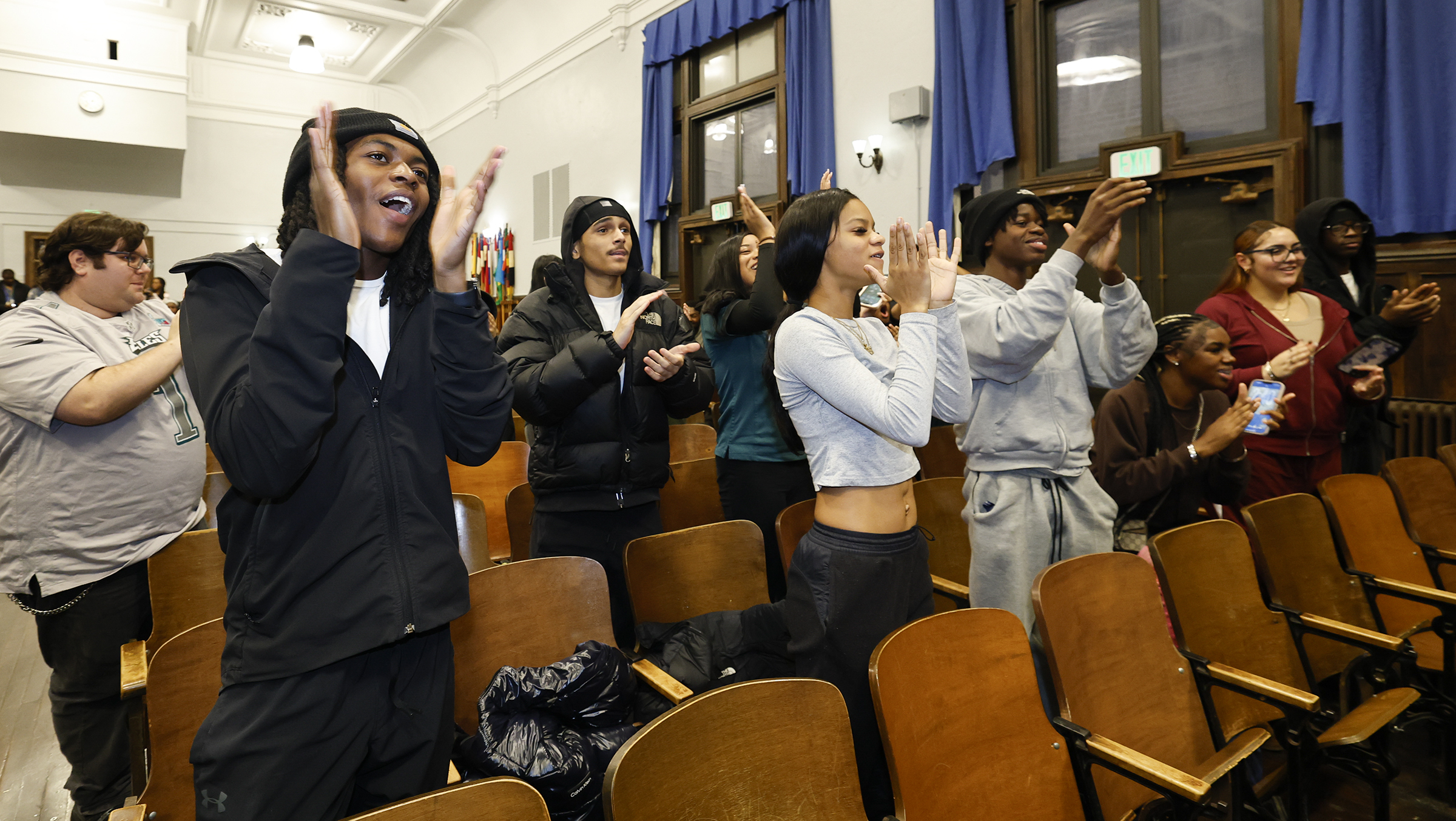
    Bodine High School for International Affairs senior students cheer after learning former student, Dr. Sonia Lewis, donated $16,200 to cover senior school fees on Friday, December 19, 2025. Dr. Lewis is giving back after the Northern Liberties high school helped her during a difficult time, while she was a student 20-yrs-ago.

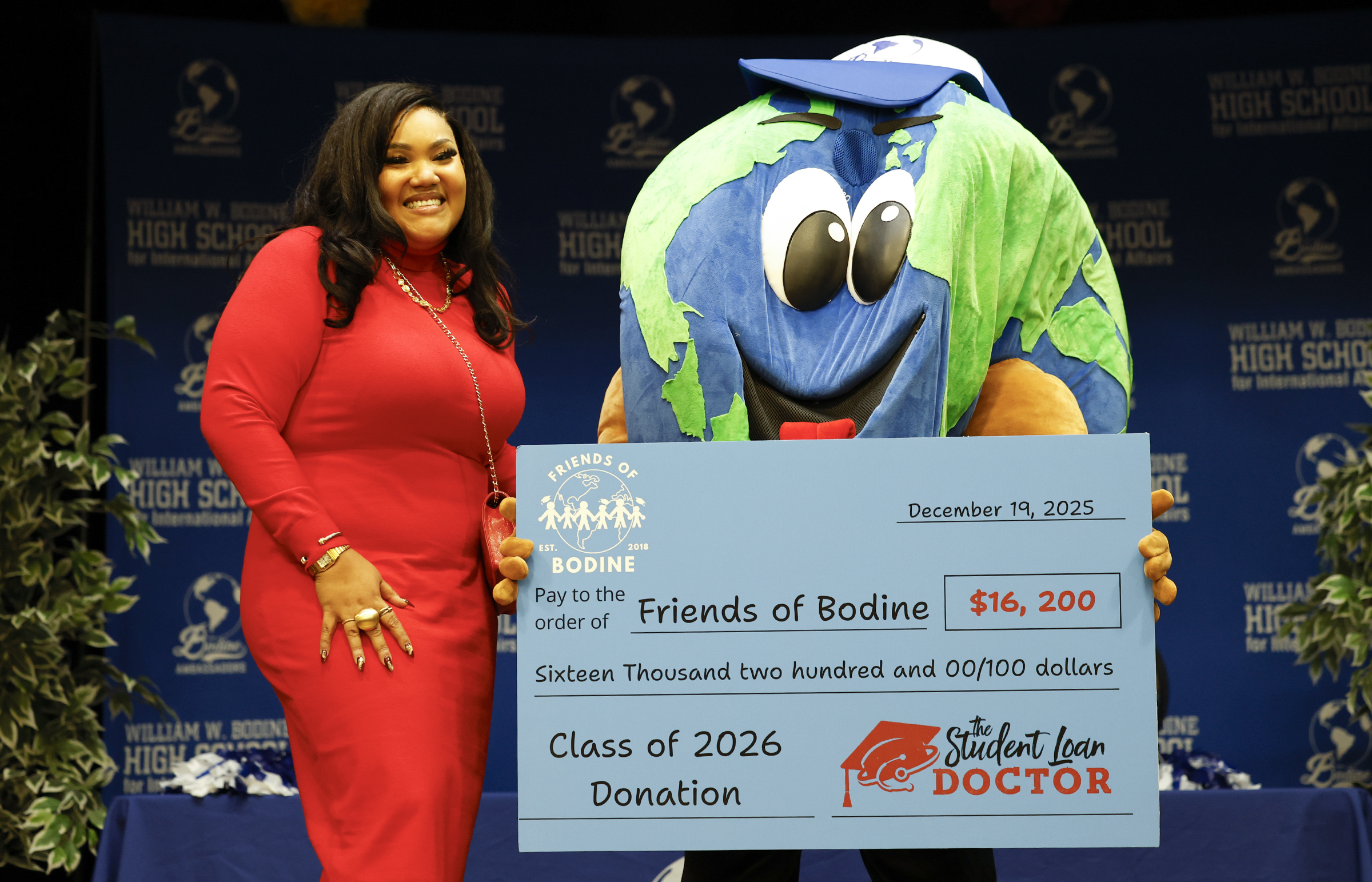
    So on a December day, Lewis walked into the auditorium of the Philadelphia School District magnet school with a surprise — the largest donation ever given to the nonprofit that supports Bodine. She gave $16,200 to cover the bulk of every senior’s class dues — funds that most students struggle to pay.

    Aaliyah Bolden, a Bodine 12th grader, was jubilant after the announcement.

    “I’m just so grateful,” Bolden said. “Coming from an underrepresented community and having financial hardships, this just makes a big difference to me.”

    ‘Can you work with me?’

    Lewis was a standout student at Bodine, an international affairs high school in Northern Liberties. She was class president, active in student government, a strong student in the Class of 2005, a leader.

    She was raised by her single mother and grandmother, both Philadelphia teachers, told from a very young age that she was college-bound.

    But when Lewis was 16, her priorities shifted, out of necessity. Her mother was gravely ill with bacterial meningitis and other complications. Her grandmother had just beaten cancer, but it fell to Lewis to advocate for her mother, to take her to appointments, to navigate the healthcare system on her behalf. She worked three jobs to help bridge financial gaps.

    School just could not be at the top of her priority list.

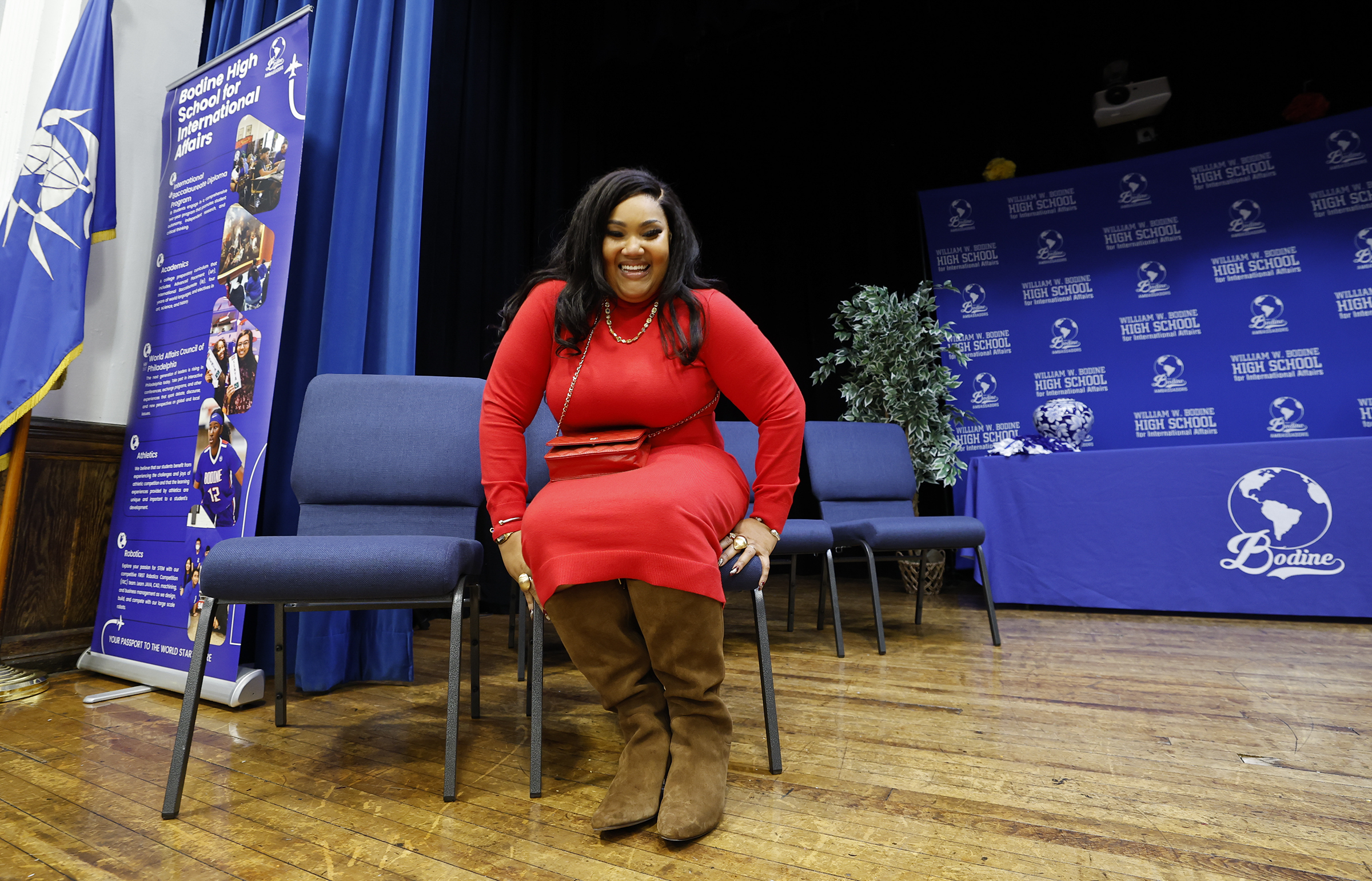
    Dr. Sonia Lewis takes a seat before speaking to Bodine High School for International Affairs senior students on Friday, December 19, 2025. Dr. Lewis gifted $16,200 for the 2026 senior class, to cover senior school fees. Dr. Lewis is giving back after the Northern Liberties high school helped her during a difficult time, while she was a student 20-yrs-ago.

    “I had to tell my high school, ‘These are my circumstances. I’m going to have to leave school to make some of these appointments,’” Lewis said. “I was just really clear with everyone at Bodine about what I needed, and I said, ‘Can you work with me?’”

    They did. But some deadlines are firm, and Lewis missed the federal student-aid loan deadline because her mother had just gotten out of a coma, had cognitive issues, and was unable to gather the necessary information or complete the form.

    “I had to become the mom,” Lewis said. “I would have to ask her, ‘Did you brush your teeth today?’ Nobody was thinking of the FAFSA.”

    As students’ college acceptances were rolling in, Bodine’s principal noticed that there were none for Lewis. The principal asked her what was happening.

    Lewis’ grandmother contemplated taking out a mortgage on her house to send her to college, but Lewis was too practical for that.

    “I told the principal, ‘We don’t have any money. We missed the deadline,’” she said. “There was no money coming in from my mom. We had my grandmother’s retirement, but that wasn’t enough.”

    Lewis figured she would work for a year, saving money and filling out the FAFSA form for the next cycle. But Karen P. Hill, the principal, just shook her head.

    A busybody for good

    The principal’s plan became evident at Bodine’s senior awards ceremony, Lewis remembers, when “they just kept calling my name” as prizes were announced.

    At the end of the evening, Lewis walked off with an envelope full of checks totaling $16,000 — enough to allow her to enroll at Bloomsburg University and pay her first year’s tuition.

    Once she got to Bloomsburg, Lewis continued to grind, working multiple jobs, earning scholarships, making connections. Then, after she earned her bachelor’s degree, Lewis moved on to working in higher education, spending time at Peirce College and elsewhere as an academic coach and in admissions.

    She earned her master’s degree, and eventually her doctorate. Now, she’s “the Student Loan Doctor”; Lewis believes her 13-employee company is the first Black woman-owned student loan repayment firm in the United States.

    Dr. Sonia Lewis stands with the Bodine High School for International Affairs mascot Amby during a a senior class assembly on Friday, December 19, 2025. Dr. Lewis gifted $16,200 for the 2026 senior class, to cover senior school fees. Dr. Lewis is giving back after the Northern Liberties high school helped her during a difficult time, while she was a student 20-yrs-ago.

    Lewis coaches clients to create plans to pay off their student loan debt — through repayment, loan consolidation and forgiveness, and more. She’s a sought-after expert, quoted in national publications, offering free weekly classes, growing her business by the year. She has 150,000 followers on Instagram.

    Lewis is allergic to sitting still. Her nickname in her sorority, Delta Sigma Theta, was “Busybody.” She has channeled that for good — the Student Loan Doctor has now served over 50,000 clients since 2016, helping get an estimated $55 million in student loans forgiven.

    The business is hard work, but a joy for Lewis, who gets to know she makes a direct impact on her clients’ lives — like the surgeon who had $997,000 in loans, including loans that were in arrears.

    “He didn’t know what to do,” Lewis said. “He got his loans forgiven. He wound up paying us like $300. We’re very affordable.”

    The hardest worker

    A few days before winter break, Lewis entered the Bodine auditorium with a massive smile on her face.

    Her gift — hatched after Lewis presented a $1,000 scholarship to a Bodine graduate in the spring, then decided to go much bigger — was a surprise for the students, who knew only that a successful alum was visiting.

    David Brown, the Bodine principal, reminded the students gathered in the auditorium that the small school was a special place.

    “Our leaders don’t just leave with diplomas,” Brown said. “They leave with a global perspective.”

    Then Marty Moyers, a Bodine teacher and president of the Friends of Bodine, a nonprofit that raises money for the school, presented Lewis: “Her journey has been a great one, and it started right here in this building,” Moyers said.

    Bodine High School for International Affairs senior students cheer after learning former student, Dr. Sonia Lewis, donated $16,200 to cover senior school fees on Friday, December 19, 2025. Dr. Lewis is giving back after the Northern Liberties high school helped her during a difficult time, while she was a student 20-yrs-ago.

    When he announced Lewis’ plan, there was stunned silence at first. Then, wild applause broke out. Students’ faces were jubilant.

    Remember this, Lewis told them: She didn’t have a 4.0 grade-point average. But she showed up in every way possible.

    “Even in my professional life as a super-successful entrepreneur, I’m not the best, but I’m a really hard worker,” Lewis said. “You guys got that. That’s the discipline and the spirit you want to have about yourselves as you’re leaving Bodine and you’re going into college, or you’re going into the workforce or entrepreneurship.”

    De’Anna Drummond, a senior, is deep into her applying-for-scholarships-and-worrying-about-paying-for-college season. Class dues were another stress to think about, but she was delighted at the news that they are mostly covered, thanks to Lewis.

    “Any donation is appreciated,” Drummond said. “It all adds up — senior trip, senior brunch, yearbook, everything.”

    Bolden, Drummond’s friend, nodded.

    “And someday,” Bolden said, “we should also give back when we can.”

  • A Philly charter just laid off 17 employees. Students, staff, and parents say it’s a sign of troubling changes at the school

    A Philly charter just laid off 17 employees. Students, staff, and parents say it’s a sign of troubling changes at the school

    Esperanza Academy Charter School laid off 17 employees this month — a move that officials say was necessary amid a challenging financial climate.

    But some Esperanza Academy veterans say the 4% reduction in the workforce — which came with no notice a few weeks before the holidays — is emblematic of troubling recent changes at the Hunting Park charter.

    Ten Esperanza Academy staffers, students, and parents spoke with The Inquirer and detailed concerns about changes at the school in the last year.

    Teachers say morale is low, particularly at the high school, where staff have filed paperwork to form a union for the first time in the school’s history. Student frustration bubbled over recently, with hundreds walking out to express their anger over the loss of teachers, a counselor, an administrator, and more.

    “Students are protesting,” Jarely Cruz-Ruiz, an Esperanza Academy ninth grader, wrote in a letter to the charter’s board of trustees, “because even we see the wrong being done.”

    School officials declined to be interviewed, but in a statement, CEO Evelyn Nuñez said: “Like many academic institutions across the commonwealth and nation, Esperanza Academy is navigating a challenging economic environment.”

    But, Nuñez said, the board and leadership team will ensure “the school will be a source of hope in this neighborhood for years to come.”

    An anchor, changing

    Esperanza has operated a charter school in North Philadelphia since 2000; the school has expanded to encompass grades K-12, and now serves more than 2,000 students in multiple buildings.

    The charter is part of the Nueva Esperanza organization, a sprawling nonprofit “opportunity community,” as its founder, the Rev. Luis Cortés Jr., has described it, a one-stop shop for neighborhood revitalization work, job training, legal services, and more.

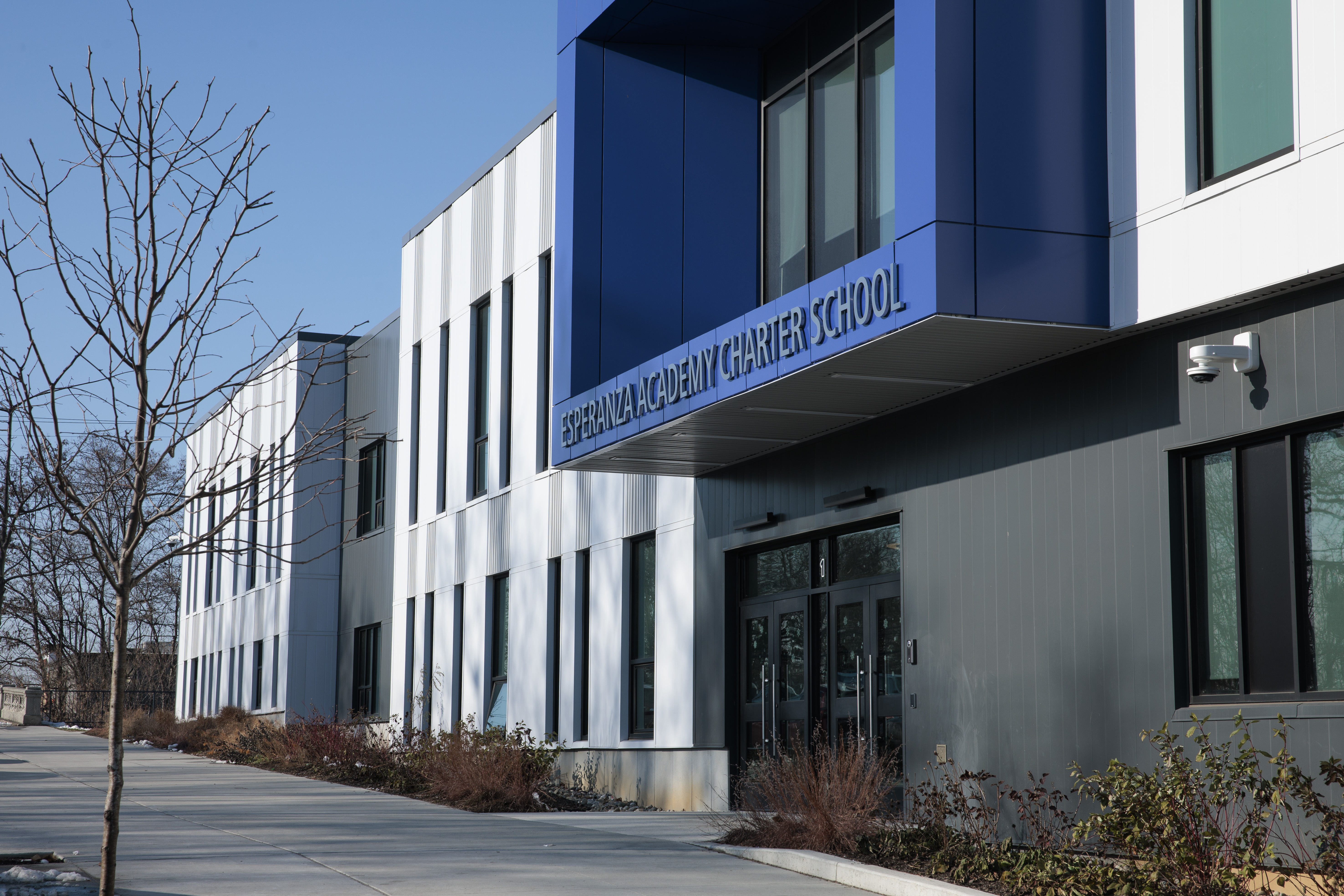
    Esperanza opened a brand-new, 73,000-square-foot elementary building on the nonprofit’s campus at the beginning of this school year. Officials, in a statement released after the student walkout, said the project was planned for many years and noted that the broader organization, not the charter school, pays for campus improvements.

    The exterior of the new Esperanza Academy Charter elementary building at 201 West Hunting Park Ave.

    Esperanza has long been an anchor in the neighborhood and the larger Latino community, a place with a one-big-family feel.

    But Daniel Montes, who came to the school as a climate control officer in 2017 and worked his way up to be a teacher, said shifts began happening about a year ago. Montes was among those staffers laid off recently.

    Nuñez came to the school from the Philadelphia School District last year to become its CEO.

    “Things started to change when we got the new CEO,” Montes said. “I don’t know if it’s when you get a new broom, it sweeps clean.”

    At a staff retreat just before the start of this school year, Cortes, Esperanza’s founder, alluded to coming financial difficulties, said one staffer, who asked not to be named for fear of reprisal.

    “He said, ‘Stuff’s happening, you have to buy in or get out,’” said another staffer, who asked not to be identified because they did not want to be targeted by leaders. “He said it was politically driven [at the national level], and that funds would be tight.”

    ‘Three strikes’

    Tensions began to simmer among high school staff.

    “There are very unilateral changes being put into effect extremely quickly,” said another teacher, who also asked not to be named for fear or reprisal. “We’ve had major changes go into effect on a Monday after a meeting on a Friday. They said, ‘We don’t have subs and you’re going to be covering classes for free.’”

    Montes and others said teachers were frustrated over new schedules, lost prep time, and the order to cover classes without compensation — Esperanza Academy had, in the past, paid teachers for covering classes.

    “It was three strikes,” said Montes.

    “We just did not feel heard,” a third teacher, who also asked not to be named for fear of retribution, said. “We’re out of paper towels, and staples for the printer. The printer’s broken, but they hired six-figure administrators.”

    Most charter schools do not have unionized staff; in October, a majority of Esperanza Academy’s high school teachers signed union authorization cards and chose to affiliate with the American Federation of Teachers.

    Layoffs came Dec. 4, a Thursday, with no warning — some of the affected staff were pulled out midclass and given notice.

    Students weren’t told what was happening, but something seemed off that day, they said. And a basketball game was canceled.

    Those who remained at Esperanza Academy’s high school were told they would be absorbing the job responsibilities of the laid-off workers, including classes, coverages, and special-education caseloads.

    Some teachers got extra classes added to their schedules — with no extra pay. Other classes were combined, with class sizes growing.

    Interventionists — those charged with working with the neediest students — were laid off, and staffers said no plan has been articulated about who will do that work.

    In every staff meeting, teachers said they are reminded that the school’s focus is increasing attendance, boosting the number of students who meet state standards, and decreasing the number of students who score at the lowest levels.

    “How are we doing that if we don’t have any interventionists?” the second teacher said.

    Student protest

    The layoffs stunned students. They mobilized and held a walkout a few days later.

    Hundreds showed up, voicing their displeasure with the cuts and their support for the lost staff. They carried homemade signs and chanted.

    Nuñez acknowledged the walkout in an email to students and families the next day, saying students demonstrated “thoughtful advocacy and respect as they honored the staff members affected by the recent reductions, and we are proud of the way they used their voices to support their school community. School leadership will continue working closely with the [student government] on how we can best support our students as we move through this transition together.”

    Cruz-Ruiz, the Esperanza Academy ninth grader, said the school no longer felt like a family.

    “In this building,” Cruz-Ruiz wrote in her letter to the board, “data matters more than people. You named this school Esperanza. Hope. But hope doesn’t live here, scores do. Reputation does. Those graphs and percentages you stare at do.”

    ‘It’s affected so many of the kids’

    Francesca Castro, mother of an Esperanza Academy 10th grader, said she’s been very pleased with the education her daughter has received since middle school.

    But the layoffs were deeply unsettling, she said.

    “It’s affected so many of the kids,” said Castro. “I’m in the corporate world — I understand sometimes you need to make cuts. But there was no preparation, and it was right around the holidays. Couldn’t we find a different way, see what else we could cut?”

    Montes and other laid-off staff were some of the most important people in the building in terms of relationships with students, Castro said.

    “What worries my daughter and some of the students and parents is: If these changes were made all of a sudden, what other changes could happen?” she said. “Are the athletes going to get less? Are the after-school programs being cut? Are they going to start cutting academics?”

    Officials said in a statement that the layoff decision was not made lightly, and “our priority throughout this process has been to preserve the high-quality learning environment and supportive services that our students and families rely on. We remain fully committed to ensuring that the school year continues with minimal disruption to classrooms, instruction, or student support.”

    Students are aware of the larger changes at the school, said teachers, parents, and staff. They can’t understand why those closest to the students were taken away.

    “We’re broke, but we have all these new administrators, and we just built a new building? Students are savvy to that stuff — they’re angry,” said the third teacher.

    What’s next?

    Wendy G. Coleman, president of the American Federation of Teachers-PA, sent Nuñez a letter Dec. 10 asking Esperanza to formally recognize an AFT-affiliated union at the school.

    The staff wants a salary scale and a voice on working conditions and class sizes, Coleman said.

    “The overwhelming majority of the staff has signed cards,” said Coleman. “That is something I hope the administration of Esperanza will voluntarily recognize so that we can collaboratively bargain their first contract.”

    Esperanza Academy leaders on Friday told the AFT they will not voluntarily recognize the union; Coleman said she will soon file paperwork with the National Labor Relations Board seeking certification.

    “I would hope that we can work together to do this as amicably as possible,” Coleman said. “The staff has spoken, and the likelihood of Esperanza avoiding a union coming is pretty slim.”

  • It’s an open secret that some charter schools push out kids with behavioral problems, Philly principals say

    It’s an open secret that some charter schools push out kids with behavioral problems, Philly principals say

    The trickle begins in the fall, some principals say: Students with a history of behavior or disciplinary problems or other issues show up in Philadelphia School District schools, often from city charters.

    Students switch schools after the start of the school year for many reasons — and changing schools is fairly common in Philadelphia.

    But at times, it seems like some students are off-loaded from charters because they’re tough to educate, according to interviews with a dozen district administrators. In district schools, administrators cannot remove students for such issues.

    Advocates at the Education Law Center have noted that trend, as has the head of the district’s principals union — all of whom call it concerning, especially in a school system with large numbers of needy students and not enough resources to educate them.

    “In October, in November, in December, that’s when we see the counseling out, the threats of expulsion that say, ‘We’re going to expel you, but you can go to a district school and then you won’t be expelled,’” said Margie Wakelin, a lawyer with the Philadelphia-based Education Law Center-PA.

    Cassandra St. Vil, chief executive officer of a group that represents a large number of Philadelphia charters, said she is not aware of any data to support those anecdotal claims.

    “For years, opponents of charter schools have tried to use this message and yet there has never been any evidence to back it up,” said St. Vil, of Philadelphia Charters for Excellence. “And conversely, we hear from charter school leaders the exact same thing, that students come to them.”

    District data show that over the last three years, there has been a steady flow of charter students transferring to district schools throughout the school year. In the 2024-25 school year, for instance, 161 students transferred from brick-and-mortar charters to district schools in September. By June, it was 843 students, just a fraction of the total charter sector.

    window.addEventListener(“message”,function(a){if(void 0!==a.data[“datawrapper-height”]){var e=document.querySelectorAll(“iframe”);for(var t in a.data[“datawrapper-height”])for(var r,i=0;r=e[i];i++)if(r.contentWindow===a.source){var d=a.data[“datawrapper-height”][t]+”px”;r.style.height=d}}});

    Charters educate more than 64,000 Philadelphia students; there are about 114,000 in district schools.

    “While this is not an issue across the entire charter sector, the district is looking at the data, and working with the Charter Schools Office,” Christina Clark, a district spokesperson, said in a statement. “The district is working to analyze enrollment trends across all sectors.”

    Robin Cooper, president of Commonwealth Association of School Administrators, Teamsters Local 502, said many district schools get a stream of students beginning in the fall, after district schools’ budgets are locked in on Oct. 1, then another in the spring, just before state testing. (Students’ scores count for the schools they attended on Oct. 1, even if they switch schools after that date.)

    “They’re not sending the kids who get A’s, the good kids, they’re sending you the kids who might have problems,” said Cooper, who was a longtime district principal before assuming the union presidency. “It negatively impacts your climate, and the charter is getting the money for the student.”

    One district principal, who declined to be named for fear of reprisal, said they recently stopped in a hallway to talk to a student who had just transferred to the district school from a charter.

    “She said, ‘They kicked me out for fighting,’” the principal said. “Here, we can’t kick a student out for fighting. I said, ‘Welcome to our school. I’m in the business of growing children.’”

    Students ‘counseled out’ of charters

    Charter schools — which are publicly funded but privately managed, though authorized by local boards of education — have transformed Philadelphia’s educational landscape since they first came to Pennsylvania in 1997.

    Charters are funded by per-student payments from the school district, but are paid only for the number of days enrolled.

    By law, charters are open to all students, and most operate on citywide lotteries — though some are neighborhood schools.

    A 2017 Education Law Center analysis of the enrollment of special education students in Pennsylvania charters found that “while a number of individual charter schools equitably serve all students, the charter school sector taken as a whole generally underserves these vulnerable student populations.”

    Anecdotally, district principals say in some cases, they see students with behavior problems or learning differences accepted to some charters, but then some of them are “counseled out.” That means they are not officially expelled or forced to leave, but strongly encouraged or pressured to do so after a disciplinary issue crops up.

    In district schools, the bar for expulsion is much higher — for incidents such as using a weapon, or threatening mass violence.

    Wakelin, of the Education Law Center, said she recently spoke to a parent whose child has a significant disability. The parent had multiple conversations with the charter school about the child’s needs. She said the school kept telling the family: We’ll help.

    “And then very recently, the charter school said, ‘You know, you might be better served in a district school that has more resources for a student with autism,’” said Wakelin, who declined to name the school in question.

    ‘It’s no secret’

    After the start of the school year, another district principal said, comes a bump in charter transfers.

    “We see an increase every year,” said the principal, who, like other current and former district administrators who spoke to The Inquirer, asked not to be identified for fear of reprisal. “It’s not talked about, but in the schools, it’s no secret.”

    When new students transfer in, an administrator often asks why they left their old school.

    “Most of them say it’s because they were kicked out of whatever charter school they were at — they got into a fight, or whatever,” the principal said. “And most of the times, it’s things that we can’t move students for in the Philadelphia School District.”

    Lawrence Jones, longtime chief executive officer of the Richard Allen Preparatory Charter School in Southwest Philadelphia, said there is “an urban myth” that charters off-load problem students to district schools and then benefit financially for doing so. (There is a common perception that charters get paid for students based on their Oct. 1 enrollment counts, and keep the money if students go elsewhere, but charters actually get paid for the number of days students are enrolled.)

    “The gain that you could potentially get for dropping those kids, financially and other funding, would be less than if you held onto those students,” said Jones.

    But a third district principal called the issue a particular challenge for neighborhood schools, which already typically tend to have higher concentrations of children with complicated needs. Public schools often get needy students midyear, but no additional funding. Their budgets are projected in the spring, but finalized in the fall.

    “It’s just not fair,” said the third principal. “We’re not getting their best kids.”

    That principal is currently experiencing what they call “the season when we get charter kids,” they said. “They send them to us for discipline issues, uniform violations.”

    ‘A sword that cuts both ways’

    The practice engenders deep frustration, principals say.

    “Public schools can’t turn kids away. It’s not like the charter world where you can say, ‘No, I’m full, have a nice day.’ In public school, you take the kid, crowded or not, and figure it out,” a fourth principal said.

    St. Vil, of Philadelphia Charters for Excellence, which represents 64 schools, disputes that characterization. She noted that nearly 80% of the city’s charter students are Black or Latino, and many have special needs or are English learners.

    “These schools are achieving real success stories for students who too often haven’t thrived in one-size-fits-all settings,” St. Vil said.

    Jones, of Richard Allen Preparatory Charter School, said that while there may be some isolated instances where a charter counsels out a student with difficulties, “it’s a sword that cuts both ways.” Students sometimes come to charters from district schools with inadequate special-education plans, he said.

    Parents enrolling their children at Richard Allen have told him that they were told his school “could provide better services,” Jones said. “I asked, ‘By who?’ And they said, ‘By staff at the former school, the district school.’”