Author: Maddie Hanna

  • Gov. Josh Shapiro wants to ban cell phones from Pa. schools

    Gov. Josh Shapiro wants to ban cell phones from Pa. schools

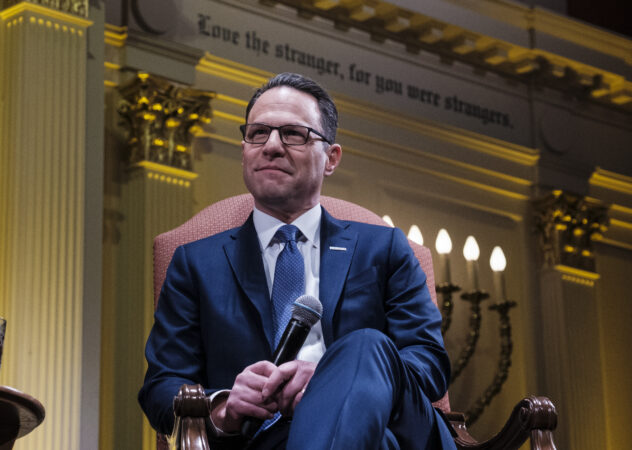
    Gov. Josh Shapiro is backing a proposal to ban cell phones from Pennsylvania classrooms, joining a growing chorus of parents, teachers, and officials seeking to curb school disruptions and detach kids from addictive devices.

    “It’s time for us to get distractions out of the classroom and create a healthier environment in our schools,” Shapiro said in a post on X on Thursday.

    He called on Pennsylvania lawmakers to pass a bill that would require schools to ban the use of cell phones during the school day, “from the time they start class until the time they leave for home.”

    The endorsement from the Democratic governor — who could promote the issue during his budget address Tuesday — comes as school cell phone bans have increasingly become the norm: 31 states have restrictions of some kind on phones, including 23 states with “bell-to-bell” bans barring the use of phones the entire school day, according to Education Week.

    In New Jersey, former Gov. Phil Murphy signed a law last month requiring a bell-to-bell ban to take effect next school year.

    Pennsylvania currently lets schools set their own cell phone policies — and districts have taken a patchwork of approaches. Pennsylvania in 2024 implemented a pilot program allowing schools to access funding for lockable pouches that students could place their phones in during the day, but few districts took the state up on the money.

    Some schools have banned cell phones during classes, including by asking students to place their phones in hanging shoe organizers on the backs of classroom doors.

    Advocates for entirely phone-free school days say such measures aren’t sufficient. Phones are still buzzing, and if class ends early, “kids are constantly looking at it,” said Kristen Beddard, a parent from the Pittsburgh suburb of Sewickley and leader in the PA Unplugged coalition seeking to curb children’s reliance on phones and screens, in and out of school.

    Barring phones only during class time is “not enough to truly break the dopamine feedback loop these kids are exposed to, and inundated with constantly,” Beddard said.

    Since PA Unplugged began advocating for a bell-to-bell ban a year ago, “the landscape has changed so much,” including more states moving to restrict phones, Beddard said.

    In Pennsylvania, the state’s largest teachers’ union came out in favor of a ban, and legislation that would require school districts to adopt bell-to-bell cell phone policies was unanimously approved in December by the Senate Education Committee. The bill would grant exceptions for students with special needs.

    The Pennsylvania State Education Association “supports legislation like Senate Bill 1014 that would establish a consistent, statewide expectation that public schools will restrict the possession and prohibit use of mobile devices for all students during the school day,” said spokesperson Chris Lilienthal.

    He said that on a typical day, teenagers get 237 app notifications on their phones.

    “Think about how disruptive those notifications are during the course of the school day when students should be focused on learning,” Lilienthal said.

    In a divided Harrisburg, the proposal has bipartisan support. Beddard called banning cell phones in schools “maybe one of the few bipartisan issues left.”

    In the Philadelphia area, groups of parents have mobilized against cell phone use, circulating pledges such as a commitment to not give children phones before eighth grade. Delco Unplugged, an offshoot of PA Unplugged, has advocated for cell phone bans in school districts and encourages parents to not give children access to phones before high school.

    There has been opposition to strict bans, including from school leaders who think kids need to learn how to live with technology, rather than avoid it. Some administrators have also questioned the logistics, and some parents say they want their children to have phones in the case of emergencies, like a school shooting.

    Advocates like Beddard say kids are safer during emergencies if they pay attention to the adults in their school, rather than their phones. They also argue that the logistics aren’t so daunting and that there are many ways to enact a ban besides lockable pouches.

    Some schools require kids to put their phones in a locker or simply keep them in their backpacks, Beddard said, noting that the legislation advancing in Harrisburg would allow districts to decide how to enact a ban.

    Schools that have implemented bans “describe the experience as transformational,” going beyond academic improvements to better socializing among kids, Beddard said. “Awkward conversations in the lunchroom make you a better human being,” she said.

    At this point, “Pennsylvania isn’t a pioneer on the issue,” Beddard said. “We need to get with the program.”
  • A Chester County school district is being investigated by the Trump administration over its transgender policies

    A Chester County school district is being investigated by the Trump administration over its transgender policies

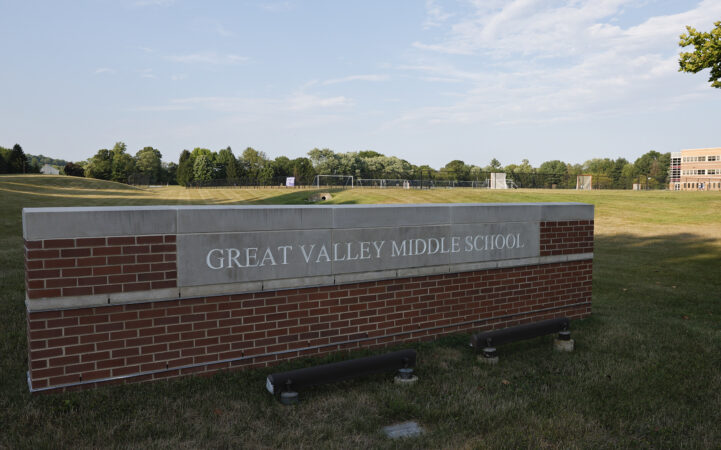
    The U.S. Department of Education has opened a civil rights investigation into the Great Valley School District in Chester County for a policy allowing transgender girls to participate in girls’ sports teams.

    The probe — one of 18 investigations announced last week into transgender sports policies in K-12 districts and colleges nationally — comes after President Donald Trump threatened last year to strip federal funding from schools that recognize transgender students.

    “Time and again, the Trump Administration has made its position clear: violations of women’s rights, dignity, and fairness are unacceptable,” Assistant Secretary for Civil Rights Kimberly Richey said in a statement. “We will leave no stone unturned in these investigations to uphold women’s right to equal access in education programs — a fight that started over half a century ago and is far from finished.”

    District officials said at a school board meeting Tuesday that they’re cooperating with the investigation and working with lawyers to prepare a response.

    Numerous Philadelphia-area school districts have policies allowing transgender students to play on sports teams aligned with their gender identities, including Philadelphia. But Great Valley appears to be the first on the administration’s radar.

    Great Valley was one of the first Pennsylvania school districts to pass a policy supporting the rights of transgender students in 2016 — seeking to provide those students “equal opportunity to achieve their maximum potential,” including by participating in sports “in a manner that is consistent with their consistently asserted gender identity.”

    It was unclear whether any transgender girls currently play sports at Great Valley. A district spokesperson provided a statement Wednesday saying the district was “committed to serving all students in our community with dignity and respect” but declined to comment further.

    After declaring the country would “recognize two sexes, male and female,” Trump issued an executive order in February seeking to end the participation of transgender women in women’s sports.

    The president invoked Title IX, the landmark civil rights law prohibiting sex-based discrimination in programs that receive federal funding.

    But how that law applies to transgender students and their rights has been hotly debated. The U.S. Supreme Court last week heard two cases challenging laws in West Virginia and Idaho requiring that participation on sports teams for girls be based on “biological sex.”

    In Pennsylvania, meanwhile, the Human Relations Act specifies that discrimination based on gender identity is a form of prohibited sex-based discrimination.

    Courts have also protected the rights of transgender students. In 2018, judges in the U.S. Third Circuit Court of Appeals ruled against students in the Boyertown Area School District who said their privacy rights were violated by sharing bathrooms with transgender students.

    Last year, a U.S. District Court judge in Philadelphia rejected a lawsuit from a Quakertown student who said her equal protection rights were violated by having to race against a transgender female student in the Colonial School District.

    Great Valley “takes its obligations under Title IX and all federal civil rights laws seriously,” the district’s school board president, Rachel Gallegos, said at a board meeting Tuesday. “We also take our responsibility to comply with the legal rulings from federal courts in this jurisdiction and to provide the protections afforded our students by Pennsylvania statutes just as seriously.”

    Much of the Trump administration’s focus on transgender issues to date has been at the collegiate level. The NCAA last year announced it would ban transgender women from competing, and the University of Pennsylvania struck a deal with the administration over the past participation of transgender athlete Lia Thomas on its women’s swim team.

    The Great Valley investigation appears to have been triggered by a former school board president, Bruce Chambers, who filed a complaint with the Office for Civil Rights last March, objecting to the policy.

    Chambers, who served on the board from 2009 to 2012, said Wednesday that OCR notified him last week that his complaint was under investigation, the same day it made its public announcement.

    The district’s policy “discriminates against girls, because the trans people can use whatever bathroom they want, use whatever locker room they want … join any team they want, or activity,” Chambers said. He said he “gave the board three chances” before filing the OCR complaint.

    If the board rescinds the policy, “that will solve the whole thing,” Chambers said.

    Kristina Moon, senior attorney with the Education Law Center, a Philadelphia-based group that advocates for transgender students, said the Trump administration appears to be trying “to intimidate school districts” into complying with its policy goals.

    Moon pointed to a recent OCR investigation into gender neutral bathrooms that was criticized by Denver Public Schools, which said the office didn’t independently verify claims and “issued conclusions using an approach that departs from established investigative practice.”

    She also noted an Associated Press report that OCR is opening fewer investigations into sexual violence following the office’s gutting by the Trump administration.

    “If they actually cared about protecting girls … they would not have dismantled the Department of Education and Office for Civil Rights,” Moon said.

    In a letter this week to the Great Valley board, the LGBT Equality Alliance of Chester County said there was “no clear federal law or Supreme Court ruling that makes inclusive policies for transgender students unlawful.”

    “Great Valley’s current policy reflects a reasonable, lawful approach that protects students from discrimination, aligns with local and state civil rights standards, and has been reviewed with legal counsel,” the alliance said in the letter. “Supporting students’ dignity and safety is not political. It is consistent with our legal obligations and the district’s duty of care to all students.”

    Two residents who spoke at Tuesday’s meeting also urged the board to maintain the policy.

    “I understand there is a need for all students and not just a minority to feel safe, but I feel assured the board can and will handle all concerns from parents and students with great care,” Christi Largent said. “I look forward to seeing the board stand up for all the students.”

  • More than 2 inches of snow fell outside Philly Saturday — and more may be coming

    More than 2 inches of snow fell outside Philly Saturday — and more may be coming

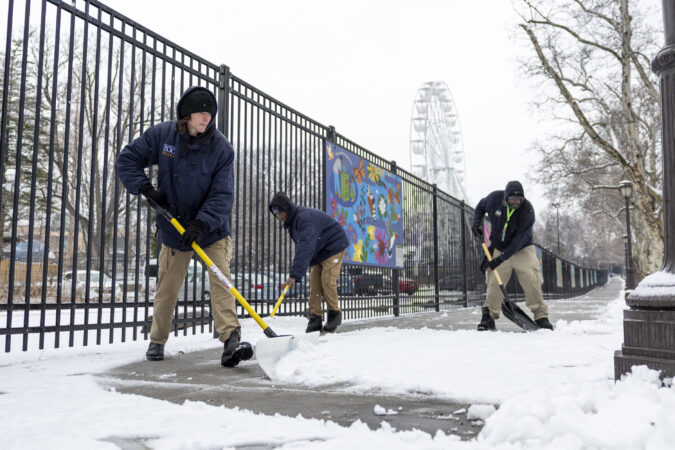
    The wet, hefty snowflakes that fell across the Philadelphia region Saturday blanketed buildings and streets with slushy snow — and more is predicted Sunday.

    While Saturday’s snowfall — recorded at about half an inch in the city, and topping two inches in the immediate suburbs — was melting by the afternoon, a new storm Sunday could bring another round.

    Forecasts for the city and surrounding suburbs project 1 to 3 inches.

    “Expect more snow tomorrow than what you saw today,” said Mike Lee, lead meteorologist at the National Weather Service in Mount Holly.

    Here’s what to know about the snow, and the chances for more this weekend.

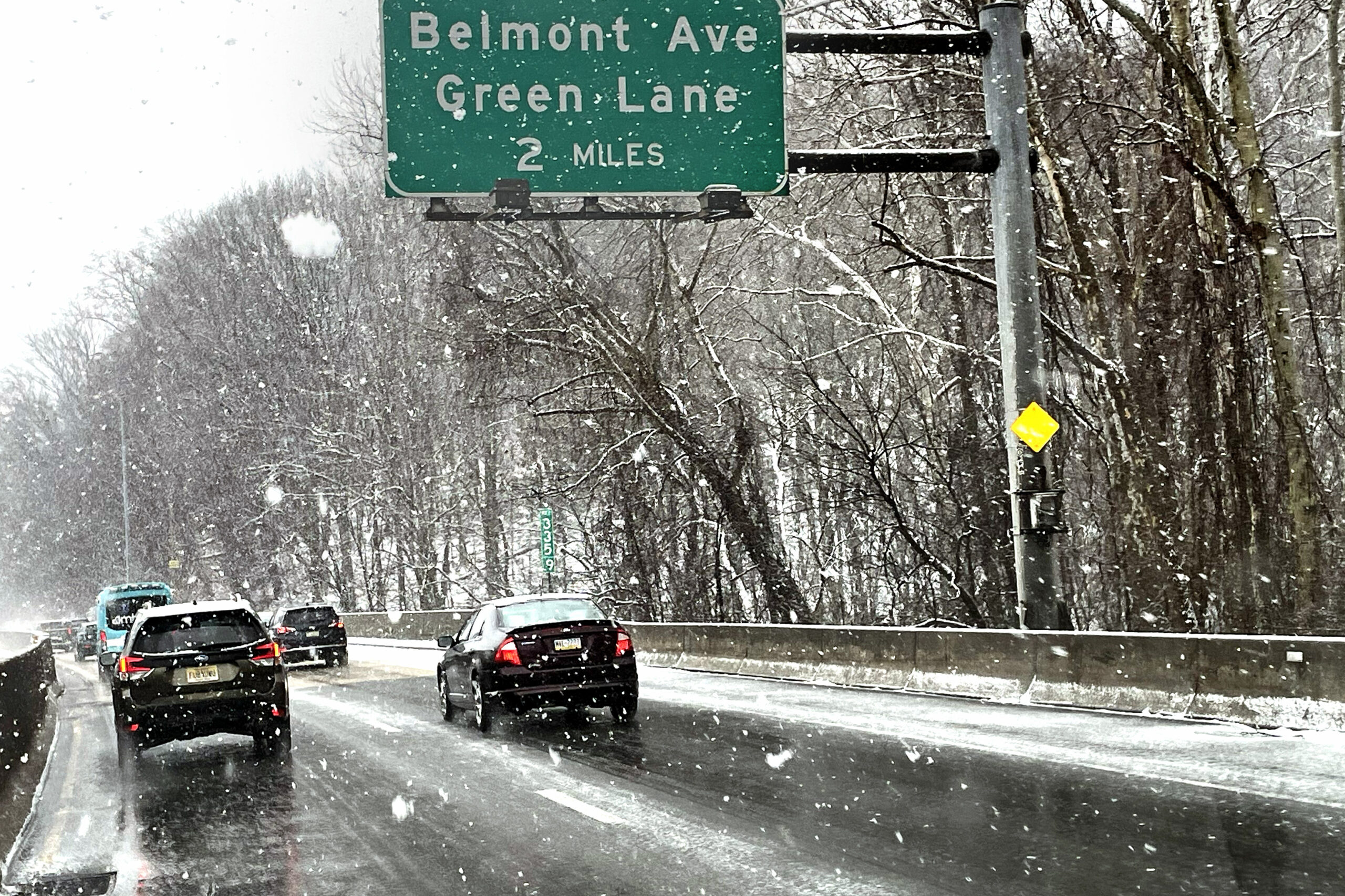
    Traffic on the eastbound Schuylkill Expressway (I-76) is moving slowly as snow falls in the region midday, Saturday, Jan. 17, 2026. Temperatures in the afternoon were expected to approach 40 degrees, so any precipitation that lingered was likely to turn to rain. Sunday will be colder, the source being a coastal storm.

    ‘Wet and slushy’

    With temperatures right around freezing, the snow that fell Saturday morning and early afternoon was “definitely wet and slushy,” Lee said.

    By midafternoon, the snow had stopped. Half an inch was recorded in Center City, while in the nearby parts of the collar counties, totals hovered around 1 to 2 inches, reaching 3 and 4 inches closer to the Lehigh Valley.

    While some of that snow was melting throughout the day Saturday, Lee noted that the melt could turn into black ice on roadways as temperatures fell at night.

    And Sunday offers another chance for snow to accumulate around the region, Lee said.

    Daniel Burton, of Wynnefield, is with his kids Apollo, 9, and Finley, 13, enjoying the snow at Belmont Plateau as the sunset lights up the Philadelphia skyline Saturday, Jan. 17, 2026.

    Will Philly get more snow Sunday?

    A coastal storm system that meteorologists have been tracking may bring more snow Sunday.

    “There’s a little bit better chance for the Philadelphia area” to get snow from that system, Lee said.

    Philadelphia and the Main Line could get 1 to 3 inches of snow Sunday, with snow predicted to start at daybreak and last through the evening, said Melissa Constanzer, senior meteorologist with AccuWeather.

    South Jersey could see the greatest totals, Constanzer said, given the coastal nature of the storm.

    “If you’re planning on going anywhere Sunday, expect travel to be impacted,” Constanzer said. Even if snow is not accumulating, she said, visibility could be a challenge.

    Crews should have time to clear roads by Monday morning, Constanzer said.

    That’s likely it for snow in the near future, with dry weather predicted to start next week, Lee said. Monday night is forecast to see the lowest temperatures of the season so far, reaching 13 degrees in Philadelphia, according to the weather service. The high Tuesday is forecast to top out at 23, with a low Tuesday night of 11.

    “It is going to be pretty cold,” he said.

  • A charter seeking to open on Valley Forge Military Academy’s campus has withdrawn its application

    A charter seeking to open on Valley Forge Military Academy’s campus has withdrawn its application

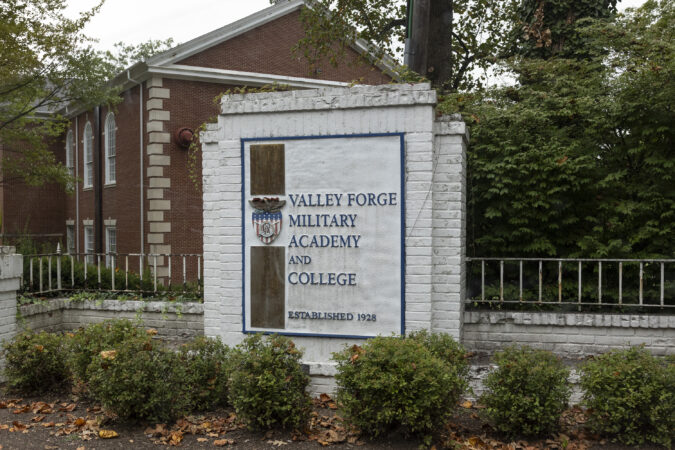
    A group seeking to open a charter school on the Valley Forge Military Academy campus has withdrawn its application, citing a move by Radnor Township to take some of the land by eminent domain.

    The board of the proposed Valley Forge Public Service Academy says it plans to resubmit its application to the Radnor school board once the township’s plan to take 14 acres by eminent domain “has been clarified sufficiently to ensure the welfare and safety” of potential students and staff.

    The Radnor Township Board of Commissioners voted last week to authorize the township’s solicitor to acquire the land from the military academy, which is set to close in May amid financial turmoil and abuse allegations.

    Township officials say they want to prevent more development around North Wayne. At a meeting last week, Radnor Commissioner Jack Larkin said the township had reached out to military academy officials to negotiate a deal, but had not heard back.

    Alan Wohlstetter, a charter school consultant who is backing the proposed Valley Forge charter, said the move to use eminent domain was “clearly not something we could have anticipated.”

    “Clarification is now needed on a number of items in order for us to proceed with our application,” Wohlstetter said in a statement Thursday.

    Plans for the charter — which was proposed to open this fall and enroll up to 150 students — had been in the works since last year, even before the military academy announced its closure. The once-storied academy, which has struggled with declining enrollment, mounting costs, and a series of abuse scandals, had discussed renting its campus to the proposed new charter.

    It was the latest plan for a charter school — a school that is publicly funded but privately managed — to rent facilities from the military academy.

    The Radnor school board — which like other Pennsylvania school boards has the power to approve or deny applications for new charters seeking to open in their districts — has rejected two previous charter proposals at the military academy campus.

    The board held its first hearing on the latest proposal in December and a second hearing had been scheduled for this month.

    The academy spans about 70 acres. In December, Eastern University entered an agreement to buy 33 acres of the property.

    In pursuing eminent domain, Radnor officials say they are considering taking 14 acres to build a replacement for the township’s recreation center, along with a park.

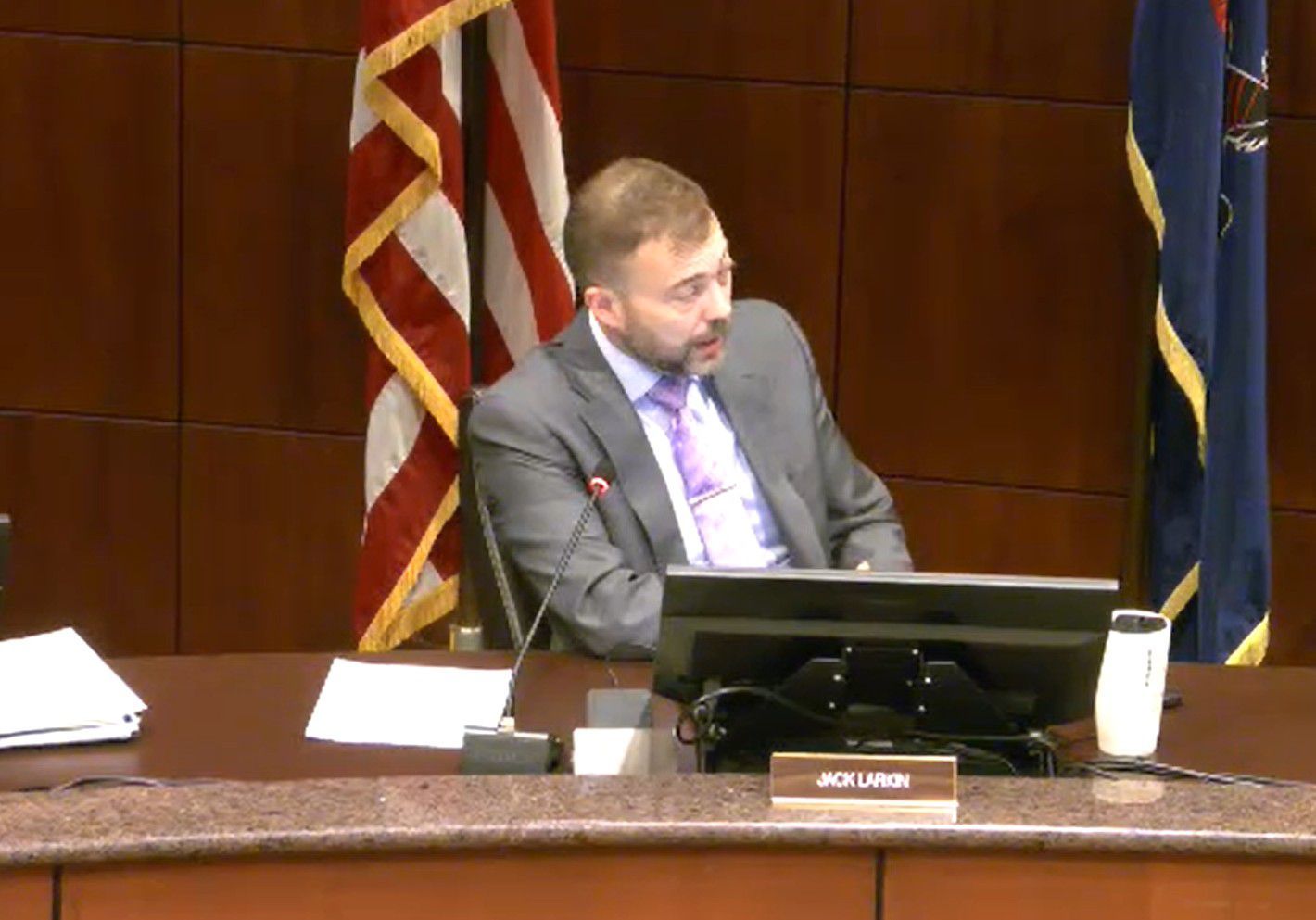
    A video still of Radnor Commissioner Jack Larkin speaking at a Jan. 5 township meeting regarding the possible taking of 14 acres of Valley Forge Military Academy through eminent domain.

    While Larkin said he did not believe the plan would conflict with the proposed charter school, Wohlstetter said the charter’s backers needed clarity on which acres would be affected, and how the plan would impact traffic and parking.

    The uncertainty impairs the charter’s ability to pre-enroll students, Wohlstetter said — adding that the charter wants to be “good partners to the Radnor community.”

    Wohlstetter said the charter would resubmit its application to the school board “at a future date.” The proposed charter would enroll students in grades six to 12, with a focus on preparing them for careers in public service fields like law enforcement, firefighting and EMS.