Author: Frank Kummer

  • Philly stores routinely violate the plastic and paper bag law, environmental group says

    Philly stores routinely violate the plastic and paper bag law, environmental group says

    A sampling of retailers, takeout businesses, pharmacies, convenience stores, and food stores shows half are violating Philadelphia’s ordinance that bans plastic bags and requires a fee on paper bags.

    That’s according to the PennEnvironment Research & Policy Center, which sent members to purchase items in 80 stores across the city and in neighborhoods with varying demographics.

    The nonprofit advocacy group’s survey found:

    • 55% of businesses violated at least one key provision of the law.
    • 50% of businesses failed to charge a 10-cent fee on paper or reusable bags.
    • 20% of businesses provided plastic bags that have been illegal for years. 

    Faran Savitz, a zero-waste advocate for PennEnvironment, said during a news conference Thursday outside City Hall that the group didn’t just scrutinize chain stores like Wawa, although those larger operations were generally compliant.

    He said the 80 stores surveyed were chosen to represent multiple types in all neighborhoods, although they amount to only a fraction of businesses in the city,

    “We wanted to look at as many different types of businesses and hit as many different neighborhoods in the city as possible, so we could get a sense of is this concentrated on one neighborhood or is it spread geographically everywhere,” Savitz said. “We found that this is a pretty widespread problem.”
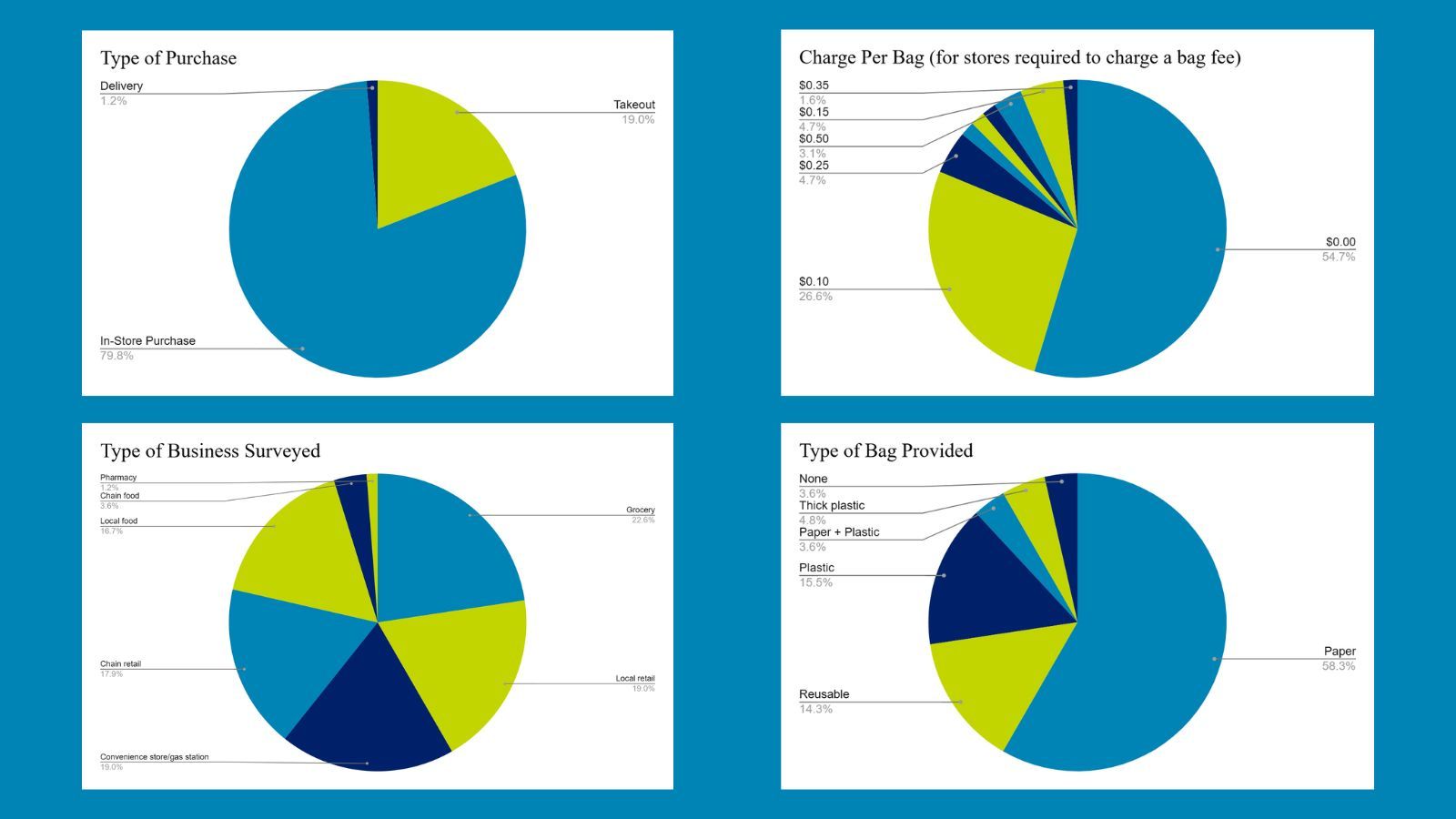
    Charts from a survey of stores conducted by the nonprofit advocacy group PennEnvironment show what the report calls widespread noncompliance of Philadelphia’s revised plastic bag law that went into effect in January 2026.

    Savitz said that chain stores tend to know the law and its requirements. Many small businesses remain unaware.

    However, the survey did highlight some positive momentum. Currently, three-quarters of surveyed businesses no longer distribute plastic bags. That’s a significant improvement from the group’s previous investigations that caught half of all stores providing them.

    The city’s updated bag ordinance

    Philadelphia’s original plastic bag law, introduced by Councilmember Mark Squilla, was passed in 2019 but was phased in slowly. It went into full effect in 2021.

    After that, paper bag usage skyrocketed, said Squilla, who represents the 1st District, including parts of South Philadelphia, Center City, and the River Wards. Although paper bags are biodegradable, they require more energy to produce and the cutting down of trees.

    Squilla introduced an updated bag ordinance last year, which was approved by City Council, and went into effect in January. It required a 10-cent fee on paper bags.

    The goal of the fee, Squilla said, is to change shoppers’ behavior and get them to bring reusable bags to the store.

    Squilla called the violations found by PennEnvironment “disappointing,” but said he knew compliance would be a challenge.

    “Our goal is to end single-use plastic bags in our waste stream and in the city of Philadelphia,” Squilla said.

    To close the compliance gap, PennEnvironment is urging Licenses and Inspections to improve education and enforcement, and asking residents to report noncompliant businesses to the city’s 311 system.
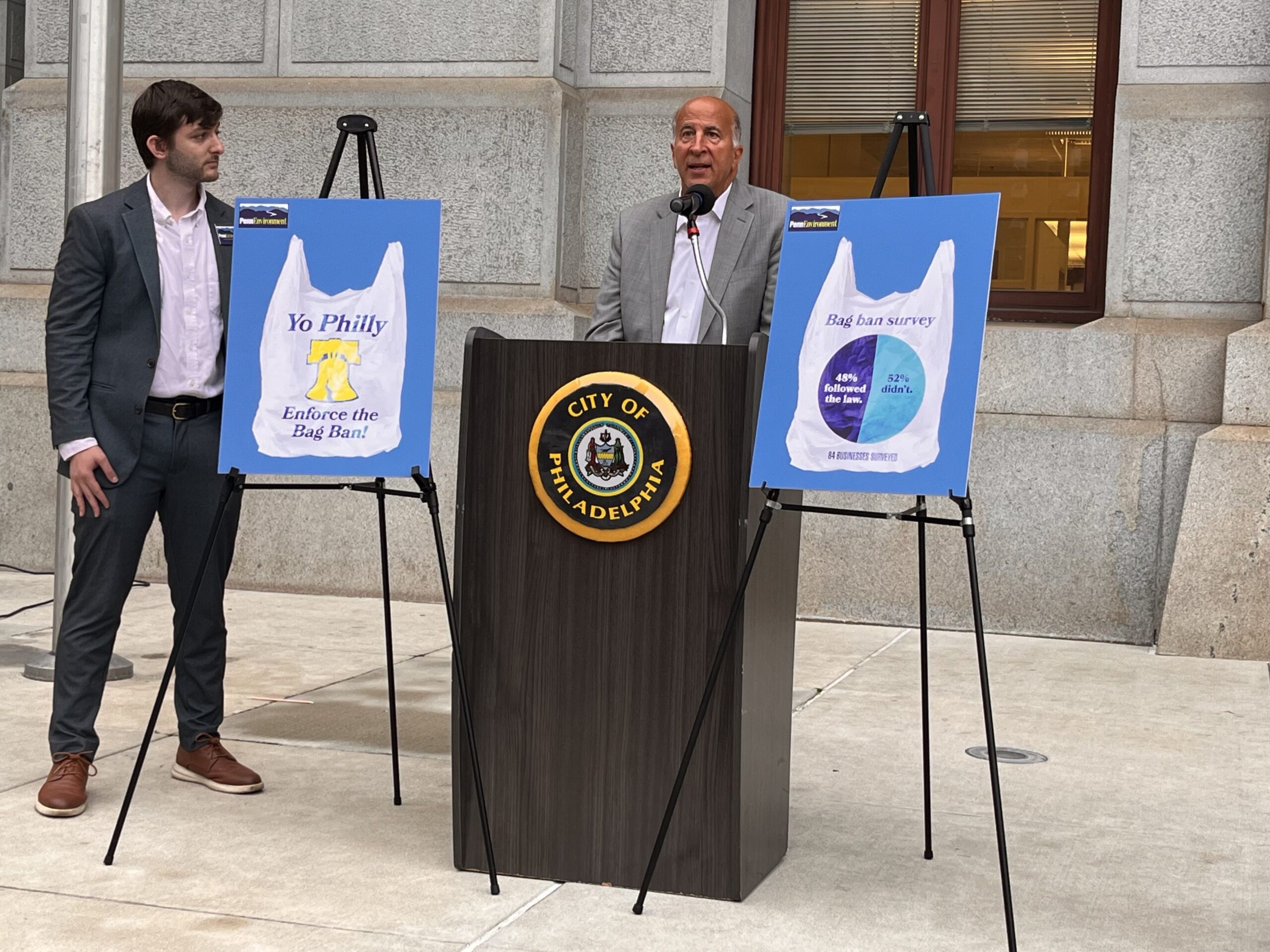
    Faran Savitz (left) of PennEnvironment Research & Policy Center and Philadelphia Councilmember Mark Squilla, at lectern, discuss PennEnvironment’s findings outside City Hall on July 9.

    Plastic bags

    Ryan Rabenold, environmental program coordinator at the Pennsylvania Resources Council, said the city’s law is key to reducing waste, noting that most reusable plastic bags do not get recycled.

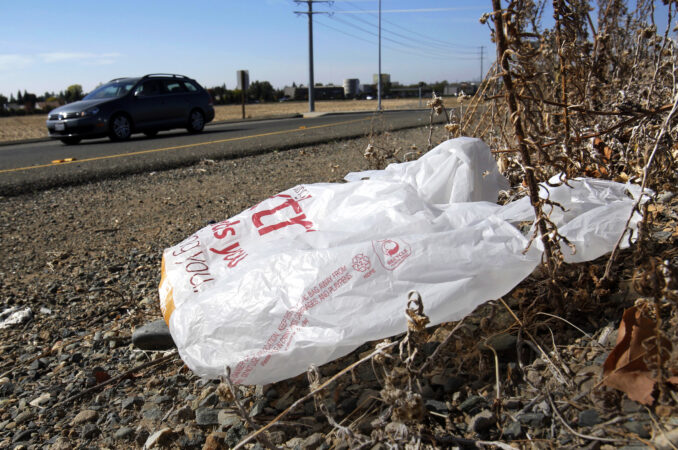
    Plastic bags contribute to litter, require fossil fuels to produce, and become microplastics in the environment when they break down.

    “They either get lost in the system, are contaminated with food or grease, which makes them unrecyclable, or they simply get blown away when we’re trying to collect them,” Rabenold said. “When they do end up in our recycling system … they contaminate materials that are recyclable and force them to be removed from the system.”

    Rabenold noted that microplastics have been detected in human blood and tissue.

    “We are feeling the impacts of something that we may not be able to see, Rabenold said.

    “It’s better for our health and the environment to use one thing 1,000 times,” Rabenold said of reusable bags, “rather than use 1,000 things once.”


  • July in Philly has become 4.4 degrees hotter since 1940 on average. Nights are even warmer.

    July in Philly has become 4.4 degrees hotter since 1940 on average. Nights are even warmer.

    Philadelphians sweated through Julys in the 1940s, brooding over World War II as temperatures averaged in the mid-to-upper 70s, including nighttime lows.

    Today, as the city prepares to mark the nation’s 250th anniversary, they swelter under average July temperatures of around 80 degrees — and those nighttimes have gotten warmer.

    Over the past 85 years, Julys in Philadelphia are running on average 4.4 degrees warmer than in 1940, based on an analysis of historical weather data. That translates to an increase of about 0.52 degrees per decade.

    (function(){function e(){window.addEventListener(`message`,function(e){if(e.data[`datawrapper-height`]!==void 0){var t=document.querySelectorAll(`iframe`);for(var n in e.data[`datawrapper-height`])for(var r=0,i;i=t[r];r++)if(i.contentWindow===e.source){var a=e.data[`datawrapper-height`][n]+`px`;i.style.height=a}}})}e()})();

    Nights are even toastier, showing a rise of 4.8 degrees over the same time period.

    (function(){function e(){window.addEventListener(`message`,function(e){if(e.data[`datawrapper-height`]!==void 0){var t=document.querySelectorAll(`iframe`);for(var n in e.data[`datawrapper-height`])for(var r=0,i;i=t[r];r++)if(i.contentWindow===e.source){var a=e.data[`datawrapper-height`][n]+`px`;i.style.height=a}}})}e()})();

    “Science shows that while summer heat is nothing new, climate change is pushing it beyond what we’ve experienced in the past,” Zachary Labe, a climate scientist at the nonprofit Climate Central, said in an email.

    The Inquirer used 1940 as a base year in its analysis because it is the oldest year for consistent records at Philadelphia International Airport. The data from the National Oceanic and Atmospheric Administration’s Regional Climate Centers ends at July 2025.

    The data does not include this July, which could set records.

    105 degrees possible

    The National Weather has issued an extreme heat warning with possible record highs starting Thursday and heading into the July 4 weekend.

    And Philadelphia has declared a heat emergency, activating the city’s pioneering heat-response system.

    High temperatures Thursday, Friday, and Independence Day are all forecast to top 100 degrees and threaten daily records. The current record highs for those dates are 103 degrees for Thursday, 104 for Friday, and 103 for the Fourth.

    The record-warmest lows are 82, 77, and 79 for those days respectively, according to data from the National Weather Service’s Mount Holly office.

    The weather service says dangerously hot conditions with heat index values between 100 and 110 degrees are expected each day. Very warm low temperatures in the mid-70s to the low 80s at night won’t offer much relief, the office noted.

    When combined, multiple days of such high temperatures and humidity will exacerbate impacts, say those meteorologists. The hottest conditions are expected Thursday through Friday.

    Climate change

    Although it’s difficult to pin any single heat wave to climate change, the majority of climate scientists say the burning of fossil fuels has led to ever-increasing amounts of heat-trapping greenhouse gases in the atmosphere and transformed the climate.

    The Princeton-based Climate Center says human activities have warmed the planet by about 1.2°C (2.2°F) above pre-industrial levels. The Princeton-based organization of scientists says that since 1970, July has warmed in 94% of the 243 U.S. cities it studied. Temperatures for the month have risen by 2.6 degrees on average.

    “That includes hotter and more humid nights like those this week, which raise health risks because the body has less time to cool down and recover,” Labe said.

    A big impact on cities

    Excessive heat hits urban areas like Philadelphia hard, said Mathy Stanislaus, of the Philadelphia Climate Justice Collective.

    The collective is a partnership of the Mantua Civic Association, SEAMAAC, Esperanza, Overbrook Environmental Education Center, and the Environmental Collaboratory at Drexel University. Stanislaus is vice provost and executive director of The Environmental Collaboratory.

    In the most densely populated, least tree-lined parts of Philadelphia temperatures can soar 20 degrees higher than in greener, wealthier neighborhoods, he notes.

    That’s because of the heat island effect, which occurs when cities are significantly warmer than surrounding areas because of the lack of tree canopy combined with high concentrations of heat-absorbing pavement, dark roofs, and buildings.

    It’s something many people in the suburbs, or wealthier areas, might not think about, Stanislaus said.

    “I don’t think people realize the gravity of the circumstances for lower income urban communities who have an affordability crisis compounded by the heat crisis,” he said.

    Stanislaus said some households in the city don’t have air-conditioning, and those that do can face a choice as to whether they should use it or not.

    “Even if they have an AC, they may not be able to afford to actually run it,” he said.

    According to a report by the collective, Philadelphia households overall on average spend about 6.7% of their income on energy, but that the burden is much higher for Black and Hispanic households. The poor conditions of many homes because of their age contribute to the strain.

    Stanislaus says temperatures strain critical public and healthcare systems.

    He credits Philadelphia for its array of cooling centers, pools, and spraygrounds. But, he said, many residents are not aware of them or lack transportation. He’d like to see more money devoted to public awareness during heat waves.

    In addition, he said healthcare systems need more staff trained in heat-related care and education, as well as better tracking heat-related illnesses and deaths.

    There has been one death attributed to heat so far this year, according to data from the Philadelphia Department of Public Health. In the past two decades, the biggest number of deaths came in 2011 and 11 with 35. But the city has upped its response measurably since then and the number of deaths has trended down.

    Stanislaus believes heat-related deaths and illnesses are underreported.

    “There’s an urgency to heat,” Stanislaus said. “We need to meet the moment.”

  • Historic First Bank of the United States reopens with a grand $43M remodel in time for July 4

    Historic First Bank of the United States reopens with a grand $43M remodel in time for July 4

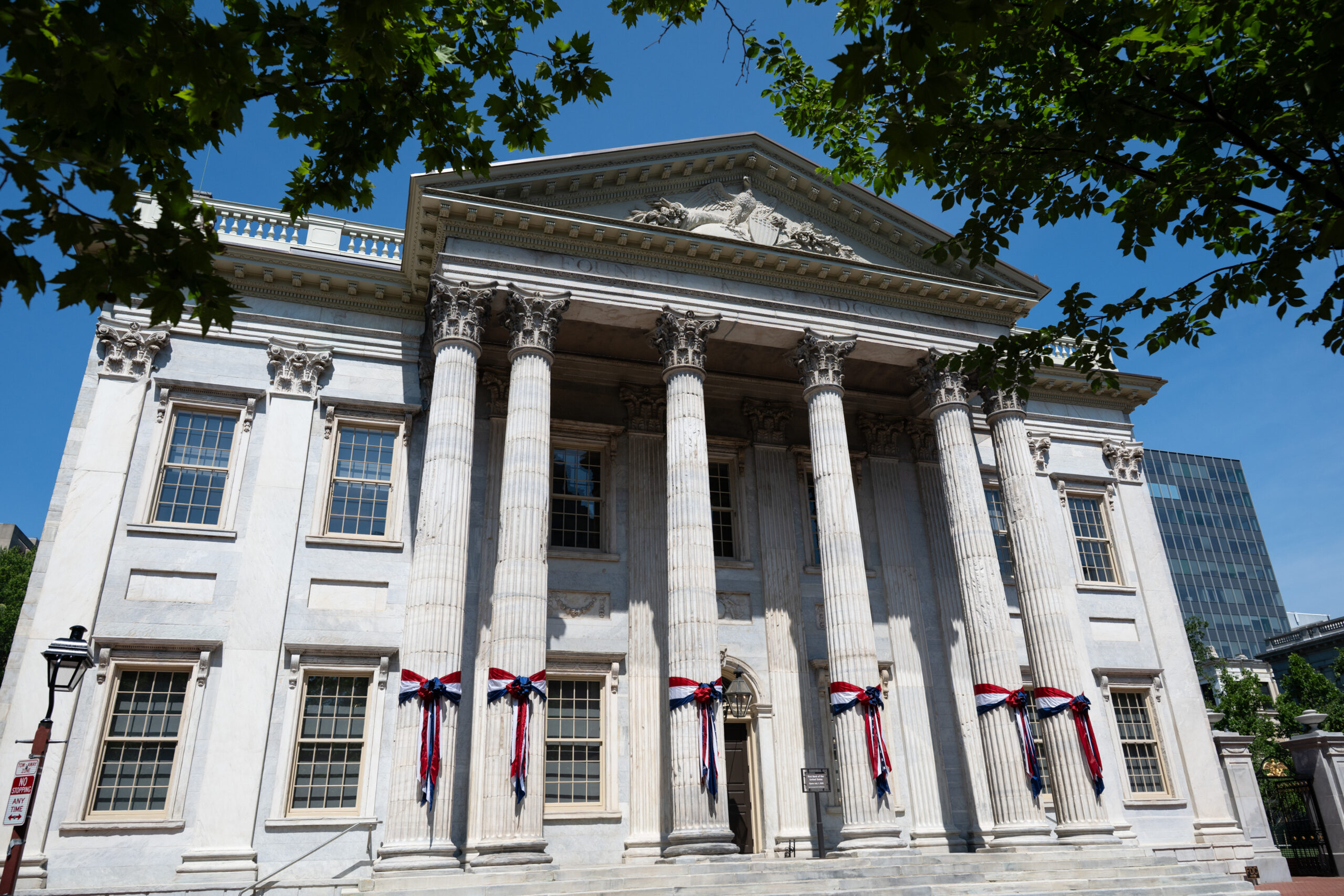
    The First Bank of the United States in Philadelphia, one of Alexander Hamilton’s signature achievements, has undergone a $43 million renovation and will be open to the public for the first time in more than 20 years starting Wednesday.

    The ribbon cutting at the building on the west side of Third Street near Chestnut comes just in time for 250th anniversary of the Declaration of Independence this weekend.

    Visitors will be able to walk through the grand rotunda and look up at the barrel-vaulted golden ceiling, lit by 240 painstakingly cleaned panes of glass around a central skylight.

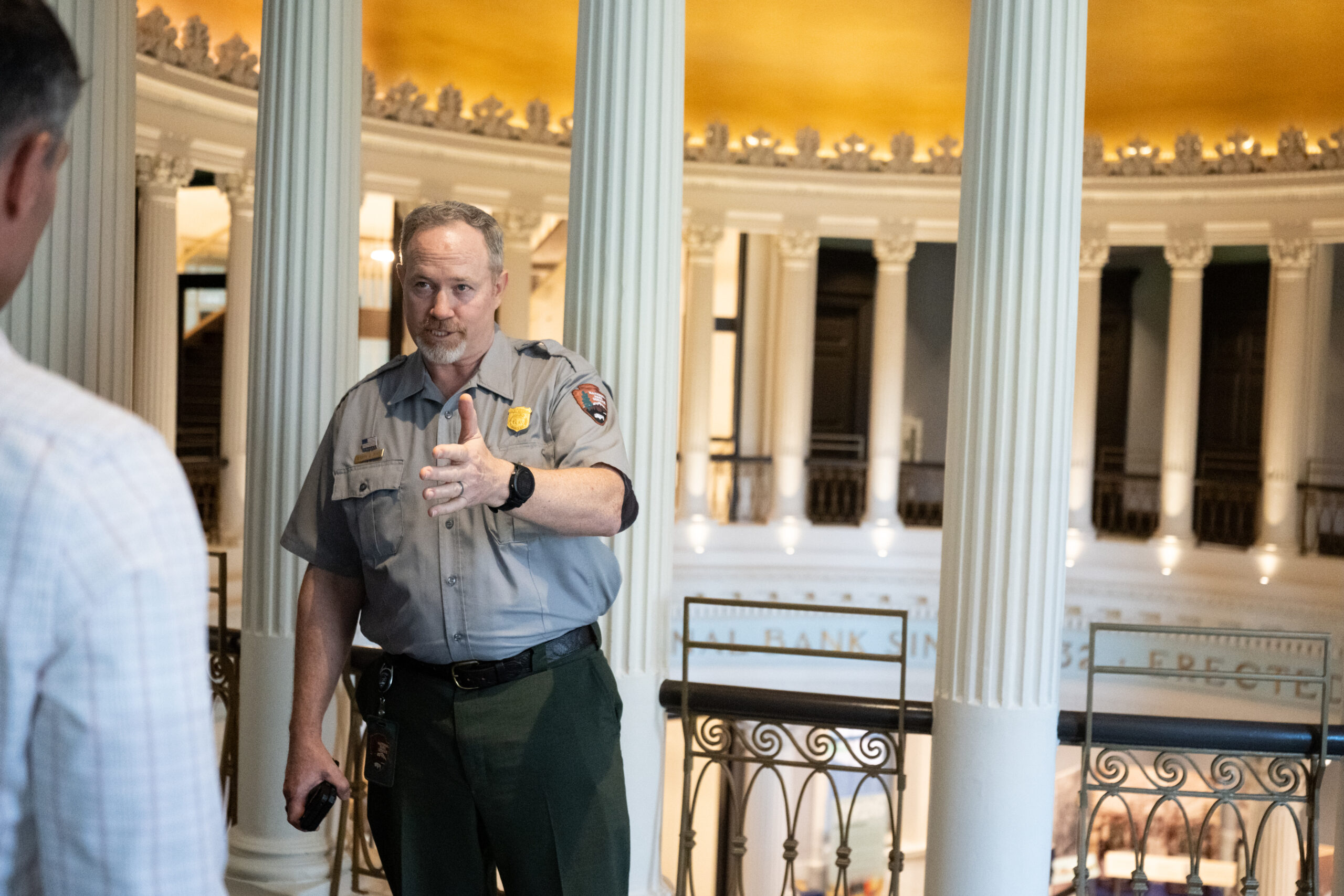
    “I’m excited to see how visitors connect to the space,” said Steve Sims, superintendent of Independence National Historical Park. “The National Park Service can talk about what’s important all day long, but what really matters is what’s relevant to our visitors.”

    Simms said the interior before the renovation was dark and dingy, marred by an old carpet that covered the marble floor. The entire interior has been painted and the ceiling restored.

    Steven Sims, superintendent of Independence National Historical Park, shows off the interior of the newly renovated First Bank of the United States.

    The air-conditioning, electrical, lighting and other systems had to be replaced and brought up to code.

    The National Park Service also built an addition on the back, which serves as a public entrance. It includes an elevator and modern bathrooms, complying with the Americans with Disabilities Act.

    The original budget for the restoration was about $30 million. But higher asbestos levels, issues with soil borings, and installation of a new stormwater management system so roof drainage would be filtered caused that total to rise.

    In all, $39.3 million for the project came from the federal Great American Outdoors Act Legacy Restoration Fund, and the Independence Historical Trust contributed $4.5 million.

    Jonathan Burton, director of development for the trust, said Chadds Ford-based John Milner Architects reimagined the interior of the First Bank, bringing it more in line with the vision held by Philadelphian Stephen Girard, who took over the bank in 1812. West Chester-based Bedwell Co. was the contractor.

    “This national historic landmark is now pristine,” Burton said. “It’s completely updated, with all new mechanical systems. It’s absolutely gorgeous.”

    Rare artifacts on display

    Two temporary exhibits, containing rare artifacts, will fill the interior until a permanent exhibit on the bank’s mission — to create a national financial system for the United States — is finished.

    Rosalind Remer, Drexel University’s senior vice provost for collections and exhibitions, said the temporary exhibit from the Atwater Kent Collection at Drexel is designed to focus on souvenirs and art collected from the 1876 Centennial Exposition in Philadelphia and the Bicentennial.

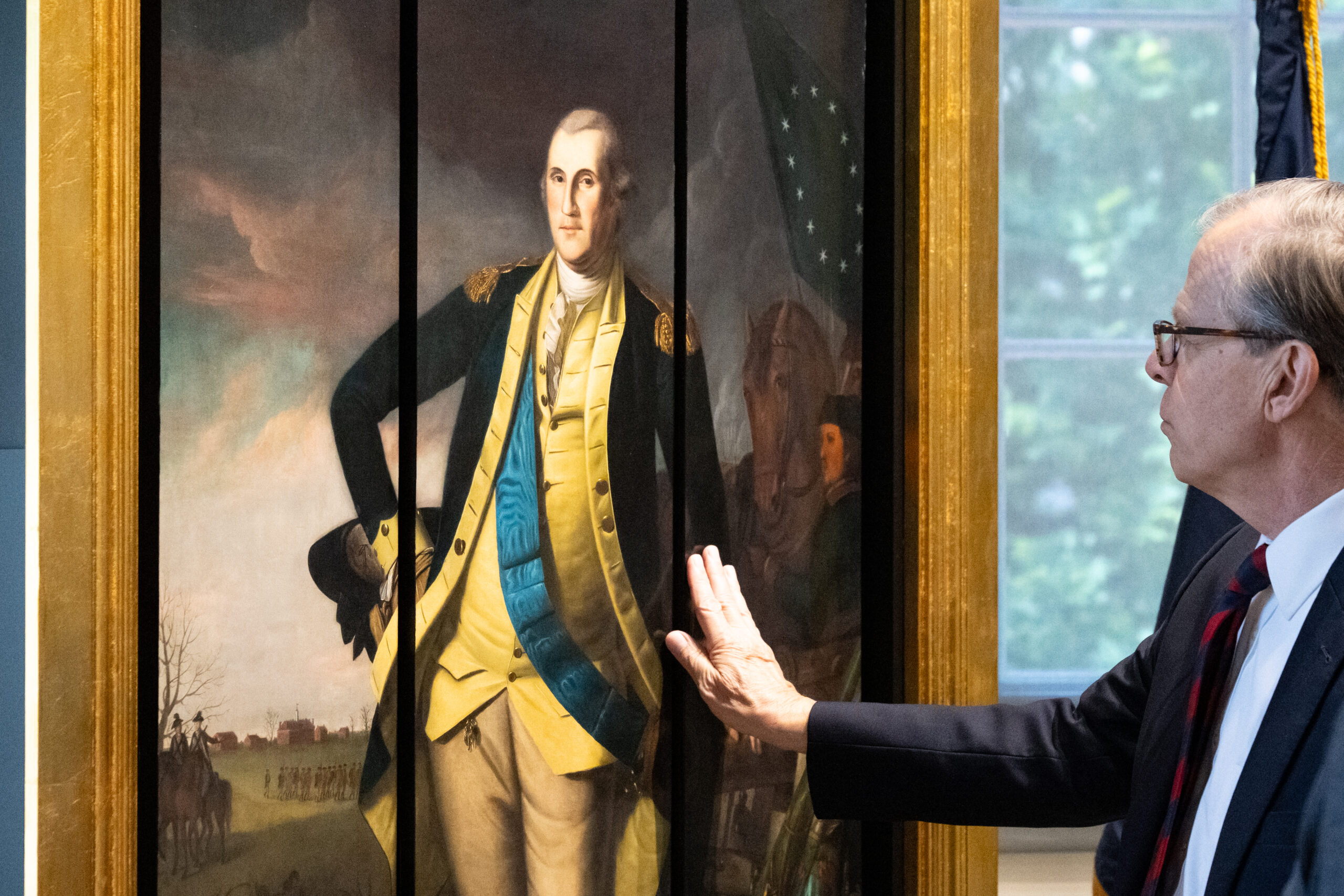
    Glyn Davies, a retired U.S. diplomat and senior Foreign Service officer, points out details of a replica of a portrait of George Washington at the First Bank of the United States.

    The America on the World Stage exhibit includes two chairs from the Chinese Pavilion at the exposition and a Bicentennial lamp with glass panes of the American flag and Liberty Bell.

    Glyn Davies, a retired U.S. ambassador and a consultant to the U.S. State Department, said the Marks of Friendship exhibit commemorates 250 years of U.S. diplomatic treasures.

    The exhibit includes an ornate Louis XVI-style mantel clock gilded in bronze from the U.S. embassy in Paris and dated to about 1725, as well as Philadelphia painter Charles Willson Peale’s 1779 portrait of George Washington in Princeton.

    First Bank’s historic design

    The bank was key to Alexander Hamilton’s push to give the fledgling federal government authority to handle its poor financial situation.

    It’s one of the nation’s first notable examples of Classical monumental design, which contains proportions and geometries of ancient Greece and Rome on a grand scale.

    The three-story brick structure features a marble front and trim has a seven-bay marble facade.

    Completed in 1797, the three-story brick structure with a marble front and trim has a seven-bay marble facade, built by Claudius F. LeGrand & Sons, stone workers, woodcarvers, and guilders. The builders used Pennsylvania blue marble quarried from Montgomery County.

    The decorative entrance, restored in 1983, contains elaborate mahogany carvings of an eagle grasping a shield of 13 stripes and stars and standing on a globe festooned with an olive branch.

    The entrance is topped by a marble keystone that depicts Mercury, the Roman god of commerce, finance, and merchants.

    The entire exterior has been repointed and damaged areas were fixed. The eagle sculpture also had to be repaired as part of the new renovations.

    Inside, the center is defined by a circular Corinthian columned rotunda on the first and second floors.

    The original cellar retains its 1795 stone-walled and brick-vaulted rooms, some still having their original sheet iron vault doors.

    Alexander Hamilton’s lasting legacy

    First Bank has a long and storied history for both the U.S. and Philadelphia.

    Visitors to the First Bank will be able to walk through the grand rotunda and look up at the barrel-vaulted golden ceiling, skylit by 240 panes of glass around a central skylight.

    At the time of Hamilton’s push for a bank, the U.S. had no national currency, and banks issued their own notes. The notion of a national bank ignited a heated national debate.

    Thomas Jefferson, who penned the Declaration of Independence just a few blocks away, was originally against the bank but later used it to finance the Louisiana Purchase. The bank’s initial 20-year charter lapsed in 1811.

    Philadelphia merchant Girard bought the bank in 1812. After Girard’s death, another bank purchased the building in 1832 and called itself Girard Bank to capitalize on its namesake’s financial fame.

    In 1902, the Girard Bank hired architect James Windrim to remodel the interior. He removed the original barrel-vaulted ceiling and installed a skylight over a glass-paned done to give tellers more light.

    The bank was vacated in 1929 and languished until the National Park Service purchased it in 1955 as part of Independence National Historical Park.

    The building served as the park’s visitor center until 1976, underwent some restoration, and was open in time for the Bicentennial in 1976. It was open off and on until being closed in 2002 — until now.

    Editor’s note: This story has been updated to correct the spelling of Steven Sims, superintendent of Independence National Historical Park.

  • City officials plan to revamp Market Street from Sixth Street to City Hall

    City officials plan to revamp Market Street from Sixth Street to City Hall

    Philadelphia officials are planning a major renovation of Market Street’s sidewalks, landscaping, and streetscapes, from Sixth Street toward City Hall.

    The announcement of a $2.5 million federal grant to begin the planning and design comes on the heels of the recently completed renovation of the thoroughfare in Old City from Second to Sixth streets. That effort took 18 months of construction and $16 million.

    The stretch to City Hall poses more logistical problems and could prove a heavier lift because of its dense use.

    The planned revamp is part of Mayor Cherelle L. Parker’s pledge to revitalize the Market East corridor.

    Most recently, the row of storefronts on the 900 block of Market owned by Comcast and Harris Blitzer Sports & Entertainment have begun hosting small pop-up businesses for the summer, as the city celebrates the 250th anniversary of the Declaration of Independence.

    The Department of Planning and Development is overseeing the revitalization, and the public-private Market East Corridor Advisory Group is helping to craft a vision.

    The new $2.5 million grant from the U.S. Department of Transportation, which the city will match, is limited to planning the streetscape along Market Street between 6th and Juniper Streets.

    Construction is years away, said Kelley Yemen, Philadelphia’s director of the Office of Multimodal Planning. Her office is gathering information to evaluate everything from traffic patterns to potential road diets and bike lanes.

    “Everything’s on the table at this point,” Yemen said.

    Safety remains a primary driver, she said, given that the section of Market Street is situated on the city’s “high-injury network.”

    However, she said redesigning the corridor poses unique logistical challenges compared with the recent improvements in Old City.

    Market East serves as a major commercial hub with heavy transit use, requiring planners to balance the needs of transit riders, pedestrians, and cyclists.

    Additionally, the shallow depth of the underground subway system may constrain surface-level landscaping.

    Yemen explained that any trees or plantings must account for the height of the subway ceiling, potentially leading to elevated planters rather than vegetation that’s rooted in the ground.

    The city is working with the consulting firm WSP and a team of subconsultants to develop design options.

    Yemen anticipates the design will take two to three years, as the city also has to navigate federal environmental reviews.

    Though the planning phase is now paid for, the city does not yet have money to fund construction and will likely look to federal or state grants for help in the future.

    Public involvement will be a key next step, she said.

    The planning commission is expected to launch a broader public engagement push this July to gather community input on the larger Market East revival.

  • Liquid natural gas export facility planned for Eddystone provokes an environmental fight

    Liquid natural gas export facility planned for Eddystone provokes an environmental fight

    Two environmental activist groups say they plan to organize resistance against a plan to build a liquefied natural gas (LNG) export facility in Eddystone, a small borough in Delaware County.

    They say the facility would threaten not only the environment, but also public safety.

    The Delaware Riverkeeper Network and Chester Residents Concerned for Quality Living (CRQL) said during an online meeting Wednesday that documents show negotiations have been happening behind closed doors for more than a year.

    They cited a newly released tranche of documents that show the plan has progressed with nondisclosure agreements (NDAs) with state officials.

    More than a year ago, U.S. Sen. David McCormick (R., Pa.) wrote an opinion piece in the Washington Times publicly announcing the $7 billion project by Penn America Energy to build the terminal along the Delaware River in Eddystone.

    Details have been scant, but nearby communities such as Media have stated opposition to the terminal.

    Tracy Carluccio, deputy director of the nonprofit Delaware Riverkeeper Network, said the documents show that the administration of Pennsylvania Gov. Josh Shapiro and Eddystone officials have been talking to, or in negotiations with, a developer for at least a year.

    (function(){function e(){window.addEventListener(`message`,function(e){if(e.data[`datawrapper-height`]!==void 0){var t=document.querySelectorAll(`iframe`);for(var n in e.data[`datawrapper-height`])for(var r=0,i;i=t[r];r++)if(i.contentWindow===e.source){var a=e.data[`datawrapper-height`][n]+`px`;i.style.height=a}}})}e()})();

    The environmental groups say Eddystone Borough officials initially denied open records requests about those negotiations, prompting a yearlong legal mediation.

    The planned facility aims to produce 7.2 million tons of LNG per year from Pennsylvania’s rich Marcellus Shale deposits, Carluccio said, based on a presentation by Penn America to Eddystone Borough on March 7 that was obtained through a records request.

    “There have been no public meetings or public disclosure about the proposed project,“ she said, adding that “the public knows nothing about this, and Eddystone Borough knows all about it.”

    Carluccio said nondisclosure agreements (NDAs) and confidential meetings involving high-level state and local officials have helped shield the project from public scrutiny.

    The Pennsylvania Department of Environmental protection said it had not had any pre-application meetings regarding a proposed LNG export facility and no permits for such a facility are under review.

    In a statement from Eddystone Borough, officials said they are aware of the “public discussion” regarding a potential LNG facility. The statement said that members of Borough Council met with representatives of the project last year “for informational” purposes.

    “Those meetings did not constitute approval or endorsement of any future development,” the statement said. “No approval action is currently before Borough Council.”

    If an application is submitted, the statement said, the borough would conduct a “thorough review” and that the process would be open to the public.

    Pa.’s drive toward LNG

    State, public utility, and elected officials, as well as unions, have been working toward locating an LNG facility in Southeastern Pennsylvania, although no site has been formally proposed.

    The Philadelphia LNG Task Force was created from legislation introduced in 2022 by State Rep. Martina White (R., Philadelphia) to explore the possibility of the first liquefied natural gas export facility along the Delaware River. Former Gov. Tom Wolf, a Democrat, signed the legislation to form the task force.

    Previously, state officials have hosted multiple public sessions on a potential facility, saying it would tap a European market hungry for energy.

    Eddystone deal

    Although McCormick noted Eddystone as a location, no official planning documents have been submitted to Eddystone or the Federal Energy Regulatory Commission (FERC).

    According to records obtained through Pennsylvania’s Right to Know Act, the Pennsylvania Department of Community and Economic Development (DCED) entered into a formalized nondisclosure agreement with Eddystone Energy LLC in October 2025.

    The DCED issued a statement to The Inquirer saying that it “routinely discusses potential projects with companies seeking to do business in the Commonwealth.”

    The agency said the discussions are confidential because they involve proprietary information from companies.

    “Maintaining confidentiality in such discussions is common practice in the business development industry across the country,” the statement said.

    A draft NDA was additionally distributed between Eddystone Borough Council and Penn America Energy Holdings, though it appears it was never officially finalized, Carlucci said.

    Advocates say that Franc James, CEO of the now-dissolved Penn America Holdings LLC, has been the primary figure driving the LNG project forward, alongside an array of state politicians.

    On Wednesday, Carluccio asserted James is behind Eddystone Energy LLC, a Delaware corporation formed in May 2025.

    Internal records reveal that meetings have involved representatives from the offices of Shapiro, State Sen. John Kane, McCormick, and State Rep. Dave Delloso, as well as Eddystone Borough officials.

    For example, a document from Shapiro’s office shows there was an hourlong meeting in February with Eddystone Mayor Ronald Hughes, Borough President William Stewart, Kane, James, multiple union representatives, and Technip Energies, an international energy infrastructure developer with a specialty in LNG.

    And James wrote an email dated July 11 to Samuel Robinson, Shapiro’s deputy chief of staff, stating that the “LNG Eddystone team” would attend the Pennsylvania Energy and Innovation Summit that same month in Pittsburgh. The summit was organized by McCormick.

    Community reaction

    An LNG facility along the Delaware River waterfront in Southeastern Pennsylvania has been discussed for years with James’ Penn America Energy Holdings, also referred to as Penn LNG.

    Though no location had been firmly named, it was initially believed Chester would be the host. However, that location received massive pushback from residents led by Zulene Mayfield, founder of the CRQL advocacy group, and resulted in a political turnover in the city. No project was ever formally proposed for Chester.

    The environmental advocates say the plan for Eddystone is well underway despite the lack of public input. Mayfield said she plans to organize Eddystone residents to oppose it.

    “This project is already rolling, that’s what we’re telling you,“ Mayfield said Wednesday in the webinar she hosted with Carluccio. ”The attempt is already being made to put it right in Eddystone.”

    Mayfield and Carluccio said the borough is too small to host a large LNG export facility, which typically span 1,000 acres. The borough is one-square mile.

    They also fear that an explosion or fire could not only reach neighboring towns but also stretch across the river to New Jersey.

  • Philly area set to receive record-breaking $322M in state and federal money for trails

    Philly area set to receive record-breaking $322M in state and federal money for trails

    Philadelphia and its surrounding counties are set for what could be a record-breaking $322 million in federal and state funding to go toward building new trails segments, say trail advocates.

    Projects in line for funding include the much-anticipated Spring Garden Connector in Philly. And it would include the Newtown Rail, Chester Creek, and Parkside-Wynnefield-Cynwyd trails in the suburban counties.

    The money is part of a larger $8.2 billion pool of transportation funding updated through the federal Transportation Improvement Program (TIP) for 2027 and spread over four years.

    “We consider this to be potentially record breaking,” said Patrick Monahan, vice chair of the Circuit Trails Coalition in Pennsylvania. “It’s proof that the trails are being treated as essential infrastructure, making it safer and easier to walk and bike in the region.”

    In 2024, Pennsylvania received $200 million for trails under TIP.

    Pennsylvania gets its TIP plan updated every two years and the majority of money goes to highways, bus and rail systems, trolleys, and ferries. It is part of an agreed-upon list of priority transportation projects. That list includes 344 projects.

    In all, this year’s proposed $322 million in funding for trails would advance 27 bike and pedestrian projects across Philadelphia, Bucks, Chester, Delaware, and Montgomery Counties.

    The Delaware Valley Regional Planning Commission (DVRPC) is set to vote on approving the allocations in July.

    The trails, either begun or being planned, are part of the Circuit Trails, a network of hundreds of miles of multiuse trails throughout the Philadelphia region including southern New Jersey, which updates its TIP funding in alternate years.

    A sample of the trail projects in line for funding include:

    • $11 million for the second phase to extend the Schuylkill Banks trail in Philadelphia south from near 61st Street to Passyunk Avenue that would include a new park at the base of the Passyunk Avenue Bridge.
    • $58.5 million for Philadelphia’s Spring Garden Connector project that would link trail systems along the Delaware and Schuylkill rivers and make Spring Garden Street safer for cyclists and pedestrians.
    • $50 million to improve safety for roadway users, including pedestrians and cyclists, on PA 291 from Irving Street to Ridley Creek. The project includes building a multiuse side path that will be designated as part of the East Coast Greenway, a trail system linking Maine to Florida.
    • $8.5 million for the Chester Valley Trail, a multiuse trail along the alignment of the former Philadelphia and Thorndale Branch, a former freight train route, including renovation of the Whitford Bridge and Downingtown Trestle Bridge for bicycle and pedestrian use.
    • $10 million to develop a segment in Whitemarsh Township, Montgomery County, that would run from the existing Wissahickon Trail in Fort Washington State Park to the existing Cross County Trail near SEPTA’s Fort Washington Station.
  • Mutant mice resistant to pest control found in Philly, its suburbs, and NYC. Are rats next?

    Mutant mice resistant to pest control found in Philly, its suburbs, and NYC. Are rats next?

    Pest control companies routinely use traps baited with rodenticide to kill rats and mice found in homes, restaurants, and businesses throughout the Philadelphia area, but a recent Rutgers University study suggests those companies face a gnawing problem.

    Researchers discovered that mice in Philadelphia, Trenton, and suburbs like Levittown and New Hope harbor genetic mutations that shield them from standard chemical baits.

    In fact, a majority of house mice sampled from Northeast urban areas, including Manhattan and other New York City boroughs, carried at least one mutation linked to rodenticide resistance — a clear sign that pests are actively evolving to survive common poisons.

    Rats presented a different problem. While they lacked the chemical-resistant mutations found in mice, the study’s author suggests they possess the cognitive sophistication to outsmart and evade traps entirely.

    Lead author Jin-Jia Yu, a postdoctoral researcher in Rutgers’ entomology department, said the findings indicate that pest control companies might need to develop different strategies.

    Yu conducted his research with the supervision of another of the paper’s authors, Changlu Wang, an entomologist in the same department.

    Published in the April issue of Pest Management Science, the peer-reviewed study was launched after frustrated pest control professionals repeatedly approached the Rutgers lab, reporting that rodents routinely survived multiple treatments.

    “For the house mouse, we saw much more mutations rather than Norway rats,” Yu said. Norway rats are the common brown rat often seen in sewers. “Genetic mutation is not that special in these creatures. But we found that the house mouse shows a lot of genetic mutations related to rodenticide resistance.”

    Rodents are a bigger problem in cities

    This study focused on urban rodents. It found that mice in big cities such as Philly and New York had a high frequency of mutations of a certain gene.

    Rodents are a bigger problem in cities than more rural areas. Data cited in the study indicate that an average of 12% of all households experience rodent sightings. But major metropolitan areas reporter higher rates, including Philadelphia (29%), Washington (20%), and Manhattan (15%).

    Yu said that similar studies of mutations in house mice and Norway rats were conducted in Europe and that research in the U.S. has been limited. One study in 2009 did find some rats in England with mutations that made them resistant.

    However, Yu said there had been no such studies in the Northeast.

    It has long been known that rodents developed resistance to the rodenticides developed in the 1950s. So more potent compounds were created in the 1970s and include brodifacoum, bromadiolone, difenacoum, and difethialone.

    The poisons contain anticoagulants that interfere with the activation of vitamin K reductase (VKOR), an enzyme essential for blood to clot. Eating the bait leads to fatal internal bleeding.

    The Rutgers team looked for mutations in the gene known as VKORC1 that makes the enzyme.

    Pest control companies, as well as the Philadelphia Department of Public Health, sent the researchers the tails of caught rodents. Yu said his research was possible only with their help.

    A rare mouse mutation in Philly

    The researchers analyzed DNA from 147 house mice and 143 Norway rats collected in New York, New Jersey, Pennsylvania, and Washington, D.C.

    Among house mice, 84% carried at least one mutation in the VKORC1 gene. Nearly 70% carried mutations known to help mice survive rodenticides.

    Of 24 mice collected in Philadelphia, the majority had a mutation and five had two. One mouse had a rare mutation.

    Of 20 mice collected in Trenton, 10 had two mutations. Lansdale, Levittown, and New Hope had one mouse each with a mutated VKORC1 gene.

    About 35% of the Norway rats also carried mutations. However, scientists do not yet know whether those mutations result in resistance in the rats.

    Mice, Yu said, might be genetically adapting faster than rats because they are curious and more likely to eat unfamiliar food, including rodent bait.

    However, rats will avoid new objects, including live traps, and learn from their encounters.

    In other words, not only are mice mutating to survive, but rats may be learning to avoid entrapment.

    “They’re pretty smart,” Yu said of rats.

  • As AI drives energy demand, PJM eyes hundreds of new power projects, including a potential first-ever nuclear fusion plant

    Amid ever-ratcheting pressure to meet energy demand, PJM announced Wednesday that it is reopening a process for power developers to connect to the regional grid it operates following a multiyear pause.

    PJM said 811 new power generation projects have applied for interconnections to help meet increasing demand. PJM expects electricity demand to increase rapidly between 2024 and 2030, driven largely by data centers being built to power artificial intelligence.

    Almost befittingly, PJM will turn to a Google AI product to speed up its new vetting process for new power generation applicants. The goal is to approve projects that are ready to move forward quickly, rather than those that happened to be ahead in the queue whether they were ready or not.

    One of those projects is for nuclear fusion and, if approved, would be the first of its kind for the grid. Battery storage, natural gas, solar, and wind are also in the mix.

    “The reformed process replaces PJM’s prior first-come, first-served model with a first-ready, first-served approach, prioritizing projects that are more advanced and better positioned to move forward,” PJM said in the announcement.

    PJM’s interim president and CEO David Mills said the process is designed to get “as many projects approved as quickly and safely as possible.”

    PJM paused processing applications in 2022 to address a massive backlog and to implement reforms. It expects it will take between one and two years to approve a power generation applicant.

    What does PJM do?

    As the regional grid operator, PJM coordinates wholesale electricity throughout 13 states, including Pennsylvania and New Jersey, as well as the District of Columbia, overseeing the flow of power for 65 million people. A key function is to ensure there is enough power being generated to meet demand.

    PJM said last year that it had failed to find enough power generation to meet anticipated demand for 2027 and 2028 in its capacity auction.

    An independent organization, PJM is part of a complex process currently playing out over the demand wrought by data centers and the impact on consumers through both rates and reliability. Although PJM doesn’t set retail rates that homeowners pay their local utilities such as Peco, its wholesale power auctions influence those rates.

    Rates rise when there isn’t enough power being generated to meet demand. Consumer and environmental advocates also warn that failure to find enough capacity creates a risk of rolling blackouts during extreme weather. They fear more data centers would exacerbate the situation.

    Jon Gordon, a director at Advanced Energy United, a trade association, called PJM’s reopening of the interconnection application queue the removal of “a huge barrier.”

    “Our industry is eager to see whether PJM is able to study and connect new energy projects more quickly going forward,” he said.

    If so, that could lead to more “low-cost clean energy and storage,” Gordon said.

    Using AI

    PJM said its new application process will require “meaningful up-front financial commitments” and other proof from power plant developers that they are ready to get online quickly. PJM will use HyperQ, an AI tool developed by Google, to help vet and study the highly technical applications.

    Jeff Shields, a spokesperson for PJM, said it’s difficult to compare this new round of project reviews to the past because it is “a completely new process.”

    As a basis for comparison, Shields said, PJM has processed a total of 300 gigawatts (GW) of projects since 2020.

    PJM‘s next round of proposals total 220 GW. One gigawatt can power 300,000 to 750,000 homes depending on consumption, according to the Department of Energy. At the low end, that’s the equivalent power used by 66 million homes.

    The types of power in the queue awaiting possible approval include: 349 battery or other storage projects, 157 natural gas, 142 solar, 65 wind, 65 solar-storage hybrids, 27 nuclear, 11 hydroelectric, and 15 “other,” which can include coal.

    In the amount of potential power, natural gas is at the top with 105.8 GW, followed by storage at 66.5, nuclear at 17.9, solar at 14.8, solar-storage hybrid at 8.9, wind at 4.7, hydro at 0.15, and other at 0.5.

    Renewable energy concerns

    PJM has been criticized by environmental groups in the past for not approving more solar and wind power generation projects, given that 90% of proposed new projects in the interconnection queue the last few years have been for renewables.

    Shields said he could not release where the potential generation sources are concentrated until the applications are vetted and officially accepted.

    However, Pennsylvania is the second largest producer of natural gas in the United States, behind Texas, which is part of a different regional grid.

    Rob Altenburg, senior director for energy and climate at the nonprofit advocacy group PennFuture, said he welcomed PJM’s consideration of battery storage.

    “It’s great to see that storage leads the project count for the first time because ultimately energy storage technology opens the door for more diverse projects to come onto the power grid,” Altenburg said.

    Altenburg said he’s still concerned about “Pennsylvania’s overreliance on expensive, polluting gas plants.”

    Is nuclear fusion coming?

    Shields said he could not confirm details of the application for a nuclear fusion plant.

    However, Commonwealth Fusion Systems, a private company, announced Tuesday that it has applied to PJM to build the first nuclear fusion plant within the grid. The report said the company hopes to open a plant in Virginia by the early 2030s.

    Nuclear fusion is the energy source of stars, including the sun. It occurs when two atomic nuclei are combined to form a new nucleus, releasing a powerful amount of energy. However, there are no commercial fusion plants in operation, though some are in development.

    “We are encouraged by the diversity of generation types that are seeking to join the PJM generation fleet,” Mills said in PJM’s announcement, without specifying projects.

    “That includes first-time innovative technologies such as small nuclear reactors and fusion, more storage projects than any other technology, a resurgence in natural gas, and continued strong participation by renewables and hybrids. This is good news because we need all the generation we can get.”

  • This is one of Philly’s biggest illegal dumps. Cleaning it up is a logistical nightmare.

    This is one of Philly’s biggest illegal dumps. Cleaning it up is a logistical nightmare.

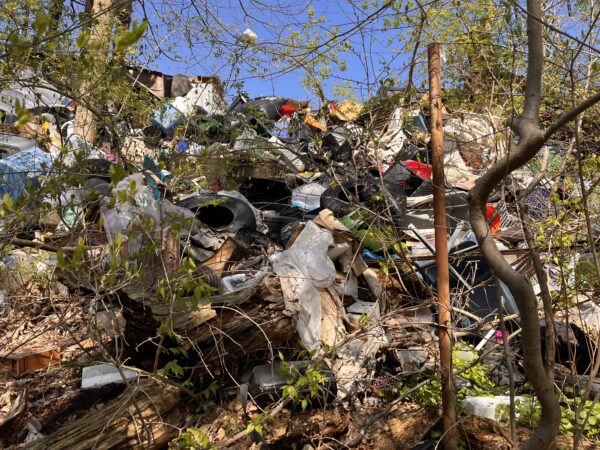
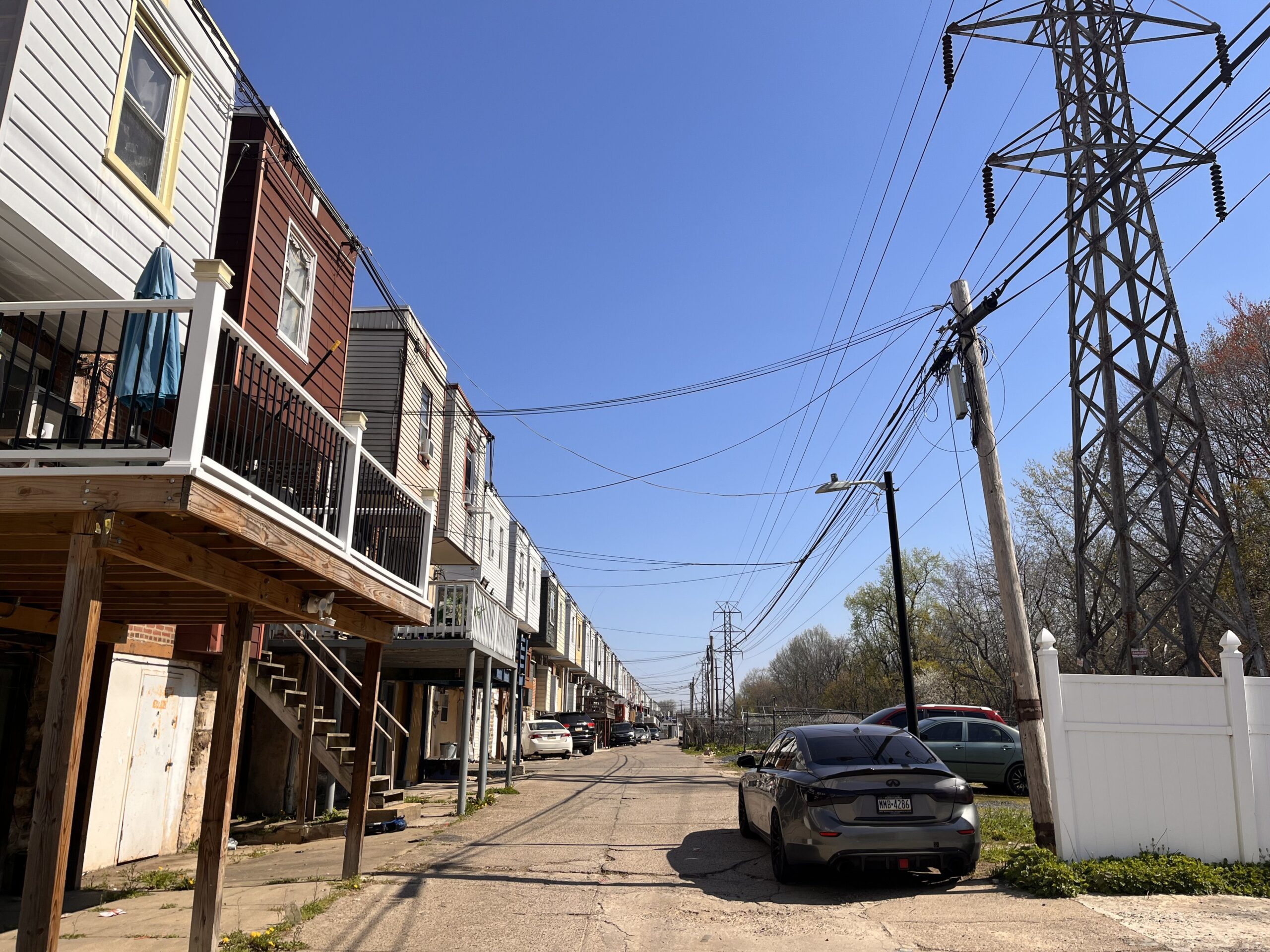
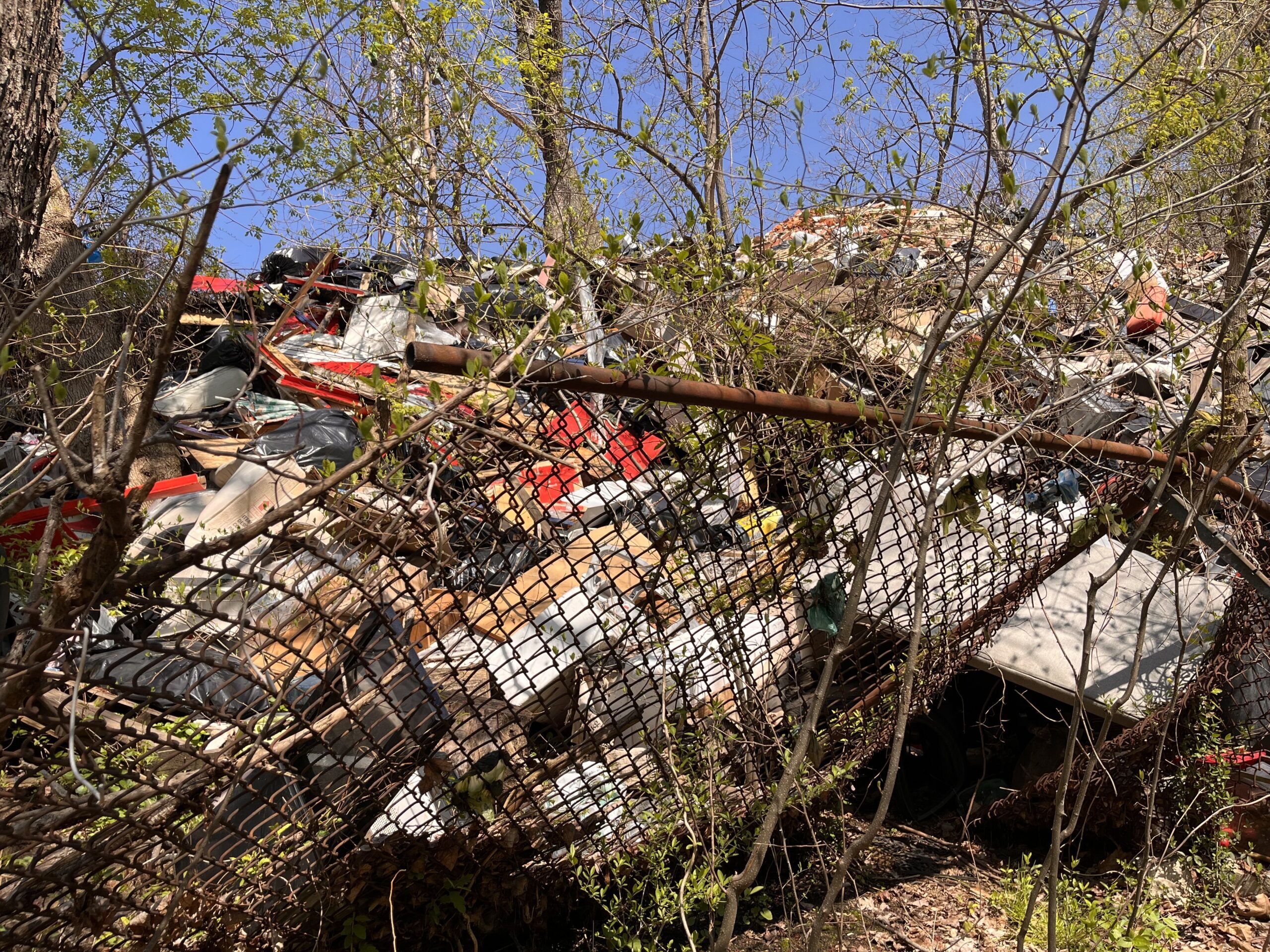
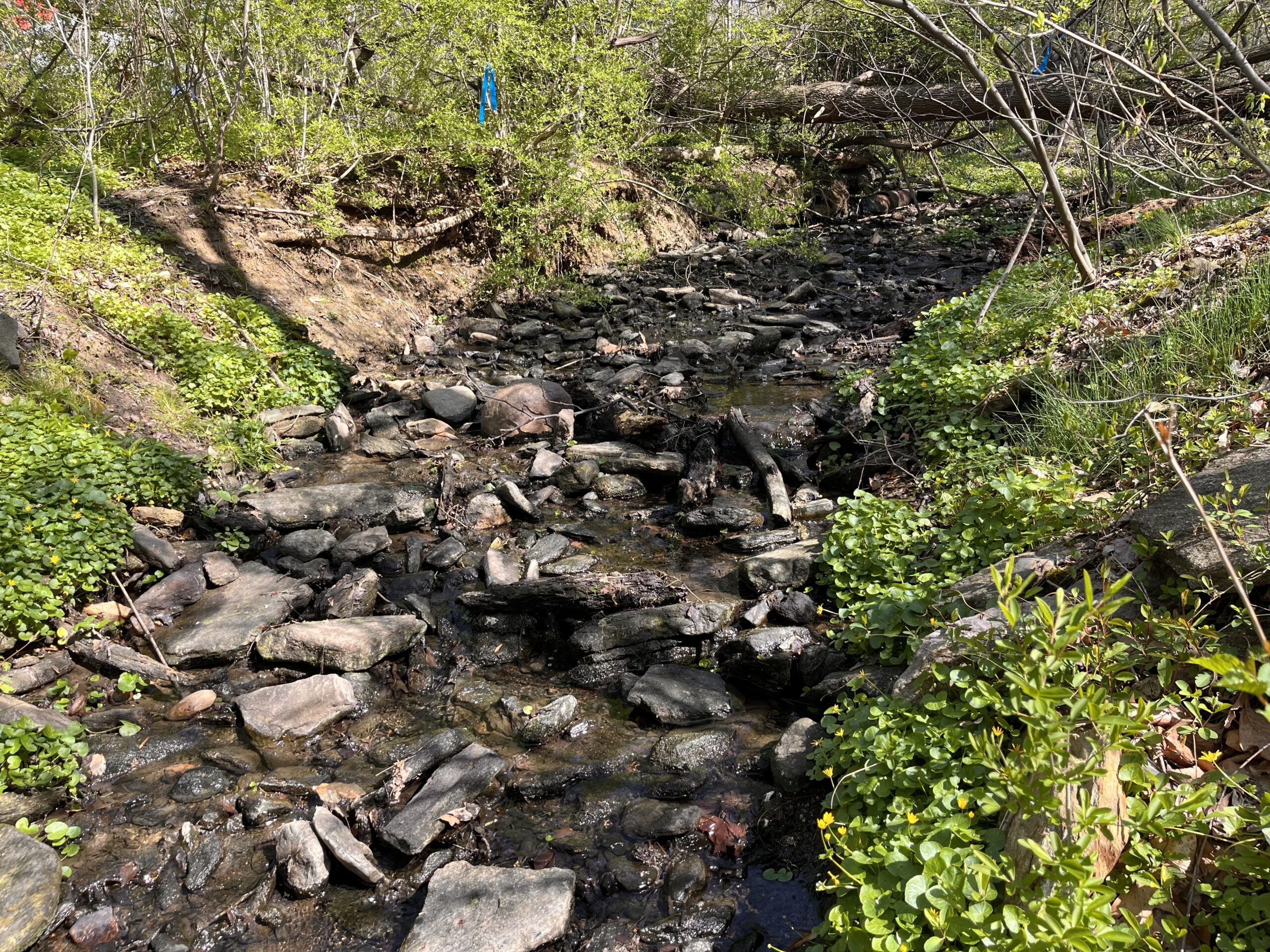
    Viewed from below, the scale of the illegal dump is daunting, spanning the length and depth of a steep ravine for at least one block, spilling along before coming to a dirty halt near a clear stream.

    Viewed from above, it’s a vertiginous array of broken appliances, ratty furniture, dirty toys, old tires, used mattresses, and other detritus. The rear hatch of a white Toyota RAV4 pokes through weeds. A boat is still hitched to a trailer loaded with rusting liquid propane tanks.

    City officials don’t know how long the slope off Pennway Street in Northeast Philadelphia has been the site of illegal dumping. But they know it presents a big logistical task to clean it out.

    “It’s certainly one of the larger dumps we’ve had to deal with,” said Carlton Williams, director of the city’s Clean and Green Initiatives Office.

    Williams expects that it will be far more difficult to clean than the 4,000 tires found in last April in Tacony Creek Park. Those were hauled out by city workers and 200 volunteers.

    “We’ll probably have to get cranes. And it’s going to be challenging to get equipment back there,” Williams noted. “This has been a hidden place for people to illegally dump for some time.”

    window.addEventListener(“message”,function(a){if(void 0!==a.data[“datawrapper-height”]){var e=document.querySelectorAll(“iframe”);for(var t in a.data[“datawrapper-height”])for(var r,i=0;r=e[i];i++)if(r.contentWindow===a.source){var d=a.data[“datawrapper-height”][t]+”px”;r.style.height=d}}});

    A treacherous location

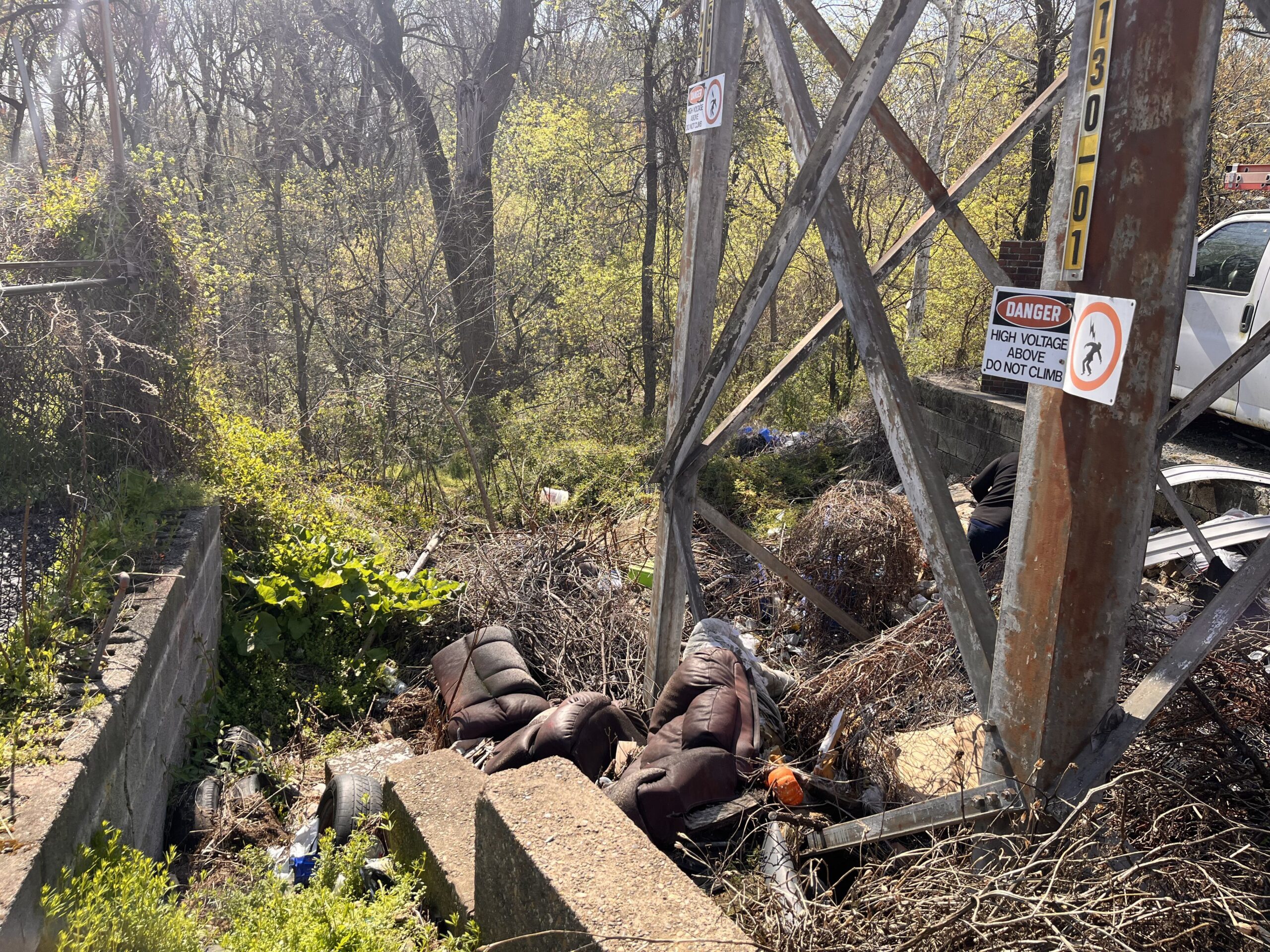
    The first obstacle to cleaning out the dump is its location. It begins at the edge of an alley under high-voltage wires. Area residents park their cars in the alley and some have erected sheds.

    The top of the slope is treacherous, filled with trash, chunks of concrete, and thickets of bramble that are easy to snag or trip on.

    A view of the top of the illegal dump under power lines off Pennway Street in Philadelphia.

    Using volunteers to haul things out is probably not practical given the potential danger, Williams said.

    From below, the dump is hidden by woods that adjoin the grounds of Friends Hospital. To view it, you have to leave a small trail, walk down a vegetation-choked embankment, ford a spring-fed tributary of Tacony Creek, and trudge through wetlands.

    There is no direct access road from the bottom.

    On a recent day, a man was picking through the rubble.

    “Looking for metal,” he mumbled.

    The top of a ravine that serves as an illegal dump off Pennway Street in Northeast Philadelphia as viewed April 10, 2026.

    Who owns the land?

    The second major obstacle will be untangling ownership of the property, sorting out responsibility, and paying for it.

    Williams said the city is currently tracking down ownership of whatever parcels might be involved.

    Peco did not respond to an Inquirer email by deadline about whether any of the dump falls on its property or easements.

    It’s not clear who is doing the dumping — construction crews, residents, or both.

    “We’re still trying to figure out a plan,” Williams said. “We need to identify the property owner. Then we have to gain access.”

    Williams also said it will be a challenge to prevent dumping in the future.

    Philadelphia already has 400 surveillance cameras used to monitor known dump sites and can tap a broader network operated by the police department and other agencies. It anticipates purchasing an additional 100 cameras.

    It has also installed bollards and gates that prevent vehicles from entering dump locations and is more aggressively pursuing and fining violators.

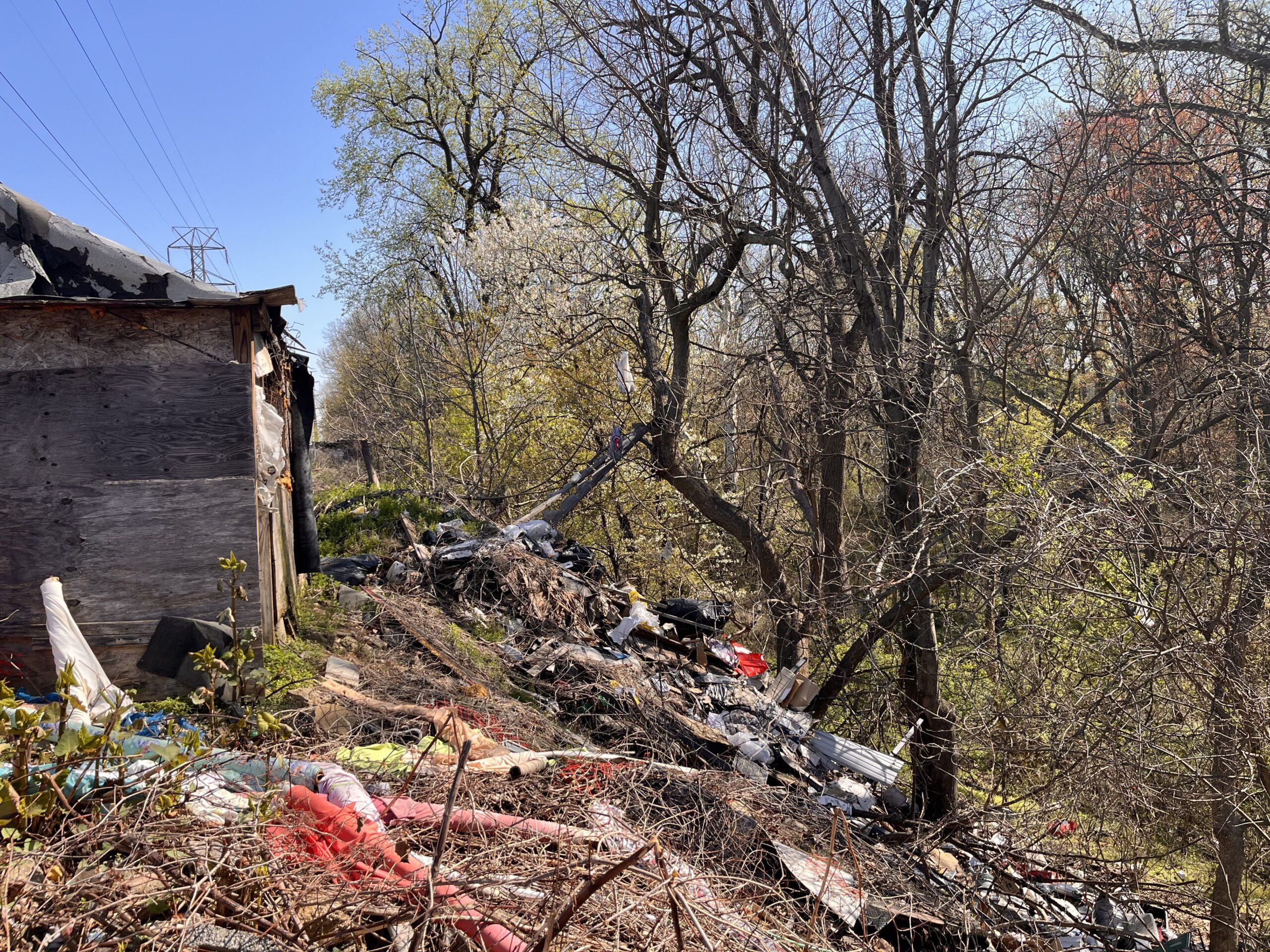
    The rear of Pennway Street in Northeast Philadelphia as viewed April 10, 2026.

    ‘A huge psychological impact’

    The dump was first reported to the city by the nonprofit Tookany/Tacony Frankford Watershed Partnership (TTF), which helps manage the city-owned Tacony Creek Park.

    TTF has an office at the Friends Hospital complex off Roosevelt Boulevard. The nonprofit is helping with a yet unnamed 50-acre preserve on the hospital grounds that connects to Tacony Creek Park.

    A portion of the dump is behind a broken fence at the edge of the grounds.

    The dump off Pennway Street spills to the edge of a broken fence.

    “This is one of the harder ones to tackle,” said Justin DiBerardinis, executive director of TTF. “We’re at the beginning of a journey to take care of one of the biggest dumps that a lot of us have seen.”

    DiBerardinis suspects contractors are dumping there, but also residents.

    Cleaning it up, he says, will be “extremely complex.”

    He’s also heartened by what he sees as the city’s willingness to address the logistical challenges presented by illegal landfills.

    DiBerardinis said the dump mars the landscape, and rests only yards from a tributary of Tacony Creek that serves as the edge of the 50-acre preserve.

    A spring-fed tributary of Tacony Creek flows between the illegal dump off Pennway Street in Northeast Philadelphia and the grounds of Friends Hospital as viewed April 10, 2026.

    “That stream is really clear, like spring-fed water coming from the earth,“ DiBerardinis said. ”To have that in our city is such a rare and special thing.“

    He senses growing community support for tackling litter and a backlash against dumping. Last Saturday, about 100 volunteers came to the preserve to help clean it, though the dump remained inaccessible.

    He thinks the community can play a role in the cleanup, if even for moral support and watchful eyes in the future.

    “I’m seeing people getting inspired at the possibility of the restoration and the protection of those places, and to have access for them and their children,” DiBerardinis said. “Dumping like that has a huge psychological impact on a community.”

  • People with prior convictions can work as unarmed private security guards, Philly court says

    People with prior convictions can work as unarmed private security guards, Philly court says

    Jamar Patterson, now 40, was up for a job in 2022 as an unarmed security guard.

    But the offer was rescinded when he informed his prospective employer, Allied Universal, of a previous drug conviction from when he was 19, despite having a clean record since 2005.

    Similarly, Abron Ash, 49, lost his job after his employer, McGinn Security, learned of his conviction on three misdemeanors related to a fight in 2006.

    Both lost their jobs because of a Pennsylvania law that applies to people who have been convicted of certain crimes, banning them for life from working as private unarmed security guards.

    Last week, the Philadelphia Court of Common Pleas ruled that the state’s Private Detective Act is unconstitutional.

    The ruling was the result of a 2023 civil suit Patterson and Ash filed against the Commonwealth of Pennsylvania and District Attorney Larry Krasner, whose office enforces the Private Detective Act in Philadelphia. They asked the court to block enforcement of the law.

    Krasner said in a statement Friday that he agrees with the court’s decision and will not appeal it.

    “The Private Detective Act’s extreme, irrebuttable lifetime ban on employment in private security swept too broadly constitutionally,” Krasner said. “The ruling will now open doors for qualified Philadelphians who were previously barred from entering the security industry due to old or irrelevant convictions, giving more individuals the right to work and earn a living.”

    It’s unclear whether the Philadelphia court’s ruling would eventually apply statewide.

    As of now, the decision prevents enforcement of the law in Philadelphia, say attorneys for the plaintiffs. The two men filed the suit with the help of the Public Interest Law Center and Community Legal Services (CLS) of Philadelphia.

    “I’m very excited to hear the news that I was a part of making change. It’s almost like making history — I guess it is history in Philadelphia,“ Patterson said in a statement. ”And I’m looking forward to the case becoming a part of a statewide solution.”

    Patterson’s attorneys also say more effort is likely needed to extend the ruling to the rest of the state.

    Though many states have restrictions on security guard licensing for people with criminal convictions, they often have time limits on the restriction or have processes in place for authorities to give exceptions.

    Pennsylvania’s lifetime ban, however, is among the most restrictive.

    The recent ruling means Philadelphia employers can no longer deny people jobs as unarmed private security guards because of old, minor, and “irrelevant” convictions, according to the Public Interest Law Center and CLS.

    “We have had hundreds of clients over the years who have come to Community Legal Services because they are interested in working in the security field but have been unable to do so because of old and irrelevant convictions,” said Jamie Gullen, a managing attorney at CLS.

    Gullen said the court’s decision “will open the door to opportunity for hard-working, qualified Philadelphians.”

    Ben Geffen, senior attorney at the Public Interest Law Center, said evidence showed that the law is, “over broad, unconstitutional, and does not further public safety.”

    The Private Detective Act was passed in 1953 and includes a long list of minor offenses, including many misdemeanors, that bar workers from employment in the security and protection industry for life. The convictions include simple drug possession, pickpocketing, and a catchall category of “any offense involving moral turpitude.”

    Because of those broad prohibitions, most security employers will not hire workers with any kind of conviction history, attorneys for the CLS and Public Interest Law Center said.

    Security jobs can be vital for some workers because they don’t often require a college degree and offer better wages than other entry-level work. The median annual income for a security guard is $31,470, or about $15 per hour. That’s double Pennsylvania’s $7.25 per hour minimum wage.

    Kiminori Nakamura, Ph.D., filed a report to the court on behalf of Patterson and Ash noting that the risk of recidivism for individuals with criminal history seeking such jobs is relatively low.

    Editor’s Note: This story has been updated to include a statement from District Attorney Larry Krasner.