Author: Frank Kummer

  • More than 100 burst water mains, freezing rivers puts Philadelphia Water Department on alert

    More than 100 burst water mains, freezing rivers puts Philadelphia Water Department on alert

    Large slate-shaped slabs of ice in the Delaware River this week have been like a floating harbinger of things to come for the Philadelphia Water Department (PWD).

    PWD, which draws its drinking water from intakes along the Delaware and the Schuylkill, takes a freezing river seriously.

    It has implemented emergency plans to provide for 24-hour ice patrol at its river water intake plants — and it is on high alert for freezing and bursting water mains and pipes.

    The department has two intakes on the Schuylkill and one on the Delaware that help provide drinking water for about 1.6 million people.

    There is no easy way to say how much of the rivers are icing. But the Middle Atlantic River Forecast Center at State College, an office of the National Weather Service, uses gauges placed in the rivers by the U.S. Geological Survey. At various times this week, officials could not get readings from some gauges because they were affected by ice.

    Brian Rademaekers, a spokesperson for PWD, said the city can also pull from already stored water if ice does became a problem at an intake.

    “We’re getting into a stretch where we haven’t been above freezing for days,” he said, “And I think at least through Feb. 1 it looks like we’ll remain below freezing.”

    Indeed, the region has been subjected to an Arctic blast for nearly a week. Daily highs have been below freezing since Saturday. The top temperature in that stretch was 28 degrees on Monday. Wednesday hit a low of 14. Overnight Thursday into Friday is forecast to drop to 2 degrees.

    The National Weather Service is not forecasting a high of 32 until Tuesday. And then it’s back to below-freezing temperatures.

    Burst water main on S. 16th Street just below Federal Street, Philadelphia, Wednesday, Jan. 28, 2026.

    Bursting pipes

    PWD is warning residents and businesses that the extreme cold is affecting city water mains and reminding them that water lines that are the responsibility of property owners.

    As the city faces unbroken stretches of below-freezing temperatures, PWD knows pipes will begin to freeze or, worse, burst, Rademaekers said.

    Pipes can start to be seriously affected after 72 hours, or three days, of below-freezing weather. Philadelphia is past that benchmark.

    PWD’s call center is already inundated with reports of water outages and leaks. But the department cannot help people with frozen pipes because that takes away from crews responding to public water main leaks.

    Rademaekers said PWD has responded to 147 water main breaks in January, but noted that is a preliminary figure.

    Last year, 256 breaks were reported in January. In recent memory, he said, 2018 was the worst year, with 366 breaks.

    City mains are public property and range in size from 96 inches in diameter to 48 inches, 12 inches, and 6 inches.

    Breaks in smaller pipes are most common. PWD is currently fixing a 6-inch main at 16th and Federal Streets.

    Property owners are responsible for the lateral pipes that run from the curb into a home.

    Rademaekers said residents who suddenly find themselves without water should check with a neighbor first. If the neighbor has running water, it’s likely the homeowner has a frozen pipe.

    In that case, PWD suggests trying to bring the pipes near your water to 40 degrees and opening faucets so that thawing water can drip out and release pressure.

    He said running a hair dryer or using another source to gently warm the pipes could help them thaw. He said residents should be cautious trying to use space heaters to warm on pipes.

    The department has tips online for how to deal with frozen pipes.

    Homeowners should not to wait for the department to respond to take these steps, PWD advises. Doing so could lead to burst pipes.

    Rademaekers said many homes in Philadelphia have their main water meter by the wall facing the street, often in uninsulated basements, some with cracked windows.

    “When it falls to 6 degrees overnight, even if the heat’s on in your house, that particular space right there might just get cold enough to freeze that pipe up, and then ice kind of spreads through the system,” Rademaekers said. “Once the freezing starts, the pressure will build.”

    Rademaekers cautioned customers against calling 311 if they have a frozen pipe. Instead, he said, they should call the PWD hotline at 215-685-6300 and press 1.

    “Certainly whenever we see freezing temperatures for more than two days we start to see a surge of calls into the call center,” he said. “Over the last week, the top three reports we have been getting are water in the basement, leak in the street, or no water at the tap.” Some of those could be water main problems, he said, ”but most often they are traced back to private lines.”


  • N.J., Pa. to see more than $200M restored for EV chargers in legal win over Trump administration

    N.J., Pa. to see more than $200M restored for EV chargers in legal win over Trump administration

    New Jersey and Pennsylvania are poised to regain roughly $244 million in federal funding for electric‑vehicle charging stations after securing a legal victory over the Trump administration.

    New Jersey announced this week that it expects $73 million to be reinstated.

    Pennsylvania had planned on $171.5 million in EV‑charging funds last year, according to Alex Peterson, a spokesperson for Gov. Josh Shapiro.

    “This ruling guarantees that these obligated funds cannot again be interrupted,” Peterson said.

    On Friday, a U.S. District Court sided with 20 states that filed suit last year demanding restoration of the National Electric Vehicle Infrastructure Formula Program (NEVI). New Jersey and Pennsylvania were among the plaintiffs.

    In her decision, Judge Tana Lin, who was appointed by former President Joe Biden, prohibited the Department of Transportation from withholding funding for approved state EV‑charger deployment plans.

    Lin concluded from Seattle that the Federal Highway Administration (FHA) overstepped its authority by halting funding already authorized by Congress. She described the agency’s action as arbitrary and capricious.

    “This win puts New Jersey back on track for $73 million in funding unlawfully stripped away through the Trump Administration’s illegal actions,” Jennifer Davenport, New Jersey’s acting attorney general, said this week in a statement. “New Jerseyans want sustainable transportation options.”

    New Jersey, Pennsylvania, and Delaware were among plaintiffs in the suit against a Trump administration freeze on the $5 billion. It’s unclear whether Trump administration officials will appeal.

    The states’ legal challenge stemmed from an executive order President Donald Trump signed on his Inauguration Day to eliminate EV mandates — which the suit states never existed.

    Regardless, the suit stated, the administration used the order to “immediately pause the disbursement of funds” for EV infrastructure appropriated through the Inflation Reduction and Infrastructure Investment and Jobs acts signed by Biden.

    Other states that joined the suit included Washington, Colorado, California, Arizona, Delaware, Hawaii, Illinois, Kentucky, Maryland, Minnesota, New Mexico, Michigan, New York, North Carolina, Oregon, Rhode Island, Vermont, and Wisconsin.

    Davenport called the Trump administration’s refusal to spend funds approved by Congress “unlawful.”

    This story has been updated to include newer figures on Pennsylvania’s plan to fund EV charging infrastructure.

  • Pennsylvania officials vote for land deal widely opposed by Limerick residents

    Pennsylvania officials vote for land deal widely opposed by Limerick residents

    A split Pennsylvania Game Commission has voted in favor of a developer’s land swap widely opposed by Limerick Township residents who fear it could pave the way for a large data center.

    The commission voted 6-3 on Saturday in favor of a contract with developer Limerick Town Center LLC that would yield the state 559 new acres across three counties. The swap would include what would become Delaware County’s first state game land.

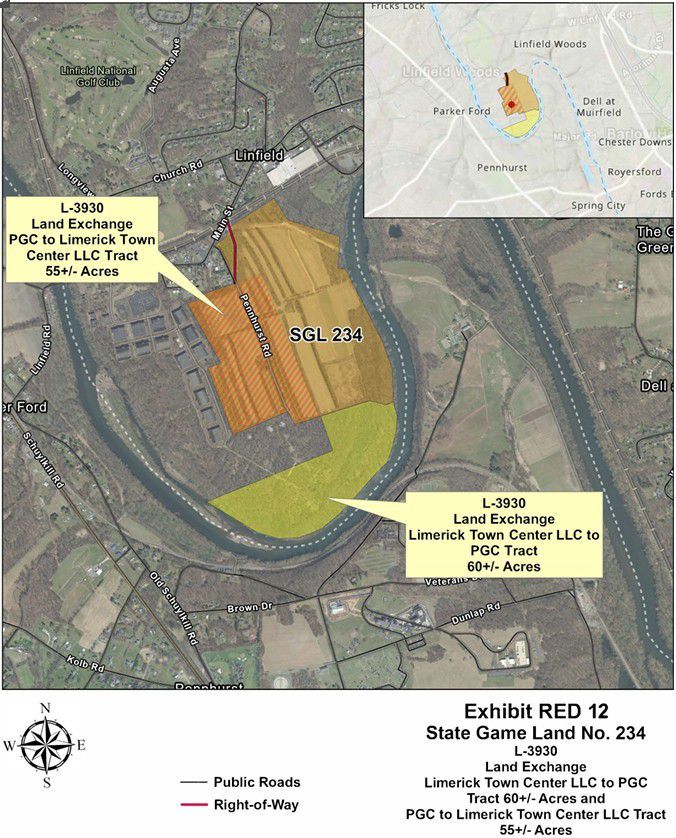
    As part of the land trade, Limerick Town Center LLC would get 55 acres of state Game Land 234 in Limerick, Montgomery County. The land is adjacent to an industrial site the developer already owns and that’s currently proposed for warehousing.

    Limerick Town Center LLC has not said what it plans for the new land. A representative of the company could not be reached for comment.

    In return, however, Limerick Town Center LLC would give the state 60 acres in Limerick it owns immediately to the south of the existing game land, next to the Schuylkill.

    Steve Hacker, who lives near Game Land 234 and opposes the swap, called it “a great deal for other townships who will gain all that land … but it comes with a pretty heavy price.”

    Commissioners made their decision after listening to the public, who were also split over the deal.

    Revised land swap map new

    For and against the swap

    In general, residents who live in or near Limerick mostly opposed the swap, saying it would destroy a game land teeming with wildlife and a popular spot for hunting.

    Many are wary of what Limerick Town Center LLC wants to do with the 55 acres it would gain, fearing it’s part of a broader plan for a large data center. Although the developer has not proposed building a data center, the idea has been widely circulated on social media, including in posts by State Sen. Katie Muth. Data centers are used to handle the massive amounts of computing needed for artificial intelligence.

    The land they’ll be getting in return, residents said, is in a flood plain and has been clear-cut. In addition, those opposing the contract believes it sets a precedent of letting developers use leverage to get what they want.

    Limerick officials sent a letter to the commission last week in opposition to the swap.

    But hunters who live outside of Montgomery County, as well as some commissioners, spoke in favor of the deal. They said it would provide the state hundreds of acres of new hunting grounds at no cost.

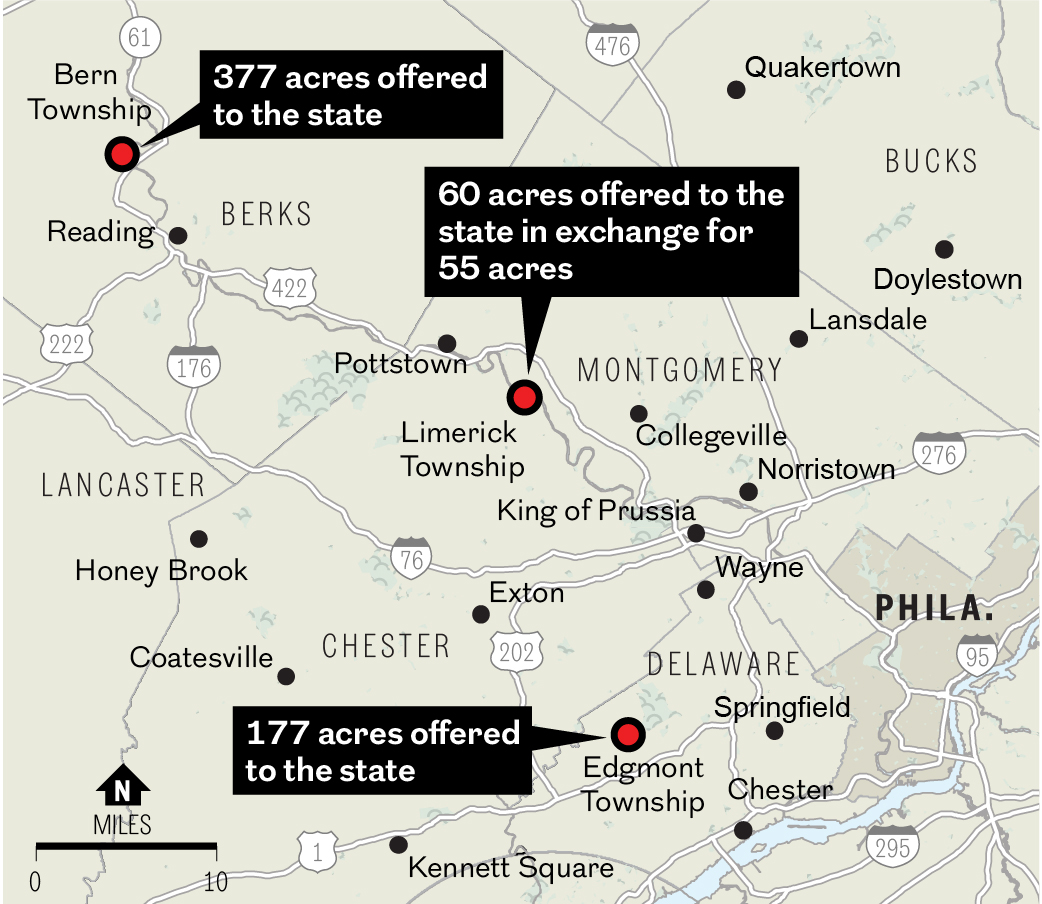
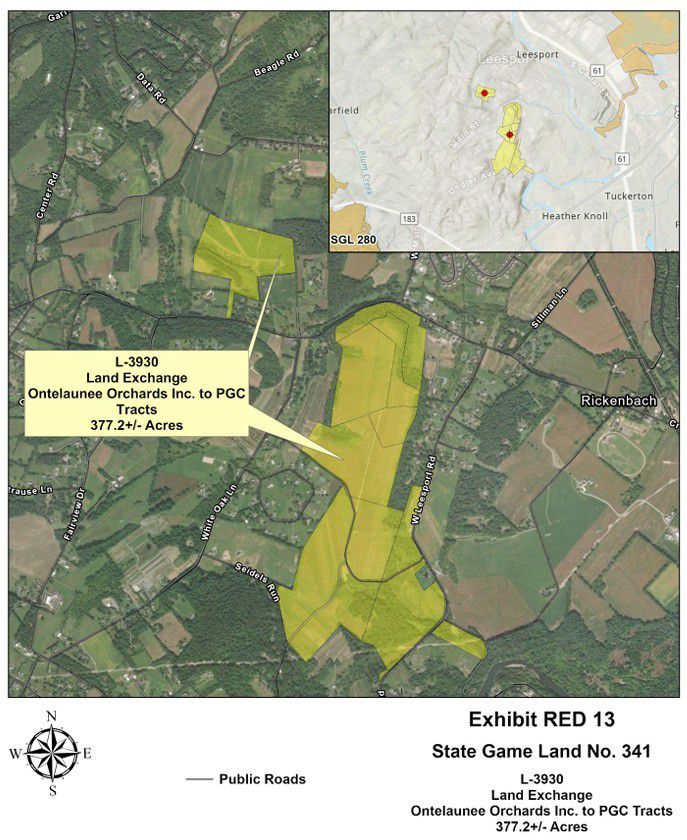
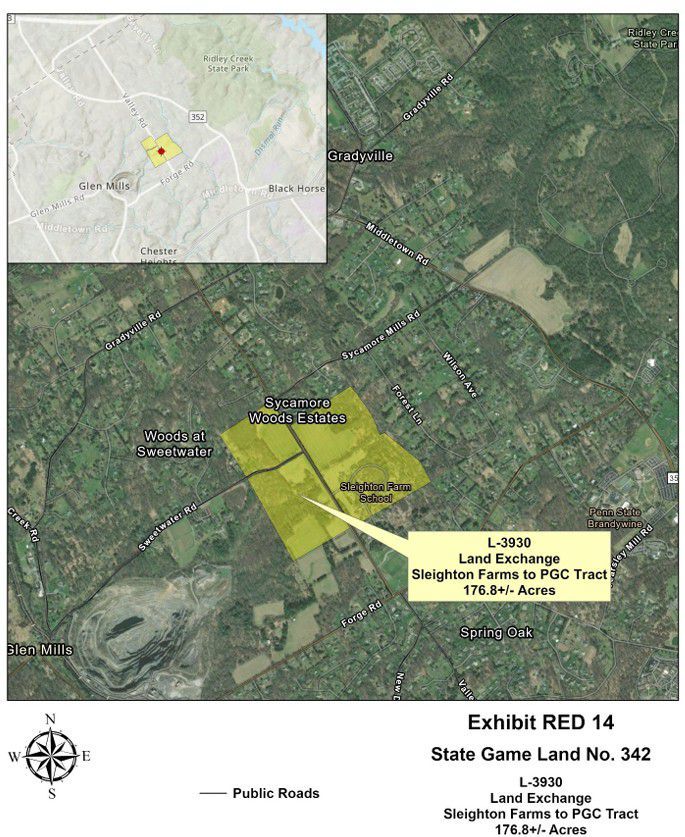
    As part of the deal, Limerick Town Center LLC will give 377 acres in Bern Township, Berks County, to the state. And the company would give the state 177 acres in Edgmont Township in what would become the first state game land in Delaware County.

    The commissioners

    Stanley Knick, president of the Game Commission, who is from Northeastern Pennsylvania, voted against the contract, as did Commissioner Robert Schwalm of Bethlehem.

    Commissioner Todd Pride, of Cochranville, Chester County, voted in favor of the contract. Pride said there is, “a lot of information being passed around that was not correct.”

    He said Limerick Town Center LLC’s current proposal was “clearly going to have an impact on our existing game lands if we do nothing.”

    Now, he said, the commission, “would be swapping 55 acres to get 60″ acres in Limerick while “protecting that area along the Schuylkill.”

    “So we’re not losing,” Pride said.

    He estimated the overall gain of acreage to the state at $20 million.

    ‘Simply irreplaceable’

    However, Fred Ebert, owner of Ebert Engineering in Montgomery County, speaking as a member of the public, said the current location of state Game Land 234 “is simply irreplaceable.”

    He said the new land the state would get in Limerick is surrounded by a railroad and consists mainly of wetlands. The only access, he said, is existing farmland.

    State Game Land 234, he said, was entrusted by the former Pennhurst State School and Hospital before it shut down.

    “This exchange places a target on all in all game lands for development,” Ebert said. “It provides developers with a game plan and a path to seek out desirable land.”

    One East Vincent Township, Chester County, woman who did not identify herself, told the commission she lives across the Schuylkill from the Limerick swap site.

    She said so many residents have come forward with stories about how they walk the game land with their children, “showing them what wildlife is still around.”

    “If this heavy industry gets to switch out this property, that’s not going to be there for them any longer,” she said.

    But Steve Tricarico, a member of the Bern Township planning commission, sees the 377 acres of conserved space his municipality is gaining as a win given the development pressure in Berks County.

    “This land would offer new opportunities for outdoor activities and public enjoyment,” Tricarico said.

  • Philly bill to ban waste incineration gets put on hold after failing to gain Council support

    Philly bill to ban waste incineration gets put on hold after failing to gain Council support

    A high-profile bill to ban Philadelphia from incinerating its trash was put on hold Thursday after intense lobbying by residents, activists, and industry put its future in doubt.

    The bill’s sponsor, Councilmember Jamie Gauthier, made a last-minute decision to pull the measure, which would prevent the city from shipping its trash to be burned for energy at the Reworld Delaware Valley Resource Recovery Facility in Chester.

    “I made the difficult decision to hold the bill today because my colleagues have asked for more time with it,” Gauthier said, noting she had not given up on the bill.

    Gauthier said the bill would prevent “dumping on cities that are more vulnerable than us.”

    “This would never happen in a community that wasn’t populated mainly by Black people, and mainly by poor Black people,” she said of Chester. “The people that are lobbying otherwise — they know that they would never accept this where they live.”

    The move to hold the bill came after hours of public testimony by people speaking for and against it.

    However, almost all of those speaking against the bill either work for Reworld, the Chester waste-to-energy plant, or represent labor unions. Reworld employees could be seen lobbying Council members in the hallways.

    File: Philadelphia Councilmember Jamie Gauthier.

    What’s in the bill?

    Gauthier’s “Stop Trashing Our Air Act” would prohibit the city from contracting with companies that incinerate solid waste or recyclables. Gauthier said that 37% of the city’s trash is incinerated.

    The bill, she has said, is designed to combat environmental injustice, contending incineration has been particularly harmful to the Chester area.

    Chester Mayor Stefan Roots and local activists expressed support for the legislation on Thursday, citing health and environmental concerns.

    “I’m asking you and begging you,” Roots said in asking Council to vote in favor of the bill. “We’re counting on all of you to support it.”

    Chester resident Zulene Mayfield, left, Philadelphia Councilmember Jamie Gauthier, right, and Chester Mayor Stefan Roots meet to discuss Gauthier’s “Stop Trashing Our Air Act,” which would ban the city from incinerating waste, during a visit with lawmakers and staff in Chester, Pa., on Friday, Nov. 7, 2025.

    Roots said the Reworld plant burns more trash than all of Delaware County produces.

    Multiple Chester and Philly residents say the emissions from Reworld either caused or exacerbated asthma and other health conditions.

    Andrea Robinson moved to Chester three years ago, she testified to Council. But she was unaware of the Reworld facility when she moved there.

    “I walk out my door and smell the stinky odor. I’m embarrassed to invite family and friends over. There are dust and dirt all over the car and windows,” she said.

    Fierce lobbying

    Gauthier’s bill ran up against a fierce effort to prevent its passage.

    Alex Piscitelli, facility manager at Reworld, testified that the plant operates under “the strict requirements of the Clean Air Act.”

    He said claims that the facility causes human health issues “are simply not supported by the data” and emissions “operate well below federal limits.”

    Multiple representatives of the company spoke, including workers who lived in Chester and Philadelphia.

    Ramona Jones, who lives in Chester and works at Reworld, said the job allows her to be close to her children and family. She said the company has given her ”a livable wage, a higher wage.”

    Matt Toomey, a business agent for the operating engineers union, told Council that “up to 120 family-sustaining jobs” were at stake, and noted the Reworld plant is heavily regulated and located in an already industrialized area.

    Political reality

    Aides for Mayor Cherelle L. Parker, whose administration opposes the legislation, also worked the room.

    Council members hardly ever call for votes on doomed bills. But Gauthier initially appeared to be willing to roll the dice by calling the measure up for a vote despite its uncertain fate.

    As the morning progressed, however, it became clear she did not have the nine votes needed for passage and almost certainly did not have the 12 votes that would be needed to overcome a likely veto by Parker.

    Insisting on the vote would mean that Gauthier was putting colleagues in the uncomfortable position of choosing between environmental advocates and trade unions, two important constituencies in Democratic primaries.

    But Gauthier pledged to push for the bill.

    “I am committed to this,” she said. “At the City of Philadelphia, we have to be a model for brotherly love, sisterly affection.”

  • Developer’s land swap proposal stirs furor in Limerick, but Delco would gain its first state game land

    Developer’s land swap proposal stirs furor in Limerick, but Delco would gain its first state game land

    A warehouse developer’s proposal to trade land with the state in Limerick Township and beyond has blindsided local officials — and ignited fierce opposition from residents who fear the deal could clear the path for a data center.

    The state would gain 559 acres across three counties, including what would become Delaware County’s first state game lands, according to the proposal on file with the Pennsylvania Game Commission.

    In return, the developer, Limerick Town Center LLC, would secure a 55-acre property in Limerick. That land adjoins an industrial tract the developer already owns, which was formerly the site of the Publicker distillery.

    (function() {
    var l2 = function() {
    new pym.Parent(‘LANDSWAP1-22-26.html’,
    ‘https://media.inquirer.com/storage/inquirer/projects/innovation/arcgis_iframe/LANDSWAP1_22_26new.html’);
    };
    if (typeof(pym) === ‘undefined’) {
    var h = document.getElementsByTagName(‘head’)[0],
    s = document.createElement(‘script’);
    s.type = ‘text/javascript’;
    s.src = ‘https://pym.nprapps.org/pym.v1.min.js’;
    s.onload = l2;
    h.appendChild(s);
    } else {
    l2();
    }
    })();

    Collapse

    Residents flooded an hourslong Board of Supervisors meeting Tuesday night to oppose the land swap, prompting officials to open a second room for the overflow.

    “I’m against the swap,” resident Jeff Schmidt told the board. “It’s a terrible idea, and I need to stop now because a lot of bad words want to come out of my mouth.”

    Connie Lawson, board chair, said that ultimately the state controls the land involved in the swap, not the township.

    Township manager Daniel Kerr told the crowd that the township had little information and had just learned of the proposal last week. But, he said, plans for land involved in the swap would have to go through the township for zoning and planning.

    After hours of listening to residents, the board voted to send a “strongly worded” letter of opposition to the Game Commission.

    Although the developer has not proposed building a data center, the idea has been widely circulated on social media, including in posts by state Sen. Katie Muth. She urged residents who oppose the swap to attend the township meeting Tuesday, as well as a state Game Commission meeting on Saturday.

    Data centers, which house servers used for artificial intelligence, have become a hot topic in recent months, as residents in multiple towns have voiced concerns over their use of land, energy, and water. Meanwhile, political and labor leaders have embraced them as job creators.

    A data center was recently proposed for placement between the Philadelphia Premium Outlets and a nuclear power plant in Limerick, and another was proposed last year in neighboring East Vincent Township at the former Pennhurst State School and Hospital.

    Those two locations are within two miles of the land Limerick Town Center would acquire in the swap.

    “If this swap goes through, we are one step closer to turning our communities into Data Center Alley 2.0,” Muth wrote on Facebook last week. “This land is publicly owned wildlife habitat and forest. It should not be traded away so Big Tech and AI corporations can maximize profits at the expense of our environment and quality of life.”

    What’s involved with the land swap?

    Limerick Town Center LLC is already proposing to build two warehouses totaling 1.9 million square feet in Limerick’s Linfield section. That would be off Main Street and Longview Road, not far from Constellation Energy’s Limerick Clean Energy Center, a nuclear power plant.

    The proposed swap would give Limerick Town Center LLC state-owned land and a 200-foot right-of-way adjoining the warehouse site, in exchange for the company giving the state property in Limerick and other counties.

    Overall, the company would give the state a total of 614 acres in return for a 55-acre chunk of Game Land 234.

    Included in the 614 acres is a 60-acre parcel it already owns in Limerick that adjoins the southern portion of Game Land 234 near the river.

    Map shows a proposal by Limerick Town Center LLC to give the state 60 acres it owns in Limerick Township in return for the state giving the company 55 acres of State Game Land 234.

    The company would also give 377 acres in Bern Township, Berks County, to be managed by the state.

    Map shows part of a land swap being proposed by Limerick Town Center LLC. The company is proposing to give the state 377 acres of Ontelaunee Orchards in Bern Township, Berks County, in return for 55 acres of State Game Land 234 in Limerick Township, Montgomery County.

    And the company would give the state 177 acres in Edgmont Township that would become the first state game land in Delaware County.

    Map shows part of a land swap being proposed by Limerick Town Center LLC to acquire 55 acres of state Game Land 234 in Limerick Township, Montgomery County. In return, Limerick Town Center would give the state hundreds of other acres including 177 acres in Edgmont, Delaware County that could be used for a new state Game Land.

    Local concerns

    At Tuesday night’s meeting, resident after resident opposed the plan, citing overdevelopment, traffic, a change in the character of the community, and an impact on wildlife and the environment. Only one man from Berks County, who said he was a hunter, supported the swap.

    Limerick resident Jennifer Wynne told the board she opposes the swap, saying the public hasn’t been given enough information that it would provide “a clear public benefit.”

    “I am also concerned that this transfer may function as a precursor to future high-intensity or industrial development,” she said.

    Michael Poust said he moved to Limerick to escape overdevelopment, and he opposes the land swap.

    “My land is surrounded by the state game lands,” he said. “I bought it there for a reason.”

    Muth, the state senator, lives in neighboring East Vincent and has been part of the fight against a data center proposed for Pennhurst.

    “I highly recommend that you review the path forward to change the zoning in that area,” Muth told the board.

    A view of the former Publicker Distillery tract now owned by Limerick Town Center LLC, which is proposing to build two warehouses on the land. The company is also proposing a land swap with the state to gain 55 acres of adjoining land.

    Edgmont’s response

    Meanwhile, Edgmont Township, Delaware County, could gain new state game land near, but not connected to, Ridley Creek State Park.

    Pennsylvania Game Lands, supported by hunting and trapping fees, are widely used for hunting, hiking, fishing, and birdwatching.

    Ken Kynett, Edgmont Township’s manager, said officials only learned of a land swap on Jan. 16.

    “We got an email from the game commission last week saying we’re interested in acquiring property in your township,” Kynett said. “It was as much a surprise to us as anyone else.”

    Under the land-swap proposal, Limerick Town Center LLC would give the state a 177-acre portion of the old Sleighton Farm School grounds.

    The school, originally set on 300 acres and run by Quakers, was founded to serve “troubled children.” In 1931, it split into two separate schools: the Glen Mills School for boys and the Sleighton Farm School for girls. Eventually, the school became coed and was called simply Sleighton School.

    The school closed in 2001 because of financial difficulties, and the grounds were sold. Elywn, a large nonprofit, owns the land.

    Kynett said he assumed Limerick Town Center LLC is working with Elwyn on the deal. Part of the land is zoned for agriculture, and part is zoned residential.

    He said that keeping the land as open space could be a positive, but the township doesn’t have enough information to know whether to support or oppose the swap.

    “We haven’t really had a chance to discuss it with the board,” Kynett said.

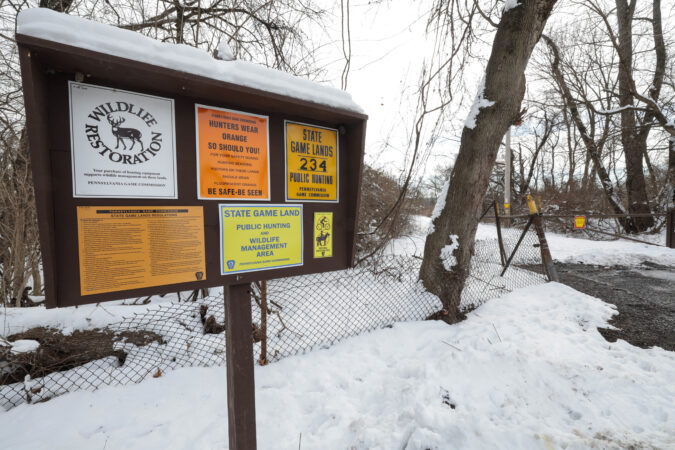
    State Game Lands 234, Main Street and Pennhurst Road, Limerick Twp., Montgomery County.

    Who’s behind Limerick Town Center LLC?

    Limerick Town Center LLC has an address in Madison, Conn., according to Montgomery County land records. The address is linked to a company registered by Christine Pasieka, who is a business partner and the wife of Chris Rahn. The two have made development deals throughout the Philadelphia area for years.

    Pasieka could not be reached immediately for comment on Wednesday.

    Property records show that Limerick Town Center LLC purchased the 197-acre parcel in 2022 for $17 million.

    In 2023, the company applied to build on the Publicker tract, according to county records. The registered agent for Limerick Town Center LLC was Sandra DiNardo, whose family owns a large trucking and cement business.

    DiNardo could not be reached immediately for comment.

  • In North Philadelphia, planting seeds for the future on MLK Day

    In North Philadelphia, planting seeds for the future on MLK Day

    Chris Meyers, 67, was planting onion seeds Monday in the warmth of a large greenhouse near North 24th and Berks Streets for Sanctuary Farm Phila’s first ever Martin Luther King Jr. Day of Service.

    The onions will be transplanted when the time is right. They’re destined to take root in one of the urban farm nonprofit’s nine lots.

    Meyers, a retired city worker, came to the role by an unexpected path. Three years ago, the North Philly resident sat in the office of nurse-practitioner Andrea Vettori, his primary health care provider, determined to reduce his blood pressure and cut back on medications.

    “She was the only physician — in this case a nurse-practitioner — that started talking about doing it through diet and losing weight,” Meyers said. “I felt like here was someone who was truly listening to me instead of taking the stance, ‘OK, I’m the doctor. I know better. It was like we were reasoning out how we could make this possible.’”

    Vettori told him about the urban farm she oversaw in North Philadelphia as executive director. Soon, Meyers enrolled in Sanctuary Farm’s therapeutic farming program, began meditating with the group he sowed seeds alongside, ate the fruits and vegetables they cultivated, shed weight, and reduced his medications.

    “I can finally see light at the end of the tunnel,” said Meyers, and one of thousands of participants and volunteers in Martin Luther King days of service throughout the region.

    Zora Clark, 8, waters her seed plantings in the greenhouse. She was there with her partents, Mike Clark and Shawnika Hull of Fishtown.

    What’s Sanctuary Farm Phila?

    Vettori, 61, executive director of Sanctuary Farm Phila, is a nurse-practitioner by training and still works in the medical field one day a week.

    She founded the nonprofit in 2017 with a primary mission to improve the health of the neighborhood by addressing food insecurity.

    Sanctuary Farm set out to achieve that by transforming abandoned urban lots into productive agricultural spaces where staff and volunteers grow produce to distribute to neighbors for free.

    The farm offers residents various programs and classes centered on nutrition and health, including gardening, beekeeping, sewing, and candle-making.

    ”Everything’s free to community members,“ Vettori said. “We do lots of different programming.”

    Sanctuary Farm founder and executive director Andrea Vettori (second from left) talks about seeds and germination.

    Sanctuary Farm has a headquarters on North 24th Street, and currently operates nine gardening sites. Eight are located in North Philadelphia and one is in Huntingdon Valley, Montgomery County.

    During the summer, the organization ramps up its operations to run two to three produce stands per week to distribute free food. The efforts are funded through a combination of private foundation grants, individual donations, and government support from state grants and the U.S. Department of Agriculture.

    Vettori’s organization operates with a small staff — approximately five year-round employees, only two of whom are full-time.

    Because of this small footprint, Vettori notes that they “couldn’t survive” without volunteers.

    Sanctuary Farm has a core group of about 20 regular volunteers, though as many as 150 people have assisted the farm over the years. To draw members of the community, the farm uses a mix of social media, monthly meetings, and “old-fashioned” methods like handing out fliers door-to-door and using information boards, Vettori said.

    In 2024, the organization harvested 9,500 pounds of produce.

    Monday marked the first full scale MLK Day of Service the farm has hosted, though it has opened its doors in the past on the holiday. It was supported by a $1,000 grant for materials and food from Indego Bike Share.

    Jose Hernandez (left) and Lisa Hernandez-Smith plant seeds.

    ‘Contribute back to the community’

    Shamika Hull, of Fishtown, attended Monday’s event with her daughter, Zora Clark, 8, and husband, Mike Clark.

    “I wanted to plan something together with my family to contribute back to the community, but I didn’t anticipate finding an organization that’s really this exciting,” Hull said, as she and her family began to plant onion seeds.

    They had decorated planting pots earlier and also planned to bring home some seedlings.

    Vettori gave a group of about a dozen people instruction in organic gardening basics, such as annuals vs. perennials, what type of seed starter to use, and what types of soils and fertilizers to avoid.

    Sanctuary Farm does not use any chemical fertilizers or chemical pest control methods, she said.

    “We use a lot of flowers to deter pests or to attract beneficials like wasps,” Vettori told the group. “I love wasps. I’m always trying to put in a good word for wasps, because they’re really good for the garden.”

    She started Monday with onions because it’s too early to begin planting greens and tomatoes, she said. The group also planted flowers that they could bring home.

    Patricia Farley (left) and Claudia Huot talk while painting their seedling pots indoors at Sanctuary Farm before heading out to the greenhouse.

    ‘The last think you’d expect’

    Nearby, Jose Hernandez had smoothed seed starter over a plastic seedling tray. He joined the garden as a volunteer a few years ago to help manage his PTSD through the therapeutic gardening program. Hernandez served as a U.S. Marine in Operation Desert Storm during the Gulf War in the early 1990s.

    “I overheard someone at the Veterans Administration speaking about it,” said Hernandez, formerly of Olney but now living in Delaware County.

    Other vets are also enrolled in the therapeutic gardening program, which is designed for people with health challenges.

    Hernandez travels to Sanctuary Farm every Monday. He also takes part in meditation and the sewing class, “which is the last thing you’d expect,” he said with a smile.

    “One of the things that you tend to do when you have PTSD is internalize everything. You just keep to yourself,” Hernandez said. “Coming here, you meet other veterans and realize, ‘Oh, so there are other vets like me.’ … We can speak of things that we’ve experienced.”

  • Philly area measures weekend snowfall totals as winter’s coldest weather moves in

    Philly area measures weekend snowfall totals as winter’s coldest weather moves in

    Sunday’s snowfall might have been the best winter weather has to offer: Just enough to enchant, without back-knotting amounts to shovel.

    Totals varied throughout the Philadelphia region, with a high of 4.9 inches in East Rockhill Township, Bucks County, to less than an inch at Philadelphia International Airport.

    The official National Weather Service observation for the region in Mount Holly, Burlington County, was 3.6 inches.

    Snowfalls were reported over 24 hours by National Weather Service employees, trained spotters, weather stations, automated systems, and the public. They do not include Saturday’s snow.

    Snow covered the trail leading down to Forbidden Drive from North Jannette Street on Monday.

    Overall, the weekend was good news for skiers. Stroudsburg in Monroe County in the Poconos received 4.2 more inches of powder that resorts didn’t have to make.

    Weisenberg Township in Lehigh County received 4.8 inches.

    Areas farthest east of the city, including the Shore region, received the least amount of snow. Atlantic City International Airport reported only a dusting.

    window.addEventListener(“message”,function(a){if(void 0!==a.data[“datawrapper-height”]){var e=document.querySelectorAll(“iframe”);for(var t in a.data[“datawrapper-height”])for(var r,i=0;r=e[i];i++)if(r.contentWindow===a.source){var d=a.data[“datawrapper-height”][t]+”px”;r.style.height=d}}});

    But with most homeowners and businesses likely to be shoveled out by Monday night, forecasters warn that the coldest weather of the winter so far is on the way — along with bitter wind chills, according to Joe DeSilva, a meteorologist with the National Weather Service in Mount Holly.

    “For this week, it’s going to be mostly cold,” DeSilva said. “Especially tonight [Monday] and tomorrow night we’ll have wind chills mainly in the single digits. Tonight we’ll have windchills around zero to 5 degrees above zero.”

    In fact, the Weather Service says windchills could even dip to minus-15 degrees Monday night into Tuesday morning northwest of the I-95 corridor.

    The Weather Service has issued a cold weather advisory as a result.

    A route 61 SEPTA bus heads up Ridge Avenue in Roxborough on Monday.

    DeSilva said the jet stream is due to dip south — like a big door swinging open to let in all the frosty air from the Arctic and northern Canada.

    “Once that passes tonight,” DeSilva said, “the cold air will start pouring in.”

    After the sunny and mid-30s of Monday afternoon, temperatures were to dip Monday night to around 15 with 10 to 15 m.p.h. winds.

    Then the cold settles in, with a high of only 23 on Tuesday with a low of 10.

    Some relief comes on Wednesday with a forecast high of 36 and overnight lows of 28.

    A woman clears a car along Calumet Street in the East Falls section of Philadelphia on Monday before driving away.

    Thursday, however, looks like a return to more normal temperatures with a mostly sunny day and a high of 43.

    Unfortunately, bracing cold returns for the weekend, with a forecast low of 13 overnight Friday night and a low of 8 overnight Saturday.

  • New Jersey sues Camden metal recycler over a dozen ‘especially dangerous’ fires

    New Jersey sues Camden metal recycler over a dozen ‘especially dangerous’ fires

    New Jersey officials have filed suit against the large scrap metal recycler EMR over a string of hazardous and “especially dangerous” fires at its facilities, especially in Camden.

    One four-alarm fire at an EMR scrapyard on Camden’s Front Street nearly a year ago resulted in black, billowing smoke that could be seen for 15 miles and led to the voluntary evacuation of 100 families.

    As a result of that Feb. 21, 2025, fire, the U.K.-based metal recycler agreed in August to pay $6.7 million toward improvements to Camden’s Waterfront South neighborhood. The fire occurred when a lithium ion battery embedded in an item ignited while being recycled.

    That fire was one of a dozen at the Camden facilities in the last five years, says the suit filed by the state Attorney General Matthew Platkin and the Department of Environmental Protection (DEP). EMR has several facilities in Camden.

    “It is outrageous that EMR has failed to correct the dangerous conditions at its facilities in Camden — conditions that have resulted in over a dozen hazardous fires in recent years that threaten the lives and health of Camden residents,“ Platkin said in a statement. ”We’re taking action today to hold EMR accountable for its reprehensible conduct and to protect Camden residents.”

    He accused EMR of turning “a quick buck at the expense of their communities.”

    Joseph Balzano, CEO of EMR USA, on Monday pointed to the $6.7 million agreement from August. “It appears the current Attorney General is not aware of … EMR’s fire suppression investments,” he said. “We look forward to working with the State of New Jersey to addressing the scourge of lithium ion battery fires plaguing recycling facilities throughout the country.”

    ‘Severe harm’

    The civil suit, filed Monday in New Jersey Superior Court in Camden, alleges that fires at EMR facilities have created an “ongoing public nuisance.”

    It alleges that the company’s facilities are unsafe, and that the company has failed to take steps to remedy those conditions.

    As a result, EMR has caused “severe harm” to the “health and well-being” of nearby communities.

    EMR’s global headquarters is in England. But the company has various subsidiaries in the U.S. EMR USA Holdings Inc. is a Delaware company with its headquarters on North Front Street in Camden. Both EMR Eastern, LLC and Camden Iron & Metal Inc are subsidiaries with Camden addresses.

    The lawsuit alleges that fires related to EMR’s scrap metal operations have occurred in multiple locations. The company also has facilities in Bayonne and Newark. The suit notes a fire that broke out in May 2022 on a barge in the Delaware Bay carrying scrap metal between the company’s Newark and Camden locations.

    But the suit singles out the Camden location as the worst with some fires occurring within days of each other.

    “Over the last five years, at least 12 major fires have occurred in scrap metal piles at Defendants’ facilities in the Camden Waterfront South neighborhood,” the lawsuit states.

    The suit states that the fires filled streets with smoke and air pollution, “causing chemical and burning smells to permeate through homes and causing residents to suffer from asthma and other acute respiratory illnesses.”

    It alleges the fires have “caused severe harm to the health and well-being of individuals and communities in the vicinity.”

    The Feb. 21, 2025, fire occurred at EMR’s waterfront shredder facility. It started in a large pile of scrap metal material waiting to be shredded. It burned for eight hours before Camden firefighters brought it under control, but took 12 hours to fully extinguish.

    The burning pile measured 300 feet by 250 feet, according to the suit, and was roughly two stories high. It was destined for a conveyor belt leading to a four-story building.

    The pile, conveyor belt, and building all became fully engulfed in the city’s Waterfront South area, which is home to 2,300 people. The suit states that the community already “experiences disproportionate environmental harm and risks due to exposures or cumulative impacts from environmental hazards.”

    The scene at EMR Metal Recycling in Camden on Feb. 22, 2025, the morning after a four-alarm fire.

    The fires

    Among the fires in Camden since 2020, according to allegations in the suit:

    • Feb. 18, 2020: “Automobile fluff” caught fire at the shredder facility on Front Street.
    • Nov. 29, 2020: EMR failed to notify the DEP of this fire at the Kaighns Avenue facility.
    • Jan. 29, 2021: EMR failed to notify the DEP in a timely manner when a pile of material three stories high and 300 feet by 150 feet ignited at the shredder facility, causing the nearby Sacred Heart School and 30 families to evacuate. Five firefighters were treated for smoke inhalation and one was hospitalized. Two residents were hospitalized for smoke inhalation.
    • Feb. 27, 2021: Residue caught fire at the shredder facility and could be seen burning from Philadelphia and the Benjamin Franklin Bridge.
    • Feb. 28, 2022: A pile of shredded material caught fire at the South Sixth Street facility.
    • July 21, 2022: A fire occurred at the shredder facility.
    • July 22, 2022: A fire broke out at the South Sixth Street facility, possibly from a lithium ion battery.
    • Oct. 18, 2022: During a fire at the shredder facility, residents were offered hotel accommodations by EMR if they needed to evacuate.
    • July 29, 2024: A pile of material caught fire at the South Sixth Street facility.

    “Neighbors of EMR should not have to live in fear of the industrial business next door to them, wondering whether the air is safe to breathe and the company values its role in the community as much as its profits,” DEP commissioner Shawn LaTourette said in a statement.

    The suit seeks to make EMR take measures that include adding continual surveillance and monitoring, reducing the height of scrap piles, hiring an engineer to evaluate its facilities and issue a report to the DEP, installing a system that can generate real time reports, and immediately notifying the DEP of any issues.

    It seeks a maximum allowable penalty of $1,000 under a nuisances law, and any other money a court might award.

  • New Jersey’s Petty’s Island, now owned by Venezuela’s Citgo, will soon belong to major conservative donor’s firm

    New Jersey’s Petty’s Island, now owned by Venezuela’s Citgo, will soon belong to major conservative donor’s firm

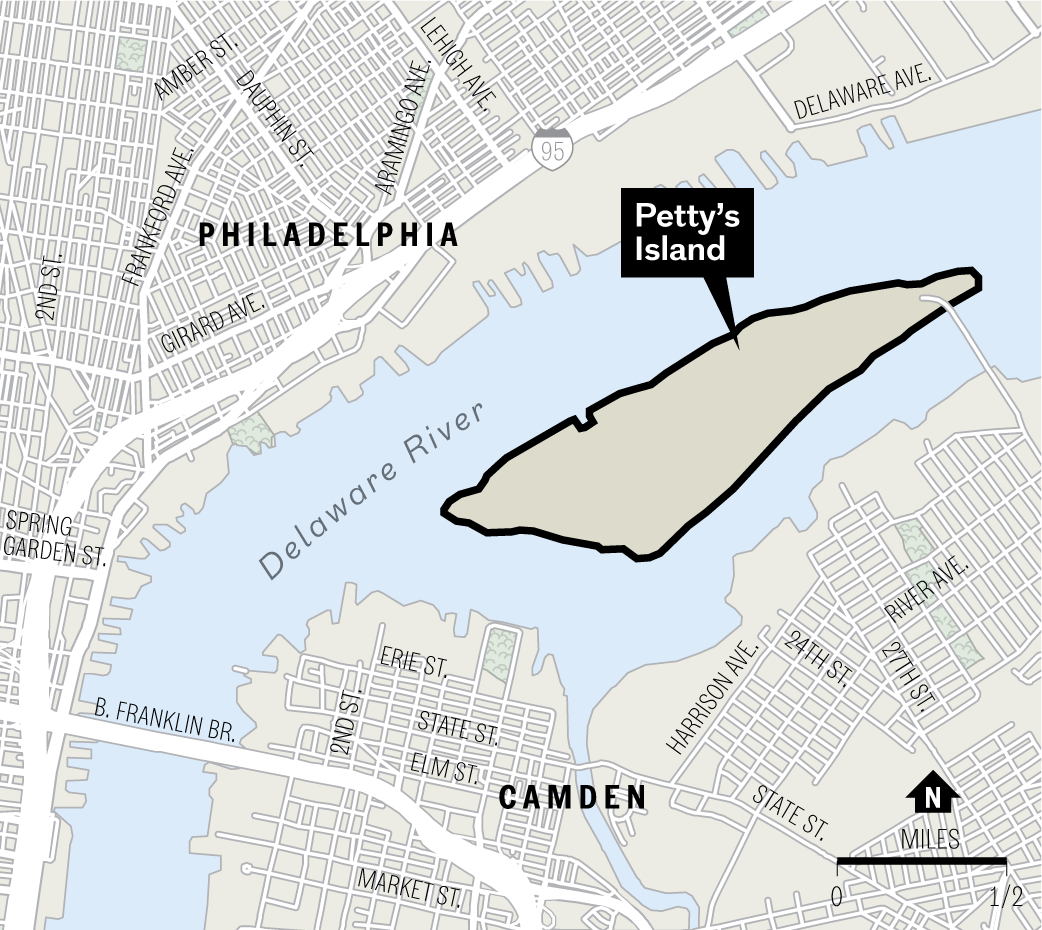
    New Jersey has long coveted Petty’s Island, 300 acres in the Delaware River off Pennsauken, as a potential environmental and recreational haven with its grand views of Philadelphia.

    Originally the hunting grounds of Native Americans, the island was later farmed by Quakers. Folklore claims pirate landings and an overnight stay by Ben Franklin. In more recent years, redevelopment proposals envisioned a hotel and golf course before the state’s embrace of a nature preserve.

    Citgo Petroleum Corp. — the Houston-based refining arm of Venezuela’s national oil company — has owned the island for 110 years, leaving a legacy of pollution from oil storage and distribution.

    Now recent international events and a court ruling on Citgo have clouded the island’s immediate future while underscoring the reach of the petroleum industry.

    Formerly, it was the site of Fuel storage (center) for the Venezuelan oil company Citco.

    Late last year, U.S. District Court Judge Leonard Stark in Delaware approved Amber Energy as buyer of Citgo’s Venezuelan parent company through a sale of shares to settle billions in debts, concluding a process that began in 2017. Amber Energy bid $5.9 billion in a court-organized auction.

    Citgo owns a network of petroleum infrastructure that some analysts say could be worth up to $13 billion, according to the Wall Street Journal.

    Venezuelan officials immediately denounced the sale as “fraudulent” and appealed the decision. Citgo is a subsidiary of Venezuela’s state-owned oil company, Petróleos de Venezuela (PDVSA).

    However, on Jan. 3, the U.S. captured Venezuela President Nicolás Maduro and brought him to the U.S. to face narco-conspiracy charges. He has pleaded not guilty.

    It is no longer clear whether Venezuela will continue with an appeal. President Donald Trump has said the U.S. is now running that country and is mapping out a vision for its vast crude oil reserves.

    So it’s likely Amber Energy, an affiliate of activist hedge fund Elliott Management, will soon close on the arrangement to own Citgo — and presumably Petty’s Island.

    Elliott Management was founded by Paul Singer. He or his firm have contributed tens of millions to political campaigns or groups, including Trump’s 2024 presidential campaign.

    Amber Energy, through a spokesperson Braden Reddall, declined to comment this week. Reddall, however, noted in an email that the “transaction involving Citgo has not yet been completed.”

    Citgo has long been working to eventually donate the island to the New Jersey Natural Lands Trust, which is overseen by the state Department of Environmental Protection (DEP).

    The DEP declined to comment.

    Map of Petty’s Island in the Delaware River, north of the Benjamin Franklin Bridge.

    Citgo and Petty’s Island

    Petty’s Island was originally inhabited by the Indigenous Lenni-Lenape people, and stories abound about its history, according to a DEP website for the trust. The island was once owned by William Penn.

    In 1678, then-owner Elizabeth Kinsey, a Quaker, struck a deal to buy it from the Lenni-Lenape and allowed them to continue hunting and fishing — provided they agreed not to kill her hogs or set fire to her hayfields.

    There are other tales of Blackbeard the pirate docking there and even Benjamin Franklin spending a night on the island, which was eventually named after John Petty, an 18th-century trader from Philadelphia.

    The island had been used for farming, trading, and shipbuilding until Citgo, then an American company, began buying land there in 1916, continuing to do so until it owned the entire island by the 1950s. Venezuela’s PDVSA acquired ownership of Citgo in the 1980s.

    In the early 2000s, the oil company sought to donate the island to New Jersey as a nature preserve, aligning with environmental efforts to conserve the land, which includes habitats for bald eagles, kestrels, and herons.

    But in 2004, the state’s Natural Lands Trust rejected an offer from Citgo for a conservation easement under political pressure to develop it.

    At the time, a development company in Raleigh, N.C., had planned a golf course, a hotel and conference center, and 300 homes for the island, which offers views of Philadelphia and Camden, but that proposal was abandoned.

    In 2009, the Natural Lands Trust, created by the New Jersey Legislature to preserve land and protect nature, finally voted to accept the island from Citgo.

    Then-Venezuelan President Hugo Chávez heralded the plans at the Summit of the Americas.

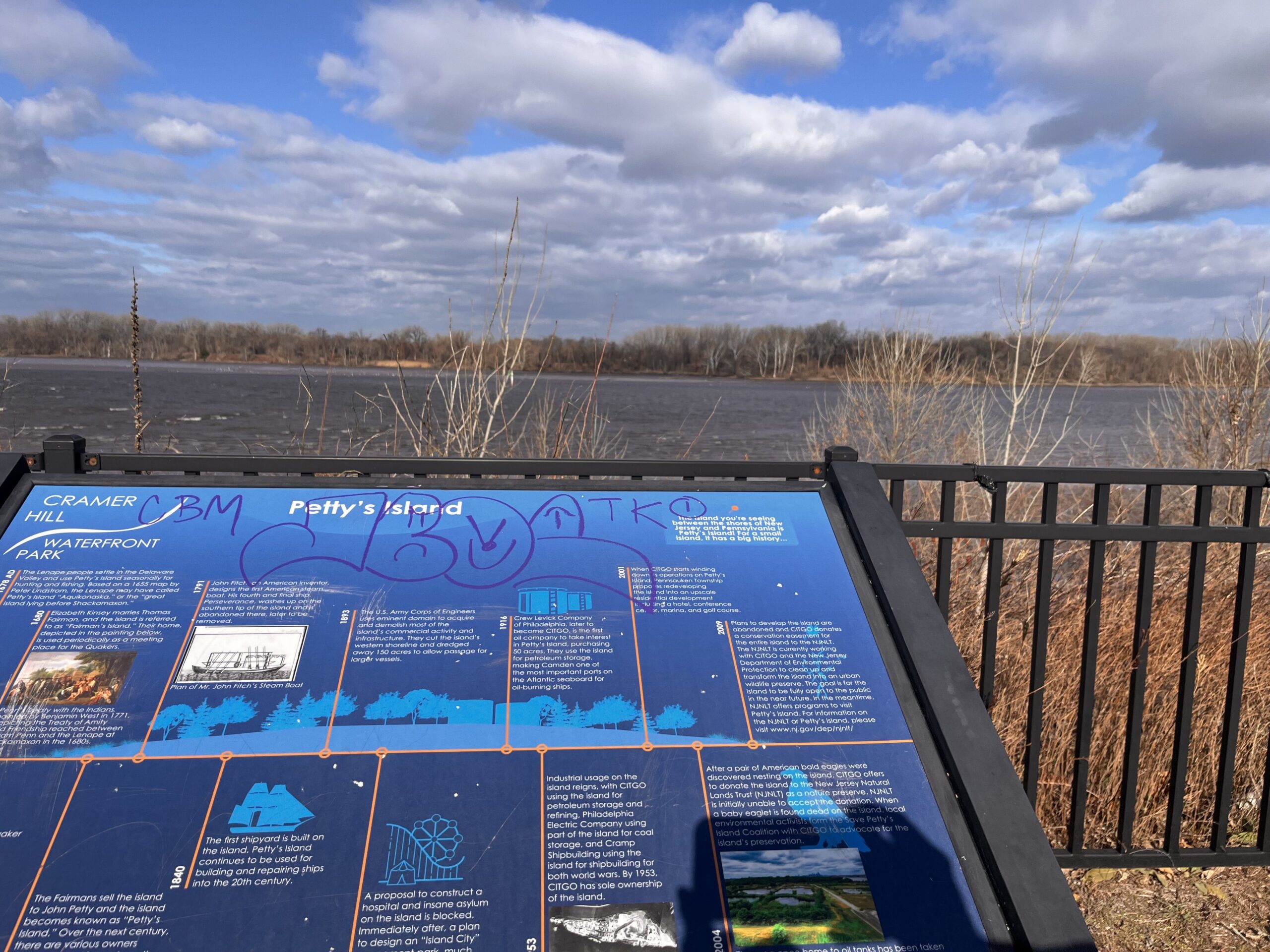
    An informational sign for Petty’s Island, seen in the distance, at Cramer Hill Waterfront Park in Camden.

    What is Elliott Management?

    Singer, who leads Amber Energy’s parent company Elliott Management, was the seventh-largest donor in the 2024 election cycle, according to Open Secrets, a research group that tracks money in U.S. politics. That put him in a top 10 list that included Elon Musk, Timothy Melon, and Jeffrey Yass.

    Singer contributed $43.2 million, with almost all going to conservative causes, including a $5 million contribution to Make America Great Again Inc., a super PAC that supports Trump. And $2 million went to the Keystone Renewal PAC to support conservative candidates in Pennsylvania.

    The order for the sale of Citgo to the arm of Singer’s hedge fund was the last major legal step to wrap claims by up to 15 creditors that began in 2017 for debt defaults.

    The deal is expected to close in coming months. Amber Energy plans to retain the Citgo brand.

    Petty’s Island (right) as seen by drone, Friday, Jan. 9, 2026. The 292-acre land sits in the Delaware river near the border between Pennsylvania and New Jersey. It is located between the Betsy Ross and Ben Franklin bridges. Formerly it was the site of Fuel storage for the Venezuelan oil company Citco.

    What’s happening on the island now?

    Currently, the New Jersey Natural Lands Trust holds a conservation easement for the island that prevents any development.

    The state’s goal is to turn the island into an urban nature reserve with an environmental center, according to the Center for Aquatic Sciences in Camden, which is partnering with the trust in the endeavor.

    Public access to the island is permitted only as part of scheduled programs. The trust has built a main trail along the southern perimeter and added connector trails for a total of two miles. It has installed 13 exhibits and kiosks along the trails.

    Transfer of the title of the island ultimately depends on Citgo, which is responsible for removing the petroleum infrastructure and cleaning up contamination.

    But before Citgo can turn the title over to the trust, the DEP must certify that the land is cleaned to state standards, according to the most recent information available on the DEP website for the trust.

    Last year, Citgo agreed to place $13.3 million in a trust fund to remediate “all hazardous substances, hazardous wastes, and pollutants discharged,” on the island.

    If Amber Energy assumes all liabilities of Citgo, it would presumably be responsible for the cleaning and transfer of title under the conservation easement.

    Reddall, the spokesperson for Amber Energy, declined to comment on the cleanup.

  • Radnor moves to acquire 14 acres of Valley Forge Military Academy by eminent domain

    Radnor moves to acquire 14 acres of Valley Forge Military Academy by eminent domain

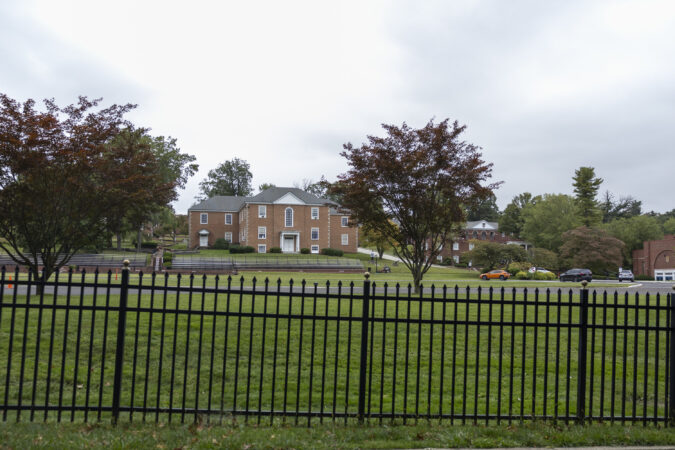
    The Radnor Township Board of Commissioners is moving to use eminent domain to take 14 acres owned by the Valley Forge Military Academy, which has said it will close this year.

    A motion Monday by the board authorized township solicitor John Rice to draw up legal paperwork to use eminent domain — a process that allows municipalities to take a property from owners, whether they want to sell or not — by paying an appraised value for the land.

    The Board expects to introduce an eminent domain ordinance at its Jan. 24 meeting. The ordinance would have to be approved after a second hearing and public reading. No date is set for that.

    It’s likely the township would use the land to build a new recreation center and park.

    Valley Forge Military Academy spans about 70 acres in Wayne in Delaware County. The board said its goal is to prevent more development in the area around North Wayne.

    Commissioner Jack Larkin cited a number of developments in recent years that have raised concern about overdevelopment and increased traffic.

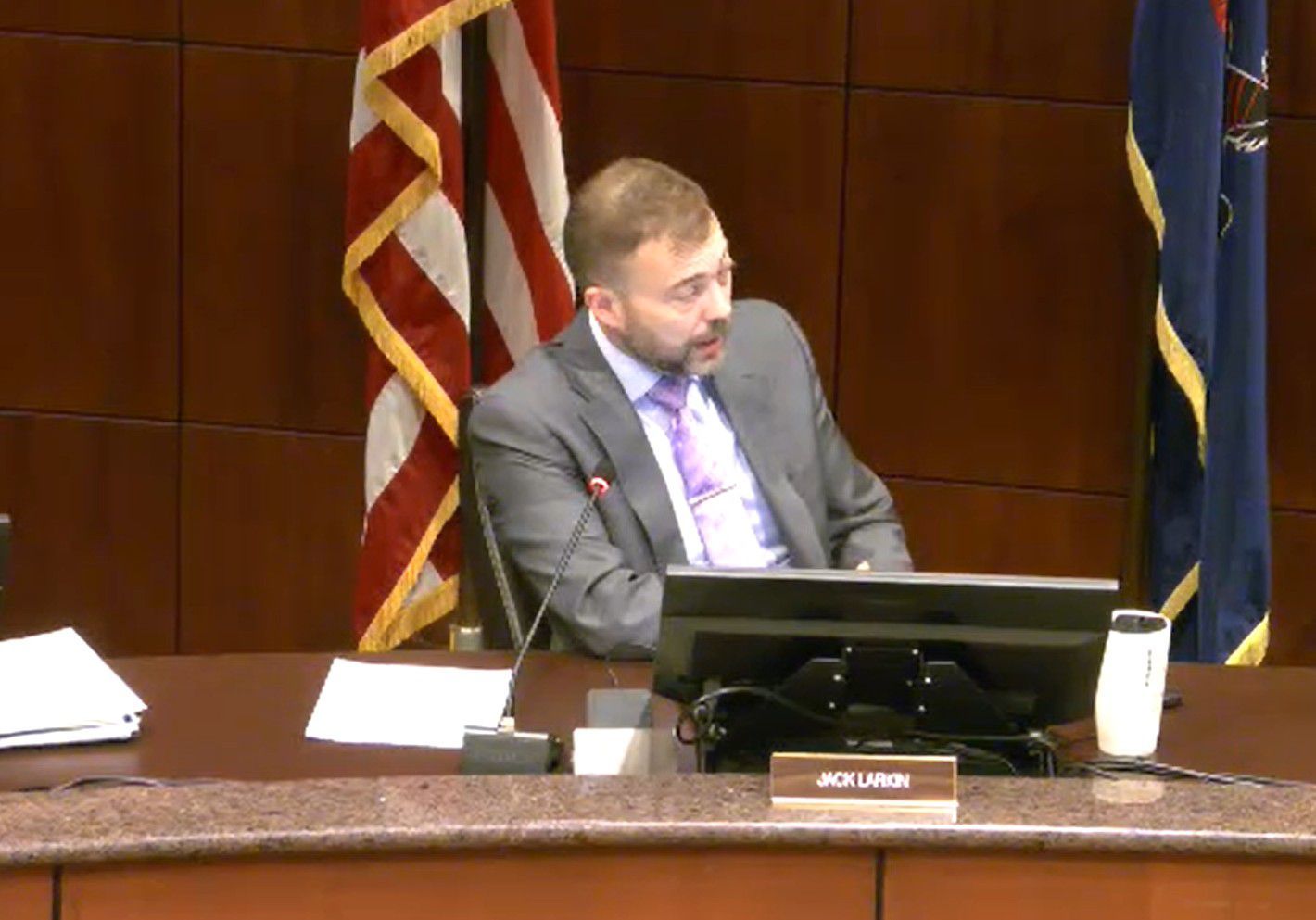
    A video still of Radnor Commissioner Jack Larkin speaking at a Jan. 5, 2026, township meeting regarding the possible taking of 14 acres of Valley Forge Military Academy through eminent domain.

    He said the township has reached out to academy officials but have not heard back.

    “We would need to get this started, to ideally negotiate in good faith, a friendly arrangement, which we started to do,” Larkin said. “And we just haven’t really heard anything back from the school.”

    He said the school has not turned down a deal or set a price.

    “They just kind of went radio silent,” Larkin said at the meeting, and added that, as a result, the township decided to move ahead with a plan that would allow it to use eminent domain.

    However, a representative of the Valley Forge Military Foundation said said Thursday the school was unaware the township planned to move so fast.

    Plans for the 14 acres

    Larkin said in a separate interview Wednesday that the township is eyeing the land as a solution to the township-run Sulkisio Gym on Wayne Avenue.

    The gym needs major repairs, and its lease will be up in coming years. So the township needs to consider whether it’s worth putting more money into the facility, given that it might not remain a tenant when the lease expires.

    As a result, the township is considering a new gym and park for the 14 acres, which are bounded by Eagle Road to the south, the Oak Hill development to the east, and the buildings of the academy’s main buildings to the west.

    “We’re on the hunt for another alternative,” Larkin said. “This would be the place we would hope to build a replacement rec center. But that’s not going to take the entire 14 acres. So we would favor the balance would have some flavor of a park.”

    Larkin said whether the park has trails, a playground, or a community garden will be subject to public input.

    He said the township knows the value of real estate in the area and has a ballpark price per acre it’s willing to pay, but he would not disclose a total figure.

    “My real hope,” he said, “is that we end up negotiating a deal and this is not an exciting process. They want to sell, and we want to buy.”

    Larkin did not believe the 14 acres would conflict with land being eyed for a charter school.

    Currently, a group seeking to open Valley Forge Public Service Academy Charter School on land at the closing military school is already equipped with a leadership team and board, but it cannot open as a publicly funded charter school without approval from the local school board.

    Radnor school board officials are now considering the plan for a charter school that could open in the fall.

    What can eventually be built on the land is restricted by the current institutional zoning to educational, medical, religious, and museum uses, although zoning variances can always be sought.

    Valley Forge Military Foundation’s responds

    John English, board chair of the Valley Forge Military Foundation, said Thursday that the academy was aware Radnor had expressed interest in buying some of the property.

    “We were not aware that the Township believes it needs to proceed as quickly as it is,” English said in an email statement. “While Valley Forge Military Academy is closing, the Valley Forge Military College is still very much active and thriving on our campus as it continues its national security mission of training and commissioning future officers for the United States Army.”

    English said the trustees are, “undergoing a thorough analysis and evaluation of the future needs of the Foundation and the College.”

    Once they establish a path forward, English said, they would be “pleased to share those plans with Radnor Township.”

    What happened to Valley Forge Military Academy

    The rush to buy the land stems from the school’s imminent closure.

    The academy announced in September that it planned to close at the end of the 2025-26 academic year amid declining enrollment, financial challenges, and lawsuits over alleged cadet abuse. Its college would continue to operate on the main campus.

    In December, Eastern University entered an agreement to buy nearly half the Valley Forge Military Academy property, which is less than a mile from the Christian university’s St. David’s campus in Delaware County.

    The planned purchase by Eastern includes 33.3 acres encompassing the football stadium, track, and athletic field house, as well as multiple apartment buildings that will be used to house students.

    In the academy’s closing announcement, school leaders cited declining enrollment and rising insurance premiums, in part tied to the school’s extensive legal battles.

    The Inquirer has reported that even with the school’s finances in a tailspin, board members in recent years personally lent $2 million to cover operating costs, financial disclosure records show.

    They tried other methods to drum up revenue, including franchising the academy’s brand to an Islamic private school in Qatar and unsuccessfully attempting to open a charter school on campus.

    They leased out their buildings for private events and authorized the sale of nearly one-third of the campus to luxury home developers, according to federal filings and emails obtained by The Inquirer.

    Even so, enrollment in 2025 fell to 88 cadets, down from more than 300 a decade ago, the school said.