Author: Erin McCarthy

  • How Chestnut Hill’s main street is staying relevant in the Amazon era

    How Chestnut Hill’s main street is staying relevant in the Amazon era

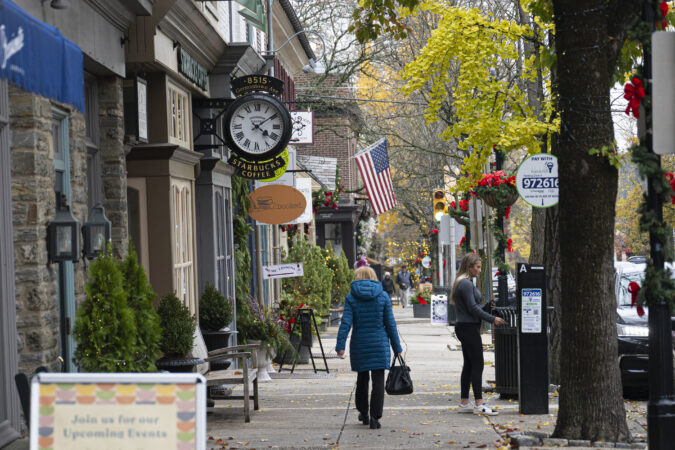
    At lunchtime on a Thursday, a week before Thanksgiving, Chestnut Hill was buzzing.

    Inside the newly expanded Matines Café, almost every table was full. People sipped warm drinks from large mugs and ate Parisian croissants and quiche. Bottles of prosecco sat on ice by one large table adorned with Happy Birthday balloons.

    McNally’s Tavern was bustling, too, with regulars sitting at the bar and at tables inside the cozy, nearly 125-year-old establishment atop the hill. Multiple generations gathered — a son taking a father out to lunch, a mother with a baby in a stroller, and two sisters, Anne and Meg McNally, running the place.

    Behind the storefronts along Germantown Avenue’s main drag, some people perused the boutiques, while others typed away on laptops in coffee shops.

    In the northwest Philadelphia neighborhood known for its wealth and postcard-picturesque aesthetic, the small-town charm of longstanding establishments — four are more than 100 years old — is now complemented by the shine of some newer shops and restaurants. Several Chestnut Hill business owners said the variety has helped both old and new spots succeed despite broader economic challenges, including inflation and tariffs, and the loss of a few restaurants.
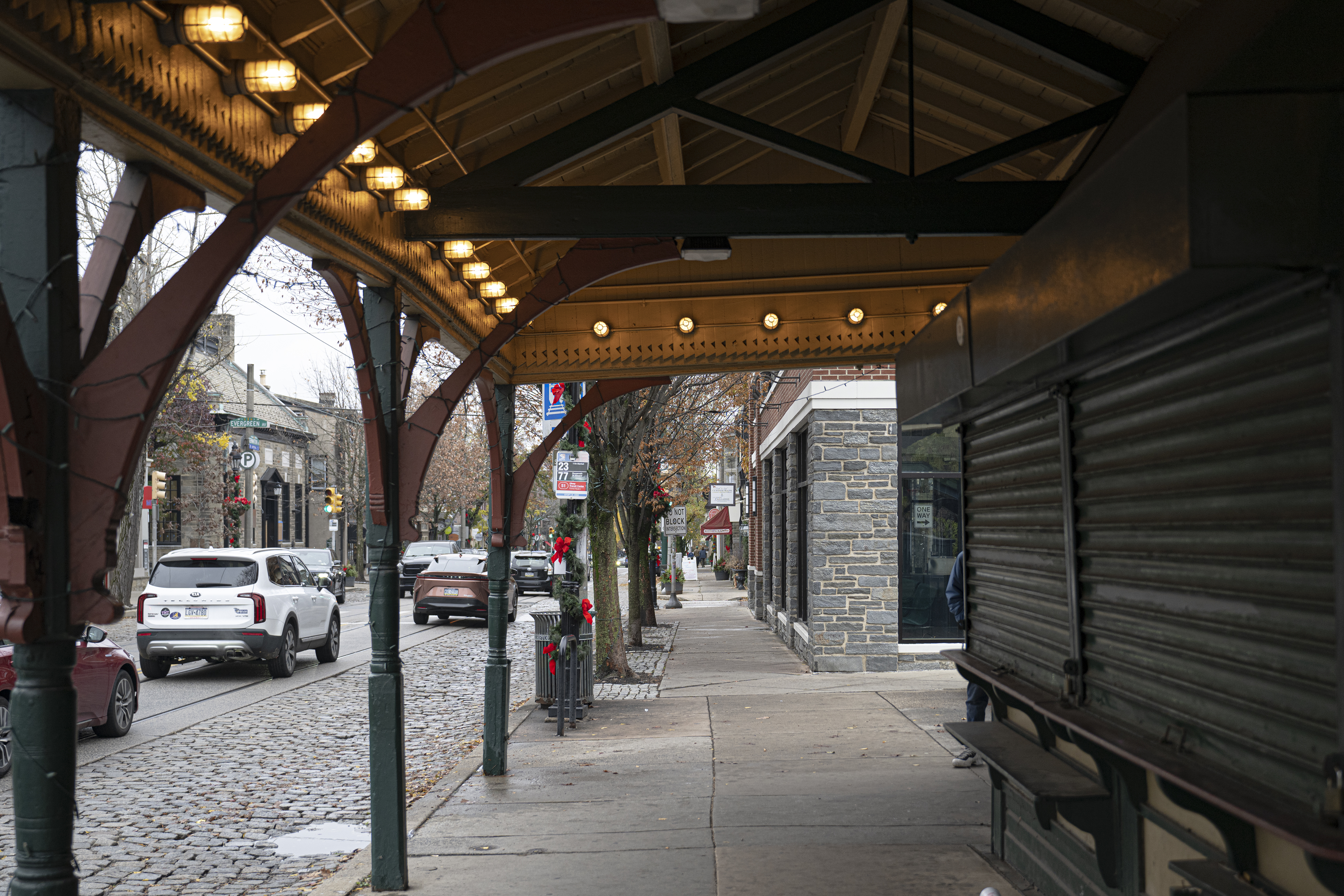
    A view down Germantown Avenue from the Chestnut Hill SEPTA Regional Rail station.
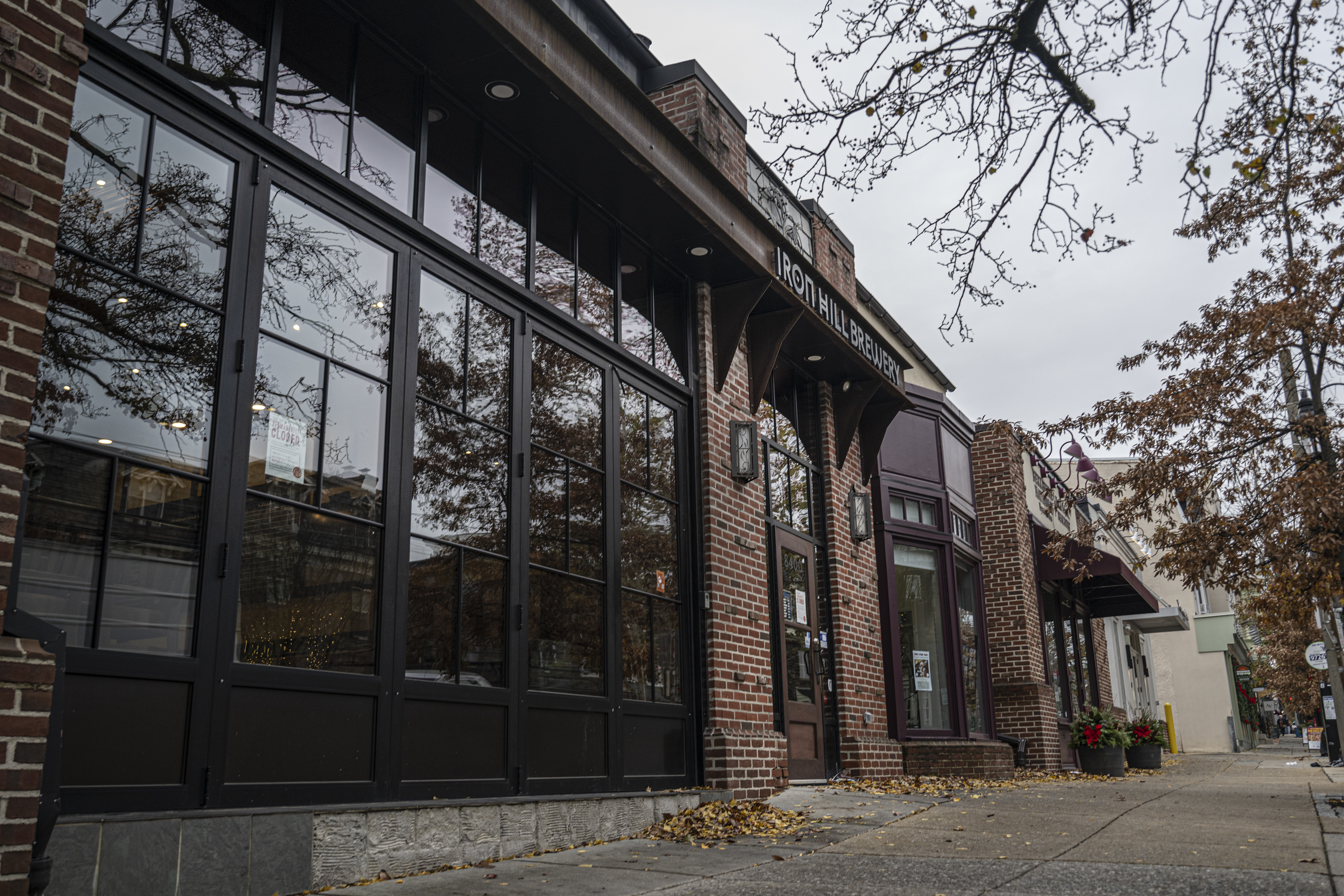
    The closed Iron Hill Brewery is shown in downtown Chestnut Hill on Nov. 19.

    As the owner of Kilian Hardware, which has been in business for 112 years, Russell Goudy Jr. has watched the avenue change. Fifty years ago, he said it was “basically like a shopping mall,” a one-stop shop for everyday needs.

    In recent years, however, the neighborhood has focused on attracting and retaining unique food and beverage businesses, “quaint, specialty shops,” and service-oriented businesses, which Goudy said offer experiences Amazon and other e-commerce platforms can’t replicate.

    “If you’re not giving people an experience in today’s economy, it’s very tough to compete,” said Nicole Beltz, co-owner of Serendipity Shops, which for a decade has had an expansive store on Germantown Avenue. And providing a memorable experience is never more important than during the lucrative last few months of the year.

    “When you come to Chestnut Hill over the holidays, you get what you came for,” Beltz said. “You get that charming feeling of being somewhere special for the holiday.”
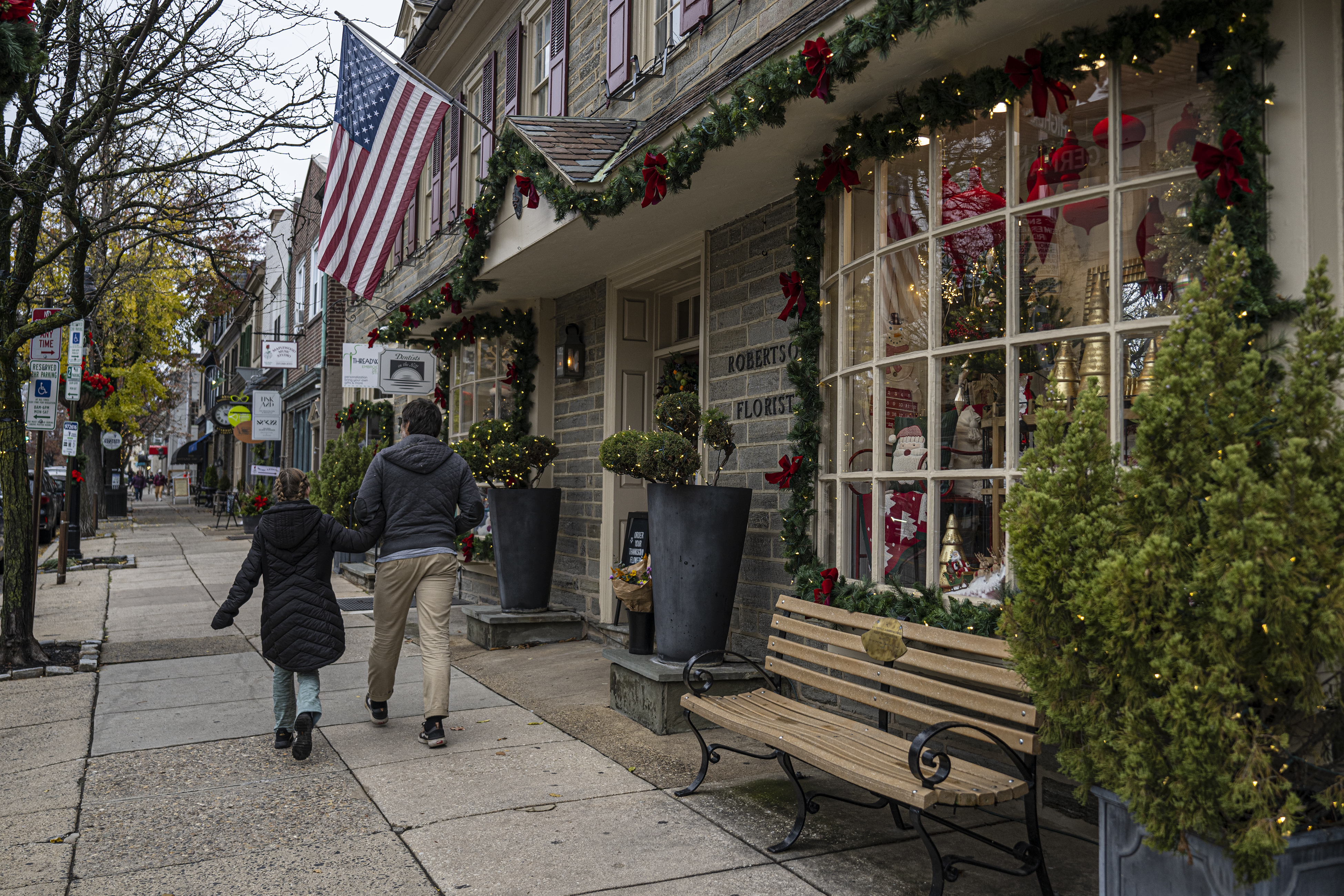
    People walk by holiday decor outside Robertson’s Flowers & Events in Chestnut Hill earlier this month.

    ‘New vitality’ coming to the Chestnut Hill restaurant scene

    During the holidays and all year long, Chestnut Hill business owners said they’re grateful that the neighborhood has held onto its charm despite recent challenges.

    During the pandemic, “it definitely felt a little grim and dark,” said Ann Nevel, retail advocate for the Chestnut Hill Business District. “The impressive thing is the old-timers, the iconic businesses, and some of the newer restaurants … pretty much all were agile enough to tough it out.”

    And a slew of other businesses have moved into the community since then. In the last four years, 20 retail shops, 20 service businesses, and 10 food and beverage spots opened in Chestnut Hill, Nevel said, while several existing establishments expanded.

    Among them was Matines Café, which opened a small spot on Bethlehem Pike in 2022 and expanded this fall to a second, much larger location on Highland Avenue. The café serves 500 people or more on weekdays, according to its owners, and even more on weekends.

    Sitting inside their original location, which is now a cozy children’s café, Paris natives Amanda and Arthur de Bruc recalled that they originally thought they’d open a café in Center City, where they lived at time. Then, they visited Chestnut Hill and fell in love, despite “a lot of empty spots” there around 2022, Amanda de Bruc said.
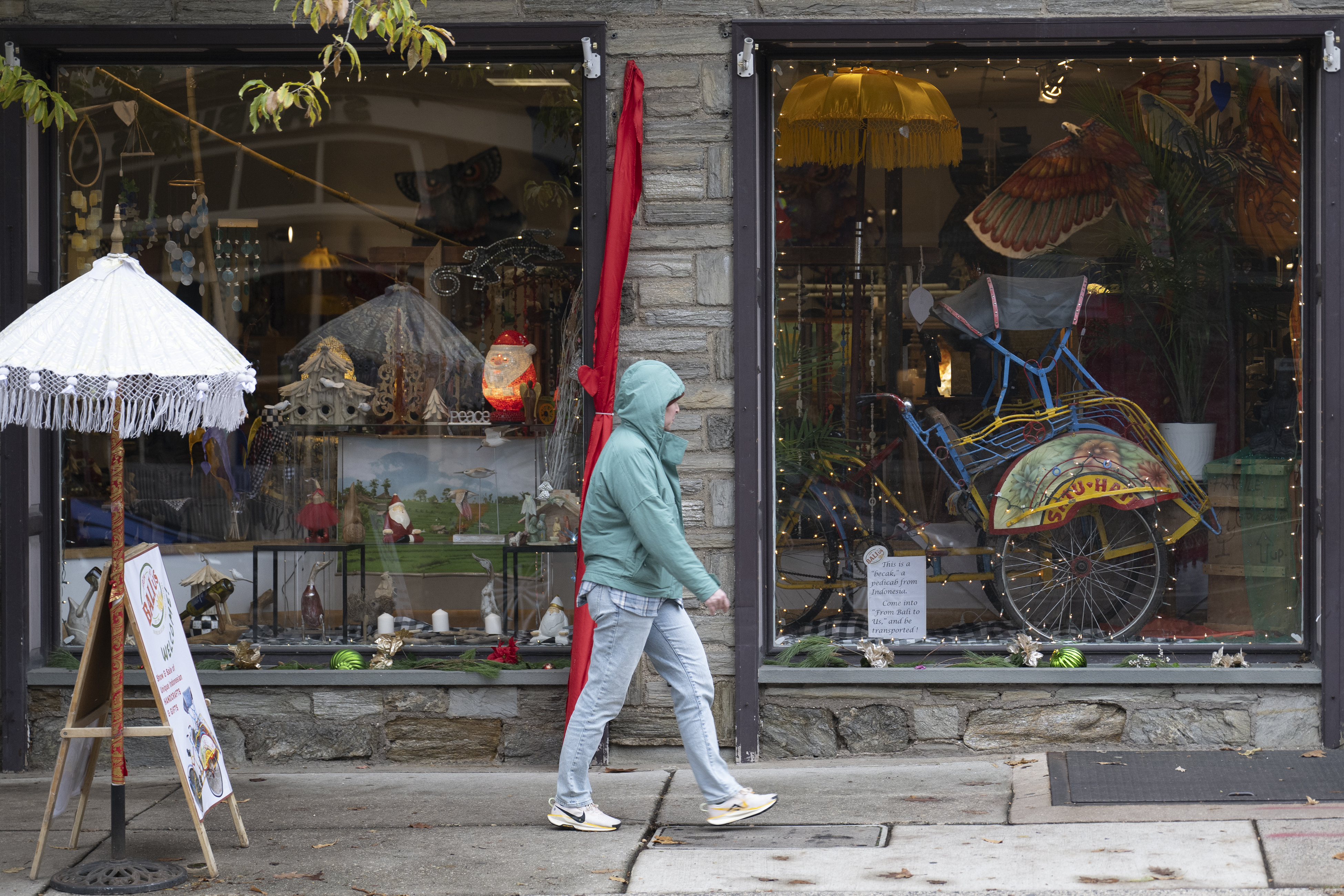
    A colorful storefront along Germantown Avenue in Chestnut Hill.

    “We liked the idea of living in the suburbs, which technically Chestnut Hill is not the suburbs, because it’s still Philly,” she said. But “we were looking for something that we were more used to, like Paris. There are so many boutiques in such a small area,” and everything is walkable.

    The opening of shops and cafés like Matines became a “catalyst for this new vitality, a new, more contemporary energy that has taken hold in Chestnut Hill,” Nevel said. Soon, “we’re going to see that new vitality in the restaurant scene,” including in some long-vacant storefronts.

    In 2026, former Four Seasons sommelier Damien Graef is set to open a wine bar, retail store, and fine-dining spot called Lovat Square off Germantown Avenue, Nevel said. On the avenue, a café-diner-pub concept called the Blue Warbler is under construction and also slated to open sometime next year.
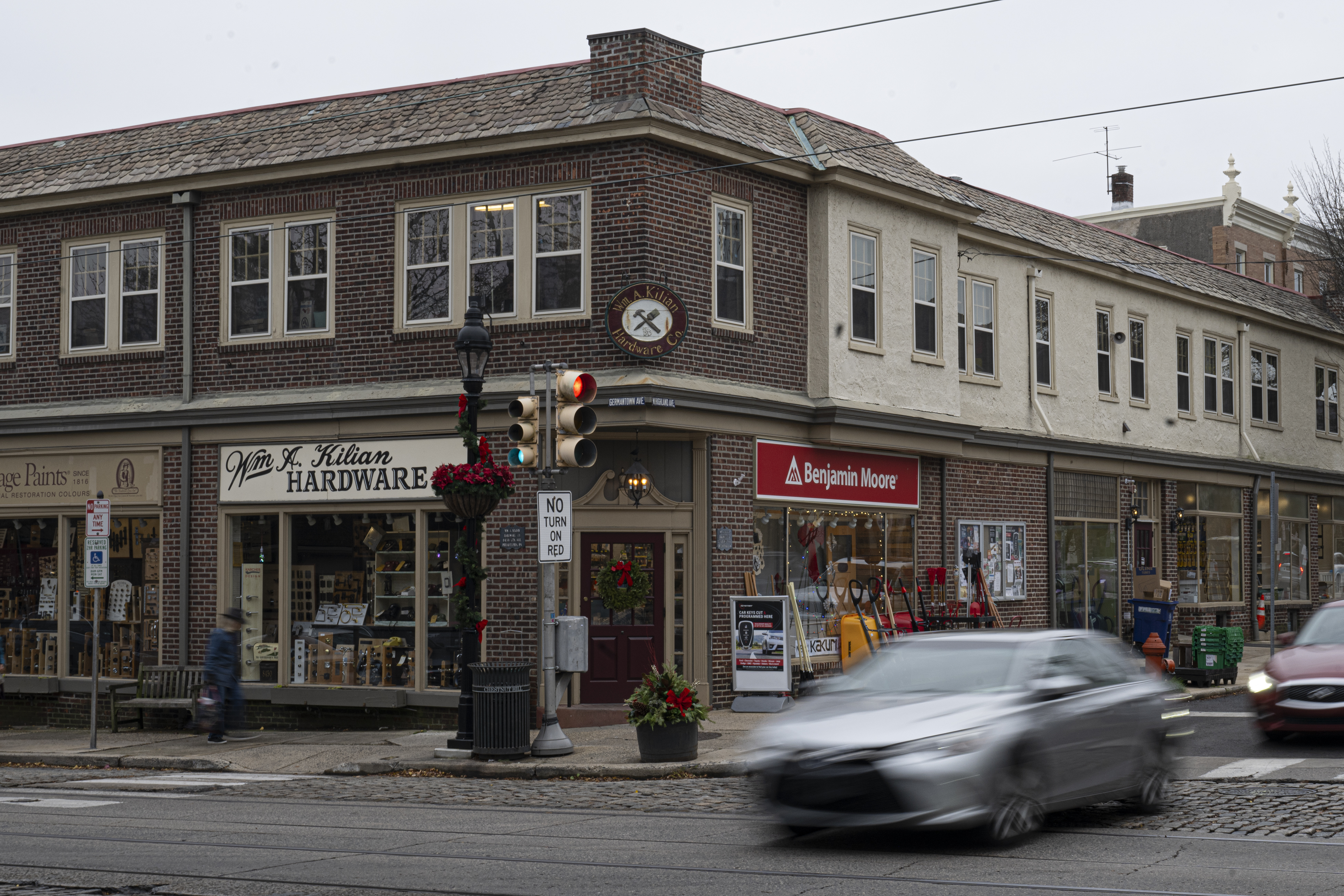
    Kilian Hardware in Chestnut Hill has been in business for 112 years.

    In downtown Chestnut Hill, there are still a few empty spots, including those left by Campbell’s Place, a popular restaurant that closed this summer; Diamond Spa, which closed this fall; Iron Hill Brewery, which closed in September (right before the regional chain filed for bankruptcy); and Fiesta Pizza III, which closed last year.

    Kismet Bagels, a popular local chain, was set to fill one of the spots this summer, but its deal fell through, co-owner Jacob Cohen said in a statement. He said they could “revisit the Chestnut Hill neighborhood” in the future.

    While the future of Iron Hill will be dictated by bankruptcy proceedings — which include an auction of assets set for next month — stakeholders say conversations are ongoing about some of the other vacancies.

    Steve Jeffries, who is selling the Campbell’s building for $1.5 million, said he’s gotten a lot of interest from people who want to revive the nearly 3,000-square-foot space as a neighborhood pub, but one that is “more cutting edge.” Perhaps, he said, one that is not focused on craft beer, which has decreased in popularity, especially among younger generations.

    “The town is just screaming for other opportunities for nightlife and sports bars,” said Jeffries, executive vice president of Equity CRE. “There has been a connotation in the market that Chestnut Hill was kind of older, stuffy, that it wasn’t a nightlife town.”

    But that’s changing, Jeffries said.
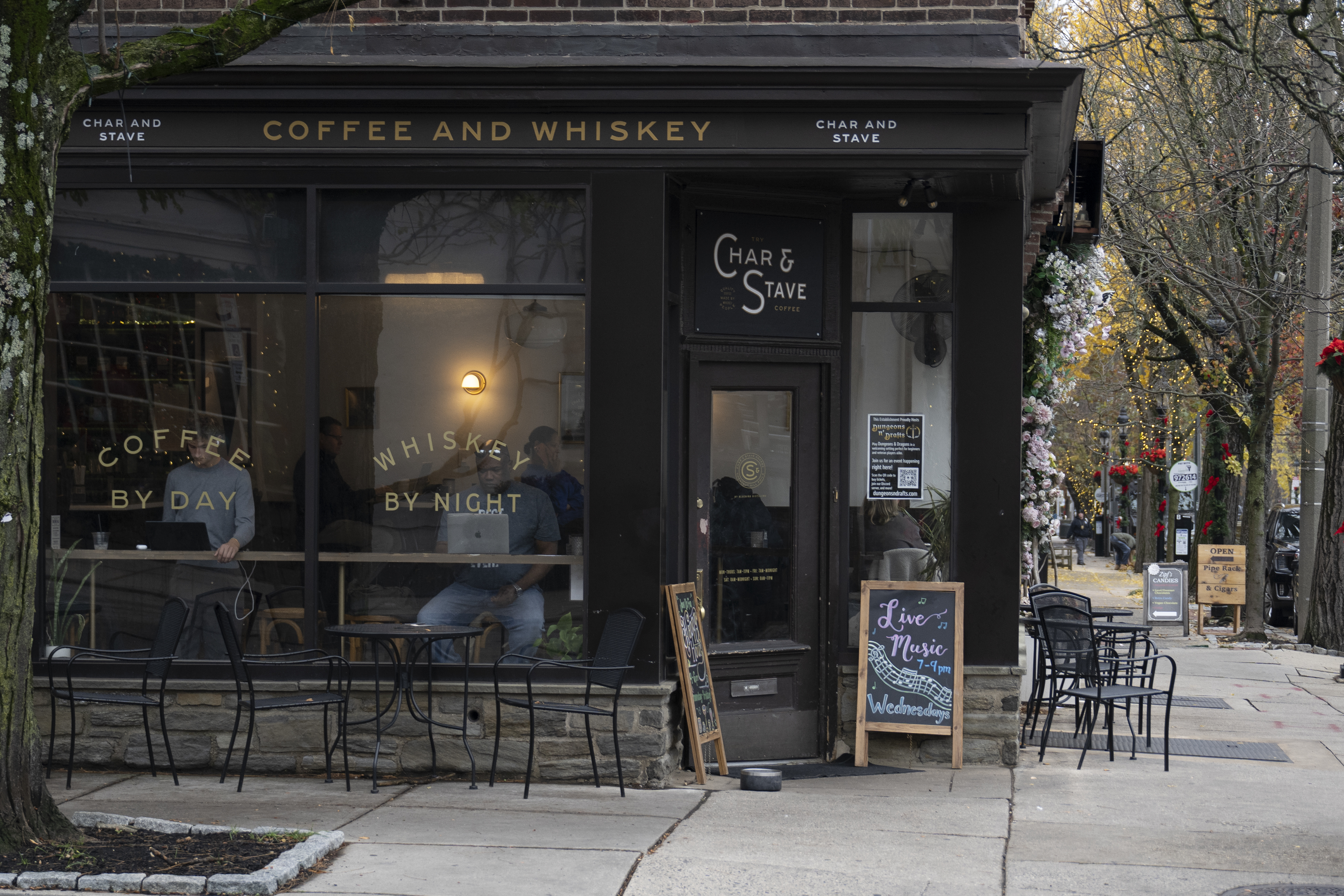
    Char & Stave, an all-day coffee and cocktail bar, has done great business since moving into Chestnut Hill, its owner, Jared Adkins, said.

    Just ask Jared Adkins, owner of Char & Stave, an all-day coffee and cocktail bar at the corner of Germantown and Highland Avenues.

    After Nevel visited Ardmore and saw the success of Adkins’ original Char & Stave, she recruited him to open a Chestnut Hill location. It started as a holiday pop-up in 2022, then became a permanent presence the next year. Since he moved into town, Adkins said, business has been booming.

    “We’re really just busy all day long,” said Adkins. The café is open until 11 p.m. during the week, midnight on the weekends, and it often brings in musicians and hosts events.

    Adkins describes Char & Stave as a place where drinkers and nondrinkers alike can spend time together, and where people can get work done with coffee or a cocktail beside them: “It’s really a gathering place that fills a niche of a nice cocktail place.”

    More changes to come for Chestnut Hill
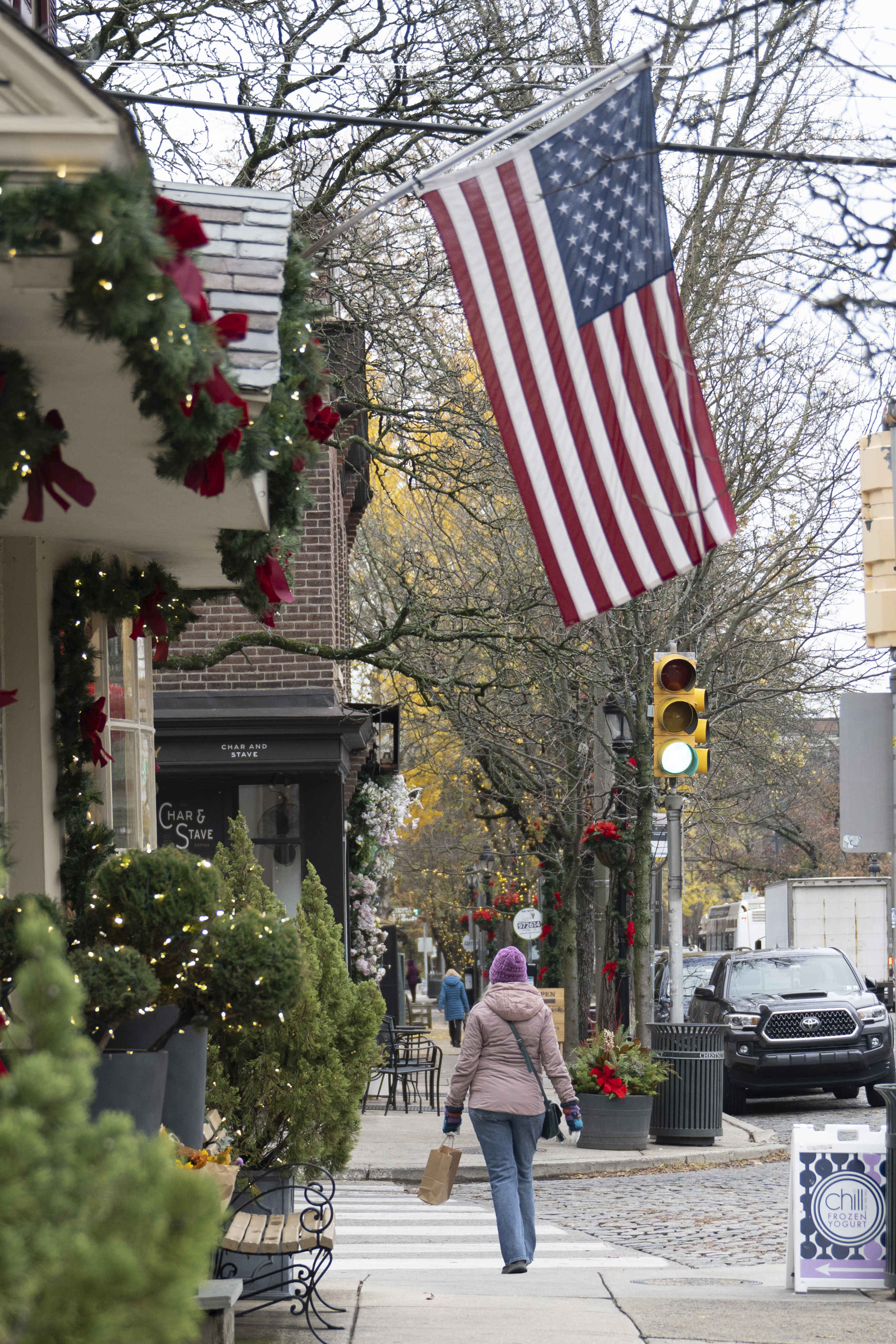
    Businesses along Germantown Avenue in Chestnut Hill are decorated for the holidays.

    Chestnut Hill business leaders and community members say they’re optimistic about the neighborhood’s continued evolution.

    As Brien Tilley, a longtime resident and community volunteer, ate lunch inside Cosimo’s Pizza Cafe, he said the community is doing well. But, he added, “it could always do better. It’s always in transition.”

    Nevel noted that restaurants require more capital to open than other businesses, so it can take awhile to fill those larger holes downtown.

    “The economy is tough,” said Anne McNally, a fourth-generation owner of McNally’s, as she sat by the tavern’s front window overlooking Germantown Avenue. But in Chestnut Hill, she gets the vibe that the community “wants us to be successful.”

    McNally and Goudy, of Kilian’s, both noted that their families bought their buildings decades ago. That has contributed to their longevity, both said, as has evolving with the customer base.

    For the McNally family, that meant transitioning from a “bar-bar,” with no clock or phone, to a bar-restaurant that closes at 10 p.m. For Goudy, it meant soliciting online orders and walk-in business from out-of-town and even out-of-state customers whose older homes require unique hardware.

    “Everything is changing,” Goudy said. “It’s important to keep changing and not to try to go back to where you were before.”
  • How is Center City retail doing? It depends what street you’re on.

    How is Center City retail doing? It depends what street you’re on.

    Center City was resilient this year, reporting slight increases in foot traffic and overall retail occupancy despite high-profile closures along Market Street.

    About 84% of Center City storefronts were occupied as of October, up one percentage point from the same time last year, according to the Center City District’s annual survey of business owners. Occupancy has hovered around that point since at least 2023 and has yet to recover to its pre-pandemic level of 89% in 2019.

    So far in 2025, an average of 343,540 people walked through Center City each day, an increase of more than 3% from last year, the survey found. Each section of Center City, from the beleaguered Market East to the thriving Rittenhouse Square area, saw at least a 1% bump in average daily foot traffic, according to the survey.

    Some retail corridors, however, are looking more vibrant than others.

    window.addEventListener(“message”,function(a){if(void 0!==a.data[“datawrapper-height”]){var e=document.querySelectorAll(“iframe”);for(var t in a.data[“datawrapper-height”])for(var r,i=0;r=e[i];i++)if(r.contentWindow===a.source){var d=a.data[“datawrapper-height”][t]+”px”;r.style.height=d}}});

    Market Street continues to struggle on both sides of Broad Street.

    As of October, the office-centric western side of Market had the lowest occupancy in Center City at 62%.

    Market East, the future of which continues to be debated by city stakeholders, had a 72% occupancy rate. It has been impacted by a slew of recent closures, including Macy’s, Rite Aid, Iron Hill Brewery, and Giant Heirloom supermarket. The Center City District calculates occupancy rates by number of storefronts, not total square footage.

    On Chestnut Street, the eastern and western sections have vastly different occupancies. The eastern side recorded a 71% occupancy rate in October, according to the survey, while 81% of stores on the western side were occupied.

    Walnut Street continues to be the district’s shining star, with 86% occupancy in both the eastern and western sections, according to the survey. In the report, the Center City District highlighted several new additions, including the luxury women’s fashion company Aritzia and North America’s first Nike Jordan World of Flight store.

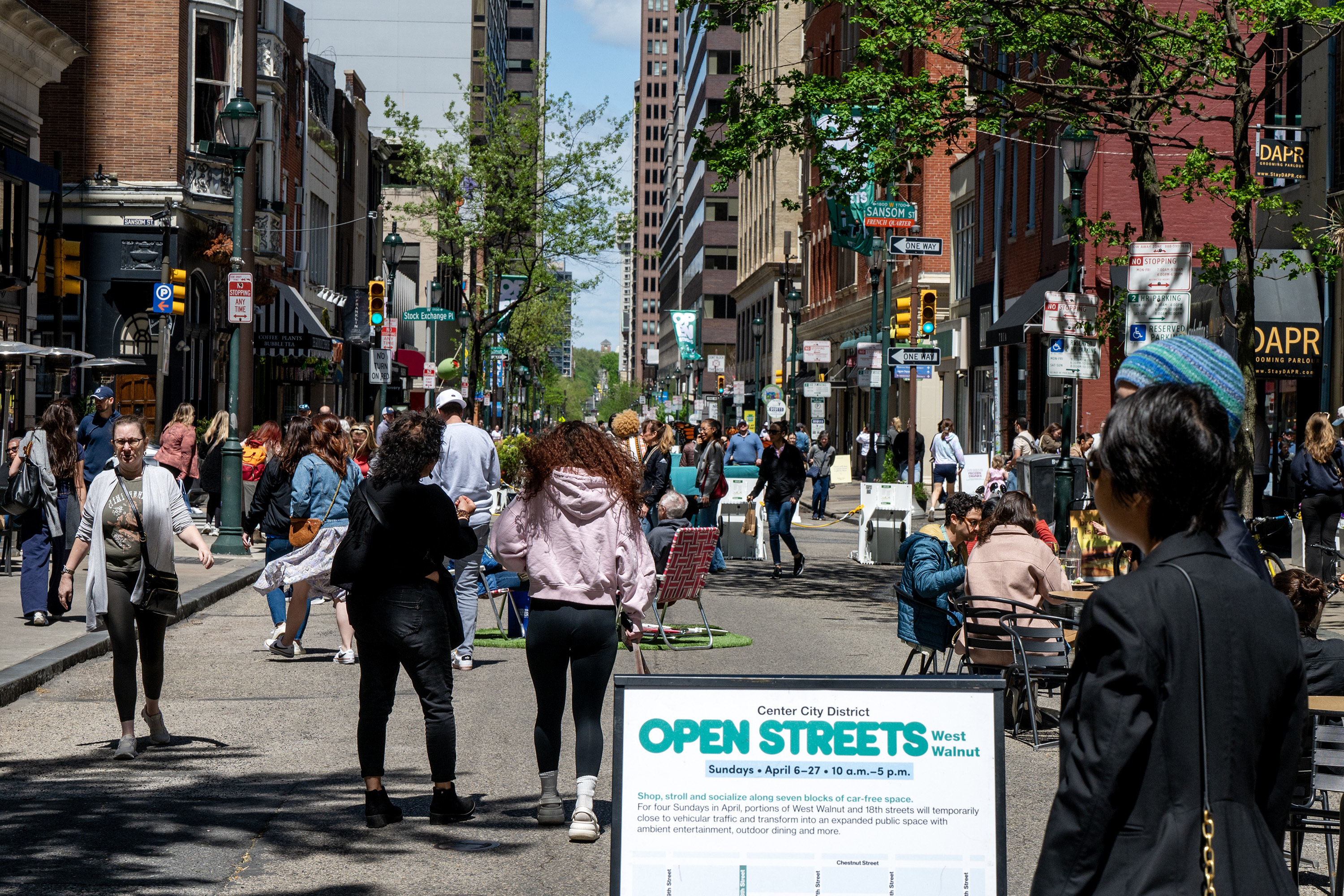
    The report once again highlighted the success of the Open Streets program, during which roads are closed to car traffic and become pedestrian walkways for shopping and dining. There have been 21 Open Streets events since its inception in September 2024, with more planned for December and next year.

    The events bring out more than 10,000 people on average, according to the report, and typically result in a 65% boost in businesses’ foot traffic and a 39% bump in sales volume.

    An Open Streets in April. There have been 21 Open Streets events since its inception in September 2024, with more planned for December and next year.

    Looking to the future, the district surveyed 700 Philadelphia renters to ask what types of retailers they’d like to see more of in Center City.

    “Downtown residents seek convenient access to everyday goods, full-service grocery stores and home furnishing options — all within walking distance,” district executives wrote in the report, noting that these types of businesses could fill vacancies in office buildings or in the concourse around Suburban Station.

    “CCD looks forward to convening office district stakeholders in 2026 to discuss a coordinated retail attraction strategy that could reposition the office district as a place to accommodate many of the retailers Center City is currently missing.”

    Editor’s note: A previous version of this story included an incorrect comparison between 2025 and 2024 for occupancy on Market Street.

  • Human reporters explain why AI data centers are so controversial in the Philly suburbs and beyond

    Human reporters explain why AI data centers are so controversial in the Philly suburbs and beyond

    Every day, millions of people across the U.S. turn to ChatGPT and other AI tools, searching for answers.

    Some of their questions are mundane: What should they make for dinner with these four ingredients? What other movies was this actor in? Where could they go on a weekend getaway for under $1,000?

    Others use AI in life-saving research and for society-changing innovations.

    How these tools work — and at what cost — is at the heart of the ongoing debate over the rapid construction of data centers.

    At some proposed sites in the Philadelphia region, neighbors are rallying in opposition, saying the community’s health, safety, and quality of life are at stake. Meanwhile, developers, elected officials, and other proponents tout economic benefits.

    If you’re trying to make sense of all the buzz about AI data centers, here’s what three human reporters think you should know.

    What is a data center?

    A data center is a building or campus that handles cloud-storage and computing needs of Amazon, Google, Microsoft, Meta, and the like. People, hospitals, banks, businesses, and governments rely on the cloud to store and retrieve vast troves of records, videos, and pictures.

    Generative artificial intelligence (AI) has exponentially increased demand for specialized data centers powerful enough to execute ever more complex requests in the form of text, code, images, audio, or video.

    A single AI query consumes multiple times the power of an ordinary search engine query, resulting in the need for additional servers to handle the load when multiplied across millions of queries.

    window.addEventListener(“message”,function(a){if(void 0!==a.data[“datawrapper-height”]){var e=document.querySelectorAll(“iframe”);for(var t in a.data[“datawrapper-height”])for(var r,i=0;r=e[i];i++)if(r.contentWindow===a.source){var d=a.data[“datawrapper-height”][t]+”px”;r.style.height=d}}});

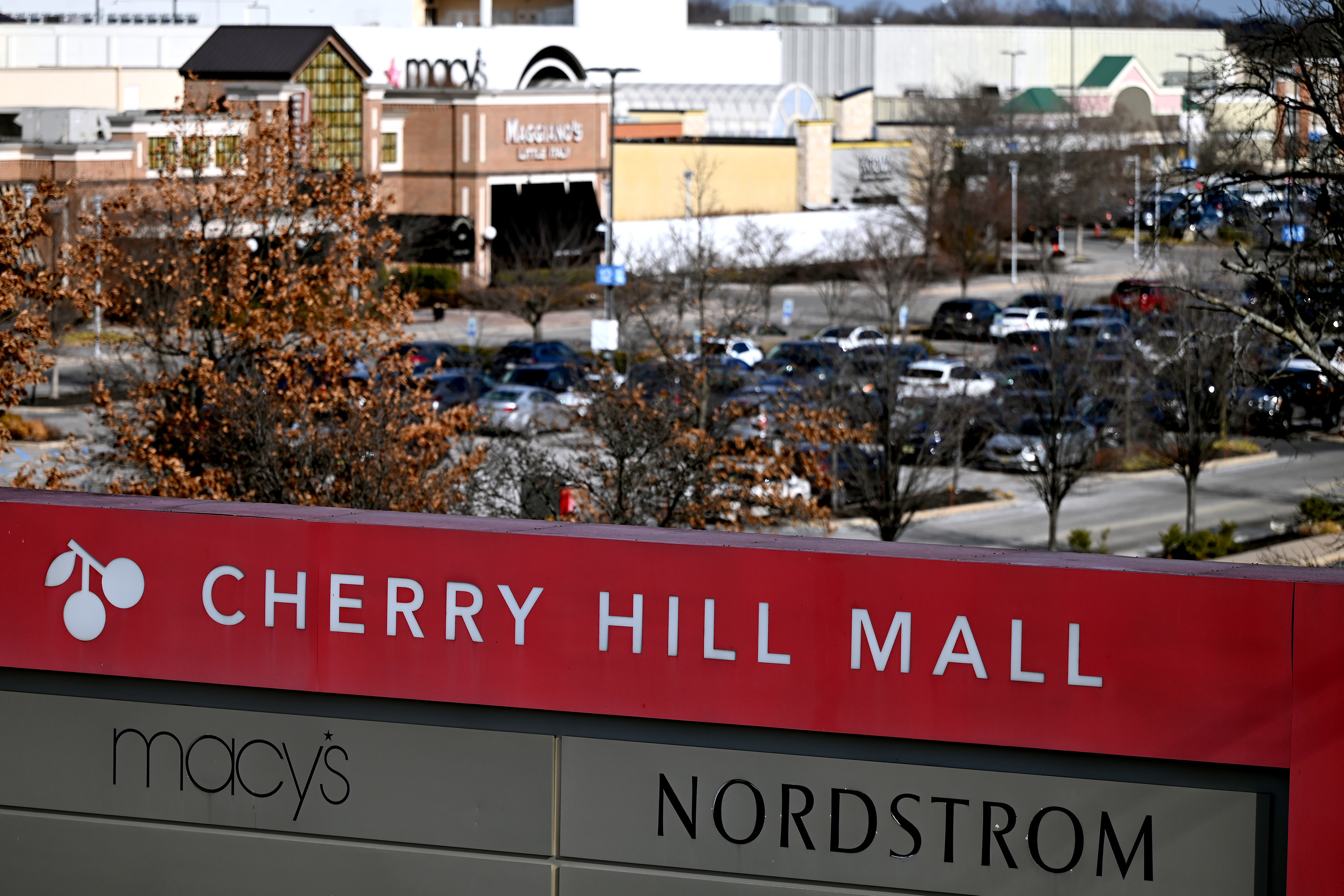
    Newer hyperscale data centers can reach 1 million square feet or larger. For comparison, the Cherry Hall Mall is 1.3 million square feet.

    Where are data centers in Pennsylvania and New Jersey?

    More than 150 data centers already exist in Pennsylvania and New Jersey, according to Data Center Map, a private company that tracks the facilities nationwide. The Philadelphia area has dozens of data centers, operated by an array of companies from telecom giants like Comcast to digital-services companies like Lumen and DāSTOR.

    window.addEventListener(“message”,function(a){if(void 0!==a.data[“datawrapper-height”]){var e=document.querySelectorAll(“iframe”);for(var t in a.data[“datawrapper-height”])for(var r,i=0;r=e[i];i++)if(r.contentWindow===a.source){var d=a.data[“datawrapper-height”][t]+”px”;r.style.height=d}}});

    Not all of these properties are AI data centers: Comcast’s facilities, for example, connect thousands of local customers to internet, cable, and phone services, and have been doing so for decades.

    Where are new data centers being built in Pa. and N.J.?

    Hot spots for new AI data centers include North Jersey and the Scranton and Pittsburgh areas in Pennsylvania.

    Three recent proposals in the Philadelphia suburbs have made headlines:

    Edmund J. Campbell, attorney for Main Line developer Brian O’Neill, speaks to the Plymouth Township zoning hearing board on Monday Nov. 17 before abruptly withdrawing his client’s application over legal issues.

    Why do some communities want a data center?

    A data center can bring in significant tax revenue, create jobs, attract other businesses to the region, and put the area on the cutting edge of a rapidly growing industry, proponents and developers say.

    In Loudoun County, Va., data centers accounted for nearly half of the property tax revenue in 2024, according to the county’s website, with the county getting $26 for every $1 spent on data center services. Nearby Prince William County reported that its 44 data centers generated more than $293 million in total tax revenue (though some industry stakeholders debate whether tax breaks offset these gains).

    Unlike residential redevelopment, data centers don’t increase demands on local schools or EMS services, data center proponents say. Nor do they bring in added traffic like fulfillment warehouses or other industrial uses.

    Data centers are seen by some as a good reuse of formerly industrial land, such as proposals in Bucks County on a former U.S. Steel site; in Chester County on a remediated Superfund site; and in Montgomery County on the former Cleveland-Cliffs steel mill.

    Why are some communities opposing data centers?

    Opponents of data centers worry about pollution, noise, power and water use, and the impact another data center could have on their electric bills. In some areas, they decry the loss of open space and express broader concerns about whether the AI boom is a bubble that could burst before all this data-center investment pays off.

    How are data centers impacting my electric bill?

    Generative AI tools like ChatGPT and DALL-E are major drivers behind the dramatic increase in energy demand. Every ChatGPT query, for example, is estimated to use five times more electricity than a simple web search.

    An average query uses about the power that an oven would use in a little over one second or a high-efficiency light bulb would use in a couple of minutes, according to Sam Altman, CEO of OpenAI, the company behind ChatGPT.

    In 2023, U.S. data centers consumed about 4.4% of total U.S. electricity, compared to 15% for all residential use. Data center demand is expected to rise, potentially consuming 6% to 12% of total U.S. electricity by 2028, according to a 2024 report by Lawrence Berkeley National Laboratory.

    window.addEventListener(“message”,function(a){if(void 0!==a.data[“datawrapper-height”]){var e=document.querySelectorAll(“iframe”);for(var t in a.data[“datawrapper-height”])for(var r,i=0;r=e[i];i++)if(r.contentWindow===a.source){var d=a.data[“datawrapper-height”][t]+”px”;r.style.height=d}}});

    When energy demand rises without a proportional increase in supply and capacity, experts say, consumers see higher bills. Although it’s possible prices would lower with increased demand as long as there is sufficient existing capacity in place, say some experts.

    “There’s a variety of factors, but it isn’t really transparent when you look at your electricity bill,” said John Quigley, senior fellow at the University of Pennsylvania’s Kleinman Center for Energy Policy.

    Several recent reports have tried to quantify the impact data centers are having on consumer bills. According to a recent Bloomberg News analysis, the monthly electric bills of customers who lived near significant data center activity have increased 267% in the past five years.

    What are some environmental concerns regarding data centers?

    Water: Data centers require significant amounts of water to cool servers and IT equipment. Some cooling systems are more efficient than others.

    A Virginia legislative audit report said 11 data center buildings each used over 50 million gallons, including one building that used 243 million gallons in 2023. While some data centers use substantial amounts of water, most use similar or less than other large commercial and industrial water users, Virginia found.

    Based on available data, most data centers use about 6.7 million gallons of water a year, about the same as an average large office building.

    Land use: Some proposals would require substantial clearing for forested or unused land, as in a 1,000-acre proposal in Covington and Clifton Townships in the Poconos. Residents in East Vincent Township in Chester County have mobilized to save the rolling hills, farms, and rural character near the proposed Pennhurst site.

    Air pollution: The electricity that powers data centers comes from a grid powered by plants that run on natural gas, a fossil fuel that emits pollutants such as nitrogen oxides, fine particulate matter, and a precursor to smog. The plants also release carbon dioxide, a greenhouse gas. Backup generators are often fired by diesel. Amazon and Microsoft have plans to tap nuclear power, which does not produce air pollutants, though it does produce toxic waste.

    Noise: Data centers sometimes emit hums and vibrations produced by servers, whirring fans, HVAC systems, and other sources.

    What kinds of jobs do data centers create?

    Construction of a data center requires hundreds of temporary tradespeople, such as masons, electricians, plumbers, and HVAC technicians.

    Once open, data centers typically need very few full-time employees. Even the largest usually employ fewer than 150 people, sometimes as few as 25. Permanent positions can include IT specialists, data analysts, electricians, maintenance workers, and security personnel. Sometimes certain employees can work remotely.

    Developers of some data centers currently proposed in Pennsylvania estimate hiring between 30 and 70 permanent workers. Data center technician jobs at Amazon’s Salem Township facility come with starting salaries between $50,000 and $152,000 a year, according to job listings on Indeed.com.

  • Sloomoo Institute, an immersive slime playground, is one of King of Prussia Mall’s new stores this holiday season

    Sloomoo Institute, an immersive slime playground, is one of King of Prussia Mall’s new stores this holiday season

    At the King of Prussia Mall, you can add some slime (the fun kind) to your holiday shopping experience this year.

    Fresh off the opening of the first-ever Netflix House, the Montgomery County mall this week welcomed the Sloomoo Institute’s first Philly-area location. The sensory slime experience’s latest outpost is called a Sloomoo MiniMoo, and it’s a scaled-down, 3,000-square-foot version of its flagship stores.

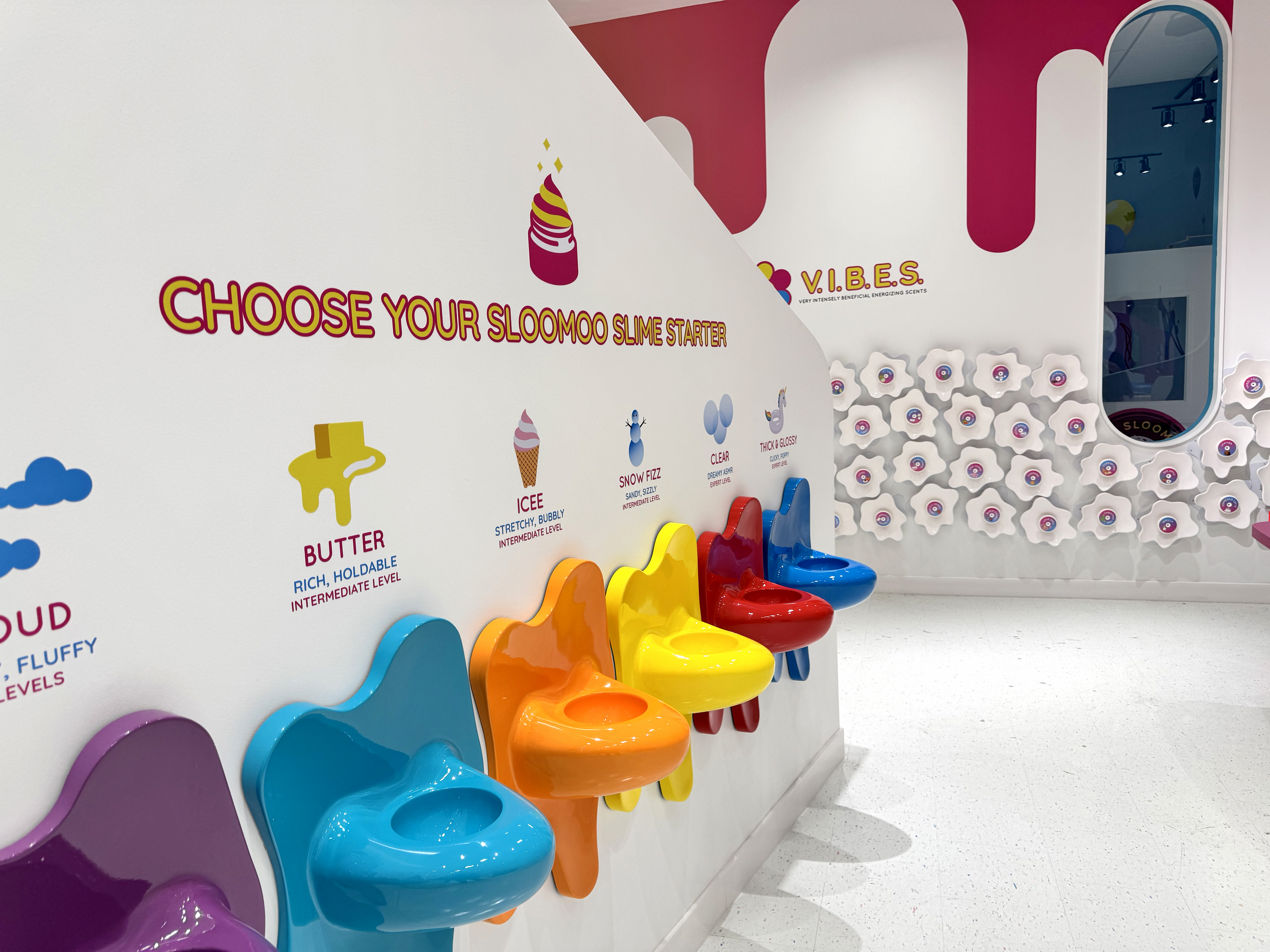
    For between $24 and $26 a person, King of Prussia Sloomoo customers can design their own slime, choosing from different textures, colors, scents, and charms. They can also smush slime onto the wall, send it flying through the air with a slingshot, go elbow-deep in vats of slime, and take slime-making classes.

    Guests can also browse slime toys and other squishy, sensory gifts at the Sloomoo retail store, no ticket required.

    “King of Prussia is a playground for families,” cofounder Sara Schiller said in a statement, “and we’re bringing a world of slime designed to spark curiosity and pure, unfiltered joy.”

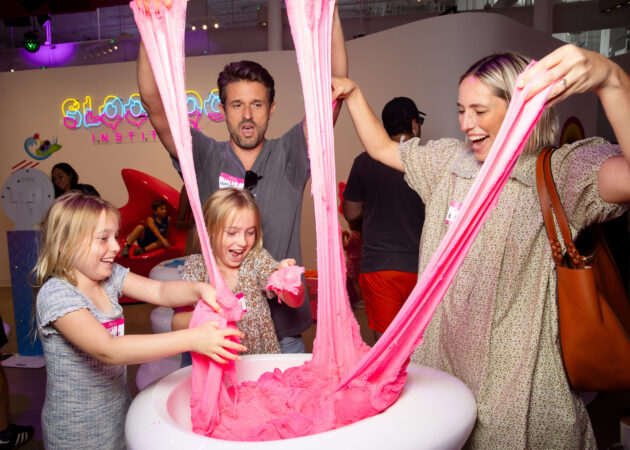
    Customers play with slime at another Sloomoo Institute location. The King of Prussia Mall opened a Sloomoo MiniMoo experience this week.

    Sloomoo Institute was founded by Schiller and her friend Karen Robinovitz, who had rediscovered slime as a way to feel joy again after personal losses and hardships.

    They opened their first location in New York in 2019, went viral on TikTok during the pandemic, and then expanded nationwide, opening outposts in Atlanta, Chicago, Houston, and Los Angeles. A Sloomoo MiniMoo also recently opened in Boston.

    Earlier this year, the founders told CNBC that Sloomoo brings in as much as $4.3 million a month in revenue from ticket sales alone.

    A look inside the King of Prussia Mall’s Sloomoo MiniMoo experience, which opened this week ahead of Black Friday and the holiday shopping season.

    At King of Prussia, Sloomoo MiniMoo welcomed its first customers last weekend, but it will celebrate its grand opening this Saturday, when the first 200 ticketed customers will receive a complimentary hot chocolate and “limited-edition Philly Cheesesteak-themed slime,” according to company officials. The first 100 guests on Saturday will get a bag charm.

    Sloomoo is located next to H&M on the upper level of the Plaza by Eataly, the mall’s new Italian culinary experience.

    Other new stores, restaurants, and experiences at the King of Prussia Mall

    Crowds shopped at the King of Prussia Mall on Black Friday 2022.

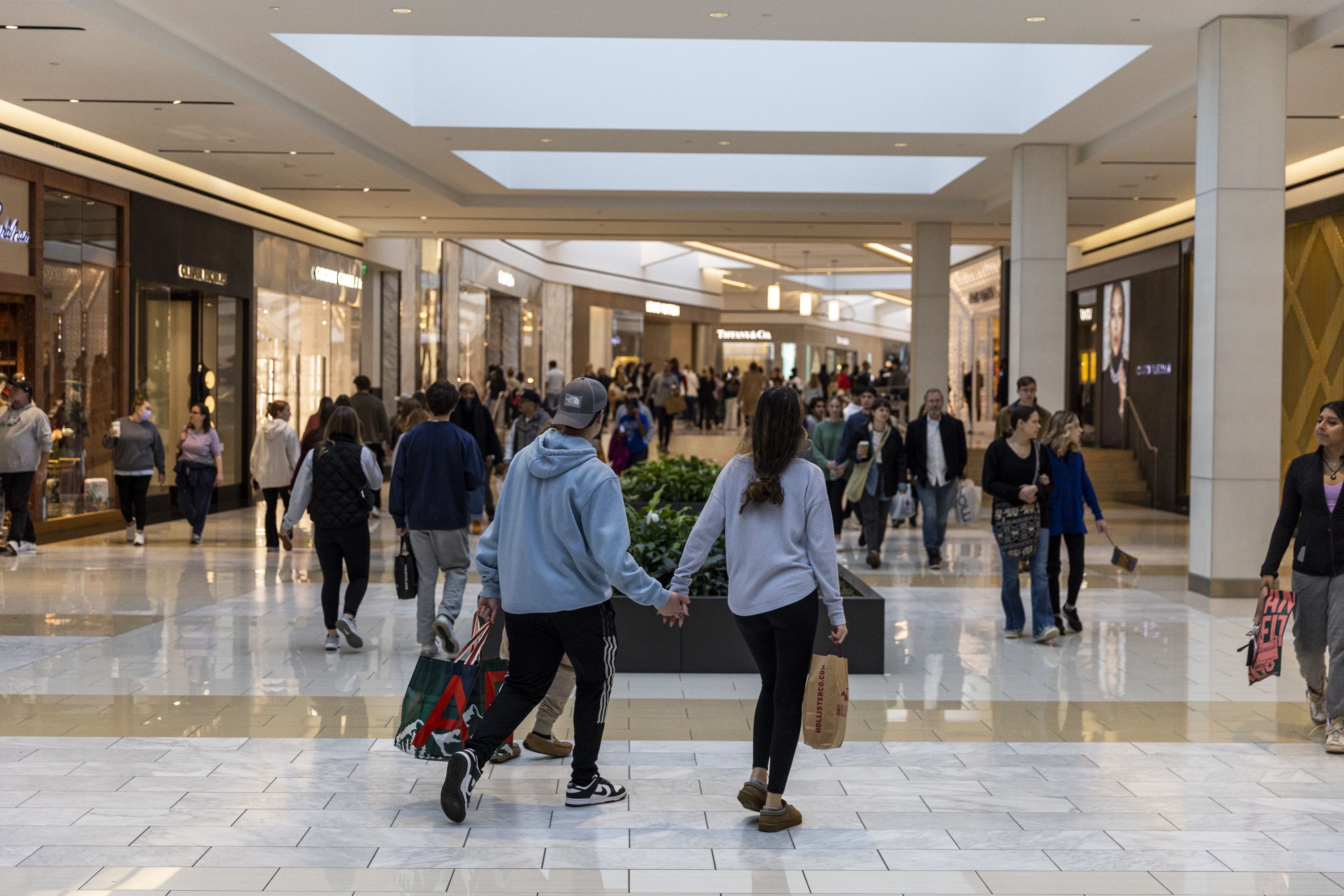
    While some other Philly-area malls have struggled or died — and others are trying to reinvent themselves — King of Prussia Mall seems to be thriving.

    Aside from Sloomoo, the mall has welcomed several other new stores, restaurants, and interactive experiences since August. A few retailers, including Lululemon, Abercrombie & Fitch, and Mejuri, have also expanded or relocated.

    As holiday shopping season kicks into high gear, customers can check out the following new additions:

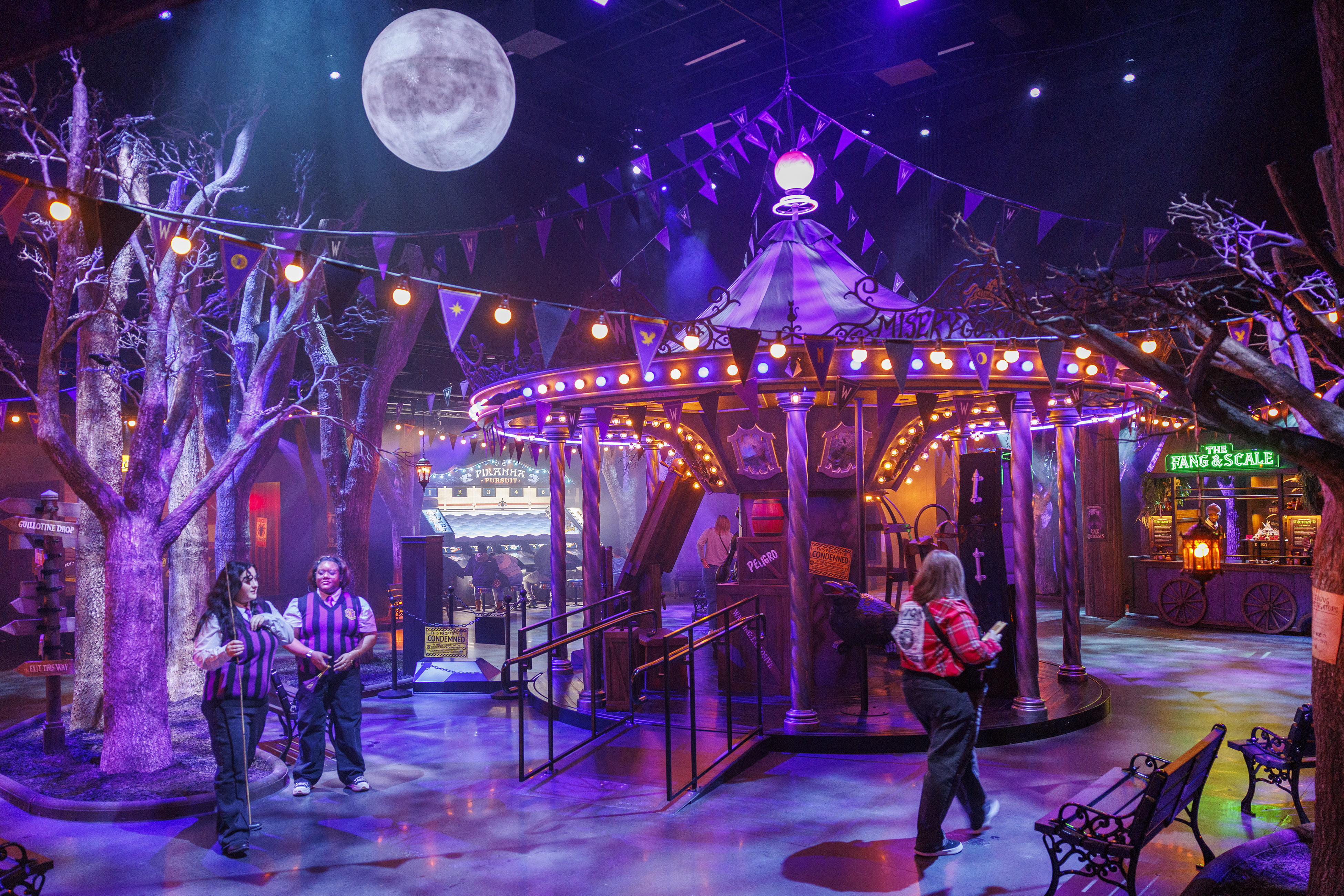
    The “misery-go-round” inside of “Wednesday: Eve of the Outcasts” at the Netflix House, which opened earlier this month at the King of Prussia Mall.

    Stores coming soon to the King of Prussia Mall

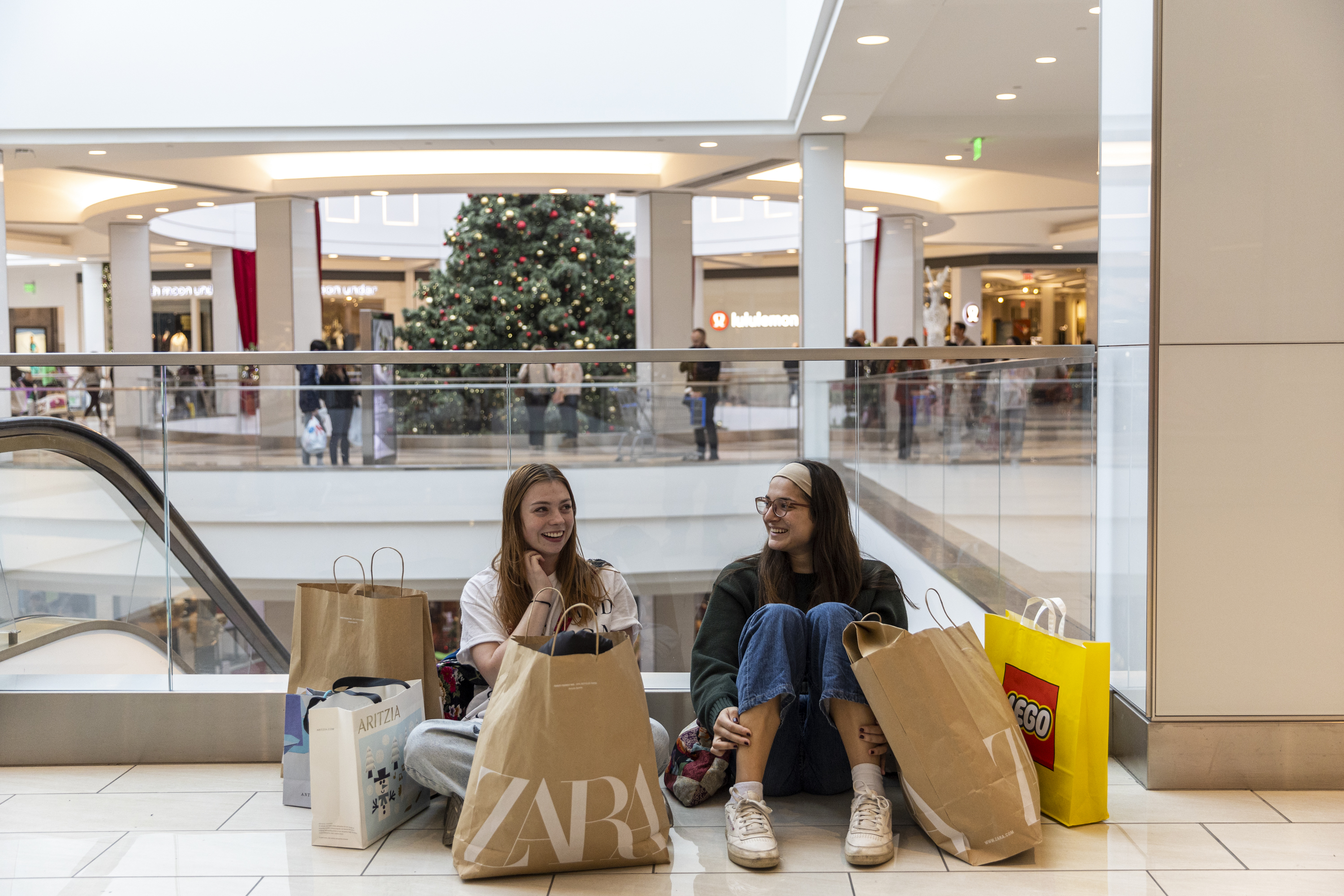
    Shoppers sit with their bags at the King of Prussia Mall on Black Friday 2022.

    If you’re doing holiday shopping later in the season, or taking a trip to the mall between Christmas and New Year’s, you might be able to visit the following stores. All of them are set to open their first Philadelphia-area locations this December:

    In early 2026, Adidas and Columbia Sportswear are set to open stores in the King of Prussia Mall. Exact locations for those stores have yet to be announced.

    Looking even further ahead, Level99 is set to open a 46,000-square-foot live social-gaming venue on the ground floor of the former JCPenney in 2027.

  • Bistro at Cherry Hill owner indicted on charges of tax fraud

    Bistro at Cherry Hill owner indicted on charges of tax fraud

    The owner of the beleaguered Bistro at Cherry Hill, a longtime mall fixture that closed this summer amid bankruptcy proceedings, has been indicted on charges of tax fraud.

    The New Jersey Attorney General’s Office announced the indictment against Andrew Cosenza Jr. on Tuesday, saying an investigation found that he had failed to send the state more than $270,000 in sales tax paid by Bistro customers in 2021 and 2022.

    The 57-year-old Cherry Hill resident was indicted Oct. 29 on several charges, including tax fraud.

    “Everyone is required to pay their fair share of taxes,” New Jersey Attorney General Matthew J. Platkin said in the statement. “This form of tax fraud will not be tolerated.”

    Cosenza did not return a request for comment on Tuesday. No defense attorney was listed on court documents as of Tuesday, and an attorney representing Cosenza in a new Chapter 11 bankruptcy case did not return requests for comment.

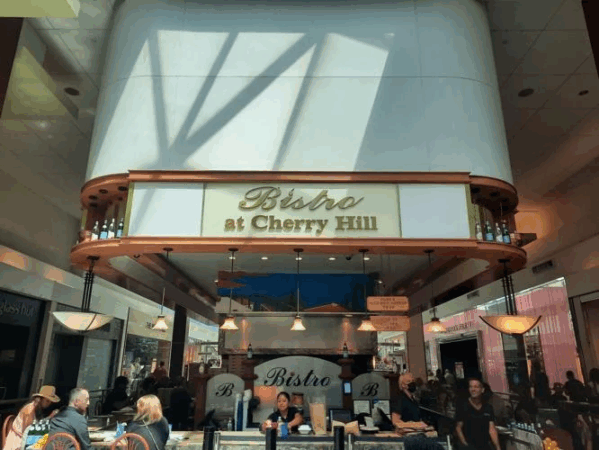
    Cosenza had owned the Bistro at Cherry Hill for more than 25 years. The beloved restaurant operated out of a 12,000-square-foot kiosk in the middle of the Cherry Hill Mall. This summer, it closed abruptly, saddening loyal customers.

    In July, Cosenza told The Inquirer that the sudden closure was the result of a communication “breakdown” regarding a Chapter 11 bankruptcy petition that he filed in May. It was the restaurant’s second bankruptcy filing since 2017.

    While Cosenza was incapacitated by medical issues over the summer, he said the Bistro’s Chapter 11 bankruptcy petition had been converted to a Chapter 7, which involves the liquidation of assets, without his consent. Cosenza said his brother showed up to open the Bistro on July 10 and found the doors locked.

    The Cherry Hill Mall, where the Bistro at Cherry Hill operated for 27 years, is shown in January.

    “This is not a case of mismanagement or inability to meet financial obligations,” Cosenza said in a July interview. He said that the bankruptcy was the result of lingering pandemic-related issues and that he had a plan for repaying his debts.

    In early October, the Bistro’s bankruptcy case was dismissed. Cosenza told The Inquirer on Oct. 10, two weeks before the indictment, that he planned to keep fighting to reopen the Bistro. On Oct. 15, he filed for Chapter 11 bankruptcy as a small-business debtor.

    The charges against Cosenza stem from a 2023 joint investigation by the New Jersey Division of Taxation’s Office of Criminal Investigation and the Division of Criminal Justice. Investigators said they found discrepancies between the gross sales tax amounts that Cosenza reported on his business tax returns and the amounts turned over to the state.

    If found guilty of the charges, Cosenza could face five years or more in state prison and fines of more than $150,000, according to the prosecutor’s office.

  • Conshohocken-area AI data center proposal abruptly withdrawn over legal issues

    Conshohocken-area AI data center proposal abruptly withdrawn over legal issues

    A Main Line developer’s plan to turn a shuttered steel mill into a 2-million-square-foot AI data center on the outskirts of Conshohocken was stymied Monday when he was forced to withdraw his application over legal issues.

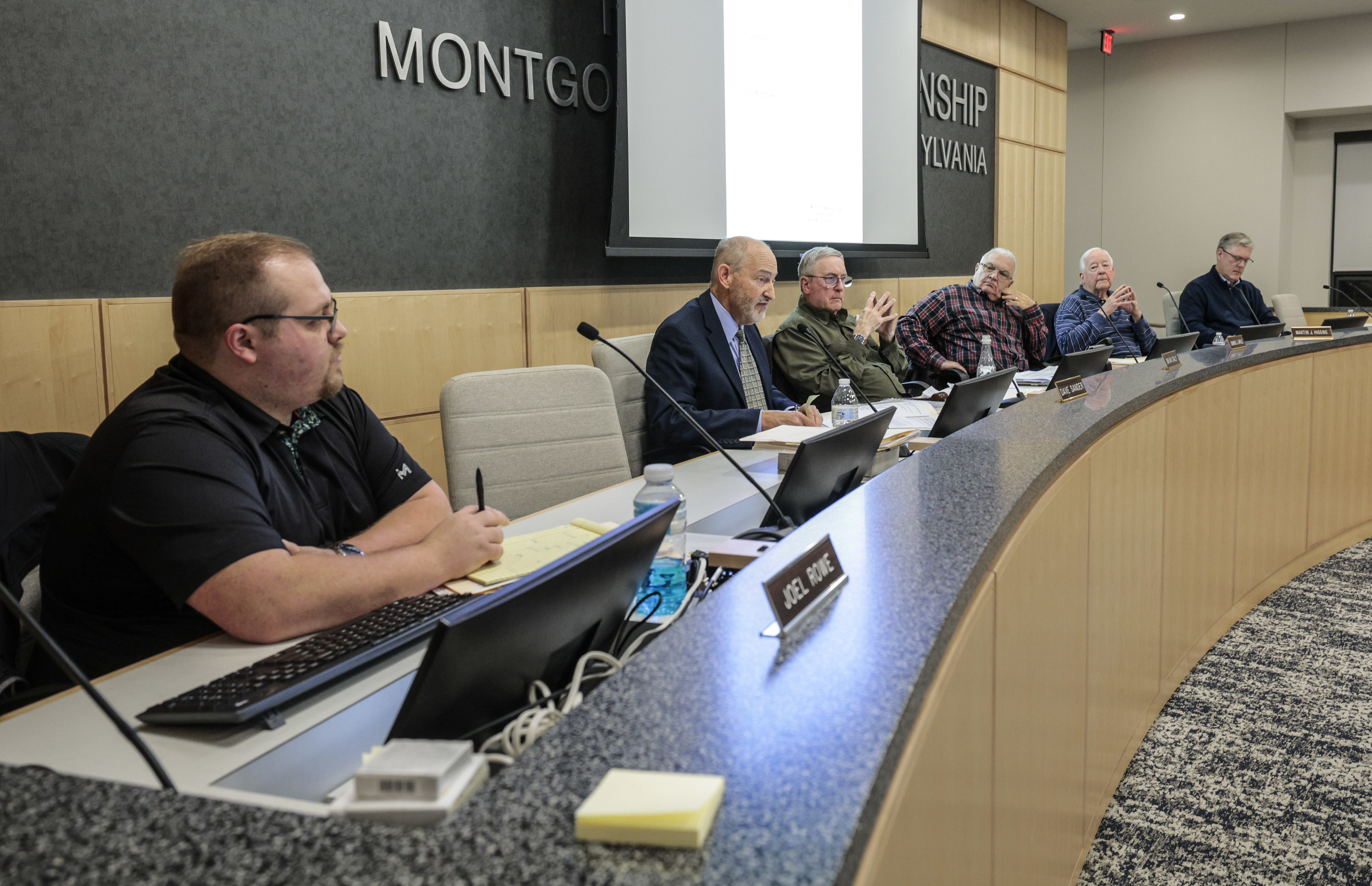
    At the Plymouth Township zoning hearing board meeting, Brian O’Neill’s team had been set to make their case for an exception that would allow a data center to be built at 900 Conshohocken Rd.

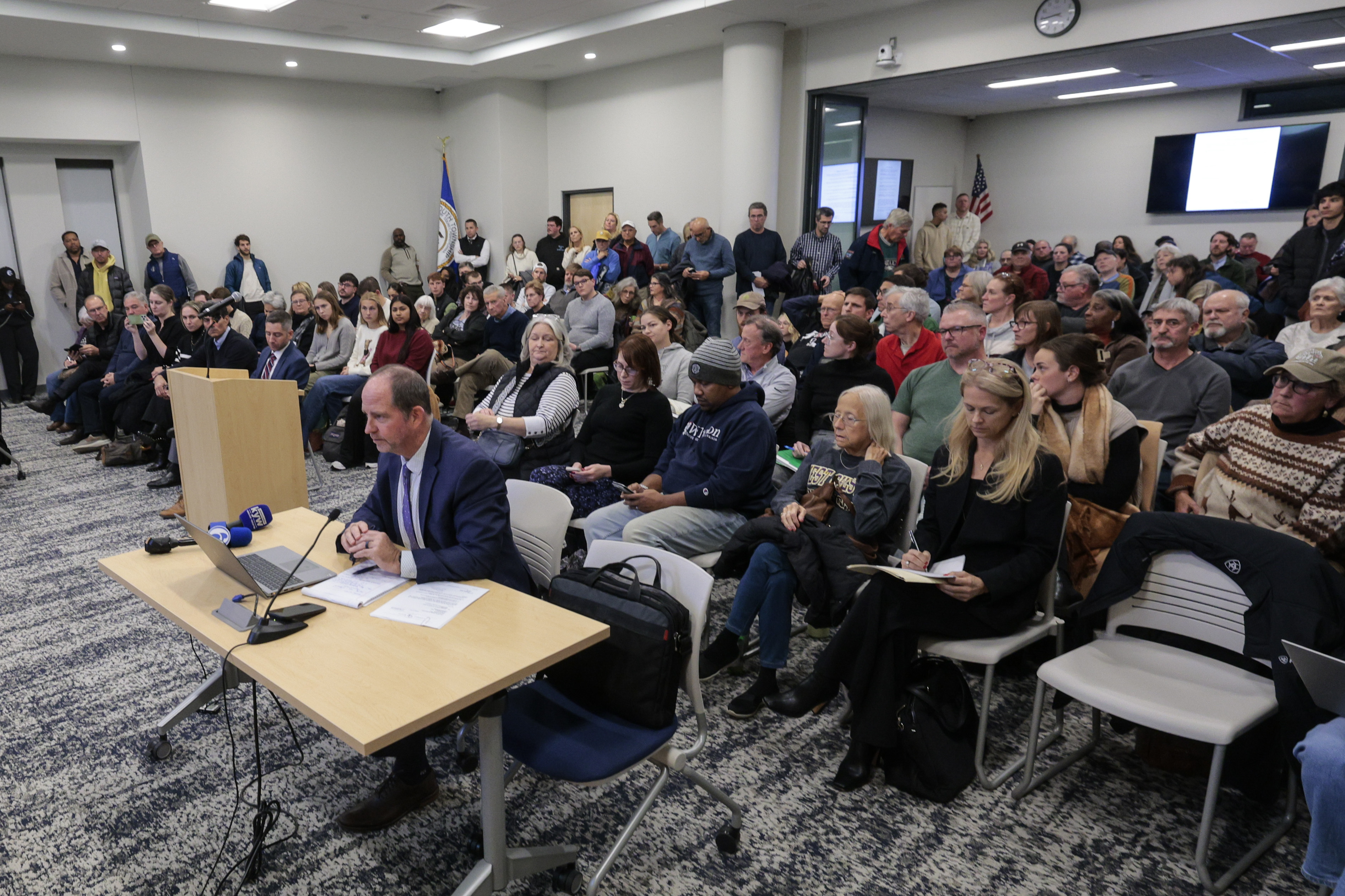
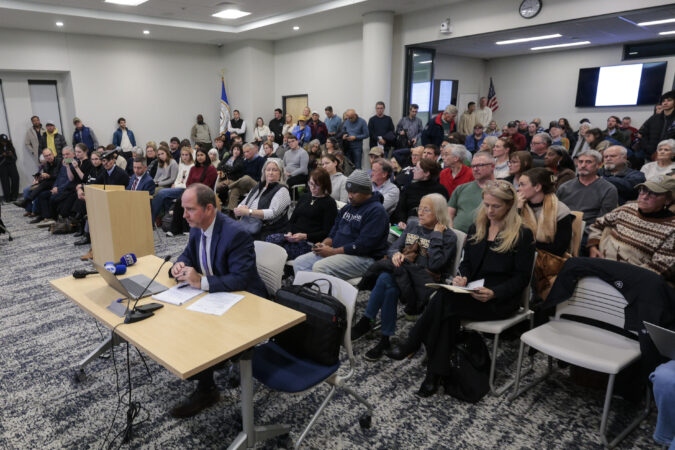
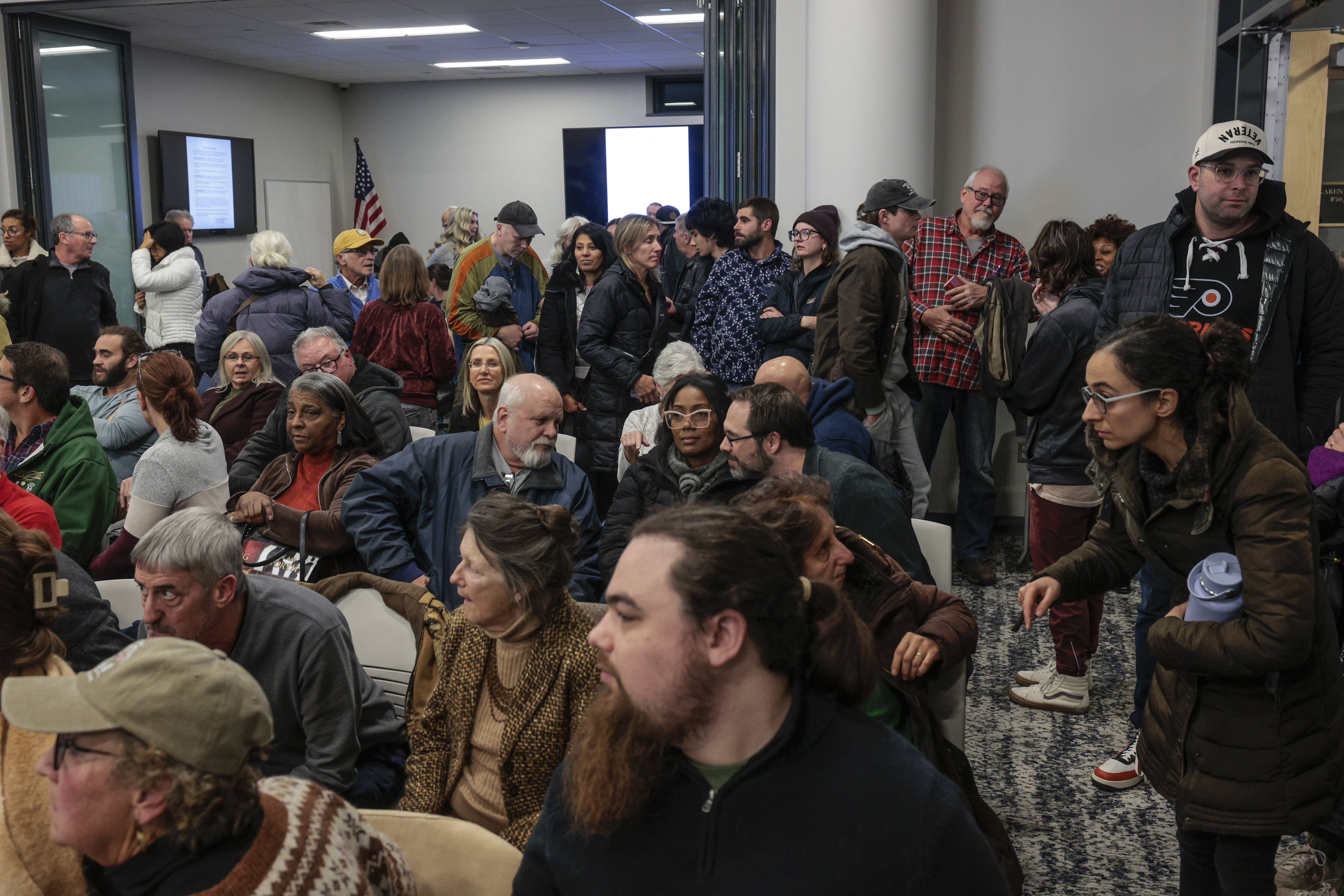
    The plan has faced neighborhood pushback, and hundreds of people packed the meeting room on Monday night. O’Neill did not appear to be among them.

    Edmund J. Campbell Jr., an attorney for O’Neill, said they wished to move the hearing to the township’s December meeting. Then an attorney for Cleveland-Cliffs, the property owner, said the prospective buyer did not have legal standing to do so.

    An agreement of sale had not been approved prior to the meeting, said Heather Fine, the attorney for Cleveland-Cliffs.

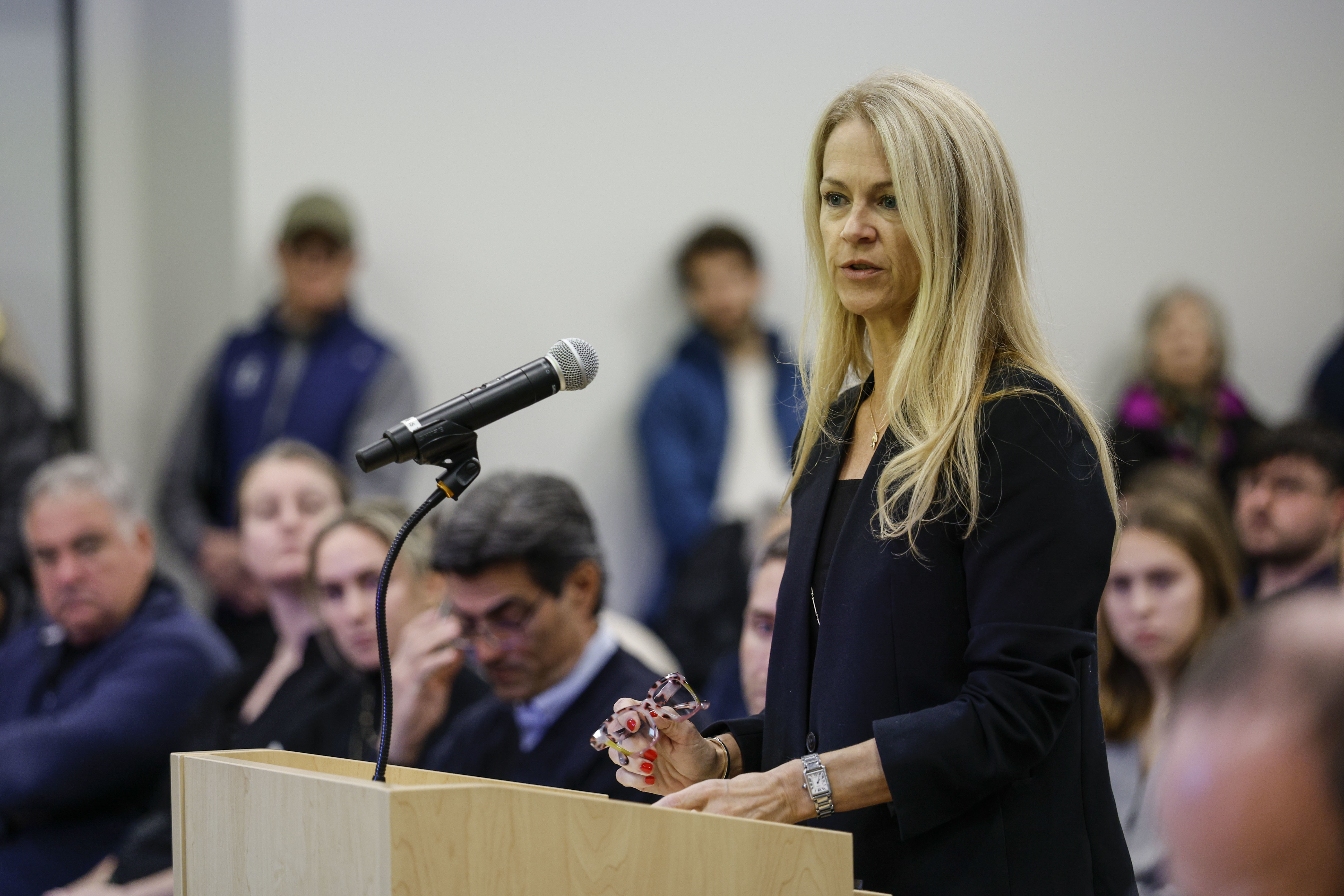
    Heather Fine, an attorney for Cleveland-Cliffs, addresses the Plymouth Township zoning hearing board on Monday.

    Campbell later asked Fine and then the board for permission to withdraw the application. Both declined to provide additional comment.

    Residents who had spent more than a month organizing in opposition to the project said they had mixed emotions.

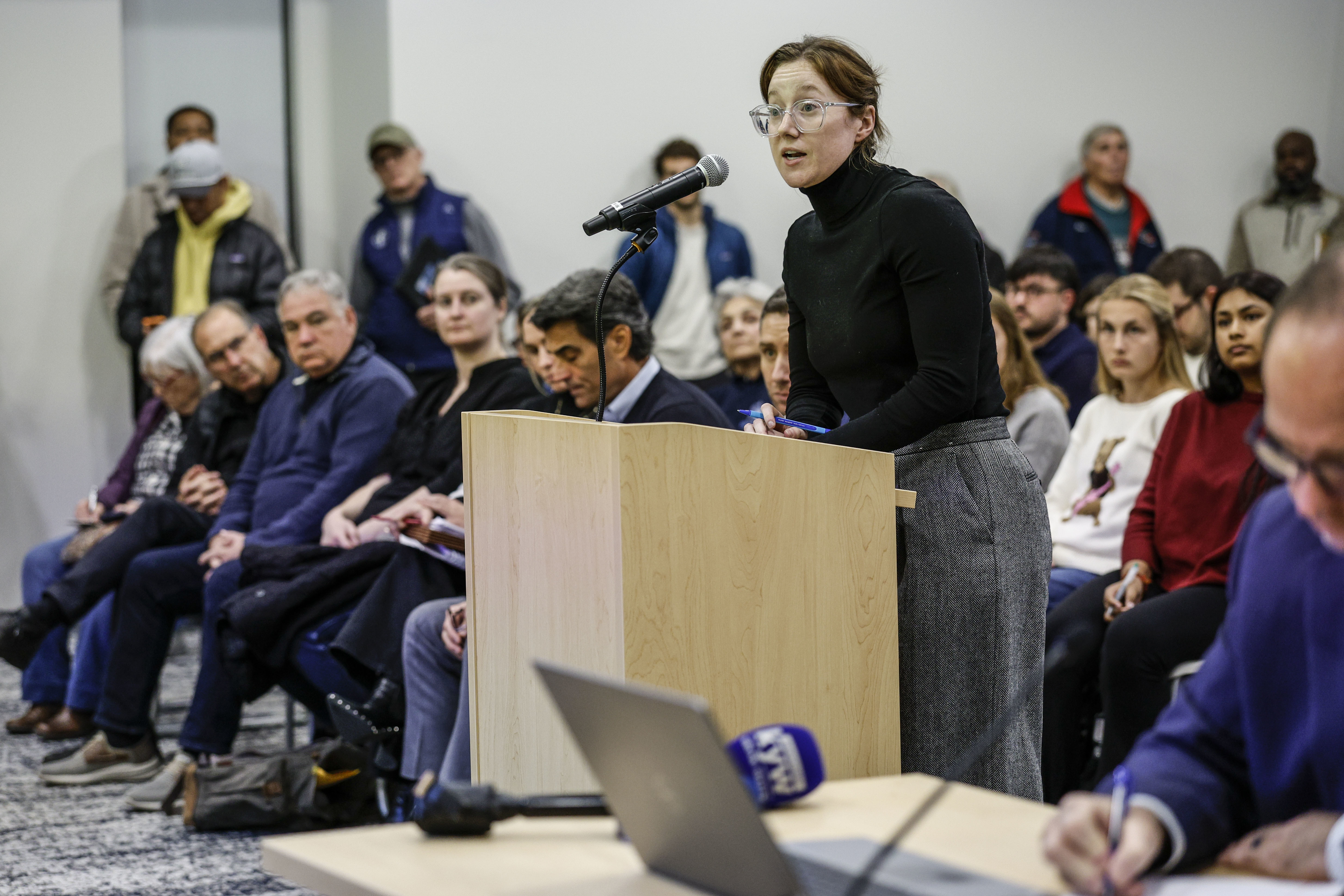
    “It is the smallest of small wins, because we’re making it harder for something bad to happen to our community,” said Nick Liermann, an attorney who lives in a neighborhood near the former steel mill. “But we will be back in this room in a few months.”

    “Communities can be effective,” said Patti Smith, a neighbor of Liermann who has spearheaded the local data-center opposition efforts. “We have to stand up for ourselves.”

    With the withdrawal, the data center proposal is officially off the docket in Plymouth Township, zoning officer Joel Rowe said, but the applicant can resubmit a plan at any time, restarting the process.

    What the data center proposal entailed

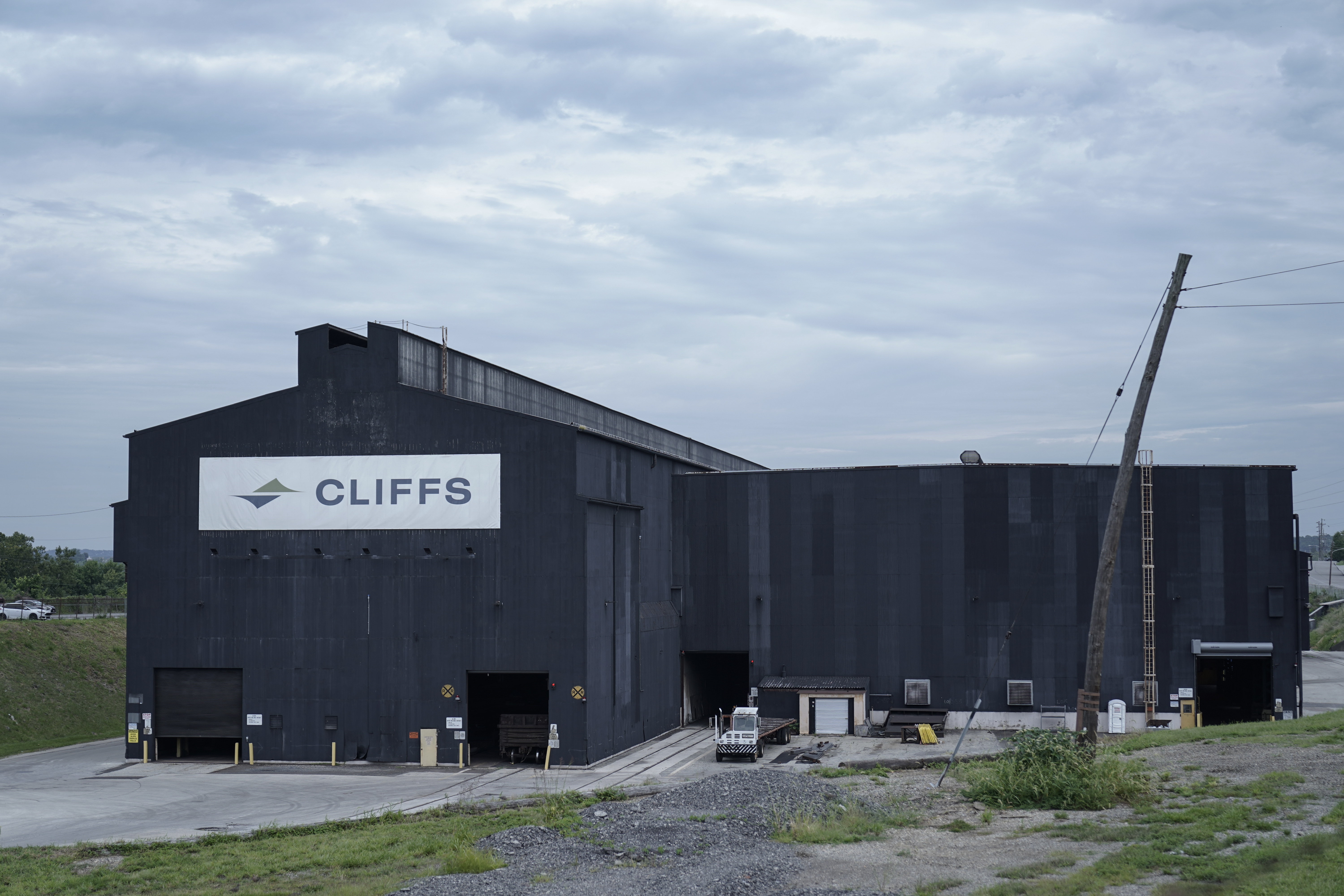
    The now-closed Cleveland-Cliffs plant near Conshohocken is shown in this 2023 file photo. A data center has been proposed for the site.

    This latest development in the Conshohocken-area data center saga occurs amid broader controversy about such facilities, which handle cloud-computing and storage for Big Tech companies.

    The construction of data centers has been fast-tracked to meet the growing demands of power-hungry AI tools like ChatGPT. Politicians on both sides of the aisle, including President Donald Trump and Gov. Josh Shapiro, have pushed for more centers, while some neighbors near proposed sites have mounted fierce pushback.

    In the Philadelphia area, Amazon is building a 2-million-square-foot data center on a former steel mill in Falls Township, Bucks County. And a 1.3-million-square-foot data center has been proposed at the former Pennhurst State School and Hospital in East Vincent Township, Chester County.

    In Plymouth Township, O’Neill had not revealed the potential tenant for his proposed data center, but indicated it would be related to the life sciences.

    The data center is proposed for a 66-acre property along the Schuylkill in the Connaughtown section of the township. The site is less than a mile from downtown Conshohocken. Its neighbors include the Proving Grounds sports complex, Tee’s Golf Center, and dozens of homes.

    A crowd of people leave the Plymouth Township zoning hearing board meeting on Monday.

    Some Connaughtown residents, along with other data center opponents from across the Philadelphia region, have rallied against the proposal. As of Tuesday, more than 1,000 people had signed an online petition urging township officials not to grant a zoning exception for the data center, citing concerns about light, noise, and air pollution; water usage; and electricity costs.

    O’Neill, meanwhile, had argued that a data center should be permitted in the “heavy industrial” zone due its to similarity to a warehouse and laboratory, which are both permitted uses under township code. He had also touted the center’s potential economic benefits, saying it could bring in $21 million in annual tax revenue and attract other companies to the area.

    “Industry hasn’t come and gone. It’s simply changed,” O’Neill said at last month’s planning board meeting. “What I’m proposing is to put 21st-century industry into an industrial building.”

    Why the data center plan was withdrawn

    The Plymouth Township zoning hearing board had been set to hear Brian O’Neill’s proposal for an AI data center outside Conshohocken on Monday.

    At the start of Monday’s standing-room-only meeting, Plymouth Township officials were expecting a long and potentially tense night.

    Solicitor Dave Sander began by warning the crowd that they must maintain decorum, and said he would cut off the proceedings at 10 p.m. Police officers stood outside the room.

    Quickly, however, it became clear that Campbell, O’Neill’s attorney, had other plans, requesting a continuance to the Dec. 15 meeting. If granted, it would have marked the hearing’s second continuance: The proposal was initially supposed to be discussed at an October meeting.

    “My client would like an additional opportunity to review with [community members] the project,” Campbell said. “When we proceed, if we have had a more robust dialogue with those participants, this hearing on the 15th would be significantly more efficient.”

    Neighbors, some of whom had already attended a private meeting with O’Neill last month, objected to the last-minute request, saying that it was unlikely their minds would be changed if no significant changes had been made to the plan.

    “Is the proposal significantly different than what was displayed to community members at the Oct. 8 meeting?” asked Smith, who organized neighborhood opposition.

    Patti Smith, resident and organizer of anti-data center movement in the neighborhood, addresses the Plymouth Township zoning hearing board at Monday’s meeting.

    “No,” Campbell responded, later adding that they wanted more residents to be able to attend the meeting and hear from their experts who could speak to concerns, including about noise and emissions.

    Before the zoning hearing board could vote on the continuance request, Fine, the attorney for property owner Cleveland-Cliffs, took to the podium.

    “There is no standing for the prospective buyer to proceed with the application this evening,” Fine said. “That authority was not extended to the prospective buyer from the owner. There is no LOI [letter of intent] in place.”

    “My client delivered a signed agreement of sale to the owner this evening,” Campbell said. “Based on that, we have standing. … We made our application with the express consent of the owner.”

    Sander turned to Fine, asking if that was true.

    “It’s not entirely true, no,” Fine said. “The signed agreement that was transmitted to my colleague at 5:51 p.m. this evening had redline changes. Those have not been accepted by my client.”

    She did not elaborate on what those changes entailed.

    The zoning hearing board recessed before returning to accept Campbell’s motion to withdraw the application.

    As a neighbor to the site, Liermann said the unexpected turn of events left him with a more sour taste in his mouth about the developer: “The last-minute request in an attempt to obstruct the process and dissuade the public from participating, and then this ‘confusion’ over whether or not an LOI was actually signed between the developer and the owner, is incredibly disturbing.”

  • How Philly-area outlets survive and sometimes thrive in an era of dying malls

    How Philly-area outlets survive and sometimes thrive in an era of dying malls

    For the Nowell family, the outlets are an annual tradition.

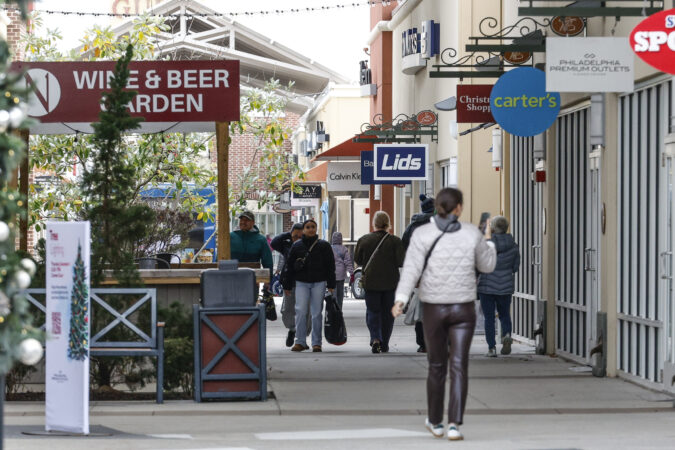
    Every Veterans Day, a dozen relatives venture to Limerick Township in Montgomery County, where they kick off their holiday shopping at the Philadelphia Premium Outlets.

    Even this year, as bitter winds whipped through the outdoor plaza, the family was undeterred.

    After a morning of shopping, the multigenerational group, which included two veterans, warmed up with their yearly food-court lunch, courtesy of matriarch Geri Nowell, 77, of Telford. Then, the men returned to the cars and dropped off dozens of shopping bags, which they’d been carting around in a wagon. The women walked on, hunting for their next find among the more than 130 shops.

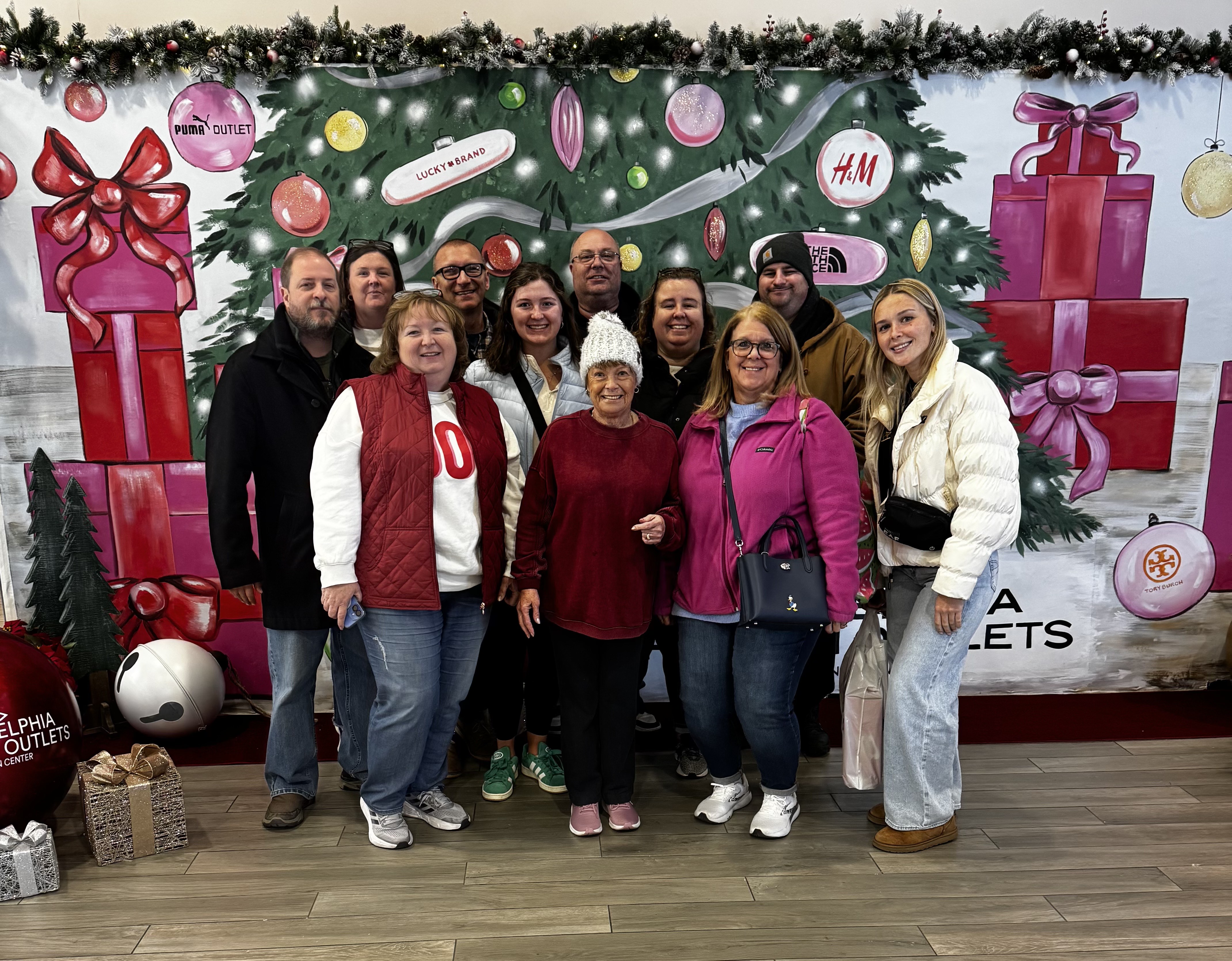
    The Nowell family poses in front of a holiday backdrop during their annual outing to the Philadelphia Premium Outlets.

    “It’s super fun,” said Ann Blaney, 47, of Drexel Hill.

    “We get great deals,” added Kim Woodman, 55, of Hatboro.

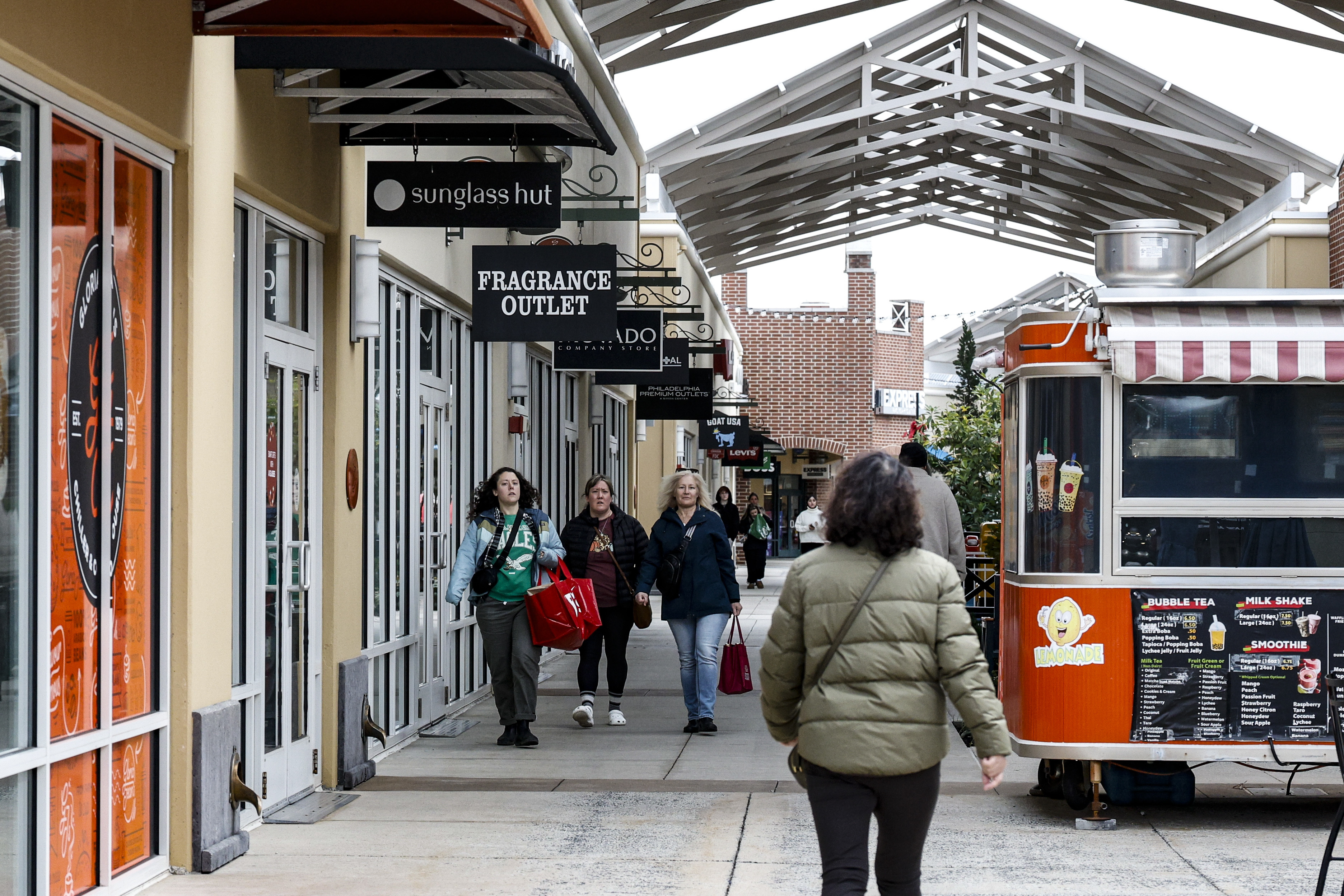
    The tradition is an experience they say can’t be replicated online. The fact that the complex is open-air and contained in a 550,000-square-foot plaza somehow adds to the fun, they said.

    As Kathy Nelson, 48, of Broomall, browsed the outlets with her friends, she said she also shops at the nearly 3 million-square-foot King of Prussia Mall, less than 20 miles away. But otherwise, she said, “there aren’t many indoor malls left” with the variety of stores she prefers.

    As some indoor malls have struggled and died, leaving fewer than 1,000 left nationwide, the outlets remain alive.

    Outlets have always accounted for a fraction of the in-person retail market, which is partly why there have been few headlines about dying outlet malls. But some of the country’s roughly 200 outlet malls seem to be downright thriving, with full parking lots on weekends, few vacant stores, and relatively strong revenue.

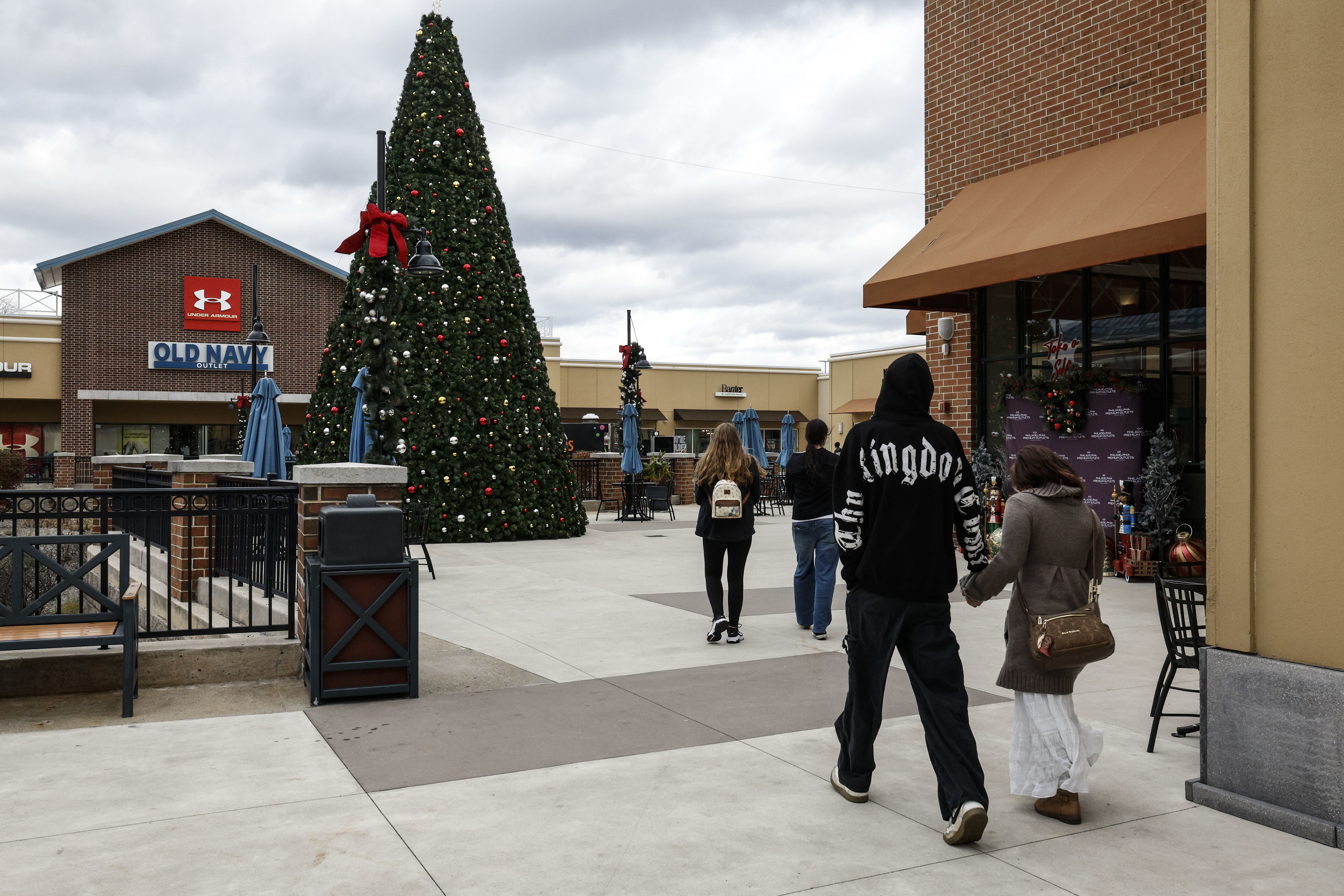
    Shoppers walk by the tree at the Philadelphia Premium Outlets on Nov. 11.

    The Philadelphia region’s two major outlet malls — the Philadelphia Premium Outlets in Limerick Township and the Gloucester Premium Outlets, both owned by Simon Property Group — are more than 92% occupied, according to a count by The Inquirer during visits to each location this month. Both outlets have found success despite being less than 20 miles from thriving indoor malls in King of Prussia and Cherry Hill.

    Tanger Outlets, which has locations in Atlantic City and Lancaster, recently reported more than 97% occupancy across its 39 open-air centers and an increase in average tenant sales per square foot.

    “Outlets do good in good times and great in bad times,” said Lisa Wagner, a longtime consultant for outlets, repeating a common refrain in the industry.

    The centers have evolved amid the broader push toward more experiential retail and most now have a mix of discount stores and full-price retailers. But they have done so while embracing their reputation as the go-to destination for snagging deals, said Wagner, a principal at the Outlet Resource Group.

    “Honestly no one knew what was going to happen after COVID, but [the outlets] came out incredibly strong,” she said. More recently, the retail industry has been rattled by tariffs and economic uncertainty. The outlets have not been immune to those challenges, but they have held strong despite them.

    “People want value right now,” Wagner said. “They need it.”

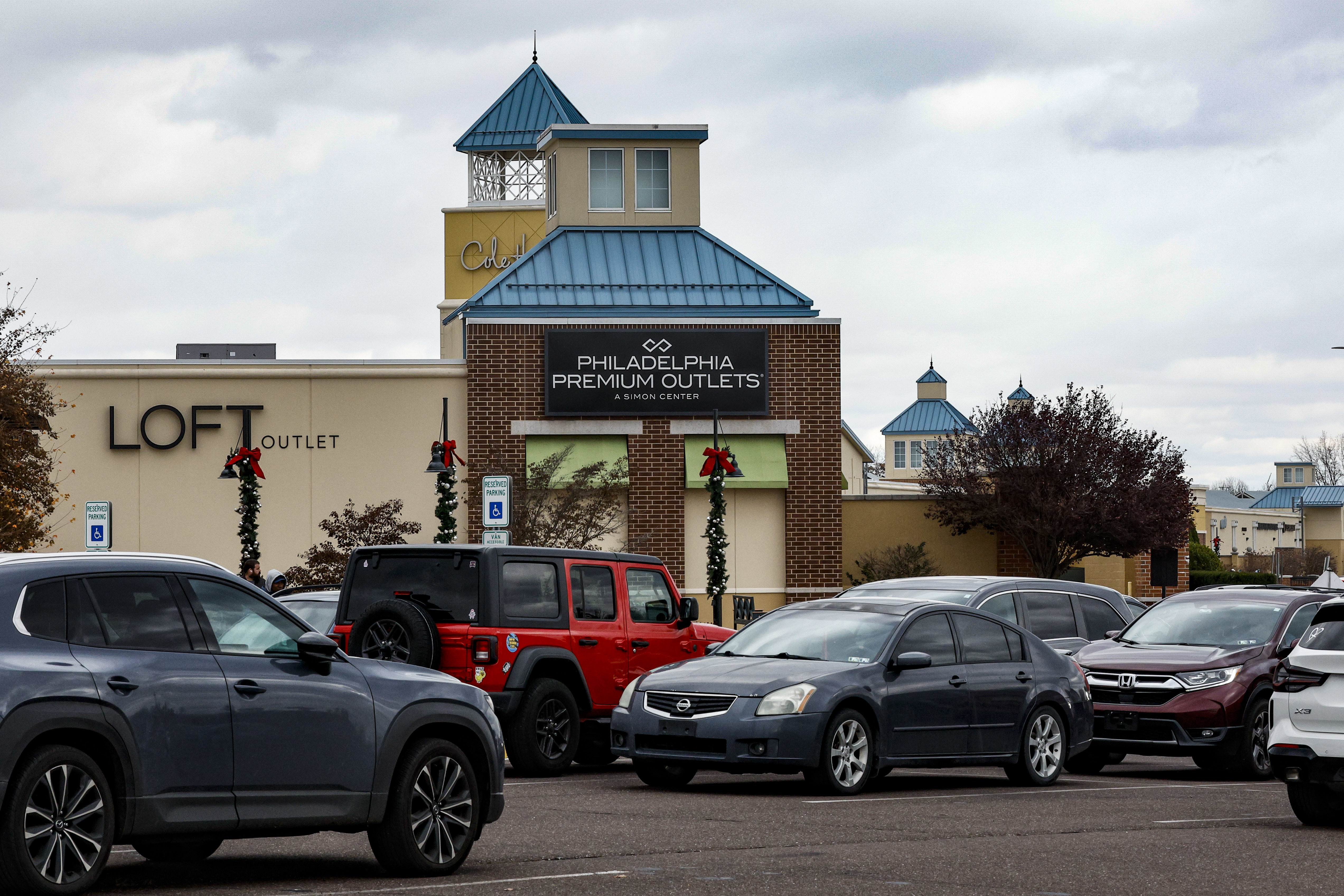
    The Philadelphia Premium Outlets has more than 130 stores in its 500,000-square-foot complex.

    Outlet malls become one-stop shops

    On a rainy, early November Sunday, hundreds of people descended on the Gloucester Premium Outlets.

    Shoppers pulled up hoods and huddled under umbrellas as they made their way from store to store. Many balanced several large bags bearing brand names like Columbia and Kate Spade, Rally House and Hey Dude shoes. Some munched on Auntie Anne’s pretzels or sipped Starbucks from holiday cups. An acoustic version of Jingle Bells played over the speakers.

    For some, the dreary, drizzly weather was even more reason to spend their afternoon at the 86-store complex in Blackwood, Camden County, about 15 miles outside Philadelphia.

    With two young children in tow, Jessica Bonsu, 30, of Sicklerville, was on a mission.

    “We came out to go to the indoor playground,” called Stay & Play, Bonsu said, pointing to her rambunctious kids. “Just to get some energy out.”

    “And then we can also get some shopping done,” added her cousin, Taneisha Laume, 30, who was visiting from D.C. She needed a gift for her uncle. “Kill two birds with one stone.”

    Shoppers peruse the stores at the Gloucester Premium Outlets in this 2019 file photo.

    These kind of multipurpose visits are buoying outlet malls, which are increasingly becoming mixed-use destinations for dining, drinking, entertainment, and shopping.

    “You’re coming for a little bit of everything,” said Gerilyn Davis, director of marketing and business development at Philadelphia Premium Outlets.

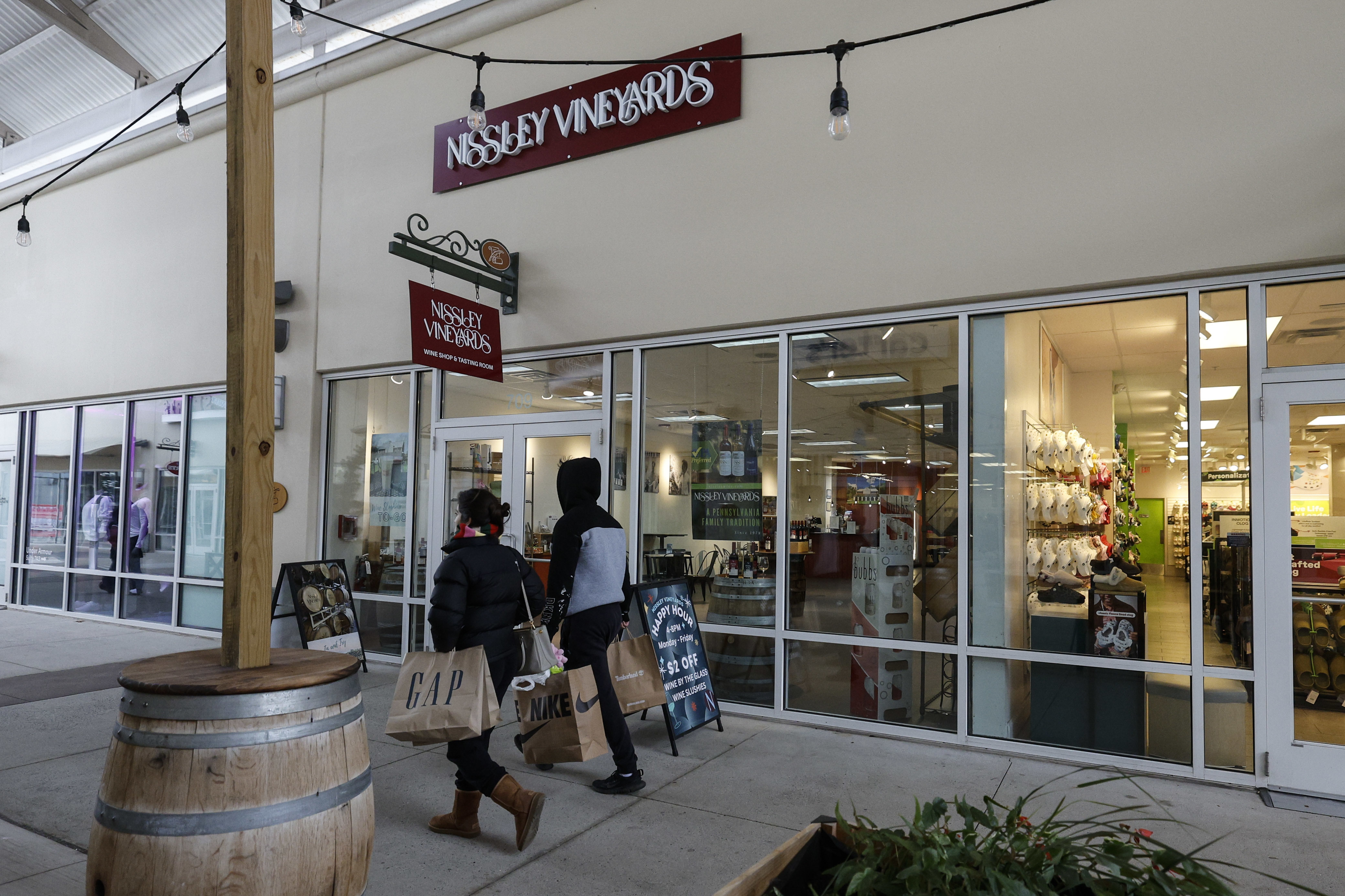
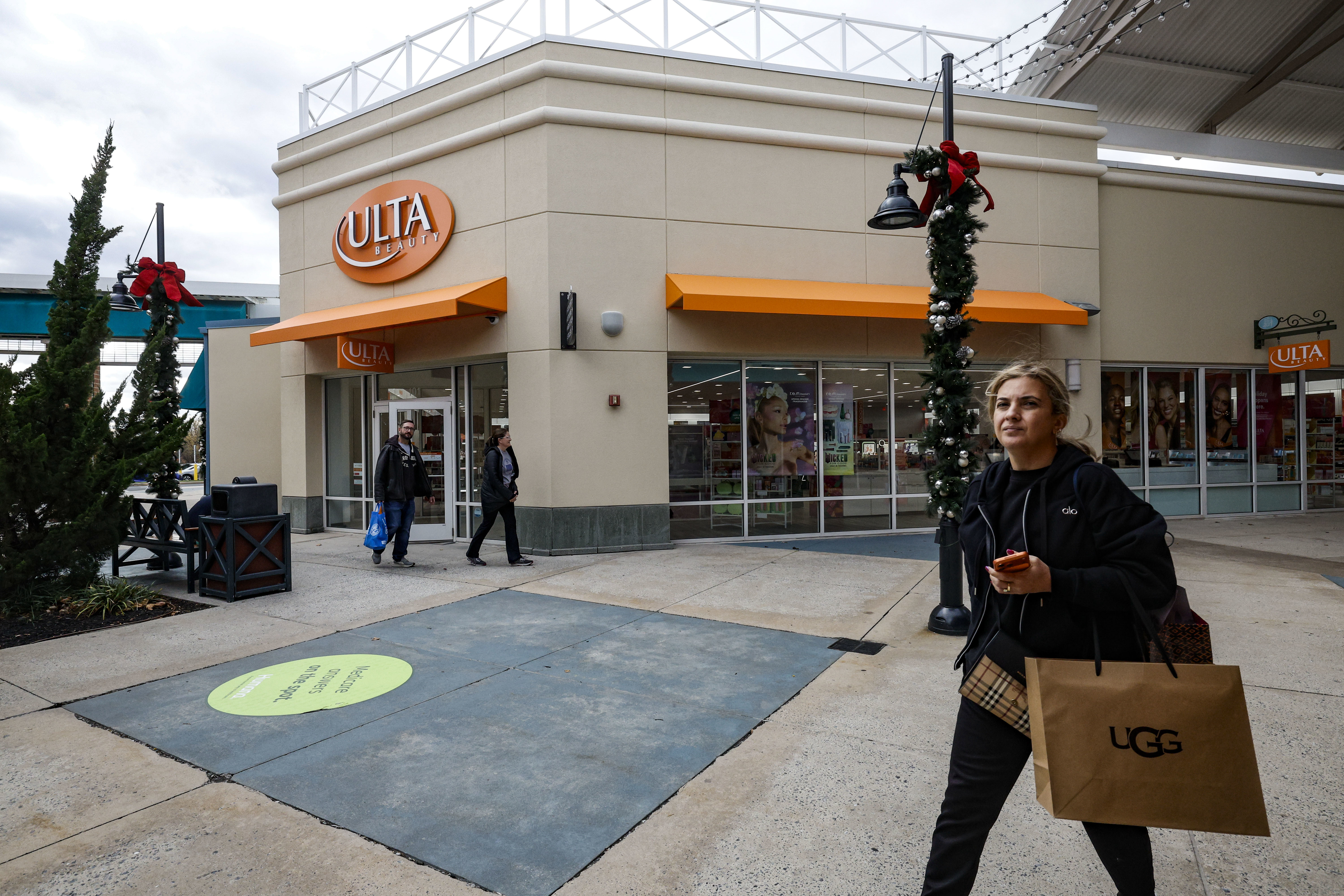
    The Limerick Township complex recently welcomed a slate of new tenants, including Marc Jacobs’ first Pennsylvania outlet store, a BOSS outlet, an Ulta Beauty, and an outpost of central Pennsylvania’s Nissley Vineyards, which has an outdoor seating area.

    Shoppers walk by the Nissley Vineyards store at the Philadelphia Premium Outlets.

    New Balance, whose shoes are trendy again, is also opening stores in both the Philadelphia and Gloucester outlets.

    Justin Stein, Tanger’s executive vice president of leasing, said the North-Carolina-based company is focused on adding more food, beverage, and entertainment options.

    While overall occupancy at its Atlantic City center is lower than others, the complex has a Dave & Buster’s and a Ruth’s Chris steakhouse. The Simpson, a Caribbean restaurant and bar, is also set to open there in early 2026.

    In Lancaster, Tanger is looking to add food and beverage options, Stein said. But that center is still performing well, with a 97% occupancy rate, according to an online map, and only two vacancies.

    When there are places to eat and drink at the outlets, “people stay longer,” Stein said, “and when they stay longer, they spend more.”
    Philadelphia Premium Outlets had a steady crowd on a bitter cold Veterans Day.

    From ‘no frills’ to outlets of the future

    Today’s outlet malls look vastly different from what Wagner calls the “no frills” complexes of the 1990s.

    At the time, an outlet mall served as “a release valve for excess goods,” Wagner said. “There were some stores that had really broken merchandise.”

    To comply with branding rules and avoid competition with department stores, outlet malls were often located along highways between two major metro areas, she said.

    “What became clear is that customers loved it,” Wagner said. Soon, brands started overproducing to supply these outlet stores with products in an array of a sizes and colors.

    This effort to bulk up outlet offerings was “a roaring success,” she said, with companies finding that more than a third of outlet customers went on to buy their products at full price at other locations.

    Philadelphia Premium Outlets, which opened in 2007, has very few vacant storefronts.

    As their popularity rose, more outlet malls were built across the country.

    The Atlantic City outlets, originally called The Walk, opened in 2003, followed by the Philadelphia Premium Outlets four years later. In 2015, the Gloucester Premium Outlets opened, with local officials calling the approximately 400,000-square-foot center the largest economic development project in township history.

    As the centers look to the future, their executives are continuing to hone their identity as “not just a discount-and-clearance center,” said Deanna Pascucci, director of marketing and business development at Gloucester Premium Outlets.

    Center leaders are bringing in food trucks, leaning into rewards programs, and promoting community events, such as Gloucester’s holiday tree lighting, which took place Saturday. Starting Black Friday, the Philadelphia Premium Outlets will offer Santa photos after a successful pilot program last year.

    And the complexes are finding new ways to attract and retain shoppers, online and in real life.

    Tanger recently announced an advertising partnership with Unrivaled Sports, which operates youth sports complexes, including the Ripken Baseball Experience in Aberdeen, Md., an hour drive from its Lancaster outlets. Stein said the company hopes to attract families looking to pass the time between tournament games.

    Tanger is also using AI and data analytics to email specific deals to customers based on where they’ve previously shopped, Stein said.

    “We want you to start your experience online and end it in the store,” Stein said.

    Shoppers walk by a new Ulta store at the Philadelphia Premium Outlets.

    At Simon outlets, customers can search a store’s inventory online before they make the trip, Davis said.

    “Online shopping at this point, it’s a complement,” Davis said. “It’s not viewed as competition.”

    Wagner, the outlet consultant, said she thinks even more centers will be built in the coming years, with a focus on urban and close-in suburban locations that are accessible by public transit.

    As for existing centers, she sees them thriving for the foreseeable future.

    “As long as outlets continue to emphasize a value message and use their loyalty programs to reward customers,” Wagner said, “I think they will hold their own.”

  • King of Prussia Mall is getting a real-life gaming venue with a bar-restaurant

    King of Prussia Mall is getting a real-life gaming venue with a bar-restaurant

    Another experiential retail concept is coming to the region. This time it’s a live social-gaming venue at the King of Prussia Mall.

    Massachusetts-based Level99 announced this week that it plans to bring its next “sprawling adult playground” to the Montgomery County shopping destination in 2027. The move marks the company’s first foray into the Philadelphia market.

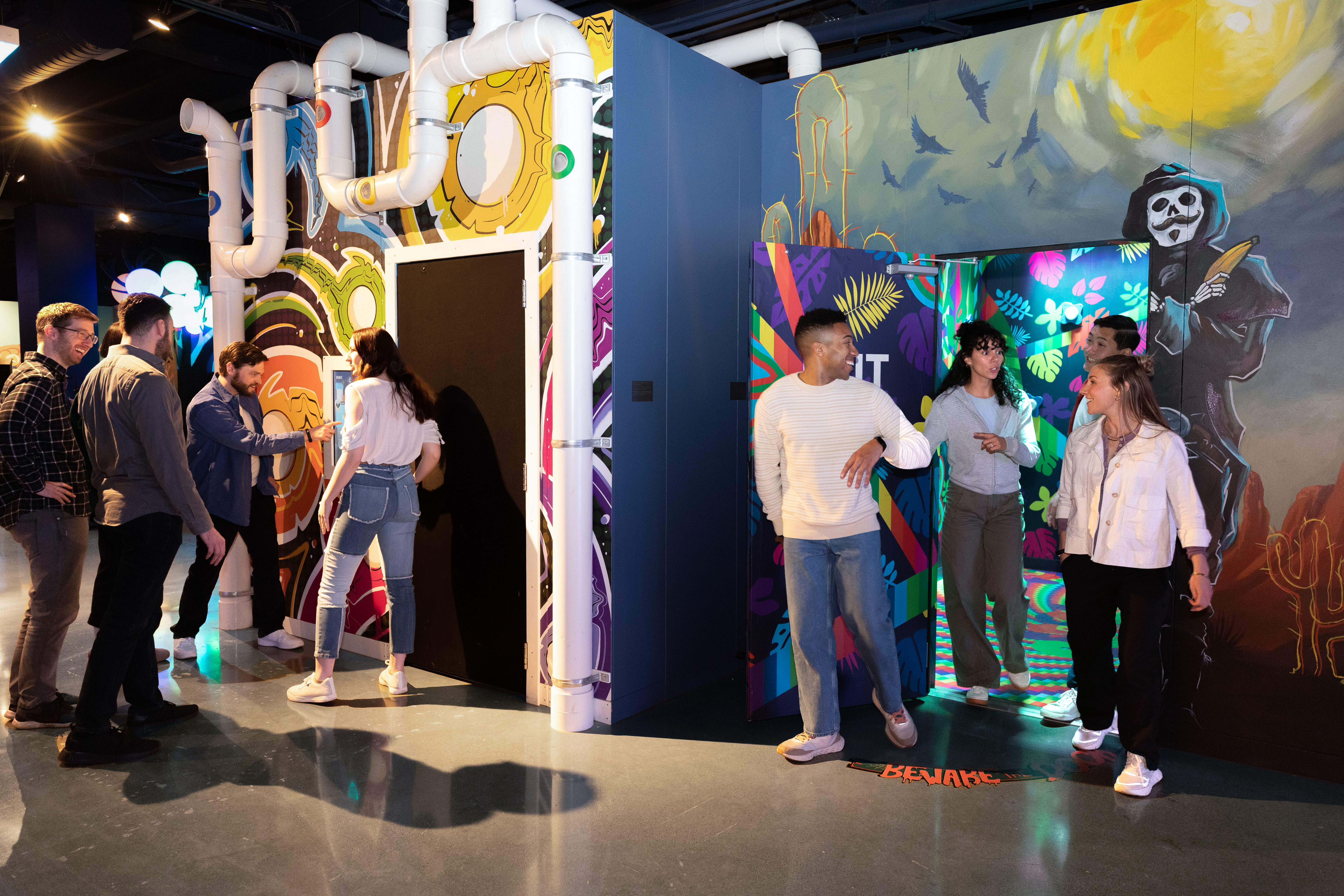
    The 46,000-square-foot venue will include 50 “life-size mini games” geared toward adults, according to a news release, and a full-service restaurant and bar serving local craft beer.

    “Level99 goes beyond your conventional entertainment venue — it’s a place to play, explore, and actively connect,” Matthew DuPlessie, founder and CEO of Level99, said in a statement.

    The venue is moving into the ground floor of the former JCPenney, which closed in 2017.

    It will be across the mall from the 100,000-square-foot Netflix House. The immersive experience for fans of the streaming service’s shows is set to open Nov. 12 in the former Lord & Taylor department store.

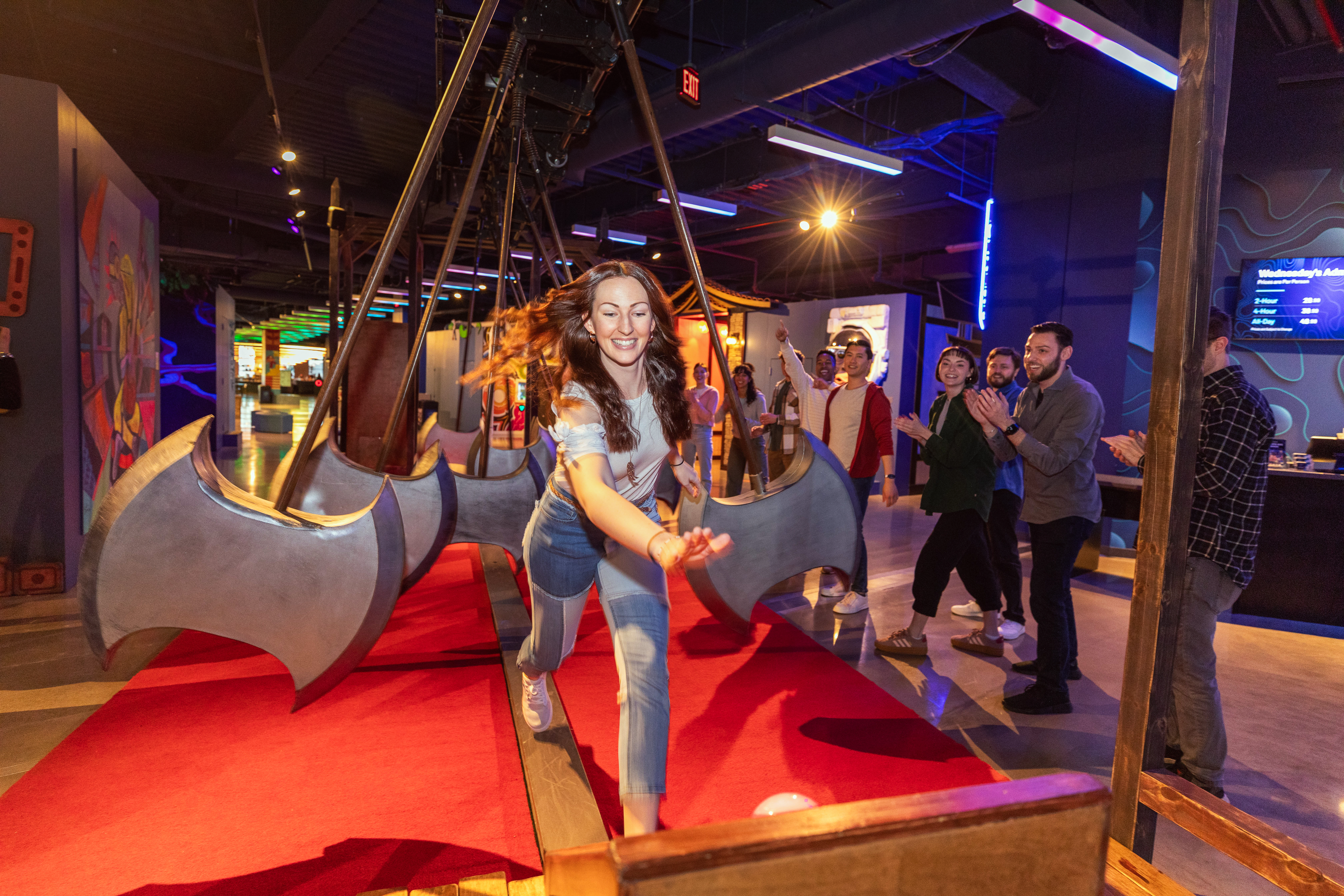
    Level99 customers race through the venue’s signature “Axe Run” game, one of 50 mini-challenges set to be part of King of Prussia’s location when it opens in 2027.

    “We’re thrilled to welcome Level99 to King of Prussia, further elevating our commitment to delivering dynamic, experience-driven destinations,” Mark Silvestri, president of development for mall owner Simon Property Group, said in a statement. ”This innovative concept brings a new layer of interactive entertainment to King of Prussia and is a perfect complement to our growing lineup of immersive offerings.”

    As more consumers shop online, experiential retail has transformed malls nationwide, helping complexes fill empty spaces and attract new customers.

    In the Philadelphia region, Cherry Hill Mall is set to open a Dick’s House of Sport next year. The 120,000-square-foot space will include a climbing wall, golf simulators, a running track, and batting and soccer cages.

    At the Moorestown Mall, an empty department store is set to be filled by a massive entertainment center with axe-throwing and go-karts.

    In Center City, the Fashion District’s owners are considering adding more experiential retail after the success of nearby spots like Puttshack mini golf and F1 Arcade.

    And along with the forthcoming Netflix House, the King of Prussia Mall recently opened the Philadelphia area’s first Eataly, a 21,000-square-food Italian-centric marketplace and wine shop.

    At Level99 venues, customers can choose from 50 mini-games that test mental and physical skills.

    Level99 has been riding this experiential retail wave, opening its flagship location in 2021 at the Natick Mall in suburban Boston. The company opened another location in Providence, R.I., in January 2024, then added a third this summer in the Washington suburb of Tysons, Va. It has projects under construction in Hartford, Conn., and at Disney Springs in Orlando.

    At existing Level99 locations, pricing starts at $29.99 per person for two hours of play, according to its website. Prices increase on weekends and holidays, and if a customer wants more time.

    Level99 is supported by Act III Holdings, a $1.5 billion private-equity investment firm led by Panera Bread cofounder and Cava chairman Ron Shaich. Last month, Act III executives announced a $50 million commitment to the chain’s expansion into new markets, including Philadelphia.

    Unlike some other Philly-area malls, King of Prussia is thriving, with more than 450 stores occupying 2.9 million square feet of retail space.

  • N.J. sues Amazon twice in three days over treatment of workers

    N.J. sues Amazon twice in three days over treatment of workers

    New Jersey officials have sued Amazon twice in three days, saying that the e-commerce giant has exploited delivery drivers and discriminated against warehouse workers who are pregnant or have disabilities.

    The first lawsuit, filed Monday, marked the Garden State’s latest move to dispute companies’ classification of drivers as independent contractors, not employees who are legally entitled to certain benefits and rights, including minimum wage, overtime pay, earned sick time, and family leave.

    At the heart of the latest suit are Amazon’s “Flex” drivers, who use their personal vehicles to deliver packages, according to court documents filed in Superior Court of Essex County.

    New Jersey Attorney General Matthew Platkin and Department of Labor and Workforce Development Commissioner Robert Asaro-Angelo began investigating after some Flex drivers applied for unemployment and disability benefits, toward which Amazon has not been contributing.

    “Amazon calls its drivers ‘Delivery Partners,’ but they are simply Amazon’s employees,” the complaint reads. “Drivers are workers who, in exchange for remuneration from Amazon, perform the discrete, repetitive work of picking up and delivering packages from Amazon’s warehouses, or other Amazon locations such as Whole Foods stores, to their final destinations — a necessary function for Amazon’s business operations. “

    Amazon spokesperson Mary Kate Paradiso said the lawsuit “is wrong on the facts and the law” and misrepresents how Flex works.

    “For nearly a decade, Amazon Flex has empowered independent delivery partners to choose delivery blocks that fit their schedules, giving them the freedom to decide when and where they work,” Paradiso said in a statement. “This flexibility is one of the main reasons many drivers say they enjoy the program.”

    Amazon advertises the Flex program as a way for people to make money on their own schedules. On the Flex website, Amazon says most drivers earn $18 to $25 an hour. A disclaimer underneath reads “actual earnings will depend on your location, any tips you receive, how long it takes you to complete your deliveries, and other factors.”

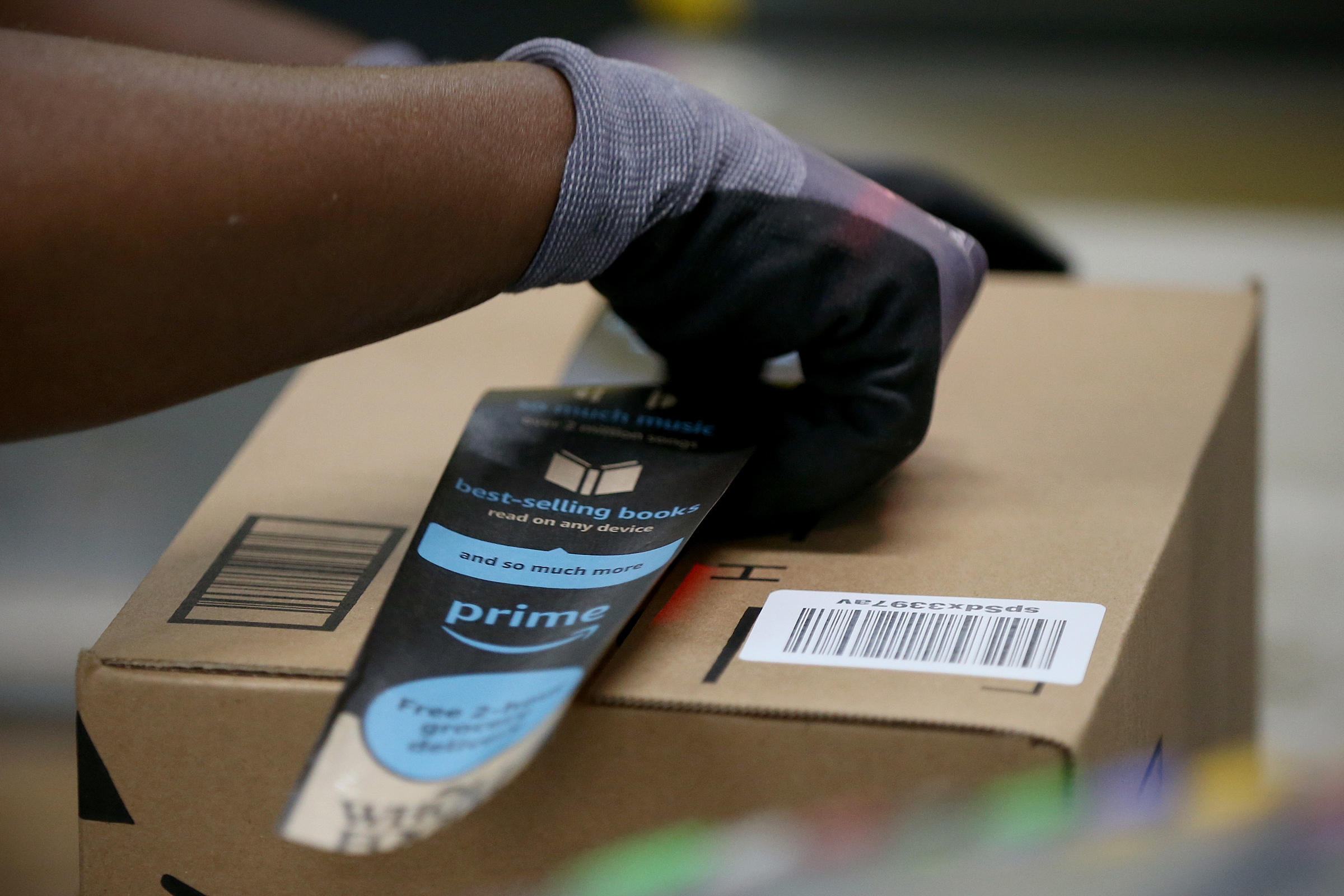
    A worker boxes up an order to be shipped at the Amazon Fulfillment Center in West Deptford in this 2019 file photo.

    Since at least 2017, thousands of Flex drivers have worked in New Jersey, according to state officials.

    “Amazon is taking advantage of Flex drivers and enriching its bottom line by failing to obey our labor laws and offloading its business expenses for the benefit of shareholders,” Platkin said in a statement.

    New Jersey is stricter than some other states when it comes to independent contractors, and outgoing Gov. Phil Murphy has made combating worker misclassification a priority of his administration.

    In a similar case, Lyft recently paid $19.4 million to the New Jersey Department of Labor & Workforce Development after it found the rideshare service had misclassified 100,000 drivers as independent contractors.

    In a separate lawsuit filed Wednesday, Platkin and the state’s Division on Civil Rights say that Amazon discriminated against pregnant workers and workers with disabilities, including by putting them on unpaid leave or firing them after they requested reasonable accommodations. The lawsuit was the result of a yearslong investigation into the working conditions of about 50,000 workers at dozens of Amazon warehouses across New Jersey.

    State officials said they found that sometimes workers’ accommodation requests were accepted, but then those workers were terminated for not meeting productivity goals.

    “Amazon has exploited pregnant workers and workers with disabilities in its New Jersey warehouses,” Platkin said. “In building a trillion-dollar business, Amazon has flagrantly violated their rights and ignored their well-being — all while it continues to profit off their labor.”

    An Amazon spokesperson did not respond Wednesday afternoon to a request for comment on the second lawsuit.

  • A vacant South Philly Walgreens is set to become a supermarket

    A vacant South Philly Walgreens is set to become a supermarket

    South Philadelphia is set to get a new supermarket in early 2026.

    New York-based Met Fresh is on track to open its first Philly location in January inside the former Walgreens at Broad and Snyder Streets, said owner Omar Hamdan.

    The 13,000-square-foot supermarket will include a pharmacy, a fresh-cut produce department, and a deli counter, Hamdan said, and will offer free grocery and prescription delivery to area seniors. It is also applying for a license to sell beer and wine.

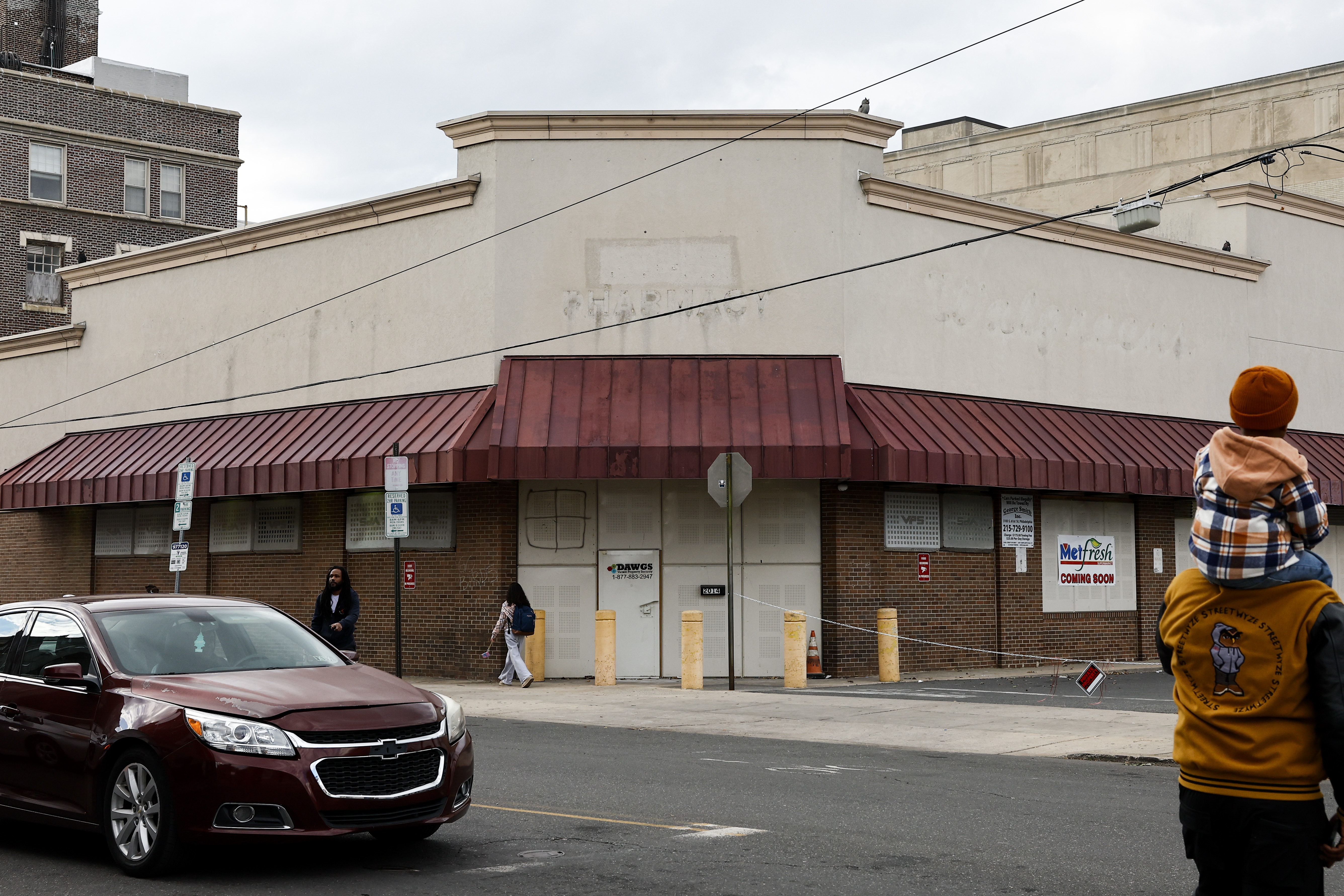
    The former Walgreens at 2014 S. Broad St., where Met Fresh’s first Philly location is set to open in early 2026, photographed on Wednesday.

    “We try to bring the human factor back into the market,” Hamdan said, adding that the company’s philosophy hearkens back to a simpler time: “That store owner who had the apron and was sweeping outside of his store, who said ‘good morning’ to everyone? That is what we do.”

    Met Foods, a family-owned company, has been operating markets in New York City for 15 years, Hamdan said. It currently has locations in the Bronx, Brooklyn, Queens, Staten Island, and northern New Jersey.

    When the South Philly grocer opens, it will mark Met Fresh’s first location outside the New York City area, Hamdan said.

    In 2019, Met Fresh had been in talks to move into a mixed-use development in Philadelphia’s Mantua section, but Hamdan said those plans fell through.

    Since then, Hamdan said they continued to look for potential Philadelphia locations. The store at 2014 S. Broad Street seemed like “a perfect fit,” he said, due to the area’s walkability, dense population, and a demand for more grocery stores and pharmacies.

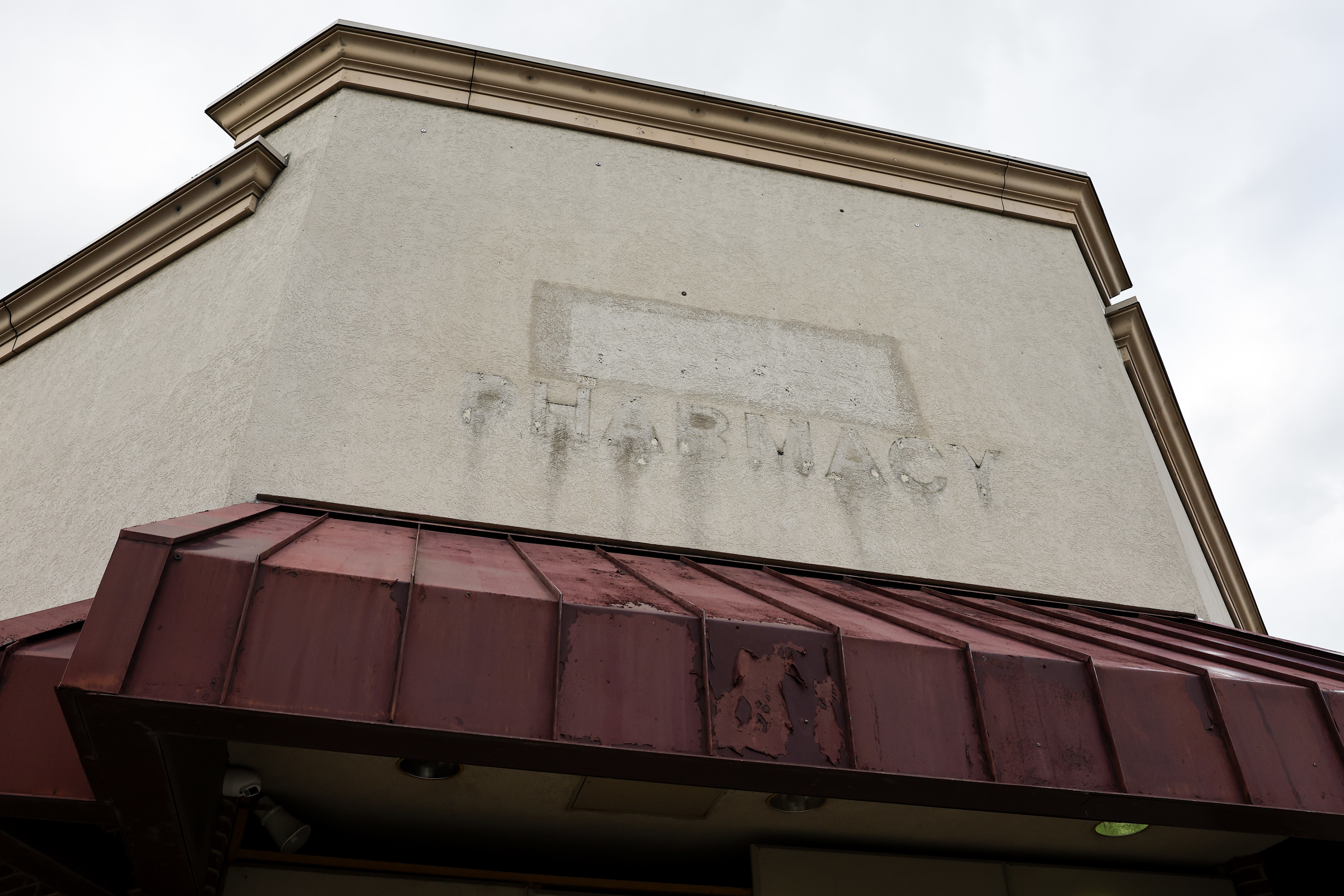
    The “pharmacy” lettering is seen on a former Walgreens on South Broad Street, where Met Fresh plans to open a supermarket in early 2026 after “extensive” renovations, its owner said.

    From the Broad Street store, the nearest supermarket is seven-tenths of a mile away. As for chain pharmacies, the Walgreens closed last year, and a Rite Aid across the street shuttered this summer as the Philly-based company went out of business. So the nearest large drugstore is a CVS off Passyunk Avenue, also seven-tenths of a mile away.

    The Met Fresh will soon start hiring in South Philly, with Hamdan noting that his stores typically need 30 to 40 part- and full-time employees from the surrounding communities. The new location will open after “extensive” renovations, Hamdan said, and once the team gets ahold of refrigeration equipment, which has been impacted by tariffs on steel and aluminum.

    Hamdan said he’s excited for Philly consumers to be introduced to Met Fresh, calling the Broad Street spot “a test pilot to see how we do in the Philly market.”